EP2917347B1 - Procédés et compositions pharmaceutiques pour le traitement des métastases osseuses - Google Patents
Procédés et compositions pharmaceutiques pour le traitement des métastases osseuses Download PDFInfo
- Publication number
- EP2917347B1 EP2917347B1 EP13786515.0A EP13786515A EP2917347B1 EP 2917347 B1 EP2917347 B1 EP 2917347B1 EP 13786515 A EP13786515 A EP 13786515A EP 2917347 B1 EP2917347 B1 EP 2917347B1
- Authority
- EP
- European Patent Office
- Prior art keywords
- robo4
- cancer
- cells
- agent
- antibody
- Prior art date
- Legal status (The legal status is an assumption and is not a legal conclusion. Google has not performed a legal analysis and makes no representation as to the accuracy of the status listed.)
- Not-in-force
Links
Images




Classifications
-
- C—CHEMISTRY; METALLURGY
- C07—ORGANIC CHEMISTRY
- C07K—PEPTIDES
- C07K16/00—Immunoglobulins [IG], e.g. monoclonal or polyclonal antibodies
- C07K16/18—Immunoglobulins [IG], e.g. monoclonal or polyclonal antibodies against material from animals or humans
- C07K16/28—Immunoglobulins [IG], e.g. monoclonal or polyclonal antibodies against material from animals or humans against receptors, cell surface antigens or cell surface determinants
- C07K16/30—Immunoglobulins [IG], e.g. monoclonal or polyclonal antibodies against material from animals or humans against receptors, cell surface antigens or cell surface determinants from tumour cells
-
- A—HUMAN NECESSITIES
- A61—MEDICAL OR VETERINARY SCIENCE; HYGIENE
- A61K—PREPARATIONS FOR MEDICAL, DENTAL OR TOILETRY PURPOSES
- A61K31/00—Medicinal preparations containing organic active ingredients
- A61K31/70—Carbohydrates; Sugars; Derivatives thereof
- A61K31/7088—Compounds having three or more nucleosides or nucleotides
- A61K31/713—Double-stranded nucleic acids or oligonucleotides
-
- A—HUMAN NECESSITIES
- A61—MEDICAL OR VETERINARY SCIENCE; HYGIENE
- A61K—PREPARATIONS FOR MEDICAL, DENTAL OR TOILETRY PURPOSES
- A61K38/00—Medicinal preparations containing peptides
- A61K38/16—Peptides having more than 20 amino acids; Gastrins; Somatostatins; Melanotropins; Derivatives thereof
- A61K38/17—Peptides having more than 20 amino acids; Gastrins; Somatostatins; Melanotropins; Derivatives thereof from animals; from humans
- A61K38/177—Receptors; Cell surface antigens; Cell surface determinants
-
- A—HUMAN NECESSITIES
- A61—MEDICAL OR VETERINARY SCIENCE; HYGIENE
- A61K—PREPARATIONS FOR MEDICAL, DENTAL OR TOILETRY PURPOSES
- A61K39/00—Medicinal preparations containing antigens or antibodies
- A61K39/395—Antibodies; Immunoglobulins; Immune serum, e.g. antilymphocytic serum
- A61K39/39533—Antibodies; Immunoglobulins; Immune serum, e.g. antilymphocytic serum against materials from animals
- A61K39/3955—Antibodies; Immunoglobulins; Immune serum, e.g. antilymphocytic serum against materials from animals against proteinaceous materials, e.g. enzymes, hormones, lymphokines
-
- A—HUMAN NECESSITIES
- A61—MEDICAL OR VETERINARY SCIENCE; HYGIENE
- A61P—SPECIFIC THERAPEUTIC ACTIVITY OF CHEMICAL COMPOUNDS OR MEDICINAL PREPARATIONS
- A61P19/00—Drugs for skeletal disorders
-
- A—HUMAN NECESSITIES
- A61—MEDICAL OR VETERINARY SCIENCE; HYGIENE
- A61P—SPECIFIC THERAPEUTIC ACTIVITY OF CHEMICAL COMPOUNDS OR MEDICINAL PREPARATIONS
- A61P35/00—Antineoplastic agents
- A61P35/04—Antineoplastic agents specific for metastasis
-
- C—CHEMISTRY; METALLURGY
- C07—ORGANIC CHEMISTRY
- C07K—PEPTIDES
- C07K16/00—Immunoglobulins [IG], e.g. monoclonal or polyclonal antibodies
- C07K16/18—Immunoglobulins [IG], e.g. monoclonal or polyclonal antibodies against material from animals or humans
- C07K16/28—Immunoglobulins [IG], e.g. monoclonal or polyclonal antibodies against material from animals or humans against receptors, cell surface antigens or cell surface determinants
- C07K16/2803—Immunoglobulins [IG], e.g. monoclonal or polyclonal antibodies against material from animals or humans against receptors, cell surface antigens or cell surface determinants against the immunoglobulin superfamily
-
- C—CHEMISTRY; METALLURGY
- C07—ORGANIC CHEMISTRY
- C07K—PEPTIDES
- C07K16/00—Immunoglobulins [IG], e.g. monoclonal or polyclonal antibodies
- C07K16/18—Immunoglobulins [IG], e.g. monoclonal or polyclonal antibodies against material from animals or humans
- C07K16/28—Immunoglobulins [IG], e.g. monoclonal or polyclonal antibodies against material from animals or humans against receptors, cell surface antigens or cell surface determinants
- C07K16/2875—Immunoglobulins [IG], e.g. monoclonal or polyclonal antibodies against material from animals or humans against receptors, cell surface antigens or cell surface determinants against the NGF/TNF superfamily, e.g. CD70, CD95L, CD153, CD154
-
- C—CHEMISTRY; METALLURGY
- C07—ORGANIC CHEMISTRY
- C07K—PEPTIDES
- C07K16/00—Immunoglobulins [IG], e.g. monoclonal or polyclonal antibodies
- C07K16/18—Immunoglobulins [IG], e.g. monoclonal or polyclonal antibodies against material from animals or humans
- C07K16/28—Immunoglobulins [IG], e.g. monoclonal or polyclonal antibodies against material from animals or humans against receptors, cell surface antigens or cell surface determinants
- C07K16/30—Immunoglobulins [IG], e.g. monoclonal or polyclonal antibodies against material from animals or humans against receptors, cell surface antigens or cell surface determinants from tumour cells
- C07K16/3015—Breast
-
- C—CHEMISTRY; METALLURGY
- C12—BIOCHEMISTRY; BEER; SPIRITS; WINE; VINEGAR; MICROBIOLOGY; ENZYMOLOGY; MUTATION OR GENETIC ENGINEERING
- C12N—MICROORGANISMS OR ENZYMES; COMPOSITIONS THEREOF; PROPAGATING, PRESERVING, OR MAINTAINING MICROORGANISMS; MUTATION OR GENETIC ENGINEERING; CULTURE MEDIA
- C12N15/00—Mutation or genetic engineering; DNA or RNA concerning genetic engineering, vectors, e.g. plasmids, or their isolation, preparation or purification; Use of hosts therefor
- C12N15/09—Recombinant DNA-technology
- C12N15/11—DNA or RNA fragments; Modified forms thereof; Non-coding nucleic acids having a biological activity
- C12N15/113—Non-coding nucleic acids modulating the expression of genes, e.g. antisense oligonucleotides; Antisense DNA or RNA; Triplex- forming oligonucleotides; Catalytic nucleic acids, e.g. ribozymes; Nucleic acids used in co-suppression or gene silencing
- C12N15/1135—Non-coding nucleic acids modulating the expression of genes, e.g. antisense oligonucleotides; Antisense DNA or RNA; Triplex- forming oligonucleotides; Catalytic nucleic acids, e.g. ribozymes; Nucleic acids used in co-suppression or gene silencing against oncogenes or tumor suppressor genes
-
- C—CHEMISTRY; METALLURGY
- C12—BIOCHEMISTRY; BEER; SPIRITS; WINE; VINEGAR; MICROBIOLOGY; ENZYMOLOGY; MUTATION OR GENETIC ENGINEERING
- C12N—MICROORGANISMS OR ENZYMES; COMPOSITIONS THEREOF; PROPAGATING, PRESERVING, OR MAINTAINING MICROORGANISMS; MUTATION OR GENETIC ENGINEERING; CULTURE MEDIA
- C12N15/00—Mutation or genetic engineering; DNA or RNA concerning genetic engineering, vectors, e.g. plasmids, or their isolation, preparation or purification; Use of hosts therefor
- C12N15/09—Recombinant DNA-technology
- C12N15/11—DNA or RNA fragments; Modified forms thereof; Non-coding nucleic acids having a biological activity
- C12N15/113—Non-coding nucleic acids modulating the expression of genes, e.g. antisense oligonucleotides; Antisense DNA or RNA; Triplex- forming oligonucleotides; Catalytic nucleic acids, e.g. ribozymes; Nucleic acids used in co-suppression or gene silencing
- C12N15/1138—Non-coding nucleic acids modulating the expression of genes, e.g. antisense oligonucleotides; Antisense DNA or RNA; Triplex- forming oligonucleotides; Catalytic nucleic acids, e.g. ribozymes; Nucleic acids used in co-suppression or gene silencing against receptors or cell surface proteins
-
- C—CHEMISTRY; METALLURGY
- C12—BIOCHEMISTRY; BEER; SPIRITS; WINE; VINEGAR; MICROBIOLOGY; ENZYMOLOGY; MUTATION OR GENETIC ENGINEERING
- C12Q—MEASURING OR TESTING PROCESSES INVOLVING ENZYMES, NUCLEIC ACIDS OR MICROORGANISMS; COMPOSITIONS OR TEST PAPERS THEREFOR; PROCESSES OF PREPARING SUCH COMPOSITIONS; CONDITION-RESPONSIVE CONTROL IN MICROBIOLOGICAL OR ENZYMOLOGICAL PROCESSES
- C12Q1/00—Measuring or testing processes involving enzymes, nucleic acids or microorganisms; Compositions therefor; Processes of preparing such compositions
- C12Q1/68—Measuring or testing processes involving enzymes, nucleic acids or microorganisms; Compositions therefor; Processes of preparing such compositions involving nucleic acids
- C12Q1/6876—Nucleic acid products used in the analysis of nucleic acids, e.g. primers or probes
- C12Q1/6883—Nucleic acid products used in the analysis of nucleic acids, e.g. primers or probes for diseases caused by alterations of genetic material
- C12Q1/6886—Nucleic acid products used in the analysis of nucleic acids, e.g. primers or probes for diseases caused by alterations of genetic material for cancer
-
- G—PHYSICS
- G01—MEASURING; TESTING
- G01N—INVESTIGATING OR ANALYSING MATERIALS BY DETERMINING THEIR CHEMICAL OR PHYSICAL PROPERTIES
- G01N33/00—Investigating or analysing materials by specific methods not covered by groups G01N1/00 - G01N31/00
- G01N33/48—Biological material, e.g. blood, urine; Haemocytometers
- G01N33/50—Chemical analysis of biological material, e.g. blood, urine; Testing involving biospecific ligand binding methods; Immunological testing
- G01N33/53—Immunoassay; Biospecific binding assay; Materials therefor
- G01N33/575—Immunoassay; Biospecific binding assay; Materials therefor for cancer
-
- G—PHYSICS
- G01—MEASURING; TESTING
- G01N—INVESTIGATING OR ANALYSING MATERIALS BY DETERMINING THEIR CHEMICAL OR PHYSICAL PROPERTIES
- G01N33/00—Investigating or analysing materials by specific methods not covered by groups G01N1/00 - G01N31/00
- G01N33/48—Biological material, e.g. blood, urine; Haemocytometers
- G01N33/50—Chemical analysis of biological material, e.g. blood, urine; Testing involving biospecific ligand binding methods; Immunological testing
- G01N33/53—Immunoassay; Biospecific binding assay; Materials therefor
- G01N33/575—Immunoassay; Biospecific binding assay; Materials therefor for cancer
- G01N33/5758—Immunoassay; Biospecific binding assay; Materials therefor for cancer involving compounds serving as markers for tumours, cancers or neoplasias, e.g. cellular determinants, receptors, heat shock/stress proteins, A-protein, oligosaccharides or metabolites
-
- G—PHYSICS
- G01—MEASURING; TESTING
- G01N—INVESTIGATING OR ANALYSING MATERIALS BY DETERMINING THEIR CHEMICAL OR PHYSICAL PROPERTIES
- G01N33/00—Investigating or analysing materials by specific methods not covered by groups G01N1/00 - G01N31/00
- G01N33/48—Biological material, e.g. blood, urine; Haemocytometers
- G01N33/50—Chemical analysis of biological material, e.g. blood, urine; Testing involving biospecific ligand binding methods; Immunological testing
- G01N33/53—Immunoassay; Biospecific binding assay; Materials therefor
- G01N33/575—Immunoassay; Biospecific binding assay; Materials therefor for cancer
- G01N33/5758—Immunoassay; Biospecific binding assay; Materials therefor for cancer involving compounds serving as markers for tumours, cancers or neoplasias, e.g. cellular determinants, receptors, heat shock/stress proteins, A-protein, oligosaccharides or metabolites
- G01N33/5759—Immunoassay; Biospecific binding assay; Materials therefor for cancer involving compounds serving as markers for tumours, cancers or neoplasias, e.g. cellular determinants, receptors, heat shock/stress proteins, A-protein, oligosaccharides or metabolites involving compounds localised on the membrane of tumour or cancer cells
-
- A—HUMAN NECESSITIES
- A61—MEDICAL OR VETERINARY SCIENCE; HYGIENE
- A61K—PREPARATIONS FOR MEDICAL, DENTAL OR TOILETRY PURPOSES
- A61K39/00—Medicinal preparations containing antigens or antibodies
- A61K2039/505—Medicinal preparations containing antigens or antibodies comprising antibodies
-
- C—CHEMISTRY; METALLURGY
- C07—ORGANIC CHEMISTRY
- C07K—PEPTIDES
- C07K2317/00—Immunoglobulins specific features
- C07K2317/20—Immunoglobulins specific features characterized by taxonomic origin
- C07K2317/24—Immunoglobulins specific features characterized by taxonomic origin containing regions, domains or residues from different species, e.g. chimeric, humanized or veneered
-
- C—CHEMISTRY; METALLURGY
- C07—ORGANIC CHEMISTRY
- C07K—PEPTIDES
- C07K2317/00—Immunoglobulins specific features
- C07K2317/70—Immunoglobulins specific features characterized by effect upon binding to a cell or to an antigen
- C07K2317/76—Antagonist effect on antigen, e.g. neutralization or inhibition of binding
-
- C—CHEMISTRY; METALLURGY
- C12—BIOCHEMISTRY; BEER; SPIRITS; WINE; VINEGAR; MICROBIOLOGY; ENZYMOLOGY; MUTATION OR GENETIC ENGINEERING
- C12N—MICROORGANISMS OR ENZYMES; COMPOSITIONS THEREOF; PROPAGATING, PRESERVING, OR MAINTAINING MICROORGANISMS; MUTATION OR GENETIC ENGINEERING; CULTURE MEDIA
- C12N2310/00—Structure or type of the nucleic acid
- C12N2310/10—Type of nucleic acid
- C12N2310/11—Antisense
-
- C—CHEMISTRY; METALLURGY
- C12—BIOCHEMISTRY; BEER; SPIRITS; WINE; VINEGAR; MICROBIOLOGY; ENZYMOLOGY; MUTATION OR GENETIC ENGINEERING
- C12N—MICROORGANISMS OR ENZYMES; COMPOSITIONS THEREOF; PROPAGATING, PRESERVING, OR MAINTAINING MICROORGANISMS; MUTATION OR GENETIC ENGINEERING; CULTURE MEDIA
- C12N2310/00—Structure or type of the nucleic acid
- C12N2310/10—Type of nucleic acid
- C12N2310/12—Type of nucleic acid catalytic nucleic acids, e.g. ribozymes
-
- C—CHEMISTRY; METALLURGY
- C12—BIOCHEMISTRY; BEER; SPIRITS; WINE; VINEGAR; MICROBIOLOGY; ENZYMOLOGY; MUTATION OR GENETIC ENGINEERING
- C12N—MICROORGANISMS OR ENZYMES; COMPOSITIONS THEREOF; PROPAGATING, PRESERVING, OR MAINTAINING MICROORGANISMS; MUTATION OR GENETIC ENGINEERING; CULTURE MEDIA
- C12N2310/00—Structure or type of the nucleic acid
- C12N2310/10—Type of nucleic acid
- C12N2310/14—Type of nucleic acid interfering nucleic acids [NA]
-
- C—CHEMISTRY; METALLURGY
- C12—BIOCHEMISTRY; BEER; SPIRITS; WINE; VINEGAR; MICROBIOLOGY; ENZYMOLOGY; MUTATION OR GENETIC ENGINEERING
- C12N—MICROORGANISMS OR ENZYMES; COMPOSITIONS THEREOF; PROPAGATING, PRESERVING, OR MAINTAINING MICROORGANISMS; MUTATION OR GENETIC ENGINEERING; CULTURE MEDIA
- C12N2310/00—Structure or type of the nucleic acid
- C12N2310/50—Physical structure
- C12N2310/53—Physical structure partially self-complementary or closed
- C12N2310/531—Stem-loop; Hairpin
-
- C—CHEMISTRY; METALLURGY
- C12—BIOCHEMISTRY; BEER; SPIRITS; WINE; VINEGAR; MICROBIOLOGY; ENZYMOLOGY; MUTATION OR GENETIC ENGINEERING
- C12Q—MEASURING OR TESTING PROCESSES INVOLVING ENZYMES, NUCLEIC ACIDS OR MICROORGANISMS; COMPOSITIONS OR TEST PAPERS THEREFOR; PROCESSES OF PREPARING SUCH COMPOSITIONS; CONDITION-RESPONSIVE CONTROL IN MICROBIOLOGICAL OR ENZYMOLOGICAL PROCESSES
- C12Q2600/00—Oligonucleotides characterized by their use
- C12Q2600/112—Disease subtyping, staging or classification
-
- C—CHEMISTRY; METALLURGY
- C12—BIOCHEMISTRY; BEER; SPIRITS; WINE; VINEGAR; MICROBIOLOGY; ENZYMOLOGY; MUTATION OR GENETIC ENGINEERING
- C12Q—MEASURING OR TESTING PROCESSES INVOLVING ENZYMES, NUCLEIC ACIDS OR MICROORGANISMS; COMPOSITIONS OR TEST PAPERS THEREFOR; PROCESSES OF PREPARING SUCH COMPOSITIONS; CONDITION-RESPONSIVE CONTROL IN MICROBIOLOGICAL OR ENZYMOLOGICAL PROCESSES
- C12Q2600/00—Oligonucleotides characterized by their use
- C12Q2600/158—Expression markers
-
- G—PHYSICS
- G01—MEASURING; TESTING
- G01N—INVESTIGATING OR ANALYSING MATERIALS BY DETERMINING THEIR CHEMICAL OR PHYSICAL PROPERTIES
- G01N2333/00—Assays involving biological materials from specific organisms or of a specific nature
- G01N2333/435—Assays involving biological materials from specific organisms or of a specific nature from animals; from humans
- G01N2333/705—Assays involving receptors, cell surface antigens or cell surface determinants
Definitions
- Bone metastases the spread of cancer to the bones, occur in more than 1.5 million patients with cancer world-wide and are most commonly associated with cancers of the prostate, lung, and breast ( Weilbaecher et al., Nat Rev Cancer 2011; 11:411-24 ).
- Metastatic cancer cells residing in the bone marrow alter the functions of bone-resorbing (osteoclasts) and bone-forming (osteoblasts) cells and hijack signals coming from the bone matrix ( Weilbaecher et al., Nat Rev Cancer 2011; 11:411-24 ). By disrupting the physiological balance between bone resorption and bone formation, metastatic cells therefore promote skeletal destruction.
- Denosumab a fully humanized monoclonal antibody that specifically binds to the receptor activator of NF- ⁇ B ligand (RANKL), inhibits the formation of osteoclasts, thereby reducing bone destruction ( Brown & Coleman, Nat Rev Clin Oncol 2012; 9:110-8 ). These treatments however are only palliative and are often associated with adverse side effects. Thus, it is vital to better understand molecular mechanisms that precede the overt development of skeletal lesions in order to develop drugs that target cancer cells early during metastasis formation, when they colonize the bone marrow.
- RNKL NF- ⁇ B ligand
- the present invention relates to an agent selected from the group consisting of an anti-ROBO4 antibody, a ROBO4 decoy polypeptide, an inhibitor of ROBO4 expression for use in a method for preventing or treating bone metastases in a subject in need thereof wherein the inhibitor of ROBO4 expression is selected from the group consisting of ROBO4 siRNAs, ROBO4 shRNAs, ROBO4 ribozymes and ROBO4 antisense oligonucleotides and wherein the ROBO4 decoy polypeptide comprises the extracellular domain of ROBO4.
- the present disclosure also provides for F(ab') 2 Fab, Fv and Fd fragments; chimeric antibodies in which the Fc and/or FR and/or CDR1 and/or CDR2 and/or light chain CDR3 regions have been replaced by homologous human or non-human sequences; chimeric F(ab') 2 fragment antibodies in which the FR and/or CDR1 and/or CDR2 and/or light chain CDR3 regions have been replaced by homologous human or non-human sequences; chimeric Fab fragment antibodies in which the FR and/or CDR1 and/or CDR2 and/or light chain CDR3 regions have been replaced by homologous human or non-human sequences; and chimeric Fd fragment antibodies in which the FR and/or CDR1 and/or CDR2 regions have been replaced by homologous human or non-human sequences.
- the present disclosure also includes so-called single chain antibodies.
- the various antibody molecules and fragments may derive from any of the commonly known immunoglobulin classes, including but not limited to IgA, secretory IgA, IgE, IgG and IgM.
- IgG subclasses are also well known to those in the art and include but are not limited to human IgG1, IgG2, IgG3 and IgG4.
- ROBO4 decoy polypeptide comprises the extracellular domain of ROBO4 fused to the Fc domain of an immunoglobulin.
- the Fc domain of said fusion protein serves at least one of the following purposes: secretion of the fusion protein from cells that produce said fusion protein, providing the extracellular domain of ROB04 in a form (e.g. folding or aggregation state) functional for trapping the ligands of ROBO4, affinity purification of said fusion protein, recognition of the fusion protein by an antibody, providing favourable properties to the fusion protein when used as a medicament.
- Suitable immunoglobins are IgG, IgM, IgA, IgD, and IgE.
- PEG Polyethylene glycol
- Attachment to various drugs, proteins, and liposomes has been shown to improve residence time and decrease toxicity.
- PEG can be coupled to active agents through the hydroxyl groups at the ends of the chain and via other chemical methods; however, PEG itself is limited to at most two active agents per molecule.
- copolymers of PEG and amino acids were explored as novel biomaterials which would retain the biocompatibility properties of PEG, but which would have the added advantage of numerous attachment points per molecule (providing greater drug loading), and which could be synthetically designed to suit a variety of applications.
- the vectors useful in the disclosure include, but are not limited to, plasmids, phagemids, viruses, other vehicles derived from viral or bacterial sources that have been manipulated by the insertion or incorporation of the antisense oligonucleotide, siRNA, shRNA or ribozyme nucleic acid sequences.
- the agent of the disclosure can thus be formulated into pharmaceutical compositions that further comprise a pharmaceutically acceptable carrier, diluent, adjuvant or vehicle.
- the present disclosure relates to a pharmaceutical composition comprising an agent of the disclosure described above, and a pharmaceutically acceptable carrier, diluent, adjuvant or vehicle.
- the pharmaceutical composition comprises an effective amount of an agent of the present disclosure or a pharmaceutically acceptable salt thereof and a pharmaceutically acceptable carrier, diluent, adjuvant or vehicle.
- Pharmaceutically acceptable carriers include, for example, pharmaceutical diluents, excipients or carriers suitably selected with respect to the intended form of administration, and consistent with conventional pharmaceutical practices.
- materials which can serve as pharmaceutically acceptable carriers include, but are not limited to, ion exchangers, alumina, aluminum stearate, lecithin, serum proteins (such as human serum albumin), buffer substances (such as twin 80, phosphates, glycine, sorbic acid, or potassium sorbate), partial glyceride mixtures of saturated vegetable fatty acids, water, salts or electrolytes (such as protamine sulfate, disodium hydrogen phosphate, potassium hydrogen phosphate, sodium chloride, or zinc salts), colloidal silica, magnesium trisilicate, polyvinyl pyrrolidone, polyacrylates, waxes, polyethylene-polyoxypropylene-block polymers, methylcellulose, hydroxypropyl methylcellulose, wool fat, sugars such as lactose, glucose and sucrose; starches such as corn starch and potato starch; cellulose and its derivatives such as sodium carboxymethyl cellulose, ethyl cellulose and cellulose acetate;
- Sterile injectable forms of the compositions described herein may be aqueous or oleaginous suspension. These suspensions may be formulated according to techniques known in the art using suitable dispersing or wetting agents and suspending agents.
- the sterile injectable preparation may also be a sterile injectable solution or suspension in a nontoxic parenterally-acceptable diluent or solvent, for example as a solution in 1,3-butanediol.
- the acceptable vehicles and solvents that may be employed are water, Ringer's solution and isotonic sodium chloride solution.
- sterile, fixed oils are conventionally employed as a solvent or suspending medium. For this purpose, any bland fixed oil may be employed including synthetic mono- or di-glycerides.
- Fatty acids such as oleic acid and its glyceride derivatives are useful in the preparation of injectables, as are natural pharmaceutically-acceptable oils, such as olive oil or castor oil, especially in their polyoxyethylated versions.
- These oil solutions or suspensions may also contain a long-chain alcohol diluent or dispersant, such as carboxymethyl cellulose or similar dispersing agents which are commonly used in the formulation of pharmaceutically acceptable dosage forms including emulsions and suspensions.
- a long-chain alcohol diluent or dispersant such as carboxymethyl cellulose or similar dispersing agents which are commonly used in the formulation of pharmaceutically acceptable dosage forms including emulsions and suspensions.
- Other commonly used surfactants such as Tweens, Spans and other emulsifying agents or bioavailability enhancers which are commonly used in the manufacture of pharmaceutically acceptable solid, liquid, or other dosage forms may also be used for the purposes of formulation.
- a further aspect of the invention relates to a method of testing whether a patient with a cancer is at risk of having bone metastases comprising i) determining the expression level of ROBO4 in a sample obtained from said patient ii) comparing the level determined at step i) with a predetermined reference level and iii) concluding that the patient has a high risk of having bone metastases when the level determined at step i) is higher than the predetermined reference level.
- Determining the expression level of ROBO4 may be assessed by any of a wide variety of well-known methods.
- the expression of the gene encoding for ROBO4 is assessed by analyzing the expression of mRNA transcript or mRNA precursors, such as nascent RNA, of said gene. Said analysis can be assessed by preparing mRNA/cDNA from cells in the sample obtained from the patient, and hybridizing the mRNA/cDNA with a probe.
- the prepared mRNA/cDNA can be used in hybridization or amplification assays that include, but are not limited to, Southern or Northern analyses, polymerase chain reaction analyses, such as quantitative PCR (TaqMan), and probes arrays such as GeneChip(TM) DNA Arrays (AFF YMETRIX).
- the expression of level of ROBO4 in the sample may be assessed by determining the number of cancer cells that express ROBO4 and/or the level of ROBO4 at the surface of the cancer cells. Standard methods for detecting the expression of a specific surface marker at cell surface are well known in the art.
- the step consisting of measuring the level of ROBO4 at the cancer cell surface may consist in collecting the population of cancer cells and using at least one differential binding partner directed against the ROBO4, wherein the cancer cells are bound by the binding partners to ROBO4.
- the term "binding partner directed against ROBO4" refers to any molecule (natural or not) that is able to bind ROBO4 with high affinity.
- binding partners include but are not limited to antibodies, aptamer, and peptides.
- the binding partners may be antibodies that may be polyclonal or monoclonal, preferably monoclonal, specifically directed against ROBO4.
- the aforementioned assays may involve the binding of the binding partners (ie. antibodies or aptamers) to a solid support.
- the solid surface could a microtitration plate coated with the binding partner.
- cancer cells that express ROBO4 specifically bound to the binding partner.
- the solid surfaces may be beads, such as activated beads, magnetically responsive beads. Beads may be made of different materials, including but not limited to glass, plastic, polystyrene, and acrylic.
- the beads are preferably fluorescently labelled.
- fluorescent beads are those contained in TruCount(TM) tubes, available from Becton Dickinson Biosciences, (San Jose, California).
- methods of flow cytometry are preferred methods for measuring the level of ROBO4 at the cell surface. Said methods are well known in the art. For example, fluorescence activated cell sorting (FACS) may be therefore used.
- FACS fluorescence activated cell sorting
- the predetermined reference values may be index values or may be derived from one or more risk prediction algorithms or computed indices for bone metastases development.
- a predetermined reference value can be relative to a number or value derived from population studies. Such predetermined reference values can be derived from statistical analyses and/or risk prediction data of populations obtained from mathematical algorithms and computed indices of metastases development.
- the predetermined reference value is derived from the expression level of ROBO4 in a control sample derived from one or more subjects who did not develop bone metastases. In another embodiment, such subjects are monitored and/or periodically retested for a diagnostically relevant period of time ("longitudinal studies") following such test to verify continued absence of bone metastases.
- Real-time RT-PCR was carried out with an initial step for 2 minutes at 95°C followed by 40 cycles of 15 seconds at 95°C, 15 seconds at T m (mL32: 58°C, mSlit2: 64°C, TBP: 67°C, Robo1: 63°C, Robo4: 67°C), and 20 seconds at 72°C.
- ROBO1 and ROBO4 expression were normalized with TBP.
- Murine Slit2 was normalized with mL32.
- the human B02 breast cancer cell line is a subpopulation of the MDA-MB-231 cancer line that was selected for the high efficiency with which it metastasizes to bone in animals (Peyruchaud et al., 2003).
- a Flp-in-expressing subclone (MDA-MB-231/B02-Frt11), which has been previously generated (Buijs et al., 2007), was used here for cell transfection experiments.
- Small hairpin RNAs directed against human ROBO1 mRNA and corresponding scrambled sequences (ScRNA) were designed with the Si Designer Tool (Promega).
- the oligonucleotides used were as follows: ShRNA forward, 5'-ACCgCAgTACTAAgggAA-CAATAAgTTCTCTATTgTTCCCTTAgTACTgCTTTTTC-3'; ShRNA reverse, 5'-TgCAgAAAAAgCAg-TACTAAgggAACAATAgAgAACTTATTgTTCCCTT-AgTACTg-3'.
- the shRNAs and corresponding scrambles duplex were synthesized with the psiSTRIKE puromycin kit (Promega) under U6 promoter.
- Plasmids were transfected into B02-Frt cells using the Transfast reagent (Promega). Cells were cultured for 2 weeks in presence of puromycin (2 ⁇ g/mL, PAA) and clones were isolated using cloning cylinders.
- ShRNA targeting ROBO4 mRNA and their corresponding control ScRNA were designed with the siRNA design tools (Genscript) and cloned into the pRNA-U6.1/zeocin vector (Genscript).
- the oligonucleotides used were as follows: ShRNA forward, 5'-GAGCAGAGAAGAGTGACGA-3'; ShRNA reverse, 5'-TCTTACACGGCCTTGTTCA-3'. Following transfection, cells were cultured for 3 weeks in the presence of zeocin (800 ⁇ g/mL, Life technologies), and clones were then isolated using cloning cylinders. Clones silenced for ROBO1 or ROBO4 and their respective controls were then selected by western blotting.
- Protein cell extracts were electrophoresed on a 4-12% gradient SDS-polyacrylamide gel (Life technologies), then transferred onto nitrocellulose membranes (Millipore, Billerica, MA).
- Antibodies against Robo1 (Ab7279; AbCam; 1:300 dilution), Robo4 (Ab10547, AbCam; 1:500 dilution), a-tubulin (Sigma; 1:2,000 dilution), Akt (#9272, Cell Signaling; 1:2,000 dilution), phospho-AkT (#9271S, Cell signaling; 1:2,000 dilution), Src (clone GD11, Millipore; 1:500 dilution), phospho-Src (clone 9A6, Millipore; 1:500 dilution), and cyclin D1 (clone EPR2241, Millipore; 1:10,000 dilution) were used for immunoblotting, according to manufacturers' instructions.
- HRP horseradish peroxide
- mice and OF1 male mice were purchased from Charles River Laboratories (St. Germain sur l'Arbresle, France). All procedures involving animals, including their housing and care, the method by which they were culled, and experimental protocols were conducted in accordance with a code of practice established by the local ethical committee of the University of Lyon.
- Intraosseous tumor xenograft experiments were conducted in female Balb/c nude mice, as previously described (Zhang et al., 2007). Briefly, a small hole was drilled with a 30-gauge sterile needle through the tibial plateau with the knee flexed. Using a new sterile needle fitted to a 50 ml-sterile Hamilton syringe, a single-cell suspension (10 5 cells in 30- ⁇ l PBS) was injected in the bone marrow cavity. The progression of osteolytic lesions was monitored by radiography of anesthesized animals, using a cabinet X-ray system.
- Bone metastasis experiments were conducted in female Balb/c nude mice, as described previously (Fradet et al., 2011; Peyruchaud et al., 2003; Zhang et al., 2007).
- Transfectants (5 X 10 5 cells in 100- ⁇ L PBS) were injected into the tail artery of anesthetized nude mice. Radiographs were taken as described above. Osteolytic lesions were identified on radiographs as radiolucent lesions in the bone. The area of osteolytic lesions was measured using a computerized image analysis system, and the extent of bone destruction per leg was expressed in square millimeters.
- Bone histology and histomorphometric analysis of bone tissue sections were performed as previously described (Fradet et al., 2011; Peyruchaud et al., 2003; Zhang et al., 2007). Histomorphometric measurements [bone volume (BV)/tissue volume (TV) and tumor volume (TuV)/soft tissue volume (STV) ratios] were performed in a standard zone of the tibial metaphysis, situated at 0.5 mm from the growth plate, including cortical and trabecular bone. The BV/TV ratio represents the percentage of bone tissue. The TuV/STV ratio represents the percentage of tumor tissue.
- osteoclasts were performed on tartrate-resistant acid phosphatase (TRAP)-stained longitudinal paraffin-embedded medial sections of tibial metaphysis with the use of a commercial kit (Sigma). Osteoclast resorption surface was calculated as the ratio of TRAP-positive trabecular bone surface to the total trabecular bone surface at the the tumor-bone interface.
- TRAP tartrate-resistant acid phosphatase
- Tumor microvessel density was quantified, as previously described (Fradet et al., 2011; Peyruchaud et al., 2003).
- Sh/Sc-Robo transfectants and parental B02 breast cancer cells were injected into the tail artery of animals and animals were culled on day 7 after tumor cell inoculation. Hind limbs were collected, and both ends of tibiae and femurs were cut and the bone marrow flushed with culture medium using a 23-gauge needle. Bone marrow cells were then seeded in 6-well plates and cultured in complete medium. After 1-day culture, bone marrow cells were placed under antibiotic selection for 2 weeks, allowing the selective growth of antibiotic-resistant tumor cells. Colonies of tumors cells were fixed, stained with crystal violet, and counted.
- a commercial antibody-based protein microarray designed to detect 79 growth factors, cytokines, and chimiokines was used. Array membranes were incubated for 2 h with the conditioned medium from cultured transfected cells (150 ⁇ g/mL). After washing, membranes were incubated with a cocktail of 79 biotinylated antibodies, and the rest of the experimental procedure was carried out following manufacturer's instructions.
- MDA-MB-231 human breast cancer cell line referred to as MDA-MB-231/B02
- MDA-MB-231/B02 MDA-MB-231 human breast cancer cell line
- a and B U133 Affymetrix GeneChips we have compared the gene-expression profiles of MDA-MB-231 and MDA-MB-231/B02 cells and found that MDA-MB-231/B02 cells express a bone-metastasis gene signature ( Bellahcène et al., Breast Cancer Res Treat., 101:135-148, 2007 ; Garcia et al., Clin Exp Metastasis, 25:33-42, 2008 ), which includes genes from the ROBO/SLIT family.
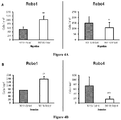
- osteotropic MDA-MB-231/B02 cells overexpressed ROBO1 and ROBO4 compared with the parental cell line.
- ROBO2 and ROBO3 were not expressed by MDA-MB-231 and MDA-MB-231/B02 cells.
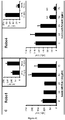
- the Robo ligands SLIT2 and, to a lesser extent, SLIT1 (but not SLIT3) were also expressed by MDA-MB-231 and MDA-MB-231/B02 cells.
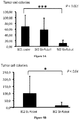
- ROBO1 silencing enhances, whereas ROBO4 silencing reduces experimental primary tumor growth
- VEGF levels produced by ShRobo1 breast cancer cells were also statistically significantly increased compared with ScRobo1 and parental B02 cells (data not shown).
- the orthotopic implantation within the mouse mammary gland of B02 breast cancer cells silenced for ROBO4 led to a 3-fold decrease in median size of primary ShRobo4 tumors compared with ScRobo4 tumors.
- the smaller size of ShRobo4 tumors was associated with decreased tumor angiogenesis, as judged by CD31 immunostaining.
- VEGF levels produced by ShRobo4 and ScRobo4 breast cancer cells were however similar. Taken together, these data suggested that Robo1 and Robo4 expressed on tumor cells had antagonistic functions; Robo1 and Robo4 being, respectively, negative and positive regulators of primary tumor growth.
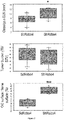
- Robol and Robo4 differently regulate breast cancer skeletal outgrowth and the formation of osteolytic lesions.
- osteolytic lesions formed by Sh-Robo4 tumor cells were comparable to that observed in metastatic legs from animals bearing Sc-Robo4 tumors. This was unexpected given that ROBO4 silencing decreased the skeletal tumor burden in metastatic animals, compared with ScRobo4 tumors. However, there was also a sharp increase of TRAP-positive osteoclasts at the tumor-bone interface and higher levels of the pro-osteoclastic cytokine IL-8 in the serum of animals bearing ShRobo4 tumors, compared with ScRobo4 tumors. Thus, a high endogenous osteoclast-stimulatory activity of ShRobo4 tumor cells likely explained why ShRobo4 tumor-bearing animals had osteolytic lesions despite a reduction of skeletal tumor burden.
- B02 cells pre-treated with anti-Robo4 antibody were injected into the tail artery of immunodeficient mice.
- the bone marrow was flushed from the hind limbs of these animals and placed in culture under antibiotic selection, allowing the selective growth of antibiotic-resistant tumor cells.
- tumor cell colonies were fixed, stained and counted.
- Each series of 3 wells shows outgrowth of tumor cell colonies from the bone marrow of a single animal.
- Figure 9 shows that the treatment of human B02 breast cancer cells with a polyclonal antibody directed against Robo4 inhibits the formation of bone marrow micrometastases in animals.
Landscapes
- Health & Medical Sciences (AREA)
- Life Sciences & Earth Sciences (AREA)
- Chemical & Material Sciences (AREA)
- Engineering & Computer Science (AREA)
- Immunology (AREA)
- Organic Chemistry (AREA)
- Molecular Biology (AREA)
- Genetics & Genomics (AREA)
- General Health & Medical Sciences (AREA)
- Biomedical Technology (AREA)
- Medicinal Chemistry (AREA)
- Biochemistry (AREA)
- Biotechnology (AREA)
- Bioinformatics & Cheminformatics (AREA)
- Proteomics, Peptides & Aminoacids (AREA)
- Biophysics (AREA)
- Zoology (AREA)
- Cell Biology (AREA)
- Microbiology (AREA)
- Wood Science & Technology (AREA)
- Physics & Mathematics (AREA)
- General Engineering & Computer Science (AREA)
- Urology & Nephrology (AREA)
- Hematology (AREA)
- Animal Behavior & Ethology (AREA)
- Veterinary Medicine (AREA)
- Pharmacology & Pharmacy (AREA)
- Public Health (AREA)
- Analytical Chemistry (AREA)
- Pathology (AREA)
- Epidemiology (AREA)
- Food Science & Technology (AREA)
- General Physics & Mathematics (AREA)
- Oncology (AREA)
- Plant Pathology (AREA)
- Gastroenterology & Hepatology (AREA)
- Nuclear Medicine, Radiotherapy & Molecular Imaging (AREA)
- General Chemical & Material Sciences (AREA)
- Chemical Kinetics & Catalysis (AREA)
- Hospice & Palliative Care (AREA)
Claims (11)
- Agent sélectionné dans le groupe constitué d'un anticorps anti-ROBO4, d'un polypeptide leurre de ROBO4, et d'un inhibiteur de l'expression de ROBO4 pour son utilisation dans un procédé de prévention ou de traitement des métastases osseuses chez un sujet le nécessitant dans lequel l'inhibiteur de l'expression de ROBO4 est sélectionné dans le groupe constitué d'ARNsi de ROBO4, d'ARNsh de ROBO4, de ribozymes de ROBO4 et d'oligonucléotides antisens de ROBO4 et dans lequel le polypeptide leurre de ROBO4 comprend le domaine extracellulaire de ROBO4.
- Agent pour son utilisation selon la revendication 1 dans lequel le sujet souffre d'un cancer sélectionné dans le groupe constitué du cancer de la prostate, du cancer du sein, du cancer du poumon, d'un mélanome, du cancer du pancréas, du cancer colorectal, du cancer de l'ovaire et du cancer du cerveau.
- Agent pour son utilisation selon la revendication 1 dans lequel l'anticorps est sélectionné dans le groupe constitué d'anticorps chimériques, d'anticorps humanisés et d'anticorps monoclonaux entièrement humains.
- Agent pour son utilisation selon la revendication 1 dans lequel le polypeptide leurre de ROBO4 comprend le domaine extracellulaire de ROBO4 fusionné au domaine Fc d'une immunoglobuline.
- Agent pour son utilisation selon la revendication 1 dans lequel l'agent est administré au sujet en combinaison avec des bisphosphonates
- Agent pour son utilisation selon la revendication 1 dans lequel l'agent est administré au sujet en combinaison avec un anticorps anti-RANKL.
- Agent pour son utilisation selon la revendication 6 dans lequel l'anticorps anti-RANKL est le dénosumab.
- Procédé de test du fait qu'un patient atteint d'un cancer risque de développer des métastases osseuses comprenant i) la détermination du niveau de ROBO4 dans un échantillon obtenu dudit patient ii) la comparaison du niveau déterminé à l'étape i) à un niveau de référence prédéterminé et iii) la conclusion que le patient présente un risque élevé de développer des métastases osseuses lorsque le niveau déterminé à l'étape i) est supérieur au niveau de référence prédéterminé.
- Procédé selon la revendication 8 dans lequel l'échantillon est isolé de la tumeur primaire du patient ou est constitué d'une collecte de cellules tumorales circulantes isolées de l'échantillon de sang obtenu du sujet.
- Procédé selon la revendication 8 dans lequel le sujet souffre d'un cancer sélectionné dans le groupe constitué du cancer de la prostate, du cancer du sein, du cancer du poumon, d'un mélanome, du cancer du pancréas, du cancer colorectal, du cancer de l'ovaire et du cancer du cerveau.
- Procédé selon la revendication 8 dans lequel le niveau d'expression de ROBO4 dans l'échantillon est évalué par détermination du nombre de cellules cancéreuses exprimant ROBO4 ou du niveau de ROBO4 sur la surface des cellules cancéreuses.
Priority Applications (1)
| Application Number | Priority Date | Filing Date | Title |
|---|---|---|---|
| EP13786515.0A EP2917347B1 (fr) | 2012-11-08 | 2013-11-07 | Procédés et compositions pharmaceutiques pour le traitement des métastases osseuses |
Applications Claiming Priority (5)
| Application Number | Priority Date | Filing Date | Title |
|---|---|---|---|
| EP12306376 | 2012-11-08 | ||
| US201361772999P | 2013-03-05 | 2013-03-05 | |
| US201361777518P | 2013-03-12 | 2013-03-12 | |
| EP13786515.0A EP2917347B1 (fr) | 2012-11-08 | 2013-11-07 | Procédés et compositions pharmaceutiques pour le traitement des métastases osseuses |
| PCT/EP2013/073284 WO2014072416A1 (fr) | 2012-11-08 | 2013-11-07 | Méthodes et compositions pharmaceutiques pour le traitement de métastases osseuses |
Publications (2)
| Publication Number | Publication Date |
|---|---|
| EP2917347A1 EP2917347A1 (fr) | 2015-09-16 |
| EP2917347B1 true EP2917347B1 (fr) | 2019-01-02 |
Family
ID=47278728
Family Applications (1)
| Application Number | Title | Priority Date | Filing Date |
|---|---|---|---|
| EP13786515.0A Not-in-force EP2917347B1 (fr) | 2012-11-08 | 2013-11-07 | Procédés et compositions pharmaceutiques pour le traitement des métastases osseuses |
Country Status (4)
| Country | Link |
|---|---|
| US (2) | US20150307622A1 (fr) |
| EP (1) | EP2917347B1 (fr) |
| JP (1) | JP6445446B2 (fr) |
| WO (1) | WO2014072416A1 (fr) |
Families Citing this family (2)
| Publication number | Priority date | Publication date | Assignee | Title |
|---|---|---|---|---|
| EP3621651A1 (fr) * | 2017-05-08 | 2020-03-18 | Augmanity Nano Ltd | Traitement d'entités biologiques à évolution rapide |
| US20250066471A1 (en) | 2022-02-16 | 2025-02-27 | Institut National de la Santé et de la Recherche Médicale | Anti-robo4 human monoclonal antibodies and uses thereof for the treatment of cancer |
Family Cites Families (31)
| Publication number | Priority date | Publication date | Assignee | Title |
|---|---|---|---|---|
| US4816567A (en) | 1983-04-08 | 1989-03-28 | Genentech, Inc. | Recombinant immunoglobin preparations |
| US4683202A (en) | 1985-03-28 | 1987-07-28 | Cetus Corporation | Process for amplifying nucleic acid sequences |
| US5225539A (en) | 1986-03-27 | 1993-07-06 | Medical Research Council | Recombinant altered antibodies and methods of making altered antibodies |
| US5567610A (en) | 1986-09-04 | 1996-10-22 | Bioinvent International Ab | Method of producing human monoclonal antibodies and kit therefor |
| GB8823869D0 (en) | 1988-10-12 | 1988-11-16 | Medical Res Council | Production of antibodies |
| US5175384A (en) | 1988-12-05 | 1992-12-29 | Genpharm International | Transgenic mice depleted in mature t-cells and methods for making transgenic mice |
| IL162181A (en) | 1988-12-28 | 2006-04-10 | Pdl Biopharma Inc | A method of producing humanized immunoglubulin, and polynucleotides encoding the same |
| US5530101A (en) | 1988-12-28 | 1996-06-25 | Protein Design Labs, Inc. | Humanized immunoglobulins |
| US5859205A (en) | 1989-12-21 | 1999-01-12 | Celltech Limited | Humanised antibodies |
| US6150584A (en) | 1990-01-12 | 2000-11-21 | Abgenix, Inc. | Human antibodies derived from immunized xenomice |
| US5229275A (en) | 1990-04-26 | 1993-07-20 | Akzo N.V. | In-vitro method for producing antigen-specific human monoclonal antibodies |
| US5545806A (en) | 1990-08-29 | 1996-08-13 | Genpharm International, Inc. | Ransgenic non-human animals for producing heterologous antibodies |
| US5565332A (en) | 1991-09-23 | 1996-10-15 | Medical Research Council | Production of chimeric antibodies - a combinatorial approach |
| US5573905A (en) | 1992-03-30 | 1996-11-12 | The Scripps Research Institute | Encoded combinatorial chemical libraries |
| EP0690452A3 (fr) | 1994-06-28 | 1999-01-07 | Advanced Micro Devices, Inc. | Mémoire électriquement effaçable et procédé d'effacement |
| US5854033A (en) | 1995-11-21 | 1998-12-29 | Yale University | Rolling circle replication reporter systems |
| US6506559B1 (en) | 1997-12-23 | 2003-01-14 | Carnegie Institute Of Washington | Genetic inhibition by double-stranded RNA |
| AUPP249298A0 (en) | 1998-03-20 | 1998-04-23 | Ag-Gene Australia Limited | Synthetic genes and genetic constructs comprising same I |
| US6566131B1 (en) | 2000-10-04 | 2003-05-20 | Isis Pharmaceuticals, Inc. | Antisense modulation of Smad6 expression |
| US6410323B1 (en) | 1999-08-31 | 2002-06-25 | Isis Pharmaceuticals, Inc. | Antisense modulation of human Rho family gene expression |
| US6107091A (en) | 1998-12-03 | 2000-08-22 | Isis Pharmaceuticals Inc. | Antisense inhibition of G-alpha-16 expression |
| US5981732A (en) | 1998-12-04 | 1999-11-09 | Isis Pharmaceuticals Inc. | Antisense modulation of G-alpha-13 expression |
| US6046321A (en) | 1999-04-09 | 2000-04-04 | Isis Pharmaceuticals Inc. | Antisense modulation of G-alpha-i1 expression |
| GB9927444D0 (en) | 1999-11-19 | 2000-01-19 | Cancer Res Campaign Tech | Inhibiting gene expression |
| WO2001068836A2 (fr) | 2000-03-16 | 2001-09-20 | Genetica, Inc. | Procedes et compositions d'interference d'arn |
| US6365354B1 (en) | 2000-07-31 | 2002-04-02 | Isis Pharmaceuticals, Inc. | Antisense modulation of lysophospholipase I expression |
| US6566135B1 (en) | 2000-10-04 | 2003-05-20 | Isis Pharmaceuticals, Inc. | Antisense modulation of caspase 6 expression |
| JP2004524821A (ja) * | 2000-11-06 | 2004-08-19 | キャンサー・リサーチ・テクノロジー・リミテッド | 疾患のイメージング、診断、及び治療 |
| BRPI0806403A2 (pt) * | 2007-02-09 | 2011-09-06 | Genentech Inc | anticorpo anti-robo4, usode um anticorpo e método de obtenção de imagem |
| US20130195863A1 (en) * | 2010-09-28 | 2013-08-01 | Philippe Clezardin | Methods and Pharmaceutical Compositions for the Treatment of Bone Density Related Diseases |
| US20160228547A1 (en) * | 2015-02-06 | 2016-08-11 | Batu Biologics, Inc. | Chimeric antigen receptor targeting of tumor endothelium |
-
2013
- 2013-11-07 EP EP13786515.0A patent/EP2917347B1/fr not_active Not-in-force
- 2013-11-07 JP JP2015541132A patent/JP6445446B2/ja not_active Expired - Fee Related
- 2013-11-07 WO PCT/EP2013/073284 patent/WO2014072416A1/fr not_active Ceased
- 2013-11-08 US US14/440,933 patent/US20150307622A1/en not_active Abandoned
-
2017
- 2017-11-29 US US15/825,167 patent/US20180086842A1/en not_active Abandoned
Also Published As
| Publication number | Publication date |
|---|---|
| JP2016515092A (ja) | 2016-05-26 |
| EP2917347A1 (fr) | 2015-09-16 |
| JP6445446B2 (ja) | 2018-12-26 |
| US20180086842A1 (en) | 2018-03-29 |
| WO2014072416A1 (fr) | 2014-05-15 |
| US20150307622A1 (en) | 2015-10-29 |
Similar Documents
| Publication | Publication Date | Title |
|---|---|---|
| US8153122B2 (en) | Pharmaceutical composition for treating cholangiocarcinoma, a method for inhibiting growth or invasion of cholangiocarcinoma and a method for treating cholangiocarcinoma | |
| JP7536049B2 (ja) | 血管新生障害の処置 | |
| JP5919593B2 (ja) | 併用療法 | |
| JP5796269B2 (ja) | 抗areg/hb−egf抗体と治療 | |
| JP2022521591A (ja) | 腎障害の治療 | |
| US20180086842A1 (en) | Methods and pharmaceutical compositions for the treatment of bone metastases | |
| US20170037120A1 (en) | Methods for Modulating Angiogenesis of Cancers Refractory to Anti-VEGF Treatment | |
| JP2022532303A (ja) | Fmrp及び癌治療 | |
| JP2024530943A (ja) | がんの処置のための方法 | |
| WO2023165618A1 (fr) | Méthodes de traitement du cancer | |
| ES2710174T3 (es) | Métodos y composiciones farmacéuticas para el tratamiento de la metástasis ósea | |
| JP7580739B2 (ja) | オンコスタチンm受容体シグナリング制御による尿路結石の予防と治療 | |
| US20250326825A1 (en) | Anti-fabp4 antibodies and their uses | |
| WO2018167283A1 (fr) | Procédés pour le diagnostic et le traitement d'un remodelage neuronal associé à un adénocarcinome canalaire pancréatique | |
| HK40023089A (en) | Method for identifying nucleic acids regulating metastasation | |
| KR20120021713A (ko) | L1cam의 발현 또는 활성 억제제를 유효성분으로 함유하는 담낭암 치료용 약학적 조성물 및 l1cam을 이용한 담낭암의 성장 또는 전이 억제, 진단 및 치료방법 | |
| EP3256148A1 (fr) | Procédés pour prédire la réactivité d'un patient atteint d'une maladie hématologique maligne à un traitement par chimiothérapie et procédés de traitement de ces maladies |
Legal Events
| Date | Code | Title | Description |
|---|---|---|---|
| PUAI | Public reference made under article 153(3) epc to a published international application that has entered the european phase |
Free format text: ORIGINAL CODE: 0009012 |
|
| 17P | Request for examination filed |
Effective date: 20150511 |
|
| AK | Designated contracting states |
Kind code of ref document: A1 Designated state(s): AL AT BE BG CH CY CZ DE DK EE ES FI FR GB GR HR HU IE IS IT LI LT LU LV MC MK MT NL NO PL PT RO RS SE SI SK SM TR |
|
| AX | Request for extension of the european patent |
Extension state: BA ME |
|
| RIN1 | Information on inventor provided before grant (corrected) |
Inventor name: CLEMENT-DEMANGE, LISE Inventor name: DIAZ-LATOUD, CHANTAL Inventor name: ECKEL, BENEDICTE Inventor name: CLEZARDIN, PHILIPPE |
|
| DAX | Request for extension of the european patent (deleted) | ||
| STAA | Information on the status of an ep patent application or granted ep patent |
Free format text: STATUS: EXAMINATION IS IN PROGRESS |
|
| 17Q | First examination report despatched |
Effective date: 20170216 |
|
| GRAP | Despatch of communication of intention to grant a patent |
Free format text: ORIGINAL CODE: EPIDOSNIGR1 |
|
| STAA | Information on the status of an ep patent application or granted ep patent |
Free format text: STATUS: GRANT OF PATENT IS INTENDED |
|
| INTG | Intention to grant announced |
Effective date: 20180809 |
|
| GRAS | Grant fee paid |
Free format text: ORIGINAL CODE: EPIDOSNIGR3 |
|
| GRAA | (expected) grant |
Free format text: ORIGINAL CODE: 0009210 |
|
| STAA | Information on the status of an ep patent application or granted ep patent |
Free format text: STATUS: THE PATENT HAS BEEN GRANTED |
|
| AK | Designated contracting states |
Kind code of ref document: B1 Designated state(s): AL AT BE BG CH CY CZ DE DK EE ES FI FR GB GR HR HU IE IS IT LI LT LU LV MC MK MT NL NO PL PT RO RS SE SI SK SM TR |
|
| REG | Reference to a national code |
Ref country code: GB Ref legal event code: FG4D |
|
| REG | Reference to a national code |
Ref country code: CH Ref legal event code: EP Ref country code: AT Ref legal event code: REF Ref document number: 1084414 Country of ref document: AT Kind code of ref document: T Effective date: 20190115 |
|
| REG | Reference to a national code |
Ref country code: IE Ref legal event code: FG4D |
|
| REG | Reference to a national code |
Ref country code: DE Ref legal event code: R096 Ref document number: 602013049260 Country of ref document: DE |
|
| REG | Reference to a national code |
Ref country code: ES Ref legal event code: FG2A Ref document number: 2710174 Country of ref document: ES Kind code of ref document: T3 Effective date: 20190423 |
|
| REG | Reference to a national code |
Ref country code: NL Ref legal event code: MP Effective date: 20190102 |
|
| REG | Reference to a national code |
Ref country code: LT Ref legal event code: MG4D |
|
| REG | Reference to a national code |
Ref country code: AT Ref legal event code: MK05 Ref document number: 1084414 Country of ref document: AT Kind code of ref document: T Effective date: 20190102 |
|
| PG25 | Lapsed in a contracting state [announced via postgrant information from national office to epo] |
Ref country code: NL Free format text: LAPSE BECAUSE OF FAILURE TO SUBMIT A TRANSLATION OF THE DESCRIPTION OR TO PAY THE FEE WITHIN THE PRESCRIBED TIME-LIMIT Effective date: 20190102 |
|
| PG25 | Lapsed in a contracting state [announced via postgrant information from national office to epo] |
Ref country code: LT Free format text: LAPSE BECAUSE OF FAILURE TO SUBMIT A TRANSLATION OF THE DESCRIPTION OR TO PAY THE FEE WITHIN THE PRESCRIBED TIME-LIMIT Effective date: 20190102 Ref country code: PL Free format text: LAPSE BECAUSE OF FAILURE TO SUBMIT A TRANSLATION OF THE DESCRIPTION OR TO PAY THE FEE WITHIN THE PRESCRIBED TIME-LIMIT Effective date: 20190102 Ref country code: NO Free format text: LAPSE BECAUSE OF FAILURE TO SUBMIT A TRANSLATION OF THE DESCRIPTION OR TO PAY THE FEE WITHIN THE PRESCRIBED TIME-LIMIT Effective date: 20190402 Ref country code: SE Free format text: LAPSE BECAUSE OF FAILURE TO SUBMIT A TRANSLATION OF THE DESCRIPTION OR TO PAY THE FEE WITHIN THE PRESCRIBED TIME-LIMIT Effective date: 20190102 Ref country code: PT Free format text: LAPSE BECAUSE OF FAILURE TO SUBMIT A TRANSLATION OF THE DESCRIPTION OR TO PAY THE FEE WITHIN THE PRESCRIBED TIME-LIMIT Effective date: 20190502 Ref country code: FI Free format text: LAPSE BECAUSE OF FAILURE TO SUBMIT A TRANSLATION OF THE DESCRIPTION OR TO PAY THE FEE WITHIN THE PRESCRIBED TIME-LIMIT Effective date: 20190102 |
|
| PG25 | Lapsed in a contracting state [announced via postgrant information from national office to epo] |
Ref country code: HR Free format text: LAPSE BECAUSE OF FAILURE TO SUBMIT A TRANSLATION OF THE DESCRIPTION OR TO PAY THE FEE WITHIN THE PRESCRIBED TIME-LIMIT Effective date: 20190102 Ref country code: GR Free format text: LAPSE BECAUSE OF FAILURE TO SUBMIT A TRANSLATION OF THE DESCRIPTION OR TO PAY THE FEE WITHIN THE PRESCRIBED TIME-LIMIT Effective date: 20190403 Ref country code: LV Free format text: LAPSE BECAUSE OF FAILURE TO SUBMIT A TRANSLATION OF THE DESCRIPTION OR TO PAY THE FEE WITHIN THE PRESCRIBED TIME-LIMIT Effective date: 20190102 Ref country code: IS Free format text: LAPSE BECAUSE OF FAILURE TO SUBMIT A TRANSLATION OF THE DESCRIPTION OR TO PAY THE FEE WITHIN THE PRESCRIBED TIME-LIMIT Effective date: 20190502 Ref country code: RS Free format text: LAPSE BECAUSE OF FAILURE TO SUBMIT A TRANSLATION OF THE DESCRIPTION OR TO PAY THE FEE WITHIN THE PRESCRIBED TIME-LIMIT Effective date: 20190102 Ref country code: BG Free format text: LAPSE BECAUSE OF FAILURE TO SUBMIT A TRANSLATION OF THE DESCRIPTION OR TO PAY THE FEE WITHIN THE PRESCRIBED TIME-LIMIT Effective date: 20190402 |
|
| REG | Reference to a national code |
Ref country code: DE Ref legal event code: R097 Ref document number: 602013049260 Country of ref document: DE |
|
| PG25 | Lapsed in a contracting state [announced via postgrant information from national office to epo] |
Ref country code: AL Free format text: LAPSE BECAUSE OF FAILURE TO SUBMIT A TRANSLATION OF THE DESCRIPTION OR TO PAY THE FEE WITHIN THE PRESCRIBED TIME-LIMIT Effective date: 20190102 Ref country code: CZ Free format text: LAPSE BECAUSE OF FAILURE TO SUBMIT A TRANSLATION OF THE DESCRIPTION OR TO PAY THE FEE WITHIN THE PRESCRIBED TIME-LIMIT Effective date: 20190102 Ref country code: DK Free format text: LAPSE BECAUSE OF FAILURE TO SUBMIT A TRANSLATION OF THE DESCRIPTION OR TO PAY THE FEE WITHIN THE PRESCRIBED TIME-LIMIT Effective date: 20190102 Ref country code: AT Free format text: LAPSE BECAUSE OF FAILURE TO SUBMIT A TRANSLATION OF THE DESCRIPTION OR TO PAY THE FEE WITHIN THE PRESCRIBED TIME-LIMIT Effective date: 20190102 Ref country code: EE Free format text: LAPSE BECAUSE OF FAILURE TO SUBMIT A TRANSLATION OF THE DESCRIPTION OR TO PAY THE FEE WITHIN THE PRESCRIBED TIME-LIMIT Effective date: 20190102 Ref country code: SK Free format text: LAPSE BECAUSE OF FAILURE TO SUBMIT A TRANSLATION OF THE DESCRIPTION OR TO PAY THE FEE WITHIN THE PRESCRIBED TIME-LIMIT Effective date: 20190102 Ref country code: RO Free format text: LAPSE BECAUSE OF FAILURE TO SUBMIT A TRANSLATION OF THE DESCRIPTION OR TO PAY THE FEE WITHIN THE PRESCRIBED TIME-LIMIT Effective date: 20190102 |
|
| PLBE | No opposition filed within time limit |
Free format text: ORIGINAL CODE: 0009261 |
|
| STAA | Information on the status of an ep patent application or granted ep patent |
Free format text: STATUS: NO OPPOSITION FILED WITHIN TIME LIMIT |
|
| PG25 | Lapsed in a contracting state [announced via postgrant information from national office to epo] |
Ref country code: SM Free format text: LAPSE BECAUSE OF FAILURE TO SUBMIT A TRANSLATION OF THE DESCRIPTION OR TO PAY THE FEE WITHIN THE PRESCRIBED TIME-LIMIT Effective date: 20190102 |
|
| 26N | No opposition filed |
Effective date: 20191003 |
|
| PG25 | Lapsed in a contracting state [announced via postgrant information from national office to epo] |
Ref country code: SI Free format text: LAPSE BECAUSE OF FAILURE TO SUBMIT A TRANSLATION OF THE DESCRIPTION OR TO PAY THE FEE WITHIN THE PRESCRIBED TIME-LIMIT Effective date: 20190102 |
|
| PG25 | Lapsed in a contracting state [announced via postgrant information from national office to epo] |
Ref country code: TR Free format text: LAPSE BECAUSE OF FAILURE TO SUBMIT A TRANSLATION OF THE DESCRIPTION OR TO PAY THE FEE WITHIN THE PRESCRIBED TIME-LIMIT Effective date: 20190102 |
|
| REG | Reference to a national code |
Ref country code: CH Ref legal event code: PL |
|
| PG25 | Lapsed in a contracting state [announced via postgrant information from national office to epo] |
Ref country code: LI Free format text: LAPSE BECAUSE OF NON-PAYMENT OF DUE FEES Effective date: 20191130 Ref country code: LU Free format text: LAPSE BECAUSE OF NON-PAYMENT OF DUE FEES Effective date: 20191107 Ref country code: MC Free format text: LAPSE BECAUSE OF FAILURE TO SUBMIT A TRANSLATION OF THE DESCRIPTION OR TO PAY THE FEE WITHIN THE PRESCRIBED TIME-LIMIT Effective date: 20190102 Ref country code: CH Free format text: LAPSE BECAUSE OF NON-PAYMENT OF DUE FEES Effective date: 20191130 |
|
| REG | Reference to a national code |
Ref country code: BE Ref legal event code: MM Effective date: 20191130 |
|
| PG25 | Lapsed in a contracting state [announced via postgrant information from national office to epo] |
Ref country code: IE Free format text: LAPSE BECAUSE OF NON-PAYMENT OF DUE FEES Effective date: 20191107 |
|
| PG25 | Lapsed in a contracting state [announced via postgrant information from national office to epo] |
Ref country code: BE Free format text: LAPSE BECAUSE OF NON-PAYMENT OF DUE FEES Effective date: 20191130 |
|
| PGFP | Annual fee paid to national office [announced via postgrant information from national office to epo] |
Ref country code: DE Payment date: 20201020 Year of fee payment: 8 Ref country code: IT Payment date: 20201021 Year of fee payment: 8 Ref country code: FR Payment date: 20201021 Year of fee payment: 8 Ref country code: ES Payment date: 20201201 Year of fee payment: 8 Ref country code: GB Payment date: 20201021 Year of fee payment: 8 |
|
| PG25 | Lapsed in a contracting state [announced via postgrant information from national office to epo] |
Ref country code: CY Free format text: LAPSE BECAUSE OF FAILURE TO SUBMIT A TRANSLATION OF THE DESCRIPTION OR TO PAY THE FEE WITHIN THE PRESCRIBED TIME-LIMIT Effective date: 20190102 |
|
| PG25 | Lapsed in a contracting state [announced via postgrant information from national office to epo] |
Ref country code: MT Free format text: LAPSE BECAUSE OF FAILURE TO SUBMIT A TRANSLATION OF THE DESCRIPTION OR TO PAY THE FEE WITHIN THE PRESCRIBED TIME-LIMIT Effective date: 20190102 Ref country code: HU Free format text: LAPSE BECAUSE OF FAILURE TO SUBMIT A TRANSLATION OF THE DESCRIPTION OR TO PAY THE FEE WITHIN THE PRESCRIBED TIME-LIMIT; INVALID AB INITIO Effective date: 20131107 |
|
| REG | Reference to a national code |
Ref country code: DE Ref legal event code: R119 Ref document number: 602013049260 Country of ref document: DE |
|
| PG25 | Lapsed in a contracting state [announced via postgrant information from national office to epo] |
Ref country code: MK Free format text: LAPSE BECAUSE OF FAILURE TO SUBMIT A TRANSLATION OF THE DESCRIPTION OR TO PAY THE FEE WITHIN THE PRESCRIBED TIME-LIMIT Effective date: 20190102 |
|
| GBPC | Gb: european patent ceased through non-payment of renewal fee |
Effective date: 20211107 |
|
| PG25 | Lapsed in a contracting state [announced via postgrant information from national office to epo] |
Ref country code: GB Free format text: LAPSE BECAUSE OF NON-PAYMENT OF DUE FEES Effective date: 20211107 Ref country code: DE Free format text: LAPSE BECAUSE OF NON-PAYMENT OF DUE FEES Effective date: 20220601 |
|
| PG25 | Lapsed in a contracting state [announced via postgrant information from national office to epo] |
Ref country code: FR Free format text: LAPSE BECAUSE OF NON-PAYMENT OF DUE FEES Effective date: 20211130 |
|
| PG25 | Lapsed in a contracting state [announced via postgrant information from national office to epo] |
Ref country code: IT Free format text: LAPSE BECAUSE OF NON-PAYMENT OF DUE FEES Effective date: 20211107 |
|
| REG | Reference to a national code |
Ref country code: ES Ref legal event code: FD2A Effective date: 20230222 |
|
| PG25 | Lapsed in a contracting state [announced via postgrant information from national office to epo] |
Ref country code: ES Free format text: LAPSE BECAUSE OF NON-PAYMENT OF DUE FEES Effective date: 20211108 |