EP2918128B1 - Verfahren und anordnungen zur ressourcenzuweisung - Google Patents
Verfahren und anordnungen zur ressourcenzuweisung Download PDFInfo
- Publication number
- EP2918128B1 EP2918128B1 EP12788320.5A EP12788320A EP2918128B1 EP 2918128 B1 EP2918128 B1 EP 2918128B1 EP 12788320 A EP12788320 A EP 12788320A EP 2918128 B1 EP2918128 B1 EP 2918128B1
- Authority
- EP
- European Patent Office
- Prior art keywords
- user equipment
- network node
- division duplex
- timing
- uplink
- Prior art date
- Legal status (The legal status is an assumption and is not a legal conclusion. Google has not performed a legal analysis and makes no representation as to the accuracy of the status listed.)
- Not-in-force
Links
- 238000000034 method Methods 0.000 title claims description 33
- 238000013468 resource allocation Methods 0.000 title 1
- 230000005540 biological transmission Effects 0.000 claims description 22
- 238000012545 processing Methods 0.000 claims description 16
- 230000011664 signaling Effects 0.000 claims description 9
- 238000004590 computer program Methods 0.000 description 22
- 238000004891 communication Methods 0.000 description 12
- 230000001419 dependent effect Effects 0.000 description 4
- 230000001413 cellular effect Effects 0.000 description 3
- 230000006870 function Effects 0.000 description 3
- 238000010586 diagram Methods 0.000 description 2
- 238000010295 mobile communication Methods 0.000 description 2
- 230000009286 beneficial effect Effects 0.000 description 1
- 238000005265 energy consumption Methods 0.000 description 1
- 238000005516 engineering process Methods 0.000 description 1
- 238000005562 fading Methods 0.000 description 1
- 230000007774 longterm Effects 0.000 description 1
- 238000013507 mapping Methods 0.000 description 1
- 230000001360 synchronised effect Effects 0.000 description 1
- 230000036962 time dependent Effects 0.000 description 1
- 238000012546 transfer Methods 0.000 description 1
Images




Classifications
-
- H—ELECTRICITY
- H04—ELECTRIC COMMUNICATION TECHNIQUE
- H04W—WIRELESS COMMUNICATION NETWORKS
- H04W72/00—Local resource management
- H04W72/12—Wireless traffic scheduling
- H04W72/1263—Mapping of traffic onto schedule, e.g. scheduled allocation or multiplexing of flows
- H04W72/1268—Mapping of traffic onto schedule, e.g. scheduled allocation or multiplexing of flows of uplink data flows
-
- H—ELECTRICITY
- H04—ELECTRIC COMMUNICATION TECHNIQUE
- H04W—WIRELESS COMMUNICATION NETWORKS
- H04W72/00—Local resource management
- H04W72/12—Wireless traffic scheduling
- H04W72/1263—Mapping of traffic onto schedule, e.g. scheduled allocation or multiplexing of flows
-
- H—ELECTRICITY
- H04—ELECTRIC COMMUNICATION TECHNIQUE
- H04J—MULTIPLEX COMMUNICATION
- H04J4/00—Combined time-division and frequency-division multiplex systems
-
- H—ELECTRICITY
- H04—ELECTRIC COMMUNICATION TECHNIQUE
- H04L—TRANSMISSION OF DIGITAL INFORMATION, e.g. TELEGRAPHIC COMMUNICATION
- H04L1/00—Arrangements for detecting or preventing errors in the information received
- H04L1/12—Arrangements for detecting or preventing errors in the information received by using return channel
- H04L1/16—Arrangements for detecting or preventing errors in the information received by using return channel in which the return channel carries supervisory signals, e.g. repetition request signals
- H04L1/18—Automatic repetition systems, e.g. Van Duuren systems
- H04L1/1812—Hybrid protocols; Hybrid automatic repeat request [HARQ]
-
- H—ELECTRICITY
- H04—ELECTRIC COMMUNICATION TECHNIQUE
- H04L—TRANSMISSION OF DIGITAL INFORMATION, e.g. TELEGRAPHIC COMMUNICATION
- H04L1/00—Arrangements for detecting or preventing errors in the information received
- H04L1/12—Arrangements for detecting or preventing errors in the information received by using return channel
- H04L1/16—Arrangements for detecting or preventing errors in the information received by using return channel in which the return channel carries supervisory signals, e.g. repetition request signals
- H04L1/18—Automatic repetition systems, e.g. Van Duuren systems
- H04L1/1867—Arrangements specially adapted for the transmitter end
- H04L1/1887—Scheduling and prioritising arrangements
-
- H—ELECTRICITY
- H04—ELECTRIC COMMUNICATION TECHNIQUE
- H04L—TRANSMISSION OF DIGITAL INFORMATION, e.g. TELEGRAPHIC COMMUNICATION
- H04L1/00—Arrangements for detecting or preventing errors in the information received
- H04L1/12—Arrangements for detecting or preventing errors in the information received by using return channel
- H04L1/16—Arrangements for detecting or preventing errors in the information received by using return channel in which the return channel carries supervisory signals, e.g. repetition request signals
- H04L1/18—Automatic repetition systems, e.g. Van Duuren systems
- H04L1/1867—Arrangements specially adapted for the transmitter end
- H04L1/1896—ARQ related signaling
-
- H—ELECTRICITY
- H04—ELECTRIC COMMUNICATION TECHNIQUE
- H04L—TRANSMISSION OF DIGITAL INFORMATION, e.g. TELEGRAPHIC COMMUNICATION
- H04L1/00—Arrangements for detecting or preventing errors in the information received
- H04L1/12—Arrangements for detecting or preventing errors in the information received by using return channel
- H04L1/16—Arrangements for detecting or preventing errors in the information received by using return channel in which the return channel carries supervisory signals, e.g. repetition request signals
- H04L1/18—Automatic repetition systems, e.g. Van Duuren systems
- H04L1/1812—Hybrid protocols; Hybrid automatic repeat request [HARQ]
- H04L1/1819—Hybrid protocols; Hybrid automatic repeat request [HARQ] with retransmission of additional or different redundancy
-
- H—ELECTRICITY
- H04—ELECTRIC COMMUNICATION TECHNIQUE
- H04L—TRANSMISSION OF DIGITAL INFORMATION, e.g. TELEGRAPHIC COMMUNICATION
- H04L1/00—Arrangements for detecting or preventing errors in the information received
- H04L1/12—Arrangements for detecting or preventing errors in the information received by using return channel
- H04L1/16—Arrangements for detecting or preventing errors in the information received by using return channel in which the return channel carries supervisory signals, e.g. repetition request signals
- H04L1/18—Automatic repetition systems, e.g. Van Duuren systems
- H04L1/1867—Arrangements specially adapted for the transmitter end
- H04L1/1893—Physical mapping arrangements
-
- H—ELECTRICITY
- H04—ELECTRIC COMMUNICATION TECHNIQUE
- H04W—WIRELESS COMMUNICATION NETWORKS
- H04W72/00—Local resource management
- H04W72/04—Wireless resource allocation
- H04W72/044—Wireless resource allocation based on the type of the allocated resource
- H04W72/0453—Resources in frequency domain, e.g. a carrier in FDMA
Definitions
- the disclosure generally relates to timing the scheduling of resources in a frequency division duplex system, and particular to a user equipment, a network node and methods therein for timing scheduling of resources.
- the Universal Mobile Telecommunication System is one of the 3G mobile communication technologies designed to succeed GSM.
- 3GPP Long Term Evolution LTE is a project within the 3 rd Generation Partnership Project (3GPP) to improve the UMTS standard to cope with future requirements in terms of improved services such as higher data rates, improved efficiency, lowered costs etc.
- the Universal Terrestrial Radio Access Network (UTRAN) is the radio access network of a UMTS system and Evolved UTRAN (E-UTRAN) is the radio access network of an LTE system.
- Evolved UTRAN Evolved Packet System
- EPS Evolved Packet System
- LTE allows for a system bandwidth of up to 20 MHz.
- LTE is also able to operate in different frequency bands and can operate in at least FDD (Frequency Division Duplex) and TDD (Time Division Duplex).
- the modulation technique or the transmission method used in LTE is known as OFDM (Orthogonal Frequency Division Multiplexing).
- OFDM Orthogonal Frequency Division Multiplexing
- IMT-advanced International Mobile Telecommunications
- LTE-Advanced which is an evolution of LTE
- radio base stations are known as eNodeBs.
- FDD Frequency Division Duplex
- Inter-Cell Interference Coordination In cellular networks with a tight frequency reuse pattern and, especially, during high load scenarios, the need may arise to mitigate the interference using so-called Inter-Cell Interference Coordination (ICIC) techniques for downlink and/or uplink transmissions.
- ICIC Inter-Cell Interference Coordination
- ABS Almost Blank Subframes
- PDCCH Physical Downlink Control Channel
- PHICH Physical HARQ Indicator Channel
- PCFICH Physical Control Format Indicator Channel
- PDSCH Physical Downlink Shared Channel
- MTC Machine-Type Communications
- UEs User Equipments
- LTE Long Term Evolution
- MTC devices are to be understood as being a subset of the more general term user equipments.
- Uplink transmissions on the Physical Uplink Shared Channel (PUSCH) from the UE to the network is scheduled by transmitting so-called uplink grants on the PDCCH from the network to the UE.
- PUSCH Physical Uplink Shared Channel
- an uplink grant sent during subframe N schedules an uplink PUSCH transmission during a subframe four subframes later N+4.
- An example of the timing of scheduling of resources in an LTE FDD system is illustrated in Figure 1 .
- the UE receives an uplink grant on the downlink DL from the network node in subframe N.
- the UE is then scheduled to transmit data in the uplink UL during subframe N+4 on the PUSCH.
- subframe N is either blanked by ABS or is a non-downlink half-duplex subframe, and thus that no uplink grant can be transmitted on the PDCCH during this subframe.
- no uplink PUSCH transmission may take place in subframe N+4.
- Figure 2 An illustration of the timing of scheduling of resources in an LTE FDD system using ABS is given in Figure 2 , wherein 25% of the downlink subframes in the cell are blanked by ABS.
- the blanked subframes are denoted 20 in the figure. Consequently, no uplink transmission may take place in 25% of the uplink subframes, denoted 22.
- 25 % of the uplink capacity is lost.
- a method in a network node for timing the scheduling of resources in a frequency division duplex system comprises determining whether the user equipment is prohibited to receive an uplink grant in at least one subframe. Furthermore, if the user equipment is prohibited to receive an uplink grant in at least one subframe, the method further comprises sending an indication to the user equipment to apply a time division duplex configuration to a timing of scheduling of resources.
- a network node configured to enable timing the scheduling of resources in a frequency division duplex system.
- the network node is configured to communicate with a user equipment.
- the network node comprises a processing unit adapted to determine whether the user equipment is prohibited to receive an uplink grant in at least one subframe. Furthermore, if the user equipment is prohibited to receive an uplink grant in at least one subframe, the network node further comprises a transmitter adapted to send an indication to the user equipment to apply a time division duplex configuration to a timing of scheduling of resources.
- An advantage of embodiments of the invention is that they provide improved utilization and flexibility of uplink transmission resources in a FDD communication system since they enables the network to schedule uplink transmission which would otherwise be un-schedulable.
- Another advantage of embodiments of the invention is that they provide the possibility to improve the experienced bit rate of the UE.
- Yet another advantage of embodiments of the invention is that they provide the possibility to improve the battery consumption of the UE.
- the network node may be a radio resource management node, such as a network management node used to control the utilization of the radio resources available within the radio communication system or a radio base station such as an eNodeB.
- a radio resource management node such as a network management node used to control the utilization of the radio resources available within the radio communication system or a radio base station such as an eNodeB.
- a transmitter and a receiver operate at different carrier frequencies. Therefore network nodes and user equipments (UEs) must be able to send and receive Radio Frequency (RF) signals at the same time. This mode of operation is referred to as duplex mode. Uplink and downlink sub-bands are separated by the frequency offset.
- time-division multiplexing is applied to separate uplink and downlink signals. It emulates full-duplex communication over a half-duplex communication link.
- LTE FDD systems require less time synchronization among nodes than LTE TDD systems, and are more efficient in scenarios of symmetric traffic.
- an UE operating in a FDD system may be prohibited to receive uplink grant in some of the subframes. For example, as mentioned above in connection with Figure 2 some subframes in downlink 20 may be blanked and hence the UE is prohibited to receive uplink grant in some of the subframes 22.
- some subframes are not downlink subframes and hence the UE is prohibited to receive uplink grant in some of the subframes 32.
- This problem is addressed by providing an improved solution for timing of scheduling of resources in the FDD system which enables the network to schedule uplink transmissions which would otherwise be un-schedulable.
- the network node is comprised in a FDD communication system and communicates with several UEs.
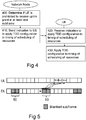
- the network node determines 400 in a first step whether a certain UE of the several UEs is prohibited to receive an uplink grant in at least one downlink subframe, e.g. if the UE is configured with ABS or with half-duplex operation.
- the network node sends 410 an indication to the UE to apply a time division duplex configuration to the timing of scheduling of resources.
- the UE receives the indication 420 and thereupon applies the TDD configuration to the timing of scheduling of resources.
- the determining 400 whether the UE is prohibited to receive an uplink grant in at least one subframe is based on if the user equipment is configured with an ABS procedure and/or with a half-duplex operation.
- the timing of scheduling of resources is applied to transmitting uplink data according to a timing of a transmission delay for uplink data of the TDD configuration in the UE.
- TDD configuration By applying the TDD configuration to the timing of transmission delay for uplink data it will be possible for the network node to let the PDCCH transmission during subframe N schedule uplink transmissions on the PUSCH not only for subframe N+4, but also for subsequent subframes e.g. N+5 and N+6.
- Figure 5 shows an illustration of an LTE FDD system using ABS and wherein TDD configuration to the timing of transmission delay for uplink data is applied. Even though 25% of the downlink subframes in the cell are blanked by ABS, denoted 50, all uplink subframes are schedulable for uplink transmissions.
- the network node may, in addition to determining whether the UE is prohibited to receive an uplink grant in at least one downlink subframe, determine if the traffic is asymmetric.
- an uplink threshold value may be set. Furthermore, if the UE is prohibited to receive an uplink grant in at least one downlink subframe and is determined by the network node to transmit more in uplink during a time period than the uplink threshold value, the network node sends the indication to the UE to apply the TDD configuration to the timing of scheduling of resources. As an alternative, the network node may determine if the UE transmits more in downlink during a time period than a certain downlink threshold value. In an exemplary embodiment the uplink and downlink threshold values may be predetermined in the network. The network node may continuously measure the traffic of the UE and adaptively determine to indicate to the UE to apply timing of the TDD configuration.
- LTE supports a dynamic and efficient two-layered retransmission scheme: A fast hybrid automatic repeat request (HARQ) protocol with low overhead feedback and retransmissions with incremental redundancy is complemented by a highly reliable selective repeat ARQ protocol.
- HARQ hybrid automatic repeat request
- the HARQ protocol gives the receiver redundancy information that enables it to avoid a certain amount of errors.
- the HARQ retransmissions also provide additional redundancy, should the initial transmission not be sufficient to avoid errors.
- HARQ feedback is sent 4 ms after a transmission, a potential retransmission then, at least for uplink, occur 4 ms after the HARQ feedback.
- the TDD configuration of the HARQ timings is different dependent on the selected uplink-downlink configuration.
- the TDD configuration is further applied to a timing of the HARQ protocol in the LTE FDD system.
- An advantage of this feature is that time bundling of HARQ feedback can be achieved without defining new HARQ schemes.
- the network node sends a further indication to the user equipment to apply the TDD configuration to the timing of HARQ protocol.
- the UE receives the indication and applies the TDD configuration to the timing of HARQ protocol.
- the UE applies the TDD configuration by transmitting uplink feedback in a subframe according to the timing of the HARQ protocol of the TDD configuration.
- the UE By configuring a UE with the TDD configuration different UEs in the cell may have different HARQ timing. This would result in a collision risk on both control channels and the uplink data channel in case of retransmission. However, this can be avoided by taking the different round trip times in to account in the scheduler of the network node.
- the HARQ feedback mapping for PUCCH will be conducted according to the configured TDD configuration.
- a semi-statically configured resource or one of a set of semi-statically configured resources is used on PUCCH.
- For Physical Hybrid ARQ Indictor Channel (PHICH) signaling some embodiments include additional PHICH resources for subframes not contacting enough PHICH resources. In other embodiments no PHICH is used and a new uplink grant is sent for each HARQ retransmission.
- PHICH Physical Hybrid ARQ Indictor Channel
- the indications sent from the network node to the UE may be sent over higher layer signaling such as Radio Resource Control (RRC) signaling, in a RRC Reconfiguration Request message or by other means.
- RRC Radio Resource Control
- the TDD configuration may in an embodiment be preconfigured in the user equipment. However, the TDD configuration, or updates of the configuration, may in another embodiment be sent from the network node to the UE by RRC signaling or Media Access Control (MAC) signaling.
- RRC Radio Resource Control
- MAC Media Access Control
- the TDD configuration may comprise a TDD uplink/downlink configuration and may also contain a special subframe configuration, an additional Radio Network Temporary Identity (RNTI) connected to the TDD configuration and/or a timing offset for the configuration.
- RNTI Radio Network Temporary Identity
- the UE may assume that the format used for downlink control information (DCI) follows the format associated with the applied TDD configuration.
- the UE may assume the DCI on the common search space follows the FDD configuration while the DCI on the UE specific search space follows the TDD configuration.
- the DCI format may also be different dependent on the RNTI with which the DCI is scrambled.
- new DCI formats may be introduced for UEs configured with a TDD configuration in an FDD system.
- the UE will follow the FDD configuration if it is scheduled on the common search space and the TDD configuration if it is scheduled on the UE specific search space.
- a UE which has applied the TDD configuration may in some embodiments disregard grants if the UE is a half-duplex UE and the uplink grant corresponds to a subframe wherein the UE is configured to listen to paging or if the UE needs to read broadcasted system information in that subframe.
- the TDD configuration may also contain a Downlink Pilot Time Slot (DwPTS) configuration applied during the downlink to uplink switching and/or include Uplink Pilot Time Slot (UpPTS) to accommodate switching.
- DwPTS Downlink Pilot Time Slot
- UpPTS Uplink Pilot Time Slot
- the UE may assume that all symbols are used for downlink also in the switching subframes.
- Different DwPTS/UpPTS configurations may be configured to different users dependent on the estimated radio channel for the UE and/or if the UE is a half duplex UE and the UEs switching capability between UL/DL operations.
- DwPTS/UpPTS subframes could be utilized to lower the requirements of the implementation in the UEs.
- the advantage of utilizing DwPTS/UpPTS subframes is that it provides the possibility to lower the cost of UE implementations, however at the cost of losing uplink/downlink resources.
- a network node 650 and a UE 600 for a wireless communication system are schematically illustrated in the block diagram in Figure 6a , according to embodiments.
- the network node 650 and the UE 600 are configured to perform the methods described above in connection with Figure 4 .
- the UE 600 is configured to communicate with the network node 650, which is comprised in an LTE FDD system.
- the UE 600 comprises a receiver 601 adapted to receive, from the network node 650, the indication to apply a time division duplex configuration to a timing of scheduling of resources.
- the UE 600 further comprises a processing unit 602 adapted to apply the time division duplex configuration to the timing of scheduling of resources.
- the UE 600 further comprises a transmitter 603 configured to send data to the network node 650.
- the processing unit 602 included in the UE is further adapted to apply the time division duplex configuration by transmitting uplink dataaccording to a timing of a transmission delay for uplink data of the time division duplex configuration.
- the receiver 601 included in the UE 600 is further adapted to receive a further indication from the network node to apply the time division duplex configuration to a timing of a hybrid automatic repeat request (HARQ) protocol; and the processing unit is adapted to apply the time division duplex configuration to the timing of the HARQ protocol.
- HARQ hybrid automatic repeat request
- processing unit 602 included in the UE 600 is further processing unit is adapted to apply the time division duplex configuration by transmitting uplink feedback in a subframe according to the timing of the HARQ protocol of the time division duplex configuration.
- the receiver 601 is further adapted to receive the time division duplex configuration from the network node 650.
- the network node 650 which may be e.g. a radio base station such as the eNodeB, is configured to communicate with the UE 600.
- the network node comprises a processing unit 653 adapted to determine whether the UE is prohibited to receive an uplink grant in at least one subframe.
- the network node 650 further comprises a transmitter 651 adapted to send an indication to the UE 600 to apply a time division duplex configuration to a timing of scheduling of resources.
- the processing unit 653 included in the network node 650 is further adapted to determine whether the UE 600 is prohibited to receive an uplink grant in at least one subframe based on if the UE is configured with an ABS procedure.
- the processing unit 653 included in the network node 650 is further adapted to determine whether the UE 600 is prohibited to receive an uplink grant in at least one subframe is based on if the UE is configured with a half-duplex operation.
- the network node 650 comprises a predetermined uplink threshold value and the processing unit 653 is further adapted to determine whether the UE 600 transmits more in uplink during a time period than the predetermined uplink threshold value.
- the transmitter 651 included in the network node 650 is further adapted to send a further indication to the UE 600 to apply the time division duplex configuration to a timing of a HARQ protocol.
- the transmitter 651 included in the network node 650 is further adapted to send the time division duplex configuration to the UE 600.
- FIG. 6b schematically illustrates an embodiment of the network node 650, and an embodiment of the UE 600 which are alternative ways of disclosing the embodiments illustrated in Figure 6a .
- the UE 600 comprises the communication units 601 and 603, which are already described above with reference to Figure 6a .
- the UE 600 also comprises a Central Processing Unit (CPU) 610 which may be a single unit or a plurality of units.
- the UE 600 comprises at least one computer program product 611 in the form of a non-volatile memory, e.g. an EEPROM (Electrically Erasable Programmable Read-Only Memory), a flash memory or a disk drive.
- the computer program product 611 comprises a computer program 612, which comprises code means which when run on the UE 600 causes the CPU 610 on UE 600 to perform the steps of the method described earlier in conjunction with Figure 4 .
- the code means in the computer program 612 of the UE 600 comprises a module 612a for receiving an indication from the network node to apply a TDD configuration to a timing of scheduling of resources.
- the computer program 612 also comprises a module 612b for applying the time division duplex configuration to the timing of scheduling of resources.
- the computer program 612 also comprises a module 612c for receiving a further indication from the network node to apply the time division duplex configuration to a timing of a HARQ protocol and a module 612d for applying the time division duplex configuration to the timing of the HARQ protocol.
- the computer program 612 also includes a module 612e for receiving the time division duplex configuration from the network node.
- the network node 650 illustrated in Figure 6b comprises a Central Processing Unit (CPU) 660 which may be a single unit or a plurality of units. Furthermore, the network node 650 comprises at least one computer program product 661 in the form of a non-volatile memory, e.g. an EEPROM (Electrically Erasable Programmable Read-Only Memory), a flash memory or a disk drive.
- the computer program product 661 comprises a computer program 662, which comprises code means which when run on the network node 650 causes the CPU 660 on the network node 650 to perform the steps of the method described earlier in conjunction with Figure 4 .
- the code means in the computer program 662 of the network node 650 comprises a module 662a for determining whether the UE is prohibited to receive an uplink grant in at least one subframe.
- the computer program 662 also includes a module 662b for sending an indication to the UE to apply a time division duplex configuration to a timing of scheduling of resources if the UE is prohibited to receive an uplink grant in at least one subframe.
- the computer program 662 also includes a module 662c for determining whether the UE transmits more in uplink during a time period than a predetermined uplink threshold value. In one embodiment the computer program 662 also includes a module 662d for determining whether the UE transmits more in downlink during a time period than the predetermined downlink threshold value. In one embodiment the computer program 662 additionally comprises a module 662e for sending a further indication to the UE to apply the time division duplex configuration to a timing of a HARQ protocol. In one embodiment the computer program 662 also includes a module 662f for sending the time division duplex configuration to the UE.
- code means in the embodiments disclosed above in conjunction with Figure 6a-6b are implemented as computer program modules, one or more of the code means may in alternative embodiments be implemented at least partly as so called firmware or programmable or non-programmable hardware circuits.
Landscapes
- Engineering & Computer Science (AREA)
- Computer Networks & Wireless Communication (AREA)
- Signal Processing (AREA)
- Mobile Radio Communication Systems (AREA)
Claims (9)
- Verfahren in einem Netzwerkknoten zur zeitlichen Planung des Disponierens von Ressourcen in einem Frequenzduplexsystem, wobei der Netzwerkknoten mit einer Benutzereinrichtung kommuniziert, und das Verfahren umfasst:Bestimmen, ob es der Benutzereinrichtung untersagt ist, eine Uplink-Freigabe in mindestens einem Unterrahmen zu empfangen, basierend darauf, ob die Benutzereinrichtung mit einer ABS (beinahe leere Unterrahmen)-Prozedur konfiguriert ist; und gekennzeichnet, wenn es Benutzereinrichtung untersagt ist, eine Uplink-Freigabe in mindestens einem Unterahmen zu empfangen, durchSenden einer Angabe zum Anwenden einer Zeitduplexkonfiguration auf eine zeitliche Planung des Disponierens von Ressourcen im Frequenzduplexsystem an die Benutzereinrichtung.
- Verfahren nach Anspruch 1, wobei die zeitliche Planung auf das Senden von Uplink-Daten gemäß einer zeitlichen Planung einer Sendeverzögerung für Uplink-Daten der Zeitduplexkonfiguration angewendet werden soll.
- Verfahren nach Anspruch 1 oder 2, ferner umfassend:
Senden einer weiteren Angabe zum Anwenden der Zeitduplexkonfiguration auf eine zeitliche Planung eines HARQ (hybride automatische Wiederholungsanforderung)-Protokolls an die Benutzereinrichtung. - Verfahren nach einem der Ansprüche 1 bis 3, wobei die Angabe durch Funkressourcensteuerungs, RRC,- oder Medienzugriffssteuerungs, MAC,-Signalisierung gesendet wird.
- Verfahren nach einem der Ansprüche 1 bis 4, ferner umfassend:
Senden der Zeitduplexkonfiguration an die Benutzereinrichtung. - Verfahren nach Anspruch 5, wobei die Zeitduplexkonfiguration durch RRC-Signalisierung oder MAC-Signalisierung gesendet wird.
- Verfahren nach einem der Ansprüche 1 bis 6, wobei der Netzwerkknoten ein Funkressourcenverwaltungsknoten, eine Basisstation und/oder ein eNodeB ist.
- Netzwerkknoten, der zum Ermöglichen von zeitlicher Planung des Disponierens von Ressourcen in einem Frequenzduplexsystem konfiguriert ist, wobei der Netzwerkknoten zum Kommunizieren mit einer Benutzereinrichtung konfiguriert ist, und der Netzwerkknoten umfasst:eine Verarbeitungseinheit, die so ausgelegt ist, dass sie basierend darauf, ob die Benutzereinrichtung mit einer ABS (beinahe leere Unterrahmen)-Prozedur konfiguriert ist, bestimmt, ob es der Benutzereinrichtung untersagt ist, eine Uplink-Freigabe in mindestens einem Unterrahmen zu empfangen; und gekennzeichnet durcheinen Sender, der so ausgelegt ist, dass er, wenn es der Benutzereinrichtung untersagt ist, eine Uplink-Freigabe in mindestens einem Unterrahmen zu empfangen, eine Angabe zum Anwenden einer Zeitduplexkonfiguration auf eine zeitliche Planung des Disponierens von Ressourcen im Frequenzduplexsystem an die Benutzereinrichtung sendet.
- Netzwerkknoten nach Anspruch 8, wobei der Sender zum Senden der Zeitduplexkonfiguration an die Benutzereinrichtung ausgelegt ist.
Applications Claiming Priority (1)
| Application Number | Priority Date | Filing Date | Title |
|---|---|---|---|
| PCT/SE2012/051223 WO2014074036A1 (en) | 2012-11-09 | 2012-11-09 | Methods and arrangements for resource allocation |
Publications (2)
| Publication Number | Publication Date |
|---|---|
| EP2918128A1 EP2918128A1 (de) | 2015-09-16 |
| EP2918128B1 true EP2918128B1 (de) | 2018-06-13 |
Family
ID=47215714
Family Applications (1)
| Application Number | Title | Priority Date | Filing Date |
|---|---|---|---|
| EP12788320.5A Not-in-force EP2918128B1 (de) | 2012-11-09 | 2012-11-09 | Verfahren und anordnungen zur ressourcenzuweisung |
Country Status (4)
| Country | Link |
|---|---|
| US (1) | US11601960B2 (de) |
| EP (1) | EP2918128B1 (de) |
| CN (1) | CN104798427B (de) |
| WO (1) | WO2014074036A1 (de) |
Families Citing this family (9)
| Publication number | Priority date | Publication date | Assignee | Title |
|---|---|---|---|---|
| US9590878B2 (en) | 2013-01-16 | 2017-03-07 | Qualcomm Incorporated | Channel state information and adaptive modulation and coding design for long-term evolution machine type communications |
| US10257816B2 (en) | 2013-07-26 | 2019-04-09 | Lg Electronics Inc. | Transmission/reception method for MTC apparatus |
| CN106464461A (zh) * | 2014-05-15 | 2017-02-22 | 诺基亚通信公司 | 用于发射和/或接收参考信号的方法和装置 |
| WO2016029364A1 (zh) * | 2014-08-26 | 2016-03-03 | 华为技术有限公司 | 一种无线通信方法、设备及系统 |
| EP3249986B1 (de) | 2015-02-13 | 2019-08-07 | Huawei Technologies Co., Ltd. | Datenübertragungsverfahren und -vorrichtung |
| CN108259150B (zh) * | 2016-12-29 | 2020-09-11 | 华为技术有限公司 | 一种信息传输方法及装置 |
| US10959251B2 (en) * | 2017-01-17 | 2021-03-23 | Qualcomm Incorporated | Parallel processing of uplink and downlink transmissions |
| CN113711520B (zh) * | 2019-02-15 | 2024-10-29 | 瑞典爱立信有限公司 | 低延迟通信的harq码本确定的方法 |
| US20230105730A1 (en) * | 2021-10-04 | 2023-04-06 | Skyworks Solutions, Inc. | Beamforming in radio frequency communication systems using frequency division duplexing |
Citations (2)
| Publication number | Priority date | Publication date | Assignee | Title |
|---|---|---|---|---|
| EP2853045A1 (de) * | 2012-05-22 | 2015-04-01 | Huawei Technologies Co., Ltd. | System und verfahren zur verzögerungsplanung |
| EP2865124A2 (de) * | 2012-06-22 | 2015-04-29 | Qualcomm Incorporated | Übertragung in kombinierter tdd- und fdd-trägeraggregation |
Family Cites Families (24)
| Publication number | Priority date | Publication date | Assignee | Title |
|---|---|---|---|---|
| KR20070041633A (ko) * | 2003-09-26 | 2007-04-18 | 인터디지탈 테크날러지 코포레이션 | 무선 통신 시스템에서 시 분할 듀플렉스 및 주파수 분할듀플렉스 사이의 자원 배당을 통합하는 방법 및 시스템 |
| KR20060064926A (ko) * | 2004-12-09 | 2006-06-14 | 삼성전자주식회사 | 다중 모드 및 다중 대역 시스템에서의 모드 전환 및 대역전환 방법 |
| DE602008001662D1 (de) * | 2007-03-07 | 2010-08-12 | Nokia Corp | System und verfahren für konfliktfreie weiterleitungen auf basis vorreservierter zielzellen-uplink-zuweisungen in kommunikationssystemen |
| US8295209B2 (en) * | 2008-02-21 | 2012-10-23 | Nokia Corporation | Frame structures with flexible partition boundary for wireless networks |
| US9288021B2 (en) * | 2008-05-02 | 2016-03-15 | Qualcomm Incorporated | Method and apparatus for uplink ACK/NACK resource allocation |
| CN101594205B (zh) * | 2009-06-22 | 2014-08-06 | 中兴通讯股份有限公司南京分公司 | 一种高级长期演进系统的下行控制信令发送方法 |
| CN102474886B (zh) * | 2009-08-12 | 2014-11-19 | 交互数字专利控股公司 | 基于争用的上行链路数据传输方法和设备 |
| CN102014442B (zh) * | 2009-09-29 | 2014-01-08 | 电信科学技术研究院 | 发送上行资源调度请求的方法和用户设备 |
| JP5654769B2 (ja) * | 2010-04-23 | 2015-01-14 | 京セラ株式会社 | 無線基地局及び通信制御方法 |
| CN106455100B (zh) * | 2010-06-18 | 2019-06-28 | 寰发股份有限公司 | 通信设备间协调传输及指定近似空白子帧模式的方法 |
| KR101776873B1 (ko) * | 2011-01-11 | 2017-09-11 | 삼성전자 주식회사 | 이동통신 시스템에서 역방향 전송 출력 결정 방법 및 장치 |
| US8605615B2 (en) * | 2011-03-18 | 2013-12-10 | Motorola Mobility Llc | Method and apparatus for multi-radio coexistence with a system on an adjacent frequency band having a time-dependent configuration |
| US20140198744A1 (en) * | 2011-05-17 | 2014-07-17 | Interdigital Patent Holdings, Inc. | Method and apparatus for data-splitting transmission from multiple sites |
| JP2013021496A (ja) * | 2011-07-11 | 2013-01-31 | Fujitsu Ltd | 移動局、及び送信制御方法 |
| US8964672B2 (en) * | 2011-11-04 | 2015-02-24 | Blackberry Limited | Paging in heterogeneous networks with discontinuous reception |
| US8976764B2 (en) * | 2011-11-04 | 2015-03-10 | Blackberry Limited | Accommodating semi-persistent scheduling in heterogeneous networks with restricted subframe patterns |
| US9356766B2 (en) * | 2011-11-17 | 2016-05-31 | Mstar Semiconductor, Inc. (Cayman Islands) | Enabling half duplex frequency division duplex (HD-FDD) operation of user equipments in full duplex frequency division duplex (FD-FDD) network |
| EP2795964B1 (de) * | 2011-12-19 | 2019-02-27 | Telefonaktiebolaget LM Ericsson (publ) | Netzwerkknoten und verfahren in einem netzwerkknoten |
| TWI620431B (zh) * | 2012-03-16 | 2018-04-01 | 內數位專利控股公司 | 以fdd模式操作的網路中支援hd-fdd操作的方法及裝置 |
| US9215039B2 (en) * | 2012-03-22 | 2015-12-15 | Sharp Laboratories Of America, Inc. | Devices for enabling half-duplex communication |
| US10057032B2 (en) * | 2012-03-28 | 2018-08-21 | Lg Electronics Inc. | Method and device for transmitting data for half-duplex device |
| US9107056B2 (en) * | 2012-04-18 | 2015-08-11 | Qualcomm Incorporated | Small cell activation procedure |
| US9042280B2 (en) * | 2012-07-12 | 2015-05-26 | Nokia Solutions And Networks Oy | Methods and apparatus for half duplex scheduling |
| CN104782211B (zh) * | 2012-10-12 | 2019-06-07 | 英派尔科技开发有限公司 | 用于载波聚合的激活和释放的方法和设备、可读介质 |
-
2012
- 2012-11-09 EP EP12788320.5A patent/EP2918128B1/de not_active Not-in-force
- 2012-11-09 CN CN201280076989.3A patent/CN104798427B/zh not_active Expired - Fee Related
- 2012-11-09 US US14/439,508 patent/US11601960B2/en active Active
- 2012-11-09 WO PCT/SE2012/051223 patent/WO2014074036A1/en not_active Ceased
Patent Citations (2)
| Publication number | Priority date | Publication date | Assignee | Title |
|---|---|---|---|---|
| EP2853045A1 (de) * | 2012-05-22 | 2015-04-01 | Huawei Technologies Co., Ltd. | System und verfahren zur verzögerungsplanung |
| EP2865124A2 (de) * | 2012-06-22 | 2015-04-29 | Qualcomm Incorporated | Übertragung in kombinierter tdd- und fdd-trägeraggregation |
Also Published As
| Publication number | Publication date |
|---|---|
| WO2014074036A1 (en) | 2014-05-15 |
| EP2918128A1 (de) | 2015-09-16 |
| CN104798427A (zh) | 2015-07-22 |
| CN104798427B (zh) | 2019-06-21 |
| US11601960B2 (en) | 2023-03-07 |
| US20150305057A1 (en) | 2015-10-22 |
Similar Documents
| Publication | Publication Date | Title |
|---|---|---|
| US10771204B2 (en) | Half-duplex operation in new radio systems | |
| EP2918128B1 (de) | Verfahren und anordnungen zur ressourcenzuweisung | |
| US11140713B2 (en) | Preemptive retransmissions on Listen-Before-Talk cells | |
| EP3326317B1 (de) | Unterrahmenstruktur für zeitduplex (tdd) zur unterstützung von modi mit einzelner oder mehreren zwischenzeilen | |
| US9602251B2 (en) | Devices for reconfiguring uplink and downlink allocations in time domain duplexing wireless systems | |
| US20250266980A1 (en) | User equipment, base stations and wireless communications system for ultra-reliable communications | |
| US9301316B2 (en) | Scheduling request enabled uplink transmission | |
| EP3448108B1 (de) | Verfahren und vorrichtung zur übertragung von uplink-steuerinformationen | |
| US9763239B2 (en) | Data transmission method and apparatus for half-duplex devices | |
| US10756864B2 (en) | Method for transmitting or receiving signal in wireless communication system and device therefor | |
| US10772124B2 (en) | Method for transmitting or receiving signal in wireless communication system and apparatus for same | |
| US10855402B2 (en) | Method for transmitting or receiving ACK/NACK signal in wireless communication system and apparatus for same | |
| EP3466138B1 (de) | Verfahren und vorrichtungen für uplink-punktierungsübertragung | |
| CN114930765A (zh) | 基于多普勒参数来控制参考信号模式 | |
| KR20200003091A (ko) | 무선 액세스 네트워크에서 전송 스케줄링 | |
| US20230354270A1 (en) | Method and apparatus for coexistence between long term evolution sidelink and new radio sidelink | |
| WO2024034503A1 (en) | Uplink operations for network controlled repeater (ncr) with tdd ul-dl configurations | |
| KR20150146346A (ko) | 캐리어 집적 시스템에서 제어 정보 전송 방법 및 장치 | |
| WO2024034504A1 (en) | Downlink operations for network controlled repeater (ncr) with tdd ul-dl configurations | |
| WO2024034505A1 (en) | Side information on tdd ul-dl configuration for network controlled repeaters (ncr) | |
| OA19794A (en) | Methods and devices for uplink puncturing transmission. | |
| HK40017992A (en) | Method and device for strategic mapping of uplink resources | |
| HK40019838A (zh) | 无线电接入网中的传输调度 |
Legal Events
| Date | Code | Title | Description |
|---|---|---|---|
| PUAI | Public reference made under article 153(3) epc to a published international application that has entered the european phase |
Free format text: ORIGINAL CODE: 0009012 |
|
| 17P | Request for examination filed |
Effective date: 20150505 |
|
| AK | Designated contracting states |
Kind code of ref document: A1 Designated state(s): AL AT BE BG CH CY CZ DE DK EE ES FI FR GB GR HR HU IE IS IT LI LT LU LV MC MK MT NL NO PL PT RO RS SE SI SK SM TR |
|
| AX | Request for extension of the european patent |
Extension state: BA ME |
|
| DAX | Request for extension of the european patent (deleted) | ||
| 17Q | First examination report despatched |
Effective date: 20170511 |
|
| GRAP | Despatch of communication of intention to grant a patent |
Free format text: ORIGINAL CODE: EPIDOSNIGR1 |
|
| RIC1 | Information provided on ipc code assigned before grant |
Ipc: H04W 72/12 20090101AFI20171201BHEP Ipc: H04W 72/04 20090101ALN20171201BHEP |
|
| INTG | Intention to grant announced |
Effective date: 20180103 |
|
| RIC1 | Information provided on ipc code assigned before grant |
Ipc: H04W 72/12 20090101AFI20171215BHEP Ipc: H04W 72/04 20090101ALN20171215BHEP |
|
| GRAS | Grant fee paid |
Free format text: ORIGINAL CODE: EPIDOSNIGR3 |
|
| GRAA | (expected) grant |
Free format text: ORIGINAL CODE: 0009210 |
|
| AK | Designated contracting states |
Kind code of ref document: B1 Designated state(s): AL AT BE BG CH CY CZ DE DK EE ES FI FR GB GR HR HU IE IS IT LI LT LU LV MC MK MT NL NO PL PT RO RS SE SI SK SM TR |
|
| REG | Reference to a national code |
Ref country code: GB Ref legal event code: FG4D |
|
| REG | Reference to a national code |
Ref country code: CH Ref legal event code: EP Ref country code: AT Ref legal event code: REF Ref document number: 1009847 Country of ref document: AT Kind code of ref document: T Effective date: 20180615 |
|
| REG | Reference to a national code |
Ref country code: IE Ref legal event code: FG4D |
|
| REG | Reference to a national code |
Ref country code: DE Ref legal event code: R096 Ref document number: 602012047474 Country of ref document: DE |
|
| REG | Reference to a national code |
Ref country code: NL Ref legal event code: FP |
|
| REG | Reference to a national code |
Ref country code: LT Ref legal event code: MG4D |
|
| PG25 | Lapsed in a contracting state [announced via postgrant information from national office to epo] |
Ref country code: CY Free format text: LAPSE BECAUSE OF FAILURE TO SUBMIT A TRANSLATION OF THE DESCRIPTION OR TO PAY THE FEE WITHIN THE PRESCRIBED TIME-LIMIT Effective date: 20180613 Ref country code: LT Free format text: LAPSE BECAUSE OF FAILURE TO SUBMIT A TRANSLATION OF THE DESCRIPTION OR TO PAY THE FEE WITHIN THE PRESCRIBED TIME-LIMIT Effective date: 20180613 Ref country code: FI Free format text: LAPSE BECAUSE OF FAILURE TO SUBMIT A TRANSLATION OF THE DESCRIPTION OR TO PAY THE FEE WITHIN THE PRESCRIBED TIME-LIMIT Effective date: 20180613 Ref country code: BG Free format text: LAPSE BECAUSE OF FAILURE TO SUBMIT A TRANSLATION OF THE DESCRIPTION OR TO PAY THE FEE WITHIN THE PRESCRIBED TIME-LIMIT Effective date: 20180913 Ref country code: ES Free format text: LAPSE BECAUSE OF FAILURE TO SUBMIT A TRANSLATION OF THE DESCRIPTION OR TO PAY THE FEE WITHIN THE PRESCRIBED TIME-LIMIT Effective date: 20180613 Ref country code: SE Free format text: LAPSE BECAUSE OF FAILURE TO SUBMIT A TRANSLATION OF THE DESCRIPTION OR TO PAY THE FEE WITHIN THE PRESCRIBED TIME-LIMIT Effective date: 20180613 Ref country code: NO Free format text: LAPSE BECAUSE OF FAILURE TO SUBMIT A TRANSLATION OF THE DESCRIPTION OR TO PAY THE FEE WITHIN THE PRESCRIBED TIME-LIMIT Effective date: 20180913 |
|
| PG25 | Lapsed in a contracting state [announced via postgrant information from national office to epo] |
Ref country code: LV Free format text: LAPSE BECAUSE OF FAILURE TO SUBMIT A TRANSLATION OF THE DESCRIPTION OR TO PAY THE FEE WITHIN THE PRESCRIBED TIME-LIMIT Effective date: 20180613 Ref country code: HR Free format text: LAPSE BECAUSE OF FAILURE TO SUBMIT A TRANSLATION OF THE DESCRIPTION OR TO PAY THE FEE WITHIN THE PRESCRIBED TIME-LIMIT Effective date: 20180613 Ref country code: GR Free format text: LAPSE BECAUSE OF FAILURE TO SUBMIT A TRANSLATION OF THE DESCRIPTION OR TO PAY THE FEE WITHIN THE PRESCRIBED TIME-LIMIT Effective date: 20180914 Ref country code: RS Free format text: LAPSE BECAUSE OF FAILURE TO SUBMIT A TRANSLATION OF THE DESCRIPTION OR TO PAY THE FEE WITHIN THE PRESCRIBED TIME-LIMIT Effective date: 20180613 |
|
| REG | Reference to a national code |
Ref country code: AT Ref legal event code: MK05 Ref document number: 1009847 Country of ref document: AT Kind code of ref document: T Effective date: 20180613 |
|
| PG25 | Lapsed in a contracting state [announced via postgrant information from national office to epo] |
Ref country code: AT Free format text: LAPSE BECAUSE OF FAILURE TO SUBMIT A TRANSLATION OF THE DESCRIPTION OR TO PAY THE FEE WITHIN THE PRESCRIBED TIME-LIMIT Effective date: 20180613 Ref country code: PL Free format text: LAPSE BECAUSE OF FAILURE TO SUBMIT A TRANSLATION OF THE DESCRIPTION OR TO PAY THE FEE WITHIN THE PRESCRIBED TIME-LIMIT Effective date: 20180613 Ref country code: RO Free format text: LAPSE BECAUSE OF FAILURE TO SUBMIT A TRANSLATION OF THE DESCRIPTION OR TO PAY THE FEE WITHIN THE PRESCRIBED TIME-LIMIT Effective date: 20180613 Ref country code: CZ Free format text: LAPSE BECAUSE OF FAILURE TO SUBMIT A TRANSLATION OF THE DESCRIPTION OR TO PAY THE FEE WITHIN THE PRESCRIBED TIME-LIMIT Effective date: 20180613 Ref country code: SK Free format text: LAPSE BECAUSE OF FAILURE TO SUBMIT A TRANSLATION OF THE DESCRIPTION OR TO PAY THE FEE WITHIN THE PRESCRIBED TIME-LIMIT Effective date: 20180613 Ref country code: EE Free format text: LAPSE BECAUSE OF FAILURE TO SUBMIT A TRANSLATION OF THE DESCRIPTION OR TO PAY THE FEE WITHIN THE PRESCRIBED TIME-LIMIT Effective date: 20180613 Ref country code: IS Free format text: LAPSE BECAUSE OF FAILURE TO SUBMIT A TRANSLATION OF THE DESCRIPTION OR TO PAY THE FEE WITHIN THE PRESCRIBED TIME-LIMIT Effective date: 20181013 |
|
| PG25 | Lapsed in a contracting state [announced via postgrant information from national office to epo] |
Ref country code: IT Free format text: LAPSE BECAUSE OF FAILURE TO SUBMIT A TRANSLATION OF THE DESCRIPTION OR TO PAY THE FEE WITHIN THE PRESCRIBED TIME-LIMIT Effective date: 20180613 Ref country code: SM Free format text: LAPSE BECAUSE OF FAILURE TO SUBMIT A TRANSLATION OF THE DESCRIPTION OR TO PAY THE FEE WITHIN THE PRESCRIBED TIME-LIMIT Effective date: 20180613 |
|
| REG | Reference to a national code |
Ref country code: DE Ref legal event code: R097 Ref document number: 602012047474 Country of ref document: DE |
|
| PLBE | No opposition filed within time limit |
Free format text: ORIGINAL CODE: 0009261 |
|
| STAA | Information on the status of an ep patent application or granted ep patent |
Free format text: STATUS: NO OPPOSITION FILED WITHIN TIME LIMIT |
|
| 26N | No opposition filed |
Effective date: 20190314 |
|
| PG25 | Lapsed in a contracting state [announced via postgrant information from national office to epo] |
Ref country code: SI Free format text: LAPSE BECAUSE OF FAILURE TO SUBMIT A TRANSLATION OF THE DESCRIPTION OR TO PAY THE FEE WITHIN THE PRESCRIBED TIME-LIMIT Effective date: 20180613 Ref country code: DK Free format text: LAPSE BECAUSE OF FAILURE TO SUBMIT A TRANSLATION OF THE DESCRIPTION OR TO PAY THE FEE WITHIN THE PRESCRIBED TIME-LIMIT Effective date: 20180613 |
|
| REG | Reference to a national code |
Ref country code: CH Ref legal event code: PL |
|
| PG25 | Lapsed in a contracting state [announced via postgrant information from national office to epo] |
Ref country code: MC Free format text: LAPSE BECAUSE OF FAILURE TO SUBMIT A TRANSLATION OF THE DESCRIPTION OR TO PAY THE FEE WITHIN THE PRESCRIBED TIME-LIMIT Effective date: 20180613 Ref country code: LU Free format text: LAPSE BECAUSE OF NON-PAYMENT OF DUE FEES Effective date: 20181109 |
|
| REG | Reference to a national code |
Ref country code: BE Ref legal event code: MM Effective date: 20181130 |
|
| REG | Reference to a national code |
Ref country code: IE Ref legal event code: MM4A |
|
| PG25 | Lapsed in a contracting state [announced via postgrant information from national office to epo] |
Ref country code: CH Free format text: LAPSE BECAUSE OF NON-PAYMENT OF DUE FEES Effective date: 20181130 Ref country code: LI Free format text: LAPSE BECAUSE OF NON-PAYMENT OF DUE FEES Effective date: 20181130 |
|
| PG25 | Lapsed in a contracting state [announced via postgrant information from national office to epo] |
Ref country code: FR Free format text: LAPSE BECAUSE OF NON-PAYMENT OF DUE FEES Effective date: 20181130 Ref country code: IE Free format text: LAPSE BECAUSE OF NON-PAYMENT OF DUE FEES Effective date: 20181109 |
|
| PG25 | Lapsed in a contracting state [announced via postgrant information from national office to epo] |
Ref country code: AL Free format text: LAPSE BECAUSE OF FAILURE TO SUBMIT A TRANSLATION OF THE DESCRIPTION OR TO PAY THE FEE WITHIN THE PRESCRIBED TIME-LIMIT Effective date: 20180613 Ref country code: BE Free format text: LAPSE BECAUSE OF NON-PAYMENT OF DUE FEES Effective date: 20181130 |
|
| PG25 | Lapsed in a contracting state [announced via postgrant information from national office to epo] |
Ref country code: MT Free format text: LAPSE BECAUSE OF NON-PAYMENT OF DUE FEES Effective date: 20181109 |
|
| PG25 | Lapsed in a contracting state [announced via postgrant information from national office to epo] |
Ref country code: TR Free format text: LAPSE BECAUSE OF FAILURE TO SUBMIT A TRANSLATION OF THE DESCRIPTION OR TO PAY THE FEE WITHIN THE PRESCRIBED TIME-LIMIT Effective date: 20180613 |
|
| PG25 | Lapsed in a contracting state [announced via postgrant information from national office to epo] |
Ref country code: PT Free format text: LAPSE BECAUSE OF FAILURE TO SUBMIT A TRANSLATION OF THE DESCRIPTION OR TO PAY THE FEE WITHIN THE PRESCRIBED TIME-LIMIT Effective date: 20180613 |
|
| PG25 | Lapsed in a contracting state [announced via postgrant information from national office to epo] |
Ref country code: MK Free format text: LAPSE BECAUSE OF NON-PAYMENT OF DUE FEES Effective date: 20180613 Ref country code: HU Free format text: LAPSE BECAUSE OF FAILURE TO SUBMIT A TRANSLATION OF THE DESCRIPTION OR TO PAY THE FEE WITHIN THE PRESCRIBED TIME-LIMIT; INVALID AB INITIO Effective date: 20121109 |
|
| PGFP | Annual fee paid to national office [announced via postgrant information from national office to epo] |
Ref country code: NL Payment date: 20221126 Year of fee payment: 11 Ref country code: GB Payment date: 20221128 Year of fee payment: 11 Ref country code: DE Payment date: 20221125 Year of fee payment: 11 |
|
| REG | Reference to a national code |
Ref country code: DE Ref legal event code: R119 Ref document number: 602012047474 Country of ref document: DE |
|
| REG | Reference to a national code |
Ref country code: NL Ref legal event code: MM Effective date: 20231201 |
|
| GBPC | Gb: european patent ceased through non-payment of renewal fee |
Effective date: 20231109 |
|
| PG25 | Lapsed in a contracting state [announced via postgrant information from national office to epo] |
Ref country code: NL Free format text: LAPSE BECAUSE OF NON-PAYMENT OF DUE FEES Effective date: 20231201 |
|
| PG25 | Lapsed in a contracting state [announced via postgrant information from national office to epo] |
Ref country code: NL Free format text: LAPSE BECAUSE OF NON-PAYMENT OF DUE FEES Effective date: 20231201 |
|
| PG25 | Lapsed in a contracting state [announced via postgrant information from national office to epo] |
Ref country code: DE Free format text: LAPSE BECAUSE OF NON-PAYMENT OF DUE FEES Effective date: 20240601 |
|
| PG25 | Lapsed in a contracting state [announced via postgrant information from national office to epo] |
Ref country code: GB Free format text: LAPSE BECAUSE OF NON-PAYMENT OF DUE FEES Effective date: 20231109 |
|
| PG25 | Lapsed in a contracting state [announced via postgrant information from national office to epo] |
Ref country code: GB Free format text: LAPSE BECAUSE OF NON-PAYMENT OF DUE FEES Effective date: 20231109 Ref country code: DE Free format text: LAPSE BECAUSE OF NON-PAYMENT OF DUE FEES Effective date: 20240601 |