EP2921148A1 - Pansement pour la cicatrisation de plaies compromises - Google Patents
Pansement pour la cicatrisation de plaies compromises Download PDFInfo
- Publication number
- EP2921148A1 EP2921148A1 EP13854481.2A EP13854481A EP2921148A1 EP 2921148 A1 EP2921148 A1 EP 2921148A1 EP 13854481 A EP13854481 A EP 13854481A EP 2921148 A1 EP2921148 A1 EP 2921148A1
- Authority
- EP
- European Patent Office
- Prior art keywords
- bemiparin
- nanoparticles
- dressing
- hydrogel
- polyurethane
- Prior art date
- Legal status (The legal status is an assumption and is not a legal conclusion. Google has not performed a legal analysis and makes no representation as to the accuracy of the status listed.)
- Withdrawn
Links
Images










Classifications
-
- A—HUMAN NECESSITIES
- A61—MEDICAL OR VETERINARY SCIENCE; HYGIENE
- A61L—METHODS OR APPARATUS FOR STERILISING MATERIALS OR OBJECTS IN GENERAL; DISINFECTION, STERILISATION OR DEODORISATION OF AIR; CHEMICAL ASPECTS OF BANDAGES, DRESSINGS, ABSORBENT PADS OR SURGICAL ARTICLES; MATERIALS FOR BANDAGES, DRESSINGS, ABSORBENT PADS OR SURGICAL ARTICLES
- A61L15/00—Chemical aspects of, or use of materials for, bandages, dressings or absorbent pads
- A61L15/16—Bandages, dressings or absorbent pads for physiological fluids such as urine or blood, e.g. sanitary towels, tampons
- A61L15/42—Use of materials characterised by their function or physical properties
- A61L15/44—Medicaments
-
- A—HUMAN NECESSITIES
- A61—MEDICAL OR VETERINARY SCIENCE; HYGIENE
- A61L—METHODS OR APPARATUS FOR STERILISING MATERIALS OR OBJECTS IN GENERAL; DISINFECTION, STERILISATION OR DEODORISATION OF AIR; CHEMICAL ASPECTS OF BANDAGES, DRESSINGS, ABSORBENT PADS OR SURGICAL ARTICLES; MATERIALS FOR BANDAGES, DRESSINGS, ABSORBENT PADS OR SURGICAL ARTICLES
- A61L15/00—Chemical aspects of, or use of materials for, bandages, dressings or absorbent pads
- A61L15/16—Bandages, dressings or absorbent pads for physiological fluids such as urine or blood, e.g. sanitary towels, tampons
- A61L15/42—Use of materials characterised by their function or physical properties
- A61L15/64—Use of materials characterised by their function or physical properties specially adapted to be resorbable inside the body
-
- A—HUMAN NECESSITIES
- A61—MEDICAL OR VETERINARY SCIENCE; HYGIENE
- A61F—FILTERS IMPLANTABLE INTO BLOOD VESSELS; PROSTHESES; DEVICES PROVIDING PATENCY TO, OR PREVENTING COLLAPSING OF, TUBULAR STRUCTURES OF THE BODY, e.g. STENTS; ORTHOPAEDIC, NURSING OR CONTRACEPTIVE DEVICES; FOMENTATION; TREATMENT OR PROTECTION OF EYES OR EARS; BANDAGES, DRESSINGS OR ABSORBENT PADS; FIRST-AID KITS
- A61F13/00—Bandages or dressings; Absorbent pads
- A61F13/00051—Accessories for dressings
- A61F13/00063—Accessories for dressings comprising medicaments or additives, e.g. odor control, PH control, debriding, antimicrobic
-
- A—HUMAN NECESSITIES
- A61—MEDICAL OR VETERINARY SCIENCE; HYGIENE
- A61F—FILTERS IMPLANTABLE INTO BLOOD VESSELS; PROSTHESES; DEVICES PROVIDING PATENCY TO, OR PREVENTING COLLAPSING OF, TUBULAR STRUCTURES OF THE BODY, e.g. STENTS; ORTHOPAEDIC, NURSING OR CONTRACEPTIVE DEVICES; FOMENTATION; TREATMENT OR PROTECTION OF EYES OR EARS; BANDAGES, DRESSINGS OR ABSORBENT PADS; FIRST-AID KITS
- A61F13/00—Bandages or dressings; Absorbent pads
- A61F13/01—Non-adhesive bandages or dressings
- A61F13/01008—Non-adhesive bandages or dressings characterised by the material
- A61F13/01017—Non-adhesive bandages or dressings characterised by the material synthetic, e.g. polymer based
-
- A—HUMAN NECESSITIES
- A61—MEDICAL OR VETERINARY SCIENCE; HYGIENE
- A61F—FILTERS IMPLANTABLE INTO BLOOD VESSELS; PROSTHESES; DEVICES PROVIDING PATENCY TO, OR PREVENTING COLLAPSING OF, TUBULAR STRUCTURES OF THE BODY, e.g. STENTS; ORTHOPAEDIC, NURSING OR CONTRACEPTIVE DEVICES; FOMENTATION; TREATMENT OR PROTECTION OF EYES OR EARS; BANDAGES, DRESSINGS OR ABSORBENT PADS; FIRST-AID KITS
- A61F13/00—Bandages or dressings; Absorbent pads
- A61F13/01—Non-adhesive bandages or dressings
- A61F13/01021—Non-adhesive bandages or dressings characterised by the structure of the dressing
- A61F13/01029—Non-adhesive bandages or dressings characterised by the structure of the dressing made of multiple layers
-
- A—HUMAN NECESSITIES
- A61—MEDICAL OR VETERINARY SCIENCE; HYGIENE
- A61K—PREPARATIONS FOR MEDICAL, DENTAL OR TOILETRY PURPOSES
- A61K31/00—Medicinal preparations containing organic active ingredients
- A61K31/70—Carbohydrates; Sugars; Derivatives thereof
- A61K31/715—Polysaccharides, i.e. having more than five saccharide radicals attached to each other by glycosidic linkages; Derivatives thereof, e.g. ethers, esters
- A61K31/726—Glycosaminoglycans, i.e. mucopolysaccharides
- A61K31/727—Heparin; Heparan
-
- A—HUMAN NECESSITIES
- A61—MEDICAL OR VETERINARY SCIENCE; HYGIENE
- A61K—PREPARATIONS FOR MEDICAL, DENTAL OR TOILETRY PURPOSES
- A61K38/00—Medicinal preparations containing peptides
- A61K38/16—Peptides having more than 20 amino acids; Gastrins; Somatostatins; Melanotropins; Derivatives thereof
- A61K38/17—Peptides having more than 20 amino acids; Gastrins; Somatostatins; Melanotropins; Derivatives thereof from animals; from humans
- A61K38/22—Hormones
-
- A—HUMAN NECESSITIES
- A61—MEDICAL OR VETERINARY SCIENCE; HYGIENE
- A61K—PREPARATIONS FOR MEDICAL, DENTAL OR TOILETRY PURPOSES
- A61K9/00—Medicinal preparations characterised by special physical form
- A61K9/48—Preparations in capsules, e.g. of gelatin, of chocolate
- A61K9/50—Microcapsules having a gas, liquid or semi-solid filling; Solid microparticles or pellets surrounded by a distinct coating layer, e.g. coated microspheres, coated drug crystals
- A61K9/51—Nanocapsules; Nanoparticles
- A61K9/5107—Excipients; Inactive ingredients
- A61K9/513—Organic macromolecular compounds; Dendrimers
- A61K9/5138—Organic macromolecular compounds; Dendrimers obtained by reactions only involving carbon-to-carbon unsaturated bonds, e.g. polyvinyl pyrrolidone, poly(meth)acrylates
-
- A—HUMAN NECESSITIES
- A61—MEDICAL OR VETERINARY SCIENCE; HYGIENE
- A61K—PREPARATIONS FOR MEDICAL, DENTAL OR TOILETRY PURPOSES
- A61K9/00—Medicinal preparations characterised by special physical form
- A61K9/48—Preparations in capsules, e.g. of gelatin, of chocolate
- A61K9/50—Microcapsules having a gas, liquid or semi-solid filling; Solid microparticles or pellets surrounded by a distinct coating layer, e.g. coated microspheres, coated drug crystals
- A61K9/51—Nanocapsules; Nanoparticles
- A61K9/5107—Excipients; Inactive ingredients
- A61K9/513—Organic macromolecular compounds; Dendrimers
- A61K9/5146—Organic macromolecular compounds; Dendrimers obtained otherwise than by reactions only involving carbon-to-carbon unsaturated bonds, e.g. polyethylene glycol, polyamines, polyanhydrides
- A61K9/5153—Polyesters, e.g. poly(lactide-co-glycolide)
-
- A—HUMAN NECESSITIES
- A61—MEDICAL OR VETERINARY SCIENCE; HYGIENE
- A61K—PREPARATIONS FOR MEDICAL, DENTAL OR TOILETRY PURPOSES
- A61K9/00—Medicinal preparations characterised by special physical form
- A61K9/70—Web, sheet or filament bases ; Films; Fibres of the matrix type containing drug
- A61K9/7023—Transdermal patches and similar drug-containing composite devices, e.g. cataplasms
- A61K9/703—Transdermal patches and similar drug-containing composite devices, e.g. cataplasms characterised by shape or structure; Details concerning release liner or backing; Refillable patches; User-activated patches
- A61K9/7092—Transdermal patches having multiple drug layers or reservoirs, e.g. for obtaining a specific release pattern, or for combining different drugs
-
- A—HUMAN NECESSITIES
- A61—MEDICAL OR VETERINARY SCIENCE; HYGIENE
- A61L—METHODS OR APPARATUS FOR STERILISING MATERIALS OR OBJECTS IN GENERAL; DISINFECTION, STERILISATION OR DEODORISATION OF AIR; CHEMICAL ASPECTS OF BANDAGES, DRESSINGS, ABSORBENT PADS OR SURGICAL ARTICLES; MATERIALS FOR BANDAGES, DRESSINGS, ABSORBENT PADS OR SURGICAL ARTICLES
- A61L15/00—Chemical aspects of, or use of materials for, bandages, dressings or absorbent pads
- A61L15/16—Bandages, dressings or absorbent pads for physiological fluids such as urine or blood, e.g. sanitary towels, tampons
- A61L15/22—Bandages, dressings or absorbent pads for physiological fluids such as urine or blood, e.g. sanitary towels, tampons containing macromolecular materials
- A61L15/225—Mixtures of macromolecular compounds
-
- A—HUMAN NECESSITIES
- A61—MEDICAL OR VETERINARY SCIENCE; HYGIENE
- A61L—METHODS OR APPARATUS FOR STERILISING MATERIALS OR OBJECTS IN GENERAL; DISINFECTION, STERILISATION OR DEODORISATION OF AIR; CHEMICAL ASPECTS OF BANDAGES, DRESSINGS, ABSORBENT PADS OR SURGICAL ARTICLES; MATERIALS FOR BANDAGES, DRESSINGS, ABSORBENT PADS OR SURGICAL ARTICLES
- A61L15/00—Chemical aspects of, or use of materials for, bandages, dressings or absorbent pads
- A61L15/16—Bandages, dressings or absorbent pads for physiological fluids such as urine or blood, e.g. sanitary towels, tampons
- A61L15/22—Bandages, dressings or absorbent pads for physiological fluids such as urine or blood, e.g. sanitary towels, tampons containing macromolecular materials
- A61L15/24—Macromolecular compounds obtained by reactions only involving carbon-to-carbon unsaturated bonds; Derivatives thereof
-
- A—HUMAN NECESSITIES
- A61—MEDICAL OR VETERINARY SCIENCE; HYGIENE
- A61L—METHODS OR APPARATUS FOR STERILISING MATERIALS OR OBJECTS IN GENERAL; DISINFECTION, STERILISATION OR DEODORISATION OF AIR; CHEMICAL ASPECTS OF BANDAGES, DRESSINGS, ABSORBENT PADS OR SURGICAL ARTICLES; MATERIALS FOR BANDAGES, DRESSINGS, ABSORBENT PADS OR SURGICAL ARTICLES
- A61L15/00—Chemical aspects of, or use of materials for, bandages, dressings or absorbent pads
- A61L15/16—Bandages, dressings or absorbent pads for physiological fluids such as urine or blood, e.g. sanitary towels, tampons
- A61L15/22—Bandages, dressings or absorbent pads for physiological fluids such as urine or blood, e.g. sanitary towels, tampons containing macromolecular materials
- A61L15/26—Macromolecular compounds obtained otherwise than by reactions only involving carbon-to-carbon unsaturated bonds; Derivatives thereof
-
- A—HUMAN NECESSITIES
- A61—MEDICAL OR VETERINARY SCIENCE; HYGIENE
- A61L—METHODS OR APPARATUS FOR STERILISING MATERIALS OR OBJECTS IN GENERAL; DISINFECTION, STERILISATION OR DEODORISATION OF AIR; CHEMICAL ASPECTS OF BANDAGES, DRESSINGS, ABSORBENT PADS OR SURGICAL ARTICLES; MATERIALS FOR BANDAGES, DRESSINGS, ABSORBENT PADS OR SURGICAL ARTICLES
- A61L15/00—Chemical aspects of, or use of materials for, bandages, dressings or absorbent pads
- A61L15/16—Bandages, dressings or absorbent pads for physiological fluids such as urine or blood, e.g. sanitary towels, tampons
- A61L15/22—Bandages, dressings or absorbent pads for physiological fluids such as urine or blood, e.g. sanitary towels, tampons containing macromolecular materials
- A61L15/28—Polysaccharides or their derivatives
-
- A—HUMAN NECESSITIES
- A61—MEDICAL OR VETERINARY SCIENCE; HYGIENE
- A61L—METHODS OR APPARATUS FOR STERILISING MATERIALS OR OBJECTS IN GENERAL; DISINFECTION, STERILISATION OR DEODORISATION OF AIR; CHEMICAL ASPECTS OF BANDAGES, DRESSINGS, ABSORBENT PADS OR SURGICAL ARTICLES; MATERIALS FOR BANDAGES, DRESSINGS, ABSORBENT PADS OR SURGICAL ARTICLES
- A61L15/00—Chemical aspects of, or use of materials for, bandages, dressings or absorbent pads
- A61L15/16—Bandages, dressings or absorbent pads for physiological fluids such as urine or blood, e.g. sanitary towels, tampons
- A61L15/22—Bandages, dressings or absorbent pads for physiological fluids such as urine or blood, e.g. sanitary towels, tampons containing macromolecular materials
- A61L15/32—Proteins, polypeptides; Degradation products or derivatives thereof, e.g. albumin, collagen, fibrin, gelatin
- A61L15/325—Collagen
-
- A—HUMAN NECESSITIES
- A61—MEDICAL OR VETERINARY SCIENCE; HYGIENE
- A61L—METHODS OR APPARATUS FOR STERILISING MATERIALS OR OBJECTS IN GENERAL; DISINFECTION, STERILISATION OR DEODORISATION OF AIR; CHEMICAL ASPECTS OF BANDAGES, DRESSINGS, ABSORBENT PADS OR SURGICAL ARTICLES; MATERIALS FOR BANDAGES, DRESSINGS, ABSORBENT PADS OR SURGICAL ARTICLES
- A61L15/00—Chemical aspects of, or use of materials for, bandages, dressings or absorbent pads
- A61L15/16—Bandages, dressings or absorbent pads for physiological fluids such as urine or blood, e.g. sanitary towels, tampons
- A61L15/42—Use of materials characterised by their function or physical properties
- A61L15/60—Liquid-swellable gel-forming materials, e.g. super-absorbents
-
- A—HUMAN NECESSITIES
- A61—MEDICAL OR VETERINARY SCIENCE; HYGIENE
- A61F—FILTERS IMPLANTABLE INTO BLOOD VESSELS; PROSTHESES; DEVICES PROVIDING PATENCY TO, OR PREVENTING COLLAPSING OF, TUBULAR STRUCTURES OF THE BODY, e.g. STENTS; ORTHOPAEDIC, NURSING OR CONTRACEPTIVE DEVICES; FOMENTATION; TREATMENT OR PROTECTION OF EYES OR EARS; BANDAGES, DRESSINGS OR ABSORBENT PADS; FIRST-AID KITS
- A61F13/00—Bandages or dressings; Absorbent pads
- A61F2013/00089—Wound bandages
- A61F2013/00217—Wound bandages not adhering to the wound
- A61F2013/00221—Wound bandages not adhering to the wound biodegradable, non-irritating
-
- A—HUMAN NECESSITIES
- A61—MEDICAL OR VETERINARY SCIENCE; HYGIENE
- A61F—FILTERS IMPLANTABLE INTO BLOOD VESSELS; PROSTHESES; DEVICES PROVIDING PATENCY TO, OR PREVENTING COLLAPSING OF, TUBULAR STRUCTURES OF THE BODY, e.g. STENTS; ORTHOPAEDIC, NURSING OR CONTRACEPTIVE DEVICES; FOMENTATION; TREATMENT OR PROTECTION OF EYES OR EARS; BANDAGES, DRESSINGS OR ABSORBENT PADS; FIRST-AID KITS
- A61F13/00—Bandages or dressings; Absorbent pads
- A61F2013/00361—Plasters
- A61F2013/00544—Plasters form or structure
- A61F2013/00582—Properties of backing
-
- A—HUMAN NECESSITIES
- A61—MEDICAL OR VETERINARY SCIENCE; HYGIENE
- A61F—FILTERS IMPLANTABLE INTO BLOOD VESSELS; PROSTHESES; DEVICES PROVIDING PATENCY TO, OR PREVENTING COLLAPSING OF, TUBULAR STRUCTURES OF THE BODY, e.g. STENTS; ORTHOPAEDIC, NURSING OR CONTRACEPTIVE DEVICES; FOMENTATION; TREATMENT OR PROTECTION OF EYES OR EARS; BANDAGES, DRESSINGS OR ABSORBENT PADS; FIRST-AID KITS
- A61F13/00—Bandages or dressings; Absorbent pads
- A61F2013/00361—Plasters
- A61F2013/00544—Plasters form or structure
- A61F2013/00646—Medication patches, e.g. transcutaneous
-
- A—HUMAN NECESSITIES
- A61—MEDICAL OR VETERINARY SCIENCE; HYGIENE
- A61F—FILTERS IMPLANTABLE INTO BLOOD VESSELS; PROSTHESES; DEVICES PROVIDING PATENCY TO, OR PREVENTING COLLAPSING OF, TUBULAR STRUCTURES OF THE BODY, e.g. STENTS; ORTHOPAEDIC, NURSING OR CONTRACEPTIVE DEVICES; FOMENTATION; TREATMENT OR PROTECTION OF EYES OR EARS; BANDAGES, DRESSINGS OR ABSORBENT PADS; FIRST-AID KITS
- A61F13/00—Bandages or dressings; Absorbent pads
- A61F2013/00361—Plasters
- A61F2013/00902—Plasters containing means
- A61F2013/00906—Plasters containing means for transcutaneous or transdermal drugs application
-
- A—HUMAN NECESSITIES
- A61—MEDICAL OR VETERINARY SCIENCE; HYGIENE
- A61F—FILTERS IMPLANTABLE INTO BLOOD VESSELS; PROSTHESES; DEVICES PROVIDING PATENCY TO, OR PREVENTING COLLAPSING OF, TUBULAR STRUCTURES OF THE BODY, e.g. STENTS; ORTHOPAEDIC, NURSING OR CONTRACEPTIVE DEVICES; FOMENTATION; TREATMENT OR PROTECTION OF EYES OR EARS; BANDAGES, DRESSINGS OR ABSORBENT PADS; FIRST-AID KITS
- A61F13/00—Bandages or dressings; Absorbent pads
- A61F2013/00361—Plasters
- A61F2013/00902—Plasters containing means
- A61F2013/00927—Plasters containing means with biological activity, e.g. enzymes for debriding wounds or others, collagen or growth factors
-
- A—HUMAN NECESSITIES
- A61—MEDICAL OR VETERINARY SCIENCE; HYGIENE
- A61F—FILTERS IMPLANTABLE INTO BLOOD VESSELS; PROSTHESES; DEVICES PROVIDING PATENCY TO, OR PREVENTING COLLAPSING OF, TUBULAR STRUCTURES OF THE BODY, e.g. STENTS; ORTHOPAEDIC, NURSING OR CONTRACEPTIVE DEVICES; FOMENTATION; TREATMENT OR PROTECTION OF EYES OR EARS; BANDAGES, DRESSINGS OR ABSORBENT PADS; FIRST-AID KITS
- A61F13/00—Bandages or dressings; Absorbent pads
- A61F2013/00361—Plasters
- A61F2013/00982—Plasters anallergic or hypoallergic material
-
- A—HUMAN NECESSITIES
- A61—MEDICAL OR VETERINARY SCIENCE; HYGIENE
- A61L—METHODS OR APPARATUS FOR STERILISING MATERIALS OR OBJECTS IN GENERAL; DISINFECTION, STERILISATION OR DEODORISATION OF AIR; CHEMICAL ASPECTS OF BANDAGES, DRESSINGS, ABSORBENT PADS OR SURGICAL ARTICLES; MATERIALS FOR BANDAGES, DRESSINGS, ABSORBENT PADS OR SURGICAL ARTICLES
- A61L2300/00—Biologically active materials used in bandages, wound dressings, absorbent pads or medical devices
- A61L2300/20—Biologically active materials used in bandages, wound dressings, absorbent pads or medical devices containing or releasing organic materials
- A61L2300/25—Peptides having up to 20 amino acids in a defined sequence
-
- A—HUMAN NECESSITIES
- A61—MEDICAL OR VETERINARY SCIENCE; HYGIENE
- A61L—METHODS OR APPARATUS FOR STERILISING MATERIALS OR OBJECTS IN GENERAL; DISINFECTION, STERILISATION OR DEODORISATION OF AIR; CHEMICAL ASPECTS OF BANDAGES, DRESSINGS, ABSORBENT PADS OR SURGICAL ARTICLES; MATERIALS FOR BANDAGES, DRESSINGS, ABSORBENT PADS OR SURGICAL ARTICLES
- A61L2300/00—Biologically active materials used in bandages, wound dressings, absorbent pads or medical devices
- A61L2300/20—Biologically active materials used in bandages, wound dressings, absorbent pads or medical devices containing or releasing organic materials
- A61L2300/252—Polypeptides, proteins, e.g. glycoproteins, lipoproteins, cytokines
-
- A—HUMAN NECESSITIES
- A61—MEDICAL OR VETERINARY SCIENCE; HYGIENE
- A61L—METHODS OR APPARATUS FOR STERILISING MATERIALS OR OBJECTS IN GENERAL; DISINFECTION, STERILISATION OR DEODORISATION OF AIR; CHEMICAL ASPECTS OF BANDAGES, DRESSINGS, ABSORBENT PADS OR SURGICAL ARTICLES; MATERIALS FOR BANDAGES, DRESSINGS, ABSORBENT PADS OR SURGICAL ARTICLES
- A61L2300/00—Biologically active materials used in bandages, wound dressings, absorbent pads or medical devices
- A61L2300/40—Biologically active materials used in bandages, wound dressings, absorbent pads or medical devices characterised by a specific therapeutic activity or mode of action
- A61L2300/412—Tissue-regenerating or healing or proliferative agents
-
- A—HUMAN NECESSITIES
- A61—MEDICAL OR VETERINARY SCIENCE; HYGIENE
- A61L—METHODS OR APPARATUS FOR STERILISING MATERIALS OR OBJECTS IN GENERAL; DISINFECTION, STERILISATION OR DEODORISATION OF AIR; CHEMICAL ASPECTS OF BANDAGES, DRESSINGS, ABSORBENT PADS OR SURGICAL ARTICLES; MATERIALS FOR BANDAGES, DRESSINGS, ABSORBENT PADS OR SURGICAL ARTICLES
- A61L2300/00—Biologically active materials used in bandages, wound dressings, absorbent pads or medical devices
- A61L2300/40—Biologically active materials used in bandages, wound dressings, absorbent pads or medical devices characterised by a specific therapeutic activity or mode of action
- A61L2300/42—Anti-thrombotic agents, anticoagulants, anti-platelet agents
-
- A—HUMAN NECESSITIES
- A61—MEDICAL OR VETERINARY SCIENCE; HYGIENE
- A61L—METHODS OR APPARATUS FOR STERILISING MATERIALS OR OBJECTS IN GENERAL; DISINFECTION, STERILISATION OR DEODORISATION OF AIR; CHEMICAL ASPECTS OF BANDAGES, DRESSINGS, ABSORBENT PADS OR SURGICAL ARTICLES; MATERIALS FOR BANDAGES, DRESSINGS, ABSORBENT PADS OR SURGICAL ARTICLES
- A61L2300/00—Biologically active materials used in bandages, wound dressings, absorbent pads or medical devices
- A61L2300/40—Biologically active materials used in bandages, wound dressings, absorbent pads or medical devices characterised by a specific therapeutic activity or mode of action
- A61L2300/43—Hormones, e.g. dexamethasone
-
- A—HUMAN NECESSITIES
- A61—MEDICAL OR VETERINARY SCIENCE; HYGIENE
- A61L—METHODS OR APPARATUS FOR STERILISING MATERIALS OR OBJECTS IN GENERAL; DISINFECTION, STERILISATION OR DEODORISATION OF AIR; CHEMICAL ASPECTS OF BANDAGES, DRESSINGS, ABSORBENT PADS OR SURGICAL ARTICLES; MATERIALS FOR BANDAGES, DRESSINGS, ABSORBENT PADS OR SURGICAL ARTICLES
- A61L2300/00—Biologically active materials used in bandages, wound dressings, absorbent pads or medical devices
- A61L2300/40—Biologically active materials used in bandages, wound dressings, absorbent pads or medical devices characterised by a specific therapeutic activity or mode of action
- A61L2300/45—Mixtures of two or more drugs, e.g. synergistic mixtures
-
- A—HUMAN NECESSITIES
- A61—MEDICAL OR VETERINARY SCIENCE; HYGIENE
- A61L—METHODS OR APPARATUS FOR STERILISING MATERIALS OR OBJECTS IN GENERAL; DISINFECTION, STERILISATION OR DEODORISATION OF AIR; CHEMICAL ASPECTS OF BANDAGES, DRESSINGS, ABSORBENT PADS OR SURGICAL ARTICLES; MATERIALS FOR BANDAGES, DRESSINGS, ABSORBENT PADS OR SURGICAL ARTICLES
- A61L2300/00—Biologically active materials used in bandages, wound dressings, absorbent pads or medical devices
- A61L2300/60—Biologically active materials used in bandages, wound dressings, absorbent pads or medical devices characterised by a special physical form
- A61L2300/602—Type of release, e.g. controlled, sustained, slow
-
- A—HUMAN NECESSITIES
- A61—MEDICAL OR VETERINARY SCIENCE; HYGIENE
- A61L—METHODS OR APPARATUS FOR STERILISING MATERIALS OR OBJECTS IN GENERAL; DISINFECTION, STERILISATION OR DEODORISATION OF AIR; CHEMICAL ASPECTS OF BANDAGES, DRESSINGS, ABSORBENT PADS OR SURGICAL ARTICLES; MATERIALS FOR BANDAGES, DRESSINGS, ABSORBENT PADS OR SURGICAL ARTICLES
- A61L2300/00—Biologically active materials used in bandages, wound dressings, absorbent pads or medical devices
- A61L2300/60—Biologically active materials used in bandages, wound dressings, absorbent pads or medical devices characterised by a special physical form
- A61L2300/62—Encapsulated active agents, e.g. emulsified droplets
- A61L2300/624—Nanocapsules
-
- A—HUMAN NECESSITIES
- A61—MEDICAL OR VETERINARY SCIENCE; HYGIENE
- A61L—METHODS OR APPARATUS FOR STERILISING MATERIALS OR OBJECTS IN GENERAL; DISINFECTION, STERILISATION OR DEODORISATION OF AIR; CHEMICAL ASPECTS OF BANDAGES, DRESSINGS, ABSORBENT PADS OR SURGICAL ARTICLES; MATERIALS FOR BANDAGES, DRESSINGS, ABSORBENT PADS OR SURGICAL ARTICLES
- A61L2400/00—Materials characterised by their function or physical properties
- A61L2400/12—Nanosized materials, e.g. nanofibres, nanoparticles, nanowires, nanotubes; Nanostructured surfaces
-
- A—HUMAN NECESSITIES
- A61—MEDICAL OR VETERINARY SCIENCE; HYGIENE
- A61L—METHODS OR APPARATUS FOR STERILISING MATERIALS OR OBJECTS IN GENERAL; DISINFECTION, STERILISATION OR DEODORISATION OF AIR; CHEMICAL ASPECTS OF BANDAGES, DRESSINGS, ABSORBENT PADS OR SURGICAL ARTICLES; MATERIALS FOR BANDAGES, DRESSINGS, ABSORBENT PADS OR SURGICAL ARTICLES
- A61L2430/00—Materials or treatment for tissue regeneration
- A61L2430/34—Materials or treatment for tissue regeneration for soft tissue reconstruction
Definitions
- the field in which the present invention is included is the chemical-pharmaceutical industry, as it is a device or material that can be used in the medical field that facilitates and improves the healing of compromised wounds.
- the healing of wounds entails a balance between inflammatory and vascular activity of connective tissue and epithelial cells.
- Skin wounds heal by two different processes: epithelialisation and contraction. With the use of dressings it is intended to promote the process of epithelialisation over the process of contraction. Healing is faster in a moist environment and the dressings are used to absorb excess fluid or retain it in a wound that would otherwise be dry, in order to achieve a "wet wound environment.”
- Skin lesions caused by vascular insufficiency affect a large number of people and represent a high cost for the health system in developed societies (Jiménez and Jiménez, 2004).
- Patent application WO2010/120757 describes a three-dimensional single-layer material or system (scaffold) which is formed based on a light-cured polysaccharide (chitosan) containing a protein, which is gelatin, as the bioactive molecule.
- Single-layer system is the use of a matrix of collagen for the healing of wounds caused by burns, described by Van Zuijen.
- Matrices of collagen and sodium hyaluronate cross linked with carbodiimide have been used as single-layer system for tissue regeneration, since they have a good porosity that allows hosting active molecules as growth factors.
- Sodium hyaluronate is a glycosaminoglycan formed by repeating units of D-glucuronic acid and ⁇ -1,3- N- acetyl-D-glucosamine- ⁇ -1,4. It is the major component of synovial fluid, cartilage tissue and vitreous humour.
- Some of the compounds that are known for promoting the healing of wounds and ulcers are the N -terminal peptide of 20 amino acids of pro-adrenomedullin (PAMP; Bergmann et al. 2008), which has angiogenic, reepithelialisation and antimicrobial properties; and bemiparin (low molecular weight heparin; Martinez-González and Rodr ⁇ guez, 2010; Rullán et al., 2008), which is a sulfonated polysaccharide belonging to the family of glycosaminoglycans that acts as a thrombotic and/or restenotic modulator and it is also able to form active complexes with growth factors (VEGF and FGF among others), increasing the biological activity of said factors (Capila and Linhardt, 2002).
- PAMP pro-adrenomedullin
- bemiparin low molecular weight heparin
- nanoparticles as drug carrier systems has been widely used in recent decades for being an efficient drug encapsulation and delivery system and of easy administration as an injectable system in patients (R ⁇ os, 2003; Lassalle and Ferreira, 2007; and Mundargi et al., 2008).
- biodegradable polymers derived from lactic and glycolic acids known as PLGA and its derivatives is widespread since it is an exemplary material due to its biodegradable and biocompatible properties and for being able to efficiently encapsulate a variety of molecules (proteins, peptides, genes, vaccines, antigens, growth factors, etc. ( Capila, I., and R. J. Linhardt. 2002. Heparin-Protein Interactions.
- a medical product is proposed in this paper, which is a dressing (a gauze, a plaster%), for use in regeneration of skin compromised wounds, compromised wound meaning a wound having compromised healing, which refers to abnormal scarring, that is, scarring that may be affected (usually delayed) by a pathology such as diabetes or ischemic processes.
- the dressing consists of at least two bio-functionalized layers able to improve the healing of wounds and ulcers, particularly in cases where the process is hampered such as in diabetic patients with reduced blood flow and elderly people.
- biodegradable and resorbable polymeric composite materials able to act as support and controllably release the active components were prepared.
- the present invention is directed to a bioactive medical product, which is a dressing, characterised in that it comprises at least:
- This multilayer dressing is biodegradable, bioabsorbable and biocompatible, having optimal mechanical properties for sequential and metered release of the bioactive compounds it incorporates, thus being particularly useful for revascularization and regeneration of wounds, being of particular interest for compromised ulcers on the skin.
- the dosage of the bioactive components occurs in a programmed manner in time, according to the biodegradative behaviour of each of the layers.
- the wound healing process is promoted by an epithelialisation process and not by wound contraction.
- the arrangement of the layers is what allows a sequential release.
- Hydrogels formed by hyaluronic acid-gelatin have the advantage of providing a moist environment suitable for cell migration and proliferation, and have hydrophilic properties, offering a hydration balance maintained in time necessary for optimal healing of lesions.
- the gelatin has lysine or glutamine residues in its chemical structure having free amino groups that can act as crosslinking points and also allows obtaining a much more stable gel.
- sodium hyaluronate has the property of retaining large amounts of water and adopting an extended conformation in solution, providing good moisturizing properties to the hydrogel.
- the crosslinking allows obtaining a hydrogel with good mechanical and thermal stability. The hydrogel is degraded and absorbed over time, not being necessary to remove it.
- segmentes are block copolymers which consist of two types of segment: soft and rigid.
- the rigid segments include connections of diisocyanate (aliphatic or aromatic) and low molecular weight diamine or diol; the latter are called chain extenders.
- the combination of both types of segments form a copolymer of the type (A n B m ) x (C o D p ) y , A n B m being the soft segment and C o D p the rigid segment.
- the bioactive agent PAMP acts on the outermost layers of the skin, stimulating blood vessel formation in the outermost surface of the dermis. Applying the peptide directly on the wound is not appropriate since it migrates into the deep layers of the skin and stimulates angiogenesis in the dermis where it is not as necessary.
- the bio-functionalization of the dressing is carried out on one side with an N -terminal peptide of 20 amino acids of pro-adrenomedullin (PAMP) having angiogenic, reepithelialising, antimicrobial and antibacterial properties, which are useful qualities in the healing process by protecting against infectious agents.
- PAMP pro-adrenomedullin
- This peptide is expressed in human skin naturally, so it has been shown as an ideal molecule for bio-functionalizing a medical product intended to promote the healing of wounds and ulcers. Since it is incorporated into the structure of the inner layer it is released directly to the underlying tissue. Furthermore, this molecule is included in a hydrogel that is biodegradable (it is degraded and reabsorbed), which ensures sustained release over time.
- the dressing is bio-functionalized with bemiparin, a low molecular weight heparin that acts as a modulator of thrombosis and/or restenosis, and that is also capable of forming active complexes with growth factors (VEGF and FGF, among others) increasing the biological activity of said factors.
- VEGF and FGF growth factors
- Heparins showing values between 3 and 6 kDa and chain lengths of 12 to 18 saccharide units are known as low molecular weight heparins.
- Bemiparin in particular is obtained by chemical degradation of heparin and has a molecular weight of about 3.6 kDa.
- Bemiparin is encapsulated in nanoparticles which may have different polymer formulations, preventing premature interaction of this type of heparin with the peptide PAMP.
- nanoparticles as bemiparin carrier systems confer greater stability to this compound compared to its free form, maintaining its biological activity and making it dose dependent.
- the stability of the encapsulated bemiparin is greater than in its free form as the carrier nanoparticles maintain the activity of bemiparin.
- bFGF fibroblast growth factor
- FGF fibroblast growth factor
- FGFs can induce the formation of mesoderm in developing Xenopus embryos, which have a potent angiogenic activity ( ES 2 204 886 T3 ).
- BFGF forms a specific ternary complex with heparin and its membrane receptor, so that it modulates cellular response (Bos et al., 1999; and Tanghetti, 2002).
- the present document describes novel bemiparin carrier systems together with other bioactive agents, which have a chemical structure similar to EUDRAGIT but that improve the diffusion of the drug in the polymer matrix, thus facilitating its controlled release.
- a second object of the invention is a method for the preparation of the medical product described herein, comprising at least the following steps:
- a third object of the present invention would consist of the dressing described, in all its variants, for the use thereof in medicine.
- This specification thus includes both the use of the medical product in medicine and a method of medical treatment comprising applying the medical product on an outer part (skin) of the body of a patient.
- a layer formed by a hydrogel consisting of a combination of sodium hyaluronate and gelatin, the hydrogel being cross-linked (stabilized) with at least one crosslinking agent, and which is impregnated with an N -terminal peptide of 20 amino acids of pro-adrenomedullin; and a second layer (external) formed by a block copolymer type (A n B m ) x (C o D p ) y which is biodegradable and bioabsorbable polyurethane containing nanoparticles of bemiparin encapsulated in a biodegradable copolymer or polymer for the manufacture of a dressing for the use thereof in medicine.
- the patient may be an animal or a human being.
- the product can be used with patients with diabetes and reduced blood supply.
- the present invention relates to a kit for coating skin wounds and ulcers, comprising the medical product described above.
- the medical product object of protection consists of a biodegradable system formed by two layers of different structure and nature to act as a targeted and controlled delivery system of bioactive compounds.
- Said product is a dressing that can encompass a wide variety of materials such as bandages, gauze, plasters, etc.
- bioactive agents are released quickly or slowly depending on whether they are incorporated in the inner or outer layer of the medical product ( Fig. 1 ).
- the crosslinking agent of the hydrogel is preferably selected from the group consisting of genipin, sodium tripolyphosphate, sodium glycerol phosphate and salicin. Even more preferably, the hydrogel is stabilized with genipin, which provides it with stability and high hydrophilicity.
- the concentration of the crosslinking agent in the hydrogel is comprised between 0.5% and 10% by weight with respect to the polymer mixture, being still more preferred a concentration of 1 % by weight with respect to said mixture.
- the hydrogel consists of 60% by weight of gelatin and 40% by weight of sodium hyaluronate over the polymeric mass formed by the hydrogel, although this proportion may vary in other values and it may be, for example, the opposite: 40% by weight of gelatin and 60% of sodium hyaluronate.
- the hydrogel additionally incorporates at least one polymer selected from collagen, chitosan and dextran.
- the hydrogel can be prepared by mixture of aqueous solutions of the two components, a mixture to which the crosslinking agent is subsequently added.
- the polyurethane of formula (A n B m ) x (C o D p ) y , has a molecular weight comprised between 3000 and 40000 Daltons, including both limits, being more preferably 19000 Daltons. More preferably, it consists of a soft segment (A n B m ) formed from polycaprolactone diol (PLC) and pluronic-L61 (PL61) and a rigid segment (C o D p ) consisting of a poly(tetramethylene glycol ether) (PTMG) and L-lysine diisocyanate selected from methyl, ethyl, propyl, isopropyl, butyl and isobutyl.
- PLC polycaprolactone diol
- PL61 pluronic-L61
- C o D p rigid segment
- PTMG poly(tetramethylene glycol ether)
- L-lysine diisocyanate selected from methyl, e
- L-lysine diisocyanate in polyurethane formulation is due to its biodegradability and biocompatibility (Rechichi et al., 2008; and Han et al., 2011), which properties result in it being used in many biomedical applications.
- the polymer that encapsulates the bemiparin in the nanoparticles is selected from PLGA, EUDRAGIT and CHITOSAN, whereas if it is a copolymer, the latter is in a preferred case a methacrylic amphiphilic block copolymer formed by poly(methyl methacrylate- b -[2-(methacryloyloxy)ethyl] trimethylammonium) (poly(MMA- b -MAETMA) with a molecular weight M w between 8000 and 100000, 80000 being preferred.
- the molar composition can vary between (98:2) and (50:50), (98:2) being preferred.
- the nanoparticles that encapsulate the bemiparin have an average size comprised between 20 and 1000 nm, said size being more preferably comprised between 50-300 nm, including both limits.
- the size of the nanoparticles was measured by dynamic light scattering, Zetasizer model Nano ZS by Malvern Instruments.
- the medical product can optionally include other layers, such as an adhesive layer to secure it to the body where it is applied with the purpose of healing the wound or ulcer. It can also optionally include one or more additional active agents in each of its layers, interchangeably, such as antibiotics, antiinflammatories or growth factors, among others. Active agent means a product to which beneficial effects on the human being are attributed.
- the synthesis of the block copolymers was preferably carried out by radical polymerization controlled by reversible addition-fragmentation chain transfer (RAFT), which technique has been recently described by Keddie et al. (2012) and Gregori and Stenzel (2012).
- RAFT reversible addition-fragmentation chain transfer
- This technique is one of the most powerful of the living radical polymerization, since it can be used to polymerize virtually all the common monomers and it has been successfully used in homogeneous systems, including water (MacCormick and Lowe, 2004; and Lowe and McCormick, 2007), and heterogeneous systems (Lansalot et al., 2002; and Biasutti et al., 2005).
- RAFT can be used for the synthesis of block copolymers with low polydispersity indices and high efficiency (Stenzel et al. 2004; Garnier and Laschewsky, 2005; and Yusa et al., 2005). In addition, RAFT can be used for the synthesis of more complex structures (Barner-Kowollik et al., 2003; and Gregori and Stenzel, 2012).
- the aqueous dispersion of nanoparticles contains a percentage by weight of said nanoparticles comprised between 1% and 25% by mass with respect to the polymeric mass (polyurethane) including both limits, being still more preferably 5% by mass with respect to the polymeric mass. That is, a percentage of 5% of nanoparticles in the solution means that for every 60 mg of polyurethane there are 3 mg of nanoparticles.
- Each polyurethane sample or disc of 2 cm of diameter weighs 60 mg and thus 3 mg of nanoparticles loaded with bemiparin are added. That gives 5% by mass of the nanoparticles with respect to the mass of polyurethane.
- the solution of nanoparticles used has a concentration of 6 mg/ml, 0.5 ml of which is added onto the polyurethane disc, thereby obtaining a load of 3 mg of nanoparticles per disc (or sample).
- the aqueous solution containing N -terminal of 20 amino acids of pro-adrenomedullin and which is added to the hydrogel has a concentration of said peptides PAMP comprised between 1 fmol to 1 mmol PAMP/disc, being more preferably of 1 nmol PAMP/disc.
- concentration of said peptides PAMP comprised between 1 fmol to 1 mmol PAMP/disc, being more preferably of 1 nmol PAMP/disc.
- one nmol of PAMP is added to the layer of the hydrogel it means that for every disc (layer) of hydrogel there is 1 nmol of PAMP.
- a 2 micromolar solution of PAMP is prepared and 0.5 ml of this is taken to load the hydrogel so that the net concentration per hydrogel layer is of 1 nmol of PAMP.
- the mixture is kept for 24 hours controlling the saturation of atmospheric water, which promotes the diffusion of the particles through the film.
- the solvent can be left to evaporate at room temperature.
- the hydrogel is hydrated with PBS for a time comprised between 0.5 and 4 hours, more preferably 2 hrs, and then is deposited on the polyurethane film loaded with the nanoparticles of bemiparin.
- the combination of the layers is left for two hours for promoting swelling thereof and additionally 24 hours of contact.
- the dressing is sealed between two layers of parafilm to prevent complete evaporation of the solvent. Even more preferably, the dressing is sealed after hydration of both layers, by adding a small amount of distilled water (0.2-0.5 ml) and then contacting said layers and keeping them for 24 hrs under saturated water vapour atmosphere, for promoting sealing.
- the medical product object of the invention may be used in a preferred embodiment for the treatment and healing of wounds, more preferably compromised wounds, and ulcers. Particularly and preferably, it is applicable to patients with diabetes, reduced blood flow or elderly people.
- Example 1 Gelatin-sodium hyaluronate hydrogels cross linked with genipin.
- Pork gelatin (GE) A type was obtained from Sigma-Aldrich, the oral grade sodium hyaluronate (HA) with molecular weight of 100 kDa was obtained from Bioibérica, and the genipin was obtained from Challenge Bioproducts CO. All the reagents were used without prior purification.
- the preparation of the hydrogels of gelatin and sodium hyaluronate has been carried out using various crosslinking agents with the purpose of obtaining chemically or physically cross linked systems ( Fig. 2 ).
- the hydrogels were obtained by mixing both biopolymers, which were cross linked by using different concentrations (0.5, 1, 2 and 5 % with respect to the polymer mixture) of salicin, genipin, tripolyphosphate and glycerol phosphate.
- the hydrogels were prepared by casting a mixture of aqueous solutions of both components: 60% gelatin (100 mg/ml) and 40% sodium hyaluronate (50 mg/ml).
- the crosslinker was added to the mixture and it was rapidly placed in a Teflon mould where the water was allowed to evaporate at room temperature.
- TGA Thermogravimetric tests
- the characterization by ATR-FTIR was carried out using two CaF 2 crystals of 2 mm thick and 25 mm diameter. Perkin-Elmer Spectrum One equipment was used, carrying out a scan from 4000 to 600 cm -1 . 32 scans with a resolution of 4 cm -1 were carried out.
- thermogravimetric analysis was carried out on TGA Q500 (TA) equipment between 25 and 600 °C under nitrogen atmosphere at 10 °C/min.
- the rheology measurements were carried out on a controlled stress oscillatory rheometer from TA Instruments model ARG2, using parallel plate geometry.
- the samples in dissolution were measured using a top methacrylate plate and 40 mm in diameter.
- For the samples in gel state a steel top plate of 20 mm in diameter was used.
- V OH 3600 cm -1
- V NH2 3400 cm -1
- V CO 1660 cm -1
- V CO 1620 cm -1
- V CO 1660 cm -1
- the hydration percentage of the gels was measured at 37 °C using aqueous media at different pH (2, 7.4 and 10), each measurement made in triplicate.
- the degree of hydration at equilibrium is depicted in figure 4 . It is observed that as the concentration of crosslinking agent increases, the maximum hydration reached at equilibrium decreases.
- the degree of hydration at equilibrium of the gels cross linked with genipin ranges from 1200% for the hydrogels prepared with 5% crosslinker and 3000% for those prepared with only 0.5%.
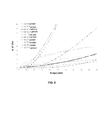
- Deformation, time and frequency dynamic mechanical tests were carried out to determine the storage and losses modules of each cross linked system and estimate the gel point of each system.
- the time scans were carried out setting a 2% deformation and 0.5 Hz at 25 °C.
- Figure 5 shows the transition of the gelatin-sodium hyaluronate hydrogels cross linked with different concentrations of genipin, from their state in solution to a viscoelastic solid (gel state). This transition occurs in the course of the reaction, which allows to study the evolution of the properties of the material during the kinetics of the crosslinking reaction. The increase of the storage modulus (G') as a function of the time is observed, indicating the increase of the solid nature of the material.
- G' storage modulus
- the frequency scan was carried out with 2% deformation between 0.01 and 100 Hz at 25 °C.
- the stabilization of G' towards the final stages defines the viscoelastic properties of the gel formed.
- TGA Thermogravimetric analyses of the systems cross linked with genipin were carried out and were compared with the uncrosslinked gel (Control HG).
- concentration of the crosslinker is increased, the maximum degradation temperature as well as the temperature at which 10% of the system has been degraded increase due to a greater crosslinking and stability of the gel (Table 2).
- Table 2 Degradation temperatures of the gelatin-sodium hyaluronate system cross linked with different concentrations of genipin SAMPLE T 10% (°C) 1 T max (°C) 2 CONTROLHG 105 312 Genip. HG 0.5% 105 314 Genip. HG 1% 110 317 Genip. HG 2% 135 319 Genip. HG 5% 140 322 1)
- T 10% Temperature at which 10% of the system has been degraded.
- T max Temperature at which the degradation rate is maximum, according to the derivative of the curve of the thermogram.
- reagents and solvents listed below were purchased from Sigma-Aldrich and used directly without prior purification: poly(tetramethylene glycol ether) (PTMG) alcohols number 55.1, poly(caprolactone diol) (PCL-diol) with molecular weight of 2000 Da, pluronic-L61 (PL61) with molecular weight of 2000 Da, tetrahydrofuran (THF), anhydrous N,N -dimethylformamide (DMF), tin 2-ethylhexanoate and methyl L-lysine diisocyanate.
- PTMG poly(tetramethylene glycol ether)
- PCL-diol poly(caprolactone diol)
- PL61 pluronic-L61
- THF tetrahydrofuran
- DMF anhydrous N,N -dimethylformamide
- tin 2-ethylhexanoate methyl L-lysine diisocyanate
- the chain extender was prepared from PCL-diol and PL61 at molar ratio (1:1) according to the following experimental procedure.
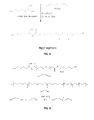
- the pre-polymer was obtained by adding a slight excess of methyl L-lysine diisocyanate (2.38 g, 2.23 ml, 11.2 mmol) with PTMG (7.62 g, 3.7 mmol) in anhydrous DMF (60 ml) and tin 2-ethylhexanoate (II) (30 ⁇ l, 0.093 mmol) was added. The mixture was stirred 2 hrs at 60 °C to obtain the rigid segment ( Fig. 8 ). Secondly, the chain extender was added to the resulting pre-polymer to obtain the segmented polyurethane ( Fig. 9 ). The reaction was carried out under nitrogen atmosphere at 75 °C for 24 hrs.
- the products were characterized by means of spectroscopic techniques of Proton Nuclear Magnetic Resonance ( 1 H-RMN) and Attenuated Total Reflection Fourier Transform Infrared (ATR-FTIR).
- the resonance spectra were recorded on Varian Inova-400 MHz equipment, using deuterated chloroform (CDCl 3 ) as solvent.
- the infrared spectra were obtained in Perkin-Elmer Spectrum One equipment, performing a scan of 4000 to 600 cm -1 . 32 scans were carried out with a resolution of 4 cm -1 .
- the number average molecular weight (M n ), weight average molecular weight (M w ) and the polydispersity index (PDI) were determined by means of size exclusion chromatography (SEC) using a Perkin Elmer chromatograph equipped with an isocratic pump Series 250 and a refractive index detector Series 200.
- SEC size exclusion chromatography
- the samples were eluted through three polystyrene-divinylbenzene PL-gel columns connected in series of 500, 10 4 and 10 5 nm pore size (Polymer Laboratories) thermostatized at 70 °C.
- N,N -dimethyl formamide (DMF) with 0.1% LiBr at a flow of 0.3 ml/min was used as mobile phase.
- DMF N,N -dimethyl formamide
- polystyrene standards with molecular weight of between 10300 and 480000 Da were used.
- the melting temperature as well as the increase of the enthalpy associated with the process was determined using a calorimeter (Perkin Elmer DSC8500) previously calibrated with Indium and Zinc standards.
- DSC Differential Scan Calorimetry
- the dried sample of the different materials was deposited inside aluminium capsules which were sealed and heated at constant rate of 5 °C/min, with a N2 flow of 20 ml/min, in the range of temperatures from -20 to 100 °C. The temperatures obtained from the thermogram corresponding to the second scan were taken.
- thermogravimetric analysis was carried out in TGA Q500 (TA) equipment between 25 and 600 °C under nitrogen atmosphere at 10 °C/min.
- the dynamic mechanical analysis was carried out in a differential mechanical analyzer METTLER DMA 861e, carrying out temperature scans between 0 °C and 80 °C at different frequencies (0.5, 1, 3, 5 and 10 Hz).
- the characteristics of the segmented polyurethanes can be modified by simply changing the ratio of the hard and soft segments; that is, by varying the molar ratios between the diisocyanate, the polydiol and the chain extender.
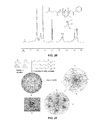
- the 1 H-RMN spectrum ( Fig. 12 ) shows signals characteristic of each of the components of the polyurethane.
- the signal of the methylene group (-CH 2 -) in position ⁇ to the carboxylate of the PCL-diol at 1.05 ppm appears the methyl group (-CH 3 ) of the PL61
- the signals corresponding to PTMG appear at 3.4 ppm (-CH 2 -O-) and at 1.6 ppm (-CH 2 -C-) overlapped together with signals of the other two components.
- the characteristic signals of the LDI appear at 3.6 ppm and 4.1 ppm corresponding to methyl (-CH 3 ) and the CH group in position ⁇ to the ester, respectively.
- thermogravimetric analysis ( Fig. 13 ) of the SPU321-LDI-[50PCL- diol-50PL61] shows two weight losses attributable to the thermal degradation of the two segments of polyurethane. This indicates that the polyurethane has two distinct segments, one rigid and one soft, the maximum of which according to the derivative of the degradation curve are 318 and 398 °C respectively. Based on the TGA measures it can be said that the SPU321-LDI-[50PCL-diol-50PL61] has a content of 42% of the rigid segment and 58% of the soft segment.
- the hydration percentage of the SPU321-LDI-[50PCL-diol-50PL61] was measured at 37 °C in distilled water, each measurement made in triplicate.
- the hydration profile showed a maximum value of 10 to 15% at 15 days ( Fig. 14 ) and then declined to reach a stable value of 9% as of day 40.
- the [2-(methacryloyloxy)ethyl]trimethyl ammonio (aqueous solution 80% w) (MAETMA) and the 4,4'-azobis (4-cyano) valeric acid (V501) were purchased at Sigma-Aldrich.
- the low molecular weight heparin (bemiparin, 111.3 IU/mg) was donated by ROVI pharmaceutical laboratories.
- the methyl methacrylate (MMA) was obtained from Acros Organics
- the 2,2'-azobisisobutyronitrile (AIBN) was obtained from Merck and it was recrystallized in ethanol before use.
- the pro-adrenomedullin N-20 (PAMP) with molecular weight of 2460 Da was obtained from Phoenix Pharmaceuticals INC.
- the block copolymers were synthesized by controlled radical polymerization, through the mechanism of Reversible Addition-Fragmentation Chain Transfer (RAFT).
- RAFT Reversible Addition-Fragmentation Chain Transfer
- CPADB CPADB
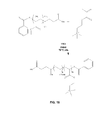
- the hydrophobic block was synthesized by mass polymerization from CPADB (28 mg, 0.1 mmol) and methyl methacrylate (MMA) (10.6 ml, 100 mmol), using AIBN (1.64 mg, 0.01 mmol) as radical initiator. A stream of nitrogen was passed through this mixture for 30 min and it was heated at 60 °C for 24 hrs ( Fig. 15 ).
- the polymerization of the second block was carried out using [(2-methacryloyloxy)ethyl] trimethyl ammonium chloride (MAETMA).
- MAETMA [(2-methacryloyloxy)ethyl] trimethyl ammonium chloride
- the products were characterized by ATR-FTIR and 1 H-RMN, using DMSO-d6.
- the number (M n ) and weight (M w ) average molecular weights, as well as the polydispersity (PDI) were determined by SEC at 70 °C, using DMF as mobile phase with 0.1% LiBr at a flow of 0.3 ml/min.
- poly(methyl methacrylate) standards with molecular weight of between 2.9 and 480 kDa obtained from Polymer Laboratories were used.
- a Perkin Elmer DSC7 apparatus was used for the determination of the glass transition temperature.
- the DSC study was carried out by depositing the dried sample of the different materials in the interior of aluminium capsules that were sealed and heated at constant speed of 10 °C/min, with a N 2 flow of 20 ml/min, with temperatures in the range of -20 to 180 °C. The temperatures obtained from the thermogram corresponding to the second scan were taken.
- thermogravimetric analysis was carried out under N 2 atmosphere in TGA Q500 (TA) equipment between 25 and 600 °C with a heating rate of 10 °C/min.
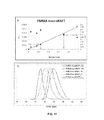
- Figure 18 shows the 1 H-RMN spectrum of the PMMA macro RAFT obtained without prior purification. From the integration ratio of the signals corresponding to the residual monomer (5.6 and 6.1 ppm) and those corresponding to the PMMA product (0.8-1.2 ppm) a final conversion of 97% was calculated. This value is also corroborated with a gravimetric study.
- the block copolymers p(MMA n - b -MAETMA m ) were synthesized by controlled radical polymerization, RAFT.
- nanoparticles loaded with bemiparin have been prepared. Different techniques have been used for the preparation of these systems: on the one hand the method of multiple emulsion or triple emulsion using different polymer phases and on the other, nanoparticles have been prepared based on the formation of polyelectrolyte complexes from bemiparin and chitosan.
- Nanoparticles prepared by multiple emulsion were prepared by multiple emulsion.
- the preparation of these systems is based on an aqueous solution of bemiparin (20 mg/ml). 100 ml of a solution of polymer (10 mg/ml) in ethyl acetate are added drop wise over 10 ml of this aqueous phase and the system is kept under constant stirring by ultrasound probe (40 A). Thus a first emulsion is formed which is again added drop wise over 400 ml of an aqueous solution of PVA (20 mg/ml) which acts as stabilizing agent. The system is kept again under stirring by ultrasound (40 A). After washing and centrifugation at 12,000 rpm to remove the stabilizer, the particles are isolated by lyophilisation. The bemiparin load of these systems was between 10% and 15% by weight with respect to the concentration of polymers ( Fig. 21 ).
- Nanoparticles prepared from bemiparin and chitosan.
- the isolation of the nanoparticles is carried out by centrifugation at 12,000 rpm for one hour and subsequent lyophilisation.
- the bemiparin load of this system was 45% by weight with respect to the concentration of chitosan.
- the products were characterized by ATR-FTIR (4000 to 600 cm-1), TGA (25 to 600 °C under nitrogen atmosphere at 10 °C/min) and DSC (the scan was carried out at a constant rate of 10 °C/min, with a N 2 flow of 20 ml/min, with temperatures in the range of -20 to 180 °C) to determine the glass transition temperature of the NP.
- the external and internal morphology of the nanoparticles was analyzed by scan electron microscopy (SEM) using Philips XL 30 ESEM equipment at a voltage of 15 keV.
- SEM scan electron microscopy
- the samples were prepared by adding one drop of an aqueous solution (0.01 mg/ml) of the same on a glass slide of 13 mm diameter and 1 mm thick. The solvent was allowed to evaporate at room temperature and the sample was metallised using chromium coating.
- the microanalysis of the surface of the nanoparticles was carried out by energy dispersive X-ray (EDAX) at 15 keV.
- the measurements of biological activity of the free and encapsulated bemiparin were carried out by cell proliferation assay.
- BaF32 cells which are a type of lymphocyte B, the cell signalling of which is mediated by the formation of a complex between the bemiparin, the FGF-2 and its corresponding FGFR1c receptor on the cell surface.
- the macroinitiator RAFT (PMMA) had an experimental Tg of 117 °C.
- the RAFT block copolymers have a single glass transition mainly corresponding to the PMMA block.
- the block corresponding to PMAETMA does not have its own glass transition because it does not equimolarly coexist but it is at a very low ratio to the PMMA segment. It can be said that the PMAETMA segment does not reach the critical concentration for phase segregation to exist between the various blocks, but it does affect the Tg value corresponding to the block of PMMA. It is observed that when increasing the chain length of the PMAETMA, the Tg decreases slightly due to an increase of the hydrophilic component in the system, having the same effect as a plasticizer, which leads to the decrease of the Tg.
- the mean hydrodynamic diameter and the values of PZ of the nanoparticles are shown in Table 6.
- the nanoparticles without bemiparin had an average size between 115 and 290 nm. It was observed that the particles prepared from the RAFT copolymers have a greater size due to the positive charge they have on the polymer chains. This charge means that there are forces of electrostatic repulsion, causing an increase in size in the nanoparticles.
- the size decreases significantly in the systems prepared with the RAFT copolymers due to neutralization of positive charges of the copolymer that are offset by the negative charges of the bemiparin.
- EE drug encapsulation efficiency
- bemiparin occurs primarily by diffusion of the drug through the swollen polymer matrix.
- the CHITOSAN, EUDRAGIT and the RAFT block copolymers there is a positive charge due to the amino group or the quaternary ammonium salt of the choline forming them, respectively. This positive charge interacts through the formation of ionic bonds with the sulfonic and carboxylic groups present in the bemiparin, whereby the chemical composition of the polymer system will affect the release of bemiparin into the medium.
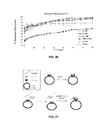
- the PLGA being a biodegradable copolymer, there is also a process of degradation of the copolymer in addition to the diffusion process, so that after 30 days of release, an increase in bemiparin released in the medium is observed that is not observed in the other systems, reaching 100% release of encapsulated bemiparin at 70 days ( Fig. 25 ).
- Bemiparin forms a ternary complex ( Fig. 27 ) with the fibroblast growth factor (FGF-2) and its corresponding specific membrane receptor (FGFR1c) thus increasing the cellular signalling process corresponding to the proliferation process ( Dillen, K., J. Vandervoort, G. Van den Mooter, and A. Ludwig. 2006. Evaluation of ciprofloxacin-loaded Eudragit® RS100 or RL100/PLGA nanoparticles. International Journal of Pharmaceutics 314 (1): 72-82 ; Eto, T. 2001.
- the unencapsulated bemiparin increases the activity of the FGF-2, promoting cell proliferation. This response is independent from the concentration of bemiparin used. However, when the bemiparin is added encapsulated in nanoparticles a certain dependence of the cellular response on the concentration is observed, indicating that the encapsulated bemiparin is being gradually released over time. This effect was mainly observed in the PLGA system and the copolymer 98-2 p(MMA- b -MAETMA) ( Fig. 28 ), where the ionic retention of bemiparin is lower and the process of diffusion of the drug through the polymer matrix is more favoured.
- Example 5 Formation of the two-layer system forming the medical product object of the invention
- the medical product is formed by two biodegradable polymeric layers of different structure and nature. Both layers may contain bioactive components selected according to their application, so that their release is controlled in a programmed manner.
- a dispersion or solution of the bioactive component or nanoparticles loaded with the component itself is added to any of them, so that it is physically integrated in the biodegradable polymer matrix.
- aqueous dispersion of the nanoparticles (0.6 ml, 5 mg/ml) was added on a SPU321-LDI-[50PCL-diol-50PL61] polyurethane film with a mass of 60 mg and 20 mm in diameter, and kept for 24 hrs controlling the saturation of atmospheric water for promoting the diffusion of the particles through the film. Finally the solvent was allowed to evaporate at room temperature.
- the films loaded with the nanoparticles were analyzed by scan electron microscopy (SEM). Images of the top and bottom surface, as well as of the cross section of the polyurethane film were obtained. In order to make said cross section, the film was immersed in liquid nitrogen and fractured next. The images obtained show that the nanoparticles diffuse through the polyurethane film with an even distribution, keeping their spherical morphology and their initial size ( Fig. 29 ).
- a PAMP aqueous solution (0.5 ml, 2x10 6 M) was added on the hydrogel and the two-layer system was kept for 24 hrs controlling the saturation of the atmospheric water for promoting the diffusion of the PAMP in the hydrogel.
- the system was stored between two layers of parafilm and sealed to prevent the total evaporation of the solvent.
- Three types of samples were prepared (Table 8):
- Example 6 In vivo assays of the two-layer system: mouse animal model
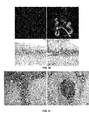
- the three types of two-layer membranes prepared were placed in a pocket formed in the dorsal dermis of genetically modified mice expressing the green fluorescent protein (GFP) in the blood vessels. After 5 days, the membranes were removed and fixed in buffered formalin. Photographs were made of the membranes with a magnifying glass equipped with ultraviolet light and the following results were obtained ( Fig. 30a and 30b ). The difference between a double disc without PAMP (left micrograph) wherein no blood vessels are observed, and one with PAMP (right micrograph) wherein the neo-formation of vessels blood is observed, was observed.
- the images of optical microscopy with hematoxylin-eosin staining correspond to the discs removed after 14 days of implantation and included in resin. Increased formation of blood vessels is observed in the area of the implant containing the discs loaded with PAMP ( Fig. 30d ).
- Example 7 In vivo assays of the two-layer system: model of experimental ischemia in rabbits
- the percentage of closure of the defect was similar in all the groups, although the proportional contribution of the processes of contraction and reepithelialisation showed differences.
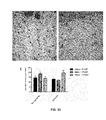
- the systems loaded with Bemiparin and PAMP triggered a lower contraction of the wound, favouring the closing of the same by epithelialisation, particularly in the ischemic group ( Fig. 32 ).
- the angiogenic capacity of the two-layer systems was assessed by immunohistochemistry against ⁇ -smooth muscle actin (ASMA) on sections of the scar tissue. With these samples, counts of the vascular sections observed in the newly formed dermis were made by optical microscopy in fields at 200x magnification. An increase in the number of sections in the samples relating to the systems loaded with Bemiparin and PAMP ( Fig. 33 ) was observed.
- ASMA ⁇ -smooth muscle actin
Landscapes
- Health & Medical Sciences (AREA)
- Life Sciences & Earth Sciences (AREA)
- Engineering & Computer Science (AREA)
- Chemical & Material Sciences (AREA)
- Animal Behavior & Ethology (AREA)
- General Health & Medical Sciences (AREA)
- Public Health (AREA)
- Veterinary Medicine (AREA)
- Epidemiology (AREA)
- Bioinformatics & Cheminformatics (AREA)
- Materials Engineering (AREA)
- Medicinal Chemistry (AREA)
- Hematology (AREA)
- Pharmacology & Pharmacy (AREA)
- Biomedical Technology (AREA)
- Dermatology (AREA)
- Vascular Medicine (AREA)
- Heart & Thoracic Surgery (AREA)
- Nanotechnology (AREA)
- Physics & Mathematics (AREA)
- Optics & Photonics (AREA)
- Chemical Kinetics & Catalysis (AREA)
- Immunology (AREA)
- Proteomics, Peptides & Aminoacids (AREA)
- Gastroenterology & Hepatology (AREA)
- Zoology (AREA)
- Endocrinology (AREA)
- Molecular Biology (AREA)
- Dispersion Chemistry (AREA)
- Materials For Medical Uses (AREA)
- Medicinal Preparation (AREA)
Applications Claiming Priority (2)
| Application Number | Priority Date | Filing Date | Title |
|---|---|---|---|
| ES201231750A ES2468740B1 (es) | 2012-11-13 | 2012-11-13 | Apósito para cicatrización de heridas comprometidas |
| PCT/ES2013/070774 WO2014076336A1 (fr) | 2012-11-13 | 2013-11-08 | Pansement pour la cicatrisation de plaies compromises |
Publications (2)
| Publication Number | Publication Date |
|---|---|
| EP2921148A1 true EP2921148A1 (fr) | 2015-09-23 |
| EP2921148A4 EP2921148A4 (fr) | 2015-11-25 |
Family
ID=50730626
Family Applications (1)
| Application Number | Title | Priority Date | Filing Date |
|---|---|---|---|
| EP13854481.2A Withdrawn EP2921148A4 (fr) | 2012-11-13 | 2013-11-08 | Pansement pour la cicatrisation de plaies compromises |
Country Status (5)
| Country | Link |
|---|---|
| US (1) | US20160074553A1 (fr) |
| EP (1) | EP2921148A4 (fr) |
| AU (1) | AU2013346670A1 (fr) |
| ES (1) | ES2468740B1 (fr) |
| WO (1) | WO2014076336A1 (fr) |
Families Citing this family (12)
| Publication number | Priority date | Publication date | Assignee | Title |
|---|---|---|---|---|
| CN105497969A (zh) * | 2014-09-26 | 2016-04-20 | 理大产学研基地(深圳)有限公司 | 一种多层复合膜敷料及其制备方法 |
| WO2019059437A1 (fr) * | 2017-09-25 | 2019-03-28 | 김재현 | Pansement à base de dextrane et procédé de fabrication d'un pansement |
| EP3873991A4 (fr) | 2018-11-02 | 2022-07-27 | Covalon Technologies Inc. | Compositions de mousse, matrices de mousse et procédés |
| CN111748071B (zh) * | 2020-06-29 | 2022-03-01 | 武汉瑞法医疗器械有限公司 | 一种亲水性聚氨酯泡沫敷料及其制备方法 |
| CN113214503B (zh) * | 2021-04-13 | 2022-06-10 | 北京科技大学 | 一种氨基酸基聚氨酯超分子高黏性凝胶贴片的制备及应用 |
| CN113577366B (zh) * | 2021-08-12 | 2024-02-27 | 石家庄市第二医院 | 促进糖尿病难愈性伤口快速愈合的干膜敷料及其制备方法 |
| EP4408400A4 (fr) * | 2021-09-29 | 2025-08-06 | Oncour Pharma Inc | Particules chargées négativement pour le traitement de brûlures associées à une inflammation |
| CN115837091B (zh) * | 2023-02-16 | 2023-05-02 | 首都医科大学附属北京安贞医院 | 一种用作伤口敷料的复合材料及其制备方法 |
| CN116688209B (zh) * | 2023-06-06 | 2025-06-24 | 江南大学 | 一种医用敷料、制备方法及应用 |
| CN117224473A (zh) * | 2023-11-16 | 2023-12-15 | 中国人民解放军总医院第四医学中心 | 一种负载a-prf可注射温敏水凝胶的制备方法和应用 |
| CN119258264B (zh) * | 2024-10-09 | 2025-04-01 | 广东云曌医疗科技有限公司 | 一种含纳米海螵蛸的水凝胶伤口敷料 |
| CN119332408B (zh) * | 2024-12-19 | 2025-05-16 | 浙江大学 | 一种炎症因子吸附用纳米纤维膜及其制备方法 |
Family Cites Families (7)
| Publication number | Priority date | Publication date | Assignee | Title |
|---|---|---|---|---|
| US5204110A (en) * | 1990-05-02 | 1993-04-20 | Ndm Acquisition Corp. | High absorbency hydrogel wound dressing |
| CU23043A1 (es) | 2001-12-20 | 2005-05-20 | Ct Ingenieria Genetica Biotech | Composicion farmaceutica que contiene factor de crecimiento epidrmico (egf) para la prevencion de la amputacion de pie diabetico. |
| TWI429462B (zh) * | 2006-09-22 | 2014-03-11 | Teikoku Seiyaku Kk | 水凝膠被覆傷口材料 |
| US20120100185A1 (en) | 2009-04-13 | 2012-04-26 | Xuejun Wen | Regeneration of tissue without cell transplantation |
| KR101091028B1 (ko) | 2009-07-02 | 2011-12-09 | 아주대학교산학협력단 | 체내 주입형 하이드로젤 및 이의 생의학적 용도 |
| US20110038921A1 (en) | 2009-08-13 | 2011-02-17 | Clemson University Research Foundation | Methods and compositions for temporal release of agents from a biodegradable scaffold |
| KR101103423B1 (ko) | 2009-09-04 | 2012-01-06 | 아주대학교산학협력단 | 생체 주입형 조직 접착성 하이드로젤 및 이의 생의학적 용도 |
-
2012
- 2012-11-13 ES ES201231750A patent/ES2468740B1/es not_active Expired - Fee Related
-
2013
- 2013-11-08 EP EP13854481.2A patent/EP2921148A4/fr not_active Withdrawn
- 2013-11-08 US US14/442,539 patent/US20160074553A1/en not_active Abandoned
- 2013-11-08 WO PCT/ES2013/070774 patent/WO2014076336A1/fr not_active Ceased
- 2013-11-08 AU AU2013346670A patent/AU2013346670A1/en not_active Abandoned
Also Published As
| Publication number | Publication date |
|---|---|
| EP2921148A4 (fr) | 2015-11-25 |
| US20160074553A1 (en) | 2016-03-17 |
| ES2468740A1 (es) | 2014-06-16 |
| WO2014076336A1 (fr) | 2014-05-22 |
| ES2468740B1 (es) | 2015-04-01 |
| AU2013346670A1 (en) | 2015-07-02 |
Similar Documents
| Publication | Publication Date | Title |
|---|---|---|
| EP2921148A1 (fr) | Pansement pour la cicatrisation de plaies compromises | |
| Le et al. | Bioinspired pH-and temperature-responsive injectable adhesive hydrogels with polyplexes promotes skin wound healing | |
| Nishiguchi et al. | Underwater-adhesive microparticle dressing composed of hydrophobically-modified Alaska pollock gelatin for gastrointestinal tract wound healing | |
| Ding et al. | RETRACTED: Photopolymerizable, immunomodulatory hydrogels of gelatin methacryloyl and carboxymethyl chitosan as all-in-one strategic dressing for wound healing | |
| KR102882700B1 (ko) | 조직 복원용 복합 재료 | |
| Mandal et al. | Silk fibroin/gelatin multilayered films as a model system for controlled drug release | |
| Zhou et al. | pH-responsive nanocomposite hydrogel for simultaneous prevention of postoperative adhesion and tumor recurrence | |
| JP6042815B2 (ja) | 生物医学的応用のためのアルギン酸塩及びヒアルロン酸を用いる抗癒着性バリア膜 | |
| Reyes-Ortega et al. | Bioactive bilayered dressing for compromised epidermal tissue regeneration with sequential activity of complementary agents | |
| Wang et al. | Fabrication of curcumin-loaded silk fibroin and polyvinyl alcohol composite hydrogel films for skin wound healing | |
| CN110603268A (zh) | 将利用棓酚基改性的透明质酸衍生物用作底物的水凝胶及其用途 | |
| KR20180125937A (ko) | 조직 치유용 섬유-하이드로겔 복합체 외과용 메쉬 | |
| CN107708675A (zh) | 假塑性微凝胶基质的组合物和试剂盒 | |
| KR20180126436A (ko) | 조직 복원용 간엽 세포-결합 복합 재료 | |
| JP2011246712A (ja) | 様々な架橋度を有するヒドロゲル移植物 | |
| JP2011246713A (ja) | 様々な架橋度を有するヒドロゲル移植物 | |
| Ying et al. | Synthesis of agarose-based multistimuli-responsive hydrogel dressing for accelerated wound healing | |
| JP2011245312A (ja) | 様々な架橋度を有するヒドロゲル移植物 | |
| Li et al. | Zinc-induced photocrosslinked konjac glucomannan/glycyrrhizic acid hydrogel promotes skin wound healing in diabetic mice through immune regulation | |
| Devi et al. | Hydrogel: an updated primer | |
| KR20180019032A (ko) | 의학 용도를 갖는 신규한 하이알루론산계 하이드로겔 | |
| Kamnoore et al. | Hydroxyapatite nanoparticle-enriched thiolated polymer-based biocompatible scaffold can improve skin tissue regeneration | |
| Younas et al. | Thiolated polymeric hydrogels for biomedical applications: a review | |
| JP2026505063A (ja) | アニーリング後のミクロゲル粒子系および方法 | |
| Cheaburu-Yilmaz et al. | Polysaccharide containing gels for pharmaceutical applications |
Legal Events
| Date | Code | Title | Description |
|---|---|---|---|
| PUAI | Public reference made under article 153(3) epc to a published international application that has entered the european phase |
Free format text: ORIGINAL CODE: 0009012 |
|
| 17P | Request for examination filed |
Effective date: 20150608 |
|
| AK | Designated contracting states |
Kind code of ref document: A1 Designated state(s): AL AT BE BG CH CY CZ DE DK EE ES FI FR GB GR HR HU IE IS IT LI LT LU LV MC MK MT NL NO PL PT RO RS SE SI SK SM TR |
|
| AX | Request for extension of the european patent |
Extension state: BA ME |
|
| RA4 | Supplementary search report drawn up and despatched (corrected) |
Effective date: 20151027 |
|
| RIC1 | Information provided on ipc code assigned before grant |
Ipc: A61L 15/44 20060101ALI20151021BHEP Ipc: A61F 13/02 20060101AFI20151021BHEP Ipc: A61L 15/22 20060101ALI20151021BHEP Ipc: A61L 15/60 20060101ALI20151021BHEP |
|
| DAX | Request for extension of the european patent (deleted) | ||
| GRAP | Despatch of communication of intention to grant a patent |
Free format text: ORIGINAL CODE: EPIDOSNIGR1 |
|
| INTG | Intention to grant announced |
Effective date: 20161123 |
|
| STAA | Information on the status of an ep patent application or granted ep patent |
Free format text: STATUS: THE APPLICATION IS DEEMED TO BE WITHDRAWN |
|
| 18D | Application deemed to be withdrawn |
Effective date: 20170404 |