EP2927842A2 - Appareil et procédé de sélection d'image automatique - Google Patents
Appareil et procédé de sélection d'image automatique Download PDFInfo
- Publication number
- EP2927842A2 EP2927842A2 EP15161865.9A EP15161865A EP2927842A2 EP 2927842 A2 EP2927842 A2 EP 2927842A2 EP 15161865 A EP15161865 A EP 15161865A EP 2927842 A2 EP2927842 A2 EP 2927842A2
- Authority
- EP
- European Patent Office
- Prior art keywords
- image
- category
- feature
- reference data
- automatic
- Prior art date
- Legal status (The legal status is an assumption and is not a legal conclusion. Google has not performed a legal analysis and makes no representation as to the accuracy of the status listed.)
- Ceased
Links
Images






Classifications
-
- G—PHYSICS
- G06—COMPUTING OR CALCULATING; COUNTING
- G06V—IMAGE OR VIDEO RECOGNITION OR UNDERSTANDING
- G06V20/00—Scenes; Scene-specific elements
- G06V20/70—Labelling scene content, e.g. deriving syntactic or semantic representations
-
- G—PHYSICS
- G06—COMPUTING OR CALCULATING; COUNTING
- G06F—ELECTRIC DIGITAL DATA PROCESSING
- G06F18/00—Pattern recognition
- G06F18/20—Analysing
- G06F18/21—Design or setup of recognition systems or techniques; Extraction of features in feature space; Blind source separation
- G06F18/217—Validation; Performance evaluation; Active pattern learning techniques
-
- G—PHYSICS
- G06—COMPUTING OR CALCULATING; COUNTING
- G06T—IMAGE DATA PROCESSING OR GENERATION, IN GENERAL
- G06T1/00—General purpose image data processing
- G06T1/0007—Image acquisition
-
- G—PHYSICS
- G06—COMPUTING OR CALCULATING; COUNTING
- G06V—IMAGE OR VIDEO RECOGNITION OR UNDERSTANDING
- G06V10/00—Arrangements for image or video recognition or understanding
- G06V10/70—Arrangements for image or video recognition or understanding using pattern recognition or machine learning
- G06V10/77—Processing image or video features in feature spaces; using data integration or data reduction, e.g. principal component analysis [PCA] or independent component analysis [ICA] or self-organising maps [SOM]; Blind source separation
- G06V10/776—Validation; Performance evaluation
-
- G—PHYSICS
- G06—COMPUTING OR CALCULATING; COUNTING
- G06V—IMAGE OR VIDEO RECOGNITION OR UNDERSTANDING
- G06V20/00—Scenes; Scene-specific elements
- G06V20/20—Scenes; Scene-specific elements in augmented reality scenes
-
- G—PHYSICS
- G06—COMPUTING OR CALCULATING; COUNTING
- G06V—IMAGE OR VIDEO RECOGNITION OR UNDERSTANDING
- G06V20/00—Scenes; Scene-specific elements
- G06V20/35—Categorising the entire scene, e.g. birthday party or wedding scene
-
- G—PHYSICS
- G06—COMPUTING OR CALCULATING; COUNTING
- G06F—ELECTRIC DIGITAL DATA PROCESSING
- G06F2218/00—Aspects of pattern recognition specially adapted for signal processing
- G06F2218/08—Feature extraction
Definitions
- the following description relates to an automatic image selecting technology, and more specifically to a technology of selectively processing images based on category recognition of images.
- smart glasses are a wearable computing device that are worn on a user's head and include various functions such as those of a smart phone.
- the smart glasses may display not only a real world, but also virtual reality, such as augmented reality, using a head-up display (HUD).
- HUD head-up display
- the smart glasses have an advantage in recording a scene in front of a user's eyes at a line of view of the user. For this reason, smart glasses are expected to be used as a device that can overcome limitations of human memory capacity. However, continuously storing images may cause waste of a storage space since images that are meaningless and insignificant to a user may be recorded.
- an automatic image selecting apparatus includes an image receiver configured to receive an image; a feature extractor configured to extract a feature from the image; and a category determiner configured to determine whether the extracted feature matches predetermined category identification reference data used for determining whether to store the image.
- the automatic image selecting apparatus may further include an operation controller configured to control an operation associated with storage of the image in accordance with a determination made by the category determiner.
- the image receiver may be further configured to receive the image from image data currently displayed on a display for a user.
- the image receiver may be further configured to receive the image from image data that are captured by and received from a camera.
- the image receiver may be further configured to receive the image from image data received over a communication network.
- the image receiver may be further configured to receive the image from training data including images that are predetermined to recognize a specific category; and the automatic image selecting apparatus may further include a feature learner configured to update the predetermined category identification reference data in accordance with a determination made by the category determiner.
- the predetermined category identification reference data may include a plurality of category identification reference data, each of which is predetermined to recognize a different category.
- the operation controller may be further configured to output a control signal to control an operation of storing the image in a local storage medium.
- the operation controller may be further configured to output a control signal to control an operation of transmitting the image to a remote storage medium over a communication network and storing the image in the remote storage medium.
- an automatic image selecting method includes receiving an image; extracting a feature from the image; and determining whether the extracted feature matches predetermined category identification reference data used for determining whether to store the image.
- the automatic image selecting method may further include controlling an operation associated with storing the image in accordance with a result of the determining.
- the receiving of an image may include receiving the image from image data currently displayed on a display for a user.
- the receiving of an image may include receiving the image from image data that is captured by and received from a camera.
- the receiving of an image may include receiving the image from image data received over a communication network.
- the receiving of an image may include receiving the image from training data including images predetermined to recognize a specific category; and the automatic image selecting method may further include updating the predetermined category identification reference data in accordance with a result of the determining.
- the predetermined category identification reference data may include a plurality of category identification reference data, each of which is predetermined to recognize a different category.
- the automatic image selecting method may further include outputting a control signal to control an operation of storing the image in a local storage medium.
- the automatic image selecting method may further include outputting a control signal to control an operation of transmitting the image to a remote storage medium over a communication network and storing the image in the remote storage medium.
- a non-transitory computer-readable storage medium stores computer-implementable instructions that, when executed by a processor of a computing device including a camera and a display, cause the processor to perform operations including receiving an image that is captured by the camera and currently displayed on the display; extracting a feature from the image and outputting the extracted feature as an image feature; and determining whether the extracted feature matches predetermined category identification reference data used for determining whether to store the image.
- the operations may further include outputting a control signal to control an operation associated with storage of the image in accordance with a result of the determining.
- the operations may further include receiving, as the image, an image from image data received over a communication network.
- the operations may further include receiving, as the image, an image from training data including images predetermined to belong to the specific category; and updating the predetermined category identification reference data in accordance with a result of the determining.
- the predetermined category identification reference data may include a plurality of category identification reference data, each of which is predetermined to recognize a different category.
- the operations may further include outputting a control signal to control an operation of storing the image in a local storage medium.
- the operations may further include outputting a control signal to control an operation of converting the image into an image signal, transmitting the image signal to a remote storage medium, and storing the image signal in the remote storage medium.
- the computer-implementable instructions may be provided as an independent application predetermined to recognize at least one specific category.
- the computer-implementable instructions may be provided as an independent application able to learn to recognize at least one category determined by a user.
- a computing device in another general aspect, includes a camera; a display; a processor; and a computer-readable storage medium storing computer-implementable instructions that, when executed by the processor, cause the processor to perform operations including receiving an image that is captured by the camera and currently displayed on the display; extracting a feature from the image and outputting the extracted feature as an image feature; and determining whether the extracted feature matches predetermined category identification reference data used for determining whether to store the image.
- the operations may further include outputting a control signal to control an operation associated with storage of the image in accordance with a result of the determining.
- the computing device may further include a communication module configured to receive image data over a communication network; and the operations may further include receiving, as the image, an image from the image data received over the communication network.
- the operations may further include receiving, as the image, an image from training data including images predetermined to belong to a specific category; and updating the predetermined category identification reference data in accordance with a result of the determining.
- the computing device may further include a communication module configured to receive image data over a communication network; and the operations may further include, receiving, as the image, an image from training data including images that are received by the communication module and are predetermined to belong to a specific category.
- the predetermined category identification reference data may include a plurality of category identification reference data, each of which is predetermined to recognize a different category.
- the operations may further include outputting a control signal to control an operation of storing the image in a local storage medium.
- the computing device may further include a communication module configured to transmit image data to a remote storage medium over a communication network; and the instructions may further include outputting a control signal to control an operation of transmitting the image to the remote storage medium and storing the image in the remote storage medium.
- the computer-implementable instructions may be provided as an independent application predetermined to recognize at least one specific category.
- the computer-implementable instructions may be provided as an independent application able to learn to recognize at least one category determined by a user.
- a camera included in smart glasses is able to capture a scene in front of a user's eyes at the user's eye level continuously and seamlessly in time. Images captured by the camera of the smart glasses may be stored in a local memory of the smart glasses. Alternatively, the captured images may be converted into an image signal by a communication module provided in the smart glasses, transmitted to a remote storage space, such as a smart phone of the user or a cloud remote from the user, over a short range or broad-bandwidth communication network, and then the converted image may be stored in the remote storage space.
- a communication module provided in the smart glasses
- the smart glasses may employ a remote storage.
- the remote storage may be affected by a communication network disruption when the computing device transmits images to a remote storage space over the communication network. Therefore, it is desirable not to continuously store every image captured by a camera of smart glasses.
- a manual selecting method may be employed to store only images that are meaningful to a user.
- a user has to keep monitoring displayed images.
- the user needs to determine whether each of the monitored images needs to be stored.
- the user has to input a command for initiating a storage operation.
- an image may not be stored when the user does not monitor the image, when the user is not able to determine whether the image needs to be stored, or when the user is not able to input a command for storing the image.
- an automatic image selecting technique based on category recognition of images.
- This technique enables selectively storing or processing only images having content of a specific category that is meaningful to a user among various images without the user's monitoring and determining.
- this technique allows only selected images, not every image, to be stored or to be processed so that a storage space will not be wasted. Further, this technique does not require manual control by a user so that images will be automatically stored or processed even without the user's attention.
- category recognition is used to indicate that a category of an image is recognized directly based on content included in the image.
- the tag method is a method of adding a text-type tag to an image as metadata. For example, in a case where a specific image includes content of people skiing on a mountain slope, text, such as "snow”, “mountain”, “ski”, and “people”, may be added as tags.
- a text-type tag may be used when searching for an image or determining an image to belong to a specific category.
- an automatic image selecting apparatus and method recognizes an image as belonging to a specific category directly based on content of the image.
- the content of the image may be identified directly by analyzing features of the image.
- an automatic image selecting apparatus and method are described with the examples of smart glasses, which include a head-up display, a camera and/or a communication module for communication with a remote device, and an independent application or an independent hardware, such as a category recognizer.
- this example is merely exemplary, and the automatic image selecting apparatus and method may be applied to a smart watch, a smart phone, a tablet, a laptop, a desktop, a server, a client, or any other computing device.
- a web browser, a camera app, a multimedia player, and any other plug-in or component module of an application may be included in the automatic image selecting apparatus and method.
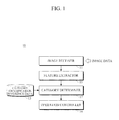
- FIG. 1 illustrates an example of an automatic image selecting apparatus.
- an automatic image selecting apparatus 10 includes an image receiver 11, category identification reference data 13, a feature extractor 15, a category determiner 17, and an operation controller 19.
- the image receiver 11 is a component for receiving a specific image from received image data.
- image data may be a video file including continuous still images, and a received image may be one of the still images of the video file.
- the image receiver 11 may receive an image from image data derived from various sources.
- An image data source may include a display, a camera, a receiver module, a storage medium, or any other image data source known to one of ordinary skill in the art.
- image data may be image data currently displayed on a display for a user.
- image data may be image data currently displayed on a display for a user.
- smart glasses having the category recognition-based automatic image selecting apparatus 10 are transmitting in real time on a head-up display an augmented reality video that includes a real world in front of the user's eyes captured by a camera.
- the image receiver 11 may receive a still image from the augmented reality video data.
- the image data may be image data captured by a camera and received in real time.
- the image receiver 11 may receive a still image from the video data.
- the image data may be image data received from a remote location over a communication network.
- a communication network For example, suppose that a user who is wearing smart glasses having the category recognition-based automatic image selecting apparatus 10 is now watching a drama by receiving a digital multimedia broadcasting (DMB) program.
- the image receiver 11 may receive a still image from the DMB drama video data displayed on a head-up display of the smart glasses.
- DMB digital multimedia broadcasting
- the image data may be training data stored in a local storage medium or a remote storage space.
- a who is wearing smart glasses having the category recognition-based automatic image selecting apparatus 10 receives a picture or video relating to the user's favorite style of "flower-patterned clothes", which is stored in the user's personal account of a remote cloud, and makes the category recognition-based automatic image selecting apparatus 10 learn the picture or video relating to "flower-patterned clothes.”
- the training data is stored in the user's personal account of a remote cloud, which includes images predetermined as belonging to "flower-patterned clothes” category.
- the image receiver 11 may receive, from the training data, images predetermined as belonging to the "flower-patterned clothes" category.
- the category identification reference data 13 includes at least one reference feature, which is a feature predetermined as belonging to a specific category.
- a feature enables the category recognition-based automatic image selecting apparatus 10 to determine whether an image belongs to a specific category directly based on content of the image.
- categories may be defined using general concepts, such as, for example, human, animal, female, male, cat, pet, fashion, and car. Further, categories may be determined by mixing general concepts into a personally meaningful one, such as flower-patterned clothes and Lady Gaga.
- the automatic image selecting apparatus 10 recognizes whether an image belongs to a specific category. In addition, the category recognition-based automatic image selecting apparatus 10 recognizes to which category an image belongs among a plurality of categories. A category recognized by the automatic image selecting apparatus 10 may be determined based on a category that is predetermined to be recognized by the category identification reference data 13 or by reference features included in the category identification reference data 13.
- Reference features included in the category identification reference data 14 may be provided by one or more of various entities to recognize specific categories.
- the various entities may include a user, a relevant system provider, a relevant method software developer, and/or a third party.
- Assigning a specific feature to a specific category is a well-known technique in conventional image analysis technologies that enables recognition of an object, such as a specific person's face, from an image.
- a particular feature predetermined as corresponding to a particular category is referred to as a "reference feature".
- a reference feature may be a feature that is selected as a criterion for identifying a predetermined specific category from among a plurality of features previously extracted from an image. In this case, whether an image belongs to a specific category may be determined by comparing a feature extracted from the image with a reference feature.
- a feature is a characteristic discovered from an image.
- the determination of which characteristic in an image corresponds to which feature may be made in advance by one of various entities.
- the various entities may include a user, a relevant system seller, a relevant method software developer, and/or a third party.
- Assigning a characteristic of an image to a specific feature is a well-known technique in conventional image analysis technologies of recognizing an object, such as a specific person's face, from an image.
- the category identification reference data 13 may include features that are used for recognizing the "flower-patterned clothes” category. For example, suppose that “clothes and "flower” need to be recognized to recognize “flower-patterned clothes.” In this case, as reference features, the category identification reference data 13 includes features for recognizing "clothes” and features for recognizing "flower.”
- the feature extractor 15 outputs a feature extracted from an image as an image feature.
- the image feature extracted by the feature extractor 15 may be composed of data having a same format as a reference feature, so that the data is comparable to the reference feature. In this case, it is possible to compare an image feature directly with a reference feature.
- the image feature and the reference feature may indicate the same category or different categories. In a case where the image feature and the reference feature match each other, the image feature and the reference feature are determined to indicate the same category. However, in a case where the image feature and the reference feature are different from each other, the image feature and the reference feature are determined to indicate different categories.
- the category determiner 17 compares an image feature and a reference feature and determines whether an image belongs to a desired category based on a result of the determination.
- a category indicated by a reference feature is a specific category predetermined to be recognized by the reference feature.
- the specific category may be a category of images a user wants to store.
- the category determiner 17 compares an image feature and a reference feature, and if the image feature matches the reference feature, the category determiner 17 determines that both the image feature and the reference feature indicate the same category and that a corresponding image's category is therefore a specific category of images a user wants to store.
- the category determiner 17 compares an image feature and a reference feature, and, if the image feature is different from the reference feature, the category determiner 17 determines that the image feature and the reference feature indicate different categories, and that a corresponding image's category is therefore not a specific category of images a user wants to store.
- category identification reference data includes a reference feature
- the reference feature is a kind of feature that can be extracted from an image.
- the category identification reference data 13 may include any other various reference data for identifying a specific category.
- the category determiner 17 may use the category identification reference data to determine a category of a feature extracted from an image.
- the category identification reference data 13 is not limited as long as it makes it possible to identify whether a specific feature indicates a specific category.
- the category identification reference data may be data that is used for identifying characteristics included in a feature and determining whether the identified features are able to be identified as the specific category.
- the category determiner 17 is descried in the following description to "compare” a reference feature from the category identification reference data 13 and a feature extracted from an image, it is to be understood that the term “compare” is not limited to simple comparison between features. In other words, comparing a reference feature and a feature extracted from an image include various methods of determining the feature extracted from the image based on various category identification reference data that are able to recognize specific categories.
- the operation controller 19 outputs a control signal that controls an operation associated with storage of an image according to a determination made by the category determiner 17.
- a control signal output by the operation controller 19 may be one of control signals that cause an image to be stored in a local and/or remote storage medium.
- a local storage medium may be a memory that is, for example, included in smart glasses having the automatic image selecting apparatus 10.
- a remote storage medium may be a storage space within a smart phone, a tablet, a laptop computer, or a remote cloud server, each of which is, for example, connected over a communication network to smart glasses having the automatic image selecting apparatus 10.
- the automatic image selecting apparatus 10 described above with reference to FIG. 1 provides a method of automatically selecting and storing an image. For example, in a case where a user is wearing smart glasses having the automatic image selecting apparatus 10, an image belonging to a specific category meaningful for the user may be stored in a local memory in the smart glasses. The user may upload an automatically selected image to be stored in a storage of the user's personal account in the cloud connected over a communication network, such as the Internet. Thus, when the user is walking through crowds or shopping, the automatic image selecting apparatus 10 enables that only images having desired content among images continuously captured by a camera of the smart glasses are automatically selected and processed, for example, stored.
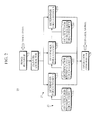
- FIG. 2 illustrates another example of an automatic image selecting apparatus.
- An automatic image selecting apparatus 20 illustrated in FIG. 2 recognizes and selects a plurality of categories to be stored.
- the automatic image selecting apparatus 20 includes an image receiver 21, category identification reference data 23 that includes identification reference data 231, 232, and 233 for different categories, a feature extractor 25, a category determiner 27 that includes category determiners 271, 272, and 273 for different categories respectively corresponding to the identification reference data 231, 232, and 233, and an operation controller 29.
- the image receiver 21 is a component for receiving a specific image from received image data.
- the identification reference data 23 is different from the category identification reference data 13 shown in FIG. 1 in that the identification reference data 23 includes a plurality of identification reference data 231, 232, and 233, each of which is for a different category.
- the first identification reference data 231 for category 1 includes reference features that are predetermined to recognize a specific category, that is, "Category 1.”
- the second identification reference data 232 for category 2 includes reference features that are predetermined to recognize another specific category, that is, "Category 2."
- the N-th identification reference data 233 for category N includes reference features that are predetermined to recognize another specific category, that is, "Category N.”
- N donates an integer equal to or greater than 2.
- the category identification reference data 23 includes category identification reference data that are predetermined for two or more different respective categories.
- the feature extractor 25 extracts a feature from an image and outputs the extracted feature as an image feature.
- the image feature extracted by the feature extractor 25 may be composed of data having same format as a reference feature included in the category identification reference data 23, so that it is possible to compare the data with the reference feature.
- the category determiner 27 is different from the category determiner 17 of FIG. 1 in that the category determiner 27 includes a plurality of category determiners 271, 272, and 273 for recognizing different respective categories.
- the first determiner 271 for category 1 determines whether a category of an image is "Category 1" based on the first identification reference data 231.
- the second determiner 272 for category 2 determines whether a category of an image is "Category 2" based on the second identification reference data 232.
- the N-th determiner 273 for category N determines whether a category of an image is "Category N" based on the N-th identification reference data.
- N denotes an integer equal to or greater than 2.
- the category determiner 27 determines whether a category of an image belongs to two or more different categories.
- the operation controller 29 outputs a control signal that controls an operation associated with storage of an image according to a determination of the category determiner 27.
- FIG. 3 illustrates another example of an automatic image selecting apparatus.
- An automatic image selecting apparatus 30 illustrated in FIG. 3 which is an example of a variation of the automatic image selecting apparatus shown in FIG. 1 , refines a category recognition function by updating category identification reference data using training data.
- the automatic image selecting apparatus 30 includes an image receiver 31, category identification reference data 33, a feature extractor 35, training data 36, a category determiner 37, a feature learner 38, and an operation controller 39.
- the image receiver 31 receives a specific image from received image data.
- the training data 36 is a group of images that are classified in a specific category.
- the training data 36 may be images stored by a user in a local memory, a storage space of the user's computing device, or a storage space of the user's personal account of a remote cloud. Whether the images in the training data 36 belong to a specific category may be determined by the user.
- the category identification reference data 33 include data, such as a reference feature, that is predetermined to recognize a specific category.
- the feature extractor 35 extracts a feature from an image and outputs the extracted feature as an image feature.
- the category determiner 37 compares the image feature with data included in the category identification reference data 33, that is, a reference feature, and determines whether the category of the image is matched to a desired category.
- the feature learner 33 updates the category identification reference data 33 based on a determination made by the category determiner 37 as to the images included in the training data 36. For example, in a case where the category determiner 37 determines that an image feature extracted from an image received from the training data 36 matches a reference feature included in the category identification reference data 33, the feature learner 33 does not update the category identification reference data 33. Alternatively, in a case where the category determiner 37 determines that an image feature extracted from an image received from the training data 36 does not match a reference feature included in the category identification reference data 33, the feature learner 33 updates the category identification reference data 33 based on the image feature. For example, the feature learner 33 may update the category identification reference data 33 by adding the image feature to the category identification reference data 33.
- the operation controller 39 outputs a control signal that controls an operation associated with storage of the image according to a determination made by the category determiner 37.
- computing devices having an automatic image selecting apparatus are described with reference to FIGS. 4 to 7 .
- computing devices described in the following examples are merely exemplary. It will be apparent to one of ordinary skill in the art that a single computing device and/or a dispersed computing environment with various combinations fall within the scope of the claims and their equivalents.
- FIG. 4 illustrates an example of a computing device having an automatic image selecting apparatus.
- a computing device 400 having an automatic image selecting apparatus 40.
- the computing device 400 includes the automatic image selecting apparatus 40, a camera 415, a display 425, and a local image storage 435.
- the automatic image selecting apparatus 40 includes an image receiver 41, category identification reference data 43, a feature extractor 45, a category determiner 47, and an operation controller 49 that correspond to the components of the system shown in FIG. 1 .
- the image receiver 41 receives the image.
- the feature extractor 45 extracts a feature from the received image.
- the extracted feature is provided to the category determiner 47 as an image feature.
- the category determiner 47 compares the image feature with a reference feature included in the category identification reference data 43.
- the category identification reference data 43 includes one or more reference features that are predetermined to recognize a predetermined specific category. Thus, the category determiner 47 determines whether the received image belongs to the predetermined specific category. Only when the category determiner 47 determines that the receive image belongs to a category defined by the category identification reference data 43, the operation controller 49 outputs a control signal that enables transmission of the received image from the camera 415 to be stored in the image storage 435.
- the computing device 400 illustrated in FIG. 4 is able to store in the image storage 435 only images selected through a category recognizing process.
- FIG. 5 illustrates another example of a computing device having an automatic image selecting apparatus.
- a computing device 500 having an automatic image selecting apparatus 50 and a dispersed computing environment in which a remote image server 555 is connected over a communication network 545.
- the computing device 500 includes the automatic image selecting apparatus 50, an image signal receiver module 515, a display 525, and a local image storage 535.
- the automatic image selecting apparatus 50 includes an image receiver 51, category identification reference data 53, a feature extractor 55, a category determiner 57, and an operation controller 59 that correspond to the components of the system shown in FIG. 1 .
- the image receiver 51 receives the image.
- the image signal receiver module 515 receives the image from the remote image server 555 over the communication network 545.
- the feature extractor 55 extracts a feature from the received image.
- the extracted feature is provided to the category determiner 57 as an image feature.
- the category determiner 57 compares the image feature with a reference feature included in the category identification reference data 53.
- the category identification reference data 53 includes one or more reference features that are predetermined to recognize a predetermined specific category. Thus, the category determiner 57 determines whether the received image belongs to the predetermined specific category.
- the operation controller 59 Only when the category determiner 57 determines that the received image belongs to a category defined by the category identification reference data 53, the operation controller 59 outputs a control signal that enables transmission of the received image from the image signal receiver module 515 to be stored in the image storage 535.
- the computing device 500 shown in FIG. 5 stores in the image storage 535 only images selected through a category recognizing process.
- FIG. 6 illustrates another example of a computing device having an automatic image selecting apparatus.
- a computing device 500 having an automatic image selecting apparatus 60, and a dispersed computing environment in which a remote image storage 635 is connected over a communication network 655.
- the computing device 600 includes the automatic image selecting apparatus 60, a camera 615, a display 625, and an image signal transmitter module 645.
- the automatic image selecting apparatus 60 includes an image receiver 61, category identification reference data 63, a feature extractor 65, a category determiner 67, and an operation controller 69 that correspond to the components of the system shown in FIG. 1 .
- the image receiver 61 receives the image.
- the feature extractor 65 extracts a feature from the received image.
- the extracted feature is provided to the category determiner 67 as an image feature.
- the category determiner 67 compares the extracted feature with a reference feature included in the category identification reference data 63.
- the category identification reference data 63 includes one or more reference features that are predetermined to recognize a predefined specific category. Thus, the category determiner 67 determines whether the received image belongs to the predetermined specific category.
- the operation controller 69 Only when the category determiner 67 determines that the image belongs to a category defined by the category identification reference data 63, the operation controller 69 outputs a control signal that enables transmission of the received image from the camera 615 to be stored in the remote image storage 635. In accordance with the control signal, the image is provided from the camera 615 to the image signal transmitter module 645.
- the image signal transmitter module 645 converts the image into a communication signal and transmits the communication signal to the remote image storage 635 over the communication network 655 so that the image is stored in the remote image storage 635.
- the computing device 600 shown in FIG. 6 stores in the remote image storage 635 only images selected through a category recognizing process.
- the remote image storage 635 may be a storage space allocated to the user's personal account in a remote cloud server.
- FIG. 7 illustrates another example of a computing device having an automatic image selecting apparatus.
- the computing device 700 includes the automatic image selecting apparatus 70, a camera 715, a display 725, an image signal transmitter module 745, and an image signal receiver module 785.
- the automatic image selecting apparatus 70 includes an image receiver 71, category identification reference data 73, a feature extractor 75, a category determiner 77, a feature learner 78, and an operation controller 79 that correspond to the components of the system shown in FIG. 1 .
- the automatic image selecting apparatus 70 has two operational modes, that is, a selecting mode and a learning mode.
- the selecting mode the automatic image selecting apparatus 70 determines whether to store a received image by recognizing a category thereof.
- the learning mode the automatic image selecting apparatus 70 receives an image from training data, and updates the category identification reference data 73 using a feature extracted from the received image.
- An operational mode of the automatic image selecting apparatus 70 may be set by a user between the selecting mode and the learning mode.
- the image receiver 71 receives the image.
- the feature extractor 75 extracts a feature from the received image.
- the extracted feature is provided to the category determiner 77 as an image feature.
- the category determiner 77 compares the image feature with a reference feature included in the category identification reference data 73.
- the category identification reference data 73 includes one or more reference features that are predetermined to recognize a specific predetermined category. Thus, the category determiner 77 is able to determine whether the received image belongs to a category defined in the category identification reference data 73.
- the operation controller 79 Only when the category identification reference data 73 determines that the received image belongs to a category defined in the category identification reference data 73, the operation controller 79 outputs a control signal that enables transmission of the received image from the camera 715 to be stored in the remote image storage. In accordance with the control signal, the image is provided from the camera 715 to the image signal transmitter module 745.
- the image signal transmitter module 745 converts the image into a communication signal and transmits the communication signal to the remote image storage 735 so that the image is stored in the remote image storage 735.
- the automatic image selecting apparatus 70 assumes that a received image is an image received from training data whose category is defined.
- the image receiver 71 receives an image from image data received by the image signal receiver module 785.
- the image signal receiver module 785 receives the image data from the remote training data 765 connected over the communication network 755.
- the feature extractor 75 extracts a feature from the received image.
- the extracted feature is provided to the category determiner 77 as an image feature.
- the category determiner 77 compares the image feature with a reference feature included in the category identification reference data 73.
- the reference feature included in the category identification reference data 73 is predetermined to recognize a specific category.
- the image feature is predetermined to recognize the specific category. Therefore, a reference feature and an image feature need to match each other in principle. However, the reference feature and the image feature may be different from each other in practice. This is because a reference feature is selected from a predetermined amount of reference image data, whereas training data may include a much greater volume of image data including more images not included in the reference image data.
- the category determiner 77 may determine whether a reference feature and an image feature match each other. When the category determiner 77 determine that a reference feature and an image feature match each other, the feature learner 78 updates the category identification reference data 73 by modifying the existing reference feature based on the image feature or by adding a new reference feature.
- the operational mode may be switched to the selecting mode.
- the updated category identification reference data 73 is used so that an image category recognizing process may be performed more efficiently.
- the computing device 700 shown in FIG. 7 is able to improve the efficiency of the automatic image selecting apparatus 70 using the learning mode.
- a user may install in the computing device 700 an application that is encoded to implement the automatic image selecting apparatus 70. Firstly, the user may instruct the automatic image selecting apparatus 70 to learn the user's own collected image data. Then, the user may implement the selecting mode for an image captured by the camera 715.
- FIG. 8 illustrates an example of an automatic image selecting method.
- an automatic image selecting method 800 includes a process of selectively storing an image by analyzing content of the image to recognize a category thereof.
- an image is received in 801.
- a feature is extracted from the received image in 803.
- a category of the extracted feature is determined based on pre-stored category identification reference data.
- the category identification reference data are predetermined to recognize a specific category. Thus, if the extracted feature matches the category identification reference data, the category of the extracted feature is determined to match the specific category in 807. Alternatively, if the extracted feature does not match the category identification reference data, the category of the extracted feature is not to match the specific category in 807.
- a control signal enabling an additional operation associated with the image is output in 809.
- the additional operation associated with the image relates to storing the image.
- the image may be stored in accordance with the control signal enabling the additional operation.
- a control signal disabling the additional operation associated with the image is output in 811.
- the image may not be stored in accordance with the control signal.
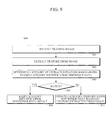
- FIG. 9 illustrates another example of an automatic image selecting method.
- an automatic image selecting method 900 includes a process of updating category identification reference data based on an image feature learned by recognizing a category of an image.
- a training data image is received in 901.
- a training data image is an image for which a user has predetermined a specific category.
- a feature is extracted from the received image in 903.
- the extracted feature is compared with pre-stored category identification reference data in 905. Then, whether the extracted feature matches the category identification reference data is determined in 907.
- the feature extracted from the training data image is considered to recognize a specific category.
- the category identification reference data are considered to recognize the specific category.
- a determination is made in 907 that the category identification reference data do not need to be modified by the extracted feature.
- a determination is made in 907 that the category identification reference data needs to be modified by the extracted feature.
- the category identification reference data is kept intact in 909.
- the category identification reference data are updated based on the extracted feature in 911.
- the category identification reference data may be updated by adding the extracted feature to the category identification reference data.
- the category identification reference data may be updated by modifying some of the existing category identification reference data with reference to the extracted feature.
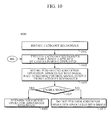
- FIG. 10 illustrates another example of an automatic image selecting method.
- an automatic image selecting method 1000 includes a process of selectively storing an image by executing a category recognizer to recognize a category of the image, wherein the category recognizer is an independent application that is installed in the smart glasses by a user.
- the user accesses a remote server using the smart glasses to download and install the category recognizer in the smart glass in 1001. Then, an image captured by a camera of the smart glasses is displayed on a head-up display of the smart glasses. In 1003, the user executes a category recognizer to automatically select an image belonging to a specific category among all displayed images and automatically store the selected image. Once the category recognizer is executed, a processor of the smart glasses waits in 1005 until the category recognizer outputs a control signal associated with storage of a specific image.
- the category recognition-based automatic image selecting method 800 described above with reference to FIG. 8 is performed by the processor of the smart glasses.
- an image is received; a feature is extracted from the received image; the extracted feature is compared with a reference feature; and a control signal is output as described above with reference to FIG. 8 .
- the control signal output from the category recognizer is a signal enabling storage of a specific image (Yes in 1007), the processor of the smart glasses performs an additional operation associated with the received image, that is, an operation of storing the specific image, in 1009.
- control signal output from the category recognizer is a signal disabling storage of a specific image (No in 1007)
- the processor of the smart glasses does not perform an additional operation associated with the specific image, that is, an operation of storing the specific image, in 1011.
- the process 800 and the operations 1005 to 1011 of waiting to receive a control signal and storing/not storing a specific image in accordance with the control signal are repeatedly performed with respect to a plurality of continuous images.
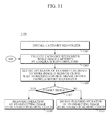
- FIG. 11 illustrates another example of an automatic image selecting method.
- an automatic image selecting method 1100 includes a process of selectively storing an image in a remote cloud by executing a category recognizer to recognize a categories of the image, wherein the category recognizer is an independent application that is installed in the smart glasses by a user.
- a user accesses a remote server using smart glasses to download and install a category recognizer in the smart glasses in 1101. Then, an image captured by a camera of the smart glasses is displayed on a head-up display of the smart glasses. In 1103, the user executes the category recognizer to automatically select an image belonging to a specific category among all displayed images and automatically store the image in a remote cloud. Once the category recognizer is executed, a processor of the smart glasses waits in 1105 until the category recognizer outputs a control signal associated with storage of a specific image in a remote cloud.
- the automatic image selecting method 800 described above with reference to FIG. 8 is performed by the processor of the smart glasses.
- an image is received; a feature is extracted from the received image; a category of the extracted feature is determined based on category identification reference data; and a control signal is output.
- the control signal output from the category recognizer is a signal enabling transmission of a specific image to be stored in a remote cloud (Yes in 1107), the processor of the smart glasses performs an additional operation associated with the specific image, that is, an operation of transmitting the specific image to be stored in the remote cloud, in 1109.
- control signal output from the category recognizer is a signal disabling transmission of a specific image to be stored in a remote cloud (No in 1107)
- the processor of the smart glasses does not perform an operation of transmitting the specific image to be stored in the remote cloud in 1111.
- the process 800 and the operations 1105 to 1111 of waiting to receive a control signal and storing/not storing a specific image in accordance with the control signal are repeatedly performed with respect to a plurality of continuous images.
- FIG. 12 illustrates another example of a category recognition-based automatic image selecting method.
- an automatic image selecting method 1200 includes a process of selectively storing an image by executing a category recognizer to recognize a category of an image received from a broadcasting company, wherein the category recognizer is an independent application that is installed in smart glasses by a user.
- a user accesses a remote server using the smart glasses to download and install a category recognizer in the smart glasses in 1201.
- a Digital Multimedia Broadcasting (DMB) image received by an image signal receiver module of the smart glasses from a remote image server is displayed on a head-up display of the smart glasses.
- the user executes the category recognizer to automatically select an image belonging to a specific category among all displayed DMB images and automatically store the selected image.
- a processor of the smart glasses waits in 1205 until the category recognizer outputs a control signal associated with storage of a specific image.
- DMB Digital Multimedia Broadcasting
- the automatic image selecting method 800 described above with reference to FIG. 8 is performed by the processor of the smart glasses.
- an image is received; a feature is extracted from the received image; a category of the feature is determined based on category identification reference data; and a control signal is output.
- the control signal output from the category recognizer is a signal enabling storage of a specific image (Yes in 1207)
- the processor of the smart glasses performs an additional operation associated with the specific image, that is, an operation of transmitting the specific image to the remote cloud for storage in 1209.
- the control signal output from the category recognizer is a signal disabling storage of a specific image (No in 1207), the processor of the smart glasses does not perform an operation of transmitting the specific image to the remote cloud for storage in 1211.
- the process 800 and the operations 1205 to 1211 of waiting to receive a control signal and storing or not storing a specific image in accordance with the control signal are repeatedly performed with respect to a plurality of continuous images.
- FIG. 13 illustrates another example of an automatic image selecting method.
- an automatic image selecting method 1300 includes a process of selectively storing images by executing a category recognizer to recognize a category of an image captured by a camera, wherein the category recognizer is an independent application installed in the smart glasses by a user, and, before the execution of the category recognizer, the category recognizer is instructed to learn from the user's own collected images.
- a user accesses a remote server using the smart glasses to download and install a category recognizer in the smart glasses in 1301.
- the user executes a learning mode of the category recognizer to instruct the category recognizer to learn from training data.
- the training data may be images collected by the user.
- the training data may be images stored in a local memory of the smart glasses.
- the training data may be stored in a remote cloud.
- the category recognizer considers any received image to belong to a specific category. Thus, features extracted from an image received from the training data are also considered to be predetermined to recognize the specific category.
- a the automatic image selecting method 900 described above with reference to FIG. 9 is performed by a processor of the smart glasses.
- category identification reference data included in the category recognizer may be updated.
- an image captured by a camera of the smart glasses is displayed on a head-up display of the smart glasses.
- the user executes the category recognizer to automatically select an image belonging to a specific category and automatically store the selected image.
- the processor of the smart glasses waits in 1307 until the category recognizer outputs a control signal associated with storage of a specific image.
- the automatic image selecting method 800 described above with reference to FIG. 8 is performed by a processor of the smart glasses.
- an image is received; a feature is extracted from the received image; a category of the extracted feature is determined based on category identification reference data; and a control signal is output.
- the control signal output from the category recognizer is a signal enabling storage of a specific image in a storage (Yes in 1309)
- the processor of the smart glasses performs an operation of storing the received image in the storage in 1311.
- the control signal output from the category recognizer is a signal disabling storage of a specific image in a storage (NO in 1309)
- the processor of the smart glasses does not perform an operation of storing the received image in the storage in 1313.
- the process 800 and the operations 1307 to 1313 of waiting to receive a control signal and storing/not storing a specific image in a storage in accordance with the control signal are repeatedly performed with respect to a plurality of continuous images.
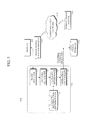
- FIG. 14 illustrates another example of an automatic image selecting method.
- an automatic image selecting method 1400 includes a process of selectively storing images by executing a flower-patterned clothes category recognizer to recognize whether a category of an image matches a "flower-patterned clothes" category, wherein the flower-patterned clothes category recognizer is an independent application that is installed in smart glasses by a user.
- the user accesses a remote server using the smart glasses to download and install a flower-patterned clothes recognizer that is set to recognize the "flower-patterned clothes" category among various categories in the smart glasses in 1401.
- Category identification reference data 1450 of the flower-patterned clothes includes category identification reference data for recognizing flower-patterned clothes.
- the category identification reference data 1450 includes a "clothes feature", which is a reference feature for recognizing clothing, and a "flower feature”, which is a feature for recognizing a flower.
- Each of the clothes feature and the flower feature may be a group of features. However, this is merely an example, and the category identification reference data 1450 may further include other reference features that are helpful in recognizing flower-patterned clothes.
- the category identification reference data 1450 may be refined by using personal images collected by the user as training data.
- an image captured by a camera of the smart glasses is displayed on a head-up display of the smart glasses.
- the user executes the flower-patterned clothes recognizer to automatically select an image belonging to a flower-patterned clothes category among all displayed images and automatically store the selected image.
- a processor of the smart glasses waits in 1405 until the flower-patterned clothes recognizer outputs a control signal associated with storage of a specific image.
- a process 1455 that is similar to the automatic image selecting method 800 described above with reference to FIG. 8 , is performed by the processor of the smart glasses.
- an image is received; a feature is extracted from the received image; and a category of the extracted feature is determined based on the category identification reference data 1450. Then, whether the category of the received image matches the flower-patterned clothes category is determined, and a control signal is output according to a result of the determination. If the control signal output from the flower-patterned clothes recognizer is a signal enabling storage of a specific image (Yes in 1407), the processor of the smart glasses performs an operation of storing the specific image in 1409. Alternatively, if the control signal output from the flower-patterned clothes recognizer is a signal disabling storage of a specific image (No in 1407), the processor of the smart glasses does not perform an operation of storing the specific image in 1411.
- the process 1455 and the operations 1405 to 1411 of waiting to receive a control signal and storing/not storing a specific image in accordance with the control signal are repeatedly performed with respect to a plurality of continuous images.
- FIG. 15 illustrates another example of a category recognition-based automatic image selecting method.
- the category recognition-based automatic image selecting method 1500 includes a process of selectively storing images by executing a Lady Gaga category recognizer to recognize whether a category of an image matches a "Lady Gaga" category, wherein the Lady Gaga category recognizer is an independent application installed by a user in smart glasses.
- the user accesses a remote server using the smart glasses to download and install the Lady Gaga recognizer, which is set to recognize the "Lady Gaga" category associated with one of the user's favorite celebrities among various categories, in the smart glasses in 1501.
- Category identification reference data 1550 of the Lady Gaga recognizer includes reference features for recognizing the Lady Gaga category.
- the category identification reference data 1550 includes a "human feature” enabling recognition of a human being, a "female feature” enabling recognition of a female, and a "Lady Gaga face feature” enabling recognition of a specific person, that is, Lady Gaga.
- Each of the human feature, the female feature, and the Lady Gaga face feature may be a group of features.
- the category identification reference data 1550 may further include other reference features that are helpful in recognizing Lady Gaga.
- the category identification reference data 1550 may be refined by learning personal images collected by the user as training data.
- an image captured by a camera of the smart glasses is displayed on a head-up display of the smart glasses.
- the user executes the Lady Gaga recognizer to automatically select an image belonging to the Lady Gaga category among all displayed images and automatically store the selected image.
- a processor of the smart glasses waits in 1505 until the Lady Gaga recognizer outputs a control signal associated with storage of a specific image.
- a process 1555 which is similar to the automatic image selecting method 800 described above with reference to FIG. 8 , is performed by the processor of the smart glasses.
- an image is received; a feature is extracted from the received image; and a category of the extracted feature is determined based on the category identification reference data 1550. Then, whether a category of the received image matches the Lady Gaga category is determined, and a control signal is output according to a result of the determination. If the control signal output from the Lady Gaga recognizer is a signal enabling storage of a specific image (Yes in 1507), the processor of the smart glasses performs an operation of storing the specific image in 1509. Alternatively, if the control signal output from the Lady Gaga recognizer is a signal disabling storage of a specific image (No in 1507), the processor of the smart glasses does not perform an operation of storing the specific image in 1511.
- the process 1555 and the operations 1505 to 1511 of waiting to receive a control signal and storing/not storing a specific image in accordance with the control signal are repeatedly performed with respect to a plurality of continuous images.
- FIGS. 14 and 15 describe examples of a category recognizer that is predetermined to recognize a specific category.
- a user may select one of the category recognizers predetermined to recognize a category most similar to a desired category and install the selected category recognizer in smart glasses. Then, the user instructs the installed category recognizer to learn images collected by the user, so that the installed category recognizer may be changed into the user's exclusive category recognizer that is able to recognize a category desired by the user.
- a user may select a universal category recognizer that is not predetermined to recognize a specific category and install the selected universal category recognizer in smart glasses. Like in the above example, the user instructs the installed universal category recognizer to learn images collected by the user, so that the installed category recognizer may be changed into the user's exclusive category recognizer that is able to recognize a category desired by the user.
- Components of the above-described automatic image selecting apparatuses may be implemented by a combination of components of a computing device, which may include a processor, a memory, a user inputting device, and a presentation device.
- the memory is a medium for storing computer-readable software, applications, program modules, routines, instructions, and data that are encoded to perform a specific task when executed by a processor.
- the processor may implement the computer-implementable software, the program modules, the routines, the instructions, and the data that are stored in the memory by reading the same from the memory and executing the same.
- the user inputting device may be a device that allows a user to input a command for instructing the processor to perform a specific task or to input data necessary for the specific task.
- the user inputting device may include a physical/virtual keyboard, a keypad, key buttons, a joystick, track ball, touch-sensitive inputting means, or a microphone.
- a presentation device may include a display, a printer, a speaker, or a vibration device.
- the above-described automatic image selecting methods may be encoded as computer-implementable instructions that can be executed by a processor of a computing device.
- the computer implementable instructions may include software, applications, modules, procedures, plug-ins, programs, instructions, and/or data structures.
- the computer-implementable instructions may be stored in a computer-readable medium. Examples of the computer-readable medium include a non-transitory computer-readable storage medium and a computer-readable communication medium.
- Examples of the computer-readable storage medium include random-access memory (RAM), read-only memory (ROM), flash memory, an optical disk, a magnetic disk, a magnetic tape, a magnetic cassette, hard disks, and solid-state disks,
- An example of the computer-readable communication medium may be an encoded signal transmittable/receivable over a communication network obtained by encoding computer-implementable instructions for implementing a category recognition-based automatic image selecting method.
- a computing device may be a device that includes a camera, a display, a processor, and a memory, and installs and implements an operating system and various applications to execute various functions.
- the computing device may include various devices, such as a smart watch, a smart phone, a tablet, a laptop, a desktop, a server, and a client.
- the computing device may be a single stand-alone device, or may include a plurality of computing devices that cooperate with one another over a communication network.
- components of an automatic image selecting apparatus may be implemented by hardware including circuits executing respective functions.
- components of an automatic image selecting apparatus may be implemented by computer-implementable software, firmware, or hardware, or a combination of any two or more thereof, that can perform specific task when the components are operated by a processor of a computing device.
- An automatic image selecting method may be encoded as computer-implementable instructions that can perform specific tasks when the computer-implementable instructions are executed by a processor of a computing device.
- Such computer-implementable instructions may be provided in the form of an independent application-type category recognizer and then distributed to a user.
- the user may download the category recognizer over a communication network and install the category recognizer in a computing device, such as a smart phone, a smart watch, or smart glasses.
- a computing device such as a smart phone, a smart watch, or smart glasses.
- actions that implement an operation, a process, or a procedure included in an automatic image selecting method may be implemented by a processor of the computing device.
- the image receiver 51, the category identification reference data 53, the feature extractor 55, the category determiner 57, the operation controller 59, and the image signal receiver module 515 in FIG. 5 ; the image receiver 61, the category identification reference data 63, the feature extractor 65, the category determiner 67, the operation controller 69, and the image signal transmitter module 645 in FIG. 6 ; the image receiver 71, the category identification reference data 73, the feature extractor 75, the category determiner 77, the feature learner 78, the operation controller 79, he image signal transmitter module 745, and the image signal receiver module 785 in FIG. 7 ; and the automatic image selecting methods in FIGS. 8-15 may be implemented using one or more hardware components, one or more software components, or a combination of one or more hardware components and one or more software components.
- a hardware component may be, for example, a physical device that physically performs one or more operations, but is not limited thereto.
- hardware components include resistors, capacitors, inductors, power supplies, frequency generators, operational amplifiers, power amplifiers, low-pass filters, high-pass filters, band-pass filters, analog-to-digital converters, digital-to-analog converters, and processing devices.
- a software component may be implemented, for example, by a processing device controlled by software or instructions to perform one or more operations, but is not limited thereto.
- a computer, controller, or other control device may cause the processing device to run the software or execute the instructions.
- One software component may be implemented by one processing device, or two or more software components may be implemented by one processing device, or one software component may be implemented by two or more processing devices, or two or more software components may be implemented by two or more processing devices.
- a processing device may be implemented using one or more general-purpose or special-purpose computers, such as, for example, a processor, a controller and an arithmetic logic unit, a digital signal processor, a microcomputer, a field-programmable array, a programmable logic unit, a microprocessor, or any other device capable of running software or executing instructions.
- the processing device may run an operating system (OS), and may run one or more software applications that operate under the OS.
- the processing device may access, store, manipulate, process, and create data when running the software or executing the instructions.
- OS operating system
- the singular term "processing device" may be used in the description, but one of ordinary skill in the art will appreciate that a processing device may include multiple processing elements and multiple types of processing elements.
- a processing device may include one or more processors, or one or more processors and one or more controllers.
- different processing configurations are possible, such as parallel processors or multi-core processors.
- a processing device configured to implement a software component to perform an operation A may include a processor programmed to run software or execute instructions to control the processor to perform operation A.
- a processing device configured to implement a software component to perform an operation A, an operation B, and an operation C may have various configurations, such as, for example, a processor configured to implement a software component to perform operations A, B, and C; a first processor configured to implement a software component to perform operation A, and a second processor configured to implement a software component to perform operations B and C; a first processor configured to implement a software component to perform operations A and B, and a second processor configured to implement a software component to perform operation C; a first processor configured to implement a software component to perform operation A, a second processor configured to implement a software component to perform operation B, and a third processor configured to implement a software component to perform operation C; a first processor configured to implement a software component to perform operations A, B, and C, and a second processor configured to implement a software component to perform operations A, B
- Software or instructions for controlling a processing device to implement a software component may include a computer program, a piece of code, an instruction, or some combination thereof, for independently or collectively instructing or configuring the processing device to perform one or more desired operations.
- the software or instructions may include machine code that may be directly executed by the processing device, such as machine code produced by a compiler, and/or higher-level code that may be executed by the processing device using an interpreter.
- the software or instructions and any associated data, data files, and data structures may be embodied permanently or temporarily in any type of machine, component, physical or virtual equipment, computer storage medium or device, or a propagated signal wave capable of providing instructions or data to or being interpreted by the processing device.
- the software or instructions and any associated data, data files, and data structures also may be distributed over network-coupled computer systems so that the software or instructions and any associated data, data files, and data structures are stored and executed in a distributed fashion.
Landscapes
- Engineering & Computer Science (AREA)
- Theoretical Computer Science (AREA)
- Physics & Mathematics (AREA)
- General Physics & Mathematics (AREA)
- Multimedia (AREA)
- Computer Vision & Pattern Recognition (AREA)
- Evolutionary Computation (AREA)
- Artificial Intelligence (AREA)
- General Health & Medical Sciences (AREA)
- Computing Systems (AREA)
- Databases & Information Systems (AREA)
- Health & Medical Sciences (AREA)
- Computational Linguistics (AREA)
- Medical Informatics (AREA)
- Software Systems (AREA)
- Data Mining & Analysis (AREA)
- Bioinformatics & Cheminformatics (AREA)
- Life Sciences & Earth Sciences (AREA)
- Bioinformatics & Computational Biology (AREA)
- Evolutionary Biology (AREA)
- General Engineering & Computer Science (AREA)
- Image Analysis (AREA)
- Information Retrieval, Db Structures And Fs Structures Therefor (AREA)
- Television Signal Processing For Recording (AREA)
- Studio Devices (AREA)
- Two-Way Televisions, Distribution Of Moving Picture Or The Like (AREA)
Applications Claiming Priority (1)
| Application Number | Priority Date | Filing Date | Title |
|---|---|---|---|
| KR1020140038073A KR102174470B1 (ko) | 2014-03-31 | 2014-03-31 | 영상 저장 시스템 및 방법 |
Publications (2)
| Publication Number | Publication Date |
|---|---|
| EP2927842A2 true EP2927842A2 (fr) | 2015-10-07 |
| EP2927842A3 EP2927842A3 (fr) | 2015-11-11 |
Family
ID=53040350
Family Applications (1)
| Application Number | Title | Priority Date | Filing Date |
|---|---|---|---|
| EP15161865.9A Ceased EP2927842A3 (fr) | 2014-03-31 | 2015-03-31 | Appareil et procédé de sélection d'image automatique |
Country Status (5)
| Country | Link |
|---|---|
| US (1) | US9773289B2 (fr) |
| EP (1) | EP2927842A3 (fr) |
| JP (1) | JP6936554B2 (fr) |
| KR (1) | KR102174470B1 (fr) |
| CN (1) | CN104951746B (fr) |
Cited By (2)
| Publication number | Priority date | Publication date | Assignee | Title |
|---|---|---|---|---|
| EP3557861A4 (fr) * | 2017-01-31 | 2019-12-25 | NTT DoCoMo, Inc. | Dispositif de traitement d'informations et procédé de traitement d'informations |
| EP3622443A4 (fr) * | 2017-05-08 | 2021-01-20 | Plantsnap, Inc. | Systèmes et procédés d'identification électronique d'espèces végétales |
Families Citing this family (17)
| Publication number | Priority date | Publication date | Assignee | Title |
|---|---|---|---|---|
| WO2017056821A1 (fr) * | 2015-09-30 | 2017-04-06 | ソニー株式会社 | Dispositif d'acquisition d'informations et procédé d'acquisition d'informations |
| US10607081B2 (en) * | 2016-01-06 | 2020-03-31 | Orcam Technologies Ltd. | Collaboration facilitator for wearable devices |
| US10148884B2 (en) * | 2016-07-29 | 2018-12-04 | Microsoft Technology Licensing, Llc | Facilitating capturing a digital image |
| KR101982135B1 (ko) | 2017-07-11 | 2019-05-24 | (주)제이하우스 | 길이 조절형 환기 장치 |
| CN107622281B (zh) * | 2017-09-20 | 2021-02-05 | Oppo广东移动通信有限公司 | 图像分类方法、装置、存储介质及移动终端 |
| CN107992197A (zh) * | 2017-12-12 | 2018-05-04 | 上海闻泰电子科技有限公司 | 虚拟现实设备和系统 |
| JP6641446B2 (ja) * | 2017-12-26 | 2020-02-05 | キヤノン株式会社 | 画像処理方法、画像処理装置、撮像装置、プログラム、記憶媒体 |
| JP6896818B2 (ja) * | 2018-10-25 | 2021-06-30 | キヤノン株式会社 | 情報処理装置、情報処理方法、及び、プログラム |
| CN110969183B (zh) * | 2019-09-20 | 2023-11-21 | 北京方位捷讯科技有限公司 | 一种根据图像数据确定目标对象受损程度的方法及系统 |
| US11206365B2 (en) * | 2020-01-13 | 2021-12-21 | Charter Communications Operating, Llc | Method and apparatus for overlaying themed imagery onto real-world objects in a head-mounted display device |
| CN111401438B (zh) * | 2020-03-13 | 2023-08-25 | 德联易控科技(北京)有限公司 | 图像分拣方法、装置及系统 |
| CN111401464B (zh) * | 2020-03-25 | 2023-07-21 | 抖音视界有限公司 | 分类方法、装置、电子设备及计算机可读存储介质 |
| JP7690732B2 (ja) * | 2020-12-23 | 2025-06-11 | 富士フイルムビジネスイノベーション株式会社 | 情報処理システム及びプログラム |
| WO2022182067A1 (fr) | 2021-02-23 | 2022-09-01 | 주식회사 비컨 | Procédé et dispositif permettant de fournir des informations d'état de perte de cheveux |
| KR102272468B1 (ko) * | 2021-02-23 | 2021-07-05 | 주식회사 비컨 | 탈모 상태 정보 제공 방법 및 장치 |
| KR102536416B1 (ko) * | 2021-05-24 | 2023-05-31 | 주식회사 비컨 | 탈모 진단 보조 정보를 계산하기 위한 두피 이미지의 선택 방법 및 이를 수행하는 장치 |
| TWI803333B (zh) * | 2022-05-31 | 2023-05-21 | 鴻海精密工業股份有限公司 | 圖像特徵匹配方法、電腦裝置及儲存介質 |
Family Cites Families (21)
| Publication number | Priority date | Publication date | Assignee | Title |
|---|---|---|---|---|
| JP2000090107A (ja) * | 1998-09-10 | 2000-03-31 | Toshiba Corp | 動画関連情報検索システム |
| KR20040067345A (ko) * | 2003-01-22 | 2004-07-30 | 엘지전자 주식회사 | 광디스크 장치에서의 오디오 선별 저장 및 재생방법 |
| JP2005165531A (ja) * | 2003-12-01 | 2005-06-23 | Canon Inc | 情報機器、その制御方法及びプログラム |
| US7697026B2 (en) * | 2004-03-16 | 2010-04-13 | 3Vr Security, Inc. | Pipeline architecture for analyzing multiple video streams |
| JP4466585B2 (ja) * | 2006-02-21 | 2010-05-26 | セイコーエプソン株式会社 | 対象物が表現された画像の数の算出 |
| KR101252843B1 (ko) | 2006-04-25 | 2013-04-09 | 주식회사 팬택앤큐리텔 | 이동 통신 단말기에서 이미지 관리 방법 |
| JP2008067219A (ja) | 2006-09-08 | 2008-03-21 | Sony Corp | 撮像装置、撮像方法 |
| JP4458131B2 (ja) * | 2007-08-23 | 2010-04-28 | ソニー株式会社 | 画像撮像装置、撮像方法 |
| JP2009200713A (ja) * | 2008-02-20 | 2009-09-03 | Sony Corp | 画像処理装置、画像処理方法、プログラム |
| JP2010041527A (ja) | 2008-08-07 | 2010-02-18 | Nec Corp | 撮影支援方法、システム、プログラム |
| KR101587099B1 (ko) | 2008-12-10 | 2016-01-20 | 엘지전자 주식회사 | 단말기 및 그 제어 방법 |
| CN101510254A (zh) * | 2009-03-25 | 2009-08-19 | 北京中星微电子有限公司 | 一种图像分析中更新性别分类器的方法及性别分类器 |
| EP2521096A4 (fr) * | 2009-12-28 | 2013-10-09 | Cyber Ai Entertainment Inc | Système d'affichage d'image |
| KR101337555B1 (ko) | 2010-09-09 | 2013-12-16 | 주식회사 팬택 | 객체 연관성을 이용한 증강 현실 제공 장치 및 방법 |
| WO2012042974A1 (fr) * | 2010-09-30 | 2012-04-05 | 富士フイルム株式会社 | Dispositif de présentation d'informations, caméra numérique, dispositif d'affichage tête haute, projecteur, procédé de présentation d'informations et programme de présentation d'informations |
| JP5834232B2 (ja) * | 2011-01-17 | 2015-12-16 | パナソニックIpマネジメント株式会社 | 撮像画像認識装置、撮像画像認識システム及び撮像画像認識方法 |
| KR101762769B1 (ko) | 2011-04-18 | 2017-08-07 | 삼성전자주식회사 | 촬영 장치에서 피사체를 촬영하기 위한 장치 및 방법 |
| US20120294514A1 (en) * | 2011-05-19 | 2012-11-22 | Xerox Corporation | Techniques to enable automated workflows for the creation of user-customized photobooks |
| JP6229656B2 (ja) * | 2012-08-23 | 2017-11-15 | ソニー株式会社 | 制御装置および記憶媒体 |
| CN103605459A (zh) * | 2013-11-27 | 2014-02-26 | 福州瑞芯微电子有限公司 | 快捷应用启动方法及其终端 |
| CN103646256A (zh) * | 2013-12-17 | 2014-03-19 | 上海电机学院 | 一种基于图像特征稀疏重构的图像分类方法 |
-
2014
- 2014-03-31 KR KR1020140038073A patent/KR102174470B1/ko active Active
-
2015
- 2015-03-27 CN CN201510142480.XA patent/CN104951746B/zh active Active
- 2015-03-30 JP JP2015069426A patent/JP6936554B2/ja active Active
- 2015-03-30 US US14/672,796 patent/US9773289B2/en active Active
- 2015-03-31 EP EP15161865.9A patent/EP2927842A3/fr not_active Ceased
Non-Patent Citations (1)
| Title |
|---|
| None |
Cited By (2)
| Publication number | Priority date | Publication date | Assignee | Title |
|---|---|---|---|---|
| EP3557861A4 (fr) * | 2017-01-31 | 2019-12-25 | NTT DoCoMo, Inc. | Dispositif de traitement d'informations et procédé de traitement d'informations |
| EP3622443A4 (fr) * | 2017-05-08 | 2021-01-20 | Plantsnap, Inc. | Systèmes et procédés d'identification électronique d'espèces végétales |
Also Published As
| Publication number | Publication date |
|---|---|
| CN104951746A (zh) | 2015-09-30 |
| US9773289B2 (en) | 2017-09-26 |
| EP2927842A3 (fr) | 2015-11-11 |
| KR102174470B1 (ko) | 2020-11-04 |
| CN104951746B (zh) | 2022-03-22 |
| KR20150113699A (ko) | 2015-10-08 |
| JP2015197924A (ja) | 2015-11-09 |
| JP6936554B2 (ja) | 2021-09-15 |
| US20150278979A1 (en) | 2015-10-01 |
Similar Documents
| Publication | Publication Date | Title |
|---|---|---|
| US9773289B2 (en) | Automatic image selecting apparatus and method | |
| US20220132222A1 (en) | Prediction model training via live stream concept association | |
| US11514150B2 (en) | Video display device and operating method therefor | |
| CN109902659B (zh) | 用于处理人体图像的方法和装置 | |
| WO2019242222A1 (fr) | Procédé et dispositif à utiliser lors de la génération d'informations | |
| CN108536414B (zh) | 语音处理方法、装置和系统、移动终端 | |
| CN107748500A (zh) | 用于控制智能设备的方法和装置 | |
| CN111770375A (zh) | 视频处理方法、装置、电子设备及存储介质 | |
| EP3593539B1 (fr) | Appareil et procédé d'affichage d'image | |
| CN111726682A (zh) | 视频片段生成方法、装置、设备和计算机存储介质 | |
| CN112365956A (zh) | 基于虚拟现实的心理治疗方法、装置、服务器及存储介质 | |
| CN114489422A (zh) | 侧边栏的显示方法及电子设备 | |
| KR20140127527A (ko) | 디스플레이장치 및 디스플레이장치를 이용한 추천정보 제공 방법 | |
| WO2024131569A1 (fr) | Procédé et appareil de génération d'image, et dispositif électronique | |
| CN115563334B (zh) | 图文数据的处理方法和处理器 | |
| CN113742082A (zh) | 应用资源分配方法及装置、计算机可读介质和终端 | |
| CN112365957A (zh) | 一种基于虚拟现实的心理治疗系统 | |
| CN110765304A (zh) | 图像处理方法、装置、电子设备及计算机可读介质 | |
| CN115525004A (zh) | 用于控制面板的控制方法及装置、控制面板、存储介质 | |
| CN114078221A (zh) | 视频摘要生成方法及装置 | |
| CN111179155A (zh) | 一种图像处理方法、装置、电子设备及存储介质 | |
| WO2024241103A1 (fr) | Transfert intermodal avec perte contrastive pondérée en continu | |
| KR20160031797A (ko) | 카메라를 이용한 실시간 제품 연동 기능 | |
| CN113327309B (zh) | 视频播放方法和装置 | |
| KR20230069475A (ko) | 전자장치 및 그 제어방법 |
Legal Events
| Date | Code | Title | Description |
|---|---|---|---|
| PUAI | Public reference made under article 153(3) epc to a published international application that has entered the european phase |
Free format text: ORIGINAL CODE: 0009012 |
|
| AK | Designated contracting states |
Kind code of ref document: A2 Designated state(s): AL AT BE BG CH CY CZ DE DK EE ES FI FR GB GR HR HU IE IS IT LI LT LU LV MC MK MT NL NO PL PT RO RS SE SI SK SM TR |
|
| AX | Request for extension of the european patent |
Extension state: BA ME |
|
| PUAL | Search report despatched |
Free format text: ORIGINAL CODE: 0009013 |
|
| AK | Designated contracting states |
Kind code of ref document: A3 Designated state(s): AL AT BE BG CH CY CZ DE DK EE ES FI FR GB GR HR HU IE IS IT LI LT LU LV MC MK MT NL NO PL PT RO RS SE SI SK SM TR |
|
| AX | Request for extension of the european patent |
Extension state: BA ME |
|
| RIC1 | Information provided on ipc code assigned before grant |
Ipc: G06K 9/62 20060101ALI20151002BHEP Ipc: G06K 9/00 20060101AFI20151002BHEP |
|
| 17P | Request for examination filed |
Effective date: 20160428 |
|
| RBV | Designated contracting states (corrected) |
Designated state(s): AL AT BE BG CH CY CZ DE DK EE ES FI FR GB GR HR HU IE IS IT LI LT LU LV MC MK MT NL NO PL PT RO RS SE SI SK SM TR |
|
| 17Q | First examination report despatched |
Effective date: 20171211 |
|
| STAA | Information on the status of an ep patent application or granted ep patent |
Free format text: STATUS: THE APPLICATION HAS BEEN REFUSED |
|
| 18R | Application refused |
Effective date: 20201213 |