EP2928169A1 - Procédé d'appel vocal, procédé de lecture vocale et dispositifs associés - Google Patents
Procédé d'appel vocal, procédé de lecture vocale et dispositifs associés Download PDFInfo
- Publication number
- EP2928169A1 EP2928169A1 EP15155477.1A EP15155477A EP2928169A1 EP 2928169 A1 EP2928169 A1 EP 2928169A1 EP 15155477 A EP15155477 A EP 15155477A EP 2928169 A1 EP2928169 A1 EP 2928169A1
- Authority
- EP
- European Patent Office
- Prior art keywords
- terminal
- voice signal
- voice
- site
- opposite terminal
- Prior art date
- Legal status (The legal status is an assumption and is not a legal conclusion. Google has not performed a legal analysis and makes no representation as to the accuracy of the status listed.)
- Granted
Links
- 238000000034 method Methods 0.000 title claims abstract description 83
- 230000002194 synthesizing effect Effects 0.000 claims description 15
- 230000003139 buffering effect Effects 0.000 claims description 11
- 238000004590 computer program Methods 0.000 claims description 5
- 238000004891 communication Methods 0.000 abstract description 16
- 230000006870 function Effects 0.000 description 16
- 238000010586 diagram Methods 0.000 description 12
- 230000000694 effects Effects 0.000 description 10
- 230000001960 triggered effect Effects 0.000 description 8
- 238000005516 engineering process Methods 0.000 description 7
- 230000008569 process Effects 0.000 description 7
- 230000003287 optical effect Effects 0.000 description 4
- 230000005236 sound signal Effects 0.000 description 4
- 238000007726 management method Methods 0.000 description 3
- 230000009471 action Effects 0.000 description 2
- 230000015572 biosynthetic process Effects 0.000 description 2
- 230000008859 change Effects 0.000 description 2
- 230000003993 interaction Effects 0.000 description 2
- 238000007619 statistical method Methods 0.000 description 2
- 238000003786 synthesis reaction Methods 0.000 description 2
- 230000001133 acceleration Effects 0.000 description 1
- 230000006978 adaptation Effects 0.000 description 1
- 238000003491 array Methods 0.000 description 1
- 230000009286 beneficial effect Effects 0.000 description 1
- 238000013500 data storage Methods 0.000 description 1
- 230000007547 defect Effects 0.000 description 1
- 238000001514 detection method Methods 0.000 description 1
- 210000005069 ears Anatomy 0.000 description 1
- 238000003384 imaging method Methods 0.000 description 1
- 239000004973 liquid crystal related substance Substances 0.000 description 1
- 230000007246 mechanism Effects 0.000 description 1
- 238000004377 microelectronic Methods 0.000 description 1
- 230000002093 peripheral effect Effects 0.000 description 1
- 238000003825 pressing Methods 0.000 description 1
- 230000003068 static effect Effects 0.000 description 1
Images

Classifications
-
- H—ELECTRICITY
- H04—ELECTRIC COMMUNICATION TECHNIQUE
- H04M—TELEPHONIC COMMUNICATION
- H04M3/00—Automatic or semi-automatic exchanges
- H04M3/42—Systems providing special services or facilities to subscribers
- H04M3/50—Centralised arrangements for answering calls; Centralised arrangements for recording messages for absent or busy subscribers ; Centralised arrangements for recording messages
- H04M3/53—Centralised arrangements for recording incoming messages, i.e. mailbox systems
- H04M3/533—Voice mail systems
- H04M3/53366—Message disposing or creating aspects
-
- H—ELECTRICITY
- H04—ELECTRIC COMMUNICATION TECHNIQUE
- H04L—TRANSMISSION OF DIGITAL INFORMATION, e.g. TELEGRAPHIC COMMUNICATION
- H04L51/00—User-to-user messaging in packet-switching networks, transmitted according to store-and-forward or real-time protocols, e.g. e-mail
- H04L51/04—Real-time or near real-time messaging, e.g. instant messaging [IM]
-
- H—ELECTRICITY
- H04—ELECTRIC COMMUNICATION TECHNIQUE
- H04M—TELEPHONIC COMMUNICATION
- H04M1/00—Substation equipment, e.g. for use by subscribers
- H04M1/60—Substation equipment, e.g. for use by subscribers including speech amplifiers
- H04M1/6033—Substation equipment, e.g. for use by subscribers including speech amplifiers for providing handsfree use or a loudspeaker mode in telephone sets
- H04M1/6041—Portable telephones adapted for handsfree use
- H04M1/605—Portable telephones adapted for handsfree use involving control of the receiver volume to provide a dual operational mode at close or far distance from the user
-
- H—ELECTRICITY
- H04—ELECTRIC COMMUNICATION TECHNIQUE
- H04M—TELEPHONIC COMMUNICATION
- H04M1/00—Substation equipment, e.g. for use by subscribers
- H04M1/72—Mobile telephones; Cordless telephones, i.e. devices for establishing wireless links to base stations without route selection
- H04M1/724—User interfaces specially adapted for cordless or mobile telephones
- H04M1/72403—User interfaces specially adapted for cordless or mobile telephones with means for local support of applications that increase the functionality
- H04M1/7243—User interfaces specially adapted for cordless or mobile telephones with means for local support of applications that increase the functionality with interactive means for internal management of messages
- H04M1/72433—User interfaces specially adapted for cordless or mobile telephones with means for local support of applications that increase the functionality with interactive means for internal management of messages for voice messaging, e.g. dictaphones
-
- H—ELECTRICITY
- H04—ELECTRIC COMMUNICATION TECHNIQUE
- H04M—TELEPHONIC COMMUNICATION
- H04M1/00—Substation equipment, e.g. for use by subscribers
- H04M1/72—Mobile telephones; Cordless telephones, i.e. devices for establishing wireless links to base stations without route selection
- H04M1/724—User interfaces specially adapted for cordless or mobile telephones
- H04M1/72448—User interfaces specially adapted for cordless or mobile telephones with means for adapting the functionality of the device according to specific conditions
- H04M1/72454—User interfaces specially adapted for cordless or mobile telephones with means for adapting the functionality of the device according to specific conditions according to context-related or environment-related conditions
-
- H—ELECTRICITY
- H04—ELECTRIC COMMUNICATION TECHNIQUE
- H04M—TELEPHONIC COMMUNICATION
- H04M2203/00—Aspects of automatic or semi-automatic exchanges
- H04M2203/20—Aspects of automatic or semi-automatic exchanges related to features of supplementary services
- H04M2203/2094—Proximity
-
- H—ELECTRICITY
- H04—ELECTRIC COMMUNICATION TECHNIQUE
- H04M—TELEPHONIC COMMUNICATION
- H04M2203/00—Aspects of automatic or semi-automatic exchanges
- H04M2203/25—Aspects of automatic or semi-automatic exchanges related to user interface aspects of the telephonic communication service
- H04M2203/256—Aspects of automatic or semi-automatic exchanges related to user interface aspects of the telephonic communication service comprising a service specific user interface
-
- H—ELECTRICITY
- H04—ELECTRIC COMMUNICATION TECHNIQUE
- H04M—TELEPHONIC COMMUNICATION
- H04M3/00—Automatic or semi-automatic exchanges
- H04M3/42—Systems providing special services or facilities to subscribers
- H04M3/50—Centralised arrangements for answering calls; Centralised arrangements for recording messages for absent or busy subscribers ; Centralised arrangements for recording messages
- H04M3/53—Centralised arrangements for recording incoming messages, i.e. mailbox systems
- H04M3/533—Voice mail systems
- H04M3/53333—Message receiving aspects
Definitions
- the present disclosure relates to the field of communication, and more particularly, to a method for voice calling, a method for voice playing and devices thereof.
- the function of network interphone may be provided by social application clients in terminals.
- a user A presses an intercom button on an interface of a social application client A, then issues a voice of call; the social application client A records the voice signal during the press of the intercom button, and then transmits the voice signal to a social application client B after the recording is completed; after receiving the voice signal, the social application client B displays an unread voice signal on its interface; a user B clicks the unread voice signal on the interface of the social application terminal B, and then the social application client B plays the voice signal through a speaker.
- the inventor finds at least the following defects existing in the above-mentioned manner: when transmitting the voice signal, the user must press the intercom button continuously; when playing the voice signal, the user also needs to click the unread voice signal; and when it is inconvenient for a user to perform a press operation or a click operation on a terminal, it is unable to use the network interphone service smoothly.
- the present invention provides a method for voice calling, a method for voice playing and devices thereof, in accordance with claims which follow.
- the invention relates to a method for voice processing, comprising:
- the step of auto-playing the voice signal from the opposite terminal in the predetermined mode comprises:
- the step of auto-playing the received voice signal from the opposite terminal comprises:
- the step of detecting whether the voice signal of the on-site terminal has been collected completely comprises detecting whether a preset length of time has elapsed after the collection has been completed.
- the step of collecting the voice signal of the on-site terminal, and transmitting the voice signal of the on-site terminal to the opposite terminal when the voice signal of the on-site terminal is detected in the predetermined mode comprises, if the voice signal of the on-site terminal is detected when displaying the voice signal from the opposite terminal, collecting the voice signal of the on-site terminal, and transmitting the voice signal of the on-site terminal to the opposite terminal.
- the method further comprises:
- the method further comprises:
- the invention relates to a device for voice calling, comprising:
- the invention relates to a device for voice playing comprising:
- a method for voice calling includes:
- the auto-playing the voice signal from the opposite terminal in the predetermined call mode includes:
- the auto-playing the received voice signal from the opposite terminal includes:
- the detecting whether the voice signal of the on-site terminal has been collected completely includes:
- the receiving the voice signal from the opposite terminal in the predetermined call mode includes:
- the collecting the voice signal of the on-site terminal and transmitting the voice signal of the on-site terminal to the opposite terminal when the voice signal of the on-site terminal is detected in the predetermined call mode includes:
- the method further includes:
- the method further includes:
- a method for voice playing includes:
- the auto-playing the voice signal from the opposite terminal in the predetermined play mode includes:
- the receiving the voice signal from the opposite terminal in the predetermined play mode includes:
- the method further includes:
- a device for voice calling includes:
- the auto-playing module includes:
- the auto-playing sub-module includes:
- the completion detecting sub-module is configured to detect whether the voice signal of the on-site terminal has been collected completely and whether a time length elapsed after the collection has been completed reaches a preset time length.
- the voice receiving sub-module includes:
- the auto-collecting module is configured to, if the voice signal of the on-site terminal is detected when the auto-playing module is playing the voice signal from the opposite terminal, collect the voice signal of the on-site terminal, and transmit the voice signal of the on-site terminal to the opposite terminal.
- the device further includes: a prompt receiving module and a prompt displaying module, the prompt receiving module is configured to receive a prompt information sent from the opposite terminal, the prompt information prompting that the opposite terminal has entered the predetermined call mode; and the prompt displaying module is configured to display the prompt information.
- the device further includes: a re-detecting module and a mode exiting module, the re-detecting module is configured to detect whether the sensed distance value of the on-site terminal is greater than the preset threshold after the mode entering module enters the predetermined call mode; and the mode exiting module is configured to exit from the predetermined call mode if the re-detecting module detects that the sensed distance value is greater than the preset threshold.
- a device for voice playing includes:
- the auto-playing module includes:
- the voice receiving sub-module includes:
- the device further includes:
- a device for voice calling includes:
- a device for voice playing includes:
- a program product having stored therein instructions that, when executed by one or more processors of a device for voice calling, causes the apparatus to perform:
- a program product having stored therein instructions that, when executed by one or more processors of a device for voice playing, causes the apparatus to perform:
- the steps of the method for voice processing mentioned above are determined by computer program instructions.
- the invention is also directed to a computer program for executing the steps of a method for voice processing as described above when this program is executed by a computer.
- This program can use any programming language and take the form of source code, object code or a code intermediate between source code and object code, such as a partially compiled form, or any other desirable form.
- the invention is also directed to a computer-readable information medium containing instructions of a computer program as described above.
- the information medium can be any entity or device capable of storing the program.
- the support can include storage means such as a ROM, for example a CD ROM or a microelectronic circuit ROM, or magnetic storage means, for example a diskette (floppy disk) or a hard disk.
- the information medium can be an integrated circuit in which the program is incorporated, the circuit being adapted to execute the method in question or to be used in its execution.
- the invention also relates to a non-transitory computer readable storage medium comprising instructions, executable by a processor in a terminal, for performing a method for voice calling, the method comprising:
- the invention also relates to a non-transitory computer readable storage medium comprising instructions, executable by a processor in a terminal, for performing a method for voice calling, the method comprising:
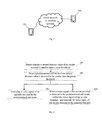
- Fig. 1 is a block diagram showing an implementation environment related to the method for voice calling shown in respective exemplary embodiments of the present disclosure.
- the implementation environment includes an on-site terminal 120 and an opposite terminal 140.
- the on-site terminal 120 may be a mobile phone, a tablet PC, an e-book reader, a MP3 (Moving Picture Experts Group Audio Layer III) player, a MP4 (Moving Picture Experts Group Audio Layer IV) player, etc.
- a client which is a client with a one-way voice call function such as network interphone function, runs in the on-site terminal 120.
- a distance sensor for collecting the sensed distance value in front of a screen of the on-site terminal 120 is also provided in the on-site terminal 120.
- the on-site terminal 120 may make a one-way voice call with the opposite terminal 140 via a wired network or a wireless network.
- the opposite terminal 140 may be a mobile phone, a tablet PC, an e-book reader, a MP3 (Moving Picture Experts Group Audio Layer III) player, a MP4 (Moving Picture Experts Group Audio Layer IV) player, etc.
- a client which is a client with a one-way voice call function such as network interphone function, also runs in the opposite terminal 140.
- a distance sensor for collecting the sensed distance value in front of a screen of the opposite terminal 140 is also provided in the opposite terminal 140.
- the above-mentioned client may be a social client having both the instant messaging function and the one-way voice call function, similar to WeChat client provided by Tencent Technology Co., Ltd., China, Mi-talk client provided by Huawei Inc., China, Laiwang client provided by Facebook company, China, and Line client provided by South Korea Internet Group NHN.
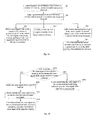
- Fig. 2 is a flow chart illustrating the method for voice calling according to an exemplary embodiment. This embodiment is illustrated by applying the method for voice calling to the on-site terminal in Fig. 1 .
- the method for voice calling includes the following steps.
- step 201 whether a sensed distance value of an on-site terminal is smaller than a preset threshold is detected.
- step 202 a predetermined call mode is entered if it is detected that the sensed distance value is smaller than the preset threshold.
- step 203 in the predetermined call mode, a voice signal from an opposite terminal is auto-played.
- step 204 if a voice signal of the on-site terminal is detected in the predetermined call mode, the voice signal of the on-site terminal is collected, and the voice signal of the on-site terminal is transmitted to the opposite terminal.
- the method for voice calling provided by the present embodiment, by entering the predetermined call mode when detecting that the sensed distance value is smaller than the preset threshold; auto-playing the voice signal from the opposite terminal in the predetermined call mode; and when the voice signal of the on-site terminal is detected in the predetermined call mode, collecting the voice signal of the on-site terminal, and transmitting the voice signal of the on-site terminal to the opposite terminal, the problem that the user can not smoothly use the network interphone when it is inconvenient for the user to perform a press operation or a click operation on the terminal is solved, the effects that voice playing and voice collecting of the network interphone can be automatically triggerred as long as the user puts the terminal close to his ear, and the network interphone can be used without any other operation are achieved, and a user experience of an approximate two-way conversation can be obtained.
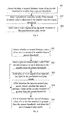
- Fig. 3A is a flow chart illustrating the method for voice calling according to another exemplary embodiment. This embodiment is illustrated by applying the method for voice calling to the on-site terminal in Fig. 1 .
- the method for voice calling includes the following steps.
- step 301 whether a sensed distance value of an on-site terminal is smaller than a preset threshold is detected.
- the on-site terminal obtains the sensed distance value in front of the terminal through a built-in distance sensor.
- the distance sensor is usually provided on a location at the top of a screen of the on-site terminal and near a handset.
- the on-site terminal detects whether the sensed distance value is smaller than the preset threshold every preset time interval.
- the preset threshold may be set by research personnel in accordance with experimental values or empirical values. For example, if the on-site terminal is a mobile phone, the research personnel may obtain the preset threshold via statistical analysis by repeatedly collecting the sensed distance values between the mobile phone and the user's ear during the phone call.
- step 302 if it is detected that the sensed distance value is smaller than the preset threshold, a predetermined call mode is entered.
- the predetermined call mode is a mode provided by the present embodiment that is able to properly use the one-way call function without clicking an operation signal on the screen of the terminal by the user.
- the on-site terminal detects that the sensed distance value is greater than the preset threshold, then the on-site terminal is considered to be not put on the position close to the user's ear, and the on-site terminal keeps in an ordinary call mode, i.e., the usage mode corresponding to the network interphone provided in the Background.
- step 303 when a voice signal of the on-site terminal is detected in the predetermined call mode, the voice signal of the on-site terminal is collected, and the voice signal of the on-site terminal is transmitted to the opposite terminal.
- the on-site terminal In the predetermined call mode, the on-site terminal automatically detects whether the voice signal of the on-site terminal exists, and if the user issues a voice, the on-site terminal may detect the voice signal of the on-site terminal, then automatically collect the voice signal of the on-site terminal, and send the voice signal of the on-site terminal to the opposite terminal by using the one-way voice call function. This process does not require the user's other operations, and is completed automatically by the on-site terminal.
- the on-site terminal if the on-site terminal is playing a voice signal from the opposite terminal, and the voice signal of the on-site terminal is detected, the on-site terminal still collects the voice signal of the on-site terminal, and transmits the voice signal of the on-site terminal to the opposite terminal. Namely, whether the on-site terminal is playing the voice signal from the opposite terminal has no influence on the collection of the voice signal of the on-site terminal.
- step 304 the voice signal from the opposite terminal is played directly in the predetermined call mode.
- the on-site terminal directly uses the handset to play the voice signal from the opposite terminal, without the user's other operations.
- the voice signal from the opposite terminal is a network voice signal sent by the opposite terminal by using the one-way voice call function, other than the voice signal sent by using the two-way voice call function or the voice signal sent by using the conventional mobile call.
- the voice signal from the opposite terminal that has been received but not yet played is auto-played.
- the on-site terminal Before entering the predetermined call mode, the on-site terminal has received the voice signal from the opposite terminal, and displayed it as an unread voice signal from the opposite terminal. Thereafter, the on-site terminal enters the predetermined call mode, and thus the on-site terminal auto-plays the voice signal from the opposite terminal that has been received but not yet played.
- the voice signal from the opposite terminal is received; and the received voice signal from the opposite terminal is auto-played.
- the on-site terminal After entering the predetermined call mode, the on-site terminal receives the voice signal from the opposite terminal, then the on-site terminal auto-plays the received voice signal from the opposite terminal by using the handset.
- the on-site terminal receiving the voice signal from the opposite terminal in the predetermined call mode includes:
- the on-site terminal if the on-site terminal receives a text information of the opposite terminal, then the on-site terminal synthesizes a voice signal from the opposite terminal according to the text information of the opposite terminal.
- the opposite terminal may also send the text information to the on-site terminal. If the on-site terminal receives the text information of the opposite terminal in the predetermined call mode, then the on-site terminal synthesizes a voice signal from the opposite terminal according to the text information of the opposite terminal and the voice synthesis technology, and auto-plays the synthesized voice signal from the opposite terminal by using the handset, without the user's other operations.
- step 305 after entering the predetermined call mode, whether the sensed distance value of the on-site terminal is greater than the preset threshold is detected.
- the on-site terminal After entering the predetermined call mode, the on-site terminal detects whether the sensed distance value is greater than the preset threshold every preset time interval.
- step 306 if it is detected that the sensed distance value is greater than the preset threshold, the predetermined call mode is exited.
- the on-site terminal keeps in the predetermined call mode.
- the on-site terminal exits from the predetermined call mode and then enters a normal mobile call mode.
- the normal mobile call mode if the on-site terminal receives the voice signal from the opposite terminal, the on-site terminal plays the voice signal from the opposite terminal only when receiving a trigger signal.
- the conventional mobile call mode only when the on-site terminal receives a signal of constantly pressing an intercom button, the on-site terminal collects the voice signal of the on-site terminal and sends it to the opposite terminal.
- the present embodiment also provides a mechanism for buffering the voice signal from the opposite terminal, as shown in Fig. 3B , for a second way of implementing step 304, the following sub-steps may be further included.
- step 304a after receiving the voice signal from the opposite terminal, whether the voice signal of the on-site terminal is being collected is detected.
- the on-site terminal may firstly detect whether the voice signal of the on-site terminal is being collected, namely, whether the user is talking. If it is detected that the voice signal of the on-site terminal is being collected, step 304b is entered; and if it is detected that the voice signal of the on-site terminal is not being collected, step 304e is entered.
- step 304b if it is detected that the voice signal of the on-site terminal is being collected, the received voice signal from the opposite terminal is buffered.
- the voice signal from the opposite terminal herein includes the voice signal from the opposite terminal directly sent by the opposite terminal, and also includes the voice signal from the opposite terminal synthesized by the on-site terminal according to the text information of the opposite terminal.
- step 304c whether the collection of the voice signal of the on-site terminal has been completed is detected.
- the on-site terminal After buffering the voice signal from the opposite terminal, the on-site terminal detects whether the collection of the voice signal of the on-site terminal has been completed, namely, whether the user has stopped talking every preset time interval.
- the on-site terminal detects every preset time interval whether the collection of the voice signal of the on-site terminal has been completed and whether a time length after the collection has been completed reaches a preset time length, namely, whether the user has stopped talking, and the time of stopping talking exceeds the preset time length.
- step 304d if it is detected that the collection of the voice signal of the on-site terminal has been completed, the buffered voice signal from the opposite terminal is auto-played.
- the on-site terminal If it is detected that the collection of the voice signal of the on-site terminal has been completed, the on-site terminal auto-plays the buffered voice signal from the opposite terminal. If the number of the buffered voice signals of the opposite terminal is more than one, the on-site terminal plays the voice signals of the opposite terminal one by one in an order of the buffer time from early to late.
- step 304e if it is detected the voice signal of the on-site terminal is not being collected, the voice signal from the opposite terminal is played directly.
- the on-site terminal plays the voice signal from the opposite terminal directly.
- the on-site terminal sends a prompt information for prompting that the on-site terminal has entered the predetermined call mode to the opposite terminal, and the opposite terminal may receive and display the prompt information.
- the on-site terminal receives the prompt information for prompting that the opposite terminal has entered the predetermined call mode sent from the opposite terminal, and then the on-site terminal displays the prompt information.
- the method for voice calling provided by the present embodiment, by entering the predetermined call mode when detecting that the sensed distance value is smaller than the preset threshold; auto-playing the voice signal from the opposite terminal in the predetermined call mode; and when the voice signal of the on-site terminal is detected in the predetermined call mode, collecting the voice signal of the on-site terminal, and transmitting the voice signal of the on-site terminal to the opposite terminal, the problem that the user can not smoothly use the network interphone when it is inconvenient for the user to perform a press operation or a click operation on the terminal is solved, the effects that voice playing and voice collecting of the network interphone can be automatically triggered as long as the user puts the terminal close to his ear, and the network interphone can be used without any other operation are achieved, and a user experience of an approximate two-way conversation can be obtained.
- the user by synthesizing the received text information of the opposite terminal into the voice signal from the opposite terminal and playing it, even the opposite terminal sends the text information, the user can still obtain a user experience of an approximate two-way conversation, and the whole process does not require the user's other operations, thus improving communication efficiency.
- the present embodiment by buffering the voice signal from the opposite terminal and/or the synthesized voice signal from the opposite terminal when collecting the voice signal of the on-site terminal; and playing the buffered voice signal from the opposite terminal only after the voice signal of the on-site terminal has been collected completely, the user may not be disturbed by any voice from the opposite side when talking, and it is also ensured that the present embodiment is still a one-way conversation other than a two-way conversation, which complies with the requirements to the operating agencies.
- a user A and a user B use the clients in the terminals to perform a network intercom.
- the user A and the user B both put the terminal on a position close to their ears, thus the terminal A used by the user A and the terminal B used by the user B both enter the predetermined call mode.
- the terminal A may automatically collect the voice signal, and send it to the terminal B.
- the terminal B may auto-play the voice signal in a handset. If the user B is talking, the terminal B may automatically collect the voice signal, and send it to the terminal A. After receiving the voice signal, the terminal A auto-plays the voice signal in a handset.
- the terminal B sends a voice signal to the terminal A when the user A is talking, the terminal A may buffer the voice signal, and auto-play the voice signal after the user A has finished the talking, thus the conversation between the user A and the user B is not disturbed.
- a user A and a user B use the clients in the terminals to perform a network intercom.
- the user A puts a terminal A on a position close to his ear, thus the terminal A used by the user A will enter the predetermined call mode; while the user B still uses a terminal B in a normal mode.
- the terminal A may automatically collect the voice signal, and send it to the terminal B.
- the terminal B After receiving the voice signal, the terminal B firstly displays there is one piece of unread voice, then plays the voice signal only after receiving a clicking signal for the unread voice from the user B.
- the terminal B may collect the voice signal of the user B, and send it to the terminal A. After receiving the voice signal, the terminal A auto-plays the voice signal in the handset. If the user B is inconvenient to talk, the user B may send a text information to the terminal A via the terminal B, the terminal A synthesizes the received text information into the voice signal, and then auto-plays the voice signal in the handset, thus the mixed input of text and voice may be achieved in the user B, and the user A's experience of an approximate two-way conversation may be realized.
- Fig. 4 is a flow chart illustrating the method for voice playing according to an exemplary embodiment. This embodiment is illustrated by applying the method for voice playing to the on-site terminal in Fig. 1 .
- the method for voice playing includes the following steps.
- step 401 whether a sensed distance value of an on-site terminal is smaller than a preset threshold is detected.
- step 402 if it is detected that the sensed distance value is smaller than the preset threshold, a predetermined play mode is entered.
- step 403 in the predetermined play mode, voice signal from an opposite terminal is auto-played.
- the method for voice playing provided by the present embodiment, by entering the predetermined call mode when detecting that the sensed distance value is smaller than the preset threshold; and auto-playing the voice signal from the opposite terminal in the predetermined call mode, the problem that the user can not smoothly use the network interphone when it is inconvenient for the user to perform a press operation or a click operation on the terminal is solved, and the effect that voice playing of the network interphone can be automatically triggered as long as the user puts the terminal close to his ear is achieved.
- Fig. 5 is a flow chart illustrating the method for voice playing according to an exemplary embodiment. This embodiment is illustrated by applying the method for voice playing to the on-site terminal in Fig. 1 .
- the method for voice playing includes the following steps.
- step 501 whether a sensed distance value of an on-site terminal is smaller than a preset threshold is detected.
- the on-site terminal obtains the sensed distance value in front of the terminal through a built-in distance sensor.
- the distance sensor is usually provided on a location at the top of the screen of the on-site terminal and near a handset.
- the on-site terminal detects whether the sensed distance value is smaller than the preset threshold every preset time interval.
- the preset threshold may be set by research personnel in accordance with experimental values or empirical values. For example, if the on-site terminal is a mobile phone, the research personnel may obtain the preset threshold via statistical analysis by repeatedly collecting the sensed distance values between the mobile phone and the user's ear during the phone call.
- step 502 if it is detected that the sensed distance value is smaller than the preset threshold, the predetermined play mode is entered.
- the on-site terminal detects that the sensed distance value is smaller than the preset threshold, the on-site terminal is considered to be put on a location close to the user's ear, and the on-site terminal enters the predetermined play mode.
- step 503 in the predetermined play mode, the voice signal from the opposite terminal is auto-played.
- the on-site terminal directly uses the handset to play the voice signal from the opposite terminal, without the user's other operations.
- the voice signal from the opposite terminal is a network voice signal sent by the opposite terminal by using the one-way voice call function, other than a voice signal sent by using the two-way voice call function or a voice signal sent by using the conventional mobile call.
- the voice signal from the opposite terminal that has been received but not yet played is auto-played.
- the on-site terminal Before entering the predetermined play mode, the on-site terminal has received the voice signal from the opposite terminal, and displayed it as an unread voice signal from the opposite terminal. Thereafter, the on-site terminal enters the predetermined play mode, and auto-plays the voice signal from the opposite terminal that has been received but not yet played.
- the voice signal from the opposite terminal is received; and the received voice signal from the opposite terminal is auto-played.
- the on-site terminal After entering the predetermined play mode, the on-site terminal receives the voice signal from the opposite terminal, then the on-site terminal auto-plays the received voice signal from the opposite terminal by using the handset.
- the on-site terminal receiving the voice signal from the opposite terminal in the predetermined play mode includes:
- the on-site terminal if the on-site terminal receives a text information of the opposite terminal, then the on-site terminal synthesizes a voice signal from the opposite terminal according to the text information of the opposite terminal.
- the opposite terminal may also send the text information to the on-site terminal. If the on-site terminal receives the text information of the opposite terminal in the predetermined play mode, then the on-site terminal synthesizes the voice signal from the opposite terminal according to the text information of the opposite terminal and the voice synthesis technology, and auto-plays the synthesized voice signal from the opposite terminal by using the handset, without the user's other operations.
- step 504 after entering the predetermined play mode, whether the sensed distance value of the on-site terminal is greater than the preset threshold is detected.
- the on-site terminal After entering the predetermined play mode, the on-site terminal detects whether the sensed distance value is greater than the preset threshold every preset time interval.
- step 505 if it is detected that the sensed distance value is greater than the preset threshold, the predetermined play mode is exited.
- the on-site terminal keeps in the predetermined play mode.
- the on-site terminal If it is detected that the sensed distance value is greater than the preset threshold, the on-site terminal exits from the predetermined play mode and then enters a normal mobile play mode. In the normal mobile play mode, if the on-site terminal receives the voice signal from the opposite terminal, the on-site terminal plays the voice signal from the opposite terminal only when receiving a trigger signal.
- the method for voice playing provided by the present embodiment, by entering the predetermined call mode when detecting that the sensed distance value is smaller than the preset threshold; and auto-playing the voice signal from the opposite terminal in the predetermined play mode, the problem that the user can not smoothly use the network interphone when it is inconvenient for the user to perform a press operation or a click operation on the terminal is solved, and the effect that voice playing of the network interphone can be automatically triggered as long as the user puts the terminal close to his ear is achieved.
- the method for voice playing provided by the present embodiment, by generating the received text information of the opposite terminal into the synthesized voice signal and playing it, even the opposite terminal sends the text information, the user still can obtain a user experience of an approximate two-way conversation, and the whole process does not require the user's other operations, thus improving communication efficiency.
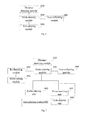
- Fig. 6 is a block diagram illustrating the device for voice calling according to an exemplary embodiment.
- the device for voice calling may be implemented as a whole or a part of a terminal by using software, hardware or by combining both software and hardware.
- the device for voice calling includes: a distance detecting module 620, a mode entering module 640, an auto-playing module 660 and an auto-collecting module 680.
- the distance detecting module 620 is configured to detect whether a sensed distance value of an on-site terminal is smaller than a preset threshold.
- the mode entering module 640 is configured to enter a predetermined call mode when the distance detecting module 620 detects that the sensed distance value is smaller than the preset threshold.
- the auto-playing module 660 is configured to auto-play a voice signal from an opposite terminal in the predetermined call mode.
- the auto-collecting module 680 is configured to, when a voice signal of the on-site terminal is detected in the predetermined call mode, collect the voice signal of the on-site terminal and transmit the voice signal of the on-site terminal to the opposite terminal.
- the device for voice calling by entering the predetermined call mode when detecting that the sensed distance value is smaller than the preset threshold; auto-playing the voice signal from the opposite terminal in the predetermined call mode; and when the voice signal of the on-site terminal is detected in the predetermined call mode, collecting the voice signal of the on-site terminal, and transmitting the voice signal of the on-site terminal to the opposite terminal, the problem that the user can not smoothly use the network interphone when it is inconvenient for the user to perform a press operation or a click operation on the terminal is solved, the effects that voice playing and voice collecting of the network interphone can be automatically triggered as long as the user puts the terminal close to his ear, and the network interphone can be used without any other operation are achieved, and a user experience of an approximate two-way conversation can be obtained.
- Fig. 7 is a diagram illustrating the device for voice calling according to another exemplary embodiment.
- the device for voice calling may be implemented as a whole or a part of a terminal by using software, hardware or by combining both software and hardware.
- the device for voice calling includes: a distance detecting module 620, a mode entering module 640, an auto-playing module 660 and an auto-collecting module 680.
- the distance detecting module 620 is configured to detect whether a sensed distance value in front of a terminal of an on-site terminal is smaller than a preset threshold.
- the mode entering module 640 is configured to enter a predetermined call mode when the distance detecting module 620 detects that the sensed distance value is smaller than the preset threshold.
- the auto-playing module 660 is configured to auto-play a voice signal from an opposite terminal in the predetermined call mode.
- the auto-collecting module 680 is configured to, when a voice signal of the on-site terminal is detected in the predetermined call mode, collect the voice signal of the on-site terminal, and transmit the voice signal of the on-site terminal to the opposite terminal.
- the auto-playing module 660 includes:
- the auto-playing sub-module 666 includes: a collection detecting sub-module, a signal buffering sub-module, a completion detecting sub-module and a buffer playing sub-module.
- the collection detecting sub-module is configured to detect whether the auto-collecting module is collecting the voice signal of the on-site terminal after receiving the voice signal from the opposite terminal.
- the signal buffering sub-module is configured to buffer the voice signal from the opposite terminal when the collection detecting sub-module detects that the voice signal of the on-site terminal is being collected.
- the completion detecting sub-module is configured to detect whether the voice signal of the on-site terminal has been collected completely.
- the completion detecting sub-module is configured to detect whether the voice signal of the on-site terminal has been collected completely and whether a time length elapsed after the collection has been completed reaches a preset time length.
- the buffer playing sub-module is configured to auto-play the buffered voice signal from the opposite terminal when the completion detecting sub-module detects that the voice signal of the on-site terminal has been collected completely.
- the voice receiving sub-module 664 includes: a text receiving sub-module and a voice synthesizing sub-module.
- the text receiving sub-module is configured to receive a text information of the opposite terminal in the predetermined call mode.
- the voice synthesizing sub-module is configured to synthesize a voice signal from the opposite terminal according to the text information of the opposite terminal.
- the auto-collecting module 680 is configured to, when the auto-playing module 660 is playing the voice signal from the opposite terminal and the voice signal of the on-site terminal is detected, collect the voice signal of the on-site terminal, and transmit the voice signal of the on-site terminal to the opposite terminal.
- the device further includes: a re-detecting module 692 and a mode exiting module 694.
- the re-detecting module 692 is configured to detect whether a sensed distance value of the on-site terminal is greater than the preset threshold after the mode entering module 640 enters the predetermined call mode.
- the mode exiting module 694 is configured to exit from the predetermined call mode when the re-detecting module 692 detects that the sensed distance value is greater than the preset threshold.
- the device for voice calling by entering the predetermined call mode when detecting that the sensed distance value is smaller than the preset threshold; auto-playing the voice signal from the opposite terminal in the predetermined call mode; and when the voice signal of the on-site terminal is detected in the predetermined call mode, collecting the voice signal of the on-site terminal, and transmitting the voice signal of the on-site terminal to the opposite terminal, the problem that the user can not smoothly use the network interphone when it is inconvenient for the user to perform a press operation or a click operation on the terminal is solved, the effects that voice playing and voice collecting of the network interphone can be automatically triggered as long as the user puts the terminal close to his ear, and the network interphone can be used without any other operation are achieved, and a user experience of an approximate two-way conversation can be obtained.
- the device for voice calling provided by the present embodiment, by synthesizing the received text information of the opposite terminal into the voice signal from the opposite terminal and playing it, even the opposite terminal sends the text information, it still enable a user to obtain a user experience of an approximate two-way conversation, and the whole process does not require the user's other operations, thus improving communication efficiency.
- the device for voice calling provided by the present embodiment, by buffering the voice signal from the opposite terminal and/or the synthesized voice signal from the opposite terminal when collecting the voice signal of the on-site terminal; and playing the buffered voice signal from the opposite terminal only after the voice signal of the on-site terminal has been collected completely, the user may not be disturbed by any voice of other side when talking, and it is also ensured that the present embodiment is still a one-way conversation other than a two-way conversation, which may comply with the requirements of the operating agencies.
- Fig. 8 is a block diagram illustrating the device for voice playing according to an exemplary embodiment.
- the device for voice playing may be implemented as a whole or a part of a terminal by using software, hardware or by combining both software and hardware.
- the device for voice playing includes:
- a distance detecting module 820 configured to detect whether a sensed distance value of an on-site terminal is smaller than a preset threshold
- a play mode module 840 configured to enter a predetermined play mode when the distance detecting module 820 detects that the sensed distance value is smaller than the preset threshold
- an auto-playing module 860 configured to auto-play the voice signal from the opposite terminal in the predetermined play mode.
- the device for voice playing provided by the present embodiment, by entering the predetermined play mode when it is detected that the sensed distance value is smaller than the preset threshold, and auto-playing the voice signal from the opposite terminal in the predetermined play mode, the problem that the user can not smoothly use the network interphone when it is inconvenient for the user to perform a press operation or a click operation on the terminal is solved, and the effect that voice playing of the network interphone can be automatically triggered as long as the user puts the terminal close to his ear is achieved.
- Fig. 9 is a block diagram illustrating the device for voice playing according to another exemplary embodiment.
- the device for voice playing may be implemented as a whole or a part of a terminal by using software, hardware or by combining both software and hardware.
- the device for voice playing includes:
- the auto-playing module 860 includes:
- the voice receiving sub-module 864 includes: a text receiving sub-module and a voice synthesizing sub-module.
- the text receiving sub-module is configured to receive a text information of the opposite terminal in the predetermined play mode.
- the voice synthesizing sub-module is configured to synthesize a voice signal from the opposite terminal according to the text information of the opposite terminal.
- the device further includes: a re-detecting module 882 and a play exiting module 884.
- the re-detecting module 882 is configured to detect whether the sensed distance value of the on-site terminal is greater than the preset threshold after the play mode module 840 enters the predetermined play mode.
- the play exiting module 884 is configured to exit from the predetermined play mode when the re-detecting module 882 detects that the sensed distance value is greater than the preset threshold.
- the device for voice playing provided by the present embodiment, by entering the predetermined play mode when detecting that the sensed distance value is smaller than the preset threshold, and auto-playing the voice signal from the opposite terminal when receiving the voice signal from the opposite terminal in the predetermined play mode, the problem that the user can not smoothly use the network interphone when it is inconvenient for the user to perform a press operation or a click operation on the terminal is solved, and the effect that voice playing of the network interphone can be automatically triggered as long as the user puts the terminal close to his ear is achieved.
- the device for voice playing provided by the present embodiment, by synthesizing the received text information of the opposite terminal into the voice signal from the opposite terminal so as to play it, even the opposite terminal sends the text information, it still enable a user to obtain a user experience of an approximate two-way conversation, and the whole process does not require the user's other operations, thus improving communication efficiency.
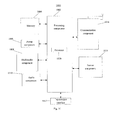
- Fig. 10 is a block diagram illustrating a terminal according to an exemplary embodiment of the present disclosure.
- the terminal 1000 may include one or more of the following components: a processing component 1002, a memory 1004, a power component 1006, a multimedia component 1008, an audio component 1010, an input/output (I/O) interface 1012, a sensor component 1014, and a communication component 1016.
- a processing component 1002 a memory 1004
- a power component 1006 a multimedia component 1008, an audio component 1010, an input/output (I/O) interface 1012, a sensor component 1014, and a communication component 1016.
- I/O input/output
- the processing component 1002 typically controls overall operations of the terminal 1000, such as the operations associated with display, telephone calls, data communications, camera operations, and recording operations.
- the processing component 1002 may include one or more processors 1020 to execute instructions to perform all or part of the steps in the above described methods.
- the processing component 1002 may include one or more modules which facilitate the interaction between the processing component 1002 and other components.
- the processing component 1002 may include a multimedia module to facilitate the interaction between the multimedia component 1008 and the processing component 1002.
- the memory 1004 is configured to store various types of data to support the operation of the terminal 1000. Examples of such data include instructions for any applications or methods operated on the terminal 1000, contact data, phonebook data, messages, pictures, video, etc.
- the memory 1004 may be implemented using any type of volatile or non-volatile memory devices, or a combination thereof, such as a static random access memory (SRAM), an electrically erasable programmable read-only memory (EEPROM), an erasable programmable read-only memory (EPROM), a programmable read-only memory (PROM), a read-only memory (ROM), a magnetic memory, a flash memory, a magnetic or an optical disk.
- SRAM static random access memory
- EEPROM electrically erasable programmable read-only memory
- EPROM erasable programmable read-only memory
- PROM programmable read-only memory
- ROM read-only memory
- magnetic memory a magnetic memory
- flash memory a flash memory
- magnetic or an optical disk a magnetic
- the power component 1006 provides power to various components of the terminal 1000.
- the power component 1006 may include a power management system, one or more power sources, and any other components associated with the generation, management, and distribution of power for the terminal 1000.
- the multimedia component 1008 includes a screen providing an output interface between the terminal 1000 and the user.
- the screen may include a liquid crystal display (LCD) and a touch panel (TP). If the screen includes the touch panel, the screen may be implemented as a touch screen to receive input signals from the user.
- the touch panel includes one or more touch sensors to sense touches, slipes, and gestures on the touch panel. The touch sensors may not only sense a boundary of a touch or slipe action, but also sense a period of time and a pressure associated with the touch or slipe action.
- the multimedia component 1008 includes a front camera and/or a rear camera.
- the front camera and/or the rear camera may receive an external multimedia datum while the terminal 1000 is in an operation mode, such as a photographing mode or a video mode.
- an operation mode such as a photographing mode or a video mode.
- Each of the front camera and the rear camera may be a fixed optical lens system or have focus and optical zoom capability.
- the audio component 1010 is configured to output and/or input audio signals.
- the audio component 1010 includes a microphone ("MIC") configured to receive an external audio signal when the terminal 1000 is in an operation mode, such as a call mode, a recording mode, and a voice recognition mode.
- the received audio signal may be further stored in the memory 1004 or transmitted via the communication component 1016.
- the audio component 1010 further includes a speaker to output audio signals.
- the I/O interface 1012 provides an interface between the processing component 1002 and peripheral interface modules, such as a keyboard, a click wheel, buttons, and the like.
- the buttons may include, but are not limited to, a home button, a volume button, a starting button, and a locking button.
- the sensor component 1014 includes one or more sensors to provide status assessments of various aspects of the terminal 1000. For instance, the sensor component 1014 may detect an open/closed status of the terminal 1000, relative positioning of components, e.g., the display and the keypad, of the terminal 1000, a change in position of the terminal 1000 or a component of the terminal 1000, a presence or absence of user contact with the terminal 1000, an orientation or an acceleration/deceleration of the terminal 1000, and a change in temperature of the terminal 1000.
- the sensor component 1014 may include a proximity sensor configured to detect the presence of nearby objects without any physical contact.
- the sensor component 1014 may also include a light sensor, such as a CMOS or CCD image sensor, for use in imaging applications.
- the sensor component 1014 may also include an accelerometer sensor, a gyroscope sensor, a magnetic sensor, a pressure sensor, or a temperature sensor.
- the communication component 1016 is configured to facilitate communication, wired or wirelessly, between the terminal 1000 and other devices.
- the terminal 1000 can access a wireless network based on a communication standard, such as WiFi, 2G, or 3G, or a combination thereof.
- the communication component 1016 receives a broadcast signal or broadcast associated information from an external broadcast management system via a broadcast channel.
- the communication component 1016 further includes a near field communication (NFC) module to facilitate short-range communications.
- the NFC module may be implemented based on a radio frequency identification (RFID) technology, an infrared data association (IrDA) technology, an ultra-wideband (UWB) technology, a Bluetooth (BT) technology, and other technologies.
- RFID radio frequency identification
- IrDA infrared data association
- UWB ultra-wideband
- BT Bluetooth
- the terminal 1000 may be implemented with one or more application specific integrated circuits (ASICs), digital signal processors (DSPs), digital signal processing devices (DSPDs), programmable logic devices (PLDs), field programmable gate arrays (FPGAs), controllers, micro-controllers, microprocessors, or other electronic components, for performing the above described methods.
- ASICs application specific integrated circuits
- DSPs digital signal processors
- DSPDs digital signal processing devices
- PLDs programmable logic devices
- FPGAs field programmable gate arrays
- controllers micro-controllers, microprocessors, or other electronic components, for performing the above described methods.
- non-transitory computer-readable storage medium including instructions, such as included in the memory 1004, executable by the processor 1020 in the terminal 1000, for performing the above-described methods.
- the non-transitory computer-readable storage medium may be a ROM, a RAM, a CD-ROM, a magnetic tape, a floppy disc, an optical data storage device, and the like.
- Non-transitory computer-readable storage medium when the instructions in the storage medium are executed by a processor of the terminal, the terminal is enabled to perform the methods for voice calling as shown in Fig. 2 or Fig. 3 , or perform the methods for voice playing as shown in Fig. 4 or Fig. 5 .
Landscapes
- Engineering & Computer Science (AREA)
- Signal Processing (AREA)
- Computer Networks & Wireless Communication (AREA)
- Human Computer Interaction (AREA)
- Environmental & Geological Engineering (AREA)
- Business, Economics & Management (AREA)
- General Business, Economics & Management (AREA)
- Telephone Function (AREA)
- Mobile Radio Communication Systems (AREA)
- Interconnected Communication Systems, Intercoms, And Interphones (AREA)
- Telephonic Communication Services (AREA)
Applications Claiming Priority (1)
| Application Number | Priority Date | Filing Date | Title |
|---|---|---|---|
| CN201410131152.5A CN103973544B (zh) | 2014-04-02 | 2014-04-02 | 语音通话方法、语音播放方法及装置 |
Publications (2)
| Publication Number | Publication Date |
|---|---|
| EP2928169A1 true EP2928169A1 (fr) | 2015-10-07 |
| EP2928169B1 EP2928169B1 (fr) | 2018-08-08 |
Family
ID=51242606
Family Applications (1)
| Application Number | Title | Priority Date | Filing Date |
|---|---|---|---|
| EP15155477.1A Revoked EP2928169B1 (fr) | 2014-04-02 | 2015-02-17 | Procédé d'appel vocal, procédé de lecture vocale et dispositifs associés |
Country Status (8)
| Country | Link |
|---|---|
| US (1) | US10057424B2 (fr) |
| EP (1) | EP2928169B1 (fr) |
| JP (1) | JP6121621B2 (fr) |
| KR (1) | KR101571993B1 (fr) |
| CN (1) | CN103973544B (fr) |
| MX (1) | MX353556B (fr) |
| RU (1) | RU2619893C2 (fr) |
| WO (1) | WO2015149456A1 (fr) |
Cited By (2)
| Publication number | Priority date | Publication date | Assignee | Title |
|---|---|---|---|---|
| CN105743531A (zh) * | 2016-04-21 | 2016-07-06 | 苏州慧得赛物联网技术有限公司 | 一种复合通讯装置 |
| WO2016189130A1 (fr) * | 2015-05-27 | 2016-12-01 | Mt App Factory Ug (Haftungsbeschränkt) | Procédé d'établissement d'une liaison téléphonique au moyen d'un téléphone intelligent |
Families Citing this family (16)
| Publication number | Priority date | Publication date | Assignee | Title |
|---|---|---|---|---|
| CN103973544B (zh) | 2014-04-02 | 2017-10-24 | 小米科技有限责任公司 | 语音通话方法、语音播放方法及装置 |
| CN106170755B (zh) * | 2014-12-30 | 2019-09-20 | 深圳市柔宇科技有限公司 | 语音备忘录系统及语音备忘录的生成方法及电子装置 |
| CN104822093B (zh) * | 2015-04-13 | 2017-12-19 | 腾讯科技(北京)有限公司 | 弹幕发布方法和装置 |
| CN105072511A (zh) * | 2015-08-29 | 2015-11-18 | 安徽味唯网络科技有限公司 | 一种互联网智能楼宇对讲系统及装置 |
| CN105425957A (zh) * | 2015-11-06 | 2016-03-23 | 百度在线网络技术(北京)有限公司 | 终端设备控制方法和装置 |
| CN106899481A (zh) * | 2015-12-17 | 2017-06-27 | 掌赢信息科技(上海)有限公司 | 一种视频通话方法、电子设备及系统 |
| CN105657174A (zh) * | 2016-01-26 | 2016-06-08 | 努比亚技术有限公司 | 一种语音转换方法和终端 |
| JP6801521B2 (ja) * | 2017-03-06 | 2020-12-16 | 株式会社Jvcケンウッド | 無線通信機 |
| JP6801522B2 (ja) * | 2017-03-06 | 2020-12-16 | 株式会社Jvcケンウッド | 無線通信機 |
| CN106941564A (zh) * | 2017-03-16 | 2017-07-11 | 广东欧珀移动通信有限公司 | 语音消息的播放方法及移动终端 |
| CN110213424B (zh) * | 2018-09-06 | 2023-10-13 | 上海伴我科技有限公司 | 终端通信装置 |
| CN111866256B (zh) * | 2019-04-19 | 2022-10-14 | 海能达通信股份有限公司 | 一种终端呼叫方法、呼叫终端及存储装置 |
| CN110933225B (zh) * | 2019-11-04 | 2022-03-15 | Oppo(重庆)智能科技有限公司 | 通话信息获取方法、装置、存储介质及电子设备 |
| CN111030916B (zh) * | 2019-11-08 | 2022-03-25 | 深圳震有科技股份有限公司 | 基于集群通信的语音点名方法、存储介质及智能终端 |
| CN114615245A (zh) * | 2022-01-26 | 2022-06-10 | 浙江华东工程建设管理有限公司 | 一种适用于Web端平台的智能广播调度系统 |
| CN116886815B (zh) * | 2022-03-23 | 2025-10-10 | 哈尔滨海能达科技有限公司 | 一种通信方法、电子设备及存储介质 |
Citations (2)
| Publication number | Priority date | Publication date | Assignee | Title |
|---|---|---|---|---|
| US20130315107A1 (en) * | 2012-05-23 | 2013-11-28 | Qualcomm Incorporated | Systems and Methods for Establishing A Group Communication Based on Motion of a Mobile Device |
| WO2013180087A1 (fr) * | 2012-05-29 | 2013-12-05 | 京セラ株式会社 | Dispositif électronique portable |
Family Cites Families (34)
| Publication number | Priority date | Publication date | Assignee | Title |
|---|---|---|---|---|
| US5588041A (en) | 1995-01-05 | 1996-12-24 | Motorola, Inc. | Cellular speakerphone and method of operation thereof |
| US5815553A (en) * | 1996-10-02 | 1998-09-29 | Mcdonnell Douglas Corporation | Apparatus for voice communication over local area networks |
| US6771768B2 (en) | 2001-05-24 | 2004-08-03 | Mitsubishi Electric Research Laboratories, Inc. | Real-time audio buffering for telephone handsets |
| AU2002950502A0 (en) | 2002-07-31 | 2002-09-12 | E-Clips Intelligent Agent Technologies Pty Ltd | Animated messaging |
| JP3950825B2 (ja) | 2003-07-24 | 2007-08-01 | 埼玉日本電気株式会社 | 携帯電話装置並びにそのユーザインタフェース |
| US7292564B2 (en) | 2003-11-24 | 2007-11-06 | Telefonaktiebolaget Lm Ericsson (Publ) | Method and apparatus for use in real-time, interactive radio communications |
| US7366535B2 (en) * | 2004-04-21 | 2008-04-29 | Nokia Corporation | Push-to-talk mobile communication terminals |
| US7996228B2 (en) * | 2005-12-22 | 2011-08-09 | Microsoft Corporation | Voice initiated network operations |
| US20070274297A1 (en) * | 2006-05-10 | 2007-11-29 | Cross Charles W Jr | Streaming audio from a full-duplex network through a half-duplex device |
| US20080043759A1 (en) | 2006-08-17 | 2008-02-21 | Northrop Grumman Systems Corporation | System, Apparatus, Method and Computer Program Product for an Intercom System |
| CN101079836A (zh) * | 2006-12-21 | 2007-11-28 | 腾讯科技(深圳)有限公司 | 一种基于非对称媒体的即时通信方法及系统 |
| KR101316750B1 (ko) * | 2007-01-23 | 2013-10-08 | 삼성전자주식회사 | 수신된 위치 정보에 따라 오디오 파일을 재생하는 장치 및그 방법 |
| US8682336B2 (en) * | 2007-10-19 | 2014-03-25 | Voxer Ip Llc | Telecommunication and multimedia management method and apparatus |
| US8321582B2 (en) * | 2008-02-08 | 2012-11-27 | Voxer Ip Llc | Communication application for conducting conversations including multiple media types in either a real-time mode or a time-shifted mode |
| US20100205262A1 (en) * | 2009-02-09 | 2010-08-12 | Harold Lee Peterson | System, method and computer-readable medium for provision of real time support to a computer user |
| KR100981200B1 (ko) | 2009-06-02 | 2010-09-14 | 엘지전자 주식회사 | 움직임 센서를 장착한 이동 단말기 및 제어 방법 |
| US8483101B2 (en) | 2009-09-16 | 2013-07-09 | Mitel Networks Corporation | System and method for cascaded teleconferencing |
| US8588589B2 (en) * | 2010-06-21 | 2013-11-19 | Verizon Patent And Licensing Inc. | Systems and methods for automatically converting media content stream data accumulated during a pause of playback from a buffer to a permanent recording |
| JP5567914B2 (ja) | 2010-06-25 | 2014-08-06 | 京セラ株式会社 | 携帯端末装置 |
| US8744860B2 (en) * | 2010-08-02 | 2014-06-03 | At&T Intellectual Property I, L.P. | Apparatus and method for providing messages in a social network |
| US20120114108A1 (en) * | 2010-09-27 | 2012-05-10 | Voxer Ip Llc | Messaging communication application |
| KR101824988B1 (ko) | 2011-01-14 | 2018-03-14 | 엘지전자 주식회사 | 이동 단말기 및 그 제어 방법 |
| CN102340599B (zh) * | 2011-10-26 | 2017-01-25 | 中兴通讯股份有限公司 | 终端通话时的处理方法、终端以及处理系统 |
| JP2013236201A (ja) | 2012-05-08 | 2013-11-21 | Nec Saitama Ltd | 携帯端末 |
| CN102710920A (zh) * | 2012-05-22 | 2012-10-03 | 上海鱼游网络科技有限公司 | 一种通信终端通话方法、通信终端及通信系统 |
| CN103167122A (zh) * | 2012-07-18 | 2013-06-19 | 深圳市金立通信设备有限公司 | 手机通话过程中根据距离不同实现静音关闭和开启的系统及方法 |
| CN103167123A (zh) * | 2012-07-24 | 2013-06-19 | 深圳市金立通信设备有限公司 | 基于距离传感器实现手机来电自动接听的系统及方法 |
| CN103581424B (zh) * | 2012-08-09 | 2016-05-25 | 中国移动通信集团公司 | 用于移动终端的识别用户操作的方法及相应的移动终端 |
| CN102833414B (zh) | 2012-08-28 | 2015-02-11 | 惠州Tcl移动通信有限公司 | 一种基于手机的来电自动接通的方法及手机 |
| CN203340289U (zh) * | 2013-05-22 | 2013-12-11 | 深圳市育智科技有限公司 | 语音通信终端及语音通信系统 |
| CN103369094B (zh) * | 2013-07-15 | 2015-09-02 | 北京邮电大学 | 在通话被打断时不影响通讯过程连续性的移动终端 |
| CN103414500A (zh) * | 2013-07-22 | 2013-11-27 | 刘大可 | 蓝牙耳机与终端的即时通讯软件的交互方法及蓝牙耳机 |
| CN103475499B (zh) * | 2013-09-10 | 2016-08-10 | 北京思特奇信息技术股份有限公司 | 一种基于网络电话会议的语音对讲方法及系统 |
| CN103973544B (zh) | 2014-04-02 | 2017-10-24 | 小米科技有限责任公司 | 语音通话方法、语音播放方法及装置 |
-
2014
- 2014-04-02 CN CN201410131152.5A patent/CN103973544B/zh not_active Expired - Fee Related
- 2014-07-24 RU RU2015130838A patent/RU2619893C2/ru active
- 2014-07-24 US US14/385,819 patent/US10057424B2/en active Active
- 2014-07-24 JP JP2016510933A patent/JP6121621B2/ja not_active Expired - Fee Related
- 2014-07-24 KR KR1020147026648A patent/KR101571993B1/ko not_active Expired - Fee Related
- 2014-07-24 WO PCT/CN2014/082916 patent/WO2015149456A1/fr not_active Ceased
- 2014-07-24 MX MX2014011219A patent/MX353556B/es active IP Right Grant
-
2015
- 2015-02-17 EP EP15155477.1A patent/EP2928169B1/fr not_active Revoked
Patent Citations (3)
| Publication number | Priority date | Publication date | Assignee | Title |
|---|---|---|---|---|
| US20130315107A1 (en) * | 2012-05-23 | 2013-11-28 | Qualcomm Incorporated | Systems and Methods for Establishing A Group Communication Based on Motion of a Mobile Device |
| WO2013180087A1 (fr) * | 2012-05-29 | 2013-12-05 | 京セラ株式会社 | Dispositif électronique portable |
| US20150086055A1 (en) * | 2012-05-29 | 2015-03-26 | Kyocera Corporation | Portable electronic device |
Non-Patent Citations (2)
| Title |
|---|
| KEN HINCKLEY ET AL: "Foreground and background interaction with sensor-enhanced mobile devices", ACM TRANSACTIONS ON COMPUTER-HUMAN INTERACTION, vol. 12, no. 1, 9 March 2005 (2005-03-09), pages 31 - 52, XP055208660, ISSN: 1073-0516, DOI: 10.1145/1057237.1057240 * |
| KEN HINCKLEY ET AL: "Toward more sensitive mobile phones", PROCEEDINGS OF THE 14TH ANNUAL ACM SYMPOSIUM ON USER INTERFACE SOFTWARE AND TECHNOLOGY , UIST '01, 1 January 2001 (2001-01-01), New York, New York, USA, pages 191, XP055208728, ISBN: 978-1-58-113438-4, DOI: 10.1145/502348.502382 * |
Cited By (2)
| Publication number | Priority date | Publication date | Assignee | Title |
|---|---|---|---|---|
| WO2016189130A1 (fr) * | 2015-05-27 | 2016-12-01 | Mt App Factory Ug (Haftungsbeschränkt) | Procédé d'établissement d'une liaison téléphonique au moyen d'un téléphone intelligent |
| CN105743531A (zh) * | 2016-04-21 | 2016-07-06 | 苏州慧得赛物联网技术有限公司 | 一种复合通讯装置 |
Also Published As
| Publication number | Publication date |
|---|---|
| JP6121621B2 (ja) | 2017-04-26 |
| MX353556B (es) | 2018-01-17 |
| MX2014011219A (es) | 2016-03-30 |
| RU2015130838A (ru) | 2017-04-28 |
| RU2619893C2 (ru) | 2017-05-19 |
| CN103973544A (zh) | 2014-08-06 |
| KR20150124373A (ko) | 2015-11-05 |
| US10057424B2 (en) | 2018-08-21 |
| US20170013134A1 (en) | 2017-01-12 |
| EP2928169B1 (fr) | 2018-08-08 |
| CN103973544B (zh) | 2017-10-24 |
| JP2016517253A (ja) | 2016-06-09 |
| KR101571993B1 (ko) | 2015-11-25 |
| WO2015149456A1 (fr) | 2015-10-08 |
Similar Documents
| Publication | Publication Date | Title |
|---|---|---|
| EP2928169B1 (fr) | Procédé d'appel vocal, procédé de lecture vocale et dispositifs associés | |
| EP3188066B1 (fr) | Procédé et appareil de gestion d'une application | |
| US20180046336A1 (en) | Instant Message Processing Method and Apparatus, and Storage Medium | |
| US20170304735A1 (en) | Method and Apparatus for Performing Live Broadcast on Game | |
| US9961393B2 (en) | Method and device for playing multimedia file | |
| US9800666B2 (en) | Method and client terminal for remote assistance | |
| EP3136793A1 (fr) | Procédé et appareil de déclenchement d'un dispositif électronique | |
| EP3076745B1 (fr) | Procédés et appareil de commande de points d'accès sans fil | |
| EP3322227B1 (fr) | Procédés et appareils de commande de connexion sans fil, programme informatique et support d'enregistrement | |
| CN104836897A (zh) | 通过可穿戴设备控制终端通信的方法及装置 | |
| CN105472303A (zh) | 视频聊天防偷窥的方法和装置 | |
| US10334282B2 (en) | Methods and devices for live broadcasting based on live broadcasting application | |
| EP3048508A1 (fr) | Procédés, appareils et dispositifs pour la transmission de données | |
| EP3147802B1 (fr) | Procédé et appareil de traitement d'informations | |
| EP3291508B1 (fr) | Methode de message de push et dispositif, et equipement terminal | |
| US20220391446A1 (en) | Method and device for data sharing | |
| EP3435218A1 (fr) | Procédé et dispositif d'affichage d'application et support d'informations | |
| CN104243829A (zh) | 自拍的方法及装置 | |
| KR101676216B1 (ko) | 메시지 발송 방법, 장치, 프로그램 및 기록매체 | |
| CN105515952A (zh) | 多媒体消息发送方法及装置 | |
| CN105049763A (zh) | 触发投影的方法及装置 | |
| CN106034214A (zh) | 视频数据录制方法及装置 | |
| US20170147593A1 (en) | Contact managing method and apparatus, and storage medium | |
| CN103973883A (zh) | 一种控制语音输入设备的方法及装置 | |
| US10057762B2 (en) | Method and device for acquiring information of relay router |
Legal Events
| Date | Code | Title | Description |
|---|---|---|---|
| PUAI | Public reference made under article 153(3) epc to a published international application that has entered the european phase |
Free format text: ORIGINAL CODE: 0009012 |
|
| AK | Designated contracting states |
Kind code of ref document: A1 Designated state(s): AL AT BE BG CH CY CZ DE DK EE ES FI FR GB GR HR HU IE IS IT LI LT LU LV MC MK MT NL NO PL PT RO RS SE SI SK SM TR |
|
| AX | Request for extension of the european patent |
Extension state: BA ME |
|
| 17P | Request for examination filed |
Effective date: 20160404 |
|
| RBV | Designated contracting states (corrected) |
Designated state(s): AL AT BE BG CH CY CZ DE DK EE ES FI FR GB GR HR HU IE IS IT LI LT LU LV MC MK MT NL NO PL PT RO RS SE SI SK SM TR |
|
| GRAP | Despatch of communication of intention to grant a patent |
Free format text: ORIGINAL CODE: EPIDOSNIGR1 |
|
| STAA | Information on the status of an ep patent application or granted ep patent |
Free format text: STATUS: GRANT OF PATENT IS INTENDED |
|
| RIC1 | Information provided on ipc code assigned before grant |
Ipc: H04M 3/533 20060101AFI20180305BHEP |
|
| INTG | Intention to grant announced |
Effective date: 20180403 |
|
| GRAS | Grant fee paid |
Free format text: ORIGINAL CODE: EPIDOSNIGR3 |
|
| GRAA | (expected) grant |
Free format text: ORIGINAL CODE: 0009210 |
|
| STAA | Information on the status of an ep patent application or granted ep patent |
Free format text: STATUS: THE PATENT HAS BEEN GRANTED |
|
| AK | Designated contracting states |
Kind code of ref document: B1 Designated state(s): AL AT BE BG CH CY CZ DE DK EE ES FI FR GB GR HR HU IE IS IT LI LT LU LV MC MK MT NL NO PL PT RO RS SE SI SK SM TR |
|
| REG | Reference to a national code |
Ref country code: GB Ref legal event code: FG4D |
|
| REG | Reference to a national code |
Ref country code: CH Ref legal event code: EP Ref country code: AT Ref legal event code: REF Ref document number: 1028385 Country of ref document: AT Kind code of ref document: T Effective date: 20180815 |
|
| REG | Reference to a national code |
Ref country code: IE Ref legal event code: FG4D |
|
| REG | Reference to a national code |
Ref country code: DE Ref legal event code: R096 Ref document number: 602015014490 Country of ref document: DE |
|
| REG | Reference to a national code |
Ref country code: NL Ref legal event code: MP Effective date: 20180808 |
|
| REG | Reference to a national code |
Ref country code: LT Ref legal event code: MG4D |
|
| REG | Reference to a national code |
Ref country code: AT Ref legal event code: MK05 Ref document number: 1028385 Country of ref document: AT Kind code of ref document: T Effective date: 20180808 |
|
| PG25 | Lapsed in a contracting state [announced via postgrant information from national office to epo] |
Ref country code: LT Free format text: LAPSE BECAUSE OF FAILURE TO SUBMIT A TRANSLATION OF THE DESCRIPTION OR TO PAY THE FEE WITHIN THE PRESCRIBED TIME-LIMIT Effective date: 20180808 Ref country code: NL Free format text: LAPSE BECAUSE OF FAILURE TO SUBMIT A TRANSLATION OF THE DESCRIPTION OR TO PAY THE FEE WITHIN THE PRESCRIBED TIME-LIMIT Effective date: 20180808 Ref country code: SE Free format text: LAPSE BECAUSE OF FAILURE TO SUBMIT A TRANSLATION OF THE DESCRIPTION OR TO PAY THE FEE WITHIN THE PRESCRIBED TIME-LIMIT Effective date: 20180808 Ref country code: BG Free format text: LAPSE BECAUSE OF FAILURE TO SUBMIT A TRANSLATION OF THE DESCRIPTION OR TO PAY THE FEE WITHIN THE PRESCRIBED TIME-LIMIT Effective date: 20181108 Ref country code: GR Free format text: LAPSE BECAUSE OF FAILURE TO SUBMIT A TRANSLATION OF THE DESCRIPTION OR TO PAY THE FEE WITHIN THE PRESCRIBED TIME-LIMIT Effective date: 20181109 Ref country code: RS Free format text: LAPSE BECAUSE OF FAILURE TO SUBMIT A TRANSLATION OF THE DESCRIPTION OR TO PAY THE FEE WITHIN THE PRESCRIBED TIME-LIMIT Effective date: 20180808 Ref country code: IS Free format text: LAPSE BECAUSE OF FAILURE TO SUBMIT A TRANSLATION OF THE DESCRIPTION OR TO PAY THE FEE WITHIN THE PRESCRIBED TIME-LIMIT Effective date: 20181208 Ref country code: NO Free format text: LAPSE BECAUSE OF FAILURE TO SUBMIT A TRANSLATION OF THE DESCRIPTION OR TO PAY THE FEE WITHIN THE PRESCRIBED TIME-LIMIT Effective date: 20181108 Ref country code: AT Free format text: LAPSE BECAUSE OF FAILURE TO SUBMIT A TRANSLATION OF THE DESCRIPTION OR TO PAY THE FEE WITHIN THE PRESCRIBED TIME-LIMIT Effective date: 20180808 Ref country code: PL Free format text: LAPSE BECAUSE OF FAILURE TO SUBMIT A TRANSLATION OF THE DESCRIPTION OR TO PAY THE FEE WITHIN THE PRESCRIBED TIME-LIMIT Effective date: 20180808 Ref country code: FI Free format text: LAPSE BECAUSE OF FAILURE TO SUBMIT A TRANSLATION OF THE DESCRIPTION OR TO PAY THE FEE WITHIN THE PRESCRIBED TIME-LIMIT Effective date: 20180808 |
|
| PG25 | Lapsed in a contracting state [announced via postgrant information from national office to epo] |
Ref country code: LV Free format text: LAPSE BECAUSE OF FAILURE TO SUBMIT A TRANSLATION OF THE DESCRIPTION OR TO PAY THE FEE WITHIN THE PRESCRIBED TIME-LIMIT Effective date: 20180808 Ref country code: AL Free format text: LAPSE BECAUSE OF FAILURE TO SUBMIT A TRANSLATION OF THE DESCRIPTION OR TO PAY THE FEE WITHIN THE PRESCRIBED TIME-LIMIT Effective date: 20180808 Ref country code: HR Free format text: LAPSE BECAUSE OF FAILURE TO SUBMIT A TRANSLATION OF THE DESCRIPTION OR TO PAY THE FEE WITHIN THE PRESCRIBED TIME-LIMIT Effective date: 20180808 |
|
| PG25 | Lapsed in a contracting state [announced via postgrant information from national office to epo] |
Ref country code: ES Free format text: LAPSE BECAUSE OF FAILURE TO SUBMIT A TRANSLATION OF THE DESCRIPTION OR TO PAY THE FEE WITHIN THE PRESCRIBED TIME-LIMIT Effective date: 20180808 Ref country code: IT Free format text: LAPSE BECAUSE OF FAILURE TO SUBMIT A TRANSLATION OF THE DESCRIPTION OR TO PAY THE FEE WITHIN THE PRESCRIBED TIME-LIMIT Effective date: 20180808 Ref country code: EE Free format text: LAPSE BECAUSE OF FAILURE TO SUBMIT A TRANSLATION OF THE DESCRIPTION OR TO PAY THE FEE WITHIN THE PRESCRIBED TIME-LIMIT Effective date: 20180808 Ref country code: CZ Free format text: LAPSE BECAUSE OF FAILURE TO SUBMIT A TRANSLATION OF THE DESCRIPTION OR TO PAY THE FEE WITHIN THE PRESCRIBED TIME-LIMIT Effective date: 20180808 Ref country code: RO Free format text: LAPSE BECAUSE OF FAILURE TO SUBMIT A TRANSLATION OF THE DESCRIPTION OR TO PAY THE FEE WITHIN THE PRESCRIBED TIME-LIMIT Effective date: 20180808 |
|
| REG | Reference to a national code |
Ref country code: DE Ref legal event code: R026 Ref document number: 602015014490 Country of ref document: DE |
|
| PLBI | Opposition filed |
Free format text: ORIGINAL CODE: 0009260 |
|
| PLAX | Notice of opposition and request to file observation + time limit sent |
Free format text: ORIGINAL CODE: EPIDOSNOBS2 |
|
| PG25 | Lapsed in a contracting state [announced via postgrant information from national office to epo] |
Ref country code: DK Free format text: LAPSE BECAUSE OF FAILURE TO SUBMIT A TRANSLATION OF THE DESCRIPTION OR TO PAY THE FEE WITHIN THE PRESCRIBED TIME-LIMIT Effective date: 20180808 Ref country code: SM Free format text: LAPSE BECAUSE OF FAILURE TO SUBMIT A TRANSLATION OF THE DESCRIPTION OR TO PAY THE FEE WITHIN THE PRESCRIBED TIME-LIMIT Effective date: 20180808 Ref country code: SK Free format text: LAPSE BECAUSE OF FAILURE TO SUBMIT A TRANSLATION OF THE DESCRIPTION OR TO PAY THE FEE WITHIN THE PRESCRIBED TIME-LIMIT Effective date: 20180808 |
|
| 26 | Opposition filed |
Opponent name: APHELION IP SOLUTIONS PTY LTD Effective date: 20190508 |
|
| PLAB | Opposition data, opponent's data or that of the opponent's representative modified |
Free format text: ORIGINAL CODE: 0009299OPPO |
|
| R26 | Opposition filed (corrected) |
Opponent name: APHELION IP SOLUTIONS PTY LTD Effective date: 20190508 |
|
| PG25 | Lapsed in a contracting state [announced via postgrant information from national office to epo] |
Ref country code: SI Free format text: LAPSE BECAUSE OF FAILURE TO SUBMIT A TRANSLATION OF THE DESCRIPTION OR TO PAY THE FEE WITHIN THE PRESCRIBED TIME-LIMIT Effective date: 20180808 |
|
| REG | Reference to a national code |
Ref country code: CH Ref legal event code: PL |
|
| PLBB | Reply of patent proprietor to notice(s) of opposition received |
Free format text: ORIGINAL CODE: EPIDOSNOBS3 |
|
| PG25 | Lapsed in a contracting state [announced via postgrant information from national office to epo] |
Ref country code: LU Free format text: LAPSE BECAUSE OF NON-PAYMENT OF DUE FEES Effective date: 20190217 Ref country code: MC Free format text: LAPSE BECAUSE OF FAILURE TO SUBMIT A TRANSLATION OF THE DESCRIPTION OR TO PAY THE FEE WITHIN THE PRESCRIBED TIME-LIMIT Effective date: 20180808 |
|
| REG | Reference to a national code |
Ref country code: BE Ref legal event code: MM Effective date: 20190228 |
|
| REG | Reference to a national code |
Ref country code: IE Ref legal event code: MM4A |
|
| PG25 | Lapsed in a contracting state [announced via postgrant information from national office to epo] |
Ref country code: LI Free format text: LAPSE BECAUSE OF NON-PAYMENT OF DUE FEES Effective date: 20190228 Ref country code: CH Free format text: LAPSE BECAUSE OF NON-PAYMENT OF DUE FEES Effective date: 20190228 |
|
| PG25 | Lapsed in a contracting state [announced via postgrant information from national office to epo] |
Ref country code: IE Free format text: LAPSE BECAUSE OF NON-PAYMENT OF DUE FEES Effective date: 20190217 |
|
| PG25 | Lapsed in a contracting state [announced via postgrant information from national office to epo] |
Ref country code: BE Free format text: LAPSE BECAUSE OF NON-PAYMENT OF DUE FEES Effective date: 20190228 |
|
| PG25 | Lapsed in a contracting state [announced via postgrant information from national office to epo] |
Ref country code: TR Free format text: LAPSE BECAUSE OF FAILURE TO SUBMIT A TRANSLATION OF THE DESCRIPTION OR TO PAY THE FEE WITHIN THE PRESCRIBED TIME-LIMIT Effective date: 20180808 |
|
| PG25 | Lapsed in a contracting state [announced via postgrant information from national office to epo] |
Ref country code: MT Free format text: LAPSE BECAUSE OF NON-PAYMENT OF DUE FEES Effective date: 20190217 Ref country code: PT Free format text: LAPSE BECAUSE OF FAILURE TO SUBMIT A TRANSLATION OF THE DESCRIPTION OR TO PAY THE FEE WITHIN THE PRESCRIBED TIME-LIMIT Effective date: 20181208 |
|
| PLAB | Opposition data, opponent's data or that of the opponent's representative modified |
Free format text: ORIGINAL CODE: 0009299OPPO |
|
| R26 | Opposition filed (corrected) |
Opponent name: APHELION IP SOLUTIONS PTY LTD Effective date: 20190508 |
|
| PGFP | Annual fee paid to national office [announced via postgrant information from national office to epo] |
Ref country code: FR Payment date: 20210225 Year of fee payment: 7 |
|
| PG25 | Lapsed in a contracting state [announced via postgrant information from national office to epo] |
Ref country code: CY Free format text: LAPSE BECAUSE OF FAILURE TO SUBMIT A TRANSLATION OF THE DESCRIPTION OR TO PAY THE FEE WITHIN THE PRESCRIBED TIME-LIMIT Effective date: 20180808 |
|
| PGFP | Annual fee paid to national office [announced via postgrant information from national office to epo] |
Ref country code: DE Payment date: 20210217 Year of fee payment: 7 Ref country code: GB Payment date: 20210224 Year of fee payment: 7 |
|
| PG25 | Lapsed in a contracting state [announced via postgrant information from national office to epo] |
Ref country code: HU Free format text: LAPSE BECAUSE OF FAILURE TO SUBMIT A TRANSLATION OF THE DESCRIPTION OR TO PAY THE FEE WITHIN THE PRESCRIBED TIME-LIMIT; INVALID AB INITIO Effective date: 20150217 |
|
| REG | Reference to a national code |
Ref country code: DE Ref legal event code: R103 Ref document number: 602015014490 Country of ref document: DE Ref country code: DE Ref legal event code: R064 Ref document number: 602015014490 Country of ref document: DE |
|
| RDAF | Communication despatched that patent is revoked |
Free format text: ORIGINAL CODE: EPIDOSNREV1 |
|
| RDAG | Patent revoked |
Free format text: ORIGINAL CODE: 0009271 |
|
| STAA | Information on the status of an ep patent application or granted ep patent |
Free format text: STATUS: PATENT REVOKED |
|
| REG | Reference to a national code |
Ref country code: CH Ref legal event code: PL |
|
| REG | Reference to a national code |
Ref country code: FI Ref legal event code: MGE |
|
| 27W | Patent revoked |
Effective date: 20210923 |
|
| GBPR | Gb: patent revoked under art. 102 of the ep convention designating the uk as contracting state |
Effective date: 20210923 |
|
| PG25 | Lapsed in a contracting state [announced via postgrant information from national office to epo] |
Ref country code: MK Free format text: LAPSE BECAUSE OF FAILURE TO SUBMIT A TRANSLATION OF THE DESCRIPTION OR TO PAY THE FEE WITHIN THE PRESCRIBED TIME-LIMIT Effective date: 20180808 |