EP2935176B1 - (6r,10r)-6,10,14-trimethylpentadecan-2-on, das aus (r)-3,7-dimetyloct-6-enal hergestellt wurde - Google Patents
(6r,10r)-6,10,14-trimethylpentadecan-2-on, das aus (r)-3,7-dimetyloct-6-enal hergestellt wurde Download PDFInfo
- Publication number
- EP2935176B1 EP2935176B1 EP13810948.3A EP13810948A EP2935176B1 EP 2935176 B1 EP2935176 B1 EP 2935176B1 EP 13810948 A EP13810948 A EP 13810948A EP 2935176 B1 EP2935176 B1 EP 2935176B1
- Authority
- EP
- European Patent Office
- Prior art keywords
- yield
- trimethylpentadec
- formula
- alkyl
- carbon
- Prior art date
- Legal status (The legal status is an assumption and is not a legal conclusion. Google has not performed a legal analysis and makes no representation as to the accuracy of the status listed.)
- Active
Links
- AUFZRCJENRSRLY-UHFFFAOYSA-N Cc1cc(O)c(C)c(C)c1O Chemical compound Cc1cc(O)c(C)c(C)c1O AUFZRCJENRSRLY-UHFFFAOYSA-N 0.000 description 1
Images



Classifications
-
- C—CHEMISTRY; METALLURGY
- C07—ORGANIC CHEMISTRY
- C07C—ACYCLIC OR CARBOCYCLIC COMPOUNDS
- C07C29/00—Preparation of compounds having hydroxy or O-metal groups bound to a carbon atom not belonging to a six-membered aromatic ring
- C07C29/17—Preparation of compounds having hydroxy or O-metal groups bound to a carbon atom not belonging to a six-membered aromatic ring by hydrogenation of carbon-to-carbon double or triple bonds
-
- C—CHEMISTRY; METALLURGY
- C07—ORGANIC CHEMISTRY
- C07C—ACYCLIC OR CARBOCYCLIC COMPOUNDS
- C07C29/00—Preparation of compounds having hydroxy or O-metal groups bound to a carbon atom not belonging to a six-membered aromatic ring
- C07C29/36—Preparation of compounds having hydroxy or O-metal groups bound to a carbon atom not belonging to a six-membered aromatic ring increasing the number of carbon atoms by reactions with formation of hydroxy groups, which may occur via intermediates being derivatives of hydroxy, e.g. O-metal
- C07C29/38—Preparation of compounds having hydroxy or O-metal groups bound to a carbon atom not belonging to a six-membered aromatic ring increasing the number of carbon atoms by reactions with formation of hydroxy groups, which may occur via intermediates being derivatives of hydroxy, e.g. O-metal by reaction with aldehydes or ketones
- C07C29/40—Preparation of compounds having hydroxy or O-metal groups bound to a carbon atom not belonging to a six-membered aromatic ring increasing the number of carbon atoms by reactions with formation of hydroxy groups, which may occur via intermediates being derivatives of hydroxy, e.g. O-metal by reaction with aldehydes or ketones with compounds containing carbon-to-metal bonds
-
- C—CHEMISTRY; METALLURGY
- C07—ORGANIC CHEMISTRY
- C07C—ACYCLIC OR CARBOCYCLIC COMPOUNDS
- C07C29/00—Preparation of compounds having hydroxy or O-metal groups bound to a carbon atom not belonging to a six-membered aromatic ring
- C07C29/36—Preparation of compounds having hydroxy or O-metal groups bound to a carbon atom not belonging to a six-membered aromatic ring increasing the number of carbon atoms by reactions with formation of hydroxy groups, which may occur via intermediates being derivatives of hydroxy, e.g. O-metal
- C07C29/38—Preparation of compounds having hydroxy or O-metal groups bound to a carbon atom not belonging to a six-membered aromatic ring increasing the number of carbon atoms by reactions with formation of hydroxy groups, which may occur via intermediates being derivatives of hydroxy, e.g. O-metal by reaction with aldehydes or ketones
- C07C29/42—Preparation of compounds having hydroxy or O-metal groups bound to a carbon atom not belonging to a six-membered aromatic ring increasing the number of carbon atoms by reactions with formation of hydroxy groups, which may occur via intermediates being derivatives of hydroxy, e.g. O-metal by reaction with aldehydes or ketones with compounds containing triple carbon-to-carbon bonds, e.g. with metal-alkynes
-
- C—CHEMISTRY; METALLURGY
- C07—ORGANIC CHEMISTRY
- C07C—ACYCLIC OR CARBOCYCLIC COMPOUNDS
- C07C43/00—Ethers; Compounds having groups, groups or groups
- C07C43/30—Compounds having groups
- C07C43/313—Compounds having groups containing halogen
-
- C—CHEMISTRY; METALLURGY
- C07—ORGANIC CHEMISTRY
- C07C—ACYCLIC OR CARBOCYCLIC COMPOUNDS
- C07C45/00—Preparation of compounds having >C = O groups bound only to carbon or hydrogen atoms; Preparation of chelates of such compounds
- C07C45/45—Preparation of compounds having >C = O groups bound only to carbon or hydrogen atoms; Preparation of chelates of such compounds by condensation
- C07C45/48—Preparation of compounds having >C = O groups bound only to carbon or hydrogen atoms; Preparation of chelates of such compounds by condensation involving decarboxylation
-
- C—CHEMISTRY; METALLURGY
- C07—ORGANIC CHEMISTRY
- C07C—ACYCLIC OR CARBOCYCLIC COMPOUNDS
- C07C45/00—Preparation of compounds having >C = O groups bound only to carbon or hydrogen atoms; Preparation of chelates of such compounds
- C07C45/51—Preparation of compounds having >C = O groups bound only to carbon or hydrogen atoms; Preparation of chelates of such compounds by pyrolysis, rearrangement or decomposition
- C07C45/511—Preparation of compounds having >C = O groups bound only to carbon or hydrogen atoms; Preparation of chelates of such compounds by pyrolysis, rearrangement or decomposition involving transformation of singly bound oxygen functional groups to >C = O groups
- C07C45/513—Preparation of compounds having >C = O groups bound only to carbon or hydrogen atoms; Preparation of chelates of such compounds by pyrolysis, rearrangement or decomposition involving transformation of singly bound oxygen functional groups to >C = O groups the singly bound functional group being an etherified hydroxyl group
-
- C—CHEMISTRY; METALLURGY
- C07—ORGANIC CHEMISTRY
- C07C—ACYCLIC OR CARBOCYCLIC COMPOUNDS
- C07C45/00—Preparation of compounds having >C = O groups bound only to carbon or hydrogen atoms; Preparation of chelates of such compounds
- C07C45/56—Preparation of compounds having >C = O groups bound only to carbon or hydrogen atoms; Preparation of chelates of such compounds from heterocyclic compounds
- C07C45/57—Preparation of compounds having >C = O groups bound only to carbon or hydrogen atoms; Preparation of chelates of such compounds from heterocyclic compounds with oxygen as the only heteroatom
- C07C45/59—Preparation of compounds having >C = O groups bound only to carbon or hydrogen atoms; Preparation of chelates of such compounds from heterocyclic compounds with oxygen as the only heteroatom in five-membered rings
-
- C—CHEMISTRY; METALLURGY
- C07—ORGANIC CHEMISTRY
- C07C—ACYCLIC OR CARBOCYCLIC COMPOUNDS
- C07C45/00—Preparation of compounds having >C = O groups bound only to carbon or hydrogen atoms; Preparation of chelates of such compounds
- C07C45/61—Preparation of compounds having >C = O groups bound only to carbon or hydrogen atoms; Preparation of chelates of such compounds by reactions not involving the formation of >C = O groups
- C07C45/62—Preparation of compounds having >C = O groups bound only to carbon or hydrogen atoms; Preparation of chelates of such compounds by reactions not involving the formation of >C = O groups by hydrogenation of carbon-to-carbon double or triple bonds
-
- C—CHEMISTRY; METALLURGY
- C07—ORGANIC CHEMISTRY
- C07C—ACYCLIC OR CARBOCYCLIC COMPOUNDS
- C07C45/00—Preparation of compounds having >C = O groups bound only to carbon or hydrogen atoms; Preparation of chelates of such compounds
- C07C45/61—Preparation of compounds having >C = O groups bound only to carbon or hydrogen atoms; Preparation of chelates of such compounds by reactions not involving the formation of >C = O groups
- C07C45/67—Preparation of compounds having >C = O groups bound only to carbon or hydrogen atoms; Preparation of chelates of such compounds by reactions not involving the formation of >C = O groups by isomerisation; by change of size of the carbon skeleton
-
- C—CHEMISTRY; METALLURGY
- C07—ORGANIC CHEMISTRY
- C07C—ACYCLIC OR CARBOCYCLIC COMPOUNDS
- C07C45/00—Preparation of compounds having >C = O groups bound only to carbon or hydrogen atoms; Preparation of chelates of such compounds
- C07C45/61—Preparation of compounds having >C = O groups bound only to carbon or hydrogen atoms; Preparation of chelates of such compounds by reactions not involving the formation of >C = O groups
- C07C45/67—Preparation of compounds having >C = O groups bound only to carbon or hydrogen atoms; Preparation of chelates of such compounds by reactions not involving the formation of >C = O groups by isomerisation; by change of size of the carbon skeleton
- C07C45/68—Preparation of compounds having >C = O groups bound only to carbon or hydrogen atoms; Preparation of chelates of such compounds by reactions not involving the formation of >C = O groups by isomerisation; by change of size of the carbon skeleton by increase in the number of carbon atoms
- C07C45/72—Preparation of compounds having >C = O groups bound only to carbon or hydrogen atoms; Preparation of chelates of such compounds by reactions not involving the formation of >C = O groups by isomerisation; by change of size of the carbon skeleton by increase in the number of carbon atoms by reaction of compounds containing >C = O groups with the same or other compounds containing >C = O groups
- C07C45/74—Preparation of compounds having >C = O groups bound only to carbon or hydrogen atoms; Preparation of chelates of such compounds by reactions not involving the formation of >C = O groups by isomerisation; by change of size of the carbon skeleton by increase in the number of carbon atoms by reaction of compounds containing >C = O groups with the same or other compounds containing >C = O groups combined with dehydration
-
- C—CHEMISTRY; METALLURGY
- C07—ORGANIC CHEMISTRY
- C07C—ACYCLIC OR CARBOCYCLIC COMPOUNDS
- C07C45/00—Preparation of compounds having >C = O groups bound only to carbon or hydrogen atoms; Preparation of chelates of such compounds
- C07C45/78—Separation; Purification; Stabilisation; Use of additives
- C07C45/81—Separation; Purification; Stabilisation; Use of additives by change in the physical state, e.g. crystallisation
- C07C45/82—Separation; Purification; Stabilisation; Use of additives by change in the physical state, e.g. crystallisation by distillation
-
- C—CHEMISTRY; METALLURGY
- C07—ORGANIC CHEMISTRY
- C07D—HETEROCYCLIC COMPOUNDS
- C07D311/00—Heterocyclic compounds containing six-membered rings having one oxygen atom as the only hetero atom, condensed with other rings
- C07D311/02—Heterocyclic compounds containing six-membered rings having one oxygen atom as the only hetero atom, condensed with other rings ortho- or peri-condensed with carbocyclic rings or ring systems
- C07D311/04—Benzo[b]pyrans, not hydrogenated in the carbocyclic ring
- C07D311/58—Benzo[b]pyrans, not hydrogenated in the carbocyclic ring other than with oxygen or sulphur atoms in position 2 or 4
- C07D311/70—Benzo[b]pyrans, not hydrogenated in the carbocyclic ring other than with oxygen or sulphur atoms in position 2 or 4 with two hydrocarbon radicals attached in position 2 and elements other than carbon and hydrogen in position 6
- C07D311/72—3,4-Dihydro derivatives having in position 2 at least one methyl radical and in position 6 one oxygen atom, e.g. tocopherols
-
- C—CHEMISTRY; METALLURGY
- C07—ORGANIC CHEMISTRY
- C07D—HETEROCYCLIC COMPOUNDS
- C07D319/00—Heterocyclic compounds containing six-membered rings having two oxygen atoms as the only ring hetero atoms
- C07D319/04—1,3-Dioxanes; Hydrogenated 1,3-dioxanes
- C07D319/06—1,3-Dioxanes; Hydrogenated 1,3-dioxanes not condensed with other rings
-
- C—CHEMISTRY; METALLURGY
- C07—ORGANIC CHEMISTRY
- C07B—GENERAL METHODS OF ORGANIC CHEMISTRY; APPARATUS THEREFOR
- C07B2200/00—Indexing scheme relating to specific properties of organic compounds
- C07B2200/07—Optical isomers
Definitions
- the present invention relates to multi-step process for the praparation of (6R,10R)-6,10,14-trimethylpentadecen-2-one and certain intermediates of this process.
- Isophytol, phytol and tocopherols are chiral substances, the latter two of which occur in nature in the form of the "all-R" stereoisomer.
- Phytol contains 2 stereocentres and in addition a trisubstituted carbon-carbon double bond which gives rise to E/Z-steroisomers, while isophytol and tocopherols have 3 stereocentres. Therefore, there are multiple isomers.
- Takano et al., Synlett, no.4, 1991, 279-282 discloses an enantiocontrolled synthesis of phytol by reiterative application of chiral 3-hydroxyalkylene formation reaction.
- the problem to be solved by the present invention is to offer a process for the manufacturing (6R,10R)-6,10,14-trimethylpentadecan-2-one.
- Preferred embodiments of the inventions allow making use of the non-desired isomers, by using a cis/trans-isomerization.
- the asymmetric hydrogenation which is one of the key elements of this invention, can be improved in quality and speed by acetalization of the aldehydes or ketalization of the ketones to be asymmetrically hydrogenated as well as by the use of specific additives.
- the process of the invention allows the production of the target molecules efficiently in a high quality from isomeric mixtures, allowing it to be used for industrial scale production.
- the process is very advantageous in that it forms the desired chiral product from a mixture of stereoisomers of the starting product in an efficient way.
- the present invention relates to a process of manufacturing (6R,10R)-6,10,14-trimethylpentadecan-2-one in a multistep synthesis from (R)-3,7-dimethyloct-6-enal comprising the steps
- a "C x-y -alkyl” group is an alkyl group comprising x to y carbon atoms, i.e., for example, a C 1-3 -alkyl group is an alkyl group comprising 1 to 3 carbon atoms.
- the alkyl group can be linear or branched. For example -CH(CH 3 )-CH 2 -CH 3 is considered as a C 4 -alkyl group.
- a "C x - y -alkylene” group is an alkylene group comprising x to y carbon atoms, i.e., for example C 2 -C 6 alkylene group is an alkyl group comprising 2 to 6 carbon atoms.
- the alkylene group can be linear or branched.
- the group -CH(CH 3 )-CH 2 - is considered as a C 3 -alkylene group.
- a "phenolic alcohol” means in this document an alcohol which has a hydroxyl group which is bound directly to an aromatic group.
- (R,R)-isophytol used in this document means (3RS,7R,11R)-3,7,11,15-tetramethylhexadec-1 -en-3-ol).
- (R,R)-phytol used in this document means (2E,7R,11R)-3,7,11,15-tetramethyl- 2-hexadecen-1-ol).
- Substance names starting with "poly” such as polythiol as used in the present document refer to substances formally containing two or more of the corresponding functional groups per molecule.
- stereoisomers are isomeric molecules that have the same molecular formula and sequence of bonded atoms (constitution), but that differ in the three-dimensional orientations of their atoms in space.
- the configuration at a stereogenic centre is defined to be either R or S.
- the R/S-concept and rules for the determination of the absolute configuration in stereochemistry is known to the person skilled in the art.
- a carbon-carbon double bond is defined as being "prochiral” if addition of molecular hydrogen to said carbon-carbon double bond leads to the formation of a stereogenic carbon centre.
- Cis/trans isomers are configurational isomers having different orientation at the double bond.
- the term “cis” is equivalently used for “Z” and vice versa as well as “trans” for “E” and vice versa. Therefore, for example the term “cis/trans isomerization catalyst” is equivalent to the term “E/Z isomerization catalyst”.
- a “cis/trans isomerization catalyst” is a catalyst which is able to isomerize a cis isomer (Z-isomer) to a cis/trans isomer mixture (E/Z isomer mixture) or to isomerize a trans isomer (E-isomer) to a cis/trans isomer (E/Z isomer mixture).
- E/Z E/Z
- cis/trans cis/trans
- R/S R/S
- any single dotted line represents the bond by which a substituent is bound to the rest of a molecule.
- (R)-3,7-dimethyloct-6-enal is an important product of aroma ingredients. It is commercially available and can be synthesised for example from citral by asymmetric hydrogenation by molecular hydrogen of (E)-3,7-dimethyloct-2-enal and (Z)-3,7-dimethyloct-2-enal in the presence of a chiral complex of rhodium, ruthenium, iridium or platinum.
- step d) (R)-3,7-dimethyloct-6-enal is chemically transformed to a mixture of (R,E)-6,10,14-trimethylpentadec-5-en-2-one and (R,Z)-6,10,14-trimethylpentadec-5-en-2-one .
- reaction type and conditions of the variant using steps d3) is disclosed in EP 1 532 092 B1 , particularly in example 2, or WO 2003/029175 A1 (using a basic anion exchange resin).
- the hydrogenation with molecular hydrogen in the presence of a Lindlar catalyst in step d4) is known to the person skilled in the art.
- A. Ofner et al, Chim. Acta 1959, 42, 2577-2584 disclose the combination of steps d3) and d4).
- US 4,028,385 for example discloses details for the reaction type and conditions of the variant using step d3') as well as also for steps d3) and d4).
- step d5 Details for the reaction type and conditions of the variant using step d5), which is a Saucy-Marbet reaction, are disclosed for example in DE 1193490 and DE 196 49 564 A1 .
- step d5' Details for the reaction type and conditions of the first variant in step d5'), which is a Carroll rearrangement, are disclosed for example in chapter 8 "The Carroll Rearrangement" in Hatcher et al., The Claisen Rearrangement; Hiersemann, M.; Nubbemeyer, U., Eds.; Wiley-VCH Verlag GmbH & Co.
- reaction type and conditions of the second variant in step d5') are disclosed for example in US 2,795,617 or in W. Kimel et al., J. Org. Chem. 1957, 22, 1611-1618 .
- the reaction preferably occurs with diketene in the presence of preferably pyridine and acetic acid resp. in the presence of an alkoxide.
- Step e) relates to the separation of the isomers of (R)-6,10,14-trimethylpentadec-5-en-2-one from the mixture obtained in step d), respectively.
- This separation of isomers in e) can be done in different ways.
- a first possibility is the separation by means of chromatography.
- a further and preferred way of separation is that the separation of isomers in e) is done by distillation. The separation is possible by the fact that the isomers have different boiling points. In order to minimize thermal degradation of the isomers it is advisable to distil under reduced pressure and by means of a distillation column.
- distillation is done in the presence of a cis/trans isomerization catalyst.
- Cis/trans isomerization catalysts are catalysts which isomerize the carbon carbon double bonds. It has been found that for the purpose of this invention said cis/trans isomerization catalysing the cis/trans isomerization of the double bonds is particularly nitrogen monoxide (NO) or an organic sulphur compound, particularly a polythiol.
- NO nitrogen monoxide
- organic sulphur compound particularly a polythiol
- cis/trans isomerization catalysts are polythiols of formula (X) or aromatic polythiols
- polythiols pentaerythritol tetra(mercaptoacetate), trimethylolpropane tris(mercaptoacetate), glycol dimercaptoacetate, pentaerythritol tetra-(3-mercaptopropionate), trimethylolpropanetri-(3-mercaptopropionate)( 2-ethyl-2-(((3-mercaptopropanoyl)oxy)methyl)propane-1,3-diyl bis(3-mercaptopropanoate)) and glycol di-(3-mercaptopropionate) have been shown to be highly preferred polythiols of formula (X) and are the preferred polythiols of all the above mentioned polythiols.
- aromatic polythiols are 4,4'-dimercaptobiphenyl or 4,4'-thiodibenzenethiol.
- polythiols of formula (X) as cis/trans isomerization catalysts is very advantageous in that polythiols have generally very low vapor pressures (i.e. high boiling points) allowing them to be used at elevated temperatures, e.g. while distilling the low boiling isomer. Furthermore, the polythiols bear a high density of thiol-functionalities per molecular weight, which is very advantageous, in that only little catalyst needs to be added.
- polythiol as cis/trans isomerization catalysts is very advantageous as they allow a very fast isomerization.
- Nitrogen monoxide (NO) is a gas and can be introduced to the ketone or ketal to be isomerized as such or in the form of a gas mixture, particularly in combination with at least one inert gas, particularly with nitrogen.
- the amount of nitrogen monoxide in the gas mixture is preferably in the range of 1 - 99 %, particularly of 5 -95 %, by weight of the gas mixture.
- the amount of nitrogen monoxide in the gas mixture is preferably in the range of 10 - 60 % by weight of the gas mixture.
- nitrogen monoxide as cis/trans isomerization catalysts is very advantageous in that the isomerization catalyst can be removed very easily from the ketone or ketal to be isomerized.
- Nitrogen monoxide is preferably introduced to the ketone or ketal at atmospheric pressure or up to 1 MPa over-pressure.
- the over-pressure preferably amounts to 10 to 300 kPa.
- Nitrogen monoxide (NO) or a mixture of nitrogen monoxide (NO) with other gases is preferably introduced in a continuous way by means of a tube and bubbled through the ketone or ketal to be isomerized.
- cis/trans isomerization allows the transformation of a pure cis or trans isomer or any mixtures of the isomers to yield a thermodynamically equilibrated mixture of the cis and trans isomer. Overall, this enables the separation of the desired isomer by distillation and transformation (isomerization) of the non-preferred isomer (residual isomer) into the desired isomer.
- the distillation can be performed in the presence of the cis/trans isomerization catalyst ( one-pot isomerization or in-situ isomerization ), so that the desired isomer is re-formed continuously and can be separated by distillation.
- the cis/trans isomerization can occur in a separate vessel in which the cis/trans isomerization catalyst is added to the remainder of the distillation.
- the residual isomer isomerized by means of a cis/trans isomerization catalyst and subsequently added to the corresponding mixture of isomers provided in step d), respectively.
- step e) allows a high yield in the desired isomer. In preferred cases, it can be achieved that essentially all of the undesired isomer is overall isomerized to the desired isomer.
- the isomerization is undertaken at temperatures higher than 20° C, particularly at a temperature of between 20 °C and the boiling point of the desired isomer, particularly between 50 °C and the boiling point of the desired isomer.
- the isomerization can occur at ambient pressure or at reduced pressure. In case of the one-pot isomerization the isomerization is preferably undertaken under reduced pressure.
- the isomerization is undertaken at ambient or over-pressure.
- a polar solvent particularly a polar solvent which is selected from the group consisting of ionic liquids, particularly 1-butyl-3-methylimidazolium bromide, N,N-dimethylformide (DMF), N-methyl-2-pyrrolidone (NMP), sulfolane and dimethylsulfoxide (DMSO).
- a polar solvent which is selected from the group consisting of ionic liquids, particularly 1-butyl-3-methylimidazolium bromide, N,N-dimethylformide (DMF), N-methyl-2-pyrrolidone (NMP), sulfolane and dimethylsulfoxide (DMSO).
- a polar solvent particularly a polar solvent which is selected from the group consisting of ionic liquids, particularly 1-butyl-3-methylimidazolium bromide, N,N-dimethylformide (DMF), N-methyl-2-pyrrolidone (NMP) and dimethylsulfoxide (DMSO).
- a polar solvent which is selected from the group consisting of ionic liquids, particularly 1-butyl-3-methylimidazolium bromide, N,N-dimethylformide (DMF), N-methyl-2-pyrrolidone (NMP) and dimethylsulfoxide (DMSO).
- the amount of cis/trans isomerization catalyst is preferably between 1 and 20 % by weight in relation to the amount of the isomers (R)-6,10,14-trimethylpentadec-5-en-2-one.
- step f) the ketal of 6,10,14-trimethylpentadec-5-en-2-one is asymmetrically hydrogenated and after the asymmetric hydrogenation the hydrogenated ketal is hydrolysed to the ketone and yielding (6R,10R)-6,10,14-trimethylpentadecan-2-one .
- the ketal of an unsaturated ketone can be preferably formed from the above mentioned unsaturated ketone and an alcohol.
- the ketal can also be formed by treating a ketone with ortho-esters or by trans-ketalization such as disclosed for example in Perio et al., Tetrahedron Letters 1997, 38 (45), 7867-7870 , or in Lorette and Howard, J. Org. Chem. 1960, 521-525 .
- the ketal is formed from the above mentioned unsaturated ketone and an alcohol.
- the alcohol can comprise one or more hydroxyl groups.
- the alcohol may be a phenolic alcohol or an aliphatic or cycloaliphatic alcohol.
- Preferably the alcohol has one or two hydroxyl groups.
- the alcohol is preferably an alcohol which has 1 to 12 carbon atoms.
- the alcohol having one hydroxyl group is selected from the group consisting of methanol, ethanol, 1-propanol, 2-propanol, 1-butanol, 2-methyl-1-propanol, 2-butanol, pentane-1-ol, 3-methylbutane-1-ol, 2-methylbutane-1-ol, 2,2-dimethylpropan-1-ol, pentane-3-ol, pentane-2-ol, 3-methylbutane-2-ol, 2-methylbutan-2-ol, hexane-1-ol, hexane-2-ol, hexane-3-ol, 2-methyl-1-pentanol, 3-methyl-1-pentanol, 4-methyl-1-pentanol, 3-methyl-2-pentanol, 4-methyl-1-pentanol, 3-methyl-2-pentanol, 4-methyl-2-pentanol, 3-
- primary or secondary alcohols are used as alcohols with one hydroxyl group.
- primary alcohols are used as alcohols with one hydroxyl group.
- methanol, ethanol, 1-propanol, 2-propanol, 1-butanol, 2-butanol or 2,2,2-trifluoroethanol preferably methanol, ethanol, 1-propanol, 1-butanol or 2,2,2-trifluoroethanol, are used as alcohols with one hydroxyl group.
- the alcohol is a diol, hence has two hydroxyl groups.
- the two hydroxyl group are in one embodiment bound to two adjacent carbon atoms, hence these diols are vicinal diols. Vicinal diols form a 5 membered ring in a ketal.
- vicinal diols which are selected from the group consisting of ethane-1,2-diol, propane-1,2-diol, butane-1,2-diol, butane-2,3-diol, 2-methylpropane-1,2-diol, benzene-1,2-diol and syn-cyclohexane-1,2-diol, particularly ethane-1,2-diol.
- diols in which the hydroxyl groups are separated by 3 carbon atoms, and, hence, form a very stable 6 membered ring in a ketal.
- diols of this type are propane-1,3-diol, butane-1,3-diol, 2-methylpropane-1,3-diol, 2-methylbutane-1,3-diol, 2,2-dimethylpropane-1,3-diol, 1,2-dimethylpropane-1,3-diol, 3-methylpentane-2,4-diol and 2-(hydroxymethyl)-cyclohexanol.
- Preferably primary alcohols are used as diols.
- reaction conditions and stoichiometry used for the ketal formation are known to the person skilled in the art.
- Q 1 and Q 2 stand particularly for either a linear C 1 -C 10 alkyl group or fluorinated linear C 1 -C 10 alkyl group, preferably a linear C 1 -C 4 alkyl group or a -CH 2 CF 3 group or a group of formula in which Q 3 , Q 4 , Q 5 and Q 6 are independently from each other hydrogen atoms or methyl or ethyl groups.
- Q 1 and Q 2 stand both for a fluorinated linear C 1 -C 10 alkyl group, preferably a linear C 1 -C 4 alkyl group or a -CH 2 CF 3 group or form together the alkylene group CH 2 -C(CH 3 ) 2 -CH 2 .
- the preferred ketals to be asymmetrically hydrogenated are selected from the group consisting of (R,E)-2,5,5-trimethyl-2-(4,8,12-trimethyl-tridec-3-en-1-yl)-1,3-dioxane, (R,E)-6,10,14-trimethyl-2,2-bis(2,2,2-trifluoroethoxy)-pentadec-5-ene; (R,Z)-2,5,5-trimethyl-2-(4,8,12-trimethyltridec-3-en-1-yl)-1 ,3-dioxane and (R,Z)-6,10,14-trimethyl-2,2-bis(2,2,2-trifluoroethoxy)pentadec-5-ene.
- hydrolysis of the hydrogenated ketal to the corresponding ketone is known to the person skilled in the art. Particularly suitable is the hydrolysis by means of an acid and isolation of the ketone formed, particularly by means of extraction.
- Step f) involves asymmetric hydrogenations by molecular hydrogen in the presence of a chiral iridium complex.
- Chiral iridium complexes are compounds having organic ligands being coordinated to a central iridium atom.
- the chirality of chiral iridium complexes is due to either the chirality of the ligands or the special arrangements of the ligands. This concept of chirality is well known from complex chemistry.
- Ligands can be monodentate or polydentate.
- the ligands bound to the iridium central atom are chelating ligands.
- particularly chiral iridium complexes having an organic ligand bearing a stereogenic centre are very suitable.
- the chiral iridium complex is bound to a chelating organic ligand having N and P as coordinating atoms and to either two olefins or to a diene having two carbon-carbon double bonds, and that, hence, the chiral iridium complex has preferably the following formula (III-0) wherein
- the nitrogen and the phosphorous atom are preferably separated by 2 to 5, preferably 3, atoms in the chemical formula of the ligand P-Q-N.
- the chelating organic ligand P-Q-N is preferably selected from the formulae (III-N1), (III-N2), (III-N3), (III-N4), (III-N5), (III-N6), (III-N7), (III-N8) and (III-N9)
- this olefin is or these olefins are preferably selected from the group consisting of ethene, prop-1-ene, 2-methylprop-1-ene, 2-methylbut-2-ene, 2,3-dimethylbut-2-ene, (Z)-cyclooctene, cyclohexene, cycloheptene, cyclopentene and norbornene.
- Y 1 , Y 2 , Y 3 and Y 4 are forming a diene, it is either cyclic (double bond in a cycle) or acyclic (double bond not in a cycle).
- acylic dienes examples include hexa-1,5-diene, hepta-1,5-diene, octa-1,5-diene, octa-2,6-diene, 2,4-dialkyl-2,7-octadiene, 3,6-dialkylocta-2,6-diene, 1,2-divinylcyclohexane and 1,3-butadiene.
- cyclic dienes examples include cycloocta-1,5-diene, cyclohexa-1,4-diene, cyclohexa-1,3-diene, 3,4,7,8-tetraalkylcycloocta-1,5-diene, 3,4,7-trialkylcycloocta-1,5-diene, 3,4-di-alkylcycloocta-1,5-diene, 3,7-di-alkylcycloocta-1,5-diene, 3,8-di-alkylcycloocta-1,5-diene, 3-alkylcycloocta-1,5-diene; norbornadiene, 1-alkylnorbornadiene, 2-alkylnorbornadiene, 7-alkylnorbornadiene, dicyclopentadiene, cyclopentadiene and (1s,4s)-bicyclo[2.2.2]octa-2,5-
- Preferred diene is cycloocta-1,5-diene.
- a highly preferred class of chiral iridium complexes are chiral iridium complexes of formula (III) wherein
- the complex of formula (III) is neutral, i.e. the complex consists of a complex cation of formula (III') and anion Y as defined before.
- X 1 and/or X 2 represent preferably hydrogen atoms, methyl, ethyl, n-propyl, iso-propyl, n-butyl, iso-butyl, tert-butyl, n-pentyl, iso-pentyl, neopentyl, cyclopentyl, cyclohexyl, cycloheptyl, adamantly, phenyl, benzyl, o-tolyl, m-tolyl, p-tolyl, 4-methoxyphenyl, 4-trifluoromethylphenyl, 3,5-di-tert-butylphenyl, 3,5-dimethoxyphenyl, 1-naphthyl, naphthyl, 2-furyl, ferrocenyl or a phenyl group which is substituted with one to five halogen atoms.
- X 1 and/or X 2 representing phenyl groups which are substituted with one to five halogen atoms
- the phenyl groups substituted by fluorine atoms are particularly useful, i.e. C 6 H 4 F, C 6 H 3 F 2 , C 6 H 2 F 3 , C 6 HF 4 or C 6 F 5 .
- X 1 and/or X 2 representing phenyl groups which are substituted with one to three C 1 - 4 -alkyl
- the phenyl groups substituted by methyl group(s) are particularly useful, particularly ortho-tolyl and para-tolyl.
- both X 1 and X 2 represent the same substituent.
- X 1 and X 2 are phenyl or ortho-tolyl groups.
- C 1 -C 4 -alkylor alkoxy groups used in the definition of R 2, R 3, R 4, R 5 R 6, R 7, R 8, R 9 and R 10 above are primary or secondary, preferably primary, alkyl or alkoxy groups.
- a particularly suited substituent R 1 of formula (IVa) is the 9-anthryl or 1-naphthyl group.
- a further particularly suited substituent R 1 of formula (IVb) is the mesityl group.
- a further particularly suited substituent R 1 of formula (IVc) is the 2-naphthyl group.
- R 1 is represented by phenyl (abbreviated as "Ph”) or formula (IV-1) or (IV-2) or (IV-3), particularly (IV-1) or (IV-3).
- R 1 is either 9-anthryl or phenyl.
- the preferred chiral iridium complexes of formula (III) are the complexes of formulae (III-A), (III-B), (III-C), (III-D), (III-E) and (III-F).
- chiral iridium complexes of formula (III) are the complexes of formulae (III-C) and (III-D) and (III-F), particularly the one of formula (III-C) or (III-F).
- the iridium complex of formula (III) is chiral.
- the chirality at said chiral centre marked by the asterisk is either S or R, i.e. there exist two enantiomers (IIIa) and (IIIb) of the chiral complex of formula (III):
- the individual enantiomers of the complex of formula (III) could be principally separated after the complexation step from a racemic mixture.
- the synthesis of the complex of formula (III) comprises a reaction involving a non-racemic chiral alcohol.
- S:R-ratio isomeric purity
- the complex of formula (III) can be obtained in extremely high enantiomeric purities, particularly in a R/S ratio of more than 99 % resp. lower than 1 %.
- the chiral iridium complex is preferably used in an excess of one enantiomer.
- the ratio of the molar amounts of the individual enantiomers R:S of the chiral iridium complex of formula (III) is more than 90 : 10 or less than 10 : 90, preferably in the range of 100 : 0 to 98 : 2 or 0 : 100 to 2 : 98. Most preferred is that this ratio is about 100 : 0 resp. about 0 : 100. The ultimately preferred ratio is 100 : 0 resp. 0 : 100.
- the stereogenic centre indicated by * has the R-configuration.
- stereogenic centre indicated by * has the S-configuration.
- the hydrogenating agent is molecular hydrogen (H 2 ).
- the amount of chiral iridium complex is preferably from about 0.0001 to about 5 mol %, preferably from about 0.001 to about 2 mol %, more preferably from about 0.01 to about 1 mol %, based on the amount of the ketone resp. ketal.
- the hydrogenation can be carried out in substance or in an inert carrier, particularly in an inert solvent.
- Preferred suitable solvents are halogenated hydrocarbons, hydrocarbons, carbonates, ethers and halogenated alcohols.
- Particularly preferred solvents are hydrocarbons, fluorinated alcohols and halogenated hydrocarbons, particularly halogenated aliphatic hydrocarbons.
- hydrocarbons are hexane, heptane, toluene, xylene and benzene, particularly toluene and heptane.
- Preferred ethers are dialkylethers. Particularly useful ethers are dialklyethers with less than 8 carbon atoms. Most preferred ether is methyl tert.- butyl ether (CH 3 -O-C(CH 3 ) 3 ).
- Preferred halogenated alcohols are fluorinated alcohols.
- a particularly preferred fluorinated alcohol is 2,2,2-trifluoroethanol.
- halogenated hydrocarbon are halogenated aromatic compounds, particularly chlorobenzene.
- halogenated aliphatic hydrocarbons are mono- or polyhalogenated linear or branched or cyclic C 1 - to C 15 -alkanes. Especially preferred examples are mono- or polychlorinated or -brominated linear or branched or cyclic C 1 - to C 15 -alkanes. More preferred are mono- or polychlorinated linear or branched or cyclic C 1 - to C 15 -alkanes. Most preferred are dichloromethane, 1,2-dichloroethane, 1,1,1-trichloroethane, chloroform, and methylene bromide.
- the most preferred solvent for the hydrogenation is dichloromethane.
- the amount of solvent used is not very critical. However, it has been shown that the concentration of the ketone or ketal to be hydrogenated is preferably between 0.05 and 1 M, particularly between 0.2 and 0.7 M.
- the hydrogenation reaction is conveniently carried out at an absolute pressure of molecular hydrogen from about 1 to about 100 bar, preferably at an absolute pressure of molecular hydrogen from about 20 to about 75 bar.
- the reaction temperature is conveniently between about 0 to about 100°C, preferably between about 10 to about 60°C.
- the sequence of addition of the reactants and solvent is not critical.
- a prochiral carbon-carbon double bond is hydrogenated to form a chiral stereogenic centre at one or both of the carbon atoms.
- step f) either (R)-6,10,14-trimethylpentadec-5-en-2-one or a ketal of (R)-6,10,14-trimethylpentadec-5-en-2-one is hydrogenated.
- a ketal is asymmetrically hydrogenated, after the asymmetric hydrogenation the asymmetrically hydrogenated ketal has preferably the formula (XVI).
- the preferred ketals which have been asymmetrically hydrogenated are preferably selected from the group consisting of 6,10,14-trimethyl-2,2-bis(2,2,2-trifluoroethoxy)pentadecane, 2,5,5-trimethyl-2-(4,8,12-trimethyltridecyl)-1,3-dioxane, 2,5,5-trimethyl-2-((4R,8R)-4,8,12-trimethyltridecyl)-1,3-dioxane and (6R,10R)-6,10,14-trimethyl-2,2-bis(2,2,2-trifluoroethoxy)pentadecane.
- the chirality of the chiral iridium complex needs to be selected depending on whether the olefin isomers being separated in step f) have the Z- or E-configuration.
- the chiral iridium complex of formula (III) used in step f) for the asymmetric hydrogenation preferably has the
- the asymmetric hydrogenation in step f) takes place in the presence of an additive which is selected from the group consisting of organic sulfonic acids, transition metal salts of organic sulfonic acids, metal alkoxides, aluminoxanes, alkyl aluminoxanes and B(R)( 3-v )(OZ) v ; wherein v stands for 0, 1, 2 or 3 and R stands for F, a C 1-6 -alkyl, a halogenated C 1-6 -alkyl, an aryl or halogenated aryl group; and Z stands a C 1-6 -alkyl, a halogenated C 1-6 -alkyl, an aryl or halogenated aryl group.
- an additive which is selected from the group consisting of organic sulfonic acids, transition metal salts of organic sulfonic acids, metal alkoxides, aluminoxanes, alkyl aluminoxanes and B(
- Particularly suitable additives are selected from the group consisting of triflic acid, alkyl aluminoxanes, particularly methyl aluminoxane, ethyl aluminoxane, tetra alkoxy titanates, B(R) (3-v) (OZ) v ; particularly tri- iso propylborate and triethylborane and BF 3 , preferably in the form of a BF 3 etherate.
- transition metal salts of organic sulfonic acids are scandium, indium, yttrium and zirconium salts of organic sulfonic acids.
- Metal alkoxides are known to the person skilled in the art. This term particularly relates to the alkoxides of the elements of the group 4 and 13 of the periodic system. It is also known to the person skilled in the art that the metal alkoxides often do not form well-defined structures. Characteristically, metal alkoxides have hydrocarbyl group bound by an oxygen atom to a metal centre. A metal alkoxide may also have different metal centres which are bridged by oxygen or oxygen containing groups, such as for example (polynuclear) aluminium oxoalkoxides.
- metal alkoxides are titanium alkoxides (also being called alkoxy titanates) zirconium alkoxides (also being called alkoxy zirconates) or aluminium alkoxides.
- a particularly preferred class of metal alkoxide is of the type of polynuclear aluminium oxoalkoxides such as disclosed in J. Chem. Soc., Dalton Trans., 2002, 259-266 or in Organometallics 1993, 12, 2429-2431 .
- Alkyl aluminoxanes are known products which are particularly useful as co-catalysts for olefin polymerizations of the Ziegler-Natta type. They are prepared by controlled hydrolysis of trialkylaluminium compound, particularly trimethylaluminium or triethylaluminium. The hydrolysis can be achieved for example by hydrated metal salts (metal salts containing crystal water).
- the additive is selected from the group consisting of triflic acid, alkyl aluminoxanes, particularly methyl aluminoxane, ethyl aluminoxane, tetra alkoxy titanates, B(R) (3-v) (OZ) v ; particularly tri- iso propylborate and triethylborane and BF 3 , preferably in the form of a BF 3 etherate.
- triflic acid alkyl aluminoxanes, particularly methyl aluminoxane, ethyl aluminoxane, tetra alkoxy titanates, B(R) (3-v) (OZ) v ; particularly tri- iso propylborate and triethylborane.
- the increased efficiency has the effect that the amount of chiral iridium complex can be remarkably lowered by using an ketal of (R)-6,10,14-trimethyl-pentadec-5-en-2-one. and/or addition of the mentioned additive(s), particularly in the combination with fluorinated alcohols, particularly 2,2,2-trfluoroethanol, to achieve a given yield and stereospecific hydrogenation in the asymmetric hydrogenation as compared to the corresponding asymmetric hydrogenation of (R)-6,10,14-trimethylpentadec-5-en-2-one as such.
- the process of invention is extremely interesting because for an optimal use of all starting material, it is not necessary to set up two parallel product lines for the separate asymmetric hydrogenation of each isomer using hydrogenation complexes of opposite chirality. Therefore, the in-situ isomerization, as discussed above, is much preferred.
- (6R,10R)-6,10,14-trimethylpentadecan-2-one is an important intermediate and is particularly useful for the synthesis of (R,R)-isophytol, (2-ambo)- ⁇ -tocopherol or of (2R,4'R,8'R)- ⁇ -tocopherol.
- the invention relates to a process of manufacturing (R,R)-isophytol ((3RS,7R,11R)-3,7,11,15-tetramethylhexadec-1-en-3-ol) which comprises the process of manufacturing (6R,10R)-6,10,14-trimethylpentadecan-2-one as described above in detail; followed by the steps either
- step m The condensation reaction of (R,R)-isophytol and compound of formula (VI), described as step m), is known by the person skilled in the art.
- a series of catalysts may be used such as ZnCl 2 /mineral acid, BF 3 /AlCl 3 , Fe/HCI, trifluoroacetic acid or boric acid/carboxylic acid as well as indium(III) or scandium(III) salts as disclosed in WO 2005/121115 A1 .
- suitable catalysts are heteropoly acids, particularly 12-tungstophosphoric acid or 12-tungstosilicic acid such as disclosed in EP 0 970 953 A1 .
- the compounds of formula (V) represent (2- ambo )- ⁇ -tocopherol, i.e. a mixture of the corresponding (2R,4'R,8'R)- ⁇ -tocopherol and (2S,4'R,8'R)- ⁇ -tocopherol).
- the invention relates to a process of manufacturing compound of formula (V-A) comprising the process of manufacturing (6R,10R)-6,10,14-trimethylpentadecan-2-one as described above in detail; followed by the steps either
- This process of manufacturing compound of formula (V-A) is the same as the process of manufacturing compound of formula (V) except for an additional step n).
- the invention relates to the use of the above mentioned processes of manufacturing (6R,10R)-6,10,14-trimethylpentadecan-2-one or (R,R)-isophytol for the synthesis of products or intermediate in the field of flavours and fragrances or pharmaceutical products, vitamins and food or feed industry.
- the invention relates to a composition
- a composition comprising
- the invention relates to ketals of of formula (XX-C) or (XX-D) wherein the double bond having dotted lines ( ------ ) in the above formulae represents either a single carbon-carbon bond or a double carbon-carbon bond;and wherein ⁇ represents a stereogenic centre having the (R) configuration, and a wavy line represents a carbon-carbon bond which is linked to an adjacent single carbon bond ( ------ representing -) or to an adjacent carbon-carbon double bond ( ------ representing - ) so as to have said carbon-carbon double bond either in the Z or in the E-configuration.
- the preferred ketals are being selected from the group consisting of (R,E)-2,5,5-trimethyl-2-(4,8,12-trimethyltridec-3-en-1-yl)-1,3-dioxane, (R,Z)-2,5,5-trimethyl-2-(4,8,12-trimethyltridec-3-en-1-yl)-1,3-dioxane, (R,E)-6,10,14-trimethyl-2,2-bis(2,2,2-trifluoroethoxy)pentadec-5-ene; (R,Z)-6,10,14-trimethyl-2,2-bis(2,2,2-trifluoroethoxy)pentadec-5-ene, 2,5,5-trimethyl-2-((4R,8R)-4,8,12-trimethyltri-decyl)-1,3-dioxane and (6R,10R)-6,10,14-trimethyl-2,2-bis(2,2,2-trifluoroethoxy)-pentade
- ketals are particularly suited for the asymmetric hydrogenation as described above in detail or are the product of said asymmetric hydrogenation.
- the ketals of unsaturated ketones behave extremely advantageously as compared to the corresponding ketones.
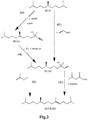
- Figures 1 and 2 show the chemical transformation of (R)-3,7-dimethyloct-6-enal to a mixture of (R,E)-6,10,14-trimethylpentadec-5-en-2-one and (R,Z)-6,10,14-trimethylpentadec-5-en-2-one.
- FIG 1 on the left side shows schematically the first pathway.
- (R)-3,7-dimethyloct-6-enal ( R-I ) is reacted in step d1) with acetone and a base to yield (R)-6,10-dimethylundeca-3,9-dien-2-one ( R-Ic) followed by hydrogenation of (R)-6,10-dimethylundeca-3,9-dien-2-one with molecular hydrogen in the presence of a hydrogenation catalyst (shown: Pd/carbon hydrogenation catalyst) in step d2) to yield (R)-6,10-dimethylundecan-2-one (R-II).
- a hydrogenation catalyst shown: Pd/carbon hydrogenation catalyst
- (R)-3,7-dimethyloct-6-enal (R-I ) is hydrogenated in step d0) with molecular hydrogen in the presence of a hydrogenation catalyst (shown: Pd/carbon hydrogenation catalyst) to (R)-3,7-dimethyloctanal (R-Ia), followed by reaction in step d1') with acetone and a base to yield (R)-6,10-dimethylundec-3-en-2-one ( R-Ib ), which then is hydrogenated in step d2') with molecular hydrogen in the presence of a hydrogenation catalyst (shown: a Pd/carbon hydrogenation catalyst) to yield (R)-6,10-dimethylundecan-2-one (R-II).
- a hydrogenation catalyst shown: Pd/carbon hydrogenation catalyst
- FIG. 2 shows the subsequent steps of the chemical transformation step d): (R)-6,10-dimethylundecan-2-one (R-II) is chemically transformed to a mixture of (R,E)-6,10,14-trimethylpentadec-5-en-2-one and (R,Z)-6,10,14-trimethylpenta-dec-5-en-2-one ( E / Z-R-III ).
- Figure 2 also shows the preferred variants of such chemical transformations.
- (7R)-3,7,11-trimethyldodec-1-en-3-ol is formed from (R)-6,10-dimethylundecan-2-one (R-II) by reacting in a first step, i.e. step d3), (R)-6,10-dimethylundecan-2-one (R-II) with ethyne (acetylene) in the presence of a base (shown is KOH) to yield the intermediate (7R)-3,7,11-trimethyldodec-1-yn-3-ol ( R-IIa ) and then in second step, i.e. in step d4), reacting with molecular hydrogen in the presence of a Lindlar catalyst.
- a base shown is KOH
- (7R)-3,7,11-trimethyldodec-1-en-3-ol ( R-IIb ) is reacted in a Saucy-Marbet reaction (step d5)) with 2-methoxyprop-1-ene to yield a mixture of (R,E)-6,10,14-trimethylpentadec-5-en-2-one and (R,Z)-6,10,14-trimethylpentadec-5-en-2-one (E / Z-R-III).
- (7R)-3,7,11-trimethyldodec-1-en-3-ol (R-IIb) is reacted with alkyl acetoacetate, preferably methyl acetoacetate, in the presence of a base, preferably sodium acetate, to a mixture of (R,E)-6,10,14-trimethylpentadec-5-en-2-one and (R,Z)-6,10,14-trimethylpentadec-5-en-2-one (E / Z-R-III) (Carroll rearrangement).
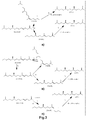
- FIG 3 three different possibilities for the synthesis of (6R,10R)-6,10,14-trimethylpentadecan-2-one ( R-IV ) are schematically shown ( Figure 3a ), 3b), 3c)).
- a first step d) for all possibilities shown in figure 3 a mixture of (R,E)-6,10,14-trimethylpentadec-5-en-2-one and (R,Z)-6,10,14-trimethylpentadec-5-en-2-one ( E / Z-R-III ) is provided.
- E-isomer ( E-R-III ) i.e.
- step e) the Z-isomer is asymmetrically hydrogenated with a specific chiral iridium complex, whereas the E-isomer is asymmetrically hydrogenated with the corresponding enantiomeric chiral iridium complex.
- a preferred chiral iridium complex is the one of formula (III).
- the E-isomer ( E-R-III ) is asymmetrically hydrogenated using molecular hydrogen in the presence of the chiral iridium complex of formula IIIa) ( S-Ir-complex ) having the S-configuration at the stereogenic centre indicated by * in formula (III).
- the Z-isomer ( Z-R-III ) is asymmetrically hydrogenated using molecular hydrogen in the presence of the chiral iridium complex of formula (IIIb) ( R-Ir-complex ) having the R-configuration at the stereogenic centre indicated by * in formula (III).
- Both asymmetric hydrogenation routes furnish the same product, i.e. (6R,10R)-6,10,14-trimethylpentadecan-2-one (R-IV).
- step 3c only one of the isomers (Z-isomer ( Z-R-III )) (desired isomer) is asymmetrically hydrogenated as described above for figure 3a ).
- a cis/trans isomerization catalyst ( c / t-cat ) is added to the mixture of the E-isomer and the Z-isomer ( E / Z-R-III ).
- step e) the separation of the (desired) isomer (Z-isomer (Z- R-III )) is done by distillation in the presence of the cis/trans isomerization catalyst in a one-pot isomerization or in-situ isomerization.
- the remainder enriched in the higher boiling isomer, is isomerized so that in the distillation vessel a thermodynamic equilibrium between the Z- and E- isomers is formed continuously.
- This procedure may allow all of the undesired isomer being present in the isomer mixture at the beginning provided in step e) to be converted to the desired isomer.
- figure 3c shows the Z-isomer to be the desired isomer (i.e. separated and asymmetrically hydrogenated), however, it is obvious that the discussion above applies also analogously to the case where the E-isomer would be the desired isomer.
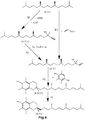
- Figure 4 shows the subsequent steps from (6R,10R)-6,10,14-trimethylpentadecan-2-one to (R,R)-isophytol, (2- ambo )- ⁇ -tocopherol, and (2R,4'R,8'R)- ⁇ -tocopherol, respectively.
- Figure 4 shows two variants for the conversion of (6R,10R)-6,10,14-trimethylpentadecan-2-one to (R,R)-isophytol.
- (R,R)-isophytol ( R-V ) is formed from (6R,10R)-6,10,14-trimethylpentadecan-2-one ( R-IV ) by reacting in a first step, i.e.
- step g (6R,10R)-6,10,14-trimethylpentadecan-2-one ( R-IV ) with ethyne (acetylene) in the presence of a base (shown is KOH) to yield the intermediate (7R,11R)-3,7,11,15-tetramethylhexadec-1-yn-3-ol ( R-IVa ) and then in second step, i.e. in step h), reacting with molecular hydrogen in the presence of a Lindlar catalyst.
- a base shown is KOH
- (R,R)-isophytol (R-V) is formed from (6R,10R)-6,10,14-trimethylpentadecan-2-one (R-IV) by means of reaction with a Grignard reagent.
- R-IV is formed from (6R,10R)-6,10,14-trimethylpentadecan-2-one (R-IV) by means of reaction with a Grignard reagent.
- vinylmagnesium chloride is shown as Grignard reagent.
- R,R-isophytol (R-V) can further be condensed in step m) with 2,3,5-trimethylbenzene-1,4-diol to yield (2-ambo)- ⁇ -tocopherol ( R / S-VI )).
- step n) (2R,4'R,8'R)- ⁇ -tocopherol ( R-VI )) is isolated from the corresponding (2-ambo)- ⁇ -tocopherol ( R / S-VI ).
- the isolation is preferably done by chromatographic separation by means of a chiral phase.
- FIG 5 preferred embodiments of asymmetric hydrogenations are shown.
- Figure 5 refers to the process steps in figure 3 .
- step f o The left side of figure 5 shows in step f o ) the formation of ketals ( E-R-IIIK ) of (R,E)-6,10,14-trimethylpentadec-5-en-2-one ( E-R-III ) obtained after isomer separation in step e) using an alcohol (in figure 5 ethylene glycol is shown) in the presence of an acid.
- the ketal ( E-R-IIIK ) preferably (R,E)-2-methyl-2-(4,8,12-trimethyltridec-3-en-1-yl)-1,3-dioxolane, is then asymmetrically hydrogenated in step f) as discussed in figure 3 .
- the direct product of this asymmetric hydrogenation is an asymmetrically hydrogenated ketal, i.e. 2-methyl-2-((4R,8R)-4,8,12-trimethyltridecyl)-1,3-dioxolane ( R-IVK ), which after acidic hydrolysis in step f') yields (6R,10R)-6,10,14-trimethylpentadecan-2-one ( R-IV ).
- the corresponding reaction scheme is shown for the Z-isomer, i.e.
- the present invention is further illustrated by the following experiments.
- the samples were injected as solutions in hexane, split ratio 300:1, injector temperature 200 °C, detector temperature 350 °C.
- Oven temperature program 100 °C (8 min), 10 °C/min to 200 °C (1 min), 20 °C/min to 220 °C (4 min), runtime 24 min.
- Agilent DB-5 column (30 m, 0.32 mm diameter, 0.25 ⁇ m film thickness) with 25 psi molecular hydrogen carrier gas.
- the samples were injected as solutions in acetonitrile with a split ratio of 50:1.
- Agilent 6850 instrument column Agilent DB-5 (123-5032E, 30 m x 0.32 mm, film 0.25 ⁇ m), the samples were injected as solutions in acetonitrile, split ratio 50:1, injector 250°C, detector 350 °C.
- Oven temperature program 100°C, 4 °C/min until 250°C, 37.5 min total runtime. Retention times (t R ): min.
- the corresponding dimethyl, ethylene glycol, neopentyl and bis(trifluoroethyl) ketals were hydrolyzed to the ketones in the presence of aqueous acid and analyzed for conversion and their stereoisomer ratio using the following methods for ketones.
- the conversion of the hydrogenation reaction was determined by gas chromatography using an achiral column.
- Agilent HP-5 column (30 m, 0.32 mm diameter, 0.25 ⁇ m film thickness) with 25 psi molecular hydrogen carrier gas. The samples were injected as solutions in dichloromethane with a split ratio of 10:1. Injector temperature: 250 °C, detector temperature: 300 °C. Oven temperature program: 50 °C (2 min) then 15 °C/min to 300 °C, hold 5 min.
- the hydrogenated ketones can be reacted with either (+)-diisopropyl-O,O'-bis(trimethylsilyl)-L-tartrate or (-)-diisopropyl-O,O'-bis(trimethylsilyl)-D-tartrate in the presence of trimethylsilyl triflate [Si(CH 3 ) 3 (OSO 2 CF 3 )] to form the diastereomeric ketals as described in A. Knierzinger, W. Walther, B. Weber, R. K. Müller, T. Netscher, Helv. Chim. Acta 1990, 73, 1087-1107 .
- the ketals can be analysed by gas chromatography using an achiral column to determine the isomer ratios.
- 610-dimethylundecan-2-one either D-(-)- or L-(+)-diisopropyltartrate can be used.
- L-(+)-diisopropyltartrate can be used to measure the quantity of the (6R,10R)-isomer that was present.
- D-(-)-diisopropyltartrate can be used to determine the amount of the (6S,10S)-isomer.
- the selectivity of the stereoselective hydrogenation can be determined indirectly.
- Agilent 6890N GC with FID Agilent CP-Sil88 for FAME column (60 m, 0.25 mm diameter, 0.20 ⁇ m film thickness) with 16 psi molecular hydrogen carrier gas. The samples were injected as solutions in ethyl acetate with a split ratio of 5:1. Injector temperature: 250 °C, FID detector temperature: 250 °C. Oven temperature program: 165 °C (isothermal, 240 min)
- the reaction was diluted with pentane (200 mL) and water (300 mL).
- the aqueous phase was extracted with pentane (2 x 200 mL) and the combined organic phases were washed with water (200 mL) and saturated NaCl solution (200 mL).
- the organic phase was dried over MgSO 4 and concentrated.
- the crude material was purified by distillation in a Kugelrohr apparatus at 120 °C/1 ⁇ 10 -1 mbar, furnishing (R)-6,10-dimethylundeca-3,9-dien-2-one as colorless oil (7.968 g, 80.8 % by GC, 30% yield).
- a sample was further purified by column chromatography, furnishing (R)-6,10-dimethylundeca-3,9-dien-2-one with a purity of 90% (determined by GC).
- Acetylene was introduced until 12 bar pressure was reached, followed by a dosed addition of KOH (45 wt.-% in water, 6.6 g, 52.9 mmol, 3.1 mol%) at 15 °C.
- KOH 45 wt.-% in water, 6.6 g, 52.9 mmol, 3.1 mol%
- the reaction progress was monitored by GC. After 90 min the reaction mixture was neutralized with acetic acid, and the reactor was subsequently vented at 25 °C.
- the reaction mixture was washed and concentrated in vacuo and purified by distillation in vacuo furnishing 325 g of (7R)-3,7,11-trimethyldodec-1-yn-3-ol with a purity of 95% (81% yield).
- the reaction was stirred for 3 h at 160 °C.
- the reaction mixture was cooled to 30 °C, concentrated in vacuo and washed with water and NaHCO 3 solution.
- low boilers were removed by distillation (jacket temperature 150 °C, 1 mbar), furnishing 690 g of a mixture of (R,E)-6,10,14-trimethylpentadec-5-en-2-one and (R,Z)-6,10,14-trimethylpentadec-5-en-2-one as residue with a purity of 85% (85% yield).
- the mixture was analyzed by GC to be a mixture of 49 % E-isomer and 36 % Z-isomer.
- step f Asymmetric hydrogenation
- the autoclave was closed and a pressure of 50 bar of molecular hydrogen was applied.
- the reaction mixture was heated to 30 °C whilst stirring for 16 hours. Afterwards the pressure was released and the solvent removed.
- the product formed is (6R,10R)-6,10,14-trimethylpentadecan-2-one.
- the conversion as well as the amount of isomers formed is given in table 2.
- Table 2 Asymmetric hydrogenation of R,E-THFA and R,Z-THFA. 1 2 3 R,Z-THFA R,E-THFA R,E-THFA Formula of Ir-complex III-F III-F III-D Configuration of chiral Ir-complex R S S Amount of chiral Ir complex [mol-%] 0.1 0.1 1 Conversion >99 % >99 % 100 % (6R,10R)-6,10,14-trimethylpentadecan-2-one [%] 87.0 88.4 97.0 (6S,10R)-6,10,14-trimethylpentadecan-2-one [%] 5.3 3.7 1.8 (6R,10S)-6,10,14-trimethylpentadecan-2-one [%] 7.7 7.9 1.2* (6S,10S)-6,10,14-trimethylpentadecan-2-one [%] 0.0 0.0 *: (6R,10S) and (6S,10S) isomers determined as sum.
- R-E-THFA-DM R-Z-THFA-DM R-E-THFA-neo R-Z-THFA-neo Ketone (R,E)-6,10,14-trimethylpentadec-5-en-2-one (R,Z)-6,10,14-trimethylpentadec-5-en-2-one (R,E)-6,10,14-trimethylpentadec-5-en-2-one (R,Z)-6,10,14-trimethylpentadec-5-en-2-one Ketal (R,E)-2,2-dimeth-oxy-6,10,14-tri-methylpentadec-5-ene (R,Z)-2,2-dimethoxy-6,10,14-trimethylpentadec-5-ene (R,E)-2,5,5-trimethyl-2-(4,8,12-trimethyltridec-3-en-1-yl)-1,3-dioxane (R,Z)-2,5,5-trimethyl-2-(4,
- Acetylene was introduced until 12 bar was reached, followed by a dosed addition of KOH (40 wt% in water, 5.0 g, 35.6 mmol, 28 mol%) at 15 °C.
- the reaction progress was monitored by GC.
- the reaction mixture was neutralized with acetic acid, and the reactor was subsequently vented at 25 °C.
- the reaction mixture was washed and concentrated in vacuo and purified by distillation in vacuo furnishing 26.9 g (7R,11R)-3,7,11,15-tetramethylhexadec-1-yn-3-ol with a purity of 98.8 area% (70% yield).
- (2- ambo )- ⁇ -tocopherol was separated by means of chromatographic separation using a chiral phase.
- the (2- ambo )- ⁇ -tocopherol of experiment 5.2 was analyzed by HPLC (Column: Daicel Chiracel® OD-H, 250 mm x 4.6 mm; eluent 0.5% ethanol in n-heptane; flow 1 ml/min; detection 220 nm, 2 ⁇ l injection.
- Figure 6b shows this chromatogram (Retention time 7.2 resp.
Landscapes
- Chemical & Material Sciences (AREA)
- Organic Chemistry (AREA)
- Chemical Kinetics & Catalysis (AREA)
- Crystallography & Structural Chemistry (AREA)
- Organic Low-Molecular-Weight Compounds And Preparation Thereof (AREA)
- Fats And Perfumes (AREA)
Claims (17)
- Verfahren für die Herstellung von (6R,10R)-6,10,14-Trimethylpentadecan-2-on durch eine Mehrschrittsynthese von (R)-3,7-Dimethyloct-6-enal, umfassend die Schritted) chemisches Umwandeln von (R)-3,7-Dimethyloct-6-enal in eine Mischung von (R,E)-6,10,14-Trimethylpentadec-5-en-2-on und (R,Z)-6,10,14-Trimethylpentadec-5-en-2-on;e) Trennen eines Isomers von 6,10,14-Trimethylpentadec-5-en-2-on von der Mischung, die in Schritt d) erhalten worden istf) asymmetrische Hydrierung unter Anwendung von molekularem Wasserstoff in Gegenwart eines chiralen Iridiumkomplexes und Ergeben von (6R,10R)-6,10,14-Trimethylpentadecan-2-on;wobei die Schritte d)-f) in der Reihenfolge von d, e, f stattfinden.
- Verfahren nach Anspruch 1, dadurch gekennzeichnet, dass vor Schritt f) ein Schritt fo) stattfindetfo) Bilden eines Ketals des Isomers von 6,10,14-Trimethylpentadec-5-en-2-on, das in Schritt e) abgetrennt worden istund dass in Schritt f) das Ketal von 6,10,14-Trimethylpentadec-5-en-2-on asymmetrisch hydriert wird und nach der asymmetrischen Hydrierung das hydriert Ketal zu dem Keton hydrolysiert wird und (6R,10R)-6,10,14-Trimethylpentadecan-2-on ergibt.
- Verfahren nach irgendeinem der vorhergehenden Ansprüche, dadurch gekennzeichnet, dass die asymmetrische Hydrierung in Schritt f) in Gegenwart eines Zusatzmittels stattfindet, das aus der Gruppe ausgewählt ist bestehend aus organischen Sulfonsäuren, Übergangsmetallsalzen organischer Sulfonsäuren, Metallalkoxiden, Aluminoxanen, Alkylaluminoxanen und B(R)(3-v)(OZ)v;
wobei v für 0, 1, 2 oder 3 steht und
R für F, eine C1-6-Alkyl-, eine halogenierte C1-6-Alkyl-, eine Aryl- oder halogenierte Arylgruppe steht; und
Z für eine C1-6-Alkyl-, eine halogenierte C1-6-Alkyl-, eine Aryl- oder halogenierte Arylgruppe steht. - Verfahren nach irgendeinem der vorhergehenden Ansprüche, dadurch gekennzeichnet, dass in Schritt d) die chemische Umwandlung von(R)-3,7-Dimethyloct-6-enal zu einer Mischung von (R,E)-6,10,14-Trimethylpentadec-5-en-2-on und (R,Z)-6,10,14-Trimethylpentadec-5-en-2-on durch die Schritte erfolgtd1) Reagieren von (R)-3,7-Dimethyloct-6-enal mit Aceton, um (R)-6,10-Dimethylundeca-3,9-dien-2-on zu ergeben;d2) Hydrierung von (R)-6,10-Dimethylundeca-3,9-dien-2-on mit molekularem Wasserstoff in Gegenwart eines Hydrierungskatalysators, um (R)-6,10-Dimethylundecan-2-on zu ergeben;
gefolgt von
entwederd3) Ethynylierung von (R)-6,10-Dimethylundecan-2-on unter Anwendung von Ethyn in Gegenwart einer basischen Substanz, um (7R)-3,7,11-Trimethyldodec-1-yn-3-ol zu ergeben;d4) Hydrierung von (7R)-3,7,11-Trimethyldodec-1-yn-3-ol mit molekularem Wasserstoff in Gegenwart eines Lindlar-Katalysators, um (7R)-3,7,11-Trimethyldodec-1-en-3-ol zu ergeben;
oderd3') Vinylierung von (R)-6,10-Dimethylundecan-2-on durch Zugabe eines Vinyl-Grignard-Reagens, um (7R)-3,7,11-trimethyldodec-1-en-3-ol zu ergeben;
gefolgt von
entwederd5) Reagieren von (7R)-3,7,11-Trimethyldodec-1-en-3-ol mit 2-Methoxyprop-1-en, um eine Mischung von (R,E)-6,10,14-Trimethylpentadec-5-en-2-on und (R,Z)-6,10,14-trimethylpentadec-5-en-2-on zu ergeben;
oderd5') Reagieren von (7R)-3,7,11-Trimethyldodec-1-en-3-ol mit einem Alkylacetoacetat oder Diketen in Gegenwart einer Base und/oder einer Säure, um eine Mischung von (R,E)-6,10,14-Trimethylpentadec-5-en-2-on und (R,Z)-6,10,14-Trimethylpentadec-5-en-2-on zu ergeben. - Verfahren nach irgendeinem der vorhergehenden Ansprüche 1-3, dadurch gekennzeichnet, dass in Schritt d) die chemische Umwandlung von (R)-3,7-Dimethyloct-6-enal zu einer Mischung von (R,E)-6,10,14-Trimethylpentadec-5-en-2-on und (R,Z)-6,10,14-Trimethylpentadec-5-en-2-on durch die Schritte ausgeführt wirdd0) Hydrierung von (R)-3,7-Dimethyloct-6-enal mit molekularen Wasserstoff in Gegenwart eines Hydrierungskatalysators, um (R)-3,7-Dimethyloctanal zu ergeben;d1') Reagieren mit Aceton, um (R)-6,10-Dimethylundec-3-en-2-on zu ergeben;d2') Hydrierung von (R)-6,10-Dimethylundec-3-en-2-on mit molekularem Wasserstoff in Gegenwart eines Hydrierungskatalysators, um (R)-6,10-Dimethylundecan-2-on zu ergeben;
gefolgt von
entwederd3) Ethynylierung von (R)-6,10-Dimethylundecan-2-on unter Anwendung von Ethyn in Gegenwart einer basischen Substanz, um (7R)-3,7,11-Trimethyldodec-1- yn-3-ol zu ergeben;d4) Hydrierung von (7R)-3,7,11-Trimethyldodec-1-yn-3-ol mit molekularem Wasserstoff in Gegenwart eines Lindlar-Katalysators, um (7R)-3,7,11-Trimethyldodec-1-en-3-ol zu ergeben;
oderd3') Vinylierung von (R)-6,10-Dimethylundecan-2-on durch Zugabe eines Vinyl-Grignard-Reagens, um (7R)-3,7,11-Trimethyldodec-1-en-3-ol zu ergeben;
gefolgt von
entwederd5) Reagieren von (7R)-3,7,11-Trimethyldodec-1-en-3-ol mit 2-Methoxyprop-1-en, um eine Mischung von (R,E)-6,10,14-Trimethylpentadec-5-en-2-on und (R,Z)-6,10,14-Trimethylpentadec-5-en-2-on zu ergeben;
oderd5') Reagieren von (7R)-3,7,11-Trimethyldodec-1-en-3-ol mit einem Alkylacetoacetat oder Diketen in Gegenwart einer Base und/oder einer Säure, um eine Mischung von (R,E)-6,10,14-Trimethylpentadec-5-en-2-on und (R,Z)-6,10,14-Trimethylpentadec-5-en-2-on zu ergeben. - Verfahren nach irgendeinem der vorhergehenden Ansprüche, dadurch gekennzeichnet, dass die Trennung von Isomeren in Schritt e) durch Destillation ausgeführt wird.
- Verfahren nach Anspruch 6, dadurch gekennzeichnet, dass die Destillation in Gegenwart eines cis/trans-Isomerisationskatalysators ausgeführt wird.
- Verfahren nach irgendeinem der vorhergehenden Ansprüche 1-6, dadurch gekennzeichnet, dass das restliche Isomer durch einen cis/trans-Isomerisationskatalysator isomerisiert und der entsprechenden Mischung von Isomeren, die in Schritt d) bereitgestellt worden ist, zugegeben wird.
- Verfahren nach irgendeinem der vorhergehenden Ansprüche, dadurch gekennzeichnet, dass der chirale Iridiumkomplex in Schritt f) ein chiraler Iridiumkomplex der Formel (III-O) ist
 P-Q-N für einen chelatbildenden organischen Liganden steht, der ein stereogenes Zentrum oder eine axiale Chiralität aufweist und ein Stickstoff- und Phosphoratom als Bindungsstelle in das Iridiumzentrum des Komplexes aufweist;Y1, Y2, Y3 und Y4 unabhängig voneinander Wasserstoffatome, eine C1-12-Alkyl-, C5-10-Cycloalkyl- oder aromatische Gruppe sind; oder mindestens zwei davon zusammen mindestens eine zweiwertige gedrückte Gruppe von mindestens 2 Kohlenstoffatomen bilden; undYΘ ein Anion ist, das insbesondere aus der Gruppe ausgewählt ist bestehend aus Halogenid, PF6 -, SbF6 -, tetra(3,5-Bis(trifluormethyl)phenyl)borat (BArF -), BF4 -, perfluorierten Sulfonaten, bevorzugt F3C-SO3 - oder F9C4-SO3 -; ClO4 -, Al(OC6F5)4 -, Al(OC(CF3)3)4 -, N(SO2CF3)2 -N(SO2C4F9)2 - und B(C6F5)4 -.
 - Verfahren nach irgendeinem der vorhergehenden Ansprüche 1-8, dadurch gekennzeichnet, dass der chirale Iridiumkomplex in Schritt f) ein chiraler Iridiumkomplex der Formel (III) ist
 n 1 oder 2 oder 3, bevorzugt 1 oder 2 beträgt;X1 und X2 unabhängig voneinander Wasserstoffatome, C1-4-Alkyl, C5-7-Cycloalkyl, Adamantyl, Phenyl (das wahlweise mit einer bis drei C1-5-Alkyl-, C1-4-Alkoxy-, C1-4-Perfluoroalkylgruppen und/oder einem bis fünf Halogenatomen substituiert ist), Benzyl, 1-Naphthyl, 2-Naphthyl, 2-Furyl oder Ferrocenyl sind;Z1 und Z2 unabhängig voneinander Wasserstoffatome, C1-5-Alkyl- oder C1-5-Alkoxygruppen sind;Z1 und Z2 unabhängig voneinander Wasserstoffatome, C1-5-Alkyl- oder C1-10-Alkoxygruppen sind;oder Z1 und Z2 zusammen für eine Überbrückungsgruppe stehen, die einen 5- oder 6-gliedrigen Ring bildet;YΘ ein Anion ist, das insbesondere aus der Gruppe ausgewählt ist bestehend aus Halogenid, PF6 -, SbF6 -, tetra(3,5-Bis(trifluormethyl)phenyl)borat (BArF -), BF4 -, perfluorierten Sulfonaten, bevorzugt F3C-SO3 - oder F9C4-SO3 -; ClO4 -, Al(OC6F5)4 -, Al(OC(CF3)3)4 -, N(SO2CF3)2 -N(SO2C4F9)2 - und B(C6F5)4 -;R1 entweder Phenyl oder o-Tolyl oder m-Tolyl oder p-Tolyl oder eine Gruppe der Formel (IVa) oder (IVb) oder (IVc)
 wobei R2 und R3 entweder beides eine H- oder eine C1-4-Alkylgruppe oder eine halogenierte C1-4-Alkylgruppe darstellen oder eine zweiwertige Gruppe darstellen, die zusammen einen 6-gliedrigen cycloaliphatischen oder aromatischen Ring bilden, der wahlweise durch Halogenatome oder durch C1-4-Alkylgruppen oder durch C1-4-Alkoxygruppen substituiert istR4 und R5 entweder beides eine H- oder eine C1-4-Alkylgruppe oder eine halogenierte C1-4-Alkylgruppe oder eine zweiwertige Gruppe darstellen, die zusammen einen 6-gliedrigen cycloaliphatischen oder aromatischen Ring bilden, der wahlweise durch Halogenatome oder durch C1-4-Alkylgruppen oder durch C1-4-Alkoxygruppen substituiert ist;R6 und R7 und R8 jeweils eine C1-4-Alkylgruppe oder eine halogenierte C1-4-Alkylgruppe darstellen;R9 und R10 entweder beides eine H- oder eine C1-4-Alkylgruppe oder eine halogenierte C1-4-Alkylgruppe oder eine zweiwertige Gruppe darstellen, die zusammen einen 6-gliedrigen cycloaliphatischen oder aromatischen Ring bilden, der wahlweise durch Halogenatome oder durch C1-4-Alkylgruppen oder durch C1-4-Alkoxygruppen substituiert ist;und wobei * ein stereogenes Zentrum des Komplexes der Formel (III) darstellt.
 - Verfahren nach Anspruch 10, dadurch gekennzeichnet, dass der chirale Iridiumkomplex der Formel (III), der in Schritt f) verwendet wird und der für die asymmetrische Hydrierung verwendet wird, die
S-Konfiguration am stereogenen Zentrum aufweist, das durch * im Falle von (R,E)-6,10,14-Trimethylpentadec-5-en-2-on oder Ketalen davon angegeben ist, hydriert werden soll;
oder die
R-Konfiguration am stereogenen Zentrum aufweist, die durch * im Falle von (R,Z)-6,10,14-Trimethylpentadec-5-en-2-on oder Ketalen davon angegeben ist, hydriert werden soll. - Verfahren für die Herstellung von (R,R)-Isophytol ((3RS,7R,11R)-3,7,11,15-tetramethylhexadec-1-en-3-ol), umfassend ein Verfahren für die Herstellung von (6R,10R)-6,10,14-Trimethylpentadecan-2-on, wie in dem Verfahren nach einem der vorhergehenden Ansprüche 1-11 beschrieben;
gefolgt von den Schritten
entwederg) Ethynylierung von (6R,10R)-6,10,14-Trimethylpentadecan-2-on unter Anwendung von Ethyn in Gegenwart einer basischen Substanz, um (7R,11R)-3,7,11,15-Tetramethylhexadec-1-yn-3-ol zu ergeben;h) Hydrierung von (7R,11R)-3,7,11,15-Tetramethylhexadec-1-yn-3-ol mit molekularem Wasserstoff in Gegenwart eines Lindlar-Katalysators, um (R,R)-Isophytol zu ergeben;h') Vinylierung von (6R,10R)-6,10,14-Trimethylpentadecan-2-on durch Zugabe eines Vinyl-Grignard-Reagens, um (R,R)-Isophytol zu ergeben.oder - Verfahren für die Herstellung der Verbindung der Formel (V), umfassend
ein Verfahren für die Herstellung von (6R,10R)-6,10,14-Trimethylpentadecan-2-on, wie in dem Verfahren nach irgendeinem der vorhergehenden Ansprüche 1-11 beschrieben; gefolgt von den Schritten
entwederg) Ethynylierung von (6R,10R)-6,10,14-Trimethylpentadecan-2-on unter Anwendung von Ethyn in Gegenwart einer basischen Substanz, um (7R,11R)-3,7,11,15-Tetramethylhexadec-1-yn-3-ol zu ergeben;h) Hydrierung von (7R,11R)-3,7,11,15-Tetramethylhexadec-1-yn-3-ol mit molekularem Wasserstoff in Gegenwart eines Lindlar-Katalysators, um (R,R)-Isophytol zu ergeben;
oderh') Vinylierung von (6R,1OR)-6,10,14-Trimethylpentadecan-2-on durch Zugabe eines Vinyl-Grignard-Reagens, um (R,R)-Isophytol zu ergeben;
gefolgt von den Schrittenm) Kondensieren von (R,R)-Isophytol mit der Verbindung der Formel (VI), um die Verbindung der Formel (V) zu ergeben, die angesichts der Chiralität am durch # angegebenen Zentrum eine isomere Mischung ist;

- Verfahren für die Herstellung der Verbindung der Formel (V-A), umfassend
ein Verfahren für die Herstellung von (6R,10R)-6,10,14-Trimethylpentadecan-2-on, wie in dem Verfahren nach irgendeinem der vorhergehenden Ansprüche 1-11 beschrieben; gefolgt von den Schritten
entwederg) Ethynylierung von (6R,10R)-6,10,14-Trimethylpentadecan-2-on unter Anwendung von Ethyn in Gegenwart einer basischen Substanz, um (7R,11R)-3,7,11,15-Tetramethylhexadec-1-yn-3-ol zu ergeben;h) Hydrierung von (7R,11R)-3,7,11,15-Tetramethylhexadec-1-yn-3-ol mit molekularem Wasserstoff in Gegenwart eines Lindlar-Katalysators, um (R,R)-Isophytol zu ergeben;
oderh') Vinylierung von (6R,10R)-6,10,14-Trimethylpentadecan-2-on durch Zugabe eines Vinyl-Grignard-Reagens, um (R,R)-Isophytol zu ergeben;
gefolgt von den Schrittenm) Kondensieren von (R,R)-Isophytol mit der Verbindung der Formel (VI), um die Verbindung der Formel (V) zu ergeben, die angesichts der Chiralität am durch # angegebenen Zentrum eine isomere Mischung ist;

undn) Isolieren der Verbindung der Formel (V-A) von der isomeren Mischung der Formel (V)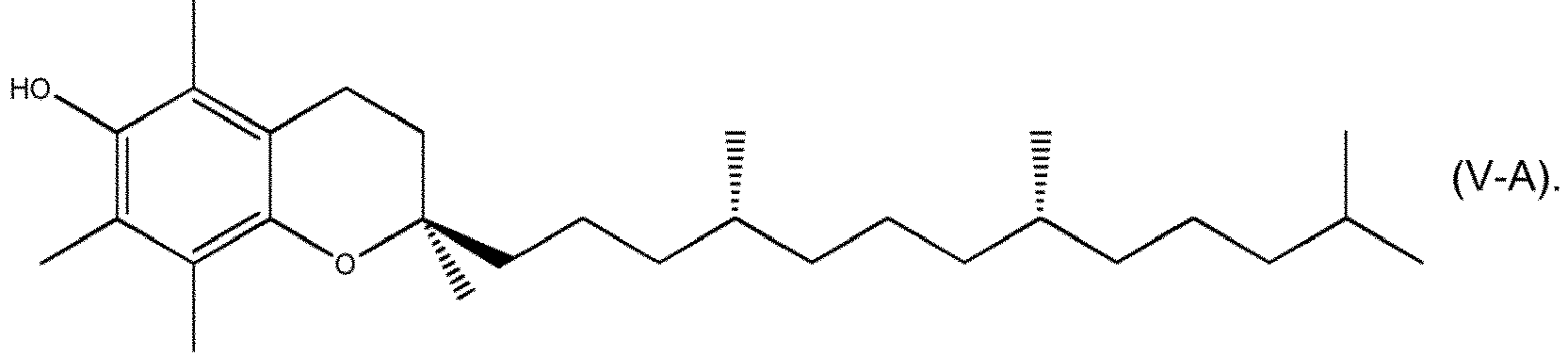
- Verwendung eines Verfahrens nach irgendeinem der Ansprüche 1-11 für die Synthese von Produkten oder Zwischenprodukt auf dem Gebiet von Aromastoffen und Duftstoffen oder pharmazeutischen Produkten, Vitaminen und der Nahrungsmittel- und Futterindustrie.
- Zusammensetzung umfassend- mindestens ein Ketal der Formel (XII) und- mindestens einen chiralen Iridiumkomplex
 wobei eine Wellenlinie eine Kohlenstoff-Kohlenstoff-Bindung darstellt, die an die anliegende Kohlenstoff-Kohlenstoff-Doppelbindung angeknüpft ist, sodass die Kohlenstoff-Kohlenstoff-Doppelbindung entweder in der Z- oder E-Konfiguration vorliegt;und wobei die Doppelbindung, die in der Formel gestrichelte Linien (------) aufweist, entweder eine Kohlenstoff-Kohlenstoff-Einzelbindung oder eine Kohlenstoff-Kohlenstoff Doppelbindung darstellt;und wobeiein stereogenes Zentrum darstellt, das die R-Konfiguration aufweist;
 und wobeiQ1 und Q2entweder einzeln oder beide für eine C1-10-Alkylgruppe oder eine halogenierte C1-10-Alkylgruppe stehen;oder zusammen eine C2-6-Alkylengruppe oder eine C6-8-Cycloalkylengruppe bilden.
 - Ketal der Formel (XX-C) oder (XX-D)

 wobei die Doppelbindung, die gestrichelte Linien (------) in den obigen Formeln aufweist, entweder eine Kohlenstoff-Kohlenstoff-Einzelbindung oder eine Kohlenstoff-Kohlenstoff-Doppelbindung darstellt; undwobeiein stereogenes Zentrum darstellt, das die R-Konfiguration aufweist, und eine Wellenlinie eine Kohlenstoff-Kohlenstoffbindung darstellt, die an eine anliegende Kohlenstoffbindung (------, die ___darstellt) oder an eine anliegende Kohlenstoff-Kohlenstoff-Doppelbindung (------, die -darstellt) angeknüpft ist, so das die Kohlenstoff-Kohlenstoff-Doppelbindung entweder in der Z- oder der E-Konfiguration vorliegt.
Priority Applications (1)
| Application Number | Priority Date | Filing Date | Title |
|---|---|---|---|
| EP13810948.3A EP2935176B1 (de) | 2012-12-18 | 2013-12-18 | (6r,10r)-6,10,14-trimethylpentadecan-2-on, das aus (r)-3,7-dimetyloct-6-enal hergestellt wurde |
Applications Claiming Priority (3)
| Application Number | Priority Date | Filing Date | Title |
|---|---|---|---|
| EP12197824 | 2012-12-18 | ||
| EP13810948.3A EP2935176B1 (de) | 2012-12-18 | 2013-12-18 | (6r,10r)-6,10,14-trimethylpentadecan-2-on, das aus (r)-3,7-dimetyloct-6-enal hergestellt wurde |
| PCT/EP2013/077188 WO2014096066A1 (en) | 2012-12-18 | 2013-12-18 | (6r,10r)-6,10,14-trimetylpentadecan-2-one prepared from (r)-3,7-dimetyloct-6-enal |
Publications (2)
| Publication Number | Publication Date |
|---|---|
| EP2935176A1 EP2935176A1 (de) | 2015-10-28 |
| EP2935176B1 true EP2935176B1 (de) | 2018-08-01 |
Family
ID=47458693
Family Applications (1)
| Application Number | Title | Priority Date | Filing Date |
|---|---|---|---|
| EP13810948.3A Active EP2935176B1 (de) | 2012-12-18 | 2013-12-18 | (6r,10r)-6,10,14-trimethylpentadecan-2-on, das aus (r)-3,7-dimetyloct-6-enal hergestellt wurde |
Country Status (4)
| Country | Link |
|---|---|
| EP (1) | EP2935176B1 (de) |
| CN (1) | CN104854070B (de) |
| MY (1) | MY174887A (de) |
| WO (1) | WO2014096066A1 (de) |
Families Citing this family (3)
| Publication number | Priority date | Publication date | Assignee | Title |
|---|---|---|---|---|
| EP3652162B1 (de) | 2017-07-12 | 2023-02-22 | DSM IP Assets B.V. | Neuartige synthese von zwischenprodukten für die herstellung von alpha-tocopherol |
| IL291512B2 (en) | 2019-09-25 | 2026-05-01 | Bayer Ag | A process involving the use of novel iridium catalysts for the enantioselective hydrogenation of 4-substituted 2,1-dihydroquinolines |
| MX2022003448A (es) * | 2019-09-25 | 2022-04-19 | Bayer Ag | Mejora de la hidrogenacion enantioselectiva de 1,2-dihidroquinolinas 4-sustituidas en presencia de un catalizador quiral de iridio y un aditivo. |
Family Cites Families (4)
| Publication number | Priority date | Publication date | Assignee | Title |
|---|---|---|---|---|
| US4292459A (en) * | 1975-07-16 | 1981-09-29 | Scm Corporation | Coupling reaction involving a Grignard and allylic halide |
| DE2820942A1 (de) * | 1978-05-12 | 1979-11-22 | Sueddeutsche Kalkstickstoff | Uebersaure feste metallactate, verfahren zu deren herstellung und verwendung |
| US5374727A (en) * | 1992-06-19 | 1994-12-20 | Hoffmann-La Roche Inc. | Asymmetric hydrogenation of dihydro-pyrido [1,2-a]indoles |
| ES2371653T3 (es) * | 2004-12-22 | 2012-01-05 | Dsm Ip Assets B.V. | Hidrogenación asimétrica de alquenos usando complejos de iridio quirales. |
-
2013
- 2013-12-18 WO PCT/EP2013/077188 patent/WO2014096066A1/en not_active Ceased
- 2013-12-18 CN CN201380065807.7A patent/CN104854070B/zh active Active
- 2013-12-18 MY MYPI2015701883A patent/MY174887A/en unknown
- 2013-12-18 EP EP13810948.3A patent/EP2935176B1/de active Active
Also Published As
| Publication number | Publication date |
|---|---|
| WO2014096066A1 (en) | 2014-06-26 |
| CN104854070B (zh) | 2017-08-04 |
| EP2935176A1 (de) | 2015-10-28 |
| CN104854070A (zh) | 2015-08-19 |
| MY174887A (en) | 2020-05-20 |
Similar Documents
| Publication | Publication Date | Title |
|---|---|---|
| EP2935177B1 (de) | (6r,10r)-6,10,14-trimethylpentadecan-2-on, das aus 6,10-dimetylundec-5-en-2-on oder 6,10-dimetylundeca-5,9-dien-2-on hergestellt wurde | |
| EP2935191B1 (de) | Herstellung von (6r,10r)-6,10,14-trimethylpentadecan-2-on aus 3,7-dimetyloct-2-enal oder 3,7-dimetylocta-2,6-dienal | |
| JP5090926B2 (ja) | キラルイリジウム錯体を使用するアルケンの不斉水素化 | |
| EP2935185B1 (de) | (6r,10r)-6,10,14-trimethylpentadecan-2-on, das aus 6,10,14-trimethylpentadeca-5,9,13-trien-2-on oder 6,10,14-trimethylpentadeca-5,9-dien-2-on hergestellt wurde | |
| EP2935189B1 (de) | Verwendung von mischungen aus e/z-isomeren zum erhalten von quantitativ spezifischen produkten durch kombinieren von asymmetrischer hydrierung und isomerisation | |
| EP2935188B1 (de) | Verwendung von mischungen aus e/z-isomeren zum erhalten von quantitativ spezifischen produkten durch kombinierte asymmetrische hydrierungen | |
| CN104854070B (zh) | 由(r)‑3,7‑二甲基辛‑6‑烯醛制备的(6r,10r)‑6,10,14‑三甲基十五烷‑2‑酮 | |
| EP2935190B1 (de) | (6r,10r)-6,10,14-trimethylpentadecan-2-on, hergestellt aus 6,10-dimethylundeca-3,5,9-trien-2-on | |
| EP2935233B1 (de) | Verfahren zur asymmetrischen hydrierung von ketalen und acetalen | |
| EP2935175B1 (de) | (6r,10r)-6,10,14-trimethylpentadecan-2-on, das aus (r)-6,10,14-trimetylpentadec-5-en-2-on hergestellt wurde |
Legal Events
| Date | Code | Title | Description |
|---|---|---|---|
| PUAI | Public reference made under article 153(3) epc to a published international application that has entered the european phase |
Free format text: ORIGINAL CODE: 0009012 |
|
| 17P | Request for examination filed |
Effective date: 20150601 |
|
| AK | Designated contracting states |
Kind code of ref document: A1 Designated state(s): AL AT BE BG CH CY CZ DE DK EE ES FI FR GB GR HR HU IE IS IT LI LT LU LV MC MK MT NL NO PL PT RO RS SE SI SK SM TR |
|
| AX | Request for extension of the european patent |
Extension state: BA ME |
|
| DAX | Request for extension of the european patent (deleted) | ||
| 17Q | First examination report despatched |
Effective date: 20170316 |
|
| GRAP | Despatch of communication of intention to grant a patent |
Free format text: ORIGINAL CODE: EPIDOSNIGR1 |
|
| RIC1 | Information provided on ipc code assigned before grant |
Ipc: C07C 43/313 20060101ALI20180208BHEP Ipc: C07C 45/51 20060101ALI20180208BHEP Ipc: C07C 45/82 20060101ALI20180208BHEP Ipc: C07C 45/67 20060101ALI20180208BHEP Ipc: C07D 319/06 20060101ALI20180208BHEP Ipc: C07C 29/42 20060101ALI20180208BHEP Ipc: C07C 45/48 20060101ALI20180208BHEP Ipc: C07C 29/17 20060101AFI20180208BHEP Ipc: C07D 311/72 20060101ALI20180208BHEP Ipc: C07C 45/59 20060101ALI20180208BHEP Ipc: C07C 45/62 20060101ALI20180208BHEP Ipc: C07C 45/74 20060101ALI20180208BHEP Ipc: C07C 29/40 20060101ALI20180208BHEP |
|
| INTG | Intention to grant announced |
Effective date: 20180301 |
|
| RIN1 | Information on inventor provided before grant (corrected) |
Inventor name: MEDLOCK, JONATHAN ALAN Inventor name: DE VRIES, ANDREAS HENDRIKUS MARIA Inventor name: SORIANO, DOMENICO Inventor name: VERZIJL, GERARDUS KAREL MARIA Inventor name: BONRATH, WERNER Inventor name: STEMMLER, RENE TOBIAS |
|
| GRAS | Grant fee paid |
Free format text: ORIGINAL CODE: EPIDOSNIGR3 |
|
| GRAA | (expected) grant |
Free format text: ORIGINAL CODE: 0009210 |
|
| AK | Designated contracting states |
Kind code of ref document: B1 Designated state(s): AL AT BE BG CH CY CZ DE DK EE ES FI FR GB GR HR HU IE IS IT LI LT LU LV MC MK MT NL NO PL PT RO RS SE SI SK SM TR |
|
| REG | Reference to a national code |
Ref country code: GB Ref legal event code: FG4D |
|
| REG | Reference to a national code |
Ref country code: CH Ref legal event code: EP Ref country code: AT Ref legal event code: REF Ref document number: 1024100 Country of ref document: AT Kind code of ref document: T Effective date: 20180815 |
|
| REG | Reference to a national code |
Ref country code: IE Ref legal event code: FG4D |
|
| REG | Reference to a national code |
Ref country code: DE Ref legal event code: R096 Ref document number: 602013041303 Country of ref document: DE |
|
| REG | Reference to a national code |
Ref country code: NL Ref legal event code: MP Effective date: 20180801 |
|
| REG | Reference to a national code |
Ref country code: LT Ref legal event code: MG4D |
|
| REG | Reference to a national code |
Ref country code: AT Ref legal event code: MK05 Ref document number: 1024100 Country of ref document: AT Kind code of ref document: T Effective date: 20180801 |
|
| PG25 | Lapsed in a contracting state [announced via postgrant information from national office to epo] |
Ref country code: LT Free format text: LAPSE BECAUSE OF FAILURE TO SUBMIT A TRANSLATION OF THE DESCRIPTION OR TO PAY THE FEE WITHIN THE PRESCRIBED TIME-LIMIT Effective date: 20180801 Ref country code: FI Free format text: LAPSE BECAUSE OF FAILURE TO SUBMIT A TRANSLATION OF THE DESCRIPTION OR TO PAY THE FEE WITHIN THE PRESCRIBED TIME-LIMIT Effective date: 20180801 Ref country code: AT Free format text: LAPSE BECAUSE OF FAILURE TO SUBMIT A TRANSLATION OF THE DESCRIPTION OR TO PAY THE FEE WITHIN THE PRESCRIBED TIME-LIMIT Effective date: 20180801 Ref country code: NL Free format text: LAPSE BECAUSE OF FAILURE TO SUBMIT A TRANSLATION OF THE DESCRIPTION OR TO PAY THE FEE WITHIN THE PRESCRIBED TIME-LIMIT Effective date: 20180801 Ref country code: RS Free format text: LAPSE BECAUSE OF FAILURE TO SUBMIT A TRANSLATION OF THE DESCRIPTION OR TO PAY THE FEE WITHIN THE PRESCRIBED TIME-LIMIT Effective date: 20180801 Ref country code: IS Free format text: LAPSE BECAUSE OF FAILURE TO SUBMIT A TRANSLATION OF THE DESCRIPTION OR TO PAY THE FEE WITHIN THE PRESCRIBED TIME-LIMIT Effective date: 20181201 Ref country code: BG Free format text: LAPSE BECAUSE OF FAILURE TO SUBMIT A TRANSLATION OF THE DESCRIPTION OR TO PAY THE FEE WITHIN THE PRESCRIBED TIME-LIMIT Effective date: 20181101 Ref country code: NO Free format text: LAPSE BECAUSE OF FAILURE TO SUBMIT A TRANSLATION OF THE DESCRIPTION OR TO PAY THE FEE WITHIN THE PRESCRIBED TIME-LIMIT Effective date: 20181101 Ref country code: GR Free format text: LAPSE BECAUSE OF FAILURE TO SUBMIT A TRANSLATION OF THE DESCRIPTION OR TO PAY THE FEE WITHIN THE PRESCRIBED TIME-LIMIT Effective date: 20181102 Ref country code: SE Free format text: LAPSE BECAUSE OF FAILURE TO SUBMIT A TRANSLATION OF THE DESCRIPTION OR TO PAY THE FEE WITHIN THE PRESCRIBED TIME-LIMIT Effective date: 20180801 Ref country code: PL Free format text: LAPSE BECAUSE OF FAILURE TO SUBMIT A TRANSLATION OF THE DESCRIPTION OR TO PAY THE FEE WITHIN THE PRESCRIBED TIME-LIMIT Effective date: 20180801 |
|
| PG25 | Lapsed in a contracting state [announced via postgrant information from national office to epo] |
Ref country code: AL Free format text: LAPSE BECAUSE OF FAILURE TO SUBMIT A TRANSLATION OF THE DESCRIPTION OR TO PAY THE FEE WITHIN THE PRESCRIBED TIME-LIMIT Effective date: 20180801 Ref country code: LV Free format text: LAPSE BECAUSE OF FAILURE TO SUBMIT A TRANSLATION OF THE DESCRIPTION OR TO PAY THE FEE WITHIN THE PRESCRIBED TIME-LIMIT Effective date: 20180801 Ref country code: HR Free format text: LAPSE BECAUSE OF FAILURE TO SUBMIT A TRANSLATION OF THE DESCRIPTION OR TO PAY THE FEE WITHIN THE PRESCRIBED TIME-LIMIT Effective date: 20180801 |
|
| PG25 | Lapsed in a contracting state [announced via postgrant information from national office to epo] |
Ref country code: CZ Free format text: LAPSE BECAUSE OF FAILURE TO SUBMIT A TRANSLATION OF THE DESCRIPTION OR TO PAY THE FEE WITHIN THE PRESCRIBED TIME-LIMIT Effective date: 20180801 Ref country code: ES Free format text: LAPSE BECAUSE OF FAILURE TO SUBMIT A TRANSLATION OF THE DESCRIPTION OR TO PAY THE FEE WITHIN THE PRESCRIBED TIME-LIMIT Effective date: 20180801 Ref country code: EE Free format text: LAPSE BECAUSE OF FAILURE TO SUBMIT A TRANSLATION OF THE DESCRIPTION OR TO PAY THE FEE WITHIN THE PRESCRIBED TIME-LIMIT Effective date: 20180801 Ref country code: RO Free format text: LAPSE BECAUSE OF FAILURE TO SUBMIT A TRANSLATION OF THE DESCRIPTION OR TO PAY THE FEE WITHIN THE PRESCRIBED TIME-LIMIT Effective date: 20180801 Ref country code: IT Free format text: LAPSE BECAUSE OF FAILURE TO SUBMIT A TRANSLATION OF THE DESCRIPTION OR TO PAY THE FEE WITHIN THE PRESCRIBED TIME-LIMIT Effective date: 20180801 |
|
| REG | Reference to a national code |
Ref country code: DE Ref legal event code: R097 Ref document number: 602013041303 Country of ref document: DE |
|
| PG25 | Lapsed in a contracting state [announced via postgrant information from national office to epo] |
Ref country code: DK Free format text: LAPSE BECAUSE OF FAILURE TO SUBMIT A TRANSLATION OF THE DESCRIPTION OR TO PAY THE FEE WITHIN THE PRESCRIBED TIME-LIMIT Effective date: 20180801 Ref country code: SM Free format text: LAPSE BECAUSE OF FAILURE TO SUBMIT A TRANSLATION OF THE DESCRIPTION OR TO PAY THE FEE WITHIN THE PRESCRIBED TIME-LIMIT Effective date: 20180801 Ref country code: SK Free format text: LAPSE BECAUSE OF FAILURE TO SUBMIT A TRANSLATION OF THE DESCRIPTION OR TO PAY THE FEE WITHIN THE PRESCRIBED TIME-LIMIT Effective date: 20180801 |
|
| PLBE | No opposition filed within time limit |
Free format text: ORIGINAL CODE: 0009261 |
|
| STAA | Information on the status of an ep patent application or granted ep patent |
Free format text: STATUS: NO OPPOSITION FILED WITHIN TIME LIMIT |
|
| 26N | No opposition filed |
Effective date: 20190503 |
|
| GBPC | Gb: european patent ceased through non-payment of renewal fee |
Effective date: 20181218 |
|
| PG25 | Lapsed in a contracting state [announced via postgrant information from national office to epo] |
Ref country code: MC Free format text: LAPSE BECAUSE OF FAILURE TO SUBMIT A TRANSLATION OF THE DESCRIPTION OR TO PAY THE FEE WITHIN THE PRESCRIBED TIME-LIMIT Effective date: 20180801 Ref country code: SI Free format text: LAPSE BECAUSE OF FAILURE TO SUBMIT A TRANSLATION OF THE DESCRIPTION OR TO PAY THE FEE WITHIN THE PRESCRIBED TIME-LIMIT Effective date: 20180801 Ref country code: LU Free format text: LAPSE BECAUSE OF NON-PAYMENT OF DUE FEES Effective date: 20181218 |
|
| REG | Reference to a national code |
Ref country code: IE Ref legal event code: MM4A |
|
| REG | Reference to a national code |
Ref country code: BE Ref legal event code: MM Effective date: 20181231 |
|
| PG25 | Lapsed in a contracting state [announced via postgrant information from national office to epo] |
Ref country code: IE Free format text: LAPSE BECAUSE OF NON-PAYMENT OF DUE FEES Effective date: 20181218 |
|
| PG25 | Lapsed in a contracting state [announced via postgrant information from national office to epo] |
Ref country code: BE Free format text: LAPSE BECAUSE OF NON-PAYMENT OF DUE FEES Effective date: 20181231 |
|
| PG25 | Lapsed in a contracting state [announced via postgrant information from national office to epo] |
Ref country code: GB Free format text: LAPSE BECAUSE OF NON-PAYMENT OF DUE FEES Effective date: 20181218 |
|
| PG25 | Lapsed in a contracting state [announced via postgrant information from national office to epo] |
Ref country code: MT Free format text: LAPSE BECAUSE OF NON-PAYMENT OF DUE FEES Effective date: 20181218 |
|
| PG25 | Lapsed in a contracting state [announced via postgrant information from national office to epo] |
Ref country code: TR Free format text: LAPSE BECAUSE OF FAILURE TO SUBMIT A TRANSLATION OF THE DESCRIPTION OR TO PAY THE FEE WITHIN THE PRESCRIBED TIME-LIMIT Effective date: 20180801 |
|
| PG25 | Lapsed in a contracting state [announced via postgrant information from national office to epo] |
Ref country code: PT Free format text: LAPSE BECAUSE OF FAILURE TO SUBMIT A TRANSLATION OF THE DESCRIPTION OR TO PAY THE FEE WITHIN THE PRESCRIBED TIME-LIMIT Effective date: 20180801 |
|
| PG25 | Lapsed in a contracting state [announced via postgrant information from national office to epo] |
Ref country code: CY Free format text: LAPSE BECAUSE OF FAILURE TO SUBMIT A TRANSLATION OF THE DESCRIPTION OR TO PAY THE FEE WITHIN THE PRESCRIBED TIME-LIMIT Effective date: 20180801 Ref country code: HU Free format text: LAPSE BECAUSE OF FAILURE TO SUBMIT A TRANSLATION OF THE DESCRIPTION OR TO PAY THE FEE WITHIN THE PRESCRIBED TIME-LIMIT; INVALID AB INITIO Effective date: 20131218 Ref country code: MK Free format text: LAPSE BECAUSE OF NON-PAYMENT OF DUE FEES Effective date: 20180801 |
|
| P01 | Opt-out of the competence of the unified patent court (upc) registered |
Effective date: 20230520 |
|
| REG | Reference to a national code |
Ref country code: CH Ref legal event code: U11 Free format text: ST27 STATUS EVENT CODE: U-0-0-U10-U11 (AS PROVIDED BY THE NATIONAL OFFICE) Effective date: 20260101 |
|
| PGFP | Annual fee paid to national office [announced via postgrant information from national office to epo] |
Ref country code: DE Payment date: 20251203 Year of fee payment: 13 |
|
| PGFP | Annual fee paid to national office [announced via postgrant information from national office to epo] |
Ref country code: FR Payment date: 20251208 Year of fee payment: 13 |
|
| PGFP | Annual fee paid to national office [announced via postgrant information from national office to epo] |
Ref country code: CH Payment date: 20260101 Year of fee payment: 13 |