EP2936733B1 - Bus de connexion d'application mobile sécurisé - Google Patents
Bus de connexion d'application mobile sécurisé Download PDFInfo
- Publication number
- EP2936733B1 EP2936733B1 EP13865460.3A EP13865460A EP2936733B1 EP 2936733 B1 EP2936733 B1 EP 2936733B1 EP 13865460 A EP13865460 A EP 13865460A EP 2936733 B1 EP2936733 B1 EP 2936733B1
- Authority
- EP
- European Patent Office
- Prior art keywords
- application
- mobile application
- mobile
- information
- storage location
- Prior art date
- Legal status (The legal status is an assumption and is not a legal conclusion. Google has not performed a legal analysis and makes no representation as to the accuracy of the status listed.)
- Active
Links
Images




Classifications
-
- H—ELECTRICITY
- H04—ELECTRIC COMMUNICATION TECHNIQUE
- H04L—TRANSMISSION OF DIGITAL INFORMATION, e.g. TELEGRAPHIC COMMUNICATION
- H04L63/00—Network architectures or network communication protocols for network security
- H04L63/04—Network architectures or network communication protocols for network security for providing a confidential data exchange among entities communicating through data packet networks
- H04L63/0428—Network architectures or network communication protocols for network security for providing a confidential data exchange among entities communicating through data packet networks wherein the data content is protected, e.g. by encrypting or encapsulating the payload
-
- G—PHYSICS
- G06—COMPUTING OR CALCULATING; COUNTING
- G06F—ELECTRIC DIGITAL DATA PROCESSING
- G06F21/00—Security arrangements for protecting computers, components thereof, programs or data against unauthorised activity
- G06F21/60—Protecting data
- G06F21/606—Protecting data by securing the transmission between two devices or processes
-
- G—PHYSICS
- G06—COMPUTING OR CALCULATING; COUNTING
- G06F—ELECTRIC DIGITAL DATA PROCESSING
- G06F21/00—Security arrangements for protecting computers, components thereof, programs or data against unauthorised activity
- G06F21/60—Protecting data
- G06F21/62—Protecting access to data via a platform, e.g. using keys or access control rules
- G06F21/6218—Protecting access to data via a platform, e.g. using keys or access control rules to a system of files or objects, e.g. local or distributed file system or database
- G06F21/6281—Protecting access to data via a platform, e.g. using keys or access control rules to a system of files or objects, e.g. local or distributed file system or database at program execution time, where the protection is within the operating system
-
- G—PHYSICS
- G06—COMPUTING OR CALCULATING; COUNTING
- G06F—ELECTRIC DIGITAL DATA PROCESSING
- G06F9/00—Arrangements for program control, e.g. control units
- G06F9/06—Arrangements for program control, e.g. control units using stored programs, i.e. using an internal store of processing equipment to receive or retain programs
- G06F9/46—Multiprogramming arrangements
- G06F9/54—Interprogram communication
-
- H—ELECTRICITY
- H04—ELECTRIC COMMUNICATION TECHNIQUE
- H04L—TRANSMISSION OF DIGITAL INFORMATION, e.g. TELEGRAPHIC COMMUNICATION
- H04L9/00—Cryptographic mechanisms or cryptographic arrangements for secret or secure communications; Network security protocols
- H04L9/08—Key distribution or management, e.g. generation, sharing or updating, of cryptographic keys or passwords
-
- H—ELECTRICITY
- H04—ELECTRIC COMMUNICATION TECHNIQUE
- H04W—WIRELESS COMMUNICATION NETWORKS
- H04W12/00—Security arrangements; Authentication; Protecting privacy or anonymity
- H04W12/04—Key management, e.g. using generic bootstrapping architecture [GBA]
- H04W12/041—Key generation or derivation
-
- H—ELECTRICITY
- H04—ELECTRIC COMMUNICATION TECHNIQUE
- H04W—WIRELESS COMMUNICATION NETWORKS
- H04W12/00—Security arrangements; Authentication; Protecting privacy or anonymity
- H04W12/30—Security of mobile devices; Security of mobile applications
Definitions
- Mobile devices such as smartphones and tablets, may include multiple applications from a variety of sources including a trusted app store, a third-party app store, an enterprise in-house developer, and/or other sources. And, each application may have a unique approach to managing its configuration, policies, data, and/or other attributes. In certain cases, one or more applications may be managed within a mobile device management (MDM) framework including, for example, a management agent on the mobile device and/or management server. Secure communication between different types of applications is helpful to the proper functioning of a mobile device.
- MDM mobile device management
- EP 2393033 describes a clipboard security system which includes a clipboard managing unit for storing data in a clipboard or extracting data from the clipboard in response to a request from one or more objects, in which the clipboard managing unit includes a data encrypting unit for encrypting the data for which storage is requested according to a trust relationship of an object which desires to store the data in the clipboard and a data decrypting unit for decrypting the encrypted data according to a trust relationship of an object which desires to extract the encrypted data stored in the clipboard.
- the invention can be implemented in numerous ways, including as a process; an apparatus; a system; a composition of matter; a computer program product embodied on a computer readable storage medium; and/or a processor, such as a processor configured to execute instructions stored on and/or provided by a memory coupled to the processor.
- these implementations, or any other form that the invention may take, may be referred to as techniques.
- the order of the steps of disclosed processes may be altered within the scope of the invention.
- a component such as a processor or a memory described as being configured to perform a task may be implemented as a general component that is temporarily configured to perform the task at a given time or a specific component that is manufactured to perform the task.
- the term 'processor' refers to one or more devices, circuits, and/or processing cores configured to process data, such as computer program instructions.
- a secure mobile application connection bus is disclosed.
- a secure mobile application connection bus (e.g., secure inter-application connection bus, secure mobile application communication bus, secure mobile application command bus) may be used to securely transfer information (e.g., commands, configuration information, policies) between applications.
- information e.g., commands, configuration information, policies
- the techniques disclosed herein allow a management server and a trusted management agent installed on the device (e.g., a management app) to have a two-way secure application connection bus to manage applications (e.g., application configurations, policies, etc.) on a mobile device while maintaining a seamless user experience.
- the secure connection bus may be used to transfer commands/information securely between managed application(s) and a trusted management agent running on the mobile device.
- a secure application connection bus is established by exchanging information needed to transfer data in encrypted form by storing the encrypted data in a storage location accessible to the sending and receiving app(s).
- first encryption information and an identifier associated with a data storage location on a mobile device are provided from a first application to a second application.
- Second encryption information associated with the second mobile application is retrieved from the data storage location.
- the second mobile application is configured to provide data to the data storage location. Data is transferred securely between the first mobile application and the second mobile application via the data storage location.
- the path e.g., tunnel
- technique, and/or process of secure transfer between the first mobile application, data storage location, and second application may be a secure application connection bus.
- FIG. 1 is a block diagram illustrating an embodiment of a system including a secure mobile application connection bus.
- a mobile device 100 e.g., smartphone, tablet, etc.
- a management agent 102 e.g., a mobile device management (MDM) agent, a trusted management agent, trust client app
- managed application(s) 104 e.g., managed client application(s)
- non-managed application(s) 106 e.g., non-authorized application(s), untrusted application(s)
- the management agent 102, managed applications 104, and/or other components may be components of a MDM system.
- the management agent 102, managed applications 104, and/or other components are configured to share information/data in a trusted manner via a secure mobile application connection bus 108 (e.g., secure inter-application connection bus, secure application command bus, secure application communication bus, etc.). For example, information may be shared in a trusted manner among applications authorized to access the secure connection bus 108.
- a secure mobile application connection bus 108 e.g., secure inter-application connection bus, secure application command bus, secure application communication bus, etc.
- information may be shared in a trusted manner among applications authorized to access the secure connection bus 108.
- a library 110 (e.g., a library compiled into the application, wrapped into the application) may be associated with a managed application 104.
- the library 110 may modify an application's code to behave differently than the corresponding unmodified version of the application behaves.
- the library 110 may reconfigure a managed application 104 to allow the management agent 102 to perform actions on behalf of the managed application including invoking mobile operating system components, using mobile device resources, and accessing/storing application data.
- the library 110 may mediate communication between a managed application 104 and the management agent 102 and/or other managed application(s) 104.
- the library 110 may, in some embodiments, apply configuration changes, enforce policies, execute actions, and/or perform other operations within the managed application 104.
- the management agent 102, managed applications 104, and/or other elements are configured to transfer data in a trusted manner (e.g., securely) via the secure mobile application connection bus 108.
- data may be transferred in a trusted manner among applications authorized to have access to the secure mobile application connection bus 108 by storing the data in an encrypted form in a data storage location (e.g., a paste board, shared keychain location, and/or other storage), which is accessible to the entities authorized to communicate via the bus 108.
- a data storage location e.g., a paste board, shared keychain location, and/or other storage
- data may be transferred in a trusted manner from a first application (e.g., the management agent 102) to a second application (e.g., a managed application 104) authorized to have access to the secure mobile application connection bus 108 by calling a uniform resource locator (URL) scheme associated with the second application including the encrypted data.
- a uniform resource locator URL
- communications between the mobile device 100 and enterprise backend server(s) 112 may pass through a security enforcement node 116 (e.g., a reverse proxy server, sentry).
- a security enforcement node 116 e.g., a reverse proxy server, sentry.
- the security enforcement node 116 is a reverse proxy for synchronization, data transfer, and/or other traffic between managed applications 104 and enterprise servers such as the backend server 112. While processing (e.g., managing) the traffic (e.g., securely transferred data), the security enforcement node 116 may optimize traffic (e.g.
- security enforcement node 116 relays traffic between mobile devices, such as mobile device 100, and a backend email server (e.g., Microsoft Exchange® server) or proxy for other email traffic (e.g., IMAP, MAPI, and SMTP).
- a backend email server e.g., Microsoft Exchange® server
- proxy for other email traffic (e.g., IMAP, MAPI, and SMTP).
- content management and/or file or other content sharing services such as SharePoint®, WebDAV, and file servers
- the security enforcement node 116 in various embodiments servers as a proxy (e.g. reverse proxy) for the applicable protocol (e.g., Microsoft SharePoint®, WebDAV, or file server protocols).
- the library 110 may provide a secure tunneling upper level protocol to the security enforcement node 116 (e.g., secure sockets layer/transport layer security (SSL/TLS) tunnel).
- SSL/TLS secure sockets layer/transport layer security
- any managed apps 104 may connect to the enterprise server 112 using the security enforcement node 116.
- security enforcement node 116 may archive unencrypted traffic to, for example, one or more archiving servers.
- a security management platform 118 (e.g., a virtual smartphone platform, security management server, etc.) manages configuration(s), polic(ies), and/or settings associated with the mobile device 100.
- the security management platform 118 may manage (e.g., control, dictate, determine) the configurations, policies, settings, and/or other functional aspects of one or more of the managed applications 104 on the mobile device 100.
- the security management platform 118 may communicate with managed applications 104 using the management agent 102 as intermediary. Configuration changes, policy updates, setting changes, and/or commands for the managed applications 104 may be pushed to the management agent 102 for secure distribution to the applications 104.
- the management agent 102 may, for example, connect to the security management platform 118 (e.g., on a periodic basis) to update the device 100 status, retrieve policy information, retrieve configuration information, and/or perform other operations.
- the management agent 102 may securely transfer information between the security management platform 118 and the managed applications 104 via the secure mobile application connection bus 108.
- the library 110 may use a security token (e.g., certificate(s), application identification, authentication state, etc.) received from (e.g., pushed from) the security management platform 118.
- the security enforcement node 116 may analyze (e.g., evaluate) a security token with (e.g., against) the policy on security management platform 118 to determine whether to allow, restrict (e.g., partially allow), and/or deny access to an enterprise server 112.
- the library 110 can provide a security token to a 3 rd party server to use in authentication operations.
- the 3 rd party server(s) can, for example, validate the security token to the security management platform 118.
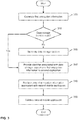
- Figure 2 is a flowchart illustrating embodiments of a process of secure communication between mobile applications.
- the process is performed by the system 100 of Figure 1 .
- first encryption information and an identifier associated with a data storage location on a mobile device are provided from a first mobile application to a second mobile application.
- a first encryption information may include encryption-handshake information (e.g., a public key associated with private-public key pair) generated by the first application.
- the data storage location may include a paste board, shared keychain, a data storage location associated in a native MDM framework, and/or any other storage location (e.g., memory) on the mobile device.
- the data storage location may include a pasteboard on the device.
- the pasteboard may include a named region of memory on the mobile device where information may be shared between applications, objects in applications, and/or other elements.
- a mobile device may include one or more pasteboards including, for example, system-wide pasteboards (e.g., a general pasteboard (e.g., a pasteboard for copy-paste operations involving any type of data), a find pasteboard (e.g., a pasteboard used in search operations)), application-specific pasteboards (e.g., a pasteboard generated by application(s)), and/or other types of pasteboards.
- system-wide pasteboards e.g., a general pasteboard (e.g., a pasteboard for copy-paste operations involving any type of data)
- find pasteboard e.g., a pasteboard used in search operations
- application-specific pasteboards e.g., a pasteboard generated by application(s)
- one application may provide information to a pasteboard for retrieval by another application.
- first encryption information, identifier(s) associated with a data storage location, and/or other information may be provided from the first application to the second application via a data storage location accessible by the second application, via a uniform resource locator (URL) scheme (e.g., as discussed in detail below), and/or using other techniques.
- URL uniform resource locator
- second encryption information associated with the second application may be retrieved (e.g., by the first mobile application) from the data storage location.
- the second encryption information may include encryption information associated with the second mobile application.
- the second encryption information may include encryption handshake information generated by the second mobile application (e.g., a managed application on the mobile device).
- the second encryption information may include one or more credentials associated with the second mobile application. Credentials associated with the second mobile application may include an application identifier, bundle identifier (e.g., bundle ID), and/or other credential information.
- the second mobile application may be configured to receive data from and provide data to the data storage location. For example, a library and/or software development kit (SDK) associated with the second mobile application may orchestrate transfer of data to the data storage location.
- SDK software development kit
- the second encryption information may be retrieved from the data storage location by the first mobile application.
- data is transferred securely between the first application and the second mobile application via the data storage location.
- data e.g., payload(s), application configuration information, policies, settings, files, commands, and/or any type of data
- data may be encrypted using one or more of the first encryption information and the second encryption information.
- a first mobile application may encrypt data using a key (e.g., a private key associated with the private-public key pair generated by the first mobile application), and the encrypted data may be provided to the data storage location (e.g., pasteboard, secure keychain storage location, a storage location associated with an MDM framework native to the device) for retrieval by the second application.
- a key e.g., a private key associated with the private-public key pair generated by the first mobile application
- the encrypted data may be provided to the data storage location (e.g., pasteboard, secure keychain storage location, a storage location associated with an MDM framework native to the device) for retrieval by the second application.
- the second application may retrieve the encrypted data from the data storage location and decrypt the data using one or more of the first encryption information and/or the second encryption information.
- the second application may use a similar to process to encrypt data and provide the encrypted data to the data storage location for retrieval by the first application. Using these techniques (e.g., a secure application connection bus), data is securely transferred between the first mobile application and second mobile application.
- Figure 3 is a flowchart illustrating embodiments of a process of secure communication between mobile applications.
- the process is performed by the system 100 of Figure 1 .
- the process of Figure 3 illustrates embodiments of a process for generating a secure application connection bus from the perspective a first mobile application (e.g., a management agent on a mobile device).
- first encryption information may be generated (e.g., by the first application, a security management server).
- the first encryption information is encryption handshake information generated by the first application (e.g., mobile agent), a security management platform, and/or other component.
- the first encryption information may be generated to establish a mechanism for secure connection between the first mobile application and second mobile application.
- communications between the first and second application applications may be protected using Diffie-Hellman asymmetric encryption, public-key cryptography, asymmetric cryptography, RSA encryption, and/or other approaches.
- Diffie-Hellman asymmetric encryption public-key cryptography
- asymmetric cryptography e.g., RSA encryption
- RSA encryption e.g., RSA encryption
- a mobile application, the mobile device operating system, a security management platform, and/or other components may be configured to encrypt data using any of the encryption techniques.
- the first encryption information may include encryption handshake-associated information generated by the first mobile application (e.g., a management agent on the mobile device).
- the first encryption information may include a public key associated with private-public key pair (e.g., encryption key pair) generated at the first application (e.g., a management agent on the mobile device).
- the private-public key pair may be used to encrypt information such that only the first mobile application and second mobile application may access (e.g., decrypt) the encrypted information.
- the first encryption information may include encryption handshake-associated information generated by a security management platform (e.g., MDM server) that manages one or more applications on the mobile device (e.g., via a management agent on the device).
- a security management platform e.g., MDM server
- the first encryption information may include a public key associated with private-public key pair generated at the security management platform.
- the first application e.g., management application
- the first application may act as an intermediary to deploy the first encryption information to a second mobile application (e.g., a destination managed application).
- information transferred from the security management platform to the second mobile application (e.g., managed application) via the first mobile application (e.g., management agent) may not be decrypted by the first mobile application (e.g., management agent).
- example data storage locations suitable for secure transfer of information between applications include a pasteboard (e.g., an application-specific pasteboard), shared keychain, data storage location associated with a native MDM framework (e.g., the iOS MDM framework), and/or other data storage locations.
- a system pasteboard e.g., general pasteboard associated with the mobile device (e.g., native to the mobile device) may be used.
- a system pasteboard may, however, be less secure than an application-specific pasteboard, and it may be determined that an application-specific pasteboard should be generated.
- a shared keychain (e.g., certificate) storage location may be identified (e.g., by the first mobile application).
- An operating system associated with a device may, for example, provide a certificate storage location for one or more applications.
- the certificate storage location may be used to transfer data between applications (e.g., may be used as a data storage location).
- the process may proceed to step 330. In the event a data storage location does not exist on the device, the process may proceed to step 320.
- a data storage location may be generated.
- the first mobile application e.g., a management agent
- the data storage location may include a pasteboard, shared keychain, a data storage location associated with a native MDM framework, and/or any other storage location (e.g., memory) on the mobile device.
- the first mobile application may generate a pasteboard (e.g., an application-specific pasteboard) to share information with the second mobile application.
- a pasteboard e.g., an application-specific pasteboard
- an object associated with the first application may generate an application-specific pasteboard by invoking/calling a pasteboard generation class method associated with the operating system of a mobile device.
- the application-specific pasteboard may be generated and a pasteboard identifier (e.g., a pasteboard object, a unique identifier) may be returned to the first mobile application.
- it may be specified (e.g., by the first mobile application) whether the pasteboard is persistent (e.g., remains in existence after the application is closed/quits).
- the pasteboard may be used to transfer data within the first mobile application and/or from the first mobile application to the second mobile application.
- the pasteboard example discussed above is of course one example data storage location, and other types of data storage locations may be generated.
- first encryption information and an identifier associated with the data storage location may be provided to the second application.
- the first encryption information, identifier associated with a data storage location, and/or other information may be provided to the second mobile application using a variety of approaches.
- an approach for providing information from the first application (e.g., a management agent) to a second application (e.g., a managed application) may be governed by a security management platform (e.g., a security management server) external to the mobile device. In that case, the determined information transfer approach may be pushed from the security management platform to the management agent for implementation on the mobile device.
- the first encryption information, identifier associated with a data storage location, and/or other information may be provided from the first application to the second application using a URL scheme associated with the second mobile application.
- a URL scheme associated with the second mobile application For example, one or more mobile applications on a device may each be associated with an application-specific URL scheme (e.g., application "ABC" may be associated with the URL scheme "abc://").
- An application may, for example, register a URL scheme with the mobile device operating system, and once registered other applications, the operating system, and/or other components may reference, invoke, and/or otherwise interact with the application using the URL scheme.
- URL schemes associated with an application may, for example, be stored in a URL scheme repository.
- a first application may query the operating system associated with the mobile device to determine/identify/retrieve a URL scheme associated with the second mobile application.
- the OS may look up the URL scheme in a repository/database and provide the URL scheme information to the first mobile application.
- the URL scheme may be used to transfer data from the first application to the second application.
- the first mobile application e.g., management agent
- the second mobile application e.g., a managed application "ABC”
- the URL scheme associated with the managed application including the data string e.g., the management application may call "abc://12345”
- the management application may call "abc://12345”
- that managed application e.g., the ABC application
- receives the URL it may process (e.g., parse) the URL and take the content (e.g., "12345") for its use.
- the first encryption information, identifier associated with a data storage location, and/or other information may be provided from the first application to the second application.
- the first encryption information, identifier associated with a data storage location, and/or other information may be provided to a general pasteboard (e.g., a data storage location) associated with the mobile device.
- the second application may be configured to retrieve the information from the general pasteboard.
- second encryption information associated with the second mobile application may be retrieved from the data storage location.
- the second encryption information may include encryption handshake-associated information generated by the second mobile application (e.g., a managed application on the mobile device), credentials associated with the second mobile application, and/or other information.
- the encryption handshake information may include a public key (e.g., a second application public key) associated with a private-public key pair (e.g., encryption key pair) generated by the second application (e.g., a management agent on the mobile device).
- the second encryption information may include an encrypted payload including an encrypted version of the first application public key, as discussed below.
- the second encryption information may include one or more credentials associated with the second mobile application.
- Credentials associated with the second mobile application may include, for example, an application identifier, bundle identifier (e.g., bundle ID), and/or other credential information.
- Credentials associated with a second mobile application may identify the mobile application to the operating system, other applications, and/or other components.
- the second mobile application may be validated.
- the first mobile application e.g., a management agent
- the first mobile application may validate the identity (e.g., credentials) of the second mobile application (e.g., a managed application) with a security management server (e.g., security management platform).
- the first mobile application may retrieve from the data storage location credential information associated with the second mobile application.
- the credential information may be passed from the first mobile application to the security management platform.
- the security management platform may validate the identity of the second mobile application by comparing the credentials associated with second application to one or more stored sets of credentials for the mobile device (e.g., applications on the mobile device).
- the credentials of the second mobile device may be validated by the first mobile application (e.g., a management agent).
- the first mobile application may compare the second mobile application credentials (e.g., retrieved from a data storage location) to a list of managed applications accessible to the management agent.
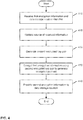
- Figure 4 is a flowchart illustrating embodiments of a process of secure communication between mobile applications.
- the process is performed by the system 100 of Figure 1 .
- the process of Figure 4 describes embodiments of a process for generating a secure application connection bus from the perspective of a second mobile application (e.g., a managed application on a mobile device).
- first encryption information and an identifier associated with a data storage location may be received.
- a second application e.g., managed application
- the first encryption information may include, for example, a public key associated with the first mobile application (e.g., a first public key).
- the first encryption information, identifier associated with a data storage location, and/or other information may be provided to the second application (e.g., from the first application) using a URL scheme associated with the second mobile application, via a pasteboard, and/or using other techniques, as discussed in detail above.
- a source of the received information may be validated.
- a library e.g., a library compiled into the application, wrapped into the application, an SDK
- the library may be associated with an MDM framework (e.g., managed application architecture) of which the second application is a member.
- the library may include a list of trusted applications. And, an identifier associated with the first mobile application from which the information was received may be compared to the list for validation.
- the secure connection bus generation process will proceed. In the event the identifier associated with the first mobile application is not validated (e.g., by the library), the process may be terminated.
- the first encryption information, identifier associated with a data storage location, and/or other information may be provided to the second application (e.g., from the first application) using a URL call associated with the second mobile application.
- the first application public key and data storage location identifier may be included a URL call (e.g., "secondapp://first application_publickey+data_storage_location"), and the second application (e.g., managed application) may receive the URL call and process (e.g., parse) the information included in the call.
- the URL may be processed (e.g., parsed) to extract the first encryption information (e.g., first application public key), data storage location identifier, and/or other information.
- the URL call may include information identifying the source of the URL call (e.g., the first mobile application). The source identifying information may be extracted and used to validate the first mobile application (e.g., by the library) using the techniques discussed above.
- a second encrypted key pair may be generated.
- the second mobile application e.g., a managed application
- may generate a private-public key pair e.g., a second key pair.
- the private-public key pair e.g., a second key pair
- the second encryption information may include, for example, a second application public key associated with the second mobile application private-public key pair.
- the first encryption information (e.g., received from the first mobile application) may be encrypted using at least a portion of the second encryption information to generate an encrypted payload.
- the second application e.g., a managed application
- the second encryption information may be provided to the data storage location.
- the second encryption information may include the second application public key (e.g., generated in step 420), an encrypted payload including a second mobile application encrypted version of the first public key (e.g., generated in step 430), at least one credential associated with the second application, and/or other information.
- the at least one credential associated with the second application may include an application identifier (e.g., bundle ID associated with the iOS application) and/or other information associated with the second application.
- the second encryption information may be provided to the data storage location (e.g., pasteboard, shared keychain, and/or other data storage location), and the first mobile application may retrieve the second encryption information.
- the first mobile application may, for example, use the second encrypted information to decrypt any payloads subsequently received from the second mobile application.
- FIG. 5 is a flowchart illustrating embodiments of a process of secure communication between mobile applications.
- the process is performed by the system 100 of Figure 1 .
- a URL scheme associated with a second mobile application may be determined by a first mobile application.
- the URL scheme associated with the second mobile application may be determined by querying an operating system (e.g., iOS, Android, etc.) associated with the mobile device.
- An operating system associated with the mobile device may include a registry of URL schemes and associated applications.
- the second mobile application on a device may, for example, register a URL scheme (e.g., secondapp://) with the operating system.
- the first mobile application may also be associated with a URL scheme (e.g., firstapp://, MDMagent://, etc.).
- the URL schemes and association of the URL schemes with the mobile applications may be stored in the operating system URL registry.
- the first mobile application may retrieve the URL scheme associated with the second mobile application from the operating system (e.g., URL scheme registry/database).
- encrypted payloads may be transferred from the first mobile application to the second mobile application using the URL scheme.
- a URL call may be executed based at least in part on the URL scheme associated with the second mobile application.
- an encrypted payload may be included in a URL call generated and/or executed by the first mobile application.
- the encrypted payload e.g., "12345”
- the second application may receive the URL call and parse the URL to extract the encrypted payload (e.g., "12345").
- the encrypted payload may be decrypted using a previously-shared key (e.g., a first application public key, a security management platform public key).
- the second mobile application may have received the previously-shared key via a data storage location (e.g., a pasteboard, shared keychain storage location, and/or other data storage location), a previous URL call, and/or other mechanism (e.g., different than those described herein).
- a data storage location e.g., a pasteboard, shared keychain storage location, and/or other data storage location
- a previous URL call e.g., different than those described herein.
- the second mobile application is configured to validate at least one credential associated with the first application based at least in part on the URL scheme.
- the URL call may include information identifying the source of the URL call (e.g., the first mobile application). The source identifying information may be extracted and used to validate the first mobile application.
- a library associated with the second application may include a list, database, and/or other data structure including trusted sources (e.g., mobile applications). Credentials associated with the first mobile application (e.g., retrieved from the URL call) may be validated by the library based at least in part on a comparison to the list of trusted sources.
- an encrypted payload may be received from the second mobile application.
- an encrypted payload may be generated at the second mobile application (e.g., a managed mobile application) and transferred to the first mobile application (e.g., a management agent) using a URL scheme associated with the first mobile application.
- Figure 6 is a flowchart illustrating a process of mobile application management using a secure application connection bus.
- the process is performed by the system 100 of Figure 1 .
- configurations, policies, information, settings, actions, and/or commands for one or more managed applications may be determined (e.g., defined) at a security management platform (e.g., security management platform 118 of Figure 1 ).
- the configurations, policies, information, actions, enterprise authentication information, and/or settings may be received from a user (e.g., administrator) of the security management platform.
- configurations may affect, control, and/or govern the operation of an application.
- a mobile application may require certain configuration information (e.g., configurations), settings, and/or other information to operate.
- Configuration information may include, for example, server information (e.g., server name and internet protocol (IP) address), user information (e.g., username, password, and/or device certificate to identify an application and/or device to a server), and/or other information.
- server information e.g., server name and internet protocol (IP) address
- user information e.g., username, password, and/or device certificate to identify an application and/or device to a server
- Configuration information may, for example, include the server(s) to which an application is configured to connect.
- policies associated with an application may be used to control, manage, and/or govern the operations of an application.
- Policies may, for example, be determined based on enterprise polic(ies), location of device, security state of device, other application installation state, a user's group changes, and/or other information.
- Example policies may include, for example, hardware control policies (e.g., block application access to the device's camera, Bluetooth®, near-field communication (NFC), universal serial bus (USB), Wi-Fi, and/or other resources (e.g., set by user, group, application, time, location, etc.), storage access control policies (e.g., block access to device storage (e.g., secure digital (SD), Flash, photo, etc.), personal information manager (PIM) access control policies (e.g., block access to device email, calendar, contacts and/or other resources; allow limited access to certain (e.g., only company and not personal) email account(s), calendar, contact, and/or other resources), system service access control policies (e.g., block access to application from system services like AirPrint, shared email, information share with other applications), and/or other policies.
- hardware control policies e.g., block application access to the device's camera, Bluetooth®, near-field communication (NFC), universal serial bus (USB), Wi-Fi, and/or
- information may be provided to an application (e.g., from a security management platform).
- an application e.g., from a security management platform.
- device information may include, for example, a management ID, media access control (MAC) address, international mobile equipment identity (IMEI), and/or other management token(s).
- Enterprise information may include, for example, enterprise emergency information, contact information and/or any other enterprise-associated information.
- Installed application information may include an installed application list with associated capabilities (e.g., open-in documents, secure copy-paste support, etc.).
- settings associated with an application may be used to manage, govern, and/control the operation and/or functionality of an application.
- Settings may include, for example, application firewall settings and/or other settings.
- Application firewall rules/settings may validate and/or protect an application from receiving untrusted data.
- application firewall rules may include enforced server certificate validation (e.g., for each secure sockets layer/transport layer security (SSL/TLS) connection, the server certificate will be validated before allowing connection), allowed network rules (e.g., only allow connect to certain networks), augmented address lookup (e.g., instead of relying system's domain name system (DNS) server, application firewall can use secure DNS server which provide additional security with authentic address information (e.g., opendns) and/or using host file pushed by management server), content inspection rules (e.g., client side only inspection and/or server-assisted content inspection to remove any malicious content), and/or other application firewall rules/settings.
- SSL/TLS secure sockets layer/transport layer security
- allowed network rules e.g., only allow connect to certain networks
- augmented address lookup e.g., instead of relying system's domain name system (DNS) server
- application firewall can use secure DNS server which provide additional security with authentic address information (e.g., opend
- actions may be provided to an application to command the application to execute various operations.
- Actions may include, for example, a wipe application data action (e.g., wipe application data and return the application to installation state, zero out bytes before deleting), remote lock action (e.g., access to managed application (e.g., enterprise applications) may be locked until a user unlocks the application; in lock state managed/trusted application data may not be accessible to other applications), and/or other actions.
- a user before allowing access to a secure application connect bus, a user may be required to authenticate identity.
- a user identifier e.g., User ID
- password password
- personal identification number PIN
- onetime password NFC
- 2D barcode two-dimensional barcode
- user credentials may be required to identify a user, for example, upon opening a protected application.
- one or more managed applications associated with the configurations, policies, information, actions, and/or settings may be determined.
- the one or more managed applications may be specified by a user (e.g., administrator).
- a group of applications may be selected based on user input (e.g., administrator input associated with configuration, policy, and/or other changes).
- a secure application connection bus technique may be selected.
- a security management platform e.g., security management server
- the secure connection bus approach may be determined based on one or more parameters including the content of the information to be transferred to the application, the level of security required for transmission, the security state of the device, attributes associated with the managed application, and/or any other parameters. For example, it may be determined that encrypted inter-application data transfer via data storage location (e.g., pasteboard) is more secure than transferring data using a URL scheme-based approach or transferring data using the native MDM management framework (e.g., an iOS MDM framework). Based at least in part on the level of security required for the data transfer, one of the secure connection bus techniques may be selected.
- a MDM system native to the mobile device may be used as a secure application connection bus.
- a mobile device operating system e.g., iOS
- a native MDM framework e.g., an MDM framework included in the operating system
- this native MDM framework may be used as a secure connection bus to transfer information between applications on the mobile device.
- this native MDM based technique may be less secure than other secure application connection bus techniques discussed herein.
- the native MDM-based secure connection bus technique may be a back-up technique and/or may be used in scenarios in which requirements for secure data transfer are reduced.
- a payload may be generated (e.g., by the security management platform).
- the configurations, policies, information, actions, and/or settings may be compiled with one or more parameters specific to a device user, mobile device, and/or application(s).
- the parameters may, for example, include changing $USER_ID$ to actual user id for login, issue identity certificate for user/device, and/or other parameters.
- the information e.g., compiled information
- the information may be encrypted to generate an encrypted payload (e.g., at the security management platform).
- the information may be compiled into a payload and passed to the management agent on the device unencrypted.
- the payload may be provided to the management agent.
- an encrypted payload may be provided to (e.g., pushed to) the management agent for deployment to the managed application(s).
- the information is provided (e.g., pushed) to the management agent may be unencrypted, and the management agent may encrypt the payload (e.g., prior to transfer to a managed application).
- the security management platform may specify (e.g., push) to the management agent a secure application connection bus technique to be used in transferring the payload to the managed application.
- the management agent may securely transfer the encrypted payload to the managed application using the secure application connection bus technique(s) specified by the security management platform.
- information may be received from the management agent.
- the management agent may provide the security management platform (e.g., security management server) information associated with the managed application (e.g., information from the managed application).
- the management agent may receive response information from the managed application in response to the payload. This response information may be passed to the security management platform.
- the security management platform may process (e.g., analyze) the update information associated with the managed application.
- the security management platform may perform operations based at least in part on the information from the managed application.
- a quarantine command may be sent (e.g., from the security management platform) to a security enforcement node (e.g., security enforcement node 116 of Figure 1 ).
- the security enforcement node may restrict (e.g., block) communications between the device and enterprise server(s) (e.g., enterprise server(s) 112 of Figure 1 ) and/or other assets.
- the security management platform may provide (e.g., in parallel) a quarantine command to the management agent.
- the management agent may perform one or more actions based at least in part on the quarantine command including, for example, wipe at least a portion of enterprise data on the device, disable (e.g., lock down) at least one managed application, and/or actions. Other types of operations may of course be performed based on information received from the managed application.
- the security management platform may update one or more stored configuration, policy, settings, and/or other information associated with the managed application.
- FIG. 7 is a flowchart illustrating a process of mobile application management using a secure application connection bus.
- the process is performed by the system 100 of Figure 1 .
- a payload associated with a managed application is received (e.g., at a management agent associated with a mobile device).
- the payload may be received from a security management platform (e.g., security management server) and may include configurations, policies, information, actions, and/or settings information associated with a managed application.
- a security management platform e.g., security management server
- a payload may be encrypted at the security management and/or passed to the management agent un-encrypted. In the event the payload is encrypted (e.g., was encrypted at the security management platform), the process may proceed to step 730. In the event the payload is un-encrypted the process may proceed to step 720.
- the payload may be encrypted.
- the payload may be encrypted at the management agent using any of the techniques disclosed herein and/or known in the art.
- a secure connection bus may have been previously established between the management agent and the managed application.
- the payload may be encrypted using the information (e.g., first encryption information and second encryption information as discussed above) shared between the management agent and managed application during the secure connection bus generation/establishment/handshake process.
- the encrypted payload may be transferred securely to the managed application via the secure connection bus.
- the management agent may receive from the security management platform secure connection bus information, which may dictate a secure connection bus technique to be used in transferring the payload to the managed device.
- the security management platform may command the management agent to transfer the encrypted package to the managed application via a data storage location (e.g., pasteboard, secure keychain storage, etc.), using a URL scheme associated with managed application, using an MDM platform native to the device, and/or using other secure connection bus approaches.
- the encrypted payload may be decrypted at the managed application (e.g., by a library associated with the managed application).
- the managed application may have previously received a key (e.g., from the management agent), and the key may be used to decrypt the payload.
- a library associated with the managed application may process (e.g., parse, analyze) the payload and apply to the managed application the configuration changes, policies (e.g., policy updates), actions, and/or settings included therein.
- a second encrypted payload may be received (e.g., at the management agent from the managed application).
- the managed application may execute the configuration changes, policy updates, setting changes, and/or actions included in the encrypted package (e.g., received from the management agent).
- the managed application may generate a second encrypted package including update information (e.g., based on the executed actions).
- This second encrypted payload may be passed to the management agent (e.g., using a secure connection bus technique).
- the second encrypted payload may be parsed, processed, and/or analyzed at the management agent.
- the management agent may process, interpret, and/or analyze the update information included in the second encrypted payload.
- the management agent may, in certain instances, perform operation(s) based at least in part on the update information. For example, in the event local policy enforcement is enabled (e.g., by the security management platform), the management agent may push configuration updates to the device when certain policy conditions are satisfied.
- the management agent may provide (e.g., pass) the update information (e.g., included in the second encrypted information from the managed application) to the security management platform.
- the security management platform may perform one or more operations (e.g., execute quarantine action(s), update configurations, update policies, and other actions discussed above) based on the update information from the managed application.
Landscapes
- Engineering & Computer Science (AREA)
- Computer Security & Cryptography (AREA)
- Theoretical Computer Science (AREA)
- General Engineering & Computer Science (AREA)
- Computer Networks & Wireless Communication (AREA)
- Signal Processing (AREA)
- Software Systems (AREA)
- Computer Hardware Design (AREA)
- General Physics & Mathematics (AREA)
- Physics & Mathematics (AREA)
- Health & Medical Sciences (AREA)
- Bioethics (AREA)
- General Health & Medical Sciences (AREA)
- Computing Systems (AREA)
- Databases & Information Systems (AREA)
- Information Transfer Between Computers (AREA)
- Mobile Radio Communication Systems (AREA)
Claims (14)
- Procédé de communication sécurisée entre des applications mobiles, comprenant :une fourniture (200), à partir d'une première application mobile vers une seconde application mobile, de premières informations de cryptage qui incluent une clé publique associée à une paire de clés privée-publique générée par la première application mobile et un identifiant associé à un emplacement de stockage de données sur un dispositif mobile (100) ;une génération (430), par la seconde application mobile, de secondes informations de cryptage qui au moins incluent une seconde clé de cryptage qui est une version cryptée de la clé publique associée à la paire de clés privée-publique générée par la première application mobile en utilisant une clé privée associée à une paire de clés privée-publique générée par la seconde application mobile et un identifiant d'application associé à la seconde application mobile, et une fourniture des secondes informations de cryptage vers l'emplacement de stockage de données ;une récupération (210), par la première application mobile à partir de l'emplacement de stockage de données, des secondes informations de cryptage associées à la seconde application mobile ;une validation (350), par la première application mobile d'une identité de la seconde application mobile sur la base au moins en partie de l'identifiant d'application inclus dans les secondes informations de cryptage ; etun transfert (220) de données de manière sécurisée entre la première application mobile et la seconde application mobile par l'intermédiaire de l'emplacement de stockage de données par cryptage des données en utilisant la seconde clé de cryptage incluse dans les secondes informations de cryptage.
- Procédé selon la revendication 1, dans lequel une fourniture (200) comprend une fourniture d'informations vers un emplacement à partir duquel la seconde application mobile est configurée pour récupérer des informations.
- Procédé selon la revendication 1, dans lequel une fourniture (200) comprend une fourniture d'informations en utilisant un schéma de localisateur uniforme de ressource, URL, associé à la seconde application mobile.
- Procédé selon la revendication 1, dans lequel une ou plusieurs de la première application mobile et d'une seconde application sont associées à une bibliothèque configurée pour :
récupérer des informations à partir de l'emplacement de stockage de données ; et fournir des informations vers l'emplacement de stockage de données. - Procédé selon la revendication 4, dans lequel la bibliothèque est en outre configurée pour réaliser une ou plusieurs des étapes suivantes :une application d'une ou de plusieurs modifications de configuration dans une application ;une mise en oeuvre d'une ou de plusieurs politiques à l'intérieur de l'application ; etune exécution d'une ou de plusieurs actions associées à l'application.
- Procédé selon la revendication 1, dans lequel un transfert de données comprend un transfert d'une ou de plusieurs politiques d'application à partir de la première application mobile vers la seconde application mobile.
- Procédé selon la revendication 1, dans lequel une ou plusieurs de la première application mobile et de la seconde application mobile sont configurées pour récupérer les données cryptées à partir de l'emplacement de stockage de données.
- Procédé selon la revendication 1, comprenant en outre les étapes :de réception (700) d'une charge utile au niveau de la première application mobile à partir d'une plateforme de gestion de sécurité (118) ; etde fourniture de la charge utile de manière sécurisée vers la seconde application mobile via l'emplacement de stockage de données, dans lequel la seconde application est configurée pour récupérer la charge utile à partir de l'emplacement de stockage de données.
- Procédé selon la revendication 8, dans lequel :la charge utile comprend une charge utile cryptée générée au niveau de la plateforme de gestion de sécurité (118) ; etles premières informations de cryptage incluent des informations de cryptage associées à la plateforme de gestion de sécurité (118).
- Procédé selon la revendication 8, comprenant en outre :
une configuration de la seconde application pour transférer des données de manière sécurisée entre la seconde application et au moins un serveur dorsal d'entreprise (112), dans lequel la seconde application est configurée sur la base au moins en partie d'une ou de plusieurs configurations d'application et politiques d'application incluses dans la charge utile. - Procédé selon la revendication 8, comprenant en outre :
une génération, par la première application mobile, de l'emplacement de stockage de données sur le dispositif mobile (100). - Procédé selon la revendication 1, dans lequel :la première application mobile inclut un agent de gestion de dispositif mobile (102) ; etla seconde application mobile inclut une application mobile gérée (104), dans lequel la seconde application mobile est gérée par la première application mobile.
- Système pour une communication sécurisée entre des applications mobiles, comprenant :un processeur ; etune mémoire couplée au processeur, dans lequel la mémoire est configurée pour fournir au processeur des instructions qui lorsqu'exécutées amènent le processeur à réaliser le procédé selon l'une quelconque des revendications 1 à 12.
- Produit de programme informatique pour une communication sécurisée entre des applications mobiles, le produit de programme informatique étant intégré dans un support de stockage lisible par ordinateur tangible non transitoire et comprenant des instructions informatiques qui, lorsqu'exécutées par un ordinateur, amènent l'ordinateur à effectuer le procédé selon l'une quelconque des revendications 1 à 12.
Applications Claiming Priority (2)
| Application Number | Priority Date | Filing Date | Title |
|---|---|---|---|
| US201261745052P | 2012-12-21 | 2012-12-21 | |
| PCT/US2013/077292 WO2014100756A1 (fr) | 2012-12-21 | 2013-12-20 | Bus de connexion d'application mobile sécurisé |
Publications (3)
| Publication Number | Publication Date |
|---|---|
| EP2936733A1 EP2936733A1 (fr) | 2015-10-28 |
| EP2936733A4 EP2936733A4 (fr) | 2016-10-19 |
| EP2936733B1 true EP2936733B1 (fr) | 2018-08-22 |
Family
ID=50976128
Family Applications (1)
| Application Number | Title | Priority Date | Filing Date |
|---|---|---|---|
| EP13865460.3A Active EP2936733B1 (fr) | 2012-12-21 | 2013-12-20 | Bus de connexion d'application mobile sécurisé |
Country Status (4)
| Country | Link |
|---|---|
| US (3) | US20140181842A1 (fr) |
| EP (1) | EP2936733B1 (fr) |
| CN (1) | CN105027493B (fr) |
| WO (1) | WO2014100756A1 (fr) |
Families Citing this family (53)
| Publication number | Priority date | Publication date | Assignee | Title |
|---|---|---|---|---|
| US8695060B2 (en) | 2011-10-10 | 2014-04-08 | Openpeak Inc. | System and method for creating secure applications |
| CN104380654A (zh) * | 2012-04-20 | 2015-02-25 | 约纳森·布雷克 | 用于控制互联网应用用户界面的隐私设定的系统和方法 |
| WO2014117094A2 (fr) | 2013-01-25 | 2014-07-31 | Innopath Software, Inc. | Service de gestion de dispositifs |
| US9015328B2 (en) * | 2013-03-07 | 2015-04-21 | Fiserv, Inc. | Single sign-on processing for associated mobile applications |
| KR102015108B1 (ko) * | 2013-03-12 | 2019-10-22 | 한국전자통신연구원 | 이종 서비스 간 서비스 제공 방법과 사용자 단말 및 웹 서버 |
| CN104995864A (zh) * | 2013-03-14 | 2015-10-21 | 英特尔公司 | 用于提供通用持续性云服务的系统、方法和计算机程序产品 |
| US9535681B2 (en) | 2013-03-15 | 2017-01-03 | Qualcomm Incorporated | Validating availability of firmware updates for client devices |
| US8839266B1 (en) * | 2013-07-31 | 2014-09-16 | Vmware, Inc. | Inter-application communication on mobile platforms |
| US9225742B2 (en) * | 2014-03-24 | 2015-12-29 | Airwatch Llc | Managed real-time communications between user devices |
| WO2015171549A2 (fr) * | 2014-05-05 | 2015-11-12 | Citrix Systems, Inc. | Facilitation de communication entre des applications mobiles |
| AU2015256293B2 (en) * | 2014-05-06 | 2017-05-04 | Okta, Inc. | Facilitating single sign-on to software applications |
| US9674699B2 (en) * | 2014-08-15 | 2017-06-06 | Sap Se | System and methods for secure communication in mobile devices |
| US9419799B1 (en) * | 2014-08-22 | 2016-08-16 | Emc Corporation | System and method to provide secure credential |
| US9100390B1 (en) | 2014-09-05 | 2015-08-04 | Openpeak Inc. | Method and system for enrolling and authenticating computing devices for data usage accounting |
| US20160071040A1 (en) | 2014-09-05 | 2016-03-10 | Openpeak Inc. | Method and system for enabling data usage accounting through a relay |
| US8938547B1 (en) | 2014-09-05 | 2015-01-20 | Openpeak Inc. | Method and system for data usage accounting in a computing device |
| US9350818B2 (en) | 2014-09-05 | 2016-05-24 | Openpeak Inc. | Method and system for enabling data usage accounting for unreliable transport communication |
| US9232013B1 (en) | 2014-09-05 | 2016-01-05 | Openpeak Inc. | Method and system for enabling data usage accounting |
| US9485615B2 (en) | 2014-09-26 | 2016-11-01 | At&T Intellectual Property I, L.P. | Local peer-to-peer network for providing recommendations and enforcing security policies |
| US10103872B2 (en) * | 2014-09-26 | 2018-10-16 | Intel Corporation | Securing audio communications |
| WO2016112338A1 (fr) * | 2015-01-08 | 2016-07-14 | Intertrust Technologies Corporation | Systèmes et procédés cryptographiques |
| EP3257195B1 (fr) * | 2015-02-09 | 2023-05-31 | Telefonaktiebolaget LM Ericsson (publ) | Système de régulation de trafic améliorée dans un réseau |
| EP3314960B1 (fr) * | 2015-06-29 | 2020-01-08 | HERE Global B.V. | Utilisation de chiffrement de sorte à fournir des services de prise en charge de positionnement |
| WO2017000977A1 (fr) * | 2015-06-29 | 2017-01-05 | Here Global B.V. | Support d'une commande des versions de paramètres |
| US11424931B2 (en) * | 2016-01-27 | 2022-08-23 | Blackberry Limited | Trusted execution environment |
| US10754929B2 (en) * | 2016-02-19 | 2020-08-25 | Blackberry Limited | Sharing contents between applications |
| EP3435848A4 (fr) | 2016-03-31 | 2019-11-20 | Dexcom, Inc. | Systèmes et procédés de communications entre des applications |
| US10075583B2 (en) | 2016-04-13 | 2018-09-11 | Microsoft Technology Licensing, Llc | Suppressing indications of incoming communications in user interfaces |
| US10353534B2 (en) | 2016-05-13 | 2019-07-16 | Sap Se | Overview page in multi application user interface |
| US10579238B2 (en) | 2016-05-13 | 2020-03-03 | Sap Se | Flexible screen layout across multiple platforms |
| CN106101072A (zh) * | 2016-05-30 | 2016-11-09 | 上海小蚁科技有限公司 | 用于在网络上传送视频数据的系统和方法 |
| US10070316B2 (en) | 2016-06-16 | 2018-09-04 | Samsung Electronics Co., Ltd. | Permission delegation framework |
| CN106254522B (zh) * | 2016-09-07 | 2019-08-30 | 努比亚技术有限公司 | 一种终端服务系统、方法和终端 |
| CN106528304A (zh) * | 2016-10-31 | 2017-03-22 | 努比亚技术有限公司 | 一种分享适配器及其配置方法、调用方法和装置及移动终端 |
| US9977898B1 (en) * | 2016-10-31 | 2018-05-22 | International Business Machines Corporation | Identification and recovery of vulnerable containers |
| CN106569880B (zh) * | 2016-11-07 | 2020-12-22 | Tcl科技集团股份有限公司 | 一种Android应用间动态共享资源的方法及系统 |
| US11238505B2 (en) | 2017-03-01 | 2022-02-01 | International Business Machines Corporation | Model trading in a device |
| CN107154932A (zh) * | 2017-04-07 | 2017-09-12 | 北京深思数盾科技股份有限公司 | 一种应用的访问控制方法及装置 |
| CN107608798A (zh) * | 2017-08-04 | 2018-01-19 | 阿里巴巴集团控股有限公司 | 一种业务处理方法及设备 |
| US10470040B2 (en) | 2017-08-27 | 2019-11-05 | Okta, Inc. | Secure single sign-on to software applications |
| US11108556B2 (en) * | 2018-06-08 | 2021-08-31 | Vmware, Inc. | Unmanaged secure inter-application data communications |
| US11228563B2 (en) * | 2018-12-18 | 2022-01-18 | Citrix Systems, Inc. | Providing micro firewall logic to a mobile application |
| CN113438920A (zh) | 2018-12-19 | 2021-09-24 | 德克斯康公司 | 间歇性监测 |
| US11586750B2 (en) | 2019-03-21 | 2023-02-21 | Blackberry Limited | Managing access to protected data file content |
| CN110083465B (zh) * | 2019-04-26 | 2021-08-17 | 上海连尚网络科技有限公司 | 一种寄宿应用间的数据传递方法 |
| US11017064B2 (en) | 2019-05-14 | 2021-05-25 | Bank Of America Corporation | Authentication using interprogram communication |
| US11640482B2 (en) | 2020-06-02 | 2023-05-02 | The Toronto-Dominion Bank | System and method for providing trusted links between applications |
| US12169587B2 (en) * | 2021-04-06 | 2024-12-17 | Comcast Cable Communications, Llc | Systems and methods for data security on a mobile device |
| EP4341812A1 (fr) | 2021-05-17 | 2024-03-27 | Apple Inc. | Dispositifs, procédés et interfaces utilisateur graphiques pour fournir automatiquement un contenu partagé à des applications |
| US11693553B2 (en) * | 2021-05-17 | 2023-07-04 | Apple Inc. | Devices, methods, and graphical user interfaces for automatically providing shared content to applications |
| KR20230169299A (ko) | 2021-05-17 | 2023-12-15 | 애플 인크. | 별개의 애플리케이션들로부터 공유된 미디어 항목들을 디스플레이하기 위한 디바이스들, 방법들 및 그래픽 사용자 인터페이스들 |
| US11875016B2 (en) | 2021-05-17 | 2024-01-16 | Apple Inc. | Devices, methods, and graphical user interfaces for displaying media items shared from distinct applications |
| DE102024002779A1 (de) | 2023-09-08 | 2025-03-13 | Mercedes-Benz Group AG | System zum geschützten Export/Import strukturierter Daten und Verfahren dafür |
Family Cites Families (32)
| Publication number | Priority date | Publication date | Assignee | Title |
|---|---|---|---|---|
| CA2414246C (fr) | 2001-05-14 | 2014-01-28 | Ntt Docomo, Inc. | Systeme de gestion de programme stocke dans un bloc de stockage d'un terminal mobile |
| WO2002096151A1 (fr) | 2001-05-22 | 2002-11-28 | Flarion Technologies, Inc. | Systeme d'authentification pour entites mobiles |
| KR100520116B1 (ko) * | 2003-05-16 | 2005-10-10 | 삼성전자주식회사 | 모바일 애드 혹 상의 암호화를 위한 노드간 키 분배 방법및 이를 이용한 네트워크 장치 |
| EP1759477A4 (fr) * | 2004-06-22 | 2010-01-13 | Nds Ltd | Systeme de gestion des droits numeriques |
| US20090100264A1 (en) | 2006-04-28 | 2009-04-16 | Yuichi Futa | Communication device and communication system |
| ATE508551T1 (de) * | 2006-05-16 | 2011-05-15 | Sap Ag | Kontext-sensitivitätsbasierte kryptographie |
| JP4224084B2 (ja) * | 2006-06-26 | 2009-02-12 | 株式会社東芝 | 通信制御装置、通信制御方法および通信制御プログラム |
| US7917963B2 (en) * | 2006-08-09 | 2011-03-29 | Antenna Vaultus, Inc. | System for providing mobile data security |
| US8458775B2 (en) * | 2006-08-11 | 2013-06-04 | Microsoft Corporation | Multiuser web service sign-in client side components |
| US8837724B2 (en) | 2007-03-27 | 2014-09-16 | Qualcomm Incorporated | Synchronization test for device authentication |
| US9280769B2 (en) * | 2008-05-14 | 2016-03-08 | Visa Cape Town (Pty) Ltd. | Mobile commerce payment system |
| CN102217267A (zh) * | 2008-11-07 | 2011-10-12 | 移动标签公司 | 移动终端用户访问多项服务的方法和相关联的安全装置 |
| KR100928467B1 (ko) * | 2009-02-02 | 2009-11-25 | 주식회사 파수닷컴 | 클립보드 보안 시스템 및 방법 |
| US20100306076A1 (en) * | 2009-05-29 | 2010-12-02 | Ebay Inc. | Trusted Integrity Manager (TIM) |
| US20110154015A1 (en) * | 2009-12-21 | 2011-06-23 | Tareq Mahmud Rahman | Method For Segmenting A Data File, Storing The File In A Separate Location, And Recreating The File |
| US20110179268A1 (en) | 2010-01-20 | 2011-07-21 | Microsoft Corporation | Protecting applications with key and usage policy |
| TW201201041A (en) * | 2010-06-21 | 2012-01-01 | Zhe-Yang Zhou | Data security method and system |
| US20120066767A1 (en) * | 2010-09-13 | 2012-03-15 | Nokia Corporation | Method and apparatus for providing communication with a service using a recipient identifier |
| CN103109297B (zh) * | 2010-09-22 | 2015-08-12 | 国际商业机器公司 | 数据分发装置、数据分发系统、客户端装置、数据分发方法及数据接收方法 |
| US8335921B2 (en) * | 2010-12-17 | 2012-12-18 | Google, Inc. | Writing application data to a secure element |
| US8327006B2 (en) * | 2011-02-24 | 2012-12-04 | Jibe Mobile | Endpoint device and article of manufacture for application to application communication over a network |
| US20120302212A1 (en) * | 2011-05-25 | 2012-11-29 | Critical Medical Solutions, Inc. | Secure mobile radiology communication system |
| US20120303503A1 (en) * | 2011-05-26 | 2012-11-29 | First Data Corporation | Systems and Methods for Tokenizing Financial Information |
| US8695060B2 (en) * | 2011-10-10 | 2014-04-08 | Openpeak Inc. | System and method for creating secure applications |
| US20140032733A1 (en) | 2011-10-11 | 2014-01-30 | Citrix Systems, Inc. | Policy-Based Application Management |
| EP2600275A1 (fr) * | 2011-12-02 | 2013-06-05 | Nxp B.V. | Procédé permettant d'accéder à un stockage sécurisé, stockage sécurisé et système comportant le stockage sécurisé |
| US8607043B2 (en) * | 2012-01-30 | 2013-12-10 | Cellco Partnership | Use of application identifier and encrypted password for application service access |
| US9319270B2 (en) | 2012-04-12 | 2016-04-19 | FrontRange Solutions, Inc. | Configuration of third party applications in a sandboxed environment |
| US9405723B2 (en) * | 2012-05-02 | 2016-08-02 | Kony, Inc. | Mobile application management systems and methods thereof |
| US9087191B2 (en) | 2012-08-24 | 2015-07-21 | Vmware, Inc. | Method and system for facilitating isolated workspace for applications |
| US9286477B2 (en) | 2012-08-29 | 2016-03-15 | Symantec Corporation | Secure app ecosystem with key and data exchange according to enterprise information control policy |
| US9430211B2 (en) * | 2012-08-31 | 2016-08-30 | Jpmorgan Chase Bank, N.A. | System and method for sharing information in a private ecosystem |
-
2013
- 2013-12-20 EP EP13865460.3A patent/EP2936733B1/fr active Active
- 2013-12-20 US US14/137,845 patent/US20140181842A1/en not_active Abandoned
- 2013-12-20 US US14/137,745 patent/US9059974B2/en active Active
- 2013-12-20 WO PCT/US2013/077292 patent/WO2014100756A1/fr not_active Ceased
- 2013-12-20 CN CN201380070097.7A patent/CN105027493B/zh active Active
-
2015
- 2015-04-17 US US14/690,311 patent/US9537835B2/en not_active Expired - Fee Related
Non-Patent Citations (1)
| Title |
|---|
| None * |
Also Published As
| Publication number | Publication date |
|---|---|
| US9537835B2 (en) | 2017-01-03 |
| EP2936733A1 (fr) | 2015-10-28 |
| US9059974B2 (en) | 2015-06-16 |
| EP2936733A4 (fr) | 2016-10-19 |
| CN105027493B (zh) | 2018-09-07 |
| US20150319143A1 (en) | 2015-11-05 |
| CN105027493A (zh) | 2015-11-04 |
| US20140181842A1 (en) | 2014-06-26 |
| US20140181518A1 (en) | 2014-06-26 |
| WO2014100756A1 (fr) | 2014-06-26 |
Similar Documents
| Publication | Publication Date | Title |
|---|---|---|
| EP2936733B1 (fr) | Bus de connexion d'application mobile sécurisé | |
| US10284369B2 (en) | Secure app-to-app communication | |
| US12301563B2 (en) | System and method for pre-shared key (PSK) based wireless access point authentication | |
| CN109558721B (zh) | 客户端应用程序的安全单点登录和条件访问的方法和系统 | |
| EP3549323B1 (fr) | Accès sécurisé aux services web sur plans des services cloud multi-tenant | |
| JP6594449B2 (ja) | モバイルプラットフォーム用のマイクロvpnトンネリング | |
| CN109155780B (zh) | 基于隧道客户端网络请求的设备认证 | |
| KR101722631B1 (ko) | 프록시를 사용하여 자원들에의 보안 액세스 | |
| CN104903905B (zh) | 通过修改计算机应用的目标代码的用于计算机应用的安全服务管理 | |
| CN105379223B (zh) | 管理对企业资源的访问的方法和装置 | |
| EP3283964B1 (fr) | Procédé de fonctionnement d'un dispositif informatique, dispositif informatique et programme informatique | |
| EP2973183B1 (fr) | Communications protégées intra-ordinateur entre applications | |
| EP3639498B1 (fr) | Ancrage de certificat dans des environnements de réseau hautement sécurisés à l'aide de certificats de clé publique obtenus à partir d'un serveur dhcp (protocole de configuration d'hôte dynamique) | |
| CN113614719A (zh) | 基于具有不同认证凭证的认证令牌提供会话访问的计算系统和方法 | |
| US10742638B1 (en) | Stateless principal authentication and authorization in a distributed network | |
| JP2019526843A (ja) | ホストされたアプリケーションへの動的アクセス | |
| WO2022006131A1 (fr) | Injection de jetons ou de certificats clients pour une communication d'application gérée | |
| Kravets et al. | Mobile security solution for enterprise network | |
| US11977620B2 (en) | Attestation of application identity for inter-app communications | |
| US9607176B2 (en) | Secure copy and paste of mobile app data | |
| US11171786B1 (en) | Chained trusted platform modules (TPMs) as a secure bus for pre-placement of device capabilities | |
| EP4597920A1 (fr) | Systèmes et procédés permettant des communications sécurisées entre des dispositifs équipés de non-quantique et des dispositifs équipés de quantique |
Legal Events
| Date | Code | Title | Description |
|---|---|---|---|
| PUAI | Public reference made under article 153(3) epc to a published international application that has entered the european phase |
Free format text: ORIGINAL CODE: 0009012 |
|
| 17P | Request for examination filed |
Effective date: 20150618 |
|
| AK | Designated contracting states |
Kind code of ref document: A1 Designated state(s): AL AT BE BG CH CY CZ DE DK EE ES FI FR GB GR HR HU IE IS IT LI LT LU LV MC MK MT NL NO PL PT RO RS SE SI SK SM TR |
|
| AX | Request for extension of the european patent |
Extension state: BA ME |
|
| DAX | Request for extension of the european patent (deleted) | ||
| REG | Reference to a national code |
Ref country code: DE Ref legal event code: R079 Ref document number: 602013042562 Country of ref document: DE Free format text: PREVIOUS MAIN CLASS: H04L0009120000 Ipc: G06F0021600000 |
|
| A4 | Supplementary search report drawn up and despatched |
Effective date: 20160915 |
|
| RIC1 | Information provided on ipc code assigned before grant |
Ipc: G06F 21/62 20130101ALI20160909BHEP Ipc: G06F 21/60 20130101AFI20160909BHEP |
|
| 17Q | First examination report despatched |
Effective date: 20170811 |
|
| GRAP | Despatch of communication of intention to grant a patent |
Free format text: ORIGINAL CODE: EPIDOSNIGR1 |
|
| INTG | Intention to grant announced |
Effective date: 20180307 |
|
| GRAS | Grant fee paid |
Free format text: ORIGINAL CODE: EPIDOSNIGR3 |
|
| GRAA | (expected) grant |
Free format text: ORIGINAL CODE: 0009210 |
|
| AK | Designated contracting states |
Kind code of ref document: B1 Designated state(s): AL AT BE BG CH CY CZ DE DK EE ES FI FR GB GR HR HU IE IS IT LI LT LU LV MC MK MT NL NO PL PT RO RS SE SI SK SM TR |
|
| REG | Reference to a national code |
Ref country code: GB Ref legal event code: FG4D |
|
| REG | Reference to a national code |
Ref country code: CH Ref legal event code: EP |
|
| REG | Reference to a national code |
Ref country code: AT Ref legal event code: REF Ref document number: 1033321 Country of ref document: AT Kind code of ref document: T Effective date: 20180915 |
|
| REG | Reference to a national code |
Ref country code: IE Ref legal event code: FG4D |
|
| REG | Reference to a national code |
Ref country code: DE Ref legal event code: R096 Ref document number: 602013042562 Country of ref document: DE |
|
| REG | Reference to a national code |
Ref country code: NL Ref legal event code: FP |
|
| REG | Reference to a national code |
Ref country code: LT Ref legal event code: MG4D |
|
| PG25 | Lapsed in a contracting state [announced via postgrant information from national office to epo] |
Ref country code: NO Free format text: LAPSE BECAUSE OF FAILURE TO SUBMIT A TRANSLATION OF THE DESCRIPTION OR TO PAY THE FEE WITHIN THE PRESCRIBED TIME-LIMIT Effective date: 20181122 Ref country code: GR Free format text: LAPSE BECAUSE OF FAILURE TO SUBMIT A TRANSLATION OF THE DESCRIPTION OR TO PAY THE FEE WITHIN THE PRESCRIBED TIME-LIMIT Effective date: 20181123 Ref country code: RS Free format text: LAPSE BECAUSE OF FAILURE TO SUBMIT A TRANSLATION OF THE DESCRIPTION OR TO PAY THE FEE WITHIN THE PRESCRIBED TIME-LIMIT Effective date: 20180822 Ref country code: IS Free format text: LAPSE BECAUSE OF FAILURE TO SUBMIT A TRANSLATION OF THE DESCRIPTION OR TO PAY THE FEE WITHIN THE PRESCRIBED TIME-LIMIT Effective date: 20181222 Ref country code: BG Free format text: LAPSE BECAUSE OF FAILURE TO SUBMIT A TRANSLATION OF THE DESCRIPTION OR TO PAY THE FEE WITHIN THE PRESCRIBED TIME-LIMIT Effective date: 20181122 Ref country code: FI Free format text: LAPSE BECAUSE OF FAILURE TO SUBMIT A TRANSLATION OF THE DESCRIPTION OR TO PAY THE FEE WITHIN THE PRESCRIBED TIME-LIMIT Effective date: 20180822 Ref country code: LT Free format text: LAPSE BECAUSE OF FAILURE TO SUBMIT A TRANSLATION OF THE DESCRIPTION OR TO PAY THE FEE WITHIN THE PRESCRIBED TIME-LIMIT Effective date: 20180822 Ref country code: SE Free format text: LAPSE BECAUSE OF FAILURE TO SUBMIT A TRANSLATION OF THE DESCRIPTION OR TO PAY THE FEE WITHIN THE PRESCRIBED TIME-LIMIT Effective date: 20180822 |
|
| REG | Reference to a national code |
Ref country code: AT Ref legal event code: MK05 Ref document number: 1033321 Country of ref document: AT Kind code of ref document: T Effective date: 20180822 |
|
| PG25 | Lapsed in a contracting state [announced via postgrant information from national office to epo] |
Ref country code: AL Free format text: LAPSE BECAUSE OF FAILURE TO SUBMIT A TRANSLATION OF THE DESCRIPTION OR TO PAY THE FEE WITHIN THE PRESCRIBED TIME-LIMIT Effective date: 20180822 Ref country code: LV Free format text: LAPSE BECAUSE OF FAILURE TO SUBMIT A TRANSLATION OF THE DESCRIPTION OR TO PAY THE FEE WITHIN THE PRESCRIBED TIME-LIMIT Effective date: 20180822 Ref country code: HR Free format text: LAPSE BECAUSE OF FAILURE TO SUBMIT A TRANSLATION OF THE DESCRIPTION OR TO PAY THE FEE WITHIN THE PRESCRIBED TIME-LIMIT Effective date: 20180822 |
|
| PG25 | Lapsed in a contracting state [announced via postgrant information from national office to epo] |
Ref country code: EE Free format text: LAPSE BECAUSE OF FAILURE TO SUBMIT A TRANSLATION OF THE DESCRIPTION OR TO PAY THE FEE WITHIN THE PRESCRIBED TIME-LIMIT Effective date: 20180822 Ref country code: PL Free format text: LAPSE BECAUSE OF FAILURE TO SUBMIT A TRANSLATION OF THE DESCRIPTION OR TO PAY THE FEE WITHIN THE PRESCRIBED TIME-LIMIT Effective date: 20180822 Ref country code: ES Free format text: LAPSE BECAUSE OF FAILURE TO SUBMIT A TRANSLATION OF THE DESCRIPTION OR TO PAY THE FEE WITHIN THE PRESCRIBED TIME-LIMIT Effective date: 20180822 Ref country code: IT Free format text: LAPSE BECAUSE OF FAILURE TO SUBMIT A TRANSLATION OF THE DESCRIPTION OR TO PAY THE FEE WITHIN THE PRESCRIBED TIME-LIMIT Effective date: 20180822 Ref country code: RO Free format text: LAPSE BECAUSE OF FAILURE TO SUBMIT A TRANSLATION OF THE DESCRIPTION OR TO PAY THE FEE WITHIN THE PRESCRIBED TIME-LIMIT Effective date: 20180822 Ref country code: AT Free format text: LAPSE BECAUSE OF FAILURE TO SUBMIT A TRANSLATION OF THE DESCRIPTION OR TO PAY THE FEE WITHIN THE PRESCRIBED TIME-LIMIT Effective date: 20180822 Ref country code: CZ Free format text: LAPSE BECAUSE OF FAILURE TO SUBMIT A TRANSLATION OF THE DESCRIPTION OR TO PAY THE FEE WITHIN THE PRESCRIBED TIME-LIMIT Effective date: 20180822 |
|
| REG | Reference to a national code |
Ref country code: DE Ref legal event code: R097 Ref document number: 602013042562 Country of ref document: DE |
|
| PG25 | Lapsed in a contracting state [announced via postgrant information from national office to epo] |
Ref country code: SM Free format text: LAPSE BECAUSE OF FAILURE TO SUBMIT A TRANSLATION OF THE DESCRIPTION OR TO PAY THE FEE WITHIN THE PRESCRIBED TIME-LIMIT Effective date: 20180822 Ref country code: DK Free format text: LAPSE BECAUSE OF FAILURE TO SUBMIT A TRANSLATION OF THE DESCRIPTION OR TO PAY THE FEE WITHIN THE PRESCRIBED TIME-LIMIT Effective date: 20180822 Ref country code: SK Free format text: LAPSE BECAUSE OF FAILURE TO SUBMIT A TRANSLATION OF THE DESCRIPTION OR TO PAY THE FEE WITHIN THE PRESCRIBED TIME-LIMIT Effective date: 20180822 |
|
| PLBE | No opposition filed within time limit |
Free format text: ORIGINAL CODE: 0009261 |
|
| STAA | Information on the status of an ep patent application or granted ep patent |
Free format text: STATUS: NO OPPOSITION FILED WITHIN TIME LIMIT |
|
| 26N | No opposition filed |
Effective date: 20190523 |
|
| REG | Reference to a national code |
Ref country code: CH Ref legal event code: PL |
|
| PG25 | Lapsed in a contracting state [announced via postgrant information from national office to epo] |
Ref country code: MC Free format text: LAPSE BECAUSE OF FAILURE TO SUBMIT A TRANSLATION OF THE DESCRIPTION OR TO PAY THE FEE WITHIN THE PRESCRIBED TIME-LIMIT Effective date: 20180822 Ref country code: SI Free format text: LAPSE BECAUSE OF FAILURE TO SUBMIT A TRANSLATION OF THE DESCRIPTION OR TO PAY THE FEE WITHIN THE PRESCRIBED TIME-LIMIT Effective date: 20180822 Ref country code: LU Free format text: LAPSE BECAUSE OF NON-PAYMENT OF DUE FEES Effective date: 20181220 |
|
| REG | Reference to a national code |
Ref country code: IE Ref legal event code: MM4A |
|
| REG | Reference to a national code |
Ref country code: BE Ref legal event code: MM Effective date: 20181231 |
|
| PG25 | Lapsed in a contracting state [announced via postgrant information from national office to epo] |
Ref country code: IE Free format text: LAPSE BECAUSE OF NON-PAYMENT OF DUE FEES Effective date: 20181220 |
|
| PG25 | Lapsed in a contracting state [announced via postgrant information from national office to epo] |
Ref country code: BE Free format text: LAPSE BECAUSE OF NON-PAYMENT OF DUE FEES Effective date: 20181231 |
|
| PG25 | Lapsed in a contracting state [announced via postgrant information from national office to epo] |
Ref country code: LI Free format text: LAPSE BECAUSE OF NON-PAYMENT OF DUE FEES Effective date: 20181231 Ref country code: CH Free format text: LAPSE BECAUSE OF NON-PAYMENT OF DUE FEES Effective date: 20181231 |
|
| PG25 | Lapsed in a contracting state [announced via postgrant information from national office to epo] |
Ref country code: MT Free format text: LAPSE BECAUSE OF NON-PAYMENT OF DUE FEES Effective date: 20181220 |
|
| PG25 | Lapsed in a contracting state [announced via postgrant information from national office to epo] |
Ref country code: TR Free format text: LAPSE BECAUSE OF FAILURE TO SUBMIT A TRANSLATION OF THE DESCRIPTION OR TO PAY THE FEE WITHIN THE PRESCRIBED TIME-LIMIT Effective date: 20180822 |
|
| PG25 | Lapsed in a contracting state [announced via postgrant information from national office to epo] |
Ref country code: PT Free format text: LAPSE BECAUSE OF FAILURE TO SUBMIT A TRANSLATION OF THE DESCRIPTION OR TO PAY THE FEE WITHIN THE PRESCRIBED TIME-LIMIT Effective date: 20180822 |
|
| PG25 | Lapsed in a contracting state [announced via postgrant information from national office to epo] |
Ref country code: CY Free format text: LAPSE BECAUSE OF FAILURE TO SUBMIT A TRANSLATION OF THE DESCRIPTION OR TO PAY THE FEE WITHIN THE PRESCRIBED TIME-LIMIT Effective date: 20180822 Ref country code: HU Free format text: LAPSE BECAUSE OF FAILURE TO SUBMIT A TRANSLATION OF THE DESCRIPTION OR TO PAY THE FEE WITHIN THE PRESCRIBED TIME-LIMIT; INVALID AB INITIO Effective date: 20131220 Ref country code: MK Free format text: LAPSE BECAUSE OF NON-PAYMENT OF DUE FEES Effective date: 20180822 |
|
| PGFP | Annual fee paid to national office [announced via postgrant information from national office to epo] |
Ref country code: NL Payment date: 20211118 Year of fee payment: 9 |
|
| P01 | Opt-out of the competence of the unified patent court (upc) registered |
Effective date: 20230601 |
|
| REG | Reference to a national code |
Ref country code: NL Ref legal event code: MM Effective date: 20230101 |
|
| PG25 | Lapsed in a contracting state [announced via postgrant information from national office to epo] |
Ref country code: NL Free format text: LAPSE BECAUSE OF NON-PAYMENT OF DUE FEES Effective date: 20230101 |
|
| PGFP | Annual fee paid to national office [announced via postgrant information from national office to epo] |
Ref country code: DE Payment date: 20251126 Year of fee payment: 13 |
|
| PGFP | Annual fee paid to national office [announced via postgrant information from national office to epo] |
Ref country code: GB Payment date: 20251217 Year of fee payment: 13 |
|
| PGFP | Annual fee paid to national office [announced via postgrant information from national office to epo] |
Ref country code: FR Payment date: 20251128 Year of fee payment: 13 |