EP2937100A1 - Génération automatisée de cellules souches génétiquement modifiées - Google Patents
Génération automatisée de cellules souches génétiquement modifiées Download PDFInfo
- Publication number
- EP2937100A1 EP2937100A1 EP15164756.7A EP15164756A EP2937100A1 EP 2937100 A1 EP2937100 A1 EP 2937100A1 EP 15164756 A EP15164756 A EP 15164756A EP 2937100 A1 EP2937100 A1 EP 2937100A1
- Authority
- EP
- European Patent Office
- Prior art keywords
- stem cells
- cells
- cell
- process according
- cell sample
- Prior art date
- Legal status (The legal status is an assumption and is not a legal conclusion. Google has not performed a legal analysis and makes no representation as to the accuracy of the status listed.)
- Granted
Links
Images




Classifications
-
- C—CHEMISTRY; METALLURGY
- C12—BIOCHEMISTRY; BEER; SPIRITS; WINE; VINEGAR; MICROBIOLOGY; ENZYMOLOGY; MUTATION OR GENETIC ENGINEERING
- C12N—MICROORGANISMS OR ENZYMES; COMPOSITIONS THEREOF; PROPAGATING, PRESERVING, OR MAINTAINING MICROORGANISMS; MUTATION OR GENETIC ENGINEERING; CULTURE MEDIA
- C12N15/00—Mutation or genetic engineering; DNA or RNA concerning genetic engineering, vectors, e.g. plasmids, or their isolation, preparation or purification; Use of hosts therefor
- C12N15/09—Recombinant DNA-technology
- C12N15/63—Introduction of foreign genetic material using vectors; Vectors; Use of hosts therefor; Regulation of expression
- C12N15/79—Vectors or expression systems specially adapted for eukaryotic hosts
- C12N15/85—Vectors or expression systems specially adapted for eukaryotic hosts for animal cells
- C12N15/86—Viral vectors
-
- A—HUMAN NECESSITIES
- A61—MEDICAL OR VETERINARY SCIENCE; HYGIENE
- A61K—PREPARATIONS FOR MEDICAL, DENTAL OR TOILETRY PURPOSES
- A61K48/00—Medicinal preparations containing genetic material which is inserted into cells of the living body to treat genetic diseases; Gene therapy
- A61K48/0091—Purification or manufacturing processes for gene therapy compositions
-
- C—CHEMISTRY; METALLURGY
- C12—BIOCHEMISTRY; BEER; SPIRITS; WINE; VINEGAR; MICROBIOLOGY; ENZYMOLOGY; MUTATION OR GENETIC ENGINEERING
- C12N—MICROORGANISMS OR ENZYMES; COMPOSITIONS THEREOF; PROPAGATING, PRESERVING, OR MAINTAINING MICROORGANISMS; MUTATION OR GENETIC ENGINEERING; CULTURE MEDIA
- C12N15/00—Mutation or genetic engineering; DNA or RNA concerning genetic engineering, vectors, e.g. plasmids, or their isolation, preparation or purification; Use of hosts therefor
- C12N15/09—Recombinant DNA-technology
- C12N15/63—Introduction of foreign genetic material using vectors; Vectors; Use of hosts therefor; Regulation of expression
- C12N15/64—General methods for preparing the vector, for introducing it into the cell or for selecting the vector-containing host
-
- C—CHEMISTRY; METALLURGY
- C12—BIOCHEMISTRY; BEER; SPIRITS; WINE; VINEGAR; MICROBIOLOGY; ENZYMOLOGY; MUTATION OR GENETIC ENGINEERING
- C12N—MICROORGANISMS OR ENZYMES; COMPOSITIONS THEREOF; PROPAGATING, PRESERVING, OR MAINTAINING MICROORGANISMS; MUTATION OR GENETIC ENGINEERING; CULTURE MEDIA
- C12N15/00—Mutation or genetic engineering; DNA or RNA concerning genetic engineering, vectors, e.g. plasmids, or their isolation, preparation or purification; Use of hosts therefor
- C12N15/09—Recombinant DNA-technology
- C12N15/87—Introduction of foreign genetic material using processes not otherwise provided for, e.g. co-transformation
-
- C—CHEMISTRY; METALLURGY
- C12—BIOCHEMISTRY; BEER; SPIRITS; WINE; VINEGAR; MICROBIOLOGY; ENZYMOLOGY; MUTATION OR GENETIC ENGINEERING
- C12N—MICROORGANISMS OR ENZYMES; COMPOSITIONS THEREOF; PROPAGATING, PRESERVING, OR MAINTAINING MICROORGANISMS; MUTATION OR GENETIC ENGINEERING; CULTURE MEDIA
- C12N5/00—Undifferentiated human, animal or plant cells, e.g. cell lines; Tissues; Cultivation or maintenance thereof; Culture media therefor
- C12N5/06—Animal cells or tissues; Human cells or tissues
- C12N5/0602—Vertebrate cells
- C12N5/0634—Cells from the blood or the immune system
- C12N5/0636—T lymphocytes
-
- C—CHEMISTRY; METALLURGY
- C12—BIOCHEMISTRY; BEER; SPIRITS; WINE; VINEGAR; MICROBIOLOGY; ENZYMOLOGY; MUTATION OR GENETIC ENGINEERING
- C12N—MICROORGANISMS OR ENZYMES; COMPOSITIONS THEREOF; PROPAGATING, PRESERVING, OR MAINTAINING MICROORGANISMS; MUTATION OR GENETIC ENGINEERING; CULTURE MEDIA
- C12N5/00—Undifferentiated human, animal or plant cells, e.g. cell lines; Tissues; Cultivation or maintenance thereof; Culture media therefor
- C12N5/06—Animal cells or tissues; Human cells or tissues
- C12N5/0602—Vertebrate cells
- C12N5/0634—Cells from the blood or the immune system
- C12N5/0647—Haematopoietic stem cells; Uncommitted or multipotent progenitors
-
- C—CHEMISTRY; METALLURGY
- C12—BIOCHEMISTRY; BEER; SPIRITS; WINE; VINEGAR; MICROBIOLOGY; ENZYMOLOGY; MUTATION OR GENETIC ENGINEERING
- C12N—MICROORGANISMS OR ENZYMES; COMPOSITIONS THEREOF; PROPAGATING, PRESERVING, OR MAINTAINING MICROORGANISMS; MUTATION OR GENETIC ENGINEERING; CULTURE MEDIA
- C12N7/00—Viruses; Bacteriophages; Compositions thereof; Preparation or purification thereof
-
- C—CHEMISTRY; METALLURGY
- C12—BIOCHEMISTRY; BEER; SPIRITS; WINE; VINEGAR; MICROBIOLOGY; ENZYMOLOGY; MUTATION OR GENETIC ENGINEERING
- C12N—MICROORGANISMS OR ENZYMES; COMPOSITIONS THEREOF; PROPAGATING, PRESERVING, OR MAINTAINING MICROORGANISMS; MUTATION OR GENETIC ENGINEERING; CULTURE MEDIA
- C12N2510/00—Genetically modified cells
-
- C—CHEMISTRY; METALLURGY
- C12—BIOCHEMISTRY; BEER; SPIRITS; WINE; VINEGAR; MICROBIOLOGY; ENZYMOLOGY; MUTATION OR GENETIC ENGINEERING
- C12N—MICROORGANISMS OR ENZYMES; COMPOSITIONS THEREOF; PROPAGATING, PRESERVING, OR MAINTAINING MICROORGANISMS; MUTATION OR GENETIC ENGINEERING; CULTURE MEDIA
- C12N2740/00—Reverse transcribing RNA viruses
- C12N2740/00011—Details
- C12N2740/10011—Retroviridae
- C12N2740/10051—Methods of production or purification of viral material
-
- C—CHEMISTRY; METALLURGY
- C12—BIOCHEMISTRY; BEER; SPIRITS; WINE; VINEGAR; MICROBIOLOGY; ENZYMOLOGY; MUTATION OR GENETIC ENGINEERING
- C12N—MICROORGANISMS OR ENZYMES; COMPOSITIONS THEREOF; PROPAGATING, PRESERVING, OR MAINTAINING MICROORGANISMS; MUTATION OR GENETIC ENGINEERING; CULTURE MEDIA
- C12N2740/00—Reverse transcribing RNA viruses
- C12N2740/00011—Details
- C12N2740/10011—Retroviridae
- C12N2740/15011—Lentivirus, not HIV, e.g. FIV, SIV
- C12N2740/15041—Use of virus, viral particle or viral elements as a vector
- C12N2740/15043—Use of virus, viral particle or viral elements as a vector viral genome or elements thereof as genetic vector
Definitions
- the invention relates to the automated generation of modified cells.
- cellular therapy of hereditary monogenic genetic disorders can effectively be treated by overexpression of the wild-type gene product via viral modification of isolated CD34+ progenitor cells ( Rivat et al. 2012, Human Gene Therapy 23: 668-675 ).
- the generation of this type of cellular product involves the following distinct steps (e.g. Scaramuzza et al. 2013, Mol. Ther 21: 174-184 ):
- PBMC preparation magnetic labeling and wash steps are performed manually by centrifugation in tubes and bags.
- CD34+ cell cultivation, pre-activation and lentiviral transduction are performed in flasks or bags coated with a fibronectin fragment with manual addition of reagents.
- current optimized protocols e.g. Scaramuzza et al. 2013, Mol. Ther.
- two transduction cycles with high dose vector are performed.
- stem cells using viral vectors are hampered by the low efficiency of viral transduction and the low numbers of stem cells available for modification from some patient groups (e.g. infants with primary immunodeficiencies).
- a method to cultivate the cells at enhanced concentration with a high concentration of viral vector is required ( Chuck et al., 1996, Human Gene Therapy ; Haas et al., 2000, Mol. Ther. ).
- To prepare stem cells from patient samples large volumes of blood products and large cell numbers must be processed, requiring a processing chamber with a large volumetric capacity.
- a small cell cultivation chamber would be used to allow cultivation at increased cell density and virus concentration.
- Object of the invention is a process for generation of genetically modified stem cells comprising the steps
- the process is especially suited for gene modifying stem cells like long-term repopulating haematopoeitic stem cells or progenitor cells thereof.
- the cell sample may originate from a donor or a patient in the form of a blood product such as whole blood, bone marrow or a sample obtained from leukapheresis.
- a blood product such as whole blood, bone marrow or a sample obtained from leukapheresis.
- the gene modified stem cells can be either administered (directly or formulated) to the patient.
- the process is performed in a closed and sterile system, for example as disclosed in WO2009/072003 .
- This system and the associated tubing sets are commercially available under the trade name CliniMACS Prodigy® from Miltenyi Biotec GmbH and meet the requirements of GMP-grade processing of almost any kind of cellular product.
- the system has been developed to fully automate and standardize the manufacturing process of cellular therapeutic agents.
- the instrument can perform sample loading, cell washing, density-based cell separations including erythrocyte reduction and plasma harvesting, magnetic separation, cell culture, and final product formulation.
- the CliniMACS Prodigy maintains a closed system by combining single-use disposable tubing sets equipped with multiple input lines with sterile filters or tubing connections for use of sterile docking devices. Output lines offer in-process control if needed.
- the process of the invention is directed to the genetic modification of stem cells, which are rare cells present in blood and bone marrow and which are only available in rather low amounts.
- stem cells which are rare cells present in blood and bone marrow and which are only available in rather low amounts.
- large volumes of blood products and large cell numbers must be processed, requiring a processing chamber with a large volumetric capacity.
- a small cell cultivation chamber would be used to allow cultivation at increased cell density and virus concentration.
- the present invention provides a method which enhances the yield of genetically modified target cells in a large chamber by the use of several centrifugation steps.
- the procedure prior to steps a-d) of the process may comprise additional gradient separation steps, erythrocyte reduction, platelet removal, cell washing, cell enrichment and/or depletion steps.
- the cell sample comprising stem cells may be enriched to a higher purity and/or to achieve a first volume reduction.
- This step can be performed in the same centrifugation chamber and may comprise one or more cell sorting and/or cell washing steps.
- the stem cells are labeled by binding an antibody-coupled label to a cell surface marker present on the surface of the stem cell and enriching the labeled stem cells in the cell sample.
- the cell sample prior to step a) is provided with an antibody-coupled label binding to a cell surface marker not present on the surface of the stem cells and depleting the labeled cells from the cell sample.
- the concentration of the stem cells is enhanced by reducing the volume of the sample by centrifugation of the cultivation chamber and removal of liquid.
- This centrifugation step is required to adjust the volumetric concentration of the sample comprising the stem cells to at least 1x10 5 stem cells per mL cell sample.
- the volumetric concentration of stem cells is increased to at least 1x10 6 stem cells per mL cell sample, at best to at least 1x10 7 stem cells per mL cell sample.
- This centrifugation step is preferably performed at a rotational speed of the chamber where the cells in the sample are forced to the side wall (the cylinder of the centrifugation chamber), i.e. step b) is performed by rotating the centrifugation chamber providing the cells in the sample with centrifugal forces larger than 4 x g, like 5 to 1000 x g, preferably 300 to 600 x g . At such speed, the supernatant liquid can be removed from the chamber, resulting in a volumetric concentration of the stem cells.
- step c) viral vector may be added to the centrifugation chamber and the stem cells are transduced.
- Step c) may be performed several times with the same or a different transducing agent and/or transducing enhancer, separated by culture periods and/or washing steps.
- viral and/or non-viral vectors for genetically modifying the stem cells and optionally transduction enhancers are introduced into the centrifugation chamber, and the cells are genetically modified.
- the stem cells and the vectors need to be brought as close to each other as possible. It has been found that reducing the spatial and volumetric concentration of the cells greatly enhances the yield of gene modified cells.
- the stem cells may optionally be preactivated with one or more cytokines to make them more susceptible to genetic modification with, for example, lentiviral vectors.
- the stem cells are gene-modified by the process of the invention.
- the term "gene-modified” comprises transduction and/or transfection.
- transduction is performed with retroviruses, lentiviruses, gamma and alpharetroviruses or adenoviruses.
- Transfection may be initiated by nucleic acids (DNA, mRNA, miRNA, antagomirs), proteins, site-specific nucleases (zinc finger nucleases, TALENs, CRISP/R) or integration-deficient lentiviral vectors.
- the process of the invention may comprise one or more transduction and/or transfection steps. In another embodiment, the process may include an additional gene-modification step of stem cells by electroporation.
- transduction enhancer reagents selected from the group polycationic reagents (polybrene, protamine sulphate, poly-L-lysine, peptides with a net positive charge, amphipathic cationic peptides), poloxamers, adhesion molecules such as fibronectin or modified fibronectin (RetroNectin), protein targeting domains such as antibodies, antibody complexes, magnetic particles.
- polycationic reagents polybrene, protamine sulphate, poly-L-lysine, peptides with a net positive charge, amphipathic cationic peptides
- poloxamers poloxamers
- adhesion molecules such as fibronectin or modified fibronectin (RetroNectin)
- protein targeting domains such as antibodies, antibody complexes, magnetic particles.
- the transduction enhancers may be provided in solution, coated on the cultivation chamber or coated on a carrier substance present in suspension/solution within the cultivation chamber.
- the centrifugation in step d) leads to the liquid within the chamber collecting at the corners of the cultivation chamber along with the cells and enables the cultivation of cells at high concentration (volumetric concentration: cells per mL and spatial concentration: cells per cm 2 ) in a low volume of liquid. Centrifugation at higher relative g-forces, for example higher than 4g, may spread the cells over a large area on the side of the cultivation chamber, so reducing the likelihood that viral vector will contact the stem cells.
- Fig. 1a shows the location of cells in a centrifugation chamber at different speeds of rotation.
- the cells are located on the whole surface of the cylinder (c) of the chamber. Due to the large surface area, stem cells and vectors are likely to be separated from each other, resulting in low gene modification yields.
- the cells are located on the whole surface of the base plate (b) of the chamber. Again, due to the large surface, stem cells and vectors are likely to be separated from each other, resulting in low gene modification yields.
- the spatial concentration of the cells is preferably adjusted in step d) by rotating the centrifugation chamber providing the stem cells with centrifugal forces of 0.3 to 4.0 x g, preferably 0.3 to 1.0 x g.
- the enhanced spatial concentration of the cells is shown in the following example:
- a centrifugation chamber for example as shown in Fig. 1 , having a radius of 6 cm and a height of the cylinder of 4 cm
- the surface area of the base plate and the cylinder can be calculated as 113 cm 2 and 151 cm 2 , respectively.
- the radius of the base plate "free from cells” is between 5.4 - 4.5 cm or calculated as area between 91.6 cm 2 - 63.6 cm 2 .
- Fig. 2 shows by way of example and not in scale, r1 as the radius of the base plate, i.e. (r1) 2 x ⁇ defines the area of the base plate covered by the cell sample in idle state of the centrifugation chamber.
- r1 stands for the radius to which the cell sample is forced during the process of the invention.
- the area covered by the cell sample (a) can be calculated by the formula (r1) 2 x ⁇ - (r2) 2 x ⁇ .
- the area where the cells are located is marked in Fig 1 and 2 with (a).
- too high a rotational speed would distribute the cells over the entire surface of the cylinder (i.e. close to 0% of the outermost of the radius of the base plate of the centrifugation chamber), which would lead in this example to an enlargement of the area covered by cells rather than a reduction.
- the procedure prior to steps a-d) of the process may comprise additional gradient separation steps, erythrocyte reduction, platelet removal and/or cell washing.
- the process according to the invention is especially suitable for gene manipulation of long-term repopulating haematopoeitic stem cells or progenitor cells thereof.
- True long-term repopulating haematopoetic stem cells comprise only a small fraction ( ⁇ 0.01%) of the stem cell and progenitor stem cell population characterized by the stem cell marker CD34 ( Kim et al. 2014, Cell Stem Cell 14: 473-485 ).
- the vast majority of the CD34+ cell population are multilineage progenitor cells with short-term engraftment capability as well as cells lacking engraftment capability, which are more differentiated and lineage restricted ( McKenzie et al. 2006, Nature Immunol. 2: 75-82 ).
- the process according to the invention is utilized for gene modification of stem cells which are identified by the expression, coexpression or absence of certain cell surface markers as further described below.
- stem cell subpopulations containing these characteristics For genetic modification of stem cells with particular characteristics, it is advantageous to modify preferentially the stem cell subpopulations containing these characteristics. These different subpopulations can be identified by flow cytometry by the presence or absence of certain cell surface markers. While CD34 is the classical marker used to define haematopoeitic cells with stem cell characteristics, numerous other markers or combinations of markers can be used to characterize distinct subpopulations with different functional phenotypes. For example, CD 133 defines a more restricted population of haematopoeitic stem cells containing the long-term repopulating characteristics.
- LMPP lymphoid primed progenitors
- CMP common myeloid progenitors
- GMP granulocyte-macrophage progenitors
- the stem cells may be enriched utilizing a marker known in the art of cell separation. This can be achieved by either enriching the stem cells or depleting the non-stem cells, i.e. by a cell sorting process.
- the cell sample is provided with an antibody-coupled label binding to a cell surface marker present on the surface of the stem cells and enriching the labeled stem cells from the cell sample.
- the stem cells are labeled by binding an antibody-coupled label to a cell surface marker present on the surface of the stem cell and enriched in the cell sample by sorting the cells for presence of the marker.
- the cell sample prior to step a), is provided with an antibody-coupled label binding to a cell surface marker not present on the surface of the stem cells and depleting the labeled cells from the cell sample.
- the stem cells to be genetically modified may be identified by the expression, coexpression or absence of one or more cell surface markers selected from the group consisting of CD34, CD133, CD38, CD45RA, CD49f, CD90, CD150.
- the process of the invention may include one or more enrichment and/ or depletion steps utilizing the surface markers accordingly. More precise, the cell sorting process may make use of the following combinations of surface markers: CD34+, CD133+, CD34+ CD133+, CD34+ CD38neg/dim, CD34+ CD133+ CD38neg/dim CD45RAneg, CD34+ CD133+ CD38neg/dim CD45RA+, CD34+ CD133neg CD38+ CD45RAneg, CD34+ CD133+ CD38neg/dim CD45RA+.
- (+) stands for the presence of the respective marker and neg or dim for the absence of the respective marker.
- cell sorting may only consist of enriching stem cells expressing CD34+ as surface marker or in another process, first depleting cells expressing CD38 and a second enrichment of stem cells expressing CD34+ but lacking CD38 (i.e.neg/dim).
- the antibody-coupled label is an antibody-coupled magnetic bead and the cells are sorted by a magnetic field.
- the antibody-coupled label is an antibody-coupled florescence dye and the cells are sorted by means of detecting the florescence marker.
- Suitable sorting systems are based on antibody-coupled florescence dye like FACS or flow sorting with microelectromechanical systems (MEMS) technology as disclosed in EP03742110 .
- the cell sample may first be centrifuged as defined in step b) to adjust stem cell concentration, then washed, magnetically labeled with a magnetic cell separation reagent such as CliniMACS CD34 Reagent (Miltenyi Biotec GmbH), again washed, magnetically enriched via a magnetic cell selection column and then returned to a cell culture chamber.
- a magnetic cell separation reagent such as CliniMACS CD34 Reagent (Miltenyi Biotec GmbH
- this embodiment of the invention may be performed by enriching CD34 cells magnetically in a first tubing set such as CliniMACS Prodigy Tubing Set TS310 by Miltenyi Biotec GmbH and the positive fraction containing enriched CD34+ cells is welded off the first tubing set and welded onto a second tubing set CliniMACS Prodigy Tubing Set TS730 by Miltenyi Biotec GmbH for further cultivation, preactivation, transduction and washing.
- a first tubing set such as CliniMACS Prodigy Tubing Set TS310 by Miltenyi Biotec GmbH
- the positive fraction containing enriched CD34+ cells is welded off the first tubing set and welded onto a second tubing set CliniMACS Prodigy Tubing Set TS730 by Miltenyi Biotec GmbH for further cultivation, preactivation, transduction and washing.
- the stem cells may be enriched by one or several or a combination of positive enrichment (direct magnetic labeling of stem cells) or negative enrichment (direct labeling of non-stem cells) of cells or of the depletion of cellular subsets to be removed from the preparation.
- the process of the invention is performed in a closed and sterile system, comprising a centrifugation chamber comprising a base plate and cover plate connected by a cylinder, pumps, valves, optionally a magnetic cell separation column and a tubing set.
- a centrifugation chamber comprising a base plate and cover plate connected by a cylinder, pumps, valves, optionally a magnetic cell separation column and a tubing set.
- the blood samples or purified stem cells are transferred to and from the tubing set by sterile docking or sterile welding.
- a suitable system is disclosed in WO2009/072003 .
- a simplified workflow of the process of the invention may have a duration of approximately 3 days and can be outlined as follows:
- the steps of the stem cell transduction process of the invention may be performed in different closed tubing sets wherein the transfer of the product of one step generated in a first tubing set to a second tubing set can be performed by sterile means.
- the process of the invention may be used for the automated generation of modified cells, especially stem cells for cell therapy
- Comparative example 1 Automated CD34 cell enrichment in CliniMACS Prodigy.
- Figure 3 shows enrichment data from one of 16 experiments.
- Example 1 Cell density and viral vector concentration are critical factors for efficient transduction of CD34 cells.
- CD34+ cells were isolated from a donor apheresis sample using CD34 Reagent and CliniMACS technology.
- Cells were cultured in CellGro SCGM medium for 24 hours in 24-well plates at 4x10 5 cells per mL supplemented with Flt-3L, SCF, IL-3 and TPO.
- the cell culture dishes were pre-coated with RetroNectin. 24h post-transduction, the cells cultivated at 10 7 per mL were diluted to 10 6 per mL and transduction efficiency was determined at 48h, 120h and 14 days post transduction by flow cytometry in a MACSQuant Analyzer.
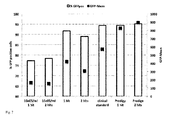
- Fig. 4 shows the gene marking (% GFP positive cells) and GFP fluorescence levels (GFP mean) 120 hours post-transduction.
- the "clinical standard" samples correspond to 2 cycles of transduction in cell culture dishes pre-coated with RetroNectin.
- Fig. 4 shows that increasing cell and/or vector concentration clearly correlate with increased transduction efficiency.
- Example 2 Low speed centrifugation allows transduction of Jurkat target cells in a large cell culture vessel (CentriCult unit) in a low volume.
- Jurkat cells express the cell surface marker CD34 and were used as a model CD34+ stem cell system. These cells were cultivated in static conditions in a T75 flask in 20mL at 1.2x10⁶ cells/mL, in a T175 flask or in the Prodigy CentriCult unit in 50 mL at 0.5x10 6 cells/mL or while undergoing low speed centrifugation in the Prodigy CentriCult unit in 20 mL at 0.9x10 6 cells/mL. In this latter example, the cells were first centrifuged at 100rpm for 10 seconds to collect the cells at the corner of the chamber. Then the cells were cultivated at a relative g-force of 0.4 x g.
- This centrifugation leads to the liquid within the chamber collecting at the corners of the CentriCult unit along with the cells and enables the cultivation of cells at high concentration (volumetric concentration: cells per mL and spatial concentration: cells per cm 2 ) in a low volume of liquid. Centrifugation at higher relative g-forces, for example >4 x g, spreads the cells over a large area on the side of the CentriCult unit.
- Fig. 5 shows that transduction of cells in a lower volume (higher cell and viral vector concentration, 0.9x10 6 cells/mL compared to 0.5x10 6 cells/mL) resulted in higher transduction efficiencies (%GFP positive cells) in both static and centrifuged samples.
- Example 3 Efficient transduction of low numbers of CD34+ cells.
- CD34+ cells were enriched from bone marrow or apheresis material using the Prodigy device and CD34 MicroBeads, and were gene modified by transduction in the CentriCult centrifugation chamber (Miltenyi Biotec GmbH) unit under low speed centrifugation as described in Example 2.
- Figures 6 and 7 show that increasing cell and viral vector concentration from 1.25x10 4 to 1.25x10 5 to 6x10 5 cells per mL while maintaining the culture volume at 20mL enabled more efficient automated transduction of the stem cells.
- Example 4 Comparative study demonstrating efficient automated transduction CD34+ cells at higher cell density.
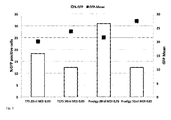
- CD34+ cells were enriched from bone marrow or apheresis material using the Prodigy device and CD34 MicroBeads, and were gene modified by transduction either under static conditions in 24 well plates or in the CentriCult centrifugation chamber of a CliniMACS Prodigy device (Miltenyi Biotec GmbH) under low speed centrifugation as described in Example 2.
- 1x10 8 enriched CD34+ cells were preactivated overnight with cytokines at a cell concentration of 2x10 6 cells per ml in 2 separate CliniMACS Prodigy instruments.
- the cell concentration in each instrument was adjusted by centrifugation and fresh medium containing cytokines and a GFP expressing lentiviral vector were added to result in cell densities of 2.17x10 6 per ml (SN78) and 1x10 6 per ml (SN63) in a volume of 20 ml or 44 ml respectively.
- Lentiviral vector was added at an MOI of 20.
- the cells in instrument SN78 were cultivated under low-speed centrifugation at 0.4 x g, the cells in instrument SN68 were cultivated under static conditions. As shown in Fig.
- the cultivation using the process of the invention (D) at 2.17x10 6 per ml resulted in a higher transduction efficiency (%GFP positive cells), measured at 13 days post transduction by flow cytometry compared to cells cultivated in a static manner (C) at 1x10 6 per ml.
- %GFP positive cells measured at 13 days post transduction by flow cytometry compared to cells cultivated in a static manner (C) at 1x10 6 per ml.
- Stem cells cultivated in a non-automated manner in small cell culture vessels (in 24-well plates) showed a similar trend with cell culture at higher cell densities (B) demonstrating a higher gene modification efficiency than at lower density (A).
- Fig. 5 , 6 , 7 and 8 show the clinical Stem Cell Transduction Process (SCT) by gene modification according the process of the invention using the closed and sterile system CliniMACS Prodigy.
- SCT Stem Cell Transduction Process
Landscapes
- Health & Medical Sciences (AREA)
- Life Sciences & Earth Sciences (AREA)
- Engineering & Computer Science (AREA)
- Genetics & Genomics (AREA)
- Chemical & Material Sciences (AREA)
- Biomedical Technology (AREA)
- Bioinformatics & Cheminformatics (AREA)
- Organic Chemistry (AREA)
- Zoology (AREA)
- Wood Science & Technology (AREA)
- Biotechnology (AREA)
- General Engineering & Computer Science (AREA)
- General Health & Medical Sciences (AREA)
- Microbiology (AREA)
- Biochemistry (AREA)
- Immunology (AREA)
- Molecular Biology (AREA)
- Hematology (AREA)
- Biophysics (AREA)
- Physics & Mathematics (AREA)
- Plant Pathology (AREA)
- Cell Biology (AREA)
- Virology (AREA)
- Medicinal Chemistry (AREA)
- Animal Behavior & Ethology (AREA)
- Public Health (AREA)
- Veterinary Medicine (AREA)
- Developmental Biology & Embryology (AREA)
- Epidemiology (AREA)
- Pharmacology & Pharmacy (AREA)
- Manufacturing & Machinery (AREA)
- Micro-Organisms Or Cultivation Processes Thereof (AREA)
- Medicines Containing Material From Animals Or Micro-Organisms (AREA)
Applications Claiming Priority (1)
| Application Number | Priority Date | Filing Date | Title |
|---|---|---|---|
| US201461983534P | 2014-04-24 | 2014-04-24 |
Publications (2)
| Publication Number | Publication Date |
|---|---|
| EP2937100A1 true EP2937100A1 (fr) | 2015-10-28 |
| EP2937100B1 EP2937100B1 (fr) | 2018-06-20 |
Family
ID=52997962
Family Applications (1)
| Application Number | Title | Priority Date | Filing Date |
|---|---|---|---|
| EP15164756.7A Active EP2937100B1 (fr) | 2014-04-24 | 2015-04-23 | Génération automatisée de cellules souches génétiquement modifiées |
Country Status (2)
| Country | Link |
|---|---|
| US (1) | US9493789B2 (fr) |
| EP (1) | EP2937100B1 (fr) |
Cited By (1)
| Publication number | Priority date | Publication date | Assignee | Title |
|---|---|---|---|---|
| WO2021202980A1 (fr) * | 2020-04-03 | 2021-10-07 | Millennium Pharmaceuticals, Inc. | Efficacité de transduction virale améliorée |
Families Citing this family (2)
| Publication number | Priority date | Publication date | Assignee | Title |
|---|---|---|---|---|
| CN114450412A (zh) * | 2019-06-05 | 2022-05-06 | 奥查德疗法(欧洲)有限公司 | 用于修饰真核细胞的组合物和方法 |
| US20250140424A1 (en) | 2022-02-04 | 2025-05-01 | Elixirgen Therapeutics, Inc. | Cell therapy protocol systems and methods |
Citations (6)
| Publication number | Priority date | Publication date | Assignee | Title |
|---|---|---|---|---|
| US5911983A (en) * | 1992-06-26 | 1999-06-15 | University Of Pittsburgh | Gene therapy for Gaucher disease using retroviral vectors |
| EP0938904A1 (fr) * | 1998-02-09 | 1999-09-01 | Leuven Research & Development vzw | Transduction des cellules mammifères pour utilisation dans la thérapie génique |
| EP0995802A2 (fr) * | 1998-07-10 | 2000-04-26 | Universite Pierre Et Marie Curie | Procédé pour l'apport des acides nucléiques dans les cellules in vitro ou ex vivo |
| WO2001016342A1 (fr) * | 1999-08-27 | 2001-03-08 | The Regents Of The University Of California | Utilisation de vecteurs lentiviraux pour la presentation de l'antigene dans les cellules dendritiques |
| WO2009072003A2 (fr) | 2007-12-07 | 2009-06-11 | Miltenyi Biotec Gmbh | Système et procédés de traitement d'échantillons |
| EP2594632A1 (fr) * | 2011-11-18 | 2013-05-22 | Miltenyi Biotec GmbH | Procédé et dispositif de modification cellulaire |
-
2015
- 2015-04-17 US US14/689,105 patent/US9493789B2/en active Active
- 2015-04-23 EP EP15164756.7A patent/EP2937100B1/fr active Active
Patent Citations (6)
| Publication number | Priority date | Publication date | Assignee | Title |
|---|---|---|---|---|
| US5911983A (en) * | 1992-06-26 | 1999-06-15 | University Of Pittsburgh | Gene therapy for Gaucher disease using retroviral vectors |
| EP0938904A1 (fr) * | 1998-02-09 | 1999-09-01 | Leuven Research & Development vzw | Transduction des cellules mammifères pour utilisation dans la thérapie génique |
| EP0995802A2 (fr) * | 1998-07-10 | 2000-04-26 | Universite Pierre Et Marie Curie | Procédé pour l'apport des acides nucléiques dans les cellules in vitro ou ex vivo |
| WO2001016342A1 (fr) * | 1999-08-27 | 2001-03-08 | The Regents Of The University Of California | Utilisation de vecteurs lentiviraux pour la presentation de l'antigene dans les cellules dendritiques |
| WO2009072003A2 (fr) | 2007-12-07 | 2009-06-11 | Miltenyi Biotec Gmbh | Système et procédés de traitement d'échantillons |
| EP2594632A1 (fr) * | 2011-11-18 | 2013-05-22 | Miltenyi Biotec GmbH | Procédé et dispositif de modification cellulaire |
Non-Patent Citations (13)
| Title |
|---|
| CHUCK ET AL., HUMAN GENE THERAPY, 1996 |
| HAAS ET AL., MOL. THER., 2000 |
| KIM ET AL., CELL STEM CELL, vol. 14, 2014, pages 473 - 485 |
| MAJUMDAR M; RATHO R; CHAWLA Y; SINGH M P: "Evaluating the role of low-speed centrifugation towards transfecting human peripheral blood mononuclear cell culture", INDIAN JOURNAL OF MEDICAL MICROBIOLOGY, vol. 32, no. 2, 1 January 2014 (2014-01-01), IN, pages 164 - 168, XP055204126, ISSN: 1998-3646, DOI: 10.4103/0255-0857.129806 * |
| MCKENZIE ET AL., NATURE IMMUNOL., vol. 2, 2006, pages 75 - 82 |
| RIVAT ET AL., HUMAN GENE THERAPY, vol. 23, 2012, pages 668 - 675 |
| SCANLAN P M ET AL: "Spinoculation of heparan sulfate deficient cells enhances HSV-1 entry, but does not abolish the need for essential glycoproteins in viral fusion", JOURNAL OF VIROLOGICAL METHODS, ELSEVIER BV, NL, vol. 128, no. 1-2, 1 September 2005 (2005-09-01), pages 104 - 112, XP027667430, ISSN: 0166-0934, [retrieved on 20050901] * |
| SCARAMUZZA ET AL., MOL. THER, vol. 21, 2013, pages 174 - 184 |
| SCARAMUZZA ET AL., MOL. THER., 2013 |
| SWIFT S ET AL: "RAPID PRODUCTION OF RETROVIRUSES FOR EFFICIENT GENE DELIVERY TO MAMMALIAN CELLS USING 293T CELL-BASED SYSTEMS", CURRENT PROTOCOLS IN IMMUNOLOGY, XX, XX, no. SUPPL. 31, 1 January 1999 (1999-01-01), pages 10.17.14 - 10.17.29, XP001135162 * |
| W TAO ET AL: "SDF-1[alpha]/CXCL12 enhances retroviral-mediated gene transfer into immature subsets of human and murine hematopoietic progenitor cells", GENE THERAPY, vol. 11, no. 1, 1 January 2004 (2004-01-01), pages 61 - 69, XP055204258, ISSN: 0969-7128, DOI: 10.1038/sj.gt.3302127 * |
| YOO S M ET AL: "Centrifugal enhancement of Kaposi's sarcoma-associated virus infection of human endothelial cells in vitro", JOURNAL OF VIROLOGICAL METHODS, ELSEVIER BV, NL, vol. 154, no. 1-2, 1 December 2008 (2008-12-01), pages 160 - 166, XP025680314, ISSN: 0166-0934, [retrieved on 20080920], DOI: 10.1016/J.JVIROMET.2008.07.026 * |
| ZHOU RUI-QING ET AL: "[The optimization of method for lentiviral vector to transfect CD34+ hematopoietic stem cells from human cord].", SICHUAN DA XUE XUE BAO. YI XUE BAN = JOURNAL OF SICHUAN UNIVERSITY. MEDICAL SCIENCE EDITION JAN 2013, vol. 44, no. 1, January 2013 (2013-01-01), pages 130 - 134, XP009185537, ISSN: 1672-173X * |
Cited By (2)
| Publication number | Priority date | Publication date | Assignee | Title |
|---|---|---|---|---|
| WO2021202980A1 (fr) * | 2020-04-03 | 2021-10-07 | Millennium Pharmaceuticals, Inc. | Efficacité de transduction virale améliorée |
| CN115885036A (zh) * | 2020-04-03 | 2023-03-31 | 米伦纽姆医药公司 | 提高的病毒转导效率 |
Also Published As
| Publication number | Publication date |
|---|---|
| US9493789B2 (en) | 2016-11-15 |
| EP2937100B1 (fr) | 2018-06-20 |
| US20150307900A1 (en) | 2015-10-29 |
Similar Documents
| Publication | Publication Date | Title |
|---|---|---|
| US20240158812A1 (en) | Systems and Methods for Point/Center-Of-Care Immunotherapy | |
| AU2021202347B2 (en) | Cell separation devices, systems, and methods | |
| EP3790607A1 (fr) | Systèmes et méthodes pour effectuer des modifications en temps réel en boucle fermée de cellules de patient | |
| CN106062185A (zh) | 用于自动生成遗传修饰的t细胞的方法 | |
| EP3487982A1 (fr) | Procédé et appareil de traitement de cellules par lots parallèle, indépendant et automatisé | |
| US11141435B2 (en) | Buoyancy-activated cell sorting (BACS)-compatible activation/transduction systems and methods | |
| CN112251406B (zh) | 一种nk细胞活化阶段的外泌体分选方法 | |
| CN108715865A (zh) | 用于提高细胞转染效率的试剂组合物 | |
| EP2937100B1 (fr) | Génération automatisée de cellules souches génétiquement modifiées | |
| US20210040448A1 (en) | Closed-system manufacturing process for car-t cells | |
| AU2018423493A1 (en) | Method for preparing chimeric antigen receptor T cells by serum-free culture | |
| Greiner et al. | Genetic modification of primary human myeloid cells to study cell migration, activation, and organelle dynamics | |
| WO2021231661A2 (fr) | Procédé de production de lots de cellules donneuses exprimant un récepteur recombinant | |
| CN101014712A (zh) | 细胞制备 | |
| Wang et al. | A 3-in-1 integrated automated platform for rapid CAR-T cell manufacturing: activation, transduction, and expansion in a hollow-fiber system | |
| CN118871568A (zh) | 细胞电穿孔的方法 | |
| US20230257704A1 (en) | Methods for preparation of immune cells | |
| CN108743617A (zh) | miR-15a-5p在提高CAR-T细胞抗肿瘤能力中的应用 | |
| HK40050748B (en) | Systems for closed loop, real-time modifications of patient cells | |
| HK40050748A (en) | Systems for closed loop, real-time modifications of patient cells |
Legal Events
| Date | Code | Title | Description |
|---|---|---|---|
| PUAI | Public reference made under article 153(3) epc to a published international application that has entered the european phase |
Free format text: ORIGINAL CODE: 0009012 |
|
| AK | Designated contracting states |
Kind code of ref document: A1 Designated state(s): AL AT BE BG CH CY CZ DE DK EE ES FI FR GB GR HR HU IE IS IT LI LT LU LV MC MK MT NL NO PL PT RO RS SE SI SK SM TR |
|
| AX | Request for extension of the european patent |
Extension state: BA ME |
|
| 17P | Request for examination filed |
Effective date: 20160330 |
|
| RBV | Designated contracting states (corrected) |
Designated state(s): AL AT BE BG CH CY CZ DE DK EE ES FI FR GB GR HR HU IE IS IT LI LT LU LV MC MK MT NL NO PL PT RO RS SE SI SK SM TR |
|
| 17Q | First examination report despatched |
Effective date: 20160624 |
|
| GRAP | Despatch of communication of intention to grant a patent |
Free format text: ORIGINAL CODE: EPIDOSNIGR1 |
|
| STAA | Information on the status of an ep patent application or granted ep patent |
Free format text: STATUS: GRANT OF PATENT IS INTENDED |
|
| INTG | Intention to grant announced |
Effective date: 20171010 |
|
| GRAS | Grant fee paid |
Free format text: ORIGINAL CODE: EPIDOSNIGR3 |
|
| GRAA | (expected) grant |
Free format text: ORIGINAL CODE: 0009210 |
|
| STAA | Information on the status of an ep patent application or granted ep patent |
Free format text: STATUS: THE PATENT HAS BEEN GRANTED |
|
| AK | Designated contracting states |
Kind code of ref document: B1 Designated state(s): AL AT BE BG CH CY CZ DE DK EE ES FI FR GB GR HR HU IE IS IT LI LT LU LV MC MK MT NL NO PL PT RO RS SE SI SK SM TR |
|
| REG | Reference to a national code |
Ref country code: GB Ref legal event code: FG4D |
|
| REG | Reference to a national code |
Ref country code: IE Ref legal event code: FG4D |
|
| REG | Reference to a national code |
Ref country code: AT Ref legal event code: REF Ref document number: 1010091 Country of ref document: AT Kind code of ref document: T Effective date: 20180715 |
|
| REG | Reference to a national code |
Ref country code: DE Ref legal event code: R096 Ref document number: 602015012437 Country of ref document: DE |
|
| REG | Reference to a national code |
Ref country code: NL Ref legal event code: MP Effective date: 20180620 |
|
| PG25 | Lapsed in a contracting state [announced via postgrant information from national office to epo] |
Ref country code: LT Free format text: LAPSE BECAUSE OF FAILURE TO SUBMIT A TRANSLATION OF THE DESCRIPTION OR TO PAY THE FEE WITHIN THE PRESCRIBED TIME-LIMIT Effective date: 20180620 Ref country code: BG Free format text: LAPSE BECAUSE OF FAILURE TO SUBMIT A TRANSLATION OF THE DESCRIPTION OR TO PAY THE FEE WITHIN THE PRESCRIBED TIME-LIMIT Effective date: 20180920 Ref country code: SE Free format text: LAPSE BECAUSE OF FAILURE TO SUBMIT A TRANSLATION OF THE DESCRIPTION OR TO PAY THE FEE WITHIN THE PRESCRIBED TIME-LIMIT Effective date: 20180620 Ref country code: FI Free format text: LAPSE BECAUSE OF FAILURE TO SUBMIT A TRANSLATION OF THE DESCRIPTION OR TO PAY THE FEE WITHIN THE PRESCRIBED TIME-LIMIT Effective date: 20180620 Ref country code: NO Free format text: LAPSE BECAUSE OF FAILURE TO SUBMIT A TRANSLATION OF THE DESCRIPTION OR TO PAY THE FEE WITHIN THE PRESCRIBED TIME-LIMIT Effective date: 20180920 |
|
| REG | Reference to a national code |
Ref country code: LT Ref legal event code: MG4D |
|
| PG25 | Lapsed in a contracting state [announced via postgrant information from national office to epo] |
Ref country code: GR Free format text: LAPSE BECAUSE OF FAILURE TO SUBMIT A TRANSLATION OF THE DESCRIPTION OR TO PAY THE FEE WITHIN THE PRESCRIBED TIME-LIMIT Effective date: 20180921 Ref country code: HR Free format text: LAPSE BECAUSE OF FAILURE TO SUBMIT A TRANSLATION OF THE DESCRIPTION OR TO PAY THE FEE WITHIN THE PRESCRIBED TIME-LIMIT Effective date: 20180620 Ref country code: LV Free format text: LAPSE BECAUSE OF FAILURE TO SUBMIT A TRANSLATION OF THE DESCRIPTION OR TO PAY THE FEE WITHIN THE PRESCRIBED TIME-LIMIT Effective date: 20180620 Ref country code: RS Free format text: LAPSE BECAUSE OF FAILURE TO SUBMIT A TRANSLATION OF THE DESCRIPTION OR TO PAY THE FEE WITHIN THE PRESCRIBED TIME-LIMIT Effective date: 20180620 |
|
| REG | Reference to a national code |
Ref country code: AT Ref legal event code: MK05 Ref document number: 1010091 Country of ref document: AT Kind code of ref document: T Effective date: 20180620 |
|
| PG25 | Lapsed in a contracting state [announced via postgrant information from national office to epo] |
Ref country code: NL Free format text: LAPSE BECAUSE OF FAILURE TO SUBMIT A TRANSLATION OF THE DESCRIPTION OR TO PAY THE FEE WITHIN THE PRESCRIBED TIME-LIMIT Effective date: 20180620 |
|
| PG25 | Lapsed in a contracting state [announced via postgrant information from national office to epo] |
Ref country code: RO Free format text: LAPSE BECAUSE OF FAILURE TO SUBMIT A TRANSLATION OF THE DESCRIPTION OR TO PAY THE FEE WITHIN THE PRESCRIBED TIME-LIMIT Effective date: 20180620 Ref country code: SK Free format text: LAPSE BECAUSE OF FAILURE TO SUBMIT A TRANSLATION OF THE DESCRIPTION OR TO PAY THE FEE WITHIN THE PRESCRIBED TIME-LIMIT Effective date: 20180620 Ref country code: CZ Free format text: LAPSE BECAUSE OF FAILURE TO SUBMIT A TRANSLATION OF THE DESCRIPTION OR TO PAY THE FEE WITHIN THE PRESCRIBED TIME-LIMIT Effective date: 20180620 Ref country code: PL Free format text: LAPSE BECAUSE OF FAILURE TO SUBMIT A TRANSLATION OF THE DESCRIPTION OR TO PAY THE FEE WITHIN THE PRESCRIBED TIME-LIMIT Effective date: 20180620 Ref country code: IS Free format text: LAPSE BECAUSE OF FAILURE TO SUBMIT A TRANSLATION OF THE DESCRIPTION OR TO PAY THE FEE WITHIN THE PRESCRIBED TIME-LIMIT Effective date: 20181020 Ref country code: EE Free format text: LAPSE BECAUSE OF FAILURE TO SUBMIT A TRANSLATION OF THE DESCRIPTION OR TO PAY THE FEE WITHIN THE PRESCRIBED TIME-LIMIT Effective date: 20180620 Ref country code: AT Free format text: LAPSE BECAUSE OF FAILURE TO SUBMIT A TRANSLATION OF THE DESCRIPTION OR TO PAY THE FEE WITHIN THE PRESCRIBED TIME-LIMIT Effective date: 20180620 |
|
| PG25 | Lapsed in a contracting state [announced via postgrant information from national office to epo] |
Ref country code: IT Free format text: LAPSE BECAUSE OF FAILURE TO SUBMIT A TRANSLATION OF THE DESCRIPTION OR TO PAY THE FEE WITHIN THE PRESCRIBED TIME-LIMIT Effective date: 20180620 Ref country code: ES Free format text: LAPSE BECAUSE OF FAILURE TO SUBMIT A TRANSLATION OF THE DESCRIPTION OR TO PAY THE FEE WITHIN THE PRESCRIBED TIME-LIMIT Effective date: 20180620 Ref country code: SM Free format text: LAPSE BECAUSE OF FAILURE TO SUBMIT A TRANSLATION OF THE DESCRIPTION OR TO PAY THE FEE WITHIN THE PRESCRIBED TIME-LIMIT Effective date: 20180620 |
|
| REG | Reference to a national code |
Ref country code: DE Ref legal event code: R097 Ref document number: 602015012437 Country of ref document: DE |
|
| PLBE | No opposition filed within time limit |
Free format text: ORIGINAL CODE: 0009261 |
|
| STAA | Information on the status of an ep patent application or granted ep patent |
Free format text: STATUS: NO OPPOSITION FILED WITHIN TIME LIMIT |
|
| 26N | No opposition filed |
Effective date: 20190321 |
|
| PG25 | Lapsed in a contracting state [announced via postgrant information from national office to epo] |
Ref country code: DK Free format text: LAPSE BECAUSE OF FAILURE TO SUBMIT A TRANSLATION OF THE DESCRIPTION OR TO PAY THE FEE WITHIN THE PRESCRIBED TIME-LIMIT Effective date: 20180620 |
|
| PG25 | Lapsed in a contracting state [announced via postgrant information from national office to epo] |
Ref country code: SI Free format text: LAPSE BECAUSE OF FAILURE TO SUBMIT A TRANSLATION OF THE DESCRIPTION OR TO PAY THE FEE WITHIN THE PRESCRIBED TIME-LIMIT Effective date: 20180620 |
|
| PG25 | Lapsed in a contracting state [announced via postgrant information from national office to epo] |
Ref country code: AL Free format text: LAPSE BECAUSE OF FAILURE TO SUBMIT A TRANSLATION OF THE DESCRIPTION OR TO PAY THE FEE WITHIN THE PRESCRIBED TIME-LIMIT Effective date: 20180620 |
|
| REG | Reference to a national code |
Ref country code: CH Ref legal event code: PL |
|
| REG | Reference to a national code |
Ref country code: DE Ref legal event code: R081 Ref document number: 602015012437 Country of ref document: DE Owner name: MILTENYI BIOTEC B.V. & CO. KG, DE Free format text: FORMER OWNER: MILTENYI BIOTEC GMBH, 51429 BERGISCH GLADBACH, DE |
|
| REG | Reference to a national code |
Ref country code: BE Ref legal event code: MM Effective date: 20190430 |
|
| PG25 | Lapsed in a contracting state [announced via postgrant information from national office to epo] |
Ref country code: MC Free format text: LAPSE BECAUSE OF FAILURE TO SUBMIT A TRANSLATION OF THE DESCRIPTION OR TO PAY THE FEE WITHIN THE PRESCRIBED TIME-LIMIT Effective date: 20180620 Ref country code: LU Free format text: LAPSE BECAUSE OF NON-PAYMENT OF DUE FEES Effective date: 20190423 |
|
| PG25 | Lapsed in a contracting state [announced via postgrant information from national office to epo] |
Ref country code: CH Free format text: LAPSE BECAUSE OF NON-PAYMENT OF DUE FEES Effective date: 20190430 Ref country code: LI Free format text: LAPSE BECAUSE OF NON-PAYMENT OF DUE FEES Effective date: 20190430 |
|
| PG25 | Lapsed in a contracting state [announced via postgrant information from national office to epo] |
Ref country code: BE Free format text: LAPSE BECAUSE OF NON-PAYMENT OF DUE FEES Effective date: 20190430 |
|
| PG25 | Lapsed in a contracting state [announced via postgrant information from national office to epo] |
Ref country code: TR Free format text: LAPSE BECAUSE OF FAILURE TO SUBMIT A TRANSLATION OF THE DESCRIPTION OR TO PAY THE FEE WITHIN THE PRESCRIBED TIME-LIMIT Effective date: 20180620 |
|
| PG25 | Lapsed in a contracting state [announced via postgrant information from national office to epo] |
Ref country code: IE Free format text: LAPSE BECAUSE OF NON-PAYMENT OF DUE FEES Effective date: 20190423 |
|
| REG | Reference to a national code |
Ref country code: GB Ref legal event code: 732E Free format text: REGISTERED BETWEEN 20200528 AND 20200603 |
|
| PG25 | Lapsed in a contracting state [announced via postgrant information from national office to epo] |
Ref country code: PT Free format text: LAPSE BECAUSE OF FAILURE TO SUBMIT A TRANSLATION OF THE DESCRIPTION OR TO PAY THE FEE WITHIN THE PRESCRIBED TIME-LIMIT Effective date: 20181022 |
|
| PG25 | Lapsed in a contracting state [announced via postgrant information from national office to epo] |
Ref country code: CY Free format text: LAPSE BECAUSE OF FAILURE TO SUBMIT A TRANSLATION OF THE DESCRIPTION OR TO PAY THE FEE WITHIN THE PRESCRIBED TIME-LIMIT Effective date: 20180620 |
|
| PG25 | Lapsed in a contracting state [announced via postgrant information from national office to epo] |
Ref country code: HU Free format text: LAPSE BECAUSE OF FAILURE TO SUBMIT A TRANSLATION OF THE DESCRIPTION OR TO PAY THE FEE WITHIN THE PRESCRIBED TIME-LIMIT; INVALID AB INITIO Effective date: 20150423 Ref country code: MT Free format text: LAPSE BECAUSE OF FAILURE TO SUBMIT A TRANSLATION OF THE DESCRIPTION OR TO PAY THE FEE WITHIN THE PRESCRIBED TIME-LIMIT Effective date: 20180620 |
|
| PG25 | Lapsed in a contracting state [announced via postgrant information from national office to epo] |
Ref country code: MK Free format text: LAPSE BECAUSE OF FAILURE TO SUBMIT A TRANSLATION OF THE DESCRIPTION OR TO PAY THE FEE WITHIN THE PRESCRIBED TIME-LIMIT Effective date: 20180620 |
|
| PGFP | Annual fee paid to national office [announced via postgrant information from national office to epo] |
Ref country code: DE Payment date: 20250422 Year of fee payment: 11 |
|
| PGFP | Annual fee paid to national office [announced via postgrant information from national office to epo] |
Ref country code: GB Payment date: 20250423 Year of fee payment: 11 |
|
| PGFP | Annual fee paid to national office [announced via postgrant information from national office to epo] |
Ref country code: FR Payment date: 20250425 Year of fee payment: 11 |