EP2937931A1 - Heizfolie für ein batteriemodul und batteriemodul damit - Google Patents
Heizfolie für ein batteriemodul und batteriemodul damit Download PDFInfo
- Publication number
- EP2937931A1 EP2937931A1 EP13864336.6A EP13864336A EP2937931A1 EP 2937931 A1 EP2937931 A1 EP 2937931A1 EP 13864336 A EP13864336 A EP 13864336A EP 2937931 A1 EP2937931 A1 EP 2937931A1
- Authority
- EP
- European Patent Office
- Prior art keywords
- heating element
- heating
- battery
- battery cell
- temperature
- Prior art date
- Legal status (The legal status is an assumption and is not a legal conclusion. Google has not performed a legal analysis and makes no representation as to the accuracy of the status listed.)
- Granted
Links
Images

Classifications
-
- H—ELECTRICITY
- H01—ELECTRIC ELEMENTS
- H01M—PROCESSES OR MEANS, e.g. BATTERIES, FOR THE DIRECT CONVERSION OF CHEMICAL ENERGY INTO ELECTRICAL ENERGY
- H01M10/00—Secondary cells; Manufacture thereof
- H01M10/60—Heating or cooling; Temperature control
- H01M10/65—Means for temperature control structurally associated with the cells
- H01M10/655—Solid structures for heat exchange or heat conduction
-
- H—ELECTRICITY
- H01—ELECTRIC ELEMENTS
- H01M—PROCESSES OR MEANS, e.g. BATTERIES, FOR THE DIRECT CONVERSION OF CHEMICAL ENERGY INTO ELECTRICAL ENERGY
- H01M10/00—Secondary cells; Manufacture thereof
- H01M10/60—Heating or cooling; Temperature control
- H01M10/61—Types of temperature control
- H01M10/615—Heating or keeping warm
-
- H—ELECTRICITY
- H01—ELECTRIC ELEMENTS
- H01M—PROCESSES OR MEANS, e.g. BATTERIES, FOR THE DIRECT CONVERSION OF CHEMICAL ENERGY INTO ELECTRICAL ENERGY
- H01M10/00—Secondary cells; Manufacture thereof
- H01M10/60—Heating or cooling; Temperature control
- H01M10/62—Heating or cooling; Temperature control specially adapted for specific applications
- H01M10/625—Vehicles
-
- H—ELECTRICITY
- H01—ELECTRIC ELEMENTS
- H01M—PROCESSES OR MEANS, e.g. BATTERIES, FOR THE DIRECT CONVERSION OF CHEMICAL ENERGY INTO ELECTRICAL ENERGY
- H01M10/00—Secondary cells; Manufacture thereof
- H01M10/60—Heating or cooling; Temperature control
- H01M10/65—Means for temperature control structurally associated with the cells
- H01M10/657—Means for temperature control structurally associated with the cells by electric or electromagnetic means
- H01M10/6571—Resistive heaters
-
- H—ELECTRICITY
- H05—ELECTRIC TECHNIQUES NOT OTHERWISE PROVIDED FOR
- H05B—ELECTRIC HEATING; ELECTRIC LIGHT SOURCES NOT OTHERWISE PROVIDED FOR; CIRCUIT ARRANGEMENTS FOR ELECTRIC LIGHT SOURCES, IN GENERAL
- H05B3/00—Ohmic-resistance heating
- H05B3/20—Heating elements having extended surface area substantially in a two-dimensional [2D] plane, e.g. plate-heater
-
- H—ELECTRICITY
- H01—ELECTRIC ELEMENTS
- H01M—PROCESSES OR MEANS, e.g. BATTERIES, FOR THE DIRECT CONVERSION OF CHEMICAL ENERGY INTO ELECTRICAL ENERGY
- H01M2220/00—Batteries for particular applications
- H01M2220/20—Batteries in motive systems, e.g. vehicle, ship, plane
-
- H—ELECTRICITY
- H05—ELECTRIC TECHNIQUES NOT OTHERWISE PROVIDED FOR
- H05B—ELECTRIC HEATING; ELECTRIC LIGHT SOURCES NOT OTHERWISE PROVIDED FOR; CIRCUIT ARRANGEMENTS FOR ELECTRIC LIGHT SOURCES, IN GENERAL
- H05B2203/00—Aspects relating to Ohmic resistive heating covered by group H05B3/00
- H05B2203/013—Heaters using resistive films or coatings
-
- H—ELECTRICITY
- H05—ELECTRIC TECHNIQUES NOT OTHERWISE PROVIDED FOR
- H05B—ELECTRIC HEATING; ELECTRIC LIGHT SOURCES NOT OTHERWISE PROVIDED FOR; CIRCUIT ARRANGEMENTS FOR ELECTRIC LIGHT SOURCES, IN GENERAL
- H05B2214/00—Aspects relating to resistive heating, induction heating and heating using microwaves, covered by groups H05B3/00, H05B6/00
- H05B2214/04—Heating means manufactured by using nanotechnology
-
- Y—GENERAL TAGGING OF NEW TECHNOLOGICAL DEVELOPMENTS; GENERAL TAGGING OF CROSS-SECTIONAL TECHNOLOGIES SPANNING OVER SEVERAL SECTIONS OF THE IPC; TECHNICAL SUBJECTS COVERED BY FORMER USPC CROSS-REFERENCE ART COLLECTIONS [XRACs] AND DIGESTS
- Y02—TECHNOLOGIES OR APPLICATIONS FOR MITIGATION OR ADAPTATION AGAINST CLIMATE CHANGE
- Y02E—REDUCTION OF GREENHOUSE GAS [GHG] EMISSIONS, RELATED TO ENERGY GENERATION, TRANSMISSION OR DISTRIBUTION
- Y02E60/00—Enabling technologies; Technologies with a potential or indirect contribution to GHG emissions mitigation
- Y02E60/10—Energy storage using batteries
Definitions
- the present invention relates to a heating sheet for battery modules and a battery module including the same.
- a battery used in photovoltaic power generators and electric vehicles is decreased in efficiency of discharge due to low temperature. For example, discharge efficiency of the battery is decreased about 50% when an external temperature is decreased below about -20°C.
- discharge efficiency of the battery is decreased about 50% when an external temperature is decreased below about -20°C.
- mobility of ions in an electrolyte of the battery is decreased at an ambient temperature of about -10°C or less, electric current becomes weak and output of the battery drops.
- a fully charged electric vehicle (EV) is parked outside, the electrolyte is hardened due to the external temperature, thereby causing a problem in long term lifespan of the battery. Therefore, it is necessary to maintain the temperature of the battery even in winter so as to maintain lifespan and efficiency of the battery.
- thermoelectric element As a method of heating a battery, a thermoelectric element or a positive temperature coefficient (PTC) heater is used to heat air.
- PTC positive temperature coefficient
- a heating sheet for battery modules includes: a surface heating element; an insulating layer formed on one surface of the surface heating element; and an insulating adhesive layer formed on the other surface of the surface heating element, wherein an area of a heating portion of the surface heating element is about 40% to about 90% of an entire area of a battery cell to which the surface heating element is attached.
- the area of the heating portion of the surface heating element may include an area, a temperature of which is about 30°C to about 50°C higher than an initial temperature of the surface heating element.
- the surface heating element may generate heat only in the area of the heating portion of the surface heating element.
- the surface heating element may have a heating temperature of about 20°C to about 80°C.
- the surface heating element may include a base film, a heating layer, and an electrode layer.
- the heating layer may include at least one selected from the group consisting of carbon nanotubes, carbon black, graphene, graphite, and combinations thereof.
- the heating layer may have a thickness of about 2 ⁇ m to about 10 ⁇ m.
- the insulating adhesive layer may have a thickness of about 25 ⁇ m to about 75 ⁇ m.
- the insulating layer may have a thickness of about 50 ⁇ m to about 100 ⁇ m.
- a battery module may include: the heating sheet for battery modules and a battery cell, wherein an area of a heated portion of the battery cell is about 40% to about 90% of the entire area of the battery cell.
- the area of the heated portion of the battery cell may include an area, a temperature of which is about 30°C to about 50°C higher than an initial temperature of the battery cell.
- the heating sheet for battery modules may increase a temperature of an electrolyte within the battery cell by about 20°C or higher within 200 seconds from a start of heating.
- the battery cell may have a surface temperature of about 20°C to about 80°C.
- the electrolyte within the battery cell may have a temperature of about - 10°C to about 35°C.
- a heating sheet for battery modules is attached to a surface of a battery cell, whereby the battery can be directly heated by heat from the heating sheet, thereby improving output of the battery module to a predetermined level in winter.
- the heating sheet for battery modules can effectively increase the temperature of the battery cell in a short period of time in winter, thereby extending lifespan of the battery.
- a heating sheet for battery modules includes a surface heating element; an insulating layer formed on one surface of the surface heating element; and an insulating adhesive layer formed on the other surface of the surface heating element, in which an area of a heating portion of the surface heating element is about 40% to 90% of the entire area of the battery cell to which the surface heating element is attached.
- a heater or a positive temperature coefficient (PTC) heater used in a diesel vehicle is attached to a coolant for cooling.
- a medium such as the coolant is primarily heated by the heater and the like, and then the battery is heated by the medium, thereby reducing heat transfer efficiency.
- the heating sheet includes the surface heating element configured to directly heat a target heating element instead of indirectly heating the medium, thereby improving heat transfer efficiency.
- the heating sheet is directly attached to and directly heats the surface of the battery cell, thereby increasing output of the battery to a predetermined level or higher in winter.
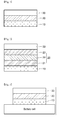
- Fig. 1 is a schematic side-sectional view of a heating sheet for battery modules according to one embodiment of the present invention, in which the heating sheet includes an insulating layer 30, a surface heating element 20, and an insulating adhesive layer 10.
- An area of a heating portion of the surface heating element may be about 40% to about 90% of an entire area of a battery cell to which the surface heating element is attached.
- the area of the heating portion refers to an area of the surface heating element which generates heat by a heating layer of the surface heating element when voltage is applied to an electrode layer of the surface heating element.
- the area of the heating portion may be a local portion of the entire area of the battery cell to which the surface heating element is attached.
- heat may be generated from an area of the surface heating element corresponding to about 40% to about 90% of the entire area of the battery cell to which the surface heating element is attached.
- the area of the heating portion of the surface heating element is less than about 40% the entire area of the battery cell to which the surface heating element is attached, an electrolyte within the battery is not heated to -10°C or higher within about 200 seconds and it is thus impossible to secure the output of the battery. Further, deviation in temperature occurs between a heated region and an unheated region of the electrolyte within the battery, thereby causing reduction in lifespan of the battery.
- the area of the heating portion is larger than about 90% of the entire area of the battery cell to which the surface heating element is attached, it is possible to increase the temperature of the electrolyte within the battery in a shorter period of time, but the battery can be damaged since the temperature increases up to 35°C or higher after about 200 seconds and electric power can be wastefully consumed since the periphery of the battery is heated.
- the area of the heating portion of the surface heating element is maintained to be about 40% to about 90%, specifically about 50% to about 80% of the entire area of the battery cell to which the surface heating element is attached, thereby efficiently increasing the temperature of the electrolyte within the battery to allow the battery to achieve 85% output within 200 seconds.
- the area of the heating portion of the surface heating element may include an area, a temperature of which is about 30°C to about 50°C higher than an initial temperature of the surface heating element. Assuming that a global average temperature in winter is about -30°C to about -10°C, the increased temperature on the area of the heating portion of the surface heating element refers to an increased temperature of the surface heating element attached to the surface of the battery, in which difference in temperature between the center and a periphery on the area of the heating portion can range from about 5°C to about 10°C.
- the area of the heating portion of the surface heating element refers to an area where the surface heating element after heating is about 30°C to about 50°C higher than the initial temperature of the surface heating element before heating, when a constant voltage is applied to the electrode layer of the surface heating element. If the temperature of the surface heating element after heating does not increase to this temperature range, an electric vehicle is likely to stall since mobility of lithium ions in the electrolyte is decreased and the output of electric current is not constant. On the other hand, when the temperature of the surface heating element increases to this temperature range higher than the initial temperature of the surface heating element, operation of the electric vehicle can become stable and the battery can have improved life cycle.
- the area of the heating portion of the surface heating element may extend from the center to the periphery of the entire area of the battery cell to which the surface heating element is attached.
- the center of the entire area of the battery cell to which the surface heating element is attached refers to a portion where horizontal and vertical halves of a rectangular-plate shaped surface heating element intersect. Heat is first generated at the center to secure a certain area of the heating portion and is transferred from the center to the periphery of the surface heating element, whereby the area of the heating portion of the surface heating element can also extend.
- the area of the heating portion of the surface heating element may be formed by applying a voltage of 24 V or less to the electrode layer of the surface heating element.
- the area of the heating portion refers to an area of the surface heating element where heat is generated by the heating layer of the surface heating element when voltage is applied to the electrode layer of the surface heating element.
- the voltage applied to the electrode layer of the surface heating element may be less than or equal to about 24 V. If a voltage higher than about 24 V is applied to the electrode layer, it is possible to maintain a desired level of the area of the heating portion in a shorter period of time, but the heating sheet including the surface heating element and a battery using the same can be damaged.
- the surface heating element may generate heat only in the area of the heating portion of the surface heating element.
- the area of the heating portion of the surface heating element may be about 40% to about 90% of the entire area of the battery cell to which the surface heating element is attached, and only the area of the heating portion of the surface heating element may be sufficient to control a total amount of heat generated by the surface heating element.
- the amount of generated heat refers to an amount of heat generated when electric current flows in a wire.
- the amount of generated heat refers to an amount of heat generated from the surface heating element when electric current flows corresponding to a voltage of 24 V or less.
- the amount of heat generated from the surface heating element may range from about 37.5 W to about 150 W. Since the amount of heat generated from the surface heating element is secured as above, it is possible to achieve 100% driving efficiency of a battery within a short period of time, i.e. about 2 minutes. For example, the driving efficiency of the battery of the electric vehicle, which is discharged during driving of the electric vehicle and is charged during control of the electric vehicle, can be increased to 100% by the amount of heat generated from the surface heating element.
- the area of the heating portion of the surface heating element included in the heating sheet for battery modules is maintained at about 40% to about 90% of the entire area of the battery cell to which the surface heating element is attached, whereby the heating temperature of the surface heating element can range from about 20°C to about 80°C, specifically from about 40°C to about 60°C.
- the heating temperature of the surface heating element refers to a temperature of heating the battery cell to be attached to the insulating adhesive layer, which may directly affect the surface temperature of the battery cell to be adhered by the heating temperature of the surface heating element, i.e., the temperature of the electrolyte within the battery cell, and properly control the heating temperature according to the area of the heating portion of the surface heating element, i.e. the heating temperature of the battery cell.
- the surface temperature of the surface heating element is secured at about 20°C to about 80°C, and it is thus possible to achieve 100% charging and discharging efficiency of the battery. More specifically, the output of the battery must be about 85% or more in order to operate the battery of the electric vehicle in winter. To this end, the electrolyte within the battery has a temperature of about - 10°C to about 35°C. Thus, when the surface temperature of the surface heating element is secured at about 20°C to about 80°C, the battery of the electric vehicle can operate in winter.
- Fig. 2 is a schematic side-sectional view of a heating sheet for battery modules, which includes a surface heating element, according to another embodiment of the present invention, in which the surface heating element 20 may have a structure wherein a base film 21, a heating layer 22 and an electrode layer 23 are stacked in order.
- the base film 21 may include at least one selected from the group consisting of biaxially-oriented polyethylene terephthalate (BOPET), both sides of which are treated with a primer, polyimide (PI), oriented polystyrene (OPS), oriented polypropylene (OPP), polyethyleneimine (PEI), polyphenylene sulfide (PPS), polyethylene naphthalate (PEN), poly(ether sulfones) (PES) and combination thereof, and has insulating properties.
- BOPET biaxially-oriented polyethylene terephthalate
- PI polyimide
- OPS oriented polystyrene
- OPP oriented polypropylene
- PEI polyethyleneimine
- PPS polyphenylene sulfide
- PEN polyethylene naphthalate
- PES poly(ether sulfones)
- the base film 21 may have a thickness of about 10 ⁇ m to about 100 ⁇ m. Within this thickness range of the base film, the heating layer to be stacked on the base film can maintain smoothness of the film layer due to lack of thermal stability during a drying process after printing, thereby securing efficiency of heat transfer from the heating layer to a heat transfer layer.
- the heating layer 22 includes at least one selected from the group consisting of carbon nanotubes (CNT), carbon black, graphene, graphite, and combinations thereof.
- the heating layer 22 may include a heating layer woven with carbon fibers, a heating layer formed by impregnating non-woven fabrics with CNT or graphene, a heating layer formed by impregnating non-woven fabrics with conductive carbon, or a heating layer formed by coating CNT or graphene paste or ink onto a base film. For coating, gravure coating may be performed.
- the heating layer 22 may have a thickness of about 2 ⁇ m to about 10 ⁇ m. Within this thickness range of the heating layer, the heating layer can have uniform thickness and easily function as a heating element due to low resistance when voltage is applied to the electrode layer. Further, this thickness range of the heating layer can improves adhesion to a base material to prevent cracking through, and facilitates mass production through simple manufacture thereof by printing with a rotary screen.
- the electrode layer 23 may adjust resistance of end products based on a space between electrodes.
- the space between the electrodes may range from about 4 mm to about 16 mm.
- the electrode layer can be prevented from becoming like a wire heater and from acting as a line heating element instead of a surface heating element, and it is also possible to decrease a possibility of explosion of the battery cell due to heat intensively supplied to the surface of the battery cell.
- this space between the electrodes allows uniform increase of the surface temperature of the battery cell, thereby reducing danger of explosion of the battery cell.
- the electrode layer 23 may be formed in a certain pattern on the heating layer 22 through screen printing.
- the electrode layer 23 may include Ag, Cu, and the like.
- the insulating layer 30 is formed on one surface of the surface heating element 20 and may be provided in the form of a thin film.
- the insulating layer may include a nonconductor which prevents heat generated from the surface heating element from escaping and does not carry electricity or heat.
- the insulating layer 30 may include a film made of one selected from among biaxially-oriented polyethylene terephthalate (BOPET), oriented polystyrene (OPS), oriented polypropylene (OPP), polyether ether ketone (PEEK), polyethylene terephthalate glycol (PETG), and polyethyleneimide (PEI).
- BOPET biaxially-oriented polyethylene terephthalate
- OPS oriented polystyrene
- OPP oriented polypropylene
- PEEK polyether ether ketone
- PETG polyethylene terephthalate glycol
- PEI polyethyleneimide
- the insulating layer may have a thickness of about 50 ⁇ m to about 100 ⁇ m. Within this thickness range of the insulating layer, there is no crease even after the surface heating element including the heating layer is printed, and specifically, it is possible to provide a heating sheet that can withstand a voltage of about 10 kV without dielectric breakdown.
- the insulating adhesive layer 10 is formed on the other surface of the surface heating element 20 on which the insulating layer 30 is not formed, and serves not only to maintain adhesion to the battery to which the insulating adhesive layer will be attached later, but also to transfer heat from the surface heating element 20 to the battery.
- the insulating adhesive layer 10 may be formed using an acrylic compound, a silicon compound, or an ethylene vinylacetate (EVA) compound.
- the acrylic compound may include an acrylic compound, an acrylic polymer, an acrylic copolymer, and the like, and may include, for example, (meth)acrylates, bisacrylates, polymers thereof, and copolymers thereof, without being limited thereto. Any acrylic compound having insulating and adhesive properties may be used without limitation.
- the silicon compound may include a poly dimethyl siloxane compound, without being limited thereto. Any silicon compound having insulating and adhesive properties may be used without limitation. In addition, there is no specific limit to the EVA compound, and it will be appreciated by those skilled in the art that any EVA compound having insulating and adhesive properties can be employed without limitation.
- the insulating adhesive layer 10 may have a thickness of about 25 ⁇ m to about 75 ⁇ m. Within this thickness range, the insulating adhesive layer 10 can secure an adhesive strength of about 1 Kgf/cm 2 or more, thereby facilitating maintenance of higher adhesive strength than a predetermined level and providing an effect on resistance to water permeability through a lateral side of the insulating adhesive layer. Specifically, if the thickness of the insulating adhesive layer 10 is above the foregoing range, heat generated from the heating layer 22 of the surface heating element 20 is transferred slowly, and it is thus impossible to increase the temperature on the surface of the battery cell to be attached to the insulating adhesive layer in a short period of time.
- a battery module includes a heating sheet and a battery cell, in which the heating sheet includes a surface heating element; an insulating layer formed on one surface of the surface heating element; and an insulating adhesive layer formed on the other surface of the surface heating element, and an area of the heating portion of the surface heating element is 40% to 90% of the entire area of the battery cell to which the surface heating element is attached, that is, an area of a heated portion of the battery cell ranges from 40% to 90% of the entire area of the battery cell.
- the battery cell includes any battery cell well-known in the art and there is no limit to its structure. Specifically, the battery cell is used for photovoltaic power generation and an electric vehicle. More specifically, the battery cell may be used as a battery cell for an electric vehicle.
- the area of the heating portion of the surface heating element included in the heating sheet may range from about 40% to about 90% of the entire area of the battery cell to which the surface heating element is attached.
- a target heating element in direct contact with the surface heating element and directly heated together with the surface heating element may be the battery cell, in which the area of the heated portion of the battery cell may also range from about 40% to about 90% of the entire area of the battery cell.
- the area of the heated portion of the battery cell may include an area, a temperature of which is about 30°C to about 50°C higher than an initial temperature of the battery cell.
- the area of the heated portion of the battery cell may be formed by the area of the heating portion of the surface heating element, and refers to an area where the temperature of the heated portion of the battery cell is by about 30°C to about 50°C higher than initial temperature before heating the battery cell. After heat is generated from the surface heating element, the temperature of the heated battery cell is increased within a predetermined range, thereby achieving a battery charging and discharging efficiency of 100%.
- the heating sheet for battery modules can increase the temperature of an electrolyte within the battery cell by about 20°C or higher within about 200 seconds from a start of heating based on the heating temperature of the surface heating element, i.e. the heating temperature applied to the battery cell. If the area of the heated portion of the battery cell heated by the heat of the surface heating element is greater than about 90% of the entire area of the battery cell, it is possible to increase the surface temperature of the battery cell by about 20°C in a short period of time, but electric power can be wastefully consumed since the periphery of the battery can be heated.
- the area of the heated portion of the battery cell is less than about 40% the entire area of the battery cell, the surface temperature of the battery cell is increased by less than about 20°C and it is thus difficult to secure desired output of the battery, thereby making it difficult to drive the battery in winter. Therefore, the area of the heated portion within the above range can provide a battery module having improved economic efficiency.
- the heating temperature of the surface heating element ranges from about 20°C to about 80°C
- the surface temperature of the battery cell directly affected and heated by the heating temperature of the surface heating element may range from about 20°C to about 80°C.
- the temperature of the electrolyte within the battery cell may range from about -10°C to about 35°C.
- An electrode layer of Ag was screen-printed thereon such that the base films coated with CNT pastes can be connected by an electrode, thereby preparing a surface heating element.
- an aluminum thin film i.e. foil
- an acrylic adhesive was applied to a thickness of 25 ⁇ m to the other surface of the surface heating element, thereby preparing a heating sheet.
- the heating sheet was attached to a battery cell via adhesives, thereby preparing a battery module for electric vehicles.
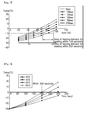
- Fig. 4 shows a range of an area of a heating portion, which can increase the temperature of an electrolyte within the battery cell to -10°C or higher within 100 seconds, 120 seconds, 150 seconds, 180 seconds, and 200 seconds from a start of heating, and can secure 40°C as a heating temperature of the surface heating element or a heating temperature applied to the battery cell by heat generated from the surface heating element, when a voltage of 24 V was applied to the electrode layer of the surface heating element.
- Fig. 4 it can be seen that, when the heating temperature of the surface heating element included in the heating sheet, i.e. the heating temperature applied to the battery cell by heat generated from the surface heating element, is 40°C, the area of the heating portion of the surface heating element and the area of the heated portion of the battery cell range from 40% to 90% in order to allow the electrolyte within the battery cell to reach a temperature of -10°C or higher within 200 seconds. More specifically, it is desirable that the area of the heating portion of the surface heating element and the area of the heated portion of the battery cell be enlarged by about 70% to about 90% within 120 seconds, which is a reasonable time to delay driving after starting an engine.
- Fig. 5 to Fig. 7 are graphs depicting temperatures of electrolytes within the battery cell, which increase within 200 seconds from a start of heating by the surface heating element having heating temperatures of 20°C, 40°C, 60°C and 80°C when the area of the heating portion of the surface heating element and the area of the heated portion of the battery cell are 40%, 70% and 90%.
- the heating temperature of the surface heating element i.e. the temperature applied to the battery cell, is 40°C or higher in order to allow the electrolyte within the battery cell to have a temperature of -10°C or higher within 200 seconds.
- the heating temperature of the surface heating element i.e. the temperature applied to the battery cell, is 20°C or higher in order to allow the electrolyte within the battery cell to have a temperature of -10°C or higher within 200 seconds.
- the temperature of the electrolyte within the battery cell can reach -10°C or higher within 120 seconds, which is shorter than 200 seconds, even though the heating temperature of the surface heating element, i.e. the temperature applied to the battery cell, is 20°C.
- the temperature of the electrolyte within the battery cell which can increase within 200 seconds, is varied depending on the area of the heating portion of the surface heating element and the area of the heated portion of the battery cell. Accordingly, the heating temperature of the surface heating element, that is, the temperature applied to the battery cell, must be properly designed in consideration of the rising temperature of the electrolyte.
Landscapes
- Engineering & Computer Science (AREA)
- Manufacturing & Machinery (AREA)
- Chemical & Material Sciences (AREA)
- Chemical Kinetics & Catalysis (AREA)
- Electrochemistry (AREA)
- General Chemical & Material Sciences (AREA)
- Physics & Mathematics (AREA)
- Electromagnetism (AREA)
- Secondary Cells (AREA)
- Battery Mounting, Suspending (AREA)
- Surface Heating Bodies (AREA)
- Resistance Heating (AREA)
Applications Claiming Priority (2)
| Application Number | Priority Date | Filing Date | Title |
|---|---|---|---|
| KR1020120151062A KR101663855B1 (ko) | 2012-12-21 | 2012-12-21 | 배터리 모듈용 발열시트 및 이를 포함하는 배터리 모듈 |
| PCT/KR2013/007635 WO2014098348A1 (ko) | 2012-12-21 | 2013-08-26 | 배터리 모듈용 발열시트 및 이를 포함하는 배터리 모듈 |
Publications (3)
| Publication Number | Publication Date |
|---|---|
| EP2937931A1 true EP2937931A1 (de) | 2015-10-28 |
| EP2937931A4 EP2937931A4 (de) | 2015-11-11 |
| EP2937931B1 EP2937931B1 (de) | 2017-03-22 |
Family
ID=50978630
Family Applications (1)
| Application Number | Title | Priority Date | Filing Date |
|---|---|---|---|
| EP13864336.6A Active EP2937931B1 (de) | 2012-12-21 | 2013-08-26 | Heizfolie für ein batteriemodul und batteriemodul damit |
Country Status (6)
| Country | Link |
|---|---|
| US (1) | US9742046B2 (de) |
| EP (1) | EP2937931B1 (de) |
| JP (1) | JP2016507861A (de) |
| KR (1) | KR101663855B1 (de) |
| CN (1) | CN104871640B (de) |
| WO (1) | WO2014098348A1 (de) |
Cited By (3)
| Publication number | Priority date | Publication date | Assignee | Title |
|---|---|---|---|---|
| EP3098897A1 (de) * | 2015-05-26 | 2016-11-30 | Lou Senliao | Vorrichtung und verfahren zur erwärmung von lithiumbatterien |
| RU2692694C1 (ru) * | 2018-07-25 | 2019-06-26 | Федеральное государственное казенное военное образовательное учреждение высшего образования "Рязанское высшее воздушно-десантное ордена Суворова дважды Краснознаменное командное училище имени генерала армии В.Ф. Маргелова" Министерства обороны Российской Федерации | Нагреваемая аккумуляторная батарея |
| CN115884451A (zh) * | 2021-09-27 | 2023-03-31 | 宁德时代新能源科技股份有限公司 | 加热膜、电池、用电装置、制造方法以及制造设备 |
Families Citing this family (19)
| Publication number | Priority date | Publication date | Assignee | Title |
|---|---|---|---|---|
| KR101428383B1 (ko) * | 2013-04-26 | 2014-08-08 | 현대자동차주식회사 | 친환경 차량의 배터리모듈 간접 냉각장치 |
| WO2016033927A1 (zh) * | 2014-09-01 | 2016-03-10 | 广东欧珀移动通信有限公司 | 终端 |
| JP6591159B2 (ja) * | 2014-12-22 | 2019-10-16 | 日精株式会社 | 面状発熱体 |
| JP2017168225A (ja) * | 2016-03-14 | 2017-09-21 | 藤森工業株式会社 | 加熱放熱シート及び加熱放熱システム |
| WO2017176462A1 (en) | 2016-04-03 | 2017-10-12 | Brammo, Inc. | Battery pack and method of manufacture |
| JP6872319B2 (ja) * | 2016-05-10 | 2021-05-19 | 藤森工業株式会社 | 発熱シート及び放熱シートを有するシステム |
| JP6460066B2 (ja) * | 2016-08-25 | 2019-01-30 | トヨタ自動車株式会社 | 電池パック |
| KR102158257B1 (ko) * | 2016-09-23 | 2020-09-21 | 주식회사 엘지화학 | 탄소 발열체를 포함하는 전지팩 |
| US10644364B2 (en) * | 2016-10-17 | 2020-05-05 | David Fortenbacher | Self-heating cells and self-heating batteries including the self-heating cells |
| JP6174223B1 (ja) * | 2016-10-24 | 2017-08-02 | イシイ株式会社 | 面状発熱体 |
| CN106785114B (zh) * | 2016-12-21 | 2019-04-09 | 常州普莱德新能源电池科技有限公司 | 一种确定加热装置功率密度的模拟分析方法及系统 |
| KR102739138B1 (ko) * | 2017-01-10 | 2024-12-05 | 주식회사 아모그린텍 | 배터리팩 |
| KR101878834B1 (ko) | 2017-04-12 | 2018-07-17 | (주)영민하이테크 | 전기차용 배터리 히터 |
| KR20190000048U (ko) | 2017-06-27 | 2019-01-04 | 태형산전 주식회사 | 면상발열체가 구비된 배터리 모듈 |
| CN111556597A (zh) * | 2020-05-27 | 2020-08-18 | 安徽宇航派蒙健康科技股份有限公司 | 在聚酰亚胺绝缘基材表面制备电池用石墨烯加热膜的方法 |
| KR20220019157A (ko) | 2020-08-06 | 2022-02-16 | 현대자동차주식회사 | 발열시트를 내장한 배터리 셀 |
| KR102348683B1 (ko) * | 2021-09-07 | 2022-01-07 | 노진호 | 이차전지 배터리 팩 |
| CN114899532A (zh) * | 2022-06-16 | 2022-08-12 | 昀迪新能源科技(苏州)有限公司 | 一种用于电池热管理的复合垫片及其制备方法 |
| KR102745462B1 (ko) * | 2022-12-26 | 2024-12-24 | 숭실대학교 산학협력단 | 탄소 나노 튜브-섬유 복합시트의 제조방법 및 이에 의해 제조된 탄소 나노튜브-섬유 복합시트 |
Family Cites Families (17)
| Publication number | Priority date | Publication date | Assignee | Title |
|---|---|---|---|---|
| JPH02312180A (ja) * | 1989-05-25 | 1990-12-27 | Midori Mark Seisakusho:Kk | 遠赤外線放出面状発熱体 |
| US5198638A (en) * | 1991-11-22 | 1993-03-30 | Reliance Comm/Tec Corporation | Retractable battery tray |
| US5948298A (en) | 1996-04-26 | 1999-09-07 | Ford Global Technologies, Inc. | Battery heating system |
| JP2004127679A (ja) * | 2002-10-01 | 2004-04-22 | Kazuharu Nakamura | 面状発熱体及びその利用方法 |
| DE102004039565A1 (de) * | 2004-08-13 | 2006-02-23 | Kerafol Keramische Folien Gmbh | Mehrlagige Wärmeleitfolie |
| KR100659499B1 (ko) | 2006-01-27 | 2006-12-20 | 주식회사 디에스티 | 면상발열체 |
| US8758924B2 (en) * | 2007-06-18 | 2014-06-24 | Tesla Motors, Inc. | Extruded and ribbed thermal interface for use with a battery cooling system |
| KR100986298B1 (ko) * | 2008-03-25 | 2010-10-08 | 국방과학연구소 | 발열체, 열 스위치 및 전지 모듈을 구비하는 전지 |
| KR101328353B1 (ko) * | 2009-02-17 | 2013-11-11 | (주)엘지하우시스 | 탄소나노튜브 발열시트 |
| JP2011014436A (ja) | 2009-07-03 | 2011-01-20 | Panasonic Corp | バッテリー加熱装置 |
| DE102009052508A1 (de) * | 2009-11-11 | 2011-05-12 | Carl Freudenberg Kg | Mechanisch flexibles und poröses Ausgleichselement zur Temperierung elektrochemischer Zellen |
| JP2011165391A (ja) * | 2010-02-05 | 2011-08-25 | Panasonic Corp | 電池ユニット |
| KR101098196B1 (ko) * | 2010-09-08 | 2011-12-23 | 주식회사 엘지화학 | 향상된 열 안정성의 전지셀 및 이를 포함하는 중대형 전지모듈 |
| DE112011103795B4 (de) * | 2010-11-17 | 2018-03-22 | Lg Hausys, Ltd. | Wärmeabführungsfilm sowie Batterieanordnung, Batteriemodul und Außengehäuse mit Wärmeabführungs- und Wärmeabstrahlungsfunktionen |
| WO2012105636A1 (ja) | 2011-02-02 | 2012-08-09 | 株式会社Gsユアサ | 電池システム |
| DE102011104000A1 (de) | 2011-06-10 | 2012-12-13 | Daimler Ag | Vorrichtung zum Heizen einer Batterie sowie Batterie mit einer Vorrichtung zum Heizen |
| EP2667076B1 (de) * | 2011-10-31 | 2017-04-19 | Panasonic Intellectual Property Management Co., Ltd. | Sekundärbatterieeinheit |
-
2012
- 2012-12-21 KR KR1020120151062A patent/KR101663855B1/ko active Active
-
2013
- 2013-08-26 WO PCT/KR2013/007635 patent/WO2014098348A1/ko not_active Ceased
- 2013-08-26 EP EP13864336.6A patent/EP2937931B1/de active Active
- 2013-08-26 JP JP2015549239A patent/JP2016507861A/ja active Pending
- 2013-08-26 US US14/652,638 patent/US9742046B2/en active Active
- 2013-08-26 CN CN201380067690.6A patent/CN104871640B/zh active Active
Cited By (4)
| Publication number | Priority date | Publication date | Assignee | Title |
|---|---|---|---|---|
| EP3098897A1 (de) * | 2015-05-26 | 2016-11-30 | Lou Senliao | Vorrichtung und verfahren zur erwärmung von lithiumbatterien |
| RU2692694C1 (ru) * | 2018-07-25 | 2019-06-26 | Федеральное государственное казенное военное образовательное учреждение высшего образования "Рязанское высшее воздушно-десантное ордена Суворова дважды Краснознаменное командное училище имени генерала армии В.Ф. Маргелова" Министерства обороны Российской Федерации | Нагреваемая аккумуляторная батарея |
| CN115884451A (zh) * | 2021-09-27 | 2023-03-31 | 宁德时代新能源科技股份有限公司 | 加热膜、电池、用电装置、制造方法以及制造设备 |
| EP4228059A4 (de) * | 2021-09-27 | 2024-06-05 | Contemporary Amperex Technology Co., Limited | Elektrische vorrichtung, batterie, heizfolie und herstellungsverfahren dafür und herstellungsvorrichtung dafür |
Also Published As
| Publication number | Publication date |
|---|---|
| WO2014098348A1 (ko) | 2014-06-26 |
| KR20140083080A (ko) | 2014-07-04 |
| US20150325892A1 (en) | 2015-11-12 |
| US9742046B2 (en) | 2017-08-22 |
| KR101663855B1 (ko) | 2016-10-10 |
| JP2016507861A (ja) | 2016-03-10 |
| CN104871640A (zh) | 2015-08-26 |
| EP2937931A4 (de) | 2015-11-11 |
| CN104871640B (zh) | 2017-03-15 |
| EP2937931B1 (de) | 2017-03-22 |
Similar Documents
| Publication | Publication Date | Title |
|---|---|---|
| EP2937931B1 (de) | Heizfolie für ein batteriemodul und batteriemodul damit | |
| KR102688561B1 (ko) | 가열을 통한 배터리 충전 시스템 및 방법 | |
| Zhang et al. | Rapid self-heating and internal temperature sensing of lithium-ion batteries at low temperatures | |
| Wang et al. | A fast rechargeable lithium-ion battery at subfreezing temperatures | |
| KR102546297B1 (ko) | 완전 고체 상태 리튬 배터리 | |
| CN101983448B (zh) | 锂二次电池的正极及其制造方法 | |
| RU2012125618A (ru) | Токосъемник для двухполюсной аккумуляторной батареи | |
| TW201444169A (zh) | 集電體、電極結構體、蓄電部件、以及用於集電體的組成物 | |
| CN112599785B (zh) | 一种锂离子电池自控温集流体及其制备方法、应用 | |
| CN105470523A (zh) | 一种高安全性能锂离子动力电池 | |
| EP3555897B1 (de) | Elektrochemische und kapazitive energiespeichervorrichtung und verfahren zur herstellung | |
| WO2007032365A1 (ja) | 電池用電極 | |
| CN107994202B (zh) | 一种改善圆柱电池极片导热散热性能的方法 | |
| CN109196710A (zh) | 具有有着可变阻抗的电化学电池单元的电池 | |
| CN104937741B (zh) | 用于制造蓄能器的方法 | |
| Cowell et al. | Composite carbon-based ionic liquid supercapacitor for high-current micro devices | |
| KR20140082032A (ko) | 배터리 모듈용 면상발열체 및 이를 포함하는 배터리 모듈 | |
| KR101481222B1 (ko) | 배터리 모듈용 발열 시트 | |
| KR101936438B1 (ko) | 발열 더미셀을 갖는 연료전지 스택 | |
| KR101457485B1 (ko) | 리튬 이차전지용 음극 및 그 제조방법 | |
| CN115714182B (zh) | 自热电池集流体、自热电芯及自热电池及其制备方法 | |
| CN117766908A (zh) | 固-固复合相变材料嵌入式锂电池低温热管理系统及电池 | |
| KR20170141575A (ko) | 전극 제조 방법 | |
| CN109216807A (zh) | 一种低温环境下启动电池组的方法 |
Legal Events
| Date | Code | Title | Description |
|---|---|---|---|
| PUAI | Public reference made under article 153(3) epc to a published international application that has entered the european phase |
Free format text: ORIGINAL CODE: 0009012 |
|
| 17P | Request for examination filed |
Effective date: 20150623 |
|
| AK | Designated contracting states |
Kind code of ref document: A1 Designated state(s): AL AT BE BG CH CY CZ DE DK EE ES FI FR GB GR HR HU IE IS IT LI LT LU LV MC MK MT NL NO PL PT RO RS SE SI SK SM TR |
|
| AX | Request for extension of the european patent |
Extension state: BA ME |
|
| A4 | Supplementary search report drawn up and despatched |
Effective date: 20151013 |
|
| RIC1 | Information provided on ipc code assigned before grant |
Ipc: H05B 3/20 20060101ALI20151007BHEP Ipc: H01M 10/60 20140101AFI20151007BHEP |
|
| DAX | Request for extension of the european patent (deleted) | ||
| 17Q | First examination report despatched |
Effective date: 20160614 |
|
| REG | Reference to a national code |
Ref country code: DE Ref legal event code: R079 Ref document number: 602013019036 Country of ref document: DE Free format text: PREVIOUS MAIN CLASS: H01M0010600000 Ipc: H01M0010625000 |
|
| GRAP | Despatch of communication of intention to grant a patent |
Free format text: ORIGINAL CODE: EPIDOSNIGR1 |
|
| RIC1 | Information provided on ipc code assigned before grant |
Ipc: H01M 10/6571 20140101ALI20161013BHEP Ipc: H01M 10/655 20140101ALI20161013BHEP Ipc: H05B 3/20 20060101ALI20161013BHEP Ipc: H01M 10/615 20140101ALI20161013BHEP Ipc: H01M 10/625 20140101AFI20161013BHEP |
|
| INTG | Intention to grant announced |
Effective date: 20161107 |
|
| GRAS | Grant fee paid |
Free format text: ORIGINAL CODE: EPIDOSNIGR3 |
|
| GRAA | (expected) grant |
Free format text: ORIGINAL CODE: 0009210 |
|
| AK | Designated contracting states |
Kind code of ref document: B1 Designated state(s): AL AT BE BG CH CY CZ DE DK EE ES FI FR GB GR HR HU IE IS IT LI LT LU LV MC MK MT NL NO PL PT RO RS SE SI SK SM TR |
|
| REG | Reference to a national code |
Ref country code: GB Ref legal event code: FG4D |
|
| REG | Reference to a national code |
Ref country code: CH Ref legal event code: EP |
|
| REG | Reference to a national code |
Ref country code: AT Ref legal event code: REF Ref document number: 878582 Country of ref document: AT Kind code of ref document: T Effective date: 20170415 |
|
| REG | Reference to a national code |
Ref country code: IE Ref legal event code: FG4D |
|
| REG | Reference to a national code |
Ref country code: DE Ref legal event code: R096 Ref document number: 602013019036 Country of ref document: DE |
|
| REG | Reference to a national code |
Ref country code: NL Ref legal event code: MP Effective date: 20170322 |
|
| PG25 | Lapsed in a contracting state [announced via postgrant information from national office to epo] |
Ref country code: HR Free format text: LAPSE BECAUSE OF FAILURE TO SUBMIT A TRANSLATION OF THE DESCRIPTION OR TO PAY THE FEE WITHIN THE PRESCRIBED TIME-LIMIT Effective date: 20170322 Ref country code: LT Free format text: LAPSE BECAUSE OF FAILURE TO SUBMIT A TRANSLATION OF THE DESCRIPTION OR TO PAY THE FEE WITHIN THE PRESCRIBED TIME-LIMIT Effective date: 20170322 Ref country code: FI Free format text: LAPSE BECAUSE OF FAILURE TO SUBMIT A TRANSLATION OF THE DESCRIPTION OR TO PAY THE FEE WITHIN THE PRESCRIBED TIME-LIMIT Effective date: 20170322 Ref country code: GR Free format text: LAPSE BECAUSE OF FAILURE TO SUBMIT A TRANSLATION OF THE DESCRIPTION OR TO PAY THE FEE WITHIN THE PRESCRIBED TIME-LIMIT Effective date: 20170623 Ref country code: NO Free format text: LAPSE BECAUSE OF FAILURE TO SUBMIT A TRANSLATION OF THE DESCRIPTION OR TO PAY THE FEE WITHIN THE PRESCRIBED TIME-LIMIT Effective date: 20170622 |
|
| REG | Reference to a national code |
Ref country code: LT Ref legal event code: MG4D |
|
| REG | Reference to a national code |
Ref country code: AT Ref legal event code: MK05 Ref document number: 878582 Country of ref document: AT Kind code of ref document: T Effective date: 20170322 |
|
| PG25 | Lapsed in a contracting state [announced via postgrant information from national office to epo] |
Ref country code: RS Free format text: LAPSE BECAUSE OF FAILURE TO SUBMIT A TRANSLATION OF THE DESCRIPTION OR TO PAY THE FEE WITHIN THE PRESCRIBED TIME-LIMIT Effective date: 20170322 Ref country code: SE Free format text: LAPSE BECAUSE OF FAILURE TO SUBMIT A TRANSLATION OF THE DESCRIPTION OR TO PAY THE FEE WITHIN THE PRESCRIBED TIME-LIMIT Effective date: 20170322 Ref country code: BG Free format text: LAPSE BECAUSE OF FAILURE TO SUBMIT A TRANSLATION OF THE DESCRIPTION OR TO PAY THE FEE WITHIN THE PRESCRIBED TIME-LIMIT Effective date: 20170622 Ref country code: LV Free format text: LAPSE BECAUSE OF FAILURE TO SUBMIT A TRANSLATION OF THE DESCRIPTION OR TO PAY THE FEE WITHIN THE PRESCRIBED TIME-LIMIT Effective date: 20170322 |
|
| PG25 | Lapsed in a contracting state [announced via postgrant information from national office to epo] |
Ref country code: NL Free format text: LAPSE BECAUSE OF FAILURE TO SUBMIT A TRANSLATION OF THE DESCRIPTION OR TO PAY THE FEE WITHIN THE PRESCRIBED TIME-LIMIT Effective date: 20170322 |
|
| PG25 | Lapsed in a contracting state [announced via postgrant information from national office to epo] |
Ref country code: RO Free format text: LAPSE BECAUSE OF FAILURE TO SUBMIT A TRANSLATION OF THE DESCRIPTION OR TO PAY THE FEE WITHIN THE PRESCRIBED TIME-LIMIT Effective date: 20170322 Ref country code: SK Free format text: LAPSE BECAUSE OF FAILURE TO SUBMIT A TRANSLATION OF THE DESCRIPTION OR TO PAY THE FEE WITHIN THE PRESCRIBED TIME-LIMIT Effective date: 20170322 Ref country code: ES Free format text: LAPSE BECAUSE OF FAILURE TO SUBMIT A TRANSLATION OF THE DESCRIPTION OR TO PAY THE FEE WITHIN THE PRESCRIBED TIME-LIMIT Effective date: 20170322 Ref country code: CZ Free format text: LAPSE BECAUSE OF FAILURE TO SUBMIT A TRANSLATION OF THE DESCRIPTION OR TO PAY THE FEE WITHIN THE PRESCRIBED TIME-LIMIT Effective date: 20170322 Ref country code: IT Free format text: LAPSE BECAUSE OF FAILURE TO SUBMIT A TRANSLATION OF THE DESCRIPTION OR TO PAY THE FEE WITHIN THE PRESCRIBED TIME-LIMIT Effective date: 20170322 Ref country code: AT Free format text: LAPSE BECAUSE OF FAILURE TO SUBMIT A TRANSLATION OF THE DESCRIPTION OR TO PAY THE FEE WITHIN THE PRESCRIBED TIME-LIMIT Effective date: 20170322 Ref country code: EE Free format text: LAPSE BECAUSE OF FAILURE TO SUBMIT A TRANSLATION OF THE DESCRIPTION OR TO PAY THE FEE WITHIN THE PRESCRIBED TIME-LIMIT Effective date: 20170322 |
|
| PG25 | Lapsed in a contracting state [announced via postgrant information from national office to epo] |
Ref country code: PL Free format text: LAPSE BECAUSE OF FAILURE TO SUBMIT A TRANSLATION OF THE DESCRIPTION OR TO PAY THE FEE WITHIN THE PRESCRIBED TIME-LIMIT Effective date: 20170322 Ref country code: IS Free format text: LAPSE BECAUSE OF FAILURE TO SUBMIT A TRANSLATION OF THE DESCRIPTION OR TO PAY THE FEE WITHIN THE PRESCRIBED TIME-LIMIT Effective date: 20170722 Ref country code: SM Free format text: LAPSE BECAUSE OF FAILURE TO SUBMIT A TRANSLATION OF THE DESCRIPTION OR TO PAY THE FEE WITHIN THE PRESCRIBED TIME-LIMIT Effective date: 20170322 Ref country code: PT Free format text: LAPSE BECAUSE OF FAILURE TO SUBMIT A TRANSLATION OF THE DESCRIPTION OR TO PAY THE FEE WITHIN THE PRESCRIBED TIME-LIMIT Effective date: 20170724 |
|
| REG | Reference to a national code |
Ref country code: DE Ref legal event code: R097 Ref document number: 602013019036 Country of ref document: DE |
|
| PLBE | No opposition filed within time limit |
Free format text: ORIGINAL CODE: 0009261 |
|
| STAA | Information on the status of an ep patent application or granted ep patent |
Free format text: STATUS: NO OPPOSITION FILED WITHIN TIME LIMIT |
|
| PG25 | Lapsed in a contracting state [announced via postgrant information from national office to epo] |
Ref country code: DK Free format text: LAPSE BECAUSE OF FAILURE TO SUBMIT A TRANSLATION OF THE DESCRIPTION OR TO PAY THE FEE WITHIN THE PRESCRIBED TIME-LIMIT Effective date: 20170322 |
|
| 26N | No opposition filed |
Effective date: 20180102 |
|
| PG25 | Lapsed in a contracting state [announced via postgrant information from national office to epo] |
Ref country code: SI Free format text: LAPSE BECAUSE OF FAILURE TO SUBMIT A TRANSLATION OF THE DESCRIPTION OR TO PAY THE FEE WITHIN THE PRESCRIBED TIME-LIMIT Effective date: 20170322 |
|
| REG | Reference to a national code |
Ref country code: CH Ref legal event code: PL |
|
| PG25 | Lapsed in a contracting state [announced via postgrant information from national office to epo] |
Ref country code: MC Free format text: LAPSE BECAUSE OF FAILURE TO SUBMIT A TRANSLATION OF THE DESCRIPTION OR TO PAY THE FEE WITHIN THE PRESCRIBED TIME-LIMIT Effective date: 20170322 |
|
| GBPC | Gb: european patent ceased through non-payment of renewal fee |
Effective date: 20170826 |
|
| PG25 | Lapsed in a contracting state [announced via postgrant information from national office to epo] |
Ref country code: CH Free format text: LAPSE BECAUSE OF NON-PAYMENT OF DUE FEES Effective date: 20170831 Ref country code: LI Free format text: LAPSE BECAUSE OF NON-PAYMENT OF DUE FEES Effective date: 20170831 |
|
| REG | Reference to a national code |
Ref country code: FR Ref legal event code: ST Effective date: 20180430 |
|
| REG | Reference to a national code |
Ref country code: IE Ref legal event code: MM4A |
|
| REG | Reference to a national code |
Ref country code: BE Ref legal event code: MM Effective date: 20170831 |
|
| PG25 | Lapsed in a contracting state [announced via postgrant information from national office to epo] |
Ref country code: LU Free format text: LAPSE BECAUSE OF NON-PAYMENT OF DUE FEES Effective date: 20170826 |
|
| PG25 | Lapsed in a contracting state [announced via postgrant information from national office to epo] |
Ref country code: IE Free format text: LAPSE BECAUSE OF NON-PAYMENT OF DUE FEES Effective date: 20170826 Ref country code: GB Free format text: LAPSE BECAUSE OF NON-PAYMENT OF DUE FEES Effective date: 20170826 |
|
| PG25 | Lapsed in a contracting state [announced via postgrant information from national office to epo] |
Ref country code: FR Free format text: LAPSE BECAUSE OF NON-PAYMENT OF DUE FEES Effective date: 20170831 Ref country code: BE Free format text: LAPSE BECAUSE OF NON-PAYMENT OF DUE FEES Effective date: 20170831 |
|
| PG25 | Lapsed in a contracting state [announced via postgrant information from national office to epo] |
Ref country code: MT Free format text: LAPSE BECAUSE OF NON-PAYMENT OF DUE FEES Effective date: 20170826 |
|
| PG25 | Lapsed in a contracting state [announced via postgrant information from national office to epo] |
Ref country code: HU Free format text: LAPSE BECAUSE OF FAILURE TO SUBMIT A TRANSLATION OF THE DESCRIPTION OR TO PAY THE FEE WITHIN THE PRESCRIBED TIME-LIMIT; INVALID AB INITIO Effective date: 20130826 |
|
| PG25 | Lapsed in a contracting state [announced via postgrant information from national office to epo] |
Ref country code: CY Free format text: LAPSE BECAUSE OF FAILURE TO SUBMIT A TRANSLATION OF THE DESCRIPTION OR TO PAY THE FEE WITHIN THE PRESCRIBED TIME-LIMIT Effective date: 20170322 |
|
| PG25 | Lapsed in a contracting state [announced via postgrant information from national office to epo] |
Ref country code: MK Free format text: LAPSE BECAUSE OF FAILURE TO SUBMIT A TRANSLATION OF THE DESCRIPTION OR TO PAY THE FEE WITHIN THE PRESCRIBED TIME-LIMIT Effective date: 20170322 |
|
| PG25 | Lapsed in a contracting state [announced via postgrant information from national office to epo] |
Ref country code: TR Free format text: LAPSE BECAUSE OF FAILURE TO SUBMIT A TRANSLATION OF THE DESCRIPTION OR TO PAY THE FEE WITHIN THE PRESCRIBED TIME-LIMIT Effective date: 20170322 |
|
| PG25 | Lapsed in a contracting state [announced via postgrant information from national office to epo] |
Ref country code: AL Free format text: LAPSE BECAUSE OF FAILURE TO SUBMIT A TRANSLATION OF THE DESCRIPTION OR TO PAY THE FEE WITHIN THE PRESCRIBED TIME-LIMIT Effective date: 20170322 |
|
| P01 | Opt-out of the competence of the unified patent court (upc) registered |
Effective date: 20230412 |
|
| REG | Reference to a national code |
Ref country code: DE Ref legal event code: R081 Ref document number: 602013019036 Country of ref document: DE Owner name: LG ENERGY SOLUTION, LTD., KR Free format text: FORMER OWNERS: LG CHEM, LTD., SEOUL, KR; LG HAUSYS, LTD., SEOUL, KR Ref country code: DE Ref legal event code: R081 Ref document number: 602013019036 Country of ref document: DE Owner name: LG CHEM, LTD., KR Free format text: FORMER OWNERS: LG CHEM, LTD., SEOUL, KR; LG HAUSYS, LTD., SEOUL, KR |
|
| REG | Reference to a national code |
Ref country code: DE Ref legal event code: R081 Ref document number: 602013019036 Country of ref document: DE Owner name: LG ENERGY SOLUTION, LTD., KR Free format text: FORMER OWNERS: LG CHEM, LTD., SEOUL, KR; LG ENERGY SOLUTION, LTD., SEOUL, KR |
|
| PGFP | Annual fee paid to national office [announced via postgrant information from national office to epo] |
Ref country code: DE Payment date: 20250721 Year of fee payment: 13 |