EP2938757B1 - Verfahren zur bestimmung des elektrischen widerstands grüner elektroden - Google Patents
Verfahren zur bestimmung des elektrischen widerstands grüner elektroden Download PDFInfo
- Publication number
- EP2938757B1 EP2938757B1 EP13867872.7A EP13867872A EP2938757B1 EP 2938757 B1 EP2938757 B1 EP 2938757B1 EP 13867872 A EP13867872 A EP 13867872A EP 2938757 B1 EP2938757 B1 EP 2938757B1
- Authority
- EP
- European Patent Office
- Prior art keywords
- anode
- electrical resistivity
- green
- electrical
- current
- Prior art date
- Legal status (The legal status is an assumption and is not a legal conclusion. Google has not performed a legal analysis and makes no representation as to the accuracy of the status listed.)
- Active
Links
Images









Classifications
-
- C—CHEMISTRY; METALLURGY
- C25—ELECTROLYTIC OR ELECTROPHORETIC PROCESSES; APPARATUS THEREFOR
- C25C—PROCESSES FOR THE ELECTROLYTIC PRODUCTION, RECOVERY OR REFINING OF METALS; APPARATUS THEREFOR
- C25C1/00—Electrolytic production, recovery or refining of metals by electrolysis of solutions
- C25C1/02—Electrolytic production, recovery or refining of metals by electrolysis of solutions of light metals
-
- G—PHYSICS
- G01—MEASURING; TESTING
- G01N—INVESTIGATING OR ANALYSING MATERIALS BY DETERMINING THEIR CHEMICAL OR PHYSICAL PROPERTIES
- G01N27/00—Investigating or analysing materials by the use of electric, electrochemical, or magnetic means
- G01N27/02—Investigating or analysing materials by the use of electric, electrochemical, or magnetic means by investigating impedance
- G01N27/04—Investigating or analysing materials by the use of electric, electrochemical, or magnetic means by investigating impedance by investigating resistance
- G01N27/041—Investigating or analysing materials by the use of electric, electrochemical, or magnetic means by investigating impedance by investigating resistance of a solid body
-
- C—CHEMISTRY; METALLURGY
- C25—ELECTROLYTIC OR ELECTROPHORETIC PROCESSES; APPARATUS THEREFOR
- C25C—PROCESSES FOR THE ELECTROLYTIC PRODUCTION, RECOVERY OR REFINING OF METALS; APPARATUS THEREFOR
- C25C3/00—Electrolytic production, recovery or refining of metals by electrolysis of melts
- C25C3/06—Electrolytic production, recovery or refining of metals by electrolysis of melts of aluminium
- C25C3/08—Cell construction, e.g. bottoms, walls, cathodes
- C25C3/12—Anodes
- C25C3/125—Anodes based on carbon
-
- G—PHYSICS
- G01—MEASURING; TESTING
- G01N—INVESTIGATING OR ANALYSING MATERIALS BY DETERMINING THEIR CHEMICAL OR PHYSICAL PROPERTIES
- G01N33/00—Investigating or analysing materials by specific methods not covered by groups G01N1/00 - G01N31/00
- G01N33/22—Fuels; Explosives
- G01N33/222—Solid fuels, e.g. coal
Definitions
- the instant disclosure is directed towards methods of using an electrical resistivity apparatus in electrode (anode) processing. More specifically, the instant disclosure is directed towards a method for measuring the electrical resistivity of a green form of an electrode (e.g. anode) and utilizing the green form electrical resistivity to adjust (if necessary) the processing parameters of the electrode (e.g. mixing parameters, anode composition/pitch content, forming parameters, and combinations thereof).
- a green form of an electrode e.g. anode
- the processing parameters of the electrode e.g. mixing parameters, anode composition/pitch content, forming parameters, and combinations thereof.
- Electrolytic aluminum production efficiency is influenced by anode quality. Testing is conventionally done on baked anodes and is completed on a small number of the total anodes produced. Further, testing is often completed long after the anodes have shipped to a smelter or are being used in a smelter.
- a system for forecasting the electrical conductivity of an anode, before said anode is baked comprises an emitting coil and a receiving coil.
- US3735253 A " The Effects of Petroleum Coke Properties on Carbon Anode Quality", Belitskus D et Al, Journal of Metals, vol. 40, no. 11, 1 November 1988 , and “ Determining Prebaked Anode Properties for Aluminum Production", Fischer WK and Perruchoud R, Journal of Metals, 1 November 1987 , electrical resistivity measurements are performed on baked electrodes.
- Aluminum production efficiency is influenced by anode quality.
- microstructure variations within anodes are reflected in the electrical conductivity of the anodes.
- An apparatus not forming part of the present invention is disclosed, said apparatus being configured to measure the electrical resistivity in electrodes (e.g. green anodes), in a non-destructive method in order to characterize anodes (e.g. quality of green anodes) and/or quantify the impact of the anode production process/process parameters on the anode.
- properties like density and electrical resistivity of the anode correlate to the underlying microstructure of the anode.
- variations in electrical resistivity within an anode relates to processing parameters including, but not limited to: forming/manufacturing steps, materials, anode composition, or design.
- the apparatus, system, and corresponding methods are configured to provide measurements of electrical resistivity in anodes which are effective at measuring microstructure variations, including for example, anisotropic behaviors, the effect of molded forms, and/or the influence of edge areas.
- the method is configured to provide electrical resistivity measurements which cover most of the anode (e.g. green anode) volume or surface area (e.g. anode map).
- anode e.g. green anode
- surface area e.g. anode map
- a method according to claim 1 comprises: determining a measured voltage drop across a green anode surface via an electrical resistivity device positioned to contact the green anode surface; correlating a measured electrical resistivity from the voltage drop; comparing the measured electrical resistivity to a target electrical resistivity; and adjusting (if necessary), based on the comparing step, at least one of anode processing parameters. In some embodiments, based on the comparing step, no adjustment is made (i.e. the measured value is within or at the target value).
- the adjusting step is selected from the group consisting of: changing a pitch to coke ratio; changing a mixing temperature; changing a mixing time; changing a mixing RPM; or changing an amount of agitation via mixing; changing the anode granulometry; changing one or more of the forming parameters; and combinations thereof.
- the adjusting a forming parameter comprises changing: a temperature; a cycle time; a pressure applied; a dwell time for pressure application, a vibration frequency, a vibration amplitude, a vacuum, a bellows pressure, and combinations thereof.
- the correlating, comparing, and adjusting step are completed via a specifically programmed computer.
- the method further comprises indicating a quality of the green anode (e.g. high, medium, low) via the measured electrical resistivity.
- a quality of the green anode e.g. high, medium, low
- the anodes which have electrical resistivity measurements that are the statistical outliers (e.g. outside the standard deviation, or 95% confidence levels) having high measured values of electrical resistivity (as compared to the statistical mean values for that group) for a group of anodes manufactured at a particular pitch wt. % are low quality.
- values around the mean value for a group of green anodes having a particular pitch content (wt. %) are medium, and values below the mean value for a group of green anodes having a particular pitch content are high.
- the values are compared to average values for each measurement for similarly manufactured green anodes (e.g. having a same wt. % of pitch) and the quality is quantified via comparisons of the "anode map" to the mean values or other statistical metrics.
- the method further comprises: indicating a green anode quality via a specifically designed computer.
- a method comprising: mixing a first composition comprising: an amount of coke and an amount of pitch; forming a green anode in a mold having the first composition therein; positioning an electrical resistivity device about the green anode to define at least one electrical current path, wherein the electrical resistivity device comprises: at least two probes adapted to contact a portion of the anode surface of the anode and configured to measure the voltage drop across the current path; and at least one electrical current source positioned in a spaced relation from the at least two probes, wherein the current source is adapted to contact another portion of the surface, wherein the current source is configured to transmit an electrical current from a current inlet through the anode body to the current outlet; determining a measured voltage drop across the green anode surface via the electrical resistivity device; correlating an electrical resistivity from the current and the voltage drop across the at least one electrical current path; comparing the measured electrical resistivity to a target electrical resistivity; and adjusting, based on the
- determining comprises: directing a current output of not greater than 5 amps from the current inlet to the current outlet.
- the forming step comprises: pouring the first composition into a mold, and pressing the first composition in the mold to form a green anode.
- the pressing step comprises vibrocompaction.
- a method comprising: mixing a first composition comprising: coke and pitch, forming a green anode in a mold having the first composition therein; positioning a plurality of electrical resistivity devices about the green anode, wherein each electrical resistivity device is configured to contact an anode surface to define an electrical current path per each electrical resistivity device, wherein each electrical resistivity device comprises: at least two probes adapted to contact a portion of the anode surface of the anode and configured to measure the voltage drop across the current path; and at least one electrical current source positioned in a spaced relation from the at least two probes, wherein the current source is adapted to contact another portion of the surface, wherein the current source is configured to transmit an electrical current from a current inlet through the anode body to the current outlet; determining a measured voltage drop across the anode surface for each electrical resistivity device; correlating an electrical resistivity from the current and the voltage drop across the at least one electrical current path for each electrical resistivity device; providing an an ano
- positioning comprises: positioning at least four electrical resistivity devices onto an anode surface to obtain electrical resistivity measurements in a top, bottom, horizontal, and vertical direction along the anode surface.
- positioning further comprises: positioning at least one of the plurality of electrical resistivity devices to provide an electrical resistivity measurement over two sides of the green anode via positioning one of the electrical probes and the current inlet orthogonally from the other electrical probe and the current outlet.
- the positioning step is across a corner of the green anode.
- the positioning step is across two opposing sides of the green anode.
- the positioning, correlating, determining, and providing steps are completed on green anodes in an anode production line.
- the determining further comprises an electrical control system, which is configured to activate each of the plurality of electrical resistivity devices sequentially to obtain electrical resistivity measurements for each electrical resistivity devices on the green anode.
- the positioning, correlating, determining, and providing steps are performed via a specifically programmed computer configured to be in electrical communication with the plurality of electrical resistivity devices.
- the plurality of measurements are completed sequentially. In one embodiment, the plurality of measurements are completed simultaneously by using alternating current at different frequencies (wherein each electrical resistivity devices comprises a current inlet having a separate AC frequency which is different from each other electrical resistivity device's current frequency). In this embodiment, the simultaneous measurements are filtered electronically (via one or a plurality of electrical filters (e.g. one for each electrical resistivity device) to provide each measured voltage drop (specific to each anode portion), which is correlated to an electrical resistivity (specific to each anode portion). In some embodiment, the simultaneous measurements are completed and tracked with a specifically programmed computer (e.g. which is also in electrical communication with the electrical filter).
- a specifically programmed computer e.g. which is also in electrical communication with the electrical filter.
- the method comprises: indicating a green anode quality via the specifically designed computer.
- a method comprising: determining a measured voltage drop across a green anode surface via an electrical resistivity device positioned to contact the anode surface; correlating a measured electrical resistivity from the voltage drop; comparing the measured electrical resistivity to a target electrical resistivity; and adjusting, based on the comparing step, at least one of anode processing parameters.
- a method comprising: mixing a first composition comprising: coke and pitch (e.g. optionally, anode butts); forming a green anode in a mold having the first composition therein; positioning an electrical resistivity device about the green anode to define at least one electrical current path, wherein the electrical resistivity device comprises: at least two probes adapted to contact a portion the anode surface of the anode and configured to measure the voltage drop across the current path; and at least one electrical current source positioned in a spaced relation from the at least two probes, wherein the current source is adapted to contact another portion of the surface, wherein the current source is configured to transmit an electrical current from a current inlet through the anode body to the current outlet (AC or DC); determining a measured voltage drop across the anode surface; correlating an electrical resistivity from the current and the voltage drop (e.g. depends on geometry of anode and probe) across the at least one electrical current path; comparing the measured electrical
- the electrical resistivity device has a current output of between 1 Amp and 100 Amps.
- the current source provides: at least about 1A; at least about 5A; at least about 10 A; at least about 15A; at least about 20 A; at least about 25A; at least about 30A; at least about 35A; at least about 40 A; at least about 45 A; at least about 50 A; at least about 55 A; at least about 60 A; at least about 65A; at least about 70A; at least about 75A; at least about 80A; at least about 85A; at least about 90A; at least about 95A; or at least about 100A of current, In some embodiments the current source provides over 100A of current.
- the current source provides: at least about 0.25A; at least about 0.5A; at least about 0.75 A; at least about 1A; at least about 1.25 A; at least about 1.5A; at least about 1.75A; at least about 2.0A; at least about 2.25 A; at least about 2.5 A; at least about 2.75 A; at least about 3 A; at least about 3.25 A; at least about 3.5A; at least about 3.75A; at least about 4A; at least about 4.25A; at least about 4.5A; at least about 4.75A; or at least about 5A of current.
- the electrical resistivity device has a current output of between 1 Amp and 100 Amps.
- the current source provides: not greater than about 1A; not greater than about 5A; not greater than about 10 A; not greater than about 15A; not greater than about 20 A; not greater than about 25A; not greater than about 30A; not greater than about 35A; not greater than about 40 A; not greater than about 45 A; not greater than about 50 A; not greater than about 55 A; not greater than about 60 A; not greater than about 65A; not greater than about 70A; not greater than about 75A; not greater than about 80A; not greater than about 85A; not greater than about 90A; not greater than about 95A; or not greater than about 100A.
- the current source provides: not greater than about 0.25A; not greater than about 0.5A; not greater than about 0.75 A; not greater than about 1A; not greater than about 1.25 A; not greater than about 1.5A; not greater than about 1.75A; not greater than about 2.0A; not greater than about 2.25 A; not greater than about 2.5 A; not greater than about 2.75 A; not greater than about 3 A; not greater than about 3.25 A; not greater than about 3.5A; not greater than about 3.75A; not greater than about 4A; not greater than about 4.25A; not greater than about 4.5A; not greater than about 4.75A; or not greater than about 5A of current.
- a method comprising: mixing a first composition comprising: coke and pitch forming a green anode in a mold having the first composition therein; positioning an electrical resistivity device about the green anode to define at least one electrical current path, wherein the electrical resistivity device comprises at least two probes adapted to contact a portion the anode surface of the anode and configured to measure the voltage drop across the current path; and at least one electrical current source positioned in a spaced relation from the at least two probe, wherein the current source is adapted to contact another portion of the surface, wherein the current source is configured to transmit an electrical current from a current inlet through the anode body to the current outlet (AC or DC); determining a measured voltage drop across the anode surface; correlating an electrical resistivity from the current and the voltage drop (depends on geometry of anode and probe) across the at least one electrical current path; comparing the measured electrical resistivity to a target electrical resistivity; and adjusting, based on the
- the forming step comprises pouring the anode into a mold, pressing, and/or compaction (e.g. vibrocompaction). In some embodiments, the forming step comprises isostatic pressing.
- the method comprises baking the formed anode.
- the forming step comprising compacting the anode mixture via a vibrocompactor.
- the vibrocompactor vibrates to shake/compact the anode mixture in a mold.
- the forming step comprises at least one of: a forming temperature; a cycle time; a pressure applied; a dwell time for pressure application (e.g. time of pressure application), vibration frequency, vibration amplitude, vacuum, bellows pressure, and combinations thereof.
- a method comprising: contacting a plurality of probes to a surface of a green anode; directing current across the anode body from a first position to a second position; and determining an electrical resistivity across a distance on a surface of the green anode (e.g. between the current input and outlet).
- An apparatus comprising: at least one electrical resistivity device, comprising: at least two current probes, configured to contact a surface of a green anode and direct current across the anode surface; and at least two electrical probes, placed at a distance from each other and between the current probes, wherein the electrical probes are configured to measure a voltage drop across the distance of the anode surface; a power source (e.g.
- a current source - AC or DC configured to supply current to the electrical resistivity device
- at least one frame configured to fit alongside of the anode surface, wherein the frame includes a plurality of holes along a length thereof at a predetermined distance from one another, wherein the holes are configured to accept and retain at least one of: the current probes and the electrical probes.
- Measurements are taken with the electrical resistivity device in a sequential manner, wherein the device is configured to first direct a current from the inlet to the outlet, then measure the voltage drop with the electrical probes.
- the measurements with the electrical resistivity device are taken in a simultaneous manner, where the current is directed across the anode surface while and/or at the same time as the voltage drop is measured by the electrical probes.
- the frame comprises an electrical insulation material and/or a thermal insulation material.
- the frame is configured to insulate the probes (e.g. current and/or electrical probes) from each other.
- the frame comprises at least one anchoring device, wherein the anchoring device is configured to retain at least one probe in at least one hole and is configured such that the probe applies a threshold pressure (e.g. contact pressure) to the surface of the anode.
- a threshold pressure e.g. contact pressure
- the apparatus comprises: at least 2 electrical resistivity devices; at least 3 electrical resistivity devices; at least 4 electrical resistivity devices, at least 8 electrical resistivity devices, at least 10 electrical resistivity devices, at least 15 electrical resistivity devices, or more.
- the apparatus comprises a plurality of frames, where the frames are configured and/or positioned orthogonally to one another.
- electrical resistivity measurements are taken over a corner of an anode, or on two sides (e.g. a top and a bottom, a bottom and a side, and side and a top, or the like).
- the apparatus is automated such that the positioning of the frame(s) and the electrical resistivity device(s) is automatic around at least some (or all) anodes in an anode production line.
- the apparatus comprises an electrical control system, which is configured to activate each electrical resistivity device sequentially (e.g. into separate measurements).
- the apparatus comprises a computer in electrical communication with the electrical resistivity device and configured to receive the voltage drop across the anode surface and correlate an electrical resistivity measurement(s) and/or current measurement (e.g. simultaneous with electrical resistivity measurement), indicative of the green anode quality.
- the computer is configured to use a conversion factor (sometimes called a calibration factor) for electrical resistivity of the green anode.
- the conversion factor is based upon at least one of the following variables, including but not limited to: the length of the path along the anode surface; the position of the path on the anode (e.g. geography on the anode, corner vs. middle) the current, the voltage drop, the anode material (e.g. carbon), the anode composition (e.g. ratio of coke to pitch, coke granulometry, and spent anode content); and combinations thereof.
- the conversion factor is based upon at least one of the following variables, including but not limited to: the length of the path along the anode surface; the position of the path on the anode (e.g. geography on the anode, corner vs. middle) the current, the voltage drop, the anode material (e.g. carbon), the anode composition (e.g. ratio of coke to pitch, coke granulo
- the anode map indicates the anode density and/or structure, and is indicative of cracks or microstructure deviations.
- electrode means: a conductor (not necessarily metallic) through which a current enters or leaves a nonmetallic medium (e.g. a carbon anode, a green anode, or an electrolytic cell.)
- a nonmetallic medium e.g. a carbon anode, a green anode, or an electrolytic cell.
- the electrode is an anode.
- the electrode is a cathode.
- anode means: an article intended for use as a positively charged electrode in an electrolytic cell (or pot). When used herein, unless otherwise denoted, anode refers to green anode.
- the anode comprises carbon and is consumed by oxygen during electrolysis of non-ferrous metals (e.g. aluminum).
- the anode comprises an inert composition which emits oxygen during electrolysis and which does not substantially degrade/is not consumed to the extent that a carbon anode is during the electrolysis process.
- anode refers to a green anode.
- anode refers to a baked anode (i.e. final monolithic block of carbon, after the green anode is baked).
- green anode means: an anode formed by mixing and forming (e.g. by compressing and/or shaping) the anode composition (e.g. carbon composition having coke and pitch or an inert anode composition of cermet, ceramic or metallic composition) prior to baking.
- a green anode is a formed anode (in the final anode form) that is not yet baked.
- the final baking step e.g. to make a green anode into a baked anode
- the final baking step transforms the green anode into a baked anode (e.g. a monolithic block of coke, monolithic block of ceramic, cermet, or metallic composition).
- cathode means: the negative electrode in an electrolytic cell.
- the cathode is a carbon cathode.
- the cathode is a ceramic cathode (e.g. titanium diboride).
- the cathode is a hybrid (e.g. carbon and ceramic materials).
- top means: the highest point of something.
- stub hole means: a hole for the anode stub. In some embodiments, the stub hole is in the top of the anode.
- anode stub means: the metal pin which makes electrical contact with the anode carbon mass (usually fixed with an iron casting) via the stub hole.
- bottom means: the lowest point of something.
- the anode bottom is the first portion of the anode to touch the electrolytic bath of an aluminum electrolysis cell.
- side means: a surface forming the outside of something.
- mixing means: to combine different components through blending and/or kneading.
- coke and pitch are mixed to form an electrode composition (e.g. anode or cathode composition).
- compounds are mixed to form an green electrode composition having a cermet, ceramic, or metallic composition.
- coke means: an electrical conductor in the green anode.
- the coke is the carbonaceous residue made from residual fuel oils produced in petroleum refining.
- coke include: pet coke, pitch coke, coke from coal, and combinations thereof.
- pitch means: an electrical insulator in the green anode.
- the pitch is a heat-treated tar originating from the coking of coal.
- Some non-limiting examples of pitch include coal tar pitch and petroleum pitch.
- composition means: a material formed of two or more substances.
- the anode composition (sometimes called a "paste") refers to a material formed from pitch and coke (e.g. with optional additives and/or binders).
- variations in the composition e.g. the pitch to coke ratio
- increased coke in the coke: pitch ratio allows for improved packing of the composition (e.g. higher density, and lower electrical resistivity of the resulting anode).
- the green anode electrical resistivity changes with the amount of pitch used (coke: pitch ratio) in the paste or anode composition.
- forming means: to make an object. Some non-limiting examples of forming include pressing and vibrocompacting.
- the electrode composition undergoes a forming step to produce a green form/electrode.
- the composition is directed into a mold which undergoes a compacting via a vibrocompactor.
- pressing means: to act upon with applied weight or force. In some embodiments, pressing conforms the composition to the shape and size of the green anode (e.g. via a mold).
- a "vibrocompactor” means: a compactor apparatus that compacts via a vibrating bench that vibrates the materials together (e.g. in some embodiments, with the assistance of a pressing mass on the top of the anode paste).
- cutting bench means: a bench that vibrates.
- baking means to cook (e.g. harden) by application of heat (e.g. applied in an oven).
- an electrical resistivity device means: a device for measuring electrical resistivity.
- an electrical resistivity device includes a four point probe (e.g. two voltage probes, two current probes).
- an electrical resistivity device comprises probes for transmitting and receiving current and measuring voltage drop across the material/surface that is electrically connected to the probes.
- an electrical resistivity device is used on a green electrode to measure the electrical resistivity of the green form.
- an electrical resistivity device is repositioned within holes of a frame to obtain multiple measurements with one electrical resistivity device having different probe placement around/about the green electrode surface.
- multiple/a plurality of electrical resistivity devices are used on a green electrode (i.e. at various positions) to measure the electrical resistivity of the green form in multiple positions (e.g. in order to correlate inhomogeneity of the electrode).
- voltage drop means: a decrease in voltage along a conductor through which current is flowing.
- voltage drops across green electrodes are measured and quantified in accordance with various aspects of the instant disclosure.
- electrical resistivity means: a quantification of how strongly a given material opposes the flow of electric current. Electrical resistivity is typically expressed as Ohm*meter ( ⁇ *m).
- target electrical resistivity means: an electrical resistivity which is configured for and attributable to a processing parameter indicative of a characteristic of a green form (e.g. electrode, anode, or cathode).
- the target electrical resistivity is a minimum value for a given variable (processing parameter or electrode characteristic). In some embodiments, the target electrical resistivity is a maximum value for a given processing parameter (or characteristic). In some embodiments, the target electrical resistivity is below a certain threshold value for a given processing parameter (or characteristic). In some embodiments, the target electrical resistivity is above a certain threshold value for a given processing parameter (or characteristic). In some embodiments, the target electrical resistivity is within a range for a given processing parameter (or characteristic). In some embodiments, the target electrical resistivity is outside of a range for a given processing parameter (or characteristic). In some embodiments, the electrical resistivity may be a function of a processing parameter (or characteristic), and the target electrical resistivity is determined via observing the trend line/functional relationship of the resistivity with the parameter or characteristic of the electrode.
- probe means: an object used for making a connection (e.g. mechanical or electrical connection).
- voltmeter means: a meter for measuring voltage.
- current source means a source for electrical current, In some embodiments, the current source is AC. In some embodiments, the current source is DC.
- computer means: an electronic device designed to accept data, perform operations (e.g. mathematical and logical operations) and provide a feedback of the results (e.g. through a display to an operator).
- display means: a device which shows information
- the electrical resistivity device is configured with a computer which has a display to provide information (e.g. electrical resistivity, referred change in anode processing parameters) to an operator or system.
- density means: the mass per unit volume of an object. As a non-limiting example, density refers to a state or quality of compactness in an anode (e.g. green anode).
- crack means: a break or discontinuous region in an object without the complete separation of the object into two or more parts.
- the electrical resistivity device is configured to measure an electrical resistivity along the electrode and identify crack(s) in the electrode.
- the electrical resistivity device is configured to measure electrical resistivity across multiple locations on an anode (or across multiple anodes) in order to correlate trends in the anode production/processing parameters and equipment for the forming step that attribute to inhomogeneity of the green anode.
- propagation means: the act of transmitting something.
- a "low” resistivity indicates a material that readily allows the movement of electrical charge.
- a "high” resistivity is believed to indicate a material that does not readily allow for the movement of electrical charge.
- a lower electrical resistivity in the anode means that the anode material does not strongly oppose electric current so the current is directed into or out of the cell with little resistance, resulting in more efficient cell operation.
- an electrode with a low resistivity is a better conductor of electrical charge than an electrode with a high resistivity, so in the electrolytic production of non-ferrous metal, better conductors provide for a more efficient system (e.g. lower voltage drop of the system).
- current density means: the amount of current passing through a given area of a material (e.g. an anode). Current density is typically expressed as amperes per square centimeter (A/cm 2 ).
- current efficiency means: the ratio of the quantity of metal produced in the cell by the current passing through compared to that theoretically expected from Faraday's Law, but expressed as a percentage.
- current path means: a path that current follows through an object or material.
- aberration means: an inconsistency in a material which results in the departure from the normal course.
- cracks or microstructure variations in electrodes are aberrations which result in deviations from the electrical current flow as it travels through the anode or cathode.
- homogenous means: having a common property throughout (e.g. of a uniform nature).
- heterogeneous means: composed of parts of different kinds; having widely dissimilar elements or constituents.
- the anodes are heterogeneous, being made of coke aggregate and either pitch or pitch coke (i.e. inherent in the anode composition).
- the anodes are heterogeneous with respect to the anode average resistivity (or other property) in a region of a certain size, which varies from place to place within the anode.)
- heterogeneity (sometimes called inhomogeneity) is reduced, prevented, and/or eliminated in the green electrode by aspects of the instant disclosure.
- the apparatus, system, and methods of the instant disclosure are directed towards utilizing an electrical resistivity device on a green form of an electrode in order to (1) determine the quality of the electrode (e.g. quality of high, medium, low, or pass/no pass; identify underlying inhomogeneities/inconsistencies in the electrode structure) and/or (2) impact the processing parameters for electrode production (e.g. composition, mixing parameters, forming parameters, and possible downstream baking parameters).
- the quality of the electrode e.g. quality of high, medium, low, or pass/no pass; identify underlying inhomogeneities/inconsistencies in the electrode structure
- processing parameters for electrode production e.g. composition, mixing parameters, forming parameters, and possible downstream baking parameters.
- the green electrodes premature carbon anodes or cathodes
- Ohm's law a lower intrinsic electrical resistivity of the carbon in the anode block will result in an overall lower electrical resistance of the anode.
- measurements of the electrical resistivity of the green anodes are made, which provides feedback as to whether there are any internal inconsistencies (e.g. inhomogeneity, cracks, voids, inclusions, inferior degree of coke packing (e.g. lower packing density)) and also provide feedback as to the electrical resistivity of the resulting (baked) anode.
- an electrical resistivity device/apparatus is used to measure green anode electrical resistivity and adjust manufacturing parameters in line in order to produce improved anodes (e.g. increased homogeneity).
- one or more of the aspects of the instant disclosure are used to determine the optimum green anode electrical resistivity which corresponds to the highest baked anode density and/or lowest baked anode electrical resistivity.
- One or more embodiments of the instant disclosure provide an effective way to maintain process control of green anode manufacturing and resulting quality control of the final baked anodes.
- FIG 1 a device for measuring the electrical resistivity in a surface of an electrode (e.g. anode) is provided.
- Figure 1 provides a drawing of the equivalent electrical circuit of the device in operation, where the resistance (Rs) represents the equivalent volume resistance of the material.
- the resistance represents the equivalent volume resistance of the material.
- the electric current travels through the electrode body to complete the electrical circuit.
- the two outside tips force current across the material from a source (AC or DC). Then, a reading of the voltage drop is measured by the two middle tips (electrical probes).
- the factor f used was the same for all the measurements, regardless of the presence of any internal flaws. Without being bound to any particular mechanism or theory, it is believed that for any internal discontinuity that may alter the length of the electric current path, or which may change the cross section of the volume travelled by the electric current, changing the electric potential distribution, the corresponding change in voltage drop will be interpreted as a change in the intrinsic electrical resistivity of the electrode material (e.g. carbon).
- the electrode material e.g. carbon
- the green anode block is heterogeneous, composed of calcined coke, an electrical conductive material, and pitch, an electrical insulator.
- the electrical conductivity of the green block even if very poor, can reflect the quality and the number of the points of contact between the coke particles. Therefore, this measurement can detect the presence of cracks and microcracks, the degree of particles packing and the variation in pitch coating of the coke particles.
- FIG. 2 A schematic representation of the location of the four instruments relative to an anode is depicted in Figure 2 .
- H refers to the large horizontal instrument
- V refers to the large vertical instrument
- T refers to the small top instrument
- B refers to the small bottom instrument.
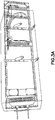
- Figure 3A depicts the four electrical resistivity devices held via the frame assembly over an anode.
- the frame was perforated such that the respective probes' position/orientation was adjustable in one inch increments, such that even with adjustment, the probes maintained their horizontal or vertical orientation, respectively.
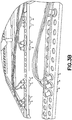
- Figure 3A depicts the general assembly, while Figure 3B is a close-up perspective side view the frame and some of the probes.
- the two larger instruments use separate DC power sources, capable of an output of 75A.
- the smaller probes share a DC power capable of an output of 20A.
- Each power source has an individual on/off switch, allowing for the measurements to be taken successively, one instrument being active at a time.
- Example 2 The assembly of Example 2 was first indexed on the anode side and one measurement was taken. The second measurement was a repeat measurement, changing nothing.
- the assembly was detached from the anode surface, and reset in the same location, using the indexing devices as guidance, making sure that the measurement is taken in the same location.
- a new set of three measurements was taken on the same anodes. Again the frame was indexed to the anode surface such that the measurement would be taken in the same location as previously. The three measurements were taken as the ones in the first set, with one exception. After detaching the frame from the anode surface, for the third measurement, the frame was intentionally repositioned with a shift of approximately 0.5 inches from the previous location.
- the anode variation and the pattern variation compete as the largest source of variation, depending on probe and anode states, baked vs. green.
- the small top instrument measurements on baked anodes Reset and repeatability standard deviations are low relative to the other sources. Without being bound to a particular mechanism or theory, this indicates that the instruments can be used to detect within the anode and between anodes differences due to assignable causes.
- the larger probes, H and V show lower reset and repeatability variation than the smaller instruments, T and B. Without being bound to a particular mechanism or theory, due to the believed heterogeneity of the anodes, this result was expected.
- Example 4 Comparison of Core Instrument to Instrument of Example 2
- the standardized measurement's precision on measuring electrical resistivity of baked cores was compared to the precision of the device of Example 2.
- the total test errors were calculated. This was computed as the statistical sum of the repeatability and reproducibility.
- the reproducibility term is calculated from measurements taken at the same location within short order, with the instrument pulled back, then re-positioned onto the same anode. This is basically setup reproducibility, and the customary measurement of the same material by a different operator using a different instrument has little relevance for this application. Based on the above, the total test errors have been calculated and the results are presented in Table III. Table III: Total test error and coefficient of variation, by probe.
- the total test error for the two larger probes appears to be roughly half of that of the standard core instrument.
- the smaller probes (T, B) show a slightly inferior test error. Without being bound to a particular mechanism or theory, one explanation is that these measurements were taken manually, and may have lacked a consistent pressure on the contact points. Thus, based on this comparison, it is expected that even the smaller probes are going to be at least as good as the current standard core measurement instrument from a precision point of view.
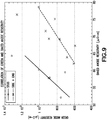
- Figure 9 depicts the resistivity for both the baked and green anodes.
- Figure 11 depicts the coefficient of variation for the baked and green anode measurements. Referring to Figure 11 , the CV is higher for the green anode measurements. Without being bound to a particular mechanism or theory, this was expected as the pitch is essentially non-conductive, so that in the green anodes, conductivity was limited to contacts between the coke particles.
- measuring the electrical resistivity in the green anodes will provide a more sensitive measure of the structural variations brought about by the anode manufacturing process.
- One source of possible error in these measurements of Figure 10 and 11 is the manual indexing of these small scale measurements may have resulted in a lower overall precision, or a calculation error may have resulted from a typographical error with the current amperage of the green anodes.
- Example 6 Electrical Resistivity as a Function of Pitch Content in Anode Composition
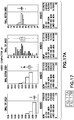
- the graphs depicted in Figure 17 illustrate the anode heterogeneity in the forming process and after the baking process, as exposed by the electrical resistivity measurements (all measurements in ⁇ m). With reference to Figure 17 , it is noted that all four top measurements are smaller than any of the four bottom measurements. Also, it is noted that all of the electrical resistivity measurements on compactor #1 are smaller than the equivalent ones on compactor #2. For the baked anodes, the differences are not significant.
- a method for making green anodes, where the electrical resistivity measurements are utilized in order to optimize the amount of pitch in the anode composition (e.g. pitch to coke).
- the method provides: forming a first green anode from an anode composition having a first pitch content, the first anode having a first electrical resistivity; forming a second green anode, the anode composition having a second pitch, the second anode having a second electrical resistivity, where the second pitch is different than the first pitch (e.g. higher or lower pitch wt. %), and obtaining the first electrical resistivity and the second electrical resistivity (e.g. from a measured voltage drop from which the measured electrical resistivity is measured); and comparing the first electric resistivity to the second resistivity.
- the first electrical resistivity is lower than the second electrical resistivity, revert to the first pitch content of the anode composition.
- the method comprises forming a third green anode, the anode composition having a third pitch, the third anode having a third electrical resistivity, where the third pitch is different from the first pitch and closer to the first pitch wt. % than the second pitch wt. %, and reiterate the previous steps, but for this variation (i.e. obtaining resistivities, and comparing the resistivities as set out above, to generate an action - change pitch (increase or decrease) or maintain pitch),
- the first electrical resistivity is higher than the second electrical resistivity, revert to the second pitch content (wt. %) of the anode composition.
- the method comprises forming a fourth green anode, the anode composition having a fourth pitch, the fourth anode having a fourth electrical resistivity, where the fourth pitch is different from the second pitch and is closer to the second pitch than the first pitch wt. %, and reiterate the previous steps, but for this variation (i.e. obtaining resistivities, and comparing the resistivities as set out above, to generate an action - change pitch (increase or decrease) or maintain pitch).
- first anode is also understood to refer to a first group of anodes (second anode as second group of anodes, third anode as third group of anodes, fourth anode as fourth group of anodes, and so on), with the electrical resistivity measurements referring to a statistical summary of the same for the corresponding group (e.g. mean value, mean square value, median value, etc.).
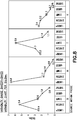
- the second pitch is higher than the first pitch, so the third pitch is selected to be lower than the first pitch. In some embodiments, the second pitch is lower than the first pitch, so the third pitch is selected to be higher than the first pitch. Based on the trend depicted in Figure 16 , an iterative change in pitch content (followed by wt. %) and electrical resistivity measurement can be used to determine the optimum pitch for an anode production process operation, for that particular formulation, equipment set up, and anode composition (e.g. butt content, percent of volatiles in the pitch, % granulometry, etc.).
- anode composition e.g. butt content, percent of volatiles in the pitch, % granulometry, etc.
- electrical resistivity measurements are taken from anodes at least one of various locations along the anode production process, In one embodiment, electrical resistivity measurements are taken on each (or a group of) green anodes immediately after forming (while still hot from forming process). In one embodiment, electrical resistivity measurements are taken on each (or a group of) green anodes immediately after cool down from the forming step.
- the method comprises a repeat step to continue determining electrical resistivity and continue correlating the same against the target electrical resistivity to monitor whether an adjustment is needed).
- each anode (green or baked) is lifted from the production line via a stand (e.g. made of electrically insulated materials) and configured to measure the electrical resistivity via an electrical resistivity device or permit such device(s) with accompanying frame to measure the same.
- the frame is adjustable.
- the frame is rigid.
- each anode (green or baked) is rolled onto electrically insulated materials (e.g. plastic rollers, non-conductive rollers) that are located in-line in order to obtain electrical resistivity measurements.
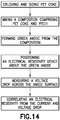
- an exemplary flow path of anode production is depicted.
- coke is crushed and sized into the appropriate size fraction(s).
- Some recipes for the anode composition call for various sized fractions (e.g. course, intermediate, fine, extra-fine), some for two or more (e.g. three, four) different size fractions of coke.
- the anode composition is mixed, with a ratio of coke to pitch.
- the ratio of coke to pitch (and/or binder content) impacts the resulting anode quality.
- the composition includes: coke and pitch (either coal tar or petroleum pitch, or a mix); and/or optional additives.
- additives include: paste scrap, or green anode scrap, recycled crushed used anodes, also known as anode butts, and combinations thereof.
- the composition (first composition) is mixed to combine or blend the components.
- Non-limiting examples of mixing include: mechanical stirrers, shaking the vessel holding the composition, or other stirring mechanisms to combine the components.
- the mixing energy (frequency, mixing time, etc) is adjusted (increased or decreased) such that the resulting mixture is blended (e.g. homogeneously).
- a green anode is formed from the composition.
- the green anode can be pressed or vibrocompacted into the green anode form.
- the vibrocompactor includes additional components which are configured to apply pressure to certain parts of the compactor.
- the resulting green anode is baked (e.g. in an oven) in order transform the green anode of a first composition into a monolithic block of coke.
- the baking step removes volatile components present in the green anode and further densifies the anode components (e.g. increasing the real density, reducing the electrical resistivity).
- a method comprising: mixing a composition comprising coke and pitch; forming a green anode from the composition; measuring one or more voltage drop across the green anode surface via an electrical resistivity device; and correlating one or more electrical resistivities from the current and voltage drop.
- a method comprising: crushing and sizing the coke; mixing a composition comprising coke and pitch; forming a green anode from the composition; positioning an electrical resistivity device about the green anode (e.g. along the surface of the green anode to define at least one electrical current path); directing current across the anode surface between two current probes of the device; and measuring one or more voltage drop(s) across the anode surface via two electrical probes (e.g. wherein the electrical probes are located between the current probes and in spaced relation from each other); and correlating one or more electrical resistivities from the current and voltage drop.
- the anode surface comprises a top, a bottom, a side, across a corner, across a stub hole, inside of a stub hole (e.g. in the flutes, or internal ridges of the stub hole, and/or the depressions in the stub hole), etc.
- one or more of the aforementioned methods include the step of comparing the measured electrical resistivity to a target electrical resistivity. In some embodiments, one or more of the aforementioned methods comprise the step of adjusting, based on the comparing step, at least one of the anode production parameters: e.g. the mixing step or the forming step.
- adjusting comprises changing the coke to pitch ratio. In one embodiment, the adjusting step comprises increasing the amount of coke relative to the amount of pitch in the composition (e.g. a second composition, which is different than the first composition). In one embodiment, the adjusting step comprises decreasing the amount of coke relative to the amount of pitch in the composition (e.g. a second composition, which is different than the first composition).
- the adjusting step comprises increasing the mixing time, mixing rpm (e.g. with a stirrer or stir bar), or amount of agitation via mixing.
- the adjusting step comprises changing the anode granulometry (e.g. changing the ratio of coke fractions, including the amount of coarse, fine, and/or super fine materials).
- the adjusting step comprises: changing one or more of the forming parameters; increasing the pressure during the forming (e.g. pressing) step; decreasing the pressure during the forming (e.g. pressing) step; increasing the dwell time during the forming step; decreasing the dwell time during the forming step; increasing the number of pressing cycles; decreasing the number of pressing cycles; increasing the vibration frequency of the vibrocompactor; decreasing the vibration frequency of the vibrocompactor; and combinations thereof.
- the method comprises, setting a baking step in accordance with the green anode resistivity.
- the baking step comprises: increasing the bake time, decreasing the bake time, increasing the bake temperature, decreasing the bake temperature, or positioning the green anode differently within the oven (e.g. different heat flux at center vs. ends of oven) in accordance with the green anode resistivity measurement in order to provide a final baked anode with a desired electrical resistivity and density.
- one or more of the crushing and sizing; mixing; forming; positioning; measuring; correlating; comparing; and adjusting steps are completed in an automated manner (e.g. via a feedback loop on a computer and an automated assembly line of an anode manufacturing process).
- a specifically designed computer is configured to receive multiple electrical resistivity measurements from a green electrode (e.g. anode) and incorporate the measurements in order to provide an anode map (e.g. depicting inhomogeneities) indicative of the anode quality (high, medium, low, pass/no pass).
- a green electrode e.g. anode
- an anode map e.g. depicting inhomogeneities
- a specifically designed computer is configured to monitor (monitoring) an anode production process by comparing electrical resistivity measurement(s) obtained for each anode (or group of anodes) in a production process (e.g. after forming green anode while still warm, after cooling the green anode as it exits from the forming process, and/or after baking to transform the green form into the final, baked anode), and if the measured electrical resistivity values are not within the target electrical resistivity values, adjust the production process (e.g. adjust the anode processing parameters: anode composition, anode mixing process, anode forming process, or anode baking process).
- electrical resistivity measurement(s) obtained for each anode (or group of anodes) in a production process e.g. after forming green anode while still warm, after cooling the green anode as it exits from the forming process, and/or after baking to transform the green form into the final, baked anode
- adjust the production process e.g. adjust the
- the specifically programmed computer operates in a continuous, real-time process monitoring and adjusting, if necessary, the anode production process. In some embodiments, the specifically programmed computer operates in a periodic, real-time process in monitoring and adjusting, if necessary, the anode production process. In some embodiments, the specifically designed computer is configured to monitor/review historical anode data (e.g. electrical resistivity measurements) in order to identify equipment to be serviced and/or replaced, or to evaluate operator performance. In some embodiments, the specifically designed computer is configured to correlate performance data of the final baked anodes with the data for the anodes produced in a particular production line to identify additional improvements and/or variables in processing parameters and anode characteristics.
- historical anode data e.g. electrical resistivity measurements
- Computer architecture The inventive computer methods and the computer systems/machines of the instant invention utilize various computer machines. However, not all of these computer machines may be required to practice the invention, and variations in the arrangement and type of the components may be made without departing from the spirit or scope of the invention.
- the computer systems/machines of the instant invention host a large number of members and concurrent transactions.
- the computer systems/machines of the instant invention are based on scalable computer and network architectures that incorporate varies strategies for assessing the data, caching, searching, and database connection pooling.
- the exemplary scalable architecture is an architecture that is capable of operating multiple servers.
- the computing system/machines in accordance with the instant invention may include, but not limiting to, one or more programmed computers, systems employing distributed networking, or other type of system that might be used to transmit and process electronic data.
- client devices e.g., computers, mobile device, etc.
- AOS's users include virtually any computing device capable of receiving and sending a message over a network to and from another computing device, such as servers, each other, and the like.
- the set of such devices includes devices that typically connect using a wired communications medium such as personal computers, multiprocessor systems, microprocessor-based or programmable consumer electronics, network PCs, and the like.
- the set of such devices also includes devices that typically connect using a wireless communications medium such as cell phones, smart phones, pagers, walkie talkies, radio frequency (RF) devices, infrared (IR) devices, CBs, integrated devices combining one or more of the preceding devices, or virtually any mobile device, and the like.
- client devices are any device that is capable of connecting using a wired or wireless communication medium such as a PDA, POCKET PC, wearable computer, and any other device that is equipped to communicate over a wired and/or wireless communication medium.
- the client devices are further configured to receive a message from the another computing device employing another mechanism, including, but not limited to email, Short Message Service (SMS), Multimedia Message Service (MMS), instant messaging (IM), internet relay chat (IRC), mIRC, Jabber, and the like.
- SMS Short Message Service
- MMS Multimedia Message Service
- IM instant messaging
- IRC internet relay chat
- Jabber Jabber
- the utilized networks can be configured to couple one computing device to another computing device to enable them to communicate.
- the exemplary networks are enabled to employ any form of computer readable media for communicating information from one electronic device to another.
- the networks can include a wireless interface, and/or a wired interface, such as the Internet, in addition to local area networks (LANs), wide area networks (WANs), direct connections, such as through a universal serial bus (USB) port, other forms of computer-readable media, or any combination thereof.
- LANs local area networks
- WANs wide area networks
- USB universal serial bus
- a router acts as a link between LANs, enabling messages to be sent from one to another.
- communication links within LANs typically include twisted wire pair or coaxial cable, while communication links between networks may utilize analog telephone lines, full or fractional dedicated digital lines including T1, T2, T3, and T4, Integrated Services Digital Networks (ISDNs), Digital Subscriber Lines (DSLs), wireless links including satellite links, or other communications links known to those skilled in the art.
- ISDNs Integrated Services Digital Networks
- DSLs Digital Subscriber Lines
- satellite links or other communications links known to those skilled in the art.
- remote computers and other related electronic devices could be remotely connected to either LANs or WANs via a modem and temporary telephone link.
- the exemplary network can includes any communication method by which information may travel between client devices and servers.
- each of the client devices comprises a computer-readable medium, such as a random access memory (RAM) coupled to at least one processor.
- the processor executes computer-executable program instructions stored in non-transient memory.
- processors comprise a microprocessor, an ASIC, and state machines.
- processors comprise, or are be in communication with, media, for example computer-readable media, which stores instructions that, when executed by the processor, cause the processor to perform the steps described herein.
- Computer-readable media include, but are not limited to, an electronic, optical, magnetic, or other storage or transmission device capable of providing a processor with computer-readable instructions.
- suitable media include, but are not limited to, a floppy disk, CD-ROM, DVD, magnetic disk, memory chip, ROM, RAM, an ASIC, a configured processor, all optical media, all magnetic tape or other magnetic media, or any other medium from which a computer processor can read instructions.
- various other forms of computer-readable media transmit or carry instructions to a computer, including a router, private or public network, or other transmission device or channel, both wired and wireless.
- the instructions comprise code from any computer-programming language, including, for example, C, C++, C#, Visual Basic, Java, Python, Perl, and JavaScript.
- the client devices also include a number of external or internal devices such as a mouse, a CD-ROM, DVD, a keyboard, a display, or other input or output devices.
- client devices are personal computers, digital assistants, personal digital assistants, cellular phones, mobile phones, smart phones, pagers, digital tablets, laptop computers, Internet appliances, and other processor-based devices.
- a client device is any type of processor-based platform that is connected to a network and that interacts with one or more application programs of the instant invention.
- Client devices and AOS application can operate on any operating system capable of supporting a browser or browser-enabled application, such as MicrosoftTM, WindowsTM, or Linux.
- the client devices include, for example, personal computers executing a browser application program such as Microsoft Corporation's Internet ExplorerTM, Apple Computer, Inc.'s SafariTM, Mozilla Firefox, and Opera.
Landscapes
- Chemical & Material Sciences (AREA)
- Chemical Kinetics & Catalysis (AREA)
- Electrochemistry (AREA)
- Organic Chemistry (AREA)
- Metallurgy (AREA)
- Materials Engineering (AREA)
- Engineering & Computer Science (AREA)
- General Physics & Mathematics (AREA)
- Physics & Mathematics (AREA)
- Health & Medical Sciences (AREA)
- Immunology (AREA)
- Pathology (AREA)
- General Health & Medical Sciences (AREA)
- Biochemistry (AREA)
- Analytical Chemistry (AREA)
- Life Sciences & Earth Sciences (AREA)
- Battery Electrode And Active Subsutance (AREA)
- Investigating Or Analyzing Materials By The Use Of Electric Means (AREA)
Claims (15)
- Verfahren zum Messen des elektrischen Widerstands einer grünen Anode, das Folgendes umfasst:Bestimmen eines gemessenen Spannungsabfalls über eine Oberfläche einer grünen Anode hinweg mittels einer Vorrichtung für elektrischen Widerstand, die positioniert ist, um die Oberfläche der grünen Anode zu berühren;Korrelieren eines gemessenen elektrischen Widerstands aus dem Spannungsabfall;Vergleichen des gemessenen elektrischen Widerstands mit einem elektrischen Zielwiderstand; undEinstellen, basierend auf dem Vergleichsschritt, wenigstens eines der Anodenverarbeitungsparameter.
- Verfahren nach Anspruch 1, wobei das Einstellen aus der Gruppe ausgewählt ist, die aus Folgendem besteht: Ändern eines Verhältnisses von Pech zu Koks; Ändern einer Mischzeit; Ändern einer Mischdrehzahl; Ändern einer Menge von Agitation mittels Mischen; Ändern der Anodengranulometrie; Ändern eines oder mehrerer der Ausbildungsparameter, wobei die Ausbildungsparameter vorzugsweise eine Temperatur, eine Zykluszeit, ein angelegter Druck, eine Verweilzeit für eine Druckanwendung, eine Vibrationsfrequenz, eine Vibrationsamplitude, ein Vakuum, ein Balgdruck und Kombinationen davon sind.
- Verfahren nach Anspruch 1 oder 2, wobei der Korrelier-, der Vergleichs- und der Einstellschritt mittels eines speziell programmierten Computers abgeschlossen werden.
- Verfahren nach einem der Ansprüche 1-3, wobei das Verfahren ferner ein Anzeigen einer Qualität der grünen Anode mittels des gemessenen elektrischen Widerstands umfasst.
- Verfahren nach einem der Ansprüche 1-3, das ferner das Anzeigen einer Qualität der grünen Anode mittels eines speziell konstruierten Computers umfasst.
- Verfahren nach Anspruch 1, das ferner die folgenden Schritte umfasst:Mischen einer ersten Zusammensetzung, die Folgendes umfasst:
eine Menge an Koks und eine Menge an Pech;Ausbilden einer grünen Anode in einer Form, die die erste Zusammensetzung darin aufweist;Positionieren einer Vorrichtung für elektrischen Widerstand um die grüne Anode herum, um wenigstens einen Pfad von elektrischem Strom zu definieren, wobei die Vorrichtung für elektrischen Widerstand Folgendes umfasst:wenigstens zwei Sonden, die angepasst sind, um einen Abschnitt der Anodenoberfläche der Anode zu berühren, und konfiguriert sind, um den Spannungsabfall über den Strompfad hinweg zu messen; undwenigstens eine elektrische Stromquelle, die in einer beabstandeten Beziehung von den wenigstens zwei Sonden positioniert ist, wobei die Stromquelle angepasst ist, um einen anderen Abschnitt der Oberfläche zu berühren, wobei die Stromquelle konfiguriert ist, um einen elektrischen Strom von einem Stromeingang durch den Anodenkörper an den Stromausgang zu übertragen; undEinstellen, basierend auf dem Vergleichsschritt, des Mischschritts und/oder des Ausbildeschritts. - Verfahren nach Anspruch 6, wobei mehrere Vorrichtungen für elektrischen Widerstand um die grüne Anode herum positioniert sind und jede Vorrichtung für elektrischen Widerstand konfiguriert ist, um eine Anodenoberfläche zu berühren, um einen Pfad von elektrischem Strom pro Vorrichtung für elektrischen Widerstand zu definieren; und
wobei das Verfahren ferner ein Bereitstellen einer Anodenkarte umfasst, die elektrischen Widerstand anzeigt, die aus den gemessenen Messungen des elektrischen Widerstands für verschiedene Abschnitte auf der grünen Anode zusammengestellt wird. - Verfahren nach Anspruch 6, wobei das Bestimmen Folgendes umfasst:
Lenken eines Stromausgangs von maximal 5 A von dem Stromeingang zu dem Stromausgang. - Verfahren nach Anspruch 6 oder 8, wobei der Ausbildungsschritt Folgendes umfasst:Gießen der ersten Zusammensetzung in eine Form undPressen der ersten Zusammensetzung in der Form, um eine grüne Anode auszubilden, wobei der Pressschritt vorzugsweise eine Vibrationsverdichtung umfasst.
- Verfahren nach Anspruch 7, wobei das Positionieren entweder:a) das Positionieren von wenigstens vier Vorrichtungen für elektrischen Widerstand auf einer Anodenoberfläche umfasst, um Messungen des elektrischen Widerstands in einer oberen, unteren, horizontalen und vertikalen Richtung entlang der Anodenoberfläche zu erhalten; oderb) ferner das Positionieren wenigstens einer der mehreren Vorrichtungen für elektrischen Widerstand umfasst, um eine Messung des elektrischen Widerstands über zwei Seiten der grünen Anode mittels Positionieren einer der elektrischen Sonden und des Stromeingangs orthogonal von der anderen elektrischen Sonde und dem Stromausgang bereitzustellen.
- Verfahren nach Anspruch 7, wobei der Positionierungsschritt über eine Ecke der grünen Anode verläuft oder über zwei gegenüberliegende Seiten der grünen Anode verläuft.
- Verfahren nach Anspruch 7 oder 11, wobei der Positionier-, der Korrelier-, der Bestimm- und der Bereitstellschritt an grünen Anoden in einer Anodenfertigungslinie abgeschlossen werden.
- Verfahren nach Anspruch 7, wobei das Bestimmen ferner ein elektrisches Steuersystem umfasst, das konfiguriert ist, um jede der mehreren Vorrichtungen für elektrischen Widerstand nacheinander zu aktivieren, um Messungen des elektrischen Widerstands für jede Vorrichtung für elektrischen Widerstand auf der grünen Anode zu erhalten.
- Verfahren nach einem der Ansprüche 7 oder 10-13, wobei der Positionier-, der Korrelier-, der Bestimm- und der Bereitstellschritt mittels eines speziell programmierten Computers durchgeführt werden, der konfiguriert ist, um in elektrischer Kommunikation mit den mehreren Vorrichtungen für elektrischen Widerstand zu stehen.
- Verfahren nach Anspruch 14, das ferner das Anzeigen einer Qualität der grünen Anode mittels des speziell konstruierten Computers umfasst.
Applications Claiming Priority (3)
| Application Number | Priority Date | Filing Date | Title |
|---|---|---|---|
| US201261747742P | 2012-12-31 | 2012-12-31 | |
| US201361783933P | 2013-03-14 | 2013-03-14 | |
| PCT/US2013/077597 WO2014105864A1 (en) | 2012-12-31 | 2013-12-23 | Methods for determining green electrode electrical resistivity and methods for making electrodes |
Publications (3)
| Publication Number | Publication Date |
|---|---|
| EP2938757A1 EP2938757A1 (de) | 2015-11-04 |
| EP2938757A4 EP2938757A4 (de) | 2016-10-05 |
| EP2938757B1 true EP2938757B1 (de) | 2021-08-04 |
Family
ID=51016270
Family Applications (1)
| Application Number | Title | Priority Date | Filing Date |
|---|---|---|---|
| EP13867872.7A Active EP2938757B1 (de) | 2012-12-31 | 2013-12-23 | Verfahren zur bestimmung des elektrischen widerstands grüner elektroden |
Country Status (5)
| Country | Link |
|---|---|
| US (1) | US9416458B2 (de) |
| EP (1) | EP2938757B1 (de) |
| CN (1) | CN104919090B (de) |
| CA (1) | CA2894555C (de) |
| WO (1) | WO2014105864A1 (de) |
Families Citing this family (13)
| Publication number | Priority date | Publication date | Assignee | Title |
|---|---|---|---|---|
| US10281421B2 (en) * | 2014-02-14 | 2019-05-07 | Universite Du Quebec A Chicoutimi | Method for analyzing an anode and device thereof |
| WO2016029306A1 (en) | 2014-08-29 | 2016-03-03 | Rio Tinto Alcan International Limited | Determining dosing of binding agent for combining with particulate material to produce an electrode |
| US10161963B2 (en) * | 2015-08-17 | 2018-12-25 | Chaojiong Zhang | Electrical contact and testing apparatus |
| EP3433893B1 (de) * | 2016-03-21 | 2021-12-08 | Energizer Brands, LLC | Alkalibatterie |
| CN107607786B (zh) * | 2017-08-10 | 2019-12-20 | 中国铝业股份有限公司 | 一种铝电解阳极炭块电阻率快速测量方法及装置 |
| KR102204699B1 (ko) * | 2018-01-31 | 2021-01-18 | 주식회사 엘지화학 | 이차전지 안전성 평가 방법 및 장치 |
| CN113540571A (zh) * | 2020-04-21 | 2021-10-22 | 北京新能源汽车股份有限公司 | 一种锂离子电池制备方法和锂离子电池 |
| EP4237838A4 (de) * | 2020-10-28 | 2025-06-18 | Elysis Limited Partnership | Nachweis von thermitreaktionen in einer elektrolysezelle |
| CN113051803A (zh) * | 2021-04-16 | 2021-06-29 | 哈尔滨理工大学 | 一种生产过程中的电缆线芯电阻检测方法 |
| CN115128131A (zh) * | 2022-07-30 | 2022-09-30 | 开封平煤新型炭材料科技有限公司 | 一种基于电阻率测量的石墨电极无损探伤仪 |
| CN116466136B (zh) * | 2023-03-03 | 2025-07-15 | 哈尔滨工业大学 | 一种导电沥青混合料导电性的评价方法 |
| CN116429839A (zh) * | 2023-04-14 | 2023-07-14 | 索通发展股份有限公司 | 预焙阳极炭块内部裂纹检测系统及检测方法 |
| FR3157936A1 (fr) * | 2024-01-02 | 2025-07-04 | Electricite De France | procédé de contrôle non destructif de conformité d’une pièce composée de matériau conducteur, dispositif, système et programme d’ordinateur correspondant. |
Family Cites Families (4)
| Publication number | Priority date | Publication date | Assignee | Title |
|---|---|---|---|---|
| US3735253A (en) * | 1971-09-23 | 1973-05-22 | Aluminium Comp | Method and means for measuring electrode resistance |
| AU679118B2 (en) * | 1993-08-03 | 1997-06-19 | University Of Maryland At College Park, The | Detecting flaws in a carbon anode |
| WO2005057227A1 (en) * | 2003-12-12 | 2005-06-23 | B.D.H. Industries Inc. | System and method to forecast the electrical conductivity of anodes for aluminum production before baking |
| CN101922022A (zh) * | 2010-08-03 | 2010-12-22 | 湖南晟通科技集团有限公司 | 一种降低预焙阳极电阻率的方法 |
-
2013
- 2013-12-23 CN CN201380068668.3A patent/CN104919090B/zh active Active
- 2013-12-23 EP EP13867872.7A patent/EP2938757B1/de active Active
- 2013-12-23 US US14/139,444 patent/US9416458B2/en active Active
- 2013-12-23 CA CA2894555A patent/CA2894555C/en active Active
- 2013-12-23 WO PCT/US2013/077597 patent/WO2014105864A1/en not_active Ceased
Also Published As
| Publication number | Publication date |
|---|---|
| CN104919090B (zh) | 2018-03-13 |
| CN104919090A (zh) | 2015-09-16 |
| EP2938757A1 (de) | 2015-11-04 |
| CA2894555C (en) | 2017-11-28 |
| US20140183770A1 (en) | 2014-07-03 |
| WO2014105864A1 (en) | 2014-07-03 |
| US9416458B2 (en) | 2016-08-16 |
| EP2938757A4 (de) | 2016-10-05 |
| CA2894555A1 (en) | 2014-07-03 |
Similar Documents
| Publication | Publication Date | Title |
|---|---|---|
| EP2938757B1 (de) | Verfahren zur bestimmung des elektrischen widerstands grüner elektroden | |
| CN111751313B (zh) | 一种单点校准测量系统的测量不确定度的评定方法 | |
| Malkow et al. | EU harmonised test procedure: electrochemical impedance spectroscopy for water electrolysis cells | |
| KR20210149795A (ko) | 이차전지 검사 방법 및 이차전지 검사 장치 | |
| US3735253A (en) | Method and means for measuring electrode resistance | |
| US10281421B2 (en) | Method for analyzing an anode and device thereof | |
| CN114487785B (zh) | 一种焊点电-热迁移试验方法 | |
| RU2686570C1 (ru) | Способ неразрушающей дефектоскопии анода алюминиевого электролизера | |
| CA2590482C (en) | System and method to forecast the electrical conductivity of anodes for aluminum production before baking | |
| CN108414842A (zh) | 一种含金属接缝矩形屏蔽腔体屏蔽效能评估方法 | |
| Andoh et al. | Measurement of the electric current distribution in an anode | |
| Mishurov et al. | Quality diagnostics of the baked anodes for aluminum electrolytic cells by non-destructive control method | |
| CN113791025B (zh) | 一种电偶型腐蚀传感器、制备方法及应用 | |
| CN120072873B (zh) | 一种固态铅电池极板加工方法 | |
| JP6161588B2 (ja) | 導電性粉体の評価方法 | |
| US6636055B2 (en) | Multifrequency equipment for sensing the state of electrodes in electric-arc furnaces | |
| Yusa et al. | Four-terminal measurement of the distribution of electrical resistance across stress corrosion cracking | |
| Lauzon-Gauthier et al. | A Database approach for predicting and monitoring baked anode properties | |
| RU2471019C1 (ru) | Способ контроля технологических параметров электролита алюминиевого электролизера | |
| Emad et al. | The in-line inspection of carbon anodes for aluminum production | |
| CN118777407A (zh) | 一种预焙阳极内部缺陷快速无损检测系统及方法 | |
| CN120473000A (zh) | 阳极导杆性能提升方法及相关设备 | |
| CN118759029A (zh) | 一种预焙阳极缺陷快速无损检测系统及方法 | |
| GB2116587A (en) | Production of carbon electrodes for electrolytic reduction cells | |
| Adéline et al. | Development of a Soft Sensor for Detecting Overpitched Anodes: Detailed Investigation of an Anode-Sticking Event |
Legal Events
| Date | Code | Title | Description |
|---|---|---|---|
| PUAI | Public reference made under article 153(3) epc to a published international application that has entered the european phase |
Free format text: ORIGINAL CODE: 0009012 |
|
| 17P | Request for examination filed |
Effective date: 20150728 |
|
| AK | Designated contracting states |
Kind code of ref document: A1 Designated state(s): AL AT BE BG CH CY CZ DE DK EE ES FI FR GB GR HR HU IE IS IT LI LT LU LV MC MK MT NL NO PL PT RO RS SE SI SK SM TR |
|
| AX | Request for extension of the european patent |
Extension state: BA ME |
|
| DAX | Request for extension of the european patent (deleted) | ||
| A4 | Supplementary search report drawn up and despatched |
Effective date: 20160902 |
|
| RIC1 | Information provided on ipc code assigned before grant |
Ipc: G01R 19/00 20060101ALI20160829BHEP Ipc: C22B 21/00 20060101ALI20160829BHEP Ipc: G01R 27/08 20060101ALI20160829BHEP Ipc: C04B 35/532 20060101ALI20160829BHEP Ipc: C25C 3/12 20060101AFI20160829BHEP Ipc: G01N 33/00 20060101ALI20160829BHEP Ipc: H01M 4/00 20060101ALI20160829BHEP Ipc: G06F 19/24 20110101ALI20160829BHEP |
|
| RAP1 | Party data changed (applicant data changed or rights of an application transferred) |
Owner name: ALCOA USA CORP. |
|
| GRAP | Despatch of communication of intention to grant a patent |
Free format text: ORIGINAL CODE: EPIDOSNIGR1 |
|
| STAA | Information on the status of an ep patent application or granted ep patent |
Free format text: STATUS: GRANT OF PATENT IS INTENDED |
|
| RIC1 | Information provided on ipc code assigned before grant |
Ipc: G01N 33/22 20060101ALI20210311BHEP Ipc: G01N 27/04 20060101ALI20210311BHEP Ipc: C25C 3/12 20060101AFI20210311BHEP |
|
| INTG | Intention to grant announced |
Effective date: 20210331 |
|
| GRAS | Grant fee paid |
Free format text: ORIGINAL CODE: EPIDOSNIGR3 |
|
| GRAA | (expected) grant |
Free format text: ORIGINAL CODE: 0009210 |
|
| STAA | Information on the status of an ep patent application or granted ep patent |
Free format text: STATUS: THE PATENT HAS BEEN GRANTED |
|
| AK | Designated contracting states |
Kind code of ref document: B1 Designated state(s): AL AT BE BG CH CY CZ DE DK EE ES FI FR GB GR HR HU IE IS IT LI LT LU LV MC MK MT NL NO PL PT RO RS SE SI SK SM TR |
|
| REG | Reference to a national code |
Ref country code: GB Ref legal event code: FG4D |
|
| REG | Reference to a national code |
Ref country code: AT Ref legal event code: REF Ref document number: 1417078 Country of ref document: AT Kind code of ref document: T Effective date: 20210815 |
|
| REG | Reference to a national code |
Ref country code: CH Ref legal event code: EP |
|
| REG | Reference to a national code |
Ref country code: DE Ref legal event code: R096 Ref document number: 602013078687 Country of ref document: DE |
|
| REG | Reference to a national code |
Ref country code: IE Ref legal event code: FG4D |
|
| REG | Reference to a national code |
Ref country code: NO Ref legal event code: T2 Effective date: 20210804 |
|
| REG | Reference to a national code |
Ref country code: LT Ref legal event code: MG9D |
|
| REG | Reference to a national code |
Ref country code: NL Ref legal event code: MP Effective date: 20210804 |
|
| REG | Reference to a national code |
Ref country code: AT Ref legal event code: MK05 Ref document number: 1417078 Country of ref document: AT Kind code of ref document: T Effective date: 20210804 |
|
| PG25 | Lapsed in a contracting state [announced via postgrant information from national office to epo] |
Ref country code: SE Free format text: LAPSE BECAUSE OF FAILURE TO SUBMIT A TRANSLATION OF THE DESCRIPTION OR TO PAY THE FEE WITHIN THE PRESCRIBED TIME-LIMIT Effective date: 20210804 Ref country code: RS Free format text: LAPSE BECAUSE OF FAILURE TO SUBMIT A TRANSLATION OF THE DESCRIPTION OR TO PAY THE FEE WITHIN THE PRESCRIBED TIME-LIMIT Effective date: 20210804 Ref country code: HR Free format text: LAPSE BECAUSE OF FAILURE TO SUBMIT A TRANSLATION OF THE DESCRIPTION OR TO PAY THE FEE WITHIN THE PRESCRIBED TIME-LIMIT Effective date: 20210804 Ref country code: PT Free format text: LAPSE BECAUSE OF FAILURE TO SUBMIT A TRANSLATION OF THE DESCRIPTION OR TO PAY THE FEE WITHIN THE PRESCRIBED TIME-LIMIT Effective date: 20211206 Ref country code: FI Free format text: LAPSE BECAUSE OF FAILURE TO SUBMIT A TRANSLATION OF THE DESCRIPTION OR TO PAY THE FEE WITHIN THE PRESCRIBED TIME-LIMIT Effective date: 20210804 Ref country code: ES Free format text: LAPSE BECAUSE OF FAILURE TO SUBMIT A TRANSLATION OF THE DESCRIPTION OR TO PAY THE FEE WITHIN THE PRESCRIBED TIME-LIMIT Effective date: 20210804 Ref country code: BG Free format text: LAPSE BECAUSE OF FAILURE TO SUBMIT A TRANSLATION OF THE DESCRIPTION OR TO PAY THE FEE WITHIN THE PRESCRIBED TIME-LIMIT Effective date: 20211104 Ref country code: AT Free format text: LAPSE BECAUSE OF FAILURE TO SUBMIT A TRANSLATION OF THE DESCRIPTION OR TO PAY THE FEE WITHIN THE PRESCRIBED TIME-LIMIT Effective date: 20210804 Ref country code: LT Free format text: LAPSE BECAUSE OF FAILURE TO SUBMIT A TRANSLATION OF THE DESCRIPTION OR TO PAY THE FEE WITHIN THE PRESCRIBED TIME-LIMIT Effective date: 20210804 |
|
| PG25 | Lapsed in a contracting state [announced via postgrant information from national office to epo] |
Ref country code: PL Free format text: LAPSE BECAUSE OF FAILURE TO SUBMIT A TRANSLATION OF THE DESCRIPTION OR TO PAY THE FEE WITHIN THE PRESCRIBED TIME-LIMIT Effective date: 20210804 Ref country code: LV Free format text: LAPSE BECAUSE OF FAILURE TO SUBMIT A TRANSLATION OF THE DESCRIPTION OR TO PAY THE FEE WITHIN THE PRESCRIBED TIME-LIMIT Effective date: 20210804 Ref country code: GR Free format text: LAPSE BECAUSE OF FAILURE TO SUBMIT A TRANSLATION OF THE DESCRIPTION OR TO PAY THE FEE WITHIN THE PRESCRIBED TIME-LIMIT Effective date: 20211105 |
|
| PG25 | Lapsed in a contracting state [announced via postgrant information from national office to epo] |
Ref country code: NL Free format text: LAPSE BECAUSE OF FAILURE TO SUBMIT A TRANSLATION OF THE DESCRIPTION OR TO PAY THE FEE WITHIN THE PRESCRIBED TIME-LIMIT Effective date: 20210804 |
|
| PG25 | Lapsed in a contracting state [announced via postgrant information from national office to epo] |
Ref country code: DK Free format text: LAPSE BECAUSE OF FAILURE TO SUBMIT A TRANSLATION OF THE DESCRIPTION OR TO PAY THE FEE WITHIN THE PRESCRIBED TIME-LIMIT Effective date: 20210804 |
|
| REG | Reference to a national code |
Ref country code: DE Ref legal event code: R097 Ref document number: 602013078687 Country of ref document: DE |
|
| PG25 | Lapsed in a contracting state [announced via postgrant information from national office to epo] |
Ref country code: SM Free format text: LAPSE BECAUSE OF FAILURE TO SUBMIT A TRANSLATION OF THE DESCRIPTION OR TO PAY THE FEE WITHIN THE PRESCRIBED TIME-LIMIT Effective date: 20210804 Ref country code: SK Free format text: LAPSE BECAUSE OF FAILURE TO SUBMIT A TRANSLATION OF THE DESCRIPTION OR TO PAY THE FEE WITHIN THE PRESCRIBED TIME-LIMIT Effective date: 20210804 Ref country code: RO Free format text: LAPSE BECAUSE OF FAILURE TO SUBMIT A TRANSLATION OF THE DESCRIPTION OR TO PAY THE FEE WITHIN THE PRESCRIBED TIME-LIMIT Effective date: 20210804 Ref country code: EE Free format text: LAPSE BECAUSE OF FAILURE TO SUBMIT A TRANSLATION OF THE DESCRIPTION OR TO PAY THE FEE WITHIN THE PRESCRIBED TIME-LIMIT Effective date: 20210804 Ref country code: CZ Free format text: LAPSE BECAUSE OF FAILURE TO SUBMIT A TRANSLATION OF THE DESCRIPTION OR TO PAY THE FEE WITHIN THE PRESCRIBED TIME-LIMIT Effective date: 20210804 Ref country code: AL Free format text: LAPSE BECAUSE OF FAILURE TO SUBMIT A TRANSLATION OF THE DESCRIPTION OR TO PAY THE FEE WITHIN THE PRESCRIBED TIME-LIMIT Effective date: 20210804 |
|
| PLBE | No opposition filed within time limit |
Free format text: ORIGINAL CODE: 0009261 |
|
| STAA | Information on the status of an ep patent application or granted ep patent |
Free format text: STATUS: NO OPPOSITION FILED WITHIN TIME LIMIT |
|
| 26N | No opposition filed |
Effective date: 20220506 |
|
| PG25 | Lapsed in a contracting state [announced via postgrant information from national office to epo] |
Ref country code: MC Free format text: LAPSE BECAUSE OF FAILURE TO SUBMIT A TRANSLATION OF THE DESCRIPTION OR TO PAY THE FEE WITHIN THE PRESCRIBED TIME-LIMIT Effective date: 20210804 Ref country code: IT Free format text: LAPSE BECAUSE OF FAILURE TO SUBMIT A TRANSLATION OF THE DESCRIPTION OR TO PAY THE FEE WITHIN THE PRESCRIBED TIME-LIMIT Effective date: 20210804 |
|
| REG | Reference to a national code |
Ref country code: CH Ref legal event code: PL |
|
| GBPC | Gb: european patent ceased through non-payment of renewal fee |
Effective date: 20211223 |
|
| PG25 | Lapsed in a contracting state [announced via postgrant information from national office to epo] |
Ref country code: SI Free format text: LAPSE BECAUSE OF FAILURE TO SUBMIT A TRANSLATION OF THE DESCRIPTION OR TO PAY THE FEE WITHIN THE PRESCRIBED TIME-LIMIT Effective date: 20210804 |
|
| REG | Reference to a national code |
Ref country code: BE Ref legal event code: MM Effective date: 20211231 |
|
| PG25 | Lapsed in a contracting state [announced via postgrant information from national office to epo] |
Ref country code: LU Free format text: LAPSE BECAUSE OF NON-PAYMENT OF DUE FEES Effective date: 20211223 Ref country code: IE Free format text: LAPSE BECAUSE OF NON-PAYMENT OF DUE FEES Effective date: 20211223 Ref country code: GB Free format text: LAPSE BECAUSE OF NON-PAYMENT OF DUE FEES Effective date: 20211223 |
|
| PG25 | Lapsed in a contracting state [announced via postgrant information from national office to epo] |
Ref country code: BE Free format text: LAPSE BECAUSE OF NON-PAYMENT OF DUE FEES Effective date: 20211231 |
|
| PG25 | Lapsed in a contracting state [announced via postgrant information from national office to epo] |
Ref country code: LI Free format text: LAPSE BECAUSE OF NON-PAYMENT OF DUE FEES Effective date: 20211231 Ref country code: CH Free format text: LAPSE BECAUSE OF NON-PAYMENT OF DUE FEES Effective date: 20211231 |
|
| REG | Reference to a national code |
Ref country code: DE Ref legal event code: R081 Ref document number: 602013078687 Country of ref document: DE Owner name: ALCOA USA CORP., PITTSBURGH, US Free format text: FORMER OWNER: KAISER ALUMINUM WARRICK, LLC, NEWBURGH, IN, US |
|
| PG25 | Lapsed in a contracting state [announced via postgrant information from national office to epo] |
Ref country code: HU Free format text: LAPSE BECAUSE OF FAILURE TO SUBMIT A TRANSLATION OF THE DESCRIPTION OR TO PAY THE FEE WITHIN THE PRESCRIBED TIME-LIMIT; INVALID AB INITIO Effective date: 20131223 |
|
| PG25 | Lapsed in a contracting state [announced via postgrant information from national office to epo] |
Ref country code: CY Free format text: LAPSE BECAUSE OF FAILURE TO SUBMIT A TRANSLATION OF THE DESCRIPTION OR TO PAY THE FEE WITHIN THE PRESCRIBED TIME-LIMIT Effective date: 20210804 |
|
| P01 | Opt-out of the competence of the unified patent court (upc) registered |
Effective date: 20230609 |
|
| P02 | Opt-out of the competence of the unified patent court (upc) changed |
Effective date: 20230617 |
|
| PG25 | Lapsed in a contracting state [announced via postgrant information from national office to epo] |
Ref country code: MK Free format text: LAPSE BECAUSE OF FAILURE TO SUBMIT A TRANSLATION OF THE DESCRIPTION OR TO PAY THE FEE WITHIN THE PRESCRIBED TIME-LIMIT Effective date: 20210804 |
|
| PG25 | Lapsed in a contracting state [announced via postgrant information from national office to epo] |
Ref country code: TR Free format text: LAPSE BECAUSE OF FAILURE TO SUBMIT A TRANSLATION OF THE DESCRIPTION OR TO PAY THE FEE WITHIN THE PRESCRIBED TIME-LIMIT Effective date: 20210804 |
|
| PG25 | Lapsed in a contracting state [announced via postgrant information from national office to epo] |
Ref country code: MT Free format text: LAPSE BECAUSE OF FAILURE TO SUBMIT A TRANSLATION OF THE DESCRIPTION OR TO PAY THE FEE WITHIN THE PRESCRIBED TIME-LIMIT Effective date: 20210804 |
|
| PGFP | Annual fee paid to national office [announced via postgrant information from national office to epo] |
Ref country code: IS Payment date: 20251219 Year of fee payment: 13 Ref country code: DE Payment date: 20251126 Year of fee payment: 13 |
|
| PGFP | Annual fee paid to national office [announced via postgrant information from national office to epo] |
Ref country code: NO Payment date: 20251121 Year of fee payment: 13 |
|
| PGFP | Annual fee paid to national office [announced via postgrant information from national office to epo] |
Ref country code: FR Payment date: 20251119 Year of fee payment: 13 |