EP2940541A2 - Sekuritisation einer altvorrichtung innerhalb eines microgrid-systems - Google Patents
Sekuritisation einer altvorrichtung innerhalb eines microgrid-systems Download PDFInfo
- Publication number
- EP2940541A2 EP2940541A2 EP15165414.2A EP15165414A EP2940541A2 EP 2940541 A2 EP2940541 A2 EP 2940541A2 EP 15165414 A EP15165414 A EP 15165414A EP 2940541 A2 EP2940541 A2 EP 2940541A2
- Authority
- EP
- European Patent Office
- Prior art keywords
- network
- microgrid
- security
- local
- bitw
- Prior art date
- Legal status (The legal status is an assumption and is not a legal conclusion. Google has not performed a legal analysis and makes no representation as to the accuracy of the status listed.)
- Withdrawn
Links
Images


Classifications
-
- H—ELECTRICITY
- H04—ELECTRIC COMMUNICATION TECHNIQUE
- H04L—TRANSMISSION OF DIGITAL INFORMATION, e.g. TELEGRAPHIC COMMUNICATION
- H04L63/00—Network architectures or network communication protocols for network security
- H04L63/02—Network architectures or network communication protocols for network security for separating internal from external traffic, e.g. firewalls
- H04L63/0209—Architectural arrangements, e.g. perimeter networks or demilitarized zones
-
- G—PHYSICS
- G05—CONTROLLING; REGULATING
- G05B—CONTROL OR REGULATING SYSTEMS IN GENERAL; FUNCTIONAL ELEMENTS OF SUCH SYSTEMS; MONITORING OR TESTING ARRANGEMENTS FOR SUCH SYSTEMS OR ELEMENTS
- G05B19/00—Program-control systems
- G05B19/02—Program-control systems electric
- G05B19/418—Total factory control, i.e. centrally controlling a plurality of machines, e.g. direct or distributed numerical control [DNC], flexible manufacturing systems [FMS], integrated manufacturing systems [IMS] or computer integrated manufacturing [CIM]
- G05B19/4185—Total factory control, i.e. centrally controlling a plurality of machines, e.g. direct or distributed numerical control [DNC], flexible manufacturing systems [FMS], integrated manufacturing systems [IMS] or computer integrated manufacturing [CIM] characterised by the network communication
- G05B19/41855—Total factory control, i.e. centrally controlling a plurality of machines, e.g. direct or distributed numerical control [DNC], flexible manufacturing systems [FMS], integrated manufacturing systems [IMS] or computer integrated manufacturing [CIM] characterised by the network communication by local area network [LAN], network structure
-
- H—ELECTRICITY
- H04—ELECTRIC COMMUNICATION TECHNIQUE
- H04L—TRANSMISSION OF DIGITAL INFORMATION, e.g. TELEGRAPHIC COMMUNICATION
- H04L63/00—Network architectures or network communication protocols for network security
- H04L63/02—Network architectures or network communication protocols for network security for separating internal from external traffic, e.g. firewalls
- H04L63/0227—Filtering policies
-
- H—ELECTRICITY
- H02—GENERATION; CONVERSION OR DISTRIBUTION OF ELECTRIC POWER
- H02J—ELECTRIC POWER NETWORKS; CIRCUIT ARRANGEMENTS OR SYSTEMS FOR SUPPLYING OR DISTRIBUTING ELECTRIC POWER; SYSTEMS FOR STORING ELECTRIC ENERGY
- H02J4/00—Circuit arrangements for mains or distribution networks not specified as AC or DC; Circuit arrangements for mains or distribution networks combining AC and DC sections or sub-networks
-
- Y—GENERAL TAGGING OF NEW TECHNOLOGICAL DEVELOPMENTS; GENERAL TAGGING OF CROSS-SECTIONAL TECHNOLOGIES SPANNING OVER SEVERAL SECTIONS OF THE IPC; TECHNICAL SUBJECTS COVERED BY FORMER USPC CROSS-REFERENCE ART COLLECTIONS [XRACs] AND DIGESTS
- Y02—TECHNOLOGIES OR APPLICATIONS FOR MITIGATION OR ADAPTATION AGAINST CLIMATE CHANGE
- Y02P—CLIMATE CHANGE MITIGATION TECHNOLOGIES IN THE PRODUCTION OR PROCESSING OF GOODS
- Y02P90/00—Enabling technologies with a potential contribution to greenhouse gas [GHG] emissions mitigation
- Y02P90/02—Total factory control, e.g. smart factories, flexible manufacturing systems [FMS] or integrated manufacturing systems [IMS]
Definitions
- the present disclosure relates to methods, devices, systems, and computer-readable media for legacy device securitization within a microgrid system.
- Microgrids enable aggregation of various types of generating and non-generating sources as a unified control unit.
- Microgrid control networks are connected to various external networks for a variety of reasons, for example Supervisory Control and Data Acquisition (SCADA) networks for demand-response applications and enterprise networks or the Internet for remote monitoring and control.
- SCADA Supervisory Control and Data Acquisition
- the present disclosure presents a cyber-security architecture that is based on a unique cyber-security strategy that, in some embodiments, can be achieved by hardware devices that provide strong cryptographic separation.
- Such a concept can provide a secure network of assured power enclaves (also called SNAPE) in some embodiments.
- Figure 3 illustrates an example of a computing device that can be utilized in the system according to one or more embodiments of the present disclosure.
- Microgrids are a collection of distributed energy resources (DERs), storage, and loads under common coordination and control to provide a single functional interface to enable its management as a single unit.
- a microgrid can be defined as a group of interconnected loads and distributed energy resources within clearly defined electrical boundaries that acts as a single controllable entity with respect to the grid.
- a microgrid can connect and disconnect from a larger grid structure (the grid or main grid) to enable it to operate in both grid-connected or island-mode (separated from the grid).
- microgrids can act as a single point of integration for generating (renewable and/or non-renewable) and non-generating sources.
- Microgrids accumulate all the generation capacity at a site and providers power to the local site not only in cases of blackouts but also in ancillary capacity to lower energy usage from the main grid.
- Microgrids are deployed in various types of organizations like military bases, hospitals, universities, residential communities, and government buildings for energy efficiency and security. Microgrids offer various types of deployments like a single microgrid providing power to a site, multiple microgrids functioning in isolation at a site, or multiple microgrids deployed as power enclaves where each enclave is served by a single microgrid unit but all these units are connected via electrical power lines for load balancing and communication lines for common control and coordination.
- microgrids and/or control centers are often connected to the Internet either directly or via a control center used to control the microgrid.
- control center to microgrid communications use Distributed Controls System (DCS) protocols like DNP3, ModBus, etc. or, for longer distances, IP based protocols or other suitable communication types can be used, for example.
- DCS Distributed Controls System
- IP based protocols or other suitable communication types can be used, for example.
- DCS IP protocols or TCP/IP protocol.
- microgrids are exposed to various cyber threats. Cyber attackers could potentially target a microgrid and attempt to disrupt site operations by launching cyber-attacks. Targeting microgrids would become more lucrative to attackers if they are installed on sensitive sites like military bases, hospitals, or sensitive government buildings.
- a cyber-security architecture that maintains network separation in microgrid communications to reduce the attack surface while improving the communications and security efficiency.
- the deployment architecture could be utilized by a military base where multiple power enclaves with secure communications can be envisioned.
- a microgrid system deployed based on the architecture described in the embodiments of the present disclosure could provide energy security and/or efficiency to the military base, thereby contributing to the energy security and/or net-zero goals of the government, for example.
- the architecture embodiments discussed herein can use cryptographic mechanisms to enforce strong separation between the networks and also provide strong cyber-security. Details of the proposed architecture embodiments are presented below.
- embodiments of the present disclosure can provide the following benefits:
- IEC International Electrotechnical Commission's
- IEC 61850 architecture for electric power systems is used for communications between power sub-stations. It can also be used for connecting power enclaves defined in the architecture embodiments of the present disclosure where multiple microgrids coordinate command and control.
- microgrid systems are being connected to external networks like enterprise networks and the Internet, the threat to these systems increases, significantly.
- Cyber attackers can attack microgrid power enclaves and compromise critical operations, for example, by exploiting vulnerabilities at the network, system, and/or applications level.
- microgrid deployments are planned with network and IT security that are not standards compliant.
- Many systems rely on perimeter protection while the internal systems were designed with lower security, intended to be part of a closed network. As such, achieving defense-in-depth in these microgrid systems or networks can be challenging.
- OPE Object Linking and Embedding
- OPC UA Process Control Unified Architecture
- DIACAP U.S. Department of Defense Information Assurance Certification and Accreditation Process
- the architecture embodiments of the present disclosure enable secure communications and control among multiple microgrid systems at a site, where each of the microgrids creates a power enclave.
- Figure 1 illustrates an example of a system for legacy device securitization used with a microgrid according to one or more embodiments of the present disclosure.
- Figure 1 presents an embodiment of an architecture from the communication, network, and system security point of view. It shows external communications of a system 100 with an enterprise network 101 and a local network 103 that connects to the microgrid.
- a system 100 includes a number of devices connected to several networks to provide control, monitoring, and access rights provisioning, among others possible functions.
- an enterprise network 101 includes a gateway 108 that provides connectivity to remote networks, a firewall 106 to provide some securitization of the enterprise network, a router 102 that connects to an enterprise virtual local area network (VLAN) 116 and a non-legacy device 118 (an enterprise building integrator (EBI) for providing energy management).
- VLAN virtual local area network
- EBI enterprise building integrator
- the network 101 includes two "Bump-In-The- Wire” (BITW) security devices 104-1 and 104-2. These devices are positioned within the system to insulate the other devices (e.g., in this example, the EBI and the devices of the control network 103) from access by an unwanted party via the enterprise VLAN 116 by providing a higher level of security and/or more up to date security than can be implemented on the legacy devices of the system.
- these BITW security devices e.g., 104-1, 104-2) can be in communication with each other via a separate network. In the example illustrated in Figure 1 , one BITW device is located between the firewall 106 and the router 102, while the other BITW is located between the EBI 118 and the enterprise VLAN 116.
- the enterprise network 101 is connected to the control network 103 via the gateway 108, thereby allowing the devices of network 101 and network 103 to communicate with each other.
- the control network 103 provides control functionality to the microgrid and includes a gateway/router 110 providing the functionalities of the devices 102 and 108 above for network 103.
- the network 103 also includes a local area network (LAN) 112 that allows for local microgrid devices 114 to communicate with each other and this LAN is connected to the gateway/router 110 to allow remote contact with these devices via other networks.
- Remote contact can, for example, come from the enterprise network 101 or via the VLAN 120 that connects the control network to one or more remote microgrid devices 122. Accordingly, BITW devices can be positioned to secure the devices of the system from these remote contacts.
- control network 103 can include a BITW security device 104-3 between the gateway/router 110 and the VLAN 120 that allows contact with the remote microgrid device 122.
- a BITW 104-N can be positioned between the remote microgrid device 122 and the VLAN 120 to provide security to that device.
- a "Bump-In-The- Wire” (BITW) security device e.g., devices 104-1, 104-2, 104-3, 104-N
- BITW Bus-In-The- Wire
- devices 104-1, 104-2, 104-3, 104-N are used herein.
- BITW Bit-In-The- Wire security device
- devices 104-1, 104-2, 104-3, 104-N is a device that is used to provide securitization of legacy equipment and/or microgrid devices that have low or no security functionality (e.g., cannot perform cryptographic operations into secure communications networks).
- BITW devices can, for example, have the ability to encrypt communications using various standard protocols to provide secure communications to the network. They also provide cryptographic isolation between the networks, so that the isolation does not depend on a physical network which is hard to track on complex networks.
- OPC UA can, for example, be utilized for implementing the communication backbone between one or more of the BITW security devices of the system.
- OPC UA is backward compatible with DCS protocols like IEC 61850, which are used for messaging, so its usage may be beneficial.
- OPC UA provides authentication and authorization services at the application layer. Details of these services are provided herein.
- Availability in the network can be provided by multiple separate mechanisms. For example, isolation of the control network from external networks ensures that the control network communication can meet low latency requirements and/or critical infrastructure components are not unavailable due to large latencies or disruptions caused by microgrid components being out of sync. Further, cryptographic protection of messages and network, as well as network firewalls can be used to ensure that attackers cannot compromise the network or launch Denial of Service (DoS) attacks against the network's components.
- DoS Denial of Service
- microgrid systems can be logged into the microgrid systems to enable auditing and forensic analysis. This, for example, helps in identifying anomalous behavior and/or also to perform root cause analysis, if an attack on the system is suspected. This can be accomplished by a computing device such as that illustrated in Figure 3 , as will be described in more detail below.
- the OPC UA integration with the architecture embodiments of the present disclosure to provide a secure communication backbone to the system is described below.
- the disclosure presents the OPC UA security model and some of its details to illustrate how the architecture embodiments can provide some of the security properties described above.
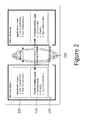
- FIG. 2 illustrates an example of how the functionalities of the system can be divided onto different layers according to one or more embodiments of the present disclosure.
- OPC UA is a standard that is published by the OPC foundation. It is an improvement of the previous standard called OPC classic.
- OPC UA builds upon OPC classic with several significant updates including an open platform architecture, built-in security model, and feature-rich data modeling. It is also backward compatible with standards like IEC-61850.
- OPC UA a suitable choice for integrating with the architecture embodiments of the present disclosure.
- the OPC UA security model is shown in Figure 2 .
- the model has three layers, the communication layer 228, the application layer 226, and the transport layer 230.
- a secure channel 232 is established for providing confidentiality and integrity to the communications between a client (e.g., microgrid device) and a server (e.g., BITW).
- Another feature that is supported is application authentication to allow only an authenticated application to participate in microgrid operations.
- user authentication and authorization can be provided to establish a secure session over a secure channel.
- OPC UA security model is comprehensive and offers multiple options for achieving the security properties in the communication and application layers.
- authentication can be achieved by several different means (e.g., username/password, an X.509v3 certificate, or a WS-SecurityToken).
- An International Telecommunication Union - X.509v3 certificate involves multiple asymmetric cryptographic operations that are computation intensive and may not be the most suitable for each authentication, for example, on resource constrained environments, but may be suitable in some applications.
- Username/passwords and WS security tokens are examples of technologies that can provide comparatively efficient authentication in the microgrid system. During system implementation, a comparison could be made between the different mechanisms with the real time requirements of the system and a selection of the most efficient form of authentication for the architecture embodiments of the present disclosure could be made.
- Authorization in the OPC UA security model is more open ended and can integrate already deployed authorization solutions. Since the architecture embodiments of the present disclosure are targeting microgrids, existing authorization mechanisms in the form of Access Control Lists (ACLs) can be integrated. This would provide fine grained authorization on microgrid system resources using existing mechanisms, in some embodiments.
- ACLs Access Control Lists
- confidentiality can be provided by encryption in the secure channel, message signatures for message integrity, and/or digital signatures for application authentication.
- the OPC UA stack provides multiple options to implement each security mechanism.
- the optimal combination of asymmetric and symmetric cryptographic algorithms in the architecture embodiments of the present disclosure can be selected to meet the performance requirements of the system.
- OPC UA is flexible and allows deployments to select any combination of these mechanisms to suit specific deployment environments.
- TLS Transport Layer Security
- symmetric algorithms for message integrity
- Figure 3 illustrates a computing device that can be utilized according to one or more embodiments of the present disclosure.
- a computing device 304 can have a number of components coupled thereto.
- the computing device 304 can include a processor 352 and a memory 354.
- the memory 354 can have various types of information including data 358 and executable instructions 356, as discussed herein.
- the processor 352 can execute instructions 356 that are stored on an internal or external non-transitory computer device readable medium (CRM).
- CRM computer device readable medium
- a non-transitory CRM can include volatile and/or non-volatile memory.
- Volatile memory can include memory that depends upon power to store information, such as various types of dynamic random access memory (DRAM), among others.
- DRAM dynamic random access memory
- Non-volatile memory can include memory that does not depend upon power to store information.
- Memory 354 and/or the processor 352 may be located on the computing device 304 or off of the computing device 304, in some embodiments.
- the computing device 304 can include a network interface having input and/or output capabilities (e.g., input 362 and output 364 connections). Such an interface can allow for processing on another networked computing device and/or can be used to obtain data and/or executable instructions for use with various embodiments provided herein.
- the computing device 304 can include a user interface 360 that allows a user to review instructions and/or data on the device 304.
- a user interface 360 that allows a user to review instructions and/or data on the device 304.
- Such an interface can be used to review access privileges to be given to a device, review instructions to be sent to a device, and/or data available on the device 304 or provided by another device, among other functions.
- An adversary can remotely access the microgrid and launch elevation of privilege to gain privileged rights on the microgrid system. It can then perform unauthorized operations to sabotage microgrid operations to disrupt critical infrastructure functionality.
- Mitigation embodiments of the present disclosure can implement a number of security controls to mitigate this threat.
- Network communication is secure which prevents from threats like session hijacking.
- Identity management with strong account management can be implemented to prevent account spoofing attacks; and embodiments of the present disclosure can implement access control on the microgrid system to prevent unauthorized access to resources and operations in the microgrids.
- Mitigation Authentication and access control protections on the microgrids prevent unauthorized access. As such, the case that an adversary could reach the control network and disrupt its operations is highly unlikely.
- An attacker can view sensitive information in the microgrid system which is either at rest on the system or is in transit during its exchange in the system.
- Mitigation The architecture embodiments of the present disclosure implement authentication and access control on the microgrid systems, so that only authorized entities in the system can view sensitive data. Additionally, information during transit is protected by using strong network security by encrypting the communication channels using TLS. These controls protect sensitive information at rest or in transit from unauthorized disclosure.
- Legacy devices in the microgrid system are not able to perform network encryption to create secure communication channels. Attackers can attack these channels to view sensitive information or to manipulate commands on the network.
- BITW Bump-In-The-Wire
- TLS Transport-In-The-Wire
- BITW devices can be DIACAP3 certified so that they provide strong and standards compliant network security irrespective of the end device capability.
- An attacker can install malware on the microgrid devices by various attacks like modifying the device firmware, or installing malware on the system.
- Embodiments of the present disclosure can provide multiple types of protection against this type of attack. For example, installing software or firmware on the device is a privileged action that only an administrator can perform. This would require an attacker to compromise the highly secure administrator accounts.
- integrity checks on the firmware or software are performed by validating the digital signatures on the firmware or software. Only firmware or software that passes the validity check is allowed to be installed on the microgrid system. These mechanisms protect against installing malware on the microgrid.
- BITW devices use of BITW devices is proposed for secure integration of legacy devices. This provides uniform security in the deployment network by enabling legacy devices to communicate using strong encryption algorithms.
- Another related tradeoff in embodiments of the present disclosure is that by performing logical network separation using BITW devices, the complexity and latency on the network could increase. However, logical separation offers the choice of cryptographic algorithms for network protection.
- Embodiments of the present disclosure propose use of TLS in the network for strong network protection. It also provides end device authentication and can be especially useful for sensitive installations. It also helps in achieving compliance with frameworks like DIACAP or DIARMF.
- PKI Public Key Infrastructure
- OPC UA can increase complexity and/or cost of system development. On the positive side, it can increase communication security by using standards based security. It also can provide a versatile and feature rich communication backbone for embodiments of the present disclosure.
- IPv6 IPv6 protocol for communications.
- Use of IPv6 can provide some benefits like making host scanning harder and/or identification from outside the network because of large number of possible IP addresses, end-to-end encryption, and more secure name resolution that can help in countering attacks like Address Resolution Protocol (ARP) poisoning.
- ARP Address Resolution Protocol
- architectural risk analysis can be performed using threat modeling and included security controls and mechanisms to address them and provide higher security.
- Embodiments of the present disclosure can be designed to provide all the above mentioned benefits that are provided by an IPv6 based network.
- IPv6 The deployment of the IPv6 technique is on a private network with strong perimeter protection.
- the secure firewalls disable network scanning and identification.
- end-to-end encryption can be provided, for example, using TLS.
- embodiments of the present disclosure can use BITW devices to provide end-to-end authentication on legacy devices.
- Architecture embodiments of the present disclosure can use TLS for network level authentication that can be configured for client and server mutual authentication. This can remove the possibility of an ARP attack on the system.
- decentralized peer-to-peer control architectures in the IPv6 technique would mean that each of the nodes is equally trusted and can even take over the functionality of other nodes which is typically supported for automatic recovery.
- this approach potentially opens new attack vectors in the system. The adversary can now compromise any one node and try to sabotage the system.
- the server In centralized model of the IPv6 technique, the server has much higher security than the client nodes. Maintaining trust in open decentralized peer-to-peer models is a hard problem and even controlled system deployments would inherit some of its threats if they are connected to the Internet.
- control and coordination is distributed to every node, it is not possible to segment the network and isolate them for higher security and performance; which is a functionality that is inherently supported and demonstrated in the embodiments of the present disclosure.
- the architecture proposed in the prior approaches assumes that all controller devices are newly deployed with the peer-to-peer capability inbuilt and there are no legacy devices. As such, it is unable to integrate legacy devices in its architecture.
- embodiments of the present disclosure have a method to integrate legacy devices in the system, since most of the network deployments may be incremental and have to integrate legacy devices in their deployments.
- IPv6 based networks can potentially open a number of security holes in deployments. If IPv6 and IPv4 are being run simultaneously, then IPv6 should be either tunneled over IPv4 or run independently.
- firewalls In tunneling mode, configuration issues can create security holes in the system. If both the protocols are run in parallel, firewalls have to be configured to filter IPv6 traffic, which is not very common.
- Some other issues in deployments using prior techniques include network trouble shooting, configuring firewalls, monitoring security logs, and secure configurations. Further, security operations center analysts must learn and apply new features for real time analysis, and network audit must be adapted to new security features. Most of the IPS/IDS tools do not effectively analyze and identify security vulnerabilities and attacks in IPv6 traffic leaving attack detection harder.
- the system for legacy device securitization within a microgrid includes a microgrid network having at least one remote network connection to a non-local network device and the network having at least one local legacy device in communication with the non-local network device and a bump-in-the-wire (BITW) security device between the local legacy device and the at least one remote connection.
- BITW bump-in-the-wire
- the microgrid network includes a gateway device that provides the at least one remote connection.
- the microgrid network can include a firewall established between the gateway device and the BITW security device.
- the microgrid network further includes a local area network between the BITW security device and the local legacy device.
- the local area network can have low or no security for the network. (e.g., this may have been an island type network at one time where security software was not necessary as the network was not accessible by outside parties, but the network is now connected to another network that does allow access by outside parties and therefore the local area network is now vulnerable).
- the microgrid network includes a second BITW security device between the local legacy device and the local area network.
- the BITW security devices can communicate with each other on a secured network that is separate from the local area network and the network accessed by the remote network connection. This can be advantageous for cross checking security settings, verifying access requests, for software updates, and other beneficial functions.
- the level of security on the secured network can be more restrictive than at least one of the local area network and the network accessed by the remote network connection. This can be beneficial in restricting some portions of the network more than others, such as critical functions or devices of the network where very few users should have access.
- a system for legacy device securitization used with a microgrid includes a first microgrid local network having at least two local devices, wherein at least one of the at least two local devices is a legacy device, and at least one remote network connection to a non-local network control device, and a bump-in-the-wire (BITW) security device between one of the at least one local legacy devices and the at least one remote connection to the non-local network control device.
- BITW bump-in-the-wire
- the system can further include, a second microgrid local network having at least two local devices and at least one remote network connection to the first microgrid network, and a bump-in-the-wire (BITW) security device between at least one of the local devices and the at least one remote connection of the second microgrid local network.
- a second microgrid local network having at least two local devices and at least one remote network connection to the first microgrid network
- BITW bump-in-the-wire
- the BITW security devices of the first and second microgrid local networks communicate with each other on a secured network that is separate from the first and second local microgrid networks and the network accessed by the remote network connection.
- the microgrid network cab include a second BITW security device between the local legacy device and another network device on the microgrid local network.
- the BITW security devices can communicate with each other on a secured network that is separate from the network accessed by the remote network connection.
- the communications on the secured network are used to grant access to a particular local device by another local device via the microgrid local network or a remote device via the remote network connection.
- the communications on the microgrid local network and via the remote connection are control and monitoring communications for controlling or monitoring a microgrid associated with the microgrid local network.
- microgrids can be part of critical infrastructure for energy and are being deployed on military bases and elsewhere, for example, as a means to reduce dependency on the power grid, to account for power security during outages, and/or to achieve the net-zero goals.
- This disclosure presents the various cyber-security threats that could potentially impact these microgrids as they are connected to external networks including the Internet and solutions to those threats.
- the disclosure presents security problems that are inherited by connection to vulnerable SCADA networks, integration of legacy devices with limited capability to perform security operations, and how to get certification for these microgrid networks for operations, for example, on military bases.
- the present disclosure describes various embodiments, which can provide a cyber-security architecture for secure deployment of microgrids.
- the architecture embodiments of the present disclosure introduce several unique concepts like logical separation of the microgrid control network from the SCADA network, BITW devices for integrating the legacy devices securely, and standards based security controls for microgrid network protection.
Landscapes
- Engineering & Computer Science (AREA)
- General Engineering & Computer Science (AREA)
- Signal Processing (AREA)
- Computing Systems (AREA)
- Computer Security & Cryptography (AREA)
- Computer Networks & Wireless Communication (AREA)
- Computer Hardware Design (AREA)
- Manufacturing & Machinery (AREA)
- Quality & Reliability (AREA)
- Physics & Mathematics (AREA)
- General Physics & Mathematics (AREA)
- Automation & Control Theory (AREA)
- Data Exchanges In Wide-Area Networks (AREA)
- Mobile Radio Communication Systems (AREA)
- Small-Scale Networks (AREA)
Applications Claiming Priority (2)
| Application Number | Priority Date | Filing Date | Title |
|---|---|---|---|
| US201461985434P | 2014-04-28 | 2014-04-28 | |
| US14/696,822 US10218675B2 (en) | 2014-04-28 | 2015-04-27 | Legacy device securitization using bump-in-the-wire security devices within a microgrid system |
Publications (2)
| Publication Number | Publication Date |
|---|---|
| EP2940541A2 true EP2940541A2 (de) | 2015-11-04 |
| EP2940541A3 EP2940541A3 (de) | 2015-12-16 |
Family
ID=53298114
Family Applications (1)
| Application Number | Title | Priority Date | Filing Date |
|---|---|---|---|
| EP15165414.2A Withdrawn EP2940541A3 (de) | 2014-04-28 | 2015-04-28 | Sekuritisation einer altvorrichtung innerhalb eines microgrid-systems |
Country Status (2)
| Country | Link |
|---|---|
| US (1) | US10218675B2 (de) |
| EP (1) | EP2940541A3 (de) |
Cited By (2)
| Publication number | Priority date | Publication date | Assignee | Title |
|---|---|---|---|---|
| WO2018038718A1 (en) * | 2016-08-24 | 2018-03-01 | Siemens Aktiengesellschaft | System and method for threat impact determination |
| WO2018115378A1 (de) | 2016-12-22 | 2018-06-28 | Phoenix Contact Gmbh & Co.Kg | Sicherheitsgerät und feldbussystem zur unterstützung einer sicheren kommunikation über einen feldbus |
Families Citing this family (7)
| Publication number | Priority date | Publication date | Assignee | Title |
|---|---|---|---|---|
| US10623436B2 (en) * | 2014-04-28 | 2020-04-14 | Honeywell International Inc. | System and method of architectural security and resilience for microgrid systems |
| FR3067149B1 (fr) * | 2017-05-30 | 2021-11-12 | Electricite De France | Mise a jour hierarchisee de logiciels d'equipements d'un reseau de distribution electrique |
| CN107707544A (zh) * | 2017-09-29 | 2018-02-16 | 国网江苏省电力公司电力科学研究院 | 一种iec‑61850设备自动识别配置方法 |
| EP3907960B1 (de) * | 2020-05-07 | 2024-07-03 | ABB Schweiz AG | Verfahren zur ermöglichung einer sicheren kommunikation mit einer zielvorrichtung über ein netzwerk |
| US11316823B2 (en) * | 2020-08-27 | 2022-04-26 | Centripetal Networks, Inc. | Methods and systems for efficient virtualization of inline transparent computer networking devices |
| CN112039916B (zh) * | 2020-09-07 | 2023-04-07 | 北京天融信网络安全技术有限公司 | 基于opc协议的通信方法、装置、电子设备及存储介质 |
| US12192171B2 (en) | 2021-09-16 | 2025-01-07 | Palo Alto Networks, Inc. | Supporting zone-based policy enforcement for a firewall connected to a one-arm load balancer |
Citations (2)
| Publication number | Priority date | Publication date | Assignee | Title |
|---|---|---|---|---|
| US20120101639A1 (en) * | 2010-10-21 | 2012-04-26 | The Boeing Company | Microgrid Control System |
| US20130346768A1 (en) * | 2012-06-20 | 2013-12-26 | Joseph W. Forbes, Jr. | System and Methods for Actively Managing Electric Power Over an Electric Power Grid |
Family Cites Families (14)
| Publication number | Priority date | Publication date | Assignee | Title |
|---|---|---|---|---|
| HK1049750B (en) | 2001-04-19 | 2006-08-04 | Ntt Docomo, Inc. | Terminal communication system |
| WO2003107155A1 (en) * | 2002-06-18 | 2003-12-24 | Honeywell International Inc. | Dongle for a secured data communications network |
| EP2136530B1 (de) * | 2008-05-28 | 2019-04-03 | ABB Research Ltd. | Kollaborative Verteidigung von Energieverteilungsschutz- und -steuergeräten |
| US8745268B2 (en) * | 2008-08-18 | 2014-06-03 | Schneider Electric USA, Inc. | In-line security device |
| US8321194B2 (en) * | 2009-10-01 | 2012-11-27 | Power Analytics Corporation | Real time microgrid power analytics portal for mission critical power systems |
| US20130015703A1 (en) * | 2011-07-16 | 2013-01-17 | Rouse Gregory C | Microgrid |
| US9094385B2 (en) * | 2011-08-05 | 2015-07-28 | Battelle Memorial Institute | Intelligent sensor and controller framework for the power grid |
| US20130086635A1 (en) * | 2011-09-30 | 2013-04-04 | General Electric Company | System and method for communication in a network |
| US9203859B2 (en) * | 2012-02-01 | 2015-12-01 | The Boeing Company | Methods and systems for cyber-physical security modeling, simulation and architecture for the smart grid |
| DE102012208415A1 (de) * | 2012-05-21 | 2013-11-21 | Robert Bosch Gmbh | Vorrichtung und Verfahren zum Ändern eines Stromverbrauchsprofils von mindestens einer Person in einem Haus oder in einer Wohneinheit mit einem Verteilnetz |
| CA2906447A1 (en) * | 2013-03-13 | 2014-10-09 | Prolucid Technologies Inc. | Distributed micro-grid controller |
| US9515491B2 (en) * | 2013-09-18 | 2016-12-06 | International Business Machines Corporation | Managing devices within micro-grids |
| US9648143B2 (en) * | 2013-10-03 | 2017-05-09 | Duke Energy Corporation | Methods of processing data corresponding to a device that corresponds to a gas, water, or electric grid, and related devices and computer program products |
| US10623436B2 (en) * | 2014-04-28 | 2020-04-14 | Honeywell International Inc. | System and method of architectural security and resilience for microgrid systems |
-
2015
- 2015-04-27 US US14/696,822 patent/US10218675B2/en active Active
- 2015-04-28 EP EP15165414.2A patent/EP2940541A3/de not_active Withdrawn
Patent Citations (2)
| Publication number | Priority date | Publication date | Assignee | Title |
|---|---|---|---|---|
| US20120101639A1 (en) * | 2010-10-21 | 2012-04-26 | The Boeing Company | Microgrid Control System |
| US20130346768A1 (en) * | 2012-06-20 | 2013-12-26 | Joseph W. Forbes, Jr. | System and Methods for Actively Managing Electric Power Over an Electric Power Grid |
Cited By (6)
| Publication number | Priority date | Publication date | Assignee | Title |
|---|---|---|---|---|
| WO2018038718A1 (en) * | 2016-08-24 | 2018-03-01 | Siemens Aktiengesellschaft | System and method for threat impact determination |
| CN109643092A (zh) * | 2016-08-24 | 2019-04-16 | 西门子股份公司 | 用于威胁影响确定的系统和方法 |
| US11328067B2 (en) | 2016-08-24 | 2022-05-10 | Siemens Aktiengesellschaft | System and method for threat impact characterization |
| WO2018115378A1 (de) | 2016-12-22 | 2018-06-28 | Phoenix Contact Gmbh & Co.Kg | Sicherheitsgerät und feldbussystem zur unterstützung einer sicheren kommunikation über einen feldbus |
| DE102016125511A1 (de) | 2016-12-22 | 2018-06-28 | Abb Schweiz Ag | Sicherheitsgerät und Feldbussystem zur Unterstützung einer sicheren Kommunikation über einen Feldbus |
| US11423187B2 (en) | 2016-12-22 | 2022-08-23 | Phoenix Contact Gmbh & Co. Kg | Security device and field bus system for supporting secure communication by means of a field bus |
Also Published As
| Publication number | Publication date |
|---|---|
| EP2940541A3 (de) | 2015-12-16 |
| US10218675B2 (en) | 2019-02-26 |
| US20150312216A1 (en) | 2015-10-29 |
Similar Documents
| Publication | Publication Date | Title |
|---|---|---|
| US10218675B2 (en) | Legacy device securitization using bump-in-the-wire security devices within a microgrid system | |
| Dzung et al. | Security for industrial communication systems | |
| Ferrazani Mattos et al. | AuthFlow: authentication and access control mechanism for software defined networking | |
| US10623436B2 (en) | System and method of architectural security and resilience for microgrid systems | |
| Chouhan et al. | Security attacks on cloud computing with possible solution | |
| US20140304765A1 (en) | Identity-Based Internet Protocol Networking | |
| Mohan et al. | A cyber security architecture for microgrid deployments | |
| US10050938B2 (en) | Highly secure firewall system | |
| Samociuk | Secure communication between openflow switches and controllers | |
| Tesfay et al. | Cyber-secure communication architecture for active power distribution networks | |
| Kim | Securing the internet of things via locally centralized, globally distributed authentication and authorization | |
| Heeb et al. | The impact of manufacturer usage description (mud) on iot security | |
| Maidine et al. | Cloud identity management mechanisms and issues | |
| Toosarvandani et al. | The risk assessment and treatment approach in order to provide LAN security based on ISMS standard | |
| Gehrmann et al. | IoT protection through device to cloud synchronization | |
| Visoky et al. | CIP security and IEC 62443-4-2 | |
| Alisherov et al. | Secure SCADA network technology and methods | |
| Waheed et al. | Hardening Cisco devices based on cryptography and security protocols-part one: Background theory | |
| Funmilola et al. | Review of Computer Network Security System | |
| Balogun | Distributed firewalls mechanism for the resolution of packets forwarding problems in computer networks using RSA-CRT technique | |
| Dzung et al. | Security for industrial communication systems | |
| Carter et al. | Cyber assessment of distributed energy resources | |
| David et al. | A framework for secure single sign-on | |
| Jeong et al. | Integrated OTP-based user authentication and access control scheme in home networks | |
| Dantas et al. | Enabling cybersecurity features using a layered connectivity to promote secure remote operation and maintenance |
Legal Events
| Date | Code | Title | Description |
|---|---|---|---|
| PUAI | Public reference made under article 153(3) epc to a published international application that has entered the european phase |
Free format text: ORIGINAL CODE: 0009012 |
|
| 17P | Request for examination filed |
Effective date: 20150428 |
|
| AK | Designated contracting states |
Kind code of ref document: A2 Designated state(s): AL AT BE BG CH CY CZ DE DK EE ES FI FR GB GR HR HU IE IS IT LI LT LU LV MC MK MT NL NO PL PT RO RS SE SI SK SM TR |
|
| AX | Request for extension of the european patent |
Extension state: BA ME |
|
| PUAL | Search report despatched |
Free format text: ORIGINAL CODE: 0009013 |
|
| AK | Designated contracting states |
Kind code of ref document: A3 Designated state(s): AL AT BE BG CH CY CZ DE DK EE ES FI FR GB GR HR HU IE IS IT LI LT LU LV MC MK MT NL NO PL PT RO RS SE SI SK SM TR |
|
| AX | Request for extension of the european patent |
Extension state: BA ME |
|
| RAP1 | Party data changed (applicant data changed or rights of an application transferred) |
Owner name: HONEYWELL INTERNATIONAL INC. |
|
| RIC1 | Information provided on ipc code assigned before grant |
Ipc: G05B 19/418 20060101AFI20151106BHEP Ipc: H04L 29/06 20060101ALI20151106BHEP |
|
| STAA | Information on the status of an ep patent application or granted ep patent |
Free format text: STATUS: EXAMINATION IS IN PROGRESS |
|
| 17Q | First examination report despatched |
Effective date: 20190515 |
|
| STAA | Information on the status of an ep patent application or granted ep patent |
Free format text: STATUS: THE APPLICATION IS DEEMED TO BE WITHDRAWN |
|
| 18D | Application deemed to be withdrawn |
Effective date: 20201103 |