EP2940913B1 - Procédé et dispositif de décodage - Google Patents
Procédé et dispositif de décodage Download PDFInfo
- Publication number
- EP2940913B1 EP2940913B1 EP13871016.5A EP13871016A EP2940913B1 EP 2940913 B1 EP2940913 B1 EP 2940913B1 EP 13871016 A EP13871016 A EP 13871016A EP 2940913 B1 EP2940913 B1 EP 2940913B1
- Authority
- EP
- European Patent Office
- Prior art keywords
- signal
- decoding
- processing
- differential
- decoding processing
- Prior art date
- Legal status (The legal status is an assumption and is not a legal conclusion. Google has not performed a legal analysis and makes no representation as to the accuracy of the status listed.)
- Active
Links
Images





Classifications
-
- H—ELECTRICITY
- H04—ELECTRIC COMMUNICATION TECHNIQUE
- H04L—TRANSMISSION OF DIGITAL INFORMATION, e.g. TELEGRAPHIC COMMUNICATION
- H04L1/00—Arrangements for detecting or preventing errors in the information received
- H04L1/004—Arrangements for detecting or preventing errors in the information received by using forward error control
- H04L1/0045—Arrangements at the receiver end
- H04L1/0047—Decoding adapted to other signal detection operation
- H04L1/0048—Decoding adapted to other signal detection operation in conjunction with detection of multiuser or interfering signals, e.g. iteration between CDMA or MIMO detector and FEC decoder
-
- H—ELECTRICITY
- H04—ELECTRIC COMMUNICATION TECHNIQUE
- H04L—TRANSMISSION OF DIGITAL INFORMATION, e.g. TELEGRAPHIC COMMUNICATION
- H04L1/00—Arrangements for detecting or preventing errors in the information received
- H04L1/004—Arrangements for detecting or preventing errors in the information received by using forward error control
- H04L1/0045—Arrangements at the receiver end
- H04L1/0047—Decoding adapted to other signal detection operation
- H04L1/005—Iterative decoding, including iteration between signal detection and decoding operation
-
- H—ELECTRICITY
- H04—ELECTRIC COMMUNICATION TECHNIQUE
- H04L—TRANSMISSION OF DIGITAL INFORMATION, e.g. TELEGRAPHIC COMMUNICATION
- H04L1/00—Arrangements for detecting or preventing errors in the information received
- H04L1/004—Arrangements for detecting or preventing errors in the information received by using forward error control
- H04L1/0045—Arrangements at the receiver end
- H04L1/0054—Maximum-likelihood or sequential decoding, e.g. Viterbi, Fano, ZJ algorithms
-
- H—ELECTRICITY
- H04—ELECTRIC COMMUNICATION TECHNIQUE
- H04L—TRANSMISSION OF DIGITAL INFORMATION, e.g. TELEGRAPHIC COMMUNICATION
- H04L1/00—Arrangements for detecting or preventing errors in the information received
- H04L1/004—Arrangements for detecting or preventing errors in the information received by using forward error control
- H04L1/0045—Arrangements at the receiver end
- H04L1/0055—MAP-decoding
-
- H—ELECTRICITY
- H04—ELECTRIC COMMUNICATION TECHNIQUE
- H04L—TRANSMISSION OF DIGITAL INFORMATION, e.g. TELEGRAPHIC COMMUNICATION
- H04L27/00—Modulated-carrier systems
- H04L27/10—Frequency-modulated carrier systems, i.e. using frequency-shift keying
- H04L27/106—M-ary FSK
-
- H—ELECTRICITY
- H04—ELECTRIC COMMUNICATION TECHNIQUE
- H04L—TRANSMISSION OF DIGITAL INFORMATION, e.g. TELEGRAPHIC COMMUNICATION
- H04L27/00—Modulated-carrier systems
- H04L27/18—Phase-modulated carrier systems, i.e. using phase-shift keying
- H04L27/22—Demodulator circuits; Receiver circuits
- H04L27/233—Demodulator circuits; Receiver circuits using non-coherent demodulation
-
- H—ELECTRICITY
- H04—ELECTRIC COMMUNICATION TECHNIQUE
- H04L—TRANSMISSION OF DIGITAL INFORMATION, e.g. TELEGRAPHIC COMMUNICATION
- H04L27/00—Modulated-carrier systems
- H04L27/32—Carrier systems characterised by combinations of two or more of the types covered by groups H04L27/02, H04L27/10, H04L27/18 or H04L27/26
- H04L27/34—Amplitude- and phase-modulated carrier systems, e.g. quadrature-amplitude modulated carrier systems
- H04L27/38—Demodulator circuits; Receiver circuits
- H04L27/3845—Demodulator circuits; Receiver circuits using non - coherent demodulation, i.e. not using a phase synchronous carrier
-
- H—ELECTRICITY
- H04—ELECTRIC COMMUNICATION TECHNIQUE
- H04L—TRANSMISSION OF DIGITAL INFORMATION, e.g. TELEGRAPHIC COMMUNICATION
- H04L1/00—Arrangements for detecting or preventing errors in the information received
- H04L1/004—Arrangements for detecting or preventing errors in the information received by using forward error control
- H04L1/0056—Systems characterized by the type of code used
- H04L1/0057—Block codes
- H04L1/0058—Block-coded modulation
Definitions
- Embodiments of the present invention relate to communications technologies, and in particular, to a decoding method and apparatus.
- optical communications is rapidly developed by virtue of having wide available frequency band and advantages of light weight and being free of electromagnetic interference.
- a multi-system modulation technology is frequently used with forward error correction coding at a transmitter end to improve transmission efficiency of the system and lower bit error rate of the system.
- a carrier recovered by the receiver end may have a same frequency and phase as a carrier of a received signal, or may have a same frequency as and a reverse phase to a carrier of the received signal.
- the carrier recovered by the receiver end has the same frequency as and the reverse phase to the carrier of the received signal, a data stream polarity after demodulation is reverse to a data stream sending polarity, which severely affects system performance.
- the transmitter end prevents, by using a differential coding method, the data stream polarity obtained after the receiver end performs demodulation from being reverse to the data stream sending polarity, that is, the transmitter end transmits information by using a phase difference between adjacent symbols, and the receiver end performs decoding by using a differential decoding method.
- bit error spread may be caused in a differential decoding process, leading to a relative increase of an input bit error rate of a forward error correction module of the receiver end.
- This demodulator accepts a priori information and produces reliability outputs. Due to the availability of reliability outputs, an outer soft-decision channel decoder can be applied. Due to the acceptance of a priori information, if the outer channel decoder also outputs reliability information, iterative (“turbo") processing can be done.
- the proposed "APP DPSK demodulator” uses linear prediction and per-survivor processing to estimate the channel response.
- the overall transmission scheme represents a type of serial "turbo code,” with a differential encoder concatenated with a convolutional code, separated by interleaving.
- the receiver under investigation can be applied to several existing standards without changing the transmission format. Results are presented for uncoded and convolutionally coded 4-DPSK modulation transmitted over the Gaussian channel and the Rayleigh flat-fading channel, respectively.
- CN101841339 A discloses an encoder which comprises an encoding and modulating module, an interweaving module, a serial-parallel transformation module and a differential encoding module. After an input information sequence line is modulated and encoded by the encoding and modulating module, weighting and differential encoding processing is respectively carried out for multipath parallel signals through the differential encoding module, and an encoding signal is obtained and output.
- CN101841339 A also discloses a decoder and a decoding method.
- Embodiments of the present invention provide a decoding method and apparatus, so as to lower a bit error rate generated in a decoding process.
- a decoding method includes:
- the performing M-ary differential decoding processing on the demodulation signal according to the first decoding signal includes:
- the method further includes:
- the performing forward error correction FEC decoding processing on the second decoding signal obtained after M-ary differential decoding processing is performed includes:
- the optimizing a degree distribution of a low-density parity-check LDPC code used for FEC coding corresponding to the second decoding signal, to acquire an optimal degree distribution of the LDPC code includes:
- the method before the performing forward error correction FEC decoding processing on the second decoding signal obtained after M-ary differential decoding processing is performed, the method further includes:
- a decoding apparatus includes:
- the apparatus further includes:
- the FEC decoding module is specifically configured to optimize a degree distribution of a low-density parity-check LDPC code used for FEC coding corresponding to the second decoding signal, to acquire an optimal degree distribution of the LDPC code; construct, according to the optimal degree distribution, an LDPC code check matrix meeting the optimal degree distribution; and perform, according to the LDPC code check matrix, FEC decoding processing on the second decoding signal obtained after M-ary differential decoding processing is performed.
- the FEC decoding module is specifically configured to determine an initial degree distribution at a set bit rate based on which the FEC decoding processing is performed; determine an initial signal-to-noise ratio corresponding to the initial degree distribution; and successively determine multiple first degree distributions corresponding to the set bit rate, and if two curves in an extrinsic information transition diagram of the first degree distributions corresponding to the set bit rate at the initial signal-to-noise ratio do not intersect, update the initial signal-to-noise ratio with a first signal-to-noise ratio corresponding to the first degree distribution, until a quantity of the determined first degree distributions meets a set value; and use the first degree distributions that are corresponding to the first signal-to-noise ratio and whose quantity meets the set value as the optimal degree distribution of the LDPC code.
- the apparatus further includes:
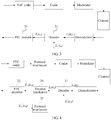
- FIG. 1 is a basic schematic structural diagram of a fiber optic communications system.
- the system may include: a transmitter 1, a channel 2, and a receiver 3, where the transmitter 1 may process an input signal, so as to make the signal suitable for being transmitted on the channel 2; the channel 2 may transmit the signal; and the receiver 3 may receive the signal transmitted from the channel and process the received signal, so as to ensure accuracy of the received signal.
- FIG. 5 is a schematic flowchart of Embodiment 1 of a decoding method according to the present invention. As shown in FIG. 5 , the following steps are performed by a receiver 3, and the method in this embodiment includes:
- the receiver may demodulate a received signal by using a demodulation scheme corresponding to a transmitter, to obtain a demodulation signal.
- L ( d k ) is used for indicating the demodulation signal acquired after demodulation, where d k indicates a differential coding output bit at a moment k.
- S502 Acquire a first decoding signal, where the first decoding signal is a signal fed back after the i th M-ary differential decoding processing is performed on the demodulation signal.
- the first decoding signal may be indicated by using E i ' ( c k ) , where c k indicates a differential coding input bit at the moment k, i is an integer greater than 0, generally, i takes a positive integer less than or equal to N, N is a preset number of iterations, and E i ' ( c k ) is a first decoding signal fed back after M-ary decoding processing is performed on the demodulation signal.
- the acquired first decoding signal E i ' ( c k ) is 0, that is, before the receiver performs decoding processing on the demodulation signal, an initial value of the first decoding signal E i ' ( c k ) acquired by the receiver is 0.
- the current decoding operation is a non-initial decoding operation
- the acquired first decoding signal is a signal fed back after a previous decoding operation of the current decoding operation, that is, after the receiver performs decoding processing on the demodulation signal
- the receiver may use a result obtained by performing decoding processing previously, that is, the first decoding signal, as an input signal for performing current decoding processing.
- Decoding processing in S502 may be decoding processing that is corresponding to coding processing performed by the transmitter and that is performed by the receiver on the demodulation signal.
- the transmitter only performs M-ary differential coding processing on a to-be-sent signal
- decoding processing performed by the receiver on the demodulation signal is M-ary differential decoding processing
- the first decoding signal is a signal obtained by performing M-ary differential decoding processing.
- the receiver first performs M-ary differential decoding processing on the demodulation signal, and then performs FEC decoding processing on the demodulation signal
- the first decoding signal is a signal obtained by performing FEC decoding processing.
- the transmitter first performs FEC coding processing on a to-be-sent signal, performs forward interleaving processing on the to-be-sent signal, and then performs M-ary differential coding processing on the to-be-sent signal
- the receiver first performs M-ary differential decoding processing on the demodulation signal, performs reverse interleaving processing on the demodulation signal, performs FEC decoding processing on the demodulation signal, and then performs forward interleaving processing on a signal after FEC decoding processing
- the first decoding signal is a signal obtained by performing forward interleaving processing.
- the first decoding signal fed back after decoding processing is performed depends on decoding processing corresponding to the transmitter and performed by the receiver.
- this embodiment of the present invention is further applicable to existing various implementation scenarios of coding processing of the transmitter and decoding processing corresponding to the receiver, and details are not provided herein again.
- S503 Perform M-ary differential decoding processing on the demodulation signal according to the first decoding signal, to obtain a second decoding signal.
- the receiver may perform a decoding operation by using the demodulation signal L ( d k ) and the first decoding signal E i ' ( c k ) that are acquired in S501 and S502 as input signals, to obtain the second decoding signal.
- the second decoding signal may be indicated by using E i ( c k ), where i takes a positive integer less than or equal to N, and N is a preset number of iterations. It can be seen that, a decoding processing process performed by the receiver actually may be understood as a process of performing iteration by using a previous decoding processing result and a currently input demodulation signal.
- the first decoding signal E 1 '( c k ) is 0, decoding processing is performed on L ( d k ) according to the signal E 1 '( c k ) that is input for the first time, and a signal E 1 ( c k ) is output, which is a first iterative decoding process.
- signals E 2 ' ( c k ) and L ( d k ) are input, and a signal E 2 ( c k ) is output, which is a second iterative decoding process.
- a signal that is, a second decoding signal E N ( c k ) , is output until i is equal to N, where N is greater than or equal to 2, and iteration is stopped.
- FIG. 2 is a schematic diagram of a system structure of a fiber optic communications system according to the present invention.
- E i ' ( c k ) is the same as E i ( c k ) , that is, decoding is performed again by using an output signal of a decoder 31 and a modulation signal as input signals of the decoder 31.
- the foregoing steps are repeated until i is equal to N and N is greater than or equal to 2.
- FIG. 3 is another schematic diagram of a system structure of a fiber optic communications system according to the present invention. As shown in FIG.
- E i ( c k ) is an output signal of a decoder 31, that is, an input signal of an FEC decoder 33
- E i ' ( c k ) is an output signal of the FEC decoder 33, that is, decoding is performed again by using the output signal of the FEC decoder 33 and a modulation signal as input signals of the decoder 31.
- the foregoing steps are repeated until i is equal to N and N is greater than or equal to 2.
- FIG. 4 is still another schematic diagram of a system structure of a fiber optic communications system according to the present invention. As shown in FIG.
- E i ( c k ) is an output signal of a decoder 31, that is, an input signal of a reverse interleaver 34
- E i 1 ( c k ) is an output signal of the reverse interleaver 34, that is, an input signal of an FEC decoder 33
- E i 1 '( c k ) is an output signal of the FEC decoder 33, that is, an input signal of a forward interleaver 35
- E i ' ( c k ) is an output signal of the forward interleaver 35, that is, an input signal of the decoder 31, that is, decoding is performed again by using the output signal of the forward interleaver 35 and a modulation signal as input signals of the decoder 31.
- the foregoing steps are repeated until i is equal to N and N is greater than or equal to 2.
- a value of N in the foregoing systems is determined according to requirements on signal quality in an actual application. Generally, a larger value of N indicates a larger number of iterations and better quality of a signal output finally.
- the first decoding signal fed back after decoding processing is performed is added to the input signal of the decoder 31, and after iterative decoding is performed for multiple times, a bit error rate is lowered.
- a demodulation signal and a first decoding signal are acquired; and M-ary differential decoding processing is performed on the demodulation signal according to a first decoding signal fed back after M-ary decoding processing is performed on the demodulation signal, to obtain a second decoding signal.
- M-ary differential decoding processing is performed on the demodulation signal according to a first decoding signal fed back after M-ary decoding processing is performed on the demodulation signal, to obtain a second decoding signal.
- FIG. 6 is a schematic flowchart of Embodiment 2 of a decoding method according to the present invention.
- this embodiment provides entire processes in which a transmitter sends a signal and a receiver receives a signal.
- the transmitter may successively perform FEC coding, forward interleaving processing, M-ary differential coding, and a modulation operation on a to-be-sent signal, and correspondingly, the receiver may successively perform demodulation, M-ary differential decoding, reverse interleaving processing, FEC decoding, and other operations on a received signal.
- the method includes the following steps.
- FEC coding may be performed by using multiple types of codes, for example, the transmitter may perform FEC coding on the to-be-sent signal by using a low density parity check (Low Density Parity Check, LDPC for short below) code.
- the receiver needs to perform FEC decoding on the received signal by using the LDPC code.
- the transmitter may perform differential coding on the to-be-sent signal by using a differential quadrature phase shift keying (Differential Quadrature Phase Shifter Keying, DQPSK for short below) code or perform differential coding on the to-be-sent signal by using differential quadrature amplitude modulation 16 ( Differential Quadrature Amplitude Modulation 16, D16QAM for short below).
- the receiver may perform, by using a BCJR algorithm, M-ary differential decoding on the received signal according to a corresponding state transition diagram during DQPSK or 16QAM coding.
- S601 and S602 in this embodiment are steps of obtaining an optimal degree distribution of the LDPC code used in FEC coding and decoding, and constructing an LDPC code check matrix.
- S603 to S605 are steps performed by the transmitter
- S606 is a step in which the to-be-sent signal enters a channel for transmission after being processed by the transmitter
- S607 to S613 are steps performed by the receiver.
- S601 Obtain, through simulation calculation according to a specific decoding scheme that is executed, an optimal degree distribution of an LDPC code used by an FEC decoder.
- an initial degree distribution at a set bit rate based on which the FEC decoding processing is performed may be first determined, for example, it is determined that an initial degree distribution at a set bit rate R is ( ⁇ , ⁇ ), where ⁇ is a row weight and ⁇ is a column weight, that is, the row weight represents a quantity of 1s in each row in the LDPC check matrix, and the column weight represents a quantity of 1s in each column in the LDPC check matrix.
- an initial signal-to-noise ratio corresponding to the initial degree distribution may be determined.
- first degree distributions corresponding to the set bit rate are successively determined, and if two curves in an extrinsic information transition diagram of the first degree distributions corresponding to the set bit rate at the initial signal-to-noise ratio do not intersect, the initial signal-to-noise ratio is updated with a first signal-to-noise ratio corresponding to the first degree distribution, until a quantity of the determined first degree distributions meets a set value.
- the initial signal-to-noise ratio SNR if two curves in an extrinsic information transition diagram of the first degree distributions ( ⁇ ', ⁇ ') corresponding to the set bit rate R do not intersect, the initial signal-to-noise ratio SNR is updated with a first signal-to-noise ratio corresponding to the first degree distribution ( ⁇ ', ⁇ '), until the quantity N of the determined first degree distributions meets the set value.
- the first degree distributions that are corresponding to the first signal-to-noise ratio and whose quantity meets the set value may be used as the optimal degree distribution of the LDPC code.
- the optimal degree distribution is related to the specific decoding scheme that is executed, and therefore, optimal degree distributions, which are obtained by using different decoding schemes, of the LDPC code are different.
- S602 Construct, according to the optimal degree distribution of the LDPC code, an LDPC code check matrix meeting the optimal degree distribution.
- S603 Perform FEC coding processing at a bit rate of R on a signal source sequence by using the LDPC code check matrix.
- FEC coding at a bit rate of 5/6 is performed on a signal source sequence of a signal source length of 15000 by using the LDPC code check matrix, and an information sequence length after coding is 18000.
- FEC coding at a bit rate of 3/4 is performed on a signal source sequence of a signal source length of 3000 by using the LDPC code check matrix, and an information sequence length after coding is 4000.
- S604 Perform forward interleaving processing on an information sequence after FEC coding processing.
- an order of the information sequence after FEC coding processing may be disrupted by using a random interleaving sequence, so as to optimize information distribution.
- S605 Perform M-ary differential coding on information after interleaving processing; and correspondingly modulate a signal after M-ary differential coding.
- the M-ary differential coding is DQPSK differential coding or D16QAM differential coding.
- the M-ary differential coding is DQPSK differential coding.
- information is transmitted by using a phase difference between a carrier phase of a current bit and a carrier phase of a previous bit, and DQPSK differential coding is also referred to as quaternary differential coding.
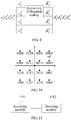
- FIG. 7a is a state transition diagram of DQPSK differential coding in a decoding method according to the present invention. As shown in FIG. 7a , in a DQPSK coding process, coding may be performed by using the state transition diagram shown in FIG. 7a.
- FIG. 7b is a block diagram of DQPSK differential coding in a decoding method according to the present invention. As shown in FIG.
- FIG. 8 is a modulation constellation diagram of QPSK in a decoding method according to the present invention. As shown in FIG. 8 , the modulation constellation diagram is a Gray constellation diagram.
- FIG. 9 is a schematic diagram of D16QAM coding in a decoding method according to the present invention.
- quaternary differential coding is only performed on the first two bits, which are c k 1 c k 2 , by using a state transition diagram and using a quaternary differential coder, and the last two bits c k 3 c k 4 remains unchanged.
- Same symbols in FIG. 9 and in FIG. 8 have same meanings, and details are not provided herein again.
- FIG. 10 is a modulation constellation diagram of 16QAM in a decoding method according to the present invention.
- the modulation constellation diagram in the 16QAM modulation scheme is a rotation constellation diagram.
- the first two bits specify a quadrant in which a signal is located, and the last two bits specify a configuration of a signal vector in each quadrant, and present a ⁇ /2 rotation feature.
- Grey mapping is performed on the last two bits in each quadrant.
- S606 A modulated signal enters a channel for transmission.
- an error bit may be generated in a process of transmitting the signal on the channel.
- the signal transmitted on the channel is received, and is demodulated by using a demodulation scheme corresponding to the modulation scheme, to obtain a demodulation signal L ( d k ).
- S608 Acquire a first decoding signal, where the first decoding signal is a signal fed back after the i th M-ary differential decoding processing is performed on the demodulation signal.
- This step is similar to S502 in the embodiment shown in FIG. 5 , and is not described in detail herein again.
- S609 Perform M-ary differential decoding processing on the demodulation signal according to the first decoding signal, to obtain a second decoding signal E i ( c k ).
- Differential decoding processing may be decoding processing that is corresponding to coding processing performed by the transmitter and that is performed by the receiver on the demodulation signal.
- a BCJR algorithm M-ary differential decoding processing according to a state transition diagram of the 16QAM differential coding corresponding
- differential coding inputs in step S608 are E i ′ c k and L ( d k ) , and an output is E i ( c k ), where c k indicates a differential coding input bit at the moment k, d k indicates a differential coding output bit at the moment k, L ( d k ) is a demodulation signal after demodulation processing, E i ′ c k is the first decoding signal fed back after M-ary decoding processing is performed on the demodulation signal, the first decoding signal is set to 0 in the first iteration, and E i ( c k ) is a second decoding signal of the bit sequence c k output by a differential decoding module.
- a differential decoding algorithm based on the forward, backward, and transition probabilities includes the following steps:
- a fifth step Calculate values of a posterior probability and the second decoding signal.
- the first decoding signal is a signal fed back by a receiver after forward interleaving processing is performed, and an initial value of the first decoding signal is 0.
- the performing M-ary differential decoding processing on the demodulation signal according to the first decoding signal, to obtain a second decoding signal in this step is that after the receiver performs decoding processing on the demodulation signal, the receiver may use a result obtained by performing decoding processing previously, that is, the first decoding signal, and a modulation signal as input signals for performing current decoding processing.
- a decoding process of the receiver may be regarded as an iterative decoding process.
- S610 Perform reverse interleaving processing on the second decoding signal E i ( c k ) , to obtain a second decoding signal E i 1 ( c k ) after reverse interleaving processing.
- an interleaving sequence used for performing reverse interleaving processing by the receiver is identical with that used for performing forward interleaving processing by the transmitter, and forward interleaving processing is performed on the second decoding signal, to optimize information distribution.
- S611 Perform, according to the LDPC code check matrix, FEC decoding processing on the second decoding signal E i 1 ( c k ) after reverse interleaving processing, to obtain a signal E i 1 ′ c k .
- a signal output for the first time after FEC decoding processing is E 11 ′ c k
- a signal output for the second time is E 21 ′ c k
- a signal output for the third time is E 31 ′ c k
- a signal output for the N th time is E N 1 ′ c k , where N is as preset number of iterations.
- a bit error rate of a signal E i + 1 1 ′ c k is less than a bit error rate of the signal E i 1 ′ c k , and a bit error rate of a signal output for the ( i +1) th time after FEC decoding processing is less than a bit error rate of a signal output for the i th time.
- S612 Perform forward interleaving processing on the signal E i 1 ′ c k , to obtain a first decoding signal E i ′ c k .
- An interleaving sequence used for performing forward interleaving processing by the receiver is identical with that used for performing forward interleaving processing by the transmitter, and is used for optimizing the signal E i 1 ′ c k , to obtain the first decoding signal E i ′ c k .
- S613 Perform M-ary differential decoding processing on a demodulation signal L ( d k ) again according to the first decoding signal E i ′ c k , to obtain the second decoding signal E i ( c k ).
- a signal output for the first time after M-ary differential decoding is a second decoding signal E 1 ( c k )
- a signal output for the second time is a second decoding signal E 2 ( c k )
- a signal output for the third time is a second decoding signal E 3 ( c k )
- a signal output for the N th time is a second decoding signal E N ( c k ) , where N is a preset number of iterations.
- a bit error rate of E ( i +1) ( c k ) is less than a bit error rate of a signal E i ( c k ) , that is, a signal output by an M-ary differential decoder for the ( i +1) th time is less than a bit error rate of a signal output for the i th time.
- S608 to S613 are repeated until i is equal to N, and a signal after FEC decoding processing is output.
- a signal output by the FEC decoder may be further determined, so as to obtain quality of the output signal.
- a demodulation signal is acquired; and decoding processing is performed on the demodulation signal according to a first decoding signal fed back after M-ary decoding processing is performed on the demodulation signal, to obtain a second decoding signal.
- a decoder adds a decoding processing result as a feedback signal, bit error spread generated in a decoding process is reduced, a bit error rate of a system is lowered, and accuracy of signal transmission is improved. It is shown by using an simulation result that, according to the technical solution in this embodiment, a DQPSK coding and decoding system effectively compensates a bit error rate of 2 dB, and a D16QAM coding and decoding system effectively compensates a bit error rate of 2.3 dB.
- performance of a DQPSK differential iteration system approaches performance of a regular LDPC code in a non-differential system, and performance of a D16QAM differential iteration system exceeds performance of a regular LDPC code in a non-differential system, which solves the problem of bit error spread to a great extent, and lowers a bit error rate of a system.
- the foregoing embodiment is an exemplary implementation manner using the optical fiber communications system shown in FIG. 4 as an example.
- An implementation principle and technical effects of the optical fiber communications system shown in FIG. 2 are similar to an implementation principle and technical effects of the optical fiber communications system shown in FIG. 3 , and details are not provided herein again.
- FIG. 11 is a schematic structural diagram of Embodiment 1 of a decoding apparatus according to the present invention.
- the structure of this embodiment includes: an acquiring module 1101 and a decoding module 1102.
- the acquiring module 1101 is configured to acquire a demodulation signal.
- the decoding module 1102 is configured to acquire a first decoding signal, where the first decoding signal is a signal fed back after the i th M-ary differential decoding processing is performed on the demodulation signal, and i is an integer greater than 0.
- the decoding module 1102 is further configured to perform M-ary differential decoding processing on the demodulation signal according to the first decoding signal, to obtain a second decoding signal.
- the apparatuses in this embodiment may be configured to execute the technical solution of the method embodiment shown in FIG. 5 , and implementation principles and technical effects thereof are similar, and details are not provided herein again.
- FIG. 12 is a schematic structural diagram of Embodiment 2 of a decoding apparatus according to the present invention. Based on the embodiment shown in FIG. 11 , in FIG. 12 , further, an FEC decoding module 1103 is further included. The FEC decoding module 1103 is configured to perform forward error correction FEC decoding processing on the second decoding signal obtained after M-ary differential decoding processing is performed.
- the FEC decoding module 1103 is specifically configured to optimize a degree distribution of a low-density parity-check LDPC code used for FEC coding corresponding to the second decoding signal, to acquire an optimal degree distribution of the LDPC code; construct, according to the optimal degree distribution, an LDPC code check matrix meeting the optimal degree distribution; and perform, according to the LDPC code check matrix, FEC decoding processing on the second decoding signal obtained after M-ary differential decoding processing is performed.
- the FEC decoding module 1103 is specifically configured to determine an initial degree distribution at a set bit rate based on which FEC decoding processing is performed; determine an initial signal-to-noise ratio corresponding to the initial degree distribution; and successively determine multiple first degree distributions corresponding to the set bit rate, and if two curves in an extrinsic information transition diagram of the first degree distributions corresponding to the set bit rate at the initial signal-to-noise ratio do not intersect, update the initial signal-to-noise ratio with a first signal-to-noise ratio corresponding to the first degree distribution, until a quantity of the determined first degree distributions meets a set value; and use the first degree distributions that are corresponding to the first signal-to-noise ratio and whose quantity meets the set value as the optimal degree distribution of the LDPC code.
- the apparatuses in this embodiment may be configured to execute the technical solution of the method embodiment shown in FIG. 6 , and implementation principles and technical effects thereof are similar, and details are not provided herein again.
- FIG. 13 is a schematic structural diagram of Embodiment 3 of a decoding apparatus according to the present invention.
- a reverse interleaving module 1104 and a forward interleaving module 1105 are further included.
- the reverse interleaving module 1104 is configured to perform reverse interleaving processing on the second decoding signal obtained after M-ary differential decoding processing is performed, to obtain a reversely-interleaved second decoding signal.
- the FEC decoding module 1103 is specifically configured to perform FEC decoding processing on the reversely-interleaved second decoding signal.
- the forward interleaving module 1105 is configured to perform forward interleaving processing on the first decoding signal.
- the apparatuses in this embodiment may be configured to execute the technical solution of the method embodiment shown in FIG. 6 , and implementation principles and technical effects thereof are similar, and details are not provided herein again.
- FIG. 14 is a schematic structural diagram of Embodiment 4 of a decoding apparatus according to the present invention.
- the apparatus in this embodiment includes an acquirer 1401 and a decoder 1402.
- the acquirer 1401 is configured to acquire a demodulation signal.
- the decoder 1402 is configured to acquire a first decoding signal, where the first decoding signal is a signal fed back after the i th M-ary differential decoding processing is performed on the demodulation signal, and i is an integer greater than 0.
- the decoder 1402 is further configured to perform M-ary differential decoding processing on the demodulation signal according to the first decoding signal, to obtain a second decoding signal.
- the apparatuses in this embodiment may be configured to execute the technical solution of the method embodiment shown in FIG. 5 , and implementation principles and technical effects thereof are similar, and details are not provided herein again.
- FIG. 15 is a schematic structural diagram of Embodiment 5 of a decoding apparatus according to the present invention. Based on the embodiment shown in FIG. 14 , in FIG. 15 , further, an FEC decoder 1403 is further included.
- the FEC decoder 1403 is configured to perform forward error correction FEC decoding processing on the second decoding signal obtained after M-ary differential decoding processing is performed.
- the FEC decoder 1403 is specifically configured to optimize a degree distribution of a low-density parity-check LDPC code used for FEC coding corresponding to the second decoding signal, to acquire an optimal degree distribution of the LDPC code; construct, according to the optimal degree distribution, an LDPC code check matrix meeting the optimal degree distribution; and perform, according to the LDPC code check matrix, FEC decoding processing on the second decoding signal obtained after M-ary differential decoding processing is performed.
- the FEC decoder 1403 is specifically configured to determine an initial degree distribution at a set bit rate based on which the FEC decoding processing is performed; determine an initial signal-to-noise ratio corresponding to the initial degree distribution; and successively determine multiple first degree distributions corresponding to the set bit rate, and if two curves in an extrinsic information transition diagram of the first degree distributions corresponding to the set bit rate at the initial signal-to-noise ratio do not intersect, update the initial signal-to-noise ratio with a first signal-to-noise ratio corresponding to the first degree distribution, until a quantity of the determined first degree distributions meets a set value; and
- the apparatuses in this embodiment may be configured to execute the technical solution of the method embodiment shown in FIG. 6 , and implementation principles and technical effects thereof are similar, and details are not provided herein again.
- FIG. 16 is a schematic structural diagram of Embodiment 6 of a decoding apparatus according to the present invention. Based on the embodiment shown in FIG. 15 , in FIG. 16 , further, a reverse interleaver 1404 and a forward interleaver 1405 are further included.
- the reverse interleaver 1404 is configured to perform reverse interleaving processing on the second decoding signal obtained after M-ary differential decoding processing is performed, to obtain a reversely-interleaved second decoding signal.
- the FEC decoder 1403 is specifically configured to perform FEC decoding processing on the reversely-interleaved second decoding signal.
- the forward interleaver 1405 is configured to perform forward interleaving processing on the first decoding signal.
- the apparatuses in this embodiment may be configured to execute the technical solution of the method embodiment shown in FIG. 6 , and implementation principles and technical effects thereof are similar, and details are not provided herein again.
- the program may be stored in a computer-readable storage medium.
- the foregoing storage medium includes: any medium that can store program code, such as a ROM, a RAM, a magnetic disk, or an optical disc.
Landscapes
- Engineering & Computer Science (AREA)
- Computer Networks & Wireless Communication (AREA)
- Signal Processing (AREA)
- Artificial Intelligence (AREA)
- Error Detection And Correction (AREA)
Claims (8)
- Procédé de décodage, comprenant :l'acquisition d'un signal de démodulation, le signal de démodulation étant un signal démodulé ;l'acquisition d'un premier signal de décodage, le premier signal de décodage étant un signal notifié en retour suite à l'exécution de l'i-ème traitement de décodage différentiel M-aire sur le signal de démodulation, i étant un entier supérieur à 0 ;l'exécution d'un traitement de décodage différentiel M-aire sur le signal de démodulation selon le premier signal de décodage, dans le but d'obtenir un deuxième signal de décodage, comprenantl'exécution, à l'aide d'un algorithme de Bahl-Cocke-Jelinek-Raviv, BCJR, d'un traitement de décodage différentiel M-aire sur le signal de démodulation selon un diagramme de transition d'état d'un codage différentiel à modulation différentielle par déplacement de phase en quadrature, DQPSK, ou d'un codage différentiel à modulation d'amplitude en quadrature, D16QAM, correspondant au signal de démodulation; et l'obtention du deuxième signal de décodage selon

YN indique une séquence d'informations de symbole correspondant au signal de démodulation avant sa démodulation,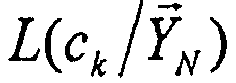

- Procédé selon la revendication 1, le procédé comprenant en outre, suite à l'exécution du traitement de décodage différentiel M-aire sur le signal de démodulation selon le premier signal de décodage :l'exécution d'un traitement de décodage de correction d'erreur directe, FEC, sur le deuxième signal de décodage obtenu suite à l'exécution d'un traitement de décodage différentiel M-aire.
- Procédé selon la revendication 2,
l'exécution d'un traitement de décodage de correction d'erreur directe FEC sur le deuxième signal de décodage obtenu suite à l'exécution d'un traitement de décodage différentiel M-aire comprenant :l'optimisation d'une distribution de degrés d'un code de contrôle de parité à faible densité, LDPC, utilisé pour un codage FEC correspondant au deuxième signal de décodage, dans le but d'acquérir une distribution de degrés optimale du code LDPC ;la construction, selon la distribution de degrés optimale, d'une matrice de contrôle de code LDPC répondant à la distribution de degrés optimale ; etl'exécution, selon la matrice de contrôle de code LDPC, d'un traitement de décodage FEC sur le deuxième signal de décodage obtenu suite à l'exécution d'un traitement de décodage différentiel M-aire; l'optimisation d'une distribution de degrés d'un code de contrôle de parité à faible densité, LDPC, utilisé pour un codage FEC correspondant au deuxième signal de décodage, dans le but d'acquérir une distribution de degrés optimale du code LDPC comprenant :la détermination d'une distribution de degrés initiale à un débit binaire fixé sur la base duquel le traitement de décodage FEC est exécuté ;la détermination d'un rapport signal/bruit initial correspondant à la distribution de degrés initiale ;la détermination successive d'une pluralité de premières distributions de degrés correspondant au débit binaire fixé et, si deux courbes dans un diagramme de transition d'information extrinsèque des premières distributions de degrés correspondant au débit binaire fixé au rapport signal/bruit initial ne se coupent pas, la mise à jour du rapport signal/bruit initial par un premier rapport signal/bruit correspondant à la première distribution de degrés jusqu'à ce qu'une quantité des premières distributions de degrés déterminées prenne une valeur fixée ; etl'utilisation des premières distributions de degrés qui correspondent au premier rapport signal/bruit et dont la quantité prend la valeur fixée comme la distribution de degrés optimale du code LDPC. - Procédé selon la revendication 2, le procédé comprenant en outre, préalablement à l'exécution d'un traitement de décodage de correction d'erreur directe FEC sur le deuxième signal de décodage obtenu suite à l'exécution d'un traitement de décodage différentiel M-aire :l'exécution d'un traitement d'entrelacement inverse sur le deuxième signal de décodage obtenu suite à un traitement de décodage différentiel M-aire, dans le but d'obtenir un deuxième signal de décodage à entrelacement inverse ;l'exécution d'un traitement de décodage de correction d'erreur directe FEC sur le deuxième signal de décodage obtenu suite à l'exécution d'un traitement de décodage différentiel M-aire comprend :l'exécution d'un traitement de décodage FEC sur le deuxième signal de décodage à entrelacement inverse ; etle procédé comprenant en outre, préalablement à l'exécution d'un traitement de décodage différentiel M-aire sur le signal de démodulation selon le premier signal de décodage :l'exécution d'un traitement d'entrelacement direct sur le premier signal de décodage.
- Appareil de décodage, comprenant :un module d'acquisition (1101), configuré pour acquérir un signal de démodulation, le signal de démodulation étant un signal démodulé ; etun module de décodage (1102), configuré pour acquérir un premier signal de décodage, le premier signal de décodage étant un signal notifié en retour suite à l'exécution de l'i-ème traitement de décodage différentiel M-aire sur le signal de démodulation, i étant un entier supérieur à 0,le module de décodage (1102) étant configuré en outre pour exécuter un traitement de décodage différentiel M-aire sur le signal de démodulation selon le premier signal de décodage, dans le but d'obtenir un deuxième signal de décodage ;le module de décodage (1102) étant plus particulièrement configuré pour exécuter, à l'aide d'un algorithme de Bahl-Cocke-Jelinek-Raviv, BCJR, un traitement de décodage différentiel M-aire sur le signal de démodulation selon un diagramme de transition d'état d'un codage différentiel à modulation différentielle par déplacement de phase en quadrature, DQPSK, ou d'un codage différentiel à modulation d'amplitude en quadrature, D 16QAM, correspondant au signal de démodulation ; etobtenir le deuxième signal de décodage selon

YN indique une séquence d'informations de symbole correspondant au signal de démodulation avant sa démodulation,

- Appareil selon la revendication 5, comprenant en outre :un module de décodage FEC (1103), configuré pour exécuter un traitement de décodage de correction d'erreur directe, FEC, sur le deuxième signal de décodage obtenu suite à l'exécution d'un traitement de décodage différentiel M-aire.
- Appareil selon la revendication 6, le module de décodage FEC (1103) étant plus particulièrement configuré pour optimiser une distribution de degrés d'un code de contrôle de parité à faible densité, LDPC, utilisé pour un codage FEC correspondant au deuxième signal de décodage, dans le but d'acquérir une distribution de degrés optimale du code LDPC ; construire, selon la distribution de degrés optimale, une matrice de contrôle de code LDPC répondant à la distribution de degrés optimale ; et exécuter, selon la matrice de contrôle de code LDPC, un traitement de décodage FEC sur le deuxième signal de décodage obtenu suite à l'exécution d'un traitement de décodage différentiel M-aire;
le module de décodage FEC (1103) étant plus particulièrement configuré pour déterminer une distribution de degrés initiale à un débit binaire fixé sur la base duquel le traitement de décodage FEC est exécuté ; déterminer un rapport signal/bruit initial correspondant à la distribution de degrés initiale ; et déterminer successivement une pluralité de premières distributions de degrés correspondant au débit binaire fixé et, si deux courbes dans un diagramme de transition d'information extrinsèque des premières distributions de degrés correspondant au débit binaire fixé au rapport signal/bruit initial ne se coupent pas, mettre à jour le rapport signal/bruit initial par un premier rapport signal/bruit correspondant à la première distribution de degrés jusqu'à ce qu'une quantité des premières distributions de degrés déterminées prenne une valeur fixée ; et
utiliser les premières distributions de degrés qui correspondent au premier rapport signal/bruit et dont la quantité prend la valeur fixée comme la distribution de degrés optimale du code LDPC pour optimiser la distribution de degrés du code de contrôle de parité à faible densité LDPC utilisé pour un codage FEC correspondant au deuxième signal de décodage, dans le but d'acquérir la distribution de degrés optimale du code LDPC. - Appareil selon la revendication 6, l'appareil comprenant en outre:un module d'entrelacement inverse (1104), configuré pour exécuter un traitement d'entrelacement inverse sur le deuxième signal de décodage obtenu suite à un traitement de décodage différentiel M-aire, dans le but d'obtenir un deuxième signal de décodage à entrelacement inverse,le module de décodage FEC (1103) étant plus particulièrement configuré pour exécuter un traitement de décodage FEC sur le deuxième signal de décodage à entrelacement inverse ; etun module d'entrelacement direct (1105), configuré pour exécuter un traitement d'entrelacement direct sur le premier signal de décodage.
Applications Claiming Priority (1)
| Application Number | Priority Date | Filing Date | Title |
|---|---|---|---|
| PCT/CN2013/070414 WO2014107899A1 (fr) | 2013-01-14 | 2013-01-14 | Procédé et dispositif de décodage |
Publications (3)
| Publication Number | Publication Date |
|---|---|
| EP2940913A1 EP2940913A1 (fr) | 2015-11-04 |
| EP2940913A4 EP2940913A4 (fr) | 2016-04-06 |
| EP2940913B1 true EP2940913B1 (fr) | 2017-05-17 |
Family
ID=49492146
Family Applications (1)
| Application Number | Title | Priority Date | Filing Date |
|---|---|---|---|
| EP13871016.5A Active EP2940913B1 (fr) | 2013-01-14 | 2013-01-14 | Procédé et dispositif de décodage |
Country Status (4)
| Country | Link |
|---|---|
| US (1) | US9602238B2 (fr) |
| EP (1) | EP2940913B1 (fr) |
| CN (1) | CN103384975B (fr) |
| WO (1) | WO2014107899A1 (fr) |
Families Citing this family (6)
| Publication number | Priority date | Publication date | Assignee | Title |
|---|---|---|---|---|
| EP3657697B1 (fr) | 2017-08-11 | 2021-12-22 | Huawei Technologies Co., Ltd. | Système et procédé de transmission de signaux |
| US10715276B2 (en) | 2018-05-26 | 2020-07-14 | Ntwine, Llc | Bandwidth constrained communication systems with optimized low-density parity-check codes |
| KR102706725B1 (ko) * | 2018-07-03 | 2024-09-19 | 에스케이하이닉스 주식회사 | 메모리 컨트롤러 및 이의 동작 방법 |
| WO2021181278A1 (fr) | 2020-03-10 | 2021-09-16 | Ntwine, Llc | Systèmes de communication à largeur de bande limitée avec traitement d'informations dans le domaine fréquentiel |
| US11990922B2 (en) | 2021-01-11 | 2024-05-21 | Ntwine, Llc | Bandwidth constrained communication systems with neural network based detection |
| CN120896594B (zh) * | 2025-09-30 | 2026-01-09 | 集美大学 | 一种用于自动驾驶的高维有损信源译码方法及装置 |
Family Cites Families (13)
| Publication number | Priority date | Publication date | Assignee | Title |
|---|---|---|---|---|
| US6430724B1 (en) * | 1999-05-28 | 2002-08-06 | Agere Systems Guardian Corp. | Soft selection combining based on successive erasures of frequency band components in a communication system |
| US6968021B1 (en) * | 2001-09-24 | 2005-11-22 | Rockwell Collins | Synchronization method and apparatus for modems based on jointly iterative turbo demodulation and decoding |
| US7251768B2 (en) * | 2002-04-22 | 2007-07-31 | Regents Of The University Of Minnesota | Wireless communication system having error-control coder and linear precoder |
| KR100666399B1 (ko) * | 2004-12-10 | 2007-01-09 | 한국전자통신연구원 | 수신기 및 그 신호 처리 방법 |
| KR101182461B1 (ko) * | 2005-07-29 | 2012-09-12 | 삼성전자주식회사 | 와이브로 시스템에서 연접 버스트의 효율적인 복호 방법 및장치 |
| CN100481827C (zh) | 2005-12-14 | 2009-04-22 | 北京交通大学 | Ofdm系统时频域混合差分调制方法 |
| CN101026430B (zh) * | 2006-02-20 | 2013-11-06 | 华为技术有限公司 | 一种去除干扰的方法及系统 |
| JP5354979B2 (ja) | 2007-07-12 | 2013-11-27 | パナソニック株式会社 | 低密度パリティ検査畳み込み符号(ldpc−cc)符号化器及びldpc−cc復号器 |
| CN101808057B (zh) * | 2009-02-16 | 2015-07-08 | 华为技术有限公司 | 一种盲均衡的方法、装置和译码器 |
| CN101841339B (zh) * | 2009-03-17 | 2015-05-06 | 电信科学技术研究院 | 一种编码器、译码器及编码、译码方法 |
| US8331510B2 (en) * | 2009-04-06 | 2012-12-11 | Telefonaktiebolaget L M Ericsson (Publ) | Receiver and method for two-stage equalization with sequential search |
| US20110116515A1 (en) * | 2009-11-16 | 2011-05-19 | Nxp B.V. | System and method for demodulating and decoding a differentially encoded coded orthogonal frequency division multiplexing modulation code using two-dimensional code blocks |
| US20140064412A1 (en) * | 2012-08-30 | 2014-03-06 | Texas Instruments Incorporated | High Performance Turbo DPSK |
-
2013
- 2013-01-14 EP EP13871016.5A patent/EP2940913B1/fr active Active
- 2013-01-14 WO PCT/CN2013/070414 patent/WO2014107899A1/fr not_active Ceased
- 2013-01-14 CN CN201380000060.7A patent/CN103384975B/zh active Active
-
2015
- 2015-07-14 US US14/799,381 patent/US9602238B2/en active Active
Also Published As
| Publication number | Publication date |
|---|---|
| US9602238B2 (en) | 2017-03-21 |
| US20150318955A1 (en) | 2015-11-05 |
| CN103384975A (zh) | 2013-11-06 |
| CN103384975B (zh) | 2016-06-08 |
| EP2940913A4 (fr) | 2016-04-06 |
| WO2014107899A1 (fr) | 2014-07-17 |
| EP2940913A1 (fr) | 2015-11-04 |
Similar Documents
| Publication | Publication Date | Title |
|---|---|---|
| US8175466B2 (en) | Methods and systems for polarization multiplexed multilevel modulation for optical communication | |
| US10312946B2 (en) | Soft-output decoding of codewords encoded with polar code | |
| US9602238B2 (en) | Decoding method and apparatus | |
| US8886055B1 (en) | Reduced data rate operation mode for high speed optical communication device | |
| EP3588883B1 (fr) | Dispositif de mise en forme de signal, dispositif de terminaison de mise en forme, procédé de mise en forme de signal et procédé de transmission optique | |
| KR20070079448A (ko) | 다중 안테나 시스템에서 반복 검출 및 복호 수신 장치 및방법 | |
| KR20000067966A (ko) | 비동일 에러 보호를 갖는 통신 신호를 검출하는 방법 및 장치 | |
| JP5868509B2 (ja) | 受信機および通信方法 | |
| EP2936689B1 (fr) | Système de communication numérique | |
| US10027348B2 (en) | Turbo product coded modulation | |
| Yoshida et al. | Efficient offline evaluation of FEC codes based on captured data with probabilistic shaping | |
| TWI433471B (zh) | (n,k)方塊碼之軟輸入軟輸出解碼裝置 | |
| EP3648378B1 (fr) | Procédé et appareil de réception de signal binaire, de récupération de données d'horloge et décodage pondéré | |
| EP3451539A1 (fr) | Récepteur optique, dispositif de transmission optique et procédé pour récepteur optique | |
| US10673563B2 (en) | Modulation method and apparatus | |
| EP0774840A1 (fr) | Procédé de transmission d'une séquence de bits d'information avec protection sélective contre les erreurs de transmission, procédés de codage et de correction pouvant être mis en oeuvre dans un tel procédé de transmission | |
| Saha et al. | Bit-interleaved polar coded modulation with iterative decoding | |
| EP3522410A1 (fr) | Procédé et dispositif d'extraction de valeur souple applicables à un système ovxdm, et système ovxdm | |
| KR20230141188A (ko) | 두 개의 편이된 직교 진폭 변조 성상을 이용한 통신 방법 및 장치 | |
| EP3447926B1 (fr) | Procédé, dispositif, décodeur et système de décodage de codes ldpc convolutifs | |
| Liu et al. | Non-uniform signaling based LDPC coded modulation for high-speed optical transport networks | |
| CN121000308B (zh) | 一种基于单导频符号的数字信号光通信方法及系统 | |
| JP2012170061A (ja) | 受信機およびその信号位相誤差補償方法 | |
| CN103875220B (zh) | Llr计算器以及纠错解码装置 | |
| US20140064412A1 (en) | High Performance Turbo DPSK |
Legal Events
| Date | Code | Title | Description |
|---|---|---|---|
| PUAI | Public reference made under article 153(3) epc to a published international application that has entered the european phase |
Free format text: ORIGINAL CODE: 0009012 |
|
| 17P | Request for examination filed |
Effective date: 20150727 |
|
| AK | Designated contracting states |
Kind code of ref document: A1 Designated state(s): AL AT BE BG CH CY CZ DE DK EE ES FI FR GB GR HR HU IE IS IT LI LT LU LV MC MK MT NL NO PL PT RO RS SE SI SK SM TR |
|
| AX | Request for extension of the european patent |
Extension state: BA ME |
|
| A4 | Supplementary search report drawn up and despatched |
Effective date: 20160304 |
|
| RIC1 | Information provided on ipc code assigned before grant |
Ipc: H04L 27/38 20060101ALI20160229BHEP Ipc: H04L 27/233 20060101ALI20160229BHEP Ipc: H04L 1/00 20060101AFI20160229BHEP |
|
| DAX | Request for extension of the european patent (deleted) | ||
| GRAP | Despatch of communication of intention to grant a patent |
Free format text: ORIGINAL CODE: EPIDOSNIGR1 |
|
| INTG | Intention to grant announced |
Effective date: 20161207 |
|
| RAP1 | Party data changed (applicant data changed or rights of an application transferred) |
Owner name: HUAWEI TECHNOLOGIES CO., LTD. |
|
| GRAS | Grant fee paid |
Free format text: ORIGINAL CODE: EPIDOSNIGR3 |
|
| GRAA | (expected) grant |
Free format text: ORIGINAL CODE: 0009210 |
|
| AK | Designated contracting states |
Kind code of ref document: B1 Designated state(s): AL AT BE BG CH CY CZ DE DK EE ES FI FR GB GR HR HU IE IS IT LI LT LU LV MC MK MT NL NO PL PT RO RS SE SI SK SM TR |
|
| REG | Reference to a national code |
Ref country code: GB Ref legal event code: FG4D |
|
| REG | Reference to a national code |
Ref country code: CH Ref legal event code: EP |
|
| REG | Reference to a national code |
Ref country code: IE Ref legal event code: FG4D |
|
| REG | Reference to a national code |
Ref country code: AT Ref legal event code: REF Ref document number: 895333 Country of ref document: AT Kind code of ref document: T Effective date: 20170615 |
|
| REG | Reference to a national code |
Ref country code: DE Ref legal event code: R096 Ref document number: 602013021447 Country of ref document: DE |
|
| REG | Reference to a national code |
Ref country code: NL Ref legal event code: MP Effective date: 20170517 |
|
| REG | Reference to a national code |
Ref country code: LT Ref legal event code: MG4D |
|
| REG | Reference to a national code |
Ref country code: AT Ref legal event code: MK05 Ref document number: 895333 Country of ref document: AT Kind code of ref document: T Effective date: 20170517 |
|
| PG25 | Lapsed in a contracting state [announced via postgrant information from national office to epo] |
Ref country code: LT Free format text: LAPSE BECAUSE OF FAILURE TO SUBMIT A TRANSLATION OF THE DESCRIPTION OR TO PAY THE FEE WITHIN THE PRESCRIBED TIME-LIMIT Effective date: 20170517 Ref country code: GR Free format text: LAPSE BECAUSE OF FAILURE TO SUBMIT A TRANSLATION OF THE DESCRIPTION OR TO PAY THE FEE WITHIN THE PRESCRIBED TIME-LIMIT Effective date: 20170818 Ref country code: HR Free format text: LAPSE BECAUSE OF FAILURE TO SUBMIT A TRANSLATION OF THE DESCRIPTION OR TO PAY THE FEE WITHIN THE PRESCRIBED TIME-LIMIT Effective date: 20170517 Ref country code: NO Free format text: LAPSE BECAUSE OF FAILURE TO SUBMIT A TRANSLATION OF THE DESCRIPTION OR TO PAY THE FEE WITHIN THE PRESCRIBED TIME-LIMIT Effective date: 20170817 Ref country code: AT Free format text: LAPSE BECAUSE OF FAILURE TO SUBMIT A TRANSLATION OF THE DESCRIPTION OR TO PAY THE FEE WITHIN THE PRESCRIBED TIME-LIMIT Effective date: 20170517 Ref country code: FI Free format text: LAPSE BECAUSE OF FAILURE TO SUBMIT A TRANSLATION OF THE DESCRIPTION OR TO PAY THE FEE WITHIN THE PRESCRIBED TIME-LIMIT Effective date: 20170517 Ref country code: ES Free format text: LAPSE BECAUSE OF FAILURE TO SUBMIT A TRANSLATION OF THE DESCRIPTION OR TO PAY THE FEE WITHIN THE PRESCRIBED TIME-LIMIT Effective date: 20170517 |
|
| PG25 | Lapsed in a contracting state [announced via postgrant information from national office to epo] |
Ref country code: LV Free format text: LAPSE BECAUSE OF FAILURE TO SUBMIT A TRANSLATION OF THE DESCRIPTION OR TO PAY THE FEE WITHIN THE PRESCRIBED TIME-LIMIT Effective date: 20170517 Ref country code: NL Free format text: LAPSE BECAUSE OF FAILURE TO SUBMIT A TRANSLATION OF THE DESCRIPTION OR TO PAY THE FEE WITHIN THE PRESCRIBED TIME-LIMIT Effective date: 20170517 Ref country code: IS Free format text: LAPSE BECAUSE OF FAILURE TO SUBMIT A TRANSLATION OF THE DESCRIPTION OR TO PAY THE FEE WITHIN THE PRESCRIBED TIME-LIMIT Effective date: 20170917 Ref country code: SE Free format text: LAPSE BECAUSE OF FAILURE TO SUBMIT A TRANSLATION OF THE DESCRIPTION OR TO PAY THE FEE WITHIN THE PRESCRIBED TIME-LIMIT Effective date: 20170517 Ref country code: RS Free format text: LAPSE BECAUSE OF FAILURE TO SUBMIT A TRANSLATION OF THE DESCRIPTION OR TO PAY THE FEE WITHIN THE PRESCRIBED TIME-LIMIT Effective date: 20170517 Ref country code: PL Free format text: LAPSE BECAUSE OF FAILURE TO SUBMIT A TRANSLATION OF THE DESCRIPTION OR TO PAY THE FEE WITHIN THE PRESCRIBED TIME-LIMIT Effective date: 20170517 Ref country code: BG Free format text: LAPSE BECAUSE OF FAILURE TO SUBMIT A TRANSLATION OF THE DESCRIPTION OR TO PAY THE FEE WITHIN THE PRESCRIBED TIME-LIMIT Effective date: 20170817 |
|
| PG25 | Lapsed in a contracting state [announced via postgrant information from national office to epo] |
Ref country code: RO Free format text: LAPSE BECAUSE OF FAILURE TO SUBMIT A TRANSLATION OF THE DESCRIPTION OR TO PAY THE FEE WITHIN THE PRESCRIBED TIME-LIMIT Effective date: 20170517 Ref country code: CZ Free format text: LAPSE BECAUSE OF FAILURE TO SUBMIT A TRANSLATION OF THE DESCRIPTION OR TO PAY THE FEE WITHIN THE PRESCRIBED TIME-LIMIT Effective date: 20170517 Ref country code: EE Free format text: LAPSE BECAUSE OF FAILURE TO SUBMIT A TRANSLATION OF THE DESCRIPTION OR TO PAY THE FEE WITHIN THE PRESCRIBED TIME-LIMIT Effective date: 20170517 Ref country code: SK Free format text: LAPSE BECAUSE OF FAILURE TO SUBMIT A TRANSLATION OF THE DESCRIPTION OR TO PAY THE FEE WITHIN THE PRESCRIBED TIME-LIMIT Effective date: 20170517 Ref country code: DK Free format text: LAPSE BECAUSE OF FAILURE TO SUBMIT A TRANSLATION OF THE DESCRIPTION OR TO PAY THE FEE WITHIN THE PRESCRIBED TIME-LIMIT Effective date: 20170517 |
|
| REG | Reference to a national code |
Ref country code: DE Ref legal event code: R097 Ref document number: 602013021447 Country of ref document: DE |
|
| PG25 | Lapsed in a contracting state [announced via postgrant information from national office to epo] |
Ref country code: IT Free format text: LAPSE BECAUSE OF FAILURE TO SUBMIT A TRANSLATION OF THE DESCRIPTION OR TO PAY THE FEE WITHIN THE PRESCRIBED TIME-LIMIT Effective date: 20170517 Ref country code: SM Free format text: LAPSE BECAUSE OF FAILURE TO SUBMIT A TRANSLATION OF THE DESCRIPTION OR TO PAY THE FEE WITHIN THE PRESCRIBED TIME-LIMIT Effective date: 20170517 |
|
| PLBE | No opposition filed within time limit |
Free format text: ORIGINAL CODE: 0009261 |
|
| STAA | Information on the status of an ep patent application or granted ep patent |
Free format text: STATUS: NO OPPOSITION FILED WITHIN TIME LIMIT |
|
| 26N | No opposition filed |
Effective date: 20180220 |
|
| PG25 | Lapsed in a contracting state [announced via postgrant information from national office to epo] |
Ref country code: SI Free format text: LAPSE BECAUSE OF FAILURE TO SUBMIT A TRANSLATION OF THE DESCRIPTION OR TO PAY THE FEE WITHIN THE PRESCRIBED TIME-LIMIT Effective date: 20170517 |
|
| REG | Reference to a national code |
Ref country code: CH Ref legal event code: PL |
|
| PG25 | Lapsed in a contracting state [announced via postgrant information from national office to epo] |
Ref country code: LU Free format text: LAPSE BECAUSE OF NON-PAYMENT OF DUE FEES Effective date: 20180114 Ref country code: FR Free format text: LAPSE BECAUSE OF NON-PAYMENT OF DUE FEES Effective date: 20180131 |
|
| REG | Reference to a national code |
Ref country code: IE Ref legal event code: MM4A |
|
| REG | Reference to a national code |
Ref country code: FR Ref legal event code: ST Effective date: 20180928 |
|
| REG | Reference to a national code |
Ref country code: BE Ref legal event code: MM Effective date: 20180131 |
|
| PG25 | Lapsed in a contracting state [announced via postgrant information from national office to epo] |
Ref country code: LI Free format text: LAPSE BECAUSE OF NON-PAYMENT OF DUE FEES Effective date: 20180131 Ref country code: BE Free format text: LAPSE BECAUSE OF NON-PAYMENT OF DUE FEES Effective date: 20180131 Ref country code: CH Free format text: LAPSE BECAUSE OF NON-PAYMENT OF DUE FEES Effective date: 20180131 |
|
| PG25 | Lapsed in a contracting state [announced via postgrant information from national office to epo] |
Ref country code: IE Free format text: LAPSE BECAUSE OF NON-PAYMENT OF DUE FEES Effective date: 20180114 |
|
| PG25 | Lapsed in a contracting state [announced via postgrant information from national office to epo] |
Ref country code: MC Free format text: LAPSE BECAUSE OF FAILURE TO SUBMIT A TRANSLATION OF THE DESCRIPTION OR TO PAY THE FEE WITHIN THE PRESCRIBED TIME-LIMIT Effective date: 20170517 |
|
| PG25 | Lapsed in a contracting state [announced via postgrant information from national office to epo] |
Ref country code: MT Free format text: LAPSE BECAUSE OF NON-PAYMENT OF DUE FEES Effective date: 20180114 |
|
| PG25 | Lapsed in a contracting state [announced via postgrant information from national office to epo] |
Ref country code: TR Free format text: LAPSE BECAUSE OF FAILURE TO SUBMIT A TRANSLATION OF THE DESCRIPTION OR TO PAY THE FEE WITHIN THE PRESCRIBED TIME-LIMIT Effective date: 20170517 |
|
| PG25 | Lapsed in a contracting state [announced via postgrant information from national office to epo] |
Ref country code: PT Free format text: LAPSE BECAUSE OF FAILURE TO SUBMIT A TRANSLATION OF THE DESCRIPTION OR TO PAY THE FEE WITHIN THE PRESCRIBED TIME-LIMIT Effective date: 20170517 |
|
| PG25 | Lapsed in a contracting state [announced via postgrant information from national office to epo] |
Ref country code: MK Free format text: LAPSE BECAUSE OF NON-PAYMENT OF DUE FEES Effective date: 20170517 Ref country code: HU Free format text: LAPSE BECAUSE OF FAILURE TO SUBMIT A TRANSLATION OF THE DESCRIPTION OR TO PAY THE FEE WITHIN THE PRESCRIBED TIME-LIMIT; INVALID AB INITIO Effective date: 20130114 Ref country code: CY Free format text: LAPSE BECAUSE OF FAILURE TO SUBMIT A TRANSLATION OF THE DESCRIPTION OR TO PAY THE FEE WITHIN THE PRESCRIBED TIME-LIMIT Effective date: 20170517 |
|
| PG25 | Lapsed in a contracting state [announced via postgrant information from national office to epo] |
Ref country code: AL Free format text: LAPSE BECAUSE OF FAILURE TO SUBMIT A TRANSLATION OF THE DESCRIPTION OR TO PAY THE FEE WITHIN THE PRESCRIBED TIME-LIMIT Effective date: 20170517 |
|
| PGFP | Annual fee paid to national office [announced via postgrant information from national office to epo] |
Ref country code: GB Payment date: 20251204 Year of fee payment: 14 |
|
| PGFP | Annual fee paid to national office [announced via postgrant information from national office to epo] |
Ref country code: DE Payment date: 20251203 Year of fee payment: 14 |