EP2940929B1 - Architecture pour une commande de protocole de gestion de système réseau d'accès dans un environnement de gestion de réseau hétérogène - Google Patents
Architecture pour une commande de protocole de gestion de système réseau d'accès dans un environnement de gestion de réseau hétérogène Download PDFInfo
- Publication number
- EP2940929B1 EP2940929B1 EP14166230.4A EP14166230A EP2940929B1 EP 2940929 B1 EP2940929 B1 EP 2940929B1 EP 14166230 A EP14166230 A EP 14166230A EP 2940929 B1 EP2940929 B1 EP 2940929B1
- Authority
- EP
- European Patent Office
- Prior art keywords
- protocol
- message
- computer
- cpe
- data frame
- Prior art date
- Legal status (The legal status is an assumption and is not a legal conclusion. Google has not performed a legal analysis and makes no representation as to the accuracy of the status listed.)
- Not-in-force
Links
- 238000000034 method Methods 0.000 claims description 49
- 229920006235 chlorinated polyethylene elastomer Polymers 0.000 claims description 19
- 238000000136 cloud-point extraction Methods 0.000 claims description 19
- 230000003287 optical effect Effects 0.000 claims description 7
- 238000004806 packaging method and process Methods 0.000 claims description 7
- 238000012545 processing Methods 0.000 claims description 7
- 238000004891 communication Methods 0.000 description 10
- 238000010586 diagram Methods 0.000 description 10
- 230000008569 process Effects 0.000 description 6
- 239000008186 active pharmaceutical agent Substances 0.000 description 4
- 230000008901 benefit Effects 0.000 description 3
- 238000005538 encapsulation Methods 0.000 description 2
- 230000006855 networking Effects 0.000 description 2
- 238000013519 translation Methods 0.000 description 2
- 230000002547 anomalous effect Effects 0.000 description 1
- 239000003795 chemical substances by application Substances 0.000 description 1
- 230000007246 mechanism Effects 0.000 description 1
- 238000012986 modification Methods 0.000 description 1
- 230000004048 modification Effects 0.000 description 1
- 230000008520 organization Effects 0.000 description 1
- 238000004886 process control Methods 0.000 description 1
- 230000004044 response Effects 0.000 description 1
Images




Classifications
-
- H—ELECTRICITY
- H04—ELECTRIC COMMUNICATION TECHNIQUE
- H04L—TRANSMISSION OF DIGITAL INFORMATION, e.g. TELEGRAPHIC COMMUNICATION
- H04L41/00—Arrangements for maintenance, administration or management of data switching networks, e.g. of packet switching networks
- H04L41/02—Standardisation; Integration
- H04L41/0226—Mapping or translating multiple network management protocols
-
- H—ELECTRICITY
- H04—ELECTRIC COMMUNICATION TECHNIQUE
- H04L—TRANSMISSION OF DIGITAL INFORMATION, e.g. TELEGRAPHIC COMMUNICATION
- H04L41/00—Arrangements for maintenance, administration or management of data switching networks, e.g. of packet switching networks
- H04L41/04—Network management architectures or arrangements
-
- H—ELECTRICITY
- H04—ELECTRIC COMMUNICATION TECHNIQUE
- H04L—TRANSMISSION OF DIGITAL INFORMATION, e.g. TELEGRAPHIC COMMUNICATION
- H04L41/00—Arrangements for maintenance, administration or management of data switching networks, e.g. of packet switching networks
- H04L41/40—Arrangements for maintenance, administration or management of data switching networks, e.g. of packet switching networks using virtualisation of network functions or resources, e.g. SDN or NFV entities
-
- H—ELECTRICITY
- H04—ELECTRIC COMMUNICATION TECHNIQUE
- H04L—TRANSMISSION OF DIGITAL INFORMATION, e.g. TELEGRAPHIC COMMUNICATION
- H04L41/00—Arrangements for maintenance, administration or management of data switching networks, e.g. of packet switching networks
- H04L41/34—Signalling channels for network management communication
- H04L41/342—Signalling channels for network management communication between virtual entities, e.g. orchestrators, SDN or NFV entities
-
- H—ELECTRICITY
- H04—ELECTRIC COMMUNICATION TECHNIQUE
- H04L—TRANSMISSION OF DIGITAL INFORMATION, e.g. TELEGRAPHIC COMMUNICATION
- H04L41/00—Arrangements for maintenance, administration or management of data switching networks, e.g. of packet switching networks
- H04L41/34—Signalling channels for network management communication
- H04L41/344—Out-of-band transfers
Definitions
- the present invention relates to telecommunication networks, and in particular to networks that are managed heterogeneously using more than one management protocol.
- EP 1421 828 A1 describes a network element management system that is maintained and modified without software overhead to support multiple network protocols that are targeted to a variety of network elements.
- EP 1 421 828 A1 uses a client/server architecture based with a gateway/proxy layer that contains protocol specific generic gateways.
- US 5,613,100 describes an open system interconnection (OSI) management system that handles non-open systems, such as a PBX and a MODEM, as managed objects, via an agent that includes means for information converting and means for non-open system communication.
- OSI system interconnection
- SDN software defined networking
- SDN includes a control plane, i.e., a system that makes decisions about where traffic is sent, and a data plane, i.e., a system that forwards traffic to its destination.
- Network devices reside in the data plane, and interface with the control plane through a control plane / data plane interface.
- SDN manages network devices through abstraction of lower level functionality by decoupling the control plane from the data plane.
- SDN enables network administrators to have programmable central control of network traffic without requiring physical access to the network's switches.
- SDN creates a logical network control plane where a network switch can forward packets and a separate server can run the network control plane. The decoupling allows for the control plane to be implemented using a different distribution model than the data plane.
- OPENFLOW TM Open Networking Foundation
- Conventional telecommunication network nodes are configured to work with a designated management system using a designated protocol. Different management protocols are based on different distribution models, and telecommunication network nodes that operate in accordance with one distribution model generally exhibit anomalous behavior if they are managed in accordance with another distribution model.
- upgrading an existing management system to an SDN-based management system requires replacement of all deployed telecommunication nodes with nodes adapted to SDN-based management; i.e., replacement of an entire network.
- Such replacement is enormously expensive and time-consuming, and causes disruption of service.
- the upgrade requires replacement of entire customer premises equipment (CPE).
- CPE customer premises equipment
- Embodiments of the present invention provide efficient ways to operate telecommunication network nodes in accordance with a heterogeneous management environment. Aspects of the present invention enable telecommunication network nodes to interoperate with an existing management protocol and with other protocols, including inter alia a control plane / data plane interface for supporting SDN.
- the present invention is of particular advantage for access networks, by enabling continuous use of CPEs while upgrading a management system. Otherwise, without the present invention, operators would need to replace CPE's located at customer sites, which is a major undertaking and which entails disruption of service. In distinction, the present invention enables operators to upgrade a management system seamlessly, without having to upgrade CPEs.
- Embodiments of the present invention relate to access networks that are managed by management computers that employ different management protocols.
- the networks include telecommunication nodes that have a central office (CO) computer that serves as the node's access point to the network, and that have one or more CPE computers connected to the CO computer by physical data links.
- the CO and CPE computers in the node include hardware resources that are controlled via respective hardware resource APIs.
- the CO computer receives messages from and sends messages to the management computers over an access network, and receives messages from and sends messages to the CPE computers over physical data links.
- the messages may be request messages sent by management computers to the CO computer or to the CPE computers, or reply messages sent by the CO computer or by the CPE computers to the management computers.
- the messages may also be autonomous messages sent by the CO computer or by the CPE computers to the management computers, notifying the management computers of events or changes of state. Each message is packaged in a data frame that conforms to an appropriate protocol.
- a CO computer In order to accommodate heterogeneous management, a CO computer must be able to receive, from a management computer over the access network, a control request message using a first protocol and being addressed to one of the CPE computers in the node, and to forward the control request message to its destination CPE computer over a physical data link using a second protocol.
- the CO computer identifies the protocol capabilities of the destination CPE computer, and employs a translator to translate the request message from the first protocol to the second protocol, or employs an encapsulator to encapsulate the request message within a data frame conforming to the second protocol, as appropriate, based on the protocol capabilities of the CPE computer.
- a method for processing messages within a telecommunication network including receiving, by a central office (CO) computer within a telecommunication node from a network manager computer, a message packaged within a first data frame, the message conforming to a first protocol and being addressed to a customer premises equipment (CPE) computer within the telecommunication node, wherein the CO computer communicates with the network manager computer via an access network using the first protocol, and communicates with the CPE computer via a physical data link using a second protocol, determining, by the CO computer, whether or not the CPE computer to which the message is addressed supports the first protocol, when the determining is affirmative, then encapsulating, by the CO computer, the message conforming to the first protocol within a second data frame that conforms to the second protocol, when the determining is not affirmative, then translating, by the CO computer, the message from the first protocol to the second protocol, and packaging the translated message within a second data frame that conforms to the second protocol, and sending,
- a central office (CO) computer within a telecommunication network node, including a connection with an access network for sending messages to and receiving messages from a network manager computer using a first protocol, the messages being packaged within data frames, a connection with a physical data link for sending messages to and receiving messages from one or more customer premises equipment (CPE) computers within the telecommunication network node using a second protocol, the messages being packaged within data frames, a translator that is operative to translate messages bi-directionally between the two protocols, an encapsulator that is operative (i) to encapsulate a message contained in a data frame conforming with the first protocol, and package the encapsulated message within a data frame conforming to the second protocol, and (ii) to decapsulate a message conforming with the first protocol from a data frame conforming to the second protocol, and package the decapsulated message within a data frame conforming to the first protocol, and a message parser that is operative (i) to pars
- a customer premises equipment (CPE) computer within a telecommunication network node, including a connection with a hardware resource that provides a physical data link for sending messages to and receiving messages from a network management computer, via a central office (CO) computer within the telecommunication network node, the messages being packaged within data frames using a first protocol when sending to and receiving from the network management computer, an encapsulator that is operative (i) to encapsulate a message contained in a data frame conforming with the first protocol, and package the encapsulated message within a data frame conforming to the second protocol, and (ii) to decapsulate a message conforming with the first protocol from a data frame conforming to the second protocol, and a message parser that is operative (i) to parse a message received from the network manager computer, the message being packaged within a data frame conforming to the second protocol, (ii) to determine whether or not the data frame includes encapsulated data conforming to the first
- CO central office
- a method for processing messages within a telecommunication network including receiving, by a central office (CO) from a network manager, a message packaged within a first data frame, the message conforming to a first protocol and being addressed to a customer premises equipment (CPE), wherein the CO communicates with the network manager using the first protocol, and communicates with the CPE using a second protocol, determining if the CPE to which the message is addressed supports the first protocol, when the determining is affirmative, then encapsulating the message conforming to the first protocol within a second data frame confirming to the second protocol, when the determining is not affirmative, then translating the message from the first protocol to the second protocol, and packaging the translated message within a second data frame confirming to the second protocol, and sending the second data frame to the CPE using the second protocol.
- CO central office
- CPE customer premises equipment
- aspects of the present invention relate to communication networks of nodes that are under control of two different management systems.
- the nodes are central office (CO) computers that control customer premises equipment (CPE) computers.
- CO central office
- CPE customer premises equipment
- the present invention is of particular advantage for upgrading existing systems to SDN-based systems, since it obviates the need to replace an entire existing physical infrastructure of CPEs.
- CO computer and CPE computer are referred to simply as a " CO " and a " CPE ", respectively.
- FIG. 1 is a simplified block diagram of a telecommunication network system 100 configured for heterogeneous management, in accordance with an embodiment of the present invention.
- network system 100 is controlled by one or more management systems, which establish data channels, configure data forwarding rules, and operate and administer the network system.
- Network system 100 includes one or more telecommunication nodes. Each node includes a central office (CO) and one or more CPEs.
- the CO serves as an access point for the node to a communication network between the management system(s) and the nodes.
- the CO in the node receives requests in the form of management control messages from the management system(s). Requests may be intended for the CO or for one of the CPEs in the node.
- each CO and CPE controls one or more hardware resources, and the management control messages are implemented via APIs for the hardware resources.
- a CO or CPE that receives a request sends a reply back to the management system that issued the request.
- FIG. 1 shows two management systems, designated 110 and 120, and referred to as management system A and management system B, respectively, which communicate with each of two telecommunication nodes, designated 130 and 140.
- Management system 110 and/or 120 may use a standard resource management protocol, such as OPEN FLOW TM , or a non-standard protocol.
- the protocol used by management system 110 is designated as " protocol A "
- the protocol used by management system 120 is designated as " protocol B " .
- Telecommunication nodes 130 and 140 communicate with management systems 110 and 120 over management channels.
- Telecommunication node 130 connects with user terminals 150 over data channels
- telecommunication node 140 connects with user terminals 160 over data channels.
- Telecommunication nodes 130 and 140 are managed by management systems 110 and 120, to establish data channels, to configure data forwarding rules, and for general administration and operation.
- Telecommunication nodes 130 and 140 communicate with management systems 110 and 120 via specific management interfaces, and management messages are communicated using protocol A and protocol B, respectively.
- Telecommunication node 130 includes a central office (CO), designated 132, and referred to as CO #1, and two customer premises equipment (CPE), designated 136 and 138, and referred to as CPE #1-1 and CPE #1-2, respectively.
- Telecommunication node 140 includes a central office, designated 142, and referred to as CO #2, and two CPEs, designated 146 and 148, and referred to as CPE #2-1 and CPE #2-2, respectively.
- CO 132 communicates with CPEs 136 and 138 over physical data links using specific management protocols.
- CO 142 communicates with CPEs 146 and 148 using specific management protocols.
- a CPE when registered in a telecommunications network, it exchanges information to notify the network of the protocol that it uses.
- IEEE 802.3ah/av and ITU-T G.983.2 each define a message exchange mechanism to notify the network of organization information specific to a CPE in a passive optical network.
- FIG. 1 is an exemplary system for the purpose of explaining embodiments of the network management functionality of the subject invention.
- FIG. 1 shows two management systems communicating with two telecommunication nodes each having a CO and two CPEs
- the subject invention applies to any configuration of management systems, telecommunication nodes, COs and CPEs.
- the network of FIG. 1 may be, inter alia, a passive optical network (PON), and the CPEs may be optical network units (ONUs).
- PON passive optical network
- ONUs optical network units
- FIG. 2 is a simplified block diagram of a CPE 200, such as CPE #1-1, CPE #1-2, CPE #2-1 or CPE #2-2 of FIG. 1 , in accordance with an embodiment of the present invention.
- CPE 200 includes a management packager 210, a hardware resource API 250, and a hardware resource 260.
- Management packager 210 processes control messages received from a CO.
- Hardware resource 260 provides a physical data link 270 for communication between CPE 200 and a CO via a CPE management protocol 280.
- Data link 270 uses a logical CPE management protocol channel 290.
- FIG. 3 is a simplified block diagram of a CO 300, such as CO #1 or CO #2 of FIG. 1 , with two management packagers 310 and 320, that uses a management control parser 340, in accordance with an embodiment of the present invention.
- Management packagers 310 and 320 are referred to as management packager A and management packager B, respectively.
- Management packagers 310 and 320 process control messages received from management systems, such as management systems 110 and 120 of FIG. 1 .
- CO 300 includes an encapsulator 333, a translator 337, and management protocol parser 340, the operations of which are described below.
- CO 300 includes a hardware resource API 350, and a hardware resource 360.
- CO 300 communicates with CPEs over data link 270 via CPE management protocol 280.
- Data link 270 uses logical CPE management protocol channel 290.
- FIG. 4 is a simplified block diagram of a system, incorporating CPE 200 of FIG. 2 and CO 300 of FIG. 3 , that uses a CPE management protocol control table 400, in accordance with an embodiment of the present.
- a CPE supports a single management packager, whereas a CO may support more than one management packager, such as management packagers 310 and 320.
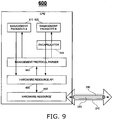
- a CPE may also support more than one management packager, such as CPE 600 shown in FIG. 9 , which is discussed below.
- FIG. 4 shows that management control messages are forwarded from CO 300 to hardware resource 260, using physical data link 270 between CO 300 and CPE 200, through logical CPE management protocol channel 290.
- FIG. 4 shows that management packagers A and B access CPE management protocol control table 400 in order to process management control messages that they receive from management systems 110 and 120.
- Control table 400 includes a field 410 with a CPE identifier, a field 420 with a management package type, and a field 430 with a management protocol forwarding rule.
- a first data frame 510 includes a destination address 511, a source address 512, a protocol A header 513, protocol A data 514 and a flag 515.
- a second data frame 520 includes a protocol B header, protocol B data and a flag 525.
- a third data frame 530 includes a protocol B header, a protocol A header, protocol A data and a flag 535.
- the flags 515, 525 and 535 have respective settings referred to as " NATIVE ", "TRANSLATED” and "ENCAPSULATED”. Use of these flags is described below.
- a management packager in a CO When a management packager in a CO receives a message from one of the heterogeneous management systems, it first determines if the message is being sent to the CO itself, to control the CO, or if instead the message is being sent to a CPE via the CO. If the message is being sent to a CPE via the CO, then the management packager invokes a procedure that uses a method with special rule-based logic for forwarding messages.
- FIG. 7 is a simplified flowchart of a method 1000 used by CO 300 to forward management control messages received from management system 110 to their destination CPEs, in accordance with an embodiment of the present invention.
- the method of FIG. 7 includes separate branches for destination CPEs of type A, type B and type AB, as determined from CPE management protocol control table 400. It will be appreciated by those skilled in the art that the relevant flowchart for forwarding management control messages received from management system 120 is similar to that of FIG. 7 , but with "A" and “B” reversed at the middle branch and right branch from operation 1030, and with "B” replaced by "A” at operations 1050 and 1070.
- management packager 310 in CO 300 When management packager 310 in CO 300 receives a message from management system A for destination CPEs of type A, CO 300 forwards the message to the CPE, preserving the protocol in use.
- the protocol When management packager 310 in CO 300 receives a message from management system A for destination CPEs of type B, the protocol is translated from protocol A to protocol B by a translator (element 337 of FIG. 4 ), and the translated message is then forwarded to the destination CPE.
- management packager 310 in CO 300 receives a message from management system A for destination CPEs of type AB, CO 300 encapsulates protocol A in protocol B by an encapsulator (element 333 of FIG. 4 ), and the encapsulated message is then forwarded to the destination CPE.
- the thus-processed protocol is forwarded to a hardware resource (element 260 of FIG. 4 ), using a physical data link (element 270 of FIG. 4 ) between the CO and the CPE through a logical CPE management protocol channel (element 290 of FIG. 4 ).
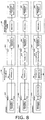
- FIG. 8 is a simplified data flow of three scenarios of use of the method 1000, in accordance with an embodiment of the present invention.
- protocol A is used for messaging between the management system and the CO, and for messaging between the CO and the destination CPE.
- management system A (element 110/1 of FIG. 8 ) forwards a management control message to CPE #1-1 (element 200/1 of FIG. 8 ) via CO #1 (element 300/1 of FIG. 8 ).
- Management packager A (element 310/1 of FIG. 8 ) in CO #1 receives the management message (operation 1010 of FIG. 7 ), and performs a message forwarding procedure in accordance with method 1000 of FIG.
- the procedure looks up CPE #1-1 in CPE management protocol control table 400 of FIG. 5 , and identifies the type of CPE #1-1 as being "A”, and identifies the management protocol forwarding rule of CPE #1-1 as being " Forward Protocol A”.
- the procedure branches to the "A" branch, which leads to operation 1040.
- the procedure forwards the message to CPE #1-1 to its hardware resource (element 260 of FIG. 4 ).
- the format of the packet corresponds to frame 510 in FIG. 6 .
- Flag 515 of frame 510 is set to " NATIVE ", which corresponds to use of protocol A.
- the protocol identifier that is defined as part of a standardized control protocol format, such as IEEE P1904.1 or ITU-T G.984, may be used as the flag with a " NATIVE " setting, without inserting the flag into protocol A header 513, for cases where the CPE only supports such protocol.
- protocol A is used for messaging between the management system and the CO
- protocol B is used for messaging between the CO and the destination CPE.
- Management system A (element 110/2 of FIG. 8 ) forwards a management control message to CPE #1-2 (element 200/2 of FIG. 8 ) via CO #1 (element 300/2 of FIG. 8 ).
- Management packager A (element 310/2 of FIG. 8 ) in CO #1 receives the management message (operation 1010 of FIG. 7 ), and performs a message forwarding procedure in accordance with the method of FIG. 7 to process the message.
- the procedure looks up CPE #1-2 in CPE management protocol control table 400 of FIG.
- the procedure branches to the "B" branch, which leads to operation 1070, where the procedure branches further to operation 1080.
- the message is forwarded to a translator (element 337/2 of FIG. 8 ), which translates protocol A to protocol B while maintaining the context.
- the translator is operative to use designated rules based on correspondence of actions and parameters in protocols A and B.
- the rule is generally telecommunication system and network operator specific, and is configured in accordance with a network operator's setting.
- the format of the packet corresponds to frame 520 in FIG. 6 .
- Flag 525 of frame 520 is set to " TRANSLATED ", which corresponds to translation of protocol A to protocol B.
- the protocol identifier that is defined as part of a standardized control protocol format, such as IEEE P1904.1 or ITU-T G.984, may be used as the flag with a "TRANSLATED" setting, without inserting the flag into protocol A header 513, for cases where the CPE only supports such protocol.
- protocol A is used for messaging between the management system and the CO
- protocol B is used for messaging between the CO and the destination CPE.
- the management control message is addressed to a management packager A in the destination CPE.
- the CPE may include, for example, two management packagers, A and B.
- FIG. 9 is a simplified block diagram of a CPE 600, with two management packagers 610 and 620, that uses a management control parser 640, in accordance with an embodiment of the present invention.
- CPE 600 may have multiple CPUs each running with different management protocols. For example, one CPU may use a standard management protocol for access systems, such as the protocol defined in IEEE P1904.1, Service Interoperable Ethernet PON (SIEPON) or the protocol defined in ITU-T G.984, Gigabit PON; another CPU may use a management protocol such as OpenFlow; and CPE 600 uses a single protocol for communication between CPE 600 and the CO.
- SIEPON Service Interoperable Ethernet PON
- ITU-T G.984, Gigabit PON Gigabit PON
- CPE 600 uses a single protocol for communication between CPE 600 and the CO.
- management control parser 640 invokes a procedure that uses a method to determine how to forward a received management control message.
- FIG. 10 is a simplified flowchart of a method 1100 used by management control parser 640 to determine how to forward a received management control message, in accordance with an embodiment of the present invention.
- management control parser 640 receives a management control message, packaged within a data frame (elements 510, 520 and 530 of FIG. 6 ).
- the method branches depending on the flag (elements 515, 525, 535 of FIG. 6 ) setting in the received data frame. If the flag setting is "ENCAPSULATED", then at operation 1130 the received message is passed to an encapsulator (element 633 of FIG. 9 ).
- the encapsulator decapsulates a protocol A message (element 538 of FIG. 8 ) from the received message. Thereafter, at operation 1140 the decapsulated message is forwarded to management packager A (element 610 of FIG. 9 ). Otherwise, if the flag is " NATIVE " or "TRANSLATED", then the method branches at operation 1120 directly to operation 1140 where the received message is forwarded to management packager B (element 620 of FIG. 9 ), without additional processing.
- management system A forwards a management control message to CPE #1-3 (element 200/3 of FIG. 8 ).
- Management packager A (element 320/3 of FIG. 8 ) in CO #1 receives the management message (operation 1010 of FIG. 7 ), and performs a message forwarding procedure in accordance with the method of FIG. 7 to process the message.
- the procedure looks up CPE #1-3 in CPE management protocol control table 400 of FIG. 5 , and identifies the type of CPE #1-3 as being "AB", which means that CPE #1-3 supports management protocol A in one CPU in the CPE, but the CPE only supports management protocol B for communication between CPE #1-3 and the CO.
- the procedure identifies the management protocol forwarding rule of CPE #1-3 as being " Encapsulate protocol A in protocol B". Encapsulation avoids unnecessary translation, and preserves the original message sent from management system A.
- the procedure branches to the "AB" branch, which leads to operation 1050.
- a decision is made whether to encapsulate the message within protocol B, or whether to forward the message in its native protocol. This decision may be based, inter alia, on the protocols used with previous messages, or by a default setting of the system or of the CPE. If the decision at operation 1050 is to encapsulate the message (" YES ”) , then the method branches to operation 1060.
- the message is forwarded to an encapsulator (element 333/3 of FIG. 8 ), which encapsulates protocol A in protocol B.
- the format of the packet corresponds to frame 530 in FIG. 6 .
- Flag 535 of frame 530 is set to "ENCAPSULATED", which corresponds to encapsulation of protocol A in protocol B.
- the protocol data B segment of frame 530 actually carries protocol header A and protocol data A. If instead the decision at operation 1050 is to forward the message in its native protocol ("NO"), then the method branches to operation 1040, in which case the message is forwarded to the CPE in its native form, within a packet that corresponds to frame 510 in FIG. 6 .
- the three example scenarios shown in FIG. 8 relate to messages transmitted from management system A.
- Analogous examples apply to messages transmitted from management system B to (i) a CPE of type B, (i) a CPE of type A, and (iii) a CPE of type AB, respectively.
- TABLE I Message Forwarding Scenarios CPE Type Destination CPE Packager Source Management System Flag A A A NATIVE A A B TRANSLATED B B A TRANSLATED B B B NATIVE AB A A NATIVE AB A B ENCAPSULATED AB B A ENCAPSULATED AB B B NATIVE
- the present invention enables heterogeneous management, wherein plural management systems using plural management protocols send control messages over an access network to a CPE in a telecommunication node.
- this enables seamless upgrading of existing management systems to SDN-based management systems, by accommodating both an existing management protocol and an SDN-based management protocol.
- a CPE (element 136 of FIG. 1 ) receiving a management control message via a CO (element 132 of FIG. 1 ) sends a reply message via the CO to the management system that sent the control message.
- autonomous messages may also be sent from a CPE via a CO to a management system, such messages being notifications of event and status changes. Referring back to TABLE I above, for the case of two management protocols there are eight possible scenarios.
- management packager A (element 210 of FIG. 2 ) of CPE 200 saves the flag value (elements 515, 525, 535 of FIG.
- the flag set by management packager A for a reply to a message received from management system A will be either " NATIVE " or "ENCAPSULATED", and the flag set by management packager B for the reply will be "TRANSLATED”.
- the reply is sent from the CPE to the CO.
- translator 337 ( FIGS. 3 and 4 ) is bi-directional, and translates " southbound " and " northbound " messages oppositely from one protocol to another, as necessary.
- the term “southbound” refers to communication to a lower layer facility, e.g., from a management system to a CPE, and the term “ northbound " refers for communication to a higher layer facility, e.g., from a CPE to a management system.
- control parser 340 receives a reply message from a CPE, the reply being packaged within a data frame (elements 510, 520, 530 of FIG. 6 ).
- the method branches depending on the setting of the flag in the data frame (elements 515, 525, 535 of FIG. 6 ). If the flag is set to " NATIVE ", then at operation 1230 control parser 340 forwards the message to management packager A (element 310 of FIG. 3 ).
- control parser 340 forwards the message to a translator (element 337 of FIG. 3 ).
- a CPE may set the data frame flag to "TRANSLATED” for an autonomously generated message, when the CPE intends the message to be used by management system A (element 120 of FIG. 1 ).
- control parser 340 forwards the reply message to an encapsulator (element 333 of FIG. 3 ).
- the encapsulator decapsulates the protocol A message (element 538 of FIG. 8 ) from the reply message.
- the decapsulated message is then forwarded to management packager A (element 320 of FIG. 3 ).
- the protocol identifier that is defined as part of a standardized control protocol format, such as IEEE P1904.1 or ITU-T G.984, may be used as the flag with " NATIVE " and "TRANSLATED” setting, without inserting the flag into protocol A header 513, for cases where the CPE only supports such protocol.
- a management packager (elements 310 and 320 of FIG. 3 ) receives a reply that is formatted in the appropriate protocol, it processes the reply and sends it to the appropriate management system (elements 110 and 120 of FIG. 1 ).
Landscapes
- Engineering & Computer Science (AREA)
- Computer Networks & Wireless Communication (AREA)
- Signal Processing (AREA)
- Data Exchanges In Wide-Area Networks (AREA)
Claims (8)
- Procédé (1000, 1200) de traitement de messages de protocole de gestion au sein d'un réseau de télécommunication, comprenant les étapes ci-dessous consistant à :recevoir (1010), par le biais d'un ordinateur de central téléphonique (CO) (132, 142, 300) au sein d'un noeud de télécommunication (130, 140), en provenance d'un ordinateur de gestionnaire de réseau (110, 120), un message emballé dans une première trame de données (510, 520, 530), le message étant conforme à un premier protocole et étant adressé à un ordinateur d'équipement des locaux d'abonné (CPE) (138, 148, 200, 600) au sein du noeud de télécommunication, dans lequel l'ordinateur de central CO communique avec l'ordinateur de gestionnaire de réseau par l'intermédiaire d'un réseau d'accès en utilisant le premier protocole, et communique avec l'ordinateur d'équipement CPE par l'intermédiaire d'une liaison de données physique (270) en utilisant un second protocole ;déterminer (1020), par le biais de l'ordinateur de central CO, si l'ordinateur d'équipement CPE auquel le message est adressé prend ou non en charge le premier protocole ;lorsque ladite détermination est affirmative (1030, 1050), encapsuler (1060) ensuite, par le biais de l'ordinateur de central CO, le message conforme au premier protocole, au sein d'une deuxième trame de données (510, 520, 530) qui est conforme au second protocole ;lorsque ladite détermination n'est pas affirmative (1030, 1070), traduire (1080) ensuite, par le biais de l'ordinateur de central CO, le message, du premier protocole au second protocole, et emballer le message traduit dans une deuxième trame de données qui est conforme au second protocole ;envoyer, par le biais de l'ordinateur de central CO, la deuxième trame de données à l'ordinateur d'équipement CPE, en utilisant le second protocole, par l'intermédiaire de la liaison de données physique ;recevoir en outre (1210), par le biais de l'ordinateur de central CO, une réponse, au sein d'une troisième trame de données (510, 520, 530), en provenance de l'ordinateur d'équipement CPE, le message étant conforme au second protocole et étant adressé à l'ordinateur de gestionnaire de réseau ;déterminer en outre (1220), par le biais de l'ordinateur de central CO, si l'ordinateur d'équipement CPE à partir duquel la réponse a été reçue prend ou non en charge le premier protocole ;lorsque ladite détermination supplémentaire est affirmative, décapsuler (1250) ensuite, par le biais de l'ordinateur de central CO, un message conforme au premier protocole, dans la troisième trame de données, et emballer le message décapsulé dans une quatrième trame de données conforme au premier protocole ;lorsque ladite détermination supplémentaire n'est pas affirmative, traduire (1240) ensuite, par le biais de l'ordinateur de central CO, le message, du second protocole au premier protocole, dans une quatrième trame de données (510, 520, 530) qui est conforme au premier protocole ; etenvoyer en outre, par le biais de l'ordinateur de central CO, la quatrième trame de données, à l'ordinateur de gestionnaire de réseau, en utilisant le premier protocole, par l'intermédiaire du réseau d'accès.
- Procédé selon la revendication 1, dans lequel ladite étape de détermination comprend l'étape consistant à rechercher (1020) une règle d'acheminement (430), pour l'ordinateur d'équipement CPE auquel le message est adressé, dans une table (400) indexée par des identifiants d'une pluralité d'ordinateurs d'équipement CPE.
- Procédé selon la revendication 1 ou 2, comprenant en outre l'étape consistant à définir un drapeau (515, 525, 535), dans la deuxième trame de données, en vue d'indiquer le résultat de ladite étape de détermination, lequel doit être utilisé par l'ordinateur d'équipement CPE auquel le message est adressé.
- Procédé selon la revendication 1, dans lequel ladite étape de détermination supplémentaire comprend l'étape consistant à rechercher, par le biais de l'ordinateur de central CO, une règle d'acheminement (430) pour l'ordinateur d'équipement CPE à partir duquel la réponse a été reçue, dans une table (400) indexée par des identifiants d'une pluralité d'ordinateurs d'équipement CPE.
- Procédé selon la revendication 1 ou 4, dans lequel la troisième trame de données comprend un drapeau (515, 525, 535), et dans lequel ladite étape de détermination supplémentaire est basée sur la définition du drapeau.
- Procédé selon l'une quelconque des revendications précédentes, dans lequel le premier protocole, le second protocole, ou les deux protocoles, sont des éléments du groupe comportant : (i) un protocole de réseau optique passif Ethernet à interopérabilité de services (SIEPON), (ii) un protocole de réseau optique passif gigabit, et (iii) un protocole OpenFlow.
- Ordinateur de central téléphonique (CO) (132, 142, 300) destiné à traiter des messages de protocole de gestion au sein d'un noeud de réseau de télécommunication (130, 140), comprenant :une connexion avec un réseau d'accès pour envoyer des messages vers et recevoir des messages en provenance d'un ordinateur de gestionnaire de réseau (110, 120), en utilisant un premier protocole, les messages étant emballés dans des trames de données (510, 520, 530) ;une connexion avec une liaison de données physique (270) pour envoyer des messages vers et recevoir des messages en provenance d'un ou plusieurs ordinateurs d'équipement des locaux d'abonné (CPE) (138, 148, 200) dans le noeud de réseau de télécommunication, en utilisant un second protocole, les messages étant emballés dans des trames de données ;un traducteur (337) qui est exploitable de manière à traduire des messages de façon bidirectionnelle entre les deux protocoles ;un encapsulateur (333, 633) qui est exploitable de manière à (i) encapsuler un message inclus dans une trame de données conforme au premier protocole, et à emballer le message encapsulé dans une trame de données conforme au second protocole, et (ii) à décapsuler un message conforme au premier protocole en provenance d'une trame de données conforme au second protocole, et à emballer le message décapsulé dans une trame de données conforme au premier protocole ; etun analyseur de message (340, 640) qui est exploitable de manière à (i) analyser un message reçu en provenance de l'ordinateur de gestionnaire de réseau sur le réseau d'accès, le message étant adressé à l'un des ordinateurs d'équipement CPE au sein du noeud de télécommunication et étant emballé dans une première trame de données conforme au premier protocole, (ii) à déterminer (1020) si l'ordinateur d'équipement CPE auquel le message est adressé prend ou non en charge le premier protocole, (iii) à transmettre le message (1060) audit encapsulateur, en vue d'encapsuler le message dans une deuxième trame de données conforme au second protocole, lorsque l'étape de détermination est affirmative (1030, 1050), (iv) à transmettre le message (1080) audit traducteur en vue de traduire le message, du premier protocole au second protocole, et à emballer le message traduit dans une deuxième trame de données conforme au second protocole, lorsque la détermination n'est pas affirmative (1030, 1070), (v) à analyser une réponse reçue sur ladite liaison de données physique en provenance de l'un des équipements CPE au sein du noeud de télécommunication, la réponse étant adressée à l'ordinateur de gestionnaire de réseau et étant emballée dans une troisième trame de données qui est conforme au second protocole, (vi) à déterminer si l'ordinateur d'équipement CPE à partir duquel la réponse est reçue prend ou non en charge le premier protocole, (vii) à transmettre le message (1250) audit encapsulateur en vue de décapsuler la réponse en provenance de la troisième trame de données, et à l'emballer dans une quatrième trame de données conforme au premier protocole, lorsque l'étape de détermination est affirmative (1220), et (viii) à transmettre le message (1240) audit traducteur en vue de traduire la réponse, du second protocole au premier protocole, et à l'emballer dans une quatrième trame de données conforme au premier protocole, lorsque l'étape de détermination n'est pas affirmative (1220).
- Ordinateur de central CO selon la revendication 7, dans lequel le premier protocole, le second protocole, ou les deux protocoles, sont des éléments du groupe comportant : (i) un protocole de réseau optique passif Ethernet à interopérabilité de services (SIEPON), (ii) un protocole de réseau optique passif gigabit, et (iii) un protocole OpenFlow.
Priority Applications (2)
| Application Number | Priority Date | Filing Date | Title |
|---|---|---|---|
| EP14166230.4A EP2940929B1 (fr) | 2014-04-28 | 2014-04-28 | Architecture pour une commande de protocole de gestion de système réseau d'accès dans un environnement de gestion de réseau hétérogène |
| ES14166230T ES2572253T3 (es) | 2014-04-28 | 2014-04-28 | Arquitectura para el control del protocolo de gestión de un sistema de red de acceso en un entorno de gestión de red heterogéneo |
Applications Claiming Priority (1)
| Application Number | Priority Date | Filing Date | Title |
|---|---|---|---|
| EP14166230.4A EP2940929B1 (fr) | 2014-04-28 | 2014-04-28 | Architecture pour une commande de protocole de gestion de système réseau d'accès dans un environnement de gestion de réseau hétérogène |
Publications (2)
| Publication Number | Publication Date |
|---|---|
| EP2940929A1 EP2940929A1 (fr) | 2015-11-04 |
| EP2940929B1 true EP2940929B1 (fr) | 2016-04-13 |
Family
ID=50687260
Family Applications (1)
| Application Number | Title | Priority Date | Filing Date |
|---|---|---|---|
| EP14166230.4A Not-in-force EP2940929B1 (fr) | 2014-04-28 | 2014-04-28 | Architecture pour une commande de protocole de gestion de système réseau d'accès dans un environnement de gestion de réseau hétérogène |
Country Status (2)
| Country | Link |
|---|---|
| EP (1) | EP2940929B1 (fr) |
| ES (1) | ES2572253T3 (fr) |
Family Cites Families (3)
| Publication number | Priority date | Publication date | Assignee | Title |
|---|---|---|---|---|
| US5613100A (en) * | 1989-09-12 | 1997-03-18 | Nec Corporation | Computer system having an open systems interconnection (OSI) management system for an information conversion for management of non-open systems |
| US6968553B1 (en) * | 2001-03-01 | 2005-11-22 | Alcatel | Element manager common gateway architecture system and method |
| EP2898627A1 (fr) * | 2012-10-22 | 2015-07-29 | Huawei Technologies Co., Ltd. | Identificateurs de lien pour de multiples domaines |
-
2014
- 2014-04-28 EP EP14166230.4A patent/EP2940929B1/fr not_active Not-in-force
- 2014-04-28 ES ES14166230T patent/ES2572253T3/es active Active
Also Published As
| Publication number | Publication date |
|---|---|
| ES2572253T3 (es) | 2016-05-31 |
| EP2940929A1 (fr) | 2015-11-04 |
Similar Documents
| Publication | Publication Date | Title |
|---|---|---|
| US9621685B2 (en) | Architecture for an access network system management protocol control under heterogeneous network management environment | |
| US11575439B1 (en) | Apparatus and method for joint profile-based slicing of mobile access and optical backhaul | |
| KR102342286B1 (ko) | Dcn 메시지 처리 방법, 네트워크 디바이스, 및 네트워크 시스템 | |
| KR102226366B1 (ko) | 패킷 프로세싱 방법 및 디바이스 | |
| US9444733B2 (en) | Proxies for pseudo-wire allocation and distribution | |
| US11184842B2 (en) | Conveying non-access stratum messages over ethernet | |
| CN103747499A (zh) | 用于针对有线和无线节点的公共控制协议的方法和设备 | |
| EP3069471B1 (fr) | Routage multidiffusion optimisé dans un réseau de type clos | |
| IL230406A (en) | Cloud computing method and system for executing g3 package on cloud computer with open flow science and control planes | |
| CN110855568B (zh) | 报文转发方法及系统 | |
| US6856620B1 (en) | Method and system for transporting packet-switched control traffic in an optical network | |
| JP5679343B2 (ja) | クラウドシステム、ゲートウェイ装置、通信制御方法、及び通信制御プログラム | |
| CN110213148B (zh) | 一种数据传输的方法、系统及装置 | |
| US20120230340A1 (en) | Message forwarding toward a source end node in a converged network environment | |
| WO2023116457A1 (fr) | Procédé et appareil de traitement de paquets, et système de communication | |
| KR20220064960A (ko) | 클라우드 내의 안전한 가상 사설 모바일 및 ip 네트워크 | |
| US20230336377A1 (en) | Packet forwarding method and apparatus, and network system | |
| CN112491687A (zh) | 一种处理报文的方法及装置 | |
| US20210167993A1 (en) | Method, device, and system for determining generic routing encapsulation gre tunnel identifier | |
| WO2023208116A1 (fr) | Procédé et appareil de gestion et de commande, dispositif de communication et support de stockage informatique | |
| CN115643222B (zh) | 报文的传输方法、装置及存储介质 | |
| CN113301668A (zh) | 一种借助无线网络的e1点对点通信的方法、终端及系统 | |
| CN102209037B (zh) | 媒体访问控制地址的切换方法、网络设备和用户设备 | |
| EP2940929B1 (fr) | Architecture pour une commande de protocole de gestion de système réseau d'accès dans un environnement de gestion de réseau hétérogène | |
| WO2019086129A1 (fr) | Fourniture de données d'abonné à partir d'un gestionnaire de données unifié dans des contenants transparents |
Legal Events
| Date | Code | Title | Description |
|---|---|---|---|
| PUAI | Public reference made under article 153(3) epc to a published international application that has entered the european phase |
Free format text: ORIGINAL CODE: 0009012 |
|
| 17P | Request for examination filed |
Effective date: 20150901 |
|
| AK | Designated contracting states |
Kind code of ref document: A1 Designated state(s): AL AT BE BG CH CY CZ DE DK EE ES FI FR GB GR HR HU IE IS IT LI LT LU LV MC MK MT NL NO PL PT RO RS SE SI SK SM TR |
|
| AX | Request for extension of the european patent |
Extension state: BA ME |
|
| GRAP | Despatch of communication of intention to grant a patent |
Free format text: ORIGINAL CODE: EPIDOSNIGR1 |
|
| INTG | Intention to grant announced |
Effective date: 20160114 |
|
| GRAS | Grant fee paid |
Free format text: ORIGINAL CODE: EPIDOSNIGR3 |
|
| GRAA | (expected) grant |
Free format text: ORIGINAL CODE: 0009210 |
|
| AK | Designated contracting states |
Kind code of ref document: B1 Designated state(s): AL AT BE BG CH CY CZ DE DK EE ES FI FR GB GR HR HU IE IS IT LI LT LU LV MC MK MT NL NO PL PT RO RS SE SI SK SM TR |
|
| REG | Reference to a national code |
Ref country code: GB Ref legal event code: FG4D |
|
| REG | Reference to a national code |
Ref country code: AT Ref legal event code: REF Ref document number: 791137 Country of ref document: AT Kind code of ref document: T Effective date: 20160415 Ref country code: CH Ref legal event code: EP |
|
| REG | Reference to a national code |
Ref country code: FR Ref legal event code: PLFP Year of fee payment: 3 |
|
| REG | Reference to a national code |
Ref country code: IE Ref legal event code: FG4D |
|
| REG | Reference to a national code |
Ref country code: DE Ref legal event code: R096 Ref document number: 602014001456 Country of ref document: DE |
|
| REG | Reference to a national code |
Ref country code: ES Ref legal event code: FG2A Ref document number: 2572253 Country of ref document: ES Kind code of ref document: T3 Effective date: 20160531 |
|
| REG | Reference to a national code |
Ref country code: LT Ref legal event code: MG4D |
|
| PG25 | Lapsed in a contracting state [announced via postgrant information from national office to epo] |
Ref country code: BE Free format text: LAPSE BECAUSE OF NON-PAYMENT OF DUE FEES Effective date: 20160430 |
|
| REG | Reference to a national code |
Ref country code: AT Ref legal event code: MK05 Ref document number: 791137 Country of ref document: AT Kind code of ref document: T Effective date: 20160413 |
|
| REG | Reference to a national code |
Ref country code: NL Ref legal event code: MP Effective date: 20160413 |
|
| PG25 | Lapsed in a contracting state [announced via postgrant information from national office to epo] |
Ref country code: FI Free format text: LAPSE BECAUSE OF FAILURE TO SUBMIT A TRANSLATION OF THE DESCRIPTION OR TO PAY THE FEE WITHIN THE PRESCRIBED TIME-LIMIT Effective date: 20160413 Ref country code: NL Free format text: LAPSE BECAUSE OF FAILURE TO SUBMIT A TRANSLATION OF THE DESCRIPTION OR TO PAY THE FEE WITHIN THE PRESCRIBED TIME-LIMIT Effective date: 20160413 Ref country code: PL Free format text: LAPSE BECAUSE OF FAILURE TO SUBMIT A TRANSLATION OF THE DESCRIPTION OR TO PAY THE FEE WITHIN THE PRESCRIBED TIME-LIMIT Effective date: 20160413 Ref country code: LT Free format text: LAPSE BECAUSE OF FAILURE TO SUBMIT A TRANSLATION OF THE DESCRIPTION OR TO PAY THE FEE WITHIN THE PRESCRIBED TIME-LIMIT Effective date: 20160413 Ref country code: NO Free format text: LAPSE BECAUSE OF FAILURE TO SUBMIT A TRANSLATION OF THE DESCRIPTION OR TO PAY THE FEE WITHIN THE PRESCRIBED TIME-LIMIT Effective date: 20160713 |
|
| PG25 | Lapsed in a contracting state [announced via postgrant information from national office to epo] |
Ref country code: RS Free format text: LAPSE BECAUSE OF FAILURE TO SUBMIT A TRANSLATION OF THE DESCRIPTION OR TO PAY THE FEE WITHIN THE PRESCRIBED TIME-LIMIT Effective date: 20160413 Ref country code: LV Free format text: LAPSE BECAUSE OF FAILURE TO SUBMIT A TRANSLATION OF THE DESCRIPTION OR TO PAY THE FEE WITHIN THE PRESCRIBED TIME-LIMIT Effective date: 20160413 Ref country code: PT Free format text: LAPSE BECAUSE OF FAILURE TO SUBMIT A TRANSLATION OF THE DESCRIPTION OR TO PAY THE FEE WITHIN THE PRESCRIBED TIME-LIMIT Effective date: 20160816 Ref country code: GR Free format text: LAPSE BECAUSE OF FAILURE TO SUBMIT A TRANSLATION OF THE DESCRIPTION OR TO PAY THE FEE WITHIN THE PRESCRIBED TIME-LIMIT Effective date: 20160714 Ref country code: AT Free format text: LAPSE BECAUSE OF FAILURE TO SUBMIT A TRANSLATION OF THE DESCRIPTION OR TO PAY THE FEE WITHIN THE PRESCRIBED TIME-LIMIT Effective date: 20160413 Ref country code: HR Free format text: LAPSE BECAUSE OF FAILURE TO SUBMIT A TRANSLATION OF THE DESCRIPTION OR TO PAY THE FEE WITHIN THE PRESCRIBED TIME-LIMIT Effective date: 20160413 Ref country code: SE Free format text: LAPSE BECAUSE OF FAILURE TO SUBMIT A TRANSLATION OF THE DESCRIPTION OR TO PAY THE FEE WITHIN THE PRESCRIBED TIME-LIMIT Effective date: 20160413 |
|
| PG25 | Lapsed in a contracting state [announced via postgrant information from national office to epo] |
Ref country code: IT Free format text: LAPSE BECAUSE OF FAILURE TO SUBMIT A TRANSLATION OF THE DESCRIPTION OR TO PAY THE FEE WITHIN THE PRESCRIBED TIME-LIMIT Effective date: 20160413 Ref country code: BE Free format text: LAPSE BECAUSE OF FAILURE TO SUBMIT A TRANSLATION OF THE DESCRIPTION OR TO PAY THE FEE WITHIN THE PRESCRIBED TIME-LIMIT Effective date: 20160413 |
|
| REG | Reference to a national code |
Ref country code: DE Ref legal event code: R097 Ref document number: 602014001456 Country of ref document: DE |
|
| REG | Reference to a national code |
Ref country code: IE Ref legal event code: MM4A |
|
| PG25 | Lapsed in a contracting state [announced via postgrant information from national office to epo] |
Ref country code: CZ Free format text: LAPSE BECAUSE OF FAILURE TO SUBMIT A TRANSLATION OF THE DESCRIPTION OR TO PAY THE FEE WITHIN THE PRESCRIBED TIME-LIMIT Effective date: 20160413 Ref country code: MC Free format text: LAPSE BECAUSE OF FAILURE TO SUBMIT A TRANSLATION OF THE DESCRIPTION OR TO PAY THE FEE WITHIN THE PRESCRIBED TIME-LIMIT Effective date: 20160413 Ref country code: SK Free format text: LAPSE BECAUSE OF FAILURE TO SUBMIT A TRANSLATION OF THE DESCRIPTION OR TO PAY THE FEE WITHIN THE PRESCRIBED TIME-LIMIT Effective date: 20160413 Ref country code: EE Free format text: LAPSE BECAUSE OF FAILURE TO SUBMIT A TRANSLATION OF THE DESCRIPTION OR TO PAY THE FEE WITHIN THE PRESCRIBED TIME-LIMIT Effective date: 20160413 Ref country code: RO Free format text: LAPSE BECAUSE OF FAILURE TO SUBMIT A TRANSLATION OF THE DESCRIPTION OR TO PAY THE FEE WITHIN THE PRESCRIBED TIME-LIMIT Effective date: 20160413 Ref country code: DK Free format text: LAPSE BECAUSE OF FAILURE TO SUBMIT A TRANSLATION OF THE DESCRIPTION OR TO PAY THE FEE WITHIN THE PRESCRIBED TIME-LIMIT Effective date: 20160413 |
|
| PLBE | No opposition filed within time limit |
Free format text: ORIGINAL CODE: 0009261 |
|
| STAA | Information on the status of an ep patent application or granted ep patent |
Free format text: STATUS: NO OPPOSITION FILED WITHIN TIME LIMIT |
|
| PG25 | Lapsed in a contracting state [announced via postgrant information from national office to epo] |
Ref country code: SM Free format text: LAPSE BECAUSE OF FAILURE TO SUBMIT A TRANSLATION OF THE DESCRIPTION OR TO PAY THE FEE WITHIN THE PRESCRIBED TIME-LIMIT Effective date: 20160413 |
|
| REG | Reference to a national code |
Ref country code: FR Ref legal event code: PLFP Year of fee payment: 4 |
|
| 26N | No opposition filed |
Effective date: 20170116 |
|
| PGFP | Annual fee paid to national office [announced via postgrant information from national office to epo] |
Ref country code: FR Payment date: 20170313 Year of fee payment: 4 |
|
| PG25 | Lapsed in a contracting state [announced via postgrant information from national office to epo] |
Ref country code: SI Free format text: LAPSE BECAUSE OF FAILURE TO SUBMIT A TRANSLATION OF THE DESCRIPTION OR TO PAY THE FEE WITHIN THE PRESCRIBED TIME-LIMIT Effective date: 20160413 Ref country code: IE Free format text: LAPSE BECAUSE OF NON-PAYMENT OF DUE FEES Effective date: 20160428 |
|
| PGFP | Annual fee paid to national office [announced via postgrant information from national office to epo] |
Ref country code: ES Payment date: 20170317 Year of fee payment: 4 |
|
| PGFP | Annual fee paid to national office [announced via postgrant information from national office to epo] |
Ref country code: DE Payment date: 20170426 Year of fee payment: 4 |
|
| REG | Reference to a national code |
Ref country code: CH Ref legal event code: PL |
|
| PG25 | Lapsed in a contracting state [announced via postgrant information from national office to epo] |
Ref country code: CH Free format text: LAPSE BECAUSE OF NON-PAYMENT OF DUE FEES Effective date: 20170430 Ref country code: LI Free format text: LAPSE BECAUSE OF NON-PAYMENT OF DUE FEES Effective date: 20170430 |
|
| PG25 | Lapsed in a contracting state [announced via postgrant information from national office to epo] |
Ref country code: HU Free format text: LAPSE BECAUSE OF FAILURE TO SUBMIT A TRANSLATION OF THE DESCRIPTION OR TO PAY THE FEE WITHIN THE PRESCRIBED TIME-LIMIT; INVALID AB INITIO Effective date: 20140428 |
|
| PG25 | Lapsed in a contracting state [announced via postgrant information from national office to epo] |
Ref country code: MT Free format text: LAPSE BECAUSE OF NON-PAYMENT OF DUE FEES Effective date: 20160430 Ref country code: CY Free format text: LAPSE BECAUSE OF FAILURE TO SUBMIT A TRANSLATION OF THE DESCRIPTION OR TO PAY THE FEE WITHIN THE PRESCRIBED TIME-LIMIT Effective date: 20160413 Ref country code: LU Free format text: LAPSE BECAUSE OF NON-PAYMENT OF DUE FEES Effective date: 20160428 Ref country code: MK Free format text: LAPSE BECAUSE OF FAILURE TO SUBMIT A TRANSLATION OF THE DESCRIPTION OR TO PAY THE FEE WITHIN THE PRESCRIBED TIME-LIMIT Effective date: 20160413 Ref country code: IS Free format text: LAPSE BECAUSE OF FAILURE TO SUBMIT A TRANSLATION OF THE DESCRIPTION OR TO PAY THE FEE WITHIN THE PRESCRIBED TIME-LIMIT Effective date: 20160413 |
|
| PG25 | Lapsed in a contracting state [announced via postgrant information from national office to epo] |
Ref country code: BG Free format text: LAPSE BECAUSE OF FAILURE TO SUBMIT A TRANSLATION OF THE DESCRIPTION OR TO PAY THE FEE WITHIN THE PRESCRIBED TIME-LIMIT Effective date: 20160413 |
|
| PG25 | Lapsed in a contracting state [announced via postgrant information from national office to epo] |
Ref country code: AL Free format text: LAPSE BECAUSE OF FAILURE TO SUBMIT A TRANSLATION OF THE DESCRIPTION OR TO PAY THE FEE WITHIN THE PRESCRIBED TIME-LIMIT Effective date: 20160413 Ref country code: TR Free format text: LAPSE BECAUSE OF FAILURE TO SUBMIT A TRANSLATION OF THE DESCRIPTION OR TO PAY THE FEE WITHIN THE PRESCRIBED TIME-LIMIT Effective date: 20160413 |
|
| REG | Reference to a national code |
Ref country code: DE Ref legal event code: R119 Ref document number: 602014001456 Country of ref document: DE |
|
| GBPC | Gb: european patent ceased through non-payment of renewal fee |
Effective date: 20180428 |
|
| PG25 | Lapsed in a contracting state [announced via postgrant information from national office to epo] |
Ref country code: DE Free format text: LAPSE BECAUSE OF NON-PAYMENT OF DUE FEES Effective date: 20181101 |
|
| PG25 | Lapsed in a contracting state [announced via postgrant information from national office to epo] |
Ref country code: GB Free format text: LAPSE BECAUSE OF NON-PAYMENT OF DUE FEES Effective date: 20180428 |
|
| PG25 | Lapsed in a contracting state [announced via postgrant information from national office to epo] |
Ref country code: FR Free format text: LAPSE BECAUSE OF NON-PAYMENT OF DUE FEES Effective date: 20180430 |
|
| REG | Reference to a national code |
Ref country code: ES Ref legal event code: FD2A Effective date: 20190911 |
|
| PG25 | Lapsed in a contracting state [announced via postgrant information from national office to epo] |
Ref country code: ES Free format text: LAPSE BECAUSE OF NON-PAYMENT OF DUE FEES Effective date: 20180429 |