EP2940973A1 - Dispositif électronique capable de communiquer avec un autre dispositif - Google Patents
Dispositif électronique capable de communiquer avec un autre dispositif Download PDFInfo
- Publication number
- EP2940973A1 EP2940973A1 EP13868069.9A EP13868069A EP2940973A1 EP 2940973 A1 EP2940973 A1 EP 2940973A1 EP 13868069 A EP13868069 A EP 13868069A EP 2940973 A1 EP2940973 A1 EP 2940973A1
- Authority
- EP
- European Patent Office
- Prior art keywords
- electronic device
- digital camera
- smartphone
- communication
- setting information
- Prior art date
- Legal status (The legal status is an assumption and is not a legal conclusion. Google has not performed a legal analysis and makes no representation as to the accuracy of the status listed.)
- Granted
Links
Images






Classifications
-
- H—ELECTRICITY
- H04—ELECTRIC COMMUNICATION TECHNIQUE
- H04W—WIRELESS COMMUNICATION NETWORKS
- H04W76/00—Connection management
- H04W76/10—Connection setup
- H04W76/14—Direct-mode setup
-
- H—ELECTRICITY
- H04—ELECTRIC COMMUNICATION TECHNIQUE
- H04M—TELEPHONIC COMMUNICATION
- H04M1/00—Substation equipment, e.g. for use by subscribers
- H04M1/72—Mobile telephones; Cordless telephones, i.e. devices for establishing wireless links to base stations without route selection
- H04M1/724—User interfaces specially adapted for cordless or mobile telephones
- H04M1/72403—User interfaces specially adapted for cordless or mobile telephones with means for local support of applications that increase the functionality
- H04M1/72409—User interfaces specially adapted for cordless or mobile telephones with means for local support of applications that increase the functionality by interfacing with external accessories
- H04M1/72412—User interfaces specially adapted for cordless or mobile telephones with means for local support of applications that increase the functionality by interfacing with external accessories using two-way short-range wireless interfaces
-
- H—ELECTRICITY
- H04—ELECTRIC COMMUNICATION TECHNIQUE
- H04N—PICTORIAL COMMUNICATION, e.g. TELEVISION
- H04N21/00—Selective content distribution, e.g. interactive television or video on demand [VOD]
- H04N21/40—Client devices specifically adapted for the reception of or interaction with content, e.g. set-top-box [STB]; Operations thereof
- H04N21/41—Structure of client; Structure of client peripherals
- H04N21/414—Specialised client platforms, e.g. receiver in car or embedded in a mobile appliance
- H04N21/41407—Specialised client platforms, e.g. receiver in car or embedded in a mobile appliance embedded in a portable device, e.g. video client on a mobile phone, PDA, laptop
-
- H—ELECTRICITY
- H04—ELECTRIC COMMUNICATION TECHNIQUE
- H04N—PICTORIAL COMMUNICATION, e.g. TELEVISION
- H04N21/00—Selective content distribution, e.g. interactive television or video on demand [VOD]
- H04N21/40—Client devices specifically adapted for the reception of or interaction with content, e.g. set-top-box [STB]; Operations thereof
- H04N21/41—Structure of client; Structure of client peripherals
- H04N21/422—Input-only peripherals, i.e. input devices connected to specially adapted client devices, e.g. global positioning system [GPS]
- H04N21/4223—Cameras
-
- H—ELECTRICITY
- H04—ELECTRIC COMMUNICATION TECHNIQUE
- H04N—PICTORIAL COMMUNICATION, e.g. TELEVISION
- H04N21/00—Selective content distribution, e.g. interactive television or video on demand [VOD]
- H04N21/40—Client devices specifically adapted for the reception of or interaction with content, e.g. set-top-box [STB]; Operations thereof
- H04N21/43—Processing of content or additional data, e.g. demultiplexing additional data from a digital video stream; Elementary client operations, e.g. monitoring of home network or synchronising decoder's clock; Client middleware
- H04N21/436—Interfacing a local distribution network, e.g. communicating with another STB or one or more peripheral devices inside the home
- H04N21/4363—Adapting the video stream to a specific local network, e.g. a Bluetooth® network
- H04N21/43637—Adapting the video stream to a specific local network, e.g. a Bluetooth® network involving a wireless protocol, e.g. Bluetooth®, RF or wireless LAN [IEEE 802.11]
-
- H—ELECTRICITY
- H04—ELECTRIC COMMUNICATION TECHNIQUE
- H04N—PICTORIAL COMMUNICATION, e.g. TELEVISION
- H04N21/00—Selective content distribution, e.g. interactive television or video on demand [VOD]
- H04N21/40—Client devices specifically adapted for the reception of or interaction with content, e.g. set-top-box [STB]; Operations thereof
- H04N21/43—Processing of content or additional data, e.g. demultiplexing additional data from a digital video stream; Elementary client operations, e.g. monitoring of home network or synchronising decoder's clock; Client middleware
- H04N21/436—Interfacing a local distribution network, e.g. communicating with another STB or one or more peripheral devices inside the home
- H04N21/4367—Establishing a secure communication between the client and a peripheral device or smart card
-
- H—ELECTRICITY
- H04—ELECTRIC COMMUNICATION TECHNIQUE
- H04W—WIRELESS COMMUNICATION NETWORKS
- H04W12/00—Security arrangements; Authentication; Protecting privacy or anonymity
-
- H—ELECTRICITY
- H04—ELECTRIC COMMUNICATION TECHNIQUE
- H04W—WIRELESS COMMUNICATION NETWORKS
- H04W12/00—Security arrangements; Authentication; Protecting privacy or anonymity
- H04W12/06—Authentication
-
- H—ELECTRICITY
- H04—ELECTRIC COMMUNICATION TECHNIQUE
- H04W—WIRELESS COMMUNICATION NETWORKS
- H04W12/00—Security arrangements; Authentication; Protecting privacy or anonymity
- H04W12/08—Access security
-
- H—ELECTRICITY
- H04—ELECTRIC COMMUNICATION TECHNIQUE
- H04W—WIRELESS COMMUNICATION NETWORKS
- H04W12/00—Security arrangements; Authentication; Protecting privacy or anonymity
- H04W12/30—Security of mobile devices; Security of mobile applications
- H04W12/35—Protecting application or service provisioning, e.g. securing SIM application provisioning
-
- H—ELECTRICITY
- H04—ELECTRIC COMMUNICATION TECHNIQUE
- H04W—WIRELESS COMMUNICATION NETWORKS
- H04W12/00—Security arrangements; Authentication; Protecting privacy or anonymity
- H04W12/30—Security of mobile devices; Security of mobile applications
- H04W12/37—Managing security policies for mobile devices or for controlling mobile applications
-
- H—ELECTRICITY
- H04—ELECTRIC COMMUNICATION TECHNIQUE
- H04W—WIRELESS COMMUNICATION NETWORKS
- H04W12/00—Security arrangements; Authentication; Protecting privacy or anonymity
- H04W12/50—Secure pairing of devices
-
- H—ELECTRICITY
- H04—ELECTRIC COMMUNICATION TECHNIQUE
- H04W—WIRELESS COMMUNICATION NETWORKS
- H04W4/00—Services specially adapted for wireless communication networks; Facilities therefor
- H04W4/02—Services making use of location information
- H04W4/023—Services making use of location information using mutual or relative location information between multiple location based services [LBS] targets or of distance thresholds
-
- H—ELECTRICITY
- H04—ELECTRIC COMMUNICATION TECHNIQUE
- H04W—WIRELESS COMMUNICATION NETWORKS
- H04W4/00—Services specially adapted for wireless communication networks; Facilities therefor
- H04W4/80—Services using short range communication, e.g. near-field communication [NFC], radio-frequency identification [RFID] or low energy communication
-
- H—ELECTRICITY
- H04—ELECTRIC COMMUNICATION TECHNIQUE
- H04W—WIRELESS COMMUNICATION NETWORKS
- H04W12/00—Security arrangements; Authentication; Protecting privacy or anonymity
- H04W12/60—Context-dependent security
- H04W12/69—Identity-dependent
- H04W12/75—Temporary identity
-
- H—ELECTRICITY
- H04—ELECTRIC COMMUNICATION TECHNIQUE
- H04W—WIRELESS COMMUNICATION NETWORKS
- H04W84/00—Network topologies
- H04W84/02—Hierarchically pre-organised networks, e.g. paging networks, cellular networks, WLAN [Wireless Local Area Network] or WLL [Wireless Local Loop]
- H04W84/10—Small scale networks; Flat hierarchical networks
- H04W84/12—WLAN [Wireless Local Area Networks]
Definitions
- the present disclosure relates to an electronic device capable of communicating with another device.
- Patent Document 1 discloses a technique of releasing a lock function of a master terminal only when recognized fingerprint information matches registered fingerprint recognition information. This leads to suppression of improper act by an unauthorized operator.
- Patent Document 1 Japanese Laid-Open Patent Publication No. 2009-290481
- An electronic device of the present disclosure is an electronic device capable of communicating with another electronic device and capable of permitting remote control from the other electronic device.
- the electronic device includes a first communicating unit configured to wirelessly communicate with the other electronic device and a controller configured to establish wireless communication with the other electronic device through the first communicating unit by using setting information.
- the controller permits the other electronic device to remotely control the operation of the electronic device within a first range.
- the setting information used for establishing the communication is information temporarily issued, the controller permits the other electronic device to remotely control the operation of the electronic device within a second range limited as compared to the first range.
- a method of communication of the present disclosure is a method of communication between devices for enabling remote control of one electronic device from another electronic device.
- the method of communication includes a step of establishing wireless communication between the one electronic device and the other electronic device by using setting information and a step of controlling whether remote control of the one electronic device from the other electronic device is available based on the setting information used for establishing the communication.
- the step of controlling whether the remote control is available includes a step of permitting the other electronic device to remotely control the operation of the one electronic device within a first range when the setting information used for establishing the communication is information not-temporarily issued, and a step of permitting the other electronic device to remotely control the operation of the one electronic device within a second range limited as compared to the first range when the setting information used for establishing the communication is information temporarily issued.
- the present disclosure can provide the electronic device capable of easily performing communication while giving consideration to security.
- a digital camera 100 and a smartphone 200 will hereinafter be described in terms of configurations and operations in this embodiment.
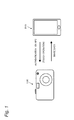
- Fig. 1 is a diagram of a system configuration made up of the digital camera 100 and the smartphone 200.
- the digital camera 100 according to the first embodiment can share image data with the smartphone 200 through an authentication operation via NFC (near field communication).
- the smartphone 200 can transmit instructions for (remotely control) a zoom operation, release button depression, etc. of the digital camera 100 through a communicating unit 254.
- the digital camera 100 receives an instruction from the smartphone 200 with a communicating unit 171 and performs an operation in accordance with the received instruction. In this case, the digital camera 100 switches permission and rejection of response to the instruction from the smartphone 200 depending on whether the smartphone 200 defined as an image transfer destination is registered in registration information.
- Fig. 2 is an electric configuration diagram of the digital camera 100.
- the digital camera 100 uses a CMOS image sensor 115 to capture a subject image formed through an optical system 110.
- the CMOS image sensor 115 generates imaging data (RAW data) based on the captured subject image.
- An image processor 120 applies various processes to the imaging data generated by capturing the image, thereby generating image data.
- a controller 135 records the image data generated by the image processor 120 into a memory card 145 inserted in to a card slot 140.
- the controller 135 can accept an operation on an operation unit 150 by a user to display (reproduce) the image data recorded in the memory card 145 on a liquid crystal monitor 130.
- the optical system 110 includes a focus lens, a zoom lens, an optical image stabilization lens (OIS), a diaphragm, a shutter, etc.
- OIS optical image stabilization lens
- the various lenses included in the optical system 110 may be made up of any number of lenses or any number of groups.
- the CMOS image sensor 115 captures a subject image formed through the optical system 110 to generate the imaging data.
- the CMOS image sensor 115 generates an image data for a new frame at a predetermined frame rate (e.g., 30 frames/second).
- the timing of generation of the imaging data and an electronic shutter operation are controlled by the controller 135.
- An imaging element is not limited to a CMOS image sensor, and other image sensors such as a CCD image sensor and an NMOS image sensor may be used.
- the image processor 120 applies various processes to the imaging data output from the CMOS image sensor 115, thereby generating image data.
- the image processor 120 applies various processes to the image data read from the memory card 145, thereby generating an image to be displayed on the liquid crystal monitor 130.
- the various processes include, but not limited to, white balance correction, gamma correction, a YC conversion process, an electronic zoom process, a compression process, a decompression process, and the like.
- the image processor 120 may be made up of a hard-wired electronic circuit or may be made up of a microcomputer etc. using a program.
- the liquid crystal monitor 130 is disposed on a back surface of the digital camera 100.
- the liquid crystal monitor 130 displays an image based on the image data processed by the image processor 120.
- a display apparatus is not limited to a liquid crystal monitor, and other monitors such as an organic EL monitor may be used.
- the controller 135 generally controls the overall operation of the digital camera 100.
- the controller 135 may be made up of a hard-wired electronic circuit or may be made up of a microcomputer etc.
- the controller 135 and the image processor 120 or the like may be integrated into a single semiconductor chip.
- the controller 135 has a ROM therein.
- the ROM stores an SSID (Service Set Identifier) and a WEP key (Wired Equivalent Privacy key) necessary for establishing WiFi communication with another communication device.
- the controller 135 can read the SSID and the WEP key from the ROM as needed.
- the ROM also stores programs related to autofocus control (AF control) and communication control as well as a program for generally controlling the overall operation of the digital camera 100.
- AF control autofocus control
- communication control as well as a program for generally controlling the overall operation of the digital camera 100.
- a buffer memory 125 is a storage medium acting as a work memory for the image processor 120 and the controller 135.
- the buffer memory 125 is achieved by a DRAM (Dynamic Random Access Memory).
- the card slot 140 is a connecting means which the memory card 145 can be attached to and detached from.
- the card slot 140 can electrically and mechanically connected to the memory card 145.
- the memory card 145 is an external memory including a memory device such as a flash memory therein.
- the memory card 145 can store data such as image data generated by the image processor 120.
- the operation unit 150 is a collective name for hard keys such as operation buttons and operation levers disposed on the exterior of the digital camera 100 and receives an operation by a user. When receiving an operation by a user, the operation unit 150 notifies the controller 135 of various operation instruction signals.
- a WiFi module 155 is a communication module performing communication conforming to the communication standard IEEE 802.11.
- the digital camera 100 can communicate through the WiFi module 155 with another communication device equipped with a WiFi module.
- the digital camera 100 may communicate through the WiFi module 155 with another communication device directly or via an access point.
- the WiFi module may be replaced with a communication module performing communication conforming to the communication standard 802.15.1, i.e., Bluetooth (registered trademark).
- the communication module may be a communication module which is capable of communication at a relatively high communication bit rate and has a communication area of several meters or more.
- An NFC tag 160 is a communication tag performing communication conforming to an NFC standard.
- the digital camera 100 communicates through the NFC tag 160 with another communication device equipped with an NFC reader/writer to read and write data from/to the NFC reader/writer.
- the NFC tag 160 includes an antenna, a memory, and a logic circuit.
- the antenna of the NFC tag 160 transmits and receives signals conforming to the NFC standard.
- the memory of the NFC tag 160 stores information to be read by the NFC reader/writer. Information is written to the memory of the NFC tag 160, by the NFC reader/writer.
- the logic circuit of the NFC tag 160 demodulates and transmits a signal received by the antenna to the controller 135 and modulates a signal transmitted from the controller 135 or the memory of the NFC tag 160. Even while no electric power is supplied from the inside of the digital camera 100, the NFC tag 160 can operate with electric power supplied through electromagnetic induction from an NFC reader/writer adjacent to the NFC tag 160.
- the communication area of communication conforming to the NFC standard is about several centimeters.
- a user of the digital camera 100 must bring the digital camera 100 close to another communication device equipped with an NFC reader/writer such that the other communication device comes within a distance of several centimeters from the digital camera 100.
- the NFC tag 160 may be replaced with a communicating means performing another near field type wireless communication.
- Fig. 3 is an electric configuration diagram of the smartphone 200.
- the smartphone 200 can display on a liquid crystal monitor 215 an image represented by image data generated by an image processor 205.
- a touch panel 210 is disposed on a surface of the liquid crystal monitor 215 so that a touch operation by a user can be received.
- the smartphone 200 has an operation unit 230 which allows an operation other than the operation through the touch panel 210.
- a controller 225 can communicate through a WiFi module 235 and an NFC reader/writer 240 with another communication device.
- the image processor 205 applies various processes to image data read from the memory card 145, thereby generating an image to be displayed on the liquid crystal monitor 215.
- the various processes include, but not limited to, a decompression process, and the like.
- the image processor 205 may be made up of a hard-wired electronic circuit or may be made up of a microcomputer, or the like using a program.
- the touch panel 210 is an input device detecting contact of a user's finger, or the like to output operation information to the controller 225.
- the touch panel 210 is disposed on the surface of the liquid crystal monitor 215.
- the touch panel 210 may be configured by a resistance film system, a capacitance system, or any other system.
- the liquid crystal monitor 215 is a display device displaying a screen instructed by the controller 225.
- a buffer memory 220 is a memory temporarily storing information necessary for the controller 225 performing various processing operations.
- the controller 225 controls operations of the units composing the smartphone 200.
- the controller 225 is electrically connected to the image processor 205, the touch panel 210, the liquid crystal monitor 215, the buffer memory 220, the operation unit 230, the WiFi module 235, and the NFC reader/writer 240.
- the WiFi module 235 is a communication module performing communication conforming to the communication standard IEEE 802.11.
- the smartphone 200 can communicate through the WiFi module 235 with another communication device equipped with a WiFi module.
- the smartphone 200 may communicate through the WiFi module 235 with another communication device directly or via an access point.
- the WiFi module may be replaced with a communication module performing communication conforming to the communication standard 802.15.1, i.e., Bluetooth (registered trademark).
- the communication module may be a communication module which is capable of communication at a relatively high communication bit rate and has a communication area of several meters or more.
- the NFC reader/writer 240 is a communication reader performing communication conforming to an NFC standard.
- the smartphone 200 can communicate through the NFC reader/writer 240 with another communication device equipped with an NFC reader/writer or another communication device equipped with an NFC tag to read and write data of the NFC tag.
- the NFC reader/writer 240 includes an antenna, a memory, and a logic circuit.
- the antenna of the NFC reader/writer 240 transmits and receives signals conforming to the NFC standard.
- the memory of the NFC reader/writer 240 stores information to be written to the NFC tag.
- the memory of the NFC reader/writer 240 stores information read from the NFC tag.
- the logic circuit of the NFC reader/writer 240 demodulates and transmits a signal received by the antenna to the controller 225 and modulates a signal transmitted from the controller 225 or the memory of the NFC reader/writer 240. Even while an adjacent NFC tag is not supplied with electric power, the NFC reader/writer 240 can supply electric power to the adjacent NFC tag by electromagnetic induction to write or read information.
- the NFC reader/writer may be replaced with a communicating means performing another near field type wireless communication.
- a flash memory 245 stores image data captured by the smartphone 200, image data transferred from the digital camera 100, etc.
- the smartphone 200 may have a telephone function, an internet communication function, and a camera function.
- a "touch operation” refers to an operation of a user bringing the NFC tag 160 of the digital camera 100 and the NFC reader/writer 240 of the smartphone 200 close to each other within a communication distance range of the communication conforming to the NFC standard.
- the touch operation may be performed by bringing the NFC reader/writer 240 of the smartphone 200 close to the NFC tag 160 of the digital camera 100 or by bringing the NFC tag 160 of the digital camera 100 close to the NFC reader/writer 240 of the smartphone 200.
- the digital camera 100 has reproduction modes including a multiple image playback mode and a single image playback mode.
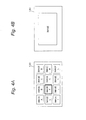
- the multiple image playback mode is a mode of displaying a plurality of reproduced images recorded in the memory card 145 on the liquid crystal monitor 130 of the digital camera 100 as depicted in Fig. 4A .
- the single image playback mode is a mode of displaying only one reproduced image on the liquid crystal monitor 130 of the digital camera 100 as depicted in Fig. 4B .
- the smartphone 200 has a function of remotely controlling the digital camera 100 while being WiFi-connected to the digital camera 100.
- unlimited connection is defined as communication connection permitting the control of all the functions related to the digital camera 100 via WiFi.
- Limited connection is defined as communication connection permitting the control of only a portion of the functions (e.g., browsing in the single image playback mode) related to the digital camera 100 via WiFi.
- Rejected connection is defined as connection not permitting any remote control via WiFi.
- the WiFi connection between the digital camera 100 and the smartphone 200 is achieved by using WiFi setting information (such as an SSID and a PW (password)).
- the WiFi setting information includes an SSID and a password (hereinafter referred to as "PW").
- the WiFi setting information (such as an SSID and a PW (password)) used for the "unlimited connection” is defined as "permanent WiFi setting information" (a permanent SSID, a permanent PW).
- the WiFi setting information used for the "limited connection” is defined as "temporary WiFi setting information" (a temporary SSID, a temporary PW).
- the permanent WiFi setting information (the permanent SSID, the permanent PW) is information permanently used after the information is once issued from the digital camera 100.
- the temporary WiFi setting information (the temporary SSID, the temporary PW) is temporary information invalidated when a certain time elapses after the information is once issued from the digital camera 100.
- a plurality of images is displayed on the liquid crystal monitor 130 of the digital camera 100 and may include images that the user of the digital camera 100 does not want other users to browse.
- the user of the digital camera 100 can select and display an intended image. Therefore, in the present disclosure, only a device registered in the "unlimited connection” can WiFi-connect to the digital camera 100 during the multiple image playback mode.
- an electronic device not in the "rejected connection" i.e., an electronic device registered or handled in the "unlimited connection” or "limited connection” can WiFi-connect to the digital camera 100.
- the smartphone 200 registered in the digital camera 100 is described as a “smartphone 200A” and the smartphone 200 not registered in the digital camera 100 is described as a “smartphone 200B”. Additionally, “A” is added to the end of reference numeral of the constituent elements making up the smartphone 200A and “B” is added to the end of reference numeral of the constituent elements making up the smartphone 200B in the description.
- FIG. 5 is a flowchart of the communication operation during the multiple image playback mode according to the first embodiment.
- a user of the smartphone 200A operates the touch panel 210 to activate an application for giving a control instruction to the digital camera 100 (S300).
- the smartphone 200A shifts to a mode capable of remote control of the closely located digital camera 100.
- the operation mode of the digital camera 100 is selected and set in the digital camera 100 in accordance with the operation on the operation unit 150 by a user.
- the digital camera 100 is set to the multiple image playback mode by the user (S301).
- the multiple image playback mode a plurality of images recorded in the memory card 145 attached to the digital camera 100 is displayed on the screen of the liquid crystal monitor 130.
- the user can browse the screen of the liquid crystal monitor 130 to check a plurality of images recorded in the memory card 145 attached to the digital camera 100 at the same time.
- the controller 135 of the digital camera 100 When set to the multiple image playback mode, the controller 135 of the digital camera 100 writes the permanent SSID to a memory unit of the NFC tag 160 (S302).
- the writing of the permanent SSID to the NFC tag 160 is not limited to the time of setting to the multiple image playback mode.
- the permanent SSID may be written to the NFC tag 160 in advance at the time of factory shipment or may be written by the controller 135 at the first power-on.
- the controller 225A of the smartphone 200A reads the permanent SSID from the NFC tag 160 of the digital camera 100 through the NFC reader/writer 240A (S304).
- the touch operation causes the controller 225A of the smartphone 200A to write a device identifier A that is information uniquely identifying the smartphone 200A, to the NFC tag 160 through the NFC reader/writer 240A (S305).
- the controller 135 of the digital camera 100 then reads the device identifier A from the NFC tag 160 (S306).
- the smartphone 200A acquires the permanent SSID before notifying the digital camera 100 of the device identifier A through the touch operation of step S303.
- this is not a limitation of the order of the processes.
- the smartphone 200A may make a notification of the device identifier A and subsequently acquire the permanent SSID through the touch operation of step S303.
- the controller 135 of the digital camera 100 checks whether the device identifier A is registered in a management table stored in the memory of the digital camera 100, thereby authenticating the smartphone 200A (S307).
- Fig. 6 depicts an example of the management table. As depicted in Fig. 6 , the management table manages the correlation between a device identifier and a limitation (no limitation) to a device indicated by the device identifier.
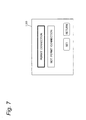
- the controller 135 of the digital camera 100 displays a message screen for inquiring of a user whether connection is permitted, on the liquid crystal monitor 130 (S308). For example, as depicted in Fig. 7 , a screen is displayed on the liquid crystal monitor 130 for allowing a user to select either "permit connection” or “not permit connection”. In this case, the user operates the operation unit 130 to select either "permit connection” or “not permit connection”. The selection of "not permit connection” by the user results in the "rejected connection” and the operation depicted in Fig. 5 is terminated.
- the controller 135 of the digital camera 100 registers the device identifier A in the management table as depicted in Fig. 6 . In this description, it is assumed that the user selects "permit connection" for the smartphone 200A.
- the smartphone 200A indicated by the device identifier A is managed as a device registered in the digital camera 100, i.e., a connection-permitted device.
- the digital camera 100 is in the multiple image playback mode and the smartphone 200A is therefore registered in the management table as a device connected in the "unlimited connection".
- the controller 135 of the digital camera 100 handles the smartphone 200A as a device in the "unlimited connection" without displaying the message screen for inquiring of the user.
- the controller 135 of the digital camera 100 Since the smartphone 200A is a device in the unlimited connection, the controller 135 of the digital camera 100 writes the permanent PW to the NFC tag 160 (S309).
- the controller 135 of the digital camera 100 executes software for allowing the digital camera 100 to act as an access point, thereby activating the access point with the permanent SSID and the permanent PW (S310).
- the user of the smartphone 200A causes the smartphone 200A to touch the digital camera 100 again (S311).
- This touch operation enables the NFC reader/writer 240A of the smartphone 200A to read the permanent PW from the NFC tag 160 of the digital camera 100 (S312).
- the controller 225A of the smartphone 200A executes software for allowing the smartphone 200A to act as a station, thereby activating the station (S313).
- the controller 225A of the smartphone 200A uses the acquired permanent SSID and permanent PW to establish WiFi communication with the digital camera 100 (S314).
- the smartphone 200A is registered as a device subjected to the "unlimited connection" in the digital camera 100 and establishes WiFi communication.
- the smartphone 200A and the digital camera 100 subsequently perform WiFi communication.
- the smartphone 200A transmits the instruction related to the multiple image playback mode (instruction for remote control) to the digital camera 100 in accordance with the user operation (S315).
- the multiple image playback mode is a mode in which only a device registered as the "unlimited connection” can connect to (can control) the digital camera 100.
- the smartphone 200A is a device of the "unlimited connection”. Therefore, the controller 135 of the digital camera 100 transmits to the smartphone 200A a permission response to the instruction related to the multiple image playback mode (S316). This enables the smartphone 200A to remotely control the digital camera 100 in relation to the multiple image playback mode.
- the user of the smartphone 200A gives an instruction related to an operation mode other than the multiple image playback mode (e.g., the single image playback mode) to the digital camera 100.
- the smartphone 200A transmits the instruction related to the operation mode other than the multiple image playback mode (e.g., the single image playback mode) to the digital camera 100 (S317).
- the operation mode other than the multiple image playback mode is a mode in which a device registered as the "unlimited connection” or “limited connection” can connect to (can control) the digital camera 100.
- the smartphone 200A is not in the “rejected connection” in the digital camera 100 and is registered as a device of the "unlimited connection” as depicted in Fig. 6 . Therefore, the digital camera 100 gives the smartphone 200A a permission response to the instruction related to the operation mode other than the multiple image playback mode (S318). This enables the smartphone 200A to remotely control the digital camera 100 also in terms of the functions related to the operation mode other than the multiple image playback mode.
- the smartphone 200A can give the remote control instruction to the digital camera 100 under the condition of the "unlimited connection".
- Fig. 8 is a flowchart of the communication operation during the single image playback mode according to the first embodiment.
- an application for enabling the remote control of the digital camera 100 is activated in the smartphone 200B in accordance with an operation of the touch panel 210 by a user (S400).
- the smartphone 200B shifts to a mode capable of the remote control of the closely located digital camera 100.
- the operation mode of the digital camera 100 is selected and set in the digital camera 100 in accordance with the operation on the operation unit 150 by a user.
- the digital camera 100 is set to the single image playback mode by the user (S401).
- the single image playback mode is a mode in which one of the images recorded in the memory card 145 attached to the digital camera 100 is displayed alone on the screen of the liquid crystal monitor 130.
- the user can browse the screen of the liquid crystal monitor 130 to check only one single image out of the images recorded in the memory card 145 attached to the digital camera 100.
- the user of the digital camera 100 selects only one image allowed to be shared with others, as a reproduction object.
- the controller 135 of the digital camera 100 When set to the single image playback mode, the controller 135 of the digital camera 100 writes the temporary SSID to the memory unit of the NFC tag 160 (S402).
- step S403 causes the controller 225B of the smartphone 200B to write a device identifier B that is information uniquely identifying the smartphone 200B, to the NFC tag 160 through the NFC reader/writer 240B (S405).
- the controller 135 of the digital camera 100 reads the device identifier B from the NFC tag 160 (S406).
- the acquisition of the temporary SSID is followed by the process of notification of the device identifier B through the touch operation of step S403 in the above description, this is not a limitation of the order of the processes.
- the temporary SSID may be acquired after the notification of the device identifier B through the touch operation of step S403.
- the controller 135 of the digital camera 100 checks whether the device identifier B is registered in the management table stored in the memory of the digital camera 100, thereby authenticating the smartphone 200B (S407). In this case, if the smartphone is registered in the management table of the digital camera 100, the "unlimited connection" is permitted. In the following description, it is assumed that the smartphone 200B is not registered in the management table of the digital camera 100.
- the controller 135 of the digital camera 100 permits the smartphone 200B to connect in the "limited connection" enabling only the control instructions related to the single image playback mode.
- the controller 135 of the digital camera 100 For connecting in the "limited connection", the controller 135 of the digital camera 100 writes the temporary PW to the NFC tag 160 (S408).
- the controller 135 of the digital camera 100 executes the software for allowing the digital camera 100 to act as an access point, thereby activating the access point with the temporary SSID and the temporary PW (S409).
- the user of the smartphone 200B causes the smartphone 200B to touch the digital camera 100 again (S410) .
- This touch operation enables the NFC reader/writer 240B of the smartphone 200B to read the temporary PW from the NFC tag 160 of the digital camera 100 (S411).
- the controller 225B of the smartphone 200B executes the software for allowing the smartphone 200B to act as a station, thereby activating the station (S412).
- the controller 225B of the smartphone 200B uses the acquired temporary SSID and temporary PW to establish WiFi communication with the digital camera 100 (S413).
- the smartphone 200B and the digital camera 100 subsequently perform WiFi communication.
- the smartphone 200B establishes WiFi communication with the digital camera 100 while being handled as a device subjected to the "unlimited connection" in the digital camera 100.
- the single image playback mode is a mode in which another device is permitted to connect to the digital camera 100 as long as the device is not in the "rejected connection". Since the smartphone 200B is handled as a device subjected to the "limited connection" in the digital camera 100, the digital camera 100 transmits to the smartphone 200B a permission response to the instruction related to the single image playback mode (S415). This enables the smartphone 200B to remotely control the digital camera 100 in relation to the single image playback mode.
- the multiple image playback mode is a mode in which only a device registered as the "unlimited connection” is connectable.
- the smartphone 200B is handled as a device subjected to the "limited connection” in the digital camera 100. Therefore, the digital camera 100 transmits to the smartphone 200B a rejection response to the instruction related to the multiple image playback mode (S417). In this way, the smartphone 200B can be limited such that the smartphone 200B cannot remotely control the digital camera 100 in relation to the multiple image playback mode.
- the smartphone 200B can give an operation instruction to the digital camera 100 under the condition of the "limited connection".
- the WiFi connection is established by using the temporary WiFi setting information (the temporary SSID, the temporary PW)
- the smartphone 200B is permitted to provide the remote control related to the single image playback mode and is rejected in terms of the remote control related to the multiple image playback mode.
- the WiFi connection is established by using the temporary WiFi setting information in this way, the range of the remote control from the smartphone 200B is limited as compared to when the WiFi connection is established by using the permanent WiFi setting information.
- the temporary WiFi setting information (the temporary SSID, the temporary PW) expires when a predetermined time elapses after the information is once issued from the digital camera 100. Therefore, a device subjected to the "limited connection" can be allowed to make an operation instruction to the digital camera 100 under a certain time restriction.
- the digital camera 100 of the first embodiment is an electronic device capable of communication with the smartphone 200 and capable of permitting the remote control from the smartphone 200.
- the digital camera 100 includes the WiFi module 155 (an example of a first communicating unit) wirelessly communicating with the smartphone 200 and the controller 135 establishing wireless communication with the smartphone 200 through the WiFi module 155 by using the WIFi setting information. If the WiFi setting information used for establishing the communication is non-temporarily issued information (the permanent SSID, the permanent PW), the controller 135 permits the smartphone 200 to remotely control the operation of the digital camera 100 within a first range (both the multi-reproduction and the single playback) (S315 to S316, S317 to S318).
- a first range both the multi-reproduction and the single playback
- the controller 135 permits the smartphone 200 to remotely control the operation of the digital camera 100 within a second range limited as compared to the first range (only the instructions related to the single playback) (S414 to S415, S416 to S417).
- the digital camera 100 transmits an SSID and a PW (the WiFi setting information) to the smartphone 200 after receiving the device identifier from the smartphone 200 and performing the authentication. If the smartphone is not registered in the management table at the time of authentication in the digital camera 100, the smartphone is registered in the management table in accordance with user selection (unlimited connection/limited connection/rejected connection).
- Fig. 9 is a flowchart of the communication operation when the unlimited connection is selected according to the second embodiment.
- the user of the smartphone 200A operates the touch panel 210 to activate the application for giving a control instruction to the digital camera 100 (S500).
- the smartphone 200A shifts to a mode capable of remote control of the closely located digital camera 100.
- the controller 225A of the smartphone 200A writes the device identifier A uniquely identifying the smartphone 200A to the NFC tag 160 of the digital camera 100 through the NFC reader/writer 240A (S502).
- the controller 135 of the digital camera 100 reads the device identifier A from the NFC tag 160 (S503).
- the controller 135 of the digital camera 100 checks whether the device identifier A is registered in the management table stored in the memory of the digital camera 100, thereby authenticating the smartphone 200A (S504). If the device identifier is not registered in the management table, the controller 135 of the digital camera 100 displays a message screen for inquiring of a user whether connection is permitted, on the liquid crystal monitor 130. For example, as depicted in Fig. 10 , a screen is displayed on the liquid crystal monitor 130 for allowing the user to select "permit unlimited connection", “permit limited connection", or "not permit connection”.
- the user operates the operation unit 130 to select "permit unlimited connection", “permit limited connection”, or “not permit connection”.
- the selection of "not permit connection” by the user results in the "rejected connection” and the operation depicted in Fig. 9 is terminated at this step.
- the controller 135 of the digital camera 100 registers the device identifier A in the management table as depicted in Fig. 11 .
- the device identifier A is managed as the "unlimited connection” as depicted in Fig. 11 .
- the smartphone 200A indicated by the device identifier A is subsequently managed as a device registered in the digital camera 100.
- the smartphone 200A registered in the digital camera 100 is comprehended as an object of "unlimited connection”.
- the operation in the case of the selection of "limited connection" by the user will be described in detail later.
- the controller 135 of the digital camera 100 then writes the permanent SSID and the permanent PW to the NFC tag 160 (S506).
- the controller 135 of the digital camera 100 executes the software for allowing the digital camera 100 to act as an access point, thereby activating the access point with the permanent SSID and the permanent PW (S507).
- the user of the smartphone 200A causes the smartphone 200A to touch the digital camera 100 again (S508).
- This touch operation enables the NFC reader/writer 240A of the smartphone 200A to read the permanent SSID and the permanent PW from the NFC tag 160 of the digital camera 100 (S509).
- the controller 225A of the smartphone 200A executes the software for allowing the smartphone 200A to act as a station, thereby activating the station (S510).
- the controller 225A of the smartphone 200A uses the acquired permanent SSID and permanent PW to establish WiFi communication with the digital camera 100 (S511).
- the smartphone 200A and the digital camera 100 subsequently perform WiFi communication.
- the smartphone 200A is registered as a device subjected to the "unlimited connection" in the digital camera 100 and the WiFi communication is established.
- the smartphone 200A transmits the instruction related to the single image playback mode (instruction for remote control) to the digital camera 100 in accordance with the user operation (S512).
- the single image playback mode is a mode in which a device registered as the "unlimited connection” or the "limited connection” can provide the remote control. Since the smartphone 200A is registered as a device subjected to the "unlimited connection" in the digital camera 100, the digital camera 100 transmits to the smartphone 200A a permission response to the instruction related to the single image playback mode (S513). This enables the smartphone 200A to remotely control the digital camera 100 in relation to the single image playback mode.
- the smartphone 200A transmits the instruction related to the multiple image playback mode (instruction for remote control) to the digital camera 100 (S514).
- the multiple image playback mode is a mode in which only a device registered as the "unlimited connection" can provide the remote control. Since the smartphone 200A is registered as a device subjected to the "unlimited connection" in the digital camera 100, the digital camera 100 transmits to the smartphone 200A a permission response to the instruction related to the multiple image playback mode (S515). Therefore, the smartphone 200A can remotely control the digital camera 100 in relation to the multiple image playback mode.
- the smartphone 200A can remotely control the digital camera 100 under the condition of the "unlimited connection".
- Fig. 12 is a flowchart of the communication operation when the limited connection is selected according to the second embodiment.
- an application for enabling the remote control of the digital camera 100 is activated in the smartphone 200B in accordance with an operation of the touch panel 210 by a user (S600).
- the smartphone 200B shifts to a mode capable of the remote control of the closely located digital camera 100.
- the controller 225B of the smartphone 200B writes the device identifier B uniquely identifying the smartphone 200B to the NFC tag 160 of the digital camera 100 through the NFC reader/writer 240B (S602).
- the controller 135 of the digital camera 100 reads the device identifier B from the NFC tag 160 (S603).
- the controller 135 of the digital camera 100 checks whether the device identifier B is registered in the management table stored in the memory of the digital camera 100, thereby authenticating the smartphone 200B (S604). If the device identifier is not registered in the management table, the controller 135 of the digital camera 100 displays a message screen for inquiring of a user whether connection is permitted as depicted in Fig. 10 on the liquid crystal monitor 130.
- the controller 135 of the digital camera 100 registers the device identifier B in the management table as depicted in Fig. 11 .
- the device identifier B is managed as the "limited connection” as depicted in Fig. 11 .
- the smartphone 200B indicated by the device identifier B is subsequently managed as a device registered in the digital camera 100.
- the smartphone 200B registered in the digital camera 100 is managed in the management table as an object of "limited connection".
- the controller 135 of the digital camera 100 then writes the temporary SSID and the temporary PW to the NFC tag 160 (S606) .
- the controller 135 of the digital camera 100 executes the software for allowing the digital camera 100 to act as an access point, thereby activating the access point with the temporary SSID and the temporary PW (S607).
- the user causes the smartphone 200B to touch the digital camera 100 again (S608).
- This touch operation enables the NFC reader/writer 240B of the smartphone 200B to read the temporary SSID and the temporary PW from the NFC tag 160 of the digital camera 100 (S609).
- the controller 225B of the smartphone 200B executes the software for allowing the smartphone 200B to act as a station, thereby activating the station (S610).
- the controller 225B of the smartphone 200B uses the acquired temporary SSID and temporary PW to establish WiFi communication with the digital camera 100 (S611).
- the smartphone 200B and the digital camera 100 subsequently perform WiFi communication.
- the smartphone 200B is registered as a device of the "limited connection" in the digital camera 100 and the WiFi communication is established.
- the smartphone 200B transmits the instruction related to the single image playback mode to the digital camera 100 (S612).
- the single image playback mode is a mode in which a device registered as the "unlimited connection” or the "limited connection” can provide the remote control.
- the smartphone 200B is registered as a device subjected to the "limited connection” in the digital camera 100. Therefore, the digital camera 100 transmits to the smartphone 200B a permission response to the instruction related to the single image playback mode (S613). This enables the smartphone 200B to remotely control the digital camera 100 in relation to the single image playback mode.
- the smartphone 200B then gives an instruction related to the multiple image playback mode to the digital camera 100.
- the smartphone 200B transmits the instruction related to the multiple image playback mode to the digital camera 100 (S614).
- the smartphone 200B since the smartphone 200B is registered as a device subjected to the "limited connection" in the digital camera 100, the digital camera 100 transmits to the smartphone 200B a rejection response to the instruction related to the multiple image playback mode (S615). Therefore, the smartphone 200B cannot remotely control the digital camera 100 in relation to the multiple image playback mode.
- the smartphone 200B can give a remote control instruction to the digital camera 100 under the condition of the "limited connection".
- the temporary WiFi setting information (the temporary SSID, the temporary PW) expires when a predetermined time elapses after the information is once issued from the digital camera 100. Therefore, a device subjected to the "limited connection" can be allowed to make an operation instruction to the digital camera 100 under a certain time restriction.
- the controller 135 permits the smartphone 200 to remotely control the operation of the digital camera 100 within the first range (both the multi-reproduction and the single playback) (S512 to S513, S514 to S515).
- the setting information used for establishing the communication is temporarily issued information (the temporary SSID, the temporary PW)
- the controller 135 permits the smartphone 200 to remotely control the operation of the digital camera 100 within the second range limited as compared to the first range (only the instructions related to the single playback) (S612 to S613, S614 to S615).
- the WiFi connection is established by using the temporary WiFi setting information
- the range of the remote control from the smartphone 200B is limited as compared to when the WiFi connection is established by using the permanent WiFi setting information.
- the digital camera 100 according to the second embodiment can easily perform communication while giving consideration to security.
- the first and second embodiments have been described as exemplification of the techniques disclosed in this application.
- the techniques in the present disclosure are not limited thereto and are applicable to embodiments subjected to modification, replacement, addition, and omission as needed.
- the constituent elements described in the first and second embodiments can be combined to implement a new embodiment.
- Other embodiments will hereinafter be exemplified.
- the temporary WiFi setting information (the temporary SSID, the temporary PW) is invalidated when a certain time elapses after the information was once issued from the digital camera 100 in the embodiments, this is not a limitation.
- the information may be invalidated when a predetermined operation is performed or may be invalidated when browsing of one image is terminated. In short, it is only necessary that the information can be implemented as temporarily issued information.
- the controller 135 of the digital camera 100 is described in a form of writing the WiFi setting information (the permanent PW, the permanent SSID, the temporary PW, the temporary SSID) to the NFC tag 160 (S309, S408, S506, S606), this is not a limitation.
- the controller 135 of the digital camera 100 may not write the WiFi setting information in advance to the NFC tag 160 and, when the touch operation (S311, S410, S508, S608) is performed, the controller 135 of the digital camera 100 may directly notify the smartphone 200A of the WiFi setting information through the NFC tag 160. Since the digital camera 100 does not write the permanent PW to the NFC tag 160, a more secure system can be provided.
- the digital camera 100 may erase the WiFi setting information written to the NFC tag 160 of the digital camera 100. Since the digital camera 100 erases the permanent PW information written to the NFC tag 160, a more secure system can be provided.
- the digital camera 100 may erase the WiFi setting information written to the NFC tag 160. As a result, a more secure system can be provided.
- the controller 135 of the digital camera 100 and the controller 225 of the smartphone 200 are made up of a CPU, an MPU, or an FPGA, for example.
- constituent elements described in the accompanying drawings and detailed description may include not only the constituent elements essential for solving the problem but also the constituent elements not essential for solving the problem, for exemplification of the techniques.
- these non-essential elements should not immediately be recognized as being essential because these non-essential elements are described in the accompanying drawings and detailed description.
- the technical concept of the present disclosure is not limited to the implementation in digital cameras and smartphones. Therefore, the technical concept of the present disclosure can be applied to an electronic device capable of communicating with another device to communicate an image.
Landscapes
- Engineering & Computer Science (AREA)
- Signal Processing (AREA)
- Computer Networks & Wireless Communication (AREA)
- Computer Security & Cryptography (AREA)
- Multimedia (AREA)
- General Engineering & Computer Science (AREA)
- Human Computer Interaction (AREA)
- Telephone Function (AREA)
- Studio Devices (AREA)
- Mobile Radio Communication Systems (AREA)
Applications Claiming Priority (2)
| Application Number | Priority Date | Filing Date | Title |
|---|---|---|---|
| JP2012284200 | 2012-12-27 | ||
| PCT/JP2013/007613 WO2014103314A1 (fr) | 2012-12-27 | 2013-12-26 | Dispositif électronique capable de communiquer avec un autre dispositif |
Publications (3)
| Publication Number | Publication Date |
|---|---|
| EP2940973A1 true EP2940973A1 (fr) | 2015-11-04 |
| EP2940973A4 EP2940973A4 (fr) | 2016-01-13 |
| EP2940973B1 EP2940973B1 (fr) | 2019-11-06 |
Family
ID=51020429
Family Applications (1)
| Application Number | Title | Priority Date | Filing Date |
|---|---|---|---|
| EP13868069.9A Not-in-force EP2940973B1 (fr) | 2012-12-27 | 2013-12-26 | Dispositif électronique capable de communiquer avec un autre dispositif |
Country Status (5)
| Country | Link |
|---|---|
| US (1) | US9288830B2 (fr) |
| EP (1) | EP2940973B1 (fr) |
| JP (1) | JP6152947B2 (fr) |
| CN (1) | CN104871517B (fr) |
| WO (1) | WO2014103314A1 (fr) |
Cited By (1)
| Publication number | Priority date | Publication date | Assignee | Title |
|---|---|---|---|---|
| CN106304069A (zh) * | 2016-08-08 | 2017-01-04 | 惠州Tcl移动通信有限公司 | 实现平板电脑与键盘wifi热点快速连接方法及系统 |
Families Citing this family (14)
| Publication number | Priority date | Publication date | Assignee | Title |
|---|---|---|---|---|
| KR20150078266A (ko) * | 2013-12-30 | 2015-07-08 | 삼성전자주식회사 | 디지털 촬영 장치 및 이를 제어하는 방법 |
| CN104820509A (zh) * | 2014-01-30 | 2015-08-05 | 联发科技(新加坡)私人有限公司 | 权限控制方法以及触控电子装置 |
| WO2016004579A1 (fr) * | 2014-07-08 | 2016-01-14 | 华为技术有限公司 | Procédé, dispositif et plate-forme de partage de réseau local sans fil |
| JP6415175B2 (ja) * | 2014-08-18 | 2018-10-31 | キヤノン株式会社 | 通信装置、通信装置の制御方法、プログラム |
| JP6302399B2 (ja) * | 2014-11-17 | 2018-03-28 | キヤノン株式会社 | 近距離無線通信部を備える画像形成装置、その制御方法、及びプログラム |
| JP6537255B2 (ja) * | 2014-12-04 | 2019-07-03 | キヤノン株式会社 | 通信装置、通信装置の制御方法及びプログラム |
| JP6521652B2 (ja) * | 2015-02-04 | 2019-05-29 | キヤノン株式会社 | 通信装置、その制御方法、プログラム |
| JP6631078B2 (ja) * | 2015-06-16 | 2020-01-15 | ヤマハ株式会社 | オーディオ機器の接続方法、オーディオ機器、オーディオシステム制御プログラム、および、制御端末装置 |
| JP6655924B2 (ja) * | 2015-09-17 | 2020-03-04 | キヤノン株式会社 | 通信装置、通信装置の制御方法及びプログラム |
| JP6884773B2 (ja) * | 2016-05-30 | 2021-06-09 | 三菱電機株式会社 | 通信システム、および、通信システムの制御方法 |
| JP6892130B2 (ja) * | 2018-10-24 | 2021-06-18 | Necプラットフォームズ株式会社 | 無線lanシステム及び無線クライアント端末接続方法 |
| JP6737353B2 (ja) * | 2019-02-06 | 2020-08-05 | ブラザー工業株式会社 | 通信機器 |
| CN110213760B (zh) * | 2019-04-29 | 2022-02-11 | 惠州Tcl移动通信有限公司 | 路由器、移动终端及其网路连接方法及存储介质 |
| TWI809462B (zh) * | 2021-07-29 | 2023-07-21 | 費米股份有限公司 | 具升降功能之共享裝置的控制系統及其控制方法 |
Family Cites Families (22)
| Publication number | Priority date | Publication date | Assignee | Title |
|---|---|---|---|---|
| JP2005286827A (ja) | 2004-03-30 | 2005-10-13 | Denso Corp | ハンズフリー装置 |
| WO2005122543A1 (fr) | 2004-06-14 | 2005-12-22 | Nec Corporation | Système de contrôle de fonction de type requête externe, dispositif terminal, méthode de contrôle de fonction de type requête externe, et programme de contrôle de fonction de type requête externe |
| JP2006042087A (ja) * | 2004-07-29 | 2006-02-09 | Toshiba Corp | クライアント端末、アクセスポイント装置、及び無線接続システム |
| JP4825793B2 (ja) | 2005-03-17 | 2011-11-30 | 富士通株式会社 | 移動携帯端末、管理装置、機能抑止・解除プログラム、システムおよび方法 |
| US7873384B2 (en) * | 2005-09-01 | 2011-01-18 | Broadcom Corporation | Multimode mobile communication device with configuration update capability |
| CN1932786A (zh) * | 2005-09-16 | 2007-03-21 | 孙丹 | 一种实现手机访问和控制计算机的系统及方法 |
| JP4781139B2 (ja) * | 2006-03-20 | 2011-09-28 | キヤノン株式会社 | 通信装置及びその制御方法 |
| JP2007251990A (ja) | 2007-05-11 | 2007-09-27 | Ricoh Co Ltd | 通信装置及び通信装置の制御方法 |
| JP5421584B2 (ja) * | 2007-12-18 | 2014-02-19 | 株式会社アイ・オー・データ機器 | 通信システムおよび通信方法 |
| JP5074296B2 (ja) | 2008-05-28 | 2012-11-14 | 京セラ株式会社 | 携帯電子機器及び携帯電子機器のネットワークシステム |
| US8914462B2 (en) * | 2009-04-14 | 2014-12-16 | Lg Electronics Inc. | Terminal and controlling method thereof |
| KR101725888B1 (ko) | 2009-11-13 | 2017-04-13 | 삼성전자주식회사 | 카메라 또는 원격 제어 장치에서의 이미지 제공 방법 및 그 장치 |
| CN101986227A (zh) * | 2010-11-09 | 2011-03-16 | 北京理工大学 | 远程控制系统 |
| WO2012174427A2 (fr) * | 2011-06-16 | 2012-12-20 | OneID Inc. | Procédé et système de détermination de niveaux d'authentification dans des transactions |
| CN102291493B (zh) * | 2011-08-25 | 2012-10-03 | 华为终端有限公司 | 移动终端的应用参数配置方法、相关装置以及系统 |
| CN102315864B (zh) * | 2011-09-07 | 2015-11-25 | 百度在线网络技术(北京)有限公司 | 用于移动设备点对点数据传输的方法和装置 |
| US9253340B2 (en) * | 2011-11-11 | 2016-02-02 | Intellectual Ventures Fund 83 Llc | Wireless camera with image sharing prioritization |
| CN102457619A (zh) * | 2011-12-30 | 2012-05-16 | 广东欧珀移动通信有限公司 | 一种手机权限密码的设置方法 |
| JP5963528B2 (ja) * | 2012-05-07 | 2016-08-03 | キヤノン株式会社 | 通信装置およびその制御方法 |
| CN102789682B (zh) * | 2012-07-13 | 2015-12-16 | 惠州Tcl移动通信有限公司 | 一种远程控制家用电器的方法及系统 |
| JP5980027B2 (ja) * | 2012-07-18 | 2016-08-31 | キヤノン株式会社 | 通信装置、その制御方法、プログラム |
| US9036016B2 (en) * | 2012-07-25 | 2015-05-19 | Gopro, Inc. | Initial camera mode management system |
-
2013
- 2013-12-26 WO PCT/JP2013/007613 patent/WO2014103314A1/fr not_active Ceased
- 2013-12-26 CN CN201380067773.5A patent/CN104871517B/zh not_active Expired - Fee Related
- 2013-12-26 JP JP2014554147A patent/JP6152947B2/ja not_active Expired - Fee Related
- 2013-12-26 EP EP13868069.9A patent/EP2940973B1/fr not_active Not-in-force
-
2015
- 2015-06-24 US US14/749,103 patent/US9288830B2/en active Active
Cited By (2)
| Publication number | Priority date | Publication date | Assignee | Title |
|---|---|---|---|---|
| CN106304069A (zh) * | 2016-08-08 | 2017-01-04 | 惠州Tcl移动通信有限公司 | 实现平板电脑与键盘wifi热点快速连接方法及系统 |
| EP3499935A4 (fr) * | 2016-08-08 | 2020-01-01 | JRD Communication Inc. | Procédé et système de connexion rapide à un point d'accès sans fil |
Also Published As
| Publication number | Publication date |
|---|---|
| WO2014103314A1 (fr) | 2014-07-03 |
| JP6152947B2 (ja) | 2017-06-28 |
| CN104871517A (zh) | 2015-08-26 |
| CN104871517B (zh) | 2018-01-09 |
| US20150296554A1 (en) | 2015-10-15 |
| US9288830B2 (en) | 2016-03-15 |
| EP2940973B1 (fr) | 2019-11-06 |
| EP2940973A4 (fr) | 2016-01-13 |
| JPWO2014103314A1 (ja) | 2017-01-12 |
Similar Documents
| Publication | Publication Date | Title |
|---|---|---|
| EP2940973B1 (fr) | Dispositif électronique capable de communiquer avec un autre dispositif | |
| US10158795B2 (en) | Electronic apparatus for communicating with another apparatus | |
| JP7033717B2 (ja) | 撮像装置及び画像転送方法 | |
| US20150296118A1 (en) | Communication apparatus | |
| US11025603B2 (en) | Service providing system, service delivery system, service providing method, and non-transitory recording medium | |
| US11128623B2 (en) | Service providing system, service delivery system, service providing method, and non-transitory recording medium | |
| US10827109B2 (en) | Imaging apparatus | |
| JP6688485B2 (ja) | サービス提供システム、サービス授受システム、サービス提供方法、及びプログラム | |
| US11076010B2 (en) | Service providing system, service delivery system, service providing method, and non-transitory recording medium | |
| JP2016034051A (ja) | 通信制御装置 | |
| EP3438860B1 (fr) | Système de fourniture de services, système d'échange de services, procédé de fourniture de services, et programme | |
| JP2017215944A (ja) | 筆記情報管理システム |
Legal Events
| Date | Code | Title | Description |
|---|---|---|---|
| PUAI | Public reference made under article 153(3) epc to a published international application that has entered the european phase |
Free format text: ORIGINAL CODE: 0009012 |
|
| 17P | Request for examination filed |
Effective date: 20150626 |
|
| AK | Designated contracting states |
Kind code of ref document: A1 Designated state(s): AL AT BE BG CH CY CZ DE DK EE ES FI FR GB GR HR HU IE IS IT LI LT LU LV MC MK MT NL NO PL PT RO RS SE SI SK SM TR |
|
| AX | Request for extension of the european patent |
Extension state: BA ME |
|
| A4 | Supplementary search report drawn up and despatched |
Effective date: 20151210 |
|
| RIC1 | Information provided on ipc code assigned before grant |
Ipc: H04W 4/00 20090101ALI20151204BHEP Ipc: H04W 84/10 20090101ALI20151204BHEP Ipc: H04W 12/00 20090101ALI20151204BHEP Ipc: H04W 12/06 20090101ALI20151204BHEP Ipc: H04W 12/04 20090101ALN20151204BHEP Ipc: H04L 29/06 20060101ALI20151204BHEP Ipc: H04M 1/725 20060101ALI20151204BHEP Ipc: H04W 76/02 20090101ALI20151204BHEP Ipc: H04W 12/08 20090101AFI20151204BHEP |
|
| DAX | Request for extension of the european patent (deleted) | ||
| GRAP | Despatch of communication of intention to grant a patent |
Free format text: ORIGINAL CODE: EPIDOSNIGR1 |
|
| STAA | Information on the status of an ep patent application or granted ep patent |
Free format text: STATUS: GRANT OF PATENT IS INTENDED |
|
| RIC1 | Information provided on ipc code assigned before grant |
Ipc: H04M 1/725 20060101ALI20190108BHEP Ipc: H04W 84/12 20090101ALI20190108BHEP Ipc: H04W 4/00 20180101ALI20190108BHEP Ipc: H04W 4/02 20180101AFI20190108BHEP Ipc: H04W 12/06 20090101ALI20190108BHEP Ipc: H04W 12/04 20090101ALI20190108BHEP Ipc: H04L 29/06 20060101ALI20190108BHEP Ipc: H04W 12/08 20090101ALI20190108BHEP Ipc: H04W 4/80 20180101ALI20190108BHEP Ipc: H04W 84/10 20090101ALI20190108BHEP Ipc: H04N 21/422 20110101ALI20190108BHEP Ipc: H04W 12/00 20090101ALI20190108BHEP Ipc: H04W 76/14 20180101ALI20190108BHEP |
|
| INTG | Intention to grant announced |
Effective date: 20190122 |
|
| GRAJ | Information related to disapproval of communication of intention to grant by the applicant or resumption of examination proceedings by the epo deleted |
Free format text: ORIGINAL CODE: EPIDOSDIGR1 |
|
| STAA | Information on the status of an ep patent application or granted ep patent |
Free format text: STATUS: REQUEST FOR EXAMINATION WAS MADE |
|
| REG | Reference to a national code |
Ref country code: DE Ref legal event code: R079 Ref document number: 602013062719 Country of ref document: DE Free format text: PREVIOUS MAIN CLASS: H04M0001000000 Ipc: H04W0004020000 |
|
| GRAP | Despatch of communication of intention to grant a patent |
Free format text: ORIGINAL CODE: EPIDOSNIGR1 |
|
| STAA | Information on the status of an ep patent application or granted ep patent |
Free format text: STATUS: GRANT OF PATENT IS INTENDED |
|
| INTC | Intention to grant announced (deleted) | ||
| RIC1 | Information provided on ipc code assigned before grant |
Ipc: H04W 4/02 20180101AFI20190521BHEP Ipc: H04L 29/06 20060101ALI20190521BHEP Ipc: H04N 21/4367 20110101ALI20190521BHEP Ipc: H04N 21/422 20110101ALI20190521BHEP Ipc: H04W 84/10 20090101ALI20190521BHEP Ipc: H04W 12/06 20090101ALI20190521BHEP Ipc: H04W 4/80 20180101ALI20190521BHEP Ipc: H04N 21/4223 20110101ALI20190521BHEP Ipc: H04W 76/14 20180101ALI20190521BHEP Ipc: H04W 12/00 20090101ALI20190521BHEP Ipc: H04N 21/4363 20110101ALI20190521BHEP Ipc: H04W 84/12 20090101ALI20190521BHEP Ipc: H04W 4/00 20180101ALI20190521BHEP Ipc: H04W 12/04 20090101ALI20190521BHEP Ipc: H04M 1/725 20060101ALI20190521BHEP Ipc: H04W 12/08 20090101ALI20190521BHEP Ipc: H04N 21/414 20110101ALI20190521BHEP |
|
| INTG | Intention to grant announced |
Effective date: 20190607 |
|
| GRAS | Grant fee paid |
Free format text: ORIGINAL CODE: EPIDOSNIGR3 |
|
| GRAA | (expected) grant |
Free format text: ORIGINAL CODE: 0009210 |
|
| STAA | Information on the status of an ep patent application or granted ep patent |
Free format text: STATUS: THE PATENT HAS BEEN GRANTED |
|
| AK | Designated contracting states |
Kind code of ref document: B1 Designated state(s): AL AT BE BG CH CY CZ DE DK EE ES FI FR GB GR HR HU IE IS IT LI LT LU LV MC MK MT NL NO PL PT RO RS SE SI SK SM TR |
|
| REG | Reference to a national code |
Ref country code: GB Ref legal event code: FG4D |
|
| REG | Reference to a national code |
Ref country code: CH Ref legal event code: EP Ref country code: AT Ref legal event code: REF Ref document number: 1200519 Country of ref document: AT Kind code of ref document: T Effective date: 20191115 |
|
| REG | Reference to a national code |
Ref country code: DE Ref legal event code: R096 Ref document number: 602013062719 Country of ref document: DE |
|
| REG | Reference to a national code |
Ref country code: IE Ref legal event code: FG4D |
|
| REG | Reference to a national code |
Ref country code: NL Ref legal event code: MP Effective date: 20191106 |
|
| REG | Reference to a national code |
Ref country code: LT Ref legal event code: MG4D |
|
| PG25 | Lapsed in a contracting state [announced via postgrant information from national office to epo] |
Ref country code: FI Free format text: LAPSE BECAUSE OF FAILURE TO SUBMIT A TRANSLATION OF THE DESCRIPTION OR TO PAY THE FEE WITHIN THE PRESCRIBED TIME-LIMIT Effective date: 20191106 Ref country code: GR Free format text: LAPSE BECAUSE OF FAILURE TO SUBMIT A TRANSLATION OF THE DESCRIPTION OR TO PAY THE FEE WITHIN THE PRESCRIBED TIME-LIMIT Effective date: 20200207 Ref country code: PL Free format text: LAPSE BECAUSE OF FAILURE TO SUBMIT A TRANSLATION OF THE DESCRIPTION OR TO PAY THE FEE WITHIN THE PRESCRIBED TIME-LIMIT Effective date: 20191106 Ref country code: NO Free format text: LAPSE BECAUSE OF FAILURE TO SUBMIT A TRANSLATION OF THE DESCRIPTION OR TO PAY THE FEE WITHIN THE PRESCRIBED TIME-LIMIT Effective date: 20200206 Ref country code: PT Free format text: LAPSE BECAUSE OF FAILURE TO SUBMIT A TRANSLATION OF THE DESCRIPTION OR TO PAY THE FEE WITHIN THE PRESCRIBED TIME-LIMIT Effective date: 20200306 Ref country code: BG Free format text: LAPSE BECAUSE OF FAILURE TO SUBMIT A TRANSLATION OF THE DESCRIPTION OR TO PAY THE FEE WITHIN THE PRESCRIBED TIME-LIMIT Effective date: 20200206 Ref country code: SE Free format text: LAPSE BECAUSE OF FAILURE TO SUBMIT A TRANSLATION OF THE DESCRIPTION OR TO PAY THE FEE WITHIN THE PRESCRIBED TIME-LIMIT Effective date: 20191106 Ref country code: LV Free format text: LAPSE BECAUSE OF FAILURE TO SUBMIT A TRANSLATION OF THE DESCRIPTION OR TO PAY THE FEE WITHIN THE PRESCRIBED TIME-LIMIT Effective date: 20191106 Ref country code: LT Free format text: LAPSE BECAUSE OF FAILURE TO SUBMIT A TRANSLATION OF THE DESCRIPTION OR TO PAY THE FEE WITHIN THE PRESCRIBED TIME-LIMIT Effective date: 20191106 Ref country code: NL Free format text: LAPSE BECAUSE OF FAILURE TO SUBMIT A TRANSLATION OF THE DESCRIPTION OR TO PAY THE FEE WITHIN THE PRESCRIBED TIME-LIMIT Effective date: 20191106 |
|
| PG25 | Lapsed in a contracting state [announced via postgrant information from national office to epo] |
Ref country code: IS Free format text: LAPSE BECAUSE OF FAILURE TO SUBMIT A TRANSLATION OF THE DESCRIPTION OR TO PAY THE FEE WITHIN THE PRESCRIBED TIME-LIMIT Effective date: 20200306 Ref country code: HR Free format text: LAPSE BECAUSE OF FAILURE TO SUBMIT A TRANSLATION OF THE DESCRIPTION OR TO PAY THE FEE WITHIN THE PRESCRIBED TIME-LIMIT Effective date: 20191106 Ref country code: RS Free format text: LAPSE BECAUSE OF FAILURE TO SUBMIT A TRANSLATION OF THE DESCRIPTION OR TO PAY THE FEE WITHIN THE PRESCRIBED TIME-LIMIT Effective date: 20191106 |
|
| PG25 | Lapsed in a contracting state [announced via postgrant information from national office to epo] |
Ref country code: AL Free format text: LAPSE BECAUSE OF FAILURE TO SUBMIT A TRANSLATION OF THE DESCRIPTION OR TO PAY THE FEE WITHIN THE PRESCRIBED TIME-LIMIT Effective date: 20191106 |
|
| PG25 | Lapsed in a contracting state [announced via postgrant information from national office to epo] |
Ref country code: DK Free format text: LAPSE BECAUSE OF FAILURE TO SUBMIT A TRANSLATION OF THE DESCRIPTION OR TO PAY THE FEE WITHIN THE PRESCRIBED TIME-LIMIT Effective date: 20191106 Ref country code: ES Free format text: LAPSE BECAUSE OF FAILURE TO SUBMIT A TRANSLATION OF THE DESCRIPTION OR TO PAY THE FEE WITHIN THE PRESCRIBED TIME-LIMIT Effective date: 20191106 Ref country code: EE Free format text: LAPSE BECAUSE OF FAILURE TO SUBMIT A TRANSLATION OF THE DESCRIPTION OR TO PAY THE FEE WITHIN THE PRESCRIBED TIME-LIMIT Effective date: 20191106 Ref country code: RO Free format text: LAPSE BECAUSE OF FAILURE TO SUBMIT A TRANSLATION OF THE DESCRIPTION OR TO PAY THE FEE WITHIN THE PRESCRIBED TIME-LIMIT Effective date: 20191106 Ref country code: CZ Free format text: LAPSE BECAUSE OF FAILURE TO SUBMIT A TRANSLATION OF THE DESCRIPTION OR TO PAY THE FEE WITHIN THE PRESCRIBED TIME-LIMIT Effective date: 20191106 |
|
| REG | Reference to a national code |
Ref country code: CH Ref legal event code: PL |
|
| REG | Reference to a national code |
Ref country code: DE Ref legal event code: R097 Ref document number: 602013062719 Country of ref document: DE |
|
| REG | Reference to a national code |
Ref country code: AT Ref legal event code: MK05 Ref document number: 1200519 Country of ref document: AT Kind code of ref document: T Effective date: 20191106 |
|
| REG | Reference to a national code |
Ref country code: BE Ref legal event code: MM Effective date: 20191231 |
|
| PG25 | Lapsed in a contracting state [announced via postgrant information from national office to epo] |
Ref country code: SM Free format text: LAPSE BECAUSE OF FAILURE TO SUBMIT A TRANSLATION OF THE DESCRIPTION OR TO PAY THE FEE WITHIN THE PRESCRIBED TIME-LIMIT Effective date: 20191106 Ref country code: SK Free format text: LAPSE BECAUSE OF FAILURE TO SUBMIT A TRANSLATION OF THE DESCRIPTION OR TO PAY THE FEE WITHIN THE PRESCRIBED TIME-LIMIT Effective date: 20191106 Ref country code: MC Free format text: LAPSE BECAUSE OF FAILURE TO SUBMIT A TRANSLATION OF THE DESCRIPTION OR TO PAY THE FEE WITHIN THE PRESCRIBED TIME-LIMIT Effective date: 20191106 |
|
| PLBE | No opposition filed within time limit |
Free format text: ORIGINAL CODE: 0009261 |
|
| STAA | Information on the status of an ep patent application or granted ep patent |
Free format text: STATUS: NO OPPOSITION FILED WITHIN TIME LIMIT |
|
| 26N | No opposition filed |
Effective date: 20200807 |
|
| PG25 | Lapsed in a contracting state [announced via postgrant information from national office to epo] |
Ref country code: IE Free format text: LAPSE BECAUSE OF NON-PAYMENT OF DUE FEES Effective date: 20191226 Ref country code: LU Free format text: LAPSE BECAUSE OF NON-PAYMENT OF DUE FEES Effective date: 20191226 |
|
| PG25 | Lapsed in a contracting state [announced via postgrant information from national office to epo] |
Ref country code: AT Free format text: LAPSE BECAUSE OF FAILURE TO SUBMIT A TRANSLATION OF THE DESCRIPTION OR TO PAY THE FEE WITHIN THE PRESCRIBED TIME-LIMIT Effective date: 20191106 Ref country code: BE Free format text: LAPSE BECAUSE OF NON-PAYMENT OF DUE FEES Effective date: 20191231 Ref country code: LI Free format text: LAPSE BECAUSE OF NON-PAYMENT OF DUE FEES Effective date: 20191231 Ref country code: SI Free format text: LAPSE BECAUSE OF FAILURE TO SUBMIT A TRANSLATION OF THE DESCRIPTION OR TO PAY THE FEE WITHIN THE PRESCRIBED TIME-LIMIT Effective date: 20191106 Ref country code: CH Free format text: LAPSE BECAUSE OF NON-PAYMENT OF DUE FEES Effective date: 20191231 |
|
| PG25 | Lapsed in a contracting state [announced via postgrant information from national office to epo] |
Ref country code: IT Free format text: LAPSE BECAUSE OF FAILURE TO SUBMIT A TRANSLATION OF THE DESCRIPTION OR TO PAY THE FEE WITHIN THE PRESCRIBED TIME-LIMIT Effective date: 20191106 |
|
| PG25 | Lapsed in a contracting state [announced via postgrant information from national office to epo] |
Ref country code: CY Free format text: LAPSE BECAUSE OF FAILURE TO SUBMIT A TRANSLATION OF THE DESCRIPTION OR TO PAY THE FEE WITHIN THE PRESCRIBED TIME-LIMIT Effective date: 20191106 |
|
| PG25 | Lapsed in a contracting state [announced via postgrant information from national office to epo] |
Ref country code: HU Free format text: LAPSE BECAUSE OF FAILURE TO SUBMIT A TRANSLATION OF THE DESCRIPTION OR TO PAY THE FEE WITHIN THE PRESCRIBED TIME-LIMIT; INVALID AB INITIO Effective date: 20131226 Ref country code: MT Free format text: LAPSE BECAUSE OF FAILURE TO SUBMIT A TRANSLATION OF THE DESCRIPTION OR TO PAY THE FEE WITHIN THE PRESCRIBED TIME-LIMIT Effective date: 20191106 |
|
| PG25 | Lapsed in a contracting state [announced via postgrant information from national office to epo] |
Ref country code: TR Free format text: LAPSE BECAUSE OF FAILURE TO SUBMIT A TRANSLATION OF THE DESCRIPTION OR TO PAY THE FEE WITHIN THE PRESCRIBED TIME-LIMIT Effective date: 20191106 |
|
| PG25 | Lapsed in a contracting state [announced via postgrant information from national office to epo] |
Ref country code: MK Free format text: LAPSE BECAUSE OF FAILURE TO SUBMIT A TRANSLATION OF THE DESCRIPTION OR TO PAY THE FEE WITHIN THE PRESCRIBED TIME-LIMIT Effective date: 20191106 |
|
| PGFP | Annual fee paid to national office [announced via postgrant information from national office to epo] |
Ref country code: GB Payment date: 20231220 Year of fee payment: 11 |
|
| PGFP | Annual fee paid to national office [announced via postgrant information from national office to epo] |
Ref country code: FR Payment date: 20231221 Year of fee payment: 11 Ref country code: DE Payment date: 20231214 Year of fee payment: 11 |
|
| REG | Reference to a national code |
Ref country code: DE Ref legal event code: R119 Ref document number: 602013062719 Country of ref document: DE |
|
| GBPC | Gb: european patent ceased through non-payment of renewal fee |
Effective date: 20241226 |
|
| PG25 | Lapsed in a contracting state [announced via postgrant information from national office to epo] |
Ref country code: DE Free format text: LAPSE BECAUSE OF NON-PAYMENT OF DUE FEES Effective date: 20250701 |
|
| PG25 | Lapsed in a contracting state [announced via postgrant information from national office to epo] |
Ref country code: GB Free format text: LAPSE BECAUSE OF NON-PAYMENT OF DUE FEES Effective date: 20241226 |
|
| PG25 | Lapsed in a contracting state [announced via postgrant information from national office to epo] |
Ref country code: FR Free format text: LAPSE BECAUSE OF NON-PAYMENT OF DUE FEES Effective date: 20241231 |