EP2941121B1 - System auf basis eines biologischen sensors zur erkennung von materialien - Google Patents
System auf basis eines biologischen sensors zur erkennung von materialien Download PDFInfo
- Publication number
- EP2941121B1 EP2941121B1 EP14735343.7A EP14735343A EP2941121B1 EP 2941121 B1 EP2941121 B1 EP 2941121B1 EP 14735343 A EP14735343 A EP 14735343A EP 2941121 B1 EP2941121 B1 EP 2941121B1
- Authority
- EP
- European Patent Office
- Prior art keywords
- odor
- biological sensor
- compartment
- detecting
- sensor
- Prior art date
- Legal status (The legal status is an assumption and is not a legal conclusion. Google has not performed a legal analysis and makes no representation as to the accuracy of the status listed.)
- Not-in-force
Links
Images






Classifications
-
- A—HUMAN NECESSITIES
- A01—AGRICULTURE; FORESTRY; ANIMAL HUSBANDRY; HUNTING; TRAPPING; FISHING
- A01K—ANIMAL HUSBANDRY; AVICULTURE; APICULTURE; PISCICULTURE; FISHING; REARING OR BREEDING ANIMALS, NOT OTHERWISE PROVIDED FOR; NEW BREEDS OF ANIMALS
- A01K15/00—Devices for taming animals, e.g. nose-rings or hobbles; Devices for overturning animals in general; Training or exercising equipment; Covering boxes
- A01K15/02—Training or exercising equipment, e.g. mazes or labyrinths for animals ; Electric shock devices; Toys specially adapted for animals
-
- A—HUMAN NECESSITIES
- A01—AGRICULTURE; FORESTRY; ANIMAL HUSBANDRY; HUNTING; TRAPPING; FISHING
- A01K—ANIMAL HUSBANDRY; AVICULTURE; APICULTURE; PISCICULTURE; FISHING; REARING OR BREEDING ANIMALS, NOT OTHERWISE PROVIDED FOR; NEW BREEDS OF ANIMALS
- A01K1/00—Housing animals; Equipment therefor
-
- A—HUMAN NECESSITIES
- A61—MEDICAL OR VETERINARY SCIENCE; HYGIENE
- A61B—DIAGNOSIS; SURGERY; IDENTIFICATION
- A61B5/00—Measuring for diagnostic purposes; Identification of persons
- A61B5/0059—Measuring for diagnostic purposes; Identification of persons using light, e.g. diagnosis by transillumination, diascopy, fluorescence
- A61B5/0077—Devices for viewing the surface of the body, e.g. camera, magnifying lens
-
- A—HUMAN NECESSITIES
- A61—MEDICAL OR VETERINARY SCIENCE; HYGIENE
- A61B—DIAGNOSIS; SURGERY; IDENTIFICATION
- A61B5/00—Measuring for diagnostic purposes; Identification of persons
- A61B5/02—Detecting, measuring or recording for evaluating the cardiovascular system, e.g. pulse, heart rate, blood pressure or blood flow
- A61B5/0205—Simultaneously evaluating both cardiovascular conditions and different types of body conditions, e.g. heart and respiratory condition
-
- A—HUMAN NECESSITIES
- A61—MEDICAL OR VETERINARY SCIENCE; HYGIENE
- A61B—DIAGNOSIS; SURGERY; IDENTIFICATION
- A61B5/00—Measuring for diagnostic purposes; Identification of persons
- A61B5/02—Detecting, measuring or recording for evaluating the cardiovascular system, e.g. pulse, heart rate, blood pressure or blood flow
- A61B5/024—Measuring pulse rate or heart rate
-
- A—HUMAN NECESSITIES
- A61—MEDICAL OR VETERINARY SCIENCE; HYGIENE
- A61B—DIAGNOSIS; SURGERY; IDENTIFICATION
- A61B5/00—Measuring for diagnostic purposes; Identification of persons
- A61B5/103—Measuring devices for testing the shape, pattern, colour, size or movement of the body or parts thereof, for diagnostic purposes
- A61B5/11—Measuring movement of the entire body or parts thereof, e.g. head or hand tremor or mobility of a limb
-
- A—HUMAN NECESSITIES
- A61—MEDICAL OR VETERINARY SCIENCE; HYGIENE
- A61B—DIAGNOSIS; SURGERY; IDENTIFICATION
- A61B5/00—Measuring for diagnostic purposes; Identification of persons
- A61B5/24—Detecting, measuring or recording bioelectric or biomagnetic signals of the body or parts thereof
- A61B5/25—Bioelectric electrodes therefor
- A61B5/279—Bioelectric electrodes therefor specially adapted for particular uses
- A61B5/291—Bioelectric electrodes therefor specially adapted for particular uses for electroencephalography [EEG]
-
- A—HUMAN NECESSITIES
- A61—MEDICAL OR VETERINARY SCIENCE; HYGIENE
- A61B—DIAGNOSIS; SURGERY; IDENTIFICATION
- A61B5/00—Measuring for diagnostic purposes; Identification of persons
- A61B5/24—Detecting, measuring or recording bioelectric or biomagnetic signals of the body or parts thereof
- A61B5/316—Modalities, i.e. specific diagnostic methods
- A61B5/369—Electroencephalography [EEG]
- A61B5/377—Electroencephalography [EEG] using evoked responses
- A61B5/381—Olfactory or gustatory stimuli
-
- A—HUMAN NECESSITIES
- A61—MEDICAL OR VETERINARY SCIENCE; HYGIENE
- A61B—DIAGNOSIS; SURGERY; IDENTIFICATION
- A61B2503/00—Evaluating a particular growth phase or type of persons or animals
- A61B2503/40—Animals
Definitions
- the present invention relates to the field of detecting target materials. More particularly, the invention relates to a biological sensor based system for detecting odors emitted from target materials, such as dangerous materials, illegal materials or from the body of a subject (human or animal) who may have diseases (such as cancer), and for automatic providing alerts regarding any change in the functionality of sensors upon detecting a predefined target odor.
- target materials such as dangerous materials, illegal materials or from the body of a subject (human or animal) who may have diseases (such as cancer)
- diseases such as cancer
- a biological sensor and more specifically, an animal, to detect dangerous or illegal materials, chemical materials and biological materials by the odors emitted therefrom.
- odors emitted from the body of a living subject may provide indications about the physiological or mental state of a subject, such as early stages of cancer, an incubation stage of an epidemic etc. Therefore, fast and reliable detection of such emitted odors is highly desirable.
- biological sensors have physical limitations and therefore can perform only short term detection operations.
- US 7,921,810 discloses a method for detecting a target substance by training an animal to execute a particular avoidance action upon detecting a target substance in order to avoid an aversive stimulus such as an electric shock, a loud noise, and a bright light.
- an aversive stimulus such as an electric shock, a loud noise, and a bright light.
- the trained animal is exposed to air flowing through a container containing a specimen odor to be examined.
- Sensors produce a useful output signal when the trained animal performs the avoidance action.
- An arousal stimulus generator is periodically actuated to arouse the animal and to assure that the animal will be awake for detecting the target odor.
- the animal is housed within a cage that includes the basic living necessities for the animal during the training phase and the operational phase.
- the trained animal By being subjected to an aversive stimulus, the trained animal is caused to be under constant psychological stress due to the concern that it will again be subjected to an irritating negative reinforcement. As a result of the psychological stress to which the animal is subjected, the animal tends to be less cooperative and will not be able to reliably detect a target substance, leading to detection errors.
- US 2012/103060 A1 discloses a system according to the pre-characterizing portion of claim 1. It describes a target odor detecting apparatus, which includes a rotatable door assembly for screening odor emitters for target odors. A screening zone is defined within the rotatable door assembly, and air is moved to an observation room for screening by an animate odor detector to detect one or more target odors.
- first and second animate odor detectors are located in the same observation room, and in another embodiment a trainer accompanies the animate odor detector in the same observation room.
- US 2012/077159 A1 discloses an apparatus and method for assessment of cognitive impairment and training of an animal subject.
- the subject is placed in a testing chamber, which is divided into a stimuli chamber and a subject chamber, wherein the stimuli chamber is configured to receive a trial assembly.
- the trial assembly includes at least one stimuli and a reward, where a target stimuli of the at least one stimuli is associated with the reward.
- the subject is allowed access to the stimuli and has made a correct response
- the subject is allowed to access a reward associated with the correct response.
- a cognitive assessment and training session a plurality of trials is performed such that a difficulty level is advanced when a learning criterion is reached.
- At least one cognitive assessment score is generated based on the plurality of trials and the at least one cognitive assessment and training session.
- the present invention provides a biological sensor based system for detecting odors, comprising a compartment for completely or partially secluding and enclosing a biological sensor located therewithin and is configured to enable the biological sensor to perform normal animal motions as well as an odor detection enclosing a biological sensor located therewithin and is configured to enable the biological sensor to perform normal animal motions as well as an odor detection operation; an air inlet within the compartment through which odor laden air is introducible into an interior of the compartment; an air outlet through which the odor laden air is dischargeable from the compartment; a button (that may be depressible by an animal) which is movably connected to a wall of the compartment and is depressible by the biological sensor upon detection that the introduced odor is a predetermined target odor; a force sensor operatively connected to the animal depressible button for sensing the pressing parameters applied by the biological sensor onto the pushbutton; and an analysis unit for determining whether the pressing parameters are within an expected range for the biological sensor and for transmitting an
- the present invention is also directed to a biological sensor based system for detecting odors, comprising a carrier which is worn on the head and/or the body of a biological sensor and is provided with a plurality of electrode type sensors for determining electrical activity in the brain by means of an electroencephalogram (EEG), a predetermined wave pattern being indicative of a biological sensor related mental state of satisfaction when a predetermined target odor has been detected; an EEG receiver connected to the electrode type sensors for receiving generated EEG parameters; and an analysis unit for receiving the generated EEG parameters, for determining whether the generated EEG parameters are within an expected range of EEG parameters, and for transmitting an alert signal to a law enforcement entity or relevant official authorities (such as medical authorities) when the generated EEG parameters are within the expected range and the generated EEG parameters are indicative of a known reaction of the biological sensor after detecting the predetermined target odor.
- EEG electroencephalogram
- the system may further comprise one or more additional signal generating sensors for sensing a corresponding physical reaction of the biological sensor during the odor detecting operation, wherein the analysis unit is operable to disregard results of the odor detecting operation when a corresponding signal generated by the one or more additional sensors is representative of a physical reaction that is inconsistent with the known reaction of the biological sensor after detecting the predetermined target odor.
- the system may also comprise a video camera for capturing a body motion of the biological sensor.
- the biological sensor may be a dog, and one of the additional sensors is a video camera for capturing a body motion of the dog.
- the system may further comprise means for capturing the known reaction of approaching a bowl located within the compartment in search for its reward immediately following detection of the predetermined odor and after the pushbutton has been pressed.
- One of the additional sensors may be a heart rate sensor for determining the stamina and awareness level of the biological sensor and whether it is presently sufficiently fit to continue performing additional odor detection operations.
- the biological sensor(s) may be a dog, rodents, pigs, birds, winged creatures, amphibians, insects or a mammal, trained to depress the pushbutton with its nose or leg upon detecting a predetermined target odor.
- the parameters of pressing the depressible button may be force, duration, angle or speed.
- the additional signal generating sensors may be:
- the system may further comprise means for generating a dominant and/or secondary encouragement when a target odor is identified.
- the secondary encouragement may be:
- the pressing parameters may be:
- the dominant encouragement can be any reward that causes joy to the biological sensor, such as favorite food or a favorite game.
- One of the additional sensors may be an audio capturing device for capturing the audible sound produced by the biological sensor, upon detecting a predetermined target odor.
- the present invention is a novel biological sensor based detection system for detecting odors emitted from dangerous or illegal materials.
- the biological sensor as well as one or more signal generating sensors, is positioned within a fully or partially confined space.
- the signal generating sensors are adapted to measure physical reactions of the biological sensor in response to the injection within the confined space of a stream of air laden with a target odor, and to transmit the generated signals to a processor.
- the processor is able to determine whether the measured physical reactions are characteristic of known reactions of the biological sensor when exposed to odors emitted from a predetermined material, and to output a signal that is indicative that the predetermined material has been detected.
- the following description relates to a canine biological sensor, but it should be indicated that the detection system is also reliably operable in conjunction with other types of biological sensors such as rodents, pigs birds, mammals, winged creatures, amphibians and insects.
- Fig. 1 schematically illustrates a system generally indicated by numeral 10, according to one embodiment of the present invention.
- System 10 comprises a confined space 12, referred hereinafter as a "compartment”, within which a trained dog 14, which may also be referred to as the "subject dog” or the “subject animal", is retained, a blower 16 for causing an air stream to circulate through a suspected object and into compartment 12 via air inlet 17 and then via air outlet 19, a plurality of signal generating sensors 21-24 mounted within compartment 12 or on the body of subject dog 14, light source 26, a communication unit 30 for receiving the generated signals, an analysis unit 40 for analyzing the received signals, a food dischargeable member 45 extending downwardly into the interior of the compartment 12, and a bowl 48 for receiving a dominant encouragement discharged from food dischargeable member 45 without any visible human intervention.
- Any signal generating sensor is independent and has its own relevant parameters, which are considered while the analysis unit 40 processes the data collected from all signal generating sensors in real-time, in order to issue alerts whenever appropriate.
- One or more components of system 10 may be automatically controlled according to a predetermined sequence.
- An important aspect of the present invention is the ability of subject dog 14 to perform detection operations within compartment 12.
- a subject dog 14 retained within compartment 12 minimizes its physical activity.
- subject dog 14 experiences less fatigue and an increased attention span, and is therefore able to work consecutively for at least an hour, and even more than 3 hours consecutively, while being able to accurately detect target odors.
- the interior of a fully assembled compartment is sufficiently large so that the subject dog will be completely enclosed therewithin and will be able to freely perform normal canine motions such as sitting, lying down, eating, and barking, yet is sufficiently small to prevent the subject dog from running or roaming within the compartment, in order to conserve its energy.
- Compartment 12 may be stationary or alternatively may be movable, such as provided with wheels or sufficiently portable so as to be transportable within a motor vehicle.
- subject dog 14 Prior to being able to accurately and reliably performing detection operations within compartment 12, subject dog 14 is trained such that it is willing to enter the confines of compartment 12. Without being properly trained, a dog forced to enter a confined space will be very irritable, moving repeatedly back and forth within its interior, and will be invariably uncooperative in performing any task, even if commanded by its handler.
- the handler first trains the dog to identify a target odor by introducing the target odor into an odor emittable package, and rewarding the dog with a dominant encouragement every time that it places its nose on the package containing the target odor.
- the subject dog is also trained, prior to being capable of performing an odor detecting operation within the compartment, to discriminate between positive and neutral odors.
- Subject dog 14 is trained to work alone within compartment 12 without being able to observe its handler, so as not to be distracted during a detection operation.
- Signal generating sensor 21 is a pushbutton, e.g. positioned 40 cm above the compartment floor, for indicating that the predetermined target odor has been detected.
- Subject dog 14 is trained to depress the pushbutton with its nose, or by any other bodily part, by a force within a predetermined range, usually a deliberate small magnitude force, when it detects a predetermined target odor.
- Other pressing parameters such as its duration, angle and speed may be used to characterize the pressing type.
- the pushbutton may be distinctive to the dog, such as being red while the other sensors are grey, or alternatively, may be coplanar with a compartment wall while the other sensors are recessed therefrom.
- sensor 21 comprises a force sensor for sensing the magnitude of the force applied by the dog's nose onto the pushbutton. Alternatively, the dog can press the pushbutton by his leg.
- the subject dog performs a plurality of detection operations to determine whether one of many suspected objects contains dangerous or illegal materials.
- An air stream is caused to flow through a suspected object and then be injected into compartment 12 for each detection operation. If the air stream carries particles of a dangerous or illegal material, the subject dog will detect the predetermined target odor by its olfactory sense when the concentration of the airborne material is above a threshold value and will press the pushbutton with its nose, or with any other bodily part it was trained to use, within a predetermined period of time following injection of the air stream, as a dominant indication that the predetermined target odor has been detected.
- the signal generated by the force sensor is received by communication unit 30 and then transmitted to the processor of analysis unit 40.
- Analysis unit 40 will issue an alert signal to a law enforcement group when the applied force is within the expected range and the generated signal is indicative that the predetermined odor has been detected.
- the subject dog is immediately rewarded for detecting the predetermined target odor, generally by a dominant encouragement, such as salami, a bone, and a game introduced to bowl 48, for increasing the subject dog's physical pleasure and serving as an incentive for accurately performing future detection operations.
- a dominant encouragement such as salami, a bone, and a game introduced to bowl 48
- the subject dog may first receive a secondary encouragement when a target odor is identified.
- the secondary encouragement or a negative feedback may be a distinctive sound such as a high pitched or pleasant sound produced by a whistle or a clicking sound, a loudspeaker that is installed in the compartment, a visual encouragement such as pleasant light, or any other type of encouragement.
- the secondary encouragement provides indication to the subject dog that it performed up to expectations while detecting a target odor.
- the subject dog waits in anticipation for the dominant encouragement.
- the timing between receiving the secondary encouragement and dominant encouragement may be controlled, in order to improve the subject dog's performance.
- analysis unit 40 receives secondary indications from one or more other signal generating sensors. Analysis unit 40 will disregard the signal generated by the force sensor when one or more of the secondary indications is representative of a physical reaction that is inconsistent with a known physical reaction of the subject dog after detecting a predetermined target odor.
- One of the secondary indications may be a number of nose pressing actions performed by the subject dog.
- the pushbutton When the subject dog is alert and is optimally performing the detection operations, the pushbutton will be pressed only once upon detection of the predetermined target odor, as trained. If the subject dog is irritable, however, the subject dog has difficulty in controlling its detection related activities and tends to perform a plurality of nose pressing actions.
- analysis unit 40 will disregard the dominant indication provided by a generated signal of an expected magnitude range when it is accompanied by two other signals generated by sensor 21 within a predetermined period of time since the subject dog is known not to press the pushbutton three times after detecting the predetermined target odor.
- a secondary indication may be the duration of a pressing action performed by the subject dog.
- Analysis unit 40 will disregard the dominant indication provided by a generated signal of an expected magnitude range when it is characterized by a pressing duration less than a predetermined pressing duration range.
- system 10 may comprise additional signal generating sensors to provide a third indication, or any other number of indications, to assist analysis unit 40 in further filtering out false alarms.
- An additional signal generating sensor may be a microphone installed on the animal's body or within the compartment, in order to provide indications (such as sniffing rate of the animal, barking or yowling that a trained dog may generate when detecting the target odor) to the analysis unit 40. These indications may provide information regarding the awareness level of the animal.
- a third indication may be provided by sensor 24, which is a video camera for capturing the body motion of the subject dog.
- sensor 24 is a video camera for capturing the body motion of the subject dog.
- Another signal generating sensor for providing a third indication may include a heart rate sensor 22 for determining the level of the subject dog's stamina and whether it is presently sufficiently fit to continue performing odor detection operations.
- Heart rate sensor 22 may be mounted on the subject dog's body. The generated signal may be transmitted wirelessly or by a wired connection to communication unit 30 and then to analysis unit 40, or directly to analysis unit 40.
- This third indication helps to set a work schedule for the subject dog- when it has to take a break in order to be sufficiently revitalized to perform an additional odor detecting operation and what is an ideal heat rate for commencing an odor detecting operation within compartment 12. Analysis of the acquired heart rate data helps to conserve the subject dog's energy within the compartment and to allow the subject dog to release its energy outside the confines of the compartment.
- a motion sensor 23 may be used to determine the rate of the subject dog's movement, as another third indication of whether it is sufficiently alert during an odor detection operation. This sensor monitors the motions of the dog and can analyze his motions upon detecting a target odor.
- the subject dog can additionally be trained to produce an audible sound, upon detecting a predetermined target odor.
- an audio capturing device e.g., a recorder
- the captured audio signals can be analyzed for their auditory features, such as length, strength and harmonic structure, and can be compared to known auditory features, in order to extract characteristic features and patterns for each target odor.
- analysis unit 40 receives the corresponding signals from the communication unit and determines according to predetermined stored rules whether the physiological and instinctively trained and un-trained (EEG) actions performed by the subject dog during the course of the odor detection operation are indicative that a target odor was accurately and conclusively detected. Analysis unit 40 then transmits an alert signal to a law enforcement agency.
- EEG physiological and instinctively trained and un-trained
- Compartment 12 may also be equipped with other equipment.
- a temperature/humidity sensor 25 for detecting the temperature and/or humidity within compartment 12 may also be provided, in order to monitor the comfort level of the subject dog. For example, air conditioned cool air may be introduced into the compartment via a designated opening on a hot day.
- Sensor 23 may be mounted on a compartment wall. Alternatively, sensor 23 may be positioned on the body of the subject dog, such as on a collar or by means of a harness, in order to monitor the body temperature.
- a controllable light source 26 may be mounted on the ceiling 15 of compartment 12 above the subject dog's head and body, or on any other region within the compartment, in such a way so as not to distract or interfere with the subject dog during an odor detection operation.
- Light source 26 is preferably one that generates minimal thermal heating, for increased comfort to the subject dog.
- the subject dog may be trained such that illumination of light source 26, after entering into a dark compartment, indicates commencement of the odor training operation. Similarly, deactivation of light source 26 indicates the end of the odor training operation.
- Light source 26 may be manually activated and deactivated by the handler, or may be automatically activated and deactivated by the processor of analysis unit 40 in response to a predetermined timing sequence.
- Light source 26 may provide the light for a secondary encouragement when a target odor has been detected, or may provide unpleasant light as a reprimand when the subject dog performed inaccurately.
- a sound emitter 27 mounted on a wall of the compartment may provide an audible secondary encouragement when a target odor has been detected, or may emit an unpleasant sound such as a loud and strident sound or a sound at a frequency unpleasant to the subject dog, as a reprimand when it performed inaccurately.
- An emitted sound may also serve as communication between the handler and the subject dog for various purposes, for example to stimulate the subject dog if it exhibiting a lack of concentration or to command it to perform a certain action by a whistle or a clicking sound.
- a switch 28 or any other suitable means for manually activating or deactivating one or more blowers 16 for directing an air stream into the compartment may also be provided.
- Each blower 16 may also be automatically and individually controlled by the processor of analysis unit 40.
- Switch 28 may also be configured to control lighting means, fans or any other desired control device.
- Automatic dispenser 49 is positioned externally from compartment 12 and is commanded by the processor of analysis unit 40 to dispense a predetermined dominant encouragement at a predetermined time following transmission of the alert signal.
- the dispensed dominant encouragement is introduced into an upper enlarged food introducible chamber 44 in communication with, and located above, food dischargeable member 45, e.g. a pipe, extending downwardly into the interior of compartment 12.
- food dischargeable member 45 e.g. a pipe
- the bottom of pipe 42 may be positioned above, e.g. 10 cm, floor 37 of compartment 12.
- Bowl 48 is adapted to receive food, or any other dominant encouragement, delivered through member 45.
- the subject dog is therefore able to receive its dominant encouragement directly within compartment 12 immediately after accurately detecting the target odor and performing the desired action, and will be willing to perform additional odor detection operations.
- Food dischargeable member 45 and automatic dispenser 49 may be miniaturized, folded or otherwise provided in a compact condition, so as to be carried by a subject dog performing odor detecting operations outside of a compartment.
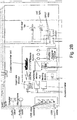
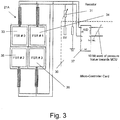
- Figs, 2A-C illustrate an exemplary layout of system 10.
- animal depressible pushbutton 21A may comprise a planar surface 33 to which the subject dog applies a force during an odor detection operation and a force sensing resistor 31 that changes its resistance in response to the force applied on surface 33.
- An exemplary force sensing resistor is the FSR 406 manufactured by Interlink Electronics capable of sensing an applied force ranging from 10 g to 10 kg and having a surface area of 19.4 cm 2 .
- Pushbutton 21A may also comprise a plurality of adjacently positioned surfaces 33-36, or alternatively a single enlarged surface. Compressed foam may be adhesively attached to the plurality of surfaces 33-36, to serve as a single pushbutton.
- A/D converter 37 of communication unit 30 receives the voltage applied by each of the resistors 31 in parallel, a higher voltage being received by the microcontroller when a lower force magnitude is applied.
- animal depressible pushbutton 21B may be embodied by an opaque airbag 38, e.g. made of rubber, in which is housed a pressure sensor 39.
- the pressure reading detected by pressure sensor 39 will change when the subject dog applies a force to airbag 38, allowing a magnitude of the applied force to be determined.
- the signal generated by pressure sensor 39 is delivered to bus 42 for facilitating communication on the same circuit board.
- the size of the compartment and of the pushbutton, as well as the necessary force needed to depress the pushbutton will vary, depending on the size of the subject animal that is performing an odor detecting operation.
- an animal interfaceable member 50 may be worn on the head of the subject dog 14 and be provided with a plurality of electrode type sensors 52 for determining electrical activity in the brain by means of an electroencephalogram (EEG), so that a predetermined wave pattern will be indicative of whether the predetermined target odor has been detected.
- EEG electroencephalogram
- Animal interfaceable member 50 may also be a harness worn on the head.
- the electrodes 52 may be attached by adhesion or by pins to the scalp of the subject dog.
- the EEG may be used to monitor the awareness and the physiologic state and the mental state (fear, stress etc.) of the biological sensor, to detect false alerts, to monitor parameters that affect its physiologic state, etc.
- the electrodes 52 are connected to by a wired connection to an EEG receiver 55.
- EEG receiver 55 which may be part of the communication unit, provides a graphical indication regarding the amplitude of the brain waves during an odor detecting operation, as well as frequency or temporary changes of the EEG signals.
- the generated EEG data is transmitted to communication unit 30 via communication link 57, which may be either a wired or a wireless connection, whereupon analysis unit 40 will receive the EEG data and determine whether a target odor has been detected. Alternatively, the generated EEG data may be transmitted directly to analysis unit 40.
- a range of EEG parameters including a range of change in EEG parameters, which are manifested during a positive odor detection event, i.e. when the predetermined target odor has been detected, is recorded and stored in analysis unit 40.
- expected EEG parameters manifestation of EEG parameters during a testing stage that are within the stored range
- Generation of the expected EEG parameters may constitute a secondary indication that the predetermined target odor has been accurately detected.
- Other secondary or third indications described hereinabove may also be employed.
- generation of the expected EEG parameters may constitute a dominant or secondary indication that the predetermined target odor has been accurately detected.
- the odor detection system may be provided without a pushbutton while a secondary indication of accurate target odor detection may be received from the subject dog in the form of one or more trained detection related activities such as sitting, lying down or barking.
- the subject dog need not be retained in a compartment and may be leashed or may roam freely during an odor detection operation insofar as it is wearing animal interfaceable member 50, in order to determine whether the expected EEG parameters are generated.
- the detection of odors according by a subject dog located outside of a compartment while wearing animal interfaceable member 50 provided with electrodes 52 is much more accurate than prior art odor detection methods that suffer from inaccuracies when a subject dog is hungry and irritable, since the generated EEG parameters will indicate whether a trained detection related activity is reflective of a detected target odor or of a fatigued dog that is inaccurately performing an activity in order to receive a reward. Thus the risk of false alarms can be essentially eliminated.
Landscapes
- Life Sciences & Earth Sciences (AREA)
- Health & Medical Sciences (AREA)
- Animal Behavior & Ethology (AREA)
- General Health & Medical Sciences (AREA)
- Environmental Sciences (AREA)
- Engineering & Computer Science (AREA)
- Pathology (AREA)
- Heart & Thoracic Surgery (AREA)
- Medical Informatics (AREA)
- Molecular Biology (AREA)
- Surgery (AREA)
- Biomedical Technology (AREA)
- Biophysics (AREA)
- Public Health (AREA)
- Veterinary Medicine (AREA)
- Physics & Mathematics (AREA)
- Physiology (AREA)
- Cardiology (AREA)
- Zoology (AREA)
- Biodiversity & Conservation Biology (AREA)
- Animal Husbandry (AREA)
- Physical Education & Sports Medicine (AREA)
- Dentistry (AREA)
- Psychology (AREA)
- Pulmonology (AREA)
- Psychiatry (AREA)
- Oral & Maxillofacial Surgery (AREA)
- Catching Or Destruction (AREA)
- Investigating Or Analyzing Materials By The Use Of Electric Means (AREA)
- Child & Adolescent Psychology (AREA)
- Developmental Disabilities (AREA)
- Educational Technology (AREA)
- Hospice & Palliative Care (AREA)
- Social Psychology (AREA)
Claims (14)
- Auf einem biologischen Sensor basierendes System (10) zum Detektieren von Gerüchen, umfassend:a) eine Kammer (12) zum vollständigen Abschließen und Umschließen eines biologischen Sensors (14), der sich darin befindet, wobei die Kammer ausreichend groß ist, um dem biologischen Sensor zu ermöglichen, normale tierische Bewegungen sowie einen Geruchsdetektionsvorgang auszuführen;b) einen Lufteinlass (17) innerhalb der Kammer, durch den geruchsbeladene Luft in ein Inneres der Kammer einführbar ist;c) einen Luftauslass (19), durch den die geruchsbeladene Luft aus der Kammer ableitbar ist;d) ein oder mehrere Signalerzeugungssensoren (21, 24, 52) zum Messen von physikalischen Reaktionen des biologischen Sensors als Reaktion auf das Einführen der geruchsbeladenen Luft in das Kammerinnere; unde) eine Analyseeinheit (40) zum Bestimmen, ob die gemessenen physikalischen Reaktionen nach dem Detektieren eines vorbestimmten Zielgeruchs auf bekannte Reaktionen des biologischen Sensors hinweisen,dadurch gekennzeichnet, dass:die Kammer ausreichend klein ist, um sicherzustellen, dass es keinen Raum in der Kammer gibt, um eine Handhabevorrichtung oder weitere biologische Sensoren aufzunehmen, die zusätzlich zu dem biologischen Sensor Geruchsdetektionsvorgänge ausführen, und dass verhindert wird, dass der biologische Sensor darin läuft oder umherwandert, um seine Energie zu erhalten;die Analyseeinheit konfiguriert ist, automatisch ein erstes Warnsignal an eine Rechtsdurchsetzungsentität oder an relevante Behörden zu senden, wenn festgestellt wird, dass die gemessenen physikalischen Reaktionen auf die bekannte Reaktion des biologischen Sensors nach dem Detektieren des vorbestimmten Zielgeruchs hinweisen;wobei das System ferner umfasst:f) ein oder mehrere zusätzliche Signalerzeugungssensoren (22-24) zum Bestimmen eines Bewusstseinsniveaus des biologischen Sensors und ob der biologische Sensor gegenwärtig ausreichend einsatzfähig ist, um weiterhin die Geruchsdetektionsvorgänge auszuführen, undwobei die Analyseeinheit (40) zusätzlich konfiguriert ist, ein auf ein Bewusstseinsniveau hinweisendes Signal von dem einen oder den mehreren zusätzlichen Signalerzeugungssensoren (22-24) zu empfangen.
- System nach Anspruch 1, ferner umfassend:a) eine durch ein Tier drückbare Taste (21, 21A, 22B), die mit einer Wand der Kammer (12) beweglich verbunden ist und durch den biologischen Sensor (14) nach der Detektion, dass der eingeführte Geruch der vorbestimmte Zielgeruch ist, drückbar ist; undb) einen Kraftsensor (31, 39), der den einen oder die mehreren Signalerzeugungssensoren bildet, welcher wirkend mit der durch ein Tier drückbaren Taste zum Erfassen von Drückparametern verbunden ist, die durch den biologischen Sensor auf die Taste ausgeübt werden,wobei die Analyseeinheit (40) angepasst ist, zu bestimmen, ob die Drückparameter innerhalb eines erwarteten Bereichs für den biologischen Sensor liegen, und das erste Warnsignal an die Rechtsdurchsetzungsentität oder die relevanten Behörden zu senden, wenn die Drückparameter innerhalb des erwarteten Bereichs liegen und die Drückparameter nach dem Detektieren des vorbestimmten Zielgeruchs auf die bekannte Reaktion des biologischen Sensors hinweisen.
- System nach Anspruch 1, ferner umfassend:a) einen Träger (50), der am Kopf und/oder dem Körper des biologischen Sensors (14) tragbar ist und mit mehreren Elektrodensensoren (52) versehen ist, die den einen oder die mehreren Signalerzeugungssensoren zum Bestimmen von elektrischer Aktivität im Gehirn mittels eines Elektroenzephalogramms (EEG) bilden, wobei ein vorbestimmtes Wellenmuster auf einen mit einem geistigen Zufriedenheitszustand in Zusammenhang stehenden biologischen Sensor hinweist, wenn der vorbestimmte Zielgeruch detektiert wurde; undb) einen EEG-Empfänger (55), der mit den Elektrodensensoren zum Empfangen von erzeugten EEG-Parametern verbunden ist,wobei die Analyseeinheit (40) angepasst ist, die erzeugten EEG-Parameter zu empfangen, zu bestimmen, ob die erzeugten EEG-Parameter innerhalb eines erwarteten Bereichs von EEG-Parametern liegen, und das erste Warnsignal an die Rechtsdurchsetzungsentität oder die relevanten Behörden zu senden, wenn die erzeugten EEG-Parameter innerhalb des erwarteten Bereichs liegen und die erzeugten EEG-Parameter nach dem Detektieren des vorbestimmten Zielgeruchs auf die bekannte Reaktion des biologischen Sensors hinweisen.
- System nach Anspruch 1, wobei der eine oder die mehreren zusätzlichen Signalerzeugungssensoren (22-24) zudem angepasst sind, eine entsprechende physikalische Reaktion des biologischen Sensors (14) während des Geruchsdetektiervorgangs zu erfassen, wobei die Analyseeinheit (40) betriebsfähig ist, Resultate des Geruchsdetektiervorgangs nicht zu berücksichtigen, wenn ein entsprechendes Signal, das durch den einen oder die mehreren zusätzlichen Sensoren erzeugt wird, nach dem Detektieren des vorbestimmten Zielgeruchs eine physikalische Reaktion darstellt, die mit der bekannten Reaktion des biologischen Sensors inkonsistent ist.
- System nach Anspruch 1, wobei der eine oder die mehreren zusätzlichen Signalerzeugungssensoren ausgewählt sind aus der Gruppe von:- einem Mikrofon, das am Körper des biologischen Sensors oder innerhalb der Kammer (12) installiert ist;- einer Taste (21, 21A, 21B);- einem EEG-Sensor (52);- einem Herzfrequenzsensor (22) zum Bestimmen der Herzfrequenz des biologischen Sensors (14);- einer Videokamera (24) zum Erfassen einer Körperbewegung des biologischen Sensors;- einer Audioerfassungsvorrichtung zum Erfassen eines hörbaren Tons, der nach dem Detektieren des vorbestimmten Zielgeruchs durch den biologischen Sensor erzeugt wird; und- einem Bewegungssensor (23) zum Erfassen einer Körperbewegung des biologischen Sensors.
- System nach Anspruch 2, wobei der biologische Sensor ein Hund (14) ist, ferner umfassend eine Videokamera (24) zum Erfassen einer Körperbewegung des Hundes während des Geruchsdetektiervorgangs, wobei die Analyseeinheit (40) betriebsfähig ist, Resultate des Geruchsdetektiervorgangs nicht zu berücksichtigen, wenn eine durch die Videokamera erfasste Körperbewegung eine physikalische Reaktion darstellt, die mit der bekannten Reaktion des Hundes nach dem Detektieren des vorbestimmten Zielgeruchs inkonsistent ist.
- System nach Anspruch 2, ferner umfassend Mittel (24) zum Erfassen der gemessenen physikalischen Reaktion des Annäherns an eine Schale (48), die sich innerhalb der Kammer (12) befindet, auf der Suche nach seiner Belohnung unmittelbar im Anschluss an die Detektion des vorbestimmten Geruchs und nachdem die Taste (21, 21A, 22B) gedrückt wurde, wobei die Analyseeinheit (40) betriebsfähig ist, Resultate des Geruchsdetektiervorgangs nicht zu berücksichtigen, wenn eine durch die Videokamera erfasste Körperbewegung eine physikalische Reaktion darstellt, die mit der bekannten Reaktion des Hundes nach dem Detektieren des vorbestimmten Zielgeruchs inkonsistent ist.
- System nach Anspruch 1, wobei der biologische Sensor (14) ausgewählt ist aus der Gruppe von:- einem Hund;- Nagetieren;- Schweinen;- Vögeln;- Säugetieren;- beflügelten Kreaturen;- Amphibien; undInsekten.
- System nach Anspruch 2, wobei der biologische Sensor (14) ein Säugetier ist, das trainiert ist, nach dem Detektieren des vorbestimmten Zielgeruchs die Taste (21, 21A, 22B) mit seiner Nase oder seinem Fuß zu drücken.
- System nach Anspruch 2, wobei die Drückparameter ausgewählt sind aus der Gruppe bestehend aus:- Kraft;- Zeitdauer;- Winkel; und- Geschwindigkeit.
- System nach Anspruch 1, ferner umfassend Mittel zum Erzeugen einer dominanten und/oder sekundären Ermutigung (26-28, 49), wenn der Zielgeruch identifiziert wird.
- System nach Anspruch 11, wobei die dominante Ermutigung ausgewählt ist aus der Gruppe bestehend aus:einer Lieblingsnahrung; undeinem Lieblingsspiel,wobei die sekundäre Ermutigung ausgewählt ist aus der Gruppe bestehend aus:- einem ausgeprägten Ton;- einem hell klingenden Ton;- einem klickenden Ton;- einer Stimme, die von einem Lautsprecher emittiert wird, der in der Kammer installiert ist; und- einem angenehmen Licht.
- System nach Anspruch 11, wobei die Mittel zum Erzeugen einer dominanten Ermutigung, wenn ein Zielgeruch identifiziert wird, ein Dosierautomat (49) ist, und wobei optional der Dosierautomat (49) eine lebensmitteleinführbare Kammer (44) in Kommunikation mit der Kammer (12) und sich darüber befindend umfasst und ein lebensmittelabgabefähiges Element (45), das sich nach unten in ein Inneres der Kammer erstreckt und durch das die eingeführten Lebensmittel abgebbar sind.
- System nach Anspruch 1, wobei die relevanten Behörden medizinische Behörden sind.
Applications Claiming Priority (2)
| Application Number | Priority Date | Filing Date | Title |
|---|---|---|---|
| IL22412613 | 2013-01-07 | ||
| PCT/IL2014/050014 WO2014106852A1 (en) | 2013-01-07 | 2014-01-06 | Biological sensor based system for detecting materials |
Publications (3)
| Publication Number | Publication Date |
|---|---|
| EP2941121A1 EP2941121A1 (de) | 2015-11-11 |
| EP2941121A4 EP2941121A4 (de) | 2016-07-27 |
| EP2941121B1 true EP2941121B1 (de) | 2018-11-21 |
Family
ID=51062195
Family Applications (1)
| Application Number | Title | Priority Date | Filing Date |
|---|---|---|---|
| EP14735343.7A Not-in-force EP2941121B1 (de) | 2013-01-07 | 2014-01-06 | System auf basis eines biologischen sensors zur erkennung von materialien |
Country Status (3)
| Country | Link |
|---|---|
| US (1) | US20150334990A1 (de) |
| EP (1) | EP2941121B1 (de) |
| WO (1) | WO2014106852A1 (de) |
Families Citing this family (11)
| Publication number | Priority date | Publication date | Assignee | Title |
|---|---|---|---|---|
| IL222696A (en) * | 2012-10-25 | 2015-09-24 | Biocube Diagnostics Ltd | Dog training facility and method |
| US12557992B2 (en) | 2015-01-12 | 2026-02-24 | FeverTags, LLC | Livestock health monitoring system and method of use |
| US11895988B2 (en) | 2015-01-12 | 2024-02-13 | Fevertags Llc | Livestock health monitoring systems and methods of use |
| US10932671B2 (en) * | 2015-01-12 | 2021-03-02 | FeverTags, LLC | Livestock health monitoring system and method of use |
| US10813558B2 (en) * | 2015-01-12 | 2020-10-27 | FeverTags, LLC | Livestock health monitoring system and method of use |
| US10398317B2 (en) * | 2015-10-09 | 2019-09-03 | Fevertags Llc | Livestock health monitoring system and method of use |
| US20200154672A1 (en) * | 2016-09-23 | 2020-05-21 | Susanna Paavilainen | Method for training a dog and a training set |
| IL250683B2 (en) * | 2017-02-20 | 2023-04-01 | Icts Europe | Improved system, method and computer software product for detecting odors using animals |
| WO2021184342A1 (zh) * | 2020-03-20 | 2021-09-23 | 俞海燕 | 一种具有气味检测的自动控制宠物用品 |
| IL285830A (en) | 2021-08-24 | 2022-07-01 | Early O M Ltd | Volatile organic compounds (voc’s) diagnosis system |
| CN115191370B (zh) * | 2022-07-08 | 2023-12-08 | 深圳有哈科技有限公司 | 一种宠物发球机 |
Family Cites Families (5)
| Publication number | Priority date | Publication date | Assignee | Title |
|---|---|---|---|---|
| JP2009504176A (ja) * | 2005-08-19 | 2009-02-05 | コーニンクレッカ フィリップス エレクトロニクス エヌ ヴィ | 多種の環境に行動を適応させるよう動物を調教する調教装置及び方法 |
| US7633397B2 (en) * | 2007-01-05 | 2009-12-15 | Redxdefense, Llc | Detection system employing trained animals |
| US8806914B2 (en) | 2007-09-24 | 2014-08-19 | Freddie R. Brasfield | Target odor detection and security apparatus |
| US20120077159A1 (en) | 2010-09-24 | 2012-03-29 | Joseph Araujo | System and method for cognitive assessment and training of an animal |
| WO2012100081A2 (en) * | 2011-01-19 | 2012-07-26 | California Institute Of Technology | Aggregation of bio-signals from multiple individuals to achieve a collective outcome |
-
2014
- 2014-01-06 US US14/759,084 patent/US20150334990A1/en not_active Abandoned
- 2014-01-06 EP EP14735343.7A patent/EP2941121B1/de not_active Not-in-force
- 2014-01-06 WO PCT/IL2014/050014 patent/WO2014106852A1/en not_active Ceased
Non-Patent Citations (1)
| Title |
|---|
| None * |
Also Published As
| Publication number | Publication date |
|---|---|
| US20150334990A1 (en) | 2015-11-26 |
| EP2941121A1 (de) | 2015-11-11 |
| WO2014106852A1 (en) | 2014-07-10 |
| EP2941121A4 (de) | 2016-07-27 |
Similar Documents
| Publication | Publication Date | Title |
|---|---|---|
| US20150334990A1 (en) | Biological sensor based system for detecting materials | |
| EP2911504B1 (de) | Vorrichtung und verfahren zur hundeerziehung | |
| US9538729B2 (en) | Cattle monitoring for illness | |
| TWI573560B (zh) | Pet response identification system | |
| US10898136B2 (en) | Monitoring device for animals | |
| US6582380B2 (en) | System and method of monitoring and modifying human activity-based behavior | |
| Waynert et al. | The response of beef cattle to noise during handling | |
| US9615547B2 (en) | Pet animal collar for health and vital signs monitoring, alert and diagnosis | |
| US6979298B2 (en) | Apparatus and method for the measurement of the aerodynamics of olfaction in animals and man | |
| US20180132455A1 (en) | Intelligent pet monitoring system | |
| US20160178392A1 (en) | Distance Measuring in a Monitoring System for Animals | |
| US20140334653A1 (en) | Combination speaker and light source responsive to state(s) of an organism based on sensor data | |
| US7921810B2 (en) | Method and apparatus utilizing animals for detecting target substances | |
| WO2016030875A1 (en) | Animal of equidae family band or collar for health & vital signs monitoring, alert and diagnosis | |
| KR102473443B1 (ko) | 사물 인터넷을 통한 실내 반려동물의 심리 및 행동분석에 기초한 지능형 반려동물 관리 시스템 및 방법 | |
| CA2918594A1 (en) | Combination speaker and light source responsive to state(s) of an organism based on sensor data | |
| Doudou et al. | A light on physiological sensors for efficient driver drowsiness detection system | |
| MX2007002647A (es) | Sistema de monitoreo para cria de animales. | |
| US12290046B2 (en) | Detection, prevention, and reaction in a warning system for animal farrowing operations | |
| Klefot et al. | Development of a noninvasive system for monitoring dairy cattle sleep | |
| KR100901740B1 (ko) | 코쿤형 육아 장치 및 이를 이용한 코쿤형 육아 관리 시스템 | |
| Aarts et al. | Technologies for equine welfare and performance monitoring under field conditions–Where do we stand? | |
| KR102451323B1 (ko) | 반려동물 건강 진단 장치(네오 펫 스테이션) | |
| KR20190014733A (ko) | 애완동물 급식장치 | |
| KR101948046B1 (ko) | 폐암 검출용 동물 바이오센서를 이용한 냄새 변별 훈련장치 및 그 용도 |
Legal Events
| Date | Code | Title | Description |
|---|---|---|---|
| PUAI | Public reference made under article 153(3) epc to a published international application that has entered the european phase |
Free format text: ORIGINAL CODE: 0009012 |
|
| 17P | Request for examination filed |
Effective date: 20150803 |
|
| AK | Designated contracting states |
Kind code of ref document: A1 Designated state(s): AL AT BE BG CH CY CZ DE DK EE ES FI FR GB GR HR HU IE IS IT LI LT LU LV MC MK MT NL NO PL PT RO RS SE SI SK SM TR |
|
| AX | Request for extension of the european patent |
Extension state: BA ME |
|
| DAX | Request for extension of the european patent (deleted) | ||
| A4 | Supplementary search report drawn up and despatched |
Effective date: 20160628 |
|
| RIC1 | Information provided on ipc code assigned before grant |
Ipc: A01K 15/02 20060101AFI20160622BHEP Ipc: A01K 15/00 20060101ALI20160622BHEP Ipc: G01N 33/00 20060101ALI20160622BHEP |
|
| STAA | Information on the status of an ep patent application or granted ep patent |
Free format text: STATUS: EXAMINATION IS IN PROGRESS |
|
| 17Q | First examination report despatched |
Effective date: 20170607 |
|
| REG | Reference to a national code |
Ref country code: DE Ref legal event code: R079 Ref document number: 602014036464 Country of ref document: DE Free format text: PREVIOUS MAIN CLASS: A01K0015000000 Ipc: A01K0001000000 |
|
| GRAP | Despatch of communication of intention to grant a patent |
Free format text: ORIGINAL CODE: EPIDOSNIGR1 |
|
| STAA | Information on the status of an ep patent application or granted ep patent |
Free format text: STATUS: GRANT OF PATENT IS INTENDED |
|
| RIC1 | Information provided on ipc code assigned before grant |
Ipc: A61B 5/16 20060101ALI20180118BHEP Ipc: A01K 1/00 20060101AFI20180118BHEP Ipc: A61B 5/00 20060101ALI20180118BHEP Ipc: A61B 5/0484 20060101ALI20180118BHEP Ipc: A01K 15/02 20060101ALI20180118BHEP Ipc: A61B 5/11 20060101ALI20180118BHEP Ipc: A61B 5/0205 20060101ALI20180118BHEP Ipc: A61B 5/024 20060101ALI20180118BHEP Ipc: A61B 5/0478 20060101ALI20180118BHEP |
|
| INTG | Intention to grant announced |
Effective date: 20180206 |
|
| GRAS | Grant fee paid |
Free format text: ORIGINAL CODE: EPIDOSNIGR3 |
|
| GRAA | (expected) grant |
Free format text: ORIGINAL CODE: 0009210 |
|
| STAA | Information on the status of an ep patent application or granted ep patent |
Free format text: STATUS: THE PATENT HAS BEEN GRANTED |
|
| AK | Designated contracting states |
Kind code of ref document: B1 Designated state(s): AL AT BE BG CH CY CZ DE DK EE ES FI FR GB GR HR HU IE IS IT LI LT LU LV MC MK MT NL NO PL PT RO RS SE SI SK SM TR |
|
| REG | Reference to a national code |
Ref country code: CH Ref legal event code: EP |
|
| REG | Reference to a national code |
Ref country code: IE Ref legal event code: FG4D |
|
| REG | Reference to a national code |
Ref country code: DE Ref legal event code: R096 Ref document number: 602014036464 Country of ref document: DE |
|
| REG | Reference to a national code |
Ref country code: AT Ref legal event code: REF Ref document number: 1066425 Country of ref document: AT Kind code of ref document: T Effective date: 20181215 |
|
| REG | Reference to a national code |
Ref country code: NL Ref legal event code: MP Effective date: 20181121 |
|
| REG | Reference to a national code |
Ref country code: AT Ref legal event code: MK05 Ref document number: 1066425 Country of ref document: AT Kind code of ref document: T Effective date: 20181121 |
|
| PG25 | Lapsed in a contracting state [announced via postgrant information from national office to epo] |
Ref country code: LV Free format text: LAPSE BECAUSE OF FAILURE TO SUBMIT A TRANSLATION OF THE DESCRIPTION OR TO PAY THE FEE WITHIN THE PRESCRIBED TIME-LIMIT Effective date: 20181121 Ref country code: AT Free format text: LAPSE BECAUSE OF FAILURE TO SUBMIT A TRANSLATION OF THE DESCRIPTION OR TO PAY THE FEE WITHIN THE PRESCRIBED TIME-LIMIT Effective date: 20181121 Ref country code: HR Free format text: LAPSE BECAUSE OF FAILURE TO SUBMIT A TRANSLATION OF THE DESCRIPTION OR TO PAY THE FEE WITHIN THE PRESCRIBED TIME-LIMIT Effective date: 20181121 Ref country code: NO Free format text: LAPSE BECAUSE OF FAILURE TO SUBMIT A TRANSLATION OF THE DESCRIPTION OR TO PAY THE FEE WITHIN THE PRESCRIBED TIME-LIMIT Effective date: 20190221 Ref country code: BG Free format text: LAPSE BECAUSE OF FAILURE TO SUBMIT A TRANSLATION OF THE DESCRIPTION OR TO PAY THE FEE WITHIN THE PRESCRIBED TIME-LIMIT Effective date: 20190221 Ref country code: ES Free format text: LAPSE BECAUSE OF FAILURE TO SUBMIT A TRANSLATION OF THE DESCRIPTION OR TO PAY THE FEE WITHIN THE PRESCRIBED TIME-LIMIT Effective date: 20181121 Ref country code: LT Free format text: LAPSE BECAUSE OF FAILURE TO SUBMIT A TRANSLATION OF THE DESCRIPTION OR TO PAY THE FEE WITHIN THE PRESCRIBED TIME-LIMIT Effective date: 20181121 Ref country code: IS Free format text: LAPSE BECAUSE OF FAILURE TO SUBMIT A TRANSLATION OF THE DESCRIPTION OR TO PAY THE FEE WITHIN THE PRESCRIBED TIME-LIMIT Effective date: 20190321 Ref country code: FI Free format text: LAPSE BECAUSE OF FAILURE TO SUBMIT A TRANSLATION OF THE DESCRIPTION OR TO PAY THE FEE WITHIN THE PRESCRIBED TIME-LIMIT Effective date: 20181121 |
|
| PG25 | Lapsed in a contracting state [announced via postgrant information from national office to epo] |
Ref country code: GR Free format text: LAPSE BECAUSE OF FAILURE TO SUBMIT A TRANSLATION OF THE DESCRIPTION OR TO PAY THE FEE WITHIN THE PRESCRIBED TIME-LIMIT Effective date: 20190222 Ref country code: SE Free format text: LAPSE BECAUSE OF FAILURE TO SUBMIT A TRANSLATION OF THE DESCRIPTION OR TO PAY THE FEE WITHIN THE PRESCRIBED TIME-LIMIT Effective date: 20181121 Ref country code: RS Free format text: LAPSE BECAUSE OF FAILURE TO SUBMIT A TRANSLATION OF THE DESCRIPTION OR TO PAY THE FEE WITHIN THE PRESCRIBED TIME-LIMIT Effective date: 20181121 Ref country code: AL Free format text: LAPSE BECAUSE OF FAILURE TO SUBMIT A TRANSLATION OF THE DESCRIPTION OR TO PAY THE FEE WITHIN THE PRESCRIBED TIME-LIMIT Effective date: 20181121 Ref country code: PT Free format text: LAPSE BECAUSE OF FAILURE TO SUBMIT A TRANSLATION OF THE DESCRIPTION OR TO PAY THE FEE WITHIN THE PRESCRIBED TIME-LIMIT Effective date: 20190321 Ref country code: NL Free format text: LAPSE BECAUSE OF FAILURE TO SUBMIT A TRANSLATION OF THE DESCRIPTION OR TO PAY THE FEE WITHIN THE PRESCRIBED TIME-LIMIT Effective date: 20181121 |
|
| PG25 | Lapsed in a contracting state [announced via postgrant information from national office to epo] |
Ref country code: DK Free format text: LAPSE BECAUSE OF FAILURE TO SUBMIT A TRANSLATION OF THE DESCRIPTION OR TO PAY THE FEE WITHIN THE PRESCRIBED TIME-LIMIT Effective date: 20181121 Ref country code: IT Free format text: LAPSE BECAUSE OF FAILURE TO SUBMIT A TRANSLATION OF THE DESCRIPTION OR TO PAY THE FEE WITHIN THE PRESCRIBED TIME-LIMIT Effective date: 20181121 Ref country code: CZ Free format text: LAPSE BECAUSE OF FAILURE TO SUBMIT A TRANSLATION OF THE DESCRIPTION OR TO PAY THE FEE WITHIN THE PRESCRIBED TIME-LIMIT Effective date: 20181121 Ref country code: PL Free format text: LAPSE BECAUSE OF FAILURE TO SUBMIT A TRANSLATION OF THE DESCRIPTION OR TO PAY THE FEE WITHIN THE PRESCRIBED TIME-LIMIT Effective date: 20181121 |
|
| REG | Reference to a national code |
Ref country code: DE Ref legal event code: R097 Ref document number: 602014036464 Country of ref document: DE |
|
| PG25 | Lapsed in a contracting state [announced via postgrant information from national office to epo] |
Ref country code: RO Free format text: LAPSE BECAUSE OF FAILURE TO SUBMIT A TRANSLATION OF THE DESCRIPTION OR TO PAY THE FEE WITHIN THE PRESCRIBED TIME-LIMIT Effective date: 20181121 Ref country code: SK Free format text: LAPSE BECAUSE OF FAILURE TO SUBMIT A TRANSLATION OF THE DESCRIPTION OR TO PAY THE FEE WITHIN THE PRESCRIBED TIME-LIMIT Effective date: 20181121 Ref country code: MC Free format text: LAPSE BECAUSE OF FAILURE TO SUBMIT A TRANSLATION OF THE DESCRIPTION OR TO PAY THE FEE WITHIN THE PRESCRIBED TIME-LIMIT Effective date: 20181121 Ref country code: EE Free format text: LAPSE BECAUSE OF FAILURE TO SUBMIT A TRANSLATION OF THE DESCRIPTION OR TO PAY THE FEE WITHIN THE PRESCRIBED TIME-LIMIT Effective date: 20181121 Ref country code: SM Free format text: LAPSE BECAUSE OF FAILURE TO SUBMIT A TRANSLATION OF THE DESCRIPTION OR TO PAY THE FEE WITHIN THE PRESCRIBED TIME-LIMIT Effective date: 20181121 |
|
| REG | Reference to a national code |
Ref country code: CH Ref legal event code: PL |
|
| PLBE | No opposition filed within time limit |
Free format text: ORIGINAL CODE: 0009261 |
|
| STAA | Information on the status of an ep patent application or granted ep patent |
Free format text: STATUS: NO OPPOSITION FILED WITHIN TIME LIMIT |
|
| PG25 | Lapsed in a contracting state [announced via postgrant information from national office to epo] |
Ref country code: LU Free format text: LAPSE BECAUSE OF NON-PAYMENT OF DUE FEES Effective date: 20190106 |
|
| REG | Reference to a national code |
Ref country code: BE Ref legal event code: MM Effective date: 20190131 |
|
| 26N | No opposition filed |
Effective date: 20190822 |
|
| REG | Reference to a national code |
Ref country code: IE Ref legal event code: MM4A |
|
| PG25 | Lapsed in a contracting state [announced via postgrant information from national office to epo] |
Ref country code: SI Free format text: LAPSE BECAUSE OF FAILURE TO SUBMIT A TRANSLATION OF THE DESCRIPTION OR TO PAY THE FEE WITHIN THE PRESCRIBED TIME-LIMIT Effective date: 20181121 |
|
| PG25 | Lapsed in a contracting state [announced via postgrant information from national office to epo] |
Ref country code: BE Free format text: LAPSE BECAUSE OF NON-PAYMENT OF DUE FEES Effective date: 20190131 |
|
| PG25 | Lapsed in a contracting state [announced via postgrant information from national office to epo] |
Ref country code: CH Free format text: LAPSE BECAUSE OF NON-PAYMENT OF DUE FEES Effective date: 20190131 Ref country code: LI Free format text: LAPSE BECAUSE OF NON-PAYMENT OF DUE FEES Effective date: 20190131 |
|
| PG25 | Lapsed in a contracting state [announced via postgrant information from national office to epo] |
Ref country code: IE Free format text: LAPSE BECAUSE OF NON-PAYMENT OF DUE FEES Effective date: 20190106 |
|
| PG25 | Lapsed in a contracting state [announced via postgrant information from national office to epo] |
Ref country code: TR Free format text: LAPSE BECAUSE OF FAILURE TO SUBMIT A TRANSLATION OF THE DESCRIPTION OR TO PAY THE FEE WITHIN THE PRESCRIBED TIME-LIMIT Effective date: 20181121 |
|
| PG25 | Lapsed in a contracting state [announced via postgrant information from national office to epo] |
Ref country code: MT Free format text: LAPSE BECAUSE OF NON-PAYMENT OF DUE FEES Effective date: 20190106 |
|
| REG | Reference to a national code |
Ref country code: FR Ref legal event code: PLFP Year of fee payment: 8 |
|
| PGFP | Annual fee paid to national office [announced via postgrant information from national office to epo] |
Ref country code: FR Payment date: 20210113 Year of fee payment: 8 |
|
| PG25 | Lapsed in a contracting state [announced via postgrant information from national office to epo] |
Ref country code: CY Free format text: LAPSE BECAUSE OF FAILURE TO SUBMIT A TRANSLATION OF THE DESCRIPTION OR TO PAY THE FEE WITHIN THE PRESCRIBED TIME-LIMIT Effective date: 20181121 |
|
| PGFP | Annual fee paid to national office [announced via postgrant information from national office to epo] |
Ref country code: DE Payment date: 20210105 Year of fee payment: 8 Ref country code: GB Payment date: 20210106 Year of fee payment: 8 |
|
| PG25 | Lapsed in a contracting state [announced via postgrant information from national office to epo] |
Ref country code: HU Free format text: LAPSE BECAUSE OF FAILURE TO SUBMIT A TRANSLATION OF THE DESCRIPTION OR TO PAY THE FEE WITHIN THE PRESCRIBED TIME-LIMIT; INVALID AB INITIO Effective date: 20140106 |
|
| PG25 | Lapsed in a contracting state [announced via postgrant information from national office to epo] |
Ref country code: MK Free format text: LAPSE BECAUSE OF FAILURE TO SUBMIT A TRANSLATION OF THE DESCRIPTION OR TO PAY THE FEE WITHIN THE PRESCRIBED TIME-LIMIT Effective date: 20181121 |
|
| REG | Reference to a national code |
Ref country code: DE Ref legal event code: R119 Ref document number: 602014036464 Country of ref document: DE |
|
| GBPC | Gb: european patent ceased through non-payment of renewal fee |
Effective date: 20220106 |
|
| PG25 | Lapsed in a contracting state [announced via postgrant information from national office to epo] |
Ref country code: GB Free format text: LAPSE BECAUSE OF NON-PAYMENT OF DUE FEES Effective date: 20220106 Ref country code: DE Free format text: LAPSE BECAUSE OF NON-PAYMENT OF DUE FEES Effective date: 20220802 |
|
| PG25 | Lapsed in a contracting state [announced via postgrant information from national office to epo] |
Ref country code: FR Free format text: LAPSE BECAUSE OF NON-PAYMENT OF DUE FEES Effective date: 20220131 |