EP2942253A2 - Kraftfahrzeug - Google Patents
Kraftfahrzeug Download PDFInfo
- Publication number
- EP2942253A2 EP2942253A2 EP15001314.2A EP15001314A EP2942253A2 EP 2942253 A2 EP2942253 A2 EP 2942253A2 EP 15001314 A EP15001314 A EP 15001314A EP 2942253 A2 EP2942253 A2 EP 2942253A2
- Authority
- EP
- European Patent Office
- Prior art keywords
- image
- curb
- comparison
- control device
- warning
- Prior art date
- Legal status (The legal status is an assumption and is not a legal conclusion. Google has not performed a legal analysis and makes no representation as to the accuracy of the status listed.)
- Granted
Links
Images

Classifications
-
- B—PERFORMING OPERATIONS; TRANSPORTING
- B60—VEHICLES IN GENERAL
- B60W—CONJOINT CONTROL OF VEHICLE SUB-UNITS OF DIFFERENT TYPE OR DIFFERENT FUNCTION; CONTROL SYSTEMS SPECIALLY ADAPTED FOR HYBRID VEHICLES; ROAD VEHICLE DRIVE CONTROL SYSTEMS FOR PURPOSES NOT RELATED TO THE CONTROL OF A PARTICULAR SUB-UNIT
- B60W40/00—Estimation or calculation of non-directly measurable driving parameters for road vehicle drive control systems not related to the control of a particular sub unit, e.g. by using mathematical models
- B60W40/02—Estimation or calculation of non-directly measurable driving parameters for road vehicle drive control systems not related to the control of a particular sub unit, e.g. by using mathematical models related to ambient conditions
- B60W40/06—Road conditions
-
- G—PHYSICS
- G06—COMPUTING OR CALCULATING; COUNTING
- G06V—IMAGE OR VIDEO RECOGNITION OR UNDERSTANDING
- G06V20/00—Scenes; Scene-specific elements
- G06V20/50—Context or environment of the image
- G06V20/56—Context or environment of the image exterior to a vehicle by using sensors mounted on the vehicle
- G06V20/588—Recognition of the road, e.g. of lane markings; Recognition of the vehicle driving pattern in relation to the road
-
- B—PERFORMING OPERATIONS; TRANSPORTING
- B60—VEHICLES IN GENERAL
- B60W—CONJOINT CONTROL OF VEHICLE SUB-UNITS OF DIFFERENT TYPE OR DIFFERENT FUNCTION; CONTROL SYSTEMS SPECIALLY ADAPTED FOR HYBRID VEHICLES; ROAD VEHICLE DRIVE CONTROL SYSTEMS FOR PURPOSES NOT RELATED TO THE CONTROL OF A PARTICULAR SUB-UNIT
- B60W2420/00—Indexing codes relating to the type of sensors based on the principle of their operation
- B60W2420/40—Photo, light or radio wave sensitive means, e.g. infrared sensors
- B60W2420/403—Image sensing, e.g. optical camera
-
- B—PERFORMING OPERATIONS; TRANSPORTING
- B60—VEHICLES IN GENERAL
- B60W—CONJOINT CONTROL OF VEHICLE SUB-UNITS OF DIFFERENT TYPE OR DIFFERENT FUNCTION; CONTROL SYSTEMS SPECIALLY ADAPTED FOR HYBRID VEHICLES; ROAD VEHICLE DRIVE CONTROL SYSTEMS FOR PURPOSES NOT RELATED TO THE CONTROL OF A PARTICULAR SUB-UNIT
- B60W2552/00—Input parameters relating to infrastructure
-
- B—PERFORMING OPERATIONS; TRANSPORTING
- B60—VEHICLES IN GENERAL
- B60W—CONJOINT CONTROL OF VEHICLE SUB-UNITS OF DIFFERENT TYPE OR DIFFERENT FUNCTION; CONTROL SYSTEMS SPECIALLY ADAPTED FOR HYBRID VEHICLES; ROAD VEHICLE DRIVE CONTROL SYSTEMS FOR PURPOSES NOT RELATED TO THE CONTROL OF A PARTICULAR SUB-UNIT
- B60W2554/00—Input parameters relating to objects
-
- B—PERFORMING OPERATIONS; TRANSPORTING
- B60—VEHICLES IN GENERAL
- B60W—CONJOINT CONTROL OF VEHICLE SUB-UNITS OF DIFFERENT TYPE OR DIFFERENT FUNCTION; CONTROL SYSTEMS SPECIALLY ADAPTED FOR HYBRID VEHICLES; ROAD VEHICLE DRIVE CONTROL SYSTEMS FOR PURPOSES NOT RELATED TO THE CONTROL OF A PARTICULAR SUB-UNIT
- B60W2554/00—Input parameters relating to objects
- B60W2554/60—Traversable objects, e.g. speed bumps or curbs
-
- B—PERFORMING OPERATIONS; TRANSPORTING
- B60—VEHICLES IN GENERAL
- B60W—CONJOINT CONTROL OF VEHICLE SUB-UNITS OF DIFFERENT TYPE OR DIFFERENT FUNCTION; CONTROL SYSTEMS SPECIALLY ADAPTED FOR HYBRID VEHICLES; ROAD VEHICLE DRIVE CONTROL SYSTEMS FOR PURPOSES NOT RELATED TO THE CONTROL OF A PARTICULAR SUB-UNIT
- B60W30/00—Purposes of road vehicle drive control systems not related to the control of a particular sub-unit, e.g. of systems using conjoint control of vehicle sub-units
- B60W30/08—Active safety systems predicting or avoiding probable or impending collision or attempting to minimise its consequences
- B60W30/095—Predicting travel path or likelihood of collision
-
- B—PERFORMING OPERATIONS; TRANSPORTING
- B60—VEHICLES IN GENERAL
- B60W—CONJOINT CONTROL OF VEHICLE SUB-UNITS OF DIFFERENT TYPE OR DIFFERENT FUNCTION; CONTROL SYSTEMS SPECIALLY ADAPTED FOR HYBRID VEHICLES; ROAD VEHICLE DRIVE CONTROL SYSTEMS FOR PURPOSES NOT RELATED TO THE CONTROL OF A PARTICULAR SUB-UNIT
- B60W30/00—Purposes of road vehicle drive control systems not related to the control of a particular sub-unit, e.g. of systems using conjoint control of vehicle sub-units
- B60W30/14—Adaptive cruise control
-
- B—PERFORMING OPERATIONS; TRANSPORTING
- B60—VEHICLES IN GENERAL
- B60W—CONJOINT CONTROL OF VEHICLE SUB-UNITS OF DIFFERENT TYPE OR DIFFERENT FUNCTION; CONTROL SYSTEMS SPECIALLY ADAPTED FOR HYBRID VEHICLES; ROAD VEHICLE DRIVE CONTROL SYSTEMS FOR PURPOSES NOT RELATED TO THE CONTROL OF A PARTICULAR SUB-UNIT
- B60W50/00—Details of control systems for road vehicle drive control not related to the control of a particular sub-unit, e.g. process diagnostic or vehicle driver interfaces
- B60W50/08—Interaction between the driver and the control system
- B60W50/14—Means for informing the driver, warning the driver or prompting a driver intervention
Definitions
- the invention relates to a motor vehicle comprising a driver assistance system for determining curbs located in the vehicle environment and for outputting a warning or for performing a longitudinal or transverse guidance engagement, wherein the driver assistance system has at least one camera for capturing images of the vehicle surroundings and a control device for evaluating the images for Identification of any curb shown in the picture has.
- a motor vehicle of the type mentioned is, for example DE 10 2011 014 699 A1 known.
- the driver assistance system serves to determine the presence of any curb in the immediate vicinity of the motor vehicle, for which purpose in the known state of the art a wide-angle camera is used.
- the three-dimensional position data of the object visible in the images is determined from two images taken from different positions of the motor vehicle by means of a motion stereo method, taking into account the recording locations.
- the detected object is entered on the basis of its position data in a three-dimensional, especially as an occupancy map trained environment model. Based on this, a hazard value can be determined, ie a criticality value that indicates how great the risk of a collision with the curb is, whereupon the driver can be warned or a driving intervention, in particular braking, can be undertaken.
- the driver assistance system known from the prior art always issues a warning or takes an active driving intervention as soon as an obstacle is detected which, in terms of its distance from the motor vehicle wheel and in particular with regard to its height, is required Criticality criterion corresponds.
- Criticality criterion corresponds.
- the invention is therefore based on the problem to provide a motor vehicle, which is improved in contrast.
- control device is assigned a memory with comparison images deposited therein, different curb types, the control device for classifying a curb determined in an image by comparing the image with a comparison image and is designed to output the warning or to carry out the intervention depending on the classification result.
- the motor vehicle or driver assistance system is designed to classify a detected curb with respect to its type. Thus, it does not make an exclusive assessment of the height of the curb in order to determine the criticality based on this, but it is determined which curb type it is, especially of it the criticality of the curb in terms of a possible collision with the motor vehicle depends. This is based on the finding that many different variants or types of curbs are used in road construction, which are to assess different critical. For example, a substantially rectangular cross-section granite curb with a sharp edge offers greater potential for damage than a round or flat curb usually designed as a cast concrete component.
- a corresponding granite curb with rectangular cross-section and sharp edge is much more critical to judge, as a corresponding round or flat curb, even if both are the same height.
- a corresponding memory is now provided by the control device, in which reference images are deposited which show different curb types. These comparison images have been generated in advance as standardized images and deposited remanently. They have been taken from a perspective from which the corresponding camera images are also recorded by means of the vehicle-mounted camera, so that consequently the curb in the camera image as well as in the comparison image is shown from almost the same perspective.
- the control device is now able to determine by appropriate image analysis means in the recorded camera image any existing curb. If such is determined, the control device undertakes a corresponding comparison of the camera image with the comparison images in order to determine the curb type. So it is done a "template matching". As part of this "template matching" or image comparison, the control unit now analyzes which curb type it is. This is easily possible, as the corresponding different curb types but clearly differ in the picture. For example, granite curbs have a distinctly different structure or geometry in the recorded image than corresponding concrete curbs.
- the curb type is clearly recognized, and therefore classified, it can be decided on the basis of this exact type knowledge whether the curb is critical or not.
- this final decision is then, for example, information about the actual curb height, information about the relative position of the vehicle wheel to curb and possibly also information about the height of the tire cross-section, so to the effect, whether it is a low-profile tires or cross-section normal tires etc.
- the control device is expediently designed to select an image area pointing to the curb within the image and to compare the image area with the comparison image. That is, after detecting a curb in the captured camera image by the controller only the relevant image detail is used and compared with the deposited comparison image, so the template.
- the respective curb can be determined on the basis of an edge-based image analysis and / or a texture-based evaluation and the respective evaluation result compared.
- the different curb types differ in their geometry, ie their corresponding outline, as well as usually in the texture, so the surface texture.
- Using appropriate analysis algorithms it is now readily possible to identify exactly the corresponding curb in the respective image or comparison image and, based thereupon, to carry out the comparison in order to determine the specific type.
- the height of the curb shown in the image is determined by the control device in the image itself or in the context of comparison, wherein the output of the warning or the implementation of the intervention in addition to the curb type and the actual height of the detected curb is taken into account.
- the cross-section of the motor vehicle tire can be taken into account in order to decide whether a warning or an intervention is required.
- the information about vehicle tires are expediently stored in the memory or can be read in accordingly by the control device.
- the invention further relates to a method for determining curbs located in the vehicle environment and for issuing a warning or for performing a longitudinal or transverse guidance intervention by means of a driver assistance system, wherein the driver assistance system at least one camera for recording images of the vehicle surroundings and a control device for Evaluation of the images for determining any curb shown in the picture has.
- the method according to the invention is characterized in that the control device classifies a curb determined in an image by comparing the image with comparative images showing different curb types and issuing the warning or performing the intervention as a function of the classification result, the comparative images being in one of the control devices assigned memory are stored.
- the control device first analyzes the recorded camera image (s) and determines any curb, whereupon the underlying image is compared with the comparison images stored in the memory in order to determine the specific curb type.
- Fig. 1 shows an inventive motor vehicle 1, comprising a driver assistance system 2 for determining a curb located in the vehicle environment 20 and to issue a warning or to carry out a Longitudinal or transverse guidance intervention.
- the driver assistance system 2 comprises a control device 3 with a corresponding memory 4 and a computing and evaluation unit 5, as well as a camera 6 communicating with the control device 2, it being understood that several cameras are aligned to different directions and thus record the vehicle environment from different perspectives , can be provided.
- camera 6 detects the vehicle apron, so that expediently, another camera that detects the rear vehicle environment to allow a curb detection even when reversing, can be provided.
- the driver assistance system 2 and the control device 3 via their computing device 5 is now designed to detect a curb 20 on the one hand, but also to classify it on the other hand. Depending on the classification result, it can then be decided whether - in particular taking into account the also determined height of the curb as well as information about the height of the tire cross section - to issue a warning or a driving intervention must be made.
- an audio system 7 is shown as an example, for outputting an optical warning is a display 8, as it is usually installed in the vehicle shown.
- a longitudinal or transverse guidance engagement can take place, for example, via a control device 9 assigned to the brake device, which can be activated via the control device 3 and which separately actuates the individual brakes assigned to the wheels.
- a control device 9 assigned to the brake device
- an actuator 10 or a corresponding, this controlling control device can be controlled via the control device 3, which actuator 10 is part of the steering device, so that in the example shown, the front wheels can be adjusted accordingly for a longitudinal or Quer Installationseingriff.
- the controller 3 is able to classify any curb recorded in a camera image in terms of type and, if appropriate, to carry out the corresponding warnings or driving interventions based on this information.
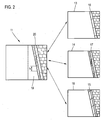
- Fig. 2 shows by way of example in a schematic representation of a recorded camera image 11. This taken over the camera 6 image 11 shows the curb 20 in the right half of the picture.
- the control device 3 or the computing device 5 is now initially able to recognize by a corresponding analysis or evaluation algorithm, for example an edge-based or a texture-based algorithm, that a curb 20 is shown in the camera image 11 at all. Then, the control device 3 or the computing device 5 is able to determine the concrete height h of the curb 20 shown from the camera image 11.
- a corresponding analysis or evaluation algorithm for example an edge-based or a texture-based algorithm
- the type determination is a now following picture comparison of the taken camera picture with several, in Fig. 2 shown comparison images 13, 14, 15. These comparison images 13, 14, 15 are in the memory 4, to which the computing device 5 has access deposited.
- the comparison images 13, 14, 15 clearly show different curb types which differ both in terms of the geometry and, if appropriate, with regard to the texturing, that is to say the surface condition.
- the comparison image 13 shows a curb 16, which is designed as a surface cambered flat curb.
- the comparison image 14 shows a curb 17, which is designed as a cross-sectionally rectangular granite curb.
- the comparison image 15 shows a curb 18, which is designed as a round curb 16 with a sloping top.
- the curbs 16 and 18 are designed for example as cast concrete curbs, so they have a corresponding smooth surface. In contrast, the granite curb 17, since broken, a textured surface, so an irregular surface.
- These comparison images 13, 14, 15 are now compared with the camera image 11, so there is a "template matching", wherein the comparison images 13, 14, 15 form the corresponding templates. They have been recorded in advance as standardized comparison images from a perspective that corresponds to that of the camera 6, and stored remanently in the memory 4.
- control device 3 or the computing device 5 If the control device 3 or the computing device 5 has detected a curb 20 in the camera image, it now selects a corresponding image section 19, which essentially shows the curb 20, from the camera image 11, in FIG Fig. 2 this image area 19 is shown separated by the dashed line.
- the arithmetic unit 5 now compares this image area 19 with each comparison image 13, 14, 15, it being understood that far more than these three comparison images can be stored in the memory 4, depending on how many curb types are recorded in advance as standard comparison images and subjected to comparison.
- the computing device 5 now makes use of appropriate edge- or texture-based analysis algorithms before the corresponding comparison in order to determine based on the comparison images the curb type, which is at the curb 20.
- the curb 20 corresponds to the curb 17 shown in the comparison image 14.
- the curb 20 is a rectangular granite curb with a generally relatively sharp edge viewed in cross-section.
- corresponding type information is stored in the memory 4. If the computing device 5 has now recognized or classified the curb 20 with respect to the type, then the corresponding curb information stored for the associated comparison image - here the comparison image 14 - is taken as the basis for the further criticality analysis.
- h of the curb 20 and also stored in the memory 4 information about the cross-sectional height of the tire adjacent to the curb 20, a. It is known about this tire section height whether it is a normal tire or a low-section tire. Depending on this, a curb can be critical or uncritical. A granite curb, for example, only 4 cm high, may not be critical to a normal tire with a sufficiently large tire cross section, while posing a potential hazard for a low profile tire.
- the computing device 5 now judges on the basis of the determined, classified curb type respectively the type-specific information, the determined actual height h of the recorded curb 20 and the tire section height a criticality value, based on which it is decided whether there is a need for action or not. If the criticality assessment reveals that the curb is uncritical, that is, for example, it can also be easily driven over in the context of an upcoming parking process, then neither a warning is issued nor a driver intervention is issued. However, if it turns out that the curb is critical, then the warning is issued and / or the driving intervention made. This check can be made continuously during the parking process to detect changes in the situation, such. As a curb lowering, if the vehicle moves on, or a change in the Radlenkwinkels, so that the wheel would start at a very shallow angle, etc.
- At least one further camera is preferably integrated into the driver assistance system 2, which receives the rear space.
- the corresponding camera image and immediately the appropriate classification of a possible curb would be made in this case, so that already applied during the rinserteinparkvorgangs the corresponding Critik Rundsbeurannon and a possible warning done or an intervention can take place. If there is a maneuvering process, a corresponding driver assistance system-side assistance can take place via the camera image displaying the vehicle apron, even in this direction of travel.
Landscapes
- Engineering & Computer Science (AREA)
- Physics & Mathematics (AREA)
- Automation & Control Theory (AREA)
- Mathematical Physics (AREA)
- Transportation (AREA)
- Mechanical Engineering (AREA)
- General Physics & Mathematics (AREA)
- Multimedia (AREA)
- Theoretical Computer Science (AREA)
- Traffic Control Systems (AREA)
- Image Analysis (AREA)
Abstract
Description
- Die Erfindung betrifft ein Kraftfahrzeug, umfassend ein Fahrerassistenzsystem zur Ermittlung von im Fahrzeugumfeld befindlichen Bordsteinen und zur Ausgabe einer Warnung oder zur Durchführung eines Längs- oder Querführungseingriffs, wobei das Fahrerassistenzsystem wenigstens eine Kamera zur Aufnahme von Bildern des Fahrzeugumfelds und eine Steuerungseinrichtung zur Auswertung der Bilder zur Ermittlung eines etwaigen im Bild gezeigten Bordsteins aufweist.
- Ein Kraftfahrzeug der eingangs genannten Art ist beispielsweise aus
DE 10 2011 014 699 A1 bekannt. Das Fahrerassistenzsystem dient der Ermittlung des Vorhandenseins eines etwaigen Bordsteins in der unmittelbaren Umgebung des Kraftfahrzeugs, wozu bei dem bekannten Stand der Technik eine Weitwinkel-Kamera verwendet wird. Zur Detektion des Objekts werden aus zwei von unterschiedlichen Positionen des Kraftfahrzeugs aufgenommenen Bildern mittels eines Motion-Stereo-Verfahrens die dreidimensionalen Positionsdaten des in den Bildern sichtbaren Objekts unter Berücksichtigung der Aufnahmeorte ermittelt. Das erfasste Objekt wird anhand seiner Positionsdaten in ein dreidimensionales, insbesondere als Belegungskarte ausgebildetes Umfeldmodell eingetragen. Basierend hierauf kann ein Gefährdungswert ermittelt werden, also ein Kritikalitätswert, der angibt, wie groß die Gefahr einer Kollision mit dem Randstein ist, woraufhin der Fahrer gewarnt werden kann respektive ein Fahreingriff, insbesondere eine Bremsung, vorgenommen werden kann. - Das aus dem Stand der Technik bekannte Fahrerassistenzsystem gibt folglich immer dann eine Warnung aus respektive nimmt einen aktiven Fahreingriff vor, sobald ein Hindernis erkannt wird, das hinsichtlich seines Abstandes zum Kraftfahrzeugrad sowie insbesondere hinsichtlich seiner Höhe dem geforderten Kritikalitätskriterium entspricht. Jedoch sind nicht alle Hindernisse respektive Bordsteine, die die entsprechende Höhe aufweisen, in gleicher Weise eine Gefahrenquelle, mithin also im gleichen Umfang kritisch in Bezug auf eine etwaige Kollision des Rades respektive Reifens mit dem Bordstein.
- Der Erfindung liegt damit das Problem zugrunde, ein Kraftfahrzeug anzugeben, das demgegenüber verbessert ist.
- Zur Lösung dieses Problems ist bei einem Kraftfahrzeug der eingangs genannten Art erfindungsgemäß vorgesehen, dass der Steuerungseinrichtung ein Speicher mit darin hinterlegten, unterschiedliche Bordsteintypen zeigenden Vergleichsbildern zugeordnet ist, wobei die Steuerungseinrichtung zum Klassifizieren eines in einem Bild ermittelten Bordsteins durch Vergleich des Bildes mit einem Vergleichsbild und zur Ausgabe der Warnung oder zur Durchführung des Eingriffs in Abhängigkeit des Klassifikationsergebnisses ausgebildet ist.
- Das erfindungsgemäße Kraftfahrzeug respektive Fahrerassistenzsystem ist dazu ausgelegt, einen erfassten Bordstein hinsichtlich seines Typs zu klassifizieren. Es erfolgt also keine ausschließliche Beurteilung der Höhe des Bordsteins, um gestützt hierauf die Kritikalität zu bestimmen, sondern es wird ermittelt, um welchen Bordsteintyp es sich handelt, da gerade davon in besonderem Maß die Kritikalität des Bordsteins im Hinblick auf eine etwaige Kollision mit dem Kraftfahrzeugrad abhängt. Dem liegt die Erkenntnis zugrunde, dass im Straßenbau viele verschiedene Varianten respektive Typen von Bordsteinen verwendet werden, die unterschiedlich kritisch zu beurteilen sind. So bietet beispielsweise ein im Querschnitt im Wesentlichen rechteckiger Granitbordstein mit scharfer Kante ein größeres Schadenspotential als ein üblicherweise als gegossenes Betonbauteil ausgeführter Rund- oder Flachbordstein. Das heißt, dass ein entsprechender Granitbordstein mit rechteckigem Querschnitt und scharfer Kante wesentlich kritischer zu beurteilen ist, als ein entsprechender Rund- oder Flachbordstein, selbst wenn beide gleich hoch sind. Beim erfindungsgemäßen Kraftfahrzeug ist nun seitens der Steuerungseinrichtung ein entsprechender Speicher vorgesehen, in dem Vergleichsbilder hinterlegt sind, die unterschiedliche Bordsteintypen zeigen. Diese Vergleichsbilder sind als standardisierte Bilder vorab erzeugt und remanent hinterlegt worden. Sie sind aus einer Perspektive aufgenommen worden, aus der auch mittels der fahrzeugseitig verbauten Kamera die entsprechenden Kamerabilder aufgenommen werden, so dass folglich der etwaige Bordstein im Kamerabild wie auch im Vergleichsbild aus nahezu der gleichen Perspektive dargestellt ist.
- Die Steuerungseinrichtung ist nun in der Lage, durch entsprechende Bildanalysemittel im aufgenommenen Kamerabild einen etwaigen vorhandenen Bordstein zu ermitteln. Wird ein solcher ermittelt, so nimmt die Steuerungseinrichtung einen entsprechenden Vergleich des Kamerabildes mit den Vergleichsbildern vor, um den Bordsteintyp zu ermitteln. Es wird also ein "template matching" vorgenommen. Im Rahmen dieses "template matching" respektive Bildvergleichs analysiert nun die Steuerungseinrichtung, um welchen Bordsteintyp es sich handelt. Dies ist ohne weiteres möglich, als sich die entsprechenden unterschiedlichen Bordsteintypen doch deutlich im Bild unterscheiden. So weisen beispielsweise Granitbordsteine eine deutlich andere Struktur respektive Geometrie im aufgenommenen Bild auf, als entsprechende Betonbordsteine.
- Ist der Bordsteintyp eindeutig erkannt, mithin also klassifiziert, so kann gestützt auf diese genaue Typenkenntnis entschieden werden, ob der Bordstein kritisch ist, oder nicht. In diese endgültige Entscheidung geht sodann beispielsweise auch eine Information über die tatsächliche Bordsteinhöhe ein, eine Information über die Relativposition des Kraftfahrzeugrads zum Bordstein und gegebenenfalls auch eine Information über die Höhe des Reifenquerschnitts, also dahingehend, ob es sich um einen Niedrigquerschnittsreifen oder einen vom Querschnitt her normalen Reifen handelt etc.
- Insgesamt kann folglich aufgrund der erfindungsgemäß vorgenommenen Bordsteintypenklassifizierung eine deutlich differenziertere Entscheidung dahingehend, ob eine Warnung oder ein Eingriff von Nöten ist oder nicht, vorgenommen werden.
- Zweckmäßigerweise ist die Steuerungseinrichtung zur Auswahl eines den Bordstein zeigenden Bildbereichs innerhalb des Bildes und zum Vergleich des Bildbereich mit dem Vergleichsbild ausgebildet. Das heißt, dass nach Erfassen eines Bordsteins im aufgenommenen Kamerabild seitens der Steuerungseinrichtung lediglich der relevante Bildausschnitt herangezogen und mit dem hinterlegten Vergleichsbild, also dem Template, verglichen wird.
- Im Rahmen der Bordsteinerkennung bzw. des Vergleichs können seitens der Steuerungseinrichtung unterschiedliche Vergleichs- respektive Analyseverfahren verwendet werden. So kann im Rahmen der Erkennung bzw. des Vergleichs im Bild respektive Bildbereich und im Vergleichsbild der jeweilige Bordstein anhand einer kantenbasierten Bildauswertung und/oder einer texturbasierten Auswertung ermittelt und das jeweilige Auswertungsergebnis verglichen werden. Wie beschrieben unterscheiden sich die verschiedenen Bordsteintypen in ihrer Geometrie, also ihrem entsprechenden Umriss, wie auch in der Regel in der Textur, also der Oberflächenbeschaffenheit. Über entsprechende Analysealgorithmen ist es nun ohne weiteres möglich, im jeweiligen Bild respektive Vergleichsbild exakt den entsprechenden Bordstein zu erkennen und hierauf gestützt den Vergleich durchzuführen, um den konkreten Typ zu ermitteln.
- Wie bereits beschrieben ist es zweckmäßig, wenn seitens der Steuerungseinrichtung im Bild selbst oder im Rahmen des Vergleichs die Höhe des im Bild gezeigten Bordsteins ermittelt wird, wobei zur Ausgabe der Warnung oder der Durchführung des Eingriffs neben dem Bordsteintyp auch die Ist-Höhe des erkannten Bordsteins berücksichtigt wird. Auch kann, wie bereits beschrieben, der Querschnitt des Kraftfahrzeugreifens berücksichtigt werden, um zu entscheiden, ob eine Warnung oder ein Eingriff erforderlich ist. Die Informationen zum Fahrzeugreifen sind zweckmäßigerweise im Speicher hinterlegt respektive können seitens der Steuerungseinrichtung entsprechend eingelesen werden.
- Neben dem Kraftfahrzeug selbst betrifft die Erfindung ferner ein Verfahren zur Ermittlung von im Fahrzeugumfeld befindlichen Bordsteinen und zur Ausgabe einer Warnung oder zur Durchführung eines Längs- oder Querführungseingriffs mittels eines Fahrerassistenzsystems, wobei das Fahrerassistenzsystem wenigstens eine Kamera zur Aufnahme von Bildern des Fahrzeugumfelds und eine Steuerungseinrichtung zur Auswertung der Bilder zur Ermittlung eines etwaigen im Bild gezeigten Bordsteins aufweist. Das erfindungsgemäße Verfahren zeichnet sich dadurch aus, dass die Steuerungseinrichtung einen in einem Bild ermittelten Bordstein durch Vergleich des Bildes mit Vergleichsbildern, die unterschiedliche Bordsteintypen zeigen, klassifiziert und in Abhängigkeit des Klassifikationsergebnisses die Warnung ausgibt oder den Eingriff durchführt, wobei die Vergleichsbilder in einem der Steuerungseinrichtung zugeordneten Speicher hinterlegt sind. Verfahrensgemäß analysiert also die Steuerungseinrichtung zunächst das oder die aufgenommenen Kamerabilder und ermittelt einen etwaigen Bordstein, woraufhin das zugrunde liegende Bild mit den im Speicher hinterlegten Vergleichsbildern verglichen wird, um den konkreten Bordsteintyp zu ermitteln.
- Weitere erfindungsgemäße Ausgestaltungen des Verfahrens sind den abhängigen Unteransprüchen zu entnehmen.
- Weitere Vorteile, Merkmale und Einzelheiten der Erfindung ergeben sich aus dem im Folgenden beschriebenen Ausführungsbeispiel sowie anhand der Zeichnungen. Dabei zeigen:
- Fig. 1
- eine Prinzipdarstellung eines erfindungsgemäßen Kraftfahrzeugs, und
- Fig. 2
- eine Prinzipdarstellung zur Erläuterung der Klassifizierung des Bildvergleichs.
-
Fig. 1 zeigt ein erfindungsgemäßes Kraftfahrzeug 1, umfassend ein Fahrerassistenzsystem 2 zur Ermittlung eines im Fahrzeugumfeld befindlichen Bordsteins 20 sowie zur Ausgabe einer Warnung oder zur Durchführung eines Längs- oder Querführungseingriffs. Das Fahrerassistenzsystem 2 umfasst eine Steuerungseinrichtung 3 mit einem entsprechenden Speicher 4 und einer Rechen- und Auswerteeinheit 5, sowie eine mit der Steuerungseinrichtung 2 kommunizierende Kamera 6, wobei selbstverständlich auch mehrere Kameras, die zu unterschiedlichen Richtungen ausgerichtet sind und folglich das Fahrzeugumfeld aus verschiedenen Perspektiven aufnehmen, vorgesehen sein können. Die inFig. 1 gezeigte Kamera 6 erfasst das Fahrzeugvorfeld mit, so dass zweckmäßigerweise auch eine weitere Kamera, die das rückwärtige Fahrzeugumfeld erfasst, um eine Bordsteinerfassung auch beim Rückwärtsfahren zu ermöglichen, vorgesehen sein kann. - Das Fahrerassistenzsystem 2 respektive die Steuerungseinrichtung 3 über ihre Recheneinrichtung 5 ist nun dazu ausgelegt, einen Bordstein 20 einerseits zu erkennen, andererseits aber auch zu klassifizieren. In Abhängigkeit des Klassifizierungsergebnisses kann sodann entschieden werden, ob - insbesondere unter Berücksichtigung der ebenfalls ermittelten Höhe des Bordsteins sowie einer Information zur Höhe des Reifenquerschnitts - eine Warnung auszugeben oder ein Fahreingriff vorgenommen werden muss. Zur Ausgabe einer akustischen Warnung ist exemplarisch ein Audiosystem 7 dargestellt, zur Ausgabe einer optischen Warnung ist ein Display 8, wie es üblicherweise im Fahrzeug verbaut ist, dargestellt.
- Ein Längs- oder Querführungseingriff kann beispielsweise über ein der Bremseinrichtung zugeordnetes Steuergerät 9 erfolgen, das über das Steuergerät 3 angesteuert werden kann, und das separat die einzelnen, den Rädern zugeordnete Bremsen betätigt. Ferner kann über die Steuerungseinrichtung 3 ein Aktuator 10 oder ein entsprechendes, diesen bedienendes Steuergerät angesteuert werden, welcher Aktuator 10 Teil der Lenkeinrichtung ist, so dass im gezeigten Beispiel die Vorderräder für einen Längs- oder Querführungseingriff entsprechend verstellt werden können.
- Wie beschrieben ist die Steuerungseinrichtung 3 in der Lage, einen etwaigen, in einem Kamerabild aufgenommenen Bordstein hinsichtlich des Typs zu klassifizieren und gestützt auf diese Information gegebenenfalls die entsprechenden Warnungen oder Fahreingriffe durchzuführen.
-
Fig. 2 zeigt exemplarisch in einer Prinzipdarstellung ein aufgenommenes Kamerabild 11. Dieses über die Kamera 6 aufgenommene Bild 11 zeigt den Bordstein 20 in der rechten Bildhälfte. Die Steuerungseinrichtung 3 respektive die Recheneinrichtung 5 ist nun zunächst in der Lage, durch einen entsprechenden Analyse- bzw. Auswertealgorithmus, beispielsweise einen kantenbasierten oder einen texturbasierten Algorithmus, zu erkennen, dass im Kamerabild 11 überhaupt ein Bordstein 20 gezeigt ist. Sodann ist die Steuerungseinrichtung 3 respektive die Recheneinrichtung 5 in der Lage, aus dem Kamerabild 11 die konkrete Höhe h des gezeigten Bordsteins 20 zu ermitteln. - Wesentlich für die Klassifizierung respektive die Typenermittlung ist ein nun folgender Bildvergleich des aufgenommenen Kamerabildes mit mehreren, in
Fig. 2 gezeigten Vergleichsbildern 13, 14, 15. Diese Vergleichsbilder 13, 14, 15 sind im Speicher 4, auf den die Recheneinrichtung 5 Zugriff hat, hinterlegt. Die Vergleichsbilder 13, 14, 15 zeigen ersichtlich unterschiedliche Bordsteintypen, die sich sowohl hinsichtlich der Geometrie als auch gegebenenfalls hinsichtlich der Texturierung, also der Oberflächenbeschaffenheit, unterscheiden. So zeigt exemplarisch das Vergleichsbild 13 einen Bordstein 16, der als oberflächlich gewölbter Flachbordstein ausgeführt ist. Das Vergleichsbild 14 zeigt einen Bordstein 17, der als querschnittlich gesehen rechteckiger Granitbordstein ausgeführt ist. Schließlich zeigt das Vergleichsbild 15 einen Bordstein 18, der als Rundbordstein 16 mit einer schräg verlaufenden Oberseite ausgeführt ist. Die Bordsteine 16 und 18 sind beispielsweise als gegossene Betonbordsteine ausgeführt, sie weisen also eine entsprechende glatte Oberfläche auf. Demgegenüber weist der Granitbordstein 17, da gebrochen, eine texturierte Oberfläche, also eine unregelmäßige Oberfläche auf. Diese Vergleichsbilder 13, 14, 15 werden nun mit dem Kamerabild 11 verglichen, es erfolgt also ein "template matching", wobei die Vergleichsbilder 13, 14, 15 die entsprechenden Templates bilden. Sie sind vorab als standardisierte Vergleichsbilder aus einer Perspektive, die der der Kamera 6 entspricht, aufgenommen und remanent im Speicher 4 abgelegt worden. - Hat nun die Steuerungseinrichtung 3 respektive die Recheneinrichtung 5 im Kamerabild einen Bordstein 20 erkannt, so wählt sie nun einen entsprechenden Bildausschnitt 19, der im Wesentlichen den Bordstein 20 zeigt, aus dem Kamerabild 11 aus, in
Fig. 2 ist dieser Bildbereich 19 über die gestrichelte Linie abgetrennt dargestellt. Die Recheneinrichtung 5 vergleicht nun diesen Bildbereich 19 mit jedem Vergleichsbild 13, 14, 15, wobei es selbstverständlich weit mehr als diese drei Vergleichsbilder im Speicher 4 hinterlegt sein können, je nachdem, wie viele Bordsteintypen vorab als Standardvergleichsbilder aufgenommen und dem Vergleich zu unterziehen sind. - Die Recheneinrichtung 5 nimmt nun unter Verwendung entsprechender kanten- oder texturbasierter Analysealgorithmen den entsprechenden Vergleich vor, um anhand der Vergleichsbilder den Bordsteintyp zu ermitteln, um den es sich bei dem Bordstein 20 handelt. Im gezeigten Ausführungsbeispiel ist ersichtlich, dass der Bordstein 20 dem im Vergleichsbild 14 gezeigten Bordstein 17 entspricht. Es handelt sich also bei dem Bordstein 20 um einen im Querschnitt gesehenen rechteckigen Granitbordstein mit üblicherweise relativ scharfer Kante. Zu jedem Vergleichsbild 13, 14, 15 sind im Speicher 4 selbstverständlich entsprechende Typeninformationen hinterlegt. Hat nun die Recheneinrichtung 5 den Bordstein 20 hinsichtlich des Typs erkannt respektive klassifiziert, so werden die entsprechenden, zum zugehörigen Vergleichsbild - hier dem Vergleichsbild 14 - hinterlegten Bordsteininformationen der weiteren Kritikalitätsbetrachtung zugrunde gelegt. In diese Kritikalitätsbetrachtung geht nun die bestimmte Höhe h des Bordsteins 20 sowie die im Speicher 4 ebenfalls hinterlegte Information über die Querschnittshöhe des Reifens, der dem Bordstein 20 benachbart ist, ein. Über diese Reifenquerschnittshöhe ist bekannt, ob es sich um einen normalen Reifen oder um einen Niederquerschnittsreifen handelt. Abhängig davon kann ein Bordstein kritisch oder unkritisch sein. Ein Granitbordstein, der beispielsweise lediglich 4 cm hoch ist, kann für einen normalen Reifen mit hinreichend großem Reifenquerschnitt nicht kritisch sein, während er für einen Niederquerschnittsreifen ein Gefahrenpotential darstellt.
- Die Recheneinrichtung 5 beurteilt nun anhand des ermittelten, klassifizierten Bordsteintyps respektive der typenspezifischen Informationen, der ermittelten Ist-Höhe h des aufgenommenen Bordsteins 20 sowie der Reifenquerschnittshöhe einen Kritikalitätswert, basierend auf welchem sodann entschieden wird, ob Handlungsbedarf besteht oder nicht. Ergibt die Kritikalitätsbeurteilung, dass der Bordstein unkritisch ist, mithin also beispielsweise im Rahmen eines anstehenden Einparkvorgangs auch ohne weiteres überfahren werden kann, so wird weder eine Warnung ausgegeben noch erfolgt ein Fahrereingriff. Ergibt sich jedoch, dass der Bordstein kritisch ist, so wird die Warnung ausgegeben und/oder der Fahreingriff vorgenommen. Diese Prüfung kann laufend während des Einparkvorgangs neu vorgenommen werden, um auch Änderungen der Situation zu erfassen, z. B. eine Bordsteinerniedrigung, wenn sich das Fahrzeug weiterbewegt, oder eine Änderung des Radlenkwinkels, so dass das Rad in einem sehr flachen Winkel anlaufen würde etc.
- Wie bereits beschrieben ist bevorzugt wenigstens eine weitere Kamera in das Fahrerassistenzsystem 2 eingebunden, die den Rückraum aufnimmt. Dies ermöglicht es insbesondere, im Rahmen eines Einparkvorgangs unterstützend tätig zu werden. Zu Beginn des Einparkvorgangs würde in diesem Fall über die Rückfahrkamera die entsprechende Aufnahme des Kamerabilds und umgehend die entsprechende Klassifizierung eines etwaigen Bordsteins vorgenommen werden, so dass bereits während des Rückwärtseinparkvorgangs die entsprechende Kritikalitätsbeurteilung zugrunde gelegt und eine etwaige Warnung erfolgen respektive ein Eingriff erfolgen kann. Kommt es zu einem Rangiervorgang, so kann über das das Fahrzeugvorfeld aufzeigende Kamerabild auch bei dieser Fahrtrichtung eine entsprechende fahrerassistenzsystemseitige Unterstützung erfolgen.
Claims (10)
- Kraftfahrzeug, umfassend ein Fahrerassistenzsystem zur Ermittlung von im Fahrzeugumfeld befindlichen Bordsteinen und zur Ausgabe einer Warnung oder zur Durchführung eines Längs- oder Querführungseingriffs, wobei das Fahrerassistenzsystem wenigstens eine Kamera zur Aufnahme von Bildern des Fahrzeugumfelds und eine Steuerungseinrichtung zur Auswertung der Bilder zur Ermittlung eines etwaigen im Bild gezeigten Bordsteins aufweist,
dadurch gekennzeichnet,
dass der Steuerungseinrichtung (3) ein Speicher (4) mit darin hinterlegten, unterschiedliche Bordsteintypen zeigenden Vergleichsbildern (13, 14, 15) zugeordnet ist, wobei die Steuerungseinrichtung (3) zum Klassifizieren eines in einem Bild (11) ermittelten Bordsteins (20) durch Vergleich des Bildes (11) mit einem Vergleichsbild (13, 14, 15) und zur Ausgabe der Warnung oder zur Durchführung des Eingriffs in Abhängigkeit des Klassifikationsergebnisses ausgebildet ist. - Kraftfahrzeug nach Anspruch 1,
dadurch gekennzeichnet,
dass die Steuerungseinrichtung (3) zur Auswahl eines den Bordstein (20) zeigenden Bildbereichs (19) innerhalb des Bildes (11) und zum Vergleich des Bildbereichs (19) mit dem Vergleichsbild (13, 14, 15) ausgebildet ist. - Kraftfahrzeug nach Anspruch 1 oder 2,
dadurch gekennzeichnet,
dass seitens der Steuerungseinrichtung (3) im Rahmen des Vergleichs im Bild (11) oder im Bildbereich (19) und im Vergleichsbild (13, 14, 15) der jeweilige Bordstein (20, 16, 17, 18) anhand einer kantenbasierten Bildauswertung und/oder einer texturbasierten Auswertung ermittelt und das jeweilige Auswertungsergebnis verglichen wird. - Kraftfahrzeug nach einem der vorangehenden Ansprüche,
dadurch gekennzeichnet,
dass zusätzlich seitens der Steuerungseinrichtung (3) im Bild (11) selbst oder im Rahmen des Vergleichs die Höhe (h) des im Bild (11) gezeigten Bordsteins (20) ermittelbar ist, wobei zur Ausgabe der Warnung oder der Durchführung des Eingriffs zusätzlich die ermittelte Höhe (h) berücksichtigbar ist. - Kraftfahrzeug nach einem der vorangehenden Ansprüche,
dadurch gekennzeichnet, dass
dass zur Ausgabe der Warnung oder der Durchführung des Eingriffs zusätzlich die Querschnittshöhe der Reifen des Kraftfahrzeugs (1) berücksichtigbar ist. - Verfahren zur Ermittlung von im Fahrzeugumfeld befindlichen Bordsteinen und zur Ausgabe einer Warnung oder zur Durchführung eines Längs- oder Querführungseingriffs mittels eines Fahrerassistenzsystems, wobei das Fahrerassistenzsystem wenigstens eine Kamera zur Aufnahme von Bildern des Fahrzeugumfelds und eine Steuerungseinrichtung zur Auswertung der Bilder zur Ermittlung eines etwaigen im Bild gezeigten Bordsteins aufweist,
dadurch gekennzeichnet,
dass die Steuerungseinrichtung (3) einen in einem Bild (11) ermittelten Bordstein (20) durch Vergleich des Bildes (11) mit Vergleichsbildern (13, 14, 15), die unterschiedliche Bordsteintypen (16, 17, 18) zeigen, klassifiziert und in Abhängigkeit des Klassifikationsergebnisses die Warnung ausgibt oder den Eingriff durchführt, wobei die Vergleichsbilder (13, 14, 15) in einem der Steuerungseinrichtung (3) zugeordneten Speicher (4) hinterlegt sind. - Verfahren nach Anspruch 6,
dadurch gekennzeichnet,
dass die Steuerungseinrichtung (3) einen den Bordstein (20) zeigenden Bildbereich (19) innerhalb des Bildes (11) auswählt und den Bildbereich (19) mit dem Vergleichsbild (13, 14, 15) vergleicht. - Verfahren nach Anspruch 6 oder7,
dadurch gekennzeichnet,
dass seitens der Steuerungseinrichtung (3) im Rahmen des Vergleichs im Bild (11) und im Vergleichsbild (13, 14, 15) der jeweilige Bordstein (16, 17, 18, 20) anhand einer kantenbasierten Bildauswertung und/oder einer texturbasierten Auswertung ermittelt und das jeweilige Auswertungsergebnis verglichen wird. - Verfahren nach einem der Ansprüche 6 bis 8,
dadurch gekennzeichnet,
dass zusätzlich seitens der Steuerungseinrichtung (3) im Bild (11) selbst oder im Rahmen des Vergleichs die Höhe (h) des im Bild (11) gezeigten Bordsteins (20) ermittelt wird, wobei zur Ausgabe der Warnung oder der Durchführung des Eingriffs zusätzlich die ermittelte Höhe (h) berücksichtigt wird. - Verfahren nach einem der Ansprüche 6 bis 9,
dadurch gekennzeichnet, dass
dass zur Ausgabe der Warnung oder der Durchführung des Eingriffs zusätzlich die Querschnittshöhe der Reifen des Kraftfahrzeugs (1) seitens der Steuerungseinrichtung (3) berücksichtigt wird.
Applications Claiming Priority (1)
| Application Number | Priority Date | Filing Date | Title |
|---|---|---|---|
| DE102014006546.4A DE102014006546A1 (de) | 2014-05-06 | 2014-05-06 | Kraftfahrzeug |
Publications (3)
| Publication Number | Publication Date |
|---|---|
| EP2942253A2 true EP2942253A2 (de) | 2015-11-11 |
| EP2942253A3 EP2942253A3 (de) | 2016-11-30 |
| EP2942253B1 EP2942253B1 (de) | 2021-07-07 |
Family
ID=53177062
Family Applications (1)
| Application Number | Title | Priority Date | Filing Date |
|---|---|---|---|
| EP15001314.2A Active EP2942253B1 (de) | 2014-05-06 | 2015-05-04 | Kraftfahrzeug |
Country Status (2)
| Country | Link |
|---|---|
| EP (1) | EP2942253B1 (de) |
| DE (1) | DE102014006546A1 (de) |
Cited By (1)
| Publication number | Priority date | Publication date | Assignee | Title |
|---|---|---|---|---|
| US20240428556A1 (en) * | 2023-06-22 | 2024-12-26 | Hyundai Motor Company | Method and apparatus for estimating a distance of an object based on a static object and a difference in ground height |
Families Citing this family (3)
| Publication number | Priority date | Publication date | Assignee | Title |
|---|---|---|---|---|
| DE102016215840A1 (de) | 2016-08-23 | 2018-03-01 | Volkswagen Aktiengesellschaft | Verfahren zur Erfassung von im Fahrzeugumfeld befindlichen Bordsteinen |
| CN109849913B (zh) * | 2017-11-29 | 2022-07-22 | 奥迪股份公司 | 辅助车辆停泊在路缘上的系统和方法 |
| DE102020213428A1 (de) | 2020-10-26 | 2022-04-28 | Volkswagen Aktiengesellschaft | Verfahren zum Betreiben eines Assistenzsystems eines Kraftfahrzeugs, sowie Assistenzsystem |
Citations (1)
| Publication number | Priority date | Publication date | Assignee | Title |
|---|---|---|---|---|
| DE102011014699A1 (de) | 2011-03-22 | 2012-09-27 | Audi Ag | Verfahren zum Betrieb eines Fahrerassistenzsystems zum Schutz eines Kraftfahrzeuges vor Beschädigungen und Kraftfahrzeug |
Family Cites Families (3)
| Publication number | Priority date | Publication date | Assignee | Title |
|---|---|---|---|---|
| DE102005037273A1 (de) * | 2005-08-08 | 2007-02-15 | Robert Bosch Gmbh | Spurassistenzsystem für Fahrzeuge |
| DE102011087894A1 (de) * | 2011-12-07 | 2013-06-13 | Robert Bosch Gmbh | Verfahren und Fahrzeugassistenzsystem zur aktiven Warnung und/oder zur Navigationshilfe zur Vermeidung einer Kollision eines Fahrzeugkarosserieteils und/oder eines Fahrzeugrades mit einem Objekt |
| JP5483770B2 (ja) * | 2012-09-21 | 2014-05-07 | 富士重工業株式会社 | 4輪駆動車の制御装置 |
-
2014
- 2014-05-06 DE DE102014006546.4A patent/DE102014006546A1/de not_active Ceased
-
2015
- 2015-05-04 EP EP15001314.2A patent/EP2942253B1/de active Active
Patent Citations (1)
| Publication number | Priority date | Publication date | Assignee | Title |
|---|---|---|---|---|
| DE102011014699A1 (de) | 2011-03-22 | 2012-09-27 | Audi Ag | Verfahren zum Betrieb eines Fahrerassistenzsystems zum Schutz eines Kraftfahrzeuges vor Beschädigungen und Kraftfahrzeug |
Cited By (1)
| Publication number | Priority date | Publication date | Assignee | Title |
|---|---|---|---|---|
| US20240428556A1 (en) * | 2023-06-22 | 2024-12-26 | Hyundai Motor Company | Method and apparatus for estimating a distance of an object based on a static object and a difference in ground height |
Also Published As
| Publication number | Publication date |
|---|---|
| DE102014006546A1 (de) | 2015-11-12 |
| EP2942253B1 (de) | 2021-07-07 |
| EP2942253A3 (de) | 2016-11-30 |
Similar Documents
| Publication | Publication Date | Title |
|---|---|---|
| DE102007042481B4 (de) | Fahrzeugsteuersystem für einen Kraftwagen | |
| DE112017006397B4 (de) | System für ein Fahrzeug | |
| EP3351451B1 (de) | Verfahren und fahrerassistenzsystem zur ermittlung fahrdynamischer zustände eines nutzfahrzeugs | |
| DE102016116332A1 (de) | Ausparkunterstützung | |
| DE102010001258A1 (de) | Fahrerassistenzverfahren | |
| DE102016113804A1 (de) | Lenkassistent | |
| DE102013205882A1 (de) | Verfahren und Vorrichtung zum Führen eines Fahrzeugs im Umfeld eines Objekts | |
| WO2016177372A1 (de) | Verfahren und vorrichtung zur erkennung und bewertung von umwelteinflüssen und fahrbahnzustandsinformationen im fahrzeugumfeld | |
| DE112022005813T5 (de) | Automatisches kalibrierungsverfahren und -vorrichtung für den ablenkungsbereich, personenkraftwagen und elektronische geräte | |
| EP1327969A1 (de) | Kraftfahrzeug mit Mitteln zum Erkennen eines Verkehrzeichens | |
| WO2020052840A1 (de) | Verfahren und vorrichtung zum betrieb eines zumindest teilweise automatisiert betriebenen ersten fahrzeugs | |
| WO2005081200A2 (de) | Erfassungsvorrichtung für ein kraftfahrzeug | |
| DE102017128796B4 (de) | Fahrunterstützungseinrichtung | |
| EP2942253B1 (de) | Kraftfahrzeug | |
| EP2873577A2 (de) | Verfahren zum Betrieb eines Fahrerassistenzsystems zum Schutz eines Kraftfahrzeugs vor Beschädigungen bei einem Rangiervorgang und Kraftfahrzeug | |
| EP2555178B1 (de) | Verfahren zum Erfassen von Objekten seitlich eines Nutzfahrzeugs und Nutzfahrzeug mit einem Erfassungssystem zum Ausführen des Verfahrens | |
| EP3583488A1 (de) | Automatisierte aktivierung eines sichtunterstützungssystems | |
| DE102009038078A1 (de) | Verfahren zur Ermittlung eines Ein- oder Ausschervorgangs eines dem eigenen Kraftfahrzeug vorausfahrenden Fahrzeugs | |
| DE102014118719A1 (de) | Fahrtunterstützungssystem | |
| EP3199429B1 (de) | Verfahren zum verfahren zum unterstützen eines fahrers eines kraftfahrzeugs bei einem einparkvorgang in eine parklücke mit bordstein, fahrerassistenzsystem sowie kraftfahrzeug | |
| DE102019212357B4 (de) | Verfahren zur Vermeidung einer bevorstehenden Kollision eines Fahrzeugs sowie Unfallvermeidungs-System | |
| DE102016223909A1 (de) | Verfahren und Vorrichtung zur sensorgestützten Fahrerzustandsbewertung | |
| DE102005034201A1 (de) | Umgebungsüberwachungssystem für ein Fahrzeug | |
| DE102018107212A1 (de) | Verfahren zum Erfassen eines Verkehrsbereichs-Belegungserkennungs-Hilfselements in einem Umgebungsbereich eines Kraftfahrzeugs, Computerprogrammprodukt sowie Fahrzeugführungssystem | |
| DE102017217528A1 (de) | Fahrzeugrangiersystem |
Legal Events
| Date | Code | Title | Description |
|---|---|---|---|
| PUAI | Public reference made under article 153(3) epc to a published international application that has entered the european phase |
Free format text: ORIGINAL CODE: 0009012 |
|
| AK | Designated contracting states |
Kind code of ref document: A2 Designated state(s): AL AT BE BG CH CY CZ DE DK EE ES FI FR GB GR HR HU IE IS IT LI LT LU LV MC MK MT NL NO PL PT RO RS SE SI SK SM TR |
|
| AX | Request for extension of the european patent |
Extension state: BA ME |
|
| PUAL | Search report despatched |
Free format text: ORIGINAL CODE: 0009013 |
|
| AK | Designated contracting states |
Kind code of ref document: A3 Designated state(s): AL AT BE BG CH CY CZ DE DK EE ES FI FR GB GR HR HU IE IS IT LI LT LU LV MC MK MT NL NO PL PT RO RS SE SI SK SM TR |
|
| AX | Request for extension of the european patent |
Extension state: BA ME |
|
| RIC1 | Information provided on ipc code assigned before grant |
Ipc: B60W 40/06 20120101AFI20161026BHEP |
|
| STAA | Information on the status of an ep patent application or granted ep patent |
Free format text: STATUS: REQUEST FOR EXAMINATION WAS MADE |
|
| 17P | Request for examination filed |
Effective date: 20170530 |
|
| RBV | Designated contracting states (corrected) |
Designated state(s): AL AT BE BG CH CY CZ DE DK EE ES FI FR GB GR HR HU IE IS IT LI LT LU LV MC MK MT NL NO PL PT RO RS SE SI SK SM TR |
|
| STAA | Information on the status of an ep patent application or granted ep patent |
Free format text: STATUS: EXAMINATION IS IN PROGRESS |
|
| 17Q | First examination report despatched |
Effective date: 20201007 |
|
| GRAP | Despatch of communication of intention to grant a patent |
Free format text: ORIGINAL CODE: EPIDOSNIGR1 |
|
| STAA | Information on the status of an ep patent application or granted ep patent |
Free format text: STATUS: GRANT OF PATENT IS INTENDED |
|
| INTG | Intention to grant announced |
Effective date: 20210212 |
|
| GRAS | Grant fee paid |
Free format text: ORIGINAL CODE: EPIDOSNIGR3 |
|
| GRAA | (expected) grant |
Free format text: ORIGINAL CODE: 0009210 |
|
| STAA | Information on the status of an ep patent application or granted ep patent |
Free format text: STATUS: THE PATENT HAS BEEN GRANTED |
|
| AK | Designated contracting states |
Kind code of ref document: B1 Designated state(s): AL AT BE BG CH CY CZ DE DK EE ES FI FR GB GR HR HU IE IS IT LI LT LU LV MC MK MT NL NO PL PT RO RS SE SI SK SM TR |
|
| REG | Reference to a national code |
Ref country code: GB Ref legal event code: FG4D Free format text: NOT ENGLISH |
|
| REG | Reference to a national code |
Ref country code: AT Ref legal event code: REF Ref document number: 1408305 Country of ref document: AT Kind code of ref document: T Effective date: 20210715 |
|
| REG | Reference to a national code |
Ref country code: DE Ref legal event code: R096 Ref document number: 502015014892 Country of ref document: DE |
|
| REG | Reference to a national code |
Ref country code: IE Ref legal event code: FG4D Free format text: LANGUAGE OF EP DOCUMENT: GERMAN |
|
| REG | Reference to a national code |
Ref country code: LT Ref legal event code: MG9D |
|
| REG | Reference to a national code |
Ref country code: NL Ref legal event code: MP Effective date: 20210707 |
|
| PG25 | Lapsed in a contracting state [announced via postgrant information from national office to epo] |
Ref country code: RS Free format text: LAPSE BECAUSE OF FAILURE TO SUBMIT A TRANSLATION OF THE DESCRIPTION OR TO PAY THE FEE WITHIN THE PRESCRIBED TIME-LIMIT Effective date: 20210707 Ref country code: SE Free format text: LAPSE BECAUSE OF FAILURE TO SUBMIT A TRANSLATION OF THE DESCRIPTION OR TO PAY THE FEE WITHIN THE PRESCRIBED TIME-LIMIT Effective date: 20210707 Ref country code: HR Free format text: LAPSE BECAUSE OF FAILURE TO SUBMIT A TRANSLATION OF THE DESCRIPTION OR TO PAY THE FEE WITHIN THE PRESCRIBED TIME-LIMIT Effective date: 20210707 Ref country code: BG Free format text: LAPSE BECAUSE OF FAILURE TO SUBMIT A TRANSLATION OF THE DESCRIPTION OR TO PAY THE FEE WITHIN THE PRESCRIBED TIME-LIMIT Effective date: 20211007 Ref country code: LT Free format text: LAPSE BECAUSE OF FAILURE TO SUBMIT A TRANSLATION OF THE DESCRIPTION OR TO PAY THE FEE WITHIN THE PRESCRIBED TIME-LIMIT Effective date: 20210707 Ref country code: NO Free format text: LAPSE BECAUSE OF FAILURE TO SUBMIT A TRANSLATION OF THE DESCRIPTION OR TO PAY THE FEE WITHIN THE PRESCRIBED TIME-LIMIT Effective date: 20211007 Ref country code: PT Free format text: LAPSE BECAUSE OF FAILURE TO SUBMIT A TRANSLATION OF THE DESCRIPTION OR TO PAY THE FEE WITHIN THE PRESCRIBED TIME-LIMIT Effective date: 20211108 Ref country code: NL Free format text: LAPSE BECAUSE OF FAILURE TO SUBMIT A TRANSLATION OF THE DESCRIPTION OR TO PAY THE FEE WITHIN THE PRESCRIBED TIME-LIMIT Effective date: 20210707 Ref country code: FI Free format text: LAPSE BECAUSE OF FAILURE TO SUBMIT A TRANSLATION OF THE DESCRIPTION OR TO PAY THE FEE WITHIN THE PRESCRIBED TIME-LIMIT Effective date: 20210707 Ref country code: ES Free format text: LAPSE BECAUSE OF FAILURE TO SUBMIT A TRANSLATION OF THE DESCRIPTION OR TO PAY THE FEE WITHIN THE PRESCRIBED TIME-LIMIT Effective date: 20210707 |
|
| PG25 | Lapsed in a contracting state [announced via postgrant information from national office to epo] |
Ref country code: PL Free format text: LAPSE BECAUSE OF FAILURE TO SUBMIT A TRANSLATION OF THE DESCRIPTION OR TO PAY THE FEE WITHIN THE PRESCRIBED TIME-LIMIT Effective date: 20210707 Ref country code: LV Free format text: LAPSE BECAUSE OF FAILURE TO SUBMIT A TRANSLATION OF THE DESCRIPTION OR TO PAY THE FEE WITHIN THE PRESCRIBED TIME-LIMIT Effective date: 20210707 Ref country code: GR Free format text: LAPSE BECAUSE OF FAILURE TO SUBMIT A TRANSLATION OF THE DESCRIPTION OR TO PAY THE FEE WITHIN THE PRESCRIBED TIME-LIMIT Effective date: 20211008 |
|
| REG | Reference to a national code |
Ref country code: DE Ref legal event code: R097 Ref document number: 502015014892 Country of ref document: DE |
|
| PG25 | Lapsed in a contracting state [announced via postgrant information from national office to epo] |
Ref country code: DK Free format text: LAPSE BECAUSE OF FAILURE TO SUBMIT A TRANSLATION OF THE DESCRIPTION OR TO PAY THE FEE WITHIN THE PRESCRIBED TIME-LIMIT Effective date: 20210707 |
|
| PLBE | No opposition filed within time limit |
Free format text: ORIGINAL CODE: 0009261 |
|
| STAA | Information on the status of an ep patent application or granted ep patent |
Free format text: STATUS: NO OPPOSITION FILED WITHIN TIME LIMIT |
|
| PG25 | Lapsed in a contracting state [announced via postgrant information from national office to epo] |
Ref country code: SM Free format text: LAPSE BECAUSE OF FAILURE TO SUBMIT A TRANSLATION OF THE DESCRIPTION OR TO PAY THE FEE WITHIN THE PRESCRIBED TIME-LIMIT Effective date: 20210707 Ref country code: SK Free format text: LAPSE BECAUSE OF FAILURE TO SUBMIT A TRANSLATION OF THE DESCRIPTION OR TO PAY THE FEE WITHIN THE PRESCRIBED TIME-LIMIT Effective date: 20210707 Ref country code: RO Free format text: LAPSE BECAUSE OF FAILURE TO SUBMIT A TRANSLATION OF THE DESCRIPTION OR TO PAY THE FEE WITHIN THE PRESCRIBED TIME-LIMIT Effective date: 20210707 Ref country code: EE Free format text: LAPSE BECAUSE OF FAILURE TO SUBMIT A TRANSLATION OF THE DESCRIPTION OR TO PAY THE FEE WITHIN THE PRESCRIBED TIME-LIMIT Effective date: 20210707 Ref country code: CZ Free format text: LAPSE BECAUSE OF FAILURE TO SUBMIT A TRANSLATION OF THE DESCRIPTION OR TO PAY THE FEE WITHIN THE PRESCRIBED TIME-LIMIT Effective date: 20210707 Ref country code: AL Free format text: LAPSE BECAUSE OF FAILURE TO SUBMIT A TRANSLATION OF THE DESCRIPTION OR TO PAY THE FEE WITHIN THE PRESCRIBED TIME-LIMIT Effective date: 20210707 |
|
| 26N | No opposition filed |
Effective date: 20220408 |
|
| PG25 | Lapsed in a contracting state [announced via postgrant information from national office to epo] |
Ref country code: IT Free format text: LAPSE BECAUSE OF FAILURE TO SUBMIT A TRANSLATION OF THE DESCRIPTION OR TO PAY THE FEE WITHIN THE PRESCRIBED TIME-LIMIT Effective date: 20210707 |
|
| REG | Reference to a national code |
Ref country code: CH Ref legal event code: PL |
|
| REG | Reference to a national code |
Ref country code: BE Ref legal event code: MM Effective date: 20220531 |
|
| PG25 | Lapsed in a contracting state [announced via postgrant information from national office to epo] |
Ref country code: MC Free format text: LAPSE BECAUSE OF FAILURE TO SUBMIT A TRANSLATION OF THE DESCRIPTION OR TO PAY THE FEE WITHIN THE PRESCRIBED TIME-LIMIT Effective date: 20210707 Ref country code: LU Free format text: LAPSE BECAUSE OF NON-PAYMENT OF DUE FEES Effective date: 20220504 Ref country code: LI Free format text: LAPSE BECAUSE OF NON-PAYMENT OF DUE FEES Effective date: 20220531 Ref country code: CH Free format text: LAPSE BECAUSE OF NON-PAYMENT OF DUE FEES Effective date: 20220531 |
|
| PG25 | Lapsed in a contracting state [announced via postgrant information from national office to epo] |
Ref country code: IE Free format text: LAPSE BECAUSE OF NON-PAYMENT OF DUE FEES Effective date: 20220504 |
|
| PG25 | Lapsed in a contracting state [announced via postgrant information from national office to epo] |
Ref country code: BE Free format text: LAPSE BECAUSE OF NON-PAYMENT OF DUE FEES Effective date: 20220531 |
|
| P01 | Opt-out of the competence of the unified patent court (upc) registered |
Effective date: 20230530 |
|
| REG | Reference to a national code |
Ref country code: AT Ref legal event code: MM01 Ref document number: 1408305 Country of ref document: AT Kind code of ref document: T Effective date: 20220504 |
|
| PG25 | Lapsed in a contracting state [announced via postgrant information from national office to epo] |
Ref country code: AT Free format text: LAPSE BECAUSE OF NON-PAYMENT OF DUE FEES Effective date: 20220504 |
|
| PGFP | Annual fee paid to national office [announced via postgrant information from national office to epo] |
Ref country code: FR Payment date: 20230523 Year of fee payment: 9 Ref country code: DE Payment date: 20230531 Year of fee payment: 9 |
|
| PGFP | Annual fee paid to national office [announced via postgrant information from national office to epo] |
Ref country code: GB Payment date: 20230526 Year of fee payment: 9 |
|
| PG25 | Lapsed in a contracting state [announced via postgrant information from national office to epo] |
Ref country code: HU Free format text: LAPSE BECAUSE OF FAILURE TO SUBMIT A TRANSLATION OF THE DESCRIPTION OR TO PAY THE FEE WITHIN THE PRESCRIBED TIME-LIMIT; INVALID AB INITIO Effective date: 20150504 |
|
| PG25 | Lapsed in a contracting state [announced via postgrant information from national office to epo] |
Ref country code: MK Free format text: LAPSE BECAUSE OF FAILURE TO SUBMIT A TRANSLATION OF THE DESCRIPTION OR TO PAY THE FEE WITHIN THE PRESCRIBED TIME-LIMIT Effective date: 20210707 Ref country code: CY Free format text: LAPSE BECAUSE OF FAILURE TO SUBMIT A TRANSLATION OF THE DESCRIPTION OR TO PAY THE FEE WITHIN THE PRESCRIBED TIME-LIMIT Effective date: 20210707 |
|
| PG25 | Lapsed in a contracting state [announced via postgrant information from national office to epo] |
Ref country code: MT Free format text: LAPSE BECAUSE OF FAILURE TO SUBMIT A TRANSLATION OF THE DESCRIPTION OR TO PAY THE FEE WITHIN THE PRESCRIBED TIME-LIMIT Effective date: 20210707 |
|
| REG | Reference to a national code |
Ref country code: DE Ref legal event code: R119 Ref document number: 502015014892 Country of ref document: DE |
|
| GBPC | Gb: european patent ceased through non-payment of renewal fee |
Effective date: 20240504 |
|
| PG25 | Lapsed in a contracting state [announced via postgrant information from national office to epo] |
Ref country code: DE Free format text: LAPSE BECAUSE OF NON-PAYMENT OF DUE FEES Effective date: 20241203 |
|
| PG25 | Lapsed in a contracting state [announced via postgrant information from national office to epo] |
Ref country code: FR Free format text: LAPSE BECAUSE OF NON-PAYMENT OF DUE FEES Effective date: 20240531 |
|
| PG25 | Lapsed in a contracting state [announced via postgrant information from national office to epo] |
Ref country code: GB Free format text: LAPSE BECAUSE OF NON-PAYMENT OF DUE FEES Effective date: 20240504 |
|
| PG25 | Lapsed in a contracting state [announced via postgrant information from national office to epo] |
Ref country code: TR Free format text: LAPSE BECAUSE OF FAILURE TO SUBMIT A TRANSLATION OF THE DESCRIPTION OR TO PAY THE FEE WITHIN THE PRESCRIBED TIME-LIMIT Effective date: 20210707 |