EP2943017B1 - Steuerverfahren, Zugangsknoten und Computerprogrammprodukt - Google Patents
Steuerverfahren, Zugangsknoten und Computerprogrammprodukt Download PDFInfo
- Publication number
- EP2943017B1 EP2943017B1 EP14305679.4A EP14305679A EP2943017B1 EP 2943017 B1 EP2943017 B1 EP 2943017B1 EP 14305679 A EP14305679 A EP 14305679A EP 2943017 B1 EP2943017 B1 EP 2943017B1
- Authority
- EP
- European Patent Office
- Prior art keywords
- network
- access
- access node
- operational parameter
- node
- Prior art date
- Legal status (The legal status is an assumption and is not a legal conclusion. Google has not performed a legal analysis and makes no representation as to the accuracy of the status listed.)
- Active
Links
Images


Classifications
-
- H—ELECTRICITY
- H04—ELECTRIC COMMUNICATION TECHNIQUE
- H04W—WIRELESS COMMUNICATION NETWORKS
- H04W48/00—Access restriction; Network selection; Access point selection
- H04W48/02—Access restriction performed under specific conditions
-
- H—ELECTRICITY
- H04—ELECTRIC COMMUNICATION TECHNIQUE
- H04W—WIRELESS COMMUNICATION NETWORKS
- H04W28/00—Network traffic management; Network resource management
- H04W28/02—Traffic management, e.g. flow control or congestion control
- H04W28/0215—Traffic management, e.g. flow control or congestion control based on user or device properties, e.g. MTC-capable devices
-
- H—ELECTRICITY
- H04—ELECTRIC COMMUNICATION TECHNIQUE
- H04W—WIRELESS COMMUNICATION NETWORKS
- H04W28/00—Network traffic management; Network resource management
- H04W28/02—Traffic management, e.g. flow control or congestion control
- H04W28/0226—Traffic management, e.g. flow control or congestion control based on location or mobility
-
- H—ELECTRICITY
- H04—ELECTRIC COMMUNICATION TECHNIQUE
- H04W—WIRELESS COMMUNICATION NETWORKS
- H04W28/00—Network traffic management; Network resource management
- H04W28/02—Traffic management, e.g. flow control or congestion control
- H04W28/0231—Traffic management, e.g. flow control or congestion control based on communication conditions
-
- H—ELECTRICITY
- H04—ELECTRIC COMMUNICATION TECHNIQUE
- H04W—WIRELESS COMMUNICATION NETWORKS
- H04W28/00—Network traffic management; Network resource management
- H04W28/02—Traffic management, e.g. flow control or congestion control
- H04W28/0231—Traffic management, e.g. flow control or congestion control based on communication conditions
- H04W28/0236—Traffic management, e.g. flow control or congestion control based on communication conditions radio quality, e.g. interference, losses or delay
-
- H—ELECTRICITY
- H04—ELECTRIC COMMUNICATION TECHNIQUE
- H04W—WIRELESS COMMUNICATION NETWORKS
- H04W48/00—Access restriction; Network selection; Access point selection
- H04W48/16—Discovering, processing access restriction or access information
-
- H—ELECTRICITY
- H04—ELECTRIC COMMUNICATION TECHNIQUE
- H04W—WIRELESS COMMUNICATION NETWORKS
- H04W48/00—Access restriction; Network selection; Access point selection
- H04W48/02—Access restriction performed under specific conditions
- H04W48/06—Access restriction performed under specific conditions based on traffic conditions
Definitions
- aspects and embodiments relate, in general, to a user equipment control method for user equipment operating to communicate with a network access node in a wireless communications network, and an access node, computer program product.
- Wireless telecommunications systems are known.
- radio coverage is provided to network connectible devices known as user equipment (for example, mobile telephones, smart phones or tablets) in geographical regions.
- a network access node such as a base station, is typically located in a geographical region and is typically operable to provide the required radio coverage to network connectible devices within that region.
- Network connectible devices in the region served by a network access node are typically operable to receive information and data from the network access node and to transmit information and data to the network access node.
- network connectible devices can move between geographical regions in which radio coverage is provided by network access nodes.
- the regions of radio coverage supported by a network access node may be referred to as "cells".
- RRC Radio Resource Control
- the different connection or communication states (such as cell_DCH, cell_FACH, cell_PCH or URA_PCH states) support different types of transmissions between the network access node and network connectible devices. These different connection or communication states match expected traffic activity associated with a network connectible device.
- existing techniques facilitate transmissions between network access nodes and network connectible devices, difficulties can occur. Accordingly, it is desired to provide a technique for controlling operation of devices within a wireless communication network.
- a user equipment control method as provided in claim 1.
- the or each operational parameter can be selected according to UE device capability derived using an information element provided by the UE device to the network access node.
- the said operational parameter can be an access group suitable for managing UE access to the network access node.
- the predetermined distribution can be used to map the UE to an access group based on network services that the UE can utilise as derived from the device capability.
- An access stratum release indicator transmitted by the UE can be used to determine services that the UE can utilise.
- the UE device can be assigned an operational parameter on the basis of a statistical distribution, whereby to evenly distribute UEs across available access groups.
- a radio measure representing the quality of a radio link between the UE and the access node can be provided or generated, wherein the UE is assigned an operational parameter on the basis of said radio measure.
- Access to network services for groups of UEs connected to the access node can be managed or otherwise controlled by using the or each operational parameter assigned to a UE to govern access to a network service.
- Access to a network service can be governed by limiting access to a service to UEs assigned a selected operational parameter.
- An operational parameter can be reassigned to or for the UE device. Reassigning an operational parameter can include determining whether the UE device has requested setup of a radio access bearer for a channel associated with a service to which the assigned operational parameter relates.
- Reassigning an operational parameter can include using an information element provided by the UE device or other nodes within the network after attachment to the network to determine a service profile of the UE device.
- a network access node in a wireless communications network as provided in claim 10.
- the network access node can be a radio network controller or a home node B (HNB) or a HNB gateway.
- the network access node can be operable to reassign one or more operational parameters to or for the UE device.
- a computer program product as provided in claim 13.
- a computer program product comprising a computer usable medium having computer readable program code embodied therein, said computer readable program code adapted to be executed to implement a control method as provided herein.
- Access Class Barring is a known mechanism whereby UEs in idle mode can be controlled by the network such that only a limited number can be granted access if the network is congested.
- Typical wireless networks use 16 access classes that can be used by the network to limit the number of user equipment, or network connectible devices, which are able to access a radio access network at any particular time.
- Each user equipment or network connectible device is typically manufactured such that it is associated with one of the basic access classes. That is to say, each user equipment is manufactured to be associated with an access class number between 0 and 9.
- User equipment may be members of special access classes 10 to 15 only as a result of a service level selected by user equipment. For example, access class 10 is typically always used for emergency calls. If user equipment wishes to operate using a high priority service it may be operable to self-select an access class between 11 and 15. Thus, the basic allocation (0 to 9) to which it was assigned as a result of manufacture may be overridden in the event that user equipment is seeking to support communication according to a service level associated with one or more of access class numbers 11 to 15.
- a wireless communication network can use Access Class Barring (ACB) to manage congestion in a network.
- Access Class Barring may be utilised such that only user equipment or network connectible devices associated with a particular access class may be operable to establish communication with the network. For example, if a network is congested and wishes to only admit approximately 20% of user equipment during a period of congestion, the network may be operable to bar all access classes except 0 and 1. As a result, and assuming that access classes are uniformly distributed amongst user equipment, only approximately 20% or two in ten user equipment may operate such that they request admission to communicate with a network.
- Access Class Barring information can be broadcast in a System Information Broadcast message (SIB) and user equipment operating in idle mode is operable to read such a broadcast message before any attempt to connect to the network. Consequently, user equipment which is aware of its basic access class and the classification of a service which it may be requesting can check the appropriate information within the System Information Broadcast message before attempting to connect to the network.
- SIB System Information Broadcast message
- Access Class Barring is only used for user equipment in idle mode. Once user equipment is in a connected mode (for example, cell_PCH in UMTS) a network is no longer operable to use Access Call Barring to manage those connected user equipment. As a result, the network is not operable to prevent connected user equipment from triggering services, even if the network is experiencing a period of congestion.
- a connected mode for example, cell_PCH in UMTS
- an access control mechanism to control network access of network connectible devices which are operating in a connected mode is provided.
- at least one operational parameter (access group) is assigned at the access node to or for a UE device at attachment of the device to the network.
- the or each operational parameter is selected according to a predetermined distribution for mapping a parameter to a UE.
- user equipment is associated with or assigned to an operational parameter in the form of an access group, which can be used by the network to allow control over how many connected mode user equipment may be operable to trigger services.
- An operational parameter is therefore assigned to user equipment at attachment to the network, that is, when the user equipment first connects to the network.
- Access groups differ from existing access classes since access classes are not assigned by the Radio Access network, whereas in the case of access group assignment to user equipment this is performed by the network. That is to say, the network can be operable to allocate specific user equipment to specific access groups.
- an access node of a wireless communications network can determine how to assign Access Groups to UEs when said UEs first access the network.
- the node is a Radio Network Controller (RNC) for UMTS macro cell networks for example, and as such is normally responsible for managing the level of network load/congestion appropriately.
- RNC Radio Network Controller
- the access node in question can, for example, be a Home Node B (HNB) which determines the Access Group to assign to a UE when the UE attaches to it.
- HNB Home Node B
- the mechanism can also be implemented across a deployment of HNBs in which case the access node can be a Home Node B Gateway (HNB-GW) which implements the mechanism to allocate an Access Group to a UE when said UE is registered with the HNB-GW by the HNB that the UE is attached to.
- HNBs will manage the level of load in the cell that they support and the HNB-GW can manage network load or cell load across HNBs.
- the information that is provided to the HNB-GW by an HNB as part of the current HNBAP UE registration procedure can allow the HNB-GW to implement the mechanism using some of the capabilities that the UE indicates to the network, for example the Access Stratum Release indicator.
- the node can be configured to use various distribution techniques (as described below) to assign a plurality of operational parameters to a UE. This can be useful if the network wishes to use a combination of dynamic conditions to manage how connected UEs access services from the network for example, especially if said dynamic conditions are orthogonal to each other. Accordingly, at least one operational parameter is assigned at the access node to or for a UE device at attachment of the device to the network, and the or each operational parameter can be selected according to a predetermined distribution for mapping a parameter to a UE.
- a simple distribution that maps operational parameters to UEs can be a statistical based distribution.
- the access node can statistically distribute UEs evenly across all Access Groups. Hence the node can then manage the number of UEs that can access services from the network on the basis of a strict percentage of UEs connected to that node for example.
- the access node can be configured such that it can distribute UEs across Access Groups based on the likely services that each UE would utilise when connected to the network. For example a correlation can be determined between the 3GPP release supported by the UE, indicated to the access node by each UE in the Access Stratum Release Indicator information element (IE) for example, and the services that such UEs may subsequently request from the network once they are connected. This correlation can then be used to distribute UEs to Access Groups based on the likely load each UE would add to the network when requesting services that were introduced in each specific 3GPP release.
- IE Access Stratum Release Indicator information element
- the UE Capability indication IE indicates whether the UE supports HS-DSCH or HS-DSCH+E-DCH channels, which are high rate UMTS channels and hence can imply that a UE supporting either, or both, of these channels will require more resources and place a larger load on the network than a UE that does not support either channel.
- the UE can indicate support for other channels e.g.
- HS-PDSCH in Cell_FACH or F-DPCH, or Enhanced F-DPCH etc, all of which can be used by the mechanism to determine the likely services the UE will request from the network, or that the core network will establish to the UE based on the UE's service profile, when the UE is connected to said network.
- This determination is hence used by the access node to determine a suitable Access Group to assign a UE to when it attaches to the network.
- the mechanism supports the ability for the operator to tailor the determination appropriately and hence assign a variable weighting to the services that a UE will likely request, thus providing the operator with a flexible solution for assigning UEs to Access Groups.
- the access node can use information provided to it by the UE which indicates the quality of the radio link in the cell being accessed by the UE to determine how to assign the UE to an Access Group. For example a UE that is at the edge of the cell that it is attempting to access will typically measure inferior radio conditions compared to that measured by a UE that is located near the cell centre. Hence a cell edge UE will typically require the access node supporting the relevant cell to increase its transmit power when communicating with said UE, when compared to serving a UE at the cell centre. Such an increase in power may therefore result in an associated increase in the "loading" on the access node when the UE requests services from the network, compared to a UE that is located at the cell centre. Accordingly, these UEs can be allocated to different Access Groups, so that the access node can determine whether it can support a higher load from cell edge UEs if the network, or one or more access nodes, is overloaded.
- the access node can use information about the "mobility" of a UE to determine how to assign an Access Group to the UE.
- the UE can indicate to the access node whether it has detected high mobility and hence the access node can decide to allocate UEs that have detected High mobility to a different Access Group from those that have not detected high mobility.
- Such a differentiation can subsequently be used by the access node if the network or cell is overloaded to allow low mobility UEs preferential access compared to those with high mobility on the basis that a highly mobile UE is likely to move quickly to a different cell or to a different access node, which may be less loaded than the current cell.
- an operational parameter assigned to a UE can be signalled from the source node to the target node when said UE relocates from one access node to another, such that said target node is able to subsequently manage service requests from that UE.
- the network can utilise a combination of other IEs sent from a UE as a key to determining which Access Group a UE should be assigned to.
- a combination of one or more of the categories described above can be used when determining a suitable operational parameter assignment.
- an access node can determine whether and how to reassign an Access Group to a UE. For example, should the access node make an initial determination as to which Access Group the UE should be assigned to when that UE initially access the network, it may be that subsequently the access node determines that the initial Access Group ssignment for that UE is incorrect.
- the access node can reallocate an Access Group for that UE.
- This determination can include a configurable time period, T, such that the access node assesses whether a RAB that would normally be expected to be requested by a UE with a specific capability has been requested within T or not. If not, the access node can decide to reallocate a new Access Group o that UE.
- Such a reallocation would typically be when performing an RRC procedure, e.g. Radio Bearer Reconfiguration.
- the access node When reallocating an Access Group to a UE the access node will indicate that the new Access Group replaces any Access Group that the UE had previously been assigned to.
- the access node can indicate to the UE that the new Access Group is to be used in addition to the previously assigned Access Group and also whether the Access Groups should subsequently be used orthogonally or in parallel.
- the access node can reassign operational parameters for a UE when it is provided with additional information relating to that UE, typically from the core network after the UE has attached to the network.
- additional information relating to that UE typically from the core network after the UE has attached to the network.
- the access node receives a RANAP Common ID message that includes the UESBI-Iu IE, from which the International Mobile Station Equipment Identifier Software Version (IMEISV) for the UE can be derived and hence can be used as by the mechanism to determine whether the currently assigned Access Group for the UE should be reassigned, based on the service profile normally associated with the software version of that UE.
- IMEISV International Mobile Station Equipment Identifier Software Version
- the proposed mechanism allows for the said another node to reallocate an Access Group to a UE when said UE has been handed in to the said another node. For example, if the said another node determines that the distribution of Access Groups to UEs that it is currently supporting is such that the said UE should be assigned to an Access Group that is different to the one to which it is currently assigned. This might be when the said another node is currently supporting a number of UEs that are all assigned to a small number of Access Groups and hence the said another node may wish to distribute UEs across a larger number of Access Groups.
- one or more Access Groups can be reserved.
- a proportion of available Access Groups can be reserved for UEs to be assigned to based on a purely statistical distribution as mentioned above, whilst other Access Groups can be reserved for UEs to be assigned to based on mobility considerations as mentioned above for example.
- FIG. 1 is a schematic representation of a wireless communications network according to an example.
- Network 100 includes an access node 101 operable to communicate with multiple UE devices 103a-d that are within range of node 101, such as within an area defining a cell 105 of the network 100 that is served by node 101.
- UEs 103a-d are assigned operational parameters that are selected according to a predetermined distribution for mapping a parameter to a UE as described above.
- UE 103a can be assigned to an access group 110 based on a service (data rate) based distribution relating to the services that UE 103a may potentially request from network 100 via node 101.
- UEs 103b,d can be assigned to an access group 115 based on a statistical distribution
- UE 103d can be assigned to an access group 120 based on a mobility based distribution.
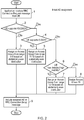
- Figure 2 is a flow diagram of an initial operational parameter assignment according to an example.
- an operator has configured an access node 101 to determine a single Access Group for each UE based on a plurality of distributions.
- the distributions considered are whether the UE supports a high data rate channel or not, whether the UE has detected high mobility or not and a statistical distribution. It will be appreciated that other combinations are possible.
- an access node 101 receives an RRC Connection Request message from a UE 103a-d which contains information on the UE's capabilities via various IEs in the message.
- the access node 101 checks whether the UE has indicated whether it is HS-DSCH capable or not. If not, the UE is assigned an Access Group from the range 0-9 in block 3, the actual group chosen so as to evenly distribute UEs across those Access Groups. If the UE has indicated that it is HS-DSCH capable, the access node 101 checks whether it has also indicated that it is E-DCH capable in block 4.
- the access node If the UE is not E-DCH capable the access node allocates an Access Group from the range 11-12 in block 5, again allocating the actual Access Group on the basis of a statistical even distribution. If the UE is E-DCH capable the access node determines whether the UE has detected high mobility or not in block 6. If the UE has not detected high mobility it is allocated an Access Group from the range 13-14 in block 7. If the UE has detected high mobility it is allocated an Access Group 15 at block 8. At block 9, the assigned Access Group for the UE is included in an RRC Connection Setup message.
- the access node 101 is able to intelligently allocate UEs to a wide range of Access Groups, based on the capability information that the UE has indicated to the access node. It will be appreciated that any combination of distributions is possible and is configurable by the operator.
- Figure 3 is a flow diagram of an operational parameter reassignment according to an example.
- the network 100 can allocate two Access Groups to a UE.
- the access node 101 receives a RAB Assignment Request from the core network (not shown).
- the access node determines from the message whether the Maximum & Guaranteed Bit Rates for the RAB are above configured thresholds, i.e. is this a "high data rate” RAB? (block 20). If so, the access node resets timer T (block 30) and establishes the RAB to the UE in block 50. If not, the access node determines whether the UE has previously been allocated to a "high data rate services" Access Group in block 40. If not, the access node establishes the RAB to the UE in block 50.
- the access node determines (block 60) the number of "low rate” RABs that have been requested for the access node establishes the RAB to the UE (block 50). If the count of "low rate” RABs within T is above the configured threshold the access node determines that the UE has not requested the number of "high data rate RABs" that would typically have been requested by a UE supporting the capabilities that it indicated to the network when it attached. Hence the access node allocates an additional Access Group to the UE in block 70.
- This new Access Group is included in the RRC message sent to the UE when the access node establishes the RAB (block 80) and the access node then establishes the RAB to the UE (block 50).
- the access node indicates to the UE in this example that the new Access Group should be used in addition to the previously allocated Access Group.
- the network can determine how to allocate UEs to Access Groups using a configurable and flexible solution such that a number of factors can be used when deciding how to assign an Access Group to a UE.
- the terms operational parameter and Access Group are used interchangeably herein. That is, an Access Group is an operational parameter according to an example.
Landscapes
- Engineering & Computer Science (AREA)
- Computer Networks & Wireless Communication (AREA)
- Signal Processing (AREA)
- Computer Security & Cryptography (AREA)
- Mobile Radio Communication Systems (AREA)
Claims (13)
- Teilnehmereinrichtungs(UE)-Steuerverfahren, das von einem Netzwerkzugangsknoten (101) für die UE durchgeführt wird, die betreibbar ist, mit dem Netzwerkzugangsknoten (101) in einem drahtlosen Kommunikationsnetzwerk (100) zu kommunizieren, wobei das Verfahren Folgendes umfasst:Empfangen eines Mobilitätsmaßes von einer UE, das anzeigt, ob die UE eine UE hoher Mobilität ist;Zuweisen eines Betriebsparameters am Netzwerkzugangsknoten zur UE beim Anbinden der UE an das drahtlose Kommunikationsnetzwerk (100) via den Netzwerkzugangsknoten (101) auf Basis des Mobilitätsmaßes, wobei der Betriebsparameter gemäß einer vorbestimmten Verteilung für das Zuordnen des Betriebsparameters zu einer UE ausgewählt wird,wobei der Betriebsparameter eine Zugangsgruppe ist, die zum Verwalten eines UE-Zugangs zum Netzwerkzugangsknoten (101) geeignet ist.
- Steuerverfahren nach Anspruch 1, wobei der Betriebsparameter gemäß einer oder mehreren UE-Fähigkeiten ausgewählt wird, die unter Verwendung von einem oder mehreren Informationselementen abgeleitet werden, die dem Netzwerk durch die UE bereitgestellt werden.
- Steuerverfahren nach Anspruch 1, das ferner das Verwenden der vorbestimmten Verteilung, um die UE auf Basis von Netzwerkdiensten, die die UE nutzen kann, wie aus den Vorrichtungsfähigkeiten abgeleitet, einer Zugangsgruppe zuzuordnen, umfasst.
- Steuerverfahren nach Anspruch 3, das ferner das Verwenden eines Zugangsschichtfreigabeindikators, der von der UE übertragen wird, um Dienste zu bestimmen, die die UE nutzen kann, umfasst.
- Steuerverfahren nach Anspruch 1, das ferner das Zuweisen des Betriebsparameters auf Basis einer statistischen Verteilung umfasst, wodurch UEs gleichmäßig auf verfügbare Zugangsgruppen verteilt werden sollen.
- Steuerverfahren nach einem der vorhergehenden Ansprüche, das ferner das Verwalten des Zugangs zu Netzwerkdiensten für Gruppen von UEs, die mit dem Zugangsknoten verbunden sind, durch Verwenden des Betriebsparameters, der der UE zugewiesen ist, um den Zugang zu einem Netzwerkdienst zu regeln, umfasst.
- Steuerverfahren nach einem der vorhergehenden Ansprüche, das ferner das Neuzuweisen des Betriebsparameters zu oder für die UE-Vorrichtung umfasst.
- Steuerverfahren nach Anspruch 7, wobei das Neuzuweisen des Betriebsparameters das Bestimmen, ob die UE die Einrichtung eines Funkzugangsträgers für einen Kanal angefordert hat, der mit einem Dienst verknüpft ist, den der zugewiesene Betriebsparameter betrifft, beinhaltet.
- Steuerverfahren nach Anspruch 7, wobei das Neuzuweisen des Betriebsparameters das Verwenden eines Informationselements, das von der UE oder anderen Knoten im Netzwerk nach der Anbindung an das Netzwerk bereitgestellt wird, um ein Dienstprofil der UE zu bestimmen, beinhaltet.
- Netzwerkzugangsknoten (101) in einem drahtlosen Kommunikationsnetzwerk (100), wobei der Netzwerkzugangsknoten zu Folgendem ausgelegt ist:Empfangen eines Mobilitätsmaßes von einer UE, das anzeigt, ob die UE eine UE hoher Mobilität ist; undZuweisen eines Betriebsparameters zur UE beim Anbinden der UE an das drahtlose Kommunikationsnetzwerk (100) via den Netzwerkzugangsknoten (101) auf Basis des Mobilitätsmaßes, wobei der Betriebsparameter gemäß einer vorbestimmten Verteilung für das Zuordnen des Betriebsparameters zu einer UE ausgewählt wird,wobei der Betriebsparameter eine Zugangsgruppe ist, die zum Verwalten eines UE-Zugangs zum Netzwerkzugangsknoten geeignet ist.
- Netzwerkzugangsknoten (101) nach Anspruch 10, wobei der Netzwerkzugangsknoten eine Funknetzwerksteuerung oder ein Heimknoten B, HNB, oder ein HNB-Gateway ist.
- Netzwerkzugangsknoten (101) nach Anspruch 10 oder 11, wobei der Netzwerkzugangsknoten dazu ausgelegt ist, der UE den Betriebsparameter neu zuzuweisen.
- Computerprogrammprodukt, das ein von einem Computer verwendbares Medium umfasst, auf dem sich computerlesbarer Programmcode befindet, wobei der computerlesbare Programmcode, wenn er in einem Netzwerkzugangsknoten ausgeführt wird, den Netzwerkzugangsknoten veranlasst, das Verfahren nach einem der Ansprüche 1 bis 9 durchzuführen.
Priority Applications (3)
| Application Number | Priority Date | Filing Date | Title |
|---|---|---|---|
| EP14305679.4A EP2943017B1 (de) | 2014-05-09 | 2014-05-09 | Steuerverfahren, Zugangsknoten und Computerprogrammprodukt |
| PCT/EP2015/059640 WO2015169714A1 (en) | 2014-05-09 | 2015-05-04 | Control method, access node and computer program product |
| TW104114586A TW201613386A (en) | 2014-05-09 | 2015-05-07 | Control method, access node and computer program product |
Applications Claiming Priority (1)
| Application Number | Priority Date | Filing Date | Title |
|---|---|---|---|
| EP14305679.4A EP2943017B1 (de) | 2014-05-09 | 2014-05-09 | Steuerverfahren, Zugangsknoten und Computerprogrammprodukt |
Publications (2)
| Publication Number | Publication Date |
|---|---|
| EP2943017A1 EP2943017A1 (de) | 2015-11-11 |
| EP2943017B1 true EP2943017B1 (de) | 2021-04-21 |
Family
ID=50792398
Family Applications (1)
| Application Number | Title | Priority Date | Filing Date |
|---|---|---|---|
| EP14305679.4A Active EP2943017B1 (de) | 2014-05-09 | 2014-05-09 | Steuerverfahren, Zugangsknoten und Computerprogrammprodukt |
Country Status (3)
| Country | Link |
|---|---|
| EP (1) | EP2943017B1 (de) |
| TW (1) | TW201613386A (de) |
| WO (1) | WO2015169714A1 (de) |
-
2014
- 2014-05-09 EP EP14305679.4A patent/EP2943017B1/de active Active
-
2015
- 2015-05-04 WO PCT/EP2015/059640 patent/WO2015169714A1/en not_active Ceased
- 2015-05-07 TW TW104114586A patent/TW201613386A/zh unknown
Non-Patent Citations (1)
| Title |
|---|
| None * |
Also Published As
| Publication number | Publication date |
|---|---|
| TW201613386A (en) | 2016-04-01 |
| EP2943017A1 (de) | 2015-11-11 |
| WO2015169714A1 (en) | 2015-11-12 |
Similar Documents
| Publication | Publication Date | Title |
|---|---|---|
| RU2633375C2 (ru) | Устройство управления связью, базовая станция, оконечное устройство и способ управления связью | |
| US20160037473A1 (en) | Wireless communication system and method for establishing a connection between user equipment and a mobility management entity thereof | |
| US10687310B2 (en) | Method for controlling communication, user equipment, and base station | |
| CN101854643B (zh) | 一种无线资源复用方法及其设备和系统 | |
| US10798764B2 (en) | Method and apparatus for allocating resource on PC5 interface | |
| CN105578382A (zh) | 资源的获取、配置方法及装置,资源池的配置方法及装置 | |
| WO2021087853A1 (en) | Prioritization between uplink and sidelink communications | |
| US20160183315A1 (en) | Method and system for managing cell radio network temporary identifiers, computer program product | |
| KR101145552B1 (ko) | 무선 통신 시스템에서 다이나믹하게 직교 코드를 할당하는장치 및 방법 | |
| CN105101426A (zh) | 一种设备到设备资源配置信息处理方法、装置及系统 | |
| KR20140045887A (ko) | 무선 통신시스템의 셀 부하 분산 방법 및 장치 | |
| TW201342976A (zh) | 小型胞元式(Smallcell)基地台及其通道資源分配方法 | |
| CN101184042A (zh) | 一种资源管理方法及装置 | |
| US20130190030A1 (en) | A Method of Allocating Resources in a Radio Access Network (RAN) Shared by Different Network Operators | |
| CN102905344A (zh) | 接入控制的方法及系统、网络侧网元、用户设备 | |
| CN113747496B (zh) | 多连接网络中的切换方法、网络设备以及系统 | |
| EP2943017B1 (de) | Steuerverfahren, Zugangsknoten und Computerprogrammprodukt | |
| US20030095572A1 (en) | Bit rate allocation in mobile communications networks | |
| US20170181055A1 (en) | Network configuration | |
| KR20140089128A (ko) | 기지국장치 및 기지국장치의 동작 방법 | |
| JP4737459B2 (ja) | 移動通信システム、無線ネットワーク制御装置、および負荷分散方法 | |
| US20060039296A1 (en) | Transmitting data in a wireless communications network | |
| AU2021203896B2 (en) | Resource management in telecommunications networks | |
| MX2015004216A (es) | Nodos, sistemas y metodos en una red celular. | |
| KR101423027B1 (ko) | 할당된 액세스 클래스를 갖는 무선 통신 시스템 및 관련된 방법 |
Legal Events
| Date | Code | Title | Description |
|---|---|---|---|
| PUAI | Public reference made under article 153(3) epc to a published international application that has entered the european phase |
Free format text: ORIGINAL CODE: 0009012 |
|
| AK | Designated contracting states |
Kind code of ref document: A1 Designated state(s): AL AT BE BG CH CY CZ DE DK EE ES FI FR GB GR HR HU IE IS IT LI LT LU LV MC MK MT NL NO PL PT RO RS SE SI SK SM TR |
|
| AX | Request for extension of the european patent |
Extension state: BA ME |
|
| 17P | Request for examination filed |
Effective date: 20160511 |
|
| RBV | Designated contracting states (corrected) |
Designated state(s): AL AT BE BG CH CY CZ DE DK EE ES FI FR GB GR HR HU IE IS IT LI LT LU LV MC MK MT NL NO PL PT RO RS SE SI SK SM TR |
|
| RAP1 | Party data changed (applicant data changed or rights of an application transferred) |
Owner name: ALCATEL LUCENT |
|
| STAA | Information on the status of an ep patent application or granted ep patent |
Free format text: STATUS: EXAMINATION IS IN PROGRESS |
|
| 17Q | First examination report despatched |
Effective date: 20190723 |
|
| REG | Reference to a national code |
Ref country code: DE Ref legal event code: R079 Ref document number: 602014076745 Country of ref document: DE Free format text: PREVIOUS MAIN CLASS: H04W0048160000 Ipc: H04W0028020000 |
|
| GRAP | Despatch of communication of intention to grant a patent |
Free format text: ORIGINAL CODE: EPIDOSNIGR1 |
|
| STAA | Information on the status of an ep patent application or granted ep patent |
Free format text: STATUS: GRANT OF PATENT IS INTENDED |
|
| RIC1 | Information provided on ipc code assigned before grant |
Ipc: H04W 28/02 20090101AFI20201007BHEP Ipc: H04W 48/02 20090101ALI20201007BHEP Ipc: H04W 48/06 20090101ALN20201007BHEP Ipc: H04W 48/16 20090101ALI20201007BHEP |
|
| RIC1 | Information provided on ipc code assigned before grant |
Ipc: H04W 48/16 20090101ALI20201023BHEP Ipc: H04W 28/02 20090101AFI20201023BHEP Ipc: H04W 48/02 20090101ALI20201023BHEP Ipc: H04W 48/06 20090101ALN20201023BHEP |
|
| INTG | Intention to grant announced |
Effective date: 20201109 |
|
| GRAS | Grant fee paid |
Free format text: ORIGINAL CODE: EPIDOSNIGR3 |
|
| GRAA | (expected) grant |
Free format text: ORIGINAL CODE: 0009210 |
|
| STAA | Information on the status of an ep patent application or granted ep patent |
Free format text: STATUS: THE PATENT HAS BEEN GRANTED |
|
| AK | Designated contracting states |
Kind code of ref document: B1 Designated state(s): AL AT BE BG CH CY CZ DE DK EE ES FI FR GB GR HR HU IE IS IT LI LT LU LV MC MK MT NL NO PL PT RO RS SE SI SK SM TR |
|
| REG | Reference to a national code |
Ref country code: GB Ref legal event code: FG4D |
|
| REG | Reference to a national code |
Ref country code: CH Ref legal event code: EP |
|
| REG | Reference to a national code |
Ref country code: DE Ref legal event code: R096 Ref document number: 602014076745 Country of ref document: DE |
|
| REG | Reference to a national code |
Ref country code: IE Ref legal event code: FG4D |
|
| REG | Reference to a national code |
Ref country code: AT Ref legal event code: REF Ref document number: 1385922 Country of ref document: AT Kind code of ref document: T Effective date: 20210515 |
|
| REG | Reference to a national code |
Ref country code: LT Ref legal event code: MG9D |
|
| REG | Reference to a national code |
Ref country code: AT Ref legal event code: MK05 Ref document number: 1385922 Country of ref document: AT Kind code of ref document: T Effective date: 20210421 |
|
| REG | Reference to a national code |
Ref country code: NL Ref legal event code: MP Effective date: 20210421 |
|
| PG25 | Lapsed in a contracting state [announced via postgrant information from national office to epo] |
Ref country code: HR Free format text: LAPSE BECAUSE OF FAILURE TO SUBMIT A TRANSLATION OF THE DESCRIPTION OR TO PAY THE FEE WITHIN THE PRESCRIBED TIME-LIMIT Effective date: 20210421 Ref country code: NL Free format text: LAPSE BECAUSE OF FAILURE TO SUBMIT A TRANSLATION OF THE DESCRIPTION OR TO PAY THE FEE WITHIN THE PRESCRIBED TIME-LIMIT Effective date: 20210421 Ref country code: LT Free format text: LAPSE BECAUSE OF FAILURE TO SUBMIT A TRANSLATION OF THE DESCRIPTION OR TO PAY THE FEE WITHIN THE PRESCRIBED TIME-LIMIT Effective date: 20210421 Ref country code: FI Free format text: LAPSE BECAUSE OF FAILURE TO SUBMIT A TRANSLATION OF THE DESCRIPTION OR TO PAY THE FEE WITHIN THE PRESCRIBED TIME-LIMIT Effective date: 20210421 Ref country code: BG Free format text: LAPSE BECAUSE OF FAILURE TO SUBMIT A TRANSLATION OF THE DESCRIPTION OR TO PAY THE FEE WITHIN THE PRESCRIBED TIME-LIMIT Effective date: 20210721 Ref country code: AT Free format text: LAPSE BECAUSE OF FAILURE TO SUBMIT A TRANSLATION OF THE DESCRIPTION OR TO PAY THE FEE WITHIN THE PRESCRIBED TIME-LIMIT Effective date: 20210421 |
|
| PG25 | Lapsed in a contracting state [announced via postgrant information from national office to epo] |
Ref country code: PT Free format text: LAPSE BECAUSE OF FAILURE TO SUBMIT A TRANSLATION OF THE DESCRIPTION OR TO PAY THE FEE WITHIN THE PRESCRIBED TIME-LIMIT Effective date: 20210823 Ref country code: PL Free format text: LAPSE BECAUSE OF FAILURE TO SUBMIT A TRANSLATION OF THE DESCRIPTION OR TO PAY THE FEE WITHIN THE PRESCRIBED TIME-LIMIT Effective date: 20210421 Ref country code: NO Free format text: LAPSE BECAUSE OF FAILURE TO SUBMIT A TRANSLATION OF THE DESCRIPTION OR TO PAY THE FEE WITHIN THE PRESCRIBED TIME-LIMIT Effective date: 20210721 Ref country code: ES Free format text: LAPSE BECAUSE OF FAILURE TO SUBMIT A TRANSLATION OF THE DESCRIPTION OR TO PAY THE FEE WITHIN THE PRESCRIBED TIME-LIMIT Effective date: 20210421 Ref country code: SE Free format text: LAPSE BECAUSE OF FAILURE TO SUBMIT A TRANSLATION OF THE DESCRIPTION OR TO PAY THE FEE WITHIN THE PRESCRIBED TIME-LIMIT Effective date: 20210421 Ref country code: RS Free format text: LAPSE BECAUSE OF FAILURE TO SUBMIT A TRANSLATION OF THE DESCRIPTION OR TO PAY THE FEE WITHIN THE PRESCRIBED TIME-LIMIT Effective date: 20210421 Ref country code: IS Free format text: LAPSE BECAUSE OF FAILURE TO SUBMIT A TRANSLATION OF THE DESCRIPTION OR TO PAY THE FEE WITHIN THE PRESCRIBED TIME-LIMIT Effective date: 20210821 Ref country code: GR Free format text: LAPSE BECAUSE OF FAILURE TO SUBMIT A TRANSLATION OF THE DESCRIPTION OR TO PAY THE FEE WITHIN THE PRESCRIBED TIME-LIMIT Effective date: 20210722 Ref country code: LV Free format text: LAPSE BECAUSE OF FAILURE TO SUBMIT A TRANSLATION OF THE DESCRIPTION OR TO PAY THE FEE WITHIN THE PRESCRIBED TIME-LIMIT Effective date: 20210421 |
|
| REG | Reference to a national code |
Ref country code: CH Ref legal event code: PL |
|
| REG | Reference to a national code |
Ref country code: DE Ref legal event code: R097 Ref document number: 602014076745 Country of ref document: DE |
|
| PG25 | Lapsed in a contracting state [announced via postgrant information from national office to epo] |
Ref country code: SM Free format text: LAPSE BECAUSE OF FAILURE TO SUBMIT A TRANSLATION OF THE DESCRIPTION OR TO PAY THE FEE WITHIN THE PRESCRIBED TIME-LIMIT Effective date: 20210421 Ref country code: SK Free format text: LAPSE BECAUSE OF FAILURE TO SUBMIT A TRANSLATION OF THE DESCRIPTION OR TO PAY THE FEE WITHIN THE PRESCRIBED TIME-LIMIT Effective date: 20210421 Ref country code: DK Free format text: LAPSE BECAUSE OF FAILURE TO SUBMIT A TRANSLATION OF THE DESCRIPTION OR TO PAY THE FEE WITHIN THE PRESCRIBED TIME-LIMIT Effective date: 20210421 Ref country code: CZ Free format text: LAPSE BECAUSE OF FAILURE TO SUBMIT A TRANSLATION OF THE DESCRIPTION OR TO PAY THE FEE WITHIN THE PRESCRIBED TIME-LIMIT Effective date: 20210421 Ref country code: EE Free format text: LAPSE BECAUSE OF FAILURE TO SUBMIT A TRANSLATION OF THE DESCRIPTION OR TO PAY THE FEE WITHIN THE PRESCRIBED TIME-LIMIT Effective date: 20210421 Ref country code: RO Free format text: LAPSE BECAUSE OF FAILURE TO SUBMIT A TRANSLATION OF THE DESCRIPTION OR TO PAY THE FEE WITHIN THE PRESCRIBED TIME-LIMIT Effective date: 20210421 Ref country code: CH Free format text: LAPSE BECAUSE OF NON-PAYMENT OF DUE FEES Effective date: 20210531 Ref country code: LI Free format text: LAPSE BECAUSE OF NON-PAYMENT OF DUE FEES Effective date: 20210531 Ref country code: MC Free format text: LAPSE BECAUSE OF FAILURE TO SUBMIT A TRANSLATION OF THE DESCRIPTION OR TO PAY THE FEE WITHIN THE PRESCRIBED TIME-LIMIT Effective date: 20210421 Ref country code: LU Free format text: LAPSE BECAUSE OF NON-PAYMENT OF DUE FEES Effective date: 20210509 |
|
| REG | Reference to a national code |
Ref country code: BE Ref legal event code: MM Effective date: 20210531 |
|
| PLBE | No opposition filed within time limit |
Free format text: ORIGINAL CODE: 0009261 |
|
| STAA | Information on the status of an ep patent application or granted ep patent |
Free format text: STATUS: NO OPPOSITION FILED WITHIN TIME LIMIT |
|
| 26N | No opposition filed |
Effective date: 20220124 |
|
| PG25 | Lapsed in a contracting state [announced via postgrant information from national office to epo] |
Ref country code: IE Free format text: LAPSE BECAUSE OF NON-PAYMENT OF DUE FEES Effective date: 20210509 |
|
| PG25 | Lapsed in a contracting state [announced via postgrant information from national office to epo] |
Ref country code: IS Free format text: LAPSE BECAUSE OF FAILURE TO SUBMIT A TRANSLATION OF THE DESCRIPTION OR TO PAY THE FEE WITHIN THE PRESCRIBED TIME-LIMIT Effective date: 20210821 Ref country code: AL Free format text: LAPSE BECAUSE OF FAILURE TO SUBMIT A TRANSLATION OF THE DESCRIPTION OR TO PAY THE FEE WITHIN THE PRESCRIBED TIME-LIMIT Effective date: 20210421 |
|
| PG25 | Lapsed in a contracting state [announced via postgrant information from national office to epo] |
Ref country code: IT Free format text: LAPSE BECAUSE OF FAILURE TO SUBMIT A TRANSLATION OF THE DESCRIPTION OR TO PAY THE FEE WITHIN THE PRESCRIBED TIME-LIMIT Effective date: 20210421 Ref country code: BE Free format text: LAPSE BECAUSE OF NON-PAYMENT OF DUE FEES Effective date: 20210531 |
|
| REG | Reference to a national code |
Ref country code: FR Ref legal event code: PLFP Year of fee payment: 10 |
|
| PG25 | Lapsed in a contracting state [announced via postgrant information from national office to epo] |
Ref country code: HU Free format text: LAPSE BECAUSE OF FAILURE TO SUBMIT A TRANSLATION OF THE DESCRIPTION OR TO PAY THE FEE WITHIN THE PRESCRIBED TIME-LIMIT; INVALID AB INITIO Effective date: 20140509 |
|
| PG25 | Lapsed in a contracting state [announced via postgrant information from national office to epo] |
Ref country code: CY Free format text: LAPSE BECAUSE OF FAILURE TO SUBMIT A TRANSLATION OF THE DESCRIPTION OR TO PAY THE FEE WITHIN THE PRESCRIBED TIME-LIMIT Effective date: 20210421 |
|
| PG25 | Lapsed in a contracting state [announced via postgrant information from national office to epo] |
Ref country code: MK Free format text: LAPSE BECAUSE OF FAILURE TO SUBMIT A TRANSLATION OF THE DESCRIPTION OR TO PAY THE FEE WITHIN THE PRESCRIBED TIME-LIMIT Effective date: 20210421 |
|
| PG25 | Lapsed in a contracting state [announced via postgrant information from national office to epo] |
Ref country code: MT Free format text: LAPSE BECAUSE OF FAILURE TO SUBMIT A TRANSLATION OF THE DESCRIPTION OR TO PAY THE FEE WITHIN THE PRESCRIBED TIME-LIMIT Effective date: 20210421 |
|
| PGFP | Annual fee paid to national office [announced via postgrant information from national office to epo] |
Ref country code: DE Payment date: 20250402 Year of fee payment: 12 |
|
| PGFP | Annual fee paid to national office [announced via postgrant information from national office to epo] |
Ref country code: GB Payment date: 20250401 Year of fee payment: 12 |
|
| PGFP | Annual fee paid to national office [announced via postgrant information from national office to epo] |
Ref country code: FR Payment date: 20250401 Year of fee payment: 12 |
|
| PG25 | Lapsed in a contracting state [announced via postgrant information from national office to epo] |
Ref country code: TR Free format text: LAPSE BECAUSE OF FAILURE TO SUBMIT A TRANSLATION OF THE DESCRIPTION OR TO PAY THE FEE WITHIN THE PRESCRIBED TIME-LIMIT Effective date: 20210421 |