EP2943023B1 - Procédé de synchronisation et station de base - Google Patents
Procédé de synchronisation et station de base Download PDFInfo
- Publication number
- EP2943023B1 EP2943023B1 EP13874178.0A EP13874178A EP2943023B1 EP 2943023 B1 EP2943023 B1 EP 2943023B1 EP 13874178 A EP13874178 A EP 13874178A EP 2943023 B1 EP2943023 B1 EP 2943023B1
- Authority
- EP
- European Patent Office
- Prior art keywords
- base station
- synchronization
- reference signal
- inter
- transmitted
- Prior art date
- Legal status (The legal status is an assumption and is not a legal conclusion. Google has not performed a legal analysis and makes no representation as to the accuracy of the status listed.)
- Active
Links
Images

Classifications
-
- H—ELECTRICITY
- H04—ELECTRIC COMMUNICATION TECHNIQUE
- H04W—WIRELESS COMMUNICATION NETWORKS
- H04W56/00—Synchronisation arrangements
- H04W56/001—Synchronization between nodes
- H04W56/0015—Synchronization between nodes one node acting as a reference for the others
-
- H—ELECTRICITY
- H04—ELECTRIC COMMUNICATION TECHNIQUE
- H04L—TRANSMISSION OF DIGITAL INFORMATION, e.g. TELEGRAPHIC COMMUNICATION
- H04L5/00—Arrangements affording multiple use of the transmission path
- H04L5/14—Two-way operation using the same type of signal, i.e. duplex
-
- H—ELECTRICITY
- H04—ELECTRIC COMMUNICATION TECHNIQUE
- H04W—WIRELESS COMMUNICATION NETWORKS
- H04W72/00—Local resource management
- H04W72/20—Control channels or signalling for resource management
- H04W72/23—Control channels or signalling for resource management in the downlink direction of a wireless link, i.e. towards a terminal
Definitions
- the present invention relates to communication technologies and, in particular, to a synchronization method and a base station.
- the small cells have characteristics of small coverage, low transmission power, which are suitable for providing high speed data transmission service, performing splitting flow of data for the macro cellular networks, and reducing the network deployment cost of operators.
- the forms of small cells may include: multi-carrier cell (Metro cell), Micro cell, Pico cell, Femto cell, or wireless local area network (Wireless Local Area Network, WLAN) which uses wireless fidelity (Wireless Fidelity, WiFi) technology and etc., and different forms of wireless network access nodes which are used by small cells can be generally referred to as small base stations.
- a small base station In order to transmit data normally, a small base station needs to be synchronized, meanwhile, the small base station also should provide downlink synchronization to user equipments (User Equipment, UE) in its cells.
- user equipments User Equipment, UE
- small base stations use the same configuration to transmit synchronization reference signal to realize inter-station synchronization and UE downlink synchronization.
- the synchronization reference signal which is received by a small station, for inter-station synchronization sent by other small stations and the synchronization reference signal sent by the small station to a UE in its cell for UE downlink synchronization need to be separated by at least one transmission period of a synchronization reference signal, and when the period is relatively long, it would cost a relatively long time to achieve the inter-station synchronization and UE downlink synchronization, which undoubtedly would influence timing synchronization performance.
- a first aspect provides a synchronization method, including:
- the configuring the synchronization reference signal of the base station includes:
- the synchronization reference signals of the base station's synchronization source base station further include a UE downlink synchronization reference signal of the base station's synchronization source base station, and where the configuring the synchronization reference signal of the base station, further includes: configuring the UE downlink synchronization reference signal of the base station to be transmitted at a same time when the UE downlink synchronization reference signal of the base station's synchronization source base station is transmitted.
- all of the following parameters of the UE downlink synchronization reference signal and the inter-station synchronization reference signal are the same, or at least one of the following parameters thereof is different: sequence generation formula, sequence length, transmitting power, and frequency-domain resource mapping pattern.
- the configuring, the synchronization reference signal of the base station includes: configuring the synchronization reference signal of the base station to be transmitted at a time different from when a synchronization reference signal of the base station's synchronization source base station is transmitted, where the synchronization reference signal is used for UE downlink synchronization and inter-station synchronization.
- the synchronization status further includes a synchronization level
- the configuring, the synchronization reference signal of the base station further includes:
- the configuring, the synchronization reference signal of the base station further includes:
- the determining, by a base station, a synchronization status of the base station itself further includes: when the base station is a synchronization source base station, determining a synchronization level of the base station itself according to the synchronization level of the base station's synchronization source base station, where a difference value of the synchronization level of the base station and the synchronization level of the base station's synchronization source base station is 1.
- a second aspect provides a base station, including:
- the synchronization reference signals of the base station's synchronization source base station further include a UE downlink synchronization reference signal of the base station's synchronization source base station
- the configuring module is further configured to: configure the UE downlink synchronization reference signal of the base station to be transmitted at a same time when the UE downlink synchronization reference signal of the base station's synchronization source base station is transmitted.
- the configuring module is specifically configured to: configure the synchronization reference signal of the base station to be transmitted at a time different from when a synchronization reference signal of the base station's synchronization source base station is transmitted, where the synchronization reference signal is used for UE downlink synchronization and inter-station synchronization.
- the configuring module is further configured to:
- the synchronization status further includes a synchronization level
- the determining module is further configured to: when the base station is a synchronization source base station, determine the synchronization level of the base station itself according to the synchronization level of the base station's synchronization source base station, where a difference value of the synchronization level of the base station and the synchronization level of the base station's synchronization source base station is 1.
- a updating module configured to detect periodically a synchronization obtaining reference signal, and reselect the base station's synchronization source base station according to the synchronization obtaining reference signal detected, wherein the synchronization obtaining reference signal is used for timing synchronization at a time when the base station powers on; or, after reselecting the synchronization source base station, transmit a signaling for releasing a synchronization relationship to the previously selected synchronization source base station; or, after being taken as a synchronization source base station and detecting that all synchronization relationships of the base station itself are released, transfer the synchronization status of the base station itself from the synchronization source base station to the synchronized base station; or, after being taken as a synchronized base station and receiving a notification signaling from another base station, transfer the synchronization status of the base station itself from the synchronized base station to the
- the configuring module is further configured to:
- a third aspect provides a base station, including: a processor, configured to determine a synchronization status of the base station itself, where the synchronization status includes: a synchronized base station, or, a synchronization source base station; and, configure a synchronization reference signal of the base station according to the determined synchronization status of the base station itself, in order that a first time is different from a second time, where the first time is a time when the synchronization reference signal of the base station is transmitted, and the second time is a time when an inter-station synchronization reference signal of the base station's synchronization source base station is transmitted.
- the processor is specifically configured to: when the base station is a synchronization source base station, configure the synchronization reference signal of the base station to include a user equipment UE downlink synchronization reference signal of the base station and an inter-station synchronization reference signal of the base station, the UE downlink synchronization reference signal of the base station and the inter-station synchronization reference signal of the base station are transmitted at different times, the UE downlink synchronization reference signal of the base station and the inter-station synchronization reference signal of the base station's synchronization source base station are transmitted at different times, and the inter-station synchronization reference signal of the base station and the inter-station synchronization reference signal of the base station's synchronization source base station are transmitted at different times; and
- the synchronization reference signals of the base station's synchronization source base station further include a UE downlink synchronization reference signal of the base station's synchronization source base station
- the processor is further configured to: configure the UE downlink synchronization reference signal of the base station to be transmitted at a same time when the UE downlink synchronization reference signal of the base station's synchronization source base station is transmitted.
- the processor is specifically configured to: configure the synchronization reference signal of the base station to be transmitted at a time different from when a synchronization reference signal of the base station's synchronization source base station is transmitted, where the synchronization reference signal is used for UE downlink synchronization and inter-station synchronization.
- processor is further configured to:
- the processor is further configured to:
- the synchronization status further includes a synchronization level
- the processor is further configured to: when the base station is a synchronization source base station, determine the synchronization level of the base station itself according to the synchronization level of the base station's synchronization source base station, where a difference value of the synchronization level of the base station and the synchronization level of the base station's synchronization source base station is 1.
- the processor is further configured to: detect periodically a synchronization obtaining reference signal, and reselect the base station's synchronization source base station according to the synchronization obtaining reference signal detected; or, after reselecting the synchronization source base station, transmit a signaling for releasing a synchronization relationship to the previously selected synchronization source base station; or, after being taken as a synchronization source base station and detecting that all synchronization relationships of the base station itself are released, transfer the synchronization status of the base station itself from the synchronization source base station to the synchronized base station; or, after being taken as a synchronized base station and receiving a notification signaling from another base station, transfer the synchronization status of the base station itself from the synchronized base station to the synchronization source base station, where the other base station is a base station which takes the present base station as a synchronization source
- the synchronization reference signal is a synchronization tracking reference signal.
- the small base station may receive the inter-station synchronization reference signal at a subframe corresponding to the synchronization source and perform inter-station synchronization, and afterwards may transmit the synchronization reference signal at its own subframe for UE downlink synchronization, or further for inter-station synchronization of other small base stations, which may achieve the inter-station synchronization and the UE downlink synchronization in one period, thereby improving the synchronization performance.
- FIG. 1 is a schematic diagram of synchronization status among small base stations in an embodiment of the present invention, as shown in FIG. 1 , a group of small base stations deployed densely need to achieve inter-station synchronization.
- a small base station which is taken as a synchronization source is named as synchronization source small base station
- a small base station which needs to be synchronized through a synchronization source small base station is named as a synchronized small base station
- some small base stations, which need to be synchronized through a synchronization source small base station and then need to be taken as synchronization sources by other small base stations are also deemed as synchronization source small base stations.
- the small base stations may be an access point (Access Point, AP), a micro base station (Micro), a pico base station (Pico), an indoor base station (Femto), a low mobility base station (Low Mobility, LoMo), a low power transmission node (Low Power Node, LPN), or a radio remote unit (Radio Remote Unit, RRU), and so on.
- Access Point AP
- Micro micro base station
- Pico base station Pier
- Femto indoor base station
- Low Mobility, LoMo low mobility base station
- LPN low power transmission node
- RRU Radio Remote Unit
- a synchronization level of a synchronization source small base station may be further defined, where, the synchronization level of a synchronization source small base station which is synchronized though an external synchronization source and provides synchronization to other small base stations in the group to which the small base station belongs is L-0, the synchronization level of a synchronization source small base station, which is inter-station synchronized with a L-0 synchronization source small base station and provides synchronization to other small base stations, is L-1, and by this analogy, the synchronization level of a synchronization source small base station, which is inter-station synchronized with a L-n synchronization source small base station and provides synchronization to other small base stations, is L-(n+1).
- the external synchronization sources may include: a global position system (Global Position System, GPS), a synchronization source provided in a way of IEEE 1588, or other adjacent macro base stations.
- small base station 0 may be synchronized through an external synchronization source (such as a GPS); small base station 1 and small base station 2 are synchronized through small base station 0; small base station 3 is synchronized through small base station 1; small base station 4 is synchronized through small base station 2; and small base station 5 is synchronized through small base station 3.
- an external synchronization source such as a GPS
- small base station 1 and small base station 2 are synchronized through small base station 0
- small base station 3 is synchronized through small base station 1
- small base station 4 is synchronized through small base station 2
- small base station 5 is synchronized through small base station 3.
- the synchronization level of small base station 0 is L-0, that is, small base station 0 is a L-0 synchronization source small base station; the synchronization level of both small base station 1 and small base station 2 is L-1, both of them are L-1 synchronization source small base stations; and the synchronization level of small base station 3 is L-2, as a L-2 synchronization source small base station.
- the small base station 4 and small base station 5 do not provide synchronization to other small base stations, and are only synchronized from other small base stations, thus both of them are synchronized small base stations.
- the synchronization source small base station is the synchronization source small base station of the small base station.
- the small base station also provides downlink synchronization to UEs in a cell where the small base station is located.
- small base station 1 except for receiving an inter-station synchronization reference signal sent by small base station 0, small base station 1 also need to provides synchronization reference signal for UE downlink synchronization to UEs in the cell where small base station 1 is located.
- each small base station use a same configuration of synchronization reference signal, and the synchronization reference signal is used for both inter-station synchronization and UE downlink synchronization.
- a period of a synchronization reference signal is 2 subframes, then both small base station 0 and small base station 1 need to transmit synchronization reference signals over such as the first, third, fifth, ... subframes, that is, small base station 1 needs to receive the synchronization reference signal transmitted by small base station 0 over a subframe among the first, third, fifth, ...
- small base station 1 also needs to transmit synchronization reference signals over a subframe among the first, third, fifth, ... subframes for UE downlink synchronization.
- small base station 1 Due to that small base station 1 cannot co-frequency transmit and receive at the same time, it is needed that an interval of at least one period of synchronization reference signal is between the synchronization reference signal received by small base station 1 and the synchronization reference signal sent by small base station 1, for example, small base station 1 receives the synchronization reference signal sent by small base station 0 over the first subframe, due to that small base station 1 cannot co-frequency transmit and receive at the same time, small base station 1 needs to transmit a synchronization reference signal for UE downlink synchronization over the third subframe at the earliest. Therefore, when the period of synchronization reference signal is long, it would need a longer time to achieve both inter-station synchronization and UE downlink synchronization, which would impact the synchronization performance.
- FIG. 2 is a schematic flowchart of a synchronization method according to an embodiment of the present invention, includes:
- a synchronization reference signal may include a synchronization obtaining reference signal and a synchronization tracking reference signal, the synchronization obtaining reference signal is used for timing synchronization at the time of power on, and the synchronization tracking reference signal is used for periodically synchronization tracking so as to timely correct synchronization deviation.
- the synchronization obtaining reference signal is such as a primary synchronous signal (Primary Synchronous Signal, PSS) and a secondary synchronous signal (Secondary Synchronous Signal, SSS) in long term evolution (Long Term Evolution, LTE) system in LTE system
- the synchronization tracking reference signal is such as a common reference signal (Common Reference Signal, CRS) in LTE system.
- the synchronization reference signal is a synchronization tracking reference signal as an example.
- time domain resource such as a subframe or a symbol and the like
- embodiments of the present invention take the subframe as an example.
- the synchronization tracking reference signal sent by the small base station is at least used for downlink synchronization of UEs in the cell where the small base station is located.
- the synchronization tracking reference signal is further used for providing inter-station synchronization to the synchronized small base station of the small base station.
- the synchronization tracking reference signal used for UE downlink synchronization and the synchronization tracking reference signal for UE inter-station synchronization may be independent synchronization tracking reference signals , herein, may be referred to as a UE downlink synchronization tracking reference signal and an inter-station synchronization tracking reference signal. Or, a same synchronization tracking reference signal may be used for either UE downlink synchronization or inter-station synchronization. The following will describe them respectively.
- the synchronization tracking reference signal is distinguished as a UE downlink synchronization tracking reference signal and an inter-station synchronization tracking reference signal.
- the synchronization tracking reference signal sent by the synchronization source small base station includes the aforementioned two kinds of synchronization tracking reference signals, and the synchronization tracking reference signal sent by the synchronized small base station only includes a UE downlink synchronization tracking reference signal.
- a time domain density of the synchronization tracking reference signal configured by the synchronization source small base station is higher than configured time domain density of the synchronization tracking reference signal configured by the synchronized small base station.
- both the UE downlink synchronization tracking reference signal and the inter-station synchronization tracking reference signal are configured, and the UE downlink synchronization tracking reference signal and the inter-station synchronization tracking reference signal are transmitted at different subframes.
- the two synchronization tracking reference signals may be specifically configured as following:
- a synchronization source small base station which has the synchronization level bigger than L-0, needs to obtain timing synchronization from a synchronization source small base station with synchronization level which is one level superior (namely a synchronization source of the synchronization source small base station), and also needs to provides downlink timing synchronization to a UE in the cell where the synchronization source small base station is located, so as to solve the problem that transmitting and receiving are not able to be performed at the same time and over the same frequency, the UE downlink synchronization tracking reference signal of the synchronization source small base station and the inter-station synchronization tracking reference signal of a synchronization source small base station with synchronization level which is one level superior of the synchronization source small base station, need to be transmitted at different subframes.
- the inter-station synchronization tracking reference signal of the synchronization source small base station and the inter-station synchronization tracking reference signal of a synchronization source small base station with synchronization level which is one level superior of the synchronization source small base station also need to be transmitted at different subframes.
- k preset threshold
- the synchronization tracking reference signals sent by the two synchronization source small base stations may be transmitted at the same subframe or at different subframes, and when they are transmitted at the same subframe, mutually orthogonal sequences can be used to distinguish different synchronization source small base stations, or a totally equivalent sequence is used to achieve transmission diversity in order to improve the synchronization performance.
- a synchronized small base station only a UE downlink synchronization tracking reference signal is configured.
- the time domain density of the UE downlink synchronization tracking reference signal of the synchronized small base station meets a requirement of UE downlink synchronization tracking precision.
- the time domain density of the UE downlink synchronization tracking reference signal of the synchronized small base station and the UE downlink synchronization tracking reference signal of the synchronization source small base station may be the same.
- the configuration of the UE downlink synchronization tracking reference signal of the synchronization source small base station and the configuration of the UE downlink synchronization tracking reference signal of the synchronized small base station can use a configuration of the synchronization tracking reference signal in prior art, in order to achieve backward compatibility.
- the synchronization tracking reference signal in prior art are transmitted over the first, third, fifth, ... subframes, and then, the UE downlink synchronization tracking reference signal of the synchronization source small base station and the UE downlink synchronization tracking reference signal of the synchronized small base station are also transmitted over the first, third, fifth, ... subframes.
- small base station 0 small base station 1 and small base station 3 are all synchronization source small base stations with corresponding synchronization levels
- small base station 5 is a synchronized small base station.
- a synchronization tracking reference signal sent by the synchronization source small base station includes a UE downlink synchronization tracking reference signal and an inter-station synchronization tracking reference signal; and the synchronization tracking reference signal sent by the synchronized small base station, namely small base station 5, only includes a UE downlink synchronization tracking reference signal.
- the UE downlink synchronization tracking reference signal and the inter-station synchronization tracking reference signal transmitted by each synchronization source small base station and the inter-station synchronization tracking reference signal transmitted by the synchronization source small base station with synchronization level which is one level superior are transmitted at different subframes.
- the UE downlink synchronization tracking reference signal of small base station 1 and the inter-station synchronization tracking reference signal of small base station 0 are transmitted at different subframes
- the inter-station synchronization tracking reference signal of the small base station 1 and the inter-station synchronization tracking reference signal of small base station 0 are also transmitted at different subframes.
- the UE downlink synchronization tracking reference signal and/or the inter-station synchronization tracking reference signal of small base station 3 and the inter-station synchronization tracking reference signal of small base station 0 may be transmitted at the same subframe or at different subframes. When they are transmitted at the same subframe, complexity of system design can be reduced.
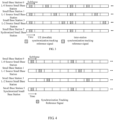
- the embodiments takes compatibility with prior art as an example, that is, the UE downlink synchronization tracking reference signal of each small base station may use the designs in prior art, for example, with reference to FIG. 2 , the UE downlink synchronization tracking reference signals of each small base station are transmitted at the same subframe.
- the inter-station synchronization tracking reference signals of adjacent synchronization source small base stations are transmitted at different subframes.
- Mode 2 the synchronization tracking reference signal is used for either UE downlink synchronization or inter-station synchronization.
- the synchronization tracking reference signal will be used for the aforementioned two purpose, and the difference from the prior art is that, in the present embodiment, the synchronization tracking reference signal of a small base station and a synchronization source of the small base station need to be transmitted at different subframes.
- the time domain density of the synchronization tracking reference signal configured by the synchronization source small base station is the same with to the time domain density of the synchronization tracking reference signal configured by the synchronized small base station.
- the smallest interval between the synchronization reference signal of the small base station and the synchronization reference signal of the synchronization source of the small base station is smaller than a transmitting period of the synchronization reference signal in the prior art.
- a threshold k (k>1) can be set, when a difference of the synchronization levels of the two synchronization source small base station is smaller than k, the synchronization tracking reference signals of the two synchronization source small base stations are transmitted at different subframes; and when the difference of the synchronization levels of the two synchronization source small base station is bigger than or equal to k, the synchronization tracking reference signals of the two synchronization source small base stations are transmitted at different subframes or at the same subframe.
- synchronization tracking reference signals sent by the two synchronization source small base stations may be transmitted at the same subframe or at different subframes, and when they are transmitted at the same subframe, mutually orthogonal sequences can be used to distinguish different synchronization source small base stations, or a totally equivalent sequence is used to achieve transmission diversity in order to improve the synchronization performance.
- the small base station may transmit a UE downlink synchronization tracking reference signal of its own cell at a time different from when the small base station receives the synchronization tracking reference signal sent by a synchronization source small base station with one level superior, then a UE timing synchronization and an inter-station synchronization are accomplished independently.
- each small base station is configured with the synchronization tracking reference signal, and contents of these synchronization tracking reference signals may be the same, and the synchronization tracking reference signal of each small base station and that of their synchronization source small base stations with one level superior, are transmitted at different frames.
- the synchronization tracking reference signal of small base station 1 and the synchronization tracking reference signal of small base station 0 are transmitted at different subframes
- the synchronization tracking reference signal of small base station 3 and the synchronization tracking reference signal of small base station 1 are transmitted at different subframes
- the synchronization tracking reference signal of small base station 5 and the synchronization tracking reference signal of small base station 3 are transmitted at different subframes.
- the small base stations with no direct synchronization relationship therebetween their synchronization tracking reference signals may transmitted at the same subframe, for example, as shown in FIG. 4 , the synchronization tracking reference signal of small base station 5 and the synchronization tracking reference signal of small base station 0 are transmitted at the same subframe, in order to reduce the complexity of system design.
- the synchronization tracking reference signals are distinguished in Mode 1 mentioned above.
- the UE downlink synchronization tracking reference signal may use a design in prior art, supporting backward compatibility; and the synchronization tracking reference signals are not distinguished in Mode 2, which may lower reference signal cost.
- the small base station does not transmit the downlink signal in its own cell at a time when the small base station receives the inter-station synchronization reference signal sent by the synchronization source small base station of the small base station; or, the small base station does not transmit the downlink signal in its own cell at a time frequency position where the small base station receives the inter-station synchronization reference signal sent by the synchronization source small base station of the small base station.
- small base station 1 does not transmit the downlink signal in the cell of small base station 1 over a subframe (or time frequency position) where the inter-station synchronization tracking reference signal of small base station 0 is located.
- the inter-station reference signal may be transmitted at a specific time.
- the inter-station reference signal may be transmitted in a guard period (Guard Period, GP) for switching between uplink and downlink which is transmitted at a specific subframe, since in the time slot, there is no signal transmission between a base station and a UE, and the length of the time slot may be configured to ensure there is still a redundant time for transmitting the inter-station synchronization reference signal except for time needed for the system to switch between uplink and downlink.
- TDD Time Division Duplex
- GP Guard Period
- the aforementioned small base stations with different synchronization levels may transmit the inter-station synchronization reference signals in GPs of different specific subframes, or may transmit the inter-station synchronization reference signals at different times in the GP of the same specific subframes.
- the inter-station reference signal may be transmitted in a downlink subframe which is configured as multi-broadcast single frequency network (Multi-Broadcast Single Frequency Network, MBSFN), in which there is no data transmission between a base station and a UE, and the aforementioned small base stations with different synchronization levels may transmit the inter-station synchronization reference signals in different MBSFN subframes, or may transmit the inter-station synchronization reference signals at different times in the same MBSFN subframe.
- MBSFN Multi-Broadcast Single Frequency Network
- the small base station may receive the inter-station synchronization reference signal at a subframe corresponding to the synchronization source and perform inter-station synchronization, and afterwards may transmit the synchronization reference signal at its own subframe for UE downlink synchronization, or further for inter-station synchronization of other small base stations, which may achieve the inter-station synchronization and the UE downlink synchronization in one period, thereby improving the synchronization performance.
- FIG. 5 is a schematic flowchart of a synchronization method according to another embodiment of the present invention, includes: 51: a small base station is powered on, determining its synchronization source, and obtaining an initial timing synchronization.
- the small base station When the small base station has the function of external synchronization obtaining such as from a GPS, or a macro base station and the like, then the small base station obtains the initial timing synchronization from the external synchronization sources.
- the small base station When the small base station does not have the function of external synchronization obtaining, then the small base station receives an synchronization obtaining reference signal transmitted by adjacent small base stations, identifies the synchronization obtaining reference signal with strongest reception power by relevant detection, obtains the initial timing synchronization according to the synchronization obtaining reference signal with strongest reception power, determines the small base station which transmits the synchronization obtaining reference signal and takes it as the synchronization source.
- the small base station which obtains the initial timing synchronization may transmit a notification signaling to the synchronization source's small base station, and the notification signaling is used for notifying that the small base station has already obtained timing synchronization through the synchronization source's small base station.
- the small base station determines a synchronization status of the small base station itself, and configures a corresponding synchronization tracking reference signal.
- the small base station determines itself as a synchronization source small base station, and determines a synchronization level of the small base station itself as follows:
- the small base station may determine the synchronization level of the small base station itself as L-0;
- the small base station may first acquire the synchronization level of an synchronization source small base station which is one level superior, and then take the synchronization level of the synchronization source small base station which is one level superior plus 1 as the synchronization level of the small base station itself. For example, the small base station obtains the initial timing synchronization from an L-0 synchronization source small base station, and then the synchronization level of the small base station is L-1.
- the small base station determines itself as a synchronized small base station.
- the small base station After determining the synchronization status of the small base station itself, it can configure the synchronization tracking reference signal in a way according to FIG. 3 or FIG. 4 .
- the small base station may perform configuration of the small base station itself, according to the configuration of the synchronization source small base station which is one level superior, i.e. its synchronization source, and configure the synchronization tracking reference signal of the small base station itself so that the synchronization tracking reference signal of the small base station itself and the inter-station synchronization tracking reference signal of its synchronization source are transmitted at different subframes.
- the synchronization tracking reference signal of the small base station itself includes the UE synchronization tracking reference signal of the small base station itself and the inter-station synchronization tracking reference signal of the small base station itself; when the small base station is a synchronized small base station, the synchronization tracking reference signal of the small base station itself includes the UE synchronization tracking reference signal of the small base station itself.
- the synchronization tracking reference signal of the small base station is configured such that the synchronization tracking reference signal of the small base station and the synchronization tracking reference signal of its synchronization source are transmitted at different subframes.
- a synchronization source small base station which is one level superior may notify the synchronization level of the synchronization source small base station which is one level superior to the small base station through a first signaling, in order that the small base station determines the synchronization level of the small base station itself; and the synchronization source small base station which is one level superior may further notify the configuration of the synchronization tracking signal of the synchronization source small base station which is one level superior to the small base station through a second signaling, in order that the small base station completes its own configuration.
- the first signaling and the second signaling may be two signalings, and also may be the same signaling.
- a correspondence between the synchronization level and the configuration of the synchronization tracking reference signal may be preconfigured, herein, the synchronization source small base station which is one level superior also may not transmit the configuration of the synchronization tracking reference signal to the small base station, however the small base station determines the configuration of the synchronization tracking reference signal of the small base station itself according to an implicit correspondence between the synchronization level and the synchronization tracking reference signal.
- the small base station receives the inter-station synchronization tracking reference signal transmitted by the synchronization source, according to the configuration of the synchronization tracking reference signal of the synchronization source of the small base station, performs inter-station synchronization tracking; and transmit the synchronization tracking reference signal of the small base station itself, according to the configuration of the synchronization tracking reference signal of the small base station itself.
- the synchronization tracking reference signal of the small base station itself includes: the UE downlink synchronization tracking reference signal of the small base station, which is used for the UE downlink synchronization tracking of the present cell.
- synchronization tracking reference signal of the small base station itself includes: the UE downlink synchronization tracking reference signal of the small base station, which is used for the UE downlink synchronization tracking of the present cell; and, the inter-station synchronization tracking reference signal of the small base station, which is used for inter-station synchronization of other small base stations.
- the synchronization status of the small base station may be updated, and then, steps 52-53 may be executed repeatedly.
- the update may includes at least one of the following:
- Synchronization source reselection the small base station may periodically detect the synchronization obtaining reference signal transmitted by the adjacent small base stations, and if a synchronization source with better signal quality than the current synchronization source is detected, then switch its synchronization source to the new small base station. If the small base station itself is also a synchronization source small base station of other small base station, then, the small base station may further update the synchronization level of the small base station itself according to the synchronization level of the new synchronization source, and transmit a signaling to notify the small base stations, which obtains synchronization through the present small base station, to update their synchronization level.
- Synchronization relationship release when the small base station performs reselection of the synchronization source or enters a silent state and does not provide service to users, the small base station may transmit a signaling to its original synchronization source, in order to release the synchronization relationship with the original synchronization source.
- the above mentioned signaling communication between the small base station and its synchronization source may specifically though the following manners: X2 interface between base stations, air interface between base stations, or, forwarding of an upper layer centralized controller.
- the small base station which provides synchronization and the small base station which obtains synchronization may belong to the same operator or different operators.
- the present embodiments performs different configurations to the small base station and the synchronization source of the small base station, which may avoid waiting a long time to complete synchronization, ensure the synchronization performance of UE downlink synchronization and inter-station synchronization among small base stations; for two small base stations whose synchronization levels have a big difference, their synchronization reference signals may be configured to use the same subframe, thereby saving resource cost, reducing network power consuming; by distinguishing the downlink synchronization tracking reference signal and the inter-station synchronization tracking reference signal, and keeping the UE downlink synchronization tracking reference signal unchanged, compatibility with the system in the prior art can be achieved; by using tracking reference signals over different subframes for UE downlink synchronization and inter-station synchronization, resource cost can be reduced.
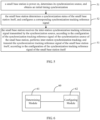
- FIG. 6 is a schematic structural diagram of a base station according to an embodiment of the present invention
- the base station may be a small base station
- the base station 60 includes a determining module 61 and a configuring module 62
- the determining module 61 is configured to determine a synchronization status of the base station itself, where the synchronization status includes: a synchronized base station, or, a synchronization source base station
- the configuring module 62 is configured to configure a synchronization reference signal of the base station according to the determined synchronization status of the base station itself, in order that a first time is different from a second time, the first time is a time when the synchronization reference signal of the base station is transmitted, and the second time is a time when an inter-station synchronization reference signal of the base station's synchronization source base station is transmitted.
- the configuring module is specifically configured to:
- the synchronization reference signals of the base station's synchronization source base station further includes a UE downlink synchronization reference signal of the base station's synchronization source base station
- the configuring module is further configured to: configure the UE downlink synchronization reference signal of the base station and the UE downlink synchronization reference signal of the base station's synchronization source base station so that they are transmitted at the same time.
- all of the following parameters of the downlink synchronization reference signal of the UE and the inter-station synchronization reference signal are the same or at least one of the following parameters thereof is different: sequence generation formula, sequence length, transmitting power, and frequency-domain resource mapping pattern.
- the configuring module is specifically configured to: configure the synchronization reference signal of the base station to be transmitted at a time different from when a synchronization reference signal of the base station's synchronization source base station is transmitted, the synchronization reference signal is used for UE downlink synchronization and inter-station synchronization.
- the configuring module is further configured to:
- the configuring module is further configured to:
- the determining module is specifically configured to:
- the synchronization status further includes a synchronization level
- the determining module is further configured to: when the base station is a synchronization source base station, determine the synchronization level of the base station itself, according to the synchronization level of the base station's synchronization source base station, where a difference of the synchronization level of the base station and the synchronization level of the base station's synchronization source base station is 1.
- the base station further includes: an updating module, configured to detect periodically a synchronization obtaining reference signal, and reselect the base station's synchronization source base station according to the synchronization obtaining reference signal detected; or, after reselecting the base station's synchronization source base station, transmit a signaling for releasing a synchronization relationship to the previously selected synchronization source base station; or, after being taken as a synchronization source base station and detecting that all synchronization relationships of the base station itself are released, transfer the synchronization status of the base station itself from the synchronization source base station to the synchronized base station; or, after being taken as a synchronized base station and receiving a notification signaling from other base stations, transfer the synchronization status of the base station itself from the synchronized base station to the synchronization source base station, the other base stations are base stations which take the present base station as a synchronization source base station.
- the configuring module is further configured to:
- the synchronization reference signal is a synchronization tracking reference signal.
- the inter-station synchronization reference signal is transmitted in a guard period in a specific subframe; or, when a system which the base station belongs to is an LTE system, the inter-station synchronization reference signal is transmitted in a MBSFN subframe.
- the base station may receive the inter-station synchronization reference signal at a time corresponding to the synchronization source base station and perform inter-station synchronization, and afterwards may transmit the synchronization reference signal at its own time for UE downlink synchronization, or further for inter-station synchronization to other base stations, thereby achieving the inter-station synchronization and the UE downlink synchronization in one period and improving the synchronization performance.
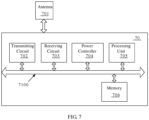
- FIG. 7 is a schematic structural diagram of a base station according to another embodiment of the present invention
- the base station may be a small base station
- the base station 70 includes a transmitting circuit 702, a receiving circuit 703, a power controller 704, a processor 705, a memory 706 and an antenna 701.
- the processor 705 controls the device 70's operations, and the processor 705 may also be referred to as a CPU.
- the memory 706 may includes a read-only memory and a random access memory, and provides instructions or data to the processor 705. Part of the memory 706 may also includes a non-volatile random access memory (Non-Volatile Random Access Memory, NVRAM).
- NVRAM non-Volatile Random Access Memory
- the base station 70 may be embedded into a small base station or itself may be a small base station, it may also contain carriers for accommodating the transmitting circuit 702 and the receiving circuit 703, in order to allow data transmitting and receiving between the base station 70 and a remote device.
- the base station 70 is a simplified schematic diagram of a network or wireless device.
- the transmitting circuit 702 and the receiving circuit 703 may be coupled to the antenna 701. All components of the base station 70 are coupled together through a bus system 7100. Except for a data bus, the bus system 7100 further includes a power bus, a control bus and a status signal bus. But for clarity, different kinds of bus in the Figures are all labeled as the bus system 7100.
- the base station 70 may further include the power controller 704.
- the aforementioned methods disclosed by the embodiments of the present invention may be applied in the processor 705, or, in other words, achieved by the processor 705.
- the processor 705 may be a kind of integrated circuit chip capable of signal processing. In implementation process, each step of the above methods may be completed via a hardware integrated logic circuit in the processor 705 or instructions in form of software.
- the above mentioned processor may be a universal processor, a digital signal processor (Digital Signal Processor, DSP), an application specific integrated circuit (Application Specific Integrated Circuit, ASIC), a field programmable gate array (Field Programmable Gate Array, FPGA) or other programmable logic devices, a discrete gate or a transistor logic device, discrete hardware components, which may complete or execute the methods, steps or logic block diagrams disclosed in the embodiments of the present invention.
- the universal processor may be a micro processor or the processor may also be any kind of conventional processor, a decoder and so on.
- the steps in the methods disclosed by the embodiments of the present invention may be directly reflected as executed and completed by a hardware decoding processor, or executed and completed by a combination of a hardware and a software module in the decoding processor.
- the software module may be located in a random access memory, a flash, a read-only memory, a programmable read-only memory, or an electrical erasable programmable memory, a register and the like which are sophisticated storage medium in the art.
- the storage medium is located in the memory 706, and the processor 705 reads information from the memory 706, to complete the steps in the above mentioned methods by incorporating with its hardware.
- the base station may include: a processor, configured to determine a synchronization status of the base station itself, the synchronization status includes: a synchronized base station, or, a synchronization source base station; and, configure a synchronization reference signal of the base station according to the determined synchronization status of the base station itself, in order that a first time is different from a second time, the first time is a time when the synchronization reference signal of the base station is transmitted, and the second time is a time when an inter-station synchronization reference signal of the base station's synchronization source base station is transmitted.
- the processor is specifically configured to:
- the synchronization reference signals of the base station's synchronization source base station further includes a UE downlink synchronization reference signal of the base station's synchronization source base station, and where the processor is further configured to: configure the UE downlink synchronization reference signal of the base station and the UE downlink synchronization reference signal of the base station's synchronization source base station are transmitted at the same time.
- all of the following parameters of the downlink synchronization reference signal of the UE and the inter-station synchronization reference signal are the same or at least one of the following parameters thereof is different: sequence generation formula, sequence length, transmitting power, and frequency-domain resource mapping pattern.
- the processor is specifically configured to: configure the synchronization reference signal of the base station to be transmitted at a time different from when a synchronization reference signal of the base station's synchronization source base station is transmitted, the synchronization reference signal is used for UE downlink synchronization and inter-station synchronization.
- the processor is further configured to:
- the processor is further configured to:
- the base station further includes:
- the synchronization status further includes a synchronization level
- the processor is further configured to: when the base station is a synchronization source base station, determine the synchronization level of the base station itself, according to the synchronization level of the base station's synchronization source base station, where a difference of the synchronization level of the base station and the synchronization level of the base station's synchronization source base station is 1.
- the processor is further configured to: detect periodically a synchronization obtaining reference signal, and reselect the base station's synchronization source base station according to the synchronization obtaining reference signal detected; or, after reselecting the base station's synchronization source base station, transmit a signaling for releasing a synchronization relationship to the previously selected synchronization source base station; or, after being taken as a synchronization source base station and detecting that all synchronization relationships of the base station itself are released, transfer the synchronization status of the base station itself from the synchronization source base station to the synchronized base station; or, after being taken as a synchronized base station and receiving a notification signaling from other base stations, transfer the synchronization status of the base station itself from the synchronized base station to the synchronization source base station, the other base stations are base stations which take the present base station as a synchronization source base station.
- the processor is further configured to:
- the synchronization reference signal is a synchronization tracking reference signal.
- the inter-station synchronization reference signal is transmitted in a guard period in a specific subframe; or, when a system which the base station belongs to is an LTE system, the inter-station synchronization reference signal is transmitted in a MBSFN subframe.
- the base station may receive the inter-station synchronization reference signal at a time corresponding to the synchronization source base station and perform inter-station synchronization, and afterwards may transmit the synchronization reference signal at its own time for UE downlink synchronization, or further for inter-station synchronization to other base stations, thereby achieving the inter-station synchronization and the UE downlink synchronization in one period and improving the synchronization performance.
- the system, apparatus, and method disclosed may be implemented through other manners.
- the above described apparatus embodiments are merely schematic, e.g., the division of modules or units, is merely a division according to logic functions, and in actual implementation, there may be other ways of division, for example, multiple units or components may be combined or may be integrated into another system, or some features may be ignored or may not be executed.
- mutual coupling, direct coupling or communication connection as shown or as discussed may be indirect coupling or communication connection through some interfaces, apparatus or units, which may be electrical, mechanical or in other forms.
- a unit described as a separate component may be or may not be separated physically, a component as a unit shown may be or may not be a physical unit, namely, may be located in one place, or distributed on multiple network units. Part of or all of the units may be selected to achieve an objective of solutions in the present embodiments, according to actual needs.
- each functional unit in embodiments of the present application may be integrated into one processing unit, or it may also be that each unit exists independently and physically, or it may also be that two or more units are integrated into one unit.
- the above mentioned integrated unit may be either implemented in form of hardware, or implemented in form of software functional unit.
- the integrated unit which is implemented in form of software functional unit, is taken as an independent product for use or sale, and may be stored in a computer readable storage medium.
- the technical solution in the present invention substantially, or the part contributed to the prior art, or part of or entire of the technical solution may be reflected in form of a software product, and the software product is stored in a storage medium, including several instructions in order to enable a computer device (which may be a personal computer, a server, or a network device and the like) or a processor to execute part of or all of the steps of the methods in each embodiment of the present application.
- the aforementioned storage medium may include: a U disk, a mobile disk, a read-only memory (ROM, Read-Only Memory), a random access memory (RAM, Random Access Memory ) , a disk or an optical disk and other kinds of medium which can store program codes.
Landscapes
- Engineering & Computer Science (AREA)
- Signal Processing (AREA)
- Computer Networks & Wireless Communication (AREA)
- Mobile Radio Communication Systems (AREA)
Claims (9)
- Procédé de synchronisation, comprenant :la détermination (21), par une station de base, d'un premier ou d'un deuxième état de synchronisation de la station de base elle-même, dans lequel, lorsque la station de base se trouve dans le premier état de synchronisation, la station de base est prise comme source de synchronisation par au moins une station de base supplémentaire pour la synchronisation inter-stations de base, et, lorsque la station de base se trouve dans le deuxième état de synchronisation, la station de base n'est pas prise comme source de synchronisation par au moins une station de base supplémentaire pour la synchronisation inter-stations de base ; etla configuration (22), par la station de base, d'un signal de référence de synchronisation de la station de base en fonction de l'état de synchronisation déterminé de la station de base elle-même, afin qu'un premier instant soit différent d'un deuxième instant, le premier instant étant un instant où le signal de référence de synchronisation de la station de base est transmis, et le deuxième instant étant un instant où un signal de référence de synchronisation inter-stations de base de la station de base source de synchronisation de la station de base est reçu par la station de base ;la configuration du signal de référence de synchronisation de la station de base comprenant :lorsque la station de base est dans le premier état de synchronisation, la configuration du signal de référence de synchronisation de la station de base pour qu'il comprenne un signal de référence de synchronisation d'équipement utilisateur UE en liaison descendante de la station de base et un signal de référence de synchronisation inter-stations de base de la station de base, le signal de référence de synchronisation d'UE en liaison descendante de la station de base et le signal de référence de synchronisation inter-stations de base de la station de base étant transmis à des instants différents, le signal de référence de synchronisation d'UE en liaison descendante de la station de base et le signal de référence de synchronisation inter-stations de base de la station de base source de synchronisation de la station de base étant transmis à des instants différents, et le signal de référence de synchronisation inter-stations de base de la station de base et le signal de référence de synchronisation inter-stations de base de la station de base source de synchronisation de la station de base étant transmis à des instants différents ; etlorsque la station de base est dans le deuxième état de synchronisation, la configuration du signal de référence de synchronisation de la station de base pour qu'il comprenne un signal de référence de synchronisation d'UE en liaison descendante de la station de base, et le signal de référence de synchronisation d'UE en liaison descendante de la station de base et un signal de référence de synchronisation inter-stations de base de la station de base source de synchronisation de la station de base étant transmis à des instants différents ; le signal de référence de synchronisation inter-stations de base de la station de base source de synchronisation de la station de base étant un signal de référence de synchronisation qui est utilisé pour la synchronisation inter-stations de base parmi des signaux de référence de synchronisation de la station de base source de synchronisation de la station de base ; la détermination de l'état de synchronisation de la station de base elle-même comprenant :après que la station de base a reçu une signalisation de notification envoyée depuis une station de base supplémentaire, laquelle station de base supplémentaire est une station de base qui prend la station de base comme station de base source de synchronisation, la détermination de la station de base elle-même comme ayant le premier état de synchronisation ; etlorsque la station de base ne reçoit pas une signalisation de notification envoyée depuis une station de base supplémentaire, la détermination de la station de base elle-même comme ayant un deuxième état de synchronisation.
- Procédé selon la revendication 1, dans lequel l'état de synchronisation comprend en outre un niveau de synchronisation, et la configuration du signal de référence de synchronisation de la station de base comprend en outre :lorsque le niveau de synchronisation de la station de base est différent du niveau de synchronisation d'une autre station de base, et que la valeur de différence est inférieure à un seuil prédéfini qui est supérieur à 1, la configuration du signal de référence de synchronisation de la station de base pour qu'il soit transmis à un instant différent de celui où un signal de référence de synchronisation de l'autre station de base est transmis ; ou,lorsque la valeur de différence du niveau de synchronisation de la station de base et du niveau de synchronisation d'une autre station de base est supérieure ou égale à un seuil prédéfini qui est supérieur à 1, la configuration du signal de référence de synchronisation de la station de base pour qu'il soit transmis au même instant que celui où un signal de référence de synchronisation de l'autre station de base est transmis ; ou,lorsque le niveau de synchronisation de la station de base et le niveau de synchronisation d'une autre station de base sont identiques, la configuration du signal de référence de synchronisation de la station de base pour qu'il soit transmis au même instant que ou à un instant différent de celui où un signal de référence de synchronisation de l'autre station de base est transmis.
- Procédé selon la revendication 1, dans lequel l'état de synchronisation comprend en outre un niveau de synchronisation, et la détermination, par une station de base, d'un état de synchronisation de la station de base elle-même, comprend en outre :
lorsque la station de base est dans le premier état de synchronisation, la détermination d'un niveau de synchronisation de la station de base elle-même selon le niveau de synchronisation de la station de base source de synchronisation de la station de base, une valeur de différence entre le niveau de synchronisation de la station de base et le niveau de synchronisation de la station de base source de synchronisation de la station de base étant égale à 1. - Procédé selon l'une quelconque des revendications 1 à 3, comprenant en outre :la détection périodiquement, par la station de base, d'un signal de référence d'obtention de synchronisation, et la re-sélection de la station de base source de synchronisation de la station de base selon le signal de référence d'obtention de synchronisation détecté, le signal de référence d'obtention de synchronisation étant utilisé pour la synchronisation temporelle à un instant où la station de base s'active ; ou,après avoir resélectionné une station de base source de synchronisation, la transmission, par la station de base, d'une signalisation pour libérer une relation de synchronisation à la station de base source de synchronisation précédemment sélectionnée ; ou,lorsque dans le premier état de synchronisation et lors de la détection que toutes les relations de synchronisation de la station de base elle-même sont libérées, le transfert, par la station de base, de l'état de synchronisation de la station de base elle-même depuis le premier état de synchronisation vers le deuxième état de synchronisation ; ou,lorsque dans le deuxième état de synchronisation et lors de la réception d'une signalisation de notification depuis une station de base supplémentaire, le transfert, par la station de base, de l'état de synchronisation de la station de base elle-même depuis le deuxième état de synchronisation vers le premier état de synchronisation, laquelle station de base supplémentaire est une station de base qui prend la station de base comme station de base source de synchronisation.
- Station de base (60), comprenant :un module de détermination (61), configuré pour déterminer un premier ou un deuxième état de synchronisation de la station de base elle-même, lorsque la station de base se trouve dans le premier état de synchronisation, la station de base étant prise comme source de synchronisation par au moins une station de base supplémentaire pour la synchronisation inter-stations de base, et, lorsque la station de base se trouve dans le deuxième état de synchronisation, la station de base n'étant pas prise comme source de synchronisation par au moins une station de base supplémentaire pour la synchronisation inter-stations de base ; etun module de configuration (62), configuré pour configurer un signal de référence de synchronisation de la station de base en fonction de l'état de synchronisation déterminé de la station de base elle-même, afin qu'un premier instant soit différent d'un deuxième instant, le premier instant étant un instant où le signal de référence de synchronisation de la station de base est transmis, et le deuxième instant étant un instant où un signal de référence de synchronisation inter-stations de base de la station de base source de synchronisation de la station de base est reçu par la station de base (60) ; le module de configuration (62) étant configuré pour : lorsque la station de base est dans le premier état de synchronisation, configurer le signal de référence de synchronisation de la station de base pour qu'il comprenne un signal de référence de synchronisation d'équipement utilisateur UE en liaison descendante de la station de base et un signal de référence de synchronisation inter-stations de base de la station de base, le signal de référence de synchronisation d'UE en liaison descendante de la station de base et le signal de référence de synchronisation inter-stations de base de la station de base étant transmis à des instants différents, le signal de référence de synchronisation d'UE en liaison descendante de la station de base et le signal de référence de synchronisation inter-stations de base de la station de base source de synchronisation de la station de base étant transmis à des instants différents, et le signal de référence de synchronisation inter-stations de base de la station de base et le signal de référence de synchronisation inter-stations de base de la station de base source de synchronisation de la station de base étant transmis à des instants différents ; et lorsque la station de base est dans le deuxième état de synchronisation, configurer le signal de référence de synchronisation de la station de base pour qu'il comprenne un signal de référence de synchronisation d'UE en liaison descendante de la station de base, et le signal de référence de synchronisation d'UE en liaison descendante de la station de base et un signal de référence de synchronisation inter-stations de base de la station de base source de synchronisation de la station de base étant transmis à des instants différents ; le signal de référence de synchronisation inter-stations de base de la station de base source de synchronisation de la station de base étant un signal de référence de synchronisation qui est utilisé pour la synchronisation inter-stations de base parmi des signaux de référence de synchronisation de la station de base source de synchronisation de la station de base ;le module de détermination (61) étant configuré pour :après que la station de base a reçu une signalisation de notification envoyée depuis une station de base supplémentaire, laquelle station de base supplémentaire est une station de base qui prend la station de base comme station de base source de synchronisation, déterminer la station de base elle-même comme ayant le premier état de synchronisation ; etlorsque la station de base ne reçoit pas une signalisation de notification envoyée depuis une station de base supplémentaire, déterminer la station de base elle-même comme ayant un deuxième état de synchronisation.
- Station de base selon la revendication 5, dans laquelle tous les paramètres suivants du signal de référence de synchronisation d'UE en liaison descendante et du signal de référence de synchronisation inter-stations de base sont identiques, ou au moins l'un des paramètres suivants de ceux-ci est différent : formule de génération de séquence, longueur de séquence, puissance d'émission et modèle de mappage de ressources dans le domaine fréquentiel.
- Station de base selon la revendication 5 ou 6, dans laquelle le module de configuration (62) est en outre configuré pour :lorsqu'un niveau de synchronisation de la station de base est différent du niveau de synchronisation d'une autre station de base, et que la valeur de différence est inférieure à un seuil prédéfini qui est supérieur à 1, configurer le signal de référence de synchronisation de la station de base pour qu'il soit transmis à un instant différent de celui où un signal de référence de synchronisation de l'autre station de base est transmis ; ou,lorsqu'une valeur de différence du niveau de synchronisation de la station de base et du niveau de synchronisation de l'autre station de base est supérieure ou égale à un seuil prédéfini qui est supérieur à 1, configurer le signal de référence de synchronisation de la station de base pour qu'il soit transmis au même instant que celui où un signal de référence de synchronisation de l'autre station de base est transmis ; ou,lorsqu'un niveau de synchronisation de la station de base et le niveau de synchronisation de l'autre station de base sont identiques, configurer le signal de référence de synchronisation de la station de base pour qu'il soit transmis au même instant que ou à un instant différent de celui où un signal de référence de synchronisation de l'autre station de base est transmis.
- Station de base selon la revendication 5, dans laquelle, l'état de synchronisation comprend en outre un niveau de synchronisation, et le module de détermination (61) est en outre configuré pour :
lorsque la station de base est dans le premier état de synchronisation, déterminer le niveau de synchronisation de la station de base elle-même en fonction du niveau de synchronisation de la station de base source de synchronisation de la station de base, une valeur de différence entre le niveau de synchronisation de la station de base et le niveau de synchronisation de la station de base source de synchronisation de la station de base étant égale à 1. - Station de base selon l'une quelconque des revendications 5 à 8, comprenant en outre : un module de mise à jour, configuré pour détecter périodiquement un signal de référence d'obtention de synchronisation, et resélectionner la station de base source de synchronisation de la station de base en fonction du signal de référence d'obtention de synchronisation détecté, le signal de référence d'obtention de synchronisation étant utilisé pour la synchronisation temporelle à un instant où la station de base est activée ; ou, après avoir resélectionné une station de base source de synchronisation, transmettre une signalisation pour libérer une relation de synchronisation à la station de base source de synchronisation précédemment sélectionnée ; ou, lorsque dans le premier état de synchronisation et lors de la détection que toutes les relations de synchronisation de la station de base elle-même sont libérées, transférer l'état de synchronisation de la station de base elle-même depuis le premier état de synchronisation vers le deuxième état de synchronisation ; ou, lorsque dans le deuxième état de synchronisation et lors de la réception d'une signalisation de notification depuis une station de base supplémentaire, transférer l'état de synchronisation de la station de base elle-même depuis le deuxième état de synchronisation vers le premier état de synchronisation, laquelle station de base supplémentaire est une station de base qui prend la station de base comme station de base source de synchronisation.
Applications Claiming Priority (1)
| Application Number | Priority Date | Filing Date | Title |
|---|---|---|---|
| PCT/CN2013/071074 WO2014117322A1 (fr) | 2013-01-29 | 2013-01-29 | Procédé de synchronisation et station de base |
Publications (3)
| Publication Number | Publication Date |
|---|---|
| EP2943023A1 EP2943023A1 (fr) | 2015-11-11 |
| EP2943023A4 EP2943023A4 (fr) | 2015-12-23 |
| EP2943023B1 true EP2943023B1 (fr) | 2023-10-18 |
Family
ID=51261384
Family Applications (1)
| Application Number | Title | Priority Date | Filing Date |
|---|---|---|---|
| EP13874178.0A Active EP2943023B1 (fr) | 2013-01-29 | 2013-01-29 | Procédé de synchronisation et station de base |
Country Status (4)
| Country | Link |
|---|---|
| US (1) | US9854550B2 (fr) |
| EP (1) | EP2943023B1 (fr) |
| CN (1) | CN104094647B (fr) |
| WO (1) | WO2014117322A1 (fr) |
Families Citing this family (7)
| Publication number | Priority date | Publication date | Assignee | Title |
|---|---|---|---|---|
| CN104918318A (zh) * | 2014-03-11 | 2015-09-16 | 中兴通讯股份有限公司 | 一种空口同步的方法和系统 |
| CN105634697B (zh) * | 2014-11-04 | 2019-05-31 | 中国移动通信集团公司 | 一种空口同步中信号参数的配置方法及装置 |
| CN107306425B (zh) | 2016-04-20 | 2021-01-29 | 华为技术有限公司 | 设备配置方法及装置 |
| CN107306400B (zh) * | 2016-04-21 | 2021-04-20 | 华为技术有限公司 | 资源配置方法及装置 |
| WO2018175813A1 (fr) * | 2017-03-24 | 2018-09-27 | Intel IP Corporation | Suivi de signaux de référence pour une nouvelle radio |
| EP3749974A4 (fr) * | 2018-02-09 | 2021-09-15 | Telefonaktiebolaget Lm Ericsson (Publ) | Procédé, appareil et système pour déterminer une position d'un dispositif sans fil |
| CN110730498B (zh) * | 2019-10-23 | 2022-09-30 | 深圳市慧宇系统有限公司 | 一种导航定位授时同步系统及其同步方法 |
Citations (1)
| Publication number | Priority date | Publication date | Assignee | Title |
|---|---|---|---|---|
| WO2010074421A2 (fr) * | 2008-12-23 | 2010-07-01 | Lg Electronics Inc. | Procédé de transmission de préambule pour assister un système de relais |
Family Cites Families (16)
| Publication number | Priority date | Publication date | Assignee | Title |
|---|---|---|---|---|
| US7564826B2 (en) * | 2005-07-13 | 2009-07-21 | Texas Instruments Incorporated | Apparatus for and method of synchronization and beaconing in a WLAN mesh network |
| WO2009008681A2 (fr) * | 2007-07-12 | 2009-01-15 | Electronics And Telecommunications Research Institute | Procédé de synchronisation temporelle et de routage dans un réseau de détecteur sans fil, et appareil pour mettre en œuvre le procédé |
| US8374163B2 (en) * | 2007-11-09 | 2013-02-12 | Qualcomm Incorporated | Synchronization of wireless nodes |
| US9048981B2 (en) * | 2008-07-31 | 2015-06-02 | Qualcomm Incorporated | Wireless telecommunicatons network |
| US8614975B2 (en) * | 2008-09-19 | 2013-12-24 | Qualcomm Incorporated | Synchronizing a base station in a wireless communication system |
| CN101754351B (zh) * | 2008-12-05 | 2013-09-25 | 电信科学技术研究院 | 一种家庭基站的同步方法、系统及设备 |
| US8730938B2 (en) * | 2009-04-08 | 2014-05-20 | Qualcomm Incorporated | Minimizing the impact of self synchronization on wireless communication devices |
| CN101873688B (zh) * | 2009-04-22 | 2013-05-08 | 鼎桥通信技术有限公司 | 家庭基站与宏基站的同步方法和用户设备接入方法 |
| US8559343B2 (en) | 2009-12-23 | 2013-10-15 | Telefonaktiebolaget Lm Ericsson (Publ) | Flexible subframes |
| US20110176461A1 (en) | 2009-12-23 | 2011-07-21 | Telefonakatiebolaget Lm Ericsson (Publ) | Determining configuration of subframes in a radio communications system |
| WO2011097770A1 (fr) * | 2010-02-15 | 2011-08-18 | Nokia Siemens Networks Oy | Synchronisation dans un système de communication |
| CN102625439B (zh) * | 2011-01-31 | 2015-04-15 | 电信科学技术研究院 | 一种进行同步的方法和设备 |
| US10271293B2 (en) * | 2011-11-18 | 2019-04-23 | Apple Inc. | Group formation within a synchronized hierarchy of peer-to-peer devices |
| EP2807874A4 (fr) * | 2012-01-27 | 2015-12-09 | Ericsson Telefon Ab L M | Procédé de synchronisation de fréquence destiné à des n uds dans un scénario de transmission multi-point coordonnée en liaison descendante |
| WO2013141544A1 (fr) * | 2012-03-18 | 2013-09-26 | Lg Electronics Inc. | Procédé et appareil de réalisation d'une mesure dans un système de communication sans fil |
| US9407489B2 (en) * | 2013-01-24 | 2016-08-02 | Blackberry Limited | Cell identity design for LTE-advanced |
-
2013
- 2013-01-29 EP EP13874178.0A patent/EP2943023B1/fr active Active
- 2013-01-29 WO PCT/CN2013/071074 patent/WO2014117322A1/fr not_active Ceased
- 2013-01-29 CN CN201380004667.2A patent/CN104094647B/zh active Active
-
2015
- 2015-07-29 US US14/812,586 patent/US9854550B2/en active Active
Patent Citations (1)
| Publication number | Priority date | Publication date | Assignee | Title |
|---|---|---|---|---|
| WO2010074421A2 (fr) * | 2008-12-23 | 2010-07-01 | Lg Electronics Inc. | Procédé de transmission de préambule pour assister un système de relais |
Also Published As
| Publication number | Publication date |
|---|---|
| CN104094647B (zh) | 2018-02-06 |
| WO2014117322A1 (fr) | 2014-08-07 |
| US9854550B2 (en) | 2017-12-26 |
| EP2943023A1 (fr) | 2015-11-11 |
| EP2943023A4 (fr) | 2015-12-23 |
| CN104094647A (zh) | 2014-10-08 |
| US20150334670A1 (en) | 2015-11-19 |
Similar Documents
| Publication | Publication Date | Title |
|---|---|---|
| US20230142356A1 (en) | Radio communication system, base station and communication terminal | |
| US9854550B2 (en) | Synchronization method and base station | |
| JP6430534B2 (ja) | 二重接続のための装置内共存干渉回避のシステム及び方法 | |
| JP6478254B2 (ja) | ネットワークの適応および発見のための装置、ネットワーク、および方法 | |
| CN106797609B (zh) | 形成自组织的多跳毫米波回程链路的方法和装置 | |
| EP3522619B1 (fr) | Communication sans fil dans des réseaux hétérogènes | |
| US9425914B2 (en) | Method and device for relay deployment in a TDD communication network | |
| CN104581854B (zh) | 一种无线连接方法和装置 | |
| CN105247804A (zh) | 时分双工(tdd)上行链路下行链路(ul-dl)重新配置 | |
| EP3806504A1 (fr) | Système de communication et station de base | |
| CN110740485A (zh) | 集成接入和回程系统的节点选择方法及其装置 | |
| CN112544110A (zh) | 链路通信中用于同步的方法和装置 | |
| US9282583B2 (en) | Base station, wireless communication method, user equipment, and wireless communication system | |
| CN102204397B (zh) | 用于在蜂窝网络中进行数据处理的方法和设备 | |
| JP6414208B2 (ja) | 基地局、無線通信システム、通信方法 | |
| CN104272799A (zh) | 用于节能的方法和装置 | |
| CN102511190A (zh) | Un子帧配置处理方法、中继站和通信系统 | |
| WO2016000142A1 (fr) | Procédé de synchronisation d'horloge, système et dispositif associé | |
| WO2017036306A1 (fr) | Procédé et dispositif pour une coordination de brouillage de liaison montante et de liaison descendante | |
| CA3148409A1 (fr) | Reservation de ressource de technologie d'evolution a long terme pour les machines (m) a l'aide d'une table de bits | |
| CN102149195A (zh) | 公共配置信息处理方法及系统 | |
| JP2017508398A (ja) | エアインターフェース同期の方法及びシステム | |
| WO2015042954A1 (fr) | Procédé de synchronisation inter-stations et station de base | |
| KR20140037693A (ko) | 통신 방법, 무선 프레임 구조 배치 방법 및 무선 프레임 설정 장치 | |
| HK40012194B (en) | Wireless communication in heterogeneous networks |
Legal Events
| Date | Code | Title | Description |
|---|---|---|---|
| PUAI | Public reference made under article 153(3) epc to a published international application that has entered the european phase |
Free format text: ORIGINAL CODE: 0009012 |
|
| 17P | Request for examination filed |
Effective date: 20150807 |
|
| AK | Designated contracting states |
Kind code of ref document: A1 Designated state(s): AL AT BE BG CH CY CZ DE DK EE ES FI FR GB GR HR HU IE IS IT LI LT LU LV MC MK MT NL NO PL PT RO RS SE SI SK SM TR |
|
| AX | Request for extension of the european patent |
Extension state: BA ME |
|
| A4 | Supplementary search report drawn up and despatched |
Effective date: 20151120 |
|
| RIC1 | Information provided on ipc code assigned before grant |
Ipc: H04W 88/08 20090101ALI20151116BHEP Ipc: H04W 56/00 20090101AFI20151116BHEP |
|
| DAX | Request for extension of the european patent (deleted) | ||
| STAA | Information on the status of an ep patent application or granted ep patent |
Free format text: STATUS: EXAMINATION IS IN PROGRESS |
|
| 17Q | First examination report despatched |
Effective date: 20170803 |
|
| GRAP | Despatch of communication of intention to grant a patent |
Free format text: ORIGINAL CODE: EPIDOSNIGR1 |
|
| STAA | Information on the status of an ep patent application or granted ep patent |
Free format text: STATUS: GRANT OF PATENT IS INTENDED |
|
| INTG | Intention to grant announced |
Effective date: 20230515 |
|
| GRAS | Grant fee paid |
Free format text: ORIGINAL CODE: EPIDOSNIGR3 |
|
| GRAA | (expected) grant |
Free format text: ORIGINAL CODE: 0009210 |
|
| STAA | Information on the status of an ep patent application or granted ep patent |
Free format text: STATUS: THE PATENT HAS BEEN GRANTED |
|
| AK | Designated contracting states |
Kind code of ref document: B1 Designated state(s): AL AT BE BG CH CY CZ DE DK EE ES FI FR GB GR HR HU IE IS IT LI LT LU LV MC MK MT NL NO PL PT RO RS SE SI SK SM TR |
|
| REG | Reference to a national code |
Ref country code: GB Ref legal event code: FG4D |
|
| REG | Reference to a national code |
Ref country code: CH Ref legal event code: EP |
|
| REG | Reference to a national code |
Ref country code: DE Ref legal event code: R096 Ref document number: 602013084823 Country of ref document: DE |
|
| REG | Reference to a national code |
Ref country code: IE Ref legal event code: FG4D |
|
| REG | Reference to a national code |
Ref country code: LT Ref legal event code: MG9D |
|
| REG | Reference to a national code |
Ref country code: NL Ref legal event code: MP Effective date: 20231018 |
|
| REG | Reference to a national code |
Ref country code: AT Ref legal event code: MK05 Ref document number: 1623600 Country of ref document: AT Kind code of ref document: T Effective date: 20231018 |
|
| PG25 | Lapsed in a contracting state [announced via postgrant information from national office to epo] |
Ref country code: NL Free format text: LAPSE BECAUSE OF FAILURE TO SUBMIT A TRANSLATION OF THE DESCRIPTION OR TO PAY THE FEE WITHIN THE PRESCRIBED TIME-LIMIT Effective date: 20231018 |
|
| PG25 | Lapsed in a contracting state [announced via postgrant information from national office to epo] |
Ref country code: GR Free format text: LAPSE BECAUSE OF FAILURE TO SUBMIT A TRANSLATION OF THE DESCRIPTION OR TO PAY THE FEE WITHIN THE PRESCRIBED TIME-LIMIT Effective date: 20240119 |
|
| PG25 | Lapsed in a contracting state [announced via postgrant information from national office to epo] |
Ref country code: IS Free format text: LAPSE BECAUSE OF FAILURE TO SUBMIT A TRANSLATION OF THE DESCRIPTION OR TO PAY THE FEE WITHIN THE PRESCRIBED TIME-LIMIT Effective date: 20240218 |
|
| PG25 | Lapsed in a contracting state [announced via postgrant information from national office to epo] |
Ref country code: LT Free format text: LAPSE BECAUSE OF FAILURE TO SUBMIT A TRANSLATION OF THE DESCRIPTION OR TO PAY THE FEE WITHIN THE PRESCRIBED TIME-LIMIT Effective date: 20231018 |
|
| PG25 | Lapsed in a contracting state [announced via postgrant information from national office to epo] |
Ref country code: AT Free format text: LAPSE BECAUSE OF FAILURE TO SUBMIT A TRANSLATION OF THE DESCRIPTION OR TO PAY THE FEE WITHIN THE PRESCRIBED TIME-LIMIT Effective date: 20231018 |
|
| PG25 | Lapsed in a contracting state [announced via postgrant information from national office to epo] |
Ref country code: ES Free format text: LAPSE BECAUSE OF FAILURE TO SUBMIT A TRANSLATION OF THE DESCRIPTION OR TO PAY THE FEE WITHIN THE PRESCRIBED TIME-LIMIT Effective date: 20231018 |
|
| PG25 | Lapsed in a contracting state [announced via postgrant information from national office to epo] |
Ref country code: LT Free format text: LAPSE BECAUSE OF FAILURE TO SUBMIT A TRANSLATION OF THE DESCRIPTION OR TO PAY THE FEE WITHIN THE PRESCRIBED TIME-LIMIT Effective date: 20231018 Ref country code: IS Free format text: LAPSE BECAUSE OF FAILURE TO SUBMIT A TRANSLATION OF THE DESCRIPTION OR TO PAY THE FEE WITHIN THE PRESCRIBED TIME-LIMIT Effective date: 20240218 Ref country code: GR Free format text: LAPSE BECAUSE OF FAILURE TO SUBMIT A TRANSLATION OF THE DESCRIPTION OR TO PAY THE FEE WITHIN THE PRESCRIBED TIME-LIMIT Effective date: 20240119 Ref country code: ES Free format text: LAPSE BECAUSE OF FAILURE TO SUBMIT A TRANSLATION OF THE DESCRIPTION OR TO PAY THE FEE WITHIN THE PRESCRIBED TIME-LIMIT Effective date: 20231018 Ref country code: BG Free format text: LAPSE BECAUSE OF FAILURE TO SUBMIT A TRANSLATION OF THE DESCRIPTION OR TO PAY THE FEE WITHIN THE PRESCRIBED TIME-LIMIT Effective date: 20240118 Ref country code: AT Free format text: LAPSE BECAUSE OF FAILURE TO SUBMIT A TRANSLATION OF THE DESCRIPTION OR TO PAY THE FEE WITHIN THE PRESCRIBED TIME-LIMIT Effective date: 20231018 Ref country code: PT Free format text: LAPSE BECAUSE OF FAILURE TO SUBMIT A TRANSLATION OF THE DESCRIPTION OR TO PAY THE FEE WITHIN THE PRESCRIBED TIME-LIMIT Effective date: 20240219 |
|
| PG25 | Lapsed in a contracting state [announced via postgrant information from national office to epo] |
Ref country code: SE Free format text: LAPSE BECAUSE OF FAILURE TO SUBMIT A TRANSLATION OF THE DESCRIPTION OR TO PAY THE FEE WITHIN THE PRESCRIBED TIME-LIMIT Effective date: 20231018 Ref country code: RS Free format text: LAPSE BECAUSE OF FAILURE TO SUBMIT A TRANSLATION OF THE DESCRIPTION OR TO PAY THE FEE WITHIN THE PRESCRIBED TIME-LIMIT Effective date: 20231018 Ref country code: PL Free format text: LAPSE BECAUSE OF FAILURE TO SUBMIT A TRANSLATION OF THE DESCRIPTION OR TO PAY THE FEE WITHIN THE PRESCRIBED TIME-LIMIT Effective date: 20231018 Ref country code: NO Free format text: LAPSE BECAUSE OF FAILURE TO SUBMIT A TRANSLATION OF THE DESCRIPTION OR TO PAY THE FEE WITHIN THE PRESCRIBED TIME-LIMIT Effective date: 20240118 Ref country code: LV Free format text: LAPSE BECAUSE OF FAILURE TO SUBMIT A TRANSLATION OF THE DESCRIPTION OR TO PAY THE FEE WITHIN THE PRESCRIBED TIME-LIMIT Effective date: 20231018 Ref country code: HR Free format text: LAPSE BECAUSE OF FAILURE TO SUBMIT A TRANSLATION OF THE DESCRIPTION OR TO PAY THE FEE WITHIN THE PRESCRIBED TIME-LIMIT Effective date: 20231018 |
|
| PG25 | Lapsed in a contracting state [announced via postgrant information from national office to epo] |
Ref country code: DK Free format text: LAPSE BECAUSE OF FAILURE TO SUBMIT A TRANSLATION OF THE DESCRIPTION OR TO PAY THE FEE WITHIN THE PRESCRIBED TIME-LIMIT Effective date: 20231018 |
|
| REG | Reference to a national code |
Ref country code: DE Ref legal event code: R097 Ref document number: 602013084823 Country of ref document: DE |
|
| PG25 | Lapsed in a contracting state [announced via postgrant information from national office to epo] |
Ref country code: CZ Free format text: LAPSE BECAUSE OF FAILURE TO SUBMIT A TRANSLATION OF THE DESCRIPTION OR TO PAY THE FEE WITHIN THE PRESCRIBED TIME-LIMIT Effective date: 20231018 |
|
| PG25 | Lapsed in a contracting state [announced via postgrant information from national office to epo] |
Ref country code: SK Free format text: LAPSE BECAUSE OF FAILURE TO SUBMIT A TRANSLATION OF THE DESCRIPTION OR TO PAY THE FEE WITHIN THE PRESCRIBED TIME-LIMIT Effective date: 20231018 |
|
| PG25 | Lapsed in a contracting state [announced via postgrant information from national office to epo] |
Ref country code: SM Free format text: LAPSE BECAUSE OF FAILURE TO SUBMIT A TRANSLATION OF THE DESCRIPTION OR TO PAY THE FEE WITHIN THE PRESCRIBED TIME-LIMIT Effective date: 20231018 Ref country code: SK Free format text: LAPSE BECAUSE OF FAILURE TO SUBMIT A TRANSLATION OF THE DESCRIPTION OR TO PAY THE FEE WITHIN THE PRESCRIBED TIME-LIMIT Effective date: 20231018 Ref country code: RO Free format text: LAPSE BECAUSE OF FAILURE TO SUBMIT A TRANSLATION OF THE DESCRIPTION OR TO PAY THE FEE WITHIN THE PRESCRIBED TIME-LIMIT Effective date: 20231018 Ref country code: IT Free format text: LAPSE BECAUSE OF FAILURE TO SUBMIT A TRANSLATION OF THE DESCRIPTION OR TO PAY THE FEE WITHIN THE PRESCRIBED TIME-LIMIT Effective date: 20231018 Ref country code: EE Free format text: LAPSE BECAUSE OF FAILURE TO SUBMIT A TRANSLATION OF THE DESCRIPTION OR TO PAY THE FEE WITHIN THE PRESCRIBED TIME-LIMIT Effective date: 20231018 Ref country code: DK Free format text: LAPSE BECAUSE OF FAILURE TO SUBMIT A TRANSLATION OF THE DESCRIPTION OR TO PAY THE FEE WITHIN THE PRESCRIBED TIME-LIMIT Effective date: 20231018 Ref country code: CZ Free format text: LAPSE BECAUSE OF FAILURE TO SUBMIT A TRANSLATION OF THE DESCRIPTION OR TO PAY THE FEE WITHIN THE PRESCRIBED TIME-LIMIT Effective date: 20231018 |
|
| REG | Reference to a national code |
Ref country code: DE Ref legal event code: R119 Ref document number: 602013084823 Country of ref document: DE |
|
| PLBE | No opposition filed within time limit |
Free format text: ORIGINAL CODE: 0009261 |
|
| STAA | Information on the status of an ep patent application or granted ep patent |
Free format text: STATUS: NO OPPOSITION FILED WITHIN TIME LIMIT |
|
| PG25 | Lapsed in a contracting state [announced via postgrant information from national office to epo] |
Ref country code: MC Free format text: LAPSE BECAUSE OF FAILURE TO SUBMIT A TRANSLATION OF THE DESCRIPTION OR TO PAY THE FEE WITHIN THE PRESCRIBED TIME-LIMIT Effective date: 20231018 |
|
| PG25 | Lapsed in a contracting state [announced via postgrant information from national office to epo] |
Ref country code: MC Free format text: LAPSE BECAUSE OF FAILURE TO SUBMIT A TRANSLATION OF THE DESCRIPTION OR TO PAY THE FEE WITHIN THE PRESCRIBED TIME-LIMIT Effective date: 20231018 |
|
| REG | Reference to a national code |
Ref country code: CH Ref legal event code: PL |
|
| PG25 | Lapsed in a contracting state [announced via postgrant information from national office to epo] |
Ref country code: LU Free format text: LAPSE BECAUSE OF NON-PAYMENT OF DUE FEES Effective date: 20240129 |
|
| 26N | No opposition filed |
Effective date: 20240719 |
|
| PG25 | Lapsed in a contracting state [announced via postgrant information from national office to epo] |
Ref country code: LU Free format text: LAPSE BECAUSE OF NON-PAYMENT OF DUE FEES Effective date: 20240129 |
|
| PG25 | Lapsed in a contracting state [announced via postgrant information from national office to epo] |
Ref country code: DE Free format text: LAPSE BECAUSE OF NON-PAYMENT OF DUE FEES Effective date: 20240801 |
|
| PG25 | Lapsed in a contracting state [announced via postgrant information from national office to epo] |
Ref country code: BE Free format text: LAPSE BECAUSE OF NON-PAYMENT OF DUE FEES Effective date: 20240131 |
|
| PG25 | Lapsed in a contracting state [announced via postgrant information from national office to epo] |
Ref country code: FR Free format text: LAPSE BECAUSE OF NON-PAYMENT OF DUE FEES Effective date: 20240131 |
|
| PG25 | Lapsed in a contracting state [announced via postgrant information from national office to epo] |
Ref country code: CH Free format text: LAPSE BECAUSE OF NON-PAYMENT OF DUE FEES Effective date: 20240131 |
|
| PG25 | Lapsed in a contracting state [announced via postgrant information from national office to epo] |
Ref country code: SI Free format text: LAPSE BECAUSE OF FAILURE TO SUBMIT A TRANSLATION OF THE DESCRIPTION OR TO PAY THE FEE WITHIN THE PRESCRIBED TIME-LIMIT Effective date: 20231018 |
|
| PG25 | Lapsed in a contracting state [announced via postgrant information from national office to epo] |
Ref country code: SI Free format text: LAPSE BECAUSE OF FAILURE TO SUBMIT A TRANSLATION OF THE DESCRIPTION OR TO PAY THE FEE WITHIN THE PRESCRIBED TIME-LIMIT Effective date: 20231018 Ref country code: FR Free format text: LAPSE BECAUSE OF NON-PAYMENT OF DUE FEES Effective date: 20240131 Ref country code: DE Free format text: LAPSE BECAUSE OF NON-PAYMENT OF DUE FEES Effective date: 20240801 Ref country code: CH Free format text: LAPSE BECAUSE OF NON-PAYMENT OF DUE FEES Effective date: 20240131 Ref country code: BE Free format text: LAPSE BECAUSE OF NON-PAYMENT OF DUE FEES Effective date: 20240131 |
|
| REG | Reference to a national code |
Ref country code: BE Ref legal event code: MM Effective date: 20240131 |
|
| PG25 | Lapsed in a contracting state [announced via postgrant information from national office to epo] |
Ref country code: IE Free format text: LAPSE BECAUSE OF NON-PAYMENT OF DUE FEES Effective date: 20240129 |
|
| PG25 | Lapsed in a contracting state [announced via postgrant information from national office to epo] |
Ref country code: IE Free format text: LAPSE BECAUSE OF NON-PAYMENT OF DUE FEES Effective date: 20240129 |
|
| PG25 | Lapsed in a contracting state [announced via postgrant information from national office to epo] |
Ref country code: CY Free format text: LAPSE BECAUSE OF FAILURE TO SUBMIT A TRANSLATION OF THE DESCRIPTION OR TO PAY THE FEE WITHIN THE PRESCRIBED TIME-LIMIT; INVALID AB INITIO Effective date: 20130129 |
|
| PG25 | Lapsed in a contracting state [announced via postgrant information from national office to epo] |
Ref country code: HU Free format text: LAPSE BECAUSE OF FAILURE TO SUBMIT A TRANSLATION OF THE DESCRIPTION OR TO PAY THE FEE WITHIN THE PRESCRIBED TIME-LIMIT; INVALID AB INITIO Effective date: 20130129 |
|
| PG25 | Lapsed in a contracting state [announced via postgrant information from national office to epo] |
Ref country code: FI Free format text: LAPSE BECAUSE OF FAILURE TO SUBMIT A TRANSLATION OF THE DESCRIPTION OR TO PAY THE FEE WITHIN THE PRESCRIBED TIME-LIMIT Effective date: 20231019 |
|
| PG25 | Lapsed in a contracting state [announced via postgrant information from national office to epo] |
Ref country code: TR Free format text: LAPSE BECAUSE OF FAILURE TO SUBMIT A TRANSLATION OF THE DESCRIPTION OR TO PAY THE FEE WITHIN THE PRESCRIBED TIME-LIMIT Effective date: 20231018 |
|
| PGFP | Annual fee paid to national office [announced via postgrant information from national office to epo] |
Ref country code: GB Payment date: 20251211 Year of fee payment: 14 |