EP2943149B1 - Modellbasiertes personalisierungsschema einer künstlichen bauchspeicheldrüse zur anwendung bei diabetes vom typ i - Google Patents
Modellbasiertes personalisierungsschema einer künstlichen bauchspeicheldrüse zur anwendung bei diabetes vom typ i Download PDFInfo
- Publication number
- EP2943149B1 EP2943149B1 EP14737937.4A EP14737937A EP2943149B1 EP 2943149 B1 EP2943149 B1 EP 2943149B1 EP 14737937 A EP14737937 A EP 14737937A EP 2943149 B1 EP2943149 B1 EP 2943149B1
- Authority
- EP
- European Patent Office
- Prior art keywords
- subject
- controller
- model
- insulin
- basal
- Prior art date
- Legal status (The legal status is an assumption and is not a legal conclusion. Google has not performed a legal analysis and makes no representation as to the accuracy of the status listed.)
- Active
Links
Images
Classifications
-
- A—HUMAN NECESSITIES
- A61—MEDICAL OR VETERINARY SCIENCE; HYGIENE
- A61M—DEVICES FOR INTRODUCING MEDIA INTO, OR ONTO, THE BODY; DEVICES FOR TRANSDUCING BODY MEDIA OR FOR TAKING MEDIA FROM THE BODY; DEVICES FOR PRODUCING OR ENDING SLEEP OR STUPOR
- A61M5/00—Devices for bringing media into the body in a subcutaneous, intra-vascular or intramuscular way; Accessories therefor, e.g. filling or cleaning devices, arm-rests
- A61M5/14—Infusion devices, e.g. infusing by gravity; Blood infusion; Accessories therefor
- A61M5/168—Means for controlling media flow to the body or for metering media to the body, e.g. drip meters, counters ; Monitoring media flow to the body
- A61M5/172—Means for controlling media flow to the body or for metering media to the body, e.g. drip meters, counters ; Monitoring media flow to the body electrical or electronic
- A61M5/1723—Means for controlling media flow to the body or for metering media to the body, e.g. drip meters, counters ; Monitoring media flow to the body electrical or electronic using feedback of body parameters, e.g. blood-sugar, pressure
-
- A—HUMAN NECESSITIES
- A61—MEDICAL OR VETERINARY SCIENCE; HYGIENE
- A61F—FILTERS IMPLANTABLE INTO BLOOD VESSELS; PROSTHESES; DEVICES PROVIDING PATENCY TO, OR PREVENTING COLLAPSING OF, TUBULAR STRUCTURES OF THE BODY, e.g. STENTS; ORTHOPAEDIC, NURSING OR CONTRACEPTIVE DEVICES; FOMENTATION; TREATMENT OR PROTECTION OF EYES OR EARS; BANDAGES, DRESSINGS OR ABSORBENT PADS; FIRST-AID KITS
- A61F2/00—Filters implantable into blood vessels; Prostheses, i.e. artificial substitutes or replacements for parts of the body; Appliances for connecting them with the body; Devices providing patency to, or preventing collapsing of, tubular structures of the body, e.g. stents
- A61F2/02—Prostheses implantable into the body
- A61F2/022—Artificial gland structures using bioreactors
-
- A—HUMAN NECESSITIES
- A61—MEDICAL OR VETERINARY SCIENCE; HYGIENE
- A61M—DEVICES FOR INTRODUCING MEDIA INTO, OR ONTO, THE BODY; DEVICES FOR TRANSDUCING BODY MEDIA OR FOR TAKING MEDIA FROM THE BODY; DEVICES FOR PRODUCING OR ENDING SLEEP OR STUPOR
- A61M5/00—Devices for bringing media into the body in a subcutaneous, intra-vascular or intramuscular way; Accessories therefor, e.g. filling or cleaning devices, arm-rests
- A61M5/14—Infusion devices, e.g. infusing by gravity; Blood infusion; Accessories therefor
- A61M5/168—Means for controlling media flow to the body or for metering media to the body, e.g. drip meters, counters ; Monitoring media flow to the body
- A61M5/172—Means for controlling media flow to the body or for metering media to the body, e.g. drip meters, counters ; Monitoring media flow to the body electrical or electronic
- A61M5/1723—Means for controlling media flow to the body or for metering media to the body, e.g. drip meters, counters ; Monitoring media flow to the body electrical or electronic using feedback of body parameters, e.g. blood-sugar, pressure
- A61M2005/1726—Means for controlling media flow to the body or for metering media to the body, e.g. drip meters, counters ; Monitoring media flow to the body electrical or electronic using feedback of body parameters, e.g. blood-sugar, pressure the body parameters being measured at, or proximate to, the infusion site
-
- A—HUMAN NECESSITIES
- A61—MEDICAL OR VETERINARY SCIENCE; HYGIENE
- A61M—DEVICES FOR INTRODUCING MEDIA INTO, OR ONTO, THE BODY; DEVICES FOR TRANSDUCING BODY MEDIA OR FOR TAKING MEDIA FROM THE BODY; DEVICES FOR PRODUCING OR ENDING SLEEP OR STUPOR
- A61M2205/00—General characteristics of the apparatus
- A61M2205/50—General characteristics of the apparatus with microprocessors or computers
- A61M2205/52—General characteristics of the apparatus with microprocessors or computers with memories providing a history of measured variating parameters of apparatus or patient
Definitions
- Type 1 diabetes mellitus is diagnosed annually among people younger than 20 years of age in the United States alone [1]. Without treatment, these individuals suffer effects of unnaturally high blood glucose concentrations (called “hyperglycemia”, defined as having a blood glucose concentration greater than 180mg/dl [2]), leading to diabetic ketoacidosis and long-term complications such as cardiovascular disease, kidney failure, blindness, and death [3].
- hyperglycemia defined as having a blood glucose concentration greater than 180mg/dl [2]
- hypoglycemia and generally defined as having a blood glucose concentration lower than 70mg/dl [2]), including trembling, weakness, difficulty speaking, convulsion, unconsciousness, and death [3]. Due to these and other complications, the average life expectancy of individuals with type 1 diabetes continues to lag at least a decade behind that of the overall population [4].
- a closed-loop system combines a subcutaneous continuous glucose monitor (CGM) and continuous subcutaneous insulin injections (CSII) pump to deliver insulin.
- CGM subcutaneous continuous glucose monitor
- CSII continuous subcutaneous insulin injections
- [14] which can be considered the closest prior art - can be used to design a PID and an MPC controller based on an identical linear model.
- a subject's basal insulin injection characteristic is incorporated in addition to the total daily insulin (TDI) clinical parameter used by Van Heusden et al. to further attune the controller action in cases of model and patient mismatch.
- TDI total daily insulin
- the disclosed controller also incorporates an insulin feedback scheme (IFB) which accelerates the apparent insulin pharmacokinetic profile.
- IFB insulin feedback scheme
- PID controllers that incorporate this scheme can exhibit improved performance, as shown in both model simulations [15] and a clinical trial [16].
- the key component in a successful artificial pancreas system designed to maintain the blood glucose concentrations of people with type 1 diabetes mellitus within the euglycemic zone (80-140mg/dl) is the control algorithm, which automatically directs the delivery of insulin to be administered to a subject with type 1 diabetes.
- the controller must meet a variety of challenges, such as the inherent long time delays between subcutaneous sensing, subcutaneous pump action, and the body's insulin-blood glucose dynamics, among others.
- the performance of any algorithm is limited by the development of a reliable model from which to base the controller design - controllers based on irrelevant models may not deal with the particular control challenges inherent in the artificial pancreas applications successfully, inducing hypoglycemic risk within the subjects.
- the invention combines an internal model control based design of a proportional-integral-derivative controller with individual gain personalization based on each subject's clinical characteristics.
- the invention uses a discrete model with a priori subject information; in particular embodiments the personalized controller is based on a lower order model, such as a 3 rd order model, but 1 st , 2 nd , 4 th , 5 th or other lower order model may be used, and preferred lower dimensional models are 5 th order or lower.
- the subject's basal insulin is incorporated into the lower order model to further personalize the controller's aggressiveness and take into account the wide variations in insulin sensitivity throughout the population.
- This personalization allows the controller to be appropriately aggressive in cases where the subject is insensitive to insulin and requires a large basal amount to maintain euglycemia, while preventing hypoglycemic risk by bringing down the controller's aggressiveness in cases where the subject requires a low basal amount to maintain normal blood glucose levels.
- IMC-PID internal model-based proportional-integral-derivative
- IFB insulin feedback
- MPC model-predictive controller
- AP pancreas
- an internal model-based proportional-integral-derivative (IMC-PID) controller adapted for an artificial pancreas (AP) system which controller requires only a single tuning parameter to modify controller performance and comprises a discrete lower order model with a priori subject information as design criteria, wherein a subject's basal insulin injection characteristic is incorporated, in addition to the total daily insulin (TDI) clinical parameter to further attune the controller's action in cases of model and patient mismatch, and an insulin feedback scheme (IFB), which accelerates the apparent insulin pharmacokinetic profile.
- IMC-PID internal model-based proportional-integral-derivative
- a model-predictive controller adapted and configured for an artificial pancreas (AP) system which controller comprises a discrete lower order model with a priori subject information as design criteria, wherein a subject's basal insulin injection characteristic is incorporated, in addition to the total daily insulin (TDI) clinical parameter to further attune the controller's action in cases of model and patient mismatch
- a controller for an artificial pancreas (AP) system adapted to maintain blood glucose concentrations of people with type 1 diabetes mellitus within the euglycemic zone (80-140mg/dl) comprising a control algorithm, and which automatically directs the delivery of insulin to be administered to a subject with type 1 diabetes, comprising an internal model control (IMC) based design of a proportional-integral-derivative (PID) controller with individual gain personalization based on each subject's clinical characteristics, using a lower order discrete model with a priori subject information, wherein the subject's basal insulin is incorporated into the lower order model to further personalize the controller's aggressiveness and take into account variations in insulin sensitivity, wherein the personalization allows the controller to be aggressive in cases where the subject is insensitive to insulin and requires a large basal amount to maintain euglycemia, while preventing hypoglycemic risk by reducing the controller's aggressiveness in cases where the subject requires a low basal amount
- a controller for an artificial pancreas (AP) system adapted to maintain blood glucose concentrations of people with type 1 diabetes mellitus within a setpoint or predefine glycemic zone such as the euglycemic zone (80-140mg/dl) comprising a control algorithm, and which automatically directs the delivery of insulin to be administered to a subject with type 1 diabetes, comprising a model-predictive controller (MPC) with individual gain personalization based on each subject's clinical characteristics, using a lower order discrete model with a priori subject information, wherein the subject's basal insulin is incorporated into the lower order model to further personalize the controller's aggressiveness and take into account variations in insulin sensitivity, wherein the personalization allows the controller to be aggressive in cases where the subject is insensitive to insulin and requires a large basal amount to maintain euglycemia, while preventing hypoglycemic risk by reducing the controller's aggressiveness in cases where the subject requires a low basal amount
- an artificial pancreas system or subsystem comprising a subject controller, which may comprise for example, the controller and a pump.
- a model-based personalization scheme of an artificial pancreas (AP) for Type 1 diabetes applications comprising a control algorithm which controls a subject controller.
- Also disclosed is a method comprising directing insulin delivery using a subject controller, and optionally delivering the insulin.
- the present disclosure includes controllers, algorithms and insulin directing systems essentially as described herein, and includes all combinations of the recited particular embodiments.
- Controllers are assessed as a part of an AP system that utilizes noise-free and noise-included blood glucose measurements and continuous subcutaneous insulin injections.
- the system is incorporated as a part of a ten subject study using the Food and Drug Administration (FDA) accepted University of Virginia and Padova (UVA/Padova) metabolic simulator [17].
- FDA Food and Drug Administration
- UVA/Padova UVA/Padova
- the control sampling period are set to 5 minutes.
- An unannounced meal is used to challenge the system without prior insulin bolus (feedforward action) to counteract the meal.
- the control system is evaluated by its performance in
- a controller that is implemented in this manner must meet a variety of challenges.
- the use of subcutaneous insulin pumps also adds an additional actuation delay of up to one hour before the injected insulin affects glucose concentration [20]. Insulin cannot be delivered in negative values. Consequently, avoidance of excess insulin delivery is imperative.
- TDI represents the subject's total daily insulin requirement, an easily available clinical parameter for any subject with a history of type 1 diabetes.
- b is the subject's actual nominal basal in U/h
- b calc is the recommended calculation for a subject with TIDM's initial basal rate prior to fine-tuning, with the factor in the formula for the calculation varying between 0.4 and 0.6 depending on the subject's fitness, age, and other characteristics.
- Basal insulin profile of a subject with T1DM is a standard part of the subject's daily injection regimen, and is designed to maintain the subject at euglycemia absent meal disturbances [18].
- this unitless scaling factor can attenuate the control signal based on how much more or less insulin the subject actually requires to maintain open-loop glucose concentration compared to the standard as calculated by the subject TDI, thus providing a measure of insulin sensitivity greater or less than standard.
- q e sT S ⁇ 1 + s T S 2 1 ⁇ s T S 2
- T s is the sampling time of the discretized model at 5 minutes.
- a method of controller design based on the process model is an approach that holds many advantages.
- the IMC method allows for model uncertainty and gives the user the capability to modify the tradeoffs of increased robustness versus better performance from tuning just one parameter.
- the IMC method for PID controller tuning relations calls for a low pass filter with a gain of 1 and a tuning parameter ⁇ c , leading to the calculations of the three PID controller parameters K c , ⁇ I and ⁇ D as [23]
- the numerical value of the subject TDI is canceled from the controller, leaving the final form of the gain to only include the subject's current basal levels as their target (the units are still maintained).
- the control signal as a result of the application of these parameters in the standard parallel form of the PID controller is added on the subject's basal to signal the final suggested insulin delivery ID PID to the insulin pump.
- n denotes the most recent time value
- ID(n) is the final insulin delivery profile
- I p (n) is a real time estimate of insulin concentration.
- the model as described in (18) can also be used to derive a model predictive controller;that is, a model predictive controller that explicitly employs a model of the process to be controlled when optimizing the input.
- TDI represents the subject's total daily insulin requirement, an easily available clinical parameter for any subject with a history of type 1 diabetes.
- b is the subject's actual nominal basal in U/h
- b calc is the recommended calculation for a subject with TIDM's initial basal rate prior to fine-tuning, with the factor in the formula for the calculation varying between 0.4 and 0.6 depending on the subject's fitness, age, and other characteristics.
- Basal insulin profile of a subject with T1DM is a standard part of the subject's daily injection regimen, and is designed to maintain the subject at euglycemia absent meal disturbances [18].
- this unitless scaling factor can attenuate the control signal based on how much more or less insulin the subject actually requires to maintain open-loop glucose concentration compared to the standard as calculated by the subject TDI, thus providing a measure of insulin sensitivity greater or less than standard.
- This formulation is explicitly employed by the MPC to predict the evolution of future glucose values, and optimize the insulin delivery based on a specific cost objective that penalizes glycemic/insulin baseline deviations.
- the performance of the designed PID controller is tested in silico within the FDA accepted UVA/Padova metabolic simulator [17].
- the improvement in the performance of the designed PID controller can be directly related to the performance improvements of the designed MPC controller, as the designed MPC controller is derived from an identical model with the same personalization scheme.
- the simulator contains ten subject models with various time-invariant clinical characteristics that have a large intersubject variability.
- the simulator also has the capability of providing an optimal bolus injection when given the meal size for each subject based on the subject's basal rate and insulin to carbohydrate ratio (I:C), a clinical parameter that signifies how many grams of carbohydrates are compensated for that specific patient for a unit of insulin.
- I:C insulin to carbohydrate ratio
- Optimal regulation in the context of the disclosed AP, is defined providing the perfect basal rate for each subject that would, given no disturbances, maintain blood glucose concentration at the 110mg/dl target (average of the euglycemic zone). Further, a perfect bolus should also be provided at the beginning of each meal that does not over or under-compensate for the glucose content of the meal, thus both avoiding late postprandial hypoglycemia and minimizing hyperglycemia prior to returning to the target. On the other hand, the minimum amount of regulation would feasibly still provide the same basal rate but eschew meal disturbance rejection, and thus will be prone to long episodes of hyperglycemia.
- each controller is measured using a medically inspired metric that takes into account the three objectives outlined in the control specifications, scored in a linearly scaled approach with the perfect basal-only control scheme serving as the baseline ("0") and the perfect basal-bolus scheme serving as the top performer ("1").
- the specific metrics are
- any controller that causes a subject to experience hypoglycemia by virtue of blood glucose concentrations below 70mg/dl is discarded.
- the controller is turned on after an initialization period of 20 minutes from the beginning of the simulation. A 50g meal is given at 7 hours after the beginning of the simulation. Each subject's blood glucose profile is recorded for 24 hours after the meal disturbance, with total simulation duration of 31 hours. The controller is activated every 5 minutes, and actual insulin delivery is discretized to the nearest 0.05U to simulate the limits on current generation subcutaneous insulin pumps [24].
- ⁇ c is varied as the only tuning parameter from 60 to 300 minutes, in 60 minute intervals.
- a ⁇ c of 120 minutes gives the best response among the tested settings while still avoiding any instances of hypoglycemia.
- the controller setting with ⁇ c of 1h was discarded due to the presence of hypoglycemia.
- ⁇ c is varied from 2 to 6 hours in 30 minute intervals. ⁇ c settings of 4 hours or less induced hypoglycemia.
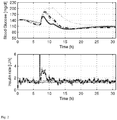
- Fig. 2 shows the average glucose and insulin profiles of controllers that does not express hypoglycemia under noisy conditions. As can be in the Fig.
- ⁇ c setting of 4.5h achieves the closest performance to the optimal basal-bolus profile while still avoiding hypoglycemia, with an average postprandial (post meal) peak of 183mg/dl and over 95 percent of time spent within the safe zone of 70mg/dl to 180mg/dl within 24 hours of the meal disturbance.
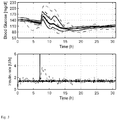
- Fig. 3 shows the average, minimum, and maximum values for each step for this setting and is compared with the optimal basal-bolus control scheme. As can be seen in the figure, while the disclosed controller has a slightly higher prandial peak, it still maintains all subject glucose profiles within the target zone for an extreme majority of the simulations and avoids any instances of hypoglycemia.
- This disclosure demonstrates the value of an IMC-based design method with a personalization scheme to calculate PID controller parameters and combine it with IFB for AP applications.
- This disclosure also demonstrates the value of the personalization scheme for any MPC controller which is derived from the same model that incorporated the personalization scheme.
- the subject controller with subject specific personalization of the controller's aggressiveness and inclusion of IFB give good control results based on a set of metrics designed to quantify each controller's adherence to medically inspired objectives. Selection of correct personalization methods and an optimal ⁇ c value gives a resulting average subject glucose profile that can closely match the optimal basal-bolus scheme, while avoiding hypoglycemia for all 10 tested subjects.
- a 3rd order control-relevant model was used to obtain PID controller parameters through an IMC based approach for AP applications.
- the resulting PID controller with accompanying IFB scheme was personalized based on a priori subject characteristics and tested on ten simulated subjects under the UVA/Padova metabolic simulator.
- Optimal controller settings were determined through a set of controller performance metrics, and the PID controller based on the resulting choice in personalization rule parameters and ⁇ c was able to achieve comparable performance to the optimal basal-bolus scheme.
- the average post prandial peak was maintained below 185mg/dl, and 97% of the combined total simulation time for all subjects was maintained within the target safe blood glucose zone of 70-180mg/dl with 80% of the time remaining within the euglycemic zone of 80-140mg/dl - all without inducing instances of hypoglycemia.
- the controller can achieve this performance without a time-consuming model identification step, and thus will have greater utility in practical applications.
- An MPC controller was also derived from a 3 rd order model control-relevant model that incorporates personalization, identical to one used to derive the IMC PID controller. It has been previously shown that an MPC controller can be realized to be identical to a PID controller under appropriate tuning [13]. Thus, the improvements in performance realized by the personalization of the IMC PID controller also directly translate to the improvements in performance that can be realized by the MPC controller derived from an identical model.
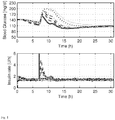
- Figure 1 Comparison of different personalization schemes without noise. Average blood glucose profiles and insulin delivery for 10 in silico subjects simulated in the UVA/Padova metabolic simulator to a 50g meal disturbance applied to the IMC PID controller as described in the text, with setpoint at 1 10mg/dl, ⁇ c at 3h, and various combinations of personalization rule settings as in table I.
- Solid continuous line represents controller 1 (optimal basal-bolus scheme), thin continuous line represents controller 2 (optimal basal scheme), thick dashed line represents controller 3 (1600 correction factor and 0.4 basal factor), thin dashed line represents controller 4 (1600 correction factor and 0.6 basal factor), thick dash dotted line represents controller 5 (2400 correction factor and 0.6 basal factor), thin dash dotted line represents controller 10 (PID without personalization but with insulin feedback), and thick dotted line represents controller 11 (PID without personalization and without insulin feedback).
- FIG. 2 Comparison of various ⁇ c settings with noise. Average blood glucose profiles and insulin delivery for 10 in silico subjects simulated in the UVA/Padova metabolic simulator to a 50g meal disturbance applied to the IMC PID controller as described in the text, with setpoint at 1 10mg/dl, correction factor rule chosen as 1600, basal calculation factor chosen as 0.4, and ⁇ c varied from 2h to 6h in 30 minute intervals. Controller with ⁇ c of 4h or less were discarded due to presence of hypoglycemia.
- Solid continuous line represents controller 1 (optimal basal-bolus scheme), thin continuous line represents controller 2 (optimal basal scheme), thick dashed line represents controller 17 ( ⁇ c of 4.5h), thin dashed line represents controller 18 ( ⁇ c of 5h), and thick dash dotted line represents controller 19 ( ⁇ c of 5.5h) and thin dash dotted line represents controller 20 ( ⁇ c of 6h).
- FIG. 3 Comparison of the best PID controller with noise and the optimal basal bolus scheme. Average, minimum, and maximum blood glucose profiles and average insulin delivery for 10 in silico subjects simulated in the UVA/Padova metabolic simulator to a 50g meal disturbance applied to the IMC PID controller as described in the text, with setpoint at 1 10mg/dl, correction factor rule chosen as 1600, basal calculation factor chosen as 0.4, and ⁇ c chosen as 4.5h. Dashed lines represent the controller's average, minimum, and maximum values at each time point and controller insulin delivery profiles. Solid lines represent the same characteristics of the basal bolus scheme.
Landscapes
- Health & Medical Sciences (AREA)
- Transplantation (AREA)
- Life Sciences & Earth Sciences (AREA)
- Public Health (AREA)
- Engineering & Computer Science (AREA)
- Biomedical Technology (AREA)
- Heart & Thoracic Surgery (AREA)
- Vascular Medicine (AREA)
- Veterinary Medicine (AREA)
- Animal Behavior & Ethology (AREA)
- General Health & Medical Sciences (AREA)
- Oral & Maxillofacial Surgery (AREA)
- Cardiology (AREA)
- Diabetes (AREA)
- Anesthesiology (AREA)
- Hematology (AREA)
- External Artificial Organs (AREA)
- Infusion, Injection, And Reservoir Apparatuses (AREA)
- Medicines That Contain Protein Lipid Enzymes And Other Medicines (AREA)
Claims (4)
- Ein Regler für ein künstliches Pankreas (AP) -System, angepasst um Blutglukosekonzentrationen von Leuten mit Typ 1 Diabetes mellitus innerhalb der euglykämischen Zone (80-140 mg/dl) aufrechtzuerhalten, umfassend einen Kontrollalgorithmus, und welcher die an ein Subjekt mit Typ 1 Diabetes zu verabreichende Gabe von Insulin automatisch steuert, mit individueller Zunahme-Personalisierung basierend auf klinischen Merkmalen eines jeden Subjekts, unter Verwendung eines diskreten, Kontroll-relevanten Models mit a priori Subjektinformation, wobei das Basalinsulin des Subjekts in das Model aufgenommen ist, um die Aggressivität des Reglers zu personalisieren und Schwankungen der Insulinsensitivität zu berücksichtigen, wobei die Personalisierung dem Regler ermöglicht, aggressiv zu sein in Fällen, in denen das Subjekt gegenüber Insulin unempfindlich ist und eine große Basalmenge benötigt, um Euglykämie aufrechtzuerhalten, und gleichzeitig das hypoglykämische Risiko zu verhindern, indem die Aggressivität des Reglers in Fällen, in denen das Subjekt eine niedrige Basalmenge benötigt, um normale Blutglukosespiegel aufrechtzuerhalten, verringert wird,
wobei der Regler(A) ein internal model control, IMC, -basiertes Design eines proportional-integral-derivative, PID, -Reglers ist, wobei das Model auf einem diskreten Kontroll-relevanten Model Mr der dritten Ordnung definiert als



wobei das Model (1) in die kontinuierliche Domäne unter Verwendung einer bilinearen Transformationsannäherung als


 (B) ein model predictive control, MPC, -Feedbackregler ist, wobei das Model auf einem diskreten Kontroll-relevanten Model Mr der dritten Ordnung definiert als






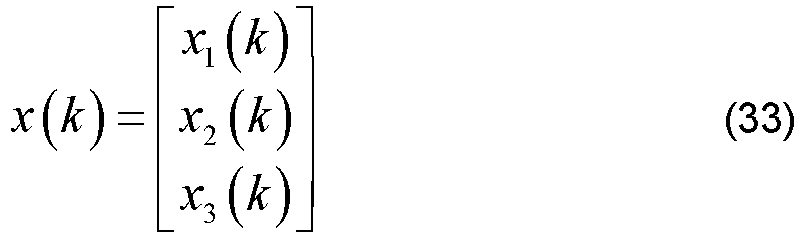

- Der Regler gemäß Anspruch 1, wobei das Zweite Ordnung plus Zeitverzögerung -Model aus (15) mit einer Tailorreihen-Annäherung zweiter Ordnung der Zeitverzögerung berücksichtigt wird als


- Der Regler gemäß Anspruch 1, wobei das IMC-Verfahren für PID-Regler-tuning-Beziehungen einen low-pass-Filter mit einer Zunahme von 1 und einen tuning-Paramter Tc verwendet, was zu Kalkulationen der drei PID Reglerparameter Kc, τl and τD als


- Ein künstliches Pankreas-System oder -Subsystem umfassend einen Regler gemäß einem der Ansprüche 1-3.
Applications Claiming Priority (2)
| Application Number | Priority Date | Filing Date | Title |
|---|---|---|---|
| US201361751941P | 2013-01-14 | 2013-01-14 | |
| PCT/US2014/011360 WO2014110538A1 (en) | 2013-01-14 | 2014-01-13 | Model-based personalization scheme of an artificial pancreas for type i diabetes applications |
Publications (3)
| Publication Number | Publication Date |
|---|---|
| EP2943149A1 EP2943149A1 (de) | 2015-11-18 |
| EP2943149A4 EP2943149A4 (de) | 2016-08-17 |
| EP2943149B1 true EP2943149B1 (de) | 2020-09-30 |
Family
ID=51167293
Family Applications (1)
| Application Number | Title | Priority Date | Filing Date |
|---|---|---|---|
| EP14737937.4A Active EP2943149B1 (de) | 2013-01-14 | 2014-01-13 | Modellbasiertes personalisierungsschema einer künstlichen bauchspeicheldrüse zur anwendung bei diabetes vom typ i |
Country Status (7)
| Country | Link |
|---|---|
| US (4) | US10413664B2 (de) |
| EP (1) | EP2943149B1 (de) |
| JP (2) | JP2016506775A (de) |
| KR (1) | KR102211352B1 (de) |
| AU (1) | AU2014205120B2 (de) |
| CA (1) | CA2897189C (de) |
| WO (2) | WO2014109898A1 (de) |
Families Citing this family (70)
| Publication number | Priority date | Publication date | Assignee | Title |
|---|---|---|---|---|
| US8417311B2 (en) | 2008-09-12 | 2013-04-09 | Optiscan Biomedical Corporation | Fluid component analysis system and method for glucose monitoring and control |
| CA2702116C (en) | 2007-10-10 | 2021-01-05 | Optiscan Biomedical Corporation | Fluid component analysis system and method for glucose monitoring and control |
| US7959598B2 (en) | 2008-08-20 | 2011-06-14 | Asante Solutions, Inc. | Infusion pump systems and methods |
| US9292010B2 (en) * | 2012-11-05 | 2016-03-22 | Rockwell Automation Technologies, Inc. | Online integration of model-based optimization and model-less control |
| WO2014109898A1 (en) * | 2013-01-14 | 2014-07-17 | The Regents Of University Of California | Model-based personalization scheme of an artificial pancreas for type i diabetes applications |
| US9561324B2 (en) | 2013-07-19 | 2017-02-07 | Bigfoot Biomedical, Inc. | Infusion pump system and method |
| GB2523989B (en) | 2014-01-30 | 2020-07-29 | Insulet Netherlands B V | Therapeutic product delivery system and method of pairing |
| CN104749954B (zh) * | 2015-02-08 | 2017-04-12 | 北京化工大学 | 基于内模控制策略的智能灰箱控制系统装置及控制方法 |
| CN111905188B (zh) | 2015-02-18 | 2022-07-22 | 英赛罗公司 | 流体输送和输注装置及其使用方法 |
| WO2017123525A1 (en) | 2016-01-13 | 2017-07-20 | Bigfoot Biomedical, Inc. | User interface for diabetes management system |
| HK1256995A1 (zh) | 2016-01-14 | 2019-10-11 | Bigfoot Biomedical, Inc. | 药物输送设备、系统和方法中的阻塞解决方案 |
| US10806859B2 (en) | 2016-01-14 | 2020-10-20 | Bigfoot Biomedical, Inc. | Adjusting insulin delivery rates |
| US12383166B2 (en) | 2016-05-23 | 2025-08-12 | Insulet Corporation | Insulin delivery system and methods with risk-based set points |
| US10765807B2 (en) | 2016-09-23 | 2020-09-08 | Insulet Corporation | Fluid delivery device with sensor |
| US11096624B2 (en) | 2016-12-12 | 2021-08-24 | Bigfoot Biomedical, Inc. | Alarms and alerts for medication delivery devices and systems |
| US10583250B2 (en) | 2017-01-13 | 2020-03-10 | Bigfoot Biomedical, Inc. | System and method for adjusting insulin delivery |
| US10758675B2 (en) | 2017-01-13 | 2020-09-01 | Bigfoot Biomedical, Inc. | System and method for adjusting insulin delivery |
| US11033682B2 (en) | 2017-01-13 | 2021-06-15 | Bigfoot Biomedical, Inc. | Insulin delivery methods, systems and devices |
| EP3568860B1 (de) | 2017-01-13 | 2025-12-10 | Insulet Corporation | Insulinverabreichungsverfahren, -systeme und -vorrichtungen |
| US10881792B2 (en) | 2017-01-13 | 2021-01-05 | Bigfoot Biomedical, Inc. | System and method for adjusting insulin delivery |
| US10500334B2 (en) | 2017-01-13 | 2019-12-10 | Bigfoot Biomedical, Inc. | System and method for adjusting insulin delivery |
| EP3398558A1 (de) | 2017-05-02 | 2018-11-07 | Carlo Andretta | Körperperfusionssystem |
| JP6874155B2 (ja) | 2017-05-05 | 2021-05-19 | イーライ リリー アンド カンパニー | 生理的グルコースの閉ループ制御 |
| EP3438858A1 (de) | 2017-08-02 | 2019-02-06 | Diabeloop | Blutglucosekontrollsysteme und -verfahren mit geschlossener schleife |
| WO2019125932A1 (en) | 2017-12-21 | 2019-06-27 | Eli Lilly And Company | Closed loop control of physiological glucose |
| USD928199S1 (en) | 2018-04-02 | 2021-08-17 | Bigfoot Biomedical, Inc. | Medication delivery device with icons |
| US11565043B2 (en) | 2018-05-04 | 2023-01-31 | Insulet Corporation | Safety constraints for a control algorithm based drug delivery system |
| US12562251B1 (en) | 2018-05-09 | 2026-02-24 | Bigfoot Biomedical, Inc. | Computing architecture for assuring the provenance of medication therapy related parameters, and related systems, methods and devices |
| CN112313754A (zh) | 2018-06-22 | 2021-02-02 | 伊莱利利公司 | 胰岛素和普兰林肽输送系统、方法和设备 |
| US11147922B2 (en) * | 2018-07-13 | 2021-10-19 | Iowa State University Research Foundation, Inc. | Feedback predictive control approach for processes with time delay in the manipulated variable |
| CN109116738B (zh) * | 2018-09-27 | 2021-04-13 | 杭州电子科技大学 | 一种工业加热炉的二自由度内模控制分析方法 |
| AU2019347755B2 (en) | 2018-09-28 | 2023-02-02 | Insulet Corporation | Activity mode for artificial pancreas system |
| EP3864668A1 (de) | 2018-10-11 | 2021-08-18 | Insulet Corporation | Ereignisdetektion für ein arzneimittelabgabesystem |
| USD920343S1 (en) | 2019-01-09 | 2021-05-25 | Bigfoot Biomedical, Inc. | Display screen or portion thereof with graphical user interface associated with insulin delivery |
| KR102788429B1 (ko) | 2019-05-02 | 2025-03-27 | 삼성전자주식회사 | 개인화된 생체 정보 보정 장치 및 방법 |
| US11801344B2 (en) | 2019-09-13 | 2023-10-31 | Insulet Corporation | Blood glucose rate of change modulation of meal and correction insulin bolus quantity |
| US11935637B2 (en) | 2019-09-27 | 2024-03-19 | Insulet Corporation | Onboarding and total daily insulin adaptivity |
| EP4069082B1 (de) | 2019-12-06 | 2024-06-05 | Insulet Corporation | Techniken und vorrichtungen zum bereitstellen von adaptivität und personalisierung bei der behandlung von diabetes |
| US11833329B2 (en) | 2019-12-20 | 2023-12-05 | Insulet Corporation | Techniques for improved automatic drug delivery performance using delivery tendencies from past delivery history and use patterns |
| JP7512395B2 (ja) | 2020-01-06 | 2024-07-08 | インスレット コーポレイション | 持続する残差に基づく食事および/または運動行為の予測 |
| EP4100958A1 (de) | 2020-02-03 | 2022-12-14 | Insulet Corporation | Einsatz von fuzzy-logik beim vorhersagen von benutzerverhalten, das die blutzuckerkonzentration beeinflusst |
| US11551802B2 (en) | 2020-02-11 | 2023-01-10 | Insulet Corporation | Early meal detection and calorie intake detection |
| US11986630B2 (en) | 2020-02-12 | 2024-05-21 | Insulet Corporation | Dual hormone delivery system for reducing impending hypoglycemia and/or hyperglycemia risk |
| US11547800B2 (en) | 2020-02-12 | 2023-01-10 | Insulet Corporation | User parameter dependent cost function for personalized reduction of hypoglycemia and/or hyperglycemia in a closed loop artificial pancreas system |
| US11324889B2 (en) | 2020-02-14 | 2022-05-10 | Insulet Corporation | Compensation for missing readings from a glucose monitor in an automated insulin delivery system |
| US12495994B2 (en) | 2020-02-20 | 2025-12-16 | Insulet Corporation | Meal bolus subcategories in model based insulin therapy |
| US11607493B2 (en) | 2020-04-06 | 2023-03-21 | Insulet Corporation | Initial total daily insulin setting for user onboarding |
| US12121700B2 (en) | 2020-07-22 | 2024-10-22 | Insulet Corporation | Open-loop insulin delivery basal parameters based on insulin delivery records |
| US11684716B2 (en) | 2020-07-31 | 2023-06-27 | Insulet Corporation | Techniques to reduce risk of occlusions in drug delivery systems |
| US12569619B2 (en) | 2020-09-21 | 2026-03-10 | Insulet Corporation | Techniques for determining automated insulin delivery dosages |
| US12115351B2 (en) | 2020-09-30 | 2024-10-15 | Insulet Corporation | Secure wireless communications between a glucose monitor and other devices |
| EP4696344A3 (de) | 2020-09-30 | 2026-04-15 | Insulet Corporation | Arzneimittelabgabevorrichtung mit integriertem optischen glucosemonitor |
| CN112398401B (zh) * | 2020-10-29 | 2022-03-29 | 上海大学 | 一种基于参数失配的低开关频率多步模型预测控制方法 |
| US11160925B1 (en) | 2021-01-29 | 2021-11-02 | Insulet Corporation | Automatic drug delivery system for delivery of a GLP-1 therapeutic |
| EP4305636A1 (de) | 2021-03-10 | 2024-01-17 | Insulet Corporation | Medikamentenabgabevorrichtung mit einstellbarer und stückweiser analytniveau-kostenkomponente zur adressierung persistenter positiver analytniveauabweichungen |
| US11904140B2 (en) | 2021-03-10 | 2024-02-20 | Insulet Corporation | Adaptable asymmetric medicament cost component in a control system for medicament delivery |
| US20220331520A1 (en) * | 2021-04-20 | 2022-10-20 | Insulet Corporation | Automatic drug delivery system for individuals with type-2 diabetes |
| US12592306B2 (en) | 2021-04-28 | 2026-03-31 | Insulet Corporation | Devices and methods for initialization of drug delivery devices using measured analyte sensor information |
| US20220351820A1 (en) * | 2021-05-01 | 2022-11-03 | Christopher Richard Wilson | Method for determining glucose-dependent insulin sensitivity factors |
| US12496398B2 (en) | 2021-05-28 | 2025-12-16 | Insulet Corporation | Threshold based automatic glucose control response |
| EP4101482A1 (de) | 2021-06-07 | 2022-12-14 | Insulet Corporation | Übungssicherheitsvorhersage basierend auf physiologischen bedingungen |
| US12514980B2 (en) | 2021-06-30 | 2026-01-06 | Insulet Corporation | Adjustment of medicament delivery by a medicament delivery device based on menstrual cycle phase |
| US12521486B2 (en) | 2021-07-16 | 2026-01-13 | Insulet Corporation | Method for modification of insulin delivery during pregnancy in automatic insulin delivery systems |
| WO2023049900A1 (en) | 2021-09-27 | 2023-03-30 | Insulet Corporation | Techniques enabling adaptation of parameters in aid systems by user input |
| CN116020006B (zh) * | 2021-10-25 | 2025-12-23 | 上海移宇科技股份有限公司 | 闭环人工胰腺胰岛素输注控制系统 |
| WO2023070245A1 (en) * | 2021-10-25 | 2023-05-04 | Medtrum Technologies Inc. | Closed-loop artificial pancreas insulin infusion control system |
| CN116020007B (zh) * | 2021-10-25 | 2025-11-25 | 上海移宇科技股份有限公司 | 闭环人工胰腺胰岛素输注控制系统 |
| US11439754B1 (en) | 2021-12-01 | 2022-09-13 | Insulet Corporation | Optimizing embedded formulations for drug delivery |
| EP4243030A1 (de) | 2022-03-09 | 2023-09-13 | Insulet Corporation | Anpassung von medikamentenverabreichungsparametern in einem offenen regelkreis der medikamentenverabreichung |
| EP4646726A1 (de) | 2023-01-06 | 2025-11-12 | Insulet Corporation | Automatisch oder manuell initiierte mahlzeitbolusabgabe mit anschliessender automatischer sicherheitseinschränkungsrelaxation |
Citations (1)
| Publication number | Priority date | Publication date | Assignee | Title |
|---|---|---|---|---|
| US20120123234A1 (en) * | 2009-02-26 | 2012-05-17 | Eran Atlas | Method and system for automatic monitoring of diabetes related treatments |
Family Cites Families (12)
| Publication number | Priority date | Publication date | Assignee | Title |
|---|---|---|---|---|
| US7806886B2 (en) | 1999-06-03 | 2010-10-05 | Medtronic Minimed, Inc. | Apparatus and method for controlling insulin infusion with state variable feedback |
| AU2001291189A1 (en) * | 2000-09-22 | 2002-04-02 | Knobbe, Lim And Buckingham | Method and apparatus for real-time estimation and control of pysiological parameters |
| US7460130B2 (en) * | 2000-09-26 | 2008-12-02 | Advantage 3D Llc | Method and system for generation, storage and distribution of omni-directional object views |
| US6544212B2 (en) * | 2001-07-31 | 2003-04-08 | Roche Diagnostics Corporation | Diabetes management system |
| US8114023B2 (en) * | 2006-07-28 | 2012-02-14 | Legacy Emanuel Hospital & Health Center | Analyte sensing and response system |
| EP2166946B1 (de) | 2007-06-21 | 2019-11-20 | University Of Virginia Patent Foundation | Lqg-steuersystem für künstliche bauchspeicheldrüse und entsprechendes verfahren |
| GR1007310B (el) * | 2009-03-09 | 2011-06-10 | Αχιλλεας Τσουκαλης | Εμφυτευσιμος βιοαισθητηρας με αυτοματη βαθμονομηση |
| AU2010239138B2 (en) * | 2009-04-20 | 2016-01-21 | University Of Technology, Sydney | A method and system for determining a variation in a metabolic function and managing the variation accordingly |
| EP2435962B1 (de) * | 2009-05-29 | 2023-04-19 | University of Virginia Patent Foundation | Systemkoordinator und modulare architektur zur open-loop- und closed-loop-steuerung von diabetes |
| JP5750123B2 (ja) * | 2010-02-11 | 2015-07-15 | ザ リージェンツ オブ ザ ユニバーシティ オブ カリフォルニア | 生物学的因子又は薬物を被検者に送達するためのシステム、装置及び方法 |
| US9907909B2 (en) * | 2012-12-20 | 2018-03-06 | Animas Corporation | Method and system for a hybrid control-to-target and control-to-range model predictive control of an artificial pancreas |
| WO2014109898A1 (en) * | 2013-01-14 | 2014-07-17 | The Regents Of University Of California | Model-based personalization scheme of an artificial pancreas for type i diabetes applications |
-
2013
- 2013-12-22 WO PCT/US2013/077363 patent/WO2014109898A1/en not_active Ceased
-
2014
- 2014-01-13 WO PCT/US2014/011360 patent/WO2014110538A1/en not_active Ceased
- 2014-01-13 CA CA2897189A patent/CA2897189C/en active Active
- 2014-01-13 JP JP2015552868A patent/JP2016506775A/ja not_active Withdrawn
- 2014-01-13 AU AU2014205120A patent/AU2014205120B2/en active Active
- 2014-01-13 EP EP14737937.4A patent/EP2943149B1/de active Active
- 2014-01-13 KR KR1020157021705A patent/KR102211352B1/ko active Active
-
2015
- 2015-07-06 US US14/792,524 patent/US10413664B2/en active Active
-
2018
- 2018-12-06 JP JP2018228853A patent/JP6914907B2/ja active Active
-
2019
- 2019-09-17 US US16/574,076 patent/US11197955B2/en active Active
-
2021
- 2021-12-14 US US17/549,935 patent/US12102796B2/en active Active
-
2024
- 2024-07-15 US US18/773,448 patent/US20240366873A1/en active Pending
Patent Citations (1)
| Publication number | Priority date | Publication date | Assignee | Title |
|---|---|---|---|---|
| US20120123234A1 (en) * | 2009-02-26 | 2012-05-17 | Eran Atlas | Method and system for automatic monitoring of diabetes related treatments |
Also Published As
| Publication number | Publication date |
|---|---|
| US20150306314A1 (en) | 2015-10-29 |
| CA2897189A1 (en) | 2014-07-17 |
| WO2014109898A1 (en) | 2014-07-17 |
| JP2019055258A (ja) | 2019-04-11 |
| US20220105270A1 (en) | 2022-04-07 |
| JP6914907B2 (ja) | 2021-08-04 |
| US12102796B2 (en) | 2024-10-01 |
| KR20150108862A (ko) | 2015-09-30 |
| US10413664B2 (en) | 2019-09-17 |
| EP2943149A4 (de) | 2016-08-17 |
| CA2897189C (en) | 2017-09-05 |
| AU2014205120B2 (en) | 2019-10-17 |
| JP2016506775A (ja) | 2016-03-07 |
| WO2014110538A1 (en) | 2014-07-17 |
| EP2943149A1 (de) | 2015-11-18 |
| US20240366873A1 (en) | 2024-11-07 |
| US11197955B2 (en) | 2021-12-14 |
| KR102211352B1 (ko) | 2021-02-03 |
| AU2014205120A1 (en) | 2015-07-23 |
| US20200078516A1 (en) | 2020-03-12 |
Similar Documents
| Publication | Publication Date | Title |
|---|---|---|
| US12102796B2 (en) | Model-based personalization scheme of an artificial pancreas for type I diabetes applications | |
| Lee et al. | Model-based personalization scheme of an artificial pancreas for type 1 diabetes applications | |
| Messori et al. | Individualized model predictive control for the artificial pancreas: In silico evaluation of closed-loop glucose control | |
| Marchetti et al. | A feedforward–feedback glucose control strategy for type 1 diabetes mellitus | |
| Hovorka et al. | Nonlinear model predictive control of glucose concentration in subjects with type 1 diabetes | |
| EP3314548B1 (de) | Geschwindigkeitsgewichtete modellprädiktive steuerung eines künstlichen pankreas für typ-1-diabetes-anwendungen | |
| Palerm et al. | A run-to-run control strategy to adjust basal insulin infusion rates in type 1 diabetes | |
| US10369281B2 (en) | Devices, systems and methods for adjusting fluid delivery parameters | |
| EP2943150B1 (de) | Tägliche periodische targetzonenmodulation der modellprädiktiven kontrolle für künstliche bauchspeicheldrüse für typ-i-diabetes-anwendungen | |
| EP2521483B1 (de) | System zur abgabe von insulin an eine person | |
| Boiroux et al. | Overnight glucose control in people with type 1 diabetes | |
| US20200015760A1 (en) | Method to determine individualized insulin sensitivity and optimal insulin dose by linear regression, and related systems | |
| Zavitsanou et al. | In silico closed-loop control validation studies for optimal insulin delivery in type 1 diabetes | |
| Reenberg et al. | Nonlinear model predictive control and system identification for a dual-hormone artificial pancreas | |
| Jacobs et al. | Development of a fully automated closed loop artificial pancreas control system with dual pump delivery of insulin and glucagon | |
| Lee et al. | Shaping the MPC cost function for superior automated glucose control | |
| Boiroux et al. | Assessment of model predictive and adaptive glucose control strategies for people with type 1 diabetes | |
| Kaveh et al. | Higher order sliding mode control for blood glucose regulation | |
| El Hachimi et al. | Overcoming control challenges in the artificial pancreas | |
| Mahmoudi et al. | An automated meal detector and bolus calculator in combination with closed-loop blood glucose control | |
| Vereshchetin et al. | Mealtime correction insulin advisor for CGM-informed insulin pen therapy | |
| El Hachimi et al. | Control algorithm of artificial pancreas systems-a review | |
| Alsseid et al. | Comparative Analysis of PID Control Structures for Glucose Regulation in Type 1 Diabetes: A Simulation-Based Study Using the Bergman’s Model | |
| Jallon et al. | Personalization of a compartmental physiological model for an artificial pancreas through integration of patient's state estimation | |
| CN119258326A (zh) | 基于人体正常血糖浓度范围的鲁棒输出调节方法 |
Legal Events
| Date | Code | Title | Description |
|---|---|---|---|
| PUAI | Public reference made under article 153(3) epc to a published international application that has entered the european phase |
Free format text: ORIGINAL CODE: 0009012 |
|
| 17P | Request for examination filed |
Effective date: 20150706 |
|
| AK | Designated contracting states |
Kind code of ref document: A1 Designated state(s): AL AT BE BG CH CY CZ DE DK EE ES FI FR GB GR HR HU IE IS IT LI LT LU LV MC MK MT NL NO PL PT RO RS SE SI SK SM TR |
|
| AX | Request for extension of the european patent |
Extension state: BA ME |
|
| DAX | Request for extension of the european patent (deleted) | ||
| A4 | Supplementary search report drawn up and despatched |
Effective date: 20160719 |
|
| RIC1 | Information provided on ipc code assigned before grant |
Ipc: A61F 2/02 20060101AFI20160713BHEP |
|
| STAA | Information on the status of an ep patent application or granted ep patent |
Free format text: STATUS: EXAMINATION IS IN PROGRESS |
|
| 17Q | First examination report despatched |
Effective date: 20170821 |
|
| GRAP | Despatch of communication of intention to grant a patent |
Free format text: ORIGINAL CODE: EPIDOSNIGR1 |
|
| STAA | Information on the status of an ep patent application or granted ep patent |
Free format text: STATUS: GRANT OF PATENT IS INTENDED |
|
| INTG | Intention to grant announced |
Effective date: 20200504 |
|
| GRAS | Grant fee paid |
Free format text: ORIGINAL CODE: EPIDOSNIGR3 |
|
| GRAA | (expected) grant |
Free format text: ORIGINAL CODE: 0009210 |
|
| STAA | Information on the status of an ep patent application or granted ep patent |
Free format text: STATUS: THE PATENT HAS BEEN GRANTED |
|
| AK | Designated contracting states |
Kind code of ref document: B1 Designated state(s): AL AT BE BG CH CY CZ DE DK EE ES FI FR GB GR HR HU IE IS IT LI LT LU LV MC MK MT NL NO PL PT RO RS SE SI SK SM TR |
|
| REG | Reference to a national code |
Ref country code: GB Ref legal event code: FG4D Ref country code: CH Ref legal event code: EP |
|
| REG | Reference to a national code |
Ref country code: AT Ref legal event code: REF Ref document number: 1317983 Country of ref document: AT Kind code of ref document: T Effective date: 20201015 Ref country code: DE Ref legal event code: R096 Ref document number: 602014070732 Country of ref document: DE |
|
| REG | Reference to a national code |
Ref country code: IE Ref legal event code: FG4D |
|
| PG25 | Lapsed in a contracting state [announced via postgrant information from national office to epo] |
Ref country code: BG Free format text: LAPSE BECAUSE OF FAILURE TO SUBMIT A TRANSLATION OF THE DESCRIPTION OR TO PAY THE FEE WITHIN THE PRESCRIBED TIME-LIMIT Effective date: 20201230 Ref country code: FI Free format text: LAPSE BECAUSE OF FAILURE TO SUBMIT A TRANSLATION OF THE DESCRIPTION OR TO PAY THE FEE WITHIN THE PRESCRIBED TIME-LIMIT Effective date: 20200930 Ref country code: SE Free format text: LAPSE BECAUSE OF FAILURE TO SUBMIT A TRANSLATION OF THE DESCRIPTION OR TO PAY THE FEE WITHIN THE PRESCRIBED TIME-LIMIT Effective date: 20200930 Ref country code: HR Free format text: LAPSE BECAUSE OF FAILURE TO SUBMIT A TRANSLATION OF THE DESCRIPTION OR TO PAY THE FEE WITHIN THE PRESCRIBED TIME-LIMIT Effective date: 20200930 Ref country code: GR Free format text: LAPSE BECAUSE OF FAILURE TO SUBMIT A TRANSLATION OF THE DESCRIPTION OR TO PAY THE FEE WITHIN THE PRESCRIBED TIME-LIMIT Effective date: 20201231 Ref country code: NO Free format text: LAPSE BECAUSE OF FAILURE TO SUBMIT A TRANSLATION OF THE DESCRIPTION OR TO PAY THE FEE WITHIN THE PRESCRIBED TIME-LIMIT Effective date: 20201230 |
|
| REG | Reference to a national code |
Ref country code: AT Ref legal event code: MK05 Ref document number: 1317983 Country of ref document: AT Kind code of ref document: T Effective date: 20200930 |
|
| PG25 | Lapsed in a contracting state [announced via postgrant information from national office to epo] |
Ref country code: RS Free format text: LAPSE BECAUSE OF FAILURE TO SUBMIT A TRANSLATION OF THE DESCRIPTION OR TO PAY THE FEE WITHIN THE PRESCRIBED TIME-LIMIT Effective date: 20200930 Ref country code: LV Free format text: LAPSE BECAUSE OF FAILURE TO SUBMIT A TRANSLATION OF THE DESCRIPTION OR TO PAY THE FEE WITHIN THE PRESCRIBED TIME-LIMIT Effective date: 20200930 |
|
| REG | Reference to a national code |
Ref country code: NL Ref legal event code: MP Effective date: 20200930 |
|
| REG | Reference to a national code |
Ref country code: LT Ref legal event code: MG4D |
|
| PG25 | Lapsed in a contracting state [announced via postgrant information from national office to epo] |
Ref country code: PT Free format text: LAPSE BECAUSE OF FAILURE TO SUBMIT A TRANSLATION OF THE DESCRIPTION OR TO PAY THE FEE WITHIN THE PRESCRIBED TIME-LIMIT Effective date: 20210201 Ref country code: NL Free format text: LAPSE BECAUSE OF FAILURE TO SUBMIT A TRANSLATION OF THE DESCRIPTION OR TO PAY THE FEE WITHIN THE PRESCRIBED TIME-LIMIT Effective date: 20200930 Ref country code: LT Free format text: LAPSE BECAUSE OF FAILURE TO SUBMIT A TRANSLATION OF THE DESCRIPTION OR TO PAY THE FEE WITHIN THE PRESCRIBED TIME-LIMIT Effective date: 20200930 Ref country code: SM Free format text: LAPSE BECAUSE OF FAILURE TO SUBMIT A TRANSLATION OF THE DESCRIPTION OR TO PAY THE FEE WITHIN THE PRESCRIBED TIME-LIMIT Effective date: 20200930 Ref country code: RO Free format text: LAPSE BECAUSE OF FAILURE TO SUBMIT A TRANSLATION OF THE DESCRIPTION OR TO PAY THE FEE WITHIN THE PRESCRIBED TIME-LIMIT Effective date: 20200930 Ref country code: EE Free format text: LAPSE BECAUSE OF FAILURE TO SUBMIT A TRANSLATION OF THE DESCRIPTION OR TO PAY THE FEE WITHIN THE PRESCRIBED TIME-LIMIT Effective date: 20200930 Ref country code: CZ Free format text: LAPSE BECAUSE OF FAILURE TO SUBMIT A TRANSLATION OF THE DESCRIPTION OR TO PAY THE FEE WITHIN THE PRESCRIBED TIME-LIMIT Effective date: 20200930 |
|
| PG25 | Lapsed in a contracting state [announced via postgrant information from national office to epo] |
Ref country code: ES Free format text: LAPSE BECAUSE OF FAILURE TO SUBMIT A TRANSLATION OF THE DESCRIPTION OR TO PAY THE FEE WITHIN THE PRESCRIBED TIME-LIMIT Effective date: 20200930 Ref country code: AL Free format text: LAPSE BECAUSE OF FAILURE TO SUBMIT A TRANSLATION OF THE DESCRIPTION OR TO PAY THE FEE WITHIN THE PRESCRIBED TIME-LIMIT Effective date: 20200930 Ref country code: AT Free format text: LAPSE BECAUSE OF FAILURE TO SUBMIT A TRANSLATION OF THE DESCRIPTION OR TO PAY THE FEE WITHIN THE PRESCRIBED TIME-LIMIT Effective date: 20200930 Ref country code: IS Free format text: LAPSE BECAUSE OF FAILURE TO SUBMIT A TRANSLATION OF THE DESCRIPTION OR TO PAY THE FEE WITHIN THE PRESCRIBED TIME-LIMIT Effective date: 20210130 Ref country code: PL Free format text: LAPSE BECAUSE OF FAILURE TO SUBMIT A TRANSLATION OF THE DESCRIPTION OR TO PAY THE FEE WITHIN THE PRESCRIBED TIME-LIMIT Effective date: 20200930 |
|
| PG25 | Lapsed in a contracting state [announced via postgrant information from national office to epo] |
Ref country code: SK Free format text: LAPSE BECAUSE OF FAILURE TO SUBMIT A TRANSLATION OF THE DESCRIPTION OR TO PAY THE FEE WITHIN THE PRESCRIBED TIME-LIMIT Effective date: 20200930 |
|
| REG | Reference to a national code |
Ref country code: DE Ref legal event code: R097 Ref document number: 602014070732 Country of ref document: DE |
|
| PLBE | No opposition filed within time limit |
Free format text: ORIGINAL CODE: 0009261 |
|
| STAA | Information on the status of an ep patent application or granted ep patent |
Free format text: STATUS: NO OPPOSITION FILED WITHIN TIME LIMIT |
|
| PG25 | Lapsed in a contracting state [announced via postgrant information from national office to epo] |
Ref country code: DK Free format text: LAPSE BECAUSE OF FAILURE TO SUBMIT A TRANSLATION OF THE DESCRIPTION OR TO PAY THE FEE WITHIN THE PRESCRIBED TIME-LIMIT Effective date: 20200930 Ref country code: MC Free format text: LAPSE BECAUSE OF FAILURE TO SUBMIT A TRANSLATION OF THE DESCRIPTION OR TO PAY THE FEE WITHIN THE PRESCRIBED TIME-LIMIT Effective date: 20200930 |
|
| REG | Reference to a national code |
Ref country code: CH Ref legal event code: PL |
|
| 26N | No opposition filed |
Effective date: 20210701 |
|
| PG25 | Lapsed in a contracting state [announced via postgrant information from national office to epo] |
Ref country code: LU Free format text: LAPSE BECAUSE OF NON-PAYMENT OF DUE FEES Effective date: 20210113 |
|
| REG | Reference to a national code |
Ref country code: BE Ref legal event code: MM Effective date: 20210131 |
|
| PG25 | Lapsed in a contracting state [announced via postgrant information from national office to epo] |
Ref country code: IT Free format text: LAPSE BECAUSE OF FAILURE TO SUBMIT A TRANSLATION OF THE DESCRIPTION OR TO PAY THE FEE WITHIN THE PRESCRIBED TIME-LIMIT Effective date: 20200930 |
|
| PG25 | Lapsed in a contracting state [announced via postgrant information from national office to epo] |
Ref country code: LI Free format text: LAPSE BECAUSE OF NON-PAYMENT OF DUE FEES Effective date: 20210131 Ref country code: CH Free format text: LAPSE BECAUSE OF NON-PAYMENT OF DUE FEES Effective date: 20210131 Ref country code: SI Free format text: LAPSE BECAUSE OF FAILURE TO SUBMIT A TRANSLATION OF THE DESCRIPTION OR TO PAY THE FEE WITHIN THE PRESCRIBED TIME-LIMIT Effective date: 20200930 |
|
| PG25 | Lapsed in a contracting state [announced via postgrant information from national office to epo] |
Ref country code: IE Free format text: LAPSE BECAUSE OF NON-PAYMENT OF DUE FEES Effective date: 20210113 |
|
| PG25 | Lapsed in a contracting state [announced via postgrant information from national office to epo] |
Ref country code: IS Free format text: LAPSE BECAUSE OF FAILURE TO SUBMIT A TRANSLATION OF THE DESCRIPTION OR TO PAY THE FEE WITHIN THE PRESCRIBED TIME-LIMIT Effective date: 20210130 |
|
| PG25 | Lapsed in a contracting state [announced via postgrant information from national office to epo] |
Ref country code: BE Free format text: LAPSE BECAUSE OF NON-PAYMENT OF DUE FEES Effective date: 20210131 |
|
| PG25 | Lapsed in a contracting state [announced via postgrant information from national office to epo] |
Ref country code: HU Free format text: LAPSE BECAUSE OF FAILURE TO SUBMIT A TRANSLATION OF THE DESCRIPTION OR TO PAY THE FEE WITHIN THE PRESCRIBED TIME-LIMIT; INVALID AB INITIO Effective date: 20140113 |
|
| PG25 | Lapsed in a contracting state [announced via postgrant information from national office to epo] |
Ref country code: CY Free format text: LAPSE BECAUSE OF FAILURE TO SUBMIT A TRANSLATION OF THE DESCRIPTION OR TO PAY THE FEE WITHIN THE PRESCRIBED TIME-LIMIT Effective date: 20200930 |
|
| PG25 | Lapsed in a contracting state [announced via postgrant information from national office to epo] |
Ref country code: MK Free format text: LAPSE BECAUSE OF FAILURE TO SUBMIT A TRANSLATION OF THE DESCRIPTION OR TO PAY THE FEE WITHIN THE PRESCRIBED TIME-LIMIT Effective date: 20200930 |
|
| PG25 | Lapsed in a contracting state [announced via postgrant information from national office to epo] |
Ref country code: MT Free format text: LAPSE BECAUSE OF FAILURE TO SUBMIT A TRANSLATION OF THE DESCRIPTION OR TO PAY THE FEE WITHIN THE PRESCRIBED TIME-LIMIT Effective date: 20200930 |
|
| PG25 | Lapsed in a contracting state [announced via postgrant information from national office to epo] |
Ref country code: TR Free format text: LAPSE BECAUSE OF FAILURE TO SUBMIT A TRANSLATION OF THE DESCRIPTION OR TO PAY THE FEE WITHIN THE PRESCRIBED TIME-LIMIT Effective date: 20200930 |
|
| PGFP | Annual fee paid to national office [announced via postgrant information from national office to epo] |
Ref country code: GB Payment date: 20260127 Year of fee payment: 13 |
|
| PGFP | Annual fee paid to national office [announced via postgrant information from national office to epo] |
Ref country code: DE Payment date: 20260128 Year of fee payment: 13 |
|
| PGFP | Annual fee paid to national office [announced via postgrant information from national office to epo] |
Ref country code: FR Payment date: 20260126 Year of fee payment: 13 |