EP2944707B1 - Conversion coating process for magnesium alloys - Google Patents
Conversion coating process for magnesium alloys Download PDFInfo
- Publication number
- EP2944707B1 EP2944707B1 EP14382173.4A EP14382173A EP2944707B1 EP 2944707 B1 EP2944707 B1 EP 2944707B1 EP 14382173 A EP14382173 A EP 14382173A EP 2944707 B1 EP2944707 B1 EP 2944707B1
- Authority
- EP
- European Patent Office
- Prior art keywords
- substrate
- conversion coating
- chemical conversion
- coating solution
- magnesium alloy
- Prior art date
- Legal status (The legal status is an assumption and is not a legal conclusion. Google has not performed a legal analysis and makes no representation as to the accuracy of the status listed.)
- Active
Links
Images

Classifications
-
- C—CHEMISTRY; METALLURGY
- C23—COATING METALLIC MATERIAL; COATING MATERIAL WITH METALLIC MATERIAL; CHEMICAL SURFACE TREATMENT; DIFFUSION TREATMENT OF METALLIC MATERIAL; COATING BY VACUUM EVAPORATION, BY SPUTTERING, BY ION IMPLANTATION OR BY CHEMICAL VAPOUR DEPOSITION, IN GENERAL; INHIBITING CORROSION OF METALLIC MATERIAL OR INCRUSTATION IN GENERAL
- C23C—COATING METALLIC MATERIAL; COATING MATERIAL WITH METALLIC MATERIAL; SURFACE TREATMENT OF METALLIC MATERIAL BY DIFFUSION INTO THE SURFACE, BY CHEMICAL CONVERSION OR SUBSTITUTION; COATING BY VACUUM EVAPORATION, BY SPUTTERING, BY ION IMPLANTATION OR BY CHEMICAL VAPOUR DEPOSITION, IN GENERAL
- C23C22/00—Chemical surface treatment of metallic material by reaction of the surface with a reactive liquid, leaving reaction products of surface material in the coating, e.g. conversion coatings, passivation of metals
- C23C22/05—Chemical surface treatment of metallic material by reaction of the surface with a reactive liquid, leaving reaction products of surface material in the coating, e.g. conversion coatings, passivation of metals using aqueous solutions
- C23C22/06—Chemical surface treatment of metallic material by reaction of the surface with a reactive liquid, leaving reaction products of surface material in the coating, e.g. conversion coatings, passivation of metals using aqueous solutions using aqueous acidic solutions with pH less than 6
- C23C22/07—Chemical surface treatment of metallic material by reaction of the surface with a reactive liquid, leaving reaction products of surface material in the coating, e.g. conversion coatings, passivation of metals using aqueous solutions using aqueous acidic solutions with pH less than 6 containing phosphates
- C23C22/08—Orthophosphates
- C23C22/22—Orthophosphates containing alkaline earth metal cations
-
- C—CHEMISTRY; METALLURGY
- C23—COATING METALLIC MATERIAL; COATING MATERIAL WITH METALLIC MATERIAL; CHEMICAL SURFACE TREATMENT; DIFFUSION TREATMENT OF METALLIC MATERIAL; COATING BY VACUUM EVAPORATION, BY SPUTTERING, BY ION IMPLANTATION OR BY CHEMICAL VAPOUR DEPOSITION, IN GENERAL; INHIBITING CORROSION OF METALLIC MATERIAL OR INCRUSTATION IN GENERAL
- C23C—COATING METALLIC MATERIAL; COATING MATERIAL WITH METALLIC MATERIAL; SURFACE TREATMENT OF METALLIC MATERIAL BY DIFFUSION INTO THE SURFACE, BY CHEMICAL CONVERSION OR SUBSTITUTION; COATING BY VACUUM EVAPORATION, BY SPUTTERING, BY ION IMPLANTATION OR BY CHEMICAL VAPOUR DEPOSITION, IN GENERAL
- C23C22/00—Chemical surface treatment of metallic material by reaction of the surface with a reactive liquid, leaving reaction products of surface material in the coating, e.g. conversion coatings, passivation of metals
- C23C22/05—Chemical surface treatment of metallic material by reaction of the surface with a reactive liquid, leaving reaction products of surface material in the coating, e.g. conversion coatings, passivation of metals using aqueous solutions
- C23C22/06—Chemical surface treatment of metallic material by reaction of the surface with a reactive liquid, leaving reaction products of surface material in the coating, e.g. conversion coatings, passivation of metals using aqueous solutions using aqueous acidic solutions with pH less than 6
- C23C22/40—Chemical surface treatment of metallic material by reaction of the surface with a reactive liquid, leaving reaction products of surface material in the coating, e.g. conversion coatings, passivation of metals using aqueous solutions using aqueous acidic solutions with pH less than 6 containing molybdates, tungstates or vanadates
- C23C22/42—Chemical surface treatment of metallic material by reaction of the surface with a reactive liquid, leaving reaction products of surface material in the coating, e.g. conversion coatings, passivation of metals using aqueous solutions using aqueous acidic solutions with pH less than 6 containing molybdates, tungstates or vanadates containing also phosphates
-
- C—CHEMISTRY; METALLURGY
- C23—COATING METALLIC MATERIAL; COATING MATERIAL WITH METALLIC MATERIAL; CHEMICAL SURFACE TREATMENT; DIFFUSION TREATMENT OF METALLIC MATERIAL; COATING BY VACUUM EVAPORATION, BY SPUTTERING, BY ION IMPLANTATION OR BY CHEMICAL VAPOUR DEPOSITION, IN GENERAL; INHIBITING CORROSION OF METALLIC MATERIAL OR INCRUSTATION IN GENERAL
- C23C—COATING METALLIC MATERIAL; COATING MATERIAL WITH METALLIC MATERIAL; SURFACE TREATMENT OF METALLIC MATERIAL BY DIFFUSION INTO THE SURFACE, BY CHEMICAL CONVERSION OR SUBSTITUTION; COATING BY VACUUM EVAPORATION, BY SPUTTERING, BY ION IMPLANTATION OR BY CHEMICAL VAPOUR DEPOSITION, IN GENERAL
- C23C22/00—Chemical surface treatment of metallic material by reaction of the surface with a reactive liquid, leaving reaction products of surface material in the coating, e.g. conversion coatings, passivation of metals
- C23C22/78—Pretreatment of the material to be coated
Definitions
- the present invention is related to an improved phosphate-permanganate based conversion treatment for corrosion protection of Mg alloys, to the obtained protected Mg alloys substrates, its use for manufacturing parts, said parts, and to the solutions used for forming the protective coating.
- Mg-based alloys present a unique corrosion protection challenge. Unlike other active light metals, such as Al and Ti, Mg alloys do not form a naturally passivating oxide film. Upon atmospheric exposure, Mg rapidly develops oxide/hydroxide/carbonate films. These films are porous, poorly bonded and inhomogeneous, and unable to provide satisfactory protection to the underlying metal against corrosion.
- One of the most effective ways to improve the corrosion resistance of Mg alloys is to form a coating on the surface to isolate the base material from the environment, by acting as a functional barrier layer. The coating may also form a good base for subsequent organic coatings, like paints.
- a commonly used low cost corrosion resistance treatment for magnesium alloys is a dichromate based conversion coating. While it provides good corrosion protection, it is based on hexavalent chromium, which exerts harmful effects on the environment and human physiology. To overcome this serious drawback, many alternative chromate-free chemical conversion treatments have been developed.
- a surface treating method which comprises contacting a suitably pre-treated magnesium alloy substrate with a chemical conversion reagent comprising phosphate ion and permanganate ion and a pH value between 1.5 and 7.
- ES 2 178 917 discloses another method in which after a pre-treatment the Mg alloy substrate is contacted with an aqueous solution comprising alkaline metal permanganate and an alkaline metal phosphate, like potassium permanganate and sodium phosphate.
- CN 1388270A discloses a surface treatment method of Mg alloys with a Cr-free conversion coating solution providing corrosion resistance and adhesion.
- the present invention relates to a process for surface treating a magnesium alloy, which comprises the following steps, carried out in the following sequence:
- any magnesium alloy can be surface treated according to the process of the invention.
- the Mg alloy is one selected from EV31A, AZ91 and AM60.
- a pre-treatment comprising the combination of above mentioned steps (i) to (iv) in this sequence, is crucial.
- the step of blasting is carried out to remove possible impurities present on the Mg alloy substrate.
- blasting is carried out using alumina F-220 or F-500 (aluminium oxide particles of different sizes). After blasting, any remaining powder can be removed by conventional means such as with compressed air.
- degreasing in practice is not particularly restricted and can be carried out with any alkaline solution.
- degreasing is carried out in alkaline solution, preferably hot, of sodium hydroxide or an alkaline cleaner such as Oakite®90 to remove oil from the surface.
- the substrate is generally treated by dipping it in the hot solution.
- the hot solution is usually at a temperature comprised between 70 and 90 oC, and in a particular embodiment at a temperature of 80 oC. Dipping times vary depending on the nature of the solution, the temperature, and the substrate but are typically comprised between 1 and 10 min.
- degreasing is carried out with an alkaline cleaner, like Oakite®90.
- degreasing is carried out with NaOH.
- Typical concentrations of Oakite®90 in the alkaline hot solution are between 60 and 70 g/L, and in a particular embodiment 65 g/L.
- typical concentrations are between 2.0 and 3.0 M, in a particular embodiment 2.5 M.
- Pickling is carried out to remove surface impurities and contaminants.
- Pickling is carried out with an aqueous acidic solution.
- a phosphoric acid solution is used, and more particularly phosphoric acid is used in a concentration comprised between 10-85 wt%.
- phosphoric acid is used in an amount of 25 wt%.
- the pickling step takes usually between 1 and 60 sec depending for example on the acid concentration. In a particular embodiment pickling takes 15 sec.
- Pickling may be carried out at temperatures preferably in the range from room temperature to 50oC to avoid surface damage.
- the activating of the substrate is carried out with a solution of ammonium bifluoride or hydrofluoric acid.
- the substrate is generally treated by immersing it in the solution.
- activating is carried out with ammonium bifluoride.
- ammonium bifluoride is present in a concentration of between 25 and 75 g/L, like for example 50 g/L.
- activating is carried out with HF.
- HF is used in a concentration of between 9 and 15 wt%, like for example 12 wt%.
- Activating is typically carried out at room temperature for times usually comprised between 1 and 30 minutes. In a particular embodiment activation takes 10 min.
- the chemical conversion coating solution comprises potassium permanganate, sodium phosphate, calcium nitrate and yttrium nitrate in concentrations according to claim 1.
- This chemical conversion coating solution hereinafter also referred to as CC1 comprises between 0.1 and 0.3 M potassium permanganate, preferably between 0.15 and 0.25 M, and more preferably 0.2 M, and between 0.01 and 0.2 M sodium phosphate, preferably between 0.05 and 0.15 M, and more preferably 0.1 M.
- CC1 further comprises calcium nitrate and yttrium nitrate. Calcium nitrate is present in an amount of between 1.0 and 5 g/L in CC1, preferably between 1.5 and 3.5 g/L.
- Examples of calcium nitrate concentrations in CC1 are, 2 g/L, 2.5 g/L and 3.0 g/L.
- Yttrium nitrate is in an amount of between 1.5 and 5 g/L, preferably between 1.5 and 3.5 g/L.
- Examples of yttrium nitrate concentrations in CC1 are 2 g/L, 2.5 g/L and 3.0 g/L.
- the chemical conversion coating solution comprises 0.2 M potassium permanganate, 0.1 M sodium phosphate, 2 g/L of calcium nitrate and 2 g/L of yttrium nitrate.
- the chemical conversion coating solution also referred in this description as CC2
- CC2 comprises between 0.1 and 0.3 M potassium permanganate, preferably between 0.15 and 0.25 M, and more preferably 0.2 M, and between 0.01 and 0.2 M sodium phosphate, preferably between 0.05 and 0.15 M, and more preferably 0.1 M.
- CC2 further comprises calcium nitrate and sodium vanadate.
- Calcium nitrate is present in a particular embodiment in an amount of between 1.0 and 5 g/L in CC2, preferably between 1.5 and 3.5 g/L. Examples of calcium nitrate concentrations in CC2 are 2 g/L, 2.5 g/L and 3.0 g/L.
- Sodium vanadate is present in a particular embodiment in an amount of between 1.5 and 5 g/L, preferably between 1.5 and 3.5 g/L.
- Examples of sodium vanadate concentrations in CC2 are 2 g/L, 2.5 g/L and 3.0 g/L.
- the chemical conversion coating solution comprises 0.2 M potassium permanganate, 0.1 M sodium phosphate, 2 g/L of calcium nitrate and 2.5 g/L of sodium vanadate.
- the pH of the chemical conversion coating solution CC1 or CC2 is adjusted to a pH comprised between 2.5 and 5, preferably to pH between 2.8 and pH 4,0 such as for example pH 3.0 in a particular embodiment, or pH 3.5. Adjustment is usually carried out with an acid, like phosphoric acid.
- the substrate is contacted with the chemical conversion coating solution for times which may vary depending on the substrate, the chemical composition of the solution, the pH, and the temperature at which contact takes place.
- the substrate is contacted at room temperature. Contact is usually carried out by immersing the activated substrate in the chemical conversion coating solution.
- the process of the invention may further comprise steps of washing and rinsing the substrate in a conventional manner, such as with deionized water, between the degreasing and the pickling step and/or between the pickling and the activating step and /or between the activating and the contacting step (v). Washing and rising may be carried out each time once or more times.
- the process optionally further comprises rinsing the coated substrate obtained after step (v) with deionized water and ethanol; drying in a conventional manner, such as with hot air and storing the coated substrate in a controlled atmosphere without humidity.
- a controlled atmosphere without humidity refers to the conditions found for example in a sealed container filled with silica beads to absorb excess humidity.
- the present invention relates to a magnesium alloy substrate obtained according to the process of the invention.
- the magnesium alloy is selected from the group from EV31A, AZ91 and AM60.
- the Mg alloy is EV13A.
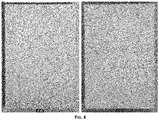
- Figure 4 shows images from this alloy after being submitted to the process of the invention with the chemical conversion coating solution, CC1 (left), and with the chemical conversion coating solution not according to the invention CC2 (right).
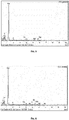
- Figure 5 shows the Energy-dispersive X-ray spectroscopy (EDS) analysis of the EV13A alloy after being submitted to the process of the invention with CC1.
- EDS Energy-dispersive X-ray spectroscopy
- FIG. 6 shows the Energy-dispersive X-ray spectroscopy (EDS) analysis of the EV13A alloy after being submitted to the process not according to the invention with CC2.
- EDS Energy-dispersive X-ray spectroscopy
- Nd peak also corresponds to particles which are on the coating of the substrate, hence it probably forms compounds with other elements.
- Y is not visible in the spectra for the sample treated with CC1. According to the inventors, this is probably due to the fact that the amount of yttrium in the coating is quite low, and/or because one of the peaks expected for yttrium is at 14.9eV, hence out of the measurement range.
- the substrates find application in a broad range of fields, such as the aerospace and automotive sectors.
- a further aspect of the invention relates to the use of the magnesium alloy substrate of the invention for manufacturing a part for use in the aerospace and automotive sectors.
- Part as used herein refers to any part (item, element, piece, etc.) conventionally used in these sectors and made using magnesium alloy materials such as for example transmission gears for helicopters.
- the invention relates thus, to a part for use in the aerospace or automotive sector comprising the magnesium alloy substrate of the invention.
- the invention relates to a chemical conversion coating solution for use in the process of the invention.
- the chemical conversion coating solution according to claim 13 comprises potassium permanganate, sodium phosphate, calcium nitrate and yttrium nitrate.
- This chemical conversion coating solution CC1 comprises between 0.1 and 0.3 M potassium permanganate, preferably between 0.15 and 0.25 M, and more preferably 0.2 M, and between 0.01 and 0.2 M sodium phosphate, preferably between 0.05 and 0.15 M, and more preferably 0.1 M.
- CC1 further comprises of calcium nitrate and yttrium nitrate. Calcium nitrate is present in an amount of between 1.0 and 5 g/L in CC1, preferably between 1.5 and 3.5 g/L.
- Examples of calcium nitrate concentrations in CC1 are, 2 g/L, 2.5 g/L and 3.0 g/L.
- Yttrium nitrate is in an amount of between 1.5 and 5 g/L, preferably between 1.5 and 3.5 g/L.
- Examples of yttrium nitrate concentrations in CC1 are 2 g/L, 2.5 g/L and 3.0 g/L..
- the chemical conversion coating solution comprises 0.2 M potassium permanganate, 0.1 M sodium phosphate, 2 g/L of calcium nitrate and 2 g/L of yttrium nitrate.
- the chemical conversion coating solution, CC2 comprises potassium permanganate, sodium phosphate, calcium nitrate and sodium vanadate.
- CC2 comprises between 0.1 and 0.3 M potassium permanganate, preferably between 0.15 and 0.25 M, and more preferably 0.2 M, and between 0.01 and 0.2 M sodium phosphate, preferably between 0.05 and 0.15 M, and more preferably 0.1 M.
- CC2 further comprises calcium nitrate and sodium vanadate.
- Calcium nitrate is present in a particular embodiment in an amount of between 1.0 and 5 g/L in CC2, preferably between 1.5 and 3.5 g/L. Examples of calcium nitrate concentrations in CC2 are 2 g/L, 2.5 g/L and 3.0 g/L.
- Sodium vanadate is present in a particular embodiment in an amount of between 1.5 and 5 g/L, preferably between 1.5 and 3.5 g/L.
- Examples of sodium vanadate concentrations in CC2 are 2 g/L, 2.5 g/L and 3.0 g/L.
- the chemical conversion coating solution comprises 0.2 M potassium permanganate, 0.1 M sodium phosphate, 2 g/L of calcium nitrate and 2.5 g/L of sodium vanadate.
- the pH of the chemical conversion coating solution CC1 or CC2 is adjusted to a pH comprised between 2.5 and 5, preferably to pH between 2.8 and pH 4,0 such as for example pH 3.0 in a particular embodiment, or pH 3.5. Adjustment is usually carried out with an acid, like phosphoric acid.
- the process of the invention provides a magnesium alloy substrate with a reproducible conversion coating with good appearance and surface morphology.
- the magnesium alloy substrate of the invention has been evaluated and the results obtained were compared to those achieved by treating the same magnesium alloy with a standard Cr-Mn coating as reference.
- the magnesium alloy substrate of the invention was analysed according to the following testing procedures:
- composition and morphology Composition and morphology
- the surface composition and morphology of the samples treated with the conversion coatings are determined using optical microscopy and Scanning Electron Microscopy (SEM, JEOL JSM 5910 LV) coupled with an energy dispersive X-ray (EDS) analyser (INCA), taking into account the following parameters: uniformity, grade of coverage of the substrate, defects and grain morphology.
- the corrosion resistance of the conversion treated and oiled samples to the effects of a warm and humid atmosphere is evaluated by means of mild environment corrosion testing according to MIL STD 810-Method 507.4 standard.
- the humidity tests is carried out at 60oC and 95%RH following the procedure described in Section 4.5.2 of MIL STD 810-Method 507.4 standard.
- the procedure consists of 10 cycles of 48 hours and the samples are exposed in the climatic chamber for about 500 hours.
- the corrosion resistance of the conversion treated and primer coated samples is evaluated by means of neutral salt spray fog corrosion testing according to the ASTM B117 standard.
- the salt solution consists of 5 ⁇ 1 parts of NaCl in 95 parts by mass of deionised water and the temperature in the exposure zone shall be maintained at 35 ⁇ 2 oC.
- the samples are supported at an inclination 6o from the vertical, in agreement with some aeronautic specifications.
- Samples treated with conversion coating, resin and primer Both unscribed and scribed samples are tested. The scribe is performed following the indications of Section 5.1 of ASTM D1654 standard. The corrosion resistance of the samples treated with conversion coating, resin and primer is evaluated after 2000-hours exposure in SSF chamber. The unscribed samples are evaluated taking into account the presence and quantity of pits of corrosion and blisters on the surface. The scribed samples are also evaluated taking into account the following parameters: presence of corrosion products, blisters, lifts and coating curling in the scribe.
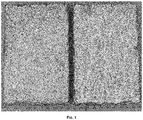
- the substrates treated with the conversion coating only also show a very good corrosion performance, and even significantly better than the Cr-Mn reference samples after 168 hours of exposure to the salt spray fog (SSF) (see Fig. 1 ).
- SSF salt spray fog
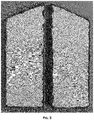
- both CC 1 (according to the invention) and CC2 (not according to the invention) conversion coatings provide good corrosion protection, comparable to that provided by the Cr-Mn reference treatment after 1500 hours of SSF exposure (see Fig. 2 ). This effect was observed in the fully covered surfaces (no corrosion attack was evident after 2000 hours of SSF exposure) and around the artificial damage areas (where the corrosion of the base metal did not progress further) (see Fig. 3 ). Overall, the CC1 and CC2 treated samples passed 2000 hours of exposure without showing evident signs of corrosion.
- the process of the invention also imparts the Mg alloy with good adhesion of organic coatings such as the primer and the resin mentioned in the invention.
- Example 1 Process for surface treating a EV31A magnesium alloy with a chemical conversion coating solution CC1 and obtaining a coated substrate
- a EV31A Mg alloy was first blasted using alumina F-220 or F-500 to remove impurities present on the magnesium alloy substrate. The remaining powder was then removed with compressed air.
- the degreasing step was carried out with an alkaline hot solution at 80 oC of Oakite 90 (65 g/L) for 5 minutes by dipping the substrate in the solution while stirring. The substrate was rinsed thereafter with deionized water.
- a chemical conversion coating solution CC1 was prepared by adding directly the additives to a phosphate-permanganate batch comprising 0.2 M KMnO4 and 0.1 M Na3PO4 in an amount of 2 g/L of Ca(NO3)2 and 2 g/L of Y(NO3)3.
- the pH was adjusted to pH 3 with phosphoric acid.
- the substrate was immersed in the CC1 solution at room temperature.
- the substrate was washed with deionized water and ethanol, dried with hot air, and stored under controlled atmosphere without humidity.
- Example 2 not according to the invention: Process for surface treating a EV31A magnesium alloy with a chemical conversion coating solution CC2 and obtaining a coated substrate
- a EV31A Mg alloy was first blasted using alumina F-220 or F-500 to remove impurities present on the magnesium alloy substrate. The remaining powder was then removed with compressed air.
- the degreasing step was carried out with an alkaline hot solution at 80 oC of Oakite 90 (65 g/L) for 5 minutes by dipping the substrate in the solution while stirring. The substrate was rinsed thereafter with deionized water.
- a chemical conversion coating solution CC2 was prepared by adding directly the additives to a phosphate-permanganate batch comprising 0.2 M KMnO4 and 0.1 M Na3PO4 in an amount of 2 g/L of Ca(NO3)2 and 2.5 g/L of NaVO3. The pH was adjusted to pH 3 with phosphoric acid.
- the substrate was immersed in the CC2 solution at room temperature.
- the substrate was washed with deionized water and ethanol, dried with hot air, and stored under controlled atmosphere without humidity.
- Both substrates treated according to Examples 1 and 2 were tested in terms of coating appearance; evaluation of composition and morphology; mild environment corrosion resistance; salt fog corrosion resistance; and resin and primer adhesion according to the procedures described above.
- Samples obtained according to Examples 1 and 2 were also conventionally coated with commercial resins and primers (both chromium-free) used in aeronautic sectors, in order to check the overall performance in terms of corrosion protection.
- the resin and the primer were applied using a conventional air spray gun.
- the resin was applied to a final thickness of 10-15 ⁇ m.
- one layer of primer was applied to satisfy the thickness requirements (15-30 ⁇ m) and then cured at room temperature for 7 days.
Landscapes
- Chemical & Material Sciences (AREA)
- General Chemical & Material Sciences (AREA)
- Chemical Kinetics & Catalysis (AREA)
- Engineering & Computer Science (AREA)
- Materials Engineering (AREA)
- Mechanical Engineering (AREA)
- Metallurgy (AREA)
- Organic Chemistry (AREA)
- Chemical Treatment Of Metals (AREA)
Priority Applications (2)
| Application Number | Priority Date | Filing Date | Title |
|---|---|---|---|
| EP14382173.4A EP2944707B1 (en) | 2014-05-16 | 2014-05-16 | Conversion coating process for magnesium alloys |
| ES14382173.4T ES2631136T3 (es) | 2014-05-16 | 2014-05-16 | Proceso de recubrimiento de conversión para aleaciones de magnesio |
Applications Claiming Priority (1)
| Application Number | Priority Date | Filing Date | Title |
|---|---|---|---|
| EP14382173.4A EP2944707B1 (en) | 2014-05-16 | 2014-05-16 | Conversion coating process for magnesium alloys |
Publications (2)
| Publication Number | Publication Date |
|---|---|
| EP2944707A1 EP2944707A1 (en) | 2015-11-18 |
| EP2944707B1 true EP2944707B1 (en) | 2017-03-22 |
Family
ID=50828845
Family Applications (1)
| Application Number | Title | Priority Date | Filing Date |
|---|---|---|---|
| EP14382173.4A Active EP2944707B1 (en) | 2014-05-16 | 2014-05-16 | Conversion coating process for magnesium alloys |
Country Status (2)
| Country | Link |
|---|---|
| EP (1) | EP2944707B1 (es) |
| ES (1) | ES2631136T3 (es) |
Families Citing this family (3)
| Publication number | Priority date | Publication date | Assignee | Title |
|---|---|---|---|---|
| CN105925966A (zh) * | 2016-05-23 | 2016-09-07 | 江苏固格澜栅防护设施有限公司 | 表面涂覆植酸转化膜层的防护栏及制备方法 |
| FR3098829B1 (fr) * | 2019-07-15 | 2021-07-16 | Safran Aircraft Engines | Composition, son utilisation pour le de-mordançage d’alliages de magnesium, ainsi que procede de de-mordançage d’alliages de magnesium |
| CN115161627B (zh) * | 2022-06-13 | 2024-04-23 | 东莞理工学院 | 一种镁合金表面转化液及镁合金表面转化膜的制备方法 |
Family Cites Families (5)
| Publication number | Priority date | Publication date | Assignee | Title |
|---|---|---|---|---|
| ES2178917B1 (es) | 2000-04-05 | 2004-03-16 | Fundacion Inasmet | Tratamiento de conversion quimica para el magnesio y sus aleaciones. |
| JP2002294466A (ja) | 2001-03-28 | 2002-10-09 | Nippon Paint Co Ltd | マグネシウム合金用化成処理液及び表面処理方法並びにマグネシウム合金基材 |
| CN1173074C (zh) * | 2002-04-27 | 2004-10-27 | 上海金属腐蚀与防护技术有限公司 | 镁合金表面多元复合氧化物膜的氧化处理方法 |
| JP4808374B2 (ja) * | 2003-11-13 | 2011-11-02 | 富士通株式会社 | 金属成形品の表面処理方法 |
| CN1632169A (zh) * | 2005-01-17 | 2005-06-29 | 大连理工大学 | 一种镁合金表面处理方法 |
-
2014
- 2014-05-16 EP EP14382173.4A patent/EP2944707B1/en active Active
- 2014-05-16 ES ES14382173.4T patent/ES2631136T3/es active Active
Non-Patent Citations (1)
| Title |
|---|
| None * |
Also Published As
| Publication number | Publication date |
|---|---|
| EP2944707A1 (en) | 2015-11-18 |
| ES2631136T3 (es) | 2017-08-28 |
Similar Documents
| Publication | Publication Date | Title |
|---|---|---|
| ES2415979T3 (es) | Método para producir un material metálico tratado superficialmente, y método para producir un artículo metálico revestido | |
| KR101412872B1 (ko) | 보충제 조성물 및 전처리 조성물 보충 방법 | |
| CN102686776A (zh) | 含有锆、铜、锌和硝酸盐的金属预处理组合物和在金属基材上相关的涂层 | |
| EP2971236B1 (en) | Improved trivalent chromium-containing composition for aluminum and aluminum alloys | |
| CA2604710C (en) | Process for forming a well visible non-chromate conversion coating for magnesium and magnesium alloys | |
| US20180127883A1 (en) | Two-step sealing of anodized aluminum coatings | |
| EP2944707B1 (en) | Conversion coating process for magnesium alloys | |
| US8486203B2 (en) | Conversion coating and anodizing sealer with no chromium | |
| EP3239353A1 (en) | Electrical steel sheet | |
| CN100378246C (zh) | 用于金属表面处理的组合物和方法 | |
| BR112015019688B1 (pt) | Processo de preparação de uma chapa e chapa | |
| RS54307B1 (sr) | Višestepeno predtretiranje kalajisanog lima pre lakiranja | |
| US20090162678A1 (en) | Magnesium alloy article and method for fabricating the same | |
| Nelson et al. | Characterisation of aluminium alloys after HNO3/HF–NaOH–HNO3/HF pretreatment | |
| JP5428105B2 (ja) | マグネシウム合金用黒色化成処理液、化成処理方法及び化成処理部材 | |
| CN102453892A (zh) | 镁合金表面硅烷成膜的方法 | |
| JP6547088B1 (ja) | 前処理剤、前処理方法、化成皮膜を有する金属材料及びその製造方法、並びに塗装金属材料及びその製造方法 | |
| TWI679306B (zh) | 鎂基材的前處理 | |
| US20040115448A1 (en) | Corrosion resistant magnesium and magnesium alloy and method of producing same | |
| RU2255139C1 (ru) | Способ фосфатирования поверхности титанового сплава | |
| US9228263B1 (en) | Chemical conversion coating for protecting magnesium alloys from corrosion | |
| RU2299268C1 (ru) | Способ фосфатирования поверхности титанового сплава | |
| RU2294981C1 (ru) | Преобразователь ржавчины | |
| CA3067697A1 (en) | Inorganic non-chrome aqueous treatment composition and process for coating metal surfaces | |
| RU2593252C2 (ru) | Способ диффузионного цинкования металлических деталей |
Legal Events
| Date | Code | Title | Description |
|---|---|---|---|
| PUAI | Public reference made under article 153(3) epc to a published international application that has entered the european phase |
Free format text: ORIGINAL CODE: 0009012 |
|
| AK | Designated contracting states |
Kind code of ref document: A1 Designated state(s): AL AT BE BG CH CY CZ DE DK EE ES FI FR GB GR HR HU IE IS IT LI LT LU LV MC MK MT NL NO PL PT RO RS SE SI SK SM TR |
|
| AX | Request for extension of the european patent |
Extension state: BA ME |
|
| 17P | Request for examination filed |
Effective date: 20160211 |
|
| RBV | Designated contracting states (corrected) |
Designated state(s): AL AT BE BG CH CY CZ DE DK EE ES FI FR GB GR HR HU IE IS IT LI LT LU LV MC MK MT NL NO PL PT RO RS SE SI SK SM TR |
|
| 17Q | First examination report despatched |
Effective date: 20160406 |
|
| GRAP | Despatch of communication of intention to grant a patent |
Free format text: ORIGINAL CODE: EPIDOSNIGR1 |
|
| INTG | Intention to grant announced |
Effective date: 20161011 |
|
| GRAS | Grant fee paid |
Free format text: ORIGINAL CODE: EPIDOSNIGR3 |
|
| GRAA | (expected) grant |
Free format text: ORIGINAL CODE: 0009210 |
|
| AK | Designated contracting states |
Kind code of ref document: B1 Designated state(s): AL AT BE BG CH CY CZ DE DK EE ES FI FR GB GR HR HU IE IS IT LI LT LU LV MC MK MT NL NO PL PT RO RS SE SI SK SM TR |
|
| REG | Reference to a national code |
Ref country code: GB Ref legal event code: FG4D |
|
| REG | Reference to a national code |
Ref country code: CH Ref legal event code: EP |
|
| REG | Reference to a national code |
Ref country code: AT Ref legal event code: REF Ref document number: 877863 Country of ref document: AT Kind code of ref document: T Effective date: 20170415 |
|
| REG | Reference to a national code |
Ref country code: IE Ref legal event code: FG4D |
|
| REG | Reference to a national code |
Ref country code: DE Ref legal event code: R096 Ref document number: 602014007811 Country of ref document: DE |
|
| REG | Reference to a national code |
Ref country code: FR Ref legal event code: PLFP Year of fee payment: 4 |
|
| REG | Reference to a national code |
Ref country code: NL Ref legal event code: MP Effective date: 20170322 |
|
| PG25 | Lapsed in a contracting state [announced via postgrant information from national office to epo] |
Ref country code: HR Free format text: LAPSE BECAUSE OF FAILURE TO SUBMIT A TRANSLATION OF THE DESCRIPTION OR TO PAY THE FEE WITHIN THE PRESCRIBED TIME-LIMIT Effective date: 20170322 Ref country code: NO Free format text: LAPSE BECAUSE OF FAILURE TO SUBMIT A TRANSLATION OF THE DESCRIPTION OR TO PAY THE FEE WITHIN THE PRESCRIBED TIME-LIMIT Effective date: 20170622 Ref country code: GR Free format text: LAPSE BECAUSE OF FAILURE TO SUBMIT A TRANSLATION OF THE DESCRIPTION OR TO PAY THE FEE WITHIN THE PRESCRIBED TIME-LIMIT Effective date: 20170623 Ref country code: FI Free format text: LAPSE BECAUSE OF FAILURE TO SUBMIT A TRANSLATION OF THE DESCRIPTION OR TO PAY THE FEE WITHIN THE PRESCRIBED TIME-LIMIT Effective date: 20170322 Ref country code: LT Free format text: LAPSE BECAUSE OF FAILURE TO SUBMIT A TRANSLATION OF THE DESCRIPTION OR TO PAY THE FEE WITHIN THE PRESCRIBED TIME-LIMIT Effective date: 20170322 |
|
| REG | Reference to a national code |
Ref country code: LT Ref legal event code: MG4D |
|
| REG | Reference to a national code |
Ref country code: AT Ref legal event code: MK05 Ref document number: 877863 Country of ref document: AT Kind code of ref document: T Effective date: 20170322 |
|
| REG | Reference to a national code |
Ref country code: ES Ref legal event code: FG2A Ref document number: 2631136 Country of ref document: ES Kind code of ref document: T3 Effective date: 20170828 |
|
| PG25 | Lapsed in a contracting state [announced via postgrant information from national office to epo] |
Ref country code: SE Free format text: LAPSE BECAUSE OF FAILURE TO SUBMIT A TRANSLATION OF THE DESCRIPTION OR TO PAY THE FEE WITHIN THE PRESCRIBED TIME-LIMIT Effective date: 20170322 Ref country code: LU Free format text: LAPSE BECAUSE OF NON-PAYMENT OF DUE FEES Effective date: 20170531 Ref country code: BG Free format text: LAPSE BECAUSE OF FAILURE TO SUBMIT A TRANSLATION OF THE DESCRIPTION OR TO PAY THE FEE WITHIN THE PRESCRIBED TIME-LIMIT Effective date: 20170622 Ref country code: LV Free format text: LAPSE BECAUSE OF FAILURE TO SUBMIT A TRANSLATION OF THE DESCRIPTION OR TO PAY THE FEE WITHIN THE PRESCRIBED TIME-LIMIT Effective date: 20170322 Ref country code: RS Free format text: LAPSE BECAUSE OF FAILURE TO SUBMIT A TRANSLATION OF THE DESCRIPTION OR TO PAY THE FEE WITHIN THE PRESCRIBED TIME-LIMIT Effective date: 20170322 |
|
| PG25 | Lapsed in a contracting state [announced via postgrant information from national office to epo] |
Ref country code: NL Free format text: LAPSE BECAUSE OF FAILURE TO SUBMIT A TRANSLATION OF THE DESCRIPTION OR TO PAY THE FEE WITHIN THE PRESCRIBED TIME-LIMIT Effective date: 20170322 |
|
| PG25 | Lapsed in a contracting state [announced via postgrant information from national office to epo] |
Ref country code: SK Free format text: LAPSE BECAUSE OF FAILURE TO SUBMIT A TRANSLATION OF THE DESCRIPTION OR TO PAY THE FEE WITHIN THE PRESCRIBED TIME-LIMIT Effective date: 20170322 Ref country code: EE Free format text: LAPSE BECAUSE OF FAILURE TO SUBMIT A TRANSLATION OF THE DESCRIPTION OR TO PAY THE FEE WITHIN THE PRESCRIBED TIME-LIMIT Effective date: 20170322 Ref country code: RO Free format text: LAPSE BECAUSE OF FAILURE TO SUBMIT A TRANSLATION OF THE DESCRIPTION OR TO PAY THE FEE WITHIN THE PRESCRIBED TIME-LIMIT Effective date: 20170322 Ref country code: AT Free format text: LAPSE BECAUSE OF FAILURE TO SUBMIT A TRANSLATION OF THE DESCRIPTION OR TO PAY THE FEE WITHIN THE PRESCRIBED TIME-LIMIT Effective date: 20170322 Ref country code: CZ Free format text: LAPSE BECAUSE OF FAILURE TO SUBMIT A TRANSLATION OF THE DESCRIPTION OR TO PAY THE FEE WITHIN THE PRESCRIBED TIME-LIMIT Effective date: 20170322 |
|
| PG25 | Lapsed in a contracting state [announced via postgrant information from national office to epo] |
Ref country code: IS Free format text: LAPSE BECAUSE OF FAILURE TO SUBMIT A TRANSLATION OF THE DESCRIPTION OR TO PAY THE FEE WITHIN THE PRESCRIBED TIME-LIMIT Effective date: 20170722 Ref country code: PT Free format text: LAPSE BECAUSE OF FAILURE TO SUBMIT A TRANSLATION OF THE DESCRIPTION OR TO PAY THE FEE WITHIN THE PRESCRIBED TIME-LIMIT Effective date: 20170724 Ref country code: SM Free format text: LAPSE BECAUSE OF FAILURE TO SUBMIT A TRANSLATION OF THE DESCRIPTION OR TO PAY THE FEE WITHIN THE PRESCRIBED TIME-LIMIT Effective date: 20170322 Ref country code: PL Free format text: LAPSE BECAUSE OF FAILURE TO SUBMIT A TRANSLATION OF THE DESCRIPTION OR TO PAY THE FEE WITHIN THE PRESCRIBED TIME-LIMIT Effective date: 20170322 |
|
| REG | Reference to a national code |
Ref country code: CH Ref legal event code: PL |
|
| REG | Reference to a national code |
Ref country code: DE Ref legal event code: R097 Ref document number: 602014007811 Country of ref document: DE |
|
| PLBE | No opposition filed within time limit |
Free format text: ORIGINAL CODE: 0009261 |
|
| STAA | Information on the status of an ep patent application or granted ep patent |
Free format text: STATUS: NO OPPOSITION FILED WITHIN TIME LIMIT |
|
| PG25 | Lapsed in a contracting state [announced via postgrant information from national office to epo] |
Ref country code: MC Free format text: LAPSE BECAUSE OF FAILURE TO SUBMIT A TRANSLATION OF THE DESCRIPTION OR TO PAY THE FEE WITHIN THE PRESCRIBED TIME-LIMIT Effective date: 20170322 Ref country code: DK Free format text: LAPSE BECAUSE OF FAILURE TO SUBMIT A TRANSLATION OF THE DESCRIPTION OR TO PAY THE FEE WITHIN THE PRESCRIBED TIME-LIMIT Effective date: 20170322 |
|
| REG | Reference to a national code |
Ref country code: IE Ref legal event code: MM4A |
|
| 26N | No opposition filed |
Effective date: 20180102 |
|
| PG25 | Lapsed in a contracting state [announced via postgrant information from national office to epo] |
Ref country code: LI Free format text: LAPSE BECAUSE OF NON-PAYMENT OF DUE FEES Effective date: 20170531 Ref country code: SI Free format text: LAPSE BECAUSE OF FAILURE TO SUBMIT A TRANSLATION OF THE DESCRIPTION OR TO PAY THE FEE WITHIN THE PRESCRIBED TIME-LIMIT Effective date: 20170322 Ref country code: CH Free format text: LAPSE BECAUSE OF NON-PAYMENT OF DUE FEES Effective date: 20170531 |
|
| PG25 | Lapsed in a contracting state [announced via postgrant information from national office to epo] |
Ref country code: LU Free format text: LAPSE BECAUSE OF NON-PAYMENT OF DUE FEES Effective date: 20170516 |
|
| REG | Reference to a national code |
Ref country code: BE Ref legal event code: MM Effective date: 20170531 |
|
| PG25 | Lapsed in a contracting state [announced via postgrant information from national office to epo] |
Ref country code: IE Free format text: LAPSE BECAUSE OF NON-PAYMENT OF DUE FEES Effective date: 20170516 |
|
| REG | Reference to a national code |
Ref country code: FR Ref legal event code: PLFP Year of fee payment: 5 |
|
| PG25 | Lapsed in a contracting state [announced via postgrant information from national office to epo] |
Ref country code: BE Free format text: LAPSE BECAUSE OF NON-PAYMENT OF DUE FEES Effective date: 20170531 |
|
| PG25 | Lapsed in a contracting state [announced via postgrant information from national office to epo] |
Ref country code: MT Free format text: LAPSE BECAUSE OF NON-PAYMENT OF DUE FEES Effective date: 20170516 |
|
| PG25 | Lapsed in a contracting state [announced via postgrant information from national office to epo] |
Ref country code: HU Free format text: LAPSE BECAUSE OF FAILURE TO SUBMIT A TRANSLATION OF THE DESCRIPTION OR TO PAY THE FEE WITHIN THE PRESCRIBED TIME-LIMIT; INVALID AB INITIO Effective date: 20140516 |
|
| PG25 | Lapsed in a contracting state [announced via postgrant information from national office to epo] |
Ref country code: CY Free format text: LAPSE BECAUSE OF FAILURE TO SUBMIT A TRANSLATION OF THE DESCRIPTION OR TO PAY THE FEE WITHIN THE PRESCRIBED TIME-LIMIT Effective date: 20170322 |
|
| PG25 | Lapsed in a contracting state [announced via postgrant information from national office to epo] |
Ref country code: MK Free format text: LAPSE BECAUSE OF FAILURE TO SUBMIT A TRANSLATION OF THE DESCRIPTION OR TO PAY THE FEE WITHIN THE PRESCRIBED TIME-LIMIT Effective date: 20170322 |
|
| PG25 | Lapsed in a contracting state [announced via postgrant information from national office to epo] |
Ref country code: TR Free format text: LAPSE BECAUSE OF FAILURE TO SUBMIT A TRANSLATION OF THE DESCRIPTION OR TO PAY THE FEE WITHIN THE PRESCRIBED TIME-LIMIT Effective date: 20170322 |
|
| PG25 | Lapsed in a contracting state [announced via postgrant information from national office to epo] |
Ref country code: AL Free format text: LAPSE BECAUSE OF FAILURE TO SUBMIT A TRANSLATION OF THE DESCRIPTION OR TO PAY THE FEE WITHIN THE PRESCRIBED TIME-LIMIT Effective date: 20170322 |
|
| REG | Reference to a national code |
Ref country code: FR Ref legal event code: PLFP Year of fee payment: 10 |
|
| P01 | Opt-out of the competence of the unified patent court (upc) registered |
Effective date: 20230526 |
|
| PGFP | Annual fee paid to national office [announced via postgrant information from national office to epo] |
Ref country code: DE Payment date: 20250626 Year of fee payment: 12 |
|
| PGFP | Annual fee paid to national office [announced via postgrant information from national office to epo] |
Ref country code: ES Payment date: 20250602 Year of fee payment: 12 |
|
| PGFP | Annual fee paid to national office [announced via postgrant information from national office to epo] |
Ref country code: IT Payment date: 20250528 Year of fee payment: 12 |
|
| PGFP | Annual fee paid to national office [announced via postgrant information from national office to epo] |
Ref country code: GB Payment date: 20260312 Year of fee payment: 13 |
|
| PGFP | Annual fee paid to national office [announced via postgrant information from national office to epo] |
Ref country code: FR Payment date: 20260312 Year of fee payment: 13 |