EP2945131A2 - System und verfahren zur sprachbasierten personalisierten interaktiven evakuierungsführung - Google Patents
System und verfahren zur sprachbasierten personalisierten interaktiven evakuierungsführung Download PDFInfo
- Publication number
- EP2945131A2 EP2945131A2 EP15165449.8A EP15165449A EP2945131A2 EP 2945131 A2 EP2945131 A2 EP 2945131A2 EP 15165449 A EP15165449 A EP 15165449A EP 2945131 A2 EP2945131 A2 EP 2945131A2
- Authority
- EP
- European Patent Office
- Prior art keywords
- user
- monitored region
- location
- wireless system
- receiving
- Prior art date
- Legal status (The legal status is an assumption and is not a legal conclusion. Google has not performed a legal analysis and makes no representation as to the accuracy of the status listed.)
- Ceased
Links
Images



Classifications
-
- G—PHYSICS
- G01—MEASURING; TESTING
- G01C—MEASURING DISTANCES, LEVELS OR BEARINGS; SURVEYING; NAVIGATION; GYROSCOPIC INSTRUMENTS; PHOTOGRAMMETRY OR VIDEOGRAMMETRY
- G01C21/00—Navigation; Navigational instruments not provided for in groups G01C1/00 - G01C19/00
- G01C21/20—Instruments for performing navigational calculations
- G01C21/206—Instruments for performing navigational calculations specially adapted for indoor navigation
-
- G—PHYSICS
- G08—SIGNALLING
- G08B—SIGNALLING SYSTEMS, e.g. PERSONAL CALLING SYSTEMS; ORDER TELEGRAPHS; ALARM SYSTEMS
- G08B7/00—Signalling systems according to two or more of groups G08B3/00 - G08B6/00
- G08B7/06—Signalling systems according to two or more of groups G08B3/00 - G08B6/00 using electric transmission, e.g. involving audible and visible signalling through the use of sound and light sources
- G08B7/066—Signalling systems according to two or more of groups G08B3/00 - G08B6/00 using electric transmission, e.g. involving audible and visible signalling through the use of sound and light sources guiding along a path, e.g. evacuation path lighting strip
Definitions
- the present invention relates generally to evacuation guidance systems and methods. More particularly, the present invention relates to systems and methods of voice based personalized interactive evacuation guidance.
- Known systems and methods for providing evacuation guidance to building occupants fail to provide personalized evacuation guidance to an individual when an undesired event, such as a fire, occurs. Instead, known systems and methods provide the same general evacuation guidance to all building occupants using a centralized and automated evacuation system. This can be inefficient and create panic as building occupants search for exit signs, fire extinguishers, call points, and the like. Indeed, exit signs that are part of known evacuation guidance systems may be inefficient during certain conditions, such as when smoke from a fire is dense and prevents occupants that are following these visual signs from seeing them.
- known systems and methods for providing evacuation guidance lead building occupants to the same exit path regardless of crowds or lines, which can cause delays and ad-hoc evacuation. That is, known systems and methods are based on a static plan for all building occupants and lack efficiency in rerouting building occupants in real time when, for example, emergency situations develop in areas near or in a predefined exit path. Indeed, any rerouting can cause chaos because the change in route is for all building occupants and is not personalized for individuals.
- known systems and methods for providing evacuation guidance are not effective for physically challenged individuals who must rely on others for assistance in evacuation. Indeed, such physically challenged individuals may only realize a need for evacuation by looking to other individuals who have already started to evacuate. This can create panic.
- Embodiments disclosed herein include systems and methods of voice based personalized interactive evacuation guidance.
- systems and methods disclosed herein can include a voice based interactive evacuation guidance application and/or software running, for example, on a user's handheld device, such as a mobile device, a cellular telephone, a smart phone, a personal digital assistant, or the like.
- the user's handheld device can include a user interface, and the user can provide input via the interface with any one of voice, touch, gesture, and the like.
- systems and methods disclosed herein can receive user input for example, a voice command received by a user's handheld device.
- the voice command can include a request for an optimal route to reach a desired destination from a specific location. That is, the user can specify the starting location and the ending location of the requested route.
- the user input can include a request for an exit route from the user's current location.
- the user input can also include a request for an exit route from another location.
- any system output responsive to the user's request can facilitate the user guiding another user who may not have access to the systems and methods disclosed herein.
- the user input can also include a request for an optimal and/or safe route to reach an extinguisher, a call point, a stair case, or any other configurable element in a monitored region, such as a building, from the user's current location or from another location.
- a user can request assistance in reaching a particular type of extinguisher to extinguish a particular type of fire. For example, when a user needs a carbon dioxide extinguisher to extinguish a fire caused by an electrical short circuit, a user can provide as input a voice command such as "Where is carbon dioxide extinguisher?" or "Need to extinguish an electrical fire.” to request assistance in reaching a carbon dioxide extinguisher.
- systems and methods disclosed herein can generate and display the requested route or path, and/or a map displaying the requested route or path. For example, in some embodiments, systems and methods disclosed herein can graphically display the requested route or path on a map of a monitored region displayed on a user interface, for example, a graphical user interface, of the user's handheld device.
- systems and methods disclosed herein can generate and provide instructions to an individual user to evacuate the monitored region via a shortest and/or best possible exit route from the user's current location.
- systems and methods disclosed herein can display a real time map of the monitored region, for example, on the user's handheld device.
- the real time map of the monitored region and/or route for an individual to traverse can be generated by a remote wireless system, for example, a cloud network, that can transmit the instructions, map, and/or route to the user's device.
- the real time map can display representations of walkways in the monitored region, and systems and methods disclosed herein can update walkway information on a real time basis to indicate any obstructions or other events occurring on or near each walkway. For example, when systems and methods disclosed herein generate and display a first evacuation path on the real time map of the monitored region, but subsequently identify a hazard and/or crowds along the first evacuation path, systems and methods can dynamically generate and display a second evacuation path on the real time map, where the second evacuation path avoids the identified hazard and/or crowds. Accordingly, systems and methods disclosed herein can dynamically reroute an individual who had been previously instructed to traverse the first evacuation path.
- systems and methods disclosed herein can base the generated routes, paths, and maps on many criteria, including, but not limited to, user input, including interactive user input, user movement within the monitored region, an optimal path from a user's location, real-time hazards on or near the path, the mobility rate of users, communication latency in the overall system, including reaction time to a real-time hazard, and the location of other users in the monitored region, including any crowds on or near an identified route or path.
- a user responsive to an identified route or path, a user can provide input to request an alternative route or path.
- systems and methods disclosed herein can generate a real-time evacuation map and/or route for traversing a monitored region and provide the generated map and/or route to a first user's handheld device on behalf of a second user who may not have a handheld device that employs the systems and methods disclosed herein.
- the first user can provide input to his handheld device regarding the second user's location via voice, touch, or any other input as would be known by those of skill in the art.
- the first user's handheld device can transmit the received input to a remote wireless system, for example, a cloud network, that includes a database of the monitored region and structural information associated therewith, such as the location of rooms, walls, stairwells, and the like.
- the remote wireless system can associate the location of the second user with information in the database and responsive thereto, generate an optimal map and/or route for the second user to traverse. Then, the remote wireless system can transmit the map and/or route to the first user's handheld device.
- systems and methods disclosed herein can generate and provide alarm and/or evacuation notification messages.
- systems and methods can transmit to a user's handheld device a telephone call, a message alert, such as a text message, or any other notification means as would be known by those of skill in the art that includes information regarding an alarm and/or evacuation instructions.
- systems and methods can identify the location of individuals in the monitored region and provide individualized evacuation guidance in accordance with an individual's location.
- user input may not be necessary for a user to receive individualized evacuation guidance.
- elements or devices of a building's fire protection system such as detectors, output devices, and the like, can wirelessly communicate with a user's handheld device via short range wireless communication, including, but not limited to, Bluetooth, WiFi, and the like.
- short range wireless communication capability of system devices can be enabled.
- the short range wireless communication capability of system devices and/or wireless modules in system devices that is used for location identification can be activated and/or enabled only upon the occurrence of a predetermined condition, such as fire event detection, in order to conserve the operating power of the system devices.
- systems and methods disclosed herein can enable the short range wireless communication capability of hardware and/or software in the user's handheld device, for example, responsive to receiving a message from a remote wireless system indicating the occurrence of a predetermined event.
- a user's handheld device within a predetermined distance from the system device can pair and/or associate with the system device. Once paired, the user device can transmit location identifying information to systems and methods disclosed herein and/or to a wireless system as disclosed herein, for example, a cloud network. Then, systems and methods disclosed herein can provide an evacuation route, map, or instructions to the user's handheld device instructing the user how to best evacuate the monitored region from his current location.
- the location identifying information can include information that defines the location of a user's device relative to system devices, including a system device with which a user device is paired. As the user device traverses a monitored region, the user device can pair with other system devices and transmit updated location identifying information in accordance with each new pairing. Accordingly, when the wireless system and/or systems and methods disclosed herein receive new location identifying information, the wireless system and/or systems and methods disclosed herein can dynamically update instructions and/or routes, paths, and maps provided to the user device.
- systems and methods disclosed herein detect a failure in a system device or a wireless module of a system device, some systems and methods can transmit a message to a user's handheld device instructing the user to move so that the user's handheld device can associate and/or pair with a different system device and location identifying information can be obtained.
- systems and methods can provide evacuation guidance to physically challenged individuals.
- a physically challenged individual's user device can display a graphical representation of a floor map, in real time, and/or provide audible voice commands for step by step evacuation guidance.
- systems and methods disclosed herein can provide evacuation guidance that directs the individual to use only wheelchair-accessible routes.
- information generated and/or received by systems and methods disclosed herein including the real-time location of building occupants, the mobility rate of building occupants, and/or the real-time hazards in the building, can be provided to third party users, for example, administrators, security personnel, and the like.
- third party users for example, administrators, security personnel, and the like.
- certain third party users can have authority for configuring system devices and/or objects in the building.
- systems and methods disclosed herein can transmit a message to a user's handheld device in a monitored region to confirm the user's status and/or condition. In some embodiments, systems and methods can request such a beacon message after an absence of communication from the handheld device for a predetermined period of time.
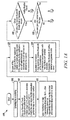
- FIG. 1 is a flow diagram of a method 100 in accordance with disclosed embodiments.
- a user carrying a handheld device such as a smart phone, a personal digital assistant, or the like, can enter a monitored region, such as a building, as in 105.
- the method 100 can install a software application in accordance with systems and methods disclosed herein on the user's handheld device as in 110.
- installing the software application as in 110 can include registering the mobile number of the user's handheld device, obtaining a fingerprint and/or photo of the user and associating the number of the user's handheld device with the fingerprint and/or photo of the user, and/or notifying the user, via the user's handheld device, about the installed software application.
- the method 100 can enable short range wireless communication capabilities of the user's handheld device, for example, Bluetooth, WiFi, or the like, and transmit the user's mobile number and/or an associated short range wireless communication identification number to a remote wireless system, for example, a cloud network as in 115.
- a remote wireless system for example, a cloud network as in 115.
- the method 100 can transmit a message to the user's handheld device notifying the user about the event and responsive thereto, the previously installed software application can be automatically launched.
- the method 100 can enable short range wireless communication capabilities of the user's handheld device, for example, Bluetooth, WiFi, or the like, establish communication with system devices, such as a detector, within a predetermined distance from the user's handheld device, acquire the short range wireless communication identification number of the nearby system devices, and transmit such identification numbers to a remote wireless system, for example, a cloud network.
- the method 100 can include the remote wireless system authenticating and/or validating the source of the short range wireless communication identification number by cross-referencing the identification number with content stored in a database and/or memory device as in 130. If the authentication fails, then the method 100 can proceed to step A, and the method 100 can terminate. However, if the validation passes, then the method 100 can determine whether the user's handheld device received any user input, for example, a voice command as in 135. If not, then the method 100 can proceed to step B. However, if the user's handheld device did receive user input, then the method 100 can proceed to step C.
- the method 100 can include the remote wireless system, for example, a cloud network, preparing a real-time map of the monitored region based on the location of the user's handheld device, preparing an optimal exit route from the location of the user's handheld device, and transmitting the optimal exit route to the user's handheld device as in 140.
- the method 100 can determine the location of the user's handheld device based on the short range wireless communication identification number of system devices, as well as the location of those devices, that are within a predetermined distance of the user's handheld device.
- the method 100 can include the remote wireless system, for example, a cloud network, preparing a real-time map of the monitored region based on the user input, for example, the received voice command, preparing a route based on the user input, and transmitting the prepared route to the user's handheld device as in 145.
- the remote wireless system for example, a cloud network
- the method 100 can include displaying a real-time map on the user's handheld device, with the prepared route(s), and updating the map as appropriate as in 150. For example, the method 100 can update the displayed map as the user moves throughout the monitored region and communicates and/or pairs with system devices within a predetermined distance from the user's handheld device.
- the handheld device when the user's handheld device communicates and/or pairs with a new system device, the handheld device can transmit the short range wireless communication identification number of the new system device to the cloud network, the cloud network can update the prepared route responsive thereto, and the cloud network can transmit the updated route to the user's handheld device for displaying thereon. Then, the evacuation process can continue as in 155 until the user is evacuated from the monitored region and/or reaches his desired destination within the monitored region.
- FIG. 2 is a diagram of a floor plan 200 of a monitored region R in accordance with disclosed embodiments.
- the floor plan 200 can display the location of system devices in the monitored region, for example, detectors, output devices, and the like, that can wirelessly communicate with a user's handheld device via short range wireless communication, including, but not limited to, Bluetooth and the like.
- the floor plan 200 can be transmitted to a remote wireless system, for example, a cloud network 210, which can determine optimal evacuation guidance and/or paths to traverse in the monitored region R.
- FIG. 3 is a diagram of the floor plan 200 of the monitored region R when a fire event or condition 310 has been detected in the region R in accordance with disclosed embodiments. As seen in FIG. 3 , when the fire event 310 is detected, the fire event 310 can be transmitted to the cloud network 210, and the floor plan stored therein can be updated accordingly.
- FIG. 4 is a diagram of the cloud network 210 transmitting a notification message to the user's handheld device 400 in accordance with disclosed embodiments.
- the notification message can include information about the detected fire event 310.
- FIG. 5 is an illustrated flow diagram of a method 500 in accordance with disclosed embodiments.
- a user and his handheld device 510 can be at location X in a monitored region R.
- the user's handheld device 510 can associate and/or pair with a system device 520 within a predetermined distance from the handheld device, for example a detector, output device, or the like, that can wirelessly communicate with the handheld device 510 via short range wireless communication, including, but not limited to, Bluetooth and the like.
- the short range wireless communication identification number of the paired system device can be location identifying information because associating and/or pairing the handheld device 510 with the system device 520 allows for detection of the user's location via the known location of the system device 520.
- the user's handheld device 510 can transmit the location identifying information to a remote wireless system 530, for example, a cloud network, which can use the location identifying information, information relating to the emergency condition, including the location thereof, and any user input or voice command to dynamically generate, in real-time, a map 540 that includes a guidance path or route for the user in the monitored region.
- a remote wireless system 530 for example, a cloud network
- the guidance path can include an evacuation path.
- the remote wireless system 530 can transmit the generated map 540, with the guidance path, to the handheld device 510 for displaying thereon.
- FIG. 6 is a diagram of a user interface 600 displayed on a user's handheld device in accordance with disclosed embodiments.
- the user interface 600 can be generated by a software application running on the handheld device and/or by a remote wireless system/cloud network. As seen in FIG. 6 , the user interface 600 can display a floor plan of a monitored region R.
- the user can provide user input, via the user interface 600, to request a safest and/or optimal exit path and/or a path to a configuration device in the monitored region R, such as an extinguisher, call point, or the like.
- systems and methods disclosed herein can generate a plurality of paths responsive to the user input, and each of the paths can be displayed on the user interface 600.
- the plurality of generated paths can include paths 610, 620 nearest to a user's location X in the monitored region R.
- systems and methods disclosed herein can determine, for example, that paths 610, 620 are overcrowded with other users in the region R.
- the plurality of generated paths can also include path 630, which may be the most optimal path for the user to traverse under current conditions.
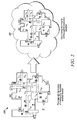
- FIG. 7 is a block diagram of a system 700 in accordance with disclosed embodiments.
- the system 700 can include a housing 710, a transceiver and/or radio 720, a memory device 730, a user interface 740, control circuitry 750, one or more programmable processors 760, and executable control software 770 as would be understood by those or ordinary skill in the art.
- the executable control software 770 can be stored on a transitory or non-transitory local computer readable medium, including, but not limited to, local computer memory, RAM, optical storage media, magnetic storage media, flash memory, and the like.
- the control circuitry 750, the programmable processors 760, and/or the control software 770 can execute and control the methods described above.
- the system 700 can include a user's handheld device running the software application as disclosed herein.
- the system 700 can include a remote wireless system, for example, the cloud network as disclosed herein.
Landscapes
- Engineering & Computer Science (AREA)
- Radar, Positioning & Navigation (AREA)
- Remote Sensing (AREA)
- Physics & Mathematics (AREA)
- General Physics & Mathematics (AREA)
- Automation & Control Theory (AREA)
- Alarm Systems (AREA)
- Telephonic Communication Services (AREA)
Applications Claiming Priority (1)
| Application Number | Priority Date | Filing Date | Title |
|---|---|---|---|
| US14/279,924 US9261371B2 (en) | 2014-05-16 | 2014-05-16 | System and method of voice based personalized interactive evacuation guidance |
Publications (2)
| Publication Number | Publication Date |
|---|---|
| EP2945131A2 true EP2945131A2 (de) | 2015-11-18 |
| EP2945131A3 EP2945131A3 (de) | 2016-02-17 |
Family
ID=53365714
Family Applications (1)
| Application Number | Title | Priority Date | Filing Date |
|---|---|---|---|
| EP15165449.8A Ceased EP2945131A3 (de) | 2014-05-16 | 2015-04-28 | System und verfahren zur sprachbasierten personalisierten interaktiven evakuierungsführung |
Country Status (5)
| Country | Link |
|---|---|
| US (1) | US9261371B2 (de) |
| EP (1) | EP2945131A3 (de) |
| CN (1) | CN105096488A (de) |
| AU (1) | AU2015202280B2 (de) |
| CA (1) | CA2890503C (de) |
Families Citing this family (16)
| Publication number | Priority date | Publication date | Assignee | Title |
|---|---|---|---|---|
| US8874477B2 (en) | 2005-10-04 | 2014-10-28 | Steven Mark Hoffberg | Multifactorial optimization system and method |
| US20170100609A1 (en) * | 2014-05-29 | 2017-04-13 | Otis Elevator Company | Occupant evacuation control system |
| CN109691148B (zh) * | 2016-08-19 | 2022-12-27 | 豪夫迈·罗氏有限公司 | 用于增强bluetooth绑定的方法和系统 |
| CN107466017A (zh) * | 2017-06-28 | 2017-12-12 | 湖南统科技有限公司 | 一种基于消防疏散系统的用户交互方法及其系统 |
| US10540871B2 (en) * | 2017-07-05 | 2020-01-21 | Oneevent Technologies, Inc. | Evacuation system |
| JP7175128B2 (ja) * | 2017-08-18 | 2022-11-18 | 能美防災株式会社 | 防災システム |
| CN107680302A (zh) * | 2017-08-30 | 2018-02-09 | 石化盈科信息技术有限责任公司 | 一种火灾逃生路线的确定方法 |
| DE102017011683A1 (de) | 2017-12-18 | 2019-06-19 | Dräger Safety AG & Co. KGaA | Gasmessvorrichtung |
| JP7115246B2 (ja) * | 2018-11-21 | 2022-08-09 | 日本電信電話株式会社 | 現在位置推定装置、現在位置推定方法、及びプログラム |
| US10553085B1 (en) | 2019-01-25 | 2020-02-04 | Lghorizon, Llc | Home emergency guidance and advisement system |
| CN111491260B (zh) * | 2019-01-25 | 2026-04-24 | 开利公司 | 疏散控制器、疏散控制系统及移动通讯终端 |
| US11194460B2 (en) * | 2019-04-01 | 2021-12-07 | Honeywell International Inc. | Systems and methods for commissioning a security system |
| US11270574B2 (en) * | 2020-04-15 | 2022-03-08 | Honeywell International Inc. | Integrating location information in a fire control system |
| CN111915837A (zh) * | 2020-09-18 | 2020-11-10 | 郑州轻工业大学 | 一种室内智能疏散导航系统及方法 |
| US11450226B2 (en) | 2020-10-07 | 2022-09-20 | Lghorizon, Llc | Predictive building emergency training and guidance system |
| CN113240843A (zh) * | 2021-03-31 | 2021-08-10 | 宇辰系统科技股份有限公司 | 人员管理系统 |
Citations (4)
| Publication number | Priority date | Publication date | Assignee | Title |
|---|---|---|---|---|
| US20120022776A1 (en) * | 2010-06-07 | 2012-01-26 | Javad Razavilar | Method and Apparatus for Advanced Intelligent Transportation Systems |
| CN102739786A (zh) * | 2012-06-22 | 2012-10-17 | 渤海大学 | 基于泛在网络的建筑火灾智能救助系统及方法 |
| US20120302199A1 (en) * | 2011-05-25 | 2012-11-29 | Rio Co., Ltd. | Safety confirmation system, mobile terminal for use in safety confirmation system, and safety confirmation method |
| WO2013102855A1 (en) * | 2012-01-06 | 2013-07-11 | Koninklijke Philips Electronics N.V. | Emergency response and tracking using lighting networks |
Family Cites Families (16)
| Publication number | Priority date | Publication date | Assignee | Title |
|---|---|---|---|---|
| US7035650B1 (en) * | 2000-06-14 | 2006-04-25 | International Business Machines Corporation | System and method for providing directions |
| US8836580B2 (en) * | 2005-05-09 | 2014-09-16 | Ehud Mendelson | RF proximity tags providing indoor and outdoor navigation and method of use |
| JP2007060370A (ja) * | 2005-08-25 | 2007-03-08 | Sumitomo Electric Ind Ltd | 携帯型通信端末、避難路表示システムおよび危険報知装置 |
| US8874477B2 (en) * | 2005-10-04 | 2014-10-28 | Steven Mark Hoffberg | Multifactorial optimization system and method |
| JP4859722B2 (ja) | 2007-03-20 | 2012-01-25 | リードエンジニアリング株式会社 | 避難誘導システム |
| US7855639B2 (en) * | 2007-06-25 | 2010-12-21 | Motorola, Inc. | Dynamic resource assignment and exit information for emergency responders |
| US8140335B2 (en) * | 2007-12-11 | 2012-03-20 | Voicebox Technologies, Inc. | System and method for providing a natural language voice user interface in an integrated voice navigation services environment |
| US8401514B2 (en) * | 2009-12-03 | 2013-03-19 | Osocad Remote Limited Liability Company | System and method for controlling an emergency event in a region of interest |
| KR101152593B1 (ko) | 2010-01-07 | 2012-06-07 | 이희경 | 피난 안내 장치 및 그 방법 |
| KR101185405B1 (ko) | 2010-12-24 | 2012-09-24 | 삼성중공업 주식회사 | 대피 경로 안내 시스템 및 방법 |
| US20130099919A1 (en) * | 2011-10-20 | 2013-04-25 | Hon Hai Precision Industry Co., Ltd. | Emergency guiding system and server |
| US20130169817A1 (en) | 2011-12-07 | 2013-07-04 | Nettalon Security Systems, Inc. | Method and system for enabling smart building rescue |
| US20130147604A1 (en) | 2011-12-07 | 2013-06-13 | Donald R. Jones, Jr. | Method and system for enabling smart building evacuation |
| CN103157199B (zh) | 2011-12-14 | 2016-08-03 | 宝星电器(上海)有限公司 | 一种室内移动疏散引导救援系统 |
| CN202995948U (zh) | 2012-11-27 | 2013-06-12 | 福建省泉州市第七中学 | 基于智能路径的火灾动态逃生引导系统 |
| US10078811B2 (en) * | 2013-11-29 | 2018-09-18 | Fedex Corporate Services, Inc. | Determining node location based on context data in a wireless node network |
-
2014
- 2014-05-16 US US14/279,924 patent/US9261371B2/en active Active
-
2015
- 2015-04-28 EP EP15165449.8A patent/EP2945131A3/de not_active Ceased
- 2015-04-30 CA CA2890503A patent/CA2890503C/en not_active Expired - Fee Related
- 2015-05-01 AU AU2015202280A patent/AU2015202280B2/en not_active Ceased
- 2015-05-15 CN CN201510250893.XA patent/CN105096488A/zh active Pending
Patent Citations (4)
| Publication number | Priority date | Publication date | Assignee | Title |
|---|---|---|---|---|
| US20120022776A1 (en) * | 2010-06-07 | 2012-01-26 | Javad Razavilar | Method and Apparatus for Advanced Intelligent Transportation Systems |
| US20120302199A1 (en) * | 2011-05-25 | 2012-11-29 | Rio Co., Ltd. | Safety confirmation system, mobile terminal for use in safety confirmation system, and safety confirmation method |
| WO2013102855A1 (en) * | 2012-01-06 | 2013-07-11 | Koninklijke Philips Electronics N.V. | Emergency response and tracking using lighting networks |
| CN102739786A (zh) * | 2012-06-22 | 2012-10-17 | 渤海大学 | 基于泛在网络的建筑火灾智能救助系统及方法 |
Also Published As
| Publication number | Publication date |
|---|---|
| AU2015202280A1 (en) | 2015-12-03 |
| CA2890503C (en) | 2020-07-07 |
| US9261371B2 (en) | 2016-02-16 |
| EP2945131A3 (de) | 2016-02-17 |
| US20150330796A1 (en) | 2015-11-19 |
| CA2890503A1 (en) | 2015-11-16 |
| CN105096488A (zh) | 2015-11-25 |
| AU2015202280B2 (en) | 2016-11-03 |
Similar Documents
| Publication | Publication Date | Title |
|---|---|---|
| CA2890503C (en) | System and method of voice based personalized interactive evacuation guidance | |
| KR101141740B1 (ko) | 위치기반정보를 이용한 대피경로안내시스템 및 그 방법 | |
| US9412247B2 (en) | Alarm system with wireless communication | |
| US10028104B2 (en) | System and method for guided emergency exit | |
| US20200288295A1 (en) | Apparatus and method for emergency dispatch | |
| KR102108963B1 (ko) | 능동적 긴급 대피 경로 안내 방법 | |
| US20200334784A1 (en) | Real-Time Managing Evacuation of a Building | |
| JP2023011892A (ja) | 防災システム | |
| KR101633006B1 (ko) | 감시구역 이탈 원격 관리시스템 및 그 방법 | |
| CN105814616A (zh) | 用于操作紧急呼救系统的方法、紧急呼救系统 | |
| CN106257534A (zh) | 用于大规模撤离的个性化实时户外指导应用 | |
| JP2017004083A (ja) | 支援システム | |
| CN105513232A (zh) | 一种安全应急疏导方法及系统 | |
| KR101629549B1 (ko) | 피난경로 제공 방법, 사용자 단말, 및 피난경로 제공 서버 | |
| JP6505168B2 (ja) | 通報システム | |
| KR20200055905A (ko) | 재난 상황시 요구조자의 위치기반 대피로 안내 제공 시스템 및 방법 | |
| CN106846680B (zh) | 一种消防应急逃生路线确定方法及装置 | |
| KR20190002573A (ko) | 안전확인 관리를 위한 무선 디바이스 기반 자동 체크-인 및 정보 소싱 시스템 | |
| CN104898535B (zh) | 监护方法、装置及系统 | |
| KR102302615B1 (ko) | 피보호자 보호 방법 및 서버 장치 | |
| JP6603546B2 (ja) | 防災支援システム | |
| KR101547947B1 (ko) | 모바일폰을 이용한 위급상황 알림 시스템 및 그 방법. | |
| JP2016070839A (ja) | 無線lan誘導システム | |
| KR102371512B1 (ko) | 무선공유기와 와이파이를 활용한 화재 대피 안내를 위한 장치 및 이를 위한 방법 | |
| JP2012146218A (ja) | 屋内測位システムを利用した通知システム、送信装置および受信装置 |
Legal Events
| Date | Code | Title | Description |
|---|---|---|---|
| PUAI | Public reference made under article 153(3) epc to a published international application that has entered the european phase |
Free format text: ORIGINAL CODE: 0009012 |
|
| 17P | Request for examination filed |
Effective date: 20150428 |
|
| AK | Designated contracting states |
Kind code of ref document: A2 Designated state(s): AL AT BE BG CH CY CZ DE DK EE ES FI FR GB GR HR HU IE IS IT LI LT LU LV MC MK MT NL NO PL PT RO RS SE SI SK SM TR |
|
| AX | Request for extension of the european patent |
Extension state: BA ME |
|
| RIC1 | Information provided on ipc code assigned before grant |
Ipc: G08B 7/06 20060101AFI20151029BHEP |
|
| RAP1 | Party data changed (applicant data changed or rights of an application transferred) |
Owner name: HONEYWELL INTERNATIONAL INC. |
|
| PUAL | Search report despatched |
Free format text: ORIGINAL CODE: 0009013 |
|
| AK | Designated contracting states |
Kind code of ref document: A3 Designated state(s): AL AT BE BG CH CY CZ DE DK EE ES FI FR GB GR HR HU IE IS IT LI LT LU LV MC MK MT NL NO PL PT RO RS SE SI SK SM TR |
|
| AX | Request for extension of the european patent |
Extension state: BA ME |
|
| RIC1 | Information provided on ipc code assigned before grant |
Ipc: G08B 7/06 20060101AFI20160113BHEP |
|
| 17Q | First examination report despatched |
Effective date: 20161114 |
|
| STAA | Information on the status of an ep patent application or granted ep patent |
Free format text: STATUS: THE APPLICATION HAS BEEN REFUSED |
|
| 18R | Application refused |
Effective date: 20201026 |