EP2945276A1 - Élément actionneur en polymère - Google Patents
Élément actionneur en polymère Download PDFInfo
- Publication number
- EP2945276A1 EP2945276A1 EP13868579.7A EP13868579A EP2945276A1 EP 2945276 A1 EP2945276 A1 EP 2945276A1 EP 13868579 A EP13868579 A EP 13868579A EP 2945276 A1 EP2945276 A1 EP 2945276A1
- Authority
- EP
- European Patent Office
- Prior art keywords
- actuator element
- content
- polymer actuator
- carbon
- electrode layer
- Prior art date
- Legal status (The legal status is an assumption and is not a legal conclusion. Google has not performed a legal analysis and makes no representation as to the accuracy of the status listed.)
- Withdrawn
Links
Images


Classifications
-
- B—PERFORMING OPERATIONS; TRANSPORTING
- B81—MICROSTRUCTURAL TECHNOLOGY
- B81B—MICROSTRUCTURAL DEVICES OR SYSTEMS, e.g. MICROMECHANICAL DEVICES
- B81B3/00—Devices comprising flexible or deformable elements, e.g. comprising elastic tongues or membranes
- B81B3/0018—Structures acting upon the moving or flexible element for transforming energy into mechanical movement or vice versa, i.e. actuators, sensors, generators
- B81B3/0021—Transducers for transforming electrical into mechanical energy or vice versa
-
- F—MECHANICAL ENGINEERING; LIGHTING; HEATING; WEAPONS; BLASTING
- F03—MACHINES OR ENGINES FOR LIQUIDS; WIND, SPRING, OR WEIGHT MOTORS; PRODUCING MECHANICAL POWER OR A REACTIVE PROPULSIVE THRUST, NOT OTHERWISE PROVIDED FOR
- F03G—SPRING, WEIGHT, INERTIA OR LIKE MOTORS; MECHANICAL-POWER PRODUCING DEVICES OR MECHANISMS, NOT OTHERWISE PROVIDED FOR OR USING ENERGY SOURCES NOT OTHERWISE PROVIDED FOR
- F03G7/00—Mechanical-power-producing mechanisms, not otherwise provided for or using energy sources not otherwise provided for
- F03G7/008—Mechanical-power-producing mechanisms, not otherwise provided for or using energy sources not otherwise provided for characterised by the actuating element
- F03G7/012—Electro-chemical actuators
- F03G7/0121—Electroactive polymers
-
- B—PERFORMING OPERATIONS; TRANSPORTING
- B81—MICROSTRUCTURAL TECHNOLOGY
- B81B—MICROSTRUCTURAL DEVICES OR SYSTEMS, e.g. MICROMECHANICAL DEVICES
- B81B2201/00—Specific applications of microelectromechanical systems
- B81B2201/03—Microengines and actuators
- B81B2201/032—Bimorph and unimorph actuators, e.g. piezo and thermo
Definitions
- the present invention relates to a polymer actuator element including an electrolyte layer and an electrode layer.
- PTL 1 discloses an invention relating to a polymer actuator element including an electrolyte layer and an electrode layer.
- PTL 1 discloses that a carbon nanotube and a carbon nanohorn are included in an electrode layer in a predetermined ratio. Accordingly, PTL 1 discloses that a great driving force and a great displacement amount can be generated.
- the polymer actuator element including the electrolyte layer and the electrode layer requires excellent durability in addition to the basic characteristics of the displacement amount, the generating force, and the responsiveness.
- Patent Literature 1 Pamphlet of International Publication No. WO2010/029992A1
- the invention provides a polymer actuator element that can maintain satisfactory durability and has a great displacement amount or a great generating force, and excellent responsiveness.
- a polymer actuator element including an electrolyte layer and electrode layers, in which the electrode layer includes an activated carbon nanofiber and a carbon nanohorn. Accordingly, a polymer actuator element that maintains satisfactory durability (particularly, DC durability) and has a great displacement amount or a great generating force, and excellent responsiveness can be obtained.
- the carbon nanofiber uses an aromatic mesophase pitch and is manufactured by a melt-spinning method. Accordingly, the durability can be enhanced more effectively.
- a weight of the carbon nanohorn is equal to or greater than a weight of the carbon nanofiber. Effectively, the displacement amount or the generating force can be caused to be great and the excellent responsiveness can be obtained. More specifically, it is preferable that a weight rate (carbon nanohorn content/total carbon content) of the carbon nanohorn to the total carbon content is in a range of 0.5 to 0.7. Accordingly, more effectively, the displacement amount or the generating force can be caused to be great, and the excellent responsiveness can be obtained.
- the electrolyte layer and the electrode layer include ionic liquid, and a weight rate (ionic liquid content (electrode layer)/total carbon content) of the ionic liquid to the total carbon content in the electrode layer is in the range of 1.3 to 1.7.
- the electrolyte layer and the electrode layer include a base polymer, and a weight rate (base polymer content (electrode layer)/total carbon content) of the base polymer to the total carbon content in the electrode layer is in the range of 0.7 to 1.1.
- a polymer actuator element that can maintain satisfactory durability (particularly, DC durability) and has a great displacement amount or a great generating force, and excellent responsiveness.
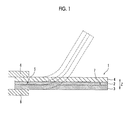
- Fig. 1 is a sectional view illustrating a portion of a polymer actuator element according to the embodiment. With reference to Fig. 1 , a structure of the polymer actuator element is described.
- a polymer actuator element 1 includes an electrolyte layer (ion conductive layer) 2, and electrode layers 3 and 4 that are formed on both sides of the electrolyte layer 2 in the thickness direction (Z).
- the polymer actuator element 1 includes the electrolyte layer 2 having ionic liquid and a base polymer, and the electrode layers 3 and 4 that have activated carbon nanofiber (ACNF) and carbon nanohorn (CNH), ionic liquid, and a base polymer.
- ACNF activated carbon nanofiber
- CNH carbon nanohorn
- the electrolyte layer 2 is formed to have a thickness of about 10 ⁇ m to 30 ⁇ m.
- the total thickness obtained by adding thicknesses of an electrode layer 3 and an electrode layer 4 is about in the range of 50 ⁇ m to 150 ⁇ m.
- PVdF polyvinylidene fluoride
- PMMA polymethyl methacrylate
- EMIBF4 ethylmethylimidazolium tetrafluoroborate
- EMITFSI ethylmethylimidazolium bis(trifluoromethanesulfonyl)imide
- EMITfO ethylmethylimidazolium trifluoromethanesulfonate
- a base end portion 5 of the polymer actuator element 1 is a fixed end portion, and the base end portion 5 of the polymer actuator element 1 is fixed to and supported by fixing and supporting portions 6 and 6.
- the polymer actuator element 1 is supported on one side. Also, if a drive voltage is applied to a portion between the electrode layers 3 and 4 on both sides, as illustrated with dotted lines in Fig. 1 , a volume difference is generated between the electrode layer 3 and the electrode layer 4 due to the ion movements or the like between the electrolyte layer 2 and the electrode layers 3 and 4, the bending stress occurs, and thus a front end portion 7 which is a free end portion of the polymer actuator element 1 can be curved and deformed.
- the principle in which the difference of the volume is generated between the electrodes due to the ion movement is unique, but as one of the representative causes of the principle, the difference of the volume is generated due to the difference of sizes of positive ions and negative ions.
- the carbon materials included in the electrode layers 3 and 4 are activated carbon nanofibers (ACNF) and carbon nanohorns (CNH).
- the carbon nanofibers can be activated by an activation treatment (preferably, alkali activation treatment).
- an activation treatment preferably, alkali activation treatment
- a well-known method such as gas activation performed by using water vapor, chemical activation performed by using chemicals such as zinc chloride, and alkali activation performed by using an alkali metal compound can be used.
- the carbon nanofiber preferably uses pitch as a carbon precursor polymer.
- pitch As a carbon precursor polymer.
- an aromatic mesophase pitch in which high strength and high elasticity are expected is preferably used.
- an infusibilization treatment, a carbonization heating, an activation treatment, and a graphitization treatment are performed on the spun fiber, so that a carbon nanofiber can be manufactured.
- a carbon nanofiber manufactured by Teijin Limited can be used.
- a carbon nanohorn (CNH) is included as a conductivity adding material.
- an activated carbon nanofiber ACNF
- the embodiment includes a carbon nanofiber in the electrode layer, but maintains the same durability as in a comparative example in which the carbon nanohorn is not included, and also obtains a greater displacement amount, a greater generating force, and more excellent responsiveness than the comparative example.
- the weight of the carbon nanohorn is preferably equal to or greater than the weight of the carbon nanofiber. More specifically, the weight rate of the carbon nanohorn to the total carbon content (carbon nanohorn content/total carbon content) is preferably in the range of 0.5 to 0.7.
- the “total carbon content” is a value obtained by adding respective weights of the carbon nanohorn and the carbon nanofiber. However, if a carbon material other than the carbon nanohorn and the carbon nanofiber is included, the total carbon content is determined by adding weights of all carbon materials.
- the embodiment maintains the same durability as the comparative example in which the carbon nanofiber is included in the electrode layer but the carbon nanohorn is not included, and can effectively cause the displacement amount and the generating force to be great so that excellent responsiveness can be obtained compared with the comparative example.
- time for which the displacement amount is reduced from the maximum displacement amount by half can be set to be an index. As the time of the reduction by half is longer, the great displacement amount can be maintained for a long time, so that the DC durability becomes great.
- the carbon nanofiber is included in the electrode layer, but the DC durability which is equal to or greater than that in the polymer actuator element of the comparative example that does not include a carbon nanohorn can be obtained.
- the weight rate of the ionic liquid to the total carbon content in the electrode layers 3 and 4 is preferably in the range of 1.3 to 1.7.
- the ionic liquid content is evaluated by the weight of the ionic liquid included in the electrode layers 3 and 4.
- EMI-TfO is preferably selected as the ionic liquid.
- the weight rate of the base polymer to the total carbon content in the electrode layers 3 and 4 is preferably in the range of 0.7 to 1.1.
- the base polymer content is evaluated by the weight of the base polymer included in the electrode layers 3 and 4.
- PVdF is preferably selected as the base polymer.
- the polymer actuator element 1 is not limited to the three layer structure of the electrode layer 3/the electrolyte layer 2/the electrode layer 4 illustrated in Fig. 1 .
- the polymer actuator element in the manufacturing of the polymer actuator element, a method in the related art can be used. That is, the polymer actuator element can be manufactured by the preparation of the electrode liquid, the manufacturing of the electrode layer (casting method), the manufacturing of the electrolyte liquid, the manufacturing of the electrolyte layer (casting method), and the manufacturing of the polymer actuator element (stacking respective layers and thermocompression bonding).
- Electrode layers of the examples and the comparative example which have the three layer structure of the electrode layer/electrolyte layer/electrode layer illustrated in Fig. 1 were manufactured.
- the electrode layers were formed of the carbon material, the ionic liquid, and the base polymer, and the electrolyte layers were formed of the ionic liquid and the base polymer.
- EMI-TfO was used in the ionic liquid
- PVdF was used in the base polymer.
- the thickness of the elements is set to be about 100 ⁇ m.
- the activated carbon nanofiber hereinafter, referred to as ACNF
- the carbon nanohorn CNH
- ACNF was used as the carbon material. That is, in the polymer actuator element of the comparative examples, CNH was not included.
- ionic liquid contents (mg), base polymer contents (BP content) (mg), ACNF contents (mg), CNH contents (mg), total carbon contents (mg), ionic liquid content/total carbon content, BP content/total carbon content, and CNH content/total carbon content of the comparative example and Examples 1 to 3 used in the test are presented.
- all of the ionic liquid content and the base polymer content refer to amounts in the electrode layer.
- Example 1 Ionic liquid contents (mg) BP content (mg) ACNF contents (mg) CNH contents (mg) Total carbon contents (mg) Ionic liquid content/total carbon content BP content/total carbon content CNH content/total carbon content Displacement amount (mm) Generating force (mN) Responsiveness (mm/sec) Comparative Example 249.6 85.2 53 0 53 4.7 1.6 0 0.70 3.00 0.23
- Example 1 65 56.8 25 25 50 1.3 1.1 0.5 0.80 6.13 0.33
- Example 2 83.2 35 15 35 50 1.7 0.7 0.7 0.95 4.90 0.62
- Example 3 83.2 56.8 15 35 50 1.7 1.1 0.7 0.81 6.37 0.40
- a drive voltage of 2.0 V was applied to the respective polymer actuator elements of the comparative example and Examples 1 to 3 having the weight of the respective components and the weight rates of the respective components to the total carbon content, as presented in Table 1, and displacement amounts, generating forces, and responsiveness were measured.
- the displacement amount was the maximum displacement amount at a position of 1 mm from the forefront end position of the polymer actuator element illustrated in Fig. 1 in the direction of the base end portion 5 (position of 4 mm from the most base end position in the direction of the front end portion 7).
- the generating force is indicated by a force when a drive voltage is applied to the polymer actuator element in the normal condition, which is illustrated with solid lines in Fig. 1 and the polymer actuator element is displaced.
- the responsiveness is a speed required for reaching the maximum displacement from the normal condition illustrated with solid lines in Fig. 1 .
- the CNH content was set to be equal to or greater than the ACNF content.
- the CNH content/total carbon content was set to be in the range of 0.5 to 0.7
- the ionic liquid content (electrode layer)/total carbon content was set to be in the range of 1.3 to 1.7
- the BP content (electrode layer)/total carbon content was set to be in the range of 0.7 to 1.1.
- Example 4 was manufactured.
- Example 4 was manufactured in the same condition as Example 2, but, due to the manufacturing irregularity, the thickness of the elements in Example 4 is thinner than that in Example 2, and as a result, the displacement amount in Example 4 is greater than in Example 2, and the generating force in Example 4 is smaller than in Example 2.
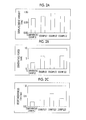
- Fig. 3 is a graph of the displacement amounts (here, the displacement amount pp indicates the displacement amount obtained by adding the displacement amount 0 p when the polymer actuator element illustrated in Fig. 1 is displaced from the normal condition illustrated with solid lines of Fig. 1 in the upper direction of the drawing and the displacement amount when the polymer actuator element is displaced from the normal condition in the lower direction of the drawing), the generating force, and the responsiveness of the comparative example and Example 4 presented in Table 2.
- the polymer actuator element of Example 4 has a greater displacement amount, a greater generating force, and more excellent responsiveness, than the polymer actuator element of the comparative example. It was found that the responsiveness of Example 4 was about three times greater than that of the comparative example.
- the time until the displacement amount was reduced by half by continuously applying the drive voltage of DC 2.0 V was measured. As illustrated in Table 2, the time of the reduction by half was 60 minutes or more in all the examples and the comparative example.
Landscapes
- Chemical & Material Sciences (AREA)
- Engineering & Computer Science (AREA)
- Analytical Chemistry (AREA)
- Combustion & Propulsion (AREA)
- Computer Hardware Design (AREA)
- Microelectronics & Electronic Packaging (AREA)
- Mechanical Engineering (AREA)
- General Engineering & Computer Science (AREA)
- Compositions Of Macromolecular Compounds (AREA)
- Carbon And Carbon Compounds (AREA)
Applications Claiming Priority (2)
| Application Number | Priority Date | Filing Date | Title |
|---|---|---|---|
| JP2012284032 | 2012-12-27 | ||
| PCT/JP2013/085189 WO2014104331A1 (fr) | 2012-12-27 | 2013-12-27 | Élément actionneur en polymère |
Publications (2)
| Publication Number | Publication Date |
|---|---|
| EP2945276A1 true EP2945276A1 (fr) | 2015-11-18 |
| EP2945276A4 EP2945276A4 (fr) | 2016-07-27 |
Family
ID=51021395
Family Applications (1)
| Application Number | Title | Priority Date | Filing Date |
|---|---|---|---|
| EP13868579.7A Withdrawn EP2945276A4 (fr) | 2012-12-27 | 2013-12-27 | Élément actionneur en polymère |
Country Status (4)
| Country | Link |
|---|---|
| US (1) | US9873609B2 (fr) |
| EP (1) | EP2945276A4 (fr) |
| JP (1) | JP6083052B2 (fr) |
| WO (1) | WO2014104331A1 (fr) |
Families Citing this family (7)
| Publication number | Priority date | Publication date | Assignee | Title |
|---|---|---|---|---|
| JP6420192B2 (ja) * | 2015-03-24 | 2018-11-07 | アルプス電気株式会社 | 炭素含有フィルムおよび炭素含有フィルムの製造方法ならびに高分子アクチュエータ素子および高分子アクチュエータ素子の製造方法 |
| WO2017033836A1 (fr) * | 2015-08-21 | 2017-03-02 | 国立研究開発法人産業技術総合研究所 | Actionneur polymère à base de nanocarbone |
| JP6542092B2 (ja) * | 2015-10-01 | 2019-07-10 | アルプスアルパイン株式会社 | 高分子アクチュエータ |
| US10813257B2 (en) * | 2016-09-05 | 2020-10-20 | Nec Corporation | Electromagnetic wave absorbing material |
| KR102561358B1 (ko) | 2017-05-18 | 2023-08-01 | 다우 도레이 캄파니 리미티드 | 플루오로알킬기 함유 경화성 오가노폴리실록산 조성물, 이의 경화물 및 당해 경화물을 구비한 트랜스듀서 등 |
| WO2020116440A1 (fr) | 2018-12-07 | 2020-06-11 | ダウ・東レ株式会社 | Composition d'organopolysiloxane durcissable, produit durci associé, transducteur et analogue équipés dudit produit durci |
| US20260078222A1 (en) | 2022-10-05 | 2026-03-19 | Dow Toray Co., Ltd. | Curable organopolysiloxane composition for transducers, cured product of same, and transducer and others each provided with said cured product |
Family Cites Families (12)
| Publication number | Priority date | Publication date | Assignee | Title |
|---|---|---|---|---|
| JP2005163229A (ja) * | 2003-12-03 | 2005-06-23 | Japan Science & Technology Agency | カーボンナノファイバーとその製造方法 |
| JP4277103B2 (ja) * | 2004-02-03 | 2009-06-10 | 国立大学法人信州大学 | カーボンナノファイバーを用いる高分子アクチュエータ |
| WO2010029992A1 (fr) | 2008-09-12 | 2010-03-18 | アルプス電気株式会社 | Actionneur polymère |
| EP2416488B1 (fr) * | 2009-03-31 | 2019-03-06 | Daikin Industries, Ltd. | Film d'électrode pour élément d'actionnement polymère et élément d'actionnement polymère la comprenant |
| JP2011114140A (ja) * | 2009-11-26 | 2011-06-09 | Teijin Ltd | 電極材料、その製造方法、およびその電極材料を用いた電気化学キャパシタ |
| JP5733938B2 (ja) * | 2009-12-08 | 2015-06-10 | キヤノン株式会社 | アクチュエータ |
| JP5523553B2 (ja) * | 2010-03-24 | 2014-06-18 | アルプス電気株式会社 | 高分子アクチュエータおよびその製造方法 |
| EP2400573A1 (fr) * | 2010-06-23 | 2011-12-28 | Bayer MaterialScience AG | Convertisseur électromécanique, son procédé de fabrication et d'utilisation |
| JP2012095520A (ja) * | 2010-10-01 | 2012-05-17 | Canon Inc | アクチュエータ |
| JP2012135156A (ja) * | 2010-12-22 | 2012-07-12 | Canon Inc | アクチュエータ |
| JP6128508B2 (ja) * | 2011-07-07 | 2017-05-17 | 国立研究開発法人産業技術総合研究所 | カーボンナノファイバーアクチュエータ |
| WO2014119166A1 (fr) * | 2013-01-30 | 2014-08-07 | 東海ゴム工業株式会社 | Transducteur souple |
-
2013
- 2013-12-27 JP JP2014554607A patent/JP6083052B2/ja active Active
- 2013-12-27 WO PCT/JP2013/085189 patent/WO2014104331A1/fr not_active Ceased
- 2013-12-27 EP EP13868579.7A patent/EP2945276A4/fr not_active Withdrawn
-
2015
- 2015-06-26 US US14/752,496 patent/US9873609B2/en active Active
Also Published As
| Publication number | Publication date |
|---|---|
| JP6083052B2 (ja) | 2017-02-22 |
| US20150298963A1 (en) | 2015-10-22 |
| JPWO2014104331A1 (ja) | 2017-01-19 |
| US9873609B2 (en) | 2018-01-23 |
| WO2014104331A1 (fr) | 2014-07-03 |
| EP2945276A4 (fr) | 2016-07-27 |
Similar Documents
| Publication | Publication Date | Title |
|---|---|---|
| EP2945276A1 (fr) | Élément actionneur en polymère | |
| JP6128508B2 (ja) | カーボンナノファイバーアクチュエータ | |
| US8994246B2 (en) | Actuator | |
| JP5110574B2 (ja) | 高アスペクト比のカーボンナノチューブとイオン液体から構成される導電性薄膜、アクチュエータ素子 | |
| JP5733938B2 (ja) | アクチュエータ | |
| US8779646B2 (en) | Actuator | |
| US20110133607A1 (en) | Polymer actuator containing graphene and method of preparing the same | |
| JP5046127B2 (ja) | 高アスペクト比のカーボンナノチューブとイオン液体から構成される導電性薄膜、アクチュエータ素子 | |
| Flouda et al. | Structural reduced graphene oxide supercapacitors mechanically enhanced with tannic acid | |
| CN102150354A (zh) | 高分子驱动器 | |
| JP5004078B2 (ja) | 高アスペクト比のカーボンナノチューブを用いた高配向性電極によるアクチュエータ素子 | |
| JP6270273B2 (ja) | 高分子アクチュエータ素子、高分子アクチュエータ素子用電極層、高分子アクチュエータ素子用電極層の製造方法、及び、高分子アクチュエータ素子の製造方法 | |
| JP2008204824A (ja) | 炭素繊維シート及びその製造方法 | |
| JP4568885B2 (ja) | 高強度、高導電性薄膜によるアクチュエータ素子及びその製造方法 | |
| Chen et al. | Multilayered polypyrrole-coated carbon nanotubes to improve functional stability and electrical properties of neural electrodes | |
| JP5831926B2 (ja) | 高分子アクチュエータ素子及びその製造方法 | |
| KR20100032782A (ko) | 탄소집합체가 혼입된 이온성 고분자 구동기 및 제조방법 | |
| KR100963571B1 (ko) | Spse 결합체 기반 전기 활성 고분자 작동기 및 이의 제조 방법 | |
| JP4863297B2 (ja) | カーボンナノチューブを用いた高強度、高導電性薄膜およびアクチュエータ素子製造方法 | |
| Terasawa et al. | Superior performance of a vapor grown carbon fiber polymer actuator containing ruthenium oxide over a single-walled carbon nanotube | |
| JP4974700B2 (ja) | 炭素繊維シート及びその製造方法 | |
| JP6619875B2 (ja) | 積層構造体、高分子アクチュエータ素子、センサ素子、および機器 | |
| JP2013021765A (ja) | アクチュエータ素子の駆動方法及び製造方法 | |
| Huang et al. | Synthesis and Characterization of Multi-Walled Carbon Nanotube/Graphene Nanoplatelet Hybrid | |
| ENERGY | Flexible and conductive MXene films and nanocomposites with high capacitance |
Legal Events
| Date | Code | Title | Description |
|---|---|---|---|
| PUAI | Public reference made under article 153(3) epc to a published international application that has entered the european phase |
Free format text: ORIGINAL CODE: 0009012 |
|
| 17P | Request for examination filed |
Effective date: 20150717 |
|
| AK | Designated contracting states |
Kind code of ref document: A1 Designated state(s): AL AT BE BG CH CY CZ DE DK EE ES FI FR GB GR HR HU IE IS IT LI LT LU LV MC MK MT NL NO PL PT RO RS SE SI SK SM TR |
|
| AX | Request for extension of the european patent |
Extension state: BA ME |
|
| DAX | Request for extension of the european patent (deleted) | ||
| A4 | Supplementary search report drawn up and despatched |
Effective date: 20160627 |
|
| RIC1 | Information provided on ipc code assigned before grant |
Ipc: C08K 7/02 20060101ALI20160621BHEP Ipc: C08K 3/04 20060101ALI20160621BHEP Ipc: C08L 101/00 20060101ALI20160621BHEP Ipc: H02N 11/00 20060101AFI20160621BHEP |
|
| RAP1 | Party data changed (applicant data changed or rights of an application transferred) |
Owner name: ALPS ALPINE CO., LTD. Owner name: NATIONAL INSTITUTE OF ADVANCED INDUSTRIAL SCIENCE |
|
| 17Q | First examination report despatched |
Effective date: 20191031 |
|
| STAA | Information on the status of an ep patent application or granted ep patent |
Free format text: STATUS: THE APPLICATION IS DEEMED TO BE WITHDRAWN |
|
| 18D | Application deemed to be withdrawn |
Effective date: 20200311 |