EP2945293A1 - Gestion de réseau de communication sans fil - Google Patents
Gestion de réseau de communication sans fil Download PDFInfo
- Publication number
- EP2945293A1 EP2945293A1 EP14168168.4A EP14168168A EP2945293A1 EP 2945293 A1 EP2945293 A1 EP 2945293A1 EP 14168168 A EP14168168 A EP 14168168A EP 2945293 A1 EP2945293 A1 EP 2945293A1
- Authority
- EP
- European Patent Office
- Prior art keywords
- communication network
- user equipments
- wireless communication
- connectivity
- emf
- Prior art date
- Legal status (The legal status is an assumption and is not a legal conclusion. Google has not performed a legal analysis and makes no representation as to the accuracy of the status listed.)
- Granted
Links
Images
Classifications
-
- H—ELECTRICITY
- H04—ELECTRIC COMMUNICATION TECHNIQUE
- H04B—TRANSMISSION
- H04B1/00—Details of transmission systems, not covered by a single one of groups H04B3/00 - H04B13/00; Details of transmission systems not characterised by the medium used for transmission
- H04B1/38—Transceivers, i.e. devices in which transmitter and receiver form a structural unit and in which at least one part is used for functions of transmitting and receiving
- H04B1/3827—Portable transceivers
- H04B1/3833—Hand-held transceivers
- H04B1/3838—Arrangements for reducing RF exposure to the user, e.g. by changing the shape of the transceiver while in use
-
- H—ELECTRICITY
- H04—ELECTRIC COMMUNICATION TECHNIQUE
- H04W—WIRELESS COMMUNICATION NETWORKS
- H04W72/00—Local resource management
- H04W72/50—Allocation or scheduling criteria for wireless resources
- H04W72/51—Allocation or scheduling criteria for wireless resources based on terminal or device properties
-
- H—ELECTRICITY
- H04—ELECTRIC COMMUNICATION TECHNIQUE
- H04W—WIRELESS COMMUNICATION NETWORKS
- H04W72/00—Local resource management
- H04W72/50—Allocation or scheduling criteria for wireless resources
- H04W72/54—Allocation or scheduling criteria for wireless resources based on quality criteria
- H04W72/542—Allocation or scheduling criteria for wireless resources based on quality criteria using measured or perceived quality
-
- H—ELECTRICITY
- H04—ELECTRIC COMMUNICATION TECHNIQUE
- H04W—WIRELESS COMMUNICATION NETWORKS
- H04W72/00—Local resource management
- H04W72/50—Allocation or scheduling criteria for wireless resources
- H04W72/56—Allocation or scheduling criteria for wireless resources based on priority criteria
- H04W72/563—Allocation or scheduling criteria for wireless resources based on priority criteria of the wireless resources
-
- H—ELECTRICITY
- H04—ELECTRIC COMMUNICATION TECHNIQUE
- H04W—WIRELESS COMMUNICATION NETWORKS
- H04W36/00—Hand-off or reselection arrangements
- H04W36/16—Performing reselection for specific purposes
-
- H—ELECTRICITY
- H04—ELECTRIC COMMUNICATION TECHNIQUE
- H04W—WIRELESS COMMUNICATION NETWORKS
- H04W36/00—Hand-off or reselection arrangements
- H04W36/16—Performing reselection for specific purposes
- H04W36/22—Performing reselection for specific purposes for handling the traffic
Definitions
- Embodiments of the present invention relate to wireless communication network management.
- a wireless communication network management method for managing network connectivity of user equipments connected to a first wireless communication network, which method comprises making a decision as to whether to change a distribution of user equipments across connectivity paths in the first wireless communication network, when it is desired to effect a change in, or to maintain, a value of a measure of electromagnetic field exposure experienced by a population of equipment users as a result of the first wireless communication network.
- EMF noise floor any number of sources external to the network over which network providers have no control
- the second component is variable and is caused by all the elements within the network under consideration, including base-stations and access-points, as well as UEs.
- Adverse effects on the network, or other networks to which the UEs have access, which would result from changing the distribution of UEs across connectivity paths in the network, can be avoided using a network management method embodying the present invention. For example, the impact of redistribution on load, signalling overhead, etc. in the network(s) can be taken into consideration.
- connectivity paths which are dependent upon a set of (potentially very complex) parameters, comprise for example:
- Each connectivity path has an associated EMF exposure impact on equipment users, which can differ from path to path.
- the decision to change the distribution of UEs may be made in dependence upon one or more of: (i) a number of connectivity paths, in the first wireless communication network or one or more other wireless communication networks, available to the user equipments; (ii) the current value of the EMF exposure measure determined for the population of equipment users; (iii) geographical proximity of the user equipments to each other; (iv) the current value of an individual EMF exposure measure of one or more equipment users; (v) a change, or predicted change, in the EMF exposure measure, (vi) one or more performance criteria of the first communication network, (vii) changes in the distribution of user equipments across connectivity paths in the first wireless communication network or one or more other wireless communication networks; and (viii) changes in the population of equipment users.
- performance criteria include (but are not limited to) channel conditions, QoS and SINR (signal-to-noise ratio).
- a method embodying the first aspect of the invention may further comprise, when the decision is to change the distribution of user equipments, changing the distribution so as to tend to return the value of the EMF exposure measure of the population to a reference value of the EMF exposure measure which is commensurate with a quality of service metric of the user equipments having at least a predetermined value.
- the distribution may be changed by: (i) transferring at least one of the user equipments from a connectivity path in the first communication network to a connectivity path in a second wireless communication network available to that user equipment, and/or (ii) transferring at least one of the user equipments from a first connectivity path in the first communication network to a second, different, connectivity path in the first communication network.
- Connectivity paths in the first or each wireless communication network available to the user equipments may be ranked in accordance with a ranking factor, and changing the distribution may comprise transferring at least one of the user equipments to the highest-ranked available connectivity path.
- the ranking factor of each connectivity path may be dependent upon the anticipated effect of transferring user equipment to the connectivity path concerned on one or more of: (i) the value of the EMF exposure measure for the population of equipment users which would remain in the first wireless communication network after the transfer; (ii) one or more performance criteria of the first wireless communication network; and (iii) the value of an individual EMF exposure measure for the user of the equipment.
- the method may further comprise allocating the user equipments to one or more groups, ranking each of the resulting groups and identifying the highest-ranked group, and collectively changing the distribution across the connectivity paths of all the user equipments in the highest-ranked group.
- user equipments may be allocated to groups according to one or more of: (i) the number and/or type of connectivity paths shared by the group; (ii) the level of EMF exposure contributed by each user equipment in the group; (iii) quality of service requirements shared by the group; and (iv) a shared ability to enable a reduction in signalling overhead upon transfer of the user equipment to another connectivity path.
- a distribution of user equipments across connectivity paths in the first wireless communication network may be changed based on a measure of EMF exposure experienced by a population of equipment users as a result of the first wireless communication network.
- a wireless communication network management system for managing network connectivity of user equipments connected to a first wireless communication network, which system comprises apparatus configured to make a decision as to whether to change a distribution of user equipments across connectivity paths in the first wireless communication network, when it is desired to effect a change in, or to maintain, a value of a measure of electromagnetic field (EMF) exposure experienced by a population of equipment users as a result of the first wireless communication network.
- EMF electromagnetic field
- the apparatus may be operable to make the decision in dependence upon one or more of: (i) a number of connectivity paths, in the first wireless communication network or one or more other wireless communication networks, available to the user equipments; (ii) the current value of the EMF exposure measure determined for the population of equipment users; (iii) geographical proximity of the user equipments to each other; (iv) the current value of an individual EMF exposure measure of one or more equipment users; (v) a change, or predicted change, in the EMF exposure measure, (vi) one or more performance criteria of the first communication network, (vii) changes in the distribution of user equipments across connectivity paths in the first wireless communication network or one or more other wireless communication networks; and (viii) changes in the population of equipment users.
- the system may be operable to change the distribution so as to tend to return the value of the EMF exposure measure of the population to a reference value of the EMF exposure measure which is commensurate with a quality of service metric of the user equipments having at least a predetermined value.
- a system embodying the second aspect of the present invention may further comprise control means operable, when the decision is to change the distribution of user equipments, to change the distribution by bringing about (i) transfer of at least one of the user equipments from a connectivity path in the first communication network to a connectivity path in a second wireless communication network available to that user equipment, and/or (ii) transfer of at least one of the user equipments from a first connectivity path in the first communication network to a second, different, connectivity path in the first communication network.
- Connectivity paths in the first or each wireless communication network available to the user equipments may be ranked in accordance with a ranking factor, and the control means are operable to bring about transfer of at least one of the user equipments to the highest-ranked available connectivity path.
- the ranking factor of each connectivity path may be dependent upon the anticipated effect of transferring user equipment to the connectivity path concerned on one or more of: (i) the value of the EMF exposure measure for the population of equipment users which would remain in the first wireless communication network after the transfer; (ii) one or more performance criteria of the first wireless communication network; and (iii) the value of an individual EMF exposure measure for the user of the equipment.
- the apparatus may be operable to consider at least some of the user equipments as a group for the purpose of making the decision.
- the apparatus may be operable to allocate the user equipments to one or more groups, rank each of the resulting groups and identify the highest-ranked group, and collectively change the distribution across the connectivity paths of all the user equipments in the highest-ranked group.
- User equipments may be allocated to groups according to one or more of: (i) the number and/or type of connectivity paths shared by the group; (ii) the level of EMF exposure contributed by each user equipment in the group; (iii) quality of service requirements shared by the group; and (iv) a shared ability to enable a reduction in signalling overhead upon transfer of the user equipment to another connectivity path.
- a computer program which, when run on a computer, causes that computer to carry out a method embodying the first aspect of the present invention.
- the EMF exposure measure is the weighted sum of the SARs, where the weighting is done based on user characteristics and/or morphologies and/or preferences with regard to EMF exposure, but is not limited to this.
- the present invention utilises the fact that, in most urban and sub-urban areas, the wireless environment is multi-RAT (multi-Radio Access Technology), meaning that to most UEs at least two wireless connectivity paths are available.
- multi-RAT multi-Radio Access Technology
- a decision is made as to whether to change a distribution of user equipments across connectivity paths in a wireless communication network, when it is desired to effect a change in, or to maintain, a value of a measure of EMF exposure experienced by a population of equipment users as a result of the wireless communication network.
- a directed change in the value of an EMF exposure measure of a population of equipment users may be desirable in a number of different circumstances.
- the value of the measure may have increased up to or beyond, or decreased below, a preset level, or have changed by more than a preset percentage over the last value calculated for the measure.
- action to maintain a value of the EMF exposure measure may be taken if an undesirable change in the value of the measure is anticipated, owing to expected changes in one or more factors affecting it.
- a value for the EMF exposure measure for a population of equipment users can be determined, at regular or irregular intervals, for example by summing the estimated (or actual measured) EMF exposure resulting from each UE and that from other elements in the network.
- each UE and hence its user
- a predefined EMF exposure class indicating the level of EMF exposure experienced by a user of that UE based on the connectivity path employed by the UE.
- the determined value of the EMF exposure measure for the population can be compared to a reference value for the measure.
- the distribution may be changed so as to tend to return the value of the EMF exposure measure of the population to a reference value of the EMF exposure measure which is commensurate with a quality of service metric of the user equipments having at least a predetermined value.
- the system has an "equilibrium state" where the exposure is minimised for given QoS.
- the "equilibrium state” may be defined in terms of population exposure for a given environment, such as urban outdoor, indoor campus, rural, etc, at a given time, such as morning/afternoon/night.
- the decision to change the distribution of UEs across connectivity paths in the network may be dependent upon one or more items of decision data comprising, for example: (i) a number of connectivity paths, in the first wireless communication network or one or more other wireless communication networks, available to the user equipments; (ii) the current value of the EMF exposure measure determined for the population of equipment users; (iii) geographical proximity of the user equipments to each other; (iv) the current value of an individual EMF exposure measure of one or more equipment users; (v) a change, or a predicted change, in the EMF exposure measure, (vi) one or more performance criteria of the first communication network, (vii) changes in the distribution of user equipments across connectivity paths in the first wireless communication network or one or more other wireless communication networks; and (vii) changes in the population of equipment users.
- the number of available connectivity paths is comparatively low (for example, if there is only one alternative, say from 3G to 2G), then a redistribution of UEs will not be performed by default, perhaps only if the number of users affected is high enough so as to reduce the population exposure by a certain predefined percentage, or if QoS could not be preserved otherwise. This ensures that the number of users switched onto the same connectivity path is not such that the connectivity path is overloaded, unless a certain "necessity" criterion is satisfied.
- a decision to redistribute UEs across the connectivity paths could be taken if, based on geographical proximity of UEs, it were advantageous (for example, because of reduced signalling overhead) to offload a group of users, for example from a single macro eNB to a single WiFi AP.
- Grouping of UEs for vertical handover can be advantageous.
- vertical handover exploits a multi-RAT environment to locally select the best access technology for a given UE, typical optimization parameters being the user spectral efficiency, load balancing, and energy saving.
- At least some of the user equipments are considered as a group for the purpose of making a decision as to whether to change the distribution of UEs across the available connectivity paths. This may be done, for example, by allocating the user equipments to one or more groups, ranking each of the resulting groups on the basis of group ranking data and identifying the highest-ranked group, and collectively changing the distribution across the connectivity paths of all the user equipments in the highest-ranked group.
- UEs may be grouped according to one or more items of grouping data comprising: (i) the number and/or type of connectivity paths shared by the group; (ii) the level of EMF exposure contributed by each user equipment in the group; (iii) quality of service or other performance requirements shared by the group; and (iv) a shared ability to enable a reduction in signalling overhead upon transfer of the user equipment to another connectivity path (e.g. a shared ability to broadcast a message to switch to another wireless communication network).
- grouping data comprising: (i) the number and/or type of connectivity paths shared by the group; (ii) the level of EMF exposure contributed by each user equipment in the group; (iii) quality of service or other performance requirements shared by the group; and (iv) a shared ability to enable a reduction in signalling overhead upon transfer of the user equipment to another connectivity path (e.g. a shared ability to broadcast a message to switch to another wireless communication network).
- the distribution of UEs across connectivity paths in the first wireless communication network is changed in order to effect a change in a measure of EMF exposure experienced by a population of equipment users as a result of the first wireless communication network.
- Changing the distribution may comprise one or more of: (i) transferring at least one of the user equipments from a connectivity path in the first communication network to a connectivity path in a second wireless communication network available to that user equipment; and (ii) transferring at least one of the user equipments from a first connectivity path in the first communication network to a second, different, connectivity path in the first communication network.
- Connectivity paths in the first or each wireless communication network available to the UEs may be ranked in accordance with a ranking factor.
- changing the distribution may comprise transferring at least one of the user equipments to the highest-ranked available connectivity path.
- the ranking factor of each connectivity path may be dependent upon the anticipated effect of transferring user equipment to the connectivity path concerned on one or more of: (i) the value of the EMF exposure measure for the population of equipment users which would remain in the first wireless communication network after the transfer; (ii) one or more performance criteria of the first wireless communication network; and (iii) the value of an individual EMF exposure measure for the user of the equipment.
- the ranking factor is dependent upon one or more of:
- An embodiment of this aspect of the invention employs specific ordering of connectivity paths/RATs in terms of their EMF impact as well as potential "disturbance" to system (embodied in such parameters as signalling load required for potential switching, the ease of grouping users for group vertical handover, and so on) in order to select a connectivity path/RAT which will achieve the greatest change in the value of the EMF exposure measure for the population. For example, each available mechanism that would help alleviate EMF exposure, or restore the system to its previous "equilibrium state", may be ranked, where for a given user distribution in an area and their data traffic the minimum possible population exposure is achieved.
- Embodiments of the present invention may enable network management strategies which achieve a reduction in population exposure based on varying users' distributions across various RATs (Radio Access Technologies) in an area. More specifically, with a view to reducing the population exposure, network/radio link configurations of UEs in a network may be changed in response to changes in the network, for example changes in the distribution and/or type of users across various types of connectivity paths (such as wideband/WiFi, home/office, on the move/stationary users) and/or changes in "individual” EMF exposure, e.g. which exposure "class" a user belongs to compared to where he or she was before.
- RATs Radio Access Technologies
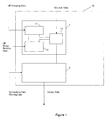
- a wireless communication network management system 10, for managing network connectivity of user equipments connected to a first wireless communication network, which embodies the second aspect of the present invention is shown in Figure 1 .
- the system 10 comprises decision apparatus 1 which includes a decision unit 13 configured to make a decision as to whether to change a distribution of user equipments across connectivity paths in the first wireless communication network, when it is desired to effect a change in, or to maintain, a value of a measure of electromagnetic field (EMF) exposure experienced by a population of equipment users as a result of the first wireless communication network.
- EMF electromagnetic field
- the decision unit 13 receives decision data in dependence upon which it is operable to make the decision.
- the decision data may comprise one or more of: (i) a number of connectivity paths, in the first wireless communication network or one or more other wireless communication networks, available to the user equipments; (ii) the current value of the EMF exposure measure determined for the population of equipment users; (iii) geographical proximity of the user equipments to each other; (iv) the current value of an individual EMF exposure measure of one or more equipment users; (v) a change, or predicted change, in the EMF exposure measure, (vi) one or more performance criteria of the first communication network, (vii) changes in the distribution of user equipments across connectivity paths in the first wireless communication network or one or more other wireless communication networks; and (viii) changes in the population of equipment users.
- the system 10 further comprises control means 4.
- the control means 4 are operable, when the decision of the decision unit 1 is to change the distribution of user equipments, to change the distribution by bringing about (i) transfer of at least one of the user equipments from a connectivity path in the first communication network to a connectivity path in a second wireless communication network available to that user equipment, and/or (ii) transfer of at least one of the user equipments from a first connectivity path in the first communication network to a second, different, connectivity path in the first communication network.
- the control means 4 receive connectivity path ranking data on the basis of which connectivity paths in the first or each wireless communication network available to the user equipments are ranked in accordance with a ranking factor.
- the control means 4 are operable to bring about transfer of at least one of the user equipments to the highest-ranked available connectivity path.
- the ranking factor of each connectivity path may be dependent upon the anticipated effect of transferring user equipment to the connectivity path concerned on one or more of: (i) the value of the EMF exposure measure for the population of equipment users which would remain in the first wireless communication network after the transfer; (ii) one or more performance criteria of the first wireless communication network; and (iii) the value of an individual EMF exposure measure for the user of the equipment.
- the decision apparatus 1 further comprises a UE grouping unit 11 and a UE group ranking unit 12, whereby the decision apparatus 1 is operable to consider at least some of the user equipments as a group for the purpose of making the decision.
- the UE grouping unit 11 is operable to allocate the user equipments to one or more groups on the basis of UE grouping data, such as one or more of: (i) the number and/or type of connectivity paths shared by the group; (ii) the level of EMF exposure contributed by each user equipment in the group; (iii) quality of service requirements shared by the group; and (iv) a shared ability to enable a reduction in signalling overhead upon transfer of the user equipment to another connectivity path.
- the UE group ranking unit 12 is operable to rank each of the resulting groups and identify the highest-ranked group.
- the decision unit 13 is configured to decide to collectively change the distribution across the connectivity paths of all the user equipments in the highest-ranked group.
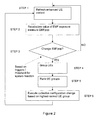
- a method embodying an aspect of the present invention in which users are grouped and any action taken is done on a group level, will now be described with reference to Figure 2 . Additional/alterative ways of grouping users and actions subsequently performed are envisaged to those described in the following example. Grouping of users is not a feature essential to the invention, but it can be advantageous.
- an enhanced UE context is refreshed.
- users of wireless devices or UEs are assigned respective EMF exposure levels from a small number of predefined levels (in its simplest form, only two levels, low EMF and "not-so-low", or higher, EMF).
- each user has a QoS requirement.
- Users are also assigned a "number of degrees of freedom" which is the number of connectivity paths available to the UE. This can be the number of different networks a UE can connect to (WiFi/2G/3G/4G), cells/layers the UE sees within a RAT, the number of paths available based on MIMO/CoMP.
- the number of degrees of freedom can be limited in a further refinement to take account of user preferences regarding the trade-off between reduced EMF exposure vs. QoS requirements.
- EMF equi Population Exposure of a population of equipment users in a target area " A " at a state of equilibrium is denoted by EMF equi . If the Population Exposure of a population of equipment users in a target area " A " at a state of equilibrium is denoted by EMF equi , then a threshold EMF thres is set such that at any given time, the condition must be satisfied: EMFpop ⁇ EMF equi + EMF thres
- EMF thres may depend on a number of parameters that include but are not limited to:
- the parameters may be ranked using a weighting factor.
- a step-size EMF step which denotes a level increase in EMF pop that should trigger consideration of UE redistribution, is also set.
- the value of EMF step depends on parameters such as:
- Step 2 of the method of Figure 2 comprises recalculating a value for the EMF exposure measure EMFpop.
- EMFpop is monitored at regular, predefined intervals t int .
Landscapes
- Engineering & Computer Science (AREA)
- Computer Networks & Wireless Communication (AREA)
- Signal Processing (AREA)
- Quality & Reliability (AREA)
- Mobile Radio Communication Systems (AREA)
Priority Applications (4)
| Application Number | Priority Date | Filing Date | Title |
|---|---|---|---|
| EP14168168.4A EP2945293B1 (fr) | 2014-05-13 | 2014-05-13 | Gestion de réseau de communication sans fil |
| PCT/EP2014/072810 WO2015172855A1 (fr) | 2014-05-13 | 2014-10-24 | Gestion de réseau de communication sans fil |
| JP2016565210A JP6361746B2 (ja) | 2014-05-13 | 2014-10-24 | 無線通信ネットワーク管理 |
| US15/347,003 US20170054465A1 (en) | 2014-05-13 | 2016-11-09 | Wireless communication network management |
Applications Claiming Priority (1)
| Application Number | Priority Date | Filing Date | Title |
|---|---|---|---|
| EP14168168.4A EP2945293B1 (fr) | 2014-05-13 | 2014-05-13 | Gestion de réseau de communication sans fil |
Publications (2)
| Publication Number | Publication Date |
|---|---|
| EP2945293A1 true EP2945293A1 (fr) | 2015-11-18 |
| EP2945293B1 EP2945293B1 (fr) | 2018-10-17 |
Family
ID=50732813
Family Applications (1)
| Application Number | Title | Priority Date | Filing Date |
|---|---|---|---|
| EP14168168.4A Not-in-force EP2945293B1 (fr) | 2014-05-13 | 2014-05-13 | Gestion de réseau de communication sans fil |
Country Status (4)
| Country | Link |
|---|---|
| US (1) | US20170054465A1 (fr) |
| EP (1) | EP2945293B1 (fr) |
| JP (1) | JP6361746B2 (fr) |
| WO (1) | WO2015172855A1 (fr) |
Cited By (1)
| Publication number | Priority date | Publication date | Assignee | Title |
|---|---|---|---|---|
| GB2543548A (en) * | 2015-10-21 | 2017-04-26 | Fujitsu Ltd | EMF impact triggered reporting and cell selection |
Families Citing this family (2)
| Publication number | Priority date | Publication date | Assignee | Title |
|---|---|---|---|---|
| US10624016B2 (en) * | 2015-09-23 | 2020-04-14 | Convida Wireless, Llc | Aggregated handover in integrated small cell and WiFi networks |
| US20250063435A1 (en) * | 2023-08-17 | 2025-02-20 | Viavi Solutions Inc. | Electromagnetic field (emf) measurement with maximized network throughput |
Citations (4)
| Publication number | Priority date | Publication date | Assignee | Title |
|---|---|---|---|---|
| US20030228875A1 (en) * | 2002-06-05 | 2003-12-11 | Alapuranen Pertti O. | MAC protocol with duty-cycle limitation for portable devices in a wireless Ad-Hoc communication network and a method for using the same |
| WO2012067563A1 (fr) * | 2010-11-16 | 2012-05-24 | Telefonaktiebolaget L M Ericsson (Publ) | Commande dynamique du débit d'absorption spécifique, afin de rendre minimale l'exposition aux rf |
| EP2670054A1 (fr) * | 2012-05-31 | 2013-12-04 | Fujitsu Limited | Commande de puissance de liaison montante sensible au champ électromagnétique |
| EP2670197A1 (fr) * | 2012-05-31 | 2013-12-04 | Fujitsu Limited | Déclencheurs à base de liaison montante et de champ electromagnetique pour transfert |
Family Cites Families (2)
| Publication number | Priority date | Publication date | Assignee | Title |
|---|---|---|---|---|
| WO2013141791A1 (fr) * | 2012-03-19 | 2013-09-26 | Telefonaktiebolaget L M Ericsson (Publ) | Procédés et appareil pour ajuster un niveau maximum de puissance de sortie |
| US10893488B2 (en) * | 2013-06-14 | 2021-01-12 | Microsoft Technology Licensing, Llc | Radio frequency (RF) power back-off optimization for specific absorption rate (SAR) compliance |
-
2014
- 2014-05-13 EP EP14168168.4A patent/EP2945293B1/fr not_active Not-in-force
- 2014-10-24 JP JP2016565210A patent/JP6361746B2/ja not_active Expired - Fee Related
- 2014-10-24 WO PCT/EP2014/072810 patent/WO2015172855A1/fr not_active Ceased
-
2016
- 2016-11-09 US US15/347,003 patent/US20170054465A1/en not_active Abandoned
Patent Citations (4)
| Publication number | Priority date | Publication date | Assignee | Title |
|---|---|---|---|---|
| US20030228875A1 (en) * | 2002-06-05 | 2003-12-11 | Alapuranen Pertti O. | MAC protocol with duty-cycle limitation for portable devices in a wireless Ad-Hoc communication network and a method for using the same |
| WO2012067563A1 (fr) * | 2010-11-16 | 2012-05-24 | Telefonaktiebolaget L M Ericsson (Publ) | Commande dynamique du débit d'absorption spécifique, afin de rendre minimale l'exposition aux rf |
| EP2670054A1 (fr) * | 2012-05-31 | 2013-12-04 | Fujitsu Limited | Commande de puissance de liaison montante sensible au champ électromagnétique |
| EP2670197A1 (fr) * | 2012-05-31 | 2013-12-04 | Fujitsu Limited | Déclencheurs à base de liaison montante et de champ electromagnetique pour transfert |
Cited By (1)
| Publication number | Priority date | Publication date | Assignee | Title |
|---|---|---|---|---|
| GB2543548A (en) * | 2015-10-21 | 2017-04-26 | Fujitsu Ltd | EMF impact triggered reporting and cell selection |
Also Published As
| Publication number | Publication date |
|---|---|
| JP6361746B2 (ja) | 2018-07-25 |
| EP2945293B1 (fr) | 2018-10-17 |
| US20170054465A1 (en) | 2017-02-23 |
| WO2015172855A1 (fr) | 2015-11-19 |
| JP2017520949A (ja) | 2017-07-27 |
Similar Documents
| Publication | Publication Date | Title |
|---|---|---|
| Addali et al. | Dynamic mobility load balancing for 5G small-cell networks based on utility functions | |
| KR101495557B1 (ko) | 확장된 son(확장된 자기 조직화 네트워크들)에 대한 분산된 정책 아키텍처 인에이블 | |
| EP2907340B1 (fr) | Procédé et dispositive pour contrôller individuellement un equipement utilisateur afin d'optimiser la qualité d'expérience (qoe) | |
| US9578605B2 (en) | Adjusting transmit power across a network | |
| US11290915B2 (en) | Systems and methods for granular beamforming across multiple portions of a radio access network based on user equipment information | |
| US11647457B2 (en) | Systems and methods for performance-aware energy saving in a radio access network | |
| US20140349660A1 (en) | Resource scheduling in a mobile communication network supporting machine-to-machine (m2m) and user equipment (ue) traffic | |
| US11304074B1 (en) | Systems and methods for orchestration and optimization of wireless networks | |
| US20240049060A1 (en) | First node, third node, and methods performed thereby, for handling quality of service in a communications network | |
| WO2016058932A1 (fr) | Dispositif et procédé pour commander un score de performances d'un dispositif de communication | |
| CN114731577B (zh) | 一种策略确定的方法、系统及装置 | |
| US20110064059A1 (en) | Apparatuses, Methods and Computer Program for Cell Reselection Evaluation | |
| US20120302244A1 (en) | Influencing Load Balancing Between Radio Access Technologies | |
| JP2019062510A (ja) | 管理装置及びその制御方法、並びにプログラム | |
| EP3329710B1 (fr) | Commande de l'activation de dispositifs de communication dans un réseau de communication sans fil | |
| WO2021201728A1 (fr) | Équipement utilisateur, nœud de réseau central et procédés dans un réseau de communications radio | |
| GB2489716A (en) | Multimode base station and method of controlling admission | |
| US20170054465A1 (en) | Wireless communication network management | |
| US9743316B2 (en) | Dynamic carrier load balancing | |
| EP3207734A1 (fr) | Contrôle de dispositifs de communication groupés | |
| EP3010277A1 (fr) | Dispositif et procede pour controler un score de performance d'un dispositif de communication | |
| Klessig et al. | Cell load-aware energy saving management in self-organizing networks | |
| US20260101248A1 (en) | Systems and methods for ai/ml-based handover thresholds for heterogeneous wireless networks |
Legal Events
| Date | Code | Title | Description |
|---|---|---|---|
| PUAI | Public reference made under article 153(3) epc to a published international application that has entered the european phase |
Free format text: ORIGINAL CODE: 0009012 |
|
| 17P | Request for examination filed |
Effective date: 20150216 |
|
| AK | Designated contracting states |
Kind code of ref document: A1 Designated state(s): AL AT BE BG CH CY CZ DE DK EE ES FI FR GB GR HR HU IE IS IT LI LT LU LV MC MK MT NL NO PL PT RO RS SE SI SK SM TR |
|
| AX | Request for extension of the european patent |
Extension state: BA ME |
|
| GRAP | Despatch of communication of intention to grant a patent |
Free format text: ORIGINAL CODE: EPIDOSNIGR1 |
|
| STAA | Information on the status of an ep patent application or granted ep patent |
Free format text: STATUS: GRANT OF PATENT IS INTENDED |
|
| INTG | Intention to grant announced |
Effective date: 20180607 |
|
| GRAS | Grant fee paid |
Free format text: ORIGINAL CODE: EPIDOSNIGR3 |
|
| GRAA | (expected) grant |
Free format text: ORIGINAL CODE: 0009210 |
|
| STAA | Information on the status of an ep patent application or granted ep patent |
Free format text: STATUS: THE PATENT HAS BEEN GRANTED |
|
| AK | Designated contracting states |
Kind code of ref document: B1 Designated state(s): AL AT BE BG CH CY CZ DE DK EE ES FI FR GB GR HR HU IE IS IT LI LT LU LV MC MK MT NL NO PL PT RO RS SE SI SK SM TR |
|
| REG | Reference to a national code |
Ref country code: GB Ref legal event code: FG4D |
|
| REG | Reference to a national code |
Ref country code: CH Ref legal event code: EP |
|
| REG | Reference to a national code |
Ref country code: IE Ref legal event code: FG4D |
|
| REG | Reference to a national code |
Ref country code: DE Ref legal event code: R096 Ref document number: 602014034137 Country of ref document: DE Ref country code: AT Ref legal event code: REF Ref document number: 1055200 Country of ref document: AT Kind code of ref document: T Effective date: 20181115 |
|
| REG | Reference to a national code |
Ref country code: NL Ref legal event code: MP Effective date: 20181017 |
|
| REG | Reference to a national code |
Ref country code: LT Ref legal event code: MG4D |
|
| REG | Reference to a national code |
Ref country code: AT Ref legal event code: MK05 Ref document number: 1055200 Country of ref document: AT Kind code of ref document: T Effective date: 20181017 |
|
| PG25 | Lapsed in a contracting state [announced via postgrant information from national office to epo] |
Ref country code: NL Free format text: LAPSE BECAUSE OF FAILURE TO SUBMIT A TRANSLATION OF THE DESCRIPTION OR TO PAY THE FEE WITHIN THE PRESCRIBED TIME-LIMIT Effective date: 20181017 |
|
| PG25 | Lapsed in a contracting state [announced via postgrant information from national office to epo] |
Ref country code: ES Free format text: LAPSE BECAUSE OF FAILURE TO SUBMIT A TRANSLATION OF THE DESCRIPTION OR TO PAY THE FEE WITHIN THE PRESCRIBED TIME-LIMIT Effective date: 20181017 Ref country code: AT Free format text: LAPSE BECAUSE OF FAILURE TO SUBMIT A TRANSLATION OF THE DESCRIPTION OR TO PAY THE FEE WITHIN THE PRESCRIBED TIME-LIMIT Effective date: 20181017 Ref country code: BG Free format text: LAPSE BECAUSE OF FAILURE TO SUBMIT A TRANSLATION OF THE DESCRIPTION OR TO PAY THE FEE WITHIN THE PRESCRIBED TIME-LIMIT Effective date: 20190117 Ref country code: NO Free format text: LAPSE BECAUSE OF FAILURE TO SUBMIT A TRANSLATION OF THE DESCRIPTION OR TO PAY THE FEE WITHIN THE PRESCRIBED TIME-LIMIT Effective date: 20190117 Ref country code: LT Free format text: LAPSE BECAUSE OF FAILURE TO SUBMIT A TRANSLATION OF THE DESCRIPTION OR TO PAY THE FEE WITHIN THE PRESCRIBED TIME-LIMIT Effective date: 20181017 Ref country code: FI Free format text: LAPSE BECAUSE OF FAILURE TO SUBMIT A TRANSLATION OF THE DESCRIPTION OR TO PAY THE FEE WITHIN THE PRESCRIBED TIME-LIMIT Effective date: 20181017 Ref country code: IS Free format text: LAPSE BECAUSE OF FAILURE TO SUBMIT A TRANSLATION OF THE DESCRIPTION OR TO PAY THE FEE WITHIN THE PRESCRIBED TIME-LIMIT Effective date: 20190217 Ref country code: LV Free format text: LAPSE BECAUSE OF FAILURE TO SUBMIT A TRANSLATION OF THE DESCRIPTION OR TO PAY THE FEE WITHIN THE PRESCRIBED TIME-LIMIT Effective date: 20181017 Ref country code: HR Free format text: LAPSE BECAUSE OF FAILURE TO SUBMIT A TRANSLATION OF THE DESCRIPTION OR TO PAY THE FEE WITHIN THE PRESCRIBED TIME-LIMIT Effective date: 20181017 Ref country code: PL Free format text: LAPSE BECAUSE OF FAILURE TO SUBMIT A TRANSLATION OF THE DESCRIPTION OR TO PAY THE FEE WITHIN THE PRESCRIBED TIME-LIMIT Effective date: 20181017 |
|
| PG25 | Lapsed in a contracting state [announced via postgrant information from national office to epo] |
Ref country code: SE Free format text: LAPSE BECAUSE OF FAILURE TO SUBMIT A TRANSLATION OF THE DESCRIPTION OR TO PAY THE FEE WITHIN THE PRESCRIBED TIME-LIMIT Effective date: 20181017 Ref country code: AL Free format text: LAPSE BECAUSE OF FAILURE TO SUBMIT A TRANSLATION OF THE DESCRIPTION OR TO PAY THE FEE WITHIN THE PRESCRIBED TIME-LIMIT Effective date: 20181017 Ref country code: PT Free format text: LAPSE BECAUSE OF FAILURE TO SUBMIT A TRANSLATION OF THE DESCRIPTION OR TO PAY THE FEE WITHIN THE PRESCRIBED TIME-LIMIT Effective date: 20190217 Ref country code: GR Free format text: LAPSE BECAUSE OF FAILURE TO SUBMIT A TRANSLATION OF THE DESCRIPTION OR TO PAY THE FEE WITHIN THE PRESCRIBED TIME-LIMIT Effective date: 20190118 Ref country code: RS Free format text: LAPSE BECAUSE OF FAILURE TO SUBMIT A TRANSLATION OF THE DESCRIPTION OR TO PAY THE FEE WITHIN THE PRESCRIBED TIME-LIMIT Effective date: 20181017 |
|
| REG | Reference to a national code |
Ref country code: DE Ref legal event code: R097 Ref document number: 602014034137 Country of ref document: DE |
|
| PG25 | Lapsed in a contracting state [announced via postgrant information from national office to epo] |
Ref country code: CZ Free format text: LAPSE BECAUSE OF FAILURE TO SUBMIT A TRANSLATION OF THE DESCRIPTION OR TO PAY THE FEE WITHIN THE PRESCRIBED TIME-LIMIT Effective date: 20181017 Ref country code: DK Free format text: LAPSE BECAUSE OF FAILURE TO SUBMIT A TRANSLATION OF THE DESCRIPTION OR TO PAY THE FEE WITHIN THE PRESCRIBED TIME-LIMIT Effective date: 20181017 Ref country code: IT Free format text: LAPSE BECAUSE OF FAILURE TO SUBMIT A TRANSLATION OF THE DESCRIPTION OR TO PAY THE FEE WITHIN THE PRESCRIBED TIME-LIMIT Effective date: 20181017 |
|
| PLBE | No opposition filed within time limit |
Free format text: ORIGINAL CODE: 0009261 |
|
| STAA | Information on the status of an ep patent application or granted ep patent |
Free format text: STATUS: NO OPPOSITION FILED WITHIN TIME LIMIT |
|
| PG25 | Lapsed in a contracting state [announced via postgrant information from national office to epo] |
Ref country code: SK Free format text: LAPSE BECAUSE OF FAILURE TO SUBMIT A TRANSLATION OF THE DESCRIPTION OR TO PAY THE FEE WITHIN THE PRESCRIBED TIME-LIMIT Effective date: 20181017 Ref country code: RO Free format text: LAPSE BECAUSE OF FAILURE TO SUBMIT A TRANSLATION OF THE DESCRIPTION OR TO PAY THE FEE WITHIN THE PRESCRIBED TIME-LIMIT Effective date: 20181017 Ref country code: SM Free format text: LAPSE BECAUSE OF FAILURE TO SUBMIT A TRANSLATION OF THE DESCRIPTION OR TO PAY THE FEE WITHIN THE PRESCRIBED TIME-LIMIT Effective date: 20181017 Ref country code: EE Free format text: LAPSE BECAUSE OF FAILURE TO SUBMIT A TRANSLATION OF THE DESCRIPTION OR TO PAY THE FEE WITHIN THE PRESCRIBED TIME-LIMIT Effective date: 20181017 |
|
| 26N | No opposition filed |
Effective date: 20190718 |
|
| PG25 | Lapsed in a contracting state [announced via postgrant information from national office to epo] |
Ref country code: SI Free format text: LAPSE BECAUSE OF FAILURE TO SUBMIT A TRANSLATION OF THE DESCRIPTION OR TO PAY THE FEE WITHIN THE PRESCRIBED TIME-LIMIT Effective date: 20181017 |
|
| REG | Reference to a national code |
Ref country code: CH Ref legal event code: PL |
|
| PG25 | Lapsed in a contracting state [announced via postgrant information from national office to epo] |
Ref country code: LI Free format text: LAPSE BECAUSE OF NON-PAYMENT OF DUE FEES Effective date: 20190531 Ref country code: MC Free format text: LAPSE BECAUSE OF FAILURE TO SUBMIT A TRANSLATION OF THE DESCRIPTION OR TO PAY THE FEE WITHIN THE PRESCRIBED TIME-LIMIT Effective date: 20181017 Ref country code: CH Free format text: LAPSE BECAUSE OF NON-PAYMENT OF DUE FEES Effective date: 20190531 |
|
| REG | Reference to a national code |
Ref country code: BE Ref legal event code: MM Effective date: 20190531 |
|
| PG25 | Lapsed in a contracting state [announced via postgrant information from national office to epo] |
Ref country code: LU Free format text: LAPSE BECAUSE OF NON-PAYMENT OF DUE FEES Effective date: 20190513 |
|
| PG25 | Lapsed in a contracting state [announced via postgrant information from national office to epo] |
Ref country code: TR Free format text: LAPSE BECAUSE OF FAILURE TO SUBMIT A TRANSLATION OF THE DESCRIPTION OR TO PAY THE FEE WITHIN THE PRESCRIBED TIME-LIMIT Effective date: 20181017 |
|
| PG25 | Lapsed in a contracting state [announced via postgrant information from national office to epo] |
Ref country code: IE Free format text: LAPSE BECAUSE OF NON-PAYMENT OF DUE FEES Effective date: 20190513 |
|
| PG25 | Lapsed in a contracting state [announced via postgrant information from national office to epo] |
Ref country code: BE Free format text: LAPSE BECAUSE OF NON-PAYMENT OF DUE FEES Effective date: 20190531 |
|
| PGFP | Annual fee paid to national office [announced via postgrant information from national office to epo] |
Ref country code: FR Payment date: 20200414 Year of fee payment: 7 Ref country code: DE Payment date: 20200428 Year of fee payment: 7 |
|
| PGFP | Annual fee paid to national office [announced via postgrant information from national office to epo] |
Ref country code: GB Payment date: 20200506 Year of fee payment: 7 |
|
| REG | Reference to a national code |
Ref country code: DE Ref legal event code: R082 Ref document number: 602014034137 Country of ref document: DE Representative=s name: HL KEMPNER PATENTANWALT, RECHTSANWALT, SOLICIT, DE |
|
| PG25 | Lapsed in a contracting state [announced via postgrant information from national office to epo] |
Ref country code: CY Free format text: LAPSE BECAUSE OF FAILURE TO SUBMIT A TRANSLATION OF THE DESCRIPTION OR TO PAY THE FEE WITHIN THE PRESCRIBED TIME-LIMIT Effective date: 20181017 |
|
| PG25 | Lapsed in a contracting state [announced via postgrant information from national office to epo] |
Ref country code: MT Free format text: LAPSE BECAUSE OF FAILURE TO SUBMIT A TRANSLATION OF THE DESCRIPTION OR TO PAY THE FEE WITHIN THE PRESCRIBED TIME-LIMIT Effective date: 20181017 Ref country code: HU Free format text: LAPSE BECAUSE OF FAILURE TO SUBMIT A TRANSLATION OF THE DESCRIPTION OR TO PAY THE FEE WITHIN THE PRESCRIBED TIME-LIMIT; INVALID AB INITIO Effective date: 20140513 |
|
| REG | Reference to a national code |
Ref country code: DE Ref legal event code: R119 Ref document number: 602014034137 Country of ref document: DE |
|
| GBPC | Gb: european patent ceased through non-payment of renewal fee |
Effective date: 20210513 |
|
| PG25 | Lapsed in a contracting state [announced via postgrant information from national office to epo] |
Ref country code: GB Free format text: LAPSE BECAUSE OF NON-PAYMENT OF DUE FEES Effective date: 20210513 Ref country code: DE Free format text: LAPSE BECAUSE OF NON-PAYMENT OF DUE FEES Effective date: 20211201 |
|
| PG25 | Lapsed in a contracting state [announced via postgrant information from national office to epo] |
Ref country code: FR Free format text: LAPSE BECAUSE OF NON-PAYMENT OF DUE FEES Effective date: 20210531 |
|
| PG25 | Lapsed in a contracting state [announced via postgrant information from national office to epo] |
Ref country code: MK Free format text: LAPSE BECAUSE OF FAILURE TO SUBMIT A TRANSLATION OF THE DESCRIPTION OR TO PAY THE FEE WITHIN THE PRESCRIBED TIME-LIMIT Effective date: 20181017 |