EP2946597B1 - Aufräumarbeiten bei einem lau-losen leitungsvermittelten fallback notruf - Google Patents
Aufräumarbeiten bei einem lau-losen leitungsvermittelten fallback notruf Download PDFInfo
- Publication number
- EP2946597B1 EP2946597B1 EP14700726.4A EP14700726A EP2946597B1 EP 2946597 B1 EP2946597 B1 EP 2946597B1 EP 14700726 A EP14700726 A EP 14700726A EP 2946597 B1 EP2946597 B1 EP 2946597B1
- Authority
- EP
- European Patent Office
- Prior art keywords
- user equipment
- circuit switched
- switched fallback
- emergency
- interface
- Prior art date
- Legal status (The legal status is an assumption and is not a legal conclusion. Google has not performed a legal analysis and makes no representation as to the accuracy of the status listed.)
- Active
Links
Images


Classifications
-
- H—ELECTRICITY
- H04—ELECTRIC COMMUNICATION TECHNIQUE
- H04W—WIRELESS COMMUNICATION NETWORKS
- H04W4/00—Services specially adapted for wireless communication networks; Facilities therefor
- H04W4/90—Services for handling of emergency or hazardous situations, e.g. earthquake and tsunami warning systems [ETWS]
-
- H—ELECTRICITY
- H04—ELECTRIC COMMUNICATION TECHNIQUE
- H04W—WIRELESS COMMUNICATION NETWORKS
- H04W36/00—Hand-off or reselection arrangements
- H04W36/0005—Control or signalling for completing the hand-off
- H04W36/0011—Control or signalling for completing the hand-off for data sessions of end-to-end connection
- H04W36/0022—Control or signalling for completing the hand-off for data sessions of end-to-end connection for transferring data sessions between adjacent core network technologies
- H04W36/00224—Control or signalling for completing the hand-off for data sessions of end-to-end connection for transferring data sessions between adjacent core network technologies between packet switched [PS] and circuit switched [CS] network technologies, e.g. circuit switched fallback [CSFB]
-
- H—ELECTRICITY
- H04—ELECTRIC COMMUNICATION TECHNIQUE
- H04W—WIRELESS COMMUNICATION NETWORKS
- H04W76/00—Connection management
- H04W76/50—Connection management for emergency connections
Definitions
- Communication systems may benefit from various aspects of emergency call handing. For example, wireless communication systems may benefit from clean up with respect to a fast return feature applied to an emergency call using circuit switched fallback, without a location area update.
- Circuit switched fallback (CSFB) in the long term evolution (LTE) of third generation partnership project (3GPP) can permit a user equipment (UE) to reuse circuit switched (CS) domain for a voice call.
- This can include an emergency (E911) call.
- release 10 R10
- a so-called “fast return” feature can be used to permit the user equipment to revert back immediately to LTE after the CS call is completed or the connection to the mobile switching center (MSC) is released.
- the user equipment For a mobile originated call using circuit switched fallback on a normal call, not an emergency call, the user equipment is conventionally required to first check the location area (LA) of the second or third generation (2/3G) cell that it has connected to. The user equipment then first performs a location area update (LAU), if this LA is different from the one that the user equipment has stored.
- LAU location area update
- This location area update procedure can ensure that the home location register (HLR) has the current serving node address, such as the address of the mobile switching center (MSC).
- This location area update can also update the LA that is stored inside the user equipment and is sent to a mobility management entity (MME) when the user equipment returns back to LTE.
- MME mobility management entity
- the MME can check this LA to determine whether an SGs interface needs to be re-established or not.
- the SGs interface can be the reference point between the MME and MSC server (MSS).
- the user equipment can immediately proceed with a circuit switched (CS) call using an international mobile subscriber identity (IMSI) without first performing a location area update procedure even when the LA of the serving cell is different from the one that the user equipment has stored internally.
- IMSI international mobile subscriber identity
- MSC can still proceed with call setup toward a public safety answering point (PSAP). This is to ensure the E911 call setup is not delayed.
- PSAP public safety answering point
- the user equipment can perform a location area update procedure. If a fast return feature is used, the user equipment can immediately be redirected back to LTE without location area update.
- the UE knows that LA has not changed, and so there was no location area update form UE's perspective. Thus, when the emergency call is over and UE returns to LTE with fast return functionality, without executing a location update, the UE will not re-register to the previous MSC, and the UE becomes unreachable for any mobile terminated activity.
- WO2011/120030 discloses a method for managing race conditions between circuit switched fallback requests.
- circuit switched fallback (CSFB) requests may be managed.
- a mobile management entity (MME) can detect one or more pending CSFB requests.
- the MME in response to detecting the pending CSFB request(s), the MME can generate a message that indicates the one or more pending CSFB requests, and can communicate the message to one of a mobile switching center (MSC) and a virtual location register (VLR).
- MSC mobile switching center
- VLR virtual location register
- D2 defines the Stage 2 architecture and specification for the CS Fallback and for SMS over SGs for EPS or CS Fallback and SMS over S102.
- D2 also includes an SMS in MME architecture option for SMS services only.
- the scope of D2 includes the architecture enhancements for functionality to enable fallback from E-UTRAN access to UTRAN/GERAN CS domain access and to CDMA 1x RTT CS domain access, and functionality to reuse of voice and other CD-domain services (e.g. CS UDI video/LCS/USSD) by use of the CS domain.
- WO2011/156264 discloses a method and apparatus are described for transmitting service request messages in a congested network.
- a message including a timer value may be received by a wireless transmit/receive unit (WTRU) having a timer that is set based on the timer value.
- WTRU wireless transmit/receive unit
- the WTRU may not attempt to transmit a service request message to a network for mobile originated (MO) services, except for MO emergency calls, until the timer expires.
- the timer may be deactivated in response to receiving a page for a mobile terminated (MT) call.
- MT mobile terminated
- the congested network may include a mobility management entity (MME) and a mobile switching center (MSC)/visitor location register (VLR).
- MME mobility management entity
- MSC mobile switching center
- VLR visitor location register
- the MME may apply a congestion control criteria to the WTRU based on whether a timer in the MME is activated or expired.
- a method in examples, includes identifying an emergency communication that is a circuit switched fallback communication of a user equipment. The method also includes configuring communications so that mobile terminated services work properly after completion of the emergency communication.
- a method can include determining in a network element that the emergency communication is a circuit switched fallback communication. The method can also include when the emergency call is ended, avoiding invoking a fast return feature for the user equipment.
- a method can include determining that the emergency communication related to circuit switched fallback is complete. The method also includes performing a combined tracking area update with an international mobile subscriber identity attach indication based on the determining.
- a method includes determining that the emergency communication related to circuit switched fallback is complete. The method also includes retaining the user equipment in a circuit switched network for a predetermined amount of time upon the determining, wherein the predetermined amount of time is configured to permit a location area update to be performed for the user equipment before the predetermined amount of time has expired.
- a method includes detecting, for an extended service request for a mobile originated circuit switched fallback by the user equipment, that the circuit switched fallback is due to an emergency. The method also includes marking an interface association for the user equipment as not valid.
- an apparatus includes at least one processor and at least one memory comprising computer program code.
- the at least one memory and the computer program code are configured to, with the at least one processor, cause the apparatus at least to identify an emergency communication that is a circuit switched fallback communication of a user equipment.
- the at least one memory and the computer program code are also configured to, with the at least one processor, cause the apparatus at least to configure communications so that mobile terminated services work properly after completion of the emergency communication.
- an apparatus includes at least one processor and at least one memory comprising computer program code.
- the at least one memory and the computer program code are configured to, with the at least one processor, cause the apparatus at least to determine in a network element that the emergency communication is a circuit switched fallback communication.
- the at least one memory and the computer program code are also configured to, with the at least one processor, cause the apparatus at least to, when the emergency call is ended, avoid invoking a fast return feature for the user equipment.
- an apparatus includes at least one processor and at least one memory comprising computer program code.
- the at least one memory and the computer program code are configured to, with the at least one processor, cause the apparatus at least to determine that the emergency communication related to circuit switched fallback is complete.
- the at least one memory and the computer program code are also configured to, with the at least one processor, cause the apparatus at least to perform a combined tracking area update with an international mobile subscriber identity attach indication based on the determining.
- an apparatus includes at least one processor and at least one memory comprising computer program code.
- the at least one memory and the computer program code are configured to, with the at least one processor, cause the apparatus at least to determine that the emergency communication related to circuit switched fallback is complete.
- the at least one memory and the computer program code are also configured to, with the at least one processor, cause the apparatus at least to retain the user equipment in a circuit switched network for a predetermined amount of time upon the determining, wherein the predetermined amount of time is configured to permit a location area update to be performed for the user equipment before the predetermined amount of time has expired.
- an apparatus includes at least one processor and at least one memory comprising computer program code.
- the at least one memory and the computer program code are configured to, with the at least one processor, cause the apparatus at least to detect, for an extended service request for a mobile originated circuit switched fallback by the user equipment, that the circuit switched fallback is due to an emergency.
- the at least one memory and the computer program code are also configured to, with the at least one processor, cause the apparatus at least to mark an interface association for the user equipment as not valid.
- an apparatus includes means for identifying an emergency communication that is a circuit switched fallback communication of a user equipment.
- the apparatus also includes means for configuring communications so that mobile terminated services work properly after completion of the emergency communication.
- an apparatus includes means for determining in a network element that the emergency communication is a circuit switched fallback communication.
- the apparatus can also include means for, when the emergency call is ended, avoiding invoking a fast return feature for the user equipment.
- an apparatus includes means for determining that the emergency communication related to circuit switched fallback is complete.
- the apparatus can also include means for performing a combined tracking area update with an international mobile subscriber identity attach indication based on the determining.
- an apparatus includes means for determining that the emergency communication related to circuit switched fallback is complete.
- the apparatus can also include means for retaining the user equipment in a circuit switched network for a predetermined amount of time upon the determining, wherein the predetermined amount of time is configured to permit a location area update to be performed for the user equipment before the predetermined amount of time has expired.
- an apparatus includes means for detecting, for an extended service request for a mobile originated circuit switched fallback by the user equipment, that the circuit switched fallback is due to an emergency.
- the apparatus can also include means for marking an interface association for the user equipment as not valid.
- a non-transitory computer-readable medium can be encoded with instructions that, when executed in hardware, perform a process that includes the method according to the first embodiment.
- the process can include the process according to any of the variations of the first embodiment.
- a method can include detecting, for an extended service request for a mobile originated circuit switched fallback by a user equipment, that the circuit switched fallback is due to an emergency call. The method can also include requiring the user equipment to perform a combined tracking area update based on the detecting.
- the combined tracking area update can include an international mobile subscriber identity attach indication.
- the user equipment can be required to perform the combined tracking area update upon completion of the emergency call.
- the requiring can be further contingent upon the user equipment returning to a long term evolution network.
- the requiring can be further contingent upon the user equipment not performing a location area update for the emergency call in a second generation network or a third generation network.
- the requiring can be not contingent upon whether the user equipment performed a location area update for the emergency call in a second generation network or a third generation network.
- an apparatus can include at least one processor and at least one memory comprising computer program code.
- the at least one memory and the computer program code can be configured to, with the at least one processor, cause the apparatus at least to detect, for an extended service request for a mobile originated circuit switched fallback by a user equipment, that the circuit switched fallback is due to an emergency call.
- the at least one memory and the computer program code can also be configured to, with the at least one processor, cause the apparatus at least to require the user equipment to perform a combined tracking area update based on the detecting.
- the combined tracking area update can include an international mobile subscriber identity attach indication.
- the user equipment can be required to perform the combined tracking area update upon completion of the emergency call.
- the requiring can be further contingent upon the user equipment returning to a long term evolution network.
- the at least one memory and the computer program code can be configured to, with the at least one processor, cause the apparatus at least to require the combined track area update contingent upon the user equipment not performing a location area update for the emergency call in a second generation network or a third generation network.
- the at least one memory and the computer program code can be configured to, with the at least one processor, cause the apparatus at least to require the combined track area update regardless of whether the user equipment performed a location area update for the emergency call in a second generation network or a third generation network.
- a mobile switching center MSC
- MSC mobile switching center
- LTE long term evolution
- TAU combined tracking area update
- MT mobile terminated
- SMS MT-short message service
- LR MT-location request
- certain embodiments are related to emergency calling while CSFB is used. If the mobile switching center server (MSS) changes during the emergency call and there is no MSS-originated location updating toward the home location register, then all terminating SMS/call actions may fail because the subscriber is no longer using the last location updated network element. For correcting this MT routing functionality, the MSS could do the location update on behalf of the user equipment. This routing correction during the emergency call, however, still leaves open the issue that the calls/SMS are supposed to work after the emergency-call. Certain embodiments provide for such functionality.
- MSS mobile switching center server
- the user equipment may not perform combined tracking area update if user equipment has not previously performed a combined routing area update (RAU), or separate LAU/RAU, and the user equipment can return to the LTE within the tracking area (TA) that is within the TA list that user equipment has stored.
- RAU routing area update
- TA tracking area
- the user equipment may conventionally be required to do a combined tracking area update.
- MME mobility management entity
- the mobility management entity may not re-establish the SGs if the location area (LA) sent from user equipment has not changed and the update from user equipment is not performed explicitly with "IMSI attach".
- certain examples provide at least four options. These options may be performed individually, or in any workable combination together. Additional steps or features not mentioned can also be performed in connection with each of these options.
- an MSC that is serving the E911 call can refrain from indicating to the base station controller (BSC)/radio network controller (RNC) that this call is related to CSFB when the E911 call is ended. This can ensure that the fast return feature is not invoked. Other approaches of avoiding invocation of the fast return feature can similarly be used.
- BSC base station controller
- RNC radio network controller
- the BSC and/or RNC may have propriety methods to move the user equipment immediately to LTE. While in this approach the user equipment may perform location area update after the radio resource (RR) connection is released, 3GPP technical specification (TS) 24.008 does not mandate the user equipment to perform location area update immediately after the CS call has ended; hence, user equipment behavior is not predictable. 3GPP TS24.008 states: "If inter-system change is due to a mobile originating CS call, the location updating procedure can be performed after the RR connection is released unless the MS moves back to E-UTRAN.”
- the user equipment behavior can be mandated, such that if the user equipment did not perform a location area update in 2/3G for the emergency call and the user equipment returns to LTE after the call has ended; then the user equipment has to perform a combined tracking area update with an "IMSI attach" indication.
- the user equipment can be required to do a combined tracking area update with IMSI attach indication regardless of whether the user equipment has done a location area update or not when it returns to LTE.
- the RNC and BSC must keep the user equipment in 2G/3G for some time after an emergency call due to CSFB. This may help to ensure the location area update is performed before the user equipment is redirected to LTE. This may require that the MSC signal to the BSC and RNC via lu/A that the current call is an emergency call. This approach, accordingly, may impact the BSC, RNC, and MSC.
- RRC radio resource control
- the eNB can include "emergency call" in the transparent container to the target RAN when PS-HO procedure is used.
- This alternative may impact the evolved Node B (eNB), RNC, and BSC. It is not clear, in these alternatives, if and when the user equipment will perform location area update, since 3GPP TS 24.008 does not say that the user equipment has to do location area update immediately after the CS call has ended; hence, user equipment behavior is not predictable.
- the MME when the user equipment initiates an extended service request for a mobile originated CS fallback emergency call, the MME can detect that this CSFB is due to emergency. Thus, the MME can mark the SGs association for this user equipment as not valid, for example move to a NULL state, and can continue the CSFB procedure. The user equipment is then served by the 2/3G network. If ISR is active, MME can initiate a DETACH REQUEST message with the detach type that indicates "IMSI detach" through the associated serving general packet radio service (GPRS) support node (SGSN) via S3. Depending on whether the user equipment is reachable or not, the SGSN can send the detach request towards the user equipment.
- GPRS general packet radio service
- This procedure can eventually reset the user equipment logic, as it deactivates ISR in the user equipment.
- ISR and non-ISR the user equipment can be forced to do combined tracking area update when the user equipment comes back to LTE.
- the MME can then establish the SGs association with the MSC. This can impact the MME.
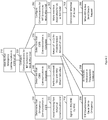
- Figure 1 illustrates an overall call flow according to certain embodiments.
- an SGs can be associated between MME and MSC-1.
- the procedures at 1, 2, 3, 4, 5a, 5b can be performed as described in current 3GPP standards, to allow an emergency call to be invoked with CSFB.
- the user equipment can be camped on a cell that is served by a different MSC, namely MSC-2.
- the user equipment can send an extended service request, requesting set up of an emergency call.
- the MME can send a message to the eNB, which can lead the eNB to move the UE to 2G/3G CS radio access technology (RAT) at 3.
- the UE can camp on 2G/3G CS RAT.
- CS setup can be requested of MSC-2, and at 5b, the MSC-2 can perform call setup.
- the MME can mark the SGs association as invalid when detecting a CSFB for emergency call. This can be done by setting the SGs state to NULL.
- the MME can send a detach request, which can include an IMSI detach indication, to an associated SGSN.
- the SGSN will send the detach request to the user equipment if the user equipment is reachable, such as in a dual transfer mode (DTM) scenario.
- DTM dual transfer mode
- the user equipment When the user equipment receives this message, it will reset its ISR status. I.e., when user equipment returns back to LTE, it will perform combined tracking area update with IMSI attach indication.
- X4 if user equipment is not reachable because it is in a non DTM environment, user equipment will then perform a suspend procedure. This is an existing procedure. When user equipment goes back to LTE, it will perform a combined tracking area update.
- the MSC-2 can perform a location area update on behalf of the user equipment. This location area update can trigger cancelation of location to the old MSC (MSC-1).
- the procedures at 7, 8a, 8b, 8c, 9a, 9b, and 9c can all be performed according to any traditional approach desired.
- the second home location register HLR-2
- the HLR and PSAP/gateway mobile location center GMLC
- a user equipment can return to LTE and can perform a combined tracking area update because of X.3 or X.4.
- the MME can establish the SGs with the MSC according to any desired way.
- certain embodiments may allow the mobile terminated services to work properly after the completion of emergency call using CSFB. All or any of the options described above may ensure that the location area update and / or combined tracking area update is performed after the completion of emergency call using CSFB. Also, certain embodiments can ensure that the SGs association is established and the home location register is updated with the correct serving MSC address. The user equipment may still be expected to return to LTE as soon as the CS call is completed, and certain embodiments can ensure that the mobile terminated services will continue to work.
- Figure 2 illustrates methods according to various non-claimed embodiments.
- the methods can include, at 210, identifying an emergency communication that is a circuit switched fallback communication of a user equipment.
- the emergency communication may be, for example, a call, SMS, multimedia communication, or other communication on an emergency basis.
- the methods can also include, at 220, configuring communications so that mobile terminated services work properly after completion of the emergency communication.
- the identifying at 210 and the configuring at 220 are either optional or incorporated into other features, such as the features of the other methods illustrated in Figure 2 .
- a method may include determining in a network element that the emergency communication is a circuit switched fallback communication.
- the method may also include, at 232, when the emergency call is ended, avoiding invoking a fast return feature for the user equipment.
- the avoiding invoking the fast return feature can include preventing a mobile switching center from indicating to at least one of a base station controller or radio network controller that the emergency communication is related to circuit switched fallback.
- a method may include determining that the emergency communication related to circuit switched fallback is complete.
- the method may also include, at 242, performing a combined tracking area update with an international mobile subscriber identity attach indication based on the determining.
- the performing the combined tracking area update can, in certain embodiments, be done only when it is further determined that the user equipment did not perform a location area update in a second generation or third generation network for the emergency communication.
- the performing the combined tracking area update can be done regardless of whether it is further determined that the user equipment did not perform a location area update in a second generation or third generation network for the emergency communication.
- a method can include determining that the emergency communication related to circuit switched fallback is complete.
- the method can also include, at 252, retaining the user equipment in a circuit switched network for a predetermined amount of time upon the determining, wherein the predetermined amount of time is configured to permit a location area update to be performed for the user equipment before the predetermined amount of time has expired.
- the predetermined amount of time may be a predetermined fixed amount of time, or it can be a predetermined variable amount of time.
- the predetermined amount of time can be an indefinite period of time, such as until the user equipment begins a new communication session, such as a new call. Alternatively, the predetermined amount of time can be a number of seconds or fraction thereof.
- the retaining can be based on a mobile switching center signaling, at 254, to a base station controller or radio network controller that a current communication is an emergency communication.
- the retaining can be based on a base station controller or radio network controller learning, at 256, that a current communication is an emergency communication due to a radio resource control establishment cause set to emergency.
- the retaining is based on a base station including, at 258, an indication that a communication is an emergency call in a transparent container to a target radio access network when a packet-switched handover procedure is used.
- a method can include detecting, for an extended service request for a mobile originated circuit switched fallback by the user equipment, that the circuit switched fallback is due to an emergency.
- the method can also include, at 262, marking an interface association for the user equipment as not valid.
- the marking the interface association as not valid can include moving the interface association, for example an SGs association, to a null state.
- the method can further include, at 264, determining whether an idle mode signaling reduction is active and, at 266, when the idle state signaling reduction is determined to be active, sending a detach request for the user equipment to a serving general purpose radio system support node.
- the detach request can be configured to trigger the serving general purpose radio system support node to send a detach request to the user equipment if the user equipment is using a third generation network or dual transfer mode.
- the SGSN may make a determination as to whether the user equipment is using a third generation network or dual transfer mode before sending the detach request to the user equipment.
- a system may include multiple devices, such as, for example, user equipment 310, network element 320, and mobility management entity 330.
- the network element can be any of the network elements illustrated or discussed herein, such as an eNB, MSC, SGSN, RNC, BSC, HLR, or PSAP/GMLC.
- Each of these devices may include at least one processor, respectively indicated as 314, 324, and 334.
- At least one memory is provided in each device, and indicated as 315, 325, and 335, respectively.
- the memory may include computer program instructions or computer code contained therein.
- Transceivers 316, 326, and 336 are provided, and each device may also include an antenna, respectively illustrated as 317, 327, and 337. Other configurations of these devices, for example, may be provided.
- user equipment 310, network element 320, and mobility management entity 330 may be configured for wired communication, rather than wireless communication, and in such a case antennas 317, 327, and 337 would illustrate any form of communication hardware, without requiring a conventional antenna.
- Transceivers 316, 326, and 336 can each, independently, be a transmitter, a receiver, or both a transmitter and a receiver, or a unit or device that is configured both for transmission and reception.
- Processors 314, 324, and 334 can be embodied by any computational or data processing device, such as a central processing unit (CPU), application specific integrated circuit (ASIC), or comparable device.
- the processors can be implemented as a single controller, or a plurality of controllers or processors.
- Memories 315, 325, and 335 can independently be any suitable storage device, such as a non-transitory computer-readable medium.
- a hard disk drive (HDD), random access memory (RAM), flash memory, or other suitable memory can be used.
- the memories can be combined on a single integrated circuit as the processor, or may be separate therefrom.
- the computer program instructions stored in the memory and which may be processed by the processors can be any suitable form of computer program code, for example, a compiled or interpreted computer program written in any suitable programming language.
- the memory and the computer program instructions can be configured, with the processor for the particular device, to cause a hardware apparatus such as user equipment 310, network element 320, and mobility management entity 330, to perform any of the processes described above (see, for example, Figures 1 and 2 ). Therefore, in certain embodiments, a non-transitory computer-readable medium can be encoded with computer instructions that, when executed in hardware, perform a process such as one of the processes described herein. Alternatively, certain embodiments of the invention can be performed entirely in hardware.
- Figure 3 illustrates a system including a user equipment, network element, and mobility management entity
- embodiments of the invention may be applicable to other configurations, and configurations involving additional elements, as illustrated herein. As well, it is not strictly necessary that a mobility management entity be included.
- a mobility management entity it is not strictly necessary that a mobility management entity be included.
- only one user equipment 310, network element 320, and mobility management entity 330 are shown, multiple of each of the devices in the system may be provided, as can be seen from, for example, Figure 1 .
Landscapes
- Engineering & Computer Science (AREA)
- Computer Networks & Wireless Communication (AREA)
- Signal Processing (AREA)
- Business, Economics & Management (AREA)
- Health & Medical Sciences (AREA)
- Emergency Management (AREA)
- Environmental & Geological Engineering (AREA)
- Public Health (AREA)
- Mobile Radio Communication Systems (AREA)
- Telephone Function (AREA)
Claims (16)
- Verfahren, das von einer mobilen Verwaltungseinheit durchgeführt wird, wobei das Verfahren umfasst:Erkennen, für eine erweiterte Dienstanforderung für einen von einer mobilen Einrichtung ausgehenden leitungsvermittelten Rückfall durch das Benutzergerät, dass der leitungsvermittelte Rückfall auf einen Notfall zurückzuführen ist; undKennzeichnen (X1) einer Schnittstellenzuordnung für das Benutzergerät als ungültig, wenn erkannt wird, dass der leitungsvermittelte Rückfall auf einen Notfall zurückzuführen ist.
- Verfahren nach Anspruch 1, wobei das Kennzeichnen der Schnittstellenzuordnung als ungültig das Versetzen der Schnittstellenzuordnung in einen Nullzustand umfasst.
- Verfahren nach Anspruch 1, wobei das Kennzeichnen der Schnittstelle das Kennzeichnen einer SGs-Schnittstelle umfasst.
- Verfahren nach Anspruch 1, ferner umfassend:
Bestimmen, ob eine Leerlaufmodussignalisierungsreduzierung aktiv ist; und wenn die Leerlaufmodussignalisierungsreduzierung als aktiv bestimmt wird, Senden (X2) einer Abtrennungsanforderung für das Benutzergerät an einen bedienenden Allzweck-Funksystem-Unterstützungsknoten. - Verfahren nach Anspruch 4, wobei die Abtrennungsanforderung so konfiguriert ist, dass sie den bedienenden Allzweck-Funksystem-Unterstützungsknoten dazu veranlasst, eine Abtrennungsanforderung an das Benutzergerät zu senden, wenn das Benutzergerät ein Netz der dritten Generation oder einen dualen Übertragungsmodus verwendet.
- Vorrichtung, die Teil einer mobilen Verwaltungseinheit ist, umfassend:mindestens einen Prozessor; undmindestens einen Speicher mit Computerprogrammcode,wobei, wenn der Computerprogrammcode von dem mindestens einen Prozessor ausgeführt wird, dies die Vorrichtung mindestens veranlasst zumErkennen, für eine erweiterte Dienstanforderung für einen von einer mobilen Einrichtung ausgehenden leitungsvermittelten Rückfall durch das Benutzergerät, dass der leitungsvermittelte Rückfall auf einen Notfall zurückzuführen ist; undKennzeichnen einer Schnittstellenzuordnung für das Benutzergerät als ungültig, wenn erkannt wird, dass der leitungsvermittelte Rückfall auf einen Notfall zurückzuführen ist.
- Vorrichtung nach Anspruch 6, wobei, wenn der Computerprogrammcode von dem mindestens einen Prozessor ausgeführt wird, die Vorrichtung ferner veranlasst wird, zumindest die Schnittstellenzuordnung als ungültig zu kennzeichnen, indem die Schnittstellenzuordnung in einen Nullzustand versetzt wird.
- Vorrichtung nach Anspruch 6, wobei, wenn der Computerprogrammcode von dem mindestens einen Prozessor ausgeführt wird, die Vorrichtung ferner veranlasst wird, zumindest die Schnittstelle zu kennzeichnen, indem eine SGs-Schnittstelle gekennzeichnet wird.
- Vorrichtung nach Anspruch 6, wobei, wenn der Computerprogrammcode von dem mindestens einen Prozessor ausgeführt wird, dies die Vorrichtung ferner mindestens veranlasst zum
Bestimmen, ob eine Leerlaufmodussignalisierungsreduzierung aktiv ist; und
wenn die Leerlaufmodussignalisierungsreduzierung als aktiv bestimmt wird, Senden einer Abtrennungsanforderung für das Benutzergerät an einen bedienenden Allzweck-Funksystem-Unterstützungsknoten. - Verfahren nach Anspruch 9, wobei die Abtrennungsanforderung so konfiguriert ist, dass sie den bedienenden Allzweck-Funksystem-Unterstützungsknoten dazu veranlasst, eine Abtrennungsanforderung an das Benutzergerät zu senden, wenn das Benutzergerät ein Netz der dritten Generation oder einen dualen Übertragungsmodus verwendet.
- Mobilitätsverwaltungseinheit (330) umfassend eine Vorrichtung nach einem der Ansprüche 6 bis 10.
- Nicht-transitorisches computerlesbares Medium, das mit Befehlen kodiert ist, die, wenn sie von einem Prozessor einer Mobilitätsverwaltungseinheit ausgeführt werden, den Prozessor veranlassen, einen Prozess durchzuführen, wobei der Prozess Folgendes umfasst:Erkennen, für eine erweiterte Dienstanforderung für einen von einer mobilen Einrichtung ausgehenden leitungsvermittelten Rückfall durch das Benutzergerät, dass der leitungsvermittelte Rückfall auf einen Notfall zurückzuführen ist; undKennzeichnen einer Schnittstellenzuordnung für das Benutzergerät als ungültig, wenn erkannt wird, dass der leitungsvermittelte Rückfall auf einen Notfall zurückzuführen ist.
- Nicht-transitorisches computerlesbares Medium nach Anspruch 12, wobei das Kennzeichnen der Schnittstellenzuordnung als ungültig das Versetzen der Schnittstellenzuordnung in einen Nullzustand umfasst.
- Nicht-transitorisches computerlesbares Medium nach Anspruch 12, wobei das Kennzeichnen der Schnittstelle das Kennzeichnen einer SGs-Schnittstelle umfasst.
- Nicht-transitorische computerlesbares Medium nach Anspruch 12, wobei der Prozess ferner umfasst:Bestimmen, ob eine Leerlaufsignalisierungsreduzierung aktiv ist; undwenn die Leerlaufmodussignalisierungsreduzierung als aktiv bestimmt wird, Senden einer Abtrennungsanforderung für das Benutzergerät an einen bedienenden Allzweck-Funksystem-Unterstützungsknoten.
- Nicht-transitorisches computerlesbares Medium nach Anspruch 15, wobei die Abtrennungsanforderung so konfiguriert ist, dass sie den bedienenden Allzweck-Funksystem-Unterstützungsknoten dazu veranlasst, eine Abtrennungsanforderung an das Benutzergerät zu senden, wenn das Benutzergerät ein Netz der dritten Generation oder einen dualen Übertragungsmodus verwendet.
Applications Claiming Priority (2)
| Application Number | Priority Date | Filing Date | Title |
|---|---|---|---|
| US13/744,871 US9420443B2 (en) | 2013-01-18 | 2013-01-18 | Cleanup of LAU-less circuit switched fallback emergency call |
| PCT/EP2014/050901 WO2014111520A2 (en) | 2013-01-18 | 2014-01-17 | Cleanup of lau-less circuit switched fallback emergency call |
Publications (2)
| Publication Number | Publication Date |
|---|---|
| EP2946597A2 EP2946597A2 (de) | 2015-11-25 |
| EP2946597B1 true EP2946597B1 (de) | 2021-03-10 |
Family
ID=49989782
Family Applications (1)
| Application Number | Title | Priority Date | Filing Date |
|---|---|---|---|
| EP14700726.4A Active EP2946597B1 (de) | 2013-01-18 | 2014-01-17 | Aufräumarbeiten bei einem lau-losen leitungsvermittelten fallback notruf |
Country Status (4)
| Country | Link |
|---|---|
| US (1) | US9420443B2 (de) |
| EP (1) | EP2946597B1 (de) |
| ES (1) | ES2875028T3 (de) |
| WO (1) | WO2014111520A2 (de) |
Families Citing this family (5)
| Publication number | Priority date | Publication date | Assignee | Title |
|---|---|---|---|---|
| US10440626B2 (en) * | 2015-03-20 | 2019-10-08 | Parallel Wireless, Inc. | Content-aware inter-RAT RAB steering |
| CN107786971A (zh) * | 2017-11-07 | 2018-03-09 | 奇酷互联网络科技(深圳)有限公司 | 呼叫异常的处理方法、装置及移动终端 |
| CN107613488B (zh) * | 2017-11-07 | 2021-10-22 | 奇酷互联网络科技(深圳)有限公司 | 呼叫异常的处理方法、装置及移动终端 |
| CN110324823B (zh) * | 2019-07-04 | 2022-03-18 | 中国联合网络通信集团有限公司 | 一种csfb呼叫方法、系统 |
| US12267746B2 (en) | 2021-04-30 | 2025-04-01 | Parallel Wireless, Inc. | CSFB with RIM without network support |
Family Cites Families (3)
| Publication number | Priority date | Publication date | Assignee | Title |
|---|---|---|---|---|
| KR20130023341A (ko) | 2010-03-26 | 2013-03-07 | 인터디지탈 패튼 홀딩스, 인크 | 회선 교환 폴백 요청간의 레이스 상태 관리 |
| CA2801918C (en) | 2010-06-07 | 2016-05-17 | Interdigital Patent Holdings, Inc. | Method and apparatus for transmitting service request messages in a congested network |
| KR101479895B1 (ko) * | 2011-04-29 | 2015-01-06 | 엘지전자 주식회사 | 세션 관리 및 이동성 관리에 관련된 데이터를 처리하는 방법 |
-
2013
- 2013-01-18 US US13/744,871 patent/US9420443B2/en active Active
-
2014
- 2014-01-17 EP EP14700726.4A patent/EP2946597B1/de active Active
- 2014-01-17 ES ES14700726T patent/ES2875028T3/es active Active
- 2014-01-17 WO PCT/EP2014/050901 patent/WO2014111520A2/en not_active Ceased
Non-Patent Citations (1)
| Title |
|---|
| None * |
Also Published As
| Publication number | Publication date |
|---|---|
| WO2014111520A3 (en) | 2014-09-12 |
| ES2875028T3 (es) | 2021-11-08 |
| WO2014111520A2 (en) | 2014-07-24 |
| US20140206305A1 (en) | 2014-07-24 |
| EP2946597A2 (de) | 2015-11-25 |
| US9420443B2 (en) | 2016-08-16 |
Similar Documents
| Publication | Publication Date | Title |
|---|---|---|
| CN102724704B (zh) | 服务核心网络节点变更时处理移动装置的可联系性的方法 | |
| US9609504B2 (en) | Node and method for monitoring a visitor location register registration of a wireless device | |
| EP2120503B1 (de) | Verfahren und vorrichtungen zur bereitstellung eines sprachanrufs über eine circuit switched domain an ein ue | |
| EP2514251B1 (de) | Verfahren und vorrichtung zur verwendung in einem kommunikationsnetz | |
| US8406727B2 (en) | Timer configuration method | |
| US9148824B2 (en) | Methods and apparatus for controlling circuit switched fall back of a mobile station from E-UTRAN to UTRAN/GERAN in a full-multi-operator core network | |
| US20120094667A1 (en) | Mobile communication method, mobile station, and switching center | |
| WO2011153702A1 (zh) | 公众陆地移动网的选择方法、装置及系统 | |
| US20130343325A1 (en) | Mobile communication method | |
| JP5746358B2 (ja) | 通信のための方法及び装置 | |
| EP2946597B1 (de) | Aufräumarbeiten bei einem lau-losen leitungsvermittelten fallback notruf | |
| CN105338584A (zh) | 一种返回lte网络的方法及装置 | |
| US9883372B2 (en) | Method, subscriber server and mobility management entity for determining serving node of short message service | |
| EP2540115B1 (de) | Verfahren für eine terminierte mobile steuerung und mobiles engerät | |
| CN102100114B (zh) | 一种移动性管理的方法和终端设备 | |
| US9398447B2 (en) | Mobile terminating network failure forwarding for LTE circuit-switched fallback | |
| US20190098516A1 (en) | Technique for triggering mobility management specific procedure to avoid registration state mismatch between user equipment and network | |
| HK1173886A (en) | Mobile terminated control method and related network devices |
Legal Events
| Date | Code | Title | Description |
|---|---|---|---|
| PUAI | Public reference made under article 153(3) epc to a published international application that has entered the european phase |
Free format text: ORIGINAL CODE: 0009012 |
|
| 17P | Request for examination filed |
Effective date: 20150818 |
|
| AK | Designated contracting states |
Kind code of ref document: A2 Designated state(s): AL AT BE BG CH CY CZ DE DK EE ES FI FR GB GR HR HU IE IS IT LI LT LU LV MC MK MT NL NO PL PT RO RS SE SI SK SM TR |
|
| AX | Request for extension of the european patent |
Extension state: BA ME |
|
| DAX | Request for extension of the european patent (deleted) | ||
| STAA | Information on the status of an ep patent application or granted ep patent |
Free format text: STATUS: EXAMINATION IS IN PROGRESS |
|
| RAP1 | Party data changed (applicant data changed or rights of an application transferred) |
Owner name: NOKIA SOLUTIONS AND NETWORKS OY |
|
| 17Q | First examination report despatched |
Effective date: 20190808 |
|
| RIC1 | Information provided on ipc code assigned before grant |
Ipc: H04W 36/00 20090101AFI20200723BHEP Ipc: H04W 4/90 20180101ALI20200723BHEP |
|
| GRAP | Despatch of communication of intention to grant a patent |
Free format text: ORIGINAL CODE: EPIDOSNIGR1 |
|
| STAA | Information on the status of an ep patent application or granted ep patent |
Free format text: STATUS: GRANT OF PATENT IS INTENDED |
|
| INTG | Intention to grant announced |
Effective date: 20201002 |
|
| RIN1 | Information on inventor provided before grant (corrected) |
Inventor name: CHANDRAMOULI, DEVAKI Inventor name: JANOSI, LASZLO Inventor name: WONG, CURT Inventor name: LAHTINEN, LAURI KALEVI |
|
| GRAS | Grant fee paid |
Free format text: ORIGINAL CODE: EPIDOSNIGR3 |
|
| GRAA | (expected) grant |
Free format text: ORIGINAL CODE: 0009210 |
|
| STAA | Information on the status of an ep patent application or granted ep patent |
Free format text: STATUS: THE PATENT HAS BEEN GRANTED |
|
| AK | Designated contracting states |
Kind code of ref document: B1 Designated state(s): AL AT BE BG CH CY CZ DE DK EE ES FI FR GB GR HR HU IE IS IT LI LT LU LV MC MK MT NL NO PL PT RO RS SE SI SK SM TR |
|
| REG | Reference to a national code |
Ref country code: GB Ref legal event code: FG4D |
|
| REG | Reference to a national code |
Ref country code: AT Ref legal event code: REF Ref document number: 1371229 Country of ref document: AT Kind code of ref document: T Effective date: 20210315 Ref country code: CH Ref legal event code: EP |
|
| REG | Reference to a national code |
Ref country code: IE Ref legal event code: FG4D |
|
| REG | Reference to a national code |
Ref country code: DE Ref legal event code: R096 Ref document number: 602014075526 Country of ref document: DE |
|
| REG | Reference to a national code |
Ref country code: SE Ref legal event code: TRGR |
|
| REG | Reference to a national code |
Ref country code: LT Ref legal event code: MG9D |
|
| PG25 | Lapsed in a contracting state [announced via postgrant information from national office to epo] |
Ref country code: FI Free format text: LAPSE BECAUSE OF FAILURE TO SUBMIT A TRANSLATION OF THE DESCRIPTION OR TO PAY THE FEE WITHIN THE PRESCRIBED TIME-LIMIT Effective date: 20210310 Ref country code: HR Free format text: LAPSE BECAUSE OF FAILURE TO SUBMIT A TRANSLATION OF THE DESCRIPTION OR TO PAY THE FEE WITHIN THE PRESCRIBED TIME-LIMIT Effective date: 20210310 Ref country code: GR Free format text: LAPSE BECAUSE OF FAILURE TO SUBMIT A TRANSLATION OF THE DESCRIPTION OR TO PAY THE FEE WITHIN THE PRESCRIBED TIME-LIMIT Effective date: 20210611 Ref country code: LT Free format text: LAPSE BECAUSE OF FAILURE TO SUBMIT A TRANSLATION OF THE DESCRIPTION OR TO PAY THE FEE WITHIN THE PRESCRIBED TIME-LIMIT Effective date: 20210310 Ref country code: BG Free format text: LAPSE BECAUSE OF FAILURE TO SUBMIT A TRANSLATION OF THE DESCRIPTION OR TO PAY THE FEE WITHIN THE PRESCRIBED TIME-LIMIT Effective date: 20210610 Ref country code: NO Free format text: LAPSE BECAUSE OF FAILURE TO SUBMIT A TRANSLATION OF THE DESCRIPTION OR TO PAY THE FEE WITHIN THE PRESCRIBED TIME-LIMIT Effective date: 20210610 |
|
| REG | Reference to a national code |
Ref country code: AT Ref legal event code: MK05 Ref document number: 1371229 Country of ref document: AT Kind code of ref document: T Effective date: 20210310 |
|
| REG | Reference to a national code |
Ref country code: NL Ref legal event code: MP Effective date: 20210310 |
|
| PG25 | Lapsed in a contracting state [announced via postgrant information from national office to epo] |
Ref country code: LV Free format text: LAPSE BECAUSE OF FAILURE TO SUBMIT A TRANSLATION OF THE DESCRIPTION OR TO PAY THE FEE WITHIN THE PRESCRIBED TIME-LIMIT Effective date: 20210310 Ref country code: RS Free format text: LAPSE BECAUSE OF FAILURE TO SUBMIT A TRANSLATION OF THE DESCRIPTION OR TO PAY THE FEE WITHIN THE PRESCRIBED TIME-LIMIT Effective date: 20210310 |
|
| PG25 | Lapsed in a contracting state [announced via postgrant information from national office to epo] |
Ref country code: NL Free format text: LAPSE BECAUSE OF FAILURE TO SUBMIT A TRANSLATION OF THE DESCRIPTION OR TO PAY THE FEE WITHIN THE PRESCRIBED TIME-LIMIT Effective date: 20210310 |
|
| PG25 | Lapsed in a contracting state [announced via postgrant information from national office to epo] |
Ref country code: SM Free format text: LAPSE BECAUSE OF FAILURE TO SUBMIT A TRANSLATION OF THE DESCRIPTION OR TO PAY THE FEE WITHIN THE PRESCRIBED TIME-LIMIT Effective date: 20210310 Ref country code: AT Free format text: LAPSE BECAUSE OF FAILURE TO SUBMIT A TRANSLATION OF THE DESCRIPTION OR TO PAY THE FEE WITHIN THE PRESCRIBED TIME-LIMIT Effective date: 20210310 Ref country code: CZ Free format text: LAPSE BECAUSE OF FAILURE TO SUBMIT A TRANSLATION OF THE DESCRIPTION OR TO PAY THE FEE WITHIN THE PRESCRIBED TIME-LIMIT Effective date: 20210310 Ref country code: EE Free format text: LAPSE BECAUSE OF FAILURE TO SUBMIT A TRANSLATION OF THE DESCRIPTION OR TO PAY THE FEE WITHIN THE PRESCRIBED TIME-LIMIT Effective date: 20210310 |
|
| REG | Reference to a national code |
Ref country code: ES Ref legal event code: FG2A Ref document number: 2875028 Country of ref document: ES Kind code of ref document: T3 Effective date: 20211108 |
|
| PG25 | Lapsed in a contracting state [announced via postgrant information from national office to epo] |
Ref country code: IS Free format text: LAPSE BECAUSE OF FAILURE TO SUBMIT A TRANSLATION OF THE DESCRIPTION OR TO PAY THE FEE WITHIN THE PRESCRIBED TIME-LIMIT Effective date: 20210710 Ref country code: RO Free format text: LAPSE BECAUSE OF FAILURE TO SUBMIT A TRANSLATION OF THE DESCRIPTION OR TO PAY THE FEE WITHIN THE PRESCRIBED TIME-LIMIT Effective date: 20210310 Ref country code: SK Free format text: LAPSE BECAUSE OF FAILURE TO SUBMIT A TRANSLATION OF THE DESCRIPTION OR TO PAY THE FEE WITHIN THE PRESCRIBED TIME-LIMIT Effective date: 20210310 Ref country code: PT Free format text: LAPSE BECAUSE OF FAILURE TO SUBMIT A TRANSLATION OF THE DESCRIPTION OR TO PAY THE FEE WITHIN THE PRESCRIBED TIME-LIMIT Effective date: 20210712 Ref country code: PL Free format text: LAPSE BECAUSE OF FAILURE TO SUBMIT A TRANSLATION OF THE DESCRIPTION OR TO PAY THE FEE WITHIN THE PRESCRIBED TIME-LIMIT Effective date: 20210310 |
|
| REG | Reference to a national code |
Ref country code: DE Ref legal event code: R097 Ref document number: 602014075526 Country of ref document: DE |
|
| PLBE | No opposition filed within time limit |
Free format text: ORIGINAL CODE: 0009261 |
|
| STAA | Information on the status of an ep patent application or granted ep patent |
Free format text: STATUS: NO OPPOSITION FILED WITHIN TIME LIMIT |
|
| PG25 | Lapsed in a contracting state [announced via postgrant information from national office to epo] |
Ref country code: AL Free format text: LAPSE BECAUSE OF FAILURE TO SUBMIT A TRANSLATION OF THE DESCRIPTION OR TO PAY THE FEE WITHIN THE PRESCRIBED TIME-LIMIT Effective date: 20210310 Ref country code: DK Free format text: LAPSE BECAUSE OF FAILURE TO SUBMIT A TRANSLATION OF THE DESCRIPTION OR TO PAY THE FEE WITHIN THE PRESCRIBED TIME-LIMIT Effective date: 20210310 |
|
| 26N | No opposition filed |
Effective date: 20211213 |
|
| PG25 | Lapsed in a contracting state [announced via postgrant information from national office to epo] |
Ref country code: SI Free format text: LAPSE BECAUSE OF FAILURE TO SUBMIT A TRANSLATION OF THE DESCRIPTION OR TO PAY THE FEE WITHIN THE PRESCRIBED TIME-LIMIT Effective date: 20210310 |
|
| PG25 | Lapsed in a contracting state [announced via postgrant information from national office to epo] |
Ref country code: IS Free format text: LAPSE BECAUSE OF FAILURE TO SUBMIT A TRANSLATION OF THE DESCRIPTION OR TO PAY THE FEE WITHIN THE PRESCRIBED TIME-LIMIT Effective date: 20210710 |
|
| REG | Reference to a national code |
Ref country code: DE Ref legal event code: R119 Ref document number: 602014075526 Country of ref document: DE |
|
| PG25 | Lapsed in a contracting state [announced via postgrant information from national office to epo] |
Ref country code: MC Free format text: LAPSE BECAUSE OF FAILURE TO SUBMIT A TRANSLATION OF THE DESCRIPTION OR TO PAY THE FEE WITHIN THE PRESCRIBED TIME-LIMIT Effective date: 20210310 |
|
| REG | Reference to a national code |
Ref country code: CH Ref legal event code: PL |
|
| GBPC | Gb: european patent ceased through non-payment of renewal fee |
Effective date: 20220117 |
|
| REG | Reference to a national code |
Ref country code: BE Ref legal event code: MM Effective date: 20220131 |
|
| PG25 | Lapsed in a contracting state [announced via postgrant information from national office to epo] |
Ref country code: LU Free format text: LAPSE BECAUSE OF NON-PAYMENT OF DUE FEES Effective date: 20220117 Ref country code: GB Free format text: LAPSE BECAUSE OF NON-PAYMENT OF DUE FEES Effective date: 20220117 Ref country code: DE Free format text: LAPSE BECAUSE OF NON-PAYMENT OF DUE FEES Effective date: 20220802 |
|
| PG25 | Lapsed in a contracting state [announced via postgrant information from national office to epo] |
Ref country code: FR Free format text: LAPSE BECAUSE OF NON-PAYMENT OF DUE FEES Effective date: 20220131 Ref country code: BE Free format text: LAPSE BECAUSE OF NON-PAYMENT OF DUE FEES Effective date: 20220131 |
|
| PG25 | Lapsed in a contracting state [announced via postgrant information from national office to epo] |
Ref country code: LI Free format text: LAPSE BECAUSE OF NON-PAYMENT OF DUE FEES Effective date: 20220131 Ref country code: CH Free format text: LAPSE BECAUSE OF NON-PAYMENT OF DUE FEES Effective date: 20220131 |
|
| PG25 | Lapsed in a contracting state [announced via postgrant information from national office to epo] |
Ref country code: IE Free format text: LAPSE BECAUSE OF NON-PAYMENT OF DUE FEES Effective date: 20220117 |
|
| PG25 | Lapsed in a contracting state [announced via postgrant information from national office to epo] |
Ref country code: HU Free format text: LAPSE BECAUSE OF FAILURE TO SUBMIT A TRANSLATION OF THE DESCRIPTION OR TO PAY THE FEE WITHIN THE PRESCRIBED TIME-LIMIT; INVALID AB INITIO Effective date: 20140117 |
|
| PG25 | Lapsed in a contracting state [announced via postgrant information from national office to epo] |
Ref country code: MK Free format text: LAPSE BECAUSE OF FAILURE TO SUBMIT A TRANSLATION OF THE DESCRIPTION OR TO PAY THE FEE WITHIN THE PRESCRIBED TIME-LIMIT Effective date: 20210310 Ref country code: CY Free format text: LAPSE BECAUSE OF FAILURE TO SUBMIT A TRANSLATION OF THE DESCRIPTION OR TO PAY THE FEE WITHIN THE PRESCRIBED TIME-LIMIT Effective date: 20210310 |
|
| PG25 | Lapsed in a contracting state [announced via postgrant information from national office to epo] |
Ref country code: MT Free format text: LAPSE BECAUSE OF FAILURE TO SUBMIT A TRANSLATION OF THE DESCRIPTION OR TO PAY THE FEE WITHIN THE PRESCRIBED TIME-LIMIT Effective date: 20210310 |
|
| PG25 | Lapsed in a contracting state [announced via postgrant information from national office to epo] |
Ref country code: TR Free format text: LAPSE BECAUSE OF FAILURE TO SUBMIT A TRANSLATION OF THE DESCRIPTION OR TO PAY THE FEE WITHIN THE PRESCRIBED TIME-LIMIT Effective date: 20210310 |
|
| PGFP | Annual fee paid to national office [announced via postgrant information from national office to epo] |
Ref country code: SE Payment date: 20251210 Year of fee payment: 13 |
|
| PGFP | Annual fee paid to national office [announced via postgrant information from national office to epo] |
Ref country code: ES Payment date: 20260212 Year of fee payment: 13 |
|
| PGFP | Annual fee paid to national office [announced via postgrant information from national office to epo] |
Ref country code: IT Payment date: 20251219 Year of fee payment: 13 |