EP2947840B1 - Procédé et appareil de signature multi-agents sans certificat - Google Patents
Procédé et appareil de signature multi-agents sans certificat Download PDFInfo
- Publication number
- EP2947840B1 EP2947840B1 EP14844666.9A EP14844666A EP2947840B1 EP 2947840 B1 EP2947840 B1 EP 2947840B1 EP 14844666 A EP14844666 A EP 14844666A EP 2947840 B1 EP2947840 B1 EP 2947840B1
- Authority
- EP
- European Patent Office
- Prior art keywords
- signature
- proxy
- standard
- formula
- proxy signature
- Prior art date
- Legal status (The legal status is an assumption and is not a legal conclusion. Google has not performed a legal analysis and makes no representation as to the accuracy of the status listed.)
- Active
Links
Images


Classifications
-
- H—ELECTRICITY
- H04—ELECTRIC COMMUNICATION TECHNIQUE
- H04L—TRANSMISSION OF DIGITAL INFORMATION, e.g. TELEGRAPHIC COMMUNICATION
- H04L9/00—Cryptographic mechanisms or cryptographic arrangements for secret or secure communications; Network security protocols
- H04L9/32—Cryptographic mechanisms or cryptographic arrangements for secret or secure communications; Network security protocols including means for verifying the identity or authority of a user of the system or for message authentication, e.g. authorization, entity authentication, data integrity or data verification, non-repudiation, key authentication or verification of credentials
- H04L9/3247—Cryptographic mechanisms or cryptographic arrangements for secret or secure communications; Network security protocols including means for verifying the identity or authority of a user of the system or for message authentication, e.g. authorization, entity authentication, data integrity or data verification, non-repudiation, key authentication or verification of credentials involving digital signatures
-
- H—ELECTRICITY
- H04—ELECTRIC COMMUNICATION TECHNIQUE
- H04L—TRANSMISSION OF DIGITAL INFORMATION, e.g. TELEGRAPHIC COMMUNICATION
- H04L63/00—Network architectures or network communication protocols for network security
- H04L63/02—Network architectures or network communication protocols for network security for separating internal from external traffic, e.g. firewalls
- H04L63/0281—Proxies
-
- H—ELECTRICITY
- H04—ELECTRIC COMMUNICATION TECHNIQUE
- H04L—TRANSMISSION OF DIGITAL INFORMATION, e.g. TELEGRAPHIC COMMUNICATION
- H04L63/00—Network architectures or network communication protocols for network security
- H04L63/04—Network architectures or network communication protocols for network security for providing a confidential data exchange among entities communicating through data packet networks
- H04L63/0428—Network architectures or network communication protocols for network security for providing a confidential data exchange among entities communicating through data packet networks wherein the data content is protected, e.g. by encrypting or encapsulating the payload
- H04L63/0457—Network architectures or network communication protocols for network security for providing a confidential data exchange among entities communicating through data packet networks wherein the data content is protected, e.g. by encrypting or encapsulating the payload wherein the sending and receiving network entities apply dynamic encryption, e.g. stream encryption
-
- H—ELECTRICITY
- H04—ELECTRIC COMMUNICATION TECHNIQUE
- H04L—TRANSMISSION OF DIGITAL INFORMATION, e.g. TELEGRAPHIC COMMUNICATION
- H04L63/00—Network architectures or network communication protocols for network security
- H04L63/12—Applying verification of the received information
- H04L63/126—Applying verification of the received information the source of the received data
-
- H—ELECTRICITY
- H04—ELECTRIC COMMUNICATION TECHNIQUE
- H04L—TRANSMISSION OF DIGITAL INFORMATION, e.g. TELEGRAPHIC COMMUNICATION
- H04L9/00—Cryptographic mechanisms or cryptographic arrangements for secret or secure communications; Network security protocols
- H04L9/30—Public key, i.e. encryption algorithm being computationally infeasible to invert or user's encryption keys not requiring secrecy
- H04L9/3066—Public key, i.e. encryption algorithm being computationally infeasible to invert or user's encryption keys not requiring secrecy involving algebraic varieties, e.g. elliptic or hyper-elliptic curves
-
- H—ELECTRICITY
- H04—ELECTRIC COMMUNICATION TECHNIQUE
- H04L—TRANSMISSION OF DIGITAL INFORMATION, e.g. TELEGRAPHIC COMMUNICATION
- H04L2209/00—Additional information or applications relating to cryptographic mechanisms or cryptographic arrangements for secret or secure communication H04L9/00
- H04L2209/76—Proxy, i.e. using intermediary entity to perform cryptographic operations
Definitions
- the present invention relates to the field of information security, and in particular, to a certificateless multi-proxy signature method and apparatus.
- a public key cryptography system can be classified into three types: 1. a certificate-based public key cryptography system; 2. an identity-based public key cryptography system; 3. a certificateless public key cryptography system.
- the certificate-based public key cryptography system has a certificate management problem, and needs to consume many storage, computing, and communication resources.
- the identity-based public key cryptography system has an inherent key disclosure problem.
- the certificateless public key cryptography system resolves the foregoing two problems.
- a certificateless multi-proxy signature scheme is operated largely based on bilinear pairings.
- certificateless multi-proxy signature that is, multi-proxy signature based on the certificateless public key cryptography system
- the certificateless multi-proxy signature does not need a certificate server to save a user's certificate, and avoids the key disclosure problem that is inherent in the identity-based public key cryptography system.
- an original signature device is allowed to grant a signature capability of the original signature device to multiple proxy signature devices, and a valid proxy signature can be generated only when all the proxy signature devices cooperate with each other, where the proxy signature is used to represent the original signature device.
- Embodiments of the present invention provide a certificateless multi-proxy signature method and apparatus, which decreases a computing amount, thereby reducing computing time.
- a certificateless multi-proxy signature method including:
- the computing, by a proxy signature device, a public key and a private key of the proxy signature device according to a public parameter includes:
- the computing a partial proxy signature according to the private key includes:
- a certificateless multi-proxy signature method including:
- the standard signature computing device is either of another signature device except an original signature device and the proxy signature device, and the original signature device;
- the standard signature verification device is any one of the proxy signature device, the original signature device, and the another signature device except the original signature device and the proxy signature device; and the standard signature verification device is different from the standard signature computing device; where the public parameter further includes P pub .
- the acquiring a multi-proxy signature includes:
- the performing the multi-proxy signature according to a public key of each proxy signature device includes:
- a certificateless multi-proxy signature apparatus including:
- the first computing unit includes:
- the second computing unit includes:
- a certificateless multi-proxy signature apparatus including:
- the standard signature computing device is either of another signature device except an original signature device and the proxy signature device, and the original signature device;
- the standard signature verification device is any one of the proxy signature device, the original signature device, and the another signature device except the original signature device and the proxy signature device; and the standard signature verification device is different from the standard signature computing device; where the public parameter further includes P pub .
- the acquiring unit includes:
- the verification unit includes:
- a multi-proxy signature is computed by using a private key, and then the multi-proxy signature is verified according to a public key, compared with a multi-proxy signature based on bilinear pairings, a computing amount is decreased, thereby reducing computing time.
- a certificateless multi-proxy signature scheme is operated based on bilinear pairings, and the bilinear pairings involve a large computing amount and consume longer time in implementing a signature operation compared with other mechanisms.
- a computation cost of bilinear pairings is approximately more than 20 times that of scalar multiplication over elliptic curve group.
- an embodiment provides a certificateless multi-proxy signature method, and the method is executed by a proxy signature device. As shown in FIG. 1 , the method may include:
- the public key is corresponding to the private key.
- a system may publish a public parameter.
- the public parameter may be acquired by any signature device, so that each signature device computes its own public key and private key according to the public parameter.
- the any signature device in this embodiment may be any one of the following: another proxy signature device except the proxy signature device executing this step, an original signature device, and the like.
- the public key and the private key are not limited in this embodiment and are technologies well known to a person skilled in the art, which are not described herein again.
- a standard signature verification device may first acquire the standard signature from the standard signature computing device, and then the proxy signature device may acquire the verification result of the standard signature from the standard signature verification device, where the verification result may be used to represent whether the standard signature is valid.
- the proxy signature device computes a partial proxy signature of the proxy signature device according to the private key if the verification result is used to represent that the standard signature is valid.
- the original signature device may authorize multiple proxy signature devices to perform multi-proxy signature.
- the multiple proxy signature devices may compute their partial proxy signatures according to their own private keys.
- a proxy signature device administrator may perform a corresponding operation on the partial proxy signatures of all the proxy signature devices to obtain a multi-proxy signature, and determine the multi-proxy signature as a signature of the original signature device.
- the proxy signature device may compute the partial proxy signature of the proxy signature device according to the private key.
- the proxy signature device sends the partial proxy signature to a proxy signature device administrator, so that after the proxy signature device administrator obtains a multi-proxy signature through computation according to the partial proxy signature, a multi-proxy signature verification device verifies the multi-proxy signature.
- the proxy signature device may send the partial proxy signature to the proxy signature device administrator.
- the proxy signature device administrator computes the multi-proxy signature according to the partial proxy signatures of all the proxy signature devices.
- the verification device may verify the multi-proxy signature.
- proxy signature device administrator may be any proxy signature device.
- a multi-proxy signature is computed according to a private key, and then the multi-proxy signature is verified according to a public key. Because computing time (which may include time for computing the public key and the private key) of the method in the present invention is less than time for computing bilinear pairings, compared with a multi-proxy signature based on the bilinear pairings, this solution decreases a computing amount, thereby reducing computing time.
- An embodiment provides another certificateless multi-proxy signature method, where the method may be executed by a multi-proxy signature verification device. As shown in FIG. 2 , the method may include:
- the multi-proxy signature is obtained through computation by a proxy signature device administrator according to a partial proxy signature of each proxy signature device; and the partial proxy signature is obtained through computation by the proxy signature device according to a private key of the proxy signature device, where r is randomly selected from Z q * according to a formula r ⁇ Z q * ;
- a is a sequence number of the standard signature computing device and 0 ⁇ a ⁇ l , where l is a quantity of standard signature computing devices plus one;
- x a is a first sub-private key included in a private key of the standard signature computing device;
- D a is
- the multi-proxy signature may be obtained through computation by the proxy signature device administrator according to the partial proxy signature of each proxy signature device.
- the partial proxy signature may be obtained through computation by a corresponding proxy signature device according to a private key of the proxy signature device, where the public key is corresponding to the private key.
- the multi-proxy signature may be mainly used to check whether a transmitted message is complete.
- the message m may be encrypted, that is, a multi-proxy signature of the message m may be computed, and the multi-proxy signature is verified.
- the multi-proxy signature verification device verifies the multi-proxy signature according to a public key of each proxy signature device.
- the verification device verifies the multi-proxy signature according to the public key of each proxy signature device. If a verification result is that the multi-proxy signature is valid, it indicates that the message m may be complete. If the verification result is that the multi-proxy signature is invalid, it indicates that the message m may be incomplete.
- a multi-proxy signature is computed according to a private key, and then the multi-proxy signature is verified according to a public key. Because computing time (that is, time for computing the public key and the private key) of the method in the present invention is less than time for computing bilinear pairings, compared with a multi-proxy signature based on the bilinear pairings, this solution decreases a computing amount, thereby reducing computing time.
- An embodiment provides still another certificateless multi-proxy signature method, where the method further extends and optimizes the methods shown in FIG. 1 and FIG. 2 .
- the method may include:
- the PKG may randomly select five different cryptographic hash functions H , H 1 , H 2 , H 3 , H 4 : 0 1 * ⁇ Z q * .
- the public parameter in this embodiment may be acquired by any device (a device such as the proxy signature device or an original signature device).
- Each proxy signature device computes its own public key and private key according to the public parameter.
- a signature device in this embodiment may include the proxy signature device, the original signature device, and another signature device except the proxy signature device and the original signature device.
- the private key may include a first sub-private key and a second sub-private key.
- each proxy signature device computes its own public key and private key according to the public parameter includes:
- a public key and a private key of another proxy signature device may be computed by using a same method as the foregoing enumerated method, which is not described herein again.
- the original signature device computes its own public key and private key according to the public parameter may include:
- multiple signature devices may simultaneously execute this step, that is, multiple signature devices simultaneously compute their respective public keys and private keys.
- a standard signature computing device computes a standard signature of a message m according to a private key of the standard signature computing device.
- the standard signature may include T and V .
- the standard signature computing device is any one of the proxy signature device, the original signature device, and the another signature device except the original signature device and the proxy signature device; where r is randomly selected from Z q * according to a formula r ⁇ Z q * ; a is a sequence number of the standard signature computing device and 0 ⁇ a ⁇ l , where l is a quantity of standard signature computing devices plus one; x a is a first sub-private key included in the private key of the standard signature computing device; D a is a second sub-private key included in the private key of the standard signature computing device; m is a message m input by a transmit end; P a is a public key of the standard signature computing device; and the public parameter includes H 1 ( ⁇ ), H 2 ( ⁇ ), and P , where P is a generator of G , and G is a group G whose order is a prime number q .
- a proxy signature device with a sequence number of i computes the standard signature may include:
- the standard signature computing device is the original signature device
- that the original signature device computes the standard signature may include:
- the standard signature computing device is the another signature device except the original signature device and the proxy signature device, that the another signature device computes the standard signature may include:
- the standard signature computing device in this embodiment may be a signature device randomly selected from the proxy signature device, the original signature device, and the another signature device except the original signature device and the proxy signature device, and a specific selecting method may be set according to an actual need, which is not described herein again.
- a standard signature verification device acquires the standard signature, obtained by the standard signature computing device through computation, of the message m .
- the standard signature verification device checks whether the acquired standard signature is valid, so as to obtain a verification result. If it is verified that the standard signature is valid, execute step 306; if it is verified that the standard signature is invalid, end the procedure.
- the standard signature verification device may be any one of the proxy signature device, the original signature device, and the another signature device except the original signature device and the proxy signature device.
- the checking whether the acquired standard signature is valid may include:
- the checking whether the acquired standard signature is valid may include:
- the checking whether the acquired standard signature is valid may include:
- the standard signature verification device is different from the standard signature computing device.
- An original signature device computes an authorization signature according to a private key of the original signature device.
- the original signature device may authorize another proxy signature device to perform signature.
- the original signature device mainly performs authorization on the proxy signature device.
- the original signature device may first compute, according to the private key of the original signature device, an authorization signature of each proxy signature device. If each proxy signature device verifies that a corresponding authorization signature is valid, it indicates that the proxy signature device is authorized to perform multi-proxy signature.
- the authorization signature may include ⁇ , T 0 , and V 0 .
- the proxy signature device acquires the authorization signature computed by the original signature device.
- the proxy signature device verifies the authorization signature. If it is verified that the authorization signature is valid, execute step 309; if it is verified that the authorization signature is invalid, end the procedure or request a valid authorization signature from the original signature device.
- proxy signature device verifies the authorization signature may include:
- the proxy signature device may acquire a multi-proxy key, where the multi-proxy key may include P i , T 0 , and V 0 , that is, ( x i , D i ), T 0 , and V 0 .
- the proxy signature device acquires the verification result of the standard signature from the standard signature verification device, and determines, according to the verification result, whether the standard signature is valid. If it is verified that the standard signature is valid, execute step 310; if it is verified that the standard signature is invalid, end the procedure.
- the proxy signature device computes a partial proxy signature of the proxy signature device according to the private key.
- proxy signature device with the sequence number of i computes a partial proxy signature may include:
- Another proxy signature device computes its own partial 1 proxy signature according to the private key by using a same method as the foregoing enumerated method, which is described in this step.
- multiple proxy signature devices may simultaneously compute their respective partial proxy signatures.
- the proxy signature device sends the partial proxy signature to a proxy signature device administrator.
- all the multiple proxy signature devices may send their respective partial proxy signatures to the proxy signature device administrator.
- the proxy signature device administrator performs verification according to the received partial proxy signature and determines whether it is verified that the partial proxy signature is valid; if it is verified that the partial proxy signature is valid, step 313 is executed; if it is verified that the partial proxy signature is invalid, the procedure ends.
- the proxy signature device administrator computes a multi-proxy signature according to the received partial proxy signature.
- the verification device verifies the multi-proxy signature.
- a multi-proxy signature is computed according to a private key, and then the multi-proxy signature is verified according to a public key. Because computing time (which may include time for computing the public key and the private key) of the method in the present invention is less than time for computing bilinear pairings, compared with a multi-proxy signature based on the bilinear pairings, this solution decreases a computing amount, thereby reducing computing time. In addition, no certificate is introduced in computing the public key, ensuring that no certificate is disclosed. Computing the private key according to the public key can enable the public key and the private key to restrict each other and avoid a public key replacement attack.
- An embodiment provides a certificateless multi-proxy signature apparatus. As shown in FIG. 4 , the apparatus may specifically include:
- a multi-proxy signature is computed according to a private key, and then the multi-proxy signature is verified according to a public key. Because computing time (which may include time for computing the public key and the private key) of the method in the present invention is less than time for computing bilinear pairings, compared with a multi-proxy signature based on the bilinear pairings, this solution decreases a computing amount, thereby reducing computing time.
- An embodiment provides another certificateless multi-proxy signature apparatus, and the apparatus further extends and optimizes the apparatus shown in FIG. 4 .
- the apparatus may specifically include:
- the standard signature computing device is any one of the proxy signature device, an original signature device, and another signature device except the original signature device and the proxy signature device.
- the first computing unit 51 includes:
- the second computing unit 53 includes:
- a multi-proxy signature is computed according to a private key, and then the multi-proxy signature is verified according to a public key. Because computing time (which may include time for computing the public key and the private key) of the method in the present invention is less than time for computing bilinear pairings, compared with a multi-proxy signature based on the bilinear pairings, this solution decreases a computing amount, thereby reducing computing time. In addition, no certificate is introduced in computing the public key, ensuring that no certificate is disclosed. Computing the private key according to the public key can enable the public key and the private key to restrict each other and avoid a public key replacement attack.
- An embodiment provides another certificateless multi-proxy signature apparatus. As shown in FIG. 6 , the apparatus includes:
- a multi-proxy signature is computed according to a private key, and then the multi-proxy signature is verified according to a public key. Because computing time (which may include time for computing the public key and the private key) of the method in the present invention is less than time for computing bilinear pairings, compared with a multi-proxy signature based on the bilinear pairings, this solution decreases a computing amount, thereby reducing computing time.
- An embodiment provides another certificateless multi-proxy signature apparatus, and the apparatus further extends and optimizes the apparatus shown in FIG. 6 .
- the apparatus includes:
- the standard signature computing device is either of another signature device except an original signature device and the proxy signature device, and the original signature device;
- the standard signature verification device is any one of the proxy signature device, the original signature device, and the another signature device except the original signature device and the proxy signature device; and the standard signature verification device is different from the standard signature computing device.
- the public parameter further includes P pub .
- the acquiring unit 71 includes:
- the verification unit 72 includes:
- a multi-proxy signature is computed according to a private key, and then the multi-proxy signature is verified according to a public key. Because computing time (which may include time for computing the public key and the private key) of the method in the present invention is less than time for computing bilinear pairings, compared with a multi-proxy signature based on the bilinear pairings, this solution decreases a computing amount, thereby reducing computing time. In addition, no certificate is introduced in computing the public key, ensuring that no certificate is disclosed. Computing the private key according to the public key can enable the public key and the private key to restrict each other and avoid a public key replacement attack.
- An embodiment provides a device, and this device may be a terminal or a network side device such as a computer, a mobile phone, a tablet computer, or a server, and is used to implement the method shown in any one of FIG. 1 to FIG. 3A and FIG. 3B .
- a computer 1 includes at least one processor 15, such as a CPU, at least one output interface 16 or another user interface 17, a memory 18, and at least one communications bus 19.
- the communications bus 19 is configured to implement connection and communication between these components.
- the computer 1 optionally includes the another user interface 17, including a display, a keyboard, or a pointing device (such as a mouse, a trackball (trackball), a touchpad, or a touch display screen).
- the memory 18 may include a high-speed RAM (Random Access Memory, random access memory), and may further include a non-volatile memory (non-volatile memory), for example, at least one magnetic disk storage.
- the memory 18 may optionally include at least one storage apparatus that is located far away from the processor 15.
- the memory 18 stores the following elements: an executable module or a data structure, or a subset thereof, or an extended set thereof.
- An operating system 180 includes various system programs and is configured to implement various basic services and process hardware-based tasks.
- An application program module 181 includes various application programs and is configured to implement various application services.
- the application program module 181 may include but is not limited to:
- the standard signature computing device is any one of the proxy signature device, an original signature device, and another signature device except the original signature device and the proxy signature device.
- the first computing unit includes:
- the second computing unit includes:
- the application program module 181 may further include but is not limited to:
- the standard signature computing device is either of another signature device except an original signature device and the proxy signature device, and the original signature device; the standard signature verification device is any one of the proxy signature device, the original signature device, and the another signature device except the original signature device and the proxy signature device; and the standard signature verification device is different from the standard signature computing device.
- the public parameter further includes P pub .
- the acquiring unit includes:
- the verification unit includes:
- the processor 15 is configured to:
- the standard signature computing device is any one of the proxy signature device, an original signature device, and another signature device except the original signature device and the proxy signature device.
- computing a partial proxy signature according to the private key includes:
- the processor 15 may be further configured to:
- the standard signature computing device is either of another signature device except an original signature device and the proxy signature device, and the original signature device;
- the standard signature verification device is any one of the proxy signature device, the original signature device, and the another signature device except the original signature device and the proxy signature device; and the standard signature verification device is different from the standard signature computing device.
- the public parameter further includes P pub .
- a multi-proxy signature is computed according to a private key, and then the multi-proxy signature is verified according to a public key. Because computing time (which may include time for computing the public key and the private key) of the method in the present invention is less than time for computing bilinear pairings, compared with a multi-proxy signature based on the bilinear pairings, this solution decreases a computing amount, thereby reducing computing time. In addition, no certificate is introduced in computing the public key, ensuring that no certificate is disclosed. Computing the private key according to the public key can enable the public key and the private key to restrict each other and avoid a public key replacement attack.
- the present invention may be implemented by software in addition to necessary universal hardware or by hardware only. In most circumstances, the former is a preferred implementation manner. Based on such an understanding, the technical solutions of the present invention essentially or the part contributing to the prior art may be implemented in a form of a software product.
- the software product is stored in a readable storage medium, such as a floppy disk, a hard disk or an optical disc of a computer, and includes several instructions for instructing a computer device (which may be a personal computer, a server, or a network device) to perform the methods described in the embodiments of the present invention.
Landscapes
- Engineering & Computer Science (AREA)
- Computer Security & Cryptography (AREA)
- Computer Networks & Wireless Communication (AREA)
- Signal Processing (AREA)
- Computing Systems (AREA)
- Computer Hardware Design (AREA)
- General Engineering & Computer Science (AREA)
- Theoretical Computer Science (AREA)
- Algebra (AREA)
- General Physics & Mathematics (AREA)
- Mathematical Analysis (AREA)
- Mathematical Optimization (AREA)
- Mathematical Physics (AREA)
- Pure & Applied Mathematics (AREA)
- Physics & Mathematics (AREA)
- Management, Administration, Business Operations System, And Electronic Commerce (AREA)
- Mobile Radio Communication Systems (AREA)
Claims (14)
- Procédé de signature multi-mandataire sans certificat, comprenant les étapes consistant à :calculer, au moyen d'un dispositif de signature mandataire, une clé publique et une clé privée du dispositif de signature mandataire selon un paramètre public, la clé publique correspondant à la clé privée ;acquérir un résultat de la vérification d'une signature standard et déterminer, d'après le résultat de la vérification, si la signature standard est valable, la signature standard comprenant T et V, T étant obtenu par un calcul effectué par un dispositif de calcul de signature standard selon une formule T = rP, et V étant obtenu par un calcul effectué par le dispositif de calcul de signature standard selon une formule V=Da +xaH 1(m, T,Pa )+rH2 (m,T,Pa );calculer une signature mandataire partielle du dispositif de signature mandataire à partir de la clé privée si le résultat de la vérification est utilisé pour indiquer que la signature standard est valable ; etenvoyer la signature mandataire partielle à un administrateur de dispositifs de signature mandataires, de telle façon qu'après que l'administrateur de dispositifs de signature mandataires a obtenu une signature multi-mandataire par un calcul effectué à partir de la signature mandataire partielle, un dispositif de vérification de signature multi-mandataire vérifie la signature multi-mandataire, où
r est choisi de manière aléatoire dans

- Procédé de signature multi-mandataire sans certificat selon la revendication 1, dans lequel le dispositif de calcul de signature standard est l'un quelconque des éléments suivants : le dispositif de signature mandataire, un dispositif de signature original, et un autre dispositif de signature à l'exclusion du dispositif de signature original et du dispositif de signature mandataire ;
le résultat de la vérification est obtenu après qu'un dispositif de vérification de signature standard a vérifié la signature standard selon une formule VP=PpubH(IDa, Pa ) + PaH 1(m, T, Pa ) + TH2 (m, T, Pa ), le dispositif de vérification de signature standard étant l'un quelconque des éléments suivants : le dispositif de signature mandataire, le dispositif de signature original, et ledit un autre dispositif de signature à l'exclusion du dispositif de signature original et du dispositif de signature mandataire ; et
le dispositif de vérification de signature standard est différent du dispositif de calcul de signature standard ; où
IDa est un identifiant du dispositif de calcul de signature standard, et le paramètre public comprend également Ppub. - Procédé de signature multi-mandataire sans certificat selon la revendication 1 ou 2, dans lequel le calcul, effectué par un dispositif de signature mandataire, d'une clé publique et d'une clé privée du dispositif de signature mandataire selon un paramètre public comprend les étapes consistant à :choisir de manière aléatoire xi dans

 calculer la clé publique selon une formule Pi = xiP ; etcalculer une deuxième sous-clé privée selon une formule Di = sH(IDi, Pi ) ; où
i (1≤i≤n) est un numéro de séquence du dispositif de signature mandataire, où n est une quantité de dispositifs de signature mandataires ; xi est une première sous-clé privée comprise dans la clé privée du dispositif de signature mandataire ; Di est la deuxième sous-clé privée comprise dans la clé privée du dispositif de signature mandataire ; Pi est la clé publique du dispositif de signature mandataire ; IDi est un identifiant du dispositif de signature mandataire ; s est une clé maîtresse ; et le paramètre public comprend H(●) et q. - Procédé de signature multi-mandataire sans certificat selon la revendication 3, dans lequel le calcul d'une signature mandataire partielle du dispositif de signature mandataire à partir de la clé privée comprend les étapes consistant à :acquérir une signature d'autorisation calculée par le dispositif de signature original, la signature d'autorisation comprenant ω, T0 et V0 ;vérifier la signature d'autorisation selon une formule V0P = PpubH(ID0, P0 ) + P0H 1(ω, T0, P0 ) + T0H 2(ω, T0, P0 ) ;choisir de manière aléatoire ri dans

 calculer Ti selon une formule Ti = riP ; etcalculer Vi selon une formule Vi = Di + xiH3 (m, Ti, Pi ) + riH4 (m, Ti , Pi ), la signature mandataire partielle comprenant ω, T0, V0, Ti et Vi ; où
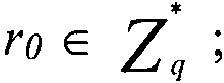
ω comprend des informations d'identité du dispositif de signature mandataire et des informations d'identité du dispositif de signature original ; T0 est obtenu par un calcul effectué par un dispositif de signature original selon une formule T0 = r0P, où r0 est choisi de manière aléatoire par le dispositif de signature original dans

- Procédé de signature multi-mandataire sans certificat, comprend les étapes consistant à :acquérir, au moyen d'un dispositif de vérification de signature multi-mandataire, une signature multi-mandataire après qu'un dispositif de vérification de signature standard a vérifié qu'une signature standard est valable, la signature standard comprenant T et V, T étant obtenu par un calcul effectué par un dispositif de calcul de signature standard selon une formule T = rP, et V étant obtenu par un calcul effectué par le dispositif de calcul de signature standard selon une formule V = Da + xaH 1(m, T, Pa ) + rH 2(m, T, Pa ) ; la signature multi-mandataire est obtenue par un calcul effectué par un administrateur de dispositifs de signature mandataires selon une signature mandataire partielle de chaque dispositif de signature mandataire ; et la signature mandataire partielle est obtenue par un calcul effectué par chaque dispositif de signature mandataire à partir d'une clé privée du dispositif de signature mandataire ; etvérifier la signature multi-mandataire à partir d'une clé publique de chaque dispositif de signature mandataire, où
r est choisi de manière aléatoire dans

- Procédé de signature multi-mandataire sans certificat selon la revendication 5, dans lequel :Pa est obtenu par un calcul effectué par le dispositif de calcul de signature standard selon une formule Pa = xaP, où xa est choisi de manière aléatoire par le dispositif de calcul de signature standard dans

 IDa est un identifiant du dispositif de signature mandataire, s est une clé maîtresse, et le paramètre public comprend H(•) et q.
 - Procédé de signature multi-mandataire sans certificat selon la revendication 6, dans lequel le dispositif de vérification de signature standard vérifie la signature standard selon une formule VP = PpubH(IDa, Pa ) + PaH 1(m, T, Pa ) + TH 2(m, T, Pa ) ; le dispositif de calcul de signature standard est l'un ou l'autre des éléments suivants : un autre dispositif de signature à l'exclusion d'un dispositif de signature original et du dispositif de signature mandataire, et le dispositif de signature original ; le dispositif de vérification de signature standard est l'un quelconque des éléments suivants : le dispositif de signature mandataire, le dispositif de signature original, et ledit un autre dispositif de signature à l'exclusion du dispositif de signature original et du dispositif de signature mandataire ; et le dispositif de vérification de signature standard est différent du dispositif de calcul de signature standard ; où
le paramètre public comprend également Ppub. - Procédé de signature multi-mandataire sans certificat selon la revendication 7, dans lequel l'acquisition d'une signature multi-mandataire comprend les étapes consistant à :déterminer si l'administrateur de dispositifs de signature mandataires vérifie, d'après la signature mandataire partielle de chaque dispositif de signature mandataire, qu'une formule V0P = PpubH(ID0, P0 ) + P0H 1(ω, T0, P0 ) + T0H 2(ω, T0, P0 ) et qu'une formule ViP = PpubH(IDi, Pi ) + PiH3 (m, Ti, Pi ) + TiH4 (m, Ti, Pi ) sont toutes deux vraies ; etsi oui, calculer la signature multi-mandataire selon une formule σ = (ω, TMP, PMP ) ; où
V0 est obtenu par un calcul effectué par le dispositif de signature original selon une formule V0 = D0 + x0H 1(ω, T0, P0 ) + r0H2 (ω, T0, P0 ), ω comprend des informations d'identité du dispositif de signature mandataire et des informations d'identité du dispositif de signature original, T0 est obtenu par un calcul effectué par le dispositif de signature original selon une formule T0 = r0P, où r0 est choisi de manière aléatoire par le dispositif de signature original dans
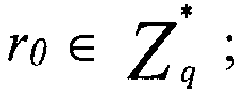

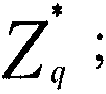
 et le paramètre public comprend également H 3(●) et H 4(●).
 - Procédé de signature multi-mandataire sans certificat selon la revendication 8, dans lequel la vérification de la signature multi-mandataire d'après une clé publique de chaque dispositif de signature mandataire comprend l'étape consistant à :vérifier la signature multi-mandataire selon une formule


- Appareil de signature multi-mandataire sans certificat, comprenant :une unité d'acquisition, configurée pour acquérir une signature multi-mandataire après qu'un dispositif de vérification de signature standard a vérifié qu'une signature standard est valable, la signature standard comprenant T et V, T étant obtenu par un calcul effectué par un dispositif de calcul de signature standard selon une formule T = rP, et V étant obtenu par un calcul effectué par le dispositif de calcul de signature standard selon une formule V = Da + xaH 1(m, T, Pa ) + rH 2(m, T, Pa ) ; la signature multi-mandataire est obtenue par un calcul effectué par un administrateur de dispositifs de signature mandataires d'après une signature mandataire partielle de chaque dispositif de signature mandataire ; et la signature mandataire partielle est obtenue par un calcul effectué par le dispositif de signature mandataire à partir d'une clé privée du dispositif de signature mandataire ; etune unité de vérification, configurée pour vérifier la signature multi-mandataire d'après une clé publique de chaque dispositif de signature mandataire, où
r est choisi de manière aléatoire dans

- Appareil de signature multi-mandataire sans certificat selon la revendication 10, dans lequel
Pa est obtenu par un calcul effectué par le dispositif de calcul de signature standard selon une formule Pa = xaP, où xa est choisi de manière aléatoire par le dispositif de calcul de signature standard dans

IDa est un identifiant du dispositif de calcul de signature standard, s est une clé maîtresse, et le paramètre public comprend H(●) et q. - Appareil de signature multi-mandataire sans certificat selon la revendication 11, dans lequel le dispositif de vérification de signature standard vérifie la signature standard selon une formule VP = PpubH(IDa, Pa ) + PaH 1(m, T, Pa ) + TH2 (m, T, Pa ); le dispositif de calcul de signature standard est l'un ou l'autre des éléments suivants : un autre dispositif de signature à l'exclusion d'un dispositif de signature original et du dispositif de signature mandataire, et le dispositif de signature original ; le dispositif de vérification de signature standard est l'un quelconque des éléments suivants : le dispositif de signature mandataire, le dispositif de signature original, et ledit un autre dispositif de signature à l'exclusion du dispositif de signature original et du dispositif de signature mandataire ; et le dispositif de vérification de signature standard est différent du dispositif de calcul de signature standard ; où
le paramètre public comprend également Ppub. - Appareil de signature multi-mandataire sans certificat selon la revendication 12, dans lequel l'unité d'acquisition comprend :un module de détermination, configuré pour déterminer si l'administrateur de dispositifs de signature mandataires vérifie, d'après la signature mandataire partielle de chaque dispositif de signature mandataire, qu'une formule V0P = PpubH(ID 0 , P 0) + P0H 1(ω, To, Po) + T0H2 (ω, To, Po) et qu'une formule ViP = PpubH(IDi, Pi ) + PiH3 (m, Ti, Pi ) + TiH4 (m, Ti, Pi) sont toutes deux vraies ; etun module de calcul, configuré pour : si oui, calculer la signature multi-mandataire selon une formule σ = (ω, TMP, PMP ) ; où
Vo est obtenu par un calcul effectué par le dispositif de signature original selon une formule V0 = Do + x0H1 (ω, T0, P0) + r0H 2(ω, T0, P0 ), ω comprend des informations d'identité du dispositif de signature mandataire et des informations d'identité du dispositif de signature original ; T0 est obtenu par un calcul effectué par le dispositif de signature original selon une formule T0 = r0P, et r0 est choisi de manière aléatoire par le dispositif de signature original dans


 et le paramètre public comprend également H 3(●) et H 4(●).
 - Appareil de signature multi-mandataire sans certificat selon la revendication 13, dans lequel l'unité de vérification comprend :un module de vérification, configuré pour vérifier la signature multi-mandataire selon une formule

Applications Claiming Priority (2)
| Application Number | Priority Date | Filing Date | Title |
|---|---|---|---|
| CN201310422950.9A CN104468476B (zh) | 2013-09-16 | 2013-09-16 | 无证书多重代理签名的方法和装置 |
| PCT/CN2014/085599 WO2015035861A1 (fr) | 2013-09-16 | 2014-08-29 | Procédé et appareil de signature multi-agents sans certificat |
Publications (3)
| Publication Number | Publication Date |
|---|---|
| EP2947840A1 EP2947840A1 (fr) | 2015-11-25 |
| EP2947840A4 EP2947840A4 (fr) | 2016-04-20 |
| EP2947840B1 true EP2947840B1 (fr) | 2016-11-23 |
Family
ID=52665052
Family Applications (1)
| Application Number | Title | Priority Date | Filing Date |
|---|---|---|---|
| EP14844666.9A Active EP2947840B1 (fr) | 2013-09-16 | 2014-08-29 | Procédé et appareil de signature multi-agents sans certificat |
Country Status (4)
| Country | Link |
|---|---|
| US (1) | US9641340B2 (fr) |
| EP (1) | EP2947840B1 (fr) |
| CN (1) | CN104468476B (fr) |
| WO (1) | WO2015035861A1 (fr) |
Families Citing this family (20)
| Publication number | Priority date | Publication date | Assignee | Title |
|---|---|---|---|---|
| CN106302406B (zh) * | 2016-08-01 | 2019-06-14 | 河海大学 | 基于无证书聚合签密的车联网条件隐私保护方法与系统 |
| CN106533698A (zh) * | 2016-12-15 | 2017-03-22 | 北京三未信安科技发展有限公司 | 一种基于rsa的分布式门限签名方法与系统 |
| WO2018119670A1 (fr) * | 2016-12-27 | 2018-07-05 | 深圳大学 | Procédé et dispositif pour une signature partiellement aveugle sans certificat |
| CN106789019B (zh) * | 2016-12-27 | 2020-01-17 | 深圳大学 | 一种无证书部分盲签名方法和装置 |
| CN109150536A (zh) * | 2017-06-27 | 2019-01-04 | 中思博安科技(北京)有限公司 | 代理签名方法和系统、以及智能合约的执行方法 |
| CN108989053B (zh) * | 2018-08-29 | 2021-05-14 | 武汉珈港科技有限公司 | 一种基于椭圆曲线的无证书公钥密码体制实现方法 |
| CN109902483B (zh) * | 2019-01-10 | 2023-01-10 | 如般量子科技有限公司 | 基于多个密钥池的抗量子计算代理数字签名方法和系统 |
| CN110543773A (zh) * | 2019-08-29 | 2019-12-06 | 北京艾摩瑞策科技有限公司 | 知识问答平台用户的区块链私钥的代签方法及其装置 |
| US12099997B1 (en) | 2020-01-31 | 2024-09-24 | Steven Mark Hoffberg | Tokenized fungible liabilities |
| CN111355590B (zh) * | 2020-02-25 | 2020-11-10 | 西安邮电大学 | 无证书环境下具有强指定验证者的多变量多重签名方法 |
| CN112910655B (zh) * | 2021-01-25 | 2021-11-19 | 北京航空航天大学 | 适用于uaanet的无证书的无双线性对的广播签密方法 |
| CN113346992B (zh) * | 2021-05-27 | 2022-06-28 | 淮阴工学院 | 一种保护私钥的基于身份的多重代理签名方法及装置 |
| KR102568418B1 (ko) * | 2021-08-26 | 2023-08-18 | 하이파이브랩 주식회사 | 다중 서명을 지원하는 전자 인증 시스템 및 방법 |
| EP4406186B1 (fr) * | 2021-09-30 | 2026-02-18 | Dfinity Stiftung | Signatures numériques avec dérivation de clé |
| CN114362933B (zh) * | 2021-12-16 | 2024-08-06 | 国网河北省电力有限公司信息通信分公司 | 一种电力物联网环境下的数据源头可信认证方法 |
| US12501225B2 (en) | 2022-01-02 | 2025-12-16 | Poltorak Technologies Llc | Bluetooth enabled intercom with hearing aid functionality |
| CN114374523B (zh) * | 2022-03-23 | 2022-05-31 | 南京易科腾信息技术有限公司 | 签名验签方法、装置及存储介质 |
| CN114584323B (zh) * | 2022-04-26 | 2024-05-28 | 南方电网科学研究院有限责任公司 | 基于格的代理签名及验证方法、装置、设备和存储介质 |
| US12572630B2 (en) * | 2022-07-15 | 2026-03-10 | Dell Products L.P. | User-trusted executable execution environment |
| CN118573375A (zh) * | 2024-05-21 | 2024-08-30 | 淮阴工学院 | 一种无证书密钥隔离代理多重签名方法 |
Family Cites Families (9)
| Publication number | Priority date | Publication date | Assignee | Title |
|---|---|---|---|---|
| CN101453332A (zh) * | 2002-04-15 | 2009-06-10 | 株式会社Ntt都科摩 | 利用双线性映射的签名方案 |
| KR100581440B1 (ko) * | 2003-07-04 | 2006-05-23 | 학교법인 한국정보통신학원 | 겹선형쌍을 이용한 개인식별정보 기반의 대리서명 장치 및방법 |
| CN101051901A (zh) * | 2006-06-15 | 2007-10-10 | 上海交通大学 | 一种代理签名的方法及系统 |
| CN101051902A (zh) * | 2006-06-16 | 2007-10-10 | 上海交通大学 | 一种代理签密方法及系统 |
| CN101378316A (zh) * | 2007-08-29 | 2009-03-04 | 索尼(中国)有限公司 | 基于身份的代理盲签名系统及方法 |
| US20090327735A1 (en) * | 2008-06-26 | 2009-12-31 | Microsoft Corporation | Unidirectional multi-use proxy re-signature process |
| CN102387019B (zh) | 2011-10-19 | 2014-03-12 | 西安电子科技大学 | 无证书部分盲签名方法 |
| JP2013115522A (ja) * | 2011-11-25 | 2013-06-10 | Internatl Business Mach Corp <Ibm> | リンク・アクセスの制御方法、プログラム及びシステム |
| CN103259662B (zh) * | 2013-05-02 | 2016-08-10 | 电子科技大学 | 一种新的基于整数分解问题的代理签名及验证方法 |
-
2013
- 2013-09-16 CN CN201310422950.9A patent/CN104468476B/zh active Active
-
2014
- 2014-08-29 EP EP14844666.9A patent/EP2947840B1/fr active Active
- 2014-08-29 WO PCT/CN2014/085599 patent/WO2015035861A1/fr not_active Ceased
-
2015
- 2015-08-20 US US14/830,978 patent/US9641340B2/en active Active
Also Published As
| Publication number | Publication date |
|---|---|
| US9641340B2 (en) | 2017-05-02 |
| CN104468476A (zh) | 2015-03-25 |
| CN104468476B (zh) | 2017-12-05 |
| EP2947840A4 (fr) | 2016-04-20 |
| US20150358167A1 (en) | 2015-12-10 |
| EP2947840A1 (fr) | 2015-11-25 |
| WO2015035861A1 (fr) | 2015-03-19 |
Similar Documents
| Publication | Publication Date | Title |
|---|---|---|
| EP2947840B1 (fr) | Procédé et appareil de signature multi-agents sans certificat | |
| CN111989891B (zh) | 数据处理方法、相关装置及区块链系统 | |
| CN110505067B (zh) | 区块链的处理方法、装置、设备及可读存储介质 | |
| CN102983971B (zh) | 网络环境中进行用户身份认证的无证书签名方法 | |
| US20160269397A1 (en) | Reissue of cryptographic credentials | |
| Kim et al. | Device authentication protocol for smart grid systems using homomorphic hash | |
| WO2022116176A1 (fr) | Procédé et dispositif de génération d'une signature numérique, et serveur | |
| CN113079132A (zh) | 海量物联网设备认证方法、存储介质、信息数据处理终端 | |
| CN112436938B (zh) | 数字签名的生成方法、装置和服务器 | |
| CN117040750A (zh) | 证书请求文件的生成方法和装置、电子设备及存储介质 | |
| CN119276505B (zh) | 身份认证方法、终端设备、身份认证系统及存储介质 | |
| Yang et al. | Verifiable and redactable blockchain for internet of vehicles data sharing | |
| Meng et al. | Fast secure and anonymous key agreement against bad randomness for cloud computing | |
| CN113067816A (zh) | 数据加密方法及装置 | |
| Hwang et al. | A Lightweight Certificate-Based Aggregate Signature Scheme Providing Key Insulation. | |
| Giron | Migrating applications to post-quantum cryptography: Beyond algorithm replacement | |
| CN110690969A (zh) | 一种多方协同完成双向ssl/tls认证的方法和系统 | |
| Xiao et al. | New digital signature algorithm based on ECC and its application in bitcoin and IoT | |
| CN104158662A (zh) | 基于XAdES的多人电子凭证及实现方法 | |
| Chow et al. | Server-aided signatures verification secure against collusion attack | |
| Zhang et al. | Privacy-enhanced role-based access control for iot systems | |
| Xu | A comprehensive study of digital signatures: Algorithms, challenges and future prospects | |
| Worku et al. | Cloud data auditing with designated verifier | |
| WO2019242163A1 (fr) | Procédé, appareil et système de vérification de sécurité de données, dispositif informatique et support d'informations | |
| CN114742649A (zh) | 交易数据处理方法、装置和服务器 |
Legal Events
| Date | Code | Title | Description |
|---|---|---|---|
| PUAI | Public reference made under article 153(3) epc to a published international application that has entered the european phase |
Free format text: ORIGINAL CODE: 0009012 |
|
| 17P | Request for examination filed |
Effective date: 20150821 |
|
| AK | Designated contracting states |
Kind code of ref document: A1 Designated state(s): AL AT BE BG CH CY CZ DE DK EE ES FI FR GB GR HR HU IE IS IT LI LT LU LV MC MK MT NL NO PL PT RO RS SE SI SK SM TR |
|
| AX | Request for extension of the european patent |
Extension state: BA ME |
|
| A4 | Supplementary search report drawn up and despatched |
Effective date: 20160322 |
|
| RIC1 | Information provided on ipc code assigned before grant |
Ipc: H04L 9/32 20060101ALI20160316BHEP Ipc: H04L 29/06 20060101AFI20160316BHEP |
|
| GRAP | Despatch of communication of intention to grant a patent |
Free format text: ORIGINAL CODE: EPIDOSNIGR1 |
|
| DAX | Request for extension of the european patent (deleted) | ||
| INTG | Intention to grant announced |
Effective date: 20160613 |
|
| GRAS | Grant fee paid |
Free format text: ORIGINAL CODE: EPIDOSNIGR3 |
|
| GRAA | (expected) grant |
Free format text: ORIGINAL CODE: 0009210 |
|
| AK | Designated contracting states |
Kind code of ref document: B1 Designated state(s): AL AT BE BG CH CY CZ DE DK EE ES FI FR GB GR HR HU IE IS IT LI LT LU LV MC MK MT NL NO PL PT RO RS SE SI SK SM TR |
|
| REG | Reference to a national code |
Ref country code: GB Ref legal event code: FG4D |
|
| REG | Reference to a national code |
Ref country code: CH Ref legal event code: EP |
|
| REG | Reference to a national code |
Ref country code: IE Ref legal event code: FG4D |
|
| REG | Reference to a national code |
Ref country code: AT Ref legal event code: REF Ref document number: 848784 Country of ref document: AT Kind code of ref document: T Effective date: 20161215 |
|
| REG | Reference to a national code |
Ref country code: DE Ref legal event code: R096 Ref document number: 602014005086 Country of ref document: DE |
|
| PG25 | Lapsed in a contracting state [announced via postgrant information from national office to epo] |
Ref country code: LV Free format text: LAPSE BECAUSE OF FAILURE TO SUBMIT A TRANSLATION OF THE DESCRIPTION OR TO PAY THE FEE WITHIN THE PRESCRIBED TIME-LIMIT Effective date: 20161123 |
|
| REG | Reference to a national code |
Ref country code: LT Ref legal event code: MG4D |
|
| REG | Reference to a national code |
Ref country code: NL Ref legal event code: MP Effective date: 20161123 |
|
| REG | Reference to a national code |
Ref country code: AT Ref legal event code: MK05 Ref document number: 848784 Country of ref document: AT Kind code of ref document: T Effective date: 20161123 |
|
| PG25 | Lapsed in a contracting state [announced via postgrant information from national office to epo] |
Ref country code: LT Free format text: LAPSE BECAUSE OF FAILURE TO SUBMIT A TRANSLATION OF THE DESCRIPTION OR TO PAY THE FEE WITHIN THE PRESCRIBED TIME-LIMIT Effective date: 20161123 Ref country code: NL Free format text: LAPSE BECAUSE OF FAILURE TO SUBMIT A TRANSLATION OF THE DESCRIPTION OR TO PAY THE FEE WITHIN THE PRESCRIBED TIME-LIMIT Effective date: 20161123 Ref country code: SE Free format text: LAPSE BECAUSE OF FAILURE TO SUBMIT A TRANSLATION OF THE DESCRIPTION OR TO PAY THE FEE WITHIN THE PRESCRIBED TIME-LIMIT Effective date: 20161123 Ref country code: GR Free format text: LAPSE BECAUSE OF FAILURE TO SUBMIT A TRANSLATION OF THE DESCRIPTION OR TO PAY THE FEE WITHIN THE PRESCRIBED TIME-LIMIT Effective date: 20170224 Ref country code: NO Free format text: LAPSE BECAUSE OF FAILURE TO SUBMIT A TRANSLATION OF THE DESCRIPTION OR TO PAY THE FEE WITHIN THE PRESCRIBED TIME-LIMIT Effective date: 20170223 |
|
| PG25 | Lapsed in a contracting state [announced via postgrant information from national office to epo] |
Ref country code: RS Free format text: LAPSE BECAUSE OF FAILURE TO SUBMIT A TRANSLATION OF THE DESCRIPTION OR TO PAY THE FEE WITHIN THE PRESCRIBED TIME-LIMIT Effective date: 20161123 Ref country code: PL Free format text: LAPSE BECAUSE OF FAILURE TO SUBMIT A TRANSLATION OF THE DESCRIPTION OR TO PAY THE FEE WITHIN THE PRESCRIBED TIME-LIMIT Effective date: 20161123 Ref country code: HR Free format text: LAPSE BECAUSE OF FAILURE TO SUBMIT A TRANSLATION OF THE DESCRIPTION OR TO PAY THE FEE WITHIN THE PRESCRIBED TIME-LIMIT Effective date: 20161123 Ref country code: AT Free format text: LAPSE BECAUSE OF FAILURE TO SUBMIT A TRANSLATION OF THE DESCRIPTION OR TO PAY THE FEE WITHIN THE PRESCRIBED TIME-LIMIT Effective date: 20161123 Ref country code: PT Free format text: LAPSE BECAUSE OF FAILURE TO SUBMIT A TRANSLATION OF THE DESCRIPTION OR TO PAY THE FEE WITHIN THE PRESCRIBED TIME-LIMIT Effective date: 20170323 Ref country code: FI Free format text: LAPSE BECAUSE OF FAILURE TO SUBMIT A TRANSLATION OF THE DESCRIPTION OR TO PAY THE FEE WITHIN THE PRESCRIBED TIME-LIMIT Effective date: 20161123 Ref country code: ES Free format text: LAPSE BECAUSE OF FAILURE TO SUBMIT A TRANSLATION OF THE DESCRIPTION OR TO PAY THE FEE WITHIN THE PRESCRIBED TIME-LIMIT Effective date: 20161123 |
|
| REG | Reference to a national code |
Ref country code: FR Ref legal event code: PLFP Year of fee payment: 4 |
|
| PG25 | Lapsed in a contracting state [announced via postgrant information from national office to epo] |
Ref country code: CZ Free format text: LAPSE BECAUSE OF FAILURE TO SUBMIT A TRANSLATION OF THE DESCRIPTION OR TO PAY THE FEE WITHIN THE PRESCRIBED TIME-LIMIT Effective date: 20161123 Ref country code: SK Free format text: LAPSE BECAUSE OF FAILURE TO SUBMIT A TRANSLATION OF THE DESCRIPTION OR TO PAY THE FEE WITHIN THE PRESCRIBED TIME-LIMIT Effective date: 20161123 Ref country code: RO Free format text: LAPSE BECAUSE OF FAILURE TO SUBMIT A TRANSLATION OF THE DESCRIPTION OR TO PAY THE FEE WITHIN THE PRESCRIBED TIME-LIMIT Effective date: 20161123 Ref country code: DK Free format text: LAPSE BECAUSE OF FAILURE TO SUBMIT A TRANSLATION OF THE DESCRIPTION OR TO PAY THE FEE WITHIN THE PRESCRIBED TIME-LIMIT Effective date: 20161123 Ref country code: EE Free format text: LAPSE BECAUSE OF FAILURE TO SUBMIT A TRANSLATION OF THE DESCRIPTION OR TO PAY THE FEE WITHIN THE PRESCRIBED TIME-LIMIT Effective date: 20161123 |
|
| REG | Reference to a national code |
Ref country code: DE Ref legal event code: R097 Ref document number: 602014005086 Country of ref document: DE |
|
| PG25 | Lapsed in a contracting state [announced via postgrant information from national office to epo] |
Ref country code: SM Free format text: LAPSE BECAUSE OF FAILURE TO SUBMIT A TRANSLATION OF THE DESCRIPTION OR TO PAY THE FEE WITHIN THE PRESCRIBED TIME-LIMIT Effective date: 20161123 Ref country code: BE Free format text: LAPSE BECAUSE OF FAILURE TO SUBMIT A TRANSLATION OF THE DESCRIPTION OR TO PAY THE FEE WITHIN THE PRESCRIBED TIME-LIMIT Effective date: 20161123 Ref country code: BG Free format text: LAPSE BECAUSE OF FAILURE TO SUBMIT A TRANSLATION OF THE DESCRIPTION OR TO PAY THE FEE WITHIN THE PRESCRIBED TIME-LIMIT Effective date: 20170223 |
|
| PLBE | No opposition filed within time limit |
Free format text: ORIGINAL CODE: 0009261 |
|
| STAA | Information on the status of an ep patent application or granted ep patent |
Free format text: STATUS: NO OPPOSITION FILED WITHIN TIME LIMIT |
|
| 26N | No opposition filed |
Effective date: 20170824 |
|
| PG25 | Lapsed in a contracting state [announced via postgrant information from national office to epo] |
Ref country code: SI Free format text: LAPSE BECAUSE OF FAILURE TO SUBMIT A TRANSLATION OF THE DESCRIPTION OR TO PAY THE FEE WITHIN THE PRESCRIBED TIME-LIMIT Effective date: 20161123 |
|
| REG | Reference to a national code |
Ref country code: CH Ref legal event code: PL |
|
| PG25 | Lapsed in a contracting state [announced via postgrant information from national office to epo] |
Ref country code: MC Free format text: LAPSE BECAUSE OF FAILURE TO SUBMIT A TRANSLATION OF THE DESCRIPTION OR TO PAY THE FEE WITHIN THE PRESCRIBED TIME-LIMIT Effective date: 20161123 |
|
| PG25 | Lapsed in a contracting state [announced via postgrant information from national office to epo] |
Ref country code: LI Free format text: LAPSE BECAUSE OF NON-PAYMENT OF DUE FEES Effective date: 20170831 Ref country code: CH Free format text: LAPSE BECAUSE OF NON-PAYMENT OF DUE FEES Effective date: 20170831 |
|
| REG | Reference to a national code |
Ref country code: IE Ref legal event code: MM4A |
|
| PG25 | Lapsed in a contracting state [announced via postgrant information from national office to epo] |
Ref country code: LU Free format text: LAPSE BECAUSE OF NON-PAYMENT OF DUE FEES Effective date: 20170829 |
|
| REG | Reference to a national code |
Ref country code: FR Ref legal event code: PLFP Year of fee payment: 5 |
|
| PG25 | Lapsed in a contracting state [announced via postgrant information from national office to epo] |
Ref country code: IE Free format text: LAPSE BECAUSE OF NON-PAYMENT OF DUE FEES Effective date: 20170829 |
|
| PG25 | Lapsed in a contracting state [announced via postgrant information from national office to epo] |
Ref country code: MT Free format text: LAPSE BECAUSE OF NON-PAYMENT OF DUE FEES Effective date: 20170829 |
|
| REG | Reference to a national code |
Ref country code: DE Ref legal event code: R081 Ref document number: 602014005086 Country of ref document: DE Owner name: HUAWEI DEVICE CO., LTD., DONGGUAN, CN Free format text: FORMER OWNER: HUAWEI DEVICE CO., LTD., SHENZHEN, GUANGDONG, CN |
|
| REG | Reference to a national code |
Ref country code: GB Ref legal event code: 732E Free format text: REGISTERED BETWEEN 20190124 AND 20190130 |
|
| PG25 | Lapsed in a contracting state [announced via postgrant information from national office to epo] |
Ref country code: HU Free format text: LAPSE BECAUSE OF FAILURE TO SUBMIT A TRANSLATION OF THE DESCRIPTION OR TO PAY THE FEE WITHIN THE PRESCRIBED TIME-LIMIT; INVALID AB INITIO Effective date: 20140829 |
|
| PG25 | Lapsed in a contracting state [announced via postgrant information from national office to epo] |
Ref country code: CY Free format text: LAPSE BECAUSE OF FAILURE TO SUBMIT A TRANSLATION OF THE DESCRIPTION OR TO PAY THE FEE WITHIN THE PRESCRIBED TIME-LIMIT Effective date: 20161123 |
|
| PG25 | Lapsed in a contracting state [announced via postgrant information from national office to epo] |
Ref country code: MK Free format text: LAPSE BECAUSE OF FAILURE TO SUBMIT A TRANSLATION OF THE DESCRIPTION OR TO PAY THE FEE WITHIN THE PRESCRIBED TIME-LIMIT Effective date: 20161123 |
|
| PG25 | Lapsed in a contracting state [announced via postgrant information from national office to epo] |
Ref country code: TR Free format text: LAPSE BECAUSE OF FAILURE TO SUBMIT A TRANSLATION OF THE DESCRIPTION OR TO PAY THE FEE WITHIN THE PRESCRIBED TIME-LIMIT Effective date: 20161123 |
|
| PG25 | Lapsed in a contracting state [announced via postgrant information from national office to epo] |
Ref country code: AL Free format text: LAPSE BECAUSE OF FAILURE TO SUBMIT A TRANSLATION OF THE DESCRIPTION OR TO PAY THE FEE WITHIN THE PRESCRIBED TIME-LIMIT Effective date: 20161123 Ref country code: IS Free format text: LAPSE BECAUSE OF FAILURE TO SUBMIT A TRANSLATION OF THE DESCRIPTION OR TO PAY THE FEE WITHIN THE PRESCRIBED TIME-LIMIT Effective date: 20170323 |
|
| REG | Reference to a national code |
Ref country code: DE Ref legal event code: R079 Ref document number: 602014005086 Country of ref document: DE Free format text: PREVIOUS MAIN CLASS: H04L0029060000 Ipc: H04L0065000000 |
|
| PGFP | Annual fee paid to national office [announced via postgrant information from national office to epo] |
Ref country code: IT Payment date: 20230711 Year of fee payment: 10 |
|
| PGFP | Annual fee paid to national office [announced via postgrant information from national office to epo] |
Ref country code: FR Payment date: 20230703 Year of fee payment: 10 Ref country code: DE Payment date: 20230705 Year of fee payment: 10 |
|
| REG | Reference to a national code |
Ref country code: DE Ref legal event code: R119 Ref document number: 602014005086 Country of ref document: DE |
|
| PG25 | Lapsed in a contracting state [announced via postgrant information from national office to epo] |
Ref country code: DE Free format text: LAPSE BECAUSE OF NON-PAYMENT OF DUE FEES Effective date: 20250301 |
|
| PG25 | Lapsed in a contracting state [announced via postgrant information from national office to epo] |
Ref country code: IT Free format text: LAPSE BECAUSE OF NON-PAYMENT OF DUE FEES Effective date: 20240829 |
|
| PG25 | Lapsed in a contracting state [announced via postgrant information from national office to epo] |
Ref country code: FR Free format text: LAPSE BECAUSE OF NON-PAYMENT OF DUE FEES Effective date: 20240831 |
|
| PGFP | Annual fee paid to national office [announced via postgrant information from national office to epo] |
Ref country code: GB Payment date: 20250703 Year of fee payment: 12 |