EP2947847A1 - Maschinelles lernen und validierung von kontonamen, adressen und/oder identifikatoren - Google Patents
Maschinelles lernen und validierung von kontonamen, adressen und/oder identifikatoren Download PDFInfo
- Publication number
- EP2947847A1 EP2947847A1 EP15168289.5A EP15168289A EP2947847A1 EP 2947847 A1 EP2947847 A1 EP 2947847A1 EP 15168289 A EP15168289 A EP 15168289A EP 2947847 A1 EP2947847 A1 EP 2947847A1
- Authority
- EP
- European Patent Office
- Prior art keywords
- fragments
- computer
- determining
- generated
- account identifier
- Prior art date
- Legal status (The legal status is an assumption and is not a legal conclusion. Google has not performed a legal analysis and makes no representation as to the accuracy of the status listed.)
- Withdrawn
Links
Images

Classifications
-
- G—PHYSICS
- G06—COMPUTING OR CALCULATING; COUNTING
- G06N—COMPUTING ARRANGEMENTS BASED ON SPECIFIC COMPUTATIONAL MODELS
- G06N5/00—Computing arrangements using knowledge-based models
- G06N5/04—Inference or reasoning models
- G06N5/048—Fuzzy inferencing
-
- G—PHYSICS
- G06—COMPUTING OR CALCULATING; COUNTING
- G06N—COMPUTING ARRANGEMENTS BASED ON SPECIFIC COMPUTATIONAL MODELS
- G06N20/00—Machine learning
-
- G—PHYSICS
- G06—COMPUTING OR CALCULATING; COUNTING
- G06N—COMPUTING ARRANGEMENTS BASED ON SPECIFIC COMPUTATIONAL MODELS
- G06N7/00—Computing arrangements based on specific mathematical models
- G06N7/01—Probabilistic graphical models, e.g. probabilistic networks
-
- H—ELECTRICITY
- H04—ELECTRIC COMMUNICATION TECHNIQUE
- H04L—TRANSMISSION OF DIGITAL INFORMATION, e.g. TELEGRAPHIC COMMUNICATION
- H04L51/00—User-to-user messaging in packet-switching networks, transmitted according to store-and-forward or real-time protocols, e.g. e-mail
- H04L51/21—Monitoring or handling of messages
- H04L51/212—Monitoring or handling of messages using filtering or selective blocking
-
- H—ELECTRICITY
- H04—ELECTRIC COMMUNICATION TECHNIQUE
- H04L—TRANSMISSION OF DIGITAL INFORMATION, e.g. TELEGRAPHIC COMMUNICATION
- H04L63/00—Network architectures or network communication protocols for network security
- H04L63/12—Applying verification of the received information
- H04L63/126—Applying verification of the received information the source of the received data
-
- H—ELECTRICITY
- H04—ELECTRIC COMMUNICATION TECHNIQUE
- H04L—TRANSMISSION OF DIGITAL INFORMATION, e.g. TELEGRAPHIC COMMUNICATION
- H04L63/00—Network architectures or network communication protocols for network security
- H04L63/14—Network architectures or network communication protocols for network security for detecting or protecting against malicious traffic
- H04L63/1441—Countermeasures against malicious traffic
- H04L63/1466—Active attacks involving interception, injection, modification, spoofing of data unit addresses, e.g. hijacking, packet injection or TCP sequence number attacks
-
- H—ELECTRICITY
- H04—ELECTRIC COMMUNICATION TECHNIQUE
- H04L—TRANSMISSION OF DIGITAL INFORMATION, e.g. TELEGRAPHIC COMMUNICATION
- H04L63/00—Network architectures or network communication protocols for network security
- H04L63/02—Network architectures or network communication protocols for network security for separating internal from external traffic, e.g. firewalls
- H04L63/0227—Filtering policies
- H04L63/0236—Filtering by address, protocol, port number or service, e.g. IP-address or URL
-
- H—ELECTRICITY
- H04—ELECTRIC COMMUNICATION TECHNIQUE
- H04L—TRANSMISSION OF DIGITAL INFORMATION, e.g. TELEGRAPHIC COMMUNICATION
- H04L63/00—Network architectures or network communication protocols for network security
- H04L63/02—Network architectures or network communication protocols for network security for separating internal from external traffic, e.g. firewalls
- H04L63/0227—Filtering policies
- H04L63/0245—Filtering by information in the payload
-
- H—ELECTRICITY
- H04—ELECTRIC COMMUNICATION TECHNIQUE
- H04L—TRANSMISSION OF DIGITAL INFORMATION, e.g. TELEGRAPHIC COMMUNICATION
- H04L63/00—Network architectures or network communication protocols for network security
- H04L63/14—Network architectures or network communication protocols for network security for detecting or protecting against malicious traffic
- H04L63/1408—Network architectures or network communication protocols for network security for detecting or protecting against malicious traffic by monitoring network traffic
- H04L63/1425—Traffic logging, e.g. anomaly detection
Definitions
- the present disclosure relates generally to the field of electronic communications, and systems and methods for identifying or classifying data associated with one or more electronic accounts. More particularly, and without limitation, the present disclosure relates to systems and methods for identifying computer-generated account identifiers.
- e-mail spam or spam e-mails Unfortunately, because the costs of sending e-mail are relatively low, e-mail recipients are being subjected to mass, unsolicited, commercial e-mailings (colloquially known as e-mail spam or spam e-mails). Spam is akin to junk mail sent through the postal service. However, because spam e-mail requires neither paper nor postage, the costs incurred by the sender of spam e-mail are quite low when compared to the costs incurred by conventional junk mail senders. Further, senders of spam e-mail and other electronic communications may use software to generate account names and electronic communications. Due to this and other factors, e-mail and other network users are now exposed to a significant amount of spam content on a daily basis.
- spam can be disruptive, annoying, and time consuming.
- spam represents tangible costs in terms of storage and bandwidth usage. Additional costs may be incurred as network administrators work to limit and/or ban the activities of accounts that are used to send spam communications. These costs may be substantial.
- ESPs e-mail service providers
- ISPs Internet service providers
- One method includes: receiving the account identifier; dividing the account identifier into a plurality of fragments; determining one or more features of at least one of the fragments; determining the commonness of at least one of the fragments; and determining if the account identifier is computer-generated based on the features of at least one of the fragments, and the commonness of at least one of the fragments.
- a system includes: a data storage device storing instructions determining if an account identifier is computer-generated; and a processor configured to execute the instructions to perform a method including: receiving the account identifier; dividing the account identifier into a plurality of fragments; determining one or more features of at least one of the fragments; determining the commonness of at least one of the fragments; and determining if the account identifier is computer-generated based on the features of at least one of the fragments, and the commonness of at least one of the fragments.
- a non-transitory computer-readable medium storing instructions that, when executed by a processor, cause the processor to perform a method for determining whether an account identifier is computer-generated, the method including: receiving the account identifier; dividing the account identifier into a plurality of fragments; determining one or more features of at least one of the fragments; determining the commonness of at least one of the fragments; and determining if the account identifier is computer-generated based on the features of at least one of the fragments, and the commonness of at least one of the fragments.
- the present disclosure describes methods and systems of validating account identifiers and electronic communications. Specifically, and without limitation, the present disclosure describes systems and methods for validating account identifiers to determine if an account name is computer-generated. As described above, each time a network service provider receives an electronic message, there is some likelihood that the electronic message is genuine and was generated by a person. There is also some likelihood that the electronic message is spam and was computer-generated. Often, network administrators or other personnel may be charged with banning computer-generated accounts. However, the number of computer-generated accounts may vastly outnumber the genuine accounts. Embodiments presented herein are directed to evaluating at least one electronic communication and/or an account name to determine if the at least one account name is computer-generated. Automated methods that flag possible computer-generated accounts may greatly expedite the process of determining which accounts are to be banned, flagged, blocked, etc. Embodiments of the present disclosure will now be described with respect to FIGS. 1-4 .
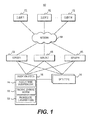
- FIG. 1 shows a block diagram of an exemplary electronic communications system 100 for implementing embodiments of the present disclosure, or aspects thereof.
- System 100 may include one or more clients 102 (e.g., Client 1, Client 2, ... Client m).
- Clients 102 may be implemented with devices, and/or applications running thereon.
- clients 102 may include personal computers, laptops, tablet computers, personal digital assistants, mobile telephones, smartphones, pagers, and/or other types of electronic communication devices.
- Clients 102 may be configured to communicate to and/or through network 104.
- network 104 may include any combination of communications networks.
- network 104 may include the Internet and/or another type of wide area network, an intranet, a metropolitan area network, a local area network, a wireless network, a cellular communications network, etc.
- clients 102 may be configured to receive or initiate e-mail or other electronic communications, such as instant messaging, chat, text messaging, SMS messages, pager communications, blog posts, microblog posts, news items, etc. Such communications may be generated by clients 102 and may be transmitted through network 104 to appropriate servers, such as, for example, servers 106.
- Servers 106 may include one or more servers (e.g., Server 1, Server 2, ... Server n) configured to interact with the network 104, one or more data stores 114, and a validation system 108.
- servers 106 may be implemented as a server, a server system comprising a plurality of servers, or a server farm comprising a load balancing system and a plurality of servers.
- Servers 106 may be hardware, software, or a combination thereof. They may be web and/or e-mail servers.
- the validation system 108 may include account name validation logic 116, a machine learning system 118, and a probabilistic classifier model 120.
- the account name validation logic 116 may process records from one or more of clients 102, servers 106, and/or data stores 114, and provide the processed records to a machine learning system 118 and/or the probabilistic classifier model 120.
- the machine learning system 118 may take in records from other network entities, such as the account name validation logic 116, in order to train the probabilistic classifier model 120 to accurately determine computer-generated account names and other computer-generated electronic data.
- account name validation logic 116 may receive records from a data store 114, the records comprising a list of known genuine account names as well as known computer-generated account names.
- the account name validation logic 116 may process the records according to embodiments disclosed herein, and provide the records to the machine learning system 118. The machine learning system 118 may then automatically configure weights to be placed on various features of the account names in the probabilistic classifier model 120. After the probabilistic classifier model 120 is trained, the account name validation logic 116 may also receive one or more account names, from any network element of the system 100, including one or more data stores 114, that are not known to be genuine or computer-generated. The account name validation logic 116 may determine, either itself or after communicating with the probabilistic classifier model 120, whether the account name is genuine.
- servers 106 may also be configured to interact with a data store 114.
- the data store 114 may include one or more logically and/or physically separate databases configured to store data.
- the data stored in data store 114 may be received from servers 106, from the validation system 108, and/or from any entity on the network 104.
- the data stored in the data store 114 may take various forms including, but not limited to, account names, e-mails, instant messages, chat messages, text messages, SMS messages, pager communications, blog posts, news items, addresses, account names or other identifiers, and other electronic communications, user-generated content, or any combination thereof.
- validation system 108 and/or the data store 114 may be implemented using a single computer, server, and/or network element.
- the validation system 108 and/or the data store 114 may also be implemented on one or more servers 106.
- the data store 114 and/or data stored on validation system 108 may be maintained in a network attached storage device, in a storage area network, or combinations thereof, etc.
- data stored on the validation system 108 and/or the data store 114 may be maintained and queried using numerous types of database software and programming languages, such as SQL, MySQL, IBM DB2®, Microsoft Access®, PERL, C/C++, Java®, etc.
- clients may perform the role of servers and vice-versa.
- clients 102 may have the same hardware components as servers 106.
- the embodiments of this disclosure may also be implemented on the same device serving both as a client and a server.
- automated methods that identify possible computer-generated accounts may greatly expedite the process of determining which accounts are to be banned, flagged, blocked, etc.
- Machine-learning systems are useful for identifying correlations in large data sets, and automatically creating weights according to the importance of those correlations.
- This training process may be initiated with a training set of data, which may be a large number of account names known to be human and computer-generated. Pre-processing of training set data, and any data provided to the validation system 108, may greatly enhance the accuracy and usefulness of the system.
- "shingling,” i.e., creating fragments of an account name may be useful in determining whether it is computer-generated. It may also be useful to rank and classify fragments by commonality when compared with, for example, a large data store of account names.
- fragments outside of a certain size are not helpful in determining whether or not an account name is computer-generated.
- User account names tend to vary in length between three and twenty characters. Fragments that are very small or very large relative to the size of the account name may not provide any additional confidence as to whether the account is computer-generated. As a result, fragment sizes may be limited to those between three and eight characters, for example, or between two and ten, etc..
- Correlations may also exist between consonants used, and the ordering thereof, and whether an account name is computer-generated. As a result, it may be useful to remove vowels, numbers, and/or punctuation marks from an account name and/or fragments thereof during pre-processing in order to produce a list of consonants for analysis by the validation system 108.
- the machine learning system 118 may be provided the account name, fragments thereof, and data about one or more of the features of the fragments discussed above (e.g., fragment frequencies, consonant properties, hashed account name features, etc.).
- the account name validation logic 116 may be provided the fragments, which may itself, or by using the now trained probabilistic classifier model 120, determine if an account name is likely to be computer-generated.
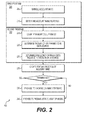
- FIG. 2 is a flow diagram of methods for performing account name validation, according to exemplary embodiments of the present disclosure.
- the account name may be shingled into fragments of various lengths.
- the account name and/or fragments thereof may be hashed by character type.
- consonants may be hashed as As, vowels as Bs, numbers as Cs, and punctuation marks as Ds, as shown in Table 1.
- the hashing methodology may vary. For example, alphanumeric characters may be hashed as As, and punctuation as Bs, etc. Multiple hashings using differing methodologies may also be performed in parallel.
- the account name may be truncated, for example, to remove characters other than consonants, also as shown in Table 1. Other types of characters may be removed by truncation, and multiple truncations may be performed in parallel to generated additional fragments for analysis.
- shingled, hashed and truncated screen name fragments are shown in Table 2.
- fragments may be limited to between, for example, three and seven characters in size, since fragment sizes outside of this range may not substantially contribute to the determination of whether an account name is genuine. Additionally, small fragment sizes, such as fragments of two characters, may cause so many fragments to be generated that the validation system 108 is slowed considerably.
- the predetermined fragment sizes generated may manually or automatically change, for example based upon properties of the training set, such as average account name length, received from the data store 114. Fragments receiving differing types of processing may be fragmented in varying sizes.
- truncated account names may be fragments between three and six characters in size, as shown in Table 2.
- TABLE 2 Type Fragment Size Feature Values (showing only the length 5's)
- Account Name (AN) 3's, 4's, 5's, 6's, 7's john_ , ohn_s , hn_sm , n_smi , _smit , smith , mith1 , ith10 Hashed AN 3's, 4's, 5's, 6's, 7's abaad, baada, aadaa, adaab, daaba, aabaa, abaac, baacc Truncated AN 3's, 4's, 5's, 6's jhnsm, hnsmt, nsmth
- each account name, and various types and fragments thereof, may constitute feature values (also known as tokens) which may be provided to the machine learning system 118, both for training and real-world purposes. Additional feature values may be obtained from the full account name. For example, the number of each character type may be counted and/or ordered, as shown in Table 3. The feature values in Table 3 are shown as human-readable values, although in the validation system 108, other values may be used. TABLE 3 Account Name Breakdown Feature Values (human-readable version) john_smith10 7 con, 2 vow/num, 1 pun Con, Con, Con, Con, Con, Con, Con, Vow, Vow, Num, Num, Pun
- Steps 205 and 210 illustrate a series of steps for generating example feature values which can be extracted from the account name itself, without having to compare the account name to others, and is herein labeled the "first program."
- additional feature values may be determined in a "second program" 202 by comparing the account name and fragments thereof to other account names, such as, account names known to be either human or computer-generated during the training process.
- the second program 202 may run a series of analytics to establish frequencies and significance thresholds for the fragments feature values identified in the first program 201.
- the contents of a data set such as a training set from the data store 114, may be searched for occurrences of the account name, and/or one or more fragments thereof.
- An index may be created indicating the number of times the account name and/or one or more fragments appear in the data set. For example, "john_” may appear 1000 times, “_smit” may appear 600 times, and "ith10" may appear 42 times. At this point, however, the significance of the number of these occurrences may not be clear, as the size and content of the data set may vary.
- the data set may be statistically analyzed to determine the significance of these fragment occurrences.
- fragments that appear more than 1300 times e.g., are in the 99th percentile.
- Fragments that appear more than 750 times may be, e.g., in the 95th percentile, and so on.
- Fragments that appear fewer than ten times in the data set may be classified as "rare," and only one occurrence may be classified as unique.
- the threshold of a "rare" designation may be based upon the number of fragments in the data store 114, and may be set by a user, or automatically set by the system 100 based upon the size and/or composition of the data store 114. While percentiles are listed to categorize the relative frequencies of various fragments in the data set, alternative classification methodologies are possible. For example, each fragment may be assigned a numerical value of, e.g., 1-10 based on commonness in the data store 114. Alternatively, a given fragment may simply be categorized as "rare,” “medium,” or “common.” Fragments may also not be categorized at all.
- raw frequency data for one or more fragments of one or more account names may be given to a machine learning system 118 or probabilistic classifier model 120 for further processing. All fragments in the data store 114 may be counted in order to determine the threshold for each category. Alternatively, a smaller number of fragments in the data store 114 may be counted to determine each threshold, for example a statistically significant subset.
- the level of significance of each fragment determined in the first program may be determined. For example, "john_” may appear 1000 times, and would thus be in the 95th percentile for commonness among fragments in the data store 114.
- the fragment "ith10” may only appear 42 times, which may be neither a rare nor common token, and so on.
- one or more feature records may be created that associate at least one of the learned features about each fragment.
- Features such as size, commonness, whether it is hashed or truncated, etc. may be included.
- the features may be combined into a single feature record, possibly using a code that may or may not be human-readable.
- the fragment "john_” may be associated with a feature record code “std5_95th,” which may mean a standard or unmodified fragment of length five that is in the 95th percentile of commonness.
- “ith10” may be associated with a feature record code “std5_norm,” which may mean a standard or unmodified fragment of length five that is neither common nor rare.
- the fragment "xpcjq" may be associated with a feature record code “trn5_uniq” which may mean a truncated fragment of length five that is unique in the data store. All discovered features in the first and second programs are not necessarily combined into one feature record. Alternatively, one record may be created for each of the one or more features of a given fragment. Other feature record formats and groupings are within the scope of embodiments discussed herein.
- the one or more feature records for the one or more account names and/or fragments may be placed into key, value records organized by account name.
- Features may be stored as the values, with the screen names as keys.
- Key, value pair databases often may be processed faster than traditional relational databases, especially in big data environments.
- this step may be optional, as other database formats may be used. For example, lists of features associated with each fragment may be put into one or more tables and provided to any of the modules of the validation system 108.
- steps 205-235 may be repeated for each account name in the training set. Records may be provided sequentially to modules of the validation system 108, or records may be compiled for more than one account name, and fed to modules of the validation system 108 as a batch.
- the machine learning system 118 which may be scalable and/or distributed, may be used to train a probabilistic classifier model 120 using records from a training set.
- the machine learning algorithm may be operable to provide collaborative filtering, clustering, and/or classification.
- the machine learning algorithm may automatically adjust, in the probabilistic classifier model 120, weights placed on various feature records and fragment correlations to maximize the rate of correct prediction as to whether each account name is genuine or computer-generated.
- the probabilistic classifier model 120 may be, for example, a Na ⁇ ve Bayes classifier model.
- the probabilistic classifier model 120 may be directly provided any number of account names to determine if they are likely computer-generated. For example, steps 205-232 may be performed on one or more additional account names in a production/live environment (where it is unknown whether the account name is human or computer-generated), the resulting one or more key, value records may be provided to the probabilistic classifier model 120 to obtain a result. Alternatively, the probabilistic classifier model 120 may be incorporated into or consumed by software, such as account name validation logic 116 software, which itself may be provided account names.
- the probabilistic classifier model 120 may generate a confidence score, wherein a given account name with a confidence score above a predetermined threshold may be designated as "real,” and otherwise designated as “fake.” Alternatively, there may be more than two possible results. For example, “very likely real,” “somewhat likely real,” “equally likely to be real and fake,” “likely fake,” each category with associated pre-determined confidence thresholds.
- the results may be presented in some other form, for example numeric.
- the pre-determined thresholds for the results determination may be user configurable, or may be set automatically.
- the validation system 108 may cause the account name to be flagged for review, quarantined, and/or banned, etc.
- a user account may be subject to a variety of differing treatments. If there is a very high pre-determined confidence level that the account is computer-generated, the validation system 108 may cause the account to be automatically banned. If there is a lower pre-determined confidence level that the account is computer-generated, the validation system 108 may cause the account to be red-flagged for review, temporarily quarantined, subject to automated tests to verify that the account is active, such by as messaging the user, etc.
- new account names may be continuously or periodically provided to the machine learning system 118, which may allow the weights placed on various features to be automatically adjusted over time. This provides the system with flexibility, as typical account names in a set may change over time as the set matures and simpler account names are no longer available. This also allows for the system to adjust to changes in fraudulent account generation software.
- Embodiments described herein may be implemented for identifying malicious and/or computer-generated content in e-mails, online content, blogs, microblogs, documents, and/or any other ostensibly user-generated electronic communications that, for example, arrive at servers 106.
- a confidence level that an account name is not genuine may be considered along with a confidence level that the content of an associated electronic message is not genuine when determining whether to mark, discard, or place the e-mail in a spam folder.
- the first program 201 and second program 202 may be executed independently, or in combination with each other, as described above. The ordering of steps in embodiments discussed herein may vary. For example, step 220 may be performed at any time before step 225.
- the output of the probabilistic classifier model 120 may be used internally by an organization, and not be visible to the public. Internally at an organization, the results could be consumed by a team in order to focus attention on users that are more likely human or computer, depending on the needs of the team.
- the validation system 108 may thus help focus the attention of administrators with limited resources. For example, in a user forum, user accounts that are deemed likely to be computer-generated may be reviewed first by human administrators over other accounts.
- user account providers may be able to quickly know how much of their user base appears genuine. This may help account providers make decisions about changes that need to be made to user screening and other security measures.
- FIG. 3 is a flow diagram of a method for performing location-based authentication.
- an account name is received.
- the account name is divided into a plurality of fragments.
- one or more features of at least one of the fragments are determined.
- the commonness of at least one of the fragments is determined.
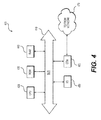
- FIG. 4 provides a functional block diagram illustration of general purpose computer hardware platforms.
- FIG. 4 illustrates a network or host computer platform 400, as may typically be used to implement a server, such as the one or more clients 102, servers 106, data stores 114, and the validation system 108. It is believed that those skilled in the art are familiar with the structure, programming, and general operation of such computer equipment and as a result the drawings should be self-explanatory.
- a platform for a server or the like 400 may include a data communication interface for packet data communication 460.
- the platform may also include a central processing unit (CPU) 420, in the form of one or more processors, for executing program instructions.
- the platform typically includes an internal communication bus 410, program storage, and data storage for various data files to be processed and/or communicated by the platform such as ROM 430 and RAM 440, although the computer platform 400 often receives programming and data via network communications 470.
- the hardware elements, operating systems, and programming languages of such equipment are conventional in nature, and it is presumed that those skilled in the art are adequately familiar therewith.
- the computer platform 400 also may include input and output ports 450 to connect with input and output devices such as keyboards, mice, touchscreens, monitors, displays, etc.
- input and output ports 450 to connect with input and output devices such as keyboards, mice, touchscreens, monitors, displays, etc.
- the various computer platform functions may be implemented in a distributed fashion on a number of similar platforms, to distribute the processing load.
- the computer platforms may be implemented by appropriate programming of one computer hardware platform.
- Storage type media include any or all of the tangible memory of the computers, processors or the like, or associated modules thereof, such as various semiconductor memories, tape drives, disk drives and the like, which may provide non-transitory storage at any time for the software programming. All or portions of the software may at times be communicated through the Internet or various other telecommunication networks.
- Such communications may enable loading of the software from one computer or processor into another, for example, from a management server or host computer of the mobile communication network into the computer platform of a server and/or from a server to the mobile device.
- another type of media that may bear the software elements includes optical, electrical and electromagnetic waves, such as used across physical interfaces between local devices, through wired and optical landline networks and over various air-links.
- the physical elements that carry such waves, such as wired or wireless links, optical links, or the like, also may be considered as media bearing the software.
- terms such as computer or machine "readable medium” refer to any medium that participates in providing instructions to a processor for execution.
- account name is used above, embodiments described herein may be applied to any account identifier and/or ostensibly user-generated content.
Landscapes
- Engineering & Computer Science (AREA)
- Computer Security & Cryptography (AREA)
- Theoretical Computer Science (AREA)
- General Engineering & Computer Science (AREA)
- Computing Systems (AREA)
- Physics & Mathematics (AREA)
- Software Systems (AREA)
- General Physics & Mathematics (AREA)
- Signal Processing (AREA)
- Computer Networks & Wireless Communication (AREA)
- Evolutionary Computation (AREA)
- Data Mining & Analysis (AREA)
- Artificial Intelligence (AREA)
- Mathematical Physics (AREA)
- Computer Hardware Design (AREA)
- Medical Informatics (AREA)
- Computer Vision & Pattern Recognition (AREA)
- Computational Mathematics (AREA)
- Mathematical Analysis (AREA)
- Mathematical Optimization (AREA)
- Pure & Applied Mathematics (AREA)
- Algebra (AREA)
- Probability & Statistics with Applications (AREA)
- Computational Linguistics (AREA)
- Fuzzy Systems (AREA)
- Automation & Control Theory (AREA)
- Information Transfer Between Computers (AREA)
- Information Retrieval, Db Structures And Fs Structures Therefor (AREA)
Applications Claiming Priority (1)
| Application Number | Priority Date | Filing Date | Title |
|---|---|---|---|
| US14/282,097 US9928465B2 (en) | 2014-05-20 | 2014-05-20 | Machine learning and validation of account names, addresses, and/or identifiers |
Publications (1)
| Publication Number | Publication Date |
|---|---|
| EP2947847A1 true EP2947847A1 (de) | 2015-11-25 |
Family
ID=53189716
Family Applications (1)
| Application Number | Title | Priority Date | Filing Date |
|---|---|---|---|
| EP15168289.5A Withdrawn EP2947847A1 (de) | 2014-05-20 | 2015-05-20 | Maschinelles lernen und validierung von kontonamen, adressen und/oder identifikatoren |
Country Status (2)
| Country | Link |
|---|---|
| US (4) | US9928465B2 (de) |
| EP (1) | EP2947847A1 (de) |
Cited By (1)
| Publication number | Priority date | Publication date | Assignee | Title |
|---|---|---|---|---|
| CN110519241A (zh) * | 2019-08-12 | 2019-11-29 | 广州海颐信息安全技术有限公司 | 基于机器学习的主动发现特权威胁异常行为的方法及装置 |
Families Citing this family (9)
| Publication number | Priority date | Publication date | Assignee | Title |
|---|---|---|---|---|
| US9928465B2 (en) | 2014-05-20 | 2018-03-27 | Oath Inc. | Machine learning and validation of account names, addresses, and/or identifiers |
| US10027671B2 (en) * | 2016-06-16 | 2018-07-17 | Ca, Inc. | Restricting access to content based on a posterior probability that a terminal signature was received from a previously unseen computer terminal |
| US10032116B2 (en) * | 2016-07-05 | 2018-07-24 | Ca, Inc. | Identifying computer devices based on machine effective speed calibration |
| US11263035B2 (en) * | 2018-04-13 | 2022-03-01 | Microsoft Technology Licensing, Llc | Longevity based computer resource provisioning |
| WO2019229988A1 (ja) * | 2018-06-01 | 2019-12-05 | 三菱電機株式会社 | 不審メール検知装置、不審メール検知方法および不審メール検知プログラム |
| US10905962B2 (en) | 2018-09-07 | 2021-02-02 | Valve Corporation | Machine-learned trust scoring for player matchmaking |
| US11052311B2 (en) | 2018-09-07 | 2021-07-06 | Valve Corporation | Machine-learned trust scoring based on sensor data |
| US11170064B2 (en) * | 2019-03-05 | 2021-11-09 | Corinne David | Method and system to filter out unwanted content from incoming social media data |
| JP2022100064A (ja) * | 2020-12-23 | 2022-07-05 | 富士フイルムビジネスイノベーション株式会社 | 情報処理装置、情報処理方法、及び情報処理プログラム |
Citations (3)
| Publication number | Priority date | Publication date | Assignee | Title |
|---|---|---|---|---|
| EP1492283A2 (de) * | 2003-06-23 | 2004-12-29 | Microsoft Corporation | Verfahren und Vorrichtung zur Spamentdeckung |
| US20070118904A1 (en) * | 2003-06-04 | 2007-05-24 | Microsoft Corporation | Origination/destination features and lists for spam prevention |
| US20130185230A1 (en) * | 2012-01-12 | 2013-07-18 | Microsoft Corporation | Machine-learning based classification of user accounts based on email addresses and other account information |
Family Cites Families (52)
| Publication number | Priority date | Publication date | Assignee | Title |
|---|---|---|---|---|
| US5619648A (en) * | 1994-11-30 | 1997-04-08 | Lucent Technologies Inc. | Message filtering techniques |
| US5742769A (en) * | 1996-05-06 | 1998-04-21 | Banyan Systems, Inc. | Directory with options for access to and display of email addresses |
| US6453327B1 (en) * | 1996-06-10 | 2002-09-17 | Sun Microsystems, Inc. | Method and apparatus for identifying and discarding junk electronic mail |
| EP1031087A1 (de) * | 1997-07-18 | 2000-08-30 | Net Exchange, Inc. | Vorrichtung und verfahren für die realisation von briefpartner-orientierterelektronischen post |
| US7117358B2 (en) * | 1997-07-24 | 2006-10-03 | Tumbleweed Communications Corp. | Method and system for filtering communication |
| US20050081059A1 (en) * | 1997-07-24 | 2005-04-14 | Bandini Jean-Christophe Denis | Method and system for e-mail filtering |
| US6249805B1 (en) * | 1997-08-12 | 2001-06-19 | Micron Electronics, Inc. | Method and system for filtering unauthorized electronic mail messages |
| US5999967A (en) * | 1997-08-17 | 1999-12-07 | Sundsted; Todd | Electronic mail filtering by electronic stamp |
| US6199102B1 (en) * | 1997-08-26 | 2001-03-06 | Christopher Alan Cobb | Method and system for filtering electronic messages |
| US6023723A (en) * | 1997-12-22 | 2000-02-08 | Accepted Marketing, Inc. | Method and system for filtering unwanted junk e-mail utilizing a plurality of filtering mechanisms |
| US5999932A (en) * | 1998-01-13 | 1999-12-07 | Bright Light Technologies, Inc. | System and method for filtering unsolicited electronic mail messages using data matching and heuristic processing |
| US6161130A (en) * | 1998-06-23 | 2000-12-12 | Microsoft Corporation | Technique which utilizes a probabilistic classifier to detect "junk" e-mail by automatically updating a training and re-training the classifier based on the updated training set |
| US6829635B1 (en) * | 1998-07-01 | 2004-12-07 | Brent Townshend | System and method of automatically generating the criteria to identify bulk electronic mail |
| US7275082B2 (en) * | 1998-07-15 | 2007-09-25 | Pang Stephen Y F | System for policing junk e-mail messages |
| US6493007B1 (en) * | 1998-07-15 | 2002-12-10 | Stephen Y. Pang | Method and device for removing junk e-mail messages |
| US7389413B2 (en) * | 1998-07-23 | 2008-06-17 | Tumbleweed Communications Corp. | Method and system for filtering communication |
| US6266692B1 (en) * | 1999-01-04 | 2001-07-24 | International Business Machines Corporation | Method for blocking all unwanted e-mail (SPAM) using a header-based password |
| US8726148B1 (en) * | 1999-09-28 | 2014-05-13 | Cloanto Corporation | Method and apparatus for processing text and character data |
| US20040073617A1 (en) * | 2000-06-19 | 2004-04-15 | Milliken Walter Clark | Hash-based systems and methods for detecting and preventing transmission of unwanted e-mail |
| US20020120600A1 (en) * | 2001-02-26 | 2002-08-29 | Schiavone Vincent J. | System and method for rule-based processing of electronic mail messages |
| US7325249B2 (en) * | 2001-04-30 | 2008-01-29 | Aol Llc | Identifying unwanted electronic messages |
| US7454195B2 (en) * | 2001-11-16 | 2008-11-18 | At&T Mobility Ii, Llc | System for the centralized storage of wireless customer information |
| US20030172291A1 (en) * | 2002-03-08 | 2003-09-11 | Paul Judge | Systems and methods for automated whitelisting in monitored communications |
| US20040249895A1 (en) * | 2003-03-21 | 2004-12-09 | Way Gregory G. | Method for rejecting SPAM email and for authenticating source addresses in email servers |
| US7320020B2 (en) * | 2003-04-17 | 2008-01-15 | The Go Daddy Group, Inc. | Mail server probability spam filter |
| US7483947B2 (en) * | 2003-05-02 | 2009-01-27 | Microsoft Corporation | Message rendering for identification of content features |
| US7831667B2 (en) * | 2003-05-15 | 2010-11-09 | Symantec Corporation | Method and apparatus for filtering email spam using email noise reduction |
| US7617526B2 (en) * | 2003-05-20 | 2009-11-10 | International Business Machines Corporation | Blocking of spam e-mail at a firewall |
| US7454467B2 (en) * | 2003-05-22 | 2008-11-18 | International Business Machines Corporation | Method for managing email messages |
| JP4073841B2 (ja) * | 2003-07-24 | 2008-04-09 | 富士フイルム株式会社 | 電子メール・サーバ |
| US20060041621A1 (en) * | 2004-05-21 | 2006-02-23 | Yahoo! Inc. | Method and system for providing a disposable email address |
| US7660865B2 (en) * | 2004-08-12 | 2010-02-09 | Microsoft Corporation | Spam filtering with probabilistic secure hashes |
| US20060095966A1 (en) * | 2004-11-03 | 2006-05-04 | Shawn Park | Method of detecting, comparing, blocking, and eliminating spam emails |
| US7574409B2 (en) * | 2004-11-04 | 2009-08-11 | Vericept Corporation | Method, apparatus, and system for clustering and classification |
| US20060149820A1 (en) * | 2005-01-04 | 2006-07-06 | International Business Machines Corporation | Detecting spam e-mail using similarity calculations |
| US7543076B2 (en) * | 2005-07-05 | 2009-06-02 | Microsoft Corporation | Message header spam filtering |
| US20080059590A1 (en) * | 2006-09-05 | 2008-03-06 | Ecole Polytechnique Federale De Lausanne (Epfl) | Method to filter electronic messages in a message processing system |
| US8868663B2 (en) * | 2008-09-19 | 2014-10-21 | Yahoo! Inc. | Detection of outbound sending of spam |
| US9058478B1 (en) * | 2009-08-03 | 2015-06-16 | Google Inc. | System and method of determining entities operating accounts |
| US8645478B2 (en) * | 2009-12-10 | 2014-02-04 | Mcafee, Inc. | System and method for monitoring social engineering in a computer network environment |
| EP2609560A4 (de) * | 2010-08-26 | 2014-05-21 | Wi Mexx Internat Ltd | Geldzuweisungssystem |
| US20130060708A1 (en) * | 2011-09-06 | 2013-03-07 | Rawllin International Inc. | User verification for electronic money transfers |
| US20130290214A1 (en) * | 2012-04-25 | 2013-10-31 | Robert James Clavin | Method and apparatus for providing reviews and feedback for professional service providers |
| US9524501B2 (en) * | 2012-06-06 | 2016-12-20 | Visa International Service Association | Method and system for correlating diverse transaction data |
| CN103533006B (zh) * | 2012-07-06 | 2019-09-24 | 中兴通讯股份有限公司 | 一种联合云盘客户端、服务器、系统和联合云盘服务方法 |
| US9002102B2 (en) * | 2012-12-21 | 2015-04-07 | Hewlett-Packard Development Company, L.P. | Generating training documents |
| US9043887B2 (en) * | 2012-12-31 | 2015-05-26 | Apple Inc. | Adaptive secondary authentication criteria based on account data |
| AU2014200729A1 (en) * | 2013-02-19 | 2014-09-04 | ChannelPace Pty Ltd | An improved authentication method |
| US9400779B2 (en) * | 2013-06-06 | 2016-07-26 | Xerox Corporation | Method and system for classifying reviewers' comments and recommending related actions in idea-generating social media platforms |
| US20150039679A1 (en) * | 2013-08-01 | 2015-02-05 | Go Daddy Operating Company, LLC | Methods and systems for recommending top level and second level domains |
| US9386011B2 (en) * | 2013-08-29 | 2016-07-05 | Aol Inc. | Systems and methods for managing resetting of user online identities or accounts |
| US9928465B2 (en) * | 2014-05-20 | 2018-03-27 | Oath Inc. | Machine learning and validation of account names, addresses, and/or identifiers |
-
2014
- 2014-05-20 US US14/282,097 patent/US9928465B2/en active Active
-
2015
- 2015-05-20 EP EP15168289.5A patent/EP2947847A1/de not_active Withdrawn
-
2018
- 2018-02-13 US US15/895,520 patent/US10789537B2/en active Active
-
2020
- 2020-08-14 US US16/994,221 patent/US11704583B2/en active Active
-
2023
- 2023-05-31 US US18/326,569 patent/US12456064B2/en active Active
Patent Citations (3)
| Publication number | Priority date | Publication date | Assignee | Title |
|---|---|---|---|---|
| US20070118904A1 (en) * | 2003-06-04 | 2007-05-24 | Microsoft Corporation | Origination/destination features and lists for spam prevention |
| EP1492283A2 (de) * | 2003-06-23 | 2004-12-29 | Microsoft Corporation | Verfahren und Vorrichtung zur Spamentdeckung |
| US20130185230A1 (en) * | 2012-01-12 | 2013-07-18 | Microsoft Corporation | Machine-learning based classification of user accounts based on email addresses and other account information |
Cited By (1)
| Publication number | Priority date | Publication date | Assignee | Title |
|---|---|---|---|---|
| CN110519241A (zh) * | 2019-08-12 | 2019-11-29 | 广州海颐信息安全技术有限公司 | 基于机器学习的主动发现特权威胁异常行为的方法及装置 |
Also Published As
| Publication number | Publication date |
|---|---|
| US9928465B2 (en) | 2018-03-27 |
| US20180174064A1 (en) | 2018-06-21 |
| US20230306289A1 (en) | 2023-09-28 |
| US10789537B2 (en) | 2020-09-29 |
| US20150339583A1 (en) | 2015-11-26 |
| US12456064B2 (en) | 2025-10-28 |
| US11704583B2 (en) | 2023-07-18 |
| US20200380395A1 (en) | 2020-12-03 |
Similar Documents
| Publication | Publication Date | Title |
|---|---|---|
| US12456064B2 (en) | Machine learning and validation of account names, addresses, and/or identifiers | |
| CN107533557B (zh) | 使用模板识别网络欺诈通信 | |
| US10516638B2 (en) | Techniques to select and prioritize application of junk email filtering rules | |
| Sethi et al. | SMS spam detection and comparison of various machine learning algorithms | |
| US9906554B2 (en) | Suspicious message processing and incident response | |
| CN104067567B (zh) | 用于使用字符直方图进行垃圾邮件检测的系统和方法 | |
| US9412096B2 (en) | Techniques to filter electronic mail based on language and country of origin | |
| EP2715565B1 (de) | Dynamische regelumsortierung zur klassifizierungen von benachrichtigungen | |
| US8112484B1 (en) | Apparatus and method for auxiliary classification for generating features for a spam filtering model | |
| Sajedi et al. | Sms spam filtering using machine learning techniques: A survey | |
| CN112039874B (zh) | 一种恶意邮件的识别方法及装置 | |
| EP3281144B1 (de) | Nachrichtenmeldungsverarbeitung und bedrohungspriorisierung | |
| Liubchenko et al. | Research Application of the Spam Filtering and Spammer Detection Algorithms on Social Media. | |
| Banday et al. | Effectiveness and limitations of statistical spam filters | |
| CN110880013A (zh) | 识别文本的方法及装置 | |
| Tham et al. | Phishing message detection based on keyword matching | |
| RU2828610C1 (ru) | Способ классификации писем электронной почты и система, его реализующая | |
| Limanto et al. | Social Media Spamming on the Class Room Electronic | |
| Al-Daeef et al. | Evaluation of phishing email classification features: reliability ratio measure | |
| Bajaj | A multi-layer model to detect spam email at client side | |
| Mhaske et al. | Online Email Phishing Detection using Machine Learning Classifiers | |
| Zhong et al. | An effective spam filtering technique based on active feedback and Maximum entropy | |
| Al Abid | Designing Spam Filtering by Analyzing User and Email Behaviour | |
| Murukutla et al. | Spam Detection in Twitter | |
| Moeller | Creating a Naive Bayes Classifier for Spam Filtering |
Legal Events
| Date | Code | Title | Description |
|---|---|---|---|
| PUAI | Public reference made under article 153(3) epc to a published international application that has entered the european phase |
Free format text: ORIGINAL CODE: 0009012 |
|
| AK | Designated contracting states |
Kind code of ref document: A1 Designated state(s): AL AT BE BG CH CY CZ DE DK EE ES FI FR GB GR HR HU IE IS IT LI LT LU LV MC MK MT NL NO PL PT RO RS SE SI SK SM TR |
|
| AX | Request for extension of the european patent |
Extension state: BA ME |
|
| STAA | Information on the status of an ep patent application or granted ep patent |
Free format text: STATUS: THE APPLICATION IS DEEMED TO BE WITHDRAWN |
|
| 18D | Application deemed to be withdrawn |
Effective date: 20160526 |