EP2947896A1 - Module de haut-parleur miniature et procédé pour améliorer une réponse de fréquence de celui-ci, et équipement électronique - Google Patents
Module de haut-parleur miniature et procédé pour améliorer une réponse de fréquence de celui-ci, et équipement électronique Download PDFInfo
- Publication number
- EP2947896A1 EP2947896A1 EP14786118.1A EP14786118A EP2947896A1 EP 2947896 A1 EP2947896 A1 EP 2947896A1 EP 14786118 A EP14786118 A EP 14786118A EP 2947896 A1 EP2947896 A1 EP 2947896A1
- Authority
- EP
- European Patent Office
- Prior art keywords
- speaker module
- frequency
- active driver
- miniature speaker
- driver
- Prior art date
- Legal status (The legal status is an assumption and is not a legal conclusion. Google has not performed a legal analysis and makes no representation as to the accuracy of the status listed.)
- Ceased
Links
Images



Classifications
-
- H—ELECTRICITY
- H04—ELECTRIC COMMUNICATION TECHNIQUE
- H04R—LOUDSPEAKERS, MICROPHONES, GRAMOPHONE PICK-UPS OR LIKE ACOUSTIC ELECTROMECHANICAL TRANSDUCERS; ELECTRIC HEARING AIDS; PUBLIC ADDRESS SYSTEMS
- H04R3/00—Circuits for transducers
- H04R3/04—Circuits for transducers for correcting frequency response
-
- H—ELECTRICITY
- H04—ELECTRIC COMMUNICATION TECHNIQUE
- H04R—LOUDSPEAKERS, MICROPHONES, GRAMOPHONE PICK-UPS OR LIKE ACOUSTIC ELECTROMECHANICAL TRANSDUCERS; ELECTRIC HEARING AIDS; PUBLIC ADDRESS SYSTEMS
- H04R1/00—Details of transducers, loudspeakers or microphones
- H04R1/20—Arrangements for obtaining desired frequency or directional characteristics
- H04R1/22—Arrangements for obtaining desired frequency or directional characteristics for obtaining desired frequency characteristic only
- H04R1/28—Transducer mountings or enclosures modified by provision of mechanical or acoustic impedances, e.g. resonator, damping means
- H04R1/2807—Enclosures comprising vibrating or resonating arrangements
- H04R1/2811—Enclosures comprising vibrating or resonating arrangements for loudspeaker transducers
-
- H—ELECTRICITY
- H04—ELECTRIC COMMUNICATION TECHNIQUE
- H04R—LOUDSPEAKERS, MICROPHONES, GRAMOPHONE PICK-UPS OR LIKE ACOUSTIC ELECTROMECHANICAL TRANSDUCERS; ELECTRIC HEARING AIDS; PUBLIC ADDRESS SYSTEMS
- H04R1/00—Details of transducers, loudspeakers or microphones
- H04R1/20—Arrangements for obtaining desired frequency or directional characteristics
- H04R1/22—Arrangements for obtaining desired frequency or directional characteristics for obtaining desired frequency characteristic only
- H04R1/28—Transducer mountings or enclosures modified by provision of mechanical or acoustic impedances, e.g. resonator, damping means
- H04R1/2807—Enclosures comprising vibrating or resonating arrangements
- H04R1/2853—Enclosures comprising vibrating or resonating arrangements using an acoustic labyrinth or a transmission line
- H04R1/2857—Enclosures comprising vibrating or resonating arrangements using an acoustic labyrinth or a transmission line for loudspeaker transducers
-
- H—ELECTRICITY
- H04—ELECTRIC COMMUNICATION TECHNIQUE
- H04R—LOUDSPEAKERS, MICROPHONES, GRAMOPHONE PICK-UPS OR LIKE ACOUSTIC ELECTROMECHANICAL TRANSDUCERS; ELECTRIC HEARING AIDS; PUBLIC ADDRESS SYSTEMS
- H04R1/00—Details of transducers, loudspeakers or microphones
- H04R1/20—Arrangements for obtaining desired frequency or directional characteristics
- H04R1/22—Arrangements for obtaining desired frequency or directional characteristics for obtaining desired frequency characteristic only
- H04R1/28—Transducer mountings or enclosures modified by provision of mechanical or acoustic impedances, e.g. resonator, damping means
- H04R1/2807—Enclosures comprising vibrating or resonating arrangements
- H04R1/2815—Enclosures comprising vibrating or resonating arrangements of the bass reflex type
- H04R1/2819—Enclosures comprising vibrating or resonating arrangements of the bass reflex type for loudspeaker transducers
-
- H—ELECTRICITY
- H04—ELECTRIC COMMUNICATION TECHNIQUE
- H04R—LOUDSPEAKERS, MICROPHONES, GRAMOPHONE PICK-UPS OR LIKE ACOUSTIC ELECTROMECHANICAL TRANSDUCERS; ELECTRIC HEARING AIDS; PUBLIC ADDRESS SYSTEMS
- H04R2499/00—Aspects covered by H04R or H04S not otherwise provided for in their subgroups
- H04R2499/10—General applications
- H04R2499/11—Transducers incorporated or for use in hand-held devices, e.g. mobile phones, PDA's, camera's
Definitions
- the invention relates to the field of communication acoustics, in particular, to a miniature speaker module, a method for enhancing the frequency response of the miniature speaker module and an electronic device.
- a closed rear cavity design is adopted in most of the miniature moving-coil speaker modules, namely, an acoustically driven assembly is wrapped by a shell, and the entire rear cavity of the speaker module is closed. Due to the restriction from the size of the rear cavity and the volume of the product, the low frequency resonance point F0 of the miniature speaker module is high and cannot provide sufficiently low low-frequency dive.
- the relevant equalizer (EQ) and bass boost algorithms are all designed based on this kind of miniature speaker with a closed cavity. In the frequency band below F0, due to the restriction from the vibration amplitude of the existing diaphragm and the size of the components, the bass boost cannot be realized in an actual physical sense and the loudness is insufficient.
- boost algorithm in a miniature speaker module will lead to temperature increase of voice coil and rear cavity when amplifying the amplitude of electrical signal, bringing potential damage to the reliability of the speaker component and the system.
- the current closed-cavity design usually there is only one small sound leakage port, which is insufficient to dissipate heat.
- heat is generally conducted out via a large metal frame or a thermally conductive sheet.
- such manner of dissipating heat by metal is harmful to the surrounding circuit of the device, especially to the antenna design.
- the present invention provides a method for enhancing the frequency response of miniature speaker modules, a miniature speaker module, and an electronic device, to overcome the above problem or at least partially solve the above problem.
- the miniature speaker module is of a front porting design, and the second driver formed in the inverted tube and the active driver radiate independently; or, the miniature speaker module is of a side porting design, and the second driver formed in the inverted tube and the active driver radiate independently; or, the miniature speaker module is of a front porting design, and the second driver formed in the inverted tube and the active driver share the front cavity and radiate jointly.
- matching enhancement processing the input signals of the active driver according to the vibrating amplitude characteristics of the diaphragm of the active driver of the miniature speaker module additionally provided with an inverted tube comprises:
- the method further comprises:
- a miniature speaker module comprising: a cavity, and an active driver disposed in the cavity, an inverted tube and a matching enhancement unit; the inverted tube is disposed in the rear cavity to form a second driver in the inverted tube when an active driver works, the second driver and the active driver radiate jointly; wherein, after additionally providing the inverted tube in the miniature speaker module, the amplitude of a diaphragm of the active driver shows a local dip on frequency bands below a resonant frequency point F0, and the lowest point of the local dip is corresponding to a frequency point Fb; and the matching enhancement unit is for matching enhancement processing the input signals of the active driver according to the vibrating amplitude characteristics of the diaphragm of the active driver of the miniature speaker module additionally provided with the inverted tube.
- the miniature speaker module is of a front porting design, and the second driver formed in the inverted tube and the active driver radiate independently; or, the miniature speaker module is of a side porting design, and the second driver formed in the inverted tube and the active driver radiate independently; or, the miniature speaker module is of a front porting design, and the second driver formed in the inverted tube and the active driver share the front cavity and radiate jointly.
- the matching enhancement unit comprises:
- Fb is adjusted by changing the tube length and diameter of the inverted tube; and/or F0 is adjusted by changing the diaphragm property and voice coil quality of the active driver; and one or more of the following parameters of the filter in the matching enhancement process is adjusted: Q value, order, frequency band attenuation parameter and cutoff frequency, according to the value of F0 and Fb and the characteristics of the power amplifier of the system and the diaphragm's vibrating amplitude.
- an electronic device comprising a miniature speaker as described above.
- the electronic device may be a mobile phone, a tablet, a tablet television or a laptop.
- a second driver formed in the inverted tube and the active driver radiate jointly such that the low frequency response of the miniature speaker module is enhanced; after additionally providing the inverted tube in the miniature speaker module, the amplitude of a diaphragm of the active driver shows a local dip on frequency bands below a resonant frequency point F0, and the lowest point of the local dip is corresponding to a frequency point Fb; and the input signals of the active driver are matching enhancement processed according to the amplitude characteristics of the diaphragm of the active driver of the miniature speaker module additionally provided with an inverted tube.
- Fig. 1 is a flowchart showing a method for enhancing the frequency response of a miniature speaker module in an embodiment of the invention.
- the method of this embodiment comprises:
- the diaphragm of the active driver squeezes the air in the rear cavity when the active driver works, and thus a second driver is formed in the inverted tube.
- the second driver and the active driver radiate jointly such that the low-frequency response of the miniature speaker module is promoted.
- the vibrating amplitude of the diaphragm of the active driver has a local dip in a frequency band below the resonance frequency point F0, and the lowest point in the local dip corresponds to the frequency point Fb.
- step S200 specifically comprises processing the input signals of the active driver as follows: band-pass filtering and enhancement processing the signals within a certain frequency band with Fb as a central frequency point, to achieve low-frequency dive and bass boost.
- step S200 specifically comprises processing the input signals of the active driver as follows: filtering out the signals below a first frequency point that is a frequency point lower than Fb, so as to filter out the signals having an vibrating amplitude beyond an allowable range of the diaphragm of the active driver on frequency bands below Fb; band-pass filtering and enhancement processing the signals within a certain frequency band with Fb as a central frequency point, to achieve low-frequency dive and bass boost; notch filtering the signals within a certain frequency band with F0 as a central frequency point, to avoid too large vibrating amplitude of the diaphragm of the active driver near F0; and high-pass filtering and enhancement processing the signals above a second frequency point higher than F0, and further enhancing the mid and high frequency output using the characteristics that the diaphragm of the active driver has a smaller vibrating amplitude in mid and high frequency bands.
- VLF signals are called very low-frequency (VLF) signals, which refer to that the amplitude of the diaphragm within this frequency band is larger and exceeds the allowable range of the diaphragm of the active driver (approximate to/reach/exceed the amplitude allowed by the diaphragm).
- VLF signals are filtered out using a high-pass filter.
- the filter cutoff frequency i.e., the first frequency point, is determined by the vibrating amplitude curve of the diaphragm of the active driver and the property of the diaphragm itself, for example, the first frequency point can be selected as the frequency point at which the amplitude curve reaches the amplitude allowed by the diaphragm.
- the frequency response of the miniature speaker module is improved in the low frequency below F0 by additionally providing the inverted tube, and the frequency response of the entire frequency bands of the miniature speaker module is greatly improved by further matching enhancement process.
- the method shown in Fig. 1 effectively enhances the frequency response of the miniature speaker module, provides adequate low frequency dive and loudness, and can be widely used in micro-electro-acoustic field, such as mobile phones, tablet PCs, flat panel televisions and laptops.
- the miniature speaker module is of a front porting design, the second driver formed in the inverted tube and the active driver radiate independently ( Fig. 8 ).
- the miniature speaker module is of a side porting design, the second driver formed in the inverted tube and the active driver radiate independently ( Fig. 10 ).
- the miniature speaker module is of a front porting design, and the second driver formed in the inverted tube and the active driver share the front cavity and radiate jointly ( Fig. 11 ).
- Fig. 2 is a diagram comparing a frequency response curve where the miniature speaker module of the present invention does not matching enhancement process the signals input into the active driver of the miniature speaker with a frequency response curve of the miniature speaker module designed with a traditional closed cavity, wherein the horizontal axis is frequency, the solid line is a frequency response curve where the miniature speaker module of the present invention does not matching enhancement process the signals input into the active driver of the miniature speaker, and the dotted line is a frequency response curve of the miniature speaker module designed with a traditional closed cavity.
- Fig. 2 shows that, the low frequency sensitivity of the miniature speaker module processed by step S100 (i.e., additionally provided with an inverted tube) is improved at least by 2dB in the frequency bands (e.g.
- the low-frequency response of the miniature speaker module is improved due to the joint radiation of the second driver formed in the inverted tube and the active driver.
- Fig. 3 is a diagram comparing an impedance curve where the miniature speaker module of the present invention does not matching enhancement process the signals input into the active driver of the miniature speaker with an impedance curve of the miniature speaker module designed with a traditional closed cavity, wherein the horizontal axis is frequency, the solid line is an impedance curve where the miniature speaker module does not matching enhancement process the signals input into the active driver of the miniature speaker in the present invention, and the dotted line is an impedance curve of the miniature speaker module designed with a traditional closed cavity.
- the voice coil vibration amplitude in the low-frequency band is limited, so the impedance curve has a local low point (in this embodiment, it is around 420Hz, and the frequency point of 420Hz is called Fb) when the miniature speaker module of the present invention does not matching enhancement process the input signals of the active driver.
- Fb the frequency point of 420Hz
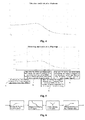
- FIG. 4 is a diagram comparing a film vibration amplitude curve where the miniature speaker module of the present invention does not matching enhancement process the signals input into the active driver of the miniature speaker with a film vibration amplitude curve of the miniature speaker module designed with a traditional closed cavity, wherein the horizontal axis is frequency, the solid line is a film vibration amplitude curve where the miniature speaker module of the present invention does not matching enhancement process the signals input into the active driver of the miniature speaker, and the dotted line is a film vibration amplitude curve of the miniature speaker module designed with a traditional closed cavity.
- Fig. 5 is a diagram showing a matching enhancement processing algorithm designed for the vibrating amplitude characteristics of the miniature speaker module additionally provided with an inverted tube as shown in Fig. 4 .
- the matching enhancement processing algorithm is specifically:
- Fig. 6 is a diagram showing the matching enhancement processing algorithm as designed in Fig. 5 for the miniature speaker module additionally provided with an inverted tube.
- the signals input into the active driver of the miniature speaker module additionally provided with an inverted tube in the present invention is processed one by one as follows: filtering out very-low-frequency signals, enhancement filtering in the frequency bands near Fb, notch filtering in the frequency bands near F0, and performing enhanced filtering in a high frequency region.
- the steps in 4 blocks in Fig. 6 are not limited to the order currently shown in Fig. 6 , and the steps in the 4 blocks may be performed in any order in other embodiments of the present invention.
- Fb can be adjusted by changing the tube length and diameter of the inverted tube; and F0 can be adjusted by changing the diaphragm characteristics and voice coil quality of the active driver. And, according to the value of F0 and Fb and the characteristics of the power amplifier and the diaphragm's vibrating amplitude, one or more of the following parameters of the filter are adjusted in the matching enhancement process: Q value (quality factor), order, frequency band attenuation parameter and cutoff frequency.
- Matching enhancement process and filter amplification in the present invention can be implemented in many ways. They may be implemented by software or hardware or may be implemented by analog or digital signals. But, the core framework of implementation should conform to Fig. 5 and Fig. 6 , especially the portion of bass boost with Fb as center.
- Fig. 7 is a diagram showing the specific process of the matching enhancement processing algorithm as designed in Fig. 5 and Fig. 6 for the miniature speaker module additionally provided with an inverted tube, at different frequencies.
- the matching enhancement processing algorithm is specifically:
- Fb is adjusted by changing the tube length and diameter of the inverted tube
- F0 is adjusted by changing the diaphragm characteristics and voice coil quality of the active driver.
- the parameters such as Q value, order, frequency band attenuation and cutoff frequency of a filter used, can be determined by a person skilled in the art according to actual needs and the known parameters (the performance of an amplifier, the diaphragm of a speaker, the property of voice coil, etc.) of the miniature speaker module; meanwhile, upper limits of algorithm complementation are adjusted by comprehensively taking electrical and mechanical performances of the system into consideration, to avoid the damage to a device resulted from excessive drive, which will not be repeated here.
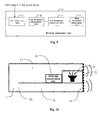
- Fig. 8 is a diagram showing the first embodiment of the miniature speaker module of the invention.
- the miniature speaker module comprises a cavity 10, and an active driver 20 disposed within the cavity 10, an inverted tube 30 and a matching enhancement unit 40.
- the inverted tube 30 is disposed in the rear cavity 11 of the miniature speaker module.
- the rear cavity 11 of this embodiment is a portion of the cavity 10 that is located in the rear of the active driver 20.
- An air inlet 32 of the inverted tube 30 in the present invention is disposed at a position within the rear cavity 11 in a preset distance to the active driver 20 to form a second driver in the inverted tube 30 because the diaphragm of the active driver 20 squeezes the air in the rear cavity 11 when the active driver 20 works.
- the second driver and the active driver 20 radiate jointly such that the low frequency response of the miniature speaker module is enhanced.
- the airflow inside the inverted tube 30 can well conduct the heat out from the rear cavity 11, thereby effectively improving reliability and power cap of the miniature speaker module.
- the miniature speaker module in this embodiment is of a front porting design, the second driver formed in the inverted tube 30 and the active driver 20 radiate independently.
- the inlet 32 of the inverted tube 30 is disposed within the rear cavity 11 in a preset distance to the active driver 20
- a sound outlet 31 is disposed at a position facing the porting direction of the inverted tube 30
- a sound outlet 21 is disposed at a position facing the porting direction of the active driver 20.
- the sound outlet 31 and the sound outlet 21 are disposed at intervals at the porting side of the miniature speaker module.
- the elements of the miniature speaker module of this embodiment are small in size, especially adaptive for use in mobile phones, tablet computers and other mobile devices, so the sound outlet of the inverted tube 30 and the sound outlet of the active driver 20 in this embodiment are located at the same side of the miniature speaker module (i.e., porting side).
- the matching enhancement unit 40 is for matching enhancement processing the input signals of the active driver 20 according to the vibrating amplitude characteristics of the diaphragm (diaphragm of the active driver 20) of the miniature speaker module additionally provided with the inverted tube 30.
- the matching enhancement unit 40 is an audio processing chip connected to the active driver 20, and of course, it may also be an audio processing circuit integrated in the active driver 20.
- the matching enhancement unit 40 in the present invention can be implemented in many ways, and it may be implemented by software or hardware or may be implemented by analog or digital signals. But, the core framework of implementation should conform to Fig. 5 and Fig. 6 , especially the portion of bass boost with Fb as center.
- the characteristics of the matching enhancement unit 40 of the embodiment are determined according to the specific parameters of the active driver 20. It needs to be further described that the frame outside the active driver 20 (i.e.the frame outside the horn-shaped icon) in Fig. 8 , Fig. 10 and Fig. 11 indicates the position of the active driver 20, which cannot be understood as that there is a closed frame outside the active driver 20 or be understood in other ways.
- Fig. 9 is a block diagram showing the matching enhancement unit comprised in the miniature speaker module of the invention.
- the matching enhancement unit 40 comprises a low frequency enhancement unit 42 for band-pass filtering and enhancement processing the signals within a certain frequency band with Fb as a central frequency point, to achieve low-frequency dive and bass boost; wherein Fb is a frequency that the dip of the diaphragm vibrating amplitude curve of the miniature speaker module additionally provided with the inverted tube 30 at low frequencies corresponds to, lower than a low frequency resonant frequency (see Fig. 4 and Fig. 5 ).
- the diaphragm vibration amplitude can still be maintained in a necessary range to further enhance the low frequency response of the miniature speaker module.
- the matching enhancement unit 40 further comprises a VLF filtering unit 41, a low frequency reduction unit 43, and a high frequency enhancement unit 44.
- the VLF filtering unit 41 filters out the signals below a first frequency point that is a frequency point lower than Fb, so as to filter out the signals having a vibrating amplitude beyond an allowable range of the diaphragm of the active driver on frequency bands below Fb.
- the low frequency reduction unit 43 notch filters the signals within a certain frequency band with F0 as a central frequency point, to avoid too large vibrating amplitude of the diaphragm of the active driver near F0.
- the high frequency enhancement unit 44 high-pass filters and enhancement processes the signals above a second frequency point higher than F0 to further enhance mid and high frequency output using the characteristics that the diaphragm of the active driver has a smaller vibrating amplitude in mid and high frequency bands. Therefore, the miniature speaker module of the present invention improves the sensitivity of low frequencies by means of the inverted tube 30, and enhances the frequency response of the miniature speaker module on the entire frequency bands by means of the matching enhancement unit 40.
- the VLF filtering unit 41 receives the signals input into the active driver 20 of the miniature speaker module and transmits the signals, from which the signals below the first frequency point have been filtered out, to a low frequency enhancement unit 42.
- the low frequency enhancement unit 42 receives signals from the VLF filtering unit 41 and transmits the signals, in which the signals within a certain frequency band with Fb as a central frequency point has been band-pass filtered and enhancement processed, to the low frequency reduction unit 43.
- the low frequency reduction unit 43 receives signals from the low frequency enhancement unit 42 and transmits the signals, in which the signals within a certain frequency band with F0 as a central frequency point have been notch filtered, to the high frequency enhancement unit 44.
- the high frequency enhancement unit 44 receives signals from the low frequency reduction unit 43 and high-pass filters and enhancement processes the signals above a second frequency point higher than F0, thereby completing the matching enhancement process of the signals input into the active driver 20 of the miniature speaker module.
- the signal connection relationship between the VLF filtering unit 41, the low frequency enhancement unit 42, the low frequency reduction unit 43 and the high frequency enhancement unit 44 can be adjusted according to requirement and is not limited to the connection relationship shown in Fig. 9 .
- the miniature speaker module shown in Fig. 8 , Fig. 10 and Fig. 11 of the present invention can adjust Fb by changing the tube length and diameter of the inverted tube; and/or, adjust F0 by changing the diaphragm characteristics and voice coil quality of the active driver; and adjust one or more of the following parameters of the filter in the matching enhancement process: Q value, order, frequency band attenuation parameter and cutoff frequency, according to the value of F0 and Fb and the characteristics of the power amplifier of the system and the diaphragm's vibrating amplitude.
- Fig. 10 is a diagram showing the second embodiment of the miniature speaker module of the invention.
- the miniature speaker module of the second embodiment is substantially the same with the miniature speaker module of the first embodiment shown in Fig. 8 .
- the miniature speaker module of the second embodiment is of a side porting design, and the second driver formed in the inverted tube and the active driver radiate independently. More specifically, an air inlet 32 of the inverted tube 30 is disposed within the rear cavity 11, a sound outlet 31 is disposed at a position facing the inverted tube 30, and a sound outlet 21 is disposed at a position vertical to the porting direction of the active driver 20.
- the side porting design and the adjacency of the sound outlet 31 and the sound outlet 21 the lightness and thinness of elements are promoted.
- Fig. 11 is a diagram showing the third embodiment of the miniature speaker module of the invention.
- the miniature speaker module of the third embodiment is substantially the same with the miniature speaker module of the first embodiment shown in Fig. 8 .
- the miniature speaker module of the third embodiment is of a front porting design, and the second driver formed in the inverted tube and the active driver radiate jointly. More specifically, an air inlet 32 of the inverted tube 30 is disposed at a position within the rear cavity 11 in a preset distance to the active driver 20, and a common sound outlet 21 is disposed at a position facing the porting direction of the active driver 20. Due to the front porting design and since the inverted tube 30 and the active driver 20 share the front cavity, the design of the structure of the third embodiment is simpler.
- the present invention further discloses an electronic device, comprising the miniature speaker module according to any one of the foregoing embodiments.
- the electronic device of the present invention is a small sized and portable electronic device.
- the electronic device disclosed by the present invention is a mobile phone, a tablet computer, a tablet television set or a notebook computer.
Landscapes
- Physics & Mathematics (AREA)
- Engineering & Computer Science (AREA)
- Acoustics & Sound (AREA)
- Signal Processing (AREA)
- Health & Medical Sciences (AREA)
- Otolaryngology (AREA)
- Circuit For Audible Band Transducer (AREA)
- Details Of Audible-Bandwidth Transducers (AREA)
- Audible-Bandwidth Dynamoelectric Transducers Other Than Pickups (AREA)
Applications Claiming Priority (2)
| Application Number | Priority Date | Filing Date | Title |
|---|---|---|---|
| CN201310583323.3A CN103686556B (zh) | 2013-11-19 | 2013-11-19 | 微型扬声器模组和增强其频率响应的方法以及电子设备 |
| PCT/CN2014/079266 WO2015074401A1 (fr) | 2013-11-19 | 2014-06-05 | Module de haut-parleur miniature et procédé pour améliorer une réponse de fréquence de celui-ci, et équipement électronique |
Publications (2)
| Publication Number | Publication Date |
|---|---|
| EP2947896A1 true EP2947896A1 (fr) | 2015-11-25 |
| EP2947896A4 EP2947896A4 (fr) | 2015-12-09 |
Family
ID=50322594
Family Applications (1)
| Application Number | Title | Priority Date | Filing Date |
|---|---|---|---|
| EP14786118.1A Ceased EP2947896A4 (fr) | 2013-11-19 | 2014-06-05 | Module de haut-parleur miniature et procédé pour améliorer une réponse de fréquence de celui-ci, et équipement électronique |
Country Status (6)
| Country | Link |
|---|---|
| US (1) | US9485566B2 (fr) |
| EP (1) | EP2947896A4 (fr) |
| JP (1) | JP6216803B2 (fr) |
| KR (1) | KR101493958B1 (fr) |
| CN (1) | CN103686556B (fr) |
| WO (1) | WO2015074401A1 (fr) |
Cited By (1)
| Publication number | Priority date | Publication date | Assignee | Title |
|---|---|---|---|---|
| EP3151584B1 (fr) * | 2015-09-30 | 2019-06-12 | Apple Inc. | Écouteurs avec insert acoustique |
Families Citing this family (8)
| Publication number | Priority date | Publication date | Assignee | Title |
|---|---|---|---|---|
| CN103686556B (zh) * | 2013-11-19 | 2017-02-08 | 歌尔股份有限公司 | 微型扬声器模组和增强其频率响应的方法以及电子设备 |
| CN103686555B (zh) * | 2013-11-19 | 2017-01-11 | 歌尔股份有限公司 | 微型扬声器模组和增强其频率响应的方法以及电子设备 |
| CN105245983A (zh) * | 2015-10-21 | 2016-01-13 | 山东共达电声股份有限公司 | 一种微型倒相式扬声器系统及终端设备 |
| CN106412739A (zh) * | 2016-06-24 | 2017-02-15 | 苏州亿欧得电子有限公司 | 新型受话器 |
| CN107172541A (zh) * | 2017-06-29 | 2017-09-15 | 深圳Tcl新技术有限公司 | 音箱、低音单元的振幅降低方法、电视终端及存储介质 |
| TWI707588B (zh) * | 2018-10-18 | 2020-10-11 | 台灣立訊精密有限公司 | 喇叭裝置 |
| WO2022000335A1 (fr) * | 2020-06-30 | 2022-01-06 | 深圳市大疆创新科技有限公司 | Procédé et appareil de traitement audio, et dispositif électronique |
| CN117278921B (zh) * | 2023-11-01 | 2024-05-24 | 荣耀终端有限公司 | 电子设备 |
Family Cites Families (25)
| Publication number | Priority date | Publication date | Assignee | Title |
|---|---|---|---|---|
| US3920931A (en) * | 1974-09-25 | 1975-11-18 | Jr Paul Yanick | Hearing aid amplifiers employing selective gain control circuits |
| US5009281A (en) * | 1988-03-10 | 1991-04-23 | Yamaha Corporation | Acoustic apparatus |
| JPH01254096A (ja) * | 1988-04-04 | 1989-10-11 | Yamaha Corp | 音響装置 |
| JPH01254098A (ja) * | 1988-04-04 | 1989-10-11 | Yamaha Corp | 音響装置 |
| JPH0257095A (ja) * | 1988-08-23 | 1990-02-26 | Sony Corp | スピーカ装置 |
| US5025885A (en) * | 1989-07-14 | 1991-06-25 | Bose Corporation | Multiple chamber loudspeaker system |
| JPH04320199A (ja) * | 1991-04-19 | 1992-11-10 | Matsushita Electric Ind Co Ltd | 音響再生装置 |
| JP3309349B2 (ja) * | 1993-07-12 | 2002-07-29 | ティーオーエー株式会社 | イコライザ及び音場補正装置 |
| JPH0993686A (ja) * | 1995-09-22 | 1997-04-04 | Sony Corp | スピーカ装置 |
| CN2313346Y (zh) * | 1997-08-25 | 1999-04-07 | 张百良 | 一种新型音箱 |
| JP2003506984A (ja) * | 1999-08-11 | 2003-02-18 | パシフィック マイクロソニックス インコーポレイテッド | 音再生のための補償システムおよび補償方法 |
| JP2002078072A (ja) * | 2000-08-23 | 2002-03-15 | Toshiba Corp | 携帯型コンピュータ |
| US6912290B1 (en) * | 2000-11-16 | 2005-06-28 | Alpine Electronics, Inc. | Speaker unit for low frequency reproduction |
| JP2007028419A (ja) * | 2005-07-20 | 2007-02-01 | Victor Co Of Japan Ltd | スピーカ駆動装置 |
| JP4946261B2 (ja) * | 2006-08-16 | 2012-06-06 | ソニー株式会社 | スピーカ装置 |
| GB2445007B (en) * | 2006-12-21 | 2011-08-10 | Wolfson Microelectronics Plc | Improvements in audio signal frequency range boost circuits |
| JP2008178050A (ja) * | 2006-12-21 | 2008-07-31 | Onkyo Corp | スピーカーシステムおよびこれを備える遊戯機 |
| JP4921197B2 (ja) * | 2007-02-06 | 2012-04-25 | スター精密株式会社 | 挿入型イヤホン |
| JP2009044286A (ja) * | 2007-08-07 | 2009-02-26 | Sharp Corp | Av装置,テレビジョン受像機 |
| JP2009118366A (ja) * | 2007-11-09 | 2009-05-28 | Mitsubishi Electric Corp | 音響再生装置 |
| US8737636B2 (en) * | 2009-07-10 | 2014-05-27 | Qualcomm Incorporated | Systems, methods, apparatus, and computer-readable media for adaptive active noise cancellation |
| US8094855B2 (en) * | 2009-09-08 | 2012-01-10 | Clements Philip R | Inverse horn loudspeakers |
| EP2551845B1 (fr) * | 2011-07-26 | 2020-04-01 | Harman Becker Automotive Systems GmbH | Reproduction de sons réduisant le bruit |
| US9247342B2 (en) * | 2013-05-14 | 2016-01-26 | James J. Croft, III | Loudspeaker enclosure system with signal processor for enhanced perception of low frequency output |
| CN103686556B (zh) * | 2013-11-19 | 2017-02-08 | 歌尔股份有限公司 | 微型扬声器模组和增强其频率响应的方法以及电子设备 |
-
2013
- 2013-11-19 CN CN201310583323.3A patent/CN103686556B/zh active Active
-
2014
- 2014-06-05 US US14/397,844 patent/US9485566B2/en active Active
- 2014-06-05 JP JP2015548187A patent/JP6216803B2/ja active Active
- 2014-06-05 KR KR1020147030659A patent/KR101493958B1/ko active Active
- 2014-06-05 WO PCT/CN2014/079266 patent/WO2015074401A1/fr not_active Ceased
- 2014-06-05 EP EP14786118.1A patent/EP2947896A4/fr not_active Ceased
Cited By (1)
| Publication number | Priority date | Publication date | Assignee | Title |
|---|---|---|---|---|
| EP3151584B1 (fr) * | 2015-09-30 | 2019-06-12 | Apple Inc. | Écouteurs avec insert acoustique |
Also Published As
| Publication number | Publication date |
|---|---|
| US20160014501A1 (en) | 2016-01-14 |
| CN103686556A (zh) | 2014-03-26 |
| JP6216803B2 (ja) | 2017-10-18 |
| CN103686556B (zh) | 2017-02-08 |
| KR101493958B1 (ko) | 2015-03-02 |
| WO2015074401A1 (fr) | 2015-05-28 |
| JP2016504867A (ja) | 2016-02-12 |
| US9485566B2 (en) | 2016-11-01 |
| EP2947896A4 (fr) | 2015-12-09 |
Similar Documents
| Publication | Publication Date | Title |
|---|---|---|
| US9485566B2 (en) | Miniature speaker module, method for enhancing frequency response thereof and electronic device | |
| US9699548B2 (en) | Miniature loudspeaker module, method for enhancing frequency response thereof, and electronic device | |
| US10645488B2 (en) | Ring radiator driver features | |
| CN107646156B (zh) | 天线设备及包括该天线设备的电子设备 | |
| CN113228703A (zh) | 包括扬声器和麦克风的电子装置 | |
| CN205017534U (zh) | 一种耳机 | |
| KR20200084682A (ko) | 조정가능한 무선 주파수 회로, 제어 방법 및 이를 포함하는 전자 장치 | |
| CN105681948A (zh) | 改善移动终端听筒模式下的音质的系统及其方法 | |
| EP3216230A1 (fr) | Systèmes de transmission de son et dispositifs dotés d'écouteurs | |
| CN109104666B (zh) | 扬声器及其音频设备、频响调节方法 | |
| JP2007028419A (ja) | スピーカ駆動装置 | |
| CN105992097B (zh) | 音频处理方法和音频处理设备 | |
| CN106028195A (zh) | 双动圈单元高保真耳机 | |
| CN105246017B (zh) | 一种音频数字信号处理器及系统 | |
| CN111478999B (zh) | 一种终端、音频信号处理方法、装置、设备及存储介质 | |
| CN211378063U (zh) | 一种终端 | |
| CN206577396U (zh) | 扬声器装置 | |
| CN107517355B (zh) | 一种电视机 | |
| CN107172541A (zh) | 音箱、低音单元的振幅降低方法、电视终端及存储介质 | |
| KR101972516B1 (ko) | 2 way 튜브형 이어폰 구조 | |
| WO2025245661A1 (fr) | Dispositif de sortie sonore | |
| CN116233704A (zh) | 一种扬声器和扩音设备 | |
| EP2966839A2 (fr) | Dispositif de communication portable avec une configuration de transducteur multi-électroacoustique et facteur de forme réduit | |
| CN121037729A (zh) | 一种耳机 | |
| CN121464652A (zh) | 一种耳机 |
Legal Events
| Date | Code | Title | Description |
|---|---|---|---|
| PUAI | Public reference made under article 153(3) epc to a published international application that has entered the european phase |
Free format text: ORIGINAL CODE: 0009012 |
|
| 17P | Request for examination filed |
Effective date: 20141024 |
|
| AK | Designated contracting states |
Kind code of ref document: A1 Designated state(s): AL AT BE BG CH CY CZ DE DK EE ES FI FR GB GR HR HU IE IS IT LI LT LU LV MC MK MT NL NO PL PT RO RS SE SI SK SM TR |
|
| AX | Request for extension of the european patent |
Extension state: BA ME |
|
| A4 | Supplementary search report drawn up and despatched |
Effective date: 20151111 |
|
| RIC1 | Information provided on ipc code assigned before grant |
Ipc: H04R 3/04 20060101AFI20151105BHEP |
|
| 17Q | First examination report despatched |
Effective date: 20160215 |
|
| DAX | Request for extension of the european patent (deleted) | ||
| REG | Reference to a national code |
Ref country code: DE Ref legal event code: R003 |
|
| 18R | Application refused |
Effective date: 20180208 |