EP2948143B1 - Utilisation de composés de phénoxypropylamine pour traiter la dépression - Google Patents
Utilisation de composés de phénoxypropylamine pour traiter la dépression Download PDFInfo
- Publication number
- EP2948143B1 EP2948143B1 EP14743158.9A EP14743158A EP2948143B1 EP 2948143 B1 EP2948143 B1 EP 2948143B1 EP 14743158 A EP14743158 A EP 14743158A EP 2948143 B1 EP2948143 B1 EP 2948143B1
- Authority
- EP
- European Patent Office
- Prior art keywords
- group
- compound
- formula
- son
- subject
- Prior art date
- Legal status (The legal status is an assumption and is not a legal conclusion. Google has not performed a legal analysis and makes no representation as to the accuracy of the status listed.)
- Active
Links
Images















Classifications
-
- A—HUMAN NECESSITIES
- A61—MEDICAL OR VETERINARY SCIENCE; HYGIENE
- A61K—PREPARATIONS FOR MEDICAL, DENTAL OR TOILETRY PURPOSES
- A61K31/00—Medicinal preparations containing organic active ingredients
- A61K31/33—Heterocyclic compounds
- A61K31/395—Heterocyclic compounds having nitrogen as a ring hetero atom, e.g. guanethidine or rifamycins
- A61K31/41—Heterocyclic compounds having nitrogen as a ring hetero atom, e.g. guanethidine or rifamycins having five-membered rings with two or more ring hetero atoms, at least one of which being nitrogen, e.g. tetrazole
-
- C—CHEMISTRY; METALLURGY
- C07—ORGANIC CHEMISTRY
- C07D—HETEROCYCLIC COMPOUNDS
- C07D413/00—Heterocyclic compounds containing two or more hetero rings, at least one ring having nitrogen and oxygen atoms as the only ring hetero atoms
- C07D413/14—Heterocyclic compounds containing two or more hetero rings, at least one ring having nitrogen and oxygen atoms as the only ring hetero atoms containing three or more hetero rings
-
- A—HUMAN NECESSITIES
- A61—MEDICAL OR VETERINARY SCIENCE; HYGIENE
- A61K—PREPARATIONS FOR MEDICAL, DENTAL OR TOILETRY PURPOSES
- A61K31/00—Medicinal preparations containing organic active ingredients
- A61K31/33—Heterocyclic compounds
- A61K31/395—Heterocyclic compounds having nitrogen as a ring hetero atom, e.g. guanethidine or rifamycins
- A61K31/435—Heterocyclic compounds having nitrogen as a ring hetero atom, e.g. guanethidine or rifamycins having six-membered rings with one nitrogen as the only ring hetero atom
- A61K31/44—Non condensed pyridines; Hydrogenated derivatives thereof
- A61K31/445—Non condensed piperidines, e.g. piperocaine
- A61K31/4523—Non condensed piperidines, e.g. piperocaine containing further heterocyclic ring systems
- A61K31/454—Non condensed piperidines, e.g. piperocaine containing further heterocyclic ring systems containing a five-membered ring with nitrogen as a ring hetero atom, e.g. pimozide, domperidone
-
- A—HUMAN NECESSITIES
- A61—MEDICAL OR VETERINARY SCIENCE; HYGIENE
- A61K—PREPARATIONS FOR MEDICAL, DENTAL OR TOILETRY PURPOSES
- A61K31/00—Medicinal preparations containing organic active ingredients
- A61K31/33—Heterocyclic compounds
- A61K31/335—Heterocyclic compounds having oxygen as the only ring hetero atom, e.g. fungichromin
- A61K31/35—Heterocyclic compounds having oxygen as the only ring hetero atom, e.g. fungichromin having six-membered rings with one oxygen as the only ring hetero atom
- A61K31/352—Heterocyclic compounds having oxygen as the only ring hetero atom, e.g. fungichromin having six-membered rings with one oxygen as the only ring hetero atom condensed with carbocyclic rings, e.g. methantheline
-
- A—HUMAN NECESSITIES
- A61—MEDICAL OR VETERINARY SCIENCE; HYGIENE
- A61K—PREPARATIONS FOR MEDICAL, DENTAL OR TOILETRY PURPOSES
- A61K31/00—Medicinal preparations containing organic active ingredients
- A61K31/33—Heterocyclic compounds
- A61K31/395—Heterocyclic compounds having nitrogen as a ring hetero atom, e.g. guanethidine or rifamycins
- A61K31/40—Heterocyclic compounds having nitrogen as a ring hetero atom, e.g. guanethidine or rifamycins having five-membered rings with one nitrogen as the only ring hetero atom, e.g. sulpiride, succinimide, tolmetin, buflomedil
- A61K31/4025—Heterocyclic compounds having nitrogen as a ring hetero atom, e.g. guanethidine or rifamycins having five-membered rings with one nitrogen as the only ring hetero atom, e.g. sulpiride, succinimide, tolmetin, buflomedil not condensed and containing further heterocyclic rings, e.g. cromakalim
-
- A—HUMAN NECESSITIES
- A61—MEDICAL OR VETERINARY SCIENCE; HYGIENE
- A61K—PREPARATIONS FOR MEDICAL, DENTAL OR TOILETRY PURPOSES
- A61K31/00—Medicinal preparations containing organic active ingredients
- A61K31/33—Heterocyclic compounds
- A61K31/395—Heterocyclic compounds having nitrogen as a ring hetero atom, e.g. guanethidine or rifamycins
- A61K31/41—Heterocyclic compounds having nitrogen as a ring hetero atom, e.g. guanethidine or rifamycins having five-membered rings with two or more ring hetero atoms, at least one of which being nitrogen, e.g. tetrazole
- A61K31/4245—Oxadiazoles
-
- A—HUMAN NECESSITIES
- A61—MEDICAL OR VETERINARY SCIENCE; HYGIENE
- A61P—SPECIFIC THERAPEUTIC ACTIVITY OF CHEMICAL COMPOUNDS OR MEDICINAL PREPARATIONS
- A61P25/00—Drugs for disorders of the nervous system
-
- A—HUMAN NECESSITIES
- A61—MEDICAL OR VETERINARY SCIENCE; HYGIENE
- A61P—SPECIFIC THERAPEUTIC ACTIVITY OF CHEMICAL COMPOUNDS OR MEDICINAL PREPARATIONS
- A61P25/00—Drugs for disorders of the nervous system
- A61P25/14—Drugs for disorders of the nervous system for treating abnormal movements, e.g. chorea, dyskinesia
- A61P25/16—Anti-Parkinson drugs
-
- A—HUMAN NECESSITIES
- A61—MEDICAL OR VETERINARY SCIENCE; HYGIENE
- A61P—SPECIFIC THERAPEUTIC ACTIVITY OF CHEMICAL COMPOUNDS OR MEDICINAL PREPARATIONS
- A61P25/00—Drugs for disorders of the nervous system
- A61P25/20—Hypnotics; Sedatives
-
- A—HUMAN NECESSITIES
- A61—MEDICAL OR VETERINARY SCIENCE; HYGIENE
- A61P—SPECIFIC THERAPEUTIC ACTIVITY OF CHEMICAL COMPOUNDS OR MEDICINAL PREPARATIONS
- A61P25/00—Drugs for disorders of the nervous system
- A61P25/24—Antidepressants
-
- A—HUMAN NECESSITIES
- A61—MEDICAL OR VETERINARY SCIENCE; HYGIENE
- A61P—SPECIFIC THERAPEUTIC ACTIVITY OF CHEMICAL COMPOUNDS OR MEDICINAL PREPARATIONS
- A61P25/00—Drugs for disorders of the nervous system
- A61P25/28—Drugs for disorders of the nervous system for treating neurodegenerative disorders of the central nervous system, e.g. nootropic agents, cognition enhancers, drugs for treating Alzheimer's disease or other forms of dementia
-
- A—HUMAN NECESSITIES
- A61—MEDICAL OR VETERINARY SCIENCE; HYGIENE
- A61P—SPECIFIC THERAPEUTIC ACTIVITY OF CHEMICAL COMPOUNDS OR MEDICINAL PREPARATIONS
- A61P43/00—Drugs for specific purposes, not provided for in groups A61P1/00-A61P41/00
Definitions
- the present invention in some embodiments relates to compositions and methods of treating depression in a patient.
- Certain diseases of the central nervous system e.g., depression, anxiety
- disorders of noradrenaline (NA) and 5-hydroxytryptamine (5-HT, also known as serotonin) which are neurotransmitters.
- augmentation of 5-HT-related neurotransmission is considered to mainly influence depressive mood and anxiety, whereas augmentation of noradrenergic neurotransmission is considered to influence retardation in depressive patients.
- Pharmaceutical agents such as imipramine, desipramine and the like, which are most frequently used for the treatment of depression, are considered to act on depressive patients by improving neurotransmission of one or both of NA and 5-HT receptors.
- 5-HT The activity of 5-HT is considered to relate to a number of various types of psychiatric disorders.
- 5-HT has been considered to be responsible for various conditions (e.g., eating disorder, gastrointestinal injury, control of cardiovascular system, cognition, and sexual behavior).
- conventional antidepressants such as imipramine, desipramine and the like, are defective in that they require 3-4 weeks or even longer time for the expression of an anti-depressive effect, which poses clinical problems.
- the 5-HT enhancement hypothesis means that the effector mechanism of antidepressant rests in the enhancement of 5-HT release at a terminal. It is based on the understanding that the conventional antidepressants decrease the 5-HT release by single administration, but increase the 5-HT release and express an anti-depressive effect only when they are administered consecutively. From those mentioned above, it is expected that a drug that promotes 5-HT release in the brain from the first can be a rapid onset antidepressant.
- a compound concurrently having a serotonin reuptake inhibitory action and a 5-HT 1A antagonistic action is considered to be an antidepressant showing quick expression of an anti-depressive effect, namely, a rapid onset antidepressant.
- compositions for use in treating or improving at least one disorder or parameter of sleep in a human subject comprising the compound of formula (I) or a pharmaceutically acceptable salt, hydrate, or solvate thereof, wherein each symbol in the formula means as follows: a bond represented by a solid line and a dotted line shows a double bond or a single bond;
- a composition for treating or diminishing at least one symptom of depression in a human subject comprising administering to a subject in need thereof a therapeutically effective amount of a composition comprising the compound of formula I or a pharmaceutically acceptable salt, hydrate, or solvate thereof.
- a composition for treating or diminishing at least one symptom of depression in a human subject comprising administering to a subject in need thereof a therapeutically effective amount of a composition comprising the compound of formula II or a pharmaceutically acceptable salt, hydrate, or solvate thereof.
- Also disclosed is a method of treating depression comprising the step of administering a low dose of a compound of formula I, or a pharmaceutically acceptable salt, hydrate, or solvate thereof, to a subject in need thereof.
- Also disclosed is a method of treating depression comprising the step of administering a low dose of a compound of formula II, or a pharmaceutically acceptable salt, hydrate, or solvate thereof, to a subject in need thereof.
- compounds of formula I have been shown to have properties useful to treat depression and/or one or more symptoms of depression. Encompassed herein therefore are methods and compositions for treating various aspects of depression.
- compositions and methods for treating or improving at least one disorder or parameter of sleep in a subject comprising a human subject comprising administering to a subject in need thereof a therapeutically effective amount of a composition comprising the compound of formula (I) or a pharmaceutically acceptable salt, hydrate, or solvate thereof.
- U.S. Patent 6,720,320 discloses phenoxypropylamine compounds and derivatives having selective affinity for and antagonistic activity against the 5-HT 1A receptor, as well as 5-HT reuptake inhibitory activity. Certain compounds disclosed therein also demonstrate fast-acting antidepressant activity. Such compounds may be useful for treatment of diseases that can be therapeutically and/or preventively treated by antagonistic activity against the 5-HT 1A receptor and/or inhibition of 5-HT reuptake. However, certain properties and characteristics of specific derivatives were not disclosed in U.S. Patent 6,720,320 . Notably, U.S. Patent 6,720,320 states that the general daily dose of the described phenoxypropylamine compounds in the case of oral administration is 0.5-10 mg/kg, preferably 1-5 mg/kg. It has been unexpectedly observed in the present disclosure that effective treatment of selected disorders can occur with oral dosing that approaches 0.001 mg/kg.
- the term "mood disorders” is to be understood as encompassing those conditions defined as mood disorders in the Diagnostic and Statistical Manual of Mental Disorders, Fifth Edition, 2000 (“DSM-IV-TR"). More specifically, the mood disorders to be treated in accordance with the disclosure encompassed herein include those associated with the occurrence of more than one depressive symptom, such as depressed mood, loss of interest or pleasure, loss of appetite, sleep disturbance, psychomotor changes, fatigue, a sense of worthlessness, impaired concentration or thoughts of death, the symptoms typically being exhibited over a prolonged period of time.
- depressive symptom such as depressed mood, loss of interest or pleasure, loss of appetite, sleep disturbance, psychomotor changes, fatigue, a sense of worthlessness, impaired concentration or thoughts of death, the symptoms typically being exhibited over a prolonged period of time.
- compounds of formula I are used to treat those conditions defined in DSM-IV-TR as being associated with a Major Depressive Episode, i.e., a period of at least two weeks in which the individual to be treated exhibits either depressed mood, or the loss of interest or pleasure, associated with at least four additional depressive symptoms from the list cited above.
- Major Depressive Disorder i.e., a period of at least two weeks in which the individual to be treated exhibits either depressed mood, or the loss of interest or pleasure, associated with at least four additional depressive symptoms from the list cited above.
- Examples of such conditions include Major Depressive Disorder, Bipolar I Disorder, and Bipolar II Disorder.
- the condition to be treated is characterized by depressive symptoms that do not necessarily rise to the level of a Major Depressive Episode, such as Dysthymic Disorder, Depressive Disorder Not Otherwise Specified, Cyclothymic Disorder, Bipolar Disorder Not Otherwise Specified, Mood Disorder Due to a General Medical Condition, and Substance-Induced Mood Disorder.
- compounds of formula I can be used to treat isolated Major Depressive Episodes that are not characterized by DSM-IV-TR as a defined disorder, for example, those associated with post-partum depression as well as depressive symptoms associated with mental conditions that are not formally classified as mood disorders, for example, Schizoaffective Disorder or Seasonal Affective Disorder.
- compounds of formula I can be used to treat an individual experiencing two or more depressive symptoms, which condition is not characterized according to DSM-IV-TR as a Major Depressive Episode.
- depressive symptoms which condition is not characterized according to DSM-IV-TR as a Major Depressive Episode.
- a composition for use in treating or improving at least one disorder or parameter of sleep in a human subject comprising administering to a subject in need thereof a therapeutically effective amount of a composition comprising the compound of formula (I) or a pharmaceutically acceptable salt, hydrate, or solvate thereof,
- the compound of formula (I) is present in the composition between 0.1 mg and 10 mg. In some embodiments, at least one symptom of depression is also improved or treated in the subject. In some embodiments, the subject has discontinued treatment with an anti-depressant compound.
- the dosage and dosing regimen for the compound of formula I may be optimized based on the health and condition of the subject to be treated, as well as the desired outcome of the treatment.
- the term "receptor”, as used herein, means a molecule, with which one or more kinds of signaling molecules can specifically interact.
- the 5-HT 1A receptor is a subtype of the 5-HT receptor, which binds the neurotransmitter serotonin ("5-hydroxytryptamine").
- subject refers to any animal, including mammals, such as, but not limited to, humans, mice, rats, other rodents, rabbits, dogs, cats, pigs, cattle, sheep, horses, or primates.
- treating includes palliative, restorative, and preventative ("prophylactic") treating of a subject.
- palliative treating refers to treatment that eases or reduces the effect or intensity of a condition in a subject without curing the condition.
- preventative treating refers to treatment that prevents the occurrence of a condition in a subject.
- restorative treating (“curative”) refers to treatment that halts the progression of, reduces the pathologic manifestations of, or entirely eliminates a condition in a subject.
- Treating can be done with a therapeutically effective amount of compound, salt or composition that elicits the biological or medicinal response of a tissue, system or subject that is being sought by an individual such as a researcher, doctor, veterinarian, or clinician.
- treatment will also be understood to include not only a complete remission of all symptoms experienced by the treated individual, but also the alleviation of one or more existing depressive symptoms, as well as the prevention of occurrence of depressive symptoms by preemptive administration of a compound of formula I to an individual prone to or likely to develop depressive symptoms, such as those with chronic or recurrent depression.
- the methods of the present disclosure can be used for treatment of any mammal exhibiting symptoms of a depression-related mood disorder, e.g., for treatment of mammals, such as cats, dogs, rats, rabbits, horses and the like; however, in a preferred embodiment, the method is used to treat humans.
- the individual to be treated is one that has been diagnosed with a condition associated with a Major Depressive Episode, more preferably Major Depressive Disorder.
- compounds of formula I have been shown to have properties useful to treat depression and/or one or more symptoms of depression.
- compounds of formula I are useful for augmenting treatment of depression in a subj ect presently receiving one or more compounds for the treatment of depression.
- a compound of formula I includes the compound set forth in formula II:
- a compound of formula II (also referred to herein as SON-117 or Wf-516) has a high affinity for 5-HTT, 5-HT 1A , and 5-HT 2A receptor binding. Electrophysiological studies using SON-117 demonstrated that the order of effects of SON-117 was presynaptic (i.e., 5-HT 1A > 5-HTT > 5-HT 2A > postsynaptic 5-HT 1A .
- a compound of formula I may have a receptor binding profile with a K i value of less than 0.05 nmol/L, less than 0.1 nmol/L, less than 0.5 nmol/L, less than 1.0 nmol/L, less than 1.5 nmol/L, less than 2.0 nmol/L, less than 2.5 nmol/L, or less than 5 nmol/L for 5-HTi.
- a compound of formula I may have a receptor binding profile with a K i value of less than 0.05 nmol/L, less than 0.1 nmol/L, less than 0.5 nmol/L, less than 1.0 nmol/L, less than 1.5 nmol/L, less than 2.0 nmol/L, less than 2.5 nmol/L, or less than 5 nmol/L for the dopamine transporter (DAT).
- DAT dopamine transporter
- Also disclosed herein is a method for treating at least one symptom of a condition or disorder associated with depression in a subject comprising administering to a subject in need thereof a therapeutically effective amount of a compound of the formula (I) or a pharmaceutically acceptable salt, as set forth above.
- the compound may be the compound set forth in formula II.
- a method for treating at least one aspect of a disorder of sleep in a subject afflicted with depression comprising administering to a subject in need thereof a therapeutically effective amount of a compound of the formula (I) or a pharmaceutically acceptable salt, as set forth above, wherein the at least one aspect of sleep is treated.
- at least one aspect of a disorder of sleep is treated.
- at least one aspect or parameter of sleep is improved in a patient.
- sleep is improved in a depressed patient.
- at least one symptom of depression is improved or treated in conjunction with improvement of sleep in the subject treated in such a manner.
- the disruption of at least one disorder or parameter of sleep is associated with depression.
- the present disclosure provides for treatment of at least one disorder or parameter of sleep regardless of how the disorder or affected parameter of sleep arises.
- disorders of sleep which are not associated with depression may also be treated according to the disclosure encompassed herein.
- a composition for use in treating or improving at least one disorder or parameter of sleep in a human subject comprising administering to a subject in need thereof a therapeutically effective amount of a composition comprising the compound of formula (I) or a pharmaceutically acceptable salt, hydrate, or solvate thereof,
- the compound of formula (I) is present in the composition between 0.1 mg and 10 mg.
- the compound of formula I is the compound set forth in formula II.
- the subject being treated for a disorder of sleep with a compound of formula I also suffers from depression.
- sleep is improved in a patient who is not afflicted with depression.
- at least one disorder or parameter of sleep is treated and/or improved.
- a method is provided for improving at least one aspect of sleep, comprising administering to a subject in need thereof a therapeutically effective amount of a compound of the formula (I) or a pharmaceutically acceptable salt, as set forth above.
- the compound of formula I is the compound set forth in formula II.
- a method for treating a sleep disorder in a patient afflicted with depression. In one embodiment, a method is provided for treating a sleep disorder in a patient following discontinuation of treatment with another active pharmaceutical ingredient, for example, an anti-depressant compound. In one embodiment, a method is provided for treating a sleep disorder in combination with an active pharmaceutical ingredient (for example, an anti-depressant compound).
- sleep may be treated, including, but not limited to, sleep onset latency, latency to persistent sleep, distribution of slow wave sleep across the sleep period time, or one or more segments of sleep period time, overall sleep continuity and sleep architecture parameters.
- slow wave sleep SWS
- REM activity and REM density are increased, even at the low doses of 3 mg and 7.5 mg, when the compound is SON-117.
- Cognitive impairment is the diminished ability to think, concentrate, formulate ideas, reason and remember.
- a method for treating or diminishing cognitive impairment or improving cognition, comprising administering to a subject in need thereof a therapeutically effective amount of a compound of the formula (I) or a pharmaceutically acceptable salt, as set forth herein.
- a method is provided for treating depression without provoking cognitive impairment.
- a method is provided for treating depression and restoring, enhancing, and improving cognition, in a patient following discontinuation of treatment with another active pharmaceutical ingredient, for example, an anti-depressant compound.
- a method for treating depression in combination with a cognition impairing active pharmaceutical ingredient (for example, a cognition impairing anti-depressant compound), without causing or increasing cognitive impairment, or for improving, enhancing or restoring cognition in such a patient.
- a cognition impairing active pharmaceutical ingredient for example, a cognition impairing anti-depressant compound
- cognitive impairment present in a person suffering from depression is treated or diminished by the administration of SON-117 as set forth herein.
- the compound of formula I is the compound set forth in formula II.
- modification of sleep parameters can improve cognition.
- cognition in general is improved.
- one or more aspects of cognition are improved, including, among others, memory consolidation, executive functions, verbal memory, and verbal fluency.
- cognition is improved in a subject to the point where normal cognition is restored in the subject.
- cognition is improved in a subject beyond the point of normal cognition in the subject, such that levels of cognition in the subject are enhanced.
- cognition is improved in a subject afflicted with depression. In another embodiment of the disclosure, cognition is improved in a subject not afflicted with depression
- a method for treating the elderly using a composition encompassed herein.
- an elderly subject has a pre-Alzheimer's Disease condition or state.
- an elderly subject has a pre-Parkinson's Disease condition or state.
- a method of treating the elderly using a composition encompassed herein comprises treatment of depression, and may optionally comprise co-administration with one or more additional therapeutic agents, as described in greater detail elsewhere herein.
- a method of treating the elderly using a composition encompassed herein comprises treatment of depression, and may optionally comprise co-administration with one or more additional therapeutic agents, such as, but not limited to, citalopram, escitalopram, sertraline, buproprion, mirtazapine, moclobemide, venlafaxine, desipramine, and nortriptyline.
- patients who suffer from increased sexual dysfunction such as, for example, anorgasmia and delayed ejaculation
- experience decreased dysfunction or even an improvement in the dysfunction may occur when subsequently dosed with SON-117 as set forth herein.
- a method for treating depression without causing or increasing sexual dysfunction.
- a method is provided for treating depression in combination with an active pharmaceutical ingredient (for example, an anti-depressant compound), without causing or increasing sexual dysfunction in a patient.
- an active pharmaceutical ingredient for example, an anti-depressant compound
- low doses of a compound of formula II administered to a subject provide surprising efficacy for treatment of depression.
- a disorder of sleep is unexpectedly treated in a subject to which a low dose of the compound of formula II is administered.
- cognition is unexpectedly improved in a subject to which a low dose of the compound of formula II is administered.
- a compound of formula I is administered to a subject at a dose of less than 0.01 mg/kg.
- the compound is administered parenterally at a dose of less than 0.01 mg/kg.
- the compound is a compound of formula II.
- a compound of formula I is administered to a subject at a dose of less than 0.5 mg/kg. In an embodiment, the compound is administered orally at a dose of less than 0.5 mg/kg. In an embodiment, the compound is a compound of formula II.
- a dose encompassed herein may be administered as a composition based on the weight of the subject.
- a dose may be administered per unit weight of the subject (e.g., mg compound of formula I per kg weight of subject).
- a dose encompassed herein may be administered as a composition based solely on the weight of the dose, without regard to the weight of the subject (e.g., mg of compound of formula I per dose administered to subject).
- the dose is determined based on the weight of the compound of formula I in the dosage form.
- the dose is determined based on the total weight of all components of the composition comprising the dosage form.
- administration of a compound for any purpose as described herein, in any form or combination described herein may include administering the compound of formula I or a pharmaceutically acceptable salt thereof at a dose of between 1 ng - 100 ⁇ g, 5 ng - 75 ⁇ g, 10 ng - 50 ⁇ g, 25 ng - 40 ⁇ g, 50 ng - 30 ⁇ g, 75 ng - 20 ⁇ g, 100 ng - 10 ⁇ g, 250 ng - 5 ⁇ g, 500 ng - 200 ⁇ g, 750 ng - 100 ⁇ g, 1 ⁇ g - 75 ⁇ g, 5 ⁇ g - 50 ⁇ g, or 10 ⁇ g - 40 ⁇ g.
- a dose of 10 ⁇ g - 40 ⁇ g represents a dosage range of 10 ⁇ g per kg of subject weight to 40 ⁇ g per kg of subject weight, and can also represent a dosage range of 10 ⁇ g administered to a subject to 40 ⁇ g administered to a subj ect.
- administration of a compound for any purpose as described herein, in any form or combination described herein may include administering the compound of formula I or a pharmaceutically acceptable salt thereof at a dose of between 1 ng - 1 g, 5 ng - 1 g, 10 ng - 1 g, 25 ng - 1 g, 50 ng - 1 g, 75 ng - 1 g, 100 ng - 750 mg, 500 ng - 500 mg, 10 ⁇ g - 200 mg, 15 ⁇ g - 190 mg, 25 ⁇ g - 180 mg, 50 ⁇ g - 170 mg, 75 ⁇ g - 160 mg, 100 ⁇ g - 150 mg, 250 ⁇ g - 140 mg, 400 ⁇ g - 130 mg, between 500 ⁇ g - 128 mg, 600 ⁇ g - 100 mg, 750 ⁇ g - 75 mg, 900 ⁇ g - 50 mg, or at a dose between 0.1 mg - 64 mg.
- administration of a compound for any purpose as described herein, in any form or combination described herein may include administering the compound of formula I or a pharmaceutically acceptable salt thereof at a dose of between 0.01 - 1.0 mg, 0.05 - 0.75 mg, 0.08 - 0.6 mg, 0.01 - 0.2 mg, 0.05 mg - 0.15 mg, 0.08 - 0.12 mg, 0.4 - 0.6 mg, 0.45 - 0.55 mg, or at a dose between 0.48 - 0.52 mg.
- a compound of formula I or a pharmaceutically acceptable salt thereof may be administered to a subject according to the compositions and methods encompassed herein at a dose of about 1000 mg or less, about 500 mg or less, about 200 mg or less, about 150 mg or less, about 100 mg or less, about 50 mg or less, about 40 mg or less, about 30 mg or less, about 20 mg or less, about 10 mg or less, about 9 mg or less, about 8 mg or less, about 7 mg or less, about 6 mg or less, about 5 mg or less, about 4 mg or less, about 3 mg or less, about 2 mg or less, about 1 mg or less, about 0.9 mg or less, about 0.8 mg or less, about 0.7 mg or less, about 0.6 mg or less, about 0.5 mg or less, about 0.4 mg or less, about 0.3 mg or less, about 0.2 mg or less, about 0.1 mg or less, about 0.09 mg or less, about 0.08 mg or less, about 0.07 mg or less, about 0.06 mg or less, about 0.05 mg or less, about 1000 mg or
- a compound of formula I or a pharmaceutically acceptable salt thereof may be administered to a subject according to the compositions and methods encompassed herein at a dose of about 1 g, about 500 mg or more, about 200 mg or more, about 150 mg or more, about 100 mg or more, about 50 mg or more, about 40 mg or more, about 30 mg or more, about 20 mg or more, about 10 mg or more, about 9 mg or more, about 8 mg or more, about 7 mg or more, about 6 mg or more, about 5 mg or more, about 4 mg or more, about 3 mg or more, about 2 mg or more, about 1 mg or more, about 0.9 mg or more, about 0.8 mg or more, about 0.7 mg or more, about 0.6 mg or more, about 0.5 mg or more, about 0.4 mg or more, about 0.3 mg or more, about 0.2 mg or more, about 0.1 mg or more, about 0.09 mg or more, about 0.08 mg or more, about 0.07 mg or more, about 0.06 mg or more, about 0.05 mg or more, about 0.
- a compound of formula I or a pharmaceutically acceptable salt thereof may be administered to a subject according to the compositions and methods encompassed herein at a dose that combines any of the foregoing dose ranges.
- a compound of formula I or a pharmaceutically acceptable salt thereof may be administered to a subject according to the compositions and methods encompassed herein at a dose of about 0.1 mg or more and about 0.5 mg or less.
- a compound of formula I or a pharmaceutically acceptable salt thereof may be administered to a subject according to the compositions and methods encompassed herein at a dose of about 1000 mg, about 500 mg, about 200 mg, about 150 mg, about 100 mg, about 50 mg, about 40 mg, about 30 mg, about 20 mg, about 10 mg, about 9 mg, about 8 mg, about 7 mg, about 6 mg, about 5 mg, about 4 mg, about 3 mg, about 2 mg, about 1 mg, about 0.9 mg, about 0.8 mg, about 0.7 mg, about 0.6 mg, about 0.5 mg, about 0.4 mg, about 0.3 mg, about 0.2 mg, about 0.1 mg, about 0.09 mg, about 0.08 mg, about 0.07 mg, about 0.06 mg, about 0.05 mg, about 0.04 mg, about 0.03 mg, about 0.02 mg, about 0.01 mg, about 0.009 mg, about 0.008 mg, about 0.007 mg, about 0.006 mg, about 0.005 mg, about 0.004 mg, about 0.003 mg, about 0.002 mg
- a compound of formula I or a pharmaceutically acceptable salt thereof may be administered to a subject according to the compositions and methods encompassed herein at a dose of 1000 mg, 500 mg, 200 mg, 150 mg, 100 mg, 50 mg, 40 mg, 30 mg, 20 mg, 10 mg, 9 mg, 8 mg, 7 mg, 6 mg, 5 mg, 4 mg, 3 mg, 2 mg, 1.9 mg, 1.8 mg, 1.7 mg, 1.6 mg, 1.5 mg, 1.4 mg, 1.3 mg, 1.2 mg, 1.1 mg, 1 mg, 0.9 mg, 0.8 mg, 0.7 mg, 0.6 mg, 0.5 mg, 0.4 mg, 0.3 mg, 0.2 mg, 0.1 mg, 0.09 mg, 0.08 mg, 0.07 mg, 0.06 mg, 0.05 mg, 0.04 mg, 0.03 mg, 0.02 mg, 0.01 mg, 0.009 mg, 0.008 mg, 0.007 mg, 0.006 mg, 0.005 mg, 0.004 mg, 0.003 mg, 0.002 mg, 0.001 mg, or 0.0005
- a compound of formula I or a pharmaceutically acceptable salt thereof may be administered to a subject according to the compositions and methods encompassed herein at a dose of about 1000 mg/kg, about 500 mg/kg, about 200 mg/kg, about 150 mg/kg, about 100 mg/kg, about 50 mg/kg, about 40 mg/kg, about 30 mg/kg, about 20 mg/kg, about 10 mg/kg, about 9 mg/kg, about 8 mg/kg, about 7 mg/kg, about 6 mg/kg, about 5 mg/kg, about 4 mg/kg, about 3 mg/kg, about 2 mg/kg, about 1.9 mg/kg, about 1.8 mg/kg, about 1.7 mg/kg, about 1.6 mg/kg, about 1.5 mg/kg, about 1.4 mg/kg, about 1.3 mg/kg, about 1.2 mg/kg, about 1.1 mg/kg, about 1 mg/kg, about 0.9 mg/kg, about 0.8 mg/kg, about 0.7 mg/kg, about 0.6 mg/kg, about 0.5 mg/kg, about 1000 mg/kg
- a method of administering a compound of formula I may include titration of the compound up to a predetermined level.
- a compound is used at a specified level (E.g., 0.05 mg b.i.d., 0.1 mg b.i.d., 0.2 mg b.i.d., 0.4 mg b.i.d., 0.6 mg b.i.d., 0.8 mg b.i.d., 1 mg b.i.d., 2 mg b.i.d., 4 mg b.i.d., 8 mg b.i.d., 16 mg b.i.d., 32 mg b.i.d., 64 mg b.i.d.).
- a specified level E.g., 0.05 mg b.i.d., 0.1 mg b.i.d., 0.2 mg b.i.d., 0.4 mg b.i.d., 0.6 mg b.i.d., 0.8 mg b
- a compound is used at a specified level (E.g., about 0.05 mg b.i.d., about 0.1 mg b.i.d., about 0.2 mg b.i.d., about 0.4 mg b.i.d., about 0.6 mg b.i.d., about 0.8 mg b.i.d., about 1 mg b.i.d., about 2 mg b.i.d., about 4 mg b.i.d., about 8 mg b.i.d., about 16 mg b.i.d., 32 mg b.i.d., 64 mg b.i.d.).
- a specified level E.g., about 0.05 mg b.i.d., about 0.1 mg b.i.d., about 0.2 mg b.i.d., about 0.4 mg b.i.d., about 0.6 mg b.i.d., about 0.8 mg b.i.d., about 1 mg b.i.
- the compound is titrated up to a predetermined dosage (E.g., titration up to 0.1 mg b.i.d., 0.2 mg b.i.d., 0.4 mg b.i.d., 0.6 mg b.i.d., 0.8 mg b.i.d., 1 mg b.i.d., 2 mg b.i.d., 4 mg b.i.d., 8 mg b.i.d., 16 mg b.i.d., 32 mg b.i.d., 64 mg b.i.d., etc).
- a predetermined dosage E.g., titration up to 0.1 mg b.i.d., 0.2 mg b.i.d., 0.4 mg b.i.d., 0.6 mg b.i.d., 0.8 mg b.i.d., 1 mg b.i.d., 2 mg b.i.d., 4 mg b.i.d
- the compound is titrated up to a predetermined dosage (E.g., titration up to about 0.1 mg b.i.d., about 0.2 mg b.i.d., about 0.4 mg b.i.d., about 0.6 mg b.i.d., about 0.8 mg b.i.d., about 1 mg b.i.d., about 2 mg b.i.d., about 4 mg b.i.d., about 8 mg b.i.d., about 16 mg b.i.d., about 32 mg b.i.d., about 64 mg b.i.d., etc).
- a compound is titrated up to a predetermined dosage as the dosage is described elsewhere herein.
- a compound of formula I may be used and/or administered to a subject based a desired plasma concentration of the compound.
- the dosage of compound administered to a subject is determined by identifying the dosage required to obtain a plasma concentration of about 10 ng/ml of the compound of formula I in a subject.
- the dosage of compound administered to a subject is determined by identifying the dosage required to obtain a plasma concentration of about 1 ng/ml, about 2 ng/ml, about 3 ng/ml, about 4 ng/ml, about 5 ng/ml, about 6 ng/ml, about 7 ng/ml, about 8 ng/ml, about 9 ng/ml, about 10 ng/ml, about 12 ng/ml, about 14 ng/ml, about 16 ng/ml, about 18 ng/ml, about 20 ng/ml, about 25 ng/ml, about 30 ng/ml, about 35 ng/ml, about 40 ng/ml, about 45 ng/ml, or about 50 ng/ml of the compound of formula I in a subject.
- the dose may be administered as a weekly dose, a single daily dose, twice daily, three times daily, four times daily, five times daily, or more frequently.
- administration frequency may be between 1 and 5 times a day.
- administration frequency may be between 2 and 4 times a day.
- administration frequency may be at least 3 times a day.
- administration frequency may be twice a day.
- administration frequency may be once a day.
- administration frequency may be less frequent than once a day.
- administration frequency may be once every 2 days or once every 3 days or once every 4 days or once every 5 days or once every 6 days.
- administration frequency may be once a week.
- administration frequency may be on demand, as therapeutic treatment is required or desired. It will be understood, based on the disclosure encompassed herein, how to determine whether a subject needs an additional and/or continued dose. It will also be understood that the selected dosing frequency may require an adjustment of the dosage of active ingredient. It will also be understood, based on the disclosure encompassed herein, that the selected dosage of active ingredient may require an adjustment of the dosing frequency.
- the disclosure encompassed herein, in combination with the skill in the art, will enable the skilled artisan to optimize both the dosage of a compound of formula I and the frequency of administration of the compound of formula I to a treat depression in a subject in need thereof.
- both the dosage and the dosing regimen will be considered and each adjusted, as necessary, in view of the physical and mental health of the subject being treated for depression, including the severity of the subject's depression.
- a compound of formula I may be employed in the form of its free base, but is preferably used in the form of a pharmaceutically acceptable salt, typically the hydrochloride salt.
- alternative salts of a compound of formula I with pharmaceutically acceptable acids may also be utilized in therapeutic administration, for example salts derived from the functional free base and acids including, but not limited to, palmitic acid, hydrobromic acid, phosphoric acid, acetic acid, fumaric acid, maleic acid, salicylic acid, citric acid, oxalic acid, lactic acid, malic acid, methanesulphonic acid and p-toluene sulphonic acid.
- a compound of formula I or a pharmaceutically acceptable salt thereof, for example, the compound of formula II may be administered in pure form, but will preferably be formulated into any suitable pharmaceutically acceptable and effective composition which provides effective levels of the active ingredient in the body.
- pharmaceutically acceptable refers to a form of the compound or composition that can increase or enhance the solubility or availability of the compound in a subject, in order to promote or enhance the bioavailability of the compound or composition.
- the disclosure herein also encompasses pharmaceutically acceptable, hydrates, solvates, stereoisomers, or amorphous solids of the compounds and compositions embodied herein.
- pharmaceutically acceptable salt is to describe a salt form of one or more of the compositions herein which are presented to increase the solubility of the compound, for example, in the gastric juices of the patient's gastrointestinal tract in order to promote dissolution and the bioavailability of the compounds and/or compositions.
- pharmaceutically acceptable salts include those derived from pharmaceutically acceptable inorganic or organic bases and acids. Suitable salts include those derived from alkali metals such as potassium and sodium, alkaline earth metals such as calcium, magnesium and ammonium salts, among numerous other acids well known in the pharmaceutical art.
- salts are particularly preferred as neutralization salts of carboxylic acids and free acid phosphate containing compositions encompassed by the present disclosure.
- the term “salt” shall mean any salt consistent with the use of the compounds encompassed by the present disclosure.
- the term “salt” shall mean a pharmaceutically acceptable salt, consistent with the use of the compounds as pharmaceutical agents.
- pharmaceutically acceptable derivative or “derivative”, as used herein, describes any pharmaceutically acceptable prodrug form (such as an ester or ether or other prodrug group) which, upon administration to a patient, provides directly or indirectly the present compound or an active metabolite of the present compound.
- the compositions include pharmaceutically acceptable salts of the compounds in the composition.
- the acids which are used to prepare the pharmaceutically acceptable acid addition salts of the aforementioned compounds are those which form non-toxic acid addition salts, i.e., salts containing pharmacologically acceptable anions, such as the hydrochloride, hydrobromide, hydroiodide, nitrate, sulfate, bisulfate, phosphate, acid phosphate, acetate, lactate, citrate, acid citrate, tartrate, bitartrate, succinate, maleate, fumarate, gluconate, saccharate, benzoate, methanesulfonate, ethanesulfonate, benzenesulfonate, p-toluenesulfonate and pamoate [i.e., 1,1'-methylene-bis-(2-hydroxy-3 naphthoate)] salts, among others.
- non-toxic acid addition salts i.e., salts
- compositions comprise base addition salts of the present compounds.
- the chemical bases that may be used as reagents to prepare pharmaceutically acceptable base salts of the present compounds that are acidic in nature are those that form non-toxic base salts with such compounds.
- Such non-toxic base salts include, but are not limited to those derived from such pharmacologically acceptable cations such as alkali metal cations (e.g., potassium and sodium) and alkaline earth metal cations (e.g., calcium and magnesium), ammonium or water-soluble amine addition salts such as N-methylglucamine (meglumine), and the lower alkanolammonium and other base salts of pharmaceutically acceptable organic amines, among others.
- salts or complexes refers to salts or complexes (e.g., solvates, polymorphs) that retain the desired biological activity of the parent compound and exhibit minimal, if any, undesired toxicological effects.
- Nonlimiting examples of such salts are (a) acid addition salts formed with inorganic acids (for example, hydrochloric acid, hydrobromic acid, sulfuric acid, phosphoric acid, nitric acid, and the like), and salts formed with organic acids such as acetic acid, oxalic acid, tartaric acid, succinic acid, malic acid, ascorbic acid, benzoic acid, tannic acid, pamoic acid, alginic acid, polyglutamic acid, naphthalenesulfonic acids, naphthalenedisulfonic acids, and polygalacturonic acid; (b) base addition salts formed with polyvalent metal cations such as zinc, calcium, bismuth, barium, magnesium, aluminum, copper, cobalt, nickel, cadmium, sodium, potassium, and the like, or with an organic cation formed from N,N-dibenzylethylene-diamine, ammonium, or ethylenediamine; or (c) combinations of (a) and (b
- Modifications of a compound can affect the solubility, bioavailability and rate of metabolism of the active species, thus providing control over the delivery of the active species. Further, the modifications can affect the antidepressant activity of the compound, in some cases increasing the activity over the parent compound. This can easily be assessed by preparing the derivative and testing its antidepressant activity according to the methods encompassed herein, or other methods known to those skilled in the art.
- compositions may be formulated in a conventional manner using one or more pharmaceutically acceptable carriers and may also be administered in controlled-release formulations.
- Pharmaceutically acceptable carriers that may be used in these pharmaceutical compositions include, but are not limited to, ion exchangers, alumina, aluminum stearate, lecithin, serum proteins, such as human serum albumin, buffer substances such as phosphates, glycine, sorbic acid, potassium sorbate, partial glyceride mixtures of saturated vegetable fatty acids, water, salts or electrolytes, such as prolamine sulfate, disodium hydrogen phosphate, potassium hydrogen phosphate, sodium chloride, zinc salts, colloidal silica, magnesium trisilicate, polyvinyl pyrrolidone, cellulose-based substances, polyethylene glycol, sodium carboxymethylcellulose, polyacrylates, waxes, polyethylene-polyoxypropylene-block polymers, polyethylene glycol and wool fat.
- compositions encompassed herein may be administered orally.
- compositions may be administered parenterally, by inhalation spray, topically, rectally, nasally, buccally, vaginally or via an implanted reservoir.
- parenteral as used herein includes subcutaneous, percutaneous, intravenous, intramuscular, intra-articular, intra-synovial, intrasternal, intrathecal, intrahepatic, intralesional and intracranial injection or infusion techniques.
- the dosage of active ingredient or ingredients e.g., a compound of formula I
- optimizing the dosage of active ingredient for any selected dosage form may be desired and can be achieved by using the methods described herein or known in the art to evaluate the effectiveness of antidepressant compounds.
- compositions embodied herein may be orally administered in any orally acceptable dosage form including, but not limited to, capsules, tablets, aqueous suspensions or solutions.
- carriers which are commonly used include lactose and corn starch.
- lubricating agents such as magnesium stearate, are also added.
- useful diluents include lactose and/or dried corn starch, as two non-limiting examples.
- aqueous suspensions are required for oral use, the active ingredient is combined with emulsifying and suspending agents. If desired, certain sweetening, flavoring or coloring agents may also be added.
- compositions encompassed by the present disclosure may also be administered by nasal aerosol or inhalation.
- Such compositions are prepared according to techniques well-known in the art of pharmaceutical formulation and may be prepared as solutions in saline, employing benzyl alcohol or other suitable preservatives, absorption promoters to enhance bioavailability, fluorocarbons, and/or other conventional solubilizing or dispersing agents.
- a compound of formula I or a pharmaceutically acceptable salt thereof is administered independently of any other medication.
- a compound of formula I or a pharmaceutically acceptable salt thereof is administered in conjunction with one or more other medications.
- Such other medications may be administered or co-administered in forms and dosages as known in the art, or in the alternative, as has been described above for administration of compounds of formula I.
- coadministration or “combination therapy” is used to describe a therapy in which at least two compounds are used to treat depression or another disease state or condition as described herein at the same time.
- at least two compounds in effective amounts are used to treat depression or another disease state or condition as described herein at the same time.
- at least two compounds, the combination of which comprises an effective amount are used to treat depression or another disease state or condition as described herein at the same time.
- the result of treatment with the at least two compounds may be additive of the treatment results obtained using each compound separately, either directly additive, or additive to a degree lesser than the results obtained with the two compounds separately.
- the result of treatment with the at least two compounds may be synergistic, to varying degrees.
- the result of treatment with the at least two compounds may be less than the treatment results obtained using each compound separately.
- the result of treatment with a composition encompassed herein is such that, for one compound, the result of treatment is less than that obtained with the compound separately, while the results of treatment with respect to the other compounds in the composition are about the same as the results of treatment obtained separately.
- the result of treatment for at least two compounds is less than that obtained with the compounds separately, while the other compounds in the composition are about the same as the results of treatment obtained separately.
- the result of treatment for all compounds in the composition is less than that obtained with the compounds separately.
- coadministration encompasses the administration of two active compounds to the patient at the same time, it is not necessary that the compounds be administered to the patient at the same time, although effective amounts of the individual compounds will be present in the patient at the same time.
- a compound of formula I for example, the compound set forth in formula II, or a pharmaceutically acceptable salt of any such compound, may advantageously be administered in combination with at least one other therapeutic agent to provide improved treatment of any combination of any symptoms of depression and/or the treatment of depression itself.
- the combinations, uses and methods of treatment of the invention may also provide advantages in treatment of patients who fail to respond adequately or who are resistant to other known treatments.
- the at least one other therapeutic agent is not a compound of formula I.
- the at least one other therapeutic agent is a compound of formula I, and is different than the other compound of formula I included in the composition.
- the compound of formula II is coadministered with at least one other compound of formula I, wherein the at least one other compound of formula I is not formula II. In an embodiment, the compound of formula II is coadministered with at least one other compound, wherein the at least one other compound is not a compound of formula I.
- a compound of formula I may be administered to a patient already undergoing treatment with at least one antidepressant, to provide improved treatment of any combination of negative symptoms of depression, or the treatment of depression itself.
- a compound set forth herein can be coadministered with one or more atypical antipsychotics.
- atypical antipsychotics include, but are not limited to fluphenazine, risperidone, olanzapine, clozapine, quetiapine, ziprasidone, aripiprazole, seritindole, zotepine, and perospirone.
- antidepressants useful in combination therapy as encompassed herein include, but are not limited to, fluoxetine, citalopram, escitalopram, venlafaxine, duloxetine, bupropion.
- a compound set forth herein can be coadministered with one or more anxiolytics. In one embodiment, a compound set forth herein is coadministered with propranolol. In an aspect, a co-administered compound can enhance the onset of activity of a compound encompassed herein. In an embodiment, a beta-blocker is coadministered with a compound encompassed herein to enhance the onset of activity of a compound encompassed herein.
- SON-117 affected sleep. In an embodiment, SON-117 affected REM sleep.
- one possible mode of action may be that higher doses of SON-117 contact and/or affect receptors that low doses of SON-117 do not modulate.
- Sleep continuity parameters comprise both sleep initiation and sleep maintenance variables.
- Sleep architecture parameters which include REM sleep parameters, comprise stages distribution variables documenting duration and proportion of the different sleep stages and sleep profile variables that provide an outline on the time course of the different sleep stages during the recording period. All night sleep EEG spectral analysis was carried out on the C3-A2 derivation by means a fast Fourrier transform algorithm. Epoch length was 2 seconds at a sampling rate of 256 Hz and truncating error was reduced by applying a Hanning window. Sleep visual scores of each 30-second epoch was synchronised with power density values in order to allow the analysis of power density within in specific period of time such as REM and non REM sleep.
- the aim of the study was to evaluate, using microdialysis, the effects of an intraperitoneal (I.P.) administration in rats of three different doses of SON-117 on dopamine and its metabolites, serotonin and its metabolite (5-HIAA), and norepinephrine levels in prefrontal cortex.
- I.P. intraperitoneal
- Rats were anaesthetized with Ketamine (50 mg/kg) & Xylazine (15 mg/kg) by intramuscular administration.
- the animals were placed in a stereotaxic apparatus in the flat-skull position at a constant setting of -3.3 mm between ear bars and the incisor bar.
- the animals were treated with a local anesthesic (xylocaine 1%, Astra Zeneca) and an analgesic (Temgesic, from Schering Plough, 0.05 mg/kg, s.c.).
- a rostrocaudal midline incision was made with a lancet to expose the dorsal skull surface.
- the "stereotaxic zero" was defined by the Bregma in accordance with Paxinos and Watson's atlas (1986). A hole was drilled in the skull with a drill and the meninges were pierced with a sterile needle to implant a CMA12 guide cannula which later received the dialysis probe.
- Coordinates used for implanting guide cannula in prefrontal cortex from Bregma were anteroposterior 3.7 mm, mediolateral 0.8 mm, and dorsoventral -2mm (top of the probe was at - 5mm).
- the guide cannula was fixed to the skull with two stainless steel screws (1.88 mm outside diameter) anchored.
- An application of dental cement was added.
- a plastic collar allowed each animal to be tethered to a Swivel assembly of the CMA 120 awake animal system.
- rats were kept in individual cages and allowed to recover for a minimum of 3-5 days before the experimentation.
- the rats were handled and put in plastic bowl for 10 min at least every day to habituate the animals to their new environment for the dialysis.
- An I.P. administration with saline was also performed every day.
- Dialysis probes (CMA12/3mm, membrane, 20 kD cut-off, Carnegie Medicine, Sweden), were carefully washed before inserting into the guide cannula. The wash was performed with the artificial cerebrospinal fluid (aCSF) medium (NaCl 147 mM, KC1 2.7 mM, CaCl 2 1.2 mM, MgCl 2 0.85 mM) at room temperature. The dialysis system was then equilibrated at 20°C at a perfusion rate of 1 ⁇ l/min with a Carnegie pump (CMA100). All catheters (FEP tubing, internal volume of 1.2 ⁇ l/10 cm, and tubing adaptors) used for microdialysis were treated in the same conditions.
- aCSF artificial cerebrospinal fluid
- CMA100 Carnegie pump
- the dialysis probe perfused with aCSF was placed in a vial containing the compound solution at 10 -4 M for dopamine, DOPAC, 5-HIAA, norepinephrin and serotonin and at 10 -3 M for HVA.
- the dialysate was collected from three different probes for 30 min in order to calculate a mean in vitro recovery for all the neurotransmitters tested.
- the collected fractions (30 ⁇ l) were immediately transferred into dry ice and kept frozen (-80°C) until shipment.
- the percentage of in vitro recovery is the ratio between the concentration of the neurotransmitter that is recovered from the probe and the concentration in the mother solution.
- the probes duly prepared were inserted into the guide cannula and the CMA120 Swivel assembly secured to the animal using a plastic collar. Flow through the dialysis probe with aCSF was maintained at a rate of 1 ⁇ l/min during the whole experimentation. The first four fractions (corresponding to 2 hours) were discarded to avoid the effects of parenchymal disturbance and to ensure that an approximate steady-state level was reached. Fractions were then collected over a period of 8.5 h during which time the animals remained quiet. The dialysates were automatically collected with an autosampler (microfraction collector CMA 140; Carnegie Medicin) and stored at -80°C until analysis.
- an autosampler microfraction collector CMA 140; Carnegie Medicin
- the data generated in the micro-dialysis study provide strong evidence that SON-117 induces extracellular release of catecholamines, in particular 5-HT and DA, a finding that is consistent with the classic mechanism of action proposed for commonly-used mono-aminergic antidepressants.
- neurotransmitter modulation in the micro-dialysis study is observed at doses that are much higher than doses that proved efficacious in the CMS model.
- rapid-onset normalization of sucrose intake in the CMS model was observed at doses as low as 0.001 mg/kg, whereas the micro-dialysis study showed only a minor perturbation of neurotransmitter release at 0.3 mg/kg.
- Catecholamine assay Concentrations of dopamine, DOPAC, HVA, 5-HIAA, 5-HT, and norepinephrin were determined for each sample by HPLC coupled with electrochemical detection.
- the system consists of a pump (LC-10 AD; Shimadzu), a refrigerated automatic injector (Famos; Dionex), a reverse-phase Hypersil RP 18 column (Aquasil, 150 x 1 mm, 3 ⁇ m; ThermoHypersil), and an electrochemical detector (Decade, Antec) equipped with an amperometric cell (VT-03, Antec). Chromatograms were collected and treated with an integrator (CLAS VP, Shimadzu).
- the mobile phase consisted of sodium phosphate buffer (50 mM NaH 2 PO 4 ), 1-octanesulfonic acid (1.7 mM), Na 2 EDTA (200 ⁇ M) with 5% of acetonitrile at pH 3 for DA metabolites, and pH 4 for dopamine and Serotonin.
- the mobile phase was delivered by the pump at a flow rate of 60 ⁇ l/min -1 .
- the oxidation potential of the electrochemical cell was +650 mV. A volume of 6 ⁇ l was injected, and the running time for each determination was 35 min.
- 5-HIAA levels were also measured. Additional statistical analysis was performed for each experimental group and for each neurotransmitter or metabolites tested with a one-way repeated measure ANOVA.
- Table 2 presents the results obtained in the recovery tests.
- Table 4 to 27 detail, for each treatment group, the individual and mean levels of each neurotransmitter or their metabolites measured in the dialysates samples before and after IP administration of the corresponding treatment.
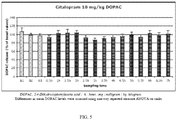
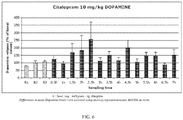
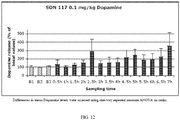
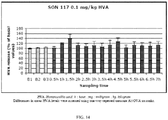
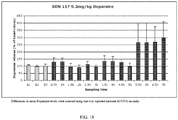
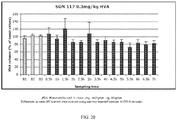
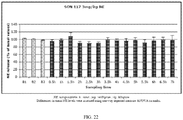
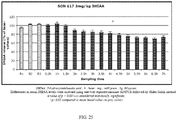
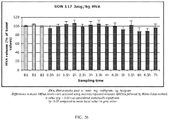
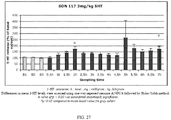
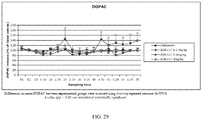
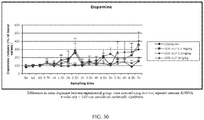
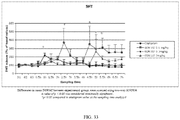
- Figures 28 to 33 are the graphic representation of the cortical levels of each neurotransmitter or metabolites in the different experimental groups from TO to T7h.
- Results are expressed as mean ⁇ SEM of the values obtained for the 8 animals of each experimental group and are expressed as percentage of the corresponding mean basal value for dopamine and metabolites (DOPAC, HVA), norepinephrine (NE), 5-HIAA and serotonin.
- 5-HIAA a metabolite of 5-HT, was analyzed in the same HPLC run and was added to the results.
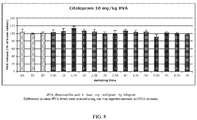
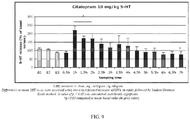
- Tables 3, 4, 5, 6, 7 and 8 present the concentrations of norepinephrine, DOPAC, dopamine, 5-HIAA, HVA and 5-HT in dialysates (in % of respective basal value) in the citalopram 10 mg/kg, I.P treated group.
- the I.P. administration of citalopram induced a significant and stable slight decrease in NE concentration (72%) in prefrontal cortex from 0.5h to 7h after administration.
- NE concentration 72%) in prefrontal cortex from 0.5h to 7h after administration.
- DOPAC DOPAC
- no statistically significant differences were observed after administration of citalopram (10mg/kg).
- the I.P. administration of citalopram (10mg/kg) tended to induce an increase in dopamine levels from T1.5h and 2.5h (255%). This increase was not significant.
- the IP administration of citalopram (10mg/kg) induced a significant slight increase in 5-HIAA concentration in prefrontal cortex at 0.5h and 1h (113%) after its administration followed by a significant and stable decrease from 2h to 7h after its administration.
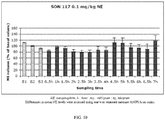
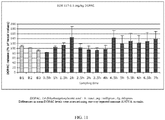
- Tables 9, 10, 11, 12, 13 and 14 present the concentrations of norepinephrin, DOPAC, dopamine, 5-HIAA, HVA and 5-HT in dialysates (in % of their respective basal value) in the SON-117 0.1 mg/kg, I.P. treated group.
- NE no statistically significant differences were found between the mean pre-injection value and the post injection levels of SON-117 (0.1 mg/kg).
- the I.P. administration of SON-117 (0.1 mg/kg) tended to induce a slight increase in DOPAC levels from 1.5h to 2.5h and from 4.5h to 7h. This increase was not statistically significant.
- SON-117 0.1mg/kg
- dopamine levels 287%) from T1.5h and 2.5h and from 4.5h to 7h (353%). This increase was not statistically significant.
- 5-HIAA no statistically significant differences were found between the mean pre-administration value and the dialysate levels after the I.P. administration of SON-117 (0.1 mg/kg).
- HVA no statistically significant differences were found between the mean pre-administration value and the dialysate levels after the I.P. administration of SON-117 (0.1 mg/kg).
- the IP administration of SON-117 (0.1mg/kg) tended to induce an increase in serotonin levels at 2.5h (368%) and from 4.5h to 7h (350%). This increase was not; statistically significant.
- Tables 15, 16, 17, 18, 19 and 20 present the concentrations of norepinephrine, DOPAC, dopamine, 5-HIAA, HVA and 5-HT in dialysates (in % of respective basal value) in the SON-117 0.3 mg/kg, I.P. treated group.
- the I.P. administration of SON-117 (0.3mg/kg) induced a significant slight increase in NE concentrations in prefrontal cortex at 3.5h (117%) and from 4.5h to 7h (128%) after its administration.
- DOPAC no statistically significant differences were found between the mean pre-administration value and the dialysate levels after the IP administration of SON-117 (0.3 mg/kg).
- DOPAC no statistically significant differences were found between the mean pre-administration value and the dialysate levels after the IP administration of SON-117 (0.3 mg/kg).
- SON-117 tended to induce an increase in dopamine levels from 5.5h to 7h (298%). This increase was not statistically significant.
- the IP administration of SON-117 (0.3mg/kg) induced a significant and stable slight decrease in 5-HIAA concentrations in prefrontal cortex at 3.5h and from 4.5h to 7h after its administration.
- HVA no statistically significant differences were found between the mean pre-administration value and the dialysate levels after the IP administration of SON-117 (0.3 mg/kg).
- 5-HT no statistically significant differences were found between the mean pre-administration value and the dialysate levels after the IP administration of SON-117 (0.3 mg/kg).
- Tables 21, 22, 23, 24, 25 and 26 present the concentrations of norepinephrine, DOPAC, dopamine, 5-HIAA, HVA and 5-HT in dialysates (in % of respective basal value) in the SON-117 3 mg/kg IP treated group.
- NE no statistically significant differences were found between the mean pre-administration value and the dialysate levels after the IP administration of SON-117 (3 mg/kg).
- DOPAC no statistically significant differences were found between the mean pre-administration value and the dialysate levels after the IP administration of SON-117 (3 mg/kg).
- the IP administration of SON-117 (3 mg/kg) tended to induce a slight increase in dopamine levels at 1.5h (169%) and from 6h to 7h (max.
- the IP administration of SON-117 induced a significant and stable decrease in 5-HIAA concentration in prefrontal cortex from 2h to 7h (max. 72%) after its administration.
- the IP administration of SON-117 (3mg/kg) induced a significant slight increase in HVA concentration in prefrontal cortex at 3.5h (114%) after its administration.
- the IP administration of SON-117 (3 mg/kg) induced a significant increase in 5-HT concentrations in prefrontal cortex from 2h to 3h (max. 175%) and from 5.5h to 7h (272%) after its administration.
- the global two-way ANOVA analysis revealed that: (1) There is a significant difference between the group treated with citalopram and SON-117 at 0.1mg/kg at the sampling time 4.5h and 7h. At 4.5h and 7h, after compound administration, the levels of NE were higher in the SON-117 (0.1 mg/kg) group compared to the citalopram treated group; (2) There is a significant difference between the group treated with citalopram and SON-117 at 0.3mg/kg at the sampling time 3.5h, 4h, 4.5h, 5h, 5.5h, 6h and 7h.
- the levels of NE were higher in the SON-117 (0.3 mg/kg) group compared to the citalopram treated group; and (3) There is a significant difference between the group treated with citalopram and SON-117 at 3mg/kg at the sampling time 1.5h and 3.5h. At these two sampling time points after compound administration, the levels of NE were higher in the SON-117 (3 mg/kg) group compared to the citalopram treated group.
- DOPAC the global two-way ANOVA analysis revealed that, there is no significant differences between the group treated with citalopram and SON-117 at the three doses tested in function of time. However we observe a trend for an increased release of DOPAC with SON-117 0.1 mg/kg at 2h and from 4.5h to 7h.
- the global two-way ANOVA analysis revealed that: (1) There is a significant difference between the group treated with citalopram and SON-117 at 0.1mg/kg at the sampling time 0.5h, 4.5, 5h and 6.5h. At 0.5h after compound administration, the levels of 5-HIAA were lower in the SON-117 group (0.1 mg/kg) group compared to the citalopram treated group.
- the levels of 5-HIAA were higher in the SON-117 group (0.1 mg/kg) group compared to the citalopram treated group; (2) There is no significant difference between the group treated with citalopram and SON-117 at 0.3 mg/kg in function of time; and (3) There is a significant difference between the group treated with citalopram and SON-117 at 3 mg/kg at the sampling time 3h and 3.5h. At these two time points after compound administration, the levels of 5-HIAA were higher in the SON-117 group (3 mg/kg) group compared to the citalopram treated group.
- the global two-way ANOVA analysis revealed that: (1) There is a significant difference between the group treated with citalopram and SON-117 at 0.1mg/kg at the sampling time 2.5h and 4.5 and 5.5h. A trend for a continuous increased release of dopamine is observed from 4.5h to 7h. At these sampling time points after compound administration, the levels of 5-HT were higher in the SON-117 group (0.1 mg/kg) group compared to the citalopram treated group. The maximum increase observed with SON-117 0.1 mg/kg at 2.5h is 369% compared with a maximum increase of 218% with citalopram at 1h.
- the aim of the experiment was to, in part, assess variations of NE, dopamine and its metabolites (DOPAC and HVA) and serotonin and its metabolite 5-HIAA in the prefrontal cortex of rats after an IP administration of SON-117 at three doses (0.1, 0.3 and 3 mg/kg).
- the aim of the project was also to compare these variations induced by SON-117 to the effects of the reference compound, citalopram.
- the present study showed that the administration of citalopram (10mg/kg; IP) was first able to induce an increase in the 5-HT levels in the prefrontal cortex between 1 and 2h and a decrease in 5-HT levels between 6 and 7h after its administration. These variations of 5-HT were associated with those of 5-HIAA where a first transient increase in 5-HIAA levels was observed followed by a decrease in the concentration of the metabolite. Regarding dopamine, the administration of citalopram did not affect the neurotransmitter levels and its metabolites DOPAC, HVA in the prefrontal cortex of rat.
- citalopram (10mg/kg IP) induced a significant and stable slight decrease in NE levels measured after its IP administration.
- SON-117 at the three doses tested induced an increased release of NE at different sampling times. The increase was more pronounced from 3.5h after the administration. However, the increase remained moderate with a maximum of 129% 7h after administration.
- a trend for an increased release appeared at 0.1 and 0.3 mg/kg at late times after administration (from 5h at 0.1 mg/kg and from 5.5h at 0.3 mg/kg).
- SON-117 significantly increased the release of 5-HT.
- the increases were superior to those observed with citalopram (369% vs. 218% for the maximum observed).
- the increases observed with SON-117 were maintained from 4.5h to 7h.
- This study is the first study to explore the effects of SON-117 after IP administration on the release of dopamine, 5-HT, norepinephrine and the metabolites DOPAC, HVA and 5-HIAA.
- a large time-frame was covered, from TO to 7h after administration, and showed surprising effects of SON-117 mainly on dopamine and 5-HT, these effects being superior to those observed with citalopram.
- the effects of SON-117 appeared to be sustained in the time, suggesting a role for the activity of SON-117 at times beyond 7h after administration.
- mice Male Wistar rats (Charles River, Germany) were brought into the laboratory one month before the start of the experiment. Except as described below, the animals were singly housed with food and water freely available, and were maintained on a 12-h light/dark cycle, in a constant temperature (22 ⁇ 2°C) and humidity (50 ⁇ 5%) conditions.
- sucrose sucrose solution
- training consisted of nine 1h baseline tests in which sucrose was presented, in the home cage, following 14h food and water deprivation; the sucrose intake was measured by weighing pre-weighed bottles containing the sucrose solution, at the end of the test. Subsequently, the sucrose consumption was monitored, under similar conditions, at weekly intervals throughout the whole experiment.
- each week of stress regime consisted of: two periods of food or water deprivation, two periods of 45 degree cage tilt, two periods of intermittent illumination (lights on and off every 2h), two periods of soiled cage (250 ml water in sawdust bedding), one period of paired housing, two periods of low intensity stroboscopic illumination (150 flashes/min), and three periods of no stress. All stressors were 10 - 14 h of duration and were applied individually and continuously, day and night. Control animals were housed in separate rooms and had no contact with the stressed animals. They were deprived of food and water for the 14h preceding each sucrose test, but otherwise food and water were freely available in the home cage.
- vehicle 0.5% hydroxypropylmethylcellulose, 1 ml/kg
- SON-117 0.001, 0.01, 0.1 and 1 mg/kg
- imipramine 10 mg/kg
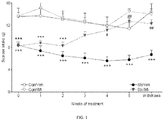
- Figure 1 illustrates the effects of chronic treatment with vehicle (1 ml/kg, IP) and imipramine (10 mg/kg, IP) on the consumption of 1% sucrose solution in controls (open symbols) and in animals exposed to chronic mild stress (closed symbols). Treatment commenced following 2 weeks of initial stress. Values are means +/- SEM.
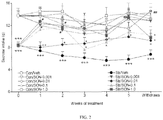
- Figure 2 illustrates the effects of chronic treatment with vehicle (1 ml/kg, IP) and SON-117 (0.001, 0.01, 0.1 and 1 mg/kg, IP) on the consumption of 1% sucrose solution in controls (open symbols) and in animals exposed to chronic mild stress (closed symbols). Treatment commenced following 2 weeks of stress. Values are means +/- SEM.
- SON-117 all doses
- Figure 3 illustrates the effects of chronic treatment with vehicle (1 ml/kg, IP), imipramine (10 mg/kg, IP) and SON-117 (0.001, 0.01, 0.1 and 1 mg/kg, IP) on the behaviour of control (open symbols) and stressed (closed symbols) animals in the Novel Object Recognition test.
- the test was carried out one week after withdrawal from the treatments. Values are means +/- SEM.
- stressed animals SON-117 administered at lower doses of 0.001, 0.01 and 0.1 mg/kg, restored the recognition index to the level of the vehicle- or drug-treated control animals, while the highest dose of 1 mg/kg was ineffective against the CMS-induced deficit in the novel object recognition.
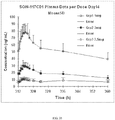
- Example 5 Pharmacokinetic analysis of SON-117 and SON-117 metabolites.
- SON-117 and the SON-117 metabolite M1 were examined in pharmacokinetic studies.
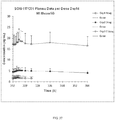
- Figure 34 illustrates the plasma concentration of SON-117 as a function of time on day 1 after dosing with SON-117.
- Figure 35 illustrates the plasma concentration of SON-117 as a function of time on day 14 after dosing with SON-117.
- Figure 36 illustrates the plasma concentration of the M1 metabolite of SON-117 as a function of time on day 1 after dosing with SON-117.
- Figure 37 illustrates the plasma concentration of the M1 metabolite of SON-117 as a function of time on day 14 after dosing with SON-117.
Landscapes
- Health & Medical Sciences (AREA)
- Chemical & Material Sciences (AREA)
- Life Sciences & Earth Sciences (AREA)
- Medicinal Chemistry (AREA)
- Veterinary Medicine (AREA)
- Public Health (AREA)
- Animal Behavior & Ethology (AREA)
- General Health & Medical Sciences (AREA)
- Pharmacology & Pharmacy (AREA)
- Organic Chemistry (AREA)
- Engineering & Computer Science (AREA)
- Bioinformatics & Cheminformatics (AREA)
- Nuclear Medicine, Radiotherapy & Molecular Imaging (AREA)
- General Chemical & Material Sciences (AREA)
- Chemical Kinetics & Catalysis (AREA)
- Neurosurgery (AREA)
- Neurology (AREA)
- Biomedical Technology (AREA)
- Epidemiology (AREA)
- Psychiatry (AREA)
- Pain & Pain Management (AREA)
- Anesthesiology (AREA)
- Psychology (AREA)
- Hospice & Palliative Care (AREA)
- Pharmaceuticals Containing Other Organic And Inorganic Compounds (AREA)
- Acyclic And Carbocyclic Compounds In Medicinal Compositions (AREA)
- Organic Low-Molecular-Weight Compounds And Preparation Thereof (AREA)
- Medicines That Contain Protein Lipid Enzymes And Other Medicines (AREA)
Claims (7)
- Composition destinée à être utilisée en traitement ou amélioration d'au moins un trouble ou paramètre du sommeil chez un sujet humain, la composition comprenant le composé de formule (I) ou un sel, hydrate ou solvate pharmaceutiquement acceptable de celui-ci,
 X est un atome d'hydrogène, un groupe hydroxy, un groupe alcoxy en C1-C8, un groupe acyloxy ou un groupe oxo ;R1 est un groupe de formule suivante
 R5 étant un groupe aryle éventuellement substitué ou un groupe hétérocyclique aromatique éventuellement substitué,Z étant absent ou -CH2- etR6 étant un atome d'hydrogène, un groupe hydroxy, un groupe acétamido, un groupe carboxyle, un groupe alcoxycarbonyle, un groupe cyano ou un groupe alcoxy en C1-C8 ;R3 est un atome d'hydrogène, un groupe alkyle en C1-C18 ou un atome d'halogène ;V est -O- ;W est absent ;R7 est un groupe hydroxyalkyle en C1-C4, un groupe acyle, un groupe hétérocyclique saturé ou insaturé éventuellement substitué, un groupe hétérocyclique condensé éventuellement substitué, un groupe alkylsulfonyle en C1-C4 ou la formule - Q-R9,Q étant -C(=O)-, -C(=S)-, -CH2- ou -S(=O)2- etR9 étant un groupe de formule suivante


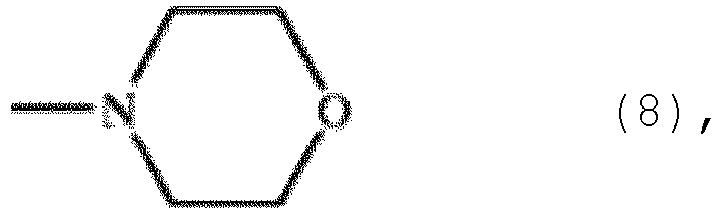


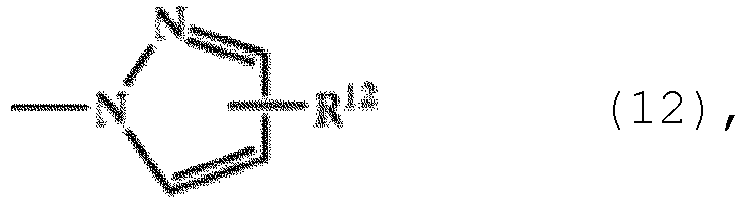
 R10 et R11 étant chacun indépendamment un atome d'hydrogène, un groupe alkyle en C1-C18, un groupe aryle éventuellement substitué, un groupe aralkyle éventuellement substitué ou un groupe alcoxy, R12 étant un atome d'hydrogène, un groupe aryle éventuellement substitué, un groupe alkyle en C1-C18, un groupe alcoxy en C1-C8 ou un groupe acyle et R15 étant un atome d'hydrogène, un groupe phényle, un groupe alkyle en C1-C4, un groupe alkyle halogéné en C1-C2, un atome d'halogène, un groupe alcényle en C2-C4, un groupe hydroxyalkyle en C1-C4, un groupe alcoxyalkyle, un groupe alkyloxycarbonyle, un groupe amino éventuellement substitué, un groupe acétamido, un groupe carboxyle, un groupe acyle, un groupe alkyloxy éventuellement substitué, un groupe alkylthio ou un groupe cyano ;Ra, Rb et Rc sont chacun indépendamment un atome d'hydrogène, un groupe alkyle en C1-C18, un groupe hydroxy, un groupe alcoxy en C1-C8, un atome d'halogène, un groupe acyle, un groupe nitro ou un groupe amino ;un composé optiquement actif de celui-ci, un sel pharmaceutiquement acceptable de celui-ci ou un hydrate de celui-ci ;le composé de formule (I) étant présent dans la composition entre 0,01 mg/kg et 0,2 mg/kg du poids du sujet et le sujet souffrant de dépression.
 - Composition destinée à être utilisée selon la revendication 1, au moins un symptôme de dépression étant également amélioré ou traité chez le sujet.
- Composition destinée à être utilisée selon la revendication 1, le sujet ayant un traitement par un composé antidépresseur interrompu.
- Composition destinée à être utilisée selon une quelconque revendication précédente, le composé de formule I étant le composé présenté dans la formule II :

- Composition destinée à être utilisée selon une quelconque revendication précédente, le composé de formule I étant sous la forme d'un sel de type chlorhydrate.
- Composition destinée à être utilisée selon l'une quelconque des revendications 1-3, le composé de formule I étant le composé présenté dans la formule M1 :

- Composition destinée à être utilisée selon une quelconque revendication précédente, la composition étant administrée au sujet humain une fois par semaine, une fois par jour, deux fois par jour, trois fois par jour, quatre fois par jour ou cinq fois par jour.
Priority Applications (2)
| Application Number | Priority Date | Filing Date | Title |
|---|---|---|---|
| EP21171312.8A EP3925608A3 (fr) | 2013-01-24 | 2014-01-24 | Utilisation de composés de phénoxypropylamine pour traiter ou améliorer au moins un trouble ou paramètre du sommeil |
| PL14743158T PL2948143T3 (pl) | 2013-01-24 | 2014-01-24 | Zastosowanie związków fenoksypropyloaminy w leczeniu depresji |
Applications Claiming Priority (4)
| Application Number | Priority Date | Filing Date | Title |
|---|---|---|---|
| US201361756208P | 2013-01-24 | 2013-01-24 | |
| US201361852149P | 2013-03-15 | 2013-03-15 | |
| US201361799482P | 2013-03-15 | 2013-03-15 | |
| PCT/US2014/013026 WO2014117003A1 (fr) | 2013-01-24 | 2014-01-24 | Utilisation de composés de phénoxypropylamine pour traiter la dépression |
Related Child Applications (1)
| Application Number | Title | Priority Date | Filing Date |
|---|---|---|---|
| EP21171312.8A Division EP3925608A3 (fr) | 2013-01-24 | 2014-01-24 | Utilisation de composés de phénoxypropylamine pour traiter ou améliorer au moins un trouble ou paramètre du sommeil |
Publications (3)
| Publication Number | Publication Date |
|---|---|
| EP2948143A1 EP2948143A1 (fr) | 2015-12-02 |
| EP2948143A4 EP2948143A4 (fr) | 2017-02-22 |
| EP2948143B1 true EP2948143B1 (fr) | 2021-05-05 |
Family
ID=51208168
Family Applications (2)
| Application Number | Title | Priority Date | Filing Date |
|---|---|---|---|
| EP21171312.8A Withdrawn EP3925608A3 (fr) | 2013-01-24 | 2014-01-24 | Utilisation de composés de phénoxypropylamine pour traiter ou améliorer au moins un trouble ou paramètre du sommeil |
| EP14743158.9A Active EP2948143B1 (fr) | 2013-01-24 | 2014-01-24 | Utilisation de composés de phénoxypropylamine pour traiter la dépression |
Family Applications Before (1)
| Application Number | Title | Priority Date | Filing Date |
|---|---|---|---|
| EP21171312.8A Withdrawn EP3925608A3 (fr) | 2013-01-24 | 2014-01-24 | Utilisation de composés de phénoxypropylamine pour traiter ou améliorer au moins un trouble ou paramètre du sommeil |
Country Status (23)
| Country | Link |
|---|---|
| US (3) | US20140206722A1 (fr) |
| EP (2) | EP3925608A3 (fr) |
| JP (2) | JP6422890B2 (fr) |
| KR (4) | KR102247960B1 (fr) |
| CN (2) | CN110664813A (fr) |
| AU (4) | AU2014209200B2 (fr) |
| BR (1) | BR112015017628A2 (fr) |
| CA (2) | CA3150231A1 (fr) |
| CL (1) | CL2015002069A1 (fr) |
| DK (1) | DK2948143T3 (fr) |
| ES (1) | ES2875058T3 (fr) |
| IL (4) | IL311363A (fr) |
| MX (2) | MX388354B (fr) |
| MY (1) | MY185908A (fr) |
| NZ (2) | NZ709967A (fr) |
| PE (1) | PE20151888A1 (fr) |
| PH (1) | PH12015501643B1 (fr) |
| PL (1) | PL2948143T3 (fr) |
| PT (1) | PT2948143T (fr) |
| RU (2) | RU2725112C2 (fr) |
| SG (2) | SG10201706035QA (fr) |
| WO (1) | WO2014117003A1 (fr) |
| ZA (2) | ZA201505114B (fr) |
Families Citing this family (3)
| Publication number | Priority date | Publication date | Assignee | Title |
|---|---|---|---|---|
| KR20230116950A (ko) * | 2016-05-25 | 2023-08-04 | 미쓰비시 타나베 파마 코퍼레이션 | 불안 장애를 치료하기 위한 (2S)-1-[4-(3,4-디클로로페닐)피페리딘-1-일]-3-[2-(5-메틸-1,3,4-옥사디아졸-2-일)벤조[b]푸란-4-일옥시]프로판-2-올또는 그의 대사산물 |
| WO2019070939A1 (fr) * | 2017-10-04 | 2019-04-11 | NeuroGeneces LLC | Système de performance de sommeil et procédé d'utilisation |
| BR112021004030A2 (pt) | 2018-09-04 | 2021-06-22 | Minerva Neurosciences, Inc. | métodos de uso de um composto de fenoxipropilamina para tratar a dor |
Family Cites Families (4)
| Publication number | Priority date | Publication date | Assignee | Title |
|---|---|---|---|---|
| US4207343A (en) * | 1978-06-22 | 1980-06-10 | Eli Lilly And Company | 1-Phenyl-3-(substituted phenoxy)propylamines |
| EP1188747B1 (fr) * | 1999-05-24 | 2005-09-07 | Mitsubishi Pharma Corporation | Compose de phenoxypropylamine |
| WO2001046179A1 (fr) * | 1999-12-20 | 2001-06-28 | Eli Lilly And Company | Derives de piperidine et leur utilisation comme antagonistes du recepteur de la serotonine |
| RU2424799C1 (ru) * | 2010-03-29 | 2011-07-27 | Государственное образовательное учреждение высшего профессионального образования "БАШКИРСКИЙ ГОСУДАРСТВЕННЫЙ МЕДИЦИНСКИЙ УНИВЕРСИТЕТ ФЕДЕРАЛЬНОГО АГЕНТСТВА ПО ЗДРАВООХРАНЕНИЮ И СОЦИАЛЬНОМУ РАЗВИТИЮ" | Способ коррекции депрессивных расстройств производными тиетан-1,1-диоксида в эксперименте |
-
2014
- 2014-01-24 EP EP21171312.8A patent/EP3925608A3/fr not_active Withdrawn
- 2014-01-24 PL PL14743158T patent/PL2948143T3/pl unknown
- 2014-01-24 SG SG10201706035QA patent/SG10201706035QA/en unknown
- 2014-01-24 BR BR112015017628A patent/BR112015017628A2/pt not_active Application Discontinuation
- 2014-01-24 CN CN201910816861.XA patent/CN110664813A/zh active Pending
- 2014-01-24 WO PCT/US2014/013026 patent/WO2014117003A1/fr not_active Ceased
- 2014-01-24 NZ NZ709967A patent/NZ709967A/en unknown
- 2014-01-24 PT PT147431589T patent/PT2948143T/pt unknown
- 2014-01-24 MY MYPI2015001864A patent/MY185908A/en unknown
- 2014-01-24 JP JP2015555358A patent/JP6422890B2/ja active Active
- 2014-01-24 MX MX2018011493A patent/MX388354B/es unknown
- 2014-01-24 ES ES14743158T patent/ES2875058T3/es active Active
- 2014-01-24 AU AU2014209200A patent/AU2014209200B2/en active Active
- 2014-01-24 KR KR1020207019380A patent/KR102247960B1/ko active Active
- 2014-01-24 KR KR1020227026625A patent/KR102587177B1/ko active Active
- 2014-01-24 EP EP14743158.9A patent/EP2948143B1/fr active Active
- 2014-01-24 CA CA3150231A patent/CA3150231A1/fr active Pending
- 2014-01-24 NZ NZ750189A patent/NZ750189A/en unknown
- 2014-01-24 PE PE2015001552A patent/PE20151888A1/es not_active Application Discontinuation
- 2014-01-24 MX MX2015009445A patent/MX2015009445A/es unknown
- 2014-01-24 IL IL311363A patent/IL311363A/en unknown
- 2014-01-24 DK DK14743158.9T patent/DK2948143T3/da active
- 2014-01-24 SG SG11201505737YA patent/SG11201505737YA/en unknown
- 2014-01-24 RU RU2015135358A patent/RU2725112C2/ru active
- 2014-01-24 US US14/163,827 patent/US20140206722A1/en not_active Abandoned
- 2014-01-24 RU RU2020120236A patent/RU2020120236A/ru unknown
- 2014-01-24 CN CN201480017774.3A patent/CN105377255A/zh active Pending
- 2014-01-24 KR KR1020217011567A patent/KR20210047368A/ko not_active Ceased
- 2014-01-24 KR KR1020157022424A patent/KR102172351B1/ko active Active
- 2014-01-24 IL IL287727A patent/IL287727B2/en unknown
- 2014-01-24 CA CA2898279A patent/CA2898279C/fr active Active
-
2015
- 2015-07-14 IL IL239928A patent/IL239928B/en active IP Right Grant
- 2015-07-16 ZA ZA2015/05114A patent/ZA201505114B/en unknown
- 2015-07-24 CL CL2015002069A patent/CL2015002069A1/es unknown
- 2015-07-24 PH PH12015501643A patent/PH12015501643B1/en unknown
-
2018
- 2018-06-19 JP JP2018116163A patent/JP6657315B2/ja active Active
-
2019
- 2019-01-25 AU AU2019200512A patent/AU2019200512B2/en active Active
-
2020
- 2020-03-25 US US16/829,657 patent/US20200223838A1/en not_active Abandoned
- 2020-07-15 AU AU2020205268A patent/AU2020205268B2/en active Active
- 2020-10-18 IL IL278109A patent/IL278109B/en unknown
-
2022
- 2022-07-07 ZA ZA2022/07530A patent/ZA202207530B/en unknown
- 2022-09-26 AU AU2022241458A patent/AU2022241458B2/en active Active
-
2024
- 2024-07-05 US US18/764,714 patent/US20250109127A1/en active Pending
Non-Patent Citations (2)
| Title |
|---|
| ANONYMOUS: "Guidance for Industry - Estimating the Maximum Safe Starting Dose in Initial Clinical Trials for Therapeutics in Adult Healthy Volunteers", 1 July 2005 (2005-07-01), pages FP-3,1 - 27, XP055294866, Retrieved from the Internet <URL:http://www.fda.gov/downloads/Drugs/.../Guidances/UCM078932.pdf> [retrieved on 20160810] * |
| SHANNON REAGAN-SHAW ET AL: "Dose translation from animal to human studies revisited", THE FASEB JOURNAL, vol. 22, no. 3, 1 March 2008 (2008-03-01), US, pages 659 - 661, XP055542714, ISSN: 0892-6638, DOI: 10.1096/fj.07-9574LSF * |
Also Published As
Similar Documents
| Publication | Publication Date | Title |
|---|---|---|
| US20250109127A1 (en) | Methods of use of phenoxypropylamine compounds to treat depression | |
| US20130150346A1 (en) | Use of FAAH Inhibitors for Treating Parkinson's Disease and Restless Legs Syndrome | |
| WO2011133212A1 (fr) | Procédés, composés et compositions pharmaceutiques pour le traiterment de l'anxiété et des troubles de l'humeur | |
| JP2009539942A (ja) | ビフェプルノックス及びl−dopaを含む組み合わせ製剤 | |
| EP3556366B1 (fr) | Utilisation de composés de carbamate pour la prévention, le soulagement ou le traitement d'un trouble bipolaire | |
| RU2774970C2 (ru) | Применение карбаматных соединений для профилактики, облегчения или лечения биполярного расстройства | |
| EA046505B1 (ru) | Терапевтическое лекарственное средство для лечения дискинезии | |
| HK40015213A (en) | Use of carbamate compounds for prevention, alleviation or treatment of bipolar disorder | |
| KR20100022956A (ko) | 급성 조증 치료용 카르바모일-시클로헥산 | |
| BRPI0713691A2 (pt) | preparação combinada, uso de um preparação, composição farmacêutica, e, método de tratar um distúrbio |
Legal Events
| Date | Code | Title | Description |
|---|---|---|---|
| PUAI | Public reference made under article 153(3) epc to a published international application that has entered the european phase |
Free format text: ORIGINAL CODE: 0009012 |
|
| 17P | Request for examination filed |
Effective date: 20150728 |
|
| AK | Designated contracting states |
Kind code of ref document: A1 Designated state(s): AL AT BE BG CH CY CZ DE DK EE ES FI FR GB GR HR HU IE IS IT LI LT LU LV MC MK MT NL NO PL PT RO RS SE SI SK SM TR |
|
| AX | Request for extension of the european patent |
Extension state: BA ME |
|
| DAX | Request for extension of the european patent (deleted) | ||
| RIC1 | Information provided on ipc code assigned before grant |
Ipc: A61P 25/28 20060101ALI20160901BHEP Ipc: A61P 25/00 20060101ALI20160901BHEP Ipc: A61K 31/4245 20060101AFI20160901BHEP Ipc: A61K 31/4025 20060101ALI20160901BHEP Ipc: A61K 31/352 20060101ALI20160901BHEP Ipc: A61P 25/24 20060101ALI20160901BHEP |
|
| A4 | Supplementary search report drawn up and despatched |
Effective date: 20170119 |
|
| RIC1 | Information provided on ipc code assigned before grant |
Ipc: A61P 25/28 20060101ALI20170113BHEP Ipc: A61K 31/4025 20060101ALI20170113BHEP Ipc: A61P 25/00 20060101ALI20170113BHEP Ipc: A61P 25/24 20060101ALI20170113BHEP Ipc: A61K 31/352 20060101ALI20170113BHEP Ipc: A61K 31/4245 20060101AFI20170113BHEP |
|
| STAA | Information on the status of an ep patent application or granted ep patent |
Free format text: STATUS: EXAMINATION IS IN PROGRESS |
|
| 17Q | First examination report despatched |
Effective date: 20190729 |
|
| REG | Reference to a national code |
Ref country code: DE Ref legal event code: R079 Ref document number: 602014077175 Country of ref document: DE Free format text: PREVIOUS MAIN CLASS: A61K0031410000 Ipc: A61K0031424500 |
|
| GRAP | Despatch of communication of intention to grant a patent |
Free format text: ORIGINAL CODE: EPIDOSNIGR1 |
|
| STAA | Information on the status of an ep patent application or granted ep patent |
Free format text: STATUS: GRANT OF PATENT IS INTENDED |
|
| RIC1 | Information provided on ipc code assigned before grant |
Ipc: C07D 413/14 20060101ALI20201104BHEP Ipc: A61P 25/28 20060101ALI20201104BHEP Ipc: A61K 31/4245 20060101AFI20201104BHEP Ipc: A61P 25/00 20060101ALI20201104BHEP Ipc: A61K 31/4025 20060101ALI20201104BHEP Ipc: A61P 25/24 20060101ALI20201104BHEP Ipc: A61P 25/20 20060101ALI20201104BHEP Ipc: A61K 31/352 20060101ALI20201104BHEP |
|
| INTG | Intention to grant announced |
Effective date: 20201117 |
|
| GRAS | Grant fee paid |
Free format text: ORIGINAL CODE: EPIDOSNIGR3 |
|
| GRAA | (expected) grant |
Free format text: ORIGINAL CODE: 0009210 |
|
| STAA | Information on the status of an ep patent application or granted ep patent |
Free format text: STATUS: THE PATENT HAS BEEN GRANTED |
|
| AK | Designated contracting states |
Kind code of ref document: B1 Designated state(s): AL AT BE BG CH CY CZ DE DK EE ES FI FR GB GR HR HU IE IS IT LI LT LU LV MC MK MT NL NO PL PT RO RS SE SI SK SM TR |
|
| REG | Reference to a national code |
Ref country code: GB Ref legal event code: FG4D |
|
| REG | Reference to a national code |
Ref country code: CH Ref legal event code: EP |
|
| REG | Reference to a national code |
Ref country code: AT Ref legal event code: REF Ref document number: 1388934 Country of ref document: AT Kind code of ref document: T Effective date: 20210515 |
|
| REG | Reference to a national code |
Ref country code: IE Ref legal event code: FG4D |
|
| REG | Reference to a national code |
Ref country code: DE Ref legal event code: R096 Ref document number: 602014077175 Country of ref document: DE |
|
| REG | Reference to a national code |
Ref country code: PT Ref legal event code: SC4A Ref document number: 2948143 Country of ref document: PT Date of ref document: 20210603 Kind code of ref document: T Free format text: AVAILABILITY OF NATIONAL TRANSLATION Effective date: 20210531 |
|
| REG | Reference to a national code |
Ref country code: FI Ref legal event code: FGE |
|
| REG | Reference to a national code |
Ref country code: DK Ref legal event code: T3 Effective date: 20210723 |
|
| REG | Reference to a national code |
Ref country code: NL Ref legal event code: FP |
|
| REG | Reference to a national code |
Ref country code: SE Ref legal event code: TRGR |
|
| REG | Reference to a national code |
Ref country code: LT Ref legal event code: MG9D |
|
| REG | Reference to a national code |
Ref country code: NO Ref legal event code: T2 Effective date: 20210505 |
|
| PG25 | Lapsed in a contracting state [announced via postgrant information from national office to epo] |
Ref country code: HR Free format text: LAPSE BECAUSE OF FAILURE TO SUBMIT A TRANSLATION OF THE DESCRIPTION OR TO PAY THE FEE WITHIN THE PRESCRIBED TIME-LIMIT Effective date: 20210505 Ref country code: BG Free format text: LAPSE BECAUSE OF FAILURE TO SUBMIT A TRANSLATION OF THE DESCRIPTION OR TO PAY THE FEE WITHIN THE PRESCRIBED TIME-LIMIT Effective date: 20210805 Ref country code: LT Free format text: LAPSE BECAUSE OF FAILURE TO SUBMIT A TRANSLATION OF THE DESCRIPTION OR TO PAY THE FEE WITHIN THE PRESCRIBED TIME-LIMIT Effective date: 20210505 |
|
| REG | Reference to a national code |
Ref country code: ES Ref legal event code: FG2A Ref document number: 2875058 Country of ref document: ES Kind code of ref document: T3 Effective date: 20211108 |
|
| REG | Reference to a national code |
Ref country code: GR Ref legal event code: EP Ref document number: 20210402033 Country of ref document: GR Effective date: 20211013 |
|
| PG25 | Lapsed in a contracting state [announced via postgrant information from national office to epo] |
Ref country code: LV Free format text: LAPSE BECAUSE OF FAILURE TO SUBMIT A TRANSLATION OF THE DESCRIPTION OR TO PAY THE FEE WITHIN THE PRESCRIBED TIME-LIMIT Effective date: 20210505 Ref country code: IS Free format text: LAPSE BECAUSE OF FAILURE TO SUBMIT A TRANSLATION OF THE DESCRIPTION OR TO PAY THE FEE WITHIN THE PRESCRIBED TIME-LIMIT Effective date: 20210905 Ref country code: RS Free format text: LAPSE BECAUSE OF FAILURE TO SUBMIT A TRANSLATION OF THE DESCRIPTION OR TO PAY THE FEE WITHIN THE PRESCRIBED TIME-LIMIT Effective date: 20210505 |
|
| PG25 | Lapsed in a contracting state [announced via postgrant information from national office to epo] |
Ref country code: SM Free format text: LAPSE BECAUSE OF FAILURE TO SUBMIT A TRANSLATION OF THE DESCRIPTION OR TO PAY THE FEE WITHIN THE PRESCRIBED TIME-LIMIT Effective date: 20210505 Ref country code: SK Free format text: LAPSE BECAUSE OF FAILURE TO SUBMIT A TRANSLATION OF THE DESCRIPTION OR TO PAY THE FEE WITHIN THE PRESCRIBED TIME-LIMIT Effective date: 20210505 Ref country code: CZ Free format text: LAPSE BECAUSE OF FAILURE TO SUBMIT A TRANSLATION OF THE DESCRIPTION OR TO PAY THE FEE WITHIN THE PRESCRIBED TIME-LIMIT Effective date: 20210505 Ref country code: EE Free format text: LAPSE BECAUSE OF FAILURE TO SUBMIT A TRANSLATION OF THE DESCRIPTION OR TO PAY THE FEE WITHIN THE PRESCRIBED TIME-LIMIT Effective date: 20210505 Ref country code: RO Free format text: LAPSE BECAUSE OF FAILURE TO SUBMIT A TRANSLATION OF THE DESCRIPTION OR TO PAY THE FEE WITHIN THE PRESCRIBED TIME-LIMIT Effective date: 20210505 |
|
| REG | Reference to a national code |
Ref country code: DE Ref legal event code: R097 Ref document number: 602014077175 Country of ref document: DE |
|
| PLBE | No opposition filed within time limit |
Free format text: ORIGINAL CODE: 0009261 |
|
| STAA | Information on the status of an ep patent application or granted ep patent |
Free format text: STATUS: NO OPPOSITION FILED WITHIN TIME LIMIT |
|
| REG | Reference to a national code |
Ref country code: AT Ref legal event code: UEP Ref document number: 1388934 Country of ref document: AT Kind code of ref document: T Effective date: 20210505 |
|
| 26N | No opposition filed |
Effective date: 20220208 |
|
| PG25 | Lapsed in a contracting state [announced via postgrant information from national office to epo] |
Ref country code: IS Free format text: LAPSE BECAUSE OF FAILURE TO SUBMIT A TRANSLATION OF THE DESCRIPTION OR TO PAY THE FEE WITHIN THE PRESCRIBED TIME-LIMIT Effective date: 20210905 Ref country code: AL Free format text: LAPSE BECAUSE OF FAILURE TO SUBMIT A TRANSLATION OF THE DESCRIPTION OR TO PAY THE FEE WITHIN THE PRESCRIBED TIME-LIMIT Effective date: 20210505 |
|
| PG25 | Lapsed in a contracting state [announced via postgrant information from national office to epo] |
Ref country code: MC Free format text: LAPSE BECAUSE OF FAILURE TO SUBMIT A TRANSLATION OF THE DESCRIPTION OR TO PAY THE FEE WITHIN THE PRESCRIBED TIME-LIMIT Effective date: 20210505 |
|
| P01 | Opt-out of the competence of the unified patent court (upc) registered |
Effective date: 20230513 |
|
| PG25 | Lapsed in a contracting state [announced via postgrant information from national office to epo] |
Ref country code: HU Free format text: LAPSE BECAUSE OF FAILURE TO SUBMIT A TRANSLATION OF THE DESCRIPTION OR TO PAY THE FEE WITHIN THE PRESCRIBED TIME-LIMIT; INVALID AB INITIO Effective date: 20140124 |
|
| PG25 | Lapsed in a contracting state [announced via postgrant information from national office to epo] |
Ref country code: MK Free format text: LAPSE BECAUSE OF FAILURE TO SUBMIT A TRANSLATION OF THE DESCRIPTION OR TO PAY THE FEE WITHIN THE PRESCRIBED TIME-LIMIT Effective date: 20210505 Ref country code: CY Free format text: LAPSE BECAUSE OF FAILURE TO SUBMIT A TRANSLATION OF THE DESCRIPTION OR TO PAY THE FEE WITHIN THE PRESCRIBED TIME-LIMIT Effective date: 20210505 |
|
| PG25 | Lapsed in a contracting state [announced via postgrant information from national office to epo] |
Ref country code: MT Free format text: LAPSE BECAUSE OF FAILURE TO SUBMIT A TRANSLATION OF THE DESCRIPTION OR TO PAY THE FEE WITHIN THE PRESCRIBED TIME-LIMIT Effective date: 20210505 |
|
| PGFP | Annual fee paid to national office [announced via postgrant information from national office to epo] |
Ref country code: NL Payment date: 20250127 Year of fee payment: 12 Ref country code: LU Payment date: 20250127 Year of fee payment: 12 |
|
| PGFP | Annual fee paid to national office [announced via postgrant information from national office to epo] |
Ref country code: PT Payment date: 20250113 Year of fee payment: 12 Ref country code: DE Payment date: 20250129 Year of fee payment: 12 |
|
| PGFP | Annual fee paid to national office [announced via postgrant information from national office to epo] |
Ref country code: DK Payment date: 20250127 Year of fee payment: 12 Ref country code: FI Payment date: 20250127 Year of fee payment: 12 |
|
| PGFP | Annual fee paid to national office [announced via postgrant information from national office to epo] |
Ref country code: ES Payment date: 20250203 Year of fee payment: 12 |
|
| PGFP | Annual fee paid to national office [announced via postgrant information from national office to epo] |
Ref country code: IE Payment date: 20250128 Year of fee payment: 12 Ref country code: SE Payment date: 20250127 Year of fee payment: 12 |
|
| PGFP | Annual fee paid to national office [announced via postgrant information from national office to epo] |
Ref country code: NO Payment date: 20250129 Year of fee payment: 12 |
|
| PGFP | Annual fee paid to national office [announced via postgrant information from national office to epo] |
Ref country code: AT Payment date: 20250102 Year of fee payment: 12 Ref country code: GR Payment date: 20250129 Year of fee payment: 12 Ref country code: CH Payment date: 20250201 Year of fee payment: 12 Ref country code: BE Payment date: 20250127 Year of fee payment: 12 |
|
| PGFP | Annual fee paid to national office [announced via postgrant information from national office to epo] |
Ref country code: FR Payment date: 20250127 Year of fee payment: 12 Ref country code: PL Payment date: 20250103 Year of fee payment: 12 |
|
| PGFP | Annual fee paid to national office [announced via postgrant information from national office to epo] |
Ref country code: IT Payment date: 20250121 Year of fee payment: 12 Ref country code: GB Payment date: 20250127 Year of fee payment: 12 |
|
| PGFP | Annual fee paid to national office [announced via postgrant information from national office to epo] |
Ref country code: TR Payment date: 20250117 Year of fee payment: 12 |