EP2952893A1 - Verfahren zur Erkennung von antikörpersezernierenden, HLA-spezifischen B-Zellen - Google Patents
Verfahren zur Erkennung von antikörpersezernierenden, HLA-spezifischen B-Zellen Download PDFInfo
- Publication number
- EP2952893A1 EP2952893A1 EP14382214.6A EP14382214A EP2952893A1 EP 2952893 A1 EP2952893 A1 EP 2952893A1 EP 14382214 A EP14382214 A EP 14382214A EP 2952893 A1 EP2952893 A1 EP 2952893A1
- Authority
- EP
- European Patent Office
- Prior art keywords
- hla
- cells
- antibody
- specific
- secreting
- Prior art date
- Legal status (The legal status is an assumption and is not a legal conclusion. Google has not performed a legal analysis and makes no representation as to the accuracy of the status listed.)
- Withdrawn
Links
Images





Classifications
-
- G—PHYSICS
- G01—MEASURING; TESTING
- G01N—INVESTIGATING OR ANALYSING MATERIALS BY DETERMINING THEIR CHEMICAL OR PHYSICAL PROPERTIES
- G01N33/00—Investigating or analysing materials by specific methods not covered by groups G01N1/00 - G01N31/00
- G01N33/48—Biological material, e.g. blood, urine; Haemocytometers
- G01N33/50—Chemical analysis of biological material, e.g. blood, urine; Testing involving biospecific ligand binding methods; Immunological testing
- G01N33/68—Chemical analysis of biological material, e.g. blood, urine; Testing involving biospecific ligand binding methods; Immunological testing involving proteins, peptides or amino acids
- G01N33/6854—Immunoglobulins
-
- G—PHYSICS
- G01—MEASURING; TESTING
- G01N—INVESTIGATING OR ANALYSING MATERIALS BY DETERMINING THEIR CHEMICAL OR PHYSICAL PROPERTIES
- G01N33/00—Investigating or analysing materials by specific methods not covered by groups G01N1/00 - G01N31/00
- G01N33/48—Biological material, e.g. blood, urine; Haemocytometers
- G01N33/50—Chemical analysis of biological material, e.g. blood, urine; Testing involving biospecific ligand binding methods; Immunological testing
- G01N33/5005—Chemical analysis of biological material, e.g. blood, urine; Testing involving biospecific ligand binding methods; Immunological testing involving human or animal cells
- G01N33/5008—Chemical analysis of biological material, e.g. blood, urine; Testing involving biospecific ligand binding methods; Immunological testing involving human or animal cells for testing or evaluating the effect of chemical or biological compounds, e.g. drugs, cosmetics
- G01N33/5044—Chemical analysis of biological material, e.g. blood, urine; Testing involving biospecific ligand binding methods; Immunological testing involving human or animal cells for testing or evaluating the effect of chemical or biological compounds, e.g. drugs, cosmetics involving specific cell types
- G01N33/5047—Cells of the immune system
- G01N33/5052—Cells of the immune system involving B-cells
-
- G—PHYSICS
- G01—MEASURING; TESTING
- G01N—INVESTIGATING OR ANALYSING MATERIALS BY DETERMINING THEIR CHEMICAL OR PHYSICAL PROPERTIES
- G01N33/00—Investigating or analysing materials by specific methods not covered by groups G01N1/00 - G01N31/00
- G01N33/48—Biological material, e.g. blood, urine; Haemocytometers
- G01N33/50—Chemical analysis of biological material, e.g. blood, urine; Testing involving biospecific ligand binding methods; Immunological testing
- G01N33/53—Immunoassay; Biospecific binding assay; Materials therefor
- G01N33/564—Immunoassay; Biospecific binding assay; Materials therefor for pre-existing immune complex or autoimmune disease, i.e. systemic lupus erythematosus, rheumatoid arthritis, multiple sclerosis, rheumatoid factors or complement components C1-C9
-
- G—PHYSICS
- G01—MEASURING; TESTING
- G01N—INVESTIGATING OR ANALYSING MATERIALS BY DETERMINING THEIR CHEMICAL OR PHYSICAL PROPERTIES
- G01N33/00—Investigating or analysing materials by specific methods not covered by groups G01N1/00 - G01N31/00
- G01N33/48—Biological material, e.g. blood, urine; Haemocytometers
- G01N33/50—Chemical analysis of biological material, e.g. blood, urine; Testing involving biospecific ligand binding methods; Immunological testing
- G01N33/53—Immunoassay; Biospecific binding assay; Materials therefor
- G01N33/569—Immunoassay; Biospecific binding assay; Materials therefor for microorganisms, e.g. protozoa, bacteria, viruses
- G01N33/56966—Animal cells
- G01N33/56977—HLA or MHC typing
-
- G—PHYSICS
- G01—MEASURING; TESTING
- G01N—INVESTIGATING OR ANALYSING MATERIALS BY DETERMINING THEIR CHEMICAL OR PHYSICAL PROPERTIES
- G01N2800/00—Detection or diagnosis of diseases
- G01N2800/24—Immunology or allergic disorders
-
- G—PHYSICS
- G01—MEASURING; TESTING
- G01N—INVESTIGATING OR ANALYSING MATERIALS BY DETERMINING THEIR CHEMICAL OR PHYSICAL PROPERTIES
- G01N2800/00—Detection or diagnosis of diseases
- G01N2800/24—Immunology or allergic disorders
- G01N2800/245—Transplantation related diseases, e.g. graft versus host disease
-
- G—PHYSICS
- G01—MEASURING; TESTING
- G01N—INVESTIGATING OR ANALYSING MATERIALS BY DETERMINING THEIR CHEMICAL OR PHYSICAL PROPERTIES
- G01N2800/00—Detection or diagnosis of diseases
- G01N2800/50—Determining the risk of developing a disease
Definitions
- the present invention relates methods for detecting antibody-secreting B-cells specific for HLA in a subject and to the use of said methods for determining the risk of a subject having tumoral rejection against an allogeneic transplant, for selecting a subject to receive a transplant and for determining the presence of humoral sensitization against HLA.
- Humoral rejection is the most challenging immunological barrier to overcome in allotransplantation in humans.
- Currently either in his acute or chronic forms of clinical presentation, it accounts for one of the most prevalent etiology of kidney allograft loss.
- today up to almost 40 percent of patients in the waiting list for receiving a kidney transplant are considered as allosensitized, that is, with detectable presence of circulating antibodies against HLA antigens in peripheral blood.
- DSA donor-specific antibodies
- the long-lived plasma cells reside primarily in the bone marrow and continuously secrete antibodies that act rapidly on invading microbes.
- Memory B cells reside primarily in peripheral lymphoid tissues and can, upon re-encounter with the priming antigen, differentiate into antibody-secreting cells (ASC) and thus amplify the antibody response
- ASC antibody-secreting cells
- the body produces both long-lived plasma cells and memory B cells that provide an immunological memory.
- B-cell responses are assessed by the serological measurement of specific antibodies against donor-antigens (DSA).
- the inventors of the present invention have developed a system for detecting and quantifying memory B cells which are able to produce and secrete antibodies specific for HLA.
- the inventors have developed a novel B-cell ELISPOT assay that allows the determination of the frequency of HLA-specific antibody-producing memory B cells (example 1).
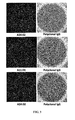
- individuals identified as highly sensitized against multiple HLA-specific antigens by determination of HLA-specific antibodies in peripheral blood also exhibit high-frequency of HLA-specific ASC ( Figures 1 and 2 ).
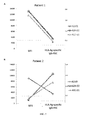
- this assay identifies patients that, in spite of having no evidence of donor-specific antibodies by LUMINEX before transplantation, do have high frequency of donor-specific ASC, and eventually experience antibody-mediated rejection (ABMR) after transplantation ( figure 5 ).
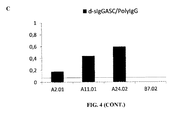
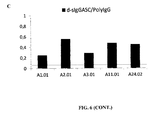
- the assay also allows detection of HLA-specific ASC in patients on the waiting list for a subsequent kidney allograft, even if these patients do not show circulating HLA-specific antibodies against HLA-mismatch antigens of the previous graft ( figure 4 ).
- the invention relates to an in vitro method for detecting antibody-secreting B cells specific for at least an HLA in a subject comprising:
- the invention in a second aspect, relates to an in vitro method for determining the risk of a subject of having humoral rejection after allogeneic organ or tissue transplant comprising detecting in a sample from said subject the levels of antibody-secreting B cells specific for at least an HLA using the method of the first aspect, wherein said HLA is present in the transplanted organ or tissue or in the organ or tissue to be transplanted and wherein high levels of antibody-secreting B cells specific for said HLA in relation to a reference value are indicative of said subject having a high risk of humoral rejection.
- the invention in a third aspect, relates to an in vitro method for selecting a subject to receive an allogeneic organ or tissue transplant comprising detecting in a sample from said subject the levels of antibody-secreting B cells specific for at least an HLA using the method of the first aspect, wherein said HLA is present in the organ or tissue to be transplanted and wherein the subject is selected to receive said allogeneic organ or tissue transplant if low levels of antibody-secreting B cells specific for said HLA in relation to a reference value are detected.
- the invention in a fourth aspect, relates to an in vitro method for determining the presence of humoral sensitization against at least an HLA in a subject comprising detecting the levels of antibody-secreting B-cells specific for said HLA using the method of the first aspect, wherein the detection of an antibody-secreting B-cell specific for said HLA is indicative of said subject having a humoral sensitization against said HLA.
- the invention relates to a kit for detecting antibody-secreting B-cells specific for said HLA in a sample comprising B cells comprising an antibody specific to IgG or IgM and an HLA multimer.
- the invention relates to an in vitro method for detecting antibody-secreting B cells specific for at least an HLA in a subject, hereinafter first method of the invention, comprising:
- B cell refers to a type of lymphocyte that plays a large role in the humoral immune response (as opposed to the cell-mediated immune response, which is governed by T cells) and are characterized by the presence of a B cell receptor (BCR) on their outer surface which allows a B cell to bind to an specific antigen.
- BCR B cell receptor
- the principal functions of B cells are to make antibodies against antigens, perform the role of antigen-presenting cells (APCs) and eventually develop into memory B cells after activation by antigen interaction.
- APCs antigen-presenting cells
- B cells are an essential component of the adaptive immune system.
- the term "B cell” includes long-lived plasma cells and memory B cells.
- long-lived plasma B cell refers to a sub-type of B cells that reside primarily in the bone marrow and continuously secrete antibodies.
- memory B cell refers to a sub-type of B cells that are formed following primary infection and activation by antigen interaction, reside primarily in peripheral lymphoid tissues and, upon re-encounter with the priming antigen, differentiate into antibody-secreting cells (ASC) thus amplifying the antibody response.
- the B cell is a memory B cell.
- the first method of the invention detects antibody-secreting B cells, i.e., B cells which are capable of producing and secreting antibodies.
- HLA human leukocyte antigen
- MHC major histocompatibility antigens
- the HLA system is the name of the locus of genes that encode for said HLA antigens in humans.
- the super-locus contains a large number of genes related to immune system function in humans. This group of genes, which resides on chromosome 6, encodes cell-surface antigen-presenting proteins and has many other functions.
- the HLA corresponds to MHC class I.
- the HLAs correspond to MHC class II.
- the HLA belongs to the HLA-A, HLA-B, HLA-C, HLA-E, HLA-F, KLA-G, HLA-H, HLA-J, HLA-K, HLA-L, HLA-P, HLA-V, HLA-DRA, HLA-DRB1, HLA-DRB2-9, HLA-DQA1, HLA-DQB1, HLA-DPA1, HLA-DPB1, HLA-DMA, HLA-DMB, HLA-DOA, HLA-DOB, MICA, MICB, TAP1, TAP2, and/or KIR type.
- the method according to the invention allows the detection of cells capable of expressing any HLA-specific antibody as long as the HLA is known and the corresponding HLA can be provided in multimeric form.
- Suitable cells that can be detected using the method of the invention include cells that produce antibodies specific for any of the HLA which are described in the web page hla.alleles.org.
- HLA system is highly polymorphic, there being many alleles at each individual locus.
- HLA molecules act themselves as antigens and can provoke an immune response in the recipient, resulting in a transplant rejection.
- Each human cell expresses six MHC class I alleles (one HLA-A, -B, and -C allele from each parent) and six to eight MHC class 2 alleles (one HLA-DP and -DQ, and one or two HLA-DR from each parent, and combinations of these).
- the HLA variation in the human population is high, at least 350 alleles for HLA-A genes, 620 alleles for HLA-B, 400 alleles for DR, and 90 alleles for DQ. Any two individuals who are not identical twins will express differing HLA molecules.
- HLA molecules can mediate transplant rejection, but HLA-C and HLA-DP, showing low polymorphism, seem least important.
- HLA molecules act themselves as antigens and can provoke an immune response in the recipient, resulting in a transplant rejection.
- antibody-secreting B cells specific for at least one HLA refers to a B cell, which is secreting an antibody that specifically binds one HLA, i.e., an antibody that binds to one HLA and displays no substantially binding to other HLA unless they share the same antigenic determinants.
- the antibody-secreting B cell is specific for at least one, at least two, at least three, at least four, at least five, at least six, at least seven, at least eight, at least nine, at least ten, or more HLA, i.e., the B cell secrets at least one, at least two, at least three, at least four, at least five, at least six, at least seven, at least eight, at least nine, at least ten, or more antibodies each of which specifically binds to an HLA.
- subject refers to all human beings, male or female, of any age or race.
- the method of the first aspect comprises the following steps.
- sample containing memory B cells refers to any sample derived from the subject which contains memory B cells, for example, a biological fluid like blood, plasma, serum or lymph or a cell, tissue, organ or portion thereof containing memory B cells like bone marrow, spleen or lymph nodes.
- the sample containing memory B cells is a peripheral blood sample.
- peripheral blood relates to the blood volume that circulates distant of the heart, that is, blood flowing through the body of a subject.
- the blood sample can be obtained by conventional methods known to those skilled in the art.
- stimulating refers to inducing the differentiation of the memory B cell into an antibody-secreting cell (ASC).
- ASC antibody-secreting cell
- a memory B cell can be stimulated and differentiated into an ASC by incubating the sample containing memory B cells in the presence of IL-2 and a TLR agonist.
- IL-2 refers to a protein which is a member of a cytokine family that also includes IL-4, IL-7, IL-9, ILl-5 AND IL-21.
- the IL-2 can be from any origin, for example human, bovine, murine, equine, canine, etc.
- the IL-2 is the human protein with the UniProt accession number P60568 (14 May 2014).
- the IL-2 can be isolated from a natural source or produced by synthetic or recombinant methods.
- TLR agonist refers to a molecule which is capable of causing a signaling response through a TLR signaling pathway, either as a direct ligand or indirectly through generation of endogenous or exogenous.
- Agonistic ligands of TLR receptors are (i) natural ligands of the actual TLR receptor, or functionally equivalent variants thereof which conserve the capacity to bind to the TLR receptor and induce co-stimulation signals thereon, or (ii) an agonist antibody against the TLR receptor, or a functionally equivalent variant thereof capable of specifically binding to the TLR receptor and, more particularly, to the extracellular domain of said receptor, and inducing some of the immune signals controlled by this receptor and associated proteins.
- the binding specificity can be for the human TLR receptor or for a TLR receptor homologous to the human one of a different species.
- TLR toll-like receptors
- TIL Toll-IL-1 receptor
- TLR agonists Any agonist of a TLR can be used in the first method of the invention together with IL-2 for stimulating the memory B cells.
- TLR agonists that can be used in the step (i) of the first method of the invention include:
- the TLR agonist is a TLR-7/8 agonist. In a more preferred embodiment, the TLR-7/8 agonist is R848.
- R848 is an agonist of both TLR-7 and TLR-8.
- the step of capturing the antibodies secreted by the stimulated B cell is performed by incubating the stimulated B cells of step (i) with an antibody specific to IgG or IgM (capturing antibody).
- antibody relates to immunoglobulin molecules and immunologically active portions of immunoglobulin molecules, i.e., molecules containing an antigen binding site, which specifically bind (immunoreact) with an antigen, such as, for example, a protein.
- Antibodies according to the invention include any agent capable of binding to a ligand with high affinity, including IgG, IgM, IgA, IgD and IgE, as well as molecules similar to antibodies which have an antigen binding site, such as Fab', Fab, F(ab')2, single domain antibodies or DABS, Fv, scFv and the like, also known as "antigen binding fragments of an antibody".
- the antibody can be a polyclonal or a monoclonal antibody. The techniques for preparing said antibodies are very well-known for the person skilled in the art.
- antibody specific to IgG or IgM refers to an antibody that specifically binds to the constant region of the heavy chain, which is identical in all the antibodies of the same isotype, of an IgG antibody or of an IgM antibody.
- immunoglobulin G refers to an antibody isotype of about 150 kDa composed of four peptide chains. It contains two identical class ⁇ heavy chains of about 50 kDa and two identical light chains of about 25 kDa, thus a tetrameric quaternary structure. The two heavy chains are linked to each other and to a light chain each by disulfide bonds. The resulting tetramer has two identical halves, which together form a Y-like shape. Each end of the fork contains an identical antigen binding site. The Fc regions of IgG bear a highly conserved N-glycosylation site.
- N-glycans attached to this site are predominantly core-fucosylated diantennary structures of the complex type.
- small amounts of these N-glycans also bear bisecting GlcNAc and ⁇ -2,6-linked sialic acid residues.
- immunoglobulin M refers to an antibody isotype of about 970 Kda composed of multiple immunoglobulins covalently linked together by disulfide bonds forming a pentamer or a hexamer, although it can also exists as a monomer. Each monomer consists of four peptide chains, two identical ⁇ heavy chains and two identical light chains. In the pentameric form, IgM has a J chain covalently bound via disulfide bonds which functions in polymerization of the molecule into a pentamer.
- the capturing antibody is immobilized onto a solid surface, for example, onto a PVDF (polyvinylidene difluoride) plate.
- a PVDF polyvinylidene difluoride
- the contacting between both types of antibodies should be performed under conditions appropriated for said binding.
- the skilled person will be able to determine which conditions (temperature, time of incubation, etc.) are the most appropriated for capturing the secreted antibodies.
- the capturing is performed by incubating the sample containing the stimulated B cells into a plate pre-coated with the antibody specific to IgG or IgM into a 37°C incubator for 24 hours.
- the mixture can be washed one or more times in order to remove non-specifically bound antibodies that might influence the read-out.
- step (iii) Contacting the antibodies captured in step (ii) with at least an HLA multimer of said HLA.
- HLA multimer refers to an oligomeric form of an HLA molecule.
- An HLA multimer generally ranges in size from a 14yclos to an octamer.
- HLA multimers comprise a backbone to which HLA monomers are bound, creating a multimeric structure.
- Illustrative non limitative examples of HLA multimers include HLA dextramers, HLA tetramers and HLA pentamers.
- the HLA multimer is a HLA dextramer, which comprise HLA molecules attached to a dextran backbone.
- the HLA multimer is a polymeric molecule to which a plurality of molecules of said HLA is attached.
- polymeric molecule refers to a chemical compound or mixture of compounds consisting of repeating structural units created only through a process of polymerization.
- the polymeric molecule can contain only a single type of repeat unit (homopolymers), or a mixture of repeat units (heteropolymers or copolymers). Any polymeric molecule to which multiple HLA molecules can be bound can form part of the HLA multimer according to the method of the first aspect.
- the polymeric molecule is dextran.
- extract refers to a complex, branched glucan composed of chains of varying lengths (from 3 to 2000 Kda).
- the straight chain consists glucose molecules bound by ⁇ -1,6 glycosidic linkages, while branches begin from ⁇ -1,3 linkages.
- the HLA multimer is attached to a label.
- label refers to refers to any composition which can be used to detect, qualitatively or quantitatively, a substance attached to the label. Suitable labels include a fluorescent moiety, a radioisotope, a chromophore, a bioluminescent moiety, an enzyme, a magnetic particle, an electron dense particle, and the like. In a particular embodiment, the label is a fluorochrome molecule.
- fluorescent molecules refers to all those compounds which absorb light at a determined wavelength or wavelength range and emit light at a different wavelength or wavelength range.
- Fluorescent molecules suitable for their use in the present invention include but are not limited to ethidium bromide, SYBR Green, fluorescein isothiocyanate (FITC), tetramethyl rhodamine isothiol (TRIT), 5-carboxyfluorescein, 6-carboxyfluorescein, fluorescein, HEX (6-carboxy-2',4,4',5',7,7'-hexachlorofluorescein), Oregon Green 488, Oregon Green 500, Oregon Green 514, Joe (6-carboxy-4',5'-dichloro-2',7'-dimethoxyfluorescein), 5-carboxy-2',4',5',7'-tetrachlorofluorescein, 5-carboxyrhodamine, rhodamine,
- the antibodies captured in step (ii) are contacted with a plurality of HLA multimers of different HLA.
- the step of detecting the HLA multimer bound to the antibodies capture in step (ii) can be performed by any method known by the skilled person appropriate for detecting HLA multimers.
- the detection process can be incorporated in particular assay formats illustratively including ELISA, western blot, immunoprecipitation, immunocytochemistry, immuno-fluorescence assay, liquid chromatography, flow cytometry, other detection processes known in the art, or combinations thereof.
- the detection can be performed by detecting said label.
- the detecting process will depend on the nature of the label.
- the label is a fluorochrome molecule, it can be detecting by any method than allow fluorescent determination, for example, a fluorescence reader.
- the levels of HLA-specific antibodies are normalized to the level of total antibodies present in the sample.
- the method according to the invention allows the determination of the ratio of HLA-specific antibodies secreting cells to the number of total cell secreting antibodies.
- the normalization can be carried out by plating a duplicate of the stimulated cell population, capturing the antibodies according to step (ii) of the method of the invention and detecting antibodies using a second antibody which is capable of specifically binding to any antibody which is secreted by the cells captured in step (i).
- the invention in another aspect, relates to an in vitro method for determining the risk of a subject of having humoral rejection after allogeneic organ or tissue transplant, hereinafter second method of the invention, comprising detecting in a sample from said subject the levels of antibody-secreting B cells specific for at least an HLA using the method of the first aspect, wherein said HLA is present in the transplanted organ or tissue or in the organ or tissue to be transplanted and wherein high levels of antibody-secreting B cells specific for said HLA in relation to a reference value are indicative of said subject having a high risk of humoral rejection.
- transplant rejection is used in the present invention in a context of tissue or organ transplant, and is related to the process by which a transplanted tissue or organ is rejected by the immune system of the recipient, which destroys the transplanted tissue or organ.
- Humoral rejection refers to a mechanism or transplant rejection, which is mediated by antibodies.
- Humoral rejection includes hyperacute rejection (HAR) and is a type of rejection characterized by acute allograft injury that is resistant to potent anti-T cell therapy, by the detection of circulating donor specific antibodies, and the deposition of complement components in the graft.
- HAR hyperacute rejection
- AMR with elevated circulating alloantibodies and complement activation that occurs in 20-30 percent of acute rejection cases has a poorer prognosis than cellular rejection.
- the humoral rejection can be acute or chronic.
- Acute rejection with onset 2-60 days after transplantation, is characterized by interstitial vascular endothelial cell swelling, interstitial accumulation of lymphocytes, plasma cells, immunoblasts, macrophages, neutrophils; tubular separation with edema/necrosis of tubular epithelium; swelling and vacuolization of the endothelial cells, vascular edema, bleeding and inflammation, renal tubular necrosis, sclerosed glomeruli, tubular 'thyroidization', creatinine clearance, malaise, fever, HTN, oliguria.
- the acute rejection occurs to some degree in all transplants, except between identical twins, unless immunosuppression is achieved (usually through drugs).
- Acute rejection begins as early as one week after transplant, the risk highest in the first three months, though it can occur months to years later.
- Highly vascular tissues such as kidney or liver often host the earliest signs-particularly at endothelial cells lining blood vessels-though it eventually occurs in roughly 10 to 30% of kidney transplants, and 50 to 60% of liver transplants.
- acute rejection can be inhibited or suppressed with immunosuppressive drugs such as rapamycin, 17yclosporine A, anti-CD40L monoclonal antibody and the like.
- acute rejection is considered to occur at least 3 days, 4 days, 5 days, 6 days, 7 days, 8 days, 9 days, 10 days, 11 days, 12 days, 13 days, 14 days, 15 days, 1 month, 2 months, 3 months or 6 months after transplantation.
- Chronic rejection has a late onset, often more than 60 days after transplantation, and frequently accompanied by acute changes superimposed, increased mesangial cells with myointimal proliferation and crescent formation; mesangioproliferative glomerulonephritis, and interstitial fibrosis; there is in general a poor response to corticosteroids. It occurs in humans within several months to years after engraftment, even in the presence of successful immunosuppression of acute rejection. Fibrosis is a common factor in chronic rejection of all types of organ transplants. Chronic rejection can typically be described by a range of specific disorders that are characteristic of the particular organ.
- disorders include fibroproliferative destruction of the airway (bronchiolitis obliterans); in heart transplants or transplants of cardiac tissue, such as valve replacements, such disorders include fibrotic atherosclerosis; in kidney transplants, such disorders include, obstructive nephropathy, nephrosclerorsis, tubulointerstitial nephropathy; and in liver transplants, such disorders include disappearing bile duct syndrome.
- Chronic rejection can also be characterized by ischemic insult, denervation of the transplanted tissue, hyperlipidemia and hypertension associated with immunosuppressive drugs. In the context of the invention, chronic rejection is considered to occur months after transplantation. In a preferred embodiment of the invention, chronic rejection is considered to occur at least 2 months, at least 3 months, at least 4 months, at least 5 months or at least 6 months after transplantation.
- organ or tissue transplant refers to a surgical procedure by which a tissue or organ is transferred from a donor subject to a recipient subject or from one part of the body to another in the same subject.
- Transplanted tissues comprise, but are not limited to, bone tissue, tendons, corneal tissue, heart valves, veins and bone marrow.
- Transplanted organs comprise, but are not limited to, heart, lung, liver, kidney, pancreas and intestine.
- the transplant is an organ transplant.
- the organ transplant is a kidney transplant.
- allogeneic organ or tissue transplant or “allotransplant”, as used herein, refers to the transplantation of tissues or organs sourced from a genetically non-identical member of the same species as the recipient.
- allotransplantable refers to organs or tissues that are relatively often or routinely transplanted. Examples of allotransplantable organs include heart, lung, liver, pancreas, kidney and intestine.
- determining the risk refers to a method for determining the probability of a particular event.
- determining the risk of a subject having humoral rejection after allogeneic organ or tissue transplant refers to determining whether said subject has a high likelihood of having humoral rejection.
- high risk refers to a significant probability having humoral rejection.
- a high risk is likelihood of at least about 20%, including but not limited to about 25%, 30%, 35%, 40%, 45%, 50%, 55%, 60%, 65%, 70%, 75%, 80%, 85%, 90%, 95%, 100%, 150%, 200%, 300%, 400%, 500%, 600%, 700%, 800%, 900%, 1000%, and 1500%.
- a high risk is a likelihood of at least 100%.
- a high risk is a likelihood of at least 200%, at least 300%, at least 400%, at least 500%, at least 700%, at least 800%, at least 900% and at least 1000%.
- Other cut-offs or ranges as deemed suitable by the person skilled in the art to characterize the invention are however also contemplated, and those are also within scope of the present invention.
- the second method of the invention comprises determining in a sample from the subject the levels of antibody-secreting B cells specific for at least an HLA which is present in the transplanted organ or tissue or in the organ or tissue to be transplanted using the first method of the invention.
- the method of the second aspect can be performed before or after the allogeneic transplantation of the tissue or organ.
- the risk of having humoral rejection is determined before the allogeneic transplantation of the tissue or organ, i.e. the levels of antibody-secreting B cells specific for at least an HLA which is present in the tissue or organ to be transplanted are determined before the allogeneic transplantation of said tissue or organ.
- the risk of having humoral rejection is determined after the allogeneic transplantation of the tissue or organ, i.e. the levels of antibody-secreting B cells specific for at least an HLA which is present in the transplanted tissue or organ are determined after the allogeneic transplantation of said tissue or organ.
- high levels applied to the levels of the antibody-secreting B cells specific for at least an HLA refers to any level of said antibody-secreting B cells which is higher than a reference value.
- the levels of a said antibody-secreting B cells are considered to be higher than its reference value when it is at least 1.5%, at least 2%, at least 5%, at least 10%, at least 15%, at least 20%, at least 25%, at least 30%, at least 35%, at least 40%, at least 45%, at least 50%, at least 55%, at least 60%, at least 65%, at least 70%, at least 75%, at least 80%, at least 85%, at least 90%, at least 95%, at least 100%, at least 110%, at least 120%, at least 130%, at least 140%, at least 150%, or more higher than its reference value.
- reference value relates to a predetermined criteria used as a reference for evaluating the values or data obtained from the samples collected from a subject.
- the reference value or reference level can be an absolute value, a relative value, a value that has an upper or a lower limit, a range of values, an average value, a median value, a mean value, or a value as compared to a particular control or baseline value.
- a reference value can be based on an individual sample value, such as for example, a value obtained from a sample from the subject being tested, but at an earlier point in time.
- the reference value can be based on a large number of samples, such as from population of subjects of the chronological age matched group, or based on a pool of samples including or excluding the sample to be tested.
- the reference value according to the second method of the invention can be obtained from one or more non-transplanted subjects or from one or more transplanted subjects who are known to not suffer rejection (i.e., control subjects).
- the second method of the invention further comprises the determination of the ratio of HLA-specific antibodies secreting B cells to the number of total cells secreting antibodies.
- an increased in said ratio in relation to a reference value is indicative of said subject having a high risk of humoral rejection.
- the determination of the ratio of HLA-specific antibodies secreting B cells to the number of total cells secreting antibodies has been previously explained in relation with the first method of the invention. In the context of the second method of the invention, the ratio is considered "increased" when said ratio is higher than the reference value.
- the term "higher" than its reference means that the value of the ratio is at least 1.5%, at least 2%, at least 5%, at least 10%, at least 15%, at least 20%, at least 25%, at least 30%, at least 35%, at least 40%, at least 45%, at least 50%, at least 55%, at least 60%, at least 65%, at least 70%, at least 75%, at least 80%, at least 85%, at least 90%, at least 95%, at least 100%, at least 110%, at least 120%, at least 130%, at least 140%, at least 150%, or more higher than its reference value.
- the reference value according to this particular embodiment can be the ratio between HLA-specific antibodies secreting B cells to the number of total cells secreting antibodies obtained from one or more non-transplanted subject or from one or more transplanted subjects who are known to not suffer rejection (i.e., control subjects).
- the invention in another aspect, relates to an in vitro method for selecting a subject to receive an allogeneic organ or tissue transplant, hereinafter third method of the invention, comprising detecting in a sample from said subject the levels of antibody-secreting B cells specific for at least an HLA using the method of the first aspect, wherein said HLA is present in the organ or tissue to be transplanted and wherein the subject is selected to receive said allogeneic organ or tissue transplant if low levels of antibody-secreting B cells specific for at said HLA in relation to a reference value are detected.
- method for selecting refers to the action of choosing said subject to receive an allogeneic organ or tissue.
- a subj ect is selected to receive an allogeneic organ or tissue transplant if low levels of antibody-secreting B cells specific for at least an HLA which is present in the organ or tissue to be transplanted are detected in a sample from said subject in relation to a reference value are detected.
- low levels applied to the levels of the antibody-secreting B cells specific for at least an HLA refers to any level of said antibody-secreting B cells which is lower than a reference value.
- the levels of a said antibody-secreting B cells are considered to be lower than its reference value when it is at least 5%, at least 10%, at least 15%, at least 20%, at least 25%, at least 30%, at least 35%, at least 40%, at least 45%, at least 50%, at least 55%, at least 60%, at least 65%, at least 70%, at least 75%, at least 80%, at least 85%, at least 90%, at least 95%, at least 100%, at least 110%, at least 120%, at least 130%, at least 140%, at least 150%, or more lower than its reference value.
- the organ transplant is a kidney transplant.
- the third method of the invention further comprises the determination of the ratio of HLA-specific antibodies secreting B cells to the number of total cells secreting antibodies.
- a subject is selected to receive the allogeneic organ or tissue transplant if a decreased in said ratio in relation to a reference value is detected in a sample from said subject.
- the determination of the ratio of HLA-specific antibodies secreting B cells to the number of total cells secreting antibodies has been previously explained in relation with the first method of the invention.
- the ratio is considered "decreased" when said ratio is lower than the reference value.
- the ratio is considered to be lower than its reference value when it is at least 5%, at least 10%, at least 15%, at least 20%, at least 25%, at least 30%, at least 35%, at least 40%, at least 45%, at least 50%, at least 55%, at least 60%, at least 65%, at least 70%, at least 75%, at least 80%, at least 85%, at least 90%, at least 95%, at least 100%, at least 110%, at least 120%, at least 130%, at least 140%, at least 150%, or more lower than its reference value.
- the reference value according to this particular embodiment can be the ratio between HLA-specific antibodies secreting B cells to the number of total cells secreting antibodies obtained from one or more non-transplanted subject or from one or more transplanted subjects who are known to not suffer rejection (i.e., control subjects).
- the invention in another aspect, relates to an in vitro method for determining the presence of humoral sensitization against at least an HLA in a subject, hereinafter fourth method of the invention, comprising detecting the levels of antibody-secreting B cells specific for said HLA using the method of the first aspect, wherein the detection of an antibody-secreting B cell specific for said HLA is indicative of said subject having a humoral sensitization against said HLA .
- any detectable level of said antibody-secreting B cell specific for an HLA present in the tissue or organ to be transplanted is indicative of humoral sensitization against said HLA.
- the method when an antibody-secreting B cell specific for said HLA is detected, the method additionally comprises a step of correlating the levels of antibody-secreting B cells specific for said HLA with a degree of humoral sensitization.
- Degrees of humoral sensitization can be determined by the skilled person based on the levels of circulating antibodies specific for HLA, which present in the tissue or organ to be transplanted. The classification of different degrees of humoral sensitization will vary depending on the techniques used for detecting said circulating antibodies against HLA from the tissue or organ to be transplanted ( Lefaucheur et al., J. Am. Soc. Nephrol., 2010, 21(8): 1398-406 ; Claas and Doxiadis, Curr. Opin. Immunol. 2009, 21(5): 569-72 ; Gebel et al., Am. J. Transplant 2003; 3: 1488-1500 ).
- the antibody specific for a HLA can be an IgG or an IgM.
- the fourth method of the invention further comprises the determination of the ratio of HLA-specific antibodies secreting B cells to the number of total cells secreting antibodies.
- the detection of an increased in said ratio in a sample from the subject in relation to a reference value is indicative of said subject having a humoral sensitization against said HLA.
- the reference value according to this particular embodiment has been can be the ratio between HLA-specific antibodies secreting B cells to the number of total cells secreting antibodies obtained from one or more non-transplanted subject or from one or more transplanted subjects who are known to not suffer rejection (i.e., control subjects).
- the invention in another aspect, relates to a kit for detecting antibody-secreting B-cells specific for an HLA in a sample comprising B cells comprising an antibody specific to IgG or IgM and an HLA multimer.
- kits are used in reference to a combination of articles that facilitate the methods of the present invention. These kits provide the materials necessary for carrying out the application described herein.
- the kit of the invention comprises an antibody specific to IgG or IgM.
- antibody specific to IgG or IgM has been previously defined in relation with the first method of the invention.
- the antibody specific to IgG or IgM is immobilized onto a solid surface, for example, onto a PVDF (polyvinylidene difluoride) plate.
- the antibody specific to IgG or IgM is immobilized onto a 96 well microplate.
- the kit of the invention comprises an HLA multimer.
- HLA multimer has been previously defined in relation with the first method of the invention.
- the HLA multimer is a polymeric molecule to which a plurality of molecules of said HLA is attached.
- the polymeric molecule is dextran.
- the HLA multimer is attached to a label.
- the label is a fluorochrome molecule.
- polymeric molecule "dextran”, “label” and fluorchrome molecule” have been previously defined in relation with the first method of the invention.
- the kit of the invention further comprises a plurality of HLA multimers of different HLA.
- the kit of the invention further comprises IL-2.
- IL-2 has been previously defined in relation with the first method of the invention.
- the kit of the invention further comprises a TLR agonist.
- TLR agonist has been previously defined in relation with the first method of the invention.
- the TLR agonist is a TLR-7/8 agonist.
- the TLR-7/8 agonist is R848.
- the terms "TLR-7/8 agonist" and "R848" have been previously defined in relation with the first method of the invention.
- the kit of the invention comprises IL-2 and a TLR agonist, preferably a TLR-7/8 agonist, more preferable R848.
- the enzyme-linked immunospot (Elispot) assay is a method which has been adapted for the detection of individual cells secreting antibodies against specific HLA antigens, thus allowing the detection of the frequency of circulating HLA antigen-specific memory B cells.
- Elispot assays employ the quantitative sandwich enzyme-linked immunosorbent assay (ELISA) technique.
- RPMI 1640 Roswell Park Memorial Medium 1640
- PBMC Peripherial blood mononuclear cells Complete medium: RPMI 1640 cont.10% FBS, 1% P/S and 2mM L Glutamine FCS: Fetal bovine serum, heat inactivated for 30 minutes at 57°C
- PBS Phosphate Buffered Saline
- P/S Penicillin/Streptomycin
- BSA Bovine serum Albumine
- R848 Imidazoquinoline
- DMF Dimethylformamide
- AEC 3-Amino-9-ethylcarbozole
- Blocking solution 500 ml PBS containing 5 g BSA and sterile filtrated (0,2 um)
- SEB solution 5 ul SEB diluted in 1 ml complete medium
- PBS-Tween-BSA 500 ml PBS (unsterile) containing 5
- PBMCs Either fresh or thawed PBMCs are cultured (1.5 x 10 6 cells/ml, at 37°C, in 5% CO2) with culture medium (RPMI supplemented with 2 mM L-glutamine, 10% fetal calf serum, 0.1 mg/ml penicillin G and 0.1 mg/ml streptomycin) and 10 ng/ml recombinant human interleukin 2 (rhIL-2) (Mabtech) and 1 ⁇ g/ml TLR 7/8 agonist R848 (Mabtech) for 72 hours in culture flasks at 37°C, 5%CO 2
- culture medium RPMI supplemented with 2 mM L-glutamine, 10% fetal calf serum, 0.1 mg/ml penicillin G and 0.1 mg/ml streptomycin
- rhIL-2 human interleukin 2
- TLR 7/8 agonist R848 Mabtech
- a monoclonal antibody specific for human IgG is pre-coated onto PVDF (polyvinylidene difluoride) multiscreen Elispot plates (Millipore, Billerica, MA, USA).
- PVDF polyvinylidene difluoride
- memory B cells Once memory B cells have been stimulated and ASC are obtained, they can be seeded into the ELISPOT well plates and placed into a 37°C incubator for 24 hours. During this incubation/secretion period, the immobilized antibody in the immediate vicinity of the secreting cells binds secreted antigen-specific IgG.
- a biotinylated polyclonal antibody specific for human IgG and a fluorescent dye labeled HLA-dextramer molecule (Immudex, Denmark) is added. Following a wash, visualization of green colored spots appear at the sites of IgG localization, with each individual spot representing an individual HLA antigen-specific IgG secreting cell. Blue spots represent polyclonal IgG, giving a positive control.
- a new B cell ELISPOT assay that allows a precise enumeration of the frequency of HLA-specific antibody-producing memory B cells has been developed and refined, improving several important technical features of the assay, ultimately demonstrating its potential for its use in kidney transplant recipients to determine their anti-donor humoral sensitization state:
- Total IgG wells are used as a positive control for each subject at each time point; if a sample generates low total IgG responses, the sample has to be retested.
- HLA antigen-specific memory B cell ASC is adjusted to total IgG memory B cell ASC per stimulation, allowing relative ratio calculation.
- EXAMPLE 2 IMPACT OF ASSESSING DONOR-SPECIFIC ANTIBODY. SECRETING MEMORY B CELLS (ASC) USING THE B-CELL ELISPOT ASSAY IN KIDNEY TRANSPLANT PATIENTS
Landscapes
- Health & Medical Sciences (AREA)
- Life Sciences & Earth Sciences (AREA)
- Immunology (AREA)
- Engineering & Computer Science (AREA)
- Biomedical Technology (AREA)
- Hematology (AREA)
- Molecular Biology (AREA)
- Chemical & Material Sciences (AREA)
- Urology & Nephrology (AREA)
- Cell Biology (AREA)
- Medicinal Chemistry (AREA)
- General Physics & Mathematics (AREA)
- Biotechnology (AREA)
- Food Science & Technology (AREA)
- Pathology (AREA)
- Physics & Mathematics (AREA)
- Analytical Chemistry (AREA)
- Biochemistry (AREA)
- General Health & Medical Sciences (AREA)
- Microbiology (AREA)
- Tropical Medicine & Parasitology (AREA)
- Proteomics, Peptides & Aminoacids (AREA)
- Rehabilitation Therapy (AREA)
- Rheumatology (AREA)
- Bioinformatics & Cheminformatics (AREA)
- Toxicology (AREA)
- Zoology (AREA)
- Virology (AREA)
- Peptides Or Proteins (AREA)
- Measuring Or Testing Involving Enzymes Or Micro-Organisms (AREA)
Priority Applications (5)
| Application Number | Priority Date | Filing Date | Title |
|---|---|---|---|
| EP14382214.6A EP2952893A1 (de) | 2014-06-04 | 2014-06-04 | Verfahren zur Erkennung von antikörpersezernierenden, HLA-spezifischen B-Zellen |
| PCT/EP2015/062517 WO2015185697A1 (en) | 2014-06-04 | 2015-06-04 | Method for detecting antibody-secreting b cells specific for hla |
| EP15730984.0A EP3152572B1 (de) | 2014-06-04 | 2015-06-04 | Verfahren zur erkennung von antikörpersezernierenden, hla-spezifischen b-zellen |
| ES15730984T ES2719840T3 (es) | 2014-06-04 | 2015-06-04 | Método para detectar linfocitos B secretores de anticuerpos específicos para HLA |
| US15/315,053 US10527630B2 (en) | 2014-06-04 | 2015-06-04 | Method for detecting antibody-secreting B cells specific for HLA |
Applications Claiming Priority (1)
| Application Number | Priority Date | Filing Date | Title |
|---|---|---|---|
| EP14382214.6A EP2952893A1 (de) | 2014-06-04 | 2014-06-04 | Verfahren zur Erkennung von antikörpersezernierenden, HLA-spezifischen B-Zellen |
Publications (1)
| Publication Number | Publication Date |
|---|---|
| EP2952893A1 true EP2952893A1 (de) | 2015-12-09 |
Family
ID=50976565
Family Applications (2)
| Application Number | Title | Priority Date | Filing Date |
|---|---|---|---|
| EP14382214.6A Withdrawn EP2952893A1 (de) | 2014-06-04 | 2014-06-04 | Verfahren zur Erkennung von antikörpersezernierenden, HLA-spezifischen B-Zellen |
| EP15730984.0A Active EP3152572B1 (de) | 2014-06-04 | 2015-06-04 | Verfahren zur erkennung von antikörpersezernierenden, hla-spezifischen b-zellen |
Family Applications After (1)
| Application Number | Title | Priority Date | Filing Date |
|---|---|---|---|
| EP15730984.0A Active EP3152572B1 (de) | 2014-06-04 | 2015-06-04 | Verfahren zur erkennung von antikörpersezernierenden, hla-spezifischen b-zellen |
Country Status (4)
| Country | Link |
|---|---|
| US (1) | US10527630B2 (de) |
| EP (2) | EP2952893A1 (de) |
| ES (1) | ES2719840T3 (de) |
| WO (1) | WO2015185697A1 (de) |
Families Citing this family (3)
| Publication number | Priority date | Publication date | Assignee | Title |
|---|---|---|---|---|
| EP3556861A4 (de) * | 2016-12-19 | 2019-11-20 | Osaka University | Verfahren zur in-vitro-frühdiagnose von postorgantransplantationsantikörper-vermittelter abstossung unter verwendung eines speicher-b-zell-zelldifferenzierungskultursystems vom igm-typ |
| CN119001120A (zh) * | 2024-10-22 | 2024-11-22 | 深圳荻硕贝肯精准医学有限公司 | 一种非诊断目的的hla抗体特异性检测方法 |
| CN120142127A (zh) * | 2025-05-16 | 2025-06-13 | 上海荻硕贝肯基因科技有限公司 | 一种供者特异性抗体的检测方法 |
Citations (6)
| Publication number | Priority date | Publication date | Assignee | Title |
|---|---|---|---|---|
| WO1996002555A1 (en) | 1994-07-15 | 1996-02-01 | The University Of Iowa Research Foundation | Immunomodulatory oligonucleotides |
| US5856462A (en) | 1996-09-10 | 1999-01-05 | Hybridon Incorporated | Oligonucleotides having modified CpG dinucleosides |
| WO1999033488A2 (en) | 1997-12-24 | 1999-07-08 | Smithkline Beecham Biologicals S.A. | Adjuvanted vaccine formulation |
| WO2002085905A1 (en) | 2001-04-17 | 2002-10-31 | Sumitomo Pharmaceuticals Company, Limited | Novel adenine derivatives |
| WO2003043572A2 (en) | 2001-11-16 | 2003-05-30 | 3M Innovative Properties Company | Methods and compositions related to irm compounds and toll-like receptor pathways |
| WO2004071459A2 (en) | 2003-02-13 | 2004-08-26 | 3M Innovative Properties Company | Methods and compositions related to irm compounds and toll-like receptor 8 |
-
2014
- 2014-06-04 EP EP14382214.6A patent/EP2952893A1/de not_active Withdrawn
-
2015
- 2015-06-04 WO PCT/EP2015/062517 patent/WO2015185697A1/en not_active Ceased
- 2015-06-04 US US15/315,053 patent/US10527630B2/en active Active
- 2015-06-04 ES ES15730984T patent/ES2719840T3/es active Active
- 2015-06-04 EP EP15730984.0A patent/EP3152572B1/de active Active
Patent Citations (6)
| Publication number | Priority date | Publication date | Assignee | Title |
|---|---|---|---|---|
| WO1996002555A1 (en) | 1994-07-15 | 1996-02-01 | The University Of Iowa Research Foundation | Immunomodulatory oligonucleotides |
| US5856462A (en) | 1996-09-10 | 1999-01-05 | Hybridon Incorporated | Oligonucleotides having modified CpG dinucleosides |
| WO1999033488A2 (en) | 1997-12-24 | 1999-07-08 | Smithkline Beecham Biologicals S.A. | Adjuvanted vaccine formulation |
| WO2002085905A1 (en) | 2001-04-17 | 2002-10-31 | Sumitomo Pharmaceuticals Company, Limited | Novel adenine derivatives |
| WO2003043572A2 (en) | 2001-11-16 | 2003-05-30 | 3M Innovative Properties Company | Methods and compositions related to irm compounds and toll-like receptor pathways |
| WO2004071459A2 (en) | 2003-02-13 | 2004-08-26 | 3M Innovative Properties Company | Methods and compositions related to irm compounds and toll-like receptor 8 |
Non-Patent Citations (13)
| Title |
|---|
| A. PANOSKALTSIS-MORTARI ET AL: "In situ identification of allospecific B cells using pentamers", BLOOD, vol. 111, no. 7, 1 April 2008 (2008-04-01), pages 3904 - 3905, XP055139404, ISSN: 0006-4971, DOI: 10.1182/blood-2007-12-127415 * |
| CHANDIRASEGARAN MASSILAMANY ET AL: "Detection of autoreactive CD4 T cells using major histocompatibility complex class II dextramers", BMC IMMUNOLOGY, BIOMED CENTRAL, LONDON, GB, vol. 12, no. 1, 18 July 2011 (2011-07-18), pages 40, XP021104751, ISSN: 1471-2172, DOI: 10.1186/1471-2172-12-40 * |
| CLAAS; DOXIADIS, CURR. OPIN. IMMUNOL., vol. 21, no. 5, 2009, pages 569 - 72 |
| GEBEL ET AL., AM. J. TRANSPLANT, vol. 3, 2003, pages 1488 - 1500 |
| HEIDT ET AL., A. AM. J. TRANSPLANT., vol. 112, no. 6, 2012, pages 1469 - 78 |
| JAHNMATZ ET AL., J. IMMUNOL. METHODS, vol. 391, no. 1-2, 2013, pages 50 - 59 |
| JAHNMATZ MAJA ET AL: "Optimization of a human IgG B-cell ELISpot assay for the analysis of vaccine-induced B-cell responses", JOURNAL OF IMMUNOLOGICAL METHODS, ELSEVIER SCIENCE PUBLISHERS B.V.,AMSTERDAM, NL, vol. 391, no. 1, 27 February 2013 (2013-02-27), pages 50 - 59, XP028545143, ISSN: 0022-1759, DOI: 10.1016/J.JIM.2013.02.009 * |
| LEFAUCHEUR ET AL., J. AM. SOC. NEPHROL., vol. 21, no. 8, 2010, pages 1398 - 406 |
| MULDER ET AL., CLIN. EXP. IMMUNOL., vol. 124, 2001, pages 9 - 15 |
| MULDER ET AL., J. IMMUNOL., vol. 171, 2003, pages 6599 - 6603 |
| S. HEIDT ET AL: "A Novel ELISPOT Assay to Quantify HLA-Specific B Cells in HLA-Immunized Individuals", AMERICAN JOURNAL OF TRANSPLANTATION, vol. 12, no. 6, 5 March 2012 (2012-03-05), pages 1469 - 1478, XP055140578, ISSN: 1600-6135, DOI: 10.1111/j.1600-6143.2011.03982.x * |
| ZACHARY ET AL., TRANSPLANTATION, vol. 83, 2007, pages 982 - 988 |
| ZACHARY ET AL., TRANSPLANTATION, vol. 83, 2007, pages 989 - 994 |
Also Published As
| Publication number | Publication date |
|---|---|
| EP3152572B1 (de) | 2019-02-27 |
| ES2719840T3 (es) | 2019-07-16 |
| US20170089919A1 (en) | 2017-03-30 |
| WO2015185697A1 (en) | 2015-12-10 |
| US10527630B2 (en) | 2020-01-07 |
| EP3152572A1 (de) | 2017-04-12 |
Similar Documents
| Publication | Publication Date | Title |
|---|---|---|
| US20170363614A1 (en) | Methods For Screening Therapeutic Compounds | |
| US20240216507A1 (en) | Sars-cov-2-specific t cells and methods of treatment using them | |
| JP2021183631A (ja) | CD8+CD45RClow Tregの新しい亜集団およびその使用 | |
| JP6431484B2 (ja) | 細胞媒介免疫応答アッセイ | |
| JP5258584B2 (ja) | 臨床的相関 | |
| EP3152572B1 (de) | Verfahren zur erkennung von antikörpersezernierenden, hla-spezifischen b-zellen | |
| US20100196402A1 (en) | Method for Predicting the Response of a Patient to Treatment with an Anti-TNF Alpha Antibody | |
| RU2733886C2 (ru) | КОМПОЗИЦИЯ ДЛЯ СТИМУЛИРОВАНИЯ СОЗРЕВАНИЯ ДЕНДРИТНЫХ КЛЕТОК, СОДЕРЖАЩАЯ ГИБРИДНЫЙ БЕЛОК Rv2299c/ESAT-6 | |
| US20240041994A1 (en) | Cmv vaccine and method of making and using the same | |
| Crespo et al. | Biomarkers to assess donor-reactive T-cell responses in kidney transplant patients | |
| Jahanbani et al. | Increased macrophage phagocytic activity with TLR9 agonist conjugation of an anti-Borrelia burgdorferi monoclonal antibody | |
| CN102353794B (zh) | 筛选与鉴定幽门螺杆菌抗原表位肽的方法 | |
| US20230349889A1 (en) | Methods of Determining Immune Response | |
| EP2376925A1 (de) | Verfahren zur bewertung der immunogenit?t von proteinen | |
| Stagg et al. | Antigen-presenting cells but not lymphocytes in the joint may indicate the cause of reactive arthritis | |
| Okoniewska et al. | New tregitopes inducing adaptive regulatory T cells in mice | |
| Obermajer et al. | Cathepsin X prevents an effective immune response against Helicobacter pylori infection | |
| CN104272111B (zh) | 检测结核的方法 | |
| US20230036213A1 (en) | T-cell epitopes of human parainfluenza virus 3 for adoptive t-cell immunotherapy | |
| JP5656209B2 (ja) | ウシタイレリア症の病態評価を可能とする方法 | |
| CN102680684B (zh) | 一种结核病抗原特异的全血t细胞检测方法 | |
| RU2295564C2 (ru) | ШТАММ БАКТЕРИЙ Borrelia garinii BgVir-1, ИСПОЛЬЗУЕМЫЙ ДЛЯ ПРОИЗВОДСТВА ПРЕПАРАТОВ ДЛЯ ДИАГНОСТИКИ И ПРОФИЛАКТИКИ ИКСОДОВЫХ КЛЕЩЕВЫХ БОРРЕЛИОЗОВ И ДЛЯ ОЦЕНКИ ПРОТЕКТИВНОЙ И СПЕЦИФИЧЕСКОЙ АКТИВНОСТИ ПРОФИЛАКТИЧЕСКИХ И ЛЕЧЕБНЫХ ПРЕПАРАТОВ | |
| Bozhkova | Study of B-Cell Immune Memory in COVID-19 and Post-Vaccinal Immunity | |
| Gupta | Inhibiting Auto-Antigen Presentation on MHC Class-II by Small Molecules in Sjogren’s Syndrome | |
| US20170232084A1 (en) | Immune modulation for the treatment of age-related macular degeneration |
Legal Events
| Date | Code | Title | Description |
|---|---|---|---|
| PUAI | Public reference made under article 153(3) epc to a published international application that has entered the european phase |
Free format text: ORIGINAL CODE: 0009012 |
|
| AK | Designated contracting states |
Kind code of ref document: A1 Designated state(s): AL AT BE BG CH CY CZ DE DK EE ES FI FR GB GR HR HU IE IS IT LI LT LU LV MC MK MT NL NO PL PT RO RS SE SI SK SM TR |
|
| AX | Request for extension of the european patent |
Extension state: BA ME |
|
| STAA | Information on the status of an ep patent application or granted ep patent |
Free format text: STATUS: THE APPLICATION IS DEEMED TO BE WITHDRAWN |
|
| 18D | Application deemed to be withdrawn |
Effective date: 20160610 |