EP2953268B1 - Terminal mobile/portatif - Google Patents
Terminal mobile/portatif Download PDFInfo
- Publication number
- EP2953268B1 EP2953268B1 EP13873480.1A EP13873480A EP2953268B1 EP 2953268 B1 EP2953268 B1 EP 2953268B1 EP 13873480 A EP13873480 A EP 13873480A EP 2953268 B1 EP2953268 B1 EP 2953268B1
- Authority
- EP
- European Patent Office
- Prior art keywords
- unit
- mobile terminal
- camera
- bending
- display unit
- Prior art date
- Legal status (The legal status is an assumption and is not a legal conclusion. Google has not performed a legal analysis and makes no representation as to the accuracy of the status listed.)
- Not-in-force
Links
Images





Classifications
-
- G—PHYSICS
- G06—COMPUTING OR CALCULATING; COUNTING
- G06V—IMAGE OR VIDEO RECOGNITION OR UNDERSTANDING
- G06V10/00—Arrangements for image or video recognition or understanding
- G06V10/40—Extraction of image or video features
-
- H—ELECTRICITY
- H04—ELECTRIC COMMUNICATION TECHNIQUE
- H04N—PICTORIAL COMMUNICATION, e.g. TELEVISION
- H04N7/00—Television systems
- H04N7/14—Systems for two-way working
- H04N7/141—Systems for two-way working between two video terminals, e.g. videophone
- H04N7/142—Constructional details of the terminal equipment, e.g. arrangements of the camera and the display
-
- G—PHYSICS
- G06—COMPUTING OR CALCULATING; COUNTING
- G06F—ELECTRIC DIGITAL DATA PROCESSING
- G06F1/00—Details not covered by groups G06F3/00 - G06F13/00 and G06F21/00
- G06F1/16—Constructional details or arrangements
- G06F1/1613—Constructional details or arrangements for portable computers
- G06F1/1633—Constructional details or arrangements of portable computers not specific to the type of enclosures covered by groups G06F1/1615 - G06F1/1626
- G06F1/1637—Details related to the display arrangement, including those related to the mounting of the display in the housing
- G06F1/1652—Details related to the display arrangement, including those related to the mounting of the display in the housing the display being flexible, e.g. mimicking a sheet of paper, or rollable
-
- G—PHYSICS
- G06—COMPUTING OR CALCULATING; COUNTING
- G06F—ELECTRIC DIGITAL DATA PROCESSING
- G06F1/00—Details not covered by groups G06F3/00 - G06F13/00 and G06F21/00
- G06F1/16—Constructional details or arrangements
- G06F1/1613—Constructional details or arrangements for portable computers
- G06F1/1633—Constructional details or arrangements of portable computers not specific to the type of enclosures covered by groups G06F1/1615 - G06F1/1626
- G06F1/1684—Constructional details or arrangements related to integrated I/O peripherals not covered by groups G06F1/1635 - G06F1/1675
- G06F1/1686—Constructional details or arrangements related to integrated I/O peripherals not covered by groups G06F1/1635 - G06F1/1675 the I/O peripheral being an integrated camera
-
- G—PHYSICS
- G06—COMPUTING OR CALCULATING; COUNTING
- G06F—ELECTRIC DIGITAL DATA PROCESSING
- G06F3/00—Input arrangements for transferring data to be processed into a form capable of being handled by the computer; Output arrangements for transferring data from processing unit to output unit, e.g. interface arrangements
- G06F3/01—Input arrangements or combined input and output arrangements for interaction between user and computer
- G06F3/03—Arrangements for converting the position or the displacement of a member into a coded form
- G06F3/041—Digitisers, e.g. for touch screens or touch pads, characterised by the transducing means
-
- H—ELECTRICITY
- H04—ELECTRIC COMMUNICATION TECHNIQUE
- H04B—TRANSMISSION
- H04B1/00—Details of transmission systems, not covered by a single one of groups H04B3/00 - H04B13/00; Details of transmission systems not characterised by the medium used for transmission
- H04B1/38—Transceivers, i.e. devices in which transmitter and receiver form a structural unit and in which at least one part is used for functions of transmitting and receiving
- H04B1/40—Circuits
-
- H—ELECTRICITY
- H04—ELECTRIC COMMUNICATION TECHNIQUE
- H04M—TELEPHONIC COMMUNICATION
- H04M1/00—Substation equipment, e.g. for use by subscribers
- H04M1/02—Constructional features of telephone sets
- H04M1/0202—Portable telephone sets, e.g. cordless phones, mobile phones or bar type handsets
-
- H—ELECTRICITY
- H04—ELECTRIC COMMUNICATION TECHNIQUE
- H04M—TELEPHONIC COMMUNICATION
- H04M1/00—Substation equipment, e.g. for use by subscribers
- H04M1/02—Constructional features of telephone sets
- H04M1/0202—Portable telephone sets, e.g. cordless phones, mobile phones or bar type handsets
- H04M1/026—Details of the structure or mounting of specific components
- H04M1/0264—Details of the structure or mounting of specific components for a camera module assembly
-
- H—ELECTRICITY
- H04—ELECTRIC COMMUNICATION TECHNIQUE
- H04M—TELEPHONIC COMMUNICATION
- H04M1/00—Substation equipment, e.g. for use by subscribers
- H04M1/02—Constructional features of telephone sets
- H04M1/0202—Portable telephone sets, e.g. cordless phones, mobile phones or bar type handsets
- H04M1/026—Details of the structure or mounting of specific components
- H04M1/0266—Details of the structure or mounting of specific components for a display module assembly
- H04M1/0268—Details of the structure or mounting of specific components for a display module assembly including a flexible display panel
-
- H—ELECTRICITY
- H04—ELECTRIC COMMUNICATION TECHNIQUE
- H04N—PICTORIAL COMMUNICATION, e.g. TELEVISION
- H04N23/00—Cameras or camera modules comprising electronic image sensors; Control thereof
- H04N23/57—Mechanical or electrical details of cameras or camera modules specially adapted for being embedded in other devices
-
- H—ELECTRICITY
- H04—ELECTRIC COMMUNICATION TECHNIQUE
- H04N—PICTORIAL COMMUNICATION, e.g. TELEVISION
- H04N7/00—Television systems
- H04N7/14—Systems for two-way working
- H04N7/141—Systems for two-way working between two video terminals, e.g. videophone
- H04N7/142—Constructional details of the terminal equipment, e.g. arrangements of the camera and the display
- H04N7/144—Constructional details of the terminal equipment, e.g. arrangements of the camera and the display camera and display on the same optical axis, e.g. optically multiplexing the camera and display for eye to eye contact
-
- G—PHYSICS
- G06—COMPUTING OR CALCULATING; COUNTING
- G06F—ELECTRIC DIGITAL DATA PROCESSING
- G06F2203/00—Indexing scheme relating to G06F3/00 - G06F3/048
- G06F2203/041—Indexing scheme relating to G06F3/041 - G06F3/045
- G06F2203/04102—Flexible digitiser, i.e. constructional details for allowing the whole digitising part of a device to be flexed or rolled like a sheet of paper
-
- H—ELECTRICITY
- H04—ELECTRIC COMMUNICATION TECHNIQUE
- H04N—PICTORIAL COMMUNICATION, e.g. TELEVISION
- H04N7/00—Television systems
- H04N7/14—Systems for two-way working
- H04N7/141—Systems for two-way working between two video terminals, e.g. videophone
- H04N7/142—Constructional details of the terminal equipment, e.g. arrangements of the camera and the display
- H04N2007/145—Handheld terminals
Definitions
- the present invention relates to a mobile terminal including a flexible main body and a camera module mounted on the flexible main body.
- terminals can be classified into mobile terminals and stationary terminals.
- the mobile terminals can be further classified into handheld terminals and vehicle mount terminals.
- a mobile terminal is a device which may be configured to perform various functions such as data and voice communications, capturing images and video via a camera, recording audio, playing music files and outputting music via a speaker system, and displaying images and video on a display.
- a method of controlling the flexible mobile terminal is studying in consideration of a shape change of the flexible mobile terminal.
- US2011/086680 discloses a mobile terminal with a flexible display and a camera mounted to a region housing the flexible display.
- EP2192750 discloses a flexible mobile terminal with a flexible display and a camera.
- KR2011 0133861 discloses a flexible mobile terminal with a flexible display and a camera.
- KR2007 0094335 discloses a flexible mobile terminal having a camera that is flexibly mounted wherein bending the terminal controls functions of the terminal.
- An object of the present invention is to provide a mobile terminal capable of controlling a direction of a camera using a flexible body.
- a mobile terminal according to claim 1 is provided.
- the controller can control the image captured by the camera to be stored in a storing unit or to be displayed on the display unit in a manner of reversing the image.
- the mobile terminal can further include a user input unit positioned at a rear side of the camera.
- the display unit can display an imaged on a part not blocked by the bending unit only.
- the mobile terminal further includes a user input unit configured to receive an input using a touch input mode on the display unit. If the bending unit is bent and blocks a part of the display unit, the user input unit may be disappeared from the display unit.
- the display unit is made up of a flexible material and both the case and the display unit can be bent in a manner that the bending unit is overlapped with the display unit.
- the display unit can be mounted on another side of the case.
- the video call can be terminated.
- the controller can activate the camera.
- the controller can control capturing of the camera to be stopped in the middle of changing the angle of the bending unit.
- the controller can adjust the angle of the bending unit according to the movement of the object.
- the bending unit can maintain an angle adjusted by a user.
- the bending unit can include a plate spring.
- Both the case and the display unit can be made up of a flexible material.
- the present invention since it is able to capture both a front image and a rear image using a single camera of a mobile terminal, it is able to reduce component cost by decreasing the number of cameras, utilize a space for mounting a camera and use a camera of high resolution for capturing a selfie.
- the various features described herein may be applicable to a various types of mobile terminals.
- Examples of such terminals may include mobile phones, user equipments, smart phones, digital broadcast receivers, personal digital assistants, laptop computers, portable multimedia players (PMP), navigators and the like.
- PMP portable multimedia players
- a configuration according to an embodiment disclosed in this specification may also be applicable to a fixed terminal such as a digital TV, a desktop computer and the like as well as a mobile terminal.
- Fig. 1 is a block diagram of a mobile terminal 100 in accordance with an embodiment as broadly described herein.
- the mobile terminal 100 may include a wireless communication unit 110, an A/V (audio/video) input unit 120, a user input unit 130, a sensing unit 140, an output unit 150, a memory 160, an interface unit 170, a controller 180, a power supply unit 190 and the like.
- FIG. 1 shows the mobile terminal 100 having various components, but it is understood that implementing all of the illustrated components is not a requirement. Greater or fewer components may alternatively be implemented.
- the wireless communication unit 110 typically includes one or more components which permits wireless communication between the mobile terminal 100 and a wireless communication system or network within which the mobile terminal 100 is located.
- the wireless communication unit 110 can include a broadcast receiving module 111, a mobile communication module 112, a wireless internet module 113, a short-range communication module 114, a position-location module 115 and the like.
- the audio/video (A/V) input unit 120 may be configured to provide audio or video signal input to the mobile terminal 100.
- the A/V input unit 120 includes a camera 121 and a microphone 122.
- the camera 121 receives and processes image frames of still pictures or video, which are obtained by an image sensor in a video call mode or a photographing mode.
- the processed image frames can be displayed on the display 151 of the output unit 150.
- the image frames processed by the camera 121 can be stored in the memory 160 or can be externally transmitted via the wireless communication unit 110.
- the camera 151 is arranged at a front side or a rear side of the mobile terminal and may be able to record an image of a direction at which the camera is arranged.
- the mobile terminal according to the present invention includes a bending unit 105
- the bending unit 105 can be bent to make a camera facing a front side or a rear side face an opposite direction.
- the bending unit 105 it shall be described later.
- the microphone 122 receives an external audio signal while the portable device is in a particular mode, such as phone call mode, recording mode and voice recognition. This audio signal is processed and converted into electric audio data. The processed audio data is transformed into a format transmittable to a mobile communication base station via the mobile communication module 112 in case of a call mode.
- the microphone 122 may include assorted noise removing algorithms to remove noise generated in the course of receiving the external audio signal.
- the user input unit 130 may generate input data responsive to user manipulation of an associated input device or devices.
- Examples of such devices include a button 136 provided to front/rear/lateral side of the mobile terminal 100 and a touch sensor (pressure sensitive touch/ capacitive touch) 137 and may further include a key pad, a dome switch, a jog wheel, a jog switch and the like.
- the sensing unit 140 may provide sensing signals for controlling operations of the mobile terminal 100 using status measurements of various aspects of the mobile terminal 100. For instance, the sensing unit 140 may detect an open/close status of the mobile terminal 100, relative positioning of components (e.g., a display and keypad) of the mobile terminal 100, a change of position of the mobile terminal 100 or a component of the mobile terminal 100, a presence or absence of user contact with the mobile terminal 100, orientation or acceleration/deceleration of the mobile terminal 100.
- a sensing unit 140 may include, a gyro sensor, an acceleration sensor, a geomagnetic sensor and the like.
- the output unit 150 may generate outputs relevant to the senses of sight, hearing, touch and the like.
- the output unit 150 includes the display 151, an audio output module 152, an alarm unit 153, and a haptic module 154 and the like.
- the display 151 may be implemented to visually display (output) information associated with the mobile terminal 100. For instance, if the mobile terminal is operating in a phone call mode, the display may provide a user interface (UI) or graphical user interface (GUI) which includes information associated with placing, conducting, and terminating a phone call. As another example, if the mobile terminal 100 is in a video call mode or a photographing mode, the display 151 may additionally or alternatively display images which are associated with these modes, the UI or the GUI.
- UI user interface
- GUI graphical user interface
- the display 151 may be implemented using known display technologies including, for example, a liquid crystal display (LCD), a thin film transistor-liquid crystal display (TFT-LCD), an organic light-emitting diode display (OLED), a flexible display and a three-dimensional display.
- LCD liquid crystal display
- TFT-LCD thin film transistor-liquid crystal display
- OLED organic light-emitting diode display
- the mobile terminal 100 may include one or more of such displays.
- Some of the above displays can be implemented in a transparent or optical transmittable type, which can be named a transparent display.
- a transparent display there is TOLED (transparent OLED) or the like.
- a rear configuration of the display 151 can be implemented in the optical transmittive type as well. In this configuration, a user is able to see an object in rear of a terminal body via the area occupied by the display 151 of the terminal body.
- a flexible display corresponds to a display device capable of being folded or bent.
- the flexible display uses a flexible plastic board rather than glass. In order to prevent the plastic board from being damaged, it may use a low-temperature manufacturing process unlike a legacy manufacturing process. Since the flexible board uses plastic instead of glass, the flexible board is thin, light, impact-proof and bendable.
- At least two displays 151 may be provided to the mobile terminal 100 in accordance with the implemented configuration of the mobile terminal 100.
- a plurality of displays can be arranged on a single face of the mobile terminal 100 in a manner of being spaced apart from each other or being built in one body.
- a plurality of displays can be arranged on different faces of the mobile terminal 100.
- the display 151 and the touch sensor 137 configures a mutual layer structure (hereinafter called 'touch screen'), it is able to use the display 151 as an input device as well as an output device.
- the touch sensor may be configured as a touch film, a touch sheet, a touchpad or the like.
- the touch sensor 137 can be configured to convert a pressure applied to a specific portion of the display 151 or a variation of a capacitance generated from a specific portion of the display 151 to an electric input signal. Moreover, it is able to configure the touch sensor 137 to detect a pressure of a touch as well as a touched position or size.
- a touch input is made to the touch sensor 137, signal(s) corresponding to the touch is transferred to a touch controller.
- the touch controller processes the signal(s) and then transfers the processed signal(s) to the controller 180. Therefore, the controller 180 is able to know whether a prescribed portion of the display 151 is touched.
- the audio output module 152 functions in various modes including a call-receiving mode, a call-placing mode, a recording mode, a voice recognition mode, a broadcast reception mode and the like to output audio data which is received from the wireless communication unit 110 or is stored in the memory 160. During operation, the audio output module 152 outputs audio relating to a particular function (e.g., call received, message received, etc.). The audio output module 152 is often implemented using one or more speakers, buzzers, other audio producing devices, and combinations thereof.
- the alarm unit 153 is output a signal for announcing the occurrence of a particular event associated with the mobile terminal 100.
- Typical events include a call received event, a message received event and a touch input received event.
- the alarm unit 153 is able to output a signal for announcing the event occurrence by way of vibration as well as video or audio signal.
- the video or audio signal can be output via the display 151 or the audio output unit 152.
- the display 151 or the audio output module 152 can be regarded as a part of the alarm unit 153.
- the haptic module 154 generates various tactile effects that can be sensed by a user. Vibration is a representative one of the tactile effects generated by the haptic module 154. Strength and pattern of the vibration generated by the haptic module 154 are controllable. For instance, different vibrations can be output in a manner of being synthesized together or can be output in sequence.
- the haptic module 154 is able to generate various tactile effects as well as the vibration. For instance, the haptic module 154 generates the effect attributed to the arrangement of pins vertically moving against a contact skin surface, the effect attributed to the injection/suction power of air though an injection/suction hole, the effect attributed to the skim over a skin surface, the effect attributed to the contact with electrode, the effect attributed to the electrostatic force, the effect attributed to the representation of hold/cold sense using an endothermic or exothermic device and the like.
- the haptic module 154 can be implemented to enable a user to sense the tactile effect through a muscle sense of finger, arm or the like as well as to transfer the tactile effect through a direct contact.
- at least two haptic modules 154 can be provided to the mobile terminal 100 in accordance with the corresponding configuration type of the mobile terminal 100.
- the memory unit 160 is generally used to store various types of data to support the processing, control, and storage requirements of the mobile terminal 100. Examples of such data include program instructions for applications operating on the mobile terminal 100, contact data, phonebook data, messages, audio, still pictures (or photo), moving pictures, etc. In addition, a recent use history or a cumulative use frequency of each data (e.g., use frequency for each phonebook, each message or each multimedia) can be stored in the memory unit 160.
- data for various patterns of vibration and/or sound output in case of a touch input to the touchscreen can be stored in the memory unit 160.
- the memory 160 may be implemented using any type or combination of suitable volatile and non-volatile memory or storage devices including hard disk, random access memory (RAM), static random access memory (SRAM), electrically erasable programmable read-only memory (EEPROM), erasable programmable read-only memory (EPROM), programmable read-only memory (PROM), read-only memory (ROM), magnetic memory, flash memory, magnetic or optical disk, multimedia card micro type memory, card-type memory (e.g., SD memory, XD memory, etc.), or other similar memory or data storage device.
- RAM random access memory
- SRAM static random access memory
- EEPROM electrically erasable programmable read-only memory
- EPROM erasable programmable read-only memory
- PROM programmable read-only memory
- ROM read-only memory
- magnetic memory flash memory
- flash memory magnetic or optical disk
- multimedia card micro type memory e.g., SD memory, XD memory, etc.
- multimedia card micro type memory e.g.
- the interface unit 170 is often implemented to couple the mobile terminal 100 with external devices.
- the interface unit 170 receives data from the external devices or is supplied with the power and then transfers the data or power to the respective elements of the mobile terminal 100 or enables data within the mobile terminal 100 to be transferred to the external devices.
- the interface unit 170 may be configured using a wired/wireless headset port, an external charger port, a wired/wireless data port, a memory card port, a port for coupling to a device having an identity module, audio input/output ports, video input/output ports, an earphone port and/or the like.
- the interface unit 170 When the mobile terminal 100 is connected to an external cradle, the interface unit 170 becomes a passage for supplying the mobile terminal 100 with a power from the cradle or a passage for delivering various command signals input from the cradle by a user to the mobile terminal 100.
- Each of the various command signals input from the cradle or the power can operate as a signal enabling the mobile terminal 100 to recognize that it is correctly loaded in the cradle.
- the controller 180 may control the overall operations of the mobile terminal 100. For example, the controller 180 may performs the control and processing associated with voice calls, data communications, video calls, etc.
- the controller 180 may include a multimedia module 181 that provides multimedia playback.
- the multimedia module 181 may be configured as part of the controller 180, or implemented as a separate component.
- controller 180 is able to perform a pattern (or image) recognizing process for recognizing a writing input and a picture drawing input carried out on the touchscreen as characters or images, respectively.
- the controller 180 detects information detected by the sensing unit 140 as an input signal and may be able to control the mobile terminal. For instance, the controller detects such information as a slope of the mobile terminal, whether an object is approaching, a shape change of the mobile terminal and the like and may be able to control the mobile terminal according to the detected information.
- the power supply unit 190 provides power required by the various components for the mobile terminal 100.
- the power may be internal power, external power, or combinations thereof.
- a battery may include a built-in rechargeable battery and may be detachably attached to the terminal body for a charging and the like.
- a connecting port may be configured as one example of the interface 170 via which an external charger for supplying a power of a battery charging is electrically connected.
- Various embodiments described herein may be implemented in a computer-readable medium using, for example, computer software, hardware, or some combination thereof.
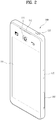
- FIG. 2 is a front perspective diagram of a mobile terminal according to one embodiment of the present invention
- FIG. 3 is a front perspective diagram of a mobile terminal according to a different embodiment of the present invention.
- the mobile terminal 100 will generally include a case forming the appearance of the terminal.
- the case is formed using a front case and a rear case.
- Various electronic components are incorporated into a space formed between the front case and the rear case.
- the cases may be formed by injection-molding synthetic resin or may be formed of a metal, for example, stainless steel (STS), aluminum (Al), titanium (Ti), or the like.
- STS stainless steel
- Al aluminum
- Ti titanium
- a display unit 151, an audio output module 152, a camera 121, a user input unit 131/132, a microphone 122, an interface unit 170 and the like can be arranged at the cases of the mobile terminal.
- the display unit 151 occupies most part of a main surface of the front surface.
- the audio output module 152, the user input unit 131 and the like are arranged at the circumference of the display unit 151.
- the user input unit 131 positioned at the front side is separately mounted on the front side irrespective of the display unit 151 and can be configured in a form of a button pushed by physical pressure or a button on which an input is inputted via a touch sensor. Or, as shown in FIG. 3 , the user input unit can receive a command input via a touch sensor in a manner of outputting a button on a part of the display unit 151.
- the button can be positioned at the bottom or the top of the display unit 151 (refer to FIG. 2 ). In the latter case, since the button can be generated in any position of the display unit 151, a position of the user input unit 131 can be freely changed (refer to FIG. 3 ).
- the user input unit 132, the microphone 122, the interface unit 171 and the like can be arranged at the sides of the front case and the rear case.
- FIG. 4 is a rear perspective diagram of a mobile terminal shown in FIG. 2 or FIG. 3 .
- an audio output module 152' can be additionally arranged at a rear side of a terminal body.
- the audio output module 152' arranged at the rear side of the terminal body can implement a stereo function together with the audio output module 152 arranged at the front side of the terminal body and the audio output module 152' can also be used for implementing a speaker mode in case of making a phone call.
- An antenna 116 for receiving a broadcast signal can be additionally arranged at the side of the terminal body in addition to an antenna for making a phone call and the like.
- the antenna 116 forming a part of the broadcast receiving module 111 (refer to FIG. 1 ) can be installed in a form capable of being extended from the terminal body.
- the camera 121 can be mounted on the rear side of the terminal body, in other word, the rear case.
- the camera 121 is facing a direction opposite to a direction at which the display unit 151 is facing. Hence, a user can capture an image inputted into the camera 121 while checking the image via the display unit 151.
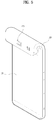
- FIG. 5 is a perspective diagram for a shape of a camera of a mobile terminal facing the front side according to one embodiment of the present invention.
- At least a part of cases according to the present invention can be flexibly bent.
- the whole of the mobile terminal 100 can be bent or a specific part of the mobile terminal can be bent.
- the bending unit 105 can maintain an angle adjusted by a user.
- a user bends the bending unit 105 formed by such a member capable of being transformed and maintaining a shape of the bending unit as a plate spring, a wire and the like instead of a limp member such as paper and the bending unit can maintain the angle adjusted by the user.
- a case of the mobile terminal can be bent to change a direction of the camera 121 facing a front side or a rear side of the mobile terminal to an opposite direction.
- a bending part configured to change the direction at which the camera 121 is facing is called the bending unit 105.
- the direction at which the camera 121 is facing is changed to make the camera 121 to be positioned at a direction identical or opposite to a direction at which the display unit 151 is facing.
- the camera 121 in order for the user to capture an image inputted into the camera 121 while checking the image via the display unit 151, the camera 121 should face a direction opposite to a direction at which the display unit 151 is facing.
- the camera 121 In case of capturing a user side, in particular, in case of capturing a selfie, the camera 121 should face the direction identical to the direction at which the display unit 151 is facing in order for the user to capture the image inputted into the camera 121 while checking the image via the display unit 151.
- the camera 121 is positioned at an opposite side of the display unit 151.
- the bending unit 105 is bent and the camera 121 faces a direction identical to a direction at which the display unit 151 is facing.
- the camera 121 and the display unit 151 face an identical direction, it may bend the bending unit 105 to capture a front direction of a user.
- the bending unit 105 of the mobile terminal When the bending unit 105 of the mobile terminal is positioned at one side of the display unit 151 to prevent the bending unit 105 and the display unit 151 from being overlapped with each other, as shown in FIG. 2 , if a user input unit is positioned at a position blocked by the bending unit 105, it may be able to minimize a part of the display unit 151 blocked by the bending unit, although the bending unit 105 is bent.
- the display unit 151 can be bent as well. In this case, it may be able to use a case made up of a transformable material for the display unit.
- the display unit may have a bendable structure and use a flexible display.
- the display unit is bent by the bending unit 105, a part of the display unit 151 is blocked by a rear side of the mobile terminal. In this case, it may be able to control an image not to be displayed on the part of the display unit 151 blocked by the rear side of the mobile terminal. Instead, an image can be displayed on a part of the display unit, which is not blocked by the rear side of the mobile terminal.
- FIG. 3 when a user input unit positioned at the bottom of the display unit 151 corresponds to a touch type input unit implemented using a part of the display unit 151, if the bending unit 105 is bent, the user input unit is disappeared from the display unit and an image can be displayed on the display unit extended to an area of the user input unit. If necessary, the user input unit can be generated on the display unit 151.
- an upside-down image of an image inputted from the camera 121 can be displayed on the display unit 151.
- an up-and-down of the camera 121 is changed as the bending unit 105 is bent, the image inputted via the camera 121 is reversed.
- an image provided to the display unit 151 can be controlled to have images different from each other including an image provided before the bending unit 105 is bent and an image provided after the bending unit 105 is bent.
- a bending angle ( ⁇ ) of the bending unit 105 equal to or greater than 90 degrees is detected using a sensor configured to detect bending of the bending unit 105, it may be able to recognized that a direction of an image inputted via the display unit and a direction of an image inputted via the camera 121 are identical to each other. Hence, the image inputted via the camera can be displayed on the display unit 151 in reverse or can be stored in the storage unit.
- the sensor configured to detect the bending of the bending unit can include a proximity sensor, a gyro sensor, a gravity sensor and the like.
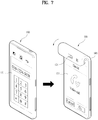
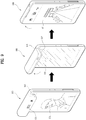
- FIGS. 6 to 8 are diagrams for a method of controlling a mobile terminal using the bending unit 105 in case of making a video call.
- the camera 121 when a video call is received, the camera 121 should face a user to capture a face of the user. Hence, if the bending unit 105 is bent and the camera 121 is positioned at a direction facing the user, it may be able to control the video call to be immediately connected.
- a user when a user intends to make a video call, if the user inputs a telephone number of a counterpart to a mobile terminal and bends the bending unit 105, it may be able to control the video call to be connected.
- the aforementioned embodiment can be performed irrespective of an order. In particular, if the user makes a call while the bending unit 105 is bent, the user can make a video call.
- the bending unit 105 may be able to control the video call to be terminated.
- an angle of the bending unit 105 corresponds to an angle around 90 degrees
- an image of a ceiling part is captured and a reversed image can be captured.
- an image captured on an angle around 90 is not displayed on the display unit 151 or is not transmitted to the counterpart of the video call. Up and down of an image captured on an angle equal to or greater than 90 degrees is reversed.
- a screen of the display unit can be displayed as a black screen or a still image of a lastly transmitted image can be displayed on the display unit 151 or can be transmitted to the counterpart of the video call until a next image is inputted.
- an angle of the bending unit 105 may change according to a movement of a capturing object. For example, when a user puts a mobile terminal down and makes a video call while the user is moving, although the whole of the mobile terminal is unable to move along with the user, the angle of the bending unit 105 changes and may be able to constantly capture the user.
- the bending unit 105 automatically catches an appearance of the user in a manner of changing the angle of the bending unit, it may be useful for capturing a selfie.
- the mobile terminal according to the present invention can capture a front image and a rear image using a single camera 121. Hence, since the number of cameras is decreased, it may be able to reduce component cost, utilize a space on which the camera 121 is mounted, and use a camera 121 of high resolution for capturing a selfie.
Landscapes
- Engineering & Computer Science (AREA)
- Theoretical Computer Science (AREA)
- Signal Processing (AREA)
- Computer Hardware Design (AREA)
- General Engineering & Computer Science (AREA)
- Physics & Mathematics (AREA)
- General Physics & Mathematics (AREA)
- Human Computer Interaction (AREA)
- Multimedia (AREA)
- Computer Networks & Wireless Communication (AREA)
- Telephone Set Structure (AREA)
- Telephone Function (AREA)
Claims (12)
- Terminal de communication mobile (100), comprenant :un étui ayant au moins une partie flexible ;un appareil photographique (121) configuré pour capturer une direction en étant monté sur un côté d'étui ;une unité d'affichage (151) montée sur un autre côté d'étui et configurée pour afficher dans une autre direction une image capturée par l'appareil photographique (121) ;une unité de pliage (105) configurée pour être pliée au niveau de la partie flexible d'étui, et conserver l'état plié, pour amener l'appareil photographique (121) à faire face dans l'autre direction ; etun dispositif de commande (180) configuré pour commander l'appareil photographique (121) selon un changement d'angle de l'unité de pliage (105) détecté par un capteur,dans lequel lorsqu'un appel vidéo est reçu et que l'unité de pliage (105) est pliée pour amener l'appareil photo (121) à faire face dans l'autre direction, le dispositif de commande (180) est configuré pour se connecter avec un homologue de l'appel vidéo, etdans lequel lorsqu'un numéro de téléphone d'un homologue est entré et que l'unité de pliage (105) est pliée pour amener l'appareil photo (121) à faire face dans l'autre direction, le dispositif de commande (180) est configuré pour connecter un appel vidéo à l'homologue.
- Terminal mobile (100) selon la revendication 1, dans lequel si l'unité de pliage (105) change un angle jusqu'à un angle supérieur ou égal à 90 degrés le dispositif de commande (180) est configuré pour inverser l'image capturée par l'appareil photographique (121) et stocker l'image inversée dans une unité de stockage (160) ou afficher l'image inversée sur l'unité d'affichage (151).
- Terminal mobile (100) selon la revendication 1 ou la revendication 2, comprenant en outre une unité d'entrée utilisateur (130) positionnée d'un côté arrière de l'appareil photographique (121).
- Terminal mobile (100) selon la revendication 1 ou la revendication 2, dans lequel si une partie de l'unité d'affichage (151) est bloquée par l'unité de pliage (105) lorsque l'unité de pliage se plie, l'unité d'affichage (151) est configurée pour afficher une image uniquement sur une partie non bloquée par l'unité de pliage (105).
- Terminal mobile (100) selon la revendication 1 ou la revendication 2, comprenant en outre une unité d'entrée utilisateur (130) configurée pour recevoir une entrée à l'aide d'un mode d'entrée tactile sur l'unité d'affichage (151),
dans lequel si l'unité de pliage (105) est pliée et bloque une partie de l'unité d'affichage (151), l'unité d'entrée utilisateur (130) est configurée pour disparaître de l'unité d'affichage (130). - Terminal mobile (100) selon l'une de la revendication 1 à la revendication 5, dans lequel l'unité d'affichage (151) est constituée d'un matériau flexible et dans lequel l' étui et l'unité d'affichage (151) sont tous deux pliés de manière à ce que l'unité de pliage (105) chevauche l'unité d'affichage (151).
- Terminal mobile (100) selon l'une de la revendication 1 à la revendication 6, dans lequel si l'unité de pliage (105) est non pliée, l'appel vidéo est terminé.
- Terminal mobile (100) selon l'une de la revendication 1 à la revendication 7, dans lequel si l'unité de pliage (105) est pliée, le dispositif de commande (180) est configuré pour activer l'appareil photographique (121).
- Terminal mobile (100) selon l'une de la revendication 1 à la revendication 8, dans lequel le dispositif de commande (180) est configuré pour commander l'arrêt de la capture de l'appareil photographique (121) au milieu du changement de l'angle de l'unité de pliage (105).
- Terminal mobile (100) selon l'une de la revendication 1 à la revendication 9, dans lequel si un objet de capture bouge, le dispositif de commande (180) est configuré pour régler l'angle de l'unité de pliage (105) selon le mouvement de l'objet.
- Terminal mobile (100) selon l'une de la revendication 1 à la revendication 10, dans lequel l'unité de pliage (105) comprend un ressort à lame.
- Terminal mobile (100) selon l'une de la revendication 1 à la revendication 11, dans lequel l'étui et l'unité d'affichage (151) sont tous deux constitués d'un matériau flexible.
Applications Claiming Priority (2)
| Application Number | Priority Date | Filing Date | Title |
|---|---|---|---|
| KR1020130011664A KR102165442B1 (ko) | 2013-02-01 | 2013-02-01 | 이동 단말기 |
| PCT/KR2013/006502 WO2014119829A1 (fr) | 2013-02-01 | 2013-07-19 | Terminal mobile/portatif |
Publications (3)
| Publication Number | Publication Date |
|---|---|
| EP2953268A1 EP2953268A1 (fr) | 2015-12-09 |
| EP2953268A4 EP2953268A4 (fr) | 2016-10-26 |
| EP2953268B1 true EP2953268B1 (fr) | 2018-07-04 |
Family
ID=51262519
Family Applications (1)
| Application Number | Title | Priority Date | Filing Date |
|---|---|---|---|
| EP13873480.1A Not-in-force EP2953268B1 (fr) | 2013-02-01 | 2013-07-19 | Terminal mobile/portatif |
Country Status (5)
| Country | Link |
|---|---|
| US (1) | US9344672B2 (fr) |
| EP (1) | EP2953268B1 (fr) |
| KR (1) | KR102165442B1 (fr) |
| CN (1) | CN104969480B (fr) |
| WO (1) | WO2014119829A1 (fr) |
Families Citing this family (46)
| Publication number | Priority date | Publication date | Assignee | Title |
|---|---|---|---|---|
| US9665127B2 (en) * | 2013-11-20 | 2017-05-30 | Beijing Lenovo Software | Electronic device and connecting part |
| US9866669B2 (en) * | 2014-03-03 | 2018-01-09 | Lg Electronics Inc. | Mobile device and method of controlling the same |
| KR102255710B1 (ko) * | 2014-10-07 | 2021-05-26 | 엘지전자 주식회사 | 이동단말기 |
| TWI623855B (zh) * | 2014-11-13 | 2018-05-11 | 柔性顯示裝置操作控制方法 | |
| US10372165B2 (en) | 2014-12-23 | 2019-08-06 | Lg Electronics Inc. | Display device and control method |
| WO2016111555A2 (fr) | 2015-01-07 | 2016-07-14 | Samsung Electronics Co., Ltd. | Dispositif de terminal utilisateur pliable et son procédé d'affichage |
| CN112150984B (zh) * | 2015-01-07 | 2023-04-07 | 三星电子株式会社 | 可弯曲用户终端装置及其显示方法 |
| EP3767448A3 (fr) | 2015-01-07 | 2021-04-07 | Samsung Electronics Co., Ltd. | Afficheur et procédé de fonctionnement correspondant |
| KR102137543B1 (ko) * | 2015-01-07 | 2020-08-13 | 삼성전자주식회사 | 벤딩 가능한 사용자 단말 장치 및 이의 디스플레이 방법 |
| KR20160089164A (ko) * | 2015-01-19 | 2016-07-27 | 삼성전자주식회사 | 플렉서블 디바이스의 디스플레이의 형상을 제어하는 방법 및 플렉서블 디바이스 |
| KR101557608B1 (ko) * | 2015-01-23 | 2015-10-05 | 주식회사 바우드 | 촬영 모듈이 구비된 플렉서블 장치 |
| CN104699391B (zh) * | 2015-04-07 | 2018-10-12 | 联想(北京)有限公司 | 电子设备及其相机的控制方法 |
| KR20160138748A (ko) * | 2015-05-26 | 2016-12-06 | 삼성전자주식회사 | 플렉시블 장치 |
| US9432969B1 (en) * | 2015-06-27 | 2016-08-30 | Intel IP Corporation | Shape changing device housing |
| USD804443S1 (en) | 2015-10-02 | 2017-12-05 | Samsung Electronics Co., Ltd. | Mobile terminal |
| USD828321S1 (en) | 2015-11-04 | 2018-09-11 | Lenovo (Beijing) Co., Ltd. | Flexible smart mobile phone |
| CN105611006B (zh) | 2015-12-29 | 2018-03-27 | 广东欧珀移动通信有限公司 | 一种具有柔性屏的可折叠终端 |
| US10191577B2 (en) * | 2016-02-16 | 2019-01-29 | Samsung Electronics Co., Ltd. | Electronic device |
| KR20170105821A (ko) * | 2016-03-10 | 2017-09-20 | 엘지전자 주식회사 | 와치타입 단말기 |
| KR102401285B1 (ko) * | 2016-04-01 | 2022-05-24 | 삼성전자주식회사 | 디스플레이를 포함하는 전자 장치 |
| CN106506942A (zh) * | 2016-10-31 | 2017-03-15 | 维沃移动通信有限公司 | 一种拍照方法及移动终端 |
| JP7091601B2 (ja) * | 2016-11-07 | 2022-06-28 | 富士フイルムビジネスイノベーション株式会社 | 表示装置およびプログラム |
| CN106648035A (zh) * | 2016-11-29 | 2017-05-10 | 维沃移动通信有限公司 | 一种图像分辨率的调整方法及移动终端 |
| CN106713747A (zh) * | 2016-11-29 | 2017-05-24 | 维沃移动通信有限公司 | 一种对焦方法及移动终端 |
| DE102017109254A1 (de) * | 2017-04-28 | 2018-10-31 | Carl Zeiss Ag | Digitalkamera |
| US10397667B2 (en) | 2017-09-28 | 2019-08-27 | Intel IP Corporation | Sensor position optimization by active flexible device housing |
| CN107948360B (zh) * | 2017-11-29 | 2020-11-03 | 努比亚技术有限公司 | 柔性屏终端的拍摄方法、终端和计算机可读存储介质 |
| CN108200327B (zh) * | 2017-11-29 | 2020-09-15 | 努比亚技术有限公司 | 一种拍摄控制方法、柔性屏终端及计算机可读存储介质 |
| CN108200229A (zh) * | 2017-11-30 | 2018-06-22 | 努比亚技术有限公司 | 柔性屏终端的拍摄方法、终端和计算机可读存储介质 |
| US10901674B2 (en) | 2017-12-07 | 2021-01-26 | Honeywell International Inc. | Protocol for high integrity personal electronic device applications |
| US10875762B2 (en) | 2017-12-07 | 2020-12-29 | Honeywell International Inc. | Addressable display system for ICA monitoring and annunciation for certified applications running on a personal electronic device |
| TWI656467B (zh) * | 2018-04-30 | 2019-04-11 | 香港商冠捷投資有限公司 | 手持式電子設備及保護殼裝置 |
| US11057553B2 (en) | 2018-07-06 | 2021-07-06 | Samsung Electronics Co., Ltd. | Electronic device for capturing media using a bendable display and method thereof |
| CN109494241B (zh) * | 2018-10-08 | 2020-11-24 | 武汉华星光电半导体显示技术有限公司 | 柔性oled显示面板及其制备方法 |
| KR102106296B1 (ko) | 2018-11-29 | 2020-05-04 | 삼성전자주식회사 | 카메라를 포함하는 전자 장치 및 그것의 동작 방법 |
| KR102629346B1 (ko) * | 2019-04-10 | 2024-01-26 | 삼성전자주식회사 | 복수의 카메라 모듈들을 포함하는 폴더블 전자 장치 |
| KR102702937B1 (ko) * | 2019-05-09 | 2024-09-05 | 삼성전자주식회사 | 복수의 카메라들을 이용한 촬영 제어 방법 및 폴더블 장치 |
| CN110312073B (zh) * | 2019-06-25 | 2021-03-16 | 维沃移动通信有限公司 | 一种拍摄参数的调节方法及移动终端 |
| CN110460717B (zh) * | 2019-07-10 | 2021-05-28 | 维沃移动通信有限公司 | 终端控制方法和移动终端 |
| CN110661908B (zh) * | 2019-09-29 | 2021-03-12 | Oppo(重庆)智能科技有限公司 | 电子设备及电子设备的控制方法 |
| CN112839115B (zh) * | 2019-11-22 | 2022-04-08 | 北京小米移动软件有限公司 | 柔性屏模组、终端设备及拍摄方法 |
| KR102716180B1 (ko) * | 2019-12-31 | 2024-10-11 | 삼성전자주식회사 | 전자 장치 및 전자 장치의 동작 방법 |
| CN111524459A (zh) * | 2020-04-20 | 2020-08-11 | 武汉华星光电半导体显示技术有限公司 | 显示装置 |
| KR102842230B1 (ko) * | 2020-10-16 | 2025-08-05 | 삼성전자주식회사 | 전자 장치 및 전자 장치의 동작 방법 |
| KR20220060623A (ko) | 2020-11-04 | 2022-05-12 | 삼성디스플레이 주식회사 | 폴더블 표시 장치 |
| EP4239440B1 (fr) * | 2020-12-03 | 2026-04-15 | Samsung Electronics Co., Ltd. | Dispositif électronique comprenant un dispositif d'affichage flexible et procédé de capture d'image dans un dispositif électronique |
Family Cites Families (9)
| Publication number | Priority date | Publication date | Assignee | Title |
|---|---|---|---|---|
| WO2006038554A1 (fr) * | 2004-10-01 | 2006-04-13 | Sharp Kabushiki Kaisha | Terminal mobile d’informations |
| KR101231106B1 (ko) * | 2006-03-17 | 2013-02-07 | 삼성전자주식회사 | 유연성 휴대 단말기의 사용자 인터페이스 구현 장치 및방법 |
| KR101521219B1 (ko) * | 2008-11-10 | 2015-05-18 | 엘지전자 주식회사 | 플렉서블 디스플레이를 이용하는 휴대 단말기 및 그 제어방법 |
| KR101517082B1 (ko) * | 2008-11-10 | 2015-04-30 | 엘지전자 주식회사 | 플렉서블 디스플레이를 이용하는 휴대 단말기 및 그 제어방법 |
| KR101615379B1 (ko) * | 2009-10-14 | 2016-04-26 | 삼성전자주식회사 | 플렉서블 디스플레이부를 구비하는 휴대단말기 및 휴대단말기의 정보표시 방법 |
| KR20110082359A (ko) * | 2010-01-11 | 2011-07-19 | 엘지전자 주식회사 | 플렉서블 디스플레이를 구비하는 이동 단말기 및 그 제어방법 |
| KR101649156B1 (ko) * | 2010-06-07 | 2016-08-18 | 엘지전자 주식회사 | 휴대 단말기 및 그 동작 방법 |
| KR101449919B1 (ko) | 2012-01-16 | 2014-10-13 | 유혜연 | 플렉시블 휴대폰 |
| CN109347299B (zh) * | 2012-12-20 | 2021-09-24 | 苹果公司 | 音圈马达光学图像稳定 |
-
2013
- 2013-02-01 KR KR1020130011664A patent/KR102165442B1/ko not_active Ceased
- 2013-07-19 WO PCT/KR2013/006502 patent/WO2014119829A1/fr not_active Ceased
- 2013-07-19 EP EP13873480.1A patent/EP2953268B1/fr not_active Not-in-force
- 2013-07-19 CN CN201380072133.3A patent/CN104969480B/zh not_active Expired - Fee Related
- 2013-07-19 US US14/762,538 patent/US9344672B2/en not_active Expired - Fee Related
Non-Patent Citations (1)
| Title |
|---|
| None * |
Also Published As
| Publication number | Publication date |
|---|---|
| EP2953268A1 (fr) | 2015-12-09 |
| US9344672B2 (en) | 2016-05-17 |
| WO2014119829A1 (fr) | 2014-08-07 |
| US20150381929A1 (en) | 2015-12-31 |
| KR102165442B1 (ko) | 2020-10-14 |
| EP2953268A4 (fr) | 2016-10-26 |
| KR20140099006A (ko) | 2014-08-11 |
| CN104969480B (zh) | 2017-07-14 |
| CN104969480A (zh) | 2015-10-07 |
Similar Documents
| Publication | Publication Date | Title |
|---|---|---|
| US9344672B2 (en) | Mobile/portable terminal | |
| KR102205281B1 (ko) | 이동 단말기 | |
| KR20160012008A (ko) | 이동 단말기 및 그것의 제어방법 | |
| KR20140065955A (ko) | 이동 단말기 및 그 제어방법 | |
| KR101775004B1 (ko) | 이동 단말기 및 그 제조방법 | |
| KR20160008372A (ko) | 이동 단말기 및 그것의 제어방법 | |
| KR20140143610A (ko) | 이동 단말기 및 그 동작 방법 | |
| KR20140098511A (ko) | 이동 단말기, 및 그 동작방법 | |
| KR20120000937A (ko) | 이동 단말기 | |
| KR101855938B1 (ko) | 휴대 단말기 및 그 동작 제어방법 | |
| KR20150069740A (ko) | 이동 단말기 및 그 동작 제어방법 | |
| US10742785B2 (en) | Mobile terminal | |
| KR20110034264A (ko) | 이동 통신 단말기에서 센서의 오작동 방지 방법 및 이를 적용한 이동 통신 단말기 | |
| KR20170047060A (ko) | 전원차단을 수행하는 이동 단말기 및 그 제어방법 | |
| KR20160068534A (ko) | 이동단말기 및 그 제어방법 | |
| KR20140060761A (ko) | 이동 단말기 및 그 동작 방법 | |
| KR20110080636A (ko) | 이동단말기 및 그 제어 방법 | |
| KR101883179B1 (ko) | 이동 단말기 및 그 동작 방법 | |
| KR20150010182A (ko) | 이동 단말기 및 그 동작 제어방법 | |
| KR101537629B1 (ko) | 이동 단말기 및 그 제어 방법 | |
| KR20100136704A (ko) | 이동 단말기에서의 터치 신호 처리 방법 및 이를 이용한 이동 단말기 | |
| KR20140067729A (ko) | 이동 단말기 | |
| KR101781038B1 (ko) | 휴대 단말기 및 그 동작 제어방법 | |
| KR102135366B1 (ko) | 이동 단말기 및 이의 제어방법 | |
| KR20150030054A (ko) | 이동 단말기 및 그 동작 제어방법 |
Legal Events
| Date | Code | Title | Description |
|---|---|---|---|
| PUAI | Public reference made under article 153(3) epc to a published international application that has entered the european phase |
Free format text: ORIGINAL CODE: 0009012 |
|
| 17P | Request for examination filed |
Effective date: 20150831 |
|
| AK | Designated contracting states |
Kind code of ref document: A1 Designated state(s): AL AT BE BG CH CY CZ DE DK EE ES FI FR GB GR HR HU IE IS IT LI LT LU LV MC MK MT NL NO PL PT RO RS SE SI SK SM TR |
|
| AX | Request for extension of the european patent |
Extension state: BA ME |
|
| DAX | Request for extension of the european patent (deleted) | ||
| A4 | Supplementary search report drawn up and despatched |
Effective date: 20160926 |
|
| RIC1 | Information provided on ipc code assigned before grant |
Ipc: G06K 9/46 20060101ALI20160920BHEP Ipc: G06F 1/16 20060101ALI20160920BHEP Ipc: H04B 1/40 20060101AFI20160920BHEP Ipc: H04M 1/02 20060101ALI20160920BHEP |
|
| GRAP | Despatch of communication of intention to grant a patent |
Free format text: ORIGINAL CODE: EPIDOSNIGR1 |
|
| STAA | Information on the status of an ep patent application or granted ep patent |
Free format text: STATUS: GRANT OF PATENT IS INTENDED |
|
| RIC1 | Information provided on ipc code assigned before grant |
Ipc: H04M 1/02 20060101ALI20180126BHEP Ipc: H04B 1/40 20150101AFI20180126BHEP Ipc: G06K 9/46 20060101ALI20180126BHEP Ipc: G06F 1/16 20060101ALI20180126BHEP Ipc: H04N 7/14 20060101ALI20180126BHEP Ipc: H04N 5/225 20060101ALI20180126BHEP |
|
| INTG | Intention to grant announced |
Effective date: 20180216 |
|
| GRAS | Grant fee paid |
Free format text: ORIGINAL CODE: EPIDOSNIGR3 |
|
| GRAA | (expected) grant |
Free format text: ORIGINAL CODE: 0009210 |
|
| STAA | Information on the status of an ep patent application or granted ep patent |
Free format text: STATUS: THE PATENT HAS BEEN GRANTED |
|
| AK | Designated contracting states |
Kind code of ref document: B1 Designated state(s): AL AT BE BG CH CY CZ DE DK EE ES FI FR GB GR HR HU IE IS IT LI LT LU LV MC MK MT NL NO PL PT RO RS SE SI SK SM TR |
|
| REG | Reference to a national code |
Ref country code: GB Ref legal event code: FG4D |
|
| REG | Reference to a national code |
Ref country code: CH Ref legal event code: EP |
|
| REG | Reference to a national code |
Ref country code: AT Ref legal event code: REF Ref document number: 1015602 Country of ref document: AT Kind code of ref document: T Effective date: 20180715 |
|
| REG | Reference to a national code |
Ref country code: IE Ref legal event code: FG4D |
|
| REG | Reference to a national code |
Ref country code: FR Ref legal event code: PLFP Year of fee payment: 6 |
|
| REG | Reference to a national code |
Ref country code: DE Ref legal event code: R096 Ref document number: 602013039909 Country of ref document: DE |
|
| REG | Reference to a national code |
Ref country code: NL Ref legal event code: MP Effective date: 20180704 |
|
| REG | Reference to a national code |
Ref country code: LT Ref legal event code: MG4D |
|
| REG | Reference to a national code |
Ref country code: AT Ref legal event code: MK05 Ref document number: 1015602 Country of ref document: AT Kind code of ref document: T Effective date: 20180704 |
|
| PG25 | Lapsed in a contracting state [announced via postgrant information from national office to epo] |
Ref country code: NL Free format text: LAPSE BECAUSE OF FAILURE TO SUBMIT A TRANSLATION OF THE DESCRIPTION OR TO PAY THE FEE WITHIN THE PRESCRIBED TIME-LIMIT Effective date: 20180704 |
|
| PG25 | Lapsed in a contracting state [announced via postgrant information from national office to epo] |
Ref country code: PL Free format text: LAPSE BECAUSE OF FAILURE TO SUBMIT A TRANSLATION OF THE DESCRIPTION OR TO PAY THE FEE WITHIN THE PRESCRIBED TIME-LIMIT Effective date: 20180704 Ref country code: RS Free format text: LAPSE BECAUSE OF FAILURE TO SUBMIT A TRANSLATION OF THE DESCRIPTION OR TO PAY THE FEE WITHIN THE PRESCRIBED TIME-LIMIT Effective date: 20180704 Ref country code: LT Free format text: LAPSE BECAUSE OF FAILURE TO SUBMIT A TRANSLATION OF THE DESCRIPTION OR TO PAY THE FEE WITHIN THE PRESCRIBED TIME-LIMIT Effective date: 20180704 Ref country code: AT Free format text: LAPSE BECAUSE OF FAILURE TO SUBMIT A TRANSLATION OF THE DESCRIPTION OR TO PAY THE FEE WITHIN THE PRESCRIBED TIME-LIMIT Effective date: 20180704 Ref country code: IS Free format text: LAPSE BECAUSE OF FAILURE TO SUBMIT A TRANSLATION OF THE DESCRIPTION OR TO PAY THE FEE WITHIN THE PRESCRIBED TIME-LIMIT Effective date: 20181104 Ref country code: NO Free format text: LAPSE BECAUSE OF FAILURE TO SUBMIT A TRANSLATION OF THE DESCRIPTION OR TO PAY THE FEE WITHIN THE PRESCRIBED TIME-LIMIT Effective date: 20181004 Ref country code: CZ Free format text: LAPSE BECAUSE OF FAILURE TO SUBMIT A TRANSLATION OF THE DESCRIPTION OR TO PAY THE FEE WITHIN THE PRESCRIBED TIME-LIMIT Effective date: 20180704 Ref country code: BG Free format text: LAPSE BECAUSE OF FAILURE TO SUBMIT A TRANSLATION OF THE DESCRIPTION OR TO PAY THE FEE WITHIN THE PRESCRIBED TIME-LIMIT Effective date: 20181004 Ref country code: FI Free format text: LAPSE BECAUSE OF FAILURE TO SUBMIT A TRANSLATION OF THE DESCRIPTION OR TO PAY THE FEE WITHIN THE PRESCRIBED TIME-LIMIT Effective date: 20180704 Ref country code: GR Free format text: LAPSE BECAUSE OF FAILURE TO SUBMIT A TRANSLATION OF THE DESCRIPTION OR TO PAY THE FEE WITHIN THE PRESCRIBED TIME-LIMIT Effective date: 20181005 Ref country code: SE Free format text: LAPSE BECAUSE OF FAILURE TO SUBMIT A TRANSLATION OF THE DESCRIPTION OR TO PAY THE FEE WITHIN THE PRESCRIBED TIME-LIMIT Effective date: 20180704 |
|
| PG25 | Lapsed in a contracting state [announced via postgrant information from national office to epo] |
Ref country code: ES Free format text: LAPSE BECAUSE OF FAILURE TO SUBMIT A TRANSLATION OF THE DESCRIPTION OR TO PAY THE FEE WITHIN THE PRESCRIBED TIME-LIMIT Effective date: 20180704 Ref country code: AL Free format text: LAPSE BECAUSE OF FAILURE TO SUBMIT A TRANSLATION OF THE DESCRIPTION OR TO PAY THE FEE WITHIN THE PRESCRIBED TIME-LIMIT Effective date: 20180704 Ref country code: LV Free format text: LAPSE BECAUSE OF FAILURE TO SUBMIT A TRANSLATION OF THE DESCRIPTION OR TO PAY THE FEE WITHIN THE PRESCRIBED TIME-LIMIT Effective date: 20180704 Ref country code: HR Free format text: LAPSE BECAUSE OF FAILURE TO SUBMIT A TRANSLATION OF THE DESCRIPTION OR TO PAY THE FEE WITHIN THE PRESCRIBED TIME-LIMIT Effective date: 20180704 |
|
| REG | Reference to a national code |
Ref country code: CH Ref legal event code: PL |
|
| PG25 | Lapsed in a contracting state [announced via postgrant information from national office to epo] |
Ref country code: LU Free format text: LAPSE BECAUSE OF NON-PAYMENT OF DUE FEES Effective date: 20180719 |
|
| REG | Reference to a national code |
Ref country code: BE Ref legal event code: MM Effective date: 20180731 |
|
| REG | Reference to a national code |
Ref country code: DE Ref legal event code: R097 Ref document number: 602013039909 Country of ref document: DE |
|
| REG | Reference to a national code |
Ref country code: IE Ref legal event code: MM4A |
|
| PG25 | Lapsed in a contracting state [announced via postgrant information from national office to epo] |
Ref country code: RO Free format text: LAPSE BECAUSE OF FAILURE TO SUBMIT A TRANSLATION OF THE DESCRIPTION OR TO PAY THE FEE WITHIN THE PRESCRIBED TIME-LIMIT Effective date: 20180704 Ref country code: IT Free format text: LAPSE BECAUSE OF FAILURE TO SUBMIT A TRANSLATION OF THE DESCRIPTION OR TO PAY THE FEE WITHIN THE PRESCRIBED TIME-LIMIT Effective date: 20180704 Ref country code: IE Free format text: LAPSE BECAUSE OF NON-PAYMENT OF DUE FEES Effective date: 20180719 Ref country code: MC Free format text: LAPSE BECAUSE OF FAILURE TO SUBMIT A TRANSLATION OF THE DESCRIPTION OR TO PAY THE FEE WITHIN THE PRESCRIBED TIME-LIMIT Effective date: 20180704 Ref country code: LI Free format text: LAPSE BECAUSE OF NON-PAYMENT OF DUE FEES Effective date: 20180731 Ref country code: EE Free format text: LAPSE BECAUSE OF FAILURE TO SUBMIT A TRANSLATION OF THE DESCRIPTION OR TO PAY THE FEE WITHIN THE PRESCRIBED TIME-LIMIT Effective date: 20180704 Ref country code: CH Free format text: LAPSE BECAUSE OF NON-PAYMENT OF DUE FEES Effective date: 20180731 |
|
| PLBE | No opposition filed within time limit |
Free format text: ORIGINAL CODE: 0009261 |
|
| STAA | Information on the status of an ep patent application or granted ep patent |
Free format text: STATUS: NO OPPOSITION FILED WITHIN TIME LIMIT |
|
| PG25 | Lapsed in a contracting state [announced via postgrant information from national office to epo] |
Ref country code: BE Free format text: LAPSE BECAUSE OF NON-PAYMENT OF DUE FEES Effective date: 20180731 Ref country code: SM Free format text: LAPSE BECAUSE OF FAILURE TO SUBMIT A TRANSLATION OF THE DESCRIPTION OR TO PAY THE FEE WITHIN THE PRESCRIBED TIME-LIMIT Effective date: 20180704 Ref country code: DK Free format text: LAPSE BECAUSE OF FAILURE TO SUBMIT A TRANSLATION OF THE DESCRIPTION OR TO PAY THE FEE WITHIN THE PRESCRIBED TIME-LIMIT Effective date: 20180704 Ref country code: SK Free format text: LAPSE BECAUSE OF FAILURE TO SUBMIT A TRANSLATION OF THE DESCRIPTION OR TO PAY THE FEE WITHIN THE PRESCRIBED TIME-LIMIT Effective date: 20180704 |
|
| 26N | No opposition filed |
Effective date: 20190405 |
|
| PG25 | Lapsed in a contracting state [announced via postgrant information from national office to epo] |
Ref country code: SI Free format text: LAPSE BECAUSE OF FAILURE TO SUBMIT A TRANSLATION OF THE DESCRIPTION OR TO PAY THE FEE WITHIN THE PRESCRIBED TIME-LIMIT Effective date: 20180704 |
|
| PG25 | Lapsed in a contracting state [announced via postgrant information from national office to epo] |
Ref country code: MT Free format text: LAPSE BECAUSE OF NON-PAYMENT OF DUE FEES Effective date: 20180719 |
|
| PG25 | Lapsed in a contracting state [announced via postgrant information from national office to epo] |
Ref country code: TR Free format text: LAPSE BECAUSE OF FAILURE TO SUBMIT A TRANSLATION OF THE DESCRIPTION OR TO PAY THE FEE WITHIN THE PRESCRIBED TIME-LIMIT Effective date: 20180704 |
|
| PG25 | Lapsed in a contracting state [announced via postgrant information from national office to epo] |
Ref country code: PT Free format text: LAPSE BECAUSE OF FAILURE TO SUBMIT A TRANSLATION OF THE DESCRIPTION OR TO PAY THE FEE WITHIN THE PRESCRIBED TIME-LIMIT Effective date: 20180704 |
|
| PG25 | Lapsed in a contracting state [announced via postgrant information from national office to epo] |
Ref country code: HU Free format text: LAPSE BECAUSE OF FAILURE TO SUBMIT A TRANSLATION OF THE DESCRIPTION OR TO PAY THE FEE WITHIN THE PRESCRIBED TIME-LIMIT; INVALID AB INITIO Effective date: 20130719 Ref country code: CY Free format text: LAPSE BECAUSE OF FAILURE TO SUBMIT A TRANSLATION OF THE DESCRIPTION OR TO PAY THE FEE WITHIN THE PRESCRIBED TIME-LIMIT Effective date: 20180704 Ref country code: MK Free format text: LAPSE BECAUSE OF NON-PAYMENT OF DUE FEES Effective date: 20180704 |
|
| PGFP | Annual fee paid to national office [announced via postgrant information from national office to epo] |
Ref country code: FR Payment date: 20200609 Year of fee payment: 8 |
|
| PGFP | Annual fee paid to national office [announced via postgrant information from national office to epo] |
Ref country code: GB Payment date: 20200608 Year of fee payment: 8 |
|
| PGFP | Annual fee paid to national office [announced via postgrant information from national office to epo] |
Ref country code: DE Payment date: 20200605 Year of fee payment: 8 |
|
| REG | Reference to a national code |
Ref country code: DE Ref legal event code: R119 Ref document number: 602013039909 Country of ref document: DE |
|
| GBPC | Gb: european patent ceased through non-payment of renewal fee |
Effective date: 20210719 |
|
| PG25 | Lapsed in a contracting state [announced via postgrant information from national office to epo] |
Ref country code: GB Free format text: LAPSE BECAUSE OF NON-PAYMENT OF DUE FEES Effective date: 20210719 Ref country code: DE Free format text: LAPSE BECAUSE OF NON-PAYMENT OF DUE FEES Effective date: 20220201 |
|
| PG25 | Lapsed in a contracting state [announced via postgrant information from national office to epo] |
Ref country code: FR Free format text: LAPSE BECAUSE OF NON-PAYMENT OF DUE FEES Effective date: 20210731 |