EP2953295B1 - Automatische Delta-Ereignissynchronisation in mehreren Manager-Agentenumgebungen - Google Patents
Automatische Delta-Ereignissynchronisation in mehreren Manager-Agentenumgebungen Download PDFInfo
- Publication number
- EP2953295B1 EP2953295B1 EP14171445.1A EP14171445A EP2953295B1 EP 2953295 B1 EP2953295 B1 EP 2953295B1 EP 14171445 A EP14171445 A EP 14171445A EP 2953295 B1 EP2953295 B1 EP 2953295B1
- Authority
- EP
- European Patent Office
- Prior art keywords
- event
- memory means
- managing device
- managing
- agent apparatus
- Prior art date
- Legal status (The legal status is an assumption and is not a legal conclusion. Google has not performed a legal analysis and makes no representation as to the accuracy of the status listed.)
- Not-in-force
Links
Images


Classifications
-
- H—ELECTRICITY
- H04—ELECTRIC COMMUNICATION TECHNIQUE
- H04L—TRANSMISSION OF DIGITAL INFORMATION, e.g. TELEGRAPHIC COMMUNICATION
- H04L43/00—Arrangements for monitoring or testing data switching networks
- H04L43/10—Active monitoring, e.g. heartbeat, ping or trace-route
-
- H—ELECTRICITY
- H04—ELECTRIC COMMUNICATION TECHNIQUE
- H04L—TRANSMISSION OF DIGITAL INFORMATION, e.g. TELEGRAPHIC COMMUNICATION
- H04L67/00—Network arrangements or protocols for supporting network services or applications
- H04L67/01—Protocols
- H04L67/10—Protocols in which an application is distributed across nodes in the network
- H04L67/1095—Replication or mirroring of data, e.g. scheduling or transport for data synchronisation between network nodes
-
- H—ELECTRICITY
- H04—ELECTRIC COMMUNICATION TECHNIQUE
- H04L—TRANSMISSION OF DIGITAL INFORMATION, e.g. TELEGRAPHIC COMMUNICATION
- H04L41/00—Arrangements for maintenance, administration or management of data switching networks, e.g. of packet switching networks
- H04L41/06—Management of faults, events, alarms or notifications
- H04L41/069—Management of faults, events, alarms or notifications using logs of notifications; Post-processing of notifications
-
- H—ELECTRICITY
- H04—ELECTRIC COMMUNICATION TECHNIQUE
- H04L—TRANSMISSION OF DIGITAL INFORMATION, e.g. TELEGRAPHIC COMMUNICATION
- H04L41/00—Arrangements for maintenance, administration or management of data switching networks, e.g. of packet switching networks
- H04L41/04—Network management architectures or arrangements
- H04L41/044—Network management architectures or arrangements comprising hierarchical management structures
-
- H—ELECTRICITY
- H04—ELECTRIC COMMUNICATION TECHNIQUE
- H04L—TRANSMISSION OF DIGITAL INFORMATION, e.g. TELEGRAPHIC COMMUNICATION
- H04L41/00—Arrangements for maintenance, administration or management of data switching networks, e.g. of packet switching networks
- H04L41/04—Network management architectures or arrangements
- H04L41/046—Network management architectures or arrangements comprising network management agents or mobile agents therefor
-
- H—ELECTRICITY
- H04—ELECTRIC COMMUNICATION TECHNIQUE
- H04L—TRANSMISSION OF DIGITAL INFORMATION, e.g. TELEGRAPHIC COMMUNICATION
- H04L41/00—Arrangements for maintenance, administration or management of data switching networks, e.g. of packet switching networks
- H04L41/06—Management of faults, events, alarms or notifications
- H04L41/0604—Management of faults, events, alarms or notifications using filtering, e.g. reduction of information by using priority, element types, position or time
Definitions
- the present invention relates to an automatic delta event synchronization in multiple manager-agent environments.
- Adaptive Data Transmission describe a system and related methods for adaptive data transmission.
- a so called data collector collects data from several LOG Producers and sends them to a Log Processor via a network connection. In case of low performance of the network connection, the collected data are buffered by the data collector.
- the TMN principles define several layers for a hierarchical management of telecommunication networks, while each layer may play a dual role:
- the manager functionality may be implemented in a (higher level) management system with regard to (subordinate) management systems or to managed NEs.
- the agent functionality may be implemented in a management system or a managed NE with regard to one or several managing system(s) on the next upper level.
- Fig. 1 shows as an example of manager-agent interactions, manager-agent interactions at an NMS-EMS interface.
- NMSs network management systems
- EMSs element management systems
- one EMS plays the manager role with regard to supervised network elements (NEs) .
- the time until the (higher level) management system is again synchronized with information available in the subordinate entities is of crucial importance especially for the management of mobile broadband networks, due to the large number of managed network elements and - as a consequence - to the huge amount of expected event reports.
- management systems trigger a full synchronization of management information (e.g. alarms, configuration data, resource state information) also after short- and mid-term interruption of the manager-agent communication.
- management information e.g. alarms, configuration data, resource state information
- the present invention aims at providing a synchronization technique in multiple manager-agent environments that overcomes the above drawbacks.
- an agent of a communication network receives a periodically transmitted specific keep alive message from a managing system and forwards event reports, and comprises as its operation modes an event forwarding mode and an event logging mode.
- the agent forwards the event reports to the managing system, and in the event logging mode, the agent stores the event reports in a persistent memory means.
- the operation mode of the agent is switched from the event forwarding mode to the event logging mode when the agent does not receive the specific keep alive message within a predefined time period, and the operation mode of the agent is switched from the event logging mode to the event forwarding mode when the agent receives the specific keep alive message.
- an optimized solution is provided which can be implemented in an entity playing an agent role for minimizing the synchronization time at management interfaces.
- the solution according to the present invention is particularly useful for short- and mid-term interruptions of a manager-agent communication, a common problem in day-to-day network management operations.
- agent solution according to the present invention is able to fulfill the following requirements:
- Fig. 2 shows a schematic block diagram illustrating a structure of an agent apparatus 10 according to an embodiment of the invention.
- the agent apparatus 10 is part of a manager-agent environment for a communication network.
- the agent apparatus 10 is implemented in the EMSs shown in Fig. 1 .
- the agent apparatus 10 comprises a communication unit 11, an event dispatching unit 12 and a control unit 13, which are connected via a link (e.g. a bus) 16.
- the agent apparatus 10 comprises a persistent memory means 14 and a temporary memory means 15, connected to the link 16.
- the persistent memory means 14 may comprise one or several log(s) and the temporary memory means 15 may comprise an event buffer.
- the persistent memory means 14 and/or the temporary memory means 15 are provided in the communication network outside the agent apparatus 10 and can be accessed by the agent apparatus 10 via the communication network.
- the agent apparatus 10 may comprise a memory in which a program is stored, which includes program instructions that, when executed by the control unit 13, enables the agent apparatus 10 to operate in accordance with embodiments of the invention, as detailed below.
- the embodiments of the invention may be implemented by computer software stored in the memory and executable by the control unit 13 of the agent apparatus 10, or by hardware, or by a combination of software and/or firmware and hardware.
- the memory, persistent memory means 14 and temporary memory means 15 may be of any type suitable to the local technical environment and may be implemented using any suitable data storage technology, such as semiconductor-based memory devices, magnetic memory devices and systems, optical memory devices and systems, fixed memory and removable memory.
- the control unit 13 may be of any type suitable to the local technical environment, and may include one or more of general purpose computers, special purpose computers, microprocessors, digital signal processors (DSPs) and processors based on a multi-core processor architecture, as non-limiting examples.
- connection means any connection or coupling, either direct or indirect, between two or more elements, and may encompass the presence of one or more intermediate elements between two elements that are “connected” or “coupled” together.
- the coupling or connection between the elements can be physical, logical, or a combination thereof.
- two elements may be considered to be “connected” or “coupled” together by the use of one or more wires, cables and printed electrical connections, as well as by the use of electromagnetic energy, such as electromagnetic energy having wavelengths in the radio frequency region, the microwave region and the optical (both visible and invisible) region, as non-limiting examples.
- the communication unit 11 receives a periodically transmitted specific message, e.g. a "keep alive" message, from a managing system.
- the managing system comprises the NMSs shown in Fig. 1 .
- This allows the agent apparatus 10 to supervise a correct communication between the managing system (e.g. a manager (managing device) of the managing system, e.g. an NMS) and the agent apparatus 10 (manager-agent communication) on agent side by means of periodical "keep alive" messages received from the manager (managing device).
- a pre-defined time interval e.g. a so called “alivePeriod”
- the managing device has to send a simple "keep alive" message to allow the supervision of the communication on agent side.
- the agent apparatus 10 is able to work, for each connected managing device, in two alternating operation modes: event forwarding and event logging. Both operation modes use the same pre-defined manager-specific filter criteria regarding the selection of event reports in accordance to the needs of each connected managing device.
- the switch between these operation modes is coordinated by the event dispatching unit 12 (event dispatcher component) in the agent apparatus 10. In other words, the event dispatching unit 12 switches the operation mode of the apparatus between the event forwarding mode and the event logging mode.
- event reports generated in a network e.g. the network shown in Fig. 1
- a temporary buffer e.g. the temporary memory means 15
- subsequently sent i.e. forwarded
- the control unit 13 causes the communication unit 11 to forward the event reports to the managing system.
- control unit 13 temporarily stores the event reports to be forwarded to the managing device in the temporary memory means 15, and the communicating unit 11 forwards the event reports temporarily stored in the temporary memory means 15 to the managing device.
- the temporary buffer is common for all managing devices communicating with the agent apparatus 10.
- the absence of the periodical specific (e.g. "keep alive") message from a managing device x triggers a switch from the event forwarding mode into the event logging mode for this managing device x .
- the event dispatching unit 12 switches the operation mode of the agent apparatus 10 from the event forwarding mode to the event logging mode when the communication unit 11 does not receive the specific message within a predefined time period.
- the control unit 13 stores the event reports in the persistent memory means 14.
- event reports already buffered in the temporary buffer and not yet forwarded to the managing device x are moved into the persistent memory means 14 (e.g. a managing device-specific log file). All new event reports that pass pre-defined filter criteria for the managing device x are then appended into the log.
- the control unit 13 moves the event reports to be forwarded to the managing device x , which are temporarily stored in the temporary memory means 15, to the persistent memory means 14, and appends "new" event reports into the persistent memory means 14.
- the first reception of the specific (e.g. "keep alive") message from the managing device x is a trigger for the event dispatching unit 12 to switch back to the event forwarding mode.
- the event dispatching unit 12 switches the operation mode of the agent apparatus 10 from the event logging mode to the event forwarding mode when the communication unit 11 receives the specific message from the managing device x .
- the logged event reports are fetched and forwarded by the agent apparatus 10 to the managing device x and subsequently the forwarding of newly occurred event reports relevant for the current managing device x is resumed as usual.
- the control unit 13 causes the communication unit 11 to forward the event reports to be forwarded to the managing device x , which are stored in the persistent memory means 14, to the managing device x , and subsequently the forwarding of newly occurred event reports relevant for the current managing device x is resumed as usual.
- a special syntax of the logged records to be described below allows for the usage of each single log entry for all managing devices (managers) and an optimal performance in multi-manager configurations.
- the temporary buffering is used only for very short time spans in order to bridge the gap between the rate of event reports received by the agent apparatus 10 and the rate of forwarded event reports towards upper level systems. Further, the logging of received event reports is needed in order to avoid the loss of management information in case of short-term or mid-term (several seconds or few minutes) interruption of a manager-agent communication.
- Figs. 4 to 6 show from a logical point of view only the agent functionality with regard to one manager entity (called NMS x ).
- the agent is part of an EMS performing event processing for NEs connected to the EMS according to a management hierarchy e.g. as shown in Fig. 1 , using an event database.
- the agent performs event mapping on processed events (processed event reports), using a mapping table, and event filtering on mapped events (mapped event reports) for managing devices (NMSs) connected to the EMS according to the management hierarchy.
- event filtering the same or different filter constraint(s) are provided for the connected managing devices.
- the filtered event reports are provided to an event dispatcher, e.g. the event dispatching unit 12, which switches between an event forwarding mode and an event logging mode of the agent.
- manager-agent interactions at the NMS-EMS interface are used only as an example for describing the present invention.
- technique of the invention applies for different manager-agent interfaces within a management hierarchy as well.
- a manager x may send to the agent a subscription request for receiving spontaneous event reports.
- This request may contain selection criteria (filter constraints) of required event information.
- manager-specific filter constraints can be locally preconfigured in the agent.
- the agent forwards the event reports to the managing device x as soon as the event reports pass the managing device x -specific filter constraints in the agent.
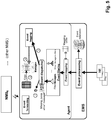
- the event dispatcher suspends the event logging mode for the manager x (step 1 in Fig. 4 ) and initializes the event forwarding mode for the manager x (step 2 in Fig. 4 ).
- Fig. 4 shows a schematic diagram illustrating an event forwarding mode of the agent apparatus according to an implementation example of the invention.
- the agent maintains an event buffer (ring buffer principle), in which each event report to be forwarded to at least one of connected managers (i.e. which successfully passed the event filtering) is temporarily queued.
- the event buffer may be implemented by the temporary memory means 15.
- a buffer index For each connected manager, a buffer index indicates a buffer position of a last forwarded event report. Another index (used for all managers) points to a buffer position of a newest (still to be forwarded) buffered event report.
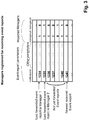
- a buffer entry structure contains (in addition to event report parameters) also an identification of the managers (manager x Id) for which the current event report passed the manager-specific filter criteria, as illustrated in Fig. 3 .
- Each buffer entry means that the current event report successfully passed the filter criteria for at least one of the connected managers.
- a dedicated value of the parameter manager x Id indicates whether the event report is "relevant” (i.e. it passed the filter criteria and shall be forwarded) for the current manager (e.g. value 1) or "not relevant” (e.g. value 0).
- the size of the ring buffer is dimensioned in such a way that all event reports to be forwarded between two consecutive "keep alive" manager messages can be queued so that - independently of the time when the manager-agent communication (within the interval defined by an alivePeriod value) may break - no information is lost.
- the agent is able to recognize that both, the manager itself (e.g. NMS x in Fig. 4 ) as well as the manager-agent interface, are working correctly and the following steps are processed:
- the functions of the event forwarding component may be implemented by the communication unit 11 and the control unit 13 of Fig. 2 .
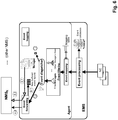
- Fig. 5 shows a schematic diagram illustrating an event logging mode of the agent apparatus according to the implementation example.
- a missing "keep alive" message from the manager x leads to a time-out signal in the agent, which triggers the following event dispatcher activities:
- Fig. 6 shows a schematic diagram illustrating re-establishment of the manager-agent communication according to the implementation example.
- manager-specific logs or common log which solution (i.e. manager-specific logs or common log) is preferably implemented depends on the agent's overall performance and the number of connected managers.
- the event synchronization technique according to the present invention is less complex, needs no explicit time synchronization operation between the agent and the connected managing devices and can be implemented independently of a particular protocol used in the management system (e.g. CORBA, SOAP).
- a particular protocol used in the management system e.g. CORBA, SOAP.
- "unsent" events are transferred from the agent to the manager after a connection interruption and consecutive connection setup.
- the event synchronization technique of the invention about a factor 10 less data volume needs to be transferred in comparison to a full synchronization. Consequently, significantly less time for synchronization of management information is needed.
- the suggested technique is not only applicable within telecommunication domain, but can be applied also in other domains, like power distribution networks or long-distance heating networks.
Landscapes
- Engineering & Computer Science (AREA)
- Computer Networks & Wireless Communication (AREA)
- Signal Processing (AREA)
- Health & Medical Sciences (AREA)
- Cardiology (AREA)
- General Health & Medical Sciences (AREA)
- Computer And Data Communications (AREA)
- Data Exchanges In Wide-Area Networks (AREA)
Claims (19)
- Agentenvorrichtung (10) zur Kommunikation mit einem Verwaltungssystem, umfassend:eine Kommunikationseinheit (11), die dafür ausgelegt ist, eine periodisch ausgesendete Keepalive-Nachricht von dem Verwaltungssystem zu empfangen und Ereignisberichte weiterzuleiten;eine Ereignisverarbeitungseinheit (12), die dafür ausgelegt ist, einen Betriebsmodus der Agentenvorrichtung (10) zwischen einem Ereignisweiterleitungsmodus und einem Ereignisprotokollierungsmodus umzuschalten; undeine Steuereinheit (13), die dafür ausgelegt ist, die Agentenvorrichtung (10) zu steuern,ein temporäres Speichermittel (15) und ein persistentes (14) Speichermittel, wobeiin dem Ereignisweiterleitungsmodus die Steuereinheit (13) dafür ausgelegt ist, zu bewirken, dass die Kommunikationseinheit (11) die Ereignisberichte in das temporäre Speichermittel (15) einfügt und anschließend die Ereignisberichte an das Verwaltungssystem weiterleitet, undin dem Ereignisprotokollierungsmodus die Steuereinheit (13) dafür ausgelegt ist, die Ereignisberichte in einem persistenten Speichermittel (14) zu speichern, und wobeidie Ereignisverarbeitungseinheit (12) dafür ausgelegt ist, den Betriebsmodus der Agentenvorrichtung von dem Ereignisweiterleitungsmodus in den Ereignisprotokollierungsmodus umzuschalten, wenn die Kommunikationseinheit (11) die spezifische Keepalive-Nachricht nicht innerhalb eines vorgegebenen Zeitraums empfängt, unddie Ereignisverarbeitungseinheit (12) dafür ausgelegt ist, den Betriebsmodus der Agentenvorrichtung von dem Ereignisprotokollierungsmodus in den Ereignisweiterleitungsmodus umzuschalten, wenn die Kommunikationseinheit (11) die spezifische Keepalive-Nachricht empfängt,wobei beide Betriebsmodi dieselben vorgegebenen verwaltungssystemspezifischen Filterkriterien hinsichtlich der Auswahl der Ereignisberichte nutzen, und wobei die Kriterien von dem Verwaltungssystem in einer Abonnement-Anforderung zu einer Startzeit der Verwalter-Agenten-Kommunikation empfangen werden oder in der Agentenvorrichtung (10) lokal voreingestellt sind.
- Agentenvorrichtung (10) nach Anspruch 1, wobei jeder der Ereignisberichte an mindestens eine von einer Mehrzahl von Verwaltungsvorrichtungen des Verwaltungssystems weiterzuleiten ist, wobei die Ereignisverarbeitungseinheit (12) dafür ausgelegt ist, den Betriebsmodus der Agentenvorrichtung (10) von dem Ereignisweiterleitungsmodus in den Ereignisprotokollierungsmodus für eine Verwaltungsvorrichtung der Mehrzahl von Verwaltungsvorrichtungen umzuschalten, wenn die Kommunikationseinheit (11) die spezifische Keepalive-Nachricht von der Verwaltungsvorrichtung nicht innerhalb eines vorgegebenen Zeitraums für die Verwaltungsvorrichtung empfängt, und
die Ereignisverarbeitungseinheit (12) dafür ausgelegt ist, den Betriebsmodus der Agentenvorrichtung (10) für die Verwaltungsvorrichtung von dem Ereignisprotokollierungsmodus in den Ereignisweiterleitungsmodus umzuschalten, wenn die Kommunikationseinheit (11) die spezifische Keepalive-Nachricht von der Verwaltungsvorrichtung empfängt, und wobei
in dem Ereignisweiterleitungsmodus für die Verwaltungsvorrichtung die Steuereinheit (13) dafür ausgelegt ist, zu bewirken, dass die Kommunikationseinheit (11) die Ereignisberichte, die an die Verwaltungsvorrichtung weiterzuleiten sind, an die Verwaltungsvorrichtung weiterleitet, und
in dem Ereignisweiterleitungsmodus für die Verwaltungsvorrichtung die Steuereinheit (13) dafür ausgelegt ist, die Ereignisberichte, die an die Verwaltungsvorrichtung weiterzuleiten sind, in dem persistenten Speichermittel (14) zu speichern. - Agentenvorrichtung (10) nach Anspruch 2, wobei
in dem Ereignisweiterleitungsmodus für die Verwaltungsvorrichtung die Steuereinheit (13) dafür ausgelegt ist, die Ereignisberichte, die an die Verwaltungsvorrichtung weiterzuleiten sind, in dem temporären Speichermittel (15) zu speichern, und die Kommunikationseinheit (11) dafür ausgelegt ist, die Ereignisberichte, die temporär in dem temporären Speichermittel (15) gespeichert sind, an die Verwaltungsvorrichtung weiterzuleiten, und
wenn die Ereignisverarbeitungseinheit (12) den Betriebsmodus der Agentenvorrichtung (10) für die Verwaltungsvorrichtung von dem Ereignisweiterleitungsmodus in den Ereignisprotokollierungsmodus umschaltet, die Steuereinheit (13) dafür ausgelegt ist, die Ereignisberichte, die an die Verwaltungsvorrichtung weiterzuleiten sind, die temporär in dem temporären Speichermittel (15) gespeichert sind, in das persistente Speichermittel (14) zu verschieben. - Agentenvorrichtung (10) nach Anspruch 3, wobei, wenn die Ereignisverarbeitungseinheit (12) den Betriebsmodus der Agentenvorrichtung (10) für die Verwaltungsvorrichtung von dem Ereignisprotokollierungsmodus in den Ereignisweiterleitungsmodus umschaltet, die Steuereinheit (13) dafür ausgelegt ist, zu bewirken, dass die Kommunikationseinheit (11) die Ereignisberichte, die an die Verwaltungsvorrichtung weiterzuleiten sind, die in dem persistenten Speichermittel (14) gespeichert sind, an die Verwaltungsvorrichtung weiterleitet.
- Agentenvorrichtung (10) nach einem der Ansprüche 2 bis 4, wobei das temporäre Speichermittel und das persistente Speichermittel jeweils einen gemeinsamen Speicher für die Mehrzahl von Verwaltungsvorrichtungen umfassen und beim Speichern der Ereignisberichte in dem temporären Speichermittel (15) oder dem persistenten Speichermittel (14) die Steuereinheit (13) dafür ausgelegt ist, die Ereignisberichte zusammen mit mindestens einem von einer Mehrzahl von Indikatoren zu speichern, die angeben, an welche der Mehrzahl von Verwaltungsvorrichtungen die Ereignisberichte weiterzuleiten sind, wobei jeder der Mehrzahl von Indikatoren mit einer der Mehrzahl von Verwaltungsvorrichtungen in Verbindung steht.
- Agentenvorrichtung (10) nach Anspruch 5, wobei die Steuereinheit (13) dafür ausgelegt ist, den Indikator der Verwaltungsvorrichtung aus dem temporären Speichermittel oder dem persistenten Speichermittel (14) zu löschen, nachdem sie die Weiterleitung der Ereignisberichte bewirkt hat, die durch die Kommunikationseinheit (11) an die Verwaltungsvorrichtung weiterzuleiten sind, und die Ereignisberichte, die an die Verwaltungsvorrichtung weiterzuleiten sind, aus dem temporären Speichermittel oder dem persistenten Speichermittel zu löschen, falls kein Indikator für eine andere Verwaltungsvorrichtung zusammen mit den Ereignisberichten in dem temporären Speichermittel oder dem persistenten Speichermittel gespeichert ist.
- Agentenvorrichtung (10) nach einem der Ansprüche 2 bis 4, wobei das temporäre Speichermittel einen gemeinsamen Speicher für die Mehrzahl von Verwaltungsvorrichtungen umfasst und beim Speichern der Ereignisberichte in dem temporären Speichermittel (15) die Steuereinheit (13) dafür ausgelegt ist, die Ereignisberichte zusammen mit mindestens einem von einer Mehrzahl von Indikatoren zu speichern, die angeben, an welche der Mehrzahl von Verwaltungsvorrichtungen die Ereignisberichte weiterzuleiten sind, wobei jeder der Mehrzahl von Indikatoren mit einer der Mehrzahl von Verwaltungsvorrichtungen in Verbindung steht, und
wobei das persistente Speichermittel (14) separate Speicher für jede der Mehrzahl von Verwaltungsvorrichtungen umfasst. - Agentenvorrichtung (10) nach Anspruch 7, wobei die Steuereinheit (13) dafür ausgelegt ist, die Ereignisberichte, die an die Verwaltungsvorrichtung weiterzuleiten sind, aus dem persistenten Speichermittel (14) zu löschen, nachdem sie deren Weiterleitung durch die Kommunikationseinheit (11) bewirkt hat, und
wobei die Steuereinheit (13) dafür ausgelegt ist, den Indikator der Verwaltungsvorrichtung aus dem temporären Speichermittel zu löschen, nachdem sie die Weiterleitung der Ereignisberichte bewirkt hat, die durch die Kommunikationseinheit (11) an die Verwaltungsvorrichtung weiterzuleiten sind, und die Ereignisberichte, die an die Verwaltungsvorrichtung weiterzuleiten sind, aus dem temporären Speichermittel zu löschen, falls kein Indikator für eine andere Verwaltungsvorrichtung zusammen mit den Ereignisberichten in dem temporären Speichermittel gespeichert ist. - Agentenvorrichtung (10) nach einem der Ansprüche 2 bis 8, wobei in dem Ereignisweiterleitungsmodus die Steuereinheit (13) dafür ausgelegt ist, zu bewirken, dass die Kommunikationseinheit (11) die Ereignisberichte an die Verwaltungsvorrichtung weiterleitet, falls eine Anforderung für den Empfang von Ereignisberichten zuvor durch die Agentenvorrichtung (10) von der Verwaltungsvorrichtung empfangen wurde.
- Verfahren zur Steuerung einer Agentenvorrichtung (10) zur Kommunikation mit einem Verwaltungssystem, die eine periodisch ausgesendete Keepalive-Nachricht von dem Verwaltungssystem empfängt, und zur Weiterleitung von Ereignisberichten, wobei ein Betriebsmodus der Agentenvorrichtung einen Ereignisweiterleitungsmodus und einen Ereignisprotokollierungsmodus umfasst, das Verfahren umfassend:Empfangen einer Abonnement-Anforderung, die Auswahlkriterien erforderlicher Ereignisinformationen enthält, von dem Verwaltungssystem zu einer Startzeit der Verwalter-Agenten-Kommunikation, oder lokales Voreinstellen der Auswahlkriterien in der Agentenvorrichtung (10);in dem Ereignisweiterleitungsmodus, Steuern der Agentenvorrichtung, um die Ereignisberichte in ein temporäres Speichermittel (15) einzufügen und anschließend die Ereignisberichte an das Verwaltungssystem weiterzuleiten,in dem Ereignisprotokollierungsmodus, Speichern der Ereignisberichte in einem persistenten Speichermittel (14),Umschalten des Betriebsmodus der Agentenvorrichtung (10) von dem Ereignisweiterleitungsmodus in den Ereignisprotokollierungsmodus, wenn die Agentenvorrichtung die spezifische Keepalive-Nachricht nicht innerhalb eines vorgegebenen Zeitraums empfängt, undUmschalten des Betriebsmodus der Agentenvorrichtung (10) von dem Ereignisprotokollierungsmodus in den Ereignisweiterleitungsmodus, wenn die Agentenvorrichtung die spezifische Keepalive-Nachricht empfängt, wobei beide Betriebsmodi dieselben vorgegebenen verwaltungssystemspezifischen Filterkriterien hinsichtlich der Auswahl von Ereignisberichten nutzen.
- Verfahren nach Anspruch 10, wobei jeder der Ereignisberichte an mindestens eine von einer Mehrzahl von Verwaltungsvorrichtungen des Verwaltungssystems weiterzuleiten ist, das Verfahren umfassend:Umschalten des Betriebsmodus der Agentenvorrichtung von dem Ereignisweiterleitungsmodus in den Ereignisprotokollierungsmodus für eine Verwaltungsvorrichtung der Mehrzahl von Verwaltungsvorrichtungen, wenn die Agentenvorrichtung die spezifische Keepalive-Nachricht von der Verwaltungsvorrichtung nicht innerhalb eines vorgegebenen Zeitraums für die Verwaltungsvorrichtung empfängt, undUmschalten des Betriebsmodus der Agentenvorrichtung für die Verwaltungsvorrichtung von dem Ereignisprotokollierungsmodus in den Ereignisweiterleitungsmodus, wenn die Agentenvorrichtung die spezifische Keepalive-Nachricht von der Verwaltungsvorrichtung empfängt,in dem Ereignisweiterleitungsmodus für die Verwaltungsvorrichtung, Bewirken, dass die Agentenvorrichtung die Ereignisberichte, die an die Verwaltungsvorrichtung weiterzuleiten sind, an die Verwaltungsvorrichtung weiterleitet, undin dem Ereignisweiterleitungsmodus für die Verwaltungsvorrichtung, Speichern der Ereignisberichte, die an die Verwaltungsvorrichtung weiterzuleiten sind, in dem persistenten Speichermittel.
- Verfahren nach Anspruch 11, umfassend:in dem Ereignisweiterleitungsmodus für die Verwaltungsvorrichtung, temporäres Speichern der Ereignisberichte, die an die Verwaltungsvorrichtung weiterzuleiten sind, in einem temporären Speichermittel (15), wobei die Agentenvorrichtung die Ereignisberichte, die temporär in dem temporären Speichermittel gespeichert sind, an die Verwaltungsvorrichtung weiterleitet, undwenn der Betriebsmodus der Agentenvorrichtung für die Verwaltungsvorrichtung von dem Ereignisweiterleitungsmodus in den Ereignisprotokollierungsmodus umgeschaltet ist, Verschieben der Ereignisberichte, die an die Verwaltungsvorrichtung weiterzuleiten sind, die temporär in dem temporären Speichermittel gespeichert sind, in das persistente Speichermittel.
- Verfahren nach Anspruch 12, umfassend:
wenn der Betriebsmodus der Agentenvorrichtung für die Verwaltungsvorrichtung von dem Ereignisprotokollierungsmodus in den Ereignisweiterleitungsmodus umgeschaltet ist, Bewirken, dass die Agentenvorrichtung die Ereignisberichte, die an die Verwaltungsvorrichtung weiterzuleiten sind, die in dem persistenten Speichermittel gespeichert sind, an die Verwaltungsvorrichtung weiterleitet. - Verfahren nach einem der Ansprüche 11 bis 13, wobei das temporäre Speichermittel und das persistente Speichermittel jeweils einen gemeinsamen Speicher für die Mehrzahl von Verwaltungsvorrichtungen umfassen, das Verfahren umfassend:
beim Speichern der Ereignisberichte in dem temporären Speichermittel oder dem persistenten Speichermittel, Speichern der Ereignisberichte zusammen mit mindestens einem von einer Mehrzahl von Indikatoren, die angeben, an welche der Mehrzahl von Verwaltungsvorrichtungen die Ereignisberichte weiterzuleiten sind, wobei jeder der Mehrzahl von Indikatoren mit einem von der Mehrzahl von Verwaltungsvorrichtungen in Verbindung steht. - Verfahren nach Anspruch 14, umfassend:
Löschen des Indikators der Verwaltungsvorrichtung aus dem temporären Speichermittel oder dem persistenten Speichermittel (14) nach dem Bewirken der Weiterleitung der Ereignisberichte, die durch die Agentenvorrichtung an die Verwaltungsvorrichtung weiterzuleiten sind, und Löschen der Ereignisberichte, die an die Verwaltungsvorrichtung weiterzuleiten sind, aus dem temporären Speichermittel oder dem persistenten Speichermittel, falls kein Indikator für eine andere Verwaltungsvorrichtung zusammen mit den Ereignisberichten in dem temporären Speichermittel oder dem persistenten Speichermittel gespeichert ist. - Verfahren nach einem der Ansprüche 11 bis 13, wobei das temporäre Speichermittel einen gemeinsamen Speicher für die Mehrzahl von Verwaltungsvorrichtungen umfasst, das Verfahren umfassend:beim Speichern der Ereignisberichte in dem temporären Speichermittel (15), Speichern der Ereignisberichte zusammen mit mindestens einem von einer Mehrzahl von Indikatoren, die angeben, an welche der Mehrzahl von Verwaltungsvorrichtungen die Ereignisberichte weiterzuleiten sind, wobei jeder der Mehrzahl von Indikatoren mit einem von der Mehrzahl von Verwaltungsvorrichtungen in Verbindung steht, undwobei das persistente Speichermittel (14) separate Speicher für jede der Mehrzahl von Verwaltungsvorrichtungen umfasst.
- Verfahren nach Anspruch 16, umfassend:Löschen der Ereignisberichte, die an die Verwaltungsvorrichtung weiterzuleiten sind, aus dem persistenten Speichermittel, nach dem Bewirken ihrer Weiterleitung durch die Agentenvorrichtung, undLöschen des Indikators der Verwaltungsvorrichtung aus dem temporären Speichermittel nach dem Bewirken der Weiterleitung der Ereignisberichte, die durch die Agentenvorrichtung an die Verwaltungsvorrichtung weiterzuleiten sind, und Löschen der Ereignisberichte, die an die Verwaltungsvorrichtung weiterzuleiten sind, aus dem temporären Speichermittel, falls kein Indikator für eine andere Verwaltungsvorrichtung zusammen mit den Ereignisberichten in dem temporären Speichermittel gespeichert ist.
- Verfahren nach einem der Ansprüche 11 bis 17, umfassend:
in dem Ereignisweiterleitungsmodus, Bewirken, dass die Agentenvorrichtung die Ereignisberichte an die Verwaltungsvorrichtung weiterleitet, falls eine Anforderung für den Empfang von Ereignisberichten zuvor durch die Agentenvorrichtung von der Verwaltungsvorrichtung empfangen wurde. - Computerprogramm, das geeignet ist, die Verfahren nach den Ansprüchen 10 bis 18 durchzuführen.
Priority Applications (2)
| Application Number | Priority Date | Filing Date | Title |
|---|---|---|---|
| EP14171445.1A EP2953295B1 (de) | 2014-06-06 | 2014-06-06 | Automatische Delta-Ereignissynchronisation in mehreren Manager-Agentenumgebungen |
| CN201510429856.5A CN105162829B (zh) | 2014-06-06 | 2015-06-05 | 多个管理器-代理环境中的自动增量事件同步 |
Applications Claiming Priority (1)
| Application Number | Priority Date | Filing Date | Title |
|---|---|---|---|
| EP14171445.1A EP2953295B1 (de) | 2014-06-06 | 2014-06-06 | Automatische Delta-Ereignissynchronisation in mehreren Manager-Agentenumgebungen |
Publications (2)
| Publication Number | Publication Date |
|---|---|
| EP2953295A1 EP2953295A1 (de) | 2015-12-09 |
| EP2953295B1 true EP2953295B1 (de) | 2019-05-15 |
Family
ID=50942057
Family Applications (1)
| Application Number | Title | Priority Date | Filing Date |
|---|---|---|---|
| EP14171445.1A Not-in-force EP2953295B1 (de) | 2014-06-06 | 2014-06-06 | Automatische Delta-Ereignissynchronisation in mehreren Manager-Agentenumgebungen |
Country Status (2)
| Country | Link |
|---|---|
| EP (1) | EP2953295B1 (de) |
| CN (1) | CN105162829B (de) |
Families Citing this family (5)
| Publication number | Priority date | Publication date | Assignee | Title |
|---|---|---|---|---|
| CN106656584B (zh) * | 2016-12-06 | 2020-09-04 | 南京南瑞继保电气有限公司 | 一种分布式系统无效节点判定方法 |
| DE112016007522T5 (de) * | 2016-12-15 | 2019-10-10 | The Charles Stark Draper Laboratory, Inc. | Fehlertolerante Betriebsgruppe bei einem verteilten Netzwerk |
| US10356203B2 (en) | 2016-12-15 | 2019-07-16 | The Charles Stark Draper Laboratory, Inc. | Fault-tolerant operational group on a distributed network |
| US10326643B2 (en) | 2016-12-27 | 2019-06-18 | The Charles Stark Draper Laboratory, Inc. | Self-configuring fault-tolerant operational group |
| CN108366000A (zh) * | 2018-02-28 | 2018-08-03 | 新华三技术有限公司 | 保活报文交互方法、装置、通信设备及通信系统 |
Family Cites Families (3)
| Publication number | Priority date | Publication date | Assignee | Title |
|---|---|---|---|---|
| US7188273B2 (en) * | 2003-11-24 | 2007-03-06 | Tsx Inc. | System and method for failover |
| EP2612470B1 (de) * | 2010-09-03 | 2020-07-22 | TIBCO Software Inc. | Adaptive datenübertragung |
| US8578049B2 (en) * | 2010-10-04 | 2013-11-05 | Futurewei Technologies, Inc. | Content router forwarding plane architecture |
-
2014
- 2014-06-06 EP EP14171445.1A patent/EP2953295B1/de not_active Not-in-force
-
2015
- 2015-06-05 CN CN201510429856.5A patent/CN105162829B/zh not_active Expired - Fee Related
Non-Patent Citations (1)
| Title |
|---|
| None * |
Also Published As
| Publication number | Publication date |
|---|---|
| EP2953295A1 (de) | 2015-12-09 |
| CN105162829B (zh) | 2019-08-16 |
| CN105162829A (zh) | 2015-12-16 |
Similar Documents
| Publication | Publication Date | Title |
|---|---|---|
| EP2953295B1 (de) | Automatische Delta-Ereignissynchronisation in mehreren Manager-Agentenumgebungen | |
| US20180191561A1 (en) | Network element upgrade method and device | |
| WO2019029636A1 (zh) | 一种网络实例管理方法及相关设备 | |
| US10333724B2 (en) | Method and system for low-overhead latency profiling | |
| CN110445856A (zh) | 一种支持多协议接入的物联网通讯组件管控系统及方法 | |
| CN101447895A (zh) | 同步网管与网元的配置的方法和装置 | |
| CN102447582A (zh) | 资源同步方法和装置 | |
| CN102820993A (zh) | 网络资源监控系统和网络资源监控方法 | |
| US20230164596A1 (en) | Alarm log management system and method during failure in o-ran | |
| EP2590363B1 (de) | Verfahren und system zum sammeln von leistungsstatistikdaten | |
| CN107690775A (zh) | 用于从和向一个或多个优先级化自动配置服务器转发优先级化业务的负载均衡服务器 | |
| CN101409654B (zh) | 一种网络管理系统中处理snmp信息的方法 | |
| WO2018103665A1 (zh) | 基于l2tp的设备管理方法、设备及系统 | |
| CN101938369B (zh) | 综合网管接入管理系统、管理方法及应用的网络管理系统 | |
| CN115835275A (zh) | 一种5g cpe故障诊断的方法及装置 | |
| EP4531362A1 (de) | Mechanismus zur zuverlässigen und optimalen erzielung eines aktuellen netzwerkinventars | |
| CN105592485A (zh) | 一种基于snmp网管协议实时采集并处理消息的方法 | |
| CN103957127B (zh) | 异构厂家传输网络接口适配方法 | |
| CN113824594A (zh) | 一种报文发送方法及设备 | |
| CN104468158A (zh) | 一种节点间状态通告的方法和设备 | |
| WO2023116468A1 (zh) | 一种通信方法及通信装置 | |
| CN114268568B (zh) | 一种网络流量监控方法、装置及设备 | |
| CN119814523B (zh) | 一种数据传输告警方法、装置、设备及存储介质 | |
| CN115174415B (zh) | 一种虚拟隧道端点的信息发布控制方法、装置及设备 | |
| CN101557436B (zh) | 一种资源监控方法及其装置 |
Legal Events
| Date | Code | Title | Description |
|---|---|---|---|
| PUAI | Public reference made under article 153(3) epc to a published international application that has entered the european phase |
Free format text: ORIGINAL CODE: 0009012 |
|
| AK | Designated contracting states |
Kind code of ref document: A1 Designated state(s): AL AT BE BG CH CY CZ DE DK EE ES FI FR GB GR HR HU IE IS IT LI LT LU LV MC MK MT NL NO PL PT RO RS SE SI SK SM TR |
|
| AX | Request for extension of the european patent |
Extension state: BA ME |
|
| 17P | Request for examination filed |
Effective date: 20160609 |
|
| RBV | Designated contracting states (corrected) |
Designated state(s): AL AT BE BG CH CY CZ DE DK EE ES FI FR GB GR HR HU IE IS IT LI LT LU LV MC MK MT NL NO PL PT RO RS SE SI SK SM TR |
|
| STAA | Information on the status of an ep patent application or granted ep patent |
Free format text: STATUS: EXAMINATION IS IN PROGRESS |
|
| 17Q | First examination report despatched |
Effective date: 20180418 |
|
| REG | Reference to a national code |
Ref country code: DE Ref legal event code: R079 Ref document number: 602014046700 Country of ref document: DE Free format text: PREVIOUS MAIN CLASS: H04L0012260000 Ipc: H04L0012240000 |
|
| RIC1 | Information provided on ipc code assigned before grant |
Ipc: H04L 12/26 20060101ALI20181030BHEP Ipc: H04L 12/24 20060101AFI20181030BHEP |
|
| GRAP | Despatch of communication of intention to grant a patent |
Free format text: ORIGINAL CODE: EPIDOSNIGR1 |
|
| STAA | Information on the status of an ep patent application or granted ep patent |
Free format text: STATUS: GRANT OF PATENT IS INTENDED |
|
| INTG | Intention to grant announced |
Effective date: 20181214 |
|
| GRAS | Grant fee paid |
Free format text: ORIGINAL CODE: EPIDOSNIGR3 |
|
| GRAA | (expected) grant |
Free format text: ORIGINAL CODE: 0009210 |
|
| STAA | Information on the status of an ep patent application or granted ep patent |
Free format text: STATUS: THE PATENT HAS BEEN GRANTED |
|
| AK | Designated contracting states |
Kind code of ref document: B1 Designated state(s): AL AT BE BG CH CY CZ DE DK EE ES FI FR GB GR HR HU IE IS IT LI LT LU LV MC MK MT NL NO PL PT RO RS SE SI SK SM TR |
|
| REG | Reference to a national code |
Ref country code: CH Ref legal event code: EP |
|
| REG | Reference to a national code |
Ref country code: DE Ref legal event code: R096 Ref document number: 602014046700 Country of ref document: DE |
|
| REG | Reference to a national code |
Ref country code: IE Ref legal event code: FG4D |
|
| RAP2 | Party data changed (patent owner data changed or rights of a patent transferred) |
Owner name: NOKIA SOLUTIONS AND NETWORKS OY |
|
| REG | Reference to a national code |
Ref country code: NL Ref legal event code: MP Effective date: 20190515 |
|
| REG | Reference to a national code |
Ref country code: LT Ref legal event code: MG4D |
|
| PG25 | Lapsed in a contracting state [announced via postgrant information from national office to epo] |
Ref country code: AL Free format text: LAPSE BECAUSE OF FAILURE TO SUBMIT A TRANSLATION OF THE DESCRIPTION OR TO PAY THE FEE WITHIN THE PRESCRIBED TIME-LIMIT Effective date: 20190515 Ref country code: ES Free format text: LAPSE BECAUSE OF FAILURE TO SUBMIT A TRANSLATION OF THE DESCRIPTION OR TO PAY THE FEE WITHIN THE PRESCRIBED TIME-LIMIT Effective date: 20190515 Ref country code: NL Free format text: LAPSE BECAUSE OF FAILURE TO SUBMIT A TRANSLATION OF THE DESCRIPTION OR TO PAY THE FEE WITHIN THE PRESCRIBED TIME-LIMIT Effective date: 20190515 Ref country code: LT Free format text: LAPSE BECAUSE OF FAILURE TO SUBMIT A TRANSLATION OF THE DESCRIPTION OR TO PAY THE FEE WITHIN THE PRESCRIBED TIME-LIMIT Effective date: 20190515 Ref country code: FI Free format text: LAPSE BECAUSE OF FAILURE TO SUBMIT A TRANSLATION OF THE DESCRIPTION OR TO PAY THE FEE WITHIN THE PRESCRIBED TIME-LIMIT Effective date: 20190515 Ref country code: SE Free format text: LAPSE BECAUSE OF FAILURE TO SUBMIT A TRANSLATION OF THE DESCRIPTION OR TO PAY THE FEE WITHIN THE PRESCRIBED TIME-LIMIT Effective date: 20190515 Ref country code: PT Free format text: LAPSE BECAUSE OF FAILURE TO SUBMIT A TRANSLATION OF THE DESCRIPTION OR TO PAY THE FEE WITHIN THE PRESCRIBED TIME-LIMIT Effective date: 20190915 Ref country code: NO Free format text: LAPSE BECAUSE OF FAILURE TO SUBMIT A TRANSLATION OF THE DESCRIPTION OR TO PAY THE FEE WITHIN THE PRESCRIBED TIME-LIMIT Effective date: 20190815 Ref country code: HR Free format text: LAPSE BECAUSE OF FAILURE TO SUBMIT A TRANSLATION OF THE DESCRIPTION OR TO PAY THE FEE WITHIN THE PRESCRIBED TIME-LIMIT Effective date: 20190515 |
|
| PG25 | Lapsed in a contracting state [announced via postgrant information from national office to epo] |
Ref country code: LV Free format text: LAPSE BECAUSE OF FAILURE TO SUBMIT A TRANSLATION OF THE DESCRIPTION OR TO PAY THE FEE WITHIN THE PRESCRIBED TIME-LIMIT Effective date: 20190515 Ref country code: GR Free format text: LAPSE BECAUSE OF FAILURE TO SUBMIT A TRANSLATION OF THE DESCRIPTION OR TO PAY THE FEE WITHIN THE PRESCRIBED TIME-LIMIT Effective date: 20190816 Ref country code: BG Free format text: LAPSE BECAUSE OF FAILURE TO SUBMIT A TRANSLATION OF THE DESCRIPTION OR TO PAY THE FEE WITHIN THE PRESCRIBED TIME-LIMIT Effective date: 20190815 Ref country code: RS Free format text: LAPSE BECAUSE OF FAILURE TO SUBMIT A TRANSLATION OF THE DESCRIPTION OR TO PAY THE FEE WITHIN THE PRESCRIBED TIME-LIMIT Effective date: 20190515 |
|
| REG | Reference to a national code |
Ref country code: AT Ref legal event code: MK05 Ref document number: 1134696 Country of ref document: AT Kind code of ref document: T Effective date: 20190515 |
|
| PG25 | Lapsed in a contracting state [announced via postgrant information from national office to epo] |
Ref country code: AT Free format text: LAPSE BECAUSE OF FAILURE TO SUBMIT A TRANSLATION OF THE DESCRIPTION OR TO PAY THE FEE WITHIN THE PRESCRIBED TIME-LIMIT Effective date: 20190515 Ref country code: RO Free format text: LAPSE BECAUSE OF FAILURE TO SUBMIT A TRANSLATION OF THE DESCRIPTION OR TO PAY THE FEE WITHIN THE PRESCRIBED TIME-LIMIT Effective date: 20190515 Ref country code: CZ Free format text: LAPSE BECAUSE OF FAILURE TO SUBMIT A TRANSLATION OF THE DESCRIPTION OR TO PAY THE FEE WITHIN THE PRESCRIBED TIME-LIMIT Effective date: 20190515 Ref country code: EE Free format text: LAPSE BECAUSE OF FAILURE TO SUBMIT A TRANSLATION OF THE DESCRIPTION OR TO PAY THE FEE WITHIN THE PRESCRIBED TIME-LIMIT Effective date: 20190515 Ref country code: DK Free format text: LAPSE BECAUSE OF FAILURE TO SUBMIT A TRANSLATION OF THE DESCRIPTION OR TO PAY THE FEE WITHIN THE PRESCRIBED TIME-LIMIT Effective date: 20190515 Ref country code: SK Free format text: LAPSE BECAUSE OF FAILURE TO SUBMIT A TRANSLATION OF THE DESCRIPTION OR TO PAY THE FEE WITHIN THE PRESCRIBED TIME-LIMIT Effective date: 20190515 |
|
| REG | Reference to a national code |
Ref country code: CH Ref legal event code: PL |
|
| REG | Reference to a national code |
Ref country code: DE Ref legal event code: R097 Ref document number: 602014046700 Country of ref document: DE |
|
| PG25 | Lapsed in a contracting state [announced via postgrant information from national office to epo] |
Ref country code: IT Free format text: LAPSE BECAUSE OF FAILURE TO SUBMIT A TRANSLATION OF THE DESCRIPTION OR TO PAY THE FEE WITHIN THE PRESCRIBED TIME-LIMIT Effective date: 20190515 Ref country code: SM Free format text: LAPSE BECAUSE OF FAILURE TO SUBMIT A TRANSLATION OF THE DESCRIPTION OR TO PAY THE FEE WITHIN THE PRESCRIBED TIME-LIMIT Effective date: 20190515 Ref country code: MC Free format text: LAPSE BECAUSE OF FAILURE TO SUBMIT A TRANSLATION OF THE DESCRIPTION OR TO PAY THE FEE WITHIN THE PRESCRIBED TIME-LIMIT Effective date: 20190515 |
|
| PLBE | No opposition filed within time limit |
Free format text: ORIGINAL CODE: 0009261 |
|
| STAA | Information on the status of an ep patent application or granted ep patent |
Free format text: STATUS: NO OPPOSITION FILED WITHIN TIME LIMIT |
|
| REG | Reference to a national code |
Ref country code: BE Ref legal event code: MM Effective date: 20190630 |
|
| PG25 | Lapsed in a contracting state [announced via postgrant information from national office to epo] |
Ref country code: TR Free format text: LAPSE BECAUSE OF FAILURE TO SUBMIT A TRANSLATION OF THE DESCRIPTION OR TO PAY THE FEE WITHIN THE PRESCRIBED TIME-LIMIT Effective date: 20190515 |
|
| 26N | No opposition filed |
Effective date: 20200218 |
|
| PG25 | Lapsed in a contracting state [announced via postgrant information from national office to epo] |
Ref country code: PL Free format text: LAPSE BECAUSE OF FAILURE TO SUBMIT A TRANSLATION OF THE DESCRIPTION OR TO PAY THE FEE WITHIN THE PRESCRIBED TIME-LIMIT Effective date: 20190515 Ref country code: IE Free format text: LAPSE BECAUSE OF NON-PAYMENT OF DUE FEES Effective date: 20190606 |
|
| PG25 | Lapsed in a contracting state [announced via postgrant information from national office to epo] |
Ref country code: LI Free format text: LAPSE BECAUSE OF NON-PAYMENT OF DUE FEES Effective date: 20190630 Ref country code: SI Free format text: LAPSE BECAUSE OF FAILURE TO SUBMIT A TRANSLATION OF THE DESCRIPTION OR TO PAY THE FEE WITHIN THE PRESCRIBED TIME-LIMIT Effective date: 20190515 Ref country code: LU Free format text: LAPSE BECAUSE OF NON-PAYMENT OF DUE FEES Effective date: 20190606 Ref country code: BE Free format text: LAPSE BECAUSE OF NON-PAYMENT OF DUE FEES Effective date: 20190630 Ref country code: CH Free format text: LAPSE BECAUSE OF NON-PAYMENT OF DUE FEES Effective date: 20190630 |
|
| PG25 | Lapsed in a contracting state [announced via postgrant information from national office to epo] |
Ref country code: CY Free format text: LAPSE BECAUSE OF FAILURE TO SUBMIT A TRANSLATION OF THE DESCRIPTION OR TO PAY THE FEE WITHIN THE PRESCRIBED TIME-LIMIT Effective date: 20190515 |
|
| PG25 | Lapsed in a contracting state [announced via postgrant information from national office to epo] |
Ref country code: IS Free format text: LAPSE BECAUSE OF FAILURE TO SUBMIT A TRANSLATION OF THE DESCRIPTION OR TO PAY THE FEE WITHIN THE PRESCRIBED TIME-LIMIT Effective date: 20190915 |
|
| PG25 | Lapsed in a contracting state [announced via postgrant information from national office to epo] |
Ref country code: HU Free format text: LAPSE BECAUSE OF FAILURE TO SUBMIT A TRANSLATION OF THE DESCRIPTION OR TO PAY THE FEE WITHIN THE PRESCRIBED TIME-LIMIT; INVALID AB INITIO Effective date: 20140606 Ref country code: MT Free format text: LAPSE BECAUSE OF FAILURE TO SUBMIT A TRANSLATION OF THE DESCRIPTION OR TO PAY THE FEE WITHIN THE PRESCRIBED TIME-LIMIT Effective date: 20190515 |
|
| REG | Reference to a national code |
Ref country code: DE Ref legal event code: R079 Ref document number: 602014046700 Country of ref document: DE Free format text: PREVIOUS MAIN CLASS: H04L0012240000 Ipc: H04L0041000000 |
|
| PG25 | Lapsed in a contracting state [announced via postgrant information from national office to epo] |
Ref country code: MK Free format text: LAPSE BECAUSE OF FAILURE TO SUBMIT A TRANSLATION OF THE DESCRIPTION OR TO PAY THE FEE WITHIN THE PRESCRIBED TIME-LIMIT Effective date: 20190515 |
|
| PGFP | Annual fee paid to national office [announced via postgrant information from national office to epo] |
Ref country code: FR Payment date: 20230510 Year of fee payment: 10 Ref country code: DE Payment date: 20230502 Year of fee payment: 10 |
|
| PGFP | Annual fee paid to national office [announced via postgrant information from national office to epo] |
Ref country code: GB Payment date: 20230504 Year of fee payment: 10 |
|
| REG | Reference to a national code |
Ref country code: DE Ref legal event code: R119 Ref document number: 602014046700 Country of ref document: DE |
|
| GBPC | Gb: european patent ceased through non-payment of renewal fee |
Effective date: 20240606 |
|
| PG25 | Lapsed in a contracting state [announced via postgrant information from national office to epo] |
Ref country code: DE Free format text: LAPSE BECAUSE OF NON-PAYMENT OF DUE FEES Effective date: 20250101 |
|
| PG25 | Lapsed in a contracting state [announced via postgrant information from national office to epo] |
Ref country code: FR Free format text: LAPSE BECAUSE OF NON-PAYMENT OF DUE FEES Effective date: 20240630 |
|
| PG25 | Lapsed in a contracting state [announced via postgrant information from national office to epo] |
Ref country code: GB Free format text: LAPSE BECAUSE OF NON-PAYMENT OF DUE FEES Effective date: 20240606 |