EP2953352A1 - Codierungsverfahren für inter-frame-vorhersage und codierer - Google Patents
Codierungsverfahren für inter-frame-vorhersage und codierer Download PDFInfo
- Publication number
- EP2953352A1 EP2953352A1 EP14846100.7A EP14846100A EP2953352A1 EP 2953352 A1 EP2953352 A1 EP 2953352A1 EP 14846100 A EP14846100 A EP 14846100A EP 2953352 A1 EP2953352 A1 EP 2953352A1
- Authority
- EP
- European Patent Office
- Prior art keywords
- frame
- ctu
- inter
- predictive coding
- mode
- Prior art date
- Legal status (The legal status is an assumption and is not a legal conclusion. Google has not performed a legal analysis and makes no representation as to the accuracy of the status listed.)
- Granted
Links
Images



Classifications
-
- H—ELECTRICITY
- H04—ELECTRIC COMMUNICATION TECHNIQUE
- H04N—PICTORIAL COMMUNICATION, e.g. TELEVISION
- H04N19/00—Methods or arrangements for coding, decoding, compressing or decompressing digital video signals
- H04N19/90—Methods or arrangements for coding, decoding, compressing or decompressing digital video signals using coding techniques not provided for in groups H04N19/10-H04N19/85, e.g. fractals
- H04N19/96—Tree coding, e.g. quad-tree coding
-
- H—ELECTRICITY
- H04—ELECTRIC COMMUNICATION TECHNIQUE
- H04N—PICTORIAL COMMUNICATION, e.g. TELEVISION
- H04N19/00—Methods or arrangements for coding, decoding, compressing or decompressing digital video signals
- H04N19/10—Methods or arrangements for coding, decoding, compressing or decompressing digital video signals using adaptive coding
- H04N19/102—Methods or arrangements for coding, decoding, compressing or decompressing digital video signals using adaptive coding characterised by the element, parameter or selection affected or controlled by the adaptive coding
- H04N19/119—Adaptive subdivision aspects, e.g. subdivision of a picture into rectangular or non-rectangular coding blocks
-
- H—ELECTRICITY
- H04—ELECTRIC COMMUNICATION TECHNIQUE
- H04N—PICTORIAL COMMUNICATION, e.g. TELEVISION
- H04N19/00—Methods or arrangements for coding, decoding, compressing or decompressing digital video signals
- H04N19/10—Methods or arrangements for coding, decoding, compressing or decompressing digital video signals using adaptive coding
- H04N19/169—Methods or arrangements for coding, decoding, compressing or decompressing digital video signals using adaptive coding characterised by the coding unit, i.e. the structural portion or semantic portion of the video signal being the object or the subject of the adaptive coding
- H04N19/17—Methods or arrangements for coding, decoding, compressing or decompressing digital video signals using adaptive coding characterised by the coding unit, i.e. the structural portion or semantic portion of the video signal being the object or the subject of the adaptive coding the unit being an image region, e.g. an object
- H04N19/176—Methods or arrangements for coding, decoding, compressing or decompressing digital video signals using adaptive coding characterised by the coding unit, i.e. the structural portion or semantic portion of the video signal being the object or the subject of the adaptive coding the unit being an image region, e.g. an object the region being a block, e.g. a macroblock
-
- H—ELECTRICITY
- H04—ELECTRIC COMMUNICATION TECHNIQUE
- H04N—PICTORIAL COMMUNICATION, e.g. TELEVISION
- H04N19/00—Methods or arrangements for coding, decoding, compressing or decompressing digital video signals
- H04N19/10—Methods or arrangements for coding, decoding, compressing or decompressing digital video signals using adaptive coding
- H04N19/169—Methods or arrangements for coding, decoding, compressing or decompressing digital video signals using adaptive coding characterised by the coding unit, i.e. the structural portion or semantic portion of the video signal being the object or the subject of the adaptive coding
- H04N19/177—Methods or arrangements for coding, decoding, compressing or decompressing digital video signals using adaptive coding characterised by the coding unit, i.e. the structural portion or semantic portion of the video signal being the object or the subject of the adaptive coding the unit being a group of pictures [GOP]
-
- H—ELECTRICITY
- H04—ELECTRIC COMMUNICATION TECHNIQUE
- H04N—PICTORIAL COMMUNICATION, e.g. TELEVISION
- H04N19/00—Methods or arrangements for coding, decoding, compressing or decompressing digital video signals
- H04N19/50—Methods or arrangements for coding, decoding, compressing or decompressing digital video signals using predictive coding
- H04N19/503—Methods or arrangements for coding, decoding, compressing or decompressing digital video signals using predictive coding involving temporal prediction
-
- H—ELECTRICITY
- H04—ELECTRIC COMMUNICATION TECHNIQUE
- H04N—PICTORIAL COMMUNICATION, e.g. TELEVISION
- H04N19/00—Methods or arrangements for coding, decoding, compressing or decompressing digital video signals
- H04N19/10—Methods or arrangements for coding, decoding, compressing or decompressing digital video signals using adaptive coding
- H04N19/134—Methods or arrangements for coding, decoding, compressing or decompressing digital video signals using adaptive coding characterised by the element, parameter or criterion affecting or controlling the adaptive coding
- H04N19/146—Data rate or code amount at the encoder output
- H04N19/147—Data rate or code amount at the encoder output according to rate distortion criteria
Definitions
- the present invention relates to the field of picture processing technologies, and in particular, to an inter-frame predictive coding method and a coder.
- High Efficiency Video Coding (High Efficiency Video Coding, HEVC) is a new-generation video coding standard after H.264.
- HEVC still uses a hybrid coding framework of H.264, such as intra-frame prediction and inter-frame prediction, residual two-dimensional transform, loop filtering, and entropy coding.
- a hybrid coding framework of H.264 such as intra-frame prediction and inter-frame prediction, residual two-dimensional transform, loop filtering, and entropy coding.
- HEVC High Efficiency Video Coding, HEVC still uses a hybrid coding framework of H.264, such as intra-frame prediction and inter-frame prediction, residual two-dimensional transform, loop filtering, and entropy coding.
- this hybrid coding framework a lot of technology innovations are further made in HEVC, where typical innovative technologies include:
- HEVC has the foregoing innovative technologies. Therefore, in comparison with using H.264 for coding, using HEVC for coding may achieve double compression efficiency, that is, in a case in which same video picture quality is ensured, a bit rate of a video stream is reduced by 50%.
- HEVC While improving coding efficiency, HEVC also inevitably increases coding complexity.
- a feasible manner for reducing HEVC coding complexity is to optimize an inter-frame predictive coding process in HEVC.
- HEVC currently only a single optimization manner of inter-frame predictive coding is available, and it is necessary to find more types of optimization manners.
- the present invention provides an inter-frame predictive coding method and a coder, to solve a problem existing in the prior art that only a single optimization manner of inter-frame predictive coding is available.
- an inter-frame predictive coding method includes:
- the method further includes:
- the method further includes:
- the method further includes:
- the method further includes:
- the method further includes:
- the method further includes:
- the method further includes:
- the method further includes:
- the method further includes:
- the method further includes:
- the method further includes:
- a coder includes:
- the coding module is further configured to: if the first maximum depth is equal to a preset maximum depth, skip a mode decision process with a depth of 0 when inter-frame predictive coding is performed on the CTU in the to-be-coded reference B frame.
- the coding module is further configured to: when inter-frame predictive coding is performed on the CTU in the to-be-coded reference B frame, in a mode decision process of the CTU with any depth, skip mode operations of an inter-frame Nx2N mode and an inter-frame 2NxN mode, and perform mode operations of other modes by using a sum of absolute differences SAD algorithm.
- the coding module is further configured to: for any CTU in a to-be-coded non-reference B frame in the current group of pictures, determine a second maximum depth of a CTU from a reference B frame that is the closest to the to-be-coded non-reference B frame in the current group of pictures and of which inter-frame predictive coding is completed, where the determined CTU and the CTU in the to-be-coded non-reference B frame are in a same position in their respective frames; and when inter-frame predictive coding is performed on the CTU in the to-be-coded non-reference B frame, that a splitting depth of the CTU does not exceed the second maximum depth.
- the coding module is further configured to: if the second maximum depth is equal to the preset maximum depth or the preset maximum depth minus 1, skip a mode decision process with a depth of 0 when inter-frame predictive coding is performed on the CTU in the to-be-coded non-reference B frame.
- the coding module is configured to: when inter-frame predictive coding is performed on the CTU in the to-be-coded non-reference B frame, in a mode decision process of the CTU with any depth, skip mode operations of the inter-frame Nx2N mode and the inter-frame 2NxN mode, and perform mode operations of other modes by using the SAD algorithm.
- the coding module is further configured to: if a GPB frame of which inter-frame predictive coding is completed exists in the current group of pictures, for any CTU in a to-be-coded GPB frame in the current group of pictures, determine a third maximum depth of a CTU from the GPB frame of which inter-frame predictive coding is completed, where the determined CTU and the CTU in the to-be-coded GPB frame are in a same position in their respective frames; and when inter-frame predictive coding is performed on the CTU in the to-be-coded GPB frame, that a splitting depth of the CTU does not exceed the third maximum depth; or if no GPB frame of which inter-frame predictive coding is completed exists in the current group of pictures, for any CTU in
- the coding module is further configured to: if the third maximum depth or the fourth maximum depth is equal to the preset maximum depth, skip a mode decision process with a depth of 0 when inter-frame predictive coding is performed on the CTU in the to-be-coded GPB frame.
- the coding module is further configured to: when inter-frame predictive coding is performed on the CTU in the to-be-coded GPB frame, in mode decisions of the CTU with depths of 0 to the preset maximum depth minus 1, skip mode operations of the inter-frame Nx2N mode and the inter-frame 2NxN mode, and perform a mode operation on the CTU by using a sum of absolute transformed differences SATD algorithm; or in a mode decision of the CTU with a depth of the preset maximum depth, not skip mode operations of the inter-frame Nx2N mode and the inter-frame 2NxN mode, and perform a mode operation on the CTU by using an SATD algorithm.
- the coding module is further configured to: if a P frame of which inter-frame predictive coding is completed exists in the current group of pictures, for any CTU in a to-be-coded P frame in the current group of pictures, determine a fifth maximum depth of a CTU from the P frame of which inter-frame predictive coding is completed, where the determined CTU and the CTU in the to-be-coded P frame are in a same position in their respective frames; and when inter-frame predictive coding is performed on the CTU in the to-be-coded P frame, that a splitting depth of the CTU does not exceed the fifth maximum depth; or if no P frame of which inter-frame predictive coding is completed exists in the current group of pictures, for any CTU in a to-be-code
- the coding module is further configured to: if the fifth maximum depth or the sixth maximum depth is equal to the preset maximum depth, skip a mode decision process with a depth of 0 when inter-frame predictive coding is performed on the CTU in the to-be-coded P frame.
- the coding module is further configured to: when inter-frame predictive coding is performed on the CTU in the to-be-coded P frame, in mode decisions of the CTU with depths of 0 to the preset maximum depth minus 1, skip mode operations of the inter-frame Nx2N mode and the inter-frame 2NxN mode, and perform a mode operation on the CTU by using an SATD algorithm; or in a mode decision of the CTU with a depth of the preset maximum depth, not skip mode operations of the inter-frame Nx2N mode and the inter-frame 2NxN mode, and perform a mode operation on the CTU by using an SATD algorithm.
- a coder includes:
- the processor is further configured to: if the first maximum depth is equal to a preset maximum depth, skip a mode decision process with a depth of 0 when inter-frame predictive coding is performed on the CTU in the to-be-coded reference B frame; and the memory is further configured to store the preset maximum depth.
- the processor is further configured to: when inter-frame predictive coding is performed on the CTU in the to-be-coded reference B frame, in a mode decision process of the CTU with any depth, skip mode operations of an inter-frame Nx2N mode and an inter-frame 2NxN mode, and perform mode operations of other modes by using a sum of absolute differences SAD algorithm; and the memory is further configured to store multiple types of mode operation information.
- the processor is further configured to: for any CTU in a to-be-coded non-reference B frame in the current group of pictures, determine a second maximum depth of a CTU from a reference B frame that is the closest to the to-be-coded non-reference B frame in the current group of pictures and of which inter-frame predictive coding is completed, where the determined CTU and the CTU in the to-be-coded non-reference B frame are in a same position in their respective frames; and when inter-frame predictive coding is performed on the CTU in the to-be-coded non-reference B frame, that a splitting depth of the CTU does not exceed the second maximum depth; and the memory is further configured to store a maximum depth of each CTU in a reference B frame that is in the group of pictures and of which inter-frame predictive coding is completed.
- the processor is further configured to: if the second maximum depth is equal to the preset maximum depth or the preset maximum depth minus 1, skip a mode decision process with a depth of 0 when inter-frame predictive coding is performed on the CTU in the to-be-coded non-reference B frame; because a quantity of decisions performed on the non-reference B frame is reduced, an inter-frame predictive coding process of the non-reference B frame may be simplified, and an inter-frame predictive coding time is shortened.
- the processor is configured to: when inter-frame predictive coding is performed on the CTU in the to-be-coded non-reference B frame, in a mode decision process of the CTU with any depth, skip mode operations of the inter-frame Nx2N mode and the inter-frame 2NxN mode, and perform mode operations of other modes by using the SAD algorithm; because mode operations of the non-reference B frame are reduced, the inter-frame predictive coding process of the non-reference B frame may be simplified, and the inter-frame predictive coding time is shortened.
- the processor is further configured to: if a GPB frame of which inter-frame predictive coding is completed exists in the current group of pictures, for any CTU in a to-be-coded GPB frame in the current group of pictures, determine a third maximum depth of a CTU from the GPB frame of which inter-frame predictive coding is completed, where the determined CTU and the CTU in the to-be-coded GPB frame are in a same position in their respective frames; and when inter-frame predictive coding is performed on the CTU in the to-be-coded GPB frame, that a splitting depth of the CTU does not exceed the third maximum depth; or if no GPB frame of which inter-frame predictive coding is completed exists in the current group of pictures, for any CTU in a to
- the processor is further configured to: if the third maximum depth or the fourth maximum depth is equal to the preset maximum depth, skip a mode decision process with a depth of 0 when inter-frame predictive coding is performed on the CTU in the to-be-coded GPB frame; because a quantity of decisions performed on the GPB frame is reduced, the inter-frame predictive coding process of the GPB frame may be simplified, and the inter-frame predictive coding time is shortened.
- the processor is further configured to: when inter-frame predictive coding is performed on the CTU in the to-be-coded GPB frame, in mode decisions of the CTU with depths of 0 to the preset maximum depth minus 1, skip mode operations of the inter-frame Nx2N mode and the inter-frame 2NxN mode, and perform a mode operation on the CTU by using a sum of absolute transformed differences SATD algorithm; or in a mode decision of the CTU with a depth of the preset maximum depth, not skip mode operations of the inter-frame Nx2N mode and the inter-frame 2NxN mode, and perform mode operations on the CTU by using an SATD algorithm; because mode operations of the GPB frame are reduced, the inter-frame predictive coding process of the GPB frame may be simplified, and the inter-frame predictive coding time is shortened.
- the processor is further configured to: if a P frame of which inter-frame predictive coding is completed exists in the current group of pictures, for any CTU in a to-be-coded P frame in the current group of pictures, determine a fifth maximum depth of a CTU from the P frame of which inter-frame predictive coding is completed, where the determined CTU and the CTU in the to-be-coded P frame are in a same position in their respective frames; and when inter-frame predictive coding is performed on the CTU in the to-be-coded P frame, that a splitting depth of the CTU does not exceed the fifth maximum depth; or if no P frame of which inter-frame predictive coding is completed exists in the current group of pictures, for any CTU in a to-be-coded P
- the processor is further configured to: if the fifth maximum depth or the sixth maximum depth is equal to the preset maximum depth, skip a mode decision process with a depth of 0 when inter-frame predictive coding is performed on the CTU in the to-be-coded P frame; because a quantity of decisions performed on the P frame is reduced, the inter-frame predictive coding process of the P frame may be simplified, and the inter-frame predictive coding time is shortened.
- the processor is further configured to: when inter-frame predictive coding is performed on the CTU in the to-be-coded P frame, in mode decisions of the CTU with depths of 0 to the preset maximum depth minus 1, skip mode operations of the inter-frame Nx2N mode and the inter-frame 2NxN mode, and perform a mode operation on the CTU by using an SATD algorithm; or in a mode decision of the CTU with a depth of the preset maximum depth, not skip mode operations of the inter-frame Nx2N mode and the inter-frame 2NxN mode, and perform a mode operation on the CTU by using an SATD algorithm; because mode operations of the P frame are reduced, the inter-frame predictive coding process of the P frame may be simplified, and the inter-frame predictive coding time is shortened.
- inter-frame predictive coding is sequentially performed on frames in multiple groups of pictures by using a group of pictures as a unit; when inter-frame predictive coding is performed on a reference B frame in any group of pictures, a correlation between the reference B frame and a GPB frame in the same group of pictures is used, so that a splitting depth of a CTU in the reference B frame does not exceed a maximum depth of a CTU in a same position in the GPB frame; and when the maximum depth of the CTU in the same position in the GPB frame is smaller, a quantity of mode decisions performed on the CTU in the reference B frame may be relatively small, so that an objective of reducing complexity of an inter-frame predictive coding process of the reference B frame is achieved.
- a CTU may be split by using the CTU as a unit, and a mode decision is performed on a CU, obtained by splitting, with each depth.
- a CTU whose pixel block is 64x64 is used as an example. Because the CTU may also be considered as a special CU, the CTU in this case is not split, and a depth corresponding to the CTU whose pixel block is 64x64 (namely, the CTU) is 0.
- a process of performing a mode decision on the CTU with a depth of 0 is as follows:
- mode operations of eight modes are performed on the CTU whose pixel block is 64x64.
- the eight modes are respectively a skip prediction mode (SKIP mode), an inter-frame 2Nx2N mode (an inter-frame 64x64 mode in this case), an inter-frame NxN mode (an inter-frame 32x32 mode in this case), an inter-frame Nx2N mode (an inter-frame 32x64 mode in this case), an inter-frame 2NxN mode (an inter-frame 64x32 mode in this case), an intra-frame 2Nx2N mode (an intra-frame 64x64 mode in this case), an intra-frame NxN mode (an intra-frame 32x32 mode in this case), and an intra-frame pulse code (Pulse Code Modulation, PCM) mode.
- SKIP mode skip prediction mode
- PCM intra-frame pulse code
- the mode with the minimum cost value may be determined according to a decision result, to perform inter-frame predictive coding on the 64x64 CU.
- the 64x64 CTU is split into four 32x32 CUs (a depth corresponding to the 32x32 CUs is 1), and a mode decision process and an inter-frame predictive coding process with a depth of 1 are performed again on each 32x32 CU according to mode operation results of the eight modes, and so on, until the CTU is split into 8x8 CUs (a depth corresponding to the 8x8 CUs is 3), and a mode decision process and an inter-frame predictive coding process with a depth of 3 are performed again on each 8x8 CU according to the mode operation results of the eight modes.
- inter-frame predictive coding of the CTU is completed.
- a maximum depth of the CTU is 3, and the maximum depth of the CTU refers to a depth corresponding to a minimum CU that is finally included in the CTU after the inter-frame predictive coding is completed.
- the CTU is split from 64x64, and when an 8x8 CU is obtained by splitting, a depth corresponding to the CU is 3, and therefore, a maximum depth of the CTU that includes the 8x8 CU is 3.
- a CTU is not a 64x64 pixel block, but a pixel block of another size, for example, a 128x128 pixel block
- a minimum CU that is finally included in the CTU after inter-frame predictive coding is completed is still an 8x8 CU
- a depth corresponding to the 8x8 CU is 4, that is, a maximum depth of the CTU is 4.
- the maximum depth of the CTU is a depth corresponding to a minimum CU that is finally included in the CTU after the inter-frame predictive coding is completed.
- a mode decision process and an inter-frame predictive coding process with a depth of 0 are performed on a 128x128 CTU; then the 128x128 CTU is split into four 64x64 CUs, and assuming that after a mode decision process with a depth of 1 is performed on the four 64x64 CUs separately, it is determined that three 64x64 CUs of the four 64x64 CUs are not further split, but one remaining CU needs to be further split, the remaining 64x64 CU is split into four 32x32 CUs; assuming that after a mode decision process with a depth of 2 is performed on the four 32x32 CUs separately, it is determined that three 32x32 CUs of the four 32x32 CUs are not further
- an embodiment of the present invention provides a new inter-frame predictive coding solution to optimize the foregoing inter-frame predictive coding process.
- Inter-frame predictive coding is sequentially performed on frames in multiple groups of pictures by using a group of pictures (Group of Pictures, GOP) as a unit; when inter-frame predictive coding is performed on a reference B frame in any group of pictures, a correlation between the reference B frame and a GPB frame in the same group of pictures is used, so that a splitting depth of a CTU in the reference B frame does not exceed a maximum depth of a CTU in a same position in the GPB frame; and when the maximum depth of the CTU in the same position in the GPB frame is smaller, a quantity of mode decisions performed on the CTU in the reference B frame may be relatively small, so that an objective of reducing complexity of an inter-frame predictive coding process of the reference B frame is achieved.
- a GOP involved in each embodiment of the present invention may be a 4-frame GOP (namely, a GOP including 4 frames), an 8-frame GOP (namely, a GOP including 8 frames), a 16-frame GOP (namely, a GOP including 16 frames), or the like, and a quantity of frames included in the GOP may be user-defined and configured according to a requirement.
- the frames in the GOP include a B frame, and further include a generalized P/B (Generalized P and B, GPB) frame or a P frame.
- a generalized P/B Generalized P and B, GPB
- a quantity of GPB frames included in the GOP may be configured by using a configuration file, and may be one, or may be more than one.
- inter-frame predictive coding is performed on a frame in a GOP, first, inter-frame predictive coding is performed on a GPB frame. If a same GOP includes multiple GPB frames, inter-frame predictive coding may be performed on one GPB frame first, and then inter-frame predictive coding may be performed on other GPB frames, or inter-frame predictive coding may not be performed on other GPB frames immediately, but instead, inter-frame predictive coding is performed on a B frame in the same GOP.
- an order of performing inter-frame predictive coding on other frames is not limited.
- a case in which a GOP includes a P frame and a B frame is similar to a case in which a GOP includes a GPB frame and a B frame, and is not further described herein.
- multiple B frames in the GOP are classified into reference B frames and non-reference B frames, where the reference B frames are classified according to configuration information in a configuration file, and the reference B frames may be used as reference frames for the non-reference B frames.
- Flag values in the reference B frames may be set to 1, so that after reading a GOP, a coder distinguishes a reference B frame from a non-reference B frame in B frames according to Flag values in the B frames.
- a GOP may include a GPB frame or may include a P frame, but regardless of whether the GOP includes a GPB frame or a P frame, inter-frame predictive coding manners of the GPB frame and the P frame are similar, the following embodiments are described by using a GOP that includes a GPB frame, a reference B frame, and a non-reference B frame as an example.
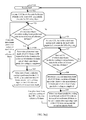
- FIG. 3(a) is a schematic diagram of steps of an inter-frame predictive coding method in Embodiment 1 of the present invention, and the method includes the following steps:
- the CTU determined from the GPB frame and the CTU in the to-be-coded reference B frame are in a same position in their respective frames.
- a CTU and a first maximum depth of the CTU may be determined from the GPB frame. If a GOP includes multiple GPB frames, in step 103, if at least one GPB frame of which inter-frame predictive coding is completed exists in the same GOP, a GPB frame that is the closest to a to-be-coded reference B frame may be determined from the at least one GPB frame, and then a CTU and a first maximum depth of the CTU are determined from the determined GPB frame.
- the first maximum depth is 2 and the CTU in the to-be-coded reference B frame is a 64x64 pixel block
- inter-frame predictive coding is performed on the CTU in the to-be-coded reference B frame
- a mode decision is performed on the 64x64 CTU
- inter-frame predictive coding is performed on the 64x64 CTU in a mode with a minimum cost value according to a mode decision result, and whether the 64x64 CTU needs to be further split is determined.
- An optional determining manner is as follows: After the mode decision is performed on the 64x64 CTU, whether the mode with the minimum cost value is a SKIP mode is determined; if it is determined that the mode with the minimum cost value is the SKIP mode, the 64x64 CTU may not be further split, and an inter-frame predictive coding process of the CTU is completed, and in this case, a maximum depth of the CTU is 0; if it is determined that the mode with the minimum cost value is not the SKIP mode, the CTU needs to be split into four 32x32 CUs, and after a mode decision and inter-frame predictive coding are performed on each 32x32 CU, whether to perform further splitting is determined in the foregoing determining manner, and so on.
- a mode decision when a mode decision is performed on a CU with each depth (including a CTU with a depth of 0), several mode operation processes may be skipped in some cases.
- a mode decision is performed on a 64x64 CTU
- first, a mode operation of the SKIP mode is performed; if a cost value obtained after the mode operation of the SKIP mode is less than 1.5 times of an average cost value, when further mode operations are performed on the 64x64 CTU, mode operations of an inter-frame 2Nx2N mode, an inter-frame NxN mode, an intra-frame 2Nx2N mode, and an intra-frame NxN mode may be skipped (that is, when the mode decision is performed, the mode operations of the inter-frame 2Nx2N mode, the inter-frame NxN mode, the intra-frame 2Nx2N mode, and the intra-frame NxN mode are not performed), so that an objective of reducing a quantity of mode operations is achieved.
- the average cost value is an average value of these minimum cost values.
- step 101 to step 105 an objective of optimizing inter-frame predictive coding of the reference B frame may be achieved, and complexity of an inter-frame predictive coding process of the reference B frame is reduced, that is, complexity of an entire HEVC coding process is reduced.
- inter-frame predictive coding of a non-reference B frame in the GOP may also be optimized.
- the optimization of the inter-frame predictive coding of the non-reference B frame reference needs to be made to an inter-frame predictive coding result of a reference B frame that is highly correlated with the non-reference B frame. Therefore, after the inter-frame predictive coding of the reference B frame is completed in step 103 to step 105, the following steps of performing inter-frame predictive coding on the non-reference B frame may be further included.
- the CTU determined from the reference B frame and the CTU in the to-be-coded non-reference B frame are in a same position in their respective frames.
- step 106 to step 109 an objective of optimizing the inter-frame predictive coding of the non-reference B frame may be achieved, and complexity of an inter-frame predictive coding process of the non-reference B frame is reduced, and the complexity of the entire HEVC coding process is further reduced.
- inter-frame predictive coding of a GPB frame in the GOP may also be optimized. If there is only one GPB frame in the GOP, a to-be-coded GPB frame should be a first frame on which inter-frame predictive coding is performed, that is, inter-frame predictive coding is performed after step 101 and before step 102. If there are multiple GPB frames in the GOP, one of the GPB frames should be a first frame on which inter-frame predictive coding is performed, and an order of performing inter-frame predictive coding on other GPB frames may be determined according to a configuration of a configuration file.
- Embodiment 1 of the present invention a case in which a to-be-coded GPB frame is not a first frame on which inter-frame predictive coding is performed and a case in which a to-be-coded GPB frame is a first frame on which inter-frame predictive coding is performed in a GOP are described separately.
- step A1 to step A3 and step B1 to step B3 an objective of optimizing the inter-frame predictive coding of the GPB frame may be achieved, and complexity of an inter-frame predictive coding process of the GPB frame is reduced, and the complexity of the entire HEVC coding process is further reduced.
- a process of optimizing inter-frame predictive coding of the P frame is also as shown in the solutions of step A1 to step A3 and step B1 to step B3, and is specifically:
- first maximum depth, the second maximum depth, the third maximum depth, the fourth maximum depth, the fifth maximum depth, and the sixth maximum depth in Embodiment 1 of the present invention do not have a necessarily same or different association relationship, and that "the first" to "the sixth" are used to distinguish between maximum depths of different CTUs.
- Embodiment 1 of the present invention when inter-frame predictive coding is performed on a GPB frame, a correlation with a first GPB frame in a same GOP or a GPB frame in a previous GOP is used; when inter-frame predictive coding is performed on a reference B frame, a correlation with a GPB frame in a same GOP is used; when inter-frame predictive coding is performed on a non-reference B frame, a correlation with a reference B frame in a same GOP is used.
- the inter-frame predictive coding optimized by using the solution of Embodiment 1 of the present invention may shorten a coding time by 57.36% based on the following emulation conditions in a case in which an overall performance loss is 0.3%.
- the emulation conditions are: five GOPs including frames whose resolutions are 1080p, four GOPs including frames whose resolutions are WVGA (800*480), four GOPs including frames whose resolutions are WQVGA (480*272), four GOPs including frames whose resolutions are 720p, four GOPs including frames whose resolutions are 4CIF (704*576), and four GOPs including frames whose resolutions are QVGA (240*320).
- These 25 GOPs are coded by using the inter-frame predictive coding method in Embodiment 1 of the present invention, and inter-frame predictive coding is performed by using the HM manner of HEVC.
- Embodiment 1 of the present invention is described in detail by using a specific embodiment.
- inter-frame predictive coding is performed on frames in three 4-frame GOPs, where each GOP includes one GPB frame, one reference B frame, and two non-reference B frames, before inter-frame predictive coding is performed, first, an I frame is coded, and then each GOP is read sequentially, and inter-frame predictive coding is performed on frames in the read GOP.
- a specific process is as follows:
- a CTU _GPB frame_first GOP that is a 64x64 pixel block as an example, first, by using a relatively complex sum of absolute transformed differences (Sum of Absolute Transformed Difference, SATD) algorithm, mode operations of eight modes are performed on the CTU _GPB frame_first GOP whose pixel block is 64x64, and a mode decision is performed by using cost values of mode operation results, and further, inter-frame predictive coding is performed on the 64x64 CTU _GPB frame_first GOP in a mode determined according to a decision result.
- SATD Sum of Absolute Transformed Difference
- the 64x64 CTU _GPB frame_first GOP is split into four 32x32 CUs, and a mode decision and inter-frame predictive coding are performed in the foregoing manner, and so on, until the inter-frame predictive coding of the CTU _GPB frame_first GOP is completed.
- mode operations of an inter-frame Nx2N mode and an inter-frame 2NxN mode may be skipped, and mode decisions are performed by using remaining modes; when a mode decision with a depth of the preset maximum depth is performed on the CTU _GPB frame_first GOP , mode operations of the inter-frame Nx2N mode and the inter-frame 2NxN mode are not skipped.
- the preset maximum depth may be configured by a coder, for example, the preset maximum depth is configured to 3; or it may be a maximum depth that is calculated by a coder according to a size of a configured CTU.
- a coder for example, the preset maximum depth is configured to 3; or it may be a maximum depth that is calculated by a coder according to a size of a configured CTU.
- the configured CTU is a 64x64 pixel block
- a depth corresponding to the CU is 3, and in this case, a maximum depth preset for the CTU is 3.
- the configured CTU is a 128x128 pixel block
- an 8x8 CU is obtained by splitting the CTU
- a depth corresponding to the CU is 4, and in this case, a maximum depth preset for the CTU is 4.
- inter-frame predictive coding may be performed on the GPB frame in the first GOP in a conventional manner.
- Inter-frame predictive coding is performed on each CTU in the reference B frame.
- a CTU (which may be called a CTU_ reference B frame ) in the reference B frame is used as an example for description.
- An inter-frame predictive coding manner of another CTU in the reference B frame is the same as processing of the CTU _reference B frame .
- the CTU _reference B frame is a 64x64 pixel block
- inter-frame predictive coding is performed on the CTU _reference B frame
- first, a mode decision and inter-frame predictive coding are performed on the 64x64 CTU _reference B frame
- four 32x32 CUs are obtained by splitting the CTU _reference B frame
- a mode decision and inter-frame predictive coding are performed on the 32x32 CUs separately
- the 32x32 CU is further split, and a mode decision and inter-frame predictive coding are performed on each 16x16 CU that is obtained by splitting.
- a minimum CU in the CTU _reference B frame is a 16x16 CU, and a depth corresponding to the 16x16 CU reaches 2, which is equal to the maximum depth d1. Therefore, the 16x16 CU is not further split, and the inter-frame predictive coding process of the CTU _reference B frame is completed.
- the maximum depth d1 is equal to the preset maximum depth
- a mode decision process with a depth of 0 may be skipped, that is, a mode decision and inter-frame predictive coding are not performed on the 64x64 CTU _reference B frame , but instead, the 64x64 CTU _reference B frame is first split into four 32x32 CUs.
- mode operations of the inter-frame Nx2N mode and the inter-frame 2NxN mode may be skipped, and a mode decision is performed by using the remaining modes.
- An advantage of doing this is as follows: Because B frames (including a reference B frame and a non-reference B frame) are highly tolerable to a performance loss, to reduce complexity of inter-frame predictive coding as much as possible, the mode operations of the inter-frame Nx2N mode and the inter-frame 2NxN mode may be skipped.
- Inter-frame predictive coding is performed on each CTU in the non-reference B frame.
- a CTU (which may be called a CTU _non-reference B frame ) in the non-reference B frame is used as an example for description.
- An inter-frame predictive coding manner of another CU in the non-reference B frame is the same as processing of the CTU _non-reference B frame .
- the maximum depth d2 is equal to the preset maximum depth or equal to (the preset maximum depth minus 1)
- a mode decision process with a depth of 0 may be skipped.
- An advantage of doing this is as follows: Because the maximum depth d2 of the CTU _reference B frame is equal to the preset maximum depth or equal to (the preset maximum depth minus 1), a maximum depth of a CTU _non-reference B frame highly correlated with the CTU _reference B frame is also great, for example, equal to the preset maximum depth or equal to (the preset maximum depth minus 1). In this case, even if the mode decision with the depth of 0 is skipped, little influence is caused to performance of the non-reference B frame, and complexity of an inter-frame predictive coding process may be reduced effectively.
- step 3 the mode decision process of the CTU _reference B frame with the depth of 0 is skipped only when the maximum depth d1 is equal to the preset maximum depth; however, in step 4, the mode decision process of the CTU _non-reference B frame with the depth of 0 may be skipped when the maximum depth d2 is equal to the preset maximum depth or equal to (the preset maximum depth minus 1). Because the CTU _reference B frame is a reference CTU for the CTU _non-reference B frame in the same GOP, a coding requirement on the CTU _reference B frame is higher than that on the CTU _non-reference B frame .
- the maximum depth d1 is equal to the preset maximum depth, even if the mode decision process of the CTU _reference B frame with the depth of 0 is skipped, little influence is caused to the performance of the reference B frame.
- the maximum depth d1 is equal to the preset maximum depth minus 1
- the mode decision of the CTU _reference B frame with the depth of 0 is still skipped, particular influence may be caused to the performance of the reference B frame, and further, influence is caused to a subsequent inter-frame coding process of the CTU _non-reference B frame .
- the CTU _non-reference B frame may not become a reference CTU for other CTUs. Therefore, even if the maximum depth d2 is equal to the preset maximum depth minus 1, the mode decision with the depth of 0 may also be skipped in an inter-frame predictive coding process of the CTU _non-reference B frame .
- a mode decision process with a depth of 0 may be skipped.
- An advantage of doing this is as follows:
- a maximum depth of a CTU _GPB frame_first GOP highly correlated with the CTU _GPB frame_first GOP is also great, for example, equal to the preset maximum depth or equal to (the preset maximum depth minus 1). In this case, even if the mode decision process with the depth of 0 is skipped, little influence is caused to performance of the GPB frame in the second GOP, and complexity of an inter-frame predictive coding process may be reduced effectively.
- mode operations of the inter-frame Nx2N mode and the inter-frame 2NxN mode may be skipped; in a mode decision process of the CTU _GPB frame_first GOP with the depth of the preset maximum depth, mode operations of the inter-frame Nx2N mode and the inter-frame 2NxN mode are not skipped.
- inter-frame predictive coding continues to be performed on a reference B frame and a non-reference B frame in the second GOP according to the same manners in step 3 and step 4.
- a third GOP may be read, and processed according to the inter-frame predictive coding manner of each frame in the second GOP.
- Embodiment 2 the solution of the present invention is described by using three GOPs as an example. In a case in which there are n (n is greater than 3) GOPs, processing is the same as processing of the three GOPs, and is not further described herein.
- Embodiment 2 of the present invention When inter-frame predictive coding is performed on a GPB frame, in mode decisions with depths of 0 to (a preset maximum depth minus 1) that are performed on a CTU in the GPB frame by using an SATD algorithm, mode operations of an inter-frame Nx2N mode and an inter-frame 2NxN mode are skipped; in a mode decision of the CTU with a depth of the preset maximum depth, mode operations of the inter-frame Nx2N mode and the inter-frame 2NxN mode are not skipped; when a depth of a CTU in a reference GPB frame is equal to the preset maximum depth, a mode decision process with a depth of 0 is skipped.
- the inter-frame predictive coding optimized by using the solution of Embodiment 2 of the present invention may shorten a coding time by 77.27% based on the emulation conditions involved in Embodiment 1 in a case in which an overall performance loss is 3.1 %.
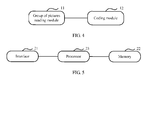
- Embodiment 3 of the present invention a coder pertaining to a same invention conception as Embodiment 1 and Embodiment 2 is described. As shown in FIG. 4 , the coder includes a group of pictures reading module 11 and a coding module 12, where:
- the coding module 12 is further configured to: if the first maximum depth is equal to a preset maximum depth, skip a mode decision process with a depth of 0 when inter-frame predictive coding is performed on the CTU in the to-be-coded reference B frame; because a quantity of decisions performed on the reference B frame is reduced, an inter-frame predictive coding process of the reference B frame may be simplified, and an inter-frame predictive coding time is shortened.
- the coding module 12 is further configured to: when inter-frame predictive coding is performed on the CTU in the to-be-coded reference B frame, in a mode decision process of the CTU with any depth, skip mode operations of an inter-frame Nx2N mode and an inter-frame 2NxN mode, and perform mode operations of other modes by using a sum of absolute differences SAD algorithm; because mode operations of the reference B frame are reduced, the inter-frame predictive coding process of the reference B frame may be simplified, and the inter-frame predictive coding time is shortened.
- the coding module 12 is further configured to: for any CTU in a to-be-coded non-reference B frame in the current group of pictures, determine a second maximum depth of a CTU from a reference B frame that is the closest to the to-be-coded non-reference B frame in the current group of pictures and of which inter-frame predictive coding is completed, where the determined CTU and the CTU in the to-be-coded non-reference B frame are in a same position in their respective frames; and when inter-frame predictive coding is performed on the CTU in the to-be-coded non-reference B frame, that a splitting depth of the CTU does not exceed the second maximum depth.
- the coding module 12 is further configured to: if the second maximum depth is equal to the preset maximum depth or the preset maximum depth minus 1, skip a mode decision process with a depth of 0 when inter-frame predictive coding is performed on the CTU in the to-be-coded non-reference B frame; because a quantity of decisions performed on the non-reference B frame is reduced, an inter-frame predictive coding process of the non-reference B frame may be simplified, and an inter-frame predictive coding time is shortened.
- the coding module 12 is configured to: when inter-frame predictive coding is performed on the CTU in the to-be-coded non-reference B frame, in a mode decision process of the CTU with any depth, skip mode operations of the inter-frame Nx2N mode and the inter-frame 2NxN mode, and perform mode operations of other modes by using the SAD algorithm; because mode operations of the non-reference B frame are reduced, the inter-frame predictive coding process of the non-reference B frame may be simplified, and the inter-frame predictive coding time is shortened.
- the coding module 12 is further configured to: if a GPB frame of which inter-frame predictive coding is completed exists in the current group of pictures, for any CTU in a to-be-coded GPB frame in the current group of pictures, determine a third maximum depth of a CTU from the GPB frame of which inter-frame predictive coding is completed, where the determined CTU and the CTU in the to-be-coded GPB frame are in a same position in their respective frames; and when inter-frame predictive coding is performed on the CTU in the to-be-coded GPB frame, that a splitting depth of the CTU does not exceed the third maximum depth; or if no GPB frame of which inter-frame predictive coding is completed exists in the current group of pictures, for any CTU in a to-be-coded GPB frame in the current group of pictures, determine a fourth maximum depth of a CTU from a GPB frame in a previous group of pictures, where the determined CTU and the CTU in the to-be-coded GPB frame in
- the coding module 12 is further configured to: if the third maximum depth or the fourth maximum depth is equal to the preset maximum depth, skip a mode decision process with a depth of 0 when inter-frame predictive coding is performed on the CTU in the to-be-coded GPB frame; because a quantity of decisions performed on the GPB frame is reduced, an inter-frame predictive coding process of the GPB frame may be simplified, and an inter-frame predictive coding time is shortened.
- the coding module 12 is further configured to: when inter-frame predictive coding is performed on the CTU in the to-be-coded GPB frame, in mode decisions of the CTU with depths of 0 to the preset maximum depth minus 1, skip mode operations of the inter-frame Nx2N mode and the inter-frame 2NxN mode, and perform a mode operation on the CTU by using a sum of absolute transformed differences SATD algorithm; or in a mode decision of the CTU with a depth of the preset maximum depth, not skip mode operations of the inter-frame Nx2N mode and the inter-frame 2NxN mode, and perform a mode operation on the CTU by using an SATD algorithm; because mode operations of the GPB frame are reduced, the inter-frame predictive coding process of the GPB frame may be simplified, and the inter-frame predictive coding time is shortened.
- the coding module 12 is further configured to: if a P frame of which inter-frame predictive coding is completed exists in the current group of pictures, for any CTU in a to-be-coded P frame in the current group of pictures, determine a fifth maximum depth of a CTU from the P frame of which inter-frame predictive coding is completed, where the determined CTU and the CTU in the P frame are in a same position in their respective frames; and when inter-frame predictive coding is performed on the CTU in the to-be-coded P frame, that a splitting depth of the CTU does not exceed the fifth maximum depth; or if no P frame of which inter-frame predictive coding is completed exists in the current group of pictures, for any CTU in a to-be-coded P frame in the current group of pictures, determine a sixth maximum depth of a CTU from a P frame in a previous group of pictures, where the determined CTU and the CTU in the to-be-coded P frame in the current group of pictures are in a same position in their respective frames
- the coding module 12 is further configured to: if the fifth maximum depth or the sixth maximum depth is equal to the preset maximum depth, skip a mode decision process with a depth of 0 when inter-frame predictive coding is performed on the CTU in the to-be-coded P frame; because a quantity of decisions performed on the P frame is reduced, an inter-frame predictive coding process of the P frame may be simplified, and an inter-frame predictive coding time is shortened.
- the coding module 12 is further configured to: when inter-frame predictive coding is performed on the CTU in the to-be-coded P frame, in mode decisions of the CTU with depths of 0 to the preset maximum depth minus 1, skip mode operations of the inter-frame Nx2N mode and the inter-frame 2NxN mode, and perform a mode operation on the CTU by using an SATD algorithm; or in a mode decision of the CTU with a depth of the preset maximum depth, not skip mode operations of the inter-frame Nx2N mode and the inter-frame 2NxN mode, and perform a mode operation on the CTU by using an SATD algorithm; because mode operations of the P frame are reduced, the inter-frame predictive coding process of the P frame may be simplified, and the inter-frame predictive coding time is shortened.
- Embodiment 4 of the present invention another coder pertaining to a same invention conception as Embodiment 1 and Embodiment 2 is described. As shown in FIG. 5 , the coder includes an interface 21, a memory 22, and a processor 23, where:
- the processor 23 is further configured to: if the first maximum depth is equal to a preset maximum depth, skip a mode decision process with a depth of 0 when inter-frame predictive coding is performed on the CTU in the to-be-coded reference B frame; and the memory 22 is further configured to store the preset maximum depth.
- an inter-frame predictive coding process of the reference B frame may be simplified, and an inter-frame predictive coding time is shortened.
- the processor 23 is further configured to: when inter-frame predictive coding is performed on the CTU in the to-be-coded reference B frame, in a mode decision process of the CTU with any depth, skip mode operations of an inter-frame Nx2N mode and an inter-frame 2NxN mode, and perform mode operations of other modes by using a sum of absolute differences SAD algorithm; and the memory 22 is further configured to store multiple types of mode operation information.
- the inter-frame predictive coding process of the reference B frame may be simplified, and the inter-frame predictive coding time is shortened.
- the processor 23 is further configured to: for any CTU in a to-be-coded non-reference B frame in the current group of pictures, determine a second maximum depth of a CTU from a reference B frame that is the closest to the to-be-coded non-reference B frame in the current group of pictures and of which inter-frame predictive coding is completed, where the determined CTU and the CTU in the to-be-coded non-reference B frame are in a same position in their respective frames; and when inter-frame predictive coding is performed on the CTU in the to-be-coded non-reference B frame, that a splitting depth of the CTU does not exceed the second maximum depth.
- the memory 22 is further configured to store a maximum depth of each CTU in a reference B frame that is in the group of pictures and of which inter-frame predictive coding is completed.
- the processor 23 is further configured to: if the second maximum depth is equal to the preset maximum depth or the preset maximum depth minus 1, skip a mode decision process with a depth of 0 when inter-frame predictive coding is performed on the CTU in the to-be-coded non-reference B frame; because a quantity of decisions performed on the non-reference B frame is reduced, an inter-frame predictive coding process of the non-reference B frame may be simplified, and an inter-frame predictive coding time is shortened.
- the processor 23 is configured to: when inter-frame predictive coding is performed on the CTU in the to-be-coded non-reference B frame, in a mode decision process of the CTU with any depth, skip mode operations of the inter-frame Nx2N mode and the inter-frame 2NxN mode, and perform mode operations of other modes by using the SAD algorithm; because mode operations of the non-reference B frame are reduced, the inter-frame predictive coding process of the non-reference B frame may be simplified, and the inter-frame predictive coding time is shortened.
- the processor 23 is further configured to: if a GPB frame of which inter-frame predictive coding is completed exists in the current group of pictures, for any CTU in a to-be-coded GPB frame in the current group of pictures, determine a third maximum depth of a CTU from the GPB frame of which inter-frame predictive coding is completed, where the determined CTU and the CTU in the to-be-coded GPB frame are in a same position in their respective frames; and when inter-frame predictive coding is performed on the CTU in the to-be-coded GPB frame, that a splitting depth of the CTU does not exceed the third maximum depth; or if no GPB frame of which inter-frame predictive coding is completed exists in the current group of pictures, for any CTU in a to-be-coded GPB frame in the current group of pictures, determine a fourth maximum depth of a CTU from a GPB frame in a previous group of pictures, where the determined CTU and the CTU in the to-be-coded GPB frame in the current
- the processor 23 is further configured to: if the third maximum depth or the fourth maximum depth is equal to the preset maximum depth, skip a mode decision process with a depth of 0 when inter-frame predictive coding is performed on the CTU in the to-be-coded GPB frame; because a quantity of decisions performed on the GPB frame is reduced, an inter-frame predictive coding process of the GPB frame may be simplified, and an inter-frame predictive coding time is shortened.
- the processor 23 is further configured to: when inter-frame predictive coding is performed on the CTU in the to-be-coded GPB frame, in mode decisions of the CTU with depths of 0 to the preset maximum depth minus 1, skip mode operations of the inter-frame Nx2N mode and the inter-frame 2NxN mode, and perform a mode operation on the CTU by using a sum of absolute transformed differences SATD algorithm; or in a mode decision of the CTU with a depth of the preset maximum depth, not skip mode operations of the inter-frame Nx2N mode and the inter-frame 2NxN mode, and perform a mode operation on the CTU by using an SATD algorithm; because mode operations of the GPB frame are reduced, the inter-frame predictive coding process of the GPB frame may be simplified, and the inter-frame predictive coding time is shortened.
- the processor 23 is further configured to: if a P frame of which inter-frame predictive coding is completed exists in the current group of pictures, for any CTU in a to-be-coded P frame in the current group of pictures, determine a fifth maximum depth of a CTU from the P frame of which inter-frame predictive coding is completed, where the determined CTU and the CTU in the to-be-coded P frame are in a same position in their respective frames; and when inter-frame predictive coding is performed on the CTU in the to-be-coded P frame, that a splitting depth of the CTU does not exceed the fifth maximum depth; or if no P frame of which inter-frame predictive coding is completed exists in the current group of pictures, for any CTU in a to-be-coded P frame in the current group of pictures, determine a sixth maximum depth of a CTU from a P frame in a previous group of pictures, where the determined CTU and the CTU in the to-be-coded P frame in the current group of pictures are in a same position
- the processor 23 is further configured to: if the fifth maximum depth or the sixth maximum depth is equal to the preset maximum depth, skip a mode decision process with a depth of 0 when inter-frame predictive coding is performed on the CTU in the to-be-coded P frame; because a quantity of decisions performed on the P frame is reduced, an inter-frame predictive coding process of the P frame may be simplified, and an inter-frame predictive coding time is shortened.
- the processor 23 is further configured to: when inter-frame predictive coding is performed on the CTU in the to-be-coded P frame, in mode decisions of the CTU with depths of 0 to the preset maximum depth minus 1, skip mode operations of the inter-frame Nx2N mode and the inter-frame 2NxN mode, and perform a mode operation on the CTU by using an SATD algorithm; or in a mode decision of the CTU with a depth of the preset maximum depth, not skip mode operations of the inter-frame Nx2N mode and the inter-frame 2NxN mode, and perform a mode operation on the CTU by using an SATD algorithm; because mode operations of the P frame are reduced, the inter-frame predictive coding process of the P frame may be simplified, and the inter-frame predictive coding time is shortened.
- the present invention may be provided as a method, a system, or a computer program product.
- the present invention may use a form of a computer program product that is implemented on one or more computer-usable storage media (including but not limited to a disk memory, a CD-ROM, an optical memory, and the like) that include computer-usable program code.
- These computer program instructions may be provided for a general-purpose computer, a dedicated computer, an embedded processor, or a processor of any other programmable data processing device to generate a machine, so that the instructions executed by a computer or a processor of any other programmable data processing device generate an apparatus for implementing a specific function in one or more processes in the flowcharts and/or in one or more blocks in the block diagrams.
- These computer program instructions may also be stored in a computer readable memory that can instruct the computer or any other programmable data processing device to work in a specific manner, so that the instructions stored in the computer readable memory generate an artifact that includes an instruction apparatus.
- the instruction apparatus implements a specific function in one or more processes in the flowcharts and/or in one or more blocks in the block diagrams.
- These computer program instructions may also be loaded onto a computer or another programmable data processing device, so that a series of operations and steps are performed on the computer or the another programmable device, thereby generating computer-implemented processing. Therefore, the instructions executed on the computer or the another programmable device provide steps for implementing a specific function in one or more processes in the flowcharts and/or in one or more blocks in the block diagrams.
- computer-readable media do not include computer-readable transitory media (transitory media), such as modulated data signals and carriers.
Landscapes
- Engineering & Computer Science (AREA)
- Multimedia (AREA)
- Signal Processing (AREA)
- Compression Or Coding Systems Of Tv Signals (AREA)
Applications Claiming Priority (2)
| Application Number | Priority Date | Filing Date | Title |
|---|---|---|---|
| CN201310430799.3A CN103491369B (zh) | 2013-09-18 | 2013-09-18 | 一种帧间预测编码方法和编码器 |
| PCT/CN2014/076378 WO2015039440A1 (zh) | 2013-09-18 | 2014-04-28 | 一种帧间预测编码方法和编码器 |
Publications (3)
| Publication Number | Publication Date |
|---|---|
| EP2953352A1 true EP2953352A1 (de) | 2015-12-09 |
| EP2953352A4 EP2953352A4 (de) | 2016-02-24 |
| EP2953352B1 EP2953352B1 (de) | 2017-12-13 |
Family
ID=49831290
Family Applications (1)
| Application Number | Title | Priority Date | Filing Date |
|---|---|---|---|
| EP14846100.7A Active EP2953352B1 (de) | 2013-09-18 | 2014-04-28 | Codierungsverfahren für inter-frame-vorhersage und codierer |
Country Status (4)
| Country | Link |
|---|---|
| US (1) | US9894388B2 (de) |
| EP (1) | EP2953352B1 (de) |
| CN (1) | CN103491369B (de) |
| WO (1) | WO2015039440A1 (de) |
Cited By (1)
| Publication number | Priority date | Publication date | Assignee | Title |
|---|---|---|---|---|
| US11849109B2 (en) | 2019-01-08 | 2023-12-19 | Huawei Technologies Co., Ltd. | Image prediction method, apparatus, and system, device, and storage medium |
Families Citing this family (9)
| Publication number | Priority date | Publication date | Assignee | Title |
|---|---|---|---|---|
| CN103491369B (zh) * | 2013-09-18 | 2016-09-28 | 华为技术有限公司 | 一种帧间预测编码方法和编码器 |
| WO2015139203A1 (en) | 2014-03-18 | 2015-09-24 | Mediatek Singapore Pte. Ltd. | Dlt signaling in 3d video coding |
| CN105530518B (zh) * | 2014-09-30 | 2019-04-26 | 联想(北京)有限公司 | 一种视频编码、解码方法及装置 |
| CN104602000B (zh) * | 2014-12-30 | 2018-02-23 | 北京奇艺世纪科技有限公司 | 一种编码单元的分割方法和装置 |
| US10805635B1 (en) * | 2016-03-22 | 2020-10-13 | NGCodec Inc. | Apparatus and method for coding tree unit bit size limit management |
| US11438587B2 (en) * | 2017-12-14 | 2022-09-06 | Interdigital Vc Holdings, Inc. | Method and apparatus for encoding a picture block |
| CN110198443B (zh) * | 2018-05-10 | 2022-09-13 | 腾讯科技(深圳)有限公司 | 视频帧的编码单元划分方法、装置、存储介质及电子装置 |
| CN109618152B (zh) * | 2018-12-14 | 2020-09-08 | 北京数码视讯软件技术发展有限公司 | 深度划分编码方法、装置和电子设备 |
| CN114640849B (zh) * | 2022-03-23 | 2024-03-12 | 广州方硅信息技术有限公司 | 直播视频编码方法、装置、计算机设备及可读存储介质 |
Family Cites Families (11)
| Publication number | Priority date | Publication date | Assignee | Title |
|---|---|---|---|---|
| US8155191B2 (en) | 2004-11-04 | 2012-04-10 | Thomson Licensing | Method and apparatus for fast mode decision of B-frames in a video encoder |
| US8634456B2 (en) * | 2008-10-03 | 2014-01-21 | Qualcomm Incorporated | Video coding with large macroblocks |
| KR101624649B1 (ko) * | 2009-08-14 | 2016-05-26 | 삼성전자주식회사 | 계층적인 부호화 블록 패턴 정보를 이용한 비디오 부호화 방법 및 장치, 비디오 복호화 방법 및 장치 |
| WO2012042893A1 (ja) * | 2010-09-30 | 2012-04-05 | パナソニック株式会社 | 画像復号方法、画像符号化方法、画像復号装置、画像符号化装置、プログラムおよび集積回路 |
| US9066102B2 (en) * | 2010-11-17 | 2015-06-23 | Qualcomm Incorporated | Reference picture list construction for generalized P/B frames in video coding |
| CN102186070B (zh) | 2011-04-20 | 2013-06-05 | 北京工业大学 | 分层结构预判的快速视频编码方法 |
| KR101943049B1 (ko) * | 2011-06-30 | 2019-01-29 | 에스케이텔레콤 주식회사 | 영상 부호화/복호화 방법 및 장치 |
| CN102984521B (zh) * | 2012-12-12 | 2015-04-08 | 四川大学 | 基于时域相关性的高性能视频编码帧间模式判决方法 |
| CN103281531B (zh) * | 2013-05-10 | 2016-03-23 | 北方工业大学 | 面向hevc的质量可伸缩层间预测编码 |
| CN103297774B (zh) * | 2013-05-13 | 2016-04-27 | 清华大学深圳研究生院 | 一种视频编码中b帧的快速编码方法 |
| CN103491369B (zh) * | 2013-09-18 | 2016-09-28 | 华为技术有限公司 | 一种帧间预测编码方法和编码器 |
-
2013
- 2013-09-18 CN CN201310430799.3A patent/CN103491369B/zh active Active
-
2014
- 2014-04-28 WO PCT/CN2014/076378 patent/WO2015039440A1/zh not_active Ceased
- 2014-04-28 EP EP14846100.7A patent/EP2953352B1/de active Active
-
2015
- 2015-09-22 US US14/861,267 patent/US9894388B2/en active Active
Cited By (2)
| Publication number | Priority date | Publication date | Assignee | Title |
|---|---|---|---|---|
| US11849109B2 (en) | 2019-01-08 | 2023-12-19 | Huawei Technologies Co., Ltd. | Image prediction method, apparatus, and system, device, and storage medium |
| US12363285B2 (en) | 2019-01-08 | 2025-07-15 | Huawei Technologies Co., Ltd. | Image prediction method, apparatus, and system, device, and storage medium |
Also Published As
| Publication number | Publication date |
|---|---|
| WO2015039440A1 (zh) | 2015-03-26 |
| US20160014434A1 (en) | 2016-01-14 |
| CN103491369A (zh) | 2014-01-01 |
| CN103491369B (zh) | 2016-09-28 |
| US9894388B2 (en) | 2018-02-13 |
| EP2953352A4 (de) | 2016-02-24 |
| EP2953352B1 (de) | 2017-12-13 |
Similar Documents
| Publication | Publication Date | Title |
|---|---|---|
| EP2953352B1 (de) | Codierungsverfahren für inter-frame-vorhersage und codierer | |
| JP7571227B2 (ja) | 行列ベースのイントラ予測と二次変換コア選択を調和させるエンコーダ、デコーダ、および対応する方法 | |
| US20230308670A1 (en) | Method for encoding/decoding video signals and device therefor | |
| CN110999297B (zh) | 在图像或视频编码系统中处理图像的方法和装置 | |
| KR102644185B1 (ko) | 비디오 코딩 시스템에서 레지듀얼 신호 코딩 방법 및 장치 | |
| KR102219231B1 (ko) | 영상 정보 인코딩/디코딩 방법 및 장치 | |
| KR101981905B1 (ko) | 인코딩 방법 및 장치, 디코딩 방법 및 장치, 및 컴퓨터 판독가능 저장 매체 | |
| JP2022008502A (ja) | 映像情報符号化/復号方法及び装置 | |
| EP3758377A1 (de) | Verfahren und vorrichtung zur verarbeitung von videodaten mit beschränkter blockgrösse in der videocodierung | |
| KR20210057166A (ko) | 비디오 인코더, 비디오 디코더 및 방법 | |
| CN113748677A (zh) | 编码器、解码器及对应的帧内预测方法 | |
| GB2531004A (en) | Residual colour transform signalled at sequence level for specific coding modes | |
| CN104704832B (zh) | 用于预测运动矢量和视差矢量的图像处理方法和设备 | |
| JP2015521826A (ja) | 画像を符号化または復号するための方法およびデバイス | |
| GB2533905A (en) | Method and apparatus for video coding and decoding | |
| JP2015516758A (ja) | 時間的予測のための時間的動きベクトル予測(mvp)フラグのシグナリング | |
| CN106254870B (zh) | 采用自适性色彩转换的视频编码方法、系统和计算机可读取记录介质 | |
| EP3884667B1 (de) | Videocodierung mit dreieckformprädiktionseinheiten | |
| KR102655129B1 (ko) | 비디오 인코더, 비디오 디코더 및 그에 대응하는 방법 | |
| WO2018184417A1 (zh) | 一种可变帧率的编码方法及装置、计算机装置及计算机可读存储介质 | |
| CN114449265A (zh) | 用于帧内平滑的方法和装置 | |
| KR20210011458A (ko) | 인트라 서브파티션 코딩 툴로 인한 서브파티션 경계를 위한 디블로킹 필터 | |
| JP2024531738A (ja) | 画像フィルタリング方法、装置、機器及びプログラム | |
| KR20250128971A (ko) | 적응형 루프 필터 분류기들 | |
| RU2786626C2 (ru) | Способ и устройство для разделения изображения |
Legal Events
| Date | Code | Title | Description |
|---|---|---|---|
| PUAI | Public reference made under article 153(3) epc to a published international application that has entered the european phase |
Free format text: ORIGINAL CODE: 0009012 |
|
| 17P | Request for examination filed |
Effective date: 20150902 |
|
| AK | Designated contracting states |
Kind code of ref document: A1 Designated state(s): AL AT BE BG CH CY CZ DE DK EE ES FI FR GB GR HR HU IE IS IT LI LT LU LV MC MK MT NL NO PL PT RO RS SE SI SK SM TR |
|
| AX | Request for extension of the european patent |
Extension state: BA ME |
|
| A4 | Supplementary search report drawn up and despatched |
Effective date: 20160127 |
|
| RIC1 | Information provided on ipc code assigned before grant |
Ipc: H04N 19/119 20140101ALI20160121BHEP Ipc: H04N 19/503 20140101AFI20160121BHEP Ipc: H04N 19/96 20140101ALI20160121BHEP Ipc: H04N 19/176 20140101ALI20160121BHEP Ipc: H04N 19/159 20140101ALI20160121BHEP |
|
| DAX | Request for extension of the european patent (deleted) | ||
| REG | Reference to a national code |
Ref country code: DE Ref legal event code: R079 Ref document number: 602014018614 Country of ref document: DE Free format text: PREVIOUS MAIN CLASS: H04N0019000000 Ipc: H04N0019119000 |
|
| GRAP | Despatch of communication of intention to grant a patent |
Free format text: ORIGINAL CODE: EPIDOSNIGR1 |
|
| STAA | Information on the status of an ep patent application or granted ep patent |
Free format text: STATUS: GRANT OF PATENT IS INTENDED |
|
| RIC1 | Information provided on ipc code assigned before grant |
Ipc: H04N 19/177 20140101ALI20170517BHEP Ipc: H04N 19/176 20140101ALI20170517BHEP Ipc: H04N 19/119 20140101AFI20170517BHEP Ipc: H04N 19/503 20140101ALI20170517BHEP Ipc: H04N 19/147 20140101ALN20170517BHEP Ipc: H04N 19/96 20140101ALI20170517BHEP |
|
| INTG | Intention to grant announced |
Effective date: 20170619 |
|
| GRAS | Grant fee paid |
Free format text: ORIGINAL CODE: EPIDOSNIGR3 |
|
| GRAA | (expected) grant |
Free format text: ORIGINAL CODE: 0009210 |
|
| STAA | Information on the status of an ep patent application or granted ep patent |
Free format text: STATUS: THE PATENT HAS BEEN GRANTED |
|
| REG | Reference to a national code |
Ref country code: GB Ref legal event code: FG4D |
|
| REG | Reference to a national code |
Ref country code: AT Ref legal event code: REF Ref document number: 955374 Country of ref document: AT Kind code of ref document: T Effective date: 20171215 Ref country code: CH Ref legal event code: EP |
|
| REG | Reference to a national code |
Ref country code: IE Ref legal event code: FG4D |
|
| REG | Reference to a national code |
Ref country code: DE Ref legal event code: R096 Ref document number: 602014018614 Country of ref document: DE |
|
| REG | Reference to a national code |
Ref country code: FR Ref legal event code: PLFP Year of fee payment: 5 |
|
| REG | Reference to a national code |
Ref country code: NL Ref legal event code: MP Effective date: 20171213 |
|
| PG25 | Lapsed in a contracting state [announced via postgrant information from national office to epo] |
Ref country code: FI Free format text: LAPSE BECAUSE OF FAILURE TO SUBMIT A TRANSLATION OF THE DESCRIPTION OR TO PAY THE FEE WITHIN THE PRESCRIBED TIME-LIMIT Effective date: 20171213 Ref country code: SE Free format text: LAPSE BECAUSE OF FAILURE TO SUBMIT A TRANSLATION OF THE DESCRIPTION OR TO PAY THE FEE WITHIN THE PRESCRIBED TIME-LIMIT Effective date: 20171213 Ref country code: NO Free format text: LAPSE BECAUSE OF FAILURE TO SUBMIT A TRANSLATION OF THE DESCRIPTION OR TO PAY THE FEE WITHIN THE PRESCRIBED TIME-LIMIT Effective date: 20180313 |
|
| REG | Reference to a national code |
Ref country code: AT Ref legal event code: MK05 Ref document number: 955374 Country of ref document: AT Kind code of ref document: T Effective date: 20171213 |
|
| PG25 | Lapsed in a contracting state [announced via postgrant information from national office to epo] |
Ref country code: GR Free format text: LAPSE BECAUSE OF FAILURE TO SUBMIT A TRANSLATION OF THE DESCRIPTION OR TO PAY THE FEE WITHIN THE PRESCRIBED TIME-LIMIT Effective date: 20180314 Ref country code: RS Free format text: LAPSE BECAUSE OF FAILURE TO SUBMIT A TRANSLATION OF THE DESCRIPTION OR TO PAY THE FEE WITHIN THE PRESCRIBED TIME-LIMIT Effective date: 20171213 Ref country code: BG Free format text: LAPSE BECAUSE OF FAILURE TO SUBMIT A TRANSLATION OF THE DESCRIPTION OR TO PAY THE FEE WITHIN THE PRESCRIBED TIME-LIMIT Effective date: 20180313 Ref country code: LV Free format text: LAPSE BECAUSE OF FAILURE TO SUBMIT A TRANSLATION OF THE DESCRIPTION OR TO PAY THE FEE WITHIN THE PRESCRIBED TIME-LIMIT Effective date: 20171213 Ref country code: HR Free format text: LAPSE BECAUSE OF FAILURE TO SUBMIT A TRANSLATION OF THE DESCRIPTION OR TO PAY THE FEE WITHIN THE PRESCRIBED TIME-LIMIT Effective date: 20171213 |
|
| PG25 | Lapsed in a contracting state [announced via postgrant information from national office to epo] |
Ref country code: NL Free format text: LAPSE BECAUSE OF FAILURE TO SUBMIT A TRANSLATION OF THE DESCRIPTION OR TO PAY THE FEE WITHIN THE PRESCRIBED TIME-LIMIT Effective date: 20171213 |
|
| PG25 | Lapsed in a contracting state [announced via postgrant information from national office to epo] |
Ref country code: CZ Free format text: LAPSE BECAUSE OF FAILURE TO SUBMIT A TRANSLATION OF THE DESCRIPTION OR TO PAY THE FEE WITHIN THE PRESCRIBED TIME-LIMIT Effective date: 20171213 Ref country code: ES Free format text: LAPSE BECAUSE OF FAILURE TO SUBMIT A TRANSLATION OF THE DESCRIPTION OR TO PAY THE FEE WITHIN THE PRESCRIBED TIME-LIMIT Effective date: 20171213 Ref country code: EE Free format text: LAPSE BECAUSE OF FAILURE TO SUBMIT A TRANSLATION OF THE DESCRIPTION OR TO PAY THE FEE WITHIN THE PRESCRIBED TIME-LIMIT Effective date: 20171213 Ref country code: CY Free format text: LAPSE BECAUSE OF FAILURE TO SUBMIT A TRANSLATION OF THE DESCRIPTION OR TO PAY THE FEE WITHIN THE PRESCRIBED TIME-LIMIT Effective date: 20171213 Ref country code: SK Free format text: LAPSE BECAUSE OF FAILURE TO SUBMIT A TRANSLATION OF THE DESCRIPTION OR TO PAY THE FEE WITHIN THE PRESCRIBED TIME-LIMIT Effective date: 20171213 |
|
| PG25 | Lapsed in a contracting state [announced via postgrant information from national office to epo] |
Ref country code: IT Free format text: LAPSE BECAUSE OF FAILURE TO SUBMIT A TRANSLATION OF THE DESCRIPTION OR TO PAY THE FEE WITHIN THE PRESCRIBED TIME-LIMIT Effective date: 20171213 Ref country code: IS Free format text: LAPSE BECAUSE OF FAILURE TO SUBMIT A TRANSLATION OF THE DESCRIPTION OR TO PAY THE FEE WITHIN THE PRESCRIBED TIME-LIMIT Effective date: 20180413 Ref country code: SM Free format text: LAPSE BECAUSE OF FAILURE TO SUBMIT A TRANSLATION OF THE DESCRIPTION OR TO PAY THE FEE WITHIN THE PRESCRIBED TIME-LIMIT Effective date: 20171213 Ref country code: RO Free format text: LAPSE BECAUSE OF FAILURE TO SUBMIT A TRANSLATION OF THE DESCRIPTION OR TO PAY THE FEE WITHIN THE PRESCRIBED TIME-LIMIT Effective date: 20171213 Ref country code: AT Free format text: LAPSE BECAUSE OF FAILURE TO SUBMIT A TRANSLATION OF THE DESCRIPTION OR TO PAY THE FEE WITHIN THE PRESCRIBED TIME-LIMIT Effective date: 20171213 Ref country code: PL Free format text: LAPSE BECAUSE OF FAILURE TO SUBMIT A TRANSLATION OF THE DESCRIPTION OR TO PAY THE FEE WITHIN THE PRESCRIBED TIME-LIMIT Effective date: 20171213 |
|
| REG | Reference to a national code |
Ref country code: DE Ref legal event code: R097 Ref document number: 602014018614 Country of ref document: DE |
|
| PLBE | No opposition filed within time limit |
Free format text: ORIGINAL CODE: 0009261 |
|
| STAA | Information on the status of an ep patent application or granted ep patent |
Free format text: STATUS: NO OPPOSITION FILED WITHIN TIME LIMIT |
|
| 26N | No opposition filed |
Effective date: 20180914 |
|
| PG25 | Lapsed in a contracting state [announced via postgrant information from national office to epo] |
Ref country code: MC Free format text: LAPSE BECAUSE OF FAILURE TO SUBMIT A TRANSLATION OF THE DESCRIPTION OR TO PAY THE FEE WITHIN THE PRESCRIBED TIME-LIMIT Effective date: 20171213 Ref country code: DK Free format text: LAPSE BECAUSE OF FAILURE TO SUBMIT A TRANSLATION OF THE DESCRIPTION OR TO PAY THE FEE WITHIN THE PRESCRIBED TIME-LIMIT Effective date: 20171213 |
|
| REG | Reference to a national code |
Ref country code: CH Ref legal event code: PL |
|
| REG | Reference to a national code |
Ref country code: BE Ref legal event code: MM Effective date: 20180430 |
|
| REG | Reference to a national code |
Ref country code: IE Ref legal event code: MM4A |
|
| PG25 | Lapsed in a contracting state [announced via postgrant information from national office to epo] |
Ref country code: LU Free format text: LAPSE BECAUSE OF NON-PAYMENT OF DUE FEES Effective date: 20180428 |
|
| PG25 | Lapsed in a contracting state [announced via postgrant information from national office to epo] |
Ref country code: BE Free format text: LAPSE BECAUSE OF NON-PAYMENT OF DUE FEES Effective date: 20180430 Ref country code: SI Free format text: LAPSE BECAUSE OF FAILURE TO SUBMIT A TRANSLATION OF THE DESCRIPTION OR TO PAY THE FEE WITHIN THE PRESCRIBED TIME-LIMIT Effective date: 20171213 Ref country code: LI Free format text: LAPSE BECAUSE OF NON-PAYMENT OF DUE FEES Effective date: 20180430 Ref country code: CH Free format text: LAPSE BECAUSE OF NON-PAYMENT OF DUE FEES Effective date: 20180430 |
|
| PG25 | Lapsed in a contracting state [announced via postgrant information from national office to epo] |
Ref country code: IE Free format text: LAPSE BECAUSE OF NON-PAYMENT OF DUE FEES Effective date: 20180428 |
|
| PG25 | Lapsed in a contracting state [announced via postgrant information from national office to epo] |
Ref country code: MT Free format text: LAPSE BECAUSE OF NON-PAYMENT OF DUE FEES Effective date: 20180428 |
|
| PG25 | Lapsed in a contracting state [announced via postgrant information from national office to epo] |
Ref country code: TR Free format text: LAPSE BECAUSE OF FAILURE TO SUBMIT A TRANSLATION OF THE DESCRIPTION OR TO PAY THE FEE WITHIN THE PRESCRIBED TIME-LIMIT Effective date: 20171213 |
|
| PG25 | Lapsed in a contracting state [announced via postgrant information from national office to epo] |
Ref country code: PT Free format text: LAPSE BECAUSE OF FAILURE TO SUBMIT A TRANSLATION OF THE DESCRIPTION OR TO PAY THE FEE WITHIN THE PRESCRIBED TIME-LIMIT Effective date: 20171213 |
|
| PG25 | Lapsed in a contracting state [announced via postgrant information from national office to epo] |
Ref country code: MK Free format text: LAPSE BECAUSE OF NON-PAYMENT OF DUE FEES Effective date: 20171213 Ref country code: HU Free format text: LAPSE BECAUSE OF FAILURE TO SUBMIT A TRANSLATION OF THE DESCRIPTION OR TO PAY THE FEE WITHIN THE PRESCRIBED TIME-LIMIT; INVALID AB INITIO Effective date: 20140428 Ref country code: LT Free format text: LAPSE BECAUSE OF FAILURE TO SUBMIT A TRANSLATION OF THE DESCRIPTION OR TO PAY THE FEE WITHIN THE PRESCRIBED TIME-LIMIT Effective date: 20171213 |
|
| PG25 | Lapsed in a contracting state [announced via postgrant information from national office to epo] |
Ref country code: AL Free format text: LAPSE BECAUSE OF FAILURE TO SUBMIT A TRANSLATION OF THE DESCRIPTION OR TO PAY THE FEE WITHIN THE PRESCRIBED TIME-LIMIT Effective date: 20171213 |
|
| PGFP | Annual fee paid to national office [announced via postgrant information from national office to epo] |
Ref country code: DE Payment date: 20250305 Year of fee payment: 12 |
|
| PGFP | Annual fee paid to national office [announced via postgrant information from national office to epo] |
Ref country code: GB Payment date: 20260312 Year of fee payment: 13 |
|
| PGFP | Annual fee paid to national office [announced via postgrant information from national office to epo] |
Ref country code: FR Payment date: 20260309 Year of fee payment: 13 |