EP2953357A1 - Procédé de codage vidéo, procédé de décodage vidéo et appareil associé - Google Patents
Procédé de codage vidéo, procédé de décodage vidéo et appareil associé Download PDFInfo
- Publication number
- EP2953357A1 EP2953357A1 EP14783170.5A EP14783170A EP2953357A1 EP 2953357 A1 EP2953357 A1 EP 2953357A1 EP 14783170 A EP14783170 A EP 14783170A EP 2953357 A1 EP2953357 A1 EP 2953357A1
- Authority
- EP
- European Patent Office
- Prior art keywords
- prediction unit
- prediction
- basic
- basic prediction
- target area
- Prior art date
- Legal status (The legal status is an assumption and is not a legal conclusion. Google has not performed a legal analysis and makes no representation as to the accuracy of the status listed.)
- Ceased
Links
Images






Classifications
-
- H—ELECTRICITY
- H04—ELECTRIC COMMUNICATION TECHNIQUE
- H04N—PICTORIAL COMMUNICATION, e.g. TELEVISION
- H04N19/00—Methods or arrangements for coding, decoding, compressing or decompressing digital video signals
- H04N19/50—Methods or arrangements for coding, decoding, compressing or decompressing digital video signals using predictive coding
- H04N19/503—Methods or arrangements for coding, decoding, compressing or decompressing digital video signals using predictive coding involving temporal prediction
- H04N19/51—Motion estimation or motion compensation
- H04N19/513—Processing of motion vectors
- H04N19/517—Processing of motion vectors by encoding
- H04N19/52—Processing of motion vectors by encoding by predictive encoding
-
- H—ELECTRICITY
- H04—ELECTRIC COMMUNICATION TECHNIQUE
- H04N—PICTORIAL COMMUNICATION, e.g. TELEVISION
- H04N19/00—Methods or arrangements for coding, decoding, compressing or decompressing digital video signals
- H04N19/10—Methods or arrangements for coding, decoding, compressing or decompressing digital video signals using adaptive coding
- H04N19/169—Methods or arrangements for coding, decoding, compressing or decompressing digital video signals using adaptive coding characterised by the coding unit, i.e. the structural portion or semantic portion of the video signal being the object or the subject of the adaptive coding
- H04N19/17—Methods or arrangements for coding, decoding, compressing or decompressing digital video signals using adaptive coding characterised by the coding unit, i.e. the structural portion or semantic portion of the video signal being the object or the subject of the adaptive coding the unit being an image region, e.g. an object
- H04N19/176—Methods or arrangements for coding, decoding, compressing or decompressing digital video signals using adaptive coding characterised by the coding unit, i.e. the structural portion or semantic portion of the video signal being the object or the subject of the adaptive coding the unit being an image region, e.g. an object the region being a block, e.g. a macroblock
-
- H—ELECTRICITY
- H04—ELECTRIC COMMUNICATION TECHNIQUE
- H04N—PICTORIAL COMMUNICATION, e.g. TELEVISION
- H04N19/00—Methods or arrangements for coding, decoding, compressing or decompressing digital video signals
- H04N19/10—Methods or arrangements for coding, decoding, compressing or decompressing digital video signals using adaptive coding
- H04N19/102—Methods or arrangements for coding, decoding, compressing or decompressing digital video signals using adaptive coding characterised by the element, parameter or selection affected or controlled by the adaptive coding
- H04N19/103—Selection of coding mode or of prediction mode
- H04N19/105—Selection of the reference unit for prediction within a chosen coding or prediction mode, e.g. adaptive choice of position and number of pixels used for prediction
-
- H—ELECTRICITY
- H04—ELECTRIC COMMUNICATION TECHNIQUE
- H04N—PICTORIAL COMMUNICATION, e.g. TELEVISION
- H04N19/00—Methods or arrangements for coding, decoding, compressing or decompressing digital video signals
- H04N19/10—Methods or arrangements for coding, decoding, compressing or decompressing digital video signals using adaptive coding
- H04N19/102—Methods or arrangements for coding, decoding, compressing or decompressing digital video signals using adaptive coding characterised by the element, parameter or selection affected or controlled by the adaptive coding
- H04N19/103—Selection of coding mode or of prediction mode
- H04N19/109—Selection of coding mode or of prediction mode among a plurality of temporal predictive coding modes
-
- H—ELECTRICITY
- H04—ELECTRIC COMMUNICATION TECHNIQUE
- H04N—PICTORIAL COMMUNICATION, e.g. TELEVISION
- H04N19/00—Methods or arrangements for coding, decoding, compressing or decompressing digital video signals
- H04N19/10—Methods or arrangements for coding, decoding, compressing or decompressing digital video signals using adaptive coding
- H04N19/134—Methods or arrangements for coding, decoding, compressing or decompressing digital video signals using adaptive coding characterised by the element, parameter or criterion affecting or controlling the adaptive coding
- H04N19/136—Incoming video signal characteristics or properties
-
- H—ELECTRICITY
- H04—ELECTRIC COMMUNICATION TECHNIQUE
- H04N—PICTORIAL COMMUNICATION, e.g. TELEVISION
- H04N19/00—Methods or arrangements for coding, decoding, compressing or decompressing digital video signals
- H04N19/50—Methods or arrangements for coding, decoding, compressing or decompressing digital video signals using predictive coding
- H04N19/503—Methods or arrangements for coding, decoding, compressing or decompressing digital video signals using predictive coding involving temporal prediction
- H04N19/51—Motion estimation or motion compensation
- H04N19/537—Motion estimation other than block-based
-
- H—ELECTRICITY
- H04—ELECTRIC COMMUNICATION TECHNIQUE
- H04N—PICTORIAL COMMUNICATION, e.g. TELEVISION
- H04N19/00—Methods or arrangements for coding, decoding, compressing or decompressing digital video signals
- H04N19/50—Methods or arrangements for coding, decoding, compressing or decompressing digital video signals using predictive coding
- H04N19/503—Methods or arrangements for coding, decoding, compressing or decompressing digital video signals using predictive coding involving temporal prediction
- H04N19/51—Motion estimation or motion compensation
- H04N19/57—Motion estimation characterised by a search window with variable size or shape
-
- H—ELECTRICITY
- H04—ELECTRIC COMMUNICATION TECHNIQUE
- H04N—PICTORIAL COMMUNICATION, e.g. TELEVISION
- H04N19/00—Methods or arrangements for coding, decoding, compressing or decompressing digital video signals
- H04N19/50—Methods or arrangements for coding, decoding, compressing or decompressing digital video signals using predictive coding
- H04N19/503—Methods or arrangements for coding, decoding, compressing or decompressing digital video signals using predictive coding involving temporal prediction
- H04N19/51—Motion estimation or motion compensation
- H04N19/573—Motion compensation with multiple frame prediction using two or more reference frames in a given prediction direction
Definitions
- the present invention relates to the field of signal processing, and in particular, to a video encoding method and decoding method and apparatuses.
- a high-definition video has a very large amount of data; if the high-definition video is to be transmitted in the Internet with finite bandwidth, an issue needing to be solved first is an issue of encoding the high-definition video.
- a picture may be considered as a two-dimensional sampling point array, and a picture block may also be considered as a two-dimensional sampling point array, where the picture block is an area of the picture, a sampling point generally may also be considered as a pixel (Pixel), and a pixel is a unit for calculation of a digital image.
- W-1, y 0..H-1
- Pic(x,y) represents a value of a sampling point at a coordinate position (x,y) in a coordinate system built in a width direction and a height direction of a two-dimensional sampling point array of the picture
- W and H respectively represent a width and a height of the two-dimensional sampling point array.
- a matching block Blk'(x,y) may be searched for in a reference picture and used as a reference area, and a prediction Pred(x,y) of the target area may be generated based on the matching block, so that only a prediction error determined based on the prediction needs to be encoded and transmitted to a decoder end.
- a position of the matching block in the reference picture is described by a motion vector.
- the reference picture refers to a neighboring picture that has been reconstructed when a target picture is encoded or decoded; in this case, the reference area may be a picture block in the reference picture, and matches the target area in terms of a content feature.
- Information indicating a source of the matching block is referred to as motion information, and may include the motion vector and other supplementary information.
- the motion information needs to be transmitted to the decoder end, so that the decoder end may perform a motion compensation operation the same as that performed by an encoder end to obtain the prediction of the picture block. In combination with the prediction obtained through motion compensation and the prediction error obtained through decoding, the decoder end can obtain a reconstruction of the picture block, thereby completing a decoding operation on the picture block.
- a picture block having independent motion information is referred to as a motion partition.
- the motion partition may be a square block or a rectangular block that is not square.
- the motion partition is a basic unit of motion compensated prediction. For ease of implementation, in all the mainstream video encoding solutions, a rectangular motion partition is used.
- an encoder end finds, in a reference picture by using a strong time correlation between the reference picture and a target picture, a reference area matching a picture block, that is, a target area, in the target picture in terms of a content feature, and determines motion partitions of the target area according to a content feature of the reference area. For example, it is displayed in the reference area that two cups are separately placed on the left and right of a desk; when picture partition is performed based on a picture content feature, the reference area may be partitioned into 3 picture blocks in total: the desk, the cup on the left, and the cup on the right, and the 3 picture blocks are used as 3 motion partitions of the target area.
- the encoder end After the motion partitions of the target area are determined, the encoder end performs search for each motion partition of the target area to obtain motion information of each motion partition, encodes the motion information, and transmits the motion information to a decoder end. Moreover, the encoder end performs search to determine a motion vector of the reference area, and transmits the motion vector to the decoder end, so that the decoder end and the encoder end may determine the same reference area, and further use a same reference area content feature analyzing method to determine the motion partitions of the target area; after a quantity of motion partitions is determined, the decoder end performs a motion compensation operation on the target area according to the corresponding motion information to obtain predictions whose quantity is the same as that of the motion partitions, combines the predictions to obtain a final prediction of the target area, and reconstructs the target area according to the final prediction.
- the encoder end of a video performs picture partition based on the picture content feature without considering a motion characteristic
- the motion information of the motion partitions obtained through the partition has low accuracy in describing the target area, and correspondingly, the motion information obtained by the decoder end has low accuracy; therefore, video decoding performance is affected, and decoding precision is low.
- Embodiments of the present invention provide a video encoding method and decoding method and apparatuses, which can enhance video decoding performance, and improve decoding precision.
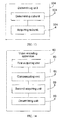
- a video decoding method which is applied to a decoder end and includes:
- the target area consists of M basic prediction units, where M is greater than or equal to 2; and the determining a final prediction of the target area according to the N predictions of the target area and the prediction selection reference of the target area includes:
- the determining a final prediction of the basic prediction unit according to N predictions of the basic prediction unit and a prediction selection reference of the basic prediction unit includes:
- the determining a final prediction of the basic prediction unit according to N predictions of the basic prediction unit and a prediction selection reference of the basic prediction unit includes:
- the determining N weighting factors of the basic prediction unit according to the N predictions of the basic prediction unit and the prediction selection reference of the basic prediction unit includes:
- the basic prediction unit consists of one or more sampling points.
- the calculating N prediction errors of the basic prediction unit according to the N predictions of the basic prediction unit and the prediction selection reference of the basic prediction unit includes:
- the calculating N prediction errors of the basic prediction unit according to the N predictions of the basic prediction unit and the prediction selection reference of the basic prediction unit includes:
- the calculating N prediction errors of the basic prediction unit according to the N predictions of the basic prediction unit and the prediction selection reference of the basic prediction unit includes:
- a video encoding method which is applied to an encoder end and includes:
- the target area consists of M basic prediction units, where M is greater than or equal to 2; and the determining a final prediction of the target area according to the N predictions of the target area and the prediction selection reference of the target area includes:
- the determining a final prediction of the basic prediction unit according to N predictions of the basic prediction unit and a prediction selection reference of the basic prediction unit includes:
- the determining a final prediction of the basic prediction unit according to N predictions of the basic prediction unit and a prediction selection reference of the basic prediction unit includes:
- the determining N weighting factors of the basic prediction unit according to the N predictions of the basic prediction unit and the prediction selection reference of the basic prediction unit includes:
- the basic prediction unit consists of one or more sampling points.
- the calculating N prediction errors of the basic prediction unit according to the N predictions of the basic prediction unit and the prediction selection reference of the basic prediction unit includes:
- the calculating N prediction errors of the basic prediction unit according to the N predictions of the basic prediction unit and the prediction selection reference of the basic prediction unit includes:
- the calculating N prediction errors of the basic prediction unit according to the N predictions of the basic prediction unit and the prediction selection reference of the basic prediction unit includes:
- the determining N pieces of motion information of a target area includes:
- the method further includes:
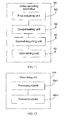
- a video decoding apparatus including:
- the target area consists of M basic prediction units, where M is greater than or equal to 2; and the determining unit is specifically configured to:
- the determining unit specifically includes:
- the determining unit specifically includes:
- the determining subunit is specifically configured to:
- the basic prediction unit consists of one or more sampling points.
- the processing subunit or the determining subunit is specifically configured to:
- the processing subunit or the determining subunit is specifically configured to:
- the processing subunit or the determining subunit is specifically configured to:
- a video encoding apparatus including:
- the target area consists of M basic prediction units, where M is greater than or equal to 2; and the determining unit is specifically configured to:
- the determining unit specifically includes:
- the determining unit includes:
- the determining subunit is specifically configured to:
- the basic prediction unit consists of one or more sampling points.
- the processing subunit or the determining subunit is specifically configured to:
- the processing subunit or the determining subunit is specifically configured to:
- the processing subunit or the determining subunit is specifically configured to:
- the first acquiring unit is specifically configured to:
- the apparatus further includes:
- the embodiments of the present invention provide a video encoding method and decoding method and apparatuses.
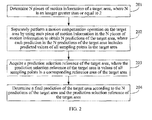
- the video decoding method applied to a decoder end, includes: acquiring N pieces of motion information of a target area according to motion-related information in a bitstream generated by an encoder end, where N is an integer greater than or equal to 2; separately performing a motion compensation operation on the target area by using each piece of motion information in the N pieces of motion information to obtain N predictions of the target area, where each prediction in the N predictions of the target area includes predicted values of all sampling points in the target area; acquiring a prediction selection reference of the target area, where the prediction selection reference of the target area is values of all sampling points in a corresponding reference area of the target area; and determining a final prediction of the target area according to the N predictions of the target area and the prediction selection reference of the target area.
- a preset quantity of pieces of motion information exist for one target area, and a final prediction of the target area is determined according to predictions obtained according to the preset quantity of pieces of motion information and a prediction selection reference.
- picture partition does not need to be performed; moreover, multiple predictions obtained according to descriptions that are of one same target area and indicated by multiple pieces of motion information are more accurate, and the final prediction of the target area determined according to the multiple predictions and the prediction selection reference has higher accuracy. Therefore, video decoding performance can be enhanced, and decoding precision can be improved.
- An embodiment of the present invention provides a video decoding method, applied to a decoder end. As shown in FIG. 1 , the method includes:
- the target area may consist of M basic prediction units, where M is greater than or equal to 2.
- the target area consists of multiple basic prediction units
- N predictions of the target area are determined, correspondingly, N predictions of a basic prediction unit are determined accordingly, where the basic prediction unit is any one of the multiple basic prediction units of the target area.
- the reference area of the target area is a picture area corresponding to the target area, and may be a picture block matching the target area in terms of a content feature.
- the reference area of the target area may also be considered to consist of multiple basic prediction units.
- values of all sampling points in a basic prediction unit that is in the reference area of the target area and is located at a same position as a basic prediction unit of the target area are referred to as a prediction selection reference of the basic prediction unit.
- a final prediction of the basic prediction unit may be determined according to the N predictions of the basic prediction unit and the prediction selection reference of the basic prediction unit; because the target area consists of the multiple basic prediction units, after the final prediction of the basic prediction unit is determined, the final prediction of the target area is determined accordingly.
- a preset quantity of pieces of motion information exist for one target area, and a final prediction of the target area is determined according to predictions obtained according to the preset quantity of pieces of motion information and a prediction selection reference.
- picture partition does not need to be performed; moreover, multiple predictions obtained according to descriptions that are of one same target area and indicated by multiple pieces of motion information are more accurate, and the final prediction of the target area determined according to the multiple predictions and the prediction selection reference has higher accuracy. Therefore, video decoding performance can be enhanced, and decoding precision can be improved.
- a final prediction of the basic prediction unit may be determined according to the N predictions of the basic prediction unit and the prediction selection reference of the basic prediction unit may include:
- the final prediction of the target area may also be determined by using a method in which a weighting factor is acquired.
- N weighting factors of the basic prediction unit may be first determined according to the N predictions of the basic prediction unit and the prediction selection reference of the basic prediction unit, for example, N prediction errors of the basic prediction unit are calculated according to the N predictions of the basic prediction unit and the prediction selection reference of the basic prediction unit, and reciprocals of the N prediction errors of the basic prediction unit are separately obtained to obtain the N weighting factors of the basic prediction unit. Then, weighted averaging may be performed on the N predictions of the basic prediction unit by using the N weighting factors to obtain the final prediction of the basic prediction unit.
- the basic prediction unit may consist of one or more sampling points, where the "multiple" is at least two. Particularly, a spatial correspondence exists between the basic prediction unit and a reference area of the basic prediction unit, and a spatial correspondence also exists between the N predictions of the basic prediction unit. Because the basic prediction unit may consist of different quantities of sampling points, correspondingly, methods for obtaining the N prediction errors of the basic prediction unit are also different.
- the basic prediction unit when it consists of one sampling point, it may be separately obtaining absolute differences between values of the sampling point in the N predictions of the basic prediction unit and a value of the sampling point in the prediction selection reference of the basic prediction unit to obtain the N prediction errors of the basic prediction unit, where it should be noted that, the absolute differences refer to absolute values of differences; or separately obtaining squares of differences between values of the sampling point in the N predictions of the basic prediction unit and a value of the sampling point in the prediction selection reference of the basic prediction unit to obtain the N prediction errors of the basic prediction unit.
- the basic prediction unit When the basic prediction unit consists of one sampling point, it may also be separately obtaining differences between values of the sampling point in the N predictions of the basic prediction unit and a value of the sampling point in the prediction selection reference of the basic prediction unit, performing filtering processing on each of the differences, and obtaining absolute values, to obtain the N prediction errors of the basic prediction unit; or separately performing filtering processing on values of the sampling point in the N predictions of the basic prediction unit, performing filtering processing on a value of the sampling point in the prediction selection reference of the basic prediction unit, and separately obtaining absolute differences between values of the sampling point in the N predictions of the basic prediction unit after the filtering processing and a value of the sampling point in the prediction selection reference of the basic prediction unit after the filtering processing, to obtain the N prediction errors of the basic prediction unit.
- the basic prediction unit when it consists of multiple sampling points, it may be first separately obtaining absolute differences between values of sampling points at same positions in the N predictions of the basic prediction unit and in the prediction selection reference of the basic prediction unit to obtain N absolute-difference sets, where each of the absolute-difference sets includes absolute differences of all the sampling points of the basic prediction unit; and then separately acquiring the sum of all absolute differences in each absolute-difference set in the N absolute-difference sets to obtain the N prediction errors of the basic prediction unit; or separately acquiring the sum of squares of all absolute differences in each absolute-difference set in the N absolute-difference sets to obtain the N prediction errors of the basic prediction unit; or separately acquiring high-order norms of all absolute differences in each absolute-difference set in the N absolute-difference sets to obtain the N prediction errors of the basic prediction unit.
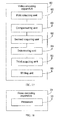
- An embodiment of the present invention provides a video encoding method, applied to an encoder end. As shown in FIG. 2 , the method includes:
- it may be acquiring N candidate motion information sets of the target area, where each of the candidate motion information sets has at least 1 piece of candidate motion information; separately selecting 1 piece of candidate motion information from each candidate motion information set in the N candidate motion information sets, to obtain W motion information combinations, where each of the motion information combinations has N pieces of motion information; separately performing a motion compensation operation on the target area by using each motion information combination in the W motion information combinations to obtain W prediction combinations, where each of the prediction combinations includes N predictions of the target area; acquiring a prediction selection reference; separately comparing the N predictions of the target area in each of the prediction combinations with the prediction selection reference to determine an optimal prediction meeting a preset condition; and determining N pieces of motion information in a motion information combination corresponding to the optimal prediction as the N pieces of motion information of the target area.
- the target area may consist of M basic prediction units, where M is greater than or equal to 2.
- the target area consists of multiple basic prediction units
- N predictions of the target area are determined, correspondingly, N predictions of a basic prediction unit are determined accordingly, where the basic prediction unit is any one of the multiple basic prediction units of the target area.
- a final prediction of the basic prediction unit may be determined according to the N predictions of the basic prediction unit and the prediction selection reference of the basic prediction unit; because the target area consists of the multiple basic prediction units, after the final prediction of the basic prediction unit is determined, the final prediction of the target area is determined accordingly.
- a preset quantity of pieces of motion information exist for one target area, and a final prediction of the target area is determined according to predictions obtained according to the preset quantity of pieces of motion information and a prediction selection reference.
- picture partition does not need to be performed; moreover, multiple predictions obtained according to descriptions that are of one same target area and indicated by multiple pieces of motion information are more accurate, and the final prediction of the target area determined according to the multiple predictions and the prediction selection reference has higher accuracy. Therefore, video encoding performance can be enhanced, and encoding precision can be improved.
- a final prediction of the basic prediction unit may be determined according to the N predictions of the basic prediction unit and the prediction selection reference of the basic prediction unit may include:
- the final prediction of the target area may also be determined by using a method in which a weighting factor is acquired.
- N weighting factors of the basic prediction unit may be first determined according to the N predictions of the basic prediction unit and the prediction selection reference of the basic prediction unit, for example, N prediction errors of the basic prediction unit are calculated according to the N predictions of the basic prediction unit and the prediction selection reference of the basic prediction unit, and reciprocals of the N prediction errors of the basic prediction unit are separately obtained to obtain the N weighting factors of the basic prediction unit. Then, weighted averaging may be performed on the N predictions of the basic prediction unit by using the N weighting factors to obtain the final prediction of the basic prediction unit.
- the basic prediction unit may consist of one or more sampling points, where the "multiple" is at least two. Particularly, a spatial correspondence exists between the basic prediction unit and a reference area of the basic prediction unit, and a spatial correspondence also exists between the N predictions of the basic prediction unit. Because the basic prediction unit may consist of different quantities of sampling points, correspondingly, methods for obtaining the N prediction errors of the basic prediction unit are also different.
- the basic prediction unit when it consists of one sampling point, it may be separately obtaining absolute differences between values of the sampling point in the N predictions of the basic prediction unit and a value of the sampling point in the prediction selection reference of the basic prediction unit to obtain the N prediction errors of the basic prediction unit; or separately obtaining squares of differences between values of the sampling point in the N predictions of the basic prediction unit and a value of the sampling point in the prediction selection reference of the basic prediction unit to obtain the N prediction errors of the basic prediction unit.
- the basic prediction unit When the basic prediction unit consists of one sampling point, it may also be separately obtaining differences between values of the sampling point in the N predictions of the basic prediction unit and a value of the sampling point in the prediction selection reference of the basic prediction unit, performing filtering processing on each of the differences, and obtaining absolute values, to obtain the N prediction errors of the basic prediction unit; or separately performing filtering processing on values of the sampling point in the N predictions of the basic prediction unit, performing filtering processing on a value of the sampling point in the prediction selection reference of the basic prediction unit, and separately obtaining absolute differences between values of the sampling point in the N predictions of the basic prediction unit after the filtering processing and a value of the sampling point in the prediction selection reference of the basic prediction unit after the filtering processing, to obtain the N prediction errors of the basic prediction unit.
- the basic prediction unit when it consists of multiple sampling points, it may be separately obtaining absolute differences between values of sampling points at same positions in the N predictions of the basic prediction unit and in the prediction selection reference of the basic prediction unit to obtain N absolute-difference sets, where each of the absolute-difference sets includes absolute differences of all the sampling points of the basic prediction unit; and separately acquiring the sum of all absolute differences in each absolute-difference set in the N absolute-difference sets to obtain the N prediction errors of the basic prediction unit; or separately acquiring the sum of squares of all absolute differences in each absolute-difference set in the N absolute-difference sets to obtain the N prediction errors of the basic prediction unit; or separately acquiring high-order norms of all absolute differences in each absolute-difference set in the N absolute-difference sets to obtain the N prediction errors of the basic prediction unit.
- the encoder end further needs to obtain N pieces of motion-related information according to the N pieces of motion information, and then convert the N pieces of motion-related information into a binary character and write the binary character to a bitstream, so that a decoder end acquires the bitstream, and decodes the target area according to the N pieces of motion-related information in the bitstream.
- a video encoding process corresponds to a video decoding process.
- the target area refers to an area in a picture on which current encoding or decoding processing is performed, and may be a rectangular picture block, or may be a contiguous or non-contiguous picture area in any shape.
- the target area is a 4x4 picture block, the picture block has 16 sampling points in total, and each sampling point is 1 pixel.
- This embodiment of the present invention provides another video encoding method, applied to an encoder end. As shown in FIG. 3 , the method includes:
- motion information may include a prediction direction indication, a reference picture index, and a motion vector.
- Prediction directions may be classified into unidirectional prediction and bidirectional prediction.
- the unidirectional prediction refers to that a prediction Pred(x,y) of the target area is generated according to only one matching area Blk'(x,y) of the target area, where the matching area of the target area is a picture area matching the target area in terms of a content feature, for example, values of sampling points of the matching area Blk'(x,y) may be directly used as the prediction Pred(x,y).
- the bidirectional prediction refers to that a prediction of the target area is generated according to two matching areas Blk1'(x,y) and Blk2'(x,y) of the target area, for example, the prediction Pred(x,y) may be a weighted mean of Blk1'(x,y) and Blk2'(x,y).
- the unidirectional prediction may be further classified into forward prediction and backward prediction.
- two reference picture lists may exist, which are separately a forward reference picture list, that is, a list 0 (list0) and a backward reference picture list, that is, a list 1 (list1), where the forward reference picture list and the backward reference picture list are used for managing reference pictures used in encoding a target picture.
- the target area is a picture area in the target picture
- a matching area of the target area is a picture area in a reference picture.
- the forward prediction refers to that a prediction is generated by using a reference picture in the forward reference picture list, that is, the list 0;
- the backward prediction refers to that a prediction is generated by using a reference picture in the backward reference picture list, that is, the list 1.
- the bidirectional prediction refers to that a prediction is generated by using reference pictures in both the list 0 or the list 1. Hence, when only one reference picture list exists, no prediction direction indication needs to be transmitted.
- the motion information needs to have a reference picture index to indicate a reference picture selected from the list 0 or the list 1; for the bidirectional prediction, the motion information needs to have two reference picture indexes to separately indicate reference pictures selected from the list 0 or the list 1.
- the MV Motion vector, motion vector
- the MV includes a horizontal-direction component MVx and a vertical-direction component MVy, and may be recorded as (MVx,MVy).
- MVx Motion vector, motion vector
- the motion information may include one or more items of a prediction direction indication, a reference picture index, and a motion vector, which is not limited in the present invention.
- a prediction direction is the unidirectional prediction
- the motion information includes only one motion vector.
- N is an integer greater than or equal to 2, and N may be a preset number.
- a specific quantity N of pieces of the motion information may be preset on both encoder and decoder ends; or may be randomly set on the encoder end, and the specific quantity N is transmitted to the decoder end.
- the N pieces of motion information may be extracted at a preset position, or may be obtained through comparison and screening in multiple pieces of candidate motion information.
- the motion information When the N pieces of motion information are obtained through comparison and screening in multiple pieces of candidate motion information, the motion information fully reflects a motion characteristic of the target area in a video, and therefore the motion information has high accuracy, thereby enhancing video encoding performance, and improving encoding precision.
- a method for acquiring the N pieces of motion information of the target area includes:
- the target area may consist of M basic prediction units, where M is greater than or equal to 2.
- the basic prediction unit may consist of one or more sampling points, where the "multiple" is at least two.
- the N candidate motion information sets of the target area may be determined according to a given rule.
- a specified search window may be set in a reference picture of the target area, and motion information corresponding to all possible matching blocks of the target area in the specified search window is separately used as candidate motion information in each candidate motion information set.
- N specified search windows may be set in a reference picture of the target area, and motion information corresponding to all possible matching blocks of the target area in each specified search window in the N specified search windows is separately used as candidate motion information in each candidate motion information set in the N candidate motion information sets.
- all motion information of the specified search window may be traversed by using a preset motion search algorithm.
- the motion search algorithm may be full search, three-step search, diamond search, or the like, which is not limited in the present invention.
- the W motion information combinations are obtained by selecting 1 piece of candidate motion information from each candidate motion information set in the N candidate motion information sets and combining the selected candidate motion information, and a quantity W of all possible combinations is equal to the N th power of K.
- quantities of pieces of candidate motion information in each candidate motion information set in the N candidate motion information sets may be different.
- N is a preset number, and N is equal to 3
- each motion information combination includes multiple pieces of motion information
- the performing a motion compensation operation on the target area by using each motion information combination in the W motion information combinations to obtain W prediction combinations is obtaining corresponding predictions of the target area according to the multiple pieces of motion information
- there are multiple existing methods for obtaining a prediction of a target area according to a given piece of motion information and for a method used in this embodiment of the present invention, reference may be made to any one of the methods for obtaining a prediction of a target area in the prior art.
- motion information t is a piece of motion information in any motion information combination in the W motion information combinations.
- the motion information t is specifically used to perform a motion compensation operation on the target area to obtain a corresponding prediction of the target area
- a prediction direction indication in the motion information t indicates unidirectional prediction
- one matching area may be determined according to the motion information t
- a prediction direction indication in the motion information t indicates bidirectional prediction
- two matching areas may be determined according to the motion information t.
- values of sampling points of the matching area that is, sampling values
- values of sampling points of the two matching areas may be used as a prediction of the target area after proper processing; or values of sampling points of the matching area may be directly used as a prediction of the target area.
- values of sampling points of the two matching areas may be used as a prediction of the target area after weighted averaging or another processing operation.
- a symbol "x" in FIG. 5 represents one sampling point, that is, one pixel. That is, each prediction includes predicted values of all sampling points in the target area.
- the prediction selection reference of the target area refers to values of all sampling points in a reference area of the target area.
- the prediction selection reference of the target area may be represented by using Ref(x,y), where x and y describe a position of a sampling point in the reference area of the target area, and Ref(x,y) represents a value of a sampling point at a coordinate position (x,y).
- the reference area of the target area is a picture area corresponding to the target area, and is a picture block matching the target area in terms of a content feature.
- the reference area may be a picture area, having a spatial correspondence with the target area, in areas in a picture that is at a lower layer relative to a target picture.
- the correspondence may be that the target area and an area in the lower-layer picture have same position coordinates in their respective pictures.
- the correspondence may be considered as that when the two pictures have a same resolution after being scaled properly, the target area and the area in the lower-layer picture have same position coordinates in their respective pictures.
- the reference area may be an area in a reference picture of a target picture.
- a picture content texture feature and motion feature in the reference area both have an extremely high similarity with a picture content texture feature and motion feature in the target area.
- the reference area may be determined according to one piece of indication information.
- the indication information may be motion information.
- the reference area of the target area may also be considered to consist of multiple basic prediction units, in this embodiment of the present invention, after the prediction selection reference of the target area is acquired, correspondingly, a prediction selection reference of a basic prediction unit can be obtained.
- the target area may consist of M basic prediction units, where M is greater than or equal to 2.
- a candidate prediction of the basic prediction unit may be determined according to N predictions of the basic prediction unit in each of the prediction combinations and a prediction selection reference of the basic prediction unit; because the target area consists of multiple basic prediction units, after the candidate prediction of the basic prediction unit is determined, a candidate prediction of the target area corresponding to each of the prediction combinations is determined accordingly.
- a candidate prediction of the basic prediction unit may be determined according to N predictions of the basic prediction unit in each of the prediction combinations and a prediction selection reference of the basic prediction unit may include:
- the candidate prediction of the target area may also be determined by using a method in which a weighting factor is acquired.
- N weighting factors of the basic prediction unit may be first determined according to the N predictions of the basic prediction unit and the prediction selection reference of the basic prediction unit, for example, N prediction errors of the basic prediction unit are calculated according to the N predictions of the basic prediction unit and the prediction selection reference of the basic prediction unit, and reciprocals of the N prediction errors of the basic prediction unit are separately obtained to obtain the N weighting factors of the basic prediction unit. Then, weighted averaging may be performed on the N predictions of the basic prediction unit by using the N weighting factors to obtain the final prediction of the basic prediction unit.
- the basic prediction unit may consist of different quantities of sampling points, correspondingly, methods for obtaining the N prediction errors of the basic prediction unit are also different.
- the basic prediction unit when it consists of one sampling point, it may be separately obtaining absolute differences between values of the sampling point in the N predictions of the basic prediction unit and a value of the sampling point in the prediction selection reference of the basic prediction unit to obtain the N prediction errors of the basic prediction unit; or separately obtaining squares of differences between values of the sampling point in the N predictions of the basic prediction unit and a value of the sampling point in the prediction selection reference of the basic prediction unit to obtain the N prediction errors of the basic prediction unit.
- the basic prediction unit When the basic prediction unit consists of one sampling point, it may also be separately obtaining differences between values of the sampling point in the N predictions of the basic prediction unit and a value of the sampling point in the prediction selection reference of the basic prediction unit, performing filtering processing on each of the differences, and obtaining absolute values, to obtain the N prediction errors of the basic prediction unit; or separately performing filtering processing on values of the sampling point in the N predictions of the basic prediction unit, performing filtering processing on a value of the sampling point in the prediction selection reference of the basic prediction unit, and separately obtaining absolute differences between values of the sampling point in the N predictions of the basic prediction unit after the filtering processing and a value of the sampling point in the prediction selection reference of the basic prediction unit after the filtering processing, to obtain the N prediction errors of the basic prediction unit.
- the basic prediction unit when it consists of multiple sampling points, it may be separately obtaining absolute differences between values of sampling points at same positions in the N predictions of the basic prediction unit and in the prediction selection reference of the basic prediction unit to obtain N absolute-difference sets, where each of the absolute-difference sets includes absolute differences of all the sampling points of the basic prediction unit; and separately acquiring the sum of all absolute differences in each absolute-difference set in the N absolute-difference sets to obtain the N prediction errors of the basic prediction unit; or separately acquiring the sum of squares of all absolute differences in each absolute-difference set in the N absolute-difference sets to obtain the N prediction errors of the basic prediction unit; or separately acquiring high-order norms of all absolute differences in each absolute-difference set in the N absolute-difference sets to obtain the N prediction errors of the basic prediction unit.
- each candidate prediction is separately compared with values of sampling points of the target area to determine the optimal prediction meeting the preset condition.
- prediction errors corresponding to the W prediction combinations may be calculated according to each candidate prediction and the values of the sampling points of the target area, values of prediction errors of all the motion information combinations are further measured according to the preset condition, such as an SAD (Sum of absolute difference, sum of absolute differences) or MME (Mean square error, mean square error) criteria, and a candidate prediction corresponding to a minimum prediction error in the prediction errors is selected as the optimal prediction.
- Each prediction of the target area in the N predictions of the target area includes predicted values of all sampling points in the target area.
- the performing a motion compensation operation on the target area by using each piece of motion information in the N pieces of motion information to obtain N predictions of the target area is obtaining a corresponding prediction of the target area according to each piece of motion information, where there are multiple existing methods for obtaining a prediction of a target area according to a given piece of motion information, and for a method used in this embodiment of the present invention, reference may be made to any one of the methods for obtaining a prediction of a target area in the prior art.
- motion information s is any piece of motion information in the N pieces of motion information.
- the motion information s is specifically used to perform a motion compensation operation on the target area to obtain a corresponding prediction of the target area
- one matching area may be determined according to the motion information s
- the motion information s indicates a bidirectional prediction operation
- two matching areas may be determined according to the motion information s.
- values of sampling points of the matching area that is, sampling values
- values of sampling points of the two matching areas may be used as a prediction of the target area after weighted averaging or another processing operation.
- a symbol "x" in FIG. 5 represents one sampling point, that is, one pixel.
- N predictions of each basic prediction unit are determined accordingly.
- the basic prediction unit consists of one sampling point, assuming that a coordinate position of a sampling point U is (0,3) in the coordinate system built in the width direction and the height direction of the two-dimensional sampling point array of the target area, N predictions of the sampling point U are separately Pred 1 (0,3) to Pred N (0,3).
- N predictions of the basic prediction unit V are separately values of sampling points of the basic prediction unit at the lower right corner of the target area, for example, the first prediction of the basic prediction unit V may be values of the sampling points, that is, Pred 1 (2,0), Pred 1 (2,1), Pred 1 (3,0), and Pred 1 (3,1).
- step 303 reference may be made to related description of step 3014 in this embodiment, and details are not described herein again.
- a final prediction of the basic prediction unit may be determined according to the N predictions of the basic prediction unit and the prediction selection reference of the basic prediction unit.
- a final prediction of the basic prediction unit may be determined according to the N predictions of the basic prediction unit and the prediction selection reference of the basic prediction unit may include:
- basic prediction units in the "prediction selection reference of the basic prediction unit” and the “N predictions of the basic prediction unit” in the present invention are located at a same position, and have a spatial correlation. It is assumed that the prediction selection reference of the target area is represented by Ref(x,y), N is 3, and the N predictions of the target area are separately Pred 1 (x,y) to Pred 3 (x,y). Errors between the 3 predictions of the basic prediction unit and the prediction selection reference of the basic prediction unit are separately obtained to obtain 3 prediction errors of the basic prediction unit.
- the basic prediction unit consists of one sampling point, exemplarily, the 3 predictions of the basic prediction unit and the prediction selection reference of the basic prediction unit may be those shown in FIG. 6 .
- a basic prediction unit is a sampling point Q; assuming that a coordinate position of the sampling point Q is (0,3) in the coordinate system built in the width direction and the height direction of the two-dimensional sampling point array of the target area, 3 predictions of the basic prediction unit are separately Pred 1 (0,3), Pred 2 (0,3), and Pred 3 (0,3), and a prediction selection reference of the basic prediction unit is Ref(0,3).
- the 3 predictions of the basic prediction unit and the prediction selection reference of the basic prediction unit may be those shown in FIG. 7 . It is assumed that the basic prediction unit consists of 2x2, that is, 4, sampling points in total, like a unit consisting of sampling points in a solid-line box in FIG. 7 , for example, a basic prediction unit is an area P consisting of sampling points in a dotted-line box.
- 3 predictions of the basic prediction unit are separately values of the sampling points in the area P at the upper left corner of the target area
- the first prediction of the basic prediction unit maybe values of the sampling points, that is, Pred 1 (0,2), Pred 1 (1,2), Pred 1 (0,3), and Pred 1 (1,3).
- a prediction selection reference of the basic prediction unit is values of the sampling points, that is, Ref(0,2), Ref(1,2), Ref(0,3), and Ref(1,3).
- the basic prediction unit may consist of one or more sampling points, where the "multiple" is at least two. Because the basic prediction unit may consist of different quantities of sampling points, correspondingly, methods for obtaining the N prediction errors of the basic prediction unit are also different.
- the basic prediction unit when the basic prediction unit consists of one sampling point, it may be separately obtaining absolute differences between values of the sampling point in the N predictions of the basic prediction unit and a value of the sampling point in the prediction selection reference of the basic prediction unit to obtain the N prediction errors of the basic prediction unit.
- the basic prediction unit that is the sampling point Q, it may be separately obtaining an absolute difference between Pred 1 (0,3) and Ref(0,3), an absolute difference between Pred 2 (0,3) and Ref(0,3), and an absolute difference between Pred 3 (0,3) and Ref(0,3) as the 3 prediction errors of the basic prediction unit.
- it may be separately obtaining squares of differences between values of the sampling point in the N predictions of the basic prediction unit and a value of the sampling point in the prediction selection reference of the basic prediction unit to obtain the N prediction errors of the basic prediction unit.
- the basic prediction unit that is the sampling point Q it may be separately obtaining a square of a difference between Pred 1 (0,3) and Ref(0,3), a square of a difference between Pred 2 (0,3) and Ref(0,3), and a square of a difference between Pred 3 (0,3) and Ref(0,3) as the 3 prediction errors of the basic prediction unit.
- the basic prediction unit When the basic prediction unit consists of one sampling point, it may also be separately obtaining differences between values of the sampling point in the N predictions of the basic prediction unit and a value of the sampling point in the prediction selection reference of the basic prediction unit, performing filtering processing on each of the differences, and obtaining absolute values, to obtain the N prediction errors of the basic prediction unit. That is, it may be performing filtering processing to determine a difference of the sampling point at a position (x,y) with the help of differences of sampling points at neighboring positions, such as (x,y-1), (x-1,y), (x+1,y), and (x,y+1), of the sampling point at the position (x,y), and then obtaining an absolute value of the difference. For example, as shown in FIG.
- the basic prediction unit that is the sampling point Q it may be separately obtaining a difference between Pred 1 (0,3) and Ref(0,3), a difference between Pred 2 (0,3) and Ref(0,3), and a difference between Pred 3 (0,3) and Ref(0,3), and then performing filtering processing on the 3 differences.
- it may be separately performing filtering processing on values of the sampling point in the N predictions of the basic prediction unit, performing filtering processing on a value of the sampling point in the prediction selection reference of the basic prediction unit, and separately obtaining absolute differences between values of the sampling point in the N predictions of the basic prediction unit after the filtering processing and a value of the sampling point in the prediction selection reference of the basic prediction unit after the filtering processing, to obtain the N prediction errors of the basic prediction unit. For example, as shown in FIG.
- the basic prediction unit that is the sampling point Q may be separately acquiring values of sampling points at neighboring positions (0,2) and (1,3) of the position (0,3) of the sampling point Q in the target area, then determining, with the help of the values of the two sampling points and according to a preset criteria, a value of the sampling point of the basic prediction unit that is the sampling point Q, then separately acquiring values, in the prediction selection reference of the target area, of the sampling points at the neighboring positions (0,2) and (1,3) of the position (0,3) of the sampling point Q, then determining, with the help of the values of the two sampling points and according to a preset criteria, a value, in the prediction selection reference, of the sampling point of the basic prediction unit that is the sampling point Q, and then obtaining an absolute difference between a value of the sampling point of the basic prediction unit after filtering processing and a value of the sampling point of the basic prediction unit in the prediction selection reference after filtering processing, to obtain 1 prediction error of the basic prediction unit.
- each motion partition is as fine as a size of one sampling point. Therefore, the target area may be a rectangular picture block, or may be a contiguous or non-contiguous picture area in any shape.
- fineness of a motion partition is one sampling point, motion information can accurately describe a boundary of a motion object, thereby improving video encoding and decoding performance.
- the basic prediction unit when the basic prediction unit consists of multiple sampling points, it may be separately obtaining absolute differences between values of sampling points at same positions in the N predictions of the basic prediction unit and in the prediction selection reference of the basic prediction unit to obtain N absolute-difference sets, where each of the absolute-difference sets includes absolute differences of all the sampling points of the basic prediction unit; and separately acquiring the sum of all absolute differences in each absolute-difference set in the N absolute-difference sets to obtain the N prediction errors of the basic prediction unit.
- N absolute-difference sets where each of the absolute-difference sets includes absolute differences of all the sampling points of the basic prediction unit
- each of the absolute-difference sets includes absolute differences of all sampling points of the basic prediction unit, that is, an absolute difference A1 between Pred 1 (0,2) and Ref(0,2), an absolute difference B1 between Pred 2 (0,2) and Ref(0,2), and an absolute difference C1 between Pred 3 (0,2) and Ref(0,2), an absolute difference A2 between Pred 1 (1,2) and Ref(1,2), an absolute difference B2 between Pred, 2 (1,2) and Ref(1,2), and an absolute difference C2 between Pred 3 (1,2) and Ref(1,2), an absolute difference A3 between Pred 1 (0,3) and Ref(0,3), an absolute difference B3 between Pred 2 (0,3) and Ref(0,3), an absolute difference B3 between Pred 2 (0,3) and Ref(N(
- the target area may be a rectangular picture block, or may be a contiguous or non-contiguous picture area in any shape.
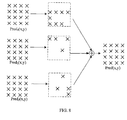
- the final prediction of the target area is determined accordingly. For example, when the basic prediction unit consists of one sampling point, after sampling points at same positions in the 3 predictions of the target area in FIG. 6 are compared with corresponding sampling points in the prediction selection reference, a result shown in FIG.
- a prediction Pred1(x,y) has final predictions of 8 basic prediction units, which are separately values of sampling points at positions (0,0), (1,0), (2,0), (0,1), (0,2), (1,2), (2,2), and (3,2)
- a prediction Pred 2 (x,y) has final predictions of 4 basic prediction units, which are separately values of sampling points at positions (2,1), (0,3), (1,3), and (3,3)
- a prediction Pred 3 (x,y) has final predictions of 4 basic prediction units, which are separately values of sampling points at positions (3,0), (1,1), (3,1), and (2,3).
- a prediction Pred1(x,y) has a final prediction of 1 basic prediction unit, that is, values of sampling points of a basic prediction unit at the upper left comer of the target area
- a prediction Pred 2 (x,y) has final predictions of 2 basic prediction units, which are separately values of sampling points of basic prediction units at the lower left corner and the lower right corner of the target area
- a prediction Pred 3 (x,y) has a final prediction of 1 basic prediction unit, that is, values of sampling points of a basic prediction unit at the upper right corner of the target area.
- the final prediction of the target area may also be determined by using a method in which a weighting factor is acquired.
- N weighting factors of the basic prediction unit may be first determined according to the N predictions of the basic prediction unit and the prediction selection reference of the basic prediction unit, where the weighting factors may be determined according to similarities between the predictions and prediction selection reference of the basic prediction unit, for example, N prediction errors of the basic prediction unit are calculated according to the N predictions of the basic prediction unit and the prediction selection reference of the basic prediction unit; and reciprocals of the N prediction errors of the basic prediction unit are separately obtained to obtain the N weighting factors of the basic prediction unit.
- weighted averaging may be performed on the N predictions of the basic prediction unit by using the N weighting factors to obtain the final prediction of the basic prediction unit.
- Pred(x,y) W 1 (x,y)*P 1 (x,y) + W 2 (x,y)*P 2 (x,y) + W 3 (x,y)*P 3 (x,y). Because the final prediction of each basic prediction unit in the target area is determined, the final prediction of the target area is determined accordingly.
- the reconstruction process may include multiple operations. For example, first, the final prediction Pred(x,y) may be subtracted from values of sampling points of the target area, to obtain original prediction errors; next, a reconstruction value may be obtained by performing operations on the original prediction errors, such as transformation, quantization, and scanning; then, a prediction error of the target area may be obtained by performing anti-scanning, dequantization, and inverse transformation processing based on the reconstruction value, and the target area is reconstructed based on the prediction error Resi(x,y) and the final prediction.
- the prediction error Resi(x,y) and the final prediction Pred(x,y) may be superimposed, and a proper truncation operation is performed, to obtain a reconstruction Reco(x,y).
- various loop filtering processing maybe further performed on the reconstruction Reco(x,y).
- the reconstructed target area is a part of a reconstructed target picture, and the reconstructed target picture may be stored in a reference picture list as a reference picture for subsequent picture processing.
- the encoder end needs to encode the N pieces of motion information.
- the motion information of the target area includes only a motion vector.
- the motion-related information is a motion vector.
- the encoder end may convert N motion vectors into a binary string one by one, and write the binary strings to a bitstream, so that the decoder end acquires the bitstream, and decodes the target area according to the N pieces of motion-related information, that is, the motion vectors, in the bitstream.
- the encoder end may separately perform a prediction encoding operation on each of multiple motion vectors to obtain motion vector prediction errors as motion-related information, and convert the motion vector prediction errors into a binary string and write the binary string to a bitstream, so that the decoder end acquires the bitstream, and decodes the target area according to the N pieces of motion-related information, that is, the motion vector prediction errors, in the bitstream.
- the reconstruction value may be further converted into a binary symbol string and written to a bitstream, to be used by the decoder end to decode the target area.
- step 3016 the obtained optimal prediction may be directly used as the final prediction, and step 305 and 306 are directly performed, which can reduce complexity of steps on the encoder end.
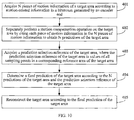
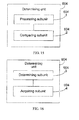
- an embodiment of the present invention provides another video decoding method, applied to a decoder end. As shown in FIG. 10 , the method includes:
- the target area may consist of M basic prediction units, where M is greater than or equal to 2.
- N is an integer greater than or equal to 2, and N may be a preset number.
- a specific quantity N of pieces of the motion information may be preset on both the encoder and decoder ends; or may be randomly set on the encoder end, and the specific quantity N is transmitted to the decoder end.
- the motion information of the target area therein includes only a motion vector.
- the decoder end may directly acquire the motion-related information, that is, N motion vectors, from the bitstream, and directly use the N motion vectors as the N pieces of motion information of the target area.
- the decoder end may acquire the motion-related information, that is, N motion vector differences, from the bitstream, obtain N motion vector predictions through deduction with reference to a given rule, finally superimpose the motion vector differences and the motion vector predictions to determine N motion vectors, and use the N motion vectors as the N pieces of motion information.
- the method for acquiring the motion information from the bitstream is merely for exemplary description, which is not limited in the present invention.
- Each prediction of the target area in the N predictions of the target area includes predicted values of all sampling points in the target area.
- the performing a motion compensation operation on the target area by using each piece of motion information in the N pieces of motion information to obtain N predictions of the target area is obtaining a corresponding prediction of the target area according to each piece of motion information, where there are multiple existing methods for obtaining a prediction of a target area according to a given piece of motion information, and for a method used in this embodiment of the present invention, reference may be made to any one of the methods for obtaining a prediction of a target area in the prior art.
- motion information s is any piece of motion information in the N pieces of motion information.
- the motion information s is specifically used to perform a motion compensation operation on the target area to obtain a corresponding prediction of the target area
- one matching area may be determined according to the motion information s
- the motion information s indicates a bidirectional prediction operation
- two matching areas may be determined according to the motion information s.
- values of sampling points of the matching area that is, sampling values
- values of sampling points of the two matching areas may be used as a prediction of the target area after weighted averaging or another processing operation.
- a symbol "x" in FIG. 5 represents one sampling point, that is, one pixel.
- N predictions of each basic prediction unit are determined accordingly.
- the basic prediction unit consists of one sampling point, assuming that a coordinate position of a sampling point U is (0,3) in the coordinate system built in the width direction and the height direction of the two-dimensional sampling point array of the target area, N predictions of the sampling point U are separately Pred 1 (0,3) to Pred N (0,3).
- N predictions of the basic prediction unit V are separately values of sampling points of the basic prediction unit at the lower right corner of the target area, for example, the first prediction of the basic prediction unit V may be values of the sampling points, that is, Pred 1 (2,0), Pred 1 (2,1), Pred 1 (3,0), and Pred 1 (3,1).
- the prediction selection reference of the target area refers to values of all sampling points in a reference area of the target area.
- the prediction selection reference of the target area may be represented by using Ref(x,y), where x and y describe a position of a sampling point in the reference area of the target area, and Ref(x,y) represents a value of a sampling point at a coordinate position (x,y).
- the reference area of the target area is a picture area corresponding to the target area, and is a picture block matching the target area in terms of a content feature.
- the reference area may be a picture area, having a spatial correspondence with the target area, in areas in a picture that is at a lower layer relative to a target picture.
- the correspondence may be that the target area and an area in the lower-layer picture have same position coordinates in their respective pictures.
- the correspondence may be considered as that when the two pictures have a same resolution after being scaled properly, the target area and the area in the lower-layer picture have same position coordinates in their respective pictures.
- the reference area may be an area in a reference picture of a target picture.
- a picture content texture feature and motion feature in the reference area both have an extremely high similarity with a picture content texture feature and motion feature in the target area.
- the reference area of the target area may also be considered to consist of multiple basic prediction units, in this embodiment of the present invention, after the prediction selection reference of the target area is acquired, correspondingly, a prediction selection reference of a basic prediction unit can be obtained.
- a final prediction of the basic prediction unit may be determined according to the N predictions of the basic prediction unit and the prediction selection reference of the basic prediction unit.
- a final prediction of the basic prediction unit may be determined according to the N predictions of the basic prediction unit and the prediction selection reference of the basic prediction unit may include:
- basic prediction units in the "prediction selection reference of the basic prediction unit” and the “N predictions of the basic prediction unit” in the present invention are located at a same position, and have a spatial correlation. It is assumed that the prediction selection reference of the target area is represented by Ref(x,y), N is 3, and the N predictions of the target area are separately Pred 1 (x,y) to Pred 3 (x,y). Errors between the 3 predictions of the basic prediction unit and the prediction selection reference of the basic prediction unit are separately obtained to obtain 3 prediction errors of the basic prediction unit.
- the basic prediction unit consists of one sampling point, exemplarily, the 3 predictions of the basic prediction unit and the prediction selection reference of the basic prediction unit may be those shown in FIG. 6 .
- a basic prediction unit is a sampling point Q; assuming that a coordinate position of the sampling point Q is (0,3) in the coordinate system built in the width direction and the height direction of the two-dimensional sampling point array of the target area, 3 predictions of the basic prediction unit are separately Pred 1 (0,3), Pred 2 (0,3), and Pred 3 (0,3), and a prediction selection reference of the basic prediction unit is Ref(0,3).
- the 3 predictions of the basic prediction unit and the prediction selection reference of the basic prediction unit may be those shown in FIG. 7 . It is assumed that the basic prediction unit consists of 2x2, that is, 4, sampling points in total, like a unit consisting of sampling points in a solid-line box in FIG. 7 , for example, a basic prediction unit is an area P consisting of sampling points in a dotted-line box.
- 3 predictions of the basic prediction unit are separately values of the sampling points in the area P at the upper left corner of the target area
- the first prediction of the basic prediction unit may be values of the sampling points, that is, Pred 1 (0,2), Pred 1 (1,2), Pred 1 (0,3), and Pred 1 (1,3).
- a prediction selection reference of the basic prediction unit is values of the sampling points, that is, Ref(0,2), Ref(1,2), Ref(0,3), and Ref(1,3).
- the basic prediction unit may consist of one or more sampling points, where the "multiple" is at least two. Because the basic prediction unit may consist of different quantities of sampling points, correspondingly, methods for obtaining the N prediction errors of the basic prediction unit are also different.
- the basic prediction unit when the basic prediction unit consists of one sampling point, it may be separately obtaining absolute differences between values of the sampling point in the N predictions of the basic prediction unit and a value of the sampling point in the prediction selection reference of the basic prediction unit to obtain the N prediction errors of the basic prediction unit.
- the basic prediction unit that is the sampling point Q, it may be separately obtaining an absolute difference between Pred 1 (0,3) and Ref(0,3), an absolute difference between Pred 2 (0,3) and Ref(0,3), and an absolute difference between Pred 3 (0,3) and Ref(0,3) as the 3 prediction errors of the basic prediction unit.
- it may be separately obtaining squares of differences between values of the sampling point in the N predictions of the basic prediction unit and a value of the sampling point in the prediction selection reference of the basic prediction unit to obtain the N prediction errors of the basic prediction unit.
- the basic prediction unit that is the sampling point Q it may be separately obtaining a square of a difference between Pred 1 (0,3) and Ref(0,3), a square of a difference between Pred 2 (0,3) and Ref(0,3), and a square of a difference between Pred 3 (0,3) and Ref(0,3) as the 3 prediction errors of the basic prediction unit.
- the basic prediction unit When the basic prediction unit consists of one sampling point, it may also be separately obtaining differences between values of the sampling point in the N predictions of the basic prediction unit and a value of the sampling point in the prediction selection reference of the basic prediction unit, performing filtering processing on each of the differences, and obtaining absolute values, to obtain the N prediction errors of the basic prediction unit. That is, it may be performing filtering processing to determine a difference of the sampling point at a position (x,y) with the help of differences of sampling points at neighboring positions, such as (x,y-1), (x-1,y), (x+1,y), and (x,y+1), of the sampling point at the position (x,y), and then obtaining an absolute value of the difference. For example, as shown in FIG.
- the basic prediction unit that is the sampling point Q it may be separately obtaining a difference between Pred 1 (0,3) and Ref(0,3), a difference between Pred 2 (0,3) and Ref(0,3), and a difference between Pred 3 (0,3) and Ref(0,3), and then performing filtering processing on the 3 differences.
- it may be separately performing filtering processing on values of the sampling point in the N predictions of the basic prediction unit, performing filtering processing on a value of the sampling point in the prediction selection reference of the basic prediction unit, and separately obtaining absolute differences between values of the sampling point in the N predictions of the basic prediction unit after the filtering processing and a value of the sampling point in the prediction selection reference of the basic prediction unit after the filtering processing, to obtain the N prediction errors of the basic prediction unit. For example, as shown in FIG.
- the basic prediction unit that is the sampling point Q may be separately acquiring values of sampling points at neighboring positions (0,2) and (1,3) of the position (0,3) of the sampling point Q in the target area, then determining, with the help of the values of the two sampling points and according to a preset criteria, a value of the sampling point of the basic prediction unit that is the sampling point Q, then separately acquiring values, in the prediction selection reference of the target area, of the sampling points at the neighboring positions (0,2) and (1,3) of the position (0,3) of the sampling point Q, then determining, with the help of the values of the two sampling points and according to a preset criteria, a value, in the prediction selection reference, of the sampling point of the basic prediction unit that is the sampling point Q, and then obtaining an absolute difference between a value of the sampling point of the basic prediction unit after filtering processing and a value of the sampling point of the basic prediction unit in the prediction selection reference after filtering processing, to obtain 1 prediction error of the basic prediction unit.
- the target area may be a rectangular picture block, or may be a contiguous or non-contiguous picture area in any shape.
- motion information can accurately describe a boundary of a motion object, thereby improving video encoding and decoding performance.
- the basic prediction unit when the basic prediction unit consists of multiple sampling points, it may be separately obtaining absolute differences between values of sampling points at same positions in the N predictions of the basic prediction unit and in the prediction selection reference of the basic prediction unit to obtain N absolute-difference sets, where each of the absolute-difference sets includes absolute differences of all the sampling points of the basic prediction unit; and separately acquiring the sum of all absolute differences in each absolute-difference set in the N absolute-difference sets to obtain the N prediction errors of the basic prediction unit.
- N absolute-difference sets where each of the absolute-difference sets includes absolute differences of all the sampling points of the basic prediction unit
- each of the absolute-difference sets includes absolute differences of all sampling points of the basic prediction unit, that is, an absolute difference A1 between Pred 1 (0,2) and Ref(0,2), an absolute difference B1 between Pred 2 (0,2) and Ref(0,2), and an absolute difference C1 between Pred 3 (0,2) and Ref(0,2), an absolute difference A2 between Pred 1 (1,2) and Ref(1,2), an absolute difference B2 between Pred ,2 (1,2) and Ref(1,2), and an absolute difference C2 between Pred 3 (1,2) and Ref(1,2), an absolute difference A3 between Pred 1 (0,3) and Ref(0,3), an absolute difference B3 between Pred 2 (0,3) and Ref
- the target area may be a rectangular picture block, or may be a contiguous or non-contiguous picture area in any shape.
- the final prediction of the target area is determined accordingly. For example, when the basic prediction unit consists of one sampling point, after sampling points at same positions in the 3 predictions of the target area in FIG. 6 are compared with corresponding sampling points in the prediction selection reference, a result shown in FIG.
- a prediction Pred1(x,y) has final predictions of 8 basic prediction units, which are separately values of sampling points at positions (0,0), (1,0), (2,0), (0,1), (0,2), (1,2), (2,2), and (3,2)
- a prediction Pred 2 (x,y) has final predictions of 4 basic prediction units, which are separately values of sampling points at positions (2,1), (0,3), (1,3), and (3,3)
- a prediction Pred 3 (x,y) has final predictions of 4 basic prediction units, which are separately values of sampling points at positions (3,0), (1,1), (3,1), and (2,3).
- a prediction Pred1(x,y) has a final prediction of 1 basic prediction unit, that is, values of sampling points of a basic prediction unit at the upper left comer of the target area
- a prediction Pred 2 (x,y) has final predictions of 2 basic prediction units, which are separately values of sampling points of basic prediction units at the lower left corner and the lower right comer of the target area
- a prediction Pred 3 (x,y) has a final prediction of 1 basic prediction unit, that is, values of sampling points of a basic prediction unit at the upper right corner of the target area.
- the final prediction of the target area may also be determined by using a method in which a weighting factor is acquired.
- N weighting factors of the basic prediction unit may be first determined according to the N predictions of the basic prediction unit and the prediction selection reference of the basic prediction unit, where the weighting factors may be determined according to similarities between the predictions and prediction selection reference of the basic prediction unit, for example, N prediction errors of the basic prediction unit are calculated according to the N predictions of the basic prediction unit and the prediction selection reference of the basic prediction unit; and reciprocals of the N prediction errors of the basic prediction unit are separately obtained to obtain the N weighting factors of the basic prediction unit.
- weighted averaging may be performed on the N predictions of the basic prediction unit by using the N weighting factors to obtain the final prediction of the basic prediction unit.
- Pred(x,y) W 1 (x,y)*P 1 (x,y) + W 2 (x,y)*P 2 (x,y) + W 3 (x,y)*P 3 (x,y). Because the final prediction of each basic prediction unit in the target area is determined, the final prediction of the target area is determined accordingly.
- the decoder end may acquire prediction error information of the target area from the bitstream, and determine a prediction error Resi(x,y) of the target area based on the acquired prediction error information.
- the prediction error information of the target area may be a binary symbol string converted from a reconstruction value obtained by the encoder end by performing operations on original prediction errors, such as transformation, quantization, and scanning.
- the acquiring prediction error information of the target area from the bitstream may be acquiring the binary symbol string from a binary bitstream.
- the determining a prediction error of the target area based on the acquired prediction error information may be obtaining the reconstruction value by converting the binary symbol string, and obtaining the prediction error of the target area by performing anti-scanning, dequantization, and inverse transformation processing on the reconstruction value. If the bitstream has no prediction error information, the operation of determining the prediction error does not need to be performed.
- the prediction error Resi(x,y) and the final prediction Pred(x,y) may be superimposed, and a proper truncation operation is performed, to obtain a reconstruction Reco(x,y). If no prediction error exists, the final prediction may be directly used as the reconstruction of the target area. Particularly, various loop filtering processing may be further performed on the reconstruction Reco(x,y).
- a preset quantity of pieces of motion information exist for one target area, and a final prediction of the target area is determined according to predictions obtained according to the preset quantity of pieces of motion information and a prediction selection reference.
- picture partition does not need to be performed; moreover, multiple predictions obtained according to descriptions that are of one same target area and indicated by multiple pieces of motion information are more accurate, and the final prediction of the target area determined according to the multiple predictions and the prediction selection reference has higher accuracy. Therefore, video decoding performance can be enhanced, and decoding precision can be improved.
- An embodiment of the present invention provides a video decoding apparatus 50. As shown in FIG. 11 , the apparatus includes:
- the first acquiring unit acquires a preset quantity of pieces of motion information for one target area
- the determining unit determines a final prediction of the target area according to predictions obtained by the compensating unit according to the preset quantity of pieces of motion information and a prediction selection reference acquired by the second acquiring unit.
- picture partition does not need to be performed; moreover, multiple predictions obtained according to descriptions that are of one same target area and indicated by multiple pieces of motion information are more accurate, and the final prediction of the target area determined according to the multiple predictions and the prediction selection reference has higher accuracy. Therefore, video decoding performance can be enhanced, and decoding precision can be improved.
- the determining unit 504 is specifically configured to determine a final prediction of the basic prediction unit according to N predictions of the basic prediction unit and a prediction selection reference of the basic prediction unit, where each prediction in the N predictions of the basic prediction unit consists of predicted values of all sampling points in the basic prediction unit, and the prediction selection reference of the basic prediction unit is values of all sampling points of a reference area corresponding to the basic prediction unit.
- the determining unit 504 specifically includes:
- the determining unit 504 may further include:
- the basic prediction unit consists of one or more sampling points.
- the processing subunit 5041 is specifically configured to:
- the processing subunit 5041 is specifically configured to:
- the processing subunit 5041 is specifically configured to:
- the first acquiring unit acquires a preset quantity of pieces of motion information for one target area
- the determining unit determines a final prediction of the target area according to predictions obtained by the compensating unit according to the preset quantity of pieces of motion information and a prediction selection reference acquired by the second acquiring unit.
- picture partition does not need to be performed; moreover, multiple predictions obtained according to descriptions that are of one same target area and indicated by multiple pieces of motion information are more accurate, and the final prediction of the target area determined according to the multiple predictions and the prediction selection reference has higher accuracy. Therefore, video encoding and decoding performance can be enhanced, and decoding precision can be improved.
- An embodiment of the present invention provides a video encoding apparatus 60. As shown in FIG. 14 , the apparatus includes:
- the first acquiring unit acquires a preset quantity of pieces of motion information for one target area
- the determining unit determines a final prediction of the target area according to predictions obtained by the compensating unit according to the preset quantity of pieces of motion information and a prediction selection reference acquired by the second acquiring unit.
- picture partition does not need to be performed; moreover, multiple predictions obtained according to descriptions that are of one same target area and indicated by multiple pieces of motion information are more accurate, and the final prediction of the target area determined according to the multiple predictions and the prediction selection reference has higher accuracy. Therefore, video encoding performance can be enhanced, and decoding precision can be improved.
- the determining unit 604 is specifically configured to determine a final prediction of the basic prediction unit according to N predictions of the basic prediction unit and a prediction selection reference of the basic prediction unit.
- the determining unit 604 specifically includes:
- the determining unit 604 may further include:
- the basic prediction unit consists of one or more sampling points.
- the processing subunit 6041 is specifically configured to: separately obtain absolute differences between values of the sampling point in the N predictions of the basic prediction unit and a value of the sampling point in the prediction selection reference of the basic prediction unit to obtain the N prediction errors of the basic prediction unit; or separately obtain squares of differences between values of the sampling point in the N predictions of the basic prediction unit and a value of the sampling point in the prediction selection reference of the basic prediction unit to obtain the N prediction errors of the basic prediction unit; or the determining subunit 6043 may be specifically configured to: separately obtain absolute differences between values of the sampling point in the N predictions of the basic prediction unit and a value of the sampling point in the prediction selection reference of the basic prediction unit to obtain the N prediction errors of the basic prediction unit; or separately obtain squares of differences between values of the sampling point in the N predictions of the basic prediction unit and a value of the sampling point in the prediction selection reference of the basic prediction unit to obtain the N prediction errors of the basic prediction unit.
- the processing subunit 6041 is specifically configured to: separately obtain differences between values of the sampling point in the N predictions of the basic prediction unit and a value of the sampling point in the prediction selection reference of the basic prediction unit, perform filtering processing on each of the differences, and obtain absolute values, to obtain the N prediction errors of the basic prediction unit; or separately perform filtering processing on values of the sampling point in the N predictions of the basic prediction unit, perform filtering processing on a value of the sampling point in the prediction selection reference of the basic prediction unit, and separately obtain absolute differences between values of the sampling point in the N predictions of the basic prediction unit after the filtering processing and a value of the sampling point in the prediction selection reference of the basic prediction unit after the filtering processing, to obtain the N prediction errors of the basic prediction unit; or the determining subunit 6043 may be specifically configured to: separately obtain differences between values of the sampling point in the N predictions of the basic prediction unit and a value of the sampling point in the prediction selection reference of the basic prediction unit, perform filtering processing on each of the differences, and
- the processing subunit 6041 is specifically configured to: separately obtain absolute differences between values of sampling points at same positions in the N predictions of the basic prediction unit and in the prediction selection reference of the basic prediction unit to obtain N absolute-difference sets, where each of the absolute-difference sets includes absolute differences of all the sampling points of the basic prediction unit; and separately acquire the sum of all absolute differences in each absolute-difference set in the N absolute-difference sets to obtain the N prediction errors of the basic prediction unit; or separately acquire the sum of squares of all absolute differences in each absolute-difference set in the N absolute-difference sets to obtain the N prediction errors of the basic prediction unit; or separately acquire high-order norms of all absolute differences in each absolute-difference set in the N absolute-difference sets to obtain the N prediction errors of the basic prediction unit; or the determining subunit 6043 may be specifically configured to: separately obtain absolute differences between values of sampling points at same positions in the N predictions of the basic prediction unit and in the prediction selection reference of the basic prediction unit
- the first acquiring unit 601 is specifically configured to: acquire N candidate motion information sets of the target area, where each of the candidate motion information sets has at least 1 piece of candidate motion information; separately select 1 piece of candidate motion information from each candidate motion information set in the N candidate motion information sets, to obtain W motion information combinations, where each of the motion information combinations has N pieces of motion information; separately perform a motion compensation operation on the target area by using each motion information combination in the W motion information combinations to obtain W prediction combinations, where each of the prediction combinations includes the N predictions of the target area; acquire the prediction selection reference; separately compare the N predictions of the target area in each of the prediction combinations with the prediction selection reference to determine an optimal prediction meeting a preset condition; and determine N pieces of motion information in a motion information combination corresponding to the optimal prediction as the N pieces of motion information of the target area.
- the encoding apparatus 60 further includes:
- the first acquiring unit acquires a preset quantity of pieces of motion information for one target area
- the determining unit determines a final prediction of the target area according to predictions obtained by the compensating unit according to the preset quantity of pieces of motion information and a prediction selection reference acquired by the second acquiring unit.
- picture partition does not need to be performed; moreover, multiple predictions obtained according to descriptions that are of one same target area and indicated by multiple pieces of motion information are more accurate, and the final prediction of the target area determined according to the multiple predictions and the prediction selection reference has higher accuracy. Therefore, video decoding performance can be enhanced, and decoding precision can be improved.
- the video encoding apparatus may be an encoder.
- An embodiment of the present invention provides a video decoding apparatus 70. As shown in FIG. 18 , the apparatus includes:
- the processor acquires a preset quantity of pieces of motion information for one target area, and determines a final prediction of the target area according to predictions obtained according to the preset quantity of pieces of motion information and a prediction selection reference.
- picture partition does not need to be performed; moreover, multiple predictions obtained according to descriptions that are of one same target area and indicated by multiple pieces of motion information are more accurate, and the final prediction of the target area determined according to the multiple predictions and the prediction selection reference has higher accuracy. Therefore, video decoding performance can be enhanced, and decoding precision can be improved.
- the processor 701 is specifically configured to determine a final prediction of the basic prediction unit according to N predictions of the basic prediction unit and a prediction selection reference of the basic prediction unit.
- the processor 701 is specifically configured to calculate N prediction errors of the basic prediction unit according to the N predictions of the basic prediction unit and the prediction selection reference of the basic prediction unit; and compare the N prediction errors of the basic prediction unit, and acquire a prediction, corresponding to a minimum prediction error, of the basic prediction unit as the final prediction of the basic prediction unit.
- the basic prediction unit consists of one or more sampling points.
- the processor 701 is specifically configured to: separately obtain absolute differences between values of the sampling point in the N predictions of the basic prediction unit and a value of the sampling point in the prediction selection reference of the basic prediction unit to obtain the N prediction errors of the basic prediction unit; or separately obtain squares of differences between values of the sampling point in the N predictions of the basic prediction unit and a value of the sampling point in the prediction selection reference of the basic prediction unit to obtain the N prediction errors of the basic prediction unit.
- the processor 701 is specifically configured to: separately obtain differences between values of the sampling point in the N predictions of the basic prediction unit and a value of the sampling point in the prediction selection reference of the basic prediction unit, perform filtering processing on each of the differences, and obtain absolute values, to obtain the N prediction errors of the basic prediction unit; or separately perform filtering processing on values of the sampling point in the N predictions of the basic prediction unit, perform filtering processing on a value of the sampling point in the prediction selection reference of the basic prediction unit, and separately obtain absolute differences between values of the sampling point in the N predictions of the basic prediction unit after the filtering processing and a value of the sampling point in the prediction selection reference of the basic prediction unit after the filtering processing, to obtain the N prediction errors of the basic prediction unit.
- the processor 701 is specifically configured to: separately obtain absolute differences between values of sampling points at same positions in the N predictions of the basic prediction unit and in the prediction selection reference of the basic prediction unit to obtain N absolute-difference sets, where each of the absolute-difference sets includes absolute differences of all the sampling points of the basic prediction unit; and separately acquire the sum of all absolute differences in each absolute-difference set in the N absolute-difference sets to obtain the N prediction errors of the basic prediction unit; or separately acquire the sum of squares of all absolute differences in each absolute-difference set in the N absolute-difference sets to obtain the N prediction errors of the basic prediction unit; or separately acquire high-order norms of all absolute differences in each absolute-difference set in the N absolute-difference sets to obtain the N prediction errors of the basic prediction unit.
- the processor 701 is further configured to: determine N weighting factors of the basic prediction unit according to the N predictions of the basic prediction unit and the prediction selection reference of the basic prediction unit; and perform weighted averaging on the N predictions of the basic prediction unit by using the N weighting factors to obtain the final prediction of the basic prediction unit.
- the processor 701 may calculate N prediction errors of the basic prediction unit according to the N predictions of the basic prediction unit and the prediction selection reference of the basic prediction unit, and separately obtain reciprocals of the N prediction errors of the basic prediction unit to obtain the N weighting factors of the basic prediction unit.
- the video encoding apparatus may be a decoder.
- An embodiment of the present invention provides a video encoding apparatus 80. As shown in FIG. 19 , the apparatus includes:
- the processor acquires a preset quantity of pieces of motion information for one target area, and determines a final prediction of the target area according to predictions obtained according to the preset quantity of pieces of motion information and an acquired prediction selection reference.
- picture partition does not need to be performed; moreover, multiple predictions obtained according to descriptions that are of one same target area and indicated by multiple pieces of motion information are more accurate, and the final prediction of the target area determined according to the multiple predictions and the prediction selection reference has higher accuracy. Therefore, video encoding performance can be enhanced, and decoding precision can be improved.
- the processor 801 is specifically configured to:
- the processor 801 is specifically configured to:
- the basic prediction unit consists of one or more sampling points.
- the processor 801 is specifically configured to: separately obtain absolute differences between values of the sampling point in the N predictions of the basic prediction unit and a value of the sampling point in the prediction selection reference of the basic prediction unit to obtain the N prediction errors of the basic prediction unit; or separately obtain squares of differences between values of the sampling point in the N predictions of the basic prediction unit and a value of the sampling point in the prediction selection reference of the basic prediction unit to obtain the N prediction errors of the basic prediction unit.
- the processor 801 is specifically configured to: separately obtain differences between values of the sampling point in the N predictions of the basic prediction unit and a value of the sampling point in the prediction selection reference of the basic prediction unit, perform filtering processing on each of the differences, and obtain absolute values, to obtain the N prediction errors of the basic prediction unit; or separately perform filtering processing on values of the sampling point in the N predictions of the basic prediction unit, perform filtering processing on a value of the sampling point in the prediction selection reference of the basic prediction unit, and separately obtain absolute differences between values of the sampling point in the N predictions of the basic prediction unit after the filtering processing and a value of the sampling point in the prediction selection reference of the basic prediction unit after the filtering processing, to obtain the N prediction errors of the basic prediction unit.
- the processor 801 is specifically configured to: separately obtain absolute differences between values of sampling points at same positions in the N predictions of the basic prediction unit and in the prediction selection reference of the basic prediction unit to obtain N absolute-difference sets, where each of the absolute-difference sets includes absolute differences of all the sampling points of the basic prediction unit; and separately acquire the sum of all absolute differences in each absolute-difference set in the N absolute-difference sets to obtain the N prediction errors of the basic prediction unit; or separately acquire the sum of squares of all absolute differences in each absolute-difference set in the N absolute-difference sets to obtain the N prediction errors of the basic prediction unit; or separately acquire high-order norms of all absolute differences in each absolute-difference set in the N absolute-difference sets to obtain the N prediction errors of the basic prediction unit.
- the processor 801 may be further configured to:
- the processor 801 may calculate N prediction errors of the basic prediction unit according to the N predictions of the basic prediction unit and the prediction selection reference of the basic prediction unit, and separately obtain reciprocals of the N prediction errors of the basic prediction unit to obtain the N weighting factors of the basic prediction unit.
- the processor 801 may be further configured to: acquire N candidate motion information sets of the target area, where each of the candidate motion information sets has at least 1 piece of candidate motion information; separately select 1 piece of candidate motion information from each candidate motion information set in the N candidate motion information sets, to obtain W motion information combinations, where each of the motion information combinations has N pieces of motion information; separately perform a motion compensation operation on the target area by using each motion information combination in the W motion information combinations to obtain W prediction combinations, where each of the prediction combinations includes the N predictions of the target area; acquire the prediction selection reference; separately compare the N predictions of the target area in each of the prediction combinations with the prediction selection reference to determine an optimal prediction meeting a preset condition; and determine N pieces of motion information in a motion information combination corresponding to the optimal prediction as the N pieces of motion information of the target area.
- the processor 801 may be further configured to: after the final prediction of the target area is determined according to the N predictions of the target area and the prediction selection reference of the target area, obtain N pieces of motion-related information according to the N pieces of motion information; and convert the N pieces of motion-related information into a binary character and write the binary character to a bitstream.
- the video encoding apparatus may be an encoder.
- FIG. 20 describes a structure of a video decoding apparatus 90 according to another embodiment of the present invention, where the video decoding apparatus 90 includes at least one processor 901 (for example, a CPU), at least one network interface 902 or another communications interface, a memory 903, and at least one communications bus 904 configured to implement connection and communication between the apparatuses.
- the processor 901 is configured to execute an executable module stored in the memory 903, for example, a computer program.
- the memory 903 may include a high-speed random access memory (RAM: Random Access Memory), and may further include a non-volatile memory (non-volatile memory), for example, at least one magnetic disk storage.
- RAM Random Access Memory
- a communications connection between the decoding apparatus 90 and at least another network element is implemented by using the at least one network interface 902 (which may be wired or wireless), and the Internet, a wide area network, a local area network, a metropolitan area network, or the like may be used.
- the at least one network interface 902 which may be wired or wireless
- the Internet a wide area network, a local area network, a metropolitan area network, or the like may be used.
- the memory 903 stores a program 9031
- the program 9031 may be executed by the processor 901
- the program 9031 includes:
- the target area consists of M basic prediction units, where M is greater than or equal to 2; and the determining a final prediction of the target area according to the N predictions of the target area and the prediction selection reference of the target area includes:
- the determining a final prediction of the basic prediction unit according to N predictions of the basic prediction unit and a prediction selection reference of the basic prediction unit includes:
- the determining a final prediction of the basic prediction unit according to N predictions of the basic prediction unit and a prediction selection reference of the basic prediction unit includes:
- the determining N weighting factors of the basic prediction unit according to the N predictions of the basic prediction unit and the prediction selection reference of the basic prediction unit includes:
- the basic prediction unit consists of one or more sampling points.
- the calculating N prediction errors of the basic prediction unit according to the N predictions of the basic prediction unit and the prediction selection reference of the basic prediction unit includes:
- the calculating N prediction errors of the basic prediction unit according to the N predictions of the basic prediction unit and the prediction selection reference of the basic prediction unit includes:
- the calculating N prediction errors of the basic prediction unit according to the N predictions of the basic prediction unit and the prediction selection reference of the basic prediction unit includes:
- the video encoding apparatus may be a decoder.
- FIG. 21 describes a structure of a video encoding apparatus 100 according to another embodiment of the present invention, where the video encoding apparatus 100 includes at least one processor 1001 (for example, a CPU), at least one network interface 1002 or another communications interface, a memory 1003, and at least one communications bus 1004 configured to implement connection and communication between the apparatuses.
- the processor 1001 is configured to execute an executable module stored in the memory 1003, for example, a computer program.
- the memory 1003 may include a high-speed random access memory (RAM: Random Access Memory), and may further include a non-volatile memory (non-volatile memory), for example, at least one magnetic disk storage.
- RAM Random Access Memory
- a communications connection between the decoding apparatus 100 and at least another network element is implemented by using the at least one network interface 1002 (which may be wired or wireless), and the Internet, a wide area network, a local area network, a metropolitan area network, or the like may be used.
- the at least one network interface 1002 which may be wired or wireless
- the Internet a wide area network, a local area network, a metropolitan area network, or the like may be used.
- the memory 1003 stores a program 10031
- the program 10031 may be executed by the processor 1001
- the program 10031 includes:
- the target area consists of M basic prediction units, where M is greater than or equal to 2; and the determining a final prediction of the target area according to the N predictions of the target area and the prediction selection reference of the target area includes:
- the determining a final prediction of the basic prediction unit according to N predictions of the basic prediction unit and a prediction selection reference of the basic prediction unit includes:
- the determining a final prediction of the basic prediction unit according to N predictions of the basic prediction unit and a prediction selection reference of the basic prediction unit includes:
- the determining N weighting factors of the basic prediction unit according to the N predictions of the basic prediction unit and the prediction selection reference of the basic prediction unit includes:
- the basic prediction unit consists of one or more sampling points.
- the calculating N prediction errors of the basic prediction unit according to the N predictions of the basic prediction unit and the prediction selection reference of the basic prediction unit includes:
- the calculating N prediction errors of the basic prediction unit according to the N predictions of the basic prediction unit and the prediction selection reference of the basic prediction unit includes:
- the calculating N prediction errors of the basic prediction unit according to the N predictions of the basic prediction unit and the prediction selection reference of the basic prediction unit includes:
- the determining N pieces of motion information of a target area includes:
- the method further includes:
- a structure of a video decoding apparatus 01 is that shown in FIG. 22 , including: an entropy decoding unit 011, an anti-scanning unit 012, a dequantization unit 013, an inverse transformation unit 014, a prediction unit 015, a combining unit 016, and a frame storage component 017.
- the video decoding apparatus 01 may be located in a handheld terminal device such as a mobile phone or a tablet computer or a wearable terminal device having a video playing function, or may be located in an apparatus such as a notebook computer, a desktop computer, or a media processing function node of a communications network.
- the entropy decoding unit 011 When a bitstream generated by an encoder end passes through the entropy decoding unit 011, the entropy decoding unit 011 performs entropy decoding processing on the bitstream to obtain a reconstruction value of a set of prediction errors and header information (including motion information), and the reconstruction value of the set of prediction errors may be considered as a 1-dimensional coefficient vector. Then the 1-dimensional coefficient vector passes through the anti-scanning unit 012, and the anti-scanning unit 012 performs anti-scanning processing to obtain a 2-dimensional coefficient block. The dequantization unit 013 performs dequantization processing on the 2-dimensional coefficient block, and the inverse transformation unit 013 performs inverse transformation processing on the 2-dimensional coefficient block, so that prediction errors of the target area are obtained.
- the header information is processed by the prediction unit 015, so that a final prediction of the target area is obtained.
- the prediction errors and the final prediction are combined by the combining unit 016 so that a reconstructed block is obtained, and the reconstructed block is stored by the frame storage component 017, and may be displayed on a display of the apparatus such as a mobile phone or a notebook computer when a video is played, and may also help determine the final prediction subsequently when the prediction unit 015 processes the header information.
- FIG. 11 may be implemented in the entropy decoding unit 011 of the video decoding apparatus 01, and functions of the compensating unit 502, the second acquiring unit 503, and the determining unit 504 in FIG. 11 all may be implemented in the prediction unit 015 of the video decoding apparatus 01.
- the methods or apparatuses disclosed in the foregoing embodiments of the present invention may be applied to a processor.
- the processor may be an integrated circuit chip, for example, a processing chip in a mobile phone terminal, or may be a dedicated chip used for processing graphics, pictures, and videos and integrated into the chip of the mobile phone terminal, having a capability of processing a video signal.
- the methods or apparatuses disclosed in the foregoing embodiments of the present invention may also be implemented by means of software, where steps of the methods may be completed by using an integrated logical circuit of hardware in the processor or an instruction in a form of software, for example, a terminal or computer into which the instruction program is integrated.
- the processor may be a general purpose processor, a digital signal processor (DSP), an application-specific integrated circuit (ASIC), a field programmable gate array (FPGA) or another programmable logical device, discrete gate or transistor logical device, or discrete hardware component.
- DSP digital signal processor
- ASIC application-specific integrated circuit
- FPGA field programmable gate array
- the processor may implement or execute methods, steps and logical block diagrams disclosed in the embodiments of the present invention.
- a general purpose processor may be a microprocessor or the processor may also be any conventional processor and the like. Steps of the methods disclosed with reference to the embodiments of the present invention may be directly executed and accomplished by means of a hardware decoding processor, or may be executed and accomplished by using a combination of hardware and software modules in the decoding processor.
- a software module may be located in a mature storage medium in the art, such as a random access memory, a flash memory, a read-only memory, a programmable read-only memory, an electrically erasable programmable memory, or a register. The steps of the foregoing methods are completed in combination with hardware thereof.
- the present invention covers products or devices that may be constructed by using the methods and apparatuses and have a video processing function, for example, (but not limited to) the following various electronic apparatuses: a mobile phone (including a smartphone), a personal digital assistant (PDA), a handheld or portable computer, a camera, an MP4 player, a camcorder, a television monitor, a flat-panel display, a computer monitor, and an electronic photo.
- a mobile phone including a smartphone
- PDA personal digital assistant
- a handheld or portable computer a camera
- an MP4 player an MP4 player
- camcorder camcorder
- television monitor a flat-panel display
- a computer monitor a flat-panel display
- an electronic photo for example, (but not limited to) the following various electronic apparatuses: a mobile phone (including a smartphone), a personal digital assistant (PDA), a handheld or portable computer, a camera, an MP4 player, a camcorder, a television monitor, a flat-panel display, a computer monitor
- the disclosed apparatus and method may be implemented in other manners.
- the described apparatus embodiment is merely exemplary.
- the unit partition is merely logical function partition and may be other partition in actual implementation.
- a plurality of units or components may be combined or integrated into another system, or some features may be ignored or not performed.
- the displayed or discussed mutual couplings or direct couplings or communication connections may be implemented by using some interfaces.
- the indirect couplings or communication connections between the apparatuses or units may be implemented in electronic, mechanical, or other forms.
- the units described as separate parts may or may not be physically separate, and parts displayed as units may or may not be physical units, may be located in one position, or may be distributed on a plurality of network units. Some or all of the units may be selected according to actual needs to achieve the objectives of the solutions of the embodiments.
- functional units in the embodiments of the present invention may be integrated into one processing unit, or each of the units may exist alone physically, or two or more units are integrated into one unit.
- the integrated unit may be implemented in a form of hardware, or may be implemented in a form of hardware in addition to a software functional unit.
- the program may be stored in a computer-readable storage medium. When the program runs, the steps of the method embodiments are performed.
- the foregoing storage medium includes: any medium that can store program code, such as a ROM, a RAM, a magnetic disk, or an optical disc.
Landscapes
- Engineering & Computer Science (AREA)
- Multimedia (AREA)
- Signal Processing (AREA)
- Compression Or Coding Systems Of Tv Signals (AREA)
- Compression, Expansion, Code Conversion, And Decoders (AREA)
Applications Claiming Priority (2)
| Application Number | Priority Date | Filing Date | Title |
|---|---|---|---|
| CN201310123600.2A CN104104961B (zh) | 2013-04-10 | 2013-04-10 | 一种视频编码方法、解码方法和装置 |
| PCT/CN2014/075092 WO2014166412A1 (fr) | 2013-04-10 | 2014-04-10 | Procédé de codage vidéo, procédé de décodage vidéo et appareil associé |
Publications (2)
| Publication Number | Publication Date |
|---|---|
| EP2953357A1 true EP2953357A1 (fr) | 2015-12-09 |
| EP2953357A4 EP2953357A4 (fr) | 2016-03-02 |
Family
ID=51672716
Family Applications (1)
| Application Number | Title | Priority Date | Filing Date |
|---|---|---|---|
| EP14783170.5A Ceased EP2953357A4 (fr) | 2013-04-10 | 2014-04-10 | Procédé de codage vidéo, procédé de décodage vidéo et appareil associé |
Country Status (4)
| Country | Link |
|---|---|
| US (1) | US9706220B2 (fr) |
| EP (1) | EP2953357A4 (fr) |
| CN (1) | CN104104961B (fr) |
| WO (1) | WO2014166412A1 (fr) |
Families Citing this family (7)
| Publication number | Priority date | Publication date | Assignee | Title |
|---|---|---|---|---|
| US9979983B2 (en) | 2015-03-16 | 2018-05-22 | Microsoft Technology Licensing, Llc | Application- or context-guided video decoding performance enhancements |
| US10129566B2 (en) | 2015-03-16 | 2018-11-13 | Microsoft Technology Licensing, Llc | Standard-guided video decoding performance enhancements |
| JP6921870B2 (ja) * | 2016-05-24 | 2021-08-18 | エレクトロニクス アンド テレコミュニケーションズ リサーチ インスチチュートElectronics And Telecommunications Research Institute | 画像復号方法、画像符号化方法及び記録媒体 |
| CN109479141B (zh) * | 2016-07-12 | 2023-07-14 | 韩国电子通信研究院 | 图像编码/解码方法和用于所述方法的记录介质 |
| CN115695782A (zh) * | 2018-09-21 | 2023-02-03 | 华为技术有限公司 | 一种帧间预测方法和装置 |
| WO2020056798A1 (fr) * | 2018-09-21 | 2020-03-26 | 华为技术有限公司 | Procédé et appareil de codage et de décodage vidéo |
| US11405619B2 (en) * | 2019-09-23 | 2022-08-02 | Qualcomm Incorporated | Geometric partition mode with simplified motion field storage and motion compensation in video coding |
Family Cites Families (14)
| Publication number | Priority date | Publication date | Assignee | Title |
|---|---|---|---|---|
| KR970002967B1 (ko) * | 1993-04-09 | 1997-03-13 | 대우전자 주식회사 | 영역 분류패턴을 이용한 움직임벡터 검출장치 |
| DE69619002T2 (de) * | 1995-03-10 | 2002-11-21 | Kabushiki Kaisha Toshiba, Kawasaki | Bildkodierungs-/-dekodierungsvorrichtung |
| EP1351510A4 (fr) * | 2001-09-14 | 2008-12-10 | Ntt Docomo Inc | Procede de codage, procede de decodage, appareil de codage, appareil de decodage, systeme de traitement d'image, programme de codage, et programme de decodage |
| EP1578137A2 (fr) | 2004-03-17 | 2005-09-21 | Matsushita Electric Industrial Co., Ltd. | Appareil de codage vidéo avec une méthode d' interpolation à multiples étapes |
| JP4344269B2 (ja) | 2004-03-30 | 2009-10-14 | 能美防災株式会社 | 火災感知器およびその状態情報取得システム |
| CN101218829A (zh) * | 2005-07-05 | 2008-07-09 | 株式会社Ntt都科摩 | 动态图像编码装置、动态图像编码方法、动态图像编码程序、动态图像解码装置、动态图像解码方法以及动态图像解码程序 |
| JP2007043651A (ja) * | 2005-07-05 | 2007-02-15 | Ntt Docomo Inc | 動画像符号化装置、動画像符号化方法、動画像符号化プログラム、動画像復号装置、動画像復号方法及び動画像復号プログラム |
| US8005308B2 (en) * | 2005-09-16 | 2011-08-23 | Sony Corporation | Adaptive motion estimation for temporal prediction filter over irregular motion vector samples |
| KR20100085199A (ko) * | 2006-04-28 | 2010-07-28 | 가부시키가이샤 엔티티 도코모 | 화상 예측 부호화 장치, 화상 예측 부호화 방법, 화상 예측 부호화 프로그램, 화상 예측 복호 장치, 화상 예측 복호 방법 및 화상 예측 복호 프로그램 |
| JP4605715B2 (ja) * | 2006-06-14 | 2011-01-05 | Kddi株式会社 | 多視点画像圧縮符号化方法、装置及びプログラム |
| CN102160384A (zh) * | 2008-09-24 | 2011-08-17 | 索尼公司 | 图像处理设备和方法 |
| CN101686393B (zh) | 2008-09-28 | 2012-10-17 | 华为技术有限公司 | 应用于模板匹配的快速运动搜索方法及装置 |
| ES2755746T3 (es) * | 2008-12-22 | 2020-04-23 | Orange | Predicción de imágenes por repartición de una porción de zona causal de referencia, codificación y decodificación usando una tal predicción |
| CN101873500B (zh) | 2009-04-24 | 2012-05-23 | 华为技术有限公司 | 帧间预测编码方法、帧间预测解码方法及设备 |
-
2013
- 2013-04-10 CN CN201310123600.2A patent/CN104104961B/zh active Active
-
2014
- 2014-04-10 EP EP14783170.5A patent/EP2953357A4/fr not_active Ceased
- 2014-04-10 WO PCT/CN2014/075092 patent/WO2014166412A1/fr not_active Ceased
-
2015
- 2015-09-29 US US14/869,141 patent/US9706220B2/en active Active
Also Published As
| Publication number | Publication date |
|---|---|
| US20160021388A1 (en) | 2016-01-21 |
| CN104104961A (zh) | 2014-10-15 |
| WO2014166412A1 (fr) | 2014-10-16 |
| CN104104961B (zh) | 2018-09-21 |
| EP2953357A4 (fr) | 2016-03-02 |
| US9706220B2 (en) | 2017-07-11 |
Similar Documents
| Publication | Publication Date | Title |
|---|---|---|
| US12341989B2 (en) | Picture prediction method and picture prediction apparatus | |
| US12382081B2 (en) | Picture prediction method and related apparatus | |
| US9706220B2 (en) | Video encoding method and decoding method and apparatuses | |
| CN107534770B (zh) | 图像预测方法和相关设备 | |
| TW202005384A (zh) | 基於交織預測的視頻處理方法、裝置及記錄媒體 | |
| KR102059066B1 (ko) | 모션 벡터 필드 코딩 방법 및 디코딩 방법, 및 코딩 및 디코딩 장치들 | |
| US20190335194A1 (en) | Image predictive encoding and decoding system | |
| US9473787B2 (en) | Video coding apparatus and video coding method | |
| TW502535B (en) | Methods and apparatus for motion estimation in compressed domain | |
| CN102036067A (zh) | 运动图像编码设备及其控制方法 | |
| US20190141287A1 (en) | Using low-resolution frames to increase frame rate of high-resolution frames | |
| TW202002638A (zh) | 子塊的邊界增強 | |
| CN109922347A (zh) | 视频编译码方法及其图像处理装置 | |
| US9049432B1 (en) | Motion differential set partition coding for color image sequence compression | |
| EP2993906A1 (fr) | Procédé et dispositif pour afficher une pluralité de vidéos | |
| HK1243852B (zh) | 图像预测方法和相关设备 |
Legal Events
| Date | Code | Title | Description |
|---|---|---|---|
| PUAI | Public reference made under article 153(3) epc to a published international application that has entered the european phase |
Free format text: ORIGINAL CODE: 0009012 |
|
| 17P | Request for examination filed |
Effective date: 20150901 |
|
| AK | Designated contracting states |
Kind code of ref document: A1 Designated state(s): AL AT BE BG CH CY CZ DE DK EE ES FI FR GB GR HR HU IE IS IT LI LT LU LV MC MK MT NL NO PL PT RO RS SE SI SK SM TR |
|
| AX | Request for extension of the european patent |
Extension state: BA ME |
|
| A4 | Supplementary search report drawn up and despatched |
Effective date: 20160203 |
|
| RIC1 | Information provided on ipc code assigned before grant |
Ipc: H04N 19/136 20140101ALI20160128BHEP Ipc: H04N 19/537 20140101ALI20160128BHEP Ipc: H04N 19/573 20140101ALI20160128BHEP Ipc: H04N 19/176 20140101AFI20160128BHEP Ipc: H04N 19/109 20140101ALI20160128BHEP |
|
| DAX | Request for extension of the european patent (deleted) | ||
| 17Q | First examination report despatched |
Effective date: 20170120 |
|
| REG | Reference to a national code |
Ref country code: DE Ref legal event code: R003 |
|
| 18R | Application refused |
Effective date: 20180223 |