EP2953384A1 - Appareil de communication mobile, procédé de communication mobile et programme - Google Patents
Appareil de communication mobile, procédé de communication mobile et programme Download PDFInfo
- Publication number
- EP2953384A1 EP2953384A1 EP14746060.4A EP14746060A EP2953384A1 EP 2953384 A1 EP2953384 A1 EP 2953384A1 EP 14746060 A EP14746060 A EP 14746060A EP 2953384 A1 EP2953384 A1 EP 2953384A1
- Authority
- EP
- European Patent Office
- Prior art keywords
- abnormality
- detection information
- abnormality detection
- detected
- mobile communication
- Prior art date
- Legal status (The legal status is an assumption and is not a legal conclusion. Google has not performed a legal analysis and makes no representation as to the accuracy of the status listed.)
- Granted
Links
Images


Classifications
-
- G—PHYSICS
- G08—SIGNALLING
- G08G—TRAFFIC CONTROL SYSTEMS
- G08G1/00—Traffic control systems for road vehicles
- G08G1/16—Anti-collision systems
- G08G1/161—Decentralised systems, e.g. inter-vehicle communication
-
- G—PHYSICS
- G08—SIGNALLING
- G08G—TRAFFIC CONTROL SYSTEMS
- G08G1/00—Traffic control systems for road vehicles
- G08G1/09—Arrangements for giving variable traffic instructions
- G08G1/0962—Arrangements for giving variable traffic instructions having an indicator mounted inside the vehicle, e.g. giving voice messages
- G08G1/0967—Systems involving transmission of highway information, e.g. weather, speed limits
- G08G1/096708—Systems involving transmission of highway information, e.g. weather, speed limits where the received information might be used to generate an automatic action on the vehicle control
- G08G1/096716—Systems involving transmission of highway information, e.g. weather, speed limits where the received information might be used to generate an automatic action on the vehicle control where the received information does not generate an automatic action on the vehicle control
-
- G—PHYSICS
- G08—SIGNALLING
- G08G—TRAFFIC CONTROL SYSTEMS
- G08G1/00—Traffic control systems for road vehicles
- G08G1/09—Arrangements for giving variable traffic instructions
- G08G1/0962—Arrangements for giving variable traffic instructions having an indicator mounted inside the vehicle, e.g. giving voice messages
- G08G1/0967—Systems involving transmission of highway information, e.g. weather, speed limits
- G08G1/096733—Systems involving transmission of highway information, e.g. weather, speed limits where a selection of the information might take place
- G08G1/096741—Systems involving transmission of highway information, e.g. weather, speed limits where a selection of the information might take place where the source of the transmitted information selects which information to transmit to each vehicle
-
- G—PHYSICS
- G08—SIGNALLING
- G08G—TRAFFIC CONTROL SYSTEMS
- G08G1/00—Traffic control systems for road vehicles
- G08G1/09—Arrangements for giving variable traffic instructions
- G08G1/0962—Arrangements for giving variable traffic instructions having an indicator mounted inside the vehicle, e.g. giving voice messages
- G08G1/0967—Systems involving transmission of highway information, e.g. weather, speed limits
- G08G1/096766—Systems involving transmission of highway information, e.g. weather, speed limits where the system is characterised by the origin of the information transmission
- G08G1/096791—Systems involving transmission of highway information, e.g. weather, speed limits where the system is characterised by the origin of the information transmission where the origin of the information is another vehicle
-
- G—PHYSICS
- G08—SIGNALLING
- G08G—TRAFFIC CONTROL SYSTEMS
- G08G1/00—Traffic control systems for road vehicles
- G08G1/16—Anti-collision systems
- G08G1/166—Anti-collision systems for active traffic, e.g. moving vehicles, pedestrians, bikes
-
- H—ELECTRICITY
- H04—ELECTRIC COMMUNICATION TECHNIQUE
- H04L—TRANSMISSION OF DIGITAL INFORMATION, e.g. TELEGRAPHIC COMMUNICATION
- H04L67/00—Network arrangements or protocols for supporting network services or applications
- H04L67/01—Protocols
- H04L67/12—Protocols specially adapted for proprietary or special-purpose networking environments, e.g. medical networks, sensor networks, networks in vehicles or remote metering networks
-
- H—ELECTRICITY
- H04—ELECTRIC COMMUNICATION TECHNIQUE
- H04W—WIRELESS COMMUNICATION NETWORKS
- H04W4/00—Services specially adapted for wireless communication networks; Facilities therefor
- H04W4/30—Services specially adapted for particular environments, situations or purposes
- H04W4/40—Services specially adapted for particular environments, situations or purposes for vehicles, e.g. vehicle-to-pedestrians [V2P]
- H04W4/44—Services specially adapted for particular environments, situations or purposes for vehicles, e.g. vehicle-to-pedestrians [V2P] for communication between vehicles and infrastructures, e.g. vehicle-to-cloud [V2C] or vehicle-to-home [V2H]
-
- H—ELECTRICITY
- H04—ELECTRIC COMMUNICATION TECHNIQUE
- H04W—WIRELESS COMMUNICATION NETWORKS
- H04W4/00—Services specially adapted for wireless communication networks; Facilities therefor
- H04W4/30—Services specially adapted for particular environments, situations or purposes
- H04W4/40—Services specially adapted for particular environments, situations or purposes for vehicles, e.g. vehicle-to-pedestrians [V2P]
- H04W4/46—Services specially adapted for particular environments, situations or purposes for vehicles, e.g. vehicle-to-pedestrians [V2P] for vehicle-to-vehicle communication [V2V]
Definitions
- the present invention relates to a mobile communication apparatus, a mobile communication method, and a program.
- an own vehicle communicates with a neighboring vehicle to perform message transmission and reception (see, for example, Patent Document 1).
- Patent Document 1 Japanese Translation of PCT International Application Publication No. 2008- 527824
- an object of the present invention is to provide a mobile communication apparatus, a mobile communication method, and a program, which can solve the above problem.
- the present invention provides a mobile communication apparatus comprising:
- the present invention also provides a mobile communication method comprising:
- the present invention also provides a program that makes a computer execute:
- the number of times of transmission of identical information can be reduced, and thereby it is possible to prevent the available communication band from being tightened due to unnecessary communication.
- Fig. 1 is a block diagram showing an example of the configuration of a mobile communication apparatus 1 according to an embodiment of the present invention.
- the mobile communication apparatus 1 shown in Fig. 1 includes an abnormality detecting unit 11 and a communication unit 12.
- the mobile communication apparatus 1 is mounted on a vehicle.
- the mobile communication apparatus 1 may be built in a vehicle-mounted device.
- the abnormality detecting unit 11 may be formed by employing a camera utilized to image an area in the advancing direction of a vehicle or the like, and a device which processes the image. The abnormality detecting unit 11 determines the presence or absence of an abnormality on a target route.
- an "abnormality” means a situation that causes trouble in transportation on a route, where the trouble may be an obstacle or a falling object on the road, an abnormality of the road (e.g., collapse of a slope or depression), or unusual weather (e.g., very heavy rain).
- the abnormality detecting unit 11 is not limited to the camera and may be a device that detects an abnormality by using an optical sensor, an ultrasonic sensor, or the like.
- the abnormality detecting unit 11 may be a device that detects an abnormality based on a detection signal for a locked state or a skid state of a tire, where the signal may be received from an anti-lock (or anti-skid) braking system.
- the abnormality detecting unit 11 may also be a device that detects an abnormality based on a signal output from a manual switch which is operated when the user finds an abnormality.
- the abnormality may be detected by appropriately combining the above-described structures.
- the device that processes each obtained image may be provided outside the abnormality detecting unit 11 (but inside the mobile communication apparatus 1).
- the communication unit 12 includes a transmitting and receiving unit for a radio signal, and a control unit that includes a CPU (central processing unit) which controls the transmitting and receiving unit and the like.
- a CPU central processing unit
- the communication unit 12 is provided to communicate a specific radio signal with other radio stations in a predetermined inter-vehicle or vehicle-road communication system.
- radio stations may be another mobile communication apparatus 1 or an on-road communication apparatus that has a communication unit utilized to communicate with the above-described communication unit 12.
- the communication unit 12 transmits abnormality detection information, which indicates an abnormality detected by the abnormality detecting unit 11 of the own apparatus 1 to which the communication unit 12 belongs, to another radio station.
- the communication unit 12 transmits the abnormality detection information (which indicates an abnormality detected by the abnormality detecting unit 11 of the own apparatus) to a following vehicle by means of radio multi-hop communication.
- the communication unit 12 as a communication device of a transmission source (i.e., as a parent communication unit) can transmit the abnormality detection information, which indicates an abnormality detected by the abnormality detecting unit 11 of the own apparatus.
- the communication unit 12 also receives abnormality detection information detected by the abnormality detecting unit 11 of another mobile communication apparatus 1, from this mobile communication apparatus 1 directly or via another radio station.
- the communication unit 12 receives the abnormality detection information, which indicates an abnormality detected by the abnormality detecting unit 11 of the mobile communication apparatus 1 in a preceding vehicle, by means of radio multi-hop communication, and the communication unit 12 transfers the relevant information to a following vehicle behind.
- the communication unit 12 as a relay communication device can receive the abnormality detection information, which indicates an abnormality detected by the abnormality detecting unit 11 of the mobile communication apparatus 1 in a preceding vehicle, and transfer the received information.
- the mobile communication apparatus 1 transfers the abnormality detection information to a following vehicle, the information cannot be transferred to any mobile communication apparatus 1 outside a range in which radio multi-hop communication can be performed.
- the abnormality detection information includes information that indicates the presence or absence of abnormality, the type and content of the abnormality, and the position (or an abnormality occurrence point) at which the abnormality was detected (this position information is represented utilizing longitude and latitude.
- the communication unit 12 can associate information, which indicates the number of times of transmission of the abnormality detection information and the time when the abnormality was detected, with the relevant abnormality detection information so that the associated information items are transmitted together.
- the communication unit 12 (as the parent communication device of the radio multi-hop communication) of the mobile communication apparatus 1 in this following vehicle transmits abnormality detection information which indicates the abnormality identical to the previously-detected abnormality.
- the above "number of times of transmission” indicates the number of times of this transmission.
- the relevant abnormality is first detected (and no abnormality detection information that indicates the relevant abnormality has not yet been received), the number of times of transmission is set to 1.
- the abnormality detection information includes at least the information that indicates the type of abnormality and the longitude and latitude of the abnormality occurrence point (among the above-described information items) which are associated with the information that indicates the number of times of transmission.
- the communication unit 12 may obtain the abnormality occurrence point, the time when the abnormality was detected, and the position and time at which the abnormality detection information was received based on a signal output from a radio wave receiver utilizing a GPS (Global Positioning System), which was provided inside or outside the communication unit 12.
- the communication unit 12 obtains the relevant position (i.e., coordinates) and time from a base station as a communication partner of the communication unit 12.
- the communication unit 12 may autonomously compute information which indicates the relevant position by combining a signal received from the GPS and a signal output from a gyro sensor, a velocity sensor, an acceleration sensor, or the like,
- the communication unit 12 also includes a determination unit 121.
- the determination unit 121 determines identity between an abnormality indicated by the abnormality detection information received from another radio station or another mobile communication apparatus 1 and an abnormality detected by the abnormality detecting unit 11 of the own mobile communication apparatus 1. Based on the result of the determination, the determination unit 121 determines the necessity of transmission (by the communication unit 12) of the abnormality detection information. In this process, the determination unit 121 determines the necessity, in accordance with a positional relationship between the abnormality occurrence point and the own place.
- the following determination is performed. That is, if the distance between the relevant abnormality and the present vehicle is less than a predetermined value at the time when the abnormality indicated by the received abnormality detection information is detected (by a preceding vehicle or the like), then it is determined that the communication unit 12 does not need to transmit the abnormality detection information detected by the abnormality detecting unit 11 of the own mobile communication apparatus 1.
- the abnormality detecting unit 11 of the own mobile communication apparatus 1 has detected an abnormality, the preceding vehicle already transmitted the abnormality detection information which indicates the same abnormality, and thus it is determined that abnormality detection information which indicates the detected abnormality is not to be transmitted.
- the determination unit 121 determines that it is necessary to transmit the abnormality detection information detected by the abnormality detecting unit 11 of the own mobile communication apparatus 1 to another radio station.
- the determination unit 121 can determine that the relevant transmission is necessary although both the abnormalities are the same.
- the abnormality detection information can be transmitted as follows.
- abnormality detection information about the same abnormality can be transmitted. Therefore, the abnormality detection information can be repeatedly transmitted at specific intervals, by which it is possible to prevent effective notification from being excessively limited.
- the necessary/unnecessary determination by the operation content determination unit 121 based on the positional relationship between the abnormality occurrence point and the own position can be performed by employing a parameter which is a distance computed based on, for example, coordinate information which is obtained by utilizing GPS or the like.
- the operation content determination unit 121 may also perform the necessary/unnecessary determination based on the positional relationship between the abnormality occurrence point and the own position, by employing any of the following parameters.
- the determination unit 121 can perform the necessary/unnecessary determination for the abnormality detection information transmission, on assumption that the positional relationship between the abnormality occurrence point and the own position is represented by the number of hops in multi-hop radio communication at the time when the own mobile communication apparatus 1 receives the abnormality detection information from another mobile communication apparatus 1.
- the multi-hop radio communication is a communication method to cascade-connect a large number of radio stations or other mobile communication apparatuses 1 so as to transmit information in sequence, that is, in a bucket brigade or relay manner. Additionally, the number of hops denotes the number of other intervening radio stations or mobile communication apparatuses 1.
- the determination unit 121 can perform the necessary/unnecessary determination for the abnormality detection information transmission, on assumption that the positional relationship between the abnormality occurrence point and the own position is represented by time difference between the abnormality detection time of another mobile communication apparatus 1 and the own abnormality detection time, that is, abnormality detection time difference. In this case, if the individual mobile communication apparatuses 1 move at an approximately constant speed, the abnormality detection time difference represents a specific distance.
- the determination unit 121 can increase or decrease the number of times of transmission based on the number of times for the determination result to indicate that both the abnormalities are the same. More specifically, if an abnormality that coincides with the abnormality indicated by the received abnormality detection information is detected, it is possible to associate abnormality detection information that indicates the detected abnormality with information that indicates the number of times of transmission. Here, whether or not the number of times of transmission is associated and transmitted with the abnormality detection information can be voluntarily set at the determination unit 121.
- the communication unit 12 transmits abnormality detection information that indicates the abnormality detected by the abnormality detecting unit 11.
- the determination unit 121 determines that it is necessary to transmit the abnormality detection information if, for example, the distance between the abnormality occurrence point and the own position is greater than or equal to a threshold. That is, even though the abnormalities are the same, the communication unit 12 may transmit the same abnormality detection information again depending on a result of determination based on distance information.
- the retransmitted abnormality detection information includes the same content as that included in the previously-transmitted information.
- the retransmission determination should be performed based on which of the received abnormality detection information items having the same content. In other words, it may be unclear whether or not transmission of duplicated information of the received abnormality detection information to another mobile communication apparatus 1 is necessary.
- the determination unit 121 adds information about the number of times of transmission to the abnormality detection information, the transmission order of the abnormality detection information items having the same content can be identified.
- the above transmission order corresponds to the order of time when the same determination result was obtained between a plurality of the mobile communication apparatuses 1.
- the determination unit 121 determines that the abnormality detection information, which has the same number of times of transmission as that of the previously-received abnormality detection information or indicates that this is old information, does not need to be transmitted to another mobile communication apparatus 1. Accordingly, duplicate transmission of unnecessary information is prevented.
- the number of times of transmission may be defined in ascending or descending order (that is, it may increase or decrease).
- the function of the number of times of transmission will be explained later with reference to Figs. 5A to 5C .
- FIG. 2 an example configuration of an inter-vehicle communication system that employs a plurality of the mobile communication apparatuses 1 shown in Fig. 1 .
- An inter-vehicle communication system 10 shown in Fig. 2 consists of vehicles 100a, 100b, 100c, ... each of which has the mobile communication apparatus 1.
- the mobile communication apparatuses 1a, 1b, 1c, ... respectively built in the vehicles 100a, 100b, 100c, ... have the same structure basically, different terminal IDs (identification signs) are assigned to the individual mobile communication apparatuses.
- the mobile communication apparatuses 1a, 1b, 1c, ... may communicate with each other by means of radio multi-hop communication in accordance with a predetermined specification for the inter-vehicle communication system.
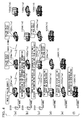
- FIG. 3 is a flowchart utilized to explain an example of operation of the mobile communication apparatus 1 shown in Fig. 1 .
- Fig. 4 is a diagram utilized to explain the example of the operation of the mobile communication apparatus 1 shown in Fig. 1 .
- parts indicated by (a) to (f) for the time line represent the state of a falling object 200 and the positional relationship between this object and the vehicles 100a to 100f.
- the vehicles 100a to 100f have the individual mobile communication apparatuses 1a to 1f.
- the vehicles 100a to 100f each receive abnormality detection information by means of the radio multi-hop communication utilizing the mobile communication apparatuses 1a to 1f (specifically, the communication unit 12) of the own vehicles, from any of the mobile communication apparatuses 1a to 1f of the other vehicles.
- the vehicles 100a to 100f each duplicate the abnormality detection information received by the mobile communication apparatuses 1a to 1f (specifically, the communication unit 12) of the own vehicles so as to transmit the duplicated abnormality detection information to the mobile communication apparatus 1 of another vehicle by means of the radio multi-hop communication.
- the communicable range between the vehicles 100a to 100f by means of the radio multi-hop communication is approximately 200m.
- the vehicle 100a is closest to the falling object 200, and vehicles 100b to 100d (which follow the vehicle 100a) are driving in the same direction at specific intervals.
- the vehicles 100a and 100b are driving with an interval of approximately 200m, and the vehicles 100b and 100c are also driving with an interval of approximately 200m
- a radio signal transmitted from the mobile communication apparatus 1 a of the vehicle 1 a is received by the mobile communication apparatus 1b of the vehicle 100b.
- a radio signal transmitted from the mobile communication apparatus 1b of the vehicle 1b is received by the mobile communication apparatus 1c of the vehicle 100c.
- the distance between the vehicle 100c and the vehicle 100d is greater than the possible distance (200m in the present embodiment) for the radio multi-hop communication, a radio signal transmitted from the mobile communication apparatus 1c of the vehicle 100c is not received by the mobile communication apparatus 1d of the vehicle 100d.
- part (b) of Fig. 4 shows a state after a few minutes passed from the state shown in part (a) of Fig. 4 .
- the mobile communication apparatus 1a of the vehicle 100a has already passed the position of the falling object 200 while the vehicle 100b is closest to the falling object 200, where the vehicles 100c to 100e (which follow the vehicle 100b) are driving in the same direction at specific intervals.
- each operation of the mobile communication apparatuses 1a to 1f starts when the relevant abnormality detecting unit 11 detects a falling object (see step S1). While the abnormality detecting unit 11 detects no falling object, a standby state is continued or a detecting process is repeatedly performed by the abnormality detecting unit 11 in step S 1.
- the determination unit 121 in the abnormality detecting unit 11a of the vehicle 100a executes a determination process in step S2. Specifically, the determination unit 121 in the abnormality detecting unit 11a of the vehicle 100a determines whether or not the falling object 200 detected (or found) by the own abnormality detecting unit 11 coincides with an abnormality indicated by the abnormality detection information which has previously been received from another vehicle.
- Such determination whether or not the abnormality detected by the own abnormality detecting unit 11 coincides with the abnormality detected by another vehicle can be performed based on whether or not the type and position of the abnormality detected by the own abnormality detecting unit 11 coincide with the type and position of the abnormality included in the received abnormality detection information.
- the position of the abnormality here, the position of the obstacle 200 as the abnormality occurrence point
- coincidence is determined based in consideration of an error pertaining to the position detecting device (e.g., an apparatus which utilizes GPS).
- the mobile communication apparatus 1a of the vehicle 100a has received no abnormality detection information that indicates the same abnormality as that detected by the own abnormality detecting unit 11.
- the determination unit 121 of the mobile communication apparatus 1 a determines that no abnormality identical to an abnormality indicated by previously-received abnormality detection information is detected by the own abnormality detecting unit 11 (i.e., "NO" in step S2).
- the communication unit 12 in the mobile communication apparatus 1a of the vehicle 100a transmits abnormality detection information that indicates the falling object 200 according to the result of the determination by the determination unit 121 (see step S3).
- the abnormality detection information includes type information which indicates that the abnormality is the falling object 200, position information that indicates the position at which the abnormality was detected (i.e., abnormality occurrence point), and the number of times of transmission.
- the abnormality detection information that includes information (about "falling object") as the type of the abnormality and information about the longitude and latitude as the position information is associated with information that indicates the number "1" of times of transmission.
- the associated information items are transmitted from the mobile communication apparatus 1 a of the vehicle 100a and then received by the mobile communication apparatus 1b of the vehicle 100b.
- the mobile communication apparatus 1b of the vehicle 100b transmits (i.e., transfers) abnormality detection information, that indicates an abnormality of the identical content, to the mobile communication apparatus 1c of the vehicle 100c.
- the mobile communication apparatuses 1 b and 1c of the vehicles 100b and 100c each compute, based on the position of the falling object 200 (abnormality occurrence point) and the position of the own vehicle at the time when the abnormality detection information is received, the distance between the position of the falling object 200 (i.e., abnormality occurrence point) and the position of the own vehicle and store the computed distance in a predetermined storage device.
- the mobile communication apparatus 1b of the vehicle 100b when the mobile communication apparatus 1b of the vehicle 100b receives the abnormality detection information from the vehicle 100a, the mobile communication apparatus 1b is located away from the position of the falling object 200 (i.e., abnormality occurrence point) by 200m.
- the mobile communication apparatus 1c of the vehicle 100c receives the abnormality detection information from the mobile communication apparatus 1 b, the mobile communication apparatus 1 c is located away from the position of the falling object 200 (i.e., abnormality occurrence point) by 400m.
- the abnormality detecting unit 11 of the mobile communication apparatus 1b of the vehicle 100b detects the falling object 200 (see step S1). Then the determination unit 121 in the abnormality detecting unit 11b of the vehicle 100b executes the determination process in step S2.
- the determination unit 121 in the abnormality detecting unit 11b of the vehicle 100b determines whether or not the falling object 200 detected by the own vehicle coincides with an abnormality indicated by the abnormality detection information which has previously been received from another vehicle.
- the abnormality detection information received by the abnormality detecting unit 11b of the vehicle 100b from the abnormality detecting unit 11a of the vehicle 100a is information which indicates that the identical falling object 200 is detected.
- the determination unit 121 of the mobile communication apparatus 1b determines that the abnormality detected by the own abnormality detecting unit 11 coincides with the abnormality indicated by the previously-received abnormality detection information (i.e., "YES" in step S2).
- the determination unit 121 in the mobile communication apparatus 1b of the vehicle 100b determines whether or not the distance between the falling object 200 and the own vehicle at the time when the abnormality detection information that indicates the identical abnormality was received, is greater than or equal to a threshold (see step S4).
- the determination unit 121 in the mobile communication apparatus 1b of the vehicle 100b determines whether or not the distance between the falling object 200 and the vehicle 100b at the time when the falling object 200 was detected by the abnormality detecting unit 11 of the mobile communication apparatus 1a of the vehicle 100a, is greater than or equal to the threshold.
- step S4 if the abnormality detection information for the identical content has been received several times from a preceding vehicle, the determination unit 121 of the mobile communication apparatus 1 b compares with the predetermined threshold, the distance between the falling object 200 and the own vehicle at the time when the abnormality detection information having the largest number of times of transmission (i.e., the latest information) among the plurality of the abnormality detection information items was received.
- the mobile communication apparatus 1b of the vehicle 100b has received the abnormality detection information (whose "number of times of transmission" is 1) only once, that is, has never received the abnormality detection information (that indicates the falling object 200) whose number of times of transmission is 2 or more.
- the distance utilized in step S4 from the abnormality occurrence point (indicated by the received abnormality detection information) to the own position at which the relevant abnormality is detected may be set based on the number of hops for radio multi-hop communication, to approximately 80% of a distance within which the radio multi-hop communication can be performed. More specifically, if the number of hops (i.e., the number of radio stations for relay operation) for the radio multi-hop communication is 1 and the reach distance utilizing 1 (hop) is approximately 400m, the threshold can be set to approximately 350m. Below, it is assumed that the threshold for the distance is 350m.
- the distance between the falling object 200 and the own vehicle when the mobile communication apparatus 1b of the vehicle 100b receives the abnormality detection information from the mobile communication apparatus 1a of the vehicle 100a is 200m. Therefore, the result of the determination for step S4 performed by the determination unit 121 of the mobile communication apparatus 1b is "NO". Accordingly, the communication unit 12 of the mobile communication apparatus 1b performs no retransmission (transfer) of the abnormality detection information that indicates the abnormality detected by the own abnormality detecting unit 11 (see step S5).
- step S1 the determination unit 121 in the abnormality detecting unit 11c of the vehicle 100c executes the determination process in step S2.
- the determination unit 121 in the abnormality detecting unit 11c of the vehicle 100c determines whether or not the detected falling object 200 coincides with an abnormality indicated by the abnormality detection information which has previously been received from another vehicle.
- the abnormality detection information received by the abnormality detecting unit 11c of the vehicle 100c from the abnormality detecting unit 11b of the vehicle 100b is information about the falling object 200 for which the number of times of transmission is 1. Accordingly, the determination unit 121 of the mobile communication apparatus 1c determines that the detected abnormality coincides with the abnormality indicated by the previously-received abnormality detection information (i.e., "YES" in step S2).
- the determination unit 121 in the mobile communication apparatus 1c of the vehicle 100c determines whether or not the distance between the position of the detected abnormality (i.e., abnormality occurrence point) and the own vehicle at the time when the abnormality indicated by the received abnormality detection information was detected, is greater than or equal to the threshold (see step S4).
- the distance between the falling object 200 and the own vehicle (specifically, the mobile communication apparatus 1c) when the mobile communication apparatus 1c of the vehicle 100c receives the abnormality detection information from the mobile communication apparatus 1b of the vehicle 100b is 400m (see part (a) of Fig. 4 ). Since the threshold of the present embodiment is 350m, the result of the determination for step S4 by the determination unit 121 of the mobile communication apparatus 1c is "YES", and the communication unit 12 retransmits the abnormality detection information (see step S6).
- the communication unit 12 of the mobile communication apparatus 1c increases the number of times of transmission for the abnormality detection information to be retransmitted by 1, that is, sets the relevant number to 2. That is, the abnormality detection information that includes information such as "falling object” as the type of the abnormality and information about the longitude and latitude as the position information is associated with the number "2"of times of transmission.
- the associated information items are transmitted from the mobile communication apparatus 1c of the vehicle 100c and then received by the mobile communication apparatus 1 d of the vehicle 100d.
- the mobile communication apparatus 1d of the vehicle 100d transmits abnormality detection information, that has the same content as that of the received information, to the mobile communication apparatus 1e of the vehicle 100e.
- the mobile communication apparatuses 1d and 1e of the vehicles 100d and 100e each compute the distance between the position of the falling object 200 (i.e., abnormality occurrence point) and the position of the own vehicle at the time when the information transmitted from the mobile communication apparatus 1c is received and store the computed distance in a predetermined storage device.
- the mobile communication apparatus 1d of the vehicle 100d when the mobile communication apparatus 1d of the vehicle 100d receives the abnormality detection information from the mobile communication apparatus 1c of the vehicle 100c, the mobile communication apparatus 1d is located away from the position of the falling object 200 (i.e., abnormality occurrence point) by 200m.
- the mobile communication apparatus 1e of the vehicle 100e receives the abnormality detection information from the mobile communication apparatus 1d of the vehicle 100d
- the mobile communication apparatus 1c is located away from the position of the falling object 200 (i.e., abnormality occurrence point) by 400m.
- the information terminal apparatus 1d stores in the own storage device, information which indicates that the distance from the falling object 200 is 200m.
- the information terminal apparatus 1e stores in the own storage device, information which indicates that the distance from the falling object 200 is 400m.
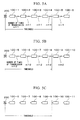
- Figs. 5A to 5C are schematic plan views that indicate the falling object 200, the threshold utilized to determine the necessity of the transmission of the abnormality detection information that indicates the abnormality detected by the own abnormality detecting unit, and the position relationship between a plurality of vehicles 100-1 to 100-11.
- the threshold here is explained as distance, any manner may be employed if the threshold represents a positional relationship between the falling object 200 and the own vehicle by utilizing the number of hops or time, as described above.
- the vehicles 100-1 to 100-11 each include the mobile communication apparatus 1.
- Fig. 5A represents a state in which the vehicle 100-1 comes close to the falling object 200, and the abnormality detecting unit 11 of the mobile communication apparatus 1 in the vehicle 100-1 detects the falling object 200.
- Fig. 5B represents a state appearing after an elapse of a few seconds from the state shown in Fig. 5A , where the vehicle 100-5 comes close to the falling object 200, and the abnormality detecting unit 11 of the mobile communication apparatus 1 in the vehicle 100-5 detects the falling object 200.
- Fig. 5C represents a state appearing after an elapse of a few seconds from the state shown in Fig. 5B , where the vehicle 100-6 comes close to the falling object 200, and the abnormality detecting unit 11 of the mobile communication apparatus 1 in the vehicle 100-6 detects the falling object 200.
- abnormality detection information with which information that indicates that the number of times of transmission is 1 is associated, is transmitted from the mobile communication apparatus 1 of the vehicle 100-1. Then the identical information is transmitted by means of the radio multi-hop communication to the mobile communication apparatuses 1 of the vehicles 100-2 to 100-6 sequencially.
- the distance between the falling object 200 and the own vehicle at the time when the abnormality detection information transmitted from the mobile communication apparatus I of the vehicle 100-1 is received is greater than or equal to the predetermined threshold.
- each mobile communication apparatus 1 of the vehicles 100-2 to 100-6 the following information items are stored: (i) information in which the abnormality detection information that indicates the falling object 200 is associated with information which indicates that the number of times of transmission is 1 and (ii) a result of computation of each distance from the position of the falling object 200 (i.e., abnormality occurrence point) to the own vehicle.
- abnormality detection information which indicates that the number of times of transmission is 2, is transmitted to a following vehicle from the mobile communication apparatus 1 of the vehicle 100-5 (see step S6 in Fig. 3 ). Then the mobile communication apparatuses 1 of the vehicles 100-6 to 100-10 transmits the identical information sequencially, by means of the radio multi-hop communication.
- the following information items are stored: (i) information in which the abnormality detection information that indicates the falling object 200 is associated with information which indicates that the number of times of transmission is 2 and (ii) a result of computation of the distance from the position of the falling object 200 (i.e., abnormality occurrence point) to the own vehicle (in this case, the distance is less than the threshold).
- step S2 when the abnormality detecting unit 11 of cellular phone terminal 1 in the vehicle 100-6 detects the falling object 200, the determination result of step S2 is "YES" while the determination result of step S4 is "NO". The operation in this case will be specifically explained.
- the storage device of the mobile communication apparatus 1 of the vehicle 100-6 stores the abnormality detection information that indicates the falling object 200, with which the information, which indicates that the number of times of transmission is 1, is associated.
- this storage device also stores the abnormality detection information that indicates the falling object 200, with which the information, which indicates that the number of times of transmission is 2, is associated.
- the determination unit 121 of the mobile communication apparatus 1 of the vehicle 100-6 determines whether or not the distance between the position of the falling object 200 (i.e., abnormality occurrence point) and the vehicle 100-6 at the time when the abnormality detection information (with which the information which indicates that the number of times of transmission is 2 is associated) was received is greater than or equal to the threshold.
- the determination unit 121 determines that no abnormality detection information that indicates the abnormality detected by the abnormality detecting unit 11 is not to be transmitted. Accordingly, no abnormality detection information that indicates the falling object 200 is not transmitted from the mobile communication apparatus 1 of the vehicle 100-6.
- a plurality of vehicles in the present example, vehicles 100-5 and 100-6 are present at positions by which the distance between the falling object 200 and the own vehicle exceeds the threshold, it is possible to prevent frequent retransmission of the identical abnormality detection information.
- the present embodiment has a function of communicating information to a following vehicle by means of the radio multi-hop communication that utilizes the inter-vehicle communication and also has a function of detecting a falling object or another abnormality on a road by using a camera built in the own vehicle, or the like.
- the vehicle which has detected the abnormality communicates detection information to a following vehicle by means of the radio multi-hop communication that utilizes the inter-vehicle communication.
- the mobile communication apparatus 1 of a following vehicle confirms whether or not information that indicates the identical abnormality was previously obtained when the preceding vehicle detected the abnormality. If such information was previously received, the relevant mobile communication apparatus 1 does not function as a parent for the radio multi-hop communication, that is, does not transmit information to a following vehicle.
- the distance or position at which the own vehicle received the information is stored, and if the distance between the position of the own vehicle and the abnormality occurrence point is greater than or equal to a fixed value, the following operation is performed. That is, if the abnormality remains when the own vehicle passes the abnormality occurrence point, the relevant information is retransmitted. This is performed so as to prevent a situation in which a following vehicle, that received no abnormality detection information via the radio multi-hop communication when a preceding vehicle detected an abnormality, cannot recognize the same abnormality until the own vehicle detects the abnormality.
- abnormality detection information that indicates the detected abnormality is transmitted (or transferred) so that the information can also be communicated to each vehicle which could not obtain the abnormality detection information transmitted by the mobile communication apparatus 1 of a preceding vehicle prior to the detection of the own vehicle.
- an information reducing function is provided and it is possible to solve a problem such that the available communication band is tightened if message transmission is preformed every time an abnormality is detected.
- the distance determination in step S4 of Fig. 3 can be performed based on the number of hops (i.e., the number of actual radio relay stations when the relevant information is received via multi-hop communication). More specifically, the number of hops denotes the number of mobile communication apparatuses 1 that transfer (i.e., relay), by means of inter-vehicle radio multi-hop communication, information transmitted from a parent mobile communication apparatus 1 (which issues novel information).
- the number of hops denotes the number of mobile communication apparatuses 1 that transfer (i.e., relay), by means of inter-vehicle radio multi-hop communication, information transmitted from a parent mobile communication apparatus 1 (which issues novel information).
- the communication unit 12 of each mobile communication apparatus 1 associates the information (communicated between the individual mobile communication apparatuses 1) with information that indicates the number of hops.
- the communication unit 12 receives the relevant abnormality detection information, the number of hops computed when the own communication unit 12 transfers the relevant abnormality detection information via the radio multi-hop communication is stored.
- the determination in step S4 of Fig. 3 for the distance between the abnormality occurrence point and the own vehicle may also be performed based on time difference between the abnormality detection time of another vehicle that transmitted relevant information and the abnormality detection time of the own vehicle.
- the communication unit 12 of the mobile communication apparatus 1 transmits information (i.e., to be transmitted between the individual mobile communication apparatuses 1) in which abnormality detection information that indicates an abnormality detected by the abnormality detecting unit 11 is associated with information that indicates the time at which the abnormality is detected.
- information that indicates the reception time is associated with the received information and stored in an own storage device.
- a program for executing the functions of individual functional units for the present invention may be stored in a computer readable storage medium, and the program stored in the storage medium may be loaded and executed on a computer system, so as to perform the relevant functions.
- the computer system has hardware resources which may include an OS and peripheral devices.
- the computer system also has a WWW system that provides a homepage service (or viewable) environment.
- the above computer readable storage medium is a storage device, for example, a portable medium such as a flexible disk, a magneto optical disk, a ROM, or a CD-ROM, or a memory device such as a hard disk built in a computer system.
- the computer readable storage medium also includes a device for temporarily storing the program, such as a volatile memory (RAM) in a computer system which functions as a server or client and receives the program via a network (e.g., the Internet) or a communication line (e.g., a telephone line).
- a volatile memory RAM
- a network e.g., the Internet
- a communication line e.g., a telephone line
- the above program stored in a memory device or the like of a computer system, may be transmitted via a transmission medium or by using transmitted waves passing through a transmission medium to another computer system.
- the transmission medium for transmitting the program has a function of transmitting data, and is, for example, a (communication) network such as the Internet or a communication line such (e.g., a telephone line).
- a (communication) network such as the Internet
- a communication line such (e.g., a telephone line).
- the program may execute part of the above-explained functions.
- the program may also be a "differential" program so that the above-described functions can be executed by a combination of the differential program and an existing program which has already been stored in the relevant computer system.
- the number of times of transmission of identical information can be reduced, and thereby it is possible to prevent the available communication band from being tightened due to unnecessary communication.
Landscapes
- Physics & Mathematics (AREA)
- General Physics & Mathematics (AREA)
- Atmospheric Sciences (AREA)
- Life Sciences & Earth Sciences (AREA)
- Engineering & Computer Science (AREA)
- Computing Systems (AREA)
- Health & Medical Sciences (AREA)
- General Health & Medical Sciences (AREA)
- Medical Informatics (AREA)
- Computer Networks & Wireless Communication (AREA)
- Signal Processing (AREA)
- Mobile Radio Communication Systems (AREA)
- Traffic Control Systems (AREA)
Applications Claiming Priority (2)
| Application Number | Priority Date | Filing Date | Title |
|---|---|---|---|
| JP2013017373 | 2013-01-31 | ||
| PCT/JP2014/052055 WO2014119650A1 (fr) | 2013-01-31 | 2014-01-30 | Appareil de communication mobile, procédé de communication mobile et programme |
Publications (3)
| Publication Number | Publication Date |
|---|---|
| EP2953384A1 true EP2953384A1 (fr) | 2015-12-09 |
| EP2953384A4 EP2953384A4 (fr) | 2016-08-17 |
| EP2953384B1 EP2953384B1 (fr) | 2017-11-01 |
Family
ID=51262361
Family Applications (1)
| Application Number | Title | Priority Date | Filing Date |
|---|---|---|---|
| EP14746060.4A Active EP2953384B1 (fr) | 2013-01-31 | 2014-01-30 | Appareil de communication mobile, procédé de communication mobile et programme |
Country Status (4)
| Country | Link |
|---|---|
| US (1) | US9552731B2 (fr) |
| EP (1) | EP2953384B1 (fr) |
| JP (1) | JP5949960B2 (fr) |
| WO (1) | WO2014119650A1 (fr) |
Families Citing this family (7)
| Publication number | Priority date | Publication date | Assignee | Title |
|---|---|---|---|---|
| JP6175917B2 (ja) * | 2013-06-06 | 2017-08-09 | 日本電気株式会社 | 車載通信装置、通信方法およびプログラム |
| WO2015063879A1 (fr) * | 2013-10-30 | 2015-05-07 | 三菱電機株式会社 | Dispositif de traitement d'informations, terminal d'informations, dispositif relais de communication d'informations, système de communication d'informations et procédé de traitement d'informations |
| JP6569413B2 (ja) * | 2015-09-14 | 2019-09-04 | 株式会社デンソー | 車両の逆走検知システム |
| JP7132834B2 (ja) * | 2018-11-29 | 2022-09-07 | 日立Astemo株式会社 | 車両制御装置、車両制御方法、及び車両追従走行システム |
| JP7247592B2 (ja) * | 2019-01-16 | 2023-03-29 | 株式会社デンソー | 異常検出装置、異常検出プログラム、異常検出方法及び異常検出システム |
| JP7118207B1 (ja) | 2021-04-23 | 2022-08-15 | 三菱電機株式会社 | 道路情報収集システムおよび道路情報収集方法 |
| JP7271638B1 (ja) * | 2021-11-09 | 2023-05-11 | 三菱電機株式会社 | 通信装置及び通信方法 |
Family Cites Families (12)
| Publication number | Priority date | Publication date | Assignee | Title |
|---|---|---|---|---|
| US6466862B1 (en) * | 1999-04-19 | 2002-10-15 | Bruce DeKock | System for providing traffic information |
| US6317058B1 (en) * | 1999-09-15 | 2001-11-13 | Jerome H. Lemelson | Intelligent traffic control and warning system and method |
| WO2005074167A2 (fr) * | 2004-01-29 | 2005-08-11 | Philips Intellectual Property & Standards Gmbh | Procede et appareil d'amelioration de la communication sans fil entre des vehicules motorises |
| CN101099346A (zh) | 2005-01-07 | 2008-01-02 | 皇家飞利浦电子股份有限公司 | 诸如车辆的移动节点之间的通信的通信装置、通信系统和方法 |
| US7899611B2 (en) * | 2006-03-03 | 2011-03-01 | Inrix, Inc. | Detecting anomalous road traffic conditions |
| US7912628B2 (en) * | 2006-03-03 | 2011-03-22 | Inrix, Inc. | Determining road traffic conditions using data from multiple data sources |
| KR100921001B1 (ko) * | 2007-12-12 | 2009-10-09 | 한국전자통신연구원 | 경고 메시지 송수신 방법 및 시스템 |
| JP5260991B2 (ja) * | 2008-03-11 | 2013-08-14 | 株式会社日立製作所 | 車載通信装置 |
| JP2010033346A (ja) | 2008-07-29 | 2010-02-12 | Toyota Motor Corp | 路車間通信システム |
| WO2010045966A1 (fr) * | 2008-10-21 | 2010-04-29 | Telefonaktiebolaget Lm Ericsson (Publ) | Appareil et procédé de transmission de données dans un système de communication de véhicule |
| JP5595170B2 (ja) * | 2010-08-06 | 2014-09-24 | 本田技研工業株式会社 | 車車間通信装置 |
| JP5644689B2 (ja) | 2011-06-15 | 2014-12-24 | 株式会社デンソー | 車両用無線通信装置および通信システム |
-
2014
- 2014-01-30 JP JP2014559734A patent/JP5949960B2/ja active Active
- 2014-01-30 WO PCT/JP2014/052055 patent/WO2014119650A1/fr not_active Ceased
- 2014-01-30 EP EP14746060.4A patent/EP2953384B1/fr active Active
- 2014-01-30 US US14/763,692 patent/US9552731B2/en active Active
Also Published As
| Publication number | Publication date |
|---|---|
| US20150356870A1 (en) | 2015-12-10 |
| JP5949960B2 (ja) | 2016-07-13 |
| EP2953384B1 (fr) | 2017-11-01 |
| JPWO2014119650A1 (ja) | 2017-01-26 |
| EP2953384A4 (fr) | 2016-08-17 |
| WO2014119650A1 (fr) | 2014-08-07 |
| US9552731B2 (en) | 2017-01-24 |
Similar Documents
| Publication | Publication Date | Title |
|---|---|---|
| EP2953384B1 (fr) | Appareil de communication mobile, procédé de communication mobile et programme | |
| US11244565B2 (en) | Method and system for traffic behavior detection and warnings | |
| US9913104B2 (en) | Vehicle location services | |
| US10037683B1 (en) | Crash detection using GNSS velocity measurements and bus monitoring | |
| CN105684395B (zh) | 用于过滤的方法、过滤装置、接收器 | |
| US20070040700A1 (en) | Cellular-based preemption system | |
| KR20150044919A (ko) | 안전 메시지 정보를 전달하기 위한 방법들 및 장치 | |
| US10789841B2 (en) | System for communication between mobile bodies, mobile body transmission control device, and mobile body receiving control device | |
| CN115201765A (zh) | 用于雷达干扰减轻的方法 | |
| KR20160045745A (ko) | 지리적 좌표계에서 수신 회랑에 기반하여 필터링하는 차량 대 사물 수신기 | |
| JP2012085202A (ja) | 車両の位置情報を送受信可能な無線通信装置 | |
| US9626870B2 (en) | Method for communicating within an ad hoc-type motor vehicle communication system | |
| KR102419309B1 (ko) | 차량 대 차량 통신을 위한 방법 | |
| WO2014119196A1 (fr) | Appareil de communication mobile, station de base, appareil serveur, système de communication mobile, procédé et programme de communication mobile | |
| US10154393B2 (en) | Method, motor vehicle, and system for determining a transmission path | |
| US11627446B2 (en) | Inter-vehicle communication system and vehicle communication device | |
| KR20170091288A (ko) | 사고차량과 주변차량 간의 긴급 통신 연결 시스템 및 방법 | |
| US11032682B2 (en) | Method and apparatus for communication between vehicles and apparatus for using the same | |
| JP2018107798A (ja) | 第1の移動通信システムと第2の移動通信システムとの間の干渉を低減するための移動機器のための方法、装置及びコンピュータプログラム | |
| CN116195279A (zh) | 数据发送装置、数据发送方法、以及数据发送程序 | |
| JP4879278B2 (ja) | 無線通信システム及び無線通信装置 | |
| JPWO2020100204A1 (ja) | V2x車載器およびv2x中継器 | |
| WO2007052562A1 (fr) | Dispositif de communication d’unite mobile et programme | |
| KR101591707B1 (ko) | 차량 통신을 이용한 가상 공간 서비스 제공 방법 및 장치 | |
| JP2019040458A (ja) | 通信装置、通信システムおよび通信方法 |
Legal Events
| Date | Code | Title | Description |
|---|---|---|---|
| PUAI | Public reference made under article 153(3) epc to a published international application that has entered the european phase |
Free format text: ORIGINAL CODE: 0009012 |
|
| 17P | Request for examination filed |
Effective date: 20150829 |
|
| AK | Designated contracting states |
Kind code of ref document: A1 Designated state(s): AL AT BE BG CH CY CZ DE DK EE ES FI FR GB GR HR HU IE IS IT LI LT LU LV MC MK MT NL NO PL PT RO RS SE SI SK SM TR |
|
| AX | Request for extension of the european patent |
Extension state: BA ME |
|
| DAX | Request for extension of the european patent (deleted) | ||
| A4 | Supplementary search report drawn up and despatched |
Effective date: 20160714 |
|
| RIC1 | Information provided on ipc code assigned before grant |
Ipc: G08G 1/09 20060101ALI20160708BHEP Ipc: H04W 4/04 20090101AFI20160708BHEP |
|
| REG | Reference to a national code |
Ref country code: DE Ref legal event code: R079 Ref document number: 602014016618 Country of ref document: DE Free format text: PREVIOUS MAIN CLASS: H04W0004040000 Ipc: G08G0001096700 |
|
| RIC1 | Information provided on ipc code assigned before grant |
Ipc: G08G 1/0967 20060101AFI20170331BHEP |
|
| GRAP | Despatch of communication of intention to grant a patent |
Free format text: ORIGINAL CODE: EPIDOSNIGR1 |
|
| INTG | Intention to grant announced |
Effective date: 20170518 |
|
| GRAS | Grant fee paid |
Free format text: ORIGINAL CODE: EPIDOSNIGR3 |
|
| GRAA | (expected) grant |
Free format text: ORIGINAL CODE: 0009210 |
|
| AK | Designated contracting states |
Kind code of ref document: B1 Designated state(s): AL AT BE BG CH CY CZ DE DK EE ES FI FR GB GR HR HU IE IS IT LI LT LU LV MC MK MT NL NO PL PT RO RS SE SI SK SM TR |
|
| REG | Reference to a national code |
Ref country code: GB Ref legal event code: FG4D |
|
| REG | Reference to a national code |
Ref country code: CH Ref legal event code: EP Ref country code: AT Ref legal event code: REF Ref document number: 942751 Country of ref document: AT Kind code of ref document: T Effective date: 20171115 |
|
| REG | Reference to a national code |
Ref country code: IE Ref legal event code: FG4D |
|
| REG | Reference to a national code |
Ref country code: DE Ref legal event code: R096 Ref document number: 602014016618 Country of ref document: DE |
|
| REG | Reference to a national code |
Ref country code: NL Ref legal event code: MP Effective date: 20171101 |
|
| REG | Reference to a national code |
Ref country code: LT Ref legal event code: MG4D |
|
| REG | Reference to a national code |
Ref country code: AT Ref legal event code: MK05 Ref document number: 942751 Country of ref document: AT Kind code of ref document: T Effective date: 20171101 |
|
| PG25 | Lapsed in a contracting state [announced via postgrant information from national office to epo] |
Ref country code: NO Free format text: LAPSE BECAUSE OF FAILURE TO SUBMIT A TRANSLATION OF THE DESCRIPTION OR TO PAY THE FEE WITHIN THE PRESCRIBED TIME-LIMIT Effective date: 20180201 Ref country code: ES Free format text: LAPSE BECAUSE OF FAILURE TO SUBMIT A TRANSLATION OF THE DESCRIPTION OR TO PAY THE FEE WITHIN THE PRESCRIBED TIME-LIMIT Effective date: 20171101 Ref country code: FI Free format text: LAPSE BECAUSE OF FAILURE TO SUBMIT A TRANSLATION OF THE DESCRIPTION OR TO PAY THE FEE WITHIN THE PRESCRIBED TIME-LIMIT Effective date: 20171101 Ref country code: NL Free format text: LAPSE BECAUSE OF FAILURE TO SUBMIT A TRANSLATION OF THE DESCRIPTION OR TO PAY THE FEE WITHIN THE PRESCRIBED TIME-LIMIT Effective date: 20171101 Ref country code: LT Free format text: LAPSE BECAUSE OF FAILURE TO SUBMIT A TRANSLATION OF THE DESCRIPTION OR TO PAY THE FEE WITHIN THE PRESCRIBED TIME-LIMIT Effective date: 20171101 Ref country code: SE Free format text: LAPSE BECAUSE OF FAILURE TO SUBMIT A TRANSLATION OF THE DESCRIPTION OR TO PAY THE FEE WITHIN THE PRESCRIBED TIME-LIMIT Effective date: 20171101 |
|
| PG25 | Lapsed in a contracting state [announced via postgrant information from national office to epo] |
Ref country code: HR Free format text: LAPSE BECAUSE OF FAILURE TO SUBMIT A TRANSLATION OF THE DESCRIPTION OR TO PAY THE FEE WITHIN THE PRESCRIBED TIME-LIMIT Effective date: 20171101 Ref country code: IS Free format text: LAPSE BECAUSE OF FAILURE TO SUBMIT A TRANSLATION OF THE DESCRIPTION OR TO PAY THE FEE WITHIN THE PRESCRIBED TIME-LIMIT Effective date: 20180301 Ref country code: LV Free format text: LAPSE BECAUSE OF FAILURE TO SUBMIT A TRANSLATION OF THE DESCRIPTION OR TO PAY THE FEE WITHIN THE PRESCRIBED TIME-LIMIT Effective date: 20171101 Ref country code: GR Free format text: LAPSE BECAUSE OF FAILURE TO SUBMIT A TRANSLATION OF THE DESCRIPTION OR TO PAY THE FEE WITHIN THE PRESCRIBED TIME-LIMIT Effective date: 20180202 Ref country code: AT Free format text: LAPSE BECAUSE OF FAILURE TO SUBMIT A TRANSLATION OF THE DESCRIPTION OR TO PAY THE FEE WITHIN THE PRESCRIBED TIME-LIMIT Effective date: 20171101 Ref country code: RS Free format text: LAPSE BECAUSE OF FAILURE TO SUBMIT A TRANSLATION OF THE DESCRIPTION OR TO PAY THE FEE WITHIN THE PRESCRIBED TIME-LIMIT Effective date: 20171101 Ref country code: BG Free format text: LAPSE BECAUSE OF FAILURE TO SUBMIT A TRANSLATION OF THE DESCRIPTION OR TO PAY THE FEE WITHIN THE PRESCRIBED TIME-LIMIT Effective date: 20180201 |
|
| PG25 | Lapsed in a contracting state [announced via postgrant information from national office to epo] |
Ref country code: CZ Free format text: LAPSE BECAUSE OF FAILURE TO SUBMIT A TRANSLATION OF THE DESCRIPTION OR TO PAY THE FEE WITHIN THE PRESCRIBED TIME-LIMIT Effective date: 20171101 Ref country code: SK Free format text: LAPSE BECAUSE OF FAILURE TO SUBMIT A TRANSLATION OF THE DESCRIPTION OR TO PAY THE FEE WITHIN THE PRESCRIBED TIME-LIMIT Effective date: 20171101 Ref country code: EE Free format text: LAPSE BECAUSE OF FAILURE TO SUBMIT A TRANSLATION OF THE DESCRIPTION OR TO PAY THE FEE WITHIN THE PRESCRIBED TIME-LIMIT Effective date: 20171101 Ref country code: DK Free format text: LAPSE BECAUSE OF FAILURE TO SUBMIT A TRANSLATION OF THE DESCRIPTION OR TO PAY THE FEE WITHIN THE PRESCRIBED TIME-LIMIT Effective date: 20171101 Ref country code: CY Free format text: LAPSE BECAUSE OF FAILURE TO SUBMIT A TRANSLATION OF THE DESCRIPTION OR TO PAY THE FEE WITHIN THE PRESCRIBED TIME-LIMIT Effective date: 20171101 |
|
| REG | Reference to a national code |
Ref country code: DE Ref legal event code: R097 Ref document number: 602014016618 Country of ref document: DE |
|
| PG25 | Lapsed in a contracting state [announced via postgrant information from national office to epo] |
Ref country code: IT Free format text: LAPSE BECAUSE OF FAILURE TO SUBMIT A TRANSLATION OF THE DESCRIPTION OR TO PAY THE FEE WITHIN THE PRESCRIBED TIME-LIMIT Effective date: 20171101 Ref country code: RO Free format text: LAPSE BECAUSE OF FAILURE TO SUBMIT A TRANSLATION OF THE DESCRIPTION OR TO PAY THE FEE WITHIN THE PRESCRIBED TIME-LIMIT Effective date: 20171101 Ref country code: PL Free format text: LAPSE BECAUSE OF FAILURE TO SUBMIT A TRANSLATION OF THE DESCRIPTION OR TO PAY THE FEE WITHIN THE PRESCRIBED TIME-LIMIT Effective date: 20171101 Ref country code: SM Free format text: LAPSE BECAUSE OF FAILURE TO SUBMIT A TRANSLATION OF THE DESCRIPTION OR TO PAY THE FEE WITHIN THE PRESCRIBED TIME-LIMIT Effective date: 20171101 |
|
| REG | Reference to a national code |
Ref country code: CH Ref legal event code: PL |
|
| PLBE | No opposition filed within time limit |
Free format text: ORIGINAL CODE: 0009261 |
|
| STAA | Information on the status of an ep patent application or granted ep patent |
Free format text: STATUS: NO OPPOSITION FILED WITHIN TIME LIMIT |
|
| 26N | No opposition filed |
Effective date: 20180802 |
|
| GBPC | Gb: european patent ceased through non-payment of renewal fee |
Effective date: 20180201 |
|
| PG25 | Lapsed in a contracting state [announced via postgrant information from national office to epo] |
Ref country code: LU Free format text: LAPSE BECAUSE OF NON-PAYMENT OF DUE FEES Effective date: 20180130 Ref country code: FR Free format text: LAPSE BECAUSE OF NON-PAYMENT OF DUE FEES Effective date: 20180131 |
|
| REG | Reference to a national code |
Ref country code: IE Ref legal event code: MM4A |
|
| REG | Reference to a national code |
Ref country code: FR Ref legal event code: ST Effective date: 20180928 |
|
| REG | Reference to a national code |
Ref country code: BE Ref legal event code: MM Effective date: 20180131 |
|
| PG25 | Lapsed in a contracting state [announced via postgrant information from national office to epo] |
Ref country code: SI Free format text: LAPSE BECAUSE OF FAILURE TO SUBMIT A TRANSLATION OF THE DESCRIPTION OR TO PAY THE FEE WITHIN THE PRESCRIBED TIME-LIMIT Effective date: 20171101 Ref country code: CH Free format text: LAPSE BECAUSE OF NON-PAYMENT OF DUE FEES Effective date: 20180131 Ref country code: BE Free format text: LAPSE BECAUSE OF NON-PAYMENT OF DUE FEES Effective date: 20180131 Ref country code: LI Free format text: LAPSE BECAUSE OF NON-PAYMENT OF DUE FEES Effective date: 20180131 |
|
| PG25 | Lapsed in a contracting state [announced via postgrant information from national office to epo] |
Ref country code: IE Free format text: LAPSE BECAUSE OF NON-PAYMENT OF DUE FEES Effective date: 20180130 |
|
| PG25 | Lapsed in a contracting state [announced via postgrant information from national office to epo] |
Ref country code: GB Free format text: LAPSE BECAUSE OF NON-PAYMENT OF DUE FEES Effective date: 20180201 |
|
| PG25 | Lapsed in a contracting state [announced via postgrant information from national office to epo] |
Ref country code: MC Free format text: LAPSE BECAUSE OF FAILURE TO SUBMIT A TRANSLATION OF THE DESCRIPTION OR TO PAY THE FEE WITHIN THE PRESCRIBED TIME-LIMIT Effective date: 20171101 |
|
| PG25 | Lapsed in a contracting state [announced via postgrant information from national office to epo] |
Ref country code: MT Free format text: LAPSE BECAUSE OF NON-PAYMENT OF DUE FEES Effective date: 20180130 |
|
| PG25 | Lapsed in a contracting state [announced via postgrant information from national office to epo] |
Ref country code: TR Free format text: LAPSE BECAUSE OF FAILURE TO SUBMIT A TRANSLATION OF THE DESCRIPTION OR TO PAY THE FEE WITHIN THE PRESCRIBED TIME-LIMIT Effective date: 20171101 |
|
| PG25 | Lapsed in a contracting state [announced via postgrant information from national office to epo] |
Ref country code: PT Free format text: LAPSE BECAUSE OF FAILURE TO SUBMIT A TRANSLATION OF THE DESCRIPTION OR TO PAY THE FEE WITHIN THE PRESCRIBED TIME-LIMIT Effective date: 20171101 |
|
| PG25 | Lapsed in a contracting state [announced via postgrant information from national office to epo] |
Ref country code: HU Free format text: LAPSE BECAUSE OF FAILURE TO SUBMIT A TRANSLATION OF THE DESCRIPTION OR TO PAY THE FEE WITHIN THE PRESCRIBED TIME-LIMIT; INVALID AB INITIO Effective date: 20140130 Ref country code: MK Free format text: LAPSE BECAUSE OF NON-PAYMENT OF DUE FEES Effective date: 20171101 |
|
| PG25 | Lapsed in a contracting state [announced via postgrant information from national office to epo] |
Ref country code: AL Free format text: LAPSE BECAUSE OF FAILURE TO SUBMIT A TRANSLATION OF THE DESCRIPTION OR TO PAY THE FEE WITHIN THE PRESCRIBED TIME-LIMIT Effective date: 20171101 |
|
| PGFP | Annual fee paid to national office [announced via postgrant information from national office to epo] |
Ref country code: DE Payment date: 20260121 Year of fee payment: 13 |