EP2954744B1 - Attribution d'un mode de gestion de ressources radio dispositif à dispositif - Google Patents
Attribution d'un mode de gestion de ressources radio dispositif à dispositif Download PDFInfo
- Publication number
- EP2954744B1 EP2954744B1 EP15710603.0A EP15710603A EP2954744B1 EP 2954744 B1 EP2954744 B1 EP 2954744B1 EP 15710603 A EP15710603 A EP 15710603A EP 2954744 B1 EP2954744 B1 EP 2954744B1
- Authority
- EP
- European Patent Office
- Prior art keywords
- mobile radio
- resource allocation
- radio communications
- communication
- mode
- Prior art date
- Legal status (The legal status is an assumption and is not a legal conclusion. Google has not performed a legal analysis and makes no representation as to the accuracy of the status listed.)
- Active
Links
Images



Classifications
-
- H—ELECTRICITY
- H04—ELECTRIC COMMUNICATION TECHNIQUE
- H04W—WIRELESS COMMUNICATION NETWORKS
- H04W72/00—Local resource management
- H04W72/50—Allocation or scheduling criteria for wireless resources
- H04W72/51—Allocation or scheduling criteria for wireless resources based on terminal or device properties
-
- H—ELECTRICITY
- H04—ELECTRIC COMMUNICATION TECHNIQUE
- H04W—WIRELESS COMMUNICATION NETWORKS
- H04W24/00—Supervisory, monitoring or testing arrangements
- H04W24/10—Scheduling measurement reports ; Arrangements for measurement reports
-
- H—ELECTRICITY
- H04—ELECTRIC COMMUNICATION TECHNIQUE
- H04W—WIRELESS COMMUNICATION NETWORKS
- H04W4/00—Services specially adapted for wireless communication networks; Facilities therefor
- H04W4/70—Services for machine-to-machine communication [M2M] or machine type communication [MTC]
-
- H—ELECTRICITY
- H04—ELECTRIC COMMUNICATION TECHNIQUE
- H04W—WIRELESS COMMUNICATION NETWORKS
- H04W72/00—Local resource management
- H04W72/04—Wireless resource allocation
-
- H—ELECTRICITY
- H04—ELECTRIC COMMUNICATION TECHNIQUE
- H04W—WIRELESS COMMUNICATION NETWORKS
- H04W72/00—Local resource management
- H04W72/12—Wireless traffic scheduling
-
- H—ELECTRICITY
- H04—ELECTRIC COMMUNICATION TECHNIQUE
- H04W—WIRELESS COMMUNICATION NETWORKS
- H04W76/00—Connection management
- H04W76/10—Connection setup
- H04W76/14—Direct-mode setup
-
- H—ELECTRICITY
- H04—ELECTRIC COMMUNICATION TECHNIQUE
- H04W—WIRELESS COMMUNICATION NETWORKS
- H04W72/00—Local resource management
- H04W72/04—Wireless resource allocation
- H04W72/044—Wireless resource allocation based on the type of the allocated resource
Definitions
- the present invention relates to Device-to-Device (D2D) radio resource management and in particularly to a method and related system and communication terminal devices for assigning a radio resource allocation-mode to a mobile radio communications device for D2D communication within a wireless communications network environment.
- D2D Device-to-Device
- LTE-A Long Term Evolution-Advance
- 3GPP 3 rd Generation Partnership Project
- UMTS Universal Mode Telecommunications System
- D2D represents an example of such Proximity Services (ProSe) and the terms can be considered as equivalent and interchangeable when used herein.
- Examples of such ProSe devices comprise cellular network User Equipment (UE) devices in which the UEs transmit data signals to each other by way of direct signalling using cellular resources but without the signalling passing through a network base station such as an eNB.
- UE User Equipment
- the facilitation of D2D communication within a cellular network environment offers a wide variety of advantages such as those arising from the offloading of communication between two UEs from the wireless network, and improvements to local area coverage and resource efficiency, whilst also decreasing the required transmitter power of the UEs.
- 3rd Generation Partnership Project Technical Specification Group Radio Access Network; Study on LTE Device to Device Proximity Services; Radio Aspects (Release 12)" 3GPP STANDARD; 3GPP TR 36.843 is a Technical Report which discloses that a UE can operate in two modes of resource allocation: Mode 1 in which eNode B or Release-10 relay node schedules the exact resources used by the UE to transmit direct data and direct control information; and Mode 2 in which a UE on its own selects resources from resource pools to transmit direct data and direct control information.
- WO 2013/103839 discloses a system that operates a user equipment as a serving user equipment in a personal cell.
- the user equipment is configured to receive a communication resource from a base station to operate as a serving user equipment in a personal cell, the communication resource including a personal cell ID, and transmit in a cellular downlink the personal cell ID and control channel information included in the communication resource to a second user equipment.
- the communication resource can comprise a downlink of a cellular network for data transmission by the user equipment to the second user equipment.
- EP 3 100 546 discloses methods, systems, and devices for switching a mode of operations in device to device (D2D) communications.
- a UE within the coverage area of a base station may communicate directly with other UEs using a centralized transmission resource schedule.
- the UE Prior to experiencing radio link failure (RLF), the UE may determine that switching parameters have been met and transition to an intermediate mode based on a distributed transmission schedule using a pool of resources established by the base station.
- the switching parameters may be received from the base station in a connection response message.
- the UE may send a switching request to the base station prior to initiating the transition to the intermediate mode.
- the UE may experience a radio link failure and transition to a distributed mode using a predetermined pool of resources.
- EP 2 869 649 A1 discloses a method to operate a device-to-device communications device in two modes for resource allocation, comprising a scheduled resource allocation mode and an autonomous resource selection mode.
- the base station transmit a switch request to a different mode to the D2D device in certain circumstances , like for example an excessive number of D2D devices, or a change of the interference situation.
- the present invention seeks to provide for a method and related system of facilitating D2D communication within a wireless communication network environment and having advantages over known such methods and systems and for example as regards efficiencies of operation and the deployment of radio resources.
- the methods described herein can prove beneficial in providing an advantageous procedure for a mobile radio communications device to identify the appropriate radio resource allocation mode to be employed.
- Such advantages arise in particular insofar as the mobile radio communications network within which the device-to-device communication is to be provided can support more than one radio resource allocation mode simultaneously.
- the subject matter described can prove advantageous in readily allowing for the provision of an appropriate level of QoS and/or use of D2D radio resources. If required, a trade-off or balance between QoS and resource can be readily achieved with regard to network capacity.
- signalling can be delivered from the network allowing the mobile radio communications device to identify the said initial radio resource allocation mode.
- Such signalling can be provided within a System Information Broadcast employed.
- Such advantages arise in particular insofar as the mobile radio communications network within which the device-to-device communication is to be provided can support more than one radio resource allocation mode simultaneously.
- the present invention can prove advantageous in readily allowing for the provision of an appropriate level of QoS and/or use of D2D radio resources. If required, a trade-off or balance between QoS and resource can be readily achieved with regard to network capacity.
- signalling can be delivered from the network allowing the mobile radio communications device to identify the said initial radio resource allocation mode.
- SIB System Information Broadcast
- IE new Information Element
- the configuration data can advantageously include a maximum number of radio resources to be offered to the mobile radio communications device.
- the configuration data can include parameters relating to the length of time the mobile radio communication device remains in the said authorized mode.
- the said at least one operational requirement can be that the mobile radio communication device should only use the authorized mode during a certain time period.
- the operation requirement can be that the mobile radio communications device should employ the authorized mode only for a certain number of Resource Blocks.
- the operational requirement can be that the mobile radio communications device should only use the authorized mode for a certain amount of data.
- the operational requirement can be that the mobile radio communication device employ the authorized mode only insofar as a minimum observed Quality of Service level is met.
- Such operational requirement in relation to QoS can employ a sub-parameter for QoS observation. Also a sub-parameter can be employed for checking the observed QoS.
- the method can employ a combination of any one or more of the aforementioned operational requirements and with any such combination of the requirements being included on a logical "AND”, a logical “OR”, or indeed any other logical-operator basis.
- the method can employ a step of the device reporting to the network if at least one operational requirement of the mobile radio communications device is no longer met.
- the said operational requirement can also relate to a reporting option of the mobile radio communications device.
- one reporting option can be employed for the mobile radio communications device to determine if it is expected to report to the network.
- a reporting option can be employed for the mobile radio communications device to determine if it is expected to report to the network on a periodic basis.
- the frequency of such periodic reports can likewise be indicated within the reporting option.
- the operational requirement can comprise a reporting option serving to identify the metrics to be used for reporting.
- the authorized mode comprises a radio resource allocation autonomous mode.
- the said initial radio resource allocation mode can comprise a radio resource allocation autonomous mode.
- the initial mode can comprise a radio resource allocation scheduled mode.
- the method can employ a step, prior to the signalling of the configuration data, of the mobile radio communications device sending a D2D service request signal to the network.
- An example can further employ a step of the network authorizing autonomous mode employment in response to the said request.
- the network can advantageously identify all mobile radio communication devices within the network environment able to employ D2D communication.
- the network can advantageously predict the likely load on an autonomous mode pool of autonomous mode radio resource allocations to be authorized.
- the signalling carrying the configuration data can be implemented employing a new Medium Access Control (MAC) element and the configuration data can be delivered as a new information element by SIB, or a MAC control element or by way of a Radio Resource Control (RRC) dedicated message.
- MAC Medium Access Control
- RRC Radio Resource Control
- a system for assigning a radio resource allocation mode to a mobile radio communications device for device to device communication within a wireless communication network environment the mobile radio communications device of the system being arranged to identify an initial radio resource allocation mode, and the system further being arranged to signal from a network element to the mobile radio communication device network configuration data relating to an authorized radio resource allocation mode to be employed for device-to-device communication and defining at least one operational requirement of a mobile radio communications device when employing the said authorized mode.
- the system can exhibit advantages for a mobile radio communications device to identify the appropriate radio resource allocation mode to be employed.
- the system can be configured to receive signalling from the network and serving to identify the said initial radio resource allocation mode.
- the network can be arranged to provide configuration data including a maximum number of radio resources on offer to the mobile radio communications device. Also, the network can be arranged to provide configuration data including parameters relating to the length of time that the mobile radio communication device can remain in the said authorized mode.
- the said system can be arranged such that the said at least one operational requirement can comprise any one or more of:
- system can employ a combination of any one or more of the aforementioned operational requirements and with any such combination of the requirements being included on a logical "AND", a logical “OR” basis, or indeed any other logical operator basis.
- the mobile radio communications device of the system can be arranged to report to the network if at least one operational requirement of the mobile radio communications device is no longer met.
- the mobile radio communications device of the system can be arranged to determine if it is expected to report to the network on a periodic basis, and if so at what frequency.
- the mobile radio communications device can be arranged to send a D2D service request signal to the network and prior to the signalling of the configuration data from the network.
- the system can further be arranged such that, with the said initial mode comprising scheduled mode the network can identify all mobile radio communication devices within the network environment able to employ D2D communication.
- the system can operate according to any one or more of the further mentioned steps noted above.
- the network element can be arranged to deliver signalling is delivered from the network allowing the mobile radio communications device to identify the said initial radio resource allocation mode.
- the network element can be arranged to provide, such signalling within a System Information Broadcast (SIB) message and generally within a new Information Element (IE).
- SIB System Information Broadcast
- IE new Information Element
- the network element can be arranged to provide configuration data according to any one or more of the data and/or parameter features outlined above in relation to the described method.
- the network element can of course be arranged to assign an authorized mode comprising a radio resource allocation autonomous mode.
- the network element can be arranged to receive, prior to the signalling of the configuration data, a D2D service request from the mobile radio communications device.
- the network element can be arranged to identify all mobile radio communication devices within the network environment that might employ device-to-device communication.
- a mobile radio communications device arranged for D2D communication within a wireless communication network and arranged to identify an initial radio resource allocation mode and subsequently to receive signalling from a network terminal containing configuration data relating to an authorized radio resource allocation mode to be employed for the device-to-device communication, and the configuration data defining at least one operational requirement of the mobile device when employing the said authorized radio resource allocation mode.
- the configuration data to be received and to-which the mobile radio communication device should be responsive can comprise any one or more of the elements, parameters and requirements outline above.
- the configuration data can advantageously include a maximum number of radio resources on offer to the mobile radio communications device.
- the mobile radio communications device is advantageously arranged to report to the network if at least one operational requirement of the mobile radio communications device is no longer met with the device.
- the operational requirement can relate to a reporting option of the mobile radio communications device.
- the method can employ a step prior to the signalling of the configuration data of the mobile radio communications device a device-to-device serving request signal.
- a method of receiving an assignment of a radio resource allocation mode at a mobile radio communications device for D2D communication within a wireless communication network environment including the step of identifying at the mobile radio communications device an initial radio resource allocation mode and further including the subsequent step of receiving at the mobile radio communications device signalling from the network including configuration data relating to an authorized radio resource allocation mode to be employed by the mobile radio communication device for the D2D communication, and including operational requirement of the mobile radio communications device when employing the said authorized mode.
- This yet another example exhibits advantages such as those noted above, and can also employ the further method steps noted above.
- a computer program product for a computer device, and including containing software code which, when loaded onto a computer device, is arranged to perform a method as outlined above.
- the computer program product can comprise a computer-readable medium and/or be directly loadable into the computer device.
- the particular illustrated example relates to an arrangement comprising a method and related system by which a mobile terminal device of a wireless communication network, such as for example a UE operating in a cellular network, can be authorized to employ an appropriate radio resource allocation mode so as to arrive at particular advantages with regard to Quality of Service levels and radio resource employment.
- a mobile terminal device of a wireless communication network such as for example a UE operating in a cellular network
- Autonomous Mode which is generally identified as "Type 1" for discovery signalling and “Mode 2" for communication signalling, allows a UE to perform D2D transmission autonomously and so thereby autonomously determine which radio resource to employ. Such determination can be based upon a multi-access protocol which, for example, can be similar to known CSMA-CA or WiFi multi-access protocols.
- the radio resources are then chosen by the UA in an autonomous manner from a pool of radio resources, which pool can be explicitly configured by the network.
- Such configuration can be provided by network terminal device, such as an eNB, and so that the resources are then made available for D2D transmission, and thus not permitted for use in legacy cellular uplink allocation.
- the eNB For Scheduled Mode allocation, generally identified within the context of 3GPP as "Type 2B" for discovery signalling and “Mode 1" for communication signalling, the eNB is arranged to allocate a particular radio resource to the UE for D2D signalling in a scheduled manner which can, for example, be similar to the manner employed for legacy cellular uplink allocation, and as in response to a request from the UE.
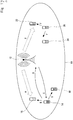
- Fig. 1 provides a schematic illustration of such potential common deployment of resource allocation modes within a common network environment.
- the common network environment comprises a cell 10 of a cellular network and illustrated with its network terminal device, eNB 12.
- UEs 14, 16 and 18 are arranged to seek radio resources by way of D2D Scheduled Mode resource allocation.
- the eNB transmits signalling A to the UEs 14, 16, 18 providing a D2D scheduled resource pool configuration.
- a particular one 14 of the UEs wishing to initiate D2D communication signalling then returns a D2D resource request B to the eNB 12 which, in turn, replies with a D2D resource response C assigning the particular radio resources to be employed by the UE 14 which can then commence its D2D transmission D as required.
- the eNB 12 provides signalling E to the UEs 20, 22, 24 providing a D2D autonomous resource pool configuration.
- This resource-pool configuration provides a list of radio resources that can be selected for use by the UE seeking to initiate D2D transmission.
- the UE 20 is arranged to select at least one radio resource from the resource pool received in signalling E from the eNB 12, and then to commence its D2D transmissions F in accordance with such radio resource(s).
- D2D Scheduled Mode dictates that UEs willing to transmit D2D information according to that mode should request radio resource scheduling whereas, for D2D Autonomous Mode, UEs willing to transmit D2D information should employ, and make a selection from, a configured autonomous mode resource pool.
- a particular example proposes new radio configuration parameters from the network to allow control of D2D Autonomous Mode in terms of radio resource usage and transmission behaviour. Further, novel indications can also be sent by the D2D UEs to the network to adapt the radio resource used for D2D autonomous mode according to the network need.
- the present example can prove particularly advantageous in addressing issues related to autonomous mode resource allocation and specifically to those relating to the radio resource pool employed for Autonomous Mode allocation.
- the Autonomous Mode pool is small having regard to the number of UEs seeking autonomous operation, this can lead to insufficient QoS for the proximity service users.
- the Autonomous Mode pool is too large having regard to the number of potential users, this can lead to inefficient use of the D2D radio resources particularly insofar as any such unused resources could be employed for legacy cellular communication which of course has an impact on network capacity.
- the eNB can decide, on an individual request basis, if the requesting UE should be served via SM or be allowed to use AM under certain conditions, such as for example related to time, observed quality of D2D service or transmitted data volume, and which can be prescribed by the eNB.
- an "authorized” UE can then use AM as long as the configured conditions are met. Subsequently it can send a new request to eNB (provided it still has data to transmit).
- a "Default AM Mode” the UEs are allowed to use AM, and thus have access to, and select from, the AM pool without prior authorization from the eNB.
- such UEs may either remain in AM indefinitely, or only as long as some condition on observed D2D QoS is met. It should be noted that even in the "indefinite use” configuration, the eNB may request optionally the reporting of observed QoS (either periodically or based on triggers). As an example, the "QoS" criteria can be based on various metrics associated with the protocol used in the AM pool.
- the functionality allows the eNB to control the use of AM in different ways, and advantageously making various policies/strategies available for network operators. Possible examples of the use of such functionality are outlined as follows.
- the first comprises a so-called pro-active tight-control approach and in which, starting from a default mode setting "Default SM", the eNB is aware of all UEs willing to use D2D and the eNB can dynamically predict the load of the AM pool. If it identifies some upcoming bottleneck, it can change the size of AM pool through a SIB change procedure. However, since this is likely only to have a "mid-term” effect, it can instantaneously move the requesting UEs to SM and therefore a different pool of resources. In the same way, eNB can predict under-use of AM pool and change its size if appropriate.
- the setting of conditions and associated values is particularly advantageous in allowing the eNB/operator to make trade-offs between control efficiency and signalling cost.
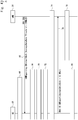
- FIG. 2 comprises an illustration of signalling between a eNB 26 and a UE 28 and related to the exemplary parameters, and wherein the network behaviour by involves "Scheduled Mode" resource allocation.
- the "DefaultProSeRRAMode” information is set to "SM” and is broadcast to all UEs camping on the cell or the " SM " is default UE implementation mode. Then at steps 32, 34, and for a UE 28 willing to transmit for D2D service, a random access or scheduled request procedure 32 is initiated and the UE 28 sends a MAC D2D Buffer Status Report 34 as a Radio Resource request to the eNB 26 according to the default behaviour.
- the eNB responds 36 to the request either by an individual allocation of Resource Blocks so that the SM is used to serve the UE, or by an explicit "AMAuthorization" message 38 sent to the requesting UE 28.
- This authorization includes a configuration defining the behavior expected of the UE 28 and a “AMAuthorizationCondition” parameter which describes the condition under which the authorization is given to the UE 28.
- a “AMReportingOptions” parameter is also included and which describes how the UE 28 is expected to report its use of AM.
- the authorization procedure continues such that at 40 the UE starts all internal processes related to the received authorized message 38, at 42 the UE can operate in AM for ProSe/D2D transmissions, and at 44 it is determined whether a "NbrOfTransmissionFailure" threshold has been reached.
- the UE stops using AM, and reports 46 to the eNB according to the "ReportingOption", using an "AMReport” message, possibly along with a new request for radio resources if more are needed.
- the eNB 28 may take further action based upon the UE "AMReport" message. Such further action can comprise control to move the UE 28 in SM mode if the amount of radio resources requested by the UE can be served in such mode, otherwise the UE is left in AM mode and the procedure can return to the step initiated by signalling 38.
- a second exemplary scenario is now described wherein the network behaviour radio resource by default comprises "Autonomous Mode" and is illustrated with reference to Fig. 3 again with an eNB 26 and UE 28 pair exchanging signalling.
- the "DefaultProSeRRAMode” information is set to “AM” 50 and is broadcast to all UEs camping on the cell or the " AM " is default UE implementation mode.
- a UE 28 willing to transmit as part of a D2D service is, by default, allowed to use the AM pool and internal processes 54, 55 and 56 start in the UE 28 to employ AM resource allocation. That is at 54 the UE 28 starts all internal processes related to received AMAuthorizationConditins, and can start computing AverageDataRate vaues. At 55 the UE operates in AM for ProSe/D2D transmissions and at 56 it is determined if the AvergaeDataRate threshold reached.
- a random access or scheduling request procedure 58 is initiated and the UE 28 can request/report 60 to the eNB 26 according to the "ReportingOption", using an "AMReport” message.
- a new request for radio resources can be made if more are needed.
- the eNB 28 can take further action upon receipt of the UE "AMReport" message.
- This further control action can comprise a move the UE in SM mode if the amount of radio resources requested can be served in such mode, otherwise the UE can be left functioning in AM mode and with a return to the procedure initiated by step.
- a further exemplary scenario is wherein the network behaviour by default is again "Autonomous Mode" and is illustrated with reference to Fig. 3 again with reference to eNB 26 and UE 28.
- the AM mode is to be applied as default but without conditions, i.e. only reporting requirements.
- the "DefaultProSeRRAMode” information is set to “AM” 64 and is broadcast to all UEs camping on the cell or the " AM " is default UE implementation mode.
- this by-default authorization includes a configuration 66 defining the behavior expected from all UEs in the cell when using AM for D2D services and which includes, an "AMReporting" parameter which describes the condition under which the authorization is given to the UE.
- a random access or scheduling request procedure 74 is initiated and the UE 28 can request/report 76 to the eNB 26 according to the "ReportingOption", using an "AMReport” message.
- a new request for radio resources can be made if more are needed.
- the eNB can as before take further action upon receipt of the UE "AMReport" message.
- Such controlling action can comprise an increase in AM pool size and if the pool sizes increased at 78, the UE can continue at 80 to operate in AM for D2D transmissions.
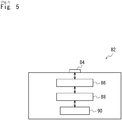
- FIG. 5 there is provided a schematic illustration of a network terminal device, such as an eNB 82 arranged to operate according to appropriate signalling steps of either of Figs 2 , 3 and 4 as discussed above.
- a network terminal device such as an eNB 82 arranged to operate according to appropriate signalling steps of either of Figs 2 , 3 and 4 as discussed above.
- the network terminal device 82 contains the functionality of an interface 84 connected to transmission/reception circuitry 86 which, in turn, is operatively connected to a controller 88 operatively connected to memory functionality 90.
- the controller 88 with the transmission/reception circuitry 86 and the memory functionality 90 for controlling both cellular signalling for the cellular communication between UE devices within its cell, and also D2D communication between such UE devices and as outlined in relation to the system and methods discussed above.
- the controller 88 when providing for D2D communication between UE devices, is first arranged to confirm a default radio resource allocation mode for the cell, so that UEs seeking D2D communication can identify the default mode.
- the controller 88 can determine whether or not the UE should change from the default mode and so whether or not to seek radio resource allocation via Autonomous Mode or Scheduled Mode.
- the controller 88 is arranged to forward authorisation signalling containing authorisation conditions/reporting parameters which the UE should meet if it is to continue to operate in Autonomous Mode.
- the controller 88 by way of the transmitter/receiver circuitry 86 is arranged to receive signalling reports from the UE indicating whether or not the operational requirements are still met, and so as to determine whether control signalling is to be subsequently issued to the UE to re-assert, or switch, the resource allocation mode.
- Fig. 6 comprises a schematic diagram of a mobile radio communications device such as a UE 92 including standard mobile radio communications device functionality such as an antenna 94 operatively connected to transmission/reception circuitry 96 operatively connected to control circuitry 98 which is in turn, connected to memory functionality 100 and a user interface 102.
- the control circuitry 98 includes first 104 and second 106 elements arranged to control the radio resource allocation mode adopted by the device 92. That is, a first element 104 of the control circuitry 98 is arranged via, the transmission/reception circuitry 96, to receive Autonomous Mode authorisation signalling from a network device, such as for example the eNB of Fig. 5 .
- the authorisation signalling includes one or more conditions relating to operational characteristics and/or reporting requirements to be met by the UE in order to continue to operate in accordance with the assigned Autonomous Mode.
- the first element 104 of the control circuitry is therefore arranged to identify such conditions and monitor on and ongoing basis whether such conditions continue to be met.
- the second element 106 of the control circuitry 98 is arranged to establish appropriate reporting signalling and transmit the same by way of the transmission/reception circuitry 96 to two the network device.
- the control circuitry 96 can then be arranged to receive further control signalling from the network device which can determine that are not Autonomous Mode operation is retained, or whether the radio resource allocation mode is switched to, for example, Schedule Mode as discussed above.
- the "AMAuthorizationConditions” parameter can take any one or more of the following values.
- AuthorizedDuration requires that the UE should only use AM during a certain time (value provided within the parameter).
- AuthorizedRBNb requires that the UE should only use AM for a certain number of Resource Blocks.
- AuthorizedDataTransfer requires that the UE should only use AM for a certain amount of data.
- MinimalOQoS requires that the UE should only use AM as long as a minimal observed QoS is met.
- the parameter includes a sub-parameter "AMOQoSMetrics" to be used for QoS observation.
- An example of such a metric is the actual rate of successful transmission of data transferred over a sliding window of time or a "MAxNbofTransmissionFailure”.
- a further sub-parameter "AMOQoSThreshold" can also be included and to be used for QoS checking.
- any one or more of the above conditions can form part of the configuration and in which case the UE should take into account a logical "AND" of all conditions present in the received configuration.
- AMAuthorizationConditions it can be determined at the UEs that there is no limit to the use of the AM and the AM pool.
- AMReportPeriod can be used for the UE to determine if it is expected to report to eNB on a periodical basis and, if so, at which level of periodicity.
- Signalling options for both scenarios can be as follows: "DefaultProSeRRAMode” information can be added to SIB messaging as a new IE. That is "SM” or “AM” can be defined as the default Radio Resource Allocator mode-setting if no information is present in the SIB.
- AMAuthorization can be implemented using a new MAC Control Element. Further AMAuthorization configuration parameters, such as “AMAuthorizationConditions” and “AMReportingOptions", can be carried either as a new IE by SIB (for cell-wide values) or AMAuthorization MAC CE (for UE-specific values) or by a new RRC dedicated message (for UE-specific values).
- SIB for cell-wide values
- AMAuthorization MAC CE for UE-specific values
- RRC dedicated message for UE-specific values
- the "AMReport” signalling can carry information such as "AMReportType" to indicate to an eNB whether this is a periodic report or one triggered by threshold-passing, or "AMReportOQoSMetricsType", which can have the same structure as in
- AMReportOQOSMetricsValue can serve to carry the actual value of the metric and can be implemented either as a new MAC Control Element, or as a new dedicated RRC message.
- the eNB could immediately serve a UE by way of Scheduled Mode allocation if problems are likely to be experienced in autonomous mode.
- the invention can enable a trade-off between signalling load and efficiency of autonomous pool management, typically by adjusting the duration of authorization.
- an eNB can determine which UEs are involved in D2D signalling at any particular time. This can prove further advantageous in providing greater accuracy than can be achieved by reference to the mere number of D2D capable UEs and can thereby allow for much more accurate, detailed, i.e. fine-grained, management of radio resources within a cell.
- Non-transitory computer readable media include any type of tangible storage media.
- Examples of non-transitory computer readable media include magnetic storage media (such as floppy disks, magnetic tapes, hard disk drives, etc.), optical magnetic storage media (e.g. magneto-optical disks), CD-ROM (Compact Disc-Read Only Memory), CD-R (CD-Recordable), CD-R/W(CD-ReWritable), and semiconductor memories (such as mask ROM, PROM (Programmable ROM), EPROM (Erasable PROM), flash ROM, RAM (Random Access Memory), etc.).
- the program may be provided to the computer device using any type of transitory computer readable media.
- Examples of transitory computer readable media include electric signals, optical signals, and electromagnetic waves.
- Transitory computer readable media can provide the program to the computer device via a wired communication line, such as electric wires and optical fibers, or a wireless communication line.
Landscapes
- Engineering & Computer Science (AREA)
- Computer Networks & Wireless Communication (AREA)
- Signal Processing (AREA)
- Mobile Radio Communication Systems (AREA)
Claims (8)
- Procédé d'indication de ressources radio conformément à un mode d'attribution de ressources radio à un dispositif de communication radio mobile (28) qui prend en charge la communication dispositif à dispositif dans un environnement de réseau de communication sans fil, dans lequel le dispositif de communication radio mobile (28) peut fonctionner dans deux modes d'attribution de ressources pour une communication dispositif à dispositif, les deux modes comprenant un mode d'attribution de ressources planifiée et un mode de sélection de ressources autonome, et dans lequel le dispositif de communication radio mobile est configuré pour utiliser une attribution de ressources planifiée pour la communication dispositif à dispositif, le procédé comportant les étapes de :signalement à partir d'une station de base (26) au dispositif de communication radio mobile (28) des premières données de configuration identifiant un ensemble de ressources radio que le dispositif de communication radio mobile (28) est autorisé à utiliser dans le mode de sélection de ressources autonome, lorsqu'au moins une condition est remplie, pour la communication dispositif à dispositif, et des deuxièmes données de configuration définissant une période de temps ;passage du dispositif de communication radio mobile (28) à l'utilisation de ladite sélection de ressources autonome pour la communication dispositif à dispositif lorsque l'au moins une condition est remplie, en utilisant ledit ensemble identifié par lesdites premières données de configuration, lorsqu'il est actuellement configuré pour utiliser une attribution de ressources planifiée pour la communication dispositif à dispositif;dans lequel ledit dispositif de communication radio mobile (28) utilise ledit ensemble identifié par lesdites premières données de configuration pendant la période de temps définie par les deuxièmes données de configuration signalées par la station de base (26).
- Système pour indiquer des ressources radio conformément à un mode d'attribution de ressources radio à un dispositif de communication radio mobile (28) qui prend en charge la communication dispositif à dispositif dans un environnement de réseau de communication sans fil, dans lequel le dispositif de communication radio mobile (28) peut fonctionner dans deux modes d'attribution de ressources pour la communication dispositif à dispositif, les deux modes comprenant un mode d'attribution de ressources planifiée et un mode de sélection de ressources autonome, et dans lequel le dispositif de communication radio mobile est configuré pour utiliser l'attribution de ressources planifiée pour la communication dispositif à dispositif;
le système étant configuré pour signaler à partir d'une station de base (26) au dispositif de communication radio mobile (28) des premières données de configuration identifiant un ensemble de ressources radio que le dispositif de communication radio mobile (28) est autorisé à utiliser dans le mode de sélection de ressources autonome , lorsqu'au moins une condition est remplie, pour une communication dispositif à dispositif, et des deuxièmes données de configuration définissant une période de temps ;
dans lequel le dispositif de communication radio mobile (28) est configuré pour passer à l'utilisation de ladite sélection de ressources autonome pour la communication dispositif à dispositif lorsque l'au moins une condition est remplie, en utilisant ledit ensemble identifié par lesdites premières données de configuration, lorsqu'il est actuellement configuré pour utiliser une attribution de ressources planifiée pour la communication dispositif à dispositif ; et
dans lequel ledit dispositif de communication radio mobile (28) est configuré pour utiliser ledit ensemble identifié par lesdites premières données de configuration pendant la période de temps définie par lesdites deuxièmes données de configuration signalées par la station de base (26). - Station de base d'un réseau de communication sans fil agencée pour indiquer des ressources radio conformément à un mode d'attribution de ressources radio à un dispositif de communication radio mobile (28) qui prend en charge la communication dispositif à dispositif dans un environnement de réseau de communication sans fil, dans laquelle le dispositif de communication radio mobile (28) peut fonctionner dans deux modes d'attribution de ressources pour une communication dispositif à dispositif, les deux modes comprenant un mode d'attribution de ressources planifiée et un mode de sélection de ressources autonome ;
la station de base étant configurée pour planifier des ressources pour le dispositif de communication radio mobile, lorsqu'elle fonctionne en mode planifié, pour une communication dispositif à dispositif, et pour signaler des premières données de configuration identifiant un ensemble de ressources radio que le dispositif de communication radio mobile (28) est autorisé à utiliser dans le mode de sélection de ressources autonome, lorsqu'au moins une condition est remplie, pour la communication dispositif à dispositif, et des deuxièmes données de configuration définissant une période de temps pendant laquelle le dispositif de communication radio mobile (28) est autorisé à utiliser ledit ensemble identifié par lesdites premières données de configuration. - Dispositif de communication radio mobile (28) qui prend en charge la communication dispositif à dispositif dans un réseau de communication sans fil, dans lequel le dispositif de communication radio mobile (28) peut fonctionner dans deux modes pour l'attribution de ressources pour la communication dispositif à dispositif, les deux modes comprenant un mode d'attribution de ressources planifiée et un mode de sélection de ressources autonome et dans lequel le dispositif de communication radio mobile est configuré pour utiliser une attribution de ressources planifiée pour la communication dispositif à dispositif;
dans lequel le dispositif de communication radio mobile (28) est configuré pour recevoir, à partir de la station de base, des premières données de configuration identifiant un ensemble de ressources radio que le dispositif de communication radio mobile (28) est autorisé à utiliser dans le mode de sélection de ressources autonome, lorsqu'au moins une condition est remplie, et pour passer à l'utilisation de ladite sélection de ressources autonome pour la communication dispositif à dispositif, lorsque l'au moins une condition est remplie, en utilisant ledit ensemble identifié par lesdites premières données de configuration, lorsqu'il est actuellement configuré pour utiliser l'attribution de ressources planifiée ; et
dans lequel ledit dispositif de communication radio mobile (28) est configuré pour utiliser ledit ensemble identifié par lesdites premières données de configuration pendant une période de temps définie par des deuxièmes données de configuration signalées par la station de base (26). - Procédé de réception d'une indication de ressources radio conformément à un mode d'attribution de ressources radio au niveau d'un dispositif de communication radio mobile (28) qui prend en charge la communication dispositif à dispositif dans un environnement de réseau de communication sans fil,
dans lequel le dispositif de communication radio mobile (28) peut fonctionner dans deux modes d'attribution de ressources comprenant un mode d'attribution de ressources planifiée et un mode de sélection de ressources autonome, et dans lequel le dispositif de communication radio mobile est configuré pour utiliser l'attribution de ressources planifiée, le procédé comportant les étapes de :réception au niveau du dispositif de communication radio mobile (28) du signalement à partir d'une station de base (26) comportant des premières données de configuration identifiant un ensemble de ressources radio que le dispositif de communication radio mobile (28) est autorisé à utiliser dans le mode de sélection de ressources autonome, lorsqu'au moins une condition est remplie, pour la communication dispositif à dispositif, et des deuxièmes données de configuration définissant une période de temps ;passage du dispositif de communication radio mobile (28) à l'utilisation de ladite sélection de ressources autonome pour la communication dispositif à dispositif lorsque l'au moins une condition est remplie, en utilisant ledit ensemble identifié par lesdites premières données de configuration, lorsqu'il est actuellement configuré pour utiliser l'attribution de ressources planifiée ;dans lequel ledit dispositif de communication radio mobile (28) utilise ledit ensemble identifié par lesdites premières données de configuration pendant la période de temps définie par lesdites deuxièmes données de configuration signalées par la station de base (26). - Procédé, réalisé par une station de base, pour indiquer des ressources radio conformément à un mode d'attribution de ressources radio à un dispositif de communication radio mobile (28) qui prend en charge la communication dispositif à dispositif dans un environnement de réseau de communication sans fil,
dans lequel le dispositif de communication radio mobile (28) peut fonctionner dans deux modes d'attribution de ressources pour une communication dispositif à dispositif, les deux modes comprenant un mode d'attribution de ressources planifiée et un mode de sélection de ressources autonome, le procédé comprenant :la planification des ressources pour le dispositif de communication radio mobile, lorsqu'il fonctionne en mode planifié, pour la communication dispositif à dispositif;le signalement de premières données de configuration identifiant un ensemble de ressources radio que le dispositif de communication radio mobile (28) est autorisé à utiliser dans le mode de sélection de ressources autonome, lorsqu'au moins une condition est remplie, pour la communication dispositif à dispositif, et des deuxièmes données de configuration définissant une période de temps pendant laquelle le dispositif de communication radio mobile (28) est autorisé à utiliser ledit ensemble identifié par lesdites premières données de configuration. - Support lisible par ordinateur non transitoire stockant un programme informatique pour un dispositif informatique, et le programme informatique contenant un code logiciel qui, lorsqu'il est chargé sur un dispositif informatique, est agencé pour réaliser un procédé selon la revendication 5.
- Support lisible par ordinateur non transitoire stockant un programme informatique pour un dispositif informatique, et le programme informatique contenant un code logiciel qui, lorsqu'il est chargé sur un dispositif informatique, est agencé pour réaliser un procédé selon la revendication 6.
Priority Applications (1)
| Application Number | Priority Date | Filing Date | Title |
|---|---|---|---|
| EP20182958.7A EP3737187B1 (fr) | 2014-03-19 | 2015-03-05 | Attribution d'un mode de gestion de ressources radio dispositif à dispositif |
Applications Claiming Priority (2)
| Application Number | Priority Date | Filing Date | Title |
|---|---|---|---|
| GB1404952.2A GB2524298A (en) | 2014-03-19 | 2014-03-19 | Device-to-device radio resource management |
| PCT/JP2015/001190 WO2015141167A1 (fr) | 2014-03-19 | 2015-03-05 | Attribution d'un mode de gestion de ressources radio dispositif à dispositif |
Related Child Applications (2)
| Application Number | Title | Priority Date | Filing Date |
|---|---|---|---|
| EP20182958.7A Division EP3737187B1 (fr) | 2014-03-19 | 2015-03-05 | Attribution d'un mode de gestion de ressources radio dispositif à dispositif |
| EP20182958.7A Division-Into EP3737187B1 (fr) | 2014-03-19 | 2015-03-05 | Attribution d'un mode de gestion de ressources radio dispositif à dispositif |
Publications (2)
| Publication Number | Publication Date |
|---|---|
| EP2954744A1 EP2954744A1 (fr) | 2015-12-16 |
| EP2954744B1 true EP2954744B1 (fr) | 2020-08-05 |
Family
ID=50635069
Family Applications (2)
| Application Number | Title | Priority Date | Filing Date |
|---|---|---|---|
| EP15710603.0A Active EP2954744B1 (fr) | 2014-03-19 | 2015-03-05 | Attribution d'un mode de gestion de ressources radio dispositif à dispositif |
| EP20182958.7A Active EP3737187B1 (fr) | 2014-03-19 | 2015-03-05 | Attribution d'un mode de gestion de ressources radio dispositif à dispositif |
Family Applications After (1)
| Application Number | Title | Priority Date | Filing Date |
|---|---|---|---|
| EP20182958.7A Active EP3737187B1 (fr) | 2014-03-19 | 2015-03-05 | Attribution d'un mode de gestion de ressources radio dispositif à dispositif |
Country Status (5)
| Country | Link |
|---|---|
| US (2) | US10349416B2 (fr) |
| EP (2) | EP2954744B1 (fr) |
| JP (2) | JP6540511B2 (fr) |
| GB (1) | GB2524298A (fr) |
| WO (1) | WO2015141167A1 (fr) |
Families Citing this family (3)
| Publication number | Priority date | Publication date | Assignee | Title |
|---|---|---|---|---|
| US10624115B2 (en) | 2015-12-01 | 2020-04-14 | Guangdong Oppo Mobile Telecommunications Corp., Ltd. | Radio resource scheduling method, device and system |
| CN108633001B (zh) | 2017-03-24 | 2019-12-13 | 电信科学技术研究院 | 一种资源分配方法及设备 |
| CN113497688A (zh) * | 2020-04-02 | 2021-10-12 | 维沃移动通信有限公司 | 调度请求的配置方法、终端及网络设备 |
Citations (3)
| Publication number | Priority date | Publication date | Assignee | Title |
|---|---|---|---|---|
| WO2013181515A2 (fr) * | 2012-05-31 | 2013-12-05 | Interdigital Patent Holdings, Inc. | Procédés servant à activer la planification et la commande de communication en liaison directe dans des systèmes de communication cellulaires |
| WO2014003090A1 (fr) * | 2012-06-27 | 2014-01-03 | 京セラ株式会社 | Système de communication mobile et procédé de communication mobile |
| EP3100546A1 (fr) * | 2014-01-28 | 2016-12-07 | Qualcomm Incorporated | Mode de commutation de fonctionnement dans des communications d2d |
Family Cites Families (27)
| Publication number | Priority date | Publication date | Assignee | Title |
|---|---|---|---|---|
| EP1742427A3 (fr) * | 2005-07-04 | 2008-05-21 | Motorola, Inc. | Partage de ressources entre une pluralité de réseaux de communication |
| US8116284B2 (en) * | 2008-12-18 | 2012-02-14 | Motorola Solutions, Inc. | Method, device and system for temporarily selecting a timeslot |
| KR101752500B1 (ko) * | 2010-01-07 | 2017-06-30 | 엘지전자 주식회사 | 무선 통신 시스템에서 시간 동기를 수신하는 방법 및 장치 |
| US20120113831A1 (en) * | 2010-04-30 | 2012-05-10 | Interdigital Patent Holdings, Inc. | Determination of Carriers and Multiplexing for Uplink Control Information Transmission |
| CN102238722B (zh) * | 2010-04-30 | 2015-03-11 | 华为技术有限公司 | Un子帧配置处理方法、基站和中继站 |
| WO2011147462A1 (fr) * | 2010-05-28 | 2011-12-01 | Nokia Siemens Networks Oy | Procédé et appareil permettant des communications de dispositif à dispositif |
| CN103843444A (zh) * | 2011-05-25 | 2014-06-04 | 美国博通公司 | 用于d2d通信的资源分配 |
| GB2497589A (en) * | 2011-12-16 | 2013-06-19 | Renesas Mobile Corp | Resource Allocation in a Wireless Communication System |
| US20130170414A1 (en) | 2012-01-04 | 2013-07-04 | Futurewei Technologies, Inc. | System and Method for Device-to-Device Communication Overlaid on a Cellular Network |
| US9345055B2 (en) * | 2012-04-27 | 2016-05-17 | Lg Electronics Inc. | Method and apparatus for establishing device-to-device connection in wireless communication system |
| CN104521157B (zh) * | 2012-07-20 | 2019-02-15 | Lg 电子株式会社 | 在无线通信系统中发送设备对设备有关信息的方法和装置 |
| GB2504702A (en) * | 2012-08-06 | 2014-02-12 | Broadcom Corp | Apparatus responds to a communication mode preference indication to change the behaviour for transmitting the communication mode preference indication |
| US9826381B2 (en) * | 2012-09-18 | 2017-11-21 | Blackberry Limited | Device handshake/discovery for inter-device communication in wireless communication systems |
| GB2506886A (en) * | 2012-10-10 | 2014-04-16 | Broadcom Corp | A cellular communications system supporting local area cells and device-to-device communications |
| WO2015050392A1 (fr) * | 2013-10-03 | 2015-04-09 | Lg Electronics Inc. | Procédé et appareil permettant de limiter des ressources pour un fonctionnement de dispositif à dispositif dans un système de communication sans fil |
| US10129893B2 (en) * | 2013-10-23 | 2018-11-13 | Telefonaktiebolaget Lm Ericsson (Publ) | Network node and method for handling cellular and D2D communications in a wireless communications network |
| JP6700189B2 (ja) * | 2013-11-01 | 2020-05-27 | サムスン エレクトロニクス カンパニー リミテッド | デバイスツーデバイス方式をサポートする通信システムにおけるリソース割り当て及びリソース割り当て情報送受信装置及び方法 |
| CN106165524B (zh) * | 2014-01-29 | 2020-01-07 | 交互数字专利控股公司 | 用于设备到设备发现或通信的资源选择 |
| CN105981459B (zh) * | 2014-02-04 | 2019-02-05 | Lg电子株式会社 | 用于在无线通信系统中使针对d2d操作的自主资源回退延迟的方法和装置 |
| US9503242B2 (en) * | 2014-03-13 | 2016-11-22 | Amazon Technologies, Inc. | Device-to-device communication mode |
| US9769644B2 (en) * | 2014-03-14 | 2017-09-19 | Intel IP Corporation | Systems, methods, and devices for device-to-device communication mode selection |
| WO2015142895A1 (fr) * | 2014-03-18 | 2015-09-24 | Sharp Laboratories Of America, Inc. | Appareil et procédés de communication de dispositif à dispositif |
| CN106575994B (zh) * | 2014-03-18 | 2020-12-11 | 夏普株式会社 | 无线接入节点及其方法、无线终端及其方法 |
| JP6533529B2 (ja) * | 2014-03-18 | 2019-06-19 | シャープ株式会社 | デバイス・ツー・デバイス通信装置および方法 |
| EP3141068B1 (fr) * | 2014-05-06 | 2019-08-28 | LG Electronics Inc. | Procédé et appareil de configuration d'une transmission d'informations de commande d2d dans un système de communication sans fil |
| JP6756332B2 (ja) * | 2015-06-02 | 2020-09-16 | 日本電気株式会社 | 基地局及びスケジューリング方法 |
| US11570754B2 (en) * | 2015-08-12 | 2023-01-31 | Interdigital Patent Holdings, Inc. | Methods, apparatus and systems for realizing vehicle to vehicle communications using long term evolution device to device communications |
-
2014
- 2014-03-19 GB GB1404952.2A patent/GB2524298A/en not_active Withdrawn
-
2015
- 2015-03-05 US US14/774,065 patent/US10349416B2/en active Active
- 2015-03-05 WO PCT/JP2015/001190 patent/WO2015141167A1/fr not_active Ceased
- 2015-03-05 JP JP2015544666A patent/JP6540511B2/ja active Active
- 2015-03-05 EP EP15710603.0A patent/EP2954744B1/fr active Active
- 2015-03-05 EP EP20182958.7A patent/EP3737187B1/fr active Active
-
2019
- 2019-06-10 US US16/436,505 patent/US12295017B2/en active Active
- 2019-06-12 JP JP2019109436A patent/JP6763456B2/ja active Active
Patent Citations (4)
| Publication number | Priority date | Publication date | Assignee | Title |
|---|---|---|---|---|
| WO2013181515A2 (fr) * | 2012-05-31 | 2013-12-05 | Interdigital Patent Holdings, Inc. | Procédés servant à activer la planification et la commande de communication en liaison directe dans des systèmes de communication cellulaires |
| WO2014003090A1 (fr) * | 2012-06-27 | 2014-01-03 | 京セラ株式会社 | Système de communication mobile et procédé de communication mobile |
| EP2869649A1 (fr) * | 2012-06-27 | 2015-05-06 | Kyocera Corporation | Système de communication mobile et procédé de communication mobile |
| EP3100546A1 (fr) * | 2014-01-28 | 2016-12-07 | Qualcomm Incorporated | Mode de commutation de fonctionnement dans des communications d2d |
Also Published As
| Publication number | Publication date |
|---|---|
| JP6540511B2 (ja) | 2019-07-10 |
| US20160381671A1 (en) | 2016-12-29 |
| EP3737187A1 (fr) | 2020-11-11 |
| JP2017513243A (ja) | 2017-05-25 |
| US12295017B2 (en) | 2025-05-06 |
| US20190297599A1 (en) | 2019-09-26 |
| GB2524298A (en) | 2015-09-23 |
| US10349416B2 (en) | 2019-07-09 |
| JP6763456B2 (ja) | 2020-09-30 |
| JP2019195193A (ja) | 2019-11-07 |
| EP3737187B1 (fr) | 2025-05-07 |
| GB201404952D0 (en) | 2014-04-30 |
| EP2954744A1 (fr) | 2015-12-16 |
| WO2015141167A1 (fr) | 2015-09-24 |
Similar Documents
| Publication | Publication Date | Title |
|---|---|---|
| JP7391095B2 (ja) | 端末ノード間のharqフィードバックを配置する方法及びデバイス | |
| EP3413660B1 (fr) | Procédé de communication et équipement d'utilisateur appliqués à une supercellule | |
| EP3577985B1 (fr) | Reconfiguration prioritaire de canal logique pour mac-ces en nr | |
| CN106454687B (zh) | 一种分配资源的方法和设备 | |
| EP2258134B1 (fr) | Priorisation de signalisation de commande de l3 actionnée par réseau | |
| RU2718431C1 (ru) | Способ D2D-связи и D2D-устройство | |
| US10798764B2 (en) | Method and apparatus for allocating resource on PC5 interface | |
| EP2814297B1 (fr) | Procédé de commande de système de communication sans fil multi-modes, serveur de commande et terminal | |
| EP4055930B1 (fr) | Établissement de priorité entre des communications en liaison montante et en liaison latérale | |
| EP3840519B1 (fr) | Attribution de ressources pour les liaisons latérales | |
| EP3335521A1 (fr) | Réduction des collisions entre des ressources de communication et des ressources de découverte | |
| CN105228218A (zh) | D2d通信中远端终端的准入控制方法及相关装置 | |
| CN118612861A (zh) | 用于通信网络中的带宽部分切换的方法和设备 | |
| US12295017B2 (en) | Device-to-device radio resource management | |
| US9271183B1 (en) | Managing access channel resources by buffering service requests | |
| EP2958396A1 (fr) | Dispositif utilisateur, station de base et procédé | |
| US10165491B1 (en) | Controlling downlink handover-processing threshold based on uplink TTI bundling | |
| EP2958368A1 (fr) | Station de base et procédé | |
| KR102298262B1 (ko) | 리소스를 할당하기 위한 방법 및 장치 | |
| CN105684471A (zh) | 一种d2d资源分配方法和用户设备 | |
| JP2024527068A (ja) | ネットワークノード、システム、方法、回路およびコンピュータプログラム製品 | |
| CN114567905A (zh) | 触发边链路中继系统缓存状态报告方法及用户设备、介质 | |
| HK1230386B (zh) | 设备至设备发现资源分配 |
Legal Events
| Date | Code | Title | Description |
|---|---|---|---|
| PUAI | Public reference made under article 153(3) epc to a published international application that has entered the european phase |
Free format text: ORIGINAL CODE: 0009012 |
|
| 17P | Request for examination filed |
Effective date: 20150909 |
|
| AK | Designated contracting states |
Kind code of ref document: A1 Designated state(s): AL AT BE BG CH CY CZ DE DK EE ES FI FR GB GR HR HU IE IS IT LI LT LU LV MC MK MT NL NO PL PT RO RS SE SI SK SM TR |
|
| AX | Request for extension of the european patent |
Extension state: BA ME |
|
| STAA | Information on the status of an ep patent application or granted ep patent |
Free format text: STATUS: EXAMINATION IS IN PROGRESS |
|
| 17Q | First examination report despatched |
Effective date: 20170109 |
|
| DAV | Request for validation of the european patent (deleted) | ||
| DAX | Request for extension of the european patent (deleted) | ||
| GRAP | Despatch of communication of intention to grant a patent |
Free format text: ORIGINAL CODE: EPIDOSNIGR1 |
|
| STAA | Information on the status of an ep patent application or granted ep patent |
Free format text: STATUS: GRANT OF PATENT IS INTENDED |
|
| INTG | Intention to grant announced |
Effective date: 20191011 |
|
| GRAJ | Information related to disapproval of communication of intention to grant by the applicant or resumption of examination proceedings by the epo deleted |
Free format text: ORIGINAL CODE: EPIDOSDIGR1 |
|
| STAA | Information on the status of an ep patent application or granted ep patent |
Free format text: STATUS: EXAMINATION IS IN PROGRESS |
|
| GRAP | Despatch of communication of intention to grant a patent |
Free format text: ORIGINAL CODE: EPIDOSNIGR1 |
|
| STAA | Information on the status of an ep patent application or granted ep patent |
Free format text: STATUS: GRANT OF PATENT IS INTENDED |
|
| INTG | Intention to grant announced |
Effective date: 20200228 |
|
| GRAS | Grant fee paid |
Free format text: ORIGINAL CODE: EPIDOSNIGR3 |
|
| GRAA | (expected) grant |
Free format text: ORIGINAL CODE: 0009210 |
|
| STAA | Information on the status of an ep patent application or granted ep patent |
Free format text: STATUS: THE PATENT HAS BEEN GRANTED |
|
| AK | Designated contracting states |
Kind code of ref document: B1 Designated state(s): AL AT BE BG CH CY CZ DE DK EE ES FI FR GB GR HR HU IE IS IT LI LT LU LV MC MK MT NL NO PL PT RO RS SE SI SK SM TR |
|
| REG | Reference to a national code |
Ref country code: GB Ref legal event code: FG4D |
|
| REG | Reference to a national code |
Ref country code: CH Ref legal event code: EP |
|
| REG | Reference to a national code |
Ref country code: AT Ref legal event code: REF Ref document number: 1300502 Country of ref document: AT Kind code of ref document: T Effective date: 20200815 |
|
| REG | Reference to a national code |
Ref country code: DE Ref legal event code: R096 Ref document number: 602015056869 Country of ref document: DE |
|
| REG | Reference to a national code |
Ref country code: IE Ref legal event code: FG4D |
|
| REG | Reference to a national code |
Ref country code: LT Ref legal event code: MG4D |
|
| REG | Reference to a national code |
Ref country code: NL Ref legal event code: MP Effective date: 20200805 |
|
| REG | Reference to a national code |
Ref country code: AT Ref legal event code: MK05 Ref document number: 1300502 Country of ref document: AT Kind code of ref document: T Effective date: 20200805 |
|
| PG25 | Lapsed in a contracting state [announced via postgrant information from national office to epo] |
Ref country code: PT Free format text: LAPSE BECAUSE OF FAILURE TO SUBMIT A TRANSLATION OF THE DESCRIPTION OR TO PAY THE FEE WITHIN THE PRESCRIBED TIME-LIMIT Effective date: 20201207 Ref country code: ES Free format text: LAPSE BECAUSE OF FAILURE TO SUBMIT A TRANSLATION OF THE DESCRIPTION OR TO PAY THE FEE WITHIN THE PRESCRIBED TIME-LIMIT Effective date: 20200805 Ref country code: GR Free format text: LAPSE BECAUSE OF FAILURE TO SUBMIT A TRANSLATION OF THE DESCRIPTION OR TO PAY THE FEE WITHIN THE PRESCRIBED TIME-LIMIT Effective date: 20201106 Ref country code: SE Free format text: LAPSE BECAUSE OF FAILURE TO SUBMIT A TRANSLATION OF THE DESCRIPTION OR TO PAY THE FEE WITHIN THE PRESCRIBED TIME-LIMIT Effective date: 20200805 Ref country code: HR Free format text: LAPSE BECAUSE OF FAILURE TO SUBMIT A TRANSLATION OF THE DESCRIPTION OR TO PAY THE FEE WITHIN THE PRESCRIBED TIME-LIMIT Effective date: 20200805 Ref country code: FI Free format text: LAPSE BECAUSE OF FAILURE TO SUBMIT A TRANSLATION OF THE DESCRIPTION OR TO PAY THE FEE WITHIN THE PRESCRIBED TIME-LIMIT Effective date: 20200805 Ref country code: LT Free format text: LAPSE BECAUSE OF FAILURE TO SUBMIT A TRANSLATION OF THE DESCRIPTION OR TO PAY THE FEE WITHIN THE PRESCRIBED TIME-LIMIT Effective date: 20200805 Ref country code: AT Free format text: LAPSE BECAUSE OF FAILURE TO SUBMIT A TRANSLATION OF THE DESCRIPTION OR TO PAY THE FEE WITHIN THE PRESCRIBED TIME-LIMIT Effective date: 20200805 Ref country code: NO Free format text: LAPSE BECAUSE OF FAILURE TO SUBMIT A TRANSLATION OF THE DESCRIPTION OR TO PAY THE FEE WITHIN THE PRESCRIBED TIME-LIMIT Effective date: 20201105 Ref country code: BG Free format text: LAPSE BECAUSE OF FAILURE TO SUBMIT A TRANSLATION OF THE DESCRIPTION OR TO PAY THE FEE WITHIN THE PRESCRIBED TIME-LIMIT Effective date: 20201105 |
|
| PG25 | Lapsed in a contracting state [announced via postgrant information from national office to epo] |
Ref country code: NL Free format text: LAPSE BECAUSE OF FAILURE TO SUBMIT A TRANSLATION OF THE DESCRIPTION OR TO PAY THE FEE WITHIN THE PRESCRIBED TIME-LIMIT Effective date: 20200805 Ref country code: RS Free format text: LAPSE BECAUSE OF FAILURE TO SUBMIT A TRANSLATION OF THE DESCRIPTION OR TO PAY THE FEE WITHIN THE PRESCRIBED TIME-LIMIT Effective date: 20200805 Ref country code: PL Free format text: LAPSE BECAUSE OF FAILURE TO SUBMIT A TRANSLATION OF THE DESCRIPTION OR TO PAY THE FEE WITHIN THE PRESCRIBED TIME-LIMIT Effective date: 20200805 Ref country code: LV Free format text: LAPSE BECAUSE OF FAILURE TO SUBMIT A TRANSLATION OF THE DESCRIPTION OR TO PAY THE FEE WITHIN THE PRESCRIBED TIME-LIMIT Effective date: 20200805 Ref country code: IS Free format text: LAPSE BECAUSE OF FAILURE TO SUBMIT A TRANSLATION OF THE DESCRIPTION OR TO PAY THE FEE WITHIN THE PRESCRIBED TIME-LIMIT Effective date: 20201205 |
|
| PG25 | Lapsed in a contracting state [announced via postgrant information from national office to epo] |
Ref country code: DK Free format text: LAPSE BECAUSE OF FAILURE TO SUBMIT A TRANSLATION OF THE DESCRIPTION OR TO PAY THE FEE WITHIN THE PRESCRIBED TIME-LIMIT Effective date: 20200805 Ref country code: CZ Free format text: LAPSE BECAUSE OF FAILURE TO SUBMIT A TRANSLATION OF THE DESCRIPTION OR TO PAY THE FEE WITHIN THE PRESCRIBED TIME-LIMIT Effective date: 20200805 Ref country code: EE Free format text: LAPSE BECAUSE OF FAILURE TO SUBMIT A TRANSLATION OF THE DESCRIPTION OR TO PAY THE FEE WITHIN THE PRESCRIBED TIME-LIMIT Effective date: 20200805 Ref country code: SM Free format text: LAPSE BECAUSE OF FAILURE TO SUBMIT A TRANSLATION OF THE DESCRIPTION OR TO PAY THE FEE WITHIN THE PRESCRIBED TIME-LIMIT Effective date: 20200805 Ref country code: RO Free format text: LAPSE BECAUSE OF FAILURE TO SUBMIT A TRANSLATION OF THE DESCRIPTION OR TO PAY THE FEE WITHIN THE PRESCRIBED TIME-LIMIT Effective date: 20200805 |
|
| REG | Reference to a national code |
Ref country code: DE Ref legal event code: R097 Ref document number: 602015056869 Country of ref document: DE |
|
| PG25 | Lapsed in a contracting state [announced via postgrant information from national office to epo] |
Ref country code: AL Free format text: LAPSE BECAUSE OF FAILURE TO SUBMIT A TRANSLATION OF THE DESCRIPTION OR TO PAY THE FEE WITHIN THE PRESCRIBED TIME-LIMIT Effective date: 20200805 |
|
| PLBE | No opposition filed within time limit |
Free format text: ORIGINAL CODE: 0009261 |
|
| STAA | Information on the status of an ep patent application or granted ep patent |
Free format text: STATUS: NO OPPOSITION FILED WITHIN TIME LIMIT |
|
| PG25 | Lapsed in a contracting state [announced via postgrant information from national office to epo] |
Ref country code: SK Free format text: LAPSE BECAUSE OF FAILURE TO SUBMIT A TRANSLATION OF THE DESCRIPTION OR TO PAY THE FEE WITHIN THE PRESCRIBED TIME-LIMIT Effective date: 20200805 |
|
| 26N | No opposition filed |
Effective date: 20210507 |
|
| PG25 | Lapsed in a contracting state [announced via postgrant information from national office to epo] |
Ref country code: IT Free format text: LAPSE BECAUSE OF FAILURE TO SUBMIT A TRANSLATION OF THE DESCRIPTION OR TO PAY THE FEE WITHIN THE PRESCRIBED TIME-LIMIT Effective date: 20200805 |
|
| PG25 | Lapsed in a contracting state [announced via postgrant information from national office to epo] |
Ref country code: SI Free format text: LAPSE BECAUSE OF FAILURE TO SUBMIT A TRANSLATION OF THE DESCRIPTION OR TO PAY THE FEE WITHIN THE PRESCRIBED TIME-LIMIT Effective date: 20200805 |
|
| PG25 | Lapsed in a contracting state [announced via postgrant information from national office to epo] |
Ref country code: MC Free format text: LAPSE BECAUSE OF FAILURE TO SUBMIT A TRANSLATION OF THE DESCRIPTION OR TO PAY THE FEE WITHIN THE PRESCRIBED TIME-LIMIT Effective date: 20200805 |
|
| REG | Reference to a national code |
Ref country code: CH Ref legal event code: PL |
|
| REG | Reference to a national code |
Ref country code: BE Ref legal event code: MM Effective date: 20210331 |
|
| PG25 | Lapsed in a contracting state [announced via postgrant information from national office to epo] |
Ref country code: IE Free format text: LAPSE BECAUSE OF NON-PAYMENT OF DUE FEES Effective date: 20210305 Ref country code: FR Free format text: LAPSE BECAUSE OF NON-PAYMENT OF DUE FEES Effective date: 20210331 Ref country code: CH Free format text: LAPSE BECAUSE OF NON-PAYMENT OF DUE FEES Effective date: 20210331 Ref country code: LI Free format text: LAPSE BECAUSE OF NON-PAYMENT OF DUE FEES Effective date: 20210331 Ref country code: LU Free format text: LAPSE BECAUSE OF NON-PAYMENT OF DUE FEES Effective date: 20210305 |
|
| PG25 | Lapsed in a contracting state [announced via postgrant information from national office to epo] |
Ref country code: BE Free format text: LAPSE BECAUSE OF NON-PAYMENT OF DUE FEES Effective date: 20210331 |
|
| PG25 | Lapsed in a contracting state [announced via postgrant information from national office to epo] |
Ref country code: HU Free format text: LAPSE BECAUSE OF FAILURE TO SUBMIT A TRANSLATION OF THE DESCRIPTION OR TO PAY THE FEE WITHIN THE PRESCRIBED TIME-LIMIT; INVALID AB INITIO Effective date: 20150305 |
|
| PG25 | Lapsed in a contracting state [announced via postgrant information from national office to epo] |
Ref country code: CY Free format text: LAPSE BECAUSE OF FAILURE TO SUBMIT A TRANSLATION OF THE DESCRIPTION OR TO PAY THE FEE WITHIN THE PRESCRIBED TIME-LIMIT Effective date: 20200805 |
|
| PG25 | Lapsed in a contracting state [announced via postgrant information from national office to epo] |
Ref country code: MK Free format text: LAPSE BECAUSE OF FAILURE TO SUBMIT A TRANSLATION OF THE DESCRIPTION OR TO PAY THE FEE WITHIN THE PRESCRIBED TIME-LIMIT Effective date: 20200805 |
|
| PG25 | Lapsed in a contracting state [announced via postgrant information from national office to epo] |
Ref country code: TR Free format text: LAPSE BECAUSE OF FAILURE TO SUBMIT A TRANSLATION OF THE DESCRIPTION OR TO PAY THE FEE WITHIN THE PRESCRIBED TIME-LIMIT Effective date: 20200805 |
|
| PG25 | Lapsed in a contracting state [announced via postgrant information from national office to epo] |
Ref country code: MT Free format text: LAPSE BECAUSE OF FAILURE TO SUBMIT A TRANSLATION OF THE DESCRIPTION OR TO PAY THE FEE WITHIN THE PRESCRIBED TIME-LIMIT Effective date: 20200805 |
|
| REG | Reference to a national code |
Ref country code: DE Ref legal event code: R081 Ref document number: 602015056869 Country of ref document: DE Owner name: JVCKENWOOD CORPORATION, YOKOHAMA-SHI, JP Free format text: FORMER OWNER: NEC CORPORATION, TOKYO, JP |
|
| PGFP | Annual fee paid to national office [announced via postgrant information from national office to epo] |
Ref country code: GB Payment date: 20260324 Year of fee payment: 12 |
|
| PGFP | Annual fee paid to national office [announced via postgrant information from national office to epo] |
Ref country code: DE Payment date: 20260319 Year of fee payment: 12 |
|
| REG | Reference to a national code |
Ref country code: GB Ref legal event code: 732E Free format text: REGISTERED BETWEEN 20260326 AND 20260401 |