EP2955232A1 - Verfahren zur Diagnose von Adenomen und/oder Kolorektalkarzinom (CRC) auf Grundlage der Analyse des Darmmikrobioms - Google Patents
Verfahren zur Diagnose von Adenomen und/oder Kolorektalkarzinom (CRC) auf Grundlage der Analyse des Darmmikrobioms Download PDFInfo
- Publication number
- EP2955232A1 EP2955232A1 EP14172205.8A EP14172205A EP2955232A1 EP 2955232 A1 EP2955232 A1 EP 2955232A1 EP 14172205 A EP14172205 A EP 14172205A EP 2955232 A1 EP2955232 A1 EP 2955232A1
- Authority
- EP
- European Patent Office
- Prior art keywords
- crc
- species
- adenomas
- abundance
- sample
- Prior art date
- Legal status (The legal status is an assumption and is not a legal conclusion. Google has not performed a legal analysis and makes no representation as to the accuracy of the status listed.)
- Granted
Links
Images



Classifications
-
- C—CHEMISTRY; METALLURGY
- C12—BIOCHEMISTRY; BEER; SPIRITS; WINE; VINEGAR; MICROBIOLOGY; ENZYMOLOGY; MUTATION OR GENETIC ENGINEERING
- C12Q—MEASURING OR TESTING PROCESSES INVOLVING ENZYMES, NUCLEIC ACIDS OR MICROORGANISMS; COMPOSITIONS OR TEST PAPERS THEREFOR; PROCESSES OF PREPARING SUCH COMPOSITIONS; CONDITION-RESPONSIVE CONTROL IN MICROBIOLOGICAL OR ENZYMOLOGICAL PROCESSES
- C12Q1/00—Measuring or testing processes involving enzymes, nucleic acids or microorganisms; Compositions therefor; Processes of preparing such compositions
- C12Q1/68—Measuring or testing processes involving enzymes, nucleic acids or microorganisms; Compositions therefor; Processes of preparing such compositions involving nucleic acids
- C12Q1/6876—Nucleic acid products used in the analysis of nucleic acids, e.g. primers or probes
- C12Q1/6883—Nucleic acid products used in the analysis of nucleic acids, e.g. primers or probes for diseases caused by alterations of genetic material
- C12Q1/6886—Nucleic acid products used in the analysis of nucleic acids, e.g. primers or probes for diseases caused by alterations of genetic material for cancer
-
- C—CHEMISTRY; METALLURGY
- C12—BIOCHEMISTRY; BEER; SPIRITS; WINE; VINEGAR; MICROBIOLOGY; ENZYMOLOGY; MUTATION OR GENETIC ENGINEERING
- C12Q—MEASURING OR TESTING PROCESSES INVOLVING ENZYMES, NUCLEIC ACIDS OR MICROORGANISMS; COMPOSITIONS OR TEST PAPERS THEREFOR; PROCESSES OF PREPARING SUCH COMPOSITIONS; CONDITION-RESPONSIVE CONTROL IN MICROBIOLOGICAL OR ENZYMOLOGICAL PROCESSES
- C12Q1/00—Measuring or testing processes involving enzymes, nucleic acids or microorganisms; Compositions therefor; Processes of preparing such compositions
- C12Q1/68—Measuring or testing processes involving enzymes, nucleic acids or microorganisms; Compositions therefor; Processes of preparing such compositions involving nucleic acids
- C12Q1/6876—Nucleic acid products used in the analysis of nucleic acids, e.g. primers or probes
- C12Q1/6888—Nucleic acid products used in the analysis of nucleic acids, e.g. primers or probes for detection or identification of organisms
- C12Q1/689—Nucleic acid products used in the analysis of nucleic acids, e.g. primers or probes for detection or identification of organisms for bacteria
Definitions
- the present invention relates to a method for diagnosing adenomas and/or colorectal cancer (CRC), comprising the steps of a) obtaining a fecal sample comprising the gut microbiome from a human patient to be diagnosed, b) detecting the fecal metagenome in said sample comprising the species i) Fusobacterium nucleatum subsp. vincentii, Fusobacterium nucleatum subsp.
- CRC colorectal cancer
- Colorectal carcinoma is among the three most common cancers with more than 1.2 million new cases and about 600.000 deaths per year worldwide (Jemal et al., 2011).
- initial genomic alterations e.g. in the APC / Wnt signaling pathway, cause hyperproliferation, which can lead to the formation of (benign) adenomas, and finally invasive carcinomas upon accumulation of further driver mutations (Cancer Genome Atlas Network, 2012; Vogelstein et al., 2013).
- coli strains harboring a genomic virulence island can cause DNA damage and chromosomal instability in vivo (Arthur et al., 2012; Cuevas-Ramos et al., 2010), and very recently Fusobacterium nucleatum strains were reported to promote carcinogenesis upon invasion of epithelial cells (Kostic et al., 2013; Rubinstein et al., 2013).
- CRC cases it remains unclear, how many CRC cases can be attributed to each of these agents, how these exactly interact with the human host or the microbial community in the gut, and whether altered microbial abundances may provide a basis for an accurate CRC screening test.
- the human skin surface, oral cavity, and gut are colonized by a tremendous diversity of bacteria, archaea, fungi, and viruses.
- the community formed by this complement of cells is called the human microbiome; it contains almost ten times as many cells as are in the rest of our bodies and accounts for several pounds of body weight and orders of magnitude more genes than are contained in the human genome. Under normal circumstances, these microbes are commensal, helping to digest food and to maintain the immune systems.
- the human microbiome has long been known to influence human health and disease, we have only recently begun to appreciate the breadth of its involvement. This is almost entirely due to the recent ability of high-throughput sequencing to provide an efficient and cost-effective tool for investigating the members of a microbial community and how they change.
- dysfunctions of the human microbiota are increasingly being linked to disease ranging from inflammatory bowel disease to diabetes to antibiotic-resistant infection, and the potential of the human microbiome as an early detection biomarker and target for therapeutic intervention is a vibrant area of current research.
- Other objects of the present invention will become apparent to the person of skill when studying the specification of the present invention.
- the object of the present invention is solved by providing a method for diagnosing adenomas and/or colorectal cancer (CRC), comprising the steps of a) obtaining a fecal sample comprising the gut microbiome from a human patient to be diagnosed, b) detecting the fecal metagenome in said sample comprising the species i) Fusobacterium nucleatum subsp. vincentii, Fusobacterium nucleatum subsp.
- CRC colorectal cancer
- a method for diagnosing adenomas comprising the steps of a) obtaining a fecal sample comprising the gut microbiome from a human patient to be diagnosed, b) detecting the fecal metagenome in said sample comprising the species Enterobacteriaceae bacterium 9_2_54FAA, Acidaminococcus intestini, Bacteroides stercoris, and Ruminococcaceae bacterium D16, and optionally Bacteroides fragilis, and c) concluding on adenomas in said patient, wherein an increase of the abundance of said species as detected in said sample compared to a sample form a non-adenoma patient is indicative for adenomas.
- CRC colorectal cancer
- a method for diagnosing colorectal cancer comprising the steps of a) obtaining a fecal sample comprising the gut microbiome from a human patient to be diagnosed, b) detecting the fecal metagenome in said sample comprising the species Fusobacterium nucleatum subsp. vincentii, Fusobacterium nucleatum subsp. animalis, Porphyromonas asaccharolytica, and Peptostreptococcus stomatis, and c) concluding on CRC in said patient, wherein an increase of the abundance of said species as detected in said sample compared to a sample form a non-CRC patient is indicative for CRC.
- the inventive methods can also be performed on samples derived from the fecal sample, as long as the composition of the gut microbiome can be reliably determined.
- the samples should be obtained and maintained using procedures that avoid harsh treatments of the samples, in order to maintain the composition of the strains as analyzed to as much as possible.
- Factors that should be monitored are, amongst others, temperature, humidity, and contact with air (oxygen).
- Suitable sampling methods are known to the person of skill (e.g. as described herein), and can be identified by the person of skill without any undue burden.
- the inventive methods can also be performed on a sample as obtained from said patient, e.g. on a sample as taken and suitably stored for later analysis.
- the inventors taxonomically and functionally characterized the gut microbiome based on the bacterial species as described herein, using shotgun metagenomics of fecal samples from patients with colorectal carcinomas (in all stages of CRC progression), colorectal adenomas, as well as from neoplasia-free controls.
- the inventors established the utility of changes in the taxonomic composition of the gut microbiome for CRC screening using study populations that comprise participants from several countries.
- An analysis of the functions encoded in the metagenome further revealed a surprising metabolic shift towards host glycan degradation as well as an increase in pro-inflammatory processes that distinguished CRC patients from controls.
- CRC as diagnosed is localized CRC (stages 0, I, or II) and/or advanced adenomas. Staging is according to the AJCC guidelines. Further preferred is the method according to the present invention, wherein said CRC is further distinguished from neoplasia-free (non-adenoma) in said non-CRC patient.
- the present invention is particularly useful for a distinction of early stages of CRC, which is very difficult to assess with common tests, such as Hemoccult FOBT.
- CRC CRC detecting an increase of the abundance of at least one of the species Clostridium symbiosum, Clostridium hylemonae, and Lactobacillus salivarius, and/or a decrease of the abundance of the species Streptococcus salivarius.
- These species can add even further significance to the methods of the invention. Most preferred is the detection of all 18 species as listed in Figure 1 .
- Yet another aspect of the present invention relates to a method according to the present invention, further comprising combining said test with a method selected from detecting the level of methylation in the gene wif-1 (see examples, below), amount (abundance) or expression of KEGG (Kyoto Encyclopedia of Genes and Genomes) module markers, amount (abundance) or expression of CAZy (Carbohydrate-Active enZYmes database) family markers, and the Hemoccult FOBT test.
- Preferred KEGG module markers and CAZy markers are selected from markers (e.g. genes) involved in the LPS metabolism, such as, for example, listed in Figure 4 .
- standard methods can be used, such as, for example, a (preferably quantitative) method selected from the group of PCR, rtPCR, qPCR, multiplex PCR, high-throughput sequencing, metatranscriptomic sequencing, identification of strain-specific markers, such as genes and/or proteins, 16S rDNA analysis, and DNA microarray techniques. These methods also include enzymatic tests in order to identify functional changes (see, for example, Figure 4 ), as long as these changes for allow a species-specific analysis.
- Yet another aspect of the present invention relates to a method for monitoring the progress of adenomas and/or colorectal cancer (CRC), comprising the steps of a) obtaining a fecal sample comprising the gut microbiome from a human patient to be diagnosed, b) detecting the fecal metagenome in said sample comprising the species i) Fusobacterium nucleatum subsp. vincentii, Fusobacterium nucleatum subsp.
- CRC colorectal cancer
- the method according to the present invention wherein said patient having said adenomas and/or said colorectal cancer (CRC) has been diagnosed using a method according to the present invention as described above. Further preferred is the method according to the present invention, wherein said monitoring further comprises grading of said adenomas and/or said CRC into localized CRC (stages 0, I, or II) and/or advanced adenoma, also as described above.
- CRC colorectal cancer
- the present invention provides a method for detecting and/or identifying a compound suitable for the treatment of adenomas and/or colorectal cancer (CRC), comprising the steps of a) administering a candidate compound to a mammal having an adenoma and/or CRC, and b) obtaining a fecal sample comprising the gut microbiome from said mammal, c) detecting the fecal metagenome in said sample comprising the species i) Fusobacterium nucleatum subsp. vincentii, Fusobacterium nucleatum subsp.
- CRC colorectal cancer
- the mammal and/or patient can be a rat, mouse, goat, rabbit, sheep, horse, monkey or human, preferred is a mouse, rat or human. Most preferred is a mouse.
- a method for detecting and/or identifying wherein said compound is selected from the group consisting of a peptide library, a combinatory library, a cell extract, in particular a plant cell extract, a "small molecular drug", an antisense oligonucleotide, an siRNA, an mRNA and an antibody or fragment thereof (such as Fab or scFv, and the like).
- Preferred is a method for detecting and/or identifying according to the present invention, further comprising testing said compound(s) as detected/identified for its activity on adenomas and/or CRC.
- Respective assays are known to the person of skill, and can be taken from the respective literature.
- the thus identified candidate compound can then, in a preferred embodiment, modified in a further step.
- Modification can be effected by a variety of methods known in the art, which include, without limitation, the introduction of novel side chains or the exchange of functional groups like, for example, introduction of halogens, in particular F, Cl or Br, the introduction of lower alkyl groups, preferably having one to five carbon atoms like, for example, methyl, ethyl, n-propyl, isopropyl, n-butyl, isobutyl, tert-butyl, n-pentyl or isopentyl groups, lower alkenyl groups, preferably having two to five carbon atoms, lower alkynyl groups, preferably having two to five carbon atoms or through the introduction of, for example, a group selected from the group consisting of NH 2 , NO 2 , OH, SH, NH, CN, aryl, heteroaryl, COH or COOH group.
- halogens in particular F, Cl or Br
- lower alkyl groups preferably having one to five
- the thus modified binding substances are than individually tested with a method of the present invention. If needed, the steps of selecting the candidate compound, modifying the compound, and testing compound can be repeated a third or any given number of times as required.
- the above described method is also termed “directed evolution” since it involves a multitude of steps including modification and selection, whereby binding compounds are selected in an "evolutionary" process optimizing its capabilities with respect to a particular property, e.g. its ability to act on adenomas, CRC and/or their progression.
- Another aspect of the present invention relates to a method for manufacturing a pharmaceutical composition for treating or preventing adenomas and/or CRC, comprising the steps of: performing a method for detecting and/or identifying according to the present invention, and formulating said compound as detected and identified into a pharmaceutical composition.
- the compound identified as outlined above which may or may not have gone through additional rounds of modification and selection, is admixed with suitable auxiliary substances and/or additives.
- suitable auxiliary substances and/or additives comprise pharmacological acceptable substances, which increase the stability, solubility, biocompatibility, or biological half-life of the interacting compound or comprise substances or materials, which have to be included for certain routes of application like, for example, intravenous solution, sprays, band-aids or pills.
- Carriers, excipients and strategies to formulate a pharmaceutical composition for example to be administered systemically or topically, by any conventional route, in particular enterally, e.g. orally, e.g. in the form of tablets or capsules, parenterally, e.g. in the form of injectable solutions or suspensions, topically, e.g. in the form of lotions, gels, ointments or creams, or in nasal or a suppository form are well known to the person of skill and described in the respective literature.
- Administration of an agent can be accomplished by any method which allows the agent to reach the target cells. These methods include, e.g., injection, deposition, implantation, suppositories, oral ingestion, inhalation, topical administration, or any other method of administration where access to the target cells by the agent is obtained. Injections can be, e.g., intravenous, intradermal, subcutaneous, intramuscular or intraperitoneal.
- Implantation includes inserting implantable drug delivery systems, e.g., microspheres, hydrogels, polymeric reservoirs, cholesterol matrices, polymeric systems, e.g., matrix erosion and/or diffusion systems and non-polymeric systems, e.g., compressed, fused or partially fused pellets.
- Suppositories include glycerin suppositories.
- Oral ingestion doses can be enterically coated.
- Inhalation includes administering the agent with an aerosol in an inhalator, either alone or attached to a carrier that can be absorbed.
- the agent can be suspended in liquid, e.g., in dissolved or colloidal form.
- the liquid can be a solvent, partial solvent or non-solvent. In many cases, water or an organic liquid can be used.
- Yet another aspect of the present invention is directed at a pharmaceutical composition for treating or preventing adenomas and/or CRC, obtainable by a method according to the method as herein.
- Another aspect of the present invention relates to a pharmaceutical composition as described herein, wherein the pharmaceutical composition further comprises additional pharmaceutically active ingredients for treating adenomas and/or CRC, such as, for example, chemotherapeutics.
- Another aspect of the present invention then relates to a method for treating or preventing adenomas and/or CRC in a human patient in need thereof, comprising a diagnosis and/or monitoring according to a method according to the present invention as described herein.
- a therapeutic method according to the present invention comprising aministering to said patient an effective amount of a compound as identified according to the present invention as described herein.
- the attending physician will base a treatment on the compound as identified, and optionally also on other individual patient data (clinical data, family history, DNA, etc.), and a treatment can also be performed based on the combination of these factors.
- This method of the present invention for example involves integrating individual diagnostic colon disease data with patient clinical information and general healthcare statistics to enable, for example, the application of personalized medicine to the patient. Significant information about drug effectiveness, drug interactions, and other patient status conditions can be used, too.
- Treatment is meant to include, e.g., preventing, treating, reducing the symptoms of, or curing the disease or condition, i.e. adenomas, CRC and/or advanced adenomas.
- An "effective amount” is an amount of the compound(s) or the pharmaceutical composition as described herein that alleviates symptoms as found for adenomas, CRC and/or advanced adenomas, such as, for example, frequency and/or size.
- Alleviating is meant to include, e.g., preventing, treating, reducing the symptoms of, or curing the disease (CRC and/or advanced adenomas) or condition.
- the invention also includes a method for treating a subject at risk for a development and/or progression of adenomas, CRC and/or advanced adenomas, wherein a therapeutically effective amount of a compound as above is provided.
- Being at risk for the disease can result from, e.g., a family history of the disease, a genotype which predisposes to the disease, or phenotypic symptoms which predispose to the disease.
- Yet another preferred aspect of the present invention relates to the use of a diagnostic kit comprising, in one or separate containers, materials for measuring the fecal metagenome of in a mammal, preferably a human, comprising at least one of the species Fusobacterium nucleatum subsp. vincentii, Fusobacterium nucleatum subsp.
- the kit comprises instructions for performing a method according to the present invention as described herein.
- the container is preferably a bottle, a vial, a syringe or test tube; and it may be a multi-use container.
- the container may be formed from a variety of materials such as glass or plastic.
- kits in one or separate containers, for CRC further comprises materials for detecting an increase of the abundance of at least one of the species Clostridium symbiosum, Clostridium hylemonae, and Lactobacillus salivarius, and/or a decrease of the abundance of the species Streptococcus salivarius.
- kits in one or separate containers, for adenomas further comprises materials for detecting an increase increase of the abundance of at least one of the species Clostridium saccharolyticum, Bacteroides fragilis, Clostridium bolteae, Holdermania filiformis, Ruminococcus lactaris, Clostridium perfringens, Oxalobacter formigenes, Bacteroides caccae, and Bacteroides coprocola and/or a decrease of the abundance of at least one of the species Streptococcus salivarius and Ruminococcus bromii.
- kits in one or separate containers, further comprises materials for a method such as a quantitative method, selected from the group of PCR, rtPCR, qPCR, multiplex PCR, high-throughput sequencing, metatranscriptomic sequencing, identification of strain-specific markers, such as genes and/or proteins, and 16S rDNA analysis. Also functional markers can be analyzed, as explained above.
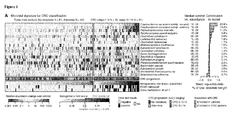
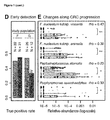
- Figure 1 shows the signature of CRC-associated gut microbial species.
- A Relative abundances of 18 gut microbial species, collectively associated with CRC, are displayed as heatmap in the left panel as fold change over the median relative abundance observed in controls. This control median relative abundance is indicated to the right as well as their mean contribution to the classification (bars show log-odds ratios in multivariate logistic regression, numbers indicate percentage of absolute total weight).
- Bars show log-odds ratios in multivariate logistic regression, numbers indicate percentage of absolute total weight.
- Patient subgroups in different stages of cancer progression are color-coded below the heatmap.
- the classification score of the microbial signature (from cross validation) is shown as gray scale (see key) with the decision boundary and resulting false positives and true positives indicated in red (using colonoscopy results as a ground truth).
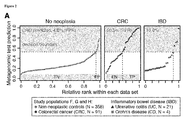
- Figure 2 shows the comparison of the CRC microbial signature to IBD microbiomes.
- A Ranked predictions of the metagenomic classifier (mean test prediction for study populations F, G and H) are plotted for each individual (labels on top indicate grouping) with the percentage of positive CRC predictions annotated in red. Proportions of true negatives (TN), false positives (FP), false negatives (FN) and true positives (TP) are shown at bottom for a decision boundary of 0.6 (see Fig. 1 ).
- UC Ulcerative colitis
- CD Crohn's disease
- FIG. 3 shows the consistency of CRC marker species abundances in fecal metagenomes and 16S rRNA profiles of tumor biopsies.
- Horizontal bars show CRC-associated changes in median relative abundance (rel. abundance) of the marker species in the metagenomic CRC classifier that significantly differ in abundance between CRC patients and tumor-free controls. They are compared to 16S OTU abundances from a subset of fecal samples from study population F as well as two groups of patients in which microbial communities on tumor biopsies and healthy colonic mucosa were profiled and compared. Boxes denote the interval between the 10th and 90th percentile of relative abundance.
- Metagenomic marker species were matched to 16S OTUs using a best-hit approach for the amplified 16S rRNA gene regions (NA, not matched), both Fusobacterium nucleatum sub spp. were matched to the same 16S OTU. Significance was assessed by unpaired and paired Wilcoxon tests for fecal and biopsy data sets, respectively (n.s., not significant). Note that for the majority of the species shown, the significance for distinguishing healthy and CRC patients is higher (lower p-value) in metagenomic than 16S readouts. Vertical bars display the prevalence (prev.) of these marker species in CRC and control(s) (tissue) (percentage of individuals in which these species/OTUs were detected with a relative abundance exceeding 1E-5).
- Figure 4 shows the functional changes derived from the CRC-associated metagenome.
- A Significant changes in relative abundance of genes summarized by KEGG module annotations between cancer and non-cancer metagenomes are shown for cases with a >1.33 fold change and an FDR adjusted p-value ⁇ 0.01. General trends in functional potential, such as enrichment of lipopolysaccharide (LPS) metabolism, and putrefaction in the CRC microbiome are summarized to the right of the heatmap.
- LPS lipopolysaccharide
- B Significant relative abundance changes of genes summarized by CAZy family annotation with a >1.33 fold change and an FDR-adjusted p-value ⁇ 0.01.
- a metabolic switch to degradation of host carbohydrates, e.g. mucins, in CRC metagenomes, as well as a CRC-associated increase in metabolism of potentially pro-inflammatory bacterial cell wall components, such as lipopolysaccharide (LPS) is annotated to the right.
- Figure 5 shows that functional changes correlate with CRC progression.
- Principal component analysis of (log10-transformed) relative abundances of CRC-associated functional categories revealed cancer progression as a dominant source of variation (each dot corresponds to a participant of study population F, color-coded by patient subgroup).
- the first principal component (PC1) accounting for 43% of the variation in CRC-associated functional changes, correlated with cancer progression (Spearman correlation of 0.45, p ⁇ 1E-8) and stratified non-neoplastic, adenoma early and late CRC patients (color-coded).
- Shown below boxplots of each patient's PC1 value grouped by cancer progression. Significant differences between groups were established using pairwise Wilcoxon tests (see bottom right legend). Boxes denote interquartile ranges (IQR) with the median as a black line and whiskers extending up to the most extreme points within 1.5-fold IQR.
- IQR interquartile ranges
- Figure 6 shows the microbial detection of advanced adenomas.
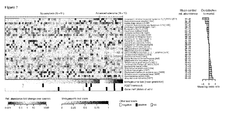
- Figure 7 shows Metagenomic classifier for the detection of advanced adenomas.
- Relative abundances of gut microbial species that are collectively used as predictors for advanced (large) adenomas are displayed as heatmap in the left panel as fold change over the median relative abundance observed in neoplasia-free controls. This median relative abundance of control samples is indicated to the right of the heatmap.
- bar length indicates its mean contribution to adenoma classification (log-odds ratios in multivariate logistic regression, see Online Methods for additional details.
- the classification score (from cross validation) is shown as gray scale (see key) using colonoscopy results as a ground truth. Displayed alongside are the results of the standard Hemoccult FOBT test routinely applied for CRC screening and an experimental CRC screening test based on methylation of the wif-1 gene, a Wnt pathway member ( 35, 36 )
- Fresh stool samples were collected 2 weeks to 3 days before colonoscopy and in all cases prior to bowel cleanse. Whole fresh stool was collected in sterile boxes, and 10g were frozen at - 20°C within 4 hours and stored. 156 samples were then selected for DNA extraction and shotgun sequencing, among them samples from 53 patients with CRC, 42 adenoma patients and 61 randomly chosen controls. Colonic neoplasia status was determined by colonoscopy. For a subset of 129 patients, 16S rDNA could be amplified from the same DNA extracts and subjected to 16S amplicon sequencing.
- Matched tissue samples (tumor and nearby morphologically healthy mucosa) were collected from 48 patients within ⁇ 30 min after surgical resection, immediately snap frozen and stored at -80°C until DNA extraction and 16S rRNA gene sequencing. Of the 48 patients, 13 patients also provided fecal samples.
- Genomic DNA was extracted from frozen or RNAlater-preserved fecal samples as previously described using the GNOME® DNA Isolation Kit (MP Biomedicals) with the following minor modifications: cell lysis/denaturation was performed (30 min, 55°C) before protease digestion was carried out overnight (55°C) and RNAse digestion (50 ⁇ l, 30 min, 55°C) was performed after mechanical lysis. Tissue samples were thawed carefully, cleaned from remaining feces with sterile Dulbecco's PBS (PAA Laboratories) if necessary and the blades were cleaned with Incidin® Plus (Ecolab) between samples. DNA was extracted from the tissue surfaces using the protocol above. After final precipitation, the DNA was resuspended in TE buffer, and stored at -20°C for further analysis.
- GNOME® DNA Isolation Kit MP Biomedicals
- DNA from 48 tissue sample pairs (tumor and healthy mucosa) and 129 fecal samples was amplified using primers targeting the V4 region of the 16S rRNA gene.
- PCR was carried out according to the manufacturer's instructions of the Q5 high-fidelity polymerase (New England BioLabs, Ipswich, USA) using barcoded primers (NEXTflex TM 16S V4 Amplicon-Seq Kit, Bioo Scientific, Austin, Texas, USA) at final concentrations of 0.2 ⁇ M and an annealing temperature of 56°C for 35 cycles.
- PCR products were cleaned up with Agencourt AMPure XP - PCR Purification system (Beckman Coulter, Brea, USA), quantified according to the NEXTflex TM 16S V4 Amplicon-Seq Kit protocol, and multiplexed at equal concentration. Sequencing was performed using a 250 bp paired-end sequencing protocol on the Illumina MiSeq platform (Illumina, San Diego, USA).
- MOCAT (option screen with alignment length cut-off 45 and minimum 97% sequence identity) taxonomic relative abundance profiles were generated by mapping screened high quality reads from each metagenome to a database consisting of 10 universal single-copy marker genes extracted from 3,496 NCBI reference genomes (Mende et al., 2013; Sunagawa et al., 2013).
- Quantification proceeded in two steps, by first estimating taxonomic abundances from all sequenced DNA fragments (nucleotide counts; each read contributing number of counts equal to its length) that mapped uniquely, and in a second step, nucleotide counts from reads mapping to multiple taxa with the same alignment score were distributed among them proportionally to nucleotide counts originating from reads uniquely mapped to these taxa. Finally, base counts were gene-length normalized (option profiling). Abundance estimates at species level were made based on a recently proposed consistent species-level clustering (Mende et al., 2013), while abundance summarization at higher taxonomic levels was based on the NCBI Taxonomy.
- the inventors aligned them to the SILVA 16S reference database of bacterial and archaeal 16S rRNA sequences. These alignments were cropped to only retain the align region spanning V3 to V4 using mothur, version 1.30.2 (Schloss et al., 2009). With the screening and alignment routines the inventors reanalyzed 16S rRNA sequencing reads from (Kostic et al., 2012) to facilitate comparisons across data sets. For further analysis, the inventors only retained sample pairs with at least 1,000 reads aligned in the tumor as well as the normal tissue sample (a requirement met by 79 sample pairs from (Kostic et al., 2012).
- OTUs from large collections of published 16S rRNA genes were built by including 436,028 sequences from the SILVA database (version 115, (E. Pruesse et al, 2007) and 5,224 extracted from the prokaryotic genome sequences used for taxonomic profiling of metagenomic reads (see above). These were aligned with the same protocol as the 16S reads and cropped to the core alignment region using mothur. Subsequently redundancies were removed by dereplication (mothur's unique.seqs) and clustering at 98% sequence identity using UCLUST (version 6.0.307 with the option -maxrejects 1000 for more accurate matching).
- the inventors mapped 10,000 reads from each sample against the reference sequences and sorted them according to the number of mapped reads using USEARCH routines (98% ID, best-hit). After clustering reference sequences into 2,460 OTUs (with a minimum size of 10), mapped all 16S Illumina and pyrosequencing reads were mapped against these taking a best-hit approach with a minimum of 98% sequence identity between matches (using USEARCH with default settings).
- CRC colorectal carcinoma
- the metagenomic classifier might exploit potential correlations of microbial abundances with host age rather than CRC. Indeed, the classifier neither showed an increase in false-positive rate nor in sensitivity for older patients.
- the accuracy of the metagenomic classifier appears better than that of the Hemoccult FOBT test ( Fig. 1B ); this test, basically measuring the amount of blood in feces, is routinely used in mass screening for CRC and was applied to study population F prior to colonoscopy (Allison et al., 1996; Faivre et al., 2004; Zavoral et al., 2009).
- gut microbial markers might be limited by geographical or ethnical particularities or by technical variations in experimental procedures (de Vos and Nieuwdorp, 2013; Sunagawa et al., 2013), illustrated by distinct microbial associations with type 2 diabetes in Chinese and Swedish studies (Karlsson et al., 2013; Qin et al., 2012).
- the inventors therefore sought to validate the metagenomic CRC classifier also in an independent group of individuals from different countries.
- the inventors applied the classifier to five samples from healthy German individuals and 292 published fecal metagenomes from Danish and Spanish individuals who were neither diagnosed with CRC nor inflammatory bowel disease (IBD) (Le Chatelier et al., 2013; Qin et al., 2010) (study population H).
- IBD inflammatory bowel disease
- the classifier predicts CRC, see Fig. 1
- the resulting false positive rate i.e. 1 - specificity
- the inventors sequenced an additional 38 faecal metagenomes from individuals who were diagnosed with CRC by colonoscopy in a German hospital (study population G).
- the sensitivity (i.e. true positive rate) of the metagenomic CRC classifier was 44.7% compared to 47.2% observed in cross-validation.
- the metagenomic CRC classifier achieved an accuracy of 0.78 AUC, which is very similar to its cross-validation performance ( Fig. 1BC ).
- the observed associations of microbiota with CRC alone do not reveal how specific they are to this particular disease.
- the inventors applied the inventor's classifier to 25 recently published metagenomes from inflammatory bowel disease (IBD) patients (21 Ulcerative colitis (UC) and 4 Crohn's disease (CD) patients) (Qin et al., 2010). Although small sample size precludes precise estimates, the inventor's results indicate a moderate increase of false-positive predictions to 8% in these patients, which is about twice the rate seen in other controls ( Fig. 2A ).
- Fecal CRC markers reflect enrichments in tumor biopsies
- fecal samples In order to make use of functional data extracted from the metagenome, fecal samples would need to reflect, at least partially, the microbial composition in the tumor environment. However, profiling colonic tissue samples with shotgun metagenomic sequencing is still ineffective due to excessive contamination with human DNA (Castellarin et al., 2012; Kostic et al., 2012). As an alternative, targeted sequencing of prokaryotic 16S rRNA gene fragments from tumor biopsies allows for taxonomic abundance estimation and identification of enriched microbes compared to nearby intact mucosa.
- the inventors newly sequenced 48 tumornormal tissue pairs (13 from patients that were also part of study population G) and reanalyzed 79 such deeply sequenced pairs from a published study with US American and Spanish patients (Kostic et al., 2012).
- the inventors collected a third data set of fecal samples (part of study population F) subjected to 16S amplicon sequencing.
- the inventors constructed operational taxomomic units (OTUs, 98% sequence identity) from comprehensive databases of published 16S sequences and mapped 16S reads against these.
- fecal readouts may also allow for inferences of the metabolic and functional potential of the colonic microbiome in the tumor environment.
- the inventors quantified the relative abundances of prokaryotic KEGG (Kyoto Encyclopedia of Genes and Genomes) modules (Kanehisa et al., 2008) in each metagenome of study population F.
- prokaryotic KEGG Korean of Genes and Genomes
- carbohydrate utilization preferences of the microbiota El Kaoutari et al., 2013; Koropatkin et al., 2012; Sonnenburg et al., 2005
- the inventors additionally used prokaryotic families of carbohydrate-active enzymes from the CA-Zy database (Cantarel et al., 2009) to annotate metagenomes.
- the inventors found 24 KEGG modules and 20 CAZy families to significantly differ in abundance in CRC patients with a fold change >1.33 ( Fig. 4 ).
- Host cell-wall carbohydrates such as mucins, whose utilization is enriched in the CRC metagenomes of study population F, have been established as an important energy source for commensal microbiota of the healthy gut (Bergstrom and Xia, 2013; Koropatkin et al., 2012; Sonnenburg et al., 2005).
- mucin gene defects can lead to intestinal cancers or microbiota-dependent acute colitis (Bergstrom and Xia, 2013; Fu et al., 2011; Velcich et al., 2002), and in IBD patients increased mucolytic activity has been reported for mucus-associated bacteria (Png et al., 2010). It is therefore conceivable that degrading the mucus barrier might be a strategy that is adopted by adhesive and/or invasive pathogens such as Fusobacterium spp. to reach the epithelial cells (Dharmani et al., 2011; McGuckin et al., 2011; Rubinstein et al., 2013).
- Some host-cell derived metabolites are more abundant in the tumor environment, for instance amino acids, of which elevated levels have been measured in CRC patients by metabolomics (Weir et al., 2013).
- the inventor's data showed an increased capacity of the CRC-associated microbiota for uptake and metabolism of some amino acids via the putrefaction pathway ( Fig. 4A ).
- Their degradation products include polyamines (like putrescine), which at increased intracellular levels promote tumor development (Gerner and Meyskens, 2004). That enterotoxigenic Bacteroides fragilis (BFTs) can exploit this by stimulating the endogenous polyamine catabolism in colonic epithelial cells was recently shown (Goodwin et al., 2011).
- LPS lipopolysaccharide
- Fig. 4 a CRC-associated expansion of Gram-negative bacteria that bear LPS antigens on their outer membranes.
- TLR4 Toll-like receptor 4
- LPS triggers an inflammatory signaling cascade, which in turn, could promote inflammation-induced carcinogenesis (Cario et al., 2000; Tang et al., 2010) and even metastasis, as has been demonstrated in mice (Hsu et al., 2011).
- the inventors also sought to predict pre-cancers, in particular advanced adenomas.
- the inventors trained a classifier to distinguish between taxonomic abundance profiles derived from 15 advanced adenoma patients and 51 from neoplasia-free controls (part of study population F) using the same methodology as for CRC detection. Indeed, this classifier achieved an accuracy of 0.74 AUC, corresponding to an increase of sensitivity for advanced adenoma detection over FOBT from ⁇ 10% to ⁇ 40% ( Fig. 6 and Figure 7 ); low sensitivity of the FOBT for pre-cancers has been noted in larger evaluations before (e.g. Allison et al., 1996).
Landscapes
- Chemical & Material Sciences (AREA)
- Life Sciences & Earth Sciences (AREA)
- Organic Chemistry (AREA)
- Health & Medical Sciences (AREA)
- Proteomics, Peptides & Aminoacids (AREA)
- Analytical Chemistry (AREA)
- Zoology (AREA)
- Wood Science & Technology (AREA)
- Engineering & Computer Science (AREA)
- Genetics & Genomics (AREA)
- Immunology (AREA)
- Biotechnology (AREA)
- Microbiology (AREA)
- Biophysics (AREA)
- Molecular Biology (AREA)
- Biochemistry (AREA)
- Bioinformatics & Cheminformatics (AREA)
- General Engineering & Computer Science (AREA)
- General Health & Medical Sciences (AREA)
- Physics & Mathematics (AREA)
- Pathology (AREA)
- Hospice & Palliative Care (AREA)
- Oncology (AREA)
- Measuring Or Testing Involving Enzymes Or Micro-Organisms (AREA)
Priority Applications (2)
| Application Number | Priority Date | Filing Date | Title |
|---|---|---|---|
| DK14172205.8T DK2955232T3 (da) | 2014-06-12 | 2014-06-12 | Fremgangsmåde til diagnosticering af adenomer og/eller colorektal cancer (CRC) baseret på analyse af tarmmikrobiom |
| EP14172205.8A EP2955232B1 (de) | 2014-06-12 | 2014-06-12 | Verfahren zur Diagnose von Adenomen und/oder Kolorektalkarzinom (CRC) auf Grundlage der Analyse des Darmmikrobioms |
Applications Claiming Priority (1)
| Application Number | Priority Date | Filing Date | Title |
|---|---|---|---|
| EP14172205.8A EP2955232B1 (de) | 2014-06-12 | 2014-06-12 | Verfahren zur Diagnose von Adenomen und/oder Kolorektalkarzinom (CRC) auf Grundlage der Analyse des Darmmikrobioms |
Publications (2)
| Publication Number | Publication Date |
|---|---|
| EP2955232A1 true EP2955232A1 (de) | 2015-12-16 |
| EP2955232B1 EP2955232B1 (de) | 2017-08-23 |
Family
ID=50933044
Family Applications (1)
| Application Number | Title | Priority Date | Filing Date |
|---|---|---|---|
| EP14172205.8A Active EP2955232B1 (de) | 2014-06-12 | 2014-06-12 | Verfahren zur Diagnose von Adenomen und/oder Kolorektalkarzinom (CRC) auf Grundlage der Analyse des Darmmikrobioms |
Country Status (2)
| Country | Link |
|---|---|
| EP (1) | EP2955232B1 (de) |
| DK (1) | DK2955232T3 (de) |
Cited By (30)
| Publication number | Priority date | Publication date | Assignee | Title |
|---|---|---|---|---|
| CN107609347A (zh) * | 2017-08-21 | 2018-01-19 | 上海派森诺生物科技股份有限公司 | 一种基于高通量测序技术的宏转录组数据分析方法 |
| WO2018079689A1 (ja) * | 2016-10-28 | 2018-05-03 | 公益財団法人がん研究会 | バイオマーカー、疾患関連遺伝子の探索方法、及び腎がんマーカー |
| WO2018109219A1 (en) | 2016-12-15 | 2018-06-21 | University College Cork - National University Of Ireland, Cork | Methods of determining colorectal cancer status in an individual |
| WO2018229519A1 (en) * | 2017-06-12 | 2018-12-20 | Debreceni Egyetem | Methods for diagnosing breast cancer |
| CN109072306A (zh) * | 2016-03-17 | 2018-12-21 | 上海锐翌生物科技有限公司 | 分离的核酸及应用 |
| EP3421616A1 (de) * | 2017-06-29 | 2019-01-02 | Tata Consultancy Services Limited | Verfahren und system zur überwachung der darmgesundheit eines individuums |
| CN109609639A (zh) * | 2019-01-14 | 2019-04-12 | 深圳微健康基因科技有限公司 | 结直肠癌检测方法及系统 |
| CN109762900A (zh) * | 2019-01-14 | 2019-05-17 | 深圳微健康基因科技有限公司 | 结直肠癌标志物及其应用 |
| CN110382720A (zh) * | 2016-12-28 | 2019-10-25 | Md保健株式会社 | 通过细菌宏基因组分析来诊断结肠癌的方法 |
| WO2019226035A1 (ko) * | 2018-05-25 | 2019-11-28 | 주식회사 엠디헬스케어 | Qpcr 분석을 통한 대장암 진단방법 |
| CN110804668A (zh) * | 2019-11-28 | 2020-02-18 | 苏州普瑞森基因科技有限公司 | 一种检测唾液链球菌的引物组和检测体系及其应用 |
| CN110857450A (zh) * | 2018-08-22 | 2020-03-03 | 深圳华大生命科学研究院 | 结直肠癌标志物及其应用 |
| CN110903997A (zh) * | 2019-10-23 | 2020-03-24 | 上海市第十人民医院 | 一株从大肠癌肿瘤组织中获取的具核梭杆菌及其应用 |
| CN111041090A (zh) * | 2018-10-11 | 2020-04-21 | 深圳华大生命科学研究院 | 结直肠癌标志物及其应用 |
| CN111051532A (zh) * | 2017-10-12 | 2020-04-21 | 完美(中国)有限公司 | 用于慢性乙型肝炎的生物标志物及其用途 |
| JP2020068750A (ja) * | 2018-11-02 | 2020-05-07 | 公益財団法人がん研究会 | 大腸がんの検査方法 |
| IT201800011030A1 (it) * | 2018-12-12 | 2020-06-12 | Artemisia Lab Srl | Metodo per la determinazione quali-quantitativa del microbiota intestinale |
| EP3504346A4 (de) * | 2016-08-25 | 2020-07-01 | The Chinese University Of Hong Kong | Stuhlbakterienmarker für kolorektalkarzinom |
| WO2020182922A1 (en) * | 2019-03-13 | 2020-09-17 | Goodgut S.L. | Improved method for the screening, diagnosis and/or monitoring of colorectal advanced neoplasia, advanced adenoma and/or colorectal cancer |
| WO2020222287A1 (ja) * | 2019-04-29 | 2020-11-05 | 株式会社Preferred Networks | 訓練装置、罹患判定装置、機械学習方法、およびプログラム |
| KR20210030846A (ko) * | 2019-09-10 | 2021-03-18 | 주식회사 엠디헬스케어 | 세포밖 소포의 메타게놈 및 대사체 기반 대장암 진단방법 |
| JPWO2021246533A1 (de) * | 2020-06-05 | 2021-12-09 | ||
| CN114317784A (zh) * | 2021-12-08 | 2022-04-12 | 上海锐翌医学检验实验室有限公司 | 白塞病标志微生物及其应用 |
| WO2023036266A1 (en) * | 2021-09-08 | 2023-03-16 | Guangdong Jiyin Biotech Co. Ltd | Compositions and methods for diagnosing colorectal cancer |
| EP4163391A1 (de) * | 2021-10-06 | 2023-04-12 | Johnson & Johnson Consumer Inc. | Verfahren zur quantifizierung der auswirkungen eines produkts auf das menschliche mikrobiom |
| WO2024123091A1 (ko) * | 2022-12-06 | 2024-06-13 | 국립암센터 | 분변 미생물총 기반 대장암의 진단 |
| WO2024156754A1 (en) * | 2023-01-24 | 2024-08-02 | Fundació Privada Institut D'investigació Oncològica De Vall Hebron | Cancer associated microbiota and its use in predicting cancer progression |
| RU2834789C2 (ru) * | 2019-03-13 | 2025-02-14 | Гудгут С.Л. | Улучшенный способ скрининга, диагностики и/или мониторинга колоректальной неоплазии на поздней стадии, аденомы на поздней стадии и/или колоректального рака |
| WO2025183580A1 (en) * | 2024-02-29 | 2025-09-04 | Qatar Foundation For Education, Science And Community Development | The colon cancer microbiome risk score for diagnosis of colon cancer |
| CN120796473A (zh) * | 2025-07-03 | 2025-10-17 | 北京序腾基因科技有限公司 | 一种结直肠癌血浆循环微生物标志物、试剂、试剂盒及其应用 |
Families Citing this family (6)
| Publication number | Priority date | Publication date | Assignee | Title |
|---|---|---|---|---|
| CN109852714B (zh) * | 2019-03-07 | 2020-06-16 | 南京世和基因生物技术有限公司 | 一种肠癌早期诊断和腺瘤诊断标志物及用途 |
| WO2020237023A1 (en) * | 2019-05-21 | 2020-11-26 | Scaled Microbiomics, Llc | Formulations for altering microbiome to reduce risks of hereditary and spontaneous colorectal cancers |
| CN112410449A (zh) * | 2021-01-25 | 2021-02-26 | 天津奇云诺德生物医学有限公司 | 一种与结直肠癌相关的微生物标志物及其应用 |
| EP4515545A4 (de) * | 2022-04-25 | 2026-04-29 | Univ Rutgers | Zwei konkurrierende guilds als kernmikrobiomsignatur für menschliche erkrankungen |
| WO2024206741A1 (en) * | 2023-03-30 | 2024-10-03 | Prescient Metabiomics Jv, Llc | Colorectal adenoma and carcinoma biomarker discovery, functional analysis, and diagnostics |
| WO2025096491A1 (en) * | 2023-10-30 | 2025-05-08 | Ohio State Innovation Foundation | Phenylacetaldehyde induced apoptosis in colorectal cancer |
Citations (5)
| Publication number | Priority date | Publication date | Assignee | Title |
|---|---|---|---|---|
| US20110129840A1 (en) | 2008-01-31 | 2011-06-02 | Assistance Publique Hopitaux De Paris | Method, process, and kit for diagnosis or prognosis of colorectal cancer |
| WO2012170478A2 (en) * | 2011-06-06 | 2012-12-13 | The University Of North Carolina At Chapel Hill | Methods and kits for detecting adenomas, colorectal cancer, and uses thereof |
| EP2635705A1 (de) | 2010-11-04 | 2013-09-11 | Assistance Publique Hôpitaux De Paris | Screeningverfahren für kolorektalkarzinom |
| US20140024036A1 (en) * | 2012-07-22 | 2014-01-23 | Glc Biotechnology, Inc. | Methods and materials for quantification of fusobacterium nucleatum dna in stool to diagnose colorectal neoplasm |
| US20140107092A1 (en) * | 2012-10-16 | 2014-04-17 | Dana-Farber Cancer Institute, Inc. | Bacterial etiology of colorectal cancer |
-
2014
- 2014-06-12 EP EP14172205.8A patent/EP2955232B1/de active Active
- 2014-06-12 DK DK14172205.8T patent/DK2955232T3/da active
Patent Citations (5)
| Publication number | Priority date | Publication date | Assignee | Title |
|---|---|---|---|---|
| US20110129840A1 (en) | 2008-01-31 | 2011-06-02 | Assistance Publique Hopitaux De Paris | Method, process, and kit for diagnosis or prognosis of colorectal cancer |
| EP2635705A1 (de) | 2010-11-04 | 2013-09-11 | Assistance Publique Hôpitaux De Paris | Screeningverfahren für kolorektalkarzinom |
| WO2012170478A2 (en) * | 2011-06-06 | 2012-12-13 | The University Of North Carolina At Chapel Hill | Methods and kits for detecting adenomas, colorectal cancer, and uses thereof |
| US20140024036A1 (en) * | 2012-07-22 | 2014-01-23 | Glc Biotechnology, Inc. | Methods and materials for quantification of fusobacterium nucleatum dna in stool to diagnose colorectal neoplasm |
| US20140107092A1 (en) * | 2012-10-16 | 2014-04-17 | Dana-Farber Cancer Institute, Inc. | Bacterial etiology of colorectal cancer |
Non-Patent Citations (97)
| Title |
|---|
| "Comprehensive molecular characterization of human colon and rectal cancer", NATURE, vol. 487, 2012, pages 330 - 337 |
| "R: A Language and Environment for Statistical Computing", R CORE TEAM, 2013, Retrieved from the Internet <URL:http://www.Rproject.org> |
| "Structure, function and diversity of the healthy human microbiome.", NATURE, vol. 486, 2012, pages 207 - 214 |
| "World Cancer Research Fund", 2011, AMERICAN INSTITUTE FOR CANCER RESEARCH |
| "World Cancer Research Fund", 2011, AMERICAN INSTITUTE FOR CANCER RESEARCH, article "Continuous Update Project Report. Food, Nutrition, Physical Activity, and the Prevention of Colorectal Cancer" |
| ABUBUCKER, S.; SEGATA, N.; GOLL, J.; SCHUBERT, A.M.; IZARD, J.; CANTAREL, B.L.; RODRIGUEZ-MUELLER, B.; ZUCKER, J.; THIAGARAJAN, M.: "Metabolic reconstruction for metagenomic data and its application to the human microbiome", PLOS COMPUTATIONAL BIOLOGY, vol. 8, 2012, pages E1002358 |
| ALLISON, J.E.; SAKODA, L.C.; LEVIN, T.R.; TUCKER, J.P.; TEKAWA, I.S.; CUFF, T.; PAULY, M.P.; SHLAGER, L.; PALITZ, A.M.; ZHAO, W.K.: "Screening for colorectal neoplasms with new fecal occult blood tests: update on performance characteristics", J. NATL. CANCER INST., vol. 99, 2007, pages 1462 - 1470 |
| ALLISON, J.E.; TEKAWA, I.S.; RANSOM, L.J.; ADRAIN, A.L.: "A comparison of fecal occult-blood tests for colorectal-cancer screening", N. ENGL. J. MED., vol. 334, 1996, pages 155 - 159 |
| ALTSCHUL, S.F.; GISH, W.; MILLER, W.; MYERS, E.W.; LIPMAN, D.J.: "Basic local alignment search tool", J. MOL. BIOL., vol. 215, 1990, pages 403 - 410 |
| ARTHUR, J.C.; PEREZ-CHANONA, E.; MUHLBAUER, M.; TOMKOVICH, S.; URONIS, J.M.; FAN, T.J.; CAMPBELL, B.J.; ABUJAMEL, T.; DOGAN, B.; R: "Intestinal inflammation targets cancer-inducing activity of the microbiota", SCIENCE, vol. 338, 2012, pages 120 - 123 |
| ARUMUGAM, M.; HARRINGTON, E.D.; FOERSTNER, K.U.; RAES, J.; BORK, P.: "Smash-Community: a metagenomic annotation and analysis tool.", BIOINFORMATICS, vol. 26, 2010, pages 2977 - 2978 |
| ARUMUGAM, M.; RAES, J.; PELLETIER, E.; LE PASLIER, D.; YAMADA, T.; MENDE, D.R.; FERNANDES, G.R.; TAP, J.; BRULS, T.; BATTO, J.M. E: "Enterotypes of the human gut microbiome", NATURE, vol. 473, 2011, pages 174 - 180 |
| BERGSTROM, K.S.; XIA, L.: "Mucin-type 0-glycans and their roles in intestinal homeostasis", GLYCOBIOLOGY, vol. 23, 2013, pages 1026 - 1037 |
| BERNSTEIN, C.N.; BLANCHARD, J.F.; KLIEWER, E.; WAJDA, A.: "Cancer risk in patients with inflammatory bowel disease: a population-based study", CANCER, vol. 91, 2001, pages 854 - 862 |
| BINGHAM, S.A.; DAY, N.E.; LUBEN, R.; FERRARI, P.; SLIMANI, N.; NORAT, T.; CLAVEL-CHAPELON, F.; KESSE, E.; NIETERS, A.; BOEING, H.: "Dietary fibre in food and protection against colorectal cancer in the European Prospective Investigation into Cancer and Nutrition (EPIC): an observational study", LANCET, vol. 361, 2003, pages 1496 - 1501 |
| BOLEIJ, A.; TJALSMA, H.: "Gut bacteria in health and disease: a survey on the interface between intestinal microbiology and colorectal cancer", BIOL. REV. CAMB. PHILOS. SOC, vol. 87, 2012, pages 701 - 730 |
| CANTAREL, B.L.; COUTINHO, P.M.; RANCUREL, C., BERNARD, T.; LOMBARD, V.; HENRISSAT, B.: "The Carbohydrate-Active EnZymes database (CAZy): an expert resource for Gly-cogenomics", NUCLEIC ACIDS RES., vol. 37, 2009, pages D233 - 238 |
| CANTAREL, B.L.; LOMBARD, V.; HENRISSAT, B.: "Complex carbohydrate utilization by the healthy human microbiome", PLOS ONE, vol. 7, 2012, pages E28742 |
| CARIO, E.; ROSENBERG, I.M.; BRANDWEIN, S.L.; BECK, P.L.; REINECKER, H.C.; PODOLSKY, D.K.: "Lipopolysaccharide activates distinct signaling pathways in intestinal epithelial cell lines expressing Tolllike receptors", J. IMMUNOL., vol. 164, 2000, pages 966 - 972 |
| CASTELLARIN, M.; WARREN, R.L.; FREEMAN, J.D.; DREOLINI, L.; KRZYWINSKI, M.; STRAUSS, J.; BARNES, R.; WATSON, P.; ALLEN-VERCOE, E.;: "Fusobacterium nucleatum infection is prevalent in human colorectal carcinoma", GENOME RES., vol. 22, 2012, pages 299 - 306 |
| CLAESSON, M.J.; JEFFERY, I.B.; CONDE, S.; POWER, S.E.; O'CONNOR, E.M.; CUSACK, S.; HARRIS, H.M.; COAKLEY, M.; LAKSHMINARAYANAN, B.: "Gut microbiota composition correlates with diet and health in the elderly", NATURE, vol. 488, 2012, pages 178 - 184 |
| CROSS, A.J.; FERRUCCI, L.M.; RISCH, A.; GRAUBARD, B.I.; WARD, M.H.; PARK, Y.; HOLLENBECK, A.R.; SCHATZKIN, A.; SINHA, R.: "A large prospective study of meat consumption and colorectal cancer risk: an investigation of potential mechanisms underlying this association", CANCER RES., vol. 70, 2010, pages 2406 - 2414 |
| CUEVAS-RAMOS, G.; PETIT, C.R.; MARCQ, I.; BOURY, M.; OSWALD, E.; NOUGAYREDE, J.P.: "Escherichia coli induces DNA damage in vivo and triggers genomic instability in mammalian cells.", PROCEEDINGS OF THE NATIONAL ACADEMY OF SCIENCES OF THE UNITED STATES OF AMERICA, vol. 107, 2010, pages 11537 - 11542 |
| DE MARTEL, C.; FERLAY, J.; FRANCESCHI, S.; VIGNAT, J.; BRAY, F.; FORMAN, D.; PLUMMER, M.: "Global burden of cancers attributable to infections in 2008: a review and synthetic analysis.", LANCET ONCOL, vol. 13, 2012, pages 607 - 615 |
| DE VOS, W.M.; NIEUWDORP, M.: "Genomics: A gut prediction", NATURE, vol. 498, 2013, pages 48 - 49 |
| DHARMANI, P.; STRAUSS, J.; AMBROSE, C.; ALLEN-VERCOE, E.; CHADEE, K.: "Fusobacterium nucleatum infection of colonic cells stimulates MUC2 mucin and tumor necrosis factor alpha", INFECT. IMMUN., vol. 79, 2011, pages 2597 - 2607 |
| DOWNES, J.; WADE, W.G.: "Peptostreptococcus stomatis sp. nov., isolated from the human oral cavity", INT. J. SYST. EVOL. MICROBIOL., vol. 56, 2006, pages 751 - 754 |
| DUTILH, B.E.; BACKUS, L.; VAN HIJUM, S.A.; TJALSMA, H.: "Screening metatranscrip-tomes for toxin genes as functional drivers of human colorectal cancer", BEST PRACT. RES. CLIN. GASTROENTEROL., vol. 27, 2013, pages 85 - 99 |
| EDDY, S.R.: "Accelerated Profile HMM Searches. PLoS Comput. Biol. 7, e1002195. Edgar, R.C. (2010). Search and clustering orders of magnitude faster than BLAST.", BIOINFORMATICS, vol. 26, 2011, pages 2460 - 2461 |
| EL KAOUTARI, A.; ARMOUGOM, F.; GORDON, J.I.; RAOULT, D.; HENRISSAT, B.: "The abundance and variety of carbohydrate-active enzymes in the human gut microbiota", NAT. REV. MICROBIOL. LL, 2013, pages 497 - 504 |
| FAIVRE, J.; DANCOURT, V.; LEJEUNE, C.; TAZI, M.A.; LAMOUR, J.; GERARD, D.; DASSONVILLE, F.; BONITHON-KOPP, C.: "Reduction in colorectal cancer mortality by fecal occult blood screening in a French controlled study", GASTROENTEROLOGY, vol. 126, 2004, pages 1674 - 1680 |
| FAN, R.E.; CHANG, K.W.; HSIEH, C.J.; WANG, X.R.; LIN, C.J.: "LIBLINEAR: A library for large linear classification", JMLR, vol. 9, 2008, pages 1871 - 1874 |
| FASANO, A.: "Toxins and the gut: role in human disease", GUT 50 III9-14, 2002 |
| FISHER, S.; BARRY, A.; ABREU, J.; MINIE, B.; NOLAN, J.; DELOREY, T.M.; YOUNG, G.; FENNELL, T.J.; ALLEN, A.; AMBROGIO, L. ET AL.: "A scalable, fully automated process for construction of sequence-ready human exome targeted capture libraries.", GENOME BIOL., vol. 12, 2011, pages R1 |
| FLANAGAN, L.; SCHMID, J.; EBERT, M.; SOUCEK, P.; KUNICKA, T.; LISKA, V.; BRUHA, J.; NEARY, P.; DEZEEUW, N.; TOMMASINO, M. ET AL.: "Fusobacterium nucleatum associates with stages of colorectal neoplasia development, colorectal cancer and disease outcome", EUROPEAN JOURNAL OF CLINICAL MICROBIOLOGY & INFECTIOUS DISEASES : OFFICIAL PUBLICATION OF THE EUROPEAN SOCIETY OF CLINICAL MICROBIOLOGY, 2014 |
| FU, J.; WEI, B.; WEN, T.; JOHANSSON, M.E.; LIU, X.; BRADFORD, E.; THOMSSON, K.A.; MCGEE, S.; MANSOUR, L.; TONG, M., ET AL.: "Loss of intestinal core 1-derived 0-glycans causes spontaneous colitis in mice.", J. CLIN. INVEST., vol. 121, 2011, pages 1657 - 1666 |
| FURET, J.P.; FIRMESSE, 0.; GOURMELON, M.; BRIDONNEAU, C.; TAP, J.; MONDOT, S.; DORE, J.; CORTHIER, G.: "Comparative assessment of human and farm animal faecal microbiota using real-time quantitative PCR", FEMS MICROBIOL. ECOL., vol. 68, 2009, pages 351 - 362 |
| GERNER, E.W.; MEYSKENS, F.L., JR.: "Polyamines and cancer: old molecules, new understanding", NAT. REV. CANCER, vol. 4, 2004, pages 781 - 792 |
| GITHUB, SEQPREP. HTTPS://GITHUB.COM/JSTJOHN/SEQPREP, 2013 |
| GOODWIN, A.C.; DESTEFANO SHIELDS, C.E.; WU, S.; HUSO, D.L.; WU, X.; MURRAY-STEWART, T.R.; HACKER-PRIETZ, A.; RABIZADEH, S.; WOSTER: "Polyamine catabolism contributes to enterotoxigenic Bacteroides fragilis-induced colon tumorigenesis", PROCEEDINGS OF THE NATIONAL ACADEMY OF SCIENCES OF THE UNITED STATES OF AMERICA, vol. 108, 2011, pages 15354 - 15359 |
| GREER, J.B.; O'KEEFE, S.J.: "Microbial induction of immunity, inflammation, and cancer", FRONT. PHYSIOL., vol. 1, 2011, pages 168 |
| HOL, L.; VAN LEERDAM, M.E.; VAN BALLEGOOIJEN, M.; VAN VUUREN, A.J.; VAN DEKKEN, H.; REI-JERINK, J.C.; VAN DER TOGT, A.C.; HABBEMA,: "Screening for colorectal cancer: randomised trial comparing guaiac-based and immunochemical faecal occult blood testing and flexible sigmoidoscopy.", GUT, vol. 59, 2010, pages 62 - 68 |
| HSU, R.Y.; CHAN, C.H.; SPICER, J.D.; ROUSSEAU, M.C.; GIANNIAS, B.; ROUSSEAU, S.; FERRI, L.E.: "LPS-induced TLR4 signaling in human colorectal cancer cells increases betal integrin-mediated cell adhesion and liver metastasis", CANCER RES., vol. 71, 2011, pages 1989 - 1998 |
| J. AHN ET AL: "Human Gut Microbiome and Risk for Colorectal Cancer", JNCI JOURNAL OF THE NATIONAL CANCER INSTITUTE, vol. 105, no. 24, 6 December 2013 (2013-12-06), pages 1907 - 1911, XP055133612, ISSN: 0027-8874, DOI: 10.1093/jnci/djt300 * |
| J.S. JOHN, GITHUB REPOSITORY: SEQPREP. HTTPS://GITHUB.COM/JSTJOHN/SEQPREP, 2013 |
| JEMAL, A.; BRAY, F.; CENTER, M.M.; FERLAY, J.; WARD, E.; FORMAN, D.: "Global cancer statistics", CA CANCER J. CLIN, vol. 61, 2011, pages 69 - 90 |
| KANEHISA, M.; ARAKI, M.; GOTO, S.; HATTORI, M.; HIRAKAWA, M.; ITOH, M.; KATAYAMA, T.; KA-WASHIMA, S.; OKUDA, S.; TOKIMATSU, T. ET: "KEGG for linking genomes to life and the environment", NUCLEIC ACIDS RES., vol. 36, 2008, pages D480 - 484 |
| KARLSSON, F.H.; TREMAROLI, V.; NOOKAEW, I.; BERGSTROM, G.; BEHRE, C.J.; FAGERBERG, B.; NIELSEN, J.; BACKHED, F.: "Gut metagenome in European women with normal, impaired and diabetic glucose control.", NATURE, vol. 498, 2013, pages 99 - 103 |
| KNIGHTS, D.; PARFREY, L.W.; ZANEVELD, J.; LOZUPONE, C.; KNIGHT, R.: "Human-associated microbial signatures: examining their predictive value.", CELL HOST MICROBE, vol. 10, 2011, pages 292 - 296 |
| KOROPATKIN, N.M.; CAMERON, E.A.; MARTENS, E.C.: "How glycan metabolism shapes the human gut microbiota.", NAT. REV. MICROBIOL, vol. 10, 2012, pages 323 - 335 |
| KOSTIC, A.D.; CHUN, E.; ROBERTSON, L.; GLICKMAN, J.N.; GALLINI, C.A.; MICHAUD, M.; CLANCY, T.E.; CHUNG, D.C.; LOCHHEAD, P.; HOLD,: "Fusobacterium nucleatum potentiates intestinal tumorigenesis and modulates the tumor-immune microenvironment", CELL HOST MICROBE, vol. 14, 2013, pages 207 - 215 |
| KOSTIC, A.D.; GEVERS, D.; PEDAMALLU, C.S.; MICHAUD, M.; DUKE, F.; EARL, A.M.; OJESINA, A.I.; JUNG, J.; BASS, A.J.; TABERNERO, J. E: "Genomic analysis identifies association of Fusobacterium with colorectal carcinoma", GENOME RES., vol. 22, 2012, pages 292 - 298 |
| KULTIMA, J.R.; SUNAGAWA, S.; LI, J.; CHEN, W.; CHEN, H.; MENDE, D.R.; ARUMUGAM, M.; PAN, Q.; LIU, B.; QIN, J. ET AL.: "MOCAT: a metagenomics assembly and gene prediction toolkit.", PLOS ONE, vol. 7, 2012, pages E47656 |
| LE CHATELIER, E.; NIELSEN, T.; QIN, J.; PRIFTI, E.; HILDEBRAND, F.; FALONY, G.; ALMEIDA, M.; ARUMUGAM, M.; BATTO, J.M.; KENNEDY, S: "Richness of human gut microbiome correlates with metabolic markers.", NATURE, vol. 500, 2013, pages 541 - 546 |
| LEE, B.B.; LEE, E.J.; JUNG, E.H.; CHUN, H.K.; CHANG, D.K.; SONG, S.Y.; PARK, J.; KIM, D.H.: "Aberrant methylation of APC, MGMT, RASSF2A, and Wif-1 genes in plasma as a biomarker for early detection of colorectal cancer.", CLIN. CANCER. RES., vol. 15, 2009, pages 6185 - 6191 |
| LEVIN, B.; LIEBERMAN, D.A.; MCFARLAND, B.; SMITH, R.A.; BROOKS, D.; ANDREWS, K.S.; DASH, C.; GIARDIELLO, F.M.; GLICK, S.; LEVIN, T: "Screening and surveillance for the early detection of colorectal cancer and adenomatous polyps, 2008: a joint guideline from the American Cancer Society, the US Multi-Society Task Force on Colorectal Cancer, and the American College of Radiology", CA CANCER J. CLIN., vol. 58, 2008, pages 130 - 160 |
| LI, R.; LI, Y.; KRISTIANSEN, K.; WANG, J.: "SOAP: short oligonucleotide alignment program.", BIOINFORMATICS, vol. 24, 2008, pages 713 - 714 |
| LI, W.; GODZIK, A.: "Cd-hit: a fast program for clustering and comparing large sets of protein or nucleotide sequences.", BIOINFORMATICS, vol. 22, 2006, pages 1658 - 1659 |
| LICHTENSTEIN, P.; HOLM, N.V.; VERKASALO, P.K.; ILIADOU, A.; KAPRIO, J.; KOSKENVUO, M.; PUKKA-LA, E.; SKYTTHE, A.; HEMMINKI, K.: "Environmental and heritable factors in the causation of cancer--analyses of cohorts of twins from Sweden, Denmark, and Finland", N. ENGL. J. MED., vol. 343, 2000, pages 78 - 85 |
| MARCHESI, J.R.; DUTILH, B.E.; HALL, N.; PETERS, W.H.; ROELOFS, R.; BOLEIJ, A.; TJALSMA, H.: "Towards the human colorectal cancer microbiome.", PLOS ONE, vol. 6, 2011, pages E20447 |
| MCCOY, A.N.; ARAUJO-PEREZ, F.; AZCARATE-PERIL, A.; YEH, J.J.; SANDLER, R.S.; KEKU, T.O.: "Fusobacterium is associated with colorectal adenomas.", PLOS ONE, vol. 8, 2013, pages E53653 |
| MCGUCKIN, M.A.; LINDEN, S.K.; SUTTON, P.; FLORIN, T.H.: "Mucin dynamics and enteric pathogens.", NAT. REV. MICROBIOL., vol. 9, 2011, pages 265 - 278 |
| MENDE, D.R.; SUNAGAWA, S.; ZELLER, G.; BORK, P.: "Accurate and universal delineation of prokaryotic species", NAT. METHODS, vol. 10, 2013, pages 881 - 884 |
| O'CONNELL, J.B.; MAGGARD, M.A.; KO, C.Y.: "Colon cancer survival rates with the new American Joint Committee on Cancer sixth edition staging", J. NATL. CANCER INST, vol. 96, 2004, pages 1420 - 1425 |
| OKSANEN, J.; BLANCHET, F.G.; KINDT, R.; LEGENDRE, P.; MINCHIN, P.R.; O'HARA, R.B.; SIMPSON, G.L.; SOLYMOS, P.; STEVENS, M.H.H.; WA, VEGAN: COMMUNITY ECOLOGY PACKAGE, 2013, Retrieved from the Internet <URL:http://cran.rproject.org/web/packages/vegan/index.html> |
| PAPA, E.; DOCKTOR, M.; SMILLIE, C.; WEBER, S.; PREHEIM, S.P.; GEVERS, D.; GIANNOUKOS, G.; CIULLA, D.; TABBAA, D.; NGRAM, J. ET AL.: "Non-invasive mapping of the gastrointestinal microbiota identifies children with inflammatory bowel disease", PLOS ONE, vol. 7, 2012, pages E39242 |
| PNG, C.W.; LINDEN, S.K.; GILSHENAN, K.S.; ZOETENDAL, E.G.; MCSWEENEY, C.S.; SLY, L.I.; MCGUCKIN, M.A.; FLORIN, T.H.: "Mucolytic bacteria with increased prevalence in IBD mucosa augment in vitro utilization of mucin by other bacteria.", AM. J. GASTROENTEROL., vol. 105, 2010, pages 2420 - 2428 |
| PRITCHARD, C.C.; GRADY, W.M.: "Colorectal cancer molecular biology moves into clinical practice", GUT, vol. 60, 2011, pages 116 - 129 |
| PRUESSE, E.; QUAST, C.; KNITTEL, K.; FUCHS, B.M.; LUDWIG, W.; PEPLIES, J.; GLOCKNER, F.O.: "SILVA: a comprehensive online resource for quality checked and aligned ribosomal RNA sequence data compatible with ARB.", NUCLEIC ACIDS RES., vol. 35, 2007, pages 7188 - 7196 |
| QIN, J.; LI, R.; RAES, J.; ARUMUGAM, M.; BURGDORF, K.S.; MANICHANH, C.; NIELSEN, T.; PONS, N.; LEVENEZ, F.; YAMADA, T. ET AL.: "A human gut microbial gene catalogue established by metagenomic sequencing", NATURE, vol. 464, 2010, pages 59 - 65 |
| QIN, J.; LI, Y.; CAI, Z.; LI, S.; ZHU, J.; ZHANG, F.; LIANG, S.; ZHANG, W.; GUAN, Y.; SHEN, D. ET AL.: "A metagenome-wide association study of gut microbiota in type 2 diabetes", NATURE, vol. 490, 2012, pages 55 - 60 |
| RUBINSTEIN, M.R.; WANG, X.; LIU, W.; HAO, Y.; CAI, G.; HAN, Y.W.: "Fusobacterium nucleatum promotes colorectal carcinogenesis by modulating E-cadherin/beta-catenin signaling via its FadA adhesin", CELL HOST MICROBE, vol. 14, 2013, pages 195 - 206 |
| SCHLOSS, P.D.; WESTCOTT, S.L.; RYABIN, T.; HALL, J.R.; HARTMANN, M.; HOLLISTER, E.B.; LESNIEW-SKI, R.A.; OAKLEY, B.B.; PARKS, D.H.: "Introducing mothur: open- source, platform independent, community-supported software for describing and comparing microbial communities", APPL. ENVIRON. MICROBIOL, vol. 75, 2009, pages 7537 - 7541 |
| SHAFQUAT, A.; JOICE, R.; SIMMONS, S.L.; HUTTENHOWER, C.: "Functional and phylogenetic assembly of microbial communities in the human microbiome", TRENDS IN MICROBIOLOGY, 2014 |
| SHEN X ET AL: "molecular characterization of mucosal adherent bacteria and associations with colorectal adenomas", GUT MICROBES, AUSTIN, TEX. : LANDES BIOSCIENCE, US, vol. 1, no. 3, 1 May 2010 (2010-05-01), pages 138 - 147, XP008132812, ISSN: 1979-0976, DOI: 10.4161/GMIC.1.3.12360 * |
| SIEVERS, F.; WILM, A.; DINEEN, D.; GIBSON, T.J.; KARPLUS, K.; LI, W.; LOPEZ, R.; MCWILLIAM, H.; REMMERT, M.; SODING, J. ET AL.: "Fast, scalable generation of high-quality protein multiple sequence alignments using Clustal Omega.", MOL. SYST. BIOL., vol. 7, 2011, pages 539 |
| SMIALOWSKI, P.; FRISHMAN, D.; KRAMER, S.: "Pitfalls of supervised feature selection", BIOINFORMATICS, vol. 26, 2010, pages 440 - 443 |
| SOBHANI, I., VALIDATION OF AN ALTERNATIVE BIOLOGICAL TEST TO INCREASE THE DETECTION SENSITIVITY OF A COLON TUMOUR (VATNIMAD, 2013, Retrieved from the Internet <URL:http://clinicaltrials.gov/ct2/show/study/NCT01270360> |
| SOBHANI, I.; TAP, J.; ROUDOT-THORAVAL, F.; ROPERCH, J.P.; LETULLE, S.; LANGELLA, P.; CORTHIER, G.; TRAN VAN NHIEU, J.; FURET, J.P.: "Microbial dysbiosis in colorectal cancer (CRC) patients.", PLOS ONE, vol. 6, 2011, pages E16393 |
| SONNENBURG, J.L.; XU, J.; LEIP, D.D.; CHEN, C.H.; WESTOVER, B.P.; WEATHERFORD, J.; BUHLER, J.D.; GORDON, J.I.: "Glycan foraging in vivo by an intestine-adapted bacterial sym-biont.", SCIENCE, vol. 307, 2005, pages 1955 - 1959 |
| STRAUSS, J.; KAPLAN, G.G.; BECK, P.L.; RIOUX, K.; PANACCIONE, R.; DEVINNEY, R.; LYNCH, T.; ALLEN-VERCOE, E.: "Invasive potential of gut mucosa-derived Fusobacterium nucleatum positively correlates with IBD status of the host. Inflamm.", BOWEL DIS., vol. 17, 2011, pages 1971 - 1978 |
| SUNAGAWA, S.; MENDE, D.R.; ZELLER, G.; IZQUIERDO-CARRASCO, F.; BERGER, S.A.; KULTIMA, J.R.; COELHO, L.P.; ARUMUGAM, M.; TAP, J.; N: "Metagenomic species profiling using universal phylogenetic marker genes", NAT. METHODS, 2013 |
| SWIDSINSKI, A.; WEBER, J.; LOENING-BAUCKE, V.; HALE, L.P.; LOCHS, H.: "Spatial organization and composition of the mucosal flora in patients with inflammatory bowel disease", J. CLIN. MICROBIOL, vol. 43, 2005, pages 3380 - 3389 |
| TAHARA, T.; YAMAMOTO, E.; SUZUKI, H.; MARUYAMA, R.; CHUNG, W.; GARRIGA, J.; JELINEK, J.; YAMANO, H.O.; SUGAI, T.; AN, B. ET AL.: "Fusobacterium in colonic flora and molecular features of colorectal carcinoma", CANCER RESEARCH, 2014 |
| TANG, X.Y.; ZHU, Y.Q.; WEI, B.; WANG, H.: "Expression and functional research of TLR4 in human colon carcinoma", AM. J. MED. SCI., vol. 339, 2010, pages 319 - 326 |
| TIBSHIRANI, R.: "Regression shinkage and selection via the Lasso", J. R. STATIST. SOC. B, vol. 58, 1996, pages 267 - 288 |
| TINGTING WANG ET AL: "Structural segregation of gut microbiota between colorectal cancer patients and healthy volunteers", THE ISME JOURNAL, vol. 6, no. 2, 18 August 2011 (2011-08-18), pages 320 - 329, XP055152252, ISSN: 1751-7362, DOI: 10.1038/ismej.2011.109 * |
| TOPRAK, N.U.; YAGCI, A.; GULLUOGLU, B.M.; AKIN, M.L.; DEMIRKALEM, P.; CELENK, T.; SOYLETIR, G.: "A possible role of Bacteroidesftagilis enterotoxin in the aetiology of colorectal cancer", CLIN. MICROBIOL. INFECT, vol. 12, 2006, pages 782 - 786 |
| TROSSET, M.W.; PRIEBE, C.E.: "The out-of-sample problem for classical multidimensional scaling", COMPUT. STAT. DATA ANAL, vol. 52, 2006, pages 4635 - 4642 |
| TURNBAUGH, P.J.; HAMADY, M.; YATSUNENKO, T.; CANTAREL, B.L.; DUNCAN, A.; LEY, R.E.; SOGIN, M.L.; JONES, W.J.; ROE, B.A.; AFFOURTIT: "A core gut microbiome in obese and lean twins", NATURE, vol. 457, 2009, pages 480 - 484 |
| VAN BUEREN, A.L., CARBOHYDRATE-BINDING MODULES, 28 October 2013 (2013-10-28), Retrieved from the Internet <URL:http://www.cazypedia.org/index.php?title=Carbohydrate-binding modules&oldid=94l 1> |
| VELCICH, A.; YANG, W.; HEYER, J.; FRAGALE, A.; NICHOLAS, C.; VIANI, S.; KUCHERLAPATI, R.; LIP-KIN, M.; YANG, K.; AUGENLICHT, L.: "Colorectal cancer in mice genetically deficient in the mucin Muc2.", SCIENCE, vol. 295, 2002, pages 1726 - 1729 |
| VOGELSTEIN, B.; PAPADOPOULOS, N.; VELCULESCU, V.E.; ZHOU, S.; DIAZ, L.A., JR.; KINZLER, K.W.: "Cancer genome landscapes", SCIENCE, vol. 339, 2013, pages 1546 - 1558 |
| WANG, Q.; GARRITY, G.M.; TIEDJE, J.M.; COLE, J.R.: "Naive Bayesian classifier for rapid assignment of rRNA sequences into the new bacterial taxonomy", APPL. ENVIRON. MICROBIOL., vol. 73, 2007, pages 5261 - 5267 |
| WARREN, R.L.; FREEMAN, D.J.; PLEASANCE, S., WATSON, P.; MOORE, R.A.; COCHRANE, K.; ALLEN-VERCOE, E.; HOLT, R.A.: "Co-occurrence of anaerobic bacteria in colorectal carcinomas", MICROBIOME, 2013, pages 1 |
| WEIGUANG CHEN ET AL: "Human intestinal lumen and mucosa-associated microbiota in patients with colorectal cancer, art e39743", vol. 7, no. 6, 1 June 2012 (2012-06-01), pages 1 - 9, XP003031297, ISSN: 1932-6203, Retrieved from the Internet <URL:http://www.plosone.org/article/info%3Adoi%2F10.1371%2Fjournal.pone.0039743> [retrieved on 20120628], DOI: 10.1371/JOURNAL.PONE.0039743 * |
| WEIR, T.L.; MANTER, D.K.; SHEFLIN, A.M.; BARNETT, B.A.; HEUBERGER, A.L.; RYAN, E.P.: "Stool microbiome and metabolome differences between colorectal cancer patients and healthy adults.", PLOS ONE, vol. 8, 2013, pages E70803 |
Cited By (43)
| Publication number | Priority date | Publication date | Assignee | Title |
|---|---|---|---|---|
| CN109072306A (zh) * | 2016-03-17 | 2018-12-21 | 上海锐翌生物科技有限公司 | 分离的核酸及应用 |
| US11603567B2 (en) | 2016-08-25 | 2023-03-14 | The Chinese University Of Hong Kong | Fecal bacterial markers for colorectal cancer |
| EP3504346A4 (de) * | 2016-08-25 | 2020-07-01 | The Chinese University Of Hong Kong | Stuhlbakterienmarker für kolorektalkarzinom |
| CN109906382A (zh) * | 2016-10-28 | 2019-06-18 | 公益财团法人癌研究会 | 生物标志物、疾病关联基因的探索方法及肾癌标志物 |
| WO2018079689A1 (ja) * | 2016-10-28 | 2018-05-03 | 公益財団法人がん研究会 | バイオマーカー、疾患関連遺伝子の探索方法、及び腎がんマーカー |
| WO2018109219A1 (en) | 2016-12-15 | 2018-06-21 | University College Cork - National University Of Ireland, Cork | Methods of determining colorectal cancer status in an individual |
| EP3564390A4 (de) * | 2016-12-28 | 2020-08-26 | MD Healthcare Inc. | Verfahren zur diagnose von kolontumoren durch bakterielle metagenome analyse |
| CN110382720A (zh) * | 2016-12-28 | 2019-10-25 | Md保健株式会社 | 通过细菌宏基因组分析来诊断结肠癌的方法 |
| WO2018229519A1 (en) * | 2017-06-12 | 2018-12-20 | Debreceni Egyetem | Methods for diagnosing breast cancer |
| EP3421616A1 (de) * | 2017-06-29 | 2019-01-02 | Tata Consultancy Services Limited | Verfahren und system zur überwachung der darmgesundheit eines individuums |
| CN107609347A (zh) * | 2017-08-21 | 2018-01-19 | 上海派森诺生物科技股份有限公司 | 一种基于高通量测序技术的宏转录组数据分析方法 |
| CN111051532A (zh) * | 2017-10-12 | 2020-04-21 | 完美(中国)有限公司 | 用于慢性乙型肝炎的生物标志物及其用途 |
| CN111051532B (zh) * | 2017-10-12 | 2023-06-09 | 完美(中国)有限公司 | 用于慢性乙型肝炎的生物标志物及其用途 |
| WO2019226035A1 (ko) * | 2018-05-25 | 2019-11-28 | 주식회사 엠디헬스케어 | Qpcr 분석을 통한 대장암 진단방법 |
| CN110857450A (zh) * | 2018-08-22 | 2020-03-03 | 深圳华大生命科学研究院 | 结直肠癌标志物及其应用 |
| CN111041090A (zh) * | 2018-10-11 | 2020-04-21 | 深圳华大生命科学研究院 | 结直肠癌标志物及其应用 |
| CN111041090B (zh) * | 2018-10-11 | 2024-06-04 | 深圳华大生命科学研究院 | 结直肠癌标志物及其应用 |
| JP2020068750A (ja) * | 2018-11-02 | 2020-05-07 | 公益財団法人がん研究会 | 大腸がんの検査方法 |
| WO2020091032A1 (ja) * | 2018-11-02 | 2020-05-07 | 公益財団法人がん研究会 | 大腸がんの検査方法 |
| IT201800011030A1 (it) * | 2018-12-12 | 2020-06-12 | Artemisia Lab Srl | Metodo per la determinazione quali-quantitativa del microbiota intestinale |
| CN109762900A (zh) * | 2019-01-14 | 2019-05-17 | 深圳微健康基因科技有限公司 | 结直肠癌标志物及其应用 |
| CN109609639A (zh) * | 2019-01-14 | 2019-04-12 | 深圳微健康基因科技有限公司 | 结直肠癌检测方法及系统 |
| CN109762900B (zh) * | 2019-01-14 | 2022-07-29 | 深圳微健康基因科技有限公司 | 结直肠癌标志物及其应用 |
| CN109609639B (zh) * | 2019-01-14 | 2022-04-26 | 深圳微健康基因科技有限公司 | 结直肠癌检测方法及系统 |
| CN114207150A (zh) * | 2019-03-13 | 2022-03-18 | 古德盖特公司 | 筛查、诊断和/或监测结直肠晚期肿瘤、晚期腺瘤和/或结直肠癌的改进方法 |
| RU2834789C2 (ru) * | 2019-03-13 | 2025-02-14 | Гудгут С.Л. | Улучшенный способ скрининга, диагностики и/или мониторинга колоректальной неоплазии на поздней стадии, аденомы на поздней стадии и/или колоректального рака |
| AU2020235239B2 (en) * | 2019-03-13 | 2025-09-11 | Fundació Institut D'investigació Biomédica De Girona Dr. Josep Trueta | Improved method for the screening, diagnosis and/or monitoring of colorectal advanced neoplasia, advanced adenoma and/or colorectal cancer |
| JP2022523596A (ja) * | 2019-03-13 | 2022-04-25 | グッドガット エッセ.エッレ. | 結腸直腸進行新生物、進行腺腫、及び/又は結腸直腸癌をスクリーニング、診断、及び/又はモニタリングする改善された方法 |
| WO2020182922A1 (en) * | 2019-03-13 | 2020-09-17 | Goodgut S.L. | Improved method for the screening, diagnosis and/or monitoring of colorectal advanced neoplasia, advanced adenoma and/or colorectal cancer |
| CN114207150B (zh) * | 2019-03-13 | 2025-08-29 | 古德盖特公司 | 筛查、诊断和/或监测结直肠晚期肿瘤、晚期腺瘤和/或结直肠癌的改进方法 |
| WO2020222287A1 (ja) * | 2019-04-29 | 2020-11-05 | 株式会社Preferred Networks | 訓練装置、罹患判定装置、機械学習方法、およびプログラム |
| KR20210030846A (ko) * | 2019-09-10 | 2021-03-18 | 주식회사 엠디헬스케어 | 세포밖 소포의 메타게놈 및 대사체 기반 대장암 진단방법 |
| CN110903997A (zh) * | 2019-10-23 | 2020-03-24 | 上海市第十人民医院 | 一株从大肠癌肿瘤组织中获取的具核梭杆菌及其应用 |
| CN110804668A (zh) * | 2019-11-28 | 2020-02-18 | 苏州普瑞森基因科技有限公司 | 一种检测唾液链球菌的引物组和检测体系及其应用 |
| JPWO2021246533A1 (de) * | 2020-06-05 | 2021-12-09 | ||
| WO2023036266A1 (en) * | 2021-09-08 | 2023-03-16 | Guangdong Jiyin Biotech Co. Ltd | Compositions and methods for diagnosing colorectal cancer |
| EP4163391A1 (de) * | 2021-10-06 | 2023-04-12 | Johnson & Johnson Consumer Inc. | Verfahren zur quantifizierung der auswirkungen eines produkts auf das menschliche mikrobiom |
| CN114317784B (zh) * | 2021-12-08 | 2024-02-13 | 上海锐翌医学检验实验室有限公司 | 白塞病标志微生物及其应用 |
| CN114317784A (zh) * | 2021-12-08 | 2022-04-12 | 上海锐翌医学检验实验室有限公司 | 白塞病标志微生物及其应用 |
| WO2024123091A1 (ko) * | 2022-12-06 | 2024-06-13 | 국립암센터 | 분변 미생물총 기반 대장암의 진단 |
| WO2024156754A1 (en) * | 2023-01-24 | 2024-08-02 | Fundació Privada Institut D'investigació Oncològica De Vall Hebron | Cancer associated microbiota and its use in predicting cancer progression |
| WO2025183580A1 (en) * | 2024-02-29 | 2025-09-04 | Qatar Foundation For Education, Science And Community Development | The colon cancer microbiome risk score for diagnosis of colon cancer |
| CN120796473A (zh) * | 2025-07-03 | 2025-10-17 | 北京序腾基因科技有限公司 | 一种结直肠癌血浆循环微生物标志物、试剂、试剂盒及其应用 |
Also Published As
| Publication number | Publication date |
|---|---|
| EP2955232B1 (de) | 2017-08-23 |
| DK2955232T3 (da) | 2017-11-27 |
Similar Documents
| Publication | Publication Date | Title |
|---|---|---|
| EP2955232B1 (de) | Verfahren zur Diagnose von Adenomen und/oder Kolorektalkarzinom (CRC) auf Grundlage der Analyse des Darmmikrobioms | |
| Zeller et al. | Potential of fecal microbiota for early‐stage detection of colorectal cancer | |
| Altomare et al. | Gut mucosal-associated microbiota better discloses inflammatory bowel disease differential patterns than faecal microbiota | |
| Metwaly et al. | Microbiome risk profiles as biomarkers for inflammatory and metabolic disorders | |
| Liu et al. | Dysbiosis of the gut microbiome is associated with tumor biomarkers in lung cancer | |
| Willing et al. | A pyrosequencing study in twins shows that gastrointestinal microbial profiles vary with inflammatory bowel disease phenotypes | |
| Tang et al. | Gut microbial profile is altered in primary biliary cholangitis and partially restored after UDCA therapy | |
| De Cruz et al. | Characterization of the gastrointestinal microbiota in health and inflammatory bowel disease | |
| Reiff et al. | Inflammatory bowel disease, gut bacteria and probiotic therapy | |
| Ma et al. | Fecal microbial dysbiosis in Chinese patients with inflammatory bowel disease | |
| Alkanani et al. | Alterations in intestinal microbiota correlate with susceptibility to type 1 diabetes | |
| Booijink et al. | High temporal and inter‐individual variation detected in the human ileal microbiota | |
| Rehman et al. | Nod2 is essential for temporal development of intestinal microbial communities | |
| Koren et al. | Human oral, gut, and plaque microbiota in patients with atherosclerosis | |
| Li et al. | Bacterial microbiota profiling in gastritis without Helicobacter pylori infection or non-steroidal anti-inflammatory drug use | |
| Olekhnovich et al. | Shifts in the human gut microbiota structure caused by quadruple Helicobacter pylori eradication therapy | |
| Xu et al. | Alteration of the abundance of Parvimonas micra in the gut along the adenoma-carcinoma sequence | |
| Borges et al. | Chlamydia trachomatis: when the virulence-associated genome backbone imports a prevalence-associated major antigen signature | |
| CN107208141B (zh) | 用于结直肠癌相关疾病的生物标志物 | |
| Ding et al. | A metagenomic study of the gut microbiome in PTB’S disease | |
| Zhu et al. | Convergent dysbiosis of upper aerodigestive microbiota between patients with esophageal and oral cavity squamous cell carcinoma | |
| Jiang et al. | Intestinal flora disruption and novel biomarkers associated with nasopharyngeal carcinoma | |
| Zhang et al. | Salivary and fecal microbiota: potential new biomarkers for early screening of colorectal polyps | |
| US20250207207A1 (en) | Taxonomic signatures and methods of determining the same | |
| EP3601614A1 (de) | Verfahren zur bestimmung der potenziellen wirksamkeit von krebstherapie |
Legal Events
| Date | Code | Title | Description |
|---|---|---|---|
| PUAI | Public reference made under article 153(3) epc to a published international application that has entered the european phase |
Free format text: ORIGINAL CODE: 0009012 |
|
| 17P | Request for examination filed |
Effective date: 20151008 |
|
| AK | Designated contracting states |
Kind code of ref document: A1 Designated state(s): AL AT BE BG CH CY CZ DE DK EE ES FI FR GB GR HR HU IE IS IT LI LT LU LV MC MK MT NL NO PL PT RO RS SE SI SK SM TR |
|
| AX | Request for extension of the european patent |
Extension state: BA ME |
|
| 17Q | First examination report despatched |
Effective date: 20161104 |
|
| GRAP | Despatch of communication of intention to grant a patent |
Free format text: ORIGINAL CODE: EPIDOSNIGR1 |
|
| INTG | Intention to grant announced |
Effective date: 20170426 |
|
| GRAS | Grant fee paid |
Free format text: ORIGINAL CODE: EPIDOSNIGR3 |
|
| GRAA | (expected) grant |
Free format text: ORIGINAL CODE: 0009210 |
|
| AK | Designated contracting states |
Kind code of ref document: B1 Designated state(s): AL AT BE BG CH CY CZ DE DK EE ES FI FR GB GR HR HU IE IS IT LI LT LU LV MC MK MT NL NO PL PT RO RS SE SI SK SM TR |
|
| REG | Reference to a national code |
Ref country code: GB Ref legal event code: FG4D |
|
| REG | Reference to a national code |
Ref country code: CH Ref legal event code: EP |
|
| REG | Reference to a national code |
Ref country code: AT Ref legal event code: REF Ref document number: 921412 Country of ref document: AT Kind code of ref document: T Effective date: 20170915 |
|
| REG | Reference to a national code |
Ref country code: IE Ref legal event code: FG4D |
|
| REG | Reference to a national code |
Ref country code: DE Ref legal event code: R096 Ref document number: 602014013389 Country of ref document: DE |
|
| REG | Reference to a national code |
Ref country code: DK Ref legal event code: T3 Effective date: 20171123 |
|
| REG | Reference to a national code |
Ref country code: CH Ref legal event code: NV Representative=s name: KATZAROV S.A., CH |
|
| REG | Reference to a national code |
Ref country code: SE Ref legal event code: TRGR |
|
| REG | Reference to a national code |
Ref country code: NL Ref legal event code: FP |
|
| REG | Reference to a national code |
Ref country code: LT Ref legal event code: MG4D |
|
| REG | Reference to a national code |
Ref country code: AT Ref legal event code: MK05 Ref document number: 921412 Country of ref document: AT Kind code of ref document: T Effective date: 20170823 |
|
| PG25 | Lapsed in a contracting state [announced via postgrant information from national office to epo] |
Ref country code: FI Free format text: LAPSE BECAUSE OF FAILURE TO SUBMIT A TRANSLATION OF THE DESCRIPTION OR TO PAY THE FEE WITHIN THE PRESCRIBED TIME-LIMIT Effective date: 20170823 Ref country code: HR Free format text: LAPSE BECAUSE OF FAILURE TO SUBMIT A TRANSLATION OF THE DESCRIPTION OR TO PAY THE FEE WITHIN THE PRESCRIBED TIME-LIMIT Effective date: 20170823 Ref country code: LT Free format text: LAPSE BECAUSE OF FAILURE TO SUBMIT A TRANSLATION OF THE DESCRIPTION OR TO PAY THE FEE WITHIN THE PRESCRIBED TIME-LIMIT Effective date: 20170823 Ref country code: AT Free format text: LAPSE BECAUSE OF FAILURE TO SUBMIT A TRANSLATION OF THE DESCRIPTION OR TO PAY THE FEE WITHIN THE PRESCRIBED TIME-LIMIT Effective date: 20170823 Ref country code: NO Free format text: LAPSE BECAUSE OF FAILURE TO SUBMIT A TRANSLATION OF THE DESCRIPTION OR TO PAY THE FEE WITHIN THE PRESCRIBED TIME-LIMIT Effective date: 20171123 |
|
| PG25 | Lapsed in a contracting state [announced via postgrant information from national office to epo] |
Ref country code: PL Free format text: LAPSE BECAUSE OF FAILURE TO SUBMIT A TRANSLATION OF THE DESCRIPTION OR TO PAY THE FEE WITHIN THE PRESCRIBED TIME-LIMIT Effective date: 20170823 Ref country code: BG Free format text: LAPSE BECAUSE OF FAILURE TO SUBMIT A TRANSLATION OF THE DESCRIPTION OR TO PAY THE FEE WITHIN THE PRESCRIBED TIME-LIMIT Effective date: 20171123 Ref country code: GR Free format text: LAPSE BECAUSE OF FAILURE TO SUBMIT A TRANSLATION OF THE DESCRIPTION OR TO PAY THE FEE WITHIN THE PRESCRIBED TIME-LIMIT Effective date: 20171124 Ref country code: ES Free format text: LAPSE BECAUSE OF FAILURE TO SUBMIT A TRANSLATION OF THE DESCRIPTION OR TO PAY THE FEE WITHIN THE PRESCRIBED TIME-LIMIT Effective date: 20170823 Ref country code: LV Free format text: LAPSE BECAUSE OF FAILURE TO SUBMIT A TRANSLATION OF THE DESCRIPTION OR TO PAY THE FEE WITHIN THE PRESCRIBED TIME-LIMIT Effective date: 20170823 Ref country code: RS Free format text: LAPSE BECAUSE OF FAILURE TO SUBMIT A TRANSLATION OF THE DESCRIPTION OR TO PAY THE FEE WITHIN THE PRESCRIBED TIME-LIMIT Effective date: 20170823 Ref country code: IS Free format text: LAPSE BECAUSE OF FAILURE TO SUBMIT A TRANSLATION OF THE DESCRIPTION OR TO PAY THE FEE WITHIN THE PRESCRIBED TIME-LIMIT Effective date: 20171223 |
|
| REG | Reference to a national code |
Ref country code: CH Ref legal event code: PCAR Free format text: NEW ADDRESS: AVENUE DES MORGINES 12, 1213 PETIT-LANCY (CH) |
|
| PG25 | Lapsed in a contracting state [announced via postgrant information from national office to epo] |
Ref country code: RO Free format text: LAPSE BECAUSE OF FAILURE TO SUBMIT A TRANSLATION OF THE DESCRIPTION OR TO PAY THE FEE WITHIN THE PRESCRIBED TIME-LIMIT Effective date: 20170823 Ref country code: CZ Free format text: LAPSE BECAUSE OF FAILURE TO SUBMIT A TRANSLATION OF THE DESCRIPTION OR TO PAY THE FEE WITHIN THE PRESCRIBED TIME-LIMIT Effective date: 20170823 |
|
| REG | Reference to a national code |
Ref country code: FR Ref legal event code: PLFP Year of fee payment: 5 |
|
| REG | Reference to a national code |
Ref country code: DE Ref legal event code: R097 Ref document number: 602014013389 Country of ref document: DE |
|
| PG25 | Lapsed in a contracting state [announced via postgrant information from national office to epo] |
Ref country code: SM Free format text: LAPSE BECAUSE OF FAILURE TO SUBMIT A TRANSLATION OF THE DESCRIPTION OR TO PAY THE FEE WITHIN THE PRESCRIBED TIME-LIMIT Effective date: 20170823 Ref country code: EE Free format text: LAPSE BECAUSE OF FAILURE TO SUBMIT A TRANSLATION OF THE DESCRIPTION OR TO PAY THE FEE WITHIN THE PRESCRIBED TIME-LIMIT Effective date: 20170823 Ref country code: IT Free format text: LAPSE BECAUSE OF FAILURE TO SUBMIT A TRANSLATION OF THE DESCRIPTION OR TO PAY THE FEE WITHIN THE PRESCRIBED TIME-LIMIT Effective date: 20170823 Ref country code: SK Free format text: LAPSE BECAUSE OF FAILURE TO SUBMIT A TRANSLATION OF THE DESCRIPTION OR TO PAY THE FEE WITHIN THE PRESCRIBED TIME-LIMIT Effective date: 20170823 |
|
| PLBE | No opposition filed within time limit |
Free format text: ORIGINAL CODE: 0009261 |
|
| STAA | Information on the status of an ep patent application or granted ep patent |
Free format text: STATUS: NO OPPOSITION FILED WITHIN TIME LIMIT |
|
| 26N | No opposition filed |
Effective date: 20180524 |
|
| PG25 | Lapsed in a contracting state [announced via postgrant information from national office to epo] |
Ref country code: SI Free format text: LAPSE BECAUSE OF FAILURE TO SUBMIT A TRANSLATION OF THE DESCRIPTION OR TO PAY THE FEE WITHIN THE PRESCRIBED TIME-LIMIT Effective date: 20170823 |
|
| REG | Reference to a national code |
Ref country code: BE Ref legal event code: MM Effective date: 20180630 |
|
| PG25 | Lapsed in a contracting state [announced via postgrant information from national office to epo] |
Ref country code: MC Free format text: LAPSE BECAUSE OF FAILURE TO SUBMIT A TRANSLATION OF THE DESCRIPTION OR TO PAY THE FEE WITHIN THE PRESCRIBED TIME-LIMIT Effective date: 20170823 Ref country code: LU Free format text: LAPSE BECAUSE OF NON-PAYMENT OF DUE FEES Effective date: 20180612 |
|
| PG25 | Lapsed in a contracting state [announced via postgrant information from national office to epo] |
Ref country code: BE Free format text: LAPSE BECAUSE OF NON-PAYMENT OF DUE FEES Effective date: 20180630 |
|
| PG25 | Lapsed in a contracting state [announced via postgrant information from national office to epo] |
Ref country code: MT Free format text: LAPSE BECAUSE OF NON-PAYMENT OF DUE FEES Effective date: 20180612 |
|
| PG25 | Lapsed in a contracting state [announced via postgrant information from national office to epo] |
Ref country code: TR Free format text: LAPSE BECAUSE OF FAILURE TO SUBMIT A TRANSLATION OF THE DESCRIPTION OR TO PAY THE FEE WITHIN THE PRESCRIBED TIME-LIMIT Effective date: 20170823 |
|
| PG25 | Lapsed in a contracting state [announced via postgrant information from national office to epo] |
Ref country code: PT Free format text: LAPSE BECAUSE OF FAILURE TO SUBMIT A TRANSLATION OF THE DESCRIPTION OR TO PAY THE FEE WITHIN THE PRESCRIBED TIME-LIMIT Effective date: 20170823 |
|
| PG25 | Lapsed in a contracting state [announced via postgrant information from national office to epo] |
Ref country code: MK Free format text: LAPSE BECAUSE OF NON-PAYMENT OF DUE FEES Effective date: 20170823 Ref country code: HU Free format text: LAPSE BECAUSE OF FAILURE TO SUBMIT A TRANSLATION OF THE DESCRIPTION OR TO PAY THE FEE WITHIN THE PRESCRIBED TIME-LIMIT; INVALID AB INITIO Effective date: 20140612 Ref country code: CY Free format text: LAPSE BECAUSE OF FAILURE TO SUBMIT A TRANSLATION OF THE DESCRIPTION OR TO PAY THE FEE WITHIN THE PRESCRIBED TIME-LIMIT Effective date: 20170823 |
|
| PG25 | Lapsed in a contracting state [announced via postgrant information from national office to epo] |
Ref country code: AL Free format text: LAPSE BECAUSE OF FAILURE TO SUBMIT A TRANSLATION OF THE DESCRIPTION OR TO PAY THE FEE WITHIN THE PRESCRIBED TIME-LIMIT Effective date: 20170823 |
|
| P01 | Opt-out of the competence of the unified patent court (upc) registered |
Effective date: 20230530 |
|
| PGFP | Annual fee paid to national office [announced via postgrant information from national office to epo] |
Ref country code: IE Payment date: 20240618 Year of fee payment: 11 |
|
| PGFP | Annual fee paid to national office [announced via postgrant information from national office to epo] |
Ref country code: GB Payment date: 20240619 Year of fee payment: 11 |
|
| PGFP | Annual fee paid to national office [announced via postgrant information from national office to epo] |
Ref country code: DE Payment date: 20240627 Year of fee payment: 11 |
|
| PGFP | Annual fee paid to national office [announced via postgrant information from national office to epo] |
Ref country code: DK Payment date: 20240624 Year of fee payment: 11 |
|
| PGFP | Annual fee paid to national office [announced via postgrant information from national office to epo] |
Ref country code: NL Payment date: 20240625 Year of fee payment: 11 |
|
| PGFP | Annual fee paid to national office [announced via postgrant information from national office to epo] |
Ref country code: FR Payment date: 20240625 Year of fee payment: 11 |
|
| PGFP | Annual fee paid to national office [announced via postgrant information from national office to epo] |
Ref country code: SE Payment date: 20240624 Year of fee payment: 11 |
|
| PGFP | Annual fee paid to national office [announced via postgrant information from national office to epo] |
Ref country code: CH Payment date: 20240701 Year of fee payment: 11 |
|
| REG | Reference to a national code |
Ref country code: DE Ref legal event code: R119 Ref document number: 602014013389 Country of ref document: DE |
|
| REG | Reference to a national code |
Ref country code: CH Ref legal event code: H13 Free format text: ST27 STATUS EVENT CODE: U-0-0-H10-H13 (AS PROVIDED BY THE NATIONAL OFFICE) Effective date: 20260127 |
|
| REG | Reference to a national code |
Ref country code: DK Ref legal event code: EBP Effective date: 20250630 |
|
| REG | Reference to a national code |
Ref country code: SE Ref legal event code: EUG |
|
| REG | Reference to a national code |
Ref country code: NL Ref legal event code: MM Effective date: 20250701 |
|
| GBPC | Gb: european patent ceased through non-payment of renewal fee |
Effective date: 20250612 |
|
| PG25 | Lapsed in a contracting state [announced via postgrant information from national office to epo] |
Ref country code: NL Free format text: LAPSE BECAUSE OF NON-PAYMENT OF DUE FEES Effective date: 20250701 |
|
| PG25 | Lapsed in a contracting state [announced via postgrant information from national office to epo] |
Ref country code: GB Free format text: LAPSE BECAUSE OF NON-PAYMENT OF DUE FEES Effective date: 20250612 |
|
| PG25 | Lapsed in a contracting state [announced via postgrant information from national office to epo] |
Ref country code: IE Free format text: LAPSE BECAUSE OF NON-PAYMENT OF DUE FEES Effective date: 20250612 Ref country code: DE Free format text: LAPSE BECAUSE OF NON-PAYMENT OF DUE FEES Effective date: 20260101 |
|
| PG25 | Lapsed in a contracting state [announced via postgrant information from national office to epo] |
Ref country code: FR Free format text: LAPSE BECAUSE OF NON-PAYMENT OF DUE FEES Effective date: 20250630 |
|
| PG25 | Lapsed in a contracting state [announced via postgrant information from national office to epo] |
Ref country code: CH Free format text: LAPSE BECAUSE OF NON-PAYMENT OF DUE FEES Effective date: 20250630 |