EP2955372A2 - Système d'énergie renouvelable hybride à cycles multiples à génération quintuple-effet avec fourniture d'énergie intégrée, installations de stockage et système de commande amalgamé - Google Patents
Système d'énergie renouvelable hybride à cycles multiples à génération quintuple-effet avec fourniture d'énergie intégrée, installations de stockage et système de commande amalgamé Download PDFInfo
- Publication number
- EP2955372A2 EP2955372A2 EP15275151.7A EP15275151A EP2955372A2 EP 2955372 A2 EP2955372 A2 EP 2955372A2 EP 15275151 A EP15275151 A EP 15275151A EP 2955372 A2 EP2955372 A2 EP 2955372A2
- Authority
- EP
- European Patent Office
- Prior art keywords
- heat
- module
- energy
- waste
- thermal
- Prior art date
- Legal status (The legal status is an assumption and is not a legal conclusion. Google has not performed a legal analysis and makes no representation as to the accuracy of the status listed.)
- Withdrawn
Links
- 238000003860 storage Methods 0.000 title claims abstract description 152
- 238000000034 method Methods 0.000 claims abstract description 595
- 230000008569 process Effects 0.000 claims abstract description 300
- 238000004519 manufacturing process Methods 0.000 claims abstract description 154
- 238000012545 processing Methods 0.000 claims abstract description 98
- 238000011084 recovery Methods 0.000 claims abstract description 93
- 238000004146 energy storage Methods 0.000 claims abstract description 86
- 238000000197 pyrolysis Methods 0.000 claims abstract description 61
- 239000006227 byproduct Substances 0.000 claims abstract description 33
- 238000000926 separation method Methods 0.000 claims abstract description 28
- 238000013473 artificial intelligence Methods 0.000 claims abstract description 18
- 238000001816 cooling Methods 0.000 claims description 178
- XLYOFNOQVPJJNP-UHFFFAOYSA-N water Substances O XLYOFNOQVPJJNP-UHFFFAOYSA-N 0.000 claims description 177
- 229910001868 water Inorganic materials 0.000 claims description 168
- 239000002918 waste heat Substances 0.000 claims description 151
- LFQSCWFLJHTTHZ-UHFFFAOYSA-N Ethanol Chemical compound CCO LFQSCWFLJHTTHZ-UHFFFAOYSA-N 0.000 claims description 127
- 239000000463 material Substances 0.000 claims description 127
- 239000012530 fluid Substances 0.000 claims description 121
- 239000000047 product Substances 0.000 claims description 118
- OKTJSMMVPCPJKN-UHFFFAOYSA-N Carbon Chemical compound [C] OKTJSMMVPCPJKN-UHFFFAOYSA-N 0.000 claims description 89
- 238000012546 transfer Methods 0.000 claims description 83
- 239000007788 liquid Substances 0.000 claims description 81
- 239000011449 brick Substances 0.000 claims description 79
- 238000010438 heat treatment Methods 0.000 claims description 79
- 239000000126 substance Substances 0.000 claims description 78
- 239000000446 fuel Substances 0.000 claims description 75
- 239000002699 waste material Substances 0.000 claims description 70
- 239000007789 gas Substances 0.000 claims description 67
- 238000010521 absorption reaction Methods 0.000 claims description 65
- 241000196324 Embryophyta Species 0.000 claims description 64
- 239000000203 mixture Substances 0.000 claims description 64
- 239000006096 absorbing agent Substances 0.000 claims description 61
- 238000013461 design Methods 0.000 claims description 54
- 238000006243 chemical reaction Methods 0.000 claims description 53
- 229910052799 carbon Inorganic materials 0.000 claims description 52
- VNWKTOKETHGBQD-UHFFFAOYSA-N methane Chemical compound C VNWKTOKETHGBQD-UHFFFAOYSA-N 0.000 claims description 52
- QGZKDVFQNNGYKY-UHFFFAOYSA-N Ammonia Chemical compound N QGZKDVFQNNGYKY-UHFFFAOYSA-N 0.000 claims description 50
- 229920000049 Carbon (fiber) Polymers 0.000 claims description 50
- 239000004917 carbon fiber Substances 0.000 claims description 50
- 230000005611 electricity Effects 0.000 claims description 50
- 239000004568 cement Substances 0.000 claims description 49
- 230000007613 environmental effect Effects 0.000 claims description 49
- 239000000243 solution Substances 0.000 claims description 49
- 238000010612 desalination reaction Methods 0.000 claims description 48
- 235000002639 sodium chloride Nutrition 0.000 claims description 47
- CURLTUGMZLYLDI-UHFFFAOYSA-N Carbon dioxide Chemical compound O=C=O CURLTUGMZLYLDI-UHFFFAOYSA-N 0.000 claims description 40
- 150000003839 salts Chemical class 0.000 claims description 39
- XEEYBQQBJWHFJM-UHFFFAOYSA-N Iron Chemical compound [Fe] XEEYBQQBJWHFJM-UHFFFAOYSA-N 0.000 claims description 38
- 229910000831 Steel Inorganic materials 0.000 claims description 38
- 239000010959 steel Substances 0.000 claims description 38
- 239000003921 oil Substances 0.000 claims description 36
- 238000007906 compression Methods 0.000 claims description 35
- 230000006835 compression Effects 0.000 claims description 35
- 239000012267 brine Substances 0.000 claims description 33
- HPALAKNZSZLMCH-UHFFFAOYSA-M sodium;chloride;hydrate Chemical compound O.[Na+].[Cl-] HPALAKNZSZLMCH-UHFFFAOYSA-M 0.000 claims description 33
- 239000007787 solid Substances 0.000 claims description 31
- 238000004064 recycling Methods 0.000 claims description 30
- 229910052760 oxygen Inorganic materials 0.000 claims description 29
- 239000001301 oxygen Substances 0.000 claims description 29
- 238000009423 ventilation Methods 0.000 claims description 28
- 238000004821 distillation Methods 0.000 claims description 27
- 108090000790 Enzymes Proteins 0.000 claims description 26
- 102000004190 Enzymes Human genes 0.000 claims description 26
- QVGXLLKOCUKJST-UHFFFAOYSA-N atomic oxygen Chemical compound [O] QVGXLLKOCUKJST-UHFFFAOYSA-N 0.000 claims description 26
- 230000033001 locomotion Effects 0.000 claims description 26
- 229910021529 ammonia Inorganic materials 0.000 claims description 25
- 239000012075 bio-oil Substances 0.000 claims description 25
- 239000000919 ceramic Substances 0.000 claims description 25
- 229920003023 plastic Polymers 0.000 claims description 25
- 239000004033 plastic Substances 0.000 claims description 25
- 240000008042 Zea mays Species 0.000 claims description 24
- 235000002017 Zea mays subsp mays Nutrition 0.000 claims description 24
- XAGFODPZIPBFFR-UHFFFAOYSA-N aluminium Chemical compound [Al] XAGFODPZIPBFFR-UHFFFAOYSA-N 0.000 claims description 24
- 235000005824 Zea mays ssp. parviglumis Nutrition 0.000 claims description 23
- 229910052782 aluminium Inorganic materials 0.000 claims description 23
- 235000005822 corn Nutrition 0.000 claims description 23
- 230000009977 dual effect Effects 0.000 claims description 23
- 238000005057 refrigeration Methods 0.000 claims description 23
- IJGRMHOSHXDMSA-UHFFFAOYSA-N Atomic nitrogen Chemical compound N#N IJGRMHOSHXDMSA-UHFFFAOYSA-N 0.000 claims description 22
- 239000002028 Biomass Substances 0.000 claims description 22
- 239000001569 carbon dioxide Substances 0.000 claims description 20
- 229910002092 carbon dioxide Inorganic materials 0.000 claims description 20
- 238000005266 casting Methods 0.000 claims description 20
- 239000001257 hydrogen Substances 0.000 claims description 20
- 229910052739 hydrogen Inorganic materials 0.000 claims description 20
- 229910001018 Cast iron Inorganic materials 0.000 claims description 19
- 229910052742 iron Inorganic materials 0.000 claims description 19
- LYCAIKOWRPUZTN-UHFFFAOYSA-N Ethylene glycol Chemical compound OCCO LYCAIKOWRPUZTN-UHFFFAOYSA-N 0.000 claims description 18
- 238000002156 mixing Methods 0.000 claims description 18
- 241000894006 Bacteria Species 0.000 claims description 17
- 238000002485 combustion reaction Methods 0.000 claims description 17
- 229910021389 graphene Inorganic materials 0.000 claims description 17
- 239000000571 coke Substances 0.000 claims description 16
- 229910002804 graphite Inorganic materials 0.000 claims description 16
- 239000010439 graphite Substances 0.000 claims description 16
- 238000007791 dehumidification Methods 0.000 claims description 15
- CRJZNQFRBUFHTE-UHFFFAOYSA-N hydroxylammonium nitrate Chemical compound O[NH3+].[O-][N+]([O-])=O CRJZNQFRBUFHTE-UHFFFAOYSA-N 0.000 claims description 15
- 235000000346 sugar Nutrition 0.000 claims description 14
- 229910045601 alloy Inorganic materials 0.000 claims description 11
- 239000000956 alloy Substances 0.000 claims description 11
- 229910052757 nitrogen Inorganic materials 0.000 claims description 11
- FAPWRFPIFSIZLT-UHFFFAOYSA-M Sodium chloride Chemical compound [Na+].[Cl-] FAPWRFPIFSIZLT-UHFFFAOYSA-M 0.000 claims description 10
- 235000013365 dairy product Nutrition 0.000 claims description 10
- 238000011282 treatment Methods 0.000 claims description 10
- 230000008859 change Effects 0.000 claims description 9
- WGCNASOHLSPBMP-UHFFFAOYSA-N hydroxyacetaldehyde Natural products OCC=O WGCNASOHLSPBMP-UHFFFAOYSA-N 0.000 claims description 9
- 235000008733 Citrus aurantifolia Nutrition 0.000 claims description 8
- 235000011941 Tilia x europaea Nutrition 0.000 claims description 8
- 239000003054 catalyst Substances 0.000 claims description 8
- 238000005868 electrolysis reaction Methods 0.000 claims description 8
- 239000004571 lime Substances 0.000 claims description 8
- 238000010801 machine learning Methods 0.000 claims description 8
- 229910052710 silicon Inorganic materials 0.000 claims description 8
- 239000010703 silicon Substances 0.000 claims description 8
- KWYUFKZDYYNOTN-UHFFFAOYSA-M Potassium hydroxide Chemical compound [OH-].[K+] KWYUFKZDYYNOTN-UHFFFAOYSA-M 0.000 claims description 7
- 239000002994 raw material Substances 0.000 claims description 7
- 239000011780 sodium chloride Substances 0.000 claims description 7
- XKRFYHLGVUSROY-UHFFFAOYSA-N Argon Chemical compound [Ar] XKRFYHLGVUSROY-UHFFFAOYSA-N 0.000 claims description 6
- WCUXLLCKKVVCTQ-UHFFFAOYSA-M Potassium chloride Chemical compound [Cl-].[K+] WCUXLLCKKVVCTQ-UHFFFAOYSA-M 0.000 claims description 6
- 238000010891 electric arc Methods 0.000 claims description 6
- 239000010440 gypsum Substances 0.000 claims description 6
- 229910052602 gypsum Inorganic materials 0.000 claims description 6
- 150000002431 hydrogen Chemical class 0.000 claims description 6
- 239000003507 refrigerant Substances 0.000 claims description 6
- 239000012620 biological material Substances 0.000 claims description 5
- 230000006698 induction Effects 0.000 claims description 5
- CPLXHLVBOLITMK-UHFFFAOYSA-N magnesium oxide Inorganic materials [Mg]=O CPLXHLVBOLITMK-UHFFFAOYSA-N 0.000 claims description 5
- 235000015097 nutrients Nutrition 0.000 claims description 5
- 238000007670 refining Methods 0.000 claims description 5
- 229920005989 resin Polymers 0.000 claims description 5
- 239000011347 resin Substances 0.000 claims description 5
- 230000006641 stabilisation Effects 0.000 claims description 5
- 238000011105 stabilization Methods 0.000 claims description 5
- 238000005406 washing Methods 0.000 claims description 5
- 229910002651 NO3 Inorganic materials 0.000 claims description 4
- NHNBFGGVMKEFGY-UHFFFAOYSA-N Nitrate Chemical compound [O-][N+]([O-])=O NHNBFGGVMKEFGY-UHFFFAOYSA-N 0.000 claims description 4
- 238000004378 air conditioning Methods 0.000 claims description 4
- 229920000704 biodegradable plastic Polymers 0.000 claims description 4
- 238000005097 cold rolling Methods 0.000 claims description 4
- 238000002425 crystallisation Methods 0.000 claims description 4
- 230000008025 crystallization Effects 0.000 claims description 4
- 238000005098 hot rolling Methods 0.000 claims description 4
- 229920001187 thermosetting polymer Polymers 0.000 claims description 4
- 229910052786 argon Inorganic materials 0.000 claims description 3
- 238000002386 leaching Methods 0.000 claims description 3
- 239000000395 magnesium oxide Substances 0.000 claims description 3
- 235000011164 potassium chloride Nutrition 0.000 claims description 3
- 239000001103 potassium chloride Substances 0.000 claims description 3
- 239000010907 stover Substances 0.000 claims description 3
- 239000005457 ice water Substances 0.000 claims description 2
- 229910052754 neon Inorganic materials 0.000 claims description 2
- GKAOGPIIYCISHV-UHFFFAOYSA-N neon atom Chemical compound [Ne] GKAOGPIIYCISHV-UHFFFAOYSA-N 0.000 claims description 2
- CPELXLSAUQHCOX-UHFFFAOYSA-M Bromide Chemical compound [Br-] CPELXLSAUQHCOX-UHFFFAOYSA-M 0.000 claims 6
- 238000001556 precipitation Methods 0.000 claims 5
- 238000007738 vacuum evaporation Methods 0.000 claims 5
- 238000000137 annealing Methods 0.000 claims 4
- 239000002808 molecular sieve Substances 0.000 claims 4
- URGAHOPLAPQHLN-UHFFFAOYSA-N sodium aluminosilicate Chemical compound [Na+].[Al+3].[O-][Si]([O-])=O.[O-][Si]([O-])=O URGAHOPLAPQHLN-UHFFFAOYSA-N 0.000 claims 4
- 239000004593 Epoxy Substances 0.000 claims 3
- 238000007598 dipping method Methods 0.000 claims 3
- 238000005246 galvanizing Methods 0.000 claims 3
- 238000005338 heat storage Methods 0.000 claims 3
- 238000004513 sizing Methods 0.000 claims 3
- 238000004381 surface treatment Methods 0.000 claims 3
- 238000012387 aerosolization Methods 0.000 claims 2
- LZJIBRSVPKKOSI-UHFFFAOYSA-O ethanolammonium nitrate Chemical compound [NH3+]CCO.[O-][N+]([O-])=O LZJIBRSVPKKOSI-UHFFFAOYSA-O 0.000 claims 2
- 239000012212 insulator Substances 0.000 claims 2
- 229910052756 noble gas Inorganic materials 0.000 claims 2
- 150000002835 noble gases Chemical class 0.000 claims 2
- 239000008213 purified water Substances 0.000 claims 2
- ZAMOUSCENKQFHK-UHFFFAOYSA-N Chlorine atom Chemical compound [Cl] ZAMOUSCENKQFHK-UHFFFAOYSA-N 0.000 claims 1
- 239000000460 chlorine Substances 0.000 claims 1
- 229910052801 chlorine Inorganic materials 0.000 claims 1
- 229910052743 krypton Inorganic materials 0.000 claims 1
- DNNSSWSSYDEUBZ-UHFFFAOYSA-N krypton atom Chemical compound [Kr] DNNSSWSSYDEUBZ-UHFFFAOYSA-N 0.000 claims 1
- VTHJTEIRLNZDEV-UHFFFAOYSA-L magnesium dihydroxide Chemical compound [OH-].[OH-].[Mg+2] VTHJTEIRLNZDEV-UHFFFAOYSA-L 0.000 claims 1
- 239000000347 magnesium hydroxide Substances 0.000 claims 1
- 229910001862 magnesium hydroxide Inorganic materials 0.000 claims 1
- AXZKOIWUVFPNLO-UHFFFAOYSA-N magnesium;oxygen(2-) Chemical compound [O-2].[Mg+2] AXZKOIWUVFPNLO-UHFFFAOYSA-N 0.000 claims 1
- 229910052724 xenon Inorganic materials 0.000 claims 1
- FHNFHKCVQCLJFQ-UHFFFAOYSA-N xenon atom Chemical compound [Xe] FHNFHKCVQCLJFQ-UHFFFAOYSA-N 0.000 claims 1
- 238000004458 analytical method Methods 0.000 abstract description 37
- 230000010354 integration Effects 0.000 abstract description 35
- 238000012544 monitoring process Methods 0.000 abstract description 33
- 238000001931 thermography Methods 0.000 abstract description 16
- 238000011161 development Methods 0.000 abstract description 11
- 230000003044 adaptive effect Effects 0.000 abstract description 5
- 230000001953 sensory effect Effects 0.000 abstract description 3
- 239000003570 air Substances 0.000 description 148
- 239000004567 concrete Substances 0.000 description 110
- 230000008901 benefit Effects 0.000 description 105
- 230000001965 increasing effect Effects 0.000 description 40
- 235000019441 ethanol Nutrition 0.000 description 38
- 235000019198 oils Nutrition 0.000 description 35
- 238000005516 engineering process Methods 0.000 description 33
- 239000002609 medium Substances 0.000 description 32
- 239000002274 desiccant Substances 0.000 description 29
- 238000000855 fermentation Methods 0.000 description 27
- 230000004151 fermentation Effects 0.000 description 27
- 230000006378 damage Effects 0.000 description 25
- 238000010586 diagram Methods 0.000 description 25
- 229940088598 enzyme Drugs 0.000 description 25
- 239000012615 aggregate Substances 0.000 description 24
- 230000000694 effects Effects 0.000 description 24
- 239000013535 sea water Substances 0.000 description 24
- 238000001223 reverse osmosis Methods 0.000 description 23
- 239000012528 membrane Substances 0.000 description 22
- 238000012423 maintenance Methods 0.000 description 21
- 238000004891 communication Methods 0.000 description 20
- 230000002829 reductive effect Effects 0.000 description 20
- 229920000642 polymer Polymers 0.000 description 19
- 230000006872 improvement Effects 0.000 description 18
- 230000007246 mechanism Effects 0.000 description 18
- 241001465754 Metazoa Species 0.000 description 17
- 229920002472 Starch Polymers 0.000 description 17
- 235000019698 starch Nutrition 0.000 description 17
- 239000004927 clay Substances 0.000 description 16
- 239000002131 composite material Substances 0.000 description 16
- 239000004615 ingredient Substances 0.000 description 16
- 229910052500 inorganic mineral Inorganic materials 0.000 description 16
- 238000007726 management method Methods 0.000 description 16
- 235000010755 mineral Nutrition 0.000 description 16
- 239000011707 mineral Substances 0.000 description 16
- 230000009467 reduction Effects 0.000 description 16
- 241000894007 species Species 0.000 description 16
- 239000008107 starch Substances 0.000 description 16
- 239000000835 fiber Substances 0.000 description 15
- 238000001704 evaporation Methods 0.000 description 14
- UFHFLCQGNIYNRP-UHFFFAOYSA-N Hydrogen Chemical compound [H][H] UFHFLCQGNIYNRP-UHFFFAOYSA-N 0.000 description 13
- 230000002708 enhancing effect Effects 0.000 description 13
- 208000027418 Wounds and injury Diseases 0.000 description 12
- 235000013339 cereals Nutrition 0.000 description 12
- 239000002826 coolant Substances 0.000 description 12
- 239000003651 drinking water Substances 0.000 description 12
- 230000008020 evaporation Effects 0.000 description 12
- 239000013505 freshwater Substances 0.000 description 12
- 244000144972 livestock Species 0.000 description 12
- 229910052751 metal Inorganic materials 0.000 description 12
- 239000002184 metal Substances 0.000 description 12
- 229920002239 polyacrylonitrile Polymers 0.000 description 12
- VYPSYNLAJGMNEJ-UHFFFAOYSA-N Silicium dioxide Chemical compound O=[Si]=O VYPSYNLAJGMNEJ-UHFFFAOYSA-N 0.000 description 11
- 239000012298 atmosphere Substances 0.000 description 11
- 238000000354 decomposition reaction Methods 0.000 description 11
- 235000013601 eggs Nutrition 0.000 description 11
- 230000036571 hydration Effects 0.000 description 11
- 238000006703 hydration reaction Methods 0.000 description 11
- 238000009434 installation Methods 0.000 description 11
- 239000002245 particle Substances 0.000 description 11
- 230000004044 response Effects 0.000 description 11
- 230000015572 biosynthetic process Effects 0.000 description 10
- 238000009835 boiling Methods 0.000 description 10
- 230000007797 corrosion Effects 0.000 description 10
- 238000005260 corrosion Methods 0.000 description 10
- 230000018109 developmental process Effects 0.000 description 10
- 238000005265 energy consumption Methods 0.000 description 10
- 235000013305 food Nutrition 0.000 description 10
- 208000014674 injury Diseases 0.000 description 10
- 150000002500 ions Chemical class 0.000 description 10
- UHOVQNZJYSORNB-UHFFFAOYSA-N Benzene Chemical compound C1=CC=CC=C1 UHOVQNZJYSORNB-UHFFFAOYSA-N 0.000 description 9
- 108010068370 Glutens Proteins 0.000 description 9
- OKKJLVBELUTLKV-UHFFFAOYSA-N Methanol Chemical compound OC OKKJLVBELUTLKV-UHFFFAOYSA-N 0.000 description 9
- GRYLNZFGIOXLOG-UHFFFAOYSA-N Nitric acid Chemical compound O[N+]([O-])=O GRYLNZFGIOXLOG-UHFFFAOYSA-N 0.000 description 9
- 238000004140 cleaning Methods 0.000 description 9
- 239000003245 coal Substances 0.000 description 9
- 238000010276 construction Methods 0.000 description 9
- 238000009826 distribution Methods 0.000 description 9
- 238000009313 farming Methods 0.000 description 9
- 238000001914 filtration Methods 0.000 description 9
- 238000007710 freezing Methods 0.000 description 9
- 230000008014 freezing Effects 0.000 description 9
- 239000011159 matrix material Substances 0.000 description 9
- 244000005700 microbiome Species 0.000 description 9
- 229910017604 nitric acid Inorganic materials 0.000 description 9
- 239000011368 organic material Substances 0.000 description 9
- 238000005086 pumping Methods 0.000 description 9
- 238000000746 purification Methods 0.000 description 9
- -1 sodium carbonate Chemical class 0.000 description 9
- 239000002023 wood Substances 0.000 description 9
- 235000019738 Limestone Nutrition 0.000 description 8
- 239000000654 additive Substances 0.000 description 8
- 238000009360 aquaculture Methods 0.000 description 8
- 244000144974 aquaculture Species 0.000 description 8
- 230000007812 deficiency Effects 0.000 description 8
- 239000010881 fly ash Substances 0.000 description 8
- 239000002803 fossil fuel Substances 0.000 description 8
- 230000006870 function Effects 0.000 description 8
- 230000012010 growth Effects 0.000 description 8
- 239000006028 limestone Substances 0.000 description 8
- 238000005461 lubrication Methods 0.000 description 8
- 235000013372 meat Nutrition 0.000 description 8
- 241000287828 Gallus gallus Species 0.000 description 7
- XUIMIQQOPSSXEZ-UHFFFAOYSA-N Silicon Chemical compound [Si] XUIMIQQOPSSXEZ-UHFFFAOYSA-N 0.000 description 7
- 238000003723 Smelting Methods 0.000 description 7
- NINIDFKCEFEMDL-UHFFFAOYSA-N Sulfur Chemical compound [S] NINIDFKCEFEMDL-UHFFFAOYSA-N 0.000 description 7
- 230000009471 action Effects 0.000 description 7
- 239000002956 ash Substances 0.000 description 7
- 235000012206 bottled water Nutrition 0.000 description 7
- 238000011109 contamination Methods 0.000 description 7
- 230000007123 defense Effects 0.000 description 7
- 239000003792 electrolyte Substances 0.000 description 7
- 238000000605 extraction Methods 0.000 description 7
- 239000004744 fabric Substances 0.000 description 7
- 238000010304 firing Methods 0.000 description 7
- 239000004014 plasticizer Substances 0.000 description 7
- 239000004576 sand Substances 0.000 description 7
- 229910052717 sulfur Inorganic materials 0.000 description 7
- 239000011593 sulfur Substances 0.000 description 7
- 238000012360 testing method Methods 0.000 description 7
- 210000000707 wrist Anatomy 0.000 description 7
- 241000251468 Actinopterygii Species 0.000 description 6
- 241000283690 Bos taurus Species 0.000 description 6
- 239000011398 Portland cement Substances 0.000 description 6
- 239000001913 cellulose Substances 0.000 description 6
- 229920002678 cellulose Polymers 0.000 description 6
- 235000013330 chicken meat Nutrition 0.000 description 6
- 235000019688 fish Nutrition 0.000 description 6
- 235000021312 gluten Nutrition 0.000 description 6
- 238000003306 harvesting Methods 0.000 description 6
- 229930195733 hydrocarbon Natural products 0.000 description 6
- 150000002430 hydrocarbons Chemical class 0.000 description 6
- 230000001976 improved effect Effects 0.000 description 6
- 239000000155 melt Substances 0.000 description 6
- 238000002844 melting Methods 0.000 description 6
- 239000002243 precursor Substances 0.000 description 6
- 230000001737 promoting effect Effects 0.000 description 6
- 230000008929 regeneration Effects 0.000 description 6
- 238000011069 regeneration method Methods 0.000 description 6
- 230000002441 reversible effect Effects 0.000 description 6
- 238000005096 rolling process Methods 0.000 description 6
- 239000002904 solvent Substances 0.000 description 6
- 239000004575 stone Substances 0.000 description 6
- 150000008163 sugars Chemical class 0.000 description 6
- UGFAIRIUMAVXCW-UHFFFAOYSA-N Carbon monoxide Chemical compound [O+]#[C-] UGFAIRIUMAVXCW-UHFFFAOYSA-N 0.000 description 5
- 229910000805 Pig iron Inorganic materials 0.000 description 5
- 229910001037 White iron Inorganic materials 0.000 description 5
- PNEYBMLMFCGWSK-UHFFFAOYSA-N aluminium oxide Inorganic materials [O-2].[O-2].[O-2].[Al+3].[Al+3] PNEYBMLMFCGWSK-UHFFFAOYSA-N 0.000 description 5
- 238000013459 approach Methods 0.000 description 5
- 239000011455 calcium-silicate brick Substances 0.000 description 5
- 125000004432 carbon atom Chemical group C* 0.000 description 5
- 229910002091 carbon monoxide Inorganic materials 0.000 description 5
- 235000013351 cheese Nutrition 0.000 description 5
- 150000001875 compounds Chemical class 0.000 description 5
- 239000012141 concentrate Substances 0.000 description 5
- 238000005336 cracking Methods 0.000 description 5
- 235000020188 drinking water Nutrition 0.000 description 5
- 238000007380 fibre production Methods 0.000 description 5
- 239000006260 foam Substances 0.000 description 5
- 238000005755 formation reaction Methods 0.000 description 5
- 230000005484 gravity Effects 0.000 description 5
- 238000011068 loading method Methods 0.000 description 5
- 235000012054 meals Nutrition 0.000 description 5
- 230000008018 melting Effects 0.000 description 5
- 230000000813 microbial effect Effects 0.000 description 5
- 235000013336 milk Nutrition 0.000 description 5
- 239000008267 milk Substances 0.000 description 5
- 210000004080 milk Anatomy 0.000 description 5
- 239000003345 natural gas Substances 0.000 description 5
- 238000010248 power generation Methods 0.000 description 5
- 239000000523 sample Substances 0.000 description 5
- 238000003307 slaughter Methods 0.000 description 5
- 239000002689 soil Substances 0.000 description 5
- 238000009628 steelmaking Methods 0.000 description 5
- 239000000725 suspension Substances 0.000 description 5
- 238000003786 synthesis reaction Methods 0.000 description 5
- 239000002351 wastewater Substances 0.000 description 5
- 241000271566 Aves Species 0.000 description 4
- CWYNVVGOOAEACU-UHFFFAOYSA-N Fe2+ Chemical compound [Fe+2] CWYNVVGOOAEACU-UHFFFAOYSA-N 0.000 description 4
- 229910001060 Gray iron Inorganic materials 0.000 description 4
- 229910001296 Malleable iron Inorganic materials 0.000 description 4
- OAICVXFJPJFONN-UHFFFAOYSA-N Phosphorus Chemical compound [P] OAICVXFJPJFONN-UHFFFAOYSA-N 0.000 description 4
- 229920000297 Rayon Polymers 0.000 description 4
- QAOWNCQODCNURD-UHFFFAOYSA-N Sulfuric acid Chemical compound OS(O)(=O)=O QAOWNCQODCNURD-UHFFFAOYSA-N 0.000 description 4
- 230000009286 beneficial effect Effects 0.000 description 4
- 230000000740 bleeding effect Effects 0.000 description 4
- 238000003763 carbonization Methods 0.000 description 4
- 229910001567 cementite Inorganic materials 0.000 description 4
- 238000001311 chemical methods and process Methods 0.000 description 4
- 230000004087 circulation Effects 0.000 description 4
- 235000008504 concentrate Nutrition 0.000 description 4
- 239000000356 contaminant Substances 0.000 description 4
- 239000013078 crystal Substances 0.000 description 4
- 230000003247 decreasing effect Effects 0.000 description 4
- 201000010099 disease Diseases 0.000 description 4
- 208000037265 diseases, disorders, signs and symptoms Diseases 0.000 description 4
- 230000036541 health Effects 0.000 description 4
- NILJXUMQIIUAFY-UHFFFAOYSA-N hydroxylamine;nitric acid Chemical compound ON.O[N+]([O-])=O NILJXUMQIIUAFY-UHFFFAOYSA-N 0.000 description 4
- 238000010348 incorporation Methods 0.000 description 4
- 235000000396 iron Nutrition 0.000 description 4
- 230000000670 limiting effect Effects 0.000 description 4
- 235000019645 odor Nutrition 0.000 description 4
- 230000003204 osmotic effect Effects 0.000 description 4
- 230000037361 pathway Effects 0.000 description 4
- 229910052698 phosphorus Inorganic materials 0.000 description 4
- 239000011574 phosphorus Substances 0.000 description 4
- 244000144977 poultry Species 0.000 description 4
- 235000013594 poultry meat Nutrition 0.000 description 4
- 238000007781 pre-processing Methods 0.000 description 4
- 230000005855 radiation Effects 0.000 description 4
- 239000002964 rayon Substances 0.000 description 4
- 230000001105 regulatory effect Effects 0.000 description 4
- 239000011435 rock Substances 0.000 description 4
- 239000007921 spray Substances 0.000 description 4
- 230000008093 supporting effect Effects 0.000 description 4
- 230000026676 system process Effects 0.000 description 4
- 238000001238 wet grinding Methods 0.000 description 4
- QTBSBXVTEAMEQO-UHFFFAOYSA-N Acetic acid Chemical compound CC(O)=O QTBSBXVTEAMEQO-UHFFFAOYSA-N 0.000 description 3
- 241000195493 Cryptophyta Species 0.000 description 3
- XDTMQSROBMDMFD-UHFFFAOYSA-N Cyclohexane Chemical compound C1CCCCC1 XDTMQSROBMDMFD-UHFFFAOYSA-N 0.000 description 3
- 208000005156 Dehydration Diseases 0.000 description 3
- AVXURJPOCDRRFD-UHFFFAOYSA-N Hydroxylamine Chemical compound ON AVXURJPOCDRRFD-UHFFFAOYSA-N 0.000 description 3
- 206010020772 Hypertension Diseases 0.000 description 3
- 241001520808 Panicum virgatum Species 0.000 description 3
- 102000035195 Peptidases Human genes 0.000 description 3
- 108091005804 Peptidases Proteins 0.000 description 3
- 239000004365 Protease Substances 0.000 description 3
- 240000004808 Saccharomyces cerevisiae Species 0.000 description 3
- 240000000111 Saccharum officinarum Species 0.000 description 3
- 235000007201 Saccharum officinarum Nutrition 0.000 description 3
- 239000002250 absorbent Substances 0.000 description 3
- 230000002745 absorbent Effects 0.000 description 3
- 230000002730 additional effect Effects 0.000 description 3
- 239000013566 allergen Substances 0.000 description 3
- 238000005275 alloying Methods 0.000 description 3
- 238000005267 amalgamation Methods 0.000 description 3
- 239000012080 ambient air Substances 0.000 description 3
- 230000005540 biological transmission Effects 0.000 description 3
- 238000009395 breeding Methods 0.000 description 3
- 230000001488 breeding effect Effects 0.000 description 3
- 239000004566 building material Substances 0.000 description 3
- 239000003990 capacitor Substances 0.000 description 3
- 230000015556 catabolic process Effects 0.000 description 3
- 239000003610 charcoal Substances 0.000 description 3
- 238000002144 chemical decomposition reaction Methods 0.000 description 3
- 239000007795 chemical reaction product Substances 0.000 description 3
- KRKNYBCHXYNGOX-UHFFFAOYSA-N citric acid Chemical compound OC(=O)CC(O)(C(O)=O)CC(O)=O KRKNYBCHXYNGOX-UHFFFAOYSA-N 0.000 description 3
- 238000000576 coating method Methods 0.000 description 3
- 239000003086 colorant Substances 0.000 description 3
- 238000009833 condensation Methods 0.000 description 3
- 230000005494 condensation Effects 0.000 description 3
- 239000004020 conductor Substances 0.000 description 3
- 230000008602 contraction Effects 0.000 description 3
- 239000000498 cooling water Substances 0.000 description 3
- 235000005687 corn oil Nutrition 0.000 description 3
- 239000002285 corn oil Substances 0.000 description 3
- 230000001351 cycling effect Effects 0.000 description 3
- 230000007423 decrease Effects 0.000 description 3
- 230000001419 dependent effect Effects 0.000 description 3
- 238000001035 drying Methods 0.000 description 3
- 239000000428 dust Substances 0.000 description 3
- 230000008030 elimination Effects 0.000 description 3
- 238000003379 elimination reaction Methods 0.000 description 3
- 238000007701 flash-distillation Methods 0.000 description 3
- 239000012737 fresh medium Substances 0.000 description 3
- 238000002309 gasification Methods 0.000 description 3
- 239000008187 granular material Substances 0.000 description 3
- 239000003673 groundwater Substances 0.000 description 3
- 238000006460 hydrolysis reaction Methods 0.000 description 3
- 239000012535 impurity Substances 0.000 description 3
- 239000003262 industrial enzyme Substances 0.000 description 3
- KSOKAHYVTMZFBJ-UHFFFAOYSA-N iron;methane Chemical compound C.[Fe].[Fe].[Fe] KSOKAHYVTMZFBJ-UHFFFAOYSA-N 0.000 description 3
- 230000014759 maintenance of location Effects 0.000 description 3
- 150000002739 metals Chemical class 0.000 description 3
- 238000003801 milling Methods 0.000 description 3
- 239000003595 mist Substances 0.000 description 3
- 239000004570 mortar (masonry) Substances 0.000 description 3
- 238000005457 optimization Methods 0.000 description 3
- 230000003647 oxidation Effects 0.000 description 3
- 238000007254 oxidation reaction Methods 0.000 description 3
- 230000001590 oxidative effect Effects 0.000 description 3
- 238000004806 packaging method and process Methods 0.000 description 3
- 239000003208 petroleum Substances 0.000 description 3
- 229920000379 polypropylene carbonate Polymers 0.000 description 3
- 239000011148 porous material Substances 0.000 description 3
- 239000002244 precipitate Substances 0.000 description 3
- 238000002360 preparation method Methods 0.000 description 3
- 238000004321 preservation Methods 0.000 description 3
- 235000018102 proteins Nutrition 0.000 description 3
- 102000004169 proteins and genes Human genes 0.000 description 3
- 108090000623 proteins and genes Proteins 0.000 description 3
- 230000001172 regenerating effect Effects 0.000 description 3
- 238000011160 research Methods 0.000 description 3
- 230000000717 retained effect Effects 0.000 description 3
- 238000007711 solidification Methods 0.000 description 3
- 230000008023 solidification Effects 0.000 description 3
- 238000013517 stratification Methods 0.000 description 3
- 239000008030 superplasticizer Substances 0.000 description 3
- 230000003319 supportive effect Effects 0.000 description 3
- VMPIHZLTNJDKEN-UHFFFAOYSA-O triethanolammonium nitrate Chemical compound [O-][N+]([O-])=O.OCC[NH+](CCO)CCO VMPIHZLTNJDKEN-UHFFFAOYSA-O 0.000 description 3
- 238000004065 wastewater treatment Methods 0.000 description 3
- 208000023275 Autoimmune disease Diseases 0.000 description 2
- OYPRJOBELJOOCE-UHFFFAOYSA-N Calcium Chemical compound [Ca] OYPRJOBELJOOCE-UHFFFAOYSA-N 0.000 description 2
- 241000192700 Cyanobacteria Species 0.000 description 2
- 241001057636 Dracaena deremensis Species 0.000 description 2
- VGGSQFUCUMXWEO-UHFFFAOYSA-N Ethene Chemical compound C=C VGGSQFUCUMXWEO-UHFFFAOYSA-N 0.000 description 2
- 239000005977 Ethylene Substances 0.000 description 2
- 229910000640 Fe alloy Inorganic materials 0.000 description 2
- MBMLMWLHJBBADN-UHFFFAOYSA-N Ferrous sulfide Chemical compound [Fe]=S MBMLMWLHJBBADN-UHFFFAOYSA-N 0.000 description 2
- RFSUNEUAIZKAJO-ARQDHWQXSA-N Fructose Chemical compound OC[C@H]1O[C@](O)(CO)[C@@H](O)[C@@H]1O RFSUNEUAIZKAJO-ARQDHWQXSA-N 0.000 description 2
- 229930091371 Fructose Natural products 0.000 description 2
- 239000005715 Fructose Substances 0.000 description 2
- WQZGKKKJIJFFOK-GASJEMHNSA-N Glucose Natural products OC[C@H]1OC(O)[C@H](O)[C@@H](O)[C@@H]1O WQZGKKKJIJFFOK-GASJEMHNSA-N 0.000 description 2
- 240000005979 Hordeum vulgare Species 0.000 description 2
- 235000007340 Hordeum vulgare Nutrition 0.000 description 2
- 206010061218 Inflammation Diseases 0.000 description 2
- 208000002979 Influenza in Birds Diseases 0.000 description 2
- 229910001209 Low-carbon steel Inorganic materials 0.000 description 2
- TWRXJAOTZQYOKJ-UHFFFAOYSA-L Magnesium chloride Chemical compound [Mg+2].[Cl-].[Cl-] TWRXJAOTZQYOKJ-UHFFFAOYSA-L 0.000 description 2
- CSNNHWWHGAXBCP-UHFFFAOYSA-L Magnesium sulfate Chemical compound [Mg+2].[O-][S+2]([O-])([O-])[O-] CSNNHWWHGAXBCP-UHFFFAOYSA-L 0.000 description 2
- 240000004658 Medicago sativa Species 0.000 description 2
- 235000017587 Medicago sativa ssp. sativa Nutrition 0.000 description 2
- LRHPLDYGYMQRHN-UHFFFAOYSA-N N-Butanol Chemical compound CCCCO LRHPLDYGYMQRHN-UHFFFAOYSA-N 0.000 description 2
- PXHVJJICTQNCMI-UHFFFAOYSA-N Nickel Chemical compound [Ni] PXHVJJICTQNCMI-UHFFFAOYSA-N 0.000 description 2
- 241000286209 Phasianidae Species 0.000 description 2
- ATUOYWHBWRKTHZ-UHFFFAOYSA-N Propane Chemical compound CCC ATUOYWHBWRKTHZ-UHFFFAOYSA-N 0.000 description 2
- 229910052581 Si3N4 Inorganic materials 0.000 description 2
- CDBYLPFSWZWCQE-UHFFFAOYSA-L Sodium Carbonate Chemical compound [Na+].[Na+].[O-]C([O-])=O CDBYLPFSWZWCQE-UHFFFAOYSA-L 0.000 description 2
- 240000006394 Sorghum bicolor Species 0.000 description 2
- 241000282887 Suidae Species 0.000 description 2
- RAHZWNYVWXNFOC-UHFFFAOYSA-N Sulphur dioxide Chemical compound O=S=O RAHZWNYVWXNFOC-UHFFFAOYSA-N 0.000 description 2
- 241000700605 Viruses Species 0.000 description 2
- 239000002253 acid Substances 0.000 description 2
- 230000002378 acidificating effect Effects 0.000 description 2
- 230000006978 adaptation Effects 0.000 description 2
- 239000002154 agricultural waste Substances 0.000 description 2
- 230000002528 anti-freeze Effects 0.000 description 2
- 206010064097 avian influenza Diseases 0.000 description 2
- 239000011324 bead Substances 0.000 description 2
- WQZGKKKJIJFFOK-VFUOTHLCSA-N beta-D-glucose Chemical compound OC[C@H]1O[C@@H](O)[C@H](O)[C@@H](O)[C@@H]1O WQZGKKKJIJFFOK-VFUOTHLCSA-N 0.000 description 2
- 230000002457 bidirectional effect Effects 0.000 description 2
- 239000011230 binding agent Substances 0.000 description 2
- 239000002551 biofuel Substances 0.000 description 2
- 239000007767 bonding agent Substances 0.000 description 2
- 239000011575 calcium Substances 0.000 description 2
- 229910052791 calcium Inorganic materials 0.000 description 2
- ZCCIPPOKBCJFDN-UHFFFAOYSA-N calcium nitrate Chemical compound [Ca+2].[O-][N+]([O-])=O.[O-][N+]([O-])=O ZCCIPPOKBCJFDN-UHFFFAOYSA-N 0.000 description 2
- 239000004918 carbon fiber reinforced polymer Substances 0.000 description 2
- 239000011203 carbon fibre reinforced carbon Substances 0.000 description 2
- 238000005119 centrifugation Methods 0.000 description 2
- 239000011153 ceramic matrix composite Substances 0.000 description 2
- 239000003638 chemical reducing agent Substances 0.000 description 2
- 239000011248 coating agent Substances 0.000 description 2
- 230000001143 conditioned effect Effects 0.000 description 2
- 230000003750 conditioning effect Effects 0.000 description 2
- 230000001276 controlling effect Effects 0.000 description 2
- 230000008878 coupling Effects 0.000 description 2
- 238000010168 coupling process Methods 0.000 description 2
- 238000005859 coupling reaction Methods 0.000 description 2
- 239000006071 cream Substances 0.000 description 2
- 238000005520 cutting process Methods 0.000 description 2
- 238000006731 degradation reaction Methods 0.000 description 2
- 230000018044 dehydration Effects 0.000 description 2
- 238000006297 dehydration reaction Methods 0.000 description 2
- 239000003599 detergent Substances 0.000 description 2
- 235000005911 diet Nutrition 0.000 description 2
- 230000037213 diet Effects 0.000 description 2
- 238000010790 dilution Methods 0.000 description 2
- 239000012895 dilution Substances 0.000 description 2
- 238000004141 dimensional analysis Methods 0.000 description 2
- 238000007599 discharging Methods 0.000 description 2
- 238000006073 displacement reaction Methods 0.000 description 2
- 235000013399 edible fruits Nutrition 0.000 description 2
- 238000006056 electrooxidation reaction Methods 0.000 description 2
- 238000005538 encapsulation Methods 0.000 description 2
- 238000004134 energy conservation Methods 0.000 description 2
- 239000003344 environmental pollutant Substances 0.000 description 2
- 230000007717 exclusion Effects 0.000 description 2
- 238000002474 experimental method Methods 0.000 description 2
- 238000004880 explosion Methods 0.000 description 2
- 239000003337 fertilizer Substances 0.000 description 2
- 239000000945 filler Substances 0.000 description 2
- 238000011049 filling Methods 0.000 description 2
- 230000004907 flux Effects 0.000 description 2
- 235000003599 food sweetener Nutrition 0.000 description 2
- 238000009472 formulation Methods 0.000 description 2
- 239000003502 gasoline Substances 0.000 description 2
- 239000011521 glass Substances 0.000 description 2
- 239000003365 glass fiber Substances 0.000 description 2
- 239000008103 glucose Substances 0.000 description 2
- 239000003292 glue Substances 0.000 description 2
- 239000010438 granite Substances 0.000 description 2
- 238000005087 graphitization Methods 0.000 description 2
- 230000009931 harmful effect Effects 0.000 description 2
- 231100001261 hazardous Toxicity 0.000 description 2
- 229910001385 heavy metal Inorganic materials 0.000 description 2
- 239000001307 helium Substances 0.000 description 2
- 229910052734 helium Inorganic materials 0.000 description 2
- SWQJXJOGLNCZEY-UHFFFAOYSA-N helium atom Chemical compound [He] SWQJXJOGLNCZEY-UHFFFAOYSA-N 0.000 description 2
- 230000007062 hydrolysis Effects 0.000 description 2
- 150000002443 hydroxylamines Chemical class 0.000 description 2
- 229910000378 hydroxylammonium sulfate Inorganic materials 0.000 description 2
- 230000004054 inflammatory process Effects 0.000 description 2
- 229910010272 inorganic material Inorganic materials 0.000 description 2
- 238000009413 insulation Methods 0.000 description 2
- 238000009309 intensive farming Methods 0.000 description 2
- 230000003993 interaction Effects 0.000 description 2
- 238000003973 irrigation Methods 0.000 description 2
- 230000002262 irrigation Effects 0.000 description 2
- 238000011031 large-scale manufacturing process Methods 0.000 description 2
- KWGKDLIKAYFUFQ-UHFFFAOYSA-M lithium chloride Chemical compound [Li+].[Cl-] KWGKDLIKAYFUFQ-UHFFFAOYSA-M 0.000 description 2
- 230000007787 long-term memory Effects 0.000 description 2
- 230000007774 longterm Effects 0.000 description 2
- 238000010297 mechanical methods and process Methods 0.000 description 2
- 230000005226 mechanical processes and functions Effects 0.000 description 2
- 238000005399 mechanical ventilation Methods 0.000 description 2
- 238000005374 membrane filtration Methods 0.000 description 2
- 239000011302 mesophase pitch Substances 0.000 description 2
- 238000005272 metallurgy Methods 0.000 description 2
- QMQXDJATSGGYDR-UHFFFAOYSA-N methylidyneiron Chemical compound [C].[Fe] QMQXDJATSGGYDR-UHFFFAOYSA-N 0.000 description 2
- 231100000252 nontoxic Toxicity 0.000 description 2
- 230000003000 nontoxic effect Effects 0.000 description 2
- 150000002894 organic compounds Chemical class 0.000 description 2
- 239000005416 organic matter Substances 0.000 description 2
- 239000000123 paper Substances 0.000 description 2
- 230000029553 photosynthesis Effects 0.000 description 2
- 238000010672 photosynthesis Methods 0.000 description 2
- 230000021715 photosynthesis, light harvesting Effects 0.000 description 2
- 239000000049 pigment Substances 0.000 description 2
- 239000011295 pitch Substances 0.000 description 2
- 230000008635 plant growth Effects 0.000 description 2
- BASFCYQUMIYNBI-UHFFFAOYSA-N platinum Chemical compound [Pt] BASFCYQUMIYNBI-UHFFFAOYSA-N 0.000 description 2
- 231100000572 poisoning Toxicity 0.000 description 2
- 230000000607 poisoning effect Effects 0.000 description 2
- 231100000719 pollutant Toxicity 0.000 description 2
- 238000005381 potential energy Methods 0.000 description 2
- 239000000843 powder Substances 0.000 description 2
- 230000001902 propagating effect Effects 0.000 description 2
- 238000003908 quality control method Methods 0.000 description 2
- 239000011044 quartzite Substances 0.000 description 2
- 230000002285 radioactive effect Effects 0.000 description 2
- 239000012857 radioactive material Substances 0.000 description 2
- 230000003134 recirculating effect Effects 0.000 description 2
- 239000011150 reinforced concrete Substances 0.000 description 2
- 230000002787 reinforcement Effects 0.000 description 2
- 230000008439 repair process Effects 0.000 description 2
- 230000000630 rising effect Effects 0.000 description 2
- 238000007789 sealing Methods 0.000 description 2
- 230000001932 seasonal effect Effects 0.000 description 2
- 230000035939 shock Effects 0.000 description 2
- 230000006403 short-term memory Effects 0.000 description 2
- 229910021487 silica fume Inorganic materials 0.000 description 2
- 239000000377 silicon dioxide Substances 0.000 description 2
- HQVNEWCFYHHQES-UHFFFAOYSA-N silicon nitride Chemical compound N12[Si]34N5[Si]62N3[Si]51N64 HQVNEWCFYHHQES-UHFFFAOYSA-N 0.000 description 2
- 239000002893 slag Substances 0.000 description 2
- VWDWKYIASSYTQR-UHFFFAOYSA-N sodium nitrate Chemical compound [Na+].[O-][N+]([O-])=O VWDWKYIASSYTQR-UHFFFAOYSA-N 0.000 description 2
- 239000011343 solid material Substances 0.000 description 2
- 238000009987 spinning Methods 0.000 description 2
- 230000002269 spontaneous effect Effects 0.000 description 2
- 239000010902 straw Substances 0.000 description 2
- CADICXFYUNYKGD-UHFFFAOYSA-N sulfanylidenemanganese Chemical compound [Mn]=S CADICXFYUNYKGD-UHFFFAOYSA-N 0.000 description 2
- 229910000601 superalloy Inorganic materials 0.000 description 2
- 230000000153 supplemental effect Effects 0.000 description 2
- 230000002459 sustained effect Effects 0.000 description 2
- 239000003765 sweetening agent Substances 0.000 description 2
- 239000004753 textile Substances 0.000 description 2
- 238000001149 thermolysis Methods 0.000 description 2
- 238000012549 training Methods 0.000 description 2
- 230000009466 transformation Effects 0.000 description 2
- 238000009834 vaporization Methods 0.000 description 2
- 230000008016 vaporization Effects 0.000 description 2
- 239000003981 vehicle Substances 0.000 description 2
- 238000013022 venting Methods 0.000 description 2
- 230000035899 viability Effects 0.000 description 2
- 239000011782 vitamin Substances 0.000 description 2
- 235000013343 vitamin Nutrition 0.000 description 2
- 229940088594 vitamin Drugs 0.000 description 2
- 229930003231 vitamin Natural products 0.000 description 2
- WSLDOOZREJYCGB-UHFFFAOYSA-N 1,2-Dichloroethane Chemical compound ClCCCl WSLDOOZREJYCGB-UHFFFAOYSA-N 0.000 description 1
- AEQDJSLRWYMAQI-UHFFFAOYSA-N 2,3,9,10-tetramethoxy-6,8,13,13a-tetrahydro-5H-isoquinolino[2,1-b]isoquinoline Chemical compound C1CN2CC(C(=C(OC)C=C3)OC)=C3CC2C2=C1C=C(OC)C(OC)=C2 AEQDJSLRWYMAQI-UHFFFAOYSA-N 0.000 description 1
- ZNBNBTIDJSKEAM-UHFFFAOYSA-N 4-[7-hydroxy-2-[5-[5-[6-hydroxy-6-(hydroxymethyl)-3,5-dimethyloxan-2-yl]-3-methyloxolan-2-yl]-5-methyloxolan-2-yl]-2,8-dimethyl-1,10-dioxaspiro[4.5]decan-9-yl]-2-methyl-3-propanoyloxypentanoic acid Chemical compound C1C(O)C(C)C(C(C)C(OC(=O)CC)C(C)C(O)=O)OC11OC(C)(C2OC(C)(CC2)C2C(CC(O2)C2C(CC(C)C(O)(CO)O2)C)C)CC1 ZNBNBTIDJSKEAM-UHFFFAOYSA-N 0.000 description 1
- 241000931526 Acer campestre Species 0.000 description 1
- NLHHRLWOUZZQLW-UHFFFAOYSA-N Acrylonitrile Chemical compound C=CC#N NLHHRLWOUZZQLW-UHFFFAOYSA-N 0.000 description 1
- 241000609240 Ambelania acida Species 0.000 description 1
- 102000013142 Amylases Human genes 0.000 description 1
- 108010065511 Amylases Proteins 0.000 description 1
- 241000272517 Anseriformes Species 0.000 description 1
- 241000512259 Ascophyllum nodosum Species 0.000 description 1
- 241000228245 Aspergillus niger Species 0.000 description 1
- 241001532038 Aspidistra elatior Species 0.000 description 1
- 241000972773 Aulopiformes Species 0.000 description 1
- 241000193744 Bacillus amyloliquefaciens Species 0.000 description 1
- 241000194108 Bacillus licheniformis Species 0.000 description 1
- 238000004131 Bayer process Methods 0.000 description 1
- 238000009618 Bessemer process Methods 0.000 description 1
- 241000219310 Beta vulgaris subsp. vulgaris Species 0.000 description 1
- 241001474374 Blennius Species 0.000 description 1
- ZOXJGFHDIHLPTG-UHFFFAOYSA-N Boron Chemical compound [B] ZOXJGFHDIHLPTG-UHFFFAOYSA-N 0.000 description 1
- WKBOTKDWSSQWDR-UHFFFAOYSA-N Bromine atom Chemical compound [Br] WKBOTKDWSSQWDR-UHFFFAOYSA-N 0.000 description 1
- 229910001339 C alloy Inorganic materials 0.000 description 1
- 239000005997 Calcium carbide Substances 0.000 description 1
- 244000025254 Cannabis sativa Species 0.000 description 1
- 235000012766 Cannabis sativa ssp. sativa var. sativa Nutrition 0.000 description 1
- 235000012765 Cannabis sativa ssp. sativa var. spontanea Nutrition 0.000 description 1
- 241000283707 Capra Species 0.000 description 1
- 239000004215 Carbon black (E152) Substances 0.000 description 1
- OKTJSMMVPCPJKN-NJFSPNSNSA-N Carbon-14 Chemical compound [14C] OKTJSMMVPCPJKN-NJFSPNSNSA-N 0.000 description 1
- 229910052684 Cerium Inorganic materials 0.000 description 1
- 241000600039 Chromis punctipinnis Species 0.000 description 1
- VYZAMTAEIAYCRO-UHFFFAOYSA-N Chromium Chemical compound [Cr] VYZAMTAEIAYCRO-UHFFFAOYSA-N 0.000 description 1
- RYGMFSIKBFXOCR-UHFFFAOYSA-N Copper Chemical compound [Cu] RYGMFSIKBFXOCR-UHFFFAOYSA-N 0.000 description 1
- 229920000742 Cotton Polymers 0.000 description 1
- 241000238424 Crustacea Species 0.000 description 1
- 101710089042 Demethyl-4-deoxygadusol synthase Proteins 0.000 description 1
- FEWJPZIEWOKRBE-JCYAYHJZSA-N Dextrotartaric acid Chemical compound OC(=O)[C@H](O)[C@@H](O)C(O)=O FEWJPZIEWOKRBE-JCYAYHJZSA-N 0.000 description 1
- RWSOTUBLDIXVET-UHFFFAOYSA-N Dihydrogen sulfide Chemical compound S RWSOTUBLDIXVET-UHFFFAOYSA-N 0.000 description 1
- MYMOFIZGZYHOMD-UHFFFAOYSA-N Dioxygen Chemical compound O=O MYMOFIZGZYHOMD-UHFFFAOYSA-N 0.000 description 1
- 229910001141 Ductile iron Inorganic materials 0.000 description 1
- 241001061257 Emmelichthyidae Species 0.000 description 1
- 241001424688 Enceliopsis Species 0.000 description 1
- 238000009626 Hall-Héroult process Methods 0.000 description 1
- 244000020551 Helianthus annuus Species 0.000 description 1
- 235000003222 Helianthus annuus Nutrition 0.000 description 1
- 229920002488 Hemicellulose Polymers 0.000 description 1
- 240000000797 Hibiscus cannabinus Species 0.000 description 1
- 241000282412 Homo Species 0.000 description 1
- DGAQECJNVWCQMB-PUAWFVPOSA-M Ilexoside XXIX Chemical compound C[C@@H]1CC[C@@]2(CC[C@@]3(C(=CC[C@H]4[C@]3(CC[C@@H]5[C@@]4(CC[C@@H](C5(C)C)OS(=O)(=O)[O-])C)C)[C@@H]2[C@]1(C)O)C)C(=O)O[C@H]6[C@@H]([C@H]([C@@H]([C@H](O6)CO)O)O)O.[Na+] DGAQECJNVWCQMB-PUAWFVPOSA-M 0.000 description 1
- 244000017020 Ipomoea batatas Species 0.000 description 1
- 235000002678 Ipomoea batatas Nutrition 0.000 description 1
- 229920001732 Lignosulfonate Polymers 0.000 description 1
- 239000011481 London stock brick Substances 0.000 description 1
- FYYHWMGAXLPEAU-UHFFFAOYSA-N Magnesium Chemical compound [Mg] FYYHWMGAXLPEAU-UHFFFAOYSA-N 0.000 description 1
- 241000124008 Mammalia Species 0.000 description 1
- PWHULOQIROXLJO-UHFFFAOYSA-N Manganese Chemical compound [Mn] PWHULOQIROXLJO-UHFFFAOYSA-N 0.000 description 1
- 240000003183 Manihot esculenta Species 0.000 description 1
- 235000016735 Manihot esculenta subsp esculenta Nutrition 0.000 description 1
- 229910000954 Medium-carbon steel Inorganic materials 0.000 description 1
- 206010061291 Mineral deficiency Diseases 0.000 description 1
- 240000003433 Miscanthus floridulus Species 0.000 description 1
- 241000699670 Mus sp. Species 0.000 description 1
- 241001494479 Pecora Species 0.000 description 1
- 241000209504 Poaceae Species 0.000 description 1
- 239000004698 Polyethylene Substances 0.000 description 1
- 239000004743 Polypropylene Substances 0.000 description 1
- ZLMJMSJWJFRBEC-UHFFFAOYSA-N Potassium Chemical compound [K] ZLMJMSJWJFRBEC-UHFFFAOYSA-N 0.000 description 1
- 208000034809 Product contamination Diseases 0.000 description 1
- 101710185022 Proteasome-activating nucleotidase 2 Proteins 0.000 description 1
- 201000004681 Psoriasis Diseases 0.000 description 1
- 229910001294 Reinforcing steel Inorganic materials 0.000 description 1
- 206010067951 Salt craving Diseases 0.000 description 1
- 230000005678 Seebeck effect Effects 0.000 description 1
- 244000061456 Solanum tuberosum Species 0.000 description 1
- 235000002595 Solanum tuberosum Nutrition 0.000 description 1
- 235000011684 Sorghum saccharatum Nutrition 0.000 description 1
- 206010042008 Stereotypy Diseases 0.000 description 1
- CZMRCDWAGMRECN-UGDNZRGBSA-N Sucrose Chemical compound O[C@H]1[C@H](O)[C@@H](CO)O[C@@]1(CO)O[C@@H]1[C@H](O)[C@@H](O)[C@H](O)[C@@H](CO)O1 CZMRCDWAGMRECN-UGDNZRGBSA-N 0.000 description 1
- 229930006000 Sucrose Natural products 0.000 description 1
- 235000021536 Sugar beet Nutrition 0.000 description 1
- QAOWNCQODCNURD-UHFFFAOYSA-L Sulfate Chemical compound [O-]S([O-])(=O)=O QAOWNCQODCNURD-UHFFFAOYSA-L 0.000 description 1
- 241000282898 Sus scrofa Species 0.000 description 1
- FEWJPZIEWOKRBE-UHFFFAOYSA-N Tartaric acid Natural products [H+].[H+].[O-]C(=O)C(O)C(O)C([O-])=O FEWJPZIEWOKRBE-UHFFFAOYSA-N 0.000 description 1
- 241000276707 Tilapia Species 0.000 description 1
- RTAQQCXQSZGOHL-UHFFFAOYSA-N Titanium Chemical compound [Ti] RTAQQCXQSZGOHL-UHFFFAOYSA-N 0.000 description 1
- 235000021307 Triticum Nutrition 0.000 description 1
- 244000098338 Triticum aestivum Species 0.000 description 1
- 238000005411 Van der Waals force Methods 0.000 description 1
- BZHJMEDXRYGGRV-UHFFFAOYSA-N Vinyl chloride Chemical compound ClC=C BZHJMEDXRYGGRV-UHFFFAOYSA-N 0.000 description 1
- 241000219094 Vitaceae Species 0.000 description 1
- 235000016383 Zea mays subsp huehuetenangensis Nutrition 0.000 description 1
- IUHFWCGCSVTMPG-UHFFFAOYSA-N [C].[C] Chemical class [C].[C] IUHFWCGCSVTMPG-UHFFFAOYSA-N 0.000 description 1
- 230000002159 abnormal effect Effects 0.000 description 1
- 230000035508 accumulation Effects 0.000 description 1
- 238000009825 accumulation Methods 0.000 description 1
- 230000003213 activating effect Effects 0.000 description 1
- 230000004913 activation Effects 0.000 description 1
- 230000000996 additive effect Effects 0.000 description 1
- 239000000853 adhesive Substances 0.000 description 1
- 239000013466 adhesive and sealant Substances 0.000 description 1
- 230000001070 adhesive effect Effects 0.000 description 1
- 239000003463 adsorbent Substances 0.000 description 1
- 239000011157 advanced composite material Substances 0.000 description 1
- 239000003905 agrochemical Substances 0.000 description 1
- HSFWRNGVRCDJHI-UHFFFAOYSA-N alpha-acetylene Natural products C#C HSFWRNGVRCDJHI-UHFFFAOYSA-N 0.000 description 1
- 235000019418 amylase Nutrition 0.000 description 1
- 229940025131 amylases Drugs 0.000 description 1
- 238000004873 anchoring Methods 0.000 description 1
- 239000003674 animal food additive Substances 0.000 description 1
- 239000003011 anion exchange membrane Substances 0.000 description 1
- 239000003242 anti bacterial agent Substances 0.000 description 1
- 229940088710 antibiotic agent Drugs 0.000 description 1
- 239000004599 antimicrobial Substances 0.000 description 1
- 239000012223 aqueous fraction Substances 0.000 description 1
- 239000007864 aqueous solution Substances 0.000 description 1
- 230000000712 assembly Effects 0.000 description 1
- 238000000429 assembly Methods 0.000 description 1
- 208000006673 asthma Diseases 0.000 description 1
- 125000004429 atom Chemical group 0.000 description 1
- 229910001566 austenite Inorganic materials 0.000 description 1
- 230000002358 autolytic effect Effects 0.000 description 1
- PRORZGWHZXZQMV-UHFFFAOYSA-N azane;nitric acid Chemical compound N.O[N+]([O-])=O PRORZGWHZXZQMV-UHFFFAOYSA-N 0.000 description 1
- 238000010533 azeotropic distillation Methods 0.000 description 1
- 239000010905 bagasse Substances 0.000 description 1
- 230000004888 barrier function Effects 0.000 description 1
- 238000010923 batch production Methods 0.000 description 1
- 229910001570 bauxite Inorganic materials 0.000 description 1
- 235000015278 beef Nutrition 0.000 description 1
- 235000021028 berry Nutrition 0.000 description 1
- 238000003339 best practice Methods 0.000 description 1
- 235000013361 beverage Nutrition 0.000 description 1
- 210000000988 bone and bone Anatomy 0.000 description 1
- 229910052796 boron Inorganic materials 0.000 description 1
- 238000009954 braiding Methods 0.000 description 1
- 235000008429 bread Nutrition 0.000 description 1
- GDTBXPJZTBHREO-UHFFFAOYSA-N bromine Substances BrBr GDTBXPJZTBHREO-UHFFFAOYSA-N 0.000 description 1
- 229910052794 bromium Inorganic materials 0.000 description 1
- 239000001273 butane Substances 0.000 description 1
- 235000014121 butter Nutrition 0.000 description 1
- 238000004364 calculation method Methods 0.000 description 1
- 244000309466 calf Species 0.000 description 1
- 230000001914 calming effect Effects 0.000 description 1
- 235000009120 camo Nutrition 0.000 description 1
- 150000001720 carbohydrates Chemical class 0.000 description 1
- 235000014633 carbohydrates Nutrition 0.000 description 1
- 229910021386 carbon form Inorganic materials 0.000 description 1
- 230000003197 catalytic effect Effects 0.000 description 1
- 241001233037 catfish Species 0.000 description 1
- 239000010406 cathode material Substances 0.000 description 1
- 238000005341 cation exchange Methods 0.000 description 1
- 239000003518 caustics Substances 0.000 description 1
- 210000003169 central nervous system Anatomy 0.000 description 1
- 229910010293 ceramic material Inorganic materials 0.000 description 1
- GWXLDORMOJMVQZ-UHFFFAOYSA-N cerium Chemical compound [Ce] GWXLDORMOJMVQZ-UHFFFAOYSA-N 0.000 description 1
- 235000005607 chanvre indien Nutrition 0.000 description 1
- 238000012512 characterization method Methods 0.000 description 1
- 230000007073 chemical hydrolysis Effects 0.000 description 1
- 238000012824 chemical production Methods 0.000 description 1
- 239000003153 chemical reaction reagent Substances 0.000 description 1
- 239000003795 chemical substances by application Substances 0.000 description 1
- 229910052804 chromium Inorganic materials 0.000 description 1
- 239000011651 chromium Substances 0.000 description 1
- 235000015165 citric acid Nutrition 0.000 description 1
- 230000003749 cleanliness Effects 0.000 description 1
- 238000005056 compaction Methods 0.000 description 1
- 230000000052 comparative effect Effects 0.000 description 1
- 230000002860 competitive effect Effects 0.000 description 1
- 238000004883 computer application Methods 0.000 description 1
- 230000002153 concerted effect Effects 0.000 description 1
- 239000000470 constituent Substances 0.000 description 1
- 239000004035 construction material Substances 0.000 description 1
- 238000010924 continuous production Methods 0.000 description 1
- 238000010411 cooking Methods 0.000 description 1
- 238000007334 copolymerization reaction Methods 0.000 description 1
- 229910052802 copper Inorganic materials 0.000 description 1
- 239000010949 copper Substances 0.000 description 1
- 235000012343 cottonseed oil Nutrition 0.000 description 1
- 239000002178 crystalline material Substances 0.000 description 1
- 229910021419 crystalline silicon Inorganic materials 0.000 description 1
- 239000010984 cultured pearl Substances 0.000 description 1
- 125000004122 cyclic group Chemical group 0.000 description 1
- 230000009089 cytolysis Effects 0.000 description 1
- 238000003977 dairy farming Methods 0.000 description 1
- 230000007547 defect Effects 0.000 description 1
- 230000000593 degrading effect Effects 0.000 description 1
- 230000002939 deleterious effect Effects 0.000 description 1
- 238000000280 densification Methods 0.000 description 1
- 230000035617 depilation Effects 0.000 description 1
- 238000011033 desalting Methods 0.000 description 1
- 239000000645 desinfectant Substances 0.000 description 1
- 238000003795 desorption Methods 0.000 description 1
- 238000001514 detection method Methods 0.000 description 1
- 230000006866 deterioration Effects 0.000 description 1
- 238000009792 diffusion process Methods 0.000 description 1
- 102000038379 digestive enzymes Human genes 0.000 description 1
- 108091007734 digestive enzymes Proteins 0.000 description 1
- 229940079919 digestives enzyme preparation Drugs 0.000 description 1
- 239000012153 distilled water Substances 0.000 description 1
- 238000011143 downstream manufacturing Methods 0.000 description 1
- 238000002036 drum drying Methods 0.000 description 1
- 238000005108 dry cleaning Methods 0.000 description 1
- 238000009837 dry grinding Methods 0.000 description 1
- 238000009429 electrical wiring Methods 0.000 description 1
- 238000003487 electrochemical reaction Methods 0.000 description 1
- 238000000909 electrodialysis Methods 0.000 description 1
- 239000002001 electrolyte material Substances 0.000 description 1
- 230000005288 electromagnetic effect Effects 0.000 description 1
- 230000005670 electromagnetic radiation Effects 0.000 description 1
- 230000003028 elevating effect Effects 0.000 description 1
- 230000002255 enzymatic effect Effects 0.000 description 1
- 150000002118 epoxides Chemical class 0.000 description 1
- IDGUHHHQCWSQLU-UHFFFAOYSA-N ethanol;hydrate Chemical compound O.CCO IDGUHHHQCWSQLU-UHFFFAOYSA-N 0.000 description 1
- 150000002170 ethers Chemical class 0.000 description 1
- 125000002534 ethynyl group Chemical group [H]C#C* 0.000 description 1
- 239000000374 eutectic mixture Substances 0.000 description 1
- 230000005496 eutectics Effects 0.000 description 1
- 230000003203 everyday effect Effects 0.000 description 1
- 238000000895 extractive distillation Methods 0.000 description 1
- 239000011457 extruded brick Substances 0.000 description 1
- 210000003608 fece Anatomy 0.000 description 1
- 238000009730 filament winding Methods 0.000 description 1
- 210000003811 finger Anatomy 0.000 description 1
- 239000000796 flavoring agent Substances 0.000 description 1
- 235000019634 flavors Nutrition 0.000 description 1
- 238000011010 flushing procedure Methods 0.000 description 1
- 238000005187 foaming Methods 0.000 description 1
- IVJISJACKSSFGE-UHFFFAOYSA-N formaldehyde;1,3,5-triazine-2,4,6-triamine Chemical class O=C.NC1=NC(N)=NC(N)=N1 IVJISJACKSSFGE-UHFFFAOYSA-N 0.000 description 1
- CBYZIWCZNMOEAV-UHFFFAOYSA-N formaldehyde;naphthalene Chemical class O=C.C1=CC=CC2=CC=CC=C21 CBYZIWCZNMOEAV-UHFFFAOYSA-N 0.000 description 1
- YIBPLYRWHCQZEB-UHFFFAOYSA-N formaldehyde;propan-2-one Chemical compound O=C.CC(C)=O YIBPLYRWHCQZEB-UHFFFAOYSA-N 0.000 description 1
- 238000009415 formwork Methods 0.000 description 1
- 238000005194 fractionation Methods 0.000 description 1
- 239000003517 fume Substances 0.000 description 1
- 230000002538 fungal effect Effects 0.000 description 1
- ZZUFCTLCJUWOSV-UHFFFAOYSA-N furosemide Chemical compound C1=C(Cl)C(S(=O)(=O)N)=CC(C(O)=O)=C1NCC1=CC=CO1 ZZUFCTLCJUWOSV-UHFFFAOYSA-N 0.000 description 1
- 238000005227 gel permeation chromatography Methods 0.000 description 1
- 230000002068 genetic effect Effects 0.000 description 1
- 230000035784 germination Effects 0.000 description 1
- 235000001727 glucose Nutrition 0.000 description 1
- 235000021021 grapes Nutrition 0.000 description 1
- 239000005431 greenhouse gas Substances 0.000 description 1
- 238000000227 grinding Methods 0.000 description 1
- 239000000122 growth hormone Substances 0.000 description 1
- 229910052736 halogen Inorganic materials 0.000 description 1
- 150000002367 halogens Chemical class 0.000 description 1
- 230000012447 hatching Effects 0.000 description 1
- 239000000383 hazardous chemical Substances 0.000 description 1
- 230000005802 health problem Effects 0.000 description 1
- 230000020169 heat generation Effects 0.000 description 1
- 239000013529 heat transfer fluid Substances 0.000 description 1
- 239000008236 heating water Substances 0.000 description 1
- 239000011487 hemp Substances 0.000 description 1
- JYVHOGDBFNJNMR-UHFFFAOYSA-N hexane;hydrate Chemical compound O.CCCCCC JYVHOGDBFNJNMR-UHFFFAOYSA-N 0.000 description 1
- 239000011372 high-strength concrete Substances 0.000 description 1
- 210000000003 hoof Anatomy 0.000 description 1
- 229910000037 hydrogen sulfide Inorganic materials 0.000 description 1
- 239000003501 hydroponics Substances 0.000 description 1
- VGYYSIDKAKXZEE-UHFFFAOYSA-L hydroxylammonium sulfate Chemical compound O[NH3+].O[NH3+].[O-]S([O-])(=O)=O VGYYSIDKAKXZEE-UHFFFAOYSA-L 0.000 description 1
- 235000015243 ice cream Nutrition 0.000 description 1
- 230000028993 immune response Effects 0.000 description 1
- 210000000987 immune system Anatomy 0.000 description 1
- 239000002440 industrial waste Substances 0.000 description 1
- 208000015181 infectious disease Diseases 0.000 description 1
- 239000003112 inhibitor Substances 0.000 description 1
- 238000002347 injection Methods 0.000 description 1
- 239000007924 injection Substances 0.000 description 1
- 150000002484 inorganic compounds Chemical class 0.000 description 1
- 239000011147 inorganic material Substances 0.000 description 1
- 239000011810 insulating material Substances 0.000 description 1
- 239000012774 insulation material Substances 0.000 description 1
- 230000002452 interceptive effect Effects 0.000 description 1
- 230000003834 intracellular effect Effects 0.000 description 1
- 238000004255 ion exchange chromatography Methods 0.000 description 1
- 150000002506 iron compounds Chemical class 0.000 description 1
- VBMVTYDPPZVILR-UHFFFAOYSA-N iron(2+);oxygen(2-) Chemical compound [O-2].[Fe+2] VBMVTYDPPZVILR-UHFFFAOYSA-N 0.000 description 1
- JEIPFZHSYJVQDO-UHFFFAOYSA-N iron(III) oxide Inorganic materials O=[Fe]O[Fe]=O JEIPFZHSYJVQDO-UHFFFAOYSA-N 0.000 description 1
- 230000002427 irreversible effect Effects 0.000 description 1
- 150000002605 large molecules Chemical class 0.000 description 1
- 230000002045 lasting effect Effects 0.000 description 1
- 238000005339 levitation Methods 0.000 description 1
- 229920005610 lignin Polymers 0.000 description 1
- 239000012669 liquid formulation Substances 0.000 description 1
- 239000011344 liquid material Substances 0.000 description 1
- 239000012263 liquid product Substances 0.000 description 1
- 229910001338 liquidmetal Inorganic materials 0.000 description 1
- 239000010871 livestock manure Substances 0.000 description 1
- 230000021001 locomotory behavior Effects 0.000 description 1
- 230000002934 lysing effect Effects 0.000 description 1
- 229920002521 macromolecule Polymers 0.000 description 1
- 239000011777 magnesium Substances 0.000 description 1
- 229910052749 magnesium Inorganic materials 0.000 description 1
- 229910001629 magnesium chloride Inorganic materials 0.000 description 1
- 235000011147 magnesium chloride Nutrition 0.000 description 1
- 229910052943 magnesium sulfate Inorganic materials 0.000 description 1
- 235000019341 magnesium sulphate Nutrition 0.000 description 1
- 239000002075 main ingredient Substances 0.000 description 1
- 235000009973 maize Nutrition 0.000 description 1
- 239000010982 man-made stone Substances 0.000 description 1
- 229910052748 manganese Inorganic materials 0.000 description 1
- 239000011572 manganese Substances 0.000 description 1
- WPBNNNQJVZRUHP-UHFFFAOYSA-L manganese(2+);methyl n-[[2-(methoxycarbonylcarbamothioylamino)phenyl]carbamothioyl]carbamate;n-[2-(sulfidocarbothioylamino)ethyl]carbamodithioate Chemical compound [Mn+2].[S-]C(=S)NCCNC([S-])=S.COC(=O)NC(=S)NC1=CC=CC=C1NC(=S)NC(=O)OC WPBNNNQJVZRUHP-UHFFFAOYSA-L 0.000 description 1
- 239000004579 marble Substances 0.000 description 1
- 238000009364 mariculture Methods 0.000 description 1
- 229910000734 martensite Inorganic materials 0.000 description 1
- 238000004949 mass spectrometry Methods 0.000 description 1
- 238000005259 measurement Methods 0.000 description 1
- 230000015654 memory Effects 0.000 description 1
- 230000004066 metabolic change Effects 0.000 description 1
- 230000002503 metabolic effect Effects 0.000 description 1
- 150000001247 metal acetylides Chemical class 0.000 description 1
- 239000002905 metal composite material Substances 0.000 description 1
- 239000011156 metal matrix composite Substances 0.000 description 1
- 230000000116 mitigating effect Effects 0.000 description 1
- 230000004048 modification Effects 0.000 description 1
- 238000012986 modification Methods 0.000 description 1
- 235000013379 molasses Nutrition 0.000 description 1
- 238000000465 moulding Methods 0.000 description 1
- 239000011454 mudbrick Substances 0.000 description 1
- 201000006417 multiple sclerosis Diseases 0.000 description 1
- 210000003205 muscle Anatomy 0.000 description 1
- 230000035772 mutation Effects 0.000 description 1
- IJDNQMDRQITEOD-UHFFFAOYSA-N n-butane Chemical compound CCCC IJDNQMDRQITEOD-UHFFFAOYSA-N 0.000 description 1
- OFBQJSOFQDEBGM-UHFFFAOYSA-N n-pentane Natural products CCCCC OFBQJSOFQDEBGM-UHFFFAOYSA-N 0.000 description 1
- 239000002114 nanocomposite Substances 0.000 description 1
- 230000007935 neutral effect Effects 0.000 description 1
- 238000006386 neutralization reaction Methods 0.000 description 1
- 229910052759 nickel Inorganic materials 0.000 description 1
- 229910000510 noble metal Inorganic materials 0.000 description 1
- 239000003758 nuclear fuel Substances 0.000 description 1
- 238000005025 nuclear technology Methods 0.000 description 1
- 235000016709 nutrition Nutrition 0.000 description 1
- 235000014571 nuts Nutrition 0.000 description 1
- 239000002420 orchard Substances 0.000 description 1
- 235000016046 other dairy product Nutrition 0.000 description 1
- 238000013021 overheating Methods 0.000 description 1
- 238000012261 overproduction Methods 0.000 description 1
- 230000017448 oviposition Effects 0.000 description 1
- 239000007800 oxidant agent Substances 0.000 description 1
- 239000003973 paint Substances 0.000 description 1
- 230000036961 partial effect Effects 0.000 description 1
- 230000000737 periodic effect Effects 0.000 description 1
- 230000035699 permeability Effects 0.000 description 1
- 239000012466 permeate Substances 0.000 description 1
- 239000003209 petroleum derivative Substances 0.000 description 1
- 239000011301 petroleum pitch Substances 0.000 description 1
- 239000012782 phase change material Substances 0.000 description 1
- 238000010587 phase diagram Methods 0.000 description 1
- 230000000243 photosynthetic effect Effects 0.000 description 1
- 230000000704 physical effect Effects 0.000 description 1
- 238000009372 pisciculture Methods 0.000 description 1
- 239000008104 plant cellulose Substances 0.000 description 1
- 239000010908 plant waste Substances 0.000 description 1
- 239000011505 plaster Substances 0.000 description 1
- 239000000088 plastic resin Substances 0.000 description 1
- 239000013502 plastic waste Substances 0.000 description 1
- 229910052697 platinum Inorganic materials 0.000 description 1
- 229920005646 polycarboxylate Polymers 0.000 description 1
- 229920000573 polyethylene Polymers 0.000 description 1
- 239000002861 polymer material Substances 0.000 description 1
- 238000006116 polymerization reaction Methods 0.000 description 1
- 229920005862 polyol Polymers 0.000 description 1
- 150000003077 polyols Chemical class 0.000 description 1
- 229920001155 polypropylene Polymers 0.000 description 1
- 229920002635 polyurethane Polymers 0.000 description 1
- 239000004814 polyurethane Substances 0.000 description 1
- 239000011591 potassium Substances 0.000 description 1
- 229910052700 potassium Inorganic materials 0.000 description 1
- 235000011118 potassium hydroxide Nutrition 0.000 description 1
- 235000012015 potatoes Nutrition 0.000 description 1
- 239000011178 precast concrete Substances 0.000 description 1
- 230000002028 premature Effects 0.000 description 1
- 239000003755 preservative agent Substances 0.000 description 1
- 238000003825 pressing Methods 0.000 description 1
- 238000009842 primary steelmaking Methods 0.000 description 1
- 238000011027 product recovery Methods 0.000 description 1
- 230000000135 prohibitive effect Effects 0.000 description 1
- 239000001294 propane Substances 0.000 description 1
- WQGWDDDVZFFDIG-UHFFFAOYSA-N pyrogallol Chemical compound OC1=CC=CC(O)=C1O WQGWDDDVZFFDIG-UHFFFAOYSA-N 0.000 description 1
- 239000002296 pyrolytic carbon Substances 0.000 description 1
- 238000000275 quality assurance Methods 0.000 description 1
- 239000010453 quartz Substances 0.000 description 1
- 230000005258 radioactive decay Effects 0.000 description 1
- 239000011395 ready-mix concrete Substances 0.000 description 1
- 238000002407 reforming Methods 0.000 description 1
- 239000011819 refractory material Substances 0.000 description 1
- 230000003014 reinforcing effect Effects 0.000 description 1
- 230000010076 replication Effects 0.000 description 1
- 238000007363 ring formation reaction Methods 0.000 description 1
- 235000019515 salmon Nutrition 0.000 description 1
- 235000015598 salt intake Nutrition 0.000 description 1
- 239000011833 salt mixture Substances 0.000 description 1
- 238000005201 scrubbing Methods 0.000 description 1
- 238000010517 secondary reaction Methods 0.000 description 1
- 238000005204 segregation Methods 0.000 description 1
- 239000011376 self-consolidating concrete Substances 0.000 description 1
- 239000004065 semiconductor Substances 0.000 description 1
- 230000009919 sequestration Effects 0.000 description 1
- 235000015170 shellfish Nutrition 0.000 description 1
- 238000004904 shortening Methods 0.000 description 1
- 238000005245 sintering Methods 0.000 description 1
- 239000010454 slate Substances 0.000 description 1
- 238000009751 slip forming Methods 0.000 description 1
- 239000002002 slurry Substances 0.000 description 1
- 150000003384 small molecules Chemical class 0.000 description 1
- 239000011734 sodium Substances 0.000 description 1
- 229910052708 sodium Inorganic materials 0.000 description 1
- 229910000029 sodium carbonate Inorganic materials 0.000 description 1
- 239000000176 sodium gluconate Substances 0.000 description 1
- 235000012207 sodium gluconate Nutrition 0.000 description 1
- 229940005574 sodium gluconate Drugs 0.000 description 1
- 235000010344 sodium nitrate Nutrition 0.000 description 1
- XZPVPNZTYPUODG-UHFFFAOYSA-M sodium;chloride;dihydrate Chemical compound O.O.[Na+].[Cl-] XZPVPNZTYPUODG-UHFFFAOYSA-M 0.000 description 1
- 239000002364 soil amendment Substances 0.000 description 1
- 238000004162 soil erosion Methods 0.000 description 1
- 239000002910 solid waste Substances 0.000 description 1
- 238000010563 solid-state fermentation Methods 0.000 description 1
- 238000002490 spark plasma sintering Methods 0.000 description 1
- 238000001694 spray drying Methods 0.000 description 1
- 230000003068 static effect Effects 0.000 description 1
- 238000004230 steam cracking Methods 0.000 description 1
- 238000000629 steam reforming Methods 0.000 description 1
- 238000006467 substitution reaction Methods 0.000 description 1
- 239000005720 sucrose Substances 0.000 description 1
- 238000004781 supercooling Methods 0.000 description 1
- 239000002352 surface water Substances 0.000 description 1
- 230000004083 survival effect Effects 0.000 description 1
- 229920001059 synthetic polymer Polymers 0.000 description 1
- 235000020357 syrup Nutrition 0.000 description 1
- 239000006188 syrup Substances 0.000 description 1
- 230000009897 systematic effect Effects 0.000 description 1
- 239000011269 tar Substances 0.000 description 1
- 239000011273 tar residue Substances 0.000 description 1
- 230000008685 targeting Effects 0.000 description 1
- 239000011975 tartaric acid Substances 0.000 description 1
- 235000002906 tartaric acid Nutrition 0.000 description 1
- 230000029305 taxis Effects 0.000 description 1
- CLZWAWBPWVRRGI-UHFFFAOYSA-N tert-butyl 2-[2-[2-[2-[bis[2-[(2-methylpropan-2-yl)oxy]-2-oxoethyl]amino]-5-bromophenoxy]ethoxy]-4-methyl-n-[2-[(2-methylpropan-2-yl)oxy]-2-oxoethyl]anilino]acetate Chemical compound CC1=CC=C(N(CC(=O)OC(C)(C)C)CC(=O)OC(C)(C)C)C(OCCOC=2C(=CC=C(Br)C=2)N(CC(=O)OC(C)(C)C)CC(=O)OC(C)(C)C)=C1 CLZWAWBPWVRRGI-UHFFFAOYSA-N 0.000 description 1
- 238000002076 thermal analysis method Methods 0.000 description 1
- 238000005979 thermal decomposition reaction Methods 0.000 description 1
- 238000007669 thermal treatment Methods 0.000 description 1
- 229920001169 thermoplastic Polymers 0.000 description 1
- 239000004416 thermosoftening plastic Substances 0.000 description 1
- 210000003813 thumb Anatomy 0.000 description 1
- 239000010936 titanium Substances 0.000 description 1
- 229910052719 titanium Inorganic materials 0.000 description 1
- 239000010891 toxic waste Substances 0.000 description 1
- 239000011573 trace mineral Substances 0.000 description 1
- 235000013619 trace mineral Nutrition 0.000 description 1
- 238000000844 transformation Methods 0.000 description 1
- 230000001131 transforming effect Effects 0.000 description 1
- 229910052723 transition metal Inorganic materials 0.000 description 1
- 238000009966 trimming Methods 0.000 description 1
- 238000002255 vaccination Methods 0.000 description 1
- 238000005292 vacuum distillation Methods 0.000 description 1
- 229910052720 vanadium Inorganic materials 0.000 description 1
- GPPXJZIENCGNKB-UHFFFAOYSA-N vanadium Chemical compound [V]#[V] GPPXJZIENCGNKB-UHFFFAOYSA-N 0.000 description 1
- 238000011514 vinification Methods 0.000 description 1
- 230000003612 virological effect Effects 0.000 description 1
- 230000000007 visual effect Effects 0.000 description 1
- 235000019195 vitamin supplement Nutrition 0.000 description 1
- 239000010920 waste tyre Substances 0.000 description 1
- 239000003643 water by type Substances 0.000 description 1
- 230000003313 weakening effect Effects 0.000 description 1
- 238000009941 weaving Methods 0.000 description 1
- 238000005303 weighing Methods 0.000 description 1
- 239000002916 wood waste Substances 0.000 description 1
- 235000013618 yogurt Nutrition 0.000 description 1
Images


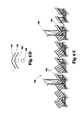


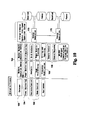


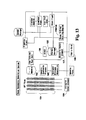


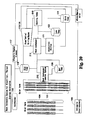

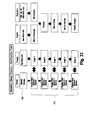


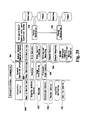
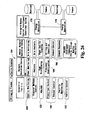
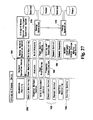

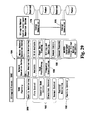
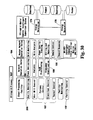
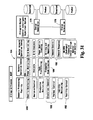
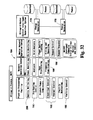
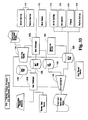


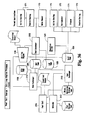

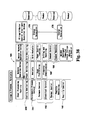
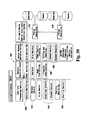


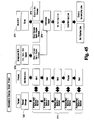
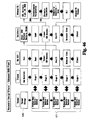
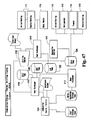
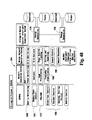
Classifications
-
- F—MECHANICAL ENGINEERING; LIGHTING; HEATING; WEAPONS; BLASTING
- F28—HEAT EXCHANGE IN GENERAL
- F28D—HEAT-EXCHANGE APPARATUS, NOT PROVIDED FOR IN ANOTHER SUBCLASS, IN WHICH THE HEAT-EXCHANGE MEDIA DO NOT COME INTO DIRECT CONTACT
- F28D20/00—Heat storage plants or apparatus in general; Regenerative heat-exchange apparatus not covered by groups F28D17/00 or F28D19/00
-
- F—MECHANICAL ENGINEERING; LIGHTING; HEATING; WEAPONS; BLASTING
- F01—MACHINES OR ENGINES IN GENERAL; ENGINE PLANTS IN GENERAL; STEAM ENGINES
- F01K—STEAM ENGINE PLANTS; STEAM ACCUMULATORS; ENGINE PLANTS NOT OTHERWISE PROVIDED FOR; ENGINES USING SPECIAL WORKING FLUIDS OR CYCLES
- F01K3/00—Plants characterised by the use of steam or heat accumulators, or intermediate steam heaters, therein
- F01K3/02—Use of accumulators and specific engine types; Control thereof
-
- F—MECHANICAL ENGINEERING; LIGHTING; HEATING; WEAPONS; BLASTING
- F03—MACHINES OR ENGINES FOR LIQUIDS; WIND, SPRING, OR WEIGHT MOTORS; PRODUCING MECHANICAL POWER OR A REACTIVE PROPULSIVE THRUST, NOT OTHERWISE PROVIDED FOR
- F03G—SPRING, WEIGHT, INERTIA OR LIKE MOTORS; MECHANICAL-POWER PRODUCING DEVICES OR MECHANISMS, NOT OTHERWISE PROVIDED FOR OR USING ENERGY SOURCES NOT OTHERWISE PROVIDED FOR
- F03G6/00—Devices for producing mechanical power from solar energy
- F03G6/06—Devices for producing mechanical power from solar energy with solar energy concentrating means
- F03G6/068—Devices for producing mechanical power from solar energy with solar energy concentrating means having other power cycles, e.g. Stirling or transcritical, supercritical cycles; combined with other power sources, e.g. wind, gas or nuclear
-
- F—MECHANICAL ENGINEERING; LIGHTING; HEATING; WEAPONS; BLASTING
- F22—STEAM GENERATION
- F22B—METHODS OF STEAM GENERATION; STEAM BOILERS
- F22B1/00—Methods of steam generation characterised by form of heating method
- F22B1/006—Methods of steam generation characterised by form of heating method using solar heat
-
- F—MECHANICAL ENGINEERING; LIGHTING; HEATING; WEAPONS; BLASTING
- F28—HEAT EXCHANGE IN GENERAL
- F28D—HEAT-EXCHANGE APPARATUS, NOT PROVIDED FOR IN ANOTHER SUBCLASS, IN WHICH THE HEAT-EXCHANGE MEDIA DO NOT COME INTO DIRECT CONTACT
- F28D20/00—Heat storage plants or apparatus in general; Regenerative heat-exchange apparatus not covered by groups F28D17/00 or F28D19/00
- F28D20/0034—Heat storage plants or apparatus in general; Regenerative heat-exchange apparatus not covered by groups F28D17/00 or F28D19/00 using liquid heat storage material
- F28D20/0039—Heat storage plants or apparatus in general; Regenerative heat-exchange apparatus not covered by groups F28D17/00 or F28D19/00 using liquid heat storage material with stratification of the heat storage material
-
- F—MECHANICAL ENGINEERING; LIGHTING; HEATING; WEAPONS; BLASTING
- F01—MACHINES OR ENGINES IN GENERAL; ENGINE PLANTS IN GENERAL; STEAM ENGINES
- F01K—STEAM ENGINE PLANTS; STEAM ACCUMULATORS; ENGINE PLANTS NOT OTHERWISE PROVIDED FOR; ENGINES USING SPECIAL WORKING FLUIDS OR CYCLES
- F01K23/00—Plants characterised by more than one engine delivering power external to the plant, the engines being driven by different fluids
- F01K23/02—Plants characterised by more than one engine delivering power external to the plant, the engines being driven by different fluids the engine cycles being thermally coupled
- F01K23/06—Plants characterised by more than one engine delivering power external to the plant, the engines being driven by different fluids the engine cycles being thermally coupled combustion heat from one cycle heating the fluid in another cycle
- F01K23/10—Plants characterised by more than one engine delivering power external to the plant, the engines being driven by different fluids the engine cycles being thermally coupled combustion heat from one cycle heating the fluid in another cycle with exhaust fluid of one cycle heating the fluid in another cycle
-
- F—MECHANICAL ENGINEERING; LIGHTING; HEATING; WEAPONS; BLASTING
- F01—MACHINES OR ENGINES IN GENERAL; ENGINE PLANTS IN GENERAL; STEAM ENGINES
- F01K—STEAM ENGINE PLANTS; STEAM ACCUMULATORS; ENGINE PLANTS NOT OTHERWISE PROVIDED FOR; ENGINES USING SPECIAL WORKING FLUIDS OR CYCLES
- F01K3/00—Plants characterised by the use of steam or heat accumulators, or intermediate steam heaters, therein
- F01K3/12—Plants characterised by the use of steam or heat accumulators, or intermediate steam heaters, therein having two or more accumulators
-
- F—MECHANICAL ENGINEERING; LIGHTING; HEATING; WEAPONS; BLASTING
- F28—HEAT EXCHANGE IN GENERAL
- F28D—HEAT-EXCHANGE APPARATUS, NOT PROVIDED FOR IN ANOTHER SUBCLASS, IN WHICH THE HEAT-EXCHANGE MEDIA DO NOT COME INTO DIRECT CONTACT
- F28D20/00—Heat storage plants or apparatus in general; Regenerative heat-exchange apparatus not covered by groups F28D17/00 or F28D19/00
- F28D20/003—Heat storage plants or apparatus in general; Regenerative heat-exchange apparatus not covered by groups F28D17/00 or F28D19/00 using thermochemical reactions
-
- F—MECHANICAL ENGINEERING; LIGHTING; HEATING; WEAPONS; BLASTING
- F28—HEAT EXCHANGE IN GENERAL
- F28D—HEAT-EXCHANGE APPARATUS, NOT PROVIDED FOR IN ANOTHER SUBCLASS, IN WHICH THE HEAT-EXCHANGE MEDIA DO NOT COME INTO DIRECT CONTACT
- F28D20/00—Heat storage plants or apparatus in general; Regenerative heat-exchange apparatus not covered by groups F28D17/00 or F28D19/00
- F28D2020/0065—Details, e.g. particular heat storage tanks, auxiliary members within tanks
- F28D2020/0082—Multiple tanks arrangements, e.g. adjacent tanks, tank in tank
-
- F—MECHANICAL ENGINEERING; LIGHTING; HEATING; WEAPONS; BLASTING
- F28—HEAT EXCHANGE IN GENERAL
- F28D—HEAT-EXCHANGE APPARATUS, NOT PROVIDED FOR IN ANOTHER SUBCLASS, IN WHICH THE HEAT-EXCHANGE MEDIA DO NOT COME INTO DIRECT CONTACT
- F28D20/00—Heat storage plants or apparatus in general; Regenerative heat-exchange apparatus not covered by groups F28D17/00 or F28D19/00
- F28D2020/0065—Details, e.g. particular heat storage tanks, auxiliary members within tanks
- F28D2020/0086—Partitions
-
- Y—GENERAL TAGGING OF NEW TECHNOLOGICAL DEVELOPMENTS; GENERAL TAGGING OF CROSS-SECTIONAL TECHNOLOGIES SPANNING OVER SEVERAL SECTIONS OF THE IPC; TECHNICAL SUBJECTS COVERED BY FORMER USPC CROSS-REFERENCE ART COLLECTIONS [XRACs] AND DIGESTS
- Y02—TECHNOLOGIES OR APPLICATIONS FOR MITIGATION OR ADAPTATION AGAINST CLIMATE CHANGE
- Y02E—REDUCTION OF GREENHOUSE GAS [GHG] EMISSIONS, RELATED TO ENERGY GENERATION, TRANSMISSION OR DISTRIBUTION
- Y02E10/00—Energy generation through renewable energy sources
- Y02E10/40—Solar thermal energy, e.g. solar towers
- Y02E10/46—Conversion of thermal power into mechanical power, e.g. Rankine, Stirling or solar thermal engines
-
- Y—GENERAL TAGGING OF NEW TECHNOLOGICAL DEVELOPMENTS; GENERAL TAGGING OF CROSS-SECTIONAL TECHNOLOGIES SPANNING OVER SEVERAL SECTIONS OF THE IPC; TECHNICAL SUBJECTS COVERED BY FORMER USPC CROSS-REFERENCE ART COLLECTIONS [XRACs] AND DIGESTS
- Y02—TECHNOLOGIES OR APPLICATIONS FOR MITIGATION OR ADAPTATION AGAINST CLIMATE CHANGE
- Y02E—REDUCTION OF GREENHOUSE GAS [GHG] EMISSIONS, RELATED TO ENERGY GENERATION, TRANSMISSION OR DISTRIBUTION
- Y02E10/00—Energy generation through renewable energy sources
- Y02E10/50—Photovoltaic [PV] energy
- Y02E10/52—PV systems with concentrators
-
- Y—GENERAL TAGGING OF NEW TECHNOLOGICAL DEVELOPMENTS; GENERAL TAGGING OF CROSS-SECTIONAL TECHNOLOGIES SPANNING OVER SEVERAL SECTIONS OF THE IPC; TECHNICAL SUBJECTS COVERED BY FORMER USPC CROSS-REFERENCE ART COLLECTIONS [XRACs] AND DIGESTS
- Y02—TECHNOLOGIES OR APPLICATIONS FOR MITIGATION OR ADAPTATION AGAINST CLIMATE CHANGE
- Y02E—REDUCTION OF GREENHOUSE GAS [GHG] EMISSIONS, RELATED TO ENERGY GENERATION, TRANSMISSION OR DISTRIBUTION
- Y02E50/00—Technologies for the production of fuel of non-fossil origin
- Y02E50/10—Biofuels, e.g. bio-diesel
-
- Y—GENERAL TAGGING OF NEW TECHNOLOGICAL DEVELOPMENTS; GENERAL TAGGING OF CROSS-SECTIONAL TECHNOLOGIES SPANNING OVER SEVERAL SECTIONS OF THE IPC; TECHNICAL SUBJECTS COVERED BY FORMER USPC CROSS-REFERENCE ART COLLECTIONS [XRACs] AND DIGESTS
- Y02—TECHNOLOGIES OR APPLICATIONS FOR MITIGATION OR ADAPTATION AGAINST CLIMATE CHANGE
- Y02E—REDUCTION OF GREENHOUSE GAS [GHG] EMISSIONS, RELATED TO ENERGY GENERATION, TRANSMISSION OR DISTRIBUTION
- Y02E60/00—Enabling technologies; Technologies with a potential or indirect contribution to GHG emissions mitigation
- Y02E60/14—Thermal energy storage
-
- Y—GENERAL TAGGING OF NEW TECHNOLOGICAL DEVELOPMENTS; GENERAL TAGGING OF CROSS-SECTIONAL TECHNOLOGIES SPANNING OVER SEVERAL SECTIONS OF THE IPC; TECHNICAL SUBJECTS COVERED BY FORMER USPC CROSS-REFERENCE ART COLLECTIONS [XRACs] AND DIGESTS
- Y02—TECHNOLOGIES OR APPLICATIONS FOR MITIGATION OR ADAPTATION AGAINST CLIMATE CHANGE
- Y02E—REDUCTION OF GREENHOUSE GAS [GHG] EMISSIONS, RELATED TO ENERGY GENERATION, TRANSMISSION OR DISTRIBUTION
- Y02E70/00—Other energy conversion or management systems reducing GHG emissions
- Y02E70/30—Systems combining energy storage with energy generation of non-fossil origin
-
- Y—GENERAL TAGGING OF NEW TECHNOLOGICAL DEVELOPMENTS; GENERAL TAGGING OF CROSS-SECTIONAL TECHNOLOGIES SPANNING OVER SEVERAL SECTIONS OF THE IPC; TECHNICAL SUBJECTS COVERED BY FORMER USPC CROSS-REFERENCE ART COLLECTIONS [XRACs] AND DIGESTS
- Y02—TECHNOLOGIES OR APPLICATIONS FOR MITIGATION OR ADAPTATION AGAINST CLIMATE CHANGE
- Y02P—CLIMATE CHANGE MITIGATION TECHNOLOGIES IN THE PRODUCTION OR PROCESSING OF GOODS
- Y02P10/00—Technologies related to metal processing
- Y02P10/10—Reduction of greenhouse gas [GHG] emissions
- Y02P10/134—Reduction of greenhouse gas [GHG] emissions by avoiding CO2, e.g. using hydrogen
-
- Y—GENERAL TAGGING OF NEW TECHNOLOGICAL DEVELOPMENTS; GENERAL TAGGING OF CROSS-SECTIONAL TECHNOLOGIES SPANNING OVER SEVERAL SECTIONS OF THE IPC; TECHNICAL SUBJECTS COVERED BY FORMER USPC CROSS-REFERENCE ART COLLECTIONS [XRACs] AND DIGESTS
- Y02—TECHNOLOGIES OR APPLICATIONS FOR MITIGATION OR ADAPTATION AGAINST CLIMATE CHANGE
- Y02P—CLIMATE CHANGE MITIGATION TECHNOLOGIES IN THE PRODUCTION OR PROCESSING OF GOODS
- Y02P80/00—Climate change mitigation technologies for sector-wide applications
- Y02P80/20—Climate change mitigation technologies for sector-wide applications using renewable energy
Definitions
- the present invention relates to a highly scalable mobile and stationary Quintuple-effect generation renewable energy system and energy storage systems.
- the present invention also relates to processes of capturing and converting energy and monitoring said processes. More specifically, the invention relates to elements encompassing distributed energy generation, including hybrid wind and solar energy generation, energy transfer, energy conversion, energy storage, energy provisioning, intelligent software and hardware interfacing offering energy monitoring, analysis and building automation/interfacing/control. Said elements include, but are not limited to, Stirling engines, absorption cooling systems and associated storage systems.
- Prior art thermal energy sources consisted primarily of Gas Turbines, Microturbines, Reciprocating Engines, Steam Turbines, Nuclear Power Plants, Radioisotope Thermal Generator, Geothermal, Stirling Engines, Fuel Cells and other thermal input sources operating in conjunction with combined heating and power (CHP).
- CHP combined heating and power
- the preferred method of the present invention encapsulates a Stirling engine and absorption cooling system and an associated storage system with integrated control system into an amalgamated energy ecosystem.
- Prior art energy and thermal sources consisted primarily of gas turbines, microturbines, reciprocating engines, steam turbines, nuclear power plants, radioisotope thermal generator, geothermal, boilers, Stirling engines, fuel cells, thermal solar systems, and other thermal input sources, all of which generally used single cycle systems. These were generally accepted in prior art as a controlled and semi controlled method of creating usable work with an energy input, these methods are well documented in prior art and typically related information and supporting literature is readily and publicly available. Prior art single cycle implementations all suffered from lower efficiency and substandard performance to include non-optimized design and development. Prior art typically used steam as a primary medium to transfer thermal energy, steam suffers from low density thereby equating to lower thermal transfer yields and efficiency compared to other direct methods.
- the present invention's preferred embodiment offers a reliable thermal management system that is comprised of connections such as a thermosiphon for low thermal transfer use, heat pipe for high thermal transfer use, thermal exchanger using thermal transfer mediums such as steam, water and glycol mixture, oil or molten salt, a combination of these systems and components may be used for thermal temperature management of the thermal generational source.
- the preferred embodiment provides enhanced waste heat reclamation and energy recycling thereby gaining additional efficiency.
- CCS combined cycle systems
- the preferred embodiment is encompassed within the encapsulation of a unified analysis, monitor, control and energy provisioning system, Stirling engine, absorption cooling, thermal storage and enhancing system efficiency from recycling and reclamation processes of thermal waste energy which defines a clear and present advantage to define the preferred method of the present invention over prior art and its implementations.
- Prior art did in fact advance single cycle generations systems to use a secondary cycle, mistakenly named, targeted and narrowly envisioned as a combined cycle system.
- This type of system added a secondary generation method, typically using steam generation from thermal communication of waste heat as its process for the purpose of using inefficient steam turbines, increased capital cost ratios, expensive operations and management, increased water demand and usage from local supplies, the technology also carries with it an explosion risk and potential for injury to employees from related operational risks.
- Prior art use of combined cycles typically used energy usage level inputs as leverage against increase in total efficiency gains at depreciated advancement of energy usage efficiency.
- the preferred method of the present invention additional advantage to prior art comprises the application and processes of the preferred embodiment to expand and enhance value added advantages over prior art in that excess thermal energy to thermal energy storage with hot and cold thermal energy input to expand the available temperature band, additionally electrical generational energy may be stored as chemical energy storage as a medium for enhanced overall system efficiency, energy utilization and expanded energy storage capability.
- thermosiphons such as thermosiphons, heat pipes and heat exchangers using transfer mediums such as molten salt, water, water/glycol, steam and other phase change materials typically require the use of pumps and compressors for pressure as the general accepted methods of applications and processes to communicate thermal energy from point to point. Additionally thermosiphons and heat pipes may be substituted for the above methods for transfer and communication of thermal energy.
- Prior art typically uses cooling towers for wet and dry cooling. Fans powered by electrical energy.
- the preferred method of the present invention uses Stirling engines using thermal waste heat to provide input basis for rotational energy generation for the cooling fan and using waste heat for supply to absorption cooling for higher efficiency of the Stirling usage of the cold thermal input and to facilitate higher cooling capacity of the cooling tower using waste heat to cold via absorption cooling.
- the preferred method of the present invention will extend efficiencies and performance enhancements by inclusion and integration to previously installed prior art systems and devices such as nuclear power plants, coal power plants, natural gas power plants, geothermal power plants, radioisotope thermal generators and other applications that use thermal intensive applications that generate thermal energy typically use steam powered systems, typically and generally using steam turbines.
- thermoelectric generator Prior art design of a Radioisotope thermoelectric generator (RTG) is simple by the standards of nuclear technology: the main component is a sturdy container of a radioactive material (the fuel). Typically thermocouples where placed in the walls of the container, with the outer end of each thermocouple connected to a heat sink. Radioactive decay of the fuel produces thermal energy as heat which flows through the thermocouples to the heat sink, generating electricity in the process.
- RTG Radioisotope thermoelectric generator
- thermocouple is a thermoelectric device that typically was used to convert thermal energy directly into electrical energy using the well-established "Seebeck effect".
- the application primarily consists of two kinds of metal, potentially comprised of semiconductors in which both can conduct electricity. These conductors are typically connected to each other in a closed loop topology. If the two junctions of these conductors are at different temperatures, an electric current will typically be found flowing in the loop.
- thermoelectric couples or "thermocouples” to convert thermal energy from the radioactive material thermal reaction for conversion into electricity.
- thermocouples are very reliable and have a relative long lifespan, they are however also highly inefficient; efficiencies above 10% have generally never been achieved and most RTGs have efficiencies between 3-7% and sustained power output also is a huge limiting factor.
- Research has been done with objectives to improve efficiency by using other technologies to generate electricity from the available thermal energy. The ultimate goal is that by achieving higher efficiency would translate into less radioactive fuel is required to generate the same amount of power, and therefore a lighter overall weight for the generator. This is a critically important factor in spaceflight launch, drone and other prototype development and associated cost considerations.
- a thermionic converter-an energy conversion device which relies on the principle of thermionic emission-can achieve efficiencies between 10-20%, but requires higher temperatures than those at which standard RTGs typically operate.
- Other potentially extreme radioactive isotopes could also have been used to provide power, but short half-lives make these unfeasible.
- space-bound nuclear reactors have previously used thermionics, but nuclear reactors are generally too heavy to use on most small area implementations.
- Dynamic generators can provide power at a multiple of times higher than the conversion efficiency of prior art RTGs.
- the preferred method of the present invention consists primarily of a next-generation radioisotope-fueled power source called the Stirling Radioisotope Generator (SRG) that uses free-piston Stirling engines coupled to alternators or a generator for the purpose of converting thermal energy to electricity.
- SRG prototypes demonstrated an efficiency of around 20%.
- the use of non-contacting moving parts, non-degrading flexural bearings, and a lubrication-free and hermetically sealed environment has, in test units, demonstrated no appreciable degradation over years of operation. Past experimental trials and corresponding results demonstrate that an SRG could continue running for decades with little or no maintenance.
- a liquid desiccant is simply a liquid that has a high affinity for water (naturally absorbs moisture from the air) and is used as a drying agent.
- a desiccant refers to any substance that has a high affinity for water (hygroscopic) and is used as a drying agent.
- Heat recovery ventilation (HRV) and energy recovery ventilation (ERV) systems are typically ducted ventilation systems generally consisting of two fans - one to draw air in from outside and one to remove stale internal air. Throughout the cooling season, the system works to cool and dehumidify the incoming, outside air. This is primarily accomplished by the system taking the rejected heat and sending it into the exhaust airstream to recycle the thermal energy.
- this air cools the condenser coil at a lower temperature than if the rejected heat had not entered the exhaust airstream.
- the system works in a reverse mannerism. Instead of discharging the heat into the exhaust airstream, the system draws thermal energy from the exhaust airstream in order to pre-heat the incoming air. It is at this point that the air passes through a primary unit and then into the controlled space. With this type of system, it is normal, during the cooling seasons, for the exhaust air to be cooler than the ventilation air and, during the heating seasons, warmer than the ventilation air. It is for this reason the system works very efficiently and effectively.
- the Coefficient of Performance (COP) will greatly increase as the conditions become more extreme and additional benefit and efficiency from the increased system loads when communicated from thermal storage enhances overall value and annual energy savings.
- Energy recovery ventilation (ERV) systems are similar to HRV systems but they transfer water vapor carried as moisture in the form of humidity as well as heat energy, thereby controlling humidity levels. In the case of the summer season, they can remove some of the water vapor from the moisture-laden outdoor air before it is brought indoors; in the case of the winter season, they can transfer moisture in the form of humidity as well as heat energy to the incoming colder, dryer outdoor air.
- An air-to-air heat exchanger generally installed in a roof space, recovers heat from the internal air before it is discharged to the outside, and warms the incoming air with the recovered heat. The efficiency of an ERV system is the ratio of energy transferred between the two air streams compared with the total energy transported through the heat exchanger.
- a heat recovery ventilation system is not a heating system but it is typically able to recover between 65-95% of the heat from the exhaust air before it is discharged to outside.
- Energy recovery ventilation is the energy recovery process of exchanging the energy contained in typical controlled units and building area air and using it to treat whether in summer would precool or in winter preheat the incoming outdoor ventilation air in enclosed units, residential and commercial HVAC systems. For instance during the warmer seasons, the system pre-cools and dehumidifies while humidifying and pre-heating in the cooler seasons.
- the benefit of using energy recovery is the ability to meet the appropriate ventilation & energy standards, while improving indoor air quality and reducing total energy requirements and associated HVAC equipment capacity requirements.
- Desalination is known and generally accepted in prior art as a controlled and semi controlled environment for desalination and is well documented in prior art and typically related information and supporting literature is readily and publicly available.
- This apparatus can produce drinking water on a ultra large scale, at a price that is truly competitive with pumping from a reservoir or ground well or deep well aquifer, and produces no brine effluent to be disposed of due to the preferred method of the present invention of evaporation, distillation, processing, separation of associated minerals and components from ocean and seas water sources.
- Fresh water and salt are two essential elements required for a typical cycle of life for the survival of all living creatures which is including humans.
- the primary sources of salt is generally mined from rocks or extracted from sea water from the oceans and seas. Maximum consumption of salt is in its natural form after being produced from oceans, seas or mined directly from rock formations. Salt is needed in regulating the fluid balance or water content of body.
- awareness about the use and potential abuse of salt has grown tremendously and the demand for refined iodized salt has increased dramatically over the last few years. Salt cravings may occur as a result of trace mineral deficiencies or due to the deficiency of sodium chloride itself.
- Salt is important for preservation of life, but misuse and overconsumption can cause serious health problems, such as high blood pressure and inflammation, more so from those individuals who are genetically predisposed to hypertension. Diets high in salt also known as sodium, tied to hypertension and heart risk in some studies, May also worsen diseases caused by abnormal immune response, laboratory research suggests.
- mice fed high-salt diets had a more severe version of an animal form of multiple sclerosis, an autoimmune disease that affects the central nervous system. Additional studies show the cells interact with the body to promote inflammation. Additionally autoimmune diseases, illnesses such as psoriasis and asthma in which the system that protects the body from invaders wrongly attacks healthy cell from excessive salt intake.
- Desalination, desalinization or desalting refers to one of several processes that are used to remove a desired amount of salt and other minerals from saline water, brine and seawater. Typically, desalination may also refer to the removal of salts and minerals from soil.
- seawater is desalinated to produce fresh water, commonly referred to as potable water which is suitable for human and animal consumption or used for crop irrigation.
- Some potential byproducts of seawater desalination if separated and processed are salt, gypsum, magnesium chloride, magnesium sulfate, potassium chloride, potassium hydroxide, boron and bromine, the above list is not exhaustive and this does not reflect the entire list of recoverable salts and minerals from oceans and seas.
- Desalination is the method to access fresh water used in countries that lack natural fresh water supplies and additionally used aboard many sea going ships and submarines. Most current efforts with desalination, recycling surface runoff and wastewater processing are typically focused on developing cost-effective ways of providing fresh potable water for hydration and irrigation. Along with and including wastewater which is one of the few rainfall-independent water sources.
- Data Center prior art and past design approach implementations generally maintained the philosophy of filling the room to capacity with components and then attempt best effort using the best known methods available to cool it and provide emergency power for backup purposes.
- data centers were designed for tight spacing and for air flow through the floor, up through the data center cases and out through the top which was then vented from the room through ducts.
- Concrete is a composite material composed of coarse granular material the aggregate and/or filler embedded in a hard matrix of material the cement and/or binder that fills the space among the aggregate particles and glues them together.
- the word concrete comes from the Latin word “concretus” which means compact or condensed, the perfect passive participle of "concrescere”, from “con” which means together and “crescere” which means to grow.
- Concrete is widely used for making architectural structures, foundations, brick/block walls, pavements, bridges/overpasses, highways, runways, parking structures, dams, pools/reservoirs, pipes, footings for gates, fences and poles and even boats.
- Concrete is used in large quantities almost everywhere civilization has a need for infrastructure.
- the amount of concrete used worldwide in a ton for ton comparison is typically twice that of steel, wood, plastics, and aluminum combined. Concrete's use as a material commonly exceeds all others and is only exceeded by use of naturally occurring freshwater.
- Aggregate consists of large chunks of material in a concrete mix, generally a coarse gravel or crushed rocks such as limestone, or granite, along with finer materials such as sand.
- cement commonly Portland cement, and other cementitious materials such as fly ash and slag cement, serve as a binder or a Ligare for the aggregate.
- Standard admixtures are becoming more popular in recent decades.
- the use of recycled materials as concrete ingredients has been gaining popularity because of increasingly stringent environmental legislation, and the discovery that such materials often have complimentary and valuable properties.
- the most conspicuous of these are fly ash, a by-product of coal-fired power plants, and silica fume, a byproduct of industrial electric arc furnaces.
- the use of these materials in concrete reduces the amount of resources required, as the ash and fume act as a cement replacement.
- the preferred method of the present invention uses gypsum and ash from desalination to monetize both applications and their associated efficiency over prior art. This displaces some cement production, an energetically expensive and environmentally problematic process, while reducing the amount of industrial waste that must be disposed of.
- Portland cement is the most common type of cement in general usage today for modern day construction. It is a basic ingredient of concrete, mortar and plaster. It consists of a mixture of oxides of calcium, silicon and aluminum. Portland cement and similar materials are made by heating limestone (a source of calcium) with clay and grinding this product (called clinker) with a source of sulfate (most commonly gypsum).
- a brick is a block or a single unit of a ceramic material used in masonry construction. Typically bricks are stacked together or laid as brickwork using various kinds of mortar to hold the bricks together and make a permanent structure. Bricks are typically produced in common or standard sizes in bulk quantities. They have been regarded as one of the longest lasting and strongest building materials used throughout recorded history.
- a "brick” is a standard-sized weight-bearing building unit. Bricks are laid in horizontal courses, sometimes dry and sometimes with mortar. When the term is used in this sense, the brick might be made from clay, lime-and-sand, concrete, or shaped stone. In a less clinical and more colloquial sense, bricks are made from dried earth, usually from clay-bearing subsoil. In some cases, such as adobe, the brick is merely dried. More commonly it is fired in a kiln of some sort to form a true ceramic. Prior art suffers from inefficiency during kiln process which is a substantial energy requirement.
- Prior art additionally was not able to benefit from which the preferred method of the present invention uses coils and heat exchangers to recover waste energy for enhanced efficiencies of all included thermal energy intensive application and processes.
- Prior art lacked thermal energy storage systems to benefit efficiency from thermal energy recovery and thermal energy reuse.
- the preferred method of the present invention uses metrics, biometrics and thermal imaging technologies of analysis, monitoring and control of the brick making process using amalgamated with artificial intelligence and automation.including robotics to reduce or eliminate injuries and enhanced uptime, productivity and enhanced volume.
- Aluminum smelting is the process of extracting aluminum from its oxide, alumina, generally by the Hall-Héroult process however alumina is extracted from the ore bauxite by means of the Bayer process at an alumina refinery.
- This is an electrolytic process as such an aluminum smelter uses tremendous amounts of electrical energy; they tend to be located very close to huge energy generation stations, often hydro-electric ones. Additionally they are located near ocean and seaports with a majority of smelter's use imported alumina.
- a very large amount of carbon is typically used in this process, often resulting in significant amounts of GHG emissions with carbon dioxide and carbon monoxide most prevalent.
- the preferred method of the present invention integration of emissions capture, sequestering and reuse creates an environmental friendly solution while reducing the carbon footprint over prior art.
- Prior art defined a process called Hall-Héroult electrolysis which is the typical production route for primary process and commonly used method for aluminum production.
- This process uses an electrolysis cell which is typically made of a steel shell with a series of insulating linings of refractory materials.
- the cell consists of a brick-lined outer steel shell as a container and as support structure. Comprised within the shell, consists of cathode blocks are cemented together by ramming paste. Basis for the top of the cell lining is in contact with the molten metal which then acts as the cathode.
- the molten electrolyte must be maintained at high temperature inside the cell to prevent solidification.
- the prebaked anode is typically made of carbon, generally in the form of large sintered blocks suspended in the electrolyte.
- a single Soderberg type of electrode or a predetermined number of prebaked carbon blocks which are generally used as the anode, while the principal formulation and the fundamental reactions occurring on their surface are normalized for consistent energy distribution and production.
- An aluminum smelter consists of a large number of cell and typically referred to as pots in which the electrolysis process takes place.
- a typical small smelter may contain anywhere from as little as 40 pots which may be used in small facilities and though the largest proposed smelters are up to sixty-five times that capacity which has approached near 2,500 pots in major smelting facilities, each pot typically produces approximately one ton of aluminum production a day.
- Smelting is operated as a batch process, with the aluminum metal deposited at the bottom of the pots and periodically transferred away for final processing. Energy supplies must be consistent and constantly available.
- the hot blast temperature can be from 900 °C to 1300 °C (1600 °F to 2300 °F) depending on the stove design and condition. The temperatures they deal with may be 2000 °C to 2300 °C (3600 °F to 4200 °F). Oil, tar, natural gas, powdered coal and oxygen can also be injected into the furnace at a tuyere level in the furnace area to combine with the coke to release additional energy and increase the percentage of reducing gases present which is necessary to increase productivity.
- impurities such as sulfur, phosphorus, and excess carbon are removed and alloying elements such as manganese, nickel, chromium and vanadium are added to produce the exact steel required. Steel mills then turn molten steel into blooms, ingots, slabs and sheet through casting, hot rolling and cold rolling.
- An integrated steel mill has all the functions for primary steel production: A) iron making (conversion of ore to liquid iron); B) steelmaking (conversion of pig iron to liquid steel), casting (solidification of the liquid steel); C) roughing rolling/billet rolling (reducing size of blocks); and D) product rolling (finished shapes).
- the principal raw materials for an integrated mill are iron ore, limestone, and coal (or coke) or a replacement carbon input. These materials are charged in batches into a blast furnace where the iron compounds in the ore give up excess oxygen and become liquid iron. At intervals of a few hours, the accumulated liquid iron is tapped from the blast furnace and either cast into pig iron or directed to other vessels for further steelmaking operations.
- the Bessemer process was a major advancement in the production of economical steel, but it has now been entirely replaced by other processes such as the basic oxygen furnace.
- Cast iron is iron or a ferrous alloy which has been heated until it liquefies, and is then poured into a mold to solidify. It is usually made from pig iron.
- the alloy constituents affect its color when fractured: white cast iron has carbide impurities which allow cracks to pass straight through. Grey cast iron has graphitic flakes which deflect a passing crack and initiate countless new cracks as the material breaks.
- Carbon (C) and silicon (Si) are the main alloying elements, with the amount ranging from 2.1-4 wt% and 1-3 wt%, respectively.
- Iron alloys with less carbon content are known as steel. While this technically makes these base alloys ternary Fe-C-Si alloys, the principle of cast iron solidification is understood from the binary iron-carbon phase diagram. Additionally, ceramics can be added for high performance alloy use. Since the compositions of most cast irons are around the eutectic point of the iron-carbon system, the melting temperatures closely correlate, usually ranging from 1,150 to 1,200 °C (2,100 to 2,190 °F), which is about 300 °C (572 °F) lower than the melting point of pure iron.
- the preferred method of the present invention to enhance efficiency communicating therma energy from thermal energy storage for the purpose of preheating and heating the thermal intensive cast iron processes.
- Cast iron tends to be brittle, except for malleable cast irons. With its relatively low melting point, good fluidity, castability, excellent machinability, resistance to deformation and wear resistance, cast irons have become an engineering material with a wide range of applications and are used in pipes, machines and automotive industry parts, such as cylinder heads (declining usage), cylinder blocks and gearbox cases (declining usage). It is resistant to destruction and weakening by oxidation (rust).
- Enzymes are proteins, which act as catalysts. Enzymes lower the energy required for a reaction to occur, without being used up in the reaction. Many types of industries, to aid in the generation of their products, utilize enzymes. Examples of these products are; cheese, alcohol and bread. Fermentation is a method of generating enzymes for industrial purposes.
- Fermentation involves the use of microorganisms, like bacteria and yeast to produce the enzymes. There are two methods of fermentation used to produce enzymes. These are submerged fermentation and solid-state fermentation. Submerged fermentation involves the production of enzymes by microorganisms in a liquid nutrient media. The enzymes are recovered by methods such as centrifugation, for extra-cellularly produced enzymes and lysing of cells for intracellular enzymes. Many industries are dependent or interdependent on enzymes for the production of their goods. Industries that use enzymes generated by fermentation are the brewing, wine making, baking, cheese production and other uses requiring breakdown of materials.
- Corn milling process is approximately 20% of the annual corn harvest is currently used by industrial corn processors to produce a variety of products such as sweeteners, starches, oils, ethanol and animal feeds. The great majority of the remainder is fed to livestock, poultry & fish.
- This versatile grain is comprised of four primary components that make manufacturing of a variety of products and byproducts possible. Corn's typical components are Starch (61%), Corn oil (4 %), Protein (8%) and Fiber (11%) - approximately 16% of the corn kernel's weight is moisture.
- the preferred embodiment involves corn wet milling as the primary method of processing and each method produces distinct products and feedstocks for co-products and their associated production.
- the Corn wet-milling process is designed to extract the highest use and value proposition from each component of the corn kernel.
- the preferred method of the present invention comprises the process beginning with the corn kernels being soaked in large tanks called steep tanks in a dilute aqueous sulfur dioxide solution, additionally the preferred embodiment uses thermal energy input from storage to assist in softening corn kernels and to eliminate any bacteria that may be present that could contaminate and degrade further steps in the process.
- the softened kernel is then processed to remove the germ which is further processed to remove the high-value corn oil.
- the Germ Meal remaining after the oil is extracted and marketed for animal feed use.
- the fiber is then combined with the evaporated, concentrated and dried steep liquor and other co-product streams to produce Corn Gluten Feed.
- the starch and gluten protein subsequently pass through the screens and the starch-gluten slurry is sent to centrifugal separators where the lighter gluten protein and the heavier starch are separated.
- the gluten protein is then concentrated and dried to produce Corn Gluten Meal, a 60% protein feed.
- CGF corn gluten feed
- CGM corn gluten meal
- ESG enhanced feed grains
- the preferred method of the present invention incorporates using waste thermal energy and waste CO2 generation for plankton inputs which yields vertical markets compared to prior art expulsion of both with little or no reclamation or recycling to benefit the same.
- starch Some of the starch is then washed and dried or modified and dried. These starch products are marketed to the food, paper, and textile industries. The remaining starch can be processed into products such as high fructose sweeteners or ethanol. Typically, an average bushel of corn yields 31.5 lbs. of Starch, 12.5 lbs. of Gluten Feed, 2.5 lbs. of Gluten Meal and 1.6 lbs. of Corn Oil.
- Ethanol is considered a quasi-renewable energy source due to fact that the energy is partially generated by using a resource, sunlight, which cannot be depleted, it must be noted however that the planting, fertilizing and harvesting process requires vast amounts of energy that typically came from non-renewable sources.
- ethanol starts with photosynthesis causing a feedstock, such as sugar cane or a grain such as maize (corn), or even switch grass to grow.
- feedstocks are processed via milling or cellulosic processes into ethanol. It can be made from petroleum products via catalytic hydration of ethylene with sulfuric acid as the catalyst. Ethanol may also be obtained via ethylene or acetylene, from calcium carbide, coal, oil gas, and other sources.
- Petroleum derived nonrenewable based ethanol synthetic ethanol is chemically identical to bio-ethanol and can be differentiated only by radiocarbon dating.
- Bio-ethanol is usually obtained from the conversion of carbon based feedstock. Agricultural feedstocks are considered renewable because they get energy from the sun using photosynthesis, provided that all minerals required for growth (such as nitrogen and phosphorus) are returned to the land. Ethanol can be produced from a variety of feedstocks such as sugar cane, bagasse, miscanthus, sugar beet, sorghum, grain, switchgrass, barley, hemp, kenaf, potatoes, sweet potatoes, cassava, sunflower, fruit, molasses, corn, stover, grain, wheat, straw, cotton, other biomass, as well as many types of cellulose waste and harvestings, whichever has the best well-to-wheel assessment.
- feedstocks such as sugar cane, bagasse, miscanthus, sugar beet, sorghum, grain, switchgrass, barley, hemp, kenaf, potatoes, sweet potatoes, cassava, sunflower, fruit, molasses, corn, stover, grain, wheat, straw, cotton, other biomass, as well as many types
- Carbon fiber is a type of woven carbon filament.
- For the rigid composite material made from carbon fiber used in aerospace and other applications are commonly combined composite formed by introduction of a Carbon fiber reinforced polymer matrix.
- Prior art Carbon fiber is a material consisting of fibers typically about 5-10 ⁇ m in diameter and primarily composed mostly of carbon atoms.
- the carbon atoms are bonded together in crystals that are more or less aligned parallel to the long axis of the fiber as the crystal alignment gives the fiber high strength-to-volume ratio (making it strong for its size).
- Several thousand carbon fibers are bundled together to form a tow, which may be used by itself or woven into a fabric.
- Carbon Fibers are relatively expensive when compared to similar fibers, such as glass fibers or plastic fibers.
- Carbon fibers are usually combined with other materials to form an advanced composite material. When combined with a plastic resin and wound or molded it forms carbon fiber reinforced polymer (often referred to as carbon fiber) which has a very high strength-to-weight ratio usually compared to the characteristics of steel that is also extremely rigid although Carbon Fiber is somewhat brittle. Special note may be taken however that it can demonstrated that Carbon Fibers when composed with other materials, such as with graphite and graphene to form carbon-carbon composites, which have a very high heat tolerance. There are a host of other additives such as titanium and other bonding elements that can enhance the characteristics of the sought composite requirements.
- a 6 ⁇ m diameter carbon filament can be compared to the diameter of a human hair.
- Each carbon filament thread is a bundle of many thousand carbon filaments.
- a single such filament is a thin tube with a diameter of 5-8 micrometers and consists almost exclusively of carbon.
- the atomic structure of carbon fiber is similar to that of graphite, consisting of sheets of carbon atoms (graphene sheets) arranged in a regular hexagonal pattern, the difference being in the way these sheets interlock.
- Graphite is a crystalline material in which the sheets are stacked parallel to one another in regular fashion. The intermolecular forces between the sheets are relatively weak Van der Waals forces, giving graphite its soft and brittle characteristics.
- carbon fiber may be turbostratic or graphitic, or have a hybrid structure with both graphitic and turbostratic parts present.
- turbostratic carbon fiber the sheets of carbon atoms are haphazardly folded, or crumpled, together.
- Carbon fibers derived from Polyacrylonitrile (PAN) are turbostratic, whereas carbon fibers derived from mesophase pitch are graphitic after heat treatment at temperatures exceeding 2200 °C.
- Turbostratic carbon fibers tend to have high tensile strength, whereas heat-treated mesophase-pitch-derived carbon fibers have high Young's modulus (i.e., high stiffness or resistance to extension under load) and high thermal conductivity.
- Carbon fiber is most notably used to reinforce composite materials, particularly the class of materials known as carbon fiber or graphite reinforced polymers.
- Non-polymer materials can also be used as the matrix for carbon fibers. Due to the formation of metal carbides and corrosion considerations, carbon has seen limited success in metal matrix composite applications.
- Reinforced carbon-carbon (RCC) consists of carbon fiber-reinforced graphite, and is used structurally in high-temperature applications. The fiber also finds use in filtration of high-temperature gases, as an electrode with high surface area and ongoing corrosion resistance, and as an anti-static component. Molding a thin layer of carbon fibers significantly improves fire resistance of polymers or thermoset composites because a dense, compact layer of carbon fibers efficiently reflects heat.
- the use of carbon fiber composites is commonly used as a direct replacement for aluminum from many commercial applications in favor of other metals because of galvanic corrosion issues.
- Precursors for carbon fibers are polyacrylonitrile (PAN), rayon and pitch.
- Carbon fiber filament yarns are used in several processing techniques: the direct uses are for prepregging, filament winding, pultrusion, weaving, braiding, etc.
- This thread can then be used to weave a carbon fiber filament fabric or cloth. The appearance of this fabric generally depends on the linear density of the yarn and the weave chosen. Some commonly used types of weave are twill, satin and plain. Carbon filament yarns can also be knitted or braided.
- Pyrolysis is the heating of an organic material, such as biomass, in the absence of oxygen. Pyrolysis is the chemical decomposition is induced in organic materials by heat in the absence of oxygen. Organic materials are transformed into gaseous components and a solid residue (coke) containing fixed carbon and ash.
- Typical Pyrolysis Process is formally defined as chemical decomposition induced in organic materials by heat in the absence of oxygen. In practice, it is not possible to achieve a completely oxygen-free atmosphere; actual pyrolytic systems are operated with less than stoichiometric quantities of oxygen. Because no oxygen is present the material does not combust but the chemical compounds (i.e. cellulose, hemicellulose and lignin) that make up that material thermally decompose into combustible gases and charcoal.
- Bio-oil is a dense complex mixture of oxygenated organic compounds. It has a fuel value that is generally 50 - 70% that of petroleum bases fuels and can be used as boiler fuel or upgraded to renewable transportation fuels.
- Using the above method of the present invention consists of separation promoting pure product outputs with high quality when compared to convention bio-oil processed by prior art systems. It density is > 1 kg L-1, much greater than that of biomass feedstock, making it more cost effective to transport than biomass.
- the gas portion can be used as fuel or further processed into hydrocarbons.
- the solid known as coke or char, is around 90% carbon and was usually and generally burned to provide heat for the process, the preferred method of the present invention uses renewable energy generational input whereas coke has a higher value usage when provided as the preferred base carbon product such as the coke in the combined steel and aluminum production and recycling facility.
- the liquid known as pyrolysis oil, is a mixture of oxygenated hydrocarbons that can be chemically reduced to create a gasoline-like fuel.
- Ethanol fermentation and pyrolysis aren't the only energy-related uses for biomass.
- Cogeneration can burn the material to generate steam turbine heat.
- Gasification can convert it into syngas, which can be processed into liquid fuels using Fischer-Tropsch chemistry, an expensive but established industrial process.
- Pyrolysis generally yields a higher-value end product per pound of biomass than cogeneration and can be transformed to a liquid more cost effectively than gasification and liquefied to the quality of drop-in fuels and bio created lubrications.
- the preferred method of the present invention of renewable thermal energy for pyrolysis forms a primary solution for use of biomass for renewable lubrication and char and/or coke production and reduction and/or elimination of the need for use of fossil fuels for energy or as component feedstock required for modern chemical basis and production.
- Pyrolysis of organic materials produces combustible gases, including carbon monoxide, hydrogen and methane, and other hydrocarbons. If the off-gases are cooled, liquids condense producing an oil/tar residue and contaminated water. Pyrolysis typically occurs under pressure and at operating temperatures above 430 °C (800 °F). The pyrolysis gases require further treatment. It should be noted that this thermal range is well within the range of solar theraml energy production range which would equate that no external energy generation would be needed using stored thermal energy as the energy input basis.
- the rotary kiln is a refractory-lined, slightly-inclined, rotating cylinder that serves as a heating chamber.
- the circulating fluidized bed uses high-velocity air to circulate and suspend the waste particles in a heating loop and operates at temperatures up to 430 °C (800 °F).
- Molten-salt destruction is another type of pyrolysis.
- a molten salt incinerator uses a molten, turbulent bed of salt, such as sodium carbonate, as a heat transfer and reaction/scrubbing medium to destroy hazardous materials.
- Shredded solid waste is injected with air under the surface of the molten salt.
- Hot gases composed primarily of carbon dioxide, stream, and unreacted air components rise through the molten salt bath, pass through a secondary reaction zone, and through an emission gas recycle and cleanup system before discharging to the atmosphere.
- Other pyrolysis by-products react with the alkaline molten salt to form inorganic products that are retained in the melt.
- Spent molten salt containing ash is tapped from the reactor, cooled and recycled.
- a farm is an area of land commonly referred to as agriculture or water commonly referred to as aquaculture, either of these may include various structures and substructures that are primarily devoted to the practice of producing and managing food (i.e. produce, grains, and animals such as livestock or aquatic species. It is the basic production facilities used for food production and or generation. Generally, a farm may be owned and operated by a single individual, family, community, corporation or a company. A typical farm can be a scale any size from a fraction of an acre to several or tens of thousands of acres.
- a business producing tree fruits, berries, syrups or nuts is called an orchard; a vineyard produces grapes.
- the stable is used for operations principally involved in the training of horses. Stud and commercial farms breed and produce other animals and livestock.
- a farm that is primarily used for the production of milk, cream or cheese and other dairy products is typically called a dairy farm.
- Additional specialty farms include aquaponics which can be aeroponics or hydroponics for the growth of plants or aquaculture otherwise referred to as an aquatic farm or a fish farm, which would raise fish in pens and tanks to grow as a food source, and tree farms, which grow trees for sale for transplant, lumber, or decorative use.
- the electrical wiring, liquid, semi liquid and solid material transfer conduits may consist of conduits, ducts, pipes, hoses, pneumatic tubing, conveyer belts, or any means of connecting loops and circuits, conveying solid and/or semi-solid matter.
- Prior art smartgrid designs and integrations primarily use smart meters on consumer connections to monitor usage. Improving upon previous art of smartgrid implementation of the current invention is effectuated via monitoring usage, identifying the energy usage sources through device data transmitting, manual consumer input and from its common electrical signal fingerprint, storing profile data sets, responding with appropriate energy assumptions from extracted usage profiles, analysis of time of day usage for enhanced energy load response for power quality and energy availability to enhance grid stability.
- Wind energy technology is typically used to convert kinetic energy from wind into mechanical energy and/or electricity.
- a wind turbine may include a rotor with a set of blades and a rotor shaft connected to the blades. Wind passing over the rotor connected blades may cause the blades to turn and the rotor shaft to rotate.
- the rotating rotor shaft may be coupled to a mechanical system that performs a mechanic task such as pumping water, atmosphere gas separation compressors, providing rotational energy to generate electricity.
- the rotor shaft may be connected to an electric generator that converts the rotational energy into electricity, which may subsequently be used to power a consumer, commercial or industrial device, and/or electrical grid.
- Solar energy technology is typically used to convert radiated light energy from the sun into thermal energy and/or photovoltaic electricity.
- a collection surface and/or reflector as is the case with thermal solar technologies to concentrate the solar energies on the aforementioned solar collector surface.
- Solar energy striking the collection surface is converted into photovoltaic generated electrical energy or as thermal generated heat for direct use, transfer and/or storage.
- the variable nature of wind and availability of solar energy may interfere with baseload and/or on-demand generation of electricity, generated products and byproducts from wind and solar energy.
- energy storage using chemical and thermal techniques may be required to offset fluctuations in electricity, products and byproducts generated from wind and solar power and/or maintain reliable electric and or thermal energy provisioning service and/or in a private and public electrical grid.
- Thermal Energy Storage can be provisioned via thermal energy transfer fluids and mediums generated from solar thermal and/or electrical and or chemical reaction collector systems and/or from thermal conversion is accomplished by action of chilling mechanisms, particularly special, non-compressors based, absorption chillers and other devices configured to absorb, dissipate or transfer thermal energy transference into low temperature thermal energy storage. Additionally thermal energy can be generated via transference from a heating and/or cooling element or other derived application processes to initiate thermal conveyance to a medium, additionally as a method for electrical energy to thermal energy storage technique.
- chilling mechanisms particularly special, non-compressors based, absorption chillers and other devices configured to absorb, dissipate or transfer thermal energy transference into low temperature thermal energy storage.
- thermal energy can be generated via transference from a heating and/or cooling element or other derived application processes to initiate thermal conveyance to a medium, additionally as a method for electrical energy to thermal energy storage technique.
- Thermal Energy On-Demand is made available from Thermal Energy Storage Systems pumping thermal transfer fluids for direct use as a thermal energy production of a service such as providing thermal energy for a space heating, water heater or other thermal intensive applications and operations can be used to cool other units and areas within units, such as water directed to the aquaculture unit or the atmosphere of the aeroponics unit, cold storage or fast freeze storage.
- This process can be conducted via fluid to thermal transfer device such as a Stirling engine and/or steam turbine and/or thermal intensive applications usage and/or through a secondary thermal transfer liquid for storage and reuse of waste thermal energy.
- Commercial Grid Backup Energy Reserve also called commercial grid-scale energy storage refers to the methods used to store energy on a commercial grid scale within a commercial's energy power grid. Energy is stored during times when production from energy generation components exceeds localized energy consumption and the stores are used at times when consumption exceeds available baseload production or establishes a higher baseline energy requirement.
- commercial grid energy storage is the one method that the commercial can use to adapt energy production to energy consumption, both of which can vary over time. This is done to increase efficiency and lower the cost of energy production and/or to integrate and facilitate the use of intermittent energy sources.
- Thermal energy storage most commonly uses molten salt mixture as a high temperature transfer and storage medium which is used to store heat collected by a solar collection system, biogas generated thermal input or by electrical generated thermal storage injection.
- Thermal energy storage consisting of commonly available substances and storage mediums, for example water frozen into ice to store energy as a cold temperature storage medium.
- Thermal Energy Storage System has shown that the electricity into storage to electricity-out (round trip efficiency) in the range of 75 to 93% using enhanced energy recovery systems.
- Prior art Stirling Radioisotope Generators typically used free-piston Stirling engines coupled to alternators or a generator for the purpose of converting thermal energy to electricity.
- Stirling engines are a known heat engine that has higher efficiency than steam based systems which can convert thermal energy into electricity.
- the RPS program is developing Stirling technology for possible use in future space missions. NASA had previously planned to complete development of two Advanced Stirling Radioisotope Generator (ASRG) units, unfortunately for energy development overall the decision to discontinue development of an ASRG system occurred in late 2013. NASA's Glenn Research Center continues development and testing of free piston type Stirling engine technology for potential use by current and future space exploration missions.
- a moving piston is driven by the heat of a fuel source. The piston would move a magnet back and forth through a coil of wire as a linear generator to generate electrical current in the wire.
- Heat recovery ventilation (HRV) and energy recovery ventilation (ERV) systems are ducted ventilation systems typically consisting of two fans - one to draw air in from outside and one to remove stale internal air.
- An air-to-air thermal energy exchanger commonly called a heat exchanger commonly installed in a roof space, recovers thermal energy from the internal air before it is discharged to the externally, and thermal exchanges with the incoming air with the recovered thermal energy.
- environmental control systems effectuate changes to temperature, humidity and air quality of the ambient air within the controlled area.
- Such amalgamated systems include heating, cooling, dehumidification, humidification, ultra-violet light, air filtration and ventilation is generally inefficient and lacking in environmental quality.
- the cooling capacity of the air conditioner is significantly reduced and loaded performance is heavily degraded.
- moisture must be transferred from the cooled dehumidifier sump to the heated evaporator sump. Since the moisture is in the form of a low concentration desiccant, this is performed by pumping or otherwise transferring the desiccant. Since the desiccant also contains desiccant ions which acts as a drying agent it must be therefore returned to the cooled dehumidifier sump to maintain the desiccant ion level required for dehumidification.
- MCFC Molten-carbonate fuel cells
- SOFC Solid Oxide Fuel Cells
- thermodynamics the term endothermic describes a process or reaction in which the system absorbs energy from its surroundings in the form of heat.
- the term was coined by Marcellin Berthelot from the Greek roots “endo”, derived from the word “endon” which means “within” and the root “therm” which means “hot.”
- the intended use and sense is that of a reaction that depends on absorption or taking in heat if it is to proceed for work.
- the opposite of an endothermic process is an exothermic process, one that releases, "radiates" energy in the form of heat.
- a SOFC is an exothermic electrochemical conversion device that produces electricity directly from oxidizing a fuel.
- Fuel cells are characterized by their electrolyte material; the SOFC has a solid oxide or ceramic, electrolyte.
- Advantages of this class of fuel cells include high efficiency, long-term stability, fuel flexibility, low emissions, relatively low system cost and with thermal energy generation for thermal waste energy recovery and potential for system efficiency gains.
- the largest potential disadvantage is the high operational temperatures which can result in longer start-up times along with mechanical and chemical compatibility issues.
- the preferred method of the present invention introduces thermal waste energy recovery, thermal storage and controlled energy communication for additional usage for enhanced efficiency, this will also reduce and potentially eliminate long startup times.
- Solid oxide fuel cells are a class of fuel cells characterized by the use of a solid oxide material as the electrolyte.
- SOFCs use a solid oxide electrolyte to conduct negative oxygen ions from the cathode to the anode. The electrochemical oxidation of the oxygen ions with hydrogen or carbon monoxide thus occurs on the anode side.
- SOFC's typically operate at very high temperatures, typically between 500 and 1,000 °C. Recent advances allow lower high range temperatures to be used such as the preferred embodiment of the present invention.
- SOFCs do not require expensive noble metals such as a platinum catalyst material with its limited availability to initiate electrochemical reactions, as is currently necessary for lower-temperature extremely expensive fuel cells such as PEMFCs, and are not vulnerable to carbon monoxide catalyst poisoning but suffer from efficiency optimization, PEMFC's suffers from difficulties with exposure to freezing and moisture control system vulnerability, damage to the fuel cell from contaminations, expenses and efficiency loss from energy use from methods to remove impurities from atmospheric air input for oxygen supplies.
- the preferred method of the present invention may use hydroxyl ammonium nitrate and/or triethanol ammonium nitrate and/or a mixture of them to include water as the fuel input basis which has hydrogen and oxygen in its chemical matrix as a high density fuel with relatively easy storage methods as a liquid fuel.
- a method of the present invention is use of the rotational energy for providing energy to pressure swing absorption device (PSA) or an air separation unit (ASU) which can use thermal input using distillation, an additional method would entail the use of absorbent or specific porous filter materials for the purpose of provisioning pure or nearly pure oxygen input to the fuel cell.
- PSA pressure swing absorption device
- ASU air separation unit
- Solid oxide fuel cells have a wide variety of applications from use as auxiliary power units in vehicles to stationary power generation with outputs from 100 W to 20 MW achieving a near efficiency of a SOFC device up to the previously theoretical mark of 60% and exceeding that mark with the inclusion of preferred embodiment.
- the higher operating temperature make SOFCs suitable candidates for the preferred embodiment using application and processes to include a Stirling engine which is an endothermic device and amalgamated with an additional recovery device consisting primarily of an absorption cooling system to enable a system for combined cooling, freezing, heating and power functionality (CCFHP) with system integration to a unified analysis, monitor, control and energy provisioning system, which further increases overall system efficiency, redundancy and reliability.
- a Stirling engine which is an endothermic device and amalgamated with an additional recovery device consisting primarily of an absorption cooling system to enable a system for combined cooling, freezing, heating and power functionality (CCFHP) with system integration to a unified analysis, monitor, control and energy provisioning system, which further increases overall system efficiency, redundancy and reliability.
- a solid oxide fuel cell is made up of four layers, three of which are ceramics (hence the name). A single cell consisting of these four layers stacked together is typically only a few millimeters thick. Hundreds of these cells are then connected in series to form what most people refer to as an "SOFC stack".
- the ceramics generally used in SOFCs do not become electrically and ionically active until they reach very high temperature and as a consequence the stacks have to run at temperatures ranging from 500 to 1,000 °C.
- Reduction of oxygen into oxygen ions occurs at the cathode. These ions can then diffuse through the solid oxide electrolyte to the anode where they can electrochemically oxidize the fuel. In this reaction, a water byproduct is given off as well as two electrons. These electrons then flow through an external circuit where they can do work. The cycle then repeats as those electrons enter the cathode material again.
- planar fuel cell design geometry is the typical sandwich type geometry employed by most types of fuel cells, where the electrolyte is sandwiched in between the electrodes.
- Hydroxylamine nitrate has generally been produced by one of several processes utilizing hydroxylamine sulfate and converting it to the end product by processes such as electrodialysis or a cation-exchange process. Some processes produce aqueous hydroxylamine from hydroxylammonium sulfate. However, heretofore none have been found which produce the aqueous hydroxylamine salts by neutralization of the corresponding acid, without causing spontaneous decomposition upon addition of the concentrated acid. Conversely, addition of the hydroxylamine to nitric acid causes spontaneous decomposition of the product HAN, even when the nitric acid has been diluted to less than about 50% by weight.
- Hydroxylamine nitrate has several commercial applications, such use as the component or one of the components of a liquid fuel. It is in this application a highly purified form of the compound is required, especially when it is to be employed as a fuel where the hydroxyl ammonium nitrate (HAN) solution is stable in an aqueous solution, but must be completely free of transition metal elements, such as iron and copper.
- HAN hydroxyl ammonium nitrate
- the hydroxylamine salt produced by the electrolytic processes of the prior art can be converted to hydroxylamine nitrate at low solution strength and in an impure state.
- the double displacement reaction employed requires an electrochemical cell that has a plurality of compartments and requires anion exchange membranes and/or bipolar membranes.
- the draw back and disadvantage of this design requires significant capital costs and extremely high energy costs.
- Quintuple-generation is the process of using excess thermal from energy generation for another task: in this case the production of potable water from seawater or brackish groundwater in an integrated, or "multi-purpose", facility where a power plant provides the energy for desalination.
- the facility's energy production may be dedicated to the production of potable water (a stand-alone facility), or excess energy may be produced and incorporated into the energy grid (a true Quintuple-generation facility) or as the preferred method of present invention communicates excess thermal energy to thermal energy storage for later use.
- Quintuple-generation takes various forms, and theoretically any form of energy production could be used.
- the majority of current and planned prior art and current day cogeneration type of desalination plants use either fossil fuels or nuclear power as their source of energy.
- the advantage of multi-purpose facilities is they can be more efficient in land use, energy consumption, thus making desalination a more viable option for potable drinking water.
- Factors that generally determine the costs for desalination include capacity and type of facility, location, feed water, labor, energy, financing, and concentrate disposal. Desalination stills now control pressure, temperature and brine concentrations to optimize efficiency. It is worth noting that costs are falling, and generally positive about the technology for affluent areas in proximity to oceans, desalinated water may be a solution for some water-stress areas.
- Brine is denser than seawater due to higher solute concentration.
- the ocean bottom is most at risk because the brine with its increased salinity and temperature sinks and remains there long enough to damage the ecosystem. Careful reintroduction can minimize this problem but does not eliminate the damage to the environment.
- Prior art's typical oceanographic conditions off the coast allow for rapid dilution of the concentrated increased temperature byproduct, thereby only able to minimize the harm to the environment.
- Some methods of desalination do not discharge brine. They do not use chemicals in their processes nor the burning of fossil fuels. They do not work with membranes or other critical parts, such as components that include heavy metals, thus do not cause toxic waste (and high maintenance).
- Multi-stage flash distillation is a water desalination process that typically uses thermal energy to distill sea water by flashing a portion of the water into steam, typically this is done with multiple stages of what are essentially countercurrent regenerative heat exchangers. Multi-stage flash distillation plants generally produce about 60% of all desalinated water in the world.
- the plant has a series of effect spaces also called stages, each containing a heat exchanger and a condensate collector.
- the sequence has a cold end and a hot end while intermediate stages have intermediate temperatures.
- the stages have different pressures corresponding to the boiling points of water at the stage temperatures.
- the preferred method of the present invention communicates required thermal energy from thermal storage with an as needed and on demand for multi-flash distillation energy input needs.
- feed water at the cold inlet thermal temperature flows, or is pumped, through the heat exchangers in the stages and warms up via regeneration.
- the brine heater it already has nearly the maximum temperature.
- an amount of additional thermal energy is added.
- the water flows through valves back into the stages which have ever lower pressure and temperature.
- the water is now called concentrate otherwise generally referred to as brine, to distinguish it from the inlet water.
- the brine As the brine enters, its temperature is above the boiling point at the pressure of the stage, and a small fraction of the brine water boils (“flashes") to steam thereby reducing the temperature until equilibrium is reached.
- the resulting steam is a little hotter than the feed water in the heat exchanger.
- the steam cools and condenses against the heat exchanger tubes, thereby heating the feed water as described earlier in a regenerative fashion enhancing operational efficiency.
- the total evaporation in all the stages is up to approximately 15% of the water flowing through the system, depending on the range of temperatures used. With increasing temperature there are growing difficulties of scale formation and corrosion. 120 °C appears to be a maximum thermal energy input, although scale avoidance may require thermal input temperatures below 70 °C.
- the feed water carries away the excess latent heat of the condensed steam, maintaining the low temperature of the stage.
- the pressure in the chamber remains constant as equal amounts of steam is formed when new warm brine enters the stage and steam is removed as it condenses on the tubes of the heat exchanger.
- the equilibrium is quite stable, because if at some point more vapor forms, the pressure increases therefore reduces evaporation and increases condensation.
- the brine and the condensate has a temperature near the inlet temperature.
- the brine and condensate are then pumped out from the low pressure field within the stage to the ambient pressure.
- the brine and condensate still carry a small amount of thermal energy that is recovered from the system when they are discharged via the regenerator. The thermal energy recovery helps make up for this loss.
- the thermal energy added in the brine heater in prior art usually comes in the form of hot steam from an industrial process co-located with the desalination plant.
- the steam is allowed to condense against tubes carrying the brine.
- the preferred method uses a fluid medium due to the reduced loss from the enhanced density.
- MSF distillation plants are often paired with power plants in a cogeneration configuration. Waste heat from the power plant is used to heat the seawater, providing cooling for the power plant at the same time. This reduces the energy needed by one-half to two-thirds, which drastically alters the economics of the plant, since energy is by far the largest operating cost of MSF plants.
- Reverse osmosis, MSF distillation's main competitor requires more pretreatment of the seawater and more maintenance, as well as energy in the form of work (electricity, mechanical power) as opposed to cheaper low-grade waste heat.
- MED Multiple-effect distillation
- the tubes can be submerged in the feed water, but more typically the feed water is sprayed on the top of a bank of horizontal tubes, and then drips from tube to tube until it is collected at the bottom of the stage.
- the plant can be seen as a sequence of closed spaces separated by tube walls, with a heat source in one end and a heat sink in the other end.
- Each space consists of two communicating subspaces, the exterior of the tubes of stage (n) and the interior of the tubes in stage (n+1).
- Each space has a lower temperature and pressure than the previous space, and the tube walls have intermediate temperatures between the temperatures of the fluids on each side.
- the pressure in a space cannot be in equilibrium with the temperatures of the walls of both subspaces. It has an intermediate pressure. Then the pressure is too low or the temperature too high in the first subspace and the water evaporates. In the second subspace, the pressure is too high or the temperature too low and the vapor condenses. This carries evaporation energy from the warmer first subspace to the colder second subspace. At the second subspace the energy flows by conduction through the tube walls to the colder next space.
- Reverse osmosis plant is a processing plant where the process of reverse osmosis takes place.
- An average modern reverse osmosis plant needs six kilowatt-hours of electricity to desalinate one cubic meter of water. The process also results in an amount of salty briny waste.
- the challenge for these plants is to find ways to reduce energy consumption, use sustainable energy sources and improve the process of desalination and to innovate in the area of waste management to deal with the waste.
- Self-contained water treatment plants using reverse osmosis, called reverse osmosis water purification units are normally used in a military context.
- RO Reverse osmosis
- This membrane-technology is not properly a filtration method.
- an applied pressure is used to overcome osmotic pressure, a colligative property that is driven by chemical potential, a thermodynamic parameter.
- RO can remove many types of molecules and ions from solutions and is used in both industrial processes and in producing potable water. The result is that the solute is retained on the pressurized side of the membrane and the pure solvent is allowed to pass to the other side.
- this membrane should not allow large molecules or ions through the pores (holes), but should allow smaller components of the solution (such as the solvent) to pass freely.
- reverse osmosis involves a diffusive mechanism so that separation efficiency is dependent on solute concentration, pressure, and water flux rate.
- Reverse osmosis is most commonly known for its use in drinking water purification from seawater, removing the salt and other effluent materials from the water molecules.
- Osmosis is a natural process. When two liquids of different concentration are separated by a semipermeable membrane, the fluid has a tendency to move from low to high solute concentrations for chemical potential equilibrium.
- reverse osmosis is the process of forcing a solvent from a region of high solute concentration through a semipermeable membrane to a region of low solute concentration by applying a pressure in excess of the osmotic pressure.
- the largest and most important application of reverse osmosis is the separation of pure water from seawater and brackish waters; seawater or brackish water is pressurized against one surface of the membrane, causing transport of salt-depleted water across the membrane and emergence of potable drinking water from the low-pressure side.
- the membranes used for reverse osmosis have a dense layer in the polymer matrix-either the skin of an asymmetric membrane or an interfacial polymerized layer within a thin-film-composite membrane-where the separation occurs. In most cases, the membrane is designed to allow only water to pass through this dense layer, while preventing the passage of solutes (such as salt ions).
- This process requires that a high pressure be exerted on the high concentration side of the membrane, usually 2-17 bar (30-250 psi) for fresh and brackish water, and 40-82 bar (600-1200 psi) for seawater, which has around 27 bar (390 psi) natural osmotic pressure that must be overcome.
- This process is best known for its use in desalination (removing the salt and other minerals from sea water to get fresh water), but it has also been used to purify fresh water for medical, industrial, and domestic applications.
- cement kilns In modern cement kilns many advanced features are used to lower the fuel consumption per ton of clinker produced. Cement kilns are extremely large, complex, and inherently dirty industrial installations, and have many undesirable emissions. Of the various ingredients used in concrete the cement is the most energetically expensive. Even complex and efficient kilns require 3.3 to 3.6 gigajoules of energy to produce a ton of clinker and then grind it into cement. Many kilns can be fueled with flammable wastes with the most commonly used fuel source being used tires. The extremely high temperatures and long periods of time at those temperatures allow cement kilns to efficiently and completely burn even difficult-to-use fuels.
- Pure water is required to be used to make concrete to eliminate bonding problems when setting or as a cause of premature failure of the object or structure. Hydration involves many different reactions, often occurring simultaneously at the same time. As the reactions proceed, the products of the cement hydration process gradually bond together the individual sand and gravel particles and other components of the concrete to form a warm solid yet soft object or structure.
- Decorative stones such as quartzite, small river stones or crushed glass are sometimes added to the surface of concrete for a decorative "exposed aggregate” finish, popular among landscape designers while allowing the cement product to be decorative, exposed aggregate adds robustness to a concrete walks, driveway and walls.
- Reinforced concrete may add steel reinforcing bars, steel fibers, glass fiber, carbon fiber, composite fiber or plastic fiber to carry tensile loads. Use of these additives will be permanently embedded in poured concrete to create a reinforced concrete structure.
- Chemical admixtures are materials in the form of powder or fluids that are added to the concrete to give it certain characteristics not obtainable with plain concrete mixes. In normal use, admixture dosages are less than 5% by mass of cement and are added to the concrete at the time of batching/mixing. Accelerators speed up the hydration (hardening) of the concrete. Typical materials used are Ca(NO3)2 and NaNO3. Retarders slow the hydration of concrete and are used in large or difficult pours where partial setting before the pour is complete is undesirable. Typical polyol retarders are sugar, sucrose, sodium gluconate, glucose, citric acid, and tartaric acid.
- Air entrainments add and entrain tiny air bubbles in the concrete, which reduces damage during freeze-thaw cycles, increasing durability.
- entrained air entails a trade off with strength, as each 1% of air may decrease compressive strength 5%.
- Plasticizers increase the workability of plastic or "fresh" concrete, allowing it be placed more easily, with less consolidating effort.
- a typical plasticizer is lignosulfonate.
- Plasticizers can be used to reduce the water content of a concrete while maintaining workability and are sometimes called water-reducers due to this use. Such treatment improves its strength and durability characteristics.
- Superplasticizers are a class of plasticizers that have fewer deleterious effects and can be used to increase workability more than is practical with traditional plasticizers.
- Compounds used as superplasticizers include sulfonated naphthalene formaldehyde condensate, sulfonated melamine formaldehyde condensate, acetone formaldehyde condensate and polycarboxylate ethers.
- Pigments can be used to change the color of concrete, for aesthetics.
- Corrosion inhibitors are used to minimize the corrosion of steel and steel bars in concrete.
- Bonding agents are used to create a bond between old and new concrete (typically a type of polymer). Pumping aids improve pumpability, thicken the paste and reduce separation and bleeding
- inorganic materials that also have pozzolanic or latent hydraulic properties. These very fine-grained materials are added to the concrete mix to improve the properties of concrete (mineral admixtures), or as a replacement for Portland cement (blended cements).
- fly ash A by-product of coal-fired electric generating plants, it is used to partially replace Portland cement (by up to 60% by mass).
- the properties of fly ash depend on the type of coal burnt. In general, siliceous fly ash is pozzolanic, while calcareous fly ash has latent hydraulic properties.
- Concrete plant facility showing a Concrete mixer being filled from the ingredient silos.
- Concrete production is the process of mixing together the various ingredients-water, aggregate, cement, and any additives to produce concrete. Concrete production is time-sensitive. Once the ingredients are mixed, workers must put the concrete in place before it hardens. In modern usage, most concrete production takes place in a large type of industrial facility called a concrete plant, or often a batch plant.
- concrete plants come in two main types, ready mix plants and central mix plants.
- a ready mix plant mixes all the ingredients except water, while a central mix plant mixes all the ingredients including water.
- a central mix plant offers more accurate control of the concrete quality through better measurements of the amount of water added, but must be placed closer to the work site where the concrete will be used, since hydration begins at the plant.
- a concrete plant consists of large storage hoppers for various reactive ingredients like cement, storage for bulk ingredients like aggregate and water, mechanisms for the addition of various additives and amendments, machinery to accurately weigh, move, and mix some or all of those ingredients, and facilities to dispense the mixed concrete, often to a concrete mixer truck.
- Modern concrete is usually prepared as a viscous fluid, so that it may be poured into forms, which are containers erected in the field to give the concrete its desired shape.
- forms which are containers erected in the field to give the concrete its desired shape.
- concrete formwork can be prepared, such as Slip forming and Steel plate construction.
- concrete can be mixed into dryer, non-fluid forms and used in factory settings to manufacture precast concrete products.
- the paste is generally mixed in a high-speed, shear-type mixer at a w/cm (water to cement ratio) of 0.30 to 0.45 by mass.
- the cement paste premix may include admixtures such as accelerators or retarders, superplasticizers, pigments, or silica fume.
- the premixed paste is then blended with aggregates and any remaining batch water and final mixing is completed in conventional concrete mixing equipment.
- High-energy mixed (HEM) concrete is produced by means of high-speed mixing of cement, water and sand with net specific energy consumption of at least 5 kilojoules per kilogram of the mix.
- a plasticizer or a superplasticizer is then added to the activated mixture, which can later be mixed with aggregates in a conventional concrete mixer.
- sand provides dissipation of energy and creates high-shear conditions on the surface of cement particles. This results in the full volume of water interacting with cement.
- the liquid activated mixture can be used by itself or foamed (expanded) for lightweight concrete.
- HEM concrete hardens in low and subzero temperature conditions and possesses an increased volume of gel, which drastically reduces capillarity in solid and porous materials.
- Workability is the ability of a fresh (plastic) concrete mix to fill the form/mold properly with the desired work (vibration) and without reducing the concrete's quality. Workability depends on water content, aggregate (shape and size distribution), cementitious content and age (level of hydration) and can be modified by adding chemical admixtures, like superplasticizer. Raising the water content or adding chemical admixtures increases concrete workability. Excessive water leads to increased bleeding (surface water) and/or segregation of aggregates (when the cement and aggregates start to separate), with the resulting concrete having reduced quality. The use of an aggregate with an undesirable gradation can result in a very harsh mix design with a very low slump, which cannot readily be made more workable by addition of reasonable amounts of water.
- Slump can be increased by addition of chemical admixtures such as plasticizer or superplasticizer without changing the water-cement ratio. Some other admixtures, especially air-entraining admixture, can increase the slump of a mix.
- High-flow concrete like self-consolidating concrete, is tested by other flow-measuring methods. One of these methods includes placing the cone on the narrow end and observing how the mix flows through the cone while it is gradually lifted. After mixing, concrete is a fluid and can be pumped to the exact location where needed. Concrete has relatively high compressive strength, but much lower tensile strength. For this reason it is usually reinforced with materials that are strong in tension (often steel and most recently use of composites).
- the elasticity of concrete is relatively constant at low stress levels but starts decreasing at higher stress levels as matrix cracking develops. Concrete has a very low coefficient of thermal expansion and shrinks as it matures. All concrete structures crack to some extent, due to shrinkage and tension. Concrete that is subjected to long-duration forces is prone to creep.
- Tests can be performed to ensure that the properties of concrete correspond to specifications for the application. Different mixes of concrete ingredients produce different strengths, which are measured in psi or MPa. Different strengths of concrete are used for different purposes. Very low-strength (2000 psi or less) concrete may be used when the concrete must be lightweight. Lightweight concrete is often achieved by adding air, foams, or lightweight aggregates, with the side effect that the strength is reduced. For most routine uses, 3000-psi to 4000-psi concrete is often used. 5000-psi concrete is readily commercially available as a more durable, although more expensive, option. 5000-psi concrete is often used for larger civil projects. Strengths above 5000 psi are often used for specific building elements.
- the lower floor columns of high-rise concrete buildings may use concrete of 12,000 psi or more, to keep the size of the columns small.
- Bridges may use long beams of 10,000 psi concrete to lower the number of spans required.
- other structural needs may require high-strength concrete. If a structure must be very rigid, concrete of very high strength may be specified, even much stronger than is required to bear the service loads. Strengths as high as 19,000 psi have been used commercially for these reasons.
- Modern clay bricks are formed in one of three processes - soft mud, dry press, or extruded. Normally, brick contains the following ingredients: Silica (sand) - 50% to 60% by weight, Alumina (clay) - 20% to 30% by weight, Lime - 2 to 5% by weight, Iron oxide - ⁇ 7% by weight, Magnesia - less than 1% by weight
- the soft mud method is the most common, as it is the most economical. It starts with the raw clay, preferably in a mix with 25-30% sand to reduce shrinkage. The clay is first ground and mixed with water to the desired consistency. The clay is then pressed into steel molds with a hydraulic press. The shaped clay is then fired ("burned") at 900-1000 °C to achieve strength.
- the preferred method of the present invention communicates thermal energy from thermal storage for the purpose of providing thermal energy for preheating and heating the kiln for the firing process.
- An oval or circular trench is dug, 6-9 metres wide, 2-2.5 metres deep, and 100-150 metres in circumference.
- a tall exhaust chimney is constructed in the centre.
- Half or more of the trench is filled with "green" (unfired) bricks which are stacked in an open lattice pattern to allow airflow.
- the lattice is capped with a roofing layer of finished brick.
- new green bricks, along with roofing bricks are stacked at one end of the brick pile; cooled finished bricks are removed from the other end for transport to their destinations.
- the brick workers create a firing zone by dropping fuel (coal, wood, oil, debris, and so on) through access holes in the roof above the trench.
- the dry press method is similar to the soft mud brick method, but starts with a much thicker clay mix, so it forms more accurate, sharper-edged bricks. The greater force in pressing and the longer burn make this method more expensive.
- European-style extruded bricks or blocks are used in single-wall construction with finishes applied on the inside and outside. Their many voids comprise a greater proportion of the volume than the solid, thin walls of fired clay. Such bricks are made in 15-, 25-, 30-, 42- and 50-cm widths. Some models have very high thermal insulation properties, making them suitable for zero-energy buildings.
- the raw materials for calcium-silicate bricks include lime mixed with quartz, crushed flint or crushed siliceous rock together with mineral colourants. The materials are mixed and left until the lime is completely hydrated; the mixture is then pressed into moulds and cured in an autoclave for two or three hours to speed the chemical hardening.
- the finished bricks are very accurate and uniform, although the sharp arrises need careful handling to avoid damage to brick (and bricklayer).
- the bricks can be made in a variety of colours; white is common but pastel shades can be achieved. This type of brick is common in Sweden, especially in houses built or renovated in the 1970s, where it is known as "Mexitegel" (en: Mexi[can] Bricks).
- the fired color of clay bricks is influenced by the chemical and mineral content of the raw materials, the firing temperature, and the atmosphere in the kiln. For example, pink colored bricks are the result of a high iron content, white or yellow bricks have a higher lime content. Most bricks burn to various red hues; as the temperature is increased the color moves through dark red, purple and then to brown or grey at around 1,300 °C (2,372 °F). Calcium silicate bricks have a wider range of shades and colors, depending on the colorants used. The names of bricks may reflect their origin and color, such as London stock brick and Cambridgeshire White.
- “Bricks” formed from concrete are usually termed blocks, and are typically pale grey in color. They are made from a dry, small aggregate concrete which is formed in steel molds by vibration and compaction in either an "egglayer” or static machine. The finished blocks are cured rather than fired using low-pressure steam. Concrete blocks are manufactured in a much wider range of shapes and sizes than clay bricks and are also available with a wider range of face treatments - a number of which simulate the appearance of clay bricks.
- Natural stone bricks are of limited modern utility due to their enormous comparative mass, the consequent foundation needs, and the time-consuming and skilled labor needed in their construction and laying. They are very durable and considered more handsome than clay bricks by some. Only a few stones are suitable for bricks. Common materials are granite, limestone and sandstone. Other stones may be used (for example, marble, slate, quartzite, and so on) but these tend to be limited to a particular locality.
- bricks For efficient handling and laying, bricks must be small enough and light enough to be picked up by the bricklayer using one hand (leaving the other hand free for the trowel). Bricks are usually laid flat and as a result the effective limit on the width of a brick is set by the distance which can conveniently be spanned between the thumb and fingers of one hand, normally about four inches (about 100 mm). In most cases, the length of a brick is about twice its width, about eight inches (about 200 mm) or slightly more. This allows bricks to be laid bonded in a structure which increases stability and strength (for an example, see the illustration of bricks laid in English bond, at the head of this article).
- the wall is built using alternating courses of stretchers, bricks laid length-wise, and headers, bricks laid width-wise.
- the headers tie the wall together over its width.
- this wall is built in a variation of English bond called English cross bond where the successive layers of stretchers are displaced horizontally from each other by half a brick length.
- English cross bond In true English bond, the perpendicular lines of the stretcher courses are in line with each other.
- a bigger brick makes for a thicker (and thus more insulating) wall. Historically, this meant that bigger bricks were necessary in colder climates while a smaller brick was adequate, and more economical, in warmer regions.
- Bricks are used for building, block paving and pavement. In the USA, brick pavement was found incapable of withstanding heavy traffic, but it is coming back into use as a method of traffic calming or as a decorative surface in pedestrian precincts.
- Bricks in the metallurgy and glass industries are often used for lining furnaces, in particular refractory bricks such as silica, magnesia, chamotte and neutral (chromomagnesite) refractory bricks.
- This type of brick must have good thermal shock resistance, refractoriness under load, high melting point, and satisfactory porosity.
- the correct brick for a job can be selected from a choice of color, surface texture, density, weight, absorption and pore structure, thermal characteristics, thermal and moisture movement, and fire resistance.
- Cast iron is made by re-melting pig iron, often along with substantial quantities of scrap iron, scrap steel, lime stone, carbon (coke) and taking various steps to remove undesirable contaminants. Phosphorus and sulfur may be burnt out of the molten iron, but this also burns out the carbon, which must be replaced. Depending on the application, carbon and silicon content are adjusted to the desired levels, which may be anywhere from 2-3.5% and 1-3% respectively. Other elements are then added to the melt before the final form is produced by casting. Iron is sometimes melted in a special type of blast furnace known as a cupola, but more often melted in electric induction furnaces or electric arc furnaces.
- the molten iron is poured into a holding furnace or ladle.
- the preferred method of the present invention stems from using thermal energy communicated from thermal energy storage to enhance energy efficiency, additional efficiency can be obtained with the preferred method of the present invention recycling and recover of waste heat through use of heat exchangers and coils near the furnace to collect the waste thermal energy for communication to storage.
- Cast iron's properties are changed by adding various alloying elements, or alloyants.
- silicon is the most important alloyant because it forces carbon out of solution.
- the only over very important alloy is inclusion of ceramic which makes for a very high performance alloy combination with the silicon which is commonly used in cylinders and other high performance applications. Instead the carbon forms graphite which results in a softer iron, reduces shrinkage, lowers strength, and decreases density.
- Sulfur when present, forms iron sulfide, which prevents the formation of graphite and increases hardness. The problem with sulfur is that it makes molten cast iron sluggish, which causes short run defects.
- manganese is added because the two form into manganese sulfide instead of iron sulfide. The manganese sulfide is lighter than the melt so it tends to float out of the melt and into the slag.
- Grey cast iron is characterized by its graphitic microstructure, which causes fractures of the material to have a grey appearance. It is the most commonly used cast iron and the most widely used cast material based on weight. Most cast irons have a chemical composition of 2.5-4.0% carbon, 1-3% silicon, and the remainder is iron. Grey cast iron has less tensile strength and shock resistance than steel, but its compressive strength is comparable to low and medium carbon steel.
- White cast iron is a type of cast iron that displays white fractured surface due to the presence of cementite. With a lower silicon content (graphitizing agent) and faster cooling rate, the carbon in white cast iron precipitates out of the melt as the metastable phase cementite, Fe3C, rather than graphite.
- the cementite which precipitates from the melt forms as relatively large particles, usually in a eutectic mixture, where the other phase is austenite (which on cooling might transform to martensite).
- Malleable iron starts as a white iron casting that is then heat treated at about 900 °C (1,650 °F).
- the preferred method of the present invention stems from using thermal energy communicated from thermal energy storage to enhance energy efficiency. Graphite separates out much more slowly in this case, so that surface tension has time to form it into spheroidal particles rather than flakes. Due to their lower aspect ratio, spheroids are relatively short and far from one another, and have a lower cross section vis-a-vis a propagating crack or phonon. They also have blunt boundaries, as opposed to flakes, which alleviates the stress concentration problems faced by grey cast iron. In general, the properties of malleable cast iron are more like mild steel. There is a limit to how large a part can be cast in malleable iron, since it is made from white cast iron.
- Ductile cast iron or nodular is a more recent development. Minute amounts of magnesium or cerium added to these alloys slow down the growth of graphite precipitates by bonding to the edges of the graphite planes. Strict control of other elements and timing, allows the carbon to separate as spheroidal particles as the material solidifies. The properties are similar to malleable iron, but parts may be able to cast with considerably larger molded sections.
- Converting captured and sequestered CO2 into products such as chemicals, plastics, fuels, building materials, and other commodities is both an environmental friendly method and economically advantageous.
- Incorporation into existing polymer (plastics) formulations results in packaging foams with higher tensile strength and load-bearing capacity, and adhesives and coatings with improved adhesion, cohesive strength, and "weatherabilty" properties, such as UV-and water-resistance.
- Capital requirements and operational costs to produce the nonfossil fuels polymers closely mirror conventional production costs, and the products demonstrate increased strength and environmental resistance relative to existing polymers.
- the production scope is a diverse range of applications, including flexible, rigid, and microcellular packaging foams, thermoplastics, polyurethane adhesives and sealants, and coating resins for food and beverage cans.
- Each carbon filament is produced from a precursor polymer such as polyacrylonitrile (PAN), rayon, or petroleum pitch.
- PAN polyacrylonitrile
- rayon rayon
- petroleum pitch For synthetic polymers such as PAN or rayon, the precursor is first spun into filament yarns, using chemical and mechanical processes to initially align the polymer atoms in a way to enhance the final physical properties of the completed carbon fiber.
- Precursor compositions and mechanical processes used during spinning filament yarns may vary among manufacturers. After drawing or spinning, the polymer filament yarns are then heated to drive off non-carbon atoms (carbonization), producing the final carbon fiber.
- the carbon fibers filament yarns may be further treated to improve handling qualities, and then wound on to bobbins.
- a common method of manufacture involves heating the spun PAN filaments to approximately 300 °C in air, which breaks many of the hydrogen bonds and oxidizes the material.
- the preferred method of the present invention uses thermal energy from thermal energy storage to provide pre-heat and heating of the furnace, having an inert atmosphere of a gas such as argon, and heated to approximately 2000 °C, the preferred method of the current invention also would include the use of heat exchangers and coils near the furnace for the purpose of recycling and recoverery of thermal waste energy for the purpose of communicating to thermal energy storage enhancing overall system efficiencies, this thermal energy induces graphitization of the material, changing the molecular bond structure.
- thermal energy is communicated to the furnace to enforce these chains to bond side-to-side (ladder polymers), forming narrow graphene sheets which eventually merge to form a single, columnar filament.
- the result is usually 93-95% carbon.
- Lower-quality fiber can be manufactured using pitch or rayon as the precursor instead of PAN.
- the carbon can become further enhanced, as high modulus, or high strength carbon, by heat treatment processes.
- Carbon heated in the range of 1500-2000 °C exhibits the highest tensile strength (820,000 psi, 5,650 MPa or N/mm 2 ), while carbon fiber heated from 2500 to 3000 °C (graphitizing) exhibits a higher modulus of elasticity (77,000,000 psi or 531 GPa or 531 kN/mm 2 ).
- Directed-energy weapon system is a weapon system that emits energy or energy accelerated projectile aimed at a specified target in a determined or projected direction or flight path of an intended target.
- DEWs of prior art have typically been categorized by the frequency in which they operate such as RF (for radio frequency) and such as Laser, which is a weapon based on the type of energy discharge.
- Enzymes commercially available now are generally at economical input costs comparable in ratio to the value added chemical process and associated vertical products. Furthermore, any substantial reduction in the cost of production of enzymes will be a positive stimulus for the commercialization of enzymatic depilation.
- Proteases are one of the most important groups of industrial enzymes and account for nearly 60% of the total enzyme sale. The major uses of free proteases occur in dry cleaning, detergents, meat processing, cheese making, and production of digestive enzymes.
- microorganisms including them are available commercially; and, they have almost completely replaced chemical hydrolysis of starch in starch processing industry. Although many microorganisms produce this enzyme, the most commonly used for their industrial application are Bacillus licheniformis, Bacillus amyloliquifaciens and Aspergillus niger. Amylases stand out as a class of enzymes, which are of useful applications in the food, brewing, textile, detergent and pharmaceutical industries.
- the preferred method of the present invention comprises an artificial intelligence controlled and stabilized environmental control system using adaptive metrics, biometrics and thermal imaging sensoring for active analysis, monitoring and machine learning control providing sustainable ecosystem elements encompassing a high volume symmetrical fermentation growth system while incorporating a microalgae bioreactor and organism reactor production system.
- This process is typically performed by centrifugation.
- most industrial enzymes are extracellular (secreted by cells into the external environment), they remain in the fermented mixture after the biomass has been removed.
- the biomass can be recycled as a feed additive once dried or may be used fertilizer if it is treated with lime to inactivate the microorganisms and stabilize it for storage and application.
- the enzymes in the remaining broth are then concentrated by evaporation, membrane filtration or crystallization depending on their intended application. If pure enzyme preparations are required, they are usually isolated by gel or ion exchange chromatography. Certain applications require solid enzyme products, so the crude powder enzymes are made into granules to make them more convenient to use. Sometimes liquid formulations are preferred because they are easier to handle and dose along with other liquid ingredients.
- Enzymes used in starch conversion to convert glucose into fructose are immobilized, typically on the surfaces of inert granules held in reaction.
- Fermentation in liquid media is of two types depending upon the mode of operation: A. Batch fermentation, B. Continuous fermentation.
- Batch reactors are simplest type of mode of reactor operation. In this mode, the reactor is filled with medium and the fermentation is allowed to proceed. When the fermentation has finished the contents are emptied for downstream processing. The reactor is then cleaned, re-filled, re-inoculated and the fermentation process starts again.
- Continuous reactors Fresh media is continuously added and bioreactor fluid is continuously removed. As a result, cells continuously receive fresh medium and products and waste products and cells are continuously removed for processing. The reactor can thus be operated for long periods of time without having to be shut down. Continuous reactors can be many times more productive than batch reactors. This is partly due to the fact that the reactor does not have to be shut down as regularly and also due to the fact that the growth rate of the bacteria in the reactor can be more easily controlled and optimized.
- cells can also be immobilized in continuous reactors, to prevent their removal and thus further increase the productivity of these reactors.
- Continuous reactors are as yet not widely used in industry but do find major application in wastewater treatment.
- Fed batch reactor is the most common type of reactor used in industry. In this reactor, fresh media is continuous or sometimes periodically added to the bioreactor but unlike a continuous reactor, there is no continuous removal.
- the fermenter is emptied or partially emptied when reactor is full or fermentation is finished.
- Production process of ethanol typically has a few basic steps for large scale production of ethanol which are: microbial (yeast) fermentation of sugars, distillation, dehydration, and denaturing (optional for resale tax advantage).
- microbial yeast
- Enzymes are used to convert starch into sugar.
- Ethanol fermentation is typically used in the ethanol process in which ethanol is produced by microbial fermentation of the sugar. Microbial fermentation will currently only work directly with sugars.
- Two major components of plants, starch and cellulose, are both made up of sugars, and can in principle be converted to sugars for fermentation.
- sugar e.g. sugar cane
- starch e.g. corn
- the preferred method of the present invention will communicate thermal energy from thermal energy storage for the purpose of assisting and maintaining proper fermentation temperatures.
- ethanol For the ethanol to be usable as a fuel or other intended uses, the majority of the water must be removed. Most of the water is removed by distillation, but the purity is limited to 95-96% due to the formation of a low-boiling water-ethanol azeotrope with maximum (95.6% m/m (96.5% v/v) ethanol and 4.4% m/m (3.5% v/v) water).
- This mixture is called hydrous ethanol and can be used as a fuel alone, but unlike anhydrous ethanol, hydrous ethanol is not miscible in all ratios with gasoline, so the water fraction is typically removed in further treatment in order to be used as fuel or other intended uses.
- the first process used in many early fuel ethanol plants, is called azeotropic distillation and consists of adding benzene or cyclohexane to the mixture.
- azeotropic distillation When these components are added to the mixture, it forms a heterogeneous azeotropic mixture in vapor-liquid-liquid equilibrium, which when distilled produces anhydrous ethanol in the column bottom, and a vapor mixture of water, ethanol, and cyclohexane/benzene. When condensed, this becomes a two-phase liquid mixture.
- extractive distillation consists of adding a ternary component which will increase ethanol's relative volatility. When the ternary mixture is distilled, it will produce anhydrous ethanol on the top stream of the column.
- Pyrolysis is a thermochemical decomposition of organic material at elevated temperatures in the absence or near absence of oxygen or halogen. Primarily consists and involves the simultaneous change of chemical composition and physical phase, and is irreversible. The word is coined from the Greek-derived elements pyro "fire” and lysis "separating".
- Pyrolysis is a type of thermolysis which is commonly observed in organic materials exposed to high temperatures.
- Thermal decomposition or thermolysis, is a chemical decomposition caused by heat.
- the decomposition temperature of a substance is the temperature at which the substance chemically decomposes.
- the reaction is usually endothermic as heat is required to break chemical bonds in the compound undergoing decomposition.
- a positive feedback loop is created producing thermal runaway and can potentially result in an explosion.
- Pyrolysis is one of the processes involved in charring wood, starting at 200-300 °C (390-570 °F).
- pyrolysis of organic substances produces gas and liquid products and leaves a solid residue richer in carbon content, char or coke.
- Extreme pyrolysis the primary method of carbon fiber production is a process in which pyrolysis leaves mostly carbon as the residue, is called carbonization.
- the pyrolysis process is heavily used in the chemical industry, for example, to produce charcoal, activated carbon, methanol, and other chemicals from wood, to convert ethylene dichloride into vinyl chloride to make PVC, to produce coke from coal, to convert biomass into syngas and bio-char or bio-coke, to turn waste into safely disposable substances, and for transforming medium-weight hydrocarbons from oil into lighter ones like gasoline.
- These specialized uses of pyrolysis may be called various names, such as dry distillation, destructive distillation, or cracking.
- Pyrolysis typically also plays an important role in several cooking procedures, such as baking, frying, grilling, and caramelizing. In addition, it is a tool of chemical analysis, for example, in mass spectrometry and in carbon-14 dating. Many highly important chemical compounds for required life, such as phosphorus and sulfuric acid, were first obtained by this very process. Pyrolysis has generally been assumed to occur during catagenesis, the conversion of buried organic matter to fossil fuels, hence pyrolysis use of pressure and thermal energy. It is also the basis of pyrography. In their embalming process, the ancient Egyptians used a mixture of substances, including methanol, which they obtained from the pyrolysis of wood.
- Pyrolysis differs from other high-temperature processes like combustion and hydrolysis in that it usually does not involve reactions with oxygen, water, or any other reagents. In practice, it is not possible to achieve a completely oxygen-free atmosphere. Because some oxygen is present in any pyrolysis system, a small amount of oxidation occurs.
- Pyrolysis is usually the first chemical reaction that occurs in the burning of many solid organic fuels, like wood, cloth, and paper, and also of some kinds of plastic.
- solid organic fuels like wood, cloth, and paper
- plastic the visible flames are not due to combustion of the wood itself, but rather of the gases released by its pyrolysis, whereas the flame-less burning of a solid, called smoldering, is the combustion of the solid residue (char or charcoal) left behind by pyrolysis.
- smoldering the flame-less burning of a solid, called smoldering
- the pyrolysis of common materials like wood, plastic, and clothing is extremely important for fire safety and firefighting.
- the process is done under pressure and at operating temperatures above 430 °C (806 °F).
- typical temperatures are 450 to 550 °C (840 to 1,000 °F).
- the preferred method of the present invention may communicate thermal energy from thermal storage on demand or as needed to maintain renewable energy input and a sustainable method of processing.
- Liquid cooling is a highly effective method of removing excess thermal energy, with the most common heat transfer fluid in desktop systems being a water and glycol mixture.
- the advantages of water cooling over air cooling include water's higher specific thermal energy capacity and thermal conductivity.
- the principle used in cooling electronics and electrical components is identical to that used in an internal combustion engine, with the liquid coolant being circulated by a coolant pump through a duct to thermal transfer unit, sometimes referred to as a thermal transfer block mounted to the intended target to be cooled and then transferring the thermal energy away from the target out to the thermal transfer heat exchanger to dissipate the thermal energy from the system.
- Liquids allow the transfer of more thermal energy communicated away from the components being cooled than air, making liquid cooling suitable for overclocking and high performance computer applications.
- liquid cooling is also influenced less by the ambient temperature and little if any influence from humidity.
- Liquid cooling's comparatively low noise-level compares favorably to that of active cooling, which can become quite noisy.
- Disadvantages of liquid cooling include complexity and the potential for a coolant leak. Leaked water can damage any electronic components with which it comes into contact, and the need to test for and repair leaks makes for more complex and less reliable installations.
- An air-cooled heat sinks are generally much simpler to build, install, and maintain than a water cooling solution, although specific water cooling kits can also be found, which may be just as easy to install as an air cooler. These are not limited to cooling of CPU's, GPU's or short and long term memory however, as storage drive cooling is also possible.
- liquid cooling While originally limited to mainframe computers, liquid cooling has become a practice largely associated with overclocking in the form of either manufactured kits, or in the form of do-it-yourself setups assembled from individually gathered parts.
- the past few years have seen an increase in the popularity of liquid cooling in pre-assembled, moderate to high performance, desktop computers.
- a sealed or "closed-loop" system will typically incorporating a small pre-filled radiator, fan, and waterblock simplify the installation and maintenance of water cooling at a slight cost in cooling effectiveness relative to larger and more complex setups.
- Traditional water cooling versus the preferred method of the present invention consists a hybrid air and closed-loop chilled liquid coolant cooling system.
- liquid cooling is generally combined with air cooling, using liquid cooling for the higher thermal energy components, such as CPUs, GPUs, short and long term memory, storage drives, voltage regulator modules (VRMs), and even power supplies can be water-cooled. This can be accomplished while retaining the simpler and cheaper air cooling for less demanding component and system cooling and for general datacenter thermal energy removal.
- Modern liquid cooling systems use minor system pressurization, this typically is approximately 15 psi. This process generally raises the boiling-point of the coolant and reduces evaporation.
- the use of water cooling carries the risk of lower temperature vaporization from heat exposure.
- Many water based liquid cooling applications require the use of a water and antifreeze mixture, typically glycol.
- Liquid coolant in general is typically a water and glycol mixture for removing thermal energy from a component, machine, system or area. Liquid coolant may be recycled through a recirculating system. Recirculating systems generally in prior art rely upon cooling towers, evaporators and economizers to remove thermal energy is accomplished with negligible evaporative loss of cooling water.
- a heat exchanger or condenser may separate non-contact liquid coolant from a fluid being cooled. Antifreeze also inhibits corrosion from dissimilar metals and can increase the boiling point, allowing a wider range of water cooling temperatures in attempts to raise the vaporization point to a temperature unlikely to be experienced. Its distinctive odor also alerts operators to cooling system leaks and problems that could typically go unattended in a water-only cooling system.
- Dairy farming is a class of agriculture, where female cattle, goats, or other mammals are raised for their milk, which may be either processed on-site or transported to a dairy for processing and eventual retail sale.
- a centralized dairy facility processes milk and dairy products, such as cream, butter, yogurt, cheese and ice cream.
- Dairy farms generally sell the male calves borne by their mothers for veal meat, as dairy breeds are not normally satisfactory for commercial beef production.
- Many dairy farms typically grow their own feed, typically including corn, alfalfa, and hay using the manure as fertilizer for the above crops.
- Typical handling and processes are transferring the targeted species from grow out areas to the holding area in the processing area.
- Further processing and handling may commence such as sorting and grading, skinner, bleeding, gutting and washing, cutting, chilling, storing the chilled processed species.
- the number and order in which these operations that are undertaken differ with the various targeted species and the type of processing needed for the finished product.
- Targeted species preservation techniques are required to prevent product spoilage, reducing waste from product trimming and lengthen shelf life. There are processes designed to inhibit the activity of spoilage bacteria and the metabolic changes that result in the loss of product quality. Spoilage bacteria are the specific bacteria that produce the unpleasant odors and flavors associated with spoiled product. Targeted species will normally host a variety of bacteria that are not spoilage type of bacteria, and most of the bacteria present on spoiled product played no basis in the spoilage. For, a bacterium to initiate and flourish, it requires the right temperature, sufficient humidity and oxygen, and surroundings that are pH balanced but not too acidic. Various preservation techniques work by interrupting one or more of these requirements.
- Control of temperature with the use of ice preserves products during processing and extends shelf life by lowering the temperature. As the temperature is decreased, the metabolic activity in the product from microbial or autolytic processes can be reduced or eliminated. This is achieved by refrigeration where the temperature is dropped to about 0 °C, or freezing where the temperature is dropped below -18°C.
- Poultry farms are devoted to raising chickens (egg layers or broilers), turkeys, ducks, and other fowl, generally for meat or eggs.
- Eggs are typically produced on large egg ranches on which environmental parameters are well controlled. Chickens are exposed to artificial light cycles to stimulate egg production year-round. In addition, it is a common practice to induce molting through careful manipulation of light and the amount of food they receive in order to further increase egg size and production.
- a chicken lays one egg a day, but not on every day of the year. This varies with the breed and time of year. In 1900, average egg production was 83 eggs per hen per year. In 2000, it was well over 300. In the United States, laying hens are butchered after their second egg laying season. In Europe, they are generally butchered after a single season. The laying period begins when the hen is about 18-20 weeks old (depending on breed and season). Mates of the egg-type breeds have little commercial value at any age, and all those not used for breeding (roughly fifty percent of all egg-type chickens) are killed soon after hatching.
- Typical handling and processes are transferring the targeted species from grow out areas to the holding area in the processing area.
- Further processing and handling may commence such as sorting and grading, skinner, bleeding, gutting and washing, cutting, chilling, storing the chilled processed species.
- the number and order in which these operations that are undertaken differ with the various targeted species and the type of processing needed for the finished product.
- feedlot is usually used and generally where final grow out and finishing is completed.
- Intensive animal farming or industrial livestock production is a modern form of intensive farming that refers to the industrialized production of livestock, including cattle, poultry (in “Battery cages") and fish in confinement at high stocking density commonly referred to as pens or tanks, a practice typical in industrial farming by agribusinesses.
- the main products of this industry are meat, milk and eggs for human consumption.
- a specialized animal feed which consists of corn byproducts (derived from ethanol production), barley, and other grains as well as alfalfa, cottonseed meal, and premixes composed of microingredients such as vitamins, minerals, chemical preservatives, antibiotics, fermentation products, and other essential ingredients that are purchased from premix companies, usually
- Aquaculture is the cultivation of the natural produce of water (fish, shellfish, algae and other aquatic organisms). The term is distinguished from fishing by the idea of active human effort in maintaining or increasing the number of organisms involved, as opposed to overfishing and overburden wild stocks and creating imbalance of the natural ecosystem.
- Subsets of aquaculture include Mariculture(aquaculture in the ocean); Algaculture (the production of kelp/seaweed and other algae); Fish farming (the raising of catfish, tilapia and crawfish in freshwater and brackish ponds or salmon in marine ponds); and the growing of cultured pearls. Extensive aquaculture is based on local photosynthetic production while intensive aquaculture is based on fish fed with an external food supply.
- the preferred method of present invention can be realized and monetized from its amalgamation of energy input, energy usage, waste energy recycling, reuse and finally capturing higher efficiencies from optimized performance to reach near theoretical achievable levels.
- Removing prior art deficiencies and inefficiencies from prior arts attempts at flawed implementation to answer a need with a typically individualized answer or solution while fulfilling only a narrow segment of the need in question versus the preferred method of the present invention fulfilling a solution to meet the needs and the query while offering answers and solutions to questions and issues created from the sequence of fulfilling the initial need or query.
- the preferred method of the present invention examines not only the initial needs and questions but attempts to provide additional answers and solutions to complex consequences created by fulfillment of the initial needs and queries as a complete and robust solution.
- the present embodiments relate to techniques for mobile and stationary, localized distributed energy generation, storage, and utilization systems. Furthermore, the present embodiments relate to thermal solar systems for thermal energy generation and using the stored thermal and/or chemical and electrical energy to subsequently generate electricity and thermal energy on demand for heating, cooling and thermal energy intensive applications. Also, the present embodiments incorporate a Stirling engine designed with additional efficiencies due to cylinder design, placement and thermal stratification with the addition of a cold source loop. Additionally, the Stirling engine may include an additional thermal loop allowing waste heat from the Stirling cycle to be utilized, thereby increasing efficiency, to produce byproduct chemicals, feedstock, or various other substances.
- the chemicals produced by the system may be utilized to further increase efficiencies of the system, often in conjunction with the thermal energies form the system to power such things as absorption cooling systems, distillation systems, feedstock production systems, desalination systems, pyrolysis systems, ethanol production systems, fermenters, graphene production systems, carbon fiber production systems, cast iron refinement systems, aluminum refinement systems, solid-oxide fuel cells, radiant heating loops, radiant cooling loops, compressors, electrolyzers,
- the present embodiments include a Stirling engine utilizing at least one driveshaft, generator, bearings, and a compression side cylinder, power piston, regenerator, displacer side cylinder, and piston.
- the Stirling engine of the present embodiments also includes an over-sized high-heat thermal loop interfacing with the displacer side cylinder and an ice-water loop interfacing with the compression side cylinder.
- a further loop may be included to capture waste heat not utilized by the Stirling engine of the present embodiments to be utilized elsewhere within the system to increase the overall efficiency of the system.
- a solar thermal collector utilizing one or more parabolic reflectors, linear receivers have a high-temperature and medium-temperature absorber and coordinating reflector with radiator.
- thermo energy captured by the present embodiments are directed to sub-systems or to one or more thermal storage vessels that include one or more of the following: high-heat capacity, medium-heat capacity, low-heat capacity, working fluid and cold storage.
- the present embodiments also incorporate and utilize a computerized control system that intelligently monitors, controls and re-allocates captured energies and sub-system conversion and utilization processes by utilizing machine learning based on previous user input and/or one or more defined rules.
- the computerized control system of the present embodiments may also include one or more biometric and/or thermal imaging sensor to determine necessary re-allocations and utilization of the sub-system processes.
- Objectives of the present invention include, but are not limited to:
- One object of the present invention is to greatly enhance the localized energy generation by utilizing localized renewable energy generation and localized energy storage for on demand availability thereby lowering expensive commercial grid energy metered use.
- a second object of the present invention is to provide a production facility that is based on symbiotic relationship with optimized emulation of the natural energy generation to use cycles.
- a third object of the present invention is to provide a device wherein multiple components may be associated and interconnected with applications to one another to enhance efficiency and power production capabilities. This is effectuated by combining element processes to reduce losses by combining device element cycles and applications of material usage, thermal and electrical energy electrical demands.
- a fourth object of the present invention is to reduce system component non-beneficial and redundant manufacturing and construction material requirements.
- a fifth object of the present invention is to reduce system components count and area use requirements and greatly increases the ratio of production generated inconsideration to system component install costs further than previously possible, due to the improvement of hybrid integration and generation.
- a six object is to enable high efficiency by enabling thermal storage for heat and cold storage providing for on demand availability versus prior art usage of inefficient usage by increased startup and shutdown energy requirements of generation on demand of individual component applications and processes.
- a seventh object is the inclusion of energy generation, storage, component and area cooling and/or heating requirements into a single system solution; recycle thermal energy from other processes waste heat to enhance efficiency and reduce system energy input requirements.
- An eighth object is to recycle generated waste heat energy to use stored water supplies in closed loop coolant system to reduce subsystem requirements and maintenance.
- a ninth object is to recycle generated waste heat for ground water and waste water reclamation and purification while reducing input energy requirements.
- a tenth object is to recycle generated waste heat for potential use in desalination while reducing input energy requirements.
- An eleventh object is to recycle regenerated waste heat for use in distillation while reducing input energy requirements.
- a twelfth object is to recycle regenerated waste heat for use as replacement for thermal processing of water for heating water for usage and storage for on demand availability while reducing input energy requirements.
- a thirteenth object is to provide potable water from localized unprocessed water sources or contaminated public water provisioning.
- a fourteenth object is to store thermal energy to enable scalable commercial mass energy storage.
- a fifteenth object is to use locally generated biomaterial as localized input for higher level product production.
- a sixteenth object is to use stored thermal energy for conversion into localized thermal application use for on demand availability and usage.
- a seventeenth object is to use stored chemical energy for conversion to electrical and thermal energy.
- An eighteenth object is to reduce the carbon footprint for electrical and thermal generation.
- a nineteenth object is to reduce the carbon footprint for localized energy consumption.
- a twentieth object is to enable a localized renewable energy ecosystem for generation, storage and regeneration.
- the following included description of the present invention has a primary core generation element that is comprised of the solar thermal component 106.
- Potential additional integration includes hybrid wind and/or photovoltaic solar power energy 107 generating devices.
- the preferred embodiment of the solar thermal component 106 of the present invention integrates a photovoltaic solar panel 107 on top of the uppermost reflector 130.
- Supplemental thermal energy will be achieved from digester provided bios gas burner thermal generation. These devices form the key quintessential embodiment, integral for establishment of the distributed energy generation source to effectuate the other elements of the system. This provides energy generation source provisioning for electrical, chemical and grid connection, bidirectional networked data communication and control for interconnection and interoperability.
- the present invention forms a system defined by a set of integrated processes for the production and storage of electrical, chemical and thermal energy. Production and processing of thermal energy is typically for the purpose of thermal energy vessel storage and geothermal storage 100 for later use. Other objects, features, and advantages of the present invention will be readily appreciated from the following descriptions and listed improvements.
- renewable energy is a term of art used to describe power derived from environmentally friendly sources of energy including renewable (or regenerative), non-polluting energy sources. (No source can be completely non-polluting, since any energy source requires an input of energy which creates some pollution.) Specific types of renewable energy include wind power, solar power, hydropower, geothermal power, and biomass/biofuel power.
- Quintuple-generation CCFRHP also known as combined cooling, freezing, rotational energy, heat and power
- CCFRHP refers to the combined production and utilization of electricity and heat energy, where the heat energy and cold energy are used as a combined energy source for Stirling engine 116 generation of rotational energy as a common energy source for all rotational energy intensive application and processes.
- the efficiency of a trigeneration system increases when the heating or cooling that is obtained from an energy source is utilized close to where the heating or cooling is created and harnessed. Further, the heat energy can be in the form of hot water or steam when not used for space heating, for example. It is a further object and advantage of the present invention to exploit such renewable energy in a Quintuple-generation facility, where the renewable energy could be utilized to its fullest potential thereby using less energy and passing off the savings to the user of such a facility.
- the present invention relates to a system and method of sustainable amalgamation of industries that vertically integrates highly unique ULTRAGRIDTM 194 connected and controlled system design with green energy sources and energy storage 110.
- This invention has particular application to inclusion of additional industries and its associated processes and applications to form symbiotic systems using the previous description and outlines listed above that are for illustrative purposes the invention described previously above and described hereinafter with reference to this application.
- This is achieved by inclusion of an artificial intelligence and machine learning control system with active interfacing of adaptive biometrics, thermal imaging sensory and additional sensors for detection product contaminations, product quality assurance tracking of all methods, applications and product, can be quickly and easily be identified and analyzed to provide additional information for the control system.
- this invention may find use in alternate applications, such as breeding crustaceans or other aquatic species and/or growth of any other suitable plant.
- Production of thermal energy is based on the premise that fluctuation of generational inputs is acceptable due to inherent design adaptations that maximize production during high energy generation availability and can scale downward or enter standby mode to match input limitations from lower generational capacity periods.
- generational output of the renewable energy technologies may fluctuate from inherent variations in environmental changes and effectual actions.
- such fluctuations may prevent the renewable energy generation technologies from balancing energy generation with energy demand (e.g., grid electrical demands, thermal applications and components).
- the systems may incur costs associated with operating and/or shutting down electric generators powered by other forms of energy (e.g., hydrogen, ammonia, thermal, coal, natural gas, hydroelectric power 102, nuclear power) in response to changes in electric demand and/or fluctuations in the supply of renewable generated power.
- the system of FIG. 1 may store energy from the renewable energy generation and subsequently generate energy in the form of electrical and thermal, hydrogen and ammonia from the stored energy based on electric demand.
- the energy may be stored in a chemical storage system 183 such as hydrogen, ammonia and other stored gases (e.g. Argon, Helium, Neon, etc.).
- the energy may be stored as heat in a high-heat-capacity thermal storage system 125 (e.g. molten salt, etc.).
- Low-heat-capacity working fluid may additionally be placed into an insulated storage vessel to retain the heat in short term stored low-heat-capacity fluid and/or to use external thermal input to maintain usable low-heat-capacity fluid capability.
- a chemical-transfer mechanism energy generation may selectively transfer chemical from storage to provide on demand energy generation.
- energy generation may selectively transfer heat from thermal storage to provide on demand energy generation.
- Heat energy without conversion can be used to initiate Stirling engine thermal energy input 116.
- heat may also boil a working fluid (e.g., due to the low boiling point of working fluid), generating and steam and/or vapor that is used to rotate rotor blades of a turbine.
- Turbine and/or Stirling engine 116 usable work energy may then be used to drive an electric generator that supplies electricity to a load, or other uses for example such as providing rotational and/or linear energy for a pump or compressor and/or thermal energy to a thermal intensive application.
- Such on-demand generation of energy from stored renewable energy may additionally reduce costs associated with the operation of other power stations to offset fluctuations in energy generation from renewable energy.
- the use of mechanical elements e.g., rotation-transmission mechanism and/or linear transmission mechanism and/or specifically could be rotor blades and/or gas and/or working fluid activated pistons
- low-heat-capacity fluid and friction to store the energy may provide cost savings over conventional energy storage mechanisms such as batteries and/or pumped-storage hydroelectricity 102.
- the system of FIG. 4 may facilitate the effective, economical, and/or reliable generation of electricity and other thermal intensive applications with renewable energy.
- FIG. 4 shows heat-transfer mechanism in accordance with an embodiment.
- heat-transfer mechanism may enable the selective transfer of heat from low-heat-capacity fluid to working fluid.
- Heat-transfer mechanism and/or device may include a thermally conductive component such as a thermally insulated pipe and a thermally insulating component.
- Thermally conductive component may include a metal surface, manifold, conductive rod, radiator, and/or other structure that facilitates heat transfer mechanism.
- thermally insulating component may include a vacuum-insulated panel and/or other thermally insulating material or structure.
- thermally insulating component may be positioned between low-heat-capacity fluid and working fluid, as shown in FIG. 4 .
- low-heat-capacity fluid is also enclosed in an insulated vessel (e.g., thermal insulated storage vessel 196 of FIG. 3 )
- energy may be effectively stored in low-heat-capacity fluid as long as thermally insulating component prevents low-heat-capacity fluid from thermally contacting thermally conducting component and/or working fluid.
- thermally insulating component may be redirected to enable thermal contact between low-heat-capacity fluid and working fluid through thermally conducting component. Once thermal contact is made between low-heat-capacity fluid and thermally conducting component, heat may be transferred from low-heat-capacity fluid to working fluid.
- FIG. 2 shows a flowchart illustrating the process of generating rotational and/or linear energy to provide usable work torque, for example to activate a pump or generator 114 in accordance with an embodiment.
- one or more of the steps may be omitted, repeated, and/or performed in a different order. Accordingly, the specific arrangement of steps shown in FIG. 2 should not be construed as limiting the scope of the embodiments.
- an insulated pressure vessel may be used to retain heat in the low-heat-capacity fluid.
- the rotating blades and insulated vessel may thus facilitate the storing of energy from the renewable energy in the low-heat-capacity fluid.
- the stored energy may then be used to generate electricity and thermal energy based on energy demand associated with energy requirements.
- the chemical and/or heat from the associated storage of low-heat-capacity fluid may be selectively transferred from the low-heat-capacity fluid to the working fluid.
- a thermally insulating component may be disposed between the low-heat-capacity fluid and the working fluid to retain the heat in the low-heat-capacity fluid.
- the thermally insulating component may be repositioned to transfer the heat from the low-heat-capacity fluid to the working fluid through a thermally conductive component such as a metal surface, a manifold, a conductive rod, and/or a radiator.
- the transferred heat in the working fluid is used to generate electricity.
- the working fluid may be associated with a low boiling point, such that the transfer of heat from the low-heat-capacity fluid to the working fluid quickly boils the working fluid. Vapor and/or Steam from the boiled working fluid may then be used to rotate a turbine's rotor blades, and the turbine may be used to drive a rotational device for usable work.
- the preferred embodiment for the hybrid energy generation system consists of two core elements, one element consists of the thermal solar energy collection modules with an associated centrally located absorber for thermal collection and the other element is the thermal energy storage system for quintessential heat and cold based storage.
- the preferred embodiment for the central thermal solar system is modular design construction, consisting of rows of rectangular panels with parabolic shape and a central axis on each row, giving them the ability to track the sun and focus reflected light onto the closest absorber.
- the preferred embodiment for the horizontally mounted thermal solar absorber consists of a pipe like structure to be mounted parallel above the horizontally mounted solar panel segments 136 and absorb the focused solar energy from the panels below.
- the absorber will itself also has a rectangular panel with parabolic shape mounted above the absorber to cause reflected solar energy from the below panels that extends past the absorber to be reflected upon the top of the absorber to cause efficiency enhancement with a nearly 360 degree solar contact upon the absorber surface.
- FIG. 6a shows a schematic view of a Thermal Solar Field Unit 1000 ("TSFU"), comprised of multiple rows of reflectors 130, between two adjacent AFU dual collectors 164 elevated by a suspension cable bridge 132 ( FIG. 6c).
- FIG. 6b shows a schematic of ground base supports 134 with a mounting bracket and the reflector 130 and/or photovoltaic panel 154.
- TSFU Thermal Solar Field Unit 1000
- a multitude of AFUs aligned parallel with the reflector panel 136 rows and connected to respective high temperature and medium temperature loops comprises one Energy Generation Module ("EGM”).
- EGMs comprises the Solar Thermal Array Conversion System (“STACS") Field.
- the reflectors 130 may target either of the two dual collectors 164 on the edges of the TSFU. Pending on which side of the targeted dual collector 164 the reflector panel 136 is located in relationship to the sun's position; there are Passive solar 129 and Contra 128 arranged solar reflectors 130.
- the Passive solar reflectors 129 are on the same side of the dual collector 164 as the sun.
- the Contra arranged solar reflectors 128 are on the opposite side of the collector 164 in relationship to the sun.
- the collector 164 that is on the "sun's side" of the TSFU may be referred to as Passive solar dual collector 164.
- the dual collector 164 that is on the opposite side of the sun may be referred as Contra arranged solar collector.
- Contra solar reflectors 128 target Passive solar dual collectors 164 and vice-versa.
- FIG. 6e illustrates one embodiment of the rotating solar reflector panel 136 assembly. It illustrates the junction of two adjacent reflector panels 136 in a row of connected reflector panel structures.
- the reflective panel surface is a parabolic slightly curved mirror adhered to a supportive platform.
- the supportive platform consists of a truss-bridge type support structure 138 comprised of longitudinal beam 140, cross beams 142, trusses 144 and crescent-like end-pieces 146.
- This circular-arch-shaped crescent provides the rotational freedom to the reflector 130 around the center of its symmetry.
- the rotational axis 147 is co-aligned with the center of gravity of the reflector panel 136 structure to provide smooth, balanced rotation for the tracking mechanism.
- the crescent is formed from the support structure 138.
- the longitudinal beams 140 can be utilized as rail guides for an automatic or semi-automatic cleaning system for the reflector panels 136.
- a cleaner is contemplated that can be transferred between longitudinal beams 140 without human intervention by the ULTRAGRID 194 artificial intelligence system or by being manually moved from a set of beams 140 to the next.
- the cleaning system would include arms with one or more wheels or rollers to connect and automatically move along the longitudinal beams 140 on either side of the reflector panels 136. The arms elevate and support a cleaning machine with one or more brushes and cloth tufts or similar cleaning elements to polish and wipe debris from the reflector panels 136 as the arms move down the length of the longitudinal beams 140.
- the two adjacent reflector panel 136 structures are connected via flex-fit sleeves 153.
- the reflector panel 136 structure attached to one end of the reflector panel 136 structure freely slide into a sleeve 153 attached to the other end of the adjacent reflector panel 136.
- the flex-fit drive sleeve connection transfers rotational torque from one panel 136 structure to another panel 136 structure and allows for longitudinal thermal expansion.
- the driving sleeve 153 is one component and embodiment of positioning and orienting system of the reflector panel 136 row.
- the drivetrain of the tracking system is mounted on the support structure 138.
- a single function electrical step-motor 148 is the drive of the train. It provides rotational drive.
- the rotational tracking movement of the reflector panel 136 is executed via a gear 150 or sprocket driven system with a roller chain 152 secured to the circumference of the panel gear 150 and a corresponding gear 151 attached to the step-motor 148.
- FIG. 6b further illustrates an end carriage assembly providing support and drive for a connected reflector 130.
- a middle carriage assembly provides support and drive for two connected reflectors 128, 129. Guiding for the carriage on the rail is provided by a bearing 149 with a base support for thermal panel 130 or photovoltaic panel 154.
- the side rail's provides the stability and the supporting crescent shaped cross supports 146 for security of the reflector structure in case of strong winds.
- Part of this wind protection system is the drive sleeve 153 that connects reflector panels 136 securing them to the carriage through the bearing mount in case of lift from wind flows.
- the above described assembly can be further enhanced by utilizing a photovoltaic panel 154 mounted above the top-most thermal solar reflector 128, 129.
- FIG. 6c is an overall side view of the ultra-light, pre-stressed cable supported, truss-bridge structure of the dual collector 164.
- the tension-cable structure 156 provides support with a suspension cable bridge 132 given the required rigidity of the large-span bridge.
- the suspension cable truss bridge 132 structure will provide bottom support for the flexible suspended cable supports.
- the solar absorber is comprised of a single and/or a multitude of pressurized working fluid tubes, high temperature absorber tubes 160 and medium temperature absorber tubes 162; freely laid over and supported on suspended guy-wire cables.
- the supporting portion of the cable is covered with rolling beads of cylindrical or oval shape forming a rolling "beaded necklace” type support for the tube.
- a rolling pin supports the tubes such that thermal expansion is not prevented by friction or other force of resistance on the side, bottom or any other area.
- a lightweight yet durable sheet material with a high emissivity surface is used for the secondary reflector 130.
- the parabolic reflector profile is uniquely shaped to provide optimum ratio of aperture-to-absorber width, as well as to capture and to entrap most, if not the majority of all reflected energy.
- the function and benefits of the choice for the absorber and its coating are: emissivity; reduction of mass flow friction of working fluids; convective heat losses of the collector; resistance to high temperatures; low cost; and simple maintenance.
- the flow distribution and control of the thermodynamic properties of the fluid throughout the absorber grids of the EGM is of a key importance for high thermal efficiency of the solar 106 energy generation.
- the preferred method of positioning and orienting the reflector 130 and/or photovoltaic panels 154 and the field of travel of reflected energy of the collection area is continually maximized and optimized for highest efficiency.
- Thermal panels are rotated with a fixation of reflected energy upon an elevated linear receiver comprising primarily of a dual absorber 164 and associated reflector 130 and/or radiator having a high temperature and medium temperature thermal fluid flow loop capture.
- Crescent like cross supports 142 at intervals along the support rails offer stable reflector panel support and wind stabilization while allowing reflector panel rotation to occur unimpeded and providing for clearance of potential seasonal snow and ice buildup.
- the parabolic optimal aperture curvature of the reflector panels 136 are fixed for each row of the field allowing for optimized mass production and ease of shipping, handling, installation and cleaning.
- a lightweight, medium temperature collector-absorber 162 structure is mounted via physical connection to the upper reflector 130; a cable-suspension-bridge 132 supports the absorber; a guyed cable hanger supports the centrally mounted high temperature collector-absorber 160. Guyed cable array cross supports connected to each medium temperature absorber 162 connected via the outside connection points contributes to additional support and stabilization while reducing impacts to horizontal reflector energy collection mass area.
- This design allows for a modular approach to layout design for highly flexible system scaling. Alternately a truss support system can be mounted from the ground to support the AFU.
- This type of solar thermal collectors 126 shall herein be referred to as Compact Linear Parabolic Reflectors ("CLPR”) and are used for their simplicity and cost effectiveness.
- Reflector 130 are fields of parabolic or quasi-parabolic reflector 130 "strips" (long and narrow panels) arranged in parallel rows and oriented to a common dual collector 164 and/or absorber with common reflectors 130 located at a certain height above the reflector field. Reflector 130 panels can be directly exchanged for Photovoltaic panels 154 of similar size to provide localized electrical generation for localized energy needs.
- the dual collector 164 and/or absorber is a pipe-like, long and narrow structure, aligned in parallel with the rows of reflectors 130 designed to collect the energy from the reflector field. Dual collectors 164 and/or absorbers collect the reflected energy from multiple reflector 130 rows on each of its sides.
- the basic unit of the field is defined as two adjacent dual collectors 164 with the attached third top reflector 130 and the bottom reflectors 130 below them. In theory any bottom reflector 130 can serve any of the four collectors 164.
- the known reflectors have a single axis or degree of freedom that is a pivotal, rotational motion along their longitudinal axis.
- a tracking system rotates the reflectors and follows the sun's apparent movement.
- the orientation of the mirrors is such that the reflected incident sunlight "redirects" to one of the high heat collector and/or absorber 160 of a dual collector 164 at the edges of the absorber field unit (AFU), thereby each reflector panel row is "fixated” to a dual collector 164.
- Some of the known prior art technologies have mechanical linkages connecting the rows of reflectors into a single tracking array.
- the present invention's approach ensures that the rotation angle of each row in the array is focused for optimal emissivity of energy reflection and that all mirrors in the linear row are focused to the same dual collector 164.
- Some prior art technologies prefer a North-South alignment of the rows, while other prior art prefer East-West alignment of the field.
- Contra arranged solar 128 rows are the rows that are on the opposite side of the tracked collector relative to the sun (on the polar side of the collector in the East-West aligned field or West-Side reflectors during the morning in the North-South aligned field).
- the Contra arranged solar reflectors 128 have a larger "common" surface area exposed to the sun's rays. Therefore, they have higher optimum reflection potential.
- Passive solar rows 129 are the rows on the same side as the sun relative to the tracked collector (equatorial side of the East-West aligned field or the East-side reflectors during the morning hours and the West reflectors during afternoons for the North-South aligned field). The Passive solar 129 rows have typically less exposed normal surface, thus they are less than optimal.
- the purpose of the collectors 164 is to maximize the absorbed solar 106 radiation by capturing the maximum energy from the reflector panels 136 and by minimizing the radiation and convection losses of the dual collector system.
- Thermal transfer mediums and working fluids such as molten salt, oil, water, water/glycol mixture and/or other liquid mediums is circulated through the high temperature 160 and medium temperature 162 absorber as the heat transfer (or working) fluid.
- the absorber surfaces of the collectors are in effect, absorber surfaces, since the collected solar 106 heat is directly used for high temperature and low temperature thermal energy use and storage 110.
- the present application thus describes an expanded travel, ultra-compact reflector panel field, where the reflector panel 136 rows have a new, dual absorber 164 and an absorber-mounted reflector panel 136 for reducing overspread of reflected concentrated light on a single absorber while allowing the second medium temperature absorber 162 to enhance direct thermal reflection energy collection and from radiated thermal energy from the primary high temperature absorber 160.
- the present application thus describes an additionally seamless method of integrating photovoltaic cells by interchanging, as a direct replacement for parabolic reflector panels 130, to provide local electrical generation supply and/or energy to charge batteries for activating tracking motors 148, flow valves, other electrical-powered sensor components and/or control systems. This option would eliminate the need for remote power for system functions.
- the present application thus describes an additional method of integrating remote electrical components with a localized energy generation source, battery backup and wireless interface and control.
- the present application thus describes an additional method of integrating remote electrical components with a localized energy generation source, battery backup and wired interface and control with the need for only wired control signal connections, which reduces or eliminates the need for installation and maintenance of electrical lines for remote power.
- Prior art also allowed losses from the remainder of the energy not directly hitting the collector and/or absorber to be radiated into the atmosphere. Additionally, prior art suffered losses from the reduced temperature distribution on the top 20-35% of the absorber having less energy from no concentrated reflection for absorption.
- An additional benefit of the absorber-mounted reflector panel 136 is to cause overspread sunrays from the reflector field below to be redirected and reflect upon the top surface of the primary high temperature absorber 160. Creating a normalized thermal distribution over the entire surface area when compared to prior art, which effectuated only 70% of the bottom section and up part of the sides of an absorber surface with thermal energy from the below reflector panel field.
- the rotating rows of the present invention have the ability to adjust and optimize their position between two dual collectors 164 and the top reflector 130 unit such that the reflected sunlight from the field as a whole is maximized throughout the day and throughout the year.
- the present application further describes the carriage rail apparatus of the expanded travel reflector panels. This device provides the linear and rotational mobility of the reflector panel structure as well as the tracking and positioning required for maximizing the reflected energy of the AFU.
- the present application further describes the ultra-light, high-efficiency collector- absorber structure.
- the assembly has a simple common replication for mass manufacturing, advantageous for construction and field erection.
- the features of the collector are: wide aperture, optimized curvature of the secondary reflector surface, suspension cable bridge absorber supports, rolling-bead cable suspension of absorber and pre-stressed cable-bridge support structure.
- the present application further describes the crescent like cross support 142 rail of the reflector 130.
- the gravitational center line of the reflector panel 136 structure is in the rotational center 147 of the panel rail.
- the parabolic curvature of the reflector 130 is a normalized standard for each row of the AFU.
- the present application further describes the flow distribution and control method of the high temperature and medium temperature generation systems.
- Each absorber of a collector comprises a single tube.
- the field comprises a multitude of absorber grids. Optimal control of the thermodynamic conditions (pressure, temperature, velocity and phase) throughout the entire thermal grid is provided for by a localized monitor, analysis and control system with interconnectivity and ULTRAGRIDTM 194 compatibility.
- the disclosed embodiments provide a method and system for generating thermal energy in the form of thermal heat energy or communicated to a chiller and/or cooling process 169 for cold based thermal storage.
- a solar power from solar collection system may be collected by a wind turbine, geothermal power may be collected from a geothermal power plant 100, hydroelectric power may be collected from a hydroelectric power generation source 102 or grid connected to collect power from available grid energy sources.
- the preferred embodiment for the Thermal Energy Storage (TES) system consists primarily of a high temperature storage vessel 118, medium temperature storage vessel 120 and a low temperature storage vessel 122. Additional improvement is the addition of a forth thermal storage vessel consisting primarily for hot water storage that doubles as a waste energy thermal storage.
- the preferred embodiment uses high temperature stored thermal energy as energy input for an ammonia based cooling process 166 to initiate and provide temperature support energy for low temperature storage vessel energy input 122.
- the preferred embodiment uses high temperature stored thermal energy as energy input for a heating process to initiate and provide temperature support energy for space heater, room, area or building heating system.
- the preferred embodiment uses low temperature stored thermal energy as energy input for an active cooling process 168 to initiate and provide temperature support energy for central air conditioning and cooling 173.
- the preferred embodiment uses low temperature stored thermal energy as energy input for an active cooling process 168 to initiate and provide temperature support energy for refrigeration appliances, walk-in refrigerators, wine storage areas, box and water cooling.
- the preferred embodiment uses low temperature stored thermal energy as energy input for an active cooling process 168 to initiate and provide temperature support energy for freezer appliances, walk-in freezers, box freezers 174.
- the preferred embodiment consists of a Stirling cycle using the available stored high temperature thermal energy to initiate gas and/or working fluid expansion for the generation of rotational and/or linear movement.
- the preferred embodiment consists of a Stirling cycle using the available stored low temperature thermal energy to initiate gas and/or working fluid contraction for the generation of rotational and/or linear movement.
- the preferred embodiment uses generated rotational and/or linear movement applied to a generator 114 for the production of electrical energy.
- the preferred embodiment uses generated rotational and/or linear movement applied to a pump or compressor for the pressurization and communication of liquids, gases and/or working fluid.
- the preferred embodiment uses recycled thermal waste heat from the Stirling cycle as energy input for a heating process to initiate and provide temperature support energy for space heater, room, area or building heating system as well as water heating applications.
- Another embodiment with less efficiency and not optimum performance would entail the usage of a steam engine in place of a Stirling process engine.
- FIG. 8 a schematic of the quad absorption refrigeration system is shown.
- solution flows from an absorber to the first 228, second 230, third 232 and fourth 234 generators connected in parallel.
- Solution exiting the first generator 228 returns to the multi-absorber system.
- Solution exiting the second generator 230 flows to a third generator 232 which flows to the fourth generator 234 connected in series with the second generator 230.
- Refrigerant vapor from each generator is condensed in a respective condenser 236.
- the fourth condenser 242 exchanges thermal energy with third generator 232
- the third condenser 240 exchanges thermal energy with the second generator 230
- the second condenser 238 exchanges energy with the first generator 228.
- the preferred invention cooling system 125 includes an improved multi-effects, multi-stage absorption refrigeration system, more particularly to obtain increased efficiency refrigeration effect stages relative to the quantity, quality, pressure and temperature of the available thermal energy input. This is effectuated through strict observation to a tight range of thermal energy input temperature bands as each band affects steps and stages with relationships directly coupled to a particular stage and level of cooling. This can be examined and compared with a typical, yet generic, one size fits all common approach of prior art. Prior art using inefficient non-optimized effect stages with generally unbalanced and excessive thermal, liquid and gas loading on an individual or on a multiple component basis type of design for conventional chiller or refrigeration systems.
- the multi-effect, multi-stage absorption refrigeration system may comprise a multi-stage regenerator-condenser system and multi-stage evaporator-absorber system provided with a pressure elevating devices and pressure controls there between.
- the preferred embodiment of the current invention utilizes a cooling system 125 consisting of quad effects and/or with potentially additional effects stages based on available thermal energy temperature.
- Refrigeration systems of this type consist and primarily employ: a plurality of heat exchangers, a plurality of generators 228, 230, 232, 234, a plurality of condensing units 236, 238, 240, 242, a plurality of evaporators 244 to which refrigerant is metered by a plurality of variable orifice expansion valves and a plurality of absorbing units.
- a multi-effect absorption refrigeration system is provided with a plurality of condenser couplings and a parallel or series circuit for feeding the refrigerant-containing absorbent solution through the ultra-high, high, intermediate, medium, low temperature generators in a quintuple effects refrigeration system or high, intermediate, medium, low temperature generators configuration in a quad effect design optimization of a multi-effect system.
- Additional absorption effects stages may be realized with higher input temperatures by potential construction of adding corresponding corrosion resistance in response to additional effects higher temperature, pressures, liquid and gas corrosiveness.
- the coupling of components will enhance the internal recovery of thermal energy within the system, given the ability to effectively communicate thermal energy between components within the system and thereby increase the system's overall thermal efficiency thereof.
- solution flows from an absorber to the first 228, second 230, third 232 and fourth 234 generators connected in parallel.
- Solution exiting the first generator 228 returns to the multi-absorber system.
- Solution exiting the second generator 230 flows to a third generator 232 which flows to the fourth generator 234 connected in series with the second generator 230.
- Refrigerant vapor from each generator is condensed in a respective condenser 236.
- the fourth condenser 242 exchanges thermal energy with third generator 232
- the third condenser 240 exchanges thermal energy with the second generator 230
- the second condenser 238 exchanges energy with the first generator 228.
- solution flows from an absorber to the first, second, third, fourth and fifth generators connected in parallel.
- Solution exiting the first generator returns to the multi-absorber system.
- Solution exiting the second generator flows to a third generator which flows to the fourth generator which flows to a fifth generator connected in series with the second generator.
- Refrigerant vapor from each generator is condensed in a respective condenser.
- the fifth condenser exchanges thermal energy with the fourth generator, the fourth condenser exchanges thermal energy with third generator, the third condenser exchanges thermal energy with the second generator and the second condenser exchanges thermal energy with the first generator.
- Additional effect stages can be added using the above teachings in response to an increase in additional input temperatures and increased cooling requirements.
- AIMS integration provides software and hardware based integrated control, data acquisition and processing for grid management 188, energy generation system, hydrogen generation system 180, ammonia production system 182, energy regeneration system, performance tuning, power monitoring 184, frequency matching 186 and control system redundancy. This is combined with machine learning for automated maintenance scheduling for enhanced uptime availability.
- the system additionally offers a secured SCADA integration solution for data interfacing for local and remote visual overview, monitoring and control. Additionally the system provides active condition monitoring of system components and sensors for health monitoring, identify changes and trends to optimize overall performance, monitor alert levels, update and contact maintenance of pending issues for a proactive maintenance scheduling approach before faults occur.
- commercial Grid management system integration provides intelligent control of energy generation for load matching 190 and projected requirements of the load generation system for higher generated energy utilization, Active monitoring and control of regeneration energy systems for backup and base load provisioning to prevent brownouts from lack of energy generation availability, Smartgrid interfacing 192 and monitoring for energy generation and energy use projections.
- energy generation system integration provides intelligent interfacing of generation systems and load provisioning systems. Interaction of data between systems allows stable grid power control with less power spikes while increasing uptime availability promoting maximum efficiency of energy processing and storage systems.
- Energy storage 110 locally integrated bridges communication from energy generation sources to intragrid control 109 for power conversion based on variable input energy to thermal storage systems 125.
- Energy storage system 110 integration enables maximum energy generator with optimized energy collection. Mission critical response times for the highest efficiency and safety levels.
- the present invention consists of a core renewable energy device for energy generation, processing, initiate energy transfer and energy storage 110 with a common shared intelligent interactive energy generation system 178 and intelligent machine learning system.
- the core energy generating device envisioned that shall hereby referred and designated as a Solar Thermal Array Conversion System (STACS) 106. This is effectuated by fully accommodating and promoting the usage of all available usable thermal energy collection be thermally communicated into heat energy storage and/or transference to cold energy storage 124.
- STACS Solar Thermal Array Conversion System
- Another improvement is using commercial grid scale electrical energy surplus via electrical derived thermal generation for commercial grid scale thermal storage. This enables storage in the hundreds and potentially thousands of kilowatt hours, expandable to megawatts hours of term storage, energy available on demand.
- Another improvement is with ability to store excess wind and/or photovoltaic solar electrical energy 107 as commercial grid scale thermal energy storage 125, the excess electrical energy which is now stored as thermal energy can be used as an active or as an on-demand energy source for energy generation for commercial grid baseload or can be used to meet high peak demand load needs for load stability and voltage stability and localized power quality commercial grid efficiency.
- Another improvement of the present invention is the complete integration of localized onsite thermal and geothermal energy storage 100 can be used as an on-demand energy source for energy generation for thermal storage maintenance heat generation, grid baseload, intermediate baseload peaking support or can be used to meet high peak demand load needs for load stability, frequency matching 186 and voltage stability and grid efficiency.
- Another improvement is integration and inclusion of compatibility with the ULTRAGRIDTM system 194, which comprises a complete line of consumer and commercial products and services for maximizing energy generation, storage and provisioning for end use. Enhanced efficiencies and energy stability through localized commercial grid provisioning systems are realized through a combined software and hardware solution. Additionally other device power and control systems can be substituted.
- ULTRAGRIDTM 194 is designed in layers of components potentially consisting of energy generation, energy storage 110, energy provisioning, grid layer, consumer layer and end user component layer. Using layering will allow for simple logic integration, flexible information access, adaptability and expandability, rapid response, quick and easy installation, robust and secure operation.
- Another improvement is integration and inclusion of compatibility with external software packages such as with the ULTRAGRIDTM system 194, which comprises a complete line of consumer and commercial products and services for maximizing efficiencies and energy stability through enterprise utility grid provisioning systems from a combined software and hardware solution. Additionally other device power and control systems can be substituted.
- ULTRAGRIDTM system 194 comprises a complete line of consumer and commercial products and services for maximizing efficiencies and energy stability through enterprise utility grid provisioning systems from a combined software and hardware solution. Additionally other device power and control systems can be substituted.
- Software for consumers allows for local and remote use to analyze and control personal energy use and enables integration into the ULTRAGRIDTM ZH1 home control and security system 194.
- Hardware for consumers comprises of standalone plugin adapters namely the ULTRAGRIDTM Z1 allows common household appliances to be plugged in allowing them to become smart appliances. Additionally other currently available control devices can be substituted for compatibility and continuity.
- Another improvement would involve ULTRAGRIDTM user sensor data monitored and stored from ULTRAGRIDTM ZA1 enabled smart devices such as televisions, refrigerators and like user owned appliances, uses a common data interface and network.
- the system will monitor other STACS grid connected sites for grid energy load balancing for nominal load provisioning to enable reserve capacity generation capability for power quality and energy availability enhancement. Additionally the system will monitor STACS thermal storage grid connected sites for grid energy load balancing for nominal load provisioning to enable reserve capacity generation capability.
- Another improvement is enhanced on consumer power quality and grid stabilization during diurnal cycle with its variation and seasonal balancing requirements. This is effectuated by using localized consumer distributed thermal storage during prime time energy usage which occurs naturally during daytime hours. This can be supplemented to maintain optimum availability and reliability via external grid energy to thermal conversion during off peak hours.
- the present invention differs from other prior art from inclusion and incorporation of thermal solar 106, wind 104, photovoltaic solar 107 with integration to thermal storage and geothermal storage components 100;
- the present invention differs from other prior art systems from the above integration through electrical generation, heat for thermal applications energy, cold for cold thermal required applications while removing redundant components and their processes thereby reducing energy input requirements.
- Prior art uses additional energy input to remove the heat to cool the areas within a consumer's enclosed area thereby reducing energy usage efficiency wherein the present invention harnesses the heat energy for beneficial work.
- the present invention uses the waste heat generated from the electrical generation process for use as the input energy as heat source for ammonia cooling 165 and vapor cooling processes, water purification, desalination and water heating application processes creating additional benefit of using available expended energy versus prior art creating energy loss and inefficiency by its faulty design.
- the present invention using a common thermal and electrical grid to reduce losses from inefficient and unnecessary conversion and transference, thereby increasing efficiency and promoting reduced energy needed and materials required for cooling applications and processes. Combining the localized systems into an efficient primary commercial grid energy system versus prior art needing and using multiple electrical and thermal distribution systems and transformation connections and conversions creating additional energy loss and efficiency with each connection.
- the preferred embodiment is accomplished by facilitating electrical, thermal as well as chemical interactions and energy conversions through interconnecting a hybrid wind 104 and solar energy generation system.
- geothermal 100, hydroelectric 102 and other grid energy connected input sources may be substituted.
- the disclosed embodiments provide a system that generates electricity and heat energy for the purpose and production of electricity and thermal application use.
- the system uses the hybrid mix of wind 104 and solar to maximize day and night time electrical and thermal energy generation.
- Connection is made to an intragrid 109 for internal industrial usage or as an external grid energy supplier.
- geothermal 100 and hydroelectric 102 or external sources can be used for electrical energy generation input.
- Concentrated thermal solar system 126 is deployed to collect thermal energy to be transferred and then stored into a high temperature thermal storage system 118. During night time and inadequate thermal collection periods, system taps its reserve of heat and cold thermal storage for application usage or electrical energy generation. Alternatively geothermal 100 and other electrical and chemical reaction for thermal generation may be used for thermal energy collection.
- selectively transferring the heat from the high-heat-capacity fluid to the working fluid involves disposing a thermally insulating component between the high-heat-capacity fluid and the working fluid to retain the heat in the high-heat-capacity fluid, and repositioning the thermally insulating component to transfer the heat from the high-heat-capacity fluid to the working fluid through a thermally conductive component.
- High temperature thermal storage system 118 is deployed for the primary purpose of providing on demand thermal energy, this thermal energy is needed for thermal application and thermal to electrical conversion application use. High temperature thermal storage system 118 is also deployed for the secondary purpose of providing thermal energy needed for thermal exchange using a work fluid to cause a turbine's shaft to rotate to cause rotational work energy and/or Stirling cycle applications gas and/or working fluid expansion and contraction to cause usable work.
- the working fluid can also cause gas and/or working fluid expansion and contraction applications to cause force on a piston to cause motion for the purpose of providing usable work.
- Some embodiments use rotating blades include at least one of a propeller, an impeller, one or more paddles, and a drum.
- Some embodiments use a working fluid that is associated with a low boiling point. Working fluids can then be reclaimed for energy recycling, and processed for system reuse. Additionally, the system deploys a cooling system and chiller system 169 to provide proper pressure and cooling for localized cold storage system and for further cold temperature application requirements.
- the internals of the bottom end and top end of the Stirling Engine cylinders 116 of the preferred embodiment are differentiated from previous Stirling engine designs.
- the bottom end of cylinders does not have the top of the connecting rod and is not attached directly to the piston.
- the top of the connecting rod 204 instead attaches to a "crosshead" 205 which rides in guide channels.
- a long piston rod then connects the crosshead 205 to the piston. This is done so the sideways forces produced by the connecting rod 204 are absorbed by the crosshead 205 and not by the piston.
- the system also uses an insulated vessel or geothermal storage 100 to retain the heat in the low-heat-capacity fluid.
- the thermally conductive component is component having high thermal conductivity, such as a metal surface, a manifold, a conductive rod, and a radiator.
- the system uses the transferred rotational energy to generate work or torque.
- the transferred high-heat-capacity fluid boils the low-heat-capacity working fluid.
- Rotational energy may then be generated by exposing a compressed gas and/or working fluid in a cylinder to expand the gas and/or working fluid to provide force to a piston which then exerts the movement to a rotation on a crankshaft 202 or of linear movement of a linear generator.
- Using the rotational energy or linear movement to drive applications or components such as a mechanical linkage, swash plate, compressor, pump or electric generator 114.
- Generated rotational and/or linear work energy is utilized by transferring the shaft rotation and/or linear movement to provide a water pump the energy needed for incoming water to become pressurized to force water through the water purification systems for example consisting of desalination, distillation, reverse osmosis and then stored in tanks and/or elevated water tanks as an additional energy storage method for on to demand use.
- Generated rotational and/or linear work energy can be used to provide rotational and/or linear energy to drive compressors to establish adequate operating pressure. This in turn enables pressure swing absorption 123 to function properly, this process allows separating, isolating and storing gases and/or working fluid as an additional energy storage method 110 for on demand use.
- Generated rotational and/or linear work energy can be used to provide rotational and/or linear energy to drive generators to provide electrical energy production. This energy can then be transferred into the internal grid network for system use for additional hydrogen production through powering electrolyzers 113 or made available as a grid energy supplier.
- a stratified thermal energy storage vessel 196 is shown.
- medium and low temperature thermal energy fluids can be stored in the same storage vessel 110.
- the use of a thermocline 200 with separated medium and low temperature loop interfaces is required as illustrated.
- the medium temperature storage section 120 would hold fluid at or about 15.56°C (60°F) and the low temperature storage 122 section would hold fluid at or about 4.44°C (40°F).
- the specific arrangement of steps shown in FIG. 3 should not be construed as limiting the scope of the embodiments.
- the insulated vessels shown facilitate the storing of energy from the renewable energy 112 in the heat-capacity fluid.
- the stored energy may then be used to generate electricity and thermal energy based on energy demand associated with energy requirements.
- the chemical and/or heat from the associated storage 110 of specific fluid may be selectively transferred from the specific fluid to the working fluid.
- a thermally insulating component may be disposed between the specific fluid and the working fluid to retain the heat in the specific fluid.
- the thermally insulating component may be repositioned to transfer the heat from the specific fluid to the working fluid through a thermally conductive component such as a metal surface, a manifold, a conductive rod and/or a radiator.
- the transferred heat in the working fluid is used to generate electricity. More specifically, the working fluid may be associated with a low boiling point, such that the transfer of heat from the specific to the working fluid quickly boils the working fluid. Vapor and/or Steam from the boiled working fluid may then be used to rotate a turbine's rotor blades and the turbine 176 may be used to drive a rotational device for usable work and/or a Stirling engine 116 may be used to create usable work from the thermal energy directly as depicted in FIGS. 14 and 15 .
- FIG. 5a the preferred embodiment of the Stirling engine 116 of the present invention is depicted.
- FIG. 5b depicts the overall Stirling Engine 116 cylinder arrangement.
- FIG. 5c depicts a section end view of a single Stirling engine 116 with two cylinder chambers.
- FIGS. 5d and 5e depict a section end view of a single set of Stirling engine 116 cylinders and a single piston arrangement of the Stirling Engine 116 in according to the preferred embodiment of the present invention.
- the crankshaft 202 is attached by connecting rod 204, to a wrist pin 206 and expansion piston 208; which said expansion piston 208 reciprocates in an expansion cylinder 210.
- the compression piston Surrounding the expansion cylinder 210, and connected in series with it, are a thermal exchanger 212, regenerator 214, cooler 216 and sheath cylinder 218. Beneath the cooler 216, is a duct 220, connecting said cooler 216 with compression cylinder 209. Inside said compression cylinder 209 reciprocates the transposed compression piston. As shown in FIGS. 5b and 5d , the compression piston comprises an outer cylindrical portion, rings 222, conic section 224 and head gasket seal 226.
- the preferred embodiment of the present invention consists primarily of rows of transposed compression piston and cylinders for the single engine twin cylinder Gamma Stirling engine 116. This allows for engine configurations in a linear "V", double “V”, “W” and/or radial type piston arrangement.
- a single connection on the crankshaft 202 may be attached to one or more connecting rods 204; one connection going into each of the like-aligned cylinders.
- In the hot side cylinder 212 is a conventional expansion piston 208, attached by a wrist pin 206 to its respective connecting rod 204.
- the engine's thermal exchanger 212, regenerator 214 and cooler 216 are arranged in an annular design around this cylinder 212.
- the compression side cylinder 209 is a conventional compression piston, attached by a wrist pin 206 to its respective connecting rod 204.
- the engine's cooler 216 may be arranged internally and/or as an annular design around this cylinder; during scaling the cooler 216 may be moved to inline with the compression cylinder 209.
- An object of the present invention is the development of a generic Stirling cycle in which the thermal chambers may be of identical design with mass production, but primarily in which cylinder wall is kept thin to reduce material usage requirements and weight, lastly while maintaining reduced energy input requirements.
- the cylinders are arranged in two rows.
- the cylinders of one row are staggered relative to the cylinders of the other row and the longitudinal center axis of one row forms an angle with the longitudinal center axis of the cylinders of the other row. Additional rows and layouts may be added up to and including a multiple row radial engine design.
- the connecting conic section 224 incorporates a port communicating directly to the cooler 216. Beyond the conic section 224 is a small bore (relative to the large bore previously described) outer portion of the compression cylinder 209, which essentially extends the cylinder to accommodate the long connecting rod 204. This outer portion of the cylinder will absorb the side loading of the piston due to connecting rod angularity.
- “inner” and “outer” refer to a component's relative proximity to the crankshaft 202, which is the center of the engine 116.
- the compression piston is transposed so that its seal is farther from the crankshaft 202 than are its wrist pin 206 and side-load bearing portions.
- the piston comprises a large diameter inner portion which carries the ring(s) 222 and/or seal(s) with a loading and wear area.
- a conic section 224 connects the inner portion of the piston with a cylindrical outer portion of a smaller diameter, which contains a sealed wrist pin 206 and a wear area.
- Sufficient clearance or other relief means is provided in the outer portion of the piston to permit lubrication while limiting passage of the working gas among all parts of the cylinder at all times.
- Pressure release and gas transfer is accomplished through the relief passage pathway heat exchanger 212 and inline regenerator 214 for transfer to the compression side cylinder.
- This relief means may be located external to the cylinder, rather than in the cylinder piston.
- the diameter of this outer portion of the piston is as tight a clearance and as small a tolerance as possible, consistent with the loads it must bear, to minimize the dead volume ratio associated with it and its relief means.
- the compression piston is designed to have the same material mass as the expansion displacer piston 208, which is counterbalanced on the crankshaft 202.
- the offset staggered linear arrangement of cylinders in rows will allow the system to use a common crankshaft 202 and allow the cylinder block to be a continuous sandwiched cylinder block to house, support and/or encase all cylinders.
- the preferred embodiment of the current invention uses the side-by-side alignment of the displacer side cylinders for the benefits of allowing the use of casting the head and multiple cylinders as a single manufacturing piece block to simplify sealing the engine, allow for a much higher power engine with a linear offset diagonal rows of cylinders and to enhance mass manufacturing capabilities while still using a single crankshaft design.
- displacer and compression cylinders 209 of the current design separate heads for each cylinder can be also implemented.
- one or more harmonic balancers, crank pully damper, torsional damper, etc. may be optionally connected to the crankshaft 202 of the Stirling engine 116 to reduce torsional vibrations and the noise associated with it.
- one or more balance shafts may be utilized in the Stirling engine 116 to, again, reduce vibrations and vibrational noise.
- FIG. 47 illustrates the additional combustion engine integrated into the processes of the present invention.
- FIG. 48 depicts the necessary control modules and communication with the network operation and mater operation control centers for the integration of a combustion engine.
- the engine lubrication system for the cylinder, piston, piston rings 222, rod bearing and potentially for valves, if used, is designed to deliver clean oil at the correct temperature and pressure to every part of the engine.
- the oil is sucked out the sump into the pump, being the heart of the system, then forced through an oil filter and pressure feed to the main bearings and to the oil pressure gauge. From the main bearings, the oil passes through feedholes into drilled passages in the crankshaft 202 and onto the big-end bearings of the connecting rod 204.
- the cylinder walls and piston pin bearings are lubricated by oil fling dispersed by the rotating crankshaft 202. The excess oil is scraped off by the lower ring 222 in the piston.
- Piston rings 222 provide a sliding seal preventing leakage of the fuel/air mixture and exhaust from the combustion chamber into the oil sump during compression and combustion. Secondly, they keep oil in the sump from leaking into the combustion area, where it would contaminate the working fluid transfer. Between the piston rings 222 and the cylinder wall of a well maintained engine, hydrodynamic lubrication exists. This is essential for the lowest friction and wear. In the top and bottom dead center where the piston stops to redirect, the film thickness becomes minimal and mixed lubrication may exist.
- a minimal film thickness is desirable.
- the film thickness is kept minimal by a so called oil control ring.
- This ring is situated beyond the piston rings 222 so that the surplus of oil is directly scraped downwards to the sump.
- the oil film left on the cylinder wall by the passage of this ring is available to lubricate the following ring. This process is repeated for successive rings 222.
- On the up stroke the first compression ring is lubricated by the oil left behind on the cylinder wall during the down stroke. Leakage of the gas from the compression chamber into the oil sump results in performance degradation. This is the reason why, despite frequent replenishment of oil, maintenance consisting of an oil change may remain essential.
- the multi-cylinder Stirling engine 116 of this invention provides a simple and practical method to improve the performance and life of a multi-cylinder, multi-piston Stirling engine 116 without at the same time increasing its complexity or decreasing its mechanical efficiency. It is generally accepted and agreed upon that the double-acting two piston Stirling engine is one of the most desirable forms of Stirling for high energy applications, having demonstrated both simplicity and good performance.
- Such Stirling engines may be designed in a variety of forms; for example, cylinders may be arranged in a single and multiple row linear, inline "V”, double “V”, “W” and radial layout type piston engine design configurations.
- V double "V” type engine
- the cylinders are generally located radially off of a standard crankshaft connection.
- This layout provides simplicity and strength, proper piston phasing for the Stirling cycle and excellent dynamic balance.
- the other factor is the choice of optimal efficiency compact heat exchangers 212 and connecting plenums will be left with non-optimal performance due to short connecting rods 204, and the design that has efficient long connecting rods 204 will be left with non-optimal performance due to large dead volume ratio in the heat exchangers 212 and associated plenums.
- the present invention discloses a new form of Stirling engine compression piston and cylinder 209 that will allow the engine designer to incorporate compact heat exchangers 212, efficient regenerator 214, plenums and efficient long connecting rods 204, on the double "V" type Stirling engine 116.
- the present invention Stirling engine 116 is a transposed compression piston and cylinder 209 for the double "V" type two piston engine which allows the cylinders 209, 210 to be connected by compact heat exchangers 212 and transfer channels, while retaining the use of mechanically efficient long connecting rods 204.
- a crankshaft 202 is mounted in a bore that transversely intersects two cylinders 209,210 arranged wherein one of said cylinders extends vertically from the crankshaft 202 bore and the other extends horizontally.
- Each crank throw on the crankshaft 202 is attached with one of the two connecting rods 204, one going into each of the two cylinders 209, 210.
- a conventional expansion piston 208 In the vertical cylinder is a conventional expansion piston 208, attached by a wrist pin 206 to its respective connecting rod 204.
- the engine's heater 212, regenerator 214 and cooler 216 are arranged in an annular fashion around this cylinder.
- the cooler section 216 is moved from inline with the displacer cylinder 210 to inline with the compression cylinder 209 to allow more mass volume contact without incurring excessive dead space ratio creation as shown in the included Stirling engine cutout ( FIG. 5c ) described below.
- the horizontal compression cylinder 209 has two concentric bores along a common extended axis, with a conic section 224 connecting them. Close to the crankshaft 202 is the inner portion of the cylinder, comprising a large bore in which the compression piston ring 222 and/or seal rides.
- the connecting conic section 224 incorporates a port communicating directly to the cooler 216.
- the compression piston comprises a large diameter inner portion which carries the ring 222 and/or seal and a small wear area.
- a conic section 224 connects this inner portion with a cylindrical outer portion of a smaller diameter containing a sealed wrist pin 206 and a large wear area.
- this piston is designed to have the same physical mass as the expansion piston 208, which is counterbalanced on the crankshaft 202.
- a thermal transfer exchanger 266 is used in replacement of a heat exchanger 212 and heat input, consisting of a device such as a thermosiphon or other past prior art thermal transfer methods for the purpose of cooling an appliance, storage space or substance of gas and/or liquid.
- This cooling process may be used for refrigeration 172 or can extend to provide supercooling or cryo-cooling level temperatures to liquefy gases or for providing the cooling of such substances or other thermal required applications.
- the preferred method of the present invention sets forth its primary advantage and novel method over prior art above applications and processes with physically connected preheaters 213 and heating system elements 171, heat exchangers and regenerators 214 in its reclamation and recycling of waste thermal energy for use, reuse, storage and/or conversion and storage.
- This energy is used by thermal intensive applications such as with Stirling cycle engines which use a portion of the thermal energy for the generation of rotational energy, for use in such applications such as rotation work needed for input into a generator 114, pump or compressor.
- Waste heat recycled from this process may be used in a second level of reuse of available waste energy as thermal energy input into secondary lower heat threshold thermal intensive applications such as Stirling engine cycle 116 with a reduced temperature differential which would then use a portion of the thermal energy input for the generation of rotational energy for us in such applications such as rotation work needed for input into a generator, pump or compressor.
- secondary lower heat threshold thermal intensive applications such as Stirling engine cycle 116 with a reduced temperature differential which would then use a portion of the thermal energy input for the generation of rotational energy for us in such applications such as rotation work needed for input into a generator, pump or compressor.
- the present embodiments relate to a highly scalable mobile and stationary Quintuple-effect generation renewable energy system and energy storage systems 110.
- Prior art thermal energy sources consisted primarily of Gas Turbines, Microturbines, Reciprocating Engines, Steam Turbines 176, Nuclear Power Plants, Radioisotope Thermal Generators, Geothermal 100, Boilers, Stirling Engines 116, Fuel Cells, Thermal Solar Systems 106 and other thermal input sources operating in conjunction with combined heating and power (CHP).
- the preferred method of the present invention encapsulates a thermal energy sources with a Stirling engine 116, absorption cooling system 121, an associated storage system and integrated control system into an amalgamated energy ecosystem.
- the preferred method of the present invention is to be referred to as Quintuple Effect Generation also known as (QEG) offers the advantages of integrating separate discoveries with enhanced benefit of a combined multi-cycle energy system (CMCS) amalgamated with a combined cooling, freezing, heating and power (CCFHP) system with optional rotational energy output.
- CMCS multi-cycle energy system
- CCFHP cooling, freezing, heating and power
- the preferred method of the present invention benefits from novel methods, processes and applications from inclusion of the central embodiments of the present invention and able to additionally build upon the strengths of past prior art may hold while removing or greatly reducing any deficiency that the isolated systems might have had because of their application in a non-optimized design and configuration.
- the preferred method of the present invention consisting of multiple cycle generation systems using thermal energy sources such as reciprocating engines, gas and/or steam turbines 176, microturbines, thermal solar systems 106, nuclear power plants, radioisotope thermal generator, geothermal 100, fuel cells 250 and Stirling engines 116 as the primary thermal energy cycle and using the preferred method of the present invention for additional benefit will recycle thermal waste energy for additional thermal intensive processes and applications for example additional stage cycles incorporating Stirling engines 116, thermal energy storage, desalination other thermal intensive applications may be integrated for additional benefit and enhanced efficiency.
- thermal energy sources such as reciprocating engines, gas and/or steam turbines 176, microturbines, thermal solar systems 106, nuclear power plants, radioisotope thermal generator, geothermal 100, fuel cells 250 and Stirling engines 116 as the primary thermal energy cycle and using the preferred method of the present invention for additional benefit will recycle thermal waste energy for additional thermal intensive processes and applications for example additional stage cycles incorporating Stirling engines 116, thermal energy storage, desalination other thermal intensive applications may be integrated for additional
- the present invention provides sustainable green energy powered production, product processing, pyrolysis, byproduct processing, separation, handling and storage system, open architecture for integration of additional processes and applications.
- System uses adaptive metrics, biometrics and thermal imaging sensory analysis including additional input sensors for analysis, monitoring and control with integrated automation and maintained symbiotic artificial intelligence controlled system providing a balanced environmental friendly based facility ecosystem.
- System forms an integrated mobile or stationary renewable energy production and storage method with inclusion of dedicated product processes and applications, byproduct processing separation processing primarily to include applications and processes such as electrolysis 278, pyrolysis, milling, smelting, baking, caking, washing, spray and drum drying, purification, packaging, bulk storage and dry storage facility.
- the preferred method of the present invention using renewable green energy sources as the primary energy component input to primarily provide energy input to applications and processes such as consisting of tri-method desalination, cement production, block and brick production, butcher, datacenter, farming, smelting, pyrolysis 264, lubrication synthesis, plastics manufacturing, carbon fiber production, acetic acid production, wet mill, cellulosic processing, other feedstock production, forge and mill facility comprised of smelter, electrolyzer 113, furnace, electrolysis 278, distillation units, evaporator units, reverse osmosis, absorption cooling 121 and Stirling engines 116 using renewable thermal energy generation, energy storage 110 and transfer for rotational and electrical generation, yields an environmental friendly, scalable and sustainable renewable energy generation and energy storage powered system 110.
- applications and processes such as consisting of tri-method desalination, cement production, block and brick production, butcher, datacenter, farming, smelting, pyrolysis 264, lubrication synthesis, plastics manufacturing,
- the preferred method of the present invention consists of an ULTRAGRIDTM 194 connected, integrated and controlled energy system with scalable hybrid method of processes and applications incorporating vital procedures to promote and maintain sustainable processes and applications with effective energy, environmental control factors and balance for efficient high yield product and byproduct production, powered with renewable energy 112 and redundant backup power 262 provided by energy storage elements 110.
- the preferred method of the present method is to be referred to as Quintuple Effect Generation or (QEG), which offers the advantages of integrating separate, individualized discoveries with the enhanced benefit of a combined multi-cycle energy system (CMCS) amalgamated to provide a combined cooling, freezing, heating and power (CCFHP) system with optional rotational energy output.
- QEG Quintuple Effect Generation
- CMCS combined multi-cycle energy system
- CCFHP combined cooling, freezing, heating and power
- the preferred method of the present invention benefits from the intended strengths of prior art while introducing new integrated solutions while removing or greatly reducing any deficiency that the isolated prior art systems might have had because of their application in a non-optimized design, configuration or implementation.
- thermosiphon (alt. thermosyphon) energy reclamation from direct or natural convection thermal exchange
- thermal exchange which is a property of physics and generally refers to a method of applications and processes that uses passive heat exchange based on natural convection, which circulates a substance (liquid, or gas such as nitrogen or air) without the necessity of a mechanical pump.
- Thermosiphoning is typically used for circulation of liquids and volatile gases in heating and cooling applications, such as heat pumps, water heaters 170, boilers and furnaces. Thermosiphons are used in some liquid-based thermal heating and/or cooling systems to perform such action to a liquid.
- the preferred method of the present invention comprises an inclusion of thermal management via energy transferred in a system by the evaporation and condensation of vapor, such a system would then be properly classified as a heat pipe. If such a system also contains other fluids, such as nitrogen, helium or air, then the heat flux density will be less than in a real heat pipe, which only contains energy for additional benefit versus prior art thermal management that thermal energy waste was considered an expense to remove and had costs attributed to disposal of said thermal energy using devices such as cooling towers 246 and radiators to exhaust excess heat to the atmosphere.
- the preferred method of the present invention would use a Stirling engine 116 using thermal energy both hot and cold inputs and additional levels or cycles of Stirling engines and absorption cooling systems 121 for operating near theoretical performance levels.
- An example of using the preferred method of the present invention in an existing prior art installation could consist of a natural gas power plant, heat generated from burning gas causes the turbine to rotate and generate rotational energy for communication to a generator. Waste heat is then harnessed and communicated for steam generation. The generated steam is pressurized and supplied as pressure and thermal energy to a steam turbine 176, this energy is then used to generate rotational energy which is then communicated to a generator as electrical power. Used steam energy is then transferred to a dry or wet cooling system 125 to bring the temperature of the steam condensed down in conversion and recycling back to water for reuse.
- the preferred method of the present invention will communicate the thermal energy from generational source to thermal energy storage or directly communicated to a Stirling engine 116 and absorption cooling system 121, this arrangement would be used to enhance system efficiency and generate additional energy output boosting system performance by way of its enhanced output.
- the preferred method in a minimal configuration could entail only the Stirling engine 116 or include only the absorption cooling 121 to enable cooling tower performance by using cold energy generation and thermal energy extraction which will lower thermal energy threshold and allow the generated cold input to counter flow and cool the remaining steam energy to enhance cooling tower performance.
- the increased efficiency of the SRG may be demonstrated by a theoretical comparison of thermodynamic properties.
- the preferred method of the present invention builds upon those findings and come full circle with inclusions of technology integrations that advance and enhance the prior art comparison models. Typically these calculations are can and are generally oversimplified and do not account for the nuclear decay and its inherent thermal generation which lowers thermal power output due to the long half-life of the radioisotopes used in these types of generators. Generally the assumptions for this analysis include that systems are typically operating at steady state under the conditions observed in highly controlled experiment with rigid standards which may or may not accurately reflect real world applications and processes.
- generators 114 can be simplified in their single dimension analysis of a typical heat engine to be able to compare their theoretical efficiencies to their corresponding Carnot efficiencies.
- the preferred embodiment would have the system basis be assumed to be the Stirling engine 116 and generational components, to include the heat source, cooling system 125 and thermal exchanger 212. Greater efficiency and higher generational output can be achieved by increasing the temperature band and corresponding ratio between the hot and cold inputs of the Stirling engine 116 which is the basis of the preferred embodiment.
- the preferred method of the present invention for the purpose of providing dehumidification using a liquid desiccant will integrate a typical hydrostat which is an electrical device for detecting the presence of moisture may be used to monitor and control humidity levels automatically to preset levels.
- the system may use any form of humidifier to raise the moisture levels to appropriate levels that may be desired or required.
- the system integrates the heating and cooling unit into a single solution for ventilation improved efficiency approaching 95%, vast improvement is maintained in total system efficiency, reduction of material requirements and removing redundant material requirements from an amalgamated heating, cooling, humidity, air quality control system 256.
- Energy-recovery ventilators are devices that replace the stale indoor air and exchange it with fresh outdoor air, the process involved transfers heat and humidity from the outgoing exhaust air to the incoming fresh air. In this way, they differ greatly from simple heat-recovery ventilators (HRVs) that transfer heat but not moisture.
- HRVs heat-recovery ventilators
- the preferred method of the present invention promotes sustainable renewable energy inputs 112 with ERV design to the next generation with its inclusion in the heating and cooling system to provide a new level of controllability, comfort and efficiency over prior art.
- This technology has demonstrated an effective means of reducing energy cost and heating and cooling load requirements, but has allowed for the scaling down of required HVAC equipment and associated material requirements such as smaller venting, heat exchangers and condensers. Additionally, this system will allow for a controlled indoor environment to initiate and maintain a relative humidity of a highly appealing and comfortable 40% to 50% range. This range can be maintained under essentially all conditions in all seasons. The only energy penalty is the power needed for the blower to overcome the pressure drop that is caused from redirecting air flow and from the flow path restrictions and surface tension caused flow resistance in the system.
- the preferred method of the present invention primary objective was to move beyond industry best practice and advance an energy efficient datacenter that could be delivered and operated below the cost of a typical large enterprise datacenter to set itself apart from past prior art as the most efficient computing infrastructures at the lowest possible cost.
- the design flow logic was to custom design the data center with its cooling and energy backup with built in energy storage from the ground up, custom build its software, server hardware implementations to enable smooth integrations and transformations into a reliable and sustainable cloud computing offering. Differing prior art with the present inventions is use of renewable energy preferably with thermal energy with its use and reuse of recovered and recycled waste energy for enhanced uses and purposes which especially holds value with its ability to provide absorption cooling 121 the cold storage 124 medium when necessary and on demand for cold energy for cooling purposes.
- the preferred method of the present invention may use separated and processed products from the above desalination and processes separating and processing the minerals into usable components for the purpose of the provided materials input for the manufacturing of cement.
- This preferred method of the present invention uses the above process which has the added advantage over prior art of using minute transfer energy with the inclusion of the plants being physically interconnected in their ability to transfer materials once processed to awaiting vertical market processes as detailed above with cement product manufacturing.
- the preferred method of the present invention has the advantage over prior art with its inclusion of stored thermal energy which results in electrical generation via steam turbine 176 or Stirling engines 116 from communicated thermal input.
- Additional advantage of the preferred method of the present invention is providing thermal energy communicated from thermal energy storage 125 as a backup heating source in case of grid failure and enhanced uptime and reduction of potential losses, damage to the pots is caused when the pots are allowed to cool from energy input loss which will force pots to have to be repaired at significant cost if the liquid metal is allowed to solidify.
- the preferred method of the present invention uses metrics, biometrics and thermal imaging technologies of analysis, monitoring and control of the smelting process using amalgamated with artificial intelligence and automation including robotics to reduce or eliminate injuries and enhanced uptime, productivity and enhanced volume.
- a steel mill, mini mill or steelworks is an industrial plant for the manufacture of steel and processing of steel and related products.
- Steel is an alloy of iron and carbon. It is generally produced in a two-stage process.
- the first stage of prior art consists of iron ore that is reduced or smelted with coke (carbon) or carbon input replacement and limestone (ash) in a blast furnace.
- the preferred method f the present invention uses stored carbon monoxide and carbon dioxide as replacement for the carbon input.
- the preferred method of the present invention is the use of renewable energy for thermal generation or thermal storage to provide thermal energy input for pre-heating, additionally the present invention introduces the use of electrical heat elements therefore using electrical high temperature heating elements 117 to reach required temperatures normally generated in prior art by a blast furnace, this process is used for producing molten iron which is either cast into pig iron or carried to the next stage as molten iron.
- the preferred method of the present invention communicates thermal energy from energy storage 110 or waste energy from furnace to enable a Stirling engine generate rotational energy to provide input for pressure swing absorption or air separation 123 to provide oxygen to the furnace for higher efficiency of thermal and electrical energy generation and usage.
- the preferred method of the present invention recycles thermal waste energy recovery from using heat exchanger and located coils near or around the furnace.
- the present invention uses this recycled thermal energy for the purpose of supplying communication to thermal storage or reuse of the thermal energy for Stirling engine input to generate rotational energy which is then used for pressure swing absorption or air separation unit 123 for oxygen extraction which is injected into the furnace to enhance furnace efficiency.
- the preferred method of the present invention sets forth its primary advantage and novel method over prior art provides for normalized thermal energy balance that is essential for realized and optimized system wide use and reuse efficiencies concurrently monetizing all energy inputs for all intended applications and processes.
- the preferred method of the present invention uses metrics, biometrics and thermal imaging technologies of analysis, monitoring and control of the steel making process using amalgamated with artificial intelligence and automation including robotics to reduce or eliminate injuries and enhanced uptime, productivity and enhanced volume.
- the preferred method of the present invention recycles thermal waste energy recovery from using heat exchanger and located coils near or around the furnace.
- the present invention uses this recycled thermal energy for the purpose of supplying communication to thermal storage or reuse of the thermal energy for Stirling engine input to generate rotational energy which is then used for pressure swing absorption or air separation unit 123 for gas extraction which is injected into the furnace to enhance furnace efficiency.
- the preferred method of the present invention sets forth its primary advantage and novel method over prior art provides for normalized thermal energy balance that is essential for realized and optimized system wide use and reuse efficiencies concurrently monetizing all energy inputs for all intended applications and processes.
- the preferred method of the present invention uses metrics, biometrics and thermal imaging technologies of analysis, monitoring and control of the cast iron process using amalgamated with artificial intelligence and automation including robotics to reduce or eliminate injuries and enhanced uptime, productivity and enhanced volume.
- the preferred method of the present invention uses wind 104 and solar generated hydrogen and through ammonia synthesis for the nitrogen input and fuel provisioning, when combined with potassium extraction from desalination, majority of the nutrient inputs has been generated or produced with green renewable energy sources 112.
- the first generation processes for the production of ethanol are typically from the use of corn feedstock which uses only a small part of the corn plant: the corn kernels are taken from the corn plant and only the starch, which represents about 50% of the dry kernel mass, is transformed into ethanol.
- Two types of second generation processes are currently under development. The first type uses enzymes and yeast fermentation to convert the plant cellulose into ethanol while the second type uses pyrolysis to convert the whole plant to either a liquid bio-oil or a syngas. Second generation processes can also be used with plants such as grasses, wood or agricultural waste material such as straw.
- the preferred method of the present invention would comprise using wet mill process followed by the cellulosic process for enhanced ethanol production and inclusion of plankton reactors for blue green algae additives to greatly enhance EFG product value output vastly superior in value proposition and nutritional value compared to prior art.
- the preferred method of the present invention uses metrics, biometrics and thermal imaging technologies of analysis, monitoring and control of the ethanol and EFG process using amalgamated with artificial intelligence and automation including robotics to reduce or eliminate injuries and enhanced uptime, productivity and enhanced volume.
- the preferred method of the present invention processes and applications provides the basis for efficient and sustainable large-scale production of a polypropylene carbonate (PPC) polymer using waste carbon dioxide (CO2) as a key raw material input, powered by renewable energy 112, thermal energy and associated thermal energy storage 125 enabling financially viability while using an environmental friendly method.
- PPC polypropylene carbonate
- CO2 waste carbon dioxide
- thermal energy and associated thermal energy storage 125 enabling financially viability while using an environmental friendly method.
- Conventional production of typical plastics manufacturing such as polyethylene and polypropylene are heavily reliant on use of fossil fuels as the necessary feedstock input.
- the preferred method of the present invention has the additional benefit from connection to thermal energy storage for the purpose of preheat or primary thermal energy input which then offers the included ability to communicate recycled and recovered thermal energy for the purpose or thermal energy storage or reuse, this offers the advantage over prior art in it gains the system higher efficiency and reduces energy input requirements with inclusion of renewable energy generation 112 and associated thermal and gas emissions processing and storage.
- the preferred method of the present invention has the additional advantage over prior art in its ability to reduce reliance on fossil fuels and non-green energy input sources.
- the preferred method of the present invention using localized renewable generated hydrogen and oxygen and sequestered gas and element inputs to create PPC polymers through the copolymerization of CO2 and chemicals called epoxides.
- the process results in polymers containing more than 30 percent CO2 by weight.
- the CO2-containing polymers can be hand tailored for applications and processes with a broad range of end product material characteristics that may range from solid plastics to soft, flexible foams, depending on the size and weight of the particular polymer chain.
- the preferred method of the present invention uses metrics, biometrics and thermal imaging technologies of analysis, monitoring and control of the plastics manufacturing process using amalgamated with artificial intelligence and automation including robotics to reduce or eliminate injuries and enhanced uptime, productivity and enhanced volume.
- the preferred method of the present invention uses renewable generated thermal energy and/or drawn from thermal storage for the purpose of pre-heating and heating for production of carbon fiber and its associated components for enhanced energy efficiencies.
- the preferred method of the present invention recycles thermal waste energy recovery from using heat exchanger and located coils near or around the carbon fiber furnace.
- the present invention uses this recycled thermal energy for the purpose of supplying communication to thermal storage or reuse of the thermal energy for Stirling engine input to generate rotational energy which is then used for pressure swing absorption or air separation unit 123 for gas extraction which is injected into the furnace to enhance furnace efficiency.
- the preferred method of the present invention sets forth its primary advantage and novel method over prior art provides for normalized thermal energy balance that is essential for realized and optimized system wide use and reuse efficiencies concurrently monetizing all energy inputs for all intended applications and processes.
- the preferred method of the present invention uses metrics, biometrics and thermal imaging technologies of analysis, monitoring and control of the carbon fiber making process using amalgamated with artificial intelligence and automation including robotics to reduce or eliminate injuries and enhanced uptime, productivity and enhanced volume.
- the preferred method of the present invention advances and improves upon prior art by creating a sustainable and renewable processes to establish a stable, cryogenic distillation of gases, separation and refinement of isolated solids, separation and refinement of bio-oil fractions through temperature separation processes of various byproducts.
- Each byproduct has very specific and highly unique fractionation properties that promote highly separated outputs that make them individually superior and pure products compared to prior arts contaminated outputs and conventional acidic bio-oil.
- the invention enables liquids and low-molecular weight compounds to be separated into a final value-added fraction suitable for upgrading or extracting into value-added chemicals, fuels and water.
- Initial bio-oil fractions from the process are chemically distinct, have low-water content and acidity which reduces processing costs normally associated with conventional bio-oil post-production integrating fewer separation processes, reduction of harsh processing and operational conditions and recycling waste energy from the preferred method of using stored thermal energy promoting lower auxiliary input requirements.
- the integrated fast pyrolysis process 264 includes biomass storage, preparation, pretreatment, and conversion, product recovery and processing to create and store stable isolated gases, biochar and other solids, liquids, fuels and bio-oil fractions.
- the preferred method of the present invention provides for a method of fractionating gases through cryogenic distillation and bio-oil vapors comprising water, fuels and bio-oil.
- the first stage separates the gases and bio-oil vapors are separated in a first stage which comprises a condenser. Separated bio-oil vapors are then fed into a condenser and then cooled having passages for the bio-oil separated by a heat conducting wall from passages for the preferred methods of stored cold to supply the required coolant.
- the coolant in the condenser of the first stage is maintained at a substantially constant temperature, to condense a first liquid fraction of liquefied bio-oil elements in the condenser of the first stage.
- the first liquid fraction of liquefied bio-oil elements from the condenser in the first stage is isolated, filtered, collected and transferred to storage.
- the method of the present invention allows additional processes for subsequently recovering further liquid fractions of liquefied bio-oil products.
- bio-oil is optimized when the pyrolysis temperature is around 500 °C and the heating rate is high (i.e. 1000 °C/s) i.e. fast pyrolysis conditions. Under these conditions bio-oil yields of 60-70 wt% of can be achieved from a typical biomass feedstock, with 10-25 wt% yields of bio-char. The remaining 10-15 wt% is syngas. Processes that use slower heating rates are called slow pyrolysis and bio-char is usually the major product of such processes.
- the pyrolysis process 264 can be self-sustained, as combustion of the syngas and a portion of bio-oil or bio-char can provide all the necessary energy to drive the reaction.
- Pyrolysis transforms potentially hazardous and non-hazardous organic materials into gaseous components, small quantities of liquid, and a solid residue which has high value when included such as the preferred method of the present invention as a base product (coke - such as needed as input for steel making process and for the carbon needed for aluminum production process) containing fixed carbon and ash.
- the preferred method of the present invention use of renewable thermal energy for the purpose of thermal input providing for a renewable energy input for biomass processed by pyrolysis 264 for the production of bio-oil, coke and other feedstock streams.
- the preferred method of the present invention communicates cold and heat thermal energy from thermal energy storage for the purpose of cooling or heating the gases for processing and distillation to separate the gases into their individual storage tanks.
- bio-char is highly absorbent and therefore increases the soil's ability to retain water, nutrients and agricultural chemicals, preventing water contamination and soil erosion. Soil application of bio-char 280 may enhance both soil quality and be an effective means of sequestering large amounts of carbon, thereby helping to mitigate global climate change through carbon sequestration. Use of bio-char 280 as a soil amendment will offset many of the problems associated with removing crop residues from the land.
- emission gases may be treated in a secondary combustion chamber, flared, and partially condensed.
- the preferred method of the present invention would capture thermal energy from said combustion or flaring for the purpose of storage of said thermal energy.
- Particulate removal equipment such as fabric filters or wet scrubbers are also required.
- the preferred method of the present invention uses metrics, biometrics and thermal imaging technologies of analysis, monitoring and control of the pyrolysis 264 process using amalgamated with artificial intelligence and automation including robotics to reduce or eliminate injuries and enhanced uptime, productivity and enhanced volume.
- Terran Autonomous Response Defense ULTRAGRIDTM System is a directed-energy weapon system (DEWS) with an integrated energy generation, energy storage and energy analysis, monitor and control system.
- DEWS is a weapon system that emits an energy discharge or objects motion from an energy discharge aimed at a specified target in a predetermined or projected direction or flight path of an intended target. It sole mission is to transfer energy for use at a specific target for a desired effect.
- An advantage over prior art is the preferred method of the present invention's integration and interconnection through ULTRAGRIDTM 194 for the express purpose of providing energy and cooling with included analysis, monitoring and control of energy flow from localized and remote sources.
- DEWS allows the energy level needed for operation of a railgun, which consists primarily of an electrically powered electromagnetic projectile launcher based on similar principles to the homopolar motor.
- a railgun comprises a pair of parallel conducting rails, along which a sliding armature is accelerated by the electromagnetic effects of a current that flows down one rail, into the armature and then back along the other rail.
- the preferred method of the present invention incorporates magnetic levitation (maglev) rails to promote enhanced firing while reducing need for often needed and costly rail replacement due to wear.
- the preferred method incorporating maglev rails will increase the speed of the projectile while reducing power requirements using a maglev launcher within a railgun launcher design.
- the directed-energy weapon discharge can come in various forms, for example electromagnetic radiation, including sounds, radio frequency, microwave, lasers and masers, particles with mass, in particle-beam weapons which technically is a form of micro-projectile weapon.
- Laser weapons could have several main advantages over conventional weaponry, Laser travel at the speed of light, other directed-energy weapons beams also travel at extreme high speeds, so there is no need generally except with atmospheric disruption and associated losses over extremely long distances to compensate for target movement. Consequently, evading an accurately aimed laser and/or directed-energy weapon after it has been fired is essentially impossible due to the speed of the discharge at the target and no early warning would be available to enable corrective evasive actions.
- Directed-energy weapons can change focusing configuration to provide an active area that can be much smaller or larger than projectile weaponry.
- the operational range of a directed-energy weapon can be much larger than that of a ballistic weapon, depending on atmospheric conditions and power level. Directed-energy weapon discharges and/or beams do not generate sound or light that would be detected by human senses or easily detected by other means before or during when emitted, so the weapon would not announce the systems position when fired and additionally could strike satellite and other tracking system targets if targeted.
- Modern ballistic weapons commonly feature systems to counter many of the undesirable side-effects mentioned above.
- the preferred method of the present invention sets forth its primary advantage and novel method over prior art above applications and processes with physically connected preheaters 213 and heating system elements 171, heat exchangers and regenerators 214 in its reclamation and recycling of waste thermal energy for use, reuse, storage and/or conversion and storage.
- This energy is used by thermal intensive applications such as with Stirling cycle engines which use a portion of the thermal energy for the generation of rotational energy, for use in such applications such as rotation work needed for input into a generator, pump or compressor.
- Waste heat recycled from this process may be used in a second level of reuse of available waste energy as thermal energy input into secondary lower heat threshold thermal intensive applications such as Stirling engine cycle 116 with a reduced temperature differential which would then use a portion of the thermal energy input for the generation of rotational energy for us in such applications such as rotation work needed for input into a generator, pump or compressor.
- secondary lower heat threshold thermal intensive applications such as Stirling engine cycle 116 with a reduced temperature differential which would then use a portion of the thermal energy input for the generation of rotational energy for us in such applications such as rotation work needed for input into a generator, pump or compressor.
- the present invention has additional advantage over prior art from additional applications and process cycles from remaining thermal energy and from storage to further encourage use and recycling of available energy for additional application and processes energy usage that may be added based on available input temperatures and return on investment cost versus an acceptable benefits to costs ratio. All remaining recyclable thermal energy may then be reclaimed and then communicated to appropriate temperature thermal storage systems 125. Additionally, thermal energy may be communicated to absorption cooling 121 to convert heat based thermal energy into cold based thermal energy to maintain a localized energy balance of available stored thermal energy.
- the preferred method of the present invention sets forth its primary advantage and novel method over prior art provides for normalized thermal energy balance that is essential for realized and optimized system wide use and reuse efficiencies concurrently monetizing all energy inputs for all intended applications and processes.
- the preferred method of the present invention uses metrics, biometrics and thermal imaging technologies of analysis, monitoring and control of the directed-energy process using amalgamated with artificial intelligence and automation including robotics to reduce or eliminate injuries and enhanced uptime, productivity and enhanced volume production.
- Prior Art generally used energy input in the form of grid energy supplied or mostly provided by grid with its inherent cost and price escalation.
- Embodiments of the invention will employ renewable energy 112 as the primary electrical and thermal energy input for the purpose of electrical energy generation, thermal applications and energy storage 110.
- Embodiments of the invention will introduce and extend artificial intelligence interfaced component layers, layers will include but not limited to building, robotics, applications and device's automation system, utilizing hardware and software based monitoring, analysis and control system for enhanced performance, efficiencies, power quality analysis, energy cost tracking, energy demand control, energy efficiency automation. Additional layers include inventory monitoring, accounting, analysis, reporting and control.
- the central energy embodiment encompasses an intelligent interface interconnecting monitor, analysis and control elements to improve reliability, manage process flows, enabling increased commercial yields, cost reduction and reduced loss of production and service availability. Maximizing infrastructure utilization to achieve lowest possible levelized cost of energy is achieved by monetizing capital intensive fixed assets while reducing overlap and needless redundant processes.
- this monitoring and analysis can be through sensors for local and remote purposes and may include video and thermal based sensors input for uses such as adaptive metrics, biometrics and thermal imaging for monitoring, analysis and control.
- This may be combined into a species by species metric, biometric and thermal imaging sensors, monitoring, analysis and control regime and may include other environmental input and control as well as involvement into the full grow cycles including germination, planting and/or placement, grow out and harvest.
- a similar process would be used in aquaponics with inclusion in cycles such as hatchery, fingerlings, grow out and harvesting.
- the current power grid is designed and developed unable to allow generation sources to respond to on-demand to consumer needs, while an ULTRAGRIDTM 194 based smart grid 192, as depicted in FIGS. 29 , 30 , 31 , and 32 , can be designed so that usage varies on-demand with production availability from intermittent power sources such as wind 104 and solar and stabilized by matched stored energy release for commercial grid generation for both electrical and/or thermal intensive systems.
- End-user loads can be proactively projected and timed for a concerted startup during peak usage periods, or the cost of energy can dynamically vary between peak and nonpeak periods to encourage turning off non-essential high energy loads or control application startup to not occur simultaneously.
- Single cycle and multiple cycle generation systems using steam or Stirling as the primary thermal energy cycle and for additional benefit use of recycled thermal waste energy for additional thermal intensive applications such as additional Stirling engine stages may be used for additional benefit and enhanced efficiency.
- Electricity generated by the onsite power generation unit is used to operate all electrical devices needed to ensure proper operation of the production and cold storage system. Electricity is transferred using common electrical conduits and means of conduction electrical energy. Any excess electrical energy produced by the onsite power generation unit can be sold to the local utilities through a direct utility connection and monitors.
- the present invention with its elements for the features and functionality as system to be known as Modular Advanced Intelligent Commercial Energy System (MAICES) forms a foundation and basis for distributed electrical, chemical and thermal energy, localized storage reserves preserving electrical, chemical, thermal energy and supply security.
- the present invention provides storage reserves of electrical, chemical, thermal energy availability during natural and manmade catastrophic accidents to energy and fuel supplies.
- Prior art consisted of Gas Turbines, Microturbines, Reciprocating Engines, Nuclear, Radioisotope, Geothermal, Solar Thermal, Steam Turbines, Geo-thermal, Boilers, Fuel Cells, Thermal Solar Systems and other thermal input sources operating in conjunction with combined heating and power (CHP).
- CHP combined heating and power
- the preferred method of the present invention encapsulates a control system with a Stirling engine 116 and absorption cooling system 121 and an associated storage system into an amalgamated energy ecosystem, this system can be added to or designed to enhance virtual any prior art thermal energy process, application or source.
- QED Quintuple Effect Generation
- CMCS multi-cycle energy system
- CCFHP cooling, freezing, heating and power
- the preferred method of the present invention benefits from the strengths while removing or greatly reducing any deficiency that the isolated systems might have had because of their application and processes in overlap and redundant non-optimized design and configuration.
- the preferred method of the present invention advantage over prior art is comprised by the introduction and integration of a multi-cycle system that includes a thermal management system capable of handling high thermal loads with fine temperature control and energy control system utilizing a direct connection of high conductivity pathways.
- the preferred embodiment provides enhanced waste heat reclamation and energy recycling thereby gaining additional efficiency.
- the preferred embodiment is comprised of connections such as a thermosiphon for low thermal transfer use, heat pipe for high thermal transfer use, thermal exchanger using thermal transfer mediums such as water and glycol mixture, oil or molten salt, a combination of these systems and components may be used for thermal temperature management of the thermal generational source.
- This advantage of the present invention is accomplished using thermal waste energy realized by amalgamating a Stirling engine 116 using thermal waste energy from the thermal generational source and cold thermal input from the added extended combined cycle. Further advantage of the present invention is provided by inclusion of an absorption cooling system 121 using recovered thermal waste energy from the Stirling engine 116, greatly enhancing performance and control over all past prior art attempts and implementations.
- thermal energy input comprised from thermal energy sources such as but not limited to including Natural Gas, Coal, Geothermal 100, Thermal Solar 106, Large and Medium Nuclear Generators, Small Modular Reactors (SMR) and Radioisotope Thermal Generators (RTG) with the preferred method of the present invention with inclusion of a system that can be assumed to be a unified analysis, monitor, control and energy provisioning system, Stirling heat engine 116, absorption cooling 121 and thermal storage 125. As illustrated in FIG.
- thermal energy sources such as but not limited to including Natural Gas, Coal, Geothermal 100, Thermal Solar 106, Large and Medium Nuclear Generators, Small Modular Reactors (SMR) and Radioisotope Thermal Generators (RTG)
- SMR Small Modular Reactors
- RMG Radioisotope Thermal Generators
- the preferred method of the present invention additional advantage to prior art comprises the application and processes of the preferred embodiment to expand and enhance value added advantages over prior art in that excess thermal energy to thermal energy storage and electrical generational energy may be stored as chemical energy storage as a medium for enhanced system efficiency and ultimately energy utilization and monetization.
- the preferred method of the present invention primarily forms the basis of a next-generation high efficiency and high power capable Stirling engine 116 using a radioisotope-fueled powered thermal source called the Stirling Unified Radioisotope Generation Energy System also known as (SURGES).
- SURGES Stirling Unified Radioisotope Generation Energy System
- the preferred method of the present invention can provide power at a multiple of times higher than the conversion efficiency of prior art RTGs and inclusion of absorption cooling 121 allows usage of a wider range of thermal energy maximizing efficiency and monetizing energy usage.
- the assumptions for single dimensional analysis would conclude that systems are typically operating at steady state under the conditions observed in highly controlled experiment with rigid standards which may or may not accurately reflect real world applications and processes with the inherent flaws with lack of assumption of losses and energy decay half-life driven production depreciation.
- These types of generators 114 can be simplified in their single dimensional analysis to that of a typical heat engine to be able to compare their theoretical efficiencies to their corresponding Carnot efficiencies.
- the system is assumed to be a unified analysis, monitor, control and energy provisioning system, Stirling engine 116 and generational components, to include the heat source, absorption cooling system 121, storage system and thermal exchanger 212.
- the preferred method of the present invention introduces a preferred embodiment to be hence known as a Stirling Unified Radioisotope Generation Energy System also known as (SURGES).
- SURGES Stirling Unified Radioisotope Generation Energy System also known as
- the preferred embodiment's superior efficiency and higher generational outputs that may be demonstrated by the SURGES system are primarily driven by the embodiment's monetization of the widest temperature band utilization for a given thermal input.
- the preferred embodiment is encompassed within the encapsulation of a unified analysis, monitor, control and energy provisioning system, Stirling engine 116, absorption cooling 121, thermal storage 125 and enhancing system efficiency from recycling and reclamation processes of thermal waste energy which defines a clear and present advantage to define the preferred method of the present invention over prior art and its implementations.
- the preferred method of the present invention in sea based applications may use thermal exchange devices using movement of sea water for the thermal transfer medium for thermal energy dissipation of excess thermal waste energy.
- the fuel source can last multiple decades at a known decay rate so fuel replacement can be scheduled well in advance, leaving all the other components for general maintenance scheduling and part replacement requirements.
- the preferred method of the present invention encapsulates a unified control system with a Stirling engine 116 and absorption cooling system 121 and an associated storage system into an amalgamated energy ecosystem.
- the preferred method of the present invention benefits from the strengths while removing or greatly reducing any deficiency that the isolated systems might have had because of their application in a non-optimized design and configuration.
- the preferred method of the present invention additional advantage to prior art comprises the application and processes of the preferred embodiment to expand and enhance value added advantages over prior art in that excess thermal energy to thermal energy storage and electrical generational energy may be stored as chemical energy storage as a medium for enhanced system efficiency and energy utilization.
- the preferred method of the present invention in concert with Electrostatic and/or Electrothermal and/or Electromagnetic propulsion engine such as Plasma and/or ION engines can benefit from the preferred embodiment by reclamation from direct or natural convection thermal exchange, recycling and reuse of thermal waste energy for enhanced efficiency and performance, this is accomplished via thermal waste energy for Stirling engine input and thermal waste energy for absorption cooling input for enhanced Stirling engine operation 116 and provide combined cooling, freezing, heating and power with energy storage for additional advantage for applications and processes incorporated with the preferred embodiment.
- the preferred method of the present invention in space based applications may use direct and convection thermal exchange devices using contact to open outer space for the thermal transfer medium for thermal energy dissipation of excess thermal waste energy.
- the fuel source can last multiple decades at a known decay rate so fuel replacement can be scheduled well in advance leaving all the other components for general maintenance scheduling and part replacement requirements.
- the preferred method of the present invention encapsulates a unified control system with a Stirling engine 116 and absorption cooling system 121 and an associated storage system into an amalgamated energy ecosystem.
- the preferred method of the present invention benefits from the strengths while removing or greatly reducing any deficiency that the isolated systems might have had because of their application in a non-optimized design and configuration.
- the preferred method of the present invention additional advantage to prior art comprises the application and processes of the preferred embodiment to expand and enhance value added advantages over prior art in that excess thermal energy to thermal energy storage and electrical generational energy may be stored as chemical energy storage as a medium for enhanced system efficiency and energy utilization.
- the system would include one or more fans 302 to circulate the air flow within the targeted environmental control area and an exhaust fan 308 to expunge the exhaust airflow and allow a controlled and regulated intake of fresh air.
- the preferred embodiment may include an external heat exchanger or condenser that may be used for transfer and removal of excess waste heat and/or humidity to the outside atmosphere.
- the preferred embodiment with supplemental humidification, dehumidification and fresh air exchange and integrated with the central air handling system 260 provides year-around ventilation for air purity and humidity control independent of the cooling and heating system operation promoting an amalgamated environmental ecosystem.
- the system can create and maintain zones throughout the desired control area that can be independently via electrical and mechanical controlled.
- the preferred method of the present invention is used to connect with a central environmental HVAC zone controller 258 and a multi-zone programmable thermostat-humidistat-air quality module.
- the preferred method of the present invention is used to connect with a central environmental HVAC zone controller 258 and localized zone programmable thermostat-humidistat-air quality modules for independent localized environmental zone configuration and control.
- the environmental control system shall hence forth be called Automatic Controlled Thermostat-humidistat-air quality System also to be known as (ACTS).
- the preferred method of the present invention integrates the preferred embodiment with UTLRAGRID for maximizing energy usage and monetizing peak efficiency.
- the preferred embodiment consists primarily of environmental control components, central air handling system, primary ventilation system, return vent system and integrated control system with inclusion of ULTRAGRID 194 interfacing.
- Point source exhaust is provided by individual bathroom fans and a kitchen range hood.
- Periodic operation of the central air handler fan 260 assures consistent ventilation air distribution and uniform air quality. It also reduces temperature and humidity variations between rooms.
- the preferred embodiment is comprised by all ducts 220 inside insulated space provides the best performance, such as permitted by the unvented-cathedralized attics. Sealed and well-insulated ducts are next best. Well-ventilated conventional attics without ducts require about 40% less annual cooling than cathedralized attics with the same insulation level.
- a ventilation system design is a central fan integrated supply (CFIS) system, which consists of an outdoor air intake duct 220 connected to the return side of the air handler 260 with a fan cycling control to make sure the fan runs a programmed minimum amount of time to move the required volume of air flow.
- This duct draws outdoor fresh air into the air distribution system and distributes it to the various zones in the control area.
- the intake duct has a motorized damper also controlled by the environmental control system to operate the damper to prevent excess ventilation of the control area during times of significant space conditioning demands which could exceed maximum duty cycles of the shortening the lifespan of fan/blower system.
- the preferred embodiment comprises a mixture of 20% or less outside air mixed with 80% or more inside air to promote zone balanced temperature and humidity levels.
- the preferred method of the present invention advantage coincides in direct relationship to increases in energy use as associated inherent costs also rise, the preferred embodiment of the present invention offers customizable solutions that conserve and monetize energy use and reduce heating and cooling costs to a minimum.
- the preferred method of the present invention environmental control system integrates heating, cooling, humidity and air quality ventilation control and air filtration for airborne organisms, particulates, dust and allergens with a central command and control system.
- the preferred method of the present invention integrates the preferred embodiment with UTLRAGRID for monetizing peak efficiency and maximizing energy usage. This embodiment introduces the use of reduced energy requirements and enhanced individualized zone comfort through installation of electronic air duct dampers and integration into a common control system for efficient environmental zone control.
- the preferred method of the present invention integration environmental control of HVAC air duct dampers allows independent thermostatic control of environmental conditions from occupied or projected use zones while reducing energy in unoccupied or unused zones, which is incumbent upon setting limit for the flow of heating, cooling, humidity and air quality control down to only the chosen zones necessary to reduce spillage of energy use to zones with little or no apparent needs, this allows monetization of energy usage and efficiency for specifically chosen and select targeted zones or sets of zones.
- the preferred embodiment allows the environmental control system to adjust changes in the temperatures, humidity levels and air quality of selected zones faster and more efficiently than conventional prior art heating and cooling system design using prior art HVAC and air ducts, thus providing shorter operational run time for the environmental control system and lowering its typical required energy usage and associated costs.
- the preferred method of the present invention for the purpose of providing dehumidification using a liquid desiccant will integrate a typical hydrostat or hygrometer which is an electrical device for detecting the presence of moisture may be used to monitor and control humidity levels automatically to preset levels.
- Desiccant is a hygroscopic substance that is commonly used as a drying agent.
- Liquid desiccant is also a natural disinfectant, eliminating airborne microorganisms, bacteria, viruses and removing odors without the need of expensive filters.
- the salt water solution removes almost all airborne bacteria and microorganisms in a single pass and thermal energy can reduce to near zero potential contaminates, the embodiment also eliminates condensation points in the systems such as drip pans and condensate lines which often produce algae and bacteria build-up. Additional advantage can be achieved with the present invention with the integration of ultraviolet light source to denature harmful bacteria to further advantage the present invention over prior art. Special filtering and sequestering procedures and processes may be used when incorporating control of zone contaminated environments such as paint booths, chemical manufacturing and other processing which can also include harmful particulates.
- the preferred method of the present invention has additional advantages over prior art such as air quality is kept fresh with maintaining higher oxygen levels, replaceable filters from which to remove allergens such as dust, mold, mildew and pollen to include organisms such as bacterium reduction and/or removal, climate control for consistent zone to zone temperatures, humidity and air quality levels affecting zones such as a controlled work area, laboratory, work bay, kitchen, bathroom and pet odors.
- the preferred method of the present invention uses sustainable renewable generated thermal energy storage for hot and cold input for control of zones independently with its ability to match desired temperatures.
- the preferred method of the present invention benefits from integration of its components in a symbiotic relationship in which components are interconnected to work together to perform select tasks with higher efficiency and performance as a whole versus prior art implementation of individual systems and isolated components.
- the preferred method of the present invention is concerned with an amalgamated system comprising a heating, cooling, humidifier, dehumidifier, ultra-violet light, air quality, environmental control system and energy control and provisioning system and/or ULTRAGRID to create a balanced environmental ecosystem.
- An aspect of some embodiments of the invention is concerned with a combined dehumidifier/air conditioner is which a relatively low level of integration is provided.
- heat generated by the condenser is used to remove liquid from the desiccant.
- the air conditioner condenser continues to be cooled by outside air. The heated air, which exits the air-conditioner, containing waste heat, is used to remove moisture from the desiccant.
- a heat pump is utilized to transfer thermal energy thermal storage to relatively cool desiccant to heat the desiccant to promote drying and evaporation, in addition to the thermal energy communicated from recycled thermal waste energy supplied from the system.
- Some embodiments of the invention provide an amalgamated environmental control system in which only "fresh ambient air”, which is in essence an untreated air that would be processed via the dehumidification process prior to cooling by the cooling system 125.
- the cooling system 125 With the dehumidifier only operational with moist "fresh ambient air” then the cooling system 125 will be only cooling relatively dry air.
- This method will allow both the dehumidifier and the cooling system 125 to operate at a very high efficiency and performance rating.
- This offers a simple method of integration of the various components into a harmonious relationship providing advantages of utilizing waste heat from the recycled thermal energy and enhancing total system efficiency able to use stored thermal energy, unlike prior art unintegrated legacy units left unable to benefit from tightly integrated system efficiencies.
- Active device operation allows absorption of humidity in the form of moisture in the dehumidifying section which increases the volume via collection of moisture in the dehumidifier sump, resulting in the gravity flow of low concentration desiccant from the cooled dehumidifier sump to the heated evaporator sump.
- This flow also carries with it a flow of desiccant ions, which must be returned to the dehumidifier sump, this process is achieved by natural pumping action of an ion-rich desiccant solution from the heated evaporator sump to transfer to the cooled dehumidifier sump.
- the preferred embodiment of the invention uses diffusion of ions to initiate and maintain the natural flow and stratification movement through the ducts 220 between the adjoining walls, from the evaporator sump to the dehumidifier sump and its reverse ionic and gravity generated actions.
- the preferred embodiment for humidification comprises a system that using water input into the formerly dehumidification section and reversing the usage of the dehumidifier in cooperation of the thermal transfers in the dehumidifier sump from cooling to heat and removing thermal input to the evaporator will allow natural vapor to rise from the formerly dehumidifier and can now function as a humidifier to provide adequate air moisture levels to maintain appropriate humidification levels desired or required.
- the simplicity and effectiveness of an inline humidifier the cleanliness of a flow-through system provides for a water efficiency and low maintenance system. While some minerals will adhere to the devices, use of inline water filters will remove the majority of the minerals from the water source. Flushing and cleaning can be done periodically to provide maintenance and cleaning of the humidification system, additionally reduction of contaminants build-up and extra observation against excessive water stagnation contamination and mineral deposits.
- the preferred method of the present invention for liquid desiccant based dehumidification uses a sodium chloride, potassium chloride or lithium chloride solution approximately (25% -75% solution concentrations) which in essence is essentially a highly concentrated form of salt water which is typically referred to as brine.
- This natural brine solution is a non-toxic mixture and which does not break down chemically under normal use but will change in concentration levels which mean it may not need to be replaced over the lifetime of the system.
- the solution however may need to be replaced during its lifetime from dust, dirt and contamination.
- the preferred method of the present invention comprises an apparatus for environmental conditioning of air comprising: a quantity of liquid desiccant; a reversible dehumidifier, humidifier section in which targeted air flows through to be conditioned.
- air is contacted with a first portion of the liquid desiccant using a mist spray unit to allow the air to counter flow against the spray between the dimpled separators, the fluid is pumped from the sump to the mist sprayers; the basin at the bottom catches the mixture, the thermal exchanger 212 in the sump can be used to cool or heat dependent on the required mode.
- the evaporator in dehumidification mode is to remove excess water from the solution, when in humidification the sumps act as a drip tray to catch excess water, the brine will kill most organisms and to hold any contaminants from transfer from the air, the evaporator is used in both modes to remove excess water from the system using heat input via thermal exchanger in the sump communicates thermal energy to the thermal exchanger 212 in the evaporator sump for the purpose of evaporation for removing excess moisture from the brine solution to raise the concentration level to enable uninhibited properties of the liquid desiccant for removal of moisture from the dehumidifier cold side of the system for continuation of the humidity level control and to also control volume level of the mixture, in humidification the injectors input is switched to a water input for mist generation of water moisture to allow the air to counter flow against the spray to promote humidity creation between the dimpled separators ducted into the venting system.
- the system can use natural ion transfer for movement between sumps through the duct in the separator or
- the preferred embodiment of the invention promotes a sustainable and renewable energy basis for a nontoxic method of heating and cooling, humidification and dehumidification, air quality and air filtration can be achieved from a single amalgamated device.
- the preferred method of the present invention uses a second combined cycle and draws thermal energy from one or more solid oxide fuel cells 250 (sometimes "SOFC") that is necessary to effectuate thermodynamic and electrochemical performance related to SOFC systems 250.
- SOFC solid oxide fuel cells 250
- the preferred method of the present invention is for the purpose of thermal energy temperature control of the SOFC 250 by eliminating prior arts inclusion and use of water or liquid based cooling, where the preferred method of the present invention introduces a multi-cycle system that uses a thermosiphon and/or heat pipe and/or thermal exchanger 212 for direct connection and enhanced waste heat reclamation and energy recycling thereby gaining additional efficiency via using thermal waste energy realized by amalgamating a Stirling engine using thermal waste energy from the SOFC and cold thermal input from the added the extended combined cycle provided by the absorption cooling system 121 from recovery of thermal waste energy from the Stirling engine 116.
- Additional improvement using the preferred method of the current invention is incorporation of the added multi-cycle by enabling an absorption cooling 121 system to provide cold thermal input to enable higher use of input energy and have additional advantage of the combined cycle by enhancing width of heat band supplied to the Stirling engine and cold thermal energy input for dry cooling usage for component cooling within the system.
- the preferred method of the present invention allows hydroxyl ammonium nitrate or ammonia separation via a waste energy for thermally derived cracking process.
- light hydrocarbon fuels such as methane, propane and butane can be internally reformed within the system via waste heat.
- SOFC power systems can increase efficiency by using the heat given off by the exothermic electrochemical oxidation within the fuel cell 250 for endothermic steam reforming and for thermal energy communicated to processes such as hydroxyl ammonia nitrate 179 mixture decomposition, an ammonia cracking process 167 or other fuel source separation processes.
- Thermal expansion demands a uniform and well-regulated heating process at startup.
- SOFC stacks with planar geometry require thermal input to be heated to light-off temperature.
- the preferred method of the present invention uses stored thermal energy to provide startup or near startup temperatures thereby reducing startup times and extreme thermal temperature changes to control material creep and reduce metallurgy reactions from reduction of rapid temperature change.
- the preferred method of the present invention allows for electrical to thermal communication via electrical thermal heating element 117 for maintenance thermal energy input to thermal energy storage.
- the preferred method of the present invention introduces graphene as the additive into the ceramic matrix used for the SOFC ceramic plates.
- Graphene has highly remarkable mechanical properties, which makes it potentially a good reinforcement in ceramic composites. It also has unique electrical and thermal properties, which makes it highly attractive as filler and bonding agent for producing multifunctional ceramics for a wide range of applications.
- GCMC Graphene Ceramic Matrix Composites
- the preferred method of the present invention uses state of the art of GCMC which including materials synthesis, densification and characterization. Published literature allows use of critical steps for processing GCMC, and identifies its influence on the multifunctional and mechanical properties of alloys and composites.
- the preferred method of the present invention use of graphene to enhance the toughness of bulk silicon nitride ceramics. Ceramics are ideally suited for high-temperature applications but suffer from poor toughness.
- the preferred method of the present invention uses graphene platelets (GPL) that are homogeneously dispersed with silicon nitride particles and densified, at approximately 1650 °C using spark plasma sintering. The sintering parameters are selected to enable the GPL to survive the harsh processing and high temperature operating environment.
- the preferred method of the present invention use of graphene ceramic introduces increases ceramic's fracture toughness in response to ceramic volume fraction.
- the preferred method of the present invention includes a novel toughening mechanisms through the inclusion of graphene with the ceramic matrix enhance GPL wrapping and anchoring themselves around individual ceramic grains to resist sheet pullout.
- the resulting cage-like graphene structures that encapsulate the individual grains were observed to deflect propagating cracks in not just two dimensions but extended to all three dimensions.
- the preferred method of the present invention interconnects can be either a graphene metallic or graphene ceramic layer that sits between each individual cell. Its purpose is to connect each cell in series, so that the electricity each cell generates can be combined.
- the preferred method of the present invention allows the interconnect based on graphene ceramic matrix to be exposed to both the oxidizing and reducing side of the cell at high temperatures and still be extremely stable. For this reason, ceramics have been more successful in the long term than metals as interconnect materials.
- the preferred method for the present invention introduces Ceramic-metal-graphene composite matrix's called 'cermeg' for high temperature usage as they have demonstrated thermal stability at high temperatures and excellent electrical conductivity.
- the preferred method of the present invention advantage over prior art is comprised by the introduction and integration of a multi-cycle system with integration of thermal management system with direct connection and dissipation.
- a direct connection of a thermosiphon and/or heat pipe and/or thermal exchanger 212 using thermal transfer mediums such as molten salt for thermal temperature management of the SOFC which by inclusion provides enhanced waste heat reclamation and energy recycling thereby gaining additional efficiency via using thermal waste energy.
- Higher system efficiency can be actualized by using thermal waste energy as input for a reformer or cracker 252 for the decomposition of the input fuel.
- Additional gains using the preferred embodiment is realized by amalgamating a Stirling engine 116 using thermal waste energy from the SOFC and cold thermal input from the added extended combined cycle provided by the absorption cooling system 121 from recovery and use of thermal waste energy. These gains are monetized from the preferred embodiment and its use, greatly enhancing efficiency, performance and energy conservation and on demand control over all past prior art attempts and implementations.
- the preferred method of the present invention may use direct of heat pipes and/or thermosiphon and/or convection thermal energy transfer for immediate thermal energy management and its associated energy efficiency and performance advantage over prior arts use of water, water/glycol or steam, each with their own transfer limitations and failure points and extensive efficiency losses and inherent material costs.
- Additional improvement using the preferred method of the current invention is incorporation of the added multi-cycle by enabling a Stirling engine 116 to perform thermal management and additional power and efficiency gains, additional advantage when including an absorption cooling system 121 to provide cold thermal input to enable higher use of input energy and have additional advantage of the combined cycle by enhancing width of heat band supplied to the Stirling engine 116 and cold thermal energy input for dry cooling usage for component cooling within the system.
- the preferred method of the present invention communicates thermal energy from thermal storage for the purpose of providing thermal energy for preheating, heating and recycling thermal energy from the energy processes.
- the preferred method of the present invention recycles thermal waste energy recovery from using heat exchanger and located coils near or around the fuel cell stack with it radiation of convection based thermal energy reclamation.
- the present invention then uses this recycled thermal energy for the purpose of supplying communication to thermal storage 125 or reuse of the thermal energy for Stirling engine input to generate rotational energy which is then used for additional work such as input for an absorption cooling system 121 for yet higher efficiency and usage of available thermal temperature band.
- the preferred method of the present invention sets forth its primary advantage and novel method over prior art comprised by normalizing the thermal energy balance which is essential for realized and optimized system wide use and reuse of recycled energy, thereby generating higher efficiencies while concurrently monetizing all energy inputs for all intended integrate methods with individualized applications and processes.
- the preferred method of the present invention sets forth its primary advantage and novel method over prior art above applications and processes with physically connected via heat pipes and/or thermosiphons, preheaters 213 and heating system elements 171, heat exchangers and regenerators 214 in its reclamation and recycling of waste thermal energy for use, reuse, storage and/or conversion and storage.
- This energy is used by thermal intensive applications such as with Stirling cycle engines which use a portion of the thermal energy for the generation of rotational energy, for use in such applications such as rotation work needed for input into a generator, pump or compressor.
- Waste heat recycled from this process may be used in a second level of reuse of available recycled waste energy as thermal energy input into secondary lower heat threshold thermal intensive applications such as Stirling engine cycle 116 with a reduced temperature differential which would then use a portion of the thermal energy input for the generation of rotational energy for us in such applications such as rotation work needed for input into a generator, pump or compressor.
- the present invention has additional advantage over prior art from additional applications and process cycles from remaining thermal energy and from storage to further encourage use and recycling of available energy for additional application and processes energy usage that may be added based on available input temperatures and return on investment cost versus an acceptable benefits to costs ratio, all remaining recyclable thermal energy may then be reclaimed and then communicated to appropriate temperature thermal storage systems 125, additionally thermal energy may be communicated to absorption cooling 121 to convert heat based thermal energy into cold based thermal energy to maintain a localized energy balance of available stored thermal energy.
- the preferred method of the present invention sets forth its primary advantage and novel method over prior art provides for normalized thermal energy balance that is essential for realized and optimized system wide use and reuse efficiencies concurrently monetizing all energy inputs for all intended applications and processes.
- Single cycle and multiple cycle generation systems using steam turbines 176 or Stirling engines 116 as the primary thermal energy cycle and for additional benefit use of recycled thermal waste energy for additional thermal intensive applications such as additional Stirling engine stages may be used for additional benefit and enhanced efficiency.
- the preferred method of the present invention reduces and potentially eliminates these issues with its energy generation, extremely high volume energy storage system 110 and finally its ability to capture and recovery waste heat for the purpose of communication to energy storage and/or for conversion to cold to cool the system all of which ULTRAGRIDTM can provide analysis, monitoring and control of any and all available energy and provision for potential energy needs as depicted in FIGS. 38 and 39 .
- the preferred method of the present invention has the additional benefit from connection to thermal energy storage for the purpose of preheat or primary thermal energy input which then offers the included ability to communicate recycled and recovered thermal energy for the purpose or thermal energy storage or reuse, this offers the advantage over prior art in it gains the system higher efficiency and reduces energy input requirements with inclusion of renewable energy generation 112 and associated thermal and gas emissions processing and storage.
- the preferred method of the present invention has the additional advantage over prior art in its ability to reduce reliance on fossil fuels and non-green energy input sources.
- the preferred method of the present invention advantage over prior art from localized energy generation and enhanced duration of localized energy storage available only from the preferred method of the present invention use of thermal energy storage for generation of energy to facilitate fulfillment of present and future energy needs with on demand and when needed energy provisioning.
- the preferred method of the present invention advantage versus prior art that required external grid energy generation input that's source generally was hundreds of miles away all points of failure and efficiencies and losses associated with prior art processes and applications versus the preferred method of the present invention use of locally generated and/or stored energy provisioned on a on demand or as needed basis via ULTRAGRIDTM 194 that can provide analysis, monitoring and control of any and all available energy and potential energy needs for mission critical reliability with on demand or as needed basis.
- the system of FIG. 1 may store energy from the renewable energy generation and/or available thermal energy sources subsequently generate energy in the form of electrical, thermal and chemical storage 183 such as hydrogen and ammonia from the stored energy based on electric demand.
- the present invention differs from other prior art particularly a high pressure alkaline hydrogen electrolyzer 113 and similar devices that typically uses a water and potassium hydroxide (KOH) mixture in a container and apply a DC current with two electrodes located in the mixture to separate hydrogen and oxygen; processes for water intake may use reverse osmosis and/or desalination and/or distillation and/or flash evaporation methods for water purification.
- KOH potassium hydroxide
- the present invention differs from other prior art via integrating renewable energy generated electrical, thermal, gas and liquid generation amalgamated with a ridr/bosch ammonia synthesis plant 181 and similar devices with the preferred inclusion of additional system processes and applications endothermic reactions using input from renewable energy generated thermal energy storage.
- the preferred method of the present invention vertically integrates nitric acid production using excess nitrogen and oxygen previously extracted and stored using the preferred method of the present invention recycling exothermic reaction of the nitric acid production process; additional benefit from recycling and reuse of thermal energy through capture of thermal energy from thermal energy recycling during nitric acid exothermic reactor production processes.
- the preferred method of the present invention comprises sustainable generation of feedstocks from renewable energy generation sources 112 to include thermal and chemical storage 183.
- Primary inputs are water, sea water, atmospheric air and biomass.
- the preferred method of the present invention consists of renewable energy inputs of electrical, thermal inputs such as wind 104, solar, geothermal 100, hydro generation and inclusion of thermal energy storage including baseline elements comprising water and air inputs,
- the preferred method of the present invention is to promote sustainable production via renewable energy supplied generation of high purity hydrogen, oxygen, nitrogen and include processing other inert atmospheric gases and more specifically to a set of processes for the production of concentrated hydrogen, ammonia, nitrate.
- the preferred method of the present invention would additionally promote sustainable production of hydrogen, nitrogen, oxygen, carbon, ethanol, methanol, butanol, ammonia, nitric acid, ammonia nitrate (AN) 179, hydroxyl ammonium nitrate (HAN) 179, tri-ethanol ammonium nitrate (TEAN) 179 as production extensions of the ammonia and nitrate family chemicals and associated production of feedstock based family derivatives.
- the preferred method of the present invention offers other objects, features and advantages that are only obtained from the inherent use of locally generated and natural high purity premium quality feedstock gases 111, liquids and solids presented by this invention.
- the preferred method of the present invention use of pure feedstocks has additional benefits such as those realized from use of high quality feedstocks in advanced chemical processes.
- the preferred method of the present invention monetizes available chemically pure feedstocks by leveraging their inclusion within processes and applications to promote highly efficient, high volume generation and production rates of premium quality products and byproducts.
- the preferred method of the present invention uses renewable energy generation 112 in the form of electrical input and/or rotational input, this may be combined with thermal input from recycled waste energy of communication from thermal energy storage for heating or cooling and thermal intensive applications, additionally, and energy stored as chemical storage may be transferred for usage.
- the preferred method of the present invention comprises sustainable generation and production using pressure swing absorption (PSA) and/or air separation units (ASU) 123 to isolate atmospheric gases into their individual components. These separated gases form the feedstocks that are derived from renewable energy generation sources 112 to include thermal and chemical storage 183.
- PSA pressure swing absorption
- ASU air separation units
- the preferred method of the present invention is to provide processes and applications with renewable energy, thermal and chemical energy storage, water and air as the primary inputs for the production of concentrated hydroxyl ammonium nitrate consists of mixing diluted nitric acid to a solution of aqueous hydroxylamine while cooling the resulting targeted solution.
- the preferred method of the present invention allows excess stored cold thermal energy to provide additional cooling using absorption cooling 121 from waste heat thereby enhancing overall system efficiency and productivity.
- the preferred method of the present invention is to provide a process to maximize the production and monetize material and energy inputs to create a sustainable and chemically stable production of highly concentrated hydroxyl ammonium nitrate (HAN) while reducing decomposition of HAN product losses to a minimum.
- HAN highly concentrated hydroxyl ammonium nitrate
- the preferred method of the present invention is to provide characteristics of concentrated nitric acid of less than about 70% yet preferably less than 50% concentration by weight concentration is added to a solution containing the excess hydroxylamine, while the solution is continuously cooled and mixed to maintain the temperature at between 45-65 degrees Celsius at all times for enhanced chemical stability.
- the preferred method of the present invention has the additional benefit from connection to thermal energy storage for the purpose of preheat or primary thermal energy input which then offers the included ability to communicate recycled and recovered thermal energy for the purpose or thermal energy storage or reuse, this offers the advantage over prior art in it gains the system higher efficiency and reduces energy input requirements with inclusion of renewable energy generation and associated thermal and gas emissions processing and storage.
- the preferred method of the present invention has the additional advantage over prior art in its ability to reduce reliance on fossil fuels and non-green energy input sources.
- the salt water brine condensate collected at the bottom of each stage can be sprayed on the tubes in the next stage, since this water has a suitable temperature and pressure near or slightly above the operating temperature and pressure in the next stage. Some of this water will flash into steam as it is released into the next stage at lower pressure than the stage it came from.
- the first and last stages need external heating and cooling respectively.
- the preferred method of the present invention uses thermal energy storage of heat input and cold input to provide required energy inputs.
- the amount of heat removed from the last stage must nearly equal the amount of heat supplied to the first stage.
- the preferred method of the present invention will recycle and recover thermal waste energy for communication to storage and/or transferred via heat exchanger for additional application and process usage.
- the lowest pressure stages need relatively more surface area to achieve the same energy transport across the tube walls. The expense of installing this surface area limits the usefulness of using very low pressures and temperatures in the later stages. Gases dissolved in the feed water may contribute to reducing the pressure differentials if they are allowed to accumulate in the stages.
- External feed water must be supplied to the first stage.
- the tubes of the first stage are heated using an external source of steam or through any other source of thermal energy.
- Condensate (fresh water) from all the tubes in all the stages must be pumped out from the respective pressures of the stages to the ambient pressure.
- the brine collected at the bottom of the last stage must be pumped out since it has substantially lower pressure than the ambient pressure.
- the preferred method of the present invention will recycle and recover thermal waste energy for communication to storage and/or transferred via heat exchanger for additional application and process usage.
- the present invention is one that works like a solar distiller, but with even greater capacity than the scale of industrial evaporation ponds as the preferred method of the present invention known as Integrated Quintuple Generation Solar Thermal Energy System 106 for Water and Mineral Reclamation.
- the present invention would also be considered an environmental friendly "full desalination" system because it converts nearly the entire amount of saltwater intake into potable water.
- One of the unique advantages of this type of solar-powered desalination is the feasibility for inland commercial operation.
- Several strategic advantages also include no air pollution from desalination power plants and no temperature increase of endangered natural water bodies from desalination plant water discharge and lastly salinity of nearby water bodies are not laden with excessive brine disrupting the natural surrounding ecosystem of the sea and ocean floor.
- Another important advantage is the production of sea salt also known as solar salt, separation and processing of additional valuable byproducts and chemical feedstock's for industrial and other commercial and noncommercial uses. As shown in FIG.
- evaporators 244 are used in stages to separate the various mineral products, washing and drying to further separate additional products and ammonia to separate magnesium oxide as an additional step.
- Potassium oxide can be extracted adding in an electrolysis stage 278 and other electrical energy needs powered from the Stirling engine generator stage to maximize efficiency and an additional advantage over prior art attempts allowing the preferred embodiment of the present invention the highest desalination and mineral extraction possible using only renewable source inputs.
- Salt affects our daily life and our essential needs more than anything else.
- salts are important raw materials for heavy chemical industries that require high quantities of salt with fewer impurities, like extracted calcium magnesium.
- the preferred method of the present invention advantage over prior art is the expansion of vertical market channels that are financially viable without need for subsidy support to maintain the exponential growth potential of the present invention by way of tapping new and latent resources.
- Marine chemicals exploration is one such area that can meet the demand for feedstock's that such unique endeavors can greatly benefit from this nearly inexhaustible resource provided by the ocean and seas.
- the preferred method of the present invention sets forth its advantage over prior art in its ability for economical viable vertical market penetration and expansion of large scale desalination deployment, fresh water abundant access and providing a nearly inexhaustible source for freshwater, salts and minerals.
- the preferred method of the present invention sets forth its advantage over prior art in its imperative that an amalgamated system with the symbiotic integration and deployment of a sustainable ammonia production system 182 which will address the agricultural need for nitrogen based fertilizer and the Trigeneration Desalination System for fulfillment of the potassium based fertilizer.
- the present invention's advantage over prior art is the current invention's ability to exploit and ensure economically viable yet sustainable availability of potash production for industry as well as the formation of the balance of fertilizer to promote vital agricultural growth based on renewable energy sources while remaining entirely environmentally friendly.
- the preferred method of the present invention sets forth its primary advantage and novel method over prior art above applications and processes with physically connected preheaters 213 and heating system elements 171, heat exchangers and regenerators 214 in its reclamation and recycling of waste thermal energy for use, reuse, storage and/or conversion and storage.
- This energy is used by thermal intensive applications such as with Stirling cycle engines which use a portion of the thermal energy for the generation of rotational energy, for use in such applications such as rotation work needed for input into a generator, pump or compressor.
- Waste heat recycled from this process may be used in a second level of reuse of available waste energy as thermal energy input into secondary lower heat threshold thermal intensive applications such as Stirling engine cycle with a reduced temperature differential which would then use a portion of the thermal energy input for the generation of rotational energy for us in such applications such as rotation work needed for input into a generator, pump or compressor.
- the present invention has additional advantage over prior art from additional applications and process cycles from remaining thermal energy and from storage to further encourage use and recycling of available energy for additional application and processes energy usage that may be added based on available input temperatures and return on investment cost versus an acceptable benefits to costs ratio, all remaining recyclable thermal energy may then be reclaimed and then communicated to appropriate temperature thermal storage systems 125, additionally thermal energy may be communicated to absorption cooling 121 to convert heat based thermal energy into cold based thermal energy to maintain a localized energy balance of available stored thermal energy.
- the preferred method of the present invention sets forth its primary advantage and novel method over prior art provides for normalized thermal energy balance that is essential for realized and optimized system wide use and reuse efficiencies concurrently monetizing all energy inputs for all intended applications and processes.
- Single cycle and multiple cycle generation systems using steam turbines 176 or Stirling engines 116 as the primary thermal energy cycle and for additional benefit use of recycled thermal waste energy for additional thermal intensive applications such as additional Stirling engine stages may be used for additional benefit and enhanced efficiency.
- the preferred method of the present invention reduces and potentially eliminates these issues with its energy generation, extremely high volume energy storage system 110 and finally its ability to capture and recovery waste heat for the purpose of communication to energy storage and/or for conversion too cold to cool the system all of which ULTRAGRIDTM can provide analysis, monitoring and control of any and all available energy and potential energy needs.
- the preferred method of the present invention has the additional benefit from connection to thermal energy storage for the purpose of preheat or primary thermal energy input which then offers the included ability to communicate recycled and recovered thermal energy for the purpose or thermal energy storage or reuse, this offers the advantage over prior art in it gains the system higher efficiency and reduces energy input requirements with inclusion of renewable energy generation 112 and associated thermal and gas emissions processing and storage.
- the preferred method of the present invention has the additional advantage over prior art in its ability to reduce reliance on fossil fuels and non-green energy input sources.
- the preferred method of the present invention advantage over prior art from localized energy generation and enhanced duration of localized energy storage available only from the preferred method of the present invention use of thermal energy storage for generation of energy to facilitate fulfillment of present and future energy needs with on demand and when needed energy provisioning.
- the preferred method of the present invention advantage versus prior art that required external grid energy generation input that's source generally was hundreds of miles away all points of failure and efficiencies and losses associated with prior art processes and applications versus the preferred method of the present invention use of locally generated and/or stored energy provisioned on a on demand or as needed basis via ULTRAGRIDTM that can provide analysis, monitoring and control of any and all available energy and potential energy needs for mission critical reliability with on demand or as needed basis.
- the preferred method of the present invention may use solar thermal 106 generated and renewable energy based thermal energy input for thermal energy storage.
- This thermal energy storage may then be used as an on demand energy source for thermal intensive preheating and primary heating of clinker furnace or as input to Stirling engines 116 or steam turbines 176 for the purpose of generation of electricity or generation of rotational energy such as input to grinders for reduction of clinkers for the cement manufacturing processes.
- This preferred method of the present invention uses the above storage for transfer of waste energy that is communicated from collection systems and heat exchangers connected to and around the above clinker and furnace process to facilitate higher efficiency and volume production processes as an advantage over prior art.
- the preferred method of the current invention uses materials from the desalination and processing or from brick and block manufacturing as fine and course aggregates for the concrete mixture.
- Fine and coarse aggregates make up the bulk of a concrete mixture.
- Sand, natural gravel and crushed stone are used mainly for this purpose.
- Recycled aggregates (from construction, demolition and excavation waste) are increasingly used as partial replacements of natural aggregates, while a number of manufactured aggregates, including air-cooled blast furnace slag and bottom ash are also permitted.
- the presence of aggregate greatly increases the durability of concrete above that of cement, which is a brittle material in its pure state. Thus concrete is a true composite material. Redistribution of aggregates after compaction often creates inhomogeneity due to the influence of vibration. This can lead to strength gradients.
- the preferred method of the present invention will use ash extracted from sea water and separated from other minerals.
- the preferred method of the present invention will use gypsum extracted from sea water and separated from other minerals.
- the preferred method of the present invention will use ash extracted from biomass during pyrolysis and separated from other minerals.
- the preferred method of the present invention will use MgO as an additive to enhance its environmental friendly spirit and intention, the MgO will absorb atmospheric CO2 for the hardening process versus prior art generating excess emissions during the hardening process.
- the manufacture and use of concrete produce a wide range of environmental and social consequences. Some are harmful, some welcome, and some both, depending on circumstances.
- a major component of concrete is cement, which similarly exerts environmental and social effects.
- the cement industry is one of the three primary producers of carbon dioxide, a major greenhouse gas. The other two are the energy production and transportation industries. As of 2011 it contributes 7% to global anthropogenic CO2 emissions; largely due to the sintering of limestone and clay at 1500 C.
- the preferred method of the present invention uses sequestering of CO2 gas emissions during sintering process for later use and reducing the environmental impact over prior art. Concrete is used to create hard surfaces that contribute to surface runoff, which can cause heavy soil erosion, water pollution, and flooding, but conversely can be used to divert, dam, and control flooding. Concrete is a primary contributor to the urban heat island effect, though less so than asphalt.
- the preferred method of the present invention sets forth its primary advantage and novel method over prior art above applications and processes with physically connected preheaters 213 and heating system elements 171, heat exchangers and regenerators 214 in its reclamation and recycling of waste thermal energy for use, reuse, storage and/or conversion and storage.
- This energy is used by thermal intensive applications such as with Stirling cycle engines which use a portion of the thermal energy for the generation of rotational energy, for use in such applications such as rotation work needed for input into a generator, pump or compressor.
- Waste heat recycled from this process may be used in a second level of reuse of available waste energy as thermal energy input into secondary lower heat threshold thermal intensive applications such as Stirling engine cycle with a reduced temperature differential which would then use a portion of the thermal energy input for the generation of rotational energy for us in such applications such as rotation work needed for input into a generator, pump or compressor.
- the present invention has additional advantage over prior art from additional applications and process cycles from remaining thermal energy and from storage to further encourage use and recycling of available energy for additional application and processes energy usage that may be added based on available input temperatures and return on investment cost versus an acceptable benefits to costs ratio, all remaining recyclable thermal energy may then be reclaimed and then communicated to appropriate temperature thermal storage systems 125, additionally thermal energy may be communicated to absorption cooling 121 to convert heat based thermal energy into cold based thermal energy to maintain a localized energy balance of available stored thermal energy.
- the preferred method of the present invention sets forth its primary advantage and novel method over prior art provides for normalized thermal energy balance that is essential for realized and optimized system wide use and reuse efficiencies concurrently monetizing all energy inputs for all intended applications and processes.
- Single cycle and multiple cycle generation systems using steam turbines 176 or Stirling engines 116 as the primary thermal energy cycle and for additional benefit use of recycled thermal waste energy for additional thermal intensive applications such as additional Stirling engine stages may be used for additional benefit and enhanced efficiency.
- the preferred method of the present invention reduces and potentially eliminates these issues with its energy generation, extremely high volume energy storage system 110 and finally its ability to capture and recovery waste heat for the purpose of communication to energy storage and/or for conversion to cold to cool the system all of which ULTRAGRIDTM can provide analysis, monitoring and control of any and all available energy and potential energy needs.
- the preferred method of the present invention has the additional benefit from connection to thermal energy storage for the purpose of preheat or primary thermal energy input which then offers the included ability to communicate recycled and recovered thermal energy for the purpose or thermal energy storage or reuse, this offers the advantage over prior art in it gains the system higher efficiency and reduces energy input requirements with inclusion of renewable energy generation and associated thermal and gas emissions processing and storage.
- the preferred method of the present invention has the additional advantage over prior art in its ability to reduce reliance on fossil fuels and non-green energy input sources.
- the preferred method of the present invention advantage over prior art from localized energy generation and enhanced duration of localized energy storage available only from the preferred method of the present invention use of thermal energy storage for generation of energy to facilitate fulfillment of present and future energy needs with on demand and when needed energy provisioning.
- the preferred method of the present invention advantage versus prior art that required external grid energy generation input that's source generally was hundreds of miles away all points of failure and efficiencies and losses associated with prior art processes and applications versus the preferred method of the present invention use of locally generated and/or stored energy provisioned on a on demand or as needed basis via ULTRAGRIDTM that can provide analysis, monitoring and control of any and all available energy and potential energy needs for mission critical reliability with on demand or as needed basis.
- the preferred method of the present invention sets forth its primary advantage and novel method over prior art above applications and processes in its use of stored thermal energy for the application of thermal energy input for the purpose of firing the bricks in the respective kiln designs.
- the preferred method of the current invention uses waste by product materials from the desalination application with the process of mineral extraction thereof and pyrolysis processing or from brick and block manufacturing as fine and course aggregates for the concrete mixture. Fine and coarse aggregates make up the bulk of a brick mud mixture. Sand, natural gravel and crushed stone are used mainly for this purpose.
- Recycled aggregates from construction, demolition and excavation waste are increasingly used as partial replacements of natural aggregates, while a number of manufactured aggregates, including air-cooled blast furnace slag and bottom ash are also permitted.
- the presence of aggregate greatly increases the durability of concrete above that of cement, which is a brittle material in its pure state. Thus concrete is a true composite material. Redistribution of aggregates after compaction often creates inhomogeneity due to the influence of vibration. This can lead to strength gradients.
- the preferred method of the present invention sets forth its primary advantage and novel method over prior art above applications and processes in its use of thermal storage 125 for transfer of a fluid medium having high density and the ability for reuse of available energy and for reclamation and recycling of waste thermal energy for use, reuse, storage and/or conversion and storage.
- the clay is mixed with 10-15% water (stiff extrusion) or 20-25% water (soft extrusion). This mixture is forced through a die to create a long cable of material of the desired width and depth. This mass is then cut into bricks of the desired length by a wall of wires. Most structural bricks are made by this method as it produces hard, dense bricks, and suitable dies can produce perforations as well. The introduction of such holes reduces the volume of clay needed, and hence the cost. Hollow bricks are lighter and easier to handle, and have different thermal properties from solid bricks.
- the cut bricks are hardened by drying for 20 to 40 hours at 50 to 150 °C before being fired.
- the preferred method of the present invention communicates thermal energy from thermal storage for the purpose of providing thermal energy for preheating and heating the kiln for the hardening process by thermal communication for drying. The heat for drying is often waste heat from the kiln.
- Bricks of concrete with sand aggregate can be made using a simple machine and a basic assembly line.
- a conveyor belt adds the mixture to a machine, which pours a measured amount of concrete into a form.
- the form is vibrated to remove bubbles, after which it is raised to reveal the wet bricks, spaced out on a plywood sheet.
- a small elevator then stacks these palettes, after which a forklift operator moves them to the brickyard for drying.
- the preferred method of the present invention communicates thermal energy from thermal storage for the purpose of providing thermal energy to the Stirling engines 116 for the purpose of generating electrical energy for the conveyer system, vibration machine, stacker and automated forklift, additionally thermal energy is communicated for preheating and heating the kiln for the drying and setting process.
- An impervious and ornamental surface may be laid on brick either by salt glazing, in which salt is added during the burning process, or by the use of a "slip," which is a glaze material into which the bricks are dipped.
- This salt can be provided by previous desalination process using mineral extraction processes.
- Subsequent reheating in the kiln fuses the slip into a glazed surface integral with the brick base.
- the preferred method of the present invention communicates thermal energy from thermal storage for the purpose of providing thermal energy for preheating and heating the kiln for the glazing process.
- the preferred method of the present invention sets forth its primary advantage and novel method over prior art above applications and processes with physically connected preheaters 213 and heating system elements 171, heat exchangers and regenerators 214 in its reclamation and recycling of waste thermal energy for use, reuse, storage and/or conversion and storage.
- This energy is used by thermal intensive applications such as with Stirling cycle engines which use a portion of the thermal energy for the generation of rotational energy, for use in such applications such as rotation work needed for input into a generator, pump or compressor.
- Waste heat recycled from this process may be used in a second level of reuse of available waste energy as thermal energy input into secondary lower heat threshold thermal intensive applications such as Stirling engine cycle 116 with a reduced temperature differential which would then use a portion of the thermal energy input for the generation of rotational energy for us in such applications such as rotation work needed for input into a generator, pump or compressor.
- secondary lower heat threshold thermal intensive applications such as Stirling engine cycle 116 with a reduced temperature differential which would then use a portion of the thermal energy input for the generation of rotational energy for us in such applications such as rotation work needed for input into a generator, pump or compressor.
- the present invention has additional advantage over prior art from additional applications and process cycles from remaining thermal energy and from storage to further encourage use and recycling of available energy for additional application and processes energy usage that may be added based on available input temperatures and return on investment cost versus an acceptable benefits to costs ratio, all remaining recyclable thermal energy may then be reclaimed and then communicated to appropriate temperature thermal storage systems 125, additionally thermal energy may be communicated to absorption cooling 121 to convert heat based thermal energy into cold based thermal energy to maintain a localized energy balance of available stored thermal energy.
- the preferred method of the present invention sets forth its primary advantage and novel method over prior art provides for normalized thermal energy balance that is essential for realized and optimized system wide use and reuse efficiencies concurrently monetizing all energy inputs for all intended applications and processes.
- Single cycle and multiple cycle generation systems using steam turbines 176 or Stirling engines 116 as the primary thermal energy cycle and for additional benefit use of recycled thermal waste energy for additional thermal intensive applications such as additional Stirling engine stages may be used for additional benefit and enhanced efficiency.
- the preferred method of the present invention reduces and potentially eliminates these issues with its energy generation, extremely high volume energy storage system 110 and finally its ability to capture and recovery waste heat for the purpose of communication to energy storage and/or for conversion to cold to cool the system all of which ULTRAGRIDTM can provide analysis, monitoring and control of any and all available energy and potential energy needs.
- the preferred method of the present invention has the additional benefit from connection to thermal energy storage for the purpose of preheat or primary thermal energy input which then offers the included ability to communicate recycled and recovered thermal energy for the purpose or thermal energy storage or reuse, this offers the advantage over prior art in it gains the system higher efficiency and reduces energy input requirements with inclusion of renewable energy generation and associated thermal and gas emissions processing and storage.
- the preferred method of the present invention has the additional advantage over prior art in its ability to reduce reliance on fossil fuels and non-green energy input sources.
- the preferred method of the present invention advantage over prior art from localized energy generation and enhanced duration of localized energy storage available only from the preferred method of the present invention use of thermal energy storage for generation of energy to facilitate fulfillment of present and future energy needs with on demand and when needed energy provisioning.
- the preferred method of the present invention advantage versus prior art that required external grid energy generation input that's source generally was hundreds of miles away all points of failure and efficiencies and losses associated with prior art processes and applications versus the preferred method of the present invention use of locally generated and/or stored energy provisioned on a on demand or as needed basis via ULTRAGRIDTM that can provide analysis, monitoring and control of any and all available energy and potential energy needs for mission critical reliability with on demand or as needed basis.
- an aluminum smelter using the preferred method of the present invention has the advantage over prior art in its use of renewable energy thermal generation and storage input as a direct input for pre-heating and heating of alumina, enhancing system efficiency and reducing the electrical demands of entire aluminum smelting process.
- Alumina is dissolved in molten cryolite, typically at 960°C, although the formation of CO is thermodynamically favored at this temperature, the presence of considerable overvoltage (difference between reversible and polarization potentials) changes the thermodynamic equilibrium and a mixture of CO and CO2 is produced.
- Carbon anodes are typically consumed during electrolysis, prior art generally resulted in high energy consumption and excessive greenhouse gas emissions in smelting plants.
- Additional advantage of the present invention over prior art is the incorporation of carbon dioxide, carbon monoxide capture and sequestering technologies to allow captured gases and elements for reuse as the primary carbon or supplemental carbon base input as the preferred method of the present invention of manufacturing of plastics and steel manufacturing.
- This improvement over prior art provides a sustainable environmental friendly method for energy efficient aluminum smelting using renewable energy 112.
- the preferred method of the present invention sets forth its primary advantage and novel method over prior art above applications and processes with physically connected preheaters 213 and heating system elements 171, heat exchangers and regenerators 214 in its reclamation and recycling of waste thermal energy for use, reuse, storage and/or conversion and storage.
- This energy is used by thermal intensive applications such as with Stirling cycle engines which use a portion of the thermal energy for the generation of rotational energy, for use in such applications such as rotation work needed for input into a generator, pump or compressor.
- Waste heat recycled from this process may be used in a second level of reuse of available waste energy as thermal energy input into secondary lower heat threshold thermal intensive applications such as Stirling engine cycle 116 with a reduced temperature differential which would then use a portion of the thermal energy input for the generation of rotational energy for us in such applications such as rotation work needed for input into a generator, pump or compressor.
- secondary lower heat threshold thermal intensive applications such as Stirling engine cycle 116 with a reduced temperature differential which would then use a portion of the thermal energy input for the generation of rotational energy for us in such applications such as rotation work needed for input into a generator, pump or compressor.
- the present invention has additional advantage over prior art from additional applications and process cycles from remaining thermal energy and from storage to further encourage use and recycling of available energy for additional application and processes energy blast usage that may be added based on available input temperatures and return on investment cost versus an acceptable benefits to costs ratio, all remaining recyclable thermal energy may then be reclaimed and then communicated to appropriate temperature thermal storage systems 125, additionally thermal energy may be communicated to absorption cooling 121 to convert heat based thermal energy into cold based thermal energy to maintain a localized energy balance of available stored thermal energy.
- the preferred method of the present invention sets forth its primary advantage and novel method over prior art provides for normalized thermal energy balance that is essential for realized and optimized system wide use and reuse efficiencies concurrently monetizing all energy inputs for all intended applications and processes.
- a major environmental hazard associated with integrated steel mills is the pollution produced in the manufacture of coke, which is an essential intermediate product in the reduction of iron ore in a blast furnace.
- the preferred method of the present invention advantage over prior art is the capture and sequestering of gases and elements from the steel making process. Such gases will be reused, sequestered or reduced to manageable levels.
- Integrated mills 276 may also adopt some of the processes used in mini-mills, such as arc furnaces and direct casting, to reduce production costs. World integrated steel production capacity is at or close to world demand, so competition between suppliers results in only the most efficient producers remaining viable.
- Additional benefit of the present invention can be realized with the inclusion of a mini mill 270 which is traditionally a secondary steel producer.
- Benefits from the renewable energy thermal generation and storage can offset energy prior art normally used for preheating and thermal energy input of the present invention additionally allows maintaining the ability of the plant to idle production when demand is lower.
- a mini mill obtains most of its iron from scrap steel, recycled from used automobiles and equipment or byproducts of manufacturing.
- Direct reduced iron (DRI) is sometimes used with scrap, to help maintain desired chemistry of the steel, though usually DRI is too expensive to use as the primary raw steelmaking material.
- a typical mini-mill will have an electric arc furnace for scrap melting, a ladle furnace or vacuum furnace for precision control of chemistry, a strip or billet continuous caster 274 for converting molten steel to solid form, a reheat furnace 115 and a rolling mill.
- the mini mill concept 270 was adapted to production of bar products only, such as concrete reinforcing bar, flats, angles, channels, pipe, and light rails.
- the preferred method of the present invention advantage over prior art is the capture and sequestering of gases and elements from the steel making process. Such gases will be reused, sequestered or reduced to manageable levels. With successful introduction of the direct strip casting process has made mini mill 270 production of strip feasible.
- the preferred method of the present invention introduces an integrated mini mill plant 276 that may specialize, for example, with making coils of rod for wire-drawing use, or pipe, or in special sections for transportation and agriculture.
- Typical capacities of mini mills vary; some plants may make as much as 5,000,000 tons per year or more, a typical size is in the range 200,000 to 500,000 tons per year, and some specialty plants may make as little as 50,000 tons per year of finished product. Since the electric arc furnace 272 can be easily started and stopped on a regular basis, the preferred method of the present invention would also allow operations to follow higher renewable energy generation months, it would also allow mini mill 270 to follow the market demand for their products easily, operating on 24 hour schedules when demand is high and cutting back production when sales are lower.
- the preferred method of the present invention sets forth its primary advantage and novel method over prior art above applications and processes with physically connected preheaters 213 and heating system elements 171, heat exchangers and regenerators 214 in its reclamation and recycling of waste thermal energy for use, reuse, storage and/or conversion and storage.
- This energy is used by thermal intensive applications such as with Stirling cycle engines which use a portion of the thermal energy for the generation of rotational energy, for use in such applications such as rotation work needed for input into a generator, pump or compressor.
- Waste heat recycled from this process may be used in a second level of reuse of available waste energy as thermal energy input into secondary lower heat threshold thermal intensive applications such as Stirling engine cycle 116 with a reduced temperature differential which would then use a portion of the thermal energy input for the generation of rotational energy for us in such applications such as rotation work needed for input into a generator, pump or compressor.
- secondary lower heat threshold thermal intensive applications such as Stirling engine cycle 116 with a reduced temperature differential which would then use a portion of the thermal energy input for the generation of rotational energy for us in such applications such as rotation work needed for input into a generator, pump or compressor.
- the present invention has additional advantage over prior art from additional applications and process cycles from remaining thermal energy and from storage to further encourage use and recycling of available energy for additional application and processes energy usage that may be added based on available input temperatures and return on investment cost versus an acceptable benefits to costs ratio, all remaining recyclable thermal energy may then be reclaimed and then communicated to appropriate temperature thermal storage systems 125, additionally thermal energy may be communicated to absorption cooling 121 to convert heat based thermal energy into cold based thermal energy to maintain a localized energy balance of available stored thermal energy.
- the preferred method of the present invention sets forth its primary advantage and novel method over prior art provides for normalized thermal energy balance that is essential for realized and optimized system wide use and reuse efficiencies concurrently monetizing all energy inputs for all intended applications and processes.
- the preferred method of the present invention sets forth its primary advantage and novel method over prior art above applications and processes with physically connected preheaters 213 and heating system elements 171, heat exchangers and regenerators 214 in its reclamation and recycling of waste thermal energy for use, reuse, storage and/or conversion and storage.
- This energy is used by thermal intensive applications such as with Stirling cycle engines which use a portion of the thermal energy for the generation of rotational energy, for use in such applications such as rotation work needed for input into a generator, pump or compressor.
- Waste heat recycled from this process may be used in a second level of reuse of available waste energy as thermal energy input into secondary lower heat threshold thermal intensive applications such as Stirling engine cycle 116 with a reduced temperature differential which would then use a portion of the thermal energy input for the generation of rotational energy for us in such applications such as rotation work needed for input into a generator, pump or compressor.
- secondary lower heat threshold thermal intensive applications such as Stirling engine cycle 116 with a reduced temperature differential which would then use a portion of the thermal energy input for the generation of rotational energy for us in such applications such as rotation work needed for input into a generator, pump or compressor.
- the present invention has additional advantage over prior art from additional applications and process cycles from remaining thermal energy and from storage to further encourage use and recycling of available energy for additional application and processes energy usage that may be added based on available input temperatures and return on investment cost versus an acceptable benefits to costs ratio, all remaining recyclable thermal energy may then be reclaimed and then communicated to appropriate temperature thermal storage systems 125, additionally thermal energy may be communicated to absorption cooling 121 to convert heat based thermal energy into cold based thermal energy to maintain a localized energy balance of available stored thermal energy.
- the preferred method of the present invention sets forth its primary advantage and novel method over prior art provides for normalized thermal energy balance that is essential for realized and optimized system wide use and reuse efficiencies concurrently monetizing all energy inputs for all intended applications and processes.
- the primary goal of the preferred method of the present invention of production of polymer and associated components is to use its advantage over prior art with the inclusion of renewable energy generation and its energy storage system 110 to reduce system greenhouse gases while reducing the use of these fuels by replacing up to half of the mass of the petroleum-based product with captured and sequestered CO2. Converting captured and sequestered CO2 into products such as chemicals, plastics, fuels, building materials, and other commodities is both an environmental friendly method and economically advantageous.
- the preferred method of the present invention sets forth its primary advantage and novel method over prior art above applications and processes with physically connected preheaters 213 and heating system elements 171, heat exchangers and regenerators 214 in its reclamation and recycling of waste thermal energy for use, reuse, storage and/or conversion and storage.
- This energy is used by thermal intensive applications such as with Stirling cycle engines which use a portion of the thermal energy for the generation of rotational energy, for use in such applications such as rotation work needed for input into a generator, pump or compressor.
- Waste heat recycled from this process may be used in a second level of reuse of available waste energy as thermal energy input into secondary lower heat threshold thermal intensive applications such as Stirling engine cycle 116 with a reduced temperature differential which would then use a portion of the thermal energy input for the generation of rotational energy for us in such applications such as rotation work needed for input into a generator, pump or compressor.
- secondary lower heat threshold thermal intensive applications such as Stirling engine cycle 116 with a reduced temperature differential which would then use a portion of the thermal energy input for the generation of rotational energy for us in such applications such as rotation work needed for input into a generator, pump or compressor.
- the present invention has additional advantage over prior art from additional applications and process cycles from remaining thermal energy and from storage to further encourage use and recycling of available energy for additional application and processes energy usage that may be added based on available input temperatures and return on investment cost versus an acceptable benefits to costs ratio, all remaining recyclable thermal energy may then be reclaimed and then communicated to appropriate temperature thermal storage systems 125, additionally thermal energy may be communicated to absorption cooling 121 to convert heat based thermal energy into cold based thermal energy to maintain a localized energy balance of available stored thermal energy.
- the preferred method of the present invention sets forth its primary advantage and novel method over prior art provides for normalized thermal energy balance that is essential for realized and optimized system wide use and reuse efficiencies concurrently monetizing all energy inputs for all intended applications and processes.
- the preferred method of the present invention sets forth its primary advantage and novel method over prior art above applications and processes with physically connected preheaters 213 and heating system elements 171, heat exchangers and regenerators 214 in its reclamation and recycling of waste thermal energy for use, reuse, storage and/or conversion and storage.
- This energy is used by thermal intensive applications such as with Stirling cycle engines which use a portion of the thermal energy for the generation of rotational energy, for use in such applications such as rotation work needed for input into a generator, pump or compressor.
- Waste heat recycled from this process may be used in a second level of reuse of available waste energy as thermal energy input into secondary lower heat threshold thermal intensive applications such as Stirling engine cycle 116 with a reduced temperature differential which would then use a portion of the thermal energy input for the generation of rotational energy for us in such applications such as rotation work needed for input into a generator, pump or compressor.
- secondary lower heat threshold thermal intensive applications such as Stirling engine cycle 116 with a reduced temperature differential which would then use a portion of the thermal energy input for the generation of rotational energy for us in such applications such as rotation work needed for input into a generator, pump or compressor.
- the present invention has additional advantage over prior art from additional applications and process cycles from remaining thermal energy and from storage to further encourage use and recycling of available energy for additional application and processes energy usage that may be added based on available input temperatures and return on investment cost versus an acceptable benefits to costs ratio, all remaining recyclable thermal energy may then be reclaimed and then communicated to appropriate temperature thermal storage systems 125, additionally thermal energy may be communicated to absorption cooling 121 to convert heat based thermal energy into cold based thermal energy to maintain a localized energy balance of available stored thermal energy.
- the preferred method of the present invention sets forth its primary advantage and novel method over prior art provides for normalized thermal energy balance that is essential for realized and optimized system wide use and reuse efficiencies concurrently monetizing all energy inputs for all intended applications and processes.
- the preferred method of the present invention sets forth its primary advantage and novel method over prior art above applications and processes with physically connected preheaters 213 and heating system elements 171, heat exchangers and regenerators 214 in its reclamation and recycling of waste thermal energy for use, reuse, storage and/or conversion and storage.
- This energy is used by thermal intensive applications such as with Stirling cycle engines which use a portion of the thermal energy for the generation of rotational energy, for use in such applications such as rotation work needed for input into a generator, pump or compressor.
- Waste heat recycled from this process may be used in a second level of reuse of available waste energy as thermal energy input into secondary lower heat threshold thermal intensive applications such as Stirling engine cycle 116 with a reduced temperature differential which would then use a portion of the thermal energy input for the generation of rotational energy for us in such applications such as rotation work needed for input into a generator, pump or compressor.
- secondary lower heat threshold thermal intensive applications such as Stirling engine cycle 116 with a reduced temperature differential which would then use a portion of the thermal energy input for the generation of rotational energy for us in such applications such as rotation work needed for input into a generator, pump or compressor.
- the present invention has additional advantage over prior art from additional applications and process cycles from remaining thermal energy and from storage to further encourage use and recycling of available energy for additional application and processes energy usage that may be added based on available input temperatures and return on investment cost versus an acceptable benefits to costs ratio, all remaining recyclable thermal energy may then be reclaimed and then communicated to appropriate temperature thermal storage systems 125, additionally thermal energy may be communicated to absorption cooling 121 to convert heat based thermal energy into cold based thermal energy to maintain a localized energy balance of available stored thermal energy.
- the preferred method of the present invention sets forth its primary advantage and novel method over prior art provides for normalized thermal energy balance that is essential for realized and optimized system wide use and reuse efficiencies concurrently monetizing all energy inputs for all intended applications and processes.
- the preferred method of the present invention uses stored thermal energy for required thermal inputs and reclamation into additional processes such as absorption cooling, distillation, fractional distillation and other thermal intensive processes to include thermal storage thereby increasing efficiency of input energy and monetizing vertical market revenues.
- the preferred method of the present inventions use and reuse of energy can and will affect every aspect of the above to enhance and monetize energy and material inputs as an integrated solution over all prior arts inefficient design and developments by generation, production, monitoring, controlling all factors influencing fermentation and inclusion of a machine learning system the system can perform and enhance itself past any prior art attempts and designs.
- the preferred method of the present invention use artificial intelligence controlled and stabilized environmental control system using adaptive metrics, biometrics and thermal imaging sensoring for active analysis, monitoring for influencing numerous factors, including contact time, temperature, pH, nature and composition of the medium, dissolved 02, dissolved CO2, operational system (e.g. batch, fed-batch, continuous), feeding with precursors, mixing (cycling through varying environments), and shear rates in the fermenter. Variation in these factors may affect: the rate of fermentation; the product spectrum and yield; the organoleptic properties of the product (appearances, taste, smell, and texture), the generation of toxins; nutritional quality; and other physic-chemical properties.
- Typical plants produce ethanol by processing corn with current technology in which a bushel of corn yields approximately 2.5 - 2.8 gallons of ethanol.
- the preferred method of the present invention uses renewable energy input to thermal energy storage to provide base electrical and thermal energy output and to act as an energy backup when needed.
- the preferred method of the present invention uses renewable energy input in combination of wet mill process and cellulosic processes use of multiple feedstock input to produce ethanol and open valuable vertical markets based on the co-products.
- the preferred method of the present invention combines drying, dried distillers grains, or EDDG. Addition of soluble syrup creates modified distillers grains with solubles, or MDGS. When recycling CO2 emission and using bioreactors to consume said emissions and including inputs for plankton growth which is then dried and combined with DDGS to form a highly enriched DDGS over prior art. This creates a environmental friendly system which has enhanced value outputs from combined processes and efficient use of inputs and lowered or eliminated emissions for the better good of the entire process and reduced environmental impact.
- biomass is received by rail and by truck, at which point inspection, weighing and with acceptance the unloading of the biomass in a receiving building and then transfer it to storage bins and/or areas.
- a dust collection system limits particulate emissions.
- Truck scales and a rail car scale weigh delivered biomass.
- Biomass unloading and storage systems include independent unloading legs and concrete and steel storage bins. From its storage location, corn is conveyed to scalpers to remove debris before it is transferred to hammermills or grinders where it is ground into a flour, or "meal.”
- the meal is conveyed into slurry tanks for enzymatic processing.
- the meal is mixed with water and enzymes and heated to break the ground grain into a fine slurry.
- the slurry is then ducted through pressure vessels and steam flashed in a flash vessel.
- This liquefied meal, now called "mash,” reaches a temperature of approximately 210°F, which reduces or eliminates bacterial build-up.
- the preferred method of the present invention will communicate thermal energy from thermal energy storage doe the purpose of using thermal heating of the insulated vessel for an established period of time to further soften the mash and for enhanced sterilization of foreign bacteria and enzymes.
- the sterilized mash is then pumped to a liquefaction tank where additional enzymes are added.
- This cooked mash continues through liquefaction tanks and is pumped into one of the fermenters, where propagated yeast is added, to begin a batch fermentation process.
- the fermentation process converts the cooked mash into carbon dioxide and beer, which contains ethanol as well as all the solids from the original feedstock.
- a batch fermentation process in which the mash is kept in one fermentation tank for approximately two day is utilized.
- the preferred method of the present invention will communicate thermal energy from thermal energy storage on an as needed basis for the purpose of fermentation thermal energy requirements. Circulation through external plate and frame heat exchangers, designed for high solids content and easy cleaning, keeps the mash at the proper temperature.
- beer is pumped to the beer well and then to the distillation column to vaporize and separate the alcohol from the mash.
- the preferred method of the present invention will communicate thermal energy from thermal energy storage on an as needed basis.
- the distillation results in a 96%, or 190-proof, alcohol.
- This alcohol is then transported through a rectifier column system, a side stripper and a molecular sieve system where it is dehydrated to produce 200-proof anhydrous ethanol.
- the 200-proof alcohol and up to 5% denaturant constitute ethanol ready for sale.
- the residue corn mash from the distillation stripper is pumped into one of several decanter type centrifuges for dewatering.
- the water, or thin stillage is then pumped from the centrifuges back to mashing as backset or to an evaporator where it is dried into a thick syrup.
- the solids that exit the centrifuges known as "wet cake,” are conveyed to the wet cake storage pad or the thermal system heated rotary dryer for removal of residual water. Syrup is added to the wet cake as it enters the dryer, where moisture is removed.
- the preferred method of the present invention will communicate thermal energy from thermal energy storage on an as needed basis.
- the final result of the process is the production of feed grains, or FG.
- the preferred method of the present invention comprises a microalgae bioreactor 282 and microorganism reactor production system is the primary method that is known and generally accepted as the most effective closed and isolated environment for production and culturing of microalgae and organisms.
- Prior art makes use of ocean, sea and freshwater based bioreactors and other various prior art microalgae and organism reactor growth systems, these aquatic based systems generally use a fresh water and/or brine and/or sea water pumped from surrounding water sources for water input, transfer and fluid circulation.
- the preferred method of the present invention uses a photobioreactor 284 with light input, appropriate nutrient inputs and recycled CO2 from the fermentation process for the enhanced production of plankton, preferably phytoplankton.
- the bacteria are then used as input for the microorganism reactor for the production of plankton, preferably zooplankton.
- the zooplankton can then be harvested, dehydrated and/or dried and combined with FG to form a higher quality and nutrient enhanced EFG product that higher value and use than prior art while lowering the CO2 emissions of the ethanol plant.
- the preferred method of the present invention will communicate thermal energy from thermal energy storage for the purpose of assisting and maintaining temperatures proper for plankton production and health.
- the preferred embodiment comprises an ethanol production facilities production of distillers grains as a co-product that is generated after the grains have been fermented by yeast.
- nearly all of the starch in the grain is converted to ethanol and carbon dioxide, while the remaining nutrients (proteins, fats, minerals and vitamins) undergo a three-fold concentration to yield enhanced modified feed grains, or EMFG, or, after further enhanced drying, enhanced feed grains, or EFG.
- Addition of soluble syrup creates modified feed with solubles, or EMFGS.
- Each bushel of corn yields approximately 15 pounds of distillers grains in a wet mill process.
- Distillers grains are an economical partial replacement for corn, soybean and dicalcium phosphate in livestock and poultry feeds.
- Distillers grains are derived from corn and contain a nutrient profile that has been proven to have beneficial properties for the diets of dairy and beef cattle, poultry and swine.
- the improved rumen health, energy effect of the fiber and palatability has been shown in feedlot studies to result in faster and more efficient weight gains.
- Carbon dioxide is also a by-product of our wet-mill ethanol production process needed for plankton growth thereby reducing the carbon foot print and converting a waste gas into an input for a more valuable vertical revenue stream. While CO2 produced is typically of sufficient quality to be collected and sold, recycling efforts to scrub the CO2 during the production process and sequester for enhanced EFG enrichment process and storage for vertical markets.
- the preferred method of the present invention sets forth its primary advantage and novel method over prior art above applications and processes with physically connected preheaters 213 and heating system elements 171, heat exchangers and regenerators 214 in its reclamation and recycling of waste thermal energy for use, reuse, storage and/or conversion and storage.
- This energy is used by thermal intensive applications such as with Stirling cycle engines which use a portion of the thermal energy for the generation of rotational energy, for use in such applications such as rotation work needed for input into a generator, pump or compressor.
- Waste heat recycled from this process may be used in a second level of reuse of available waste energy as thermal energy input into secondary lower heat threshold thermal intensive applications such as Stirling engine cycle 116 with a reduced temperature differential which would then use a portion of the thermal energy input for the generation of rotational energy for us in such applications such as rotation work needed for input into a generator, pump or compressor.
- secondary lower heat threshold thermal intensive applications such as Stirling engine cycle 116 with a reduced temperature differential which would then use a portion of the thermal energy input for the generation of rotational energy for us in such applications such as rotation work needed for input into a generator, pump or compressor.
- the present invention has additional advantage over prior art from additional applications and process cycles from remaining thermal energy and from storage to further encourage use and recycling of available energy for additional application and processes energy usage that may be added based on available input temperatures and return on investment cost versus an acceptable benefits to costs ratio, all remaining recyclable thermal energy may then be reclaimed and then communicated to appropriate temperature thermal storage systems 125, additionally thermal energy may be communicated to absorption cooling 121 to convert heat based thermal energy into cold based thermal energy to maintain a localized energy balance of available stored thermal energy.
- the preferred method of the present invention sets forth its primary advantage and novel method over prior art provides for normalized thermal energy balance that is essential for realized and optimized system wide use and reuse efficiencies concurrently monetizing all energy inputs for all intended applications and processes.
- Typical plants produce ethanol by processing corn with current technology in which a bushel of corn yields approximately 2.5 - 2.8 gallons of ethanol.
- the preferred method of the present invention uses renewable energy input to thermal energy storage to provide base electrical and thermal energy output and to act as an energy backup when needed.
- the preferred method of the present invention uses renewable energy input in combination of wet mill process and cellulosic processes use of multiple feedstock input to produce ethanol and open valuable vertical markets based on the co-products.
- the preferred method of the present invention combines drying, dried distillers grains, or EDDG. Addition of soluble syrup creates modified distillers grains with solubles, or MDGS. When recycling CO2 emission and using bioreactors to consume said emissions and including inputs for plankton growth which is then dried and combined with DDGS to form a highly enriched DDGS over prior art. This creates a environmental friendly system which has enhanced value outputs from combined processes and efficient use of inputs and lowered or eliminated emissions for the better good of the entire process and reduced environmental impact.
- biomass is received by rail and by truck, at which point inspection, weighing and with acceptance the unloading of the biomass in a receiving building and then transfer it to storage bins and/or areas.
- a dust collection system limits particulate emissions.
- Truck scales and a rail car scale weigh delivered biomass.
- Biomass unloading and storage systems include independent unloading legs and concrete and steel storage bins. From its storage location, corn is conveyed to scalpers to remove debris before it is transferred to hammermills or grinders where it is ground into a flour, or "meal.”
- the preferred method of the present invention sets forth its primary advantage and novel method over prior art above applications and processes with physically connected preheaters 213 and heating system elements 171, heat exchangers and regenerators 214 in its reclamation and recycling of waste thermal energy for use, reuse, storage and/or conversion and storage.
- This energy is used by thermal intensive applications such as with Stirling cycle engines which use a portion of the thermal energy for the generation of rotational energy, for use in such applications such as rotation work needed for input into a generator, pump or compressor.
- Waste heat recycled from this process may be used in a second level of reuse of available waste energy as thermal energy input into secondary lower heat threshold thermal intensive applications such as Stirling engine cycle 116 with a reduced temperature differential which would then use a portion of the thermal energy input for the generation of rotational energy for us in such applications such as rotation work needed for input into a generator, pump or compressor.
- secondary lower heat threshold thermal intensive applications such as Stirling engine cycle 116 with a reduced temperature differential which would then use a portion of the thermal energy input for the generation of rotational energy for us in such applications such as rotation work needed for input into a generator, pump or compressor.
- the present invention has additional advantage over prior art from additional applications and process cycles from remaining thermal energy and from storage to further encourage use and recycling of available energy for additional application and processes energy usage that may be added based on available input temperatures and return on investment cost versus an acceptable benefits to costs ratio, all remaining recyclable thermal energy may then be reclaimed and then communicated to appropriate temperature thermal storage systems 125, additionally thermal energy may be communicated to absorption cooling 121 to convert heat based thermal energy into cold based thermal energy to maintain a localized energy balance of available stored thermal energy.
- the preferred method of the present invention sets forth its primary advantage and novel method over prior art provides for normalized thermal energy balance that is essential for realized and optimized system wide use and reuse efficiencies concurrently monetizing all energy inputs for all intended applications and processes.
- the preferred method of the present invention additionally benefits from the use of cold energy storage 124 and beneficial use of waste heat for generation of additional cold input for energy storage versus prior art use of cooling towers 246, evaporators 244 and economizers that are greatly affected by datacenter temperatures and outside ambient temperatures exasperating inefficiencies reduced cooling capacity during warmer external air temperatures.
- the preferred method of the present invention advantage over prior art will be appreciated with input from cold storage that is used to provide cold thermal energy input to cool the general facility open areas of the datacenter and between the rows and isles of rack and cabinet storage systems via cold energy storage 124 provided input to an a-frame coil or the preferred method of the present invention uses an ALECC (air leveraged efficient coolant coil) fan blown cooled air conditioning, this process and included application will also allow passive cooling within the floors and walls.
- ALECC air leveraged efficient coolant coil
- the preferred method of the present invention uses metrics, biometrics and thermal imaging technologies of analysis, monitoring and control of the carbon fiber making process using amalgamated with artificial intelligence and automation including robotics to reduce or eliminate injuries and enhanced uptime, productivity and enhanced volume.
- the preferred method of the present invention sets forth its primary advantage and novel method over prior art above applications and processes with physically connected heat exchangers and regenerators 214 in its reclamation and recycling of waste thermal energy for use, reuse, storage and/or conversion and storage.
- This energy is used by thermal intensive applications such as with Stirling cycle engines which use a portion of the thermal energy for the generation of rotational energy, for use in such applications such as rotation work needed for input into a generator, pump or compressor.
- Waste heat recycled from this process may be used in a second level of reuse of available waste energy as thermal energy input into secondary lower heat threshold thermal intensive applications such as Stirling engine cycle 116 with a reduced temperature differential which would then use a portion of the thermal energy input for the generation of rotational energy for us in such applications such as rotation work needed for input into a generator, pump or compressor.
- secondary lower heat threshold thermal intensive applications such as Stirling engine cycle 116 with a reduced temperature differential which would then use a portion of the thermal energy input for the generation of rotational energy for us in such applications such as rotation work needed for input into a generator, pump or compressor.
- the preferred method of the present invention advantage versus prior art with inclusion of ULTRAGRIDTM can provide analysis, monitoring and control of any and all available energy and potential energy needs for mission critical reliability with on demand or as needed basis.
- the present invention has additional advantage over prior art from additional applications and process cycles from remaining thermal energy and from storage to further encourage use and recycling of available energy for additional application and processes energy usage that may be added based on available input temperatures and return on investment cost versus an acceptable benefits to costs ratio, all remaining recyclable thermal energy may then be reclaimed and then communicated to appropriate temperature thermal storage systems 125, additionally thermal energy may be communicated to absorption cooling 121 to convert heat based thermal energy into cold based thermal energy to maintain a localized energy balance of available stored thermal energy.
- the preferred method of the present invention sets forth its primary advantage and novel method over prior art provides for normalized thermal energy balance that is essential for realized and optimized system wide use and reuse efficiencies concurrently monetizing all energy inputs for all intended applications and processes.
- the preferred method of the present invention uses adaptive metrics, biometrics and thermal imaging sensory analysis including additional input sensors for analysis, monitoring and control with integrated robotic automation and maintained symbiotic artificial intelligence controlled system providing a balanced environmental friendly based facility ecosystem.
- the preferred method of the present invention advantage over prior art using the above methods allows automations of biometrics, metrics and thermal analysis to isolate, monitor and track specific animals, using a combination metrics, biometrics, thermal sensor analysis for specific animals can be monitored, charted and tracked along animal lifespan, unlike prior art using tags and other mediums, the preferred method of the present invention's use of biometrics, metrics and thermal analysis allows for quick and easy identification and analyzation by artificial intelligence controlled systems for highly defined regimen for a customized and individualized animal specific care plan and accompanying diet with automated responses and alterations to feeds, nutrient supplements for health monitoring, milking process accounting and quality control 256, additional input for optimization of the artificial intelligence control system promoting robotic milking efficiency and dairy farm production entailing analysis, monitor, tracking and control to optimize and realize production through enhanced animal health and improved milk production.
- the preferred method of the present invention advantage over prior art using automation and robotics will allow a nearly closed cycle operation, using stored thermal energy for hot and cold and other temperature inputs will reduce and potentially eliminate contamination from certain types of bacteria, additional benefit from lack of uncontrolled exposure to outside unfiltered air and associated air borne contaminants.
- the preferred method of the present invention advantage over prior art using automation and robotics will allow a nearly closed cycle operation, prior art used suspension hooks and conveyer belts to transfer and move product between processing zones, the preferred method of the present invention uses renewable energy to provide cooling for ice flow development, using a tray system arrangement and product suspended in a slurry to reduce spoilage and bacteria exposure.
- the preferred method of the present invention uses one or more of the following methods to preserve animal based products include: A) the control of temperature using ice, refrigeration 172 or freezing, B) the control of water activity by drying and freeze-drying, C) the physical control of microbial loads through thermal heating or ionizing irradiation, D) the chemical control of microbial loads by adding essential acids, E) oxygen deprivation, such as vacuum packing or reduced oxygen content processing areas.
- the preferred method of the present invention uses an effective method of preserving the freshness of product is to chill with ice by distributing ice uniformly around the product, preferably in slurry consisting of ice and water. It is a safe and highly benign method of cooling that keeps the product suspended in moisture and in easily stored forms suitable for transport. It has become widely used since the development of absorption and mechanical refrigeration, which makes ice easy and cheap to produce. Ice is produced in various shapes; crushed ice and ice flakes, plates, tubes and blocks are commonly used to cool products.
- ice is used in a slurry, made from micro crystals such as those made with injection of aeration to initiate the formation of crystals of ice formed and suspended within a solution of water and a freezing point depressant, such as the addition of salt.
- New methods include pumpable ice technology. Pumpable ice flows like water, and because it is homogeneous, it cools the aquaculture faster than fresh water solid ice methods and eliminates freeze burns. It complies with various protocols such as HACCP and ISO food safety and public health standards, and uses less energy than conventional fresh water solid ice technologies.
- the preferred method of the present invention will also reduce and potentially eliminate pests and insect type of contaminations and infestations.
- the preferred method of the present invention advantage over prior art and its above problems and issues and establish biosecurity not available and not found in prior art from the inclusion of automation and robotics reduces or eliminates the above issues and others typically found with prior art facilities, practices, processes and applications.
- the preferred method of the present invention advantage over prior art using the above methods allows automations of biometrics, metrics and thermal analysis to isolate, monitor and track employees and guests to establish security levels of access to the facility and its food chain not available and not found in prior art farming facilities, processes or applications.
- the preferred method of the present invention will allow using a combination biometrics, metrics and thermal analysis for any activity within the facility.
- the preferred method of the present invention will scan for all motions and any thermal source whether it human or animal so it can be monitored, charted and tracked and recorded for historical purposes or for improper entry to alert and set alarms and record activities for actionable response or legal and criminal prosecution.
- the preferred method of the present invention advantage over prior art inclusion of solar thermal collection system 106, absorption cooling 121 and energy storage 110, allows a dairy farm the additional benefit from connection to thermal energy storage for the purpose of preheat or primary thermal energy input to the dairy facility for product processing and other thermal intensive applications, also allows for passive heating the facility.
- the preferred method of the present invention has the additional advantage versus prior art with the ability to apply cold input from cold energy storage 124 for the purpose of cooling the facility and for cold input for milk and cheese processing, transfer and storage. Additionally the preferred method of the present invention over prior art farming facility would allow said dairy facility to do convenience food processing such as ice cream and other frozen dairy products using the onsite hot and cold thermal energy storage.
- the preferred method of the present invention would reduce transportation requirements with the added ability to do processing, packaging to include dry and cold storage onsite.
- the preferred method of the present invention advantage over prior art inclusion of renewable energy generation and storage which would then offer the included ability to communicate recycled and recovered thermal energy for the purpose or thermal energy storage or reuse.
- the preferred method of the present invention advantage over prior art using absorption cooling for cold energy generation using waste thermal energy to enhance efficiency using available energy while cold energy generation for cold thermal energy intensive applications and processes.
- the preferred method of the present invention offers the advantage over prior art in it gains the system higher efficiency and reduces energy input requirements with inclusion of renewable energy generation and associated thermal and gas emissions processing and storage, additionally offers advantage over prior art in its ability to reduce reliance on fossil fuels and non-green energy input sources.
- the preferred method of the present invention uses metrics, biometrics and thermal imaging technologies of analysis, monitoring and control of the farming process using amalgamated with artificial intelligence and automation including robotics to reduce or eliminate injuries and enhanced uptime, productivity and enhanced volume.
- the preferred method of the present invention sets forth its primary advantage and novel method over prior art above applications and processes with physically connected heat exchangers and regenerators 214 in its reclamation and recycling of waste thermal energy for use, reuse, storage and/or conversion and storage.
- This energy is used by thermal intensive applications such as with Stirling cycle engines which use a portion of the thermal energy for the generation of rotational energy, for use in such applications such as rotation work needed for input into a generator, pump or compressor.
- Waste heat recycled from this process may be used in a second level of reuse of available waste energy as thermal energy input into secondary lower heat threshold thermal intensive applications such as Stirling engine cycle 116 with a reduced temperature differential which would then use a portion of the thermal energy input for the generation of rotational energy for us in such applications such as rotation work needed for input into a generator, pump or compressor.
- secondary lower heat threshold thermal intensive applications such as Stirling engine cycle 116 with a reduced temperature differential which would then use a portion of the thermal energy input for the generation of rotational energy for us in such applications such as rotation work needed for input into a generator, pump or compressor.
- the present invention has additional advantage over prior art from additional applications and process cycles from remaining thermal energy and from storage to further encourage use and recycling of available energy for additional application and processes energy usage that may be added based on available input temperatures and return on investment cost versus an acceptable benefits to costs ratio, all remaining recyclable thermal energy may then be reclaimed and then communicated to appropriate temperature thermal storage systems 125, additionally thermal energy may be communicated to absorption cooling 121 to convert heat based thermal energy into cold based thermal energy to maintain a localized energy balance of available stored thermal energy.
- the preferred method of the present invention sets forth its primary advantage and novel method over prior art provides for normalized thermal energy balance that is essential for realized and optimized system wide use and reuse efficiencies concurrently monetizing all energy inputs for all intended applications and processes.
- the preferred method of the present invention advantage over prior art using the above methods allows automations of biometrics, metrics and thermal analysis to isolate, monitor, track and sort harvested eggs for processing by size, color and quality assurance processing of good and rejection and/or removal of bad or irregular eggs from the associated egg production and packaging process, irregular eggs can be packaged as inferior products and bad eggs transferred for recycling.
- the preferred method of the present invention advantage over prior art and its above problems and issues and establish biosecurity not available and not found in prior art from the inclusion of automation and robotics reduces or eliminates the above issues and others typically found with prior art facilities, practices, processes and applications.
- the preferred method of the present invention advantage over prior art using the above methods allows automations of biometrics, metrics and thermal analysis to isolate, monitor and track employees and guests to establish security levels of access to the facility and its food chain not available and not found in prior art farming facilities, processes or applications.
- the preferred method of the present invention will allow using a combination biometrics, metrics and thermal analysis for any activity within the facility.
- the preferred method of the present invention will scan for all motions and any thermal source whether it human or animal so it can be monitored, charted and tracked and recorded for historical purposes or for improper entry to alert and set alarms and record activities for actionable response or legal and criminal prosecution.
- the preferred method of the present invention advantage over prior art with inclusion of autonomous robotic butcher and processing system is with inclusion of autonomous robotic poultry plucker and cleaner.
- the preferred method of the present invention advantage over prior art is with inclusion of autonomous robotic poultry deboner and knife which then sends product to finishing.
- the preferred method of the present invention advantage over prior art is with inclusion of raw poultry product processing and packaging.
- the preferred method of the present invention advantage over prior art is with inclusion of convenience processing consisting primarily of flavoring the poultry product, package and freezing or flavoring the poultry product, dry heat or moist heat processing, packaging and freezing.
- the preferred method of the present invention advantage over prior art in using biometrics, metrics and thermal analysis gives the invention the ability to track an animal from birth to growout, slaughter, butchering and packaging.
- the preferred method of the present invention advantage over prior art using the above methods allows automations of biometrics, metrics and thermal analysis to isolate, monitor and track specific animals, using a combination biometrics, metrics and thermal analysis for specific animals can be monitored, charted and tracked along animal lifetime, unlike prior art using tags and other mediums, the preferred method of the present invention's use of biometrics, metrics and thermal analysis allows for quick and easy identification and analyzation by artificial intelligence controlled systems for defined and individualized animal specific care plan and accompanying diet with automated responses and alterations to feeds, nutrient supplements and milking for accounting and quality control 256, additional input for and egg laying for accounting and quality control 256, additional input for automated and robotic egg harvesting efficiency to promote overall higher farming efficiency, analysis, monitor, tracking and control to optimize and realize production and animal health and for meat and egg harvesting.
- the preferred method of the present invention advantage over prior art and its above problems and issues and establish biosecurity not available and not found in prior art from the inclusion of automation and robotics reduces or eliminates the above issues and others typically found with prior art facilities, practices, processes and applications.
- the preferred method of the present invention advantage over prior art using the above methods allows automations of biometrics, metrics and thermal analysis to isolate, monitor and track employees and guests to establish security levels of access to the facility and its food chain not available and not found in prior art farming facilities, processes or applications.
- the preferred method of the present invention will allow using a combination biometrics, metrics and thermal analysis for any activity within the facility.
- the preferred method of the present invention will scan for all motions and any thermal source whether it human or animal so it can be monitored, charted and tracked and recorded for historical purposes or for improper entry to alert and set alarms and record activities for actionable response or legal and criminal prosecution.
- the preferred method of the present invention advantage over prior art inclusion of solar thermal collection system 106, absorption cooling 121 and energy storage 110, allows a dairy farm the additional benefit from connection to thermal energy storage for the purpose of preheat or primary thermal energy input to the poultry facility for product processing thermal intensive applications, also can allows for passive heating the facility.
- the preferred method of the present invention has the additional advantage versus prior art with the ability to apply cold input from cold energy storage 124 for the purpose of cooling the facility and for cold input for processing, transfer and storage of processed meat and storage of processed eggs.
- the preferred method of the present invention would reduce transportation requirements with the added ability to do processing, packaging to include dry and cold storage onsite.
- the preferred method of the present invention advantage over prior art inclusion of renewable energy generation and storage which would then offer the included ability to communicate recycled and recovered thermal energy for the purpose or thermal energy storage or reuse.
- the preferred method of the present invention offers the advantage over prior art in it gains the system higher efficiency and reduces energy input requirements with inclusion of renewable energy generation and associated thermal and gas emissions processing and storage, additionally offers advantage over prior art in its ability to reduce reliance on fossil fuels and non-green energy input sources.
- the preferred method of the present invention advantage over prior art using automation and robotics will allow a nearly closed cycle operation, using stored thermal energy for hot and cold and other temperature inputs will reduce and potentially eliminate contamination from certain types of bacteria, additional benefit from lack of uncontrolled exposure to outside unfiltered air and associated air borne contaminants.
- the preferred method of the present invention advantage over prior art using automation and robotics will allow a nearly closed cycle operation, prior art used suspension hooks and conveyer belts to transfer and move product between processing zones, the preferred method of the present invention uses renewable energy to provide cooling for ice flow development, using a tray system arrangement and product suspended in a slurry to reduce spoilage and bacteria exposure.
- the preferred method of the present invention uses metrics, biometrics and thermal imaging technologies of analysis, monitoring and control of the farming process using amalgamated with artificial intelligence and automation including robotics to reduce or eliminate injuries and enhanced uptime, productivity and enhanced volume.
- the preferred method of the present invention sets forth its primary advantage and novel method over prior art above applications and processes with physically connected heat exchangers and regenerators 214 in its reclamation and recycling of waste thermal energy for use, reuse, storage and/or conversion and storage.
- This energy is used by thermal intensive applications such as with Stirling cycle engines which use a portion of the thermal energy for the generation of rotational energy, for use in such applications such as rotation work needed for input into a generator, pump or compressor.
- Waste heat recycled from this process may be used in a second level of reuse of available waste energy as thermal energy input into secondary lower heat threshold thermal intensive applications such as Stirling engine cycle 116 with a reduced temperature differential which would then use a portion of the thermal energy input for the generation of rotational energy for us in such applications such as rotation work needed for input into a generator, pump or compressor.
- secondary lower heat threshold thermal intensive applications such as Stirling engine cycle 116 with a reduced temperature differential which would then use a portion of the thermal energy input for the generation of rotational energy for us in such applications such as rotation work needed for input into a generator, pump or compressor.
- the preferred method of the present invention advantage versus prior art with inclusion of ULTRAGRIDTM can provide analysis, monitoring and control of any and all available energy and potential energy needs for mission critical reliability with on demand or as needed basis.
- the present invention has additional advantage over prior art from additional applications and process cycles from remaining thermal energy and from storage to further encourage use and recycling of available energy for additional application and processes energy usage that may be added based on available input temperatures and return on investment cost versus an acceptable benefits to costs ratio, all remaining recyclable thermal energy may then be reclaimed and then communicated to appropriate temperature thermal storage systems 125, additionally thermal energy may be communicated to absorption cooling 121 to convert heat based thermal energy into cold based thermal energy to maintain a localized energy balance of available stored thermal energy.
- the preferred method of the present invention sets forth its primary advantage and novel method over prior art provides for normalized thermal energy balance that is essential for realized and optimized system wide use and reuse efficiencies concurrently monetizing all energy inputs for all intended applications and processes.
- the preferred method of the present invention advantage over prior art using the above methods allows automations of biometrics, metrics and thermal analysis to isolate, monitor and track specific animals, using a combination biometrics, metrics and thermal analysis for specific animals can be monitored, charted and tracked along animal lifetime, unlike prior art using tags and other mediums, the preferred method of the present invention's use of biometrics, metrics and thermal analysis allows for quick and easy identification and analyzation by artificial intelligence controlled systems for defined and individualized animal specific care plan and accompanying diet with automated responses and alterations to feeds, nutrient supplements for growth and health accounting and quality control 256, additional input for reproduction and calving operations accounting and quality control 256, additional input for automated and slaughter and meat processing efficiency to promote overall higher farming efficiency, analysis, monitor, tracking and control to optimize and realize meat production and animal health and for meat processing.
- the preferred method of the present invention advantage over prior art and its above problems and issues and establish biosecurity not available and not found in prior art from the inclusion of automation and robotics reduces or eliminates the above issues and others typically found with prior art facilities, practices, processes and applications.
- the preferred method of the present invention advantage over prior art using the above methods allows automations of biometrics, metrics and thermal analysis to isolate, monitor and track employees and guests to establish security levels of access to the facility and its food chain not available and not found in prior art farming facilities, processes or applications.
- the preferred method of the present invention will allow using a combination biometrics, metrics and thermal analysis for any activity within the facility.
- the preferred method of the present invention will scan for all motions and any thermal source whether it human or animal so it can be monitored, charted and tracked and recorded for historical purposes or for improper entry to alert and set alarms and record activities for actionable response or legal and criminal prosecution.
- the preferred method of the present invention advantage over prior art using the above methods allows automations of biometrics, metrics and thermal analysis to isolate, monitor, track cows and pigs for quality assurance processing of healthy animals and rejection and/or removal of unhealthy animals to separate from further issues and potential contaminations.
- the preferred method of the present invention advantage over prior art with inclusion of autonomous robotic butcher and processing system is with inclusion of autonomous robotic cow or pig slaughter processing and cleaner.
- the preferred method of the present invention advantage over prior art is with inclusion of autonomous robotic cow or pig butcher and knife which then sends product to finishing.
- the preferred method of the present invention advantage over prior art is with inclusion of raw beef or pork product processing and packaging.
- the preferred method of the present invention advantage over prior art is with inclusion of convenience processing consisting primarily of flavoring the beef or pork product, package and freezing or flavoring the beef or pork product, dry heat or moist heat processing, packaging and then freezing.
- the preferred method of the present invention advantage over prior art in using biometrics, metrics and thermal analysis gives the invention the ability to track an animal from birth to grow out, slaughter, butchering and packaging.
- the preferred method of the present invention advantage over prior art using the above methods allows automations of biometrics, metrics and thermal analysis to isolate, monitor and track specific animals, using a combination biometrics, metrics and thermal analysis for specific animals can be monitored, charted and tracked along animal lifetime, unlike prior art using tags and other mediums, the preferred method of the present invention's use of biometrics, metrics and thermal analysis allows for quick and easy identification and analyzation by artificial intelligence controlled systems for defined and individualized animal specific care plan and accompanying diet with automated responses and alterations to feeds, nutrient supplements and milking for accounting and quality control 256, additional input for and egg laying for accounting and quality control 256, additional input for automated and robotic egg harvesting efficiency to promote overall higher farming efficiency, analysis, monitor, tracking and control to optimize and realize production and animal health and for meat and egg harvesting.
- the preferred method of the present invention advantage over prior art inclusion of solar thermal collection system 106, absorption cooling 121 and energy storage 110, allows an animal farm the additional benefit from connection to thermal energy storage for the purpose of preheat or primary thermal energy input to the poultry facility for product processing thermal intensive applications, also can allows for passive heating the facility.
- the preferred method of the present invention has the additional advantage versus prior art with the ability to apply cold input from cold energy storage 124 for the purpose of cooling the facility and for cold input for processing, transfer and storage of processed meat and storage of processed eggs.
- the preferred method of the present invention would reduce transportation requirements with the added ability to do processing, packaging to include dry and cold storage onsite.
- the preferred method of the present invention advantage over prior art inclusion of renewable energy generation and storage which would then offer the included ability to communicate recycled and recovered thermal energy for the purpose or thermal energy storage or reuse.
- the preferred method of the present invention offers the advantage over prior art in it gains the system higher efficiency and reduces energy input requirements with inclusion of renewable energy generation and associated thermal and gas emissions processing and storage, additionally offers advantage over prior art in its ability to reduce reliance on fossil fuels and non-green energy input sources.
- the preferred method of the present invention advantage over prior art using automation and robotics will allow a nearly closed cycle operation, using stored thermal energy for hot and cold and other temperature inputs will reduce and potentially eliminate contamination from certain types of bacteria, additional benefit from lack of uncontrolled exposure to outside unfiltered air and associated air borne contaminants.
- the preferred method of the present invention advantage over prior art using automation and robotics will allow a nearly closed cycle operation, prior art used suspension hooks and conveyer belts to transfer and move product between processing zones, the preferred method of the present invention uses renewable energy to provide cooling for ice flow development, using a tray system arrangement and product suspended in a slurry to reduce spoilage and bacteria exposure.
- the preferred method of the present invention uses metrics, biometrics and thermal imaging technologies of analysis, monitoring and control of the farming process using amalgamated with artificial intelligence and automation including robotics to reduce or eliminate injuries and enhanced uptime, productivity and enhanced volume.
- the preferred method of the present invention sets forth its primary advantage and novel method over prior art above applications and processes with physically connected heat exchangers and regenerators 214 in its reclamation and recycling of waste thermal energy for use, reuse, storage and/or conversion and storage.
- This energy is used by thermal intensive applications such as with Stirling cycle engines which use a portion of the thermal energy for the generation of rotational energy, for use in such applications such as rotation work needed for input into a generator, pump or compressor.
- Waste heat recycled from this process may be used in a second level of reuse of available waste energy as thermal energy input into secondary lower heat threshold thermal intensive applications such as Stirling engine cycle 116 with a reduced temperature differential which would then use a portion of the thermal energy input for the generation of rotational energy for us in such applications such as rotation work needed for input into a generator, pump or compressor.
- secondary lower heat threshold thermal intensive applications such as Stirling engine cycle 116 with a reduced temperature differential which would then use a portion of the thermal energy input for the generation of rotational energy for us in such applications such as rotation work needed for input into a generator, pump or compressor.
- the preferred method of the present invention advantage versus prior art with inclusion of ULTRAGRIDTM can provide analysis, monitoring and control of any and all available energy and potential energy needs for mission critical reliability with on demand or as needed basis.
- the present invention has additional advantage over prior art from additional applications and process cycles from remaining thermal energy and from storage to further encourage use and recycling of available energy for additional application and processes energy usage that may be added based on available input temperatures and return on investment cost versus an acceptable benefits to costs ratio, all remaining recyclable thermal energy may then be reclaimed and then communicated to appropriate temperature thermal storage systems 125, additionally thermal energy may be communicated to absorption cooling 121 to convert heat based thermal energy into cold based thermal energy to maintain a localized energy balance of available stored thermal energy.
- the preferred method of the present invention sets forth its primary advantage and novel method over prior art provides for normalized thermal energy balance that is essential for realized and optimized system wide use and reuse efficiencies concurrently monetizing all energy inputs for all intended applications and processes.
- the preferred method of the present invention advantage over prior art using the above methods allows automations of biometrics, metrics and thermal analysis to isolate, monitor and track specific animals, using a combination biometrics, metrics and thermal analysis for specific animals can be monitored, charted and tracked along aquatic species lifetime, unlike prior art using tags and other mediums, the preferred method of the present invention's use of biometrics, metrics and thermal analysis allows for quick and easy identification and analyzation by artificial intelligence controlled systems for defined and individualized animal specific care plan and accompanying diet with automated responses and alterations to feeds, nutrient supplements for growth and health accounting and quality control 256, additional input for breeding, reproduction and hatchery operations accounting and quality control 256, additional input for automated and slaughter and meat processing efficiency to promote overall higher farming efficiency, analysis, monitor, tracking and control to optimize and realize meat production and animal health and for meat processing.
- the preferred method of the present invention advantage over prior art and its above problems and issues and establish biosecurity not available and not found in prior art from the inclusion of automation and robotics reduces or eliminates the above issues and others typically found with prior art facilities, practices, processes and applications.
- the preferred method of the present invention advantage over prior art using the above methods allows automations of biometrics, metrics and thermal analysis to isolate, monitor and track employees and guests to establish security levels of access to the facility and its food chain not available and not found in prior art farming facilities, processes or applications.
- the preferred method of the present invention will allow using a combination biometrics, metrics and thermal analysis for any activity within the facility.
- the preferred method of the present invention will scan for all motions and any thermal source whether it human or animal so it can be monitored, charted and tracked and recorded for historical purposes or for improper entry to alert and set alarms and record activities for actionable response or legal and criminal prosecution.
- the preferred method of the present invention allows minimal human exposure and personal contact within the facility, therefore reduces bacteria and potential viral communication to all processing and byproduct processing, convenience processing, packaging and storage within the facility.
- the preferred method of the present invention advantage over prior art and including its above problems and issues, the present invention will establish localized slaughter facility and processing with the inclusion localized renewable energy, energy storage 110, energy recovery and recycling of waste energy, use of automation and robotics reduces or eliminates the above issues and others typically found with prior art facilities, practices, processes and applications.
- the preferred method of the present invention advantage with inclusion onsite automation and robotics providing processing and convenience food preparation, product finishing with dry or moist heat, freezing and packaging and opens new vertical markets and product lines with additional advantage of its reduced bacterial and contamination exposure, automated and robotic workforce allows reduced facility temperatures to near freezing to retard and reduce bacterial grow versus prior art disadvantages with human workforce prone with injury causing repetitive actions, dangerous interaction with knives and slippery cutting surfaces and floors, allowed human contact and human carried contaminations.
- the preferred method of the present invention allows minimal human exposure and personal contact within the facility, therefore reduces bacteria and potential viral communication to all processing and byproduct processing, convenience processing, packaging and storage within the facility, this reduced regulatory burdens while enhancing financial viability.
- the preferred method of the present invention uses metrics, biometrics and thermal imaging technologies of analysis, monitoring and control of the farming process using amalgamated with artificial intelligence and automation including robotics to reduce or eliminate injuries and enhanced uptime, productivity and enhanced volume.
- the preferred method of the present invention sets forth its primary advantage and novel method over prior art above applications and processes with physically connected heat exchangers and regenerators 214 in its reclamation and recycling of waste thermal energy for use, reuse, storage and/or conversion and storage.
- This energy is used by thermal intensive applications such as with Stirling cycle engines which use a portion of the thermal energy for the generation of rotational energy, for use in such applications such as rotation work needed for input into a generator, pump or compressor.
- Waste heat recycled from this process may be used in a second level of reuse of available waste energy as thermal energy input into secondary lower heat threshold thermal intensive applications such as Stirling engine cycle 116 with a reduced temperature differential which would then use a portion of the thermal energy input for the generation of rotational energy for us in such applications such as rotation work needed for input into a generator, pump or compressor.
- secondary lower heat threshold thermal intensive applications such as Stirling engine cycle 116 with a reduced temperature differential which would then use a portion of the thermal energy input for the generation of rotational energy for us in such applications such as rotation work needed for input into a generator, pump or compressor.
- the present invention primarily extends the ability to incorporate and integrate additional industries and its associated processes and applications within the suite of ULTRAGRIDTM 194 capabilities and amalgamated with a hybrid solution to form a symbiotic sustainable system unification melded with artificial intelligence and machine learning based automation of processes and applications monitoring, analysis, and control in combination with a robotic based automation solution and powered with renewable energy components.
- the operation of the unit is extremely cost efficient. Changes may be made in the nature, composition, operation and arrangement of the various elements, steps and procedures described herein without departing from the spirit and scope of the invention as defined in the included claims.
- the present invention recognizes that there are potential problems and/or disadvantages in the above-discussed way of providing energy for an energy generation and energy storage system 110.
- a related potential problem is the potential threat to the global warming of the Earth's climate.
- Various embodiments of the present invention may be advantageous in that they may solve in its entirety or reduce to a certain degree of one or more of the potential problems and/or disadvantages discussed above.
- Thermal energy to electrical and thermal energy on demand for thermal intensive applications integration allows timely and responsive energy generation capabilities to respond to heavy baseline load requirements and needs based on smartgrid communications 192.
- ULTRAGRIDTM 194 system integration allows fast interaction of energy systems for maximum power availability and flexibility to handle all system needs and energy requirements. This integration extends the compatibility and usability into additional initial end user product design and manufacturing.
- joinder references e.g. attached, adhered, joined
- Joinder references are to be construed broadly and may include intermediate members between a connection of elements and relative movement between elements. As such, joinder references do not necessarily infer that two elements are directly connected and in fixed relation to each other.
- network connection references are to be construed broadly and may include intermediate members or devices between network connections of elements. As such, network connection references do not necessarily infer that two elements are in direct communication with each other.
Landscapes
- Engineering & Computer Science (AREA)
- Mechanical Engineering (AREA)
- General Engineering & Computer Science (AREA)
- Life Sciences & Earth Sciences (AREA)
- Sustainable Energy (AREA)
- Combustion & Propulsion (AREA)
- Physics & Mathematics (AREA)
- Chemical & Material Sciences (AREA)
- Thermal Sciences (AREA)
- Sustainable Development (AREA)
- Engine Equipment That Uses Special Cycles (AREA)
- Fuel Cell (AREA)
- Management, Administration, Business Operations System, And Electronic Commerce (AREA)
- Photovoltaic Devices (AREA)
Applications Claiming Priority (2)
| Application Number | Priority Date | Filing Date | Title |
|---|---|---|---|
| US201462010784P | 2014-06-11 | 2014-06-11 | |
| US14/613,994 US10060296B2 (en) | 2012-11-15 | 2015-02-04 | Quintuple-effect generation multi-cycle hybrid renewable energy system with integrated energy provisioning, storage facilities and amalgamated control system cross-reference to related applications |
Publications (2)
| Publication Number | Publication Date |
|---|---|
| EP2955372A2 true EP2955372A2 (fr) | 2015-12-16 |
| EP2955372A3 EP2955372A3 (fr) | 2016-06-29 |
Family
ID=53836021
Family Applications (1)
| Application Number | Title | Priority Date | Filing Date |
|---|---|---|---|
| EP15275151.7A Withdrawn EP2955372A3 (fr) | 2014-06-11 | 2015-06-10 | Système d'énergie renouvelable hybride à cycles multiples à génération quintuple-effet avec fourniture d'énergie intégrée, installations de stockage et système de commande amalgamé |
Country Status (6)
| Country | Link |
|---|---|
| EP (1) | EP2955372A3 (fr) |
| JP (1) | JP2016000995A (fr) |
| CN (1) | CN105257425A (fr) |
| BR (1) | BR102015013592A2 (fr) |
| CA (1) | CA2891435A1 (fr) |
| HK (1) | HK1218148A1 (fr) |
Cited By (42)
| Publication number | Priority date | Publication date | Assignee | Title |
|---|---|---|---|---|
| CN106386518A (zh) * | 2016-11-28 | 2017-02-15 | 北京天福昌运制冷设备安装股份有限公司 | 养殖舍环保供温及通风热交换系统及养殖舍 |
| CN106829935A (zh) * | 2017-03-27 | 2017-06-13 | 重庆墨希科技有限公司 | 横向布置的多腔室石墨烯连续生长设备 |
| CN107145121A (zh) * | 2017-06-27 | 2017-09-08 | 江正兴 | 一种养殖场云平台监控系统 |
| CH712513A1 (de) * | 2016-05-18 | 2017-11-30 | Synhelion Sa C/O Avv Luca Tenchio | Prozesssystem für die Rekuperation von Wärme und Verfahren zu dessen Betrieb. |
| CN107905862A (zh) * | 2017-11-24 | 2018-04-13 | 兰州理工大学 | 太阳能蝶式涡旋昼夜发电系统 |
| CN109207179A (zh) * | 2018-09-18 | 2019-01-15 | 华中科技大学 | 一种聚光太阳能熔融盐热解含碳物料制合成气的系统 |
| US10408128B2 (en) | 2016-04-29 | 2019-09-10 | King Fahd University Of Petroleum And Minerals | Solar assisted gas turbine desalination and carbon capture system |
| CN110487664A (zh) * | 2019-07-19 | 2019-11-22 | 中国矿业大学 | 基于死空间压力换算的煤层瓦斯参数检测装置及施工方法 |
| CN110935392A (zh) * | 2019-11-26 | 2020-03-31 | 沈阳建筑大学 | 一种泡沫封堵环保厕所用防冻型有机发泡液及其制备方法 |
| CN111607417A (zh) * | 2020-05-28 | 2020-09-01 | 江苏省沙钢钢铁研究院有限公司 | 炼焦诊断系统及方法 |
| CN111786596A (zh) * | 2020-08-11 | 2020-10-16 | 四川大学 | 热端恒温对流换热型余热发电装置 |
| CN112713590A (zh) * | 2020-12-22 | 2021-04-27 | 南昌大学 | 计及idr的冷热电联供微网与主动配电网联合优化调度方法 |
| CN113246741A (zh) * | 2021-06-11 | 2021-08-13 | 福建师范大学 | 一种高导向性能的高温超导块材与带材堆叠混合磁浮系统 |
| CN113299034A (zh) * | 2021-03-31 | 2021-08-24 | 辽宁华盾安全技术有限责任公司 | 一种适应多场景的火焰识别预警方法 |
| AT523552A1 (de) * | 2020-02-21 | 2021-09-15 | Falkinger Ing Walter | Stranggusswärmenutzung für Einsatzmaterial eines E - Ofens |
| CN113567879A (zh) * | 2021-07-19 | 2021-10-29 | 西安交通大学 | 一种动静态转换小型核电源实验装置 |
| CN113638893A (zh) * | 2021-07-24 | 2021-11-12 | 华北电力大学(保定) | 一种带化学提质蓄热的压缩空气储能系统 |
| CN113639507A (zh) * | 2021-07-19 | 2021-11-12 | 重庆海尔制冷电器有限公司 | 冷藏冷冻设备 |
| CN113659598A (zh) * | 2021-06-30 | 2021-11-16 | 国网上海能源互联网研究院有限公司 | 一种基于电力和燃气互补控制的混合供能控制方法和系统 |
| CN114033509A (zh) * | 2021-10-21 | 2022-02-11 | 国能浙江北仑第三发电有限公司 | 一种超超临界机组deh系统调门冗余控制模块及方法 |
| CN114031069A (zh) * | 2021-11-30 | 2022-02-11 | 安徽统唯新材料科技股份有限公司 | 一种制备石墨烯悬浮液的装置及方法 |
| CN114087847A (zh) * | 2022-01-14 | 2022-02-25 | 石家庄铁道大学 | 液态空气储能冷-热-电-空气四联供装置及方法 |
| NO20200959A1 (en) * | 2020-09-03 | 2022-03-04 | Kallum Sustainable Heat And Power As | Heat pump |
| CN114379758A (zh) * | 2022-01-28 | 2022-04-22 | 武汉理工大学 | 船舶能量处理系统及其设计方法、装置 |
| CN114498693A (zh) * | 2022-03-08 | 2022-05-13 | 承德建龙特殊钢有限公司 | 一种基于钢铁工业多能存储的装置系统和方法 |
| CN114504975A (zh) * | 2022-02-21 | 2022-05-17 | 王静波 | 一种滚筒式智能纺织助剂搅拌系统 |
| CN114813385A (zh) * | 2022-03-21 | 2022-07-29 | 东北大学 | 一种真三向应力下岩石导热各向异性稳态试验装置与方法 |
| WO2022187903A1 (fr) * | 2021-03-12 | 2022-09-15 | Alcoa Of Australia Limited | Procédé de calcination |
| CN115513992A (zh) * | 2022-03-21 | 2022-12-23 | 南京工业大学 | 基于生物质能的全可再生能源多能互补耦合供能系统及其调度策略优化模型 |
| CN115822733A (zh) * | 2022-12-31 | 2023-03-21 | 中机国能电力工程有限公司 | 一种火力发电厂空气储能装置 |
| CN116181438A (zh) * | 2022-12-08 | 2023-05-30 | 苏州海陆重工股份有限公司 | 一种电站循环水余热系统 |
| WO2023192431A1 (fr) * | 2022-03-30 | 2023-10-05 | Schlumberger Technology Corporation | Production et accumulation d'énergie renouvelable faisant appel à des modules photovoltaïques, à une accumulation thermique solaire et à des batteries |
| CN117177942A (zh) * | 2021-03-12 | 2023-12-05 | 美铝澳大利亚有限公司 | 煅烧方法 |
| CN117358908A (zh) * | 2023-10-16 | 2024-01-09 | 广东三浩铸锻科技有限公司 | 一种基于plc的铸造机冷却系统和方法 |
| CN117913829A (zh) * | 2024-03-19 | 2024-04-19 | 国网山西省电力公司信息通信分公司 | 基于源网荷储的能源协同输电方法及系统 |
| WO2024110663A1 (fr) * | 2022-11-25 | 2024-05-30 | Texel Energy Storage Ab | Dispositif de stockage d'énergie électrique |
| WO2024078909A3 (fr) * | 2022-10-11 | 2024-06-13 | Siemens Energy Global GmbH & Co. KG | Installation d'électrolyse et son utilisation |
| CN118935794A (zh) * | 2024-08-09 | 2024-11-12 | 东莞新能源研究院 | 一种带喷液增焓的吸收-压缩高温热泵系统 |
| AT527226A4 (de) * | 2024-01-25 | 2024-12-15 | Wagner Matthias | Vorrichtung zum Heizen, zur Lastenkontrolle und/oder zum Überschussmanagement eines Stromnetzes, Anordnung und Verfahren |
| CZ310409B6 (cs) * | 2024-03-21 | 2025-05-21 | Strojírny Bohdalice, a.s | Zařízení na generování vodíku s využitím solární energie |
| TWI893959B (zh) * | 2024-08-26 | 2025-08-11 | 國立成功大學 | 太陽能發電系統與其控制方法 |
| CN120949859A (zh) * | 2025-10-20 | 2025-11-14 | 中绿可胜工程技术有限公司 | 一种兼具强化传热与精准温控的熔盐电加热系统 |
Families Citing this family (131)
| Publication number | Priority date | Publication date | Assignee | Title |
|---|---|---|---|---|
| GB2536050B (en) * | 2015-03-05 | 2017-04-26 | Standard Gas Ltd | Temperature profile in an advanced thermal treatment apparatus and method |
| US10103416B2 (en) * | 2016-03-09 | 2018-10-16 | Saudi Arabian Oil Company | System and method for power generation with a closed-loop photocatalytic solar device |
| CN105953321A (zh) * | 2016-04-29 | 2016-09-21 | 内蒙古润泰新能源科技有限公司 | 太阳能多联产能源系统 |
| CN105804930B (zh) * | 2016-05-06 | 2019-06-04 | 石家庄新华能源环保科技股份有限公司 | 一种可再生能源利用系统 |
| CN105840255B (zh) * | 2016-05-12 | 2017-07-07 | 西安热工研究院有限公司 | 以燃煤布雷顿循环发电为基荷集成风力发电的发电系统 |
| CN106025300A (zh) * | 2016-06-17 | 2016-10-12 | 上海合既得动氢机器有限公司 | 一种电动汽车充电系统 |
| CN106230351A (zh) * | 2016-09-09 | 2016-12-14 | 青海天创新能源科技有限公司 | 高原型多种可再生能源联合供电、供能系统 |
| CN106351765B (zh) * | 2016-09-19 | 2017-10-10 | 马加德 | 一种基于斯特林机的电热联供系统及其电热联供方法 |
| CN106696171A (zh) * | 2016-12-19 | 2017-05-24 | 苏州工业园区协利塑胶有限公司 | 一种塑料车架的镶件工况监控系统 |
| CN107063841B (zh) * | 2016-12-27 | 2023-06-16 | 无锡宏盛换热系统有限公司 | 一种用于冷热冲击测试系统的热循环结构 |
| CN108867970B (zh) * | 2017-05-08 | 2024-07-05 | 南京紫金山光学仪器厂 | 一种天文圆顶 |
| CN109386332A (zh) * | 2017-08-03 | 2019-02-26 | 北京欧华绿色科技有限公司 | 一种有机朗肯循环发电装置 |
| WO2019187153A1 (fr) * | 2018-03-30 | 2019-10-03 | 本田技研工業株式会社 | Dispositif de gestion d'énergie, système d'utilisation d'hydrogène et procédé de gestion d'énergie |
| CN108384912B (zh) * | 2018-04-16 | 2023-08-18 | 中国矿业大学(北京) | 一种特种空间一体化制铁装置及其方法 |
| JP7135426B2 (ja) * | 2018-05-15 | 2022-09-13 | 富士電機株式会社 | モデル作成装置、モデル作成方法及びモデル作成プログラム |
| CN108716293B (zh) * | 2018-05-17 | 2019-05-14 | 华中科技大学 | 一种基于农村人畜粪便和生物质混合阴燃的智能厕所 |
| CN108417876A (zh) * | 2018-05-22 | 2018-08-17 | 中国华能集团清洁能源技术研究院有限公司 | 一种高温燃料电池耦合发电系统及方法 |
| CN108757291B (zh) * | 2018-06-28 | 2023-09-19 | 南京信息工程大学 | 一种应用于无人船的波浪能发电装置 |
| US12015131B2 (en) * | 2018-07-06 | 2024-06-18 | Carrier Corporation | Electrochemical heat transfer system |
| CN110857843A (zh) * | 2018-08-22 | 2020-03-03 | 赫普科技发展(北京)有限公司 | 一种焦炉余热斯特林发电系统 |
| JP2020060361A (ja) * | 2018-10-10 | 2020-04-16 | 鈴木 淳史 | 太陽熱発電装置 |
| CN109213749B (zh) * | 2018-11-07 | 2023-06-06 | 广东瑾诚城市规划勘测设计有限公司 | 一种城市地下管线三维监测模型建立的方法及装置 |
| CN109654631B (zh) * | 2018-12-02 | 2020-12-25 | 吴联凯 | 一种多能互补综合能量管理方法 |
| CN109526883B (zh) * | 2018-12-11 | 2024-05-31 | 天津农垦渤海农业集团有限公司 | 一种定量投料机 |
| CN109474123B (zh) * | 2018-12-21 | 2023-09-01 | 西南交通大学 | 一种滚动式多方向道路能量采集机构 |
| KR102267024B1 (ko) * | 2018-12-24 | 2021-06-18 | 문상우 | 사료 또는 비료제조용 맞춤형 수용성 복합미네랄의 제조방법 |
| CN109780913B (zh) * | 2019-01-09 | 2021-05-25 | 青岛海尔空调器有限总公司 | 一种能源站的加热装置及能源站 |
| CN109764454B (zh) * | 2019-01-09 | 2021-06-29 | 青岛海尔空调器有限总公司 | 一种能源系统及其加湿装置湿度调节的控制方法 |
| KR102787291B1 (ko) * | 2019-01-15 | 2025-03-27 | 사빅 글로벌 테크놀러지스 비.브이. | 화학 물질의 생성에서 간헐적 에너지의 사용 |
| CN109775818A (zh) * | 2019-01-28 | 2019-05-21 | 广东智科精创科技股份有限公司 | 一种石墨烯脱盐装置 |
| CN109911898B (zh) * | 2019-03-22 | 2024-04-30 | 天津大学 | 一种节能型煤-焦-电分级替代电石生产装置 |
| CN110096814B (zh) * | 2019-05-05 | 2022-08-16 | 广西路桥工程集团有限公司 | 一种基于bim模型的数字化桥梁施工系统 |
| CN110175421B (zh) * | 2019-05-31 | 2020-10-27 | 杭州电子科技大学 | 一种新型水光互补多目标优化运行方法 |
| TWI714161B (zh) * | 2019-07-10 | 2020-12-21 | 徐子圭 | 船舶動力裝置 |
| CN110595230A (zh) * | 2019-10-18 | 2019-12-20 | 安徽理工大学 | 一种便携式弹性涡管换热器 |
| CN110888714B (zh) * | 2019-11-26 | 2023-06-23 | 北京京东尚科信息技术有限公司 | 容器的调度方法、装置和计算机可读存储介质 |
| CN110937844A (zh) * | 2019-12-02 | 2020-03-31 | 浙江工业大学 | 一种啤酒废酵母微胶囊及在制备自修复水泥基材料中的应用 |
| CN111046497B (zh) * | 2019-12-24 | 2023-04-07 | 中国航空工业集团公司沈阳飞机设计研究所 | 一种高空高速飞机突防生存力快速评估装置 |
| DE102020000131B4 (de) * | 2020-01-10 | 2021-12-30 | Zhenhua Xi | Verfahren zur CO2-Verflüssigung und -Speicherung in einem CO2-Kraftwerk |
| CN111140296B (zh) * | 2020-02-25 | 2024-02-06 | 中国电力工程顾问集团华东电力设计院有限公司 | 一种火电机组熔盐梯级储放能调峰系统及方法 |
| CN111523458A (zh) * | 2020-04-22 | 2020-08-11 | 中国电建集团贵州电力设计研究院有限公司 | 一种基于机器学习的光伏电厂无人机巡检方法及系统 |
| JP7428829B2 (ja) | 2020-05-21 | 2024-02-06 | ジェイテック エナジー,インク | ハロゲン系熱電気化学変換器 |
| CN111981956B (zh) * | 2020-07-21 | 2022-01-21 | 东方电气集团东方电机有限公司 | 一种汽轮发电机轴承平行度工厂测试装置及方法 |
| CN111742912B (zh) * | 2020-08-06 | 2024-08-23 | 戴爱梅 | 一种农药滴施控制装置系统 |
| CN112250219A (zh) * | 2020-10-22 | 2021-01-22 | 广州和源生态科技发展股份有限公司 | 一种有助于水下沉水植物群落快速恢复的装置及方法 |
| CN112307622B (zh) * | 2020-10-30 | 2024-05-17 | 中国兵器科学研究院 | 一种用于计算机生成兵力的自主规划系统及规划方法 |
| CN112211686B (zh) * | 2020-11-04 | 2024-07-23 | 余伟俊 | 生物天然气多模式供能系统及方法 |
| CN114523689A (zh) * | 2020-11-23 | 2022-05-24 | 航天特种材料及工艺技术研究所 | 碳纤维树脂基复合材料平板及成型方法和应用 |
| CN112461026B (zh) * | 2020-12-04 | 2022-11-18 | 安徽华塑股份有限公司 | 一种采用二元盐吸收熔融电石热能的储热设备 |
| CN112725685B (zh) * | 2020-12-10 | 2021-12-24 | 山东卢斯得机械股份有限公司 | 一种基于废旧轮胎中的钢丝的制动部件材料,由其制备的制动部件及制法 |
| CN112664171B (zh) * | 2020-12-23 | 2023-04-14 | 河南恒聚新能源设备有限公司 | 风光热氢储一体化用于陆上油田稠油蒸汽热力开采系统 |
| CN113065135B (zh) * | 2020-12-29 | 2023-09-01 | 上海零数众合信息科技有限公司 | 一种基于区块链的光伏可信隐私计量的方法 |
| JP7436399B2 (ja) * | 2021-01-07 | 2024-02-21 | 株式会社日立製作所 | エネルギー管理装置およびエネルギー管理方法 |
| CN112885494B (zh) * | 2021-01-26 | 2022-08-02 | 哈尔滨工程大学 | 一种基于星型斯特林发动机的反应堆电源系统 |
| CN113154666A (zh) * | 2021-02-03 | 2021-07-23 | 深圳市奥德机械有限公司 | 集成模温控制系统 |
| CN113141146B (zh) * | 2021-04-06 | 2021-12-14 | 深圳市魔方卫星科技有限公司 | 一种卫星太阳电池阵及调控方法 |
| CN113048030B (zh) * | 2021-04-08 | 2022-08-09 | 湘潭大学 | 一种太阳能梯级相变储热与分凝分馏型变浓度调节朗肯-热泵系统及运行方法 |
| CN113222215B (zh) * | 2021-04-13 | 2024-03-29 | 哈尔滨天乙智慧科技有限责任公司 | 基于多能互补和多产业结合的综合能源供能系统及控制方法 |
| CN113113970B (zh) * | 2021-04-13 | 2023-03-31 | 国网新疆电力有限公司乌鲁木齐供电公司 | 一种采用多个5g电力载波网关的便携式电力监控装置 |
| CN113110655B (zh) * | 2021-04-19 | 2022-04-26 | 宁波弘讯软件开发有限公司 | 一种农产品智能监测方法和系统 |
| CN113513407B (zh) * | 2021-04-29 | 2022-08-26 | 国网黑龙江省电力有限公司电力科学研究院 | 一种热电与氢能源联合发电系统 |
| CN113188303B (zh) * | 2021-04-30 | 2023-11-17 | 张国华 | 利用船舶运输期间实现集约化管理提高海洋经济的模式 |
| CN113114087A (zh) * | 2021-05-13 | 2021-07-13 | 交通运输部公路科学研究所 | 一种高速公路服务站的电动汽车供能装置 |
| EP4341109A4 (fr) | 2021-05-17 | 2024-06-19 | H2CS Hydro Cool Systems Limited | Système de réfrigération alimenté par hydrogène intelligent sans émissions de carbone et hautement efficace pour le transport |
| CN113317226A (zh) * | 2021-06-03 | 2021-08-31 | 上海其图科技发展有限公司 | 一种基于物联网家畜养殖电子身份溯源设备 |
| CN113355500B (zh) * | 2021-06-24 | 2022-09-23 | 重庆文理学院 | 一种淬火冷却的热量利用设备 |
| CN113485494B (zh) * | 2021-07-01 | 2022-04-15 | 安徽普冈电子材料有限公司 | 阳极铝箔生产的混酸工艺系统 |
| CN113420937B (zh) * | 2021-07-05 | 2022-12-30 | 山西大学 | 一种考虑输送路径脆弱性的综合能源切换方法及系统 |
| CN113528193B (zh) * | 2021-08-06 | 2022-05-03 | 赣州市怡辰宏焰能源科技有限公司 | 一种水冷炉排式生物质气化炉 |
| CN114109524B (zh) * | 2021-10-27 | 2023-07-14 | 中国长江三峡集团有限公司 | 基于二氧化碳卡诺电池的冷-热-电-水联供系统及运行方法 |
| CN113985783B (zh) * | 2021-10-29 | 2022-09-02 | 中山东菱威力电器有限公司 | 一种冰激淋料浆有无检测电路 |
| CN114034133A (zh) * | 2021-11-10 | 2022-02-11 | 浙江大学 | 一种用于回收液冷数据中心余热的热泵储电系统 |
| CN114012860A (zh) * | 2021-11-19 | 2022-02-08 | 中国科学院宁波材料技术与工程研究所 | 一种高秸秆含量复合板材及其制备方法与应用 |
| CN114131995B (zh) * | 2021-11-22 | 2024-08-09 | 福建省骏旗机械工贸有限公司 | 一种子母缸冲压挤条装置及其工作方法 |
| CN114027286B (zh) * | 2021-11-27 | 2022-10-14 | 秦秀萍 | 一种农业种植用通信增强型喷洒无人机 |
| CN114186820B (zh) * | 2021-11-29 | 2025-04-18 | 国网青海省电力公司经济技术研究院 | 一种能源互联网网架规划的方法 |
| CN114183691A (zh) * | 2021-12-09 | 2022-03-15 | 西京学院 | 一种基于气化站和沼气池的分布式联合供能系统 |
| CN114562712A (zh) * | 2021-12-27 | 2022-05-31 | 杭州杭锅电气科技有限公司 | 一种基于熔盐储热的智慧热电联产系统 |
| CN114480823A (zh) * | 2021-12-30 | 2022-05-13 | 浦谷机电科技(苏州)有限公司 | 一种余热可回收的漆包线用快速退火装置 |
| CN114943405B (zh) * | 2022-03-30 | 2023-02-03 | 厦门科司特电子工业有限公司 | 一种基于多维分析的光伏新能源发电系统综合评价方法 |
| CN114824162A (zh) * | 2022-04-12 | 2022-07-29 | 湖南阿斯米科技有限公司 | 一种锂离子电池石墨类负极材料石墨化工艺及系统 |
| US11502323B1 (en) | 2022-05-09 | 2022-11-15 | Rahul S Nana | Reverse electrodialysis cell and methods of use thereof |
| US11502322B1 (en) | 2022-05-09 | 2022-11-15 | Rahul S Nana | Reverse electrodialysis cell with heat pump |
| CN114811439B (zh) * | 2022-05-09 | 2024-05-03 | 深圳市安保医疗科技股份有限公司 | 一种氢气管道装置以及制氢机 |
| CN115180852B (zh) * | 2022-06-23 | 2023-08-18 | 章丘市云龙机械有限公司 | 一种脱硫石膏旋转式烘干煅烧一体装置 |
| CN115013096B (zh) * | 2022-06-30 | 2025-05-30 | 中国电力工程顾问集团西北电力设计院有限公司 | 一种火力发电、光热和超临界二氧化碳耦合发电系统及方法 |
| CN114969952B (zh) * | 2022-07-27 | 2022-10-04 | 深圳市城市公共安全技术研究院有限公司 | 建筑物坍塌风险评估方法、装置、计算机设备及存储介质 |
| CN115034121B (zh) * | 2022-08-11 | 2022-10-25 | 太原科技大学 | 一种基于组织性能智能预报模型的带钢工艺调控方法 |
| WO2024046801A1 (fr) * | 2022-08-29 | 2024-03-07 | Thyssenkrupp Industrial Solutions Ag | Procédé et installation de production de chlorure de vinyle à partir de 1,2-dichloroéthane |
| CN115559870B (zh) * | 2022-09-29 | 2025-06-27 | 江苏联储能源科技有限公司 | 一种新能源多能耦合互补联储系统 |
| CN115900130B (zh) * | 2022-10-18 | 2023-12-01 | 浙江卡罗莱纳纺织有限公司 | 一种实现纱线智能分类的祛湿防霉存取柜 |
| US11855324B1 (en) | 2022-11-15 | 2023-12-26 | Rahul S. Nana | Reverse electrodialysis or pressure-retarded osmosis cell with heat pump |
| JP2025538227A (ja) | 2022-11-15 | 2025-11-26 | エス ナナ,ラフル | 逆電気透析または圧力遅延浸透セルおよびその使用方法 |
| US12040517B2 (en) | 2022-11-15 | 2024-07-16 | Rahul S. Nana | Reverse electrodialysis or pressure-retarded osmosis cell and methods of use thereof |
| CN115922891B (zh) * | 2022-12-13 | 2025-01-17 | 江苏博耐特新型建材有限公司 | 一种保温砖单层快速干燥全自动烘干系统 |
| CN115630584B (zh) * | 2022-12-21 | 2023-05-23 | 睿至科技集团有限公司 | 一种基于人工智能的能源分析方法及系统 |
| CN116007122B (zh) * | 2022-12-31 | 2023-07-21 | 珠海市百徽机电工程有限公司 | 基于数据分析的高效制冷机房节能监控系统 |
| CN116146426B (zh) * | 2023-02-20 | 2025-10-21 | 河海大学 | 一种野外风力驱动的全自动平原河流持续改善水动力系统 |
| CN116518568A (zh) * | 2023-03-02 | 2023-08-01 | 江苏科技大学 | 一种集成固体氧化物燃料电池和太阳能的冷热电联供系统及其方法 |
| CN116084251B (zh) * | 2023-03-21 | 2025-01-03 | 河南省公路工程局集团有限公司 | 一种高速沥青路面施工装置以及施工方法 |
| CN116592680B (zh) * | 2023-04-18 | 2026-02-27 | 北京博睿鼎能动力科技有限公司 | 多流股余热蓄热罐 |
| CN116659116B (zh) * | 2023-05-30 | 2024-08-20 | 中国电力工程顾问集团有限公司 | 一种光热与吸收式热泵耦合的运行系统及方法 |
| CN116838497B (zh) * | 2023-06-29 | 2026-01-23 | 华能太仓发电有限责任公司 | 一种储热联合化学回热循环的内燃机发电系统 |
| CN116576059A (zh) * | 2023-07-05 | 2023-08-11 | 福建省东锅节能科技有限公司 | 一种水力与热力协同发电装置及工作方法 |
| CN116960396B (zh) * | 2023-09-20 | 2023-12-05 | 武汉海亿新能源科技有限公司 | 一种化工生产用氢燃料电池发电供热系统及其控制方法 |
| CN117110118B (zh) * | 2023-10-24 | 2023-12-22 | 山东鲁桥新材料股份有限公司 | 一种耐火砖质量检测装置 |
| US20250163848A1 (en) * | 2023-11-22 | 2025-05-22 | Gary Ross | Eco Barrier System |
| CN117559852A (zh) * | 2024-01-12 | 2024-02-13 | 湖南大学 | 一种自由活塞斯特林发电机并网启停控制方法 |
| CN117781878A (zh) * | 2024-02-28 | 2024-03-29 | 四川拓及轨道交通设备股份有限公司 | 一种空轨接触网状态检测方法 |
| CN117846607B (zh) * | 2024-03-07 | 2024-05-14 | 招商局海洋装备研究院有限公司 | 一种深海多金属结核采矿车 |
| CN118700496B (zh) * | 2024-03-22 | 2025-02-07 | 广东中宝电缆有限公司 | 一种三层共挤装置 |
| CN118011835B (zh) * | 2024-04-08 | 2024-06-25 | 唐山阿诺达自动化有限公司 | 基于机器学习的高炉炼铁控制系统 |
| CN118125322B (zh) * | 2024-05-07 | 2024-07-19 | 江苏海泰海洋装备有限公司 | 一种用于克令吊臂架销轴的维修拆卸架构 |
| CN118432092B (zh) * | 2024-07-05 | 2024-10-25 | 山东和信新能源技术有限公司 | 新能源电网储能设备能量响应时效性指数预测方法及系统 |
| CN118842425B (zh) * | 2024-08-15 | 2025-03-14 | 广州城品新能源工程有限公司 | 一种水厂光储充一体化装置 |
| CN119167613B (zh) * | 2024-08-28 | 2026-01-23 | 北京市燃气集团有限责任公司 | 一种燃气用非开挖修复技术可行性判定及选用方法及装置 |
| TWI886035B (zh) * | 2024-08-29 | 2025-06-01 | 國立高雄科技大學 | 無動力式電力與淨水共生系統 |
| CN119123659B (zh) * | 2024-09-24 | 2026-01-23 | 中石油深圳新能源研究院有限公司 | 基于地热能的温度调节系统及方法 |
| CN118865521B (zh) * | 2024-09-26 | 2024-11-29 | 中国船舶集团有限公司第七〇七研究所 | 一种船舶航行数据的采集存储系统 |
| CN119939854B (zh) * | 2024-11-29 | 2025-07-01 | 北京大学鄂尔多斯能源研究院 | 一种液-液二氧化碳储能系统的参数优化方法 |
| CN119813381B (zh) * | 2024-12-26 | 2025-08-19 | 水电水利规划设计总院 | 一种耦合生物质储热的风光一体化发电系统及方法 |
| CN120273798B (zh) * | 2025-04-17 | 2025-12-05 | 西安航瑞空间技术有限公司 | 基于二氧化碳相变闭环的卫星温差发电系统及控制方法 |
| CN120538196B (zh) * | 2025-07-09 | 2025-11-11 | 兰州理工大学 | 一种四级串联双作用液体活塞斯特林制冷供热装置 |
| CN120463280B (zh) * | 2025-07-16 | 2025-09-23 | 山东格瑞德集团有限公司 | 一种基于工业余热和太阳能的海水淡化提锂系统和方法 |
| CN120496743B (zh) * | 2025-07-17 | 2025-12-12 | 深圳市普朗医疗科技股份有限公司 | 一种基于多模态与动态代谢分析的代谢能量储存方法 |
| CN120650103B (zh) * | 2025-07-25 | 2025-12-09 | 中国电建集团北京勘测设计研究院有限公司 | 一种抽水蓄能电站与地热能梯级利用的碳中和供能系统及方法 |
| CN120576584A (zh) * | 2025-08-06 | 2025-09-02 | 福建省圣新环保股份有限公司 | 一种沼气专用炉 |
| CN120624785B (zh) * | 2025-08-08 | 2025-10-10 | 烟台双诚机械有限公司 | 磁悬浮压缩机铸造件的热处理设备 |
| CN120746305B (zh) * | 2025-09-03 | 2025-11-07 | 济南特美瑞环保科技有限公司 | 面向防溢流防静电控制器的智能集成服务方法及系统 |
| CN121158252B (zh) * | 2025-11-20 | 2026-03-13 | 北京国电高科科技有限公司 | 双循环卫星保温散热系统、卫星和卫星保温散热方法 |
| CN121703260B (zh) * | 2026-02-13 | 2026-04-14 | 纤镀复材科技(厦门)有限公司 | 一种用于碳纤维轮毂的自动检测装置 |
Family Cites Families (5)
| Publication number | Priority date | Publication date | Assignee | Title |
|---|---|---|---|---|
| EP2396834A1 (fr) * | 2009-02-15 | 2011-12-21 | Heliofocus Ltd. | Systèmes thermiques solaires |
| CN101880046A (zh) * | 2009-05-05 | 2010-11-10 | 中村德彦 | 复合设备 |
| AU2010278676A1 (en) * | 2009-07-31 | 2012-02-23 | The University Of Queensland | Thermal power plants |
| EP2335813A1 (fr) * | 2009-12-01 | 2011-06-22 | Shell Internationale Research Maatschappij B.V. | Procédé et appareil pour l'élimination d'un composant de sorbate d'un flux de procédé suivi d'une régénération du sorbant utilisant l'énergie solaire |
| WO2011077248A2 (fr) * | 2009-12-23 | 2011-06-30 | Goebel, Olaf | Génération d'énergie solaire à cycles combinés |
-
2015
- 2015-05-14 CA CA2891435A patent/CA2891435A1/fr not_active Abandoned
- 2015-06-09 JP JP2015116207A patent/JP2016000995A/ja active Pending
- 2015-06-10 BR BR102015013592A patent/BR102015013592A2/pt not_active Application Discontinuation
- 2015-06-10 EP EP15275151.7A patent/EP2955372A3/fr not_active Withdrawn
- 2015-06-11 CN CN201510589238.7A patent/CN105257425A/zh active Pending
-
2016
- 2016-05-30 HK HK16106103.3A patent/HK1218148A1/en unknown
Non-Patent Citations (1)
| Title |
|---|
| None |
Cited By (59)
| Publication number | Priority date | Publication date | Assignee | Title |
|---|---|---|---|---|
| US10408128B2 (en) | 2016-04-29 | 2019-09-10 | King Fahd University Of Petroleum And Minerals | Solar assisted gas turbine desalination and carbon capture system |
| US11473498B2 (en) | 2016-04-29 | 2022-10-18 | King Fahd University Of Petroleum And Minerals | Solar power assisted system for generating electricity, heat and desalinated water |
| US11473499B2 (en) | 2016-04-29 | 2022-10-18 | King Fahd University Of Petroleum And Minerals | Method with solar assist to capture carbon dioxide and generate electricity, heat and desalinated water |
| CH712513A1 (de) * | 2016-05-18 | 2017-11-30 | Synhelion Sa C/O Avv Luca Tenchio | Prozesssystem für die Rekuperation von Wärme und Verfahren zu dessen Betrieb. |
| CN106386518B (zh) * | 2016-11-28 | 2022-11-15 | 北京天福昌运制冷设备安装股份有限公司 | 养殖舍环保供温及通风热交换系统及养殖舍 |
| CN106386518A (zh) * | 2016-11-28 | 2017-02-15 | 北京天福昌运制冷设备安装股份有限公司 | 养殖舍环保供温及通风热交换系统及养殖舍 |
| CN106829935A (zh) * | 2017-03-27 | 2017-06-13 | 重庆墨希科技有限公司 | 横向布置的多腔室石墨烯连续生长设备 |
| CN107145121A (zh) * | 2017-06-27 | 2017-09-08 | 江正兴 | 一种养殖场云平台监控系统 |
| CN107905862A (zh) * | 2017-11-24 | 2018-04-13 | 兰州理工大学 | 太阳能蝶式涡旋昼夜发电系统 |
| CN109207179A (zh) * | 2018-09-18 | 2019-01-15 | 华中科技大学 | 一种聚光太阳能熔融盐热解含碳物料制合成气的系统 |
| CN110487664A (zh) * | 2019-07-19 | 2019-11-22 | 中国矿业大学 | 基于死空间压力换算的煤层瓦斯参数检测装置及施工方法 |
| CN110487664B (zh) * | 2019-07-19 | 2024-04-12 | 中国矿业大学 | 基于死空间压力换算的煤层瓦斯参数检测装置及施工方法 |
| CN110935392A (zh) * | 2019-11-26 | 2020-03-31 | 沈阳建筑大学 | 一种泡沫封堵环保厕所用防冻型有机发泡液及其制备方法 |
| AT523552A1 (de) * | 2020-02-21 | 2021-09-15 | Falkinger Ing Walter | Stranggusswärmenutzung für Einsatzmaterial eines E - Ofens |
| CN111607417A (zh) * | 2020-05-28 | 2020-09-01 | 江苏省沙钢钢铁研究院有限公司 | 炼焦诊断系统及方法 |
| CN111607417B (zh) * | 2020-05-28 | 2022-11-18 | 江苏省沙钢钢铁研究院有限公司 | 炼焦诊断系统及方法 |
| CN111786596A (zh) * | 2020-08-11 | 2020-10-16 | 四川大学 | 热端恒温对流换热型余热发电装置 |
| NO20200959A1 (en) * | 2020-09-03 | 2022-03-04 | Kallum Sustainable Heat And Power As | Heat pump |
| NO346339B1 (en) * | 2020-09-03 | 2022-06-13 | Kallum Sustainable Heat And Power As | Heat pump |
| WO2022049142A1 (fr) | 2020-09-03 | 2022-03-10 | Kallum Sustainable Heat And Power As | Pompe à chaleur |
| CN112713590B (zh) * | 2020-12-22 | 2022-11-08 | 南昌大学 | 计及idr的冷热电联供微网与主动配电网联合优化调度方法 |
| CN112713590A (zh) * | 2020-12-22 | 2021-04-27 | 南昌大学 | 计及idr的冷热电联供微网与主动配电网联合优化调度方法 |
| WO2022187903A1 (fr) * | 2021-03-12 | 2022-09-15 | Alcoa Of Australia Limited | Procédé de calcination |
| CN117177942A (zh) * | 2021-03-12 | 2023-12-05 | 美铝澳大利亚有限公司 | 煅烧方法 |
| CN113299034A (zh) * | 2021-03-31 | 2021-08-24 | 辽宁华盾安全技术有限责任公司 | 一种适应多场景的火焰识别预警方法 |
| CN113246741A (zh) * | 2021-06-11 | 2021-08-13 | 福建师范大学 | 一种高导向性能的高温超导块材与带材堆叠混合磁浮系统 |
| CN113659598A (zh) * | 2021-06-30 | 2021-11-16 | 国网上海能源互联网研究院有限公司 | 一种基于电力和燃气互补控制的混合供能控制方法和系统 |
| CN113659598B (zh) * | 2021-06-30 | 2024-10-15 | 国网上海能源互联网研究院有限公司 | 一种基于电力和燃气互补控制的混合供能控制方法和系统 |
| CN113567879B (zh) * | 2021-07-19 | 2022-05-06 | 西安交通大学 | 一种动静态转换小型核电源实验装置 |
| CN113567879A (zh) * | 2021-07-19 | 2021-10-29 | 西安交通大学 | 一种动静态转换小型核电源实验装置 |
| CN113639507A (zh) * | 2021-07-19 | 2021-11-12 | 重庆海尔制冷电器有限公司 | 冷藏冷冻设备 |
| CN113639507B (zh) * | 2021-07-19 | 2022-11-22 | 重庆海尔制冷电器有限公司 | 冷藏冷冻设备 |
| CN113638893B (zh) * | 2021-07-24 | 2023-05-30 | 华北电力大学(保定) | 一种带化学提质蓄热的压缩空气储能系统 |
| CN113638893A (zh) * | 2021-07-24 | 2021-11-12 | 华北电力大学(保定) | 一种带化学提质蓄热的压缩空气储能系统 |
| CN114033509A (zh) * | 2021-10-21 | 2022-02-11 | 国能浙江北仑第三发电有限公司 | 一种超超临界机组deh系统调门冗余控制模块及方法 |
| CN114031069A (zh) * | 2021-11-30 | 2022-02-11 | 安徽统唯新材料科技股份有限公司 | 一种制备石墨烯悬浮液的装置及方法 |
| CN114087847A (zh) * | 2022-01-14 | 2022-02-25 | 石家庄铁道大学 | 液态空气储能冷-热-电-空气四联供装置及方法 |
| CN114379758A (zh) * | 2022-01-28 | 2022-04-22 | 武汉理工大学 | 船舶能量处理系统及其设计方法、装置 |
| CN114504975A (zh) * | 2022-02-21 | 2022-05-17 | 王静波 | 一种滚筒式智能纺织助剂搅拌系统 |
| CN114498693A (zh) * | 2022-03-08 | 2022-05-13 | 承德建龙特殊钢有限公司 | 一种基于钢铁工业多能存储的装置系统和方法 |
| CN114813385B (zh) * | 2022-03-21 | 2024-05-17 | 东北大学 | 一种真三向应力下岩石导热各向异性稳态试验装置与方法 |
| CN115513992A (zh) * | 2022-03-21 | 2022-12-23 | 南京工业大学 | 基于生物质能的全可再生能源多能互补耦合供能系统及其调度策略优化模型 |
| CN114813385A (zh) * | 2022-03-21 | 2022-07-29 | 东北大学 | 一种真三向应力下岩石导热各向异性稳态试验装置与方法 |
| US12531502B2 (en) | 2022-03-30 | 2026-01-20 | Schlumberger Technology Corporation | Renewable power generation and storage using photovoltaic modules, solar thermal storage, and batteries |
| WO2023192431A1 (fr) * | 2022-03-30 | 2023-10-05 | Schlumberger Technology Corporation | Production et accumulation d'énergie renouvelable faisant appel à des modules photovoltaïques, à une accumulation thermique solaire et à des batteries |
| WO2024078909A3 (fr) * | 2022-10-11 | 2024-06-13 | Siemens Energy Global GmbH & Co. KG | Installation d'électrolyse et son utilisation |
| WO2024110663A1 (fr) * | 2022-11-25 | 2024-05-30 | Texel Energy Storage Ab | Dispositif de stockage d'énergie électrique |
| CN116181438B (zh) * | 2022-12-08 | 2025-06-27 | 苏州海陆重工股份有限公司 | 一种电站循环水余热系统 |
| CN116181438A (zh) * | 2022-12-08 | 2023-05-30 | 苏州海陆重工股份有限公司 | 一种电站循环水余热系统 |
| CN115822733A (zh) * | 2022-12-31 | 2023-03-21 | 中机国能电力工程有限公司 | 一种火力发电厂空气储能装置 |
| CN117358908A (zh) * | 2023-10-16 | 2024-01-09 | 广东三浩铸锻科技有限公司 | 一种基于plc的铸造机冷却系统和方法 |
| AT527226A4 (de) * | 2024-01-25 | 2024-12-15 | Wagner Matthias | Vorrichtung zum Heizen, zur Lastenkontrolle und/oder zum Überschussmanagement eines Stromnetzes, Anordnung und Verfahren |
| AT527226B1 (de) * | 2024-01-25 | 2024-12-15 | Wagner Matthias | Vorrichtung zum Heizen, zur Lastenkontrolle und/oder zum Überschussmanagement eines Stromnetzes, Anordnung und Verfahren |
| CN117913829B (zh) * | 2024-03-19 | 2024-06-04 | 国网山西省电力公司信息通信分公司 | 基于源网荷储的能源协同输电方法及系统 |
| CN117913829A (zh) * | 2024-03-19 | 2024-04-19 | 国网山西省电力公司信息通信分公司 | 基于源网荷储的能源协同输电方法及系统 |
| CZ310409B6 (cs) * | 2024-03-21 | 2025-05-21 | Strojírny Bohdalice, a.s | Zařízení na generování vodíku s využitím solární energie |
| CN118935794A (zh) * | 2024-08-09 | 2024-11-12 | 东莞新能源研究院 | 一种带喷液增焓的吸收-压缩高温热泵系统 |
| TWI893959B (zh) * | 2024-08-26 | 2025-08-11 | 國立成功大學 | 太陽能發電系統與其控制方法 |
| CN120949859A (zh) * | 2025-10-20 | 2025-11-14 | 中绿可胜工程技术有限公司 | 一种兼具强化传热与精准温控的熔盐电加热系统 |
Also Published As
| Publication number | Publication date |
|---|---|
| CN105257425A (zh) | 2016-01-20 |
| BR102015013592A2 (pt) | 2018-10-30 |
| EP2955372A3 (fr) | 2016-06-29 |
| CA2891435A1 (fr) | 2015-12-11 |
| JP2016000995A (ja) | 2016-01-07 |
| HK1218148A1 (en) | 2017-02-03 |
Similar Documents
| Publication | Publication Date | Title |
|---|---|---|
| US10060296B2 (en) | Quintuple-effect generation multi-cycle hybrid renewable energy system with integrated energy provisioning, storage facilities and amalgamated control system cross-reference to related applications | |
| EP2955372A2 (fr) | Système d'énergie renouvelable hybride à cycles multiples à génération quintuple-effet avec fourniture d'énergie intégrée, installations de stockage et système de commande amalgamé | |
| AU2017204250A1 (en) | Quintuple-effect generation multi-cycle hybrid renewable energy system with integrated energy provisioning, storage facilities and amalgamated control system | |
| JP7663528B2 (ja) | バイオマス増殖方法とシステムおよび処理場 | |
| TW562854B (en) | Heat transfer element with high heat transfer rate | |
| Nikolaidis | Solar energy harnessing technologies towards de-carbonization: A systematic review of processes and systems | |
| JP5852576B2 (ja) | 再生可能エネルギーの統合フルスペクトル生産を通じた持続可能な経済開発のためのシステム及び方法 | |
| JP2023075078A (ja) | 物質とエネルギーの連鎖的なフロー用の建築システム | |
| US20030066638A1 (en) | Devices using a medium having a high heat transfer rate | |
| CN101164916B (zh) | 一种利用水生植物治理富营养化水体的方法 | |
| Reddy et al. | Technological alternatives and the Indian energy crisis | |
| CN102180571B (zh) | 餐厨垃圾高速生物处理方法及系统 | |
| CN109422433A (zh) | 一种基于异位发酵床的养殖场粪污综合处置系统 | |
| CN202327642U (zh) | 液氯气化池加热水与冰机冷凝循环水串联循环利用系统 | |
| Gröndahl et al. | Sustainable use of Baltic Sea natural resources based on ecological engineering and biogas production | |
| Arachchige et al. | Greenhouse gas accounting and emission control | |
| CN106665371A (zh) | 一种多元立体农场的生态循环系统 | |
| CN214126591U (zh) | 一种海水养殖污水源热泵载冷剂恒温冷热海水系统 | |
| Bhol et al. | Biogas digesters in India: A review | |
| RU2577166C2 (ru) | Линия утилизации навоза с получением биогаза и удобрений | |
| Wang et al. | Development and Research Progress of the ‘Land‐Based Container+ Ecological Pond’Recirculating Aquaculture Model in China | |
| Neal et al. | Report of the visit of the United States of America delegation of the US-USSR Coordinating Committee on Scientific and Technical Cooperation in the Field of Thermal Power Plant Heat Rejection Systems to the Union of Soviet Socialist Republics. November 11--21, 1978 | |
| Kinnunen et al. | Literature Review on the Possibilities of Utilising the Excess Heat from Data Centers | |
| Newman | Unexpected ways factories are saving energy | |
| CN105608629A (zh) | 生态有机肥料产业园 |
Legal Events
| Date | Code | Title | Description |
|---|---|---|---|
| PUAI | Public reference made under article 153(3) epc to a published international application that has entered the european phase |
Free format text: ORIGINAL CODE: 0009012 |
|
| AK | Designated contracting states |
Kind code of ref document: A2 Designated state(s): AL AT BE BG CH CY CZ DE DK EE ES FI FR GB GR HR HU IE IS IT LI LT LU LV MC MK MT NL NO PL PT RO RS SE SI SK SM TR |
|
| AX | Request for extension of the european patent |
Extension state: BA ME |
|
| PUAL | Search report despatched |
Free format text: ORIGINAL CODE: 0009013 |
|
| AK | Designated contracting states |
Kind code of ref document: A3 Designated state(s): AL AT BE BG CH CY CZ DE DK EE ES FI FR GB GR HR HU IE IS IT LI LT LU LV MC MK MT NL NO PL PT RO RS SE SI SK SM TR |
|
| AX | Request for extension of the european patent |
Extension state: BA ME |
|
| RIC1 | Information provided on ipc code assigned before grant |
Ipc: F28D 20/00 20060101ALI20160520BHEP Ipc: F01K 3/12 20060101ALI20160520BHEP Ipc: F01K 3/00 20060101ALI20160520BHEP Ipc: F22B 1/00 20060101ALI20160520BHEP Ipc: F02C 1/05 20060101ALI20160520BHEP Ipc: F03G 7/10 20060101AFI20160520BHEP Ipc: F03G 6/06 20060101ALI20160520BHEP Ipc: F01K 23/10 20060101ALI20160520BHEP Ipc: H02K 7/18 20060101ALI20160520BHEP |
|
| STAA | Information on the status of an ep patent application or granted ep patent |
Free format text: STATUS: REQUEST FOR EXAMINATION WAS MADE |
|
| REG | Reference to a national code |
Ref country code: HK Ref legal event code: DE Ref document number: 1218148 Country of ref document: HK |
|
| 17P | Request for examination filed |
Effective date: 20161228 |
|
| RBV | Designated contracting states (corrected) |
Designated state(s): AL AT BE BG CH CY CZ DE DK EE ES FI FR GB GR HR HU IE IS IT LI LT LU LV MC MK MT NL NO PL PT RO RS SE SI SK SM TR |
|
| STAA | Information on the status of an ep patent application or granted ep patent |
Free format text: STATUS: THE APPLICATION IS DEEMED TO BE WITHDRAWN |
|
| 18D | Application deemed to be withdrawn |
Effective date: 20190103 |
|
| REG | Reference to a national code |
Ref country code: HK Ref legal event code: WD Ref document number: 1218148 Country of ref document: HK |