EP2955899A1 - Verfahren und Vorrichtung zur Regelung eines digitalen Sicherheitssystems zur Kontrolle des Zugangs auf eine Ressource - Google Patents
Verfahren und Vorrichtung zur Regelung eines digitalen Sicherheitssystems zur Kontrolle des Zugangs auf eine Ressource Download PDFInfo
- Publication number
- EP2955899A1 EP2955899A1 EP14305906.1A EP14305906A EP2955899A1 EP 2955899 A1 EP2955899 A1 EP 2955899A1 EP 14305906 A EP14305906 A EP 14305906A EP 2955899 A1 EP2955899 A1 EP 2955899A1
- Authority
- EP
- European Patent Office
- Prior art keywords
- digital
- user
- security
- data
- behaviour
- Prior art date
- Legal status (The legal status is an assumption and is not a legal conclusion. Google has not performed a legal analysis and makes no representation as to the accuracy of the status listed.)
- Withdrawn
Links
Images


Classifications
-
- H—ELECTRICITY
- H04—ELECTRIC COMMUNICATION TECHNIQUE
- H04L—TRANSMISSION OF DIGITAL INFORMATION, e.g. TELEGRAPHIC COMMUNICATION
- H04L63/00—Network architectures or network communication protocols for network security
- H04L63/10—Network architectures or network communication protocols for network security for controlling access to devices or network resources
- H04L63/105—Multiple levels of security
-
- G—PHYSICS
- G06—COMPUTING OR CALCULATING; COUNTING
- G06F—ELECTRIC DIGITAL DATA PROCESSING
- G06F21/00—Security arrangements for protecting computers, components thereof, programs or data against unauthorised activity
- G06F21/30—Authentication, i.e. establishing the identity or authorisation of security principals
- G06F21/31—User authentication
- G06F21/316—User authentication by observing the pattern of computer usage, e.g. typical user behaviour
-
- H—ELECTRICITY
- H04—ELECTRIC COMMUNICATION TECHNIQUE
- H04L—TRANSMISSION OF DIGITAL INFORMATION, e.g. TELEGRAPHIC COMMUNICATION
- H04L63/00—Network architectures or network communication protocols for network security
- H04L63/08—Network architectures or network communication protocols for network security for authentication of entities
-
- H—ELECTRICITY
- H04—ELECTRIC COMMUNICATION TECHNIQUE
- H04L—TRANSMISSION OF DIGITAL INFORMATION, e.g. TELEGRAPHIC COMMUNICATION
- H04L63/00—Network architectures or network communication protocols for network security
- H04L63/08—Network architectures or network communication protocols for network security for authentication of entities
- H04L63/0823—Network architectures or network communication protocols for network security for authentication of entities using certificates
-
- G—PHYSICS
- G06—COMPUTING OR CALCULATING; COUNTING
- G06F—ELECTRIC DIGITAL DATA PROCESSING
- G06F2221/00—Indexing scheme relating to security arrangements for protecting computers, components thereof, programs or data against unauthorised activity
- G06F2221/21—Indexing scheme relating to G06F21/00 and subgroups addressing additional information or applications relating to security arrangements for protecting computers, components thereof, programs or data against unauthorised activity
- G06F2221/2113—Multi-level security, e.g. mandatory access control
-
- H—ELECTRICITY
- H04—ELECTRIC COMMUNICATION TECHNIQUE
- H04L—TRANSMISSION OF DIGITAL INFORMATION, e.g. TELEGRAPHIC COMMUNICATION
- H04L2463/00—Additional details relating to network architectures or network communication protocols for network security covered by H04L63/00
- H04L2463/082—Additional details relating to network architectures or network communication protocols for network security covered by H04L63/00 applying multi-factor authentication
-
- H—ELECTRICITY
- H04—ELECTRIC COMMUNICATION TECHNIQUE
- H04L—TRANSMISSION OF DIGITAL INFORMATION, e.g. TELEGRAPHIC COMMUNICATION
- H04L67/00—Network arrangements or protocols for supporting network services or applications
- H04L67/2866—Architectures; Arrangements
- H04L67/30—Profiles
- H04L67/306—User profiles
-
- H—ELECTRICITY
- H04—ELECTRIC COMMUNICATION TECHNIQUE
- H04L—TRANSMISSION OF DIGITAL INFORMATION, e.g. TELEGRAPHIC COMMUNICATION
- H04L67/00—Network arrangements or protocols for supporting network services or applications
- H04L67/50—Network services
- H04L67/535—Tracking the activity of the user
Definitions
- the present invention relates to the field of digital security and, in particular, to a method and apparatus to regulate a digital security system that controls access to a resource.
- the invention further relates to a computer program comprising instructions to implement the regulation method when the instructions are executed by a processor, and to electronic devices comprising components of the regulation system.
- a network e.g. a telecommunications network, the Internet, and so on
- a user may download and playback music and video content using a mobile phone, perform an online banking transaction using a tablet or personal computer, and so on.
- various digital security systems exist which control access to non-digital resources. For example, some digital security systems control access to an engine-start function in a car, others control access to a physical location by controlling the unlocking/opening of a door, and so on.
- Certain digital security systems monitor accesses that are made (or attempted) to a resource in order to determine, after the event, that there is a problem with a given access that has been made or attempted. The determination that improper access has been made may cause an alarm to be generated or a security breach to be logged. Other digital security systems deny access to a resource if the security system makes an assessment that there is an anomaly with the access attempt.
- a significant disadvantage of digital security systems of these types is that they merely detect accesses/attempts that may constitute a security breach, they do not necessarily prevent a security breach from taking place.
- digital security systems that control access to a resource are regulated so that they operate at the time when a user makes an attempt to access the resource, and they are based on detecting - at the time of the access attempt - some anomaly in the circumstances of the access.
- the security system may detect that the user is making the access request using a digital device that is unauthorized or simply is different from the device that they normally use.
- the security system will typically prompt the user to provide some additional credentials or authentication data as a condition to gain access to the requested service, application or data source.
- the present invention has been made in view of the above-mentioned disadvantages.
- Embodiments of the present invention provide a method of regulating a digital security system, the digital security system controlling access to a resource according to a multi-level security protocol including a high-security-level access protocol and a low-security-level access protocol, the method comprising the steps of:
- the digital security system controlling access is already in an appropriate operating state so that it requires the user to supply additional credentials and/or authentication data (in a case where the monitored data generated by the user's activity has not been conforming to his characteristic behaviour profile).
- the digital security system does not need to perform a procedure in order to detect an anomaly, the digital security system is already in an operating state that imposes relatively higher security requirements for this user.
- the regulation method may regulate the digital security system to be in an operating state wherein the digital security system will automatically implement the low-security-level access protocol when said user requests access to the resource in the future.
- a set of one or more exception rules may be applied to calculate whether or not the user activity nevertheless conforms to acceptable behaviour, and the comparing only indicates that the user activity is inconsistent with the digital behaviour profile in the event that the calculation determines that the user activity fails to conform to acceptable behaviour.
- the regulation method may be implemented in a manner which computes the security parameters by categorizing collected data into defined categories, and determines, for each category, a pattern applicable to the collected data that is assigned to that category. In this way, the various security parameters can take into account the particular features of collected data of different types, enabling the security parameters to more accurately represent information that has a real-world meaning.
- the computed security parameters may be compared to the digital behaviour profile by comparing patterns in the collected data that is assigned to a specific set of one or more categories to patterns in that portion of the digital behaviour profile that relates to the same set of categories.
- the present invention further provides a computer program comprising instructions to implement the above method when the program is executed by a processor.
- the present invention still further provides a regulation system configured to regulate a digital security system, the digital security system controlling access to a resource according to a multi-level security protocol including a high-security-level access protocol and a low-security-level access protocol, the regulation system comprising:
- Certain embodiments of the regulation system comprise a profile manager that is configured to update the digital behaviour profile based on the computed security parameters.
- This profile manager unit may be integrated into the same device as holds the regulation unit, or integrated into a further device that holds the storage unit or, indeed, integrated into a separate device.
- the invention yet further provides an electronic device comprising:
- the present invention exploits the fact that nowadays many people live their lives within a digital eco-system that contains a range of digital devices, sensors, network elements, applications, websites and so forth with which these people interact. As the user functions within this digital eco-system his activities result in an ongoing generation of a large bank of data.
- a user may switch on his mobile phone to check for any messages, then carry the phone with him throughout the rest of the day.
- the phone will log details of the communications engaged in by the user as well as producing data from various built-in sensors (e.g. location data from a GPS sensor, details of Bluetooth devices which have paired with this phone during the day, etc.) in an ongoing manner.
- location data from a GPS sensor, details of Bluetooth devices which have paired with this phone during the day, etc.
- Software installed on the tablet device may track the user's browsing history. If the user's digital eco-system is in a "connected" environment (e.g.
- Typical monitored data comprises information related to factors such as, for example: a user's location, status, activity, behaviour, environment, browsing history, preferences, and so on.
- factors such as, for example: a user's location, status, activity, behaviour, environment, browsing history, preferences, and so on.
- references below to "user-data” or “user-data sources” refer to any data or data sources that provide data from which information characteristic of a user may be derived. Unless the context demands otherwise, references below to "collected data” do not differentiate between raw monitored data and data that has been subject to preliminary processing.
- Embodiments of the invention exploit the digital print to control how a security system that controls access to a resource (e.g. a digital service, a data source or software application, a device or object, a physical location, etc.) is regulated.
- a resource e.g. a digital service, a data source or software application, a device or object, a physical location, etc.
- Data that is gathered as a user goes about their daily life is processed to update the digital print and to assess the extent to which security parameters calculated from the current data conform to or depart from the digital print. If this assessment determines that the current data departs from the digital print in a significant manner and/or to a significant degree, then the operating state of the digital security system controlling access to a resource source is regulated so that when the user attempts an access at a future time, the digital security system will implement a relatively high-security-level access protocol at that time. If the collected data is consistent with the digital print then the regulation method and system reset or maintain the digital security system in an operating state such that
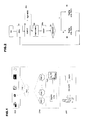
- the digital print mechanism DPM operates to regulate a digital security system implemented in the context of a specific application (APP).
- APP application
- the regulated digital security system controls access by a customer U to a secure digital service (SEC SERV) that is offered by a service provider (PROV).
- SEC SERV secure digital service
- PROV service provider
- regulation systems and methods embodying the invention may be applied to regulate digital security systems of other types, in particular, digital security systems which control access to substantially any resource (service, software application, data source, device or object, physical location, etc.).
- the regulation system may obtain input data from substantially any source of user-data in the user's digital eco-system ECO.
- Source devices may include (but are not limited to) smart TVs, meters, phones, tablets, laptops, projectors, printers etc. and the collected data can be data from these devices' sensors and/or from applications (pieces of software) running on the devices.
- the digital print mechanism may be able to obtain information relevant to the user's activities, behaviour etc. from shared and public devices (or personal devices belonging to other people, e.g. devices belonging to the user's friends and family members), which connect to the user's devices as he goes about his daily routine. For example, as the user goes about his daily life his devices may interact with sensors such as car kits, Wi-Fi hotspots, or even (in an office environment) projectors and printers: these interactions generate data that can be input to the digital print mechanism.
- sensors such as car kits, Wi-Fi hotspots, or even (in an office environment) projectors and printers: these interactions generate data that can be input to the digital print mechanism.
- the sensors and devices of the user's digital eco-system provide data which can be translated by the digital print mechanism into parameters that represent some meaningful aspect of user behaviour/preferences.
- these devices also hold applications implementing functions such as messaging, calling, mobile payments, calendar, and so forth, and hold content such as music, games, books, videos etc. that the user accesses as part of his/her daily routine.
- Data collected by the daily usage of such content/applications may also be processed by the digital print mechanism to generate and update the digital print.
- sensors associated with the user's mobile devices e.g. commercial cellphones
- location sensors or systems e.g., global positioning system (GPS) trackers, wireless fidelity (WIFI), cell identification (CellID), triangulation, etc.
- acceleration sensors e.g., accelerometers
- magnetic sensors e.g., magnetometers, compasses, etc.
- temperature sensors air quality sensors, ambient light sensors
- worn sensors e.g. monitoring physiological factors such as heart rate
- eye-blink or movement sensors microphones
- pressure sensors e.g., pressure sensors, etc.
- the digital print mechanism obtains from the sensors, applications, etc. data that is being generated in any event as the user goes about his daily life. In such embodiments, the invention places little or no additional data-generation load on the data sources.
- the security parameters are constructed so that they represent information that is characteristic of the user, for example, information describing the user's routine or habitual behaviour: typically, his habitual behaviour in particular contexts.
- some security parameters may represent observed/typical/habitual GPS locations of this user at different times of the day, and on different days of the week.
- Other security parameters may represent the IDs of devices this user habitually uses at particular times of day, days of week, when in particular locations, under particular circumstances.
- Yet other security parameters may represent the user's habits in regard to use of software applications when at work or when at home.
- Still other security parameters may represent activities the user habitually engages in at particular times of the day (bearing in mind that activities such as walking, running, travelling in a car, being inside or outdoors, and many others, can be deduced from data provided by personal sensing technologies and by sensors that are commonly included in commercial cellphones.
- the algorithm ALG that computes the security parameters may be configured to categorize collected data into different categories, for example based on knowledge of relationships that exist between different types of data and different user activities.
- parameters of different categories carry different weights. For example, data obtained from third parties may be assigned a lower weight (less trusted status) than data obtained from the device of a member of the user's family. Further, data may be categorized in terms of whether it is dynamic, static, differential, hard-coded, variable, and so on.
- the nature of the security parameters changes affects how they are instantiated and, in particular, whether they are represented using numerical values, data sets, lists, matrices, vectors, patterns, and so on. It is to be understood that the invention is not particularly limited with regard to the manner in which the security parameters are instantiated.
- the calculated security parameters are processed to produce a digital print or profile which represents, in digital form, behaviour that is characteristic of this user, for example behaviour that is characteristic of this user in different contexts (e.g. daily routine, habits, and so forth),.
- the digital print is updated in an ongoing manner as more data is gathered.
- the digital print is generated by a generator unit (DigiPRT GEN) which forms, from the security parameters PAR, an overall digital representation that models the user's characteristic or routine behaviour.
- This representation may be referred to as a digital behaviour profile.
- the manner in which the security parameters are combined to form the overall profile depends on the nature of the security parameters themselves and on choices made by the system designer (e.g. as a function of the intended application).
- the digital behaviour profile may take the form of a vector in multi-dimensional space, with each security parameter defining the value of the vector component in a respective individual dimension of the multi-dimensional space.
- Fig.3A is a diagram illustrating an example of a digital print, in the form of a highly-simplified vector representation, and how it evolves.
- the digital print only includes two security parameters (PAR1 and PAR2) and the security parameters are associated with confidence measures that represent the degree of confidence that the parameter values are, indeed, characteristic of the user.
- DP(T1), DP(T2) and DP(T3) represent the digital print at respective times T1, T2 and T3 (T1 being the earliest time, T2 a while later and T3 a while later still).
- the combination of values of PAR1 and PAR2 that is considered to be characteristic of the user changes slightly over time from T1 to T3, and the degree of confidence in the digital print increases over the same period.
- Fig.3B is a diagram illustrating a digital print database storing database entries defining digital prints for different members of a family.
- the digital prints make use of security parameters including: a first parameter PAR 1 relating to whether a location corresponds to a "normal" location for this user, their home, an abnormal location, and so on; a second parameter PAR 2 relating to different time periods t1, t2, etc. which are regularly-occurring time periods of significance for the user (e.g. time t1 may designate the time period from 9-9.30am each weekday, if the user has some habitual activity at that time), and a third parameter PAR 3 relating to specific devices of different types (laptop, handset, smart TV, tablet, etc.) used by the user.
- a first parameter PAR 1 relating to whether a location corresponds to a "normal" location for this user, their home, an abnormal location, and so on
- a second parameter PAR 2 relating to different time periods t1, t2, etc. which are regularly-occurring
- one security parameter may relate to the set of electronic devices with which the user habitually interacts (the device's he uses and, if desired, the devices to which his own devices communicate regularly), whereas another security parameter may relate to times when the user establishes communications using his devices.
- the digital print may assign a greater importance to the first security parameter (relating to the IDs of the devices) compared to the second (relating to the timing of communications).
- the initial model may be generated in various ways including, but not limited to: using default settings, prompting the user to input specified data, inference or prediction, and obtaining initialization data from a source such as a telecoms network operator, Internet service provider, etc. that holds reliable subscriber data relating to the user. Data may be inferred or predicted based, for example, on some seed data or assumptions regarding the characteristics of the user and then inferring or predicting that the same security parameter values apply to this user as apply to other users for whom corresponding data or assumptions are valid.
- the digital behaviour profile is designed to be self-healing, i.e. the system can still function even when certain aspects or dimensions of the profile are still empty/undefined.
- the digital print for a given user is built up/updated on a continuous basis as fresh user-data is input to the system.
- the updating process is fed by the new security parameters that are computed by the algorithm ALG.
- inference/prediction may still be used even after the initial model of user behaviour has been established; in which case the inference may take into account actual user-data INF that has been collected for this user.
- the digital print is dynamic and will tend to develop into a more and more faithful representation of the user's habitual behaviour.
- the unit managing maintenance of the digital print may be designed to correct aspects of the digital print as the user's circumstances change. For example, if the user moves house the user-data supplied to the system is likely to have various significant differences compared to the earlier user-data upon which the digital print has been based. Thus, immediately after the move there are liable to be relatively frequent occasions when the "current" security parameters do not match the digital profile and these can lead to the setting of a high-security-level access protocol for user accesses to resources.
- the print-manager device may be designed to learn the user's changed habits deriving from his house move, and correct the digital print to reflect the new habits.
- HMM Hidden Markov Model
- CRFs conditional random fields
- MEMM maximum entropy Markov models
- the digital print may have a multi-layer structure in which a particular aspect of user behaviour is defined at different levels of generality. For example, processing of past user-data may have shown that the user has a habit of driving from one specific GPS location (assumed to be home) to one of several GPS locations (assumed to be workplaces) between 8 and 9am each weekday morning, and a specific one of the destinations may be more frequent than the others.
- a multi-levelled digital print may include a parameter which, at a first level, is defined at a high degree of particularity and specifies the user's most typical behaviour on a weekday morning from 8am to 9am as "drive from home to the frequent destination".
- the same digital print may also define this same parameter at second level that corresponds to a lower level of particularity (i.e. a greater degree of generality) and simply specifies the same behaviour as "drive from home to one of the workplace GPS locations”.
- the "current behaviour" parameters are compared with a relevant portion of the digital print, i.e. a portion that relates to the user's previously-observed behaviour in the same context (e.g. in this place, at this time of day, on this day of the week, in this location, during this same activity, etc.)
- a relevant portion of the digital print i.e. a portion that relates to the user's previously-observed behaviour in the same context (e.g. in this place, at this time of day, on this day of the week, in this location, during this same activity, etc.)
- the DPM device may compare the reported GPS location with the GPS location(s) that are habitual (i.e. according to the digital print) for a weekday morning.
- the DPM device regulates the security system of the service provider PROV based on the result of the comparison.
- the DPM device sets or maintains the operating state of the security system in a relatively "low security” state, i.e. a state such that - when the user attempts to access the secure service in the future - the security system will automatically implement a first security protocol which places relatively light requirements on the user in terms of authentication/supply of credentials.
- the DPM device sets or maintains the operating state of the digital security system in a relatively "high security" state, i.e. a state such that - when the user attempts to access the secure service in the future - the digital security system will automatically implement a second access protocol which places relatively strict requirements on the user in terms of authentication/supply of credentials.
- the evaluation of the current behaviour relative to the digital behaviour profile can be scheduled in different manners depending on the application and on designer choice.
- the system may be set to collect user-data over a defined time period (say, ten minutes), then at the end of the period to compute the security parameters that describe the user activity during the data-collection period and to determine whether or not these security parameters are consistent or inconsistent with the digital print.
- the system may be arranged to monitor the user-data on a continuous basis to detect when changes occur in activity/context and, at times of change, to collect user-data relating to the "new" activity or context and compare the security parameters computed from this user-data with the digital print so as to decide whether the user behaviour after the change is consistent with the user's typical behaviour.
- a digital security system may have a low-security-level access protocol which allows a user to employ saved password data during a procedure that grants the user access to a resource, and also have a high-security-level access protocol that does not allow the user to employ the saved password data (instead requiring the user to manually input the password).
- a digital security system may have a low-security-level access protocol which requires the user to authenticate himself using one authentication factor (e.g. a password) and a high-security-level access protocol which requires multi-factor authentication (e.g. a password and possession of a particular device).
- a single digital print mechanism performs the functions of data collection, generation of security parameters, generation of the digital print and determining when the user behaviour (as represented by the collected data) diverges from the digital print.
- this is not essential. These functions may be distributed between different units or even different devices, as shall be explained below.
- the method begins at some point of initialization INIT (e.g. when the method begins to be applied to a new user, at start-up of a device housing software implementing the regulation method, and so on).
- INIT initialization
- S1 designated COLL in Fig.2
- user-data is collected from the user-data sources.
- S2 designated COMPUT
- security parameters PAR are computed based on the collected data.
- the computed security parameters PAR are compared to the digital behaviour profile in step S3 (designated PAR vs MOD).
- the current computed security parameters relate to the user's activity in one particular context whereas the digital behaviour profile relates to several different aspects of the user's behaviour.
- the comparison of the computed security parameters relative to the digital behaviour profile typically compares the security parameters to a portion of the digital behaviour profile rather than to the whole profile.
- step S3 may comprise a multi-level comparison process in which the scope of the comparison may be changed and the "current behaviour" parameters compared with a different level in the digital print (e.g. where the context is defined at a more general level than in the preceding comparison).
- the change in the scope of the comparison may involve a level-change of one level, two levels, or more than two levels.
- exception rules may be applied to determine whether, in the circumstances, the current behaviour corresponds to allowed behaviour (step S3a, designated EXCEP in Fig.2 ).
- the nature of the exception rules depends on the particular security parameter in question. However, as one example, consider the case of a user who normally establishes a Bluetooth connection between his cellphone and his car kit each morning between 8.15am and 8.30am, and makes a telephone call to a particular number (his office). An exception rule may indicate that Bluetooth-connection behaviour between 8.15am and 8..30am is still "allowable” if the user's cellphone establishes a Bluetooth connection to car kits in cars that are known to belong to the user's family members.
- the regulation method is implemented on or in connection with a mobile user device having network connectivity (such as a smartphone, tablet, laptop, etc.) it may be convenient for the step of applying exception rules to be performed by network operator apparatus. This reduces the memory space and processing power that the regulation method requires from the mobile user device.
- network connectivity such as a smartphone, tablet, laptop, etc.
- a determination is made whether or not the security parameters PAR are deemed consistent with the profile (step S4, designated PAR MOD?).
- the degree of similarity that is required in order for this determination to give a result of "consistent” may be set differently depending on the application, depending on the security parameter(s) in question (the degree of variability in "normal” behaviour may be different for different activities), or dependent on other factors.
- the method may be arranged to increase or decrease the degree of similarity that is required, dependent on the extent to which user behaviour has been suspicious over the last few hours, over the last day, or some other period.
- the degree of similarity that is required for a finding of "consistent” may be set differently depending on the digital security system which is being regulated by the method (e.g. a service provider could be offered a choice of how closely he wishes user behaviour to comply with the digital behaviour profile in order for a low-security-level operating state to be set).
- comparison between the current security parameters and the digital behaviour profile may involve calculating the vector distance between a first vector defined by the current security parameters and a second vector corresponding to the same dimensions in the profile. In such a case the calculated distance may be compared against one or more threshold values in order to decide whether the current behaviour is consistent/inconsistent with the profile, and/or to decide whether or not exception-rule processing should be applied.
- step S5 designated RegSig(LSL PROT)
- the regulation method performs step S5 (designated RegSig(LSL PROT)) in which it sets (or maintains) the regulated digital security system in an operating state such that the user's future access requests will result in the digital security system automatically applying a low-security-level access protocol.
- step S6 (designated RegSig(HSL PROT)) in which it sets (or maintains) the regulated digital security system in an operating state such that the user's future access requests will result in the digital security system automatically applying a high-security-level access protocol, i.e. one which makes it more onerous for the user to access the relevant resource.
- steps S5 and S6 may involve transmission of a control signal RegSig to the regulated digital security system.
- the method maybe implemented so that a control signal is sent continuously or on a regular basis (i.e. irrespective of whether a change in operating state of the digital security system is required), or the method may be implemented so that the control signal is sent only when a change is required in the operating state of the digital security system.
- steps S1 to S5/S6 are performed repeatedly as the user's activity is monitored.
- references to the evaluation of "current behaviour” do not mean that the regulation method is limited to real-time operation. If desired or expedient there could be a time delay between the moment or time period during which the user-data is collected and the time when the security parameters computed from the user-data is compared to the digital behaviour profile.
- Certain embodiments of regulation method and regulation system according to the invention may include a validation mechanism allowing the user, or a third party, to validate some current behaviour even though there is deviation between the current security parameters and the digital behaviour profile.
- a validation mechanism includes a notification procedure for bringing the deviation to the attention of the user/third party, and a validation procedure.
- the validation procedure When the user himself can validate the current behaviour it is advantageous for the validation procedure to include security measures to ensure that the validation is not being performed by an unauthorized party impersonating the user. However, this may not be necessary (or the security measures may be reduced) in a case where the validation is performed by a trusted third party, e.g. a telecoms network operator.
- the current behaviour is not determined to be inconsistent with the digital behaviour profile if the behaviour has been validated using the validation mechanism.
- Regulation systems according to the present invention can be implemented using a wide variety of device architectures. Some of these are described below with reference to Fig.4 , Figs.5A and 5B , and Figs.6A to 6D . However, the skilled person will readily understand that the functional units making up the regulation system can be distributed between devices in additional ways that are not illustrated in the figures.
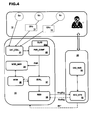
- Fig.4 illustrates an example of a regulation system operating in an environment which mirrors that illustrated in Fig.1 .
- the eco-system 10 of a user U includes three user-data sources Sa, Sb and Sc, and these supply user-data to a device 20 which embodies a regulation system according to an embodiment of the invention.
- the application domain relates to a server device 30 which makes a digital resource 35 available for access by users under the control of a digital security system 32.
- the digital security system 32 is a software application running on the server device 30.
- the regulation device 20 controls the operating state of the digital security system 32.
- the user-data sources Sa, Sb and Sc are all sensors. Enablers 15 are provided to pre-process data from the sensors Sb and Sc so as to facilitate its subsequent processing in the regulation device 20.
- the sensors Sa-Sc may be in devices belonging to user U, third party devices, public or shared devices. These devices are configured to supply user-data to a data collection unit 21 of the regulation device 20.
- the necessary "configuring" of the data sources so that they perform the transmission may be achieved in any convenient way, e.g. installation of appropriate software in the devices housing the sensors, physical connection between the data sources and the data collection device 21, and so on. Any convenient wired or wireless transmission method may be used to achieve the transmission of the data.
- the regulation device 20 includes, in addition to the data collection unit 21, a parameter computation unit 22 (which may include a classifier for assigning collected data to different categories) for computing security parameters PAR indicative of the user behaviour captured by the collected data, a manager unit 24 for managing creation and maintenance/updating of the digital behaviour profile that models the user's characteristic behaviour, a memory 25 storing the digital behaviour profile, an evaluation unit 27 for evaluating the extent to which the computed security parameters PAR are consistent with the digital behaviour profile, and a regulation unit 28 for controlling the digital security system 32.
- a parameter computation unit 22 which may include a classifier for assigning collected data to different categories
- a manager unit 24 for managing creation and maintenance/updating of the digital behaviour profile that models the user's characteristic behaviour
- a memory 25 storing the digital behaviour profile
- an evaluation unit 27 for evaluating the extent to which the computed security parameters PAR are consistent with the digital behaviour profile
- a regulation unit 28 for controlling the digital security system 32.
- the regulation unit 28 of the regulation device 20 transmits a control signal, RegSig, to the digital security system 32 of the server device 30 to control the operating state of the digital security system 32.
- the digital security system may send information back to the regulation unit 28 of the regulation device 20, via a signal RetSig, for example to keep the regulation device 20 informed of the current operating state of the digital security system 32.
- the server 30 may supply the data collection unit 21 of the regulation device 20 with data INF' regarding the user's access to the digital resource 35 (because this data may help to build up a fuller model of the user's habitual activities).
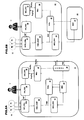
- Figs.5A and 5B relate to embodiments in which the digital security system 35 being regulated is implemented (at least in part) on a user device 40 or 40a, to control access to a digital resource 35 held on the user device 40/40a.
- the user device 40 (40a) is configured to perform collection of data for processing by a device 20a (20b) which generates and maintains the digital behaviour profile. If desired, other devices besides the user device 40 (40a) may supply user-data to the device 20a (20b), although this is not illustrated in the drawings.
- the user-data is supplied to a regulation device 20a which includes units comparable to the units 22-28 discussed above in relation to Fig.4 , and which outputs a control signal RetSig to control the operating state of the digital security system 32 in the user device 40.
- the user-data is supplied to a device 20b which includes units comparable to the units 22-27 discussed above in relation to Fig.4 , i.e. which perform the computation of security parameters, generation and maintenance of the digital behaviour profile and comparison of the computed security parameters to the digital behaviour profile.
- the regulation unit 28 is provided in the user device 40a and controls the operating state of the digital security system which is also on-board the user device 40a. If desired, the regulation unit 28 of the user device 40a can be configured to output a control signal RegSig' to control the operating state of one or more digital security systems external to the user device (e.g. digital security systems of service providers who offer user U access to resources).
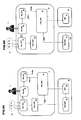
- Figs.6A to 6D relate to embodiments in which all (or most of) the regulation system is implemented on a user device and the digital security system 32 being regulated is also implemented (at least in part) on the user device 40.
- a communications unit 29 in the user device 50 may be used to access a remote server (not shown) which implements exception-rule processing as described above. For example, in a case where there is some divergence between the current behaviour and the digital behaviour profile a notification, Notif, including details of the current behaviour and its context may be sent to the remote server (with some details of the digital behaviour profile, if required).
- the response, Rep from the server contains an indication of whether or not the current behaviour counts as "acceptable behaviour" according to the exception rules.
- the memory 25 storing the digital behaviour profile is external to the functional units of the regulation system that are installed in the user device 60.
- the memory 25 is provided in an external device 80 (which may be a dedicated storage device, or it may have other functions).
- Fig.6C is generally similar to the example illustrated in Fig.6B except that in this case both the memory 25 storing the behaviour profile and the manager unit 24 for generating and maintaining the digital behaviour profile are implemented on a device 90 external to the user device 70 that comprises the regulation unit. Also, in this example the evaluation and regulation units are integrated into a single functional unit 78 that performs both functions.
- Fig.6D is generally similar to the example illustrated in Fig.6C except that in this case although the memory 25 and the manager unit 24 are both external to the user device 70, they are implemented in separate devices 80,100.
- the combined evaluation and regulation unit 78 illustrated in the examples of Figs.6C and 6D may be used in embodiments that otherwise conform to Figs.4 , 5A , 6A and 6B .
- embodiments other than that of Fg.6A may make use of a communications unit 29 to send notifications and receive responses relating to application of exception rules.
- Figs.5B and 6A are illustrated as employing regulation units which send control signals to more than one digital security system, the other embodiments of regulation system can also possess this functionality.
- the description of the specific embodiments refers to regulation of a multi-level digital security system that comprises a high-security-level access protocol and a low-security-level access protocol
- the invention extends to regulation of digital security systems which include additional security levels, e.g. involving three, or more than three access protocols offering differing levels of security.
- the regulation method and system set the operating state of the digital security system into an intermediate security level (between the high and low levels) at times when the current behaviour deviates from the digital behaviour profile but has been deemed "acceptable" according to an exception rule.
- the regulation method and system are designed to control the digital security system to step down or step up through security levels progressively (in steps of one level, or more than one level) as the user's "current" behaviour matches the digital behaviour profile, or fails to match, over a progressively longer time period and/or in a progressively increasing number of contexts.
Landscapes
- Engineering & Computer Science (AREA)
- Computer Security & Cryptography (AREA)
- Computer Hardware Design (AREA)
- General Engineering & Computer Science (AREA)
- Computing Systems (AREA)
- Computer Networks & Wireless Communication (AREA)
- Signal Processing (AREA)
- Theoretical Computer Science (AREA)
- General Health & Medical Sciences (AREA)
- Social Psychology (AREA)
- Software Systems (AREA)
- Physics & Mathematics (AREA)
- General Physics & Mathematics (AREA)
- Health & Medical Sciences (AREA)
- Storage Device Security (AREA)
- Computer And Data Communications (AREA)
Priority Applications (3)
| Application Number | Priority Date | Filing Date | Title |
|---|---|---|---|
| EP14305906.1A EP2955899A1 (de) | 2014-06-13 | 2014-06-13 | Verfahren und Vorrichtung zur Regelung eines digitalen Sicherheitssystems zur Kontrolle des Zugangs auf eine Ressource |
| EP15171518.2A EP2955903B1 (de) | 2014-06-13 | 2015-06-10 | Verfahren und vorrichtung zur regelung eines digitalen sicherheitssystems zur kontrolle des zugriffs auf eine ressource |
| US14/737,235 US9781127B2 (en) | 2014-06-13 | 2015-06-11 | Method and apparatus to regulate a digital security system that controls access to a resource |
Applications Claiming Priority (1)
| Application Number | Priority Date | Filing Date | Title |
|---|---|---|---|
| EP14305906.1A EP2955899A1 (de) | 2014-06-13 | 2014-06-13 | Verfahren und Vorrichtung zur Regelung eines digitalen Sicherheitssystems zur Kontrolle des Zugangs auf eine Ressource |
Publications (1)
| Publication Number | Publication Date |
|---|---|
| EP2955899A1 true EP2955899A1 (de) | 2015-12-16 |
Family
ID=51453705
Family Applications (2)
| Application Number | Title | Priority Date | Filing Date |
|---|---|---|---|
| EP14305906.1A Withdrawn EP2955899A1 (de) | 2014-06-13 | 2014-06-13 | Verfahren und Vorrichtung zur Regelung eines digitalen Sicherheitssystems zur Kontrolle des Zugangs auf eine Ressource |
| EP15171518.2A Active EP2955903B1 (de) | 2014-06-13 | 2015-06-10 | Verfahren und vorrichtung zur regelung eines digitalen sicherheitssystems zur kontrolle des zugriffs auf eine ressource |
Family Applications After (1)
| Application Number | Title | Priority Date | Filing Date |
|---|---|---|---|
| EP15171518.2A Active EP2955903B1 (de) | 2014-06-13 | 2015-06-10 | Verfahren und vorrichtung zur regelung eines digitalen sicherheitssystems zur kontrolle des zugriffs auf eine ressource |
Country Status (2)
| Country | Link |
|---|---|
| US (1) | US9781127B2 (de) |
| EP (2) | EP2955899A1 (de) |
Families Citing this family (10)
| Publication number | Priority date | Publication date | Assignee | Title |
|---|---|---|---|---|
| US10284538B2 (en) * | 2016-10-26 | 2019-05-07 | Bank Of America Corporation | System for processing an even request by determining a matching user profile based on user identifying information |
| US10389739B2 (en) | 2017-04-07 | 2019-08-20 | Amdocs Development Limited | System, method, and computer program for detecting regular and irregular events associated with various entities |
| US10104527B1 (en) * | 2017-04-13 | 2018-10-16 | Life360, Inc. | Method and system for assessing the safety of a user of an application for a proactive response |
| US10037668B1 (en) * | 2017-05-09 | 2018-07-31 | Microsoft Technology Licensing, Llc | Emergency alerting system and method |
| CN108280332B (zh) * | 2017-12-15 | 2021-08-03 | 创新先进技术有限公司 | 移动终端的生物特征认证识别检测方法、装置和设备 |
| US11762975B2 (en) | 2018-02-01 | 2023-09-19 | Equifax Inc. | Verification of access to secured electronic resources |
| IL281410B2 (en) | 2018-09-15 | 2024-02-01 | Quantum Star Tech Inc | Bit-level data generation and artificial intelligence techniques and architectures for data protection |
| US11405401B2 (en) * | 2020-05-21 | 2022-08-02 | Adp, Inc. | Determining and applying assurance levels for application operations security |
| US20220269784A1 (en) | 2021-02-25 | 2022-08-25 | Quantum Star Technologies Inc. | N-dimensional model techniques and architectures for data protection |
| CN113162912A (zh) * | 2021-03-12 | 2021-07-23 | 中航智能建设(深圳)有限公司 | 基于大数据的网络安全保护方法、系统及存储设备 |
Citations (4)
| Publication number | Priority date | Publication date | Assignee | Title |
|---|---|---|---|---|
| US20090187962A1 (en) * | 2008-01-17 | 2009-07-23 | International Business Machines Corporation | Methods, devices, and computer program products for policy-driven adaptive multi-factor authentication |
| US20100192209A1 (en) * | 2009-01-23 | 2010-07-29 | Microsoft Corporation | Passive security enforcement |
| US20110016534A1 (en) * | 2009-07-16 | 2011-01-20 | Palo Alto Research Center Incorporated | Implicit authentication |
| WO2014043360A1 (en) * | 2012-09-12 | 2014-03-20 | T. Mobile Usa, Inc. | Multi-factor profile and security fingerprint analysis |
Family Cites Families (4)
| Publication number | Priority date | Publication date | Assignee | Title |
|---|---|---|---|---|
| US7441264B2 (en) * | 2002-06-24 | 2008-10-21 | International Business Machines Corporation | Security objects controlling access to resources |
| US7627893B2 (en) * | 2005-10-20 | 2009-12-01 | International Business Machines Corporation | Method and system for dynamic adjustment of computer security based on network activity of users |
| US9058486B2 (en) * | 2011-10-18 | 2015-06-16 | Mcafee, Inc. | User behavioral risk assessment |
| US20140032259A1 (en) * | 2012-07-26 | 2014-01-30 | Malcolm Gary LaFever | Systems and methods for private and secure collection and management of personal consumer data |
-
2014
- 2014-06-13 EP EP14305906.1A patent/EP2955899A1/de not_active Withdrawn
-
2015
- 2015-06-10 EP EP15171518.2A patent/EP2955903B1/de active Active
- 2015-06-11 US US14/737,235 patent/US9781127B2/en active Active
Patent Citations (4)
| Publication number | Priority date | Publication date | Assignee | Title |
|---|---|---|---|---|
| US20090187962A1 (en) * | 2008-01-17 | 2009-07-23 | International Business Machines Corporation | Methods, devices, and computer program products for policy-driven adaptive multi-factor authentication |
| US20100192209A1 (en) * | 2009-01-23 | 2010-07-29 | Microsoft Corporation | Passive security enforcement |
| US20110016534A1 (en) * | 2009-07-16 | 2011-01-20 | Palo Alto Research Center Incorporated | Implicit authentication |
| WO2014043360A1 (en) * | 2012-09-12 | 2014-03-20 | T. Mobile Usa, Inc. | Multi-factor profile and security fingerprint analysis |
Also Published As
| Publication number | Publication date |
|---|---|
| US20150365423A1 (en) | 2015-12-17 |
| EP2955903B1 (de) | 2018-09-26 |
| EP2955903A1 (de) | 2015-12-16 |
| US9781127B2 (en) | 2017-10-03 |
Similar Documents
| Publication | Publication Date | Title |
|---|---|---|
| EP2955903B1 (de) | Verfahren und vorrichtung zur regelung eines digitalen sicherheitssystems zur kontrolle des zugriffs auf eine ressource | |
| US11522865B2 (en) | Automated IoT device configuration using user profile | |
| US8312157B2 (en) | Implicit authentication | |
| EP3241376B1 (de) | Rechnersystem für management von datenschutzbewusster gemeinsamer nutzung und verfahren zum betrieb davon | |
| US11438342B2 (en) | Location-based identity authentication (LIA) system | |
| Ashibani et al. | A context-aware authentication framework for smart homes | |
| US20200053558A1 (en) | System, Method, and Apparatus for Enhanced Personal Identification | |
| US10587623B2 (en) | Mobile device platform for access privilege control system | |
| US20160226985A1 (en) | Terminal, cloud apparatus, driving method of terminal, method for processing cooperative data, computer readable recording medium | |
| US20190190920A1 (en) | Device authentication using synchronized activity signature comparison | |
| EP2973164A1 (de) | Technologien zur sicheren speicherung und verwendung von informationen für biometrische authentifizierung | |
| US9699656B2 (en) | Systems and methods of authenticating and controlling access over customer data | |
| US20190065790A1 (en) | Method Of Displaying Content On A Screen Of An Electronic Processing Device | |
| US20250088505A1 (en) | Enhanced authentication techniques using virtual persona | |
| US10216914B2 (en) | System, method, and apparatus for personal identification | |
| US10582336B2 (en) | Mobile location security system | |
| US20180012005A1 (en) | System, Method, and Apparatus for Personal Identification | |
| US9426130B2 (en) | Methods, devices and systems for anti-counterfeiting authentication | |
| US20210232661A1 (en) | Computing device use restriction system | |
| US11334658B2 (en) | Systems and methods for cloud-based continuous multifactor authentication | |
| US11210384B2 (en) | Challenge and response in continuous multifactor authentication on a safe case | |
| US8965340B1 (en) | Mobile device indentification by device element collection | |
| US20250007747A1 (en) | Systems, methods, computer-readable media, and devices for authenticating users | |
| EP4028924B1 (de) | Ressourcenzugangskontrolle | |
| US8850609B1 (en) | Conditional integration of a satellite device into an authentication process involving a primary device |
Legal Events
| Date | Code | Title | Description |
|---|---|---|---|
| PUAI | Public reference made under article 153(3) epc to a published international application that has entered the european phase |
Free format text: ORIGINAL CODE: 0009012 |
|
| AK | Designated contracting states |
Kind code of ref document: A1 Designated state(s): AL AT BE BG CH CY CZ DE DK EE ES FI FR GB GR HR HU IE IS IT LI LT LU LV MC MK MT NL NO PL PT RO RS SE SI SK SM TR |
|
| AX | Request for extension of the european patent |
Extension state: BA ME |
|
| STAA | Information on the status of an ep patent application or granted ep patent |
Free format text: STATUS: THE APPLICATION IS DEEMED TO BE WITHDRAWN |
|
| 18D | Application deemed to be withdrawn |
Effective date: 20160617 |