EP2955943B1 - Verfahren und vorrichtung zur steuerinformationsanzeige - Google Patents
Verfahren und vorrichtung zur steuerinformationsanzeige Download PDFInfo
- Publication number
- EP2955943B1 EP2955943B1 EP13879128.0A EP13879128A EP2955943B1 EP 2955943 B1 EP2955943 B1 EP 2955943B1 EP 13879128 A EP13879128 A EP 13879128A EP 2955943 B1 EP2955943 B1 EP 2955943B1
- Authority
- EP
- European Patent Office
- Prior art keywords
- control information
- serving cell
- cid
- piece
- cell
- Prior art date
- Legal status (The legal status is an assumption and is not a legal conclusion. Google has not performed a legal analysis and makes no representation as to the accuracy of the status listed.)
- Not-in-force
Links
Images





Classifications
-
- H—ELECTRICITY
- H04—ELECTRIC COMMUNICATION TECHNIQUE
- H04W—WIRELESS COMMUNICATION NETWORKS
- H04W48/00—Access restriction; Network selection; Access point selection
- H04W48/08—Access restriction or access information delivery, e.g. discovery data delivery
- H04W48/12—Access restriction or access information delivery, e.g. discovery data delivery using downlink control channel
-
- H—ELECTRICITY
- H04—ELECTRIC COMMUNICATION TECHNIQUE
- H04W—WIRELESS COMMUNICATION NETWORKS
- H04W24/00—Supervisory, monitoring or testing arrangements
- H04W24/02—Arrangements for optimising operational condition
-
- H—ELECTRICITY
- H04—ELECTRIC COMMUNICATION TECHNIQUE
- H04W—WIRELESS COMMUNICATION NETWORKS
- H04W74/00—Wireless channel access
- H04W74/002—Transmission of channel access control information
Definitions
- the present invention relates to the field of communications technologies, and in particular, to a control information indication method and apparatus.
- UMTS Universal Mobile Telecommunications System, Universal Mobile Telecommunications System
- 3GPP 3rd Generation Partnership Project
- an HSDPA High Speed Downlink Packet Access, High Speed Downlink Packet Access
- HSDPA High Speed Downlink Packet Access
- a physical layer working principle of the HSDPA technology introduced in Release-5 is as follows: a NodeB (base station) sends data to a UE (User Equipment, user equipment) through an HS-PDSCH (High-Speed Physical Downlink Shared Channel, high-speed physical downlink shared channel) at a physical layer, and in addition, sends HS-PDSCH-related control signaling and the like through an HS-SCCH (High-Speed Shared Control Channel, high speed shared control channel).
- HS-PDSCH High-Speed Physical Downlink Shared Channel, high-speed physical downlink shared channel
- HS-SCCH High-Speed Shared Control Channel, high speed shared control channel
- the UE After receiving the HS-SCCH, the UE performs demodulation, decoding, and the like on the HS-PDSCH by using control information carried on the HS-SCCH, and then the UE generates ACK (Acknowledgement, acknowledgement)/NACK (Negative Acknowledgement, negative acknowledgement)/DTX (Discrete Transmission, discontinuous transmission) information according to a reception
- the UE further measures a downlink channel condition and generates CQI (Channel Quality Indicator, channel quality indicator) information, the UE carries the ACK/NACK/DTX information and the CQI information on an HS-DPCCH (Dedicated Physical Control Channel (uplink) for HS-DSCH, dedicated physical control channel (uplink) for HS-DSCH) and sends the ACK/NACK/DTX information and the CQI information to the base station, and the base station uses information fed back by the UE as a basis for service scheduling.
- CQI Channel Quality Indicator, channel quality indicator
- the HS-DSCH (High-Speed Physical Downlink Shared Channel, high-speed physical downlink shared channel) belongs to a transmission channel at a MAC (Medium Access Control, Media Access Control) layer in a communications protocol, and is mapped as the HS-PDSCH and the HS-SCCH at the physical layer.
- MAC Medium Access Control, Media Access Control
- Multi-carrier HSDPA technologies are successively introduced in Release-8 and later releases, and data may be concurrently sent to a UE by using multiple downlink carriers (cell).
- data When the data is concurrently sent to the UE by using the multiple downlink carriers (cell), there is a problem of relatively low utilization efficiency of an HS-SCCH code channel resource.
- the HS-SCCH when the HS-SCCH is sent, in an existing protocol, the HS-SCCH is independently sent on each carrier.
- a quantity of HS-SCCHs that are configured by a network side device for the UE and to which the UE needs to listen is 4; in this case, to support transmission over four carriers, it is required to configure one HS-SCCH on each carrier, that is, scheduling can be performed for a maximum of one UE on each carrier at a time.
- PHILIPS ET AL Control channel support for HSDPA Dual-Cell operation", 3GPP DRAFT; R1-082532, (26 June 2008) discloses a dual-cell operation in HSDPA using a single combined HS-SCCH for signaling, and describes that each HS-SCCH in the monitored set of a UE would be configured by RRC signalling to relate to one cell or the other, and alternatively, the monitored set size could be reduced by means of one bit in the HS-SCCH part 1 to indicate which cell it related to.
- WO 2009/132290A discloses a method and an apparatus for simultaneously receiving on two carriers and performing discontinuous transmission (DTX) and discontinuous reception (DRX) in dual cell high speed downlink packet access (DC-HSDPA).
- DTX discontinuous transmission
- DRX discontinuous reception
- DC-HSDPA dual cell high speed downlink packet access
- WO 2010/062099A discloses that the HS-SCCH receivers despread, demodulate, and decode the HS-SCCHs received from the corresponding cells.
- the HS-SCCH control information extractors extract information on the HS-PDSCHs from the decoding results output by the corresponding HS-SCCH receivers and supports the HS-PDSCH reception operations of the HS-PDSCH receivers.
- a control information indication method and apparatus as defined in the presently independent claims are provided, so as to use fewer control channels in an HSDPA scenario to implement a data scheduling function the same as that of sending control information independently on each carrier, reduce a quantity of code channels of a control channel used by a network side device and a quantity of code channels of a control channel to which a UE side listens, reduce power consumption, and improve utilization efficiency of code channel resources.
- the invention is defined by independent claims 1, 4, 6 and 9. According to a first aspect, a control information indication method is provided, including:
- a control information indication method including:
- a base station including:
- a user equipment including:
- multiple pieces of control information are sent to a UE on a control channel HS-SCCH of a same serving cell, and a cell identity is set in an information field of the control information.
- the UE listens to the control channel of the serving cell, receives the control information, determines, according to the cell identity in the control information, a serving cell to which data corresponding to the control information belongs, and then performs demodulation and decoding on the data.
- control information is sent after being centralized in one serving cell, it can be implemented that fewer control channels are used to achieve a scheduling function the same as that in the prior art, and a network side device may use fewer code channel numbers, and a quantity of code channels to be listened to may be reduced for the UE, thereby reducing code channel overheads for both the network side device and the UE and improving code channel utilization efficiency.
- This embodiment provides a control information indication method. As shown in FIG. 1 , the method includes:
- the serving cell refers to a communications area that can be reached by a signal, that is, a physical space that can be covered by the signal, and is bound to a frequency and a scrambling code.
- the serving cell includes the following cases: Two base stations use different frequencies, there is one serving cell separately for signals of the two base stations in a same physical space, and the two serving cells overlay in the physical space; or two base stations use a same frequency, signals of the two base stations may have an overlapping area in a specific physical space, and in the overlapping area, the signals are differentiated by using different scrambling codes; or two base stations use signals with a same frequency and a same scrambling code, and serving cells that the signals reach are separately located in different physical spaces; or one base station uses different frequencies to send signals in a same physical space, and different serving cells can be differentiated by using the frequencies; or one base station sends signals to different physical spaces by using a same frequency or different frequencies, and different serving cells is differentiated by using the different physical spaces.
- WCDMA Wideband Code Division Multiple Access
- a serving cell and a carrier belong to a same conception, and the two convey a same meaning.
- the cell identity may also be called a carrier identity, and the two convey a same meaning.
- the control information is sent to the UE through the HS-SCCH channel in the first serving cell, there are multiple HS-SCCH channels in the first serving cell, and only one piece of control information can be sent through each HS-SCCH channel at a time.
- the information field of the control information includes a first part Part1 and a second part Part2, and the cell identity CID included in the control information is set in the first part Part1 in the information field of the control information and/or in the second part Part2 in the information field of the control information.
- the information field of the control information includes only two parts, that is, the first part Part1 and the second part Part2, and the cell identity CID may be set in Part1 and/or Part2.
- the cell identity CID is carried in both Part1 and Part2.
- the cell identity CID may be split into two parts or multiple parts, which are separately carried in Part1 and Part2, and the UE can obtain the CID only after completing parsing of the two parts, that is, Part1 and Part2.
- a quantity of bits that the CID occupies in Part1 and Part2 may be set according to a system requirement, and a specific distribution situation of the CID in Part1 and Part2 is not limited herein.
- the cell identity CID may be carried in both Part1 and Part2, Part1 and Part2 separately carry a same cell identity CID independently, and the UE may obtain the CID after completing parsing of Part1.
- the cell identity CID is set in Part1, or a same CID is set in both Part1 and Part2, so that the UE can obtain the CID as early as possible.
- an HS-SCCH code channel set to which the UE needs to listen is set for the UE.
- RNC Radio Network Controller, radio network controller
- a base station which, for example, may be a Node B
- the configuration is based on a current protocol and a UE requirement, unless a code channel set needs to be updated in a subsequent process; otherwise, the operation does not need to be performed again.
- the sending at least one piece of control information carried in a first serving cell to a user equipment UE includes: sending each piece of control information to the UE by using one code channel in the code channel set.
- the serving cell to which the data corresponding to the control information belongs is the first serving cell or a second serving cell.
- each serving cell carries one piece of control information and data corresponding to the control information.
- all control information is carried in the first serving cell; in addition, the first serving cell may further carry data corresponding to control information that is originally carried in the serving cell.
- the serving cell to which the data belongs may be the first serving cell or the second serving cell different from the first serving cell.
- multiple pieces of control information are sent to a UE on a control channel HS-SCCH of a same serving cell, and a cell identity is set in an information field of the control information, so that the user equipment UE listens to the control channel of the serving cell, receives the control information, determines, according to the cell identity in the control information, a serving cell to which data corresponding to the control information belongs, and then performs demodulation and decoding on the data.
- control information is sent after being centralized in one serving cell, it can be implemented that fewer control channels are used to achieve a scheduling function the same as that in the prior art, and a network side device may use fewer code channel numbers, thereby reducing code channel overheads and improving code channel utilization efficiency.
- This embodiment provides a control information indication method. As shown in FIG. 2 , the method includes:
- the serving cell refers to a communications area that can be reached by a signal, that is, a physical space that can be covered by the signal, and a signal of a frequency and a scrambling code can be used within the communications area.
- the serving cell includes the following several special cases: Two base stations use signals with different frequencies, there is one serving cell separately for signals of the two base stations in a same physical space, and the two serving cells overlay in the physical space; two base stations use signals with a same frequency, signals of the two base stations may have an overlapping area in a specific physical space, and in the overlapping area, the signals are differentiated by using different scrambling codes; or two base stations use signals with a same frequency and a same scrambling code, and serving cells that the signals reach are separately located in different physical spaces.
- WCDMA Wideband Code Division Multiple Access
- a serving cell and a carrier belong to a same conception, and the two convey a same meaning.
- the cell identity may also be called a carrier identity, and the two convey a same meaning.
- the UE parses an information field of the control information to acquire a cell identity CID.
- the UE determines, according to the cell identity, a serving cell to which data corresponding to the control information belongs.
- the UE performs demodulation and decoding on the data in the serving cell by using the control information.
- the information field of the control information includes a first part Part1 and a second part Part2, the cell identity CID included in the control information is set in the first part Part1 in the information field of the control information and/or in the second part Part2 in the information field of the control information.
- the cell identity CID may be set in Part1 and/or Part2.
- the cell identity CID may further be carried in both Part1 and Part2.
- the cell identity CID may be split into two parts or multiple parts, which are separately carried in Part1 and Part2, and the UE can obtain the CID only after completing parsing of the two parts, that is, Part1 and Part2.
- a quantity of bits that the CID occupies in Part1 and Part2 may be set according to a system requirement, and a specific distribution situation of the CID in Part1 and Part2 is not limited herein.
- the cell identity CID may be carried in both Part1 and Part2, Part1 and Part2 separately carry a same cell identity CID independently, and the UE may obtain the CID after completing parsing of Part1.
- the cell identity CID is set in Part1, or a same CID is set in both Part1 and Part2, so that the UE can obtain the CID as early as possible.
- the serving cell to which the data corresponding to the control information belongs is the first serving cell or a second serving cell.
- each serving cell carries one piece of control information and data corresponding to the control information.
- all control information is carried in the first serving cell; in addition, the first serving cell may further carry data corresponding to control information that is originally carried in the serving cell.
- the serving cell to which the data belongs may be the first serving cell or the second serving cell different from the first serving cell.
- a user equipment UE listens to a control channel of the serving cell, receives multiple pieces of control information, where the control information is sent to the UE after being centralized on a control channel HS-SCCH of a same serving cell, determines, according to a cell identity in the control information, a serving cell to which data corresponding to the control information belongs, and then performs demodulation and decoding on the data.
- control information is sent after being centralized in one serving cell, and the cell identity is included in a control information field, it can be implemented that fewer control channels are used to achieve a scheduling function the same as that in the prior art, and a quantity of code channels to be listened to may be reduced for the UE, thereby reducing code channel overheads and improving code channel utilization efficiency.
- This embodiment provides a control information indication method, where a normal carrier is first established between a network side device and a user equipment UE. As shown in FIG. 3 , the method includes:
- control channel type When the UE is configured as a non-MIMO mode, the control channel type may be called a type X (Type X).
- control information is distributed as shown in Table 1 (that a CID is carried in Part 1 is used as an example): Table 1 HS-SCCH Part 1 HS-SCCH Part 2 CCS (7 bits), TBS (6 bits) MI (1 bit), HARQ process (4 bits) NDI (1 bit) RV (2 bits) CID (K bits) UE identity (16 bits)
- Bits represent the following meanings: CCS (Channelization-code-set information, channelization-code-set information), MI (Modulation scheme information, modulation scheme information), NDI (New data indicator, new data indicator), TBS (Transport-block size information, transport block size information), HARQ process (Hybrid-ARQ process information, hybrid-ARQ process information), RV (Redundancy and constellation version, redundancy and constellation version), and UE identity, which indicates a UE identity and is carried in both Part1 and Part2.
- CCS Channelization-code-set information
- MI Modulation scheme information, modulation scheme information
- NDI New data indicator, new data indicator
- TBS Transport-block size information, transport block size information
- HARQ process Hybrid-ARQ process information, hybrid-ARQ process information
- RV Redundancy and constellation version, redundancy and constellation version
- UE identity which indicates a UE identity and is carried in both Part1 and Part2.
- the CID is a cell identity
- the K bits is related to a total quantity of supported cells, and needs to meet: 2 K ⁇ Total quantity N of cells.
- the control information is distributed as shown in Table 1a: Table 1a HS-SCCH Part 1 HS-SCCH Part 2 CCS (7 bits), MI (1 bit), NDI (1 bit) TBS (6 bits) HARQ process (4 bits) RV (2 bits) CID (K bits) UE identity (16 bits)
- a quantity of bits included in the TBS may be appropriately reduced and saved bits are to be used by the CID.
- the UE supports only four cells, the TBS may be set to 4 bits and the CID is set to 2 bits. In this way, a total quantity of bits in Part2 may keep consistent with a quantity of bits of Part2 of an HS-SCCH in the prior art, and therefore an encoding method may be reused subsequently.
- the cell identity CID may be carried in Part1, so that a UE side can obtain the CID as early as possible.
- the control channel type may be called a type Y (Type Y).
- the control information is distributed as shown in Table 2 (that the CID carried in Part 1 is used as an example): Table 2 HS-SCCH Part 1 HS-SCCH Part 2 When there is only one transport block When there are two transport blocks CCS (7 bits), Modulation (3 bits), PCI (2 bits) CID (K bits) TBS (6 bits) TBS (6 bitsx2) HARQ process (4 bits) HARQ process (4 bits) RV (2 bits) RV (2 bitsx2)
- the control channel type may be called a type Z (Type Z).
- the control information is distributed as shown in Table 3 (that the CID is carried in Part 1 is used as an example): Table 3 HS-SCCH Part 1 HS-SCCH Part 2 When there is only one transport block When there are two transport blocks CCS (7 bits), Modulation (5 bits), PCI (4 bits) CID (K bits) TBS (6 bits) TBS (6 bitsx2) HARQ process (4 bits) HARQ process (4 bits) RV (2 bits) RV (2 bitsx2)
- X, Y and Z in the type X, type Y and type Z of the foregoing control channel are merely code names, which may be replaced with any other code names or numbers, and a specific form of X, Y and Z is not limited herein.
- the network side device specifies, for the user equipment UE, a code channel set to which the UE needs to listen.
- step 302 when the UE establishes a connection with the network side device, automatic configuration is performed for the UE by using an RNC (Radio Network Controller, radio network controller) or a Node B (base station), where the configuration is based on a current protocol and a UE requirement, and the operation does not need to be performed again unless an HS-SCCH code channel set needs to be updated in a subsequent process.
- RNC Radio Network Controller, radio network controller
- Node B base station
- Code channels in the code channel set may be code channels on a same carrier, or may be code channels on different carriers.
- the network side device may be a radio access network, for example, a UMTS (Universal Mobile Telecommunications System, Universal Mobile Telecommunications System) Terrestrial Radio Access Network or a UTRAN (Universal Terrestrial Radio Access Network, Universal Terrestrial Radio Access Network).
- UMTS Universal Mobile Telecommunications System, Universal Mobile Telecommunications System
- UTRAN Universal Terrestrial Radio Access Network, Universal Terrestrial Radio Access Network
- a value is set for each piece of control information on each control channel, and at least one code channel is selected, from a code channel set available to the UE, for each control channel to carry control information of data, where the value of control information includes cell identity CID information corresponding to data indicated by a control channel.
- the network side device sends all control channels to the UE in a first serving cell.
- a quantity of HS-SCCH channels that are configured by the network side device for the UE and to which the UE needs to listen is 4.
- the two carriers When there are two carriers, the two carriers are marked as 1 and 2, and carrier combinations that can be supported are (1,2), (1) and (2). If only one cell is used to perform scheduling for a user, because the cell can carry four pieces of control information, the cell supports data scheduling for a maximum of four users at the same time. If two cells are used to perform scheduling for a user, one cell in the two cells carries a maximum of three pieces of control information, and therefore, each cell supports data scheduling for a maximum of three users at the same time. A total quantity of users for which scheduling can be performed by using two cells is less than or equal to 4. However, in an existing protocol, each cell can permanently perform scheduling for two users only.
- the four carriers are marked as 1, 2, 3, and 4, and carrier combinations that can be supported are any subset of (1, 2, 3, 4). If only one cell is used to perform scheduling for a user, because the cell can carry four pieces of control information, the cell supports data scheduling for a maximum of four users at the same time. If two cells are used to perform scheduling for a user, one cell in the two cells carries a maximum of three pieces of control information, and therefore, each cell supports data scheduling for a maximum of three users at the same time. If three cells are used to perform scheduling for a user, one cell in the three cells carries a maximum of two pieces of control information, and therefore, each cell supports data scheduling for a maximum of two users at the same time.
- each cell in the four cells carries a maximum of one piece of control information, and therefore, each cell supports data scheduling for a maximum of one user at the same time.
- each cell can permanently perform scheduling for one user only.
- the UE parses an information field of the control information sent by the network side device, to acquire a cell identity CID.
- each serving cell serves several UEs, and if the network side device is intended to perform scheduling for N users at will at the same time, each UE needs to monitor N control channels simultaneously (because within each time unit, each control channel can be used by only one UE). Therefore, in the existing protocol, each UE on the four carriers needs to listen to eight control channels.
- the network side device cannot perform scheduling for the two UEs at the same time. Therefore, scheduling can be simultaneously performed for the two UEs only when these UEs monitor at least one extra code channel at the same time, that is, each UE needs to listen to four control channels and one extra control channel that are on an anchor carrier, and each UE needs to listen to five control channels.
- a quantity of control channels listened to by each UE is reduced by three, thereby reducing a quantity of code channels that need to be monitored by the UE and reducing code channel overheads.
- the UE determines, according to the cell identity, a serving cell to which data corresponding to the control information belongs.
- the serving cell to which the data belongs may be the first serving cell or a second serving cell different from the first serving cell.
- the UE performs demodulation and decoding on the data in the serving cell by using the received control information.
- WCDMA Wideband Code Division Multiple Access
- a serving cell and a carrier belong to a same conception, and the two convey a same meaning.
- multiple pieces of control information are sent to a UE on a control channel HS-SCCH of a same serving cell, and a cell identity is set in an information field of the control information.
- the user equipment UE listens to the control channel of the serving cell, receives the control information, determines, according to the cell identity in the control information, a serving cell to which data corresponding to the control information belongs, and then performs demodulation and decoding on the data.
- a network side device may use fewer code channel numbers, and a quantity of code channels to be listened to may be reduced for the UE, thereby reducing code channel overheads for both the network side device and the UE and improving code channel utilization efficiency.
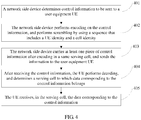
- This embodiment provides a control information indication method, where encoding is performed by using a specified UE_id, and a CID is carried in an HS-SCCH. As shown in FIG. 4 , the method includes:
- UE identity information is set according to step 402.
- the network side device performs encoding on the control information, and performs scrambling by using a sequence that includes a UE identity (UE id) and a cell identity (Cell id).
- UE id UE identity
- Cell id Cell identity
- the network side device allocates the UE a group of N UE_ids, which are UE_id(1)...UE_id(N) respectively, where each UE_id number in the group is corresponding to one serving cell.
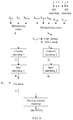
- a UE_id of a cell to which data corresponding to the control information belongs is used to perform scrambling.
- X ue represents a UE_id
- a process of scrambling by using the UE_id of the serving cell to which the data corresponding to the control information belongs for example, UE_id(2), is a procedure executed by using X ue in the left and right parts of the figure.
- the network side device allocates the UE a group of N CIDs, which are Cid (1)...Cid (N) respectively, where each CID number in the group is corresponding to one serving cell.
- N Cid (1)...Cid
- an existing UE identity (which is assigned by the network side device) is still used in part 1, and the CID is used to perform scrambling on CRC in part 2.
- X ue in the left branch is original X ue ;
- X cell in the right branch is the CID.
- the CID may be a sequence of 16 bits (a rule may be the same as that of the UE identity) or a sequence of another length (for example, a sequence of less than 16 bits).
- the network side device carries at least one piece of encoded control information in a same serving cell, and sends the control information to the user equipment UE.
- the UE After receiving the control information, the UE performs decoding, and determines a serving cell to which data corresponding to the control information belongs.
- the network side device performs scrambling by using a new UE identity in both the left and right branches, when performing HS-SCCH detection and decoding, the UE uses all possible UE identities (which are assigned by the network side device) for an attempt separately. Once an attempt by using a UE identity succeeds (detection and decoding are successful), it may be determined that the data corresponding to the control information belongs to a serving cell corresponding to the UE identity, and data information is received, demodulated and decoded in the serving cell.
- the network side device performs scrambling on Part1 by using a unique UE identity, and performs scrambling on CRC by using a CID.
- the UE still uses the UE identity for descrambling to determine whether the control information belongs to the UE itself; then after performing decoding and check (using all possible CIDs for descrambling) on Part 2, the UE acquires a serving cell to which the data corresponding to the control information belongs, and then receives data from the serving cell and processes the data.
- the UE receives, in the serving cell, the data corresponding to the control information.
- a new control information encoding method is used, and a serving cell identity is mapped to control information, so that a UE receives the control information, determines, according to the serving cell identity in the control information, a serving cell to which data corresponding to the control information belongs, and then performs demodulation and decoding on the data.
- a network side device may use fewer code channel numbers, and a quantity of code channels to be listened to may be reduced for the UE, thereby reducing code channel overheads for both the network side device and the UE and improving code channel utilization efficiency.
- the base station 50 includes:
- the at least one piece of control information is the at least one piece of control information carried on a high speed shared control channel HS-SCCH of the first serving cell.
- the information field of the control information includes a first part Part1 and a second part Part2, and the cell identity is set in the first part Part1 in the information field of the control information and/or the second part Part2 in the information field of the control information.
- the base station 50 before the sending unit 51 sends the at least one piece of control information carried in the first serving cell to the user equipment UE, the base station 50 further includes:
- the sending unit 51 is further configured to: send each piece of control information to the UE by using one code channel in the code channel set.
- the serving cell to which the data corresponding to the control information belongs is the first serving cell or a second serving cell.
- multiple pieces of control information are sent to a UE on a control channel HS-SCCH of a same serving cell, and a cell identity is set in an information field of the control information, so that the user equipment UE listens to the control channel of the serving cell, receives the control information, determines, according to the cell identity in the control information, a serving cell to which data corresponding to the control information belongs, and then performs demodulation and decoding on the data.
- control information is sent after being centralized in one serving cell, it can be implemented that fewer control channels are used to achieve a scheduling function the same as that in the prior art, and a network side device may use fewer code channel numbers, thereby reducing code channel overheads and improving code channel utilization efficiency.
- the embodiment provides a user equipment UE 60.
- the user equipment 60 includes:
- the information field of the control information includes a first part Part1 and a second part Part2, and the cell identity is set in the first part Part1 in the information field of the control information and/or the second part Part2 in the information field of the control information.
- the serving cell to which the data corresponding to the control information belongs is the first serving cell or a second serving cell.
- the user equipment UE 60 listens to a control channel of the serving cell, receives multiple pieces of control information, where the control information is sent on a control channel HS-SCCH of a same serving cell in a centralized manner, determines, according to a cell identity in the control information, a serving cell to which data corresponding to the control information belongs, and then performs demodulation and decoding on the data. All control information is sent in one serving cell in a centralized manner, thereby implementing, by using fewer control channels, a scheduling function the same as that in the prior art. A quantity of code channels that need to be monitored by the UE 60 may be reduced, thereby reducing code channel overheads and improving code channel utilization efficiency.
- the embodiment provides a base station 70.
- the base station 70 includes:
- the at least one piece of control information is the at least one piece of control information carried on a high speed shared control channel HS-SCCH of the first serving cell.
- the information field of the control information includes a first part Part1 and a second part Part2, and the cell identity is set in the first part Part1 in the information field of the control information and/or the second part Part2 in the information field of the control information.
- the base station 70 before the sender 71 sends the at least one piece of control information carried in the first serving cell to the user equipment UE, the base station 70 further includes:
- the sender 71 is further configured to: send each piece of control information to the UE by using one code channel in the code channel set.
- the serving cell to which the data corresponding to the control information belongs is the first serving cell or a second serving cell.
- multiple pieces of control information are sent to a UE on a control channel HS-SCCH of a same serving cell, and a cell identity is set in an information field of the control information, so that the user equipment UE listens to the control channel of the serving cell, receives the control information, determines, according to the cell identity in the control information, a serving cell to which data corresponding to the control information belongs, and then performs demodulation and decoding on the data.
- control information is sent after being centralized in one serving cell, it can be implemented that fewer control channels are used to achieve a scheduling function the same as that in the prior art, and a network side device may use fewer code channel numbers, thereby reducing code channel overheads and improving code channel utilization efficiency.
- This embodiment provides a user equipment UE 80.
- the user equipment 80 includes:
- the information field of the control information includes a first part Part1 and a second part Part2, and the cell identity is set in the first part Part1 in the information field of the control information and/or the second part Part2 in the information field of the control information.
- the serving cell to which the data corresponding to the control information belongs is the first serving cell or a second serving cell.
- the user equipment UE 80 listens to a control channel of the serving cell, receives multiple pieces of control information, where the control information is sent after being centralized on a control channel HS-SCCH of a same serving cell, determines, according to a cell identity in the control information, a serving cell to which data corresponding to the control information belongs, and then performs demodulation and decoding on the data. Because all control information is sent after being centralized in one serving cell, it can be implemented that fewer control channels are used to achieve a scheduling function the same as that in the prior art, and a quantity of code channels that need to be monitored by the UE 80 may be reduced, thereby reducing code channel overheads and improving code channel utilization efficiency.
- the method for indicating control information by using a cell identity CID in the foregoing embodiment of the present invention may also be applicable to a similar scenario.
- a same scrambling code is configured for all sectors, which logically belong to a same real cell; however, the sectors are spatially isolated from each other.
- one port ID (which is corresponding to a cell identity in a real multi-carrier technology) is allocated to a data transmit port of each virtual cell.
- a network side device may also add a port ID (Port ID, PID) on a corresponding HS-SCCH when sending data to the UE, to notify the UE of a port (which is equivalent to a virtual cell) that is currently used to send data.
- the port ID PID herein have an equivalent function as the CID in the foregoing embodiment, thereby improving code channel utilization efficiency in the virtual multi-sector technology. Therefore, the present invention may not only be applied to the multi-carrier technology and the virtual multi-sector technology, but also be applied to a technology similar to the two.
- control information indication apparatus provided in the embodiments of the present invention may implement the method embodiments provided in the foregoing; for specific function implementation, refer to a description in the method embodiments, and details are not described herein again.
- the control information indication method and apparatus provided in the embodiments of the present invention may be applicable to a multi-carrier technical scenario to indicate control information for data of a supplementary carrier, to which it is not limited herein.
- the program may be stored in a computer readable storage medium. When the program runs, the processes of the methods in the embodiments are performed.
- the storage medium may include: a magnetic disk, an optical disc, a read-only memory (Read-Only Memory, ROM), or a random access memory (Random Access Memory, RAM).
Landscapes
- Engineering & Computer Science (AREA)
- Computer Networks & Wireless Communication (AREA)
- Signal Processing (AREA)
- Computer Security & Cryptography (AREA)
- Mobile Radio Communication Systems (AREA)
Claims (9)
- Steuerinformationsanzeigeverfahren, das durch eine Basisstation durchgeführt wird, umfassend:Einstellen einer Zellenidentität, CID, in einem Informationsfeld eines Elements von Steuerinformationen, wobei die CID für ein Benutzergerät, UE, verwendet wird, um eine versorgende Zelle zu bestimmen, zu der Daten, die den Steuerinformationen entsprechen, gehören;Senden von mindestens einem Element der Steuerinformationen, das in einer ersten versorgenden Zelle geführt wird, zum UE;wobei das mindestens eine Element von Steuerinformationen auf einem gemeinsam genutzten Hochgeschwindigkeitssteuerkanal bzw. HS-SCCH der ersten versorgenden Zelle geführt wird; undwobei das Informationsfeld der Steuerinformationen einen ersten Teil und einen zweiten Teil umfasst und die CID sowohl im ersten Teil als auch im zweiten Teil im Informationsfeld der Steuerinformationen eingestellt wird und der erste Teil und der zweite Teil unabhängig die gleiche CID separat führen; oder die CID in mindestens zwei Teile geteilt ist, die separat im ersten Teil und im zweiten Teil im Informationsfeld der Steuerinformationen geführt werden.
- Verfahren nach Anspruch 1, das vor dem Senden von mindestens einem Element der Steuerinformationen, das in einer ersten versorgenden Zelle geführt wird, zum UE ferner Folgendes umfasst:Einstellen für das UE eines HS-SCCH-Codekanalsatzes, dem das UE zuhören muss.
- Verfahren nach Anspruch 2, wobei das Senden von mindestens einem Element von Steuerinformationen, das in einer ersten versorgenden Zelle geführt wird, zum UE Folgendes umfasst:Senden jedes Elements von Steuerinformationen zum UE unter Verwendung eines Codekanals im Codekanalsatz.
- Steuerinformationsanzeigeverfahren, das durch ein Benutzergerät durchgeführt wird, umfassend:Empfangen von mindestens einem Element von Steuerinformationen, das durch eine Basisstation in einer ersten versorgenden Zelle gesendet wird;Parsen eines Informationsfelds der Steuerinformationen, um eine Zellenidentität, CID, zu erfassen;Bestimmen, gemäß der Zellenidentität, einer versorgenden Zelle, zu der Daten, die den Steuerinformationen entsprechen, gehören; undDurchführen einer Demodulation und einer Decodierung an den Daten in der versorgenden Zelle unter Verwendung der Steuerinformationen;wobei das mindestens eine Element von Steuerinformationen auf einem gemeinsam genutzten Hochgeschwindigkeitssteuerkanal bzw. HS-SCCH der ersten versorgenden Zelle geführt wird; undwobei das Informationsfeld der Steuerinformationen einen ersten Teil und einen zweiten Teil umfasst und die CID sowohl im ersten Teil als auch im zweiten Teil im Informationsfeld der Steuerinformationen eingestellt wird und der erste Teil und der zweite Teil unabhängig die gleiche CID separat führen; oder die CID in mindestens zwei Teile geteilt ist, die separat im ersten Teil und im zweiten Teil im Informationsfeld der Steuerinformationen geführt werden.
- Verfahren nach Anspruch 4, wobei die versorgende Zelle, zu der die Daten, die den Steuerinformationen entsprechen, gehören, die erste versorgende Zelle oder eine zweite versorgende Zelle ist.
- Basisstation, umfassend:eine Einstelleinheit (52), die konfiguriert ist zum Einstellen einer Zellenidentität, CID, in einem Informationsfeld eines Elements von Steuerinformationen, wobei die CID für ein Benutzergerät, UE, verwendet wird, um eine versorgende Zelle zu bestimmen, zu der Daten, die den Steuerinformationen entsprechen, gehören;eine Sendeeinheit (51), die konfiguriert ist zum Senden von mindestens einem Element der Steuerinformationen, das in einer ersten versorgenden Zelle geführt wird, zum UE;wobei das mindestens eine Element von Steuerinformationen auf einem gemeinsam genutzten Hochgeschwindigkeitssteuerkanal bzw. HS-SCCH der ersten versorgenden Zelle geführt wird; undwobei das Informationsfeld der Steuerinformationen einen ersten Teil und einen zweiten Teil umfasst und die Zellenidentität im ersten Teil und im zweiten Teil im Informationsfeld der Steuerinformationen eingestellt wird und der erste Teil und der zweite Teil unabhängig die gleiche CID separat führen; oder die CID in mindestens zwei Teile geteilt ist, die separat im ersten Teil und im zweiten Teil im Informationsfeld der Steuerinformationen geführt werden.
- Basisstation nach Anspruch 6, wobei
die Einstelleinheit ferner konfiguriert ist zum Einstellen für das UE eines HS-SCCH-Codekanalsatzes, dem das UE zuhören muss, bevor die Sendeeinheit das mindestens eine Element von Steuerinformationen, das in der ersten versorgenden Zelle geführt wird, zum UE sendet. - Basisstation nach Anspruch 7, wobei die Sendeeinheit ferner konfiguriert ist zum:Senden jedes Elements von Steuerinformationen zum UE unter Verwendung eines Codekanals im Codekanalsatz.
- Benutzergerät, umfassend:eine Empfangseinheit (61), die konfiguriert ist zum Empfangen von mindestens einem Element von Steuerinformationen, das durch eine Basisstation in einer ersten versorgenden Zelle gesendet wird;eine Parsing-Einheit (62), die konfiguriert ist zum Parsen eines Informationsfelds der durch die Empfangseinheit empfangenen Steuerinformationen, um eine Zellenidentität, CID, zu erfassen;eine Bestimmungseinheit (63), die konfiguriert ist zum Bestimmen, gemäß der durch die Parsing-Einheit mittels Parsen erhaltenen Zellenidentität, einer versorgenden Zelle, zu der Daten, die den Steuerinformationen entsprechen, gehören; undeine Verarbeitungseinheit (64), die konfiguriert ist zum Durchführen, unter Verwendung der durch die Empfangseinheit empfangenen Steuerinformationen, einer Demodulation und einer Decodierung an den Daten in der durch die Bestimmungseinheit bestimmten versorgenden Zelle;wobei das mindestens eine Element von Steuerinformationen auf einem gemeinsam genutzten Hochgeschwindigkeitssteuerkanal bzw. HS-SCCH der ersten versorgenden Zelle geführt wird; undwobei das Informationsfeld der Steuerinformationen einen ersten Teil und einen zweiten Teil umfasst und die CID sowohl im ersten Teil als auch im zweiten Teil im Informationsfeld der Steuerinformationen eingestellt wird und der erste Teil und der zweite Teil unabhängig die gleiche CID separat führen; oder die CID in mindestens zwei Teile geteilt ist, die separat im ersten Teil und im zweiten Teil im Informationsfeld der Steuerinformationen geführt werden.
Priority Applications (1)
| Application Number | Priority Date | Filing Date | Title |
|---|---|---|---|
| EP17202687.4A EP3361784A1 (de) | 2013-03-19 | 2013-03-19 | Steuerinformationsanzeigeverfahren und -vorrichtung |
Applications Claiming Priority (1)
| Application Number | Priority Date | Filing Date | Title |
|---|---|---|---|
| PCT/CN2013/072877 WO2014146251A1 (zh) | 2013-03-19 | 2013-03-19 | 控制信息的指示方法及装置 |
Related Child Applications (2)
| Application Number | Title | Priority Date | Filing Date |
|---|---|---|---|
| EP17202687.4A Division EP3361784A1 (de) | 2013-03-19 | 2013-03-19 | Steuerinformationsanzeigeverfahren und -vorrichtung |
| EP17202687.4A Division-Into EP3361784A1 (de) | 2013-03-19 | 2013-03-19 | Steuerinformationsanzeigeverfahren und -vorrichtung |
Publications (3)
| Publication Number | Publication Date |
|---|---|
| EP2955943A1 EP2955943A1 (de) | 2015-12-16 |
| EP2955943A4 EP2955943A4 (de) | 2016-03-02 |
| EP2955943B1 true EP2955943B1 (de) | 2018-03-07 |
Family
ID=51579273
Family Applications (2)
| Application Number | Title | Priority Date | Filing Date |
|---|---|---|---|
| EP13879128.0A Not-in-force EP2955943B1 (de) | 2013-03-19 | 2013-03-19 | Verfahren und vorrichtung zur steuerinformationsanzeige |
| EP17202687.4A Withdrawn EP3361784A1 (de) | 2013-03-19 | 2013-03-19 | Steuerinformationsanzeigeverfahren und -vorrichtung |
Family Applications After (1)
| Application Number | Title | Priority Date | Filing Date |
|---|---|---|---|
| EP17202687.4A Withdrawn EP3361784A1 (de) | 2013-03-19 | 2013-03-19 | Steuerinformationsanzeigeverfahren und -vorrichtung |
Country Status (4)
| Country | Link |
|---|---|
| US (2) | US9924537B2 (de) |
| EP (2) | EP2955943B1 (de) |
| CN (2) | CN107659981A (de) |
| WO (1) | WO2014146251A1 (de) |
Family Cites Families (19)
| Publication number | Priority date | Publication date | Assignee | Title |
|---|---|---|---|---|
| US6973579B2 (en) * | 2002-05-07 | 2005-12-06 | Interdigital Technology Corporation | Generation of user equipment identification specific scrambling code for the high speed shared control channel |
| KR100566233B1 (ko) * | 2003-11-15 | 2006-03-29 | 삼성전자주식회사 | 이동통신 시스템에서 단말의 데이터 레이트 전송 장치 및방법 |
| CN100407837C (zh) * | 2004-09-14 | 2008-07-30 | 中兴通讯股份有限公司 | 多载频小区和多小区系统中移动终端的测量控制方法 |
| CN100431389C (zh) * | 2005-08-15 | 2008-11-05 | 中兴通讯股份有限公司 | 多频点高速下行共享信道的资源配置方法 |
| CN101030932B (zh) * | 2006-03-03 | 2011-03-30 | 华为技术有限公司 | 高速下行分组接入中分组数据的传输方法及其系统 |
| CN101394663A (zh) * | 2007-09-18 | 2009-03-25 | 中兴通讯股份有限公司 | 在HS-SCCH-less操作下分配高速-共享指示信道的方法 |
| CN101400026B (zh) * | 2007-09-24 | 2011-04-20 | 中兴通讯股份有限公司 | 一种小区寻呼状态下的数据传输方法 |
| KR101554384B1 (ko) * | 2008-04-25 | 2015-09-18 | 인터디지탈 패튼 홀딩스, 인크 | 2개의 캐리어 상에서 동시에 수신하고 듀얼 셀 고속 다운링크 액세스에서 불연속 송신 및 수신을 수행하기 위한 방법 및 장치 |
| CN101651524B (zh) | 2008-08-11 | 2013-04-24 | 华为技术有限公司 | 多载波模式下的控制信息的发送方法及装置 |
| KR101549572B1 (ko) * | 2008-11-25 | 2015-09-02 | 삼성전자주식회사 | 멀티 셀 hsdpa를 지원하는 이동통신 시스템에서 채널 품질 인식자 전송용 물리제어채널의 전송전력을 조절하는 방법 및 장치 |
| CN103139819B (zh) * | 2009-08-28 | 2016-03-30 | 华为技术有限公司 | 确定搜索空间、候选控制信道资源的方法及装置 |
| KR101893460B1 (ko) * | 2009-09-28 | 2018-08-31 | 삼성전자주식회사 | 물리 하향링크 제어 채널의 확장 |
| CN102045862B (zh) * | 2009-10-22 | 2014-10-01 | 中国移动通信集团公司 | 一种载波聚合实现方法、装置与系统 |
| CN102055552B (zh) * | 2009-11-05 | 2014-07-30 | 华为技术有限公司 | 传输控制信息的方法、接收控制信息的方法及设备 |
| EP3282758B1 (de) * | 2010-10-01 | 2020-07-15 | Interdigital Patent Holdings, Inc. | Drahtlose sende-/empfangseinheit und -verfahren |
| CN102625417B (zh) | 2011-01-26 | 2016-08-03 | 中兴通讯股份有限公司 | 一种实现多制式无线终端绑定的系统和方法 |
| CN102684821B (zh) | 2011-03-16 | 2015-04-29 | 鼎桥通信技术有限公司 | 多载波hsdpa传输方法、系统、基站和用户设备 |
| CN102932092B (zh) * | 2011-08-09 | 2017-07-11 | 中兴通讯股份有限公司 | 基于多点协作的控制信息的接收方法、装置及系统 |
| CN102938878B (zh) * | 2011-08-15 | 2016-03-23 | 上海贝尔股份有限公司 | 相邻小区的mbms服务信息通知方法以及相应的设备 |
-
2013
- 2013-03-19 EP EP13879128.0A patent/EP2955943B1/de not_active Not-in-force
- 2013-03-19 CN CN201710901941.6A patent/CN107659981A/zh not_active Withdrawn
- 2013-03-19 CN CN201380000234.XA patent/CN104170299B/zh active Active
- 2013-03-19 WO PCT/CN2013/072877 patent/WO2014146251A1/zh not_active Ceased
- 2013-03-19 EP EP17202687.4A patent/EP3361784A1/de not_active Withdrawn
-
2015
- 2015-09-18 US US14/858,683 patent/US9924537B2/en not_active Expired - Fee Related
-
2018
- 2018-01-31 US US15/884,854 patent/US20180160446A1/en not_active Abandoned
Non-Patent Citations (1)
| Title |
|---|
| None * |
Also Published As
| Publication number | Publication date |
|---|---|
| EP2955943A1 (de) | 2015-12-16 |
| US9924537B2 (en) | 2018-03-20 |
| CN104170299A (zh) | 2014-11-26 |
| EP2955943A4 (de) | 2016-03-02 |
| US20160014808A1 (en) | 2016-01-14 |
| EP3361784A1 (de) | 2018-08-15 |
| US20180160446A1 (en) | 2018-06-07 |
| WO2014146251A1 (zh) | 2014-09-25 |
| CN104170299B (zh) | 2017-11-17 |
| CN107659981A (zh) | 2018-02-02 |
Similar Documents
| Publication | Publication Date | Title |
|---|---|---|
| US10244512B2 (en) | Method and apparatus for efficient usage of DAI bits for eIMTA in LTE | |
| EP2486685B1 (de) | Vorrichtung und verfahren für harq-feedback in einem drahtlosen mehrträger-kommunikationssystem | |
| US10924233B2 (en) | Data transmission method and apparatus in network supporting coordinated transmission | |
| US8249009B2 (en) | User equipment terminal, base station apparatus, and communication control method in mobile communication system | |
| CN111404637B (zh) | 无线通信设备以及操作无线通信设备的方法 | |
| KR102124418B1 (ko) | 무선 통신 시스템에서 데이터 송수신 방법 및 장치 | |
| US20110092229A1 (en) | Method and system for enhanced cell-fach/pch downlink receiver | |
| EP2509358A1 (de) | Verfahren und system zur übertragung der mehrträgerunterstützten kapazität einer benutzervorrichtung | |
| US9350512B2 (en) | Method for activating multiple streams transmission UE to transmit HS-DPCCH and UE thereof | |
| EP2720385A2 (de) | Verfahren zum empfangen eines downlink-signals mit einem endgerät in einem drahtlosen kommunikationssystem mit einer kooperativen basisstation und vorrichtung dafür | |
| EP4012956A1 (de) | Verfahren zur bestimmung einer hybriden automatischen wiederholungsaufforderungsbestätigungs(harq-ack)-ressource | |
| CN106162851B (zh) | 一种多用户叠加的通信方法和装置 | |
| US9769845B2 (en) | Method for group scheduling grant, user equipment and radio network controller | |
| US20130329656A1 (en) | Common orders for a shared control channel | |
| EP2955943B1 (de) | Verfahren und vorrichtung zur steuerinformationsanzeige | |
| CN101384071B (zh) | 非小区专用信道状态下的hs-dsch的传输方法 | |
| CN104272607B (zh) | 高速分组接入系统中改进控制信道的方法及设备 | |
| CN102685898B (zh) | 多载波hspa传输方法、系统、基站和用户设备 | |
| CN101511124A (zh) | 功率均衡方法、基站及通信系统 | |
| HK1173281B (en) | Apparatus and method for providing harq feedback in a multi-carrier wireless communication system |
Legal Events
| Date | Code | Title | Description |
|---|---|---|---|
| PUAI | Public reference made under article 153(3) epc to a published international application that has entered the european phase |
Free format text: ORIGINAL CODE: 0009012 |
|
| 17P | Request for examination filed |
Effective date: 20150908 |
|
| AK | Designated contracting states |
Kind code of ref document: A1 Designated state(s): AL AT BE BG CH CY CZ DE DK EE ES FI FR GB GR HR HU IE IS IT LI LT LU LV MC MK MT NL NO PL PT RO RS SE SI SK SM TR |
|
| AX | Request for extension of the european patent |
Extension state: BA ME |
|
| A4 | Supplementary search report drawn up and despatched |
Effective date: 20160203 |
|
| RIC1 | Information provided on ipc code assigned before grant |
Ipc: H04W 4/06 20090101AFI20160128BHEP |
|
| DAX | Request for extension of the european patent (deleted) | ||
| REG | Reference to a national code |
Ref country code: DE Ref legal event code: R079 Ref document number: 602013034277 Country of ref document: DE Free format text: PREVIOUS MAIN CLASS: H04W0004060000 Ipc: H04W0048120000 |
|
| GRAP | Despatch of communication of intention to grant a patent |
Free format text: ORIGINAL CODE: EPIDOSNIGR1 |
|
| RIC1 | Information provided on ipc code assigned before grant |
Ipc: H04W 48/12 20090101AFI20170824BHEP |
|
| INTG | Intention to grant announced |
Effective date: 20170918 |
|
| GRAS | Grant fee paid |
Free format text: ORIGINAL CODE: EPIDOSNIGR3 |
|
| GRAA | (expected) grant |
Free format text: ORIGINAL CODE: 0009210 |
|
| AK | Designated contracting states |
Kind code of ref document: B1 Designated state(s): AL AT BE BG CH CY CZ DE DK EE ES FI FR GB GR HR HU IE IS IT LI LT LU LV MC MK MT NL NO PL PT RO RS SE SI SK SM TR |
|
| REG | Reference to a national code |
Ref country code: GB Ref legal event code: FG4D |
|
| REG | Reference to a national code |
Ref country code: CH Ref legal event code: EP Ref country code: AT Ref legal event code: REF Ref document number: 977856 Country of ref document: AT Kind code of ref document: T Effective date: 20180315 |
|
| REG | Reference to a national code |
Ref country code: IE Ref legal event code: FG4D |
|
| REG | Reference to a national code |
Ref country code: DE Ref legal event code: R096 Ref document number: 602013034277 Country of ref document: DE |
|
| REG | Reference to a national code |
Ref country code: NL Ref legal event code: MP Effective date: 20180307 |
|
| REG | Reference to a national code |
Ref country code: LT Ref legal event code: MG4D |
|
| PG25 | Lapsed in a contracting state [announced via postgrant information from national office to epo] |
Ref country code: HR Free format text: LAPSE BECAUSE OF FAILURE TO SUBMIT A TRANSLATION OF THE DESCRIPTION OR TO PAY THE FEE WITHIN THE PRESCRIBED TIME-LIMIT Effective date: 20180307 Ref country code: CY Free format text: LAPSE BECAUSE OF FAILURE TO SUBMIT A TRANSLATION OF THE DESCRIPTION OR TO PAY THE FEE WITHIN THE PRESCRIBED TIME-LIMIT Effective date: 20180307 Ref country code: NO Free format text: LAPSE BECAUSE OF FAILURE TO SUBMIT A TRANSLATION OF THE DESCRIPTION OR TO PAY THE FEE WITHIN THE PRESCRIBED TIME-LIMIT Effective date: 20180607 Ref country code: ES Free format text: LAPSE BECAUSE OF FAILURE TO SUBMIT A TRANSLATION OF THE DESCRIPTION OR TO PAY THE FEE WITHIN THE PRESCRIBED TIME-LIMIT Effective date: 20180307 Ref country code: LT Free format text: LAPSE BECAUSE OF FAILURE TO SUBMIT A TRANSLATION OF THE DESCRIPTION OR TO PAY THE FEE WITHIN THE PRESCRIBED TIME-LIMIT Effective date: 20180307 Ref country code: FI Free format text: LAPSE BECAUSE OF FAILURE TO SUBMIT A TRANSLATION OF THE DESCRIPTION OR TO PAY THE FEE WITHIN THE PRESCRIBED TIME-LIMIT Effective date: 20180307 |
|
| REG | Reference to a national code |
Ref country code: AT Ref legal event code: MK05 Ref document number: 977856 Country of ref document: AT Kind code of ref document: T Effective date: 20180307 |
|
| PG25 | Lapsed in a contracting state [announced via postgrant information from national office to epo] |
Ref country code: SE Free format text: LAPSE BECAUSE OF FAILURE TO SUBMIT A TRANSLATION OF THE DESCRIPTION OR TO PAY THE FEE WITHIN THE PRESCRIBED TIME-LIMIT Effective date: 20180307 Ref country code: LV Free format text: LAPSE BECAUSE OF FAILURE TO SUBMIT A TRANSLATION OF THE DESCRIPTION OR TO PAY THE FEE WITHIN THE PRESCRIBED TIME-LIMIT Effective date: 20180307 Ref country code: GR Free format text: LAPSE BECAUSE OF FAILURE TO SUBMIT A TRANSLATION OF THE DESCRIPTION OR TO PAY THE FEE WITHIN THE PRESCRIBED TIME-LIMIT Effective date: 20180608 Ref country code: BG Free format text: LAPSE BECAUSE OF FAILURE TO SUBMIT A TRANSLATION OF THE DESCRIPTION OR TO PAY THE FEE WITHIN THE PRESCRIBED TIME-LIMIT Effective date: 20180607 Ref country code: RS Free format text: LAPSE BECAUSE OF FAILURE TO SUBMIT A TRANSLATION OF THE DESCRIPTION OR TO PAY THE FEE WITHIN THE PRESCRIBED TIME-LIMIT Effective date: 20180307 |
|
| PG25 | Lapsed in a contracting state [announced via postgrant information from national office to epo] |
Ref country code: PL Free format text: LAPSE BECAUSE OF FAILURE TO SUBMIT A TRANSLATION OF THE DESCRIPTION OR TO PAY THE FEE WITHIN THE PRESCRIBED TIME-LIMIT Effective date: 20180307 Ref country code: AL Free format text: LAPSE BECAUSE OF FAILURE TO SUBMIT A TRANSLATION OF THE DESCRIPTION OR TO PAY THE FEE WITHIN THE PRESCRIBED TIME-LIMIT Effective date: 20180307 Ref country code: RO Free format text: LAPSE BECAUSE OF FAILURE TO SUBMIT A TRANSLATION OF THE DESCRIPTION OR TO PAY THE FEE WITHIN THE PRESCRIBED TIME-LIMIT Effective date: 20180307 Ref country code: IT Free format text: LAPSE BECAUSE OF FAILURE TO SUBMIT A TRANSLATION OF THE DESCRIPTION OR TO PAY THE FEE WITHIN THE PRESCRIBED TIME-LIMIT Effective date: 20180307 Ref country code: EE Free format text: LAPSE BECAUSE OF FAILURE TO SUBMIT A TRANSLATION OF THE DESCRIPTION OR TO PAY THE FEE WITHIN THE PRESCRIBED TIME-LIMIT Effective date: 20180307 Ref country code: NL Free format text: LAPSE BECAUSE OF FAILURE TO SUBMIT A TRANSLATION OF THE DESCRIPTION OR TO PAY THE FEE WITHIN THE PRESCRIBED TIME-LIMIT Effective date: 20180307 |
|
| REG | Reference to a national code |
Ref country code: CH Ref legal event code: PL |
|
| PG25 | Lapsed in a contracting state [announced via postgrant information from national office to epo] |
Ref country code: SM Free format text: LAPSE BECAUSE OF FAILURE TO SUBMIT A TRANSLATION OF THE DESCRIPTION OR TO PAY THE FEE WITHIN THE PRESCRIBED TIME-LIMIT Effective date: 20180307 Ref country code: CZ Free format text: LAPSE BECAUSE OF FAILURE TO SUBMIT A TRANSLATION OF THE DESCRIPTION OR TO PAY THE FEE WITHIN THE PRESCRIBED TIME-LIMIT Effective date: 20180307 Ref country code: AT Free format text: LAPSE BECAUSE OF FAILURE TO SUBMIT A TRANSLATION OF THE DESCRIPTION OR TO PAY THE FEE WITHIN THE PRESCRIBED TIME-LIMIT Effective date: 20180307 Ref country code: SK Free format text: LAPSE BECAUSE OF FAILURE TO SUBMIT A TRANSLATION OF THE DESCRIPTION OR TO PAY THE FEE WITHIN THE PRESCRIBED TIME-LIMIT Effective date: 20180307 |
|
| REG | Reference to a national code |
Ref country code: BE Ref legal event code: MM Effective date: 20180331 Ref country code: DE Ref legal event code: R097 Ref document number: 602013034277 Country of ref document: DE |
|
| REG | Reference to a national code |
Ref country code: IE Ref legal event code: MM4A |
|
| PG25 | Lapsed in a contracting state [announced via postgrant information from national office to epo] |
Ref country code: LU Free format text: LAPSE BECAUSE OF NON-PAYMENT OF DUE FEES Effective date: 20180319 Ref country code: PT Free format text: LAPSE BECAUSE OF FAILURE TO SUBMIT A TRANSLATION OF THE DESCRIPTION OR TO PAY THE FEE WITHIN THE PRESCRIBED TIME-LIMIT Effective date: 20180709 |
|
| PLBE | No opposition filed within time limit |
Free format text: ORIGINAL CODE: 0009261 |
|
| STAA | Information on the status of an ep patent application or granted ep patent |
Free format text: STATUS: NO OPPOSITION FILED WITHIN TIME LIMIT |
|
| PG25 | Lapsed in a contracting state [announced via postgrant information from national office to epo] |
Ref country code: MC Free format text: LAPSE BECAUSE OF FAILURE TO SUBMIT A TRANSLATION OF THE DESCRIPTION OR TO PAY THE FEE WITHIN THE PRESCRIBED TIME-LIMIT Effective date: 20180307 Ref country code: DK Free format text: LAPSE BECAUSE OF FAILURE TO SUBMIT A TRANSLATION OF THE DESCRIPTION OR TO PAY THE FEE WITHIN THE PRESCRIBED TIME-LIMIT Effective date: 20180307 Ref country code: IE Free format text: LAPSE BECAUSE OF NON-PAYMENT OF DUE FEES Effective date: 20180319 |
|
| 26N | No opposition filed |
Effective date: 20181210 |
|
| GBPC | Gb: european patent ceased through non-payment of renewal fee |
Effective date: 20180607 |
|
| PG25 | Lapsed in a contracting state [announced via postgrant information from national office to epo] |
Ref country code: SI Free format text: LAPSE BECAUSE OF FAILURE TO SUBMIT A TRANSLATION OF THE DESCRIPTION OR TO PAY THE FEE WITHIN THE PRESCRIBED TIME-LIMIT Effective date: 20180307 Ref country code: BE Free format text: LAPSE BECAUSE OF NON-PAYMENT OF DUE FEES Effective date: 20180331 Ref country code: CH Free format text: LAPSE BECAUSE OF NON-PAYMENT OF DUE FEES Effective date: 20180331 Ref country code: LI Free format text: LAPSE BECAUSE OF NON-PAYMENT OF DUE FEES Effective date: 20180331 |
|
| PG25 | Lapsed in a contracting state [announced via postgrant information from national office to epo] |
Ref country code: GB Free format text: LAPSE BECAUSE OF NON-PAYMENT OF DUE FEES Effective date: 20180607 Ref country code: FR Free format text: LAPSE BECAUSE OF NON-PAYMENT OF DUE FEES Effective date: 20180507 |
|
| PG25 | Lapsed in a contracting state [announced via postgrant information from national office to epo] |
Ref country code: MT Free format text: LAPSE BECAUSE OF NON-PAYMENT OF DUE FEES Effective date: 20180319 |
|
| PG25 | Lapsed in a contracting state [announced via postgrant information from national office to epo] |
Ref country code: TR Free format text: LAPSE BECAUSE OF FAILURE TO SUBMIT A TRANSLATION OF THE DESCRIPTION OR TO PAY THE FEE WITHIN THE PRESCRIBED TIME-LIMIT Effective date: 20180307 |
|
| PG25 | Lapsed in a contracting state [announced via postgrant information from national office to epo] |
Ref country code: HU Free format text: LAPSE BECAUSE OF FAILURE TO SUBMIT A TRANSLATION OF THE DESCRIPTION OR TO PAY THE FEE WITHIN THE PRESCRIBED TIME-LIMIT; INVALID AB INITIO Effective date: 20130319 Ref country code: MK Free format text: LAPSE BECAUSE OF NON-PAYMENT OF DUE FEES Effective date: 20180307 |
|
| PG25 | Lapsed in a contracting state [announced via postgrant information from national office to epo] |
Ref country code: IS Free format text: LAPSE BECAUSE OF FAILURE TO SUBMIT A TRANSLATION OF THE DESCRIPTION OR TO PAY THE FEE WITHIN THE PRESCRIBED TIME-LIMIT Effective date: 20180707 |
|
| PGFP | Annual fee paid to national office [announced via postgrant information from national office to epo] |
Ref country code: DE Payment date: 20240130 Year of fee payment: 12 |
|
| REG | Reference to a national code |
Ref country code: DE Ref legal event code: R119 Ref document number: 602013034277 Country of ref document: DE |
|
| PG25 | Lapsed in a contracting state [announced via postgrant information from national office to epo] |
Ref country code: DE Free format text: LAPSE BECAUSE OF NON-PAYMENT OF DUE FEES Effective date: 20251001 |