EP2956450B1 - Dérivés de l'hydroxyindalpine et leur utilisation médicale - Google Patents
Dérivés de l'hydroxyindalpine et leur utilisation médicale Download PDFInfo
- Publication number
- EP2956450B1 EP2956450B1 EP14709889.1A EP14709889A EP2956450B1 EP 2956450 B1 EP2956450 B1 EP 2956450B1 EP 14709889 A EP14709889 A EP 14709889A EP 2956450 B1 EP2956450 B1 EP 2956450B1
- Authority
- EP
- European Patent Office
- Prior art keywords
- alkyl
- compound
- formula
- use according
- pharmaceutically acceptable
- Prior art date
- Legal status (The legal status is an assumption and is not a legal conclusion. Google has not performed a legal analysis and makes no representation as to the accuracy of the status listed.)
- Not-in-force
Links
- 0 CC1CCN(*)CC1 Chemical compound CC1CCN(*)CC1 0.000 description 4
- OGIGCIVIFIWWJJ-UHFFFAOYSA-N C(CC1CCNCC1)Cc1c[nH]c(cc2)c1cc2OCc1ccccc1 Chemical compound C(CC1CCNCC1)Cc1c[nH]c(cc2)c1cc2OCc1ccccc1 OGIGCIVIFIWWJJ-UHFFFAOYSA-N 0.000 description 1
- YDEBPKGPBZTXIF-UHFFFAOYSA-N C(CC1CCNCC1)Cc1c[nH]c2cc(OCc3ccccc3)ccc12 Chemical compound C(CC1CCNCC1)Cc1c[nH]c2cc(OCc3ccccc3)ccc12 YDEBPKGPBZTXIF-UHFFFAOYSA-N 0.000 description 1
Images


Classifications
-
- C—CHEMISTRY; METALLURGY
- C07—ORGANIC CHEMISTRY
- C07D—HETEROCYCLIC COMPOUNDS
- C07D401/00—Heterocyclic compounds containing two or more hetero rings, having nitrogen atoms as the only ring hetero atoms, at least one ring being a six-membered ring with only one nitrogen atom
- C07D401/02—Heterocyclic compounds containing two or more hetero rings, having nitrogen atoms as the only ring hetero atoms, at least one ring being a six-membered ring with only one nitrogen atom containing two hetero rings
- C07D401/06—Heterocyclic compounds containing two or more hetero rings, having nitrogen atoms as the only ring hetero atoms, at least one ring being a six-membered ring with only one nitrogen atom containing two hetero rings linked by a carbon chain containing only aliphatic carbon atoms
-
- A—HUMAN NECESSITIES
- A61—MEDICAL OR VETERINARY SCIENCE; HYGIENE
- A61K—PREPARATIONS FOR MEDICAL, DENTAL OR TOILETRY PURPOSES
- A61K31/00—Medicinal preparations containing organic active ingredients
- A61K31/33—Heterocyclic compounds
- A61K31/395—Heterocyclic compounds having nitrogen as a ring hetero atom, e.g. guanethidine or rifamycins
- A61K31/435—Heterocyclic compounds having nitrogen as a ring hetero atom, e.g. guanethidine or rifamycins having six-membered rings with one nitrogen as the only ring hetero atom
- A61K31/44—Non condensed pyridines; Hydrogenated derivatives thereof
- A61K31/445—Non condensed piperidines, e.g. piperocaine
- A61K31/4523—Non condensed piperidines, e.g. piperocaine containing further heterocyclic ring systems
- A61K31/454—Non condensed piperidines, e.g. piperocaine containing further heterocyclic ring systems containing a five-membered ring with nitrogen as a ring hetero atom, e.g. pimozide, domperidone
-
- A—HUMAN NECESSITIES
- A61—MEDICAL OR VETERINARY SCIENCE; HYGIENE
- A61K—PREPARATIONS FOR MEDICAL, DENTAL OR TOILETRY PURPOSES
- A61K45/00—Medicinal preparations containing active ingredients not provided for in groups A61K31/00 - A61K41/00
- A61K45/06—Mixtures of active ingredients without chemical characterisation, e.g. antiphlogistics and cardiaca
-
- A—HUMAN NECESSITIES
- A61—MEDICAL OR VETERINARY SCIENCE; HYGIENE
- A61P—SPECIFIC THERAPEUTIC ACTIVITY OF CHEMICAL COMPOUNDS OR MEDICINAL PREPARATIONS
- A61P1/00—Drugs for disorders of the alimentary tract or the digestive system
Definitions
- the present invention relates to hydroxyindalpine derivatives of formula (I) as defined herein for use as a medicament, hydroxyindalpine derivatives of formula (I-1) and pharmaceutical compositions comprising these compounds, as well as their medical use, particularly in the treatment or prevention of gastrointestinal diseases/disorders, such as constipation and functional dyspepsia.
- Gastrointestinal (GI) disorders can be caused by disturbances of the transit in the gastrointestinal tract and can lead to serious health issues. Constipation, for example, is the most common digestive complaint in the USA, particularly among women and elderly people, and can cause painful defecation. Functional dyspepsia, irritable bowel syndrome, intestinal pseudo-obstruction and other gastrointestinal disorders associated with impaired gastrointestinal motility likewise affect human and animal health.
- Gut movements in the gastrointestinal tract are based on the peristaltic reflex which is controlled by the enteric nervous system (ENS) located within the gut wall.
- ENS sensors detect the stretching of the gut wall and initiate muscle contractions proximal to the stimulus and relaxations distal to the stimulus, resulting in a peristaltic wave that propagates and propels contents through the digestive tract.
- Gut movements are regulated by serotonin (i.e., 5-hydroxytryptamine or 5-HT) which is released from enterochromaffin cells in the epithelium lining the lumen of the gut and by nerves.
- 5-HT 5-hydroxytryptamine
- the effects of 5-HT are mediated by different receptors, some of which are expressed on various gastrointestinal cell types including enteric nerve cells of the ENS, smooth muscle cells and interstitial cells of Cajal.
- 5-HT 1 , 5-HT 2 , 5-HT 3 , 5-HT 4 and 5-HT 7 receptors are expressed in the gastrointestinal tract and affect gastrointestinal motor function ( Wouters MM, et al. Neurogastroenterol Motil. 2007; 19 Suppl 2:5-12 ).
- 5-HT 1P receptor A particularly important receptor in the gut is the putative peripheral 5-HT 1P receptor which has been defined pharmacologically and classified as belonging to the 5-HT 1 receptor subfamily based on its high affinity for 5-HT ( Branchek T, et al. Brain Res. 1984; 324(1):107-18 ; Gershon MD, et al. Experientia. 1985; 41(7):863-8 ).
- 5-HT 1P receptor stimulation results in an activation of enteric nerve cells ( Mawe GM, et al. Proc Natl Acad Sci USA. 1986; 83(24):9799-803 ; Michel K, et al. J Neurosci. 1997; 17(20):8009-17 ).
- the inhibition of the 5-HT 1P receptor interferes with the peristaltic reflex and, conversely, the activation of the 5-HT 1P receptor initiates peristalsis and thus improves gut transit ( Foxx-Orenstein AE, et al. Gastroenterology. 1996; 111(5):1281-90 ).
- the activation of the 5-HT 1P receptor results in a relaxation of gastric smooth muscle cells, which is mediated by the activation of nitrergic enteric nerve cells ( Michel K, et al. J Neurosci. 1997; 17(20):8009-17 ).
- the activation of the 5-HT 1P receptor thus improves gastric accommodation.
- a selective agonist of the 5-HT 1P receptor would hence promote the desirable physiological responses of both stomach and intestine to ingestion and would thereby relieve gastrointestinal complaints.
- 5-hydroxyindalpine 5-OHIP
- 6-hydroxyindalpine 6-OHIP
- 5-OHIP 5-hydroxyindalpine
- 5-HT-1P receptor Branchek T, et al. Brain Res. 1984; 324(1):107-18
- 5-OHIP has been demonstrated to accelerate peristalsis in mouse isolated colon in a concentration dependent manner and to reduce the threshold pressure required to trigger the peristaltic reflex ( Mitchell NA, et al. Neurogastroenterol Motil. 2009; 21(7):760-e48 ).
- 5-Hydroxytryptophan dipeptide 5-HT-DP or 5-HTP-DP
- N-acetyl-5-hydroxytrytophyl-5-hydroxytryptophan amide has been described as a 5-HT 1P receptor antagonist and utilized in studies of 5-HT 1P receptor modulation ( Takaki M, et al. J Neurosci. 1985; 5(7):1769-80 ).
- the preparation of 5-OHIP and 6-OHIP from 3-(4-pyridylethyl)-5-(benzyloxy)indole and 3-(4-pyridylethyl)-6-(benzyloxy)indole, respectively, in a single catalytic hydrogenation step has been described in Gueremy C, et al. J Med Chem. 1980; 23(12):1306-10 .
- the hydroxyindalpine derivatives described herein do not only have an improved chemical stability but, surprisingly, retain agonistic activity on the 5-HT 1P receptor, which makes them suitable for the treatment or prevention of gastrointestinal disorders. It is therefore an object of the present invention to provide novel hydroxyindalpine derivatives useful as 5-HT 1P receptor agonists for the treatment or prevention of gastrointestinal disorders which are particularly stable, act selectively on the 5-HT 1P receptor and can be readily synthesized.
- the present invention provides a compound of the following formula (I): or a pharmaceutically acceptable salt or solvate thereof, for use as a medicament.
- L 1 is -CH 2 - or -CH 2 CH 2 -.
- L 1 is -CH 2 -.
- L 2 is C 1-4 alkylene.
- L 2 is -CH 2 -, -CH 2 CH 2 - or -CH 2 CH 2 CH 2 -, more preferably L 2 is -CH 2 CH 2 - or -CH 2 CH 2 CH 2 -, and most preferably L 2 is -CH 2 CH 2 -.
- R 1 is phenyl which is optionally substituted with one or more (e.g., one, two, three or four; preferably one or two, more preferably one) groups independently selected from C 1-4 alkyl (e.g., methyl or ethyl), halogen, -CF 3 , -CN, -OH, -O(C 1-4 alkyl) (e.g., methoxy or ethoxy), -SH, -S(C 1-4 alkyl), -NH 2 , -NH(C 1-4 alkyl), or -N(C 1-4 alkyl)(C 1-4 alkyl).
- R 1 is phenyl (i.e., unsubstituted phenyl).
- the moiety -O-L 1 -R 1 is bound to position 5 or 6 of the indole ring of the compound of formula (I), preferably to position 5 of the indole ring.
- Each R 2 is independently selected from C 1-4 alkyl (e.g., methyl or ethyl), halogen, -CF 3 , -CN, -OH, -O(C 1-4 alkyl) (e.g., methoxy or ethoxy), -SH, -S(C 1-4 alkyl), -NH 2 , -NH(C 1-4 alkyl), or -N(C 1-4 alkyl)(C 1-4 alkyl).
- C 1-4 alkyl e.g., methyl or ethyl
- halogen e.g., methyl or ethyl
- -CF 3 e.g., methyl or ethyl
- -CN e.g., methyl or ethyl
- -OH e.g., methoxy or ethoxy
- -SH e.g., methoxy or ethoxy
- each R 2 is independently selected from C 1-4 alkyl, halogen, -CF 3 , -CN, -OH, -O(C 1-4 alkyl), -NH 2 , -NH(C 1-4 alkyl), or -N(C 1-4 alkyl)(C 1-4 alkyl).
- R 3 is selected from hydrogen, C 1-4 alkyl (e.g., methyl or ethyl), halogen, -CF 3 , -CN, -OH, -O(C 1-4 alkyl) (e.g., methoxy or ethoxy), -NH 2 , -NH(C 1-4 alkyl), or -N(C 1-4 alkyl)(C 1-4 alkyl).
- R 3 is hydrogen.
- R 4 is hydrogen or C 1-4 alkyl (e.g., methyl or ethyl). Preferably, R 4 is hydrogen.
- R 5 is hydrogen or C 1-4 alkyl (e.g., methyl or ethyl). Preferably, R 5 is hydrogen.
- n 0, 1, 2 or 3.
- n is 0 or 1. More preferably, n is 0.
- the compound of formula (I) is a compound of the following formula (II) or a pharmaceutically acceptable salt or solvate thereof:
- the present invention thus provides a compound of formula (II) or a pharmaceutically acceptable salt or solvate thereof for use as a medicament.
- L 1 is -CH 2 - or -CH 2 CH 2 -.
- L 1 is -CH 2 -.
- L 2 is -CH 2 -, -CH 2 CH 2 - or -CH 2 CH 2 CH 2 -.
- L 2 is -CH 2 CH 2 - or -CH 2 CH 2 CH 2 -, and more preferably L 2 is -CH 2 CH 2 -.
- R 1 is phenyl optionally substituted with one or more (e.g., one, two, three or four; preferably one or two, more preferably one) groups independently selected from C 1-4 alkyl, halogen, -CF 3 , -CN, -OH, -O(C 1-4 alkyl), -SH, -S(C 1-4 alkyl), -NH 2 , -NH(C 1-4 alkyl), or -N(C 1-4 alkyl)(C 1-4 alkyl).
- R 1 is phenyl (i.e., unsubstituted phenyl).
- a particularly preferred compound of formula (I) is 5-benzyloxyindalpine (5-BOIP) having the following structure: or a pharmaceutically acceptable salt or solvate thereof.
- a further particularly preferred compound of formula (I) is homo-5-benzyloxyindalpine (homo-5-BOIP) having the following structure: or a pharmaceutically acceptable salt or solvate thereof.
- a further preferred compound of formula (I) is 6-benzyloxyindalpine (6-BOIP) shown in the following: or a pharmaceutically acceptable salt or solvate thereof.
- a further preferred compound of formula (I) is homo-6-benzyloxyindalpine (homo-6-BOIP) shown in the following: or a pharmaceutically acceptable salt or solvate thereof.
- the present invention furthermore provides compounds characterized by the following formula (I-1): or a pharmaceutically acceptable salt or solvate thereof, wherein L 1 , R 1 , R 2 , R 3 , R 4 , R 5 and n have the meanings and preferred meanings as described herein above for the compound of formula (I), and further wherein L 2 is C 2-4 alkylene.
- L 2 is -CH 2 CH 2 - or -CH 2 CH 2 CH 2 -, and more preferably L 2 is -CH 2 CH 2 -.
- the compounds provided in the context of the present invention are useful as pharmaceuticals, particularly for the treatment or prevention of a gastrointestinal disease or disorder, as explained further below.
- the invention also relates to compounds of formula (II-1): or a pharmaceutically acceptable salt or solvate thereof, wherein L 1 and R 1 have the meanings and preferred meanings as described herein above for the compound of formula (II), and further wherein L 2 is -CH 2 CH 2 - or -CH 2 CH 2 CH 2 -.
- L 2 is -CH 2 CH 2 -.
- the present invention further provides the following compounds as well as pharmaceutically acceptable salts and solvates thereof:
- alkyl refers to a monovalent saturated aliphatic (i.e., non-aromatic) acyclic hydrocarbon group (i.e., a group consisting of carbon atoms and hydrogen atoms) which may be linear or branched and does not comprise any carbon-to-carbon double bond or any carbon-to-carbon triple bond.
- a "C 1-4 alkyl” denotes an alkyl group having 1 to 4 carbon atoms.
- alkylene refers to a divalent saturated aliphatic acyclic hydrocarbon group which may be linear or branched and does not comprise any carbon-to-carbon double bond or any carbon-to-carbon triple bond.
- aryl refers to a monovalent aromatic hydrocarbon group, including monocyclic as well as bridged ring and/or fused ring systems, containing at least one aromatic ring.
- Aryl may, for example, refer to phenyl, naphthyl or anthracenyl.
- halogen refers to -F, -Cl, -Br or -I, preferably to -F or -Cl.
- compounds of formula (I) exhibit agonistic activity on the 5-HT 1P receptor in a neuronal tissue assay.
- 5-benzyloxyindalpine (5-BOIP) activates human enteric nerve cells and that this activation is neutralized by a known 5-HT 1P receptor antagonist, 5-HTP-DP, as also reported in Example 4.
- the agonistic activity of the compounds of formula (I) on the 5-HT 1P receptor is particularly surprising as these compounds contain a bulky arylalkoxy group in place of the free phenolic hydroxy group which is present in the known 5-HT 1P receptor agonists 5-OHIP and 6-OHIP and thus differ markedly from 5-OHIP and 6-OHIP in their capability to undergo hydrogen bonding.
- the compounds of the present invention are useful as 5-HT 1P receptor agonists and, thus, can be used for the treatment or prevention of gastrointestinal diseases/disorders, particularly gastrointestinal motility diseases/disorders, such as constipation as well as functional dyspepsia and/or associated dyspeptic symptoms.
- gastrointestinal diseases/disorders particularly gastrointestinal motility diseases/disorders, such as constipation as well as functional dyspepsia and/or associated dyspeptic symptoms.
- Particularly advantageous are compounds of formula (I) acting selectively on the 5-HT 1P receptor.
- the compounds according to the invention furthermore have an advantageously high stability against oxidation, as discussed further below, which makes them particularly suitable as pharmaceuticals.
- the present invention provides a compound of formula (I), or a pharmaceutically acceptable salt or solvate thereof, for use as a medicament.
- the invention also relates to a pharmaceutical composition comprising a compound of formula (I-1), or a pharmaceutically acceptable salt or solvate thereof, optionally in combination with a pharmaceutically acceptable excipient.
- the invention further relates to a compound of formula (I), or a pharmaceutically acceptable salt or solvate thereof, or a pharmaceutical composition comprising any of the aforementioned entities in combination with a pharmaceutically acceptable excipient, for use in the treatment or prevention of a gastrointestinal disease or disorder, in particular a gastrointestinal motility disease or disorder.
- the invention also provides a compound of formula (I), or a pharmaceutically acceptable salt or solvate thereof, or a pharmaceutical composition comprising any of the aforementioned entities in combination with a pharmaceutically acceptable excipient, for use as a prokinetic agent or a prokinetic medicament.
- the present invention relates to a compound of formula (I), or a pharmaceutically acceptable salt or solvate thereof, or a pharmaceutical composition comprising any of the aforementioned entities optionally in combination with a pharmaceutically acceptable excipient, for use in a method of treating or preventing a gastrointestinal disease or disorder, in particular a gastrointestinal motility disease or disorder, the method comprising the administration of a therapeutically effective amount of said compound or said pharmaceutical composition to a subject in need thereof (preferably a human or a non-human animal, more preferably a human).
- the gastrointestinal disease or disorder to be treated or prevented in accordance with the present invention is preferably selected from constipation (including, e.g., acute constipation and chronic constipation, as well as slow transit constipation, idiopathic constipation, constipation due to post-operative ileus, and colonic inertia), dyspepsia (e.g., functional dyspepsia or non-ulcer dyspepsia) and/or associated dyspeptic symptoms, irritable bowel syndrome (e.g., constipation-predominant irritable bowel syndrome or IBS-C), gastroparesis, intestinal pseudo-obstruction (including, e.g., acute intestinal pseudo-obstruction and chronic intestinal pseudo-obstruction), obstructed defecation, abdominal bloating, abdominal distension, fecal impaction, or abdominal pain.
- the invention particularly relates to the treatment or prevention of constipation as well as the treatment or prevention of functional dyspep
- 5-HT 1P receptor agonists 5-hydroxyindalpine (5-OHIP) and 6-hydroxyindalpine (6-OHIP) are prone to oxidation by oxygen from the air, resulting in the corresponding quinone imine species, as illustrated in the following scheme:
- the compounds of the present invention are more stable than 5-OHIP or 6-OHIP, as they do not have a free hydroxy group with an acidic hydrogen atom bound to the indole ring.
- the formation of oxidized quinone imine species is therefore significantly decreased in the compounds of the present invention, resulting in an advantageously improved chemical stability.
- the compounds of formula (I) can, for example, be prepared according to the following general protocol, which is further illustrated in Scheme 1 below.
- the groups and variables of the compounds shown in Scheme 1, including R 1 , R 2 , R 3 , R 4 , R 5 , L 1 and n, have the same meanings or preferred meanings described herein above in connection with the compounds of formula (I).
- a hydroxyindole derivative ( 1 ) which is commercially available or can be prepared in accordance with synthetic protocols described in the literature, is alkylated with an arylalkyl halide ( 2 ) using cesium carbonate and a crown ether (e.g., 18-crown-6) to provide an arylalkyloxyindole derivative ( 3 ).
- the arylalkyloxyindole derivative ( 3 ) is then coupled in a Grignard reaction with an acid chloride ( 5 ) which can be prepared from a 1-Cbz-4-piperidinealkanoic acid ( 4 ) using a chlorination reagent, such as thionyl chloride (SOCl 2 ), to provide compound ( 6 ).
- the carboxybenzyl (Cbz) protecting group of compound ( 6 ) is removed (e.g., by treatment with concentrated HCl) to obtain compound ( 7 ).
- compound ( 7 ) can further be N-alkylated on its piperidine moiety using, e.g., an alkyl halide.
- the carbonyl group in compound ( 7 ) is transformed into a methylene group in a Wolff-Kishner reduction using hydrazine (N 2 H 4 ) and a base (e.g., KOH) to yield the desired compound ( 8 ) of formula (I) according to the invention.
- the reaction conditions in each of these steps including the reaction temperature and duration, solvents, and the molar ratio of the respective reactants, can be suitably selected, e.g., in accordance with the conditions employed in the corresponding reaction steps in Example 1.
- a process of preparing the compound of formula (I) or a pharmaceutically acceptable salt or solvate thereof comprising a step of reacting a compound of the following formula (Ia) with hydrazine and a base to obtain the compound of formula (I): wherein R 1 , R 2 , R 3 , R 4 , R 5 , L 1 and n in formula (Ia) have the same meanings or preferred meanings as the corresponding groups or variables in the compound of formula (I) as defined and described herein above.
- the present invention further relates to a process of preparing the compound of formula (I-1) or a pharmaceutically acceptable salt or solvate thereof, comprising a step of reacting a compound of formula (Ib) with hydrazine and a base to obtain the compound of formula (I-1): wherein R 1 , R 2 , R 3 , R 4 , R 5 , L 1 and n in formula (Ib) have the same meanings or preferred meanings as the corresponding groups or variables in the compound of formula (I-1) as described herein above.
- the process thus comprises a step of subjecting the compound of formula (Ia) or the compound of formula (Ib) to a Wolff-Kishner reduction by reacting it with hydrazine and a base.
- the base may, e.g., be an alkali metal hydroxide, such as potassium hydroxide or sodium hydroxide (e.g., solid KOH dissolved in diethylene glycol), or an alkali metal tert-butoxide, such as potassium tert-butoxide or sodium tert-butoxide (e.g, potassium tert-butoxide dissolved in in dimethyl sulfoxide).
- reaction conditions in this step can suitably be chosen as described for Wolff-Kishner reductions in the literature (e.g., Hutchins RO, et al. Comprehensive organic synthesis. 1991; 8:327-43 ; or Szmant HH. Angew Chem Int Ed. 1968; 7:120-8 ).
- the reaction temperature can be chosen depending on the specific base employed. For example, if potassium hydroxide dissolved in diethylene glycol is used as the base, the reaction may be conducted at a temperature of about 100°C to about 200°C, preferably at a temperature of about 150°C.
- the compound of formula (Ia) or the compound of formula (Ib) can be prepared following the synthetic protocol for compound ( 7 ) described above and illustrated in Scheme 1. Accordingly, the process of preparing the compound of formula (I) or the compound of formula (I-1) may further comprise the additional reaction steps described in the general synthetic protocol above and illustrated in Scheme 1.
- the compounds of formula (I) can also be prepared according to the following alternative protocol, which is further illustrated in Scheme 2 below.
- the groups and variables of the compounds shown in Scheme 2, including R 1 , R 2 , R 3 , R 4 , R 5 , L 1 and n, have the same meanings or preferred meanings described herein above in connection with the compounds of formula (I).
- a hydroxyindole derivative ( 1 ) which is commercially available or can be prepared in accordance with synthetic protocols described in the literature, is alkylated with an arylalkyl halide ( 2 ) using cesium carbonate and a crown ether (e.g., 18-crown-6) to provide an arylalkyloxyindole derivative ( 3 ).
- the arylalkyloxyindole derivative ( 3 ) is then coupled in a Grignard reaction with an acid chloride ( 5 ) which can be prepared from a 1-Cbz-4-piperidinealkanoic acid ( 4b ) using a chlorination reagent, such as oxalyl chloride, to provide compound ( 6 ).
- the carboxybenzyl (Cbz) protecting group of compound ( 6 ) is removed (e.g., by treatment with concentrated HCl) to obtain compound ( 7 ).
- compound ( 7 ) can further be N-alkylated on its piperidine moiety using, e.g., an alkyl halide.
- the carbonyl group in compound ( 7 ) is transformed into a methylene group in a reduction using lithium aluminum hydride (LiAlH 4 ) to yield the desired compound ( 8 ) of formula (I) according to the invention.
- the reaction conditions in each of these steps including the reaction temperature and duration, solvents, and the molar ratio of the respective reactants, can be suitably selected, e.g., in accordance with the conditions employed in the corresponding reaction steps in Example 2 or 3.
- the present invention relates to a process of preparing the compound of formula (I-1) or a pharmaceutically acceptable salt or solvate thereof, comprising a step of reacting a compound of formula (Ib) with lithium aluminum hydride (LiAlH 4 ) to obtain the compound of formula (I-1): wherein R 1 , R 2 , R 3 , R 4 , R 5 , L 1 and n in formula (Ib) have the same meanings or preferred meanings as the corresponding groups or variables in the compound of formula (I-1) as described herein above.
- LiAlH 4 lithium aluminum hydride
- the process thus comprises a step of reducing the compound of formula (Ia) or the compound of formula (Ib) by reacting it with lithium aluminum hydride (LiAlH 4 ).
- the reaction conditions in this step can suitably be chosen as described, e.g., in step (5) of Example 2.
- the compound of formula (Ia) or the compound of formula (Ib) can be prepared following the synthetic protocol for compound ( 7 ) described above and illustrated in Scheme 2. Accordingly, the process of preparing the compound of formula (I) or the compound of formula (I-1) may further comprise the additional reaction steps described in the general synthetic protocol above and illustrated in Scheme 2.
- the hydroxyindalpine derivatives of the present invention are also useful as starting materials for the preparation of the corresponding hydroxyindalpines having a free hydroxy group, such as 5-OHIP and 6-OHIP, in a simplified and convenient manner.
- a compound of formula (I-1) can be subjected to hydrogenolysis (e.g., palladium-catalyzed hydrogenolysis) in order to obtain the corresponding hydroxyindalpine having a free hydroxy group.
- hydrogenolysis e.g., palladium-catalyzed hydrogenolysis
- the compounds 5-BOIP and 6-BOIP can be subjected to hydrogenolysis in order to cleave the benzyl group comprised in these compounds and thereby provide the corresponding hydroxyindalpines 5-OHIP and 6-OHIP, respectively.
- the hydrogenolysis reaction can, e.g., be carried out using the methods for the cleavage of benzyl ether groups described in: Wuts, PGM and Greene, TW. Greene's Protective Groups in Organic Synthesis, John Wiley & Sons, 4th Edition, 2006 ; Mandal, PK et al., J Org Chem, 2007, 72:6599-601 ; or Coleman, RS et al., Synthesis, 1999, SI:1399-400 . Accordingly, described herein is also a method of preparing a hydroxyindalpine having a free hydroxy group, comprising a step of subjecting a compound of formula (I-1) to hydrogenolysis.
- the scope of the present invention embraces all pharmaceutically acceptable salt forms of the compounds of formula (I) which may be formed, e.g., by protonation of an atom carrying an electron lone pair which is susceptible to protonation, such as an amino group, with an inorganic or organic acid, or as a salt of a carboxylic acid group with a physiologically acceptable cation as they are well-known in the art.
- Exemplary base addition salts comprise, for example: alkali metal salts such as sodium or potassium salts; alkaline earth metal salts such as calcium or magnesium salts; ammonium salts; aliphatic amine salts such as trimethylamine, triethylamine, dicyclohexylamine, ethanolamine, diethanolamine, triethanolamine, procaine salts, meglumine salts, or ethylenediamine salts; aralkyl amine salts such as N,N-dibenzylethylenediamine salts, benetamine salts; heterocyclic aromatic amine salts such as pyridine salts, picoline salts, quinoline salts or isoquinoline salts; quaternary ammonium salts such as tetramethylammonium salts, tetraethylammonium salts, benzyltrimethylammonium salts, benzyltriethylammonium salts, benzyltributylammonium salts,
- Exemplary acid addition salts comprise, for example, mineral acid salts such as hydrochloride, hydrobromide, hydroiodide, sulfate salts, nitrate salts, phosphate salts (such as, e.g., phosphate, hydrogenphosphate, or dihydrogenphosphate salts), carbonate salts, hydrogencarbonate salts or perchlorate salts; organic acid salts such as acetate, propionate, butyrate, pentanoate, hexanoate, heptanoate, octanoate, cyclopentanepropionate, undecanoate, lactate, maleate, oxalate, fumarate, tartrate, malate, citrate, nicotinate, benzoate, salicylate or ascorbate salts; sulfonate salts such as methanesulfonate, ethanesulfonate, 2-hydroxyethanesulfonate, benzenesulfonate
- the scope of the invention embraces the compounds of formula (I) in any solvated form, including, e.g., solvates with water, for example hydrates, or with organic solvents such as, e.g., methanol, ethanol or acetonitrile, i.e., as a methanolate, ethanolate or acetonitrilate, respectively, or in the form of any polymorph.
- solvates with water, for example hydrates
- organic solvents such as, e.g., methanol, ethanol or acetonitrile, i.e., as a methanolate, ethanolate or acetonitrilate, respectively, or in the form of any polymorph.
- all stereoisomers of the compounds of the present invention are contemplated as part of the present invention, either in admixture or in pure or substantially pure form.
- the scope of the compounds according to the invention embraces all of the possible stereoisomers and their mixtures. It particularly embraces the racemic forms and the isolated optical isomers.
- the racemic forms can be resolved by physical methods, such as, e.g., fractional crystallization, separation or crystallization of diastereomeric derivatives or separation by chiral column chromatography.
- the individual optical isomers can be obtained from the racemates using conventional methods, such as, e.g., salt formation with an optically active acid followed by crystallization.
- prodrugs of the compounds according to the present invention are derivatives which have chemically or metabolically cleavable groups and become, by solvolysis or under physiological conditions, the compounds of the invention which are pharmaceutically active in vivo.
- Prodrugs of compounds according to the the present invention, as disclosed herein may be formed in a conventional manner with a functional group of the compounds such as, e.g., with an amino, hydroxy or carboxy group.
- the prodrug derivative form often offers advantages of solubility, tissue compatibility or delayed release in a mammalian organism (see, Bundgaard, H., Design of Prodrugs, pp. 7-9, 21-24, Elsevier, Amsterdam 1985 ).
- Prodrugs include acid derivatives well known to the person skilled in the art, such as, for example, esters prepared by reaction of the parent acidic compound with a suitable alcohol, or amides prepared by reaction of the parent acid compound with a suitable amine.
- esters prepared by reaction of the parent acidic compound with a suitable alcohol
- amides prepared by reaction of the parent acid compound with a suitable amine.
- an ester derivative prepared by reacting the carboxyl group with a suitable alcohol or an amide derivative prepared by reacting the carboxyl group with a suitable amine is exemplified as a prodrug.
- An especially preferred ester derivative as a prodrug is methylester, ethylester, n-propylester, isopropylester, n-butylester, isobutylester, tert-butylester, morpholinoethylester, N,N-diethylglycolamidoester or ⁇ -acetoxyethylester.
- a compound of the present invention has a hydroxy group
- an acyloxy derivative prepared by reacting the hydroxyl group with a suitable acylhalide or a suitable acid anhydride is exemplified as a prodrug.
- an amide derivative prepared by reacting the amino group with a suitable acid halide or a suitable mixed anhydride is exemplified as a prodrug.
- the compounds described herein may be administered as compounds per se or may be formulated as medicaments.
- the medicaments/pharmaceutical compositions may optionally comprise one or more pharmaceutically acceptable excipients, such as carriers, diluents, fillers, disintegrants, lubricating agents, binders, colorants, pigments, stabilizers, preservatives, antioxidants, or solubility enhancers.
- the pharmaceutical compositions may comprise one or more solubility enhancers, such as, e.g., poly(ethylene glycol), including poly(ethylene glycol) having a molecular weight in the range of about 200 to about 5,000 Da, ethylene glycol, propylene glycol, non-ionic surfactants, tyloxapol, polysorbate 80, macrogol-15-hydroxystearate, phospholipids, lecithin, dimyristoyl phosphatidylcholine, dipalmitoyl phosphatidylcholine, distearoyl phosphatidylcholine, cyclodextrins, hydroxyethyl- ⁇ -cyclodextrin, hydroxypropyl- ⁇ -cyclodextrin, hydroxyethyl- ⁇ -cyclodextrin, hydroxypropyl- ⁇ -cyclodextrin, dihydroxypropyl- ⁇ -cyclodextrin, glucosyl- ⁇ -cyclodextrin, glucosyl
- compositions can be formulated by techniques known to the person skilled in the art, such as the techniques published in Remington's Pharmaceutical Sciences, 20th Editi on.
- the pharmaceutical compositions can be formulated as dosage forms for oral, parenteral, such as intramuscular, intravenous, subcutaneous, intradermal, intraarterial, intracardial, rectal, nasal, topical, aerosol or vaginal administration.
- Dosage forms for oral administration include coated and uncoated tablets, soft gelatin capsules, hard gelatin capsules, lozenges, troches, solutions, emulsions, suspensions, syrups, elixirs, powders and granules for reconstitution, dispersible powders and granules, medicated gums, chewing tablets and effervescent tablets.
- Dosage forms for parenteral administration include solutions, emulsions, suspensions, dispersions and powders and granules for reconstitution. Emulsions are a preferred dosage form for parenteral administration.
- Dosage forms for rectal and vaginal administration include suppositories and ovula.
- Dosage forms for nasal administration can be administered via inhalation and insufflation, for example by a metered inhaler.
- Dosage forms for topical administration include creams, gels, ointments, salves, patches and transdermal delivery systems.
- the compounds according to the invention, or the above described pharmaceutical compositions comprising one or more compounds of formula (I), may be administered to a subject by any convenient route of administration, whether systemically/peripherally or at the site of desired action, including but not limited to one or more of: oral (e.g., as a tablet, capsule, or as an ingestible solution), topical (e.g., transdermal, intranasal, buccal, and sublingual), parenteral (e.g., using injection techniques or infusion techniques, and including, for example, by injection, e.g., subcutaneous, intradermal, intramuscular, intravenous, intraarterial, intracardiac, intrathecal, intraspinal, intracapsular, subcapsular, intraorbital, intraperitoneal, intratracheal, subcuticular, intraarticular, subarachnoid, or intrasternal by, e.g., implant of a depot, for example, subcutaneously or intramuscularly), pulmonary (e.g.
- the compounds or pharmaceutical compositions of the present invention are administered orally, e.g., in the form of tablets, capsules, ovules, elixirs, solutions or suspensions, which may further contain flavoring or coloring agents, for immediate-release, delayed-release, modified-release, sustained-release, pulsed-release or controlled-release applications.
- the tablets may contain excipients such as microcrystalline cellulose, lactose, sodium citrate, calcium carbonate, dibasic calcium phosphate and glycine, disintegrants such as starch (preferably corn, potato or tapioca starch), sodium starch glycolate, croscarmellose sodium and certain complex silicates, and granulation binders such as polyvinylpyrrolidone, hydroxypropylmethylcellulose (HPMC), hydroxypropylcellulose (HPC), sucrose, gelatin and acacia. Additionally, lubricating agents such as magnesium stearate, stearic acid, glyceryl behenate and talc may be included. Solid compositions of a similar type may also be employed as fillers in gelatin capsules.
- excipients such as microcrystalline cellulose, lactose, sodium citrate, calcium carbonate, dibasic calcium phosphate and glycine
- disintegrants such as starch (preferably corn, potato or tapioca starch), sodium starch glyco
- Preferred excipients in this regard include lactose, starch, a cellulose, or high molecular weight polyethylene glycols.
- the agent may be combined with various sweetening or flavoring agents, coloring matter or dyes, with emulsifying and/or suspending agents and with diluents such as water, ethanol, propylene glycol and glycerin, and combinations thereof.
- compositions in the form of a suppository or pessary, or it may be applied topically in the form of a gel, hydrogel, lotion, solution, cream, ointment or dusting powder.
- the compounds of the present invention may also be dermally or transdermally administered, for example, by the use of a skin patch.
- examples of such administration include one or more of: intravenously, intraarterially, intraperitoneally, intrathecally, intraventricularly, intraurethrally, intrasternally, intracardially, intracranially, intramuscularly or subcutaneously administering the compounds or pharmaceutical compositions, and/or by using infusion techniques.
- parenteral administration the compounds are best used in the form of a sterile aqueous solution which may contain other substances, for example, enough salts or glucose to make the solution isotonic with blood.
- the aqueous solutions should be suitably buffered (preferably to a pH of from 3 to 9), if necessary.
- the preparation of suitable parenteral formulations under sterile conditions is readily accomplished by standard pharmaceutical techniques well known to those skilled in the art.
- said compounds or pharmaceutical compositions can be formulated as a suitable ointment containing the active compound suspended or dissolved in, for example, a mixture with one or more of the following: mineral oil, liquid petrolatum, white petrolatum, propylene glycol, emulsifying wax and water.
- they can be formulated as a suitable lotion or cream, suspended or dissolved in, for example, a mixture of one or more of the following: mineral oil, sorbitan monostearate, a polyethylene glycol, liquid paraffin, polysorbate 60, cetyl esters wax, 2-octyldodecanol, benzyl alcohol and water.
- a physician will determine the actual dosage which will be most suitable for an individual subject.
- the specific dose level and frequency of dosage for any particular individual subject may be varied and will depend upon a variety of factors including the activity of the specific compound employed, the metabolic stability and length of action of that compound, the age, body weight, general health, sex, diet, mode and time of administration, rate of excretion, drug combination, the severity of the particular condition, and the individual subject undergoing therapy.
- a proposed, yet non-limiting dose of the compounds according to the invention for oral administration to a human may be 0.1 ⁇ g to 10 g, preferably 0.1 mg to 1 g, of the active ingredient per unit dose.
- the unit dose may be administered, for example, 1 to 4 times per day. It will be appreciated that it may be necessary to make routine variations to the dosage depending on the age and weight of the patient/subject as well as the severity of the condition to be treated. The precise dose and also the route of administration will ultimately be at the discretion of the attendant physician or veterinarian.
- the compounds of the present invention may be administered in the context of a monotherapy or in combination with one or more other pharmaceutically active agents.
- a compound of the invention When a compound of the invention is used in combination with a second pharmaceutically active agent which is active against the same disease, the dose of each compound may differ from that when the compound is used alone.
- the combination of a compound of the present invention with one or more other pharmaceutically active agents may comprise the simultaneous/concomitant administration of the pharmaceutically active agents with the compound of the invention. However, sequential/separate administration is also envisaged.
- the second pharmaceutically active agent to be administered in combination with the compound of the present invention is an agent for the treatment or prevention of a gastrointestinal disease or disorder, such as, e.g., oxyphencyclimine, camylofin, mebeverine, trimebutine, rociverine, dicycloverine, dihexyverine, difemerine, piperidolate, benzilone, glycopyrronium, oxyphenonium, penthienate, propantheline, otilonium bromide, methantheline, tridihexethyl, isopropamide, hexocyclium, poldine, mepenzolate, bevonium, pipenzolate, diphemanil, tiemonium iodide, prifinium bromide, timepidium bromide, fenpiverinium, oxyphenonium, benzetimide, carbachol, neostigmin, dimethylaminopropionylphenothia
- the second pharmaceutically active agent to be administered in combination with the compound of the invention is a 5-HT 4 agonist (such as, e.g., tegaserod, mosapride, zacopride, cisapride, renzapride, prucalopride, BIMU1, BIMU8, firexapride, GR125487, cinitapride, or metoclopramide) or any other prokinetic agent (such as, e.g., itopride, octreotide, bethanechol, domperidone, erythromycin, or mitemcinal).
- a 5-HT 4 agonist such as, e.g., tegaserod, mosapride, zacopride, cisapride, renzapride, prucalopride, BIMU1, BIMU8, firexapride, GR125487, cinitapride, or metoclopramide
- the combinations referred to above may conveniently be presented for use in the form of a pharmaceutical formulation.
- the individual components of such combinations may be administered either sequentially or simultaneously/concomitantly in separate or combined pharmaceutical formulations by any convenient route.
- administration is sequential, either the compound of the present invention or the second pharmaceutically active agent may be administered first.
- administration is simultaneous, the combination may be administered either in the same or different pharmaceutical compositions.
- the two compounds When combined in the same formulation it will be appreciated that the two compounds must be stable and compatible with each other and the other components of the formulation.
- When formulated separately they may be provided in any convenient formulation, conveniently in such manner as is known for such compounds in the art.
- the present invention relates to a compound of formula (I) or a pharmaceutically acceptable salt or solvate thereof, or a pharmaceutical composition comprising any of the aforementioned entities optionally in combination with a pharmaceutically acceptable excipient, for use in the treatment or prevention of a gastrointestinal disease or disorder, in particular a gastrointestinal motility disease or disorder, whereby the compound or the pharmaceutical composition is to be administered in combination with a further pharmaceutically active agent (such as, e.g., tegaserod, mosapride, zacopride, cisapride, renzapride, prucalopride, BIMU1, BIMU8, firexapride, GR125487, cinitapride, metoclopramide, itopride, octreotide, bethanechol, domperidone, erythromycin, or mitemcinal).
- a further pharmaceutically active agent such as, e.g., tegaserod, mosapride,
- the subject or patient may be an animal (e.g., a non-human animal), a vertebrate animal, a mammal, a rodent (e.g., a guinea pig, a hamster, a rat, a mouse), a murine (e.g., a mouse), a canine (e.g., a dog), a feline (e.g., a cat), a porcine (e.g., a pig), an equine (e.g., a horse), a primate, a simian (e.g., a monkey or ape), a monkey (e.g., a marmoset, a baboon), an ape (e.g., a gorilla, chimpanzee, orang-utan, gibbon), or a human.
- an animal e.g., a non-human animal
- a vertebrate animal e.g.,
- animal is well known in the art and can, for example, be deduced from Wehner und Gehring (1995; Thieme Verlag).
- animals are to be treated which are economically, agronomically or scientifically important.
- Scientifically important organisms include, but are not limited to, mice, rats, and rabbits.
- Non-limiting examples of agronomically important animals are sheep, cattle and pigs, while, for example, cats and dogs may be considered as economically important animals.
- the subject/patient is a mammal; more preferably, the subject/patient is a human or a non-human mammal (such as, e.g., a guinea pig, a hamster, a rat, a mouse, a rabbit, a dog, a cat, a horse, a monkey, an ape, a marmoset, a baboon, a gorilla, a chimpanzee, an orang-utan, a gibbon, a sheep, cattle, or a pig); even more preferably, the subject/patient is a human.
- a non-human mammal such as, e.g., a guinea pig, a hamster, a rat, a mouse, a rabbit, a dog, a cat, a horse, a monkey, an ape, a marmoset, a baboon, a gorilla, a chimpanzee, an or
- Treatment of a disorder or disease is well known in the art. "Treatment of a disorder or disease” implies that a disorder or disease is suspected or has been diagnosed in a patient/subject. A patient/subject suspected of suffering from a disorder or disease typically shows specific clinical and/or pathological symptoms which a skilled person can easily attribute to a specific pathological condition (i.e., diagnose a disorder or disease).
- Treatment of a disorder or disease may, for example, lead to a halt in the progression of the disorder or disease (e.g., no deterioration of symptoms) or a delay in the progression of the disorder or disease (in case the halt in progression is of a transient nature only).
- Treatment of a disorder or disease may also lead to a partial response (e.g., amelioration of symptoms) or complete response (e.g., disappearance of symptoms) of the subject/patient suffering from the disorder or disease.
- “Amelioration" of a disorder or disease may, for example, lead to a halt in the progression of the disorder or disease or a delay in the progression of the disorder or disease. Such a partial or complete response may be followed by a relapse. It is to be understood that a subject/patient may experience a broad range of responses to a treatment (e.g., the exemplary responses as described herein above).
- Treatment of a disorder or disease may, inter alia, comprise curative treatment (preferably leading to a complete response and eventually to healing of the disorder or disease) and palliative treatment (including symptomatic relief).
- prevention of a disorder or disease is well known in the art.
- a patient/subject suspected of being prone to suffer from a disorder or disease as defined herein may, in particular, benefit from a prevention of the disorder or disease.
- the subject/patient may have a susceptibility or predisposition for a disorder or disease, including but not limited to hereditary predisposition.
- Such a predisposition can be determined by standard assays, using, for example, genetic markers or phenotypic indicators.
- a disorder or disease to be prevented in accordance with the present invention has not been diagnosed or cannot be diagnosed in the patient/subject (for example, the patient/subject does not show any clinical or pathological symptoms).
- prevention comprises the use of compounds of the present invention before any clinical and/or pathological symptoms are diagnosed or determined or can be diagnosed or determined by the attending physician.
- 5-Benzyloxyindalpine ( 7 ) was synthesized in five steps, as shown in Scheme 3 below, starting from commercially available 5-hydroxyindole ( 1 ) which was first alkylated with benzylbromide using cesium carbonate and crown ether.
- the protected 5-benzyloxyindole ( 2 ) was coupled in a Grignard reaction with an acid chloride ( 4 ) derived from commercially available 1-Cbz-4-piperidineacetic acid ( 3 ). Removal of the carbamate protecting group in compound 5 was performed with concentrated HCl to provide compound 6 .
- the carbonyl group in compound 6 was transformed into a methylene group in a Wolff-Kishner reduction to yield 5-benzyloxyindalpine ( 7 ).
- indalpine compounds or their precursors When working with indalpine compounds or their precursors, it is generally recommendable to work under an inert or oxygen-free atmosphere (e.g., a nitrogen or argon atmosphere), to use degassed solutions and to store compounds as solids rather than in aqueous or basic media.
- an inert or oxygen-free atmosphere e.g., a nitrogen or argon atmosphere
- Step 2 Synthesis of benzyl 4-(2-chloro-2-oxoethyl)piperidine-1-carboxylate ( 4 )
- Step 3 Synthesis of benzyl 4-[2-(5-(benzyloxy)-1H-indol-3-yl)-2-oxoethyl]piperidine-1-carboxylate ( 5 )
- Step 4 Synthesis of 1-[5-(benzyloxy)-1H-indol-3-yl]-2-(piperidin-4-yl)ethanone ( 6 )
- 5-Benzyloxyindalpine ( 7 ) was synthesized in five steps, as shown in Scheme 4 below, starting from commercially available 2-(piperidin-4-yl)acetic acid ( 1 ), which was first protected at the (secondary) amino group with a carboxybenzyl (Cbz) protecting group.
- the resulting 2-( N -Cbz-piperidin-4-yl)acetic acid 2 was activated as a carboxylic acid chloride ( 3 ) using oxalyl chloride and subsequently coupled with commercially available 5-benzyloxyindole ( 4 ) in a Grignard reaction to provide compound 5.
- Removal of the carbamate protecting group of compound 5 was performed with 5 M HCl in dry ethanol to provide compound 6.
- 5-BOIP ( 7 ) was obtained by reducing the carbonyl group of compound 6 with LiAlH 4 .
- indalpine compounds or their precursors When working with indalpine compounds or their precursors, it is generally recommendable to work under an inert or oxygen-free atmosphere (e.g., a nitrogen or argon atmosphere), to use degassed solutions, and to store compounds as solids rather than in aqueous or basic media.
- an inert or oxygen-free atmosphere e.g., a nitrogen or argon atmosphere
- Step 1 Synthesis of 2-( N -Cbz-piperidin-4-yl)acetic acid ( 2 )
- Step 2 Synthesis of 2-( N -Cbz-piperidin-4-yl)acetic acid chloride ( 3 )
- Step 3 Synthesis of benzyl 4-[2-(5-(benzyloxy)-1H-indol-3-yl)-2-oxoethyl]piperidine-1-carboxylate ( 5 )
- Step 4 Synthesis of 1-(5-[benzyloxy]-1H-indol-3-yl)-2-(piperidin-4-yl)ethanone hydrochloride ( 6 )
- Step 5 Synthesis of 5-(benzyloxy)-3-(2-(piperidin-4-yl)ethyl)-1H-indole (5-benzyloxyindalpine, 5-BOIP) ( 7 )
- homo-5-BOIP Homo-5-benzyloxyindalpine
- 5-(benzyloxy)-3-(3-[piperidin-4-yl]propyl)-1H-indole ( 13 ) was synthesized similarly to route B described in Example 2 for 5-BOIP, starting from commercially available 3-(piperidin-4-yl)propionic acid ( 8 ) as shown in Scheme 5 below.
- Step 1 Synthesis of 3-( N -Cbz-piperidin-4-yl)propionic acid ( 9 )
- Step 2 Synthesis of 2-( N -Cbz-piperidin-4-yl)propionic acid chloride ( 10 )
- Step 3 Synthesis of benzyl 4-(3-[5-(benzyloxy)-1H-indol-3-yl]-3-oxopropyl)piperidine-1-carboxylate ( 11 )
- Step 4 Synthesis of 1-(5-[benzyloxy]-1H-indol-3-yl)-3-(piperidin-4-yl)propan-1-one ( 12 )
- Step 5 Synthesis of 5-(benzyloxy)-3-(3-[piperidin-4-yl]propyl)-1H-indole (homo-5-BOIP) ( 13 )
- Example 4 5-Benzyloxyindalpine (5-BOIP) acts as an agonist of the 5-HT 1P receptor in a neuronal tissue assay
- the human submucous plexus preparations were placed into a recording chamber which was continuously perfused at 37°C with oxygenated Krebs solution containing 117 mM NaCl, 4.7 mM KCI, 1.2 mM MgCl 2 , 1.2 mM NaH 2 PO 4 , 20 mM NaHCO 3 , 2.5 mM CaCl 2 , 11 mM glucose (pH 7.4).
- the neuroimaging set-up allowed to monitor membrane potential changes and changes in intracellular Ca 2+ [Ca] i transients in all cells of a given ganglion.
- individual ganglia were stained with the voltage-sensitive dye Di-8-ANEPPS (20 ⁇ M; Molecular Probes, Eugene, OR, USA) via intraganglionic application through a microejection pipette.
- the imaging experiments were conducted on an inverted microscope (Zeiss Axio Observer.A1; Munich, Germany) equipped with the NeuroCCD system, consisting of a fast CCD camera (80 x 80 pixels) and the Neuroplex software for data acquisition and analysis (RedShirtImaging, Decatur, GA, USA).
- a modified Cy3 filterset (545 ⁇ 15 nm excitation, 565 nm dichroic mirror, 580 nm barrier; Ahf Analysentechnik, Tübingen, Germany) was used.
- a green LED (LE T S2W, Osram, Kunststoff, Germany) was used to excite Di-8-ANEPPS.
- 5-BOIP was prepared at a stock solution of 100 mM. For controlled local application fine glass capillaries were filled with 50 ⁇ M 5-BOIP and positioned just above a ganglion. 5-BOIP was microejected for 400 ms via pressure pulse onto the ganglion. Previously performed calibration of the pressure ejection application method revealed that any substance will be diluted by a factor of 8 once it reaches the ganglion surface. Since G protein coupled receptor activation takes several seconds, the recordings were started after a period of 2 s. In preliminary experiments it was verified that there was no immediate effect of 5-BOIP that would begin with the ejection application or directly thereafter.
- 5-BOIP-DP 5-hydroxytryptophan dipeptide
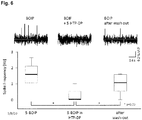
- 5-BOIP when applied to the ganglia, induces action potentials and, thus, activates human enteric nerve cells, as also shown in the left section of Figure 6 .
- the activation of enteric nerve cells by 5-BOIP is almost completely inhibited in the presence of the 5-HT 1P receptor antagonist 5-HTP-DP (see the central section of Figure 6 ), while 5-BOIP freshly added after having washed out 5-HTP-DP again induces action potentials (see the right section of Figure 6 ).
- the compounds of formula (I) and in particular the compound 5-BOIP can thus be' used to promote intestinal peristalsis and thereby enhance intestinal motility. Accordingly, the compounds of the present invention are useful as therapeutic agents for the treatment or prevention of gastrointestinal diseases/disorders and, in particular, for relieving gastrointestinal symptoms. In the proximal stomach, the compounds evoke muscle relaxation, thereby improving the gastric accommodation reflex. Accordingly, the compounds of the present invention are useful as therapeutic agents for the treatment or prevention of diseases associated with an impaired gastric accommodation.
- EFS electrical field stimulations
- 5-BOIP and homo-5-BOIP were added to the organ baths at a final concentration of 10 ⁇ M. After 20 min, another EFS was applied. The responses to the EFS under control conditions and in the presence of 5-BOIP or homo-5-BOIP were analyzed later.
- 5-BOIP as well as homo-5-BOIP clearly reduced the "on contraction" in response to the EFS. Because the EFS specifically excited neuronal tissue, this reduction is interpreted as an additional activation of inhibitory neuronal pathways by 5-BOIP and homo-5-BOIP.
- the compounds of formula (I) and in particular 5-BOIP and homo-5-BOIP promote a relaxation of gastric smooth muscle cells which is mediated by the activation of inhibitory neuronal pathways in the stomach.
- the compounds of the present invention thus improve gastric accommodation and, consequently, can be used for the treatment or prevention of gastrointestinal diseases/disorders and, in particular, for relieving gastrointestinal symptoms.
Landscapes
- Health & Medical Sciences (AREA)
- Chemical & Material Sciences (AREA)
- Organic Chemistry (AREA)
- General Health & Medical Sciences (AREA)
- Veterinary Medicine (AREA)
- Pharmacology & Pharmacy (AREA)
- Life Sciences & Earth Sciences (AREA)
- Animal Behavior & Ethology (AREA)
- Medicinal Chemistry (AREA)
- Public Health (AREA)
- Epidemiology (AREA)
- Engineering & Computer Science (AREA)
- Bioinformatics & Cheminformatics (AREA)
- Chemical Kinetics & Catalysis (AREA)
- General Chemical & Material Sciences (AREA)
- Nuclear Medicine, Radiotherapy & Molecular Imaging (AREA)
- Pharmaceuticals Containing Other Organic And Inorganic Compounds (AREA)
Claims (14)
- Composé de formule (I)
 L1 est -CH2- ou -CH2CH2- ;L2 est un alkylène en C1 à C4 ;R1 est un phényle qui est éventuellement substitué par un ou plusieurs groupes indépendamment choisis parmi un alkyle en C1 à C4, un halogène, -CF3, -CN, -OH, -O-(alkyle en C1 à C4), -SH, -S-(alkyle en C1 à C4), -NH2, -NH-(alkyle en C1 à C4), ou -N(alkyle en C1 à C4)(alkyle en C1 à C4) ; chaque R2 est indépendamment choisi parmi un alkyle en C1 à C4, un halogène, -CF3, -CN, -OH, -O-(alkyle en C1 à C4), -SH, -S-(alkyle en C1 à C4), -NH2, -NH-(alkyle en C1 à C4), ou -N(alkyle en C1 à C4)(alkyle en C1 à C4) ;R3 est choisi parmi un hydrogène, un alkyle en C1 à C4, un halogène, -CF3, -CN, -OH, -O-(alkyle en C1 à C4), -NH2, -NH-(alkyle en C1 à C4), ou -N(alkyle en C1 à C4)(alkyle en C1 à C4) ;R4 est un hydrogène ou un alkyle en C1 à C4 ;R5 est un hydrogène ou un alkyle en C1 à C4 ;le fragment -O-L1-R1 est lié à la position 5 ou 6 du cycle indole du composé de formule (I) ; etn vaut 0, 1, 2 ou 3 ;ou un de ses sels ou solvates pharmaceutiquement acceptable,
pour une utilisation comme médicament. - Composé de formule (I-1)
 L1 est -CH2- ou -CH2CH2- ;L2 est un alkylène en C2 à C4 ;R1 est un phényle qui est éventuellement substitué par un ou plusieurs groupes indépendamment choisis parmi un alkyle en C1 à C4, un halogène, -CF3, -CN, -OH, -O-(alkyle en C1 à C4), -SH, -S-(alkyle en C1 à C4), -NH2, -NH-(alkyle en C1 à C4), ou -N(alkyle en C1 à C4)(alkyle en C1 à C4) ;chaque R2 est indépendamment choisi parmi un alkyle en C1 à C4, un halogène, -CF3, -CN, -OH, -O-(alkyle en C1 à C4), -SH, -S-(alkyle en C1 à C4), -NH2, -NH-(alkyle en C1 à C4), ou -N(alkyle en C1 à C4)(alkyle en C1 à C4) ;
R3 est choisi parmi un hydrogène, un alkyle en C1 à C4, un halogène, -CF3, -CN, -OH, -O-(alkyle en C1 à C4), -NH2, -NH-(alkyle en C1 à C4), ou -N(alkyle en C1 à C4)(alkyle en C1 à C4) ;R4 est un hydrogène ou un alkyle en C1 à C4 ;R5 est un hydrogène ou un alkyle en C1 à C4 ;le fragment -O-L1-R1 est lié à la position 5 ou 6 du cycle indole du composé de formule (I-1) ; et
n vaut 0, 1, 2 ou 3 ;ou un de ses sels ou solvates pharmaceutiquement acceptable. - Composé pour une utilisation selon la revendication 1 ou composé selon la revendication 2, dans lequel L2 est -CH2CH2- ou -CH2CH2CH2-.
- Composé pour une utilisation selon la revendication 1 ou 3 ou composé selon la revendication 2 ou 3, dans lequel chacun des groupements R3, R4 et R5 est un hydrogène.
- Composé pour une utilisation selon l'une quelconque des revendications 1, 3 ou 4 ou composé selon l'une quelconque des revendications 2 à 4, dans lequel le fragment -O-L1-R1 est lié à la position 5 du cycle indole dudit composé.
- Composé pour une utilisation selon la revendication 1, dans lequel ledit composé est un composé de formule (II)
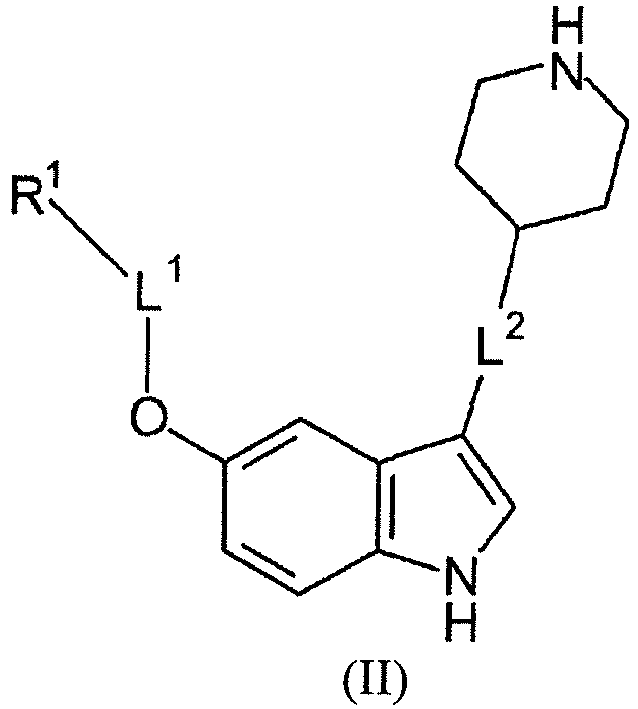 L1 est -CH2- ou -CH2CH2- ;L2 est -CH2-, -CH2CH2- ou -CH2CH2CH2- ; etR1 est un phényle qui est éventuellement substitué par un ou plusieurs groupes indépendamment choisis parmi un alkyle en C1 à C4, un halogène, -CF3, -CN, -OH, -O-(alkyle en C1 à C4), -SH, -S-(alkyle en C1 à C4), -NH2, -NH-(alkyle en C1 à C4), ou -N(alkyle en C1 à C4)(alkyle en C1 à C4) ;ou un de ses sels ou solvates pharmaceutiquement acceptable.
- Composé selon la revendication 2, dans lequel ledit composé est un composé de formule (II-1)
 L1 est -CH2- ou -CH2CH2- ;L2 est -CH2CH2- ou -CH2CH2CH2- ; etR1 est un phényle qui est éventuellement substitué par un ou plusieurs groupes indépendamment choisis parmi un alkyle en C1 à C4, un halogène, -CF3, -CN, -OH, -O-(alkyle en C1 à C4), -SH, -S-(alkyle en C1 à C4), -NH2, -NH-(alkyle en C1 à C4), ou -N(alkyle en C1 à C4)(alkyle en C1 à C4) ;ou un de ses sels ou solvates pharmaceutiquement acceptable.
- Composé pour une utilisation selon la revendication 1 ou 6 ou composé selon la revendication 2 ou 7, dans lequel ledit composé a l'une des structures suivantes :


- Composition pharmaceutique comprenant un composé tel que défini dans la revendication 2 ou l'une quelconque de ses revendications dépendantes 3 à 5, 7 ou 8, et éventuellement un excipient pharmaceutiquement acceptable.
- Composé selon l'une quelconque des revendications 1 à 8 ou composition pharmaceutique selon la revendication 9, pour une utilisation dans le traitement ou la prévention d'une maladie ou d'un trouble gastro-intestinal(e).
- Composé pour une utilisation selon la revendication 10 ou composition pharmaceutique pour une utilisation selon la revendication 10, dans lequel/laquelle ladite maladie ou ledit trouble gastro-intestinal(e) est choisi(e) parmi une constipation, une dyspepsie et/ou des symptômes dyspeptiques associés, le syndrome du côlon irritable, une gastroparésie, une pseudo-obstruction intestinale, une défécation obstruée, un ballonnement abdominal, une distension abdominale, un fécalome, ou une douleur abdominale.
- Composé pour une utilisation selon la revendication 10 ou 11 ou composition pharmaceutique pour une utilisation selon la revendication 10 ou 11, dans lequel/laquelle le composé ou la composition pharmaceutique est destiné(e) à être administré(e) en combinaison avec un autre agent pharmaceutiquement actif.
- Composé pour une utilisation selon la revendication 12 ou composition pharmaceutique pour une utilisation selon la revendication 12, dans lequel/laquelle l'autre agent pharmaceutiquement actif est choisi parmi l'oxyphéncyclimine, la camylofine, la mébévérine, la trimébutine, la rocivérine, la dicyclovérine, la dihexyvérine, la difémérine, le pipéridolate, la benzoline, le glycopyrronium, l'oxyphénonium, le penthiénate, la propanthéline, le bromure d'otilonium, la méthanthéline, le tridihexéthyle, l'isopropamide, l'hexocyclium, la poldine, le mépenzolate, le bévonium, le pipenzolate, le diphémanil, l'iodure de tiémonium, le bromure de prifinium, le bromure de timépidium, le fenpivérinium, l'oxyphénonium, le benzétimide, le carbachol, la néostigmine, la diméthylaminopropionylphénothiazine, le nicofétamide, le tiropramide, la papavérine, la drotavérine, la moxavérine, l'alosétron, le tégasérod, le cilansétron, le prucalopride, le fenpiprane, la diisopromine, la chlorbenzoxamine, le pinavérium, la fénovérine, l'idanpramine, le proxazole, l'alvérine, la trépibutone, l'isométheptène, la carovérine, le phloroglucinol, l'alvérine, la physiostigmine, l'atropine, l'hyoscyamine, la butylscopolamine, la méthylatropine, la méthylscopolamine, le fentonium, le bromure de cimétropium, le métoclopramide, le cisapride, la dompéridone, le bromopride, l'alizapride, le clébopride, la physiostigmine, le mosapride, le zacopride, le renzapride, BIMU1, BIMU8, le liréxapride, GR125487, le cinitapride, l'itopride, le béthanéchol, l'érythromycine, ou le mitemcinal.
- Procédé de préparation d'un composé de formule (I-1) tel que défini dans l'une quelconque des revendications 2 à 5, 7 ou 8, le procédé comprenant une étape de réaction d'un composé de formule (Ib), soit avec de l'hydrazine et une base, soit avec de l'hydrure de lithium et d'aluminium, pour que soit obtenu le composé de formule (I-1) :

Priority Applications (1)
| Application Number | Priority Date | Filing Date | Title |
|---|---|---|---|
| EP14709889.1A EP2956450B1 (fr) | 2013-02-14 | 2014-02-14 | Dérivés de l'hydroxyindalpine et leur utilisation médicale |
Applications Claiming Priority (3)
| Application Number | Priority Date | Filing Date | Title |
|---|---|---|---|
| EP13155252 | 2013-02-14 | ||
| PCT/EP2014/052946 WO2014125084A1 (fr) | 2013-02-14 | 2014-02-14 | Dérivés d'hydroxyindalpine et leur utilisation médicale |
| EP14709889.1A EP2956450B1 (fr) | 2013-02-14 | 2014-02-14 | Dérivés de l'hydroxyindalpine et leur utilisation médicale |
Publications (2)
| Publication Number | Publication Date |
|---|---|
| EP2956450A1 EP2956450A1 (fr) | 2015-12-23 |
| EP2956450B1 true EP2956450B1 (fr) | 2018-07-25 |
Family
ID=47747437
Family Applications (1)
| Application Number | Title | Priority Date | Filing Date |
|---|---|---|---|
| EP14709889.1A Not-in-force EP2956450B1 (fr) | 2013-02-14 | 2014-02-14 | Dérivés de l'hydroxyindalpine et leur utilisation médicale |
Country Status (3)
| Country | Link |
|---|---|
| US (1) | US9637471B2 (fr) |
| EP (1) | EP2956450B1 (fr) |
| WO (1) | WO2014125084A1 (fr) |
Families Citing this family (3)
| Publication number | Priority date | Publication date | Assignee | Title |
|---|---|---|---|---|
| US10474604B2 (en) * | 2016-04-01 | 2019-11-12 | Intel Corporation | Transmitting universal serial bus (USB) data over alternate mode connection |
| CN109678780A (zh) * | 2017-10-19 | 2019-04-26 | 中国石油化工股份有限公司 | 一种制备3-烷基吲哚衍生物的方法 |
| WO2022010352A1 (fr) * | 2020-07-10 | 2022-01-13 | Rijksuniversiteit Groningen | 5-hydroxyindole et ses analogues utilisés comme stimulants de la motilité intestinale |
Family Cites Families (2)
| Publication number | Priority date | Publication date | Assignee | Title |
|---|---|---|---|---|
| FR2334358A1 (fr) | 1975-12-12 | 1977-07-08 | Sogeras | Nouveaux medicaments derives de l'indole |
| DE4304650A1 (de) | 1993-02-16 | 1994-08-18 | Thomae Gmbh Dr K | Kondensierte 5-gliedrige Heterocyclen, Verfahren zu ihrer Herstellung und diese Verbindungen enthaltende Arzneimittel |
-
2014
- 2014-02-14 EP EP14709889.1A patent/EP2956450B1/fr not_active Not-in-force
- 2014-02-14 US US14/768,037 patent/US9637471B2/en not_active Expired - Fee Related
- 2014-02-14 WO PCT/EP2014/052946 patent/WO2014125084A1/fr not_active Ceased
Non-Patent Citations (1)
| Title |
|---|
| DATABASE REGISTRY [online] CHEMICAL ABSTRACTS SERVICE, COLUMBUS, OHIO, US; 4 May 1986 (1986-05-04), Database accession no. 101832-89-7 * |
Also Published As
| Publication number | Publication date |
|---|---|
| EP2956450A1 (fr) | 2015-12-23 |
| US20150376164A1 (en) | 2015-12-31 |
| US9637471B2 (en) | 2017-05-02 |
| WO2014125084A1 (fr) | 2014-08-21 |
Similar Documents
| Publication | Publication Date | Title |
|---|---|---|
| KR101991326B1 (ko) | 오피오이드 수용체 리간드와 그 용도 및 제조방법 | |
| TWI586666B (zh) | Tetrahydrocarboline Derivatives (2) | |
| EA007008B1 (ru) | Триамидзамещённые индолы, бензофураны и бензотиофены в качестве ингибиторов микросомального белка, переносящего триглицериды, (мтр) и/или ингибиторов секреции аполипопротеина в (аро в) | |
| ES2227500T3 (es) | (s)-4-amino.5-cloro-2-metoxi-n-(1-(1-(2-tetrahidrofuril-carbonil)-4-piperidinilmetil)-4-piperidinil) benzamina para el tratamaiento de desordenes de la motilidad gastrointestinal. | |
| CN108366997A (zh) | 治疗痛觉过敏的方法 | |
| RS51888B (sr) | N-(fenil(piperidin-2-il)metil)benzamidni derivati, njihovo dobijanje i njihova primena u terapiji | |
| US20190169175A1 (en) | Novel pyridinium compounds | |
| WO2020244462A1 (fr) | Dérivés indoliques et leur utilisation pharmaceutique | |
| US9637471B2 (en) | Hydroxyindalpine derivatives and their medical use | |
| JP2008515982A (ja) | 高眼圧症を治療するための眼科組成物 | |
| CN116327950A (zh) | 组合物用于治疗神经退行性疾病的神经精神症状的用途 | |
| HU227119B1 (en) | Indole and benzimidazole carboxylic acid amide derivatives and pharmaceutical compositions containing them | |
| CN102015697A (zh) | 酰胺衍生物以及含有该酰胺衍生物的药物组合物 | |
| WO2002096875A1 (fr) | Derive de 4-hydroxypiperidine a activite analgesique | |
| KR102743295B1 (ko) | Cftr 조절제 및 이의 이용 방법 | |
| US20130338116A1 (en) | Compounds and methods for the treatment of pain and other diseases | |
| JP2008515973A (ja) | 高眼圧症を治療するための眼科組成物 | |
| WO2023225601A2 (fr) | Ripk2 et inhibiteurs de nod | |
| WO2023133457A1 (fr) | Nouveaux inhibiteurs de kalirine pour la régulation de la plasticité synaptique et le traitement de la douleur neuropathique | |
| WO2005016331A1 (fr) | Agent therapeutique contre les douleurs neuropathiques contenant un derive n-(benzoyl)amino acide comme principe actif | |
| WO1998013364A1 (fr) | Derives de 2-(3-piperidyl)-1,2,3,4-tetrahydroisoquinoline ou compositions medicinales obtenues | |
| JP3522767B6 (ja) | カッパー作動因子及びその薬理製剤 | |
| WO2012161173A1 (fr) | Composé d'amide substitué | |
| HK1233638A1 (en) | Compositions and methods for treating neurodegenerative diseases | |
| HK1242203A1 (en) | Methods for treating post traumatic stress disorder |
Legal Events
| Date | Code | Title | Description |
|---|---|---|---|
| PUAI | Public reference made under article 153(3) epc to a published international application that has entered the european phase |
Free format text: ORIGINAL CODE: 0009012 |
|
| 17P | Request for examination filed |
Effective date: 20150914 |
|
| AK | Designated contracting states |
Kind code of ref document: A1 Designated state(s): AL AT BE BG CH CY CZ DE DK EE ES FI FR GB GR HR HU IE IS IT LI LT LU LV MC MK MT NL NO PL PT RO RS SE SI SK SM TR |
|
| AX | Request for extension of the european patent |
Extension state: BA ME |
|
| DAX | Request for extension of the european patent (deleted) | ||
| 17Q | First examination report despatched |
Effective date: 20160701 |
|
| STAA | Information on the status of an ep patent application or granted ep patent |
Free format text: STATUS: EXAMINATION IS IN PROGRESS |
|
| GRAP | Despatch of communication of intention to grant a patent |
Free format text: ORIGINAL CODE: EPIDOSNIGR1 |
|
| STAA | Information on the status of an ep patent application or granted ep patent |
Free format text: STATUS: GRANT OF PATENT IS INTENDED |
|
| INTG | Intention to grant announced |
Effective date: 20170824 |
|
| GRAJ | Information related to disapproval of communication of intention to grant by the applicant or resumption of examination proceedings by the epo deleted |
Free format text: ORIGINAL CODE: EPIDOSDIGR1 |
|
| STAA | Information on the status of an ep patent application or granted ep patent |
Free format text: STATUS: EXAMINATION IS IN PROGRESS |
|
| GRAS | Grant fee paid |
Free format text: ORIGINAL CODE: EPIDOSNIGR3 |
|
| STAA | Information on the status of an ep patent application or granted ep patent |
Free format text: STATUS: GRANT OF PATENT IS INTENDED |
|
| GRAP | Despatch of communication of intention to grant a patent |
Free format text: ORIGINAL CODE: EPIDOSNIGR1 |
|
| INTC | Intention to grant announced (deleted) | ||
| RIN1 | Information on inventor provided before grant (corrected) |
Inventor name: SCHEMANN, MICHAEL Inventor name: SKERRA, ARNE Inventor name: MUELLER, MICHAEL Inventor name: BERGER, THOMAS |
|
| INTG | Intention to grant announced |
Effective date: 20180201 |
|
| GRAA | (expected) grant |
Free format text: ORIGINAL CODE: 0009210 |
|
| STAA | Information on the status of an ep patent application or granted ep patent |
Free format text: STATUS: THE PATENT HAS BEEN GRANTED |
|
| AK | Designated contracting states |
Kind code of ref document: B1 Designated state(s): AL AT BE BG CH CY CZ DE DK EE ES FI FR GB GR HR HU IE IS IT LI LT LU LV MC MK MT NL NO PL PT RO RS SE SI SK SM TR |
|
| REG | Reference to a national code |
Ref country code: GB Ref legal event code: FG4D |
|
| REG | Reference to a national code |
Ref country code: CH Ref legal event code: EP |
|
| REG | Reference to a national code |
Ref country code: AT Ref legal event code: REF Ref document number: 1021625 Country of ref document: AT Kind code of ref document: T Effective date: 20180815 |
|
| REG | Reference to a national code |
Ref country code: IE Ref legal event code: FG4D |
|
| REG | Reference to a national code |
Ref country code: DE Ref legal event code: R096 Ref document number: 602014029076 Country of ref document: DE |
|
| REG | Reference to a national code |
Ref country code: CH Ref legal event code: NV Representative=s name: VOSSIUS AND PARTNER PATENTANWAELTE RECHTSANWAE, CH |
|
| REG | Reference to a national code |
Ref country code: NL Ref legal event code: MP Effective date: 20180725 |
|
| REG | Reference to a national code |
Ref country code: LT Ref legal event code: MG4D |
|
| PG25 | Lapsed in a contracting state [announced via postgrant information from national office to epo] |
Ref country code: NL Free format text: LAPSE BECAUSE OF FAILURE TO SUBMIT A TRANSLATION OF THE DESCRIPTION OR TO PAY THE FEE WITHIN THE PRESCRIBED TIME-LIMIT Effective date: 20180725 |
|
| REG | Reference to a national code |
Ref country code: AT Ref legal event code: MK05 Ref document number: 1021625 Country of ref document: AT Kind code of ref document: T Effective date: 20180725 |
|
| PG25 | Lapsed in a contracting state [announced via postgrant information from national office to epo] |
Ref country code: RS Free format text: LAPSE BECAUSE OF FAILURE TO SUBMIT A TRANSLATION OF THE DESCRIPTION OR TO PAY THE FEE WITHIN THE PRESCRIBED TIME-LIMIT Effective date: 20180725 Ref country code: PL Free format text: LAPSE BECAUSE OF FAILURE TO SUBMIT A TRANSLATION OF THE DESCRIPTION OR TO PAY THE FEE WITHIN THE PRESCRIBED TIME-LIMIT Effective date: 20180725 Ref country code: LT Free format text: LAPSE BECAUSE OF FAILURE TO SUBMIT A TRANSLATION OF THE DESCRIPTION OR TO PAY THE FEE WITHIN THE PRESCRIBED TIME-LIMIT Effective date: 20180725 Ref country code: IS Free format text: LAPSE BECAUSE OF FAILURE TO SUBMIT A TRANSLATION OF THE DESCRIPTION OR TO PAY THE FEE WITHIN THE PRESCRIBED TIME-LIMIT Effective date: 20181125 Ref country code: AT Free format text: LAPSE BECAUSE OF FAILURE TO SUBMIT A TRANSLATION OF THE DESCRIPTION OR TO PAY THE FEE WITHIN THE PRESCRIBED TIME-LIMIT Effective date: 20180725 Ref country code: GR Free format text: LAPSE BECAUSE OF FAILURE TO SUBMIT A TRANSLATION OF THE DESCRIPTION OR TO PAY THE FEE WITHIN THE PRESCRIBED TIME-LIMIT Effective date: 20181026 Ref country code: FI Free format text: LAPSE BECAUSE OF FAILURE TO SUBMIT A TRANSLATION OF THE DESCRIPTION OR TO PAY THE FEE WITHIN THE PRESCRIBED TIME-LIMIT Effective date: 20180725 Ref country code: SE Free format text: LAPSE BECAUSE OF FAILURE TO SUBMIT A TRANSLATION OF THE DESCRIPTION OR TO PAY THE FEE WITHIN THE PRESCRIBED TIME-LIMIT Effective date: 20180725 Ref country code: NO Free format text: LAPSE BECAUSE OF FAILURE TO SUBMIT A TRANSLATION OF THE DESCRIPTION OR TO PAY THE FEE WITHIN THE PRESCRIBED TIME-LIMIT Effective date: 20181025 Ref country code: BG Free format text: LAPSE BECAUSE OF FAILURE TO SUBMIT A TRANSLATION OF THE DESCRIPTION OR TO PAY THE FEE WITHIN THE PRESCRIBED TIME-LIMIT Effective date: 20181025 |
|
| PG25 | Lapsed in a contracting state [announced via postgrant information from national office to epo] |
Ref country code: HR Free format text: LAPSE BECAUSE OF FAILURE TO SUBMIT A TRANSLATION OF THE DESCRIPTION OR TO PAY THE FEE WITHIN THE PRESCRIBED TIME-LIMIT Effective date: 20180725 Ref country code: LV Free format text: LAPSE BECAUSE OF FAILURE TO SUBMIT A TRANSLATION OF THE DESCRIPTION OR TO PAY THE FEE WITHIN THE PRESCRIBED TIME-LIMIT Effective date: 20180725 Ref country code: AL Free format text: LAPSE BECAUSE OF FAILURE TO SUBMIT A TRANSLATION OF THE DESCRIPTION OR TO PAY THE FEE WITHIN THE PRESCRIBED TIME-LIMIT Effective date: 20180725 |
|
| REG | Reference to a national code |
Ref country code: DE Ref legal event code: R097 Ref document number: 602014029076 Country of ref document: DE |
|
| PG25 | Lapsed in a contracting state [announced via postgrant information from national office to epo] |
Ref country code: IT Free format text: LAPSE BECAUSE OF FAILURE TO SUBMIT A TRANSLATION OF THE DESCRIPTION OR TO PAY THE FEE WITHIN THE PRESCRIBED TIME-LIMIT Effective date: 20180725 Ref country code: ES Free format text: LAPSE BECAUSE OF FAILURE TO SUBMIT A TRANSLATION OF THE DESCRIPTION OR TO PAY THE FEE WITHIN THE PRESCRIBED TIME-LIMIT Effective date: 20180725 Ref country code: CZ Free format text: LAPSE BECAUSE OF FAILURE TO SUBMIT A TRANSLATION OF THE DESCRIPTION OR TO PAY THE FEE WITHIN THE PRESCRIBED TIME-LIMIT Effective date: 20180725 Ref country code: RO Free format text: LAPSE BECAUSE OF FAILURE TO SUBMIT A TRANSLATION OF THE DESCRIPTION OR TO PAY THE FEE WITHIN THE PRESCRIBED TIME-LIMIT Effective date: 20180725 Ref country code: EE Free format text: LAPSE BECAUSE OF FAILURE TO SUBMIT A TRANSLATION OF THE DESCRIPTION OR TO PAY THE FEE WITHIN THE PRESCRIBED TIME-LIMIT Effective date: 20180725 |
|
| PG25 | Lapsed in a contracting state [announced via postgrant information from national office to epo] |
Ref country code: SK Free format text: LAPSE BECAUSE OF FAILURE TO SUBMIT A TRANSLATION OF THE DESCRIPTION OR TO PAY THE FEE WITHIN THE PRESCRIBED TIME-LIMIT Effective date: 20180725 Ref country code: SM Free format text: LAPSE BECAUSE OF FAILURE TO SUBMIT A TRANSLATION OF THE DESCRIPTION OR TO PAY THE FEE WITHIN THE PRESCRIBED TIME-LIMIT Effective date: 20180725 Ref country code: DK Free format text: LAPSE BECAUSE OF FAILURE TO SUBMIT A TRANSLATION OF THE DESCRIPTION OR TO PAY THE FEE WITHIN THE PRESCRIBED TIME-LIMIT Effective date: 20180725 |
|
| PLBE | No opposition filed within time limit |
Free format text: ORIGINAL CODE: 0009261 |
|
| STAA | Information on the status of an ep patent application or granted ep patent |
Free format text: STATUS: NO OPPOSITION FILED WITHIN TIME LIMIT |
|
| 26N | No opposition filed |
Effective date: 20190426 |
|
| PG25 | Lapsed in a contracting state [announced via postgrant information from national office to epo] |
Ref country code: SI Free format text: LAPSE BECAUSE OF FAILURE TO SUBMIT A TRANSLATION OF THE DESCRIPTION OR TO PAY THE FEE WITHIN THE PRESCRIBED TIME-LIMIT Effective date: 20180725 |
|
| REG | Reference to a national code |
Ref country code: DE Ref legal event code: R119 Ref document number: 602014029076 Country of ref document: DE |
|
| REG | Reference to a national code |
Ref country code: CH Ref legal event code: PL |
|
| GBPC | Gb: european patent ceased through non-payment of renewal fee |
Effective date: 20190214 |
|
| PG25 | Lapsed in a contracting state [announced via postgrant information from national office to epo] |
Ref country code: MC Free format text: LAPSE BECAUSE OF FAILURE TO SUBMIT A TRANSLATION OF THE DESCRIPTION OR TO PAY THE FEE WITHIN THE PRESCRIBED TIME-LIMIT Effective date: 20180725 Ref country code: LU Free format text: LAPSE BECAUSE OF NON-PAYMENT OF DUE FEES Effective date: 20190214 |
|
| REG | Reference to a national code |
Ref country code: BE Ref legal event code: MM Effective date: 20190228 |
|
| REG | Reference to a national code |
Ref country code: IE Ref legal event code: MM4A |
|
| PG25 | Lapsed in a contracting state [announced via postgrant information from national office to epo] |
Ref country code: LI Free format text: LAPSE BECAUSE OF NON-PAYMENT OF DUE FEES Effective date: 20190228 Ref country code: CH Free format text: LAPSE BECAUSE OF NON-PAYMENT OF DUE FEES Effective date: 20190228 |
|
| PG25 | Lapsed in a contracting state [announced via postgrant information from national office to epo] |
Ref country code: IE Free format text: LAPSE BECAUSE OF NON-PAYMENT OF DUE FEES Effective date: 20190214 Ref country code: GB Free format text: LAPSE BECAUSE OF NON-PAYMENT OF DUE FEES Effective date: 20190214 Ref country code: DE Free format text: LAPSE BECAUSE OF NON-PAYMENT OF DUE FEES Effective date: 20190903 |
|
| PG25 | Lapsed in a contracting state [announced via postgrant information from national office to epo] |
Ref country code: BE Free format text: LAPSE BECAUSE OF NON-PAYMENT OF DUE FEES Effective date: 20190228 Ref country code: FR Free format text: LAPSE BECAUSE OF NON-PAYMENT OF DUE FEES Effective date: 20190228 |
|
| PG25 | Lapsed in a contracting state [announced via postgrant information from national office to epo] |
Ref country code: TR Free format text: LAPSE BECAUSE OF FAILURE TO SUBMIT A TRANSLATION OF THE DESCRIPTION OR TO PAY THE FEE WITHIN THE PRESCRIBED TIME-LIMIT Effective date: 20180725 |
|
| PG25 | Lapsed in a contracting state [announced via postgrant information from national office to epo] |
Ref country code: PT Free format text: LAPSE BECAUSE OF FAILURE TO SUBMIT A TRANSLATION OF THE DESCRIPTION OR TO PAY THE FEE WITHIN THE PRESCRIBED TIME-LIMIT Effective date: 20181125 Ref country code: MT Free format text: LAPSE BECAUSE OF NON-PAYMENT OF DUE FEES Effective date: 20190214 |
|
| PG25 | Lapsed in a contracting state [announced via postgrant information from national office to epo] |
Ref country code: CY Free format text: LAPSE BECAUSE OF FAILURE TO SUBMIT A TRANSLATION OF THE DESCRIPTION OR TO PAY THE FEE WITHIN THE PRESCRIBED TIME-LIMIT Effective date: 20180725 |
|
| PG25 | Lapsed in a contracting state [announced via postgrant information from national office to epo] |
Ref country code: HU Free format text: LAPSE BECAUSE OF FAILURE TO SUBMIT A TRANSLATION OF THE DESCRIPTION OR TO PAY THE FEE WITHIN THE PRESCRIBED TIME-LIMIT; INVALID AB INITIO Effective date: 20140214 |
|
| PG25 | Lapsed in a contracting state [announced via postgrant information from national office to epo] |
Ref country code: MK Free format text: LAPSE BECAUSE OF FAILURE TO SUBMIT A TRANSLATION OF THE DESCRIPTION OR TO PAY THE FEE WITHIN THE PRESCRIBED TIME-LIMIT Effective date: 20180725 |