EP2956891B1 - Segmentation des objets dans des données multimédias - Google Patents
Segmentation des objets dans des données multimédias Download PDFInfo
- Publication number
- EP2956891B1 EP2956891B1 EP14751888.0A EP14751888A EP2956891B1 EP 2956891 B1 EP2956891 B1 EP 2956891B1 EP 14751888 A EP14751888 A EP 14751888A EP 2956891 B1 EP2956891 B1 EP 2956891B1
- Authority
- EP
- European Patent Office
- Prior art keywords
- frames
- voxels
- video
- frame
- voxel
- Prior art date
- Legal status (The legal status is an assumption and is not a legal conclusion. Google has not performed a legal analysis and makes no representation as to the accuracy of the status listed.)
- Active
Links
Images



Classifications
-
- G—PHYSICS
- G06—COMPUTING OR CALCULATING; COUNTING
- G06T—IMAGE DATA PROCESSING OR GENERATION, IN GENERAL
- G06T15/00—Three-dimensional [3D] image rendering
- G06T15/08—Volume rendering
-
- G—PHYSICS
- G06—COMPUTING OR CALCULATING; COUNTING
- G06T—IMAGE DATA PROCESSING OR GENERATION, IN GENERAL
- G06T7/00—Image analysis
- G06T7/10—Segmentation; Edge detection
- G06T7/11—Region-based segmentation
-
- G—PHYSICS
- G06—COMPUTING OR CALCULATING; COUNTING
- G06T—IMAGE DATA PROCESSING OR GENERATION, IN GENERAL
- G06T7/00—Image analysis
- G06T7/10—Segmentation; Edge detection
- G06T7/187—Segmentation; Edge detection involving region growing; involving region merging; involving connected component labelling
-
- G—PHYSICS
- G06—COMPUTING OR CALCULATING; COUNTING
- G06T—IMAGE DATA PROCESSING OR GENERATION, IN GENERAL
- G06T7/00—Image analysis
- G06T7/20—Analysis of motion
-
- G—PHYSICS
- G06—COMPUTING OR CALCULATING; COUNTING
- G06T—IMAGE DATA PROCESSING OR GENERATION, IN GENERAL
- G06T7/00—Image analysis
- G06T7/50—Depth or shape recovery
-
- G—PHYSICS
- G06—COMPUTING OR CALCULATING; COUNTING
- G06T—IMAGE DATA PROCESSING OR GENERATION, IN GENERAL
- G06T2207/00—Indexing scheme for image analysis or image enhancement
- G06T2207/10—Image acquisition modality
- G06T2207/10016—Video; Image sequence
-
- G—PHYSICS
- G06—COMPUTING OR CALCULATING; COUNTING
- G06T—IMAGE DATA PROCESSING OR GENERATION, IN GENERAL
- G06T2207/00—Indexing scheme for image analysis or image enhancement
- G06T2207/10—Image acquisition modality
- G06T2207/10024—Color image
-
- G—PHYSICS
- G06—COMPUTING OR CALCULATING; COUNTING
- G06T—IMAGE DATA PROCESSING OR GENERATION, IN GENERAL
- G06T2207/00—Indexing scheme for image analysis or image enhancement
- G06T2207/10—Image acquisition modality
- G06T2207/10028—Range image; Depth image; 3D point clouds
-
- G—PHYSICS
- G06—COMPUTING OR CALCULATING; COUNTING
- G06T—IMAGE DATA PROCESSING OR GENERATION, IN GENERAL
- G06T2207/00—Indexing scheme for image analysis or image enhancement
- G06T2207/30—Subject of image; Context of image processing
- G06T2207/30196—Human being; Person
-
- G—PHYSICS
- G06—COMPUTING OR CALCULATING; COUNTING
- G06T—IMAGE DATA PROCESSING OR GENERATION, IN GENERAL
- G06T2207/00—Indexing scheme for image analysis or image enhancement
- G06T2207/30—Subject of image; Context of image processing
- G06T2207/30232—Surveillance
Definitions
- the present subject matter described herein in general, relates to object segmentation, and more particularly to object segmentation in multimedia data such as, videos and images.
- the 3D virtual environments have applications in fields of virtual games, medical surgeries, autonomous robotics, and video surveillance.
- Video surveillance may be performed using certain video surveillance systems.
- the video surveillance systems capture videos in real time using multiple cameras and process the videos to detect human activities at various locations such as, party get-together, street movement, threat detection and criminal activities such as, kidnapping, robbery, riots and road accidents.
- Most of the video surveillance systems rely on manual detection of human activities using mere observational skills of a human.
- the image processing techniques for object detection in a video starts with segmenting individual objects in each frame of the video. As each frame is depicted in a two dimensional plane, it is difficult to segment connected or overlapping objects in the frame since depth information associated therewith each object is unavailable. Since the depth information is generally unavailable, segmentation of objects is solely based upon color data of the pixels in each frame. Further, the segmentation of objects in 2D images largely depends upon resolution of the video captured.
- ZHE WANG ET AL "Real-Time Plane Segmentation and Obstacle Detection of 3D Point Clouds for Indoor Scenes", 7 October 2012, COMPUTER VISION ECCV 2012.
- WORKSHOPS AND DEMONSTRATIONS, PAGE(S) 22 - 31 discloses a novel fast plane segmentation algorithm and use it to detect obstacles in indoor environment.
- the proposed algorithm has two steps: the initial segmentation and the refined segmentation. Firstly, depth image is converted into 3D point cloud and divided into voxels, which are less sensitive to noises compared with pixels. Then area-growing algorithm is used to extract the candidate planes according to the normal of each voxel.
- each point that hasn't been classified to any plane is examined whether it actually belongs to a plane.
- the two-step strategy has been proven to be a fast segmentation method with high accuracy.
- the experimental results demonstrate that our method can segment planes and detect obstacles in real-time with high accuracy for indoor scenes.
- a segmentation system for segmenting a plurality of objects present in a two-dimensional (2D) video having a plurality of 2D frames and the corresponding depth frames.
- each 2D frame comprises Red-Green-Blue/Gray (RGB/G) data and depth data for each pixel present in each 2D frame. Therefore, the 2D frame may be interchangeably used as RGB/G frame in the present subject matter. Similarly, the 2D video may also be interchangeably used as RGB/G video in the present subject matter.
- the segmentation system further comprises of a processor and a memory coupled to the processor for executing a plurality of modules present in the memory.
- the plurality of modules comprises a detection module, a cloud point module, a voxelization module and a voxel labeling module.
- the detection module is configured to detect camera motion in each RGB/G frame which is a subset of the 2D video and accordingly classify the 2D video into a first set of 2D frames and a second set of 2D frames.
- the first set of 2D frames is detected to be void of the camera motion, whereas the second set of 2D frames is detected to have the camera motion therein.
- the cloud point module is configured to generate a plurality of cloud points corresponding to each pixel in each 2D frame of the first set of 2D frames.
- the cloud point stores the x, y, z co-ordinates and color data associated with each pixel of each 2D frame of the first set of 2D frames.
- the x, y, z co-ordinates are derived from the depth data and the camera intrinsic and extrinsic parameters.
- the voxelization module is configured to generate a 3D grid comprising a plurality of voxels, wherein each voxel has a fixed volume in the 3D grid. Further, each voxel accommodates one or more cloud points.
- the 3D grid is indicative of a division of a 3D space by a plurality of equidistant planes perpendicular to an x-axis, a y-axis and a z-axis.
- the 3D space is associated with each 2D frame from the first set of 2D frames.
- Each voxel in the 3D grid is indicative of a cell with the fixed volume surrounded by three pairs of consecutive equidistant planes along the x-axis, y-axis and z-axis.
- the voxelization module is further configured to count the number of cloud point in each voxel and accordingly classify the voxels in each 3D grid as a valid voxels and an invalid voxels using a cloud point threshold. Accordingly all the voxels corresponding to each and every 2D frame from the first set of 2D frames are classified into a first set of voxels and a second set of voxels by the voxelization module, wherein the first set of voxels are valid voxels, and wherein the second set of voxels are invalid voxels. Further, a 3D connected component labeling technique is applied on to the set of valid voxels by the voxel labeling module in order to segment the plurality of objects present in the first set of 2D frames.
- multimedia data such as, a two-dimensional (2D) video along with depth information for segmenting a plurality of objects in the 2D video
- 2D two-dimensional
- the present subject matter discloses an effective and efficient mechanism for segmenting components, hereinafter interchangeably referred to as objects, in the 2D video using temporal characteristics such as, depth data and color data associated with the 2D video.
- camera motion is detected in each 2D frame of a plurality of 2D frames of the 2D video captured using a camera.
- the camera motion may be detected by monitoring a change in color intensity of pixels over a sequence of 2D frames of the 2D video.
- the change in color intensity assists in identifying 2D frames with disturbances such as, camera motion and illumination changes.
- the plurality of 2D frames are segregated into a first set of 2D frames and a second set of 2D frames, based upon the detection of the camera motion in each frame.
- the first set of 2D frames is detected to be void of the camera motion, whereas the second set of 2D frames is detected to have the camera motion therein. It is to be understood that the second set of 2D frames are discarded due to the presence of disturbance or camera motion therein.
- the 2D frames in the 2D video are observed sequentially to detect frequent illumination changes. If the deviation in the intensity at each pixel is more than a predetermined intensity threshold in a predetermined time interval, it is assumed that there has been some disturbance in said predetermined time interval. Accordingly all the 2D frames in the predetermined time interval are discarded hereafter the discarded 2D frames are referred as a second set of 2D frames.
- the rest of the 2D frames from the 2D video are considered as 2D frames without disturbances and further processing is done accordingly on the 2D frames having no disturbance hereinafter referred to as the first set of 2D frames.
- a plurality of cloud points are determined corresponding to each pixel in the 2D frames present in the first set of 2D frames.
- the cloud points are representative of a smallest entity in a 3D space, wherein the cloud point is equivalent to a pixel in a 2D frame.
- the cloud points comprise depth data and color data for each pixel of each 2D frame present in the first set of 2D frames.
- a voxelization technique is applied on each 2D frame of the first set of 2D frames.
- each 2D frame along with the depth data of the first set of 2D frames is converted into a 3D grid.
- the 3D grid is indicative of a division of a 3D space associated with each of the 2D frames by a plurality of equidistant planes perpendicular to an x-axis, a y-axis and a z-axis.
- 3D comprises a plurality of voxels.
- Each voxel has a definite volume in the 3D grid.
- each voxel accommodates one or more cloud points.
- each voxel being indicative of the definite volume is surrounded by three pairs of consecutive planes along the x-axis, the y-axis and the z-axis of 3D Cartesian Coordinates System.
- the voxelization technique is used to reduce noise from the first set of 2D frames.
- the noise may be in the form of a plurality of misplaced cloud points, wherein the misplaced cloud points need to be removed for proper segmentation.
- a noise reduction technique is applied on the 3D grid using a predetermined cloud point threshold and accordingly a set of valid voxels is identified.
- a labeling technique is applied on the set of valid voxels to label each voxel in the set of valid voxel using a plurality of labels.
- the plurality of labels facilitates segmentation of the objects present in the 2D video.
- the objects, after being segmented, may be used for a number of applications in a virtual environment such as, human activity detection in surveillance systems and gesture detection in virtual gaming.
- a network implementation 100 of a segmentation system 102 for segmenting components/objects in a 2D video along with the depth data is illustrated, in accordance with an embodiment of the present subject matter.
- Example of objects may include human beings or any other living or non-living being. It may be understood that the objects may be overlapping, non-overlapping, connected, or unconnected with one another in the 2D video.
- the segmentation system 102 provides for real time segmentation of the objects in the 2D video captured from a video surveillance system.
- the 2D video may be captured using a camera capable capturing depth data and color data present in the 2D video.
- the objects present in the 2D video are segmented by the segmentation system 102 using techniques illustrated in detail in the explanation of Figure 2 .
- segmentation system 102 may also be implemented in a variety of computing systems, such as a laptop computer, a desktop computer, a notebook, a workstation, a mainframe computer, a server, a network server, and the like for segmenting objects in the 2D video captured in real-time or statically. Further, it may be understood that the segmentation system 102 may be accessed by multiple users through one or more electronic devices 104-1, 104-2...104-N, collectively referred to as electronic devices 104 hereinafter, or applications residing on the electronic devices 104. Examples of the electronic devices 104 may include, but are not limited to, a portable computer, a personal digital assistant, a handheld device, and a workstation. The electronic devices 104 are communicatively coupled to the segmentation system 102 through a network 106.
- the network 106 may be a wireless network, a wired network or a combination thereof.
- the network 106 can be implemented as one of the different types of networks, such as intranet, local area network (LAN), wide area network (WAN), the internet, and the like.
- the network 106 may either be a dedicated network or a shared network.
- the shared network represents an association of the different types of networks that use a variety of protocols, for example, Hypertext Transfer Protocol (HTTP), Transmission Control Protocol/Internet Protocol (TCP/IP), Wireless Application Protocol (WAP), and the like, to communicate with one another.
- the network 106 may include a variety of network devices, including routers, bridges, servers, computing devices, storage devices, and the like.
- the segmentation system 102 may include at least one processor 202, an input/output (I/O) interface 204, and a memory 206.
- the at least one processor 202 may be implemented as one or more microprocessors, microcomputers, microcontrollers, digital signal processors, central processing units, state machines, logic circuitries, and/or any devices that manipulate digital signals based on operational instructions.
- the at least one processor 202 is configured to fetch and execute computer-readable instructions stored in the memory 206.
- the I/O interface 204 may include a variety of software and hardware interfaces, for example, a web interface, a graphical user interface, and the like.
- the I/O interface 204 may allow the segmentation system 102 to interact with a user through the electronic devices 104. Further, the I/O interface 204 may enable the segmentation system 102 to communicate with other computing devices, such as web servers and external data servers (not shown).
- the I/O interface 204 can facilitate multiple communications within a wide variety of networks and protocol types, including wired networks, for example, LAN, cable, etc., and wireless networks, such as WLAN, cellular, or satellite.
- the I/O interface 204 may include one or more ports for connecting a number of devices to one another or to another server.
- the memory 206 may include any computer-readable medium known in the art including, for example, volatile memory, such as static random access memory (SRAM) and dynamic random access memory (DRAM), and/or non-volatile memory, such as read only memory (ROM), erasable programmable ROM, flash memories, hard disks, optical disks, and magnetic tapes.
- volatile memory such as static random access memory (SRAM) and dynamic random access memory (DRAM)
- non-volatile memory such as read only memory (ROM), erasable programmable ROM, flash memories, hard disks, optical disks, and magnetic tapes.
- ROM read only memory
- erasable programmable ROM erasable programmable ROM
- the modules 208 include routines, programs, objects, components, data structures and the like, which perform particular tasks or implement particular abstract data types.
- the modules 208 may include a detection module 212, a cloud point module 214, a voxelization module 216, a voxel labeling module 218 and other modules 220.
- the other modules 220 may include programs or coded instructions that supplement applications and functions of the segmentation system 102.
- the data 210 serves as a repository for storing data processed, received or generated by one or more of the modules 208.
- the data 210 may also include a system database 224, and other data 236.
- the system database 224 stores a 2D video, a volume threshold, a frame speed, a grid dimension, and a cloud point threshold.
- the other data 236 may include data generated as a result of the execution of one or more modules in the other modules 220.
- a user may use the electronic device 104 to access the segmentation system 102 via the I/O interface 204.
- the users may register themselves using the I/O interface 204 in order to use the segmentation system 102.
- the segmentation system 102 may be used for dynamically monitoring and segmenting individual objects in the 2D video along with the depth data captured from a video surveillance system.
- the video surveillance system may use a camera capable of capturing both the depth and the color data associated with the 2D video. The working of the segmentation system 102 may be explained in conjunction with Figures 3-6 explained below.
- the detection module 212 receives the 2D video having a plurality of 2D frames. After receiving the 2D video, the detection module 212 detects camera motion in each 2D frame of the plurality of 2D frames of the 2D video. Camera motion may be understood as disturbances or illumination changes due to a movement in camera while capturing the 2D video. Accordingly all the frames are classified as first set of frames and second set of frames. The first set of 2D frames is indicative of 2D frames without camera motion and the second set of 2D frames is indicative of frames with camera motion.
- the cloud point module 214 is used to generate a cloud point corresponding to each pixel in the 2D frame from the first set of 2D frames using a depth and a color data associated therewith.
- the voxelization module (216) is used to convert a 3D space (Sc) associated with each of the 2D frames from the first set of 2D frames into a plurality of 3D voxels constituting a 3D grid.
- the 3D voxels are hereafter referred as "voxels”.
- the voxelization module (216) further classifies each of the voxels into a valid voxel and an invalid voxel.
- a connected components labeling technique is applied on the 3D space (Sc) associated with the first set of frames in order to segment the objects represented by the valid voxels into individual components/objects using a plurality of labels.
- Sc 3D space
- the 2D video captured using a Kinect device is retrieved from one of the electronic devices 104 and stored into the system database 224 as the 2D video.
- the Kinect device captures the depth data associated with each 2D frame as well as color data in the RGB/G format associated with the 2D video and stores the depth and color data in a digital format in the system database 224.
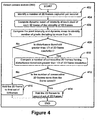
- a process of detecting camera motion by the detection module 212 starts. Specifically, the detection module 212 analyzes the 2D video to identify a number of 2D frames displayed in one second.
- the number of 2D frames displayed in one second may be hereinafter referred to as frame speed.
- the frame speed may vary depending on the electronic device 104 or camera used to capture, the 2D video. Further, the frame speed may act as a predetermined time interval for discarding the 2D frames with camera motion therein.
- the dynamic mean of intensity is computed for each pixel of each 2D frame of the plurality of 2D frames in the 2D video. It may be understood that the each 2D frame of the plurality of 2D frames is a 2D frame.
- the detection module 212 computes a difference of intensity between the pixel intensity p(i,j) and dynamic mean intensity ⁇ n(i,j) for each pixel of each 2D frame of the plurality of 2D frames of the 2D video.
- the difference in the intensity at each pixel is further compared with threshold value of Th.
- the Th is assigned a value of 16 units. If the difference in the intensity at each pixel is more than 16 units, it may be asserted that there is camera motion or a major disturbance in that pixel in that particular frame. Accordingly, a total number of pixels with more than Th i.e. 16 units of difference in intensity is computed for each 2D frame and stored as a disturbance threshold. For example, if a 2D frame X has a total number of 10 7 pixels, and out of those, 10 4 pixels have more than Th i.e. 16 units of difference in intensity, then the disturbance threshold for the 2D frame X will be 10 4 .
- the disturbance threshold of each 2D frame is compared with a resolution of the frame.
- the disturbance threshold is more than one third of the resolution of the frame, then that 2D frame may be considered to have camera motion or disturbance.
- the disturbance threshold is less than one third of the resolution of the frame, then that 2D frame may be considered to be void of camera motion and may be added to the first set of 2D frames at block 416.
- the first set of 2D frames includes 2D frames that were captured while the camera was still.
- camera motion may be detected in each 2D frame of the plurality of 2D frames.
- the detection module 212 computes a number of consecutive 2D frames having disturbance threshold greater than 1/3 of the 2D frame resolution. Subsequently, at block 412, the detection module 212 determines whether the number of consecutive 2D frames, having disturbance threshold greater than 1/3 of the 2D frame resolution, is more than the frame speed or not. If not, then the fames are added to a first set of 2D frames at block 416. If yes, then the 2D frames are added to the second set of 2D frames at block 414.
- the detection module 212 segregates the plurality of 2D frames into the first set of 2D frames and the second set of 2D frames based upon the detection of the camera motion in the each frame. It may be understood that the first set of 2D frames is detected to be void of the camera motion, whereas the second set of 2D frames is detected to have the camera motion therein. After segregating the 2D frames into the first set of 2D frames and the second set of 2D frames, the second set of 2D frames is discarded by the detection module 212 as the second set of 2D frames contained 2D frames with disturbance or camera motion.
- the cloud point module 214 is configured to determine a plurality of cloud points in each 2D frame of the first set of 2D frames. Each cloud point of the plurality of cloud points stores the x, y, z co-ordinates and color data associated with each pixel of each 2D frame of the first set of 2D frames.
- the cloud point module 214 generates a cloud point (Vc) corresponding to each pixel in each 2D frame from the first set of 2D frames.
- Each of the cloud point (Vc) stores color data such, as RGB/G data and the depth data associated with the corresponding pixel in the frame.
- the voxelization module 216 receives the 2D frames with cloud points.
- FIG. 5 a flowchart illustrating a voxelization process for each 2D frame of the first set of 2D frames is shown, in accordance with an embodiment of the present subject matter. It may be understood that the voxelization process reduces noise in each 2D frame of the first set of 2D frames.
- the noise may be in the form of a plurality of misplaced cloud points.
- the misplaced cloud points need to be removed before labeling the objects in the 2D frames.
- the voxelization module 216 receives the 2D frames having cloud points.
- the voxelization module 216 constructs the 3D space (Sc) corresponding to each 2D frame from the first set of 2D frames.
- the 3D space (Sc) represents a virtual landscape for further processing and segmentation of the 2D frames.
- the 3D space (Sc) is divided into a plurality of voxels together constituting the 3D grid.
- the voxelization module 216 uses the 3D Cartesian coordinate system to divide the 3D space (Sc) into voxels.
- Each of the voxel has an equal height h, a width w and a depth d respectively.
- the 3D grid is generated by dividing the 3D space using a plurality of equidistant planes perpendicular to an x-axis, a y-axis and a z-axis.
- Each voxel in the 3D grid represents a vertex (Vc) with a definite volume with 3D dimensions as specified in grid dimensions stored in the system database 224. It may be understood that each voxel is surrounded by three pairs of consecutive equidistant planes along the x-axis, y-axis and z-axis. In a similar manner the 3D grids are constructed corresponding to each 2D frame from the first set of 2D frames and the depth data as shown below.
- the number of cloud points in each voxel constituting the 3D grid is computed by the voxelization module 216.
- the number of cloud points in each voxel is represented as (Ni).
- the voxels corresponding to each 2D frame are classified into a valid and an invalid voxel.
- the number of cloud points in each voxel Ni is compared with the cloud point threshold stored in the system database 224. If the number of cloud points Ni in the i th voxel is less than the cloud point threshold, then the voxel is classified as invalid voxel and assigned a value as zero. In case, a number of the cloud points in the voxel are greater than the cloud point threshold, the voxel is treated as the valid voxel. In a similar manner, all the voxels in the 3D grid are classified as valid voxels and invalid voxels.
- each and every 2D frame in the first set of 2D frames is traversed and accordingly the voxels associated thereof are classified as valid voxels and invalid voxels. All the valid voxels are clubbed together as a set of valid voxels. Further, all the invalid voxels are clubbed together as a set of invalid voxels. For the 2D frames having valid voxels, objects or 3D connected component are labeled to segment the same.
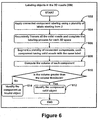
- FIG. 6 a flowchart for applying a 3D connected component labeling on the set of valid voxels is shown, in accordance with an embodiment of the present subject matter. It may be understood that all objects or connected components are labeled using a 3D connected component labeling technique to segment the valid voxels into individual objects/components using a plurality of labels being used for labeling.
- the set of valid voxels corresponding to certain 2D frames from the first set of 2D frames is taken as input by the voxel labeling module 218.
- a plurality of labels starting from label number 2 is considered for applying 3D connected component labeling. It may be understood that the valid voxels are labeled as 1 and the invalid voxels are labeled as 0, therefore, for the purpose of the present subject matter, the components/objects are labeled starting from 2. In one example, a random voxel from the set of valid voxels is considered as a starting point for labeling.
- the 3D connected component labeling technique is applied by the voxel labeling module 218 on 26 neighboring voxels of the random voxel.
- the 3D connected component labeling process is continued until all the valid voxels are traversed and labeled. It may be understood that a new label is introduced whenever an unconnected voxel is to be labeled in the 3D connected component labeling process.
- a segmentation process is initiated by the voxel labeling module 218 on the cluster of connected components in order to segment a plurality of connected components, wherein each component is indicative of the group of valid voxels with the same label.
- the voxel labeling module 218 computes a volume of each component by sequentially summing the number of voxels constituting each of the components.
- the voxel labeling module 218 compares the volume of each component to the volume threshold stored in the system database 224.
- the present subject matter enables faster and clearer segmentation of overlapping components/objects in the 2D video along with the depth data.
- the present subject matter enables discarding certain frames having disturbances/camera motion there within to improve quality of object detection in the 2D frames and depth data of the 2D video.
- the present subject matter further enables use of temporal characteristics such as, color data and depth data over a sequence of 2D frames to segment overlapping components.
- the present subject matter further enables in reducing the noise component in each of the 2D frames by using the voxelization threshold to discard a set of invalid voxels having noise/disturbance. Furthermore, the present subject matter enables faster voxelization of a 3D space and applying 3D connected component labeling to accurately identify connected components/objects over a sequence of 2D frames and depth data.
Landscapes
- Engineering & Computer Science (AREA)
- Physics & Mathematics (AREA)
- General Physics & Mathematics (AREA)
- Theoretical Computer Science (AREA)
- Computer Vision & Pattern Recognition (AREA)
- Computer Graphics (AREA)
- Multimedia (AREA)
- Image Analysis (AREA)
- Image Processing (AREA)
Claims (13)
- Procédé de segmentation d'une pluralité d'objets présents dans une vidéo bidimensionnelle (2D) ayant une pluralité de trames 2D et des informations de profondeur, le procédé comprenant :recevoir, par un processeur (202), la vidéo 2D et les informations de profondeur correspondant à des pixels des trames 2D de la vidéo 2D ;détecter, par le processeur, un mouvement de caméra dans chaque trame 2D de la pluralité de trames 2D de la vidéo 2D, où le mouvement de caméra est au moins l'un d'entre une perturbation ou un changement d'éclairage dû à un mouvement de la caméra pendant l'acquisition de la vidéo 2D et où le mouvement de la caméra est détecté en surveillant un changement dans l'intensité de couleur des pixels au cours d'une séquence de trames 2D de la vidéo 2D ;séparer, par le processeur (202), la pluralité de trames 2D en un premier ensemble de trames 2D et un deuxième ensemble de trames 2D sur la base de la détection du mouvement de la caméra dans chaque trame, où le premier ensemble de trames 2D est détecté être dépourvu du mouvement de caméra, et où le deuxième ensemble de trames 2D est détecté avoir le mouvement de caméra ;déterminer, par le processeur (202), un pluralité de points de nuage correspondant à chaque trame 2D du premier ensemble de trames 2D et aux informations de profondeur,où chaque point de nuage de la pluralité de points de nuage stocke des données de coordonnées x, y, z et des données de couleur associées à chaque pixel de chaque trame 2D du premier ensemble de trames 2D ;convertir, par le processeur (202), chaque trame 2D en utilisant des informations de profondeur correspondantes du premier ensemble de trames 2D en une grille 3D, où la grille 3D comprend une pluralité de voxels, et où la grille 3D est indicative d'une division d'un espace 3D, associé à chaque trame, par une pluralité de plans équidistants perpendiculaires à un axe x, à un axe y et à un axe z, et où chaque voxel a un volume défini dans la grille 3D, et où chaque voxel renferme un ou plusieurs points de nuage, et où chaque voxel étant indicatif du volume défini est entouré par trois paires de plans consécutifs le long de l'axe x, de l'axe y et de l'axe z ;déterminer, par le processeur (202), des voxels valides et des voxels invalides de la pluralité de voxels sur la base d'un nombre de points de nuage présents dans chaque voxel de la pluralité de voxels ;classifier, par le processeur (202), chaque voxel de la pluralité de voxels en un premier ensemble de voxels et un deuxième ensemble de voxels, où le premier ensemble de voxels sont des voxels valides, et où le deuxième ensemble de voxels sont des voxels invalides ; etétiqueter, par le processeur (202), chaque voxel dans le premier ensemble de voxels en utilisant une technique d'étiquetage de composants connectés 3D afin de segmenter la pluralité d'objets présents dans la vidéo 2D et des informations de profondeur associées,classifier les composants en objets valides et invalides en calculant un volume de chaque composant en totalisant séquentiellement le nombre de voxels constituant chacun des composants et en comparant le volume de chaque composant à un seuil de volume stocké.
- Procédé selon la revendication 1, dans lequel le mouvement de caméra est détecté en utilisant les données de couleur de chaque trame 2D dans la pluralité de trames 2D.
- Procédé selon la revendication 1, dans lequel chaque point de nuage est représentatif d'une entité la plus petite qui est équivalente à un pixel dans une trame.
- Procédé selon la revendication 1, dans lequel la grille 3D est générée le long de l'axe x, de l'axe y et de l'axe z.
- Procédé selon la revendication 1, dans lequel le mouvement de caméra comprend une perturbation due à au moins l'un d'entre un tremblement de caméra et un changement dans une direction de la caméra, ou des changements d'éclairage dus à un mouvement dans la caméra pendant l'acquisition de la vidéo 2D.
- Procédé selon la revendication 1, dans lequel les voxels valides et les voxels invalides sont déterminés sur la base du nombre de points de nuage associés à chaque voxel de la pluralité de voxels dans la grille 3D.
- Système de segmentation (102) pour segmenter une pluralité d'objets présents dans une vidéo bidimensionnelle (2D) ayant une pluralité de trames 2D et des informations de profondeur, le système comprenant :un processeur (202) ; etune mémoire (206) couplée au processeur (202), où le processeur (202) est capable d'exécuter une pluralité de modules (208) stockés dans la mémoire (206), la pluralité de modules (208) comprenant :un module de détection (212) configuré pourrecevoir la vidéo 2D et les informations de profondeur correspondant à des pixels des trames 2D dans la vidéo 2D ;détecter un mouvement de caméra dans chaque trame 2D de la pluralité de trames 2D de la vidéo 2D, où le mouvement de caméra est au moins l'un d'entre une perturbation ou un changement d'éclairage dû à un mouvement de la caméra pendant l'acquisition de la vidéo 2D et où le mouvement de la caméra est détecté en surveillant un changement dans l'intensité de couleur des pixels au cours d'une séquence de trames 2D de la vidéo 2D ;séparer la pluralité de trames 2D en un premier ensemble de trames 2D et un deuxième ensemble de trames 2D sur la base de la détection du mouvement de la caméra dans chaque trame, où le premier ensemble de trames 2D est détecté être dépourvu du mouvement de caméra, et où le deuxième ensemble de trames 2D est détecté avoir le mouvement de caméra dedans;un module de points de nuage (214) configuré pour déterminer une pluralité de points de nuage correspondant à chaque trame 2D du premier ensemble de trames 2D et aux informations de profondeur,où chaque point de nuage de la pluralité de points de nuage stocke des données de coordonnées x, y, z et des données de couleur associées à chaque pixel de chaque trame 2D du premier ensemble de trames 2D ;un module de voxelisation (216) configuré pour convertir chaque trame 2D en utilisant des informations de profondeur correspondantes du premier ensemble de trames 2D en une grille 3D, où la grille 3D comprend une pluralité de voxels, et où la grille 3D est indicative d'une division d'un espace 3D, associé à chaque trame, par une pluralité de plans équidistants perpendiculaires à un axe x, à un axe y et à un axe z, et où chaque voxel a un volume défini dans la grille 3D, et où chaque voxel renferme un ou plusieurs points de nuage, et où chaque voxel étant indicatif du volume défini est entouré par trois paires de plans consécutifs le long de l'axe x, de l'axe y et de l'axe z ;déterminer des voxels valides et des voxels invalides de la pluralité de voxels sur la base d'un nombre de points de nuage présents dans chaque voxel de la pluralité de voxels ;classifier chaque voxel de la pluralité de voxels en un premier ensemble de voxels et un deuxième ensemble de voxels, où le premier ensemble de voxels sont des voxels valides, et où le deuxième ensemble de voxels sont des voxels invalides ; etun module d'étiquetage de voxels configuré pour étiqueter chaque voxel dans le premier ensemble de voxels en utilisant une technique d'étiquetage de composants connectés 3D afin de segmenter la pluralité d'objets présents dans la vidéo 2D et des informations de profondeur associées,classifier les composants en objets valides et invalides en calculant un volume de chaque composant en totalisant séquentiellement le nombre de voxels constituant chacun des composants et en comparant le volume de chaque composant à un seuil de volume stocké.
- Système de segmentation (102) selon la revendication 7, dans lequel la pluralité d'objets comprend au moins l'un d'entre des objets en mouvement et des objets stationnaires.
- Système de segmentation (102) selon la revendication 7, dans lequel le mouvement de caméra est détecté en utilisant les données de couleur de chaque trame 2D de la pluralité de trames 2D.
- Système de segmentation (102) selon la revendication 7, dans lequel chaque point de nuage est représentatif d'une entité la plus petite dans un espace 3D, et dans lequel chaque point de nuage est équivalent à un pixel dans la trame 2D.
- Système de segmentation (102) selon la revendication 7, dans lequel la grille 3D est générée le long de l'axe x, de l'axe y et de l'axe z.
- Système de segmentation (102) selon la revendication 7, dans lequel le mouvement de caméra comprend une perturbation due à au moins l'un d'entre un tremblement de caméra et un changement dans une direction de la caméra, ou des changements d'éclairage dus à un mouvement dans la caméra pendant l'acquisition de la vidéo 2D.
- Système de segmentation (102) selon la revendication 7, dans lequel les voxels valides et les voxels invalides sont déterminés sur la base du nombre de points de nuage associés à chaque voxel de la pluralité de voxels dans la grille 3D.
Applications Claiming Priority (2)
| Application Number | Priority Date | Filing Date | Title |
|---|---|---|---|
| IN470MU2013 | 2013-02-18 | ||
| PCT/IN2014/000043 WO2014125502A2 (fr) | 2013-02-18 | 2014-01-22 | Segmentation des objets dans des données multimédias |
Publications (3)
| Publication Number | Publication Date |
|---|---|
| EP2956891A2 EP2956891A2 (fr) | 2015-12-23 |
| EP2956891A4 EP2956891A4 (fr) | 2016-10-19 |
| EP2956891B1 true EP2956891B1 (fr) | 2019-12-18 |
Family
ID=51354638
Family Applications (1)
| Application Number | Title | Priority Date | Filing Date |
|---|---|---|---|
| EP14751888.0A Active EP2956891B1 (fr) | 2013-02-18 | 2014-01-22 | Segmentation des objets dans des données multimédias |
Country Status (3)
| Country | Link |
|---|---|
| US (1) | US9830736B2 (fr) |
| EP (1) | EP2956891B1 (fr) |
| WO (1) | WO2014125502A2 (fr) |
Families Citing this family (20)
| Publication number | Priority date | Publication date | Assignee | Title |
|---|---|---|---|---|
| US9547907B2 (en) * | 2014-12-15 | 2017-01-17 | Intel Corporation | Image segmentation using color and depth information |
| CN105140494B (zh) * | 2015-07-01 | 2017-07-18 | 齐鲁工业大学 | 一种Fe3O4/Fe/C纳米复合电池电极材料的仿生合成方法 |
| CN106469446B (zh) * | 2015-08-21 | 2021-04-20 | 小米科技有限责任公司 | 深度图像的分割方法和分割装置 |
| US10248839B2 (en) * | 2015-11-30 | 2019-04-02 | Intel Corporation | Locating objects within depth images |
| CN108509820B (zh) * | 2017-02-23 | 2021-12-24 | 百度在线网络技术(北京)有限公司 | 障碍物分割方法及装置、计算机设备及可读介质 |
| WO2019023892A1 (fr) * | 2017-07-31 | 2019-02-07 | SZ DJI Technology Co., Ltd. | Correction d'imprécision basée sur un mouvement dans des nuages de points |
| CN108921895B (zh) * | 2018-06-12 | 2021-03-02 | 中国人民解放军军事科学院国防科技创新研究院 | 一种传感器相对位姿估计方法 |
| US10762394B2 (en) | 2018-07-31 | 2020-09-01 | Intel Corporation | System and method for 3D blob classification and transmission |
| US10893299B2 (en) | 2018-07-31 | 2021-01-12 | Intel Corporation | Surface normal vector processing mechanism |
| US11212506B2 (en) | 2018-07-31 | 2021-12-28 | Intel Corporation | Reduced rendering of six-degree of freedom video |
| US10783698B2 (en) * | 2018-07-31 | 2020-09-22 | Intel Corporation | Point cloud operations |
| US10887574B2 (en) | 2018-07-31 | 2021-01-05 | Intel Corporation | Selective packing of patches for immersive video |
| US11178373B2 (en) | 2018-07-31 | 2021-11-16 | Intel Corporation | Adaptive resolution of point cloud and viewpoint prediction for video streaming in computing environments |
| US11057631B2 (en) | 2018-10-10 | 2021-07-06 | Intel Corporation | Point cloud coding standard conformance definition in computing environments |
| DE102019127349A1 (de) | 2018-10-10 | 2020-04-16 | Intel Corporation | Punktwolkencodierungsstandard-konformitätsdefintion in computerumgebungen |
| US10924721B2 (en) * | 2018-12-20 | 2021-02-16 | Intel Corporation | Volumetric video color assignment |
| US12555298B2 (en) | 2020-02-10 | 2026-02-17 | Intel Corporation | Systems and methods for improved efficient E-sports spectator mode through use of GPU attached non-volatile memory |
| US12330057B2 (en) | 2020-02-10 | 2025-06-17 | Intel Corporation | Continuum architecture for cloud gaming |
| CN113134230B (zh) * | 2021-01-08 | 2024-03-22 | 成都完美时空网络技术有限公司 | 一种虚拟对象的分簇方法、装置、存储介质和电子装置 |
| JP7759844B2 (ja) * | 2022-05-19 | 2025-10-24 | 株式会社日立製作所 | 3次元データ処理装置、3次元データ処理方法 |
Family Cites Families (12)
| Publication number | Priority date | Publication date | Assignee | Title |
|---|---|---|---|---|
| AU2001251539A1 (en) | 2000-04-11 | 2001-10-23 | Cornell Research Foundation Inc. | System and method for three-dimensional image rendering and analysis |
| US6625310B2 (en) | 2001-03-23 | 2003-09-23 | Diamondback Vision, Inc. | Video segmentation using statistical pixel modeling |
| US6867774B1 (en) | 2002-12-02 | 2005-03-15 | Ngrain (Canada) Corporation | Method and apparatus for transforming polygon data to voxel data for general purpose applications |
| WO2005072239A2 (fr) | 2004-01-21 | 2005-08-11 | The Trustees Of Columbia University In The City Of New York | Procedes et systemes permettant d'analyser et de resumer des sequences video |
| US8194093B2 (en) * | 2004-09-15 | 2012-06-05 | Onlive, Inc. | Apparatus and method for capturing the expression of a performer |
| SG125133A1 (en) | 2005-02-07 | 2006-09-29 | Agency Science Tech & Res | Component labeling |
| US8249687B2 (en) * | 2005-06-02 | 2012-08-21 | Vital Images, Inc. | Systems and methods for virtual identification of polyps |
| JP5226978B2 (ja) * | 2007-07-17 | 2013-07-03 | 日立アロカメディカル株式会社 | 超音波診断装置及び画像処理プログラム |
| US8564534B2 (en) | 2009-10-07 | 2013-10-22 | Microsoft Corporation | Human tracking system |
| US8594425B2 (en) * | 2010-05-31 | 2013-11-26 | Primesense Ltd. | Analysis of three-dimensional scenes |
| US8587583B2 (en) * | 2011-01-31 | 2013-11-19 | Microsoft Corporation | Three-dimensional environment reconstruction |
| US8401225B2 (en) | 2011-01-31 | 2013-03-19 | Microsoft Corporation | Moving object segmentation using depth images |
-
2014
- 2014-01-22 EP EP14751888.0A patent/EP2956891B1/fr active Active
- 2014-01-22 US US14/767,161 patent/US9830736B2/en active Active
- 2014-01-22 WO PCT/IN2014/000043 patent/WO2014125502A2/fr not_active Ceased
Non-Patent Citations (1)
| Title |
|---|
| None * |
Also Published As
| Publication number | Publication date |
|---|---|
| US9830736B2 (en) | 2017-11-28 |
| EP2956891A2 (fr) | 2015-12-23 |
| EP2956891A4 (fr) | 2016-10-19 |
| WO2014125502A3 (fr) | 2015-03-19 |
| WO2014125502A2 (fr) | 2014-08-21 |
| US20160035124A1 (en) | 2016-02-04 |
Similar Documents
| Publication | Publication Date | Title |
|---|---|---|
| US9830736B2 (en) | Segmenting objects in multimedia data | |
| US10943145B2 (en) | Image processing methods and apparatus, and electronic devices | |
| Roa'a et al. | Generation of high dynamic range for enhancing the panorama environment | |
| Chen et al. | Asynchronous tracking-by-detection on adaptive time surfaces for event-based object tracking | |
| KR101548928B1 (ko) | 불변적인 시각적 장면 및 객체 인식 | |
| CN110210276A (zh) | 一种移动轨迹获取方法及其设备、存储介质、终端 | |
| Wada et al. | Instance segmentation of visible and occluded regions for finding and picking target from a pile of objects | |
| WO2023105800A1 (fr) | Dispositif de détection d'objets, procédé de détection d'objets et système de détection d'objets | |
| Zhang et al. | Crowd density estimation based on statistical analysis of local intra-crowd motions for public area surveillance | |
| CN111915713B (zh) | 一种三维动态场景的创建方法、计算机设备、存储介质 | |
| CN107403160A (zh) | 一种智能驾驶场景中图像检测方法、设备及其存储设备 | |
| TWI729587B (zh) | 物件定位系統及方法 | |
| CN115482523A (zh) | 轻量级多尺度注意力机制的小物体目标检测方法及系统 | |
| CN108229281B (zh) | 神经网络的生成方法和人脸检测方法、装置及电子设备 | |
| Feng et al. | Research on human target detection and tracking based on artificial intelligence vision | |
| CN113298122B (zh) | 目标检测方法、装置和电子设备 | |
| Gupta et al. | Reconnoitering the essentials of image and video processing: A comprehensive overview | |
| CN101567088B (zh) | 一种运动物体检测的方法和装置 | |
| CN106296722A (zh) | 一种信息处理方法及电子设备 | |
| CN119515730A (zh) | 一种基于模糊处理和目标检测的slam动态扰动抑制方法 | |
| Lu et al. | Event-frame object detection under dynamic background condition | |
| CN112651351B (zh) | 一种数据处理的方法和装置 | |
| Okarma et al. | A fast image analysis technique for the line tracking robots | |
| Roy et al. | A ground truth annotated video dataset for moving object detection in degraded atmospheric outdoor scenes | |
| Xiao et al. | Mixed self-attention–enhanced generative adversarial network for spatially variant blurred image restoration |
Legal Events
| Date | Code | Title | Description |
|---|---|---|---|
| PUAI | Public reference made under article 153(3) epc to a published international application that has entered the european phase |
Free format text: ORIGINAL CODE: 0009012 |
|
| 17P | Request for examination filed |
Effective date: 20150728 |
|
| AK | Designated contracting states |
Kind code of ref document: A2 Designated state(s): AL AT BE BG CH CY CZ DE DK EE ES FI FR GB GR HR HU IE IS IT LI LT LU LV MC MK MT NL NO PL PT RO RS SE SI SK SM TR |
|
| AX | Request for extension of the european patent |
Extension state: BA ME |
|
| DAX | Request for extension of the european patent (deleted) | ||
| A4 | Supplementary search report drawn up and despatched |
Effective date: 20160921 |
|
| RIC1 | Information provided on ipc code assigned before grant |
Ipc: G06T 7/00 20060101AFI20160915BHEP Ipc: G06K 9/20 20060101ALI20160915BHEP |
|
| STAA | Information on the status of an ep patent application or granted ep patent |
Free format text: STATUS: EXAMINATION IS IN PROGRESS |
|
| 17Q | First examination report despatched |
Effective date: 20180417 |
|
| REG | Reference to a national code |
Ref country code: DE Ref legal event code: R079 Ref document number: 602014058577 Country of ref document: DE Free format text: PREVIOUS MAIN CLASS: G06K0009200000 Ipc: G06T0007110000 |
|
| RIC1 | Information provided on ipc code assigned before grant |
Ipc: G06T 7/11 20170101AFI20190405BHEP Ipc: G06K 9/20 20060101ALI20190405BHEP Ipc: G06T 7/187 20170101ALI20190405BHEP |
|
| GRAP | Despatch of communication of intention to grant a patent |
Free format text: ORIGINAL CODE: EPIDOSNIGR1 |
|
| STAA | Information on the status of an ep patent application or granted ep patent |
Free format text: STATUS: GRANT OF PATENT IS INTENDED |
|
| INTG | Intention to grant announced |
Effective date: 20190626 |
|
| RAP1 | Party data changed (applicant data changed or rights of an application transferred) |
Owner name: TATA CONSULTANCY SERVICES LIMITED |
|
| GRAS | Grant fee paid |
Free format text: ORIGINAL CODE: EPIDOSNIGR3 |
|
| GRAA | (expected) grant |
Free format text: ORIGINAL CODE: 0009210 |
|
| STAA | Information on the status of an ep patent application or granted ep patent |
Free format text: STATUS: THE PATENT HAS BEEN GRANTED |
|
| AK | Designated contracting states |
Kind code of ref document: B1 Designated state(s): AL AT BE BG CH CY CZ DE DK EE ES FI FR GB GR HR HU IE IS IT LI LT LU LV MC MK MT NL NO PL PT RO RS SE SI SK SM TR |
|
| REG | Reference to a national code |
Ref country code: CH Ref legal event code: EP |
|
| REG | Reference to a national code |
Ref country code: IE Ref legal event code: FG4D |
|
| REG | Reference to a national code |
Ref country code: DE Ref legal event code: R096 Ref document number: 602014058577 Country of ref document: DE |
|
| REG | Reference to a national code |
Ref country code: AT Ref legal event code: REF Ref document number: 1215431 Country of ref document: AT Kind code of ref document: T Effective date: 20200115 |
|
| REG | Reference to a national code |
Ref country code: NL Ref legal event code: FP |
|
| PG25 | Lapsed in a contracting state [announced via postgrant information from national office to epo] |
Ref country code: LV Free format text: LAPSE BECAUSE OF FAILURE TO SUBMIT A TRANSLATION OF THE DESCRIPTION OR TO PAY THE FEE WITHIN THE PRESCRIBED TIME-LIMIT Effective date: 20191218 Ref country code: SE Free format text: LAPSE BECAUSE OF FAILURE TO SUBMIT A TRANSLATION OF THE DESCRIPTION OR TO PAY THE FEE WITHIN THE PRESCRIBED TIME-LIMIT Effective date: 20191218 Ref country code: FI Free format text: LAPSE BECAUSE OF FAILURE TO SUBMIT A TRANSLATION OF THE DESCRIPTION OR TO PAY THE FEE WITHIN THE PRESCRIBED TIME-LIMIT Effective date: 20191218 Ref country code: BG Free format text: LAPSE BECAUSE OF FAILURE TO SUBMIT A TRANSLATION OF THE DESCRIPTION OR TO PAY THE FEE WITHIN THE PRESCRIBED TIME-LIMIT Effective date: 20200318 Ref country code: NO Free format text: LAPSE BECAUSE OF FAILURE TO SUBMIT A TRANSLATION OF THE DESCRIPTION OR TO PAY THE FEE WITHIN THE PRESCRIBED TIME-LIMIT Effective date: 20200318 Ref country code: GR Free format text: LAPSE BECAUSE OF FAILURE TO SUBMIT A TRANSLATION OF THE DESCRIPTION OR TO PAY THE FEE WITHIN THE PRESCRIBED TIME-LIMIT Effective date: 20200319 Ref country code: LT Free format text: LAPSE BECAUSE OF FAILURE TO SUBMIT A TRANSLATION OF THE DESCRIPTION OR TO PAY THE FEE WITHIN THE PRESCRIBED TIME-LIMIT Effective date: 20191218 |
|
| REG | Reference to a national code |
Ref country code: LT Ref legal event code: MG4D |
|
| PG25 | Lapsed in a contracting state [announced via postgrant information from national office to epo] |
Ref country code: RS Free format text: LAPSE BECAUSE OF FAILURE TO SUBMIT A TRANSLATION OF THE DESCRIPTION OR TO PAY THE FEE WITHIN THE PRESCRIBED TIME-LIMIT Effective date: 20191218 Ref country code: HR Free format text: LAPSE BECAUSE OF FAILURE TO SUBMIT A TRANSLATION OF THE DESCRIPTION OR TO PAY THE FEE WITHIN THE PRESCRIBED TIME-LIMIT Effective date: 20191218 |
|
| PG25 | Lapsed in a contracting state [announced via postgrant information from national office to epo] |
Ref country code: AL Free format text: LAPSE BECAUSE OF FAILURE TO SUBMIT A TRANSLATION OF THE DESCRIPTION OR TO PAY THE FEE WITHIN THE PRESCRIBED TIME-LIMIT Effective date: 20191218 |
|
| PG25 | Lapsed in a contracting state [announced via postgrant information from national office to epo] |
Ref country code: CZ Free format text: LAPSE BECAUSE OF FAILURE TO SUBMIT A TRANSLATION OF THE DESCRIPTION OR TO PAY THE FEE WITHIN THE PRESCRIBED TIME-LIMIT Effective date: 20191218 Ref country code: RO Free format text: LAPSE BECAUSE OF FAILURE TO SUBMIT A TRANSLATION OF THE DESCRIPTION OR TO PAY THE FEE WITHIN THE PRESCRIBED TIME-LIMIT Effective date: 20191218 Ref country code: PT Free format text: LAPSE BECAUSE OF FAILURE TO SUBMIT A TRANSLATION OF THE DESCRIPTION OR TO PAY THE FEE WITHIN THE PRESCRIBED TIME-LIMIT Effective date: 20200513 Ref country code: EE Free format text: LAPSE BECAUSE OF FAILURE TO SUBMIT A TRANSLATION OF THE DESCRIPTION OR TO PAY THE FEE WITHIN THE PRESCRIBED TIME-LIMIT Effective date: 20191218 |
|
| REG | Reference to a national code |
Ref country code: DE Ref legal event code: R119 Ref document number: 602014058577 Country of ref document: DE |
|
| PG25 | Lapsed in a contracting state [announced via postgrant information from national office to epo] |
Ref country code: IS Free format text: LAPSE BECAUSE OF FAILURE TO SUBMIT A TRANSLATION OF THE DESCRIPTION OR TO PAY THE FEE WITHIN THE PRESCRIBED TIME-LIMIT Effective date: 20200418 Ref country code: SM Free format text: LAPSE BECAUSE OF FAILURE TO SUBMIT A TRANSLATION OF THE DESCRIPTION OR TO PAY THE FEE WITHIN THE PRESCRIBED TIME-LIMIT Effective date: 20191218 Ref country code: SK Free format text: LAPSE BECAUSE OF FAILURE TO SUBMIT A TRANSLATION OF THE DESCRIPTION OR TO PAY THE FEE WITHIN THE PRESCRIBED TIME-LIMIT Effective date: 20191218 |
|
| REG | Reference to a national code |
Ref country code: CH Ref legal event code: PL |
|
| REG | Reference to a national code |
Ref country code: NL Ref legal event code: MM Effective date: 20200201 |
|
| PG25 | Lapsed in a contracting state [announced via postgrant information from national office to epo] |
Ref country code: MC Free format text: LAPSE BECAUSE OF FAILURE TO SUBMIT A TRANSLATION OF THE DESCRIPTION OR TO PAY THE FEE WITHIN THE PRESCRIBED TIME-LIMIT Effective date: 20191218 |
|
| REG | Reference to a national code |
Ref country code: AT Ref legal event code: MK05 Ref document number: 1215431 Country of ref document: AT Kind code of ref document: T Effective date: 20191218 Ref country code: BE Ref legal event code: MM Effective date: 20200131 |
|
| PLBE | No opposition filed within time limit |
Free format text: ORIGINAL CODE: 0009261 |
|
| STAA | Information on the status of an ep patent application or granted ep patent |
Free format text: STATUS: NO OPPOSITION FILED WITHIN TIME LIMIT |
|
| PG25 | Lapsed in a contracting state [announced via postgrant information from national office to epo] |
Ref country code: LU Free format text: LAPSE BECAUSE OF NON-PAYMENT OF DUE FEES Effective date: 20200122 Ref country code: ES Free format text: LAPSE BECAUSE OF FAILURE TO SUBMIT A TRANSLATION OF THE DESCRIPTION OR TO PAY THE FEE WITHIN THE PRESCRIBED TIME-LIMIT Effective date: 20191218 Ref country code: DK Free format text: LAPSE BECAUSE OF FAILURE TO SUBMIT A TRANSLATION OF THE DESCRIPTION OR TO PAY THE FEE WITHIN THE PRESCRIBED TIME-LIMIT Effective date: 20191218 Ref country code: DE Free format text: LAPSE BECAUSE OF NON-PAYMENT OF DUE FEES Effective date: 20200801 Ref country code: NL Free format text: LAPSE BECAUSE OF NON-PAYMENT OF DUE FEES Effective date: 20200201 |
|
| 26N | No opposition filed |
Effective date: 20200921 |
|
| PG25 | Lapsed in a contracting state [announced via postgrant information from national office to epo] |
Ref country code: CH Free format text: LAPSE BECAUSE OF NON-PAYMENT OF DUE FEES Effective date: 20200131 Ref country code: LI Free format text: LAPSE BECAUSE OF NON-PAYMENT OF DUE FEES Effective date: 20200131 Ref country code: SI Free format text: LAPSE BECAUSE OF FAILURE TO SUBMIT A TRANSLATION OF THE DESCRIPTION OR TO PAY THE FEE WITHIN THE PRESCRIBED TIME-LIMIT Effective date: 20191218 Ref country code: AT Free format text: LAPSE BECAUSE OF FAILURE TO SUBMIT A TRANSLATION OF THE DESCRIPTION OR TO PAY THE FEE WITHIN THE PRESCRIBED TIME-LIMIT Effective date: 20191218 Ref country code: BE Free format text: LAPSE BECAUSE OF NON-PAYMENT OF DUE FEES Effective date: 20200131 |
|
| PG25 | Lapsed in a contracting state [announced via postgrant information from national office to epo] |
Ref country code: IT Free format text: LAPSE BECAUSE OF FAILURE TO SUBMIT A TRANSLATION OF THE DESCRIPTION OR TO PAY THE FEE WITHIN THE PRESCRIBED TIME-LIMIT Effective date: 20191218 Ref country code: IE Free format text: LAPSE BECAUSE OF NON-PAYMENT OF DUE FEES Effective date: 20200122 Ref country code: FR Free format text: LAPSE BECAUSE OF NON-PAYMENT OF DUE FEES Effective date: 20200218 |
|
| PG25 | Lapsed in a contracting state [announced via postgrant information from national office to epo] |
Ref country code: PL Free format text: LAPSE BECAUSE OF FAILURE TO SUBMIT A TRANSLATION OF THE DESCRIPTION OR TO PAY THE FEE WITHIN THE PRESCRIBED TIME-LIMIT Effective date: 20191218 |
|
| GBPC | Gb: european patent ceased through non-payment of renewal fee |
Effective date: 20200318 |
|
| PG25 | Lapsed in a contracting state [announced via postgrant information from national office to epo] |
Ref country code: GB Free format text: LAPSE BECAUSE OF NON-PAYMENT OF DUE FEES Effective date: 20200318 |
|
| PG25 | Lapsed in a contracting state [announced via postgrant information from national office to epo] |
Ref country code: TR Free format text: LAPSE BECAUSE OF FAILURE TO SUBMIT A TRANSLATION OF THE DESCRIPTION OR TO PAY THE FEE WITHIN THE PRESCRIBED TIME-LIMIT Effective date: 20191218 Ref country code: MT Free format text: LAPSE BECAUSE OF FAILURE TO SUBMIT A TRANSLATION OF THE DESCRIPTION OR TO PAY THE FEE WITHIN THE PRESCRIBED TIME-LIMIT Effective date: 20191218 Ref country code: CY Free format text: LAPSE BECAUSE OF FAILURE TO SUBMIT A TRANSLATION OF THE DESCRIPTION OR TO PAY THE FEE WITHIN THE PRESCRIBED TIME-LIMIT Effective date: 20191218 |
|
| PG25 | Lapsed in a contracting state [announced via postgrant information from national office to epo] |
Ref country code: MK Free format text: LAPSE BECAUSE OF FAILURE TO SUBMIT A TRANSLATION OF THE DESCRIPTION OR TO PAY THE FEE WITHIN THE PRESCRIBED TIME-LIMIT Effective date: 20191218 |
|
| P01 | Opt-out of the competence of the unified patent court (upc) registered |
Effective date: 20230526 |