EP2958024A1 - Reduction of evictions in the management directories of cache memory - Google Patents
Reduction of evictions in the management directories of cache memory Download PDFInfo
- Publication number
- EP2958024A1 EP2958024A1 EP15169569.9A EP15169569A EP2958024A1 EP 2958024 A1 EP2958024 A1 EP 2958024A1 EP 15169569 A EP15169569 A EP 15169569A EP 2958024 A1 EP2958024 A1 EP 2958024A1
- Authority
- EP
- European Patent Office
- Prior art keywords
- data
- state
- directory
- processors
- list
- Prior art date
- Legal status (The legal status is an assumption and is not a legal conclusion. Google has not performed a legal analysis and makes no representation as to the accuracy of the status listed.)
- Granted
Links
Images

Classifications
-
- G—PHYSICS
- G06—COMPUTING OR CALCULATING; COUNTING
- G06F—ELECTRIC DIGITAL DATA PROCESSING
- G06F12/00—Accessing, addressing or allocating within memory systems or architectures
- G06F12/02—Addressing or allocation; Relocation
- G06F12/08—Addressing or allocation; Relocation in hierarchically structured memory systems, e.g. virtual memory systems
- G06F12/0802—Addressing of a memory level in which the access to the desired data or data block requires associative addressing means, e.g. caches
- G06F12/0806—Multiuser, multiprocessor or multiprocessing cache systems
- G06F12/0815—Cache consistency protocols
- G06F12/0817—Cache consistency protocols using directory methods
-
- G—PHYSICS
- G06—COMPUTING OR CALCULATING; COUNTING
- G06F—ELECTRIC DIGITAL DATA PROCESSING
- G06F12/00—Accessing, addressing or allocating within memory systems or architectures
- G06F12/02—Addressing or allocation; Relocation
- G06F12/08—Addressing or allocation; Relocation in hierarchically structured memory systems, e.g. virtual memory systems
- G06F12/0802—Addressing of a memory level in which the access to the desired data or data block requires associative addressing means, e.g. caches
-
- G—PHYSICS
- G06—COMPUTING OR CALCULATING; COUNTING
- G06F—ELECTRIC DIGITAL DATA PROCESSING
- G06F12/00—Accessing, addressing or allocating within memory systems or architectures
- G06F12/02—Addressing or allocation; Relocation
- G06F12/08—Addressing or allocation; Relocation in hierarchically structured memory systems, e.g. virtual memory systems
- G06F12/0802—Addressing of a memory level in which the access to the desired data or data block requires associative addressing means, e.g. caches
- G06F12/0806—Multiuser, multiprocessor or multiprocessing cache systems
- G06F12/0815—Cache consistency protocols
- G06F12/0817—Cache consistency protocols using directory methods
- G06F12/0824—Distributed directories, e.g. linked lists of caches
-
- G—PHYSICS
- G06—COMPUTING OR CALCULATING; COUNTING
- G06F—ELECTRIC DIGITAL DATA PROCESSING
- G06F12/00—Accessing, addressing or allocating within memory systems or architectures
- G06F12/02—Addressing or allocation; Relocation
- G06F12/08—Addressing or allocation; Relocation in hierarchically structured memory systems, e.g. virtual memory systems
- G06F12/0802—Addressing of a memory level in which the access to the desired data or data block requires associative addressing means, e.g. caches
- G06F12/0806—Multiuser, multiprocessor or multiprocessing cache systems
- G06F12/0815—Cache consistency protocols
- G06F12/0817—Cache consistency protocols using directory methods
- G06F12/082—Associative directories
-
- G—PHYSICS
- G06—COMPUTING OR CALCULATING; COUNTING
- G06F—ELECTRIC DIGITAL DATA PROCESSING
- G06F12/00—Accessing, addressing or allocating within memory systems or architectures
- G06F12/02—Addressing or allocation; Relocation
- G06F12/08—Addressing or allocation; Relocation in hierarchically structured memory systems, e.g. virtual memory systems
- G06F12/0802—Addressing of a memory level in which the access to the desired data or data block requires associative addressing means, e.g. caches
- G06F12/0806—Multiuser, multiprocessor or multiprocessing cache systems
- G06F12/0842—Multiuser, multiprocessor or multiprocessing cache systems for multiprocessing or multitasking
-
- G—PHYSICS
- G06—COMPUTING OR CALCULATING; COUNTING
- G06F—ELECTRIC DIGITAL DATA PROCESSING
- G06F12/00—Accessing, addressing or allocating within memory systems or architectures
- G06F12/02—Addressing or allocation; Relocation
- G06F12/08—Addressing or allocation; Relocation in hierarchically structured memory systems, e.g. virtual memory systems
- G06F12/0802—Addressing of a memory level in which the access to the desired data or data block requires associative addressing means, e.g. caches
- G06F12/0888—Addressing of a memory level in which the access to the desired data or data block requires associative addressing means, e.g. caches using selective caching, e.g. bypass
-
- G—PHYSICS
- G06—COMPUTING OR CALCULATING; COUNTING
- G06F—ELECTRIC DIGITAL DATA PROCESSING
- G06F2212/00—Indexing scheme relating to accessing, addressing or allocation within memory systems or architectures
- G06F2212/10—Providing a specific technical effect
- G06F2212/1016—Performance improvement
- G06F2212/1024—Latency reduction
-
- G—PHYSICS
- G06—COMPUTING OR CALCULATING; COUNTING
- G06F—ELECTRIC DIGITAL DATA PROCESSING
- G06F2212/00—Indexing scheme relating to accessing, addressing or allocation within memory systems or architectures
- G06F2212/10—Providing a specific technical effect
- G06F2212/1041—Resource optimization
-
- G—PHYSICS
- G06—COMPUTING OR CALCULATING; COUNTING
- G06F—ELECTRIC DIGITAL DATA PROCESSING
- G06F2212/00—Indexing scheme relating to accessing, addressing or allocation within memory systems or architectures
- G06F2212/60—Details of cache memory
- G06F2212/603—Details of cache memory of operating mode, e.g. cache mode or local memory mode
-
- G—PHYSICS
- G06—COMPUTING OR CALCULATING; COUNTING
- G06F—ELECTRIC DIGITAL DATA PROCESSING
- G06F2212/00—Indexing scheme relating to accessing, addressing or allocation within memory systems or architectures
- G06F2212/62—Details of cache specific to multiprocessor cache arrangements
- G06F2212/622—State-only directory, i.e. not recording identity of sharing or owning nodes
Definitions
- the present invention relates to the management of the cache memory in multiprocessor computer systems.
- each processor has its own cache for storing calculation data, for example memory addresses pointing to instructions to execute. Processors running in parallel, they share some of this data. Thus, several processors can have access to the same data in reading or writing to possibly modify it and thus run a computer program.
- MESI cache coherence
- cache coherence algorithms requires a large number of communications between the processors to enable them to know at each moment, the location of a data. It is a question of determining the identification of the cache memory in which it is located, as well as its state.
- the state of a cached data depends on the protocol used.
- a data item is in the "modified" state (M for "modified” in English) if the data is only present in a single cache memory and this data item has been modified compared to that present in non-cache memory (hence the initial data comes from).
- the processor that wishes to have access to the data may for example wait for it to be in compliance with the version in memory.
- some cache coherence protocols may allow modified data transfers directly from cache to cache.
- a data is in the "exclusive” state (E for "exclusive” in English), if the data is only present in a single cache memory and this data corresponds to the version in memory non-cached.
- a data is in the "shared” state (S for "shared” in English) if the data is present in several memories hidden.
- S for "shared” in English
- a data item is in the "invalid” state (I for "invalid” in English) if the data is not up to date. It must be ignored by the processors and not used.
- MSI protocol comprises only the three states M, S and I defined above while the MOESI protocol adds a state "owned” (O for "owned” in English) equivalent to a state "S" but for which the memory is not up to date.
- Each processor maintains a list that for each cache line, indicates the processors with which the data stored therein is stored and its status. This list may be more or less complete as regards the information it contains.
- this list makes it possible to keep with the processors a history of the requests on the part of the processors with respect to a datum. This makes it possible to filter the queries of the cache, for example by avoiding querying the cache of a processor that has not manipulated data. In addition, if a data does not appear in the lists of processors, it can be deduced that the data is not in use by a processor and is therefore stored in memory (not cache) and up to date.
- Fig. 1 schematically illustrates a multiprocessor system.
- the system comprises four modules 100, 110, 120, 130. Each module comprises a plurality of processors.
- the module 100 comprises two processors 101 and 102.
- the module 110 comprises two processors 111 and 112.
- the module 120 comprises two processors 121 and 122.
- the module 130 comprises two processors 131 and 132.
- Each processor has a respective cache memory. These cache memories are not represented.
- modules in the system and the number of processors in the modules is purely illustrative. Modules can contain different numbers of processors.
- each module 100, 110, 120, 130 has a respective proxy module 103, 113, 123, 133.
- the interconnections between the proxy modules are not represented.
- each processor has a single interface to communicate with other processors. Everything happens as if each processor was addressing each time to only one other processor.
- the proxy modules maintain directories on behalf of the processors of their respective modules. Proxy modules can also maintain a directory on behalf of processors outside of their respective modules.
- proxy modules are necessary when the number of processors in the system becomes large.
- the directories maintained by the proxy modules are not identical to those that can be held by the processors. Indeed, since a number of processors are present in a module, the size of the directory would become too important. In particular, the space of the proxy module on the silicon would become troublesome.
- Proxy modules therefore hold a particular type of directory called “inclusive”. It is in fact to keep a list containing only the addresses pointing to a valid data, that is to say, in the example of the MESI protocol, the data which are either in the "modified” state, " shared “or” exclusive ". If an address points to an "invalid" data (still in the example of the MESI protocol), it is not listed in the directory, the processor wishing to access it must therefore query the non-cache memory.
- the directories of the proxy modules require regular and frequent updates to introduce new addresses, for example when a processor needs to access it for reading.
- This update therefore requires the output of a previously stored address.
- the eviction operation is problematic for more than one reason.
- precharging instructions or "pre-fetch" in English terminology. This is to load an instruction that is not yet to be executed, but the processor knows, or guess it will soon be.
- an eviction operation relates to an address pointing to a pre-loaded instruction
- the processor is forced to wait for it to be loaded again, which delays the execution of the program (whereas initially the pre-loaded instruction loading was to speed up the execution).
- the eviction operation can also be problematic when the address is pointing to a data and not an instruction.
- the present invention falls within this framework.
- a module according to the first aspect allows multiprocessor systems to gain in performance by significantly reducing the number of eviction operations.
- said processing unit is configured to list only those addresses relating to data associated with a state reflecting the exclusivity of said data to respective processors.
- said second state is a state reflecting the exclusivity of said data to a processor.
- said update is launched only if said second state is a state reflecting the exclusivity of said data to a processor
- said update includes a step of evicting an address line of said directory.
- the method further comprises a preliminary step of determining an operating mode to determine whether the address lines relating to data associated with said first state reflecting a data sharing between a plurality of processors must be or not listed in that list.
- a system according to embodiments may have the structure already presented with reference to the figure 1 .
- the structure and management of the proxy module directory differs as described below.
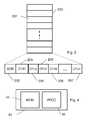
- the figure 2 illustrates a directory for implementing cache coherence management according to embodiments.
- the directory 200 includes a plurality of lines 202 respectively associated with data stored in the system's cache memory.
- Each line identifies a memory address 202 at which data represented in the directory is stored, a state associated with the data, and a list of processors 204, 205, 206, 207 that have recently requested access to the data.
- the address 202 may be more or less complete. In order to save memory space for storing the directory, it is possible to consider storing only a part of the memory address.
- the state of the data 203 is the state in which the data is currently located. It can be in a plurality of states. According to the invention, the data in a sharing state between several processors are not stored in the directory. Thus, the "shared" state does not appear in the directory. In addition, invalid data may not be represented in the directory either. Thus, the "invalid" state may not appear in the directory. Other types of states may appear, such as "exclusive” or “modified” states. According to embodiments, only the "exclusive” state is represented.
- the cache management protocol used may be MESI, MOESI, MSI or other type.
- the list 204, 205, 206, 207 processors having requested access to the data can be more or less detailed. Each processor can be identified by an identifier alone. The identifier may also be accompanied by the state in which the processor has requested access to the data. For example, the list of processors is sorted in the chronological order (or vice versa) of access requests, for example from left to right (or vice versa). The oldest requests can be replaced by the requests newer ones in order to store only a limited number of processors in this access history and thus save memory space.
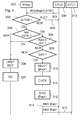
- a use of a directory for cache management is presented with reference to the figure 3 .
- a processor 300 makes a request 301, for example in read mode, concerning a data item at address adr0 in cache memory, in a given state STAT (for example "shared” S, "exclusive” E or other). This request is sent to the proxy module 302.
- STAT for example "shared" S, "exclusive” E or other.
- the proxy module then checks whether the processing of this request is authorized (or possible) during a step 303.
- the proxy checks, for example, that all the resources necessary for the processing of the request are available, the directory is in particular one. However, the availability of other resources (transaction identifier or other %) can be verified.
- the proxy module may for example send back to the processor 300 a rejection message 304.
- other measures may be taken such as waiting for the release of all the necessary resources.
- step 305 if a new entry is needed in the directory.
- Only transactions involving the transition to a state managed by the directory require an entry.
- purely invalidating transactions consisting of invalidating data in all caches
- the directory is then updated in a step 306 by adding the processor 300 to the list of processors requesting access to the given. For example, the identifier of the processor 300 is added after the processors already listed.
- the entry in the directory can be reserved and it can be expected the return of the data for the complete update of the directory.
- Step 306 is thus executed when the memory address concerned is already present in the directory following its registration during the processing of a previous request in which it was determined that an entry was necessary (OK) at step 305.
- step 306 the normal reading process is initiated in step 307. For example, a read request is sent to the memory managing agent (or the one representing it if it is necessary to go through a second proxy). The data is then received in response.
- the process at the level of the agent managing the memory access to the central memory, interrogation of the other caches or other), does not concern directly the issuer of the reading (indirectly, cases of conflict can be made visible to him) .
- step 306 is not implemented and one goes to step 307 of reading.
- a read request is sent to the agent managing the memory (or the one that represents it if it is necessary to go through a second proxy).
- the data is then received in response. It can be passed directly to step 307 of reading.
- this step may be preceded by an interrogation of all the caches of the processors if for example the request requests to have exclusivity on the data (in this case, it is necessary to invalidate all the copies of the data).
- step 305 it is determined that a new entry is necessary for the data at address adr0 (OK), it is determined in a step 308, if the address adr0 is already present in the directory .
- step 306 the address is not in the directory and it is verified during a step 309, if it is necessary to carry out an eviction of an address already present in the directory.
- step 306 to add a line to the directory with the address concerned, the state of the data and the identifier of the processor 300. If not (OK), there is not enough space available and it is necessary to launch an eviction.
- An adr1 address to be deleted is selected in step 310. For example, a random address is selected. For example again, the oldest address (" least recently used " in English) is selected. Other types of address can be selected. If no address can be selected because all are in use, the process may wait for the release of an address. Alternatively, the process may issue a request for " retry "(" retry " in English terminology) to the issuer of the request.
- a series of necessary checks and allocations are then carried out following the operations in a step 311. In particular, it is verified that all the resources necessary for the treatment of the eviction are available.
- the invalidation is then implemented during step 312 by setting the data address adr1 to the "invalid" state.
- the directory used is according to the prior art and that it stores the shared data.
- the data address adr1 is a shared data between the processor 300 and another processor 313.
- the proxy module then sends messages 314 and 315 to inform them of the new state of the data.
- reading the data at address adr0 caused the invalidation of a data item at address adr1 which was shared by several processors.
- This data at the address adr1 was for example an instruction pre-loaded by the processor 300 with a processor 313.
- processors will want to access the instruction to execute it, they will not be able to do it and will have to restart an access . This increases the latency of the system and penalizes the speed of execution of instructions by the system.
- the data at address adr1 can not be shared data. It may for example be a data item in the "exclusive" or "modified” state, for example.
- the shared data is not represented in the directory. In another mode of operation, these data are listed.
- the decision to use a conventional inclusive directory (where the states "shared” and “exclusive” can be listed) or an inclusive directory according to embodiments (where for example only the "exclusive” state is listed) can to be dynamically modified, for example via a configuration register.
- This selective mode of operation makes it possible to choose the most suitable mode according to the application implemented. This also avoids having to make a decision when designing the management module that would be irrevocable thereafter.
- the figure 4 schematically illustrates a proxy module 40 according to embodiments. It includes a memory 41 for storing a cache management directory. It further comprises a processing unit 42 for managing queries from processors of a multiprocessor system according to a directory cache management.
Landscapes
- Engineering & Computer Science (AREA)
- Theoretical Computer Science (AREA)
- Physics & Mathematics (AREA)
- General Engineering & Computer Science (AREA)
- General Physics & Mathematics (AREA)
- Memory System Of A Hierarchy Structure (AREA)
- Multi Processors (AREA)
Abstract
Module de gestion de cohérence de cache par répertoire, dans lequel chaque donnée stockée en mémoire cache est associée à un état, dont au moins un état reflétant un partage de donnée entre plusieurs processeurs comportant : - une unité de stockage pour stocker un répertoire comportant une liste d'adresses de mémoire cache, chaque adresse pouvant être associée à un état correspondant à l'état de la donnée disponible à cette adresse, et - une unité de traitement configurée pour mettre à jour ladite liste, ladite unité de traitement étant configurée pour ne pas lister les lignes d'adresse relatives à des données associées audit premier état.Directory cache coherence management module, wherein each cached data is associated with a state, including at least one state reflecting a data sharing between multiple processors comprising: a storage unit for storing a directory comprising a list of cache addresses, each address being able to be associated with a state corresponding to the state of the data available at this address, and a processing unit configured to update said list, said processing unit being configured not to list the address lines relating to data associated with said first state.
Description
La présente invention concerne la gestion de la mémoire cache dans les systèmes informatiques multiprocesseurs.The present invention relates to the management of the cache memory in multiprocessor computer systems.
Dans de tels systèmes, chaque processeur dispose d'une mémoire cache propre pour stocker des données de calcul, par exemple des adresses mémoire pointant vers des instructions à exécuter. Les processeurs fonctionnant en parallèle, ils partagent certaines de ces données. Ainsi, plusieurs processeurs peuvent avoir accès à une même donnée en lecture ou en écriture pour éventuellement la modifier et ainsi exécuter un programme informatique.In such systems, each processor has its own cache for storing calculation data, for example memory addresses pointing to instructions to execute. Processors running in parallel, they share some of this data. Thus, several processors can have access to the same data in reading or writing to possibly modify it and thus run a computer program.
Afin d'assurer la mise à jour des données utilisées par les processeurs, et éviter que deux processeurs traitent deux versions différentes d'une même donnée, des algorithmes de « cohérence de cache » sont mis en oeuvre. L'algorithme MESI est un exemple d'un tel algorithme.In order to ensure the update of the data used by the processors, and to prevent two processors from processing two different versions of the same data, "cache coherence" algorithms are implemented. The MESI algorithm is an example of such an algorithm.
La mise en oeuvre d'algorithmes de cohérence de cache nécessite un grand nombre de communications entre les processeurs pour leur permettre de connaître à chaque instant, la localisation d'une donnée. Il s'agit de déterminer l'identification de la mémoire cache dans laquelle elle se trouve, ainsi que son état.The implementation of cache coherence algorithms requires a large number of communications between the processors to enable them to know at each moment, the location of a data. It is a question of determining the identification of the cache memory in which it is located, as well as its state.
L'état d'une donnée en mémoire cache dépend du protocole utilisé. Dans l'exemple du protocole MESI donné si avant, une donnée est dans l'état « modifié » (M pour « modified » en anglais) si la donnée n'est présente que dans une seule mémoire cache et que cette donnée a été modifiée par rapport à celle présente en mémoire non-cache (d'où la donnée initiale provient). Dans ce cas, le processeur qui souhaite avoir accès à la donnée peut par exemple attendre qu'elle soit mise en conformité avec la version en mémoire. Certains protocoles de cohérence de cache peuvent toutefois autoriser les transferts de données modifiées directement de cache à cache.The state of a cached data depends on the protocol used. In the example of the MESI protocol given before, a data item is in the "modified" state (M for "modified" in English) if the data is only present in a single cache memory and this data item has been modified compared to that present in non-cache memory (hence the initial data comes from). In this case, the processor that wishes to have access to the data may for example wait for it to be in compliance with the version in memory. However, some cache coherence protocols may allow modified data transfers directly from cache to cache.
Toujours dans le même exemple, une donnée est dans l'état « exclusif » (E pour « exclusive » en anglais), si la donnée n'est présente que dans une seule mémoire cache et que cette donnée correspond bien à la version en mémoire non-cache. Une donnée est dans l'état « partagé » (S pour « shared » en anglais) si la donnée est présente dans plusieurs mémoires cache. Enfin, une donnée est dans l'état « invalide » (I pour « invalid » en anglais) si la donnée n'est pas à jour. Elle doit alors être ignorée par les processeurs et ne pas être utilisée.Always in the same example, a data is in the "exclusive" state (E for "exclusive" in English), if the data is only present in a single cache memory and this data corresponds to the version in memory non-cached. A data is in the "shared" state (S for "shared" in English) if the data is present in several memories hidden. Finally, a data item is in the "invalid" state (I for "invalid" in English) if the data is not up to date. It must be ignored by the processors and not used.
D'autres protocoles existent avec plus ou moins d'états définis. Par exemple le protocole MSI ne comporte que les trois états M, S et I définis ci-dessus alors que le protocole MOESI ajoute un état « détenu » (O pour « owned » en anglais) équivalent à un état « S » mais pour lequel la mémoire n'est pas à jour.Other protocols exist with more or less defined states. For example, the MSI protocol comprises only the three states M, S and I defined above while the MOESI protocol adds a state "owned" (O for "owned" in English) equivalent to a state "S" but for which the memory is not up to date.
La plupart des protocoles de cohérence de cache mettent en oeuvre des listes, ou répertoires, reflétant l'historique des demandes faites sur chaque donnée. Ce type de protocole est dit « directory-based » en terminologie anglo-saxonne.Most cache coherence protocols implement lists, or directories, reflecting the history of requests made on each data. This type of protocol is called "directory-based" in English terminology.
Chaque processeur tient une liste qui pour chaque ligne de mémoire cache, indique les processeurs auprès desquels la donnée qui y est inscrite est stockée ainsi que son état. Cette liste peut être plus ou moins complète en ce qui concerne les informations qu'elle contient.Each processor maintains a list that for each cache line, indicates the processors with which the data stored therein is stored and its status. This list may be more or less complete as regards the information it contains.
L'utilisation de cette liste permet de garder auprès des processeurs un historique des demandes de la part des processeurs par rapport à une donnée. Cela permet notamment de filtrer les interrogations du cache, en évitant par exemple d'interroger le cache d'un processeur qui n'a pas manipulé une donnée. En outre, si une donnée n'apparaît pas dans les listes des processeurs, il peut en être déduit que la donnée n'est pas en cours d'utilisation par un processeur et qu'elle est donc stockée en mémoire (non cache) et à jour.The use of this list makes it possible to keep with the processors a history of the requests on the part of the processors with respect to a datum. This makes it possible to filter the queries of the cache, for example by avoiding querying the cache of a processor that has not manipulated data. In addition, if a data does not appear in the lists of processors, it can be deduced that the data is not in use by a processor and is therefore stored in memory (not cache) and up to date.
La figue 1 illustre schématiquement un système multiprocesseurs. Fig. 1 schematically illustrates a multiprocessor system.
Le système comporte quatre modules 100, 110, 120, 130. Chaque module comporte une pluralité de processeurs. Le module 100 comporte deux processeurs 101 et 102. Le module 110 comporte deux processeurs 111 et 112. Le module 120 comporte deux processeurs 121 et 122. Le module 130 comporte deux processeurs 131 et 132. Chaque processeur dispose d'une mémoire cache respective. Ces mémoires cache ne sont pas représentées.The system comprises four
Le nombre de modules dans le système et le nombre de processeurs dans les modules est purement illustratif. Les modules peuvent contenir des nombres de processeurs différents.The number of modules in the system and the number of processors in the modules is purely illustrative. Modules can contain different numbers of processors.
Afin de gérer les communications entre les différents processeurs, notamment pour gérer la cohérence de cache, chaque module 100, 110, 120, 130 dispose d'un module proxy 103, 113, 123, 133 respectif. Dans un souci de clarté, les interconnexions entre les modules proxy ne sont pas représentées.In order to manage the communications between the various processors, in particular to manage cache coherence, each
Ainsi, chaque processeur dispose d'une unique interface pour communiquer avec les autres processeurs. Tout se passe comme si chaque processeur ne s'adressait à chaque fois qu'à un seul autre processeur. En particulier, les modules proxy tiennent des répertoires pour le compte des processeurs de leurs modules respectifs. Les modules proxy peuvent aussi tenir un répertoire pour le compte de processeurs en dehors de leurs modules respectifs.Thus, each processor has a single interface to communicate with other processors. Everything happens as if each processor was addressing each time to only one other processor. In particular, the proxy modules maintain directories on behalf of the processors of their respective modules. Proxy modules can also maintain a directory on behalf of processors outside of their respective modules.
L'utilisation de modules proxy s'avère nécessaire lorsque le nombre de processeurs du système devient important.The use of proxy modules is necessary when the number of processors in the system becomes large.
Cependant, les répertoires tenus par les modules proxy ne sont pas identiques à ceux qui peuvent être tenus par les processeurs. En effet, dès lors qu'un certain nombre de processeurs sont présents dans un module, la taille du répertoire deviendrait trop importante. Notamment, l'espace du module proxy sur le silicium deviendrait gênante.However, the directories maintained by the proxy modules are not identical to those that can be held by the processors. Indeed, since a number of processors are present in a module, the size of the directory would become too important. In particular, the space of the proxy module on the silicon would become troublesome.
Les modules proxy tiennent donc un type de répertoire particulier qualifié « d'inclusif ». Il s'agit en fait de tenir une liste comportant uniquement les adresses pointant vers une donnée valide, c'est-à-dire, dans l'exemple du protocole MESI, les données qui sont soit à l'état « modifié », « partagé » ou « exclusif ». Si une adresse pointe vers une donnée « invalide » (toujours dans l'exemple du protocole MESI), elle n'est pas listée dans le répertoire, le processeur souhaitant y accéder devra donc interroger la mémoire non cache.Proxy modules therefore hold a particular type of directory called "inclusive". It is in fact to keep a list containing only the addresses pointing to a valid data, that is to say, in the example of the MESI protocol, the data which are either in the "modified" state, " shared "or" exclusive ". If an address points to an "invalid" data (still in the example of the MESI protocol), it is not listed in the directory, the processor wishing to access it must therefore query the non-cache memory.
Ainsi, les répertoires des modules proxy nécessitent des mises à jour régulières et fréquentes afin d'y introduire de nouvelles adresses, par exemple lorsqu'un processeur a besoin d'y accéder en lecture. La taille des répertoires étant limitée, cette mise à jour nécessite donc de sortir une adresse précédemment stockée.Thus, the directories of the proxy modules require regular and frequent updates to introduce new addresses, for example when a processor needs to access it for reading. The size of the directories being limited, this update therefore requires the output of a previously stored address.
Cette opération de suppression d'une adresse dans le répertoire est appelée « éviction ». Dans la suite, on pourra désigner cette opération par l'acronyme « BINV » (pour « back invalidation » en terminologie anglo-saxonne).This operation of deleting an address in the directory is called "eviction". In the following, we can designate this operation by the acronym "BINV" (for "back invalidation" in English terminology).
L'opération d'éviction pose des problèmes à plus d'un titre.The eviction operation is problematic for more than one reason.
En particulier, des problèmes surviennent lorsque les données manipulées représentent des instructions d'un programme informatique. Lors de l'exécution de tels programmes, les processeurs procèdent à des pré-chargements d'instructions, ou « pre-fetch » en terminologie anglo-saxonne. Il s'agit de charger une instruction qui n'est pas encore appelée à être exécutée, mais dont le processeur sait, ou devine qu'elle ne tardera pas à l'être.In particular, problems arise when the manipulated data represents instructions of a computer program. During the execution of such programs, the processors carry out precharging instructions, or "pre-fetch" in English terminology. This is to load an instruction that is not yet to be executed, but the processor knows, or guess it will soon be.
Ainsi, si une opération d'éviction porte sur une adresse pointant vers une instruction pré-chargée, on force le processeur à attendre qu'elle soit chargée à nouveau ce qui retarde l'exécution du programme (alors qu'initialement, le pré-chargement devait accélérer l'exécution).Thus, if an eviction operation relates to an address pointing to a pre-loaded instruction, the processor is forced to wait for it to be loaded again, which delays the execution of the program (whereas initially the pre-loaded instruction loading was to speed up the execution).
L'opération d'éviction peut aussi poser problème lorsque l'adresse pointe vers une donnée et non une instruction.The eviction operation can also be problematic when the address is pointing to a data and not an instruction.
Il existe donc un besoin pour réduire les opérations d'éviction dans les systèmes multiprocesseurs.There is therefore a need to reduce eviction operations in multiprocessor systems.
La présente invention s'inscrit dans ce cadre.The present invention falls within this framework.
Un premier aspect de l'invention concerne un module de gestion de cohérence de cache par répertoire dans un système multiprocesseur, dans lequel chaque donnée stockée en mémoire cache est associée à un état parmi une pluralité d'états, dont au moins un état reflétant un partage de donnée entre une pluralité de processeurs comportant :
- une unité de stockage pour stocker un répertoire comportant une liste d'adresses de mémoire cache, chaque adresse pouvant être associée à l'un parmi une pluralité d'états correspondant à l'état de la donnée disponible à ladite chaque adresse, et
- une unité de traitement configurée pour mettre à jour ladite liste, ladite unité de traitement étant configurée pour ne pas lister dans ladite liste, les lignes d'adresse relatives à des données associées audit premier état reflétant un partage de donnée entre une pluralité de processeurs.
- a storage unit for storing a directory having a list of cache addresses, each address being associated with one of a plurality of states corresponding to the state of the data available at said each address, and
- a processing unit configured to update said list, said processing unit being configured not to list in said list, the address lines relating to data associated with said first state reflecting data sharing between a plurality of processors.
Un module selon le premier aspect permet aux systèmes multiprocesseurs da gagner en performance en réduisant sensiblement le nombre d'opérations d'évictions.A module according to the first aspect allows multiprocessor systems to gain in performance by significantly reducing the number of eviction operations.
Par exemple, ladite unité de traitement est configurée pour ne lister uniquement que les adresses relatives à des données associées à un état reflétant l'exclusivité desdites données à des processeurs respectifs.For example, said processing unit is configured to list only those addresses relating to data associated with a state reflecting the exclusivity of said data to respective processors.
Selon des réalisations, ladite unité de traitement est configurée pour fonctionner sélectivement selon au moins deux modes :
- un premier mode de fonctionnement dans lequel les lignes d'adresse associées audit premier état ne sont pas listées dans ladite liste, et
- un deuxième mode de fonctionnement dans lequel les lignes d'adresse associées audit premier état sont listées dans ladite liste.
- a first mode of operation in which the address lines associated with said first state are not listed in said list, and
- a second mode of operation in which the address lines associated with said first state are listed in said list.
Par exemple, dans ledit premier mode de fonctionnement, seules sont stockées les adresses relatives à des données associées à un état reflétant l'exclusivité desdites données à des processeurs respectifs.For example, in said first mode of operation, only the addresses relating to data associated with a state reflecting the exclusivity of said data to respective processors are stored.
Un deuxième aspect de l'invention concerne un dispositif multiprocesseur comportant :
- une pluralité de processeurs,
- une pluralité de modules de mémoire cache respectivement associés auxdits processeurs, et
- au moins un module proxy selon le premier aspect, configuré pour gérer la cohérence de cache entre lesdits modules de mémoire cache.
- a plurality of processors,
- a plurality of cache memory modules respectively associated with said processors, and
- at least one proxy module according to the first aspect, configured to manage cache coherency between said cache memory modules.
Un troisième aspect de l'invention concerne une procédé de gestion de cohérence de cache par répertoire dans un système multiprocesseur, dans lequel chaque donnée stockée en mémoire cache est associée à un état parmi une pluralité d'états, dont au moins un premier état reflétant un partage de donnée entre une pluralité de processeurs, le procédé comportant les étapes suivantes de:
- réception d'une requête relative à une donnée en mémoire cache,
- détermination de l'état de ladite donnée,
- lancement d'une mise à jour d'un répertoire comportant une liste d'adresses de mémoire cache, chaque adresse pouvant être associée à l'un parmi une pluralité d'états correspondant à l'état de la donnée disponible à ladite chaque adresse, si ledit état déterminé est au moins un deuxième état différent dudit premier état, et
- lancement d'une interrogation de mémoire cache pour obtenir ladite donnée si ledit état déterminé est au moins ledit premier état reflétant un partage de donnée entre une pluralité de processeurs, sans mise à jour dudit répertoire.
- receiving a request for cached data,
- determining the state of said data,
- launching an update of a directory comprising a list of cache addresses, each address being able to be associated with one of a plurality of states corresponding to the state of the data available at said each address, if said determined state is at least a second state different from said first state, and
- initiating a cache query to obtain said data if said determined state is at least said first state reflecting data sharing between a plurality of processors, without updating said directory.
Par exemple, ledit deuxième état est un état reflétant l'exclusivité de ladite donnée à un processeur.For example, said second state is a state reflecting the exclusivity of said data to a processor.
Selon des réalisations, ladite mise à jour est lancée seulement si ledit deuxième état est un état reflétant l'exclusivité de ladite donnée à un processeurAccording to embodiments, said update is launched only if said second state is a state reflecting the exclusivity of said data to a processor
Par exemple, ladite mise à jour comporte une étape d'éviction d'une ligne d'adresse dudit répertoire.For example, said update includes a step of evicting an address line of said directory.
Selon des réalisations, le procédé comporte en outre une étape préalable de détermination d'un mode de fonctionnement pour déterminer si les lignes d'adresse relatives à des données associées audit premier état reflétant un partage de donnée entre une pluralité de processeurs doivent être ou non listées dans ladite liste.According to embodiments, the method further comprises a preliminary step of determining an operating mode to determine whether the address lines relating to data associated with said first state reflecting a data sharing between a plurality of processors must be or not listed in that list.
D'autres caractéristiques et avantages de l'invention apparaîtront à la lecture de la présente description détaillée qui suit, à titre d'exemple non limitatif, et des figures annexées parmi lesquelles :
- la
figure 2 illustre un répertoire selon des modes de réalisation, - la
figure 3 illustre une utilisation de répertoire selon des modes de réalisation, et - la
figure 4 illustre schématiquementun module proxy 40 selon des modes de réalisation.
- the
figure 2 illustrates a directory according to embodiments, - the
figure 3 illustrates directory use according to embodiments, and - the
figure 4 schematically illustrates aproxy module 40 according to embodiments.
Un système selon des modes de réalisation peut avoir la structure déjà présentée en référence à la
La
Le répertoire 200 comporte une pluralité de lignes 202 respectivement associées à des données stockées dans les mémoires cache du système.The
Chaque ligne identifie une adresse mémoire 202 à laquelle est stockée une donnée représentée dans le répertoire, un état associé à la donnée, et une liste des processeurs 204, 205, 206, 207 qui ont récemment demandé l'accès à la donnée.Each line identifies a
L'adresse 202 peut être plus ou moins complète. Afin d'économiser de l'espace mémoire pour stocker le répertoire, il est possible d'envisager de ne stocker qu'une partie de l'adresse mémoire.The
L'état de la donnée 203 est l'état dans lequel se trouve actuellement la donnée. Elle peut se trouver dans une pluralité d'états. Selon l'invention, les données dans un état de partage entre plusieurs processeurs ne sont pas stockées dans le répertoire. Ainsi, l'état « partagé » n'apparaît pas dans le répertoire. En outre, les données non valides peuvent ne pas être représentées non plus dans le répertoire. Ainsi, l'état « invalide » peut ne pas apparaître dans le répertoire. D'autres types d'états peuvent apparaître, comme par exemple les états « exclusif » ou « modifié ». Selon des modes de réalisation, seule l'état « exclusif » est représenté. Le protocole de gestion de mémoire cache utilisé peut être de type MESI, MOESI, MSI ou autre.The state of the
La liste 204, 205, 206, 207 des processeurs ayant demandé l'accès à la donnée peut être plus ou moins détaillée. Chaque processeur peut être identifié par un identifiant seul. L'identifiant peut aussi être accompagné de l'état dans lequel le processeur a demandé l'accès à la donnée. Par exemple, la liste des processeurs est classée dans l'ordre chronologique (ou l'inverse) des demandes d'accès, par exemple de gauche à droite (ou l'inverse). Les demandes les plus anciennes peuvent être remplacées par les demandes les plus récentes afin de ne stocker qu'un nombre limité de processeurs dans cet historique d'accès et ainsi économiser de l'espace mémoire.The
Selon l'art antérieur, on trouverait dans le répertoire des lignes correspondant à des données partagées alors que selon l'invention, les données dans cet état sont absentes du répertoire. Les modules de gestion de répertoire de cache des systèmes selon des modes de réalisation sont configurés pour ne pas stocker de telles données dans le répertoire.According to the prior art, one would find in the directory lines corresponding to shared data while according to the invention, the data in this state are absent from the directory. The cache directory management modules of the systems according to embodiments are configured not to store such data in the directory.
Une utilisation d'un répertoire pour la gestion de mémoire cache est présentée en référence à la
Un processeur 300 fait une demande 301, par exemple en lecture, concernant une donnée à l'adresse adr0 en mémoire cache, dans un état donné STAT (par exemple « partagé » S, « exclusif » E ou autre). Cette demande est envoyée au module proxy 302.A
Le module proxy vérifie alors si le traitement de cette requête est autorisé (ou possible) lors d'une étape 303. Le proxy vérifie par exemple que toutes les ressources nécessaires au traitement de la requête sont disponibles, le répertoire en est notamment une. Cependant, la disponibilité d'autres ressources (identifiant de transaction ou autre...) peut être vérifiée.The proxy module then checks whether the processing of this request is authorized (or possible) during a
Si le traitement n'est pas autorisé (NOK), le module proxy peut par exemple renvoyer au processeur 300 un message de rejet 304. Cependant, d'autres mesures peuvent être prises comme par exemple attendre la libération de toutes les ressources nécessaires.If the processing is not authorized (NOK), the proxy module may for example send back to the processor 300 a
Sinon, le traitement est autorisé (OK), et il est vérifié lors de l'étape 305 si une nouvelle entrée est nécessaire dans le répertoire. En effet, seules les transactions impliquant le passage à un état géré par le répertoire nécessitent une entrée. Par exemple, les transactions purement invalidantes (consistant à invalider la donnée dans tous les caches) n'ont pas besoin d'entrée de répertoire. La donnée finit en état I (invalide) et le répertoire ne liste pas les données dans cet état.Otherwise, the processing is allowed (OK), and it is checked in
Dans le cas où il est déterminé qu'une entrée n'est pas nécessaire (NOK), le répertoire est alors mis à jour lors d'une étape 306 en ajoutant le processeur 300 à la liste des processeurs ayant demandé l'accès à la donnée. Par exemple, l'identifiant du processeur 300 est ajouté à la suite des processeurs déjà listés. Alternativement, au lieu d'ajouter tout de suite le processeur dans le répertoire, l'entrée dans le répertoire peut être réservée et il peut être attendu le retour de la donnée pour faire la mise à jour complète du répertoire.In the case where it is determined that an entry is not needed (NOK), the directory is then updated in a
L'étape 306 est ainsi exécutée lorsque l'adresse mémoire concernée est déjà présente dans le répertoire suite à son inscription lors du traitement d'une requête précédente lors duquel il a été déterminé qu'une entrée était nécessaire (OK) à l'étape 305.Step 306 is thus executed when the memory address concerned is already present in the directory following its registration during the processing of a previous request in which it was determined that an entry was necessary (OK) at
Une fois l'étape 306 exécutée, le processus de lecture normal est initié lors de l'étape 307. Par exemple, une requête en lecture est envoyée à l'agent gérant la mémoire (ou celui qui la représente s'il faut passer par un deuxième proxy). La donnée est ensuite reçue en réponse. Le processus au niveau de l'agent gérant la mémoire (accès à la mémoire centrale, interrogation des autres caches ou autre), n'intéresse pas directement l'émetteur de la lecture (indirectement, des cas de conflit peuvent lui être rendus visibles).Once
De retour à l'étape 305, dans le cas où il est déterminé qu'une entrée n'est pas nécessaire (NOK), par exemple parce que la donnée demandée est en partage (ou dans l'état invalide) et que ce type de donnée n'est pas représenté dans le répertoire, l'étape 306 n'est pas mise en oeuvre et on passe à l'étape 307 de lecture. Par exemple, une requête en lecture est envoyée à l'agent gérant la mémoire (ou celui qui la représente s'il faut passer par un deuxième proxy). La donnée est ensuite reçue en réponse. Il peut être passé directement à l'étape 307 de lecture. Alternativement, cette étape peut être précédée d'une interrogation de tous les caches des processeurs si par exemple la requête demande à avoir l'exclusivité sur la donnée (dans ce cas, il faut invalider toutes les copies de la donnée).Returning to step 305, in the case where it is determined that an entry is not necessary (NOK), for example because the requested data is shared (or in the invalid state) and that this type of data is not represented in the directory,
Si à l'étape 305, il est déterminé qu'une nouvelle entrée est nécessaire pour la donnée à l'adresse adr0 (OK), il est déterminé lors d'une étape 308, si l'adresse adr0 est déjà présente dans le répertoire.If in
En effet, si une transaction a besoin d'une entrée dans le répertoire mais que cette entrée existe déjà (OK), c'est-à-dire qu'une précédente transaction à la même adresse l'a déjà initialisée, elle réutilise cette entrée et n'a donc pas besoin d'en réallouer une. Il n'y a donc pas d'éviction dans ce cas.Indeed, if a transaction needs an entry in the directory but this entry already exists (OK), that is, a previous one transaction at the same address has already initialized it, it reuses this entry and therefore does not need to reallocate one. So there is no eviction in this case.
Le processus continue alors avec l'étape 306 pour mettre à jour cet état et poursuivre la lecture. Sinon (NOK), l'adresse n'est pas dans le répertoire et il est vérifié lors d'une étape 309, s'il est besoin de réaliser une éviction d'une adresse déjà présente dans le répertoire.The process then continues with
S'il reste de l'espace disponible dans le répertoire (NOK), l'éviction n'est pas nécessaire et le processus continue avec l'étape 306 pour ajouter une ligne au répertoire avec l'adresse concernée, l'état de la donnée et l'identifiant du processeur 300. Sinon (OK), il ne reste plus assez d'espace disponible et il faut lancer une éviction.If there is space available in the directory (NOK), the eviction is not necessary and the process continues with
Une adresse adr1 à supprimer est sélectionnée lors de l'étape 310. Par exemple, une adresse aléatoire est sélectionnée. Par exemple encore, l'adresse la plus ancienne (« least recently used » en anglais) est sélectionnée. D'autres types d'adresse peuvent être sélectionnés. Si aucune adresse ne peut être sélectionnée, car toutes sont en cours d'utilisation, le processus peut se mettre en attente de la libération d'une adresse. Alternativement, le processus peut émettre une demande de « ré-essai » (« retry » en terminologie anglo-saxonne) à l'émetteur de la requête.An adr1 address to be deleted is selected in
Il est ensuite procédé à une série de vérifications et d'allocations nécessaires à la suite des opérations lors d'une étape 311. Il est notamment vérifié que toutes les ressources nécessaires au traitement de l'éviction sont disponibles.A series of necessary checks and allocations are then carried out following the operations in a
L'invalidation est ensuite mise en oeuvre lors de l'étape 312 en mettant la donnée à l'adresse adr1 à l'état « invalide ».The invalidation is then implemented during
Le processus de lecture se poursuit ensuite normalement.The reading process then continues normally.
Supposons, pour les besoins de l'illustration, que le répertoire utilisé est selon l'art antérieur et qu'il stocke les données partagées. Supposons aussi que la donnée à l'adresse adr1 est une donnée partagée entre le processeur 300 et un autre processeur 313. Le module proxy envoie alors des messages 314 et 315 pour les informer du nouvel état de la donnée.Suppose, for the purposes of illustration, that the directory used is according to the prior art and that it stores the shared data. Suppose also that the data address adr1 is a shared data between the
On voit alors ici que la lecture de la donnée à l'adresse adr0 a provoqué l'invalidation d'une donnée à l'adresse adr1 qui était partagée par plusieurs processeurs. Cette donnée à l'adresse adr1 était par exemple une instruction pré-chargée par le processeur 300 avec un processeur 313. Lorsque ces processeurs vont vouloir accéder à l'instruction pour l'exécuter, ils ne pourront pas le faire et devront relancer un accès. Cela augmente la latence du système et pénalise la vitesse d'exécution des instructions par le système.It can be seen here that reading the data at address adr0 caused the invalidation of a data item at address adr1 which was shared by several processors. This data at the address adr1 was for example an instruction pre-loaded by the
Par contre, si le répertoire utilisé est selon l'invention, le cas de figure ci-dessus ne peut pas se produire puisque le répertoire ne stocke pas les données partagées. La donnée à l'adresse adr1 ne peut pas être une donnée partagée. Elle peut par exemple être une donnée à l'état « exclusif » ou « modifiée » par exemple.On the other hand, if the directory used is according to the invention, the above case can not occur since the directory does not store the shared data. The data at address adr1 can not be shared data. It may for example be a data item in the "exclusive" or "modified" state, for example.
Dans le cas d'un répertoire selon l'invention, seul le message 314 est envoyé vers le processeur 300 qui détient la donnée. Il n'y a pas lieu de transmettre le message 315.In the case of a directory according to the invention, only the
La personne du métier verrait un inconvénient à ne plus représenter les données partagées dans le répertoire comme proposé. En effet, cela implique de procéder systématiquement à une interrogation de toutes les mémoires cache du système lorsqu'un processeur souhaite accéder à une donnée partagée.The person skilled in the art would have a disadvantage in not representing the data shared in the directory as proposed. Indeed, this involves systematically interrogating all the system's caches when a processor wishes to access shared data.
Cependant, les inventeurs ont constaté que cet inconvénient est largement compensé par les gains en performance apportés par la suppression des évictions sur des données en partage. Par exemple, les données partagées sont typiquement des instructions, et comme il l'a déjà été évoqué, réaliser des évictions sur des instructions pénalise beaucoup le système.However, the inventors have found that this disadvantage is largely offset by the performance gains provided by the removal of evictions on shared data. For example, shared data is typically an instruction, and as already discussed, evicting instructions heavily penalizes the system.
En outre, en ne représentant plus les données partagées, il est possible, à taille de répertoire constante, de stocker un nombre plus grand de données dans les autres états. On augmente ainsi virtuellement la taille du répertoire tout en économisant sur la surface occupée par le répertoire sur le silicium du système.In addition, by no longer representing the shared data, it is possible, at constant directory size, to store a larger number of data in the other states. This virtually increases the size of the directory while saving on the area occupied by the directory on the silicon system.
Selon des réalisations, il est possible de ne stocker dans le répertoire que les données dans un état d'exclusivité. Cela permet de diminuer encore les évictions.According to achievements, it is possible to store in the directory that the data in a state of exclusivity. This further reduces evictions.
Selon des modes de réalisation, il est possible de prévoir plusieurs modes de fonctionnement du système. Dans un mode de fonctionnement, les données partagées ne sont pas représentées dans le répertoire. Dans un autre mode de fonctionnement, ces données sont listées.According to embodiments, it is possible to provide several modes of operation of the system. In one mode of operation, the shared data is not represented in the directory. In another mode of operation, these data are listed.
On peut prévoir de passer sélectivement d'un mode à l'autre, par exemple en fonction de l'application dans laquelle est utilisé le processeur.It is possible to selectively switch from one mode to another, for example depending on the application in which the processor is used.
Ainsi, la décision d'utiliser un répertoire inclusif classique (où les états « partagé » et « exclusif » peuvent être listés) ou un répertoire inclusif selon des modes de réalisation (où par exemple seul l'état « exclusif » est listé) peut être modifiée dynamiquement, par exemple via un registre de configuration. Ce mode de fonctionnement sélectif permet de choisir le mode le plus adapté en fonction de l'application mise en oeuvre. Cela évite également de devoir prendre une décision au moment de la conception du module de gestion qui serait irrévocable par la suite.Thus, the decision to use a conventional inclusive directory (where the states "shared" and "exclusive" can be listed) or an inclusive directory according to embodiments (where for example only the "exclusive" state is listed) can to be dynamically modified, for example via a configuration register. This selective mode of operation makes it possible to choose the most suitable mode according to the application implemented. This also avoids having to make a decision when designing the management module that would be irrevocable thereafter.
La
La présente invention a été décrite et illustrée dans la présente description détaillée en référence aux figures jointes. Toutefois la présente invention ne se limite pas aux formes de réalisation présentées. D'autres variantes et modes de réalisation peuvent être déduits et mis en oeuvre par la personne du métier à la lecture de la présente description et des figures annexées.The present invention has been described and illustrated in the present detailed description with reference to the accompanying figures. However, the present invention is not limited to the embodiments presented. Other variants and embodiments may be deduced and implemented by the person skilled in the art upon reading the present description and the appended figures.
Dans les revendications, le terme "comporter" n'exclut pas d'autres éléments ou d'autres étapes. L'article indéfini « un » n'exclut pas le pluriel. Un seul processeur ou plusieurs autres unités peuvent être utilisées pour mettre en oeuvre l'invention. Les différentes caractéristiques présentées et/ou revendiquées peuvent être avantageusement combinées. Leur présence dans la description ou dans des revendications dépendantes différentes, n'exclut pas en effet la possibilité de les combiner. Les signes de référence ne sauraient être compris comme limitant la portée de l'invention.In the claims, the term "include" does not exclude other elements or other steps. The indefinite article "one" does not exclude the plural. A single processor or several other units may be used to implement the invention. The different characteristics presented and / or claimed can be advantageously combined. Their presence in the description or in different dependent claims does not exclude the possibility of combining them. The reference signs can not be understood as limiting the scope of the invention.
Claims (10)
Applications Claiming Priority (1)
| Application Number | Priority Date | Filing Date | Title |
|---|---|---|---|
| FR1455746A FR3022653B1 (en) | 2014-06-20 | 2014-06-20 | REDUCTION OF EVICTIONS IN CACHE MEMORY MANAGEMENT DIRECTORIES |
Publications (2)
| Publication Number | Publication Date |
|---|---|
| EP2958024A1 true EP2958024A1 (en) | 2015-12-23 |
| EP2958024B1 EP2958024B1 (en) | 2020-12-16 |
Family
ID=52102737
Family Applications (1)
| Application Number | Title | Priority Date | Filing Date |
|---|---|---|---|
| EP15169569.9A Active EP2958024B1 (en) | 2014-06-20 | 2015-05-28 | Reduction of evictions in the management directories of cache memory |
Country Status (5)
| Country | Link |
|---|---|
| US (1) | US9645927B2 (en) |
| EP (1) | EP2958024B1 (en) |
| JP (1) | JP2016015135A (en) |
| BR (1) | BR102015014124A2 (en) |
| FR (1) | FR3022653B1 (en) |
Families Citing this family (2)
| Publication number | Priority date | Publication date | Assignee | Title |
|---|---|---|---|---|
| CN111459893B (en) * | 2020-04-03 | 2023-08-22 | 北京字节跳动网络技术有限公司 | File processing method and device and electronic equipment |
| FR3129227B1 (en) * | 2021-11-15 | 2023-11-03 | Commissariat Energie Atomique | METHOD AND SYSTEM FOR MANAGING A CACHE MEMORY |
Citations (4)
| Publication number | Priority date | Publication date | Assignee | Title |
|---|---|---|---|---|
| US7003630B1 (en) * | 2002-06-27 | 2006-02-21 | Mips Technologies, Inc. | Mechanism for proxy management of multiprocessor storage hierarchies |
| EP2088511A1 (en) * | 2008-02-07 | 2009-08-12 | Bull S.A.S. | Multiprocessor computing system |
| US20120079214A1 (en) * | 2010-09-25 | 2012-03-29 | Moga Adrian C | Allocation and write policy for a glueless area-efficient directory cache for hotly contested cache lines |
| US20140082297A1 (en) * | 2012-09-14 | 2014-03-20 | Empire Technology Development, Llc. | Cache coherence directory in multi-processor architectures |
Family Cites Families (5)
| Publication number | Priority date | Publication date | Assignee | Title |
|---|---|---|---|---|
| TW234174B (en) * | 1993-05-14 | 1994-11-11 | Ibm | System and method for maintaining memory coherency |
| US6085295A (en) * | 1997-10-20 | 2000-07-04 | International Business Machines Corporation | Method of maintaining data coherency in a computer system having a plurality of interconnected nodes |
| US6868485B1 (en) * | 2002-09-27 | 2005-03-15 | Advanced Micro Devices, Inc. | Computer system with integrated directory and processor cache |
| US7483428B2 (en) * | 2005-02-10 | 2009-01-27 | International Business Machines Corporation | Data processing system, method and interconnect fabric supporting a node-only broadcast |
| EP2405361A4 (en) * | 2009-03-06 | 2012-12-19 | Fujitsu Ltd | COMPUTER SYSTEM, CONTROL METHOD, RECORDING MEDIUM, AND CONTROL PROGRAM |
-
2014
- 2014-06-20 FR FR1455746A patent/FR3022653B1/en active Active
-
2015
- 2015-05-28 EP EP15169569.9A patent/EP2958024B1/en active Active
- 2015-06-16 BR BR102015014124A patent/BR102015014124A2/en not_active Application Discontinuation
- 2015-06-19 JP JP2015123806A patent/JP2016015135A/en active Pending
- 2015-06-19 US US14/744,139 patent/US9645927B2/en active Active
Patent Citations (4)
| Publication number | Priority date | Publication date | Assignee | Title |
|---|---|---|---|---|
| US7003630B1 (en) * | 2002-06-27 | 2006-02-21 | Mips Technologies, Inc. | Mechanism for proxy management of multiprocessor storage hierarchies |
| EP2088511A1 (en) * | 2008-02-07 | 2009-08-12 | Bull S.A.S. | Multiprocessor computing system |
| US20120079214A1 (en) * | 2010-09-25 | 2012-03-29 | Moga Adrian C | Allocation and write policy for a glueless area-efficient directory cache for hotly contested cache lines |
| US20140082297A1 (en) * | 2012-09-14 | 2014-03-20 | Empire Technology Development, Llc. | Cache coherence directory in multi-processor architectures |
Also Published As
| Publication number | Publication date |
|---|---|
| JP2016015135A (en) | 2016-01-28 |
| FR3022653A1 (en) | 2015-12-25 |
| BR102015014124A2 (en) | 2016-05-24 |
| US20150370709A1 (en) | 2015-12-24 |
| EP2958024B1 (en) | 2020-12-16 |
| US9645927B2 (en) | 2017-05-09 |
| FR3022653B1 (en) | 2017-10-13 |
Similar Documents
| Publication | Publication Date | Title |
|---|---|---|
| US10891228B2 (en) | Cache line states identifying memory cache | |
| US8996812B2 (en) | Write-back coherency data cache for resolving read/write conflicts | |
| TWI259976B (en) | Cache allocation apparatus, method and system, and machine-accessible medium which stores executable instructions | |
| US8015365B2 (en) | Reducing back invalidation transactions from a snoop filter | |
| JP5714733B2 (en) | Resolving cache conflicts | |
| US20110167222A1 (en) | Unbounded transactional memory system and method | |
| US20110320738A1 (en) | Maintaining Cache Coherence In A Multi-Node, Symmetric Multiprocessing Computer | |
| TW201007453A (en) | Snoop filtering mechanism | |
| FR2881540A1 (en) | Input output cache memory usage method for computer system, involves assuring that prefetch locking indicator of cache memory line of cache memory associated to memory request is in locked condition, if memory request is not speculative | |
| US20110314228A1 (en) | Maintaining Cache Coherence In A Multi-Node, Symmetric Multiprocessing Computer | |
| CN117472804B (en) | Method, device and electronic device for processing memory access failure queue | |
| JP2002073415A (en) | Delayed invalidation computer cache system | |
| FR3023030A1 (en) | ||
| FR2989489A1 (en) | SYSTEM AND METHOD FOR MANAGING COASTAL COHERENCE IN A PROCESSOR NETWORK HAVING HIDDEN MEMORY. | |
| FR2814555A1 (en) | DATA COHERENCE MEMORY MANAGEMENT SYSTEM AND METHOD AND ASSOCIATED MULTIPROCESSOR NETWORK | |
| CN116821072A (en) | Dynamic caching method, device and equipment for files and storage medium | |
| US11625326B2 (en) | Management of coherency directory cache entry ejection | |
| US9223799B1 (en) | Lightweight metadata sharing protocol for location transparent file access | |
| EP2958024B1 (en) | Reduction of evictions in the management directories of cache memory | |
| EP3295314A1 (en) | Prefetch tag for eviction promotion | |
| EP2666092B1 (en) | Multi-core system and data coherency method | |
| EP1710703A1 (en) | Cache consistency in a shared-memory multiprocessor system | |
| US20100199048A1 (en) | Speculative writestream transaction | |
| US20210397560A1 (en) | Cache stashing system | |
| EP1739561A1 (en) | Cache consistency in a shared-memory multiprocessor system |
Legal Events
| Date | Code | Title | Description |
|---|---|---|---|
| PUAI | Public reference made under article 153(3) epc to a published international application that has entered the european phase |
Free format text: ORIGINAL CODE: 0009012 |
|
| AK | Designated contracting states |
Kind code of ref document: A1 Designated state(s): AL AT BE BG CH CY CZ DE DK EE ES FI FR GB GR HR HU IE IS IT LI LT LU LV MC MK MT NL NO PL PT RO RS SE SI SK SM TR |
|
| AX | Request for extension of the european patent |
Extension state: BA ME |
|
| 17P | Request for examination filed |
Effective date: 20160617 |
|
| RBV | Designated contracting states (corrected) |
Designated state(s): AL AT BE BG CH CY CZ DE DK EE ES FI FR GB GR HR HU IE IS IT LI LT LU LV MC MK MT NL NO PL PT RO RS SE SI SK SM TR |
|
| STAA | Information on the status of an ep patent application or granted ep patent |
Free format text: STATUS: EXAMINATION IS IN PROGRESS |
|
| 17Q | First examination report despatched |
Effective date: 20181011 |
|
| REG | Reference to a national code |
Ref country code: DE Ref legal event code: R079 Ref document number: 602015063459 Country of ref document: DE Free format text: PREVIOUS MAIN CLASS: G06F0012080000 Ipc: G06F0012081700 |
|
| GRAP | Despatch of communication of intention to grant a patent |
Free format text: ORIGINAL CODE: EPIDOSNIGR1 |
|
| STAA | Information on the status of an ep patent application or granted ep patent |
Free format text: STATUS: GRANT OF PATENT IS INTENDED |
|
| RIC1 | Information provided on ipc code assigned before grant |
Ipc: G06F 12/0888 20160101ALI20200610BHEP Ipc: G06F 12/0817 20160101AFI20200610BHEP |
|
| INTG | Intention to grant announced |
Effective date: 20200714 |
|
| GRAS | Grant fee paid |
Free format text: ORIGINAL CODE: EPIDOSNIGR3 |
|
| GRAA | (expected) grant |
Free format text: ORIGINAL CODE: 0009210 |
|
| STAA | Information on the status of an ep patent application or granted ep patent |
Free format text: STATUS: THE PATENT HAS BEEN GRANTED |
|
| AK | Designated contracting states |
Kind code of ref document: B1 Designated state(s): AL AT BE BG CH CY CZ DE DK EE ES FI FR GB GR HR HU IE IS IT LI LT LU LV MC MK MT NL NO PL PT RO RS SE SI SK SM TR |
|
| REG | Reference to a national code |
Ref country code: GB Ref legal event code: FG4D Free format text: NOT ENGLISH |
|
| REG | Reference to a national code |
Ref country code: DE Ref legal event code: R096 Ref document number: 602015063459 Country of ref document: DE |
|
| REG | Reference to a national code |
Ref country code: IE Ref legal event code: FG4D Free format text: LANGUAGE OF EP DOCUMENT: FRENCH |
|
| REG | Reference to a national code |
Ref country code: AT Ref legal event code: REF Ref document number: 1346219 Country of ref document: AT Kind code of ref document: T Effective date: 20210115 |
|
| PG25 | Lapsed in a contracting state [announced via postgrant information from national office to epo] |
Ref country code: GR Free format text: LAPSE BECAUSE OF FAILURE TO SUBMIT A TRANSLATION OF THE DESCRIPTION OR TO PAY THE FEE WITHIN THE PRESCRIBED TIME-LIMIT Effective date: 20210317 Ref country code: NO Free format text: LAPSE BECAUSE OF FAILURE TO SUBMIT A TRANSLATION OF THE DESCRIPTION OR TO PAY THE FEE WITHIN THE PRESCRIBED TIME-LIMIT Effective date: 20210316 Ref country code: FI Free format text: LAPSE BECAUSE OF FAILURE TO SUBMIT A TRANSLATION OF THE DESCRIPTION OR TO PAY THE FEE WITHIN THE PRESCRIBED TIME-LIMIT Effective date: 20201216 Ref country code: RS Free format text: LAPSE BECAUSE OF FAILURE TO SUBMIT A TRANSLATION OF THE DESCRIPTION OR TO PAY THE FEE WITHIN THE PRESCRIBED TIME-LIMIT Effective date: 20201216 |
|
| REG | Reference to a national code |
Ref country code: AT Ref legal event code: MK05 Ref document number: 1346219 Country of ref document: AT Kind code of ref document: T Effective date: 20201216 |
|
| REG | Reference to a national code |
Ref country code: NL Ref legal event code: MP Effective date: 20201216 |
|
| PG25 | Lapsed in a contracting state [announced via postgrant information from national office to epo] |
Ref country code: LV Free format text: LAPSE BECAUSE OF FAILURE TO SUBMIT A TRANSLATION OF THE DESCRIPTION OR TO PAY THE FEE WITHIN THE PRESCRIBED TIME-LIMIT Effective date: 20201216 Ref country code: SE Free format text: LAPSE BECAUSE OF FAILURE TO SUBMIT A TRANSLATION OF THE DESCRIPTION OR TO PAY THE FEE WITHIN THE PRESCRIBED TIME-LIMIT Effective date: 20201216 Ref country code: BG Free format text: LAPSE BECAUSE OF FAILURE TO SUBMIT A TRANSLATION OF THE DESCRIPTION OR TO PAY THE FEE WITHIN THE PRESCRIBED TIME-LIMIT Effective date: 20210316 |
|
| PG25 | Lapsed in a contracting state [announced via postgrant information from national office to epo] |
Ref country code: NL Free format text: LAPSE BECAUSE OF FAILURE TO SUBMIT A TRANSLATION OF THE DESCRIPTION OR TO PAY THE FEE WITHIN THE PRESCRIBED TIME-LIMIT Effective date: 20201216 Ref country code: HR Free format text: LAPSE BECAUSE OF FAILURE TO SUBMIT A TRANSLATION OF THE DESCRIPTION OR TO PAY THE FEE WITHIN THE PRESCRIBED TIME-LIMIT Effective date: 20201216 |
|
| REG | Reference to a national code |
Ref country code: LT Ref legal event code: MG9D |
|
| PG25 | Lapsed in a contracting state [announced via postgrant information from national office to epo] |
Ref country code: RO Free format text: LAPSE BECAUSE OF FAILURE TO SUBMIT A TRANSLATION OF THE DESCRIPTION OR TO PAY THE FEE WITHIN THE PRESCRIBED TIME-LIMIT Effective date: 20201216 Ref country code: SK Free format text: LAPSE BECAUSE OF FAILURE TO SUBMIT A TRANSLATION OF THE DESCRIPTION OR TO PAY THE FEE WITHIN THE PRESCRIBED TIME-LIMIT Effective date: 20201216 Ref country code: PT Free format text: LAPSE BECAUSE OF FAILURE TO SUBMIT A TRANSLATION OF THE DESCRIPTION OR TO PAY THE FEE WITHIN THE PRESCRIBED TIME-LIMIT Effective date: 20210416 Ref country code: LT Free format text: LAPSE BECAUSE OF FAILURE TO SUBMIT A TRANSLATION OF THE DESCRIPTION OR TO PAY THE FEE WITHIN THE PRESCRIBED TIME-LIMIT Effective date: 20201216 Ref country code: EE Free format text: LAPSE BECAUSE OF FAILURE TO SUBMIT A TRANSLATION OF THE DESCRIPTION OR TO PAY THE FEE WITHIN THE PRESCRIBED TIME-LIMIT Effective date: 20201216 Ref country code: CZ Free format text: LAPSE BECAUSE OF FAILURE TO SUBMIT A TRANSLATION OF THE DESCRIPTION OR TO PAY THE FEE WITHIN THE PRESCRIBED TIME-LIMIT Effective date: 20201216 Ref country code: SM Free format text: LAPSE BECAUSE OF FAILURE TO SUBMIT A TRANSLATION OF THE DESCRIPTION OR TO PAY THE FEE WITHIN THE PRESCRIBED TIME-LIMIT Effective date: 20201216 |
|
| PG25 | Lapsed in a contracting state [announced via postgrant information from national office to epo] |
Ref country code: AT Free format text: LAPSE BECAUSE OF FAILURE TO SUBMIT A TRANSLATION OF THE DESCRIPTION OR TO PAY THE FEE WITHIN THE PRESCRIBED TIME-LIMIT Effective date: 20201216 Ref country code: PL Free format text: LAPSE BECAUSE OF FAILURE TO SUBMIT A TRANSLATION OF THE DESCRIPTION OR TO PAY THE FEE WITHIN THE PRESCRIBED TIME-LIMIT Effective date: 20201216 |
|
| REG | Reference to a national code |
Ref country code: DE Ref legal event code: R097 Ref document number: 602015063459 Country of ref document: DE |
|
| PG25 | Lapsed in a contracting state [announced via postgrant information from national office to epo] |
Ref country code: IS Free format text: LAPSE BECAUSE OF FAILURE TO SUBMIT A TRANSLATION OF THE DESCRIPTION OR TO PAY THE FEE WITHIN THE PRESCRIBED TIME-LIMIT Effective date: 20210416 |
|
| PLBE | No opposition filed within time limit |
Free format text: ORIGINAL CODE: 0009261 |
|
| STAA | Information on the status of an ep patent application or granted ep patent |
Free format text: STATUS: NO OPPOSITION FILED WITHIN TIME LIMIT |
|
| PG25 | Lapsed in a contracting state [announced via postgrant information from national office to epo] |
Ref country code: AL Free format text: LAPSE BECAUSE OF FAILURE TO SUBMIT A TRANSLATION OF THE DESCRIPTION OR TO PAY THE FEE WITHIN THE PRESCRIBED TIME-LIMIT Effective date: 20201216 Ref country code: IT Free format text: LAPSE BECAUSE OF FAILURE TO SUBMIT A TRANSLATION OF THE DESCRIPTION OR TO PAY THE FEE WITHIN THE PRESCRIBED TIME-LIMIT Effective date: 20201216 |
|
| 26N | No opposition filed |
Effective date: 20210917 |
|
| PG25 | Lapsed in a contracting state [announced via postgrant information from national office to epo] |
Ref country code: ES Free format text: LAPSE BECAUSE OF FAILURE TO SUBMIT A TRANSLATION OF THE DESCRIPTION OR TO PAY THE FEE WITHIN THE PRESCRIBED TIME-LIMIT Effective date: 20201216 Ref country code: DK Free format text: LAPSE BECAUSE OF FAILURE TO SUBMIT A TRANSLATION OF THE DESCRIPTION OR TO PAY THE FEE WITHIN THE PRESCRIBED TIME-LIMIT Effective date: 20201216 |
|
| REG | Reference to a national code |
Ref country code: CH Ref legal event code: PL |
|
| PG25 | Lapsed in a contracting state [announced via postgrant information from national office to epo] |
Ref country code: CH Free format text: LAPSE BECAUSE OF NON-PAYMENT OF DUE FEES Effective date: 20210531 Ref country code: LU Free format text: LAPSE BECAUSE OF NON-PAYMENT OF DUE FEES Effective date: 20210528 Ref country code: LI Free format text: LAPSE BECAUSE OF NON-PAYMENT OF DUE FEES Effective date: 20210531 Ref country code: MC Free format text: LAPSE BECAUSE OF FAILURE TO SUBMIT A TRANSLATION OF THE DESCRIPTION OR TO PAY THE FEE WITHIN THE PRESCRIBED TIME-LIMIT Effective date: 20201216 |
|
| REG | Reference to a national code |
Ref country code: BE Ref legal event code: MM Effective date: 20210531 |
|
| PG25 | Lapsed in a contracting state [announced via postgrant information from national office to epo] |
Ref country code: SI Free format text: LAPSE BECAUSE OF FAILURE TO SUBMIT A TRANSLATION OF THE DESCRIPTION OR TO PAY THE FEE WITHIN THE PRESCRIBED TIME-LIMIT Effective date: 20201216 |
|
| PG25 | Lapsed in a contracting state [announced via postgrant information from national office to epo] |
Ref country code: IE Free format text: LAPSE BECAUSE OF NON-PAYMENT OF DUE FEES Effective date: 20210528 |
|
| PG25 | Lapsed in a contracting state [announced via postgrant information from national office to epo] |
Ref country code: IS Free format text: LAPSE BECAUSE OF FAILURE TO SUBMIT A TRANSLATION OF THE DESCRIPTION OR TO PAY THE FEE WITHIN THE PRESCRIBED TIME-LIMIT Effective date: 20210416 |
|
| PG25 | Lapsed in a contracting state [announced via postgrant information from national office to epo] |
Ref country code: BE Free format text: LAPSE BECAUSE OF NON-PAYMENT OF DUE FEES Effective date: 20210531 |
|
| REG | Reference to a national code |
Ref country code: GB Ref legal event code: 732E Free format text: REGISTERED BETWEEN 20230105 AND 20230111 |
|
| REG | Reference to a national code |
Ref country code: DE Ref legal event code: R081 Ref document number: 602015063459 Country of ref document: DE Owner name: COMMISSARIAT A L'ENERGIE ATOMIQUE ET AUX ENERG, FR Free format text: FORMER OWNER: BULL SAS, LES CLAYES SOUS BOIS, FR Ref country code: DE Ref legal event code: R081 Ref document number: 602015063459 Country of ref document: DE Owner name: BULL SAS, FR Free format text: FORMER OWNER: BULL SAS, LES CLAYES SOUS BOIS, FR |
|
| PG25 | Lapsed in a contracting state [announced via postgrant information from national office to epo] |
Ref country code: HU Free format text: LAPSE BECAUSE OF FAILURE TO SUBMIT A TRANSLATION OF THE DESCRIPTION OR TO PAY THE FEE WITHIN THE PRESCRIBED TIME-LIMIT; INVALID AB INITIO Effective date: 20150528 |
|
| P01 | Opt-out of the competence of the unified patent court (upc) registered |
Effective date: 20230330 |
|
| PG25 | Lapsed in a contracting state [announced via postgrant information from national office to epo] |
Ref country code: CY Free format text: LAPSE BECAUSE OF FAILURE TO SUBMIT A TRANSLATION OF THE DESCRIPTION OR TO PAY THE FEE WITHIN THE PRESCRIBED TIME-LIMIT Effective date: 20201216 |
|
| PG25 | Lapsed in a contracting state [announced via postgrant information from national office to epo] |
Ref country code: MK Free format text: LAPSE BECAUSE OF FAILURE TO SUBMIT A TRANSLATION OF THE DESCRIPTION OR TO PAY THE FEE WITHIN THE PRESCRIBED TIME-LIMIT Effective date: 20201216 |
|
| PG25 | Lapsed in a contracting state [announced via postgrant information from national office to epo] |
Ref country code: TR Free format text: LAPSE BECAUSE OF FAILURE TO SUBMIT A TRANSLATION OF THE DESCRIPTION OR TO PAY THE FEE WITHIN THE PRESCRIBED TIME-LIMIT Effective date: 20201216 |
|
| PG25 | Lapsed in a contracting state [announced via postgrant information from national office to epo] |
Ref country code: MT Free format text: LAPSE BECAUSE OF FAILURE TO SUBMIT A TRANSLATION OF THE DESCRIPTION OR TO PAY THE FEE WITHIN THE PRESCRIBED TIME-LIMIT Effective date: 20201216 |
|
| PGFP | Annual fee paid to national office [announced via postgrant information from national office to epo] |
Ref country code: GB Payment date: 20260324 Year of fee payment: 12 |
|
| PGFP | Annual fee paid to national office [announced via postgrant information from national office to epo] |
Ref country code: DE Payment date: 20260520 Year of fee payment: 12 |
|
| PGFP | Annual fee paid to national office [announced via postgrant information from national office to epo] |
Ref country code: FR Payment date: 20260522 Year of fee payment: 12 |