EP2958242B1 - Dispositif et procédé de traitement d'un signal radio - Google Patents
Dispositif et procédé de traitement d'un signal radio Download PDFInfo
- Publication number
- EP2958242B1 EP2958242B1 EP15164681.7A EP15164681A EP2958242B1 EP 2958242 B1 EP2958242 B1 EP 2958242B1 EP 15164681 A EP15164681 A EP 15164681A EP 2958242 B1 EP2958242 B1 EP 2958242B1
- Authority
- EP
- European Patent Office
- Prior art keywords
- processing
- data
- data values
- radio signal
- broadcast radio
- Prior art date
- Legal status (The legal status is an assumption and is not a legal conclusion. Google has not performed a legal analysis and makes no representation as to the accuracy of the status listed.)
- Active
Links
Images
Classifications
-
- H—ELECTRICITY
- H04—ELECTRIC COMMUNICATION TECHNIQUE
- H04B—TRANSMISSION
- H04B1/00—Details of transmission systems, not covered by a single one of groups H04B3/00 - H04B13/00; Details of transmission systems not characterised by the medium used for transmission
- H04B1/06—Receivers
- H04B1/16—Circuits
- H04B1/1646—Circuits adapted for the reception of stereophonic signals
-
- H—ELECTRICITY
- H04—ELECTRIC COMMUNICATION TECHNIQUE
- H04L—TRANSMISSION OF DIGITAL INFORMATION, e.g. TELEGRAPHIC COMMUNICATION
- H04L27/00—Modulated-carrier systems
- H04L27/0008—Modulated-carrier systems arrangements for allowing a transmitter or receiver to use more than one type of modulation
-
- H—ELECTRICITY
- H04—ELECTRIC COMMUNICATION TECHNIQUE
- H04B—TRANSMISSION
- H04B1/00—Details of transmission systems, not covered by a single one of groups H04B3/00 - H04B13/00; Details of transmission systems not characterised by the medium used for transmission
- H04B1/0003—Software-defined radio [SDR] systems, i.e. systems wherein components typically implemented in hardware, e.g. filters or modulators/demodulators, are implented using software, e.g. by involving an AD or DA conversion stage such that at least part of the signal processing is performed in the digital domain
Definitions
- the present invention relates to a method for processing a broadcast signal, to a corresponding device and to a corresponding computer program.
- Radio receivers based on digital signal processing for the AM or FM modulation types are nowadays implemented as "sample-based". This means that when each new sample arrives, signal processing is started. The arrival of new values and the execution of the processing steps occur synchronously. For example, if the receiver control software is frequency detuning the high frequency part of the receiver, the effect (for example, changing a signal field strength) is immediately available. Furthermore, the reception quality improving measures can not be retroactive.
- the publication US 2008/240300 A1 discloses a method for processing abnormal modulation signals and a receiver having a compensation function for abnormal modulation signals.
- the publication EP 1 719 058 A1 discloses an electronic data stream processing circuit with locally monitored parameter updates and a method of designing such a circuit.
- a broadcast signal can be understood to be a wirelessly transmitted signal which is emitted by a central transmitter to a plurality of receiving devices arranged remotely from the transmitter, communication from the receiving devices back to the transmitter not being provided.
- a data block can be understood to be a sequence of chronologically consecutive samples or here derived values (data values) of the broadcast signal.
- a demodulation can be understood to mean an extraction of information from the respective (individually or separately processed) data values, this extraction taking place using the processing instruction as a demodulation rule.
- the approach presented here is based on the finding that the broadcast signal can be processed particularly well, if not exclusively each sample, ie each data value, is processed in isolation from another respective sample, but rather when several data values of a data block are analyzed together and in dependence from this analyzing (that is, depending on the processing parameter) a suitably appropriate processing rule is used to demodulate the individual data values.
- This allows, for example, pulse-like errors or disturbances or errors or disturbances that persist over a longer period of time and contained in the (sampled) data values are identified by the analysis of the data block so that, for example, different data blocks (possibly even individual data values of a data block) are processed with different processing instructions.
- a first processing rule representing a corresponding amplification of the data values can be used, whereas for a second data block in which a particularly high attenuation of the broadcast signal is detected, such a corresponding one Reinforcement of data values is not required.
- time-varying parameters in the processing of the broadcast signal can be seen much better than is possible when using the conventional processing of the broadcast signal on the basis of each individual sample.
- the approach presented here thus offers the advantage of significantly improving the processing of a broadcasting signal, since, in contrast to the conventional approaches, correlations between the individual sampled values can be recognized by the analysis of the data block and used to improve the evaluation of the data values, thereby significantly improving the processing of the data Broadcast signal is possible.
- the approach presented here only a small increase in the circuitry or numerical effort, since most modern broadcast signal processing units already digital evaluation circuits are available, which only need to be slightly reconfigured.
- the demodulation method may represent an analog demodulation method, an amplitude demodulation method and / or a frequency demodulation method.
- a method can be used as an analog demodulation method, which indeed uses digitized samples (or values derived therefrom), but in this case applies an analog demodulation method.
- analog demodulation in Although this procedure does not represent the actual or conventional sense, in the following such processing of digitized values of a broadcast signal with an analog demodulation method is referred to as analog demodulation.
- analog demodulation offers the advantage that even when using or processing the entire data block, a conventional sophisticated and thus technically very simple demodulation method is still used.
- the individual processing of the data values can take place very quickly technically, so that the processing of the broadcast signal according to the approach presented here has only a small increase in the processing time.
- the step of analyzing the processing parameter in the step of analyzing the processing parameter can be determined such that it represents information about the relationship between the data values and / or a property of a plurality of data values of the data block.
- a relationship may be, for example, information about the state and / or the characteristics of the transmission channel of the broadcast signal, a time-variant disorder such as a pulse interference or the like.
- Such an embodiment of the approach presented here offers the advantage of recognizing information from the sampled broadcast signal values, which enables a significant improvement of the recognition of the information obtained in the broadcast signal and which can not be used by the sample-wise processing of the broadcast signal according to the prior art.
- At least one first and / or one second processing rule can be applied to the data values in order to process the broadcast signal.
- the first and second processing instructions may differ, for example, in that although a same processing algorithm is used with different processing parameters, or that the processing algorithm itself is configured differently in the two processing instructions.
- Such Embodiment of the approach proposed here has the advantage of using different processing rules depending on the detected processing parameters in order to evaluate the broadcast signal as precisely as possible. Due to the flexibility of the use of different processing instructions depending on the processing parameters in the relevant data block (ie for different data blocks), an improvement in the evaluation capability of the received broadcast signal compared to the prior art can be achieved.
- processing values may be output as a result of the application of the first or second processing instructions, which correspond to a predetermined criterion.
- a predetermined criterion for example the highest possible signal-to-noise ratio.
- An embodiment of the approach proposed here in which data values of a data block are read from a ring memory in the step of read-in, can be implemented in a very efficient manner.
- the ring memory may in particular have a storage capacity of at least two data blocks.
- Such an embodiment of the approach proposed here has the advantage of using a sophisticated and easy-to-use element to buffer the continuous data stream when scanning the broadcast signal and to assemble it into a data block.
- the choice of the ring memory with a storage capacity of at least two data blocks can be further ensure that during the processing of a data block already the samples of the broadcast signal to a subsequent data block can be recorded completely and correctly, so that in the subsequent processing on the basis of the selected processing rule as possible no error occurs by an unintentional loss of data.
- the method has a step of storing the data values in a memory, wherein a frequency information representing the frequency of the sampled broadcast signal is allocated and stored to the data values and wherein in the step of demodulating the data values are determined by the processing instruction be demodulated from the frequency information.
- a frequency information representing the frequency of the sampled broadcast signal is allocated and stored to the data values and wherein in the step of demodulating the data values are determined by the processing instruction be demodulated from the frequency information.
- the change of the frequency change in the frequency evaluation or the sampling does not have to be detected in the analysis of the data block, but can already be used as a previously known (additional) processing parameter in the step of demodulating, so that the processing of the data blocks is faster and more efficient / or more precisely.
- An embodiment of the approach presented here is particularly favorable with a step of preprocessing the broadcast signal to obtain the individual data values prior to reading, wherein during preprocessing, a selection of a receive antenna used for receiving the broadcast signal and / or a mixture of the broadcast signal and / or an analog / Digital conversion and / or amplification and / or filtering of the broadcast signal or a signal derived therefrom takes place.
- Such an embodiment of the present invention offers the advantage of being able to respond promptly to disturbances in the broadcast signal by the preprocessing of the broadcast signal, which are already recognizable from the analysis of the individual sampled values. For example, in case of abrupt termination of the reception field strength of the Change to another receiving antenna can be initiated, so that the data values from as meaningful and strong received broadcast signal (ie, a signal with a high signal-to-noise ratio) can be recovered and processed.
- the approach presented here thus creates a device which is designed to execute, to control or to implement the steps of a variant of a method presented here in corresponding devices. Also by this embodiment of the invention in the form of a device, the object underlying the invention can be solved quickly and efficiently.
- a device can be understood as meaning an electrical device which processes sensor signals and outputs control and / or data signals in dependence thereon.
- the device may have an interface, which may be formed in hardware and / or software.
- the interfaces can be part of a so-called system ASIC, for example, which contains a wide variety of functions of the device.
- the interfaces are their own integrated circuits or at least partially consist of discrete components.
- the interfaces may be software modules that are present, for example, on a microcontroller in addition to other software modules.
- a computer program product or computer program with program code which can be stored on a machine-readable carrier or storage medium such as a semiconductor memory, a hard disk memory or an optical memory and for carrying out, implementing and / or controlling the steps of the method according to one of the embodiments described above is used, especially when the program product or program is executed on a computer or a device.
- a computer program is presented which is set up to carry out all the steps of a method according to one of the variants presented here.
- a machine-readable storage medium with a computer program stored thereon according to an embodiment presented here is proposed.
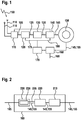
- Fig. 1 shows a block diagram of an apparatus 100 for processing a broadcast signal 105 according to an embodiment of the present invention.
- the broadcast signal 105 is received by one of a plurality of antennas 110, which is selected by an antenna selector switch 115 as a receiving antenna.
- the broadcast signal 105 received by the corresponding antenna 110 is subsequently RF-processed in an RF processing unit 120 (RF), for example, a mixture with the corresponding carrier frequency, to obtain an intermediate frequency or baseband signal.
- RF processing unit 120 RF
- the signal 125 obtained from the RF processing unit 120 is digitized in an A / D converter 130, the digitized signal 135 obtained therefrom being processed on the basis of the individual samples of the signal 135.
- sample-based processing in a sample processing unit 140 it can be detected very quickly that, for example, a signal received by the respectively selected antenna 110 is faulty or severely disturbed.
- the sample selection unit 140 can now, for example, control the antenna selection switch 115 such that another one of the antennas 110 is selected for receiving and transmitting the broadcast signal 105, which is set up, for example, at another position, and thus others, conveniently has better reception characteristics for the reception of the broadcast signal.
- the samples of the (down-mixed) broadcast signal provided by the sample processing unit 140 are subsequently written into a ring memory 150 as data values 145.
- data blocks 155 which contain a predefined number of data values 145 are then read into a block processing unit 160.
- steps described in more detail below are performed in correspondingly configured units to process the broadcast signal 105 on the basis of "block-based" processing and to provide information 165 to be extracted contained in the broadcast signal 105.
- control signals can be generated in the block processing unit 160 or a corresponding control software 170, which are read in the RF processing unit 120 and / or the sample processing unit 140 and processing and / or conversion of the broadcast signal 105 or of the thereof in the respective units control derived signal.
- a control signal 175 may be transmitted to the RF processing unit 120 such that a mixture of the broadcast signal 105 received from the corresponding antenna 110 is to be mixed with another carrier frequency, for example a slight frequency shift in the RF carrier Compensation processing of the broadcast signal 105 to compensate.
- control signal 180 from the control software 170 to the sample value processing unit 140 in order to achieve, for example, a temporary amplification of the sampled (mixed) broadcast signal values present in the signal 135, which are then to be written into the ring memory as data values 145.
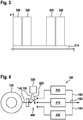
- Fig. 2 12 shows a block diagram of the structure of a block processing unit 160.
- the block processing unit 160 comprises an interface 210 for reading in a data block 155 having a plurality of data values 145, each corresponding to a value of a broadcast signal 105 sampled at a predefined time. Furthermore, the block processing unit 160 comprises a unit 220 for analyzing the plurality of data values 145 of the data block 155 in order to determine a processing parameter 225. Finally, the block processing unit 160 includes a unit 230 for demodulating each data value 145 of the data block 155 by means of a processing instruction 235 dependent on the processing parameter 225 in order to process the broadcast signal 105.
- the signal processing for digital modulation types and analog modulation types can be processed on the same processor. Due to the system concept, the processing for digital modulation types according to the embodiments of the invention presented here should be "block-based". That is, first, a predetermined number of samples 145 are written in a memory 150, which are then completely processed (in the block processing unit 160) at a certain time. The time required for the processing is on average smaller than the duration of storage of the samples 145 to be processed. In order to optimally utilize the arithmetic unit (block processing unit 160), it is also advantageous to execute the signal processing for the analog modulation types "block-based". The length of the input memory 150 for the respective samples 145 should be of a similar magnitude (eg n * 8 ms).
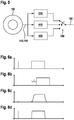
- FIG. 12 shows a diagram in which a comparison of the computational outlay of the sample-based signal processing 310 according to the conventional approach and a block-based signal processing (for example using a DAB processing algorithm 320 or an FM processing algorithm 330 as processing algorithm 235) is illustrated.
- the required computing power R is entered on the ordinate of the diagram, wherein the time curve t is reproduced on the abscissa.
- the "sample-based" signal processing 310 continuously requires little computing power, while the alternate execution of the DAB processing algorithm 320 or the FM processing algorithm 330 as a processing algorithm 235 requires significantly more computing power, but in modern Signal processing components such as digital signal processors or microcontrollers is no major problem.
- a receiving system for analog and digital modulation types in which the signal processing of the analog modulation types as well as the processing of the digital modulation types is "block-based".
- the signal processing of the analog modulation types as well as the processing of the digital modulation types is "block-based".
- a simple implementation of both signal processing on a computing unit is possible.
- the available computing power can be optimally utilized.
- An important advantage of the approach presented here is that signal rendering enhancement algorithms can be realized that are not feasible in "sample-based” processing.
- the assessment (analysis) of a complete (data) block 155 can be carried out and subsequently a decision can be made as to whether processing should be carried out again, possibly with other parameters 225.
- the received RF signal (broadcast signal 105) is fed to a receiving antenna 110 of an RF processing unit 120, in which processing steps, such as, for example, are performed.
- the RF processing unit 120 can also be designed as a so-called broadband converter, in which after a band filtering complete frequency ranges with several transmitters analog / digital converted.
- the output values 135 (samples) of the analog-to-digital converter 130 are present at a fixed sampling rate, ie a new sample value 135 is present in each time unit (for example x ns).
- these samples 135 are processed, e.g. B. filtered and decimated in the sampling rate. Further, in this sample-based processing unit 140, functions that do not allow block-based processing are executed. For this heard z.
- an antenna switch 115 to implement or implement an antenna diversity.
- the processed samples are written into a ring buffer 150 by means of a write pointer.
- the reading and processing of the values of a block 155 should on average be faster than writing a complete block 155. Normally, the reading and processing of a block 155 is significantly faster than the sample-based writing thereof.
- the length of ring buffer 150 should be at least two block lengths.
- the receiver control software 170 z. B. a frequency adjustment of the RF processing is performed in the RF processing unit 120, the values to be written in the ring memory 150 150 change immediately.
- the reception quality indicating sizes such. B. reception field strength or interference information are not yet available, since they are only determined by the processing of a block 155. It is particularly advantageous to synchronize the actions of the receiver control software 170 with the writing of the values 145 into the ring buffer 150. So z. For example, after the complete writing of a block 155 of the ring buffer 150, a signal is output with which actions of the receiver control software 170 are started concerning the settings of the RF processing in the RF processing unit 120.
- the ring buffer 150 includes, for example, in addition to the memories for the input values as the data values 145, a memory for Status information. If, for example, a frequency adjustment of the RF processing in the RF processing unit 120 is performed via the receiver control software 170, this frequency information is written into the status signal of the ring memory 150. With the aid of this status signal, which is present for each value 145 in the ring buffer 150, it can be decided as part of the block processing in the block processing unit 160 how the corresponding values 145 should be further processed. Thus, for example, depending on the status information, it can be decided whether the values 145 are forwarded to a signal processing variant 1, 2 or n.
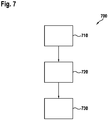
- Fig. 4 Figure 12 is a block diagram of components of such an embodiment of the present invention.
- an analysis of the data values 145 of the read-in data block 155 can take place and from this a processing parameter 225 can be obtained.
- the processing parameter 225 may then be used, for example, to control a switch 400 to select one of several signal processing variants or processing algorithms 235, 410, 420.
- the values can be fed to a separate signal processing variant 410 or 420, the result of which 165 (information) can then be evaluated by the receiver control software 170.
- This use of the separate signal processing variant 410 or 420 has the advantage of separating the signal processing values of the alternative frequency from the signal processing values of the current audio frequency of the broadcast signal 105.
- the parameters of the signal processing variants 235, 410 and 420 can be optimized for the respective applications.
- Signal processing variants used 155 data blocks have equal lengths. This can be done by, for example, according to a variant of a processing rule used in the block processing unit 160, multiplying previous values or by inserting a corresponding number of defined values. In addition to the selection of the signal processing or the processing instruction used in the block processing unit 160 as a function of the status signal, a plurality of signal processing alternatives 235, 410 or 420 for a block 155 can be realized in parallel. After processing a complete block 155, it is decided (eg, using a predetermined criterion) which signal processing 235, 410, or 420 provides the better result 165. This result 165 is then forwarded to further processing units.
- FIG. 12 shows a block diagram of components of such an embodiment of the present invention, in which such parallel processing of the data values 145 of a data block 155 is represented using different processing instructions 235, 410 or 420.
- a signal processing variant 235, 410 or 420 it can be decided for a block 155 whether the output signal 165 is sufficiently good or if the calculation or execution of one of the processing instructions 235, 410 or 420 is performed again with a different parameterization should be.
- the signal processing variants 235, 410 or 420 are not always executed in parallel, but only as needed.
- This functionality is used, for example, for the selection filtering of the FM signal 105 as a broadcast signal. If it is detected during the processing of a block 155 that there are interferences by an adjacent channel, the processing of the data block in the block processing unit 160 is performed again with a narrower setting of a selection filter in one of the data processing instructions 235, 410 or 420.
- a preprocessing of the broadcast signal 105 in the RF processing unit 120, the A / D converter 130, and / or the sample processing unit 140 such that the data values are provided using a narrower setting of a selection filter to separate frequencies (eg, in the RF processing unit 120) , A repetition of the processing can take place until a new block 155 of data 145 is completely described and should be processed. If a signal processing is processed for a block of samples 135, a certain number of output values 145 of the signal processing result in the sample processing unit 140. These output values 145 can occur at the same sampling rate as the samples 135 or at a reduced sampling rate.
- the output values 145 are also written in a ring buffer 150 to be available for further processing steps.
- Any system making use of analog broadcast standard block processing will result in a delay in the audio signal, the sizes indicative of the reception quality, the RDS signal, and all other output signals from the receiver.
- a system using block processing for analog broadcasting standards should have sufficient memory.
- the subdivision into sample-based processing and block-based processing may be further used to generate an antenna switching signal without time delay, in addition to the above aspects.
- reception enhancements are possible which can not be realized without block processing.
- other responses to e.g. B. impulsive or jump-like disorders possible as they can be carried out in sample-based.
- the reaction to interference or changes in the quality of reception can be done in a block-wise processing already in time before the change.
- Fig. 6 shows different diagrams in which the effect or the result of an embodiment of the invention presented here is compared to the conventional approaches over time. In this case, the course of an input signal is shown as a broadcast signal 105 in the diagram of the sub-figure 6a.
- the output signal 165 is presented in a block processing system according to an embodiment of the present invention. In this case, a compensation of the pulse can be seen, but also a delay t in the output of the result signal 165 occurs.
- the output signal in a sample-based system with suppression of the pulse and erroneous response during the jump according to a conventional procedure is shown.
- an output signal in a sample-based system without suppression of the pulse is also shown according to a conventional procedure.
- the time delay t is a necessary part of the block processing proposed here.
- a minimum / maximum time delay is difficult to specify as it depends on the block length used.
- the different treatment of pulse-like and discontinuous input signals in the approach proposed here compared to conventional approaches can be seen. While a block-based system can perform signal analysis over a longer period of time, thus distinguishing impulse-type from abrupt input signals, this distinction is not possible with a conventional sample-based system. Here either it comes to incorrect reactions or the desired reactions (in the example below the suppression of the impulse) do not take place.
- FIG. 5 shows a flow chart of an embodiment of the present invention as method 700 for processing a broadcast signal.
- the method 700 includes a step 710 of reading in a data block having a plurality of data values each corresponding to a value of a broadcast signal sampled at a predefined time. Further, the method 700 includes a step 720 of analyzing the plurality of data values of the data block to determine a processing parameter.
- the method 700 includes a step 730 of demodulating each data value of the data block by means of a processing parameter dependent on the processing parameter to process the broadcast signal.
- an exemplary embodiment comprises a "and / or" link between a first feature and a second feature, then this is to be read so that the embodiment according to one embodiment, both the first feature and the second feature and according to another embodiment either only first feature or only the second feature.
Landscapes
- Engineering & Computer Science (AREA)
- Signal Processing (AREA)
- Computer Networks & Wireless Communication (AREA)
- Circuits Of Receivers In General (AREA)
Claims (11)
- Procédé (700) de traitement d'un signal de radiodiffusion (105), le procédé (700) comprenant les étapes suivantes :- chargement (710) d'un bloc de données (155) qui possède une pluralité de valeurs de données (145), lesquelles correspondent chacune à une valeur d'un signal de radiodiffusion (105) échantillonné à un instant prédéfini ;- analyse (720) de la pluralité de valeurs de données (145) du bloc de données (155) afin de déterminer un paramètre de traitement (225) ; et- démodulation (730) de chaque valeur de données (145) du bloc de données (155) au moyen d'une prescription de traitement (235, 410, 420) dépendante du paramètre de traitement (225) afin de traiter le signal de radiodiffusion (105),caractérisé en ce que
à l'étape de démodulation (730), après ou pendant une exécution d'une première prescription de traitement (235), au moins une deuxième prescription de traitement (410, 420) est appliquée aux valeurs de données (145) du bloc de données (155) afin de traiter le signal de radiodiffusion (105). - Procédé (700) selon la revendication 1, caractérisé en ce qu'à l'étape de démodulation (730), un procédé de démodulation est appliqué en tant que prescription de traitement (235, 410, 420) sur les valeurs de données (145) individuelles du bloc de données.
- Procédé (700) selon l'une des revendications précédentes, caractérisé en ce qu'à l'étape d'analyse (720), le paramètre de traitement (225) est déterminé de telle sorte qu'il représente une information à propos d'une relation entre les valeurs de données (145) ou une propriété de plusieurs valeurs de données (145) du bloc de données (155).
- Procédé (700) selon l'une des revendications précédentes, caractérisé en ce qu'à l'étape de démodulation (730), au moins une première (235) ou une deuxième prescription de traitement (410, 420), en fonction du paramètre de traitement (225), est appliquée aux valeurs de données (145) afin de traiter le signal de radiodiffusion (105).
- Procédé (700) selon l'une des revendications précédentes, caractérisé en ce qu'à l'étape de démodulation (730), les valeurs de traitement (165) qui ont été délivrées en tant que résultat de l'application de la première (235) ou de la deuxième prescription de traitement (410. 420) correspondent à un critère prédéfini.
- Procédé (700) selon l'une des revendications précédentes, caractérisé en ce qu'à l'étape de chargement (710), les valeurs de données (145) d'un bloc de données (155) sont chargées depuis une mémoire circulaire (150).
- Procédé (700) selon l'une des revendications précédentes, caractérisé par une étape d'enregistrement des valeurs de données (145) dans une mémoire.
- Procédé (700) selon l'une des revendications précédentes, caractérisé par une étape de prétraitement du signal de radiodiffusion (105) en vue d'obtenir les valeurs de données (145) individuelles avant le chargement, une sélection d'une antenne de réception (110) utilisée pour la réception du signal de radiodiffusion (105) ou un mélange (120) du signal de radiodiffusion (105) ou une conversion analogique/numérique (130) ou une amplification et/ou un filtrage du signal de radiodiffusion (105) ou d'un signal (125, 135) qui en est dérivé étant effectués lors du prétraitement.
- Dispositif (160) de traitement d'un signal de radiodiffusion (105), le dispositif (160) possédant les caractéristiques suivantes :- une interface (210) servant au chargement (710) d'un bloc de données (155) qui possède une pluralité de valeurs de données (145), lesquelles correspondent chacune à une valeur d'un signal de radiodiffusion (105) échantillonné à un instant prédéfini ;- une unité (220) servant à l'analyse (720) de la pluralité de valeurs de données (145) du bloc de données (155) afin de déterminer un paramètre de traitement (225) ; et- une unité (230) servant à la démodulation (730) de chaque valeur de données (145) du bloc de données (155) au moyen d'une prescription de traitement (235, 410, 420) dépendante du paramètre de traitement (225) afin de traiter le signal de radiodiffusion (105),caractérisé en ce que
l'unité (230) servant à la démodulation (730) est configurée pour, après ou pendant une exécution d'une première prescription de traitement (235), appliquer au moins une deuxième prescription de traitement (410, 420) aux valeurs de données (145) du bloc de données (155) afin de traiter le signal de radiodiffusion (105). - Programme informatique qui est conçu pour exécuter toutes les étapes d'un procédé (700) selon l'une des revendications 1 à 8.
- Support d'enregistrement lisible par machine sur lequel est enregistré un programme informatique selon la revendication 10.
Applications Claiming Priority (1)
| Application Number | Priority Date | Filing Date | Title |
|---|---|---|---|
| DE102014211830.1A DE102014211830A1 (de) | 2014-06-20 | 2014-06-20 | Verfahren und Vorrichtung zum Verarbeiten eines Rundfunksignals |
Publications (2)
| Publication Number | Publication Date |
|---|---|
| EP2958242A1 EP2958242A1 (fr) | 2015-12-23 |
| EP2958242B1 true EP2958242B1 (fr) | 2018-07-25 |
Family
ID=52991647
Family Applications (1)
| Application Number | Title | Priority Date | Filing Date |
|---|---|---|---|
| EP15164681.7A Active EP2958242B1 (fr) | 2014-06-20 | 2015-04-22 | Dispositif et procédé de traitement d'un signal radio |
Country Status (4)
| Country | Link |
|---|---|
| EP (1) | EP2958242B1 (fr) |
| CN (1) | CN105323197B (fr) |
| DE (1) | DE102014211830A1 (fr) |
| ES (1) | ES2692386T3 (fr) |
Families Citing this family (2)
| Publication number | Priority date | Publication date | Assignee | Title |
|---|---|---|---|---|
| PL234815B1 (pl) * | 2017-02-17 | 2020-04-30 | Solution Sca Spolka Z Ograniczona Odpowiedzialnoscia | Elektroniczny wyświetlacz oraz moduł wyświetlacza, zwłaszcza do wózków |
| CN113498103B (zh) * | 2020-04-08 | 2023-08-15 | 中国移动通信集团广东有限公司 | 一种基站天线的归属方识别方法及装置 |
Family Cites Families (5)
| Publication number | Priority date | Publication date | Assignee | Title |
|---|---|---|---|---|
| US6130894A (en) * | 1998-03-09 | 2000-10-10 | Broadcom Homenetworking, Inc. | Off-line broadband network interface |
| CN100485657C (zh) * | 2004-02-19 | 2009-05-06 | Nxp股份有限公司 | 具有本地受控参数更新的电子流处理电路以及设计这种电路的方法 |
| KR20080088302A (ko) * | 2007-03-29 | 2008-10-02 | 삼성전자주식회사 | 이상 변조 신호 처리 방법 및 이상 변조 신호 보상 기능을가지는 수신기 |
| EP2645299B1 (fr) * | 2012-03-29 | 2016-10-19 | Siemens Aktiengesellschaft | Appareil de lecture destiné à l'échange de données avec une mémoire de données mobile |
| DE102012216155A1 (de) * | 2012-09-12 | 2014-03-13 | Robert Bosch Gmbh | Empfangssystem |
-
2014
- 2014-06-20 DE DE102014211830.1A patent/DE102014211830A1/de not_active Withdrawn
-
2015
- 2015-04-22 EP EP15164681.7A patent/EP2958242B1/fr active Active
- 2015-04-22 ES ES15164681.7T patent/ES2692386T3/es active Active
- 2015-06-19 CN CN201510347682.8A patent/CN105323197B/zh active Active
Non-Patent Citations (1)
| Title |
|---|
| None * |
Also Published As
| Publication number | Publication date |
|---|---|
| CN105323197A (zh) | 2016-02-10 |
| ES2692386T3 (es) | 2018-12-03 |
| EP2958242A1 (fr) | 2015-12-23 |
| DE102014211830A1 (de) | 2015-12-24 |
| CN105323197B (zh) | 2018-12-18 |
Similar Documents
| Publication | Publication Date | Title |
|---|---|---|
| EP0497115B1 (fr) | Procédé de shuntage des interruptions de signaux audio | |
| DE3884765T2 (de) | Steuerschaltung zur Antennenauswahl. | |
| WO2012168228A1 (fr) | Appareil de mesure et procédé pour la mesure d'un signal comportant plusieurs signaux partiels | |
| EP2958242B1 (fr) | Dispositif et procédé de traitement d'un signal radio | |
| EP1678512A1 (fr) | Procede et dispositif de mesure de niveaux de parasitage avec asservissement de frequence | |
| EP2245759B1 (fr) | Procédé et dispositif pour recevoir un signal de données avec plusieurs antennes | |
| DE69805771T2 (de) | Kanalimpulsantwortschätzung unter verwendung von korrelation mit linienwegnahme | |
| DE3326254A1 (de) | Peilempfaenger mit mehreren peilkanaelen | |
| DE102011055184A1 (de) | Serielle Datenschnittstelle für ein softwaredefiniertes Funksystem | |
| EP1440517B1 (fr) | Filtre de canal adaptatif pour récepteur radio mobile, et procédé de filtrage de canal canal adaptatif | |
| DE10248052A1 (de) | Vorrichtung und Verfahren zum Nachführen eines Abtastzeitpunktes in Funkempfängern | |
| EP1490962B1 (fr) | Demodulation d'un signal de reception analogique module en frequence numeriquement par evaluation des ecarts temporels entre les passages par zero | |
| DE3505950C2 (fr) | ||
| DE102020127244A1 (de) | Peilsystem sowie Verfahren zur Peilung eines Störsignals in einem Hochfrequenzsignal | |
| DE102017009206B3 (de) | Verarbeiten eines Rundfunksignals | |
| EP1914949B1 (fr) | Procédé d'analyse d'un signal modulé numériquement et dispositif d'analyse de signal | |
| DE102020133936A1 (de) | Peilsystem sowie Verfahren zur Peilung eines Störsignals in einem Hochfrequenzsignal | |
| EP1701167B1 (fr) | Procédé et dispositif destinés à l'identification de niveaux de bruits parasites de manière asynchrone par rapport à la mesure du spectre de fréquence | |
| DE102018131116A1 (de) | Verfahren zur Peilung von wenigstens einem Hochfrequenzsignal sowie Peilsystem | |
| DE102014200043A1 (de) | Empfangsvorrichtung zum Empfangen eines Nutzsignals | |
| DE102009054536A1 (de) | Vor A/D-Wandler geschalteter Frequenzmischer mit Direktumwandlung | |
| EP3228031B1 (fr) | Procédé et dispositif pour recevoir un signal de radiodiffusion | |
| DE102010024971B4 (de) | Verfahren zur Signalverarbeitung in einem Aufklärungssystem für Kommunikationssignale | |
| DE102009008269B4 (de) | Verfahren zum Rundfunkempfang | |
| DE102013207239B4 (de) | Verfahren und System zur Klassifizierung eines Funksignals zu mindestens einer Signalklasse |
Legal Events
| Date | Code | Title | Description |
|---|---|---|---|
| PUAI | Public reference made under article 153(3) epc to a published international application that has entered the european phase |
Free format text: ORIGINAL CODE: 0009012 |
|
| AK | Designated contracting states |
Kind code of ref document: A1 Designated state(s): AL AT BE BG CH CY CZ DE DK EE ES FI FR GB GR HR HU IE IS IT LI LT LU LV MC MK MT NL NO PL PT RO RS SE SI SK SM TR |
|
| AX | Request for extension of the european patent |
Extension state: BA ME |
|
| 17P | Request for examination filed |
Effective date: 20160623 |
|
| RBV | Designated contracting states (corrected) |
Designated state(s): AL AT BE BG CH CY CZ DE DK EE ES FI FR GB GR HR HU IE IS IT LI LT LU LV MC MK MT NL NO PL PT RO RS SE SI SK SM TR |
|
| RIC1 | Information provided on ipc code assigned before grant |
Ipc: H04B 1/00 20060101ALN20180313BHEP Ipc: H04B 1/16 20060101AFI20180313BHEP |
|
| GRAP | Despatch of communication of intention to grant a patent |
Free format text: ORIGINAL CODE: EPIDOSNIGR1 |
|
| STAA | Information on the status of an ep patent application or granted ep patent |
Free format text: STATUS: GRANT OF PATENT IS INTENDED |
|
| RIC1 | Information provided on ipc code assigned before grant |
Ipc: H04B 1/16 20060101AFI20180328BHEP Ipc: H04B 1/00 20060101ALN20180328BHEP |
|
| INTG | Intention to grant announced |
Effective date: 20180423 |
|
| GRAS | Grant fee paid |
Free format text: ORIGINAL CODE: EPIDOSNIGR3 |
|
| GRAA | (expected) grant |
Free format text: ORIGINAL CODE: 0009210 |
|
| STAA | Information on the status of an ep patent application or granted ep patent |
Free format text: STATUS: THE PATENT HAS BEEN GRANTED |
|
| AK | Designated contracting states |
Kind code of ref document: B1 Designated state(s): AL AT BE BG CH CY CZ DE DK EE ES FI FR GB GR HR HU IE IS IT LI LT LU LV MC MK MT NL NO PL PT RO RS SE SI SK SM TR |
|
| REG | Reference to a national code |
Ref country code: GB Ref legal event code: FG4D Free format text: NOT ENGLISH |
|
| REG | Reference to a national code |
Ref country code: CH Ref legal event code: EP |
|
| REG | Reference to a national code |
Ref country code: AT Ref legal event code: REF Ref document number: 1022867 Country of ref document: AT Kind code of ref document: T Effective date: 20180815 |
|
| REG | Reference to a national code |
Ref country code: IE Ref legal event code: FG4D Free format text: LANGUAGE OF EP DOCUMENT: GERMAN |
|
| REG | Reference to a national code |
Ref country code: DE Ref legal event code: R096 Ref document number: 502015005195 Country of ref document: DE |
|
| REG | Reference to a national code |
Ref country code: NL Ref legal event code: FP |
|
| REG | Reference to a national code |
Ref country code: ES Ref legal event code: FG2A Ref document number: 2692386 Country of ref document: ES Kind code of ref document: T3 Effective date: 20181203 |
|
| REG | Reference to a national code |
Ref country code: LT Ref legal event code: MG4D |
|
| PG25 | Lapsed in a contracting state [announced via postgrant information from national office to epo] |
Ref country code: BG Free format text: LAPSE BECAUSE OF FAILURE TO SUBMIT A TRANSLATION OF THE DESCRIPTION OR TO PAY THE FEE WITHIN THE PRESCRIBED TIME-LIMIT Effective date: 20181025 Ref country code: LT Free format text: LAPSE BECAUSE OF FAILURE TO SUBMIT A TRANSLATION OF THE DESCRIPTION OR TO PAY THE FEE WITHIN THE PRESCRIBED TIME-LIMIT Effective date: 20180725 Ref country code: PL Free format text: LAPSE BECAUSE OF FAILURE TO SUBMIT A TRANSLATION OF THE DESCRIPTION OR TO PAY THE FEE WITHIN THE PRESCRIBED TIME-LIMIT Effective date: 20180725 Ref country code: IS Free format text: LAPSE BECAUSE OF FAILURE TO SUBMIT A TRANSLATION OF THE DESCRIPTION OR TO PAY THE FEE WITHIN THE PRESCRIBED TIME-LIMIT Effective date: 20181125 Ref country code: GR Free format text: LAPSE BECAUSE OF FAILURE TO SUBMIT A TRANSLATION OF THE DESCRIPTION OR TO PAY THE FEE WITHIN THE PRESCRIBED TIME-LIMIT Effective date: 20181026 Ref country code: NO Free format text: LAPSE BECAUSE OF FAILURE TO SUBMIT A TRANSLATION OF THE DESCRIPTION OR TO PAY THE FEE WITHIN THE PRESCRIBED TIME-LIMIT Effective date: 20181025 Ref country code: SE Free format text: LAPSE BECAUSE OF FAILURE TO SUBMIT A TRANSLATION OF THE DESCRIPTION OR TO PAY THE FEE WITHIN THE PRESCRIBED TIME-LIMIT Effective date: 20180725 Ref country code: RS Free format text: LAPSE BECAUSE OF FAILURE TO SUBMIT A TRANSLATION OF THE DESCRIPTION OR TO PAY THE FEE WITHIN THE PRESCRIBED TIME-LIMIT Effective date: 20180725 Ref country code: FI Free format text: LAPSE BECAUSE OF FAILURE TO SUBMIT A TRANSLATION OF THE DESCRIPTION OR TO PAY THE FEE WITHIN THE PRESCRIBED TIME-LIMIT Effective date: 20180725 |
|
| PG25 | Lapsed in a contracting state [announced via postgrant information from national office to epo] |
Ref country code: HR Free format text: LAPSE BECAUSE OF FAILURE TO SUBMIT A TRANSLATION OF THE DESCRIPTION OR TO PAY THE FEE WITHIN THE PRESCRIBED TIME-LIMIT Effective date: 20180725 Ref country code: AL Free format text: LAPSE BECAUSE OF FAILURE TO SUBMIT A TRANSLATION OF THE DESCRIPTION OR TO PAY THE FEE WITHIN THE PRESCRIBED TIME-LIMIT Effective date: 20180725 Ref country code: LV Free format text: LAPSE BECAUSE OF FAILURE TO SUBMIT A TRANSLATION OF THE DESCRIPTION OR TO PAY THE FEE WITHIN THE PRESCRIBED TIME-LIMIT Effective date: 20180725 |
|
| REG | Reference to a national code |
Ref country code: DE Ref legal event code: R097 Ref document number: 502015005195 Country of ref document: DE |
|
| PG25 | Lapsed in a contracting state [announced via postgrant information from national office to epo] |
Ref country code: EE Free format text: LAPSE BECAUSE OF FAILURE TO SUBMIT A TRANSLATION OF THE DESCRIPTION OR TO PAY THE FEE WITHIN THE PRESCRIBED TIME-LIMIT Effective date: 20180725 Ref country code: RO Free format text: LAPSE BECAUSE OF FAILURE TO SUBMIT A TRANSLATION OF THE DESCRIPTION OR TO PAY THE FEE WITHIN THE PRESCRIBED TIME-LIMIT Effective date: 20180725 |
|
| PG25 | Lapsed in a contracting state [announced via postgrant information from national office to epo] |
Ref country code: SM Free format text: LAPSE BECAUSE OF FAILURE TO SUBMIT A TRANSLATION OF THE DESCRIPTION OR TO PAY THE FEE WITHIN THE PRESCRIBED TIME-LIMIT Effective date: 20180725 Ref country code: SK Free format text: LAPSE BECAUSE OF FAILURE TO SUBMIT A TRANSLATION OF THE DESCRIPTION OR TO PAY THE FEE WITHIN THE PRESCRIBED TIME-LIMIT Effective date: 20180725 Ref country code: DK Free format text: LAPSE BECAUSE OF FAILURE TO SUBMIT A TRANSLATION OF THE DESCRIPTION OR TO PAY THE FEE WITHIN THE PRESCRIBED TIME-LIMIT Effective date: 20180725 |
|
| PLBE | No opposition filed within time limit |
Free format text: ORIGINAL CODE: 0009261 |
|
| STAA | Information on the status of an ep patent application or granted ep patent |
Free format text: STATUS: NO OPPOSITION FILED WITHIN TIME LIMIT |
|
| 26N | No opposition filed |
Effective date: 20190426 |
|
| PG25 | Lapsed in a contracting state [announced via postgrant information from national office to epo] |
Ref country code: SI Free format text: LAPSE BECAUSE OF FAILURE TO SUBMIT A TRANSLATION OF THE DESCRIPTION OR TO PAY THE FEE WITHIN THE PRESCRIBED TIME-LIMIT Effective date: 20180725 |
|
| REG | Reference to a national code |
Ref country code: CH Ref legal event code: PL |
|
| REG | Reference to a national code |
Ref country code: BE Ref legal event code: MM Effective date: 20190430 |
|
| PG25 | Lapsed in a contracting state [announced via postgrant information from national office to epo] |
Ref country code: MC Free format text: LAPSE BECAUSE OF FAILURE TO SUBMIT A TRANSLATION OF THE DESCRIPTION OR TO PAY THE FEE WITHIN THE PRESCRIBED TIME-LIMIT Effective date: 20180725 Ref country code: LU Free format text: LAPSE BECAUSE OF NON-PAYMENT OF DUE FEES Effective date: 20190422 |
|
| PG25 | Lapsed in a contracting state [announced via postgrant information from national office to epo] |
Ref country code: LI Free format text: LAPSE BECAUSE OF NON-PAYMENT OF DUE FEES Effective date: 20190430 Ref country code: CH Free format text: LAPSE BECAUSE OF NON-PAYMENT OF DUE FEES Effective date: 20190430 |
|
| PG25 | Lapsed in a contracting state [announced via postgrant information from national office to epo] |
Ref country code: BE Free format text: LAPSE BECAUSE OF NON-PAYMENT OF DUE FEES Effective date: 20190430 |
|
| PG25 | Lapsed in a contracting state [announced via postgrant information from national office to epo] |
Ref country code: IE Free format text: LAPSE BECAUSE OF NON-PAYMENT OF DUE FEES Effective date: 20190422 |
|
| PG25 | Lapsed in a contracting state [announced via postgrant information from national office to epo] |
Ref country code: PT Free format text: LAPSE BECAUSE OF FAILURE TO SUBMIT A TRANSLATION OF THE DESCRIPTION OR TO PAY THE FEE WITHIN THE PRESCRIBED TIME-LIMIT Effective date: 20181125 |
|
| PG25 | Lapsed in a contracting state [announced via postgrant information from national office to epo] |
Ref country code: CY Free format text: LAPSE BECAUSE OF FAILURE TO SUBMIT A TRANSLATION OF THE DESCRIPTION OR TO PAY THE FEE WITHIN THE PRESCRIBED TIME-LIMIT Effective date: 20180725 |
|
| REG | Reference to a national code |
Ref country code: AT Ref legal event code: MM01 Ref document number: 1022867 Country of ref document: AT Kind code of ref document: T Effective date: 20200422 |
|
| PG25 | Lapsed in a contracting state [announced via postgrant information from national office to epo] |
Ref country code: HU Free format text: LAPSE BECAUSE OF FAILURE TO SUBMIT A TRANSLATION OF THE DESCRIPTION OR TO PAY THE FEE WITHIN THE PRESCRIBED TIME-LIMIT; INVALID AB INITIO Effective date: 20150422 Ref country code: MT Free format text: LAPSE BECAUSE OF FAILURE TO SUBMIT A TRANSLATION OF THE DESCRIPTION OR TO PAY THE FEE WITHIN THE PRESCRIBED TIME-LIMIT Effective date: 20180725 |
|
| PG25 | Lapsed in a contracting state [announced via postgrant information from national office to epo] |
Ref country code: AT Free format text: LAPSE BECAUSE OF NON-PAYMENT OF DUE FEES Effective date: 20200422 |
|
| PG25 | Lapsed in a contracting state [announced via postgrant information from national office to epo] |
Ref country code: MK Free format text: LAPSE BECAUSE OF FAILURE TO SUBMIT A TRANSLATION OF THE DESCRIPTION OR TO PAY THE FEE WITHIN THE PRESCRIBED TIME-LIMIT Effective date: 20180725 |
|
| PGFP | Annual fee paid to national office [announced via postgrant information from national office to epo] |
Ref country code: NL Payment date: 20250422 Year of fee payment: 11 |
|
| PGFP | Annual fee paid to national office [announced via postgrant information from national office to epo] |
Ref country code: DE Payment date: 20250624 Year of fee payment: 11 |
|
| PGFP | Annual fee paid to national office [announced via postgrant information from national office to epo] |
Ref country code: ES Payment date: 20250519 Year of fee payment: 11 |
|
| PGFP | Annual fee paid to national office [announced via postgrant information from national office to epo] |
Ref country code: IT Payment date: 20250430 Year of fee payment: 11 |
|
| PGFP | Annual fee paid to national office [announced via postgrant information from national office to epo] |
Ref country code: FR Payment date: 20250422 Year of fee payment: 11 |
|
| PGFP | Annual fee paid to national office [announced via postgrant information from national office to epo] |
Ref country code: TR Payment date: 20250414 Year of fee payment: 11 |
|
| PGFP | Annual fee paid to national office [announced via postgrant information from national office to epo] |
Ref country code: CZ Payment date: 20250409 Year of fee payment: 11 |
|
| PGFP | Annual fee paid to national office [announced via postgrant information from national office to epo] |
Ref country code: GB Payment date: 20260324 Year of fee payment: 12 |