EP2959862B1 - Membrane perforée pour la régénération osseuse et tissulaire guidée - Google Patents
Membrane perforée pour la régénération osseuse et tissulaire guidée Download PDFInfo
- Publication number
- EP2959862B1 EP2959862B1 EP15173417.5A EP15173417A EP2959862B1 EP 2959862 B1 EP2959862 B1 EP 2959862B1 EP 15173417 A EP15173417 A EP 15173417A EP 2959862 B1 EP2959862 B1 EP 2959862B1
- Authority
- EP
- European Patent Office
- Prior art keywords
- membrane
- layer
- bone
- perforations
- reinforcement binder
- Prior art date
- Legal status (The legal status is an assumption and is not a legal conclusion. Google has not performed a legal analysis and makes no representation as to the accuracy of the status listed.)
- Active
Links
Images






Classifications
-
- A—HUMAN NECESSITIES
- A61—MEDICAL OR VETERINARY SCIENCE; HYGIENE
- A61F—FILTERS IMPLANTABLE INTO BLOOD VESSELS; PROSTHESES; DEVICES PROVIDING PATENCY TO, OR PREVENTING COLLAPSING OF, TUBULAR STRUCTURES OF THE BODY, e.g. STENTS; ORTHOPAEDIC, NURSING OR CONTRACEPTIVE DEVICES; FOMENTATION; TREATMENT OR PROTECTION OF EYES OR EARS; BANDAGES, DRESSINGS OR ABSORBENT PADS; FIRST-AID KITS
- A61F2/00—Filters implantable into blood vessels; Prostheses, i.e. artificial substitutes or replacements for parts of the body; Appliances for connecting them with the body; Devices providing patency to, or preventing collapsing of, tubular structures of the body, e.g. stents
- A61F2/02—Prostheses implantable into the body
- A61F2/28—Bones
- A61F2/2846—Support means for bone substitute or for bone graft implants, e.g. membranes or plates for covering bone defects
-
- A—HUMAN NECESSITIES
- A61—MEDICAL OR VETERINARY SCIENCE; HYGIENE
- A61C—DENTISTRY; APPARATUS OR METHODS FOR ORAL OR DENTAL HYGIENE
- A61C8/00—Means to be fixed to the jaw-bone for consolidating natural teeth or for fixing dental prostheses thereon; Dental implants; Implanting tools
- A61C8/0003—Not used, see subgroups
- A61C8/0004—Consolidating natural teeth
- A61C8/0006—Periodontal tissue or bone regeneration
-
- A—HUMAN NECESSITIES
- A61—MEDICAL OR VETERINARY SCIENCE; HYGIENE
- A61F—FILTERS IMPLANTABLE INTO BLOOD VESSELS; PROSTHESES; DEVICES PROVIDING PATENCY TO, OR PREVENTING COLLAPSING OF, TUBULAR STRUCTURES OF THE BODY, e.g. STENTS; ORTHOPAEDIC, NURSING OR CONTRACEPTIVE DEVICES; FOMENTATION; TREATMENT OR PROTECTION OF EYES OR EARS; BANDAGES, DRESSINGS OR ABSORBENT PADS; FIRST-AID KITS
- A61F2/00—Filters implantable into blood vessels; Prostheses, i.e. artificial substitutes or replacements for parts of the body; Appliances for connecting them with the body; Devices providing patency to, or preventing collapsing of, tubular structures of the body, e.g. stents
- A61F2/0063—Implantable repair or support meshes, e.g. hernia meshes
-
- A—HUMAN NECESSITIES
- A61—MEDICAL OR VETERINARY SCIENCE; HYGIENE
- A61L—METHODS OR APPARATUS FOR STERILISING MATERIALS OR OBJECTS IN GENERAL; DISINFECTION, STERILISATION OR DEODORISATION OF AIR; CHEMICAL ASPECTS OF BANDAGES, DRESSINGS, ABSORBENT PADS OR SURGICAL ARTICLES; MATERIALS FOR BANDAGES, DRESSINGS, ABSORBENT PADS OR SURGICAL ARTICLES
- A61L27/00—Materials for grafts or prostheses or for coating grafts or prostheses
- A61L27/14—Macromolecular materials
- A61L27/18—Macromolecular materials obtained otherwise than by reactions only involving carbon-to-carbon unsaturated bonds
-
- A—HUMAN NECESSITIES
- A61—MEDICAL OR VETERINARY SCIENCE; HYGIENE
- A61L—METHODS OR APPARATUS FOR STERILISING MATERIALS OR OBJECTS IN GENERAL; DISINFECTION, STERILISATION OR DEODORISATION OF AIR; CHEMICAL ASPECTS OF BANDAGES, DRESSINGS, ABSORBENT PADS OR SURGICAL ARTICLES; MATERIALS FOR BANDAGES, DRESSINGS, ABSORBENT PADS OR SURGICAL ARTICLES
- A61L27/00—Materials for grafts or prostheses or for coating grafts or prostheses
- A61L27/50—Materials characterised by their function or physical properties, e.g. injectable or lubricating compositions, shape-memory materials, surface modified materials
- A61L27/56—Porous materials, e.g. foams or sponges
-
- A—HUMAN NECESSITIES
- A61—MEDICAL OR VETERINARY SCIENCE; HYGIENE
- A61F—FILTERS IMPLANTABLE INTO BLOOD VESSELS; PROSTHESES; DEVICES PROVIDING PATENCY TO, OR PREVENTING COLLAPSING OF, TUBULAR STRUCTURES OF THE BODY, e.g. STENTS; ORTHOPAEDIC, NURSING OR CONTRACEPTIVE DEVICES; FOMENTATION; TREATMENT OR PROTECTION OF EYES OR EARS; BANDAGES, DRESSINGS OR ABSORBENT PADS; FIRST-AID KITS
- A61F2/00—Filters implantable into blood vessels; Prostheses, i.e. artificial substitutes or replacements for parts of the body; Appliances for connecting them with the body; Devices providing patency to, or preventing collapsing of, tubular structures of the body, e.g. stents
- A61F2/0063—Implantable repair or support meshes, e.g. hernia meshes
- A61F2002/0068—Implantable repair or support meshes, e.g. hernia meshes having a special mesh pattern
-
- A—HUMAN NECESSITIES
- A61—MEDICAL OR VETERINARY SCIENCE; HYGIENE
- A61F—FILTERS IMPLANTABLE INTO BLOOD VESSELS; PROSTHESES; DEVICES PROVIDING PATENCY TO, OR PREVENTING COLLAPSING OF, TUBULAR STRUCTURES OF THE BODY, e.g. STENTS; ORTHOPAEDIC, NURSING OR CONTRACEPTIVE DEVICES; FOMENTATION; TREATMENT OR PROTECTION OF EYES OR EARS; BANDAGES, DRESSINGS OR ABSORBENT PADS; FIRST-AID KITS
- A61F2/00—Filters implantable into blood vessels; Prostheses, i.e. artificial substitutes or replacements for parts of the body; Appliances for connecting them with the body; Devices providing patency to, or preventing collapsing of, tubular structures of the body, e.g. stents
- A61F2/02—Prostheses implantable into the body
- A61F2/28—Bones
- A61F2002/2835—Bone graft implants for filling a bony defect or an endoprosthesis cavity, e.g. by synthetic material or biological material
-
- A—HUMAN NECESSITIES
- A61—MEDICAL OR VETERINARY SCIENCE; HYGIENE
- A61F—FILTERS IMPLANTABLE INTO BLOOD VESSELS; PROSTHESES; DEVICES PROVIDING PATENCY TO, OR PREVENTING COLLAPSING OF, TUBULAR STRUCTURES OF THE BODY, e.g. STENTS; ORTHOPAEDIC, NURSING OR CONTRACEPTIVE DEVICES; FOMENTATION; TREATMENT OR PROTECTION OF EYES OR EARS; BANDAGES, DRESSINGS OR ABSORBENT PADS; FIRST-AID KITS
- A61F2/00—Filters implantable into blood vessels; Prostheses, i.e. artificial substitutes or replacements for parts of the body; Appliances for connecting them with the body; Devices providing patency to, or preventing collapsing of, tubular structures of the body, e.g. stents
- A61F2/02—Prostheses implantable into the body
- A61F2/30—Joints
- A61F2002/30001—Additional features of subject-matter classified in A61F2/28, A61F2/30 and subgroups thereof
- A61F2002/30003—Material related properties of the prosthesis or of a coating on the prosthesis
- A61F2002/30004—Material related properties of the prosthesis or of a coating on the prosthesis the prosthesis being made from materials having different values of a given property at different locations within the same prosthesis
- A61F2002/30028—Material related properties of the prosthesis or of a coating on the prosthesis the prosthesis being made from materials having different values of a given property at different locations within the same prosthesis differing in tissue ingrowth capacity, e.g. made from both ingrowth-promoting and ingrowth-preventing parts
-
- A—HUMAN NECESSITIES
- A61—MEDICAL OR VETERINARY SCIENCE; HYGIENE
- A61F—FILTERS IMPLANTABLE INTO BLOOD VESSELS; PROSTHESES; DEVICES PROVIDING PATENCY TO, OR PREVENTING COLLAPSING OF, TUBULAR STRUCTURES OF THE BODY, e.g. STENTS; ORTHOPAEDIC, NURSING OR CONTRACEPTIVE DEVICES; FOMENTATION; TREATMENT OR PROTECTION OF EYES OR EARS; BANDAGES, DRESSINGS OR ABSORBENT PADS; FIRST-AID KITS
- A61F2/00—Filters implantable into blood vessels; Prostheses, i.e. artificial substitutes or replacements for parts of the body; Appliances for connecting them with the body; Devices providing patency to, or preventing collapsing of, tubular structures of the body, e.g. stents
- A61F2/02—Prostheses implantable into the body
- A61F2/30—Joints
- A61F2002/30001—Additional features of subject-matter classified in A61F2/28, A61F2/30 and subgroups thereof
- A61F2002/30003—Material related properties of the prosthesis or of a coating on the prosthesis
- A61F2002/3006—Properties of materials and coating materials
- A61F2002/30062—(bio)absorbable, biodegradable, bioerodable, (bio)resorbable, resorptive
-
- A—HUMAN NECESSITIES
- A61—MEDICAL OR VETERINARY SCIENCE; HYGIENE
- A61F—FILTERS IMPLANTABLE INTO BLOOD VESSELS; PROSTHESES; DEVICES PROVIDING PATENCY TO, OR PREVENTING COLLAPSING OF, TUBULAR STRUCTURES OF THE BODY, e.g. STENTS; ORTHOPAEDIC, NURSING OR CONTRACEPTIVE DEVICES; FOMENTATION; TREATMENT OR PROTECTION OF EYES OR EARS; BANDAGES, DRESSINGS OR ABSORBENT PADS; FIRST-AID KITS
- A61F2/00—Filters implantable into blood vessels; Prostheses, i.e. artificial substitutes or replacements for parts of the body; Appliances for connecting them with the body; Devices providing patency to, or preventing collapsing of, tubular structures of the body, e.g. stents
- A61F2/02—Prostheses implantable into the body
- A61F2/30—Joints
- A61F2/3094—Designing or manufacturing processes
- A61F2002/30971—Laminates, i.e. layered products
-
- A—HUMAN NECESSITIES
- A61—MEDICAL OR VETERINARY SCIENCE; HYGIENE
- A61F—FILTERS IMPLANTABLE INTO BLOOD VESSELS; PROSTHESES; DEVICES PROVIDING PATENCY TO, OR PREVENTING COLLAPSING OF, TUBULAR STRUCTURES OF THE BODY, e.g. STENTS; ORTHOPAEDIC, NURSING OR CONTRACEPTIVE DEVICES; FOMENTATION; TREATMENT OR PROTECTION OF EYES OR EARS; BANDAGES, DRESSINGS OR ABSORBENT PADS; FIRST-AID KITS
- A61F2210/00—Particular material properties of prostheses classified in groups A61F2/00 - A61F2/26 or A61F2/82 or A61F9/00 or A61F11/00 or subgroups thereof
- A61F2210/0076—Particular material properties of prostheses classified in groups A61F2/00 - A61F2/26 or A61F2/82 or A61F9/00 or A61F11/00 or subgroups thereof multilayered, e.g. laminated structures
-
- A—HUMAN NECESSITIES
- A61—MEDICAL OR VETERINARY SCIENCE; HYGIENE
- A61L—METHODS OR APPARATUS FOR STERILISING MATERIALS OR OBJECTS IN GENERAL; DISINFECTION, STERILISATION OR DEODORISATION OF AIR; CHEMICAL ASPECTS OF BANDAGES, DRESSINGS, ABSORBENT PADS OR SURGICAL ARTICLES; MATERIALS FOR BANDAGES, DRESSINGS, ABSORBENT PADS OR SURGICAL ARTICLES
- A61L2430/00—Materials or treatment for tissue regeneration
- A61L2430/02—Materials or treatment for tissue regeneration for reconstruction of bones; weight-bearing implants
Definitions
- This disclosure relates to a membrane configured to guide bone and tissue regeneration for a bone defect.
- GTR implies the regeneration of the bone and attachment apparatus (ligaments, cementum) of natural teeth
- GBR includes the implantation of a membrane into the location where the formation of bone is intended.
- bone and/or bone replacement material is typically used under the membrane.
- the membranes used for GTR/GBR do not include macro-perforations in the membrane, but rather are engineered to be cell-occlusive while simultaneously being able to allow the passage of small molecules. It is widely accepted that the membrane functions as a barrier to protect the healing environment form soft tissue ingrowth and resorptive stimuli.
- DE 10 2012024206 A1 describes a membrane for bone formation which comprises at least two connected layers of which a first layer is a contact surface and the other layer is at the opposite side of the membrane.
- the two layers are made of different porous materials and the size of the pores are chosen so that when the layers contact each other certain pores provide channels (openings) interconnection the two faces of the membrane.
- US 6,409,764 B1 describes methods and articles for regenerating bone or periodontal tissues which comprises a tissue penetrable device that has a plurality of holes therethrough that permit cells and vascular structures to grow through the device, which can be made of either a non-degradable material including expanded PTFE or of a degradable material like collagen.
- the disclosed articles are used in combination with members of the Transforming Growth Factor-Beta Superfamily of proteins (TGF-Beta proteins),
- US 2010/217392 A1 relates to a membrane configured to guide bone and tissue regeneration and describes a pair of porous membranes made of respective flexible sheet materials, of which the outer layer is made of dense unsintered PTFE that has a smooth outer surface that provides tissue excluding (TE) properties to the membrane and facilitates removal of the membrane after the bone regeneration has terminated.
- the pores of this dense PTFE layer allow only the passage of ions and molecules and retains the passage of cells (including bacteria) and ingrowth of soft tissues.
- the invention lies in a membrane configured to guide bone and tissue regeneration for a bone defect.
- the membrane is as defined by the appended independent claim 1.
- FIG. 1 illustrates membrane 10.
- Membrane 10 may be configured to guide bone and tissue regeneration for a bone defect.
- Membrane 10 may be suitable for guided bone regeneration (GBR), guided tissue regeneration (GTR), and/or other therapies.
- GTR guided bone regeneration
- Membrane 10 may form a barrier membrane used for guiding bone and tissue regeneration for dental and/or other purposes.
- Membrane 10 may be used in oral surgery, maxillofacial surgery, craniofacial surgery, to treat periodontal diseases, for dental implants, to treat orbital floor bone defects, and/or for other applications.
- Membrane 10 may be configured to maintain space for bone regeneration, to prevent connective tissue fibers from growing into the bone tissue, to immobilize bone, to exclude stimuli, which may hinder bone generation, and/or for other purposes.
- Membrane 10 may be a barrier membrane that is applicable in alveolar ridge defect replacements and/or for other defects that membrane 10 is sized to cover. Membrane 10 may facilitate reducing and/or eliminating injuries, and/or facilitate a more efficient bone and tissue regeneration process compared to previously known techniques. Membrane 10 may include perforations 18 located at various distances from each other throughout membrane 10.
- Perforations 18 are provided in the membrane 10 based on the surprising discovery that if a barrier membrane does not constitute a continuous surface at the location of the desired bone and tissue regeneration (e.g. if the membrane includes perforations that are larger than a pore size in a surface of the membrane) the membrane still induces a positive effect on bone regeneration, especially when combined with the use of various biological growth factors. Membranes with perforations have been shown to better facilitate bone regeneration than membranes without perforations. The perforated design also makes the membrane easier to handle, fixate, and/or shape during application because the surgeon may more readily visualize, for example, pilot holes made specifically for the purpose of securing membrane fixation screws, pins or tacks.
- a perforated membrane may facilitate communication between a patient's periosteum and growth factors used with GBR.
- the growth factors may include RhPDGF (Platelet Derived Growth Factor), RhBMP (Bone Morphogenetic Protein), and/or other growth factors.
- RhPDGF Platinum Derived Growth Factor
- RhBMP RhBone Morphogenetic Protein
- the perforations may also facilitate communication between the periosteum and undifferentiated stem cells, especially in the presence of simulative growth factors.
- Application of a non-perforated collagen (for example) membrane may reduce the regenerative potential of PDGF.
- the "permeability" of a perforated membrane may make the development of a connection with the periosteal membrane possible using the PDGF technique.
- membrane 10 may be used with RhBMP.
- Using membrane 10 with RhBMP may allow a surgeon (and/or other users) to avoid using a titanium net/mesh (used for its permeability relative to a non-perforated membrane), for example.
- a titanium net/mesh may cause complications because it is sharp and difficult to handle. Such complications may include, for example, damaging the gum of a patient or difficult removal (taking as long as thirty minutes).
- membrane 10 may be removable in a matter of a few minutes, which decreases the duration of surgery and the possible occurrences of complications.
- the present invention differs from titanium mesh in several respects. These include mechanical compliance, placement, removal, customization, and/or other differences.
- Mechanical Compliance perforated PTFE is more flexible, and therefore has improved compliance with soft tissue compared to titanium mesh. Mechanical compliance is important because biomaterials that are compliant with soft tissue have a much less reduced risk of soft tissue dehiscence (opening) and/or wound healing complications.
- Placement because of its flexibility and softness, membrane 10 easier to adapt, place, and/or fixate compared to titanium mesh.
- Removal regenerated bone tends to grow through and/or over the titanium mesh struts, making it exceedingly difficult to remove.
- Customization relating to method, in a 'custom fit' application, the present invention is much easier to trim and cut, and/or the surgeon may easily punch holes directly at the time of surgery with a simple hand punch, enabling the creation of a truly custom surgical device for individual defects. The surgeon may place the holes in exactly the location desired, and they may make more holes, or fewer holes depending on the clinical indication.
- the membrane 10 includes a first layer 14 ( FIG. 3 ), a second layer 16 ( FIG. 4 ), one or more perforations 18, and may include a reinforcement binder 12, and/or other components.
- the first layer consists of a thin layer of expanded PTFE. Said membrane may or may not contain a titanium framework between the layers. In some implementations, membrane 10 may not include reinforcement binder 12.
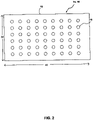
- FIG. 2 illustrates membrane 10 without reinforcement binder 12.
- First layer 14, second layer 16, reinforcement binder 12, and/or other components of membrane 10 may be similar to and/or the same as similar components described in United States Patent Number 8,556,990 granted on October 15, 2013 , and entitled, "Reinforced PTFE Medical Barriers,".
- membrane 10 may be generally rectangular and have a length 42 and a width 22.
- length 42 may be less than about 50mm.
- Length 42 may be between about 30mm and about 50mm.
- Length 42 may be about 40mm.
- width 22 may be less than about 40mm.
- Width 22 may be between about 20mm and about 40mm. Width may be about 30mm.
- membrane 10 may have a thickness from about 0.125 mm to about 0.25 mm.
- the generally rectangular shape and approximate dimensions of membrane 10 shown in FIG. 2 are not intended to be limiting. Membrane 10 may take any shape and have any dimensions that allow it to function as described in the present disclosure.
- the membrane 10 is formed from a first layer of expanded PTFE and a second layer of unsintered, substantially unexpanded PTFE.
- sintered is a term well known in the art and is used herein consistent with that understanding.
- unsintered is used herein to describe PTFE polymer that has not been subjected to the sintering process.
- Unsintered PTFE may be substantially unexpanded and typically contains no substantially defined internodal distance, which may substantially reduce its porosity relative to expanded PTFE.
- the limited porosity of the unsintered, substantially unexpanded PTFE may substantially reduce tissue adhesion to the unexpanded PTFE and/or migration of tissue into the unexpanded PTFE.
- a density of one or more layers 14, 16 ( FIG. 3 and FIG. 4 ) of membrane 10 may be about 1.2 gm/cc to about 2.3 gm/cc. In some implementations, the density of one or more layers 14, 16 of membrane 10 may be about 1.45 gm/cc to about 1.55 gm/cc.
- FIG. 3 illustrates first layer 14 and FIG. 4 illustrates second layer 16.
- First layer 14 may be configured to contact bone. (This is not intended to be limiting. In some situations a user may place the first layer of the membrane in contact with soft and/or other non-bone tissue. For example, surgeons may choose to place the expanded PTFE layer or the dense PTFE layer towards bone, or soft tissue).
- First layer 14 includes pores 15 configured to promote ingrowth of bone regenerating cells into first layer 14.
- Second layer 16 may be fixedly coupled to first layer 14 and/or be coupled to first layer 14 in other ways. Second layer 16 is configured to substantially prevent fibrous connective tissue from growing into the bone defect. Second layer 16 comprises a dense structure that prevents tissue ingrowth. Second layer 16 is relatively denser than first layer 14, for example.
- First layer 14 and second layer 16 may be separate layers of membrane 10 (as described above), and/or first layer 14 and second layer 16 may be two surfaces on opposite sides of membrane 10 (e.g., opposite sides of a single layer).
- the first layer 14 includes expanded PTFE (e-PTFE).
- the second layer 16 is and/or includes unsintered high density PTFE (d-PTFE) having a density of about 1.2 gm/cc to about 2.3 gm/cc.
- the density of d-PTFE may be in a range from about 1.45 grams/cc to about 1.55 grams/cc.
- the d-PTFE material is unsintered and unexpanded with a nominal pore channel 13 size of less than about 5 micrometers.
- the unsintered, unexpanded d-PTFE may have a nominal pore channel 13 size of less than about 2 micrometers.
- the unsintered, unexpanded d-PTFE may have a nominal pore channel 13 size of less than about 0.5 micrometers. In some implementations, the unsintered, unexpanded d-PTFE may have a nominal pore channel 13 size of less than about 0.2 micrometers. This small pore channel size may allow a composite multi-layer material employing d-PTFE to exhibit superior functional characteristics, resulting clinically in reduced host response (inflammation), soft tissue in-growth, and resultant adhesions. (These pore channel 13 sizes may be smaller than pore 15 sizes in first layer 14 made from e-PTFE that promotes bone ingrowth.)
- FIG. 5 illustrates a texture pattern 50 that may be formed in second layer 16 of membrane 10.
- the texture pattern may be formed by a plurality of indentations 52 formed in second layer 16 of membrane 10.
- Indentations 52 may have any shape that allows membrane 10 to function as described herein.
- the example shown in FIG. 5 is hexagonal in shape, although other shapes are contemplated and fall within the scope of this disclosure.
- the indentations may have a depth less than the thickness of second layer 16.
- indentations 52 may be up to about 0.15 mm deep and up to about 0.5mm wide, for example. Indentations 52 may be dimensioned based on the intended use for membrane 10 and/or other factors.
- the distribution of indentations 52 may be substantially uniform over second layer 16, may vary systematically across second layer 16, may be randomly distributed across second layer 16, and/or have other distributions. For example, up to about 150 indentations may be provided per square centimeter over second layer 16. As another example, up to about 250 indentations may be provided per square centimeter over second layer 16.
- Texture pattern 50 of second layer 16 may be made by forming a thin sheet of PTFE and then embossing the sheet with indentations.
- PTFE resin may be mixed with a lubricant (e.g., mineral spirits) to form a paste.
- the paste may be calendered between rollers to form a thin flat sheet of the desired thickness (e.g., in the range of about 0.125 mm to about 0.25 mm.)
- the calendering may be performed to reduce the thickness of the sheet and to impart substantially uniform strength in all directions to the sheet.
- the lubricant may be removed by drying the sheet at a temperature somewhat above the boiling point of the mineral spirit lubricant, but well below the sintering temperature of PTFE.
- the sheet may be embossed to form the indentations in one of its surfaces.
- the embossing step may be performed by placing a sheet of patterned polymer mesh on top of the sheet of PTFE.
- the patterned polymer mesh may be harder and have more compressive strength than the PTFE material.
- the polymer mesh may be a suitable commercially available fine pore-size mesh material.
- the polymer mesh and the PTFE sheet may be passed together between a pair of rollers, which emboss the pattern of the polymer mesh into one surface of the PTFE sheet. After embossing, the polymer sheet may be discarded.
- One of many possible advantages of the textured surface is to increase the surface area available for cell attachment.
- perforations 18 comprise co-axial through-holes having common dimensions through first layer 14 and second layer 16. Perforations 18 may be configured to enhance ossification.
- the one or more perforations 18 are perforations with a substantially circular cross section having a diameter of about 0.1mm or larger.
- one or more perforations 18 may be and/or include perforations with a substantially circular cross section having a diameter of about 0.5mm to about 1.0mm.
- one or more perforations 18 may be and/or include perforations with a substantially circular cross section having a diameter of up to about 3.0mm.
- the shape and/or size of perforations 18 may vary across membrane 10. For example, perforations 18 may be smaller near reinforcement binder 12 and larger near the edges of membrane 10.
- membrane 10 may be configured such that perforations 18 may be formed at manufacture, formed by a user (e.g., a surgeon, a doctor, a nurse, and/or other clinicians), and/or formed at other times.
- perforations 18 may be formed during an individual procedure according to the needs of the patient and/or the bone defect.
- a user may use a sharp tool to perforate membrane 10, a tool associated with membrane 10, and or other devices to make perforations 18.
- the number and/or the spacing of the perforations may be determined by the user.
- the shape of perforations 18 may depend on the tool used to make the perforations.
- Secondary perforations 20 are formed in membrane 10. Secondary perforations 20 are configured to receive fasteners configured to hold membrane 10 in place at the bone defect. Secondary perforations 20 may have a different size, shape, and/or density relative to perforations 18.
- the fasteners may be pins (e.g., Titanium Master Pins manufactured by the Meisinger corporation), titanium tacks (e.g., manufactured by Salvin), screws (e.g., manufactured by Pro-Fix, Osteogenics, etc.), and/or other fastening devices.
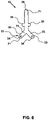
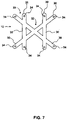
- Reinforcement binder 12 may comprise multiple elongated members 30 extending from a junction 32. In some implementations reinforcement binder 12 may be formed between first layer 14 and second layer 16 of membrane 10. In some implementations, reinforcement binder 12 may be formed from titanium, stainless steel, platinum, ceramics, composites, carbon fiber materials, customized micro and/or nano material based materials, coated (e.g., with a non-toxic coating) materials, and/or other materials. Reinforcement binder 12 may be bendable and may include elongate members 30 such that reinforcement binder 12 may be formed in a desired shape (e.g. at manufacture), and/or may be bent, deformed, and/or reformed by a user to obtain the desired shape prior to placement about the bone defect such that the formed shape is maintained upon placement.
- a desired shape e.g. at manufacture
- reinforcement binder 12 may be bent, twisted, and/or stretched as necessary to obtain the desired shape.
- reinforcement binder 12 may be malleable and/or flexible because it is relatively thin. For example, a thin piece of titanium may be easily bent by a user.
- elongated members 30 may include a first elongated member 31, for example, having a free end 33 that extends away from junction 32 with a predrilled hole 34 formed therein.
- one or more elongated members 30 may include predrilled holes 34.
- the pre-drilled holes may be suitable for securing a fastener such as a surgical pin or screw to the bone defect site.
- Reinforcement binder 12 may be placed over a bone cavity, such as an alveolar cavity, for example.
- FIG. 6 illustrates an example of reinforcement binder 12 which has an elongate member 71, for placement over a cavity toward a lingual side of the cavity.
- the fastener may be a surgical screw, for example, configured to fasten membrane 10 to an area of bone, typically at a surgical site, for example on the buccal side of the jaw, or upper alveolar arch, in the repair of alveolar defects and/or maxillofacial defects, for example.
- Layers 14 and 16 may be coupled with reinforcement binder 12. Coupling may include fixing, attaching, and/or otherwise joining the layers and reinforcement binder 12 together. Layers 14, 16 and reinforcement binder 12 may be coupled using any suitable means, including use of an adhesive layer for attachment and/or bonding the layers 14, 16 and reinforcement binder 12. Layers 14, 16 may partially cover reinforcement binder 12. Layers 14, 16 may substantially envelope reinforcement binder 12.
- Dimensions of reinforcement binder 12 may be selected based on the application (e.g., based on the bone defect to be treated). Similarly, the physical and mechanical properties of reinforcement binder 12 may be selected according to application. Titanium is used as the primary example herein. Surgical grade titanium may be used to provide malleability, strength, and low weight. It should be appreciated that titanium possesses strength and weight characteristics that, together with the biologically inert nature of the metal, offers advantages in many applications. It is contemplated that some applications may dictate that other dimensions, ratios of dimensions, and/or materials may be employed. For example, repair of bone material in a pelvis and/or a hip may require the use of steel and/or other materials.
- the structural configuration of reinforcement binder 12 may be selected to facilitate ease of placement and/or use in reconstructive repair of bone defects of various sizes, related soft tissue repair, and/or skeletal surgery, for example.
- the structural configuration of reinforcement binder 12 may be selected to provide one or more appendages and/or elongate members suitable for placement about bone and/or surrounding tissue.
- the overall shape of reinforcement binder 12 may be selected to achieve a desired strength, load distribution, membrane support, placement of fasteners, comfort, ease of insertion and/or removal, and/or achieve other effects.
- Membrane 10 and reinforcement binder 12 may be implemented at the bone defect.
- Implementing membrane 10 and reinforcement binder 12 at the bone defect may comprise placing membrane 10 and reinforcement binder 12 over the bone defect, receiving a fastener with the predrilled hole that passes through at least one of first layer 14 or second layer 16 of membrane 10, coupling membrane 10 and reinforcement binder 12 with surrounding bone, holding membrane 10 in place at the bone defect via the fastener, and/or other operations.
- reinforcement binder 12 may receive a shape imparted to reinforcement binder 12 via bending by a user (e.g., a surgeon).
- Membrane 10 may be placed over and/or about a bone defect (e.g., a bone cavity) and/or a target surgical site with the unsintered, textured d-PTFE (second layer 16) facing soft tissue (e.g., gingival tissue) and the expanded e-PTFE (first layer 14) facing and/or adjacent to the bone and/or skeletal cavity.
- a bone defect e.g., a bone cavity
- second layer 16 facing soft tissue facing soft tissue (e.g., gingival tissue) and the expanded e-PTFE (first layer 14) facing and/or adjacent to the bone and/or skeletal cavity.
- soft tissue e.g., gingival tissue
- first layer 14 expanded e-PTFE
- FIG. 8 - 10 show examples of implementing membrane 10 at a bone defect.
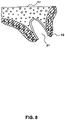
- FIG. 8 is a lateral cross-sectional view of an adult human maxilla after a tooth extraction showing alveolar bone 17.
- Soft tissue gingiva 19 covers bone 17.
- a tooth socket 21 provides an example of a bone defect.
- Normal healing of a defect may include migration of cells such as fibroblasts and gingival epithelial cells, for example. As the cells proliferate into defect 21, they may inhibit bone cell regeneration, which may result in overall loss of bone mass. In the case of extractions, the loss of bone mass may result in a loss of the alveolar ridge profile.
- FIG. 9 shows socket 21 packed with bone and covered with membrane 10.
- Socket 21 may be packed with granular particles of allograft, xenograft and/or bioresorbable hydroxyapatite, for example, as a precursor to bone, and/or other materials. Other materials and/or articles, such as endosseous type dental implants, may be placed into socket 21.
- the packed socket 21 may be covered with membrane 10.
- First layer 14 may be placed over and/or facing socket 21 and/or bone 17.
- Second layer 16 may face and/or contact tissue 19 growing over and/or around membrane 10. After membrane 10 is placed over socket 21 and bone 17, membrane 10 (e.g., reinforcement binder 12) may be secured in place via fasteners (not shown). Gingival flaps 19 may be sutured 27 over membrane 10.
- Membrane 10 may hold the hydroxyapatite particles and/or other materials in place in socket 21 during healing and prevent migration of cells and/or connective tissue into socket 21.
- connective tissue e.g., gingival tissue 19
- the attachment may be weak enough that membrane 10 may be removed after healing without significant trauma but may be strong enough to prevent dehiscence.
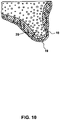
- FIG. 10 shows a typical tooth extraction site after healing, but prior to removal of membrane 10.
- the alveolar ridge profile 25 may be preserved and the gingival tissue 19 may be completely healed over ridge 25.
- Membrane 10 may be removed by making a small incision (not shown) in gingival tissue 19 to expose a portion of layer 23. The layer 23 may then be pulled out with forceps or the like. The material may typically be easily pulled out without trauma to the patient because the attachment of the connective tissue to the textured surface is weak.
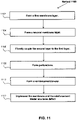
- FIG. 11 illustrates a method 1100 for guiding bone and tissue regeneration for a bone defect with a membrane.
- the operations of method 1100 presented below are intended to be illustrative. In some implementations, method 1100 may be accomplished with one or more additional operations not described, and/or without one or more of the operations discussed. Additionally, the order in which the operations of method 1100 are illustrated in FIG. 11 and described herein is not intended to be limiting.
- a first layer of the membrane configured to contact bone may be formed.
- the first layer may include pores configured to promote ingrowth of bone regenerating cells into the first layer.
- operation 1102 may be performed by a layer the same as or similar to first layer 14 (shown in FIG. 3 and described herein).
- a second layer of the membrane configured to substantially prevent fibrous connective tissue from growing into the bone defect may be formed.
- the second layer may be fixedly coupled to the first layer.
- operation 1106 may be performed by layers the same as or similar to second layer 16 (shown in FIG. 4 and described herein) and first layer 14 (shown in FIG. 3 and described herein).
- one or more perforations through the membrane may be formed or they can be pre-formed.
- the perforations comprise co-axial through-holes having common dimensions through the first layer and the second layer.
- the perforations may be configured to enhance ossification.
- forming the one or more perforations may include forming the perforations with a substantially circular cross section having a diameter of about 0.1mm or larger.
- forming the one or more perforations may include forming the perforations with a substantially circular cross section having a diameter of about 0.5mm to about 1.0mm.
- operation 1108 may comprise determining one or more of a size, a density, a spacing, and/or other characteristics of the perforations based on one or more of a material that forms the membrane, a thickness of the membrane, a size of the membrane, and/or other factors.
- operation 1108 may comprise forming one or more secondary perforations configured to receive fasteners configured to hold the membrane in place at the bone defect.
- the fasteners may be pins, for example, and/or other fastening devices.
- operation 1108 may be performed by perforations the same as or similar to perforations 18 (shown in FIG. 1 and described herein).
- a reinforcement binder may be formed.
- the reinforcement binder may comprise multiple elongated members extending from a junction.
- the elongated members may include a first elongated member, for example, having a free end that extends away from the junction with a predrilled hole formed therein.
- operation 1110 may be performed by a reinforcement binder the same as or similar to reinforcement binder 12 (shown in FIG. 1 and described herein).
- the membrane and the reinforcement binder may be implemented at the bone defect.
- Implementing the membrane and the reinforcement binder at the bone defect may comprise placing the membrane and the reinforcement binder over the bone defect, receiving a fastener with the predrilled hole that passes through at least one of the first or second layer of the membrane, and coupling the membrane and the reinforcement binder with surrounding bone and holding the membrane in place at the bone defect via the fastener.
- the reinforcement binder may be formed between the first layer and the second layer of the membrane.
- the reinforcement binder may be formed from titanium and may receive a shape imparted to the reinforcement binder via bending by a user.
- operation 1112 may be performed by a membrane the same as or similar to membrane 10 (shown in FIG. 1 and described herein) and a reinforcement binder the same as or similar to reinforcement binder 12 (shown in FIG. 1 and described herein.
- membrane 10 may be configured such that first layer 14 is a thin layer of expanded PTFE having pores in a size range of about 30 microns to about 1000 microns, but no perforations.
- first layer 14 is not perforated, but rather covers second layer 16 of dense PTFE, which is perforated (e.g., perforations 18).
- These implementations may create a (e.g., laminated) two-layer membrane, with one layer (e.g., first layer 14) comprising an open-structured mesh and the second layer (e.g., second layer 16) comprising a high density, cell occlusive material.
- Such implementations may still allow communication of large molecules between the periosteum and the underlying bone graft, just as when perforations 18 are through both layers of membrane 10.
- a reinforcement binder 12 e.g., a flexible titanium reinforcement binder
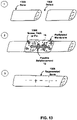
- FIG. 13 illustrates treatment of a discontinuity defect with membrane 10.
- FIG. 13 illustrates a bone 1300 and a defect 1302.
- Membrane 10 may include perforations 18, reinforcement binder 12, and/or other components.
- Membrane 10 may be placed across, over, and/or around defect 1302 and fastened in place at defect 1302 by screws, tacks, pins, and/or other fasteners 1304.
- Membrane 10 may facilitate bone regeneration 1306 as described herein.
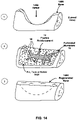
- FIG. 14 illustrates treatment of a vertical defect with membrane 10.
- FIG. 14 illustrates a bone 1400 and a defect 1402.
- Membrane 10 may include perforations 18, reinforcement binder 12, and/or other components.
- Membrane 10 may be placed across, over, and/or around defect 1402 and fastened in place at defect 1402 by screws, tacks, pins, and/or other fasteners 1404.
- Membrane 10 may facilitate bone regeneration 1406 as described herein.
- FIG. 15 illustrates treatment of a horizontal defect with membrane 10.
- FIG. 15 illustrates a bone 1500 and a defect 1502.
- Membrane 10 may include perforations 18, reinforcement binder 12, and/or other components.
- Membrane 10 may be placed across, over, and/or around defect 1502 and fastened in place at defect 1502 by screws, tacks, pins, and/or other fasteners 1504.
- Membrane 10 may facilitate bone regeneration 1506 as described herein.
Landscapes
- Health & Medical Sciences (AREA)
- Life Sciences & Earth Sciences (AREA)
- Transplantation (AREA)
- Veterinary Medicine (AREA)
- Public Health (AREA)
- Oral & Maxillofacial Surgery (AREA)
- General Health & Medical Sciences (AREA)
- Animal Behavior & Ethology (AREA)
- Biomedical Technology (AREA)
- Engineering & Computer Science (AREA)
- Chemical & Material Sciences (AREA)
- Epidemiology (AREA)
- Orthopedic Medicine & Surgery (AREA)
- Heart & Thoracic Surgery (AREA)
- Cardiology (AREA)
- Vascular Medicine (AREA)
- Dermatology (AREA)
- Medicinal Chemistry (AREA)
- Dentistry (AREA)
- Developmental Biology & Embryology (AREA)
- Dispersion Chemistry (AREA)
- Chemical Kinetics & Catalysis (AREA)
- Prostheses (AREA)
- Materials For Medical Uses (AREA)
Claims (7)
- Membrane configurée pour guider la régénération osseuse et tissulaire pour un défaut osseux, la membrane (10) comprenant : une première couche (14) faite de polytétrafluoroéthylène expansé (PTFE) configurée pour entrer en contact avec l'os et comprenant des pores (15) dans une gamme de taille de 30 micromètres à 1000 micromètres, et une seconde couche (16) faite d'un polytétrafluoroéthylène non fritté, sensiblement non expansé, ayant une structure plus dense que la première couche (14) et ayant une porosité limitée qui permet le passage d'ions et d'autres petites molécules nécessaires à l'alimentation cellulaire et au transport des déchets, les canaux de pores de la seconde couche (16) ayant une taille nominale de canal de pores inférieure à 5 micromètres, et la seconde couche (16) est couplée de manière fixe à la première couche (14), comprenant des perforations secondaires (20) pour recevoir des éléments de fixation (1204, 1304, 1404 et 1504) configurés pour maintenir la membrane (10) en place au niveau du défaut osseux, caractérisé en ce que la membrane comprend des premières perforations (18) s'étendant à travers la membrane (10) et la membrane (10) étant configurée pour être étalée sur le défaut osseux, les premières perforations (18) comprenant des trous traversants coaxiaux sensiblement circulaires ayant des dimensions communes à travers la première couche (14) et la seconde couche (16), lesquels trous traversants ont des diamètres d'au moins 0,1 mm et inférieurs à 3,0 mm.
- Membrane selon la revendication 1, où les perforations ont un diamètre d'environ 0,5 mm à environ 1,0 mm.
- Membrane selon la revendication 1, où la membrane (10) a une épaisseur d'environ 0,125 mm à environ 0,25 mm.
- Membrane selon l'une quelconque des revendications 1 à 3, caractérisée en ce que la taille des perforations (18) varie sur la membrane (10).
- Membrane selon la revendication 1, caractérisée en ce que les éléments de fixation (1204, 1304, 1404 et 1504) sont des broches, des punaises, des sutures ou des vis.
- Membrane selon l'une quelconque des revendications 1 à 5, caractérisée en ce qu'elle comprend un liant de renforcement (12) configuré pour être placé sur le défaut osseux et se coupler à l'os environnant, le liant de renforcement (12) comprenant de multiples éléments allongés (30) s'étendant depuis une jonction (32), les éléments allongés (30) comprenant un premier élément allongé (31) ayant une extrémité libre (33) qui s'étend à l'écart de la jonction (32) avec un trou pré-percé (34) formé dans celle-ci, le trou pré-percé (34) étant configuré pour recevoir un élément de fixation (1204, 1304, 1404 et 1504) qui passe à travers au moins une de la première ou de la seconde couche (14 ou 16) de la membrane (10) et maintient la membrane (10) en place au niveau du défaut osseux.
- Membrane selon la revendication 6, où le liant de renforcement (12) est formé entre la première couche (14) et la seconde couche (16) de la membrane (10).
Applications Claiming Priority (1)
| Application Number | Priority Date | Filing Date | Title |
|---|---|---|---|
| US14/313,685 US20150366669A1 (en) | 2014-06-24 | 2014-06-24 | Perforated membrane for guided bone and tissue regeneration |
Publications (2)
| Publication Number | Publication Date |
|---|---|
| EP2959862A1 EP2959862A1 (fr) | 2015-12-30 |
| EP2959862B1 true EP2959862B1 (fr) | 2022-06-29 |
Family
ID=53773187
Family Applications (1)
| Application Number | Title | Priority Date | Filing Date |
|---|---|---|---|
| EP15173417.5A Active EP2959862B1 (fr) | 2014-06-24 | 2015-06-23 | Membrane perforée pour la régénération osseuse et tissulaire guidée |
Country Status (4)
| Country | Link |
|---|---|
| US (1) | US20150366669A1 (fr) |
| EP (1) | EP2959862B1 (fr) |
| ES (1) | ES2926840T3 (fr) |
| HU (1) | HUE059772T2 (fr) |
Families Citing this family (11)
| Publication number | Priority date | Publication date | Assignee | Title |
|---|---|---|---|---|
| AT515384B1 (de) * | 2014-02-05 | 2016-04-15 | Dietmar Dr Sonnleitner | Vorverbundene mehrschichtige Folie zur Abdeckung einer Knochendefektstelle |
| US10206781B2 (en) * | 2014-05-13 | 2019-02-19 | The University Of Akron | Modular device for preventing compression and instability in a segmental defect repair scaffold |
| US20170189159A1 (en) | 2014-06-24 | 2017-07-06 | Osteogenics Biomedical, Inc. | Perforated membrane for guided bone and tissue regeneration |
| EP3299037A1 (fr) | 2016-09-27 | 2018-03-28 | Regedent AG | Système de protection et procédé pour former un système de protection, procédé de régénération d'un os et membre de renfort |
| EP3592397A4 (fr) * | 2017-03-06 | 2020-12-30 | Tei Biosciences, Inc. | Greffe de tissu perforé |
| US20180271505A1 (en) * | 2017-03-23 | 2018-09-27 | Ethicon, Inc. | Scaffolds for Joining Layers of Tissue at Discrete Points |
| EP3678715B1 (fr) * | 2017-09-06 | 2024-10-30 | Tepha, Inc. | Treillis chirurgicaux calandrés comprenant des polyhydroxyalcanoates |
| US11607317B2 (en) | 2019-09-19 | 2023-03-21 | Osteogenics Biomedical, Inc. | Modeling devices used in guided bone and tissue regeneration |
| US12059509B1 (en) | 2020-05-05 | 2024-08-13 | Integra Lifesciences Corporation | Method and matrix for tissue regeneration |
| WO2023003808A1 (fr) * | 2021-07-20 | 2023-01-26 | University Of Pittsburgh - Of The Commonwealth System Of Higher Education | Maille de magnésium avec des caractéristiques conçues pour une bioabsorption progressive afin d'améliorer la régénération osseuse dentaire |
| CN114504685A (zh) * | 2022-02-14 | 2022-05-17 | 无锡领缔生物科技有限公司 | 一种引导膜及其制备方法 |
Family Cites Families (4)
| Publication number | Priority date | Publication date | Assignee | Title |
|---|---|---|---|---|
| US6409764B1 (en) * | 1998-12-03 | 2002-06-25 | Charles F. White | Methods and articles for regenerating bone or peridontal tissue |
| US8524265B2 (en) * | 2006-08-17 | 2013-09-03 | Warsaw Orthopedic, Inc. | Medical implant sheets useful for tissue regeneration |
| US8556990B2 (en) * | 2009-02-23 | 2013-10-15 | Barry K. Bartee | Reinforced PTFE medical barriers |
| DE102012024206A1 (de) * | 2012-12-05 | 2014-06-18 | Celgen Ag | Mehrschichtige Membran für Knochendefekte |
-
2014
- 2014-06-24 US US14/313,685 patent/US20150366669A1/en not_active Abandoned
-
2015
- 2015-06-23 ES ES15173417T patent/ES2926840T3/es active Active
- 2015-06-23 EP EP15173417.5A patent/EP2959862B1/fr active Active
- 2015-06-23 HU HUE15173417A patent/HUE059772T2/hu unknown
Also Published As
| Publication number | Publication date |
|---|---|
| ES2926840T3 (es) | 2022-10-28 |
| HUE059772T2 (hu) | 2022-12-28 |
| US20150366669A1 (en) | 2015-12-24 |
| EP2959862A1 (fr) | 2015-12-30 |
Similar Documents
| Publication | Publication Date | Title |
|---|---|---|
| US20240358488A1 (en) | Device for guided bone and tissue regeneration | |
| EP2959862B1 (fr) | Membrane perforée pour la régénération osseuse et tissulaire guidée | |
| US8556990B2 (en) | Reinforced PTFE medical barriers | |
| US8556989B2 (en) | Hydrophilic high density PTFE medical barrier | |
| US5700479A (en) | Surgical element and method for selective tissue regeneration | |
| EP1957128B1 (fr) | Implant craniofacial | |
| EP0466820B1 (fr) | Objets permettant de traiter les maladies periodontales et les problemes osseux | |
| AU761058B2 (en) | Membrane with tissue-guiding surface corrugations | |
| US9433707B2 (en) | Bone graft material containment structures | |
| US20150265407A1 (en) | Multi-Layer Distraction Membrane for Bone Defects | |
| WO2014079178A1 (fr) | Prothèse de mâchoire | |
| US12426996B2 (en) | Dental membrane | |
| US9554877B2 (en) | Dental regenerative device made of porous metal | |
| US20120244498A1 (en) | Formable resorbable biomaterial interface for dental implant devices | |
| RU2387410C1 (ru) | Устройство для устранения дефектов и деформаций кости нижней челюсти | |
| US5957690A (en) | Textured high density PTFE medical barrier | |
| CN210962457U (zh) | 一种用于颌面骨缺损修复的植入体 | |
| CN219022453U (zh) | 一种口腔骨组织修复系统 | |
| KR102397547B1 (ko) | 골유도 재생 장치 및 생산방법 | |
| RU2734756C2 (ru) | Способ устранения дефектов и деформаций нижней челюсти | |
| Pi-Anfruns et al. | Guided Bone Regeneration (GBR) for Implants in the Aesthetic Zone |
Legal Events
| Date | Code | Title | Description |
|---|---|---|---|
| PUAI | Public reference made under article 153(3) epc to a published international application that has entered the european phase |
Free format text: ORIGINAL CODE: 0009012 |
|
| AK | Designated contracting states |
Kind code of ref document: A1 Designated state(s): AL AT BE BG CH CY CZ DE DK EE ES FI FR GB GR HR HU IE IS IT LI LT LU LV MC MK MT NL NO PL PT RO RS SE SI SK SM TR |
|
| AX | Request for extension of the european patent |
Extension state: BA ME |
|
| 17P | Request for examination filed |
Effective date: 20160217 |
|
| RBV | Designated contracting states (corrected) |
Designated state(s): AL AT BE BG CH CY CZ DE DK EE ES FI FR GB GR HR HU IE IS IT LI LT LU LV MC MK MT NL NO PL PT RO RS SE SI SK SM TR |
|
| STAA | Information on the status of an ep patent application or granted ep patent |
Free format text: STATUS: EXAMINATION IS IN PROGRESS |
|
| 17Q | First examination report despatched |
Effective date: 20170221 |
|
| GRAP | Despatch of communication of intention to grant a patent |
Free format text: ORIGINAL CODE: EPIDOSNIGR1 |
|
| STAA | Information on the status of an ep patent application or granted ep patent |
Free format text: STATUS: GRANT OF PATENT IS INTENDED |
|
| INTG | Intention to grant announced |
Effective date: 20220218 |
|
| GRAS | Grant fee paid |
Free format text: ORIGINAL CODE: EPIDOSNIGR3 |
|
| GRAA | (expected) grant |
Free format text: ORIGINAL CODE: 0009210 |
|
| STAA | Information on the status of an ep patent application or granted ep patent |
Free format text: STATUS: THE PATENT HAS BEEN GRANTED |
|
| AK | Designated contracting states |
Kind code of ref document: B1 Designated state(s): AL AT BE BG CH CY CZ DE DK EE ES FI FR GB GR HR HU IE IS IT LI LT LU LV MC MK MT NL NO PL PT RO RS SE SI SK SM TR |
|
| REG | Reference to a national code |
Ref country code: GB Ref legal event code: FG4D |
|
| REG | Reference to a national code |
Ref country code: CH Ref legal event code: EP |
|
| REG | Reference to a national code |
Ref country code: AT Ref legal event code: REF Ref document number: 1500793 Country of ref document: AT Kind code of ref document: T Effective date: 20220715 |
|
| REG | Reference to a national code |
Ref country code: IE Ref legal event code: FG4D |
|
| REG | Reference to a national code |
Ref country code: DE Ref legal event code: R096 Ref document number: 602015079629 Country of ref document: DE |
|
| REG | Reference to a national code |
Ref country code: SE Ref legal event code: TRGR |
|
| REG | Reference to a national code |
Ref country code: NL Ref legal event code: FP |
|
| REG | Reference to a national code |
Ref country code: LT Ref legal event code: MG9D |
|
| REG | Reference to a national code |
Ref country code: ES Ref legal event code: FG2A Ref document number: 2926840 Country of ref document: ES Kind code of ref document: T3 Effective date: 20221028 |
|
| PG25 | Lapsed in a contracting state [announced via postgrant information from national office to epo] |
Ref country code: NO Free format text: LAPSE BECAUSE OF FAILURE TO SUBMIT A TRANSLATION OF THE DESCRIPTION OR TO PAY THE FEE WITHIN THE PRESCRIBED TIME-LIMIT Effective date: 20220929 Ref country code: LT Free format text: LAPSE BECAUSE OF FAILURE TO SUBMIT A TRANSLATION OF THE DESCRIPTION OR TO PAY THE FEE WITHIN THE PRESCRIBED TIME-LIMIT Effective date: 20220629 Ref country code: HR Free format text: LAPSE BECAUSE OF FAILURE TO SUBMIT A TRANSLATION OF THE DESCRIPTION OR TO PAY THE FEE WITHIN THE PRESCRIBED TIME-LIMIT Effective date: 20220629 Ref country code: GR Free format text: LAPSE BECAUSE OF FAILURE TO SUBMIT A TRANSLATION OF THE DESCRIPTION OR TO PAY THE FEE WITHIN THE PRESCRIBED TIME-LIMIT Effective date: 20220930 Ref country code: FI Free format text: LAPSE BECAUSE OF FAILURE TO SUBMIT A TRANSLATION OF THE DESCRIPTION OR TO PAY THE FEE WITHIN THE PRESCRIBED TIME-LIMIT Effective date: 20220629 Ref country code: BG Free format text: LAPSE BECAUSE OF FAILURE TO SUBMIT A TRANSLATION OF THE DESCRIPTION OR TO PAY THE FEE WITHIN THE PRESCRIBED TIME-LIMIT Effective date: 20220929 |
|
| REG | Reference to a national code |
Ref country code: AT Ref legal event code: MK05 Ref document number: 1500793 Country of ref document: AT Kind code of ref document: T Effective date: 20220629 |
|
| PG25 | Lapsed in a contracting state [announced via postgrant information from national office to epo] |
Ref country code: RS Free format text: LAPSE BECAUSE OF FAILURE TO SUBMIT A TRANSLATION OF THE DESCRIPTION OR TO PAY THE FEE WITHIN THE PRESCRIBED TIME-LIMIT Effective date: 20220629 Ref country code: LV Free format text: LAPSE BECAUSE OF FAILURE TO SUBMIT A TRANSLATION OF THE DESCRIPTION OR TO PAY THE FEE WITHIN THE PRESCRIBED TIME-LIMIT Effective date: 20220629 |
|
| REG | Reference to a national code |
Ref country code: HU Ref legal event code: AG4A Ref document number: E059772 Country of ref document: HU |
|
| PG25 | Lapsed in a contracting state [announced via postgrant information from national office to epo] |
Ref country code: SM Free format text: LAPSE BECAUSE OF FAILURE TO SUBMIT A TRANSLATION OF THE DESCRIPTION OR TO PAY THE FEE WITHIN THE PRESCRIBED TIME-LIMIT Effective date: 20220629 Ref country code: SK Free format text: LAPSE BECAUSE OF FAILURE TO SUBMIT A TRANSLATION OF THE DESCRIPTION OR TO PAY THE FEE WITHIN THE PRESCRIBED TIME-LIMIT Effective date: 20220629 Ref country code: RO Free format text: LAPSE BECAUSE OF FAILURE TO SUBMIT A TRANSLATION OF THE DESCRIPTION OR TO PAY THE FEE WITHIN THE PRESCRIBED TIME-LIMIT Effective date: 20220629 Ref country code: PT Free format text: LAPSE BECAUSE OF FAILURE TO SUBMIT A TRANSLATION OF THE DESCRIPTION OR TO PAY THE FEE WITHIN THE PRESCRIBED TIME-LIMIT Effective date: 20221031 Ref country code: EE Free format text: LAPSE BECAUSE OF FAILURE TO SUBMIT A TRANSLATION OF THE DESCRIPTION OR TO PAY THE FEE WITHIN THE PRESCRIBED TIME-LIMIT Effective date: 20220629 Ref country code: AT Free format text: LAPSE BECAUSE OF FAILURE TO SUBMIT A TRANSLATION OF THE DESCRIPTION OR TO PAY THE FEE WITHIN THE PRESCRIBED TIME-LIMIT Effective date: 20220629 |
|
| PG25 | Lapsed in a contracting state [announced via postgrant information from national office to epo] |
Ref country code: PL Free format text: LAPSE BECAUSE OF FAILURE TO SUBMIT A TRANSLATION OF THE DESCRIPTION OR TO PAY THE FEE WITHIN THE PRESCRIBED TIME-LIMIT Effective date: 20220629 Ref country code: IS Free format text: LAPSE BECAUSE OF FAILURE TO SUBMIT A TRANSLATION OF THE DESCRIPTION OR TO PAY THE FEE WITHIN THE PRESCRIBED TIME-LIMIT Effective date: 20221029 |
|
| REG | Reference to a national code |
Ref country code: DE Ref legal event code: R097 Ref document number: 602015079629 Country of ref document: DE |
|
| PG25 | Lapsed in a contracting state [announced via postgrant information from national office to epo] |
Ref country code: AL Free format text: LAPSE BECAUSE OF FAILURE TO SUBMIT A TRANSLATION OF THE DESCRIPTION OR TO PAY THE FEE WITHIN THE PRESCRIBED TIME-LIMIT Effective date: 20220629 |
|
| PG25 | Lapsed in a contracting state [announced via postgrant information from national office to epo] |
Ref country code: DK Free format text: LAPSE BECAUSE OF FAILURE TO SUBMIT A TRANSLATION OF THE DESCRIPTION OR TO PAY THE FEE WITHIN THE PRESCRIBED TIME-LIMIT Effective date: 20220629 Ref country code: CZ Free format text: LAPSE BECAUSE OF FAILURE TO SUBMIT A TRANSLATION OF THE DESCRIPTION OR TO PAY THE FEE WITHIN THE PRESCRIBED TIME-LIMIT Effective date: 20220629 |
|
| PLBE | No opposition filed within time limit |
Free format text: ORIGINAL CODE: 0009261 |
|
| STAA | Information on the status of an ep patent application or granted ep patent |
Free format text: STATUS: NO OPPOSITION FILED WITHIN TIME LIMIT |
|
| 26N | No opposition filed |
Effective date: 20230330 |
|
| P01 | Opt-out of the competence of the unified patent court (upc) registered |
Effective date: 20230515 |
|
| PG25 | Lapsed in a contracting state [announced via postgrant information from national office to epo] |
Ref country code: SI Free format text: LAPSE BECAUSE OF FAILURE TO SUBMIT A TRANSLATION OF THE DESCRIPTION OR TO PAY THE FEE WITHIN THE PRESCRIBED TIME-LIMIT Effective date: 20220629 |
|
| PG25 | Lapsed in a contracting state [announced via postgrant information from national office to epo] |
Ref country code: MC Free format text: LAPSE BECAUSE OF FAILURE TO SUBMIT A TRANSLATION OF THE DESCRIPTION OR TO PAY THE FEE WITHIN THE PRESCRIBED TIME-LIMIT Effective date: 20220629 |
|
| PG25 | Lapsed in a contracting state [announced via postgrant information from national office to epo] |
Ref country code: MC Free format text: LAPSE BECAUSE OF FAILURE TO SUBMIT A TRANSLATION OF THE DESCRIPTION OR TO PAY THE FEE WITHIN THE PRESCRIBED TIME-LIMIT Effective date: 20220629 |
|
| REG | Reference to a national code |
Ref country code: BE Ref legal event code: MM Effective date: 20230630 |
|
| PG25 | Lapsed in a contracting state [announced via postgrant information from national office to epo] |
Ref country code: LU Free format text: LAPSE BECAUSE OF NON-PAYMENT OF DUE FEES Effective date: 20230623 |
|
| PG25 | Lapsed in a contracting state [announced via postgrant information from national office to epo] |
Ref country code: LU Free format text: LAPSE BECAUSE OF NON-PAYMENT OF DUE FEES Effective date: 20230623 |
|
| PG25 | Lapsed in a contracting state [announced via postgrant information from national office to epo] |
Ref country code: BE Free format text: LAPSE BECAUSE OF NON-PAYMENT OF DUE FEES Effective date: 20230630 |
|
| PG25 | Lapsed in a contracting state [announced via postgrant information from national office to epo] |
Ref country code: BG Free format text: LAPSE BECAUSE OF FAILURE TO SUBMIT A TRANSLATION OF THE DESCRIPTION OR TO PAY THE FEE WITHIN THE PRESCRIBED TIME-LIMIT Effective date: 20220629 |
|
| PG25 | Lapsed in a contracting state [announced via postgrant information from national office to epo] |
Ref country code: BG Free format text: LAPSE BECAUSE OF FAILURE TO SUBMIT A TRANSLATION OF THE DESCRIPTION OR TO PAY THE FEE WITHIN THE PRESCRIBED TIME-LIMIT Effective date: 20220629 |
|
| PGFP | Annual fee paid to national office [announced via postgrant information from national office to epo] |
Ref country code: NL Payment date: 20250409 Year of fee payment: 11 |
|
| PGFP | Annual fee paid to national office [announced via postgrant information from national office to epo] |
Ref country code: DE Payment date: 20250402 Year of fee payment: 11 |
|
| PGFP | Annual fee paid to national office [announced via postgrant information from national office to epo] |
Ref country code: GB Payment date: 20250401 Year of fee payment: 11 |
|
| PGFP | Annual fee paid to national office [announced via postgrant information from national office to epo] |
Ref country code: IT Payment date: 20250522 Year of fee payment: 11 |
|
| PGFP | Annual fee paid to national office [announced via postgrant information from national office to epo] |
Ref country code: HU Payment date: 20250529 Year of fee payment: 11 Ref country code: FR Payment date: 20250508 Year of fee payment: 11 |
|
| PG25 | Lapsed in a contracting state [announced via postgrant information from national office to epo] |
Ref country code: CY Free format text: LAPSE BECAUSE OF FAILURE TO SUBMIT A TRANSLATION OF THE DESCRIPTION OR TO PAY THE FEE WITHIN THE PRESCRIBED TIME-LIMIT; INVALID AB INITIO Effective date: 20150623 |
|
| PGFP | Annual fee paid to national office [announced via postgrant information from national office to epo] |
Ref country code: IE Payment date: 20250402 Year of fee payment: 11 |
|
| PGFP | Annual fee paid to national office [announced via postgrant information from national office to epo] |
Ref country code: SE Payment date: 20250514 Year of fee payment: 11 |
|
| PGFP | Annual fee paid to national office [announced via postgrant information from national office to epo] |
Ref country code: ES Payment date: 20250707 Year of fee payment: 11 |
|
| PGFP | Annual fee paid to national office [announced via postgrant information from national office to epo] |
Ref country code: CH Payment date: 20250701 Year of fee payment: 11 |
|
| PG25 | Lapsed in a contracting state [announced via postgrant information from national office to epo] |
Ref country code: TR Free format text: LAPSE BECAUSE OF FAILURE TO SUBMIT A TRANSLATION OF THE DESCRIPTION OR TO PAY THE FEE WITHIN THE PRESCRIBED TIME-LIMIT Effective date: 20220629 |