EP2960324B1 - Procede de production de biogaz dans un fermenteur et dispositif d'execution du procede - Google Patents
Procede de production de biogaz dans un fermenteur et dispositif d'execution du procede Download PDFInfo
- Publication number
- EP2960324B1 EP2960324B1 EP15173480.3A EP15173480A EP2960324B1 EP 2960324 B1 EP2960324 B1 EP 2960324B1 EP 15173480 A EP15173480 A EP 15173480A EP 2960324 B1 EP2960324 B1 EP 2960324B1
- Authority
- EP
- European Patent Office
- Prior art keywords
- fermenter
- substrate
- segments
- temperature
- flow tube
- Prior art date
- Legal status (The legal status is an assumption and is not a legal conclusion. Google has not performed a legal analysis and makes no representation as to the accuracy of the status listed.)
- Active
Links
Images



Classifications
-
- C—CHEMISTRY; METALLURGY
- C12—BIOCHEMISTRY; BEER; SPIRITS; WINE; VINEGAR; MICROBIOLOGY; ENZYMOLOGY; MUTATION OR GENETIC ENGINEERING
- C12M—APPARATUS FOR ENZYMOLOGY OR MICROBIOLOGY; APPARATUS FOR CULTURING MICROORGANISMS FOR PRODUCING BIOMASS, FOR GROWING CELLS OR FOR OBTAINING FERMENTATION OR METABOLIC PRODUCTS, i.e. BIOREACTORS OR FERMENTERS
- C12M21/00—Bioreactors or fermenters specially adapted for specific uses
- C12M21/04—Bioreactors or fermenters specially adapted for specific uses for producing gas, e.g. biogas
-
- C—CHEMISTRY; METALLURGY
- C12—BIOCHEMISTRY; BEER; SPIRITS; WINE; VINEGAR; MICROBIOLOGY; ENZYMOLOGY; MUTATION OR GENETIC ENGINEERING
- C12M—APPARATUS FOR ENZYMOLOGY OR MICROBIOLOGY; APPARATUS FOR CULTURING MICROORGANISMS FOR PRODUCING BIOMASS, FOR GROWING CELLS OR FOR OBTAINING FERMENTATION OR METABOLIC PRODUCTS, i.e. BIOREACTORS OR FERMENTERS
- C12M23/00—Constructional details, e.g. recesses, hinges
- C12M23/02—Form or structure of the vessel
- C12M23/06—Tubular
-
- C—CHEMISTRY; METALLURGY
- C12—BIOCHEMISTRY; BEER; SPIRITS; WINE; VINEGAR; MICROBIOLOGY; ENZYMOLOGY; MUTATION OR GENETIC ENGINEERING
- C12M—APPARATUS FOR ENZYMOLOGY OR MICROBIOLOGY; APPARATUS FOR CULTURING MICROORGANISMS FOR PRODUCING BIOMASS, FOR GROWING CELLS OR FOR OBTAINING FERMENTATION OR METABOLIC PRODUCTS, i.e. BIOREACTORS OR FERMENTERS
- C12M23/00—Constructional details, e.g. recesses, hinges
- C12M23/40—Manifolds; Distribution pieces
-
- C—CHEMISTRY; METALLURGY
- C12—BIOCHEMISTRY; BEER; SPIRITS; WINE; VINEGAR; MICROBIOLOGY; ENZYMOLOGY; MUTATION OR GENETIC ENGINEERING
- C12M—APPARATUS FOR ENZYMOLOGY OR MICROBIOLOGY; APPARATUS FOR CULTURING MICROORGANISMS FOR PRODUCING BIOMASS, FOR GROWING CELLS OR FOR OBTAINING FERMENTATION OR METABOLIC PRODUCTS, i.e. BIOREACTORS OR FERMENTERS
- C12M23/00—Constructional details, e.g. recesses, hinges
- C12M23/44—Multiple separable units; Modules
-
- C—CHEMISTRY; METALLURGY
- C12—BIOCHEMISTRY; BEER; SPIRITS; WINE; VINEGAR; MICROBIOLOGY; ENZYMOLOGY; MUTATION OR GENETIC ENGINEERING
- C12M—APPARATUS FOR ENZYMOLOGY OR MICROBIOLOGY; APPARATUS FOR CULTURING MICROORGANISMS FOR PRODUCING BIOMASS, FOR GROWING CELLS OR FOR OBTAINING FERMENTATION OR METABOLIC PRODUCTS, i.e. BIOREACTORS OR FERMENTERS
- C12M29/00—Means for introduction, extraction or recirculation of materials, e.g. pumps
- C12M29/26—Conditioning fluids entering or exiting the reaction vessel
-
- C—CHEMISTRY; METALLURGY
- C12—BIOCHEMISTRY; BEER; SPIRITS; WINE; VINEGAR; MICROBIOLOGY; ENZYMOLOGY; MUTATION OR GENETIC ENGINEERING
- C12M—APPARATUS FOR ENZYMOLOGY OR MICROBIOLOGY; APPARATUS FOR CULTURING MICROORGANISMS FOR PRODUCING BIOMASS, FOR GROWING CELLS OR FOR OBTAINING FERMENTATION OR METABOLIC PRODUCTS, i.e. BIOREACTORS OR FERMENTERS
- C12M41/00—Means for regulation, monitoring, measurement or control, e.g. flow regulation
- C12M41/12—Means for regulation, monitoring, measurement or control, e.g. flow regulation of temperature
- C12M41/18—Heat exchange systems, e.g. heat jackets or outer envelopes
-
- Y—GENERAL TAGGING OF NEW TECHNOLOGICAL DEVELOPMENTS; GENERAL TAGGING OF CROSS-SECTIONAL TECHNOLOGIES SPANNING OVER SEVERAL SECTIONS OF THE IPC; TECHNICAL SUBJECTS COVERED BY FORMER USPC CROSS-REFERENCE ART COLLECTIONS [XRACs] AND DIGESTS
- Y02—TECHNOLOGIES OR APPLICATIONS FOR MITIGATION OR ADAPTATION AGAINST CLIMATE CHANGE
- Y02E—REDUCTION OF GREENHOUSE GAS [GHG] EMISSIONS, RELATED TO ENERGY GENERATION, TRANSMISSION OR DISTRIBUTION
- Y02E50/00—Technologies for the production of fuel of non-fossil origin
- Y02E50/30—Fuel from waste, e.g. synthetic alcohol or diesel
Definitions
- the invention relates to a method for producing biogas in a fermenter, with the features of the preamble of claim 1.
- the invention relates to a device for carrying out the method with the features of the preamble of claim 9.
- Biogas plants the essential component of which is a fermenter in which biogas, i. H. a mixture of mainly methane and carbon dioxide is obtained from biomass in an anaerobic fermentation process.
- biogas i. H. a mixture of mainly methane and carbon dioxide is obtained from biomass in an anaerobic fermentation process.
- Slurry, sewage sludge, green waste, grain, corn silage, sugar beet and the like are usually used as fermentation substrates. Due to its solid substance and long-chain cellulose structures, wood has so far been one of the less preferred substrate components.
- the fermenter can have various designs. It can be cylindrical upright or lying square.
- Conventional fermenters are often cylindrical upright, insulated containers in which the substrate is constantly stirred and in which the same temperature and the same concentration of the reaction substances prevail in the substrate at every point.
- Horizontal fermenters with a square shape are also used, in which the The substrate is also stirred and the temperature is the same at every point.
- the first phase of the biogas production process is a biochemical conversion in which polymeric substances are split into their individual components with water retention.
- the subsequent fermentation takes place in several phases in which different groups of bacteria are involved.
- the first bacterial phase is what is known as acidogenesis.
- the monomers previously formed in the hydrolysis are absorbed by bacteria and fermented further to form various organic acids and alcohols.
- acetogenesis certain acids are fermented by acetogenic bacteria to form acetic acid.
- methanogenesis the acetic acid is finally converted into methane and carbon dioxide.
- the biogas generated in this way is cleaned and then usually converted into electricity and heat in a block-type thermal power station or, after appropriate gas processing, fed into the natural gas network.
- thermophilic process stages which work at a temperature between 25 ° and 40 ° C
- thermophilic process stages which work at a temperature between 40 ° C and 55 ° C.
- Fermenters with thermophilic process stages usually have a higher biogas yield within a certain time unit. In comparison, the thermophilic conversion is faster than the mesophilic conversion.
- the thermophilic fermentation process is less stable compared to the mesophilic conversion and, in the case of fermenters that are not optimally insulated, the heat requirement for a stable thermophilic process sequence is higher. Fermenters with a mesophilic and thermophilic operating mode therefore have different advantages.
- the substrate flows through at least two reactor vessels based on the countercurrent principle, which are operated with two substrate screw conveyor transport devices. This increases the sensitivity to maintenance and repairs considerably.
- DE 31 51 187 A1 discloses a fermentation tank with thermally separated zones.
- the fermentation tank is an upright reactor vessel with which no natural conveyance based solely on displacement is achieved.
- the conveyance takes place with driven elements such as pumps, which are disadvantageous for bacterial growth due to the associated shear stresses in the liquid phase.
- CA 2 731 716 A1 discloses a horizontally lying anaerobic fermenter for the production of biogas and a method for producing biogas.
- the fermenter has external heating systems with more than two different temperature zones that work and are controlled independently of each other.
- the differently heatable segments of the horizontal bioreactor are kept at a constant temperature, with decomposition being provided exclusively in the thermophilic range.
- thermophilic mode of operation with the advantages of a mesophilic mode of operation in a fermenter.
- the invention proposes a method with the features of claim 1, in which the substrate flows through fermenter segments or zones arranged one behind the other between the two ends of the fermenter, in which the substrate is heated and / or cooled differently that good reaction conditions exist for the processes taking place in the respective length section or segment.
- a fermenter within the meaning of the present invention comprises at least one single flow pipe, which can be temperature-controlled in sections.
- the flow tube is divided into segments in sections. It is true that several such segmented flow tubes can also be operated in parallel, but it is important that each flow tube, viewed over its length, comprises different sections which can be tempered individually or in groups.
- the method according to the invention initially has the advantage that it is possible to work with both a mesophilic and a thermophilic temperature range in one pass while the substrate is flowing through the fermenter.
- the individual fermenter zones or segments, of which there are preferably at least two, are distinguished, among other things, by the fact that they reflect different temperature zones.
- the fermenter zones or segments arranged one behind the other thus correspond to process stages with corresponding process temperatures. If, for example, the heat requirement is higher in the context of a thermophilic process stage, the substrate in a fermenter segment provided for this purpose is either cooled less strongly or heated as required, e.g. by means of an active process and temperature control. Active mixing of the substrate can be dispensed with in the context of the method according to the invention.
- a basic idea of the invention is to simulate the natural biochemical decomposition processes in their development and growth and to slow down or accelerate the individual phases of the microbacterial processes through targeted measures, in particular to promote the partial processes during fermentation by means of a suitable temperature.
- the temperature is varied in segments or sections from outside and / or within the fermenter.
- the entire biochemical decomposition preferably takes place in exactly one horizontal flow pipe which forms the fermenter.
- the fermenter or its flow tube can be imagined in a simplified way like an elongated vessel with a cylindrical cross-section or a similar shape, for example a polygonal or conically larger shape.
- the decisive feature of the invention is that it is a continuously running process with input, passage of several decomposition phases and output. According to the invention it is provided that the substrate passes through several microbacterial phases within the continuously running process.
- the phases include both mesophilic and thermophilic bacterial temperature ranges. The different temperature ranges that are the result of natural microbacterial decomposition processes are specifically supported by the method according to the invention.
- the mechanical mixing provided in the conventional fermenters which is carried out for example by means of paddle agitators, generates locally high flow velocities in the substrate, and the associated shear stresses have negative effects on the natural biochemical decomposition processes.
- the method according to the invention which avoids vigorous mixing or even any form of motor-driven mixers, supports the biochemical decomposition processes much more optimally and naturally.
- a sliding movement is preferably provided for the mixing of the substrate, similar to the principle of peristalsis, which can be brought about in particular by static, flow-guiding elements that are attached inside the reactor.
- the reaction mass is set in a kind of helical movement within the flow pipe and is additionally directed from the outer edge of the fermenter to the central axis of the fermenter. This promotes radial temperature equalization inside the fermenter and supports the desired axial temperature gradient.
- a temperature control device which can heat or cool the segments in a targeted manner in the axial direction of the fermenter. This means that in the continuous process in the fermenter - depending on the composition of the substrate, among other things as well as the outside temperature - the microbacterial processes are slowed down or accelerated in some areas. In particular, this can prevent the thermophilic microbacterial phase from running hot and the mesophilic microbacterial phase starting up more rapidly in the individual phases of the continuous process in the fermenter.
- Another energetically economical advantage of using a zone-wise temperature control device is that the released process heat of the natural decomposition processes, which is obtained through targeted cooling of the thermophilic areas in the fermenter, can be reused, also directly in the process, namely for preheating the mesophilic areas at the beginning of the fermenter.
- the bacterial growth within the fermenter takes place depending on the continuously running process. Provision can be made for bacterial feedback to be carried out, but only in a targeted manner in individual areas of the ferment. This bacterial feedback is characterized in that the bacteria are fed back to other zones or segments depending on the temperature and thus on the position in the fermenter.
- a temperature-controlled bacterial feedback is provided.
- mesophilic bacteria can be returned to mesophilic fermenter areas and thermophilic bacteria can be returned to thermophilic fermenter areas.
- the bacteria are fed back in front of a static guide baffle.
- the fermenter segments through which the substrate flows can be designed as heat exchangers, e.g. operated according to the countercurrent principle.
- the fermenter can have a length of 75 m and five segments, which in turn are each 15 m long.
- the five segments represent different process stages that can work with different process temperatures.
- a mesophilic operating mode is initiated, for example, in that the temperature of the substrate is controlled in a targeted manner by means of the heat exchanger function of the fermenter segment.
- the substrate temperature is regulated in such a way that the thermophilic phase is initiated.
- the heat of reaction generated in the fermenter is used to specifically cool the individual fermenter segments and the associated process temperature control of the fermenter by means of the heat exchangers.
- the substrate During its transport by means of displacement through the fermenter, the substrate passes through a mesophilic as well as a thermophilic phase, preferably in unstirred form, preferably with static flow-forming elements. Due to the different processes of hydrolysis and fermentation, i. H. Due to biochemical and microbacterial processes, which are reflected, among other things, in different process temperatures as well as in different pH values, the hydrolysis phase is carried out separately in advance. Furthermore, without an upstream hydrolysis phase, the microbial conversion of the substrate component wood would take a long time due to its structure of the long cellulose chains.
- wood can thus be processed economically as a substrate component.
- the substrate flows through a flow tube which is divided into segments with different lengths and / or with different diameters. Different dwell times in a specific temperature zone and thus different reaction times can be set over different lengths.
- the local cooling rate can be influenced via the outer diameter of a segment, in particular if temperature control is provided by sprinkling the outer jacket of the segment. Changes in the segment diameter can therefore have an impact on the process temperature and thus also initiate both a mesophilic and a thermophilic process within the fermenter.
- the substrate flows through segments of identical length and identical cross section or segments of identical length and different cross-sections or diameters.
- the fermenters can therefore have an increasing cross-section in the direction of the substrate outlet and, for example, assume a conical, pyramidal or cylindrical shape.
- the hydrolysis is a (bio) chemical reaction that can be described according to the Arrhenius equation, according to which an increase in the reaction rate is associated with an increase in temperature.
- An optimal and rapid hydrolysis takes place at temperatures of e.g. 105 ° C, far above mesophilic and thermophilic processes.
- a thermophilic bacterial conversion takes place below and up to a maximum temperature range of 55 ° C.
- the process according to the invention can thus be used particularly preferably in the context of a multistage plant in which the hydrolysis phase takes place in a separate process and is upstream of the process according to the invention.
- the reaction conditions of the phases also differ considerably from one another; the hydrolysis phase preferably takes place in a slightly acidic environment, for example at a pH value of 4-5; the bacterial fermentation process takes place preferably under slightly alkaline conditions (pH 7 - 8). Against this background, it makes sense to spatially decouple the processes of hydrolysis and microbacterial fermentation from one another. However, residual hydrolysis of the substrate will also take place in the fermenter according to the invention, but this is irrelevant.
- a device for carrying out the method is the subject matter of claim 9, the device having a fermenter which can be temperature-controlled in sections and in particular is divided into segments which can be temperature-controlled in sections or to each of which a heat exchanger is assigned.
- the segments can be designed, for example, as a double-walled tube, wherein in another medium for heat exchange can be located in the space between the walls.
- the device according to the invention dispenses with mechanical agitators, screw transport devices or paddle agitators inside the fermenter.
- mechanical agitators screw transport devices or paddle agitators inside the fermenter.
- An active, process-controlled temperature control device for cooling or heating the fermenter pipe in sections is preferably designed as a spraying or sprinkling system. Water or another suitable liquid is sprayed from the outside onto the outer jacket of the flow tube or its individual segments.
- a practicable variant of the invention provides that the fermenter is designed as a plug flow fermenter divided into segments, which is biologically and mechanically reliable due to the stable plug flow.
- the segments of the fermenter can be modules that are easy to connect to one another, so that the fermenter has a modular design and can thus be transported and assembled on site relatively easily.
- the method according to the invention can be based on an in Fig. 1 carried out lying fermenter 10 shown in a lateral sectional view, which in the in Fig. 1 illustrated embodiment is in the form of a plug flow fermenter.
- the fermenter 10 has a length of 75 m and consists of a flow pipe which is divided into several segments 14, 15, 16, 17, 18 which are arranged directly one behind the other.
- the length of each individual segment 14, 15, 16, 17, 18 is 15 m Fig. 1
- the segments 14, 15, 16, 17, 18 are in the form of detachably connected modules so that the fermenter 10 can be broken down into the segments 14, 15, 16, 17, 18.
- a heat exchanger 11.1, 11.2, 11.3, 11.4, 11.5 with a heat exchanger function is assigned to each segment 14, 15, 16, 17, 18 due to the double-walled construction of the segments 14, 15, 16, 17, 18.
- the heat exchanger medium with a heat exchanger medium temperature is located between the inner and outer segment walls.
- the method begins with the fermenter 10 being charged in such a way that substrate at the inlet 12 of the fermenter 10 is fed into the interior of the fermenter 10 in a conventional manner. Due to the relatively high solids content of the substrate, e.g. B. 20-30%, the substrate flows through the fermenter 10 in the flow direction 12a in the form of a relatively stable mass according to the plug flow method and is fed out of the fermenter 10 in a conventional manner at the outlet 13 of the fermenter 10 as a treated substrate.
- the substrate is conveyed in the fermenter 10 by displacement by means of inputting the fresh material into the fermenter 10.
- the substrate in the fermenter 10 remains essentially in an unstirred state. Static flow-forming elements in the fermenter 10 can guide the substrate transport.
- the substrate has previously passed the individual segments 14, 15, 16, 17, 18 in the direction of flow 12a and has passed through three stages of microbial production of biogas, ie acidogenesis, acetogenesis and methanogenesis.
- the biogas produced in this way collects in the upper area of the individual segments 14, 15, 16, 17, 18 and is discharged from each segment 14, 15, 16, 17, 18 or at the end of the segment 18 at the outlet 13 from the fermenter 10 .
- a method for producing biogas with a suitable fermenter is integrated in a multi-stage process, ie the first stage of the biogas production process, hydrolysis, does not take place in fermenter 10 or only to a small extent as residual hydrolysis.
- the substrate fed into the fermenter 10 is therefore predominantly a hydrolyzed substrate.
- the in Fig. 1 The fermenter 10 shown represents a fermenter which is spatially downstream of the hydrolysis as a purely chemical or enzymatic and biochemical process and in which, for the most part, only the bacterial conversion processes of acidogenesis, acetogenesis and methanogenesis take place, their rate of activity and growth rate of the corresponding bacteria are coupled.
- thermophilic types of bacteria In relation to the microbacterial production of biogas, this means that most of the mesophilic bacterial species reach their maximum activity and growth rate in a range between 25 ° C and 40 ° C.
- the speed of reaction of thermophilic types of bacteria only sets in at temperatures above 40 ° C.
- the fermentation that begins in the fermenter 10 is accompanied by the generation of heat of reaction.
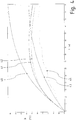
- the course of the heat of reaction is shown in the graph in Fig. 4 emerged.
- the substrate contains around 1/3 hydrolyzed wood as well as green waste, manure and liquid manure. Wood in particular, with its long-chain cellulose structures, has to be hydrolyzed in a separate upstream process before fermentation.
- Fig. 4 shows the temperature development of the fermentation substrate introduced into the fermenter 10 as a function of the length of the fermenter 10.
- the in Fig. 1 Fermenter 10 shown has a length of 75 m and the segments 14, 15, 16, 17, 18 each have a length of 15 m.
- the total throughput time in the present case is approx. 30 days, ie a substrate throughput speed of around 2.5 m / day.
- the freshly introduced and heated substrate in the fermenter 10 as the temperature graph 40 in Fig.
- the individual fermenter segments are gradually moved into the segments 14, 15, 16, 17, 18 by means of the heat exchangers 11.1, 11.2, 11.3, 11.4, 11.5 14, 15, 16, 17, 18, the substrate flowing through the fermenter 10 is cooled.
- cooling takes place over a distance of 0 to 15 m.
- the introduced substrate is cooled with a heat exchanger medium temperature of 20 ° C, for example.
- the temperature graph 41 in Fig. 4 clearly shows, in this area in the first segment between 0 and 15 m, the substrate is fermented in the fermenter 10 at mesophilic process temperatures.
- segment 15 is cooled with a heat exchanger medium temperature of 22.5 ° C. and in segment 16 with a heat exchanger medium temperature of 25 ° C.
- the temperature graph 41 in Fig. 4 shows the temperature profile of the substrate in the direction of flow 12a in the middle of the longitudinal axis of the fermenter 10.
- the temperature graph 42 in FIG. 40 shows the temperature profile of the substrate in the direction of flow 12a, at a distance of 0.5 m from the center of the longitudinal axis of the fermenter 10 away.
- the substrate flowing through the fermenter 10 should be as small as possible at the outlet 13 at the fermenter 10 Temperature leaves.
- the energy released here, generated from the heat of reaction, can be used, for example, for the spatial and temporal upstream hydrolysis.
- the last two segments 17 and 18 are again cooled with a lower heat exchanger medium temperature, e.g. 22.5 ° C for segment 17 and 20 ° C for segment 18.
- a lower heat exchanger medium temperature e.g. 22.5 ° C for segment 17 and 20 ° C for segment 18.
- the comparison between the temperature graphs 41 and 42 also shows that there is a temperature gradient in the radial direction in the fermenter, also due to the undisturbed shape of the substrate.
- the radial temperature gradient in the fermenter 10 promotes the partial formation of bacterial cultures and thus supports the transitions between the individual mesophilic and thermophilic process phases and thus promotes the corresponding fermentation of the substrate.
- Figs. 2 and 3 show further geometric embodiments of a plug flow fermenter 10 which can be used for the method according to the invention.
- Figs. 2 and 3 fermenters shown which are provided with the reference numerals 20 and 30, also have segments 24, 25, 26, 27, 28 and 34, 35, 36, 37, 38, which in turn each have temperature control devices such as heat exchangers 21.1, 21.2, 21.3, 21.4, 21.5 and 31.1, 31.2, 31.3, 31.4, 31.5 are assigned to segments 24, 25, 26, 27, 28 and 34, 35, 36, 37, 38 by means of a double-walled construction.
- At the two ends of the fermenters 20 and 30 there are also inlets and outlets, which are identified by the reference numerals 22, 23 and 32, 33.
- substrate is fed to the fermenters 20 and 30 in the direction of flow 22a and 32a and the substrate treated in the fermenters 20 and 30 is discharged again at the outlets 23 and 33.
- the diameter of the segments 24, 25, 26, 27, 28 of the fermenter 20 and of the segments 34, 35, 36, 37, 38 of the fermenter 30 increases in the direction of the outlets 23 and 33.
- An increasing cross-section or diameter from 1.5 m at the beginning of the first segment to 2.5 m at the end of the last segment prove to be advantageous for process temperature control and the general process sequence.
- a stepped course instead of a conical or pyramidal course of the geometry of the fermenter 30, it turns out on the basis of the analyzes and simulations Diameter changes of 0.25 m as appropriate for an economical and smooth process flow.
- the next temperature graphs 43 and 44 assume segment diameters of successively 1.5 m, 1.75 m, 2.0 m, 2.25 m and 2.5 m, as shown in the fermenter 30 in FIG Fig. 3 are implemented.
- the geometrical designs of the fermenter 30, like the temperature graphs 43 and 44 in FIG Fig. 4 show, effects on the course of the process temperatures in the individual segments 34, 35, 36, 37 and 38 of the fermenter 30. It is always through appropriate cooling by means of the heat exchangers 31.1, 31.2, 31.3, 31.4 and 31.5 of the double-walled segments 34, 35, 36, 37 and 38 of the fermenter 30 achieved mesophilic and thermophilic process stages, these process temperatures being lower in particular in the first half of the fermenter 30 than in the one in Fig. 1 fermenter 10 shown. As can also be seen from the temperature graphs 43 and 44, the radial temperature gradient of the substrate becomes greater in fermenter 30 than in fermenter 10.
- the temperature graph 43 in Fig. 4 shows the temperature profile of the substrate in the flow direction 32a in the middle of the longitudinal axis of the fermenter 30.
- the temperature graph 44 in Fig. 4 shows the temperature profile of the substrate in the direction of flow 32a at a distance of 0.5 m at the beginning of the fermenter 30 to 0.75 m at the end of the fermenter 30, viewed from the center of the longitudinal axis of the fermenter 30.
- FIG. 5 a longitudinal section of a fermenter 56 without a temperature control device is shown, which extends between a fermenter inlet 51 and a fermenter outlet 52.
- the temperature-controlled bacteria inlet and outlet lines 54, 55 can be attached as often as required depending on the substrate composition and the length L of the fermenter 56,
- a guide baffle 53 sets the reaction mass in an axial and rotating movement and additionally directs it from the edge of the fermenter to the central axis of the fermenter.
- the fermenter 56 is shown in cross section as well as the temperature control device provided in the preferred embodiment.
- the temperature control device does not take the form of a heat exchanger integrated into the wall of the flow pipe, but rather the entire fermenter is placed under a roof 58.
- a spray device 57 Above the flow pipe 56 there is a spray device 57, which is designed, for example, as a pipe sprinkler system.
- the flow pipe 56 is elevated above a collecting basin 59 by means of fastening means 61.
- the fermenter can be continuously temperature controlled by simply wetting its wall from above with more or less temperature control water 60.
- the temperature control can be carried out in a targeted manner in corresponding segments of the fermenter 56. In this way, the individual micro-bacterial phases can be controlled in a targeted manner in the continuously running process.
Landscapes
- Health & Medical Sciences (AREA)
- Life Sciences & Earth Sciences (AREA)
- Chemical & Material Sciences (AREA)
- Engineering & Computer Science (AREA)
- Wood Science & Technology (AREA)
- Organic Chemistry (AREA)
- Bioinformatics & Cheminformatics (AREA)
- Zoology (AREA)
- Genetics & Genomics (AREA)
- Biochemistry (AREA)
- Sustainable Development (AREA)
- Microbiology (AREA)
- Biotechnology (AREA)
- General Engineering & Computer Science (AREA)
- General Health & Medical Sciences (AREA)
- Biomedical Technology (AREA)
- Clinical Laboratory Science (AREA)
- Molecular Biology (AREA)
- Physics & Mathematics (AREA)
- Thermal Sciences (AREA)
- Analytical Chemistry (AREA)
- General Chemical & Material Sciences (AREA)
- Oil, Petroleum & Natural Gas (AREA)
- Processing Of Solid Wastes (AREA)
- Apparatus Associated With Microorganisms And Enzymes (AREA)
Claims (15)
- Procédé de fabrication de biogaz dans un fermentateur (10, 20, 30 ; 50),- dans lequel le substrat est introduit à une extrémité du fermentateur (10, 20, 30, 50) et le substrat traité est soutiré à l'autre extrémité du fermentateur (10, 20, 30, 50),- dans lequel le fermentateur (10, 20, 30, 50) comprend au moins un tube d'écoulement individuel, qui est traversé par le substrat entre les deux extrémités du tube d'écoulement dans la direction d'écoulement (12a, 22a, 32a),caractérisé en ce que- le substrat est conduit au travers d'un tube d'écoulement horizontal, qui est différemment conditionné en température en zones,- le substrat passe par plusieurs phases de décomposition entre l'entrée et la sortie du fermentateur (10, 20, 30, 50) et est amené aussi bien dans une plage de température mésophile que dans une plage de température thermophile pendant le passage au travers du fermentateur (10, 20, 30, 50), et- le substrat s'écoule en continu par refoulement en tant qu'écoulement piston au travers du fermentateur (10, 20, 30, 50), le substrat étant acheminé au travers du fermentateur (10, 20, 30, 50) sous forme non agitée, sans mélangeur entraîné par un moteur.
- Procédé selon la revendication 1, caractérisé en ce que le tube d'écoulement est divisé en segments agencés les uns après les autres (14 à 18, 24 à 28, 34 à 38), dans lesquels le substrat est différemment conditionné en température.
- Procédé selon la revendication 2, caractérisé en ce que les segments (14 à 18, 24 à 28, 34 à 38) sont chacun configurés sous la forme d'échangeurs de chaleur (11.1 à 11.5, 21.1 à 21.5, 31.1 à 31.5), par l'intermédiaire desquels le substrat est refroidi ou réchauffé.
- Procédé selon l'une quelconque des revendications 1 à 3, caractérisé en ce que le substrat s'écoule au travers de segments (14 à 18, 24 à 28, 34 à 38) ayant différentes longueurs et/ou ayant différents diamètres.
- Procédé selon l'une quelconque des revendications précédentes, caractérisé en ce que la masse réactionnelle est déplacée à l'intérieur du tube d'écoulement en un mouvement hélicoïdal.
- Procédé selon l'une quelconque des revendications précédentes, caractérisé en ce que des bactéries sont réinjectées dans d'autres zones ou segments en fonction de la température et par conséquent de la position dans le fermentateur.
- Procédé selon l'une quelconque des revendications précédentes, caractérisé en ce que le substrat est hydrolysé avant l'introduction dans le fermentateur (10, 20, 30, 50).
- Procédé selon l'une quelconque des revendications précédentes, caractérisé en ce que le substrat est conditionné en température dans le fermentateur (10, 20, 30, 50) par pulvérisation d'un liquide sur le revêtement extérieur du tube d'écoulement.
- Dispositif pour la réalisation du procédé selon l'une quelconque des revendications 1 à 8, caractérisé par un fermentateur, qui comprend exactement un tube d'écoulement horizontal (10, 20, 30, 50), qui ne comprend pas d'appareil d'agitation mécanique entraîné et qui est divisé dans la direction d'écoulement (12a, 22a, 32a) en zones de conditionnement en température ou en segments (14 à 18, 24 à 28, 34 à 38), qui peuvent être différemment conditionnés en température individuellement ou en groupes, et peuvent être amenés aussi bien dans une plage de température mésophile que dans une plage de température thermophile.
- Dispositif (20) selon la revendication 9, caractérisé en ce que les segments (24 à 28) présentent chacun des diamètres différents et croissants dans la direction d'écoulement (22a).
- Dispositif selon la revendication 9, caractérisé en ce que les segments (34 à 38) s'élargissent chacun coniquement dans la direction d'écoulement (32a) et forment ensemble un tube d'écoulement conique (30).
- Dispositif selon l'une quelconque des revendications 9 à 11, caractérisé en ce que les segments (14 à 18, 24 à 28, 34 à 38) présentent chacun différentes longueurs.
- Dispositif (10) selon l'une quelconque des revendications 9 à 12, caractérisé en ce qu'un dispositif de conditionnement en température (11.1 à 11.5, 21.1 à 21.5, 31.1 à 31.5, 57) est associé respectivement aux segments (14 à 18, 24 à 28, 34 à 38) .
- Dispositif selon l'une quelconque des revendications 9 à 13, caractérisé en ce que les segments (14 à 18, 24 à 28, 34 à 38) se présentent sous la forme de modules reliés de manière amovible les uns avec les autres.
- Dispositif selon l'une quelconque des revendications 9 à 14, caractérisé en ce que des éléments statiques conduisant l'écoulement (53) sont agencés à l'intérieur du tube d'écoulement du fermentateur (50).
Applications Claiming Priority (1)
| Application Number | Priority Date | Filing Date | Title |
|---|---|---|---|
| DE102014008958.4A DE102014008958A1 (de) | 2014-06-23 | 2014-06-23 | Verfahren zur Herstellung von Biogas in einem Fermenter |
Publications (3)
| Publication Number | Publication Date |
|---|---|
| EP2960324A2 EP2960324A2 (fr) | 2015-12-30 |
| EP2960324A3 EP2960324A3 (fr) | 2016-01-13 |
| EP2960324B1 true EP2960324B1 (fr) | 2021-03-17 |
Family
ID=53487252
Family Applications (1)
| Application Number | Title | Priority Date | Filing Date |
|---|---|---|---|
| EP15173480.3A Active EP2960324B1 (fr) | 2014-06-23 | 2015-06-23 | Procede de production de biogaz dans un fermenteur et dispositif d'execution du procede |
Country Status (3)
| Country | Link |
|---|---|
| EP (1) | EP2960324B1 (fr) |
| DE (1) | DE102014008958A1 (fr) |
| ES (1) | ES2875889T3 (fr) |
Cited By (1)
| Publication number | Priority date | Publication date | Assignee | Title |
|---|---|---|---|---|
| DE102023103661A1 (de) * | 2023-02-15 | 2024-08-22 | PreZero Stiftung & Co. KG | Fermentersystem und Verfahren zur Herstellung biogener Gase und ggf. Nutzprodukte, insbesondere Fettsäuren und/oder Proteine |
Family Cites Families (7)
| Publication number | Priority date | Publication date | Assignee | Title |
|---|---|---|---|---|
| DE3151187C2 (de) * | 1981-12-23 | 1986-02-20 | Günther 7920 Heidenheim Hof | Biogas-Anlage |
| CH687526A5 (de) * | 1993-02-25 | 1996-12-31 | Rindelaub Frank | Fermentationseinrichtung. |
| DE102008038065A1 (de) * | 2008-08-16 | 2010-02-18 | Rajib Pal Chowdhury | Biogasanlagen-Fermenter |
| DE102009007902A1 (de) * | 2009-02-06 | 2010-08-12 | Uwe Köppchen | Biogasanlage und Verfahren zum Betreiben einer Biogasanlage |
| EP2336292B1 (fr) * | 2009-12-18 | 2015-05-06 | HF Biotec Berlin GmbH | Dispositif et procédé de fermentation de matériaux peu visqueux |
| CA2731716A1 (fr) * | 2011-02-15 | 2012-08-15 | Zero Waste Energy Systems Inc. | Dispositif de chauffage par zones pour digesteur anaerobie horizontal |
| CN102936566A (zh) * | 2012-11-16 | 2013-02-20 | 蔡志武 | 一种用于沼气生产与发电系统的能量利用装置和方法 |
-
2014
- 2014-06-23 DE DE102014008958.4A patent/DE102014008958A1/de not_active Withdrawn
-
2015
- 2015-06-23 ES ES15173480T patent/ES2875889T3/es active Active
- 2015-06-23 EP EP15173480.3A patent/EP2960324B1/fr active Active
Non-Patent Citations (1)
| Title |
|---|
| None * |
Cited By (1)
| Publication number | Priority date | Publication date | Assignee | Title |
|---|---|---|---|---|
| DE102023103661A1 (de) * | 2023-02-15 | 2024-08-22 | PreZero Stiftung & Co. KG | Fermentersystem und Verfahren zur Herstellung biogener Gase und ggf. Nutzprodukte, insbesondere Fettsäuren und/oder Proteine |
Also Published As
| Publication number | Publication date |
|---|---|
| EP2960324A3 (fr) | 2016-01-13 |
| ES2875889T3 (es) | 2021-11-11 |
| DE102014008958A1 (de) | 2015-12-24 |
| EP2960324A2 (fr) | 2015-12-30 |
Similar Documents
| Publication | Publication Date | Title |
|---|---|---|
| DE69725730T2 (de) | Verfahren und anlage zur herstellung von organischen säuren | |
| EP1929024B1 (fr) | Procédé de production de biogaz utilisant un substrat à haute teneur en solides et en azote | |
| EP2155854B1 (fr) | Fermenteur destiné à la production de biogaz à partir d'un matériau organique susceptible d'être pompé | |
| EP2166061B1 (fr) | Dispositif et procédé destinés au traitement de biomasse | |
| DE102004025318A1 (de) | Verfahren und Vergärungsanlage zum anaeroben Vergären von biogenem Abfall | |
| DE102009009985A1 (de) | Verfahren zur Aufkonzentration von Mikroorganismen in wässrigen Substraten | |
| EP2257617A1 (fr) | Procédé pour la production de biogaz | |
| EP3574080B1 (fr) | Procédé et dispositif destinés a la production de biogaz | |
| EP3707232A1 (fr) | Fermenteur à écoulement à bouchons pour une installation de biogaz | |
| DE102014210346A1 (de) | Verfahren und vorrichtung zur erhöhung der besiedlungsdichte aktiver bakterien und archaeen unter nutzung mehrstufiger selbstregulierender ultraschall-behandlung von flüssigkeiten in biogasfermentern | |
| DE3427976C2 (fr) | ||
| EP3012320A1 (fr) | Fermenteur | |
| DE102007049479B4 (de) | Verfahren und Vorrichtung zur Biogasgewinnung | |
| DE4308920A1 (de) | Vorrichtung zur Behandlung von Bioabfällen oder dergleichen | |
| DE3420433A1 (de) | Verfahren zur gleichzeitigen herstellung von biogas und duengemitteln | |
| EP2960324B1 (fr) | Procede de production de biogaz dans un fermenteur et dispositif d'execution du procede | |
| EP1987130B1 (fr) | Dispositif de fermentation et procede de recuperation de biogaz | |
| DE102009007902A1 (de) | Biogasanlage und Verfahren zum Betreiben einer Biogasanlage | |
| DE102012113119A1 (de) | Verfahren sowie Vorrichtung zur Erzeugung regenerativer Energie aus Biomasse | |
| DE102010033442A1 (de) | Verfahren zur Aufkonzentration von Mikroorganismen in wässrigen Substraten | |
| DE112020005266T5 (de) | Anaerobe Vergärungsapparatur zur Herstellung von Biogas aus organischen Feststoffen | |
| DE102014011479A1 (de) | Neues Verfahren zur Vergärung biogener Energieträger | |
| EP2746383B1 (fr) | Dispositif et procédé destinés au traitement de biomasse | |
| CH707254A2 (de) | Biogasanlage. | |
| EP2565259B1 (fr) | Procédé et dispositif destinés à la production de biogaz |
Legal Events
| Date | Code | Title | Description |
|---|---|---|---|
| PUAL | Search report despatched |
Free format text: ORIGINAL CODE: 0009013 |
|
| PUAI | Public reference made under article 153(3) epc to a published international application that has entered the european phase |
Free format text: ORIGINAL CODE: 0009012 |
|
| AK | Designated contracting states |
Kind code of ref document: A2 Designated state(s): AL AT BE BG CH CY CZ DE DK EE ES FI FR GB GR HR HU IE IS IT LI LT LU LV MC MK MT NL NO PL PT RO RS SE SI SK SM TR |
|
| AX | Request for extension of the european patent |
Extension state: BA ME |
|
| AK | Designated contracting states |
Kind code of ref document: A3 Designated state(s): AL AT BE BG CH CY CZ DE DK EE ES FI FR GB GR HR HU IE IS IT LI LT LU LV MC MK MT NL NO PL PT RO RS SE SI SK SM TR |
|
| AX | Request for extension of the european patent |
Extension state: BA ME |
|
| RIC1 | Information provided on ipc code assigned before grant |
Ipc: C12M 1/12 20060101ALI20151207BHEP Ipc: C12M 3/00 20060101ALI20151207BHEP Ipc: C12M 1/02 20060101ALI20151207BHEP Ipc: C12M 1/107 20060101AFI20151207BHEP Ipc: C12M 1/00 20060101ALI20151207BHEP |
|
| 17P | Request for examination filed |
Effective date: 20160713 |
|
| RBV | Designated contracting states (corrected) |
Designated state(s): AL AT BE BG CH CY CZ DE DK EE ES FI FR GB GR HR HU IE IS IT LI LT LU LV MC MK MT NL NO PL PT RO RS SE SI SK SM TR |
|
| STAA | Information on the status of an ep patent application or granted ep patent |
Free format text: STATUS: EXAMINATION IS IN PROGRESS |
|
| 17Q | First examination report despatched |
Effective date: 20180531 |
|
| GRAP | Despatch of communication of intention to grant a patent |
Free format text: ORIGINAL CODE: EPIDOSNIGR1 |
|
| STAA | Information on the status of an ep patent application or granted ep patent |
Free format text: STATUS: GRANT OF PATENT IS INTENDED |
|
| INTG | Intention to grant announced |
Effective date: 20200914 |
|
| GRAS | Grant fee paid |
Free format text: ORIGINAL CODE: EPIDOSNIGR3 |
|
| GRAA | (expected) grant |
Free format text: ORIGINAL CODE: 0009210 |
|
| STAA | Information on the status of an ep patent application or granted ep patent |
Free format text: STATUS: THE PATENT HAS BEEN GRANTED |
|
| AK | Designated contracting states |
Kind code of ref document: B1 Designated state(s): AL AT BE BG CH CY CZ DE DK EE ES FI FR GB GR HR HU IE IS IT LI LT LU LV MC MK MT NL NO PL PT RO RS SE SI SK SM TR |
|
| RAP1 | Party data changed (applicant data changed or rights of an application transferred) |
Owner name: BROEKHUIJSEN, ANDRIES JOHAN Owner name: BROEKHUIJSEN, JOHAN JAKOB |
|
| REG | Reference to a national code |
Ref country code: GB Ref legal event code: FG4D Free format text: NOT ENGLISH |
|
| RIN1 | Information on inventor provided before grant (corrected) |
Inventor name: BROEKHUIJSEN, ANDRIES JOHAN Inventor name: BROEKHUIJSEN, JOHAN JAKOB |
|
| REG | Reference to a national code |
Ref country code: CH Ref legal event code: EP |
|
| REG | Reference to a national code |
Ref country code: DE Ref legal event code: R096 Ref document number: 502015014403 Country of ref document: DE |
|
| REG | Reference to a national code |
Ref country code: IE Ref legal event code: FG4D Free format text: LANGUAGE OF EP DOCUMENT: GERMAN |
|
| REG | Reference to a national code |
Ref country code: AT Ref legal event code: REF Ref document number: 1372266 Country of ref document: AT Kind code of ref document: T Effective date: 20210415 |
|
| REG | Reference to a national code |
Ref country code: NL Ref legal event code: FP |
|
| REG | Reference to a national code |
Ref country code: LT Ref legal event code: MG9D |
|
| PG25 | Lapsed in a contracting state [announced via postgrant information from national office to epo] |
Ref country code: BG Free format text: LAPSE BECAUSE OF FAILURE TO SUBMIT A TRANSLATION OF THE DESCRIPTION OR TO PAY THE FEE WITHIN THE PRESCRIBED TIME-LIMIT Effective date: 20210617 Ref country code: NO Free format text: LAPSE BECAUSE OF FAILURE TO SUBMIT A TRANSLATION OF THE DESCRIPTION OR TO PAY THE FEE WITHIN THE PRESCRIBED TIME-LIMIT Effective date: 20210617 Ref country code: HR Free format text: LAPSE BECAUSE OF FAILURE TO SUBMIT A TRANSLATION OF THE DESCRIPTION OR TO PAY THE FEE WITHIN THE PRESCRIBED TIME-LIMIT Effective date: 20210317 Ref country code: GR Free format text: LAPSE BECAUSE OF FAILURE TO SUBMIT A TRANSLATION OF THE DESCRIPTION OR TO PAY THE FEE WITHIN THE PRESCRIBED TIME-LIMIT Effective date: 20210618 Ref country code: FI Free format text: LAPSE BECAUSE OF FAILURE TO SUBMIT A TRANSLATION OF THE DESCRIPTION OR TO PAY THE FEE WITHIN THE PRESCRIBED TIME-LIMIT Effective date: 20210317 |
|
| PG25 | Lapsed in a contracting state [announced via postgrant information from national office to epo] |
Ref country code: SE Free format text: LAPSE BECAUSE OF FAILURE TO SUBMIT A TRANSLATION OF THE DESCRIPTION OR TO PAY THE FEE WITHIN THE PRESCRIBED TIME-LIMIT Effective date: 20210317 Ref country code: LV Free format text: LAPSE BECAUSE OF FAILURE TO SUBMIT A TRANSLATION OF THE DESCRIPTION OR TO PAY THE FEE WITHIN THE PRESCRIBED TIME-LIMIT Effective date: 20210317 Ref country code: RS Free format text: LAPSE BECAUSE OF FAILURE TO SUBMIT A TRANSLATION OF THE DESCRIPTION OR TO PAY THE FEE WITHIN THE PRESCRIBED TIME-LIMIT Effective date: 20210317 |
|
| PGFP | Annual fee paid to national office [announced via postgrant information from national office to epo] |
Ref country code: BE Payment date: 20210621 Year of fee payment: 7 Ref country code: AT Payment date: 20210618 Year of fee payment: 7 Ref country code: GB Payment date: 20210623 Year of fee payment: 7 Ref country code: IE Payment date: 20210622 Year of fee payment: 7 |
|
| PG25 | Lapsed in a contracting state [announced via postgrant information from national office to epo] |
Ref country code: LT Free format text: LAPSE BECAUSE OF FAILURE TO SUBMIT A TRANSLATION OF THE DESCRIPTION OR TO PAY THE FEE WITHIN THE PRESCRIBED TIME-LIMIT Effective date: 20210317 Ref country code: CZ Free format text: LAPSE BECAUSE OF FAILURE TO SUBMIT A TRANSLATION OF THE DESCRIPTION OR TO PAY THE FEE WITHIN THE PRESCRIBED TIME-LIMIT Effective date: 20210317 Ref country code: EE Free format text: LAPSE BECAUSE OF FAILURE TO SUBMIT A TRANSLATION OF THE DESCRIPTION OR TO PAY THE FEE WITHIN THE PRESCRIBED TIME-LIMIT Effective date: 20210317 Ref country code: SM Free format text: LAPSE BECAUSE OF FAILURE TO SUBMIT A TRANSLATION OF THE DESCRIPTION OR TO PAY THE FEE WITHIN THE PRESCRIBED TIME-LIMIT Effective date: 20210317 |
|
| REG | Reference to a national code |
Ref country code: ES Ref legal event code: FG2A Ref document number: 2875889 Country of ref document: ES Kind code of ref document: T3 Effective date: 20211111 |
|
| PG25 | Lapsed in a contracting state [announced via postgrant information from national office to epo] |
Ref country code: IS Free format text: LAPSE BECAUSE OF FAILURE TO SUBMIT A TRANSLATION OF THE DESCRIPTION OR TO PAY THE FEE WITHIN THE PRESCRIBED TIME-LIMIT Effective date: 20210717 Ref country code: PT Free format text: LAPSE BECAUSE OF FAILURE TO SUBMIT A TRANSLATION OF THE DESCRIPTION OR TO PAY THE FEE WITHIN THE PRESCRIBED TIME-LIMIT Effective date: 20210719 Ref country code: PL Free format text: LAPSE BECAUSE OF FAILURE TO SUBMIT A TRANSLATION OF THE DESCRIPTION OR TO PAY THE FEE WITHIN THE PRESCRIBED TIME-LIMIT Effective date: 20210317 Ref country code: RO Free format text: LAPSE BECAUSE OF FAILURE TO SUBMIT A TRANSLATION OF THE DESCRIPTION OR TO PAY THE FEE WITHIN THE PRESCRIBED TIME-LIMIT Effective date: 20210317 Ref country code: SK Free format text: LAPSE BECAUSE OF FAILURE TO SUBMIT A TRANSLATION OF THE DESCRIPTION OR TO PAY THE FEE WITHIN THE PRESCRIBED TIME-LIMIT Effective date: 20210317 |
|
| REG | Reference to a national code |
Ref country code: DE Ref legal event code: R097 Ref document number: 502015014403 Country of ref document: DE |
|
| PLBE | No opposition filed within time limit |
Free format text: ORIGINAL CODE: 0009261 |
|
| STAA | Information on the status of an ep patent application or granted ep patent |
Free format text: STATUS: NO OPPOSITION FILED WITHIN TIME LIMIT |
|
| PG25 | Lapsed in a contracting state [announced via postgrant information from national office to epo] |
Ref country code: DK Free format text: LAPSE BECAUSE OF FAILURE TO SUBMIT A TRANSLATION OF THE DESCRIPTION OR TO PAY THE FEE WITHIN THE PRESCRIBED TIME-LIMIT Effective date: 20210317 Ref country code: MC Free format text: LAPSE BECAUSE OF FAILURE TO SUBMIT A TRANSLATION OF THE DESCRIPTION OR TO PAY THE FEE WITHIN THE PRESCRIBED TIME-LIMIT Effective date: 20210317 Ref country code: AL Free format text: LAPSE BECAUSE OF FAILURE TO SUBMIT A TRANSLATION OF THE DESCRIPTION OR TO PAY THE FEE WITHIN THE PRESCRIBED TIME-LIMIT Effective date: 20210317 |
|
| REG | Reference to a national code |
Ref country code: CH Ref legal event code: PL |
|
| 26N | No opposition filed |
Effective date: 20211220 |
|
| PG25 | Lapsed in a contracting state [announced via postgrant information from national office to epo] |
Ref country code: SI Free format text: LAPSE BECAUSE OF FAILURE TO SUBMIT A TRANSLATION OF THE DESCRIPTION OR TO PAY THE FEE WITHIN THE PRESCRIBED TIME-LIMIT Effective date: 20210317 |
|
| PG25 | Lapsed in a contracting state [announced via postgrant information from national office to epo] |
Ref country code: LU Free format text: LAPSE BECAUSE OF NON-PAYMENT OF DUE FEES Effective date: 20210623 |
|
| PG25 | Lapsed in a contracting state [announced via postgrant information from national office to epo] |
Ref country code: LI Free format text: LAPSE BECAUSE OF NON-PAYMENT OF DUE FEES Effective date: 20210630 Ref country code: IT Free format text: LAPSE BECAUSE OF FAILURE TO SUBMIT A TRANSLATION OF THE DESCRIPTION OR TO PAY THE FEE WITHIN THE PRESCRIBED TIME-LIMIT Effective date: 20210317 Ref country code: CH Free format text: LAPSE BECAUSE OF NON-PAYMENT OF DUE FEES Effective date: 20210630 |
|
| PG25 | Lapsed in a contracting state [announced via postgrant information from national office to epo] |
Ref country code: IS Free format text: LAPSE BECAUSE OF FAILURE TO SUBMIT A TRANSLATION OF THE DESCRIPTION OR TO PAY THE FEE WITHIN THE PRESCRIBED TIME-LIMIT Effective date: 20210717 |
|
| PGFP | Annual fee paid to national office [announced via postgrant information from national office to epo] |
Ref country code: NL Payment date: 20220623 Year of fee payment: 8 |
|
| PGFP | Annual fee paid to national office [announced via postgrant information from national office to epo] |
Ref country code: FR Payment date: 20220623 Year of fee payment: 8 |
|
| PGFP | Annual fee paid to national office [announced via postgrant information from national office to epo] |
Ref country code: ES Payment date: 20220719 Year of fee payment: 8 |
|
| REG | Reference to a national code |
Ref country code: AT Ref legal event code: MM01 Ref document number: 1372266 Country of ref document: AT Kind code of ref document: T Effective date: 20220623 |
|
| REG | Reference to a national code |
Ref country code: BE Ref legal event code: MM Effective date: 20220630 |
|
| GBPC | Gb: european patent ceased through non-payment of renewal fee |
Effective date: 20220623 |
|
| PG25 | Lapsed in a contracting state [announced via postgrant information from national office to epo] |
Ref country code: IE Free format text: LAPSE BECAUSE OF NON-PAYMENT OF DUE FEES Effective date: 20220623 Ref country code: AT Free format text: LAPSE BECAUSE OF NON-PAYMENT OF DUE FEES Effective date: 20220623 |
|
| PG25 | Lapsed in a contracting state [announced via postgrant information from national office to epo] |
Ref country code: HU Free format text: LAPSE BECAUSE OF FAILURE TO SUBMIT A TRANSLATION OF THE DESCRIPTION OR TO PAY THE FEE WITHIN THE PRESCRIBED TIME-LIMIT; INVALID AB INITIO Effective date: 20150623 Ref country code: GB Free format text: LAPSE BECAUSE OF NON-PAYMENT OF DUE FEES Effective date: 20220623 Ref country code: BE Free format text: LAPSE BECAUSE OF NON-PAYMENT OF DUE FEES Effective date: 20220630 |
|
| PG25 | Lapsed in a contracting state [announced via postgrant information from national office to epo] |
Ref country code: CY Free format text: LAPSE BECAUSE OF FAILURE TO SUBMIT A TRANSLATION OF THE DESCRIPTION OR TO PAY THE FEE WITHIN THE PRESCRIBED TIME-LIMIT Effective date: 20210317 |
|
| REG | Reference to a national code |
Ref country code: NL Ref legal event code: MM Effective date: 20230701 |
|
| PG25 | Lapsed in a contracting state [announced via postgrant information from national office to epo] |
Ref country code: NL Free format text: LAPSE BECAUSE OF NON-PAYMENT OF DUE FEES Effective date: 20230701 |
|
| REG | Reference to a national code |
Ref country code: DE Ref legal event code: R082 Ref document number: 502015014403 Country of ref document: DE Representative=s name: BOEHMERT & BOEHMERT ANWALTSPARTNERSCHAFT MBB -, DE |
|
| PG25 | Lapsed in a contracting state [announced via postgrant information from national office to epo] |
Ref country code: MK Free format text: LAPSE BECAUSE OF FAILURE TO SUBMIT A TRANSLATION OF THE DESCRIPTION OR TO PAY THE FEE WITHIN THE PRESCRIBED TIME-LIMIT Effective date: 20210317 |
|
| PG25 | Lapsed in a contracting state [announced via postgrant information from national office to epo] |
Ref country code: FR Free format text: LAPSE BECAUSE OF NON-PAYMENT OF DUE FEES Effective date: 20230630 |
|
| PG25 | Lapsed in a contracting state [announced via postgrant information from national office to epo] |
Ref country code: TR Free format text: LAPSE BECAUSE OF FAILURE TO SUBMIT A TRANSLATION OF THE DESCRIPTION OR TO PAY THE FEE WITHIN THE PRESCRIBED TIME-LIMIT Effective date: 20210317 |
|
| REG | Reference to a national code |
Ref country code: ES Ref legal event code: FD2A Effective date: 20240802 |
|
| PG25 | Lapsed in a contracting state [announced via postgrant information from national office to epo] |
Ref country code: MT Free format text: LAPSE BECAUSE OF FAILURE TO SUBMIT A TRANSLATION OF THE DESCRIPTION OR TO PAY THE FEE WITHIN THE PRESCRIBED TIME-LIMIT Effective date: 20210317 |
|
| PG25 | Lapsed in a contracting state [announced via postgrant information from national office to epo] |
Ref country code: ES Free format text: LAPSE BECAUSE OF NON-PAYMENT OF DUE FEES Effective date: 20230624 |
|
| PG25 | Lapsed in a contracting state [announced via postgrant information from national office to epo] |
Ref country code: ES Free format text: LAPSE BECAUSE OF NON-PAYMENT OF DUE FEES Effective date: 20230624 |
|
| PGFP | Annual fee paid to national office [announced via postgrant information from national office to epo] |
Ref country code: DE Payment date: 20250626 Year of fee payment: 11 |