EP2960326A1 - Mikroorganismus, der befähigt ist, steigernde milchsäureherstellung und verfahren zur herstellung von milchsäure unter deren verwendung - Google Patents
Mikroorganismus, der befähigt ist, steigernde milchsäureherstellung und verfahren zur herstellung von milchsäure unter deren verwendung Download PDFInfo
- Publication number
- EP2960326A1 EP2960326A1 EP15739495.8A EP15739495A EP2960326A1 EP 2960326 A1 EP2960326 A1 EP 2960326A1 EP 15739495 A EP15739495 A EP 15739495A EP 2960326 A1 EP2960326 A1 EP 2960326A1
- Authority
- EP
- European Patent Office
- Prior art keywords
- lactic acid
- seq
- pdc5
- microorganism
- activity
- Prior art date
- Legal status (The legal status is an assumption and is not a legal conclusion. Google has not performed a legal analysis and makes no representation as to the accuracy of the status listed.)
- Granted
Links
Images
Classifications
-
- C—CHEMISTRY; METALLURGY
- C12—BIOCHEMISTRY; BEER; SPIRITS; WINE; VINEGAR; MICROBIOLOGY; ENZYMOLOGY; MUTATION OR GENETIC ENGINEERING
- C12N—MICROORGANISMS OR ENZYMES; COMPOSITIONS THEREOF; PROPAGATING, PRESERVING, OR MAINTAINING MICROORGANISMS; MUTATION OR GENETIC ENGINEERING; CULTURE MEDIA
- C12N15/00—Mutation or genetic engineering; DNA or RNA concerning genetic engineering, vectors, e.g. plasmids, or their isolation, preparation or purification; Use of hosts therefor
- C12N15/09—Recombinant DNA-technology
- C12N15/63—Introduction of foreign genetic material using vectors; Vectors; Use of hosts therefor; Regulation of expression
- C12N15/79—Vectors or expression systems specially adapted for eukaryotic hosts
- C12N15/80—Vectors or expression systems specially adapted for eukaryotic hosts for fungi
- C12N15/81—Vectors or expression systems specially adapted for eukaryotic hosts for fungi for yeasts
-
- C—CHEMISTRY; METALLURGY
- C12—BIOCHEMISTRY; BEER; SPIRITS; WINE; VINEGAR; MICROBIOLOGY; ENZYMOLOGY; MUTATION OR GENETIC ENGINEERING
- C12P—FERMENTATION OR ENZYME-USING PROCESSES TO SYNTHESISE A DESIRED CHEMICAL COMPOUND OR COMPOSITION OR TO SEPARATE OPTICAL ISOMERS FROM A RACEMIC MIXTURE
- C12P7/00—Preparation of oxygen-containing organic compounds
- C12P7/40—Preparation of oxygen-containing organic compounds containing a carboxyl group including Peroxycarboxylic acids
- C12P7/56—Lactic acid
-
- C—CHEMISTRY; METALLURGY
- C12—BIOCHEMISTRY; BEER; SPIRITS; WINE; VINEGAR; MICROBIOLOGY; ENZYMOLOGY; MUTATION OR GENETIC ENGINEERING
- C12N—MICROORGANISMS OR ENZYMES; COMPOSITIONS THEREOF; PROPAGATING, PRESERVING, OR MAINTAINING MICROORGANISMS; MUTATION OR GENETIC ENGINEERING; CULTURE MEDIA
- C12N15/00—Mutation or genetic engineering; DNA or RNA concerning genetic engineering, vectors, e.g. plasmids, or their isolation, preparation or purification; Use of hosts therefor
- C12N15/09—Recombinant DNA-technology
- C12N15/11—DNA or RNA fragments; Modified forms thereof; Non-coding nucleic acids having a biological activity
- C12N15/52—Genes encoding for enzymes or proenzymes
-
- C—CHEMISTRY; METALLURGY
- C12—BIOCHEMISTRY; BEER; SPIRITS; WINE; VINEGAR; MICROBIOLOGY; ENZYMOLOGY; MUTATION OR GENETIC ENGINEERING
- C12N—MICROORGANISMS OR ENZYMES; COMPOSITIONS THEREOF; PROPAGATING, PRESERVING, OR MAINTAINING MICROORGANISMS; MUTATION OR GENETIC ENGINEERING; CULTURE MEDIA
- C12N9/00—Enzymes; Proenzymes; Compositions thereof; Processes for preparing, activating, inhibiting, separating or purifying enzymes
- C12N9/0004—Oxidoreductases (1.)
- C12N9/0006—Oxidoreductases (1.) acting on CH-OH groups as donors (1.1)
-
- C—CHEMISTRY; METALLURGY
- C12—BIOCHEMISTRY; BEER; SPIRITS; WINE; VINEGAR; MICROBIOLOGY; ENZYMOLOGY; MUTATION OR GENETIC ENGINEERING
- C12N—MICROORGANISMS OR ENZYMES; COMPOSITIONS THEREOF; PROPAGATING, PRESERVING, OR MAINTAINING MICROORGANISMS; MUTATION OR GENETIC ENGINEERING; CULTURE MEDIA
- C12N9/00—Enzymes; Proenzymes; Compositions thereof; Processes for preparing, activating, inhibiting, separating or purifying enzymes
- C12N9/0004—Oxidoreductases (1.)
- C12N9/0008—Oxidoreductases (1.) acting on the aldehyde or oxo group of donors (1.2)
-
- C—CHEMISTRY; METALLURGY
- C12—BIOCHEMISTRY; BEER; SPIRITS; WINE; VINEGAR; MICROBIOLOGY; ENZYMOLOGY; MUTATION OR GENETIC ENGINEERING
- C12N—MICROORGANISMS OR ENZYMES; COMPOSITIONS THEREOF; PROPAGATING, PRESERVING, OR MAINTAINING MICROORGANISMS; MUTATION OR GENETIC ENGINEERING; CULTURE MEDIA
- C12N9/00—Enzymes; Proenzymes; Compositions thereof; Processes for preparing, activating, inhibiting, separating or purifying enzymes
- C12N9/88—Lyases (4.)
-
- C—CHEMISTRY; METALLURGY
- C12—BIOCHEMISTRY; BEER; SPIRITS; WINE; VINEGAR; MICROBIOLOGY; ENZYMOLOGY; MUTATION OR GENETIC ENGINEERING
- C12N—MICROORGANISMS OR ENZYMES; COMPOSITIONS THEREOF; PROPAGATING, PRESERVING, OR MAINTAINING MICROORGANISMS; MUTATION OR GENETIC ENGINEERING; CULTURE MEDIA
- C12N9/00—Enzymes; Proenzymes; Compositions thereof; Processes for preparing, activating, inhibiting, separating or purifying enzymes
- C12N9/93—Ligases (6)
-
- C—CHEMISTRY; METALLURGY
- C12—BIOCHEMISTRY; BEER; SPIRITS; WINE; VINEGAR; MICROBIOLOGY; ENZYMOLOGY; MUTATION OR GENETIC ENGINEERING
- C12Y—ENZYMES
- C12Y101/00—Oxidoreductases acting on the CH-OH group of donors (1.1)
- C12Y101/01—Oxidoreductases acting on the CH-OH group of donors (1.1) with NAD+ or NADP+ as acceptor (1.1.1)
- C12Y101/01027—L-Lactate dehydrogenase (1.1.1.27)
-
- C—CHEMISTRY; METALLURGY
- C12—BIOCHEMISTRY; BEER; SPIRITS; WINE; VINEGAR; MICROBIOLOGY; ENZYMOLOGY; MUTATION OR GENETIC ENGINEERING
- C12Y—ENZYMES
- C12Y101/00—Oxidoreductases acting on the CH-OH group of donors (1.1)
- C12Y101/01—Oxidoreductases acting on the CH-OH group of donors (1.1) with NAD+ or NADP+ as acceptor (1.1.1)
- C12Y101/01028—D-Lactate dehydrogenase (1.1.1.28)
-
- C—CHEMISTRY; METALLURGY
- C12—BIOCHEMISTRY; BEER; SPIRITS; WINE; VINEGAR; MICROBIOLOGY; ENZYMOLOGY; MUTATION OR GENETIC ENGINEERING
- C12Y—ENZYMES
- C12Y401/00—Carbon-carbon lyases (4.1)
- C12Y401/01—Carboxy-lyases (4.1.1)
- C12Y401/01001—Pyruvate decarboxylase (4.1.1.1)
-
- C—CHEMISTRY; METALLURGY
- C12—BIOCHEMISTRY; BEER; SPIRITS; WINE; VINEGAR; MICROBIOLOGY; ENZYMOLOGY; MUTATION OR GENETIC ENGINEERING
- C12Y—ENZYMES
- C12Y602/00—Ligases forming carbon-sulfur bonds (6.2)
- C12Y602/01—Acid-Thiol Ligases (6.2.1)
- C12Y602/01001—Acetate-CoA ligase (6.2.1.1)
-
- C—CHEMISTRY; METALLURGY
- C12—BIOCHEMISTRY; BEER; SPIRITS; WINE; VINEGAR; MICROBIOLOGY; ENZYMOLOGY; MUTATION OR GENETIC ENGINEERING
- C12R—INDEXING SCHEME ASSOCIATED WITH SUBCLASSES C12C - C12Q, RELATING TO MICROORGANISMS
- C12R2001/00—Microorganisms ; Processes using microorganisms
- C12R2001/645—Fungi ; Processes using fungi
- C12R2001/85—Saccharomyces
- C12R2001/865—Saccharomyces cerevisiae
Definitions
- the present invention relates to a lactic acid-producing recombinant Saccharomyces sp. microorganism, and a method for producing lactic acid from the culture medium containing the microorganism by culturing the same.
- lactic acid is an important organic acid with a wide range of applications including food additives such as food preservative, fragrance, or acidifier etc., and has been used broadly for industrial purposes such as cosmetics, chemistry, metals, electronics, fabrics, dyeing textiles, and pharmaceutical industries, etc.
- lactic acid is an essential ingredient of polylactic acid, one of biodegradable plastics, and thus the demand for lactic acid has been increasing significantly. It is also used as an important material for the productions of many chemical compounds including polylactic acid, acetaldehyde, polypropylene glycol, acrylic acid, 2,3-pentathione, etc.
- D-type lactic acid is an essential ingredient for producing streocomplex PLA, which is an optical isomer required for the production of highly heat-resistant PLA.
- the method for producing lactic acid includes a traditional chemical synthesis and a biological fermentation process.
- lactic acid is produced via the chemical synthesis, lactic acid is produced in the form of a racemic mixture consisting of 50% D-type lactic acid and 50% L-type lactic acid, and it is difficult to control the composition ratio, and thus polylactic acid produced therefrom may become an amorphous polymer having a low melting point, thereby imposing limitations on the development of their use.
- the biological fermentation process allows to selectively produce D-type lactic acid or L-type lactic acid depending on the strain used. Thus, the latter is preferred commercially because it is possible to produce a particular isoform of lactic acid.
- An objective of the present invention is to provide a Saccharomyces sp. microorganism having improved productivity of lactic acid.
- Another objective of the present invention is to provide a method for producing lactic acid using the Saccharomyces sp. microorganism.
- a Saccharomyces sp. microorganism having improved productivity of lactic acid, in which the microorganism is mutated so that (a) the activity of pyruvate decarboxylase is decreased compared to that of a non-mutated lactic acid-producing strain; and (b) the activities of aldehyde dehydrogenase and acetyl-CoA synthetase are improved compared to that of a non-mutated lactic acid-producing strain.
- a lactic acid-producing Saccharomyces sup. microorganism produces lactic acid via lactic acid dehydrogenase (LDH) using pyruvate as a substrate.
- LDH lactic acid dehydrogenase
- Ethanol fermentation pathway and acetayl-CoA production pathway the representative metabolic pathways utilizing pyruvate as a common substrate, were blocked. Decreasing PDC activity may be helpful in the production of lactic acid and the yield improvement thereof, however, when the level of decrease reached a certain level, insufficient amount of cytosolic acetyl-CoA was produced, which in turn, blocked the cell growth, and thus the normal fermentation was not achieved.
- the present inventor developed a Saccharomyces sp. microorganism having improved productivity of lactic acid by improving the overall lactic acid fermentation productivity, in which the growth rate of the microorganism was maintained with improved lactic acid productivity yield by regulating the acetyl-CoA pathway at a minimum level.
- pyruvate decarboxylase used herein refers to a protein having an activity capable of mediating a reaction responsible for producing carbonic acid and acetaldehyde from pyruvate, but is not limited to any derivative thereof or an isotype having the same activity.
- the protein has been known to be involved in a step of alcohol fermentation, and is mostly present in yeasts and plants.
- the pyruvate decarboxylase of the present invention may be intrinsically present in a Saccharomyces sp. microorganism, or may be PDC1, PDC5, and/or PDC6, or specifically PDC1, PDC5, and/or PDC6 of Saccharomyces cerevisiae, but is not limited thereto.
- the protein may include any variants or analogues thereof as long as they are biologically identical and have corresponding activities to the protein.
- the amino acid sequences of the protein may be obtained from a known database, etc., e.g., GenBank of NCBI, etc., but is not limited thereto.
- PDC1 may consist of an amino acid sequence of SEQ ID NO: 71, PDC5 of an amino acid sequence of SEQ ID NO: 72, and PDC 6 of an amino acid sequence of SEQ ID NO: 73.
- the protein may include amino acid sequences having a homology of more than 70%, specifically more than 80%, more specifically more than 90%, and even more specifically more than 95%, to each of the above-listed amino acid sequences. Any variant of the above-listed sequences encoding the same amino acid sequences, which results from genetic code degeneracy, may also be included in the present invention.
- homology refers to a degree of similarity between a plurality of nucleotide sequences or amino acid sequences, and is a unit representing a sequence having the same sequences to the amino acid sequences or the nucleotide sequences of the present invention, with a probability equal to or greater than the above probability.
- Such homology may be determined by comparing the two given sequences with the naked eye, but rather, it may be measured using a sequence comparison program, which is easily accessible, that interprets the degree of homology by arranging the sequences to be compared side by side.
- sequence comparison programs known in the art include FASTP, BLAST, BLAST2, PSIBLAST, and a software containing CLUSTAL W, etc.
- a strain having a simultaneous double defect in both PDC1 and PDC5 genes, which exhibit major PDC activities in yeasts may be prepared.
- lactic acid fermentation can be carried out using a sugar source such as glycogen in the absence of a co-substrate such as acetic acid or ethanol.
- a sugar source such as glycogen
- acetic acid or ethanol a co-substrate
- lactic acid fermentation yield may be maximized but the metabolic capabilities of ethanol and acetic acid due to catabolite repression induced in the presence of glucose may be further inhibited, thereby reducing cell growth and ultimately leading to decrease in fermentation productivity ( Curr Genet. 2003, 43(3): 139-160 ).
- the decrease in pyruvate decarboxlyase (PDC) activity of the present invention may i) inactivate PDC1 activity and decrease PDC5 activity; or ii) decrease PDC1 activity and inactivate PDC 5 activity.
- four different strains which include a strain with a decreased PDC5 activity by substituting the promoter of PDC5 gene, a strain that caused a defect in PDC5 gene t by recovering PDC1 activity, a strain that caused a double defect in PDC1 and PDC5 genes, and a strain that caused a triple defect in PDC1, PDC5, and PDC6 genes, were prepared based on a Saccharomyces cerevisiae strain in which PDC1 activity was inactivated. Among the thus prepared strains, the strain having a triple gene defect was shown to rarely undergo cell growth.
- aldehyde dehydrogenase refers to a protein having an activity of mainly producing acetic acid from acetaldehyde as a protein having an activity of producing carboxylic acid or an acyl group by the oxidation of aldehyde, but is not limited to a derivative thereof or an isotype having the same activity, in the present invention.
- the aldehyde dehydrogenase of the present invention may be derived from a Saccharomyces sp . microorganism, or may be ALD2 and/or ALD3.
- the protein may be ALD2 and/or ALD3 of Saccharomyces cerevisiae, but is not limited thereto, and may include any variant or an analogue thereof as long as they are biologically identical and have corresponding activities to the protein.
- the amino acid sequences of the protein may be obtained from database, etc., known in the art, e.g., GenBank of NCBI, etc., but is not limited thereto.
- ALD2 may consist of an amino acid sequence of SEQ ID NO: 74
- ALD3 may consist of an amino acid sequence of SEQ ID NO: 75.
- the protein may include amino acid sequences having a homology of more than 70%, specifically more than 80%, more specifically more than 90%, and even more specifically more than 95%, to the amino acid sequences. Any variant of the sequences encoding the identical amino acid sequences, which results from genetic code degeneracy, may also be included in the present invention.
- acetyl-CoA synthetase used herein refers to a protein having an activity of catalyzing the thioesterification of acetic acid and CoA in conjugation with an ATP decomposition reaction, but is not limited to a derivative or an isotype having the same activity in the present invention. It has been known that the protein is present in microorganisms, plants, and animals, etc.
- the acetyl-CoA synthetase of the present invention may be derived from a Saccharomyces sp. microorganism, or may be ACS1.
- the protein may be ACS1 of Saccharomyces cerevisiae , but is not limited thereto, and may include any variant or an analogue thereof as long as they are biologically identical and have corresponding activities to the protein.
- the amino acid sequences of the protein may be obtained from a known database, etc., e.g., GenBank of NCBI, etc., but is not limited thereto.
- ACS1 may be composed of an amino acid sequence of SEQ ID NO: 76, and may include amino acid sequences having a homology of more than 70%, specifically more than 80%, more specifically more than 90%, and even more specifically more than 95%, to the amino acid sequence.
- a protein mutant of the sequence encoding the identical amino acid sequences, which results from genetic code degeneracy, may also be included in the present invention.
- strains in which the activities of ALD2 and ACS, or the activities of ALD3 and ACS were increased, were prepared based on the strain having a decreased PDC activity compared to that of a non-mutated microorganism.
- strains having increased activities of ALD and ACS were prepared based on the strain having inactivated PDC1 via PDC1 defect and decreased PDC5 activity by substituting the gene promoter of PDC5 with a promoter having low expression ability.
- strains of Saccharomyces sp More specifically, strains of Saccharomyces sp .
- microorganism in which PDC1 activity was inactivated, PDC5 activity was decreased, the activity at least one selected from the group consisting of ALD2 and ALD3 was increased, and ACS1 activity was increased, were prepared. Accordingly, it was confirmed that the growth rate of the strains, D-lactic acid production rate and the yield thereof were significantly improved.
- activation of an enzyme activity of the present invention refers to a method for inactivating enzyme activities including any method that inhibits the expression of an enzyme, or allows the expression of an enzyme incapable of exhibiting its original activities.
- the method may include a partial gene deletion or a whole gene deletion caused by a homology recombination, an inhibition of an enzyme expression caused by an insertion of a foreign-derived gene into the relevant gene, an inhibition of an enzyme expression caused by a substitution or modification of a gene promoter sequence of the enzyme, or a mutation into an inactive-enzyme having a loss in its original functions caused by a substitution or modification of the enzyme, etc., but is not limited thereto.
- the term "decrease" of an enzyme activity used herein refers to a method for decreasing the activity of an enzyme including any method for decreasing the expression level of an enzyme, or decreasing the activity of an enzyme being expressed.
- the method may include a decrease in an expression caused by a substitution or modification of a promoter sequence of the enzyme gene, or a mutation into an enzyme having decreased activity caused by a substitution or modification of the enzyme, etc., but is not limited thereto.
- the term "increase" of an enzyme activity used herein refers to an insertion of a plasmid containing the genes of an enzyme, an increase in the number of gene copies encoding an enzyme on a chromosome, or an increase in an enzyme activity caused by a substitution or modification, or a mutation of a promoter sequence of an enzyme gene, etc., but is not limited thereto.
- yeast microorganism refers to a microorganism belonging to Eumycetes that proliferates by germination, but is not limited thereto as long as it is involved in any one of the lactic acid production pathway, alcohol production pathway, and/or acetyl-CoA production pathway.
- the yeast microorganism may be classified into Saccharomyces sp., Pichia sp., Candida sp., and Saccharomycopsis sp., depending on the shape of the yeast, and specifically, saccharomyces sp ., which includes various species, may be applied in the present invention.
- the microorganism may be selected from the group consisting of Saccharomyces bayanus , Saccharomyces boulardii , Saccharomyces bulderi, Saccharomyces cariocanus , Saccharomyces cariocus, Saccharomyces cerevisiae , Saccharomyces chevalieri , Saccharomyces dairenensis, Saccharomyces ellipsoideus , Saccharomyces eubayanus , Saccharomyces exiguus , Saccharomyces florentinus, Saccharomyces reteyveri, Saccharomyces martiniae , Saccharomyces monacensis , Saccharomyces norbensis , Saccharomyces paradoxus , Saccharomyces pastorianus , Saccharomyces spencerorum , Saccharomyces turicensis , Saccharomyces unisporus
- the microorganism of the present invention may include alcohol dehydrogenase (ADH) that is to be further inactivated.
- ADH alcohol dehydrogenase
- Alcohol dehydrogenase refers to a protein having an activity of catalyzing a reverse reaction responsible for producing aldehyde or ketone by removing hydrogen from alcohol, but is not limited to a derivative or an isotype having the same activity.
- Alcohol dehydrogenase of the present invention may be derived from Saccharomyces sp., or may be ADH1.
- the protein may be ADH1 of Saccharomyces cerevisiae, but is not limited thereto, and may include any variant or an analogue thereof as long as they are biologically identical and have corresponding activities to the protein.
- amino acid sequences of the protein may be obtained from a known database etc., e.g., GenBank of NCBI, etc., but is not limited thereto.
- ADH1 may be composed of an amino acid sequence of SEQ ID NO: 77, and may include amino acid sequences having a homology of more than 70%, specifically more than 80%, more specifically more than 90%, and even more specifically more than 95%, to the amino acid sequence.
- a protein mutant of the sequence encoding the identical amino acid sequences, which results from genetic code degeneracy, may also be included in the present invention.
- the microorganism of the present invention may include D-lactic acid dehyrogenase (DLD) that is further inactivated.
- DLD D-lactic acid dehyrogenase
- D-lactic acid dehydrogenase refers to a protein having an activity of producing pyruvate by anhydrization of D-lactic acid, but is not limited to an isotype having the same activity.
- D-lactic acid dehydrogenase of the present invention may be derived from Saccharomyces sp ..
- the protein may be DLD1 of Saccharomyces cerevisiae, but is not limited thereto, and may include any variant or an analogue thereof as long as they are biologically identical and have corresponding activities to the protein.
- the amino acid sequences of the protein may be obtained from a known database, etc., e.g., GenBank of NCBI, but is not limited thereto.
- DLD1 may consist of an amino acid sequence of SEQ ID NO: 78, and may include amino acid sequences having a homology of more than 70%, specifically more than 80%, more specifically more than 90%, and even more specifically more than 95%, to the amino acid sequence. Any variant of the sequence encoding the identical amino acid sequences, which results from genetic code degeneracy, may also be included in the present invention.
- the strains having a defect in ADH1, an enzyme involved in alcohol fermentation pathway using aldehyde as a substrate, which is further produced from pyruvate, and a defect in DLD1, an enzyme that decomposes the produced lactic acid were used to precisely measure the changes in the lactic acid fermentation cell performances according to the regulation of acetic acid production pathway.
- the strains, in which the activities of PDC, ALD, and ACS were regulated showed a significant increase in the lactic acid fermentation productivity. The results are summarized in Table 12.
- the present invention provides a method for producing lactic acid using the microorganism of the present invention.
- the present invention provides a method for producing lactic acid including culturing the microorganism of the present invention and collecting lactic acid from the culture medium containing the microorganism.
- the culturing may be performed using an appropriate medium and culturing conditions known in the art. According to the strains used, the culturing process may be readily adjusted by one of ordinary skill in the art. Examples of culturing methods include batch type, continuous type, and fed-batch type, but are not limited thereto. The media used in the culturing process should appropriately meet the requirements of a specific strain.
- the medium used in the present invention contains sucrose or glucose as a main carbon source, and molasses containing a high concentration of sucrose may also be used as a carbon source.
- Other carbon sources may be used in an adequate amount variously.
- Organic nitrogen sources including peptone, yeast extract, meat extract, malt extract, corn steep liquor, and soybean wheat, and inorganic nitrogen sources including element, ammonium sulfate, ammonium chloride, ammonium phosphate, ammonium carbonate, and ammonium nitrate may be used as a nitrogen source. These nitrogen sources may be employed either singly or in combination.
- phosphorus sources such as potassium dihydrogen phosphate, dipotassium hydrogen phosphate, or corresponding sodium-containing salts may be added.
- the medium may contain metal salts such as magnesium sulfate and iron sulfate.
- the medium may be supplemented with amino acids, vitamins, and appropriate precursors. These media or precursors may be added to cultures by a batch type or continuous type method.
- compounds such as ammonium hydroxide, potassium hydroxide, phosphoric acid, and sulfuric acid may be properly added in order to adjust the pH of the culture.
- a defoaming agent such as fatty acid polyglycol ester may be added in order to inhibit the formation of foams in the culture.
- oxygen or oxygen-containing gas may be injected into the culture, and to maintain the culture in anaerobic and micro-aerobic conditions, nitrogen, hydrogen, or carbon dioxide gases may be injected into the culture without injecting any gas.
- the temperature of the culture may be maintained at 20 to 40°C, specifically at 25 to 35°C, and more specifically at 30°C.
- the culturing may be continued until a desired amount of the desired material is obtained, and specifically for 10 to 100 hours.
- the lactic acid produced in the culturing processes of the present invention may be collected from the culture medium by a proper method known in the art, depending on the culturing method, e.g., batch type, continuous type, or fed-batch type.
- the present invention relates to using a microorganism having improved lactic acid fermentation productivity by controlling the activities of PDC isotypes, and increasing the activities of aldehyde dehydrogenase (ALD) and acetyl-CoA synthetase (ACS). Therefore, it can be extensively used in the lactic acid fermentation production industries.
- ALD aldehyde dehydrogenase
- ACS acetyl-CoA synthetase
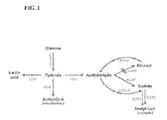
- FIG.1 is a schematic diagram illustrating the relationship between the lactic acid production pathway of a Saccharomyces sp. microorganism, the alcohol fermentation pathway and the acetyl-CoA production pathway.
- Example 1 Preparation of lactic acid-producing strain
- Saccharomyces cerevisiae CEN.PK2-1D a representative wild type yeast obtained from EUROSCARF, was subject to genetic manipulation.
- ADH1 alcohol dehydrogenase 1
- PDC1 pyruvate decarboxylase 1
- DLD1 d-lactic acid dehydrogenase 1
- DLD1 is not a crucial factor that may have a direct impact on the growth improvement, but has been known as a major enzyme capable of converting D-lactic acid to pyruvate using NAD + as D-lactic acid dehydrogenase. Accordingly, a subsequent strain was constructed based on the strain having gene defects in DLD1, an enzyme that consumes the prepared lactic acid thereof, to compare a complete fermentation productivity of D-type lactic acid-producing yeast, which is intended to be prepared in the present invention. As a result, the fermentation productivity was compared.
- HIS3 which is a marker gene
- HIS3 was introduced by double crossover, and made it defective.
- the DNA fragments used therein were prepared using primers corresponding to nucleotide sequences of SEQ ID NOS: 9 and 10.
- the primers used in the gene manipulation are summarized in Table 1 below.
- ADH1 upstream forward primer (SEQ ID NO: 1) CGGGATCCACTGTAGCCCTAGACTTGATAGCC ADH1 upstream reverse primer (SEQ ID NO: 2) ADH1 downstream forward primer (SEQ ID NO: 3) GACTAGTGCGAATTTCTTATGATTTATGATTTTTATT ADH1 downstream reverse primer (SEQ ID NO: 4) ACATGCCATGgAAGCATGCACGTATACACTTGAGTAA PDC1 upstream forward primer (SEQ ID NO: 5) CGGGATCCATTATGTATGCTCTTCTGACTTTTCGT PDC1 upstream reverse primer (SEQ ID NO: 6) PDC1 downstream forward primer (SEQ ID NO: 7) CGGGATCCGCGATTTAATCTCTAATTATTAGTTAAAG PDC1 downstream reverse primer (SEQ ID NO: 8) DLD1-HIS3 upstream linking primer (SEQ ID NO: 9) DLD1-HIS3 downstream linking primer (SEQ ID NO: 9) DLD1-HIS3 downstream linking primer (SEQ ID NO
- D-lactic acid dehydrogenase specifically required for D-lactic acid production was introduced based on the strain having defects in the three genes such as ADH1, PDC1 and DLD1.
- D-LDH was then cloned into a vector having restriction enzyme sites of XhoI and SpeI at 5' and 3' termini, respectively, in order for 1dhD derived from lactobacillus plantarum ( Lb. plantarum ) to be included between TEF1 promoter derived from S. cerevisiae and CYC1 terminator.
- the insert was prepared by double-digestion of SacI / PvuII , and the vector was blunt ended by Mungbean nuclease from the DNA fragment, which was double-digested from p- ⁇ -neo into BamHI / NotI .
- the vector was treated with Sac I to thereby obtain a vector having a Sacl sticky end and BamHI derived blunt end.
- the construction of pTL573 vector was completed by the ligation of the obtained vector with the insert.
- the plasmid pTL573 contains the 1dhD gene derived from Lb. plantarum , and it was designed so that it may include a random insertion of multiple copies of genes into partial domain of ⁇ -sequence among retrotrasnposable element of S.cerevisiae CEN.PK2-1 D pdc1 ⁇ adh1 ⁇ dld1 ⁇ strain.
- DNA fragments capable of inducing single crossover on the ⁇ -sequence were constructed by digesting plasmid pTL573 with SalI.
- a mutant strain having substituted PDC5 promoter was prepared based on CC02-0064 strain prepared in Example 1. During the process, processes of cassette preparation and strain selection were conducted according to the method disclosed in Lee T. H. et al. (Development of reusable split URA3-marked knockout vectors for budding yeast, Saccharomyces cerevisiae. J Microbiol Biotechnol, 2006, 16:979-982 ).
- Example 3 Evaluation of Lactic acid fermentation for mutant strains having decreased PDC5 activity
- a synthetic complex media a limiting medium for yeast, 0.67% yeast nitrogen base without amino acids serving as a base was mixed with amino acid dropout mix (Sigma) according to the protocol of the manufacturer, and added with the amino acids that were excluded in the base, as needed.
- amino acid dropout mix Sigma
- 380 mg/L of leucine was added to the resultant, and uracil, tryptophan, and histidine were added at a concentration of 76 mg/L, respectively.
- 8% of glucose as a carbon source and 1% of CaCO 3 as a neutralizing agent were also added.
- the thus-prepared medium was used for the evaluation of lactic acid fermentation of the yeast strains.
- the mutant strains substituted with a weaker promoter than the original PDC5 promoter failed to grow, whereas the mutant strains substituted with a stronger promoter showed improved growth.
- the mutant strains substituted with promoters of SCO1, SCO2, IDP2 or ACS1, which are weaker promoters than PDC5 promoter failed to grow, leaving the strains whose promoter was substituted with FBA1 promoter the only strains to be evaluated.
- the evaluation result of the lactic acid fermentation for CC02-0064 and CC02-0174 strains, which were measurable, is summarized in Table 4 below.
- the strain where the wild-type PDC5 promoter was substituted with FBA1 promoter showed improved cell growth rate and lactic acid productivity thereof, compared to those of the original strain (CC02-0064).
- the results of samples collected at 24 hours and 48 hours, respectively, were compared it was confirmed that the improvements on the cell growth rate and the lactic acid productivity thereof according to the time were continued to reduce by a mere strengthening of a single PDC activity without strengthening ALD and ACS activities, which are involved in the subsequent acetyl-CoA producing pathway.
- the improvement in the glucose consumption by the strengthening PDC activity was 10.3%, and the maximum lactic acid production concentration was 47.3 g/l. Accordingly, the overall improvement of the lactic acid productivity was 13.7%.
- Example 4 Preparation of a strain having a PDC5 gene defect.
- Example 2 In addition to the strain having a PDC1 gene defect and decreased PDC5 activity prepared in Example 2, a strain having a defect in PDC5 gene and decreased PDC1 activity was prepared to thereby confirm whether PDC pathway was attenuated in the corresponding strain.
- the primers corresponding to nucleotide sequences of SEQ ID NOS: 37 to 40 were used to prepare PDC5 gene defect cassette based on the CC02-0064 strain.
- the defective strain was prepared by the same method described the literature of Example 1.
- the primers used in Example 4 are summarized in Table 5 below.
- the thus-prepared strain having a PDC5 gene defect was assigned CC02-0450 (CC02-0064, pdc5 ⁇ ).
- Example 5 Preparation of PDC1 promoter-mutated strains based on the strain having a PDC5 defect
- a strain having substituted PDC1 promoter was prepared based on the CC02-0450 strain prepared in Example 4.
- a strain CC02-0451 (CC02-0450, PDC1p-PDC1), where the defect in PDC1 gene was recovered, was prepared to serve as a comparative group
- a strain CC02-0452 (CC02-0450, IDP1p-PDC1) having decreased PDC1 activity was prepared to serve as an experimental group.
- Each strain was prepared in such a way that the vectors of PDC1p-PDC1-CYC1t and pRS406-IDP2p-PDC1-CYC1, which were constructed by cloning a target gene cassette into a pRS406 vector without a replication origin in the yeast, to be included in the strain.
- PCR was conducted using primers having nucleotide sequences of SEQ ID NOS: 41 and 42 with chromosomal DNA of the yeast serving as a template, to thereby obtain a product including PDC1 gene.
- a sequence of CYC1 terminator was obtained using primers having nucleotide sequences of SEQ ID NOS: 43 and 44.
- DNA fragments connecting PDC1 and CYC1 terminator were obtained via PCR using primers corresponding nucleotide sequences of SEQ ID NOS: 41 and 44 with the PDC1 and the CYC1 terminator sequences, respectively, serving as a template.
- a plasmid vector of pRS406-PDC1-CYC1t was obtained by treating DNA fragments of PDC1-CYC1 terminator and pRS406 vector with SpeI and XhoI restriction enzymes followed by ligation thereof. Meanwhile, for the introduction of the promoter domain into the thus-obtained plasmid vectors, plasmid vectors, into which promoters of PDC1 and IDP2 promoters were respectively incorporated, were obtained by a primer fusion of primers having nucleotide sequences of SEQ ID NOS: 45 and 46, and 47 and 48, respectively, via PCR using chromosomal DNA as a template.
- DNA fragments including each promoter and pRS406-PDC1-CYC1t plasmid were digested and ligated, to thereby prepare plasmid vectors of pRS406-PDC1p-PDC1-CYC1t and pRS406-IDP2p-PDC1-CYC1t, respectively, which are plasmid required for the yeast chromosomal insertion, designed such that the gene expression is controlled by PDC1 promoter and IDP2 promoter.
- the two thus-prepared plasmid vectors were digested by StuI, respectively, and inserted into the strains immediately.
- the final strains were assigned CC02-0451(CC02-0450, PDC1p-PDC1) and CC02-0452(CC02-0450, IDP2p-PDC1), respectively.
- the thus-prepared strains and their genetic traits are summarized in Table 7.
- Strains having a single defect in PDC1 gene, a double defect in PDC1 and PDC5 genes, and a triple defect in PDC1, PDC5, and PDC6 genes were intended to be prepared from PDC family genes.
- CC02-0064 strain prepared in Example 1 was used as a strain having a single defect in PDC1 gene.
- a cassette for PDC5 defect was prepared using primers corresponding nucleotide sequences of SEQ ID NOS: 49 to 56, and inserted into CC02-0064 to prepare a strain having double defects in PDC 1 and PDC5 genes. Subsequently, the thus-prepared strain was assigned CC02-0256.
- a strain having a triple defect in PDC1, PDC5, and PDC6 genes was prepared based on the strain having double defects in PDC1 and PDC5 genes using primers corresponding nucleotide sequence of SEQ ID NOS: 57 to 64 to, and was assigned CC02-0257.
- Table 9 Strains having double or triple defects in PDC genes Strains Genetic traits CC02-0256 CC02-0064 pdc5 ⁇ CC02-0257 CC02-0256 pdc6 ⁇
- ALD2, ALD3, and ACS1 over expressing plasmids were prepared.
- an open reading frame (ORF) of ALD2 was prepared using primers corresponding nucleotide sequences of SEQ ID NOS: 65 and 66
- an ORF of ALD3 was prepared using primers corresponding nucleotide sequences of SEQ ID NOS: 67 and 68
- an ORF of ACS1 was prepared using primers corresponding nucleotide sequences of SEQ ID NOS: 69 and 70.
- p415ADH-ALD2, p415ADH-ALD3, p414ADH-ACS1 and p416ADH-ACS1 which are p414ADH, p415ADH and p416ADH plasmid-based recombinant vectors, were prepared by Spe I, Xho I or EcoR I restriction enzymes.
- the primers used in Example 7 are summarized in Table 10 below.
- the thus-prepared recombinant plasmids were introduced into the strains including CC02-0064, CC02-0168, CC02-0170, CC02-0256, CC02-0257, CC02-0451, and CC02-0452 via a yeast transformation by p415ADH-ALD2, p414ADH-ACS1 combination, p415ADH-ALD3, p414ADH-ACS1 combination, p415ADH-ALD2, p416ADH-ACS1 combination, or p415ADH-ALD3, p416ADH-ACS1 combination.
- no transformant was obtained in the CC02-0257 strain having triple defects in PDC genes where no PDC activity was exhibited.
- Example 8 Evaluation of lactic acid fermentation for the yeast strains
- the yeast was inoculated into each flask containing 25 ml of the medium, prepared in Example 3 for the purpose of lactic acid fermentation evaluation and was cultured under aerobic condition at 30 ⁇ for 71 hours.
- the amount of D-type lactic acid present in the fermented broth was analyzed, and an enzymatic analysis (Acetic acid, R-Biopharm, Germany) was conducted to determine the amount of acetic acid present therein.
- the strains having decreased PDC5 activity by IDP2 promoter or SCO2 promoter had a dramatic reduction in the accumulation of the acetate, a by-product, i.e., little detection of acetate was confirmed, compared to the strain with normal PDC5 activity.
- the final cell concentration of the strains, in which the activities of ALD and ACS were not increased tended to decrease according to the PDC5 promoter substitutions.
- the strain where PDC5 was substituted with a weak expression of IDP2 had a reduction in acetate accumulation, and the final OD was 1.3 times higher compared to the strain exhibiting normal expression of PDC5.
- ALD and ACS were co-expressed under the control of the ADH1 promoter, the glucose consumption and the rate thereof were increased, and finally, the percentage yield was increased from 56% or %59% to 66% or 67%, respectively, showing improved yield.
- the strain having IDP2 promoter may be considered as the most optimized form of a strain in terms of the overall cell concentration, the glucose consumption, and the rate thereof.
- Example 9 Evaluation of lactic acid fermentation for the yeast strain having double defects in PDC1 and PDC5 genes, and increase in ALD and ACS activities
- Table 13 The evaluation results of lactic acid fermentation for the strains having double defects in PDC 1 and PDC5 genes Strains Final OD Initial Glucose (g/L) Residual Glucose (g/L) Acetate (g/L) D-lactic acid (g/L) Yield (g/g) Productiv ity (g/l ⁇ h) CC02-0444 3.2 78.5 52 0.10 20.8 78.5 0.281 CC02-0361 3.9 78.5 49 0.05 25.4 86.3 0.343 CC02-0362 3.8 78.5 51 0.08 22.8 82.8 0.308
- the acetate concentration was clearly reduced in the strains having double defects in PDC1 and PDC5 genes, however, a reduction in the D-lactic acid concentration of production was also observed due to the reduction in the cell growth and the glucose consumption.
- the strain where the PDC pathway is almost inactivated which was resulted from the double defects in PDC1 and PDC5 genes, did not have any improvement in the cell growth, the glucose consumption, and the productivity thereof, although the strain exhibited increased activities ofALD and ACS.
- Example 10 Evaluation of lactic acid fermentation for the strains, where PDC pathway is attenuated, using sucrose
- Example 8 For the purpose of a fermentation evaluation using sucrose, the lactic acid-producing yeast strains, where PDC pathway is attenuated, the identical strains evaluated in Example 8 and 9 were used to confirm the effect of the lactic acid production.
- sucrose was employed as a carbon source instead of glucose.
- the evaluation method was performed in the same manner as Example 8.
- Table 14 The evaluation results of lactic acid fermentation for the strains having double defects in PDC 1 and PDC5 genes or decreased PDC5 activity Strains Final OD Initial Glucose (g/L) Residual Glucose (g/L) Acetate (g/L) D-lactic acid (g/L) Yield (g/g) Productiv ity (g/l ⁇ h) CC02-0225 5.15 91.5 27.5 1.95 25.19 39.36 0.34 CC02-0226 6.9 91.5 15 1.92 30.89 40.38 0.42 CC02-0227 6.18 91.5 15 1.98 29.59 38.68 0.40 CC02-0356 1.6 91.5 26.75 0.02 11.72 18.11 0.16 CC02-0275 1.88 91.5 21.75 0.02 13.79 19.77 0.19 CC02-0276 2.2 91.5 18.25 0.01 16.04 21.9 0.22 CC02-0357 2.78 91.5 22 0.03 17.08 24.58
- sucrose instead of glucose for the strains, used in the same manner as in Examples 8 and 9, allowed for improved effects of the growth and fermentation yield by increasing the activities of ALD and ACS in the strains where PDC pathway is attenuated, showing the same pattern of results as the strains in Example 8 where glucose was employed as a carbon source. Accordingly, the present invention confirms that the improved effects of fermentation yield and growth due to the decreased PDC activity and increased ALD and ACS activities, which were confirmed in the present invention, are not limited to the type of sugar used.
Landscapes
- Chemical & Material Sciences (AREA)
- Life Sciences & Earth Sciences (AREA)
- Organic Chemistry (AREA)
- Health & Medical Sciences (AREA)
- Engineering & Computer Science (AREA)
- Genetics & Genomics (AREA)
- Wood Science & Technology (AREA)
- Zoology (AREA)
- Bioinformatics & Cheminformatics (AREA)
- General Engineering & Computer Science (AREA)
- General Health & Medical Sciences (AREA)
- Biochemistry (AREA)
- Biotechnology (AREA)
- Microbiology (AREA)
- Biomedical Technology (AREA)
- Molecular Biology (AREA)
- Medicinal Chemistry (AREA)
- Chemical Kinetics & Catalysis (AREA)
- General Chemical & Material Sciences (AREA)
- Physics & Mathematics (AREA)
- Biophysics (AREA)
- Plant Pathology (AREA)
- Mycology (AREA)
- Micro-Organisms Or Cultivation Processes Thereof (AREA)
- Preparation Of Compounds By Using Micro-Organisms (AREA)
- Enzymes And Modification Thereof (AREA)
Priority Applications (1)
| Application Number | Priority Date | Filing Date | Title |
|---|---|---|---|
| PL15739495T PL2960326T3 (pl) | 2014-05-09 | 2015-05-08 | Mikroorganizm zdolny do zwiększenia wytwarzania kwasu mlekowego i sposób wytwarzania kwasu mlekowego przy jego użyciu |
Applications Claiming Priority (2)
| Application Number | Priority Date | Filing Date | Title |
|---|---|---|---|
| KR1020140055865A KR101577134B1 (ko) | 2014-05-09 | 2014-05-09 | 젖산 생산이 향상된 미생물 및 이를 이용하여 젖산을 생산하는 방법 |
| PCT/KR2015/004600 WO2015170914A1 (ko) | 2014-05-09 | 2015-05-08 | 젖산 생산이 향상된 미생물 및 이를 이용하여 젖산을 생산하는 방법 |
Publications (3)
| Publication Number | Publication Date |
|---|---|
| EP2960326A1 true EP2960326A1 (de) | 2015-12-30 |
| EP2960326A4 EP2960326A4 (de) | 2016-11-30 |
| EP2960326B1 EP2960326B1 (de) | 2019-04-03 |
Family
ID=54392708
Family Applications (1)
| Application Number | Title | Priority Date | Filing Date |
|---|---|---|---|
| EP15739495.8A Active EP2960326B1 (de) | 2014-05-09 | 2015-05-08 | Mikroorganismus, der zur erhöhten milchsäureherstellung befähigt ist, und verfahren zur herstellung von milchsäure unter dessen verwendung |
Country Status (12)
| Country | Link |
|---|---|
| US (2) | US20170175150A1 (de) |
| EP (1) | EP2960326B1 (de) |
| JP (1) | JP6087451B2 (de) |
| KR (1) | KR101577134B1 (de) |
| CN (1) | CN106459881B (de) |
| AU (1) | AU2015249090B2 (de) |
| MY (1) | MY172440A (de) |
| PL (1) | PL2960326T3 (de) |
| RU (1) | RU2636467C2 (de) |
| SG (1) | SG11201609397WA (de) |
| UA (1) | UA118022C2 (de) |
| WO (1) | WO2015170914A1 (de) |
Cited By (1)
| Publication number | Priority date | Publication date | Assignee | Title |
|---|---|---|---|---|
| EP3309247A4 (de) * | 2015-06-12 | 2019-01-09 | Cj Cheiljedang Corporation | Mikroorganismen mit verbesserter milchsäureproduktion und verfahren zur herstellung von milchsäure damit |
Families Citing this family (8)
| Publication number | Priority date | Publication date | Assignee | Title |
|---|---|---|---|---|
| KR102736070B1 (ko) * | 2018-10-08 | 2024-12-02 | 에스케이이노베이션 주식회사 | 알코올 생성이 억제된 재조합 내산성 효모 및 이를 이용한 젖산의 제조방법 |
| FI20195716A1 (en) * | 2019-08-30 | 2021-03-01 | Finnfoam Oy | Genetically modified fungi and related methods and uses |
| KR102460545B1 (ko) * | 2020-02-18 | 2022-10-31 | 주식회사 피코엔텍 | 신규한 돌연변이 효모를 함유하는 천식 억제용 조성물 |
| KR102460532B1 (ko) * | 2020-02-18 | 2022-10-31 | 주식회사 피코엔텍 | 글루타치온과 알데하이드탈수소효소를 생산하는 사카로마이세스 세레비지에 권피1,2,3 |
| KR20210128742A (ko) | 2020-04-17 | 2021-10-27 | 에스케이이노베이션 주식회사 | 글리세롤 생성이 억제된 재조합 내산성 효모 및 이를 이용한 젖산의 제조방법 |
| KR20210158676A (ko) | 2020-06-24 | 2021-12-31 | 에스케이이노베이션 주식회사 | 젖산 생산능이 증가된 재조합 내산성 효모 |
| KR102460589B1 (ko) * | 2021-02-17 | 2022-10-28 | 주식회사 피코엔텍 | 글루타치온과 알데히드탈수소효소를 함유하는 숙취해소제 |
| EP4626451A1 (de) * | 2022-12-01 | 2025-10-08 | Picoentech Co., Ltd. | Nahrungsmittel und pharmazeutische zusammensetzung zur behandlung von fettleber und entzündung durch linderung von stress im endoplasmatischen retikulum |
Family Cites Families (18)
| Publication number | Priority date | Publication date | Assignee | Title |
|---|---|---|---|---|
| IT1294728B1 (it) * | 1997-09-12 | 1999-04-12 | Biopolo S C A R L | Ceppi di lievito per la riproduzione di acido lattico |
| KR100308521B1 (ko) * | 1999-04-30 | 2001-11-05 | 박호군 | 대장균 변이주 및 형질전환 대장균 및 이를 이용한 d형 또는 l형 젖산의 순수 생산방법 |
| WO2000071738A1 (en) * | 1999-05-21 | 2000-11-30 | Cargill Dow Llc | Methods and materials for the synthesis of organic products |
| BR0115558A (pt) * | 2000-11-22 | 2004-08-17 | Cargill Dow Polymers Llc | ácido nucleico isolado, construção de expressão recombinante, célula de levedura transformada com a construção de expressão recombinante, e, método para produzir ácido lático |
| US20050112737A1 (en) * | 2003-11-20 | 2005-05-26 | A. E. Staley Manufacturing Co. | Lactic acid producing yeast |
| RU2268304C1 (ru) * | 2004-06-24 | 2006-01-20 | Федеральное государственное унитарное предприятие "Государственный научно-исследовательский институт генетики и селекции промышленных микроорганизмов" (ФГУП ГосНИИгенетика) | Способ микробиологического синтеза молочной кислоты и рекомбинантный штамм дрожжей schizosaccharomyces pombe для его осуществления |
| CN101287833A (zh) * | 2005-10-14 | 2008-10-15 | 东丽株式会社 | 酵母和l-乳酸的制造方法 |
| BRPI0720566A2 (pt) * | 2006-12-21 | 2014-02-04 | Gevo Inc | Produção de butanol através de levedura metabolicamente projetada |
| WO2009013159A2 (en) | 2007-07-23 | 2009-01-29 | Dsm Ip Assets B.V. | Acetyl-coa producing enzymes in yeast |
| JP4963488B2 (ja) * | 2008-04-23 | 2012-06-27 | トヨタ自動車株式会社 | 変異体酵母及びこれを用いた物質生産方法 |
| US9120891B2 (en) * | 2008-06-24 | 2015-09-01 | Lg Chem, Ltd. | Method for preparing polylactate and copolymer thereof using a mutant microorganism with enhanced polylactate, and the copolymer producing capability thereof |
| EP2396425A2 (de) | 2009-02-13 | 2011-12-21 | Institut National De La Sante Et De La Recherche Medicale | Bakterien-dna als marker für herz-kreislauf- und/oder stoffwechselkrankheit |
| JP2011254747A (ja) * | 2010-06-08 | 2011-12-22 | Toyota Central R&D Labs Inc | 高級アルコール生産微生物及びその利用 |
| FI122886B (fi) * | 2010-06-24 | 2012-08-31 | Valtion Teknillinen | Geneettisesti muokattuja sieniä ja niiden käyttö lipidituotannossa |
| JP2014530020A (ja) * | 2011-10-04 | 2014-11-17 | フロリダ大学リサーチファウンデーション インコーポレイティッド | D−乳酸脱水素酵素活性を有するグリセロール脱水素酵素の変異体およびその使用 |
| KR20130098603A (ko) * | 2012-02-28 | 2013-09-05 | 한국화학연구원 | D―형 젖산 생성 변이균주 및 이를 이용한 광학 순도가 높은 d―형 젖산 생산 방법 |
| KR101438882B1 (ko) * | 2012-04-24 | 2014-09-05 | 씨제이제일제당 (주) | 신규한 d형 젖산 생산균주 |
| KR101576186B1 (ko) * | 2012-06-26 | 2015-12-10 | 한국생명공학연구원 | 에탄올 생산 경로가 봉쇄된 클루이베로마이세스 막시아누스 균주 및 이의 용도 |
-
2014
- 2014-05-09 KR KR1020140055865A patent/KR101577134B1/ko active Active
-
2015
- 2015-05-08 MY MYPI2016001969A patent/MY172440A/en unknown
- 2015-05-08 CN CN201580030614.7A patent/CN106459881B/zh active Active
- 2015-05-08 RU RU2015130528A patent/RU2636467C2/ru active
- 2015-05-08 EP EP15739495.8A patent/EP2960326B1/de active Active
- 2015-05-08 JP JP2015563134A patent/JP6087451B2/ja active Active
- 2015-05-08 PL PL15739495T patent/PL2960326T3/pl unknown
- 2015-05-08 US US14/783,012 patent/US20170175150A1/en not_active Abandoned
- 2015-05-08 AU AU2015249090A patent/AU2015249090B2/en active Active
- 2015-05-08 WO PCT/KR2015/004600 patent/WO2015170914A1/ko not_active Ceased
- 2015-05-08 SG SG11201609397WA patent/SG11201609397WA/en unknown
- 2015-08-05 UA UAA201507617A patent/UA118022C2/uk unknown
-
2018
- 2018-03-12 US US15/918,995 patent/US20180201960A1/en not_active Abandoned
Cited By (1)
| Publication number | Priority date | Publication date | Assignee | Title |
|---|---|---|---|---|
| EP3309247A4 (de) * | 2015-06-12 | 2019-01-09 | Cj Cheiljedang Corporation | Mikroorganismen mit verbesserter milchsäureproduktion und verfahren zur herstellung von milchsäure damit |
Also Published As
| Publication number | Publication date |
|---|---|
| RU2015130528A (ru) | 2017-05-17 |
| CN106459881A (zh) | 2017-02-22 |
| CN106459881B (zh) | 2020-08-25 |
| WO2015170914A1 (ko) | 2015-11-12 |
| SG11201609397WA (en) | 2016-12-29 |
| JP6087451B2 (ja) | 2017-03-01 |
| EP2960326A4 (de) | 2016-11-30 |
| UA118022C2 (uk) | 2018-11-12 |
| KR20150129266A (ko) | 2015-11-19 |
| PL2960326T3 (pl) | 2019-09-30 |
| AU2015249090B2 (en) | 2017-04-06 |
| BR112016026286A2 (pt) | 2018-02-20 |
| AU2015249090A1 (en) | 2015-11-26 |
| RU2636467C2 (ru) | 2017-11-23 |
| JP2016521115A (ja) | 2016-07-21 |
| KR101577134B1 (ko) | 2015-12-14 |
| US20170175150A1 (en) | 2017-06-22 |
| US20180201960A1 (en) | 2018-07-19 |
| EP2960326B1 (de) | 2019-04-03 |
| MY172440A (en) | 2019-11-26 |
Similar Documents
| Publication | Publication Date | Title |
|---|---|---|
| EP2960326B1 (de) | Mikroorganismus, der zur erhöhten milchsäureherstellung befähigt ist, und verfahren zur herstellung von milchsäure unter dessen verwendung | |
| US10227618B2 (en) | Microorganism producing lactic acid and method for producing lactic acid using same | |
| KR101616171B1 (ko) | 유기산 제조에서의 모나스쿠스의 용도 | |
| US9994877B2 (en) | Yeast cell having acid tolerance, method of preparing yeast cell and use thereof | |
| US8435768B2 (en) | Method for producing succinic acid using a yeast belonging to the genus Yarrowia | |
| CN101287833A (zh) | 酵母和l-乳酸的制造方法 | |
| US10155967B2 (en) | Microorganism having enhanced productivity of lactic acid and a process for producing lactic acid using the same | |
| WO2023168244A1 (en) | Genetically modified yeast and fermentation processes for the production of 3-hydroxypropionate | |
| TWI659101B (zh) | 具有增進乳酸生產力之微生物及使用該微生物生產乳酸之方法 | |
| KR102330595B1 (ko) | 에탄올 생산 경로가 억제된 내산성 효모 및 이를 이용한 젖산의 제조방법 | |
| KR102255175B1 (ko) | 에탄올 및 c4-유기산 생성용 재조합 효모 | |
| BR112016026286B1 (pt) | Micro-organismo com produtividade aumentada de ácido láctico e processo para produzir ácido láctico utilizando o mesmo |
Legal Events
| Date | Code | Title | Description |
|---|---|---|---|
| PUAI | Public reference made under article 153(3) epc to a published international application that has entered the european phase |
Free format text: ORIGINAL CODE: 0009012 |
|
| 17P | Request for examination filed |
Effective date: 20150731 |
|
| AK | Designated contracting states |
Kind code of ref document: A1 Designated state(s): AL AT BE BG CH CY CZ DE DK EE ES FI FR GB GR HR HU IE IS IT LI LT LU LV MC MK MT NL NO PL PT RO RS SE SI SK SM TR |
|
| AX | Request for extension of the european patent |
Extension state: BA ME |
|
| A4 | Supplementary search report drawn up and despatched |
Effective date: 20161028 |
|
| RIC1 | Information provided on ipc code assigned before grant |
Ipc: C12N 9/88 20060101ALI20161024BHEP Ipc: C12R 1/865 20060101ALI20161024BHEP Ipc: C12N 1/19 20060101AFI20161024BHEP Ipc: C12N 1/18 20060101ALI20161024BHEP Ipc: C12N 9/04 20060101ALI20161024BHEP Ipc: C12P 7/56 20060101ALI20161024BHEP Ipc: C12N 9/02 20060101ALI20161024BHEP Ipc: C12N 15/52 20060101ALI20161024BHEP |
|
| STAA | Information on the status of an ep patent application or granted ep patent |
Free format text: STATUS: EXAMINATION IS IN PROGRESS |
|
| 17Q | First examination report despatched |
Effective date: 20170714 |
|
| DAV | Request for validation of the european patent (deleted) | ||
| DAX | Request for extension of the european patent (deleted) | ||
| GRAP | Despatch of communication of intention to grant a patent |
Free format text: ORIGINAL CODE: EPIDOSNIGR1 |
|
| STAA | Information on the status of an ep patent application or granted ep patent |
Free format text: STATUS: GRANT OF PATENT IS INTENDED |
|
| INTG | Intention to grant announced |
Effective date: 20181016 |
|
| GRAS | Grant fee paid |
Free format text: ORIGINAL CODE: EPIDOSNIGR3 |
|
| GRAA | (expected) grant |
Free format text: ORIGINAL CODE: 0009210 |
|
| STAA | Information on the status of an ep patent application or granted ep patent |
Free format text: STATUS: THE PATENT HAS BEEN GRANTED |
|
| AK | Designated contracting states |
Kind code of ref document: B1 Designated state(s): AL AT BE BG CH CY CZ DE DK EE ES FI FR GB GR HR HU IE IS IT LI LT LU LV MC MK MT NL NO PL PT RO RS SE SI SK SM TR |
|
| REG | Reference to a national code |
Ref country code: GB Ref legal event code: FG4D |
|
| REG | Reference to a national code |
Ref country code: CH Ref legal event code: EP Ref country code: AT Ref legal event code: REF Ref document number: 1115746 Country of ref document: AT Kind code of ref document: T Effective date: 20190415 |
|
| REG | Reference to a national code |
Ref country code: DE Ref legal event code: R096 Ref document number: 602015027585 Country of ref document: DE |
|
| REG | Reference to a national code |
Ref country code: IE Ref legal event code: FG4D |
|
| REG | Reference to a national code |
Ref country code: NL Ref legal event code: FP |
|
| REG | Reference to a national code |
Ref country code: LT Ref legal event code: MG4D |
|
| REG | Reference to a national code |
Ref country code: AT Ref legal event code: MK05 Ref document number: 1115746 Country of ref document: AT Kind code of ref document: T Effective date: 20190403 |
|
| PG25 | Lapsed in a contracting state [announced via postgrant information from national office to epo] |
Ref country code: HR Free format text: LAPSE BECAUSE OF FAILURE TO SUBMIT A TRANSLATION OF THE DESCRIPTION OR TO PAY THE FEE WITHIN THE PRESCRIBED TIME-LIMIT Effective date: 20190403 Ref country code: LT Free format text: LAPSE BECAUSE OF FAILURE TO SUBMIT A TRANSLATION OF THE DESCRIPTION OR TO PAY THE FEE WITHIN THE PRESCRIBED TIME-LIMIT Effective date: 20190403 Ref country code: ES Free format text: LAPSE BECAUSE OF FAILURE TO SUBMIT A TRANSLATION OF THE DESCRIPTION OR TO PAY THE FEE WITHIN THE PRESCRIBED TIME-LIMIT Effective date: 20190403 Ref country code: PT Free format text: LAPSE BECAUSE OF FAILURE TO SUBMIT A TRANSLATION OF THE DESCRIPTION OR TO PAY THE FEE WITHIN THE PRESCRIBED TIME-LIMIT Effective date: 20190803 Ref country code: NO Free format text: LAPSE BECAUSE OF FAILURE TO SUBMIT A TRANSLATION OF THE DESCRIPTION OR TO PAY THE FEE WITHIN THE PRESCRIBED TIME-LIMIT Effective date: 20190703 Ref country code: FI Free format text: LAPSE BECAUSE OF FAILURE TO SUBMIT A TRANSLATION OF THE DESCRIPTION OR TO PAY THE FEE WITHIN THE PRESCRIBED TIME-LIMIT Effective date: 20190403 Ref country code: AL Free format text: LAPSE BECAUSE OF FAILURE TO SUBMIT A TRANSLATION OF THE DESCRIPTION OR TO PAY THE FEE WITHIN THE PRESCRIBED TIME-LIMIT Effective date: 20190403 Ref country code: SE Free format text: LAPSE BECAUSE OF FAILURE TO SUBMIT A TRANSLATION OF THE DESCRIPTION OR TO PAY THE FEE WITHIN THE PRESCRIBED TIME-LIMIT Effective date: 20190403 |
|
| PG25 | Lapsed in a contracting state [announced via postgrant information from national office to epo] |
Ref country code: BG Free format text: LAPSE BECAUSE OF FAILURE TO SUBMIT A TRANSLATION OF THE DESCRIPTION OR TO PAY THE FEE WITHIN THE PRESCRIBED TIME-LIMIT Effective date: 20190703 Ref country code: GR Free format text: LAPSE BECAUSE OF FAILURE TO SUBMIT A TRANSLATION OF THE DESCRIPTION OR TO PAY THE FEE WITHIN THE PRESCRIBED TIME-LIMIT Effective date: 20190704 Ref country code: RS Free format text: LAPSE BECAUSE OF FAILURE TO SUBMIT A TRANSLATION OF THE DESCRIPTION OR TO PAY THE FEE WITHIN THE PRESCRIBED TIME-LIMIT Effective date: 20190403 Ref country code: LV Free format text: LAPSE BECAUSE OF FAILURE TO SUBMIT A TRANSLATION OF THE DESCRIPTION OR TO PAY THE FEE WITHIN THE PRESCRIBED TIME-LIMIT Effective date: 20190403 |
|
| REG | Reference to a national code |
Ref country code: CH Ref legal event code: PL |
|
| PG25 | Lapsed in a contracting state [announced via postgrant information from national office to epo] |
Ref country code: IS Free format text: LAPSE BECAUSE OF FAILURE TO SUBMIT A TRANSLATION OF THE DESCRIPTION OR TO PAY THE FEE WITHIN THE PRESCRIBED TIME-LIMIT Effective date: 20190803 Ref country code: AT Free format text: LAPSE BECAUSE OF FAILURE TO SUBMIT A TRANSLATION OF THE DESCRIPTION OR TO PAY THE FEE WITHIN THE PRESCRIBED TIME-LIMIT Effective date: 20190403 |
|
| REG | Reference to a national code |
Ref country code: DE Ref legal event code: R097 Ref document number: 602015027585 Country of ref document: DE |
|
| PG25 | Lapsed in a contracting state [announced via postgrant information from national office to epo] |
Ref country code: EE Free format text: LAPSE BECAUSE OF FAILURE TO SUBMIT A TRANSLATION OF THE DESCRIPTION OR TO PAY THE FEE WITHIN THE PRESCRIBED TIME-LIMIT Effective date: 20190403 Ref country code: SK Free format text: LAPSE BECAUSE OF FAILURE TO SUBMIT A TRANSLATION OF THE DESCRIPTION OR TO PAY THE FEE WITHIN THE PRESCRIBED TIME-LIMIT Effective date: 20190403 Ref country code: MC Free format text: LAPSE BECAUSE OF FAILURE TO SUBMIT A TRANSLATION OF THE DESCRIPTION OR TO PAY THE FEE WITHIN THE PRESCRIBED TIME-LIMIT Effective date: 20190403 Ref country code: DK Free format text: LAPSE BECAUSE OF FAILURE TO SUBMIT A TRANSLATION OF THE DESCRIPTION OR TO PAY THE FEE WITHIN THE PRESCRIBED TIME-LIMIT Effective date: 20190403 Ref country code: RO Free format text: LAPSE BECAUSE OF FAILURE TO SUBMIT A TRANSLATION OF THE DESCRIPTION OR TO PAY THE FEE WITHIN THE PRESCRIBED TIME-LIMIT Effective date: 20190403 Ref country code: CH Free format text: LAPSE BECAUSE OF NON-PAYMENT OF DUE FEES Effective date: 20190531 Ref country code: LI Free format text: LAPSE BECAUSE OF NON-PAYMENT OF DUE FEES Effective date: 20190531 |
|
| REG | Reference to a national code |
Ref country code: BE Ref legal event code: MM Effective date: 20190531 |
|
| PLBE | No opposition filed within time limit |
Free format text: ORIGINAL CODE: 0009261 |
|
| STAA | Information on the status of an ep patent application or granted ep patent |
Free format text: STATUS: NO OPPOSITION FILED WITHIN TIME LIMIT |
|
| PG25 | Lapsed in a contracting state [announced via postgrant information from national office to epo] |
Ref country code: SM Free format text: LAPSE BECAUSE OF FAILURE TO SUBMIT A TRANSLATION OF THE DESCRIPTION OR TO PAY THE FEE WITHIN THE PRESCRIBED TIME-LIMIT Effective date: 20190403 Ref country code: LU Free format text: LAPSE BECAUSE OF NON-PAYMENT OF DUE FEES Effective date: 20190508 Ref country code: IT Free format text: LAPSE BECAUSE OF FAILURE TO SUBMIT A TRANSLATION OF THE DESCRIPTION OR TO PAY THE FEE WITHIN THE PRESCRIBED TIME-LIMIT Effective date: 20190403 |
|
| 26N | No opposition filed |
Effective date: 20200106 |
|
| PG25 | Lapsed in a contracting state [announced via postgrant information from national office to epo] |
Ref country code: TR Free format text: LAPSE BECAUSE OF FAILURE TO SUBMIT A TRANSLATION OF THE DESCRIPTION OR TO PAY THE FEE WITHIN THE PRESCRIBED TIME-LIMIT Effective date: 20190403 |
|
| PG25 | Lapsed in a contracting state [announced via postgrant information from national office to epo] |
Ref country code: IE Free format text: LAPSE BECAUSE OF NON-PAYMENT OF DUE FEES Effective date: 20190508 |
|
| PG25 | Lapsed in a contracting state [announced via postgrant information from national office to epo] |
Ref country code: BE Free format text: LAPSE BECAUSE OF NON-PAYMENT OF DUE FEES Effective date: 20190531 Ref country code: SI Free format text: LAPSE BECAUSE OF FAILURE TO SUBMIT A TRANSLATION OF THE DESCRIPTION OR TO PAY THE FEE WITHIN THE PRESCRIBED TIME-LIMIT Effective date: 20190403 |
|
| PG25 | Lapsed in a contracting state [announced via postgrant information from national office to epo] |
Ref country code: CY Free format text: LAPSE BECAUSE OF FAILURE TO SUBMIT A TRANSLATION OF THE DESCRIPTION OR TO PAY THE FEE WITHIN THE PRESCRIBED TIME-LIMIT Effective date: 20190403 |
|
| PG25 | Lapsed in a contracting state [announced via postgrant information from national office to epo] |
Ref country code: MT Free format text: LAPSE BECAUSE OF FAILURE TO SUBMIT A TRANSLATION OF THE DESCRIPTION OR TO PAY THE FEE WITHIN THE PRESCRIBED TIME-LIMIT Effective date: 20190403 Ref country code: HU Free format text: LAPSE BECAUSE OF FAILURE TO SUBMIT A TRANSLATION OF THE DESCRIPTION OR TO PAY THE FEE WITHIN THE PRESCRIBED TIME-LIMIT; INVALID AB INITIO Effective date: 20150508 |
|
| PG25 | Lapsed in a contracting state [announced via postgrant information from national office to epo] |
Ref country code: MK Free format text: LAPSE BECAUSE OF FAILURE TO SUBMIT A TRANSLATION OF THE DESCRIPTION OR TO PAY THE FEE WITHIN THE PRESCRIBED TIME-LIMIT Effective date: 20190403 |
|
| P01 | Opt-out of the competence of the unified patent court (upc) registered |
Effective date: 20230606 |
|
| PGFP | Annual fee paid to national office [announced via postgrant information from national office to epo] |
Ref country code: DE Payment date: 20250220 Year of fee payment: 11 |
|
| PGFP | Annual fee paid to national office [announced via postgrant information from national office to epo] |
Ref country code: NL Payment date: 20260220 Year of fee payment: 12 |
|
| PGFP | Annual fee paid to national office [announced via postgrant information from national office to epo] |
Ref country code: GB Payment date: 20260309 Year of fee payment: 12 |
|
| PGFP | Annual fee paid to national office [announced via postgrant information from national office to epo] |
Ref country code: FR Payment date: 20260224 Year of fee payment: 12 |
|
| PGFP | Annual fee paid to national office [announced via postgrant information from national office to epo] |
Ref country code: CZ Payment date: 20260226 Year of fee payment: 12 |
|
| PGFP | Annual fee paid to national office [announced via postgrant information from national office to epo] |
Ref country code: PL Payment date: 20260224 Year of fee payment: 12 |