EP2960802A1 - Système de partage de données - Google Patents
Système de partage de données Download PDFInfo
- Publication number
- EP2960802A1 EP2960802A1 EP13875443.7A EP13875443A EP2960802A1 EP 2960802 A1 EP2960802 A1 EP 2960802A1 EP 13875443 A EP13875443 A EP 13875443A EP 2960802 A1 EP2960802 A1 EP 2960802A1
- Authority
- EP
- European Patent Office
- Prior art keywords
- communication
- communication terminal
- data
- parent
- holding
- Prior art date
- Legal status (The legal status is an assumption and is not a legal conclusion. Google has not performed a legal analysis and makes no representation as to the accuracy of the status listed.)
- Withdrawn
Links
- 238000004891 communication Methods 0.000 claims abstract description 595
- 230000006870 function Effects 0.000 claims abstract description 118
- 230000005540 biological transmission Effects 0.000 claims abstract description 64
- 238000000034 method Methods 0.000 claims description 27
- 238000013500 data storage Methods 0.000 claims description 25
- 238000010586 diagram Methods 0.000 description 11
- 235000008694 Humulus lupulus Nutrition 0.000 description 8
- 238000005516 engineering process Methods 0.000 description 6
- 238000010295 mobile communication Methods 0.000 description 4
- 238000007726 management method Methods 0.000 description 3
- 230000000694 effects Effects 0.000 description 2
- NRNCYVBFPDDJNE-UHFFFAOYSA-N pemoline Chemical compound O1C(N)=NC(=O)C1C1=CC=CC=C1 NRNCYVBFPDDJNE-UHFFFAOYSA-N 0.000 description 2
- 230000002093 peripheral effect Effects 0.000 description 2
- 238000007792 addition Methods 0.000 description 1
- 230000010365 information processing Effects 0.000 description 1
- 239000000203 mixture Substances 0.000 description 1
- 230000003287 optical effect Effects 0.000 description 1
- 230000004044 response Effects 0.000 description 1
- 239000004065 semiconductor Substances 0.000 description 1
Images







Classifications
-
- H—ELECTRICITY
- H04—ELECTRIC COMMUNICATION TECHNIQUE
- H04L—TRANSMISSION OF DIGITAL INFORMATION, e.g. TELEGRAPHIC COMMUNICATION
- H04L67/00—Network arrangements or protocols for supporting network services or applications
- H04L67/01—Protocols
- H04L67/10—Protocols in which an application is distributed across nodes in the network
- H04L67/1001—Protocols in which an application is distributed across nodes in the network for accessing one among a plurality of replicated servers
- H04L67/1004—Server selection for load balancing
-
- H—ELECTRICITY
- H04—ELECTRIC COMMUNICATION TECHNIQUE
- H04L—TRANSMISSION OF DIGITAL INFORMATION, e.g. TELEGRAPHIC COMMUNICATION
- H04L67/00—Network arrangements or protocols for supporting network services or applications
- H04L67/01—Protocols
- H04L67/10—Protocols in which an application is distributed across nodes in the network
- H04L67/104—Peer-to-peer [P2P] networks
- H04L67/1059—Inter-group management mechanisms, e.g. splitting, merging or interconnection of groups
-
- H—ELECTRICITY
- H04—ELECTRIC COMMUNICATION TECHNIQUE
- H04L—TRANSMISSION OF DIGITAL INFORMATION, e.g. TELEGRAPHIC COMMUNICATION
- H04L67/00—Network arrangements or protocols for supporting network services or applications
- H04L67/01—Protocols
- H04L67/10—Protocols in which an application is distributed across nodes in the network
- H04L67/104—Peer-to-peer [P2P] networks
- H04L67/1074—Peer-to-peer [P2P] networks for supporting data block transmission mechanisms
- H04L67/1076—Resource dissemination mechanisms or network resource keeping policies for optimal resource availability in the overlay network
-
- H—ELECTRICITY
- H04—ELECTRIC COMMUNICATION TECHNIQUE
- H04L—TRANSMISSION OF DIGITAL INFORMATION, e.g. TELEGRAPHIC COMMUNICATION
- H04L67/00—Network arrangements or protocols for supporting network services or applications
- H04L67/50—Network services
- H04L67/51—Discovery or management thereof, e.g. service location protocol [SLP] or web services
-
- H—ELECTRICITY
- H04—ELECTRIC COMMUNICATION TECHNIQUE
- H04W—WIRELESS COMMUNICATION NETWORKS
- H04W4/00—Services specially adapted for wireless communication networks; Facilities therefor
- H04W4/06—Selective distribution of broadcast services, e.g. multimedia broadcast multicast service [MBMS]; Services to user groups; One-way selective calling services
-
- H—ELECTRICITY
- H04—ELECTRIC COMMUNICATION TECHNIQUE
- H04W—WIRELESS COMMUNICATION NETWORKS
- H04W84/00—Network topologies
- H04W84/02—Hierarchically pre-organised networks, e.g. paging networks, cellular networks, WLAN [Wireless Local Area Network] or WLL [Wireless Local Loop]
- H04W84/10—Small scale networks; Flat hierarchical networks
- H04W84/12—WLAN [Wireless Local Area Networks]
-
- H—ELECTRICITY
- H04—ELECTRIC COMMUNICATION TECHNIQUE
- H04W—WIRELESS COMMUNICATION NETWORKS
- H04W84/00—Network topologies
- H04W84/18—Self-organising networks, e.g. ad-hoc networks or sensor networks
-
- H—ELECTRICITY
- H04—ELECTRIC COMMUNICATION TECHNIQUE
- H04W—WIRELESS COMMUNICATION NETWORKS
- H04W84/00—Network topologies
- H04W84/18—Self-organising networks, e.g. ad-hoc networks or sensor networks
- H04W84/20—Leader-follower arrangements
-
- H—ELECTRICITY
- H04—ELECTRIC COMMUNICATION TECHNIQUE
- H04W—WIRELESS COMMUNICATION NETWORKS
- H04W88/00—Devices specially adapted for wireless communication networks, e.g. terminals, base stations or access point devices
- H04W88/02—Terminal devices
- H04W88/04—Terminal devices adapted for relaying to or from another terminal or user
Definitions
- the present invention relates to a data sharing system, a data sharing method, a communication terminal, and a program wherein data are shared between a plurality of communication terminals capable of wirelessly communicating with one another.
- exchange and synchronization of information held by each communication terminal by using an epidemic method while communication terminals move close to one another have been proposed as a first related technology related to the present invention (refer to, for example, NPL 1).
- NPL 1 a first related technology related to the present invention
- a communication terminal in a network detects another communication terminal
- the communication terminal and the other communication terminal exchange a holding list (also referred to as "summary vector") that lists data (content) held by the own communication terminal, so that the communication terminal acquires the content of the holding list held by the other communication terminal.
- the communication terminal transmits and receives communication messages to and from another communication terminal holding a holding list that does not match the holding list of the own communication terminal so as to perform data sharing.
- a management server that manages, in a centralized manner, content holding status at each node has been proposed as a second related technology related to the present invention (refer to, for example, PTL 1).
- the management server in the second related technology when acquiring a content request from a user terminal, selects a node having the smallest number of hops to the user terminal, among a plurality of nodes that hold the requested content, as a content distribution source node.
- each communication terminal when receiving holding lists different from the holding list of the own communication terminal in succession from a plurality of other communication terminals, performs data exchange with one of the other communication terminals whose holding list is the earliest to be received, by transmitting and receiving communication messages to and from the other communication terminal. Therefore, there may be inefficient cases that, although another communication terminal with a smaller number of hops exists in a communication-available area of the own communication terminal, data exchange is performed with still another communication terminal with a larger number of hops.
- a node with the smallest number of hops to a user terminal can be selected among a plurality of nodes that hold the requested content, as a content distribution source node, by centrally managing content holding status at each node.
- a system as indicated by the aforementioned first related technology in which data are shared in a distributed manner by individual communication terminals it is impossible to centrally manage the data holding status at each communication terminal.
- An object of the present invention is to provide a data sharing system that solves the aforementioned problem, in other words, the problem that each communication terminal, when receiving holding lists different from the holding list of the own communication terminal in succession from a plurality of other communication terminals, is subject to inefficient data exchange with a communication terminal with a large number of hops.
- a data sharing system is a data sharing system in which data are shared between a plurality of communication terminals connected to a communication network in which, of the plurality of communication terminals, one communication terminal functions as a parent that has a relay function and the other communication terminals function as children that do not have the relay function, and transmitting and receiving of a communication message between the child communication terminals are performed via the parent, each of the communication terminals including:
- a data sharing method is a data sharing method in which data are shared between a plurality of communication terminals connected to a communication network in which, of the plurality of communication terminals, one communication terminal functions as a parent that has a relay function and the other communication terminals function as children that do not have the relay function, and transmitting and receiving of a communication message between the child communication terminals are performed via the parent, wherein: each of the communication terminals transmits a holding list that lists information about data held by the own communication terminal to another of the communication terminals through use of the communication message; and each of the communication terminals temporarily stores the holding list received from another of the communication terminals, preferentially selects, while the own communication terminal does not function as the parent, the holding list that does not match the holding list of the own communication terminal and whose transmission source is the parent communication terminal, among the stored holding lists, selects, while the own communication terminal functions as the parent, any of the holding lists that do not match the holding list of the own communication terminal among the stored holding lists, and transmits
- a communication terminal is a communication terminal connected to a communication network in which, of a plurality of communication terminals, one communication terminal functions as a parent that has a relay function and the other communication terminals function as children that do not have the relay function, and transmitting and receiving of a communication message between the child communication terminals are performed via the parent, the communication terminal including: a communication unit that stores information related to the parent and controls enabling/disabling of the relay function of the own communication terminal in accordance with the stored parent-related information; a data storage unit that stores one or more pieces of data; a holding list transmission unit that transmits a holding list that lists information about data stored in the data storage unit to another of the communication terminals through use of the communication message; and a data exchange unit that includes a holding list storage unit that temporarily stores the holding list received from another of the communication terminals, refers to the parent-related information in the communication unit, preferentially selects, while the own communication terminal does not function as the parent, the holding list that does not match the
- a data sharing method is a data sharing method that is executed by a plurality of communication terminals connected to a communication network in which, of the plurality of communication terminals, one communication terminal functions as a parent that has a relay function and the other communication terminals function as children that do not have the relay function, and transmitting and receiving of a communication message between the child communication terminals are performed via the parent, wherein the communication terminal:
- a program according to a fifth aspect of the present invention is a program for causing a computer that constitutes each of a plurality of communication terminals connected to a communication network in which, of the plurality of communication terminals, one communication terminal functions as a parent that has a relay function and the other communication terminals function as children that do not have the relay function, and transmitting and receiving of a communication message between the child communication terminals are performed via the parent, to function as:
- the aforementioned configuration of the present invention enables each communication terminal, when receiving holding lists in succession that are different from the holding list of the own communication terminal from a plurality of other communication terminals, to perform data exchange with a communication terminal with a smaller number of hops.
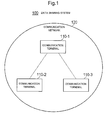
- a plurality of communication terminals 110 capable of wirelessly transmitting and receiving communication messages to and from one another form one communication network 120.
- the individual communication terminals 110 all of the terminals may be mobile communication terminals, or some of the terminals may be mobile communication terminals and the others may be fixed terminals.
- the number of communication terminals may be two or less or may also be four or more.
- the communication network 120 has a hierarchized network topology.
- the network topology is made up of two hierarchies, a parent and a child, and, of the plurality of communication terminals 110 connected to the communication network 120, only one communication terminal 110 functions as a parent and all the other communication terminals 120 function as children.
- transmitting and receiving of communication messages between the child communication terminals 110 are performed via the parent communication terminal 110.
- the parent communication terminal 110 functions as an access point.
- Fig. 2 illustrates a configuration example of a communication terminal 110.
- the communication terminal 110 includes a communication unit 111, a data storage unit 112, a holding list transmission unit 113, and a data exchange unit 114.
- the communication unit 111 has a function of wirelessly transmitting and receiving communication messages to and from other communication terminals 110.
- the communication unit 111 stores parent-related information 115 in the communication network 120, and controls enabling/disabling of a relay function in accordance with the parent-related information 115.
- the communication unit 111 enables the relay function and relays communication from a child communication terminal 110 to another child communication terminal 110 in the communication network 120.
- the data storage unit 112 stores one or more pieces of data.
- Choice of individual data is arbitrary.
- the data may include any of text data, image data, and audio data, as well as mixture thereof. Further, the data may be what is called content.
- the holding list transmission unit 113 has a function of transmitting a holding list that lists information about data stored in the data storage unit 112 to other communication terminals 110 through the communication unit 111.
- the information about data in the list is arbitrary as long as the data can be identified by the information, and, for example, the information may be a summary vector or may also be a data identifier.
- the holding list transmission unit 113 carries out transmission of a holding list, for example, in every fixed cycle.
- the data exchange unit 114 has a function of transmitting and receiving communication messages to and from another communication terminal 110 through the communication unit 111 so as to perform data sharing.
- the data exchange unit 114 includes a holding list storage unit 116 that temporarily stores a holding list received from another communication terminal 110. How long holding lists in the past are to be stored in the holding list storage unit 116 is arbitrary, and the time may be a fixed period in the past or may also be variable.
- the data exchange unit 114 refers to the parent-related information 115 in the communication unit 111 and performs different operations depending on whether the own communication terminal 110 functions as a parent or not. While the own communication terminal 110 does not function as a parent, the data exchange unit 114 preferentially selects a holding list that does not match the holding list of the own communication terminal and whose transmission source is the parent communication terminal 110, among the holding lists stored in the holding list storage unit 116, and transmits and receives communication messages to and from another communication terminal 110 that is a transmission source of the selected holding list so as to perform data sharing.
- the data exchange unit 114 selects any holding list that does not match the holding list of the own communication terminal 110 among the holding lists stored in the holding list storage unit 116, and transmits and receives communication messages to and from another communication terminal 110 that is a transmission source of the selected holding list so as to perform data sharing.
- Each communication terminal 110 in the data sharing system 100 transmits, using the holding list transmission unit 113, a holding list that lists data held by the own communication terminal to other communication terminals 110 through the communication unit 111 (Step S1).
- each communication terminal 110 when receiving a holding list from another communication terminal 110, temporarily stores the received holding list into the holding list storage unit 116 in the data exchange unit 114 (Step S2).
- each communication terminal 110 transmits and receives, using the data exchange unit 114, communication messages to and from another communication terminal 110 holding a holding list that does not match the holding list of the own communication terminal through the communication unit 111 so as to perform data sharing (Step S3).
- a communication terminal 110 that does not function as a parent but as a child preferentially selects a holding list that does not match the holding list of the own communication terminal and whose transmission source is the parent communication terminal 110, among the holding lists stored in the holding list storage unit 116, by using the data exchange unit 114.
- the communication terminal 110 that functions as a child transmits and receives, using the data exchange unit 114, communication messages to and from another communication terminal 110 that is a transmission source of the selected holding list so that data sharing is performed. Further, the communication terminal 110 that functions as a parent, using the data exchange unit 114, selects, among the holding lists stored in the holding list storage unit 116, any holding list that does not match the holding list of the own communication terminal 110. Then, the communication terminal 110 that functions as a parent transmits and receives, using the data exchange unit 114, communication messages to and from another communication terminal 110 that is a transmission source of the selected holding list so that data sharing is performed.
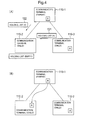
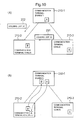
- the operation of the present exemplary embodiment will be more specifically described by taking, as an example, a case that, in the data sharing system illustrated in Fig. 1 , of the three communication terminals 110 connected to the communication network 120, the communication terminal 110-1 functions as a parent and the communication terminals 110-2 and 110-3 function as children.
- the parent communication terminal 110-1 and the child communication terminal 110-3 hold the same data A and the child communication terminal 110-2 does not hold any data. It is assumed that, in this situation, the communication terminal 110-2 receives a holding list 131 from the communication terminal 110-3 and, immediately thereafter, receives a holding list 132 from the parent communication terminal 110-1.
- the communication terminal 110-2 temporarily stores the holding lists 131 and 132 received in succession into the holding list storage unit 116. Then, the communication terminal 110-2, because of being a child communication terminal, preferentially selects the holding list 132 of the parent communication terminal 110-1 from the holding list storage unit 116. Then, the communication terminal 110-2 transmits and receives communication messages to and from the communication terminal 110-1 that is a transmission source of the selected holding list 132 so that data sharing is performed. As a result, as illustrated in Fig. 4(B) , the communication terminal 110-2 acquires the data A not present in the own communication terminal from the parent communication terminal 110-1. Consequently, one-hop communication brings about a state in which all the communication terminals 110 share the same data A with one another.
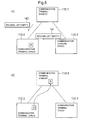
- the child communication terminal 110-2 holds data B and the parent communication terminal 110-1 and the child communication terminal 110-3 do not hold any data. It is assumed that, in this situation, the communication terminal 110-2 receives a holding list 141 from the communication terminal 110-3 and, immediately thereafter, receives a holding list 142 from the parent communication terminal 110-1.
- the communication terminal 110-2 temporarily stores the holding lists 141 and 142 received in succession into the holding list storage unit 116. Then, the communication terminal 110-2, because of being a child communication terminal, preferentially selects the holding list 142 of the parent communication terminal 110-1 from the holding list storage unit 116. Then, the communication terminal 110-2 transmits and receives communication messages to and from the communication terminal 110-1 that is a transmission source of the selected holding list 142 so as to perform data sharing. As a result, as illustrated in Fig. 5(B) , the communication terminal 110-2 provides the data B that the communication terminal 110-1 does not hold, for the communication terminal 110-1.
- one-hop communication brings about a state in which the communication terminal 110-1 and the communication terminal 110-2 hold the same data B and the communication terminal 110-3 does not hold any data.
- This state is the same as the state illustrated in Fig. 4(A) . Therefore, from the state illustrated in Fig. 5(B) , one-hop communication brings about a state in which all the communication terminals 110 share the same data B with one another. Therefore, from the state in Fig. 5(A) , performing one-hop communication twice brings about the state in which all the communication terminals 110 share the same data B with one another.
- each communication terminal when receiving in succession holding lists different from the holding list of the own communication terminal from a plurality of other communication terminals, is able to perform data exchange with communication terminals with which the number of hops is smaller.
- a reason for this is that each communication terminal temporarily stores received holding lists, and, while the own communication terminal is not a parent, preferentially selects, among the stored holding lists, a holding list that does not match the holding list of the own communication terminal and whose transmission source is the parent communication terminal, and transmits and receives communication messages with another communication terminal that is a transmission source of the selected holding list so that data sharing is performed.
- a plurality of communication terminals 210 capable of wirelessly transmitting and receiving communication messages to and from one another form one communication network 220.
- the individual communication terminals 210 all of the terminals may be mobile communication terminals, or some of the terminals may be mobile communication terminals and the others may be fixed terminals.
- the number of communication terminals may be two or less, or may also be four or more.
- the communication network 220 is a communication network that conforms to a Wi-Fi Direct specification.
- a network that conforms to a Wi-Fi direct specification only one communication terminal among a plurality of communication terminals participating in the network is selected as a group owner (parent) to function as an access point. Further, the aforementioned group owner is selected through negotiation among the plurality of communication terminals participating in the network.
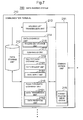
- Fig. 7 illustrates a configuration example of a communication terminal 210.
- the communication terminal 210 includes a communication unit 211, a data storage unit 212, a holding list transmission unit 213, and a data exchange unit 214.
- the data storage unit 212 and the holding list transmission unit 213 have the same functions as the data storage unit 112 and the holding list transmission unit 113, respectively, of the communication terminal 110 according to the first exemplary embodiment illustrated in Fig. 2 .
- the communication unit 211 has a function of determining a group owner (parent) through negotiation with other communication terminals 210 and storing information 215 related to the determined parent. Further, the communication unit 211 controls enabling/disabling of a relay function in accordance with the parent-related information 215. Specifically, while the own communication terminal 210 is a parent communication terminal in the communication network 220, the communication unit 211 enables the relay function and relays communication from a child communication terminal 210 to another child communication terminal 210 in the communication network 220.
- the data exchange unit 214 has a function of transmitting and receiving communication messages to and from another communication terminal 210 through the communication unit 211 so as to perform data sharing.
- the data exchange unit 214 includes a holding list storage unit 216, a comparison unit 217, a pull-type data exchange unit 218, and a push-type data exchange unit 219.
- the holding list storage unit 216 has a function of temporarily storing a holding list received from another communication terminal 210.
- the comparison unit 217 has a function of comparing a holding list received from another communication terminal 210 and stored in the holding list storage unit 216 with the holding list of the own communication terminal. Further, the comparison unit 217 has a function of determining, based on a result of the comparison and the parent-related information 215 stored in the communication unit 211, another communication terminal 210 to acquire data and a list of the data to be acquired, and another communication terminal 210 to provide data and a list of the data to be provided.
- the pull-type data exchange unit 218, as illustrated in Fig. 8(A) has a function of performing data sharing between communication terminals by a method in which a communication terminal that does not hold data transmits a data request to another communication terminal that holds the data and the communication terminal that receives the data request transmits the data to the communication terminal that is a source of the request.
- the pull-type data exchange unit 218 includes a data request unit 2181 and a data reply unit 2182.
- the data request unit 2181 has a function of receiving, from the comparison unit 217, another communication terminal 210 to acquire data and a list of the data to be acquired.
- the data request unit 2181 has a function of making a request for data to another communication terminal 210 through the communication unit 211, receiving, through the communication unit 211, the data transmitted from the other communication terminal 210 through use of a communication message in response to the request, and storing the data into the data storage unit 212.
- the data reply unit 2182 has a function of reading out, from the data storage unit 212, data requested by the pull-type data exchange unit 218 of another communication terminal 210 through use of a communication message and transmitting the data to the other communication terminal 210 through the communication unit 211.
- the push-type data exchange unit 219 has a function of performing data exchange between communication terminals by a method in which a communication terminal that holds data transmits data to another communication terminal that does not hold the data without a data request from the other communication terminal.
- the push-type data exchange unit 219 includes a data transmission unit 2191 and a data reception unit 2192.
- the data transmission unit 2191 has a function of receiving, from the comparison unit 217, another communication terminal 210 to provide data and a list of the data to be provided. Further, the data transmission unit 2191 has a function of reading out data to be provided from the data storage unit 212 and transmitting the data to another communication terminal 210 through the communication unit 211.
- the data reception unit 2192 has a function of storing, into the data storage unit 212, data received from the push-type data exchange unit 219 of another communication terminal 210 through use of a communication message.
- each communication terminal 210 negotiates, using the communication unit 211, with other communication terminals 210 as to which communication terminal of the communication terminals connected to the communication network 220 is determined as a parent (Step S11). As a result of the negotiation, information 215 related to the determined parent is temporarily stored in the communication unit 211.
- each communication terminal 210 transmits, using the holding list transmission unit 213, a holding list that lists data held by the own communication terminal to other communication terminals 210 through the communication unit 211 (Step S12).
- each communication terminal 210 when receiving a holding list from another communication terminal 210, temporarily stores the received holding list in the holding list storage unit 216 in the data exchange unit 214 (Step S13).
- each communication terminal 210 transmits and receives, using the data exchange unit 214, communication messages through the communication unit 211 to and from another communication terminal 210 holding a holding list that does not match the holding list of the own communication terminal, so as to perform data sharing (Step S14).
- each communication terminal 210 that functions as a child preferentially selects a holding list that does not match the holding list of the own communication terminal and whose transmission source is the parent communication terminal 210, among the holding lists stored in the holding list storage unit 216.
- each communication terminal 210 that functions as a child performs the pull-type data exchange and/or the push-type data exchange with the other communication terminal 210 that is a transmission source of the selected holding list.
- the communication terminal 210 that functions as a parent selects any holding list that does not match the holding list of the own communication terminal 210 among the holding lists stored in the holding list storage unit 216. Then, the communication terminal 210 that functions as a parent performs the pull-type data exchange and/or the push-type data exchange with the other communication terminal 210 that is a transmission source of the selected holding list.
- the processing of the aforementioned steps S12 to S13 is repeated.
- the processing of the aforementioned steps S11 to S 14 may be repeated.
- a parent communication terminal 210-1 and a child communication terminal 210-3 hold data A
- a child communication terminal 210-2 holds data B. It is assumed that, in this situation, the communication terminal 210-2 receives a holding list 231 from the communication terminal 210-3 and, immediately thereafter, receives a holding list 232 from the parent communication terminal 210-1.
- the communication terminal 210-2 temporarily stores the holding lists 231 and 232 received in succession into the holding list storage unit 216. Then, the communication terminal 210-2, because of being a child communication terminal, preferentially selects the holding list 232 of the parent communication terminal 210-1 from the holding list storage unit 216. Then, the communication terminal 210-2 transmits and receives communication messages to and from the communication terminal 210-1 that is a transmission source of the selected holding list 232 so that data sharing is performed. As a result, as illustrated in Fig. 10(B) , the communication terminal 210-2 acquires the data A not present in the own communication terminal from the communication terminal 210-1 by the pull-type data exchange method.
- the communication terminal 210-2 provides the data B not present in the communication terminal 210-1 for the communication terminal 210-1 by the push-type data exchange method.
- the communication terminal 210-2 selects the holding list 231 received earlier and performs acquisition of the data A and provision of the data B with the communication terminal 210-3 that is a transmission source of the selected holding list 231, two-hop communication is respectively needed.
- the parent communication terminal 210-1 and the child communication terminal 210-2 hold data A and B and the child communication terminal 210-3 holds the data A. It is assumed that, in this situation, the communication terminal 210-3 receives a holding list 241 from the communication terminal 210-2 and, immediately thereafter, receives a holding list 242 from the parent communication terminal 210-1.
- the communication terminal 210-3 temporarily stores the holding lists 241 and 242 received in succession into the holding list storage unit 216. Then, the communication terminal 210-3, because of being a child communication terminal, preferentially selects the holding list 242 of the parent communication terminal 210-1 from the holding list storage unit 216. Then, the communication terminal 210-3 transmits and receives communication messages to and from the communication terminal 210-1 that is a transmission source of the selected holding list 242 so as to perform data exchange. As a result, as illustrated in Fig. 11(B) , the communication terminal 210-3 acquires the data B not present in the own communication terminal from the communication terminal 210-1 by the pull-type data exchange method. In contrast, in case of the communication terminal 210-3 selects the holding list 241 received earlier and acquires the data B from the communication terminal 210-2 that is a transmission source of the selected holding list 241, two-hop communication is needed.
- an effect similar to the second exemplary embodiment can be obtained, and data exchange can be efficiently carried out.
- a reason for this is that data transmitted and received between communication terminals by using the push-type data exchange method and the pull-type data exchange method are limited to data to be shared between the communication terminals and there is no unnecessary operation that data not to be shared between the communication terminals are transmitted and received between the communication terminals.
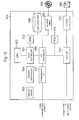
- FIG. 12 illustrates an example of a hardware configuration in a case that a communication terminal in each of the aforementioned exemplary embodiments is configured by an electronic information processing apparatus such as a computer.
- a communication terminal 910 in this example includes a CPU (Central Processing Unit) peripheral unit, an input/output unit, and a legacy input/output unit.
- the CPU peripheral unit includes a CPU 902, a RAM (Random Access Memory) 903, a graphic controller 904, and a display device 905 that are interconnected by a host controller 901.
- the input/output unit includes a communication interface 907, a hard disk drive 908, and a CD-ROM (Compact Disk Read Only Memory) drive 909 that are connected to the host controller 901 through an input/output controller 906.
- the legacy input/output unit includes a ROM (Read Only Memory) 910, a flexible disk drive 911, and an input/output chip 912 that are connected to the input/output controller 906.
- the host controller 901 connects the CPU 902 and the graphic controller 904 that access the RAM 903 at a high transfer rate, and the RAM 903.
- the CPU 902 operates to control each unit based on a program stored in the ROM 910 and the RAM 903.
- the graphic controller 904 acquires image data generated on a frame buffer provided within the RAM 903 by the CPU 902 and the like, and displays the image data on the display device 905.
- the graphic controller 904 may contain therein a frame buffer that stores image data generated by the CPU 902 and the like.
- the input/output controller 906 connects the host controller 901 with the hard disk drive 908, the communication interface 907, and the CD-ROM drive 909 , that are relatively high-speed input/output devices.
- the hard disk drive 908 stores a program and data that the CPU 902 uses.
- the communication interface 907 connects to other communication terminals 320 to transmit and receive a program or data.
- the CD-ROM drive 909 reads a program or data from a CD-ROM 992, and provides the program or data for the hard disk drive 908 and the communication interface 907 via the RAM 903.
- the ROM 910 and relatively low-speed input/output devices, including the flexible disk drive 911 and the input/output chip 912, are connected to the input/output controller 906.
- the ROM 910 stores a boot program that the communication terminal 310 executes at the time of start-up, a program that depends on hardware of the communication terminal 310, or the like.
- the flexible disk drive 911 reads a program or data from a flexible disk 993, and provides the program or data for the hard disk drive 908 and the communication interface 907 via the RAM 903.
- the input/output chip 912 connects to the flexible disk drive 911, or various types of input/output devices via a parallel port, a serial port, a keyboard port, a mouse port, or the like.
- the program that the CPU 902 executes is stored on a recording medium, such as the flexible disk 993, the CD-ROM 992, and an IC (Integrated Circuit) card, and provided by a user.
- the program stored on the recording medium may be compressed or non-compressed.
- the program is installed on the hard disk drive 908 from the recording medium, read out onto the RAM 903, and executed by the CPU 902.
- the program executed by the CPU 902 causes the communication terminal 910 to function as the communication unit, the data storage unit, the holding list transmission unit, the data exchange unit, and the like in each of the exemplary embodiments described above.
- the program described above may be stored on an external storage medium.
- the storage medium it is possible to use, besides the flexible disk 993 and the CD-ROM 992, an optical recording medium, such as a DVD (Digital Versatile Disk) and a PD (Phase Disk), a magneto-optical recording medium, such as an MD (MiniDisk), a tape medium, a semiconductor memory such as an IC card, and the like.
- an information sharing system may be provided as a program acquired via a network, by using a storage medium, such as a hard disk and a RAM, provided in a server system connected to a dedicated communication network or the Internet, as a recording medium.
- each communication terminal has functions of both the push-type data exchange method and the pull-type data exchange method.
- the present invention is not limited to such a case, but it suffices that each communication terminal has a function of at least one of the push-type data exchange method and the pull-type data exchange method.
- the present invention is applicable to a data sharing system that performs sharing of data, such as various types of content, between on-board communication terminals on vehicles such as automobiles, or between portable communication terminals.
Landscapes
- Engineering & Computer Science (AREA)
- Computer Networks & Wireless Communication (AREA)
- Signal Processing (AREA)
- Multimedia (AREA)
- Information Transfer Between Computers (AREA)
- Mobile Radio Communication Systems (AREA)
Applications Claiming Priority (2)
| Application Number | Priority Date | Filing Date | Title |
|---|---|---|---|
| JP2013032835 | 2013-02-22 | ||
| PCT/JP2013/007110 WO2014128806A1 (fr) | 2013-02-22 | 2013-12-04 | Système de partage de données |
Publications (2)
| Publication Number | Publication Date |
|---|---|
| EP2960802A1 true EP2960802A1 (fr) | 2015-12-30 |
| EP2960802A4 EP2960802A4 (fr) | 2016-10-26 |
Family
ID=51390646
Family Applications (1)
| Application Number | Title | Priority Date | Filing Date |
|---|---|---|---|
| EP13875443.7A Withdrawn EP2960802A4 (fr) | 2013-02-22 | 2013-12-04 | Système de partage de données |
Country Status (4)
| Country | Link |
|---|---|
| US (1) | US20160006802A1 (fr) |
| EP (1) | EP2960802A4 (fr) |
| JP (1) | JP6281561B2 (fr) |
| WO (1) | WO2014128806A1 (fr) |
Families Citing this family (1)
| Publication number | Priority date | Publication date | Assignee | Title |
|---|---|---|---|---|
| KR20160099610A (ko) * | 2014-03-04 | 2016-08-22 | 닛본 덴끼 가부시끼가이샤 | DTN(Disruption/Delay/Disconnect Tolerant Network)에서 이용되는 노드 장치 및 통신 방법 |
Family Cites Families (8)
| Publication number | Priority date | Publication date | Assignee | Title |
|---|---|---|---|---|
| US5630116A (en) * | 1993-08-11 | 1997-05-13 | Nec Corporation | Automatic delivery system for master files in a distributed processing system |
| US20090005548A1 (en) * | 2002-11-14 | 2009-01-01 | Dharmacon, Inc. | siRNA targeting nuclear receptor interacting protein 1 (NRIP1) |
| JP2008003981A (ja) * | 2006-06-26 | 2008-01-10 | Matsushita Electric Ind Co Ltd | 携帯電話端末、試用コンテンツデータ交換システム、および試用コンテンツデータ交換方法 |
| US8782527B2 (en) * | 2007-06-27 | 2014-07-15 | Microsoft Corp. | Collaborative phone-based file exchange |
| KR100933166B1 (ko) * | 2007-08-20 | 2009-12-21 | 삼성전자주식회사 | 근거리 네트워크에서 데이터를 공유하기 위한 방법 및 이를 위한 단말기 |
| JP5506640B2 (ja) | 2010-11-24 | 2014-05-28 | 日本電信電話株式会社 | コンテンツ配信方法及びシステム |
| JP5821390B2 (ja) * | 2011-08-10 | 2015-11-24 | 株式会社リコー | 無線通信装置、無線通信プログラム及び無線通信方法 |
| US20140201280A1 (en) * | 2012-04-23 | 2014-07-17 | Emily Qi | Systems and methods for resuming group owner responsibilities for peer-to-peer wireless connections |
-
2013
- 2013-12-04 EP EP13875443.7A patent/EP2960802A4/fr not_active Withdrawn
- 2013-12-04 WO PCT/JP2013/007110 patent/WO2014128806A1/fr not_active Ceased
- 2013-12-04 JP JP2015501093A patent/JP6281561B2/ja active Active
- 2013-12-04 US US14/769,524 patent/US20160006802A1/en not_active Abandoned
Also Published As
| Publication number | Publication date |
|---|---|
| JP6281561B2 (ja) | 2018-02-21 |
| WO2014128806A1 (fr) | 2014-08-28 |
| JPWO2014128806A1 (ja) | 2017-02-02 |
| EP2960802A4 (fr) | 2016-10-26 |
| US20160006802A1 (en) | 2016-01-07 |
Similar Documents
| Publication | Publication Date | Title |
|---|---|---|
| US20170201582A1 (en) | Cross-protocol distributed cloud storage system and data management method based on operation control unit | |
| US8903972B2 (en) | Method and apparatus for sharing contents using information of group change in content oriented network environment | |
| US9537930B2 (en) | Information system, file server, and file server control method | |
| CN120389948A (zh) | 一种报文转发的方法、报文处理方法及设备 | |
| EP2960803B1 (fr) | Système de partage de données | |
| WO2024131493A1 (fr) | Procédé et appareil de traitement de tâches, dispositif, et support de stockage | |
| EP3244587A1 (fr) | Procédé, dispositif et système de synchronisation temporelle selon un protocole de synchronisation de précision d'horloge dans un réseau d'agrégation | |
| US9807780B2 (en) | Data sharing system | |
| CN104113607A (zh) | 数据共享方法、电子设备以及数据共享系统 | |
| CN112860431B (zh) | 微服务节点的连接方法、系统、设备及存储介质 | |
| EP2960802A1 (fr) | Système de partage de données | |
| JP6365531B2 (ja) | アクセスポイント決定方法 | |
| CN115396355B (zh) | 网络路径探测方法、装置和电子设备 | |
| CN117675720B (zh) | 消息报文传输方法、装置、电子设备和存储介质 | |
| WO2014147953A1 (fr) | Système de communication | |
| CN115767734B (zh) | 分布式自组网业务资源调度方法 | |
| CN106027337B (zh) | 智能家居平台、应用于其中的网络供应商选择方法和装置 | |
| CN115277878A (zh) | 一种发送报文的方法、处理报文的方法及设备 | |
| CN116319601A (zh) | 数据传输方法、装置、设备、存储介质和程序产品 | |
| JP6857243B2 (ja) | パケット処理 | |
| CN108183863B (zh) | 一种广播报文发送系统、方法和装置 | |
| KR20140078257A (ko) | 단말들 간에 자원을 공유하기 위한 장치 및 방법 | |
| JP6569565B2 (ja) | 管理装置、配信先登録方法及び配信先登録プログラム | |
| WO2025113331A1 (fr) | Procédé de partage de ressources, dispositif électronique et support de stockage | |
| GB2617692A (en) | Multi-processor arrangement with point of serialization for broadcast communications |
Legal Events
| Date | Code | Title | Description |
|---|---|---|---|
| PUAI | Public reference made under article 153(3) epc to a published international application that has entered the european phase |
Free format text: ORIGINAL CODE: 0009012 |
|
| 17P | Request for examination filed |
Effective date: 20150915 |
|
| AK | Designated contracting states |
Kind code of ref document: A1 Designated state(s): AL AT BE BG CH CY CZ DE DK EE ES FI FR GB GR HR HU IE IS IT LI LT LU LV MC MK MT NL NO PL PT RO RS SE SI SK SM TR |
|
| AX | Request for extension of the european patent |
Extension state: BA ME |
|
| DAX | Request for extension of the european patent (deleted) | ||
| A4 | Supplementary search report drawn up and despatched |
Effective date: 20160926 |
|
| RIC1 | Information provided on ipc code assigned before grant |
Ipc: H04M 11/00 20060101ALI20160920BHEP Ipc: G06F 13/00 20060101AFI20160920BHEP Ipc: H04W 4/00 20090101ALI20160920BHEP Ipc: H04W 84/20 20090101ALI20160920BHEP Ipc: H04W 88/04 20090101ALI20160920BHEP Ipc: H04L 29/08 20060101ALI20160920BHEP Ipc: H04W 84/12 20090101ALI20160920BHEP |
|
| 17Q | First examination report despatched |
Effective date: 20170901 |
|
| STAA | Information on the status of an ep patent application or granted ep patent |
Free format text: STATUS: THE APPLICATION HAS BEEN WITHDRAWN |
|
| 18W | Application withdrawn |
Effective date: 20171206 |