EP2962477B1 - Method, apparatus and system for performing prioritized barring of service access - Google Patents
Method, apparatus and system for performing prioritized barring of service access Download PDFInfo
- Publication number
- EP2962477B1 EP2962477B1 EP13708720.1A EP13708720A EP2962477B1 EP 2962477 B1 EP2962477 B1 EP 2962477B1 EP 13708720 A EP13708720 A EP 13708720A EP 2962477 B1 EP2962477 B1 EP 2962477B1
- Authority
- EP
- European Patent Office
- Prior art keywords
- network
- mobile
- barring
- mobile phones
- maximum
- Prior art date
- Legal status (The legal status is an assumption and is not a legal conclusion. Google has not performed a legal analysis and makes no representation as to the accuracy of the status listed.)
- Active
Links
Images

Classifications
-
- H—ELECTRICITY
- H04—ELECTRIC COMMUNICATION TECHNIQUE
- H04W—WIRELESS COMMUNICATION NETWORKS
- H04W48/00—Access restriction; Network selection; Access point selection
- H04W48/02—Access restriction performed under specific conditions
- H04W48/06—Access restriction performed under specific conditions based on traffic conditions
-
- H—ELECTRICITY
- H04—ELECTRIC COMMUNICATION TECHNIQUE
- H04W—WIRELESS COMMUNICATION NETWORKS
- H04W24/00—Supervisory, monitoring or testing arrangements
- H04W24/02—Arrangements for optimising operational condition
-
- H—ELECTRICITY
- H04—ELECTRIC COMMUNICATION TECHNIQUE
- H04W—WIRELESS COMMUNICATION NETWORKS
- H04W24/00—Supervisory, monitoring or testing arrangements
- H04W24/08—Testing, supervising or monitoring using real traffic
-
- H—ELECTRICITY
- H04—ELECTRIC COMMUNICATION TECHNIQUE
- H04W—WIRELESS COMMUNICATION NETWORKS
- H04W4/00—Services specially adapted for wireless communication networks; Facilities therefor
-
- H—ELECTRICITY
- H04—ELECTRIC COMMUNICATION TECHNIQUE
- H04W—WIRELESS COMMUNICATION NETWORKS
- H04W4/00—Services specially adapted for wireless communication networks; Facilities therefor
- H04W4/02—Services making use of location information
- H04W4/021—Services related to particular areas, e.g. point of interest [POI] services, venue services or geofences
-
- H—ELECTRICITY
- H04—ELECTRIC COMMUNICATION TECHNIQUE
- H04W—WIRELESS COMMUNICATION NETWORKS
- H04W4/00—Services specially adapted for wireless communication networks; Facilities therefor
- H04W4/90—Services for handling of emergency or hazardous situations, e.g. earthquake and tsunami warning systems [ETWS]
Definitions
- the present invention relates to alerting people staying at a specific geographical location. More specifically the invention is described by a method, device and system for optimal utilization of the capacity of a mobile network that is serving mobile phones covering a specific selected geographical area.
- GMES Global Monitoring Environmental Security
- a complete population alerting system must utilize multiple systems and channels for transmission and distribution of alert messages.
- the possibility of alerting persons directly via mobile phones is now preferred as it is regarded to be very efficient.
- This alerting method is however critical due to possible heavy traffic load on the network infrastructure in a specific area serving the mobile phones.
- Mobile telephony has now become a service covering critical tasks for the society. This includes alerting of a population in case of a critical incident. In such cases a typical result is that network traffic increase dramatically depending on type of incident and scope. The reason for this is concerned affected people in need of information.
- HLR Home Location Register
- LBAS Location Based Alert Services
- A-SMSC optimizing message distribution component
- a medium sized country will have an intermediate solution where existing A-SMSCs are used with throttle control.
- a country with a large population will require high capacity A-SMSCs.
- WO 2010/137993 A1 discloses sending alert messages to users of mobile phones staying at a specific geographical location without overloading the network and independently of user preferences.
- WO 2014/009212 A1 relates to managing traffic in a communication network during an emergency situation. Barring of non-prioritized network communication traffic during alert messaging of a plurality of User Equipments located within a specific geographical area is provided.
- the present invention presents an improved solution in view of prior art and contributes to a fast and efficient alerting without letting the network break down due to overload.
- the present invention is defined by a method for optimal utilization of the capacity of a mobile network serving mobile phones located in a selected geographical area as according to claim 1.
- the purpose is optimal handling of network traffic in a period with heavy network traffic to and/or from said area without overloading said mobile network.
- the method comprises the steps specified in claim 1.
- the invention is also defined by a device and system for performing the method described above with features as defined in the claims.
- Optimal utilization of the capacity of a mobile network is of specific importance for handling network traffic in a period with heavy traffic to and/or from said area for avoiding overloading of the mobile network.
- a typical situation when overloading may occur is when an incident within an area affecting a lot of people happens. This may for instance be a natural disaster like earthquake, tsunami or flooding. It may also be man made disasters like for instance gas leaks and explosions.
- the present invention comprises a system performing a method with several steps.
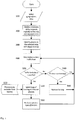
- Figure 1 shows an overview of the steps comprised in the inventive method for continuous and optimal utilization of the capacity of a mobile network that is serving mobile phones covering a specific selected geographical area.
- First one or more specific areas 100 have to be selected, hereafter called an area or a specific area, where optimal utilization of the capacity of a mobile network serving the area is to be performed.
- an operator of the system will be presented with information comprising maps from which the area concerned can be selected.
- the specific area is typically selected from map presented on a screen, e.g. by marking an area with a polygon or circle.
- a computer presenting the map is connected to a Location Based Barring Component (LBBC) that will identify the cells of a mobile network covering the selected area. The number of persons in the area, based on connected phones to identified cells, will be presented and an operator can send desired information to the persons.
- LBBC Location Based Barring Component
- Such a system is also capable of receiving information and requests from persons responding to a transmitted alert message. In this way, the system will also present the status of different persons residing in the area concerned and to which an alert has been sent.
- Step a) of the invention which is after selecting a specific area, is establishing an overview of maximum network capacity 200 of the mobile network serving the selected geographical area as well as adjacent areas. Based on the area selected the infrastructure of the mobile network serving the area can be identified. Different network components serving the selected area can be located on the inside or the outside of the area or more likely both on the inside and on the outside of a selected area.
- Determining maximum network capacity is vital for continuous optimal utilization of the capacity of a mobile network serving a selected area without overloading the network.
- Step b) is establishing an overview of the identity of relevant mobile phones connected to the network serving said selected area 300 as well as mobile phones in adjacent areas that are also served by said mobile network. This will establish an overview for determining possible maximum traffic load on the mobile network serving the selected area.
- Determining possible traffic load is based on a worst case scenario where each connected phone exerts maximum load on the network.
- the identity of persons linked to the phones is associated with MSISDN numbers on their SIM cards in their mobile phones.
- the total traffic load on a network depends on different types of services, delivered via the network, influencing the network load differently.
- One aspect of the present invention is therefore to differentiate between different types of network traffic for optimal utilization of the network capacity serving the selected area, and without possibly shutting down all network services for a particular mobile phone.
- the next step c) of the method is performing continuous monitoring of current traffic load 400 of mobile services on said mobile network.
- Different types of services delivered via the network are monitored. These services comprise voice, SMS messaging, and data activity loading the network differently.
- Data activity is the type of network service generating the highest traffic load on the network. This especially applies to streaming of data requiring a constant high bandwidth, e.g. streaming of video.
- step c) is the starting and returning step for the following barring steps for performing continuous adjusted optimization.
- step c) is entered again for continuous monitoring of current traffic load 400.
- step d) of the method is entered.
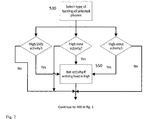
- Step d) is determining which type of barring to perform 530, i.e. selective barring of one or more mobile services to and/or from selected relevant mobile phones based on the established maximum network capacity, the established possible maximum traffic load, and the current monitored traffic load.
- Barring may be initiated based on expected increase in traffic load and prior to reaching a traffic load on a network that is close to the maximum network capacity. It may for instance be desirable to initiate barring as soon as an emergency situation in an area has occurred, and prior to sending of alert messages to persons residing in said area. Type of barring to select, if any, will then be continuously assessed and implemented according to current load status during alerting.
- Some phones may be excluded from being barred. Such phones are typically linked to personnel dedicated to assist during an emergency situation. The identities of these phones are kept in a list 520. When a specific type of barring of selected phones 530 is performed for identified mobile phones, the list is checked and phones in the list is excluded from being barred.
- Total network load is the sum of different network services such as voice, data and SMS. Based on monitoring of these the service or services loading the network the most is selected to be barred.
- Figure 2 illustrate the selection method of which service to bar, i.e. the decision steps between steps 530 and 550.
- Maximum network capacity will be the primary parameter controlling type and degree of barring. Barring of one or more of a selected type of service can be performed for relevant mobile phones located inside said selected area.
- a service generating network traffic to mobile phones in the area may be barred.
- a service generating network traffic from mobile phones in the area may barred.
- a service generating traffic to and from the area may be barred.
- the load of the network serving an area is controlled by barring services to and/or from relevant mobile phones located both inside said selected area as well as areas adjacent to said selected area is performed.
- LBBC has access to a tool, e.g. Location Based Alert Service (LBAS), identifying which cells that are covering the selected area, as well as subscribers connected to the cells.
- LBAS Location Based Alert Service
- this database comprises MSISDN and corresponding Cell Id.
- Qualification of subscribers for whom barring is to be performed is executed by verifying that Cell_Id for a subscriber correspond with Cell_Id retrieved from a list covering the selected area.
- relevant identified phones may in one embodiment of the invention be grouped in at least two groups, and where selected network services is barred for one group at a time set by time intervals.
- Gradual barring of network services can be performed when it is desirable to restrict outgoing and/or ingoing traffic to or from an area. Barring of network services may then rotate between the groups set by the time intervals, such that each group will have accesses to some or all network services for a limited time in a period with heavy network traffic.
- data activity on a mobile network is more demanding with regards to heavy network load and bandwidth compared to voice and SMS. Therefore in one preferred embodiment of the invention only data traffic with high bandwidth demanding services such as streaming is barred. In another embodiment all streaming services is barred.
- the last step e) of the inventive method is executing barring, i.e. performing continuous selected type of barring 550 of said selected mobile phones served by said mobile network for utilizing maximum capacity of the network without overloading the network during heavy network traffic.
- Type of barring selected to be performed or executed is based on said previous steps resulting in an overview of total traffic load on the network as well as the traffic load of each of the different network services. Based on this result, the network service contributing the most to the traffic load will be barred for all or selected mobile phones when performing prioritized barring.
- Prioritized barring is when prioritized mobile phones is excluded from being barred. This can be performed by placing a priority tag for specific relevant mobile phones, where the tag indicates that the prioritized mobile phones with corresponding MSISDN numbers shall not be barred.
- Barring is preferably performed continuously during periods with heavy or extreme load, e.g. when an incident within an area affecting a lot of people happens.
- barring When barring is to be implemented it is ideally performed gradually based on current traffic load and total network capacity. The amount of barring will increase if the traffic load on the network is close to maximum capacity. Likewise the amount of barring will decrease if the traffic load is below the maximum capacity.
- the values defining these limits can be set prior to implementation of the method. In one embodiment these values are set by an operator in the LBBC.
- the method is implemented such that optimal network capacity is continuously utilized during a period with heavy network traffic.
- the present invention is also defined by a location based barring component (LBBC), i.e. a device for performing continuous and optimal utilization of the capacity of a mobile network that is serving mobile phones covering a specific selected geographical area, for the purpose of optimal handling of a period with heavy network traffic to and/or from said area without overloading said mobile network.
- LBBC location based barring component
- the device is connected to means for selecting said geographic area, e.g. touch screen.
- the device itself comprises means for selecting said geographic area.
- a zooming and panning functionality on a graphical user interface will make it easy to find a specific area.
- the user clicks on a area that is to be subjected to network control according to the invention the user can be presented with a number of persons linked to mobile phones who are staying in the country/area.
- the device comprises input means for receiving a selected geographic area.
- the device further comprises input means for establishing an overview of the identity of relevant mobile phones located within said selected geographic area as well as in adjacent areas served by said mobile network for determining possible maximum traffic load on the mobile network.
- the identity of relevant mobile phones located within said selected geographical area as well as in adjacent areas can be found by using a probe, for instance on the A-interface between the BSC and MSC in a GSM Network. This identifies queries, which contain location information. This information is used for updating a database that is either comprised in or accessible for the inventive device.
- the database comprising data about the visited country, region, MSISDN, date and time for last update for each person associated with the MSISDN number.
- the database will at all times contain updated information about persons staying abroad, in that a new registration comprising updated location information and MSISDN numbers is added to the database when the probe detects a query about a relevant MSISDN number from a foreign operator, and where the record is updated continuously as new queries from new areas or countries are detected.
- Existing registrations is deleted from the database when the probe detects that a person associated with the MSISDN number in question leaves the selected area.
- the number of persons in the selected area may be presented on the graphical user interface. Based on this the operator can make appropriate actions, e.g. type of barring to be used etc.
- the device further comprises means for establishing an overview of maximum network capacity of said mobile network serving the selected area.
- the device thus comprises input means for receiving data regarding the network capacity.
- the device further comprises means for establishing an overview of the current traffic load of mobile services on said mobile network serving the selected area.
- the device thus comprises input means for receiving data regarding current traffic load.
- the device further comprises location based barring means for determining type of barring of one or more mobile services to and/or from said relevant mobile phones based on said possible maximum traffic load, said maximum network capacity and said current traffic load.
- the device further comprises input means for receiving data regarding prioritised mobile phones that are not to be barred.
- the location based barring means implements the inventive method described above.
- the device further comprises output means for outputting barring controlling signals to a mobile switching centre. Said signals controlling enabling and disabling of barring of selected mobile services to and/or from identified mobile phones, as well as type of barring determined by the device (LBBC).
- the inventive device is the key component for controlling and utilizing maximum capacity of the network without overloading the network during heavy network traffic.
- the present invention is further described by a system for performing continuous and optimal utilization of the capacity of a mobile network that is serving mobile phones covering a specific selected geographical area, for the purpose of optimal handling of a period with heavy network traffic to and/or from said area without overloading said mobile network.
- the LBBC is the key component comprised in the system.
- the system comprises means for selecting said geographic area, and means for establishing an overview of the identity of relevant mobile phones located within said selected geographic area as well as in adjacent areas served by said mobile network for determining possible maximum traffic load on the mobile network.
- Some of these means may be comprised in said LBBC device that is the device in the system determining type of barring of one or more mobile services to and/or from said relevant mobile phones based on said possible maximum traffic load, said maximum network capacity and said current traffic load.
- system further comprises a priority database with the identity of prioritised mobile phones that are not to be barred.
- the system further comprises a mobile switching centre enabling and disabling selected mobile services to and/or from identified mobile phones, said switching centre having input means for receiving the identity of mobile phones to be barred, and type of barring determined by said location based barring device.
- Figure 3 illustrate an example for how the inventive method will work when implemented in a 2G/3G network.
- the key device in the configuration of the network is the Location Based Barring Component (LBBC) controlling setting and removing of barring for services of phones in a selected area which is noted as affected area in the figure.
- LBBC Location Based Barring Component
- LBBC is located at the site of the operator executing the barring method.
- the LBBC is connected to a priority database (PriorityDb) comprising IDs of MSISDN that are not to be barred.
- LBBC is further connected to a Location Based Alert Service (LBAS) with a database comprising updated information on all subscribers located in a selected area.
- LBAS Location Based Alert Service
- VLR Visitor Location Register
- MSC Mobile Switching Centre
- the LBBC will output barring data to the service device, in this case the VLR, that provides the input data to the MSC controlling that mobile traffic to and from the mobile phones.
- the service device in this case the VLR
- the following is a simplified example scenario where continuous optimal handling of network traffic in a period with heavy network traffic to and/or from an affected area is to be performed.
- Call 1 (dotted line) indicates a call initiated from an ordinary user in an affected area to an ordinary. Since both parties are ordinary users, the call is rejected, i.e. barred.
- Call 2 indicates a call initiated from a prioritised user in an affected area to an ordinary user.
- the call is accepted, i.e. no barring.
- Call 3 indicates a call initiated from a prioritised user outside an affected area to an ordinary user in an affected area. The call is accepted, i.e. no barring.
- This example illustrate the barring mechanism.
- the invention will ensure automatic and continuous setting and removing of different types of barring, e.g. data, voice, SMS, according to current load of the network components serving a specific affected area.
- a set of barring rules can be implemented in the LBBC as default data when barring is initiated.
- the default barring rules may of course be changed by an operator of the LBBC system. This may be the case if it is detected that the number of mobile phones within an area is higher that expected, i.e. higher that found from the historical data.
- Barring rules may comprise type of service to bar, barring incoming and/or outgoing calls, and phones to be excluded from barring etc.
- the LBBC and the method for implementing barring according to the present invention will provide this in a new an inventive way.
- the LBBC is the key component in the system performing the method optimizing network traffic by barring different services based on monitored traffic load.
Landscapes
- Engineering & Computer Science (AREA)
- Computer Networks & Wireless Communication (AREA)
- Signal Processing (AREA)
- Computer Security & Cryptography (AREA)
- Mobile Radio Communication Systems (AREA)
- Telephonic Communication Services (AREA)
- Monitoring And Testing Of Exchanges (AREA)
Priority Applications (3)
| Application Number | Priority Date | Filing Date | Title |
|---|---|---|---|
| HUE13708720A HUE046484T2 (hu) | 2013-02-27 | 2013-02-27 | Módszer, készülék és rendszer a szolgáltatáshoz való hozzáférés prioritást élvezõ korlátozásának végrehajtására |
| PL13708720T PL2962477T3 (pl) | 2013-02-27 | 2013-02-27 | Sposób, urządzenie i układ do realizacji traktowanego priorytetowo blokowania dostępu do usług |
| PT13708720T PT2962477T (pt) | 2013-02-27 | 2013-02-27 | Método, aparelho e sistema para a execução de barramento priorizado do acesso ao serviço |
Applications Claiming Priority (1)
| Application Number | Priority Date | Filing Date | Title |
|---|---|---|---|
| PCT/EP2013/053905 WO2014131439A1 (en) | 2013-02-27 | 2013-02-27 | Method, apparatus and system for performing prioritized barring of service access |
Publications (2)
| Publication Number | Publication Date |
|---|---|
| EP2962477A1 EP2962477A1 (en) | 2016-01-06 |
| EP2962477B1 true EP2962477B1 (en) | 2019-07-10 |
Family
ID=47845940
Family Applications (1)
| Application Number | Title | Priority Date | Filing Date |
|---|---|---|---|
| EP13708720.1A Active EP2962477B1 (en) | 2013-02-27 | 2013-02-27 | Method, apparatus and system for performing prioritized barring of service access |
Country Status (23)
| Country | Link |
|---|---|
| EP (1) | EP2962477B1 (da) |
| JP (1) | JP6276295B2 (da) |
| KR (1) | KR101928930B1 (da) |
| CN (1) | CN105247896B (da) |
| AU (1) | AU2013380261B2 (da) |
| BR (1) | BR112015020694A2 (da) |
| CA (1) | CA2901063C (da) |
| CR (1) | CR20150497A (da) |
| DK (1) | DK2962477T3 (da) |
| ES (1) | ES2743721T3 (da) |
| HU (1) | HUE046484T2 (da) |
| MA (1) | MA38429B1 (da) |
| MX (1) | MX351843B (da) |
| NI (1) | NI201500116A (da) |
| NZ (1) | NZ711481A (da) |
| PH (1) | PH12015501833A1 (da) |
| PL (1) | PL2962477T3 (da) |
| PT (1) | PT2962477T (da) |
| RU (1) | RU2637478C2 (da) |
| SG (1) | SG11201506648UA (da) |
| UA (1) | UA114752C2 (da) |
| WO (1) | WO2014131439A1 (da) |
| ZA (1) | ZA201506676B (da) |
Families Citing this family (3)
| Publication number | Priority date | Publication date | Assignee | Title |
|---|---|---|---|---|
| US9521514B2 (en) * | 2014-11-25 | 2016-12-13 | Motorola Solutions, Inc. | Method and apparatus for controlling network access in a wireless communication system |
| AU2016306084B2 (en) * | 2015-08-13 | 2019-01-03 | Everbridge Norway As | Methods and systems for sending alert messages in mobile networks |
| EP3633955B1 (en) | 2018-10-04 | 2023-10-25 | Nokia Solutions and Networks Oy | An apparatus, method and computer program for controlling wireless network capacity |
Family Cites Families (12)
| Publication number | Priority date | Publication date | Assignee | Title |
|---|---|---|---|---|
| JP2001078260A (ja) * | 1999-09-06 | 2001-03-23 | Yrp Kokino Idotai Tsushin Kenkyusho:Kk | 移動通信システムにおける輻輳制御方法、移動端末および基地局 |
| EP1967030B1 (en) * | 2005-12-02 | 2013-02-27 | Telefonaktiebolaget LM Ericsson (publ) | Method and apparatus for allocating bandwidth in a wireless communication system |
| JP2009135652A (ja) * | 2007-11-29 | 2009-06-18 | Kyocera Corp | 無線通信端末 |
| US9215217B2 (en) * | 2008-12-05 | 2015-12-15 | Suhayya Abu-Hakima and Kenneth E. Grigg | Auto-discovery of diverse communications devices for alert broadcasting |
| NO329487B1 (no) * | 2008-02-22 | 2010-10-25 | Unified Messaging Systems As | Varslingssystem for utenlandsreisende |
| US9148769B2 (en) * | 2008-05-07 | 2015-09-29 | Qualcomm Incorporated | System, apparatus and method to enable mobile stations to identify calls based on predetermined values set in a call header |
| JP2010166494A (ja) * | 2009-01-19 | 2010-07-29 | Nec Corp | 移動通信システムおよびその呼制御方法 |
| NO330102B1 (no) * | 2009-05-27 | 2011-02-21 | Unified Messaging Systems As | Kontrollert belastning av nettverk |
| KR20110032370A (ko) * | 2009-09-22 | 2011-03-30 | 삼성전자주식회사 | 피코넷 간의 분산적 자원 할당 방법 및 장치 |
| CL2010000027A1 (es) * | 2010-01-15 | 2011-04-25 | Univ Tecnica Federico Santa Maria Utfsm | Método para dimensionar una red de comunicaciones móviles celular con usuarios de diferentes categorías para optimizar el uso de los canales disponibles en dicha red con acceso priorizado. |
| AU2011316490A1 (en) * | 2010-10-15 | 2013-05-02 | Unico Computer Systems Pty Ltd | Method and apparatus for communication and alert system |
| WO2014009212A1 (en) * | 2012-07-11 | 2014-01-16 | Mobile Arts Ab | Barring in alert messaging |
-
2013
- 2013-02-27 DK DK13708720.1T patent/DK2962477T3/da active
- 2013-02-27 BR BR112015020694A patent/BR112015020694A2/pt not_active Application Discontinuation
- 2013-02-27 CA CA2901063A patent/CA2901063C/en not_active Expired - Fee Related
- 2013-02-27 UA UAA201509319A patent/UA114752C2/uk unknown
- 2013-02-27 SG SG11201506648UA patent/SG11201506648UA/en unknown
- 2013-02-27 EP EP13708720.1A patent/EP2962477B1/en active Active
- 2013-02-27 WO PCT/EP2013/053905 patent/WO2014131439A1/en not_active Ceased
- 2013-02-27 MX MX2015011092A patent/MX351843B/es active IP Right Grant
- 2013-02-27 NZ NZ711481A patent/NZ711481A/en not_active IP Right Cessation
- 2013-02-27 ES ES13708720T patent/ES2743721T3/es active Active
- 2013-02-27 PL PL13708720T patent/PL2962477T3/pl unknown
- 2013-02-27 PT PT13708720T patent/PT2962477T/pt unknown
- 2013-02-27 RU RU2015138937A patent/RU2637478C2/ru not_active IP Right Cessation
- 2013-02-27 AU AU2013380261A patent/AU2013380261B2/en not_active Ceased
- 2013-02-27 JP JP2015559426A patent/JP6276295B2/ja not_active Expired - Fee Related
- 2013-02-27 HU HUE13708720A patent/HUE046484T2/hu unknown
- 2013-02-27 KR KR1020157026647A patent/KR101928930B1/ko not_active Expired - Fee Related
- 2013-02-27 MA MA38429A patent/MA38429B1/fr unknown
- 2013-02-27 CN CN201380073902.1A patent/CN105247896B/zh not_active Expired - Fee Related
-
2015
- 2015-08-19 PH PH12015501833A patent/PH12015501833A1/en unknown
- 2015-08-24 NI NI201500116A patent/NI201500116A/es unknown
- 2015-09-09 ZA ZA2015/06676A patent/ZA201506676B/en unknown
- 2015-09-18 CR CR20150497A patent/CR20150497A/es unknown
Non-Patent Citations (1)
| Title |
|---|
| None * |
Also Published As
| Publication number | Publication date |
|---|---|
| MA38429B1 (fr) | 2017-06-30 |
| UA114752C2 (uk) | 2017-07-25 |
| ES2743721T3 (es) | 2020-02-20 |
| MX2015011092A (es) | 2016-03-01 |
| JP6276295B2 (ja) | 2018-02-07 |
| CN105247896A (zh) | 2016-01-13 |
| EP2962477A1 (en) | 2016-01-06 |
| RU2637478C2 (ru) | 2017-12-04 |
| MX351843B (es) | 2017-10-31 |
| KR20160105289A (ko) | 2016-09-06 |
| WO2014131439A1 (en) | 2014-09-04 |
| MA38429A1 (fr) | 2016-04-29 |
| SG11201506648UA (en) | 2015-09-29 |
| CA2901063A1 (en) | 2014-09-04 |
| RU2015138937A (ru) | 2017-03-31 |
| AU2013380261A1 (en) | 2015-10-22 |
| HUE046484T2 (hu) | 2020-03-30 |
| CN105247896B (zh) | 2019-06-07 |
| JP2016517193A (ja) | 2016-06-09 |
| ZA201506676B (en) | 2017-11-29 |
| NI201500116A (es) | 2015-10-20 |
| AU2013380261B2 (en) | 2017-07-20 |
| CR20150497A (es) | 2016-01-04 |
| DK2962477T3 (da) | 2019-09-16 |
| BR112015020694A2 (pt) | 2017-07-18 |
| CA2901063C (en) | 2018-06-12 |
| PT2962477T (pt) | 2019-09-12 |
| NZ711481A (en) | 2018-11-30 |
| PL2962477T3 (pl) | 2020-03-31 |
| HK1213134A1 (zh) | 2016-06-24 |
| PH12015501833A1 (en) | 2015-11-09 |
| KR101928930B1 (ko) | 2018-12-13 |
Similar Documents
| Publication | Publication Date | Title |
|---|---|---|
| US7966020B2 (en) | Wireless user based notification system | |
| JP4717884B2 (ja) | 通信ネットワークにおける交換機上のトラフィック負荷を最適に制御するための方法及びシステム | |
| US20090137222A1 (en) | Location-based alert system | |
| CN102629957B (zh) | 快速响应应急呼叫的处理方法及处理系统 | |
| SE542634C2 (en) | Methods and apparatuses for user distribution over multiple mobile networks | |
| EP2436197B1 (en) | Alert system with controlled load of network | |
| EP2962477B1 (en) | Method, apparatus and system for performing prioritized barring of service access | |
| US20140242938A1 (en) | Method, apparatus and system for performing prioritized barring of service access | |
| US20230179637A1 (en) | Information Security Systems and Methods for Cyber Threat Event Prediction and Mitigation | |
| WO2009070029A1 (en) | Location-based alert system | |
| JP2011003971A (ja) | 優先発着信制御システム及びその優先発着信制御方法 | |
| HK1213134B (zh) | 用於执行服务访问的优先化限制的方法、装备和系统 | |
| KR20250063445A (ko) | 불법 심박스 탐지 방법 및 그 장치 | |
| KR102376849B1 (ko) | 기지국장치 및 기지국장치의 동작 방법 | |
| HK1165926B (en) | Alert system with controlled load of network |
Legal Events
| Date | Code | Title | Description |
|---|---|---|---|
| PUAI | Public reference made under article 153(3) epc to a published international application that has entered the european phase |
Free format text: ORIGINAL CODE: 0009012 |
|
| 17P | Request for examination filed |
Effective date: 20150826 |
|
| AK | Designated contracting states |
Kind code of ref document: A1 Designated state(s): AL AT BE BG CH CY CZ DE DK EE ES FI FR GB GR HR HU IE IS IT LI LT LU LV MC MK MT NL NO PL PT RO RS SE SI SK SM TR |
|
| AX | Request for extension of the european patent |
Extension state: BA ME |
|
| REG | Reference to a national code |
Ref country code: DE Ref legal event code: R079 Ref document number: 602013057612 Country of ref document: DE Free format text: PREVIOUS MAIN CLASS: H04W0004020000 Ipc: H04W0004000000 |
|
| GRAP | Despatch of communication of intention to grant a patent |
Free format text: ORIGINAL CODE: EPIDOSNIGR1 |
|
| STAA | Information on the status of an ep patent application or granted ep patent |
Free format text: STATUS: GRANT OF PATENT IS INTENDED |
|
| RIC1 | Information provided on ipc code assigned before grant |
Ipc: H04W 4/90 20180101ALN20190328BHEP Ipc: H04W 4/021 20180101ALN20190328BHEP Ipc: H04W 48/06 20090101ALI20190328BHEP Ipc: H04W 24/02 20090101ALN20190328BHEP Ipc: H04W 4/00 20180101AFI20190328BHEP |
|
| INTG | Intention to grant announced |
Effective date: 20190430 |
|
| GRAS | Grant fee paid |
Free format text: ORIGINAL CODE: EPIDOSNIGR3 |
|
| GRAA | (expected) grant |
Free format text: ORIGINAL CODE: 0009210 |
|
| STAA | Information on the status of an ep patent application or granted ep patent |
Free format text: STATUS: THE PATENT HAS BEEN GRANTED |
|
| AK | Designated contracting states |
Kind code of ref document: B1 Designated state(s): AL AT BE BG CH CY CZ DE DK EE ES FI FR GB GR HR HU IE IS IT LI LT LU LV MC MK MT NL NO PL PT RO RS SE SI SK SM TR |
|
| AX | Request for extension of the european patent |
Extension state: BA ME |
|
| REG | Reference to a national code |
Ref country code: GB Ref legal event code: FG4D |
|
| REG | Reference to a national code |
Ref country code: AT Ref legal event code: REF Ref document number: 1154824 Country of ref document: AT Kind code of ref document: T Effective date: 20190715 Ref country code: CH Ref legal event code: EP |
|
| REG | Reference to a national code |
Ref country code: DE Ref legal event code: R096 Ref document number: 602013057612 Country of ref document: DE |
|
| REG | Reference to a national code |
Ref country code: IE Ref legal event code: FG4D |
|
| REG | Reference to a national code |
Ref country code: RO Ref legal event code: EPE |
|
| REG | Reference to a national code |
Ref country code: PT Ref legal event code: SC4A Ref document number: 2962477 Country of ref document: PT Date of ref document: 20190912 Kind code of ref document: T Free format text: AVAILABILITY OF NATIONAL TRANSLATION Effective date: 20190826 |
|
| REG | Reference to a national code |
Ref country code: DK Ref legal event code: T3 Effective date: 20190912 |
|
| REG | Reference to a national code |
Ref country code: NL Ref legal event code: MP Effective date: 20190710 |
|
| REG | Reference to a national code |
Ref country code: NO Ref legal event code: T2 Effective date: 20190710 |
|
| REG | Reference to a national code |
Ref country code: LT Ref legal event code: MG4D |
|
| PG25 | Lapsed in a contracting state [announced via postgrant information from national office to epo] |
Ref country code: SE Free format text: LAPSE BECAUSE OF FAILURE TO SUBMIT A TRANSLATION OF THE DESCRIPTION OR TO PAY THE FEE WITHIN THE PRESCRIBED TIME-LIMIT Effective date: 20190710 Ref country code: LT Free format text: LAPSE BECAUSE OF FAILURE TO SUBMIT A TRANSLATION OF THE DESCRIPTION OR TO PAY THE FEE WITHIN THE PRESCRIBED TIME-LIMIT Effective date: 20190710 Ref country code: HR Free format text: LAPSE BECAUSE OF FAILURE TO SUBMIT A TRANSLATION OF THE DESCRIPTION OR TO PAY THE FEE WITHIN THE PRESCRIBED TIME-LIMIT Effective date: 20190710 Ref country code: NL Free format text: LAPSE BECAUSE OF FAILURE TO SUBMIT A TRANSLATION OF THE DESCRIPTION OR TO PAY THE FEE WITHIN THE PRESCRIBED TIME-LIMIT Effective date: 20190710 |
|
| PG25 | Lapsed in a contracting state [announced via postgrant information from national office to epo] |
Ref country code: AL Free format text: LAPSE BECAUSE OF FAILURE TO SUBMIT A TRANSLATION OF THE DESCRIPTION OR TO PAY THE FEE WITHIN THE PRESCRIBED TIME-LIMIT Effective date: 20190710 Ref country code: GR Free format text: LAPSE BECAUSE OF FAILURE TO SUBMIT A TRANSLATION OF THE DESCRIPTION OR TO PAY THE FEE WITHIN THE PRESCRIBED TIME-LIMIT Effective date: 20191011 Ref country code: LV Free format text: LAPSE BECAUSE OF FAILURE TO SUBMIT A TRANSLATION OF THE DESCRIPTION OR TO PAY THE FEE WITHIN THE PRESCRIBED TIME-LIMIT Effective date: 20190710 Ref country code: IS Free format text: LAPSE BECAUSE OF FAILURE TO SUBMIT A TRANSLATION OF THE DESCRIPTION OR TO PAY THE FEE WITHIN THE PRESCRIBED TIME-LIMIT Effective date: 20191110 Ref country code: RS Free format text: LAPSE BECAUSE OF FAILURE TO SUBMIT A TRANSLATION OF THE DESCRIPTION OR TO PAY THE FEE WITHIN THE PRESCRIBED TIME-LIMIT Effective date: 20190710 |
|
| REG | Reference to a national code |
Ref country code: HU Ref legal event code: AG4A Ref document number: E046484 Country of ref document: HU |
|
| PG25 | Lapsed in a contracting state [announced via postgrant information from national office to epo] |
Ref country code: TR Free format text: LAPSE BECAUSE OF FAILURE TO SUBMIT A TRANSLATION OF THE DESCRIPTION OR TO PAY THE FEE WITHIN THE PRESCRIBED TIME-LIMIT Effective date: 20190710 |
|
| PG25 | Lapsed in a contracting state [announced via postgrant information from national office to epo] |
Ref country code: EE Free format text: LAPSE BECAUSE OF FAILURE TO SUBMIT A TRANSLATION OF THE DESCRIPTION OR TO PAY THE FEE WITHIN THE PRESCRIBED TIME-LIMIT Effective date: 20190710 |
|
| PGFP | Annual fee paid to national office [announced via postgrant information from national office to epo] |
Ref country code: GB Payment date: 20200219 Year of fee payment: 8 Ref country code: DK Payment date: 20200224 Year of fee payment: 8 Ref country code: PL Payment date: 20200123 Year of fee payment: 8 Ref country code: AT Payment date: 20200220 Year of fee payment: 8 Ref country code: HU Payment date: 20200221 Year of fee payment: 8 Ref country code: DE Payment date: 20200219 Year of fee payment: 8 Ref country code: FI Payment date: 20200220 Year of fee payment: 8 Ref country code: PT Payment date: 20200221 Year of fee payment: 8 Ref country code: IT Payment date: 20200225 Year of fee payment: 8 Ref country code: RO Payment date: 20200131 Year of fee payment: 8 Ref country code: BG Payment date: 20200224 Year of fee payment: 8 Ref country code: ES Payment date: 20200322 Year of fee payment: 8 |
|
| PG25 | Lapsed in a contracting state [announced via postgrant information from national office to epo] |
Ref country code: SM Free format text: LAPSE BECAUSE OF FAILURE TO SUBMIT A TRANSLATION OF THE DESCRIPTION OR TO PAY THE FEE WITHIN THE PRESCRIBED TIME-LIMIT Effective date: 20190710 Ref country code: IS Free format text: LAPSE BECAUSE OF FAILURE TO SUBMIT A TRANSLATION OF THE DESCRIPTION OR TO PAY THE FEE WITHIN THE PRESCRIBED TIME-LIMIT Effective date: 20200224 Ref country code: SK Free format text: LAPSE BECAUSE OF FAILURE TO SUBMIT A TRANSLATION OF THE DESCRIPTION OR TO PAY THE FEE WITHIN THE PRESCRIBED TIME-LIMIT Effective date: 20190710 |
|
| PGFP | Annual fee paid to national office [announced via postgrant information from national office to epo] |
Ref country code: BE Payment date: 20200219 Year of fee payment: 8 Ref country code: CZ Payment date: 20200226 Year of fee payment: 8 |
|
| REG | Reference to a national code |
Ref country code: DE Ref legal event code: R097 Ref document number: 602013057612 Country of ref document: DE |
|
| PGFP | Annual fee paid to national office [announced via postgrant information from national office to epo] |
Ref country code: FR Payment date: 20200219 Year of fee payment: 8 |
|
| PLBE | No opposition filed within time limit |
Free format text: ORIGINAL CODE: 0009261 |
|
| STAA | Information on the status of an ep patent application or granted ep patent |
Free format text: STATUS: NO OPPOSITION FILED WITHIN TIME LIMIT |
|
| PG2D | Information on lapse in contracting state deleted |
Ref country code: IS |
|
| 26N | No opposition filed |
Effective date: 20200603 |
|
| PG25 | Lapsed in a contracting state [announced via postgrant information from national office to epo] |
Ref country code: SI Free format text: LAPSE BECAUSE OF FAILURE TO SUBMIT A TRANSLATION OF THE DESCRIPTION OR TO PAY THE FEE WITHIN THE PRESCRIBED TIME-LIMIT Effective date: 20190710 |
|
| REG | Reference to a national code |
Ref country code: CH Ref legal event code: PL |
|
| PG25 | Lapsed in a contracting state [announced via postgrant information from national office to epo] |
Ref country code: LU Free format text: LAPSE BECAUSE OF NON-PAYMENT OF DUE FEES Effective date: 20200227 Ref country code: MC Free format text: LAPSE BECAUSE OF FAILURE TO SUBMIT A TRANSLATION OF THE DESCRIPTION OR TO PAY THE FEE WITHIN THE PRESCRIBED TIME-LIMIT Effective date: 20190710 |
|
| PG25 | Lapsed in a contracting state [announced via postgrant information from national office to epo] |
Ref country code: CH Free format text: LAPSE BECAUSE OF NON-PAYMENT OF DUE FEES Effective date: 20200229 Ref country code: LI Free format text: LAPSE BECAUSE OF NON-PAYMENT OF DUE FEES Effective date: 20200229 |
|
| PG25 | Lapsed in a contracting state [announced via postgrant information from national office to epo] |
Ref country code: IE Free format text: LAPSE BECAUSE OF NON-PAYMENT OF DUE FEES Effective date: 20200227 |
|
| REG | Reference to a national code |
Ref country code: AT Ref legal event code: UEP Ref document number: 1154824 Country of ref document: AT Kind code of ref document: T Effective date: 20190710 |
|
| REG | Reference to a national code |
Ref country code: DE Ref legal event code: R119 Ref document number: 602013057612 Country of ref document: DE |
|
| REG | Reference to a national code |
Ref country code: DK Ref legal event code: EBP Effective date: 20210228 |
|
| REG | Reference to a national code |
Ref country code: FI Ref legal event code: MAE |
|
| REG | Reference to a national code |
Ref country code: AT Ref legal event code: MM01 Ref document number: 1154824 Country of ref document: AT Kind code of ref document: T Effective date: 20210227 |
|
| GBPC | Gb: european patent ceased through non-payment of renewal fee |
Effective date: 20210227 |
|
| REG | Reference to a national code |
Ref country code: BE Ref legal event code: MM Effective date: 20210228 |
|
| PG25 | Lapsed in a contracting state [announced via postgrant information from national office to epo] |
Ref country code: FI Free format text: LAPSE BECAUSE OF NON-PAYMENT OF DUE FEES Effective date: 20210227 Ref country code: CZ Free format text: LAPSE BECAUSE OF NON-PAYMENT OF DUE FEES Effective date: 20210227 Ref country code: HU Free format text: LAPSE BECAUSE OF NON-PAYMENT OF DUE FEES Effective date: 20210228 Ref country code: AT Free format text: LAPSE BECAUSE OF NON-PAYMENT OF DUE FEES Effective date: 20210227 Ref country code: BG Free format text: LAPSE BECAUSE OF NON-PAYMENT OF DUE FEES Effective date: 20210831 |
|
| PG25 | Lapsed in a contracting state [announced via postgrant information from national office to epo] |
Ref country code: PT Free format text: LAPSE BECAUSE OF NON-PAYMENT OF DUE FEES Effective date: 20210827 Ref country code: RO Free format text: LAPSE BECAUSE OF NON-PAYMENT OF DUE FEES Effective date: 20210227 |
|
| PG25 | Lapsed in a contracting state [announced via postgrant information from national office to epo] |
Ref country code: DE Free format text: LAPSE BECAUSE OF NON-PAYMENT OF DUE FEES Effective date: 20210901 Ref country code: DK Free format text: LAPSE BECAUSE OF NON-PAYMENT OF DUE FEES Effective date: 20210228 Ref country code: FR Free format text: LAPSE BECAUSE OF NON-PAYMENT OF DUE FEES Effective date: 20210228 Ref country code: GB Free format text: LAPSE BECAUSE OF NON-PAYMENT OF DUE FEES Effective date: 20210227 |
|
| PG25 | Lapsed in a contracting state [announced via postgrant information from national office to epo] |
Ref country code: IT Free format text: LAPSE BECAUSE OF NON-PAYMENT OF DUE FEES Effective date: 20210227 |
|
| REG | Reference to a national code |
Ref country code: ES Ref legal event code: FD2A Effective date: 20220523 |
|
| PG25 | Lapsed in a contracting state [announced via postgrant information from national office to epo] |
Ref country code: MT Free format text: LAPSE BECAUSE OF FAILURE TO SUBMIT A TRANSLATION OF THE DESCRIPTION OR TO PAY THE FEE WITHIN THE PRESCRIBED TIME-LIMIT Effective date: 20190710 Ref country code: CY Free format text: LAPSE BECAUSE OF FAILURE TO SUBMIT A TRANSLATION OF THE DESCRIPTION OR TO PAY THE FEE WITHIN THE PRESCRIBED TIME-LIMIT Effective date: 20190710 |
|
| PG25 | Lapsed in a contracting state [announced via postgrant information from national office to epo] |
Ref country code: MK Free format text: LAPSE BECAUSE OF FAILURE TO SUBMIT A TRANSLATION OF THE DESCRIPTION OR TO PAY THE FEE WITHIN THE PRESCRIBED TIME-LIMIT Effective date: 20190710 |
|
| PG25 | Lapsed in a contracting state [announced via postgrant information from national office to epo] |
Ref country code: ES Free format text: LAPSE BECAUSE OF NON-PAYMENT OF DUE FEES Effective date: 20210228 Ref country code: BE Free format text: LAPSE BECAUSE OF NON-PAYMENT OF DUE FEES Effective date: 20210228 |
|
| PG25 | Lapsed in a contracting state [announced via postgrant information from national office to epo] |
Ref country code: PL Free format text: LAPSE BECAUSE OF NON-PAYMENT OF DUE FEES Effective date: 20210227 |
|
| PGFP | Annual fee paid to national office [announced via postgrant information from national office to epo] |
Ref country code: NO Payment date: 20260227 Year of fee payment: 14 |