EP2964206B1 - Agoniste du recepteur beta-2-adrenergique pour ameliorer le camouflage des cicatrices de la peau - Google Patents
Agoniste du recepteur beta-2-adrenergique pour ameliorer le camouflage des cicatrices de la peau Download PDFInfo
- Publication number
- EP2964206B1 EP2964206B1 EP14716626.8A EP14716626A EP2964206B1 EP 2964206 B1 EP2964206 B1 EP 2964206B1 EP 14716626 A EP14716626 A EP 14716626A EP 2964206 B1 EP2964206 B1 EP 2964206B1
- Authority
- EP
- European Patent Office
- Prior art keywords
- scar
- hyperpigmentation
- skin
- salbutamol
- wound
- Prior art date
- Legal status (The legal status is an assumption and is not a legal conclusion. Google has not performed a legal analysis and makes no representation as to the accuracy of the status listed.)
- Active
Links
Images


Classifications
-
- A—HUMAN NECESSITIES
- A61—MEDICAL OR VETERINARY SCIENCE; HYGIENE
- A61K—PREPARATIONS FOR MEDICAL, DENTAL OR TOILETRY PURPOSES
- A61K8/00—Cosmetics or similar toiletry preparations
- A61K8/18—Cosmetics or similar toiletry preparations characterised by the composition
- A61K8/30—Cosmetics or similar toiletry preparations characterised by the composition containing organic compounds
- A61K8/40—Cosmetics or similar toiletry preparations characterised by the composition containing organic compounds containing nitrogen
- A61K8/41—Amines
-
- A—HUMAN NECESSITIES
- A61—MEDICAL OR VETERINARY SCIENCE; HYGIENE
- A61K—PREPARATIONS FOR MEDICAL, DENTAL OR TOILETRY PURPOSES
- A61K31/00—Medicinal preparations containing organic active ingredients
-
- A—HUMAN NECESSITIES
- A61—MEDICAL OR VETERINARY SCIENCE; HYGIENE
- A61K—PREPARATIONS FOR MEDICAL, DENTAL OR TOILETRY PURPOSES
- A61K31/00—Medicinal preparations containing organic active ingredients
- A61K31/13—Amines
- A61K31/135—Amines having aromatic rings, e.g. ketamine, nortriptyline
- A61K31/137—Arylalkylamines, e.g. amphetamine, epinephrine, salbutamol, ephedrine or methadone
-
- A—HUMAN NECESSITIES
- A61—MEDICAL OR VETERINARY SCIENCE; HYGIENE
- A61K—PREPARATIONS FOR MEDICAL, DENTAL OR TOILETRY PURPOSES
- A61K8/00—Cosmetics or similar toiletry preparations
- A61K8/18—Cosmetics or similar toiletry preparations characterised by the composition
- A61K8/30—Cosmetics or similar toiletry preparations characterised by the composition containing organic compounds
- A61K8/49—Cosmetics or similar toiletry preparations characterised by the composition containing organic compounds containing heterocyclic compounds
- A61K8/4906—Cosmetics or similar toiletry preparations characterised by the composition containing organic compounds containing heterocyclic compounds with one nitrogen as the only hetero atom
- A61K8/4926—Cosmetics or similar toiletry preparations characterised by the composition containing organic compounds containing heterocyclic compounds with one nitrogen as the only hetero atom having six membered rings
-
- A—HUMAN NECESSITIES
- A61—MEDICAL OR VETERINARY SCIENCE; HYGIENE
- A61P—SPECIFIC THERAPEUTIC ACTIVITY OF CHEMICAL COMPOUNDS OR MEDICINAL PREPARATIONS
- A61P17/00—Drugs for dermatological disorders
-
- A—HUMAN NECESSITIES
- A61—MEDICAL OR VETERINARY SCIENCE; HYGIENE
- A61P—SPECIFIC THERAPEUTIC ACTIVITY OF CHEMICAL COMPOUNDS OR MEDICINAL PREPARATIONS
- A61P17/00—Drugs for dermatological disorders
- A61P17/02—Drugs for dermatological disorders for treating wounds, ulcers, burns, scars, keloids, or the like
-
- A—HUMAN NECESSITIES
- A61—MEDICAL OR VETERINARY SCIENCE; HYGIENE
- A61P—SPECIFIC THERAPEUTIC ACTIVITY OF CHEMICAL COMPOUNDS OR MEDICINAL PREPARATIONS
- A61P17/00—Drugs for dermatological disorders
- A61P17/16—Emollients or protectives, e.g. against radiation
-
- A—HUMAN NECESSITIES
- A61—MEDICAL OR VETERINARY SCIENCE; HYGIENE
- A61P—SPECIFIC THERAPEUTIC ACTIVITY OF CHEMICAL COMPOUNDS OR MEDICINAL PREPARATIONS
- A61P43/00—Drugs for specific purposes, not provided for in groups A61P1/00-A61P41/00
-
- A—HUMAN NECESSITIES
- A61—MEDICAL OR VETERINARY SCIENCE; HYGIENE
- A61Q—SPECIFIC USE OF COSMETICS OR SIMILAR TOILETRY PREPARATIONS
- A61Q17/00—Barrier preparations; Preparations brought into direct contact with the skin for affording protection against external influences, e.g. sunlight, X-rays or other harmful rays, corrosive materials, bacteria or insect stings
- A61Q17/04—Topical preparations for affording protection against sunlight or other radiation; Topical sun tanning preparations
-
- A—HUMAN NECESSITIES
- A61—MEDICAL OR VETERINARY SCIENCE; HYGIENE
- A61Q—SPECIFIC USE OF COSMETICS OR SIMILAR TOILETRY PREPARATIONS
- A61Q19/00—Preparations for care of the skin
-
- A—HUMAN NECESSITIES
- A61—MEDICAL OR VETERINARY SCIENCE; HYGIENE
- A61Q—SPECIFIC USE OF COSMETICS OR SIMILAR TOILETRY PREPARATIONS
- A61Q19/00—Preparations for care of the skin
- A61Q19/02—Preparations for care of the skin for chemically bleaching or whitening the skin
-
- A—HUMAN NECESSITIES
- A61—MEDICAL OR VETERINARY SCIENCE; HYGIENE
- A61K—PREPARATIONS FOR MEDICAL, DENTAL OR TOILETRY PURPOSES
- A61K2800/00—Properties of cosmetic compositions or active ingredients thereof or formulation aids used therein and process related aspects
- A61K2800/74—Biological properties of particular ingredients
- A61K2800/78—Enzyme modulators, e.g. Enzyme agonists
Definitions
- the present invention relates to the field of medicaments and non-therapeutic methods of treatment for the improvement of skin scar colour match by, for example, reduction of scar hyperpigmentation.
- Fibroblasts are involved in many processes within the body. Wound healing is a complex process requiring the combined activation of numerous processes including the modulation of fibroblast activity.
- dermal fibroblasts migrate to the wound bed where wound cell-secreted Transforming Growth Factor-1 (TGF- ⁇ 1), matrix molecules (eg a fibronectin splice variant) and mechanical cues (ie matrix tension) initiate their differentiation into myofibroblasts.
- TGF- ⁇ 1 Transforming Growth Factor-1
- matrix molecules eg a fibronectin splice variant
- mechanical cues ie matrix tension
- the myofibroblasts synthesise, deposit and remodel the extracellular matrix to form granulation tissue, and thereby contract the wound.
- the connective tissue that forms during the healing process is often fibrous in nature, and commonly forms into a connective tissue scar by a process known as fibrosis.
- scars may be depressed below the surface of the surrounding tissue, or elevated above the surface of the undamaged skin. Scars may be relatively darker coloured than the unwounded tissue (hyperpigmentation) or may have a paler colour (hypopigmentation) than their surroundings. Either hyperpigmented or hypopigmented scars constitute a readily apparent defect, and 100 million patients develop wound scars every year from elective operations, trauma, burn injuries and keloids. It has been shown that the appearance of a scar is one of the major factors contributing to the psychological impact of wounds upon the sufferer, and that these effects can remain long after the wound itself has healed.
- WO 2006/108176 relates to ⁇ 2 AR agonists and antagonists for modulating wound healing, wound contraction and/or epithelialization.
- ⁇ 2 AR agonists are disclosed in EP 1 719 507 ; WO 01/94319 ; WO 2007/137204 ; US 5,958,432 ; WO 03/097073 ; WO 2006/027579 ; Eggleston et al (1991) Chest 99, 1088-1092 ; Barzon et al (1991) Eur. Resp. J.
- WO 2009/118541 also relates to ⁇ 2 AR agonists and antagonists for modulating fibroblast responses, for modulating the deposition of collagen or combating a fibrotic disorder, or for combating scarring.
- the Fitzpatrick skin typing system was created in 1975 for predicting skin reactivity in oral methoxsalen (PUVA) photochemotherapy, a treatment for psoriasis [1]. Since then, the Fitzpatrick classification has been used world-wide to estimate the risk of basal cell carcinoma [2] and cutaneous malignant melanoma [3].
- the interview-led or self-reporting skin-typing system relied on a questionnaire that the person used to grade their tendency to burn and ability to tan 24 hours and 7 days after the first un-protected sun exposure in early summer.
- the initial sun exposure is 3 times the minimal erythema dose (MED), which is the UV dose that will elicit just perceptible erythema 24 hours after sun exposure [1]. This is equivalent to approximately 45 to 60 minutes of sun exposure in northern latitudes (20° to 45°) at noontime in May (90mJ/cm 2 ).
- MED minimal erythema dose
- the initial classification was based on responses in white skin and the scale was later improved to include classifications IV through VI for light brown, brown and black skin, respectively [4].
- Skin colour is determined primarily by the type and amount of melanin in the skin. Pigment formation is highly complex. Melanocytes in cooperation with tyrosinase are responsible for the production and conversion of dopa to melanin and melanosomes containing the melanin pigment are taken-up by keratinocytes in the epidermis. Hyper-pigmentation commonly occurs in Fitzpatrick skin types III to VI [5].
- Scar colour can be assessed subjectively using a scar assessment scale [7,8,9] (see below) or objectively using a measurement device, which can give a measure of hyperpigmentation.
- Melanin levels can be measured with the Mexameter (provides an erythema and melanin index based on the principle of narrow band spectrophotometry) or the DSM II Colourimeter (combines narrow band spectrophotometry with tristimulus reflectance colourimetry) [6].
- Wound hyperpigmentation can be observed in minor inflammatory dermatoses [5] acne scars [10] and in fibrotic wounds and lesions [11,12,13,14,15]. Hyperpigmentation is more commonly seen in people with dark complexion, Fitzpatrick skin types III to VI [5]. Indeed both hyperpigmentation and keloids occur at significantly higher rates in darkly pigmented persons [12,13]. Hyperpigmentation is a major clinical problem that can cause considerable psychological distress [11,12,13,14,15]. There is also a body of evidence demonstrating a link between melanocytic lesions and melanoma [14,16].
- ⁇ 2 AR antagonists are known as skin whitening agents. See, for example, J. M. Gillbro and M. J. Olsson "The melanogenesis and mechanisms of skin-lightening agents - existing and new approaches" International Journal of Cosmetic Science, 2011, 33, 210-221 . See also review article Osborne et al (2012) B J Dermatol 166 (Suppl. 2), pp 16-19 "Application of genomics to breakthroughs in the cosmetic treatment of skin ageing and discoloration ", which reports pro-pigmentation roles for ⁇ adrenergic receptors.
- a ⁇ 2 AR agonist is useful in improving skin scar colour matching, for example reducing scar hyperpigmentation.
- a ⁇ 2 AR agonist is useful in improving the similarity of pigmentation of the scar to the pigmentation of the surrounding skin.
- a first aspect of the invention provides a non-therapeutic cosmetic method for improving skin scar colour matching by reducing scar hyperpigmentation, the method comprising administering an effective amount of salbutamol to a subject in need thereof.
- a second aspect of the invention provides salbutamol for use in therapeutically improving skin scar colour matching by reducing scar hyperpigmentation, in a subject in need thereof.
- the invention may in addition have the effect of treating or aiding in preventing melanocytic lesions and/or melanoma in the subject.
- Also disclosed herein is a method for treating or preventing melanocytic lesions and/or melanoma in a subject, the method comprising administering a therapeutically effective amount of an agent, which positively modulates ⁇ 2-adrenergic receptor conformation, or receptor activity, or activation thereof, to a subject in need thereof.
- the invention is considered to relate to a therapeutic intervention.
- the invention also provides a non-therapeutic cosmetic treatment for improving skin scar colour matching, by reducing scar hyperpigmentation, in a subject desirous thereof. Preferences are as set out in relation to other aspects of the invention.
- Beta adrenoreceptor for example ⁇ 2-AR
- activation has been linked with melanogenesis and tanning in response to UVB exposure.
- Beta adrenoreceptor for example ⁇ 2-AR, antagonists have been reported to be useful in bleaching the skin. Accordingly, it was surprising to find that in scar formation, ⁇ 2-AR agonists instead were useful in improving skin scar colour matching, for example in reducing scar hyperpigmentation.
- ⁇ 2-AR agonists instead of leading to darkening of the scar (as would be expected in view of the role of ⁇ 2-AR activation in tanning and the effect of ⁇ 2-AR antagonists in lightening skin tone), ⁇ 2-AR agonists instead reduce scar hyperpigmentation. See Example 2 below for further discussion of the role of the beta-adrenoreceptor in melanogenesis.
- the subject may be a subject in need of improving skin scar colour matching, by reducing scar hyperpigmentation, because the subject has or is at risk of hyperpigmentation.
- a subject typically a human subject
- the human subject may be selected as being at risk of hyperpigmentation because they are at least predominantly of Chinese, black African, Asian or Southern European racial origin, which may typically be determined by examination (for example based on general appearance) and/or questioning or genetic investigations/information.
- the subject may be selected as being at risk of hyperpigmentation based on their classification under the Fitzpatrick Scale (also known as the Fitzpatrick skin typing test or Fitzpatrick phototyping scale), which is a numerical classification schema for the colour of skin, as noted above. It was developed in 1975 by Thomas B. Fitzpatrick, a Harvard dermatologist, as a way to classify the response of different types of skin to UV light, and remains a recognized tool for dermatologic research into the color of skin.
- the Fitzpatrick scale has the following skin types:
- the subject for example a human subject
- a "subject” may be a human or, in experimental models, a porcine subject. Porcine skin is recognised as being a suitable animal model for human skin. Anatomically and physiologically, porcine skin is very similar to human skin ( Montagna W, Yun JS (1964) The Skin of the Domestic Pig. The Journal of investigative dermatology 42: 11-21 . Typically, the subject is a human being.
- adrenergic receptor and " ⁇ 2-adrenergic receptor” or " ⁇ 2-AR”. These receptors are known in the art and have been reviewed in Johnson M, (J Allergy Clin. Immunol. (2006) 117, 18-24 ). However, for the avoidance of doubt, adrenergic receptors are a class of G protein-coupled receptors which bind and are activated by their endogenous ligands, the catecholamines, adrenaline and noradrenaline.
- the adrenergic receptors fall into 5 types: ⁇ 1, ⁇ 2, ⁇ 1, ⁇ 2, and ⁇ 3, and the present invention is concerned with the beta adrenergic receptors, including the ⁇ 2-adrenergic receptor (ie ⁇ 2-AR).
- the DNA and protein sequences for the human beta adrenergic receptors, for example ⁇ 2-adrenergic receptor are available on freely accessible databases and are discussed in Kobilka et al (1987 PNAS 84, 46-50 ).
- the chromosomal location for the gene encoding the ⁇ 2-adrenergic receptor is chromosome Sq 31-32. Additionally, the crystal structure for the ⁇ 2-AR is available ( Rasmussen S et al Nature (2007) 450, 383-387 ).
- ⁇ 2-adrenergic receptor conformation we mean the agent (or modulator) is capable of altering the three-dimensional shape and configuration of the receptor from its inactive to active conformation.
- the agent which positively modulates ⁇ 2-AR is capable of selectively modulating the ⁇ 2-adrenergic receptor conformation, or receptor activity, or activation thereof.
- the agent is a ⁇ 2-AR-selective positive modulator.
- the agent alters ⁇ 2-AR conformation, or enhances the ⁇ 2-AR activity, or activation thereof to a greater extent, or at lower doses, than other types of adrenergic receptors, ie ⁇ 1-, ⁇ 2-, ⁇ 1-, or ⁇ 3-adrenergic receptors.
- the agent is selective for the beta adrenergic receptors, particularly for the ⁇ 2-adrenergic receptor.
- the chosen ⁇ 2-AR-selective positive modulator may nevertheless be used at a concentration at which positive modulation of other beta adrenergic receptor or receptors also takes place.
- a concentration of salbutamol which is considered to be suitable for topical treatment 5mM
- 5 mM salbutamol is reported to activate all pARs in Baker JG (2010) The selectivity of beta-adrenoceptor agonists at human beta1-, beta2- and beta3-adrenoceptors. British journal of pharmacology 160: 1048-1061 .
- An agent which positively modulates ⁇ 2-AR may be capable of:-
- the binding affinity value (Ki value) of the positive modulator for the ⁇ 2-adrenergic receptor is less than about 100nM, more suitably less than 80nM, and more suitably less than 50nM.
- the Ki value of the positive modulator for the ⁇ 2-adrenergic receptor is less than 30nM, more preferably less than 15nM, and more preferably less than 10nM.
- the positive modulator for the ⁇ 2-adrenergic receptor may be used at concentrations considerably above these Ki values, for example in the mM range.
- the agent which positively modulates ⁇ 2-AR, is a ⁇ 2-adrenergic receptor agonist.
- agonist we mean a molecule that selectively binds to the ⁇ 2-adrenergic receptor to initiate the signal transduction reaction.
- a suitable agonist may be selected from a list of agonists consisting of a simple chemical organic or inorganic compound; a peptide; a protein; a nucleic acid; a sugar; an antibody (or an active fragment thereof); or any other biological or chemical agent; each of which is capable of altering receptor conformation/stability, or inducing the receptor's activity.
- ⁇ 2-adrenergic receptor agonist examples include Levosalbutamol, Isoproterenol ( ⁇ 1 and ⁇ 2 ), Metaproterenol, Terbutaline, Isoetarine, pirbuterol, procaterol, ritodrine, epinephrine, fenoterol, butoxamine, salbutamol, clenbuterol, formoterol, or salmeterol. All of these, as well as other ⁇ 2-adrenergic receptor agonists, are considered suitable for use in the present disclosure.
- the ⁇ 2-adrenergic receptor-selective agonist is salbutamol, as described in the Examples.
- Salbutamol is a highly selective ⁇ 2-AR agonist, and will be known to the skilled technician.
- the log K d (dissociation constant) of salbutamol for ⁇ 1 is -4.66, for ⁇ 3 is -4.33, and for ⁇ 2 is -6.12.
- the log K d is much lower for ⁇ 2-adrenergic receptor than for the ⁇ 1- or the ⁇ 3-AR.
- Salbutamol is therefore at least 29 times more selective for ⁇ 2-AR than for the ⁇ 1-AR, and 62 times more selective for ⁇ 2-AR than for the ⁇ 3-AR, and may therefore be described as being a ⁇ 2-AR-selective agonist.
- salbutamol (for example) may be used at concentrations at which it is able to bind to all beta adrenergic receptor subtypes.
- the methods and medicaments of the invention may be used improve scar skin colour match by reducing hyperpigmentation, in scars arising from penetrating wounds or non-penetrating wounds formed as a result of physical insults or injuries including (but not limited to): grazes, abrasions, surgical incisions, and other surgical procedures (particularly partial thickness grafts of tissues such as the skin), "burns" (which, except for where the context requires otherwise, may be considered to include tissue damage resulting from exposure to either high or low temperature, chemical agents or radiation), post-inflammatory hyperpigmentation (for example following eczema, psoriasis or acne see, for example, http://www.patient.co.uk/doctor/Post-inflammatory-Hyperpigmentation-of-Skin.htm), and other forms of trauma, iatrogenesis or genetic susceptibility.
- Trauma we include the result of an incident of accidental or intentional acute injury to tissue (eg surgical incisions).
- iatrogenic we include the result of a medical treatment or therapy (eg radiotherapy; laser treatment).
- the agent may be desirable to restrict application of the agent to the scar tissue itself (and tissue immediately adjacent to the scar) in order to minimise any potential darkening of the skin surrounding the scar.
- the agent is applied into the initial wound to have the desired effect, as this may enhance reduction of hyperpigmentation by actively altering the cell behaviours during the wound healing process.
- the agent may typically be applied topically but is also considered to be effective when used systemically. It is considered that there is no evidence that systemic salbutamol, for instance, via injected, oral or inhaled route, promotes skin pigmentation, even though topical application of salbutamol to (non-damaged) skin is considered to promote skin pigmentation, as noted above. It is considered that systemic salbutamol in the blood is effective in the present invention, because it is delivered by capillaries into a wound site and is able to act to reduce hyperpigmentation of the wound, for example by reducing melanocyte recruitment to the wound.
- a bandage or dressing for example when the wound is open.
- a sunscreen for example when treating a scar undergoing remodelling, for example a just-healed scar, the application of a sunscreen, as well known to those skilled in the art, may be useful.
- the present invention may be particularly useful in relation to more serious (for example typically larger and/or deeper) wounds, which may be more likely to develop hyperpigmentation.
- more serious wounds for example typically larger and/or deeper wounds, which may be more likely to develop hyperpigmentation.
- scarring occurs when there has been damage to the dermis, but it is considered that hyperpigmentation may occur even without damage to the dermis (for example in a "scrape" injury).
- the utility of the medicaments and methods of the invention are particularly suited to improve scar skin colour match by reducing hyperpigmentation, in dermal wounds, ie wounds in the skin.
- the present invention may also be useful in reducing hyperpigmentation in other wounds, for example corneal wounds or scars.
- other wounds for example corneal wounds or scars.
- melanocytes are found in regions of the cornea: Rohrbach JM, Susskind D, Grub M (2012) [The melanocyte and the eye: a review with special emphasis on the cornea].
- Klinische Monatsblatter fur Augenheilados 229: 42-47 The present invention may be useful in preventing or reducing melanocyte migration into a wound or scar of the cornea ie useful in reducing scar pigmentation (hyperpigmentation) in the cornea.
- the uses and methods according to the invention may be used for improving the scar skin colour match by reducing hyperpigmentation of a scar which may be selected from a group of scars consisting of acne scars, normal scars, scars from postinflammatory hyperpigmentation, keloid scars, hypertrophic scars and pterygium.
- the methods and uses of the invention relating to agents which positively modulate ⁇ 2-AR as set out in the claims may be used in used for improving the scar skin colour match, for example reducing hyperpigmentation, which may be associated with grafting procedures.
- Treatment using the methods and medicaments of the invention will be beneficial both at a graft donor site (where it can aid reduction of hyperpigmentation and promote improved scar skin colour matching), and also at graft recipient sites (where it can also aid reduction of hyperpigmentation and promote improved scar skin colour matching).
- the inventor believes that the methods and medicaments of the invention confer advantages in the contexts of grafts utilising skin, artificial skin, or skin substitutes.
- Uses according to the invention relating to agents which positively modulate ⁇ 2-AR as set out in the claims may be applied to a wound site or a site which may result in scarring, as a graft or patch beside, underneath, or on top of the affected area and adjacent healthy tissue, as is amply described in the published literature.
- the agent, which positively modulates ⁇ 2-AR eg an agonist
- the positive modulator may be processed into a suitable therapeutically acceptable composition for subsequent application, such as an oil, cream, aerosol, hydrogel or liquid, depending on the treatment site, as described herein.
- the uses relating to agents which positively modulate ⁇ 2-AR as set out in the claims may be used during skin transplantation, or as a biological dressing for burned skin, skin wounds, or as an adjunctive tissue in surgical reconstruction of artificial body parts.
- the improvement of scar skin colour match by reduction in hyperpigmentation within the context of the present invention should be understood to encompass any improvement of scar skin colour match by reduction in hyperpigmentation as compared to the level of scar skin colour mismatch or hyperpigmentation occurring in a control-treated or untreated wound, ie one to which an agent, which positively modulates ⁇ 2-AR as set out in the claims, has not been administered.
- they are used to improve scar skin colour match by reducing hyperpigmentation, in the skin of a patient who has been selected as being at risk of hyperpigmentation because their skin type can be assessed as Type III or higher (i.e., Type, III, IV, V or VI) on the Fitzpatrick scale.
- the reduction of hyperpigmentation or improvement in scar skin colour match achieved using methods and uses of the invention may be assessed with reference to either the microscopic and/or, preferably macroscopic, appearance of a treated scar as compared to the appearance of an untreated scar. More preferably, the reduction in hyperpigmentation or improvement in scar skin colour match may be assessed with reference to both macroscopic and microscopic appearance of a treated scar.
- treated scar we mean a scar formed on healing of a treated wound
- an "untreated scar” means the scar formed on healing of an untreated wound, or a wound treated with a placebo or standard care.
- Suitable comparison scars may preferably be matched to the treated scar with reference to scar age, site, size and patient.
- a scar assessment scale may be used, or a measurement device, which can give a measure of hyperpigmentation. Examples include a Mexameter or a DSM II Colourimeter, as mentioned above.
- a scar scale such as that described in Example 1 and Figure 2 may be used, which assesses scar pigmentation (level of hyperpigmentation); colour match with surrounding tissue; and sheen.
- Parameters for the macroscopic assessment of scars may include: (i) height of the scar; (ii) area of the scar; and (iii) the stiffness of the scar.
- a treated scar may demonstrate a reduction in scarring as assessed with reference to at least one of the parameters for macroscopic assessment set out above.
- a treated scar may demonstrate reduced scarring with reference to at least two of the parameters or all three of these parameters (in addition to improved skin scar colour match, for example reduced hyperpigmentation).
- Suitable parameters for the microscopic assessment of scars may include:- (i) thickness of extracellular matrix (ECM) fibres; (ii) orientation of ECM fibres; (iii) ECM composition of the scar; and (iv) the cellularity of the scar.
- a treated scar may demonstrate a reduction in scarring as assessed with reference to at least one of the parameters for microscopic assessment set out above.
- a treated scar may demonstrate reduced scarring with reference to at least two of the parameters, at least three of the parameters, or all four of these parameters (in addition to an improved macroscopic or microscopic assessment of scar skin colour match or hyperpigmentation).
- a microscopic assessment of scar skin colour match or hyperpigmentation may be based on number, size or colour or distribution of melanocytes within the scar area.
- a reduction or an improvement in scarring of a treated wound may further be assessed with reference to suitable parameters used in the:-
- an improvement in scarring of a treated wound may be indicated by improvement of one or more such suitable parameters, and that in the case of an improvement as assessed with reference to a number of parameters, that these parameters may be combined from different assessment schemes (eg improvement in at least one parameter used in macroscopic assessment and at least one parameter used in microscopic assessment).
- a reduction or improvement in scarring may be demonstrated by an improvement in one or more parameters indicating that a treated scar more closely approximates unscarred skin with reference to the selected parameter(s) than does an untreated or control scar.
- Suitable parameters for the clinical measurement and assessment of scars may be selected based upon a variety of measures or assessments including those described by Beausang et al (1998, Plast. Reconstr. Surg. 102(6): 1954-1961 ) and van Zuijlen et al (2002, Plast. Reconstr. Surg. 109(3): 1108-22 ).
- An overall assessment of scarring may be made using, for example, a Visual Analogue Scale or a digital assessment scale.
- suitable parameters may include: assessment with regard to Visual Analogue Scale (VAS) scar score, scar height, scar width, scar perimeter, scar area or scar volume, appearance and/or colour of scar compared to surrounding unscarred skin, scar distortion and mechanical performance, scar contour and scar texture, collagen organisation, fibre thickness and fibre density.
- VAS Visual Analogue Scale
- a reduction or improvement in scarring may be demonstrated by a change in any of these parameters such that a potential wound site or a scar treated with the positive modulator of ⁇ 2-AR more closely resembles unscarred skin than does a control or untreated scar.
- the subject or individual is one who does not suffer from a lupus erythromatosus, for example Discoid Lupus Erythematosus (DLE).
- DLE Discoid Lupus Erythematosus
- the methods or uses of the invention may be used prophylactically, ie at sites where no wound exists, but where a wound that would otherwise give rise to a scar or chronic wound may be formed.
- uses in accordance with the invention may be administered to sites that are to undergo wounding as a result of elective procedures (such as surgery, eg plastic surgery), or to sites that are believed to be at elevated risk of wounding. It may be preferred that the uses of the invention are administered to the site immediately prior to the forming of a wound (for example in the period up to one hour, or up to six hours, before wounding).
- the skilled technician will appreciate that the most preferred times of administration prior to formation of a wound will be determined with reference to a number of factors, including the formulation and route of administration of the selected medicament, the dosage of the medicament to be administered, the size and nature of the wound to be formed, and the biological status of the patient (which may be determined with reference to factors such as the patient's age, health, and predisposition to healing complications or adverse scarring).
- the prophylactic use of methods and uses in accordance with the invention is one preferred embodiment of the invention, and is particularly preferred in the improvement of scar skin colour matching or the reduction of hyperpigmentation in the context of surgical wounds.
- the methods and uses of the invention are also useful to improve scar skin colour matching or the reduction of hyperpigmentation if administered after a wound has been formed. It is preferred that such administration should occur as early as possible after formation of the wound, but agents of the invention are able to improve scar skin colour matching or reduce hyperpigmentation at any time up until the healing process has been completed (ie even in the event that a wound has already partially healed, the methods and uses of the invention may be used to improve scar skin colour matching by reducing hyperpigmentation in respect of any remaining unhealed portion).
- the time-frame in which the methods and uses of the invention may be used to improve scar skin colour matching by reducing hyperpigmentation is dependent on the nature of the wound in question (including the degree of damage that has occurred, and the size of the wounded area).
- the methods and uses of the invention may be administered relatively late in the healing response yet still be able to improve scar skin colour matching by reducing hyperpigmentation.
- the methods and uses of the invention may, for instance, preferably be administered within the first 24 hours after a wound is formed, but may still improve scar skin colour matching or reduce hyperpigmentation if administered up to two, three, four, five, six, seven, eight, nine or ten, or more, days after wounding.
- the methods and uses of the invention may be administered on one or more occasions as may be necessary in order to improve scar skin colour matching by reducing hyperpigmentation.
- therapeutically effective amounts of the uses may be administered to a wound as often as required until the healing process has been completed to improve scar skin colour matching by reducing hyperpigmentation.
- Scars can remodel for as long as two years after healing.
- the uses of the invention may be administered daily or twice daily to a wound for at least the first 14 days following the formation of the wound.
- the uses of the invention may be used for up to two months and possibly even longer for larger scars, for example for one or two years, whilst the scar is continuing to remodel. This may be determined by histological examination over time to see the changes in the collagen architecture in the wound bed.
- the methods or uses of the invention may be administered after formation of a wound.
- the amount of a composition of the invention that should be applied to a wound depends on a number of factors such as the biological activity and bioavailability of the agent present in the composition, which in turn depends, among other factors, on the nature of the ⁇ 2-adrenergic receptor agonist, and the mode of administration of the composition.
- compositions in accordance with the invention when uses or compositions in accordance with the invention are used to treat existing wounds, the composition should be administered as soon as the wound has occurred or been noticed (or in the case of wounds that are not immediately apparent, such as those at internal body sites, as soon as the wound has been diagnosed). Therapy with methods or uses in accordance with the invention should continue until the healing process has been completed, and scar skin colour match or hyperpigmentation improved, to a clinician's and patient's satisfaction.
- the agent, which positively modulates ⁇ 2-AR as set out in the claims, and uses according to the invention may be used in a monotherapy (ie use of an agent, which positively modulates ⁇ 2-AR conformation, or receptor activity or receptor activation as set out in the claims alone), to improve scar skin colour matching by reducing hyperpigmentation.
- the agent, which positively modulates ⁇ 2-AR as set out in the claims, and uses according to the invention may be used as an adjunct to, or in combination with, known therapies for reducing scarring.
- the agent or use when used to improve scar skin colour matching by reducing hyperpigmentation, it may be used in combination with known anti-scarring therapeutics, such as corticosteroid injections, cryotherapy, topical silicone sheets, radiation, pressure garments and Imiquimod ( Meier K and Nanney L, B, Expert Opinion in Emerging Drugs (2006) 11(1), 39 ). It may be used in combination with a moisturiser, examples of which will be well known to those skilled in the art.
- known anti-scarring therapeutics such as corticosteroid injections, cryotherapy, topical silicone sheets, radiation, pressure garments and Imiquimod ( Meier K and Nanney L, B, Expert Opinion in Emerging Drugs (2006) 11(1), 39 ).
- a moisturiser examples of which will be well known to those skilled in the art.
- Uses of the invention may be administered by any suitable route capable of achieving the desired effect, of improving scar skin colour matching by reducing hyperpigmentation. It is preferred that the uses are administered locally at the wound site.
- the agent, which modulates ⁇ 2-AR as set out in the claims, and uses according to the invention may be combined in pharmaceutical compositions having a number of different forms depending, in particular, on the manner in which the composition is to be used.
- the composition may be in the form of a powder, tablet, capsule, liquid, ointment, cream, gel, hydrogel, aerosol, spray, micellar solution, transdermal patch, liposome suspension or any other suitable form that may be administered to a subject in need of treatment.
- vehicle of medicaments according to the invention should be one which is well-tolerated by the subject to whom it is given.
- vehicle or agent may be or may be incorporated into a plaster, bandage, wound dressing or other occlusive, protective product used in standard wound care.
- medicaments of the invention may be administered in a topical form. Such administration may be effected as part of the initial and/or follow up care for the wounded area.
- a ⁇ 2-AR positive modulator as set out in the claims to a wound (or, in the case of prophylactic application, to a tissue or site where a wound could be formed).
- suitable medicaments may be in the form of a liquid, ointment, cream, gel, hydrogel, powder or aerosol.
- compositions are suitable for topical application to a wound, which is a preferred means of administering the ⁇ 2-AR positive modulator as set out in the claims to a subject (eg a person or animal) in need of treatment. It is preferred that such formulations are applied directly to a wound site, (or at least adjacent a wound site). Thus, the formulation may be applied in and surrounding a wound site.
- the ⁇ 2-AR positive modulator as set out in the claims or medicament may be provided on a vehicle (such as a sterile dressing or patch), which may be used to cover a wound site.
- a vehicle such as a sterile dressing or patch
- the ⁇ 2-AR positive modulator may for example be incorporated into a plaster, bandage, wound dressing or other occlusive, protective product used in standard wound and scar care.
- the vehicle should be one that is well-tolerated by the patient and allows release of the active agent to the wound.
- a vehicle is preferably biodegradable, bioresolveable, bioresorbable and/or non-inflammatory.
- the ⁇ 2-AR positive modulator as set out in the claims used in accordance with the invention may also be incorporated within a slow or delayed release device.
- a slow or delayed release device Such devices may, for example, be inserted on or under the skin, and the medicament may be released over days, weeks or even months.
- the device may be located at least adjacent the treatment site, eg directly on a wound site.
- the medicament is applied in and/or around a wound in order to improve scar skin colour matching or reduce hyperpigmentation.
- Such devices may be particularly advantageous when long-term treatment with the ⁇ 2-AR positive modulator as set out in the claims is required and which would normally require frequent administration (eg at least daily injection).
- a pharmaceutically vehicle for administration of the ⁇ 2-AR positive modulator as set out in the claims may be a liquid, and a suitable pharmaceutical composition would be in the form of a solution.
- the pharmaceutically acceptable vehicle is a solid, and a suitable composition of the medicament according to the invention is in the form of a powder or tablet.
- the ⁇ 2-AR positive modulator may be formulated as a part of a pharmaceutically acceptable transdermal patch.
- a preferred medicament in accordance with the invention comprises a solution of an agent, which positively modulates ⁇ 2-AR, which is injectable directly into a site requiring treatment (eg for injection around the margins of a site of epithelial damage or a site likely to be damaged).
- the medicament may be injected into a wound, or the site of an impending surgical incision.
- Injections may be intravenous (bolus or infusion) or subcutaneous (bolus or infusion), or intradermal (bolus or infusion). It is also envisaged that medicaments according to the invention may be administered systemically to a subject by injection into the blood stream.
- the utility of the uses and methods of the invention are particularly suited to reduce hyperpigmentation in dermal wounds, it will be appreciated that they may also be used to reduce hyperpigmentation of wounds in other tissues.
- Hyperpigmentation of scars produced by the healing of wounds in tissues other than the skin may also have detrimental effects.
- the scar may be internal or external, and may be on any part of the subject's body.
- tissue include (but are not limited to) scars occurring as a result of wound healing in the central nervous system (eg following neuro-surgery or penetrating injuries of the brain); scars occurring as a result of wound healing in the eye; scarring occurring as a result of acne; scarring in the heart (eg following surgery or myocardial infarction); scars occurring as a result of wound healing involving the abdomen or pelvis; scarring arising as a result of wound healing in the pelvis in the region of the fallopian tubes; scarring following injury to muscles; and scarring or fibrosis following injury to tendons and ligaments.
- medicaments of the invention may be used in the treatment of ophthalmological conditions, such as persistent epithelial defects, neurotrophic keratitis, bullous keratopathy, excision of lesions, such as tumour of conjunctiva, and in association with stem cell transplant surgery.
- Uses of the invention comprising the ⁇ 2-AR positive modulator as set out in the claims are suitable to be used for reducing hyperpigmentation in the cornea.
- Corneal wounds may result from trauma to the eye arising as a result of accidental injury, or as a result of surgical operations (eg laser surgery on the cornea).
- a preferred use of the invention may be in the form of an eye drop.
- Medicaments comprising the agent, which positively modulates ⁇ 2-AR as set out in the claims, may be used to treat external wounds, ie on an external surface.
- medicaments comprising the ⁇ 2-AR positive modulator may also be used to treat internal wounds, ie wounds occurring within the body on an internal surface.
- medicaments in accordance with the invention may be formulated for inhalation (eg an aerosol) for use in wounds arising in the lungs or other respiratory epithelia.
- the amount of the ⁇ 2-AR positive modulator as set out in the claims that is required is determined by its biological activity and bioavailability, which in turn depends on the mode of administration, the physicochemical properties of the agent and whether the agent is being used as a monotherapy or in a combined therapy.
- the frequency of administration will also be influenced by the above-mentioned factors and particularly the half-life of the agent within the subject being treated.
- Optimal dosages to be administered may be determined by those skilled in the art, and will vary with the particular agent in use, the strength of the pharmaceutical composition, the mode of administration, and the advancement of the scarring disease. Additional factors depending on the particular subject being treated will result in a need to adjust dosages, including subject age, weight, gender, diet, and time of administration.
- the amount of a ⁇ 2-AR modulator as set out in the claims required for use in the individual to effect the treatment will be within the range of 0.001ng to 100mg of the agent per 24 hours, although this figure may be modified upwards or downwards in response to the factors outlined above.
- the amount of the ⁇ 2-AR positive modulator to be administered may preferably be 50 to 500ng per linear centimetre of epithelial damage in the wound site.
- a daily dose of between 0.001 ⁇ g/kg of body weight and 10mg/kg of body weight of the ⁇ 2-AR positive modulator may be used for improving skin colour matching or reducing hyperpigmentation depending upon which modulator is used.
- the daily dose of the ⁇ 2-AR positive modulator is between 0.1mg/kg of body weight and 4mg/kg of body weight, more preferably between 0.3mg/kg and 2mg/kg body weight, and most preferably between approximately 0.5mg/kg and 1mg/kg body weight.
- approximately 0.7mg/kg/day was used in the pig study.
- the maximum human oral dose is considered to be around 0.65mg/kg/day (as indicated on, for example the Ventolin (inhaled salbutamol) data sheet).
- Frequency of administration will depend upon the biological half-life of the medicament used.
- a cream or ointment containing the positive modulator of ⁇ 2-AR should be administered to a target tissue such that the concentration of the modulator at the treatment site, such as a wound is maintained at a level suitable for having a therapeutic effect. This may require administration daily, or even several times daily. Daily doses may be given as a single administration (eg a single daily injection or application of a volume of gel). Alternatively, the ⁇ 2-AR positive modulator may require administration twice or more times during a day.
- the ⁇ 2-AR positive modulator may be administered as two (or more, depending upon the severity of the condition being treated) daily doses of between 0.07 ⁇ g and 700mg (ie assuming a body weight of 70kg).
- a patient receiving treatment may take a first dose upon waking and then a second dose in the evening (if on a two dose regime), or doses at 3- or 4-hourly intervals.
- a slow or delayed release device may be used to provide optimal doses of the ⁇ 2-AR positive modulator to a patient without the need to administer repeated doses.
- Such devices may, for example, be placed on or inserted under the skin and the ⁇ 2-AR positive modulator may be released over days, weeks or even months.
- Such a device may be particularly useful for patients that require long-term reduction of scarring or hyperpigmentation, for example in a remodelling scar (it may not be so useful for patients with a chronic wound.
- the devices may be particularly advantageous when used for the administration of a ⁇ 2-AR positive modulator, which would normally require frequent administration (eg at least daily administration by other routes).
- Known procedures such as those conventionally employed by the pharmaceutical industry (eg in vivo experimentation, clinical trials, etc.), may be used to form specific formulations of the agents according to the invention and precise therapeutic regimes (such as daily doses of the agents and the frequency of administration).
- an anti-scar hyperpigmentation composition comprising a therapeutically effective amount of an agent, which positively modulates ⁇ 2-AR conformation, or receptor activity, or activation thereof as set out in the claims, and optionally a pharmaceutically acceptable vehicle; and optionally a UV absorbing agent (typically a dermally acceptable UV absorbing agent, such as used in a sunscreen composition).
- the composition may typically be for topical administration and may comprise a moisturiser and/or other components typically present in a sunscreen composition, for example.
- Sun screen compositions are described in, for example, WO2012170695 , EP2529724 , EP1928401 .
- anti-scar hyperpigmentation composition we mean a pharmaceutical compound used in the therapeutic prevention, reduction or inhibition of scar hyperpigmentation in a patient.
- the composition may be a cosmetic composition. It is preferred that the composition is a therapeutic composition.
- a process for making the composition according to the above aspects comprising combining a therapeutically effective amount of an agent, which positively or negatively modulates ⁇ 2-AR conformation, or receptor activity, or activation thereof (as the case may be), with a pharmaceutically acceptable vehicle and optionally other agents such as a UV absorbing agent.
- the agent, which positively modulates ⁇ 2-AR, in the composition according to the above aspects is salbutamol.
- the agonist may be selected from a list of agonists consisting of a simple chemical organic or inorganic compound; a peptide; a protein; a nucleic acid; a sugar; an antibody (or an active fragment thereof); each of which are capable of altering receptor conformation/stability, or inducing the receptor's activity.
- the ⁇ 2-AR-selective agonist may be Levosalbutamol, Isoproterenol ( ⁇ 1 and ⁇ 2 ), Metaproterenol, Terbutaline, Isoetarine, pirbuterol, procaterol, ritodrine, epinephrine, fenoterol, butoxamine, salbutamol, clenbuterol, formoterol, or salmeterol, for example.
- a preferred ⁇ 2-AR-selective agonist in the composition is salbutamol.
- a “therapeutically effective amount” of agent is any amount which, when administered to a subject, results in an improvement in skin scar colour matching or a reduction in scar hyperpigmentation in the subject.
- the therapeutically effective amount of agent used may be from about 0.07 ⁇ g to about 700 mg, and preferably from about 0.7 ⁇ g to about 70 mg. It is preferred that the amount of agent is an amount from about 7 ⁇ g to about 15 mg for topical application, and from about 7 ⁇ g to about 700 ⁇ g for intravenous application.
- a "pharmaceutically acceptable vehicle” as referred to herein, is any known compound or combination of known compounds that are known to those skilled in the art to be useful in formulating pharmaceutical compositions.
- the pharmaceutically acceptable vehicle may be a solid, and the composition may be in the form of a powder or tablet.
- a solid pharmaceutically acceptable vehicle may include one or more substances which may also act as flavouring agents, lubricants, solubilisers, suspending agents, dyes, fillers, glidants, compression aids, inert binders, sweeteners, preservatives, dyes, coatings, or tablet-disintegrating agents.
- the vehicle may also be an encapsulating material.
- the vehicle is a finely divided solid that is in admixture with the finely divided active agents according to the invention.
- the active agent may be mixed with a vehicle having the necessary compression properties in suitable proportions and compacted in the shape and size desired.
- the powders and tablets preferably contain up to 99% of the active agents.
- suitable solid vehicles include, for example calcium phosphate, magnesium stearate, talc, sugars, lactose, dextrin, starch, gelatin, cellulose, polyvinylpyrrolidine, low melting waxes and ion exchange resins.
- the pharmaceutical vehicle may be a gel and the composition may be in the form of a cream or the like.
- the pharmaceutical vehicle is a liquid or cream
- the pharmaceutical composition is in the form of a solution or a gel.
- Liquid vehicles are used in preparing solutions, suspensions, emulsions, syrups, elixirs and pressurized compositions.
- the active agent according to the invention may be dissolved or suspended in a pharmaceutically acceptable liquid vehicle such as water, an organic solvent, a mixture of both or pharmaceutically acceptable oils or fats.
- the liquid vehicle can contain other suitable pharmaceutical additives such as solubilisers, emulsifiers, buffers, preservatives, sweeteners, flavouring agents, suspending agents, thickening agents, colours, viscosity regulators, stabilizers or osmo-regulators.
- liquid vehicles for oral and parenteral administration include water (partially containing additives as above, eg cellulose derivatives, preferably sodium carboxymethyl cellulose solution), alcohols (including monohydric alcohols and polyhydric alcohols, eg glycols) and their derivatives, and oils (eg fractionated coconut oil and arachis oil).
- the vehicle can also be an oily ester such as ethyl oleate and isopropyl myristate.
- Sterile liquid vehicles are useful in sterile liquid form compositions for parenteral administration.
- the liquid vehicle for pressurized compositions can be a halogenated hydrocarbon or other pharmaceutically acceptable propellant.
- Liquid pharmaceutical compositions which are sterile solutions or suspensions can be utilized by, for example, intramuscular, intrathecal, epidural, intraperitoneal, intravenous and particularly subcutaneous injection.
- the ⁇ 2-AR positive modulator may be prepared as a sterile solid composition that may be dissolved or suspended at the time of administration using sterile water, saline, or other appropriate sterile injectable medium.
- compositions of the invention may be administered orally in the form of a sterile solution or suspension containing other solutes or suspending agents (for example, enough saline or glucose to make the solution isotonic), bile salts, acacia, gelatin, sorbitan monoleate, polysorbate 80 (oleate esters of sorbitol and its anhydrides copolymerized with ethylene oxide) and the like.
- the agents used according to the invention can also be administered orally either in liquid or solid composition form.
- Compositions suitable for oral administration include solid forms, such as pills, capsules, granules, tablets, and powders, and liquid forms, such as solutions, syrups, elixirs, and suspensions.
- Forms useful for parenteral administration include sterile solutions, emulsions, and suspensions.
- a topical formulation may be particularly useful.
- a gel of hydrocolloid or other suitable composition may be useful, as it may stay in the wound for a useful period of time and provide release of the active agent or agents over time. See, for example, EP0928206 , EP0567311 .
- a dressing formulation may also be particularly useful.
- Example 1 Salbutamol reduces scar hyperpigmentation and improves skin-scar colour match in a porcine wound model
- porcine skin is very similar to human skin [19]. Wounds in small mammal skin, which is untethered, heal primarily by wound contraction [20], whereas porcine and human skin wounds close primarily by wound re-epithelialisation [21].
- the Red Duroc pig is well established as a reproducible model of fibro proliferative and hypertrophic scar formation [22,23]. Similar to human hypertrophic scars, Red Duroc pigs heal wounds with an excessive amount of collagen deposition and increased wound contraction [23]. In addition, the wounds heal with hyperpigmentation at the wound margins [22] creating hyperpigmented scars [24] and the scars are raised, similar to human scars [25].
- Red Duroc scar model has been evaluated and used by multiple groups [26,27,28,29] and is ideal for testing therapeutic interventions to reduce scarring [22,26].
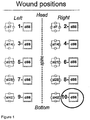
- a porcine wound scar study was conducted in the Red Duroc pig. 4 rows of 5 (2 x 2 cm) full-thickness wounds were created, either side of the spine, on the shaved backs of 10 Red Durocs ( Figures 1 , 4 ). 5 control and 5 treatment pigs were treated with 500 ⁇ l of Granugel alone, or containing 5mM salbutamol, per wound daily. Two wounds per animal were biopsied (6mm punch) at 7, 14, 21, 28 and 42 days post wounding.
- the VSS measures four parameters: pigmentation, vascularity, pliability and height [7], while the MSS measures colour, contour, distortion and texture [8].
- Our scar scale was developed to score a number of scar characteristics including: pigmentation, colour match with surrounding tissue, skin sheen, pliability, texture and height contour.
- Salbutamol treatment significantly improved the scores for pigmentation, colour match and sheen by 48%, 44% and 53%, respectively ( Figure 2 ).
- Pliability, texture and height contour scores improved by 22%, 22% and 34%, respectively.
- the catecholamines noradrenaline and adrenaline are synthesized by a series of enzymes ( Figure 7 ) in the central nervous system, sympathetic nerves and the chromaffin cells of the adrenal medulla and act as neurotransmitters and endocrine hormones [1].
- Figure 7 The catecholamines noradrenaline and adrenaline, are synthesized by a series of enzymes ( Figure 7 ) in the central nervous system, sympathetic nerves and the chromaffin cells of the adrenal medulla and act as neurotransmitters and endocrine hormones [1].
- TH tyrosine hydroxylase
- PNMT phenylethanolamine-N-methyltransferase
- melanocytes express the enzymes to synthesise noradrenaline, including tyrosine hydroxylase, but not adrenaline [5].
- the catecholamines act through adrenergic receptors [6], classified into alpha and beta adrenoceptors on the basis of their pharmacology [7]
- the Beta-adrenergic receptors ( ⁇ ARs; ⁇ 1AR, ⁇ 2AR, ⁇ 3AR) are G protein-coupled receptors recognized as pivotal functional regulators of the cardiac, pulmonary, vascular, endocrine and central nervous systems [8]. Recent work has revealed that the ⁇ 2AR is also an important functional regulator in skin.
- the ⁇ 2AR is highly expressed on all cell lineages in skin [9,10,11,12,13] (reviewed in [14]) including keratinocytes [13,15] and melanocytes [5], therefore, a functional autocrine and paracrine beta adrenergic network exists in the epidermis and the dermis, respectively.
- the beta adrenergic network plays a role in keratinocyte differentiation [16] vitiligo [2,17], atopic eczema [2] and wound repair [4,14,18,19,20,21,22,23,24,25,26,27,28,29,30,31,32,33]
- UVB exposure induced adrenaline release from keratinocytes, which activated melanogenesis in melanocytes [35], via ⁇ 2AR activation [5], while noradrenaline had no effect [35], supporting a paracrine beta adrenergic mechanism for UV-induced melanogenesis in the skin.
- expression profiling of the UVB response in melanocytes has identified the ⁇ 2AR gene (ADRB2) as a gene that was up-regulated 2.8 fold upon UV radiation exposure.
- ADRB2 expression was also lost in melanomas, suggesting a possible protective role in melanoma [36].
- Adrb2a the ortholog of ⁇ 2AR
- gene expression profiling of age spots revealed that ⁇ AR expression was elevated in the age spot compared to non-involved skin [38].
- siRNA knock-down of either ⁇ 1AP or ⁇ 2AR reduced melanin production to only 31% and 39% of control production, respectively, while ⁇ AR agonists increased melanin synthesis by 150% [38].
- a ⁇ AR antagonist, undecylenoyl phenylalanine suppressed melanin production and had a skin lightening effect ⁇ Gillbro, 2011 #5810 ⁇ , when added topically to Chinese females with age spots [38].
- evidence supports the hypothesis that ⁇ 2AR activation promotes melanogenesis, increasing skin pigmentation.
Landscapes
- Health & Medical Sciences (AREA)
- Life Sciences & Earth Sciences (AREA)
- Veterinary Medicine (AREA)
- Public Health (AREA)
- General Health & Medical Sciences (AREA)
- Animal Behavior & Ethology (AREA)
- Epidemiology (AREA)
- Pharmacology & Pharmacy (AREA)
- Medicinal Chemistry (AREA)
- Chemical & Material Sciences (AREA)
- Dermatology (AREA)
- Birds (AREA)
- Engineering & Computer Science (AREA)
- Bioinformatics & Cheminformatics (AREA)
- Organic Chemistry (AREA)
- General Chemical & Material Sciences (AREA)
- Chemical Kinetics & Catalysis (AREA)
- Nuclear Medicine, Radiotherapy & Molecular Imaging (AREA)
- Emergency Medicine (AREA)
- Toxicology (AREA)
- Medicines That Contain Protein Lipid Enzymes And Other Medicines (AREA)
- Acyclic And Carbocyclic Compounds In Medicinal Compositions (AREA)
- Cosmetics (AREA)
- Medicinal Preparation (AREA)
- Biomedical Technology (AREA)
Claims (10)
- Procédé cosmétique non thérapeutique pour améliorer l'appariement des couleurs des cicatrices cutanées en réduisant l'hyperpigmentation des cicatrices, ce procédé consistant à administrer une quantité efficace de salbutamol à un sujet qui en a besoin.
- Salbutamol utilisé pour améliorer de manière thérapeutique l'appariement des couleurs des cicatrices cutanées en réduisant l'hyperpigmentation des cicatrices chez un sujet qui en a besoin.
- Procédé ou salbutamol pour l'utilisation de l'une quelconque des revendications précédentes, dans lequel le sujet a besoin d'améliorer la correspondance des couleurs des cicatrices cutanées en réduisant l'hyperpigmentation des cicatrices parce qu'il présente ou risque de subir une hyperpigmentation.
- Procédé ou salbutamol à utiliser selon la revendication 3, dans lequel le sujet est sélectionné comme présentant un risque d'hyperpigmentation sur la base d'un ou de plusieurs des facteurs suivants :• le sujet a déjà développé une hyperpigmentation d'une cicatrice• le sujet bronze facilement lorsqu'il est exposé aux rayons du soleil ou aux rayons ultraviolets (UV), au lieu de brûler• le sujet a une origine raciale non caucasienne• la couleur de la peau du sujet (par exemple dans une zone non bronzée) est considérée comme plus sombre que celle typique d'une personne de race blanche aux cheveux clairs.
- Procédé ou salbutamol à utiliser selon la revendication 3 ou 4, le sujet étant considéré comme présentant un risque d'hyperpigmentation parce qu'il est au moins principalement d'origine raciale chinoise, noire africaine, asiatique ou d'Europe méridionale et/ou si sa peau peut être évaluée selon l'échelle de Fitzpatrick en tant que type III, IV, V ou VI.
- Procédé ou salbutamol pour l'utilisation de l'une quelconque des revendications précédentes, dans lequel le sujet a besoin d'améliorer l'appariement des couleurs des cicatrices cutanées en réduisant l'hyperpigmentation des cicatrices, pour une cicatrice provenant d'une ou plusieurs plaies pénétrantes ou non pénétrantes formées par suite de dommages physiques ou de blessures, notamment : éraflures, écorchures, incisions chirurgicales et autres interventions chirurgicales, brûlures, hyperpigmentation post-inflammatoire (par exemple, eczéma, psoriasis ou acné) et d'autres formes de traumatisme, iatrogénèse ou susceptibilité génétique.
- Procédé ou salbutamol pour l'utilisation de l'une quelconque des revendications précédentes, dans lequel le salbutamol est destiné à être administré par voie topique ou systémique.
- Procédé ou salbutamol à utiliser selon la revendication 6, dans lequel la plaie est protégée des rayons UV.
- Procédé ou salbutamol à utiliser selon l'une quelconque des revendications précédentes, dans lequel le salbutamol est incorporé dans un plâtre, un bandage, un pansement ou tout autre produit protecteur occlusif utilisé dans le soin des plaies standard, dans un timbre transdermique pharmaceutiquement acceptable ou dans un gel d'hydrocolloïde ou autre composition appropriée.
- Composition d'hyperpigmentation anti-cicatrice comprenant une quantité thérapeutiquement efficace de salbutamol destinée à être utilisée dans la prévention thérapeutique de l'hyperpigmentation des cicatrices ou à la réduction thérapeutique de l'hyperpigmentation des cicatrices, éventuellement dans laquelle la composition comprend en outre un véhicule pharmaceutiquement acceptable ; et éventuellement un agent absorbant les UV.
Applications Claiming Priority (2)
| Application Number | Priority Date | Filing Date | Title |
|---|---|---|---|
| GB1304234.6A GB2513297A (en) | 2013-03-08 | 2013-03-08 | Methods |
| PCT/GB2014/050686 WO2014135896A2 (fr) | 2013-03-08 | 2014-03-07 | Procédés |
Publications (2)
| Publication Number | Publication Date |
|---|---|
| EP2964206A2 EP2964206A2 (fr) | 2016-01-13 |
| EP2964206B1 true EP2964206B1 (fr) | 2019-07-17 |
Family
ID=48189617
Family Applications (1)
| Application Number | Title | Priority Date | Filing Date |
|---|---|---|---|
| EP14716626.8A Active EP2964206B1 (fr) | 2013-03-08 | 2014-03-07 | Agoniste du recepteur beta-2-adrenergique pour ameliorer le camouflage des cicatrices de la peau |
Country Status (9)
| Country | Link |
|---|---|
| US (1) | US9943471B2 (fr) |
| EP (1) | EP2964206B1 (fr) |
| JP (1) | JP6496670B2 (fr) |
| KR (1) | KR20150128695A (fr) |
| BR (1) | BR112015021668B1 (fr) |
| DK (1) | DK2964206T3 (fr) |
| ES (1) | ES2748609T3 (fr) |
| GB (1) | GB2513297A (fr) |
| WO (1) | WO2014135896A2 (fr) |
Families Citing this family (4)
| Publication number | Priority date | Publication date | Assignee | Title |
|---|---|---|---|---|
| CN104606177B (zh) * | 2014-11-21 | 2018-02-02 | 苏州君宁新药开发中心有限公司 | 左旋(r)沙丁胺醇制剂在治疗皮肤及粘膜创伤溃疡的药物应用 |
| CN110841208B (zh) * | 2018-08-21 | 2023-05-02 | 魏琳 | 一种美白祛斑美容仪 |
| JP2023530679A (ja) * | 2020-06-11 | 2023-07-19 | ザ・トラスティーズ・オブ・コロンビア・ユニバーシティ・イン・ザ・シティ・オブ・ニューヨーク | フェノテロール臭化水素酸塩、β2アドレナリン受容体アゴニスト、及びその誘導体を用いて近視を予防及び治療するための方法及び組成物 |
| CN120053410A (zh) * | 2025-01-16 | 2025-05-30 | 青岛大学附属医院 | 普萘洛尔在制备功能性药物中的应用 |
Family Cites Families (12)
| Publication number | Priority date | Publication date | Assignee | Title |
|---|---|---|---|---|
| FR2740040B1 (fr) | 1995-10-23 | 1997-12-05 | Oreal | Utilisation d'au moins un agoniste beta-adrenergique en tant qu'antagoniste de substance p |
| NZ522882A (en) | 2000-06-05 | 2004-07-30 | Altana Pharma Bv | Pyridazinone compounds effective as beta-2-adrenoreceptor agonists as well as PDE4-inhibitors |
| EP1496917B1 (fr) | 2002-04-19 | 2005-12-07 | Astion Development A/S | Combinaison d'agonistes de recepteur adrenergique beta-2 et d'un sucre amine et leur utilisation pour le traitement de troubles immunomodulateurs |
| WO2006027579A2 (fr) | 2004-09-07 | 2006-03-16 | Sosei R & D Ltd. | Traitement de troubles et de douleurs inflammatoires |
| WO2006108176A2 (fr) * | 2005-04-08 | 2006-10-12 | The Regents Of The University Of California | Agonistes et antagonistes du recepteur beta 2 adrenergique et modulation de cicatrisation |
| CN101203214B (zh) * | 2005-04-13 | 2012-11-21 | 艾升制药公司 | 用于治疗皮肤结缔组织疾病的β2-肾上腺素受体激动剂 |
| EP1764081A1 (fr) | 2005-08-29 | 2007-03-21 | Johnson & Johnson Consumer France SAS | Composition anti-solaire contenant un dibenzoylméthane, un aminobenzophénone, un triazine et un triazole comme filtres UV |
| JP2009537570A (ja) | 2006-05-18 | 2009-10-29 | ティカ レーケメデル アーベー | アルブテロールの吸入可能溶液を有する単位用量製剤 |
| MX2010002999A (es) | 2007-09-18 | 2010-06-02 | Schering Plough Healthcare | Composiciones de proteccion solar con poca irritacion de los ojos y un alto factor de proteccion solar. |
| GB0724204D0 (en) * | 2007-12-12 | 2008-01-23 | Renovo Ltd | Methods for inhibition of scarring |
| GB0805535D0 (en) * | 2008-03-27 | 2008-04-30 | Univ Leicester | Scar prevention |
| WO2012170695A2 (fr) | 2011-06-08 | 2012-12-13 | Mary Kay Inc. | Formulations d'écran solaire |
-
2013
- 2013-03-08 GB GB1304234.6A patent/GB2513297A/en not_active Withdrawn
-
2014
- 2014-03-07 JP JP2015560779A patent/JP6496670B2/ja not_active Expired - Fee Related
- 2014-03-07 DK DK14716626.8T patent/DK2964206T3/da active
- 2014-03-07 US US14/772,895 patent/US9943471B2/en active Active
- 2014-03-07 WO PCT/GB2014/050686 patent/WO2014135896A2/fr not_active Ceased
- 2014-03-07 KR KR1020157024363A patent/KR20150128695A/ko not_active Ceased
- 2014-03-07 ES ES14716626T patent/ES2748609T3/es active Active
- 2014-03-07 EP EP14716626.8A patent/EP2964206B1/fr active Active
- 2014-03-07 BR BR112015021668-4A patent/BR112015021668B1/pt not_active IP Right Cessation
Non-Patent Citations (1)
| Title |
|---|
| SANKAR MITRA ET AL: "(S)-Albuterol Increases Intracellular Free Calcium by Muscarinic Receptor Activation and a Phospholipase C-Dependent Mechanism in Airway Smooth Muscle", MOLECULAR PHARMACOLOGY, 1 January 1998 (1998-01-01), pages 347 - 354, XP055518733, Retrieved from the Internet <URL:http://molpharm.aspetjournals.org/content/molpharm/53/3/347.full.pdf> [retrieved on 20181024] * |
Also Published As
| Publication number | Publication date |
|---|---|
| KR20150128695A (ko) | 2015-11-18 |
| WO2014135896A3 (fr) | 2014-11-13 |
| JP2016510061A (ja) | 2016-04-04 |
| GB2513297A (en) | 2014-10-29 |
| BR112015021668A2 (pt) | 2017-07-18 |
| DK2964206T3 (da) | 2019-10-07 |
| US9943471B2 (en) | 2018-04-17 |
| WO2014135896A2 (fr) | 2014-09-12 |
| EP2964206A2 (fr) | 2016-01-13 |
| BR112015021668B1 (pt) | 2022-03-08 |
| JP6496670B2 (ja) | 2019-04-03 |
| ES2748609T3 (es) | 2020-03-17 |
| GB201304234D0 (en) | 2013-04-24 |
| US20160008247A1 (en) | 2016-01-14 |
Similar Documents
| Publication | Publication Date | Title |
|---|---|---|
| EP2964206B1 (fr) | Agoniste du recepteur beta-2-adrenergique pour ameliorer le camouflage des cicatrices de la peau | |
| Wikramanayake et al. | Targeting mitochondria in dermatological therapy: beyond oxidative damage and skin aging | |
| JP2022512584A (ja) | 角皮症を処置するためのegfrインヒビター | |
| Qu et al. | ALA-PDT promotes the death and contractile capacity of hypertrophic scar fibroblasts through inhibiting the TGF-β1/Smad2/3/4 signaling pathway | |
| US20230193276A1 (en) | Composition of drug targets and method of using thereof | |
| Huang et al. | Preliminary study on the effect of trauma-induced secondary cellular hypoxia in brain injury | |
| EP2271326B1 (fr) | Agonistes des recepteurs bêta2-adrénergiques pour utilisation dans le traitement de cicatrices keloide et hypertrophiques. | |
| Liu et al. | Efficacy of a wound-dressing biomaterial on prevention of postinflammatory hyperpigmentation after suction blister epidermal grafting in stable vitiligo patients: a controlled assessor-blinded clinical study with in vitro bioactivity investigation | |
| CN116251100B (zh) | Tpen在制备抗皮肤衰老或抗皮炎的组合物产品中的应用 | |
| Wang et al. | OTULIN of exosomes derived from Schwann cells promotes peripheral nerve injury repair by regulating macrophage polarization via deubiquitination of ERBB2 | |
| JP5580492B2 (ja) | N−(4−メトキシフェニル)−1−フェニル−1h−ピラゾール−3−アミンおよび関連化合物の使用 | |
| WO2014164805A1 (fr) | Compositions et méthodes de ciblage de la n-acétylglucosamine transférase à liaison o et d'accélération de la cicatrisation des plaies | |
| US20070042976A1 (en) | Method of treating cosmetic and dermatologic conditions by a demethylating agent | |
| Chen et al. | Modulation of type VII collagen (anchoring fibril) expression by retinoids in human skin cells | |
| Maryanti et al. | Protective Effect of Black Rice Extract Cream on Ultraviolet B-Induced Skin Hyperpigmentation in Mice | |
| JP2024528570A (ja) | 色素沈着を低下させるための組成物および方法 | |
| KR20250118815A (ko) | 튜불린 저해제를 포함하는 피부 질환 예방 또는 치료용 조성물 | |
| CN106334188A (zh) | 一种治疗皮肤黑色素相关疾病及皮肤美白的药物作用靶点 | |
| JP2024513192A (ja) | 色素沈着過剰障害を処置するための方法及び組成物 | |
| CN121041172A (zh) | 杜仲提取物在制备用于防护毛囊黑素细胞功能障碍的外用制剂中的应用 | |
| HK1191252A (en) | Use of n-(4-methoxyphenyl)-1-phenyl-1h-pyrazol-3-amine and related compounds | |
| TW201338776A (zh) | N-(4-甲氧基苯基)-1-苯基-1h-吡唑-3-胺及相關化合物之用途 |
Legal Events
| Date | Code | Title | Description |
|---|---|---|---|
| PUAI | Public reference made under article 153(3) epc to a published international application that has entered the european phase |
Free format text: ORIGINAL CODE: 0009012 |
|
| 17P | Request for examination filed |
Effective date: 20150904 |
|
| AK | Designated contracting states |
Kind code of ref document: A2 Designated state(s): AL AT BE BG CH CY CZ DE DK EE ES FI FR GB GR HR HU IE IS IT LI LT LU LV MC MK MT NL NO PL PT RO RS SE SI SK SM TR |
|
| AX | Request for extension of the european patent |
Extension state: BA ME |
|
| DAX | Request for extension of the european patent (deleted) | ||
| REG | Reference to a national code |
Ref country code: DE Ref legal event code: R079 Ref document number: 602014050105 Country of ref document: DE Free format text: PREVIOUS MAIN CLASS: A61K0031000000 Ipc: A61K0031137000 |
|
| STAA | Information on the status of an ep patent application or granted ep patent |
Free format text: STATUS: EXAMINATION IS IN PROGRESS |
|
| RIC1 | Information provided on ipc code assigned before grant |
Ipc: A61K 35/00 20060101ALI20170828BHEP Ipc: A61K 31/00 20060101ALI20170828BHEP Ipc: A61K 31/137 20060101AFI20170828BHEP Ipc: A61P 17/02 20060101ALI20170828BHEP Ipc: A61P 17/00 20060101ALI20170828BHEP Ipc: A61Q 19/02 20060101ALI20170828BHEP Ipc: A61K 8/49 20060101ALI20170828BHEP Ipc: A61K 8/41 20060101ALI20170828BHEP |
|
| 17Q | First examination report despatched |
Effective date: 20170913 |
|
| GRAP | Despatch of communication of intention to grant a patent |
Free format text: ORIGINAL CODE: EPIDOSNIGR1 |
|
| STAA | Information on the status of an ep patent application or granted ep patent |
Free format text: STATUS: GRANT OF PATENT IS INTENDED |
|
| INTG | Intention to grant announced |
Effective date: 20190226 |
|
| GRAS | Grant fee paid |
Free format text: ORIGINAL CODE: EPIDOSNIGR3 |
|
| GRAA | (expected) grant |
Free format text: ORIGINAL CODE: 0009210 |
|
| STAA | Information on the status of an ep patent application or granted ep patent |
Free format text: STATUS: THE PATENT HAS BEEN GRANTED |
|
| AK | Designated contracting states |
Kind code of ref document: B1 Designated state(s): AL AT BE BG CH CY CZ DE DK EE ES FI FR GB GR HR HU IE IS IT LI LT LU LV MC MK MT NL NO PL PT RO RS SE SI SK SM TR |
|
| REG | Reference to a national code |
Ref country code: GB Ref legal event code: FG4D |
|
| RIN1 | Information on inventor provided before grant (corrected) |
Inventor name: PULLAR, CHRISTINE ELAINE |
|
| REG | Reference to a national code |
Ref country code: CH Ref legal event code: EP |
|
| REG | Reference to a national code |
Ref country code: IE Ref legal event code: FG4D |
|
| REG | Reference to a national code |
Ref country code: DE Ref legal event code: R096 Ref document number: 602014050105 Country of ref document: DE |
|
| REG | Reference to a national code |
Ref country code: AT Ref legal event code: REF Ref document number: 1155187 Country of ref document: AT Kind code of ref document: T Effective date: 20190815 |
|
| REG | Reference to a national code |
Ref country code: NL Ref legal event code: FP |
|
| REG | Reference to a national code |
Ref country code: SE Ref legal event code: TRGR |
|
| REG | Reference to a national code |
Ref country code: DK Ref legal event code: T3 Effective date: 20191003 |
|
| REG | Reference to a national code |
Ref country code: LT Ref legal event code: MG4D |
|
| REG | Reference to a national code |
Ref country code: AT Ref legal event code: MK05 Ref document number: 1155187 Country of ref document: AT Kind code of ref document: T Effective date: 20190717 |
|
| PG25 | Lapsed in a contracting state [announced via postgrant information from national office to epo] |
Ref country code: FI Free format text: LAPSE BECAUSE OF FAILURE TO SUBMIT A TRANSLATION OF THE DESCRIPTION OR TO PAY THE FEE WITHIN THE PRESCRIBED TIME-LIMIT Effective date: 20190717 Ref country code: HR Free format text: LAPSE BECAUSE OF FAILURE TO SUBMIT A TRANSLATION OF THE DESCRIPTION OR TO PAY THE FEE WITHIN THE PRESCRIBED TIME-LIMIT Effective date: 20190717 Ref country code: PT Free format text: LAPSE BECAUSE OF FAILURE TO SUBMIT A TRANSLATION OF THE DESCRIPTION OR TO PAY THE FEE WITHIN THE PRESCRIBED TIME-LIMIT Effective date: 20191118 Ref country code: BG Free format text: LAPSE BECAUSE OF FAILURE TO SUBMIT A TRANSLATION OF THE DESCRIPTION OR TO PAY THE FEE WITHIN THE PRESCRIBED TIME-LIMIT Effective date: 20191017 Ref country code: LT Free format text: LAPSE BECAUSE OF FAILURE TO SUBMIT A TRANSLATION OF THE DESCRIPTION OR TO PAY THE FEE WITHIN THE PRESCRIBED TIME-LIMIT Effective date: 20190717 Ref country code: NO Free format text: LAPSE BECAUSE OF FAILURE TO SUBMIT A TRANSLATION OF THE DESCRIPTION OR TO PAY THE FEE WITHIN THE PRESCRIBED TIME-LIMIT Effective date: 20191017 Ref country code: AT Free format text: LAPSE BECAUSE OF FAILURE TO SUBMIT A TRANSLATION OF THE DESCRIPTION OR TO PAY THE FEE WITHIN THE PRESCRIBED TIME-LIMIT Effective date: 20190717 |
|
| PG25 | Lapsed in a contracting state [announced via postgrant information from national office to epo] |
Ref country code: RS Free format text: LAPSE BECAUSE OF FAILURE TO SUBMIT A TRANSLATION OF THE DESCRIPTION OR TO PAY THE FEE WITHIN THE PRESCRIBED TIME-LIMIT Effective date: 20190717 Ref country code: IS Free format text: LAPSE BECAUSE OF FAILURE TO SUBMIT A TRANSLATION OF THE DESCRIPTION OR TO PAY THE FEE WITHIN THE PRESCRIBED TIME-LIMIT Effective date: 20191117 Ref country code: AL Free format text: LAPSE BECAUSE OF FAILURE TO SUBMIT A TRANSLATION OF THE DESCRIPTION OR TO PAY THE FEE WITHIN THE PRESCRIBED TIME-LIMIT Effective date: 20190717 Ref country code: GR Free format text: LAPSE BECAUSE OF FAILURE TO SUBMIT A TRANSLATION OF THE DESCRIPTION OR TO PAY THE FEE WITHIN THE PRESCRIBED TIME-LIMIT Effective date: 20191018 Ref country code: LV Free format text: LAPSE BECAUSE OF FAILURE TO SUBMIT A TRANSLATION OF THE DESCRIPTION OR TO PAY THE FEE WITHIN THE PRESCRIBED TIME-LIMIT Effective date: 20190717 |
|
| REG | Reference to a national code |
Ref country code: ES Ref legal event code: FG2A Ref document number: 2748609 Country of ref document: ES Kind code of ref document: T3 Effective date: 20200317 |
|
| PG25 | Lapsed in a contracting state [announced via postgrant information from national office to epo] |
Ref country code: TR Free format text: LAPSE BECAUSE OF FAILURE TO SUBMIT A TRANSLATION OF THE DESCRIPTION OR TO PAY THE FEE WITHIN THE PRESCRIBED TIME-LIMIT Effective date: 20190717 |
|
| PG25 | Lapsed in a contracting state [announced via postgrant information from national office to epo] |
Ref country code: EE Free format text: LAPSE BECAUSE OF FAILURE TO SUBMIT A TRANSLATION OF THE DESCRIPTION OR TO PAY THE FEE WITHIN THE PRESCRIBED TIME-LIMIT Effective date: 20190717 Ref country code: RO Free format text: LAPSE BECAUSE OF FAILURE TO SUBMIT A TRANSLATION OF THE DESCRIPTION OR TO PAY THE FEE WITHIN THE PRESCRIBED TIME-LIMIT Effective date: 20190717 Ref country code: PL Free format text: LAPSE BECAUSE OF FAILURE TO SUBMIT A TRANSLATION OF THE DESCRIPTION OR TO PAY THE FEE WITHIN THE PRESCRIBED TIME-LIMIT Effective date: 20190717 |
|
| PG25 | Lapsed in a contracting state [announced via postgrant information from national office to epo] |
Ref country code: IS Free format text: LAPSE BECAUSE OF FAILURE TO SUBMIT A TRANSLATION OF THE DESCRIPTION OR TO PAY THE FEE WITHIN THE PRESCRIBED TIME-LIMIT Effective date: 20200224 Ref country code: SK Free format text: LAPSE BECAUSE OF FAILURE TO SUBMIT A TRANSLATION OF THE DESCRIPTION OR TO PAY THE FEE WITHIN THE PRESCRIBED TIME-LIMIT Effective date: 20190717 Ref country code: CZ Free format text: LAPSE BECAUSE OF FAILURE TO SUBMIT A TRANSLATION OF THE DESCRIPTION OR TO PAY THE FEE WITHIN THE PRESCRIBED TIME-LIMIT Effective date: 20190717 Ref country code: SM Free format text: LAPSE BECAUSE OF FAILURE TO SUBMIT A TRANSLATION OF THE DESCRIPTION OR TO PAY THE FEE WITHIN THE PRESCRIBED TIME-LIMIT Effective date: 20190717 |
|
| REG | Reference to a national code |
Ref country code: DE Ref legal event code: R097 Ref document number: 602014050105 Country of ref document: DE |
|
| PLBE | No opposition filed within time limit |
Free format text: ORIGINAL CODE: 0009261 |
|
| STAA | Information on the status of an ep patent application or granted ep patent |
Free format text: STATUS: NO OPPOSITION FILED WITHIN TIME LIMIT |
|
| PG2D | Information on lapse in contracting state deleted |
Ref country code: IS |
|
| 26N | No opposition filed |
Effective date: 20200603 |
|
| PG25 | Lapsed in a contracting state [announced via postgrant information from national office to epo] |
Ref country code: SI Free format text: LAPSE BECAUSE OF FAILURE TO SUBMIT A TRANSLATION OF THE DESCRIPTION OR TO PAY THE FEE WITHIN THE PRESCRIBED TIME-LIMIT Effective date: 20190717 |
|
| PG25 | Lapsed in a contracting state [announced via postgrant information from national office to epo] |
Ref country code: MC Free format text: LAPSE BECAUSE OF FAILURE TO SUBMIT A TRANSLATION OF THE DESCRIPTION OR TO PAY THE FEE WITHIN THE PRESCRIBED TIME-LIMIT Effective date: 20190717 |
|
| REG | Reference to a national code |
Ref country code: CH Ref legal event code: PL |
|
| PG25 | Lapsed in a contracting state [announced via postgrant information from national office to epo] |
Ref country code: LU Free format text: LAPSE BECAUSE OF NON-PAYMENT OF DUE FEES Effective date: 20200307 |
|
| PG25 | Lapsed in a contracting state [announced via postgrant information from national office to epo] |
Ref country code: CH Free format text: LAPSE BECAUSE OF NON-PAYMENT OF DUE FEES Effective date: 20200331 Ref country code: LI Free format text: LAPSE BECAUSE OF NON-PAYMENT OF DUE FEES Effective date: 20200331 |
|
| PG25 | Lapsed in a contracting state [announced via postgrant information from national office to epo] |
Ref country code: MT Free format text: LAPSE BECAUSE OF FAILURE TO SUBMIT A TRANSLATION OF THE DESCRIPTION OR TO PAY THE FEE WITHIN THE PRESCRIBED TIME-LIMIT Effective date: 20190717 Ref country code: CY Free format text: LAPSE BECAUSE OF FAILURE TO SUBMIT A TRANSLATION OF THE DESCRIPTION OR TO PAY THE FEE WITHIN THE PRESCRIBED TIME-LIMIT Effective date: 20190717 |
|
| PG25 | Lapsed in a contracting state [announced via postgrant information from national office to epo] |
Ref country code: MK Free format text: LAPSE BECAUSE OF FAILURE TO SUBMIT A TRANSLATION OF THE DESCRIPTION OR TO PAY THE FEE WITHIN THE PRESCRIBED TIME-LIMIT Effective date: 20190717 |
|
| PGFP | Annual fee paid to national office [announced via postgrant information from national office to epo] |
Ref country code: IE Payment date: 20230308 Year of fee payment: 10 Ref country code: FR Payment date: 20230309 Year of fee payment: 10 Ref country code: DK Payment date: 20230309 Year of fee payment: 10 |
|
| PGFP | Annual fee paid to national office [announced via postgrant information from national office to epo] |
Ref country code: SE Payment date: 20230314 Year of fee payment: 10 Ref country code: IT Payment date: 20230320 Year of fee payment: 10 Ref country code: GB Payment date: 20230309 Year of fee payment: 10 Ref country code: DE Payment date: 20230316 Year of fee payment: 10 Ref country code: BE Payment date: 20230310 Year of fee payment: 10 |
|
| P01 | Opt-out of the competence of the unified patent court (upc) registered |
Effective date: 20230424 |
|
| PGFP | Annual fee paid to national office [announced via postgrant information from national office to epo] |
Ref country code: NL Payment date: 20230310 Year of fee payment: 10 |
|
| PGFP | Annual fee paid to national office [announced via postgrant information from national office to epo] |
Ref country code: ES Payment date: 20230406 Year of fee payment: 10 |
|
| REG | Reference to a national code |
Ref country code: DE Ref legal event code: R119 Ref document number: 602014050105 Country of ref document: DE |
|
| REG | Reference to a national code |
Ref country code: DK Ref legal event code: EBP Effective date: 20240331 |
|
| REG | Reference to a national code |
Ref country code: SE Ref legal event code: EUG |
|
| REG | Reference to a national code |
Ref country code: NL Ref legal event code: MM Effective date: 20240401 |
|
| GBPC | Gb: european patent ceased through non-payment of renewal fee |
Effective date: 20240307 |
|
| PG25 | Lapsed in a contracting state [announced via postgrant information from national office to epo] |
Ref country code: NL Free format text: LAPSE BECAUSE OF NON-PAYMENT OF DUE FEES Effective date: 20240401 |
|
| REG | Reference to a national code |
Ref country code: BE Ref legal event code: MM Effective date: 20240331 |
|
| PG25 | Lapsed in a contracting state [announced via postgrant information from national office to epo] |
Ref country code: NL Free format text: LAPSE BECAUSE OF NON-PAYMENT OF DUE FEES Effective date: 20240401 |
|
| PG25 | Lapsed in a contracting state [announced via postgrant information from national office to epo] |
Ref country code: DE Free format text: LAPSE BECAUSE OF NON-PAYMENT OF DUE FEES Effective date: 20241001 |
|
| PG25 | Lapsed in a contracting state [announced via postgrant information from national office to epo] |
Ref country code: BE Free format text: LAPSE BECAUSE OF NON-PAYMENT OF DUE FEES Effective date: 20240331 |
|
| PG25 | Lapsed in a contracting state [announced via postgrant information from national office to epo] |
Ref country code: GB Free format text: LAPSE BECAUSE OF NON-PAYMENT OF DUE FEES Effective date: 20240307 |
|
| PG25 | Lapsed in a contracting state [announced via postgrant information from national office to epo] |
Ref country code: FR Free format text: LAPSE BECAUSE OF NON-PAYMENT OF DUE FEES Effective date: 20240331 |
|
| PG25 | Lapsed in a contracting state [announced via postgrant information from national office to epo] |
Ref country code: IE Free format text: LAPSE BECAUSE OF NON-PAYMENT OF DUE FEES Effective date: 20240307 |
|
| PG25 | Lapsed in a contracting state [announced via postgrant information from national office to epo] |
Ref country code: IE Free format text: LAPSE BECAUSE OF NON-PAYMENT OF DUE FEES Effective date: 20240307 Ref country code: GB Free format text: LAPSE BECAUSE OF NON-PAYMENT OF DUE FEES Effective date: 20240307 Ref country code: FR Free format text: LAPSE BECAUSE OF NON-PAYMENT OF DUE FEES Effective date: 20240331 Ref country code: DE Free format text: LAPSE BECAUSE OF NON-PAYMENT OF DUE FEES Effective date: 20241001 Ref country code: BE Free format text: LAPSE BECAUSE OF NON-PAYMENT OF DUE FEES Effective date: 20240331 |
|
| PG25 | Lapsed in a contracting state [announced via postgrant information from national office to epo] |
Ref country code: DK Free format text: LAPSE BECAUSE OF NON-PAYMENT OF DUE FEES Effective date: 20240331 |
|
| PG25 | Lapsed in a contracting state [announced via postgrant information from national office to epo] |
Ref country code: IT Free format text: LAPSE BECAUSE OF NON-PAYMENT OF DUE FEES Effective date: 20240307 |
|
| REG | Reference to a national code |
Ref country code: ES Ref legal event code: FD2A Effective date: 20250429 |
|
| PG25 | Lapsed in a contracting state [announced via postgrant information from national office to epo] |
Ref country code: ES Free format text: LAPSE BECAUSE OF NON-PAYMENT OF DUE FEES Effective date: 20240308 |
|
| PG25 | Lapsed in a contracting state [announced via postgrant information from national office to epo] |
Ref country code: SE Free format text: LAPSE BECAUSE OF NON-PAYMENT OF DUE FEES Effective date: 20240308 |