EP2964221B1 - Verbindungen zur hemmung der enzymaktivität einer leucinreichen repeat-kinase - Google Patents
Verbindungen zur hemmung der enzymaktivität einer leucinreichen repeat-kinase Download PDFInfo
- Publication number
- EP2964221B1 EP2964221B1 EP14760677.6A EP14760677A EP2964221B1 EP 2964221 B1 EP2964221 B1 EP 2964221B1 EP 14760677 A EP14760677 A EP 14760677A EP 2964221 B1 EP2964221 B1 EP 2964221B1
- Authority
- EP
- European Patent Office
- Prior art keywords
- mmol
- group
- concentrated
- mixture
- halo
- Prior art date
- Legal status (The legal status is an assumption and is not a legal conclusion. Google has not performed a legal analysis and makes no representation as to the accuracy of the status listed.)
- Active
Links
- 0 CC1(C)OB(c(c(*)c2)cc3c2[n](*)nc3-c2ccnc(N(*)*)c2)OC1(C)C Chemical compound CC1(C)OB(c(c(*)c2)cc3c2[n](*)nc3-c2ccnc(N(*)*)c2)OC1(C)C 0.000 description 56
- POXUFQBYDQCUFO-UHFFFAOYSA-N Brc(cc1)cc2c1c(I)n[nH]2 Chemical compound Brc(cc1)cc2c1c(I)n[nH]2 POXUFQBYDQCUFO-UHFFFAOYSA-N 0.000 description 2
- WMKDUJVLNZANRN-UHFFFAOYSA-N Brc1ccc(cn[nH]2)c2c1 Chemical compound Brc1ccc(cn[nH]2)c2c1 WMKDUJVLNZANRN-UHFFFAOYSA-N 0.000 description 2
- YNAVUWVOSKDBBP-UHFFFAOYSA-N C1NCCOC1 Chemical compound C1NCCOC1 YNAVUWVOSKDBBP-UHFFFAOYSA-N 0.000 description 2
- FCNHHVWVWFABFS-UHFFFAOYSA-N CC(C)Oc(cc1)cc2c1[n](C(c1ccccc1)(c1ccccc1)c1ccccc1)nc2I Chemical compound CC(C)Oc(cc1)cc2c1[n](C(c1ccccc1)(c1ccccc1)c1ccccc1)nc2I FCNHHVWVWFABFS-UHFFFAOYSA-N 0.000 description 2
- BGTSLFFCVKEYPT-UHFFFAOYSA-N CC(C)Oc(cc12)ccc1[nH]nc2-c1cc(N2CCOCC2)ncc1 Chemical compound CC(C)Oc(cc12)ccc1[nH]nc2-c1cc(N2CCOCC2)ncc1 BGTSLFFCVKEYPT-UHFFFAOYSA-N 0.000 description 2
- VOBPFWQIRFFCBS-UHFFFAOYSA-N CC(C)Oc(cc12)ccc1[nH]nc2-c1ccnc(N(CCN2C)CC2=O)c1 Chemical compound CC(C)Oc(cc12)ccc1[nH]nc2-c1ccnc(N(CCN2C)CC2=O)c1 VOBPFWQIRFFCBS-UHFFFAOYSA-N 0.000 description 2
- WMIJTBQNMQKKOA-UHFFFAOYSA-N CC(C)Oc(cc12)ccc1[nH]nc2-c1ccnc(N2CCN(C)CC2)c1 Chemical compound CC(C)Oc(cc12)ccc1[nH]nc2-c1ccnc(N2CCN(C)CC2)c1 WMIJTBQNMQKKOA-UHFFFAOYSA-N 0.000 description 2
- LUURUOVDNONEJH-UHFFFAOYSA-N COc1c(-c(cc23)ccc2[n](COCC[Si](C)(C)C)nc3-c2ccnc(N3CCNCC3)c2)c(F)ncc1 Chemical compound COc1c(-c(cc23)ccc2[n](COCC[Si](C)(C)C)nc3-c2ccnc(N3CCNCC3)c2)c(F)ncc1 LUURUOVDNONEJH-UHFFFAOYSA-N 0.000 description 2
- IVTVZRXHLDOATJ-UHFFFAOYSA-N Brc(cc12)ccc1[nH]nc2-c1cc(N2CCOCC2)ncc1 Chemical compound Brc(cc12)ccc1[nH]nc2-c1cc(N2CCOCC2)ncc1 IVTVZRXHLDOATJ-UHFFFAOYSA-N 0.000 description 1
- RQZVRVLXYYTKDS-UHFFFAOYSA-N Brc1ccc2c(-c3ccnc(N4CCOCC4)c3)n[nH]c2c1 Chemical compound Brc1ccc2c(-c3ccnc(N4CCOCC4)c3)n[nH]c2c1 RQZVRVLXYYTKDS-UHFFFAOYSA-N 0.000 description 1
- ORYGGSNKGXJQGN-UHFFFAOYSA-N C(C1)C(C2)OC1CN2c1cc(-c2n[nH]c3ccccc23)ccn1 Chemical compound C(C1)C(C2)OC1CN2c1cc(-c2n[nH]c3ccccc23)ccn1 ORYGGSNKGXJQGN-UHFFFAOYSA-N 0.000 description 1
- MNILDQSRDHCFJG-UHFFFAOYSA-N C(C1)C2NC1COC2 Chemical compound C(C1)C2NC1COC2 MNILDQSRDHCFJG-UHFFFAOYSA-N 0.000 description 1
- NCOAVGPOIMTMCI-UHFFFAOYSA-N C(CC1)CCN1c1nccc(-c2n[nH]c3ccccc23)c1 Chemical compound C(CC1)CCN1c1nccc(-c2n[nH]c3ccccc23)c1 NCOAVGPOIMTMCI-UHFFFAOYSA-N 0.000 description 1
- YAYWSTQREWLWGL-UHFFFAOYSA-N C(CCC1)CCN1c1cc(-c2n[nH]c3ccccc23)ccn1 Chemical compound C(CCC1)CCN1c1cc(-c2n[nH]c3ccccc23)ccn1 YAYWSTQREWLWGL-UHFFFAOYSA-N 0.000 description 1
- XRAAIXLOQIHDJB-UHFFFAOYSA-N C(CN(CC1)CCN1c1nccc(-c2n[nH]c3ccccc23)c1)CN1CCOCC1 Chemical compound C(CN(CC1)CCN1c1nccc(-c2n[nH]c3ccccc23)c1)CN1CCOCC1 XRAAIXLOQIHDJB-UHFFFAOYSA-N 0.000 description 1
- PSLGFTFRPBIXGJ-UHFFFAOYSA-N C(COCC1)N1c1cc(-c(c2c3)n[nH]c2ccc3-c2ccncc2)ccn1 Chemical compound C(COCC1)N1c1cc(-c(c2c3)n[nH]c2ccc3-c2ccncc2)ccn1 PSLGFTFRPBIXGJ-UHFFFAOYSA-N 0.000 description 1
- AZZTUWNIJODLRW-UHFFFAOYSA-N C(COCC1)N1c1cc(-c(c2c3)n[nH]c2ccc3-c2cnc[o]2)ccn1 Chemical compound C(COCC1)N1c1cc(-c(c2c3)n[nH]c2ccc3-c2cnc[o]2)ccn1 AZZTUWNIJODLRW-UHFFFAOYSA-N 0.000 description 1
- HALPHUWAZPVYPD-UHFFFAOYSA-N C(COCC1)N1c1cc(-c(c2c3)n[nH]c2ccc3-c2ncc[o]2)ccn1 Chemical compound C(COCC1)N1c1cc(-c(c2c3)n[nH]c2ccc3-c2ncc[o]2)ccn1 HALPHUWAZPVYPD-UHFFFAOYSA-N 0.000 description 1
- MWEGLQVKDKYOIQ-UHFFFAOYSA-N C(COCC1)N1c1cc(-c2n[nH]c3ccccc23)ccn1 Chemical compound C(COCC1)N1c1cc(-c2n[nH]c3ccccc23)ccn1 MWEGLQVKDKYOIQ-UHFFFAOYSA-N 0.000 description 1
- OJRVXMKDUGOQEJ-UHFFFAOYSA-N C(c1ccccc1)c(cc12)ccc1[nH]nc2-c1ccnc(N2CCOCC2)c1 Chemical compound C(c1ccccc1)c(cc12)ccc1[nH]nc2-c1ccnc(N2CCOCC2)c1 OJRVXMKDUGOQEJ-UHFFFAOYSA-N 0.000 description 1
- NEYFSGSBEHUPBQ-UHFFFAOYSA-N C=[Br]c(c(OCc1ccccc1)ccn1)c1F Chemical compound C=[Br]c(c(OCc1ccccc1)ccn1)c1F NEYFSGSBEHUPBQ-UHFFFAOYSA-N 0.000 description 1
- DTMXZDNKSWOORU-UHFFFAOYSA-N CC(C)(C)OC(N(CC1)CCN1c1cc(-c(c2c3)n[n](COCC[Si](C)(C)C)c2ccc3-c(c(F)ncc2)c2OC)ccn1)=O Chemical compound CC(C)(C)OC(N(CC1)CCN1c1cc(-c(c2c3)n[n](COCC[Si](C)(C)C)c2ccc3-c(c(F)ncc2)c2OC)ccn1)=O DTMXZDNKSWOORU-UHFFFAOYSA-N 0.000 description 1
- RQRMFFGCUUGYPC-UHFFFAOYSA-N CC(C)(C)OC(NCCC1CCNCC1)=O Chemical compound CC(C)(C)OC(NCCC1CCNCC1)=O RQRMFFGCUUGYPC-UHFFFAOYSA-N 0.000 description 1
- GALGZZBJXPHSKA-UHFFFAOYSA-O CC(C)OC(C=CC1NC(c2ccccc2)(c2ccccc2)c2ccccc2)=CC1C(c1ccnc(N)c1)=[NH2+] Chemical compound CC(C)OC(C=CC1NC(c2ccccc2)(c2ccccc2)c2ccccc2)=CC1C(c1ccnc(N)c1)=[NH2+] GALGZZBJXPHSKA-UHFFFAOYSA-O 0.000 description 1
- FPGFCIRATFTMDN-UHFFFAOYSA-N CC(C)OC(CC12)=CC=C1NN=C2C1C=C(N2CC3(CC3)OCC2)N=CC1 Chemical compound CC(C)OC(CC12)=CC=C1NN=C2C1C=C(N2CC3(CC3)OCC2)N=CC1 FPGFCIRATFTMDN-UHFFFAOYSA-N 0.000 description 1
- LHMQKMIRBUVCTB-UHFFFAOYSA-N CC(C)Oc(cc1)cc2c1[nH]nc2 Chemical compound CC(C)Oc(cc1)cc2c1[nH]nc2 LHMQKMIRBUVCTB-UHFFFAOYSA-N 0.000 description 1
- HJDKAQTXEXFQQG-UHFFFAOYSA-N CC(C)Oc(cc12)ccc1[nH]nc2-c1cc(N(CC2)CCN2S(C)(=O)=O)ncc1 Chemical compound CC(C)Oc(cc12)ccc1[nH]nc2-c1cc(N(CC2)CCN2S(C)(=O)=O)ncc1 HJDKAQTXEXFQQG-UHFFFAOYSA-N 0.000 description 1
- VONRUAPFTZNYMT-UHFFFAOYSA-N CC(C)Oc(cc12)ccc1[nH]nc2-c1cc(N(CCC2)C2=O)ncc1 Chemical compound CC(C)Oc(cc12)ccc1[nH]nc2-c1cc(N(CCC2)C2=O)ncc1 VONRUAPFTZNYMT-UHFFFAOYSA-N 0.000 description 1
- FRTPCSUDACPOJS-UHFFFAOYSA-N CC(C)Oc(cc12)ccc1[nH]nc2-c1cc(N2CC[n]3nc(C4CC4)nc3CC2)ncc1 Chemical compound CC(C)Oc(cc12)ccc1[nH]nc2-c1cc(N2CC[n]3nc(C4CC4)nc3CC2)ncc1 FRTPCSUDACPOJS-UHFFFAOYSA-N 0.000 description 1
- ROUFHZDNQIPSSO-UHFFFAOYSA-N CC(C)Oc(cc12)ccc1[nH]nc2-c1ccnc(N2CCCC2)c1 Chemical compound CC(C)Oc(cc12)ccc1[nH]nc2-c1ccnc(N2CCCC2)c1 ROUFHZDNQIPSSO-UHFFFAOYSA-N 0.000 description 1
- UUYCTHOCSPQMLW-UHFFFAOYSA-N CC(C)Oc(cc12)ccc1[nH]nc2-c1ccnc(NC(C2CCCC2)=O)c1 Chemical compound CC(C)Oc(cc12)ccc1[nH]nc2-c1ccnc(NC(C2CCCC2)=O)c1 UUYCTHOCSPQMLW-UHFFFAOYSA-N 0.000 description 1
- RDHYZFWGXCXSKH-UHFFFAOYSA-O CC(C)Oc(cc12)ccc1[nH]nc2-c1ccnc(NO[SH+]c(cc2)cc3c2OCCO3)c1 Chemical compound CC(C)Oc(cc12)ccc1[nH]nc2-c1ccnc(NO[SH+]c(cc2)cc3c2OCCO3)c1 RDHYZFWGXCXSKH-UHFFFAOYSA-O 0.000 description 1
- CNPSDKIHAKMERE-UHFFFAOYSA-N CC(C)Oc(cc12)ccc1[nH]nc2C(C1)=CC=NC1N(CC1)CC1(F)F Chemical compound CC(C)Oc(cc12)ccc1[nH]nc2C(C1)=CC=NC1N(CC1)CC1(F)F CNPSDKIHAKMERE-UHFFFAOYSA-N 0.000 description 1
- LPTDDEYUKMRYTN-UHFFFAOYSA-N CC(C)Oc(cc12)ccc1[n](C(c1ccccc1)(c1ccccc1)c1ccccc1)nc2-c1cc(N(CC2)CC2(F)F)ncc1 Chemical compound CC(C)Oc(cc12)ccc1[n](C(c1ccccc1)(c1ccccc1)c1ccccc1)nc2-c1cc(N(CC2)CC2(F)F)ncc1 LPTDDEYUKMRYTN-UHFFFAOYSA-N 0.000 description 1
- ZPJXGNQCJDBSIF-UHFFFAOYSA-N CC(C)Oc(cc12)ccc1[n](C(c1ccccc1)(c1ccccc1)c1ccccc1)nc2-c1ccnc(N(CCN2C)CC2=O)c1 Chemical compound CC(C)Oc(cc12)ccc1[n](C(c1ccccc1)(c1ccccc1)c1ccccc1)nc2-c1ccnc(N(CCN2C)CC2=O)c1 ZPJXGNQCJDBSIF-UHFFFAOYSA-N 0.000 description 1
- OJLCXNHULSHWKU-UHFFFAOYSA-N CC(C)Oc(cc12)ccc1[n](C(c1ccccc1)(c1ccccc1)c1ccccc1)nc2-c1ccnc(N2CCC(CCNC(OC(C)(C)C)=O)CC2)c1 Chemical compound CC(C)Oc(cc12)ccc1[n](C(c1ccccc1)(c1ccccc1)c1ccccc1)nc2-c1ccnc(N2CCC(CCNC(OC(C)(C)C)=O)CC2)c1 OJLCXNHULSHWKU-UHFFFAOYSA-N 0.000 description 1
- CGEXOTIEQIILMB-UHFFFAOYSA-N CC(C)Oc(cc12)ccc1[n](C(c1ccccc1)(c1ccccc1)c1ccccc1)nc2-c1ccnc(N2CCOCC2)c1 Chemical compound CC(C)Oc(cc12)ccc1[n](C(c1ccccc1)(c1ccccc1)c1ccccc1)nc2-c1ccnc(N2CCOCC2)c1 CGEXOTIEQIILMB-UHFFFAOYSA-N 0.000 description 1
- IAQVWLBBMHVHHS-UHFFFAOYSA-N CC(C)Oc(cc12)ccc1[n](C(c1ccccc1)(c1ccccc1)c1ccccc1)nc2-c1ccnc(NCCOC)c1 Chemical compound CC(C)Oc(cc12)ccc1[n](C(c1ccccc1)(c1ccccc1)c1ccccc1)nc2-c1ccnc(NCCOC)c1 IAQVWLBBMHVHHS-UHFFFAOYSA-N 0.000 description 1
- WDVRZSIJJDNUMA-UHFFFAOYSA-N CC(C)Oc(cc1C(I)=N)ccc1N Chemical compound CC(C)Oc(cc1C(I)=N)ccc1N WDVRZSIJJDNUMA-UHFFFAOYSA-N 0.000 description 1
- XBTUOYBKFOIJGT-UHFFFAOYSA-N CC(C)Oc(cc1C(c2cc(NC3Cc4ccccc4C3)ncc2)=N)ccc1N Chemical compound CC(C)Oc(cc1C(c2cc(NC3Cc4ccccc4C3)ncc2)=N)ccc1N XBTUOYBKFOIJGT-UHFFFAOYSA-N 0.000 description 1
- BKPRBWYNLAIJJA-UHFFFAOYSA-O CC(C)Oc(cc1C(c2ccnc(N(CC3)Cc4c3nc(C)[o]4)c2)=[NH2+])ccc1N Chemical compound CC(C)Oc(cc1C(c2ccnc(N(CC3)Cc4c3nc(C)[o]4)c2)=[NH2+])ccc1N BKPRBWYNLAIJJA-UHFFFAOYSA-O 0.000 description 1
- JHXYDCBYLIQUMC-UHFFFAOYSA-N CC(C)Oc(cc1C(c2ccnc(NCCOC)c2)=N)ccc1N Chemical compound CC(C)Oc(cc1C(c2ccnc(NCCOC)c2)=N)ccc1N JHXYDCBYLIQUMC-UHFFFAOYSA-N 0.000 description 1
- OUAHWBZAQZZPOW-UHFFFAOYSA-N CC(C)Oc1ccc2[nH]nc(C(C3)CC=NC3NC(C(CCC=C3)C3N3N=CNC3)=O)c2c1 Chemical compound CC(C)Oc1ccc2[nH]nc(C(C3)CC=NC3NC(C(CCC=C3)C3N3N=CNC3)=O)c2c1 OUAHWBZAQZZPOW-UHFFFAOYSA-N 0.000 description 1
- RAJTZQGZSPNBDO-UHFFFAOYSA-N CC(C1)OC(C)CN1c1cc(-c2n[nH]c3ccccc23)ccn1 Chemical compound CC(C1)OC(C)CN1c1cc(-c2n[nH]c3ccccc23)ccn1 RAJTZQGZSPNBDO-UHFFFAOYSA-N 0.000 description 1
- NKWSYKDJORSMHF-UHFFFAOYSA-O CC(C1)OC(C)CN1c1cc(C(c2cc(C(C=N)=C[NH2+]C)ccc2N)=N)ccn1 Chemical compound CC(C1)OC(C)CN1c1cc(C(c2cc(C(C=N)=C[NH2+]C)ccc2N)=N)ccn1 NKWSYKDJORSMHF-UHFFFAOYSA-O 0.000 description 1
- ZHLKQBHSUFNEAD-UHFFFAOYSA-N CC(N(CC1)CCN1c1cc(-c(c2c3)n[nH]c2ccc3-c(c(F)ncc2)c2OC)ccn1)=O Chemical compound CC(N(CC1)CCN1c1cc(-c(c2c3)n[nH]c2ccc3-c(c(F)ncc2)c2OC)ccn1)=O ZHLKQBHSUFNEAD-UHFFFAOYSA-N 0.000 description 1
- LEDAFUDCWHJGEL-UHFFFAOYSA-N CC(N(CC1)CCN1c1cc(-c(c2c3)n[n](COCC[Si](C)(C)C)c2ccc3-c(c(F)ncc2)c2OC)ccn1)=O Chemical compound CC(N(CC1)CCN1c1cc(-c(c2c3)n[n](COCC[Si](C)(C)C)c2ccc3-c(c(F)ncc2)c2OC)ccn1)=O LEDAFUDCWHJGEL-UHFFFAOYSA-N 0.000 description 1
- XFMRZTZFDZJLCK-UHFFFAOYSA-N CC(c1c2)(c3ccnc(N(C4)CC4F)c3)NNc1ccc2Br Chemical compound CC(c1c2)(c3ccnc(N(C4)CC4F)c3)NNc1ccc2Br XFMRZTZFDZJLCK-UHFFFAOYSA-N 0.000 description 1
- LPYWUOUUAFPGEY-UHFFFAOYSA-N CC1(C)OB(c(cc23)ccc2[n](COCC[Si](C)(C)C)nc3-c2cc(N3CCOCC3)ncc2)OC1(C)C Chemical compound CC1(C)OB(c(cc23)ccc2[n](COCC[Si](C)(C)C)nc3-c2cc(N3CCOCC3)ncc2)OC1(C)C LPYWUOUUAFPGEY-UHFFFAOYSA-N 0.000 description 1
- HZJIGVGLNZISJU-UHFFFAOYSA-N CC1(C)OB(c2ccnc(N3CCOCC3)c2)OC1(C)C Chemical compound CC1(C)OB(c2ccnc(N3CCOCC3)c2)OC1(C)C HZJIGVGLNZISJU-UHFFFAOYSA-N 0.000 description 1
- ZCYIFOLZRPLFDB-UHFFFAOYSA-N CCCOc(cc12)ccc1[n](C(c1ccccc1)(c1ccccc1)c1ccccc1)nc2I Chemical compound CCCOc(cc12)ccc1[n](C(c1ccccc1)(c1ccccc1)c1ccccc1)nc2I ZCYIFOLZRPLFDB-UHFFFAOYSA-N 0.000 description 1
- ZMANZCXQSJIPKH-UHFFFAOYSA-N CCN(CC)CC Chemical compound CCN(CC)CC ZMANZCXQSJIPKH-UHFFFAOYSA-N 0.000 description 1
- QJOIHKXEGGIVDT-ZRKZCGFPSA-N CCOC(C=C12)=CCC1NN=C2c1cc(N[C@H](C)CO)ncc1 Chemical compound CCOC(C=C12)=CCC1NN=C2c1cc(N[C@H](C)CO)ncc1 QJOIHKXEGGIVDT-ZRKZCGFPSA-N 0.000 description 1
- NXMDFHGOVGHBJW-UHFFFAOYSA-N CCOC(Cc(cc1)cc2c1[n](COCC[Si](C)(C)C)nc2-c1cc(N2CCOCC2)ncc1)=O Chemical compound CCOC(Cc(cc1)cc2c1[n](COCC[Si](C)(C)C)nc2-c1cc(N2CCOCC2)ncc1)=O NXMDFHGOVGHBJW-UHFFFAOYSA-N 0.000 description 1
- LJMDTIZTSAYOSI-NSHDSACASA-N CCOc(cc12)ccc1[nH]nc2-c1cc(N[C@@H](C)CO)ncc1 Chemical compound CCOc(cc12)ccc1[nH]nc2-c1cc(N[C@@H](C)CO)ncc1 LJMDTIZTSAYOSI-NSHDSACASA-N 0.000 description 1
- NTKXZGIPIVZRFL-UHFFFAOYSA-N CCOc(cc12)ccc1[nH]nc2-c1ccnc(N(CCN2C)CC2=O)c1 Chemical compound CCOc(cc12)ccc1[nH]nc2-c1ccnc(N(CCN2C)CC2=O)c1 NTKXZGIPIVZRFL-UHFFFAOYSA-N 0.000 description 1
- SFRRZUVUMOMNCP-UHFFFAOYSA-N CN(C)C(CN(CC1)CCN1c1cc(-c2n[nH]c3ccccc23)ccn1)=O Chemical compound CN(C)C(CN(CC1)CCN1c1cc(-c2n[nH]c3ccccc23)ccn1)=O SFRRZUVUMOMNCP-UHFFFAOYSA-N 0.000 description 1
- ABSOVZRPJBRYOY-UHFFFAOYSA-N CN(CCOC)c1cc(-c2n[nH]c3ccccc23)ccn1 Chemical compound CN(CCOC)c1cc(-c2n[nH]c3ccccc23)ccn1 ABSOVZRPJBRYOY-UHFFFAOYSA-N 0.000 description 1
- FMKKJPAJPDIVAV-UHFFFAOYSA-N CN1C=NNC1c(cc12)ccc1[nH]nc2-c1ccnc(N(C2)CC2F)c1 Chemical compound CN1C=NNC1c(cc12)ccc1[nH]nc2-c1ccnc(N(C2)CC2F)c1 FMKKJPAJPDIVAV-UHFFFAOYSA-N 0.000 description 1
- PVOAHINGSUIXLS-UHFFFAOYSA-N CN1CCNCC1 Chemical compound CN1CCNCC1 PVOAHINGSUIXLS-UHFFFAOYSA-N 0.000 description 1
- NZSWYVRQUHRGGZ-UHFFFAOYSA-N COCCOc(cc1)cc2c1[n](C(c1ccccc1)(c1ccccc1)c1ccccc1)nc2I Chemical compound COCCOc(cc1)cc2c1[n](C(c1ccccc1)(c1ccccc1)c1ccccc1)nc2I NZSWYVRQUHRGGZ-UHFFFAOYSA-N 0.000 description 1
- HGIIZGLEWHWPHK-UHFFFAOYSA-N COCCOc1ccc2[nH]ncc2c1 Chemical compound COCCOc1ccc2[nH]ncc2c1 HGIIZGLEWHWPHK-UHFFFAOYSA-N 0.000 description 1
- OEOPTKGPZAAXFK-UHFFFAOYSA-N COc(ccnc1F)c1I Chemical compound COc(ccnc1F)c1I OEOPTKGPZAAXFK-UHFFFAOYSA-N 0.000 description 1
- JQHKKFKBYIELLX-UHFFFAOYSA-N COc1c(-c(cc23)ccc2[nH]nc3-c2ccnc(N(CC3)CCN3S(C)(=O)=O)c2)c(F)ncc1 Chemical compound COc1c(-c(cc23)ccc2[nH]nc3-c2ccnc(N(CC3)CCN3S(C)(=O)=O)c2)c(F)ncc1 JQHKKFKBYIELLX-UHFFFAOYSA-N 0.000 description 1
- HIZLBKKFGHNWMY-UHFFFAOYSA-N COc1c(-c(cc23)ccc2[nH]nc3-c2ccnc(N3CCOCC3)c2)nccn1 Chemical compound COc1c(-c(cc23)ccc2[nH]nc3-c2ccnc(N3CCOCC3)c2)nccn1 HIZLBKKFGHNWMY-UHFFFAOYSA-N 0.000 description 1
- VMPITZXILSNTON-UHFFFAOYSA-N COc1ccccc1N Chemical compound COc1ccccc1N VMPITZXILSNTON-UHFFFAOYSA-N 0.000 description 1
- QBPYHICVLNIUPW-UHFFFAOYSA-N COc1ccnc(N)c1I Chemical compound COc1ccnc(N)c1I QBPYHICVLNIUPW-UHFFFAOYSA-N 0.000 description 1
- JNTCAHSTYZNZCZ-UHFFFAOYSA-N COc1ccncc1-c(cc12)ccc1[nH]nc2-c1cc(N2CCOCC2)ncc1 Chemical compound COc1ccncc1-c(cc12)ccc1[nH]nc2-c1cc(N2CCOCC2)ncc1 JNTCAHSTYZNZCZ-UHFFFAOYSA-N 0.000 description 1
- AUZKAMWRJFYIMC-UHFFFAOYSA-O C[NH2+]CC(C=N)c(cc(C(c1ccnc(N(C2)CC2F)c1)=N)c(N)c1)c1F Chemical compound C[NH2+]CC(C=N)c(cc(C(c1ccnc(N(C2)CC2F)c1)=N)c(N)c1)c1F AUZKAMWRJFYIMC-UHFFFAOYSA-O 0.000 description 1
- WOLLBQMUNDLGGS-UHFFFAOYSA-N C[Si+](C)(C)CCOC[n](c(c1c2)ccc2Br)nc1-c1cc(F)ncc1 Chemical compound C[Si+](C)(C)CCOC[n](c(c1c2)ccc2Br)nc1-c1cc(F)ncc1 WOLLBQMUNDLGGS-UHFFFAOYSA-N 0.000 description 1
- JFNGFOOCCIIJKA-UHFFFAOYSA-N C[Si+](C)(C)CCOC[n](c1ccc(CCO)cc11)nc1-c1ccnc(N2CCOCC2)c1 Chemical compound C[Si+](C)(C)CCOC[n](c1ccc(CCO)cc11)nc1-c1ccnc(N2CCOCC2)c1 JFNGFOOCCIIJKA-UHFFFAOYSA-N 0.000 description 1
- SKTQRTKDEZHDJE-UHFFFAOYSA-N C[Si](C)(C)CCOC[n](c(c1c2)ccc2Br)nc1-c1ccnc(N(C2)CC2F)c1 Chemical compound C[Si](C)(C)CCOC[n](c(c1c2)ccc2Br)nc1-c1ccnc(N(C2)CC2F)c1 SKTQRTKDEZHDJE-UHFFFAOYSA-N 0.000 description 1
- RFQPPEITLCYPLU-UHFFFAOYSA-N C[n]1ncc(-c(cc23)ccc2[nH]nc3-c2ccnc(N(CC3)CCN3S(C)(=O)=O)c2)c1 Chemical compound C[n]1ncc(-c(cc23)ccc2[nH]nc3-c2ccnc(N(CC3)CCN3S(C)(=O)=O)c2)c1 RFQPPEITLCYPLU-UHFFFAOYSA-N 0.000 description 1
- XNRRBPGMIAMEFW-UHFFFAOYSA-N C[n]1ncc(-c(cc23)ccc2[nH]nc3-c2ccnc(N3CCOCC3)c2)c1 Chemical compound C[n]1ncc(-c(cc23)ccc2[nH]nc3-c2ccnc(N3CCOCC3)c2)c1 XNRRBPGMIAMEFW-UHFFFAOYSA-N 0.000 description 1
- JKHDXJZBCOVLDI-UHFFFAOYSA-N C[n]1ncc(-c(cc2C(c3ccnc(N(CC4)CCN4c4nnc(C5CC5)[o]4)c3)=N)ccc2N)c1 Chemical compound C[n]1ncc(-c(cc2C(c3ccnc(N(CC4)CCN4c4nnc(C5CC5)[o]4)c3)=N)ccc2N)c1 JKHDXJZBCOVLDI-UHFFFAOYSA-N 0.000 description 1
- MOOJIPYNZLDQAE-UHFFFAOYSA-O C[n]1ncc(-c(cc2C(c3ccnc(N(CCN4C)CC4=O)c3)=[NH2+])ccc2N)c1 Chemical compound C[n]1ncc(-c(cc2C(c3ccnc(N(CCN4C)CC4=O)c3)=[NH2+])ccc2N)c1 MOOJIPYNZLDQAE-UHFFFAOYSA-O 0.000 description 1
- RQZZFHDFPSNDKV-UHFFFAOYSA-N C[n]1nnc(Br)c1 Chemical compound C[n]1nnc(Br)c1 RQZZFHDFPSNDKV-UHFFFAOYSA-N 0.000 description 1
- ICISUEQJSAHSPB-UHFFFAOYSA-N Cc1ncc(-c(cc23)ccc2[nH]nc3-c2ccnc(N3CCOCC3)c2)[n]1C Chemical compound Cc1ncc(-c(cc23)ccc2[nH]nc3-c2ccnc(N3CCOCC3)c2)[n]1C ICISUEQJSAHSPB-UHFFFAOYSA-N 0.000 description 1
- RUWTWGXKYHJEAW-UHFFFAOYSA-N FCOc(cc12)ccc1[nH]nc2-c1cc(N2CCOCC2)ncc1 Chemical compound FCOc(cc12)ccc1[nH]nc2-c1cc(N2CCOCC2)ncc1 RUWTWGXKYHJEAW-UHFFFAOYSA-N 0.000 description 1
- ZOLHCEOCBHMDLM-UHFFFAOYSA-N Fc(cc(c1c2)[nH]nc1-c1cc(N3CCOCC3)ncc1)c2-c1n[nH]cc1 Chemical compound Fc(cc(c1c2)[nH]nc1-c1cc(N3CCOCC3)ncc1)c2-c1n[nH]cc1 ZOLHCEOCBHMDLM-UHFFFAOYSA-N 0.000 description 1
- VOQONIGVAPFDEK-UHFFFAOYSA-N Fc(cc(c1c2)[n](C(c3ccccc3)(c3ccccc3)c3ccccc3)nc1-c1ccnc(N3CCOCC3)c1)c2-c1n[nH]cc1 Chemical compound Fc(cc(c1c2)[n](C(c3ccccc3)(c3ccccc3)c3ccccc3)nc1-c1ccnc(N3CCOCC3)c1)c2-c1n[nH]cc1 VOQONIGVAPFDEK-UHFFFAOYSA-N 0.000 description 1
- NJCOEXLVORFIRF-UHFFFAOYSA-N Fc(cc12)ccc1[nH]nc2-c1ccnc(N2CCOCC2)c1 Chemical compound Fc(cc12)ccc1[nH]nc2-c1ccnc(N2CCOCC2)c1 NJCOEXLVORFIRF-UHFFFAOYSA-N 0.000 description 1
- YXCMLQFTTVHGMM-UHFFFAOYSA-N Fc(nccc1OCc2ccccc2)c1Br Chemical compound Fc(nccc1OCc2ccccc2)c1Br YXCMLQFTTVHGMM-UHFFFAOYSA-N 0.000 description 1
- LCJIUXCWGXFAOM-UHFFFAOYSA-N Fc1cnc(-c(cc23)ccc2[nH]nc3-c2cc(N3CCOCC3)ncc2)nc1 Chemical compound Fc1cnc(-c(cc23)ccc2[nH]nc3-c2cc(N3CCOCC3)ncc2)nc1 LCJIUXCWGXFAOM-UHFFFAOYSA-N 0.000 description 1
- ZZHRAWOCVKNWIH-UHFFFAOYSA-N Ic1n[nH]c(cc2)c1cc2OC1CC1 Chemical compound Ic1n[nH]c(cc2)c1cc2OC1CC1 ZZHRAWOCVKNWIH-UHFFFAOYSA-N 0.000 description 1
- USIYJDPZLBBPRZ-UHFFFAOYSA-O NC(C(C(C(CCN1)C=C1N1CCCCC1)=[NH2+])=C1)=CCC1OC(F)(F)F Chemical compound NC(C(C(C(CCN1)C=C1N1CCCCC1)=[NH2+])=C1)=CCC1OC(F)(F)F USIYJDPZLBBPRZ-UHFFFAOYSA-O 0.000 description 1
- CUHSNIAEXSVMMI-LLVKDONJSA-N Nc(c(C(c1ccnc(N(CC2)C[C@@H]2F)c1)=N)c1)ccc1OC(F)(F)F Chemical compound Nc(c(C(c1ccnc(N(CC2)C[C@@H]2F)c1)=N)c1)ccc1OC(F)(F)F CUHSNIAEXSVMMI-LLVKDONJSA-N 0.000 description 1
- QBERCKAOGBWMDE-UHFFFAOYSA-N Nc(ccc(O)c1)c1C(c1ccnc(N2C3COCC2CC3)c1)=N Chemical compound Nc(ccc(O)c1)c1C(c1ccnc(N2C3COCC2CC3)c1)=N QBERCKAOGBWMDE-UHFFFAOYSA-N 0.000 description 1
- BCUMVOZZVLAJCT-UHFFFAOYSA-N O=C(CCC1)NC1(CC1)CCN1c1nccc(-c2n[nH]c3c2cccc3)c1 Chemical compound O=C(CCC1)NC1(CC1)CCN1c1nccc(-c2n[nH]c3c2cccc3)c1 BCUMVOZZVLAJCT-UHFFFAOYSA-N 0.000 description 1
- NYBMVTWCKMZNNV-UHFFFAOYSA-N O=CCc(cc1c(-c2cc(N3CCOCC3)ncc2)n[nH]c1c1)c1F Chemical compound O=CCc(cc1c(-c2cc(N3CCOCC3)ncc2)n[nH]c1c1)c1F NYBMVTWCKMZNNV-UHFFFAOYSA-N 0.000 description 1
- AYUHTBJFJGIYCU-UHFFFAOYSA-N O=S(C1CC1)(c(cc12)ccc1[nH]nc2-c1ccnc(N2CCOCC2)c1)=O Chemical compound O=S(C1CC1)(c(cc12)ccc1[nH]nc2-c1ccnc(N2CCOCC2)c1)=O AYUHTBJFJGIYCU-UHFFFAOYSA-N 0.000 description 1
- RRYCUINOUZEQSU-UHFFFAOYSA-N OB(c1ccnc(N2CCOCC2)c1)O Chemical compound OB(c1ccnc(N2CCOCC2)c1)O RRYCUINOUZEQSU-UHFFFAOYSA-N 0.000 description 1
- WFCSWCVEJLETKA-UHFFFAOYSA-N OCCN1CCNCC1 Chemical compound OCCN1CCNCC1 WFCSWCVEJLETKA-UHFFFAOYSA-N 0.000 description 1
- OHTJPXJHYKLXFH-UHFFFAOYSA-N OCCc(cc1c(-c2ccnc(N3CCOCC3)c2)n[nH]c1c1)c1F Chemical compound OCCc(cc1c(-c2ccnc(N3CCOCC3)c2)n[nH]c1c1)c1F OHTJPXJHYKLXFH-UHFFFAOYSA-N 0.000 description 1
- UPJOQEOZVGDVFL-ZDUSSCGKSA-N OC[C@H](CCC1)N1c1cc(-c2n[nH]c3ccccc23)ccn1 Chemical compound OC[C@H](CCC1)N1c1cc(-c2n[nH]c3ccccc23)ccn1 UPJOQEOZVGDVFL-ZDUSSCGKSA-N 0.000 description 1
- KMFIOLAGRMGCFA-UHFFFAOYSA-N OCc(cc1c(-c2ccnc(N3CCOCC3)c2)n[nH]c1c1)c1F Chemical compound OCc(cc1c(-c2ccnc(N3CCOCC3)c2)n[nH]c1c1)c1F KMFIOLAGRMGCFA-UHFFFAOYSA-N 0.000 description 1
- GSFUOFYSNIOWST-UHFFFAOYSA-N Oc(cc12)ccc1[nH]nc2-c1cc(N2CCOCC2)ncc1 Chemical compound Oc(cc12)ccc1[nH]nc2-c1cc(N2CCOCC2)ncc1 GSFUOFYSNIOWST-UHFFFAOYSA-N 0.000 description 1
- MBZFDYCYTJIYKX-UHFFFAOYSA-N Oc(nccc1OCc2ccccc2)c1Br Chemical compound Oc(nccc1OCc2ccccc2)c1Br MBZFDYCYTJIYKX-UHFFFAOYSA-N 0.000 description 1
- ZHDXWEPRYNHNDC-UHFFFAOYSA-N Oc1ccc2[nH]ncc2c1 Chemical compound Oc1ccc2[nH]ncc2c1 ZHDXWEPRYNHNDC-UHFFFAOYSA-N 0.000 description 1
- POHJRJNCZQENQG-UHFFFAOYSA-N Oc1nccc(I)c1 Chemical compound Oc1nccc(I)c1 POHJRJNCZQENQG-UHFFFAOYSA-N 0.000 description 1
Classifications
-
- C—CHEMISTRY; METALLURGY
- C07—ORGANIC CHEMISTRY
- C07D—HETEROCYCLIC COMPOUNDS
- C07D401/00—Heterocyclic compounds containing two or more hetero rings, having nitrogen atoms as the only ring hetero atoms, at least one ring being a six-membered ring with only one nitrogen atom
- C07D401/02—Heterocyclic compounds containing two or more hetero rings, having nitrogen atoms as the only ring hetero atoms, at least one ring being a six-membered ring with only one nitrogen atom containing two hetero rings
- C07D401/04—Heterocyclic compounds containing two or more hetero rings, having nitrogen atoms as the only ring hetero atoms, at least one ring being a six-membered ring with only one nitrogen atom containing two hetero rings directly linked by a ring-member-to-ring-member bond
-
- C—CHEMISTRY; METALLURGY
- C07—ORGANIC CHEMISTRY
- C07D—HETEROCYCLIC COMPOUNDS
- C07D401/00—Heterocyclic compounds containing two or more hetero rings, having nitrogen atoms as the only ring hetero atoms, at least one ring being a six-membered ring with only one nitrogen atom
- C07D401/14—Heterocyclic compounds containing two or more hetero rings, having nitrogen atoms as the only ring hetero atoms, at least one ring being a six-membered ring with only one nitrogen atom containing three or more hetero rings
-
- C—CHEMISTRY; METALLURGY
- C07—ORGANIC CHEMISTRY
- C07D—HETEROCYCLIC COMPOUNDS
- C07D403/00—Heterocyclic compounds containing two or more hetero rings, having nitrogen atoms as the only ring hetero atoms, not provided for by group C07D401/00
- C07D403/02—Heterocyclic compounds containing two or more hetero rings, having nitrogen atoms as the only ring hetero atoms, not provided for by group C07D401/00 containing two hetero rings
- C07D403/04—Heterocyclic compounds containing two or more hetero rings, having nitrogen atoms as the only ring hetero atoms, not provided for by group C07D401/00 containing two hetero rings directly linked by a ring-member-to-ring-member bond
-
- C—CHEMISTRY; METALLURGY
- C07—ORGANIC CHEMISTRY
- C07D—HETEROCYCLIC COMPOUNDS
- C07D405/00—Heterocyclic compounds containing both one or more hetero rings having oxygen atoms as the only ring hetero atoms, and one or more rings having nitrogen as the only ring hetero atom
- C07D405/14—Heterocyclic compounds containing both one or more hetero rings having oxygen atoms as the only ring hetero atoms, and one or more rings having nitrogen as the only ring hetero atom containing three or more hetero rings
-
- C—CHEMISTRY; METALLURGY
- C07—ORGANIC CHEMISTRY
- C07D—HETEROCYCLIC COMPOUNDS
- C07D409/00—Heterocyclic compounds containing two or more hetero rings, at least one ring having sulfur atoms as the only ring hetero atoms
- C07D409/14—Heterocyclic compounds containing two or more hetero rings, at least one ring having sulfur atoms as the only ring hetero atoms containing three or more hetero rings
-
- C—CHEMISTRY; METALLURGY
- C07—ORGANIC CHEMISTRY
- C07D—HETEROCYCLIC COMPOUNDS
- C07D413/00—Heterocyclic compounds containing two or more hetero rings, at least one ring having nitrogen and oxygen atoms as the only ring hetero atoms
- C07D413/14—Heterocyclic compounds containing two or more hetero rings, at least one ring having nitrogen and oxygen atoms as the only ring hetero atoms containing three or more hetero rings
-
- C—CHEMISTRY; METALLURGY
- C07—ORGANIC CHEMISTRY
- C07D—HETEROCYCLIC COMPOUNDS
- C07D417/00—Heterocyclic compounds containing two or more hetero rings, at least one ring having nitrogen and sulfur atoms as the only ring hetero atoms, not provided for by group C07D415/00
- C07D417/14—Heterocyclic compounds containing two or more hetero rings, at least one ring having nitrogen and sulfur atoms as the only ring hetero atoms, not provided for by group C07D415/00 containing three or more hetero rings
-
- C—CHEMISTRY; METALLURGY
- C07—ORGANIC CHEMISTRY
- C07D—HETEROCYCLIC COMPOUNDS
- C07D451/00—Heterocyclic compounds containing 8-azabicyclo [3.2.1] octane, 9-azabicyclo [3.3.1] nonane, or 3-oxa-9-azatricyclo [3.3.1.0<2,4>] nonane ring systems, e.g. tropane or granatane alkaloids, scopolamine; Cyclic acetals thereof
- C07D451/02—Heterocyclic compounds containing 8-azabicyclo [3.2.1] octane, 9-azabicyclo [3.3.1] nonane, or 3-oxa-9-azatricyclo [3.3.1.0<2,4>] nonane ring systems, e.g. tropane or granatane alkaloids, scopolamine; Cyclic acetals thereof containing not further condensed 8-azabicyclo [3.2.1] octane or 3-oxa-9-azatricyclo [3.3.1.0<2,4>] nonane ring systems, e.g. tropane; Cyclic acetals thereof
-
- C—CHEMISTRY; METALLURGY
- C07—ORGANIC CHEMISTRY
- C07D—HETEROCYCLIC COMPOUNDS
- C07D471/00—Heterocyclic compounds containing nitrogen atoms as the only ring hetero atoms in the condensed system, at least one ring being a six-membered ring with one nitrogen atom, not provided for by groups C07D451/00 - C07D463/00
- C07D471/02—Heterocyclic compounds containing nitrogen atoms as the only ring hetero atoms in the condensed system, at least one ring being a six-membered ring with one nitrogen atom, not provided for by groups C07D451/00 - C07D463/00 in which the condensed system contains two hetero rings
- C07D471/10—Spiro-condensed systems
-
- C—CHEMISTRY; METALLURGY
- C07—ORGANIC CHEMISTRY
- C07D—HETEROCYCLIC COMPOUNDS
- C07D487/00—Heterocyclic compounds containing nitrogen atoms as the only ring hetero atoms in the condensed system, not provided for by groups C07D451/00 - C07D477/00
- C07D487/02—Heterocyclic compounds containing nitrogen atoms as the only ring hetero atoms in the condensed system, not provided for by groups C07D451/00 - C07D477/00 in which the condensed system contains two hetero rings
- C07D487/04—Ortho-condensed systems
-
- C—CHEMISTRY; METALLURGY
- C07—ORGANIC CHEMISTRY
- C07D—HETEROCYCLIC COMPOUNDS
- C07D487/00—Heterocyclic compounds containing nitrogen atoms as the only ring hetero atoms in the condensed system, not provided for by groups C07D451/00 - C07D477/00
- C07D487/02—Heterocyclic compounds containing nitrogen atoms as the only ring hetero atoms in the condensed system, not provided for by groups C07D451/00 - C07D477/00 in which the condensed system contains two hetero rings
- C07D487/10—Spiro-condensed systems
-
- C—CHEMISTRY; METALLURGY
- C07—ORGANIC CHEMISTRY
- C07D—HETEROCYCLIC COMPOUNDS
- C07D491/00—Heterocyclic compounds containing in the condensed ring system both one or more rings having oxygen atoms as the only ring hetero atoms and one or more rings having nitrogen atoms as the only ring hetero atoms, not provided for by groups C07D451/00 - C07D459/00, C07D463/00, C07D477/00 or C07D489/00
- C07D491/02—Heterocyclic compounds containing in the condensed ring system both one or more rings having oxygen atoms as the only ring hetero atoms and one or more rings having nitrogen atoms as the only ring hetero atoms, not provided for by groups C07D451/00 - C07D459/00, C07D463/00, C07D477/00 or C07D489/00 in which the condensed system contains two hetero rings
- C07D491/04—Ortho-condensed systems
-
- C—CHEMISTRY; METALLURGY
- C07—ORGANIC CHEMISTRY
- C07D—HETEROCYCLIC COMPOUNDS
- C07D491/00—Heterocyclic compounds containing in the condensed ring system both one or more rings having oxygen atoms as the only ring hetero atoms and one or more rings having nitrogen atoms as the only ring hetero atoms, not provided for by groups C07D451/00 - C07D459/00, C07D463/00, C07D477/00 or C07D489/00
- C07D491/02—Heterocyclic compounds containing in the condensed ring system both one or more rings having oxygen atoms as the only ring hetero atoms and one or more rings having nitrogen atoms as the only ring hetero atoms, not provided for by groups C07D451/00 - C07D459/00, C07D463/00, C07D477/00 or C07D489/00 in which the condensed system contains two hetero rings
- C07D491/04—Ortho-condensed systems
- C07D491/056—Ortho-condensed systems with two or more oxygen atoms as ring hetero atoms in the oxygen-containing ring
-
- C—CHEMISTRY; METALLURGY
- C07—ORGANIC CHEMISTRY
- C07D—HETEROCYCLIC COMPOUNDS
- C07D491/00—Heterocyclic compounds containing in the condensed ring system both one or more rings having oxygen atoms as the only ring hetero atoms and one or more rings having nitrogen atoms as the only ring hetero atoms, not provided for by groups C07D451/00 - C07D459/00, C07D463/00, C07D477/00 or C07D489/00
- C07D491/02—Heterocyclic compounds containing in the condensed ring system both one or more rings having oxygen atoms as the only ring hetero atoms and one or more rings having nitrogen atoms as the only ring hetero atoms, not provided for by groups C07D451/00 - C07D459/00, C07D463/00, C07D477/00 or C07D489/00 in which the condensed system contains two hetero rings
- C07D491/08—Bridged systems
-
- C—CHEMISTRY; METALLURGY
- C07—ORGANIC CHEMISTRY
- C07D—HETEROCYCLIC COMPOUNDS
- C07D491/00—Heterocyclic compounds containing in the condensed ring system both one or more rings having oxygen atoms as the only ring hetero atoms and one or more rings having nitrogen atoms as the only ring hetero atoms, not provided for by groups C07D451/00 - C07D459/00, C07D463/00, C07D477/00 or C07D489/00
- C07D491/02—Heterocyclic compounds containing in the condensed ring system both one or more rings having oxygen atoms as the only ring hetero atoms and one or more rings having nitrogen atoms as the only ring hetero atoms, not provided for by groups C07D451/00 - C07D459/00, C07D463/00, C07D477/00 or C07D489/00 in which the condensed system contains two hetero rings
- C07D491/10—Spiro-condensed systems
-
- C—CHEMISTRY; METALLURGY
- C07—ORGANIC CHEMISTRY
- C07D—HETEROCYCLIC COMPOUNDS
- C07D491/00—Heterocyclic compounds containing in the condensed ring system both one or more rings having oxygen atoms as the only ring hetero atoms and one or more rings having nitrogen atoms as the only ring hetero atoms, not provided for by groups C07D451/00 - C07D459/00, C07D463/00, C07D477/00 or C07D489/00
- C07D491/02—Heterocyclic compounds containing in the condensed ring system both one or more rings having oxygen atoms as the only ring hetero atoms and one or more rings having nitrogen atoms as the only ring hetero atoms, not provided for by groups C07D451/00 - C07D459/00, C07D463/00, C07D477/00 or C07D489/00 in which the condensed system contains two hetero rings
- C07D491/10—Spiro-condensed systems
- C07D491/107—Spiro-condensed systems with only one oxygen atom as ring hetero atom in the oxygen-containing ring
-
- C—CHEMISTRY; METALLURGY
- C07—ORGANIC CHEMISTRY
- C07D—HETEROCYCLIC COMPOUNDS
- C07D491/00—Heterocyclic compounds containing in the condensed ring system both one or more rings having oxygen atoms as the only ring hetero atoms and one or more rings having nitrogen atoms as the only ring hetero atoms, not provided for by groups C07D451/00 - C07D459/00, C07D463/00, C07D477/00 or C07D489/00
- C07D491/02—Heterocyclic compounds containing in the condensed ring system both one or more rings having oxygen atoms as the only ring hetero atoms and one or more rings having nitrogen atoms as the only ring hetero atoms, not provided for by groups C07D451/00 - C07D459/00, C07D463/00, C07D477/00 or C07D489/00 in which the condensed system contains two hetero rings
- C07D491/10—Spiro-condensed systems
- C07D491/113—Spiro-condensed systems with two or more oxygen atoms as ring hetero atoms in the oxygen-containing ring
-
- C—CHEMISTRY; METALLURGY
- C07—ORGANIC CHEMISTRY
- C07D—HETEROCYCLIC COMPOUNDS
- C07D498/00—Heterocyclic compounds containing in the condensed system at least one hetero ring having nitrogen and oxygen atoms as the only ring hetero atoms
- C07D498/02—Heterocyclic compounds containing in the condensed system at least one hetero ring having nitrogen and oxygen atoms as the only ring hetero atoms in which the condensed system contains two hetero rings
- C07D498/04—Ortho-condensed systems
-
- C—CHEMISTRY; METALLURGY
- C07—ORGANIC CHEMISTRY
- C07D—HETEROCYCLIC COMPOUNDS
- C07D498/00—Heterocyclic compounds containing in the condensed system at least one hetero ring having nitrogen and oxygen atoms as the only ring hetero atoms
- C07D498/02—Heterocyclic compounds containing in the condensed system at least one hetero ring having nitrogen and oxygen atoms as the only ring hetero atoms in which the condensed system contains two hetero rings
- C07D498/08—Bridged systems
Definitions
- Parkinson's disease is a common neurodegenerative disease caused by progressive loss of mid-brain dopaminergic neurons leading to abnormal motor symptoms such as bradykinesia, rigidity and resting tremor. Many PD patients also experience a variety of non-motor symptoms including cognitive dysfunction, autonomic dysfunction, emotional changes and sleep disruption. The combined motor and non-motor symptoms of Parkinson's disease severely impact patient quality of life.
- LRRK2 Leucine-Rich Repeat Kinase 2
- LRRK2 proteins harboring the PD associated proteins generally confer increased kinase activity and decreased GTP hydrolysis compared to the wild type protein ( Guo et al., Experimental Cell Research, Vol, 313, 2007, pp. 3658-3670 ) thereby suggesting that small molecule LRRK2 kinase inhibitors may be able to block aberrant LRRK2-dependent signaling in PD.
- inhibitors of LRRK2 are protective in models of PD ( Lee et al., Nature Medicine, Vol 16, 2010, pp. 998-1000 ).
- LRRK2 protein has also been demonstrated to be associated with Lewy bodies, a pathological hallmark of PD as well as other neurodegenerative diseases such as Lewy body dementia ( Zhu et al., Molecular Neurodegeneration, Vol 30, 2006, pp. 1-17 ) thereby suggesting that LRRK2 may be associated with the pathogenesis of these diseases.
- LRRK2 in immune cell function in the brain with LRRK2 inhibition demonstrated to attenuate microglial inflammatory responses ( Moehle et al., The Journal of Neuroscience Vol 32, 2012, pp. 1602-1611 ).
- Neuroinflammation is a hallmark of a number of neurodegenerative diseases such as PD and Alzheimer's disease, thereby suggesting that LRRK2 inhibitors may have utility in the treatment of neuroinflammation in these disorders.
- LRRK2 is also associated with certain types of cancer, e.g. melanoma as well as renal and thyroid carcinomas ( Saunders-Pullman et al., Movement Disorders, Vol 25, 2010, pp. 2536-2541 ; Looyenga, et al., Proceedings of the National Academy of Sciences, USA, Vol 108, 2011, pp. 1439-1444 ).
- compounds and compositions effective at modulating LRRK2 activity may provide a treatment for neurodegenerative diseases such as Parkinson's disease, Lewy body dementia, neuroinflammation, and for disease such as Crohn's disease, leprosy and cancer.
- Pyrazolopyridines are disclosed in WO 2012/038743 as inhibitors of LRRK2 kinase.
- the present invention is directed to indazole compounds which are potent inhibitors of LRRK2 kinase and may be useful in the treatment or prevention of diseases in which the LRRK2 kinase is involved, such as Parkinson's Disease.
- the invention is also directed to pharmaceutical compositions comprising these compounds and the use of these compounds and compositions in the prevention or treatment of such diseases in which LRRK-2 kinase is involved.
- the present invention is directed to compounds of Formula I: or a pharmaceutically acceptable salt thereof, wherein:
- R 1 is selected from the group consisting of R 5 , OR 5 and R 7 . In a subclass of the invention, R 1 is selected from the group consisting of OR 5 and R 7 . In another subclass of the invention, R 1 is R 5 . In another subclass of the invention, R 1 is OR 5 . In another subclass of the invention, R 1 is and R 7 . In another subclass of the invention, R 1 is selected from the group consisting of: OC 1-3 alkyl, aryl and heteroaryl, wherein said aryl and heteroaryl groups are optionally substituted with one to three substituents independently selected from the group consisting of halo, hydroxyl, C 1-3 alkyl and OC 1-3 alkyl.
- R 2 and R 3 can be taken together with the atoms to which they are attached to form a 3 to 8 membered heterocyclic ring, wherein said ring may contain from one to three heteroatoms selected from N, O and S, wherein the sulfur is optionally oxidized to the sulfone or sulfoxide, and which ring is optionally substituted with one to four substituents each independently selected from the group consisting of:
- R 2 and R 3 can be taken together with the atoms to which they are attached to form a 6 membered heterocyclic ring, wherein said ring may contain from one to three heteroatoms selected from N, O and S, wherein the sulfur is optionally oxidized to the sulfone or sulfoxide, and which ring is optionally substituted with one to four substituents each independently selected from the group consisting of:
- R 4 is selected from the group consisting of hydrogen and halo. In a subclass of the invention, R 4 is hydrogen. In a subclass of the invention, R 4 is halo.
- R 5 is selected from the group consisting of hydrogen or C 1-6 alkyl. In a subclass of the invention, R 5 is hydrogen. In another subclass of the invention, R 5 is C 1-6 alkyl.
- R 6 is C 1-6 alkyl.
- R 8 is selected from the group consisting of hydrogen or C 1-6 alkyl. In a subclass of the invention, R 8 is hydrogen. In another subclass of the invention, R 8 is C 1-6 alkyl.
- R c is selected from the group consisting of hydrogen or C 1-3 alkyl. In a subclass of the invention, R c is hydrogen. In another subclass of the invention, R c is C 1-3 alkyl.
- R d is hydrogen.
- Reference to the preferred classes and subclasses set forth above is meant to include all combinations of particular and preferred groups unless stated otherwise.
- Specific embodiments of the present invention include, but are not limited to the compounds identified herein as Examples 1 to 402, or pharmaceutically acceptable salts thereof.
- the invention also encompasses a pharmaceutical composition which comprises an inert carrier and the compound of Formula I, or a pharmaceutically acceptable salt thereof.
- the invention may also encompass a method of treating Parkinson's Disease in a mammalian patient in need of such treatment, which comprises administering to the patient a therapeutically effective amount of the compound of Formula I, or a pharmaceutically acceptable salt thereof.
- the invention may also encompass the use of a compound of Formula I, or a pharmaceutically acceptable salt thereof, and a pharmaceutically acceptable carrier, for the manufacture of a medicament for the treatment of Parkinson's Disease.
- the invention is also directed to medicaments or pharmaceutical compositions which may be useful for treating diseases or disorders in which LRRK2 is involved, such as Parkinson's Disease, which comprise a compound of Formula I, or a pharmaceutically acceptable salt thereof, and a pharmaceutically acceptable carrier.
- the invention is also directed to the use of a compound of Formula I which may be useful for treating diseases or disorders in which LRRK2 is involved, such as Parkinson's Disease.
- the invention is further directed to a method for the manufacture of a medicament or a composition which may be useful for treating diseases or disorders in which LRRK2 is involved, such as Parkinson's Disease, comprising combining a compound of Formula I with one or more pharmaceutically acceptable carriers.
- the compounds of the present invention may contain one or more asymmetric centers and can thus occur as racemates and racemic mixtures, single enantiomers, diastereomeric mixtures and individual diastereomers. Additional asymmetric centers may be present depending upon the nature of the various substituents on the molecule. Each such asymmetric center will independently produce two optical isomers and it is intended that all of the possible optical isomers and diastereomers in mixtures and as pure or partially purified compounds are included within the ambit of this invention. Unless a specific stereochemistry is indicated, the present invention is meant to comprehend all such isomeric forms of these compounds.
- racemic mixtures of the compounds may be separated so that the individual enantiomers are isolated.
- the separation can be carried out by methods well known in the art, such as the coupling of a racemic mixture of compounds to an enantiomerically pure compound to form a diastereomeric mixture, followed by separation of the individual diastereomers by standard methods, such as fractional crystallization or chromatography.
- the coupling reaction is often the formation of salts using an enantiomerically pure acid or base.
- the diasteromeric derivatives may then be converted to the pure enantiomers by cleavage of the added chiral residue.
- the racemic mixture of the compounds can also be separated directly by chromatographic methods utilizing chiral stationary phases, which methods are well known in the art.
- any enantiomer of a compound may be obtained by stereoselective synthesis using optically pure starting materials or reagents of known configuration by methods well known in the art.
- the atoms may exhibit their natural isotopic abundances, or one or more of the atoms may be artificially enriched in a particular isotope having the same atomic number, but an atomic mass or mass number different from the atomic mass or mass number predominantly found in nature.
- the present invention is meant to include all suitable isotopic variations of the compounds of generic Formula I.
- different isotopic forms of hydrogen (H) include protium (1H) and deuterium (2H).
- Protium is the predominant hydrogen isotope found in nature. Enriching for deuterium may afford certain therapeutic advantages, such as increasing in vivo half-life or reducing dosage requirements, or may provide a compound useful as a standard for characterization of biological samples.
- Isotopically-enriched compounds within generic Formula I can be prepared without undue experimentation by conventional techniques well known to those skilled in the art or by processes analogous to those described in the Schemes and Examples herein using appropriate isotopically-enriched reagents and/or intermediates.
- Tautomers of compounds defined in Formula I are also included within the scope of the present invention.
- any variable e.g. R 5 , etc.
- its definition on each occurrence is independent at every other occurrence.
- combinations of substituents and variables are permissible only if such combinations result in stable compounds.
- Lines drawn into the ring systems from substituents represent that the indicated bond may be attached to any of the substitutable ring atoms. If the ring system is bicyclic, it is intended that the bond be attached to any of the suitable atoms on either ring of the bicyclic moiety.
- one or more silicon (Si) atoms can be incorporated into the compounds of the instant invention in place of one or more carbon atoms by one of ordinary skill in the art to provide compounds that are chemically stable and that can be readily synthesized by techniques known in the art from readily available starting materials.
- Carbon and silicon differ in their covalent radius leading to differences in bond distance and the steric arrangement when comparing analogous C-element and Si-element bonds. These differences lead to subtle changes in the size and shape of silicon-containing compounds when compared to carbon.
- size and shape differences can lead to subtle or dramatic changes in potency, solubility, lack of off-target activity, packaging properties, and so on.
- substituents and substitution patterns on the compounds of the instant invention can be selected by one of ordinary skill in the art to provide compounds that are chemically stable and that can be readily synthesized by techniques known in the art, as well as those methods set forth below, from readily available starting materials. If a substituent is itself substituted with more than one group, it is understood that these multiple groups may be on the same carbon or on different carbons, so long as a stable structure results.
- the phrase "optionally substituted with one or more substituents" should be understood as meaning that the group in question is either unsubstituted or may be substituted with one or more substituents.
- alkyl is intended to mean linear or branched structures having no carbon-to-carbon double or triple bonds.
- C 1-4 alkyl is defined to identify the group as having 1, 2, 3 or 4 carbons in a linear or branched arrangement, such that C 1-4 alkyl specifically includes, but is not limited to, methyl, ethyl, n-propyl, iso-propyl, n-butyl, iso-butyl and tert-butyl.
- halo or halogen as used herein is intended to include chloro (Cl), fluoro (F), bromo (Br) and iodo (I).
- cycloalkyl shall mean cyclic rings of alkanes of three to eight total carbon atoms, unless otherwise indicated, or any number within this range (i.e., cyclopropyl, cyclobutyl, cyclopentyl, cyclohexyl, cycloheptyl, methyl-cyclopropyl, 2,2-dimethyl-cyclobutyl, 2-ethyl-cyclopentyl or cyclooctyl) and also includes bicyclic or fused spirocyclic compounds.
- cycloalkenyl shall mean cyclic rings of four to eight total carbon atoms, unless otherwise indicated, or any number within this range where one or two degrees of unsaturation are present.
- Non-limiting examples of said cycloalkenyl groups are: cyclohexenyl, cyclopentenyl, cyclooctadienyl.
- carbocycle shall mean cyclic rings of three to eight total carbon atoms, unless otherwise indicated, or any number within this range, where zero, one or two degrees of unsaturation are present and where said “carbocycle” can be bicyclic or fused spirocyclic in nature.
- Non-limiting examples of said carbocyclyl groups are: cyclohexenyl, cyclopentenyl, cyclooctadienyl, cyclohexyl or cyclopropyl.
- alkenyl refers to a non-aromatic hydrocarbon radical, straight or branched, containing from 2 to 10 carbon atoms and at least 1 carbon to carbon double bond. Preferably 1 carbon to carbon double bond is present, and up to 4 non-aromatic carbon-carbon double bonds may be present.
- C2-C6 alkenyl means an alkenyl radical having from 2 to 6 carbon atoms.
- Alkenyl groups include ethenyl, propenyl, butenyl and cyclohexenyl. As described above with respect to alkyl, the straight, branched or cyclic portion of the alkenyl group may contain double bonds and may be substituted if a substituted alkenyl group is indicated.
- Aryl means an aromatic monocyclic or multicyclic ring system comprising about 6 to about 14 carbon atoms, preferably about 6 to about 10 carbon atoms.
- the aryl group can be optionally substituted with one or more "ring system substituents" which may be the same or different, and are as defined herein.
- suitable aryl groups include phenyl and naphthyl.
- heteroaryl represents a stable monocyclic, bicyclic or tricyclic ring of up to 10 atoms in each ring, wherein at least one ring is aromatic and contains from 1 to 4 heteroatoms selected from the group consisting of O, N and S.
- Heteroaryl groups within the scope of this definition include but are not limited to: benzoimidazolyl, benzofuranyl, benzofurazanyl, benzopyrazolyl, benzotriazolyl, benzothiophenyl, benzoxazolyl, carbazolyl, carbolinyl, cinnolinyl, furanyl, indolinyl, indolyl, indolazinyl, indazolyl, isobenzofuranyl, isoindolyl, isoquinolyl, isothiazolyl, isoxazolyl, naphthpyridinyl, oxadiazolyl, oxazolyl, oxazoline, isoxazoline, pyranyl, pyrazinyl, pyrazolyl, pyridazinyl, pyridopyridinyl, pyridyl, pyrimidinyl, pyrrolyl, quinazoliny
- heteroaryl substituent is bicyclic and one ring is non-aromatic or contains no heteroatoms, it is understood that attachment is via the aromatic ring or via the heteroatom containing ring, respectively. If the heteroaryl contains nitrogen atoms, it is understood that the corresponding N-oxides thereof are also encompassed by this definition.
- heterocycle or “heterocyclyl” as used herein is intended to mean a 5-to 10-membered nonaromatic ring, unless otherwise specified, containing from 1 to 4 heteroatoms selected from the group consisting of O, N, S, SO, or SO 2 and includes bicyclic groups.
- the heterocyclic group also includes rings that possess one or two degrees of unsaturation.
- Heterocyclyl therefore includes, but is not limited to the following: piperazinyl, piperidinyl, pyrrolidinyl, morpholinyl, thiomorpholinyl, tetrahydropyranyl, dihydropiperidinyl, tetrahydrothiophenyl and the like. If the heterocycle contains a nitrogen, it is understood that the corresponding N-oxides thereof are also emcompassed by this definition.
- phrases "pharmaceutically acceptable” is employed herein to refer to those compounds, materials, compositions, and/or dosage forms which are, within the scope of sound medical judgment, suitable for use in contact with the tissues of human beings and animals without excessive toxicity, irritation, allergic response, or other problem or complication, commensurate with a reasonable benefit/risk ratio.
- pharmaceutically acceptable salts refer to derivatives wherein the parent compound is modified by making acid or base salts thereof. Salts in the solid form may exist in more than one crystal structure, and may also be in the form of hydrates.
- pharmaceutically acceptable salts include, but are not limited to, mineral or organic acid salts of basic residues such as amines; alkali or organic salts of acidic residues such as carboxylic acids; and the like.
- the pharmaceutically acceptable salts include the conventional non-toxic salts or the quaternary ammonium salts of the parent compound formed, for example, from non-toxic inorganic or organic acids.
- such conventional non-toxic salts include those derived from inorganic acids such as hydrochloric, hydrobromic, sulfuric, sulfamic, phosphoric, nitric and the like; and the salts prepared from organic acids such as acetic, propionic, succinic, glycolic, stearic, lactic, malic, tartaric, citric, ascorbic, pamoic, maleic, hydroxymaleic, phenylacetic, glutamic, benzoic, salicylic, sulfanilic, 2-acetoxybenzoic, fumaric, toluenesulfonic, methanesulfonic, ethane disulfonic, oxalic, isethionic, and the like.
- Salts derived from inorganic bases include aluminum, ammonium, calcium, copper, ferric, ferrous, lithium, magnesium, manganic salts, manganous, potassium, sodium, zinc, and the like.
- salts may be prepared from pharmaceutically acceptable non-toxic acids, including inorganic and organic acids.
- acids include acetic, benzenesulfonic, benzoic, camphorsulfonic, citric, ethanesulfonic, fumaric, gluconic, glutamic, hydrobromic, hydrochloric, isethionic, lactic, maleic, malic, mandelic, methanesulfonic, mucic, nitric, pamoic, pantothenic, phosphoric, succinic, sulfuric, tartaric, p-toluenesulfonic acid, and the like.
- the salts are citric, hydrobromic, hydrochloric, maleic, phosphoric, sulfuric, fumaric, and tartaric acids. It will be understood that, as used herein, references to the compounds of Formula I are meant to also include the pharmaceutically acceptable salts.
- Exemplifying the invention is the use of the compounds disclosed in the Examples and herein.
- Specific compounds within the present invention include a compound which may be selected from the group consisting of the compounds disclosed in the following Examples and pharmaceutically acceptable salts thereof and individual diastereomers thereof.
- the subject compounds are useful in a method of inhibition of LRRK2 receptors in a patient such as a mammal in need of such antagonism comprising the administration of an effective amount of the compound.
- the present invention is directed to the use of the compounds disclosed herein as inhibitors of LRRK2 receptors.
- a variety of other mammals can be treated according to the method of the present invention.
- Another embodiment of the present invention is directed to a method for the treatment, control, amelioration, or reduction of risk of a disease or disorder in which the LRRK2 kinase is involved in a patient that comprises administering to the patient a therapeutically effective amount of a compound that is an inhibitor of LRRK2 kinase.
- the present invention is further directed to a method for the manufacture of a medicament for inhibition of LRRK2 receptors activity in humans and animals comprising combining a compound of the present invention with a pharmaceutical carrier or diluent.
- the subject treated in the present methods is generally a mammal, for example a human being, male or female, in whom inhibition of LRRK2 kinase activity is desired.
- therapeutically effective amount means the amount of the subject compound that will elicit the biological or medical response of a tissue, system, animal or human that is being sought by the researcher, veterinarian, medical doctor or other clinician.
- treating includes: inhibiting the disease, i.e., arresting or reducing the development of the disease or its clinical symptoms; or relieving the disease, i.e., causing regression of the disease or its clinical symptoms.
- preventing or “prevention” of a disease as used herein includes: causing the clinical symptoms of the disease not to develop in a mammal that may be exposed to or predisposed to the disease but does not yet experience or display symptoms of the disease, and the like.
- composition as used herein is intended to encompass a product comprising the specified ingredients in the specified amounts, as well as any product which results, directly or indirectly, from combination of the specified ingredients in the specified amounts.
- Such term in relation to pharmaceutical composition is intended to encompass a product comprising the active ingredient(s), and the inert ingredient(s) that make up the carrier, as well as any product which results, directly or indirectly, from combination, complexation or aggregation of any two or more of the ingredients, or from dissociation of one or more of the ingredients, or from other types of reactions or interactions of one or more of the ingredients.
- the pharmaceutical compositions of the present invention encompass any composition made by admixing a compound of the present invention and a pharmaceutically acceptable carrier.
- pharmaceutically acceptable it is meant the carrier, diluent or excipient must be compatible with the other ingredients of the formulation and not deleterious to the recipient thereof.
- the present invention includes within its scope prodrugs of the compounds of this invention.
- prodrugs will be functional derivatives of the compounds of this invention which are readily convertible in vivo into the required compound.
- the terms "administration of' or "administering a” compound shall encompass the treatment of the various conditions described with the compound specifically disclosed or with a compound which may not be specifically disclosed, but which converts to the specified compound in vivo after administration to the patient.
- Conventional procedures for the selection and preparation of suitable prodrug derivatives are described, for example, in " Design of Prodrugs," ed. H. Bundgaard, Elsevier, 1985 . Metabolites of these compounds include active species produced upon introduction of compounds of this invention into the biological milieu.
- LRRK2 kinase inhibitors The ability of the compounds of the present invention to act as LRRK2 kinase inhibitors may make them useful pharmacological agents for disorders that involve LRRK2 kinase in humans and animals, but particularly in humans.
- the invention provides a method of inhibiting LRRK2 Kinase activity (this is to say, inhibiting the kinase activity associated with Leucine-Rich Repeat Kinase 2 [LRRK2], a multidomain protein containing kinase and GTPase enzymatic activities) in a patient in need of therapy for a condition amenable to treatment by such kinase activity inhibition, for example, treatment or prevention of neurologic damage associated with Parkinson's disease, for example, improvement in dopaminergic tone and in providing symptomatic benefit, for example, in treating, alleviating, ameliorating, or managing motor and non-motor symptoms of Parkinson's disease, and other conditions that may be treated or prevented by inhibition of LRRK2 kinase.
- LRRK2 Leucine-Rich Repeat Kinase 2
- a multidomain protein containing kinase and GTPase enzymatic activities for example, treatment or prevention of neurologic damage associated with Parkinson's disease, for example, improvement in dop
- the subject compounds may be further useful in a method for the prevention, treatment, control, amelioration, or reduction of risk of the diseases, disorders and conditions noted herein.
- the subject compounds may be further useful in a method for the prevention, treatment, control, amelioration, or reduction of risk of the aforementioned diseases, disorders and conditions in combination with other agents.
- the compounds of the present invention may be used in combination with one or more other drugs in the treatment, prevention, control, amelioration, or reduction of risk of diseases or conditions for which compounds of Formula I or the other drugs may have utility, where the combination of the drugs together are safer or more effective than either drug alone.
- Such other drug(s) may be administered, by a route and in an amount commonly used therefore, contemporaneously or sequentially with a compound of Formula I.
- a pharmaceutical composition in unit dosage form containing such other drugs and the compound of Formula I is preferred.
- the combination therapy may also include therapies in which the compound of Formula I and one or more other drugs are administered on different overlapping schedules.
- compositions of the present invention include those that contain one or more other active ingredients, in addition to a compound of Formula I.
- the present compounds may be used in conjunction with one or more additional therapeutic agents, for example: L-DOPA; dopaminergic agonists such as quinpirole, ropinirole, pramipexole, pergolide and bromocriptine; MAO-B inhibitors such as rasagiline, deprenyl and selegiline; DOPA decarboxylase inhibitors such as carbidopa and benserazide; and COMT inhibitors such as tolcapone and entacapone;or potential therapies such as an adenosine A2a antagonists, metabotropic glutamate receptor 4 modulators, or growth factors such as brain derived neurotrophic factor (BDNF), and a pharmaceutically acceptable carrier.
- L-DOPA dopaminergic agonists
- MAO-B inhibitors such as rasagiline, deprenyl and selegiline
- DOPA decarboxylase inhibitors such as carbidopa and benserazide
- COMT inhibitors such as tolcap
- the above combinations include combinations of a compound of the present invention not only with one other active compound, but also with two or more other active compounds.
- compounds of the present invention may be used in combination with other drugs that are used in the prevention, treatment, control, amelioration, or reduction of risk of the diseases or conditions for which compounds of the present invention are useful.
- Such other drugs may be administered, by a route and in an amount commonly used therefore, contemporaneously or sequentially with a compound of the present invention.
- a pharmaceutical composition containing such other drugs in addition to the compound of the present invention is preferred.
- the pharmaceutical compositions of the present invention include those that also contain one or more other active ingredients, in addition to a compound of the present invention.
- the weight ratio of the compound of the present invention to the other active ingredient(s) may be varied and will depend upon the effective dose of each ingredient. Generally, an effective dose of each will be used. Thus, for example, when a compound of the present invention is combined with another agent, the weight ratio of the compound of the present invention to the other agent will generally range from about 1000:1 to about 1:1000, or from about 200:1 to about 1:200. Combinations of a compound of the present invention and other active ingredients will generally also be within the aforementioned range, but in each case, an effective dose of each active ingredient should be used.
- the compound of the present invention and other active agents may be administered separately or in conjunction.
- the administration of one element may be prior to, concurrent to, or subsequent to the administration of other agent(s), and via the same or different routes of administration.
- the compounds of the present invention may be administered by oral, parenteral (e.g., intramuscular, intraperitoneal, intravenous, ICV, intracisternal injection or infusion, subcutaneous injection, or implant), by inhalation spray, nasal, vaginal, rectal, sublingual, buccal or topical routes of administration and may be formulated, alone or together, in suitable dosage unit formulations containing conventional non-toxic pharmaceutically acceptable carriers, adjuvants and vehicles appropriate for each route of administration.
- parenteral e.g., intramuscular, intraperitoneal, intravenous, ICV, intracisternal injection or infusion, subcutaneous injection, or implant
- inhalation spray nasal, vaginal, rectal, sublingual, buccal or topical routes of administration
- nasal, vaginal, rectal, sublingual, buccal or topical routes of administration may be formulated, alone or together, in suitable dosage unit formulations containing conventional non-toxic pharmaceutically acceptable carriers, adjuvants and vehicles appropriate for each route of administration.
- compositions for the administration of the compounds of this invention may conveniently be presented in dosage unit form and may be prepared by any of the methods well known in the art of pharmacy. All methods include the step of bringing the active ingredient into association with the carrier which constitutes one or more accessory ingredients.
- the pharmaceutical compositions are prepared by uniformly and intimately bringing the active ingredient into association with a liquid carrier or a finely divided solid carrier or both, and then, if necessary, shaping the product into the desired formulation.
- the active compound is included in an amount sufficient to produce the desired effect upon the process or condition of diseases.
- composition is intended to encompass a product comprising the specified ingredients in the specified amounts, as well as any product which results, directly or indirectly, from combination of the specified ingredients in the specified amounts.
- compositions containing the active ingredient may be in a form suitable for oral use, for example, as tablets, troches, lozenges, aqueous or oily suspensions, dispersible powders or granules, emulsions, solutions, hard or soft capsules, or syrups or elixirs.
- Compositions intended for oral use may be prepared according to any method known to the art for the manufacture of pharmaceutical compositions and such compositions may contain one or more agents selected from the group consisting of sweetening agents, flavoring agents, coloring agents and preserving agents in order to provide pharmaceutically elegant and palatable preparations. Tablets contain the active ingredient in admixture with non-toxic pharmaceutically acceptable excipients which are suitable for the manufacture of tablets.
- excipients may be for example, inert diluents, such as calcium carbonate, sodium carbonate, lactose, calcium phosphate or sodium phosphate; granulating and disintegrating agents, for example, corn starch, or alginic acid; binding agents, for example starch, gelatin or acacia; and lubricating agents, for example magnesium stearate, stearic acid or talc.
- the tablets may be uncoated or they may be coated by known techniques to delay disintegration and absorption in the gastrointestinal tract and thereby provide a sustained action over a longer period.
- a time delay material such as glyceryl monostearate or glyceryl distearate may be employed.
- Oral tablets may also be coated by the techniques described in the U.S. Patents 4,256,108 ; 4,166,452 ; and 4,265,874 to form osmotic therapeutic tablets for control release.
- Oral tablets may also be formulated for immediate release, such as fast melt tablets or wafers, rapid dissolve tablets or fast dissolve films.
- Formulations for oral use may also be presented as hard gelatin capsules wherein the active ingredient is mixed with an inert solid diluent, for example, calcium carbonate, calcium phosphate or kaolin, or as soft gelatin capsules wherein the active ingredient is mixed with water or an oil medium, for example peanut oil, liquid paraffin, or olive oil.
- an inert solid diluent for example, calcium carbonate, calcium phosphate or kaolin
- water or an oil medium for example peanut oil, liquid paraffin, or olive oil.
- Aqueous suspensions contain the active materials in admixture with excipients suitable for the manufacture of aqueous suspensions.
- excipients are suspending agents, for example sodium carboxymethylcellulose, methylcellulose, hydroxy-propylmethylcellulose, sodium alginate, polyvinyl-pyrrolidone, gum tragacanth and gum acacia; dispersing or wetting agents may be a naturally-occurring phosphatide, for example lecithin, or condensation products of an alkylene oxide with fatty acids, for example polyoxyethylene stearate, or condensation products of ethylene oxide with long chain aliphatic alcohols, for example heptadecaethyleneoxycetanol, or condensation products of ethylene oxide with partial esters derived from fatty acids and a hexitol such as polyoxyethylene sorbitol monooleate, or condensation products of ethylene oxide with partial esters derived from fatty acids and hexitol anhydrides, for example polyethylene sorbitan monoo
- the aqueous suspensions may also contain one or more preservatives, for example ethyl, or n-propyl, p-hydroxybenzoate, one or more coloring agents, one or more flavoring agents, and one or more sweetening agents, such as sucrose or saccharin.
- preservatives for example ethyl, or n-propyl, p-hydroxybenzoate
- coloring agents for example ethyl, or n-propyl, p-hydroxybenzoate
- coloring agents for example ethyl, or n-propyl, p-hydroxybenzoate
- flavoring agents for example ethyl, or n-propyl, p-hydroxybenzoate
- sweetening agents such as sucrose or saccharin.
- Oily suspensions may be formulated by suspending the active ingredient in a vegetable oil, for example arachis oil, olive oil, sesame oil or coconut oil, or in a mineral oil such as liquid paraffin.
- the oily suspensions may contain a thickening agent, for example beeswax, hard paraffin or cetyl alcohol. Sweetening agents such as those set forth above, and flavoring agents may be added to provide a palatable oral preparation. These compositions may be preserved by the addition of an anti-oxidant such as ascorbic acid.
- Dispersible powders and granules suitable for preparation of an aqueous suspension by the addition of water provide the active ingredient in admixture with a dispersing or wetting agent, suspending agent and one or more preservatives.
- a dispersing or wetting agent e.g., glycerol, glycerol, glycerol, glycerol, glycerol, glycerol, glycerin, glycerin, glycerin, glycerin, glycerin, sorbitol, sorbitol, sorbitol, sorbitol, sorbitol, sorbitol, sorbitol, sorbitol, sorbitol, sorbitol, glycerol, glycerol, glycerol, glycerol, glycerol, glycerol, glycerol, glycerol, glycerol
- the pharmaceutical compositions of the invention may also be in the form of oil-in-water emulsions.
- the oily phase may be a vegetable oil, for example olive oil or arachis oil, or a mineral oil, for example liquid paraffin or mixtures of these.
- Suitable emulsifying agents may be naturally- occurring gums, for example gum acacia or gum tragacanth, naturally-occurring phosphatides, for example soy bean, lecithin, and esters or partial esters derived from fatty acids and hexitol anhydrides, for example sorbitan monooleate, and condensation products of the said partial esters with ethylene oxide, for example polyoxyethylene sorbitan monooleate.
- the emulsions may also contain sweetening and flavoring agents.
- Syrups and elixirs may be formulated with sweetening agents, for example glycerol, propylene glycol, sorbitol or sucrose. Such formulations may also contain a demulcent, a preservative and flavoring and coloring agents.
- sweetening agents for example glycerol, propylene glycol, sorbitol or sucrose.
- Such formulations may also contain a demulcent, a preservative and flavoring and coloring agents.
- the pharmaceutical compositions may be in the form of a sterile injectable aqueous or oleagenous suspension.
- This suspension may be formulated according to the known art using those suitable dispersing or wetting agents and suspending agents which have been mentioned above.
- the sterile injectable preparation may also be a sterile injectable solution or suspension in a non-toxic parenterally-acceptable diluent or solvent, for example as a solution in 1,3-butane diol.
- the acceptable vehicles and solvents that may be employed are water, Ringer's solution and isotonic sodium chloride solution.
- sterile, fixed oils are conventionally employed as a solvent or suspending medium.
- any bland fixed oil may be employed including synthetic mono- or diglycerides.
- fatty acids such as oleic acid find use in the preparation of injectables.
- the compounds of the present invention may also be administered in the form of suppositories for rectal administration of the drug.
- These compositions can be prepared by mixing the drug with a suitable non-irritating excipient which is solid at ordinary temperatures but liquid at the rectal temperature and will therefore melt in the rectum to release the drug.
- suitable non-irritating excipient which is solid at ordinary temperatures but liquid at the rectal temperature and will therefore melt in the rectum to release the drug.
- Such materials are cocoa butter and polyethylene glycols.
- transdermal patches may also be used for topical administration.
- compositions and method of the present invention may further comprise other therapeutically active compounds as noted herein which are usually applied in the treatment of the above mentioned pathological conditions.
- an appropriate dosage level will generally be about 0.01 to 500 mg per kg patient body weight per day which can be administered in single or multiple doses.
- a suitable dosage level may be about 0.01 to 250 mg/kg per day, about 0.05 to 100 mg/kg per day, or about 0.1 to 50 mg/kg per day. Within this range the dosage may be 0.05 to 0.5, 0.5 to 5 or 5 to 50 mg/kg per day.
- the compositions are may be provided in the form of tablets containing 1.0 to 1000 milligrams of the active ingredient, particularly 1.0, 5.0, 10.0, 15.0.
- the compounds may be administered on a regimen of 1 to 4 times per day, or may be administered once or twice per day.
- the compounds of the present invention are administered at a daily dosage of from about 0.1 milligram to about 100 milligram per kilogram of animal body weight, given as a single daily dose or in divided doses two to six times a day, or in sustained release form.
- the total daily dosage is from about 1.0 milligrams to about 1000 milligrams, or from about 1 milligrams to about 50 milligrams. In the case of a 70 kg adult human, the total daily dose will generally be from about 7 milligrams to about 350 milligrams. This dosage regimen may be adjusted to provide the optimal therapeutic response.
- the compounds of the present invention can be prepared readily according to the following Schemes and specific examples, or modifications thereof, using readily available starting materials, reagents and conventional synthesis procedures. In these reactions, it is also possible to make use of variants which are themselves known to those of ordinary skill in this art but are not mentioned in greater detail.
- the general procedures for making the compounds claimed in this invention can be readily understood and appreciated by one skilled in the art from viewing the following Schemes.
- the boronic ester v can be oxidized to the alcohol viii using acetic acid/H 2 O 2 and the like.
- compounds such as viii can be treated with DIAD, PPh 3 and an R 5 OH, followed by removal of the indazole protecting group with TBAF and the like to provide examples such as x.
- xi Treatment of i with NIS followed by TrCl and the like will provide xi (Scheme 2).
- the iodo indazole xi can be converted into the pyridyl substituted indazole xii via palladium-mediated cross-coupling with a suitable boronic acid iv or analogous boronate.
- the aryl bromide xii can be converted into the alcohol xiii via cross-coupling of the bromide with pinacol diborane and a palladium catalyst and the like, followed by oxidation of the resulting boronate with a method such as hydrogen peroxide in acetic acid and the like.
- compounds such as xiii can be treated with DIAD, PPh 3 and an R 5 OH, followed by removal of the trityl protecting group to provide examples such as x.
- the trityl group can be removed with aqueous HCl and the like in a solvent such as ethanol and the like or aqueous TFA and the like with a solvent such as dichloromethane and the like.
- a base such as NaH and the like followed by trityl chloride
- the acylated amine xxi can be treated with iso-amyl nitrate in the presence of Ac 2 O/KOAc and the like to provide the N -acyl indazole xxii.
- Compounds such as xxii can be treated with ammonia and the like to produce indazoles xxi.
- the indazole xxi can be treated with iodine and KOH and the like to provide the iodo-indazole xxii.
- the indazole nitrogen can be protected with trityl chloride and base and the like to provide xxiii.
- the iodo-indazole xxiii can be converted into xxiv via cross coupling using the appropriate boronic acid and the like and an appropriate palladium catalyst.
- the chloro-pyridine xxiv can be converted into examples such as x using the appropriate amine (HN(R 2 )R 3 ), palladium catalyst, and ligand followed by deprotection of the trityl group using standard condtions.
- Scheme 5 demonstrates an alternative approach to intermediates such as v.
- the iodo-indazole iii can be converted into the fluoro-pyridine xxv using an appropriate palladium catalyst and boronic acid and the like.
- the fluoro-pyridine xxv can be converted into the amino-pyridine v using the appropriate amine (HN(R2)R3) and a base in a solvent such as DMSO and the like.
- the bromo-indazole v can be converted into examples such as x via methods previously described in Scheme 1.
- a general procedure for the preparation of certain R 7 substituted indazoles such as xxxi is shown in Scheme 6.
- Treatment of a suitable bromo-indazole i under palladium catalyzed cross coupling conditions with a boronic acid and the like will afford xxvi.
- Treatment with iodine/K 2 CO 3 and the like in a solvent such as MeCN and the like will provide compound xxvii.
- the indazole can be treated with a base such as NaH and the like, followed by trityl chloride to provide the protected indazole xxviii.
- Compound xxviii can the undergo palladium-catalyzed cross coupling with the requisite boromic acid to afford xxix.
- Palladium or nickel mediated amination with the appropriate amines will provide compounds xxx.
- Removal of the trityl group via methods outlined in Scheme 2 will provide compounds xxxi.
- An alternate approach to compounds xxxi is outlined in Scheme 7.
- Palladium mediated cross-coupling between compounds v and a suitable boronic acid or ester R 7 B(OR) 2 will afford compounds xxxii.
- Intermediate v can be heated in the presence of a sodium sulfinate xlvii, a diamine such as N,N,N',N' -tetramethylethylenediamine and the like and a catalyst such as copper(I)triflate and the like to provide compounds xlviii (Scheme 12). Removal of the SEM protecting group under standard conditions will provide compounds xlix.
- Abbreviations used in the experimentals may include the following: ACN Acetonitrile AcOH Acetic acid Aq Aqueous Bn Benzyl BOC tert -Butoxycarbonyl BOC 2 O, Boc 2 O BOC Anhydride Bu Butyl C (or °C) degrees Celsius Cbz benzyloxycarbonyl DBU 1,8-Diazabicyclo[5.4.0]undec-7-ene dba dibenzylideneacetone COD 1,5-cyclooctodiene DCM Dichloromethane DIPEA Diisopropylethylamine DMA N,N-Dimethylacetamide DMAP 4-Dimethylaminopyridine DME 1,2-dimethoxyethane DMF Dimethylformamide DMSO Dimethyl sulfoxide DPPF 1,1'-(bis-diphenylphosphino) ferrocene EDCI 1-(3-Dimethylaminopropyl)-3-ethylcarbodiimide hydroch
- diethyl ether is used in the experiments described below, it is Fisher ACS certified material and is stabilized with BHT.
- concentrated to dryness means evaporating the solvent from a solution or mixture using a rotary evaporator.
- flash chromatography is carried out on an Isco, Analogix, or Biotage automated chromatography system using a commercially available cartridge as the column.
- Columns may be purchased from Isco, Analogix, Biotage, Varian, or Supelco and are usually filled with silica gel as the stationary phase.
- LRRK2 IC 50 data presented in tables refers to the LRRK2 Km ATP LanthaScreenTM Assay that is described in the Biological Assay section.
- Example 1 can be prepared by either Method A or Method B below.
- deprotection of the SEM could be accomplished by stirring 3-[2-(morpholin-4-yl)pyridin-4-yl]-1- ⁇ [2-(trimethylsilyl)ethoxy]methyl ⁇ -1 H -indazole (50 mg, 0.12 mmol) in CH 2 Cl 2 (1.2 mL) and TFA (2.4 mL) at rt. After 12, the solution was concentrated and redissolved in MeOH (1.2 mL) and CH 2 Cl 2 (1.2 mL) and NH 4 OH (1.2 mL) was added. After 5 h, the resulting solution was quenched with water and extracted with CH 2 Cl 2 . The combined extracts were dried (Na 2 SO 4 ), concentrated and purified as above to afford the title compound.
- Example 98 was prepared using conditions outlined in Scheme J using the appropriate pyridyl boronate ester.
- 6-Bromo-3-iodo-1 H -indazole was prepared from 6-bromo-1 H -indazole using the procedure provided in Example 1; LRMS (ESI) m / z 322.8 [(M+H) + calcd for C 7 H 5 BrIN 2 : 323].
- a vessel containing a solution of 3-(2-fluoropyridin-4-yl)-5-nitro-1- ⁇ [2-(trimethylsilyl)ethoxy] methyl ⁇ -1 H -indazole (0.34 g, 0.87 mmol) in anhydrous MeOH (8.7 mL) at rt was evacuated and purged with N 2 .
- the reaction vessel was charged with 10% palladium on carbon (32 mg, 0.30 mmol), evacuated, purged with N 2 , evacuated, and put under a hydrogen balloon. The reaction mixture was stirred at rt under H 2 for 2 h.
- the SEM protected indazole (10 mg, 0.02 mmol) was taken up in DMF (0.2 mL). The solution was cooled to 0 °C. Sodium hydride (1 mg, 0.02 mmol) and ethyl iodide (1.6 ⁇ L, 0.02 mmol) were added. The solution was stirred at RT for 12 hours. The solution was quenched with water and extracted with DCM. The combined organic layers were dried (MgSO 4 ), fitlered, and concentrated. The residue was purified by ISCO flash chromatography (0-80 % EtOAc in hexane gradient) which furnished the desired product.
- the reaction vessel was charged with 10% palladium on carbon (1.3 mg, 0.012 mmol), evacuated, purged with N 2 , evacuated, and put under a hydrogen balloon.
- the reaction mixture was stirred at rt under H 2 for 16 h.
- the resulting suspension was filtered through Celite and the filtrate was concentrated.
- Example 169 was repurified by mass triggered HPLC using the following conditions: [Waters Sunfire C18 column, 5 ⁇ m, 19 x100 mm, gradient range 40-45% initial to 70% final MeCN(0.1% formic acid) in water (0.1 % formic acid) 70 mL/min, 8 min run time]. Ex Structure LCMS LRRK2 IC 50 (nM) Cond.
- the vials were placed into a pre-heated aluminium block at 80 °C. The mixtures were stirred at that temperature overnight. Water (0.3 mL) was added to each reaction followed by DCM (1.2 mL). The vials were shaken at RT for 5 min. The mixture was transferred to a fritted barrel filter. The organic layer from each vial was drained into a clean vial. Additional DCM (1 mL) was added to the aqueous layer and the layers were separated. The solvent from the combined organic laysers was removed in vacuo. To each vial was then added DCM (1 mL) followed by TFA (0.50 mL) and water (0.050 mL). The vials were shaken at RT for 1.5 hours.
- Example 184 was repurified using the following conditions: [Waters Sunfire C18 column, 5 ⁇ m, 19x100 mm, gradient 10% initial to 23% final MeCN(0.1% formic acid) in water (0.1 % formic acid) 50 mL/min, 8 min run time].
- Examples 185 - 215 were prepared in parallel using a method similar to that described in Scheme AG except the requisite amines and ,3-bis-(2,6diisopropylphenyl)imidazolinium chloride were added to the vials prior to transfer into the glove bag.
- the crude products were purified by mass triggered HPLC. [Waters XBridge C18 column, 5 ⁇ m, 19 x100 mm, gradient ranges from 10-40% initial to 45-80% MeCN(0.1% NH 4 OH) in water (0.1% NH 4 OH) 50 mL/min, 8 min run time] to provide Examples 185 - 215.
- Examples 216 - 230 were prepared in parallel following the method described in Scheme AH. This procedure was similar to that described above for Scheme AG, utilizing the chloropyridine Intermediate AM.1.1.
- the crude products were purified by mass triggered HPLC. [Waters XBridge C18 column, 5 ⁇ m, 19 x100 mm, gradient ranges from 10-30% initial to 35-65% MeCN(0.1% NH 4 OH) in water (0.1% NH 4 OH) 50 mL/min, 8 min run time] to provide Examples 216 - 230. Ex Structure LCMS LRRK2 IC 50 (nM) Cond.
- the iodide (2.6 g, 7.9 mmol) was taken up in THF (20 ml). NaH (0.44 g of a 60 wt % dipsersion in oil, 11.1 mmol) was added at 0 °C. Trityl chloride (2.65 g, 9.5 mmol) was added, and the solution was allowed to warm to RT. The solution was stirred at RT for 2 hours. Water was added, and the mixture was extracted with EtOAc. The combined organic layers were dried (Na 2 SO 4 ), filtered, and concentrated. The residue was purfied via gradient flash chromatography which provided the trityl protected indazole.
- the crude products were purified by mass triggered HPLC using the following conditions:
- Examples 231 - 235 [Waters Sunfire C18 column, 5 ⁇ m, 30x100 mm, gradient 10% initial to range of 45-60% final MeCN(0.1% formic acid) in water (0.1 % formic acid) 70 mL/min, 8 min run time].
- Examples 236 - 239 and 241 - 253 [Waters Sunfire C18 column, 5 ⁇ m, 30x100 mm, gradient 10% initial to range of 45-60% final MeCN(0.1% TFA) in water (0.1 % TFA) 70 mL/min, 8 min run time].
- Example 240 [Waters XBridge C18 column, 5 ⁇ m, 19 x100 mm, gradient ranges from 10-30% initial to 30-70% MeCN(0.1% NH 4 OH) in water (0.1% NH 4 OH) 50 mL/min, 8 min run time].
- the hydroxyl-indazole (30 g) was taken up in DMF (200 ml). Potassium carbonate (62 g) was added to the solution, and the resulting mixture was stirred at RT for 15 minutes. 2-Chloroethyl-para-toluenesulfonate (43 ml) was added, and the resulting solution was heated at 50 °C for 20 h. The mixture was poured into water (600 ml) and quenched with acetic acid (26 ml). The mixture was filtered which provided a wet cake that was dried under reduced pressure. The brown solid was partitioned between EtOAc and water. The layers were separated and the organic layer was dried (MgSO 4 ), filtered, and concentrated. The resultant residue was slurried in MTBE followed by filtration to provide the desired product.
- the indazole (36 g) was taken up in CH 3 CN (500 ml). Potassium carbonate (24 g) and iodine (3 g) were added, and the resulting solution was stirred at RT for 1 h. The mixture was poured into water (1 L), and extracted with MTBE. The organic layer was washed with 10% Na 2 S 2 O 3 (aq.) and dried over MgSO 4 . The solution was filtered and concentrated. The residue was adsorbed onto SiO 2 (90 g) and purified on a short pad of SiO 2 eluting with a gradient of 10-30 % EtOAc. The solution was concentrated which provided the desired iodide.
- the indazole (20 g) was suspended in THF (120 mL), and potassium tert-butoxide (8.0 g) was added. After stirring at 2 hours at RT, the solution was partitioned between sat. NH 4 Cl (aq.) and Et 2 O. The aqueous layer was extracted with Et 2 O. The combined organic layers were dried over MgSO 4 . Filtration and concentration provided the desired alkene.
- the pyrazole (1.5 g, 7.6 mmol) and NIS (2.0 g, 9.1 mmol) were taken up in 25 ml of DMF/CH 3 CN (1/1). The mixture was heated at 90 °C for 4 hours. The solution was concentrated. The residue was dissolved in THF (30 ml). NaH (0.42 g, 17.4 mmol) and TrCl (4.6 g, 16.7 mmol) were added, and the resulting mixture was stirred at RT for 10 hours. The solution was partitioned between water and EtOAc. The aqueous layer was extracted with EtOAc. The combined organic layers were dried (MgSO 4 ), filtered, and concentrated. The residue was purified via gradient flash chromatography (DCM, SiO 2 ) which provided the iodide as a yellow solid.
- DCM, SiO 2 gradient flash chromatography
- Table AM.1 Using the method outlined in Scheme A and the requisite alkyl halide, the following intermediates were prepared: Intermediate Number Alkyl Halide Intermediate AM.1.1 ethyl iodide AM.1.2 (+/-) 2-iodobutane AM.1.3 n -propyl iodide Table AM.2: Using the method outlined in Steps 1-3 in Scheme AM and the requisite alkyl halide, the following iodoindazole was prepared: Intermediate Number Alkyl Halide Intermediate AM.2.1
- silica gel pad was washed with EtOAc (200 mL) and the combined filtrates were concentrated to afford a residue which was purified by column chromatography on silica gel (ISCO RediSep Rf 80g column, gradient elution with 0% to 50% EtOAc in hexanes) to give the desired product as a white solid.
- Table AN Using the requisite amine and a method similar to that outlined in Scheme AN, the following Examples were prepared: Ex Structure LCMS LRRK2 IC 50 (nM) Cond. RT (min) m/z 281 e 2.04 347 1.4 282 f 1.57 365 7.7 Table AN.1: Using the method outlined in Steps 1 in Scheme AN and the requisite halide and boronate, the following intermediates were prepared: Intermediate Number Halide Boronate Intermediate AN.1.1 AN.1.2
- Table AO Using the requisite amine and a method similar to that outlined in Scheme AO, the following Examples were prepared: Ex Structure LCMS LRRK2 IC 50 (nM) Cond. RT (min) m/z 284 e 1.99 353 2.4
- the resulting residue was purified by reversed-phase column chromatography (Analogix 55g C18 column, gradient elution 0% to 100% MeCN in water w/ 0.1% TFA) to give a mixture of the product and the O-trifluoroacetate.
- the material was then partitioned between dichloromethane and aqueous sodium hydrogen carbonate. The layers were separated and the aqueous layer was extracted with dichloromethane. The organic layers were combined, dried over anhydrous sodium sulfate, filtered and evaporated. The resulting residue was purified by column chromatography on silica gel (ISCO RediSep Rf, 24g) eluting with a gradient of 0% to 75% MeOH in EtOAc to give the desired product as a colorless film. The material was then dissolved in 1,4-dioxane and treated with 4N HCl in 1,4-dioxane.
- reaction mixture was diluted with EtOAc and filtered. The filtrate was concentrated in vacuo to afford a residue which was purified via silica gel chromatography (gradient elution, 0-30% EtOAc in hexanes to afford the desired product.
- Table AQ Using the appropriate chloropyridine and amine and a method similar to that outlined in Scheme AQ, the following Examples were prepared: Ex Structure LCMS LRRK2 IC 50 (nM) Cond. RT (min) m/z 287 e 2.13 373 14 288 e 2.09 359 22 Table AQ.1: Using the appropriate trityl protected indazole and a method similar to that outlined in Scheme AQ, Step 2, the following Examples were prepared: Ex Structure LCMS LRRK2 IC 50 (nM) Cond. RT (min) m/z 289 e 2.05 416 2.7 290 e 2.06 367 6.0 291 e 2.02 353 2.2
- reaction was then cooled to RT and unsealed.
- the reaction mixture was diluted with DCM, and filtered through a pad of celite.
- the filtrate was concentrated to leave a residue which was purified by column chromatography (ISCO RediSep Rf 40g silica gel column, gradient elution with 0% to 100% hexanes in EtOAc) to yield the desired product as an oil.
- Trifluoroacetic acid (10 ml, 130 mmol) was added to a stirred, room temperature mixture of the product from Step 1 (560 mg, 0.985 mmol) in water (6 ml, 333 mmol) and dichloromethane (15 ml). The resulting mixture was stirred at room temperature for 18 h.
- Table AR Using the appropriate chloropyridine and amine and a method similar to that outlined in Scheme AR, the following Examples were prepared: Ex Structure LCMS LRRK2 IC 50 (nM) Cond. RT (min) m/z 293 e 1.95 366 15 Table AR.1: Using the appropriate chloropyridine and amine and a method similar to that outlined in Step 1 of Scheme AR, followed by Step 2 of Scheme AQ, the following Examples were prepared: Ex Structure LCMS LRRK2 IC 50 (nM) Cond.
- the product from Step 5 was dissolved in MeOH (10 ml) and THF (10 mL). Aqueous 2M NaOH (10 ml, 20.00 mmol) was added and the mixture was stirred overnight at room temperature. The pH of the reaction was then adjusted to ⁇ pH 2 with 1N HCl (aq.). The reaction was then concentrated to a minimal volume and purified by reversed-phase column chromatography (Analogix 55g C18 column), gradient eluting with 0% to 100% MeCN in water with 0.1% TFA to give the desired product as a colorless solid.
- Trifluoroacetic acid (10 ml, 130 mmol) was added to a stirred, room temperature mixture of the product from Step 6 (56 mg, 0.087 mmol) in CH 2 Cl 2 (10 ml) and WATER (10 ml, 555 mmol) and the mixture was stirred at room temperature for 18 h.
- Methanesulfonyl chloride (0.145 mL, 1.88 mmol) was added to a solution of 1-methoxypropan-2-ol (254 mg, 2.81 mmol) and Et 3 N (0.261 mL, 1.88 mmol) in CH 2 Cl 2 (5 mL) at room temperature. The reaction was stirred at room temperature for 2h. Diethyl ether (10ml) was added and the reaction was filtered to remove the resulting solid. The filtrate was concentrated in vacuo. The resulting residue was dissovled in DMF (4 mL). Cesium carbonate (611 mg, 1.88 mmol) and the material prepared in Scheme E, Step 3 (200 mg, 0.47 mmol) were added to the DMF solution.
- Table AW-1 Using the method outlined in Scheme AW, Step 1 and the requisite halide, the following intermediates were prepared Intermediate Number Starting Halide Intermediate AW1 AW2 AW3 AW4 AW5 AW6 AW7 Table AW-2: Using the appropriate aryl halide and boronic ester and a coupling method similar to that outlined in Scheme AW, the following Examples were prepared: Ex Structure LCMS LRRK2 IC 50 (nM) Cond. RT (min) m/z 309 e 1.50 350 1.8 310 e 1.41 381 95
- silica gel pad was washed with EtOAc (200 mL) and the combined filtrates were concentrated to afford a residue which was purified by column chromatography on silica gel (ISCO RediSep Rf 80g column) by gradient elution with 0% to 50% EtOAc in hexanes to give the desired product as a white solid.
- Table AAA-1 Using the requisite boronic acid and a method similar to that outlined in Scheme AAA, the following Examples were prepared: Ex Structure LCMS LRRK2 IC 50 (nM) Cond.
- Table AAA-3 Using a method similar to that outlined in Scheme AAA Steps 1 and 2 with the following changes: Exchanging 5-bromo-6-fluoro-indazole for 5-bromo-indazole in Step 1 and exchanging 1,4-dioxane for THF and heating at 120°C instead of 80°C in Step 2, the following intermediate was prepared: Intermediate Number Intermediate AAA.1
- Table AAA-4 Using a method similar to that outlined in Steps 1 and 2 of Scheme AAA with the following changes: Exchanging 6,7-dihydro-1H-[1,4]dioxino[2,3-f]indazole for 5-bromo-indazole in Step 1 and exchanging Cs 2 CO 3 for K 2 CO 3 in Step 2, the following intermediate was prepared: Intermediate Number Intermediate AAA.2
- Example 328 was prepared as a yellow solid (LCMS method e, Retention Time: 2.09 min, [M+H]+: calc: 418.2; found: 418).
- Table AAC Using the requisite boronic acid and a method similar to that outlined in Scheme AAC, the following Example was prepared: Ex Structure LCMS LRRK2 IC 50 (nM) Cond. RT (min) m/z 329 e 1.93 388 14
- the product prepared in Step 1 (42 mg, 0.081 mmol) was dissolved in 0.41 ml THF. To this solution was added TBAF (1.0M in THF, 0.081 mL, 0.081 mmol) and the mixture was sealed in a glass reaction vessel and was heated at 60°C for 12h, followed by stirring at room temperature for 72h. An additional amount of TBAF (0.16 mL, 2 eq) was added, and the reaction was heated at 60°C for 5h. The reaction was cooled to room temperature, unsealed and concentrated. The residue was suspended in 4 mL of pH 7.4 pH K 3 PO 4 buffer and was treated with 4 eq. aq. saturated NaClO 4 and stirred for 10 min.
- the product from Step 1 (48 mg, 0.092 mmol) was dissolved in a combination of MeOH (0.9 mL) and THF (0.9 mL) and was treated with 4N HCl in 1,4-dioxane (0.46 mL). The reaction was sealed and heated at 80°C for 16h. Additional amounts of 4N HCl in 1,4-dioxane (0.46 mL), MeOH (0.25 mL) and THF (0.25 mL) were added. The reaction was sealed again and heated overnight at 80°C. The reaction was cooled to room temperature and diluted with Et 2 O which resulted in the formation of a precipitate.
- Table AAH Using the requisite aryl bromide and boronic ester and a method similar to that outlined in Scheme AAH, the following Examples were prepared: Ex Structure LCMS LRRK2 IC 50 (nM) Cond. RT (min) m/z 341 e 1.06 362 1.4 Table AAI: Using the appropriate aryl bromide and boronic ester and a coupling method similar to that outlined in Step 1 of Scheme AAH, followed by deprotection in a manner similar to that outlined in Step 2 of Scheme AAC, the following Example was prepared: Ex Structure LCMS LRRK2 IC 50 (nM) Cond. RT (min) m/z 342 e 1.87 363 0.61
- Table AAK Using the appropriate aryl halide and boronic ester and a coupling method similar to that outlined in Step 1 of Scheme AAC, followed by deprotection in a manner similar to that outlined in Step 2 of Scheme AAH, the following Examples were prepared: Ex Structure LCMS LRRK2 IC 50 (nM) Cond. RT (min) m/z 344 e 1.82 347 ⁇ 0.60 345 e 1.91 361 18 346 e 1.83 347 ⁇ 0.60
- Trityl chloride (3.89 g, 13.95 mmol) and triethylamine (1.88g, 18.6 mmol) were added and the resulting mixture was stirred at rt for two days, then at 40 °C for 3hr. The reaction was concentrated to afford a residue which was purified via silica gel chromatography (20% DCM in hexanes) to afford the desired product as a yellow solid.
- the compound prepared in Step 3 (190 mg, 0.26 mmol) was dissolved in a combination of THF (4 mL) and MeOH (4 mL) and was treated with sodium borohydride (15mg, 0.39 mmol). After stirring at room temperature for 1h, the reaction was partitioned between EtOAc and water. The layers were separated and the organic layer was dried over anhydrous sodium sulfate, filtered and evaporated to afford a crude residue which was subjected to PTLC on silica to afford the desired product as a white solid.
- the crude material from Step 1 was dissolved in THF (3 mL) and was treated with methylmagnesium bromide (3M in THF, 0.16 mL). The reaction mixture was stirred at room temperature for 2h. The reaction mixture was then partitioned between EtOAc and aqueous saturated ammonium chloride. The layers were separated and the organic layer was concentrated to afford a crude residue, which was subjected to PTLC on silica gel to afford the desired product as a solid.
- Table AAP.1 Using the requisite boronic acid or boronic ester, and a method similar to that outlined in Scheme AAP, the following compounds were prepared: Ex Structure LCMS LRRK2 IC 50 (nM) Cond. RT (min) m/z 352 e 1.93 379 12
- Table AAP.2 Using the requisite bromoindazole, boronic acid or boronic ester, and a method similar to that outlined in Scheme AAP, replacing potassium carbonate with potassium acetate in Step 1, the following compounds were prepared: Ex Structure LCMS LRRK2 IC 50 (nM) Cond. RT (min) m/z 353 e 1.85 367 4.6
- Table AAQ-1 Using the requisite amine and fluoropyridine, and a method similar to that outlined in Scheme AAQ, the following compounds were prepared: Ex Structure LCMS LRRK2 IC 50 (nM) Cond. RT (min) m/z 355 e 1.92 299 10 356 e 2.06 327 10 357 e 1.87 313 5.5 358 e 1.90 313 16 359 e 1.94 325 15 360 e 1.90 402 ⁇ 0.60 361 e 1.98 379 ⁇ 0.60 362 e 1.75 338 10 Table AAQ-2: Using the requisite amine and fluoropyridine, and a method similar to that outlined in Scheme AAQ, Step 2, the following intermediates were prepared: Intermediate Number Starting Fluoropyridine Intermediate AAQ1
- the compound prepared in Step 2 (987 mg, 1 eq) was combined with N-iodosuccinimide (1.7g, 1.2 eq) in MeCN (15 mL) in a microwave reaction vessel and was subjected to microwave heating for 20 minutes at 110°C. The reaction was cooled to room temperature and the vessel unsealed. Ethanol (15 mL) and methylene chloride (15 mL) were added to the reaction, followed by Boc 2 O (1.43 g, 1.5 eq), triethylamine (1 mL) and DMAP (600 mg). The resulting reaction mixture was stirred at room temperature for 72h. The reaction was concentrated and the resulting residue was subjected to silica gel chromatography (gradient elution, 0-50% EtOAc in hexanes) to afford the desired product as a yellow solid.
- Table AAY Utilizing a method similar to that outlined in Scheme AAY and the requisite starting materials, the following examples were prepared: Ex Structure LCMS LRRK2 IC 50 (nM) Cond. RT (min) m/z 370 e 1.77 299 18 371 e 1.72 373 48
- reaction was then allowed to cool to room temperature and was partitioned between CH 2 Cl 2 (25 mL) and 1N aqueous NaHCO3 (25 mL). The layers were separated and the organic layer was washed with brine, dried over anhydrous magnesium sulfate, filtered and concentrated in vacuo to afford a dark red solid, which was subjected to silica gel chromatography (ISCO MPLC, gradient elution 0% to 100% EtOAc in hexanes) to afford the desired product as a light orange solid.
- silica gel chromatography ISCO MPLC, gradient elution 0% to 100% EtOAc in hexanes
- Step 4 Utilizing the methods outlined in Steps 2 and 3 of Scheme AM, the product from Step 4 was converted to the desired trityl-protected iodoindazole.
- Table AAAE Utilizing a method similar to that outlined in Scheme AAAE and the requisite starting amine and chloropyridine, the following examples were prepared: Ex Structure LCMS LRRK2 IC 50 (nM) Cond. RT (min) m/z 379 e 1.90 387 4.2 380 e 1.85 387 1.9 381 i 2.64 438 1.9
- Trifluoroacetic acid (1.5 ml, 130 mmol) was added to a stirred, room temperature mixture of the product from Step 1 (36 mg, 0.061 mmol) in water (0.3 ml) and dichloromethane (3 ml). The resulting mixture was stirred at room temperature for 5 h.
- the nitro derivative was dissolved in absolute EtOH (110 mL). To this solution were added 10% Pd/C (0.782 g, 0.735 mmol) and ammonium formate (5.56 g, 88.0 mmol) and the mixture was stirred at room temperature for 5 h. To this solution was added a solution containing 5:1 hexane:EtOAc (500 mL) and the mixture was filtered through a pad of silica. The filtrate was concentrated and the residue was purified by column chromatography (elution with 10:1 to 5:1 hexane:EtOAc) to yield the desired amine as a dark brown oil.
Landscapes
- Chemical & Material Sciences (AREA)
- Organic Chemistry (AREA)
- Pharmaceuticals Containing Other Organic And Inorganic Compounds (AREA)
Claims (15)
- Eine Verbindung der Formel:
 wobei R1 ausgewählt ist aus der Gruppe bestehend aus:a) Wasserstoff,b) Halogen,c) Cyano,d) Hydroxyl,e) C2-6-Alkenyl, das gegebenenfalls substituiert ist mit ein bis drei Substituenten, unabhängig ausgewählt aus der Gruppe bestehend aus Halogen, Cyano und R5,f) OC2-6-Alkenyl, das gegebenenfalls substituiert ist mit ein bis drei Substituenten, unabhängig ausgewählt aus der Gruppe bestehend aus Halogen, Cyano und R5,g) R5,h) OR5,i) R7,j) S(O)mR 5,k) S(O)mR7,l) (C=O)R7m) (C=O)R5,n) (C=O)OR5 undo) NRcRd,R2 ausgewählt ist aus der Gruppe bestehend aus Wasserstoff und C1-6-Alkyl, das gegebenenfalls substituiert ist mit ein bis drei Substituenten, unabhängig ausgewählt aus der Gruppe bestehend aus:a) Halogen,b) Cyano,c) R5,d) R7,e) OR5 undf) NRcRd,R3 ausgewählt ist aus der Gruppe bestehend aus:a) Wasserstoff,b) C1-6-Alkyl, das gegebenenfalls substituiert ist mit ein bis drei Substituenten, unabhängig ausgewählt aus der Gruppe bestehend aus Halogen, Cyano, OR5 und NRcRd,c) C3-8-Cycloalkyl, das gegebenenfalls substituiert ist mit ein bis drei Substituenten, unabhängig ausgewählt aus der Gruppe bestehend aus Halogen, Cyano, OR5 und NRcRd,d) Heterocyclyl, das gegebenenfalls substituiert ist mit ein bis drei Substituenten, unabhängig ausgewählt aus der Gruppe bestehend aus Halogen, Cyano, Oxo, R5, OR5 und NRcRd,e) Heteroaryl, das gegebenenfalls substituiert ist mit ein bis drei Substituenten, unabhängig ausgewählt aus der Gruppe bestehend aus Halogen, Cyano, Oxo, R5, OR5 und NRcRd,f) C4-8-Cycloalkenyl, das gegebenenfalls substituiert ist mit ein bis drei Substituenten, unabhängig ausgewählt aus der Gruppe bestehend aus Halogen, Cyano, OR5 und NRcRd,g) (C=O)R7h) (C=O)R5,i) S(O)mR5 undj) S(O)mR7,oder R2 und R3 mit den Atomen, an die sie gebunden sind, zusammengenommen sein können unter Bildung eines 3- bis 8-gliedrigen heterocyclischen Rings, wobei der Ring ein bis drei Heteroatome, ausgewählt aus N, O und S, enthalten kann, wobei der Schwefel gegebenenfalls zum Sulfon oder Sulfoxid oxidiert ist, und wobei der Ring gegebenenfalls substituiert ist mit ein bis vier Substituenten, jeweils unabhängig ausgewählt aus der Gruppe bestehend aus:a) Halogen,b) Oxo,c) Cyano,d) OR5,e) NRcRd,f) SO3H,g) S(O)mR 5,h) S(O)mR7,i) R5,j) R6,k) R7,l) (C=O)R5,m) (C=O)OR5,n) (C=O)R7 undo) (C=O)NRcRd,R4 ausgewählt ist aus der Gruppe bestehend aus Wasserstoff, Halogen, Cyano, OR5, Aryl, Heteroaryl, C3-8-Cycloalkyl, C4-8-Cycloalkenyl, C4-8-Heterocyclyl und C1-6-Alkyl, das gegebenenfalls substituiert ist mit ein bis drei Substituenten, unabhängig ausgewählt aus der Gruppe bestehend aus Halogen, Cyano, OC1-3-Alkyl, NRcRd und Hydroxyl,oder R1 und R4 mit den Atomen, an die sie gebunden sind, zusammengenommen sein können unter Bildung eines 3- bis 8-gliedrigen heterocyclischen Rings, wobei der Ring ein bis drei Heteroatome, ausgewählt aus N, O und S, enthalten kann, wobei der Schwefel gegebenenfalls zum Sulfon oder Sulfoxid oxidiert ist, und wobei der Ring gegebenenfalls substituiert ist mit ein bis vier Substituenten, jeweils unabhängig ausgewählt aus der Gruppe bestehend aus:a) Halogen,b) Oxo,c) Cyano,d) R5 unde) R7,R5 ausgewählt ist aus der Gruppe bestehend aus Wasserstoff und C1-6-Alkyl, das gegebenenfalls substituiert ist mit ein bis drei Substituenten, unabhängig ausgewählt aus der Gruppe bestehend aus:a) Halogen,b) Hydroxyl,c) OC1-6-Alkyl,d) NRcRd,e) (C=O)NRcRd,f) S(O)mR8,g) S(O)mR7,h) R7 undi) OR7,R6 C1-6-Alkyl ist, das gegebenenfalls substituiert ist mit ein bis drei Substituenten, unabhängig ausgewählt aus der Gruppe bestehend aus Halogen und Hydroxyl,oder R5 und R6 mit den Atomen, an die sie gebunden sind, zusammengenommen sein können unter Bildung eines 4- bis 8-gliedrigen heterocyclischen, 3- bis 8-gliedrigen carbocyclischen, Aryl- oder Heteroaryl-Rings, wobei der heterocyclische und der Heteroaryl-Ring ein bis drei Heteroatome, ausgewählt aus N, O und S, enthalten können, wobei der heterocyclische, carbocyclische, Aryl- und Heteroaryl-Ring gegebenenfalls substituiert sind mit ein bis vier Substituenten, unabhängig ausgewählt aus der Gruppe bestehend aus:a) Halogen,b) Oxo,c) Cyano,d) Hydroxyl,e) C1-3-Alkyl, das gegebenenfalls substituiert ist mit ein bis drei Halogen,f) C3-8-Cycloalkyl,g) OC1-3-Alkyl, das gegebenenfalls substituiert ist mit ein bis drei Halogen, undh) OC3-8-Cycloalkyl,R7 ausgewählt ist aus der Gruppe bestehend aus C4-8-Heterocyclyl, C3-8-Cycloalkyl, C4-8-Cycloalkenyl, Aryl oder Heteroaryl, wobei die Heterocyclyl-, Cycloalkyl-, Cycloalkenyl-, Aryl- und Heteroarylgruppen gegebenenfalls substituiert sind mit ein bis drei Substituenten, unabhängig ausgewählt aus der Gruppe bestehend aus:a) Halogen,b) Cyano,c) Hydroxyl,d) Oxo,e) C1-3-Alkyl, das gegebenenfalls substituiert ist mit ein bis vier Substituenten, unabhängig ausgewählt aus der Gruppe bestehend aus Hydroxyl, Halogen, Cyano, Heterocyclyl, OC1-3-Alkyl und NRcRd,f) OC1-3-Alkyl, das gegebenenfalls substituiert ist mit ein bis vier Substituenten, unabhängig ausgewählt aus der Gruppe bestehend aus Hydroxyl, Halogen, Cyano, Heterocyclyl, OC1-3-Alkyl, NRcRd und Aryl,g) C3-8-Cycloalkyl, das gegebenenfalls substituiert ist mit ein bis vier Substituenten, unabhängig ausgewählt aus der Gruppe bestehend aus Hydroxyl, Halogen, Cyano, Heterocyclyl, OC1-3-Alkyl und NRcRd,h) Aryl, das gegebenenfalls substituiert ist mit ein bis vier Substituenten, unabhängig ausgewählt aus der Gruppe bestehend aus Hydroxyl, Halogen, Cyano, Heterocyclyl, OC1-3-Alkyl, S(O)mNRcRd, C(O)NRcRd und NRcRd,i) Heteroaryl, das gegebenenfalls substituiert ist mit ein bis vier Substituenten, unabhängig ausgewählt aus der Gruppe bestehend aus Hydroxyl, Halogen, Cyano, Heterocyclyl, OC1-3-Alkyl, S(O)mNRcRd, C(O)NRcRd und NRcRd,j) Heterocyclyl, das gegebenenfalls substituiert ist mit ein bis vier Substituenten, unabhängig ausgewählt aus der Gruppe bestehend aus Hydroxyl, Halogen, Cyano, OC1-3-Alkyl und NRcRd,k) C4-8-Cycloalkenyl, das gegebenenfalls substituiert ist mit ein bis vier Substituenten, unabhängig ausgewählt aus der Gruppe bestehend aus Hydroxyl, Halogen, Cyano, Heterocyclyl, OC1-3-Alkyl und NRcRd,R8 Wasserstoff oder C1-6-Alkyl, das gegebenenfalls substituiert ist mit ein bis drei Substituenten, unabhängig ausgewählt aus der Gruppe bestehend aus:a) Halogen,b) Cyano,c) Hydroxyl,d) OC1-3-Alkyl, das gegebenenfalls substituiert ist mit ein bis vier Substituenten, unabhängig ausgewählt aus der Gruppe bestehend aus Hydroxyl, Halogen und NRcRd, unde) C3-8-Cycloalkyl,ist,Rc ausgewählt ist aus der Gruppe bestehend aus:a) Wasserstoff undb) C1-3-Alkyl, das gegebenenfalls substituiert ist mit ein bis drei Substituenten, unabhängig ausgewählt aus der Gruppe bestehend aus Halogen, Hydroxyl, Cyano, Heteroaryl, Aryl, NH(C1-3-Alkyl), N(C1-3-Alkyl)2, OC1-6-Alkyl und C3-8-Cycloalkyl,Rd ausgewählt ist aus der Gruppe bestehend aus:a) Wasserstoff,b) C3-8-Cycloalkyl,c) C3-6-Heterocyclyl,d) C1-3-Alkyl,e) (C=O)C1-3-Alkyl,f) Aryl undg) Heteroaryl,wobei die Cycloalkyl-, Heterocyclyl-, Alkyl-, Aryl- und Heteroarylgruppen jeweils gegebenenfalls substituiert sind mit ein bis drei Substituenten, unabhängig ausgewählt aus der Gruppe bestehend aus Halogen, Hydroxyl, Cyano, R8, SO2R8, OC1-6-Alkyl und C3-8-Cycloalkyl,oder Rc und Rd mit den Atomen, an die sie gebunden sind, zusammengenommen sein können unter Bildung eines 3- bis 8-gliedrigen heterocyclischen Rings, wobei der Ring ein bis drei Heteroatome, ausgewählt aus N, O und S, enthalten kann, wobei der Schwefel gegebenenfalls zum Sulfon oder Sulfoxid oxidiert ist, und wobei der Ring gegebenenfalls substituiert ist mit ein bis vier Substituenten, jeweils unabhängig ausgewählt aus der Gruppe bestehend aus Halogen, Cyano, Hydroxyl, C1-3-Alkyl und OC1-3-Alkyl,m eine ganze Zahl von null bis zwei ist,oder ein pharmazeutisch annehmbares Salz davon.
 - Die Verbindung nach Anspruch 1, wobei R1 ausgewählt ist aus der Gruppe bestehend aus R5, OR5 und R7, oder ein pharmazeutisch annehmbares Salz davon.
- Die Verbindung nach Anspruch 2, wobei R1 ausgewählt ist aus der Gruppe bestehend aus OR5 und R7, oder ein pharmazeutisch annehmbares Salz davon.
- Die Verbindung nach Anspruch 3, wobei R1 ausgewählt ist aus der Gruppe bestehend aus OC1-3-Alkyl, Aryl und Heteroaryl, wobei die Aryl- und Heteroarylgruppen gegebenenfalls substituiert sind mit ein bis drei Substituenten, unabhängig ausgewählt aus der Gruppe bestehend aus Halogen, Hydroxyl, C1-3-Alkyl und OC1-3-Alkyl, oder ein pharmazeutisch annehmbares Salz davon.
- Die Verbindung nach Anspruch 4, wobei R4 ausgewählt ist aus der Gruppe bestehend aus: Wasserstoff und Halogen, oder ein pharmazeutisch annehmbares Salz davon.
- Die Verbindung nach Anspruch 5, wobei R2 und R3 mit den Atomen, an die sie gebunden sind, zusammengenommen sein können unter Bildung eines 3- bis 8-gliedrigen heterocyclischen Rings, wobei der Ring ein bis drei Heteroatome, ausgewählt aus N, O und S, enthalten kann, wobei der Schwefel gegebenenfalls zum Sulfon oder Sulfoxid oxidiert ist, und wobei der Ring gegebenenfalls substituiert ist mit ein bis vier Substituenten, jeweils unabhängig ausgewählt aus der Gruppe bestehend aus:a) Halogen,b) Oxo,c) Cyano,d) OR5,e) NRcRd,f) SO3H,g) S(O)mR5,h) S(O)mR7,i) R5,j) R6,k) R7,l) (C=O)R5,m) (C=O)OR5,n) (C=O)R7 undo) (C=O)NRcRd,oder ein pharmazeutisch annehmbares Salz davon.
- Die Verbindung nach Anspruch 6, wobei R2 und R3 mit den Atomen, an die sie gebunden sind, zusammengenommen sein können unter Bildung eines 6-gliedrigen heterocyclischen Rings, wobei der Ring ein bis drei Heteroatome, ausgewählt aus N, O und S, enthalten kann, wobei der Schwefel gegebenenfalls zum Sulfon oder Sulfoxid oxidiert ist, und wobei der Ring gegebenenfalls substituiert ist mit ein bis vier Substituenten, jeweils unabhängig ausgewählt aus der Gruppe bestehend aus:a) Halogen,b) Oxo,c) OR5,d) NRcRd,e) S(O)mR 5,f) S(O)mR7,g) R5,h) R6,i) R7,j) (C=O)R5,k) (C=O)OR5 undl) (C=O)R7,oder ein pharmazeutisch annehmbares Salz davon.
- Eine Verbindung nach Anspruch 1, ausgewählt aus


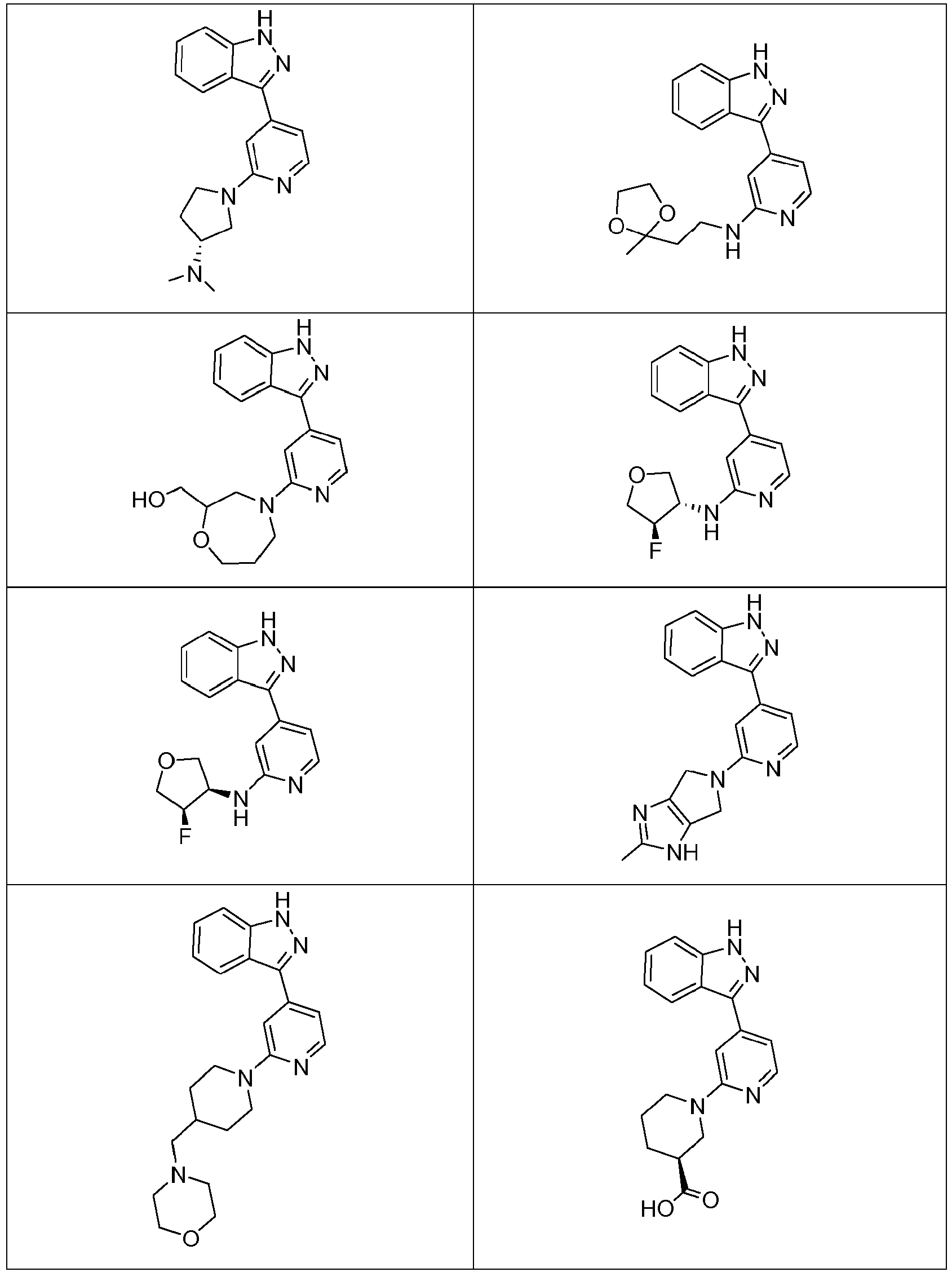

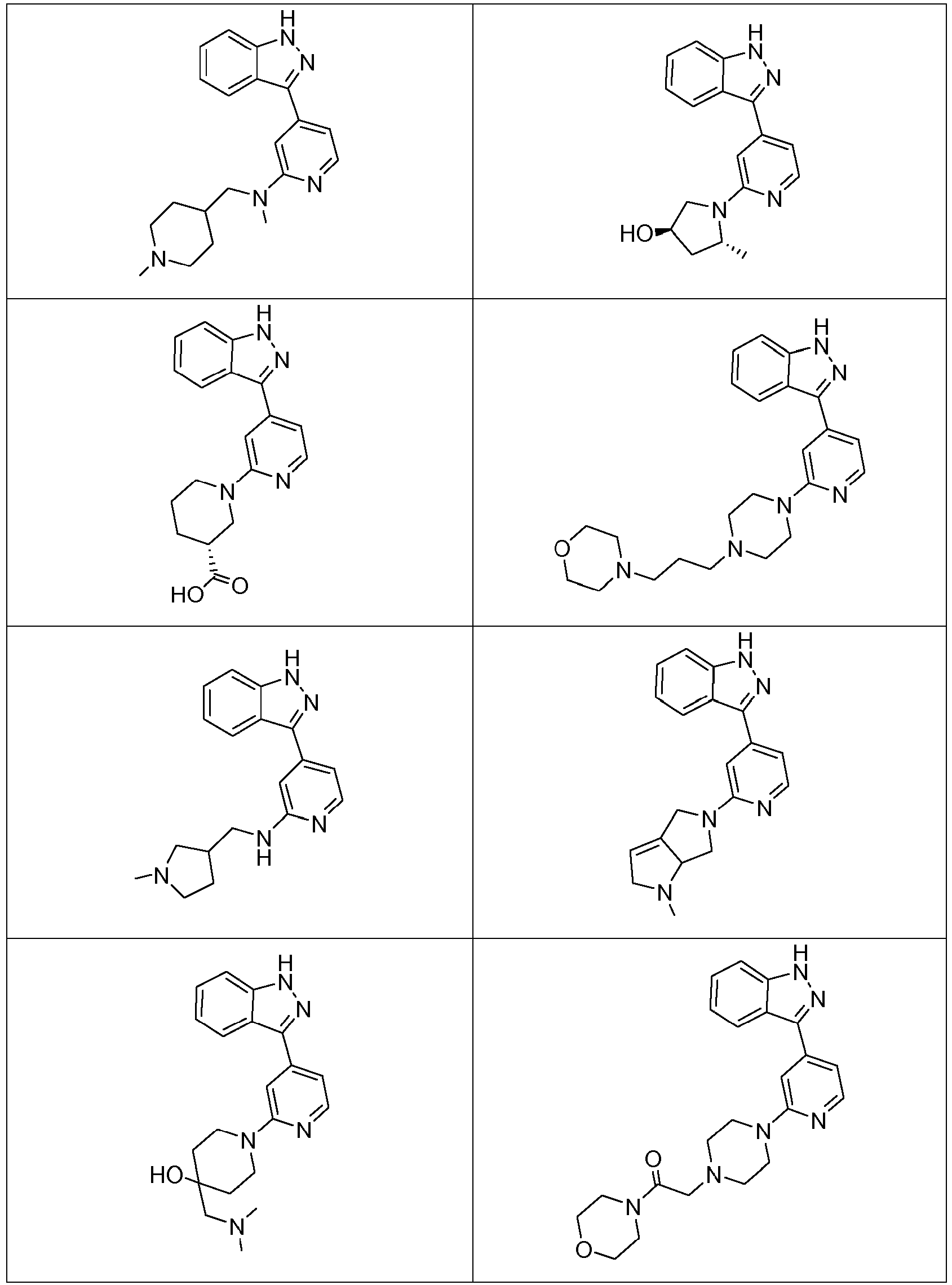


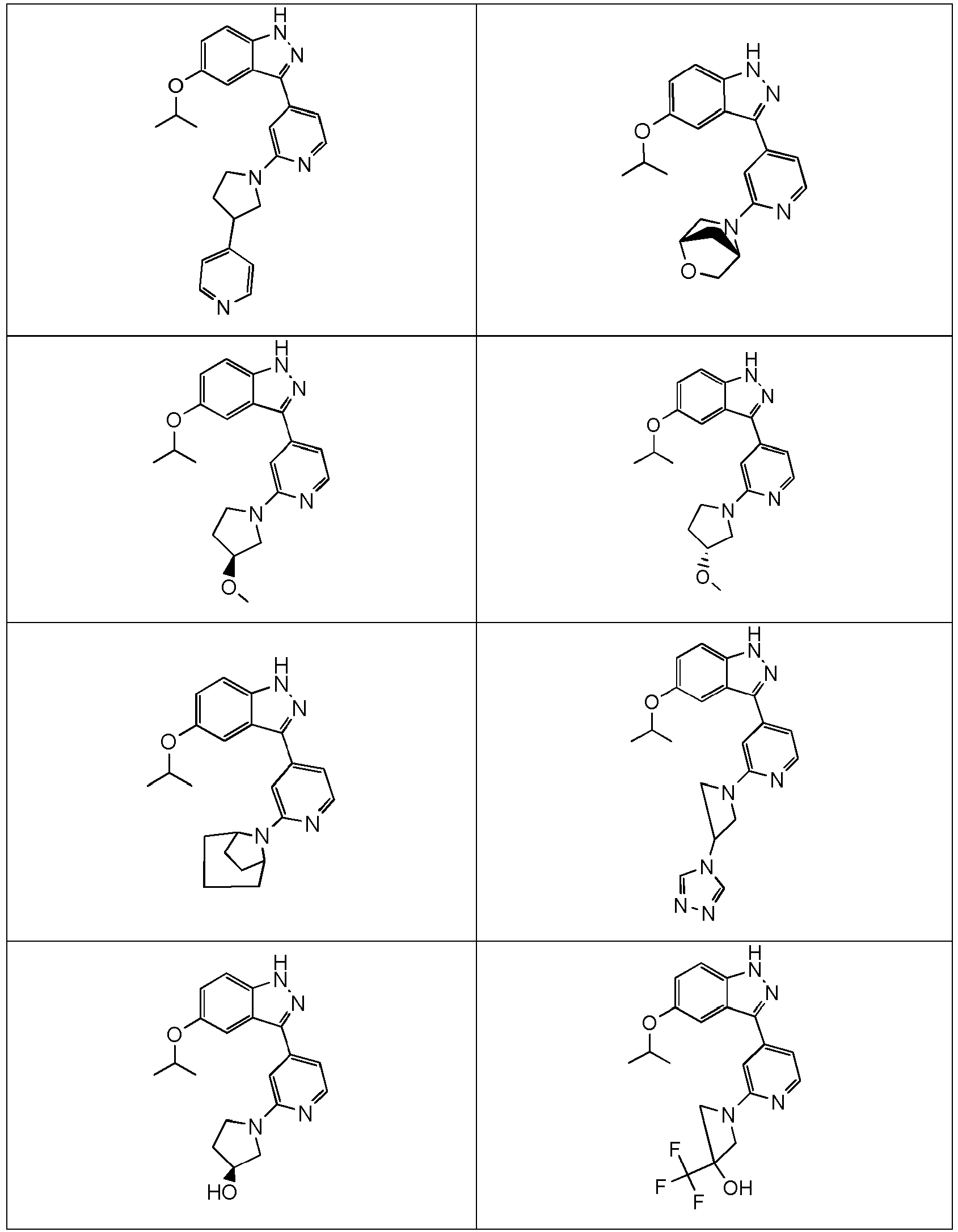


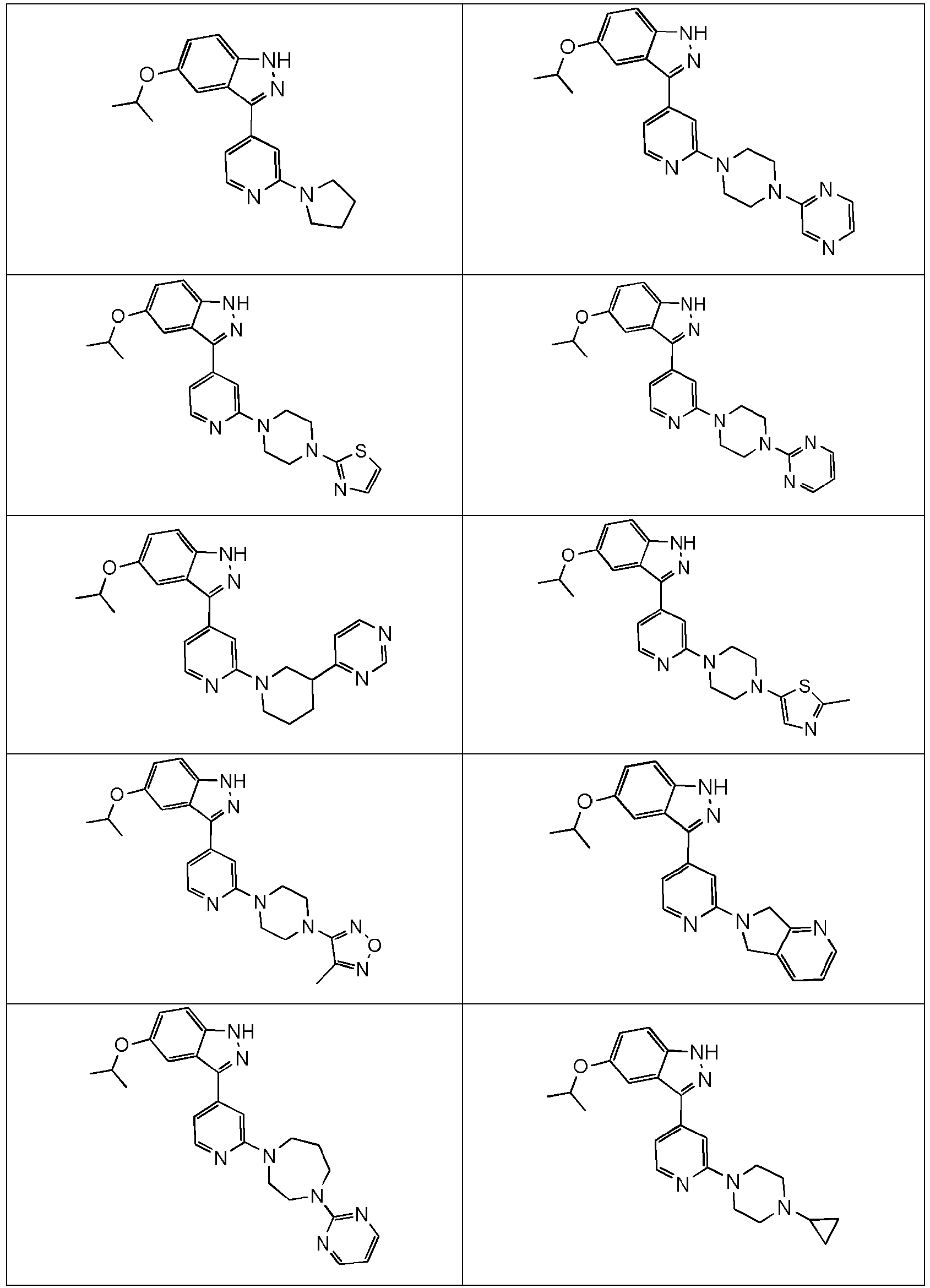


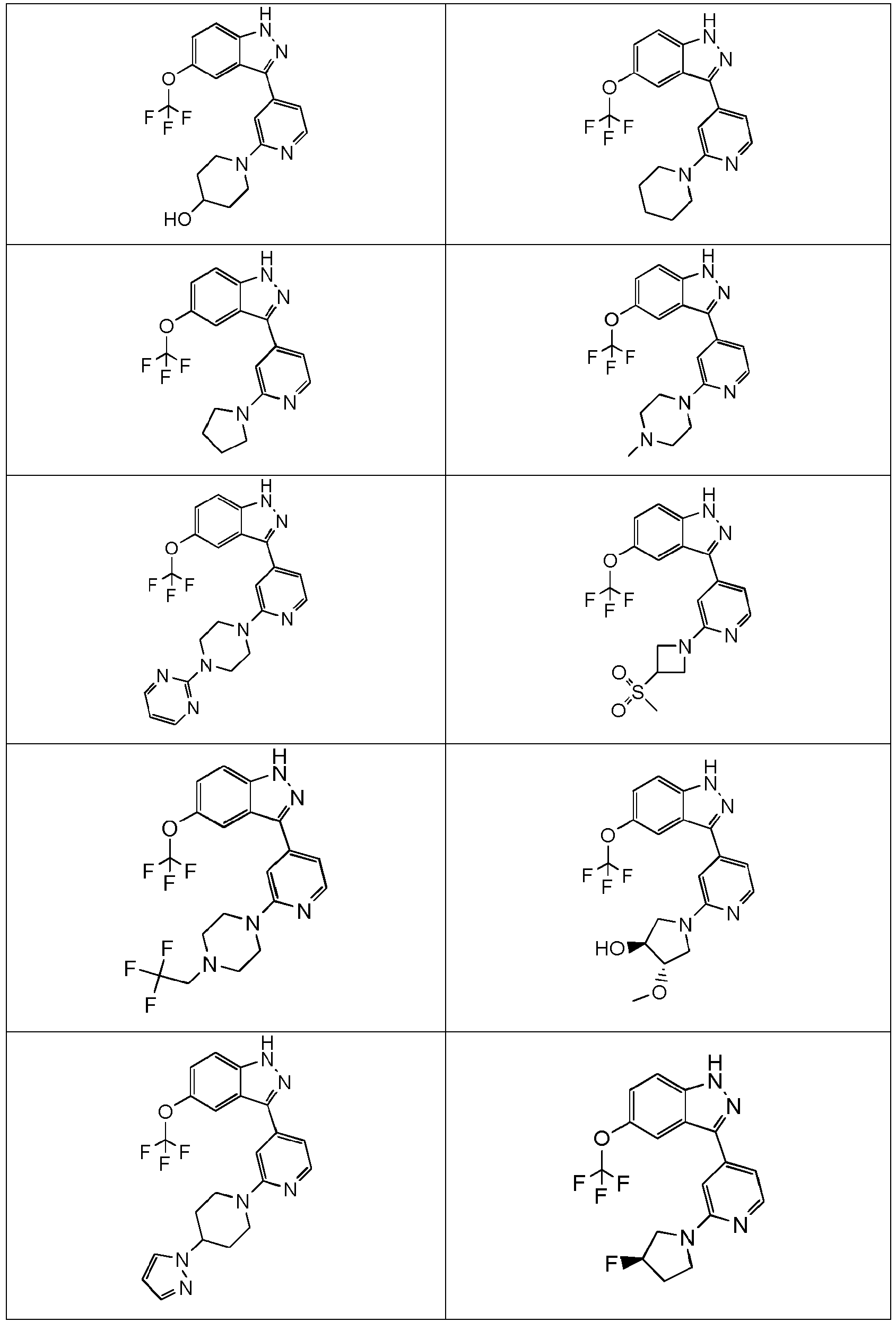


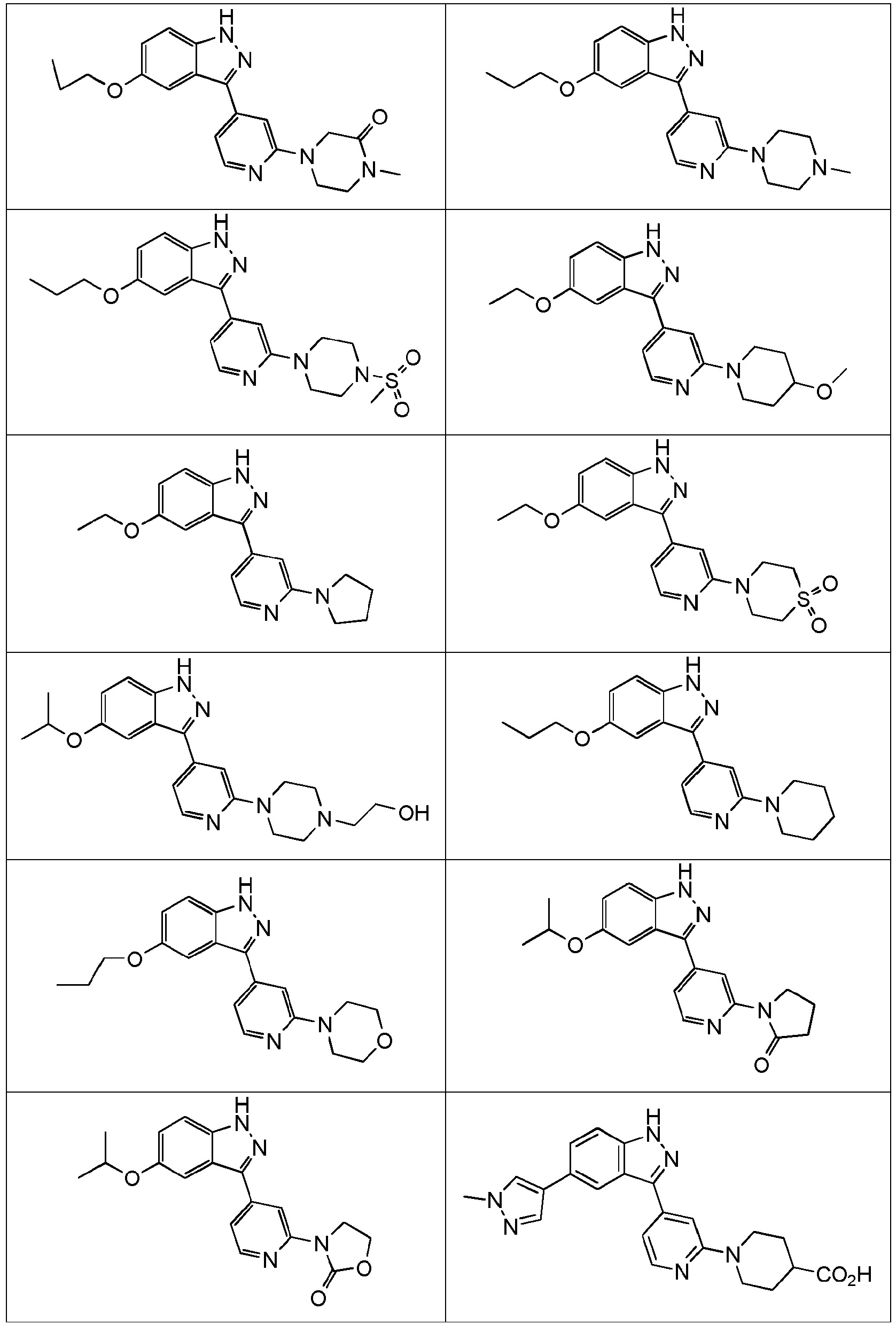

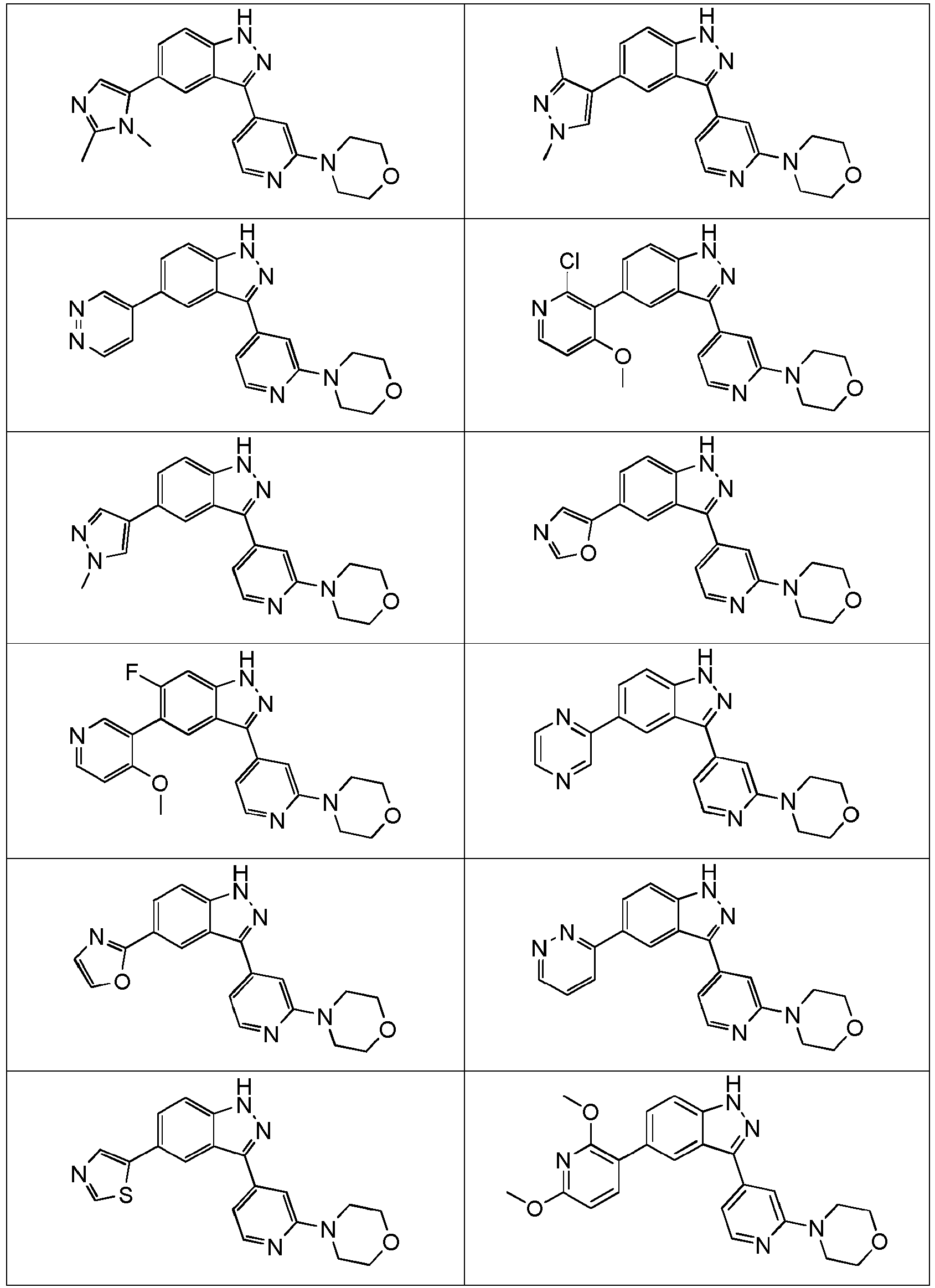


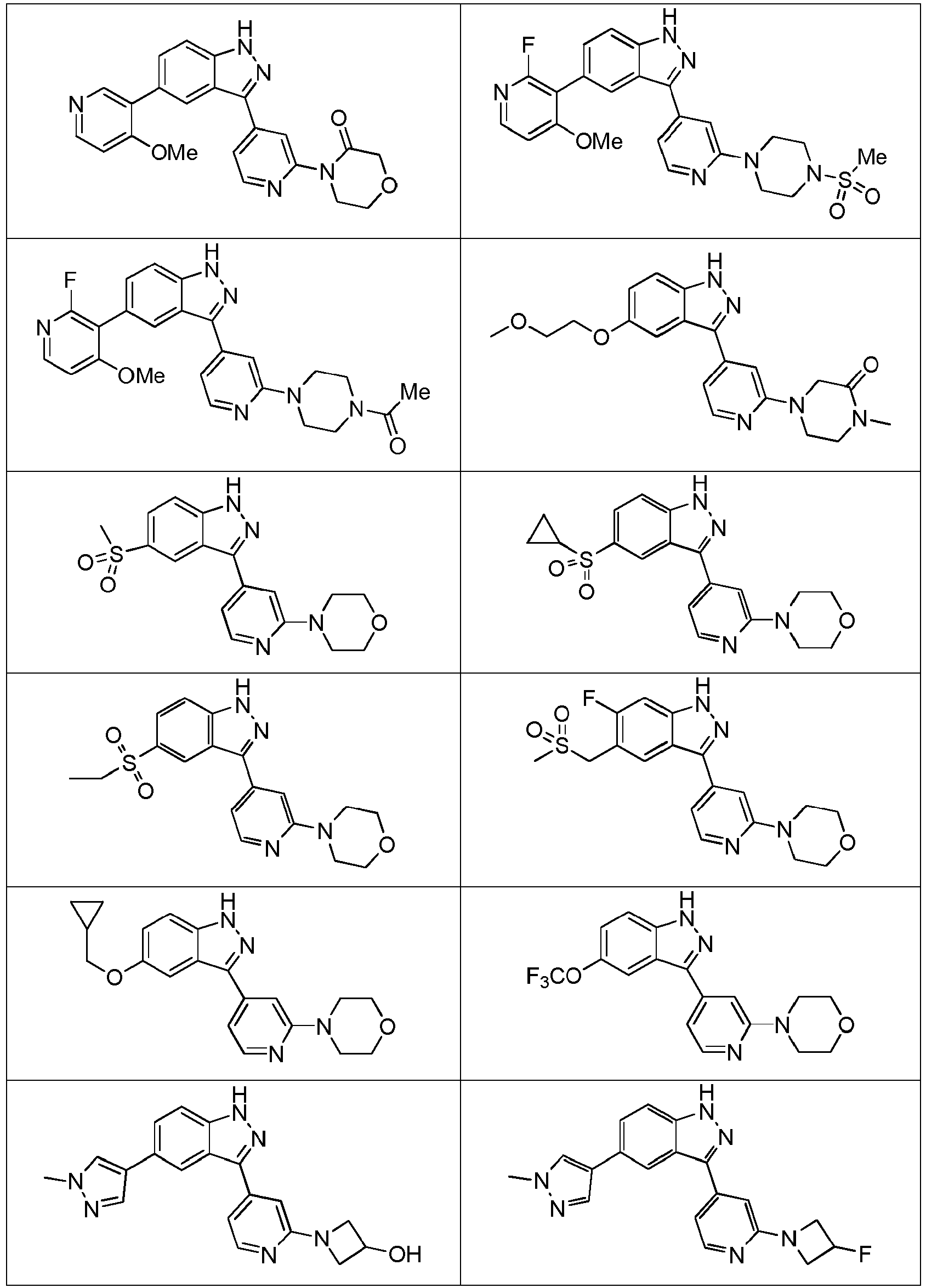

 oder einem pharmazeutisch annehmbaren Salz davon.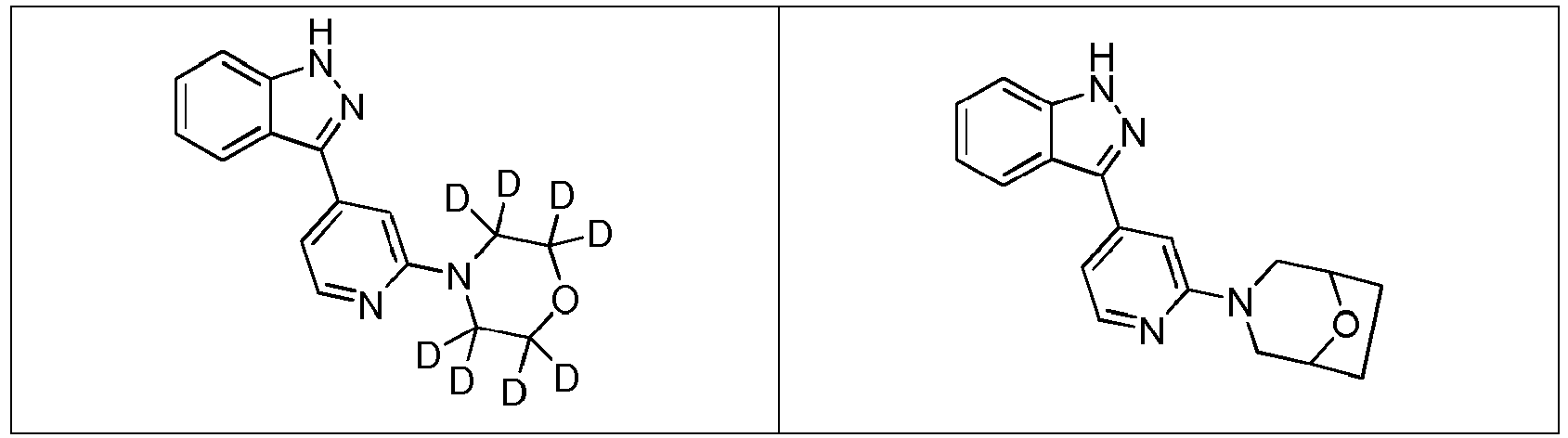
- Die Verbindung nach Anspruch 8, ausgewählt ausoder einem pharmazeutisch annehmbaren Salz davon.

- Die Verbindung nach Anspruch 9, ausgewählt aus


- Die Verbindung nach Anspruch 9, ausgewählt aus


- Die Verbindung nach Anspruch 9, ausgewählt aus
 oder einem pharmazeutisch annehmbaren Salz davon.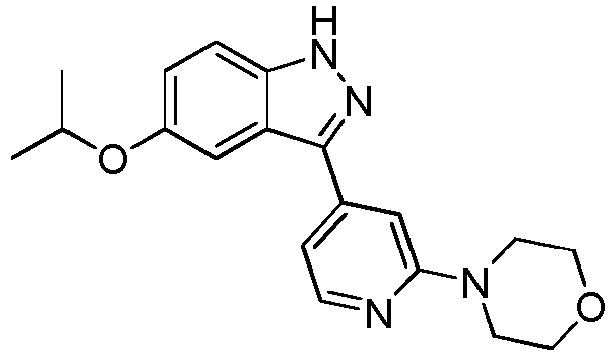
- Die Verbindung nach Anspruch 9, ausgewählt ausoder einem pharmazeutisch annehmbaren Salz davon, und
 oder einem pharmazeutisch annehmbaren Salz davon.
- Eine pharmazeutische Zusammensetzung, umfassend eine Verbindung nach einem der Ansprüche 1 bis 13 und einen pharmazeutisch annehmbaren Träger.
- Eine Verbindung nach einem der Ansprüche 1 bis 13 oder ein pharmazeutisch annehmbares Salz davon zur Verwendung bei der Behandlung von Parkinson-Krankheit.
Applications Claiming Priority (2)
| Application Number | Priority Date | Filing Date | Title |
|---|---|---|---|
| US201361772009P | 2013-03-04 | 2013-03-04 | |
| PCT/US2014/018929 WO2014137728A1 (en) | 2013-03-04 | 2014-02-27 | Compounds inhibiting leucine-rich repeat kinase enzyme activity |
Publications (3)
| Publication Number | Publication Date |
|---|---|
| EP2964221A1 EP2964221A1 (de) | 2016-01-13 |
| EP2964221A4 EP2964221A4 (de) | 2016-08-31 |
| EP2964221B1 true EP2964221B1 (de) | 2017-12-06 |
Family
ID=51491795
Family Applications (1)
| Application Number | Title | Priority Date | Filing Date |
|---|---|---|---|
| EP14760677.6A Active EP2964221B1 (de) | 2013-03-04 | 2014-02-27 | Verbindungen zur hemmung der enzymaktivität einer leucinreichen repeat-kinase |
Country Status (3)
| Country | Link |
|---|---|
| US (1) | US9440952B2 (de) |
| EP (1) | EP2964221B1 (de) |
| WO (1) | WO2014137728A1 (de) |
Families Citing this family (36)
| Publication number | Priority date | Publication date | Assignee | Title |
|---|---|---|---|---|
| WO2014134774A1 (en) | 2013-03-04 | 2014-09-12 | Merck Sharp & Dohme Corp. | Compounds inhibiting leucine-rich repeat kinase enzyme activity |
| WO2014137728A1 (en) | 2013-03-04 | 2014-09-12 | Merck Sharp & Dohme Corp. | Compounds inhibiting leucine-rich repeat kinase enzyme activity |
| WO2014134772A1 (en) * | 2013-03-04 | 2014-09-12 | Merck Sharp & Dohme Corp. | Compounds inhibiting leucine-rich repeat kinase enzyme activity |
| WO2014134776A1 (en) | 2013-03-04 | 2014-09-12 | Merck Sharp & Dohme Corp. | Compounds inhibiting leucine-rich repeat kinase enzyme activity |
| US9718818B2 (en) | 2013-08-22 | 2017-08-01 | Merck Sharp & Dohme Corp. | Compounds inhibiting leucine-rich repeat kinase enzyme activity |
| EP3068389B1 (de) * | 2013-11-14 | 2019-10-02 | Merck Sharp & Dohme Corp. | Verbindungen zur hemmung der enzymaktivität der leucinreichen repeat kinase |
| EP3190889B1 (de) | 2014-09-03 | 2021-11-17 | Merck Sharp & Dohme Corp. | Verbindungen zur hemmung der leucin-rich repeat kinase-enzymaktivität |
| CN106279119B (zh) * | 2015-05-27 | 2020-06-16 | 上海海和药物研究开发有限公司 | 一种新型激酶抑制剂的制备及其应用 |
| WO2017023894A1 (en) * | 2015-08-03 | 2017-02-09 | Raze Therapeutics, Inc. | Mthfd2 inhibitors and uses thereof |
| FR3040057A1 (fr) * | 2015-08-13 | 2017-02-17 | Inventiva | Composes de type azetidine carboxylique |
| CN105541717A (zh) * | 2016-02-02 | 2016-05-04 | 北京工业大学 | 一类新型吡唑类化合物及合成方法 |
| ES2924359T3 (es) * | 2017-04-11 | 2022-10-06 | Sunshine Lake Pharma Co Ltd | Compuestos de indazol sustituidos con flúor y usos de los mismos |
| AU2018266911C1 (en) | 2017-05-12 | 2022-10-20 | Enanta Pharmaceuticals, Inc. | Apoptosis signal-regulating kinase 1 inhibitors and methods of use thereof |
| WO2018218051A1 (en) * | 2017-05-25 | 2018-11-29 | Enanta Pharmaceuticals, Inc. | Apoptosis signal-regulating kinase 1 inhibitors and methods of use thereof |
| US10597382B2 (en) | 2017-08-28 | 2020-03-24 | Enanta Pharmaceuticals, Inc. | Tetrazole containing apoptosis signal-regulating kinase 1 inhibitors and methods of use thereof |
| KR20190043437A (ko) | 2017-10-18 | 2019-04-26 | 씨제이헬스케어 주식회사 | 단백질 키나제 억제제로서의 헤테로고리 화합물 |
| US20200247815A1 (en) | 2017-10-19 | 2020-08-06 | Jiangsu Hansoh Pharmaceutical Group Co., Ltd. | Pyrazolyl-containing tricyclic derivative, preparation method therefor and use thereof |
| JP7138768B2 (ja) * | 2018-04-20 | 2022-09-16 | ▲貴▼州伊▲諾▼其尼科技有限公司 | ジメチルホスフィンオキシド化合物 |
| WO2019213239A1 (en) | 2018-05-02 | 2019-11-07 | Enanta Pharmaceuticals Inc. | Apoptosis signal-regulating kinase 1 inhibitors and methods of use thereof |
| ES3004523T3 (en) | 2018-05-02 | 2025-03-12 | Enanta Pharm Inc | Tetrazole containing apoptosis signal-regulating kinase 1 inhibitors and methods of use thereof |
| IL259810A (en) * | 2018-06-04 | 2018-07-31 | Yeda Res & Dev | Mitogen-activated protein kinase kinase 7 inhibitors |
| WO2020041417A1 (en) | 2018-08-22 | 2020-02-27 | Enanta Pharmaceuticals, Inc. | Cycloalkyl-containing apoptosis signal-regulating kinase 1 inhibitors and methods of use thereof |
| KR102195348B1 (ko) * | 2018-11-15 | 2020-12-24 | 에이치케이이노엔 주식회사 | 단백질 키나제 억제제로서의 신규 화합물 및 이를 포함하는 약제학적 조성물 |
| WO2020106707A1 (en) | 2018-11-19 | 2020-05-28 | Enanta Pharmaceuticals, Inc. | Apoptosis signal-regulating kinase 1 inhibitors and methods of use thereof |
| US11466033B2 (en) | 2019-03-25 | 2022-10-11 | Enanta Pharmaceuticals, Inc. | Substituted pyridines as apoptosis signal-regulating kinase 1 inhibitors |
| KR20220079851A (ko) * | 2019-09-11 | 2022-06-14 | 프렐루드 테라퓨틱스, 인코포레이티드 | Cdk 억제제 및 약제로서의 이의 용도 |
| BR112022022511A2 (pt) * | 2020-05-06 | 2022-12-13 | Servier Lab | Inibidores macrocíclicos de lrrk2 quinase |
| US20230391758A1 (en) | 2020-09-18 | 2023-12-07 | Merck Sharp & Dohme Llc | Modified benzofuran-carboxamides as glucosylceramide synthase inhibitors |
| WO2022152853A1 (en) * | 2021-01-15 | 2022-07-21 | Glaxosmithkline Intellectual Property Development Limited | Antagonists of mrgx2 |
| WO2022271840A1 (en) * | 2021-06-22 | 2022-12-29 | The Board Of Trustees Of The Leland Stanford Junior University | Selective indazole lrrk2 inhibitors and methods for use thereof |
| JP2024541934A (ja) | 2021-10-27 | 2024-11-13 | ハー・ルンドベック・アクチエゼルスカベット | Lrrk2阻害剤 |
| CN115353508B (zh) * | 2022-08-24 | 2023-07-21 | 中国药科大学 | 5-吡啶-1h-吲唑类化合物、药物组合物和应用 |
| CN117659023A (zh) * | 2022-09-06 | 2024-03-08 | 苏州阿尔脉生物科技有限公司 | 吡啶乙酰胺类衍生物、包含其的药物组合物及其医药用途 |
| TW202412777A (zh) | 2022-09-15 | 2024-04-01 | 丹麥商H 朗德貝克公司 | 富白胺酸重複激酶2(lrrk2)抑制劑 |
| WO2024158745A1 (en) * | 2023-01-23 | 2024-08-02 | Vanderbilt University | Inhibitors of lrrk2 |
| WO2025029897A1 (en) * | 2023-08-03 | 2025-02-06 | Neuro3 Therapeutics, Inc. | Substituted pyrazolopyridines |
Family Cites Families (28)
| Publication number | Priority date | Publication date | Assignee | Title |
|---|---|---|---|---|
| YU54202A (sh) | 2000-01-18 | 2006-01-16 | Agouron Pharmaceuticals Inc. | Jedinjenja indazola, farmaceutske smeše i postupci za stimulisanje i inhibiranje ćelijske proliferacije |
| US7211594B2 (en) | 2000-07-31 | 2007-05-01 | Signal Pharmaceuticals, Llc | Indazole compounds and compositions thereof as JNK inhibitors and for the treatment of diseases associated therewith |
| US6897231B2 (en) | 2000-07-31 | 2005-05-24 | Signal Pharmaceuticals, Inc. | Indazole derivatives as JNK inhibitors and compositions and methods related thereto |
| CN1300116C (zh) | 2001-04-16 | 2007-02-14 | 卫材株式会社 | 1h-吲唑化合物 |
| US7642278B2 (en) * | 2001-07-03 | 2010-01-05 | Novartis Vaccines And Diagnostics, Inc. | Indazole benzimidazole compounds |
| US7666867B2 (en) | 2001-10-26 | 2010-02-23 | University Of Connecticut | Heteroindanes: a new class of potent cannabimimetic ligands |
| US7429609B2 (en) | 2002-05-31 | 2008-09-30 | Eisai R & D Management Co., Ltd. | Pyrazole compound and medicinal composition containing the same |
| MY141867A (en) | 2002-06-20 | 2010-07-16 | Vertex Pharma | Substituted pyrimidines useful as protein kinase inhibitors |
| ATE451363T1 (de) | 2005-01-26 | 2009-12-15 | Schering Corp | 3-(indazol-5-yl)-(1,2,4)triazinderivate und verwandte verbindungen als proteinkinaseinhibitoren zur behandlung von krebs |
| EP2102194A1 (de) | 2006-12-08 | 2009-09-23 | F. Hoffmann-Roche AG | Substituierte pyrimidine und ihre verwendung als jnk-modulatoren |
| AU2008248186B2 (en) | 2007-05-07 | 2014-02-06 | Merck Sharp & Dohme Corp. | Method of treatment using fused aromatic compounds having anti-diabetic activity |
| MX2009013213A (es) | 2007-06-08 | 2010-03-30 | Abbott Lab | Indazoles 5-sustituidos 5-heteroarilo como inhibidores de cinasa. |
| US8648069B2 (en) | 2007-06-08 | 2014-02-11 | Abbvie Inc. | 5-substituted indazoles as kinase inhibitors |
| AU2008317353B2 (en) | 2007-10-24 | 2014-08-07 | Merck Sharp & Dohme Llc | Heterocycle phenyl amide T-type calcium channel antagonists |
| US8518911B2 (en) | 2008-08-05 | 2013-08-27 | Merck Sharp & Dohme Corp. | Pyrazolo[1,5-a]pyridines as MARK inhibitors |
| US8592425B2 (en) | 2009-01-16 | 2013-11-26 | Merck Sharp & Dohme Corp. | Imidazo[1,2-a]pyridines and imidazo[1,2-b]pyridazines as mark inhibitors |
| GB201008134D0 (en) | 2010-05-14 | 2010-06-30 | Medical Res Council Technology | Compounds |
| GB201015949D0 (en) * | 2010-09-22 | 2010-11-03 | Medical Res Council Technology | Compounds |
| US9233977B2 (en) | 2010-10-29 | 2016-01-12 | Merck Sharp & Dohme Corp. | Leucine-rich repeat kinase enzyme activity |
| CA2819373A1 (en) | 2010-12-09 | 2012-06-14 | Amgen Inc. | Bicyclic compounds as pim inhibitors |
| AP2013007253A0 (en) | 2011-04-21 | 2013-11-30 | Origenis Gmbh | Pyrazolo [4,3-D] pyrimidines useful as kinase inhibitors |
| WO2014134772A1 (en) | 2013-03-04 | 2014-09-12 | Merck Sharp & Dohme Corp. | Compounds inhibiting leucine-rich repeat kinase enzyme activity |
| WO2014134774A1 (en) | 2013-03-04 | 2014-09-12 | Merck Sharp & Dohme Corp. | Compounds inhibiting leucine-rich repeat kinase enzyme activity |
| WO2014134776A1 (en) | 2013-03-04 | 2014-09-12 | Merck Sharp & Dohme Corp. | Compounds inhibiting leucine-rich repeat kinase enzyme activity |
| WO2014137728A1 (en) | 2013-03-04 | 2014-09-12 | Merck Sharp & Dohme Corp. | Compounds inhibiting leucine-rich repeat kinase enzyme activity |
| US9718818B2 (en) | 2013-08-22 | 2017-08-01 | Merck Sharp & Dohme Corp. | Compounds inhibiting leucine-rich repeat kinase enzyme activity |
| EP3068389B1 (de) | 2013-11-14 | 2019-10-02 | Merck Sharp & Dohme Corp. | Verbindungen zur hemmung der enzymaktivität der leucinreichen repeat kinase |
| EP3190889B1 (de) | 2014-09-03 | 2021-11-17 | Merck Sharp & Dohme Corp. | Verbindungen zur hemmung der leucin-rich repeat kinase-enzymaktivität |
-
2014
- 2014-02-27 WO PCT/US2014/018929 patent/WO2014137728A1/en not_active Ceased
- 2014-02-27 US US14/772,589 patent/US9440952B2/en active Active
- 2014-02-27 EP EP14760677.6A patent/EP2964221B1/de active Active
Non-Patent Citations (1)
| Title |
|---|
| None * |
Also Published As
| Publication number | Publication date |
|---|---|
| US20160009682A1 (en) | 2016-01-14 |
| EP2964221A4 (de) | 2016-08-31 |
| WO2014137728A1 (en) | 2014-09-12 |
| EP2964221A1 (de) | 2016-01-13 |
| US9440952B2 (en) | 2016-09-13 |
Similar Documents
| Publication | Publication Date | Title |
|---|---|---|
| EP2964221B1 (de) | Verbindungen zur hemmung der enzymaktivität einer leucinreichen repeat-kinase | |
| US12281097B2 (en) | Isoquinolin-3-yl carboxamides and preparation and use thereof | |
| EP3035800B1 (de) | Verbindungen zur hemmung der wiederholungsaktivität eines leukinreichen kinaseenzyms | |
| EP3190889B1 (de) | Verbindungen zur hemmung der leucin-rich repeat kinase-enzymaktivität | |
| EP3448838B1 (de) | Isochinolin-3-yl-carbonsäureamide und herstellung und verwendung davon | |
| EP2964223B1 (de) | Verbindungen zur hemmung der wiederholungsaktivität eines leukinreichen kinaseenzyms | |
| US9688654B2 (en) | Compounds inhibiting leucine-rich repeat kinase enzyme activity | |
| EP2964222B1 (de) | Verbindungen zur hemmung der wiederholungsaktivität eines leukinreichen kinaseenzyms | |
| EP3068389B1 (de) | Verbindungen zur hemmung der enzymaktivität der leucinreichen repeat kinase | |
| HK40005209B (en) | Isoquinolin-3-yl carboxamides and preparation and use thereof | |
| HK40005209A (en) | Isoquinolin-3-yl carboxamides and preparation and use thereof | |
| HK40005208A (en) | Isoquinolin-3-yl carboxamides and preparation and use thereof | |
| HK40005208B (en) | Isoquinolin-3-yl carboxamides and preparation and use thereof |
Legal Events
| Date | Code | Title | Description |
|---|---|---|---|
| PUAI | Public reference made under article 153(3) epc to a published international application that has entered the european phase |
Free format text: ORIGINAL CODE: 0009012 |
|
| 17P | Request for examination filed |
Effective date: 20151005 |
|
| AK | Designated contracting states |
Kind code of ref document: A1 Designated state(s): AL AT BE BG CH CY CZ DE DK EE ES FI FR GB GR HR HU IE IS IT LI LT LU LV MC MK MT NL NO PL PT RO RS SE SI SK SM TR |
|
| AX | Request for extension of the european patent |
Extension state: BA ME |
|
| A4 | Supplementary search report drawn up and despatched |
Effective date: 20160728 |
|
| RIC1 | Information provided on ipc code assigned before grant |
Ipc: C07D 231/56 20060101ALI20160722BHEP Ipc: A61K 31/415 20060101AFI20160722BHEP |
|
| GRAP | Despatch of communication of intention to grant a patent |
Free format text: ORIGINAL CODE: EPIDOSNIGR1 |
|
| INTG | Intention to grant announced |
Effective date: 20170623 |
|
| GRAS | Grant fee paid |
Free format text: ORIGINAL CODE: EPIDOSNIGR3 |
|
| GRAA | (expected) grant |
Free format text: ORIGINAL CODE: 0009210 |
|
| AK | Designated contracting states |
Kind code of ref document: B1 Designated state(s): AL AT BE BG CH CY CZ DE DK EE ES FI FR GB GR HR HU IE IS IT LI LT LU LV MC MK MT NL NO PL PT RO RS SE SI SK SM TR |
|
| AX | Request for extension of the european patent |
Extension state: BA ME |
|
| REG | Reference to a national code |
Ref country code: GB Ref legal event code: FG4D |
|
| REG | Reference to a national code |
Ref country code: FR Ref legal event code: PLFP Year of fee payment: 5 |
|
| REG | Reference to a national code |
Ref country code: AT Ref legal event code: REF Ref document number: 951751 Country of ref document: AT Kind code of ref document: T Effective date: 20171215 Ref country code: CH Ref legal event code: EP |
|
| REG | Reference to a national code |
Ref country code: IE Ref legal event code: FG4D |
|
| REG | Reference to a national code |
Ref country code: DE Ref legal event code: R096 Ref document number: 602014018221 Country of ref document: DE |
|
| REG | Reference to a national code |
Ref country code: NL Ref legal event code: MP Effective date: 20171206 |
|
| REG | Reference to a national code |
Ref country code: LT Ref legal event code: MG4D |
|
| PG25 | Lapsed in a contracting state [announced via postgrant information from national office to epo] |
Ref country code: ES Free format text: LAPSE BECAUSE OF FAILURE TO SUBMIT A TRANSLATION OF THE DESCRIPTION OR TO PAY THE FEE WITHIN THE PRESCRIBED TIME-LIMIT Effective date: 20171206 Ref country code: LT Free format text: LAPSE BECAUSE OF FAILURE TO SUBMIT A TRANSLATION OF THE DESCRIPTION OR TO PAY THE FEE WITHIN THE PRESCRIBED TIME-LIMIT Effective date: 20171206 Ref country code: NO Free format text: LAPSE BECAUSE OF FAILURE TO SUBMIT A TRANSLATION OF THE DESCRIPTION OR TO PAY THE FEE WITHIN THE PRESCRIBED TIME-LIMIT Effective date: 20180306 Ref country code: FI Free format text: LAPSE BECAUSE OF FAILURE TO SUBMIT A TRANSLATION OF THE DESCRIPTION OR TO PAY THE FEE WITHIN THE PRESCRIBED TIME-LIMIT Effective date: 20171206 Ref country code: SE Free format text: LAPSE BECAUSE OF FAILURE TO SUBMIT A TRANSLATION OF THE DESCRIPTION OR TO PAY THE FEE WITHIN THE PRESCRIBED TIME-LIMIT Effective date: 20171206 |
|
| REG | Reference to a national code |
Ref country code: AT Ref legal event code: MK05 Ref document number: 951751 Country of ref document: AT Kind code of ref document: T Effective date: 20171206 |
|
| PG25 | Lapsed in a contracting state [announced via postgrant information from national office to epo] |
Ref country code: HR Free format text: LAPSE BECAUSE OF FAILURE TO SUBMIT A TRANSLATION OF THE DESCRIPTION OR TO PAY THE FEE WITHIN THE PRESCRIBED TIME-LIMIT Effective date: 20171206 Ref country code: LV Free format text: LAPSE BECAUSE OF FAILURE TO SUBMIT A TRANSLATION OF THE DESCRIPTION OR TO PAY THE FEE WITHIN THE PRESCRIBED TIME-LIMIT Effective date: 20171206 Ref country code: RS Free format text: LAPSE BECAUSE OF FAILURE TO SUBMIT A TRANSLATION OF THE DESCRIPTION OR TO PAY THE FEE WITHIN THE PRESCRIBED TIME-LIMIT Effective date: 20171206 Ref country code: BG Free format text: LAPSE BECAUSE OF FAILURE TO SUBMIT A TRANSLATION OF THE DESCRIPTION OR TO PAY THE FEE WITHIN THE PRESCRIBED TIME-LIMIT Effective date: 20180306 Ref country code: GR Free format text: LAPSE BECAUSE OF FAILURE TO SUBMIT A TRANSLATION OF THE DESCRIPTION OR TO PAY THE FEE WITHIN THE PRESCRIBED TIME-LIMIT Effective date: 20180307 |
|
| PG25 | Lapsed in a contracting state [announced via postgrant information from national office to epo] |
Ref country code: NL Free format text: LAPSE BECAUSE OF FAILURE TO SUBMIT A TRANSLATION OF THE DESCRIPTION OR TO PAY THE FEE WITHIN THE PRESCRIBED TIME-LIMIT Effective date: 20171206 |
|
| PG25 | Lapsed in a contracting state [announced via postgrant information from national office to epo] |
Ref country code: SK Free format text: LAPSE BECAUSE OF FAILURE TO SUBMIT A TRANSLATION OF THE DESCRIPTION OR TO PAY THE FEE WITHIN THE PRESCRIBED TIME-LIMIT Effective date: 20171206 Ref country code: CZ Free format text: LAPSE BECAUSE OF FAILURE TO SUBMIT A TRANSLATION OF THE DESCRIPTION OR TO PAY THE FEE WITHIN THE PRESCRIBED TIME-LIMIT Effective date: 20171206 Ref country code: EE Free format text: LAPSE BECAUSE OF FAILURE TO SUBMIT A TRANSLATION OF THE DESCRIPTION OR TO PAY THE FEE WITHIN THE PRESCRIBED TIME-LIMIT Effective date: 20171206 |
|
| PG25 | Lapsed in a contracting state [announced via postgrant information from national office to epo] |
Ref country code: PL Free format text: LAPSE BECAUSE OF FAILURE TO SUBMIT A TRANSLATION OF THE DESCRIPTION OR TO PAY THE FEE WITHIN THE PRESCRIBED TIME-LIMIT Effective date: 20171206 Ref country code: RO Free format text: LAPSE BECAUSE OF FAILURE TO SUBMIT A TRANSLATION OF THE DESCRIPTION OR TO PAY THE FEE WITHIN THE PRESCRIBED TIME-LIMIT Effective date: 20171206 Ref country code: SM Free format text: LAPSE BECAUSE OF FAILURE TO SUBMIT A TRANSLATION OF THE DESCRIPTION OR TO PAY THE FEE WITHIN THE PRESCRIBED TIME-LIMIT Effective date: 20171206 Ref country code: IT Free format text: LAPSE BECAUSE OF FAILURE TO SUBMIT A TRANSLATION OF THE DESCRIPTION OR TO PAY THE FEE WITHIN THE PRESCRIBED TIME-LIMIT Effective date: 20171206 Ref country code: AT Free format text: LAPSE BECAUSE OF FAILURE TO SUBMIT A TRANSLATION OF THE DESCRIPTION OR TO PAY THE FEE WITHIN THE PRESCRIBED TIME-LIMIT Effective date: 20171206 |
|
| REG | Reference to a national code |
Ref country code: DE Ref legal event code: R097 Ref document number: 602014018221 Country of ref document: DE |
|
| REG | Reference to a national code |
Ref country code: CH Ref legal event code: PL |
|
| PG25 | Lapsed in a contracting state [announced via postgrant information from national office to epo] |
Ref country code: MC Free format text: LAPSE BECAUSE OF FAILURE TO SUBMIT A TRANSLATION OF THE DESCRIPTION OR TO PAY THE FEE WITHIN THE PRESCRIBED TIME-LIMIT Effective date: 20171206 |
|
| PLBE | No opposition filed within time limit |
Free format text: ORIGINAL CODE: 0009261 |
|
| STAA | Information on the status of an ep patent application or granted ep patent |
Free format text: STATUS: NO OPPOSITION FILED WITHIN TIME LIMIT |
|
| 26N | No opposition filed |
Effective date: 20180907 |
|
| REG | Reference to a national code |
Ref country code: IE Ref legal event code: MM4A |
|
| REG | Reference to a national code |
Ref country code: BE Ref legal event code: MM Effective date: 20180228 |
|
| PG25 | Lapsed in a contracting state [announced via postgrant information from national office to epo] |
Ref country code: SI Free format text: LAPSE BECAUSE OF FAILURE TO SUBMIT A TRANSLATION OF THE DESCRIPTION OR TO PAY THE FEE WITHIN THE PRESCRIBED TIME-LIMIT Effective date: 20171206 Ref country code: LI Free format text: LAPSE BECAUSE OF NON-PAYMENT OF DUE FEES Effective date: 20180228 Ref country code: DK Free format text: LAPSE BECAUSE OF FAILURE TO SUBMIT A TRANSLATION OF THE DESCRIPTION OR TO PAY THE FEE WITHIN THE PRESCRIBED TIME-LIMIT Effective date: 20171206 Ref country code: LU Free format text: LAPSE BECAUSE OF NON-PAYMENT OF DUE FEES Effective date: 20180227 Ref country code: CH Free format text: LAPSE BECAUSE OF NON-PAYMENT OF DUE FEES Effective date: 20180228 |
|
| PG25 | Lapsed in a contracting state [announced via postgrant information from national office to epo] |
Ref country code: IE Free format text: LAPSE BECAUSE OF NON-PAYMENT OF DUE FEES Effective date: 20180227 |
|
| PG25 | Lapsed in a contracting state [announced via postgrant information from national office to epo] |
Ref country code: BE Free format text: LAPSE BECAUSE OF NON-PAYMENT OF DUE FEES Effective date: 20180228 |
|
| PG25 | Lapsed in a contracting state [announced via postgrant information from national office to epo] |
Ref country code: MT Free format text: LAPSE BECAUSE OF NON-PAYMENT OF DUE FEES Effective date: 20180227 |
|
| PG25 | Lapsed in a contracting state [announced via postgrant information from national office to epo] |
Ref country code: TR Free format text: LAPSE BECAUSE OF FAILURE TO SUBMIT A TRANSLATION OF THE DESCRIPTION OR TO PAY THE FEE WITHIN THE PRESCRIBED TIME-LIMIT Effective date: 20171206 |
|
| PG25 | Lapsed in a contracting state [announced via postgrant information from national office to epo] |
Ref country code: PT Free format text: LAPSE BECAUSE OF FAILURE TO SUBMIT A TRANSLATION OF THE DESCRIPTION OR TO PAY THE FEE WITHIN THE PRESCRIBED TIME-LIMIT Effective date: 20171206 |
|
| PG25 | Lapsed in a contracting state [announced via postgrant information from national office to epo] |
Ref country code: CY Free format text: LAPSE BECAUSE OF FAILURE TO SUBMIT A TRANSLATION OF THE DESCRIPTION OR TO PAY THE FEE WITHIN THE PRESCRIBED TIME-LIMIT Effective date: 20171206 Ref country code: HU Free format text: LAPSE BECAUSE OF FAILURE TO SUBMIT A TRANSLATION OF THE DESCRIPTION OR TO PAY THE FEE WITHIN THE PRESCRIBED TIME-LIMIT; INVALID AB INITIO Effective date: 20140227 Ref country code: MK Free format text: LAPSE BECAUSE OF NON-PAYMENT OF DUE FEES Effective date: 20171206 |
|
| PG25 | Lapsed in a contracting state [announced via postgrant information from national office to epo] |
Ref country code: AL Free format text: LAPSE BECAUSE OF FAILURE TO SUBMIT A TRANSLATION OF THE DESCRIPTION OR TO PAY THE FEE WITHIN THE PRESCRIBED TIME-LIMIT Effective date: 20171206 Ref country code: IS Free format text: LAPSE BECAUSE OF FAILURE TO SUBMIT A TRANSLATION OF THE DESCRIPTION OR TO PAY THE FEE WITHIN THE PRESCRIBED TIME-LIMIT Effective date: 20180406 |
|
| REG | Reference to a national code |
Ref country code: DE Ref legal event code: R081 Ref document number: 602014018221 Country of ref document: DE Owner name: MERCK SHARP & DOHME LLC, RAHWAY, US Free format text: FORMER OWNER: MERCK SHARP & DOHME CORP., RAHWAY, N.J., US |
|
| REG | Reference to a national code |
Ref country code: GB Ref legal event code: 732E Free format text: REGISTERED BETWEEN 20221013 AND 20221019 |
|
| PGFP | Annual fee paid to national office [announced via postgrant information from national office to epo] |
Ref country code: GB Payment date: 20260113 Year of fee payment: 13 |
|
| PGFP | Annual fee paid to national office [announced via postgrant information from national office to epo] |
Ref country code: DE Payment date: 20260115 Year of fee payment: 13 |
|
| PGFP | Annual fee paid to national office [announced via postgrant information from national office to epo] |
Ref country code: FR Payment date: 20260109 Year of fee payment: 13 |